
• Genre
  • About
  • Submissions
  • Donate
  • Search
Menu

Speakola

All Speeches Great and Small
  • Genre
  • About
  • Submissions
  • Donate
  • Search
Share a political speech

Mary Crooks: 'We can forge a new compact between Indigenous and non-Indigenous Australians', Women for Yes launch - 2023

September 26, 2023

13 August 2023, Athenaeum Theatre, Melbourne, Australia

Introduction

Mary Crooks AO is the Executive Director of the Victorian Women’s Trust.

Thank you, Emily Carter, Jackie Huggins and Marcia Langton, for enabling us to create this powerful video. We admire your life-long courage and leadership.

We pay tribute also to the leadership of Indigenous women past and present and in terms of the referendum effort, we acknowledge Indigenous women including Linda Burney, Megan Davis, Pat Anderson AO, Rachael Perkins, Sally Scales and Kara Keys for their campaign leadership.

The video you have just watched in its first showing. We are now in the process of translating it into eleven community languages – Mandarin, Cantonese, Arabic, Vietnamese, Korean, Greek, Italian, Spanish, Serbian, Hindi and Punjabi. These will be ready within a fortnight for us to distribute around the country, to help reach the hearts and minds of migrant and refugee women, up until polling day. We will do the same with the Open Letter launched today.

My role is to provide some context to today’s launch of our new campaign initiative, Women for Yes; to provide a perspective on the no case and to present you with our Open Letter. I need to warn you that my energy reserves are down, having been almost depleted by last night’s magnificent quinella, the win by the Matildas AND my beloved Blue Boys.

Pushing back, with respect

Last November, Guardian Australia ran a piece about our Together, Yes campaign. Soon after, I received an email from an older gentleman. He had a Physics degree some years earlier from the same University I had attended.

He attached his long essay arguing that what happened to ‘The Aborigine’ in Australia was simply a defeat of a people by a technologically superior society. The British claiming of Australia was legal and absolute. Intergenerational trauma was a myth.

The idea of a Voice was a ‘racist abomination.’ He urged me to reconsider our support for the Voice; and withdraw from the Yes campaign.

I pushed back, respectfully. I told him that it had taken me until my fifties to learn of the Eumeralla Wars in the Southwest region of Victoria where I had grown up and been schooled. Beginning in the 1830s, they lasted for over twenty years in which more than 7,000 Indigenous men, women and children were killed.

He replied, telling me these were not ‘wars’ – they were simply skirmishes, payback killings. Communication stopped at that point.

However, I am sure you will appreciate the delicious irony to this story. Here I was, proud feminist, Executive Director of the Victorian Women’s Trust, being mansplained on the Voice to Parliament – and, told what to do.

The Great Australian Silence

Bill Stanner was a towering Australian intellectual, an acclaimed anthropologist. He died in 1981. With great regard for his expertise, he was one of three men appointed by prime minister Holt to form a new Commonwealth Council for Aboriginal Affairs. He served successive political regimes, including the Whitlam Government.

In the handover of the first native title grant to the Gurindji people at Wattie Creek in the Northern Territory, it was Stanner who suggested Whitlam perform the symbolic act of pouring earth through the hands of Gurindji leader, Vincent Lingiari. In 1968, Stanner gave the ABC Boyer Lectures. Entitled After the Dreaming, they drew together the major themes of his anthropological work, capturing unparalleled insight into Aboriginal Australia. This still stands.

Stanner was disturbed by the prevailing anthropology which he believed dehumanised Aboriginal people. It was an impertinent, condescending world view which denied any sophistication to Australian Aboriginal people, asking them instead to ‘un-be,’ to relinquish what it was that made them, through his eyes, a distinctive, specialised and successful civilisation.

He rejected as naïve the assimilation views of colonial administrators and settlers – because they falsely presumed that Aboriginal people could be treated as individuals rather than as tightly bonded members of a network of kinship groups. The destruction he witnessed was not merely the consequence of British settlement — but its price. So how did he see these British colonists responding?

In the main, Stanner argues that they responded with contemptuous indifference to the fate of Aboriginal Australians, seeing their extinction as inevitable. Brutal and barbaric massacres, violent bloodshed and atrocious, ugly deeds would help racial extinguishment on its way.

Stanner acknowledged there were people anguished by the bloodshed and treatment meted out to Aboriginal people, who bravely challenged this prevailing colonial thinking, in the face of scornful criticism and derision. He understood that it couldn’t have been easy for some people, especially Christians, to accept what they had done – that in the birth of the Australian nation, no sin was committed.

His central argument was that rather than acknowledge complicity in the attempted destruction of Aboriginal society, it was easier to hold that the fatal impact of the spread and growth of a pastoral economy was a morally neutral fact – and then avert one’s gaze.

This grew into a ‘cult of forgetfulness’ or as Stanner otherwise called it, the Great Australian Silence. He argued that this almost total muteness on the fundamental matters of race relations worked itself through the 19th and 20th centuries — silent on the brazen territorial appropriation of land, genocide, the forcible removal of children from their families around the nation, the forcible displacement of Aboriginal people from their homelands onto missions and reserves, the destruction of their culture, the forbidding of languages spoken, the denial of basic human rights and decimation through introduced diseases and alcohol.

This Great Australian Silence was not just absentmindedness, Stanner says, but a structural matter, a view from a window which had been carefully placed to exclude a whole quadrant of the landscape. It became a habit and — over time — a practice on a national scale. But this was much more than noticing, seeing and recording. It cloaked a fundamental moral and ethical dimension: the systematic suffocation of national conscience.

Stanner’s Boyer Lectures stopped people in their tracks. The idea of the Great Australian Silence stabbed at our national consciousness, drawing plaudits as well as to-be-expected, defensive rebuttals.

Paul Keating’s Redfern Address

In 1992, almost a quarter of a century after these Boyer Lectures, Paul Keating delivered his famous Redfern speech. Keating was Australia’s 24th Prime Minister (i.e., close to a century of national leadership) yet this particular speech was the first acknowledgment by any Australian government of the colonial reality of violent dispossession of Australia’s Indigenous people:

…it was us who did the dispossessing he said.

We took the traditional lands and smashed the traditional way of life. We brought the diseases…. We failed to ask – how would I feel if this were done to me? As a consequence, we failed to see that what we were doing degraded us all.

In the years since Keating’s milestone speech, we have seen a nation slowly but surely come to terms with the past, to be less at odds with itself, keener and more committed to reconciliation.

Reconciliation Australia was established in 2001 as the national body. In 2006, Reconciliation Plans began to be adopted by Australian organisations. Today, there are over 1,100 organisations with a Reconciliation Action Plan. There are 1,500 schools and early learning services with a RAP aimed at fostering high levels of knowledge and pride in Aboriginal histories, cultures and contributions.

Constitutional Recognition and a Voice to Parliament

So, here we are now in 2023, with an historic opportunity to markedly progress the cause of reconciliation between Indigenous and non-Indigenous Australians. The Question to be put to the Australian people will be:

A Proposed Law: to alter the Constitution to recognise the First Peoples of Australia by establishing an Aboriginal and Torres Strait Islander Voice. Do you approve of this proposed alteration?

By answering Yes, we will loosen much, much more the suffocating stranglehold of denialism. It means we can forge a new compact between Indigenous and non-Indigenous Australians, building on the impressive reconciliation work done so far by so many.

The Voice is a simple, straightforward and practical idea. It has been conceived over many years of thoughtful design, and impressive standards of consultation. It enjoys the support of more than 80% of Indigenous Australians.

The Voice will be an Advisory body, allowing the experience, knowledge and wisdom of Indigenous communities to be heard, and reflected, in the development of policies and programs which can positively affect their lives. The design of the Voice will be determined by our elected representatives.

Crucially, once established, it also enshrines a greater level of political accountability from our elected representatives. If they listen, and then choose to disregard sage advice, they must be able to account for this – to us as electors. Continuing to ignore recommendations from such reports as Deaths in Custody and Bringing Them Home, will be at their peril.

Dismantling the “no” case

And so, to the no case. Let’s not be distracted or spooked by the sound and the fury out there; by some loud negative voices, and sections of media that chase conflict and create sideshows.

Let’s not allow ourselves to be dragged into a vortex of misinformation and lines of argument straight from the same playbook which proclaimed the end of the world with the Mabo judgment; and which questioned the methodology and truth-telling involved in the Stolen Generations Report.

Let’s have some perspective here:

It is said we need more details. No, we don’t. A mountain of detail exists, including the 262-page design report from Marcia Langton and Tom Calma. It was delivered in 2021 which means all senior political figures have had at least two years to read it.

We were taken into a war with Iraq in search of weapons of mass destruction — people did not say, we need more detail. The Labor Opposition went to the polls last year with a policy to create an Anti-Corruption Commission — people did not say, we need more detail.

It is said that the Voice is a danger to our system of government and our democracy. No, it’s not. It is an Advisory Body. It will enhance our democracy. Media concentration in our country and undisclosed political donations are the sorts of things that compromise our system of government and endanger our democracy.

It is said that it’s discriminatory. No, it’s not. It starts to end over 200 years of discrimination against First Nation peoples.

It is said that Indigenous people do not support it. Some don’t. The overwhelming majority do. With every Federal and State election, there is never voter homogeneity so why do we insist otherwise in this case. If the majority of Indigenous Australians were opposed, it would be different.

It is said it is dangerous to extend giving advice to Executive Government. No, it’s not. Ministers’ diaries are filled every week with representations from individuals, representatives of organisations and lobbyists.

It is said that the Voice accords special privileges and rights to Indigenous people over others. No, it doesn’t. When egregious harm has been committed against Indigenous Australians, we need to do something special to redress that harm. We acknowledge it and seek to right the wrong. A mature democracy does this, as well as addressing other inequities across our society.

It is said that the Voice creates an added expense to the already large amounts spent on Aboriginal programs and services. No, it won’t. The Productivity Commission has recently affirmed the importance of listening and understanding the lived experience of Indigenous communities. Place-based solutions that overcome past failures of government will be money better spent.

It is said that this introduces race into the Constitution. No, it doesn’t. Since the very beginning the 1901 Constitution has included race-based powers and racial exclusion. This is about recognising the original inhabitants of our country by adding them to the birth certificate of modern Australia.

It is said that the whole thing is divisive. No, it’s not. It will help further heal the deep wound created by our troubled past.

The Power of Women’s Activism

Ever since winning the vote in the late 19th century, in the face of stiff opposition within a patriarchal world, women have muscled in as reformers and nation-builders, despite not having the numbers in our parliaments, until more recently. Indeed, on the polling evidence, the Federal Govt changed last year in large part due to women’s agency and insistence on doing politics differently. This is no flash in the pan. This particular cultural shift is real and lasting – thank God.

Our Kitchen Table Conversation model was first employed in 1997 in Victoria at the time of the Kennett government. We partnered up with Voices for Indi in 2012/2013, tailoring our model to help Cathy McGowan achieve a 9% swing and become the Independent member for Indi. In 2023, through our Together, Yes campaign, we now have literally thousands of Conversation Hosts around the country, the majority of whom are women, bringing others less certain perhaps into supported and constructive conversation about the referendum.

These women know, as do we, that safe and respectful discussion is the best social medicine, especially in the face of vitriol and bigotry. There is still time for you to take part in Together, Yes if you have yet to do so.

We have a unique opportunity before us — to help create a more forward-looking Australia, one less at odds with itself over the past treatment of Indigenous Australians, one that faces more squarely the problem of acute inequality affecting the lives of many Indigenous Australians, while at the same time celebrating their culture and contribution.

In the earlier video, in response to the impending referendum, Emily Carter asks herself what will she tell her grandchildren; and she asks, what will you tell your grandchildren?

Here is what you can tell them – that you decided to stand with Emily, Marcia and Jackie and the majority of Australians on this fundamental question of recognition, respect and fairness; that you had the courage of your convictions; that you signed the Women for Yes Open Letter; and that you helped bring the referendum home.

We will do everything in our power to build momentum for Women for Yes over the next two months or so. We will also make sure that this Open Letter – with its multitude of signatories – is then stored in the national archive covering this defining historical moment.

So here it is for your consideration:

WOMEN FOR YES: OPEN LETTER

We are from all walks of life and experience. We speak with our own voice. We understand as women what it means to struggle for our human rights. And we know from the public record that women have made lasting differences on much-needed social and democratic reform.

We acknowledge the historic wrongs committed against Australia’s First Nations people over two centuries and more. We pay tribute to the past and present leadership of Indigenous women across Australia in their long, courageous struggle for justice for their families and communities.

Most of us can only imagine what it has been like for Aboriginal and Torres Strait Islander families – dispossessed of traditional lands and brutally killed in large numbers; adult men and women removed to reserves; children taken away, removed from family; children jailed for minor offences; language and culture destroyed.

Generations of ongoing trauma, discrimination and hardship play out today, affecting the lives of too many Indigenous Australians, their children, and grandchildren.

Trust has been broken. We can rebuild it.

The Uluru Statement From The Heart graciously invites us to walk with Indigenous Australians toward a better future for all. We ache to do so. We take pride in what Australian women have achieved in terms of civic action and nation-building. But we can do so much more.

We want to be part of a hopeful, forward-looking Australia, a nation prepared to forge a new compact between Indigenous and non-Indigenous Australians. We want to be part of a new understanding and practical approaches that are underpinned by recognition, respect, and fairness.

Such a new accord starts with the meaningful recognition of First Peoples in the Australian Constitution; and enshrining a Voice to Parliament.

We see the Voice to Parliament as a simple, positive and practical proposal. When Aboriginal and Torres Strait Islander people have a say in policies affecting their lives, we can be more confident that their experience, knowledge, and wisdom will be heard, valued, and fashioned into more appropriate policies and programs which make a real difference to their lives as well as benefitting our entire nation.

We see the forthcoming referendum as a once in a lifetime chance to bring about an historic reform, by voting Yes in the referendum. Women for Yes. Let’s make it happen.
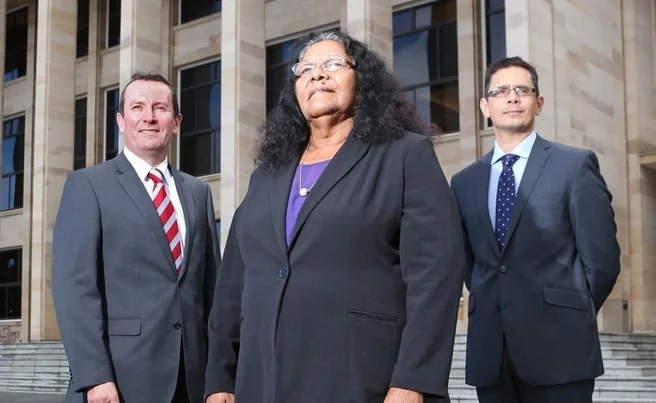
Source: https://www.vwt.org.au/women-for-yes-addre...

Enjoyed this speech? Speakola is a labour of love and I’d be very grateful if you would share, tweet or like it. Thank you.

Facebook Twitter Facebook
In 2020-29 B Tags MARY CROOKS, 2023 REFERENDUM, THE VOICE, VICTORIAN WOMEN'S TRUST, CAMPAIGN LAUNCH, WOMEN FOR YES, INDIGENOUS PEOPLE, INDIGENOUS AUSTRALIANS, CONSTITUTION
Comment

Donald Trump: 'This monument will never be desecrated', Independence Day speech - 2020

December 28, 2020

Well, thank you very much.  And Governor Noem, Secretary Bernhardt — very much appreciate it — members of Congress, distinguished guests, and a very special hello to South Dakota.  (Applause.)

As we begin this Fourth of July weekend, the First Lady and I wish each and every one of you a very, very Happy Independence Day.  Thank you.  (Applause.)

Let us show our appreciation to the South Dakota Army and Air National Guard, and the U.S. Air Force for inspiring us with that magnificent display of American air power — (applause) –and of course, our gratitude, as always, to the legendary and very talented Blue Angels.  Thank you very much.  (Applause.)

Let us also send our deepest thanks to our wonderful veterans, law enforcement, first responders, and the doctors, nurses, and scientists working tirelessly to kill the virus.  They’re working hard.  (Applause.)  I want to thank them very, very much.

We’re grateful as well to your state’s Congressional delegation: Senators John Thune — John, thank you very much — (applause) — Senator Mike Rounds — (applause) — thank you, Mike — and Dusty Johnson, Congressman.  Hi, Dusty.  Thank you.  (Applause.)  And all others with us tonight from Congress, thank you very much for coming.  We appreciate it.

There could be no better place to celebrate America’s independence than beneath this magnificent, incredible, majestic mountain and monument to the greatest Americans who have ever lived.

Today, we pay tribute to the exceptional lives and extraordinary legacies of George Washington, Thomas Jefferson, Abraham Lincoln, and Teddy Roosevelt.  (Applause.)  I am here as your President to proclaim before the country and before the world: This monument will never be desecrated — (applause) — these heroes will never be defaced, their legacy will never, ever be destroyed, their achievements will never be forgotten, and Mount Rushmore will stand forever as an eternal tribute to our forefathers and to our freedom.  (Applause.)

AUDIENCE:  USA!  USA!  USA!

THE PRESIDENT:  We gather tonight to herald the most important day in the history of nations: July 4th, 1776.  At those words, every American heart should swell with pride.  Every American family should cheer with delight.  And every American patriot should be filled with joy, because each of you lives in the most magnificent country in the history of the world, and it will soon be greater than ever before.  (Applause.)

Our Founders launched not only a revolution in government, but a revolution in the pursuit of justice, equality, liberty, and prosperity.  No nation has done more to advance the human condition than the United States of America.  And no people have done more to promote human progress than the citizens of our great nation.  (Applause.)

It was all made possible by the courage of 56 patriots who gathered in Philadelphia 244 years ago and signed the Declaration of Independence.  (Applause.)  They enshrined a divine truth that changed the world forever when they said: “…all men are created equal.”

These immortal words set in motion the unstoppable march of freedom.  Our Founders boldly declared that we are all endowed with the same divine rights — given [to] us by our Creator in Heaven.  And that which God has given us, we will allow no one, ever, to take away — ever.  (Applause.)

Seventeen seventy-six represented the culmination of thousands of years of western civilization and the triumph not only of spirit, but of wisdom, philosophy, and reason.

And yet, as we meet here tonight, there is a growing danger that threatens every blessing our ancestors fought so hard for, struggled, they bled to secure.

Our nation is witnessing a merciless campaign to wipe out our history, defame our heroes, erase our values, and indoctrinate our children.

AUDIENCE:  Booo —

THE PRESIDENT:  Angry mobs are trying to tear down statues of our Founders, deface our most sacred memorials, and unleash a wave of violent crime in our cities.  Many of these people have no idea why they are doing this, but some know exactly what they are doing.  They think the American people are weak and soft and submissive.  But no, the American people are strong and proud, and they will not allow our country, and all of its values, history, and culture, to be taken from them.  (Applause.)

AUDIENCE:  USA!  USA!  USA!

THE PRESIDENT:   One of their political weapons is “Cancel Culture” — driving people from their jobs, shaming dissenters, and demanding total submission from anyone who disagrees.  This is the very definition of totalitarianism, and it is completely alien to our culture and our values, and it has absolutely no place in the United States of America.  (Applause.)  This attack on our liberty, our magnificent liberty, must be stopped, and it will be stopped very quickly.  We will expose this dangerous movement, protect our nation’s children, end this radical assault, and preserve our beloved American way of life.  (Applause.)

In our schools, our newsrooms, even our corporate boardrooms, there is a new far-left fascism that demands absolute allegiance.  If you do not speak its language, perform its rituals, recite its mantras, and follow its commandments, then you will be censored, banished, blacklisted, persecuted, and punished.  It’s not going to happen to us.  (Applause.)

Make no mistake: this left-wing cultural revolution is designed to overthrow the American Revolution.  In so doing, they would destroy the very civilization that rescued billions from poverty, disease, violence, and hunger, and that lifted humanity to new heights of achievement, discovery, and progress.

To make this possible, they are determined to tear down every statue, symbol, and memory of our national heritage.

AUDIENCE MEMBER:  Not on my watch!  (Applause.)

THE PRESIDENT:  True.  That’s very true, actually.  (Laughter.)  That is why I am deploying federal law enforcement to protect our monuments, arrest the rioters, and prosecute offenders to the fullest extent of the law.  (Applause.)

AUDIENCE:  Four more years!  Four more years!  Four more years!

THE PRESIDENT:  I am pleased to report that yesterday, federal agents arrested the suspected ringleader of the attack on the statue of Andrew Jackson in Washington, D.C. — (applause) — and, in addition, hundreds more have been arrested.  (Applause.)

Under the executive order I signed last week — pertaining to the Veterans’ Memorial Preservation and Recognition Act and other laws — people who damage or deface federal statues or monuments will get a minimum of 10 years in prison.  (Applause.)  And obviously, that includes our beautiful Mount Rushmore.  (Applause.)

Our people have a great memory.  They will never forget the destruction of statues and monuments to George Washington, Abraham Lincoln, Ulysses S. Grant, abolitionists, and many others.

The violent mayhem we have seen in the streets of cities that are run by liberal Democrats, in every case, is the predictable result of years of extreme indoctrination and bias in education, journalism, and other cultural institutions.

Against every law of society and nature, our children are taught in school to hate their own country, and to believe that the men and women who built it were not heroes, but that were villains.  The radical view of American history is a web of lies — all perspective is removed, every virtue is obscured, every motive is twisted, every fact is distorted, and every flaw is magnified until the history is purged and the record is disfigured beyond all recognition.

This movement is openly attacking the legacies of every person on Mount Rushmore.  They defile the memory of Washington, Jefferson, Lincoln, and Roosevelt.  Today, we will set history and history’s record straight.  (Applause.)

Before these figures were immortalized in stone, they were American giants in full flesh and blood, gallant men whose intrepid deeds unleashed the greatest leap of human advancement the world has ever known.  Tonight, I will tell you and, most importantly, the youth of our nation, the true stories of these great, great men.

From head to toe, George Washington represented the strength, grace, and dignity of the American people.  From a small volunteer force of citizen farmers, he created the Continental Army out of nothing and rallied them to stand against the most powerful military on Earth.

Through eight long years, through the brutal winter at Valley Forge, through setback after setback on the field of battle, he led those patriots to ultimate triumph.  When the Army had dwindled to a few thousand men at Christmas of 1776, when defeat seemed absolutely certain, he took what remained of his forces on a daring nighttime crossing of the Delaware River.

They marched through nine miles of frigid darkness, many without boots on their feet, leaving a trail of blood in the snow.  In the morning, they seized victory at Trenton.  After forcing the surrender of the most powerful empire on the planet at Yorktown, General Washington did not claim power, but simply returned to Mount Vernon as a private citizen.

When called upon again, he presided over the Constitutional Convention in Philadelphia, and was unanimously elected our first President.  (Applause.)  When he stepped down after two terms, his former adversary King George called him “the greatest man of the age.”  He remains first in our hearts to this day.  For as long as Americans love this land, we will honor and cherish the father of our country, George Washington.  (Applause.)  He will never be removed, abolished, and most of all, he will never be forgotten.  (Applause.)

Thomas Jefferson — the great Thomas Jefferson — was 33 years old when he traveled north to Pennsylvania and brilliantly authored one of the greatest treasures of human history, the Declaration of Independence.  He also drafted Virginia’s constitution, and conceived and wrote the Virginia Statute for Religious Freedom, a model for our cherished First Amendment.

After serving as the first Secretary of State, and then Vice President, he was elected to the Presidency.  He ordered American warriors to crush the Barbary pirates, he doubled the size of our nation with the Louisiana Purchase, and he sent the famous explorers Lewis and Clark into the west on a daring expedition to the Pacific Ocean.

He was an architect, an inventor, a diplomat, a scholar, the founder of one of the world’s great universities, and an ardent defender of liberty.  Americans will forever admire the author of American freedom, Thomas Jefferson.  (Applause.)  And he, too, will never, ever be abandoned by us.  (Applause.)

Abraham Lincoln, the savior of our union, was a self-taught country lawyer who grew up in a log cabin on the American frontier.

The first Republican President, he rose to high office from obscurity, based on a force and clarity of his anti-slavery convictions.  Very, very strong convictions.

He signed the law that built the Transcontinental Railroad; he signed the Homestead Act, given to some incredible scholars — as simply defined, ordinary citizens free land to settle anywhere in the American West; and he led the country through the darkest hours of American history, giving every ounce of strength that he had to ensure that government of the people, by the people, and for the people did not perish from this Earth.  (Applause.)

He served as Commander-in-Chief of the U.S. Armed Forces during our bloodiest war, the struggle that saved our union and extinguished the evil of slavery.  Over 600,000 died in that war; more than 20,000 were killed or wounded in a single day at Antietam.  At Gettysburg, 157 years ago, the Union bravely withstood an assault of nearly 15,000 men and threw back Pickett’s charge.

Lincoln won the Civil War; he issued the Emancipation Proclamation; he led the passage of the 13th Amendment, abolishing slavery for all time — (applause) — and ultimately, his determination to preserve our nation and our union cost him his life.  For as long as we live, Americans will uphold and revere the immortal memory of President Abraham Lincoln.  (Applause.)

Theodore Roosevelt exemplified the unbridled confidence of our national culture and identity.  He saw the towering grandeur of America’s mission in the world and he pursued it with overwhelming energy and zeal.

As a Lieutenant Colonel during the Spanish-American War, he led the famous Rough Riders to defeat the enemy at San Juan Hill.  He cleaned up corruption as Police Commissioner of New York City, then served as the Governor of New York, Vice President, and at 42 years old, became the youngest-ever President of the United States.  (Applause.)

He sent our great new naval fleet around the globe to announce America’s arrival as a world power.  He gave us many of our national parks, including the Grand Canyon; he oversaw the construction of the awe-inspiring Panama Canal; and he is the only person ever awarded both the Nobel Peace Prize and the Congressional Medal of Honor.  He was — (applause) — American freedom personified in full.  The American people will never relinquish the bold, beautiful, and untamed spirit of Theodore Roosevelt.  (Applause.)

No movement that seeks to dismantle these treasured American legacies can possibly have a love of America at its heart.  Can’t have it.  No person who remains quiet at the destruction of this resplendent heritage can possibly lead us to a better future.

The radical ideology attacking our country advances under the banner of social justice.  But in truth, it would demolish both justice and society.  It would transform justice into an instrument of division and vengeance, and it would turn our free and inclusive society into a place of repression, domination, and exclusion.

They want to silence us, but we will not be silenced.  (Applause.)

AUDIENCE:  USA!  USA!  USA!

AUDIENCE MEMBER:  We love you!

THE PRESIDENT:  Thank you.  Thank you very much.  Thank you very much.

We will state the truth in full, without apology:  We declare that the United States of America is the most just and exceptional nation ever to exist on Earth.

We are proud of the fact — (applause) — that our country was founded on Judeo-Christian principles, and we understand — (applause) — that these values have dramatically advanced the cause of peace and justice throughout the world.

We know that the American family is the bedrock of American life.  (Applause.)

We recognize the solemn right and moral duty of every nation to secure its borders.  (Applause.)  And we are building the wall.  (Applause.)

We remember that governments exist to protect the safety and happiness of their own people.  A nation must care for its own citizens first.  We must take care of America first.  It’s time.  (Applause.)

We believe in equal opportunity, equal justice, and equal treatment for citizens of every race, background, religion, and creed.  Every child, of every color — born and unborn — is made in the holy image of God.  (Applause.)

We want free and open debate, not speech codes and cancel culture.

We embrace tolerance, not prejudice.

We support the courageous men and women of law enforcement.  (Applause.)  We will never abolish our police or our great Second Amendment, which gives us the right to keep and bear arms.  (Applause.)

We believe that our children should be taught to love their country, honor our history, and respect our great American flag.  (Applause.)

We stand tall, we stand proud, and we only kneel to Almighty God.  (Applause.)

This is who we are.  This is what we believe.  And these are the values that will guide us as we strive to build an even better and greater future.

Those who seek to erase our heritage want Americans to forget our pride and our great dignity, so that we can no longer understand ourselves or America’s destiny.  In toppling the heroes of 1776, they seek to dissolve the bonds of love and loyalty that we feel for our country, and that we feel for each other.  Their goal is not a better America, their goal is the end of America.

AUDIENCE:  Booo —

THE PRESIDENT:  In its place, they want power for themselves.  But just as patriots did in centuries past, the American people will stand in their way — and we will win, and win quickly and with great dignity.  (Applause.)

We will never let them rip America’s heroes from our monuments, or from our hearts.  By tearing down Washington and Jefferson, these radicals would tear down the very heritage for which men gave their lives to win the Civil War; they would erase the memory that inspired those soldiers to go to their deaths, singing these words of the Battle Hymn of the Republic: “As He died to make men Holy, let us die to make men free, while God is marching on.”  (Applause.)

They would tear down the principles that propelled the abolition of slavery in America and, ultimately, around the world, ending an evil institution that had plagued humanity for thousands and thousands of years.  Our opponents would tear apart the very documents that Martin Luther King used to express his dream, and the ideas that were the foundation of the righteous movement for Civil Rights.  They would tear down the beliefs, culture, and identity that have made America the most vibrant and tolerant society in the history of the Earth.

My fellow Americans, it is time to speak up loudly and strongly and powerfully and defend the integrity of our country.  (Applause.)

AUDIENCE:  USA!  USA!  USA!

THE PRESIDENT:  It is time for our politicians to summon the bravery and determination of our American ancestors.  It is time.  (Applause.)  It is time to plant our flag and protect the greatest of this nation, for citizens of every race, in every city, and every part of this glorious land.  For the sake of our honor, for the sake of our children, for the sake of our union, we must protect and preserve our history, our heritage, and our great heroes.  (Applause.)

Here tonight, before the eyes of our forefathers, Americans declare again, as we did 244 years ago: that we will not be tyrannized, we will not be demeaned, and we will not be intimidated by bad, evil people.  It will not happen.  (Applause.)

AUDIENCE:  USA!  USA!  USA!

THE PRESIDENT:  We will proclaim the ideals of the Declaration of Independence, and we will never surrender the spirit and the courage and the cause of July 4th, 1776.

Upon this ground, we will stand firm and unwavering.  In the face of lies meant to divide us, demoralize us, and diminish us, we will show that the story of America unites us, inspires us, includes us all, and makes everyone free.

We must demand that our children are taught once again to see America as did Reverend Martin Luther King, when he said that the Founders had signed “a promissory note” to every future generation.  Dr. King saw that the mission of justice required us to fully embrace our founding ideals.  Those ideals are so important to us — the founding ideals.  He called on his fellow citizens not to rip down their heritage, but to live up to their heritage.  (Applause.)

Above all, our children, from every community, must be taught that to be American is to inherit the spirit of the most adventurous and confident people ever to walk the face of the Earth.

Americans are the people who pursued our Manifest Destiny across the ocean, into the uncharted wilderness, over the tallest mountains, and then into the skies and even into the stars.

We are the country of Andrew Jackson, Ulysses S. Grant, and Frederick Douglass.  We are the land of Wild Bill Hickock and Buffalo Bill Cody.  (Applause.)  We are the nation that gave rise to the Wright Brothers, the Tuskegee Airmen — (applause) — Harriet Tubman, Clara Barton, Jesse Owens, George Patton — General George Patton — the great Louie Armstrong, Alan Shepard, Elvis Presley, and Mohammad Ali.  (Applause.)  And only America could have produced them all.  (Applause.)  No other place.

We are the culture that put up the Hoover Dam, laid down the highways, and sculpted the skyline of Manhattan.  We are the people who dreamed a spectacular dream — it was called: Las Vegas, in the Nevada desert; who built up Miami from the Florida marsh; and who carved our heroes into the face of Mount Rushmore.  (Applause.)

Americans harnessed electricity, split the atom, and gave the world the telephone and the Internet.  We settled the Wild West, won two World Wars, landed American astronauts on the Moon — and one day very soon, we will plant our flag on Mars.

We gave the world the poetry of Walt Whitman, the stories of Mark Twain, the songs of Irving Berlin, the voice of Ella Fitzgerald, the style of Frank Sinatra — (applause) — the comedy of Bob Hope, the power of the Saturn V rocket, the toughness of the Ford F-150 — (applause) — and the awesome might of the American aircraft carriers.

Americans must never lose sight of this miraculous story.  You should never lose sight of it, because nobody has ever done it like we have done it.  So today, under the authority vested in me as President of the United States — (applause) — I am announcing the creation of a new monument to the giants of our past.  I am signing an executive order to establish the National Garden of American Heroes, a vast outdoor park that will feature the statues of the greatest Americans to ever live.  (Applause.)

From this night and from this magnificent place, let us go forward united in our purpose and re-dedicated in our resolve.  We will raise the next generation of American patriots.  We will write the next thrilling chapter of the American adventure.  And we will teach our children to know that they live in a land of legends, that nothing can stop them, and that no one can hold them down.  (Applause.)  They will know that in America, you can do anything, you can be anything, and together, we can achieve anything.  (Applause.)

Uplifted by the titans of Mount Rushmore, we will find unity that no one expected; we will make strides that no one thought possible.  This country will be everything that our citizens have hoped for, for so many years, and that our enemies fear — because we will never forget that American freedom exists for American greatness.  And that’s what we have:  American greatness.  (Applause.)

Centuries from now, our legacy will be the cities we built, the champions we forged, the good we did, and the monuments we created to inspire us all.

My fellow citizens: America’s destiny is in our sights.  America’s heroes are embedded in our hearts.  America’s future is in our hands.  And ladies and gentlemen: the best is yet to come.  (Applause.)

AUDIENCE:  USA!  USA!  USA!

THE PRESIDENT:  This has been a great honor for the First Lady and myself to be with you.  I love your state.  I love this country.  I’d like to wish everybody a very happy Fourth of July.  To all, God bless you, God bless your families, God bless our great military, and God bless America.  Thank you very much.  (Applause.)

Source: https://www.youtube.com/watch?v=mXD4zPY4Ai...

Enjoyed this speech? Speakola is a labour of love and I’d be very grateful if you would share, tweet or like it. Thank you.

Facebook Twitter Facebook
In 2020-29 A Tags DONALD TRUMP, TRANSCRIPT, MOUNT RUSHMORE, INDEPENDENCE DAY, DECLARATION OF INDEPENDENCE, AMERICAN EXCEPTIONALISM, CONSTITUTION
Comment

Babasaheb Ambedkar: 'The Grammar of Anarachy', Speech to Constituent Assembly - 1949

November 22, 2019

25 November 1949, Delhi, India

As much defence as could be offered to the Constitution has been offered by my friends Sir Alladi Krishnaswami Ayyar and Mr T T Krishnamachari, I shall not therefore enter into the merits of the Constitution. Because I feel, however good a Constitution may be, it is sure to turn out bad because those who are called to work it, happen to be a bad lot. However bad a Constitution may be, it may turn out to be good if those who are called to work it, happen to be a good lot. The working of a Constitution does not depend wholly upon the nature of the Constitution. The Constitution can provide only the organs of State such as the Legislature, the Executive and the Judiciary. The factors on which the working of those organs of the State depend are the people and the political parties they will set up as their instruments to carry out their wishes and their politics. Who can say how the people of India and their parties will behave? Will they uphold constitutional methods of achieving their purposes or will they prefer revolutionary methods of achieving them? If they adopt the revolutionary methods, however good the Constitution may be, it requires no prophet to say that it will fail. It is, therefore, futile to pass any judgement upon the Constitution without reference to the part which the people and their parties are likely to play.

The condemnation of the Constitution largely comes from two quarters, the Communist Party and the Socialist Party. Why do they condemn the Constitution? Is it because it is really a bad Constitution? I venture to say ‘no’. The Communist Party want a Constitution based upon the principle of the Dictatorship of the Proletariat. They condemn the Constitution because it is based upon parliamentary democracy. The Socialists want two things. The first thing they want is that if they come in power, the Constitution must give them the freedom to nationalise or socialise all private property without payment of compensation. The second thing that the Socialists want is that the Fundamental Rights mentioned in the Constitution must be absolute and without any limitations so that if their Party fails to come into power, they would have the unfettered freedom not merely to criticise, but also to overthrow the State.

No right to bind succeeding generations
These are the main grounds on which the Constitution is being condemned. I do not say that the principle of parliamentary democracy is the only ideal form of political democracy. I do not say that the principle of no acquisition of private property without compensation is so sacrosanct that there can be no departure from it. I do not say that Fundamental Rights can never be absolute and the limitations set upon them can never be lifted. What I do say is that the principles embodied in the Constitution are the views of the present generation or if you think this to be an over-statement, I say they are the views of the members of the Constituent Assembly. Why blame the Drafting Committee for embodying them in the Constitution? I say why blame even the Members of the Constituent Assembly? Jefferson, the great American statesman who played so great a part in the making of the American constitution, has expressed some very weighty views which makers of Constitution, can never afford to ignore. In one place he has said:

“We may consider each generation as a distinct nation, with a right, by the will of the majority, to bind themselves, but none to bind the succeeding generation, more than the inhabitants of another country.”

In another place, he has said:

“The idea that institutions established for the use of the nation cannot be touched or modified, even to make them answer their end, because of rights gratuitously supposed in those employed to manage them in the trust for the public, may perhaps be a salutary provision against the abuses of a monarch, but is most absurd against the nation itself. Yet our lawyers and priests generally inculcate this doctrine, and suppose that preceding generations held the earth more freely than we do; had a right to impose laws on us, unalterable by ourselves, and that we, in the like manner, can make laws and impose burdens on future generations, which they will have no right to alter; in fine, that the earth belongs to the dead and not the living;”


I admit that what Jefferson has said is not merely true, but is absolutely true. There can be no question about it. Had the Constituent Assembly departed from this principle laid down by Jefferson it would certainly be liable to blame, even to condemnation. But I ask, has it? Quite the contrary. One has only to examine the provision relating to the amendment of the Constitution…I challenge any of the critics of the Constitution to prove that any Constituent Assembly anywhere in the world has, in the circumstances in which this country finds itself, provided such a facile procedure for the amendment of the Constitution. If those who are dissatisfied with the Constitution have only to obtain a 2/3 majority and if they cannot obtain even a two-thirds majority in the parliament elected on adult franchise in their favour, their dissatisfaction with the Constitution cannot be deemed to be shared by the general public.

The danger of divisive politics
[But] my mind is so full of the future of our country that I feel I ought to take this occasion to give expression to some of my reflections thereon. On 26th January 1950, India will be an independent country. What would happen to her independence? Will she maintain her independence or will she lose it again? This is the first thought that comes to my mind. It is not that India was never an independent country. The point is that she once lost the independence she had. Will she lose it a second time? It is this thought which makes me most anxious for the future. What perturbs me greatly is the fact that not only India has once before lost her independence, but she lost it by the infidelity and treachery of some of her own people. In the invasion of Sind by Mahommed-Bin-Kasim, the military commanders of King Dahar accepted bribes from the agents of Mahommed-Bin-Kasim and refused to fight on the side of their king. It was Jaichand who invited Mahommed Ghori to invade India and fight against Prithvi Raj and promised him the help of himself and the Solanki kings. When Shivaji was fighting for the liberation of Hindus, the other Maratha noblemen and the Rajput kings were fighting the battle on the side of Mughul Emperors. When the British were trying to destroy the Sikh Rulers, Gulab Singh, their principal commander sat silent and did not help to save the Sikh Kingdom. In 1857, when a large part of India had declared a war of independence against the British, the Sikhs stood and watched the event as silent spectators.

Will history repeat itself? It is this thought which fills me with anxiety. This anxiety is deepened by the realisation of the fact that in addition to our old enemies in the form of castes and creeds we are going to have many political parties with diverse and opposing political creeds. Will Indians place the country above their creed or will they place creed above country? I do not know. But this much is certain that if the parties place creed above country, our independence will be put in jeopardy a second time and probably be lost for ever. This eventuality we must all resolutely guard against. We must be determined to defend our independence with the last drop of our blood.

The importance of constitutional methods
On the 26th of January 1950, India would be a democratic country in the sense that India from that day would have a government of the people, by the people and for the people. The same thought comes to my mind. What would happen to her democratic Constitution? Will she be able to maintain it or will she lose it again. This is the second thought that comes to my mind and makes me as anxious as the first.

It is not that India did not know what is democracy. There was a time when India was studded with republics, and even where there were monarchies, they were either elected or limited. They were never absolute. It is not that India did not know Parliaments or parliamentary procedure. A study of the Buddhist Bhikshu Sanghas discloses that not only there were Parliaments—for the Sanghas were nothing but Parliaments—but the Sanghas knew and observed all the rules of parliamentary procedure known to modern times…Although these rules of parliamentary procedure were applied by the Buddha to the meetings of the Sanghas, he must have borrowed them from the rules of the political assemblies functioning in the country in his time.

This democratic system India lost. Will she lose it a second time? I do not know. But it is quite possible in a country like India—where democracy from its long disuse must be regarded as something quite new—there is danger of democracy giving place to dictatorship. It is quite possible for this new born democracy to retain its form but give place to dictatorship in fact. If there is a landslide, the danger of the second possibility becoming actuality is much greater.

If we wish to maintain democracy not merely in form, but also in fact, what must we do? The first thing in my judgement we must do is to hold fast to constitutional methods of achieving our social and economic objectives. It means we must abandon the bloody methods of revolution. It means that we must abandon the method of civil disobedience, non-cooperation and satyagraha. When there was no way left for constitutional methods for achieving economic and social objectives, there was a great deal of justification for unconstitutional methods. But where constitutional methods are open, there can be no justification for these unconstitutional methods. These methods are nothing but the Grammar of Anarchy and the sooner they are abandoned, the better for us.

The politics of pedestals
The second thing we must do is to observe the caution which John Stuart Mill has given to all who are interested in the maintenance of democracy, namely, not “to lay their liberties at the feet of even a great man, or to trust him with power which enable him to subvert their institutions.” There is nothing wrong in being grateful to great men who have rendered life-long services to the country. But there are limits to gratefulness. As has been well said by the Irish Patriot Daniel O’Connel, no man can be grateful at the cost of his honour, no woman can be grateful at the cost of her chastity and no nation can be grateful at the cost of its liberty. This caution is far more necessary in the case of India than in the case of any other country. For in India, Bhakti or what may be called the path of devotion or hero-worship, plays a part in its politics unequalled in magnitude by the part it plays in the politics of any other country in the world. Bhakti in religion may be a road to the salvation of the soul. But in politics, Bhakti or hero-worship is a sure road to degradation and to eventual dictatorship.

Social democracy
The third thing we must do is not to be content with mere political democracy. We must make our political democracy a social democracy as well. Political democracy cannot last unless there lies at the base of it social democracy. What does social democracy mean? It means a way of life which recognises liberty, equality and fraternity as the principles of life. These principles of liberty, equality and fraternity are not to be treated as separate items in a trinity. They form a union of trinity in the sense that to divorce one from the other is to defeat the very purpose of democracy. Liberty cannot be divorced from equality, equality cannot be divorced from liberty. Nor can liberty and equality be divorced from fraternity. Without equality, liberty would produce the supremacy of the few over the many. Equality without liberty would kill individual initiative. Without fraternity, liberty would produce the supremacy of the few over the many. Equality without liberty would kill individual initiative. Without fraternity, liberty and equality could not become a natural course of things. It would require a constable to enforce them.

We must begin by acknowledging the fact that there is complete absence of two things in Indian society. One of these is equality. On the social plane, we have in India a society based on the principle of graded inequality which we have a society in which there are some who have immense wealth as against many who live in abject poverty. On the 26th of January 1950, we are going to enter into a life of contradictions. In politics we will have equality and in social and economic life we will have inequality. In politics we will be recognising the principle of one man one vote and one vote one value. In our social and economic life, we shall, by reason of our social and economic structure, continue to deny the principle of one man one value. How long shall we continue to live this life of contradictions? How long shall we continue to deny equality in our social and economic life? If we continue to deny it for long, we will do so only by putting our political democracy in peril. We must remove this contradiction at the earliest possible moment or else those who suffer from inequality will blow up the structure of political democracy which this Assembly has to laboriously built up.

The second thing we are wanting in is recognition of the principle of fraternity. What does fraternity mean? Fraternity means a sense of common brotherhood of all Indians-if Indians being one people. It is the principle which gives unity and solidarity to social life. It is a difficult thing to achieve…

To build a nation
I remember the days when politically-minded Indians, resented the expression “the people of India”. They preferred the expression “the Indian nation.” I am of opinion that in believing that we are a nation, we are cherishing a great delusion. How can people divided into several thousands of castes be a nation? The sooner we realise that we are not as yet a nation in the social and psychological sense of the world, the better for us. For then only we shall realise the necessity of becoming a nation and seriously think of ways and means of realising the goal. The realisation of this goal is going to be very difficult…The castes are anti-national. In the first place because they bring about separation in social life. They are anti-national also because they generate jealousy and antipathy between caste and caste. But we must overcome all these difficulties if we wish to become a nation in reality. For fraternity can be a fact only when there is a nation. Without fraternity, equality and liberty will be no deeper than coats of paint.

These are my reflections about the tasks that lie ahead of us. They may not be very pleasant to some. But there can be no gainsaying that political power in this country has too long been the monopoly of a few and the many are only beasts of burden, but also beasts of prey. This monopoly has not merely deprived them of their chance of betterment, it has sapped them of what may be called the significance of life. These down-trodden classes are tired of being governed. They are impatient to govern themselves. This urge for self-realisation in the down-trodden classes must not be allowed to devolve into a class struggle or class war. It would lead to a division of the House. That would indeed be a day of disaster. For, as has been well said by Abraham Lincoln, a House divided against itself cannot stand very long. Therefore the sooner room is made for the realisation of their aspiration, the better for the few, the better for the country, the better for the maintenance for its independence and the better for the continuance of its democratic structure. This can only be done by the establishment of equality and fraternity in all spheres of life. That is why I have laid so much stresses on them.

I do not wish to weary the House any further. Independence is no doubt a matter of joy. But let us not forget that this independence has thrown on us great responsibilities. By independence, we have lost the excuse of blaming the British for anything going wrong. If hereafter things go wrong, we will have nobody to blame except ourselves. There is great danger of things going wrong. Times are fast changing. People including our own are being moved by new ideologies. They are getting tired of Government by the people. They are prepared to have Governments for the people and are indifferent whether it is Government of the people and by the people. If we wish to preserve the Constitution in which we have sought to enshrine the principle of Government of the people, for the people and by the people, let us resolve not to be tardy in the recognition of the evils that lie across our path and which induce people to prefer Government for the people to Government by the people, nor to be weak in our initiative to remove them. That is the only way to serve the country. I know of no better.?

Source: http://pragati.nationalinterest.in/2010/08...

Enjoyed this speech? Speakola is a labour of love and I’d be very grateful if you would share, tweet or like it. Thank you.

Facebook Twitter Facebook
In 1940-59 C Tags BABASAHEB AMBEDKAR, DR AMBEDKAR, TRANSCRIPT, THE GRAMMAR OF ANARCHY, INDIA, INDEPENDENCE, CONSTITUTION
2 Comments

Barbara Jordan: 'Today I am an inquisitor', on impeachment - 1974

April 28, 2017

25 July 1975, Judiciary Committee, Congress, Washington DC, USA

Thank you, Mr. Chairman.

Mr. Chairman, I join my colleague Mr. Rangel in thanking you for giving the junior members of this committee the glorious opportunity of sharing the pain of this inquiry. Mr. Chairman, you are a strong man, and it has not been easy but we have tried as best we can to give you as much assistance as possible.

Earlier today, we heard the beginning of the Preamble to the Constitution of the United States: "We, the people." It's a very eloquent beginning. But when that document was completed on the seventeenth of September in 1787, I was not included in that "We, the people." I felt somehow for many years that George Washington and Alexander Hamilton just left me out by mistake. But through the process of amendment, interpretation, and court decision, I have finally been included in "We, the people."

Today I am an inquisitor. An hyperbole would not be fictional and would not overstate the solemnness that I feel right now. My faith in the Constitution is whole; it is complete; it is total. And I am not going to sit here and be an idle spectator to the diminution, the subversion, the destruction, of the Constitution.

"Who can so properly be the inquisitors for the nation as the representatives of the nation themselves?" "The subjects of its jurisdiction are those offenses which proceed from the misconduct of public men."1 And that's what we're talking about. In other words, [the jurisdiction comes] from the abuse or violation of some public trust.

It is wrong, I suggest, it is a misreading of the Constitution for any member here to assert that for a member to vote for an article of impeachment means that that member must be convinced that the President should be removed from office. The Constitution doesn't say that. The powers relating to impeachment are an essential check in the hands of the body of the Legislature against and upon the encroachments of the Executive. The division between the two branches of the Legislature, the House and the Senate, assigning to the one the right to accuse and to the other the right to judge, the Framers of this Constitution were very astute. They did not make the accusers and the judgers -- and the judges the same person.

We know the nature of impeachment. We've been talking about it awhile now. It is chiefly designed for the President and his high ministers to somehow be called into account. It is designed to "bridle" the Executive if he engages in excesses. "It is designed as a method of national inquest into the conduct of public men."² The Framers confided in the Congress the power if need be, to remove the President in order to strike a delicate balance between a President swollen with power and grown tyrannical, and preservation of the independence of the Executive.

The nature of impeachment: a narrowly channeled exception to the separation-of-powers maxim.  The Federal Convention of 1787 said that. It limited impeachment to high crimes and misdemeanors and discounted and opposed the term "maladministration." "It is to be used only for great misdemeanors," so it was said in the North Carolina ratification convention. And in the Virginia ratification convention: "We do not trust our liberty to a particular branch. We need one branch to check the other."

"No one need be afraid" -- the North Carolina ratification convention -- "No one need be afraid that officers who commit oppression will pass with immunity." "Prosecutions of impeachments will seldom fail to agitate the passions of the whole community," said Hamilton in the Federalist Papers, number 65. "We divide into parties more or less friendly or inimical to the accused."³ I do not mean political parties in that sense.

The drawing of political lines goes to the motivation behind impeachment; but impeachment must proceed within the confines of the constitutional term "high crime[s] and misdemeanors." Of the impeachment process, it was Woodrow Wilson who said that "Nothing short of the grossest offenses against the plain law of the land will suffice to give them speed and effectiveness. Indignation so great as to overgrow party interest may secure a conviction; but nothing else can."

Common sense would be revolted if we engaged upon this process for petty reasons. Congress has a lot to do: Appropriations, Tax Reform, Health Insurance, Campaign Finance Reform, Housing, Environmental Protection, Energy Sufficiency, Mass Transportation. Pettiness cannot be allowed to stand in the face of such overwhelming problems. So today we are not being petty. We are trying to be big, because the task we have before us is a big one.

This morning, in a discussion of the evidence, we were told that the evidence which purports to support the allegations of misuse of the CIA by the President is thin. We're told that that evidence is insufficient. What that recital of the evidence this morning did not include is what the President did know on June the 23rd, 1972.

The President did know that it was Republican money, that it was money from the Committee for the Re-Election of the President, which was found in the possession of one of the burglars arrested on June the 17th. What the President did know on the 23rd of June was the prior activities of E. Howard Hunt, which included his participation in the break-in of Daniel Ellsberg's psychiatrist, which included Howard Hunt's participation in the Dita Beard ITT affair, which included Howard Hunt's fabrication of cables designed to discredit the Kennedy Administration.

We were further cautioned today that perhaps these proceedings ought to be delayed because certainly there would be new evidence forthcoming from the President of the United States. There has not even been an obfuscated indication that this committee would receive any additional materials from the President. The committee subpoena is outstanding, and if the President wants to supply that material, the committee sits here. The fact is that on yesterday, the American people waited with great anxiety for eight hours, not knowing whether their President would obey an order of the Supreme Court of the United States.

At this point, I would like to juxtapose a few of the impeachment criteria with some of the actions the President has engaged in. Impeachment criteria: James Madison, from the Virginia ratification convention. "If the President be connected in any suspicious manner with any person and there be grounds to believe that he will shelter him, he may be impeached."

We have heard time and time again that the evidence reflects the payment to defendants money. The President had knowledge that these funds were being paid and these were funds collected for the 1972 presidential campaign. We know that the President met with Mr. Henry Petersen 27 times to discuss matters related to Watergate, and immediately thereafter met with the very persons who were implicated in the information Mr. Petersen was receiving. The words are: "If the President is connected in any suspicious manner with any person and there be grounds to believe that he will shelter that person, he may be impeached."

Justice Story: "Impeachment" is attended -- "is intended for occasional and extraordinary cases where a superior power acting for the whole people is put into operation to protect their rights and rescue their liberties from violations." We know about the Huston plan. We know about the break-in of the psychiatrist's office. We know that there was absolute complete direction on September 3rd when the President indicated that a surreptitious entry had been made in Dr. Fielding's office, after having met with Mr. Ehrlichman and Mr. Young. "Protect their rights." "Rescue their liberties from violation."

The Carolina ratification convention impeachment criteria: those are impeachable "who behave amiss or betray their public trust."4 Beginning shortly after the Watergate break-in and continuing to the present time, the President has engaged in a series of public statements and actions designed to thwart the lawful investigation by government prosecutors. Moreover, the President has made public announcements and assertions bearing on the Watergate case, which the evidence will show he knew to be false. These assertions, false assertions, impeachable, those who misbehave. Those who "behave amiss or betray the public trust."

James Madison again at the Constitutional Convention: "A President is impeachable if he attempts to subvert the Constitution." The Constitution charges the President with the task of taking care that the laws be faithfully executed, and yet the President has counseled his aides to commit perjury, willfully disregard the secrecy of grand jury proceedings, conceal surreptitious entry, attempt to compromise a federal judge, while publicly displaying his cooperation with the processes of criminal justice. "A President is impeachable if he attempts to subvert the Constitution."

If the impeachment provision in the Constitution of the United States will not reach the offenses charged here, then perhaps that 18th-century Constitution should be abandoned to a 20th-century paper shredder!

Has the President committed offenses, and planned, and directed, and acquiesced in a course of conduct which the Constitution will not tolerate? That's the question. We know that. We know the question. We should now forthwith proceed to answer the question. It is reason, and not passion, which must guide our deliberations, guide our debate, and guide our decision.

I yield back the balance of my time, Mr. Chairman.

Source: http://www.americanrhetoric.com/speeches/b...

Enjoyed this speech? Speakola is a labour of love and I’d be very grateful if you would share, tweet or like it. Thank you.

Facebook Twitter Facebook
In 1960-79 B Tags BARBARA JORDAN, TRANSCRIPT, CONSTITUTION, USA, RICHARD NIXON, ARTICLES OF IMPEACHMENT, IMPEACHMENT
Comment

Thabo Mbeki: 'I am an African', On adoption of new South African Constitution - 1996

February 9, 2016

8 May 1996, Cape Town, South Africa

I am an African.

I owe by being to the hills and the valleys, the mountains and the glades, the rivers, the deserts, the trees, the flowers, the seas and the ever-changing seasons that define the face of our native land.

My body has frozen in our frosts and in our latter day snows. It has thawed in the warmth of our sunshine and melted in the heat of the midday sun. The crack and the rumble of the summer thunders, lashed by startling lightening, have been a cause both of trembling and of hope.

The fragrances of nature have been as pleasant to us as the sight of the wild blooms of the citizens of the veld.

The dramatic shapes of the Drakensberg, the soil-coloured waters of the Lekoa, iGqili noThukela, and the sands of the Kgalagadi, have all been panels of the set on the natural stage on which we act out the foolish deeds of the theatre of our day.

At times, and in fear, I have wondered whether I should concede equal citizenship of our country to the leopard and the lion, the elephant and the springbok, the hyena, the black mamba and the pestilential mosquito.

A human presence among all these, a feature on the face of our native land thus defined, I know that none dare challenge me when I say—I am an African!

I owe my being to the Khoi and the San whose desolate souls haunt the great expanses of the beautiful Cape - they who fell victim to the most merciless genocide our native land has ever seen, they who were the first to lose their lives in the struggle to defend our freedom and dependence and they who, as a people, perished in the result.

Today, as a country, we keep an audible silence about these ancestors of the generations that live, fearful to admit the horror of a former deed, seeking to obliterate from our memories a cruel occurrence which, in its remembering, should teach us not and never to be inhuman again.

I am formed of the migrants who left Europe to find a new home on our native land. Whatever their own actions, they remain still, part of me.

In my veins courses the blood of the Malay slaves who came from the East. Their proud dignity informs my bearing, their culture a part of my essence. The stripes they bore on their bodies from the lash of the slave master are a reminder embossed on my consciousness of what should not be done.

I am the grandchild of the warrior men and women that Hintsa and Sekhukhune led, the patriots that Cetshwayo and Mphephu took to battle, the soldiers Moshoeshoe and Ngungunyane taught never to dishonour the cause of freedom.

My mind and my knowledge of myself is formed by the victories that are the jewels in our African crown, the victories we earned from Isandhlwana to Khartoum, as Ethiopians and as the Ashanti of Ghana, as the Berbers of the desert.

I am the grandchild who lays fresh flowers on the Boer graves at St Helena and the Bahamas, who sees in the mind's eye and suffers the suffering of a simple peasant folk, death, concentration camps, destroyed homesteads, a dream in ruins.

I am the child of Nongqause. I am he who made it possible to trade in the world markets in diamonds, in gold, in the same food for which my stomach yearns.

I come of those who were transported from India and China, whose being resided in the fact, solely, that they were able to provide physical labour, who taught me that we could both be at home and be foreign, who taught me that human existence itself demanded that freedom was a necessary condition for that human existence.

Being part of all these people, and in the knowledge that none dare contest that assertion, I shall claim that - I am an African.

I have seen our country torn asunder as these, all of whom are my people, engaged one another in a titanic battle, the one redress a wrong that had been caused by one to another and the other, to defend the indefensible.

I have seen what happens when one person has superiority of force over another, when the stronger appropriate to themselves the prerogative even to annul the injunction that God created all men and women in His image.

I know what if signifies when race and colour are used to determine who is human and who, sub-human.

I have seen the destruction of all sense of self-esteem, the consequent striving to be what one is not, simply to acquire some of the benefits which those who had improved themselves as masters had ensured that they enjoy.

I have experience of the situation in which race and colour is used to enrich some and impoverish the rest.

I have seen the corruption of minds and souls as (word not readable) of the pursuit of an ignoble effort to perpetrate a veritable crime against humanity.

I have seen concrete expression of the denial of the dignity of a human being emanating from the conscious, systemic and systematic oppressive and repressive activities of other human beings.

There the victims parade with no mask to hide the brutish reality - the beggars, the prostitutes, the street children, those who seek solace in substance abuse, those who have to steal to assuage hunger, those who have to lose their sanity because to be sane is to invite pain.

Perhaps the worst among these, who are my people, are those who have learnt to kill for a wage. To these the extent of death is directly proportional to their personal welfare.

And so, like pawns in the service of demented souls, they kill in furtherance of the political violence in KwaZulu-Natal. They murder the innocent in the taxi wars.

They kill slowly or quickly in order to make profits from the illegal trade in narcotics. They are available for hire when husband wants to murder wife and wife, husband.

Among us prowl the products of our immoral and amoral past - killers who have no sense of the worth of human life, rapists who have absolute disdain for the women of our country, animals who would seek to benefit from the vulnerability of the children, the disabled and the old, the rapacious who brook no obstacle in their quest for self-enrichment.

All this I know and know to be true because—I am an African!

Because of that, I am also able to state this fundamental truth that I am born of a people who are heroes and heroines.

I am born of a people who would not tolerate oppression.

I am of a nation that would not allow that fear of death, torture, imprisonment, exile or persecution should result in the perpetuation of injustice.

The great masses who are our mother and father will not permit that the behaviour of the few results in the description of our country and people as barbaric.

Patient because history is on their side, these masses do not despair because today the weather is bad. Nor do they turn triumphalist when, tomorrow, the sun shines.

Whatever the circumstances they have lived through and because of that experience, they are determined to define for themselves who they are and who they should be.

We are assembled here today to mark their victory in acquiring and exercising their right to formulate their own definition of what it means to be African.

The constitution whose adoption we celebrate constitutes and unequivocal statement that we refuse to accept that our Africanness shall be defined by our race, colour, gender of historical origins.

It is a firm assertion made by ourselves that South Africa belongs to all who live in it, black and white.

It gives concrete expression to the sentiment we share as Africans, and will defend to the death, that the people shall govern.

It recognises the fact that the dignity of the individual is both an objective which society must pursue, and is a goal which cannot be separated from the material well-being of that individual.

It seeks to create the situation in which all our people shall be free from fear, including the fear of the oppression of one national group by another, the fear of the disempowerment of one social echelon by another, the fear of the use of state power to deny anybody their fundamental human rights and the fear of tyranny.

It aims to open the doors so that those who were disadvantaged can assume their place in society as equals with their fellow human beings without regard to colour, race, gender, age or geographic dispersal.

It provides the opportunity to enable each one and all to state their views, promote them, strive for their implementation in the process of governance without fear that a contrary view will be met with repression.

It creates a law-governed society which shall be inimical to arbitrary rule.

It enables the resolution of conflicts by peaceful means rather than resort to force.

It rejoices in the diversity of our people and creates the space for all of us voluntarily to define ourselves as one people.

As an African, this is an achievement of which I am proud, proud without reservation and proud without any feeling of conceit.

Our sense of elevation at this moment also derives from the fact that this magnificent product is the unique creation of African hands and African minds.

Bit it is also constitutes a tribute to our loss of vanity that we could, despite the temptation to treat ourselves as an exceptional fragment of humanity, draw on the accumulated experience and wisdom of all humankind, to define for ourselves what we want to be.

Together with the best in the world, we too are prone to pettiness, petulance, selfishness and short-sightedness.

But it seems to have happened that we looked at ourselves and said the time had come that we make a super-human effort to be other than human, to respond to the call to create for ourselves a glorious future, to remind ourselves of the Latin saying: Gloria est consequenda—Glory must be sought after!

Today it feels good to be an African.

It feels good that I can stand here as a South African and as a foot soldier of a titanic African army, the African National Congress, to say to all the parties represented here, to the millions who made an input into the processes we are concluding, to our outstanding compatriots who have presided over the birth of our founding document, to the negotiators who pitted their wits one against the other, to the unseen stars who shone unseen as the management and administration of the Constitutional Assembly, the advisers, experts and publicists, to the mass communication media, to our friends across the globe—congratulations and well done!

I am an African.

I am born of the peoples of the continent of Africa.

The pain of the violent conflict that the peoples of Liberia, Somalia, the Sudan, Burundi and Algeria is a pain I also bear.

The dismal shame of poverty, suffering and human degradation of my continent is a blight that we share.

The blight on our happiness that derives from this and from our drift to the periphery of the ordering of human affairs leaves us in a persistent shadow of despair.

This is a savage road to which nobody should be condemned.

This thing that we have done today, in this small corner of a great continent that has contributed so decisively to the evolution of humanity says that Africa reaffirms that she is continuing her rise from the ashes.

Whatever the setbacks of the moment, nothing can stop us now!
Whatever the difficulties, Africa shall be at peace!
However improbable it may sound to the sceptics, Africa will prosper!

Whoever we may be, whatever our immediate interest, however much we carry baggage from our past, however much we have been caught by the fashion of cynicism and loss of faith in the capacity of the people, let us err today and say—nothing can stop us now!


Here is an emotional abridged version overlaid with music and images.

Source: http://www.nathanielturner.com/iamanafrica...

Enjoyed this speech? Speakola is a labour of love and I’d be very grateful if you would share, tweet or like it. Thank you.

Facebook Twitter Facebook
In 1980-99 Tags THABO MBEKI, SOUTH AFRICA, PARLIAMENT, CONSTITUTION
Comment

Josie Farrer: 'We are one step closer to recognition of all Aboriginal people in our State's Constitution' WA Parliament - 2015

August 13, 2015

VIDEO of this speech can be accessed here

17 June, 2015, Parliament House, Perth, WA, Australia

Madam Acting Speaker, I seek leave to pay my respects in the Gidja language, which will contain nothing unparliamentary. I will then provide the house with an English translation.

[Leave granted.]

Ms J. FARRER: Thank you.

[Words spoken in Gidja language — Kilingen jarrak ngenen ngenengka, Noonga-m pe taam warringarrem-pe — ngarri / ngayen kulu kulu ngenan perrem purru marnum.
Ngayen ngarra ngenau Gidja-m warringarrem-pe jijiyilem-pe, ngali ngalem pe of Western Australia.]

In English, I said —
I pay my respects to this land and to the Noongar people, the original inhabitants and traditional custodians of the land on which we meet today.

I also acknowledge my people the Gidja tribe in the East Kimberley, and all the Aboriginal nations of Western Australia.

I stand here today with mixed feelings. I am happy that we are one step closer to recognition of all Aboriginal people in our state’s Constitution. I feel buoyed by the findings of the Joint Select Committee on Aboriginal Constitutional Recognition that my original 2014 bill was correctly drafted. I thank the members of that committee for their hard work and, in particular, for their support of me. I feel encouraged by the indications of bipartisan support from government members for this Constitution Amendment (Recognition of Aboriginal People) Bill 2015 and feel that we are moving closer to us not being timid and reaching out to be magnificent. But there is also a feeling of frustration that it has taken more than a year since I introduced the 2014 version of this bill to get to this point. However, if this new bill is passed, the wait will have been worth it.

The human history of Western Australia commenced between 40 000 and 60 000 years ago with the arrival of Indigenous Australians to our north west coast. My ancestors expanded the range of their settlement to the east and south of the continent. They were visited time and again over the last 500 years or so by your mob, although your history says a white explorer, Dirk Hartog, was the first recorded contact in 1616. Let me make this clear: this is your mob’s version, not my ancestors’ history. I always laugh when some scientist claims to have made a “new” discovery such as a lily, a plant or an animal or some rangeland feature. But seriously, our history, our cultures, will remain separate forever until we recognise who was here first. This is what this bill does. It means that once we have amended the Constitution to recognise the original people who occupied this land—so long ago that we could walk here—our collective history joins at that point and history becomes our history from now on. We can join and walk together—all of us.

As a reminder to members of where this journey has taken us, I introduced the 2014 bill on 11 June 2014. My colleagues and I then began extensive consultation, contacting more than 400 stakeholder groups and receiving feedback that extended into October 2014. On 12 and 19 November we debated that bill in this house. Some members opposite gave expressions of support, for which I congratulate them. However, the Parliament also expressed concern that the bill may not be properly drafted and there may be legal ramifications. On 26 November 2014, this house passed a motion directing the matter to a joint select committee. On 2 December our colleagues in the other place appointed their members to that committee. The committee met through the summer and tabled its report on 26 March this year. The report’s 16 findings concluded that the words in the 2014 bill were a suitable starting point for considering an appropriate form of words for constitutional recognition in Western Australia and recommended some minor amendments to improve readability. The report supported the removal of section 42 of the Constitution Act 1889 (WA). In addition, the report recommended the amendment of section 75 to remove the definition of the Aborigines Protection Board. The report found that the continued presence of these spent provisions within the Constitution Act 1889 would be inappropriate and inconsistent with the spirit of reconciliation inherent in a statement of recognition by the Parliament.

The report contains two recommendations: first, some minor amendments to the 2014 bill’s wording for the Constitution Act 1889 preamble; and, second, that the 2014 bill appears to be an option available to the Parliament should it wish to consider a bill to recognise Aboriginal people in the Constitution Act 1889 (WA).

I would just like to say that the Constitution was formed back in 1889. My mother’s grandmother, her dad’s mother, was alive then. So we have had 126 years to be the subjects of this Constitution.


Importantly, the report found that if the 2014 bill were passed, the risks of unintended legal consequences appear to be negligible. As I pointed out when I tabled the bill a few months ago, the report provides strong reassurance on the following points: firstly, it finds that the addition of these words of recognition could be enacted by ordinary legislative procedures—in other words, we do not need a referendum; secondly, it finds the suggestion that such an addition could limit the legislative power of the state can be discounted; thirdly, it finds that the risk of the addition having any impact on the interpretation of other Western Australian legislation or legislative powers is exceedingly low or negligible; fourthly, it finds that the addition will not have any substantive effect on native title law or pastoral leases, and I think we need to be clear on that; and, finally, and very importantly, the report finds that a non-effects clause should not be incorporated into any statement of recognition and notes that a non-effects clause would undermine the spirit in which the statement of recognition is made. As a result, this 2015 Constitution Amendment (Recognition of Aboriginal People) Bill 2015 is substantively the Constitution Amendment (Recognition of Aboriginal People) Bill 2014 with the Joint Select Committee on Aboriginal Constitutional Recognition’s recommended changes incorporated.

In opening this debate I will reiterate some of what I covered in my second reading speech on the 2014 bill. It is worth restating for the sake of posterity and should be included in the second reading speech for this amended 2015 bill. Early in 2014, I raised the issue of official constitutional recognition of Western Australia’s Aboriginal people and invited the Premier and the Leader of the Opposition to step forward with me and deliver a great act for all Western Australian Aboriginal people. Today, I ask again that all members of this Parliament also step forward and provide their support to pass this bill. This bill amends the Western Australian Constitution Act 1889 to officially recognise Western Australia’s Aboriginal people as the first people of this land. Make no mistake, this is important. Recognition, acknowledgement and acceptance are necessary steps to true and lasting reconciliation, and this bill is just one of those steps. In a way it is more than a step, it is a confident stride forward. As I said earlier, when European settlers came to Western Australia, there were people here before them; people with rich, beautiful languages, culture and art, people who had complex laws and protocols, and people who fought wars and negotiated peace. These people—my people—had been here for thousands of years.

This year will mark 126 years since the Constitution Act was passed and so it is long overdue that recognition is given to Australia’s first people. The Constitution Act 1889 has been amended 24 times in the last 126 years. Until the 1967 referendum, Aboriginal Australians were excluded even from being counted in the tally of citizens under section 127 of the Australian Constitution. Moving forward in an equal future together we must all remove acts of discrimination against one another. We are a strong and vibrant people and we share with you a beautiful country and unique culture and languages. However, we continue the pursuit of true reconciliation. Other mainland states have provided constitutional recognition of Aboriginal Australians as the first people of our country. We heard South Australia was the most recent state to recognise Aboriginal people in its Constitution through the Constitution (Recognition of Aboriginal Peoples) Amendment Bill 2012, which was introduced into the South Australian Parliament on 29 November 2012, passed on 5 March 2013 and assented to on 28 March 2013. The New South Wales Parliament introduced the Constitution Amendment (Recognition of Aboriginal People) Bill 2010 on 8 September 2010, passed the bill on 19 October 2010 and it received royal assent on 25 October 2010. Queensland introduced the Constitution (Preamble) Amendment Bill 2009 on 24 November 2009, which was passed on 23 February 2010 and received assent on 25 February 2010. The first state in Australia to give constitutional recognition to Aboriginal people was Victoria, which introduced the Constitution (Recognition of Aboriginal People) Bill 2004 on 26 August 2004, passed the bill on 4 November 2004 and it received assent on 9 November 2004. At a federal level, the Aboriginal and Torres Strait Islander Peoples Recognition Bill 2012 was passed by the House of Representatives on 13 February 2013 and read into the Senate on 25 February 2013. Passing this bill will make Western Australia the last mainland state to recognise Aboriginal people in its Constitution.

This Western Australian bill recognises that Aboriginal people are the original custodians of Western Australia. I will not reiterate the 2004 Solicitor General’s advice on the lack of unintended legal consequences. The joint select committee’s findings endorsed that advice by coming to the same conclusion. Recognition of Aboriginal people as the first people of Western Australia through our Constitution is vital in addressing the ethical issues that face all Australians. The task of government is to show leadership and advocate unity; acknowledgement is not a distraction. I agree with Paul Keating who spoke about these ethical and moral issues when he said —

The distraction comes when we fail to address them, when we avert our eyes from these core moral issues of national responsibility and pretend we can shuffle towards the future without acknowledging the truth of our past. That is what impedes our ability to move forward as a nation. And none of these issues is more central than addressing the place in our society of indigenous Australians.

I say to my fellow members of Parliament here today that this is the opportunity for us to stride into the future, not to shuffle forward with eyes closed from the truths of the past. This is the chance to come together as a Parliament and as a community in a sincere, mature, heartfelt spirit of reconciliation. Members, I said earlier this year that true reconciliation means bold action, brave people and meaningful dialogue. I also challenge members to not be afraid—do not be timid just be magnificent! Despite all our differences, I believe that Western Australian people, and, for that matter, all Australian people, will understand better than anyone the need for the recognition, acknowledgement and respect of ancestral lands. Today, I am asking all of you who like to reminisce about your connections to Australia and your ancestral links overseas, wherever that may be, to join me to seize this opportunity before us as parliamentarians to do something remarkable.

Members, when this bill is passed by this Parliament, I believe an appropriate acknowledgement of the significance of this bill needs to be held here in the Parliament building. The event should include the traditional owners, the Noongar people, and other representatives. I will be writing to the Presiding Officers and the Premier about this event in due course. So please assist me with passing this bill and let us make history in Western Australia by acknowledging Aboriginal people as being the first people of Australia. I invite you again members to be magnificent and support this bill. I would like to now commend the bill to the house.

[Applause.]

Debate adjourned, on motion by Mr A. Krsticevic.

Source: http://www.parliament.wa.gov.au/Hansard/ha...

Enjoyed this speech? Speakola is a labour of love and I’d be very grateful if you would share, tweet or like it. Thank you.

Facebook Twitter Facebook
In 2010s MORE 4 Tags INDIGENOUS PEOPLE, CONSTITUTION, WESTERN AUSTRALIA, PARLIAMENT, JOSIE FAREER
Comment

See my film!

Limited Australian Season

March 2025

Details and ticket bookings at

angeandtheboss.com

Support Speakola

Hi speech lovers,
With costs of hosting website and podcast, this labour of love has become a difficult financial proposition in recent times. If you can afford a donation, it will help Speakola survive and prosper.

Best wishes,
Tony Wilson.

Become a Patron!

Learn more about supporting Speakola.

Featured political

Featured
Jon Stewart: "They responded in five seconds", 9-11 first responders, Address to Congress - 2019
Jacinda Ardern: 'They were New Zealanders. They are us', Address to Parliament following Christchurch massacre - 2019
Dolores Ibárruri: "¡No Pasarán!, They shall not pass!', Defense of 2nd Spanish Republic - 1936
Jimmy Reid: 'A rat race is for rats. We're not rats', Rectorial address, Glasgow University - 1972

Featured eulogies

Featured
For Geoffrey Tozer: 'I have to say we all let him down', by Paul Keating - 2009
for James Baldwin: 'Jimmy. You crowned us', by Toni Morrison - 1988
for Michael Gordon: '13 days ago my Dad’s big, beautiful, generous heart suddenly stopped beating', by Scott and Sarah Gordon - 2018

Featured commencement

Featured
Tara Westover: 'Your avatar isn't real, it isn't terribly far from a lie', The Un-Instagrammable Self, Northeastern University - 2019
Tim Minchin: 'Being an artist requires massive reserves of self-belief', WAAPA - 2019
Atul Gawande: 'Curiosity and What Equality Really Means', UCLA Medical School - 2018
Abby Wambach: 'We are the wolves', Barnard College - 2018
Eric Idle: 'America is 300 million people all walking in the same direction, singing 'I Did It My Way'', Whitman College - 2013
Shirley Chisholm: ;America has gone to sleep', Greenfield High School - 1983

Featured sport

Featured
Joe Marler: 'Get back on the horse', Harlequins v Bath pre game interview - 2019
Ray Lewis : 'The greatest pain of my life is the reason I'm standing here today', 52 Cards -
Mel Jones: 'If she was Bradman on the field, she was definitely Keith Miller off the field', Betty Wilson's induction into Australian Cricket Hall of Fame - 2017
Jeff Thomson: 'It’s all those people that help you as kids', Hall of Fame - 2016

Fresh Tweets


Featured weddings

Featured
Dan Angelucci: 'The Best (Best Man) Speech of all time', for Don and Katherine - 2019
Hallerman Sisters: 'Oh sister now we have to let you gooooo!' for Caitlin & Johnny - 2015
Korey Soderman (via Kyle): 'All our lives I have used my voice to help Korey express his thoughts, so today, like always, I will be my brother’s voice' for Kyle and Jess - 2014

Featured Arts

Featured
Bruce Springsteen: 'They're keepers of some of the most beautiful sonic architecture in rock and roll', Induction U2 into Rock Hall of Fame - 2005
Olivia Colman: 'Done that bit. I think I have done that bit', BAFTA acceptance, Leading Actress - 2019
Axel Scheffler: 'The book wasn't called 'No Room on the Broom!', Illustrator of the Year, British Book Awards - 2018
Tina Fey: 'Only in comedy is an obedient white girl from the suburbs a diversity candidate', Kennedy Center Mark Twain Award -  2010
Tina Fey: 'Only in comedy is an obedient white girl from the suburbs a diversity candidate', Kennedy Center Mark Twain Award - 2010

Featured Debates

Featured
Sacha Baron Cohen: 'Just think what Goebbels might have done with Facebook', Anti Defamation League Leadership Award - 2019
Greta Thunberg: 'How dare you', UN Climate Action Summit - 2019
Charlie Munger: 'The Psychology of Human Misjudgment', Harvard University - 1995
Lawrence O'Donnell: 'The original sin of this country is that we invaders shot and murdered our way across the land killing every Native American that we could', The Last Word, 'Dakota' - 2016