• Genre
  • About
  • Submissions
  • Donate
  • Search
Menu

Speakola

All Speeches Great and Small
  • Genre
  • About
  • Submissions
  • Donate
  • Search
Share a political speech

George VI - 'Today we give thanks to Almighty God for a great deliverance', VE Day broadcast - 1945

May 6, 2022

8 May 1945, London, United Kingdom

Today we give thanks to Almighty God for a great deliverance. Speaking from our Empire's oldest capital city, war-battered but never for one moment daunted or dismayed - speaking from London, I ask you to join with me in that act of thanksgiving.

Germany, the enemy who drove all Europe into war, has been finally overcome. In the Far East we have yet to deal with the Japanese, a determined and cruel foe. To this we shall turn with the utmost resolve and with all our resources. But at this hour, when the dreadful shadow of war has passed far from our hearths and homes in these islands, we may at last make one pause for thanksgiving and then turn our thoughts to the tasks all over the world which peace in Europe brings with it.

Let us remember those who will not come back: their constancy and courage in battle, their sacrifice and endurance in the face of a merciless enemy; let us remember the men in all the services, and the women in all the services, who have laid down their lives. We have come to the end of our tribulation and they are not with us at the moment of our rejoicing.

Then let us salute in proud gratitude the great host of the living who have brought us to victory. I cannot praise them to the measure of each one's service, for in a total war, the efforts of all rise to the same noble height, and all are devoted to the common purpose.

Armed or unarmed, men and women, you have fought and striven and endured to your utmost. No-one knows that better than I do, and as your King, I thank with a full heart those who bore arms so valiantly on land and sea, or in the air, and all civilians who, shouldering their many burdens, have carried them unflinchingly without complaint

With those memories in our minds, let us think what it was that has upheld us through nearly six years of suffering and peril. The knowledge that everything was at stake: our freedom, our independence, our very existence as a people; but the knowledge also that in defending ourselves we were defending the liberties of the whole world; that our cause was the cause not of this nation only, not of this Empire and Commonwealth only, but of every land where freedom is cherished and law and liberty go hand in hand.

In the darkest hours, we knew that the enslaved and isolated peoples of Europe looked to us, their hopes were our hopes, their confidence confirmed our faith. We knew that, if we failed, the last remaining barrier against a world-wide tyranny would have fallen in ruins.

But we did not fail. We kept faith with ourselves and with one another, we kept faith and unity with our great allies. That faith, that unity have carried us to victory through dangers which at times seemed overwhelming.

So let us resolve to bring to the tasks which lie ahead the same high confidence in our mission. Much hard work awaits us both in the restoration of our own country after the ravages of war, and in helping to restore peace and sanity to a shattered world.

This comes upon us at a time when we have all given of our best. For five long years and more, heart and brain, nerve and muscle, have been directed upon the overthrow of Nazi tyranny. Now we turn, fortified by success, to deal with our last remaining foe. The Queen and I know the ordeals which you have endured throughout the Commonwealth and Empire. We are proud to have shared some of these ordeals with you and we know also that we together shall all face the future with stern resolve and prove that our reserves of will-power and vitality are inexhaustible.

There is great comfort in the thought that the years of darkness and danger in which the children of our country have grown up are over and, please God, forever. We shall have failed and the blood of our dearest will have flowed in vain if the victory which they died to win does not lead to a lasting peace, founded on justice and good will.

To that, then, let us turn our thoughts to this day of just triumph and proud sorrow, and then take up our work again, resolved as a people to do nothing unworthy of those who died for us, and to make the world such a world as they would have desired for their children and for ours.

This is the task to which now honour binds us. In the hour of danger we humbly committed our cause into the hand of God and he has been our strength and shield. Let us thank him for his mercies and in this hour of victory commit ourselves and our new task to the guidance that same strong hand.

Source: https://britishheritage.com/history/king-g...

Enjoyed this speech? Speakola is a labour of love and I’d be very grateful if you would share, tweet or like it. Thank you.

Facebook Twitter Facebook
In 1940-59 C Tags KING GEORGE VI, MONARCH, KING'S SPEECH, TRANSCRIPT, WW2, VE DAY, VICTORY IN EUROPE, NAZI, ENGLAND, WINDSOR
Comment

Queen Elizabeth II: 'We will succeed, and that success will belong to every one of us', COVID-19 Address to the Nation- 2020

April 19, 2020

6 April 2020, Windsor, United Kingdom

I am speaking to you at what I know is an increasingly challenging time. A time of disruption in the life of our country: a disruption that has brought grief to some, financial difficulties to many, and enormous changes to the daily lives of us all.

I want to thank everyone on the NHS front line, as well as care workers and those carrying out essential roles, who selflessly continue their day-to-day duties outside the home in support of us all. I am sure the nation will join me in assuring you that what you do is appreciated and every hour of your hard work brings us closer to a return to more normal times.

I also want to thank those of you who are staying at home, thereby helping to protect the vulnerable and sparing many families the pain already felt by those who have lost loved ones. Together we are tackling this disease, and I want to reassure you that if we remain united and resolute, then we will overcome it.

I hope in the years to come everyone will be able to take pride in how they responded to this challenge. And those who come after us will say the Britons of this generation were as strong as any. That the attributes of self-discipline, of quiet good-humoured resolve and of fellow-feeling still characterise this country. The pride in who we are is not a part of our past, it defines our present and our future.

The moments when the United Kingdom has come together to applaud its care and essential workers will be remembered as an expression of our national spirit; and its symbol will be the rainbows drawn by children.

Across the Commonwealth and around the world, we have seen heart-warming stories of people coming together to help others, be it through delivering food parcels and medicines, checking on neighbours, or converting businesses to help the relief effort.

And though self-isolating may at times be hard, many people of all faiths, and of none, are discovering that it presents an opportunity to slow down, pause and reflect, in prayer or meditation.

It reminds me of the very first broadcast I made, in 1940, helped by my sister. We, as children, spoke from here at Windsor to children who had been evacuated from their homes and sent away for their own safety. Today, once again, many will feel a painful sense of separation from their loved ones. But now, as then, we know, deep down, that it is the right thing to do.

While we have faced challenges before, this one is different. This time we join with all nations across the globe in a common endeavour, using the great advances of science and our instinctive compassion to heal. We will succeed - and that success will belong to every one of us.

We should take comfort that while we may have more still to endure, better days will return: we will be with our friends again; we will be with our families again; we will meet again.

But for now, I send my thanks and warmest good wishes to you all.

Source: https://www.telegraph.co.uk/news/2020/04/0...

Enjoyed this speech? Speakola is a labour of love and I’d be very grateful if you would share, tweet or like it. Thank you.

Facebook Twitter Facebook
In 2020-29 Tags QUEEN ELIZABETH II, CORONAVIRUS, COVID-19, UNITED KINGDOM, ADDRESS TO THE NATION, ENGLAND, BLITZ, WW2, WINDSOR
Comment

David Lloyd George: 'Why should I put burdens on the people?', Limehouse speech - 1909

February 1, 2018

31 July 1909, London, England

A few months ago a meeting was held not far from this hall in the heart of the City of London, demanding that the Government should launch into enormous expenditure on the Navy. That meeting ended up with a resolution promising that those who passed the resolution would give financial support to the Government in their undertaking. There have been two or three meetings held in the City of London since, attended by the same class of people but not ending up with a resolution promising to pay. On the contrary, we are spending the money, but they wont pay. What has happened since to alter their tone? Simply that we have sent in the bill. We started our four Dreadnoughts. They cost eight millions of money. We promised them four more. They cost another eight millions.

Somebody has got to pay; and then these gentlemen say: Perfectly true; somebody has got to pay but we would rather that somebody were somebody else. We started building; we wanted money to pay for the building; so we sent the hat round. We sent it round amongst the workmen and winders of Derbyshire and Yorkshire, the weavers of High Peak and the Scotsmen of Dumfries who, like all their countrymen, know the value of money. They all dropped in their coppers. We went round Belgravia; and there has been such a howl ever since that it has completely deafened us.

Taxes that will bring forth fruit

But they say 'It is not so much the Dreadnoughts we object to; it is Pensions'. If they objected to Pensions, why did they promise them? They won elections on the strength of their promises. It is true they never carried them out. Deception is always a pretty contemptible vice, but to deceive the poor is the meanest of all. But they say, 'When we promised Pensions, we meant Pensions at the expense of people for whom they were provided. We simply meant to bring in a Bill to compel workmen to contribute to their own Pensions'. If that is what they meant why did they not say so? The Budget, as your Chairman has already so well reminded you, is introduced not merely for the purpose of raising barren taxes, but taxes that are fertile, taxes that will bring forth fruit - the security of the country, which is paramount in the minds of all. The provision for the aged and deserving poor - it was time it was done. It is rather a shame for a rich country like ours - probably the richest in the world, if not the richest the world has ever seen, that it should allow those who have toiled all their days to end in penury and possibly starvation. It is rather hard that an old workman should have to find his way to the gates of the tomb, bleeding and footsore, through the brambles and thorns of poverty. We cut a new path for him, an easier one, a pleasanter one, through fields of waving corn. We are raising money to pay for the new road, aye, and to widen it, so that 200,000 paupers shall be able to join in the march. There are so many in the country blessed by Providence with great wealth, and if there are amongst them men who grudge out of their riches a fair contribution towards the less fortunate of their fellow-countrymen they are very shabby rich men. We propose to do more by means of the Budget. We are raising money to provide against the evils and the sufferings that follow from unemployment. We are raising money for the purpose of assisting our great friendly societies to provide for the sick and the widows and orphans. We are providing money to enable us to develop the resources of our own land. I do not believe any fair-minded man would challenge the justice and the fairness of the objects which we have in view in raising this money.

But there are some of them who say, 'The taxes themselves are unjust, unfair, unequal, oppressive notably so the land taxes'. They are engaged, not merely in the House of Commons, but outside the House of Commons, in assailing these taxes with a concentrated and sustained ferocity which will not allow even a comma to escape with its life. Now, are these taxes really so wicked? Let us examine them; because it is perfectly clear that the one part of the Budget that attracts all the hostility and animosity is that part which deals with the taxation of land. Well, now let us examine it. I do not want you to consider merely abstract principles. I want to invite your attention to a number of concrete cases; fair samples to show you how in these concrete illustrations our Budget proposals work. Now let us take them. Let us take first of all the tax on undeveloped land and on increment.

The fraud of the few and the folly of the many

Not far from here, not so many years ago, between the Lea and the Thames you had hundreds of acres of land which was not very useful even for agricultural purposes. In the main it was a sodden marsh. The commerce and the trade of London increased under Free Trade, the tonnage of your shipping went up by hundreds of thousands of tons and by millions; labour was attracted from all parts of the country to cope with all this trade and business which was done here. What happened? There was no housing accommodation. This Port of London became overcrowded, and the population overflowed. That was the opportunity of the owners of the marsh. All that land became valuable building land, and land which used to be rented at £2 or £3 an acre has been selling within the last few years at £2,000 an acre, £3,000 an acre, £6,000 an acre, £8,000 an acre. Who created that increment? Who made that golden swamp? Was it the landlord? Was it his energy? Was it his brains - a very bad look out for the place if it were - his forethought? It was purely the combined efforts of all the people engaged in the trade and commerce of the Port of London - trader, merchant, shipowner, dock labourer, workman, everybody except the landlord. Now, you follow that transaction. Land worth £2 or £3 an acre running up to thousands.

During the time it was ripening the landlord was paying his rates and taxes, not on £2 or £3 an acre. It was agricultural land, and because it was agricultural land a munificent Tory Government voted a sum of two millions to pay half the rates of those poor distressed landlords, and you and I had to pay taxes in order to enable those landlords to pay half their rates on agricultural land, while it was going up every year by hundreds of pounds through your efforts and the efforts of your neighbours. Well, now, that is coming to an end. On the walls of Mr Balfour's meeting last Friday were the words: 'We protect against fraud and folly. So do I. These things I am gong to tell you of have only been possible up to the present through the fraud of the few and the folly of the many'.

We mean to value all the land in the kingdom

Now, what is going to happen in the future? In future those landlords will have to contribute to the taxation of the country on the basis of the real value - only one halfpenny in the pound! Only a halfpenny! And that is what all the howling is about. But there is another little tax called the increment tax. For the future what will happen? We mean to value all the land in the kingdom. And here you can draw no distinction between agricultural land and other land, for the simple reason that East and West Ham was agricultural land a few years ago! And if land goes up in the future by hundreds and thousands an acre through the efforts of the community, the community will get 20 per cent. of that increment. Ah! What a misfortune it is that there was not a Chancellor of the Exchequer who did this thirty years ago. Only thirty years ago, and we should now be enjoying an abundant revenue from this source.

Now I have given you West Ham. Let me give you a few more cases. Take cases like Golders Green and other cases of similar kind where the value of land has gone up in the course, perhaps, of a couple of years through a new tramway or a new railway being opened. Golders Green is a case in point. A few years ago there was a plot of land there which was sold at £160. Last year I went and opened a Tube railway there.

What was the result? This year that very piece of land has been sold for £2,100 - £160 before the railway was opened - before I was there - £2,100 now. I am entitled to 20 per cent. Now there are many cases where landlords take advantage of the exigencies of commerce and of industry - take advantage of the needs of municipalities and even of national needs and of the monopoly which they have got in land in a particular neighbourhood in order to demand extortionate prices. Take the very well known case of the Duke of Northumberland when a County Council wanted to buy a small plot of land as a site for a school to train the children, who in due course would become the men labouring on his property. The rent was quite an insignificant thing.

His contribution to the rates - I forget - I think it was on the basis of 30s. an acre. What did he demand for it for a school? £900 an acre. All we say is this - Mr Buxton and I say - if it is worth £900, let him pay taxes on £900.

There are several of these cases that I want to give to you. Take the town of Bootle, a town created very much in the same way as these towns in the East of London - purely by the commerce of Liverpool. In 1879, the rates of Bootle were £9,000 a year - the ground rents were £10,000 - so that the landlord was receiving more from the industry of the community than all the rates derived by the municipality for the benefit of the town.

In 1898 the rates had gone up to £94,000 a year - for improving the place, constructing roads, laying out parks and extending lighting and opening up the place. But the ground landlord was receiving in ground rents £100,000. It is time that he should pay for this value. A case was given me from Richmond which is very interesting. The Town Council of Richmond recently built some workmen's cottages under a housing scheme. The land appeared on the rate-book as of the value of £4, and being agricultural the landlord paid only half the rates, and you and I paid the rest for him. It is situated on the extreme edge of the borough, therefore not very accessible, and the Town Council naturally thought they would get it cheap. But they did not know their landlord. They had to pay £2,000 an acre for it. The result is that instead of having a good housing scheme with plenty of gardens and open space, plenty of breathing space, plenty of room for the workmen at the end of their days, forty cottages had to be crowded on two acres. Now if the land had been valued at its true value, the landlord would have been at any rate contributing his fair share of the public revenue, and it is just conceivable that he might have been driven to sell at a more reasonable price.

I do not want to weary you with these cases. But I could give you many. I am a member of a Welsh County Council, and landlords even in Wales are not more reasonable. The police committee the other day wanted a site for a police station. Well, you might have imagined that if a landlord sold land cheaply for anything it would have been for a police station. The housing of the working classes that is a different matter. But a police station means security for property.

Not at all. The total population of Carnarvonshire is not as much - I am not sure it is as great - as the population of Limehouse alone. It is a scattered area; no great crowded populations there. And yet they demanded for a piece of land which was contributing 2s. a year to the rates, £2,500 an acre! All we say is, If their land is as valuable as all that, let it have the same value in the assessment book as it seems to possess in the auction-room. There are no end of these cases.

There was case from Greenock the other day. The Admiralty wanted a torpedo range. Here was an opportunity for patriotism! These are the men who want an efficient Navy to protect our shores, and the Admiralty state that one element in efficiency is straight shooting, and say: We want a range for practice for torpedoes on the coast of Scotland. There was a piece of land there. It was rated at something like £11 10s. a year. They went to the landlord - they had to pay for it - well now, just you guess, whilst I am finding it out. It had a rating value of £11 2s., and it was sold to the nation for £27,225. And these are the gentlemen who accuse us of robbery and spoliation! Now all we say is this: In future you must pay one halfpenny in the pound on the real value of your land.

In addition to that, if the value goes up - not owing to your efforts - if you spend money on improving it we will give you credit for it - but if it goes up owing to the industry and the energy of the people living in that locality, one-fifth of that increment shall in future be taken as a toll by the State. They say: Why should you tax this increment on landlords and not on other classes of the community? They say: You are taxing the landlord because the value of his property is going up through the growth of population, through the increased prosperity for the community. Does not the value of a doctor's business go up in the same way?

The landlord is a gentleman who does not earn his wealth

Ah, fancy their comparing themselves for a moment! What is the landlord's increment? Who is the landlord? The landlord is a gentleman - I have not a word to say about him in his personal capacity - the landlord is a gentleman who does not earn his wealth. He does not even take the trouble to receive his wealth. He has a host of agents and clerks to receive it for him. He does not even take the trouble to spend his wealth. He has a host of people around him to do the actual spending for him. He never sees it until he comes to enjoy it. His sole function, his chief pride, is stately consumption of wealth produced by others. What about the doctor's income? How does the doctor earn his income? The doctor is a man who visits our homes when they are darkened with the shadow of death: who, by his skill, his trained courage, his genius, wrings hope out of the grip of despair, wins life out of the fangs of the Great Destroyer. All blessings upon him and his divine art of healing that mends bruised bodies and anxious hearts. To compare the reward which he gets for that labour with the wealth which pours into the pockets of the landlord purely owing to the possession of his monopoly is a piece - if they will forgive me for saying so - of insolence which no intelligent man would tolerate. Now that is the halfpenny tax on unearned increment.

This system is not business, it is blackmail

Now I come to the reversion tax. What is the reversion tax? You have got a system in the country which is not tolerated in any other country of the world, except, I believe, Turkey; the system whereby landlords take advantage of the fact that they have got complete control over the land to let it for a term of years, spend money upon it in building, in developing it. You improve the building, and year by year the value passes into the pockets of the landlord, and at the end of sixty, seventy, eighty or ninety years the whole of it passes away to the pockets of a man who never spent a penny upon it. In Scotland they have a system of nine hundred and ninety-nine years lease. The Scotsmen have a very shrewd idea that at the end of nine hundred and ninety-nine years there will probably be a better land system in existence, and they are prepared to take their chance of the millennium coming round by that time. But in this country we have sixty years leases. I know districts - quarry districts in Wales where a little bit of barren rock where you could not feed a goat, where the landlord could not get a shilling an acre for agricultural rent, is let to quarrymen for the purpose of building houses, where 30s or £2 a house is charged for ground rent. The quarryman builds his house. He goes to a building society to borrow money. He pays out of his hard-earned weekly wage contributions to the building society for ten, twenty or thirty years. By the time he becomes an old man he has cleared off the mortgage, and more than half the value of the house has passed into the pockets of the landlord.

You have got cases in London here. There is the famous Gorringe case. In that case advantage was taken of the fact that a man has built up a great business, and they say: Here you are, you have built up a great business, you cannot take it away; you cannot move to other premises because your trade and goodwill are here; your lease is coming to an end, and we decline to renew it except on the most oppressive terms.

The Gorringe case is a very famous case. It was the case of the Duke of Westminster. Oh, these dukes, how they harass us! Mr Gorringe had got a lease of the premises at a few hundred pounds a year ground rent. He built up a great business there. He was a very able business man, and when the end of the lease came he went to the Duke of Westminster, and he said: Will you renew my lease? I want to carry on my business here. He said: Oh yes, I will; but I will do it on condition than the few hundreds a year you pay for ground rent shall in the future be £4,000 a year. In addition to that he had to pay a fine - a fine, mind you! - of £50,000, and he had to build up huge premises at enormous expense according to plans submitted to the Duke of Westminster. All I can say to this - if it is confiscation and robbery for us to say to that duke, being in need of money for public purposes, we will take 10 per cent. of all you have got, for that purpose, what would you call his taking nine-tenths from Mr Gorringe?

These are the cases we have got to deal with. Look at all this leasehold system. This system - it is the system I am attacking, not individuals - is not business, it is blackmail. I have no doubt some of you have taken the trouble to peruse some of these leases, and they are really worth reading, and I will guarantee that if you circulate copies of some of these building and mining leases at Tariff Reform meetings, and if you can get workmen at those meetings and the business men to read them, they will come away sadder but much wiser men. What are they? Ground rent is a part of it - fines, fees; you are to make no alteration without somebody's consent. Who is that somebody? It is the agent of the landlord. A fee to him. You must submit the plans to the landlords architect and get his consent. There is a fee to him. There is a fee to the surveyor; and then, of course, you cannot keep the lawyer out - he always comes in. And a fee to him. Well, that is the system, and the landlords come to us in the House of Commons and they say: If you go on taxing reversions we will grant no more leases? Is not that horrible? No more leases! No more kindly landlords with all their retinue of good fairies - agents, surveyors, lawyers - ready always to receive ground rents, fees, premiums, fines, reversions - no more, never again! They will not do it. We cannot persuade them. They wont have it. The landlord has threatened us that if we proceed with the Budget he will take his sack clean away from the hopper, and the grain which we are all grinding our best to fill his sack will go into our own. Oh, I cannot believe it.

There is a limit even to the wrath of outraged landlords. We must really appease them; we must offer up some sacrifice to them. Suppose we offer the House of Lords to them? Well, you seem rather to agree with that. I will make the suggestion to them.

I say their day of reckoning is at hand

Now, unless I am wearying you, I have just one other land tax, and that is a tax on royalties. The landlords are receiving eight millions a year by way of royalties.

What for? They never deposited the coal there. It was not they who planted these great granite rocks in Wales, who laid the foundations of the mountains.

Was it the landlord? And yet he, by some divine right, demands as his toll - for merely the right for men to risk their lives in hewing these rocks - eight millions a year. Take any coalfield. I went down to a coalfield the other day, and they pointed out to me many collieries there. They said: 'You see that colliery there. The first man who went there spent a quarter of a million in sinking shafts, in driving mains and levels. He never got coal, and he lost his quarter of a million. The second man who came spent 100,000 - and he failed. The third man came along, and he got the coal'. What was the landlord doing in the meantime. The first man failed; but the landlord got his royalty, the landlord got his dead-rent - and a very good name for it. The second man failed, but the landlord got his royalty.

These capitalists put their money in, and I said: 'When the cash failed what did the landlord put in?' He simply put in the bailiffs. The capitalist risks, at any rate, the whole of his money; the engineer puts his brains in; the miner risks his life.

I was telling you I went down a coalmine the other day. We sank into a pit half a mile deep. We then walked underneath the mountain, and we did about three-quarters of a mile with rock and shale above us. The earth seemed to be straining - around us and above us - to crush us in.

You could see the pit-props bent and twisted and sundered until you saw their fibres split in resisting the pressure. Sometimes they give way, and then there is mutilation and death. Often a spark ignites, the whole pit is deluged in fire, and the breath of life is scorched out of hundreds of breasts by the consuming flame. In the very next colliery to the one I descended just a few years ago three hundred people lost their lives in that way. And yet when the Prime Minister and I knock at the door of these great landlords, and say to them: 'Here, you know these poor fellows who have been digging up royalties at the risk of their lives, some of them are old, they have survived the perils of their trade, they are broken, they can earn no more. Wont you give them something towards keeping them out of the workhouse?' they scowl at us, and we say: 'Only a hapenny, just a copper'. They say: 'You thieves!' and they turn their dogs on to us, and you can hear their bark every morning. If this is an indication of the view taken by these great landlords of their responsibility to the people who at the risk of life create their wealth, then I say their day of reckoning is at hand.

The other day at the great Tory meeting held at the Cannon Street Hotel they had blazoned on the walls, 'We protest against the Budget in the name of democracy, liberty and justice'. Where does the democracy come in in this landed system? Where is the liberty in our leasehold system? Where is the seat of justice in all these transactions?

The ownership of land is not merely an enjoyment, it is a stewardship

I claim that the tax we impose on land is fair, is just and is moderate. They go on threatening that if we proceed, they will cut down their benefactions and discharge labour. What kind of labour? What is the labour they are going to choose for dismissal? Are they going to threaten to devastate rural England by feeding and dressing themselves? Are they going to reduce their gamekeepers? Ah, that would be sad! The agricultural labourer and the farmer might then have some part of the game which they fatten with their labour. But what would happen to you in the season? No week-end shooting with the Duke of Norfolk or anyone.

But that is not the kind of labour they are going to cut down. They are going to cut down productive labour - their builders and their gardeners - and they are going to ruin their property so that it shall not be taxed.

All I can say is this - the ownership of land is not merely an enjoyment, it is a stewardship. It has been reckoned as such in the past; and if they cease to discharge their functions, the security and defence of the country, looking after the broken in their villages and in their neighbourhoods then these functions which are part of the traditional duties attached to the ownership of land, and which have given to it its title - if they cease to discharge those functions, the time will come to reconsider the conditions under which the land is held in this country.

No country, however rich, can permanently afford to have quartered upon its revenue a class which declines to do the duty which it was called upon to perform since the beginning. And, therefore, it is one of the prime duties of statesmanship to investigate those conditions. But I do not believe it. They have threatened and menaced like that before. They have seen it is not to their interest to carry out these futile menaces. They are not protesting against paying their fair share of taxation of the land, and they are doing so by saying: 'You are burdening industry; you are putting burdens upon the people which they cannot bear'. Ah! They are not thinking of themselves. Noble souls! It is not the great dukes they are feeling for, it is the market gardener, it is the builder; and it was, until recently, the smallholder. In every debate in the House of Commons they said: 'We are not worrying for ourselves. We can afford it without broad acres; but just think of the little man who has only got a few acres'. And we were so very impressed with this tearful appeal that at last we said: We will leave him out. And I almost expected to see Mr Pretyman jump over the table when I said it, fall on my neck and embrace me. Instead of that he stiffened up, his face wreathed with anger, and he said: 'The Budget is more unjust than ever'.

We are placing burdens on the broadest shoulders. Why should I put burdens on the people? I am one of the children of the people. I was brought up amongst them. I know their trials; and God forbid that I should add one grain of trouble to the anxieties which they bear with such patience and fortitude. When the Prime Minister did me the honour of inviting me to take charge of the National Exchequer at a time of great difficulty, I made up my mind, in framing the Budget which was in front of me, that at any rate no cupboard should be barer, no lot would be harder. By that test I challenge them to judge the Budget.

Source: http://www.beersandpolitics.com/discursos/...

Enjoyed this speech? Speakola is a labour of love and I’d be very grateful if you would share, tweet or like it. Thank you.

Facebook Twitter Facebook
In 1900-19 Tags DAVID LLOYD GEORGE, THE PEOPLE'S BUDGET, LIBERAL, PRIME MINISTER, ENGLAND, TRANSCRIPT
Comment

Neville Chamberlain: 'Peace for our time', return from Munich Conference - 1938

June 23, 2017

30 September 1938, Heston Aerodrome near London, United Kingdom

First of all, I have received an immense number of letters during all these anxious times, and so has my wife. Letters of support, and approval, and gratitude and I can't tell you what an encouragement that has been to me. I want to thank the British people for what they have done.

Next. And next I want to say that the settlement of the Czechoslovakian problem, which has now been achieved is, in my view, only the prelude to a larger settlement in which all Europe may find peace.

This morning I had another talk with the German Chancellor, Herr Hitler, and here is the paper which bears his name upon it as well as mine. Some of you, perhaps, have already heard what it contains but I would just like to read it to you,


"We, the German Fuhrer and Chancellor, and the British Prime Minister, have had a further meeting today and are agreed in recognizing that the question of Anglo-German relations is of the first importance for the two countries and for Europe.

"We regard the agreement signed last night and the Anglo-German naval agreement as symbolic of the desire of our two peoples never to go to war with one another again.

"We are resolved that the method of consultation shall be the method adopted to deal with any other questions that may concern our two countries and we are determined to continue our efforts to remove possible sources of difference and thus to contribute to assure the peace of Europe.


[Chamberlain later appeared together with the King and Queen on the Buckingham Palace balcony. Still later, he spoke from the window of 10 Downing Street the following:]


My good friends,

This is the second time in our history that there has come back from Germany to Downing Street peace with honor. I believe it is peace for our time.

We thank you from the bottom of our hearts. And now I recommend you to go home and sleep quietly in your beds.

Source: http://www.emersonkent.com/speeches/peace_...

Enjoyed this speech? Speakola is a labour of love and I’d be very grateful if you would share, tweet or like it. Thank you.

Facebook Twitter Facebook
In 1920-39 Tags NEVILLE CHAMBERLAIN, PRIME MINISTER, PEACE FOR OUR TIME, WW2, APPEASEMENT, TRANSCRIPT, ENGLAND, GREAT BRITAIN, ADOLF HITLER, NAZI, POLAND
Comment

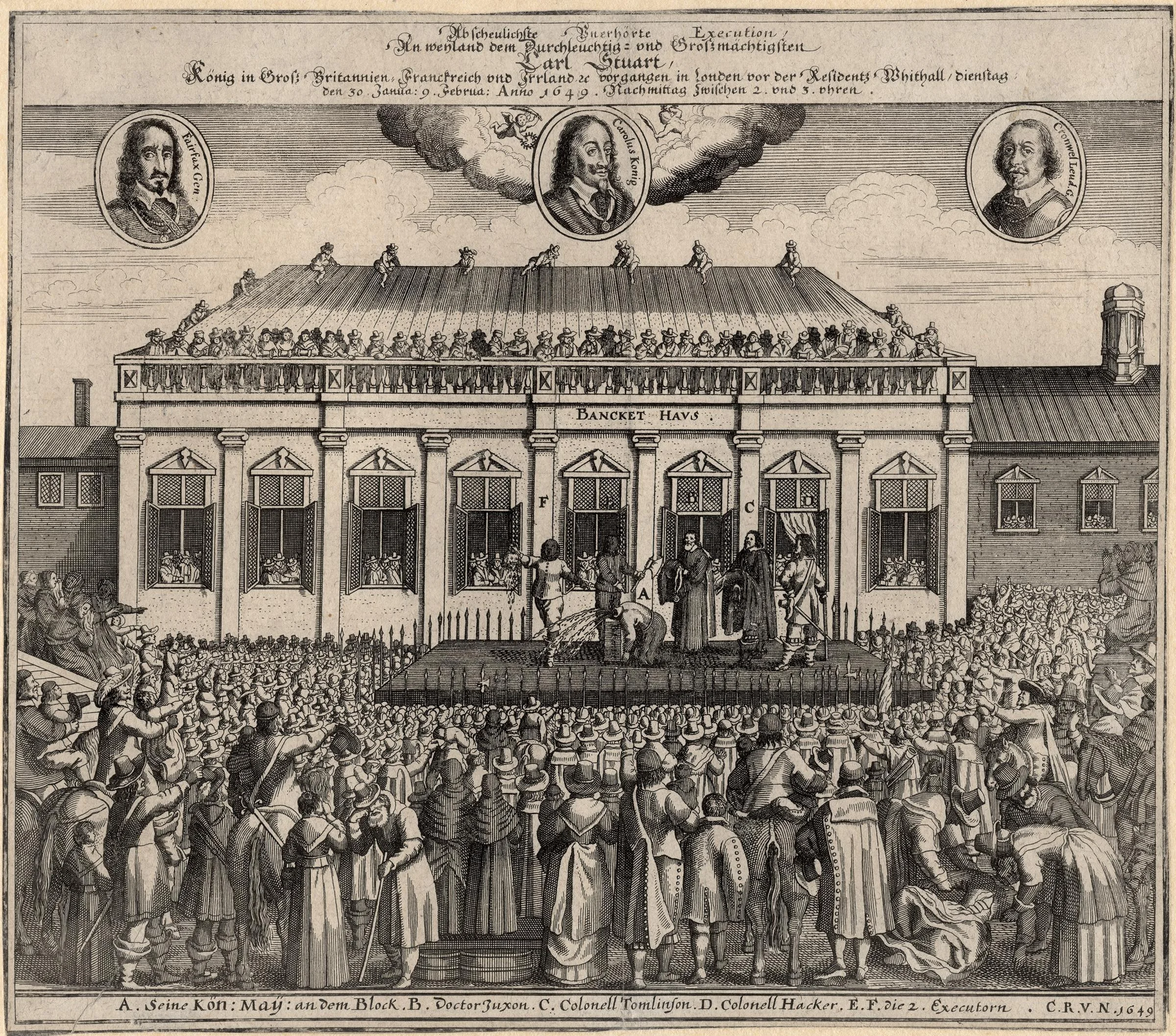
King Charles I: 'I go from a corruptible to an incorruptible crown', Speech from the scaflold - 1649

December 12, 2016

30 January 1649, outside Whitehall, London, England


I shall be very little heard of anybody here, I shall therefore speak a word unto you here.

Indeed I could hold my peace very well, if I did not think that holding my peace would make some men think that I did submit to the guilt as well as to the punishment. But I think it is my duty to God first and to my country for to clear myself both as an honest man and a good King, and a good Christian.

I shall begin first with my innocence.

In truth I think it not very needful for me to insist long upon this, for all the world knows that I never did begin a War with the two Houses of Parliament. And I call God to witness, to whom I must shortly make an account, that I never did intend for to encroach upon their privileges. They began upon me, it is the Militia they began upon, they confessed that the Militia was mine, but they thought it fit for to have it from me. And, to be short, if any body will look to the dates of Commissions, of their commissions and mine, and likewise to the Declarations, will see clearly that they began these unhappy troubles, not I. So that as the guilt of these enormous crimes that are laid against me I hope in God that God will clear me of it.

I will not, I am in charity, God forbid that I should lay it upon the two Houses of Parliament. There is no necessity of either. I hope that they are free of this guilt, for I do believe that ill instruments between them and me has been the chief cause of all this bloodshed; so that by way of speaking, as I find myself clear of this, I hope and pray God that they may too; yet for all this, God forbid that I should be so ill a Christian as not to say that Gods Judgments are just upon me.

Many times He does pay justice by an unjust sentence, that is ordinary. I will only say this, that an unjust sentence that I suffered to take effect, is punished now by an unjust sentence upon me. That is, so far as I have said, to show you that I am an innocent man.

Now to show you that I am a good Christian; I hope there is [pointing to D. Juxon] a good man that will bear me witness that I have forgiven all the world, and even those in particular that have been the chief causers of my death. Who they are, God knows, I do not desire to know, God forgive them. But this is not all, my charity must go further.

I wish that they may repent, for indeed they have committed a great sin in that particular. I pray God, with St. Stephen, that this be not laid to their charge. Nay, not only so, but that they may take the right way to the peace of the kingdom, for my charity commands me not only to forgive particular men, but my charity commands me to endeavor to the last gasp the peace of the kingdom.

So, Sirs, I do wish with all my soul, and I do hope there is some here [turning to some gentlemen that wrote] that will carry it further, that they may endeavor the peace of the kingdom.

Now, sirs, I must show you both how you are out of the way and will put you in a way.

First, you are out of the way, for certainly all the way you have ever had yet, as I could find by anything, is by way of conquest. Certainly this is an ill way, for Conquest, sirs, in my opinion, is never just, except that there be a good just cause, either for matter of wrong or just title. And then if you go beyond it, the first quarrel that you have to it, that makes it unjust at the end that was just at the first. But if it be only matter of conquest, there is a great robbery, as a pirate said to Alexander the Great, that he was the great robber, he was just a petty robber. And so, sirs, I do think the way that you are in, is much out of the way.

Now, sirs, to put you in the way, believe it, you will never do right, nor God will never prosper you, until you give God his due, the King his due (that is, my successors) and the people their due. I am as much for them as any of you.

You must give God his due by regulating rightly His church according to the Scripture, which is now out of order. For to set you in a way particularly, now I cannot, but only this. A national synod freely called, freely debating among themselves, must settle this, when that every opinion is freely and clearly heard.

For the King, indeed I will not, [then turning to a gentlemen that touched the ax] Hurt not the Ax, that may hurt me.

For the King the Laws of the land will clearly instruct you for that; therefore, because it concerns my own particular, I only give you a touch of it.

For the people, and truly I desire their liberty and freedom as much as any body whomsoever. But I must tell you that their liberty and freedom consists in having of government. Those Laws by which their life and their goods may be most their own. It is not for having share in government, sirs. That is nothing pertaining to them. A subject and a sovereign are clean different things, and therefore until they do that, I mean, that you do put the people in that liberty as I say, certainly they will never enjoy themselves.

Sirs, it was for this that now I am come here. If I would have given way to an arbitrary way, for to have all laws changed according to the power of the sword, I needed not to have come here. And therefore I tell you, and I pray God it be not laid to your charge, that I am the martyr of the people.

In truth, sirs, I shall not hold you much longer, for I will only say thus to you. That in truth I could have desired some little time longer, because I would have put then that I have said in a little more order, and a little better digested than I have done. And, therefore, I hope that you will excuse me.

I have delivered my conscience. I pray God, that you do take those courses that are best for the good of the kingdom and your own salvation.

[William Juxon, Archbishop of Canterbury:]

Will Your Majesty, though it may be very well known Your Majesties affections to religion, yet it may be expected, that You should, say somewhat for the world's satisfaction.

[King:]

I thank you very heartily, my Lord, for that. I had almost forgotten it.

In truth, sirs, my conscience in religion, I think, is very well known to all the world. And therefore, I declare before you all that I die a Christian, according to the profession of the Church of England, as I found it left me by my father.

And this honest man [pointing to Juxon] I think will witness it.
[Then turning to the Officers]

Sirs, excuse me for this same. I have a good Cause, and I have a gracious God. I will say no more.


[Then turning to Colonel Hacker]

Take care that they do not put me to pain. And sir, this, and it please you...

[But then a gentleman coming near the Ax, the King said]

Take heed of the ax, pray, take heed of the ax.
 

[Then to the Executioner]

I shall say but very short prayers, and when I thrust out my hands.

[Then the King called to Juxon for His night cap and put it on. Then to the Executioner]

Does my hair trouble you?

[The Executioner desired Him to put it all under His cap, which the King did accordingly, by the help of the Executioner and the Bishop. Then the King turning to Juxon:]

I have a good cause, and a gracious God on my side.
 

[Juxon:]

There is but one Stage more, which is turbulent and troublesome, yet it is a short one. You may consider it will soon carry you a very great way. It will carry you from earth to heaven. And there you shall find a great deal of cordial, joy, and comfort.


[King:]

I go from a corruptible, to an incorruptible Crown, where no disturbance can be, no disturbance in the world.


[Juxon:]

You are exchanged from a temporal to an eternal crown. A good exchange.


[The King then asked the Executioner]

Is my hair well?

[Then the king took off his cloak and his George, giving his George to Juxon, saying:]

Remember.

[Then the King put off his doublet and, being in his waistcoat, put his cloak on again. Then looking upon the block, the king said to the Executioner:]

You must set it fast.


[Executioner:]

It is fast, sir.


[King:]

It might have been a little higher.


[Executioner:]

It can be no higher, sir.


[King:]

When I put out my hands this way, then.


[After having said a few words as he stood to himself with hands and eyes lift up, immediately stooping down, the king laid his neck on the block. Then the Executioner again putting his hair under his cap, the king said:]

Stay for the sign.

[Executioner:]

Yes, I will, and it please Your Majesty.


[After a very little pause, the king stretching forth his hands, the Executioner at one blow, severed his head from his body.]

Source: http://www.emersonkent.com/speeches/execut...

Enjoyed this speech? Speakola is a labour of love and I’d be very grateful if you would share, tweet or like it. Thank you.

Facebook Twitter Facebook
In Pre 1900 Tags KING CHARLES 1, KING CHARLES I, CHARLES I, BRITISH CROWN, MONARCHY, REGICIDE, EXECUTION, TRANSCRIPT, CROMWELL, ENGLAND
Comment

See my film!

Limited Australian Season

March 2025

Details and ticket bookings at

angeandtheboss.com

Support Speakola

Hi speech lovers,
With costs of hosting website and podcast, this labour of love has become a difficult financial proposition in recent times. If you can afford a donation, it will help Speakola survive and prosper.

Best wishes,
Tony Wilson.

Become a Patron!

Learn more about supporting Speakola.

Featured political

Featured
Jon Stewart: "They responded in five seconds", 9-11 first responders, Address to Congress - 2019
Jacinda Ardern: 'They were New Zealanders. They are us', Address to Parliament following Christchurch massacre - 2019
Dolores Ibárruri: "¡No Pasarán!, They shall not pass!', Defense of 2nd Spanish Republic - 1936
Jimmy Reid: 'A rat race is for rats. We're not rats', Rectorial address, Glasgow University - 1972

Featured eulogies

Featured
For Geoffrey Tozer: 'I have to say we all let him down', by Paul Keating - 2009
for James Baldwin: 'Jimmy. You crowned us', by Toni Morrison - 1988
for Michael Gordon: '13 days ago my Dad’s big, beautiful, generous heart suddenly stopped beating', by Scott and Sarah Gordon - 2018

Featured commencement

Featured
Tara Westover: 'Your avatar isn't real, it isn't terribly far from a lie', The Un-Instagrammable Self, Northeastern University - 2019
Tim Minchin: 'Being an artist requires massive reserves of self-belief', WAAPA - 2019
Atul Gawande: 'Curiosity and What Equality Really Means', UCLA Medical School - 2018
Abby Wambach: 'We are the wolves', Barnard College - 2018
Eric Idle: 'America is 300 million people all walking in the same direction, singing 'I Did It My Way'', Whitman College - 2013
Shirley Chisholm: ;America has gone to sleep', Greenfield High School - 1983

Featured sport

Featured
Joe Marler: 'Get back on the horse', Harlequins v Bath pre game interview - 2019
Ray Lewis : 'The greatest pain of my life is the reason I'm standing here today', 52 Cards -
Mel Jones: 'If she was Bradman on the field, she was definitely Keith Miller off the field', Betty Wilson's induction into Australian Cricket Hall of Fame - 2017
Jeff Thomson: 'It’s all those people that help you as kids', Hall of Fame - 2016

Fresh Tweets


Featured weddings

Featured
Dan Angelucci: 'The Best (Best Man) Speech of all time', for Don and Katherine - 2019
Hallerman Sisters: 'Oh sister now we have to let you gooooo!' for Caitlin & Johnny - 2015
Korey Soderman (via Kyle): 'All our lives I have used my voice to help Korey express his thoughts, so today, like always, I will be my brother’s voice' for Kyle and Jess - 2014

Featured Arts

Featured
Bruce Springsteen: 'They're keepers of some of the most beautiful sonic architecture in rock and roll', Induction U2 into Rock Hall of Fame - 2005
Olivia Colman: 'Done that bit. I think I have done that bit', BAFTA acceptance, Leading Actress - 2019
Axel Scheffler: 'The book wasn't called 'No Room on the Broom!', Illustrator of the Year, British Book Awards - 2018
Tina Fey: 'Only in comedy is an obedient white girl from the suburbs a diversity candidate', Kennedy Center Mark Twain Award -  2010
Tina Fey: 'Only in comedy is an obedient white girl from the suburbs a diversity candidate', Kennedy Center Mark Twain Award - 2010

Featured Debates

Featured
Sacha Baron Cohen: 'Just think what Goebbels might have done with Facebook', Anti Defamation League Leadership Award - 2019
Greta Thunberg: 'How dare you', UN Climate Action Summit - 2019
Charlie Munger: 'The Psychology of Human Misjudgment', Harvard University - 1995
Lawrence O'Donnell: 'The original sin of this country is that we invaders shot and murdered our way across the land killing every Native American that we could', The Last Word, 'Dakota' - 2016