• Genre
  • About
  • Submissions
  • Donate
  • Search
Menu

Speakola

All Speeches Great and Small
  • Genre
  • About
  • Submissions
  • Donate
  • Search
Share a political speech
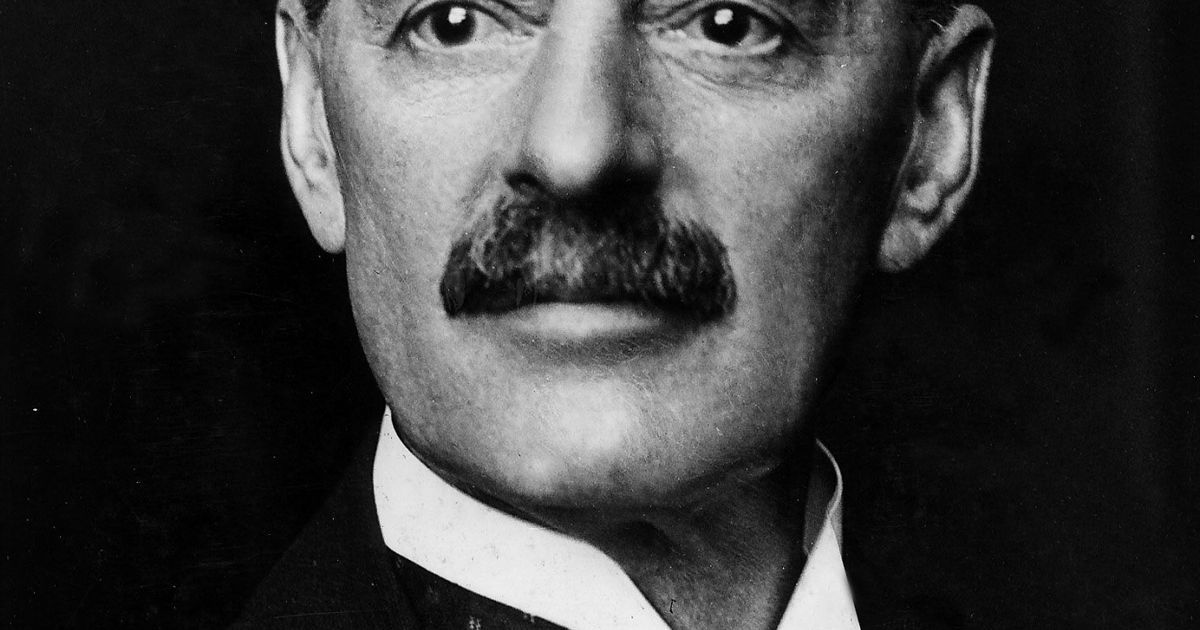
Duff Cooper.jpg

Duff Cooper: 'A moment may come when, owing to the invasion of Czechoslovakia, a European war will begin', Speech opposing Appeasement - 1938

February 20, 2019

3 October 1938, Westminster, United Kingdom

The House will, I am sure, appreciate the peculiarly difficult circumstances in which I am speaking this afternoon. It is always a painful and delicate task for a Minister who has resigned to explain his reasons to the House of Commons, and my difficulties are increased this afternoon by the fact, of which I am well aware, that the majority of the House are most anxious to hear the Prime Minister and that I am standing between them and him. But I shall have, I am afraid, to ask for the patience of the House, because I have taken a very important, for me, and difficult decision, and I feel that I shall have to demand a certain amount of time in which to make plain to the House the reasons for which I have taken it.

At the last Cabinet meeting that I attended, last Friday evening, before I succeeded in finding my way to No. 10, Downing Street, I was caught up in the large crowd that were demonstrating their enthusiasm and were cheering, laughing, and singing; and there is no greater feeling of loneliness than to be in a crowd of happy, cheerful people and to feel that there is no occasion for oneself for gaiety or for cheering. That there was every cause for relief I was deeply aware, as much as anybody in this country, but that there was great cause for self-congratulation I was uncertain. Later, when I stood in the hall at Downing Street, again among enthusiastic throngs of friends and colleagues who were all as cheerful, happy, glad, and enthusiastic as the crowd in the street, and when I heard the Prime Minister from the window above saying that he had returned, like Lord Beaconsfield, with "peace with honour," claiming that it was peace for our time, once again I felt lonely and isolated; and when later, in the Cabinet room, all his other colleagues were able to present him with 30 bouquets, it was an extremely painful and bitter moment for me that all that I could offer him was my resignation.

Before taking such a step as I have taken, on a question of international policy, a Minister must ask himself many questions, not the least important of which is this: Can my resignation at the present time do any material harm to His Majesty's Government; can it weaken our position; can it suggest to our critics that there is not a united front in Great Britain? Now I would not have flattered myself that my resignation was of great importance, and I did feel confident that so small a blow could easily be borne at the present time, when I think that the Prime Minister is more popular than he has ever been at any period; but had I had any doubts with regard to that facet of the problem, they would have been set at rest, I must say, by the way in which my resignation was accepted, not, I think, with reluctance, but really with relief.

I have always been a student of foreign politics. I have served 10 years in the Foreign Office, and I have studied the history of this and of other countries, and I have always believed that one of the most important principles in foreign policy and the conduct of foreign policy should be to make your policy plain to other countries, to let them know where you stand and what in certain circumstances you are prepared to do. I remember so well in 1914 meeting a friend, just after the declaration of war, who had come back from the British Embassy in Berlin, and asking him whether it was the case, as I had seen it reported in the papers, that the Berlin crowd had behaved very badly and had smashed all the windows of the Embassy, and that the military had had to be called out in order to protect them. I remember my friend telling me that, in his opinion and in that of the majority of the staff, the Berlin crowd were not to blame, that the members of the British Embassy staff had great sympathy with the feelings of the populace, because, they said, "These people have never thought that there was a chance of our coming into the war." They were assured by their Government—and the Government themselves perhaps believed it—that Britain would remain neutral, and therefore it came to, them as a shock when, having already, 31 been engaged with other enemies, as they were, they found that Great Britain had turned against them.

I thought then, and I have always felt, that in any other international crisis that should occur our first duty was to make it plain exactly where we stood and what we would do. I believe that the great defect in our foreign policy during recent months and recent weeks has been that we have failed to do so. During the last four weeks we have been drifting, day by day, nearer into war with Germany, and we have never said, until the last moment, and then in most uncertain terms, that we were prepared to fight. We knew that information to the opposite effect was being poured into the ears of the head of the German State. He had been assured, reassured, and fortified in the opinion that in no case would Great Britain fight.

When Ministers met at the end of August on their return from a holiday there was an enormous accumulation of information from all parts of the world, the ordinary information from our diplomatic representatives, also secret, and less reliable information from other sources, information from Members of Parliament who had been travelling on the Continent and who had felt it their duty to write to their friends in the Cabinet and give them first-hand information which they had received from good sources. I myself had been travelling in Scandinavia and in the Baltic States, and with regard to all this information—Europe was very full of rumours at that time—it was quite extraordinary the unanimity with which it pointed to one conclusion and with which all sources suggested that there was one remedy. All information pointed to the fact that Germany was preparing for war at the end of September, and all recommendations agreed that the one way in which it could be prevented was by Great Britain making a firm stand and stating that she would be in that war, and would be upon the other side.

I had urged even earlier, after the rape of Austria, that Great Britain should make a firm declaration of what her foreign policy was, and then and later I was met with this, that the people of this country are not prepared to fight for Czechoslovakia. That is perfectly true, 32 but I tried to represent another aspect of the situation, that it was not for Czechoslovakia that we should have to fight, that it was not for Czechoslovakia that we should have been fighting if we had gone to war last week. God knows how thankful we all are to have avoided it, but we also know that the people of this country were prepared for it—resolute, prepared, and grimly determined. It was not for Serbia that we fought in 1914. It was not even for Belgium, although it occasionally suited some people to say so. We were fighting then, as we should have been fighting last week, in order that one great Power should not be allowed, in disregard of treaty obligations, of the laws of nations and the decrees of morality to dominate by brutal force the Continent of Europe. For that principle we fought against Napoleon Buonaparte, and against Louis XIV of France and Philip II of Spain. For that principle we must ever be prepared to fight, for on the day when we are not prepared to fight for it we forfeit our Empire, our liberties and our independence.

I besought my colleagues not to see this problem always in terms of Czechoslovakia, not to review it always from the difficult strategic position of that small country, but rather to say to themselves, "A moment may come when, owing to the invasion of Czechoslovakia, a European war will begin, and when that moment comes we must take part in that war, we cannot keep out of it, and there is no doubt upon which side we shall fight. Let the world know that and it will give those who are prepared to disturb the peace reason to hold their hand." It is perfectly true that after the assault on Austria the Prime Minister made a speech in this House—an excellent speech with every word of which I was in complete agreement—and what he said then was repeated and supported by the Chancellor of the Exchequer at Lanark. It was, however, a guarded statement. It was a statement to the effect that if there were such a war it would be unwise for anybody to count upon the possibility of our staying out.

That is not the language which the dictators understand. Together with new methods and a new morality they have introduced also a new vocabulary into Europe. They have discarded the old 33 diplomatic methods of correspondence. Is it not significant that during the whole of this crisis there has not been a German Ambassador in London and, so far as I am aware, the German ChargÉ d'Affaires has hardly visited the Foreign Office? They talk a new language, the language of the headlines of the tabloid Press, and such guarded diplomatic and reserved utterances as were made by the Prime Minister and the Chancellor of the Exchequer mean nothing to the mentality of Herr Hitler or Signor Mussolini. I had hoped that it might be possible to make a statement to Herr Hitler before he made his speech at Nuremberg. On all sides we were being urged to do so by people in this country, by Members in this House, by Leaders of the Opposition, by the Press, by the heads of foreign States, even by Germans who were supporters of the regime and did not wish to see it plunged into a war which might destroy it. But we were always told that on no account must we irritate Herr Hitler; it was particularly dangerous to irritate him before he made a public speech, because if he were so irritated he might say some terrible things from which afterwards there would be no retreat. It seems to me that Herr Hitler never makes a speech save under the influence of considerable irritation, and the addition of one more irritant would not, I should have thought, have made a great difference, whereas the communication of a solemn fact would have produced a sobering effect.

After the chance of Nuremberg was missed I had hoped that the Prime Minister at his first interview with Herr Hitler at Berchtesgaden would make the position plain, but he did not do so. Again, at Godesberg I had hoped that that statement would be made in unequivocal language. Again I was disappointed. Hitler had another speech to make in Berlin. Again an opportunity occurred of telling him exactly where we stood before he made that speech, but again the opportunity was missed, and it was only after the speech that he was informed. He was informed through the mouth of a distinguished English civil servant that in certain conditions we were prepared to fight. We know what the mentality or something of the mentality of that great dictator is. We know that a message delivered strictly according to instructions with at least three qualifying clauses was not likely to produce upon 34 him on the morning after his great oration the effect that was desired. Honestly, I did not believe that he thought there was anything of importance in that message. It certainly produced no effect whatever upon him and we can hardly blame him.

Then came the last appeal from the Prime Minister on Wednesday morning. For the first time from the beginning to the end of the four weeks of negotiations Herr Hitler was prepared to yield an inch, an ell perhaps, but to yield some measure to the representations of Great Britain. But I would remind the House that the message from the Prime Minister was not the first news that he had received that morning. At dawn he had learned of the mobilisation of the British Fleet. It is impossible to know what are the motives of man and we shall probably never be satisfied as to which of these two sources of inspiration moved him most when he agreed to go to Munich, but wo do know that never before had he given in and that then he did. I had been urging the mobilisation of the Fleet for many days. I had thought that this was the kind of language which would be easier for Herr Hitler to understand than the guarded language of diplomacy or the conditional clauses of the Civil Service. I had urged that something in that direction might be done at the end of August and before the Prime Minister went to Berchtesgaden. I had suggested that it should accompany the mission of Sir Horace Wilson. I remember the Prime Minister stating it was the one thing that would ruin that mission, and I said it was the one thing that would lead it to success.

That is the deep difference between the Prime Minister and myself throughout these days. The Prime Minister has believed in addressing Herr Hitler through the language of sweet reasonableness. I have believed that he was more open to the language of the mailed fist. I am glad so many people think that sweet reasonableness has prevailed, but what actually did it accomplish? The Prime Minister went to Berchtesgaden with many excellent and reasonable proposals and alternatives to put before the Fuhrer, prepared to argue and negotiate, as anybody would have gone to such a meeting. He was met by an ultimatum. So far as I am aware no 35 suggestion of an alternative was ever put forward. Once the Prime Minister found himself in the atmosphere of Berchtesgaden and face to face with the personality of Hitler he knew perfectly well, being a good judge of men, that it would be a waste of time to put forward any alternative suggestion. So he returned to us with those proposals, wrapped up in a cloak called "Self-determination," and laid them before the Cabinet. They meant the partition of a country, the cession of territory, they meant what, when it was suggested by a newspaper some weeks or days before, had been indignantly repudiated throughout the country.

After long deliberation the Cabinet decided to accept that ultimatum, and I was one of those who agreed in that decision. I felt all the difficulty of it; but I foresaw also the danger of refusal. I saw that if we were obliged to go to war it would be hard to have it said against us that we were fighting against the principle of self-determination, and I hoped that if a postponement could be reached by this compromise there was a possibility that the final disaster might be permanently avoided. It was not a pleasant task to impose upon the Government of Czechoslovakia so grievous a hurt to their country, no pleasant or easy task for those upon whose support the Government of Czechoslovakia had relied to have to come to her and say "You have got to give up all for which you were prepared to fight"; but, still, she accepted those terms. The Government of Czechoslovakia, filled with deep misgiving, and with great regret, accepted the harsh terms that were proposed to her.

That was all that we had got by sweet reasonableness at Berchtesgaden. Well, I did think that when a country had agreed to be partitioned, when the Government of a country had agreed to split up the ancient Kingdom of Bohemia, which has existed behind its original frontier for more than 1,000 years, that was the ultimate demand that would be made upon it, and that after everything which Herr Hitler had asked for in the first instance had been conceded he would be willing, and we should insist, that the method of transfer of those territories should be conducted in a normal, in a civilised, manner, as such transfers have always been conducted in the past.

36 The Prime Minister made a second visit to Germany, and at Godesberg he was received with flags, bands, trumpets and all the panoply of Nazi parade; but he returned again with nothing but an ultimatum. Sweet reasonableness had won nothing except terms which a cruel and revengeful enemy would have dictated to a beaten foe after a long war. Crueller terms could hardly be devised than those of the Godesberg ultimatum. The moment I saw them I said to myself, "If these are accepted it will be the end of all decency in the conduct of public affairs in the world." We had a long and anxious discussion in the Cabinet with regard to the acceptance or rejection of those terms. It was decided to reject them, and that information, also, was conveyed to the German Government. Then we were face to face with an impossible position, and at the last moment—not quite the last moment, but what seemed the last moment—another effort was made, by the dispatch of an emissary to Herr Hitler with suggestions for a last appeal. That emissary's effort was in vain, and it was only, as the House knows, on that fateful Wednesday morning that the final change of policy was adopted. I believe that change of policy, as I have said, was due not to any argument that had been addressed to Herr Hitler—it has never been suggested that it was—but due to the fact that for the first moment he realised, when the Fleet was mobilised, that what his advisers had been assuring him of for weeks and months was untrue and that the British people were prepared to fight in a great cause.

So, last of all, he came to Munich and terms, of which the House is now aware, were devised at Munich, and those were the terms upon which this transfer of territory is to be carried out. The Prime Minister will shortly be explaining to the House the particulars in which the Munich terms differ from the Godesberg ultimatum. There are great and important differences, and it is a great triumph for the Prime Minister that he was able to acquire them. I spent the greater part of Friday trying to persuade myself that those terms were good enough for me. I tried to swallow them—I did not want to do what I have done—but they stuck in my throat, because it seemed to me that although the modifications which the Prime Minister obtained were important 37 and of great value—the House will realise how great the value is when the Prime Minister has developed them—that still there remained the fact that that country was to be invaded, and I had thought that after accepting the humiliation of partition she should have been spared the ignominy and the horror of invasion. If anybody doubts that she is now suffering from the full horror of invasion they have only to read an article published in the "Daily Telegraph" this morning, which will convince them. After all, when Naboth had agreed to give up his vineyard he should have been allowed to pack up his goods in peace and depart, but the German Government, having got their man down, were not to be deprived of the pleasure of kicking him. Invasion remained; even the date of invasion remained unaltered. The date laid down by Herr Hitler was not to be changed. There are five stages, but those stages are almost as rapid as an army can move. Invasion and the date remained the same. Therefore, the works, fortifications, and guns on emplacements upon which that poor country bad spent an enormous amount of its wealth were to be handed over intact. Just as the German was not to be deprived of the pleasure of kicking a man when he was down, so the army was not to be robbed of its loot. That was another term in the ultimatum which I found it impossible to accept. That was why I failed to bring myself to swallow the terms that were proposed—although I recognised the great service that the Prime Minister had performed in obtaining very material changes in them which would result in great benefit and a great lessening of the sufferings of the people of Czechoslovakia.

Then he brought home also from Munich something more than the terms to which we had agreed. At the last moment, at the farewell meeting, he signed with the Fuhrer, a joint declaration. [An HON. MEMBER: "Secret."] I do not think there was anything secret about the declaration. The joint declaration has been published to the world. I saw no harm, no great harm and no very obvious harm, in the terms of that declaration, but I would suggest that for the Prime Minister of England to sign, without consulting with his colleagues and without, so far as I am aware, any reference to his Allies, obviously without any communication with the Dominions and 38 without the assistance of any expert diplomatic advisers, such a declaration with the dictator of a great State, is not the way in which the foreign affairs of the British Empire should be conducted.

There is another aspect of this joint declaration. After all, what does it say? That Great Britain and Germany will not go to war in future and that everything will be settled by negotiation. Was it ever our intention to go to war? Was it ever our intention not to settle things by communication and counsel? There is a danger. We must remember that this is not all that we are left with as the result of what has happened during the last few weeks. We are left, and we must all acknowledge it, with a loss of esteem on the part of countries that trusted us. We are left also with a tremendous commitment. For the first time in our history we have committed ourselves to defend a frontier in Central Europe.

§ Brigadier-General Sir Henry Croft

It is what you have been asking for.

§ Mr. Cooper

We are left with the additional serious commitment that we are guaranteeing a frontier that we have at the same time destroyed. We have taken away the defences of Czechoslovakia in the same breath as we have guaranteed them, as though you were to deal a man a mortal blow and at the same time insure his life. I was in favour of giving this commitment. I felt that as we had taken so much away we must, in honour, give something in return, but I realised what the commitment meant. It meant giving a commitment to defend a frontier in Central Europe, a difficult frontier to defend because it is surrounded on all sides by enemies. I realised that giving this commitment must mean for ourselves a tremendous quickening-up of our rearmament schemes on an entirely new basis, a far broader basis upon which they must be carried out in future.

I had always been in favour of maintaining an army that could take a serious part in Continental war. I am afraid I differed from the Prime Minister, when I was at the War Office and he was at the Treasury two years ago or more, on this point, but if we are now committed to defend a frontier in Central Europe, it is, in my opinion, absolutely imperative that we should maintain an Army upon 39 something like a Continental basis. It is no secret that the attitude maintained by this Government during recent weeks would have been far stiffer had our defences been far stronger. It has been said that we shall necessarily now increase both the speed at which they are reconditioned and the scale upon which they are reconditioned, but how are we to justify the extra burden laid upon the people of Great Britain if we are told at the same time that there is no fear of war with Germany and that, in the opinion of the Prime Minister, this settlement means peace in our time? That is one of the most profoundly disquieting aspects of the situation.

The Prime Minister has confidence in the good will and in the word of Herr Hitler, although when Herr Hitler broke the Treaty of Versailles he undertook to keep the Treaty of Locarno, and when he broke the Treaty of Locarno he undertook not to interfere further, or to have further territorial aims, in Europe. When he entered Austria by force he authorised his henchmen to give an authoritative assurance that he would not interfere with Czechoslovakia. That was less than six months ago. Still, the Prime Minister believes that he can rely upon the good faith of Hitler; he believes that Hitler is interested only in Germany, as the Prime Minister was assured. Well, there are Germans in other countries. There are Germans in Switzerland, in Denmark and in Alsace; I think that one of the only countries in Europe in which there are no Germans is Spain and yet there are rumours that Germany has taken an interest in that country. But the Prime Minister believed—and he has the advantage over us, or over most of us, that he has met the man—that he can come to a reasonable settlement of all outstanding questions between us. Herr Hitler said that he has got to have some settlement about colonies, but he said that this will never he a question of war. The Prime Minister attaches considerable importance to those words, but what do they mean? Do they mean that Herr Hitler will take "No" for an answer? He has never taken it yet. Or do they mean that he believes that he will get away with this, as he has got away with everything else, without fighting, by well-timed bluff, bluster and blackmail? Otherwise it means very little.

40 The Prime Minister may be right. I can assure you, Mr. Speaker, with the deepest sincerity, that I hope and pray that he is right, but I cannot believe what he believes. I wish I could. Therefore, I can be of no assistance to him in his Government. I should be only a hindrance, and it is much better that I should go. I remember when we were discussing the Godesberg ultimatum that I said that if I were a party to persuading, or even to suggesting to, the Czechoslovak Government that they should accept that ultimatum, I should never be able to hold up my head again. I have forfeited a great deal. I have given up an office that I loved, work in which I was deeply interested and a staff of which any man might be proud. I have given up associations in that work with my colleagues with whom I have maintained for many years the most harmonious relations, not only as colleagues but as friends. I have given up the privilege of serving as lieutenant to a leader whom I still regard with the deepest admiration and affection. I have ruined, perhaps, my political career. But that is a little matter; I have retained something which is to me of great value—I can still walk about the world with my head erect.

Source: https://api.parliament.uk/historic-hansard...

Enjoyed this speech? Speakola is a labour of love and I’d be very grateful if you would share, tweet or like it. Thank you.

Facebook Twitter Facebook
In 1920-39 MORE Tags DUFF COOPER, CONSERVATIVE PARTY, NEVILLE CHAMBERLAIN, ADOLF HITLER, APPEASEMENT, FOREIGN POLICY
Comment
David Lloyd Geroge 1940.jpg

David Lloyd George: [to Neville Chamberlain] 'Sacrifice the seals of office' Norway Debate - 1940

February 26, 2018

7 May 1940, House of Commons, United Kingdom

I intervene with reluctance in this debate. All my Honourable Friends know very well that I hesitated whether I should take part in it at all, because I thought it was more desirable that we should have a discussion in which Members not of front-bench rank should take a good deal of the time, but I think that it is my duty, having regard to the fact that I have some experience of these matters.

I feel that I ought to say something, from such experience as I have had in the past of the conduct of war in victory and in disaster, about what I think of the present situation and what really ought to be done.

I have heard most of the speech of the right Honourable Gentleman, the Secretary of State for Air, and I should think that the facts which he gave us justify the criticism against the Government and are no defence of the Government.

He said that we had practically no chance of making good in our Norwegian expedition unless we were able to have our air bases there which would enable us to put our fighters into the air bases which would enable us to put our fighters into the air in order to counteract the very destructive effect of the German aeroplanes. But we knew there were no air bases available. We know they were in the hands of the enemy.

The Right Honourable Gentleman admits that. He says that the Government knew beforehand that there were no air bases unless they were captured from the enemy, he even intimates that the object of the Trondheim expedition was to capture an air base. In that case we ought to have had picked men, and not a kind of a scratch team. We ought to have sent the very best man available, especially as we could not send the whole of our force in the first instalment.

The first instalment ought to have been picked men, because the Germans had picked men, as is generally accepted. We sent there, I think, a Territorial Brigade which had not had very much training. They were very young men, but they were the advance party of an expeditionary force which had to accomplish a task upon which the success of the whole force depended.

We ought also to have had combined action between the Army and the Navy. We had neither. We gambled on the chance of getting air bases. We did not take any measures that would guarantee success. This vital expedition, which would have made a vast difference to this country’s strategical position, and an infinite difference to her prestige in the world, was made dependent upon this half-prepared, half-baked expeditionary force without any combination at all between the Army and the Navy.

There could not have been a more serious condemnation of the whole action of the Government in respect of Norway. They knew perfectly well that the Germans were preparing for a raid on some adjoining country, probably in the Balkans, and it is a severe condemnation of them that they should have gambled in this way. The right Honourable Gentleman spoke about the gallantry of our men, and were are equally proud of them. It thrills us to read the stories. All the more shame that we should have made fools of them.

Now, the situation is a grave one – I agree with what was said about that by the Prime Minister – and it would be a fatal error on our part not to acknowledge it. In such experience as I have had of war direction I have never tried to minimise the extent of such a disaster. I try to get the facts, because unless you really face the facts you cannot overcome the difficulties and restore the position.

There is no case, in m judgment, for panic. I say that deliberately, after a good deal of reflection, but there is a grave case for pulling ourselves together. We cannot do that unless we tell the country the facts. They must realise the magnitude of our jeopardy. We have two immense Empires federated in the struggle for liberty, the two greatest Empires in the world, the British Empire and the French Empire, with almost inexhaustible resources, but not easily mobilised, not easily roused, especially ours.

You are not going to rouse the British Empire – because you will have to do it not merely in Britain, but throughout the world – to put forth the whole of its strength unless and until you tell it what the facts and realities are of the peril that confronts it. At the cost of unpleasantness, I am going to do that, not with a view to terrifying them or spreading dismay and consternation, but with a view to rousing real action and not sham action as we have had. It is no use saying that the balance of advantage is in our favour, or adding up the number of ships sunk on either side. That kind of petty-cash balance-sheer is not the thing to look at. There are more serious realities than that.

First of all, we are strategically in a very much worse position than we were before. Now see these words, as they pass along, “strategically better”, “strategically worse”, because victory or defeat may depend upon the application of those two words. The greatest triumph of this extraordinary man Hitler has been that he has succeeded in putting his country into an infinitely better strategical position to wage war than his predecessors did in 1914, and by what he has done now he has increased his own advantages and he has put us into greater jeopardy.

Let us face it like men of British blood. Graver perils than this have been fought through in the past. Let us face it; just look at it, Czecho-Slovakia, that spear-heard, aimed at the heart of Germany, broken. A million of the finest troops in Europe of a very well-educated race of free man, all gone. Such advantage as there is in Czecho-Slovakia, with its great lines of fortifications and its Skoda works, which turned out the finest artillery in the 1914 war are in the hands of Hitler. That is one strategic advantage which we have handed over to the enemy.

You have a Franco-Russian Alliance, negotiated by an old friend of mine, M Barthou, by which Russia was to come to the aid of Czecho-Slovakia if France did. There would come to the aid of Czecho-Slovakia if France did. There would have been a two-front war for Germany. She knows what that means, because she had it before. That door is closed. We sent a third-class clerk to negotiate with the Prime Minister of the greatest country in the world, while Germany sent her Foreign Secretary with a resplendent retinue. That door is closed. Oil in Russian ships is now coming across the Black Sea for the aeroplanes of Germany.

Strategically, that was an immense victory for the Nazi Government.

The third – Rumania. We have tried to form one big syndicate, but Germany has been there starting, not one syndicate, but little syndicates here and there to develop the land, to increase production of work and to give her all sorts of machinery. She has practically got Rumania in her hands; and if she did not have it in her hands a month ago, by this failure in Norway you have handed over Rumania. What else? Spain. I am hoping that my fears about that will not prove true. Now you have Scandinavia and Norway, which were one of the great strategic possibilities of the war, and they are in German hands.

It is no use criticising Sweden. Sweden is now between Germany on the left and Germany on the right. What right have we to criticise the little Powers? We promised to rescue them. We promised to protect them. We never sent an aeroplane to Poland. We were too late in Norway, although we had the warning of ships in the Baltic and barges crammed with troops. They have to think about themselves. They do not want German troops on their soil, and they are definitely frightened, and for good reasons.

It deprives us of a possible opening in that direction. That has gone. It brings the German aeroplanes and submarines 200 miles nearer our coast. It does more than that. There is the opening-up of the Baltic. I venture to say that that will be considered, in regard to the protection of our trade and commerce. it is a grave menace. Strategically, we are infinitely worse off.

With regard to our prestige, can you doubt that that has been impaired? You have only to read the friendly American paper to find out, highly friendly papers that were backing us up through thick and thin, in a country which was pro-Ally. I do not know whether Honourable Members ever listen to the British Broadcasting Corporation’s relay of the American commentator, Raymond Gram Swing. He is very remarkable. He gave an account of the change in American opinion. He said that what has happened was a hammer-blow to Americans. They were perfectly dazed. Before that they were convinced that victory was going to be won by the Allies, and they had never any doubt about it. This is the first doubt that has entered their minds, and they said, “It will be up to us to defend democracy”.

There is also the fact the state of our preparations five years ago, in 1935. In 1935 a promise of rearmament was made; in 1936 active proposals were submitted to this House and were passed without a Division. The Government said they would commit us to £1,500,000,000. If they had asked for more and had said that it was necessary, then there was no party in this House that would have challenged it. And if any party had challenged it, you had your majority.

Is there anyone in this House who will say that he is satisfied with the speed and efficiency of the preparations in any respect for air, for Army or for Navy? Everybody is disappointed. Everybody knows that whatever was done was done half-heartedly, ineffectively, without drive and unintelligently. For three to four years I thought to myself that the facts with regard to Germany were exaggerated by the First Lord, because the then Prime Minister – not this Prime Minister – said that they were not true. The First Lord, Mr Churchill, was right about it. Then came the war.

The Prime Minister must remember that he has met this formidable foe of ours in peace and in war. He has always been worsted. He is not in a position to put it on the ground of friendship. He has appealed for sacrifice. The nation is prepared for every sacrifice so long as it has leadership, as long as the Government show clearly what they are aiming at and so long as the nation is confident that those who are leading it are doing their best. I say solemnly that the Prime Minister should give an example of sacrifice, because there is nothing which can contribute more to victory in this war than that he should sacrifice the seals of office.

Source: http://www.famous-speeches-and-speech-topi...

Enjoyed this speech? Speakola is a labour of love and I’d be very grateful if you would share, tweet or like it. Thank you.

Facebook Twitter Facebook
In 1940-59 B Tags DAVID LLOYD GEORGE, NORWAY DEBATE, NEVILLE CHAMBERLAIN, CHANGE OF LEADERSHIP, TRANSCRIPT, WW2, APPEASEMENT
Comment
Leo Amery 1940.jpg

Leo Amery: 'In the name of God, go', Norway Debate, House of Commons - 1940

February 26, 2018

7 May 1940, House of Commons, United Kingdom

May I say that I agree wholeheartedly with what just fell from the lips of the hon. Member for Bassetlaw (Mr. Bellenger) as to the responsibility of the Opposition in playing a constructive part at this critical moment? The whole of Parliament has a grave responsibility at this moment; for, after all, it is Parliament itself that is on trial in this war. If we lose this war, it is not this or that ephemeral Government but Parliament as an institution that will be condemned, for good and all. I fully realise that this is not an easy Debate. There is much that ought to be said which cannot well be said in public. After listening to some of the speeches to-day, not least the profoundly impressive speech made by my hon. and gallant Friend the Member for North Portsmouth (Sir R. Keyes), it seems to me that the whole of recent events—not only in Norway, but the whole conduct of the war up to date—calls for searching inquiry, not for one stray private sitting, but for a series of private sittings in which all that Members of Parliament can contribute of their private knowledge should be put into the common stock and frankly discussed.

Meanwhile, even to-day there is plenty that can be said, that ought to be said, and that must be said frankly; for there are no loyalties to-day except to the common cause. This afternoon, as a few days ago, the Prime Minister gave us a reasoned, argumentative case for our failure. It is always possible to do that after every failure. Making a case and. winning a war are not the same thing. Wars are won, not by explanations after the event but by foresight, by clear decision and by swift action. I confess that I did not feel there was one sentence in the Prime Minister’s speech this afternoon which suggested that the Government either foresaw what Germany meant to do, or came to a clear decision when it knew what Germany had done, or acted swiftly or consistently throughout the whole of this lamentable affair. I am not going to discuss the reasons for the actual evacuation. They may well have been conclusive in the circumstances. But the circumstances should never have arisen; and it is the story of those events—of the decisions, of the absence of decisions, of the changes of decisions which brought about those circumstances—which call for our inquiry and raise many questions which have yet to be answered.

We were told by the Prime Minister on 2nd May that all except a relatively small advance guard of the Expeditionary Force which was earmarked for Finland had gone elsewhere and that the ships had been taken for employment for other purposes. Even the small, inadequate nucleus that was kept in being had no transports except warships. Why was this done? For months we had been aware that the Germans had been accumulating troops and transports and practising embarkation and disembarkation against somebody. It is perfectly true that they could spare the ships better than we could. But was there any reason which would make us believe that they were sending the men elsewhere? Obviously the danger was there and might develop into actuality at any moment. The Prime Minister suggested that we could not know which of many objectives it might be. Surely we had some good reasons for suspecting which one it might be. The Finnish war had focussed the interest of the whole world on Scandinavia. Within a week of its termination the Prime Minister declared, speaking of Norway and Sweden, that the danger to them—from Germany—”stands upon their very doorstep.” The Altmark affair had before that showed clearly the illegal uses which Germany was prepared to make of Norwegian neutrality. What is more, within a few days of that statement we ourselves decided deliberately to challenge Germany over her use of Norway’s territorial waters. All the world knew that that was the main theme of the deliberations of the Supreme War Council which met, I think, on 28th March. To make that perfectly clear to the whole world, including Germany, the Prime Minister said, on 2nd April: “We have not yet reached the limit of our effective operations in waters close to the German bases.” That was sufficient warning. On 8th April we laid our mines.

What did we expect to follow? Did we know Hitler and his merry men so little as to think that their rejoinder would be slow or half-hearted, or that it would follow the lines of “too little and too late” with which we have been so familiar here? However, it was not a question of a German rejoinder at all, but of Germany making our half-hearted intervention an excuse for measures far greater in scope and far more daring than we seem even to have envisaged. My hon. and gallant Friend the Member for Bournemouth (Sir H. Croft) was congratulating ourselves upon Hitler’s strategic folly in going to Norway. Does he realise that, from the moment we were in the war, Admiral Raeder insisted that this time the German Navy could not afford to be confined to the existing German coastline, but that, for the purposes of his air and submarine warfare, he must have not only egress from the Baltic but the whole of the indented, deep-water coastline of Norway?

I understand that information as to this reached our Departments early in January. Was that aspect of the strategic situation considered? Again, it was known everywhere that Hitler had designs on Scandinavia. Was it not obvious that the first stroke must be directed against Denmark and Norway, not only because they were weaker, but because once Hitler had seized them, Sweden was automatically within his power without the need for conquest? I would ask another question: Is it not a fact that the most direct warnings of Germany’s designs against Norway were sent from both Stockholm and Copenhagen in the first few days of April? I am afraid that what really happened was that, while we thought we were taking the initiative, our initiative, such as it was, only coincided with a far more formidable and far better planned initiative of the enemy.

I remember that many years ago in East Africa a young friend of mine went lion hunting. He secured a sleeping car on the railway and had it detached from the train at a siding near where he expected to find a certain man-eating lion. He went to rest and dream of hunting his lion in the morning. Unfortunately, the lion was out man-hunting that night. He clambered on to the rear of the car, scrabbled open the sliding door, and ate my friend. That is in brief the story of our initiative over Norway. In any case, even if we did not realise that the Germans were acting at the same time, why were we not prepared to meet their inevitable counter-stroke? We had only this inadequate little force, without transports, of which the Prime Minister has told us, in readiness to occupy Norwegian western ports if there were German action against Southern Norway. There was no plan to meet the contingency that Germany might seize the western ports as well or to meet any really serious attack by Germany upon Norway. As we know now, the German detachments for the more distant ports, Trondheim and Narvik, were despatched more than a week before, in readiness for the zero hour when all the German forces were to strike.

On 8th April we laid our mines. That time happened to be just before Germany’s zero hour. On the morning of that day a great German convoy sailed up the Kattegat and into the Skagerrak on its highly dangerous mission. To cover this daring manoeuvre the Germans sent a large part of their fleet, 48 hours before, away up the West coast of Norway towards Narvik. That action was duly reported to us, and the Prime Minister has told us that the Navy went off in hot pursuit after that German decoy. Rarely in history can a feint have been more successful. The gallantry of our officers and men in the blizzards of the Arctic, and the losses of the German fleet, serious as they were, do not alter the fact that the main German expedition to Norway took place without any interference from the Fleet, except from our submarines. With amazing courage and resolution, our submarines inflicted heavy losses on the Germans. How much heavier would those losses have been if the Fleet or any substantial portion of it had been there then, or, at any rate on subsequent days. That raises very formidable questions to which answers will have to be given sooner or later.

However, let me come to the next stage. What was our reaction when we learned that Oslo and all the main ports were in German hands? If we had any hope of retrieving the situation in Norway even partially, or of relieving the Norwegian forces, our obvious move was to retake one or other of those ports without a moment’s delay. We now know that the Germans seized them with only the tiniest handful of men. Only by seizing such a port would it have been possible to obtain landing facilities for our artillery and tanks, and above all, aerodromes, without which no operation could be conducted with any hope of success. The port clearly indicated by the circumstances was Trondheim, because it was farthest removed from the main German base at Oslo—which gave us time and the opportunity of maintaining railway connection with Sweden. We could have constructed a defensive line across the waist of Norway, behind which the Norwegian forces could have rallied, and from which we could have advanced, if necessary, to the recon quest of the country. That was the obvious plan.

The Prime Minister’s statements, however, make it clear that such forces as we had were at once sent off to Narvik, and not to their original destination of Trondheim or Bergen. Why Narvik? If we had held Trondheim, the isolated German force at Narvik would have been bound to surrender in time, and it could have done no mischief to us in the meantime. If we had ever contemplated retaking Trondheim at the start, there could have been no more crass instance of the dispersion, the frittering away, of forces. It is clear, however, from what the Prime Minister said to-day that the decision to send troops to Trondheim to try and retrieve that position was an afterthought, taken only after a number of days, and only at the urgent request of the Norwegians. How was it carried out? We have listened to the impressive speech of my hon. and gallant Friend the Member for North Portsmouth. It is common knowledge that the original plan accepted by the Government for the taking of Trondheim was that the Navy should force its way into Narvik fiord while subsidiary landings took place to North and South. Once in the fiord our ships could command the whole of its vast coastline, with its roads and railway and its aerodrome. What we are entitled to ask is a very serious question: By whom and on whose authority was the indispensable hammer blow at Trondheim itself countermanded? Of course, there were risks. War is not won by shirking risks. Once the linch pin of the Trondheim operations was withdrawn, the rest was bound to fail precisely as it has failed.

As to those operations, there are many stories that reach us which cannot be discussed here. Our men did their best in impossible conditions, and one can only be glad that they got away. At the same time there is something which I feel bound to say. The Prime Minister, both the other day and to-day, expressed himself as satisfied that the balance of advantage lay on our side. He laid great stress on the heaviness of the German losses and the lightness of ours. What did the Germans lose? A few thousand men, nothing to them, a score of transports, and part of a Navy which anyhow cannot match ours. What did they gain? They gained Norway, with the strategical advantages which, in their opinion at least, outweigh the whole of their naval losses. They have gained the whole of Scandinavia. What have we lost? To begin with, we have lost most of the Norwegian Army, not only such as it was but such as it might have become if only we had been given time to rally and re-equip it. It goes to one’s heart to think of the Norwegian force strapped in southern Norway and forced to surrender after their bitter protest against our withdrawal. I am glad that the right hon. Gentleman the Leader of the Liberal Opposition paid the tribute which he did to the gallantry of the Norwegian troops under adverse circumstances. What we have lost, above all, is one of those opportunities which do not recur in war. If we could have captured and held Trondheim, and if we could have rallied the Norwegian forces, then we might well have imposed a strain on Germany which might have made Norway to Hitler what Spain was once to Napoleon. All we can hope for now is that we may hang on to Narvik, and that will not be too easy, till the tide of war turns against Germany elsewhere. So much for the Norwegian chapter. It is a bad story, a story of lack of prevision and of preparation, a story of indecision, slowness and fear of taking risks. If only it stood alone. Unfortunately, it does not. It is only of a piece with the rest of it, of a piece with our hesitation and slowness in responding to Finland’s appeals for arms, in our handling of economic warfare and the reorganisation of industry, of our re-training of our workers, of the production of the essential munitions of war, of agriculture—in fact, the whole of our national effort, which, according to the Chancellor of the Exchequer, is apparently to be at most 10 per cent. higher in the course of this year than it is to-day.

The right hon. Gentleman the Prime Minister—I fully understand the good reason for his absence—in a digression explained why he used a certain unlucky phrase about Hitler missing the bus. He explained that what he meant was that during these eight months of war Hitler had lost the opportunity which he had at the beginning of the war because we had been catching up on Germany’s preparations. Believe me, that is very far from the truth. While we may catch up on her presently if only we do what we ought to, there is no doubt that during these eight months, thanks to Germany’s flying start and our slowness off the mark, the gap between the German forces and ours has widened enormously as far as troops, their equipment, tanks, guns and all the paraphernalia of land war are concerned. It has widened in the air, even if we reckon in things which may be “accruing” to us. That is a curious phrase, the precise meaning of which is difficult to determine. I remember that on the very morning of that speech I was reading the financial statement of a company which among its prospects included interest accruing to it from a mine in which gold had not yet been discovered.

We cannot go on as we are. There must be a change. First and foremost, it must be a change in the system and structure of our governmental machine. This is war, not peace. The essence of peace-time democratic government is discussion, conference and agreement; the Cabinet is in a sense a miniature Parliament. The main aim is agreement, the widest possible measure of agreement. To secure that it is necessary to compromise, to postpone, to rediscuss. Under those conditions there are no far-reaching plans for sudden action. It is a good thing to let policies develop as you go along and get people educated by circumstances. That may or may not be ideal in peace. It is impossible in war. In war the first essential is planning ahead. The next essential is swift, decisive action.

We can wage war only on military principles. One of the first of these principles is the clear definition of individual responsibilities—not party responsibilities or Cabinet responsibilities—and, with it, a proper delegation of authority. What commander-in-chief attempts to command 20 or 30 divisions in the field? He delegates the task to a number of army corps commanders responsible to him alone, and with authority over the divisional commanders underneath them. The last thing such a commander-in-chief would ever dream of doing is to make some of his army corps commanders divisional commanders as well. What is our present Cabinet system? There are some 25 Ministers, heads of Departments, who have no direct chief above them except the Prime Minister. How often do they see him? How often can they get from him direct advice, direct impulse, direct drive? Who is to settle disputes between them? There should be someone, not chairmen of innumerable committees, but someone with authority over these Ministers and directly responsible for their efficiency.

There is another cardinal principle of warfare: that is, the clear separation of the framing and execution of policy and the planning of operations, from administration. That is why every Army, Navy and Air Force has its General Staff. It is well known that the same man cannot do the work of administration and also frame and execute policy. How can you get either policy or administration from a Cabinet in which the two are mixed up hugger-mugger as they are at the present time? The next blow may fall at any moment. It may be in Holland; it may be in the Mediterranean. How many hours has any of the three Service Ministers been able to give during the last three weeks to the innumerable preparations required for that contingency? With the present organisation, there is not the slightest chance for them to consider these matters properly.

The Prime Minister has told us to-day of the change that he has made in at last giving a director and guide to the Chiefs of Staff Committee. He said that this struck him as being a good idea. For four years or more, ever since the Chiefs of Staff Committee was first spoken of in this House, some of us have said that it was impossible to produce adequate plans from a committee of men representing three separate Services, and each concerned to guard the interests of his own Service, without a chief over them. The result has inevitably been what I might call plans based on “the feeblest common denominator.” Now at last something is done to place the responsibility for framing and deciding plans clearly upon my right hon. Friend. The Prime Minister tells us that this has no connection with recent events in Norway; it is just a happy new idea. It is curious how we have for years now so effectively been locking the stable door always after we have discovered the loss of the horse. Anyhow, if those are the right functions for my right hon. Friend, how can he also carry on the tremendous tasks of the First Lord of the Admiralty? The Leader of the Opposition said that it was not fair to him. It is not fair to his colleagues; it is not fair to the nation.

Believe me, as long as the present methods prevail, all our valour and all our resources are not going to see us through. Above all, so long as they prevail, time is not going to be on our side, because they are methods which, inevitably and inherently, waste time and weaken decisions. What we must have, and have soon, is a supreme war directorate of a handful of men free from administrative routine, free to frame policy among themselves, and with the task of supervising, inspiring, and impelling a group of departments clearly allocated to each one of them. That is the only way. We learned that in the last war. My right hon. Friend the Member for Carnarvon Boroughs (Mr. Lloyd George) earned the undying gratitude of the nation for the courage he showed in adopting what was then a new experiment. The experiment worked, and it helped to win the war. After the war years, the Committee of Imperial Defence laid it down as axiomatic that, while in a minor war you might go on with an ordinary Cabinet, helped perhaps by a War Committee, in a major war you must have a War Cabinet—meaning precisely the type of Cabinet that my right hon. Friend introduced then. The overwhelming opinion of this House and of the public outside has been demanding that for a long while. We are told that there would be no particular advantage in it at the present time. I ask, Is this or is this not a major war?

We must have, first of all, a right organisation of government. What is no less important to-day is that the Government shall be able to draw upon the whole abilities of the nation. It must represent all the elements of real political power in this country, whether in this House or not. The time has come when hon. and right hon. Members opposite must definitely take their share of the responsibility. The time has come when the organisation, the power and influence of the Trades Union Congress cannot be left outside. It must, through one of its recognised leaders, reinforce the strength of the national effort from inside. The time has come, in other words, for a real National Government. I may be asked what is my alternative Government. That is not my concern: it is not the concern of this House. The duty of this House, and the duty that it ought to exercise, is to show unmistakably what kind of Government it wants in order to win the war. It must always be left to some individual leader, working perhaps with a few others, to express that will by selecting his colleagues so as to form a Government which will correspond to the will of the House and enjoy its confidence. So I refuse, and I hope the House will refuse, to be drawn into a discussion on personalities.

What I would say, however, is this: Just as our peace-time system is unsuitable for war conditions, so does it tend to breed peace-time statesmen who are not too well fitted for the conduct of war. Facility in debate, ability to state a case, caution in advancing an unpopular view, compromise and procrastination are the natural qualities—I might almost say, virtues—of a political leader in time of peace. They are fatal qualities in war. Vision, daring, swiftness and consistency of decision are the very essence of victory. In our normal politics, it is true, the conflict of party did encourage a certain combative spirit. In the last war we Tories found that the most perniciously aggressive of our opponents, the right hon. Member for Carnarvon Boroughs, was not only aggressive in words, but was a man of action. In recent years the normal weakness of our political life has been accentuated by a coalition based upon no clear political principles. It was in fact begotten of a false alarm as to the disastrous results of going off the Gold Standard. It is a coalition which has been living ever since in a twilight atmosphere between Protection and Free Trade and between unprepared collective security and unprepared isolation. Surely, for the Government of the last 10 years to have bred a band of warrior statesmen would have been little short of a miracle. We have waited for eight months, and the miracle has not come to pass. Can we afford to wait any longer?

Somehow or other we must get into the Government men who can match our enemies in fighting spirit, in daring, in resolution and in thirst for victory. Some 300 years ago, when this House found that its troops were being beaten again and again by the dash and daring of the Cavaliers, by Prince Rupert’s Cavalry, Oliver Cromwell spoke to John Hampden. In one of his speeches he recounted what he said. It was this: 

"I said to him, ‘Your troops are most of them old, decayed serving men and tapsters and such kind of fellows.’…You must get men of a spirit that are likely to go as far as they will go, or you will be beaten still."

It may not be easy to find these men. They can be found only by trial and by ruthlessly discarding all who fail and have their failings discovered. We are fighting to-day for our life, for our liberty, for our all; we cannot go on being led as we are. I have quoted certain words of Oliver Cromwell. I will quote certain other words. I do it with great reluctance, because I am speaking of those who are old friends and associates of mine, but they are words which, I think, are applicable to the present situation. This is what Cromwell said to the Long Parliament when he thought it was no longer fit to conduct the affairs of the nation:

"You have sat too long here for any good you have been doing. Depart, I say, and let us have done with you. In the name of God, go."

Source: http://www.ukpol.co.uk/leo-amery-1940-spee...

Enjoyed this speech? Speakola is a labour of love and I’d be very grateful if you would share, tweet or like it. Thank you.

Facebook Twitter Facebook
In 1940-59 B Tags LEO AMERY, NEVILLE CHAMBERLAIN, WW2, CHANGE OF LEADERSHIP, TRANSCRIPT, OLIVER CROMWELL
Comment
Neville chamberlain 2.jpg

Neville Chamberlain: 'What has become of the assurance "We don't want Czechs in the Reich"?' speech following Hitler's annexation of Czechoslovakia - 1939

February 26, 2018

17 March 1939, Birmingham, United Kingdom

I had intended to-night to talk to you upon a variety of subjects, upon trade and employment, upon social service, and upon finance. But the tremendous events which have been taking place this week in Europe have thrown everything else into the background, and I feel that what you, and those who are not in this hall but are listening to me, will want to hear is some indication of the views of His Majesty's Government as to the nature and the implications of those events.

One thing is certain. Public opinion in the world has received a sharper shock than has ever yet been administered to it, even by the present regime in Germany. What may be the ultimate effects of this profound disturbance on men's minds cannot yet be foretold, but I am sure that it must be far-reaching in its results upon the future. Last Wednesday we had a debate upon it in the House of Commons. That was the day on which the German troops entered Czecho-Slovakia, and all of us, but particularly the Government, were at a disadvantage because the information that we had was only partial; much of it was unofficial. We had no time to digest it, much less to form a considered opinion upon it. And so it necessarily followed that I, speaking on behalf of the Government, with all the responsibility that attaches to that position, was obliged to confine myself to a very restrained and cautious exposition, on what at the time I felt I could make but little commentary. And, perhaps naturally, that somewhat cool and objective statement gave rise to a misapprehension, and some people thought that because I spoke quietly, because I gave little expression to feeling, therefore my colleagues and I did not feel strongly on the subject. I hope to correct that mistake to-night.

But I want to say something first about an argument which has developed out of these events and which was used in that debate, and has appeared since in various organs of the press. It has been suggested that this occupation of Czecho-Slovakia was the direct consequence of the visit which I paid to Germany last autumn, and that, since the result of these events has been to tear up the settlement that was arrived at at Munich, that proves that the whole circumstances of those visits were wrong. It is said that, as this was the personal policy of the Prime Minister, the blame for the fate of Czecho-Slovakia must rest upon his shoulders. That is an entirely unwarrantable conclusion The facts as they are to-day cannot change the facts as they were last September. If I was right then, I am still right now. Then there are some people who say: "We considered you were wrong in September, and now we have been proved to be right." Let me examine that. When I decided to go to Germany I never expected that I was going to escape criticism. Indeed,; I did not go there to get popularity. I went there first and foremost because, in what appeared to be an almost desperate situation, that seemed to me to offer the only chance of averting a European war. And I might remind you that, when it was first announced that I was going, not a voice was raised in criticism. Everyone applauded that effort. It was only later, when it appeared that the results of the final settlement fell short of the expectations of some who did not fully appreciate the facts-it was only then that the attack began, and even then it was not the visit, it was the terms of settlement that were disapproved.

Well, I have never denied that the terms which I was able to secure at Munich were not those that I myself would have desired. But, as I explained then, I had to deal with no new problem. This was something that had existed ever since the Treaty of Versailles-a problem that ought to have been solved long ago if only the statesmen of the last twenty years had taken broader and more enlightened views of their duty. It had become like a disease which had been long neglected, and a surgical operation was necessary to save the life of the patient.

After all, the first and the most immediate object of my visit was achieved. The peace of Europe was saved; and, if it had not been for those visits, hundreds of thousands of families would to-day have been in mourning for the flower of Europe's best manhood. I would like once again to express my grateful thanks to all those correspondents who have written me from all over the world to express their gratitude and their appreciation of what I did then and of what I have been trying to do since.

Really I have no need to defend my visits to Germany last autumn, for what was the alternative? Nothing that we could have done, nothing that France could have done, or Russia could have done could possibly have saved Czecho-Slovakia from invasion and destruction. Even if we had subsequently gone to war to punish Germany for her actions, and if after the frightful losses which would have been inflicted upon all partakers in the war we had been victorious in the end, never could we have reconstructed Czecho-Slovakia as she was framed by the Treaty of Versailles.

But I had another purpose, too, in going to Munich. That was to further the policy which I have been pursuing ever since I have been in my present position-a policy which is sometimes called European appeasement, although I do not think myself that that is a very happy term or one which accurately describes its purpose. If that policy were to succeed, it was essential that no Power should seek to obtain a general domination of Europe; but that each one should be contented to obtain reasonable facilities for developing its own resources, securing its own share of international trade, and improving the conditions of its own people. I felt that, although that might well mean a clash of interests between different States, nevertheless, by the exercise of mutual goodwill and understanding of what were the limits of the desires of others, it should be possible to resolve all differences by discussion and without armed conflict. I hoped in going to Munich to find out by personal contact what was in Herr Hitler's mind, and whether it was likely that he would be willing to co-operate in a programme of that kind. Well, the atmosphere in which our discussions were conducted was not a very favourable one, because we were in the middle of an acute crisis; but, nevertheless, in the intervals between more official conversations I had some opportunities of talking with him and of hearing his views, and I thought that results were not altogether unsatisfactory. When I came back after my second visit I told the House of Commons of a conversation I had had with Herr Hitler, of which I said that, speaking with great earnestness, he repeated what he had already said at Berchtesgaden-namely, that this was the last of his territorial ambitions in Europe, and that he had no wish to include in the Reich people of other races than German. Herr Hitler himself confirmed this account of the conversation in the speech which he made at the Sportpalast in Berlin, when he said: "This is the last territorial claim which I have to make in Europe." And a little later in the same speech he said: "I have assured Mr. Chamberlain, and I emphasise it now, that when this problem is solved Germany has no more territorial problems in Europe." And he added: "I shall not be interested in the Czech State any more, and I can guarantee it. We don't want any Czechs any more."

And then in the Munich Agreement itself, which bears Herr Hitler's signature, there is this clause: "The final determination of the frontiers will be carried out by the international commission"-the final determination. And, lastly, in that declaration which he and I signed together at Munich, we declared that any other question which might concern our two countries should be dealt with by the method of consultation.

Well, in view of those repeated assurances, given voluntarily to me, I considered myself justified in founding a hope upon them that once this Czecho-Slovakian question was settled, as it seemed at Munich it would be, it would be possible to carry farther that policy of appeasement which I have described. But, notwithstanding, at the same time I was not prepared to relax precautions until I was satisfied that the policy had been established and had been accepted by others, and therefore, after Munich, our defence programme was actually accelerated, and it was expanded so as to remedy certain weaknesses which had become apparent during the crisis. I am convinced that after Munich the great majority of British people shared my hope, and ardently desired that that policy should be carried further. But to-day I share their disappointment, their indignation, that those hopes have been so wantonly shattered.

How can these events this week be reconciled with those assurances which I have read out to you? Surely, as a joint signatory of the Munich Agreement, I was entitled, if Herr Hitler thought it ought to be undone, to that consultation which is provided for in the Munich declaration. Instead of that he has taken the law into his own hands. Before even the Czech President was received, and confronted with demands which he had no power to resist, the German troops were on the move, and within a few hours they were in the Czech capital.

According to the proclamation which was read out in Prague yesterday, Bohemia and Moravia have been annexed to the German Reich. Non-German inhabitants, who, of course, include the Czechs, are placed under the German Protector in the German Protectorate. They are to be subject to the political, military and economic needs of the Reich. They are called self-governing States, but the Reich is to take charge of their foreign policy, their customs and their excise, their bank reserves, and the equipment of the disarmed Czech forces. Perhaps most sinister of all, we hear again of the appearance of the Gestapo, the secret police, followed by the usual tale of wholesale arrests of prominent individuals, with consequences with which we are all familiar.

Every man and woman in this country who remembers the fate of the Jews and the political prisoners in Austria must be filled to-day with distress and foreboding. Who can fail to feel his heart go out in sympathy to the proud and brave people who have so suddenly been subjected to this invasion, whose liberties are curtailed, whose national independence has gone? What has become of this declaration of "No further territorial ambition"? What has become of the assurance "We don't want Czechs in the Reich"? What regard had been paid here to that principle of self-determination on which Herr Hitler argued so vehemently with me at Berchtesgaden when he was asking for the severance of Sudetenland from Czecho-Slovakia and its inclusion in the German Reich?

Now we are told that this seizure of territory has been necessitated by disturbances in Czecho-Slovakia. We are told that the proclamation of this new German Protectorate against the will of its inhabitants has been rendered inevitable by disorders which threatened the peace and security of her mighty neighbour. If there were disorders, were they not fomented from without? And can anybody outside Germany take seriously the idea that they could be a danger to that great country, that they could provide any justification for what has happened?

Does not the question inevitably arise in our minds, if it is so easy to discover good reasons for ignoring assurances so solemnly and so repeatedly given, what reliance can be placed upon any other assurances that come from the same source?

There is another set of questions which almost inevitably must occur in our minds and to the minds of others, perhaps even in Germany herself. Germany, under her present regime, has sprung a series of unpleasant surprises upon the world. The Rhineland, the Austrian Anschluss, the severance of Sudetenland-all these things shocked and affronted public opinion throughout the world. Yet, however much we might take exception to the methods which were adopted in each of those cases, there was something to be said, whether on account of racial affinity or of just claims too long resisted-there was something to be said for the necessity of a change in the existing situation.

But the events which have taken place this week in complete disregard of the principles laid down by the German Government itself seem to fall into a different category, and they must cause us all to be asking ourselves: "Is this the end of an old adventure, or is it the beginning of a new?"

"Is this the last attack upon a small State, or is it to be followed by others? Is this, in fact, a step in the direction of an attempt to dominate the world by force?"

Those are grave and serious questions. I am not going to answer them to-night. But I am sure they will require the grave and serious consideration not only of Germany's neighbours, but of others, perhaps even beyond the confines of Europe. Already there are indications that the process has begun, and it is obvious that it is likely now to be speeded up.

We ourselves will naturally turn first to our partners in the British Commonwealth of Nations and to France, to whom we are so closely bound, and I have no doubt that others, too, knowing that we are not disinterested in what goes on in South-Eastern Europe, will wish to have our counsel and advice.

In our own country we must all review the position with that sense of responsibility which its gravity demands. Nothing must be excluded from that review which bears upon the national safety. Every aspect of our national life must be looked at again from that angle. The Government, as always, must bear the main responsibility, but I know that all individuals will wish to review their own position, too, and to consider again if they have done all they can to offer their service to the State.

I do not believe there is anyone who will question my sincerity when I say there is hardly anything I would not sacrifice for peace. But there is one thing that I must except, and that is the liberty that we have enjoyed for hundreds of years, and which we will never surrender. That I, of all men, should feel called upon to make such a declaration-that is the measure of the extent to which these events have shattered the confidence which was just beginning to show its head and which, if it had been allowed to grow, might have made this year memorable for the return of all Europe to sanity and stability.

It is only six weeks ago that I was speaking in this city, and that I alluded to rumours and suspicions which I said ought to be swept away. I pointed out that any demand to dominate the world by force was one which the democracies must resist, and I added that I could not believe that such a challenge was intended, because no Government with the interests of its own people at heart could expose them for such a claim to the horrors of world war.

And, indeed, with the lessons of history for all to read, it seems incredible that we should see such a challenge. I feel bound to repeat that, while I am not prepared to engage this country by new unspecified commitments operating under conditions which cannot now be foreseen, yet no greater mistake could be made than to suppose that, because it believes war to be a senseless and cruel thing, this nation has so lost its fibre that it will not take part to the utmost of its power in resisting such a challenge if it ever were made. For that declaration I am convinced that I have not merely the support, the sympathy, the confidence of my fellow-countrymen and countrywomen, but I shall have also the approval of the whole British Empire and of all other nations who value peace, indeed, but who value freedom even more.

Source: http://avalon.law.yale.edu/wwii/blbk09.asp

Enjoyed this speech? Speakola is a labour of love and I’d be very grateful if you would share, tweet or like it. Thank you.

Facebook Twitter Facebook
In 1920-39 MORE Tags NEVILLE CHAMBERLAIN, SUDETENLAND, CZECHOSLOVAKIA, HITLER, DECLARATION OF WAR, WW2, TRANSCRIPT, BIRMINGHAM SPEECH
Comment

Neville Chamberlain: 'Peace for our time', return from Munich Conference - 1938

June 23, 2017

30 September 1938, Heston Aerodrome near London, United Kingdom

First of all, I have received an immense number of letters during all these anxious times, and so has my wife. Letters of support, and approval, and gratitude and I can't tell you what an encouragement that has been to me. I want to thank the British people for what they have done.

Next. And next I want to say that the settlement of the Czechoslovakian problem, which has now been achieved is, in my view, only the prelude to a larger settlement in which all Europe may find peace.

This morning I had another talk with the German Chancellor, Herr Hitler, and here is the paper which bears his name upon it as well as mine. Some of you, perhaps, have already heard what it contains but I would just like to read it to you,


"We, the German Fuhrer and Chancellor, and the British Prime Minister, have had a further meeting today and are agreed in recognizing that the question of Anglo-German relations is of the first importance for the two countries and for Europe.

"We regard the agreement signed last night and the Anglo-German naval agreement as symbolic of the desire of our two peoples never to go to war with one another again.

"We are resolved that the method of consultation shall be the method adopted to deal with any other questions that may concern our two countries and we are determined to continue our efforts to remove possible sources of difference and thus to contribute to assure the peace of Europe.


[Chamberlain later appeared together with the King and Queen on the Buckingham Palace balcony. Still later, he spoke from the window of 10 Downing Street the following:]


My good friends,

This is the second time in our history that there has come back from Germany to Downing Street peace with honor. I believe it is peace for our time.

We thank you from the bottom of our hearts. And now I recommend you to go home and sleep quietly in your beds.

Source: http://www.emersonkent.com/speeches/peace_...

Enjoyed this speech? Speakola is a labour of love and I’d be very grateful if you would share, tweet or like it. Thank you.

Facebook Twitter Facebook
In 1920-39 Tags NEVILLE CHAMBERLAIN, PRIME MINISTER, PEACE FOR OUR TIME, WW2, APPEASEMENT, TRANSCRIPT, ENGLAND, GREAT BRITAIN, ADOLF HITLER, NAZI, POLAND
Comment

Neville Chamberlain: 'May He defend the right. It is the evil things that we shall be fighting against', Declaration of War - 1939

October 26, 2015

3 September, 1939, national BBC broadcast, London, United Kingdom

This morning the British Ambassador in Berlin handed the German Government a
final Note stating that, unless we heard from them by 11 o'clock that they were
prepared at once to withdraw their troops from Poland, a state of war would
exist between us.

I have to tell you now that no such undertaking has been received, and that
consequently this country is at war with Germany.

You can imagine what a bitter blow it is to me that all my long struggle to win
peace has failed. Yet I cannot believe that there is anything more or anything
different that I could have done and that would have been more successful.

Up to the very last it would have been quite possible to have arranged a peaceful
and honourable settlement between Germany and Poland, but Hitler would not have it.
He had evidently made up his mind to attack Poland whatever happened, and
although He now says he put forward reasonable proposals which were rejected by
the Poles, that is not a true statement. The proposals were never shown to the
Poles, nor to us, and, although they were announced in a German broadcast on
Thursday night, Hitler did not wait to hear comments on them, but ordered his
troops to cross the Polish frontier. His action shows convincingly that there is
no chance of expecting that this man will ever give up his practice of using force
to gain his will. He can only be stopped by force.

We and France are today, in fulfilment of our obligations, going to the aid of
Poland, who is so bravely resisting this wicked and unprovoked attack on her
people. We have a clear conscience. We have done all that any country could do to
establish peace. The situation in which no word given by Germany's ruler could be
trusted and no people or country could feel themselves safe has become intolerable.
And now that we have resolved to finish it, I know that you will all play your part
with calmness and courage.

At such a moment as this the assurances of support that we have received from the
Empire are a source of profound encouragement to us.

The Government have made plans under which it will be possible to carry on the
work of the nation in the days of stress and strain that may be ahead. But these
plans need your help. You may be taking your part in the fighting services or as
a volunteer in one of the branches of Civil Defence. If so you will report for
duty in accordance with the instructions you have received. You may be engaged in
work essential to the prosecution of war for the maintenance of the life of the
people - in factories, in transport, in public utility concerns, or in the supply
of other necessaries of life. If so, it is of vital importance that you should
carry on with your jobs.

Now may God bless you all. May He defend the right. It is the evil things that we
shall be fighting against - brute force, bad faith, injustice, oppression and
persecution - and against them I am certain that the right will prevail.

Source: http://www.bbc.co.uk/archive/ww2outbreak/7...

Enjoyed this speech? Speakola is a labour of love and I’d be very grateful if you would share, tweet or like it. Thank you.

Facebook Twitter Facebook
In 1920-39 Tags PRIME MINISTERS, UNITED KINGDOM, UK, DECLARATION OF WAR, WW2, GERMANY, TRANSCRIPT, NEVILLE CHAMBERLAIN
Comment

See my film!

Limited Australian Season

March 2025

Details and ticket bookings at

angeandtheboss.com

Support Speakola

Hi speech lovers,
With costs of hosting website and podcast, this labour of love has become a difficult financial proposition in recent times. If you can afford a donation, it will help Speakola survive and prosper.

Best wishes,
Tony Wilson.

Become a Patron!

Learn more about supporting Speakola.

Featured political

Featured
Jon Stewart: "They responded in five seconds", 9-11 first responders, Address to Congress - 2019
Jacinda Ardern: 'They were New Zealanders. They are us', Address to Parliament following Christchurch massacre - 2019
Dolores Ibárruri: "¡No Pasarán!, They shall not pass!', Defense of 2nd Spanish Republic - 1936
Jimmy Reid: 'A rat race is for rats. We're not rats', Rectorial address, Glasgow University - 1972

Featured eulogies

Featured
For Geoffrey Tozer: 'I have to say we all let him down', by Paul Keating - 2009
for James Baldwin: 'Jimmy. You crowned us', by Toni Morrison - 1988
for Michael Gordon: '13 days ago my Dad’s big, beautiful, generous heart suddenly stopped beating', by Scott and Sarah Gordon - 2018

Featured commencement

Featured
Tara Westover: 'Your avatar isn't real, it isn't terribly far from a lie', The Un-Instagrammable Self, Northeastern University - 2019
Tim Minchin: 'Being an artist requires massive reserves of self-belief', WAAPA - 2019
Atul Gawande: 'Curiosity and What Equality Really Means', UCLA Medical School - 2018
Abby Wambach: 'We are the wolves', Barnard College - 2018
Eric Idle: 'America is 300 million people all walking in the same direction, singing 'I Did It My Way'', Whitman College - 2013
Shirley Chisholm: ;America has gone to sleep', Greenfield High School - 1983

Featured sport

Featured
Joe Marler: 'Get back on the horse', Harlequins v Bath pre game interview - 2019
Ray Lewis : 'The greatest pain of my life is the reason I'm standing here today', 52 Cards -
Mel Jones: 'If she was Bradman on the field, she was definitely Keith Miller off the field', Betty Wilson's induction into Australian Cricket Hall of Fame - 2017
Jeff Thomson: 'It’s all those people that help you as kids', Hall of Fame - 2016

Fresh Tweets


Featured weddings

Featured
Dan Angelucci: 'The Best (Best Man) Speech of all time', for Don and Katherine - 2019
Hallerman Sisters: 'Oh sister now we have to let you gooooo!' for Caitlin & Johnny - 2015
Korey Soderman (via Kyle): 'All our lives I have used my voice to help Korey express his thoughts, so today, like always, I will be my brother’s voice' for Kyle and Jess - 2014

Featured Arts

Featured
Bruce Springsteen: 'They're keepers of some of the most beautiful sonic architecture in rock and roll', Induction U2 into Rock Hall of Fame - 2005
Olivia Colman: 'Done that bit. I think I have done that bit', BAFTA acceptance, Leading Actress - 2019
Axel Scheffler: 'The book wasn't called 'No Room on the Broom!', Illustrator of the Year, British Book Awards - 2018
Tina Fey: 'Only in comedy is an obedient white girl from the suburbs a diversity candidate', Kennedy Center Mark Twain Award -  2010
Tina Fey: 'Only in comedy is an obedient white girl from the suburbs a diversity candidate', Kennedy Center Mark Twain Award - 2010

Featured Debates

Featured
Sacha Baron Cohen: 'Just think what Goebbels might have done with Facebook', Anti Defamation League Leadership Award - 2019
Greta Thunberg: 'How dare you', UN Climate Action Summit - 2019
Charlie Munger: 'The Psychology of Human Misjudgment', Harvard University - 1995
Lawrence O'Donnell: 'The original sin of this country is that we invaders shot and murdered our way across the land killing every Native American that we could', The Last Word, 'Dakota' - 2016