
• Genre
  • About
  • Submissions
  • Donate
  • Search
Menu

Speakola

All Speeches Great and Small
  • Genre
  • About
  • Submissions
  • Donate
  • Search
Share a political speech
Bevan 1.png

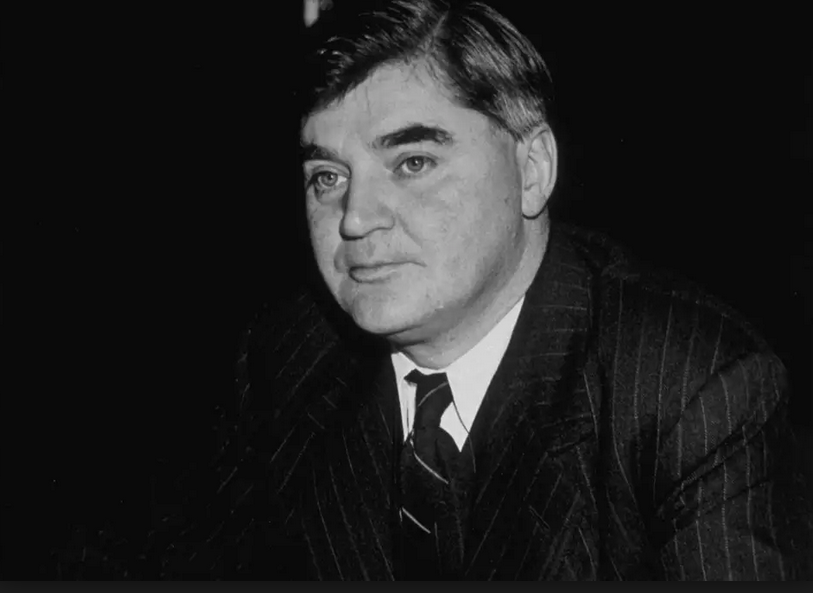
Aneurin (Nye) Bevan: 'It will place this country in the forefront of all countries of the world in medical services?' NHS Bill, second reading - 1946

February 20, 2019

30 April 1946. Westminster, United Kingdom

I beg to move that the Bill be now read a Second time.

In the last two years there has been such a clamour from sectional interests in the field of national health that we are in danger of forgetting why these proposals are brought forward at all. It is, therefore, very welcome to me – and I am quite certain to hon. Members in all parts of the House – that consideration should now be given, not to this or that sectional interest, but to the requirements of the British people as a whole. The scheme which anyone must draw up dealing with national health must necessarily be conditioned and limited by the evils it is intended to remove. Many of those who have drawn up paper plans for the health services appear to have followed the dictates of abstract principles, and not the concrete requirements of the actual situation as it exists. They drew up all sorts of tidy schemes on paper, which would be quite inoperable in practice.

The first reason why a health scheme of this sort is necessary at all is because it has been the firm conclusion of all parties that money ought not to be permitted to stand in the way of obtaining an efficient health service. Although it is true that the national health insurance system provides a general practitioner service and caters for something like 21 million of the population, the rest of the population have to pay whenever they desire the services of a doctor. It is cardinal to a proper health organisation that a person ought not to be financially deterred from seeking medical assistance at the earliest possible stage. It is one of the evils of having to buy medical advice that, in addition to the natural anxiety that may arise because people do not like to hear unpleasant things about themselves, and therefore tend to postpone consultation as long as possible, there is the financial anxiety caused by having to pay doctors’ bills. Therefore, the first evil that we must deal with is that which exists as a consequence of the fact that the whole thing is the wrong way round. A person ought to be able to receive medical and hospital help without being involved in financial anxiety.

In the second place, the national health insurance scheme does not provide for the self-employed, nor, of course, for the families of dependants. It depends on insurance qualification, and no matter how ill you are, if you cease to be insured you cease to have free doctoring. Furthermore, it gives no backing to the doctor in the form of specialist services. The doctor has to provide himself, he has to use his own discretion and his own personal connections, in order to obtain hospital treatment for his patients and in order to get them specialists, and in very many cases, of course – in an overwhelming number of cases – the services of a specialist are not available to poor people.

Not only is this the case, but our hospital organisation has grown up with no plan, with no system; it is unevenly distributed over the country and indeed it is one of the tragedies of the situation, that very often the best hospital facilities are available where they are least needed. In the older industrial districts of Great Britain hospital facilities are inadequate. Many of the hospitals are too small – very much too small. About 70 per cent. have less than 100 beds, and over 30 per cent. have less than 30. No one can possibly pretend that hospitals so small can provide general hospital treatment. There is a tendency in some quarters to defend the very small hospital on the ground of its localism and intimacy, and for other rather imponderable reasons of that sort, but everybody knows today that if a hospital is to be efficient it must provide a number of specialised services. Although I am not myself a devotee of bigness for bigness sake, I would rather be kept alive in the efficient if cold altruism of a large hospital than expire in a gush of warm sympathy in a small one.

In addition to these defects, the health of the people of Britain is not properly looked after in one or two other respects. The condition of the teeth of the people of Britain is a national reproach. As a consequence of dental treatment having to be bought, it has not been demanded on a scale to stimulate the creation of sufficient dentists, and in consequence there is a woeful shortage of dentists at the present time. Furthermore, about 25 per cent. of the people of Great Britain can obtain their spectacles and get their eyes tested and seen to by means of the assistance given by the approved societies, but the general mass of the people have not such facilities. Another of the evils from which this country suffers is the fact that sufficient attention has not been given to deafness, and hardly any attention has been given so far to the provision of cheap hearing aids and their proper maintenance. I hope to be able to make very shortly a welcome announcement on this question.

One added disability from which our health system suffers is the isolation of mental health from the rest of the health services. Although the present Bill does not rewrite the Lunacy Acts – we shall have to come to that later on – nevertheless, it does, for the first time, bring mental health into the general system of health services. It ought to be possible, and this should be one of the objectives of any civilised health service, for a person who feels mental distress, or who fears that he is liable to become unbalanced in any way to go to a general hospital to get advice and assistance, so that the condition may not develop into a more serious stage. All these disabilities our health system suffers from at the present time, and one of the first merits of this Bill is that it provides a universal health service without any insurance qualifications of any sort. It is available to the whole population, and not only is it available to the whole population freely, but it is intended, through the health service, to generalise the best health advice and treatment. It is intended that there shall be no limitation on the kind of assistance given – the general practitioner service, the specialist, the hospitals, eye treatment, spectacles, dental treatment, hearing facilities, all these are to be made available free.

There will be some limitations for a while, because we are short of many things. We have not enough dentists and it will therefore be necessary for us, in the meantime, to give priority treatment to certain classes – expectant and nursing mothers, children, school children in particular and later on we hope adolescents, Finally we trust that we shall be able to build up a dental service for the whole population. We are short of nurses and we are short, of course, of hospital accommodation, and so it will be some time before the Bill can fructify fully in effective universal service. Nevertheless, it is the object of the Bill, and of the scheme, to provide this as soon as possible, and to provide it universally.

Specialists will be available not only at institutions but for domiciliary visits when needed. Hon. Members in all parts of the House know from their own experience that very many people have suffered unnecessarily because the family has not had the financial resources to call in skilled people. The specialist services, therefore, will not only be available at the hospitals, but will be at the back of the general practitioner should he need them. The practical difficulties of carrying out all these principles and services are very great . When I approached this problem, I made up my mind that I was not going to permit any sectional or vested interests to stand in the way of providing this very valuable service for the British people.

There are, of course, three main instruments through which it is intended that the Health Bill should be worked. There are the hospitals; there are the general practitioners; and there are the health centres. The hospitals are in many ways the vertebrae of the health system, and I first examined what to do with the hospitals. The voluntary hospitals of Great Britain have done invaluable work. When hospitals could not be provided by any other means, they came along. The voluntary hospital system of this country has a long history of devotion and sacrifice behind it, and it would be a most frivolously minded man who would denigrate in any way the immense services the voluntary hospitals have rendered to this country. But they have been established often by the caprice of private charity. They bear no relationship to each other. Two hospitals close together often try to provide the same specialist services unnecessarily, while other areas have not that kind of specialist service at all. They are, as I said earlier, badly distributed throughout the country. It is unfortunate that often endowments are left to finance hospitals in those parts of the country where the well-to-do live while, in very many other of our industrial and rural districts there is inadequate hospital accommodation. These voluntary hospitals are, very many of them, far too small and, therefore, to leave them as independent units is quite impracticable.

Furthermore – I want to be quite frank with the House – I believe it is repugnant to a civilised community for hospitals to have to rely upon private charity. I believe we ought to have left hospital flag days behind. I have always felt a shudder of repulsion when I have seen nurses and sisters who ought to be at their work, and students who ought to be at their work, going about the streets collecting money for the hospitals. I do not believe there is an hon. Member of this House who approves that system. It is repugnant, and we must leave it behind – entirely. But the implications of doing this are very considerable.

I have been forming some estimates of what might happen to voluntary hospital finance when the all-in insurance contributions fall to be paid by the people of Great Britain, when the Bill is passed and becomes an Act, and they are entitled to free hospital services. The estimates I have go to show that between 80 per cent. and 90 per cent. of the revenues of the voluntary hospitals in these circumstances will be provided by public funds, by national or rate funds. And, of course, as the hon. Member reminds me, in very many parts of the country it is a travesty to call them voluntary hospitals. In the mining districts, in the textile districts, in the districts where there are heavy industries it is the industrial population who pay the weekly contributions for the maintenance of the hospitals. When I was a miner I used to find that situation, when I was on the hospital committee. We had an annual meeting and a cordial vote of thanks was moved and passed with great enthusiasm to the managing director of the colliery company for his generosity towards the hospital; and when I looked at the balance sheet, I saw that 97.5 per cent. of the revenues were provided by the miners’ own contributions; but nobody passed a vote of thanks to the miners.

I can assure the hon. and gallant Member that I was no more silent then than I am now. But, of course, it is a misuse of language to call these ‘Voluntary hospitals.” They are not maintained by legally enforced contributions; but, mainly, the workers pay for them because they know they will need the hospitals, and they are afraid of what they would have to pay if they did not provide them. So it is, I say, an impossible situation for the State to find something like 90 per cent of the revenues of these hospitals and still to call them “voluntary.’ So I decided, for this and other reasons, that the voluntary hospitals must be taken over.

I knew very well when I decided this that it would give rise to very considerable resentment in many quarters, but, quite frankly, I am not concerned about the voluntary hospitals’ authorities: I am concerned with the people whom the hospitals are supposed to serve. Every investigation which has been made into this problem has established that the proper hospital unit has to comprise about 1,000 beds – not in the same building but, nevertheless, the general and specialist hospital services can be provided only in a group of that size. This means that a number of hospitals have to be pooled, linked together, in order to provide a unit of that sort. This cannot be done effectively if each hospital is a separate, autonomous body. It is proposed that each of these groups should have a large general hospital, providing general hospital facilities and services, and that there should be a group round it of small feeder hospitals. Many of the cottage hospitals strive to give services that they are not able to give. It very often happens that a cottage hospital harbours ambitions to the hurt of the patients, because they strive to reach a status that they never can reach. In these circumstances, the welfare of the patients is sacrificed to the vaulting ambitions of those in charge of the hospital. If, therefore, these voluntary hospitals are to be grouped in this way, it is necessary that they should submit themselves to proper organisation, and that submission, in our experience, is impracticable if the hospitals, all of them, remain under separate management.

Now, this decision to take over the voluntary hospitals meant, that I then had to decide to whom to give them. Who was to be the receiver? So I turned to an examination of the local government hospital system. Many of the local authorities in Great Britain have never been able to exercise their hospital powers. They are too poor. They are too small. Furthermore, the local authorities of Great Britain inherited their hospitals from the Poor Law, and some of them are monstrous buildings, a cross between a workhouse and a barracks – or a prison. The local authorities are helpless in these matters. They have not been able to afford much money. Some local authorities are first-class. Some of the best hospitals in this country are local government hospitals. But, when I considered what to do with the voluntary hospitals when they had been taken over, and who was to receive them I had to reject the local government unit, because the local authority area is no more an effective gathering ground for the patients of the hospitals than the voluntary hospitals themselves. My hon. Friend said that some of them are too small, and some of them too large. London is an example of being too small and too large at the same time.

It is quite impossible, therefore, to hand over the voluntary hospitals to the local authorities. Furthermore – and this is an argument of the utmost importance – if it be our contract with the British people, if it be our intention that we should universalise the best, that we shall promise every citizen in this country the same standard of service, how can that be articulated through a rate-borne institution which means that the poor authority will not be able to carry out the same thing at all- It means that once more we shall be faced with all kinds of anomalies, just in those areas where hospital facilities are most needed, and in those very conditions where the mass of the poor people will be unable to find the finance to supply the hospitals. Therefore, for reasons which must be obvious – because the local authorities are too small, because their financial capacities are unevenly distributed – I decided that local authorities could not be effective hospital administration units. There are, of course, a large number of hospitals in addition to the general hospitals which the local authorities possess. Tuberculosis sanatoria, isolation hospitals, infirmaries of various kinds, rehabilitation, and all kinds of other hospitals are all necessary in a general hospital service. So I decided that the only thing to do was to create an entirely new hospital service, to take over the voluntary hospitals, and to take over the local government hospitals and to organise them as a single hospital service. If we are to carry out our obligation and to provide the people of Great Britain, no matter where they may be, with the same level of service, then the nation itself will have to carry the expenditure, and cannot put it upon the shoulders of any other authority.

A number of investigations have been made into this subject from time to time, and the conclusion has always been reached that the effective hospital unit should be associated with the medical school. If you grouped the hospitals in about 16 to 20 regions around the medical schools, you would then have within those regions the wide range of disease and disability which would provide the basis for your specialised hospital service. Furthermore, by grouping hospitals around the medical schools, we should be providing what is very badly wanted, and that is a means by which the general practitioners are kept in more intimate association with new medical thought and training. One of the disabilities, one of the shortcomings of our existing medical service, is the intellectual isolation of the general practitioners in many parts of the country. The general practitioner, quite often, practises in loneliness and does not come into sufficiently intimate association with his fellow craftsmen and has not the stimulus of that association, and in consequence of that the general practitioners have not got access to the new medical knowledge in a proper fashion. By this association of the general practitioner with the medical schools through the regional hospital organisation, it will be possible to refresh and replenish the fund of knowledge at the disposal of the general practitioner.

This has always been advised as the best solution of the difficulty. It has this great advantage to which I call the close attention of hon. Members. It means that the bodies carrying out the hospital services of the country are, at the same time, the planners of the hospital service. One of the defects of the other scheme is that the planning authority and executive authority are different. The result is that you get paper planning or bad execution. By making the regional board and regional organisation responsible both for the planning and the administration of the plans, we get a better result, and we get from time to time, adaptation of the plans by the persons accumulating the experience in the course of their administration. The other solutions to this problem which I have looked at all mean that you have an advisory body of planners in the background who are not able themselves to accumulate the experience necessary to make good planners. The regional hospital organisation is the authority with which the specialised services are to be associated, because, as I have explained, this specialised service can be made available for an area of that size, and cannot be made available over a small area.

When we come to an examination of this in Committee, I daresay there will be different points of view about the constitution of the regional boards. It is not intended that the regional boards should be conferences of persons representing different interests and different organisations. If we do that, the regional boards will not be able to achieve reasonable and efficient homogeneity. It is intended that they should be drawn from members of the profession, from the health authorities in the area, from the medical schools and from those who have long experience in voluntary hospital administration. While leaving ourselves open to take the best sort of .individuals on these hospital boards which we can find, we hope before very long to build up a high tradition of hospital administration in the boards themselves. Any system which made the boards conferences, any proposal which made the members delegates, would at once throw the hospital administration into chaos. Although I am perfectly prepared and shall be happy to cooperate with hon. Members in all parts of the House in discussing how the boards should be constituted, I hope I shall not be pressed to make these regional boards merely representative of different interests and different areas. The general hospital administration, therefore, centres in that way.

When we come to the general practitioners we are, of course, in an entirely different field. The proposal which I have made is that the ‘general practitioner shall not be in direct contract with the Ministry of Health, but in contract with new bodies. There exists in the medical ,profession a great resistance to coming under the authority of local government – a great resistance, with which I, to some extent, sympathise. There is a feeling in the medical profession that the general practitioner would be liable to come too much under the medical officer of health, who is the administrative doctor. This proposal does not put the doctor under the local authority; it puts the doctor in contract with an entirely new body – the local executive :council, coterminous with the local health area, county or county borough. On that executive council, the dentists, doctors and chemists will have half the representation. In fact, the whole scheme provides a greater degree of professional representation for the medical profession than any other scheme I have seen.

I have been criticised in some quarters for doing that. I will give the answer now: I have never believed that the demands of a democracy are necessarily satisfied merely by the opportunity of putting a cross against someone’s name every four or five years. I believe that democracy exists in the active participation in administration and policy. Therefore, I believe that it is a wise thing to give the doctors full participation in the administration of their own profession. They must of course, necessarily be subordinated to lay control – we do not want the opposite danger of syndicalism. Therefore, the communal interests must always be safeguarded in this administration. The doctors will be in contract with an executive body of this sort. One of the advantages of that proposal is that the doctors do not become – as some of them have so wildly stated – civil servants. Indeed, one of the advantages of the scheme is that it does not create an additional civil servant.

It imposes no constitutional disability upon any person whatsoever. Indeed, by taking the hospitals from the local authorities and putting them under the regional boards, large numbers of people will be enfranchised who are now disfranchised from participation in local government. So far from this being a huge bureaucracy with all the doctors little civil servants – the slaves of the Minister of Health, as I have seen it described – instead of that, the doctors are under contract with bodies which are not under the local authority, and which are, at the same time, ever open to their own influence and control.

One of the chief problems that I was up against in considering this scheme was the distribution of the general practitioner service throughout the country. The distribution, at the moment, is most uneven. In South Shields before the war there were 4,100 persons per doctor; in Bath 1,590; in Dartford nearly 3,000 and in Bromley 1,620; in Swindon 3,100; in Hastings under 1,200. That distribution of general practitioners throughout the country is most hurtful to the health of our people. It is entirely unfair, and, therefore, if the health services are to be carried out, there must be brought about a redistribution of the general practitioners throughout the country.

Indeed, I could amplify those figures a good deal, but I do not want to weary the House, as Ihave a great deal to say. It was, therefore, decided that there must be redistribution. One of the first consequences of that decision was the abolition of the sale and purchase of practices. If we are to get the doctors where we need them, we cannot possibly allow a new doctor to go in because he has bought somebody’s practice. Proper distribution kills by itself the sale and purchase of practices. I know that there is some opposition to this, and I will deal with that opposition. I have always regarded the sale and purchase of medical practices as an evil in itself. It is tantamount to the sate and purchase of patients. Indeed, every argument advanced about the value of the practice is itself an argument against freedom of choice, because the assumption underlying the high value of a practice is that the patient passes from the old doctor to the new. If they did not pass there would be no value in it. I would like, therefore, to point out to the medical profession that every time they argue for high compensation for the loss of the value of their practices, it is an argument against the free choice which they claim. However, the decision to bring about the proper distribution of general practitioners throughout the country meant that the value of the practices was destroyed. We had, therefore, to consider compensation.

I have never admitted the legal claim, but I admit at once that very real hardship would be inflicted upon doctors if there were no compensation. Many of these doctors look forward to the value of their practices for their retirement. Many of them have had to borrow money to buy practices and, therefore, it would, I think, be inhuman, and certainly most unjust, if no compensation were paid for the value of the practices destroyed. The sum of £66,000,000 is very large. In fact, I think that everyone will admit that the doctors are being treated very generously. However, it is not all loss, because if we had, in providing superannuation, given credit for back service, as we should have had to do, it would have cost £35 million. Furthermore, the compensation will fall to be paid to the dependants when the doctor dies, or when he retires, and so it is spread over a considerable number of years. This global sum has been arrived at by the actuaries and over the figure, I am afraid, we have not had very much control, because the actuaries have agreed it. But the profession itself will be asked to advise as to its distribution among the claimants, because we are interested in the global sum, and the profession, of course, is interested in the equitable distribution of the fund to the claimants.

The doctors claim that the proposals of the Bill amount to direction – not all the doctors say this but some of them do. There is no direction involved at all. When the Measure starts to operate, the doctors in a particular area will be able to enter the public service in that area. A doctor newly coming along would apply to the local executive council for permission to practise in a particular area. His application would then be re-referred to the Medical Practices Committee. The Medical Practices Committee, which is mainly a professional body, would have before it the question of whether there were sufficient general practitioners in that area. If there were enough, the committee would refuse to permit the appointment. No one can really argue that that is direction, because no profession should be allowed to enter the public service in a place where it is not needed. By that method of negative control over a number of years, we hope to bring about over the country a positive redistribution of the general practitioner service. It will not affect the existing situation, because doctors will be able to practise under the new service in the areas to which they belong, but a new doctor, as he comes on, will have to find his practice in a place inadequately served.

I cannot, at the moment, explain to the House what are going to be the rates of remuneration of doctors. The Spens Committee report is not fully available. I hope it will be out next week. I had hoped that it would be ready for this Debate, because this is an extremely important part of the subject, but I have not been able to get the full report. Therefore, it is not possible to deal with remuneration. However, it is possible to deal with some of the principles underlying the remuneration of general practitioners. Some of my hon. Friends on this side of the House are in favour of a full salaried service. I am not. I do not believe that the medical profession is ripe for it, and I cannot dispense with the principle that the payment of a doctor must in some degree be a reward for zeal, and there must be some degree of punishment for lack of it. Therefore, it is proposed that capitation should remain the main source from which a doctor will obtain his remuneration. But it is proposed that there shall be a basic salary and that for a number of very cogent reasons. One is that a young doctor entering practice for the first time needs to be kept alive while he is building up his lists. The present system by which a young man gets a load of debt around his neck in order to practise is an altogether evil one. The basic salary will take care of that.

Furthermore, the basic salary has the additional advantage of being something to which I can attach an increased amount to get doctors to go into unattractive areas. It may also – and here our position is not quite so definite – be the means of attaching additional remuneration for special courses and special acquirements. The basic salary, however, must not be too large otherwise it is a disguised form of capitation. Therefore, the main source at the moment through which a general practitioner will obtain his remuneration will be capitation. I have also made – and I quite frankly admit it to the House – a further concession which I know will be repugnant in some quarters. The doctor, the general practitioner and the specialist, will be able to obtain fees, but not from anyone who is on any of their own lists, nor will a doctor be able to obtain fees from persons on the lists of his partner, nor from those he has worked with in group practice, but I think it is impracticable to prevent him having any fees at all. To do so would be to create a black market. There ought to be nothing to prevent anyone having advice from another doctor other than his own. Hon. Members know what happens in this field sometimes. An individual hears that a particular doctor in some place is good at this, that or the other thing, and wants to go along for a consultation and pays a fee for it. If the other doctor is better than his own all he will need to do is to transfer to him and he gets him free. It would be unreasonable to keep the patient paying fees to a doctor whose services can be got free. So the amount of fee payment on the part of the general population will be quite small. Indeed, I confess at once if the amount of fee paying is great, the system will break down, because the whole purpose of this scheme is to provide free treatment with no fee paying at all. The same principle applies to the hospitals. If an individual wishes to consult, there is no reason why he should be stopped. As I have said, the fact that a person can transfer from one doctor to another ought to keep fee paying within reasonable proportions.

The same principle applies to the hospitals. Specialists in hospitals will be allowed to have fee-paying patients. I know this is criticised and I sympathise with some of the reasons for the criticism, but we are driven inevitably to this fact, that unless we permit some fee-paying patients in the public hospitals, there will be a rash of nursing homes all over the country. If people wish to pay for additional amenities, or something to which they attach value, like privacy in a single ward, we ought to aim at providing such facilities for everyone who wants them. But while we have inadequate hospital facilities, and while rebuilding is postponed it inevitably happens that some people will want to buy something more than the general health service is providing. If we do not permit fees in hospitals, we will lose many specialists from the public hospitals for they will go to nursing homes. I believe that nursing homes ought to be discouraged. They cannot provide general hospital facilities, and we want to keep our specialists attached to our hospitals and not send them into nursing homes. Behind this there is a principle of some importance. If the State owned a theatre it would not charge the same prices for the different seats. It is not entirely analogous, but it is an illustration. For example, in the dental service the same principle will prevail. The State will provide a certain standard of dentistry free, but if a person wants to have his teeth filled with gold, the State will not provide that.

The third instrument to which the health services are to be articulated is the health centre, to which we attach very great importance indeed. It has been described in some places as an experimental idea, but we want it to be more than that, because to the extent that general practitioners can operate through health centres in their own practice, to that extent will be raised the general standard of the medical profession as a whole. Furthermore, the general practitioner cannot afford the apparatus necessary for a proper diagnosis in his own surgery. This will be available at the health centre. The health centre may well be the maternity and child welfare clinic of the local authority also. The provision of the health centre is, therefore, imposed as a duty on the local authority. There has been criticism that this creates a trichotomy in the services. It is not a trichotomy at all. If you have complete unification it would bring you back to paper planning. You cannot get all services through the regional authority, because there are many immediate and personal services which the local authority can carry out better than anybody else. So, it is proposed to leave those personal services to the local authority, and some will be carried out at the health centre. The centres will vary; there will be larger centres at which there will be dental clinics, maternity and child welfare services, and general practitioners’ consultative facilities, and there will also be smaller centres – surgeries where practitioners can see their patients.

The health centres will be managed entirely by the health authorities. The health centre itself will be provided by the local health authority and facilities will be made available there to the general practitioner. The small ones are necessary, because some centres may be a considerable distance from people’s homes. So it will be necessary to have simpler ones, nearer their homes, fixed in a constellation with the larger ones.

The representatives on the local executives will be able to coordinate what is happening at the health centres. As I say, we regard these health centres as extremely valuable, and their creation will be encouraged in every possible way. Doctors will be encouraged to practise there, where they will have great facilities. It will, of course, be some time before these centres can be established everywhere, because of the absence of these facilities.

There you have the three main instruments through which it is proposed that the health services of the future should be articulated. There has been some criticism. Some have said that the preventive services should be under the same authority as the curative services. I wonder whether Members who advance that criticism really envisage the situation which will arise. What are the preventive services – Housing, water, sewerage, river pollution prevention, food inspection – are all these to be under a regional board? If so, a regional board of that sort would want the Albert Hall in which to meet. This, again, is paper planning. It is unification for unification’s sake. There must be a frontier at which the local joins the national health service. You can fix it here or there, but it must be fixed somewhere. It is said that there is some contradiction in the health scheme because some services are left to the local authority and the rest to the national scheme. Well, day is joined to night by twilight, but nobody has suggested that it is a contradiction in nature. The argument that this is a contradiction in health services is purely pedantic, and has no relation to the facts.

It is also suggested that because maternity and child welfare services come under the local authority, and gynaecological services come under the regional board, that will make for confusion. Why should it? Continuity between one and the other is maintained by the user. The hospital is there to be used. If there are difficulties in connection with birth, the gynaecologist at the hospital centre can look after them. All that happens is that the midwife will be in charge the mother will be examined properly, as she ought to be examined then, if difficulties are anticipated, she can have her child in hospital, where she can be properly looked after by the gynaecologist. When she recovers, and is a perfectly normal person, she can go to the maternity and child welfare centre for post-natal treatment. There is no confusion there. The confusion is in the minds of those who are criticising the proposal on the ground that there is a trichotomy in the services, between the local authority, the regional board and the health centre.

I apologise for detaining the House so long, but there are other matters to which I must make some reference. The two Amendments on the Order Paper rather astonish me. The hon. Member for Denbigh informs me, in his Amendment, that I have not sufficiently consulted the medical profession – I intend to read the Amendment to show how extravagant the hon. Member has been. He says that he and his friends are:

“unable to agree to a measure containing such far reaching proposals involving the entire population without any consultations having taken place between the Minister and the organisations and bodies representing those who will be responsible for carrying out its provisions…”

I have had prepared a list of conferences I have attended. I have met the medical profession, the dental profession, the pharmacists, nurses and midwives, voluntary hospitals, local authorities, eye services, medical aid services, herbalists, insurance committees, and various other organisations. I have had 20 conferences. The consultations have been very wide. In addition, my officials have had 13 conferences, so that altogether there have been 33 conferences with the different branches of the profession about the proposals. Can anybody argue that that is not adequate consultation? Of course, the real criticism is that I have not conducted negotiations. I am astonished that such a charge should lie in the mouth of any Member of the House. If there is one thing that will spell the death of the House of Commons it is for a Minister to negotiate Bills before they are presented to the House. I had no negotiations, because once you negotiate with outside bodies two things happen. They are made aware of the nature of the proposals before the House of Commons itself; and furthermore, the Minister puts himself into an impossible position, because, if he has agreed things with somebody outside he is bound to resist Amendments from Members in the House. Otherwise he does not play fair with them. I protested against this myself when I was a Private Member. I protested bitterly, and I am not prepared, strange though it may seem, to do something as a Minister which as a Private Member I thought was wrong. So there has not been negotiation, and there will not be negotiation, in this matter. The House of Commons is supreme, and the House of Commons must assert its supremacy, and not allow itself to be dictated to by anybody, no matter how powerful and how strong he may be.

These consultations have taken place over a very wide field, and, as a matter of fact, have produced quite a considerable amount of agreement. The opposition to the Bill is not as strong as it was thought it would be. On the contrary, there is very considerable support for this Measure among the doctors themselves. I myself have been rather aggrieved by some of the statements which have been made. They have misrepresented the proposals to a very large extent, but as these proposals become known to the medical profession, they will appreciate them, because nothing should please a good doctor more than to realise that, in future, neither he nor his patient will have any financial anxiety arising out of illness.

The leaders of the Opposition have on the Order Paper an Amendment which expresses indignation at the extent to which we are interfering with charitable foundations. The Amendment states that the Bill “gravely menaces all charitable foundations by diverting to purposes other than those intended by the donors the trust funds of the voluntary hospitals.”

I must say that when I read that Amendment I was amused. I have been looking up some precedents. I would like to say, in passing, that a great many of these endowments and foundations have been diversions from the Chancellor of the Exchequer. The main contributor was the Chancellor of the Exchequer. But I seem to remember that, in 1941, hon. Members opposite were very much vexed by what might happen to the public schools, and they came to the House and asked for the permission of the House to lay sacrilegious hands upon educational endowments centuries old. I remember protesting against it at the time – not, however, on the grounds of sacrilege. These endowments had been left to the public schools, many of them for the maintenance of the buildings, but hon. Members opposite, being concerned lest the war might affect their favourite schools, came to the House and allowed the diversion of money from that purpose to the payment of the salaries of the teachers and the masters. There have been other interferences with endowments. Wales has been one of the criminals. Disestablishment interfered with an enormous number of endowments. Scotland also is involved. Scotland has been behaving in a most sacrilegious manner; a whole lot of endowments have been waived by Scottish Acts. I could read out a large number of them, but I shall not do so.

Do hon. Members opposite suggest that the intelligent planning of the modern world must be prevented by the endowments of the dead? Are we to consider the dead more than the living? Are the patients of our hospitals to be sacrificed to a consideration of that sort?

We are not, in fact, diverting these endowments from charitable purposes. It would have been perfectly proper for the Chancellor of the Exchequer to have taken over these funds, because they were willed for hospital purposes, and he could use them for hospital purposes; but we are doing no such thing. The teaching hospitals will be left with all their liquid endowments and more power. We are not interfering with the teaching hospitals’ endowments. Academic medical education will be more free in the future than it has been in the past. Furthermore, something like £32 million belonging to the voluntary hospitals as a whole is not going to be taken from them. On the contrary, we are going to use it, and a very valuable thing it will be; we are going to use it as a shock absorber between the Treasury, the central Government, and the hospital administration. They will be given it as free money which they can spend over and above the funds provided by the State.

I welcome the opportunity of doing that, because I appreciate, as much as hon. Members in any part of the House, the absolute necessity for having an elastic, resilient service, subject to local influence as well as to central influence; and that can be accomplished by leaving this money in their hands. I shall be prepared to consider, when the Bill comes to be examined in more detail, whether any other relaxations are possible, but certainly, by leaving this money in the hands of the regional board, by allowing the regional board an annual budget and giving them freedom of movement inside that budget, by giving power to the regional board to distribute this money to the local management committees of the hospitals, by various devices of that sort, the hospitals will be responsible to local pressure and subject to local influence as well as to central direction.

I think that on those grounds the proposals can be defended. They cover a very wide field indeed, to a great deal of which I have not been able to make reference; but I should have thought it ought to have been a pride to hon. Members in all parts of the House that Great Britain is able to embark upon an ambitious scheme of this proportion. When it is carried out, it will place this country in the forefront of all countries of the world in medical services. I myself, if I may say a personal word, take very great pride and great pleasure in being able to introduce a Bill of this comprehensiveness and value. I believe it will lift the shadow from millions of homes. It will keep very many people alive who might otherwise be dead. It will relieve suffering. It will produce higher standards for the medical profession. It will be a great contribution towards the wellbeing of the common people of Great Britain. For that reason, and for the other reasons I have mentioned, I hope hon. Members will give the Bill a Second Reading.

Source: https://www.theguardian.com/politics/2009/...

Enjoyed this speech? Speakola is a labour of love and I’d be very grateful if you would share, tweet or like it. Thank you.

Facebook Twitter Facebook
In 1940-59 B Tags ANEURIN BEVAN, NYE BEVAN, SECOND READING, NHS, NATIONAL HEATH SERVICE, POST WAR, SOCIALSIM, NATIONALISED MEDICINE, MEDICINE, SOCIAL JUSTICE
Comment

Aneurin (Nye) Bevan: 'Now private enterprise cannot build houses to last', Public Housing speech - 1946

March 30, 2017

Aneurin (Nye) Bevan was a socialist leaning member of the Labour Party who was Health Minister post war in the Atlee government. He is the most significant figure in the history of the NHS, Britain's national health care program. This speech is about housing policy.

London, 1946

Mister Chairman, and comrades, the last time that I spoke in this hall was when I was leading an [inaudible] demonstration. It was a most unorthodox affair frowned upon by large numbers of respectable persons. You fellas have gone right mad now these days. This is a nuisance. But nevertheless the task that lies ahead of us is far greater than what we have already accomplished. We want to get those 45,550 families back into their homes as quickly as possible, because we want to get those 140,000 building workers on clean straightforward jobs of new building. Now I know Mister Chairman, dribbling about in a war damaged house is not a very satisfying job for a craftsman, and the sooner we can put this behind us the better. Comparisons are being made at the present time with the housing policy in different parts of the country. Our critics, and there are a good many of them, are going to be confounded.

At the end of the last war no houses at all were being built, yet we have got, as I said, throughout the country as a whole, not only to replace the consequences of a destruction of war, not only to put up the houses that Hitler's bombs blew down. Not only have we got to repair the houses that were damaged, not only have we to make up the arrears of six years of lack of housing maintenance, but in addition to that, in addition to what the enemy did to us, we have got to try and make up for the arrears of housing left by 50 years of Tory misrule in Britain.

A house is at the end of the production line, not the beginning. A house is the last product. Before you can start building on any scale, every single industry in society has got to be organised and stimulated into production. A house, a modern house, is a most complex economic production. Every single industry is a contributor. Not only the simple building materials of bricks and mortar and cement and plasterboards and slates, and tiles, and timber, but every single component and all the furnishings of a house make it built upon every single conceivable industry. And therefore before we can start houses going up in any great numbers, all these industries have got to be manned and organised, and it is to that task that I have been devoting myself during the winter months.

It was my purpose, and it is still my purpose, to try and get houses started everywhere so that as the men come home from the forces, some building work should be going on near their homes, because we want to try and make it possible for all the building operatives to do their building work and get back to their own homes at a reasonable hour. That purpose can only ... [skip]

We don't know what they are doing, where they are doing it, or how they are doing it. How is it going to be possible for the government to plan the production of all 101 components of a house unless we know what the contractors are doing, and therefore I made up my mind. As this plan had to be implemented to a plannable instrument, that the only plannable instrument lying ready to hand were the great public authorities. And so I decided to place the principle responsibility for the main features of the housing programme upon the public authorities. And there was a further reason.

Now private enterprise cannot build houses to last, because you don't make money that way. Private enterprise makes profit out of houses only when it builds houses to sell, and therefore as the primary consideration was to provide houses to let poor people, or for relatively poor people, then again the only instrument able to build houses to let in good numbers are the local authorities. And there was another ...[skip]

And that competitor is a black market in building repairs. Now repairs have to be done, as I said, because there are great arrears to be made up. A licence is obtained by a building contractor who enters a house, and then all sorts of things happen from then on. All sorts of things that I could describe if I had time, and that you could tell me about. Now comrades, that isn't good enough. That isn't good enough. There is a sacred obligation upon every building worker to refuse to engage ... [skip]

Our housing prices have got to be brought under control ...


Source: https://www.youtube.com/watch?time_continu...

Enjoyed this speech? Speakola is a labour of love and I’d be very grateful if you would share, tweet or like it. Thank you.

Facebook Twitter Facebook
In 1940-59 B Tags NYE BEVAN, ANEURIN BEVAN, NHS, HOUSING, POST WAR, RECONSTRUCTION, PUBLIC HOUSING, SOCIALISM, SOCIAL DEMOCRAT, LABOUR PARTY, UNITED KINGDOM, ATLEE GOVERNMENT
Comment

Winston Chruchill: 'From Stettin in the Baltic to Trieste in the Adriatic, an iron curtain has descended across the Continent' Sinews of Peace speech - 1946

March 17, 2016

5 March 1946,. Westminster College, Fulton, Missouri, USA

I am glad to come to Westminster College this afternoon, and am complimented that you should give me a degree. The name "Westminster" is somehow familiar to me.

I seem to have heard of it before. Indeed, it was at Westminster that I received a very large part of my education in politics, dialectic, rhetoric, and one or two other things. In fact we have both been educated at the same, or similar, or, at any rate, kindred establishments.

It is also an honour, perhaps almost unique, for a private visitor to be introduced to an academic audience by the President of the United States. Amid his heavy burdens, duties, and responsibilities-unsought but not recoiled from-the President has travelled a thousand miles to dignify and magnify our meeting here to-day and to give me an opportunity of addressing this kindred nation, as well as my own countrymen across the ocean, and perhaps some other countries too. The President has told you that it is his wish, as I am sure it is yours, that I should have full liberty to give my true and faithful counsel in these anxious and baffling times. I shall certainly avail myself of this freedom, and feel the more right to do so because any private ambitions I may have cherished in my younger days have been satisfied beyond my wildest dreams. Let me, however, make it clear that I have no official mission or status of any kind, and that I speak only for myself. There is nothing here but what you see.

I can therefore allow my mind, with the experience of a lifetime, to play over the problems which beset us on the morrow of our absolute victory in arms, and to try to make sure with what strength I have that what has been gained with so much sacrifice and suffering shall be preserved for the future glory and safety of mankind.

The United States stands at this time at the pinnacle of world power. It is a solemn moment for the American Democracy. For with primacy in power is also joined an awe inspiring accountability to the future. If you look around you, you must feel not only the sense of duty done but also you must feel anxiety lest you fall below the level of achievement. Opportunity is here now, clear and shining for both our countries. To reject it or ignore it or fritter it away will bring upon us all the long reproaches of the after-time. It is necessary that constancy of mind, persistency of purpose, and the grand simplicity of decision shall guide and rule the conduct of the English-speaking peoples in peace as they did in war. We must, and I believe we shall, prove ourselves equal to this severe requirement.

When American military men approach some serious situation they are wont to write at the head of their directive the words "over-all strategic concept." There is wisdom in this, as it leads to clarity of thought. What then is the over-all strategic concept which we should inscribe today? It is nothing less than the safety and welfare, the freedom and progress, of all the homes and families of all the men and women in all the lands. And here I speak particularly of the myriad cottage or apartment homes where the wage-earner strives amid the accidents and difficulties of life to guard his wife and children from privation and bring the family up in the fear of the Lord, or upon ethical conceptions which often play their potent part.

To give security to these countless homes, they must be shielded from the two giant marauders, war and tyranny. We all know the frightful disturbances in which the ordinary family is plunged when the curse of war swoops down upon the bread-winner and those for whom he works and contrives. The awful ruin of Europe, with all its vanished glories, and of large parts of Asia glares us in the eyes. When the designs of wicked men or the aggressive urge of mighty States dissolve over large areas the frame of civilised society, humble folk are confronted with difficulties with which they cannot cope. For them all is distorted, all is broken, even ground to pulp.

When I stand here this quiet afternoon I shudder to visualise what is actually happening to millions now and what is going to happen in this period when famine stalks the earth. None can compute what has been called "the unestimated sum of human pain." Our supreme task and duty is to guard the homes of the common people from the horrors and miseries of another war. We are all agreed on that.

Our American military colleagues, after having proclaimed their "over-all strategic concept" and computed available resources, always proceed to the next step-namely, the method. Here again there is widespread agreement. A world organisation has already been erected for the prime purpose of preventing war, UNO, the successor of the League of Nations, with the decisive addition of the United States and all that that means, is already at work. We must make sure that its work is fruitful, that it is a reality and not a sham, that it is a force for action, and not merely a frothing of words, that it is a true temple of peace in which the shields of many nations can some day be hung up, and not merely a cockpit in a Tower of Babel. Before we cast away the solid assurances of national armaments for self-preservation we must be certain that our temple is built, not upon shifting sands or quagmires, but upon the rock. Anyone can see with his eyes open that our path will be difficult and also long, but if we persevere together as we did in the two world wars-though not, alas, in the interval between them-I cannot doubt that we shall achieve our common purpose in the end.

I have, however, a definite and practical proposal to make for action. Courts and magistrates may be set up but they cannot function without sheriffs and constables. The United Nations Organisation must immediately begin to be equipped with an international armed force. In such a matter we can only go step by step, but we must begin now. I propose that each of the Powers and States should be invited to delegate a certain number of air squadrons to the service of the world organisation. These squadrons would be trained and prepared in their own countries, but would move around in rotation from one country to another. They would wear the uniform of their own countries but with different badges. They would not be required to act against their own nation, but in other respects they would be directed by the world organisation. This might be started on a modest scale and would grow as confidence grew. I wished to see this done after the First World War, and I devoutly trust it may be done forthwith.

It would nevertheless be wrong and imprudent to entrust the secret knowledge or experience of the atomic bomb, which the United States, Great Britain, and Canada now share, to the world organisation, while it is still in its infancy. It would be criminal madness to cast it adrift in this still agitated and un-united world. No one in any country has slept less well in their beds because this knowledge and the method and the raw materials to apply it, are at present largely retained in American hands. I do not believe we should all have slept so soundly had the positions been reversed and if some Communist or neo-Fascist State monopolised for the time being these dread agencies. The fear of them alone might easily have been used to enforce totalitarian systems upon the free democratic world, with consequences appalling to human imagination. God has willed that this shall not be and we have at least a breathing space to set our house in order before this peril has to be encountered: and even then, if no effort is spared, we should still possess So formidable a superiority as to impose effective deterrents upon its employment, or threat of employment, by others. Ultimately, when the essential brotherhood of man is truly embodied and expressed in a world organisation with all the necessary practical safeguards to make it effective, these powers would naturally be confided to that world organisation.

Now I come to the second danger of these two marauders which threatens the cottage, the home, and the ordinary people-namely, tyranny. We cannot be blind to the fact that the liberties enjoyed by individual citizens throughout the British Empire are not valid in a considerable number of countries, some of which are very powerful. In these States control is enforced upon the common people by various kinds of all-embracing police governments. The power of the State is exercised without restraint, either by dictators or by compact oligarchies operating through a privileged party and a political police. It is not our duty at this time when difficulties are so numerous to interfere forcibly in the internal affairs of countries which we have not conquered in war. But we must never cease to proclaim in fearless tones the great principles of freedom and the rights of man which are the joint inheritance of the English-speaking world and which through Magna Carta, the Bill of Rights, the Habeas Corpus, trial by jury, and the English common law find their most famous expression in the American Declaration of Independence.

All this means that the people of any country have the right, and should have the power by constitutional action, by free unfettered elections, with secret ballot, to choose or change the character or form of government under which they dwell; that freedom of speech and thought should reign; that courts of justice, independent of the executive, unbiased by any party, should administer laws which have received the broad assent of large majorities or are consecrated by time and custom. Here are the title deeds of freedom which should lie in every cottage home. Here is the message of the British and American peoples to mankind. Let us preach what we practise - let us practise what we preach.

I have now stated the two great dangers which menace the homes of the people: War and Tyranny. I have not yet spoken of poverty and privation which are in many cases the prevailing anxiety. But if the dangers of war and tyranny are removed, there is no doubt that science and co-operation can bring in the next few years to the world, certainly in the next few decades newly taught in the sharpening school of war, an expansion of material well-being beyond anything that has yet occurred in human experience. Now, at this sad and breathless moment, we are plunged in the hunger and distress which are the aftermath of our stupendous struggle; but this will pass and may pass quickly, and there is no reason except human folly or sub-human crime which should deny to all the nations the inauguration and enjoyment of an age of plenty. I have often used words which I learned fifty years ago from a great Irish-American orator, a friend of mine, Mr. Bourke Cockran. "There is enough for all. The earth is a generous mother; she will provide in plentiful abundance food for all her children if they will but cultivate her soil in justice and in peace." So far I feel that we are in full agreement.

Now, while still pursuing the method of realising our overall strategic concept, I come to the crux of what I have travelled here to Say. Neither the sure prevention of war, nor the continuous rise of world organisation will be gained without what I have called the fraternal association of the English-speaking peoples. This means a special relationship between the British Commonwealth and Empire and the United States. This is no time for generalities, and I will venture to be precise. Fraternal association requires not only the growing friendship and mutual understanding between our two vast but kindred Systems of society, but the continuance of the intimate relationship between our military advisers, leading to common study of potential dangers, the similarity of weapons and manuals of instructions, and to the interchange of officers and cadets at technical colleges. It should carry with it the continuance of the present facilities for mutual security by the joint use of all Naval and Air Force bases in the possession of either country all over the world. This would perhaps double the mobility of the American Navy and Air Force. It would greatly expand that of the British Empire Forces and it might well lead, if and as the world calms down, to important financial savings. Already we use together a large number of islands; more may well be entrusted to our joint care in the near future.

The United States has already a Permanent Defence Agreement with the Do-minion of Canada, which is so devotedly attached to the British Commonwealth and Empire. This Agreement is more effective than many of those which have often been made under formal alliances. This principle should be extended to all British Commonwealths with full reciprocity. Thus, whatever happens, and thus only, shall we be secure ourselves and able to work together for the high and simple causes that are dear to us and bode no ill to any. Eventually there may come-I feel eventually there will come-the principle of common citizenship, but that we may be content to leave to destiny, whose outstretched arm many of us can already clearly see.

There is however an important question we must ask ourselves. Would a special relationship between the United States and the British Commonwealth be inconsistent with our over-riding loyalties to the World Organisation? I reply that, on the contrary, it is probably the only means by which that organisation will achieve its full stature and strength. There are already the special United States relations with Canada which I have just mentioned, and there are the special relations between the United States and the South American Republics. We British have our twenty years Treaty of Collaboration and Mutual Assistance with Soviet Russia. I agree with Mr. Bevin, the Foreign Secretary of Great Britain, that it might well be a fifty years Treaty so far as we are concerned. We aim at nothing but mutual assistance and collaboration. The British have an alliance with Portugal unbroken since 1384, and which produced fruitful results at critical moments in the late war. None of these clash with the general interest of a world agreement, or a world organisation; on the contrary they help it. "In my father's house are many mansions." Special associations between members of the United Nations which have no aggressive point against any other country, which harbour no design incompatible with the Charter of the United Nations, far from being harmful, are beneficial and, as I believe, indispensable.

I spoke earlier of the Temple of Peace. Workmen from all countries must build that temple. If two of the workmen know each other particularly well and are old friends, if their families are inter-mingled, and if they have "faith in each other's purpose, hope in each other's future and charity towards each other's shortcomings"-to quote some good words I read here the other day-why cannot they work together at the common task as friends and partners? Why cannot they share their tools and thus increase each other's working powers? Indeed they must do so or else the temple may not be built, or, being built, it may collapse, and we shall all be proved again unteachable and have to go and try to learn again for a third time in a school of war, incomparably more rigorous than that from which we have just been released. The dark ages may return, the Stone Age may return on the gleaming wings of science, and what might now shower immeasurable material blessings upon mankind, may even bring about its total destruction. Beware, I say; time may be short. Do not let us take the course of allowing events to drift along until it is too late. If there is to be a fraternal association of the kind I have described, with all the extra strength and security which both our countries can derive from it, let us make sure that that great fact is known to the world, and that it plays its part in steadying and stabilising the foundations of peace. There is the path of wisdom. Prevention is better than cure.

A shadow has fallen upon the scenes so lately lighted by the Allied victory. Nobody knows what Soviet Russia and its Communist international organisation intends to do in the immediate future, or what are the limits, if any, to their expansive and proselytising tendencies. I have a strong admiration and regard for the valiant Russian people and for my wartime comrade, Marshal Stalin. There is deep sympathy and goodwill in Britain-and I doubt not here also-towards the peoples of all the Russias and a resolve to persevere through many differences and rebuffs in establishing lasting friendships. We understand the Russian need to be secure on her western frontiers by the removal of all possibility of German aggression. We welcome Russia to her rightful place among the leading nations of the world. We welcome her flag upon the seas. Above all, we welcome constant, frequent and growing contacts between the Russian people and our own people on both sides of the Atlantic. It is my duty however, for I am sure you would wish me to state the facts as I see them to you, to place before you certain facts about the present position in Europe.

From Stettin in the Baltic to Trieste in the Adriatic, an iron curtain has descended across the Continent. Behind that line lie all the capitals of the ancient states of Central and Eastern Europe. Warsaw, Berlin, Prague, Vienna, Budapest, Belgrade, Bucharest and Sofia, all these famous cities and the populations around them lie in what I must call the Soviet sphere, and all are subject in one form or another, not only to Soviet influence but to a very high and, in many cases, increasing measure of control from Moscow. Athens alone-Greece with its immortal glories-is free to decide its future at an election under British, American and French observation. The Russian-dominated Polish Government has been encouraged to make enormous and wrongful inroads upon Germany, and mass expulsions of millions of Germans on a scale grievous and undreamed-of are now taking place. The Communist parties, which were very small in all these Eastern States of Europe, have been raised to pre-eminence and power far beyond their numbers and are seeking everywhere to obtain totalitarian control. Police governments are prevailing in nearly every case, and so far, except in Czechoslovakia, there is no true democracy.

Turkey and Persia are both profoundly alarmed and disturbed at the claims which are being made upon them and at the pressure being exerted by the Moscow Government. An attempt is being made by the Russians in Berlin to build up a quasi-Communist party in their zone of Occupied Germany by showing special favours to groups of left-wing German leaders. At the end of the fighting last June, the American and British Armies withdrew westwards, in accordance with an earlier agreement, to a depth at some points of 150 miles upon a front of nearly four hundred miles, in order to allow our Russian allies to occupy this vast expanse of territory which the Western Democracies had conquered.

If now the Soviet Government tries, by separate action, to build up a pro-Communist Germany in their areas, this will cause new serious difficulties in the British and American zones, and will give the defeated Germans the power of putting themselves up to auction between the Soviets and the Western Democracies. Whatever conclusions may be drawn from these facts-and facts they are-this is certainly not the Liberated Europe we fought to build up. Nor is it one which contains the essentials of permanent peace.

The safety of the world requires a new unity in Europe, from which no nation should be permanently outcast. It is from the quarrels of the strong parent races in Europe that the world wars we have witnessed, or which occurred in former times, have sprung. Twice in our own lifetime we have seen the United States, against their wishes and their traditions, against arguments, the force of which it is impossible not to comprehend, drawn by irresistible forces, into these wars in time to secure the victory of the good cause, but only after frightful slaughter and devastation had occurred. Twice the United States has had to send several millions of its young men across the Atlantic to find the war; but now war can find any nation, wherever it may dwell between dusk and dawn. Surely we should work with conscious purpose for a grand pacification of Europe, within the structure of the United Nations and in accordance with its Charter. That I feel is an open cause of policy of very great importance.

In front of the iron curtain which lies across Europe are other causes for anxiety. In Italy the Communist Party is seriously hampered by having to Support the Communist-trained Marshal Tito's claims to former Italian territory at the head of the Adriatic. Nevertheless the future of Italy hangs in the balance. Again one cannot imagine a regenerated Europe without a strong France. All my public life I have worked for a Strong France and I never lost faith in her destiny, even in the darkest hours. I will not lose faith now. However, in a great number of countries, far from the Russian frontiers and throughout the world, Communist fifth columns are established and work in complete unity and absolute obedience to the directions they receive from the Communist centre. Except in the British Commonwealth and in the United States where Communism is in its infancy, the Communist parties or fifth columns constitute a growing challenge and peril to Christian civilisation. These are sombre facts for anyone to have to recite on the morrow of a victory gained by so much splendid comradeship in arms and in the cause of freedom and democracy; but we should be most unwise not to face them squarely while time remains.

The outlook is also anxious in the Far East and especially in Manchuria. The Agreement which was made at Yalta, to which I was a party, was extremely favourable to Soviet Russia, but it was made at a time when no one could say that the German war might not extend all through the summer and autumn of 1945 and when the Japanese war was expected to last for a further 18 months from the end of the German war. In this country you are all so well-informed about the Far East, and such devoted friends of China, that I do not need to expatiate on the situation there.

I have felt bound to portray the shadow which, alike in the west and in the east, falls upon the world. I was a high minister at the time of the Versailles Treaty and a close friend of Mr. Lloyd-George, who was the head of the British delegation at Versailles. I did not myself agree with many things that were done, but I have a very Strong impression in my mind of that situation, and I find it painful to contrast it with that which prevails now. In those days there were high hopes and unbounded confidence that the wars were over, and that the League of Nations would become all-powerful. I do not see or feel that same confidence or even the same hopes in the haggard world at the present time.

On the other hand I repulse the idea that a new war is inevitable; still more that it is imminent. It is because I am sure that our fortunes are still in our own hands and that we hold the power to save the future, that I feel the duty to speak out now that I have the occasion and the opportunity to do so. I do not believe that Soviet Russia desires war. What they desire is the fruits of war and the indefinite expansion of their power and doctrines. But what we have to consider here to-day while time remains, is the permanent prevention of war and the establishment of conditions of freedom and democracy as rapidly as possible in all countries. Our difficulties and dangers will not be removed by closing our eyes to them. They will not be removed by mere waiting to see what happens; nor will they be removed by a policy of appeasement. What is needed is a settlement, and the longer this is delayed, the more difficult it will be and the greater our dangers will become.

From what I have seen of our Russian friends and Allies during the war, I am convinced that there is nothing they admire so much as strength, and there is nothing for which they have less respect than for weakness, especially military weakness. For that reason the old doctrine of a balance of power is unsound. We cannot afford, if we can help it, to work on narrow margins, offering temptations to a trial of strength. If the Western Democracies stand together in strict adherence to the principles of the United Nations Charter, their influence for furthering those principles will be immense and no one is likely to molest them. If however they become divided or falter in their duty and if these all-important years are allowed to slip away then indeed catastrophe may overwhelm us all.


Last time I saw it all coming and cried aloud to my own fellow-countrymen and to the world, but no one paid any attention. Up till the year 1933 or even 1935, Germany might have been saved from the awful fate which has overtaken her and we might all have been spared the miseries Hitler let loose upon mankind. There never was a war in all history easier to prevent by timely action than the one which has just desolated such great areas of the globe. It could have been prevented in my belief without the firing of a single shot, and Germany might be powerful, prosperous and honoured to-day; but no one would listen and one by one we were all sucked into the awful whirlpool. We surely must not let that happen again. This can only be achieved by reaching now, in 1946, a good understanding on all points with Russia under the general authority of the United Nations Organisation and by the maintenance of that good understanding through many peaceful years, by the world instrument, supported by the whole strength of the English-speaking world and all its connections. There is the solution which I respectfully offer to you in this Address to which I have given the title "The Sinews of Peace."

Let no man underrate the abiding power of the British Empire and Commonwealth. Because you see the 46 millions in our island harassed about their food supply, of which they only grow one half, even in war-time, or because we have difficulty in restarting our industries and export trade after six years of passionate war effort, do not suppose that we shall not come through these dark years of privation as we have come through the glorious years of agony, or that half a century from now, you will not see 70 or 80 millions of Britons spread about the world and united in defence of our traditions, our way of life, and of the world causes which you and we espouse. If the population of the English-speaking Commonwealths be added to that of the United States with all that such co-operation implies in the air, on the sea, all over the globe and in science and in industry, and in moral force, there will be no quivering, precarious balance of power to offer its temptation to ambition or adventure. On the contrary, there will be an overwhelming assurance of security. If we adhere faithfully to the Charter of the United Nations and walk forward in sedate and sober strength seeking no one's land or treasure, seeking to lay no arbitrary control upon the thoughts of men; if all British moral and material forces and convictions are joined with your own in fraternal association, the high-roads of the future will be clear, not only for us but for all, not only for our time, but for a century to come.

Source: http://www.winstonchurchill.org/resources/...

Enjoyed this speech? Speakola is a labour of love and I’d be very grateful if you would share, tweet or like it. Thank you.

Facebook Twitter Facebook
In 1940-59 Tags WINSTON CHURCHILL, SINEWS OF PEACE, WESTMINSTER COLLEGE, WW2, POST WAR, COLD WAR, TRANSCRIPT, PRIME MINISTERS
1 Comment

Harry S Truman: 'Those countries which now oppose us will abandon their delusions', Four points Inauguration Speech - 1949

March 17, 2016

20 January 1949, Washington DC, USA

Mr. Vice President, Mr. Chief Justice, fellow citizens: I accept with humility the honor which the American people have conferred upon me. I accept it with a resolve to do all that I can for the welfare of this Nation and for the peace of the world.

The American people stand firm in the faith which has inspired this Nation from the beginning. We believe that all men have a right to equal justice under law and equal opportunity to share in the common good. We believe that all men have the right to freedom of thought and expression. We believe that all men are created equal because they are created in the image of God. From this faith we will not be moved.

The American people desire and are determined to work for a world in which all nations and all peoples are free to govern themselves as they see fit, and to achieve a decent and satisfying life. Above all else, our people desire, and are determined to work for peace on earth, a just and lasting peace, based on genuine agreement freely arrived at by equals.

In the pursuit of these aims, the United States and other like-minded nations find themselves directly opposed by a regime with contrary aims and a totally different concept of life. That regime adheres to a false philosophy which purports to offer freedom, security, and greater opportunity to mankind. Misled by that philosophy, many peoples have sacrificed their liberties only to learn to their sorrow that deceit and mockery, poverty and tyranny, are their reward. That false philosophy is communism.

Communism subjects the individual to arrest without lawful cause, punishment without trial, and forced labor as the chattel of the state. It decrees what information he shall receive, what art he shall produce, what leaders he shall follow, and what thoughts he shall think.

Democracy is based on the conviction that man has the moral and intellectual capacity, as well as the inalienable right, to govern himself with reason and justice.

Democracy maintains that government is established for the benefit of the individual, and is charged with the responsibility of protecting the rights of the individual and his freedom in the exercise of those abilities of his.

These differences between communism and democracy do not concern the United States alone. People everywhere are coming to realize that what is involved is material well-being, human dignity, and the right to believe in and worship God.

Since the end of hostilities, the United States has invested its substance and its energy in a great constructive effort to restore peace, stability, and freedom to the world.

We have sought no territory. We have imposed our will on none. We have asked for no privileges that we would not extend to others.

We have made every effort to secure agreement on effective international control of our most powerful weapon, and we have worked steadily for the limitation and control of all armaments.

We are moving on with other nations to build an even stronger structure of international order and justice. We shall have as our partner’s countries which no longer solely concerned with the problem of national survival, are now working to improve the standards of living of all their people. We are ready to undertake new projects to strengthen a free world.

In the coming years, our program for peace and freedom will emphasize four major courses of action.

First, we will continue to give unfaltering support to the United Nations and related agencies, and we will continue to search for ways to strengthen their authority and increase their effectiveness.

Second, we will continue our programs for world economic recovery. This means, first of all, that we must keep our full weight behind the European recovery program.

Third, we will strengthen freedom-loving nations against the dangers of aggression.

Fourth, we must embark on a bold new program for making the benefits of our scientific advances and industrial progress available for the improvement and growth of underdeveloped areas.

I believe that we should make available to peace-loving peoples the benefits of our store of technical knowledge in order to help them realize their aspirations for a better life.

Our aim should be to help the free peoples of the world, through their own efforts, to produce more food, more clothing, more materials for housing, and more mechanical power to lighten their burdens.

Democracy alone can supply the vitalizing force to stir the peoples of the world into triumphant action, not only against their human oppressors, but also against their ancient enemies: hunger, misery, and despair.

In due time, as our stability becomes manifest, as more and more nations come to know the benefits of democracy and to participate in growing abundance, I believe that those countries which now oppose us will abandon their delusions and join with the free nations of the world in a just settlement of international differences.

We will advance toward a world where man's freedom is secure. To that end we will devote our strength, our resources, and our firmness of resolve. With God's help, the future of mankind will be assured in a world of justice, harmony, and peace.

Source: https://www.wyzant.com/resources/lessons/h...

Enjoyed this speech? Speakola is a labour of love and I’d be very grateful if you would share, tweet or like it. Thank you.

Facebook Twitter Facebook
In 1940-59 C Tags HARRY S TRUMAN, FOUR POINTS, INAUGURATION, POST WAR, WW2, COLD WAR, TRANSCRIPT
Comment

See my film!

Limited Australian Season

March 2025

Details and ticket bookings at

angeandtheboss.com

Support Speakola

Hi speech lovers,
With costs of hosting website and podcast, this labour of love has become a difficult financial proposition in recent times. If you can afford a donation, it will help Speakola survive and prosper.

Best wishes,
Tony Wilson.

Become a Patron!

Learn more about supporting Speakola.

Featured political

Featured
Jon Stewart: "They responded in five seconds", 9-11 first responders, Address to Congress - 2019
Jacinda Ardern: 'They were New Zealanders. They are us', Address to Parliament following Christchurch massacre - 2019
Dolores Ibárruri: "¡No Pasarán!, They shall not pass!', Defense of 2nd Spanish Republic - 1936
Jimmy Reid: 'A rat race is for rats. We're not rats', Rectorial address, Glasgow University - 1972

Featured eulogies

Featured
For Geoffrey Tozer: 'I have to say we all let him down', by Paul Keating - 2009
for James Baldwin: 'Jimmy. You crowned us', by Toni Morrison - 1988
for Michael Gordon: '13 days ago my Dad’s big, beautiful, generous heart suddenly stopped beating', by Scott and Sarah Gordon - 2018

Featured commencement

Featured
Tara Westover: 'Your avatar isn't real, it isn't terribly far from a lie', The Un-Instagrammable Self, Northeastern University - 2019
Tim Minchin: 'Being an artist requires massive reserves of self-belief', WAAPA - 2019
Atul Gawande: 'Curiosity and What Equality Really Means', UCLA Medical School - 2018
Abby Wambach: 'We are the wolves', Barnard College - 2018
Eric Idle: 'America is 300 million people all walking in the same direction, singing 'I Did It My Way'', Whitman College - 2013
Shirley Chisholm: ;America has gone to sleep', Greenfield High School - 1983

Featured sport

Featured
Joe Marler: 'Get back on the horse', Harlequins v Bath pre game interview - 2019
Ray Lewis : 'The greatest pain of my life is the reason I'm standing here today', 52 Cards -
Mel Jones: 'If she was Bradman on the field, she was definitely Keith Miller off the field', Betty Wilson's induction into Australian Cricket Hall of Fame - 2017
Jeff Thomson: 'It’s all those people that help you as kids', Hall of Fame - 2016

Fresh Tweets


Featured weddings

Featured
Dan Angelucci: 'The Best (Best Man) Speech of all time', for Don and Katherine - 2019
Hallerman Sisters: 'Oh sister now we have to let you gooooo!' for Caitlin & Johnny - 2015
Korey Soderman (via Kyle): 'All our lives I have used my voice to help Korey express his thoughts, so today, like always, I will be my brother’s voice' for Kyle and Jess - 2014

Featured Arts

Featured
Bruce Springsteen: 'They're keepers of some of the most beautiful sonic architecture in rock and roll', Induction U2 into Rock Hall of Fame - 2005
Olivia Colman: 'Done that bit. I think I have done that bit', BAFTA acceptance, Leading Actress - 2019
Axel Scheffler: 'The book wasn't called 'No Room on the Broom!', Illustrator of the Year, British Book Awards - 2018
Tina Fey: 'Only in comedy is an obedient white girl from the suburbs a diversity candidate', Kennedy Center Mark Twain Award -  2010
Tina Fey: 'Only in comedy is an obedient white girl from the suburbs a diversity candidate', Kennedy Center Mark Twain Award - 2010

Featured Debates

Featured
Sacha Baron Cohen: 'Just think what Goebbels might have done with Facebook', Anti Defamation League Leadership Award - 2019
Greta Thunberg: 'How dare you', UN Climate Action Summit - 2019
Charlie Munger: 'The Psychology of Human Misjudgment', Harvard University - 1995
Lawrence O'Donnell: 'The original sin of this country is that we invaders shot and murdered our way across the land killing every Native American that we could', The Last Word, 'Dakota' - 2016