• Genre
  • About
  • Submissions
  • Donate
  • Search
Menu

Speakola

All Speeches Great and Small
  • Genre
  • About
  • Submissions
  • Donate
  • Search
Share a political speech

Sardar Vallabhbhai Patel: 'it is not freedom of the kind that we wanted', Build a Strong India - 1949

October 15, 2019

12 February 1949, Island Grounds, Madras (Chennai), India

You want me to talk to you in English. I shall obey your command; but take it from me that it will not be long before you yourselves will have to speak in our national language. If you do not do that, you will drag the country backward. We have to exert our maximum effort to go forward. Unless you do that, I am afraid, you will suffer.

After a prolonged struggle the country has secured freedom, but it is not freedom of the kind that we wanted. It is not freedom of the kind that the deliverer of the country expected, and to our shame we have to confess that by our folly we have lost him. Now after his going we must do penance and try our best to deserve the freedom that he obtained for us.

Free India is only a child of a year and a half. It has yet to learn to walk; it has to grow, to be strong, and its future depends upon how we build today. Therefore, we have to nurse it carefully; we have to feed, clothe and strengthen it properly. It is our great good fortune that we have here a rare opportunity to build our own country in our own fashion. History will record what we are doing today.

The first requisite for building a strong, free India is unity and peace. If there is no unity in the country, it is bound to go down. Therefore, we must first of all adjust our differences and behave in such a manner that there is complete harmony and peace in the country. You cannot expect the Government continuously to maintain peace by force. It would be an evil day when in this country the Government has to use repressive measures permanently. Today we are passing through a period of crisis and our young men have, in their impatience, not realised that the freedom which has been obtained with great difficulty is likely to be lost or likely to give no benefit, no advantage, if we do not appreciate that our present duty is to unite and consolidate our freedom.

We lost our leader because we forgot the very first lesson. If we do not realise even after his going that in unity lies our strength, then greater misfortune will befall us.

For unity, we must forget differences of caste and creed and remember that we are all Indians, and all equal. There can be no distinction between man and man in a free country. All must have equal opportunities, equal rights and equal responsibilities. This is difficult for achievement in practice, but we must continuously strive towards that end.

There is one other thing that we have to do to maintain peace and order in this country. For a few years at least, till we are able to stand on our own legs, we must forget that we can every now and then threaten the Government. We cannot function if the Government is to be challenged day after day by groups of people who want to have their own way. What they want may be, according to their own honest thinking, very good; but Gandhiji has put before us the ideal of obtaining what we want by peaceful methods and through truth and non-violence. If people begin to threaten and challenge Government’s authority and try to overthrow it to gain their objectives by force, the latter would not be able to do anything constructive. Forces are existing in this country which would create chaos and disorder, which would weaken the country instead of strengthening it.

We in the Government have been dealing with the R.S.S. movement. They want that Hindu Rajya or Hindu culture should be imposed by force. No Government can tolerate this. There are almost as many Muslims in this country as in the part that has been partitioned away. We are not going to drive them away. It would be an evil day if we started that game, in spite of partition and whatever happens. We must understand that they are going to stay here and it is our obligation and our responsibility to make them feel that this is their country. It is, of course, their responsibility, on the other hand, to discharge their duties as citizens of this country.

We must all understand that partition is behind us. It has to come to stay. I honestly believe that it is good for both the new nations to be rid of a perpetual source of trouble and quarrels. In two hundred years of slavery, the administration created a situation in which we began to drift away from each other. It is good that we have agreed to partition in spite of all its evils; I have never repented my agreeing to partition. From the experience of one year of joint administration when we have not agreed to partition, I know we would have erred grievously and repented if we had not agreed. It would have resulted in a partition not into two countries but into several bits. Therefore, whatever some people may say, I am convinced and I remain convinced that our having agreed to partition has been for the good of the country.

Source: https://penguin.co.in/thepenguindigest/sel...

Enjoyed this speech? Speakola is a labour of love and I’d be very grateful if you would share, tweet or like it. Thank you.

Facebook Twitter Facebook
In 1940-59 B Tags SARDAR PATEL, BUILD A STRONG INDIA, FREEDOM, INDEPENDENCE, INDIA, IRON MAN OF INDIA, VALLABHBHAI PATEL, TRANSCRIPT
Comment
Hendrik Verwoerd.jpg

Hendrik Verwoerd: 'They will become the conquerors of White South Africa', Senate Speech promoting apartheid - 1959

October 15, 2019

20 May 1959, Cape Town, South Africa

… Furthermore, I want to argue as follows. If that will be the result, if through the capabilities of the Bantu it happens that here in South Africa there will be a White state, a big and strong White nation, along with various Bantu national units and areas (or states, if you like) how is that different from what we have in Europe? Are there not in other parts of the world such as Europe, South America and Asia, various nations and states next to each other within the same continent or part of a continent? What would have happened to France, to Germany and to Britain if they had lost all their borders and their populations had become intermingled?

And if those nations do not desire anything like that, and if it is not necessary there, and if it cannot happen there, why is it so terrible if in South Africa there are also various nations and territories and even neighbouring states? Do we find that the all-white nations and states in Europe try to or succeed in becoming one unit without borders? Have those nations become intermingled or has a multi-racial state been established in Europe? Or did we see throughout the centuries, even after the one state conquered the other, e.g. when Charlemagne established his empire, that the various nations again split up and re-established their national borders? Therefore, just as in other parts of the world, we must be able to accept that in Africa there can be various states on one continent or part of it.

These states can nevertheless have a bond, the bond of common interest. Such a bond has even become the modern ideal in Europe, viz. in the economic sphere where they are trying to form a common European market. It is the ideal to retain political independence with economic interdependence. That is the spirit which prevails in other parts of the world where states with various borders, large ones and small ones, occur, but suddenly now something like that is inconceivable in South Africa, and dangerous. Now I ask further: If there cannot be such a division, if the possibility of having separate territories as an eventual settlement of political aims is not possible – how long that development will take, I do not know – what is the other way out? The United Party [opposition] has said over and over: Nothing else is possible but a common South Africa, a multi-racial country, although numerically the Bantu will outnumber the Whites three or four times. I repeat, with candour and in the best interests of the White people of South Africa, that I choose an assured White state in South Africa, whatever happens to the other areas, rather than to have my people absorbed in one integrated state in which the Bantu must eventually dominate. One Bantustan for the whole of South Africa is the inevitable consequence of the policy of the United Party.

Therefore to talk about partition and sub-division as being a distasteful pattern is utterly nonsensical, because in terms of both policies there will be Black areas, and in terms of the policy of apartheid the White man will at least control his own area, whatever the difficulties might be and however hard it might be. He at least has the opportunity to save himself, which under a multi-racially controlled state he will not have.

The next argument I want to deal with is the allegation made by the Leader of the Opposition that our course of action shows a lack of confidence in the ability of the White man to retain his leadership. I will have more to say about leadership at a later stage, but at the moment I want merely to say this in regard to that argument, that leadership in a democracy is not retained by men of pious words. It depends on numbers, as anybody who has made a study of the history of any nation knows. In the final result it is force of numbers which predominates – high or low, poor or rich, Black or White – and therefore it is necessary to apply all our energies and to make sacrifices and to work hard to ensure that there will be a White part of South Africa (even though we must accept the presence of the Coloureds) where the Bantu population will not predominate in that community as part of that community.

The next argument of the Hon. the Leader of the Opposition was particularly surprising to me. He said that as recently as the First World War the races in South Africa were still separated, and then the policy of Botha, Smuts and Hertzog, who believed in separate governmental areas, was possible. His further argument was that since the First World War the Bantu workers streamed into the industrialised areas of South Africa, which now makes it impossible to have separate governmental areas. The migration of Bantu from other parts of Africa to South Africa, is also concerned here. Therefore the inflow of the Bantu into the industrial areas in the White parts of South Africa, and also the inflow of Bantu from other parts of Africa, make the ideal which was possible in the past, the ideal of separate government, impossible.

Does the Hon. the Leader of the Opposition realise what he is really saying? He says he admits that before the First World War there was a definite White governmental area here, and therefore Botha, Smuts and Hertzog were justified in saying that we had our own area, and that the Bantu were separate, but that that became impossible as the result of the inflow of Bantu workers from our Native reserves, from the rural areas and from other parts of Africa. My reply to that is that he then accepts a bloodless conquest of the White area by the Bantu, whom the White man wanted to accept only as workers and not as people who would become partners and later the conquerors of this country. If there is any nation in the world which is prepared to allow itself to be robbed of its country by those to whom it only did good and whom it provided with work, then I say that we on this side are not prepared to be “hands-uppers” together with the United Party and to surrender and hand over our country as the result of a bloodless conquest.

I want to compare the position with what would happen in Britain if Britain were to allow Jamaicans to enter the country to seek work to such an extent that in the end they would be in the majority (if immigration on such a scale were possible in such a small country). Would the British just quietly say: We will not stop the inflow, and as soon as they number 70,000,000 or 80,000,000 and we are only 59,000,000 (or whatever the figure may be), then they are in the majority, and because everybody should have equal rights therefore England in future will belong to them! That is ridiculous, but it is in line with what now has to happen in South Africa according to the argument of the United Party.

The in-flowing Black workers have increased in number to such an extent that a multi-racial Government must follow and in that way they will become the conquerors of White South Africa, just as the Jamaicans would be in England if they were permitted to do the same thing that the Leader of the Opposition says took place here since the First World War. That is the most peculiar argument I have ever heard as a plea for the granting of political rights to the Bantu, as is the statement that we should not protect ourselves and should not keep the government of the country in our own hands. In the time of Botha, Smuts and Hertzog it was correct, but not in our time, it seems, because we have been conquered already by the large number of immigrants.

The next argument was that we are changing the map of South Africa; we are forming a horseshoe of the Prime Minister’s Black states. Has the Leader of the Opposition ever considered that neither I nor this party but history, and partly the history of the time when the White man was still landing in Africa, placed the Bantu in the areas where they still are? They inherited it, as we inherited our area. This horseshoe was not created by us or by any organisation we established or by any Act we passed. The Bantu themselves settled there, where the White people found them and where they still are. Is the Leader of the Opposition going to deprive them of that horseshoe? If not, why does he attack us?

He does not want to unify the whole of South Africa, as I said a moment ago. He wants the Bantu to retain their horseshoe. In fact, the heart-lands (in situation, not in numbers) of that horseshoe are Basutoland, Bechuanaland and Swaziland. Just look at the map; those are the heart-lands of that horseshoe, apart from the Transkei and Zulu-land. He therefore also knows that Britain has been in control of that horseshoe from 1910 until now. Did he therefore intend to say that Britain wants to bind South Africa in a vice of Black states in the form of that horseshoe? No, only now, when the National Party is considering safeguarding South Africa by recognising Bantu self-government in those areas, suddenly this is a dangerous horseshoe. It was not us who put the Bantu there. He was there. The United Party wants him to remain there. Nor can we disregard the fact that he is there.

Therefore to say that we are changing the map of South Africa is absolute nonsense. But let me ask this further question: Should one throw up the sponge when one finds oneself in difficulties? If it is true that there is a horseshoe of Black states, due partly to the actions of Britain, must we say then that consequently we must simply allow the rest of South Africa to become mixed and in the final result to become dominated by the Bantu? I look upon this horseshoe argument as one fit for a debating society but not for a serious discussion on the destiny of a nation.

In spite of that, Hon. members on the other side enlarged on it. The Hon. the Leader of the Opposition even came along with the argument about the dangers which would develop on our border under such a future arrangement; inter alia, that it would become a springboard for foreign ideologies, that Communists would be able to take over the areas and that the Bantu states would be able to enter into their own treaties. He also asked which navy, which air force, might perhaps dominate those states? He says that in this way our coastal area is handed over to foreign powers!

These are alarmists stories he is spreading in advance of a far-distant future, when there will be the fullest development. He does not use those stories for the transition period. He is afraid of what will happen if Bantu states come into being one day. Let us assume that it is possible that some of the dangers which the Hon. Leader of the Opposition mentioned may arise. Let me then point out to hon. members opposite that they must be logical.

While I accept for the sake of argument that that may be so, it must be noted in the first place that the same Leader of the Opposition who accused us about these “dangerous” states, later in the debate accused me of wanting to create such weak little states! I believe he even spoke about the immorality of this. On the one hand he talks about the tremendous danger and, on the other, of the creation of weak little states, which would be an injustice.

Let us examine the position if we accept for argument’s sake that they may become dangerous independent states. I contend, of course, and it is my belief, that there are no grounds for the fear and anxiety of the Leader of the Opposition. My belief is that the development of South Africa on the basis of this Bill will create so much friendship, so much gratitude, so many mutual interests in the process of the propulsive development that there will be no danger of hostile Bantu states, but that there will arise what I called a commonwealth, founded on common interests, and linked together by common interests in this southern part of Africa. In other words, I believe that these dangers of foreign ideologies, of foreign navies, and so on, will not materialise.

If the Hon. Leader of the Opposition wants to frighten people, however – fear which I believe will be proved to be unfounded – then my reply to this type of reasoning is that in the long run I would prefer to have a smaller White state in South Africa which will control its own army, its own navy, its own police, its own defence force, and which will stand as a bulwark for White civilisation in the world and which, in the event of an emergency and a clash with ideologies in neighbouring states, will also have the support of the outside world to enable it to maintain itself (in other words, rather a White nation which can fight for its survival), than a bigger state which has already been surrendered to Bantu domination.

I propose now to sketch the consequences, in terms of this same type of reasoning, of the United Party’s policy. What would be the (remember this) eventual position – because after all the Hon. the Leader of the Opposition argues in terms of the situation which will eventually arise when our policy is carried out – what would be the eventual situation in the event of his policy being carried out? Then you would have a multi-racial community and a multi-racial state with ever-expanding control by, and a joint say on the part of, continually developing Natives in one joint country, with the Natives outnumbering the Whites four to one.

(Do not let us take the other groups into account.) What would that involve? A South African army and a South African police force under black generals; an air force under a Black air-marshal; a government with Black Cabinet Ministers; a Parliament with Black Members of Parliament; administrators and mayors, all Black! Now I ask the Hon. Leader of the Opposition: With such an end in view, what hope would there be for the White man? Not only would he not have his own army, his own defence force and his own diplomatic channels to protect himself against foreign ideologies, if there is an emergency, but he would already be under the domination and under the superior power of the army, navy, air force, police service, government – nation-wide – of the Black man. Is that the eventual picture which the leader of the Opposition wants South Africa to choose?

If the Leader of the Opposition wants to come along with alarmist stories about imaginary eventual consequences of our policy than I can do the same about his! Hon. members over there laugh. But if they were not prepared to ridicule their own Leader when he put forward this sort of proposition, why is it so ridiculous when one outlines to them the consequences of the other alternative, the road to Bantu domination?

Their laughter is born out of despair; it is an admission of the weakness and senselessness of this type of argument. In any event this type of speculation gets us nowhere. What we are trying to achieve under our apartheid policy is a South Africa which endeavours to build up reasonable opportunities for the Bantu in such a way and of such a nature that we can secure their permanent friendship and co-operation without giving them domination over the whole of our own area in addition to their own.

And if in the coming years all the wisdom of statesmen is harnessed to allow development to take place in this way, and if the Opposition and its Press and the liberals who oppose this peaceful neighbourly development would stop their venomous attacks, then there would and must be great hope for South Africa. Then friendship with other racial areas and also other colour groups here would grow. But only then, never otherwise.

Source: http://hendrikverwoerd.blogspot.com/2010/1...

Enjoyed this speech? Speakola is a labour of love and I’d be very grateful if you would share, tweet or like it. Thank you.

Facebook Twitter Facebook
In 1940-59 B Tags HENDRIK VERWOERD, PRIME MINISTER, SOUTH AFRICA, NATIONALIST PARTY, APARTHEID, TRANSCRIPT, BROADCAST, SENATE, AFRIKANER, BANTU, SEGREGATION, JIM CROW
Comment
Nye Bevan Labour Party conference.jpg

Aneurin Bevan: 'Naked into the conference chamber', Labour Party Conference -1957

October 15, 2019

3 October 1957, Brighton, United Kingdom

Nye Bevan naked in the conferrence chamber.png
Nye Bevan naked 2.png
Source: https://books.google.com.au/books?id=O1jOY...

Enjoyed this speech? Speakola is a labour of love and I’d be very grateful if you would share, tweet or like it. Thank you.

Facebook Twitter Facebook
In 1940-59 B Tags ANEURIN BEVAN, NYE BEVAN, TRANSCRIPT, NAKED INTO THE CONFERENCE CHAMBER, LABOUR PARTY CONFERENCE, NUCLEAR WEAPONS, NUCLEAR WAR
Comment

Fidel Castro: 'Condemn me. It does not matter. History will absolve me', speech from the dock - 1953

October 14, 2019

16 October 1953, Santiago, Cuba

HONORABLE JUDGES:

Never has a lawyer had to practice his profession under such difficult conditions; never has such a number of overwhelming irregularities been committed against an accused man. In this case, counsel and defendant are one and the same. As attorney he has not even been able to take a look at the indictment. As accused, for the past seventy-six days he has been locked away in solitary confinement, held totally and absolutely incommunicado, in violation of every human and legal right.

He who speaks to you hates vanity with all his being, nor are his temperament or frame of mind inclined towards courtroom poses or sensationalism of any kind. If I have had to assume my own defense before this Court it is for two reasons. First: because I have been denied legal aid almost entirely, and second: only one who has been so deeply wounded, who has seen his country so forsaken and its justice trampled so, can speak at a moment like this with words that spring from the blood of his heart and the truth of his very gut.

There was no lack of generous comrades who wished to defend me, and the Havana Bar Association appointed a courageous and competent jurist, Dr. Jorge Pagliery, Dean of the Bar in this city, to represent me in this case. However, he was not permitted to carry out his task. As often as he tried to see me, the prison gates were closed before him. Only after a month and a half, and through the intervention of the Court, was he finally granted a ten minute interview with me in the presence of a sergeant from the Military Intelligence Agency (SIM). One supposes that a lawyer has a right to speak with his defendant in private, and this right is respected throughout the world, except in the case of a Cuban prisoner of war in the hands of an implacable tyranny that abides by no code of law, be it legal or humane. Neither Dr. Pagliery nor I were willing to tolerate such dirty spying upon our means of defense for the oral trial. Did they want to know, perhaps, beforehand, the methods we would use in order to reduce to dust the incredible fabric of lies they had woven around the Moncada Barracks events? How were we going to expose the terrible truth they would go to such great lengths to conceal? It was then that we decided that, taking advantage of my professional rights as a lawyer, I would assume my own defense.

This decision, overheard by the sergeant and reported by him to his superior, provoked a real panic. It looked like some mocking little imp was telling them that I was going to ruin all their plans. You know very well, Honorable Judges, how much pressure has been brought to bear on me in order to strip me as well of this right that is ratified by long Cuban tradition. The Court could not give in to such machination, for that would have left the accused in a state of total indefensiveness. The accused, who is now exercising this right to plead his own case, will under no circumstances refrain from saying what he must say. I consider it essential that I explain, at the onset, the reason for the terrible isolation in which I have been kept; what was the purpose of keeping me silent; what was behind the plots to kill me, plots which the Court is familiar with; what grave events are being hidden from the people; and the truth behind all the strange things which have taken place during this trial. I propose to do all this with utmost clarity.

You have publicly called this case the most significant in the history of the Republic. If you sincerely believed this, you should not have allowed your authority to be stained and degraded. The first court session was September 21st. Among one hundred machine guns and bayonets, scandalously invading the hall of justice, more than a hundred people were seated in the prisoner's dock. The great majority had nothing to do with what had happened. They had been under preventive arrest for many days, suffering all kinds of insults and abuses in the chambers of the repressive units. But the rest of the accused, the minority, were brave and determined, ready to proudly confirm their part in the battle for freedom, ready to offer an example of unprecedented self-sacrifice and to wrench from the jail's claws those who in deliberate bad faith had been included in the trial. Those who had met in combat confronted one another again. Once again, with the cause of justice on our side, we would wage the terrible battle of truth against infamy! Surely the regime was not prepared for the moral catastrophe in store for it!

How to maintain all its false accusations? How to keep secret what had really happened, when so many young men were willing to risk everything - prison, torture and death, if necessary - in order that the truth be told before this Court?

I was called as a witness at that first session. For two hours I was questioned by the Prosecutor as well as by twenty defense attorneys. I was able to prove with exact facts and figures the sums of money that had been spent, the way this money was collected and the arms we had been able to round up. I had nothing to hide, for the truth was: all this was accomplished through sacrifices without precedent in the history of our Republic. I spoke of the goals that inspired us in our struggle and of the humane and generous treatment that we had at all times accorded our adversaries. If I accomplished my purpose of demonstrating that those who were falsely implicated in this trial were neither directly nor indirectly involved, I owe it to the complete support and backing of my heroic comrades. For, as I said, the consequences they might be forced to suffer at no time caused them to repent of their condition as revolutionaries and patriots, I was never once allowed to speak with these comrades of mine during the time we were in prison, and yet we planned to do exactly the same. The fact is, when men carry the same ideals in their hearts, nothing can isolate them - neither prison walls nor the sod of cemeteries. For a single memory, a single spirit, a single idea, a single conscience, a single dignity will sustain them all.

From that moment on, the structure of lies the regime had erected about the events at Moncada Barracks began to collapse like a house of cards. As a result, the Prosecutor realized that keeping all those persons named as instigators in prison was completely absurd, and he requested their provisional release.

At the close of my testimony in that first session, I asked the Court to allow me to leave the dock and sit among the counsel for the defense. This permission was granted. At that point what I consider my most important mission in this trial began: to totally discredit the cowardly, miserable and treacherous lies which the regime had hurled against our fighters; to reveal with irrefutable evidence the horrible, repulsive crimes they had practiced on the prisoners; and to show the nation and the world the infinite misfortune of the Cuban people who are suffering the cruelest, the most inhuman oppression of their history.

The second session convened on Tuesday, September 22nd. By that time only ten witnesses had testified, and they had already cleared up the murders in the Manzanillo area, specifically establishing and placing on record the direct responsibility of the captain commanding that post. There were three hundred more witnesses to testify. What would happen if, with a staggering mass of facts and evidence, I should proceed to cross-examine the very Army men who were directly responsible for those crimes? Could the regime permit me to go ahead before the large audience attending the trial? Before journalists and jurists from all over the island? And before the party leaders of the opposition, who they had stupidly seated right in the prisoner's dock where they could hear so well all that might be brought out here? They would rather have blown up the court house, with all its judges, than allow that!

And so they devised a plan by which they could eliminate me from the trial and they proceeded to do just that, manu militari. On Friday night, September 25th, on the eve of the third session of the trial, two prison doctors visited me in my cell. They were visibly embarrassed. 'We have come to examine you,' they said. I asked them, 'Who is so worried about my health?' Actually, from the moment I saw them I realized what they had come for. They could not have treated me with greater respect, and they explained their predicament to me. That afternoon Colonel Chaviano had appeared at the prison and told them I 'was doing the Government terrible damage with this trial.' He had told them they must sign a certificate declaring that I was ill and was, therefore, unable to appear in court. The doctors told me that for their part they were prepared to resign from their posts and risk persecution. They put the matter in my hands, for me to decide. I found it hard to ask those men to unhesitatingly destroy themselves. But neither could I, under any circumstances, consent that those orders be carried out. Leaving the matter to their own consciences, I told them only: 'You must know your duty; I certainly know mine.'

After leaving the cell they signed the certificate. I know they did so believing in good faith that this was the only way they could save my life, which they considered to be in grave danger. I was not obliged to keep our conversation secret, for I am bound only by the truth. Telling the truth in this instance may jeopardize those good doctors in their material interests, but I am removing all doubt about their honor, which is worth much more. That same night, I wrote the Court a letter denouncing the plot; requesting that two Court physicians be sent to certify my excellent state of health, and to inform you that if to save my life I must take part in such deception, I would a thousand times prefer to lose it. To show my determination to fight alone against this whole degenerate frame-up, I added to my own words one of the Master's lines: 'A just cause even from the depths of a cave can do more than an army.' As the Court knows, this was the letter Dr. Melba Hernández submitted at the third session of the trial on September 26th. I managed to get it to her in spite of the heavy guard I was under. That letter, of course, provoked immediate reprisals. Dr. Hernández was subjected to solitary confinement, and I - since I was already incommunicado - was sent to the most inaccessible reaches of the prison. From that moment on, all the accused were thoroughly searched from head to foot before they were brought into the courtroom.

Two Court physicians certified on September 27th that I was, in fact, in perfect health. Yet, in spite of the repeated orders from the Court, I was never again brought to the hearings. What's more, anonymous persons daily circulated hundreds of apocryphal pamphlets which announced my rescue from jail. This stupid alibi was invented so they could physically eliminate me and pretend I had tried to escape. Since the scheme failed as a result of timely exposure by ever alert friends, and after the first affidavit was shown to be false, the regime could only keep me away from the trial by open and shameless contempt of Court.

This was an incredible situation, Honorable Judges: Here was a regime literally afraid to bring an accused man to Court; a regime of blood and terror that shrank in fear of the moral conviction of a defenseless man - unarmed, slandered and isolated. And so, after depriving me of everything else, they finally deprived me even of the trial in which I was the main accused. Remember that this was during a period in which individual rights were suspended and the Public Order Act as well as censorship of radio and press were in full force. What unbelievable crimes this regime must have committed to so fear the voice of one accused man!

I must dwell upon the insolence and disrespect which the Army leaders have at all times shown towards you. As often as this Court has ordered an end to the inhuman isolation in which I was held; as often as it has ordered my most elementary rights to be respected; as often as it has demanded that I be brought before it, this Court has never been obeyed! Worse yet: in the very presence of the Court, during the first and second hearings, a praetorian guard was stationed beside me to totally prevent me from speaking to anyone, even among the brief recesses. In other words, not only in prison, but also in the courtroom and in your presence, they ignored your decrees. I had intended to mention this matter in the following session, as a question of elementary respect for the Court, but - I was never brought back. And if, in exchange for so much disrespect, they bring us before you to be jailed in the name of a legality which they and they alone have been violating since March 10th, sad indeed is the role they would force on you. The Latin maxim Cedant arma togae has certainly not been fulfilled on a single occasion during this trial. I beg you to keep that circumstance well in mind.

What is more, these devices were in any case quite useless; my brave comrades, with unprecedented patriotism, did their duty to the utmost.

'Yes, we set out to fight for Cuba's freedom and we are not ashamed of having done so,' they declared, one by one, on the witness stand. Then, addressing the Court with impressive courage, they denounced the hideous crimes committed upon the bodies of our brothers. Although absent from Court, I was able, in my prison cell, to follow the trial in all its details. And I have the convicts at Boniato Prison to thank for this. In spite of all threats, these men found ingenious means of getting newspaper clippings and all kinds of information to me. In this way they avenged the abuses and immoralities perpetrated against them both by Taboada, the warden, and the supervisor, Lieutenant Rozabal, who drove them from sun up to sun down building private mansions and starved them by embezzling the prison food budget.

As the trial went on, the roles were reversed: those who came to accuse found themselves accused, and the accused became the accusers! It was not the revolutionaries who were judged there; judged once and forever was a man named Batista - monstruum horrendum! - and it matters little that these valiant and worthy young men have been condemned, if tomorrow the people will condemn the Dictator and his henchmen! Our men were consigned to the Isle of Pines Prison, in whose circular galleries Castells' ghost still lingers and where the cries of countless victims still echo; there our young men have been sent to expiate their love of liberty, in bitter confinement, banished from society, torn from their homes and exiled from their country. Is it not clear to you, as I have said before, that in such circumstances it is difficult and disagreeable for this lawyer to fulfill his duty?

As a result of so many turbid and illegal machinations, due to the will of those who govern and the weakness of those who judge, I find myself here in this little room at the Civilian Hospital, where I have been brought to be tried in secret, so that I may not be heard and my voice may be stifled, and so that no one may learn of the things I am going to say. Why, then, do we need that imposing Palace of Justice which the Honorable Judges would without doubt find much more comfortable? I must warn you: it is unwise to administer justice from a hospital room, surrounded by sentinels with fixed bayonets; the citizens might suppose that our justice is sick - and that it is captive.

Let me remind you, your laws of procedure provide that trials shall be 'public hearings;' however, the people have been barred altogether from this session of Court. The only civilians admitted here have been two attorneys and six reporters, in whose newspapers the censorship of the press will prevent printing a word I say. I see, as my sole audience in this chamber and in the corridors, nearly a hundred soldiers and officers. I am grateful for the polite and serious attention they give me. I only wish I could have the whole Army before me! I know, one day, this Army will seethe with rage to wash away the terrible, the shameful bloodstains splattered across the military uniform by the present ruthless clique in its lust for power. On that day, oh what a fall awaits those mounted in arrogance on their noble steeds! - provided that the people have not dismounted them long before that!

Finally, I should like to add that no treatise on penal law was allowed me in my cell. I have at my disposal only this tiny code of law lent to me by my learned counsel, Dr. Baudillo Castellanos, the courageous defender of my comrades. In the same way they prevented me from receiving the books of Martí; it seems the prison censorship considered them too subversive. Or is it because I said Martí was the inspirer of the 26th of July? Reference books on any other subject were also denied me during this trial. But it makes no difference! I carry the teachings of the Master in my heart, and in my mind the noble ideas of all men who have defended people's freedom everywhere!

I am going to make only one request of this court; I trust it will be granted as a compensation for the many abuses and outrages the accused has had to tolerate without protection of the law. I ask that my right to express myself be respected without restraint. Otherwise, even the merest semblance of justice cannot be maintained, and the final episode of this trial would be, more than all the others, one of ignominy and cowardice.

I must admit that I am somewhat disappointed. I had expected that the Honorable Prosecutor would come forward with a grave accusation. I thought he would be ready to justify to the limit his contention, and his reasons why I should be condemned in the name of Law and Justice - what law and what justice? - to 26 years in prison. But no. He has limited himself to reading Article 148 of the Social Defense Code. On the basis of this, plus aggravating circumstances, he requests that I be imprisoned for the lengthy term of 26 years! Two minutes seems a very short time in which to demand and justify that a man be put behind bars for more than a quarter of a century. Can it be that the Honorable Prosecutor is, perhaps, annoyed with the Court? Because as I see it, his laconic attitude in this case clashes with the solemnity with which the Honorable Judges declared, rather proudly, that this was a trial of the greatest importance! I have heard prosecutors speak ten times longer in a simple narcotics case asking for a sentence of just six months. The Honorable Prosecutor has supplied not a word in support of his petition. I am a just man. I realize that for a prosecuting attorney under oath of loyalty to the Constitution of the Republic, it is difficult to come here in the name of an unconstitutional, statutory, de facto government, lacking any legal much less moral basis, to ask that a young Cuban, a lawyer like himself - perhaps as honorable as he, be sent to jail for 26 years. But the Honorable Prosecutor is a gifted man and I have seen much less talented persons write lengthy diatribes in defense of this regime. How then can I suppose that he lacks reason with which to defend it, at least for fifteen minutes, however contemptible that might be to any decent person? It is clear that there is a great conspiracy behind all this.

Honorable Judges: Why such interest in silencing me? Why is every type of argument foregone in order to avoid presenting any target whatsoever against which I might direct my own brief? Is it that they lack any legal, moral or political basis on which to put forth a serious formulation of the question? Are they that afraid of the truth? Do they hope that I, too, will speak for only two minutes and that I will not touch upon the points which have caused certain people sleepless nights since July 26th? Since the prosecutor's petition was restricted to the mere reading of five lines of an article of the Social Defense Code, might they suppose that I too would limit myself to those same lines and circle round them like some slave turning a millstone? I shall by no means accept such a gag, for in this trial there is much more than the freedom of a single individual at stake. Fundamental matters of principle are being debated here, the right of men to be free is on trial, the very foundations of our existence as a civilized and democratic nation are in the balance. When this trial is over, I do not want to have to reproach myself for any principle left undefended, for any truth left unsaid, for any crime not denounced.

The Honorable Prosecutor's famous little article hardly deserves a minute of my time. I shall limit myself for the moment to a brief legal skirmish against it, because I want to clear the field for an assault against all the endless lies and deceits, the hypocrisy, conventionalism and moral cowardice that have set the stage for the crude comedy which since the 10th of March - and even before then - has been called Justice in Cuba.

It is a fundamental principle of criminal law that an imputed offense must correspond exactly to the type of crime described by law. If no law applies exactly to the point in question, then there is no offense.

The article in question reads textually: 'A penalty of imprisonment of from three to ten years shall be imposed upon the perpetrator of any act aimed at bringing about an armed uprising against the Constitutional Powers of the State. The penalty shall be imprisonment for from five to twenty years, in the event that insurrection actually be carried into effect.'

In what country is the Honorable Prosecutor living? Who has told him that we have sought to bring about an uprising against the Constitutional Powers of the State? Two things are self-evident. First of all, the dictatorship that oppresses the nation is not a constitutional power, but an unconstitutional one: it was established against the Constitution, over the head of the Constitution, violating the legitimate Constitution of the Republic. The legitimate Constitution is that which emanates directly from a sovereign people. I shall demonstrate this point fully later on, notwithstanding all the subterfuges contrived by cowards and traitors to justify the unjustifiable. Secondly, the article refers to Powers, in the plural, as in the case of a republic governed by a Legislative Power, an Executive Power, and a Judicial Power which balance and counterbalance one another. We have fomented a rebellion against one single power, an illegal one, which has usurped and merged into a single whole both the Legislative and Executive Powers of the nation, and so has destroyed the entire system that was specifically safeguarded by the Code now under our analysis. As to the independence of the Judiciary after the 10th of March, I shall not allude to that for I am in no mood for joking ... No matter how Article 148 may be stretched, shrunk or amended, not a single comma applies to the events of July 26th. Let us leave this statute alone and await the opportunity to apply it to those who really did foment an uprising against the Constitutional Powers of the State. Later I shall come back to the Code to refresh the Honorable Prosecutor's memory about certain circumstances he has unfortunately overlooked.

I warn you, I am just beginning! If there is in your hearts a vestige of love for your country, love for humanity, love for justice, listen carefully. I know that I will be silenced for many years; I know that the regime will try to suppress the truth by all possible means; I know that there will be a conspiracy to bury me in oblivion. But my voice will not be stifled - it will rise from my breast even when I feel most alone, and my heart will give it all the fire that callous cowards deny it.

From a shack in the mountains on Monday, July 27th, I listened to the dictator's voice on the air while there were still 18 of our men in arms against the government. Those who have never experienced similar moments will never know that kind of bitterness and indignation. While the long-cherished hopes of freeing our people lay in ruins about us we heard those crushed hopes gloated over by a tyrant more vicious, more arrogant than ever. The endless stream of lies and slanders, poured forth in his crude, odious, repulsive language, may only be compared to the endless stream of clean young blood which had flowed since the previous night - with his knowledge, consent, complicity and approval - being spilled by the most inhuman gang of assassins it is possible to imagine. To have believed him for a single moment would have sufficed to fill a man of conscience with remorse and shame for the rest of his life. At that time I could not even hope to brand his miserable forehead with the mark of truth which condemns him for the rest of his days and for all time to come. Already a circle of more than a thousand men, armed with weapons more powerful than ours and with peremptory orders to bring in our bodies, was closing in around us. Now that the truth is coming out, now that speaking before you I am carrying out the mission I set for myself, I may die peacefully and content. So I shall not mince my words about those savage murderers.

I must pause to consider the facts for a moment. The government itself said the attack showed such precision and perfection that it must have been planned by military strategists. Nothing could have been farther from the truth! The plan was drawn up by a group of young men, none of whom had any military experience at all. I will reveal their names, omitting two who are neither dead nor in prison: Abel Santamaría, José Luis Tasende, Renato Guitart Rosell, Pedro Miret, Jesús Montané and myself. Half of them are dead, and in tribute to their memory I can say that although they were not military experts they had enough patriotism to have given, had we not been at such a great disadvantage, a good beating to that entire lot of generals together, those generals of the 10th of March who are neither soldiers nor patriots. Much more difficult than the planning of the attack was our organizing, training, mobilizing and arming men under this repressive regime with its millions of dollars spent on espionage, bribery and information services. Nevertheless, all this was carried out by those men and many others like them with incredible seriousness, discretion and discipline. Still more praiseworthy is the fact that they gave this task everything they had; ultimately, their very lives.

The final mobilization of men who came to this province from the most remote towns of the entire island was accomplished with admirable precision and in absolute secrecy. It is equally true that the attack was carried out with magnificent coordination. It began simultaneously at 5:15 a.m. in both Bayamo and Santiago de Cuba; and one by one, with an exactitude of minutes and seconds prepared in advance, the buildings surrounding the barracks fell to our forces. Nevertheless, in the interest of truth and even though it may detract from our merit, I am also going to reveal for the first time a fact that was fatal: due to a most unfortunate error, half of our forces, and the better armed half at that, went astray at the entrance to the city and were not on hand to help us at the decisive moment. Abel Santamaría, with 21 men, had occupied the Civilian Hospital; with him went a doctor and two of our women comrades to attend to the wounded. Raúl Castro, with ten men, occupied the Palace of Justice, and it was my responsibility to attack the barracks with the rest, 95 men. Preceded by an advance group of eight who had forced Gate Three, I arrived with the first group of 45 men. It was precisely here that the battle began, when my car ran into an outside patrol armed with machine guns. The reserve group which had almost all the heavy weapons (the light arms were with the advance group), turned up the wrong street and lost its way in an unfamiliar city. I must clarify the fact that I do not for a moment doubt the courage of those men; they experienced great anguish and desperation when they realized they were lost. Because of the type of action it was and because the contending forces were wearing identically colored uniforms, it was not easy for these men to re-establish contact with us. Many of them, captured later on, met death with true heroism.

Everyone had instructions, first of all, to be humane in the struggle. Never was a group of armed men more generous to the adversary. From the beginning we took numerous prisoners - nearly twenty - and there was one moment when three of our men - Ramiro Valdés, José Suárez and Jesús Montané - managed to enter a barrack and hold nearly fifty soldiers prisoners for a short time. Those soldiers testified before the Court, and without exception they all acknowledged that we treated them with absolute respect, that we didn't even subject them to one scoffing remark. In line with this, I want to give my heartfelt thanks to the Prosecutor for one thing in the trial of my comrades: when he made his report he was fair enough to acknowledge as an incontestable fact that we maintained a high spirit of chivalry throughout the struggle.

Discipline among the soldiers was very poor. They finally defeated us because of their superior numbers - fifteen to one - and because of the protection afforded them by the defenses of the fortress. Our men were much better marksmen, as our enemies themselves conceded. There was a high degree of courage on both sides.

In analyzing the reasons for our tactical failure, apart from the regrettable error already mentioned, I believe we made a mistake by dividing the commando unit we had so carefully trained. Of our best trained men and boldest leaders, there were 27 in Bayamo, 21 at the Civilian Hospital and 10 at the Palace of Justice. If our forces had been distributed differently the outcome of the battle might have been different. The clash with the patrol (purely accidental, since the unit might have been at that point twenty seconds earlier or twenty seconds later) alerted the camp, and gave it time to mobilize. Otherwise it would have fallen into our hands without a shot fired, since we already controlled the guard post. On the other hand, except for the .22 caliber rifles, for which there were plenty of bullets, our side was very short of ammunition. Had we had hand grenades, the Army would not have been able to resist us for fifteen minutes.

When I became convinced that all efforts to take the barracks were now useless, I began to withdraw our men in groups of eight and ten. Our retreat was covered by six expert marksmen under the command of Pedro Miret and Fidel Labrador; heroically they held off the Army's advance. Our losses in the battle had been insignificant; 95% of our casualties came from the Army's inhumanity after the struggle. The group at the Civilian Hospital only had one casualty; the rest of that group was trapped when the troops blocked the only exit; but our youths did not lay down their arms until their very last bullet was gone. With them was Abel Santamaría, the most generous, beloved and intrepid of our young men, whose glorious resistance immortalizes him in Cuban history. We shall see the fate they met and how Batista sought to punish the heroism of our youth.

We planned to continue the struggle in the mountains in case the attack on the regiment failed. In Siboney I was able to gather a third of our forces; but many of these men were now discouraged. About twenty of them decided to surrender; later we shall see what became of them. The rest, 18 men, with what arms and ammunition were left, followed me into the mountains. The terrain was completely unknown to us. For a week we held the heights of the Gran Piedra range and the Army occupied the foothills. We could not come down; they didn't risk coming up. It was not force of arms, but hunger and thirst that ultimately overcame our resistance. I had to divide the men into smaller groups. Some of them managed to slip through the Army lines; others were surrendered by Monsignor Pérez Serantes. Finally only two comrades remained with me - José Suárez and Oscar Alcalde. While the three of us were totally exhausted, a force led by Lieutenant Sarría surprised us in our sleep at dawn. This was Saturday, August 1st. By that time the slaughter of prisoners had ceased as a result of the people's protest. This officer, a man of honor, saved us from being murdered on the spot with our hands tied behind us.

I need not deny here the stupid statements by Ugalde Carrillo and company, who tried to stain my name in an effort to mask their own cowardice, incompetence, and criminality. The facts are clear enough.

My purpose is not to bore the court with epic narratives. All that I have said is essential for a more precise understanding of what is yet to come.

Let me mention two important facts that facilitate an objective judgement of our attitude. First: we could have taken over the regiment simply by seizing all the high ranking officers in their homes. This possibility was rejected for the very humane reason that we wished to avoid scenes of tragedy and struggle in the presence of their families. Second: we decided not to take any radio station over until the Army camp was in our power. This attitude, unusually magnanimous and considerate, spared the citizens a great deal of bloodshed. With only ten men I could have seized a radio station and called the people to revolt. There is no questioning the people's will to fight. I had a recording of Eduardo Chibás' last message over the CMQ radio network, and patriotic poems and battle hymns capable of moving the least sensitive, especially with the sounds of live battle in their ears. But I did not want to use them although our situation was desperate.

The regime has emphatically repeated that our Movement did not have popular support. I have never heard an assertion so naive, and at the same time so full of bad faith. The regime seeks to show submission and cowardice on the part of the people. They all but claim that the people support the dictatorship; they do not know how offensive this is to the brave Orientales. Santiago thought our attack was only a local disturbance between two factions of soldiers; not until many hours later did they realize what had really happened. Who can doubt the valor, civic pride and limitless courage of the rebel and patriotic people of Santiago de Cuba? If Moncada had fallen into our hands, even the women of Santiago de Cuba would have risen in arms. Many were the rifles loaded for our fighters by the nurses at the Civilian Hospital. They fought alongside us. That is something we will never forget.

It was never our intention to engage the soldiers of the regiment in combat. We wanted to seize control of them and their weapons in a surprise attack, arouse the people and call the soldiers to abandon the odious flag of the tyranny and to embrace the banner of freedom; to defend the supreme interests of the nation and not the petty interests of a small clique; to turn their guns around and fire on the people's enemies and not on the people, among whom are their own sons and fathers; to unite with the people as the brothers that they are instead of opposing the people as the enemies the government tries to make of them; to march behind the only beautiful ideal worthy of sacrificing one's life - the greatness and happiness of one's country. To those who doubt that many soldiers would have followed us, I ask: What Cuban does not cherish glory? What heart is not set aflame by the promise of freedom?

The Navy did not fight against us, and it would undoubtedly have come over to our side later on. It is well known that that branch of the Armed Forces is the least dominated by the Dictatorship and that there is a very intense civic conscience among its members. But, as to the rest of the national armed forces, would they have fought against a people in revolt? I declare that they would not! A soldier is made of flesh and blood; he thinks, observes, feels. He is susceptible to the opinions, beliefs, sympathies and antipathies of the people. If you ask his opinion, he may tell you he cannot express it; but that does not mean he has no opinion. He is affected by exactly the same problems that affect other citizens - subsistence, rent, the education of his children, their future, etc. Everything of this kind is an inevitable point of contact between him and the people and everything of this kind relates him to the present and future situation of the society in which he lives. It is foolish to imagine that the salary a soldier receives from the State - a modest enough salary at that - should resolve the vital problems imposed on him by his needs, duties and feelings as a member of his community.

This brief explanation has been necessary because it is basic to a consideration to which few people, until now, have paid any attention - soldiers have a deep respect for the feelings of the majority of the people! During the Machado regime, in the same proportion as popular antipathy increased, the loyalty of the Army visibly decreased. This was so true that a group of women almost succeeded in subverting Camp Columbia. But this is proven even more clearly by a recent development. While Grau San Martín's regime was able to preserve its maximum popularity among the people, unscrupulous ex-officers and power-hungry civilians attempted innumerable conspiracies in the Army, although none of them found a following in the rank and file.

The March 10th coup took place at the moment when the civil government's prestige had dwindled to its lowest ebb, a circumstance of which Batista and his clique took advantage. Why did they not strike their blow after the first of June? Simply because, had they waited for the majority of the nation to express its will at the polls, the troops would not have responded to the conspiracy!

Consequently, a second assertion can be made: the Army has never revolted against a regime with a popular majority behind it. These are historic truths, and if Batista insists on remaining in power at all costs against the will of the majority of Cubans, his end will be more tragic than that of Gerardo Machado.

I have a right to express an opinion about the Armed Forces because I defended them when everyone else was silent. And I did this neither as a conspirator, nor from any kind of personal interest - for we then enjoyed full constitutional prerogatives. I was prompted only by humane instincts and civic duty. In those days, the newspaper Alerta was one of the most widely read because of its position on national political matters. In its pages I campaigned against the forced labor to which the soldiers were subjected on the private estates of high civil personages and military officers. On March 3rd, 1952 I supplied the Courts with data, photographs, films and other proof denouncing this state of affairs. I also pointed out in those articles that it was elementary decency to increase army salaries. I should like to know who else raised his voice on that occasion to protest against all this injustice done to the soldiers. Certainly not Batista and company, living well-protected on their luxurious estates, surrounded by all kinds of security measures, while I ran a thousand risks with neither bodyguards nor arms.

Just as I defended the soldiers then, now - when all others are once more silent - I tell them that they allowed themselves to be miserably deceived; and to the deception and shame of March 10th they have added the disgrace, the thousand times greater disgrace, of the fearful and unjustifiable crimes of Santiago de Cuba. From that time since, the uniform of the Army is splattered with blood. And as last year I told the people and cried out before the Courts that soldiers were working as slaves on private estates, today I make the bitter charge that there are soldiers stained from head to toe with the blood of the Cuban youths they have tortured and slain. And I say as well that if the Army serves the Republic, defends the nation, respects the people and protects the citizenry then it is only fair that the soldier should earn at least a hundred pesos a month. But if the soldiers slay and oppress the people, betray the nation and defend only the interests of one small group, then the Army deserves not a cent of the Republic's money and Camp Columbia should be converted into a school with ten thousand orphans living there instead of soldiers.

I want to be just above all else, so I can't blame all the soldiers for the shameful crimes that stain a few evil and treacherous Army men. But every honorable and upstanding soldier who loves his career and his uniform is dutybound to demand and to fight for the cleansing of this guilt, to avenge this betrayal and to see the guilty punished. Otherwise the soldier's uniform will forever be a mark of infamy instead of a source of pride.

Of course the March 10th regime had no choice but to remove the soldiers from the private estates. But it did so only to put them to work as doormen, chauffeurs, servants and bodyguards for the whole rabble of petty politicians who make up the party of the Dictatorship. Every fourth or fifth rank official considers himself entitled to the services of a soldier to drive his car and to watch over him as if he were constantly afraid of receiving the kick in the pants he so justly deserves.

If they had been at all interested in promoting real reforms, why did the regime not confiscate the estates and the millions of men like Genovevo Pérez Dámera, who acquired their fortunes by exploiting soldiers, driving them like slaves and misappropriating the funds of the Armed Forces? But no: Genovevo Pérez and others like him no doubt still have soldiers protecting them on their estates because the March 10th generals, deep in their hearts, aspire to the same future and can't allow that kind of precedent to be set.

The 10th of March was a miserable deception, yes ... After Batista and his band of corrupt and disreputable politicians had failed in their electoral plan, they took advantage of the Army's discontent and used it to climb to power on the backs of the soldiers. And I know there are many Army men who are disgusted because they have been disappointed. At first their pay was raised, but later, through deductions and reductions of every kind, it was lowered again. Many of the old elements, who had drifted away from the Armed Forces, returned to the ranks and blocked the way of young, capable and valuable men who might otherwise have advanced. Good soldiers have been neglected while the most scandalous nepotism prevails. Many decent military men are now asking themselves what need that Armed Forces had to assume the tremendous historical responsibility of destroying our Constitution merely to put a group of immoral men in power, men of bad reputation, corrupt, politically degenerate beyond redemption, who could never again have occupied a political post had it not been at bayonet-point; and they weren't even the ones with the bayonets in their hands ...

On the other hand, the soldiers endure a worse tyranny than the civilians. They are under constant surveillance and not one of them enjoys the slightest security in his job. Any unjustified suspicion, any gossip, any intrigue, or denunciation, is sufficient to bring transfer, dishonorable discharge or imprisonment. Did not Tabernilla, in a memorandum, forbid them to talk with anyone opposed to the government, that is to say, with ninety-nine percent of the people? ... What a lack of confidence! ... Not even the vestal virgins of Rome had to abide by such a rule! As for the much publicized little houses for enlisted men, there aren't 300 on the whole Island; yet with what has been spent on tanks, guns and other weaponry every soldier might have a place to live. Batista isn't concerned with taking care of the Army, but that the Army take care of him! He increases the Army's power of oppression and killing but does not improve living conditions for the soldiers. Triple guard duty, constant confinement to barracks, continuous anxiety, the enmity of the people, uncertainty about the future - this is what has been given to the soldier. In other words: 'Die for the regime, soldier, give it your sweat and blood. We shall dedicate a speech to you and award you a posthumous promotion (when it no longer matters) and afterwards ... we shall go on living luxuriously, making ourselves rich. Kill, abuse, oppress the people. When the people get tired and all this comes to an end, you can pay for our crimes while we go abroad and live like kings. And if one day we return, don't you or your children knock on the doors of our mansions, for we shall be millionaires and millionaires do not mingle with the poor. Kill, soldier, oppress the people, die for the regime, give your sweat and blood ...'

But if blind to this sad truth, a minority of soldiers had decided to fight the people, the people who were going to liberate them from tyranny, victory still would have gone to the people. The Honorable Prosecutor was very interested in knowing our chances for success. These chances were based on considerations of technical, military and social order. They have tried to establish the myth that modern arms render the people helpless in overthrowing tyrants. Military parades and the pompous display of machines of war are used to perpetuate this myth and to create a complex of absolute impotence in the people. But no weaponry, no violence can vanquish the people once they are determined to win back their rights. Both past and present are full of examples. The most recent is the revolt in Bolivia, where miners with dynamite sticks smashed and defeated regular army regiments.

Fortunately, we Cubans need not look for examples abroad. No example is as inspiring as that of our own land. During the war of 1895 there were nearly half a million armed Spanish soldiers in Cuba, many more than the Dictator counts upon today to hold back a population five times greater. The arms of the Spaniards were, incomparably, both more up to date and more powerful than those of our mambises. Often the Spaniards were equipped with field artillery and the infantry used breechloaders similar to those still in use by the infantry of today. The Cubans were usually armed with no more than their machetes, for their cartridge belts were almost always empty. There is an unforgettable passage in the history of our War of Independence, narrated by General Miró Argenter, Chief of Antonio Maceo's General Staff. I managed to bring it copied on this scrap of paper so I wouldn't have to depend upon my memory:

'Untrained men under the command of Pedro Delgado, most of them equipped only with machetes, were virtually annihilated as they threw themselves on the solid rank of Spaniards. It is not an exaggeration to assert that of every fifty men, 25 were killed. Some even attacked the Spaniards with their bare fists, without machetes, without even knives. Searching through the reeds by the Hondo River, we found fifteen more dead from the Cuban party, and it was not immediately clear what group they belonged to, They did not appear to have shouldered arms, their clothes were intact and only tin drinking cups hung from their waists; a few steps further on lay the dead horse, all its equipment in order. We reconstructed the climax of the tragedy. These men, following their daring chief, Lieutenant Colonel Pedro Delgado, had earned heroes' laurels: they had thrown themselves against bayonets with bare hands, the clash of metal which was heard around them was the sound of their drinking cups banging against the saddlehorn. Maceo was deeply moved. This man so used to seeing death in all its forms murmured this praise: "I had never seen anything like this, untrained and unarmed men attacking the Spaniards with only drinking cups for weapons. And I called it impedimenta!"'

This is how peoples fight when they want to win their freedom; they throw stones at airplanes and overturn tanks!

As soon as Santiago de Cuba was in our hands we would immediately have readied the people of Oriente for war. Bayamo was attacked precisely to locate our advance forces along the Cauto River. Never forget that this province, which has a million and a half inhabitants today, is the most rebellious and patriotic in Cuba. It was this province that sparked the fight for independence for thirty years and paid the highest price in blood, sacrifice and heroism. In Oriente you can still breathe the air of that glorious epic. At dawn, when the cocks crow as if they were bugles calling soldiers to reveille, and when the sun rises radiant over the rugged mountains, it seems that once again we will live the days of Yara or Baire!

I stated that the second consideration on which we based our chances for success was one of social order. Why were we sure of the people's support? When we speak of the people we are not talking about those who live in comfort, the conservative elements of the nation, who welcome any repressive regime, any dictatorship, any despotism, prostrating themselves before the masters of the moment until they grind their foreheads into the ground. When we speak of struggle and we mention the people we mean the vast unredeemed masses, those to whom everyone makes promises and who are deceived by all; we mean the people who yearn for a better, more dignified and more just nation; who are moved by ancestral aspirations to justice, for they have suffered injustice and mockery generation after generation; those who long for great and wise changes in all aspects of their life; people who, to attain those changes, are ready to give even the very last breath they have when they believe in something or in someone, especially when they believe in themselves. The first condition of sincerity and good faith in any endeavor is to do precisely what nobody else ever does, that is, to speak with absolute clarity, without fear. The demagogues and professional politicians who manage to perform the miracle of being right about everything and of pleasing everyone are, necessarily, deceiving everyone about everything. The revolutionaries must proclaim their ideas courageously, define their principles and express their intentions so that no one is deceived, neither friend nor foe.

In terms of struggle, when we talk about people we're talking about the six hundred thousand Cubans without work, who want to earn their daily bread honestly without having to emigrate from their homeland in search of a livelihood; the five hundred thousand farm laborers who live in miserable shacks, who work four months of the year and starve the rest, sharing their misery with their children, who don't have an inch of land to till and whose existence would move any heart not made of stone; the four hundred thousand industrial workers and laborers whose retirement funds have been embezzled, whose benefits are being taken away, whose homes are wretched quarters, whose salaries pass from the hands of the boss to those of the moneylender, whose future is a pay reduction and dismissal, whose life is endless work and whose only rest is the tomb; the one hundred thousand small farmers who live and die working land that is not theirs, looking at it with the sadness of Moses gazing at the promised land, to die without ever owning it, who like feudal serfs have to pay for the use of their parcel of land by giving up a portion of its produce, who cannot love it, improve it, beautify it nor plant a cedar or an orange tree on it because they never know when a sheriff will come with the rural guard to evict them from it; the thirty thousand teachers and professors who are so devoted, dedicated and so necessary to the better destiny of future generations and who are so badly treated and paid; the twenty thousand small business men weighed down by debts, ruined by the crisis and harangued by a plague of grafting and venal officials; the ten thousand young professional people: doctors, engineers, lawyers, veterinarians, school teachers, dentists, pharmacists, newspapermen, painters, sculptors, etc., who finish school with their degrees anxious to work and full of hope, only to find themselves at a dead end, all doors closed to them, and where no ears hear their clamor or supplication. These are the people, the ones who know misfortune and, therefore, are capable of fighting with limitless courage! To these people whose desperate roads through life have been paved with the bricks of betrayal and false promises, we were not going to say: 'We will give you ...' but rather: 'Here it is, now fight for it with everything you have, so that liberty and happiness may be yours!'

The five revolutionary laws that would have been proclaimed immediately after the capture of the Moncada Barracks and would have been broadcast to the nation by radio must be included in the indictment. It is possible that Colonel Chaviano may deliberately have destroyed these documents, but even if he has I remember them.

The first revolutionary law would have returned power to the people and proclaimed the 1940 Constitution the Supreme Law of the State until such time as the people should decide to modify or change it. And in order to effect its implementation and punish those who violated it - there being no electoral organization to carry this out - the revolutionary movement, as the circumstantial incarnation of this sovereignty, the only source of legitimate power, would have assumed all the faculties inherent therein, except that of modifying the Constitution itself: in other words, it would have assumed the legislative, executive and judicial powers.

This attitude could not be clearer nor more free of vacillation and sterile charlatanry. A government acclaimed by the mass of rebel people would be vested with every power, everything necessary in order to proceed with the effective implementation of popular will and real justice. From that moment, the Judicial Power - which since March 10th had placed itself against and outside the Constitution - would cease to exist and we would proceed to its immediate and total reform before it would once again assume the power granted it by the Supreme Law of the Republic. Without these previous measures, a return to legality by putting its custody back into the hands that have crippled the system so dishonorably would constitute a fraud, a deceit, one more betrayal.

The second revolutionary law would give non-mortgageable and non-transferable ownership of the land to all tenant and subtenant farmers, lessees, share croppers and squatters who hold parcels of five caballerías of land or less, and the State would indemnify the former owners on the basis of the rental which they would have received for these parcels over a period of ten years.

The third revolutionary law would have granted workers and employees the right to share 30% of the profits of all the large industrial, mercantile and mining enterprises, including the sugar mills. The strictly agricultural enterprises would be exempt in consideration of other agrarian laws which would be put into effect.

The fourth revolutionary law would have granted all sugar planters the right to share 55% of sugar production and a minimum quota of forty thousand arrobas for all small tenant farmers who have been established for three years or more.

The fifth revolutionary law would have ordered the confiscation of all holdings and ill-gotten gains of those who had committed frauds during previous regimes, as well as the holdings and ill-gotten gains of all their legates and heirs. To implement this, special courts with full powers would gain access to all records of all corporations registered or operating in this country, in order to investigate concealed funds of illegal origin, and to request that foreign governments extradite persons and attach holdings rightfully belonging to the Cuban people. Half of the property recovered would be used to subsidize retirement funds for workers and the other half would be used for hospitals, asylums and charitable organizations.

Furthermore, it was declared that the Cuban policy in the Americas would be one of close solidarity with the democratic peoples of this continent, and that all those politically persecuted by bloody tyrannies oppressing our sister nations would find generous asylum, brotherhood and bread in the land of Martí; not the persecution, hunger and treason they find today. Cuba should be the bulwark of liberty and not a shameful link in the chain of despotism.

These laws would have been proclaimed immediately. As soon as the upheaval ended and prior to a detailed and far reaching study, they would have been followed by another series of laws and fundamental measures, such as the Agrarian Reform, the Integral Educational Reform, nationalization of the electric power trust and the telephone trust, refund to the people of the illegal and repressive rates these companies have charged, and payment to the treasury of all taxes brazenly evaded in the past.

All these laws and others would be based on the exact compliance of two essential articles of our Constitution: one of them orders the outlawing of large estates, indicating the maximum area of land any one person or entity may own for each type of agricultural enterprise, by adopting measures which would tend to revert the land to the Cubans. The other categorically orders the State to use all means at its disposal to provide employment to all those who lack it and to ensure a decent livelihood to each manual or intellectual laborer. None of these laws can be called unconstitutional. The first popularly elected government would have to respect them, not only because of moral obligations to the nation, but because when people achieve something they have yearned for throughout generations, no force in the world is capable of taking it away again.

The problem of the land, the problem of industrialization, the problem of housing, the problem of unemployment, the problem of education and the problem of the people's health: these are the six problems we would take immediate steps to solve, along with restoration of civil liberties and political democracy.

This exposition may seem cold and theoretical if one does not know the shocking and tragic conditions of the country with regard to these six problems, along with the most humiliating political oppression.

Eighty-five per cent of the small farmers in Cuba pay rent and live under constant threat of being evicted from the land they till. More than half of our most productive land is in the hands of foreigners. In Oriente, the largest province, the lands of the United Fruit Company and the West Indian Company link the northern and southern coasts. There are two hundred thousand peasant families who do not have a single acre of land to till to provide food for their starving children. On the other hand, nearly three hundred thousand caballerías of cultivable land owned by powerful interests remain uncultivated. If Cuba is above all an agricultural State, if its population is largely rural, if the city depends on these rural areas, if the people from our countryside won our war of independence, if our nation's greatness and prosperity depend on a healthy and vigorous rural population that loves the land and knows how to work it, if this population depends on a State that protects and guides it, then how can the present state of affairs be allowed to continue?

Except for a few food, lumber and textile industries, Cuba continues to be primarily a producer of raw materials. We export sugar to import candy, we export hides to import shoes, we export iron to import plows ... Everyone agrees with the urgent need to industrialize the nation, that we need steel industries, paper and chemical industries, that we must improve our cattle and grain production, the technology and processing in our food industry in order to defend ourselves against the ruinous competition from Europe in cheese products, condensed milk, liquors and edible oils, and the United States in canned goods; that we need cargo ships; that tourism should be an enormous source of revenue. But the capitalists insist that the workers remain under the yoke. The State sits back with its arms crossed and industrialization can wait forever.

Just as serious or even worse is the housing problem. There are two hundred thousand huts and hovels in Cuba; four hundred thousand families in the countryside and in the cities live cramped in huts and tenements without even the minimum sanitary requirements; two million two hundred thousand of our urban population pay rents which absorb between one fifth and one third of their incomes; and two million eight hundred thousand of our rural and suburban population lack electricity. We have the same situation here: if the State proposes the lowering of rents, landlords threaten to freeze all construction; if the State does not interfere, construction goes on so long as landlords get high rents; otherwise they would not lay a single brick even though the rest of the population had to live totally exposed to the elements. The utilities monopoly is no better; they extend lines as far as it is profitable and beyond that point they don't care if people have to live in darkness for the rest of their lives. The State sits back with its arms crossed and the people have neither homes nor electricity.

Our educational system is perfectly compatible with everything I've just mentioned. Where the peasant doesn't own the land, what need is there for agricultural schools? Where there is no industry, what need is there for technical or vocational schools? Everything follows the same absurd logic; if we don't have one thing we can't have the other. In any small European country there are more than 200 technological and vocational schools; in Cuba only six such schools exist, and their graduates have no jobs for their skills. The little rural schoolhouses are attended by a mere half of the school age children - barefooted, half-naked and undernourished - and frequently the teacher must buy necessary school materials from his own salary. Is this the way to make a nation great?

Only death can liberate one from so much misery. In this respect, however, the State is most helpful - in providing early death for the people. Ninety per cent of the children in the countryside are consumed by parasites which filter through their bare feet from the ground they walk on. Society is moved to compassion when it hears of the kidnapping or murder of one child, but it is indifferent to the mass murder of so many thousands of children who die every year from lack of facilities, agonizing with pain. Their innocent eyes, death already shining in them, seem to look into some vague infinity as if entreating forgiveness for human selfishness, as if asking God to stay His wrath. And when the head of a family works only four months a year, with what can he purchase clothing and medicine for his children? They will grow up with rickets, with not a single good tooth in their mouths by the time they reach thirty; they will have heard ten million speeches and will finally die of misery and deception. Public hospitals, which are always full, accept only patients recommended by some powerful politician who, in return, demands the votes of the unfortunate one and his family so that Cuba may continue forever in the same or worse condition.

With this background, is it not understandable that from May to December over a million persons are jobless and that Cuba, with a population of five and a half million, has a greater number of unemployed than France or Italy with a population of forty million each?

When you try a defendant for robbery, Honorable Judges, do you ask him how long he has been unemployed? Do you ask him how many children he has, which days of the week he ate and which he didn't, do you investigate his social context at all? You just send him to jail without further thought. But those who burn warehouses and stores to collect insurance do not go to jail, even though a few human beings may have gone up in flames. The insured have money to hire lawyers and bribe judges. You imprison the poor wretch who steals because he is hungry; but none of the hundreds who steal millions from the Government has ever spent a night in jail. You dine with them at the end of the year in some elegant club and they enjoy your respect. In Cuba, when a government official becomes a millionaire overnight and enters the fraternity of the rich, he could very well be greeted with the words of that opulent character out of Balzac - Taillefer - who in his toast to the young heir to an enormous fortune, said: 'Gentlemen, let us drink to the power of gold! Mr. Valentine, a millionaire six times over, has just ascended the throne. He is king, can do everything, is above everyone, as all the rich are. Henceforth, equality before the law, established by the Constitution, will be a myth for him; for he will not be subject to laws: the laws will be subject to him. There are no courts nor are there sentences for millionaires.'

The nation's future, the solutions to its problems, cannot continue to depend on the selfish interests of a dozen big businessmen nor on the cold calculations of profits that ten or twelve magnates draw up in their air-conditioned offices. The country cannot continue begging on its knees for miracles from a few golden calves, like the Biblical one destroyed by the prophet's fury. Golden calves cannot perform miracles of any kind. The problems of the Republic can be solved only if we dedicate ourselves to fight for it with the same energy, honesty and patriotism our liberators had when they founded it. Statesmen like Carlos Saladrigas, whose statesmanship consists of preserving the statu quo and mouthing phrases like 'absolute freedom of enterprise,' 'guarantees to investment capital' and 'law of supply and demand,' will not solve these problems. Those ministers can chat away in a Fifth Avenue mansion until not even the dust of the bones of those whose problems require immediate solution remains. In this present-day world, social problems are not solved by spontaneous generation.

A revolutionary government backed by the people and with the respect of the nation, after cleansing the different institutions of all venal and corrupt officials, would proceed immediately to the country's industrialization, mobilizing all inactive capital, currently estimated at about 1.5 billion pesos, through the National Bank and the Agricultural and Industrial Development Bank, and submitting this mammoth task to experts and men of absolute competence totally removed from all political machines for study, direction, planning and realization.

After settling the one hundred thousand small farmers as owners on the land which they previously rented, a revolutionary government would immediately proceed to settle the land problem. First, as set forth in the Constitution, it would establish the maximum amount of land to be held by each type of agricultural enterprise and would acquire the excess acreage by expropriation, recovery of swampland, planting of large nurseries, and reserving of zones for reforestation. Secondly, it would distribute the remaining land among peasant families with priority given to the larger ones, and would promote agricultural cooperatives for communal use of expensive equipment, freezing plants and unified professional technical management of farming and cattle raising. Finally, it would provide resources, equipment, protection and useful guidance to the peasants.

A revolutionary government would solve the housing problem by cutting all rents in half, by providing tax exemptions on homes inhabited by the owners; by tripling taxes on rented homes; by tearing down hovels and replacing them with modern apartment buildings; and by financing housing all over the island on a scale heretofore unheard of, with the criterion that, just as each rural family should possess its own tract of land, each city family should own its own house or apartment. There is plenty of building material and more than enough manpower to make a decent home for every Cuban. But if we continue to wait for the golden calf, a thousand years will have gone by and the problem will remain the same. On the other hand, today possibilities of taking electricity to the most isolated areas on the island are greater than ever. The use of nuclear energy in this field is now a reality and will greatly reduce the cost of producing electricity.

With these three projects and reforms, the problem of unemployment would automatically disappear and the task of improving public health and fighting against disease would become much less difficult.

Finally, a revolutionary government would undertake the integral reform of the educational system, bringing it into line with the projects just mentioned with the idea of educating those generations which will have the privilege of living in a happier land. Do not forget the words of the Apostle: 'A grave mistake is being made in Latin America: in countries that live almost completely from the produce of the land, men are being educated exclusively for urban life and are not trained for farm life.' 'The happiest country is the one which has best educated its sons, both in the instruction of thought and the direction of their feelings.' 'An educated country will always be strong and free.'

The soul of education, however, is the teacher, and in Cuba the teaching profession is miserably underpaid. Despite this, no one is more dedicated than the Cuban teacher. Who among us has not learned his three Rs in the little public schoolhouse? It is time we stopped paying pittances to these young men and women who are entrusted with the sacred task of teaching our youth. No teacher should earn less than 200 pesos, no secondary teacher should make less than 350 pesos, if they are to devote themselves exclusively to their high calling without suffering want. What is more, all rural teachers should have free use of the various systems of transportation; and, at least once every five years, all teachers should enjoy a sabbatical leave of six months with pay so they may attend special refresher courses at home or abroad to keep abreast of the latest developments in their field. In this way, the curriculum and the teaching system can be easily improved. Where will the money be found for all this? When there is an end to the embezzlement of government funds, when public officials stop taking graft from the large companies that owe taxes to the State, when the enormous resources of the country are brought into full use, when we no longer buy tanks, bombers and guns for this country (which has no frontiers to defend and where these instruments of war, now being purchased, are used against the people), when there is more interest in educating the people than in killing them there will be more than enough money.

Cuba could easily provide for a population three times as great as it has now, so there is no excuse for the abject poverty of a single one of its present inhabitants. The markets should be overflowing with produce, pantries should be full, all hands should be working. This is not an inconceivable thought. What is inconceivable is that anyone should go to bed hungry while there is a single inch of unproductive land; that children should die for lack of medical attention; what is inconceivable is that 30% of our farm people cannot write their names and that 99% of them know nothing of Cuba's history. What is inconceivable is that the majority of our rural people are now living in worse circumstances than the Indians Columbus discovered in the fairest land that human eyes had ever seen.

To those who would call me a dreamer, I quote the words of Martí: 'A true man does not seek the path where advantage lies, but rather the path where duty lies, and this is the only practical man, whose dream of today will be the law of tomorrow, because he who has looked back on the essential course of history and has seen flaming and bleeding peoples seethe in the cauldron of the ages knows that, without a single exception, the future lies on the side of duty.'

Only when we understand that such a high ideal inspired them can we conceive of the heroism of the young men who fell in Santiago. The meager material means at our disposal was all that prevented sure success. When the soldiers were told that Prío had given us a million pesos, they were told this in the regime's attempt to distort the most important fact: the fact that our Movement had no link with past politicians: that this Movement is a new Cuban generation with its own ideas, rising up against tyranny; that this Movement is made up of young people who were barely seven years old when Batista perpetrated the first of his crimes in 1934. The lie about the million pesos could not have been more absurd. If, with less than 20,000 pesos, we armed 165 men and attacked a regiment and a squadron, then with a million pesos we could have armed 8,000 men, to attack 50 regiments and 50 squadrons - and Ugalde Carrillo still would not have found out until Sunday, July 26th, at 5:15 a.m. I assure you that for every man who fought, twenty well trained men were unable to fight for lack of weapons. When these young men marched along the streets of Havana in the student demonstration of the Martí Centennial, they solidly packed six blocks. If even 200 more men had been able to fight, or we had possessed 20 more hand grenades, perhaps this Honorable Court would have been spared all this inconvenience.

The politicians spend millions buying off consciences, whereas a handful of Cubans who wanted to save their country's honor had to face death barehanded for lack of funds. This shows how the country, to this very day, has been governed not by generous and dedicated men, but by political racketeers, the scum of our public life.

With the greatest pride I tell you that in accordance with our principles we have never asked a politician, past or present, for a penny. Our means were assembled with incomparable sacrifice. For example, Elpidio Sosa, who sold his job and came to me one day with 300 pesos 'for the cause;' Fernando Chenard, who sold the photographic equipment with which he earned his living; Pedro Marrero, who contributed several months' salary and who had to be stopped from actually selling the very furniture in his house; Oscar Alcalde, who sold his pharmaceutical laboratory; Jesús Montané, who gave his five years' savings, and so on with many others, each giving the little he had.

One must have great faith in one's country to do such a thing. The memory of these acts of idealism bring me straight to the most bitter chapter of this defense - the price the tyranny made them pay for wanting to free Cuba from oppression and injustice.

Beloved corpses, you that once
Were the hope of my Homeland,
Cast upon my forehead
The dust of your decaying bones!
Touch my heart with your cold hands!
Groan at my ears!
Each of my moans will
Turn into the tears of one more tyrant!
Gather around me! Roam about,
That my soul may receive your spirits
And give me the horror of the tombs
For tears are not enough
When one lives in infamous bondage!

Multiply the crimes of November 27th, 1871 by ten and you will have the monstrous and repulsive crimes of July 26th, 27th, 28th and 29th, 1953, in the province of Oriente. These are still fresh in our memory, but someday when years have passed, when the skies of the nation have cleared once more, when tempers have calmed and fear no longer torments our spirits, then we will begin to see the magnitude of this massacre in all its shocking dimension, and future generations will be struck with horror when they look back on these acts of barbarity unprecedented in our history. But I do not want to become enraged. I need clearness of mind and peace in my heavy heart in order to relate the facts as simply as possible, in no sense dramatizing them, but just as they took place. As a Cuban I am ashamed that heartless men should have perpetrated such unthinkable crimes, dishonoring our nation before the rest of the world.

The tyrant Batista was never a man of scruples. He has never hesitated to tell his people the most outrageous lies. To justify his treacherous coup of March 10th, he concocted stories about a fictitious uprising in the Army, supposedly scheduled to take place in April, and which he 'wanted to avert so that the Republic might not be drenched in blood.' A ridiculous little tale nobody ever believed! And when he himself did want to drench the Republic in blood, when he wanted to smother in terror and torture the just rebellion of Cuba's youth, who were not willing to be his slaves, then he contrived still more fantastic lies. How little respect one must have for a people when one tries to deceive them so miserably! On the very day of my arrest I publicly assumed the responsibility for our armed movement of July 26th. If there had been an iota of truth in even one of the many statements the Dictator made against our fighters in his speech of July 27th, it would have been enough to undermine the moral impact of my case. Why, then, was I not brought to trial? Why were medical certificates forged? Why did they violate all procedural laws and ignore so scandalously the rulings of the Court? Why were so many things done, things never before seen in a Court of Law, in order to prevent my appearance at all costs? In contrast, I could not begin to tell you all I went through in order to appear. I asked the Court to bring me to trial in accordance with all established principles, and I denounced the underhanded schemes that were afoot to prevent it. I wanted to argue with them face to face. But they did not wish to face me. Who was afraid of the truth, and who was not?

The statements made by the Dictator at Camp Columbia might be considered amusing if they were not so drenched in blood. He claimed we were a group of hirelings and that there were many foreigners among us. He said that the central part of our plan was an attempt to kill him - him, always him. As if the men who attacked the Moncada Barracks could not have killed him and twenty like him if they had approved of such methods. He stated that our attack had been planned by ex-President Prío, and that it had been financed with Prío's money. It has been irrefutably proven that no link whatsoever existed between our Movement and the last regime. He claimed that we had machine guns and hand-grenades. Yet the military technicians have stated right here in this Court that we only had one machine gun and not a single hand-grenade. He said that we had beheaded the sentries. Yet death certificates and medical reports of all the Army's casualties show not one death caused by the blade. But above all and most important, he said that we stabbed patients at the Military Hospital. Yet the doctors from that hospital - Army doctors - have testified that we never even occupied the building, that no patient was either wounded or killed by us, and that the hospital lost only one employee, a janitor, who imprudently stuck his head out of an open window.

Whenever a Chief of State, or anyone pretending to be one, makes declarations to the nation, he speaks not just to hear the sound of his own voice. He always has some specific purpose and expects some specific reaction, or has a given intention. Since our military defeat had already taken place, insofar as we no longer represented any actual threat to the dictatorship, why did they slander us like that? If it is still not clear that this was a blood-drenched speech, that it was simply an attempt to justify the crimes that they had been perpetrating since the night before and that they were going to continue to perpetrate, then, let figures speak for me: On July 27th, in his speech from the military headquarters, Batista said that the assailants suffered 32 dead. By the end of the week the number of dead had risen to more than 80 men. In what battles, where, in what clashes, did these young men die? Before Batista spoke, more than 25 prisoners had been murdered. After Batista spoke fifty more were massacred.

What a great sense of honor those modest Army technicians and professionals had, who did not distort the facts before the Court, but gave their reports adhering to the strictest truth! These surely are soldiers who honor their uniform; these, surely, are men! Neither a real soldier nor a true man can degrade his code of honor with lies and crime. I know that many of the soldiers are indignant at the barbaric assassinations perpetrated. I know that they feel repugnance and shame at the smell of homicidal blood that impregnates every stone of Moncada Barracks.

Now that he has been contradicted by men of honor within his own Army, I defy the dictator to repeat his vile slander against us. I defy him to try to justify before the Cuban people his July 27th speech. Let him not remain silent. Let him speak. Let him say who the assassins are, who the ruthless, the inhumane. Let him tell us if the medals of honor, which he went to pin on the breasts of his heroes of that massacre, were rewards for the hideous crimes they had committed. Let him, from this very moment, assume his responsibility before history. Let him not pretend, at a later date, that the soldiers were acting without direct orders from him! Let him offer the nation an explanation for those 70 murders. The bloodshed was great. The nation needs an explanation. The nation seeks it. The nation demands it.

It is common knowledge that in 1933, at the end of the battle at the National Hotel, some officers were murdered after they surrendered. Bohemia Magazine protested energetically. It is also known that after the surrender of Fort Atarés the besiegers' machine guns cut down a row of prisoners. And that one soldier, after asking who Blas Hernández was, blasted him with a bullet directly in the face, and for this cowardly act was promoted to the rank of officer. It is well-known in Cuban history that assassination of prisoners was fatally linked with Batista's name. How naive we were not to foresee this! However, unjustifiable as those killings of 1933 were, they took place in a matter of minutes, in no more time than it took for a round of machine gun fire. What is more, they took place while tempers were still on edge.

This was not the case in Santiago de Cuba. Here all forms of ferocious outrages and cruelty were deliberately overdone. Our men were killed not in the course of a minute, an hour or a day. Throughout an entire week the blows and tortures continued, men were thrown from rooftops and shot. All methods of extermination were incessantly practiced by well-skilled artisans of crime. Moncada Barracks were turned into a workshop of torture and death. Some shameful individuals turned their uniforms into butcher's aprons. The walls were splattered with blood. The bullets imbedded in the walls were encrusted with singed bits of skin, brains and human hair, the grisly reminders of rifle shots fired full in the face. The grass around the barracks was dark and sticky with human blood. The criminal hands that are guiding the destiny of Cuba had written for the prisoners at the entrance to that den of death the very inscription of Hell: 'Forsake all hope.'

They did not even attempt to cover appearances. They did not bother in the least to conceal what they were doing. They thought they had deceived the people with their lies and they ended up deceiving themselves. They felt themselves lords and masters of the universe, with power over life and death. So the fear they had experienced upon our attack at daybreak was dissipated in a feast of corpses, in a drunken orgy of blood.

Chronicles of our history, down through four and a half centuries, tell us of many acts of cruelty: the slaughter of defenseless Indians by the Spaniards; the plundering and atrocities of pirates along the coast; the barbarities of the Spanish soldiers during our War of Independence; the shooting of prisoners of the Cuban Army by the forces of Weyler; the horrors of the Machado regime, and so on through the bloody crimes of March, 1935. But never has such a sad and bloody page been written in numbers of victims and in the viciousness of the victimizers, as in Santiago de Cuba. Only one man in all these centuries has stained with blood two separate periods of our history and has dug his claws into the flesh of two generations of Cubans. To release this river of blood, he waited for the Centennial of the Apostle, just after the fiftieth anniversary of the Republic, whose people fought for freedom, human rights and happiness at the cost of so many lives. Even greater is his crime and even more condemnable because the man who perpetrated it had already, for eleven long years, lorded over his people - this people who, by such deep-rooted sentiment and tradition, loves freedom and repudiates evil. This man has furthermore never been sincere, loyal, honest or chivalrous for a single minute of his public life.

He was not content with the treachery of January, 1934, the crimes of March, 1935 and the forty million dollar fortune that crowned his first regime. He had to add the treason of March, 1952, the crimes of July, 1953, and all the millions that only time will reveal. Dante divided his Inferno into nine circles. He put criminals in the seventh, thieves in the eighth and traitors in the ninth. Difficult dilemma the devils will be faced with, when they try to find an adequate spot for this man's soul - if this man has a soul. The man who instigated the atrocious acts in Santiago de Cuba doesn't even have a heart.

I know many details of the way in which these crimes were carried out, from the lips of some of the soldiers who, filled with shame, told me of the scenes they had witnessed.

When the fighting was over, the soldiers descended like savage beasts on Santiago de Cuba and they took the first fury of their frustrations out against the defenseless population. In the middle of a street, and far from the site of the fighting, they shot through the chest an innocent child who was playing by his doorstep. When the father approached to pick him up, they shot him through his head. Without a word they shot 'Niño' Cala, who was on his way home with a loaf of bread in his hands. It would be an endless task to relate all the crimes and outrages perpetrated against the civilian population. And if the Army dealt thus with those who had had no part at all in the action, you can imagine the terrible fate of the prisoners who had taken part or who were believed to have taken part. Just as, in this trial, they accused many people not at all involved in our attack, they also killed many prisoners who had no involvement whatsoever. The latter are not included in the statistics of victims released by the regime; those statistics refer exclusively to our men. Some day the total number of victims will be known.

The first prisoner killed has our doctor, Mario Muñoz, who bore no arms, wore no uniform, and was dressed in the white smock of a physician. He was a generous and competent man who would have given the same devoted care to the wounded adversary as to a friend. On the road from the Civilian Hospital to the barracks they shot him in the back and left him lying there, face down in a pool of blood. But the mass murder of prisoners did not begin until after three o'clock in the afternoon. Until this hour they awaited orders. Then General Martín Díaz Tamayo arrived from Havana and brought specific instructions from a meeting he had attended with Batista, along with the head of the Army, the head of the Military Intelligence, and others. He said: 'It is humiliating and dishonorable for the Army to have lost three times as many men in combat as the insurgents did. Ten prisoners must be killed for each dead soldier.' This was the order!

In every society there are men of base instincts. The sadists, brutes, conveyors of all the ancestral atavisms go about in the guise of human beings, but they are monsters, only more or less restrained by discipline and social habit. If they are offered a drink from a river of blood, they will not be satisfied until they drink the river dry. All these men needed was the order. At their hands the best and noblest Cubans perished: the most valiant, the most honest, the most idealistic. The tyrant called them mercenaries. There they were dying as heroes at the hands of men who collect a salary from the Republic and who, with the arms the Republic gave them to defend her, serve the interests of a clique and murder her best citizens.

Throughout their torturing of our comrades, the Army offered them the chance to save their lives by betraying their ideology and falsely declaring that Prío had given them money. When they indignantly rejected that proposition, the Army continued with its horrible tortures. They crushed their testicles and they tore out their eyes. But no one yielded. No complaint was heard nor a favor asked. Even when they had been deprived of their vital organs, our men were still a thousand times more men than all their tormentors together. Photographs, which do not lie, show the bodies torn to pieces, Other methods were used. Frustrated by the valor of the men, they tried to break the spirit of our women. With a bleeding eye in their hands, a sergeant and several other men went to the cell where our comrades Melba Hernández and Haydée Santamaría were held. Addressing the latter, and showing her the eye, they said: 'This eye belonged to your brother. If you will not tell us what he refused to say, we will tear out the other.' She, who loved her valiant brother above all things, replied full of dignity: 'If you tore out an eye and he did not speak, much less will I.' Later they came back and burned their arms with lit cigarettes until at last, filled with spite, they told the young Haydée Santamaría: 'You no longer have a fiancé because we have killed him too.' But still imperturbable, she answered: 'He is not dead, because to die for one's country is to live forever.' Never had the heroism and the dignity of Cuban womanhood reached such heights.

There wasn't even any respect for the combat wounded in the various city hospitals. There they were hunted down as prey pursued by vultures. In the Centro Gallego they broke into the operating room at the very moment when two of our critically wounded were receiving blood transfusions. They pulled them off the tables and, as the wounded could no longer stand, they were dragged down to the first floor where they arrived as corpses.

They could not do the same in the Spanish Clinic, where Gustavo Arcos and José Ponce were patients, because they were prevented by Dr. Posada who bravely told them they could enter only over his dead body.

Air and camphor were injected into the veins of Pedro Miret, Abelardo Crespo and Fidel Labrador, in an attempt to kill them at the Military Hospital. They owe their lives to Captain Tamayo, an Army doctor and true soldier of honor who, pistol in hand, wrenched them out of the hands of their merciless captors and transferred them to the Civilian Hospital. These five young men were the only ones of our wounded who survived.

In the early morning hours, groups of our men were removed from the barracks and taken in automobiles to Siboney, La Maya, Songo, and elsewhere. Then they were led out - tied, gagged, already disfigured by the torture - and were murdered in isolated spots. They are recorded as having died in combat against the Army. This went on for several days, and few of the captured prisoners survived. Many were compelled to dig their own graves. One of our men, while he was digging, wheeled around and slashed the face of one of his assassins with his pick. Others were even buried alive, their hands tied behind their backs. Many solitary spots became the graveyards of the brave. On the Army target range alone, five of our men lie buried. Some day these men will be disinterred. Then they will be carried on the shoulders of the people to a place beside the tomb of Martí, and their liberated land will surely erect a monument to honor the memory of the Martyrs of the Centennial.

The last youth they murdered in the surroundings of Santiago de Cuba was Marcos Martí. He was captured with our comrade Ciro Redondo in a cave at Siboney on the morning of Thursday the 30th. These two men were led down the road, with their arms raised, and the soldiers shot Marcos Martí in the back. After he had fallen to the ground, they riddled him with bullets. Redondo was taken to the camp. When Major Pérez Chaumont saw him he exclaimed: 'And this one? Why have you brought him to me?' The Court heard this incident from Redondo himself, the young man who survived thanks to what Pérez Chaumont called 'the soldiers' stupidity.'

It was the same throughout the province. Ten days after July 26th, a newspaper in this city printed the news that two young men had been found hanged on the road from Manzanillo to Bayamo. Later the bodies were identified as those of Hugo Camejo and Pedro Vélez. Another extraordinary incident took place there: There were three victims - they had been dragged from Manzanillo Barracks at two that morning. At a certain spot on the highway they were taken out, beaten unconscious, and strangled with a rope. But after they had been left for dead, one of them, Andrés García, regained consciousness and hid in a farmer's house. Thanks to this the Court learned the details of this crime too. Of all our men taken prisoner in the Bayamo area, this is the only survivor.

Near the Cauto River, in a spot known as Barrancas, at the bottom of a pit, lie the bodies of Raúl de Aguiar, Armando del Valle and Andrés Valdés. They were murdered at midnight on the road between Alto Cedro and Palma Soriano by Sergeant Montes de Oca - in charge of the military post at Miranda Barracks - Corporal Maceo, and the Lieutenant in charge of Alta Cedro where the murdered men were captured. In the annals of crime, Sergeant Eulalio Gonzáles - better known as the 'Tiger' of Moncada Barracks - deserves a special place. Later this man didn't have the slightest qualms in bragging about his unspeakable deeds. It was he who with his own hands murdered our comrade Abel Santamaría. But that didn't satisfy him. One day as he was coming back from the Puerto Boniato Prison, where he raises pedigree fighting cocks in the back courtyard, he got on a bus on which Abel's mother was also traveling. When this monster realized who she was he began to brag about his grisly deeds, and - in a loud voice so that the woman dressed in mourning could hear him - he said: 'Yes, I have gouged many eyes out and I expect to continue gouging them out.' The unprecedented moral degradation our nation is suffering is expressed beyond the power of words in that mother's sobs of grief before the cowardly insolence of the very man who murdered her son. When these mothers went to Moncada Barracks to ask about their sons, it was with incredible cynicism and sadism that they were told: 'Surely madam, you may see him at the Santa Ifigenia Hotel where we have put him up for you.' Either Cuba is not Cuba, or the men responsible for these acts will have to face their reckoning one day. Heartless men, they threw crude insults at the people who bared their heads in reverence as the corpses of the revolutionaries were carried by.

There were so many victims that the government still has not dared make public the complete list. They know their figures are false. They have all the victims' names, because prior to every murder they recorded all the vital statistics. The whole long process of identification through the National Identification Bureau was a huge farce, and there are families still waiting for word of their sons' fate. Why has this not been cleared up, after three months?

I wish to state for the record here that all the victims' pockets were picked to the very last penny and that all their personal effects, rings and watches, were stripped from their bodies and are brazenly being worn today by their assassins.

Honorable Judges, a great deal of what I have just related you already know, from the testimony of many of my comrades. But please note that many key witnesses have been barred from this trial, although they were permitted to attend the sessions of the previous trial. For example, I want to point out that the nurses of the Civilian Hospital are absent, even though they work in the same place where this hearing is being held. They were kept from this Court so that, under my questioning, they would not be able to testify that - besides Dr. Mario Muñoz - twenty more of our men were captured alive. The regime fears that from the questioning of these witnesses some extremely dangerous testimony could find its way into the official transcript.

But Major Pérez Chaumont did appear here and he could not elude my questioning. What we learned from this man, a 'hero' who fought only against unarmed and handcuffed men, gives us an idea of what could have been learned at the Courthouse if I had not been isolated from the proceedings. I asked him how many of our men had died in his celebrated skirmishes at Siboney. He hesitated. I insisted and he finally said twenty-one. Since I knew such skirmishes had never taken place, I asked him how many of our men had been wounded. He answered: 'None. All of them were killed.' It was then that I asked him, in astonishment, if the soldiers were using nuclear weapons. Of course, where men are shot point blank, there are no wounded. Then I asked him how many casualties the Army had sustained. He replied that two of his men had been wounded. Finally I asked him if either of these men had died, and he said no. I waited. Later, all of the wounded Army soldiers filed by and it was discovered that none of them had been wounded at Siboney. This same Major Pérez Chaumont who hardly flinched at having assassinated twenty-one defenseless young men has built a palatial home in Ciudamar Beach. It's worth more than 100,000 pesos - his savings after only a few months under Batista's new rule. And if this is the savings of a Major, imagine how much generals have saved!

Honorable Judges: Where are our men who were captured July 26th, 27th, 28th and 29th? It is known that more than sixty men were captured in the area of Santiago de Cuba. Only three of them and the two women have been brought before the Court. The rest of the accused were seized later. Where are our wounded? Only five of them are alive; the rest were murdered. These figures are irrefutable. On the other hand, twenty of the soldiers who we held prisoner have been presented here and they themselves have declared that they received not even one offensive word from us. Thirty soldiers who were wounded, many in the street fighting, also appeared before you. Not one was killed by us. If the Army suffered losses of nineteen dead and thirty wounded, how is it possible that we should have had eighty dead and only five wounded? Who ever witnessed a battle with 21 dead and no wounded, like these famous battles described by Pérez Chaumont?

We have here the casualty lists from the bitter fighting sustained by the invasion troops in the war of 1895, both in battles where the Cuban army was defeated and where it was victorious. The battle of Los Indios in Las Villas: 12 wounded, none dead. The battle of Mal Tiempo: 4 dead, 23 wounded. Calimete: 16 dead, 64 wounded. La Palma: 39 dead, 88 wounded. Cacarajícara: 5 dead, 13 wounded. Descanso: 4 dead, 45 wounded. San Gabriel de Lombillo: 2 dead, 18 wounded ... In all these battles the number of wounded is twice, three times and up to ten times the number of dead, although in those days there were no modern medical techniques by which the percentage of deaths could be reduced. How then, now, can we explain the enormous proportion of sixteen deaths per wounded man, if not by the government's slaughter of the wounded in the very hospitals, and by the assassination of the other helpless prisoners they had taken? The figures are irrefutable.

'It is shameful and a dishonor to the Army to have lost three times as many men in combat as those lost by the insurgents; we must kill ten prisoners for each dead soldier.' This is the concept of honor held by the petty corporals who became generals on March 10th. This is the code of honor they wish to impose on the national Army. A false honor, a feigned honor, an apparent honor based on lies, hypocrisy and crime; a mask of honor molded by those assassins with blood. Who told them that to die fighting is dishonorable? Who told them the honor of an army consists of murdering the wounded and prisoners of war?

In war time, armies that murder prisoners have always earned the contempt and abomination of the entire world. Such cowardice has no justification, even in a case where national territory is invaded by foreign troops. In the words of a South American liberator: 'Not even the strictest military obedience may turn a soldier's sword into that of an executioner.' The honorable soldier does not kill the helpless prisoner after the fight, but rather, respects him. He does not finish off a wounded man, but rather, helps him. He stands in the way of crime and if he cannot prevent it, he acts as did that Spanish captain who, upon hearing the shots of the firing squad that murdered Cuban students, indignantly broke his sword in two and refused to continue serving in that Army.

The soldiers who murdered their prisoners were not worthy of the soldiers who died. I saw many soldiers fight with courage - for example, those in the patrols that fired their machine guns against us in almost hand-to-hand combat, or that sergeant who, defying death, rang the alarm to mobilize the barracks. Some of them live. I am glad. Others are dead. They believed they were doing their duty and in my eyes this makes them worthy of admiration and respect. I deplore only the fact that valiant men should fall for an evil cause. When Cuba is freed, we should respect, shelter and aid the wives and children of those courageous soldiers who perished fighting against us. They are not to blame for Cuba's miseries. They too are victims of this nefarious situation.

But what honor was earned by the soldiers who died in battle was lost by the generals who ordered prisoners to be killed after they surrendered. Men who became generals overnight, without ever having fired a shot; men who bought their stars with high treason against their country; men who ordered the execution of prisoners taken in battles in which they didn't even participate: these are the generals of the 10th of March - generals who would not even have been fit to drive the mules that carried the equipment in Antonio Maceo's army.

The Army suffered three times as many casualties as we did. That was because our men were expertly trained, as the Army men themselves have admitted; and also because we had prepared adequate tactical measures, another fact recognized by the Army. The Army did not perform brilliantly; despite the millions spent on espionage by the Military Intelligence Agency, they were totally taken by surprise, and their hand grenades failed to explode because they were obsolete. And the Army owes all this to generals like Martín Díaz Tamayo and colonels like Ugalde Carrillo and Albert del Río Chaviano. We were not 17 traitors infiltrated into the ranks of the Army, as was the case on March 10th. Instead, we were 165 men who had traveled the length and breadth of Cuba to look death boldly in the face. If the Army leaders had a notion of real military honor they would have resigned their commands rather than trying to wash away their shame and incompetence in the blood of their prisoners.

To kill helpless prisoners and then declare that they died in battle: that is the military capacity of the generals of March 10th. That was the way the worst butchers of Valeriano Weyler behaved in the cruelest years of our War of Independence. The Chronicles of War include the following story: 'On February 23rd, officer Baldomero Acosta entered Punta Brava with some cavalry when, from the opposite road, a squad of the Pizarro regiment approached, led by a sergeant known in those parts as Barriguilla (Pot Belly). The insurgents exchanged a few shots with Pizarro's men, then withdrew by the trail that leads from Punta Brava to the village of Guatao. Followed by another battalion of volunteers from Marianao, and a company of troops from the Public Order Corps, who were led by Captain Calvo, Pizarro's squad of 50 men marched on Guatao ... As soon as their first forces entered the village they commenced their massacre - killing twelve of the peaceful inhabitants ... The troops led by Captain Calvo speedily rounded up all the civilians that were running about the village, tied them up and took them as prisoners of war to Havana ... Not yet satisfied with their outrages, on the outskirts of Guatao they carried out another barbaric action, killing one of the prisoners and horribly wounding the rest. The Marquis of Cervera, a cowardly and palatine soldier, informed Weyler of the pyrrhic victory of the Spanish soldiers; but Major Zugasti, a man of principles, denounced the incident to the government and officially called the murders perpetrated by the criminal Captain Calvo and Sergeant Barriguilla an assassination of peaceful citizens.

'Weyler's intervention in this horrible incident and his delight upon learning the details of the massacre may be palpably deduced from the official dispatch that he sent to the Ministry of War concerning these cruelties. "Small column organized by commander Marianao with forces from garrison, volunteers and firemen led by Captain Calvo, fought and destroyed bands of Villanueva and Baldomero Acosta near Punta Brava, killing twenty of theirs, who were handed over to Mayor of Guatao for burial, and taking fifteen prisoners, one of them wounded, we assume there are many wounded among them. One of ours suffered critical wounds, some suffered light bruises and wounds. Weyler."'

What is the difference between Weyler's dispatch and that of Colonel Chaviano detailing the victories of Major Pérez Chaumont? Only that Weyler mentions one wounded soldier in his ranks. Chaviano mentions two. Weyler speaks of one wounded man and fifteen prisoners in the enemy's ranks. Chaviano records neither wounded men nor prisoners.

Just as I admire the courage of the soldiers who died bravely, I also admire the officers who bore themselves with dignity and did not drench their hands in this blood. Many of the survivors owe their lives to the commendable conduct of officers like Lieutenant Sarría, Lieutenant Campa, Captain Tamayo and others, who were true gentlemen in their treatment of the prisoners. If men like these had not partially saved the name of the Armed Forces, it would be more honorable today to wear a dishrag than to wear an Army uniform.

For my dead comrades, I claim no vengeance. Since their lives were priceless, the murderers could not pay for them even with their own lives. It is not by blood that we may redeem the lives of those who died for their country. The happiness of their people is the only tribute worthy of them.

What is more, my comrades are neither dead nor forgotten; they live today, more than ever, and their murderers will view with dismay the victorious spirit of their ideas rise from their corpses. Let the Apostle speak for me: 'There is a limit to the tears we can shed at the graveside of the dead. Such limit is the infinite love for the homeland and its glory, a love that never falters, loses hope nor grows dim. For the graves of the martyrs are the highest altars of our reverence.'

... When one dies
In the arms of a grateful country
Agony ends, prison chains break - and
At last, with death, life begins!

Up to this point I have confined myself almost exclusively to relating events. Since I am well aware that I am before a Court convened to judge me, I will now demonstrate that all legal right was on our side alone, and that the verdict imposed on my comrades - the verdict now being sought against me - has no justification in reason, in social morality or in terms of true justice.

I wish to be duly respectful to the Honorable Judges, and I am grateful that you find in the frankness of my plea no animosity towards you. My argument is meant simply to demonstrate what a false and erroneous position the Judicial Power has adopted in the present situation. To a certain extent, each Court is nothing more than a cog in the wheel of the system, and therefore must move along the course determined by the vehicle, although this by no means justifies any individual acting against his principles. I know very well that the oligarchy bears most of the blame. The oligarchy, without dignified protest, abjectly yielded to the dictates of the usurper and betrayed their country by renouncing the autonomy of the Judicial Power. Men who constitute noble exceptions have attempted to mend the system's mangled honor with their individual decisions. But the gestures of this minority have been of little consequence, drowned as they were by the obsequious and fawning majority. This fatalism, however, will not stop me from speaking the truth that supports my cause. My appearance before this Court may be a pure farce in order to give a semblance of legality to arbitrary decisions, but I am determined to wrench apart with a firm hand the infamous veil that hides so much shamelessness. It is curious: the very men who have brought me here to be judged and condemned have never heeded a single decision of this Court.

Since this trial may, as you said, be the most important trial since we achieved our national sovereignty, what I say here will perhaps be lost in the silence which the dictatorship has tried to impose on me, but posterity will often turn its eyes to what you do here. Remember that today you are judging an accused man, but that you yourselves will be judged not once, but many times, as often as these days are submitted to scrutiny in the future. What I say here will be then repeated many times, not because it comes from my lips, but because the problem of justice is eternal and the people have a deep sense of justice above and beyond the hairsplitting of jurisprudence. The people wield simple but implacable logic, in conflict with all that is absurd and contradictory. Furthermore, if there is in this world a people that utterly abhors favoritism and inequality, it is the Cuban people. To them, justice is symbolized by a maiden with a scale and a sword in her hands. Should she cower before one group and furiously wield that sword against another group, then to the people of Cuba the maiden of justice will seem nothing more than a prostitute brandishing a dagger. My logic is the simple logic of the people.

Let me tell you a story: Once upon a time there was a Republic. It had its Constitution, its laws, its freedoms, a President, a Congress and Courts of Law. Everyone could assemble, associate, speak and write with complete freedom. The people were not satisfied with the government officials at that time, but they had the power to elect new officials and only a few days remained before they would do so. Public opinion was respected and heeded and all problems of common interest were freely discussed. There were political parties, radio and television debates and forums and public meetings. The whole nation pulsated with enthusiasm. This people had suffered greatly and although it was unhappy, it longed to be happy and had a right to be happy. It had been deceived many times and it looked upon the past with real horror. This country innocently believed that such a past could not return; the people were proud of their love of freedom and they carried their heads high in the conviction that liberty would be respected as a sacred right. They felt confident that no one would dare commit the crime of violating their democratic institutions. They wanted a change for the better, aspired to progress; and they saw all this at hand. All their hope was in the future.

Poor country! One morning the citizens woke up dismayed; under the cover of night, while the people slept, the ghosts of the past had conspired and has seized the citizenry by its hands, its feet, and its neck. That grip, those claws were familiar: those jaws, those death-dealing scythes, those boots. No; it was no nightmare; it was a sad and terrible reality: a man named Fulgencio Batista had just perpetrated the appalling crime that no one had expected.

Then a humble citizen of that people, a citizen who wished to believe in the laws of the Republic, in the integrity of its judges, whom he had seen vent their fury against the underprivileged, searched through a Social Defense Code to see what punishment society prescribed for the author of such a coup, and he discovered the following:

'Whosoever shall perpetrate any deed destined through violent means directly to change in whole or in part the Constitution of the State or the form of the established government shall incur a sentence of six to ten years imprisonment.

'A sentence of three to ten years imprisonment will be imposed on the author of an act directed to promote an armed uprising against the Constitutional Powers of the State. The sentence increases from five to twenty years if the insurrection is carried out.

'Whosoever shall perpetrate an act with the specific purpose of preventing, in whole or in part, even temporarily, the Senate, the House of Representatives, the President, or the Supreme Court from exercising their constitutional functions will incur a sentence of from six to ten years imprisonment.

'Whosoever shall attempt to impede or tamper with the normal course of general elections, will incur a sentence of from four to eight years imprisonment.

'Whosoever shall introduce, publish, propagate or try to enforce in Cuba instructions, orders or decrees that tend ... to promote the unobservance of laws in force, will incur a sentence of from two to six years imprisonment.

'Whosoever shall assume command of troops, posts, fortresses, military camps, towns, warships, or military aircraft, without the authority to do so, or without express government orders, will incur a sentence of from five to ten years imprisonment.

'A similar sentence will be passed upon anyone who usurps the exercise of a function held by the Constitution as properly belonging to the powers of State.'

Without telling anyone, Code in one hand and a deposition in the other, that citizen went to the old city building, that old building which housed the Court competent and under obligation to bring cause against and punish those responsible for this deed. He presented a writ denouncing the crimes and asking that Fulgencio Batista and his seventeen accomplices be sentenced to 108 years in prison as decreed by the Social Defense Code; considering also aggravating circumstances of secondary offense treachery, and acting under cover of night.

Days and months passed. What a disappointment! The accused remained unmolested: he strode up and down the country like a great lord and was called Honorable Sir and General: he removed and replaced judges at will. The very day the Courts opened, the criminal occupied the seat of honor in the midst of our august and venerable patriarchs of justice.

Once more the days and the months rolled by, the people wearied of mockery and abuses. There is a limit to tolerance! The struggle began against this man who was disregarding the law, who had usurped power by the use of violence against the will of the people, who was guilty of aggression against the established order, had tortured, murdered, imprisoned and prosecuted those who had taken up the struggle to defend the law and to restore freedom to the people.

Honorable Judges: I am that humble citizen who one day demanded in vain that the Courts punish the power-hungry men who had violated the law and torn our institutions to shreds. Now that it is I who am accused for attempting to overthrow this illegal regime and to restore the legitimate Constitution of the Republic, I am held incommunicado for 76 days and denied the right to speak to anyone, even to my son; between two heavy machine guns I am led through the city. I am transferred to this hospital to be tried secretly with the greatest severity; and the Prosecutor with the Code in his hand solemnly demands that I be sentenced to 26 years in prison.

You will answer that on the former occasion the Courts failed to act because force prevented them from doing so. Well then, confess, this time force will compel you to condemn me. The first time you were unable to punish the guilty; now you will be compelled to punish the innocent. The maiden of justice twice raped.

And so much talk to justify the unjustifiable, to explain the inexplicable and to reconcile the irreconcilable! The regime has reached the point of asserting that 'Might makes right' is the supreme law of the land. In other words, that using tanks and soldiers to take over the presidential palace, the national treasury, and the other government offices, and aiming guns at the heart of the people, entitles them to govern the people! The same argument the Nazis used when they occupied the countries of Europe and installed their puppet governments.

I heartily believe revolution to be the source of legal right; but the nocturnal armed assault of March 10th could never be considered a revolution. In everyday language, as José Ingenieros said, it is common to give the name of revolution to small disorders promoted by a group of dissatisfied persons in order to grab, from those in power, both the political sinecures and the economic advantages. The usual result is no more than a change of hands, the dividing up of jobs and benefits. This is not the criterion of a philosopher, as it cannot be that of a cultured man.

Leaving aside the problem of integral changes in the social system, not even on the surface of the public quagmire were we able to discern the slightest motion that could lessen the rampant putrefaction. The previous regime was guilty of petty politics, theft, pillage, and disrespect for human life; but the present regime has increased political skullduggery five-fold, pillage ten-fold, and a hundred-fold the lack of respect for human life.

It was known that Barriguilla had plundered and murdered, that he was a millionaire, that he owned in Havana a good many apartment houses, countless stock in foreign companies, fabulous accounts in American banks, that he agreed to divorce settlements to the tune of eighteen million pesos, that he was a frequent guest in the most lavishly expensive hotels for Yankee tycoons. But no one would ever think of Barriguilla as a revolutionary. Barriguilla is that sergeant of Weyler's who assassinated twelve Cubans in Guatao. Batista's men murdered seventy in Santiago de Cuba. De te fabula narratur.

Four political parties governed the country before the 10th of March: the Auténtico, Liberal, Democratic and Republican parties. Two days after the coup, the Republican party gave its support to the new rulers. A year had not yet passed before the Liberal and Democratic parties were again in power: Batista did not restore the Constitution, did not restore civil liberties, did not restore Congress, did not restore universal suffrage, did not restore in the last analysis any of the uprooted democratic institutions. But he did restore Verdeja, Guas Inclán, Salvito García Ramos, Anaya Murillo and the top hierarchy of the traditional government parties, the most corrupt, rapacious, reactionary and antediluvian elements in Cuban politics. So went the 'revolution' of Barriguilla!.

Lacking even the most elementary revolutionary content, Batista's regime represents in every respect a 20 year regression for Cuba. Batista's regime has exacted a high price from all of us, but primarily from the humble classes which are suffering hunger and misery. Meanwhile the dictatorship has laid waste the nation with commotion, ineptitude and anguish, and now engages in the most loathsome forms of ruthless politics, concocting formula after formula to perpetuate itself in power, even if over a stack of corpses and a sea of blood.

Batista's regime has not set in motion a single nationwide program of betterment for the people. Batista delivered himself into the hands of the great financial interests. Little else could be expected from a man of his mentality - utterly devoid as he is of ideals and of principles, and utterly lacking the faith, confidence and support of the masses. His regime merely brought with it a change of hands and a redistribution of the loot among a new group of friends, relatives, accomplices and parasitic hangers-on that constitute the political retinue of the Dictator. What great shame the people have been forced to endure so that a small group of egoists, altogether indifferent to the needs of their homeland, may find in public life an easy and comfortable modus vivendi.

How right Eduardo Chibás was in his last radio speech, when he said that Batista was encouraging the return of the colonels, castor oil and the law of the fugitive! Immediately after March 10th, Cubans again began to witness acts of veritable vandalism which they had thought banished forever from their nation. There was an unprecedented attack on a cultural institution: a radio station was stormed by the thugs of the SIM, together with the young hoodlums of the PAU, while broadcasting the 'University of the Air' program. And there was the case of the journalist Mario Kuchilán, dragged from his home in the middle of the night and bestially tortured until he was nearly unconscious. There was the murder of the student Rubén Batista and the criminal volleys fired at a peaceful student demonstration next to the wall where Spanish volunteers shot the medical students in 1871. And many cases such as that of Dr. García Bárcena, where right in the courtrooms men have coughed up blood because of the barbaric tortures practiced upon them by the repressive security forces. I will not enumerate the hundreds of cases where groups of citizens have been brutally clubbed - men, women, children and the aged. All of this was being done even before July 26th. Since then, as everyone knows, even Cardinal Arteaga himself was not spared such treatment. Everybody knows he was a victim of repressive agents. According to the official story, he fell prey to a 'band of thieves'. For once the regime told the truth. For what else is this regime? ...

People have just contemplated with horror the case of the journalist who was kidnapped and subjected to torture by fire for twenty days. Each new case brings forth evidence of unheard-of effrontery, of immense hypocrisy: the cowardice of those who shirk responsibility and invariably blame the enemies of the regime. Governmental tactics enviable only by the worst gangster mobs. Even the Nazi criminals were never so cowardly. Hitler assumed responsibility for the massacres of June 30, 1934, stating that for 24 hours he himself had been the German Supreme Court; the henchmen of this dictatorship which defies all comparison because of its baseness, maliciousness and cowardice, kidnap, torture, murder and then loathsomely put the blame on the adversaries of the regime. Typical tactics of Sergeant Barriguilla!

Not once in all the cases I have mentioned, Honorable Judges, have the agents responsible for these crimes been brought to Court to be tried for them. How is this? Was this not to be the regime of public order, peace and respect for human life?

I have related all this in order to ask you now: Can this state of affairs be called a revolution, capable of formulating law and establishing rights? Is it or is it not legitimate to struggle against this regime? And must there not be a high degree of corruption in the courts of law when these courts imprison citizens who try to rid the country of so much infamy?

Cuba is suffering from a cruel and base despotism. You are well aware that resistance to despots is legitimate. This is a universally recognized principle and our 1940 Constitution expressly makes it a sacred right, in the second paragraph of Article 40: 'It is legitimate to use adequate resistance to protect previously granted individual rights.' And even if this prerogative had not been provided by the Supreme Law of the Land, it is a consideration without which one cannot conceive of the existence of a democratic collectivity. Professor Infiesta, in his book on Constitutional Law, differentiates between the political and legal constitutions, and states: 'Sometimes the Legal Constitution includes constitutional principles which, even without being so classified, would be equally binding solely on the basis of the people's consent, for example, the principle of majority rule or representation in our democracies.' The right of insurrection in the face of tyranny is one such principle, and whether or not it be included in the Legal Constitution, it is always binding within a democratic society. The presentation of such a case to a high court is one of the most interesting problems of general law. Duguit has said in his Treatise on Constitutional Law: 'If an insurrection fails, no court will dare to rule that this unsuccessful insurrection was technically no conspiracy, no transgression against the security of the State, inasmuch as, the government being tyrannical, the intention to overthrow it was legitimate.' But please take note: Duguit does not state, 'the court ought not to rule.' He says, 'no court will dare to rule.' More explicitly, he means that no court will dare, that no court will have enough courage to do so, under a tyranny. If the court is courageous and does its duty, then yes, it will dare.

Recently there has been a loud controversy concerning the 1940 Constitution. The Court of Social and Constitutional Rights ruled against it in favor of the so-called Statutes. Nevertheless, Honorable Judges, I maintain that the 1940 Constitution is still in force. My statement may seem absurd and extemporaneous to you. But do not be surprised. It is I who am astonished that a court of law should have attempted to deal a death blow to the legitimate Constitution of the Republic. Adhering strictly to facts, truth and reason - as I have done all along - I will prove what I have just stated. The Court of Social and Constitutional Rights was instituted according to Article 172 of the 1940 Constitution, and the supplementary Act of May 31, 1949. These laws, in virtue of which the Court was created, granted it, insofar as problems of unconstitutionality are concerned, a specific and clearly defined area of legal competence: to rule in all matters of appeals claiming the unconstitutionality of laws, legal decrees, resolutions, or acts that deny, diminish, restrain or adulterate the constitutional rights and privileges or that jeopardize the operations of State agencies. Article 194 established very clearly the following: 'All judges and courts are under the obligation to find solutions to conflicts between the Constitution and the existing laws in accordance with the principle that the former shall always prevail over the latter.' Therefore, according to the laws that created it, the Court of Social and Constitutional Rights should always rule in favor of the Constitution. When this Court caused the Statutes to prevail above the Constitution of the Republic, it completely overstepped its boundaries and its established field of competence, thereby rendering a decision which is legally null and void. Furthermore, the decision itself is absurd, and absurdities have no validity in law nor in fact, not even from a metaphysical point of view. No matter how venerable a court may be, it cannot assert that circles are square or, what amounts to the same thing, that the grotesque offspring of the April 4th Statutes should be considered the official Constitution of a State.

The Constitution is understood to be the basic and supreme law of the nation, to define the country's political structure, regulate the functioning of its government agencies, and determine the limits of their activities. It must be stable, enduring and, to a certain extent, inflexible. The Statutes fulfill none of these qualifications. To begin with, they harbor a monstrous, shameless, and brazen contradiction in regard to the most vital aspect of all: the integration of the Republican structure and the principle of national sovereignty. Article 1 reads: 'Cuba is a sovereign and independent State constituted as a democratic Republic.' Article 2 reads: 'Sovereignty resides in the will of the people, and all powers derive from this source.' But then comes Article 118, which reads: 'The President will be nominated by the Cabinet.' So it is not the people who choose the President, but rather the Cabinet. And who chooses the Cabinet? Article 120, section 13: 'The President will be authorized to nominate and reappoint the members of the Cabinet and to replace them when occasion arises.' So, after all, who nominates whom? Is this not the classical old problem of the chicken and the egg that no one has ever been able to solve?

One day eighteen hoodlums got together. Their plan was to assault the Republic and loot its 350 million pesos annual budget. Behind peoples' backs and with great treachery, they succeeded in their purpose. 'Now what do we do next?' they wondered. One of them said to the rest: 'You name me Prime Minister, and I'll make you generals.' When this was done, he rounded up a group of 20 men and told them: 'I will make you my Cabinet if you make me President.' In this way they named each other generals, ministers and president, and then took over the treasury and the Republic.

What is more, it was not simply a matter of usurping sovereignty at a given moment in order to name a Cabinet, Generals and a President. This man ascribed to himself, through these Statutes, not only absolute control of the nation, but also the power of life and death over every citizen - control, in fact, over the very existence of the nation. Because of this, I maintain that the position of the Court of Social and Constitutional Rights is not only treacherous, vile, cowardly and repugnant, but also absurd.

The Statutes contain an article which has not received much attention, but which gives us the key to this situation and is the one from which we shall derive decisive conclusions. I refer specifically to the modifying clause included in Article 257, which reads: 'This constitutional law is open to reform by the Cabinet with a two-thirds quorum vote.' This is where mockery reaches its climax. Not only did they exercise sovereignty in order to impose a Constitution upon a people without that people's consent, and to install a regime which concentrates all power in their own hands, but also, through Article 257, they assume the most essential attribute of sovereignty: the power to change the Basic and Supreme Law of the Land. And they have already changed it several times since March 10th. Yet, with the greatest gall, they assert in Article 2 that sovereignty resides in the will of the people and that the people are the source of all power. Since these changes may be brought about by a vote of two-thirds of the Cabinet and the Cabinet is named by the President, then the right to make and break Cuba is in the hands of one man, a man who is, furthermore, the most unworthy of all the creatures ever to be born in this land. Was this then accepted by the Court of Social and Constitutional Rights? And is all that derives from it valid and legal? Very well, you shall see what was accepted: 'This constitutional law is open to reform by the Cabinet with a two-thirds quorum vote.' Such a power recognizes no limits. Under its aegis, any article, any chapter, any section, even the whole law may be modified. For example, Article 1, which I have just mentioned, says that Cuba is a sovereign and independent State constituted as a democratic Republic, 'although today it is in fact a bloody dictatorship.' Article 3 reads: 'The national boundaries include the island of Cuba, the Isle of Pines, and the neighboring keys ...' and so on. Batista and his Cabinet under the provisions of Article 257 can modify all these other articles. They can say that Cuba is no longer a Republic but a hereditary monarchy and he, Batista, can anoint himself king. He can dismember the national territory and sell a province to a foreign country as Napoleon did with Louisiana. He may suspend the right to life itself, and like Herod, order the decapitation of newborn children. All these measures would be legal and you would have to incarcerate all those who opposed them, just as you now intend to do with me. I have put forth extreme examples to show how sad and humiliating our present situation is. To think that all these absolute powers are in the hands of men truly capable of selling our country along with all its citizens!

As the Court of Social and Constitutional Rights has accepted this state of affairs, what more are they waiting for? They may as well hang up their judicial robes. It is a fundamental principle of general law that there can be no constitutional status where the constitutional and legislative powers reside in the same body. When the Cabinet makes the laws, the decrees and the rules - and at the same time has the power to change the Constitution in a moment of time - then I ask you: why do we need a Court of Social and Constitutional Rights? The ruling in favor of this Statute is irrational, inconceivable, illogical and totally contrary to the Republican laws that you, Honorable Judges, swore to uphold. When the Court of Social and Constitutional Rights supported Batista's Statutes against the Constitution, the Supreme Law of the Land was not abolished but rather the Court of Social and Constitutional Rights placed itself outside the Constitution, renounced its autonomy and committed legal suicide. May it rest in peace!

The right to rebel, established in Article 40 of the Constitution, is still valid. Was it established to function while the Republic was enjoying normal conditions? No. This provision is to the Constitution what a lifeboat is to a ship at sea. The lifeboat is only launched when the ship has been torpedoed by enemies laying wait along its course. With our Constitution betrayed and the people deprived of all their prerogatives, there was only one way open: one right which no power may abolish. The right to resist oppression and injustice. If any doubt remains, there is an article of the Social Defense Code which the Honorable Prosecutor would have done well not to forget. It reads, and I quote: 'The appointed or elected government authorities that fail to resist sedition with all available means will be liable to a sentence of interdiction of from six to eight years.' The judges of our nation were under the obligation to resist Batista's treacherous military coup of the 10th of March. It is understandable that when no one has observed the law and when nobody else has done his duty, those who have observed the law and have done their duty should be sent to prison.

You will not be able to deny that the regime forced upon the nation is unworthy of Cuba's history. In his book, The Spirit of Laws, which is the foundation of the modern division of governmental power, Montesquieu makes a distinction between three types of government according to their basic nature: 'The Republican form wherein the whole people or a portion thereof has sovereign power; the Monarchical form where only one man governs, but in accordance with fixed and well-defined laws; and the Despotic form where one man without regard for laws nor rules acts as he pleases, regarding only his own will or whim.' And then he adds: 'A man whose five senses constantly tell him that he is everything and that the rest of humanity is nothing is bound to be lazy, ignorant and sensuous.' 'As virtue is necessary to democracy, and honor to a monarchy, fear is of the essence to a despotic regime, where virtue is not needed and honor would be dangerous.'

The right of rebellion against tyranny, Honorable Judges, has been recognized from the most ancient times to the present day by men of all creeds, ideas and doctrines.

It was so in the theocratic monarchies of remote antiquity. In China it was almost a constitutional principle that when a king governed rudely and despotically he should be deposed and replaced by a virtuous prince.

The philosophers of ancient India upheld the principle of active resistance to arbitrary authority. They justified revolution and very often put their theories into practice. One of their spiritual leaders used to say that 'an opinion held by the majority is stronger than the king himself. A rope woven of many strands is strong enough to hold a lion.'

The city states of Greece and republican Rome not only admitted, but defended the meting-out of violent death to tyrants.

In the Middle Ages, John Salisbury in his Book of the Statesman says that when a prince does not govern according to law and degenerates into a tyrant, violent overthrow is legitimate and justifiable. He recommends for tyrants the dagger rather than poison.

Saint Thomas Aquinas, in the Summa Theologica, rejects the doctrine of tyrannicide, and yet upholds the thesis that tyrants should be overthrown by the people.

Martin Luther proclaimed that when a government degenerates into a tyranny that violates the laws, its subjects are released from their obligations to obey. His disciple, Philippe Melanchton, upholds the right of resistance when governments become despotic. Calvin, the outstanding thinker of the Reformation with regard to political ideas, postulates that people are entitled to take up arms to oppose any usurpation.

No less a man that Juan Mariana, a Spanish Jesuit during the reign of Philip II, asserts in his book, De Rege et Regis Institutione, that when a governor usurps power, or even if he were elected, when he governs in a tyrannical manner it is licit for a private citizen to exercise tyrannicide, either directly or through subterfuge with the least possible disturbance.

The French writer, François Hotman, maintained that between the government and its subjects there is a bond or contract, and that the people may rise in rebellion against the tyranny of government when the latter violates that pact.

About the same time, a booklet - which came to be widely read - appeared under the title Vindiciae Contra Tyrannos, and it was signed with the pseudonym Stephanus Junius Brutus. It openly declared that resistance to governments is legitimate when rulers oppress the people and that it is the duty of Honorable Judges to lead the struggle.

The Scottish reformers John Knox and John Poynet upheld the same points of view. And, in the most important book of that movement, George Buchanan stated that if a government achieved power without taking into account the consent of the people, or if a government rules their destiny in an unjust or arbitrary fashion, then that government becomes a tyranny and can be divested of power or, in a final recourse, its leaders can be put to death.

John Althus, a German jurist of the early 17th century, stated in his Treatise on Politics that sovereignty as the supreme authority of the State is born from the voluntary concourse of all its members; that governmental authority stems from the people and that its unjust, illegal or tyrannical function exempts them from the duty of obedience and justifies resistance or rebellion.

Thus far, Honorable Judges, I have mentioned examples from antiquity, from the Middle Ages, and from the beginnings of our times. I selected these examples from writers of all creeds. What is more, you can see that the right to rebellion is at the very root of Cuba's existence as a nation. By virtue of it you are today able to appear in the robes of Cuban Judges. Would it be that those garments really served the cause of justice!

It is well known that in England during the 17th century two kings, Charles I and James II, were dethroned for despotism. These actions coincided with the birth of liberal political philosophy and provided the ideological base for a new social class, which was then struggling to break the bonds of feudalism. Against divine right autocracies, this new philosophy upheld the principle of the social contract and of the consent of the governed, and constituted the foundation of the English Revolution of 1688, the American Revolution of 1775 and the French Revolution of 1789. These great revolutionary events ushered in the liberation of the Spanish colonies in the New World - the final link in that chain being broken by Cuba. The new philosophy nurtured our own political ideas and helped us to evolve our Constitutions, from the Constitution of Guáimaro up to the Constitution of 1940. The latter was influenced by the socialist currents of our time; the principle of the social function of property and of man's inalienable right to a decent living were built into it, although large vested interests have prevented fully enforcing those rights.

The right of insurrection against tyranny then underwent its final consecration and became a fundamental tenet of political liberty.

As far back as 1649, John Milton wrote that political power lies with the people, who can enthrone and dethrone kings and have the duty of overthrowing tyrants.

John Locke, in his essay on government, maintained that when the natural rights of man are violated, the people have the right and the duty to alter or abolish the government. 'The only remedy against unauthorized force is opposition to it by force.'

Jean-Jaques Rousseau said with great eloquence in his Social Contract: 'While a people sees itself forced to obey and obeys, it does well; but as soon as it can shake off the yoke and shakes it off, it does better, recovering its liberty through the use of the very right that has been taken away from it.' 'The strongest man is never strong enough to be master forever, unless he converts force into right and obedience into duty. Force is a physical power; I do not see what morality one may derive from its use. To yield to force is an act of necessity, not of will; at the very least, it is an act of prudence. In what sense should this be called a duty?' 'To renounce freedom is to renounce one's status as a man, to renounce one's human rights, including one's duties. There is no possible compensation for renouncing everything. Total renunciation is incompatible with the nature of man and to take away all free will is to take away all morality of conduct. In short, it is vain and contradictory to stipulate on the one hand an absolute authority and on the other an unlimited obedience ...'

Thomas Paine said that 'one just man deserves more respect than a rogue with a crown.'

The people's right to rebel has been opposed only by reactionaries like that clergyman of Virginia, Jonathan Boucher, who said: 'The right to rebel is a censurable doctrine derived from Lucifer, the father of rebellions.'

The Declaration of Independence of the Congress of Philadelphia, on July 4th, 1776, consecrated this right in a beautiful paragraph which reads: 'We hold these truths to be self-evident, that all men are created equal, that they are endowed by their Creator with certain inalienable rights, that among these are Life, Liberty and the Pursuit of Happiness; That to secure these Rights, Governments are instituted among Men, deriving their just powers from the consent of the governed; That whenever any Form of Government becomes destructive of these ends, it is the Right of the People to alter or abolish it and to institute a new Government, laying its foundation on such principles and organizing its powers in such form as to them shall seem most likely to effect their Safety and Happiness.'

The famous French Declaration of the Rights of Man willed this principle to the coming generations: 'When the government violates the rights of the people, insurrection is for them the most sacred of rights and the most imperative of duties.' 'When a person seizes sovereignty, he should be condemned to death by free men.'

I believe I have sufficiently justified my point of view. I have called forth more reasons than the Honorable Prosecutor called forth to ask that I be condemned to 26 years in prison. All these reasons support men who struggle for the freedom and happiness of the people. None support those who oppress the people, revile them, and rob them heartlessly. Therefore I have been able to call forth many reasons and he could not adduce even one. How can Batista's presence in power be justified when he gained it against the will of the people and by violating the laws of the Republic through the use of treachery and force? How could anyone call legitimate a regime of blood, oppression and ignominy? How could anyone call revolutionary a regime which has gathered the most backward men, methods and ideas of public life around it? How can anyone consider legally valid the high treason of a Court whose duty was to defend the Constitution? With what right do the Courts send to prison citizens who have tried to redeem their country by giving their own blood, their own lives? All this is monstrous to the eyes of the nation and to the principles of true justice!

Still there is one argument more powerful than all the others. We are Cubans and to be Cuban implies a duty; not to fulfill that duty is a crime, is treason. We are proud of the history of our country; we learned it in school and have grown up hearing of freedom, justice and human rights. We were taught to venerate the glorious example of our heroes and martyrs. Céspedes, Agramonte, Maceo, Gómez and Martí were the first names engraved in our minds. We were taught that the Titan once said that liberty is not begged for but won with the blade of a machete. We were taught that for the guidance of Cuba's free citizens, the Apostle wrote in his book The Golden Age: 'The man who abides by unjust laws and permits any man to trample and mistreat the country in which he was born is not an honorable man ... In the world there must be a certain degree of honor just as there must be a certain amount of light. When there are many men without honor, there are always others who bear in themselves the honor of many men. These are the men who rebel with great force against those who steal the people's freedom, that is to say, against those who steal honor itself. In those men thousands more are contained, an entire people is contained, human dignity is contained ...' We were taught that the 10th of October and the 24th of February are glorious anniversaries of national rejoicing because they mark days on which Cubans rebelled against the yoke of infamous tyranny. We were taught to cherish and defend the beloved flag of the lone star, and to sing every afternoon the verses of our National Anthem: 'To live in chains is to live in disgrace and in opprobrium,' and 'to die for one's homeland is to live forever!' All this we learned and will never forget, even though today in our land there is murder and prison for the men who practice the ideas taught to them since the cradle. We were born in a free country that our parents bequeathed to us, and the Island will first sink into the sea before we consent to be the slaves of anyone.

It seemed that the Apostle would die during his Centennial. It seemed that his memory would be extinguished forever. So great was the affront! But he is alive; he has not died. His people are rebellious. His people are worthy. His people are faithful to his memory. There are Cubans who have fallen defending his doctrines. There are young men who in magnificent selflessness came to die beside his tomb, giving their blood and their lives so that he could keep on living in the heart of his nation. Cuba, what would have become of you had you let your Apostle die?

I come to the close of my defense plea but I will not end it as lawyers usually do, asking that the accused be freed. I cannot ask freedom for myself while my comrades are already suffering in the ignominious prison of the Isle of Pines. Send me there to join them and to share their fate. It is understandable that honest men should be dead or in prison in a Republic where the President is a criminal and a thief.

To you, Honorable Judges, my sincere gratitude for having allowed me to express myself free from contemptible restrictions. I hold no bitterness towards you, I recognize that in certain aspects you have been humane, and I know that the Chief Judge of this Court, a man of impeccable private life, cannot disguise his repugnance at the current state of affairs that compels him to dictate unjust decisions. Still, a more serious problem remains for the Court of Appeals: the indictments arising from the murders of seventy men, that is to say, the greatest massacre we have ever known. The guilty continue at liberty and with weapons in their hands - weapons which continually threaten the lives of all citizens. If all the weight of the law does not fall upon the guilty because of cowardice or because of domination of the courts, and if then all the judges do not resign, I pity your honor. And I regret the unprecedented shame that will fall upon the Judicial Power.

I know that imprisonment will be harder for me than it has ever been for anyone, filled with cowardly threats and hideous cruelty. But I do not fear prison, as I do not fear the fury of the miserable tyrant who took the lives of 70 of my comrades. Condemn me. It does not matter. History will absolve me.

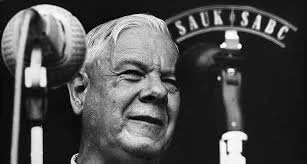
Source: https://www.marxists.org/history/cuba/arch...

Enjoyed this speech? Speakola is a labour of love and I’d be very grateful if you would share, tweet or like it. Thank you.

Facebook Twitter Facebook
In 1940-59 B Tags FIDEL CASTRO, HISTORY WILL ABSOLVE ME, SPEECH FROM THE DOCK, COURTROOM, JUDICIAL, CUBA, CUBAN REVOLUTION, MARXISM
Comment

Adlai Stevenson: 'There are no gains without pains', Accepting Democratic Party nomination for President - 1952

October 14, 2019

26 July 1952, Illinois, USA

Mr. President, ladies and gentlemen of the convention, my fellow citizens:

I accept your nomination and your program. I should have preferred to hear those words uttered by a stronger, a wiser, a better man than myself. But after listening to the President's speech, I even feel better about myself. None of you, my friends, can wholly appreciate what is in my heart. I can only hope that you understand my words. They will be few.

I have not sought the honor you have done me. I could not seek it, because I aspired to another office, which was the full measure of my ambition, and one does not treat the highest office within the gift of the people of Illinois as an alternative or as a consolation prize.

I would not seek your nomination for the Presidency, because the burdens of that office stagger the imagination. Its potential for good or evil, now and in the years of our lives, smothers exultation and converts vanity to prayer.

I have asked the Merciful Father -- the Father of us all -- to let this cup pass from me, but from such dread[ed] responsibility one does not shrink in fear, in self-interest, or in false humility. So, "If this cup may not pass from me," I -- "except I drink it, Thy will be done."

That my heart has been troubled, that I have not sought this nomination, that I could not seek it in good conscience, that I would not seek it in honest self-appraisal, is not to say that I value it the less. Rather, it is that I revere the office of the Presidency of the United States. And now, my friends, that you have made your decision, I will fight to win that office with all -- with all my heart and my soul. And, with your help, I have no doubt that we will win.

You have summoned me to the highest mission within the gift of any people. I could not be more proud. Better men than I were at hand for this mighty task, and I owe to you and to them every resource of mind and of strength that I possess to make your deed today a good one for our country and for our Party. I am confident too, that your selection for -- of a candidate for Vice President will strengthen me and our Party immeasurably in the hard, the implacable work that lies ahead of all of us.

I know you join me in gratitude and in respect for the great Democrats and the leaders of our generation whose names you have considered here in this convention, whose vigor, whose character, whose devotion to the Republic we love so well have won the respect of countless Americans and have enriched our Party. I shall need them; we shall need them, because I have not changed in any respect since yesterday.

Your nomination, awesome as I find it, has not enlarged my capacities, so I am profoundly grateful and emboldened by their comradeship and their fealty, and I have been deeply moved by their expressions of good will and of support. And I cannot, my friends, resist the urge to take the one opportunity that has been afforded me to pay my humble respects to a very great and good American, whom I am proud to call my kinsman, Alben Barkley of Kentucky.

Let me say, too, that I have been heartened by the conduct of this convention. You have argued and disagreed, because as Democrats you care and you care deeply. But you have disagreed and argued without calling each other "liars" and "thieves," without despoiling our best traditions -- you have not spoiled our best traditions in any naked struggles for power.

And you have written a platform that neither equivocates, contradicts, nor evades. You have restated our Party's record, its principles and its purposes, in language that none can mistake, and with a firm confidence in justice, freedom, and peace on earth that will raise the hearts and the hopes of mankind for that distant day when no -- no one rattles a saber and no one drags a chain.

For all these things I am grateful to you. But I feel no exultation, no sense of triumph. Our troubles are all ahead of us. Some will call us appeasers; others will say that we are the war Party. Some will say we are reactionary; others will say that we stand for socialism. There will be inevitable -- the inevitable cries of "throw the rascals out," "it's time for a change," and so on and so on.

We'll hear all those things and many more besides. But we will hear nothing that we have not heard before. I am not too much concerned with partisan denunciation, with epithets and abuse, because the workingman, the farmer, the thoughtful businessman, all know that they are better off than ever before, and they all know that the greatest danger to free enterprise in this country died with the Great Depression under the hammer blows of the Democratic Party.

And nor am I afraid that the precious two-party system is in danger. Certainly the Republican Party looked brutally alive a couple of weeks ago -- and I mean both Republican parties. Nor am I afraid that the Democratic Party is old and fat and indolent. After a hundred and fifty years, it has been old for a long time, and it will never be indolent, as long as it looks forward and not back, as long as it commands the allegiance of the young and the hopeful who dream the dreams and see the visions of a better America and a better world.

You will hear many sincere and thoughtful people express concern about the continuation of one Party in power for twenty years. I don't belittle this attitude. But change for the sake of change has no absolute merit in itself. If our greatest hazard -- If our greatest hazard is preservation of the values of Western civilization, in our self-interest alone, if you please, it is the part -- is it the part of wisdom to change for the sake of change to a Party with a split personality, to a leader, whom we all respect, but who has been called upon to minister to a hopeless case of political schizophrenia?

If the fear is corruption in official position, do you believe with Charles Evans Hughes that guild is personal and knows no Party? Do you doubt the power of any political leader, if he has the will too do so, to set his own house in order without his neighbors having to burn it down?

What does concern me, in common with thinking partisans of both parties, is not just winning this election but how it is won, how well we can take advantage of this great quadrennial opportunity to debate issues sensibly and soberly. I hope and pray that we Democrats, win or lose, can campaign not as a crusade to exterminate the opposing Party, as our opponents seem to prefer, but as a great opportunity to educate and elevate a people whose destiny is leadership, not alone of a rich and prosperous, contented country, as in the past, but of a world in ferment.

And, my friends even more important than winning the election is governing the nation. That is the test of a political party, the acid, final test. When the tumult and the shouting die, when the bands are gone and the lights are dimmed, there is the stark reality of responsibility in an hour of history haunted with those gaunt, grim specters of strife, dissension, and materialism at home and ruthless, inscrutable, and hostile power abroad.

The ordeal of the twentieth century, the bloodiest, most turbulent era of the whole Christian age, is far from over. Sacrifice, patience, understanding, and implacable purpose may be our lot for years to come. Let's face it. Let's talk sense to the American people. Let's tell them the truth, that there are no gains without pains, that there -- that we are now on the eve of great decisions, not easy decisions, like resistance when you're attacked, but a long, patient, costly struggle which alone can assure triumph over the great enemies of man -- war, poverty, and tyranny -- and the assaults upon human dignity which are the most grievous consequences of each.

Let's tell them that the victory to be won in the twentieth century, this portal to the Golden Age, mocks the pretensions of individual acumen and ingenuity, for it is a citadel guarded by thick walls of ignorance and of mistrust which do not fall before the trumpets' blast or the politicians' imprecations or even a general's baton. They are -- They are, my friends, walls that must be directly stormed by the hosts of courage, of morality, and of vision, standing shoulder to shoulder, unafraid of ugly truth, contemptuous of lies, half truths, circuses, and demagoguery.

The people are wise, wiser than the Republicans think. And the Democratic Party is the people's Party -- not the labor Party, not the farmers' Party, not the employers' Party -- it is the Party of no one because it is the Party of everyone.

That, that, I -- I think, is our ancient mission. Where we have deserted it, we have failed. With your help, there will be no desertion now. Better we lose the election than mislead the people, and better we lose than misgovern the people. Help me to do the job in this autumn of conflict and of campaign. Help me to do the job in these years of darkness, of doubt, and of crisis which stretch beyond the horizon of tonight's happy vision, and we will justify our glorious past and the loyalty of silent millions who look to us for compassion, for understanding, and for honest purpose. Thus, we will serve our great tradition greatly.

I ask of you all you have. I will give you all I have, even as he who came here tonight and honored me, as he has honored you, the Democratic Party, by a lifetime of service and bravery that will find him an imperishable page in the history of the Republic and of the Democratic Party -- President Harry S. Truman.

And finally, my friends, in this staggering task that you have assigned me, I shall always try "to do justly, to love mercy, and to walk humbly with my God."

Source: https://americanrhetoric.com/speeches/adla...

Enjoyed this speech? Speakola is a labour of love and I’d be very grateful if you would share, tweet or like it. Thank you.

Facebook Twitter Facebook
In 1940-59 B Tags ADLAI STEVENSON, LAUNCH, CAMPAIGN LAUNCH, TRANSCRIPT, ACCEPTING NOMINATION, ILLINOIS
Comment
Nye Bevan resignation.jpg

Aneurin (Nye) Bevan: 'There is only one hope for mankind - and that is Democratic Socialism', Resignation speech - 1951

October 14, 2019

23 April 1951, House of Commons, Westminster, London, UK

Mr. Speaker, it is one of the immemorial courtesies of the House of Commons that when a Minister has felt it necessary to resign his office, he is provided with an opportunity of stating his reasons to the House. These occasions are always exceedingly painful, especially to the individual concerned, because no Member ought to accept office in a Government without a full consciousness that he ought not to resign it for frivolous reasons. He must keep in mind that his association is based upon the assumption that everybody in Government accepts the full measure of responsibility for what it does.

The courtesy of being allowed to make a statement in the House of Commons is peculiarly agreeable to me this afternoon, because, up to now, I am the only person who has not been able to give any reasons why I proposed to take this step, although I notice that almost every single newspaper in Great Britain, including a large number of well-informed columnists, already know my reasons.

The House will recall that in the Defence debate I made one or two statements concerning the introduction of a Defence programme into our economy, and, with the permission of the House, I should like to quote from that speech which, I assumed at the time, received the general approval of the House. I said: “The fact of the matter is, as everybody knows, that the extent to which stockpiling has already taken place, the extent to which the 35 civil economy is being turned over to defence purposes in other parts of the world, is dragging prices up everywhere. Furthermore, may I remind the right hon. Gentleman that if we turn over the complicated machinery of modern industry to war preparation too quickly, or try to do it too quickly, we shall do so in a campaign of hate, in a campaign of hysteria, which may make it very difficult to control that machine when it has been created.” “It is all very well to speak about these things in airy terms, but we want to do two things. We want to organise our defence programme in this country in such a fashion as will keep the love of peace as vital as ever it was before. But we have seen in other places that a campaign for increased arms production is accompanied by a campaign of intolerance and hatred and witch-hunting. Therefore, we in this country are not at all anxious to imitate what has been done in other places. I would also like to direct the attention of the House to a statement made by the Prime Minister in placing before the House the accelerated armaments programme. He said: “The completion of the programme in full and in time is dependent upon an adequate supply of materials, components and machine tools. In particular, our plans for expanding capacity depend entirely upon the early provivision of machine tools, many of which can only be obtained from abroad. Those cautionary words were inserted deliberately in the statements on defence production because it was obvious to myself and to my colleagues in the Government that the accelerated programme was conditional upon a number of factors not immediately within our own control.

It has for some time been obvious to the Members of the Government and especially to the Ministers concerned in the production Departments that raw materials, machine tools and components are not forthcoming in sufficient quantity even for the earlier programme and that, therefore, the figures in the Budget for arms expenditure are based upon assumptions already invalidated. I want to make that quite clear to the House of Commons; the figures of expenditure on arms were already known to the Chancellor of the Exchequer to be unrealisable. The supply Departments have made it quite clear on several occasions that this is the case and, therefore, I begged over and over again that we should not put figures in the Budget on account of defence expenditure which would not be 36 realised, and if they tried to be realised would have the result of inflating prices in this country and all over the world.

It is now perfectly clear to any one who examines the matter objectively that the lurchings of the American economy, the extravagant and unpredictable behaviour of the production machine, the failure on the part of the American Government to inject the arms programme into the economy slowly enough, have already caused a vast inflation of prices all over the world, have disturbed the economy of the western world to such an extent that if it goes on more damage will be done by this unrestrained behaviour than by the behaviour of the nation the arms are intended to restrain.

This is a very important matter for Great Britain. We are entirely dependent upon other parts of the world for most of our raw materials. The President of the Board of Trade and the Minister of Supply in two recent statements to the House of Commons have called the attention of the House to the shortage of absolutely essential raw materials. It was only last Friday that the Minister of Supply pointed out in the gravest terms that we would not be able to carry out our programme unless we had molybdenum, zinc, sulphur, copper and a large number of other raw materials and non-ferrous metals which we can only obtain with the consent of the Americans and from other parts of the world.

I say therefore with the full solemnity of the seriousness of what I am saying, that the £4,700 million arms programme is already dead. It cannot be achieved without irreparable damage to the economy of Great Britain and the world, and that therefore the arms programme contained in the Chancellor of the Exchequer’s Budget is already invalidated and the figures based on the arms programme ought to be revised.

It is even more serious than that. The administration responsible for the American defence programme have already announced to the world that America proposes to provide her share of the arms programme not out of reductions in civil consumption, not out of economies in the American economy but out of increased production; and already plans are envisaged that before very long the American economy will be expanded for arms production by a percentage 37 equal to the total British consumption, civil and arms.

And when that happens the demands made upon the world’s precious raw materials will be such that the civilian economy of the Western world outside America will be undermined. We shall have mass unemployment. We have already got in Great Britain underemployment. Already there is short-time working in many important parts of industry and before the middle of the year, unless something serious can be done, we shall have unemployment in many of our important industrial centres. That cannot be cured by the Opposition. In fact the Opposition would make it worse—far worse.

The fact is that the western world has embarked upon a campaign of arms production upon a scale, so quickly, and of such an extent that the foundations of political liberty and Parliamentary democracy will not be able to sustain the shock. This is a very grave matter indeed. I have always said both in the House of Commons and in speeches in the country—and I think my ex-colleagues in the Government will at least give me credit for this—that the defence programme must always be consistent with the maintenance of the standard of life of the British people and the maintenance of the social services, and that as soon as it became clear we had engaged upon an arms programme inconsistent with those considerations, I could no longer remain a Member of the Government.

I therefore do beg the House and the country, and the world, to think before it is too late. It may be that on such an occasion as this the dramatic nature of a resignation might cause even some of our American friends to think before it is too late. It has always been clear that the weapons of the totalitarian States are, first, social and economic, and only next military; and if in attempting to meet the military effect of those totalitarian machines, the economies of the western world are disrupted and the standard of living is lowered or industrial disturbances are created, then Soviet Communism establishes a whole series of Trojan horses in every nation of the western economy.

It is, therefore, absolutely essential if we are to march forward properly, if 38 we are to mobilise our resources intelligently, that the military, social and political weapons must be taken together. It is clear from the Budget that the Chancellor of the Exchequer has abandoned any hope of restraining inflation. It is quite clear that for the rest of the year and for the beginning of next year, so far as we can see, the cost of living is going to rise precipitously. As the cost of living rises, the industrial workers of Great Britain will try to adjust themselves to the rising spiral of prices, and because they will do so by a series of individual trade union demands a hundred and one battles will be fought on the industrial field, and our political enemies will take advantage of each one. It is, therefore, impossible for us to proceed with this programme in this way.

I therefore beg my colleagues, as I have begged them before, to consider before they commit themselves to these great programmes. It is obvious from what the Chancellor of the Exchequer said in his Budget speech that we have no longer any hope of restraining inflation. The cost of living has already gone up by several points since the middle of last year, and it is going up again. Therefore, it is no use pretending that the Budget is just, merely because it gives a few shillings to old age pensioners, when rising prices immediately begin to take the few shillings away from them.

[HON. MEMBERS: “Hear, hear.”]

It is no use saying “Hear, hear” on the opposite side of the House. The Opposition have no remedy for this at all. But there is a remedy here on this side of the House if it is courageously applied, and the Budget does not courageously apply it. The Budget has run away from it. The Budget was hailed with pleasure in the City. It was a remarkable Budget. It united the City, satisfied the Opposition and disunited the Labour Party—all this because we have allowed ourselves to be dragged too far behind the wheels of American diplomacy.

This great nation has a message for the world which is distinct from that of America or that of the Soviet Union. Ever since 1945 we have been engaged in this country in the most remarkable piece of social reconstruction the world has ever seen. By the end of 1950 we had, as I said in my letter to the Prime Minister, assumed the moral leadership 39 of the world. [Interruption.] It is no use hon. Members opposite sneering, because when they come to the end of the road it will not be a sneer which will be upon their faces. There is only one hope for mankind, and that hope still remains in this little island. It is from here that we tell the world where to go and how to go there, but we must not follow behind the anarchy of American competitive capitalism which is unable to restrain itself at all, as is seen in the stockpiling that is now going on, and which denies to the economy of Great Britain even the means of carrying on our civil production. That is the first part of what I wanted to say.

It has never been in my mind that my quarrel with my colleagues was based only upon what they have done to the National Health Service. As they know, over and over again I have said that these figures of arms production are fantastically wrong, and that if we try to spend them we shall get less arms for more money. I have not had experience in the Ministry of Health for five years for nothing. I know what it is to put too large a programme upon too narrow a a base. We have to adjust our paper figures to physical realities, and that is what the Exchequer has not done.

May I be permitted, in passing, now that I enjoy comparative freedom, to give a word of advice to my colleagues in the Government? Take economic planning away from the Treasury. They know nothing about it. The great difficulty with the Treasury is that they think they move men about when they move pieces of paper about. It is what I have described over and over again as “whistle-blowing” planning. It has been perfectly obvious on several occasions that there are too many economists advising the Treasury, and now we have the added misfortune of having an economist in the Chancellor of the Exchequer himself.

I therefore seriously suggest to the Government that they should set up a production department and put the Chancellor of the Exchequer in the position where he ought to be now under modern planning, that is, with the function of making an annual statement of accounts. Then we should have some realism in the Budget. We should not be pushing out figures when the facts are going in the opposite direction.

40 I want to come for a short while, because I do not wish to try the patience of the House, to the narrower issue. The Chancellor of the Exchequer astonished me when he said that his Budget was coming to the rescue of the fixed income groups. Well, it has come to the rescue of the fixed income groups over 70 years of age, but not below. The fixed income groups in our modern social services are the victims of this kind of finance. Everybody possessing property gets richer. Property is appreciating all the time, and it is well known that there are large numbers of British citizens living normally out of the appreciated values of their own property. The fiscal measures of the Chancellor of the Exchequer do not touch them at all.

I listened to the Chancellor of the Exchequer with very great admiration. It was one of the cleverest Budget speeches I had ever heard in my life. There was a passage towards the end in which he said that he was now coming to a complicated and technical matter and that if Members wished to they could go to sleep. They did. Whilst they were sleeping he stole £100 million a year from the National Insurance Fund. Of course I know that in the same Budget speech the Chancellor of the Exchequer said that he had already taken account of it as savings. Of course he had, so that the re-armament of Great Britain is financed out of the contributions that the workers have paid into the Fund in order to protect themselves. [HON. MEMBERS: “Oh!”] Certainly, that is the meaning of it. It is no good my hon. Friends refusing to face these matters. If we look at the Chancellor’s speech we see that the Chancellor himself said that he had already taken account of the contributions into the Insurance Fund as savings. He said so, and he is right. [Interruption.] Do not deny that he is right. I am saying he is right. Do not quarrel with me when I agree with him.

The conclusion is as follows. At a time when there are still large untapped sources of wealth in Great Britain, a Socialist Chancellor of the Exchequer uses the Insurance Fund, contributed for the purpose of maintaining the social services, as his source of revenue, and I say that is not Socialist finance. Go to that source for revenue when no other source remains, but no one can say that 41 there are no other sources of revenue in Great Britain except the Insurance Fund.

I now come to the National Health Service side of the matter. Let me say to my hon. Friends on these benches: you have been saying in the last fortnight or three weeks that I have been quarrelling about a triviality—spectacles and dentures. You may call it a triviality. I remember the triviality that started an avalanche in 1931. I remember it very well, and perhaps my hon. Friends would not mind me recounting it. There was a trade union group meeting upstairs. I was a member of it and went along. My good friend, “Geordie” Buchanan, did not come along with me because he thought it was hopeless, and he proved to be a better prophet than I was. But I had more credulity in those days than I have got now. So I went along, and the first subject was an attack on the seasonal workers. That was the first order. I opposed it bitterly, and when I came out of the room my good old friend George Lansbury attacked me for attacking the order. I said, “George, you do not realise, this is the beginning of the end. Once you start this there is no logical stopping point.”

The Chancellor of the Exchequer in this year’s Budget proposes to reduce the Health expenditure by £13 million—only £13 million out of £4,000 million.[HON. MEMBERS: “£400 million.”] No, £4,000 million. He has taken £13 million out of the Budget total of £4,000 million. If he finds it necessary to mutilate, or begin to mutilate, the Health Services for £13 million out of £4,000 million, what will he do next year? Or are you next year going to take your stand on the upper denture? The lower half apparently does not matter, but the top half is sacrosanct. Is that right? If my hon. Friends are asked questions at meetings about what they will do next year, what will they say?

The Chancellor of the Exchequer is putting a financial ceiling on the Health Service. With rising prices the Health Service is squeezed between that artificial figure and rising prices. What is to be squeezed out next year? Is it the upper half? When that has been squeezed out and the same principle holds good, what do you squeeze out the year after? Prescriptions? Hospital charges? Where do you stop? I have been accused of 42 having agreed to a charge on prescriptions. That shows the danger of compromise. Because if it is pleaded against me that I agreed to the modification of the Health Service, then what will be pleaded against my right hon. Friends next year, and indeed what answer will they have if the vandals opposite come in? What answer? The Health Service will be like Lavinia—all the limbs cut off and eventually her tongue cut out, too.

I should like to ask my right hon. and hon. Friends, where are they going?[HON. MEMBERS: “Where are you going?”] Where am I going? I am where I always was. Those who live their lives in mountainous and rugged countries are always afraid of avalanches, and they know that avalanches start with the movement of a very small stone. First, the stone starts on a ridge between two valleys—one valley desolate and the other valley populous. The pebble starts, but nobody bothers about the pebble until it gains way, and soon the whole valley is overwhelmed. That is how the avalanche starts, that is the logic of the present situation, and that is the logic my right hon. and hon. Friends cannot escape. Why, therefore, has it been done in this way?

After all, the National Health Service was something of which we were all very proud, and even the Opposition were beginning to be proud of it. It only had to last a few more years to become a part of our traditions, and then the traditionalists would have claimed the credit for all of it. Why should we throw it away? In the Chancellor’s Speech there was not one word of commendation for the Health Service—not one word. What is responsible for that?

Why has the cut been made? He cannot say, with an overall surplus of over £220 million and a conventional surplus of £39 million, that he had to have the £13 million. That is the arithmetic of Bedlam. He cannot say that his arithmetic is so precise that he must have the £13 million, when last year the Treasury were £247 million out. Why? Has the A.M.A. succeeded in doing what the B.M.A. failed to do? What is the cause of it? Why has it been done?

I have also been accused—and I think I am entitled to answer it—that I had already agreed to a certain charge. I 43 speak to my right hon. Friends very frankly here. It seems to me sometimes that it is so difficult to make them see what lies ahead that you have to take them along by the hand and show them. The prescription charge I knew would never be made, because it was impracticable. [HON. MEMBERS: “Oh!”] Well, it was never made.

I will tell my hon. Friends something else, too. There was another policy—there was a proposed reduction of 25,000 on the housing programme, was there not? It was never made. It was necessary for me at that time to use what everybody always said were bad tactics upon my part—I had to manœuvre, and I did manœuvre and saved the 25,000 houses and the prescription charge. I say, therefore, to my right hon. and hon. Friends, there is no justification for taking this line at all. There is no justification in the arithmetic, there is less justification in the economics, and I beg my right hon. and hon. Friends to change their minds about it.

I say this, in conclusion. There is only one hope for mankind—and that is democratic Socialism. There is only one party in Great Britain which can do it—and that is the Labour Party. But I ask them carefully to consider how far they are polluting the stream. We have gone a long way—a very long way—against great difficulties. Do not let us change direction now. Let us make it clear, quite clear, to the rest of the world that we stand where we stood, that we are not going to allow ourselves to be diverted from our path by the exigencies of the immediate situation. We shall do what is necessary to defend ourselves—defend ourselves by arms, and not only with arms but with the spiritual resources of our people.

Source: http://www.nyebevan.org.uk/speeches/resign...

Enjoyed this speech? Speakola is a labour of love and I’d be very grateful if you would share, tweet or like it. Thank you.

Facebook Twitter Facebook
In 1940-59 B Tags ANEURIN BEVAN, NYE, NYE BEVAN, DEMOCRATIC SOCIALISM, RESIGNATION, RESIGN, ARMS RACE, DEFENSE SPENDING
Comment
Joe McCarthy.jpg

Joseph McCarthy: 'I have in my hand fifty seven cases ... ' Enemies from Within speech - 1950

October 14, 2019

20 February 1950, McClare Hotel, Wheeling, West Virginia, USA

Tonight as we celebrate the 141st birthday of one of the great men in American history, I would like to be able to talk about what a glorious day today is in the history of the world. As we celebrate the birth of this man, who with his whole heart and soul hated war, I would like to be able to speak of peace in our time, of war being outlawed, and of worldwide disarmament. These would be truly appropriate things to be able to mention as we celebrate the birthday of Abraham Lincoln

.Five years after a world war has been won, men's hearts should anticipate a long peace, and men's minds should be free from the heavy weight that comes with war. But this is not such a period --for this is not a period of peace. This is a time of the Cold War. This is a time when all the world is split into two vast, increasingly hostile armed camps --a time of a great armaments race. Today we can almost physically hear the mutterings and rumblings of an invigorated god of war. You can see it, feel it, and hear it all the way from the hills of Indochina, from the shores of Formosa right over into the very heart of Europe itself.

...Today we are engaged in a final, all-out battle between communistic atheism and Christianity. The modern champions of communism have selected this as the time. And, ladies and gentlemen, the chips are down --they are truly down.Lest there be any doubt that the time has been chosen, let us go directly to the leader of communism today --Joseph Stalin. Here is what he said --not back in 1928, not before the war, not during the war --but two years after the last war was ended: "To think that the communist revolution can be carried out peacefully, within the framework of a Christian democracy, means one has either gone out of one's mind and lost all normal understanding, or has grossly and openly repudiated the communist revolution."

And this is what was said by Lenin in 1919, which was also quoted with approval by Stalin in 1947: "We are living," said Lenin, "not merely in a state but in a system of states, and the existence of the Soviet Republic side by side with Christian states for a long time is unthinkable. One or the other must triumph in the end. And before that end supervenes, a series of frightful collisions between the Soviet Republic and the bourgeois states will be inevitable."Ladies and gentlemen, can there be anyone here tonight who is so blind as to say that the war is not on? Can there be anyone who fails to realize that the communist world has said, "The time is now" --that this is the time for the showdown between the democratic Christian world and the communist atheistic world?

Unless we face this fact, we shall pay the price that must be paid by those who wait too long.

Six years ago, at the time of the first conference to map outpeace --Dumbarton Oaks --there was within the Soviet orbit 180 million people. Lined up on the anti-totalitarian side there were in the world at that time roughly 1.625 billion people. Today, only six years later, there are 800 million people under the absolute domination of Soviet Russia --an increase of over 400 percent. On our side, the figure has shrunk to around 500 million. In other words, in less than six years the odds have changed from 9 to 1 in our favor to 8 to 5 against us. This indicates the swiftness of the tempo of communist victories and American defeats in the Cold War. As one of our outstanding historical figures once said, "When a great democracy is destroyed, it will not be because of enemies from without but rather because of enemies from within."

The truth of this statement is becoming terrifyingly clear as we see this country each day losing on every front.

At war's end we were physically the strongest nation on Earth and, at least potentially, the most powerful intellectually and morally. Ours could have been the honor of being a beacon in the desert of destruction, a shining, living proof that civilization was not yet ready to destroy itself. Unfortunately, we have failed miserably and tragically to arise to the opportunity.

The reason why we find ourselves in a position of impotency is not because our only powerful, potential enemy has sent men to invade our shores, but rather because of the traitorous actions of those who have been treated so well by this nation. It has not been the less fortunate or members of minority groups who have been selling this nation out, but rather those who have had all the benefits that the wealthiest nation on earth has had to offer --the finest homes, the finest college education, and the finest jobs in government we can give.

This is glaringly true in the State Department. There the bright young men who are born with silver spoons in their mouths are the ones who have been worst.

Now I know it is very easy for anyone to condemn a particular bureau or department in general terms. Therefore, I would like to cite one rather unusual case --the case of a man who has done much to shape our foreign policy.When Chiang Kai-shek was fighting our war, the State Department had in China a young man named John S. Service. His task, obviously, was not to work for the communization of China.
Strangely, however, he sent official reports back to the State Department urging that we torpedo our ally Chiang Kai-shek and stating, in effect, that communism was the best hope of China.Later, this man --John Service --was picked up by the Federal Bureau of Investigation for turning over to the communists secret State Department information. Strangely, however, he was never prosecuted. However, Joseph Grew, the undersecretary of state, who insisted on his prosecution, was forced to resign. Two days after, Grew's successor, Dean Acheson, took over as undersecretary of state, this man --John Service --who had been picked up by the FBI and who had previously urged that communism was the best hope of China, was not only reinstated in the State Department but promoted; and finally, under Acheson, placed in charge of all placements and promotions. Today, ladies and gentlemen, this man Service is on his way to represent the State Department and Acheson in Calcutta --by far and away the most important listening post in the Far East.Now, let's see what happens when individuals with communist connections are forced out of the State Department.

Gustave Duran, who was labeled as, I quote, "a notorious international communist," was made assistant secretary of state in charge of Latin American affairs. He was taken into the State Department from his job as a lieutenant colonel in the Communist International Brigade. Finally, after intense congressional pressure and criticism, he resigned in 1946 from the State Department --and, ladies and gentlemen, where do you think he is now? He took over a high-salaried job as chief of Cultural Activities Section in the office of the assistant secretary-general of the United Nations. ...

This, ladies and gentlemen, gives you somewhat of a picture of the type of individuals who have been helping to shape our foreign policy. In my opinion the State Department, which is one of the most important government departments, is thoroughly infested with communists.

I have in my hand 57 cases of individuals who would appear to be either card-carrying members or certainly loyal to the Communist Party, but who nevertheless are still helping to shape our foreign policy.
One thing to remember in discussing the communists in our government is that we are not dealing with spies who get 30 pieces of silver to steal the blueprints of new weapons. We are dealing with a far more sinister type of activity because it permits the enemy to guide and shape our policy.This brings us down to the case of one Alger Hiss, who is important not as an individual anymore but rather because he is so representative of a group in the State Department. It is unnecessary to go over the sordid events showing how he sold out the nation which had given him so much. Those are rather fresh in all of our minds. However, it should be remembered that the facts in regard to his connection with this international communist spy ring were made known to the then-Undersecretary of State Berle three days after Hitler and Stalin signed the Russo-German Alliance Pact. At that time one Whittaker Chambers --who was also part of the spy ring --apparently decided that with Russia on Hitler's side, he could no longer betray our nation to Russia. He gave Undersecretary of State Berle --and this is all a matter of record --practically all, if not more, of the facts upon which Hiss' conviction was based.Undersecretary Berle promptly contacted Dean Acheson and received word in return that Acheson, and I quote, "could vouch for Hiss absolutely" --at which time the matter was dropped. And this, you understand, was at a time when Russia was an ally of Germany. This condition existed while Russia and Germany were invading and dismembering Poland, and while the communist groups here were screaming "warmonger" at the United States for their support of the Allied nations.Again in 1943, the FBI had occasion to investigate the facts surrounding Hiss' contacts with the Russian spy ring. But even after that FBI report was submitted, nothing was done.

Then, late in 1948 --on August 5 --when the Un-American Activities Committee called Alger Hiss to give an accounting, President Truman at once issued a presidential directive ordering all government agencies to refuse to turn over any information whatsoever in regard to the communist activities of any government employee to a congressional committee.Incidentally, even after Hiss was convicted, it is interesting to note that the president still labeled the expose of Hiss as a "red herring."If time permitted, it might be well to go into detail about the fact that Hiss was Roosevelt's chief adviser at Yalta when Roosevelt was admittedly in ill health and tired physically and mentally ... and when, according to the secretary of state, Hiss and Gromyko drafted the report on the conference.

According to the then-Secretary of State Stettinius, here are some of the things that Hiss helped to decide at Yalta: (1) the establishment of a European High Commission; (2) the treatment of Germany --this you will recall was the conference at which it was decided that we would occupy Berlin with Russia occupying an area completely encircling the city, which as you know, resulted in the Berlin airlift which cost 31 American lives; (3) the Polish question; (4) the relationship between UNRRA and the Soviet; (5) the rights of Americans on control commissions of Rumania, Bulgaria and Hungary; (6) Iran; (7) China --here's where we gave away Manchuria; (8) Turkish Straits question; (9) international trusteeships; (10) Korea.Of the results of this conference, Arthur Bliss Lane of the State Department had this to say: "As I glanced over the document, I could not believe my eyes. To me, almost every line spoke of a surrender to Stalin.

"As you hear this story of high treason, I know that you are saying to yourself, "Well, why doesn't the Congress do something about it?" Actually, ladies and gentlemen, one of the important reasons for the graft, the corruption, the dishonesty, the disloyalty, the treason in high government positions --one of the most important reasons why this continues --is a lack of moral uprising on the part of the 140 million American people. In the light of history, however, this is not hard to explain.

It is the result of an emotional hangover and a temporary moral lapse which follows every war. It is the apathy to evil which people who have been subjected to the tremendous evils of war feel. As the people of the world see mass murder, the destruction of defenseless and innocent people, and all of the crime and lack of morals which go with war, they become numb and apathetic. It has always been thus after war.

However, the morals of our people have not been destroyed. They still exist. This cloak of numbness and apathy has only needed a spark to rekindle them. Happily, this spark has finally been supplied.
As you know, very recently the secretary of state proclaimed his loyalty to a man guilty of what has always been considered as the most abominable of all crimes --of being a traitor to the people who gave him a position of great trust. The secretary of state, in attempting to justify his continued devotion to the man who sold out the Christian world to the atheistic world, referred to Christ's Sermon on the Mount as a justification and reason therefore, and the reaction of the American people to this would have made the heart of Abraham Lincoln happy.

When this pompous diplomat in striped pants, with a phony British accent, proclaimed to the American people that Christ on the Mount endorsed communism, high treason, and betrayal of a sacred trust, the blasphemy was so great that it awakened the dormant indignation of the American people.

He has lighted the spark which is resulting in a moral uprising and will end only when the whole sorry mess of twisted warped thinkers are swept from the national scene so that we may have a new birth of national honesty and decency in government.

Source: https://liberalarts.utexas.edu/coretexts/_...

Enjoyed this speech? Speakola is a labour of love and I’d be very grateful if you would share, tweet or like it. Thank you.

Facebook Twitter Facebook
In 1940-59 B Tags JOSEPH MCCARTHY, I HAVE IN MY HAND, STATE DEPARTMENT, TRANSCRIPT, ENEMIES FROM WITHIN SPEECH, UNAMERICAN ACTIVITES, COLD WAR, BLACKLIST, COMMUNISM, COMMUNIST PARTY, STALIN, LENIN
Comment

John Foster Dulles: 'Free people will never remain free if they are not willing to fight', On the Fall of Dien Bien Phu - 1954

October 11, 2019

7 May 1954, Washington DC, USA

A few hours ago, Dien Bien Phu has fallen. Its defense of fifty-seven days and nights will go down in history as one of the most heroic of all time. The defenders composed of French and native forces, inflicted staggering losses on the enemy. And the French soldiers showed that they have not lost either the will or the skill to fight even under the most terrible conditions. And it showed that Vietnam can produce soldiers who have the qualities needed to enable them to defend their country. An epic battle has ended. But great causes have before now been won out of lost battles. The Chinese communists have been supplying the forces of the Viet Minh rebels with munitions and trucks and anti-aircraft guns, radar, technical equipment and technical advisers. They have, however, stopped short of open armed intervention. And in this respect, they may have been deterred by the warnings which the United States has given that such open intervention would lead to grave consequences which might not be confined to Indochina. Accordingly, we are ready to take part with the other countries principally concerned in an examination of the possibility of establishing a collective defense within the framework of the Charter of the United Nations to seek the peace, security and freedom of Southeast Asia and the Western Pacific. And I feel that that unity of purpose still persists. And that such a tragic event as the fall of Dien Bien Phu will harden, and not weaken our purpose to stay united. Today the United States and the other countries immediately concerned are giving careful consideration to the establishment of a collective defense. Conversations are taking place among us. There are many problems; we must agree on just who will take part in the united defense effort and just what the different commitments will be.

An also I frankly recognize that difficulties have been encountered. But also I say that this was to be expected. Because the complexity of the problem is great, so great indeed that as I pointed out it was only possible in the last few months even to get started on this project. And under all the circumstances, I feel that very good progress is being made. And I feel confident that the outcome will be such that Communist aggression will not be able to gain in Southeast Asia the results that it seeks.

This common defense may involve serious commitments by us all. But free people will never remain free if they are not willing, if need be, to fight for their vital interests. Furthermore, vitals interests can no longer be protected merely by local defense. The key to successful defense, and the key to deterring attack is association with others for mutual defense. That is what the United States seeks in Southeast Asia.

Source: https://www.historyonthenet.com/authentich...

Enjoyed this speech? Speakola is a labour of love and I’d be very grateful if you would share, tweet or like it. Thank you.

Facebook Twitter Facebook
In 1940-59 B Tags JOHN FOSTER DULLES, SECRETARY OF STATE, FREE PEOPE, COMMUNISM, RED MENACE, INDOCHINA, VIETNAM WAR, TRANSCRIPT, EISENHOWER ADMINISTRATION, DOMINO THEORY, CHINESE SUPPORT, FALL OF DIEN BIEN PHU, FRENCH DEFEAT
Comment

Dwight Eisenhower: 'The three imperatives of power' Republican Party Convention speech - 1956

October 10, 2019

23 August 1956, San Francisco, California, USA

Chairman Martin, Delegates and Alternates to this great Convention, distinguished guests and my fellow Americans wherever they may be in this broad land:
I should first tell you that I have no words in which to express the gratitude that Mrs. Eisenhower and I feel for the warmth of your welcome. The cordiality you have extended to us and to the members of our family, our son and daughter, my brothers and their wives, touches our hearts deeply.
Thank you very much indeed.
I thank you additionally and personally for the high honor you have accorded me in entrusting me once more with your nomination for the Presidency. And I should like to say that it is a great satisfaction to me that the team of individuals you selected in 1952 you have selected to keep intact for this campaign.
I am not here going to attempt a eulogy of Mr. Nixon. You have heard his qualifications described in the past several days. I merely want to say this: that whatever dedication to country, loyalty and patriotism and great ability can do for America, he will do—and that I know.
Ladies and gentlemen, when Abraham Lincoln was nominated in 1860, and a committee brought the news to him at his home in Springfield, Illinois, his reply was two sentences long. Then, while his friends and neighbors waited in the street, and while bonfires lit up the May evening, he said simply, "And now I will not longer defer the pleasure of taking you, and each of you, by the hand."
I wish I could do the same—speak two sentences, and then take each one of you by the hand, all of you who are in sound of my voice. If I could do so, I would first thank you individually for your confidence and your trust. Then, as I am sure Lincoln did as he moved among his friends in the light of the bonfires, we could pause and talk a while about the questions that are uppermost in your mind.
I am sure that one topic would dominate all the rest. That topic is: the future.
This is a good time to think about the future, for this convention is celebrating its one hundredth anniversary. And a centennial is an occasion, not just for recalling the inspiring past, but even more for looking ahead to the demanding future.
Just as on New Year's Day we instinctively think, "I wonder where I will be a year from now," so it is quite natural for the Republican Party to ask today, "What will happen, not just in the coming election, but even one hundred years from now?"
My answer is this: If we and our successors are as courageous and forward-looking and as militantly determined, here under the klieg-lights of the twentieth century, as Abraham Lincoln and his associates were in the bonfire-light of the nineteenth, the Republican Party will continue to grow in the confidence and affection of the American people, not only to November next, but indeed to, and beyond, its second centennial.
Now, of course, in this convention setting, you and I are momentarily more interested in November 1956 than in 2056. But the point is this: Our policies are right today only as they are designed to stand the test of tomorrow.
The great Norwegian, Henrik Ibsen once wrote: "I hold that man is in the right who is most clearly in league with the future."
Today I want to demonstrate the truth of a single proposition: The Republican Party is the Party of the Future.
I hold that the Republican Party and platform are right in 1956, because they are "most closely in league with the future." And for this reason the Republican Party and program are and will be decisively approved by the American people in 1956!
My friends, I have just made a very fiat statement for victory for the Republican Party in November, and I believe it from the bottom of my heart.
But what I say is based upon certain assumptions, and those assumptions must become true if the prediction I make is to be valid. And that is this: that every American who believes as we do—the Republicans, the independents, the straight-thinking Democrats—must carry the message of the record and the pledges that we here make—that we have made and here make, to all the people of the land.
We must see, as we do our civic duty, that not only do we vote but that everybody is qualified to vote, that everybody registers and everybody goes to the polls in November. Here is a task not only for the Republican National Committee, for the women's organizations, for the citizens' organizations, for the so-called Youth for Eisenhower—everybody that bears this message in his heart must carry it to the country.
In that way we will win.
And which reminds me, my friends, there are only a few days left for registering in a number of our States. That is one thing you cannot defer. The records show that our registration as compared to former years at this time is way down across the land—registration across the board. Let's help the American Heritage, let's help the Boy Scouts, let's help everybody to get people out to register to vote.
Now, of special relevance, and to me particularly gratifying, is the fact that the country's young people show a consistent preference for this Administration. After all, let us not forget, these young people are America's future. Parenthetically, may I say I shall never cease to hope that the several states will give them the voting privilege at a somewhat earlier age than is now generally the case.
Now, the first reason of the five I shall give you why the Republican Party is the Party of the Future is this:
First: Because it is the Party of long-range principle, not short-term expediency.
One of my predecessors is said to have observed that in making his decisions he had to operate like a football quarterback—he could not very well call the next play until he saw how the last play turned out. Well, that may be a good way to run a football team, but in these days it is no way to run a government.
Now, why is it so important that great governmental programs be based upon principle rather than upon shifting political opportunism?
It is because what government does affects profoundly the daily lives and plans of every person in the country. If governmental action is without the solid guidelines of enduring principle, national policies flounder in confusion. And more than this, the millions of individuals, families and enterprises, whose risk-taking and planning for the future are our country's very life force, are paralyzed by uncertainty, diffidence and indecision.
Change based on principle is progress. Constant change without principle becomes chaos.
I shall give you several examples of rejecting expediency in favor of principle.
First, the farm issue.
Expediency said: "Let's do something in a hurry—anything—even multiply our price-depressing surpluses at the risk of making the
problem twice as bad next year—just so we get through this year."
People who talk like that do not care about principle, and do not know farmers. The farmer deals every day in basic principles of growth and life. His product must be planned, and cultivated, and harvested over a long period. He has to figure not just a year at a time but over cycles and spans of years, as to his soil, his water, his equipment, the strains of his stock—and the strains on his income.
And so, for this man of principle, we have designed our program of principle. In it, we recognize that we have received from our forebears a rich legacy: our continent's basic resource of soil. We are determined that, through such measures as the Soil Bank and the Great Plains program, this legacy shall be handed on to our children even richer than we received it.
We are equally determined that farm prices and income, which were needlessly pushed down under surpluses—surpluses induced first by war and then by unwise political action that was stubbornly and recklessly prolonged, shall in the coming months and years get back on a genuinely healthy basis. This improvement must continue until a rightful share of our prosperity is permanently enjoyed by agriculture on which our very life depends.
A second example: labor relations.
Expediency said: "When a major labor dispute looms, the government must do something—anything—to settle the dispute even before the parties have finished negotiating. Get an injunction. Seize the steel mills. Appoint a board. Knock their heads together."
Principle says: "Free collective bargaining without government interference is the cornerstone of the American philosophy of labor-management relations."
If the government charges impatiently into every major dispute, the negotiations between parties will become a pointless preliminary farce, while everyone waits around to see what the government will do. This Administration has faith in the rightness of the collective bargaining principle. It believes in the maturity of both labor and business leaders, and in their determination to do what is best not only for their own side but for the country as a whole.
The results: For the first time in our history a complete steel contract was negotiated and signed without direct government intervention, and the last three and a half years have witnessed one of the most remarkable periods of labor peace on record.
Another example: concentration of power in Washington. Expediency said:
"We cannot allow our fine new ideas to be at the mercy of 51 separate state and territorial legislatures. It is so much quicker and easier to plan, finance and direct all major projects from Washington."
Principle says: "Geographical balance of power is essential to our form of free society. If you take the centralization shortcut every time something is to be done, you will perhaps sometimes get quick action. But there is no perhaps about the price you will pay for your impatience: the growth of a swollen, bureaucratic, monster government in Washington, in whose shadow our state and local governments will ultimately wither and die."
And so we stemmed the heedless stampede to Washington. We made a special point of building up state activities, state finances, and state prestige.
Our Founding Fathers showed us how the Federal Government could exercise its undoubted responsibility for leadership, while still stopping short of the kind of interference that deadens local vigor, variety, initiative and imagination. So today we say to our young people: The Party of the Future will pass along to you undamaged the unique system of division of authority which has proved so successful in reconciling our oldest ideals of personal freedom with the twentieth-century need for decisiveness in action.
My second reason for saying that the Republican Party is the Party of the Future is this: It is the Party which concentrates on the facts and issues of today and tomorrow, not the facts and issues of yesterday.
More than twenty years ago, our opponents found in the problems of the depression a battleground on which they scored many political victories. Now, economic cycles have not been eliminated. Still, the world has moved on from the 1930's: good times have supplanted depression; new techniques for checking serious recession have been learned and tested and a whole new array of problems has sprung up. But their obsession with a depression still blinds many of our opponents to the insistent demands of today.
The present and the future are bringing new kinds of challenge to federal and local governments: water supply, highways, health, housing, power development, and peaceful uses of atomic energy. With two-thirds of us living in big cities, questions of urban organization and redevelopment must be given high priority. Highest of all, perhaps, will be the priority of first-class education to meet the demands of our swiftly growing school-age population.
The Party of the young and of all ages says: Let us quit fighting the battles of the past, and let us all turn our attention to these problems of the present and future, on which the longterm well-being of our people so urgently depends.
Third: The Republican Party is the Party of the Future because it is the party that draws people together, not drives them apart.
Our Party detests the technique of pitting group against group for cheap political advantage. Republicans view as a central principle of conduct—not just as a phrase on nickels and dimes—that old motto of ours: "E pluribus unum"—"Out of many—One."
Our Party as far back as 1856 began establishing a record of bringing together,. as its largest element, the working people and small farmers, as well as the small businessmen. It attracted minority groups, scholars and writers, not to mention reformers of all kinds, Free-Soilers, Independent Democrats, Conscience Whigs, Barnburners, "soft Hunkers," teetotallers, vegetarians, and transcendentalists!
Now, a hundred years later, the Republican Party is again the rallying point for Americans of all callings, ages, races and incomes. They see in its broad, forward-moving, straight-down-the road, fighting program the best promise for their own steady progress toward a bright future. Some opponents have tried to call this a "one-interest party." Indeed it is a one-interest party; and that one interest is the interest of every man, woman and child in America! And most surely, as long as the Republican Party continues to be this kind of one-interest party—a one-universal-interest party—it will continue to be the Party of the Future.
And now the fourth reason: The Republican Party is the Party of the Future because it is the party through which the many things that still need doing will soonest be done—and will be done by enlisting the fullest energies of free, creative, individual people.
Republicans have proved that it is possible for a government to have a warm, sensitive concern for the everyday needs of people, while steering clear of the paternalistic "Big-Brother-is-watching-you" kind of interference. The individual—and especially the idealistic young person—has no faith in a tight federal monopoly on problem-solving. He seeks and deserves opportunity for himself and every other person who is burning to participate in putting right the wrongs of the world.
In our time of prosperity and progress, one thing we must always be on guard against is smugness. True, things are going well; but there are thousands of things still to be done. There are still enough needless sufferings to be cured, enough injustices to be erased, to provide careers for all the crusaders we can produce or find.
We want them all! Republicans, independents, discerning Democrats—come on in and help!
One hundred years ago the Republican Party was created in a devout belief in equal justice and equal opportunity for all in a nation of free men and women.
What is more, the Republican Party's record on social justice rests, not on words and promises, but on accomplishment. The record shows that a wide range of quietly effective actions, conceived in understanding and good will for all, has brought about more genuine—and often voluntary—progress toward equal justice and opportunity in the last three years than was accomplished in all the previous twenty put together. Elimination of various kinds of discrimination in the Armed Services, the District of Columbia, and among the employees of government contractors provides specific examples of this progress.
In this work, incidentally, no one has been more effective and more energetic than our Vice President who has headed one of the great Committees in this direction.
Now, in all existing kinds of discrimination there is much to do. We must insure a fair chance to such people as mature workers who have trouble getting jobs, older citizens with problems of health, housing, security and recreation, migratory farm laborers and physically-handicapped workers. We have with us, also, problems involving American Indians, low-income farmers and laborers, women who sometimes do not get equal pay for equal work, small businessmen, and employers and workers in areas which need special assistance for redevelopment.
Specific new programs of action are being pushed for all of these, the most recent being a new 14-point program for small businessmen which was announced early in August. And the everyday well-being of people is being advanced on many other fronts. This is being done, not by paternalistic regimentation. It is done by clear cut, aggressive Federal leadership and by releasing the illimitable resources and drives of our millions of self-reliant individuals and our thousands of private organizations of every conceivable kind and size—each of these is consecrated to the task of meeting some human need, curing some human evil, or enriching some human experience.
Finally, a Party of the Future must be completely dedicated to peace, as indeed must all Americans. For without peace there is no future.
It was in the light of this truth that the United States proposed its Atoms for Peace Plan in 1953, and since then has done so much to make this new science universally available to friendly nations in order to promote human welfare. We have agreements with more than thirty nations for research reactors, and with seven for power reactors, while many others are under consideration. Twenty thousand kilograms of nuclear fuel have been set aside for the foreign programs.
In the same way, we have worked unceasingly for the promotion of effective steps in disarmament so that the labor of men could with confidence be devoted to their own improvement rather than wasted in the building of engines of destruction.
No one is more aware than I that it is the young who fight the wars, and it is the young who give up years of their lives to military training and service. It is not enough that their elders promise "Peace in our time"; it must be peace in their time too, and in their children's time; indeed, my friends, there is only one real peace now, and that is peace for all time.
Now there are three imperatives of peace—three requirements that the prudent man must face with unblinking realism.
The first imperative is the elementary necessity of maintaining our own national strength—moral, economic and military.
It is still my conviction, as I wrote in 1947: "The compelling necessities of the moment leave us no alternative to the maintenance of real and respectable strength—not only in our moral rectitude and our economic power, but in terms of adequate military preparedness."
During the past three and one-half years, our military strength has been constantly augmented, soberly and intelligently. Our country has never before in peacetime been so well prepared militarily. So long as the world situation requires, our security must be vigorously sustained.
Our economic power, as everyone knows, is displaying a capacity for growth which is both rapid and sound, even while supporting record military budgets. We must keep it growing.
But moral strength is also essential. Today we are competing for men's hearts, and minds, and trust all over the world. In such a competition, what we are at home and what we do at home is even more important than what we say abroad. Here again, my friends, we find constructive work for each of us.
What each of us does, how each of us acts, has an influence on this question.
Now, the second imperative of peace is collective security.
We live in a shrunken world, a world in which oceans are crossed in hours, a world in which a single-minded despotism menaces the scattered freedoms of scores of struggling independent nations. To ensure the combined strength of friendly nations is for all of us an elementary matter of self-preservation—as elementary as having a stout militia in the days of the
flint-lock.
Again, the strength I speak of is not military strength alone. The heart of the collective security principle is the idea of helping other nations to realize their own potentialities—political, economic and military. The strength of the free world lies not in cementing the free world into a second monolithic mass to compete with that of the communists. It lies rather in the unity that comes of the voluntary association of nations which, however diverse, are developing their own capacities and asserting their own national destinies in a world of freedom and of mutual respect.
There can be no enduring peace for any nation while other nations suffer privation, oppression, and a sense of injustice and despair. In our modern world, it is madness to suppose that there could be an island of tranquillity and prosperity in a sea of wretchedness and frustration. For America's sake, as well as the world's, we must measure up to the challenge of the second imperative; the urgent need for mutual economic and military cooperation among the free nations, sufficient to deter or repel aggression wherever it may threaten.
But even this is no longer enough.
We are in the era of the thermo-nuclear bomb that can obliterate cities and can be delivered across continents. With such weapons, war has become, not just tragic, but preposterous. With such weapons, there can be no victory for anyone. Plainly, the objective now must be to see that such a war does not occur at all.
And so the third imperative of peace is this: Without for a moment relaxing our internal and collective defenses, we must actively try to bridge the great chasm that separates us from the peoples under communist rule. In those regions are millions of individual human beings who have been our friends, and who themselves have sincerely wanted peace and freedom, throughout so much of our mutual history.
Now for years the Iron Curtain was impenetrable. Our people were unable to talk to these individuals behind the Curtain, or travel among them, or share their arts or sports, or invite them to see what life is like in a free democracy, or even get acquainted in any way. What future was there in such a course, except greater misunderstanding and an ever deepening division in the world?
Of course, good will from our side can do little to reach these peoples unless there is some new spirit of conciliation on the part of the governments controlling them. Now, at last, there appear to be signs that some small degree of friendly intercourse among peoples may be permitted. We are beginning to be able—cautiously and with our eyes open—to encourage some interchange of ideas, of books, magazines, students, tourists, artists, radio programs, technical experts, religious leaders and governmental officials. The hope is that, little by little, mistrust based on falsehoods will give way to international understanding based on truth.
Now, as this development gradually comes about, it will not seem futile for young people to dream of a brave and new and shining world, or for older people to feel that they can in fact bequeath to their children a better inheritance than that which was their own. Science and technology, labor-saving methods, management, labor organization, education, medicine—and not least, politics and government. All these have brought within our grasp a world in which backbreaking toil and longer hours will not be necessary.
Travel all over the world, to learn to know our brothers abroad, will be fast and cheap. The fear and pain of crippling disease will be greatly reduced. The material things that make life interesting and pleasant will be available to everyone. Leisure, together with educational and recreational facilities, will be abundant, so that all can develop the life of the spirit, of reflection, of religion, of the arts, of the full realization of the good things of the world. And political wisdom will ensure justice and harmony.
This picture of the future brings to mind a little story.
A government worker, when he first arrived in Washington in 1953, was passing the National Archives Building in a taxi, where he saw this motto carved on one of its pedestals: "What is Past is Prologue." He had heard that Washington cab drivers were noted for knowing all the Washington answers, so he asked the driver about the motto. "Oh that," said the driver, "That's just bureaucrat talk. What it really means is—'You ain't seen nothing yet.'"
My friends, the kind of era I have described is possible. But it will not be attained by revolution. It will not be attained by the sordid politics of pitting group against group. It will be brought about by the ambitions and judgments and inspirations and darings of 168 million free Americans working together and with friends abroad toward a common ideal in a peaceful world.
Lincoln, speaking to the Republican State Convention in 1858, began with the biblical quotation, "A house divided against itself cannot stand."
Today the world is a house divided.
But—as is sometimes forgotten—Lincoln followed this quotation with a note of hope for his troubled country: "I do not expect the house to fall," he said, "but I do expect it will cease to be divided."
A century later, we too must have the vision, the fighting spirit, and the deep religious faith in our Creator's destiny for us, to sound a similar note of promise for our divided world; that out of our time there can, with incessant work and with God's help, emerge a new era of good life, good will and good hope for all men.
One American put it this way: "Every tomorrow has two handles. We can take hold of it with the handle of anxiety or the handle of faith."
My friends, in firm faith, and in the conviction that the Republican purposes and principles are "in league" with this kind of future, the nomination that you have tendered me for the Presidency of the United States I now—humbly but confidently—accept.

Eisenhower convention.jpg


Source: https://millercenter.org/the-presidency/pr...

Enjoyed this speech? Speakola is a labour of love and I’d be very grateful if you would share, tweet or like it. Thank you.

Facebook Twitter Facebook
In 1940-59 B Tags DWIGHT EISENHOWER, PRESIDENTIAL CANDIDATE, REPUBLICAN NATIONAL CONVENTION, 1956 ELECTION, US POLITICS, LINCOLN, ABRAHAM LINCOLN, NIXON, THE FUTURE, THE THREE IMPERATIVES OF POWER, TRANSCRIPT, CENTENNIAL
Comment

Adlai Stevenosn: 'Who shall say that the American dream is ended?' Presidential campaign speech - 1952

October 10, 2019

October 1952, Chicago, Illinois, USA

(Approximately a week before election he would lose to Dwight Eisenhower)

I have tried to educate, if I have not succeeded altogether, I have certainly educated myself about these questions and about these wonderful human beings that are Americans.

Just remember who you are, you are Americans. Your forebearers’ found a wilderness and they began to convert it into a fair land with only three weapons: with a Bible, an axe, and the plow.

Nothing stayed them, neither the perils of death, nor wounds nor savage mountains, nor wide rivers, nor the unknown in which they plunged.

They were of every racial stock and every religious belief and they brought something of the old country to the new country.

And different thought they were, they became one.

This is our heritage and this is our true glory. We are a people, I tell you, that is just beginning this high adventure on this continent. It is an adventure in which young, though we are, we have done this: our people have had more happiness and prosperity over a wider area and a longer time than men have ever had since they began to live in ordered society’s four thousand years ago.

Since we have come so far, who shall be rash enough to set limits on our future progress, who shall say that since we have gone so far, we can go no farther? Who shall say that the American dream has ended? For myself, I believe that all we have done on this continent so far is but a prelude to a future in which we will become, not only a bigger people, but also a wiser people, a better people, an even greater people.

I believe that we not only achieve a higher standard of living, but also a higher standard of life.

Never forget this, there is little that we Americans cannot do if only we can imagine ourselves wanting to do it.

Power alone is not enough, either is faith alone equal to the task.

The future is to those who take it.

We shall strike off the shackles that still bind the United States.

It is the duty of the leaders to lead, the creative to create, of the daring to do.

The free world expects leadership from us, its fate and our fate depends upon our leadership.

The life or death issue of war or peace hangs upon it.

We are 155 million strong. We are industrious, inventive, restless with the fires that burn within us. We are a free-striding people with a confident free-swinging stride that marks the American everywhere he goes upon this earth. We are conquerors of time and of distance, we have explored the awful jungles of matter and emerged with the powers of the exploding sun.

Our cause is just, our heart is high, and let us then, I say, press forward, toward the new world that we can create in the name of America and of suffering humanity still in chains.

Now you say words, beautiful words, but how do we do all of this, with a staggering budget of heavy taxes, surrounded by the communist menace, an enfeebled Europe, Asia in ferment, our boys in war, training for war?

Well, I say nothing is easy, and the best things are the hardest. But consider what it was done at valley ford, what was done in the dark days of dissension and disaster, in the civil war, in the two world wars, when the very survival of western civilization trembled; and in the depression; there is nothing new only different, and all our troubles, all our immense difficulties, now and in the future, can I say, be solved if we have the will, the courage, the boldness to face them squarely.

To use Seneca’s’ phrase, “Man is more than a rational animal.” And invoking the guidance of providence, rational men, animated by the destiny of greatness can think and can act and can do greatly. Thank you.

Adlai Stevenson poster.jpg
Source: http://lscook13.blogspot.com/2010/04/adlai...

Enjoyed this speech? Speakola is a labour of love and I’d be very grateful if you would share, tweet or like it. Thank you.

Facebook Twitter Facebook
In 1940-59 B Tags ADLAI STEVENSON, CAMPAIGN SPEECH, PRESIDENTIAL CAMPAIGN, DEMOCRATIC PARTY, TRANSCRIPT, EISENHOWER, AMERICAN DREAM
1 Comment

Thomas E. Dewey: 'We stand today on one of the strange promontories of human history', Election Eve Campaign Speech - 1944

October 10, 2019

6 November 1944, Albany, New York, USA (re-recorded)

WE stand today on one of the strange promontories of human history, with the shadows of a dismal stormy night behind us, and the first grey streaks of dawn in the sky beyond us. For thirty years since 1914, nearly half the span of human of life, we have seen a series of wars, revolutions, depressions, communism, fascism, Nazism, cruelty and suffering, and finally another conflagration that has engulfed the world.
At home, we have had twelve unhappy years of turmoil and dissension, of group conflict and class strife. Of divisions, and hatreds and antagonisms. Half a generation has grown up knowing no other atmosphere. I believe our children, our whole country, can again live in a world where peace, friendship and mutual respect, abide.

Source: https://www.youtube.com/watch?v=aBqYsDrDmd...

Enjoyed this speech? Speakola is a labour of love and I’d be very grateful if you would share, tweet or like it. Thank you.

Facebook Twitter Facebook
In 1940-59 B Tags THOMAS E. DEWEY, PRESIDENTIAL CANDIDATE, ELECTION EVE, REPUBLICAN PARTY, CAMPAIGNING, WW2, GREAT DEPRESSION, FDR, FRANKLIN ROOSEVELT, HARRY S TRUMAN
Comment

Clement Atlee: 'New Social Services and the Citizen', Launch of the NHS - 1948

February 21, 2019

4 July 1948, address to the nation, London, United Kingdom

Source: https://www.youtube.com/watch?v=9rqyzWzDON...

Enjoyed this speech? Speakola is a labour of love and I’d be very grateful if you would share, tweet or like it. Thank you.

Facebook Twitter Facebook
In 1940-59 B Tags NHS, SOCIAL SERVICES, NEW SOCIAL SERVICFES AND THE CITIZEN, TRANSCRIPT, PM, ADDRESS TO NATION, NATIONAL HEALTH SERVICE
Comment

Aneurin (Nye) Bevan: 'I refuse to accept the insurance principle', Speech about NHS -

February 20, 2019

if anyone knows date and location of this speech, please let us know

I'm proud about the National Health Service. It's a piece of real socialism. It's a piece of real Christianity too, you know.

We had to wait a long time for it.

What I had in mind when we organised the National Health Service in 1946 to 1958. And remember when we did it, you know, you younger ones - this was immediately after the Second World War, when we were as Sir Winston Churchill said, a bankrupt nation. But nevertheless, we did these things. And there's nowhere in any nation in the world, communist or capitalist, any health service to compare with it.

Now, the National Health Service had two main principles:

That the medical arts of science and healing should be made available to people when they needed them, irrespective of whether they could afford to pay for them or not. That was the first principle.

The second principle was that this should be done, not at the expense of the poorer members of the community, but of the well to do.

In short, I refuse to accept the insurance principle. I refuse to accept that the National Health service should be paid for by contributions. I refuse to accept that. I refused to accept it because I thought it was nonsense. If you hadn't fully paid up, you couldn't have a second class operation because your card wasn't full of stamps, could you?

Source: https://www.youtube.com/watch?v=CCAyUxY0Cm...

Enjoyed this speech? Speakola is a labour of love and I’d be very grateful if you would share, tweet or like it. Thank you.

Facebook Twitter Facebook
In 1940-59 B Tags HEALTH, NHS, NATIONAL HEATH SERVICE, VIDEO CLIP
Comment
Bevan 1.png

Aneurin (Nye) Bevan: 'It will place this country in the forefront of all countries of the world in medical services?' NHS Bill, second reading - 1946

February 20, 2019

30 April 1946. Westminster, United Kingdom

I beg to move that the Bill be now read a Second time.

In the last two years there has been such a clamour from sectional interests in the field of national health that we are in danger of forgetting why these proposals are brought forward at all. It is, therefore, very welcome to me – and I am quite certain to hon. Members in all parts of the House – that consideration should now be given, not to this or that sectional interest, but to the requirements of the British people as a whole. The scheme which anyone must draw up dealing with national health must necessarily be conditioned and limited by the evils it is intended to remove. Many of those who have drawn up paper plans for the health services appear to have followed the dictates of abstract principles, and not the concrete requirements of the actual situation as it exists. They drew up all sorts of tidy schemes on paper, which would be quite inoperable in practice.

The first reason why a health scheme of this sort is necessary at all is because it has been the firm conclusion of all parties that money ought not to be permitted to stand in the way of obtaining an efficient health service. Although it is true that the national health insurance system provides a general practitioner service and caters for something like 21 million of the population, the rest of the population have to pay whenever they desire the services of a doctor. It is cardinal to a proper health organisation that a person ought not to be financially deterred from seeking medical assistance at the earliest possible stage. It is one of the evils of having to buy medical advice that, in addition to the natural anxiety that may arise because people do not like to hear unpleasant things about themselves, and therefore tend to postpone consultation as long as possible, there is the financial anxiety caused by having to pay doctors’ bills. Therefore, the first evil that we must deal with is that which exists as a consequence of the fact that the whole thing is the wrong way round. A person ought to be able to receive medical and hospital help without being involved in financial anxiety.

In the second place, the national health insurance scheme does not provide for the self-employed, nor, of course, for the families of dependants. It depends on insurance qualification, and no matter how ill you are, if you cease to be insured you cease to have free doctoring. Furthermore, it gives no backing to the doctor in the form of specialist services. The doctor has to provide himself, he has to use his own discretion and his own personal connections, in order to obtain hospital treatment for his patients and in order to get them specialists, and in very many cases, of course – in an overwhelming number of cases – the services of a specialist are not available to poor people.

Not only is this the case, but our hospital organisation has grown up with no plan, with no system; it is unevenly distributed over the country and indeed it is one of the tragedies of the situation, that very often the best hospital facilities are available where they are least needed. In the older industrial districts of Great Britain hospital facilities are inadequate. Many of the hospitals are too small – very much too small. About 70 per cent. have less than 100 beds, and over 30 per cent. have less than 30. No one can possibly pretend that hospitals so small can provide general hospital treatment. There is a tendency in some quarters to defend the very small hospital on the ground of its localism and intimacy, and for other rather imponderable reasons of that sort, but everybody knows today that if a hospital is to be efficient it must provide a number of specialised services. Although I am not myself a devotee of bigness for bigness sake, I would rather be kept alive in the efficient if cold altruism of a large hospital than expire in a gush of warm sympathy in a small one.

In addition to these defects, the health of the people of Britain is not properly looked after in one or two other respects. The condition of the teeth of the people of Britain is a national reproach. As a consequence of dental treatment having to be bought, it has not been demanded on a scale to stimulate the creation of sufficient dentists, and in consequence there is a woeful shortage of dentists at the present time. Furthermore, about 25 per cent. of the people of Great Britain can obtain their spectacles and get their eyes tested and seen to by means of the assistance given by the approved societies, but the general mass of the people have not such facilities. Another of the evils from which this country suffers is the fact that sufficient attention has not been given to deafness, and hardly any attention has been given so far to the provision of cheap hearing aids and their proper maintenance. I hope to be able to make very shortly a welcome announcement on this question.

One added disability from which our health system suffers is the isolation of mental health from the rest of the health services. Although the present Bill does not rewrite the Lunacy Acts – we shall have to come to that later on – nevertheless, it does, for the first time, bring mental health into the general system of health services. It ought to be possible, and this should be one of the objectives of any civilised health service, for a person who feels mental distress, or who fears that he is liable to become unbalanced in any way to go to a general hospital to get advice and assistance, so that the condition may not develop into a more serious stage. All these disabilities our health system suffers from at the present time, and one of the first merits of this Bill is that it provides a universal health service without any insurance qualifications of any sort. It is available to the whole population, and not only is it available to the whole population freely, but it is intended, through the health service, to generalise the best health advice and treatment. It is intended that there shall be no limitation on the kind of assistance given – the general practitioner service, the specialist, the hospitals, eye treatment, spectacles, dental treatment, hearing facilities, all these are to be made available free.

There will be some limitations for a while, because we are short of many things. We have not enough dentists and it will therefore be necessary for us, in the meantime, to give priority treatment to certain classes – expectant and nursing mothers, children, school children in particular and later on we hope adolescents, Finally we trust that we shall be able to build up a dental service for the whole population. We are short of nurses and we are short, of course, of hospital accommodation, and so it will be some time before the Bill can fructify fully in effective universal service. Nevertheless, it is the object of the Bill, and of the scheme, to provide this as soon as possible, and to provide it universally.

Specialists will be available not only at institutions but for domiciliary visits when needed. Hon. Members in all parts of the House know from their own experience that very many people have suffered unnecessarily because the family has not had the financial resources to call in skilled people. The specialist services, therefore, will not only be available at the hospitals, but will be at the back of the general practitioner should he need them. The practical difficulties of carrying out all these principles and services are very great . When I approached this problem, I made up my mind that I was not going to permit any sectional or vested interests to stand in the way of providing this very valuable service for the British people.

There are, of course, three main instruments through which it is intended that the Health Bill should be worked. There are the hospitals; there are the general practitioners; and there are the health centres. The hospitals are in many ways the vertebrae of the health system, and I first examined what to do with the hospitals. The voluntary hospitals of Great Britain have done invaluable work. When hospitals could not be provided by any other means, they came along. The voluntary hospital system of this country has a long history of devotion and sacrifice behind it, and it would be a most frivolously minded man who would denigrate in any way the immense services the voluntary hospitals have rendered to this country. But they have been established often by the caprice of private charity. They bear no relationship to each other. Two hospitals close together often try to provide the same specialist services unnecessarily, while other areas have not that kind of specialist service at all. They are, as I said earlier, badly distributed throughout the country. It is unfortunate that often endowments are left to finance hospitals in those parts of the country where the well-to-do live while, in very many other of our industrial and rural districts there is inadequate hospital accommodation. These voluntary hospitals are, very many of them, far too small and, therefore, to leave them as independent units is quite impracticable.

Furthermore – I want to be quite frank with the House – I believe it is repugnant to a civilised community for hospitals to have to rely upon private charity. I believe we ought to have left hospital flag days behind. I have always felt a shudder of repulsion when I have seen nurses and sisters who ought to be at their work, and students who ought to be at their work, going about the streets collecting money for the hospitals. I do not believe there is an hon. Member of this House who approves that system. It is repugnant, and we must leave it behind – entirely. But the implications of doing this are very considerable.

I have been forming some estimates of what might happen to voluntary hospital finance when the all-in insurance contributions fall to be paid by the people of Great Britain, when the Bill is passed and becomes an Act, and they are entitled to free hospital services. The estimates I have go to show that between 80 per cent. and 90 per cent. of the revenues of the voluntary hospitals in these circumstances will be provided by public funds, by national or rate funds. And, of course, as the hon. Member reminds me, in very many parts of the country it is a travesty to call them voluntary hospitals. In the mining districts, in the textile districts, in the districts where there are heavy industries it is the industrial population who pay the weekly contributions for the maintenance of the hospitals. When I was a miner I used to find that situation, when I was on the hospital committee. We had an annual meeting and a cordial vote of thanks was moved and passed with great enthusiasm to the managing director of the colliery company for his generosity towards the hospital; and when I looked at the balance sheet, I saw that 97.5 per cent. of the revenues were provided by the miners’ own contributions; but nobody passed a vote of thanks to the miners.

I can assure the hon. and gallant Member that I was no more silent then than I am now. But, of course, it is a misuse of language to call these ‘Voluntary hospitals.” They are not maintained by legally enforced contributions; but, mainly, the workers pay for them because they know they will need the hospitals, and they are afraid of what they would have to pay if they did not provide them. So it is, I say, an impossible situation for the State to find something like 90 per cent of the revenues of these hospitals and still to call them “voluntary.’ So I decided, for this and other reasons, that the voluntary hospitals must be taken over.

I knew very well when I decided this that it would give rise to very considerable resentment in many quarters, but, quite frankly, I am not concerned about the voluntary hospitals’ authorities: I am concerned with the people whom the hospitals are supposed to serve. Every investigation which has been made into this problem has established that the proper hospital unit has to comprise about 1,000 beds – not in the same building but, nevertheless, the general and specialist hospital services can be provided only in a group of that size. This means that a number of hospitals have to be pooled, linked together, in order to provide a unit of that sort. This cannot be done effectively if each hospital is a separate, autonomous body. It is proposed that each of these groups should have a large general hospital, providing general hospital facilities and services, and that there should be a group round it of small feeder hospitals. Many of the cottage hospitals strive to give services that they are not able to give. It very often happens that a cottage hospital harbours ambitions to the hurt of the patients, because they strive to reach a status that they never can reach. In these circumstances, the welfare of the patients is sacrificed to the vaulting ambitions of those in charge of the hospital. If, therefore, these voluntary hospitals are to be grouped in this way, it is necessary that they should submit themselves to proper organisation, and that submission, in our experience, is impracticable if the hospitals, all of them, remain under separate management.

Now, this decision to take over the voluntary hospitals meant, that I then had to decide to whom to give them. Who was to be the receiver? So I turned to an examination of the local government hospital system. Many of the local authorities in Great Britain have never been able to exercise their hospital powers. They are too poor. They are too small. Furthermore, the local authorities of Great Britain inherited their hospitals from the Poor Law, and some of them are monstrous buildings, a cross between a workhouse and a barracks – or a prison. The local authorities are helpless in these matters. They have not been able to afford much money. Some local authorities are first-class. Some of the best hospitals in this country are local government hospitals. But, when I considered what to do with the voluntary hospitals when they had been taken over, and who was to receive them I had to reject the local government unit, because the local authority area is no more an effective gathering ground for the patients of the hospitals than the voluntary hospitals themselves. My hon. Friend said that some of them are too small, and some of them too large. London is an example of being too small and too large at the same time.

It is quite impossible, therefore, to hand over the voluntary hospitals to the local authorities. Furthermore – and this is an argument of the utmost importance – if it be our contract with the British people, if it be our intention that we should universalise the best, that we shall promise every citizen in this country the same standard of service, how can that be articulated through a rate-borne institution which means that the poor authority will not be able to carry out the same thing at all- It means that once more we shall be faced with all kinds of anomalies, just in those areas where hospital facilities are most needed, and in those very conditions where the mass of the poor people will be unable to find the finance to supply the hospitals. Therefore, for reasons which must be obvious – because the local authorities are too small, because their financial capacities are unevenly distributed – I decided that local authorities could not be effective hospital administration units. There are, of course, a large number of hospitals in addition to the general hospitals which the local authorities possess. Tuberculosis sanatoria, isolation hospitals, infirmaries of various kinds, rehabilitation, and all kinds of other hospitals are all necessary in a general hospital service. So I decided that the only thing to do was to create an entirely new hospital service, to take over the voluntary hospitals, and to take over the local government hospitals and to organise them as a single hospital service. If we are to carry out our obligation and to provide the people of Great Britain, no matter where they may be, with the same level of service, then the nation itself will have to carry the expenditure, and cannot put it upon the shoulders of any other authority.

A number of investigations have been made into this subject from time to time, and the conclusion has always been reached that the effective hospital unit should be associated with the medical school. If you grouped the hospitals in about 16 to 20 regions around the medical schools, you would then have within those regions the wide range of disease and disability which would provide the basis for your specialised hospital service. Furthermore, by grouping hospitals around the medical schools, we should be providing what is very badly wanted, and that is a means by which the general practitioners are kept in more intimate association with new medical thought and training. One of the disabilities, one of the shortcomings of our existing medical service, is the intellectual isolation of the general practitioners in many parts of the country. The general practitioner, quite often, practises in loneliness and does not come into sufficiently intimate association with his fellow craftsmen and has not the stimulus of that association, and in consequence of that the general practitioners have not got access to the new medical knowledge in a proper fashion. By this association of the general practitioner with the medical schools through the regional hospital organisation, it will be possible to refresh and replenish the fund of knowledge at the disposal of the general practitioner.

This has always been advised as the best solution of the difficulty. It has this great advantage to which I call the close attention of hon. Members. It means that the bodies carrying out the hospital services of the country are, at the same time, the planners of the hospital service. One of the defects of the other scheme is that the planning authority and executive authority are different. The result is that you get paper planning or bad execution. By making the regional board and regional organisation responsible both for the planning and the administration of the plans, we get a better result, and we get from time to time, adaptation of the plans by the persons accumulating the experience in the course of their administration. The other solutions to this problem which I have looked at all mean that you have an advisory body of planners in the background who are not able themselves to accumulate the experience necessary to make good planners. The regional hospital organisation is the authority with which the specialised services are to be associated, because, as I have explained, this specialised service can be made available for an area of that size, and cannot be made available over a small area.

When we come to an examination of this in Committee, I daresay there will be different points of view about the constitution of the regional boards. It is not intended that the regional boards should be conferences of persons representing different interests and different organisations. If we do that, the regional boards will not be able to achieve reasonable and efficient homogeneity. It is intended that they should be drawn from members of the profession, from the health authorities in the area, from the medical schools and from those who have long experience in voluntary hospital administration. While leaving ourselves open to take the best sort of .individuals on these hospital boards which we can find, we hope before very long to build up a high tradition of hospital administration in the boards themselves. Any system which made the boards conferences, any proposal which made the members delegates, would at once throw the hospital administration into chaos. Although I am perfectly prepared and shall be happy to cooperate with hon. Members in all parts of the House in discussing how the boards should be constituted, I hope I shall not be pressed to make these regional boards merely representative of different interests and different areas. The general hospital administration, therefore, centres in that way.

When we come to the general practitioners we are, of course, in an entirely different field. The proposal which I have made is that the ‘general practitioner shall not be in direct contract with the Ministry of Health, but in contract with new bodies. There exists in the medical ,profession a great resistance to coming under the authority of local government – a great resistance, with which I, to some extent, sympathise. There is a feeling in the medical profession that the general practitioner would be liable to come too much under the medical officer of health, who is the administrative doctor. This proposal does not put the doctor under the local authority; it puts the doctor in contract with an entirely new body – the local executive :council, coterminous with the local health area, county or county borough. On that executive council, the dentists, doctors and chemists will have half the representation. In fact, the whole scheme provides a greater degree of professional representation for the medical profession than any other scheme I have seen.

I have been criticised in some quarters for doing that. I will give the answer now: I have never believed that the demands of a democracy are necessarily satisfied merely by the opportunity of putting a cross against someone’s name every four or five years. I believe that democracy exists in the active participation in administration and policy. Therefore, I believe that it is a wise thing to give the doctors full participation in the administration of their own profession. They must of course, necessarily be subordinated to lay control – we do not want the opposite danger of syndicalism. Therefore, the communal interests must always be safeguarded in this administration. The doctors will be in contract with an executive body of this sort. One of the advantages of that proposal is that the doctors do not become – as some of them have so wildly stated – civil servants. Indeed, one of the advantages of the scheme is that it does not create an additional civil servant.

It imposes no constitutional disability upon any person whatsoever. Indeed, by taking the hospitals from the local authorities and putting them under the regional boards, large numbers of people will be enfranchised who are now disfranchised from participation in local government. So far from this being a huge bureaucracy with all the doctors little civil servants – the slaves of the Minister of Health, as I have seen it described – instead of that, the doctors are under contract with bodies which are not under the local authority, and which are, at the same time, ever open to their own influence and control.

One of the chief problems that I was up against in considering this scheme was the distribution of the general practitioner service throughout the country. The distribution, at the moment, is most uneven. In South Shields before the war there were 4,100 persons per doctor; in Bath 1,590; in Dartford nearly 3,000 and in Bromley 1,620; in Swindon 3,100; in Hastings under 1,200. That distribution of general practitioners throughout the country is most hurtful to the health of our people. It is entirely unfair, and, therefore, if the health services are to be carried out, there must be brought about a redistribution of the general practitioners throughout the country.

Indeed, I could amplify those figures a good deal, but I do not want to weary the House, as Ihave a great deal to say. It was, therefore, decided that there must be redistribution. One of the first consequences of that decision was the abolition of the sale and purchase of practices. If we are to get the doctors where we need them, we cannot possibly allow a new doctor to go in because he has bought somebody’s practice. Proper distribution kills by itself the sale and purchase of practices. I know that there is some opposition to this, and I will deal with that opposition. I have always regarded the sale and purchase of medical practices as an evil in itself. It is tantamount to the sate and purchase of patients. Indeed, every argument advanced about the value of the practice is itself an argument against freedom of choice, because the assumption underlying the high value of a practice is that the patient passes from the old doctor to the new. If they did not pass there would be no value in it. I would like, therefore, to point out to the medical profession that every time they argue for high compensation for the loss of the value of their practices, it is an argument against the free choice which they claim. However, the decision to bring about the proper distribution of general practitioners throughout the country meant that the value of the practices was destroyed. We had, therefore, to consider compensation.

I have never admitted the legal claim, but I admit at once that very real hardship would be inflicted upon doctors if there were no compensation. Many of these doctors look forward to the value of their practices for their retirement. Many of them have had to borrow money to buy practices and, therefore, it would, I think, be inhuman, and certainly most unjust, if no compensation were paid for the value of the practices destroyed. The sum of £66,000,000 is very large. In fact, I think that everyone will admit that the doctors are being treated very generously. However, it is not all loss, because if we had, in providing superannuation, given credit for back service, as we should have had to do, it would have cost £35 million. Furthermore, the compensation will fall to be paid to the dependants when the doctor dies, or when he retires, and so it is spread over a considerable number of years. This global sum has been arrived at by the actuaries and over the figure, I am afraid, we have not had very much control, because the actuaries have agreed it. But the profession itself will be asked to advise as to its distribution among the claimants, because we are interested in the global sum, and the profession, of course, is interested in the equitable distribution of the fund to the claimants.

The doctors claim that the proposals of the Bill amount to direction – not all the doctors say this but some of them do. There is no direction involved at all. When the Measure starts to operate, the doctors in a particular area will be able to enter the public service in that area. A doctor newly coming along would apply to the local executive council for permission to practise in a particular area. His application would then be re-referred to the Medical Practices Committee. The Medical Practices Committee, which is mainly a professional body, would have before it the question of whether there were sufficient general practitioners in that area. If there were enough, the committee would refuse to permit the appointment. No one can really argue that that is direction, because no profession should be allowed to enter the public service in a place where it is not needed. By that method of negative control over a number of years, we hope to bring about over the country a positive redistribution of the general practitioner service. It will not affect the existing situation, because doctors will be able to practise under the new service in the areas to which they belong, but a new doctor, as he comes on, will have to find his practice in a place inadequately served.

I cannot, at the moment, explain to the House what are going to be the rates of remuneration of doctors. The Spens Committee report is not fully available. I hope it will be out next week. I had hoped that it would be ready for this Debate, because this is an extremely important part of the subject, but I have not been able to get the full report. Therefore, it is not possible to deal with remuneration. However, it is possible to deal with some of the principles underlying the remuneration of general practitioners. Some of my hon. Friends on this side of the House are in favour of a full salaried service. I am not. I do not believe that the medical profession is ripe for it, and I cannot dispense with the principle that the payment of a doctor must in some degree be a reward for zeal, and there must be some degree of punishment for lack of it. Therefore, it is proposed that capitation should remain the main source from which a doctor will obtain his remuneration. But it is proposed that there shall be a basic salary and that for a number of very cogent reasons. One is that a young doctor entering practice for the first time needs to be kept alive while he is building up his lists. The present system by which a young man gets a load of debt around his neck in order to practise is an altogether evil one. The basic salary will take care of that.

Furthermore, the basic salary has the additional advantage of being something to which I can attach an increased amount to get doctors to go into unattractive areas. It may also – and here our position is not quite so definite – be the means of attaching additional remuneration for special courses and special acquirements. The basic salary, however, must not be too large otherwise it is a disguised form of capitation. Therefore, the main source at the moment through which a general practitioner will obtain his remuneration will be capitation. I have also made – and I quite frankly admit it to the House – a further concession which I know will be repugnant in some quarters. The doctor, the general practitioner and the specialist, will be able to obtain fees, but not from anyone who is on any of their own lists, nor will a doctor be able to obtain fees from persons on the lists of his partner, nor from those he has worked with in group practice, but I think it is impracticable to prevent him having any fees at all. To do so would be to create a black market. There ought to be nothing to prevent anyone having advice from another doctor other than his own. Hon. Members know what happens in this field sometimes. An individual hears that a particular doctor in some place is good at this, that or the other thing, and wants to go along for a consultation and pays a fee for it. If the other doctor is better than his own all he will need to do is to transfer to him and he gets him free. It would be unreasonable to keep the patient paying fees to a doctor whose services can be got free. So the amount of fee payment on the part of the general population will be quite small. Indeed, I confess at once if the amount of fee paying is great, the system will break down, because the whole purpose of this scheme is to provide free treatment with no fee paying at all. The same principle applies to the hospitals. If an individual wishes to consult, there is no reason why he should be stopped. As I have said, the fact that a person can transfer from one doctor to another ought to keep fee paying within reasonable proportions.

The same principle applies to the hospitals. Specialists in hospitals will be allowed to have fee-paying patients. I know this is criticised and I sympathise with some of the reasons for the criticism, but we are driven inevitably to this fact, that unless we permit some fee-paying patients in the public hospitals, there will be a rash of nursing homes all over the country. If people wish to pay for additional amenities, or something to which they attach value, like privacy in a single ward, we ought to aim at providing such facilities for everyone who wants them. But while we have inadequate hospital facilities, and while rebuilding is postponed it inevitably happens that some people will want to buy something more than the general health service is providing. If we do not permit fees in hospitals, we will lose many specialists from the public hospitals for they will go to nursing homes. I believe that nursing homes ought to be discouraged. They cannot provide general hospital facilities, and we want to keep our specialists attached to our hospitals and not send them into nursing homes. Behind this there is a principle of some importance. If the State owned a theatre it would not charge the same prices for the different seats. It is not entirely analogous, but it is an illustration. For example, in the dental service the same principle will prevail. The State will provide a certain standard of dentistry free, but if a person wants to have his teeth filled with gold, the State will not provide that.

The third instrument to which the health services are to be articulated is the health centre, to which we attach very great importance indeed. It has been described in some places as an experimental idea, but we want it to be more than that, because to the extent that general practitioners can operate through health centres in their own practice, to that extent will be raised the general standard of the medical profession as a whole. Furthermore, the general practitioner cannot afford the apparatus necessary for a proper diagnosis in his own surgery. This will be available at the health centre. The health centre may well be the maternity and child welfare clinic of the local authority also. The provision of the health centre is, therefore, imposed as a duty on the local authority. There has been criticism that this creates a trichotomy in the services. It is not a trichotomy at all. If you have complete unification it would bring you back to paper planning. You cannot get all services through the regional authority, because there are many immediate and personal services which the local authority can carry out better than anybody else. So, it is proposed to leave those personal services to the local authority, and some will be carried out at the health centre. The centres will vary; there will be larger centres at which there will be dental clinics, maternity and child welfare services, and general practitioners’ consultative facilities, and there will also be smaller centres – surgeries where practitioners can see their patients.

The health centres will be managed entirely by the health authorities. The health centre itself will be provided by the local health authority and facilities will be made available there to the general practitioner. The small ones are necessary, because some centres may be a considerable distance from people’s homes. So it will be necessary to have simpler ones, nearer their homes, fixed in a constellation with the larger ones.

The representatives on the local executives will be able to coordinate what is happening at the health centres. As I say, we regard these health centres as extremely valuable, and their creation will be encouraged in every possible way. Doctors will be encouraged to practise there, where they will have great facilities. It will, of course, be some time before these centres can be established everywhere, because of the absence of these facilities.

There you have the three main instruments through which it is proposed that the health services of the future should be articulated. There has been some criticism. Some have said that the preventive services should be under the same authority as the curative services. I wonder whether Members who advance that criticism really envisage the situation which will arise. What are the preventive services – Housing, water, sewerage, river pollution prevention, food inspection – are all these to be under a regional board? If so, a regional board of that sort would want the Albert Hall in which to meet. This, again, is paper planning. It is unification for unification’s sake. There must be a frontier at which the local joins the national health service. You can fix it here or there, but it must be fixed somewhere. It is said that there is some contradiction in the health scheme because some services are left to the local authority and the rest to the national scheme. Well, day is joined to night by twilight, but nobody has suggested that it is a contradiction in nature. The argument that this is a contradiction in health services is purely pedantic, and has no relation to the facts.

It is also suggested that because maternity and child welfare services come under the local authority, and gynaecological services come under the regional board, that will make for confusion. Why should it? Continuity between one and the other is maintained by the user. The hospital is there to be used. If there are difficulties in connection with birth, the gynaecologist at the hospital centre can look after them. All that happens is that the midwife will be in charge the mother will be examined properly, as she ought to be examined then, if difficulties are anticipated, she can have her child in hospital, where she can be properly looked after by the gynaecologist. When she recovers, and is a perfectly normal person, she can go to the maternity and child welfare centre for post-natal treatment. There is no confusion there. The confusion is in the minds of those who are criticising the proposal on the ground that there is a trichotomy in the services, between the local authority, the regional board and the health centre.

I apologise for detaining the House so long, but there are other matters to which I must make some reference. The two Amendments on the Order Paper rather astonish me. The hon. Member for Denbigh informs me, in his Amendment, that I have not sufficiently consulted the medical profession – I intend to read the Amendment to show how extravagant the hon. Member has been. He says that he and his friends are:

“unable to agree to a measure containing such far reaching proposals involving the entire population without any consultations having taken place between the Minister and the organisations and bodies representing those who will be responsible for carrying out its provisions…”

I have had prepared a list of conferences I have attended. I have met the medical profession, the dental profession, the pharmacists, nurses and midwives, voluntary hospitals, local authorities, eye services, medical aid services, herbalists, insurance committees, and various other organisations. I have had 20 conferences. The consultations have been very wide. In addition, my officials have had 13 conferences, so that altogether there have been 33 conferences with the different branches of the profession about the proposals. Can anybody argue that that is not adequate consultation? Of course, the real criticism is that I have not conducted negotiations. I am astonished that such a charge should lie in the mouth of any Member of the House. If there is one thing that will spell the death of the House of Commons it is for a Minister to negotiate Bills before they are presented to the House. I had no negotiations, because once you negotiate with outside bodies two things happen. They are made aware of the nature of the proposals before the House of Commons itself; and furthermore, the Minister puts himself into an impossible position, because, if he has agreed things with somebody outside he is bound to resist Amendments from Members in the House. Otherwise he does not play fair with them. I protested against this myself when I was a Private Member. I protested bitterly, and I am not prepared, strange though it may seem, to do something as a Minister which as a Private Member I thought was wrong. So there has not been negotiation, and there will not be negotiation, in this matter. The House of Commons is supreme, and the House of Commons must assert its supremacy, and not allow itself to be dictated to by anybody, no matter how powerful and how strong he may be.

These consultations have taken place over a very wide field, and, as a matter of fact, have produced quite a considerable amount of agreement. The opposition to the Bill is not as strong as it was thought it would be. On the contrary, there is very considerable support for this Measure among the doctors themselves. I myself have been rather aggrieved by some of the statements which have been made. They have misrepresented the proposals to a very large extent, but as these proposals become known to the medical profession, they will appreciate them, because nothing should please a good doctor more than to realise that, in future, neither he nor his patient will have any financial anxiety arising out of illness.

The leaders of the Opposition have on the Order Paper an Amendment which expresses indignation at the extent to which we are interfering with charitable foundations. The Amendment states that the Bill “gravely menaces all charitable foundations by diverting to purposes other than those intended by the donors the trust funds of the voluntary hospitals.”

I must say that when I read that Amendment I was amused. I have been looking up some precedents. I would like to say, in passing, that a great many of these endowments and foundations have been diversions from the Chancellor of the Exchequer. The main contributor was the Chancellor of the Exchequer. But I seem to remember that, in 1941, hon. Members opposite were very much vexed by what might happen to the public schools, and they came to the House and asked for the permission of the House to lay sacrilegious hands upon educational endowments centuries old. I remember protesting against it at the time – not, however, on the grounds of sacrilege. These endowments had been left to the public schools, many of them for the maintenance of the buildings, but hon. Members opposite, being concerned lest the war might affect their favourite schools, came to the House and allowed the diversion of money from that purpose to the payment of the salaries of the teachers and the masters. There have been other interferences with endowments. Wales has been one of the criminals. Disestablishment interfered with an enormous number of endowments. Scotland also is involved. Scotland has been behaving in a most sacrilegious manner; a whole lot of endowments have been waived by Scottish Acts. I could read out a large number of them, but I shall not do so.

Do hon. Members opposite suggest that the intelligent planning of the modern world must be prevented by the endowments of the dead? Are we to consider the dead more than the living? Are the patients of our hospitals to be sacrificed to a consideration of that sort?

We are not, in fact, diverting these endowments from charitable purposes. It would have been perfectly proper for the Chancellor of the Exchequer to have taken over these funds, because they were willed for hospital purposes, and he could use them for hospital purposes; but we are doing no such thing. The teaching hospitals will be left with all their liquid endowments and more power. We are not interfering with the teaching hospitals’ endowments. Academic medical education will be more free in the future than it has been in the past. Furthermore, something like £32 million belonging to the voluntary hospitals as a whole is not going to be taken from them. On the contrary, we are going to use it, and a very valuable thing it will be; we are going to use it as a shock absorber between the Treasury, the central Government, and the hospital administration. They will be given it as free money which they can spend over and above the funds provided by the State.

I welcome the opportunity of doing that, because I appreciate, as much as hon. Members in any part of the House, the absolute necessity for having an elastic, resilient service, subject to local influence as well as to central influence; and that can be accomplished by leaving this money in their hands. I shall be prepared to consider, when the Bill comes to be examined in more detail, whether any other relaxations are possible, but certainly, by leaving this money in the hands of the regional board, by allowing the regional board an annual budget and giving them freedom of movement inside that budget, by giving power to the regional board to distribute this money to the local management committees of the hospitals, by various devices of that sort, the hospitals will be responsible to local pressure and subject to local influence as well as to central direction.

I think that on those grounds the proposals can be defended. They cover a very wide field indeed, to a great deal of which I have not been able to make reference; but I should have thought it ought to have been a pride to hon. Members in all parts of the House that Great Britain is able to embark upon an ambitious scheme of this proportion. When it is carried out, it will place this country in the forefront of all countries of the world in medical services. I myself, if I may say a personal word, take very great pride and great pleasure in being able to introduce a Bill of this comprehensiveness and value. I believe it will lift the shadow from millions of homes. It will keep very many people alive who might otherwise be dead. It will relieve suffering. It will produce higher standards for the medical profession. It will be a great contribution towards the wellbeing of the common people of Great Britain. For that reason, and for the other reasons I have mentioned, I hope hon. Members will give the Bill a Second Reading.

Source: https://www.theguardian.com/politics/2009/...

Enjoyed this speech? Speakola is a labour of love and I’d be very grateful if you would share, tweet or like it. Thank you.

Facebook Twitter Facebook
In 1940-59 B Tags ANEURIN BEVAN, NYE BEVAN, SECOND READING, NHS, NATIONAL HEATH SERVICE, POST WAR, SOCIALSIM, NATIONALISED MEDICINE, MEDICINE, SOCIAL JUSTICE
Comment
Ho Chi Minh Ba Dinh.jpg

Ho Chi Minh: "All men are created equal", Declaration of Independence - 1945

December 11, 2018

2 September 1945, Ba Dinh Square, Hanoi, Vietnam

All men are created equal. They are endowed by their Creator with certain inalienable Rights; among these are Life, Liberty, and the pursuit of Happiness.”

This immortal statement was made in the Declaration of Independence of the United States of America in 1776. In a broader sense, this means: All the peoples on the earth are equal from birth, all the peoples have a right to live and to be happy and free.

The Declaration of the Rights of Man and the Citizen, made at the time of the French Revolution, in 1791, also states: “All men are born free and with equal rights, and must always remain free and have equal rights.”

Those are undeniable truths.

Nevertheless, for more than eighty years, the French imperialists, abusing the standard of Liberty, Equality, and Fraternity, have violated our Fatherland and oppressed our fellow-citizens. They have acted contrary to the ideals of humanity and justice.

Politically, they have deprived our people of every democratic liberty.

They have enforced inhuman laws; they have set up three distinct political regimes in the North, the Centre and the South of Viet Nam in order to wreck our country’s oneness and prevent our people from being united.

They have built more prisons than schools. They have mercilessly massacred our patriots. They have drowned our uprisings in seas of blood.

They have fettered public opinion and practised obscurantism.

The have weakened our race with opium and alcohol.

In the field of economics, they have sucked us dry, driven our people to destitution and devastated our land.

They have robbed us of our ricefields, our mines, our forests and our raw materials. They have monopolised the issuing of bank­notes and the import and export trade.

They have invented numerous unjustifiable taxes and reduced our people, especially our peasantry, to extreme poverty.

They have made it impossible for our national bourgeoisie to prosper; they have mercilessly exploited our workers.

In the autumn of 1940, when the Japanese fascists invaded Indochina to establish new bases against the Allies, the French colonialists went down on their bended knees and opened the doors of our country to welcome the Japanese in.

Thus, from that date, our people were subjected to the double yoke of the French and the Japanese. Their sufferings and miseries increased. The result was that towards the end of last year and the beginning of this year, from Quang Tri province to the North of Vietnam, more than two million of our fellow-citizens died from starvation.

On the 9th of March this year, the French troops were disarmed by the Japanese. The French colonialists either fled or surrendered, showing that not only were they incapable of “protecting” us, but that, in a period of five years, they had twice sold our country to the Japanese.

Before the 9th of March, how often the Viet Minh had urged the French to ally themselves with it against the Japanese! But instead of agreeing to this proposal, the French colonialists only intensified their terrorist activities against the Viet Minh. After their defeat and before fleeing, they massacred the political prisoners detained at Yen Bai and Cao Bang.

In spite of all this, our fellow-citizens have always manifested a lenient and humane attitude towards the French. After the Japanese putsch of March 9, 1945, the Viet Minh helped many Frenchmen to cross the frontier, rescued others from Japanese jails, and protected French lives and property. In fact, since the autumn of 1940, our country had ceased to be a French colony and had become a Japanese possession.

When the Japanese surrendered to the Allies, our entire people rose to gain power and founded the Democratic Republic of Vietnam.

The truth is that we have wrested our independence from the Japanese, not from the French.

The French have fled, the Japanese have capitulated, Emperor Bao Dai has abdicated. Our people have broken the chains which have fettered them for nearly a century and have won independence for Viet Nam. At the same time they have overthrown the centuries-old monarchic regime and established a democratic republican regime.

We, the Provisional Government of the new Viet Nam, representing the entire Vietnamese people, hereby declare that from now on we break off all relations of a colonial character with France; cancel all treaties signed by France on Viet Nam, and abolish all privileges held by France in our country.

The entire Vietnamese people are of one mind in their determination to oppose all wicked schemes by the French colonialists.

We are convinced that the Allies, which at the Teheran and San Francisco Conferences upheld the principle of equality among the nations, cannot fail to recognize the right of the Vietnamese people to independence.

A people who have courageously opposed French enslavement for more than eight years, a people who have resolutely sided with the Allies against the fascists during these last years, such a people must be free, such a people must be independent.

For these reasons, we, the Provisional Government of the Democratic Republic of Viet Nam, solemnly make this declaration to the world:

Viet Nam has the right to enjoy freedom and independence and in fact has become a free and independent country. The entire Vietnamese people are determined to mobilize all their physical and mental strength, to sacrifice their lives and property in order to safeguard their freedom and independence.

Source: http://www.indiana.edu/~kdhist/H105-docume...

Enjoyed this speech? Speakola is a labour of love and I’d be very grateful if you would share, tweet or like it. Thank you.

Facebook Twitter Facebook
In 1940-59 B Tags HO CHI MINH, VIETNAM, VIETNAMESE INDEPENDENCE, FRENCH, COLONIALISM, POST COLONIALISM, COMMINISM, TRANSCRIPT
Comment

George H.W. Bush: 'With each drop, it is as though God Himself were crying', 50th Anniversary of Pearl Harbour - 1991

September 20, 2018

7 December 1991, USS Arizona Memorial, Honolulu, Hawaii. USA

Thank you, Captain Ross. Thank you, sir. To our Secretary of Defense and our Chairman of our Joint Chiefs; members of our Cabinet; distinguished Governors here; and so many Members of the United States Congress; Admiral Larson; members of our Armed Forces, then and now; family and friends of the Arizona and Utah; fellow veterans. Thank you very much for that introduction, Don, and thank you all for that welcome.

It was a bright Sunday morning. Thousands of troops slept soundly in their bunks. Some who were awake looked out and savored the still and tranquil harbor.

And on the stern of the U.S.S. Nevada, a brass band prepared to play "The Star Spangled Banner." On other ships, sailors readied for the 8 a.m. flag raising. Ray Emory, who was on the Honolulu, read the morning newspaper. Aboard California, yeoman Durell Connor wrapped Christmas presents. On the West Virginia, a machinist's mate looked at the photos just received from his wife. And they were of his 8-month-old son whom he had never seen.

On the mainland, people listened to the football games on the radio, turned to songs like the "Chattanooga Choo-Choo," comics like "Terry and the Pirates," movies like "Sergeant York." In New York, families went window-shopping. Out West, it was late morning, many families still at church.

At first, to the American sailors at Pearl, the hum of engines sounded routine, and why not? To them, the idea of war seemed palpable but remote. And then, in one horrible instant, they froze in disbelief. The abstract threat was suddenly real.

But these men did not panic. They raced to their stations, and some strapped pistols over pajamas, and fought and died. And what lived was the shock wave that soon swept across America, forever immortalizing December 7th, 1941. Ask anyone who endured that awful Sunday. Each felt like the writer who observed: "Life is never again as it was before anyone you love has died; never so innocent, never so gentle, never so pliant to your will."

Today we honor those who gave their lives at this place, half a century ago. Their names were Bertie and Gomez and Dougherty and Granger. And they came from Idaho and Mississippi, the sweeping farmland of Ohio. And they were of all races and colors, native-born and foreign-born. And most of all, of course, they were Americans.

Think of how it was for these heroes of the Harbor, men who were also husbands, fathers, brothers, sons. Imagine the chaos of guns and smoke, flaming water, and ghastly carnage. Two thousand, four hundred and three Americans gave their lives. But in this haunting place, they live forever in our memory, reminding us gently, selflessly, like chimes in the distant night.

Every 15 seconds a drop of oil still rises from the Arizona and drifts to the surface. As it spreads across the water, we recall the ancient poet: "In our sleep, pain that cannot forget falls drop by drop upon the heart, and in our own despair against our will comes wisdom through the awful grace of God." With each drop, it is as though God Himself were crying. He cries, as we do, for the living and the dead: men like Commander Duncan Curry, firing a .45 at an attacking plane as tears streamed down his face.

We remember machinist's mate Robert Scott, who ran the air compressors powering the guns aboard California. And when the compartment flooded, the crew evacuated; Scott refused. "This is my station," he said, "I'm going to stay as long as the guns are going." And nearby, aboard New Orleans, the cruiser, Chaplain Forgy assured his troops it was all right to miss church that day. His words became legend: "You can praise the Lord and pass the ammunition."

Captain Ross, right here, then a warrant officer or was it a chief, was awarded the Congressional Medal of Honor for his heroism aboard Nevada that day. I salute him, the other Congressional Medal winners with us today, wherever they may be also.

For the defenders of Pearl, heroism came as naturally as breath. They reacted instinctively by rushing to their posts. They knew as well that our Nation would be sustained by the nobility of its cause.

So did Americans of Japanese ancestry who came by the hundreds to give wounded Americans blood, and the thousands of their kinsmen all across America who took up arms for their country. Every American believed in the cause.

The men I speak of would be embarrassed to be called heroes. Instead, they would tell you, probably with defiance: "Foes can sink American ships, but not the American spirit. They may kill us, but never the ideals that made us proud to serve."

Talk to those who survived to fight another day. They would repeat the Navy hymn that Barbara and I sing every Sunday in the lovely little chapel up at Camp David: "Eternal Father, strong to save, Whose arm hath bound the restless wave . . . O hear us when we cry to Thee, For those in peril on the sea."

Back in 1942, June of '42, I remember how Henry Stimson, the Secretary of War, defined the American soldier, and how that soldier should be, and I quote: "Brave without being brutal, self-confident without boasting, being part of an irresistible might without losing faith in individual liberty."

The heroes of the Harbor engraved that passage on every heart and soul. They fought for a world of peace, not war, where children's dreams speak more loudly than the brashest tyrant's guns. Because of them, this memorial lives to pass its lessons from one generation to the next, lessons as clear as this Pacific sky.

One of Pearl Harbor's lessons is that together we could "summon lightness against the dark"; that was Dwight Eisenhower. Another, that when it comes to national defense, finishing second means finishing last.

World War II also taught us that isolationism is a bankrupt notion. The world does not stop at our water's edge. And perhaps above all, that real peace, real peace, the peace that lasts, means the triumph of freedom, not merely the absence of war.

And as we look down at -- Barbara and I just did -- at Arizona's sunken hull, tomb to more than 1,000 Americans, the beguiling calm comforts us, reminds us of the might of ideals that inspire boys to die as men. Everyone who aches at their sacrifice knows America must be forever vigilant. And Americans must always remember the brave and the innocent who gave their lives to keep us free.

Each Memorial Day, not far from this spot, the heroes of Pearl Harbor are honored. Two leis are placed upon each grave by Hawaiian Boy Scouts and Girl Scouts. We must never forget that it is for them, the future, that we must apply the lessons of the past.

In Pearl Harbor's wake, we won the war and, thus, the peace. In the cold war that followed, Americans also shed their blood, but we used other means as well. For nearly half a century, patience, foresight, personal diplomacy helped America stand fast and firm for democracy.

But we've never stood alone. Beside us stood nations committed to democracy and free markets and free expression and freedom of worship, nations that include our former enemies, Germany, Italy, and Japan. This year these same nations stood with us against aggression in the Persian Gulf.

You know, the war in the Gulf was so different: different enemy, different circumstances, the outcome never in doubt. It was short; thank God our casualties mercifully few. But I ask you veterans of Pearl Harbor and all Americans who remember the unity of purpose that followed that momentous December day 50 years ago: Didn't we see that same strength of national spirit when we launched Desert Storm?

The answer is a resounding "yes." Once the war for Kuwait began, we pulled together. We were united, determined, and we were confident. And when it was over, we rejoiced in exactly the same way that we did in 1945 -- heads high, proud, and grateful. And what a feeling. Fifty years had passed, but, let me tell you, the American spirit is as young and fresh as ever.

This unity of purpose continues to inspire us in the cause of peace among nations. In their own way, amidst the bedlam and the anguish of that awful day, the men of Pearl Harbor served that noble cause, honored it. They knew the things worth living for but also worth dying for: Principle, decency, fidelity, honor.

And so, look behind you at battleship row -- behind me, the gun turret still visible, and the flag flying proudly from a truly blessed shrine.

Look into your hearts and minds: You will see boys who this day became men and men who became heroes.

Look at the water here, clear and quiet, bidding us to sum up and remember. One day, in what now seems another lifetime, it wrapped its arms around the finest sons any nation could ever have, and it carried them to a better world.

May God bless them. And may God bless America, the most wondrous land on Earth.

Source: http://www.presidency.ucsb.edu/ws/index.ph...

Enjoyed this speech? Speakola is a labour of love and I’d be very grateful if you would share, tweet or like it. Thank you.

Facebook Twitter Facebook
In 1940-59 B Tags GEROGE BUSH, GEORGE HW BUSH, PRESIDENT BUSH, TRANSCRIPT, 50TH ANNIVERSARY
Comment

Harry S Truman: 'Sixteen hours ago, an American airplane dropped one bomb on Hiroshima',

July 9, 2018

6 August 1945, Washington DC, USA

A short time ago, an American airplane dropped one bomb on Hiroshima, an important Japanese Army base. That bomb had more power than 20,000 tons of T.N.T.

The Japanese began the war from the air at Pearl Harbor. They have been repaid many fold. And the end is not yet. With this bomb we have now added a new and revolutionary increase in destruction to supplement the growing power of our armed forces. In their present form these bombs are now in production and even more powerful forms are in development.

It is an atomic bomb. It is a harnessing of the basic power of the universe. The force from which the sun draws its power has been loosed against those who brought war to the Far East.

Before 1939, it was the accepted belief of scientists that it was theoretically possible to release atomic energy. But no one knew any practical method of doing it. By 1942, however, we knew that the Germans were working feverishly to find a way to add atomic energy to the other engines of war with which they hoped to enslave the world. But they failed. We may be grateful to Providence that the Germans got the V-1's and V-2's late and in limited quantities and even more grateful that they did not get the atomic bomb at all.

The battle of the laboratories held fateful risks for us as well as the battles of the air, land and sea, and we have now won the battle of the laboratories as we have won the other battles.

Beginning in 1940, before Pearl Harbor, scientific knowledge useful in war was pooled between the United States and Great Britain, and many priceless helps to our victories have come from that arrangement. Under that general policy the research on the atomic bomb was begun. With American and British scientists working together we entered the race of discovery against the Germans.

The United States had available the large number of scientists of distinction in the many needed areas of knowledge. It had the tremendous industrial and financial resources necessary for the project and they could be devoted to it without undue impairment of other vital war work. In the United States the laboratory work and the production plants, on which a substantial start had already been made, would be out of reach of enemy bombing, while at that time Britain was exposed to constant air attack and was still threatened with the possibility of invasion. For these reasons Prime Minister Churchill and President Roosevelt agreed that it was wise to carry on the project here. We now have two great plants and many lesser works devoted to the production of atomic power. Employment during peak construction numbered 125,000 and over 65,000 individuals are even now engaged in operating the plants. Many have worked there for two and a half years. Few know what they have been producing. They see great quantities of material going in and they see nothing coming out of these plants, for the physical size of the explosive charge is exceedingly small. We have spent two billion dollars on the greatest scientific gamble in history-and won.

But the greatest marvel is not the size of the enterprise, its secrecy, nor its cost, but the achievement of scientific brains in putting together infinitely complex pieces of knowledge held by many men in different fields of science into a workable plan. And hardly less marvelous has been the capacity of industry to design, and of labor to operate, the machines and methods to do things never done before so that the brain child of many minds came forth in physical shape and performed as it was supposed to do. Both science and industry worked under the direction of the United States Army, which achieved a unique success in managing so diverse a problem in the advancement of knowledge in an amazingly short time. It is doubtful if such another combination could be got together in the world. What has been done is the greatest achievement of organized science in history. It was done under high pressure and without failure.

We are now prepared to destroy more rapidly and completely every productive enterprise the Japanese have in any city. We shall destroy their docks, their factories, and their communications. Let there be no mistake; we shall completely destroy Japan's power to make war.

It was to spare the Japanese people from utter destruction that the ultimatum of July 26 was issued at Potsdam. Their leaders promptly rejected that ultimatum. If they do not now accept our terms they may expect a rain of ruin from the air, the like of which has never been seen on this earth. Behind this air attack will follow sea and land forces in such numbers and power as they have not yet seen and with the fighting skill of which they are already well aware.

The Secretary of War, who has kept in personal touch with all phases of the project, will immediately make public a statement giving further details.

His statement will give facts concerning the sites at Oak Ridge near Knoxville, Tennessee, and at Richland near Pasco, Washington, and an installation near Santa Fe, New Mexico. Although the workers at the sites have been making materials to be used in producing the greatest destructive force in history they have not themselves been in danger beyond that of many other occupations, for the utmost care has been taken of their safety.

The fact that we can release atomic energy ushers in a new era in man's understanding of nature's forces. Atomic energy may in the future supplement the power that now comes from coal, oil, and falling water, but at present it cannot be produced on a basis to compete with them commercially. Before that comes there must be a long period of intensive research.

It has never been the habit of the scientists of this country or the policy of this Government to withhold from the world scientific knowledge. Normally, therefore, everything about the work with atomic energy would be made public.

But under present circumstances it is not intended to divulge the technical processes of production or all the military applications, pending further examination of possible methods of protecting us and the rest of the world from the danger of sudden destruction.

I shall recommend that the Congress of the United States consider promptly the establishment of an appropriate commission to control the production and use of atomic power within the United States. I shall give further consideration and make further recommendations to the Congress as to how atomic power can become a powerful and forceful influence towards the maintenance of world peace.

Source: https://www.trumanlibrary.org/publicpapers...

Enjoyed this speech? Speakola is a labour of love and I’d be very grateful if you would share, tweet or like it. Thank you.

Facebook Twitter Facebook
In 1940-59 B Tags HARRY S. TRUMAN, NUCLEAR WEAPONS, BOMB, ATOMIC BOMB, JAPAN, WAR AGAINST JAPAN, WORLD WAR 2, WW2, WWII, TRANSCRIPT, SCIENCE, MANHATTAN PROJECT
Comment

Reinhard Heydrich: 'The Fuhrer has declared his determination to destroy European Jewry', Nazi Wansee Conference, outlining Final Solution - 1942

March 28, 2018

20 January 1942, Wannsee, Germany

This horrendous and genocidal speech was delivered by Reinhard Heydrich to 14 other top ranking Nazis at a villa at Wannsee, just outside of Berlin. It strategises the final solution and is extremely distressing to hear and read. In the recreation above, the speech starts at 28.40.

We have the means, the methods, the organisation, experience and people. And we have the will. This is a historic moment in the struggle against Jewry. The Fuhrer has declared his determination ... to destroy European Jewry. The Fuhrer sees himself ... as exterminating fatal bacteria to save the organism. It is them or us.

What has happened so far? Step by step we have forced the Jews out of all levels of German life ...

We have forced them out of the # of the people partly by transfers to concentration camps, and partly due to Obster -bannFuhrer Eichmann’s organisation by permitting 537,000 Jews to emigrate before the war, and finally ...

We have seen since the beginning of the war the liquidation of hundreds of thousands of Polish, Baltic and Russian Jews. You gentlemen from the Party Chancellory, the Riech Chancellory, the Foreign Office, General Govenment and ministry for the East have been kept informed by Gestapo reports of the Action groups’ activities ...

The Reichsfuhrer SS has forbidden any further emigration of Jews. The Jews remaining in the Reich and all European Jews in our present and future spheres of influence will be evacuated to the East for the final solution ...

We shall work effectively but silently. Total cooperation will be required in this matter of life or death for the Reich. So that we can all envisage what the Jewish question in the Reich involves (pointing to a map of Europe) the red area shows the Reich on the eve of war. This is the Eastern front. Behind in white conquered Eastern territories under Germany’s civilian rule. In pink territories subject to the Reich - in vertical and stripes occupied territories in the rest of Europe. Horiozontal red stripes our Allies or countries under our influence. The dots on the map like fly spots represents the density of the Jewish population. That is our problem the further we advance between Riga and Odessa.

We must deal with settlements of our Jewish opponents. They’ve made themselves comfortable for centuries. In my own home town of Odessa there are more than 70,000 Jewish inhabitants. There were, used to be (laugher). To sum up gentlemen, our Action groups following hard on the heels of our troops have virtually eliminated the Jewish concentrations.  We have influenced the old anti-Semitism by certain procedural measures.

Now the rough work has been done we must begin the period of finer work. We need to work in harmony with the civil administration. We count on you gentlemen as far as the final solution is concerned. What is to be resolved will be resolved here (pointing to the East), at the world’s arse, as my men say. War and gunsmoke have made immense achievements possible. It is the Reichsfuhrer SS’s will that the Jewish question is settled there in one clean sweep. The total Jews concerned - 11,000,000.

This breaks down as follows:

In the old Reich - 130,000
In Austria - 43,000
In the Protectorate - 2,500,000
In the Balkans -  1,600,000
In Occupied France - 165,000
In Unoccupied France - 740,000 (quite a task!)
In the New Europe for which we shall be responsible, in foreign unoccupied countries like England - 350,000
In neutral countries like Switzerland - 18,000 of the Chosen People.

In the final solution we will use the Jews as labour in the East. They will be marched, both sexes segregated, in columns, building roads on the way, breaking rocks, draining marshes. We’ll give them every opportunity to find out what work means, on the extensive industrial plains now being constructed by Comrade Pohl of the SS’s Economic Office ...

Of course, most of these Jews will succumb to natural wastage: the remainder, the toughest , will have to be processed accordingly. Why? Because it is the survival of the fittest. Otherwise they’d seed a new Jewish resurrection. Look at history!

Source: https://www.youtube.com/watch?v=URSNN5mnI2...

Enjoyed this speech? Speakola is a labour of love and I’d be very grateful if you would share, tweet or like it. Thank you.

Facebook Twitter Facebook
In 1940-59 B Tags REINHARD HEYDRICH, WANNSEE CONFERENCE, THE FINAL SOLUTION, GENOCIDE, WW2, HITLER, NAZI PARTY, NAZI, GERMANY, ANTISEMITISM
Comment

Joseph Stalin: 'A grave danger hangs over our country', radio broadcast after Hitler invasion - 1941

March 2, 2018

3 July 1941, Moscow, USSR

Comrades! Citizens! Brothers and sisters! Men of our army and navy! I am addressing you, my friends!

The perfidious military attack on our Fatherland, begun on June 22nd by Hitler Germany, is continuing.

In spite of the heroic resistance of the Red Army, and although the enemy's finest divisions and finest airforce units have already been smashed and have met their doom on the field of battle, the enemy continues to push forward, hurling fresh forces into the attack.

Hitler's troops have succeeded in capturing Lithuania, a considerable part of Latvia, the western part of Byelo-Russia, part of Western Ukraine. The fascist airforce is extending the range of operations of its bombers, and is bombing Murmansk, Orsha, Mogilev, Smolensk, Kiev, Odessa and Sebastopol.

A grave danger hangs over our country.

How could it have happened that our glorious Red Army surrendered a number of our cities and districts to fascist armies? Is it really true that German fascist troops are invincible, as is ceaselessly trumpeted by the boastful fascist propagandists? Of course not!

History shows that there are no invincible armies and never have been. Napoleon's army was considered invincible but it was beaten successively by Russian, English and German armies. Kaiser Wilhelm's German Army in the period of the first imperialist war was also considered invincible, but it was beaten several times by the Russian and Anglo-French forces and was finally smashed by the Anglo-French forces.

The same must be said of Hitler's German fascist army today. This army had not yet met with serious resistance on the continent of Europe. Only on our territory has it met serious resistance. And if, as a result of this resistance, the finest divisions of Hitler's German fascist army have been defeated by our Red Army, it means that this army too can be smashed and will be smashed as were the armies of Napoleon and Wilhelm.

As to part of our territory having nevertheless been seized by Germany fascist troops, this is chiefly due to the fact that the war of fascist Germany on the USSR began under conditions favorable for the German forces and unfavorable for Soviet forces. The fact of the matter is that the troops of Germany, as a country at war, were already fully mobilized, and the 170 divisions hurled by Germany against the USSR and brought up to the Soviet frontiers, were in a state of complete readiness, only awaiting the signal to move into action, whereas Soviet troops had still to effect mobilization and move up to the frontier.

Of no little importance in this respect is the fact that fascist Germany suddenly and treacherously violated the Non-Aggression Pact she concluded in 1939 with the USSR, disregarding the fact that she would be regarded as the aggressor by the whole world.

Naturally, our peace-loving country, not wishing to take the initiative of breaking the pact, could not resort to perfidy.

It may be asked how could the Soviet Government have consented to conclude a Non-Aggression Pact with such treacherous fiends as Hitler and Ribbentrop? Was this not an error on the part of the Soviet Government? Of course not. Non-Aggression Pacts are pacts of peace between states. It was such a pact that Germany proposed to us in 1939.

Could the Soviet Government have declined such a proposal? I think that not a single peace-loving state could decline a peace treaty with a neighboring state, even though the latter was headed by such fiends and cannibals as Hitler and Ribbentrop. Of course only on one indispensable condition, namely, that this peace treaty does not infringe either directly or indirectly on the territorial integrity, independence and honor of the peace-loving state. As is well known, the Non-Aggression Pact between Germany and the USSR is precisely such a pact.

What did we gain by concluding the Non-Aggression Pact with Germany? We secured our country peace for a year and a half, and the opportunity of preparing its forces to repulse fascist Germany should she risk an attack on our country despite the Pact This was a definite advantage for us and a disadvantage for fascist Germany.

What has fascist Germany gained and what has she lost by treacherously tearing up the pact and attacking the USSR?

She has gained a certain advantageous position for her troops for a short period, but she has lost politically by exposing herself in the eyes of the entire world as a blood-thirsty aggressor.

There can be no doubt that this short-lived military gain for Germany is only an episode, while the tremendous political gain of the USSR is a serious lasting factor that is bound to form the basis for development of decisive military successes of the Red Army in the war with fascist Germany.

That is why our whole valiant Red Army, our whole valiant Navy, all our falcons of the air, all the peoples of our country, all the finest men and women of Europe, America and Asia, finally all the finest men and women of Germany--condemn the treacherous acts of German fascists and sympathize with the Soviet Government, approve the conduct of the Soviet Government, and see that ours is a just cause, that the enemy will be defeated, that we are bound to win.

By virtue of this war which has been forced upon us, our country has come to death-grips with its most malicious and most perfidious enemy--German fascism. Our troops are fighting heroically against an enemy armed to the teeth with tanks and aircraft.

Overcoming innumerable difficulties, the Red Army and Red Navy are self-sacrificingly disputing every inch of Soviet soil. The main forces of the Red Army are coming into action armed with thousands of tanks and airplanes. The men of the Red Army are displaying unexampled valor. Our resistance to the enemy is growing in strength and power.

Side by side with the Red Army, the entire Soviet people are rising in defense of our native land.

What is required to put an end to the danger hovering over our country, and what measures must be taken to smash the enemy?

Above all, it is essential that our people, the Soviet people, should understand the full immensity of the danger that threatens our country and should abandon all complacency, all heedlessness, all those moods of peaceful constructive work which were so natural before the war, but which are fatal today when war has fundamentally changed everything.

The enemy is cruel and implacable. He is out to seize our lands, watered with our sweat, to seize our grain and oil secured by our labor. He is out to restore the rule of landlords, to restore Tsarism, to destroy national culture and the national state existence of the Russians, Ukrainians, Byelo-Russians, Lithuanians, Letts, Esthonians, Uzbeks, Tatars, Moldavians, Georgians, Armenians, Azerbaidzhanians and the other free people of the Soviet Union, to Germanize them, to convert them into the slaves of German princes and barons.

Thus the issue is one of life or death for the Soviet State, for the peoples of the USSR; the issue is whether the peoples of the Soviet Union shall remain free or fall into slavery.

The Soviet people must realize this and abandon all heedlessness, they must mobilize themselves and reorganize all their work on new, wartime bases, when there can be no mercy to the enemy.

Further, there must be no room in our ranks for whimperers and cowards, for panic-mongers and deserters. Our people must know no fear in fight and must selflessly join our patriotic war of liberation, our war against the fascist enslavers.

Lenin, the great founder of our State, used to say that the chief virtue of the Bolshevik must be courage, valor, fearlessness in struggle, readiness to fight, together with the people, against the enemies of our country.

This splendid virtue of the Bolshevik must become the virtue of the millions of the Red Army, of the Red Navy, of all peoples of the Soviet Union.

All our work must be immediately reconstructed on a war footing, everything must be subordinated to the interests of the front and the task of organizing the demolition of the enemy.

The people of the Soviet Union now see that there is no taming of German fascism in its savage fury and hatred of our country which has ensured all working people labor in freedom and prosperity.

The peoples of the Soviet Union must rise against the enemy and defend their rights and their land. The Red Army, Red Navy and all citizens of the Soviet Union must defend every inch of Soviet soil, must fight to the last drop of blood for our towns and villages, must display the daring initiative and intelligence that are inherent in our people.

We must organize all-round assistance for the Red Army, ensure powerful reinforcements for its ranks and the supply of everything it requires, we must organize the rapid transport of troops and military freight and extensive aid to the wounded.

We must strengthen the Red Army's rear, subordinating all our work to this cause. All our industries must be got to work with greater intensity to produce more rifles, machine-guns, artillery, bullets, shells, airplanes; we must organize the guarding of factories, power-stations, telephonic and telegraphic communications and arrange effective air raid precautions in all localities.

We must wage a ruthless fight against all disorganizers of the rear, deserters, panic-mongers, rumor-mongers; we must exterminate spies, diversionists and enemy parachutists, rendering rapid aid in all this to our destroyer battalions.

We must bear in mind that the enemy is crafty, unscrupulous, experienced in deception and the dissemination of false rumors We must reckon with all this and not fall victim to provocation.

All who by their panic-mongering and cowardice hinder the work of defence, no matter who they are, must be immediately haled before the military tribunal. In case of forced retreat of Red Army units, all rolling stock must be evacuated, the enemy must not be left a single engine, a single railway car, not a single pound of grain or a gallon of fuel.

The collective farmers must drive off all their cattle, and turn over their grain to the safe-keeping of State authorities for transportation to the rear. All valuable property, including non-ferrous metals, grain and fuel which cannot be withdrawn, must without fail be destroyed.

In areas occupied by the enemy, guerrilla units, mounted and on foot, must be formed, diversionist groups must be organized to combat the enemy troops, to foment guerrilla warfare everywhere, to blow up bridges and roads, damage telephone and telegraph lines, set fire to forests, stores, transports.

In the occupied regions conditions must be made unbearable for the enemy and all his accomplices. They must be hounded and annihilated at every step, and all their measures frustrated.

This war with fascist Germany cannot be considered an ordinary war. It is not only a war between two armies, it is also a great war of the entire Soviet people against the German fascist forces.

The aim of this national war in defense of our country against the fascist oppressors is not only elimination of the danger hanging over our country, but also aid to all European peoples groaning under the yoke of German fascism.

In this war of liberation we shall not be alone. In this great war we shall have loyal allies in the peoples of Europe and America, including the German people who are enslaved by the Hitlerite despots.

Our war for the freedom of our country will merge with the struggle of the peoples of Europe and America for their independence, for democratic liberties.

It will be a united front of peoples standing for freedom and against enslavement and threats of enslavement by Hitler's fascist armies.

In this connection the historic utterance of the British Prime Minister Churchill regarding aid to the Soviet Union and the declaration of the United States Government signifying its readiness to render aid to our country, which can only evoke a feeling of gratitude in the hearts of the peoples of the Soviet Union, are fully comprehensible and symptomatic.

Comrades, our forces are numberless. The overweening enemy will soon learn this to his cost. Side by side with the Red Army many thousands of workers, collective farmers, intellectuals are rising to fight the enemy aggressor. The masses of our people will rise up in their millions.

The working people of Moscow and Leningrad have already commenced to form vast popular levies in support of the Red Army. Such popular levies must be raised in every city which is in danger of enemy invasion, all working people must be roused to defend our freedom, our honor, our country--in our patriotic war against German Fascism.

In order to ensure the rapid mobilization of all forces of the peoples of the U.S.S.R. and to repulse the enemy who treacherously attacked our country, a State Committee of Defense has been formed in whose hands the entire power of the State has been vested.

The State Committee of Defense has entered upon its functions and calls upon all people to rally around the Party of Lenin-Stalin and around the Soviet Government, so as to self-denyingly support the Red Army and Navy, demolish the enemy and secure victory.

All our forces for support of our heroic Red Army and our glorious Red Navy! All forces of the people--for the demolition of the enemy!

Forward, to our victory!

Source: http://www.ibiblio.org/pha/policy/1941/410...

Enjoyed this speech? Speakola is a labour of love and I’d be very grateful if you would share, tweet or like it. Thank you.

Facebook Twitter Facebook
In 1940-59 B Tags JOSEPH STALIN, A GRAVE DANGER, GERMAN INVASION, HITLER, WW2, RADIO BROADCAST, TRANSLATED, RUSSIA, USSR, TRANSCRIPT
Comment

Franklin D, Roosevelt: 'We look forward to a world founded upon four essential human freedoms', State of the Union - 1941

March 2, 2018

6 January 1941, Washington DC, USA

I address you, the Members of the Seventy-seventh Congress, at a moment unprecedented in the history of the Union. I use the word "unprecedented," because at no previous time has American security been as seriously threatened from without as it is today.

Since the permanent formation of our Government under the Constitution, in 1789, most of the periods of crisis in our history have related to our domestic affairs. Fortunately, only one of these--the four-year War Between the States--ever threatened our national unity. Today, thank God, one hundred and thirty million Americans, in forty-eight States, have forgotten points of the compass in our national unity.

It is true that prior to 1914 the United States often had been disturbed by events in other Continents. We had even engaged in two wars with European nations and in a number of undeclared wars in the West Indies, in the Mediterranean and in the Pacific for the maintenance of American rights and for the principles of peaceful commerce. But in no case had a serious threat been raised against our national safety or our continued independence.

What I seek to convey is the historic truth that the United States as a nation has at all times maintained clear, definite opposition, to any attempt to lock us in behind an ancient Chinese wall while the procession of civilization went past. Today, thinking of our children and of their children, we oppose enforced isolation for ourselves or for any other part of the Americas.

That determination of ours, extending over all these years, was proved, for example, during the quarter century of wars following the French Revolution.

While the Napoleonic struggles did threaten interests of the United States because of the French foothold in the West Indies and in Louisiana, and while we engaged in the War of 1812 to vindicate our right to peaceful trade, it is nevertheless clear that neither France nor Great Britain, nor any other nation, was aiming at domination of the whole world.

In like fashion from 1815 to 1914-- ninety-nine years-- no single war in Europe or in Asia constituted a real threat against our future or against the future of any other American nation.

Except in the Maximilian interlude in Mexico, no foreign power sought to establish itself in this Hemisphere; and the strength of the British fleet in the Atlantic has been a friendly strength. It is still a friendly strength.

Even when the World War broke out in 1914, it seemed to contain only small threat of danger to our own American future. But, as time went on, the American people began to visualize what the downfall of democratic nations might mean to our own democracy.

We need not overemphasize imperfections in the Peace of Versailles. We need not harp on failure of the democracies to deal with problems of world reconstruction. We should remember that the Peace of 1919 was far less unjust than the kind of "pacification" which began even before Munich, and which is being carried on under the new order of tyranny that seeks to spread over every continent today. The American people have unalterably set their faces against that tyranny.

Every realist knows that the democratic way of life is at this moment being' directly assailed in every part of the world--assailed either by arms, or by secret spreading of poisonous propaganda by those who seek to destroy unity and promote discord in nations that are still at peace.

During sixteen long months this assault has blotted out the whole pattern of democratic life in an appalling number of independent nations, great and small. The assailants are still on the march, threatening other nations, great and small.

Therefore, as your President, performing my constitutional duty to "give to the Congress information of the state of the Union," I find it, unhappily, necessary to report that the future and the safety of our country and of our democracy are overwhelmingly involved in events far beyond our borders.

Armed defense of democratic existence is now being gallantly waged in four continents. If that defense fails, all the population and all the resources of Europe, Asia, Africa and Australasia will be dominated by the conquerors. Let us remember that the total of those populations and their resources in those four continents greatly exceeds the sum total of the population and the resources of the whole of the Western Hemisphere-many times over.

In times like these it is immature--and incidentally, untrue--for anybody to brag that an unprepared America, single-handed, and with one hand tied behind its back, can hold off the whole world.

No realistic American can expect from a dictator's peace international generosity, or return of true independence, or world disarmament, or freedom of expression, or freedom of religion -or even good business.

Such a peace would bring no security for us or for our neighbors. "Those, who would give up essential liberty to purchase a little temporary safety, deserve neither liberty nor safety."

As a nation, we may take pride in the fact that we are softhearted; but we cannot afford to be soft-headed.

We must always be wary of those who with sounding brass and a tinkling cymbal preach the "ism" of appeasement.

We must especially beware of that small group of selfish men who would clip the wings of the American eagle in order to feather their own nests.

I have recently pointed out how quickly the tempo of modern warfare could bring into our very midst the physical attack which we must eventually expect if the dictator nations win this war.

There is much loose talk of our immunity from immediate and direct invasion from across the seas. Obviously, as long as the British Navy retains its power, no such danger exists. Even if there were no British Navy, it is not probable that any enemy would be stupid enough to attack us by landing troops in the United States from across thousands of miles of ocean, until it had acquired strategic bases from which to operate.

But we learn much from the lessons of the past years in Europe-particularly the lesson of Norway, whose essential seaports were captured by treachery and surprise built up over a series of years.

The first phase of the invasion of this Hemisphere would not be the landing of regular troops. The necessary strategic points would be occupied by secret agents and their dupes- and great numbers of them are already here, and in Latin America.

As long as the aggressor nations maintain the offensive, they-not we--will choose the time and the place and the method of their attack.

That is why the future of all the American Republics is today in serious danger.

That is why this Annual Message to the Congress is unique in our history.

That is why every member of the Executive Branch of the Government and every member of the Congress faces great responsibility and great accountability.

The need of the moment is that our actions and our policy should be devoted primarily-almost exclusively--to meeting this foreign peril. For all our domestic problems are now a part of the great emergency.

Just as our national policy in internal affairs has been based upon a decent respect for the rights and the dignity of all our fellow men within our gates, so our national policy in foreign affairs has been based on a decent respect for the rights and dignity of all nations, large and small. And the justice of morality must and will win in the end.
Our national policy is this:

First, by an impressive expression of the public will and without regard to partisanship, we are committed to all-inclusive national defense.

Second, by an impressive expression of the public will and without regard to partisanship, we are committed to full support of all those resolute peoples, everywhere, who are resisting aggression and are thereby keeping war away from our Hemisphere. By this support, we express our determination that the democratic cause shall prevail; and we strengthen the defense and the security of our own nation.

Third, by an impressive expression of the public will and without regard to partisanship, we are committed to the proposition that principles of morality and considerations for our own security will never permit us to acquiesce in a peace dictated by aggressors and sponsored by appeasers. We know that enduring peace cannot be bought at the cost of other people's freedom.

In the recent national election there was no substantial difference between the two great parties in respect to that national policy. No issue was fought out on this line before the American electorate. Today it is abundantly evident that American citizens everywhere are demanding and supporting speedy and complete action in recognition of obvious danger.

Therefore, the immediate need is a swift and driving increase in our armament production.

Leaders of industry and labor have responded to our summons. Goals of speed have been set. In some cases these goals are being reached ahead of time; in some cases we are on schedule; in other cases there are slight but not serious delays; and in some cases--and I am sorry to say very important cases--we are all concerned by the slowness of the accomplishment of our plans.

The Army and Navy, however, have made substantial progress during the past year. Actual experience is improving and speeding up our methods of production with every passing day. And today's best is not good enough for tomorrow.

I am not satisfied with the progress thus far made. The men in charge of the program represent the best in training, in ability, and in patriotism. They are not satisfied with the progress thus far made. None of us will be satisfied until the job is done.

No matter whether the original goal was set too high or too low, our objective is quicker and better results. To give you two illustrations:

We are behind schedule in turning out finished airplanes; we are working day and night to solve the innumerable problems and to catch up.

We are ahead of schedule in building warships but we are working to get even further ahead of that schedule.

To change a whole nation from a basis of peacetime production of implements of peace to a basis of wartime production of implements of war is no small task. And the greatest difficulty comes at the beginning of the program, when new tools, new plant facilities, new assembly lines, and new ship ways must first be constructed before the actual materiel begins to flow steadily and speedily from them.

The Congress, of course, must rightly keep itself informed at all times of the progress of the program. However, there is certain information, as the Congress itself will readily recognize, which, in the interests of our own security and those of the nations that we are supporting, must of needs be kept in confidence.

New circumstances are constantly begetting new needs for our safety. I shall ask this Congress for greatly increased new appropriations and authorizations to carry on what we have begun.

I also ask this Congress for authority and for funds sufficient to manufacture additional munitions and war supplies of many kinds, to be turned over to those nations which are now in actual war with aggressor nations.

Our most useful and immediate role is to act as an arsenal for them as well as for ourselves. They do not need man power, but they do need billions of dollars worth of the weapons of defense.

The time is near when they will not be able to pay for them all in ready cash. We cannot, and we will not, tell them that they must surrender, merely because of present inability to pay for the weapons which we know they must have.

I do not recommend that we make them a loan of dollars with which to pay for these weapons--a loan to be repaid in dollars.

I recommend that we make it possible for those nations to continue to obtain war materials in the United States, fitting their orders into our own program. Nearly all their materiel would, if the time ever came, be useful for our own defense.

Taking counsel of expert military and naval authorities, considering what is best for our own security, we are free to decide how much should be kept here and how much should be sent abroad to our friends who by their determined and heroic resistance are giving us time in which to make ready our own defense.

For what we send abroad, we shall be repaid within a reasonable time following the close of hostilities, in similar materials, or, at our option, in other goods of many kinds, which they can produce and which we need.

Let us say to the democracies: "We Americans are vitally concerned in your defense of freedom. We are putting forth our energies, our resources and our organizing powers to give you the strength to regain and maintain a free world. We shall send you, in ever-increasing numbers, ships, planes, tanks, guns. This is our purpose and our pledge."

In fulfillment of this purpose we will not be intimidated by the threats of dictators that they will regard as a breach of international law or as an act of war our aid to the democracies which dare to resist their aggression. Such aid is not an act of war, even if a dictator should unilaterally proclaim it so to be.

When the dictators, if the dictators, are ready to make war upon us, they will not wait for an act of war on our part. They did not wait for Norway or Belgium or the Netherlands to commit an act of war.

Their only interest is in a new one-way international law, which lacks mutuality in its observance, and, therefore, becomes an instrument of oppression.

The happiness of future generations of Americans may well depend upon how effective and how immediate we can make our aid felt. No one can tell the exact character of the emergency situations that we may be called upon to meet. The Nation's hands must not be tied when the Nation's life is in danger.

We must all prepare to make the sacrifices that the emergency-almost as serious as war itself--demands. Whatever stands in the way of speed and efficiency in defense preparations must give way to the national need.

A free nation has the right to expect full cooperation from all groups. A free nation has the right to look to the leaders of business, of labor, and of agriculture to take the lead in stimulating effort, not among other groups but within their own groups.

The best way of dealing with the few slackers or trouble makers in our midst is, first, to shame them by patriotic example, and, if that fails, to use the sovereignty of Government to save Government.

As men do not live by bread alone, they do not fight by armaments alone. Those who man our defenses, and those behind them who build our defenses, must have the stamina and the courage which come from unshakable belief in the manner of life which they are defending. The mighty action that we are calling for cannot be based on a disregard of all things worth fighting for.

The Nation takes great satisfaction and much strength from the things which have been done to make its people conscious of their individual stake in the preservation of democratic life in America. Those things have toughened the fibre of our people, have renewed their faith and strengthened their devotion to the institutions we make ready to protect.

Certainly this is no time for any of us to stop thinking about the social and economic problems which are the root cause of the social revolution which is today a supreme factor in the world.

For there is nothing mysterious about the foundations of a healthy and strong democracy. The basic things expected by our people of their political and economic systems are simple. They are:

Equality of opportunity for youth and for others.
Jobs for those who can work.
Security for those who need it.
The ending of special privilege for the few.
The preservation of civil liberties for all.

The enjoyment of the fruits of scientific progress in a wider and constantly rising standard of living.

These are the simple, basic things that must never be lost sight of in the turmoil and unbelievable complexity of our modern world. The inner and abiding strength of our economic and political systems is dependent upon the degree to which they fulfill these expectations.

Many subjects connected with our social economy call for immediate improvement.
As examples:

We should bring more citizens under the coverage of old-age pensions and unemployment insurance.

We should widen the opportunities for adequate medical care.

We should plan a better system by which persons deserving or needing gainful employment may obtain it.

I have called for personal sacrifice. I am assured of the willingness of almost all Americans to respond to that call.

A part of the sacrifice means the payment of more money in taxes. In my Budget Message I shall recommend that a greater portion of this great defense program be paid for from taxation than we are paying today. No person should try, or be allowed, to get rich out of this program; and the principle of tax payments in accordance with ability to pay should be constantly before our eyes to guide our legislation.

If the Congress maintains these principles, the voters, putting patriotism ahead of pocketbooks, will give you their applause.

In the future days, which we seek to make secure, we look forward to a world founded upon four essential human freedoms.

The first is freedom of speech and expression--everywhere in the world.

The second is freedom of every person to worship God in his own way--everywhere in the world.

The third is freedom from want--which, translated into world terms, means economic understandings which will secure to every nation a healthy peacetime life for its inhabitants-everywhere in the world.

The fourth is freedom from fear--which, translated into world terms, means a world-wide reduction of armaments to such a point and in such a thorough fashion that no nation will be in a position to commit an act of physical aggression against any neighbor--anywhere in the world.

That is no vision of a distant millennium. It is a definite basis for a kind of world attainable in our own time and generation. That kind of world is the very antithesis of the so-called new order of tyranny which the dictators seek to create with the crash of a bomb.

To that new order we oppose the greater conception--the moral order. A good society is able to face schemes of world domination and foreign revolutions alike without fear.

Since the beginning of our American history, we have been engaged in change -- in a perpetual peaceful revolution -- a revolution which goes on steadily, quietly adjusting itself to changing conditions--without the concentration camp or the quick-lime in the ditch. The world order which we seek is the cooperation of free countries, working together in a friendly, civilized society.

This nation has placed its destiny in the hands and heads and hearts of its millions of free men and women; and its faith in freedom under the guidance of God. Freedom means the supremacy of human rights everywhere. Our support goes to those who struggle to gain those rights or keep them. Our strength is our unity of purpose. To that high concept there can be no end save victory.

Source: https://www.ourdocuments.gov/doc.php?flash...

Enjoyed this speech? Speakola is a labour of love and I’d be very grateful if you would share, tweet or like it. Thank you.

Facebook Twitter Facebook
In 1940-59 B Tags FDR, FRANKLIN ROOSEVELT, THE FOUR FREEDOMS, TRANSCRIPT, STATE OF THE UNION, PRESIDENTS, USA
Comment
Older Posts →

See my film!

Limited Australian Season

March 2025

Details and ticket bookings at

angeandtheboss.com

Support Speakola

Hi speech lovers,
With costs of hosting website and podcast, this labour of love has become a difficult financial proposition in recent times. If you can afford a donation, it will help Speakola survive and prosper.

Best wishes,
Tony Wilson.

Become a Patron!

Learn more about supporting Speakola.

Featured political

Featured
Jon Stewart: "They responded in five seconds", 9-11 first responders, Address to Congress - 2019
Jacinda Ardern: 'They were New Zealanders. They are us', Address to Parliament following Christchurch massacre - 2019
Dolores Ibárruri: "¡No Pasarán!, They shall not pass!', Defense of 2nd Spanish Republic - 1936
Jimmy Reid: 'A rat race is for rats. We're not rats', Rectorial address, Glasgow University - 1972

Featured eulogies

Featured
For Geoffrey Tozer: 'I have to say we all let him down', by Paul Keating - 2009
for James Baldwin: 'Jimmy. You crowned us', by Toni Morrison - 1988
for Michael Gordon: '13 days ago my Dad’s big, beautiful, generous heart suddenly stopped beating', by Scott and Sarah Gordon - 2018

Featured commencement

Featured
Tara Westover: 'Your avatar isn't real, it isn't terribly far from a lie', The Un-Instagrammable Self, Northeastern University - 2019
Tim Minchin: 'Being an artist requires massive reserves of self-belief', WAAPA - 2019
Atul Gawande: 'Curiosity and What Equality Really Means', UCLA Medical School - 2018
Abby Wambach: 'We are the wolves', Barnard College - 2018
Eric Idle: 'America is 300 million people all walking in the same direction, singing 'I Did It My Way'', Whitman College - 2013
Shirley Chisholm: ;America has gone to sleep', Greenfield High School - 1983

Featured sport

Featured
Joe Marler: 'Get back on the horse', Harlequins v Bath pre game interview - 2019
Ray Lewis : 'The greatest pain of my life is the reason I'm standing here today', 52 Cards -
Mel Jones: 'If she was Bradman on the field, she was definitely Keith Miller off the field', Betty Wilson's induction into Australian Cricket Hall of Fame - 2017
Jeff Thomson: 'It’s all those people that help you as kids', Hall of Fame - 2016

Fresh Tweets


Featured weddings

Featured
Dan Angelucci: 'The Best (Best Man) Speech of all time', for Don and Katherine - 2019
Hallerman Sisters: 'Oh sister now we have to let you gooooo!' for Caitlin & Johnny - 2015
Korey Soderman (via Kyle): 'All our lives I have used my voice to help Korey express his thoughts, so today, like always, I will be my brother’s voice' for Kyle and Jess - 2014

Featured Arts

Featured
Bruce Springsteen: 'They're keepers of some of the most beautiful sonic architecture in rock and roll', Induction U2 into Rock Hall of Fame - 2005
Olivia Colman: 'Done that bit. I think I have done that bit', BAFTA acceptance, Leading Actress - 2019
Axel Scheffler: 'The book wasn't called 'No Room on the Broom!', Illustrator of the Year, British Book Awards - 2018
Tina Fey: 'Only in comedy is an obedient white girl from the suburbs a diversity candidate', Kennedy Center Mark Twain Award -  2010
Tina Fey: 'Only in comedy is an obedient white girl from the suburbs a diversity candidate', Kennedy Center Mark Twain Award - 2010

Featured Debates

Featured
Sacha Baron Cohen: 'Just think what Goebbels might have done with Facebook', Anti Defamation League Leadership Award - 2019
Greta Thunberg: 'How dare you', UN Climate Action Summit - 2019
Charlie Munger: 'The Psychology of Human Misjudgment', Harvard University - 1995
Lawrence O'Donnell: 'The original sin of this country is that we invaders shot and murdered our way across the land killing every Native American that we could', The Last Word, 'Dakota' - 2016