• Genre
  • About
  • Submissions
  • Donate
  • Search
Menu

Speakola

All Speeches Great and Small
  • Genre
  • About
  • Submissions
  • Donate
  • Search

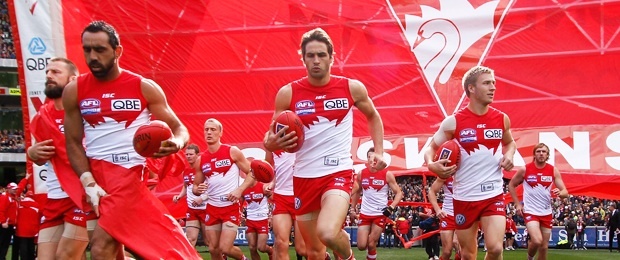
Luke Beveridge: 'This is yours mate, you deserve it more than anyone', AFL Grand Final - 2016

December 27, 2016

1 October 2016, MCG, Melbourne, Australia

Beveridge coached his team to first premiership for 62 years. Western Bulldogs stalwart, captain and people's champion Bob Murphy had done his knee in round 2 and missed game. 

Thank you for an amazing year. Commiserations to the Swans, took our very best. You’re an unbelievable side. An enormous effort by our players obviously.

[sponsors]

This group of players are incredible, their hearts are so big.

We know how long you’ve waited for success, and I really thought at half time, it;s going to take something extra special, even though they’ve given their all already.

Absolutely special.

Also a call out to all our support staff. Especially all the people whop have put in so much work over a long period to time.

Peter Gordon, our President, you deserve this as much as anyone.

And to you the fans, our supporters, it really was an amazing day yesterday, we kinda felt like The Beatles.

And you boosted our spirits, we’ve ridden on your wings really, and our players couldn’t have done any more. They’re totally spent.

Thank you very much.

[returns to lectern]

... Finally, I'd like to get Bob Murphy to step on the stand.

This is yours mate, you deserve it more than anyone.


Source: https://www.youtube.com/watch?v=DtvC19-JPz...

Enjoyed this speech? Speakola is a labour of love and I’d be very grateful if you would share, tweet or like it. Thank you.

Facebook Twitter Facebook
In COACH Tags LUKE BEVERIDGE, WESTERN BULLDOGS, BOB MURPHY, INJURED CAPTAIN, SPEAKOLIES 2016
Comment

Gregg Popovich: 'My big fear is -- we are Rome', Thoughts on the election of Donald Trump - 2016

November 14, 2016

 11 November 2016, San Antonio, Texas, USA


Right now I'm just trying to formulate thoughts. It's too early. I'm just sick to my stomach. Not basically because the Republicans won or anything, but the disgusting tenor and tone and all of the comments that have been xenophobic, homophobic, racist, misogynistic.

I live in that country where half of the people ignored all of that to elect someone. That's the scariest part of the whole thing to me. It's got nothing to do with the environment and Obamacare, and all of the other stuff. We live in a country that ignored all of those values that we would hold our kids accountable for. They'd be grounded for years if they acted and said the things that have been said in that campaign by Donald Trump.

I look at the Evangelicals and I wonder, those values don't mean anything to them? All of those values to me are more important than anybody's skill in business or anything else because it tells who we are, and how we want to live, and what kind of people we are. That's why I have great respect for people like Lindsey Graham and John McCain, John Kasich, who I disagree with on a lot of political things, but they had enough fiber and respect for humanity and tolerance for all groups to say what they said about the man.

That's what worries me. I get it, of course we want to be successful, we're all going to say that. Everybody wants to be successful, it's our country, we don't want it to go down the drain. But any reasonable person would come to that conclusion, but it does not take away the fact that he used that fear mongering, and all of the comments, from day one, the race bating with trying to make Barack Obama, our first black president, illegitimate. It leaves me wondering where I've been living, and with whom I'm living.

The fact that people can just gloss that over, start talking about the transition team, and we're all going to be kumbaya now and try to make the country good without talking about any of those things. And now we see that he's already backing off of immigration and Obamacare and other things, so was it a big fake, which makes you feel it's even more disgusting and cynical that somebody would use that to get the base that fired up. To get elected. And what gets lost in the process are African Americans, and Hispanics, and women, and the gay population, not to mention the eighth grade developmental stage exhibited by him when he made fun of the handicapped person. I mean, come on. That's what a seventh grade, eighth grade bully does. And he was elected president of the United States. We would have scolded our kids. We would have had discussions until we were blue in the face trying to get them to understand these things. He is in charge of our country. That's disgusting.

A reporter then interrupted him.

I'm not done. One could go on and on, we didn't make this stuff up. He's angry at the media because they reported what he said and how he acted. That's ironic to me. It makes no sense. So that's my real fear, and that's what gives me so much pause and makes me feel so badly that the country is willing to be that intolerant and not understand the empathy that's necessary to understand other group's situations. I'm a rich white guy, and I'm sick to my stomach thinking about it. I can't imagine being a Muslim right now, or a woman, or an African American, a Hispanic, a handicapped person. How disenfranchised they might feel. And for anyone in those groups that voted for him, it's just beyond my comprehension how they ignore all of that. My final conclusion is, my big fear is --- we are Rome.

Source: http://www.mysanantonio.com/sports/spurs/a...

Enjoyed this speech? Speakola is a labour of love and I’d be very grateful if you would share, tweet or like it. Thank you.

Facebook Twitter Facebook
In COACH Tags DONALD TRUMP, SPEAKOLIES 2016, TRANSCRIPT, ELECTION, NEWS CONFERENCE, ELECTION 2016, GREGG POPOVICH, SAN ANTONIO SPURS, RACISM
Comment
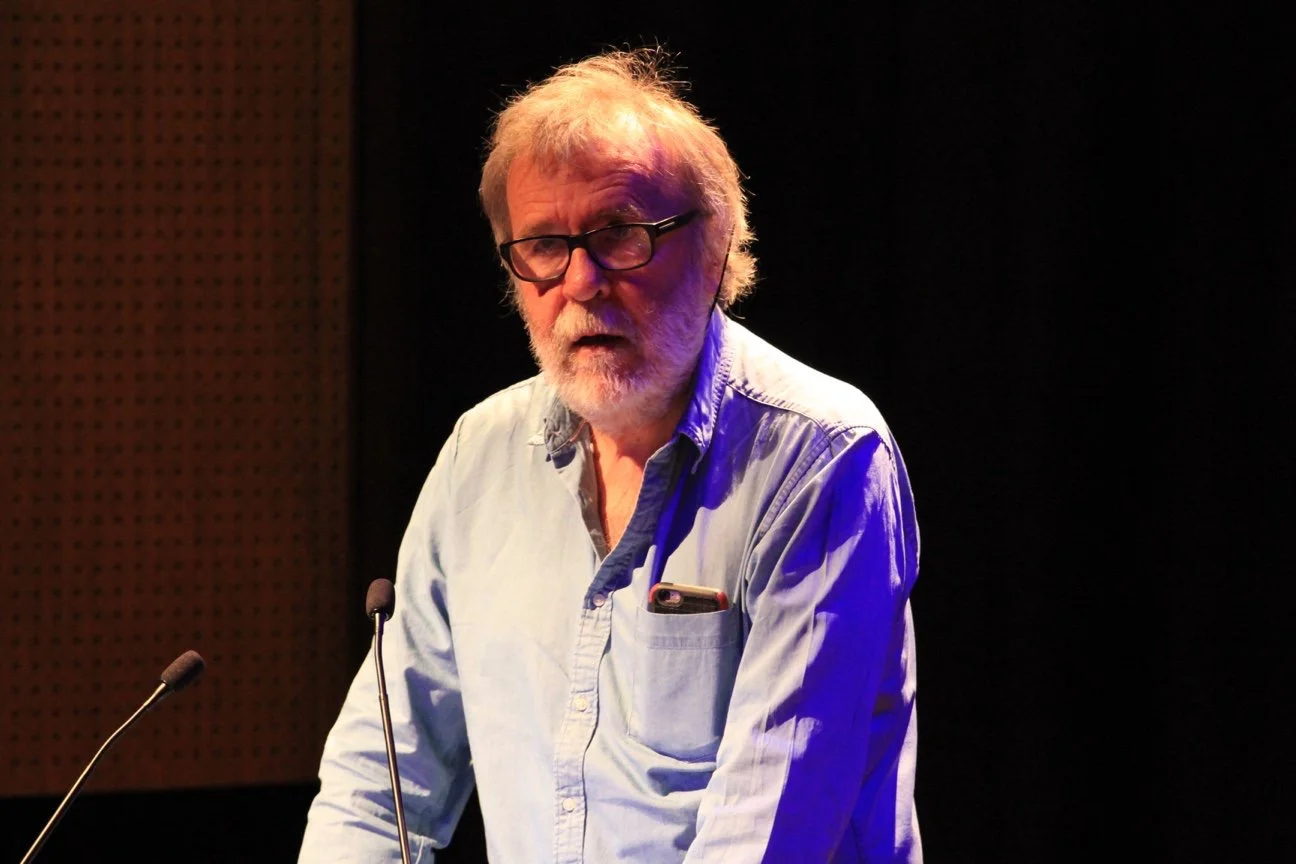
flanagan swf.JPG

Martin Flanagan: 'Is sport the opiate of the people? Is sport the great distraction?' Sports Writers Festival, Opening night address - 2016

October 18, 2016

14 October 2016, Melbourne Town Hall, Melbourne, Australia

Opening oration at Sports Writers Festival. Tim Cahill features at Melbourne Town Hall tonight (18 October, 8pm) Tickets.

SPORT & POLITICS:  THE ADAM GOODES CASE RE-CONSIDERED, ONE YEAR ON.

for Doug Vickers

1.

In the 19th century, Karl Marx famously declared that religion was the opiate of the people.

In the 21st century, it seems fair to ask - is sport the opiate of the people?  Is sport the Great Distraction?

The poet TS Eliot said “humankind cannot bear too much reality”.  I happen to believe that’s true. Is sport now the principal means by which many of us insulate ourselves from reality? I think the answer to that is probably yes.

Someone once said that sport is the most important thing in the world that doesn’t matter.  At one level, I agree - but at the same time I never forget Nelson Mandela saying that sport has more power than governments to change social attitudes. That is true also.

Furthermore, sport has the power to illuminate aspects of our society and our social past that otherwise remain hidden.

My point is that sport - by which I mean popular sports that attract mass audiences - swing or pivoton a series of paradoxes so that often, in public arguments arising from sport, when others are absolute in their opinions, I find myself thinking. “Yes, but….”

2.

People have suggested thetheme I should address today is “Should sport ever be political?” I am tempted to reply – is sport ever not political?  It’s the story behind the creation of the modern Olympics. It’s the story behind the 1936 Olympics in Hitler’s Berlin.  It’s the story behind the State-sanctioned systematic doping instituted by Vladimir Putin’s regime in Russia and the turmoil since that was discovered, both the banning of Russian Olympians and Paralympians from the Rio Games and the subsequent hacking and release of the medical records of athletes who did compete. These are dark disturbing stories but the special magic of sport is that it also throws up bright, uplifting stories, too.

One of the best sports stories of my adult lifetime was the 1995 Rugby Union World Cup final between South Africa and New Zealand played in South Africa just at the time when people on the political extremes in that country were on the verge of initiating a full-on civil war. That story is expertly told in “Playing the Enemy” by John Carlin, one of my half dozen favourite books on sport. It was in John Carlin’s book that I found Mandela’s quote that sport has more power than governments to change social attitudes.  Who am I – who is any one among us? – to argue with Nelson Mandela on that score?

But just as the theme of politics and sport is universal, it also has to be understood locally. Right now in Melbourne, as Eddie McGuire found out to his cost, you’d be a fool if you thought the views of women don’t matter in footy debates.   Personally, in seeking to balance the views of the two sexes, I like the Aboriginal idea of men’s law and women’s law.  That is, there are two ways of seeing the world, two separate codes. They are not identical, but they have certain assumptions in common and need to co-exist.  In Australian football, this gets complicated since when I say I’m talking about football I usually mean men’s football. There is now also women’s football. And men’s football, throughout the length and breadth of the land, is hugely dependent upon the women working as volunteers around the clubs and not merely selling pies and cordial - as presidents, board members, commission members, secretaries, treasurers….. It’s a political fact that Australian football has to listen to the voices of women if it wants to have a future.

In 2000, a Dutch journalist writing a book on the great sporting events of the world attended the AFL grand final and tracked me down to ask two questions.  This was one of them: “The average percentage of women at premier league soccer matches in Europe is 13 per cent. With your game, it is 48 per cent. Why?” My answer is that women always seem to have been a big part of the game. The reason for this, I think, is that during the game’s adolescence, the period between 1858 and 1880, Australian football was basically free entertainment in the parks. Among the crowd which circled these games, there was neither a Members’ pavilion nor a ladies Pavilion. No-one could be prevented from attending since there no fences, everyone mixed as one.

The best account of an early match was provided by an English journalist who merely signed himself as the Vagabond. He saw Carlton play Melbourne at the Carlton ground in 1879. He describes the women he sees in the crowd, the lack of distinction between men and women, and between people of different religions and class. The Vagabond judged the game to be unruly and violent. He ultimately asked if it was to the detriment of civilized values and concluded that it was, thereby giving expression to an idea which has never really gone away and regularly re-surfaces, particularly during controversies about player behaviour. 

Social and political debates conducted through the medium of sport are like historical stews.  Sport is like a mask that people can hide behind and sound off so that many of the views that are expressed contain prejudices against women, prejudices against men, class prejudices, racial prejudices and prejudices against sport itself. One of the most radical and refreshing changes of our time has been young women flooding into sports that were previously regarded by some as the embodiment of male aggression and violence. If anyone wants further evidence of continued change in the culture of Australian football, it was surely Jobe Watson returning to Essendon after a year of exile and introspection in a cap with theword FEMINIST written on it.

Because sport is in everyone’s face all the time in this culture, everyone thinks they know about it.   Often, people who don’t like sport have opinions on sport which, when boiled down, come back to the fact that they don’t like Sam Newman or Shane Warne or some other cartoon character from the world of tabloid media, or they don’t like the fact that the endless shows on radio and television given to analysing sport serve to prevent people considering everything else that’s happening in the world.  Well, yes, it’s hard to argue with that. But, as I said before, it is also true that sport can be socially illuminating. An example of this can be seen right now on the walls of the Ian Potter Gallery in Carlton. Put together by Melbourne artist Grant Hobson, the exhibition is about the Koonibba Football Club, the oldest surviving Aboriginal football club in Australia. 

Central to the exhibition are 11 black-and-white portraits taken in 1939 at Koonibba, on South Australia’s Eyre Peninsula, as part of an investigation mounted by the Adelaide and Harvard universities. During the 1930s, there were intense discussions among academics, politicians and civil servants about what to do with Aboriginal people of mixed race or what was then called the "half-caste problem". Proposed solutions included eugenics or what was then termed "breeding out the colour". The 1939 photographs taken at Koonibba were like mugshots, the subjects being photographed from the front and side-on. The notes with the portraits, which artist Grant Hobson and a Koonibba elder found in the archives of the Adelaide museum, contained skull and facial measurements plus descriptions of skin and eye colours. If you track the history of the ideas of racial superiority underlying the 1939 expedition back into the 19th century, you’ll find they mutated with Darwin’s theory of evolution to produce the notion that there was a missing link between apes and human beings. Aboriginal people were portrayed as “the missing link”. The strength and durability of this idea was displayed this year when a young woman, a Port Adelaide supporter, threw a banana at Eddie Betts. 

However, what the self-styled “scientists” from Harvard and Adelaide universities didn’t appear to note when they visited Koonibba was that, beneath their threadbare clothing, nine of the 11 men they photographed were wearing Koonibba football guernseys. These were members of one of Koonibba’s most successful teams ever, remembered to this day as the Koonibba Invincibles. Famous AFL names associated with the Koonibba Football Club are Burgoyne, Betts and Wanganeen. Aaron Davey (Melbourne) and Alwyn Davey (Essendon) are grandsons of Koonibba’s Dick Davey. Daniel Wells (North Melbourne & Collingwood) and Graeme Johncock (Adelaide) are connected to Koonibba.  Put simply, I would not have learned the Koonibba story, if it were not for sport. There is so much about my country I wouldn’t know, if it were not for sport. There is so much about the world I would not know, were it not for sport.

3.

I now want to move to the biggest political issue in Australian football in recent times – the Adam Goodes affair of 2015. Before I do so, however, I want to make a few observations about contemporary politics. This is an age in which people are losing faith in democratic politics. This happened before, in the 1930s, most disastrously in Germany. Our belief in democracy being able to produce suitable social ends is being questioned by people on both the left and right. Into this state of political paralysis walks sport with its ready-made mass audience and its central place in to the entertainment industry.

Sport ideally is not about politics but in this culture sport provides one of the simplest and quickest ways of making a political point. What this gives rise to are debates about sport which are not really about sport, or are about sport and so much more. Outside football, non-Aboriginal Australians – and by that I specifically mean non-Aboriginal Australians of all races, colours and creeds - display little active interest in Aboriginal Australia. We all know this to be true – it’s our secret shame. It’s in this atmosphere that Adam Goodes gets called a monkey. It’s in this atmosphere that he points to a 13-year-old girl – by his own account, reacting to the voice, not knowing she is 13 – and she is marched from the stadium. After weeks of being booed, Goodes does a war dance and throws an imaginary spear into the crowd…. .

The main article I wrote about the Adam Goodes affair was actually about Chris Lewis, the last Aboriginal player to be booed as vehemently – in fact, far more vehemently – than Goodes was. In 1991, as West Coast built to its first ever premiership, Lewis established himself as one of the most promising young players in the competition. The following season, he copped full-on old-style racism and fought back – literally. He got the reputation of being a “dirty” player but his side of the case, his defence, wasn’t being put. He became the game’s outlaw. Its black outlaw. I defended him – the only journalist, as I recall, to do so – and we have maintained a relationship ever since. Chris Lewis has a warrior spirit but he told me when he was 21 that he’d “meet anyone half-way” and his life shows that he has been true to this belief. He has plenty of reasons to be racist, but isn’t.  That, I thought, was the point of the article but you wouldn’t have known it from the responses I got. In fact, I don’t remember a single response – and there were a lot - which dealt with what I thought the article was about.

I was sent racist abuse about Chris Lewis which was unchanged from what was said about him in the early 1990s. I had expected that. It was the other responses I hadn’t expected. For example, an Indian gentleman contacted me, demanding Adam Goodes’ mobile number. I had written a story on the Indian gentleman’s guru when she visited Australia some years earlier; he had been deeply impressed by the fact that I had accurately reported what she was saying about how to control our lives with positive thinking. He now advised me that, if he had Goodes’ number and the number of a senior figure in the Swans’ administration, he would advise them how to cure the problem with positive thinking.

I didn’t have Adam Goodes’ number and I would not have handed it out without his permission. Under the circumstances, my chances of getting that permission would have been nil. In the wake of my failure to provide him with Adam Goodes’ number, the Indian gentleman contacted me again saying that I should look deep into my heart and examine the racist feelings I harboured towards Aboriginal people. Why did the Indian gentleman deduce that I possessed racist feelings towards Aboriginal people? Because I had failed to give him Adam Goodes’ number so that he could solve the problem – or so he thought - with positive thinking.

Another reader – an articulate young man who was an avid Swans and Adam Goodes fan - wrote in accusing me of trying to create a historical scenario in which Michael Long was “the good guy” and Adam Goodes was “the bad guy”. I had tried to make the point that Adam Goodes represented something different, something new, at least to non-Aboriginal Australians. I’d just spent 13 years trying to writing a book with Michael Long, trying to see his story as he did and not as whitefellas do. In race politics, things are always changing. I said Michael Long was like Martin Luther King, Adam Goodes was like Malcolm X. I didn’t say Malcolm X was a bad guy, I didn’t say Michael Long was a good guy. But between Martin Luther King and Malcolm X there is, or was, a difference.

And Adam Goodes was different. I’d first noticed it reading his essay in the AFL’s official history published in 2008. Adam Goodes said things Aboriginal people don’t normally say to a non-Aboriginal audience. He called himself a half-caste. Aboriginal people, as a rule, never use the term “half-caste” - the Koori singer Archie Roach told me it made him feel like people were talking about cattle. In his 2008 essay, Goodes also wrote about his formative years. If I learnt one thing from my 13 years trying to write a book with Michael Long, it was how big the Stolen Generation, and the vast cultural divide it made for, is in the families descended from the stolen. Goodes’ father is a white man. His mother is Stolen Generation who grew up with minimal knowledge of her culture. At school, he copped it from white kids for being black and from black kids for being white.

I know of no other famous Australian story which starts at that point – the narrator being someone who’s an outsider in both worlds, Aboriginal and non-Aboriginal!  As I understand the story of his life, his understanding of his Aboriginality starts after he gets to the Swans and falls under the influence of Michael O’Loughlin.

During 2015, I didn’t write about Adam Goodes as if I knew him because I didn’t. We met once but I came away with the feeling that I hadn’t really met him. I think he’d say that too. We were polite with one another. I certainly don’t believe I would have won Adam Goodes’ respect then or now by writing an article that implied I know him better than I do. That’s why the article I wrote about the Goodes affair was actually about Chris Lewis. I know Chris Lewis. I could discuss the matter with him. I read the article to him before I filed it. He struggled with it but agreed to let me send out his message another time. Chris Lewis, Aboriginal warrior, will meet anyone half-way. Isn’t that what it’s all about? Meeting others half-way?

By now the Indian gentleman was texting me daily saying, “You must denounce racism! You must denounce racism”. I thought he was seriously misreading the cultural politics at play.  The Adam Goodes affair was my first confrontation with I call Trumpism. A lot of people were making pious calls for the AFL to act. A characteristic of Trumpism is that the old sources of cultural authority are suddenly without authority. Limp, ineffective. To the people who became intent on booing Adam Goodes no matter what, Gillon McLachlan, or what he is perceived as representing, was one of the reasons they were booing. To those same people, I was irrelevant, if in fact they had any idea who I was. I wrote that the only people who could stop the booing were the players. The Indian gentlemen went nuts. “They are only boys!” he cried. No, the players are young men who make adult choices about risk and injury for all to see on the football field and, commensurate with the skill and bravery they show in doing so, they win the broad respect of their audience.

Bulldogs CaptainBob Murphy led the way, writing an article in The Age in which he called the boos being directed at Goodes “blows to the soul”. I still wonder why more indigenous players didn’t stand up at the time. If Cyril Rioli, Sean Burgoyne and Bradley Hill had fronted a TV news camera and said to Hawthorn fans, “We represent you, you represent us. Each time you boo Adam Goodes, you’re booing us too”; if that had happened – and if, as a bonus, some of their whitefeller team-mates stood with them like the Melbourne players stood with their indigenous team-mates at that time – then, I reckon, there would have been a different conversation in the crowd between those doing the booing and the many non-Aboriginal people of all races and backgrounds who were opposed to it.

I had some sympathy with those who said booing has always been part of the game. It has. The football codes go back to medieval street games and street theatre. They’re about heroes and villains. They’re about booing and cheering. A football stadium is not a church. Proceedings are not conducted in an attitude of reverence. So, yes, I believe booing has always been part of the game. But I mean those words literally – booing is part of the game but there are moments when games cease to be games. 

In the 2000 Grand Final, Michael Long hit Melbourne player Troy Simmons with a hip and shoulder to the head and upper body which knocked Simmons senseless. I had spent quite a bit of time that year helping a young man who had broken his spine in a skiing accident adjust to life in a wheelchair. When Michael Long collected Troy Simmons, I saw how that same accident could occur on the football field and, for a long moment, feared that it had. The game ceased to be a game to me. I didn’t watch any more, I didn’t care who won.  Michael Long is someone I have deep respect and affection for, but this was something I had to discuss with him in the course of doing our book together.

Well, booing is part of the game but the game can cease to be a game and for me the booing of Adam Goodes did cease to be a game. It wasn’t just Adam Goodes who believed there was a racist element to the booing, virtually the whole of Aboriginal Australia did and lots of other people besides. Each week, more people felt the hurt being caused but still the booing went on. The beautiful Australian game became the ugly Australian game.

Essentially, what happened was that a debate or discussion we should be having as a nation but never do – the relationship between Aboriginal and non-Aboriginal Australia – had surfaced through the medium of the national game. Did Goodes being Australian of the Year have anything to do with it? In my opinion, without doubt, as became clear when figures like Alan Jones and News Limited columnist Miranda Devine entered the fray arguing (1) that the booing had nothing to do with Goodes being Aboriginal, that (2) they didn’t like the way he played but, (3) they didn’t like things he said as Australian of the Year - when he spoke as an Aboriginal Australian.

I found the debate around the Goodes affair confused and confusing. A traffic jam of a debate. For example, the issue of war dances. A war dance is a war dance. As Goodes said after he threw his imaginary spear, it’s a challenge. The New Zealand haka is the great war dance of world sport. But there are very clear rules about the performances of the haka, as there was nearly an all-in brawl after the Irish rugby team decided to counter it by moving forward and standing inches from the faces of the All Blacks as they were delivering it. And the challenge of the haka is never issued to the crowd – always to the other team.  When I wrote this during the Goodes debate, a reader wrote in saying that I was therefore anti-Goodes. I would like to have asked the reader - have you ever seen serious crowd misbehaviour at a sporting event close-up? I have, both attending soccer matches in Scotland and England in the late 1970s when there was a spirit of barely controlled violence all around you, and on my first visit to the MCG in 1971 to see a one-day match, when the place was awash with alcohol and police lost control of whole sections of the crowd.  

The journalist I thought who wrote best about the Goodes affair – by which I mean with the greatest penetration and insight – was Stan Grant.  When I met Stan Grant earlier this year at the Sydney Writers’ Festival, I said to him that the Goodes affair was both simple and complex. He agreed. Grant’s book, “Talking to my Country” - an extremely important Australian book, in my view – explains the complexity of Grant’s own journey as a man with both Aboriginal and non-Aboriginal heritage and how the tensions this has created in his life all came into focus for him during the Adam Goodes saga. One of the things Stan Grant’s book caused me to realise is that the Adam Goodes affair wasn’t merely about how non-Aboriginal Australians see Aboriginal Australians -  it was also about how non-Aboriginal Australians were being called upon to see Aboriginal Australians as they’d never seen them before!

Would I like to talk to Adam Goodes?  Of course. Have I got lots of questions to ask him?   Maybe  too many for a man walking a difficult and intensely personal path.  But at this year’s Sydney Writers’ Festival I heard that he had withdrawn permission for his biography, written by sportswriter Malcolm Knox, to appear. My understanding is that he  wants  to retire from the public gaze, as is his right. I am sorry about what happened to Adam Goodes but I am in no doubt he will be vindicated by history. In 25 years, probably less, he will be a huge figure in the history of the game. 

The AFL is routinely abused for having failed to eliminate racism. Two years ago, at the launch of the Long Walk, I sat with Michael Long on a panel while a television journalist said to him that the Adam Goodes affair was proof that he, Michael Long, had failed. You haven’t abolished racism, he cried.  This is a culture which provides huge public platforms for the likes of Donald Trump, Pauline Hanson and Andrew Bolt. Does anyone seriously believe that half a dozen sports stadiums around Australia are somehow going to be rendered immune from their combined effect?  The AFL can no more eliminate racism than it can end war. What the AFL can do is legislate for events which occur in its domain. have laws and enforce those laws, and thereby serve as a social model. Michael Long single-handedly revolutionised the cultural values of the game in 1993; that consensus held until the Goodes affair. We are now, historically speaking, entering new socio-political territory.

Recently, San Francisco 49ers quarterback Colin Kaepernick chose to sit rather than stand during the US National Anthem at a preseason game in protest against the treatment of black people and people of colour in his country. While I was preparing this speech I was asked, “Could that happen here?” Yes. And if it doesn’t happen here, something like it will happen in some other country around the world. I don’t believe the human frailties and weaknesses on display in the Goodes case are peculiar to any particular race or nationality. I take my faith from a dedication the great Aboriginal leader Patrick Dodson wrote for The Call, my book on Tom Wills: “The struggle never ends. The reward is the people you meet along the way”.  

I have tried to talk today about what happens when matters of national import arise through the medium of sport. I’ve also tried to frame the Goodes saga in a different way and untangle some of the knots that were drawn so tightly at the time. Another aspect of the relationship between politics and sport is the way people seize upon sport as a means of acquiring money and power. This happens in dictatorships, and by different means and to a lesser degree it happens in democracies. A famous Australian comedy was written about it called Strictly Ballroom. But there is little amusing about world bodies like FIFA and the IOC in which the most corrupt bodies and individuals have a history of flourishing shamelessly at the expense of the rest. I won’t talk about that in detail because you have another journalist speaking at this conference who is eminently more qualified to do so – David Walsh, the man who pursued cyclist Lance Armstrong for doping. These are serious subjects which deserve the serious discussions a forum such as this can provide.

But, whatever scepticism I have about the IOC, I still believe in the Olympic ideal. I still support the idea of young athletes from all over the world meeting every four years. I am in awe of the Paralympics. Ultimately, for better or worse, sport reflects human nature. One of my favourite sports stories happened one hundred years ago when the great armies in World War 1 ceased fighting on Christmas Day, met in no-man’s land, began kicking a can – maybe someone had a ball – and, in the mist of unprecedented human carnage, soldiers from both armies began playing with one another. One of those who disapproved intensely was Adolf Hitler. Why? Because he was a homicidal maniac and he understood intuitively that men who played together were less likely to kill one another. And, so, we are confronted with a struggle that never ends – sport is endlessly corruptible and there is a battle that has to be fought on that count. But sport, like hope, is constantly born anew and it is a fact that good things grow from it. And so I conclude today by saying: Play on.


See Tim Cahill tonight. (18/10/16, 8pm)



Enjoyed this speech? Speakola is a labour of love and I’d be very grateful if you would share, tweet or like it. Thank you.

Facebook Twitter Facebook
In BROADCASTER Tags SPORT AND POLITICS, SPORTS WRITERS FESTIVAL, MARTIN FLANAGAN, TRANSCRIPT, MARX, ADAM GOODES, SPEAKOLIES 2016
Comment

Titus O'Reilly: 'Each year I can claim my Demons membership as a charity donation when I do my tax', Sydney Swans Redbacks Coterie Lunch - 2016

June 4, 2016

7 May 2016, SCG, Sydney, Australia

Titus O'Reilly is a footy satirist who has followed the Demons since 1809. He delivered this speech at a Sydney Swans Redbacks coterie function, that he was lured to by the prospect of an open bar. The Swans were playing Essendon that day.

Thank you ladies and gentlemen. I feel in good company being amongst footy fans.

What a great club you have in the Swans, so well run.

I’ll give you an example of how well run it is.

They saw that you play Essendon today and thought, these people are going to need a couple of hours of drinking to face that, so here we all are.

It must be nice to have your membership money go to a well-run club. Each year I can claim my Demons membership as a charity donation when I do my tax.

I actually felt quite nervous coming here and speaking to you this afternoon.

It’s hard to follow the comedic performance Collingwood put on for you all back in Round One.

Wasn’t that something? I bet you all felt very sorry for them and didn’t gloat at all.

They’re a club that’s caused you a lot of problems in recent years.

Not on the field of course.

Collingwood haven’t caused anyone trouble on the field in some while.

I mean how good was Eddie’s decision to take the Collingwood coaching position off Mick Malthouse and hand it to Nathan Buckley.

Collingwood have been lower on the ladder every year since and Malthouse going to Carlton has probably set them back a decade.

Talk about killing two birds with one stone.

I can’t remember a single decision that has made so many people as happy as that coaching change has.

At least not since no fault divorces were introduced in Australia.

Really, we should all be thanking Eddie.

Especially given you guys managed to also palm off Jesse White onto them.

That was just cruel.

They already had Travis Cloke and you gave them another forward that can’t kick goals.

Still, Collingwood have caused you a lot of problems.

You may remember Eddie McGuire’s disastrous attempt to promote musicals.

And as you know, they’re a big reason you lost your Cost of Living Allowance. 

That’s when a bunch of Victorian clubs got upset that you were correctly following an AFL policy.

There’s nothing more upsetting than when a club follows the rules.

So the AFL took away your COLA and that made the VFL people very happy.

Oh, except then the AFL went further and slapped you with that trading ban.

That really taught you a lesson for obeying their rules.

Remember, this is a sporting body that fined Melbourne for being found not guilty of tanking.

Now we still don’t really know the reasons why the AFL imposed that trade ban.

In all honesty, they can’t really come out and say they did it just to stop Eddie bothering them, even if that’s a perfectly understandable reason.

I mean, if someone said to me, ‘I’m doing this so Eddie stops contacting me every single day’ you’d understand.

Anyway, you guys seem to still find great players despite the ban.

I actually thought the lockout laws would cause you more problems.

At the very least, I expected the lockout laws to void a few of your existing contracts.

But despite all that you’ve got players like Tom Papley, Callum Mills, Tom Mitchell, Isaac Heeney, the list goes on and on.

The next move might be to just ban you from having players altogether.

What’s worse about the ban and the stripping of COLA is that hasn’t actually stopped the Victorian teams from complaining.

Now they’re complaining about zones.

They’re furious because the Giants have won a few games. This is a side that lost to Melbourne not that long ago.

Suddenly, the Riverina is being fought over like it’s the holy land.

It’s the heat that comes on any interstate team when they’re good. It’s lucky the Gold Coast are an absolute mess. No one is complaining about them.

Not even their six members.

I feel a bit sorry for the Giants, after all the AFL makes them regularly visit Canberra.

Surely that more than offsets any benefits they get in recruiting.

What we should look at instead is how many Victorian teams keep shooting themselves in the foot.

As a supporter of a Victorian club, I can tell you, they make enough mistakes to keep themselves out of the finals, let alone what anyone else is doing.

The problem with a lot of clubs is they’re run almost as badly as the Shane Warne foundation.

I was shattered when Warnie shut down his foundation. I don’t know how to donate to his parties now.

Anyway, speaking of badly run organisations brings us to today’s opponent, the Essendon Football Club.

Essendon are like the band Nickelback. They're terrible and the majority of people can't stand them but they still have a massive following.

The Bombers have been more a legal defence fund over the last three years than a football club.

That’s who have been the big winners out of this, lawyers.

Every year on James Hird’s birthday, lawyers light a candle to him.

Essendon members can actually choose when they sign up whether to sponsor a barrister or a Queens Counsel. It’s a lovely touch.

The Bombers, may not have the Riverina as a recruiting problem but they do have Melbourne University law school.

Today, you’ll get to see what happens to a team that has had its twelve best players banned from playing.

Yet they’ve still got one more win than Fremantle.

That’s also one more win than James Hird has had in court over the last few years.

This week he lost a case to get Essendon’s insurer to cover his legal coasts.

It’s the first time I’ve ever barracked for an insurance company in a court case.

Poor James. If the Victorian teams really wanted to stop the Giants they should try and get Hird to coach them.

It's sad that you can be run out of a club just because your players have been injected hundreds of time with unknown substances.

I’m going to go out on a limb here today and tip you guys to win.

It’s not just because I’m here at this event, it’s because I saw Essendon play Carlton last week.

It’s OK, I’m receiving counselling.

Did anyone here see it?

It was arguably the worst game of football I’ve seen and I’m a Melbourne supporter.

The whole second quarter had not one single goal scored.  

I would have been quite happy to have died during that game. I actively wished for it.

Yet no matter how much I wished for it, death did not come.

I must say in finishing, you really are very lucky to have such a well-run club, to have seen Premierships and great players like Tony Lockett, Adam Goodes and Paul Kelly.

I know it hasn’t always been that way.

Because the opposite is worse. So much worse.

I’m a Melbourne supporter and barracking for them has taken a decade off my life.

The only good news for me, is that means ten less years of having to watch them.

Good luck to your team today and thank you.

Source: http://titusoreily.com/

Enjoyed this speech? Speakola is a labour of love and I’d be very grateful if you would share, tweet or like it. Thank you.

Facebook Twitter Facebook
In BROADCASTER Tags TITUS O'REILLY, FUNNY, SYDNEY SWANS, TRANSCRIPT, LUNCH, AUSTRALIAN RULES, AFL, FOOTY, SPEAKOLIES 2016
Comment

Prince Harry: 'You will see people who by rights should have died on the battlefield – but instead they are going for gold', Opening of Invictus Games - 2016

May 15, 2016

8 May 2016, Orlando, Florida, USA

The Invictus Games is a sporting competition featuring injured servicemen and women and veterans from 14 countries.

I cannot tell you how proud and excited I am to open the second Invictus games here in America.

I’m a long way from London tonight. But when I look out and I see so many familiar faces, servicemen and women, their friends and their families and all the people who have got them here – I feel like I’m at home.

I spent 10 years in the British Army and I was deployed to Afghanistan twice. I served alongside soldiers from all over the world. I saw the sacrifices you and your families made to serve your nations. I learned about the importance of teamwork and camaraderie in a way that only military service can teach you. And when I travelled back from the battlefield on a plane carrying the body of a Danish soldier and three young Brits, fighting for their lives, I began to understand the real, permanent cost of war.

I joined the Army because, for a long time, I just wanted to be one of the guys. But what I learned through serving was that the extraordinary privileges of being a Prince gave me an extraordinary opportunity to help my military family. That’s why I had to create the Invictus Games – to build a platform for all those who have served to prove to the world what they have to offer.

Over the next four days, you will see things that in years past just wouldn’t have been possible. You will see people who by rights should have died on the battlefield – but instead they are going for gold on the track or in the pool. You will be inspired, you will be moved, and I promise you will be entertained.

While I have your attention, though, I want to briefly speak about an issue that for far too many of you is shrouded in shame and fear. An issue that is just as important for many of you watching at home as it is for those of you in this stadium tonight.

It is not just physical injuries that our Invictus competitors have overcome. Every single one of them will have confronted tremendous emotional and mental challenges. When we give a standing ovation to the competitor with the missing limbs, let’s also cheer our hearts out for the man who overcame anxiety so severe he couldn’t leave his house. Let’s cheer for the woman who fought through post-traumatic stress and let’s celebrate the soldier who was brave enough to get help for his depression.

Over the next four days you will get to know these amazing competitors. They weren’t too tough to admit that they struggled with their mental health, and they weren’t too tough to get the help they needed.

To those of you watching at home and who are suffering from mental illness in silence – whether a veteran or a civilian, a mum or a dad, a teenager or a grandparent – I hope you see the bravery of our Invictus champions who have confronted invisible injuries, and I hope you are inspired to ask for the help that you need.

To end, can I just say thank you to all of you guys. You are fierce competitors. You are role models that any parent would be proud to have their children follow. You’ve made me a better person. You are about to inspire the world and I’m proud to call you my friends.

So, let’s put on a hell of a show in memory of all of our fallen comrades who didn’t make it back.

We are Invictus!

Source: http://katemiddletonreview.com/2016/05/09/...

Enjoyed this speech? Speakola is a labour of love and I’d be very grateful if you would share, tweet or like it. Thank you.

Facebook Twitter Facebook
In BROADCASTER Tags INVICTUS GAMES, ATHLETICS, SWIMMING, VETERANS, WAR, TRANSCRIPT, OPENING CEREMONY, SPEAKOLIES 2016
Comment

Bob Murphy: 'Long may we serve the game that at times let us fly', AFL Life Member induction -2016

March 19, 2016

17 March 2016, Etihad Stadium, Melbourne, Australia

I have long wondered if more books would have been written about Australian Rules Football if Mike Brady hadn’t penned the song ‘Up There Cazaly’.

In one succinct line he captured the whole damn thing, ‘there are days where you could give it up, and there are days where you could fly’

A love of football is not always an easy love – even as we gather here tonight basking in the optimistic new season and the glory it might bring, we all know that there will be a few potholes along the trail.

 In the beginning though the love of the game is free, light and full of fun.

For me it started with kicking the ball with my dad and brother – and if they weren’t around kicking the ball to myself.

Reading the bounce of the ball as it hit the power lines overhead and fell back to the bitumen.

A child’s imagination is boundless but for me the magnetic pull of the crowd was too much to resist.

Like many of the men standing up there with me tonight the schoolyard is where the dreams of becoming a proper footballer came into a sharper focus.

My primary school didn’t have an oval, in fact we barely had any grass at all, what we had was a car park with loose gravel.

As was custom at my school, play wouldn’t start until teams were picked – each boy or girl that wanted to play would line up with their backs against the red brick wall.

Captains were nominated and the brutality of the schoolyard would bare its teeth.

One by one players were picked until no one was left, then, the ball would be hoisted in the air to commence play – that’s when I got the bug.

That moment will be different to the rest of the inductees but if you ask them, and you should, there would be some good stories to be told.

A love of the game is one thing, but what does it all mean.

The pull of the crowd, the desire to stand on the wall to be picked, the exhilaration of running out with a swarm of teammates just with the expression of wanting to win or it could be about something much bigger.

It might just be that we want to belong to something.

It is my great honour tonight to speak on behalf of this year’s group of AFL life members.

Like a grand oil painting these inductees have brought different shades to the game with their talent, character and service.

Doctors, administrators, umpires, superstars and lowly half back flankers.

As has been done in the past on this night I was tempted to single out each one and sketch a portrait of them with a paragraph or two of my own.

But, are a few words enough?

After musing about the vision of Bill Kelty, the integrity of Matt Stevic, the grace of Shaun Burgoyne or the chiseled cheekbones of Scott Thompson I’ve decided to keep this year’s inductees together as one – a beautiful mish-mash of colours and textures.

Paul Chapman, Shaun Burgoyne, Brendon Goddard, Scott Jeffery, Chris Judd, Justin Leppitsch, James Kelly, Stephen Milne, Sam Mitchell, Drew Petrie, Matt Stevic, Scott Thompson, Dr Hugh Seward, Geoff Walsh and Bill Kelty.

If this were to be a painting on the wall, perhaps a landscape of the Australian bush it would surely have a river running through it that represents our common thread – a deep love for the game, the spirit that it’s played in and the reverence we hold for those that have gone before us.

If I was the last inductee picked by the AFL this year that would make me the 250th AFL life member.

What an art gallery that would be to wander through and sit in front of for a while.

These last couple of months have provided an opportunity to ponder the enormity of the honour.

When it comes to matters of football and ceremony I often defer to my Bulldog hero John Schultz, he himself an AFL life member.

He took me aside in the change rooms just last week and told me in his gentle way that the honour will mean more and more to me the older I get.

It already means a lot.

A life in footy means that time and again we put our backs to the red brick wall, hoping to be picked to play, to be part of something bigger than ourselves.

Perhaps never for once thinking that the game might eventually pick us – it doesn’t get much bigger than that.

On behalf of this fine group of men I accept the game’s invitation to join the blessed group of life members.

Long may we serve the game that at times let us fly, or at least feel like we could.


Source: http://www.sen.com.au/news/03-16/bob-murph...

Enjoyed this speech? Speakola is a labour of love and I’d be very grateful if you would share, tweet or like it. Thank you.

Facebook Twitter Facebook
In PLAYER Tags ROBERT MURPHY, BOB MURPHY, WESTERN BULLDOGS, CAPTAIN, AFL, AUSTRALIAN RULES, FOOTY, LIFE MEMBERSHIP, SPEAKOLIES 2016
Comment

Daniel Bryan: 'I am grateful', WWE retirement - 2016

February 10, 2016

8 February 2016, Seattle, USA

So - just now I was able to close my eyes, and feel that. Like literally feel it, in a way that I’ve never gotten to feel it before.

Because when we’re here we’ve always got to keep our eyes open.

But just that experience, literally I’m never going to forget it.

I’ve been wrestling since I was eighteen years old. And within the first five months of my wrestling career, I’d already had three concussions. And for years after that,  I would get a concussion here and there. Or here or there. And then it gets to the point when you’ve been wrestling for sixteen years, that um, that adds up to a lot of concussions.

And it gets to a point where they tell you that you can’t wrestle anymore.

And for a long time I fought that, because this, I have loved this in a way that I have never loved anything else.

[Crowd: Thank you Daniel! Thank you Daniel!]

But a week and a half ago, i took a test that said maybe my brain isn’t as okay as I thought it was.

And I have a family to think about. And it is with a heavier heart, and the utmost sadness, that I officially announcemy retirement.

But if there’s one thing -- so I’ve gone through all of these complex emotions in this last little bit -- I’ve been angry, I’ve been sad, I’ve been frustrated, I’ve been all of that.

But today, when I woke up this morning, I felt nothing but gratitude.

I have gotten to do what I love for nearly sixteen years.

I am grateful. I am grateful, because of wrestling, I got to meet the most wonderful woman in the world. Who’s beautiful, she’s smart, and she completes me in a way that I didn’t even think was possible.

And that’s because of wrestling.

I am grateful.

Now tomorrow morning - I start a new life. A life where I am no longer a wrestler.

But that is tomorrow, and that is not tonight.

And by damn I have one more night to feel this energy, and to feel this crowd, so if I could just get one last ‘Yes!’ chant, I would really appreciate it.

[Crowd: Yes! Yes! Yes! Yes! Yes!]


Source: https://www.youtube.com/watch?v=6KzD06Wpof...

Enjoyed this speech? Speakola is a labour of love and I’d be very grateful if you would share, tweet or like it. Thank you.

Facebook Twitter Facebook
In PLAYER 2 Tags WWE, DANIEL BRYAN, RETIREMENT, TRANSCRIPT, WRESTLING, ATHLETE, RAW, CONCUSSION, INJURY, BRAIN INJURY, SPEAKOLIES 2016
Comment

Jeff Thomson: 'It’s all those people that help you as kids', Hall of Fame - 2016

January 28, 2016

27 January 2016, Crown Palladium, Melbourne, Australia

Don't worry, I won't keep you long.

Cricket was something I could do for fun ... I think anyone who knows me would realise that, and we were lucky in our day, we could play for fun.

I admire these guys who play now, they’ve got to work their arses off, they got to play that much cricket, I mean all the stuff they’ve got to put up with. All the press, all the media everything like that.

We didn’t have to put up with any of that stuff.

I know this is going to shock you, I’m actually gone a bit soft in my old age ... no it’d be hard work, it’d be hard work.

We flew under the radar. I used to play football in the off-season so I could get away from cricket. I didn’t have to do it 12 months of the year. I don’t know how they do it 12 months of the year, these blokes. They wonder why they all break down, why wouldn’t they break down. Christ almighty.”

I’m amazed, myself here tonight. You get old ... I’m 65 years old and everything shrinks when you get older, that’s why I’m happy to wear coats and all this shit— you don’t show your arms, y’know. .

“Even my eyeballs are shrinking. I had to go to Specsavers the other day and you wouldn’t believe it, the only good thing about getting old I found, they gave me these glasses for close up so they magnify everything.

I used them in the shithouse just before and I was pretty happy with what I had down there.

I’ve just got to get a pair for my wife.

No seriously. I’ll tell you why it’s a big honour, to follow Wally Grout. Now seriously, Nelma used to umpire me, I mean how do you reckon that went, Wally Grout’s daughter used to umpire me at Toombul -- Wally and I both played for Toombul, not together, she was the umpire in the games.

I was a quiet bloke, I think Nelma will tell you I didn’t sledge too much, especially girl umpires and that. We had a great time. And several other blokes ... Ian Davis came up and played with us. So we had a few Australian players in that side. In that club, throughout the years.

So it’s a real big buzz.

For me it’s all about the kids, my wife down there, all the shit she’s had to put up with for 40 years, I mean she didn’t get all the trips you girls down here get now, I’ll tell you that

 Mate, we had to sneak them in on planes ... they used to stay in some shit-hole down the road. I’m serious. All the blokes will tell you ... no wonder half of them are divorced. No, not really.

She’s a wonderful girl, and to put up with all of my crap is so good, and I got three wonderful boys from them,

But it’s all about, I mean the reason you’re here, What I’m happy about is all the parents — my parents, my old man is dead, my mum is still alive, she’s 97 … thank Christ, I hope I don’t last that long … not the way I drink. I’m going to run out of money very shortly, especially tonight —

It’s all those people that help you as kids ... you know the ones that don’t come in this room tonight, the ones that do all the shit when you’re a kid, taking you to the games.

And they never be here. They’re never the recognised ones … but they’re the ones that took you to all those game,and they sit back, and they’re the ones that ring you up and say ‘well done’.

So it’s for those people, yeah. Thank you.

Source: https://www.youtube.com/watch?v=mvkWLlpihK...

Enjoyed this speech? Speakola is a labour of love and I’d be very grateful if you would share, tweet or like it. Thank you.

Facebook Twitter Facebook
In PLAYER Tags JEFF THOMSON, CRICKET, HALL OF FAME, PARENTS, ALLAN BORDER MEDAL, CRICKET AUSTRALIA, SPEAKOLIES 2016
Comment

See my film!

Limited Australian Season

March 2025

Details and ticket bookings at

angeandtheboss.com

Support Speakola

Hi speech lovers,
With costs of hosting website and podcast, this labour of love has become a difficult financial proposition in recent times. If you can afford a donation, it will help Speakola survive and prosper.

Best wishes,
Tony Wilson.

Become a Patron!

Learn more about supporting Speakola.

Featured political

Featured
Jon Stewart: "They responded in five seconds", 9-11 first responders, Address to Congress - 2019
Jacinda Ardern: 'They were New Zealanders. They are us', Address to Parliament following Christchurch massacre - 2019
Dolores Ibárruri: "¡No Pasarán!, They shall not pass!', Defense of 2nd Spanish Republic - 1936
Jimmy Reid: 'A rat race is for rats. We're not rats', Rectorial address, Glasgow University - 1972

Featured eulogies

Featured
For Geoffrey Tozer: 'I have to say we all let him down', by Paul Keating - 2009
for James Baldwin: 'Jimmy. You crowned us', by Toni Morrison - 1988
for Michael Gordon: '13 days ago my Dad’s big, beautiful, generous heart suddenly stopped beating', by Scott and Sarah Gordon - 2018

Featured commencement

Featured
Tara Westover: 'Your avatar isn't real, it isn't terribly far from a lie', The Un-Instagrammable Self, Northeastern University - 2019
Tim Minchin: 'Being an artist requires massive reserves of self-belief', WAAPA - 2019
Atul Gawande: 'Curiosity and What Equality Really Means', UCLA Medical School - 2018
Abby Wambach: 'We are the wolves', Barnard College - 2018
Eric Idle: 'America is 300 million people all walking in the same direction, singing 'I Did It My Way'', Whitman College - 2013
Shirley Chisholm: ;America has gone to sleep', Greenfield High School - 1983

Featured sport

Featured
Joe Marler: 'Get back on the horse', Harlequins v Bath pre game interview - 2019
Ray Lewis : 'The greatest pain of my life is the reason I'm standing here today', 52 Cards -
Mel Jones: 'If she was Bradman on the field, she was definitely Keith Miller off the field', Betty Wilson's induction into Australian Cricket Hall of Fame - 2017
Jeff Thomson: 'It’s all those people that help you as kids', Hall of Fame - 2016

Fresh Tweets


Featured weddings

Featured
Dan Angelucci: 'The Best (Best Man) Speech of all time', for Don and Katherine - 2019
Hallerman Sisters: 'Oh sister now we have to let you gooooo!' for Caitlin & Johnny - 2015
Korey Soderman (via Kyle): 'All our lives I have used my voice to help Korey express his thoughts, so today, like always, I will be my brother’s voice' for Kyle and Jess - 2014

Featured Arts

Featured
Bruce Springsteen: 'They're keepers of some of the most beautiful sonic architecture in rock and roll', Induction U2 into Rock Hall of Fame - 2005
Olivia Colman: 'Done that bit. I think I have done that bit', BAFTA acceptance, Leading Actress - 2019
Axel Scheffler: 'The book wasn't called 'No Room on the Broom!', Illustrator of the Year, British Book Awards - 2018
Tina Fey: 'Only in comedy is an obedient white girl from the suburbs a diversity candidate', Kennedy Center Mark Twain Award -  2010
Tina Fey: 'Only in comedy is an obedient white girl from the suburbs a diversity candidate', Kennedy Center Mark Twain Award - 2010

Featured Debates

Featured
Sacha Baron Cohen: 'Just think what Goebbels might have done with Facebook', Anti Defamation League Leadership Award - 2019
Greta Thunberg: 'How dare you', UN Climate Action Summit - 2019
Charlie Munger: 'The Psychology of Human Misjudgment', Harvard University - 1995
Lawrence O'Donnell: 'The original sin of this country is that we invaders shot and murdered our way across the land killing every Native American that we could', The Last Word, 'Dakota' - 2016