
• Genre
  • About
  • Submissions
  • Donate
  • Search
Menu

Speakola

All Speeches Great and Small
  • Genre
  • About
  • Submissions
  • Donate
  • Search
Peter Fitzsimons, chair of the Australian Republican Movement

Peter Fitzsimons, chair of the Australian Republican Movement

Peter Fitzsimons: 'It's time for us to be entirely self governing', Speech for an Australian republic - 2015

September 17, 2015

26 August, 2015, National Press Club, Canberra

Thank you for the warm welcome. I'm delighted to be here. I wanted to begin by saying I am, you are, we are Australians. I feel that and I'm deeply honoured to be asked to address you on such a great Australian occasion, discussing this most important of Australian subjects, and from such a podium as this. 

I've loved myself being part of the press for the last 30-odd years. I couldn't say exactly when I was first published in the Sydney Morning Herald, but I think it was 30 May 1986. 

To be given the chance to speak in such a forum is as humbling as it is thrilling. I note the presence in the audience of many of my colleagues from the press and some of my rugby mates and I thank you for turning up, as I thank all of you for turning up and people watching at home. You will be pleased to hear I don't intend to deliver a dry dissertation on the legal niceties of changing the Constitution, me talking in a learned fashion about constitutional law would be rather like the favourite line I have from an American comedian Richard Little who once said Jimmy Carter as President is like Truman Capote making love to Dolly Parton - the job's just too big for him.

[Laughter]

That is not my strength. For my money, if the Republican movement has suffered from one thing over the years it's been a surfeit of deadly earnestness, of high brow wordiness. We need high brow, we have high brow, we have it in spades. But to this point the debate has lacked publicly expressed or low brow passion, and as low brow for me is a personal specialty, I hope you will stay with me. The key thing I wish to say today is we are putting the band back together.

A generation ago Australia had a go at becoming a Republic and for a variety of well documented reasons, most particularly including disunity, even among Republicans, and a Prime Minister who was a very good man but who didn't believe in the Republic. For those reasons, we didn't quite get there. 

But that was then, this is now. It's our hope and belief that sometime in the next five years Australia can again begin the formal process towards becoming the Republic of Australia. A Republic that we deserve to be - an independent sovereign nation beneath the Southern Cross we stand, a sprig of wattle in our hand. 

We respectfully submit that in the 21st century it is against the natural order of things that a mature and sophisticated nation, multicultural and independent as we are, proud of our egalitarianism and more than ever aware of our indigenous heritage, in this land, right here, not a nation with a history of 114 years or even two centuries, but more like 40,000 years, should still be finding our Head of State from one family of English aristocrats living in a palace in England. Please.

In every other part of our national life we honour those who have a go you mug, who rise on guts and gumption, their talent, their application, three parts elbow grease, two parts sweat off their own brow. We exhort the whole idea of the fair go.

There is only one part of our nation life, one sole part do we say no, no, no - no Australians need apply here, no Australians are good enough to get into this ultra exclusive Head of State job. This is reserved for the progeny of one family alone, not born in this country, not living here, and by hereditary right alone. Please, it does not fit in the 21st century. It is out of kilter.

And this I say, no matter how many of us might admire many members of the Royal Family, led by Queen Elizabeth the Second, we offer by the by sincere congratulations on the fact that Her Majesty will shortly pass Queen Victoria as the longest reigning British monarch, and wish her many years of reign ahead in Britain. Britain needs reign, we do not.

[Laughter]

It's time for us to be entirely self governing, and we believe it can be accomplished fairly simply, and with a bit of fun. We propose it starts with a simple question to be put before the Australian people some time in the next five years - do you support replacing the British monarch with an Australian citizen as the Australian Head of State. Bingo, simple as that. We reckon the yes vote for that question will look like Phar Lap at Flemington, like Bradman at Lord's, well ahead of the field and looking good.

Polling commissioned last week by the ARM and conducted by Essential Media show half of us are yaysayers, a quarter of us are naysayers, and another quarter say who cares. The polling shows that 57 per cent of Australians want to have that initial vote done and dusted by 2020, which ties in perfectly with our platform, and the answer to that basic question's always going to romp home as yes. And then we move to the next stage.

Through a process of political engagement with the public, perhaps a constitutional convention, a people's forum - the way they did it in Ireland - we come up with a model. And then simply we build towards a referendum to ask do you prefer the old model or the new model. At that point the situation will be more like Cathy Freeman coming into the final straight, Sydney 2000, say it Bruce McAvaney, she's got a lot of work to 

do. We will have a lot of work to do. Cathy did it, she breasted the tape, she was the winner, the gold medallist, and I reckon we will get there at last our self with her as our model.

As to what the model of the Republican should be, I'm here to tell you the ARM, we are like a toy aeroplane convention at St Mary's Cathedral. We are a very broad church with lots of great models that will fly.

[Laughter]

Our obvious challenge - once we have everyone inside our broad church is to decide and unite behind one model so we don't splinter like we did last time. As chair of the ARM I'm frequently asked my own view, and I thought you would never ask. It has no more weight than anyone else's, a member of the ARM, but here goes. It can fit into a tweet, but allow me to expand just a tad.

At the moment the system for selecting the Governor-General is very simple. The Prime Minister, the democratically elected leader of the Australian people, makes his or her choice and then writes a letter to Her Majesty the Queen, sends it 15,000 kilometres away to London, seeking from the hereditary head of Great Britain, occupying the most entrenched position of elitism in the world, her approval for this decision made by a democratically elected head of Australia.

I personally propose a single change - the minimalist model with no bells, no whistles and no postage stamp. I say everything stays the same, starting with the title of Governor-General and including the convention that the Prime Minister chooses that position, including their reserve powers, and including the writing of the letter seeking position. But here is the rub. We simply save the price of the postage stamp. Instead of sending that letter external mail to the Queen of England saying Your Majesty is it okay with you, we send it to the Parliament of the people to get a two-thirds majority, to say will you sign off on this.

I believe, when properly presented, my minimalist model - and it is mine, not the ARM's, plenty of people with- this is only my view - is the most likely to succeed as it addresses the foremost concern of the if it ain't broke, don't fix it crowd. Because essentially we are not fixing it, we're just doing one thing. We would be snipping one unsightly apron string that runs all the way around the globe, making sure the whole shebang resides holus-bolus beneath the Southern Cross.


Others within the ARM prefer other models, including having no Governor-General at all, and then of course there are many direct election models. Should the model that I and many prefer gain the adherence of the majority of Australian Republicans, that will be wonderful and it will be hoped those who like other models will fall in behind, and versa. If the direct election model gets up, we will fall in behind them. The important thing is to have unity, I might note, in the presence of Australia's Ambassador to Ireland, His Excellency Noel Stewart, you know I was talking last night about how well their direct election system works in Ireland. At all costs, this time we must avoid a damaging division.

The only thing I would note about the direction election model is that in Australia, it's frequently opposed by those who say they don't want a politician's Republic. And yet by making the Head of State an elected position, automatically for me that makes it a political position, and the Head of State a political figure.

Does anyone think, - if you look at our most beloved recent Governor-Generals, they've all been good. For me personally, two standouts are Sir William Dean, Dame Quentin Bryce - anybody thinks they would have won a direct election? Would they even have put themselves forward? Personally, I doubt it. But by embracing the minimalist model, we make the person holding that position entirely apolitical, above the political fray. I've always loved that line of Charles de Gaulle, the President of France, who said “de Gaulle n'est pas de la gauche, de Gaulle n'est non pas de su-
de Gaulle est au du sud ...” oh, I mucked that up. “de Gaulle n'est pas du gauche, de Gaulle n'est pas de droite, de Gaulle est au de sur”. De Gaulle is not of the left, de Gaulle is not of the right, de Gaulle is above. And for me, that's my vision, for what it's worth, that our Governor-General should be above the whole thing.

So we're now at the beginning of a great new push for the Republic of Australia to actually make it happen. I say we must do it like Ireland did, with the whole issue of same-sex marriage - house by house, street by street, suburb by suburb, powered by the passion that we have for the course, sustained by the logic of our argument. And that argument is that Australia is mature enough to run our own affairs and must be seen to be so.

And it could be fun. Instead of narkiness, going at each other and going at each other, it could be a wonderfully fun thing to do. When I was speaking to the Irish Ambassador's wife last night, Nessa Delaney, she talked to me about the program in Ireland that they had which was phone your granny. And the idea was the young people of Ireland phoned granny and tell her, this is going to be okay, same-sex marriage is going to be work, it can work. And there was this sense of fun, and how inspirational was it, what happened in Ireland? 

At the moment we sense the goodwill of so many of our fellow Australians but I'm here to say one thing today - it is that goodwill, your goodwill, is not enough. We need people's active engagement. We need you to sign up to membership, to donate money, to help convince the naysayers this really can work, really be a phenomenal time in our national history. Let a thousand flowers of the Republic of Australia bloom. 

From Penrith to Perth, from Darwin to the Derwent, Kununurra to Coonanbarrabran, let everyone who can help come forward, put your shoulder to the wheel, move the whole thing forward. If we have a plea in this coming debate, it is that it would be wonderful if we could be more gentle than last time in 1999.

Back in 1987 when John Howard lost that election to Bob Hawke, I never forget a wonderful concession speech that Mr Howard made. He said I may have lost tonight, but the things that unite us Australians are greater than the things that divide us. And it was true at that time, and I think it's true for most of our history. But I'm not 100 per cent sure that it is true right now. 

When I launched the biography of my friend Joe Hockey last year, I was critical of what I called the mad march of Australian politics - left, right, left, right, left, right, I'm left, you're right, I hate you, you hate me. All of that narkiness is so often duplicated in so much else of our discourse. In so many areas we're divided up into the McTavishes and the McTears, the Murdochs and Fairfaxes, the Liberal and Labor supporters, the warmists and the denialists, the believers in same-sex marriage and those who are traditional proponents of traditional marriage.

Couldn't we have just one thing, we Australians, just one thing, where we look forward to the quite reasonable goal - becoming the quintessence of a mature nation, which is to manage our own affairs within our own borders and just agree this is where we are going to get to and just hold hands gently, move forward, get there together as an issue where we first turn to each other and not on each other. Where we nut it out in the great Australian fashion together. It can be done, on this issue, above all issues, and there are already signs that Australia is tiring of the consistent divisions and want to get back to I am, you are, we are Australian.

Last month I was thrilled that for the first time in the not always friendly history of the Murdoch and Fairfax press, the two media empires jointly ran an op-ed piece I wrote calling for exactly this unity on public. My piece ran in the Daily Tele just below Andrew Bolt's piece, together. Brothers together.

[Laughter]

I have been thrilled with since with the offers of support that have come from everywhere, from people in all walks of Australian life and across the entire political spectrum wanting to help. One of them was from our Federal Treasurer Joe Hockey, who I'm pleased to reveal will be the co-convener of a new parliamentary friendship group for an Australian Head of State joining former ACT Chief Minister Senator Katy Gallagher. We thank them both. Kate, Joe and I go back a long way. As my wife Lisa knows, when I die, Joe will be one of the eight men that carries my coffin, and if Joe dies before me, I will be one of the 24 men that carries his.

[Laughter]

I will allow Joe to speak for himself on his passion for the Republic, but I might note, quite seriously, that he is only one of many, many in the Coalition with such passion, including Christopher Pyne, who has given the most eloquent speech I've ever heard on the Republic. Malcolm Turnbull, who was of course the driving force of the Republican movement, a man to whom the Republican movement owes great debt. Senator Marise Payne, who's a long time activist for the Republic, and the torch bearer of the Republic for the rising generation of Australian politicians, Wyatt Roy, who is the youngest Member of Parliament. Many, many more. I'm also heartened by how many influential and conservative newspaper columnists who've tell me they are of the faith, they believe in the cause, and want to push it this time. This is going to happen.

There are more and more Republicans across the spectrum - politically, in the media, among the public, and not just in the so-called elite but everywhere - rich man, poor man, beggar man, thief. Tinker, tailor, sailor, py, settler, farmer's wife on a dry and barren run. I was trying to think of, you know, female examples, but you are very sexist if you don't think the tinker, tailor, soldier and spy, they were all women.

Watch this space, we are moving forward. How exciting would it be too, if 50 years from now, that you could look back 10 years, 20 years, 50 years, look back upon the time when we became the Republic of Australia and say I was there, I did my bit. I put my shoulder to the wheel on that pivotal moment in the nation's history and helped turn that wheel forward.

And yes, of course, there will be committed naysayers. There will be nervous Nellies and nattering Neds who insist we can't do this, we shouldn't do this, we don't need to do this, we can't do it at this time because there are more important things to do first et cetera. 

Those naysayers have been there through all of our history and we love them too because they are part of our history. But they were there in the 1890s when the first real push, serious push came from federation - there were so many who said no no, we can't do that, we can't be more than six colonies of Great Britain on this brown and pleasant land we live in. The nation rolled up its sleeves anyway, they got on with it. They demonstrated we could be more than that.

The nervous Nellies and nattering Neds were horrified in 1931 when the Prime Minister James Scullin would for the first time in our history install a home grown Australian Governor-General in Sir Isaac Isaacs, and not a British aristocrat as was the long tradition. Disloyalty they cried, rudeness to the monarch. Nevertheless, Scullin's home grown Australian choice proved brilliant, it went on.

You know, we used have the Queen on all of our postage stamps, just the way it was in New Zealand. My dear friend Eric Rush, the All Black winger, said he grew up with the Queen on every postage stamp. When he met the Queen at Buckingham Palace, he said I was not sure whether to shake her hand or lick her on the back of the head.

[Laughter]

But we grew up with that, and when we first came and- he said that very respectfully, as I do too. But we grew up in the late 1950s, 1960s Australia, up until 1971, everywhere we looked, and when we changed it we started putting Australian symbols on it, there were people shaking their fists, you know, saying that this is not right. The same with the national anthem when we moved from God Save the Queen to our own, there were those saying no, no, we can't do this. We persisted anyway, we got there.

When Gough Whitlam started the process to say about the privy council -here's an idea - maybe our own judges, our own Australian judges can be as good as the English Law Lords, as the British Law Lords. And it took a while, a decade to go through, but there were those who saying if we cut the right to appeal to the privy council, there will be chaos. The answer is, for 30 years we've run our own show, and we've done it very well without problems.


My point is this, that every step along the way of separation, there has been those predicting catastrophe and there have been those who say - as they are saying now - not now, we can't do it. In the end we persisted anyway, and we got there and we have proven we can do it as a nation on our own. This time Australia should no more listen to the naysayers than we did in the past.

The thing that most stuns me in the argument against us becoming a Republic is the notion like the flag debate - which I note is entirely separate from the ARM umbrella - that separating our self from Great Britain disrespects our history. Please. 

This is as nonsensical as the notion that the push for the Republic was just a 1999 phenomenon and therefore should never be visited again because we have settled that.

But while it's true that this debate was at its most fierce in 1990 - I prefer not to say 1999, I say before the turn of the last century. In fact, the push for a Republic goes back a lot further than that, even well beyond all the examples I have listed about. And rather than disrespecting our history, Australia becoming a Republic would actually be a wonderful blooming of our history. A quintessentially Australian story of an underdog struggle against long odds, against an established top order, coming good in the end, go Cathy Freeman go, as the British Crown gracefully recedes, an Australian crowd rises and roars.

In fact ,the early settlers in Australia were keenly aware of the American and French Revolutions which we in the air at the time of settlement. The battle of Vinegar Hill in 1804 had a strong Republican favour. Horatio Wills, the great pastoralist who always wrote in his journal, The Currency Lad, 1832, that was all about the Republic - 1850s, Reverend Dunmore Lang and Henry Parkes campaigned for a Republic. The wonderful one when William Wentworth proposed a hereditary upper house in New South Wales and Daniel Deniehy said “what, a bunyip aristocracy?” Australia rolled with laughter, the very idea of Australia creating their own knights and dames was just the most unheard of thing anybody had ever heard of.

[Laughter]

Even Ned Kelly's Jerilderie letter had a fair streak of Republicanism in it, and in the 1880s there were 15 Republican organisations across the land. The great Henry Lawson, Song of the Republic –


Sons of the South, awake! Arise! Sons of the South, and do,

Banish from under your bonnie skies those old world errors and wrongs and lies …

Sons of the south make the choice between, Sons of the South choose true,

The old dead tree and the young tree green …  

The Land that belongs to the Lord and Queen and the land that belongs to you. 


So often another reason given against change is that our fought for King and country and flag. But let the record show it was not always the case. I'm coming to the end of a book that I'm writing on the Battle of Pozieres, and there is a scene at the end of Pozieres, we lost 30,000 men, casualties in the space of six weeks. And as they're coming out, there is King George and the Brits fall back as they do in awe and most of the Australians do too, but one of the Australian soldiers calls out “G'day George, g'day George, hello,how are you, good to see you!”

And you know, there is immediate “what's going to happen here?”, and the King was gracious enough to smile, and everybody smiled, and they would move on. But he then- this digger made a dissertation to anybody that wanted to listen, how it wasn't that a man was born in a palace that he was a better man than anything else, he was just a man.

I love the fact that came out in a diary. Republicanism is in our DNA, it's in the very marrow of our bones. It's always been there, it's just that we haven't got there yet. Now this year in the centenary of Gallipoli, there has been discussion about whether we can do better for a founding story than a defeat where we lost 9000 brave soldiers, killed for no ostensible gain. Some people say that we should - I think Paul Keating is on the record as saying maybe federation. Now for me, if you are going to have a founding story, the key has got to be, the starting point is it has to be a great story, that's your starting point, is a great story. The problem with federation as a founding story is that when you get to the climatic moment, what is the climactic moment? And then the Governor-General, he took out his pen and he signed the bastard, how about that? 

What about that? And you know, for me, it doesn't quite get over the line as an inspiring story. Well it is inspiring, but in a different- I don't think it will bring the masses and those of us with low brows.

But for me, I love - in terms of if we were to become a Republic - the story of Eureka is absolutely tailor made. I wanted to have here Professor John Maloney, the author of the greatest book on Eureka that's ever been written, and it's just a killer story. And I'll do it- I had to cut this back from ten minutes because I get carried away with it. But the guts of it is - 1830s and 1840s you've got rising Liberal democracy across Europe, it's pressed down, where do they go? They could go to the Sierra Nevada, to the California goldfields, they go to Bathurst, they go to Ballarat. 1854 you've got this collection of all these great activists for liberal democracy gathered in Ballarat in the one place at the one time, and on 11 November 1854 the Ballarat Reform League makes its claims, and it's got the six basic tenets of Liberal democracy - they want the secret ballot, they want the mail franchise, they want paid Parliamentarians and of course the red coats come for them and they haul up the flag on 29 November, the Eureka flag, and a wonderful story of Peter Lalor, the Irishman who stands up and he makes the great speech.

He gets onto the top, he climbs onto the stump, he sees the sea of faces drawn from all over the world, what you and I would call multicultural, but just for them it was a sea of faces drawn from everywhere. Lalor says I looked around me, I saw the brave and honest men who had come thousands of miles to labour for independence. I mounted the stump and proclaimed liberty. Killer story.

That night 2000 diggers marched on Ballarat. They sang La Marseillaise as they marched through the Australian bush. The next day, the Friday, we had in our history a declaration of independence. Now the Americans have got this beautiful prose, wonderful copper plate writing for their Declaration of Independence, it's under thick glass at the Smithsonian Institution. Ours wasn't like that. Our was a bit of a drunken ramble written on the back of a scrap of paper and nobody quite understood it, but it was a declaration of independence. So the next day, in the greatest Australian tradition of all, the diggers lay about, they drank too much, and they sort of fell into a drunken slumber that night, at which point the red coats attacked.

But it is- it's a great yarn, and after Peter Lalor, who was the one pursued as a traitor, 500 pound reward on his head, he lost his arm in the actual battle. I describe him in my own book as Australia's first one armed bandit, fleeing the red coats who were trying to get him. Within a year he was being sworn into the Victorian Parliament. He had not changed. Australia had changed, the world around him changed. The whole Eureka thing is a light on the hill for Liberal democracy around the world. As Gerard Henderson - a conservative commentator - has pointed out, it's surprising the conservative side of politics in general hasn't embraced this, given that one way of looking at it, the whole uprising was a collection of small businessmen and entrepreneurs rising against the iniquitous over-regulation that was stifling their creation of wealth. This is right up the Libs' alley.

[Laughter]

This is wonderful, it's a wonderful story, there's something in it for everyone. So that's what we want, a free standing Republic beneath the Southern Cross with an authority resting solely on the democratic will of the Australian people. Egalitarian, home grown, dinkum, multicultural inspiration. I repeat, the way ahead doesn't have to be dreary and controversial, filled with bitter clashes as it was back in 1999. This could be fun and inspiring. We don't have to storm the Bastille, we don't have to forge the Potomac to take on the Brits.

We Australians of the 21st century don't have to do anything so dramatic. We have to first and foremost get through the apathy, the notion that it is inevitable this is going to happen. No, it won't happen, not without the energy of the people that believe to actually put your energy in, to sign up, to do your bit. And this idea that it's inevitable, it's been going back through our history, the Sydney newspaper, The People's Advocate in 17 June 1854, the independence of the Australian colonies is not a mere abstract idea, it is certainly approaching- it is as certainly approaching as is the dawn of tomorrow's sun.

Again and again and again, decade after decade, it arises, it's inevitable, it's inevitable, it's inevitable. Bob Hawke, 1991, said the Republic is inevitable. Even John Howard said we'll have it in 50 or a hundred years, just not now. You will be pleased to hear I approached John Howard two or three weeks ago, and I said what about you as our patron. I'm pleased to say he considered it, I think for about half a second.

[Laughter]

Half a second, but he didn't immediately just say no, under no circumstances. He considered it, because I thought if we can get John Howard on board, you know, it would be game over.

[Laughter]

We Republicans, what we need, it's not inevitable and merely wanting it to happen will not make it so. We need engagement. Camera one on me - we need engagement, okay? Email us, write us, tweet us, get on with it, send us your money.

[Laughter]

Your membership. But ... we need to achieve the critical mass of engaged Australians and ideally non-critical mass media to make it happen and make it a political imperative. The ALP has committed to putting the Republic question to the Australian people which is a great start.

We don't know if the current PM - and he's a friend of mine, he was my rugby coach, and I like him, I get on well with him, we have never agreed politically - but I don't know if Mr Abbott will be there ten days, ten months or ten years. I wish him well.

But you know, I do believe that he will be our last Monarchist Prime Minister. Not definitely, but most likely. And after that, we'll hopefully get the stars that will align and we will get an Australian Prime Minister and an Australian Opposition Leader who are both Republicans. And at that point, how wonderful would it be if they go hard at each other on every other thing in politics, but just on this one thing, just on the Republic, how wonderful would it be to see the two of them coming together to say no politics on this one, we will just go forward together.

The other thing we have to get through I think is the celebrity worship of the Royals. You know, it's fine to -well, none of my business. If you want to get into all that stuff, go for your life, go hard. But the point is, it will go on. Don't get that mixed up with the governance of our nation. You know, look at Princess Mary in Denmark, can't read enough about her myself, love it, wonderful woman, came from Tassie. But you know, nothing to do with our governance, and the same - should we become a Republic, the Royals aren't going anywhere, they will still visit us, I would hope, like they do the other 32 Republics that there are in the Commonwealth of nations.

None of these need be disrespectful to the Queen and her family, including the latest additions Prince George and Princess Charlotte. This is not a rejection of them, it's an embrace of the idea that Australia is no longer derivative of another nation dependent on the Government of a motherland far over the seas.

For ultimately, it's not about the Royal Family and their children, it's about our Australian family and our children. In the 21st century it is ludicrous that we still have a system whereby none of our kids will ever be good enough to fill that role because they are not born to that family. I am, you are, we are Australian. We must call it for what it is - not right, simply not fair. 

Let's do this. If not us, who? If not now, when? We want not just your goodwill but your active engagement. We want you to join up with the ARM. 

We thank you, I salute you. Vive la republique, allons les enfants d'australie, and let's bloody well get going. 

Thank you.

[Applause]
Source: http://www.ouridentity.org.au/node/9529

Enjoyed this speech? Speakola is a labour of love and I’d be very grateful if you would share, tweet or like it. Thank you.

Facebook Twitter Facebook
In NATIONAL IDENTITY Tags PETER FITZSIMONS, REPUBLIC, AUSTRALIA, CONSTITUTION, ARM, TRANSCRIPT
Comment

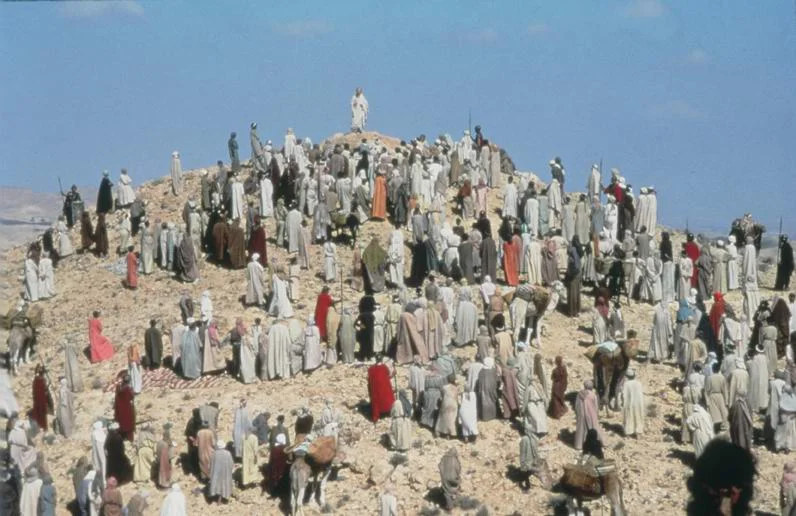
Jesus Christ: 'Blessed art the poor in spirit', The Sermon on the Mount - 30 AD

September 11, 2015

30 AD, suggested site, Mount Eremos, Sea of Galilee

Matthew 5

1: And seeing the multitudes, he went up into a mountain: and when he was set, his disciples came unto him:

2: And he opened his mouth, and taught them, saying,

3: Blessed are the poor in spirit: for theirs is the kingdom of heaven.

4: Blessed are they that mourn: for they shall be comforted.

5: Blessed are the meek: for they shall inherit the earth.

6: Blessed are they which do hunger and thirst after righteousness: for they shall be filled.

7: Blessed are the merciful: for they shall obtain mercy.

8: Blessed are the pure in heart: for they shall see God.

9: Blessed are the peacemakers: for they shall be called the children of God.

10: Blessed are they which are persecuted for righteousness' sake: for theirs is the kingdom of heaven.

11: Blessed are ye, when men shall revile you, and persecute you, and shall say all manner of evil against you falsely, for my sake.

12: Rejoice, and be exceeding glad: for great is your reward in heaven: for so persecuted they the prophets which were before you.

13: Ye are the salt of the earth: but if the salt have lost his savour, wherewith shall it be salted? it is thenceforth good for nothing, but to be cast out, and to be trodden under foot of men.

14: Ye are the light of the world. A city that is set on an hill cannot be hid.

15: Neither do men light a candle, and put it under a bushel, but on a candlestick; and it giveth light unto all that are in the house.

16: Let your light so shine before men, that they may see your good works, and glorify your Father which is in heaven.

17: Think not that I am come to destroy the law, or the prophets: I am not come to destroy, but to fulfill.

18: For verily I say unto you, Till heaven and earth pass, one jot or one tittle shall in no wise pass from the law, till all be fulfilled.

19: Whosoever therefore shall break one of these least commandments, and shall teach men so, he shall be called the least in the kingdom of heaven: but whosoever shall do and teach them, the same shall be called great in the kingdom of heaven.

20: For I say unto you, That except your righteousness shall exceed the righteousness of the scribes and Pharisees, ye shall in no case enter into the kingdom of heaven.

21: Ye have heard that it was said by them of old time, Thou shalt not kill; and whosoever shall kill shall be in danger of the judgment.

22: But I say unto you, That whosoever is angry with his brother without a cause shall be in danger of the judgment: and whosoever shall say to his brother, Raca, shall be in danger of the council: but whosoever shall say, Thou fool, shall be in danger of hell fire.

23: Therefore if thou bring thy gift to the altar, and there rememberest that thy brother hath ought against thee;

24: Leave there thy gift before the altar, and go thy way; first be reconciled to thy brother, and then come and offer thy gift.

25: Agree with thine adversary quickly, whiles thou art in the way with him; lest at any time the adversary deliver thee to the judge, and the judge deliver thee to the officer, and thou be cast into prison.

26: Verily I say unto thee, Thou shalt by no means come out thence, till thou hast paid the uttermost farthing.

27: Ye have heard that it was said by them of old time, Thou shalt not commit adultery.

28: But I say unto you, That whosoever looketh on a woman to lust after her hath committed adultery with her already in his heart.
 

29: And if thy right eye offend thee, pluck it out, and cast it from thee: for it is profitable for thee that one of thy members should perish, and not that thy whole body should be cast into hell.

30: And if thy right hand offend thee, cut if off, and cast it from thee: for it is profitable for thee that one of thy members should perish, and not that thy whole body should be cast into hell.

31: It hath been said, Whosoever shall put away his wife, let him give her a writing of divorcement.

32: But I say unto you, That whosoever shall put away his wife, saving for the cause of fornication, causeth her to commit adultery: and whosoever shall marry her that is divorced committeth adultery.

33: Again, ye have heard that it hath been said by them of old time, Thou shalt not forswear thyself, but shalt perform unto the Lord thine oaths:

34: But I say unto you, Swear not at all; neither by heaven; for it is God's throne:

35: Nor by the earth; for it is his footstool: neither by Jerusalem; for it is the city of the great King.

36: Neither shalt thou swear by thy head, because thou canst not make one hair white or black.

37: But let your communication be, Yea, yea; Nay, nay: for whatsoever is more than these cometh of evil.

38: Ye have heard that it hath been said, An eye for an eye, and a tooth for a tooth:

39: But I say unto you, That ye resist not evil: but whosoever shall smite thee on thy right cheek, turn to him the other also.

40: And if any man will sue thee at the law, and take away thy coat, let him have thy cloke also.

41: And whosoever shall compel thee to go a mile, go with him twain.

42: Give to him that asketh thee, and from him that would borrow of thee turn not thou away.

43: Ye have heard that it hath been said, Thou shalt love thy neighbour, and hate thine enemy.

44: But I say unto you, Love your enemies, bless them that curse you, do good to them that hate you, and pray for them which despitefully use you, and persecute you;

45: That ye may be the children of your Father which is in heaven: for he maketh his sun to rise on the evil and on the good, and sendeth rain on the just and on the unjust.

46: For if ye love them which love you, what reward have ye? Do not even the publicans the same?

47: And if ye salute your brethren only, what do ye more than others? do not even the publicans so?

48: Be ye therefore perfect, even as your Father which is in heaven is perfect.

New International Version     New Revised Standard Version

Matthew 6

1: Take heed that ye do not your alms before men, to be seen of them: otherwise ye have no reward of your Father which is in heaven.

2: Therefore when thou doest thine alms, do not sound a trumpet before thee, as the hypocrites do in the synagogues and in the streets, that they may have glory of men. Verily I say unto you, They have their reward.

3: But when thou doest alms, let not thy left hand know what thy right hand doeth:

4: That thine alms may be in secret: and thy Father which seeth in secret himself shall reward thee openly.

5: And when thou prayest, thou shalt not be as the hypocrites are: for they love to pray standing in the synagogues and in the corners of the streets, that they may be seen of men. Verily I say unto you, They have their reward.

6: But thou, when thou prayest, enter into thy closet, and when thou hast shut thy door, pray to thy Father which is in secret; and thy Father which seeth in secret shall reward thee openly.

7: But when ye pray, use not vain repetitions, as the heathen do: for they think that they shall be heard for their much speaking.

8: Be not ye therefore like unto them: for your Father knoweth what things ye have need of, before ye ask him.

9: After this manner therefore pray ye: Our Father which art in heaven, Hallowed be thy name.

10: Thy kingdom come. Thy will be done in earth, as it is in heaven.

11: Give us this day our daily bread.

12: And forgive us our debts, as we forgive our debtors.

13: And lead us not into temptation, but deliver us from evil: For thine is the kingdom, and the power, and the glory, for ever. Amen.

14: For if ye forgive men their trespasses, your heavenly Father will also forgive you:

15: But if ye forgive not men their trespasses, neither will your Father forgive your trespasses.

16: Moreover when ye fast, be not, as the hypocrites, of a sad countenance: for they disfigure their faces, that they may appear unto men to fast. Verily I say unto you, They have their reward.

17: But thou, when thou fastest, anoint thine head, and wash thy face;

18: That thou appear not unto men to fast, but unto thy Father which is in secret: and thy Father, which seeth in secret, shall reward thee openly.

19: Lay not up for yourselves treasures upon earth, where moth and rust doth corrupt, and where thieves break through and steal:

20: But lay up for yourselves treasures in heaven, where neither moth nor rust doth corrupt, and where thieves do not break through nor steal:

21: For where your treasure is, there will your heart be also.

22: The light of the body is the eye: if therefore thine eye be single, thy whole body shall be full of light.

23: But if thine eye be evil, thy whole body shall be full of darkness. If therefore the light that is in thee be darkness, how great is that darkness!

24: No man can serve two masters: for either he will hate the one, and love the other; or else he will hold to the one, and despise the other. Ye cannot serve God and mammon.

25: Therefore I say unto you, Take no thought for your life, what ye shall eat, or what ye shall drink; nor yet for your body, what ye shall put on. Is not the life more than meat, and the body than raiment?

26: Behold the fowls of the air: for they sow not, neither do they reap, nor gather into barns; yet your heavenly Father feedeth them. Are ye not much better than they?

27: Which of you by taking thought can add one cubit unto his stature?

28: And why take ye thought for raiment? Consider the lilies of the field, how they grow; they toil not, neither do they spin:

29: And yet I say unto you, That even Solomon in all his glory was not arrayed like one of these.

30: Wherefore, if God so clothe the grass of the field, which to day is, and to morrow is cast into the oven, shall he not much more clothe you, O ye of little faith?

31: Therefore take no thought, saying, What shall we eat? or, What shall we drink? or, Wherewithal shall we be clothed?

32: (For after all these things do the Gentiles seek:) for your heavenly Father knoweth that ye have need of all these things.

33: But seek ye first the kingdom of God, and his righteousness; and all these things shall be added unto you.

34: Take therefore no thought for the morrow: for the morrow shall take thought for the things of itself. Sufficient unto the day is the evil thereof.

New International Version   New Revised Standard Version

Matthew 7  

1: Judge not, that ye be not judged.

2: For with what judgment ye judge, ye shall be judged: and with what measure ye mete, it shall be measured to you again.

3: And why beholdest thou the mote that is in thy brother's eye, but considerest not the beam that is in thine own eye?

4: Or how wilt thou say to thy brother, Let me pull out the mote out of thine eye; and, behold, a beam is in thine own eye?

5: Thou hypocrite, first cast out the beam out of thine own eye; and then shalt thou see clearly to cast out the mote out of thy brother's eye.

6: Give not that which is holy unto the dogs, neither cast ye your pearls before swine, lest they trample them under their feet, and turn again and rend you.

7: Ask, and it shall be given you; seek, and ye shall find; knock, and it shall be opened unto you:

8: For every one that asketh receiveth; and he that seeketh findeth; and to him that knocketh it shall be opened.

9: Or what man is there of you, whom if his son ask bread, will he give him a stone?

10: Or if he ask a fish, will he give him a serpent?

11: If ye then, being evil, know how to give good gifts unto your children, how much more shall your Father which is in heaven give good things to them that ask him?

12: Therefore all things whatsoever ye would that men should do to you, do ye even so to them: for this is the law and the prophets.

13: Enter ye in at the strait gate: for wide is the gate, and broad is the way, that leadeth to destruction, and many there be which go in thereat:

14: Because strait is the gate, and narrow is the way, which leadeth unto life, and few there be that find it.

15: Beware of false prophets, which come to you in sheep's clothing, but inwardly they are ravening wolves.

16: Ye shall know them by their fruits. Do men gather grapes of thorns, or figs of thistles?

17: Even so every good tree bringeth forth good fruit; but a corrupt tree bringeth forth evil fruit.

18: A good tree cannot bring forth evil fruit, neither can a corrupt tree bring forth good fruit.

19: Every tree that bringeth not forth good fruit is hewn down, and cast into the fire.

20: Wherefore by their fruits ye shall know them.

21: Not every one that saith unto me, Lord, Lord, shall enter into the kingdom of heaven; but he that doeth the will of my Father which is in heaven.

22: Many will say to me in that day, Lord, Lord, have we not prophesied in thy name? and in thy name have cast out devils? and in thy name done many wonderful works?

23: And then will I profess unto them, I never knew you: depart from me, ye that work iniquity.

24: Therefore whosoever heareth these sayings of mine, and doeth them, I will liken him unto a wise man, which built his house upon a rock:

25: And the rain descended, and the floods came, and the winds blew, and beat upon that house; and it fell not: for it was founded upon a rock.

26: And every one that heareth these sayings of mine, and doeth them not, shall be likened unto a foolish man, which built his house upon the sand:

27: And the rain descended, and the floods came, and the winds blew, and beat upon that house; and it fell: and great was the fall of it.

28: And it came to pass, when Jesus had ended these sayings, the people were astonished at his doctrine:

29: For he taught them as one having authority, and not as the scribes.

Source: http://www.americanrhetoric.com/speeches/s...

Enjoyed this speech? Speakola is a labour of love and I’d be very grateful if you would share, tweet or like it. Thank you.

Facebook Twitter Facebook
In RELIGION Tags JESUS CHRIST, CHRISTIANITY, RELIGION, SERMON ON THE MOUNT, SERMON, TRANSCRIPT
Comment

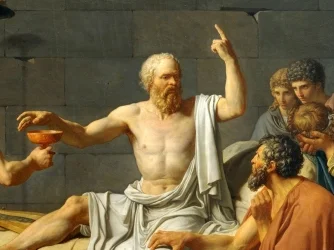
Socrates: (by Plato) 'The Apology of Socrates' - 399 BC

September 11, 2015

Translated by Benjamin Jowett

Socrates' Defense

How you have felt, O men of Athens, at hearing the speeches of my accusers, I cannot tell; but I know that their persuasive words almost made me forget who I was - such was the effect of them; and yet they have hardly spoken a word of truth. But many as their falsehoods were, there was one of them which quite amazed me; - I mean when they told you to be upon your guard, and not to let yourselves be deceived by the force of my eloquence. They ought to have been ashamed of saying this, because they were sure to be detected as soon as I opened my lips and displayed my deficiency; they certainly did appear to be most shameless in saying this, unless by the force of eloquence they mean the force of truth; for then I do indeed admit that I am eloquent. But in how different a way from theirs! Well, as I was saying, they have hardly uttered a word, or not more than a word, of truth; but you shall hear from me the whole truth: not, however, delivered after their manner, in a set oration duly ornamented with words and phrases. No indeed! but I shall use the words and arguments which occur to me at the moment; for I am certain that this is right, and that at my time of life I ought not to be appearing before you, O men of Athens, in the character of a juvenile orator - let no one expect this of me. And I must beg of you to grant me one favor, which is this - If you hear me using the same words in my defence which I have been in the habit of using, and which most of you may have heard in the agora, and at the tables of the money-changers, or anywhere else, I would ask you not to be surprised at this, and not to interrupt me. For I am more than seventy years of age, and this is the first time that I have ever appeared in a court of law, and I am quite a stranger to the ways of the place; and therefore I would have you regard me as if I were really a stranger, whom you would excuse if he spoke in his native tongue, and after the fashion of his country; - that I think is not an unfair request. Never mind the manner, which may or may not be good; but think only of the justice of my cause, and give heed to that: let the judge decide justly and the speaker speak truly.

And first, I have to reply to the older charges and to my first accusers, and then I will go to the later ones. For I have had many accusers, who accused me of old, and their false charges have continued during many years; and I am more afraid of them than of Anytus and his associates, who are dangerous, too, in their own way. But far more dangerous are these, who began when you were children, and took possession of your minds with their falsehoods, telling of one Socrates, a wise man, who speculated about the heaven above, and searched into the earth beneath, and made the worse appear the better cause. These are the accusers whom I dread; for they are the circulators of this rumor, and their hearers are too apt to fancy that speculators of this sort do not believe in the gods. And they are many, and their charges against me are of ancient date, and they made them in days when you were impressible - in childhood, or perhaps in youth - and the cause when heard went by default, for there was none to answer. And, hardest of all, their names I do not know and cannot tell; unless in the chance of a comic poet. But the main body of these slanderers who from envy and malice have wrought upon you - and there are some of them who are convinced themselves, and impart their convictions to others - all these, I say, are most difficult to deal with; for I cannot have them up here, and examine them, and therefore I must simply fight with shadows in my own defence, and examine when there is no one who answers. I will ask you then to assume with me, as I was saying, that my opponents are of two kinds - one recent, the other ancient; and I hope that you will see the propriety of my answering the latter first, for these accusations you heard long before the others, and much oftener.

Well, then, I will make my defence, and I will endeavor in the short time which is allowed to do away with this evil opinion of me which you have held for such a long time; and I hope I may succeed, if this be well for you and me, and that my words may find favor with you. But I know that to accomplish this is not easy - I quite see the nature of the task. Let the event be as God wills: in obedience to the law I make my defence.

I will begin at the beginning, and ask what the accusation is which has given rise to this slander of me, and which has encouraged Meletus to proceed against me. What do the slanderers say? They shall be my prosecutors, and I will sum up their words in an affidavit. "Socrates is an evil-doer, and a curious person, who searches into things under the earth and in heaven, and he makes the worse appear the better cause; and he teaches the aforesaid doctrines to others." That is the nature of the accusation, and that is what you have seen yourselves in the comedy of Aristophanes; who has introduced a man whom he calls Socrates, going about and saying that he can walk in the air, and talking a deal of nonsense concerning matters of which I do not pretend to know either much or little - not that I mean to say anything disparaging of anyone who is a student of natural philosophy. I should be very sorry if Meletus could lay that to my charge. But the simple truth is, O Athenians, that I have nothing to do with these studies. Very many of those here present are witnesses to the truth of this, and to them I appeal. Speak then, you who have heard me, and tell your neighbors whether any of you have ever known me hold forth in few words or in many upon matters of this sort. ... You hear their answer. And from what they say of this you will be able to judge of the truth of the rest.

As little foundation is there for the report that I am a teacher, and take money; that is no more true than the other. Although, if a man is able to teach, I honor him for being paid. There is Gorgias of Leontium, and Prodicus of Ceos, and Hippias of Elis, who go the round of the cities, and are able to persuade the young men to leave their own citizens, by whom they might be taught for nothing, and come to them, whom they not only pay, but are thankful if they may be allowed to pay them. There is actually a Parian philosopher residing in Athens, of whom I have heard; and I came to hear of him in this way: - I met a man who has spent a world of money on the Sophists, Callias the son of Hipponicus, and knowing that he had sons, I asked him: "Callias," I said, "if your two sons were foals or calves, there would be no difficulty in finding someone to put over them; we should hire a trainer of horses or a farmer probably who would improve and perfect them in their own proper virtue and excellence; but as they are human beings, whom are you thinking of placing over them? Is there anyone who understands human and political virtue? You must have thought about this as you have sons; is there anyone?" "There is," he said. "Who is he?" said I, "and of what country? and what does he charge?" "Evenus the Parian," he replied; "he is the man, and his charge is five minae." Happy is Evenus, I said to myself, if he really has this wisdom, and teaches at such a modest charge. Had I the same, I should have been very proud and conceited; but the truth is that I have no knowledge of the kind.

I dare say, Athenians, that someone among you will reply, "Why is this, Socrates, and what is the origin of these accusations of you: for there must have been something strange which you have been doing? All this great fame and talk about you would never have arisen if you had been like other men: tell us, then, why this is, as we should be sorry to judge hastily of you." Now I regard this as a fair challenge, and I will endeavor to explain to you the origin of this name of "wise," and of this evil fame. Please to attend then. And although some of you may think I am joking, I declare that I will tell you the entire truth. Men of Athens, this reputation of mine has come of a certain sort of wisdom which I possess. If you ask me what kind of wisdom, I reply, such wisdom as is attainable by man, for to that extent I am inclined to believe that I am wise; whereas the persons of whom I was speaking have a superhuman wisdom, which I may fail to describe, because I have it not myself; and he who says that I have, speaks falsely, and is taking away my character. And here, O men of Athens, I must beg you not to interrupt me, even if I seem to say something extravagant. For the word which I will speak is not mine. I will refer you to a witness who is worthy of credit, and will tell you about my wisdom - whether I have any, and of what sort - and that witness shall be the god of Delphi. You must have known Chaerephon; he was early a friend of mine, and also a friend of yours, for he shared in the exile of the people, and returned with you. Well, Chaerephon, as you know, was very impetuous in all his doings, and he went to Delphi and boldly asked the oracle to tell him whether - as I was saying, I must beg you not to interrupt - he asked the oracle to tell him whether there was anyone wiser than I was, and the Pythian prophetess answered that there was no man wiser. Chaerephon is dead himself, but his brother, who is in court, will confirm the truth of this story.

Why do I mention this? Because I am going to explain to you why I have such an evil name. When I heard the answer, I said to myself, What can the god mean? and what is the interpretation of this riddle? for I know that I have no wisdom, small or great. What can he mean when he says that I am the wisest of men? And yet he is a god and cannot lie; that would be against his nature. After a long consideration, I at last thought of a method of trying the question. I reflected that if I could only find a man wiser than myself, then I might go to the god with a refutation in my hand. I should say to him, "Here is a man who is wiser than I am; but you said that I was the wisest." Accordingly I went to one who had the reputation of wisdom, and observed to him - his name I need not mention; he was a politician whom I selected for examination - and the result was as follows: When I began to talk with him, I could not help thinking that he was not really wise, although he was thought wise by many, and wiser still by himself; and I went and tried to explain to him that he thought himself wise, but was not really wise; and the consequence was that he hated me, and his enmity was shared by several who were present and heard me. So I left him, saying to myself, as I went away: Well, although I do not suppose that either of us knows anything really beautiful and good, I am better off than he is - for he knows nothing, and thinks that he knows. I neither know nor think that I know. In this latter particular, then, I seem to have slightly the advantage of him. Then I went to another, who had still higher philosophical pretensions, and my conclusion was exactly the same. I made another enemy of him, and of many others besides him.

After this I went to one man after another, being not unconscious of the enmity which I provoked, and I lamented and feared this: but necessity was laid upon me - the word of God, I thought, ought to be considered first. And I said to myself, Go I must to all who appear to know, and find out the meaning of the oracle. And I swear to you, Athenians, by the dog I swear! - for I must tell you the truth - the result of my mission was just this: I found that the men most in repute were all but the most foolish; and that some inferior men were really wiser and better. I will tell you the tale of my wanderings and of the "Herculean" labors, as I may call them, which I endured only to find at last the oracle irrefutable. When I left the politicians, I went to the poets; tragic, dithyrambic, and all sorts. And there, I said to myself, you will be detected; now you will find out that you are more ignorant than they are. Accordingly, I took them some of the most elaborate passages in their own writings, and asked what was the meaning of them - thinking that they would teach me something. Will you believe me? I am almost ashamed to speak of this, but still I must say that there is hardly a person present who would not have talked better about their poetry than they did themselves. That showed me in an instant that not by wisdom do poets write poetry, but by a sort of genius and inspiration; they are like diviners or soothsayers who also say many fine things, but do not understand the meaning of them. And the poets appeared to me to be much in the same case; and I further observed that upon the strength of their poetry they believed themselves to be the wisest of men in other things in which they were not wise. So I departed, conceiving myself to be superior to them for the same reason that I was superior to the politicians.

At last I went to the artisans, for I was conscious that I knew nothing at all, as I may say, and I was sure that they knew many fine things; and in this I was not mistaken, for they did know many things of which I was ignorant, and in this they certainly were wiser than I was. But I observed that even the good artisans fell into the same error as the poets; because they were good workmen they thought that they also knew all sorts of high matters, and this defect in them overshadowed their wisdom - therefore I asked myself on behalf of the oracle, whether I would like to be as I was, neither having their knowledge nor their ignorance, or like them in both; and I made answer to myself and the oracle that I was better off as I was.

This investigation has led to my having many enemies of the worst and most dangerous kind, and has given occasion also to many calumnies, and I am called wise, for my hearers always imagine that I myself possess the wisdom which I find wanting in others: but the truth is, O men of Athens, that God only is wise; and in this oracle he means to say that the wisdom of men is little or nothing; he is not speaking of Socrates, he is only using my name as an illustration, as if he said, He, O men, is the wisest, who, like Socrates, knows that his wisdom is in truth worth nothing. And so I go my way, obedient to the god, and make inquisition into the wisdom of anyone, whether citizen or stranger, who appears to be wise; and if he is not wise, then in vindication of the oracle I show him that he is not wise; and this occupation quite absorbs me, and I have no time to give either to any public matter of interest or to any concern of my own, but I am in utter poverty by reason of my devotion to the god.

There is another thing: - young men of the richer classes, who have not much to do, come about me of their own accord; they like to hear the pretenders examined, and they often imitate me, and examine others themselves; there are plenty of persons, as they soon enough discover, who think that they know something, but really know little or nothing: and then those who are examined by them instead of being angry with themselves are angry with me: This confounded Socrates, they say; this villainous misleader of youth! - and then if somebody asks them, Why, what evil does he practise or teach? they do not know, and cannot tell; but in order that they may not appear to be at a loss, they repeat the ready-made charges which are used against all philosophers about teaching things up in the clouds and under the earth, and having no gods, and making the worse appear the better cause; for they do not like to confess that their pretence of knowledge has been detected - which is the truth: and as they are numerous and ambitious and energetic, and are all in battle array and have persuasive tongues, they have filled your ears with their loud and inveterate calumnies. And this is the reason why my three accusers, Meletus and Anytus and Lycon, have set upon me; Meletus, who has a quarrel with me on behalf of the poets; Anytus, on behalf of the craftsmen; Lycon, on behalf of the rhetoricians: and as I said at the beginning, I cannot expect to get rid of this mass of calumny all in a moment. And this, O men of Athens, is the truth and the whole truth; I have concealed nothing, I have dissembled nothing. And yet I know that this plainness of speech makes them hate me, and what is their hatred but a proof that I am speaking the truth? - this is the occasion and reason of their slander of me, as you will find out either in this or in any future inquiry.

I have said enough in my defence against the first class of my accusers; I turn to the second class, who are headed by Meletus, that good and patriotic man, as he calls himself. And now I will try to defend myself against them: these new accusers must also have their affidavit read. What do they say? Something of this sort: - That Socrates is a doer of evil, and corrupter of the youth, and he does not believe in the gods of the state, and has other new divinities of his own. That is the sort of charge; and now let us examine the particular counts. He says that I am a doer of evil, who corrupt the youth; but I say, O men of Athens, that Meletus is a doer of evil, and the evil is that he makes a joke of a serious matter, and is too ready at bringing other men to trial from a pretended zeal and interest about matters in which he really never had the smallest interest. And the truth of this I will endeavor to prove.

Come hither, Meletus, and let me ask a question of you. You think a great deal about the improvement of youth?

Yes, I do.

Tell the judges, then, who is their improver; for you must know, as you have taken the pains to discover their corrupter, and are citing and accusing me before them. Speak, then, and tell the judges who their improver is. Observe, Meletus, that you are silent, and have nothing to say. But is not this rather disgraceful, and a very considerable proof of what I was saying, that you have no interest in the matter? Speak up, friend, and tell us who their improver is.

The laws.

But that, my good sir, is not my meaning. I want to know who the person is, who, in the first place, knows the laws.

The judges, Socrates, who are present in court.

What do you mean to say, Meletus, that they are able to instruct and improve youth?

Certainly they are.

What, all of them, or some only and not others?

All of them.

By the goddess Here, that is good news! There are plenty of improvers, then. And what do you say of the audience, - do they improve them?

Yes, they do.

And the senators?

Yes, the senators improve them.

But perhaps the members of the citizen assembly corrupt them? - or do they too improve them?

They improve them.

Then every Athenian improves and elevates them; all with the exception of myself; and I alone am their corrupter? Is that what you affirm?

That is what I stoutly affirm.

I am very unfortunate if that is true. But suppose I ask you a question: Would you say that this also holds true in the case of horses? Does one man do them harm and all the world good? Is not the exact opposite of this true? One man is able to do them good, or at least not many; - the trainer of horses, that is to say, does them good, and others who have to do with them rather injure them? Is not that true, Meletus, of horses, or any other animals? Yes, certainly. Whether you and Anytus say yes or no, that is no matter. Happy indeed would be the condition of youth if they had one corrupter only, and all the rest of the world were their improvers. And you, Meletus, have sufficiently shown that you never had a thought about the young: your carelessness is seen in your not caring about matters spoken of in this very indictment.

And now, Meletus, I must ask you another question: Which is better, to live among bad citizens, or among good ones? Answer, friend, I say; for that is a question which may be easily answered. Do not the good do their neighbors good, and the bad do them evil?

Certainly.

And is there anyone who would rather be injured than benefited by those who live with him? Answer, my good friend; the law requires you to answer - does anyone like to be injured?

Certainly not.

And when you accuse me of corrupting and deteriorating the youth, do you allege that I corrupt them intentionally or unintentionally?

Intentionally, I say.

But you have just admitted that the good do their neighbors good, and the evil do them evil. Now is that a truth which your superior wisdom has recognized thus early in life, and am I, at my age, in such darkness and ignorance as not to know that if a man with whom I have to live is corrupted by me, I am very likely to be harmed by him, and yet I corrupt him, and intentionally, too; - that is what you are saying, and of that you will never persuade me or any other human being. But either I do not corrupt them, or I corrupt them unintentionally, so that on either view of the case you lie. If my offence is unintentional, the law has no cognizance of unintentional offences: you ought to have taken me privately, and warned and admonished me; for if I had been better advised, I should have left off doing what I only did unintentionally - no doubt I should; whereas you hated to converse with me or teach me, but you indicted me in this court, which is a place not of instruction, but of punishment.

I have shown, Athenians, as I was saying, that Meletus has no care at all, great or small, about the matter. But still I should like to know, Meletus, in what I am affirmed to corrupt the young. I suppose you mean, as I infer from your indictment, that I teach them not to acknowledge the gods which the state acknowledges, but some other new divinities or spiritual agencies in their stead. These are the lessons which corrupt the youth, as you say.

Yes, that I say emphatically.

Then, by the gods, Meletus, of whom we are speaking, tell me and the court, in somewhat plainer terms, what you mean! for I do not as yet understand whether you affirm that I teach others to acknowledge some gods, and therefore do believe in gods and am not an entire atheist - this you do not lay to my charge; but only that they are not the same gods which the city recognizes - the charge is that they are different gods. Or, do you mean to say that I am an atheist simply, and a teacher of atheism?

I mean the latter - that you are a complete atheist.

That is an extraordinary statement, Meletus. Why do you say that? Do you mean that I do not believe in the godhead of the sun or moon, which is the common creed of all men?

I assure you, judges, that he does not believe in them; for he says that the sun is stone, and the moon earth.

Friend Meletus, you think that you are accusing Anaxagoras; and you have but a bad opinion of the judges, if you fancy them ignorant to such a degree as not to know that those doctrines are found in the books of Anaxagoras the Clazomenian, who is full of them. And these are the doctrines which the youth are said to learn of Socrates, when there are not unfrequently exhibitions of them at the theatre (price of admission one drachma at the most); and they might cheaply purchase them, and laugh at Socrates if he pretends to father such eccentricities. And so, Meletus, you really think that I do not believe in any god?

I swear by Zeus that you believe absolutely in none at all.

You are a liar, Meletus, not believed even by yourself. For I cannot help thinking, O men of Athens, that Meletus is reckless and impudent, and that he has written this indictment in a spirit of mere wantonness and youthful bravado. Has he not compounded a riddle, thinking to try me? He said to himself: - I shall see whether this wise Socrates will discover my ingenious contradiction, or whether I shall be able to deceive him and the rest of them. For he certainly does appear to me to contradict himself in the indictment as much as if he said that Socrates is guilty of not believing in the gods, and yet of believing in them - but this surely is a piece of fun.

I should like you, O men of Athens, to join me in examining what I conceive to be his inconsistency; and do you, Meletus, answer. And I must remind you that you are not to interrupt me if I speak in my accustomed manner.

Did ever man, Meletus, believe in the existence of human things, and not of human beings? ... I wish, men of Athens, that he would answer, and not be always trying to get up an interruption. Did ever any man believe in horsemanship, and not in horses? or in flute-playing, and not in flute-players? No, my friend; I will answer to you and to the court, as you refuse to answer for yourself. There is no man who ever did. But now please to answer the next question: Can a man believe in spiritual and divine agencies, and not in spirits or demigods?

He cannot.

I am glad that I have extracted that answer, by the assistance of the court; nevertheless you swear in the indictment that I teach and believe in divine or spiritual agencies (new or old, no matter for that); at any rate, I believe in spiritual agencies, as you say and swear in the affidavit; but if I believe in divine beings, I must believe in spirits or demigods; - is not that true? Yes, that is true, for I may assume that your silence gives assent to that. Now what are spirits or demigods? are they not either gods or the sons of gods? Is that true?

Yes, that is true.

But this is just the ingenious riddle of which I was speaking: the demigods or spirits are gods, and you say first that I don't believe in gods, and then again that I do believe in gods; that is, if I believe in demigods. For if the demigods are the illegitimate sons of gods, whether by the Nymphs or by any other mothers, as is thought, that, as all men will allow, necessarily implies the existence of their parents. You might as well affirm the existence of mules, and deny that of horses and asses. Such nonsense, Meletus, could only have been intended by you as a trial of me. You have put this into the indictment because you had nothing real of which to accuse me. But no one who has a particle of understanding will ever be convinced by you that the same man can believe in divine and superhuman things, and yet not believe that there are gods and demigods and heroes.

I have said enough in answer to the charge of Meletus: any elaborate defence is unnecessary; but as I was saying before, I certainly have many enemies, and this is what will be my destruction if I am destroyed; of that I am certain; - not Meletus, nor yet Anytus, but the envy and detraction of the world, which has been the death of many good men, and will probably be the death of many more; there is no danger of my being the last of them.

Someone will say: And are you not ashamed, Socrates, of a course of life which is likely to bring you to an untimely end? To him I may fairly answer: There you are mistaken: a man who is good for anything ought not to calculate the chance of living or dying; he ought only to consider whether in doing anything he is doing right or wrong - acting the part of a good man or of a bad. Whereas, according to your view, the heroes who fell at Troy were not good for much, and the son of Thetis above all, who altogether despised danger in comparison with disgrace; and when his goddess mother said to him, in his eagerness to slay Hector, that if he avenged his companion Patroclus, and slew Hector, he would die himself - "Fate," as she said, "waits upon you next after Hector"; he, hearing this, utterly despised danger and death, and instead of fearing them, feared rather to live in dishonor, and not to avenge his friend. "Let me die next," he replies, "and be avenged of my enemy, rather than abide here by the beaked ships, a scorn and a burden of the earth." Had Achilles any thought of death and danger? For wherever a man's place is, whether the place which he has chosen or that in which he has been placed by a commander, there he ought to remain in the hour of danger; he should not think of death or of anything, but of disgrace. And this, O men of Athens, is a true saying.

Strange, indeed, would be my conduct, O men of Athens, if I who, when I was ordered by the generals whom you chose to command me at Potidaea and Amphipolis and Delium, remained where they placed me, like any other man, facing death; if, I say, now, when, as I conceive and imagine, God orders me to fulfil the philosopher's mission of searching into myself and other men, I were to desert my post through fear of death, or any other fear; that would indeed be strange, and I might justly be arraigned in court for denying the existence of the gods, if I disobeyed the oracle because I was afraid of death: then I should be fancying that I was wise when I was not wise. For this fear of death is indeed the pretence of wisdom, and not real wisdom, being the appearance of knowing the unknown; since no one knows whether death, which they in their fear apprehend to be the greatest evil, may not be the greatest good. Is there not here conceit of knowledge, which is a disgraceful sort of ignorance? And this is the point in which, as I think, I am superior to men in general, and in which I might perhaps fancy myself wiser than other men, - that whereas I know but little of the world below, I do not suppose that I know: but I do know that injustice and disobedience to a better, whether God or man, is evil and dishonorable, and I will never fear or avoid a possible good rather than a certain evil. And therefore if you let me go now, and reject the counsels of Anytus, who said that if I were not put to death I ought not to have been prosecuted, and that if I escape now, your sons will all be utterly ruined by listening to my words - if you say to me, Socrates, this time we will not mind Anytus, and will let you off, but upon one condition, that are to inquire and speculate in this way any more, and that if you are caught doing this again you shall die; - if this was the condition on which you let me go, I should reply: Men of Athens, I honor and love you; but I shall obey God rather than you, and while I have life and strength I shall never cease from the practice and teaching of philosophy, exhorting anyone whom I meet after my manner, and convincing him, saying: O my friend, why do you who are a citizen of the great and mighty and wise city of Athens, care so much about laying up the greatest amount of money and honor and reputation, and so little about wisdom and truth and the greatest improvement of the soul, which you never regard or heed at all? Are you not ashamed of this? And if the person with whom I am arguing says: Yes, but I do care; I do not depart or let him go at once; I interrogate and examine and cross-examine him, and if I think that he has no virtue, but only says that he has, I reproach him with undervaluing the greater, and overvaluing the less. And this I should say to everyone whom I meet, young and old, citizen and alien, but especially to the citizens, inasmuch as they are my brethren. For this is the command of God, as I would have you know; and I believe that to this day no greater good has ever happened in the state than my service to the God. For I do nothing but go about persuading you all, old and young alike, not to take thought for your persons and your properties, but first and chiefly to care about the greatest improvement of the soul. I tell you that virtue is not given by money, but that from virtue come money and every other good of man, public as well as private. This is my teaching, and if this is the doctrine which corrupts the youth, my influence is ruinous indeed. But if anyone says that this is not my teaching, he is speaking an untruth. Wherefore, O men of Athens, I say to you, do as Anytus bids or not as Anytus bids, and either acquit me or not; but whatever you do, know that I shall never alter my ways, not even if I have to die many times.

Men of Athens, do not interrupt, but hear me; there was an agreement between us that you should hear me out. And I think that what I am going to say will do you good: for I have something more to say, at which you may be inclined to cry out; but I beg that you will not do this. I would have you know that, if you kill such a one as I am, you will injure yourselves more than you will injure me. Meletus and Anytus will not injure me: they cannot; for it is not in the nature of things that a bad man should injure a better than himself. I do not deny that he may, perhaps, kill him, or drive him into exile, or deprive him of civil rights; and he may imagine, and others may imagine, that he is doing him a great injury: but in that I do not agree with him; for the evil of doing as Anytus is doing - of unjustly taking away another man's life - is greater far. And now, Athenians, I am not going to argue for my own sake, as you may think, but for yours, that you may not sin against the God, or lightly reject his boon by condemning me. For if you kill me you will not easily find another like me, who, if I may use such a ludicrous figure of speech, am a sort of gadfly, given to the state by the God; and the state is like a great and noble steed who is tardy in his motions owing to his very size, and requires to be stirred into life. I am that gadfly which God has given the state and all day long and in all places am always fastening upon you, arousing and persuading and reproaching you. And as you will not easily find another like me, I would advise you to spare me. I dare say that you may feel irritated at being suddenly awakened when you are caught napping; and you may think that if you were to strike me dead, as Anytus advises, which you easily might, then you would sleep on for the remainder of your lives, unless God in his care of you gives you another gadfly. And that I am given to you by God is proved by this: - that if I had been like other men, I should not have neglected all my own concerns, or patiently seen the neglect of them during all these years, and have been doing yours, coming to you individually, like a father or elder brother, exhorting you to regard virtue; this I say, would not be like human nature. And had I gained anything, or if my exhortations had been paid, there would have been some sense in that: but now, as you will perceive, not even the impudence of my accusers dares to say that I have ever exacted or sought pay of anyone; they have no witness of that. And I have a witness of the truth of what I say; my poverty is a sufficient witness.

Someone may wonder why I go about in private, giving advice and busying myself with the concerns of others, but do not venture to come forward in public and advise the state. I will tell you the reason of this. You have often heard me speak of an oracle or sign which comes to me, and is the divinity which Meletus ridicules in the indictment. This sign I have had ever since I was a child. The sign is a voice which comes to me and always forbids me to do something which I am going to do, but never commands me to do anything, and this is what stands in the way of my being a politician. And rightly, as I think. For I am certain, O men of Athens, that if I had engaged in politics, I should have perished long ago and done no good either to you or to myself. And don't be offended at my telling you the truth: for the truth is that no man who goes to war with you or any other multitude, honestly struggling against the commission of unrighteousness and wrong in the state, will save his life; he who will really fight for the right, if he would live even for a little while, must have a private station and not a public one.

I can give you as proofs of this, not words only, but deeds, which you value more than words. Let me tell you a passage of my own life, which will prove to you that I should never have yielded to injustice from any fear of death, and that if I had not yielded I should have died at once. I will tell you a story - tasteless, perhaps, and commonplace, but nevertheless true. The only office of state which I ever held, O men of Athens, was that of senator; the tribe Antiochis, which is my tribe, had the presidency at the trial of the generals who had not taken up the bodies of the slain after the battle of Arginusae; and you proposed to try them all together, which was illegal, as you all thought afterwards; but at the time I was the only one of the Prytanes who was opposed to the illegality, and I gave my vote against you; and when the orators threatened to impeach and arrest me, and have me taken away, and you called and shouted, I made up my mind that I would run the risk, having law and justice with me, rather than take part in your injustice because I feared imprisonment and death. This happened in the days of the democracy. But when the oligarchy of the Thirty was in power, they sent for me and four others into the rotunda, and bade us bring Leon the Salaminian from Salamis, as they wanted to execute him. This was a specimen of the sort of commands which they were always giving with the view of implicating as many as possible in their crimes; and then I showed, not in words only, but in deed, that, if I may be allowed to use such an expression, I cared not a straw for death, and that my only fear was the fear of doing an unrighteous or unholy thing. For the strong arm of that oppressive power did not frighten me into doing wrong; and when we came out of the rotunda the other four went to Salamis and fetched Leon, but I went quietly home. For which I might have lost my life, had not the power of the Thirty shortly afterwards come to an end. And to this many will witness.

Now do you really imagine that I could have survived all these years, if I had led a public life, supposing that like a good man I had always supported the right and had made justice, as I ought, the first thing? No, indeed, men of Athens, neither I nor any other. But I have been always the same in all my actions, public as well as private, and never have I yielded any base compliance to those who are slanderously termed my disciples or to any other. For the truth is that I have no regular disciples: but if anyone likes to come and hear me while I am pursuing my mission, whether he be young or old, he may freely come. Nor do I converse with those who pay only, and not with those who do not pay; but anyone, whether he be rich or poor, may ask and answer me and listen to my words; and whether he turns out to be a bad man or a good one, that cannot be justly laid to my charge, as I never taught him anything. And if anyone says that he has ever learned or heard anything from me in private which all the world has not heard, I should like you to know that he is speaking an untruth.

But I shall be asked, Why do people delight in continually conversing with you? I have told you already, Athenians, the whole truth about this: they like to hear the cross-examination of the pretenders to wisdom; there is amusement in this. And this is a duty which the God has imposed upon me, as I am assured by oracles, visions, and in every sort of way in which the will of divine power was ever signified to anyone. This is true, O Athenians; or, if not true, would be soon refuted. For if I am really corrupting the youth, and have corrupted some of them already, those of them who have grown up and have become sensible that I gave them bad advice in the days of their youth should come forward as accusers and take their revenge; and if they do not like to come themselves, some of their relatives, fathers, brothers, or other kinsmen, should say what evil their families suffered at my hands. Now is their time. Many of them I see in the court. There is Crito, who is of the same age and of the same deme with myself; and there is Critobulus his son, whom I also see. Then again there is Lysanias of Sphettus, who is the father of Aeschines - he is present; and also there is Antiphon of Cephisus, who is the father of Epignes; and there are the brothers of several who have associated with me. There is Nicostratus the son of Theosdotides, and the brother of Theodotus (now Theodotus himself is dead, and therefore he, at any rate, will not seek to stop him); and there is Paralus the son of Demodocus, who had a brother Theages; and Adeimantus the son of Ariston, whose brother Plato is present; and Aeantodorus, who is the brother of Apollodorus, whom I also see. I might mention a great many others, any of whom Meletus should have produced as witnesses in the course of his speech; and let him still produce them, if he has forgotten - I will make way for him. And let him say, if he has any testimony of the sort which he can produce. Nay, Athenians, the very opposite is the truth. For all these are ready to witness on behalf of the corrupter, of the destroyer of their kindred, as Meletus and Anytus call me; not the corrupted youth only - there might have been a motive for that - but their uncorrupted elder relatives. Why should they too support me with their testimony? Why, indeed, except for the sake of truth and justice, and because they know that I am speaking the truth, and that Meletus is lying.

Well, Athenians, this and the like of this is nearly all the defence which I have to offer. Yet a word more. Perhaps there may be someone who is offended at me, when he calls to mind how he himself, on a similar or even a less serious occasion, had recourse to prayers and supplications with many tears, and how he produced his children in court, which was a moving spectacle, together with a posse of his relations and friends; whereas I, who am probably in danger of my life, will do none of these things. Perhaps this may come into his mind, and he may be set against me, and vote in anger because he is displeased at this. Now if there be such a person among you, which I am far from affirming, I may fairly reply to him: My friend, I am a man, and like other men, a creature of flesh and blood, and not of wood or stone, as Homer says; and I have a family, yes, and sons. O Athenians, three in number, one of whom is growing up, and the two others are still young; and yet I will not bring any of them hither in order to petition you for an acquittal. And why not? Not from any self-will or disregard of you. Whether I am or am not afraid of death is another question, of which I will not now speak. But my reason simply is that I feel such conduct to be discreditable to myself, and you, and the whole state. One who has reached my years, and who has a name for wisdom, whether deserved or not, ought not to debase himself. At any rate, the world has decided that Socrates is in some way superior to other men. And if those among you who are said to be superior in wisdom and courage, and any other virtue, demean themselves in this way, how shameful is their conduct! I have seen men of reputation, when they have been condemned, behaving in the strangest manner: they seemed to fancy that they were going to suffer something dreadful if they died, and that they could be immortal if you only allowed them to live; and I think that they were a dishonor to the state, and that any stranger coming in would say of them that the most eminent men of Athens, to whom the Athenians themselves give honor and command, are no better than women. And I say that these things ought not to be done by those of us who are of reputation; and if they are done, you ought not to permit them; you ought rather to show that you are more inclined to condemn, not the man who is quiet, but the man who gets up a doleful scene, and makes the city ridiculous.

But, setting aside the question of dishonor, there seems to be something wrong in petitioning a judge, and thus procuring an acquittal instead of informing and convincing him. For his duty is, not to make a present of justice, but to give judgment; and he has sworn that he will judge according to the laws, and not according to his own good pleasure; and neither he nor we should get into the habit of perjuring ourselves - there can be no piety in that. Do not then require me to do what I consider dishonorable and impious and wrong, especially now, when I am being tried for impiety on the indictment of Meletus. For if, O men of Athens, by force of persuasion and entreaty, I could overpower your oaths, then I should be teaching you to believe that there are no gods, and convict myself, in my own defence, of not believing in them. But that is not the case; for I do believe that there are gods, and in a far higher sense than that in which any of my accusers believe in them. And to you and to God I commit my cause, to be determined by you as is best for you and me.

The jury finds Socrates guilty.

Socrates' Proposal for his Sentence

There are many reasons why I am not grieved, O men of Athens, at the vote of condemnation. I expected it, and am only surprised that the votes are so nearly equal; for I had thought that the majority against me would have been far larger; but now, had thirty votes gone over to the other side, I should have been acquitted. And I may say that I have escaped Meletus. And I may say more; for without the assistance of Anytus and Lycon, he would not have had a fifth part of the votes, as the law requires, in which case he would have incurred a fine of a thousand drachmae, as is evident.

And so he proposes death as the penalty. And what shall I propose on my part, O men of Athens? Clearly that which is my due. And what is that which I ought to pay or to receive? What shall be done to the man who has never had the wit to be idle during his whole life; but has been careless of what the many care about - wealth, and family interests, and military offices, and speaking in the assembly, and magistracies, and plots, and parties. Reflecting that I was really too honest a man to follow in this way and live, I did not go where I could do no good to you or to myself; but where I could do the greatest good privately to everyone of you, thither I went, and sought to persuade every man among you that he must look to himself, and seek virtue and wisdom before he looks to his private interests, and look to the state before he looks to the interests of the state; and that this should be the order which he observes in all his actions. What shall be done to such a one? Doubtless some good thing, O men of Athens, if he has his reward; and the good should be of a kind suitable to him. What would be a reward suitable to a poor man who is your benefactor, who desires leisure that he may instruct you? There can be no more fitting reward than maintenance in the Prytaneum, O men of Athens, a reward which he deserves far more than the citizen who has won the prize at Olympia in the horse or chariot race, whether the chariots were drawn by two horses or by many. For I am in want, and he has enough; and he only gives you the appearance of happiness, and I give you the reality. And if I am to estimate the penalty justly, I say that maintenance in the Prytaneum is the just return.

Perhaps you may think that I am braving you in saying this, as in what I said before about the tears and prayers. But that is not the case. I speak rather because I am convinced that I never intentionally wronged anyone, although I cannot convince you of that - for we have had a short conversation only; but if there were a law at Athens, such as there is in other cities, that a capital cause should not be decided in one day, then I believe that I should have convinced you; but now the time is too short. I cannot in a moment refute great slanders; and, as I am convinced that I never wronged another, I will assuredly not wrong myself. I will not say of myself that I deserve any evil, or propose any penalty. Why should I? Because I am afraid of the penalty of death which Meletus proposes? When I do not know whether death is a good or an evil, why should I propose a penalty which would certainly be an evil? Shall I say imprisonment? And why should I live in prison, and be the slave of the magistrates of the year - of the Eleven? Or shall the penalty be a fine, and imprisonment until the fine is paid? There is the same objection. I should have to lie in prison, for money I have none, and I cannot pay. And if I say exile (and this may possibly be the penalty which you will affix), I must indeed be blinded by the love of life if I were to consider that when you, who are my own citizens, cannot endure my discourses and words, and have found them so grievous and odious that you would fain have done with them, others are likely to endure me. No, indeed, men of Athens, that is not very likely. And what a life should I lead, at my age, wandering from city to city, living in ever-changing exile, and always being driven out! For I am quite sure that into whatever place I go, as here so also there, the young men will come to me; and if I drive them away, their elders will drive me out at their desire: and if I let them come, their fathers and friends will drive me out for their sakes.

Someone will say: Yes, Socrates, but cannot you hold your tongue, and then you may go into a foreign city, and no one will interfere with you? Now I have great difficulty in making you understand my answer to this. For if I tell you that this would be a disobedience to a divine command, and therefore that I cannot hold my tongue, you will not believe that I am serious; and if I say again that the greatest good of man is daily to converse about virtue, and all that concerning which you hear me examining myself and others, and that the life which is unexamined is not worth living - that you are still less likely to believe. And yet what I say is true, although a thing of which it is hard for me to persuade you. Moreover, I am not accustomed to think that I deserve any punishment. Had I money I might have proposed to give you what I had, and have been none the worse. But you see that I have none, and can only ask you to proportion the fine to my means. However, I think that I could afford a minae, and therefore I propose that penalty; Plato, Crito, Critobulus, and Apollodorus, my friends here, bid me say thirty minae, and they will be the sureties. Well then, say thirty minae, let that be the penalty; for that they will be ample security to you.


The jury condemns Socrates to death.

Socrates' Comments on his Sentence

Not much time will be gained, O Athenians, in return for the evil name which you will get from the detractors of the city, who will say that you killed Socrates, a wise man; for they will call me wise even although I am not wise when they want to reproach you. If you had waited a little while, your desire would have been fulfilled in the course of nature. For I am far advanced in years, as you may perceive, and not far from death. I am speaking now only to those of you who have condemned me to death. And I have another thing to say to them: You think that I was convicted through deficiency of words - I mean, that if I had thought fit to leave nothing undone, nothing unsaid, I might have gained an acquittal. Not so; the deficiency which led to my conviction was not of words - certainly not. But I had not the boldness or impudence or inclination to address you as you would have liked me to address you, weeping and wailing and lamenting, and saying and doing many things which you have been accustomed to hear from others, and which, as I say, are unworthy of me. But I thought that I ought not to do anything common or mean in the hour of danger: nor do I now repent of the manner of my defence, and I would rather die having spoken after my manner, than speak in your manner and live. For neither in war nor yet at law ought any man to use every way of escaping death. For often in battle there is no doubt that if a man will throw away his arms, and fall on his knees before his pursuers, he may escape death; and in other dangers there are other ways of escaping death, if a man is willing to say and do anything. The difficulty, my friends, is not in avoiding death, but in avoiding unrighteousness; for that runs faster than death. I am old and move slowly, and the slower runner has overtaken me, and my accusers are keen and quick, and the faster runner, who is unrighteousness, has overtaken them. And now I depart hence condemned by you to suffer the penalty of death, and they, too, go their ways condemned by the truth to suffer the penalty of villainy and wrong; and I must abide by my award - let them abide by theirs. I suppose that these things may be regarded as fated, - and I think that they are well.

And now, O men who have condemned me, I would fain prophesy to you; for I am about to die, and that is the hour in which men are gifted with prophetic power. And I prophesy to you who are my murderers, that immediately after my death punishment far heavier than you have inflicted on me will surely await you. Me you have killed because you wanted to escape the accuser, and not to give an account of your lives. But that will not be as you suppose: far otherwise. For I say that there will be more accusers of you than there are now; accusers whom hitherto I have restrained: and as they are younger they will be more severe with you, and you will be more offended at them. For if you think that by killing men you can avoid the accuser censuring your lives, you are mistaken; that is not a way of escape which is either possible or honorable; the easiest and noblest way is not to be crushing others, but to be improving yourselves. This is the prophecy which I utter before my departure, to the judges who have condemned me.

Friends, who would have acquitted me, I would like also to talk with you about this thing which has happened, while the magistrates are busy, and before I go to the place at which I must die. Stay then awhile, for we may as well talk with one another while there is time. You are my friends, and I should like to show you the meaning of this event which has happened to me. O my judges - for you I may truly call judges - I should like to tell you of a wonderful circumstance. Hitherto the familiar oracle within me has constantly been in the habit of opposing me even about trifles, if I was going to make a slip or error about anything; and now as you see there has come upon me that which may be thought, and is generally believed to be, the last and worst evil. But the oracle made no sign of opposition, either as I was leaving my house and going out in the morning, or when I was going up into this court, or while I was speaking, at anything which I was going to say; and yet I have often been stopped in the middle of a speech; but now in nothing I either said or did touching this matter has the oracle opposed me. What do I take to be the explanation of this? I will tell you. I regard this as a proof that what has happened to me is a good, and that those of us who think that death is an evil are in error. This is a great proof to me of what I am saying, for the customary sign would surely have opposed me had I been going to evil and not to good.

Let us reflect in another way, and we shall see that there is great reason to hope that death is a good, for one of two things: - either death is a state of nothingness and utter unconsciousness, or, as men say, there is a change and migration of the soul from this world to another. Now if you suppose that there is no consciousness, but a sleep like the sleep of him who is undisturbed even by the sight of dreams, death will be an unspeakable gain. For if a person were to select the night in which his sleep was undisturbed even by dreams, and were to compare with this the other days and nights of his life, and then were to tell us how many days and nights he had passed in the course of his life better and more pleasantly than this one, I think that any man, I will not say a private man, but even the great king, will not find many such days or nights, when compared with the others. Now if death is like this, I say that to die is gain; for eternity is then only a single night. But if death is the journey to another place, and there, as men say, all the dead are, what good, O my friends and judges, can be greater than this? If indeed when the pilgrim arrives in the world below, he is delivered from the professors of justice in this world, and finds the true judges who are said to give judgment there, Minos and Rhadamanthus and Aeacus and Triptolemus, and other sons of God who were righteous in their own life, that pilgrimage will be worth making. What would not a man give if he might converse with Orpheus and Musaeus and Hesiod and Homer? Nay, if this be true, let me die again and again. I, too, shall have a wonderful interest in a place where I can converse with Palamedes, and Ajax the son of Telamon, and other heroes of old, who have suffered death through an unjust judgment; and there will be no small pleasure, as I think, in comparing my own sufferings with theirs. Above all, I shall be able to continue my search into true and false knowledge; as in this world, so also in that; I shall find out who is wise, and who pretends to be wise, and is not. What would not a man give, O judges, to be able to examine the leader of the great Trojan expedition; or Odysseus or Sisyphus, or numberless others, men and women too! What infinite delight would there be in conversing with them and asking them questions! For in that world they do not put a man to death for this; certainly not. For besides being happier in that world than in this, they will be immortal, if what is said is true.

Wherefore, O judges, be of good cheer about death, and know this of a truth - that no evil can happen to a good man, either in life or after death. He and his are not neglected by the gods; nor has my own approaching end happened by mere chance. But I see clearly that to die and be released was better for me; and therefore the oracle gave no sign. For which reason also, I am not angry with my accusers, or my condemners; they have done me no harm, although neither of them meant to do me any good; and for this I may gently blame them.

Still I have a favor to ask of them. When my sons are grown up, I would ask you, O my friends, to punish them; and I would have you trouble them, as I have troubled you, if they seem to care about riches, or anything, more than about virtue; or if they pretend to be something when they are really nothing, - then reprove them, as I have reproved you, for not caring about that for which they ought to care, and thinking that they are something when they are really nothing. And if you do this, I and my sons will have received justice at your hands.

The hour of departure has arrived, and we go our ways - I to die, and you to live. Which is better God only knows.

Source: http://classics.mit.edu/Plato/apology.html

Enjoyed this speech? Speakola is a labour of love and I’d be very grateful if you would share, tweet or like it. Thank you.

Facebook Twitter Facebook
In LAWS AND JUSTICE Tags SOCRATES, APOLOGY, TRIAL, ANCIENT GREECE, PHILOSOPHY, JUSTICE
Comment

Tony Wilson: 'Fine thanks, and you?', Cancer Council Arts Awards, 2012

September 9, 2015

29 July, 2012, Melbourne Australia

As always, it's a pleasure to be here today - this ceremony for me always has an almost ecclesiastical feel, as we share and honour work inspired by the pain and trauma of a cancer diagnosis. My category is the young writers category, and the task of judging these pieces is, I promise you, a half day, half box of tissues affair. But the standard is always exceptional and this year, I promise, is no exception.

We all know our own pain best. I don't wish to deflect from the outstanding work of young writers in the audience today, nor do I wish to conflate my pain with theirs. But given the cathartic notes this event is capable of adducing, I'll ask your permission to share a little of my past year, particularly in light of one entry that had an enormous impact on me.

I haven’t felt comfortable speaking much about Jack’s cerebral palsy. We found out on my wife’s birthday last year, a devastating ‘can you come in’ phone call from a paediatrician on the eve of our son’s discharge from the Mercy’s Special Care Nursery.

Amidst the intermittent joy of having a new baby, it’s been a year full of uncertainty and fear. How severe will it be? What faculties will be affected? Will he walk? Talk? Go to school? Have friends? Leave home? Fall in love?

Will he be okay when we die?

Will he be okay?

The best advice any medical practitioner gave me over the twelve months was a GP at Clifton Hill Medical Centre. ‘Stop trying to imagine the future because you won’t get it right. Life’s too mercurial for any of us to imagine what’s going to happen.’

I have been almost entirely unsuccessful at following this advice.

Nevertheless, I stand here today, and I feel capable of articulating the pain. The sharp grief of twelve months ago has been worn smooth by simple effluxion of time.

It’s my fifth year doing this job, and it’s always an emotional ceremony. As most of you know, the idea of the awards is that people who have been touched by cancer express their experience through art – whether it be film, photography, visual art, poetry or short stories.

Last year, as I stood here, I was full to the brim with my own sadness, and it overflowed into great show stopping sobs. I battled on, embarrassedly aware that everything had suddenly become about me, even when so many of you have your own battles, your own dark clouds to worry about.

Today, I won't fall apart. Certainly not in that way. Possibly because I’m feeling stronger, that the sadness for the loss of the dream of a perfect baby has been healed by time spent with the wonderful baby we do have. For Jack is wonderful, and the easiest parts of what has been a harrowing journey have been those spent with him in arms. But just as likely, it’s passage of time.  Maintaining the grief is as exhausting as maintaining the rage, and although the sadness is no longer so fresh that I’m breaking down in public situations, I’m still looking at every alert, crawling, fully-sighted one year old and thinking ‘not my baby’, and I’m still looking at active, able bodied adults and thinking ‘will he ever?’.

How does it go again? ‘Stop trying to imagine the future because you won’t get it right.’

The other consistent advice we have been given by other parents of children with disabilities is to accept help, support each other, and enjoy the victories when and if they occur. A poem we’ve been forwarded several times is ‘Welcome to Holland’ by Emily Pearl Kingston. It’s right about the windmills – they are very nice – but it’s also right about the pain. We wanted to go to Italy.

Of course pain is inevitable. it’s impossible to reach middle age without facing one or all of death, illness, unemployment, estrangement, betrayal, rejection or failure. One of the privileges of judging the Cancer Council Arts Awards is that the entrants lay bare their pain in a way that takes a courage and openness that I, as a writer, rarely feel capable of. Indeed I’m only saying this because these young artists we're honouring today inpsired me to do so.

There were many great entries, all of which are profiled on the Arts Awards website. You can vote for a favourite as part of the People’s Choice award. Here are a few of my mine:

In the children’s visual art category, Lanya Johns painted this amazing piece ‘Three Faces Have We’. Her artist statement reads:

“I remember hearing my Mum talk about a quote once that goes something like, ‘Everybody has two faces – be careful of those with three’. I feel sometimes like cancer has given us three faces. There is the public smiley face, the private and terrified face – and then the face that we all try to protect each other from seeing. We are lucky we three. We have each other, and all our faces.”

In the adult’s visual art category, the commended entry was ‘Ben’ by Vanessa Maccauley

In the Indigenous Art category, Rex Murray painted this affecting piece about the feeling of helplessness he had dealing with the death of his brother, the strong, active kid that he used to jump into rivers with as a kid.

And in the Children’s Writing section, the one that I judged, the winning entry was this tribute by Mena Sebo to her Mum, ‘I Love You as Much as You Love Me’.

But maybe the piece that spoke to me more than any other was the one I awarded the top prize in the Youth Writing section. It’s a poem by Elle Richards, ‘What goes unsaid’ and it’s about the everyday ‘how are you’ gambit that opens so many of our social interactions. It's called, 'What goes unsaid'

What Goes Unsaid

A friend stops and waves,
“Hey! It’s good to see you, how are you?”
I was only twelve.
Cancer had lurked in my hallway; tapped on my window.
It had seeped through the cracks in my wall.
I had breathed it in, let it fill my lungs.
It never left me,
never stopped haunting me.
Good morning Cancer,
but never goodnight.
It had shadowed the dark,
followed me to school.
It had entwined itself in my thoughts,
left me sleeping with the light on,
afraid of its presence,
angry at its power.
I had sat by as chemotherapy claimed my mother’s hair,
turned her skin yellow and made her bones weak.
I had watched radiation therapy.
Seen my mother’s body burned by clunking machines.
The machines had no feelings, they burned scar upon scar.
But my mother had feelings, and she cried.
A lot.
I had screamed.
Slammed doors, punched pillows.
I had felt anger claw at my stomach;
it had made me feel sick and alone.
I had let tears run to my mouth and soothe my cracked lips.
I cried until I felt no emotion at all. None.
I had seen my mother break down in the kitchen.
Screaming, panicking.
She had curled herself in a ball; hugged her knees and screamed.
I had sat next to her; I didn’t say anything.
I didn’t touch her. I just sat there.
Next to her.
Just as afraid.
I had been jealous of the gifts that landed at our front door.
Beautiful soaps and chocolates.
One after the other.
Not for me.
Not a single card or flower.
I had seen her with only one breast.
I had seen her, too sick and too tired to move.
I had seen my mother tangled in tubes.
Covered by white sheets,
white pillows,
white walls,
white floors.
And unnaturally white skin.
I had checked on her every morning.
Every
single
morning.
I checked while she was sleeping,
hoping she was just sleeping.
I had slipped into her bed and wrapped myself in her blankets.
I had gently maneuvered myself between her warm arms and cuddled my head near
her chest. Gingerly. Carefully.
I had rested my chin near the scars that were her breast.
And laid there, warm and comfortable,
but still afraid.
Always afraid.
But every scar on my mother’s chest,
every tube in her arm,
every tear on her face,
made me stronger.
And I believed if I gave all my strength to my mother, she would live.
So I blew it into a purple crystal and put it by her bed.
Now this man is smiling at me, asking how I am.
And it takes all my strength to reply simply;
“I’m good thanks, and you?”

Congratulations Elle. Congratulations to all our winners. Thank you.

Source: http://tonywilson.com.au/fine-thanks-and-y...

Enjoyed this speech? Speakola is a labour of love and I’d be very grateful if you would share, tweet or like it. Thank you.

Facebook Twitter Facebook
In HEALTH Tags CANCER, WRITING, DISABILITY, CEREBRAL PALSY, SON, FATHER, TONY WILSON, POEM, TRANSCRIPT
Comment

Clare Wright: 'The Year My Brain Broke', Epic Fail event - 2014

September 3, 2015

30 July, 2014, Wheeler Centre, Melbourne, Australia

You have been promised a night of tales guaranteed to amuse.

I so wish that I had a funny story to tell you tonight.

I wish I was one of the performers in the annual Melbourne Comedy Festival event, Best Comedians, Worst Gigs, so that I could have you all in stitches as I regaled you with anecdotes of falling flat on my face in front of an audience: side-splittingly self-deprecating tales of humiliation, mockery and disgrace that only go to prove what a good comedian I really am.

I wish I could tell you about the time that I toppled into a swimming pool at the wake of a prominent sporty identity and had to wear the deceased’s clothes all night until my sodden ones had been put through the dryer.  Unfortunately, that was my husband in the pool, a banana peel moment of truly epic proportions.

I even wish I could tell you about the multiple rejections I received for my recent award-winning book and how, after a decade of work, I thought it would be exiled to the Orphanage for Abandoned Manuscripts before being miraculously rescued from obscurity and skyrocketing to stellar success.  But this is not what happened, and the truth — a bidding war between multiple publishers — is not the stuff of short poppy glory.

In fact there is little in my CV that would suggest I should be standing here on this pedestal of failure tonight.  I was a straight-A student at a select entry high school for academically gifted girls.  I achieved a perfect 100% for my HSC English exam.  I received First Class Honours for my Bachelor and Masters degrees and my PhD thesis won the prize for the best doctoral work in my discipline.  I have been awarded merit-based scholarships for all my tertiary courses, and a federal grant for my postdoctoral research.  My books have been on the best-sellers lists. My television documentary was a critical triumph, and my new documentary series will hit the screens on 19 August.  So no belly flops or banana peels there.

My domestic life is pretty cozy too.  I met the love of my life in first-year university and my husband and I have now been together for twenty-six years.  (All of them bliss, he would say with only the hint of an impudent smile.)  Together we are raising three delightful, healthy children, whose company we prefer to most other human or technological interaction.  Our warm and hospitable suburban home is filled with food, love and laughter.  We have an open door policy with friends and wildlife alike.  At the moment we are breaking bread with a dog, two cats, four rabbits, twelve guinea pigs and the ever-present chooks.    We have a beach house.

So it’s perhaps odd that when I was asked by the Wheeler Centre to participate in tonight’s panel, I knew immediately and instinctively what I would talk about.  For me, the two little words ‘epic fail’ cast me straight back to a moment so vivid and visceral it could be yesterday.

But it is seven years ago and I am in a car.  I am in my little navy blue Golf and I am driving back home to my beloved husband and beautiful family from a doctor’s appointment.  I have spent two hours talking to this doctor — a woman I have never met before but who has kindly spared me eight of her precious 15 minutes appointment slots and bulk-billed me to boot.  It is raining.  Or maybe it is not raining but I am crying so hard that my memory requires windshield wipers to hone its field of vision.

I am in a state but I am also in a car so I’m stopping at traffic lights and watching out for pedestrians.  And I’m talking out loud to myself, repeating two short sentences in a spin cycle of fear and self-loathing.

I’m sorry.  I have failed.  I’m sorry.  I have failed.  I’m sorry.

I drive and I cry and I chant this mantra to the rhythm of the rain.  Or perhaps into the blinding sunshine. Does it matter? I have no idea who I’m apologizing to.  But I know without a shadow of a doubt what I’m apologizing for: I have failed.

Later, I would come to think of 2007 as The Year My Brain Broke.  But there in the car that day all I knew was that I’d left the doctor’s office with a prescription for antidepressants, a referral to a psychiatrist, and the assurance that ‘no strength of character or force of will’ would get me through this.

But what was this?  This feeling of utter incompetence.  This knowledge of my complete inability to pull myself up by my bootstraps.  This incapacity to count my blessings.  This malfunction of every system I had ever put in place to stave of disaster, avert catastrophe and neutralize chaos.

According to the doctor — who I had to admit was a highly skilled professional who had not merely raised her eyes above her glasses at me and reached for her prescription pad but rather listened while I oozed gloom for two whole hours — according to this doctor I had severe clinical postnatal depression.

My third child, my only daughter, had been born two and a half years earlier. We were instantly bonded in a deep and abiding connection.  Every photo shows me beaming with pride and joy.  With her birth I experienced a deep sense of fulfillment and a circle that I wasn’t aware was broken had finally closed.

And yet…

For at least two years, I had struggled with the daily challenge to scale the summit of my own wretchedness.  Most days were like snorkeling through tar.  Dark, heavy, suffocating days punctuated by panic and a generalized sense of impending doom.  I experienced waking hallucinations of my baby toppling down the stairs.  A bomb in her pusher.  Snakes crawling next to the bunny rug where she kicked happily in the back yard.  At night when I slept, if I slept, which was rarely, I dreamed I was falling into a black abyss.  “So this is what it’s like” I’d think wistfully as I plummeted into the void, right before I woke bolt upright, mouth dry, heart racing.

But this couldn’t be postnatal depression, could it?  Depressed mums didn’t get out of bed, and cried all day, and shouted at people, and didn’t want to touch their babies, and were afraid they might hurt them.  I wasn’t any of these things.  I went to work, wrote and published, appeared on tv shows and made intelligent, amusing speeches.  I had a hot meal on the table every night, and clean school uniforms in the cupboards.  I had clean hair and happy kids.

Yes, I often felt red raw when watching the news or reading the paper, like my skin had been peeled away, gleaning on some deep gut level that it was my fault that a man had thrown his child off a bridge, or a group of teenagers had been mown down by a drunk driver, or a baby’s pusher had blown on the train tracks in a big wind.

And yes, I often started walking to the supermarket, or the swimming pool, or a café to meet friends, only to find myself frozen to the spot, certain that going to that place or doing that activity was wrong, and that I should have made a different decision, a better decision, and if I’d made THAT decision I wouldn’t be here, now, walking around in circles, unable to make up my mind whether to stay or go, pumped full of adrenalin, without a single good reason why I should either fight or take flight, but nonetheless primed for battle, certain I was going mad.

On the outside, I was a solid citizen.  On the inside, I had fractured into a million little pieces.

But it was not until 45 year-old Audrey Fagan, Chief Police Office of the ACT, was found hanging in her hotel room on a Queensland tropical island in April 2007 that I started to grasp that something was seriously wrong with me beyond my own failure to stop myself from feeling so rotten and acting so crazy. 

Stories on Fagan’s death all took the same line: why would such a competent, meticulous, successful mentor and mother take her own life? ‘Awesome mum solved all problems but her own’ read one headline. Amanda Vanstone was quoted saying “She was always happy, there was never any nastiness about her, she got along well with everybody." AFP Commissioner Mick Keelty said: "She was a very professional, very strong woman, and I think that's what has surprised all of us, that because she was such a strong woman, such a determined woman, it's a great lesson to all of us that everybody is vulnerable."

None of the articles said that Audrey Fagan had depression, though one story published in the Good Weekend magazine a few months after her death implied it.

Reading that piece at my kitchen table, I felt such a profound affinity with Fagan that my blood ran cold.  It was not long after that I found myself a doctor. 

Now that I am well again, I know, of course, that confronting the full force of my own vulnerability was not an epic fail.  In fact, it was the complete opposite.  Only I could make the decision to step back from the brink of the abyss.  Only I could start to love myself the way my friends and family loved me.  I had to find out for myself that life is not a performance sport; that achievement is a state of grace, not the sum total of relentless activity; that ego might not be a dirty work, but it can be a ruthless taskmaster; and that hard work often brings just rewards, but it’s not what sets you free.

Clare is a guest on episode 49 of the Speakola podcast


Source: http://www.wheelercentre.com/broadcasts/ep...

Enjoyed this speech? Speakola is a labour of love and I’d be very grateful if you would share, tweet or like it. Thank you.

Facebook Twitter Facebook
In HEALTH 2 Tags CLARE WRIGHT, DEPRESSION, POST-NATAL DEPRESSION, MOTHER, PARENT, MEDICAL, HEALTH, FAIL, TRANSCRIPT
Comment

Stephen Fry: 'It's hard to be told that I'm evil', Catholicism debate IQ2 - 2009

September 1, 2015

2 December 2009, Methodist Central Hall, Westminster, United Kingdom

IQ2 Debates were part of a BBC series

I genuinely believe that the Catholic Church is not, to put it at its mildest, a force for good in the world, and therefore it is important for me to try and martial my facts as well I can to explain why I think that. But I want first of all to say that I have no quarrel and no argument and I wish to express no contempt for individual devout and pious members of that church. It would be impertinent and wrong of me to express any antagonism towards any individual who wishes to find salvation in whatever form they wish to express it. That to me is sacrosanct as much as any article of faith is sacrosanct to anyone of any church or any faith in the world. It’s very important. It’s also very important to me, as it happens, that I have my own beliefs. They are a belief in the Enlightenment, a belief in the eternal adventure of trying to discover moral truth in the world, and there is nothing, sadly, that the Catholic Church and its hierarchs likes to do more than to attack the Enlightenment. It did so at the time: reference was made to Galileo and the fact that he was tortured, for trying to explain the Copernican theory of the Universe. Just imagine in this square mile how many people were burned for reading the Bible in English. And one of the principle burners and torturers of those who tried to read the Bible in English, here in London, was Thomas More. Now, that’s a long time ago, it’s not relevant, except that it was only last century that Thomas More was made a saint, and it was only in the year 2000, that the last pope, the Pole, he made Thomas More the Patron Saint of Politicians. This is a man who put people on the wrack for daring to own a Bible in English: he tortured them for owning a Bible in their own language. The idea that the Catholic Church exists to disseminate the word of the Lord is nonsense. It is the only owner of the Truth for the billions that it likes to boast about, because those billions are uneducated and poor, as again it likes to boast about. It’s perhaps unfair of me, as a gay man, to moan at this enormous institution, which is the largest and most powerful church on Earth, has over a billion, as they like to tell us, members, each one of whom is under strict instructions to believe the dogmas of the church, but may wrestle with them personally of course. It’s hard for me to be told that I’m evil, because I think of myself as someone who is filled with love, whose only purpose in life was to achieve love, and who feels love for so much of nature and the world and for everything else. We certainly don’t need the stigmatisation, the victimisation, that leads to the playground bullying when people say you’re a disordered, morally evil individual. That’s not nice, it isn’t nice. The kind of cruelty in Catholic education, the kind of child—let’s not call it child abuse, it was child rape—the kind of child rape that went on systematically for so long, let’s imagine that we can overlook this and say that it is nothing whatever to do with the structure and nature of the Catholic Church, and the twisted and neurotic and hysterical way that its leaders are chosen, the celibacy, the nuns, the monks, the priesthood, this is not natural and normal, ladies and gentlemen, in 2009, it really isn’t.

I have yet to approach one of the subjects dearest to my heart, I’ve made three documentary films on the subject of AIDS in Africa. My particular love is the country of Uganda, it is one of the countries I love most in the world. There was a period when Uganda had the worst incidence of HIV/AIDS in the world, but through an amazing initiative called ABC—Abstinence, Be faithful, Correct use of condoms—those three, I’m not denying that abstinence is a very good way of not getting AIDS, it really is, it works, so does being faithful, but so do condoms, and do not deny it! And this Pope, this Pope,  not satisfied with saying “condoms are against our religion, please consider first abstinence, second being faithful to your partner,” he spreads the lie that condoms actually increase the incidence of AIDS, he actually makes sure that aid is conditional on saying no to condoms. I have been to the hospital in Bwindi in the west of Uganda, where I do quite a lot of work, it is unbelievable the pain and suffering you see. Now yes, yes it is true abstinence will stop it. It’s the strange thing about this church, it is obsessed with sex, absolutely obsessed. Now, they will say we with our permissive society and our rude jokes, we are obsessed. No, we have a healthy attitude, we like it, it’s fun, it’s jolly, because it’s a primary impulse it can be dangerous and dark and difficult, it’s a bit like food in that respect only even more exciting. The only people who are obsessed with food are anorexics and the morbidly obese, and that in erotic terms is the Catholic Church in a nutshell.

Do you know who would be the last person ever to be accepted as a prince of the Church? The Galileean carpenter. That Jew. They would kick him out before he tried to cross the threshold. He would be so ill-at-ease in the Church. What would he think, what would he think of St. Peter’s? What would he think of the wealth, and the power, and the self-justification, and the wheedling apologies? The Pope could decide that all this power, all this wealth, this hierarchy of princes and bishops and archbishops and priests and monks and nuns could be sent out in the world with money and art treasures, to put them back in the countries that they once raped and violated, they could give that money away, and they could concentrate on the apparent essence of their belief, and then, I would stand here and say the Catholic Church may well be a force for good in the world, but until that day, it is not. Thank you.

Source: http://www.amindatplay.eu/en/2009/12/02/in...

Enjoyed this speech? Speakola is a labour of love and I’d be very grateful if you would share, tweet or like it. Thank you.

Facebook Twitter Facebook
In RELIGION Tags STEPHEN FRY, CATHOLICISM, TRANSCRIPT
3 Comments

Deb Verhoeven: 'Has anyone seen a woman?', Digital Humanities Conference - 2015

September 1, 2015

2 July, 2015, Sydney, Australia

Deb Verhoeven used this slide to make the speech.

Enjoyed this speech? Speakola is a labour of love and I’d be very grateful if you would share, tweet or like it. Thank you.

Facebook Twitter Facebook
In EQUALITY Tags GENDER EQUALITY, WOMEN, DIGITAL HUMANITIES, CONFERENCE
Comment

Jane Caro: 'Why hasn't the Dalai Lama been reincarnated as a girl?', IQ2 Debate - 2011

August 31, 2015

10 November, 2011,

Jane was debating in the negative team for the topic 'That Atheists are Wrong' for the Intelligence Squared series on ABC.

Atheists, like the religious, are wrong about many things, but they are not wrong about God. And the prima facie evidence that all current Gods are man made is of course, their treatment of women.

The idea that women are fully human is something that man-made religions seem to struggle with. I love the paradise that is offered to Islamic jihad warriors. Apparently, as martyrs for Allah they will receive their reward in heaven by disporting themselves with innumerable virgins. As one wit put it, imagine all those obedient, god-fearing Muslim women who keep themselves pure behind all encompassing clothing out of their devout worship of their God, only to find, that when they die, their reward for all that virginal vigilance is to end up as a whore for terrorists. My own response when I heard about this extraordinarily male-centric view of the eternal reward was to wonder what appalling sin those poor virgins must have committed to require such punishment. In other words, the terrorist’s heaven was clearly the virgin’s hell.

This fantasy of heaven, by the way, illustrates religion’s use of a classic advertising trick – they create fear of damnation in the powerless; women, slaves and the poor – then offer them hope of salvation – but only after they are dead. Religion has been used this way to keep all sorts of people in their place, but in my 9 minutes, I will concentrate on their effect on women.

Conveniently for the blokes who invented them, Gods of all kinds are entirely happy to see one half of humanity held in subjection to the other half. According to many of their earthly messengers, they have approved of and even commanded that women be beaten, raped – at least in marriage, and sold as property, either to husbands or masters. Gods have stated that a woman’s testimony and word is worth less than a mans, that she is not to be permitted to speak in public, take part in public life, take “headship” over a man, preach religion, or, in extreme cases, even appear in public. It was religious belief that drove what may be the longest and bloodiest pogrom in recorded human history; the persecution and execution of (in the vast majority of cases) vulnerable women accused of witchcraft across Europe between the 14th and 17th centuries.

In some parts of the world, in theocracies, we still watch Gods deny women and girls the right to work, travel, drive, get access to healthcare, or even walk the streets unaccompanied. In 2002, 14 schoolgirls died in a fire in Mecca, after being forced back into a burning building by religious police, because they were not properly covered.

Women’s lives only began to improve in the West when feminism emerged thanks to the secular Enlightenment. Mary Wollstonecraft, author of “Vindication of the Rights of Women”, could not provide a greater contrast to that first Mary, the so-called mother of God. No virgin, she was a vulnerable and suffering human being. Blessed (if you will excuse the term) with a shining intellect and the clear-eyed courage it took to see through millennia of male hypocrisy, she was despised and vilified in her own time – most often by the religious.

But her words took hold, and in the 300 years since she first put pen to paper, the lives of women and girls, at least in the developed world, have changed unarguably for the better. By almost any objective measure, women in the secular west are better off than they ever have been before. In terms of longevity, mental, physical, reproductive and emotional health, economic independence and human rights, today’s woman leaves her female ancestors for dead. Unfortunately, however, at almost every step representatives of God have resisted women’s progress.

The religious have variously opposed higher education for women, higher status employment for women, their right to vote, their right to enter parliament, their right to their own earnings, income and property, their right to their own children after divorce or separation, their right to resist domestic violence, their right to learn about their own bodies, their right to refuse sexual intercourse in marriage, or agree to it outside marriage, and their right to contraception, abortion and sexual information. Less than a century or so ago, if a woman was so badly damaged by successive child-bearing that doctors advised against further pregnancy, churches resisted her right to use (or even know about) contraception and she had to rely on the good will and restraint of her husband to avoid further catastrophic damage or even death. Only last year a nun was excommunicated for allowing the US hospital she ran to give an abortion to a woman who would have died without it.

When chloroform was invented in the 19th century, doctors immediately heralded it as a boon for birthing women. Church leaders condemned it because they believed women’s suffering in labour was ordained by God as punishment for Eve’s original sin. Fortunately for labouring women the then head of the Church of England was herself a birthing mother. Queen Victoria ignored her spiritual advisors as she gave birth to her nine children and grabbed chloroform with both hands, immediately making pain relief in childbirth acceptable.

To be fair, as women have made gains in the secular and developed world, many religious believers and leaders have changed their opinions and been persuaded about the universal benefit of female equality and opportunity. Many religious feminists argue passionately that there is nothing necessarily godly about the oppression of women, but –if as the Bible says – by their fruits shall ye judge them, even today they are on shaky ground.

It is no co-incidence that societies where women enjoy high levels of personal freedom are the richest and most stable in the world. We now understand that when you educate women and girls the benefits accrue to the entire family, rather than simply to the individual. There is even research to indicate that in societies with more women in positions of power and influence men have longer life expectancy. Can it also be a co-incidence that these societies are also among the most secular and, apart from the US, are often cited as those where belief in a God is dying most rapidly? Looked at from that perspective, it is almost as if God and women’s rights are diametrically opposed to one another. As one rises, the other falls. The fact that Gods and women appear to be so firmly in opposite corners is yet another indication to me that God’s are all about men.

It is impossible in 9 minutes to do justice to the fearful price women have paid as a result of man-made religion. I have not time to mention the fearful decimation of women by HIV in Africa, helped along by the wicked and paranoid misinformation about the permeability of condoms promoted by the Catholic Church. Suffice to say, four out of ten girls in Kenya are now HIV positive – many god-fearing virgins infected on their wedding night. For me, however, it is not just the gross history of religion’s treatment of women that informs my atheism. It is the simple fact of the one-eyed nature of all the world’s religions that finally convinces me that all Gods are man-made. Yes, even Buddhism, that last refuge of the fashionable western mystic. After all, why hasn’t the Dalai Lama ever been re-incarnated as a girl?

Source: http://www.abc.net.au/radionational/progra...

Enjoyed this speech? Speakola is a labour of love and I’d be very grateful if you would share, tweet or like it. Thank you.

Facebook Twitter Facebook
In RELIGION Tags ABC DEBATE, IQ2, TELEVISED DEBATE, RELIGION, ATHEISM, GOD, FEMINISM, TRANSCRIPT
1 Comment
← Newer Posts

See my film!

Limited Australian Season

March 2025

Details and ticket bookings at

angeandtheboss.com

Support Speakola

Hi speech lovers,
With costs of hosting website and podcast, this labour of love has become a difficult financial proposition in recent times. If you can afford a donation, it will help Speakola survive and prosper.

Best wishes,
Tony Wilson.

Become a Patron!

Learn more about supporting Speakola.

Featured political

Featured
Jon Stewart: "They responded in five seconds", 9-11 first responders, Address to Congress - 2019
Jacinda Ardern: 'They were New Zealanders. They are us', Address to Parliament following Christchurch massacre - 2019
Dolores Ibárruri: "¡No Pasarán!, They shall not pass!', Defense of 2nd Spanish Republic - 1936
Jimmy Reid: 'A rat race is for rats. We're not rats', Rectorial address, Glasgow University - 1972

Featured eulogies

Featured
For Geoffrey Tozer: 'I have to say we all let him down', by Paul Keating - 2009
for James Baldwin: 'Jimmy. You crowned us', by Toni Morrison - 1988
for Michael Gordon: '13 days ago my Dad’s big, beautiful, generous heart suddenly stopped beating', by Scott and Sarah Gordon - 2018

Featured commencement

Featured
Tara Westover: 'Your avatar isn't real, it isn't terribly far from a lie', The Un-Instagrammable Self, Northeastern University - 2019
Tim Minchin: 'Being an artist requires massive reserves of self-belief', WAAPA - 2019
Atul Gawande: 'Curiosity and What Equality Really Means', UCLA Medical School - 2018
Abby Wambach: 'We are the wolves', Barnard College - 2018
Eric Idle: 'America is 300 million people all walking in the same direction, singing 'I Did It My Way'', Whitman College - 2013
Shirley Chisholm: ;America has gone to sleep', Greenfield High School - 1983

Featured sport

Featured
Joe Marler: 'Get back on the horse', Harlequins v Bath pre game interview - 2019
Ray Lewis : 'The greatest pain of my life is the reason I'm standing here today', 52 Cards -
Mel Jones: 'If she was Bradman on the field, she was definitely Keith Miller off the field', Betty Wilson's induction into Australian Cricket Hall of Fame - 2017
Jeff Thomson: 'It’s all those people that help you as kids', Hall of Fame - 2016

Fresh Tweets


Featured weddings

Featured
Dan Angelucci: 'The Best (Best Man) Speech of all time', for Don and Katherine - 2019
Hallerman Sisters: 'Oh sister now we have to let you gooooo!' for Caitlin & Johnny - 2015
Korey Soderman (via Kyle): 'All our lives I have used my voice to help Korey express his thoughts, so today, like always, I will be my brother’s voice' for Kyle and Jess - 2014

Featured Arts

Featured
Bruce Springsteen: 'They're keepers of some of the most beautiful sonic architecture in rock and roll', Induction U2 into Rock Hall of Fame - 2005
Olivia Colman: 'Done that bit. I think I have done that bit', BAFTA acceptance, Leading Actress - 2019
Axel Scheffler: 'The book wasn't called 'No Room on the Broom!', Illustrator of the Year, British Book Awards - 2018
Tina Fey: 'Only in comedy is an obedient white girl from the suburbs a diversity candidate', Kennedy Center Mark Twain Award -  2010
Tina Fey: 'Only in comedy is an obedient white girl from the suburbs a diversity candidate', Kennedy Center Mark Twain Award - 2010

Featured Debates

Featured
Sacha Baron Cohen: 'Just think what Goebbels might have done with Facebook', Anti Defamation League Leadership Award - 2019
Greta Thunberg: 'How dare you', UN Climate Action Summit - 2019
Charlie Munger: 'The Psychology of Human Misjudgment', Harvard University - 1995
Lawrence O'Donnell: 'The original sin of this country is that we invaders shot and murdered our way across the land killing every Native American that we could', The Last Word, 'Dakota' - 2016