

I speak to you as an American Jew.
As Americans we share the profound concern of millions of people about the shame and disgrace of inequality and injustice which make a mockery of the great American idea.
As Jews we bring to this great demonstration, in which thousands of us proudly participate, a two-fold experience -- one of the spirit and one of our history.
In the realm of the spirit, our fathers taught us thousands of years ago that when God created man, he created him as everybody's neighbor. Neighbor is not a geographic term. It is a moral concept. It means our collective responsibility for the preservation of man's dignity and integrity.
From our Jewish historic experience of three and a half thousand years we say:
Our ancient history began with slavery and the yearning for freedom. During the Middle Ages my people lived for a thousand years in the ghettos of Europe . Our modern history begins with a proclamation of emancipation.
It is for these reasons that it is not merely sympathy and compassion for the black people of America that motivates us. It is above all and beyond all such sympathies and emotions a sense of complete identification and solidarity born of our own painful historic experience.
When I was the rabbi of the Jewish community in Berlin under the Hitler regime, I learned many things. The most important thing that I learned under those tragic circumstances was that bigotry and hatred are not '.the most urgent problem. The most urgent, the most disgraceful, the most shameful and the most tragic problem is silence.
A great people which had created a great civilization had become a nation of silent onlookers. They remained silent in the face of hate, in the face of brutality and in the face of mass murder.
America must not become a nation of onlookers. America must not remain silent. Not merely black America , but all of America . It must speak up and act,. from the President down to the humblest of us, and not for the sake of the Negro, not for the sake of the black community but for the sake of the image, the idea and the aspiration of America itself.
Our children, yours and mine in every school across the land, each morning pledge allegiance to the flag of the United States and to the republic for which it stands. They, the children, speak fervently and innocently of this land as the land of "liberty and justice for all."
The time, I believe, has come to work together - for it is not enough to hope together, and it is not enough to pray together, to work together that this children's oath, pronounced every morning from Maine to California, from North to South, may become. a glorious, unshakeable reality in a morally renewed and united America.
Larry Kramer: 'We are in the middle of a plague and you behave like this!' AIDS Forum NYC - 1991
7 October 1991, New York City, USA
SO! WE ARE IN THE MIDDLE OF A FUCKING PLAGUE!!! AND YOU BEHAVE LIKE THIS! SO! FORTY MILLION INFECTED PEOPLE IN THIS FUCKING PLANET!!! And nobody acts as it is! Nobody here either! Nobody in this hospital! Nobody in this city! Nobody in this world! [Begins banging on the podium.] [Bang, bang, bang] ... the fucking plague [Bang, bang, bang] ... all because of some stupid thing you didn't even call and ask me about! You don't know what I did!
We are in the worst shape we have ever, ever, ever been in! Nothing is working! None of that shit you saw on the screen is working! None of the shit that's in the pipeline that these people are studying is working! You heard what George Bush said ... when we went to Kennebunkport. He's more inclined, he's feels more sorry for the unemployed. That's what we're in. Every person I talk to -- in every city, in every agency -- gay, straight, AIDS -- is as despondent as they can possibly be. Nobody knows what to do next. Nobody knows what to do next. And we have a president who cares ... more about the unemployed ... setting people against each other ... just like these people are doing ... than he cares about us.
All those pills they're shoving down our throat -- forget it! All those treatments Mark mentioned -- forget it! My beloved Brad Davis took every fucking drug for MAI, and not one of them worked. Plus two that we got out of the White ... out of experimental ... that are so top secret nobody else has had them.
What does it take? Nobody knows. I don't know anymore. I helped start the two biggest organizations. They've turned to shit! Both of them! GMHC is a bureaucracy that's so ludicrous -- it's a joke. ActUp has been taken over by a lunatic fringe. They can't get together. Nobody agrees with anything. All they can do is steal. A couple hundred people at a demonstration. ActUp doesn't make anybody pay attention. [Unintelligible] ... millions out there. We can't do that. All we do is pick at each other. And yell at each other. [Banging on podium] I deserve a little fucking respect for what I've done -- in this room. [mixed applause and boos] These people like to write me love letters ... the essence of Larry should be bottled, and we should all drink it ... and suddenly I do one thing that they don't agree with. Then I'm Hitler. What kind of extremism is this? [Unintelligible]
I'm as depressed as I've ever been. I talked to Marty Delaney on the West Coast, a similar kind of guy. He doesn't know what to do. [Unintelligible] You know that Tony Fauci ... damned bungler that he is ... are not capable of the jobs entrusted to them. You know that! Fred, you know that the ACTG system is worth shit! Yes, you said that, you told me! ... The ACTG system has produced nothing of any value. The studies are all the product of second-rate, middle-of-the-road decisions that are not controversial. And everybody knows this. You all schlep down there, three times a year, at tax payers' expense, and you sit there, and you know it's all a load of shit.
Why are all the fights left to the activists? Why do we have to do all the fights? Why do we have to fight your fights? Have any of you gone back to Saul Farber, the head of this medical school? Have you gone to Larry Tisch and Bob Tisch, whose name is on this hospital, and said we have got a plague on? We have to get to George Bush. We can't get the fucking ear of George Bush. And he's the only person that matters. It doesn't make any difference to go to Cuomo, or Dinkins, or Moynihan. Forget it! It isn't going to do dipshit. George Bush is the only person, and we are closed off from him. The people who have the power won't go near him. You want to tell Dr. Farber ... the Tisches. Joan Tisch is on the board of directors of Gay Men's Health Crisis. [exclamation from the audience] You didn't know that? She is on the board of Gay Men's Health Crisis. Bob Tisch's wife. I have spent personally two years begging her to have a meeting with her husband. Her husband, Bob Tisch, was in Ronald Reagan's cabinet, as Postmaster General. And I said, "Joan, you're on the board of this organization. Get your husband to talk to George Bush. Tell him there's a plague on. Tell him nothing is working. Nobody has a master plan. You keep throwing all this money away. Has anyone planned. Does anybody have a plan? At NIH? NIH is a joke."
David Ho, you know the things that we have to learn -- before we can go forward. You network with our people; you can help make a list of all the things that we have in order ... to investigate. Why aren't we doing this? What does it take, to get, to perpetuate a master plan. You guys [unintelligible] ... and we have to do the fight. Ten years have gone. Ten years have gone ... stupid studies of the ACTG. I don't blame you for that. I blame the ACTG. We're getting nowhere. Nowhere! I'm so tired of looking at these stupid flyers. [Laughter] They insult you. [Applause] You come to these [unintelligible] and they trot out AIDS 101. We're in graduate school.
I want to read you something from the New York Times. [Reads article, "Medical Research is in Ruins", about how "the NIH is in disarray".] In other words, you guys ought to be fighting for your jobs. This litany is not new. Why then have the scientists been silent? Why then have the scientists been silent? Why then have the scientists been silent? Scientists have to speak out. If necessary, fight -- for health research. They have to tell the president and his administration that government priorities are signaled by unfulfilled positions and unkept promises. I don't make this up. That's the fucking president of Yale Medical School.
I don't know what to do anymore, and I never said that before. I think ActUp doesn't work anymore. I think the tactics it represents don't work anymore. I think the anger that is in us has fallen on deaf ears. And I don't know what to do next. I don't know what kind of organization to start. I don't know how to fight. I don't know how to lead anyone, should they want to follow. I don't know what to write anymore. I don't know how to write any part of this, because I have said what I have said to you tonight, in one form or another, for ten fucking years. And I say to you in year ten, as we fact the figure of 40 million infected people, the same thing I said in 1981, when there were 41 cases. Until we get our act together, all of you, until we learn to plug in with each other, and fight and make this president listen, we are as good as dead.
And in closing I would like to thank the gentleman in the rear [Bill Dobbs] for stirring me up, because I don't think I would have made such a potent speech otherwise.
Nigel Marsh: ' It's particularly important that you never put the quality of your life in the hands of a commercial corporation', TEDx Sydney, How to make work-life balance work
May 2010 , Sydney, Australia
What I thought I would do is I would start with a simple request. I'd like all of you to pause for a moment, you wretched weaklings, and take stock of your miserable existence. (Laughter)
Now that was the advice that St. Benedict gave his rather startled followers in the fifth century. It was the advice that I decided to follow myself when I turned 40. Up until that moment, I had been that classic corporate warrior -- I was eating too much, I was drinking too much, I was working too hard and I was neglecting the family. And I decided that I would try and turn my life around. In particular, I decided I would try to address the thorny issue of work-life balance. So I stepped back from the workforce, and I spent a year at home with my wife and four young children. But all I learned about work-life balance from that year was that I found it quite easy to balance work and life when I didn't have any work. (Laughter) Not a very useful skill, especially when the money runs out.
So I went back to work, and I've spent these seven years since struggling with, studying and writing about work-life balance. And I have four observations I'd like to share with you today. The first is: if society's to make any progress on this issue, we need an honest debate. But the trouble is so many people talk so much rubbish about work-life balance. All the discussions about flexi-time or dress-down Fridays or paternity leave only serve to mask the core issue, which is that certain job and career choices are fundamentally incompatible with being meaningfully engaged on a day-to-day basis with a young family. Now the first step in solving any problem is acknowledging the reality of the situation you're in. And the reality of the society that we're in is there are thousands and thousands of people out there leading lives of quiet, screaming desperation, where they work long, hard hours at jobs they hate to enable them to buy things they don't need to impress people they don't like. (Laughter) (Applause) It's my contention that going to work on Friday in jeans and [a] T-shirt isn't really getting to the nub of the issue.
(Laughter)
The second observation I'd like to make is we need to face the truth that governments and corporations aren't going to solve this issue for us. We should stop looking outside. It's up to us as individuals to take control and responsibility for the type of lives that we want to lead. If you don't design your life, someone else will design it for you, and you may just not like their idea of balance. It's particularly important -- this isn't on the World Wide Web, is it? I'm about to get fired -- it's particularly important that you never put the quality of your life in the hands of a commercial corporation. Now I'm not talking here just about the bad companies -- the "abattoirs of the human soul," as I call them. (Laughter) I'm talking about all companies. Because commercial companies are inherently designed to get as much out of you [as] they can get away with. It's in their nature; it's in their DNA; it's what they do -- even the good, well-intentioned companies. On the one hand, putting childcare facilities in the workplace is wonderful and enlightened. On the other hand, it's a nightmare -- it just means you spend more time at the bloody office. We have to be responsible for setting and enforcing the boundaries that we want in our life.
The third observation is we have to be careful with the time frame that we choose upon which to judge our balance. Before I went back to work after my year at home, I sat down and I wrote out a detailed, step-by-step description of the ideal balanced day that I aspired to. And it went like this: wake up well rested after a good night's sleep. Have sex. Walk the dog. Have breakfast with my wife and children. Have sex again. (Laughter) Drive the kids to school on the way to the office. Do three hours' work. Play a sport with a friend at lunchtime. Do another three hours' work. Meet some mates in the pub for an early evening drink. Drive home for dinner with my wife and kids. Meditate for half an hour. Have sex. Walk the dog. Have sex again. Go to bed. (Applause) How often do you think I have that day? (Laughter) We need to be realistic. You can't do it all in one day. We need to elongate the time frame upon which we judge the balance in our life, but we need to elongate it without falling into the trap of the "I'll have a life when I retire, when my kids have left home, when my wife has divorced me, my health is failing, I've got no mates or interests left." (Laughter) A day is too short; "after I retire" is too long. There's got to be a middle way.
A fourth observation: We need to approach balance in a balanced way. A friend came to see me last year -- and she doesn't mind me telling this story -- a friend came to see me last year and said, "Nigel, I've read your book. And I realize that my life is completely out of balance. It's totally dominated by work. I work 10 hours a day; I commute two hours a day. All of my relationships have failed. There's nothing in my life apart from my work. So I've decided to get a grip and sort it out. So I joined a gym." (Laughter) Now I don't mean to mock, but being a fit 10-hour-a-day office rat isn't more balanced; it's more fit. (Laughter) Lovely though physical exercise may be, there are other parts to life -- there's the intellectual side; there's the emotional side; there's the spiritual side. And to be balanced, I believe we have to attend to all of those areas -- not just do 50 stomach crunches.
Now that can be daunting. Because people say, "Bloody hell mate, I haven't got time to get fit. You want me to go to church and call my mother." And I understand. I truly understand how that can be daunting. But an incident that happened a couple of years ago gave me a new perspective. My wife, who is somewhere in the audience today, called me up at the office and said, "Nigel, you need to pick our youngest son" -- Harry -- "up from school." Because she had to be somewhere else with the other three children for that evening. So I left work an hour early that afternoon and picked Harry up at the school gates. We walked down to the local park, messed around on the swings, played some silly games. I then walked him up the hill to the local cafe, and we shared a pizza for two, then walked down the hill to our home, and I gave him his bath and put him in his Batman pajamas. I then read him a chapter of Roald Dahl's "James and the Giant Peach." I then put him to bed, tucked him in, gave him a kiss on his forehead and said, "Goodnight, mate," and walked out of his bedroom. As I was walking out of his bedroom, he said, "Dad?" I went, "Yes, mate?" He went, "Dad, this has been the best day of my life, ever." I hadn't done anything, hadn't taken him to Disney World or bought him a Playstation.
Now my point is the small things matter. Being more balanced doesn't mean dramatic upheaval in your life. With the smallest investment in the right places, you can radically transform the quality of your relationships and the quality of your life. Moreover, I think, it can transform society. Because if enough people do it, we can change society's definition of success away from the moronically simplistic notion that the person with the most money when he dies wins, to a more thoughtful and balanced definition of what a life well lived looks like. And that, I think, is an idea worth spreading.
Nigel Marsh wrote 'the bestselling ‘Fat, Forty and Fired’. He’s also the host of the ‘5 of My Life’ podcast for Podcast 1 Network. Tony Wilson from a Speakola is a guest on the podcast in early 2021.

António Guterres: 'To put it simply, the state of the planet is broken', Columbia University speech - 2020
3 December 2020, Columbia University, New York City, USA
President Bollinger,
Dear Friends,
I thank Columbia University for hosting this gathering — and I welcome those joining online around the world.
We meet in this unusual way as we enter the last month of this most unusual year.
We are facing a devastating pandemic, new heights of global heating, new lows of ecological degradation and new setbacks in our work towards global goals for more equitable, inclusive and sustainable development.
To put it simply, the state of the planet is broken.
Dear friends,
Humanity is waging war on nature.
This is suicidal.
Nature always strikes back — and it is already doing so with growing force and fury.
Biodiversity is collapsing. One million species are at risk of extinction.
Ecosystems are disappearing before our eyes.
Deserts are spreading.
Wetlands are being lost.
Every year, we lose 10 million hectares of forests.
Oceans are overfished — and choking with plastic waste. The carbon dioxide they absorb is acidifying the seas.
Coral reefs are bleached and dying.
Air and water pollution are killing 9 million people annually – more than six times the current toll of the pandemic.
And with people and livestock encroaching further into animal habitats and disrupting wild spaces, we could see more viruses and other disease-causing agents jump from animals to humans.
Let’s not forget that 75 per cent of new and emerging human infectious diseases are zoonotic.
Today, two new authoritative reports from the World Meteorological Organization and the United Nations Environment Programme spell out how close we are to climate catastrophe.
2020 is on track to be one of the three warmest years on record globally – even with the cooling effect of this year’s La Nina.
The past decade was the hottest in human history.
Ocean heat is at record levels.
This year, more than 80 per cent of the world’s oceans experienced marine heatwaves.
In the Arctic, 2020 has seen exceptional warmth, with temperatures more than 3 degrees Celsius above average – and more than 5 degrees in northern Siberia.
Arctic sea ice in October was the lowest on record – and now re-freezing has been the slowest on record.
Greenland ice has continued its long-term decline, losing an average of 278 gigatons a year.
Permafrost is melting and so releasing methane, a potent greenhouse gas.
Apocalyptic fires and floods, cyclones and hurricanes are increasingly the new normal.
The North Atlantic hurricane season has seen 30 storms, more than double the long-term average and breaking the record for a full season.
Central America is still reeling from two back-to-back hurricanes, part of the most intense period for such storms in recent years.
Last year such disasters cost the world $150 billion.
COVID-19 lockdowns have temporarily reduced emissions and pollution.
But carbon dioxide levels are still at record highs – and rising.
In 2019, carbon dioxide levels reached 148 per cent of pre-industrial levels.
In 2020, the upward trend has continued despite the pandemic.
Methane soared even higher – to 260 per cent.
Nitrous oxide, a powerful greenhouse gas but also a gas that harms the ozone layer, has escalated by 123 per cent.
Meanwhile, climate policies have yet to rise to the challenge.
Emissions are 62 per cent higher now than when international climate negotiations began in 1990.
Every tenth of a degree of warming matters.
Today, we are at 1.2 degrees of warming and already witnessing unprecedented climate extremes and volatility in every region and on every continent.
We are headed for a thundering temperature rise of 3 to 5 degrees Celsius this century.
The science is crystal clear: to limit temperature rise to 1.5-degrees Celsius above pre-industrial levels, the world needs to decrease fossil fuel production by roughly 6 per cent every year between now and 2030.
Instead, the world is going in the opposite direction — planning an annual increase of 2 per cent.
The fallout of the assault on our planet is impeding our efforts to eliminate poverty and imperiling food security.
And it is making our work for peace even more difficult, as the disruptions drive instability, displacement and conflict.
It is no coincidence that seventy per cent of the most climate vulnerable countries are also among the most politically and economically fragile.
It is not happenstance that of the 15 countries most susceptible to climate risks, eight host a United Nations peacekeeping or special political mission.
As always, the impacts fall most heavily on the world’s most vulnerable people.
Those who have done the least to cause the problem are suffering the most.
Even in the developed world, the marginalized are the first victims of disasters and the last to recover.
Dear friends,
Let’s be clear: human activities are at the root of our descent towards chaos.
But that means human action can help solve it.
Making peace with nature is the defining task of the 21st century. It must be the top, top priority for everyone, everywhere.
In this context, the recovery from the pandemic is an opportunity.
We can see rays of hope in the form of a vaccine.
But there is no vaccine for the planet.
Nature needs a bailout.
In overcoming the pandemic, we can also avert climate cataclysm and restore our planet.
This is an epic policy test. But ultimately this is a moral test.
The trillions of dollars needed for COVID recovery is money that we are borrowing from future generations. Every last penny.
We cannot use those resources to lock in policies that burden them with a mountain of debt on a broken planet.
It is time to flick the “green switch”. We have a chance to not simply reset the world economy but to transform it.
A sustainable economy driven by renewable energies will create new jobs, cleaner infrastructure and a resilient future.
An inclusive world will help ensure that people can enjoy better health and the full respect of their human rights, and live with dignity on a healthy planet.
COVID recovery and our planet’s repair must be the two sides of the same coin.
Dear friends,
Let me start with the climate emergency. We face three imperatives in addressing the climate crisis:
First, we need to achieve global carbon neutrality within the next three decades.
Second, we have to align global finance behind the Paris Agreement, the world’s blueprint for climate action.
Third, we must deliver a breakthrough on adaptation to protect the world – and especially the most vulnerable people and countries — from climate impacts.
Let me take these in turn.
First, carbon neutrality – net zero emissions of greenhouse gases.
In recent weeks, we have seen important positive developments.
The European Union has committed to become first climate neutral continent by 2050 – and I expect it will decide to reduce its emissions to at least 55 per cent below 1990 levels by 2030.
The United Kingdom, Japan, the Republic of Korea and more than 110 countries have committed to carbon neutrality by 2050.
The incoming United States administration has announced exactly the same goal.
China has committed to get there before 2060.
This means that by early next year, countries representing more than 65 per cent of global carbon dioxide emissions and more than 70 per cent of the world economy will have made ambitious commitments to carbon neutrality.
We must turn this momentum into a movement.
The central objective of the United Nations for 2021 is to build a truly Global Coalition for Carbon Neutrality.
I firmly believe that 2021 can be a new kind of leap year — the year of a quantum leap towards carbon neutrality.
Every country, city, financial institution and company should adopt plans for transitioning to net zero emissions by 2050 — and I encourage the main emitters to lead the way in taking decisive action now to get on the right path and to achieve this vision, which means cutting global emissions by 45 percent by 2030 compared with 2010 levels. And this must be clear in the Nationally Determined Contributions.
Every individual must also do their part — as consumers, as producers, as investors.
Technology is on our side.
Sound economic analysis is our ally.
More than half the coal plants operating today cost more to run than building new renewables from scratch.
The coal business is going up in smoke.
The International Labour Organization estimates that, despite inevitable job losses, the clean energy transition will result in the creation of 18 million jobs by 2030.
But a just transition is absolutely critical.
We must recognize the human costs of the energy shift.
Social protection, temporary basic income, re-skilling and up-skilling can support workers and ease the changes caused by decarbonization.
Dear friends,
Renewable energy is now the first choice not just for the environment, but for the economy.
But there are worrying signs.
Some countries have used the crisis to roll back environmental protections.
Others are expanding natural resource exploitation and retreating from climate ambition.
The G20 members, in their rescue packages, are now spending 50 per cent more on sectors linked to fossil fuel production and consumption, than on low-carbon energy.
And beyond announcements, all must pass a credibility test.
Let me take one example, the example of shipping.
If the shipping sector was a country, it would be the world’s sixth biggest greenhouse gas emitter.
At last year’s Climate Action Summit, we launched the Getting to Zero Shipping Coalition to push for zero emissions deep sea vessels by 2030.
Yet current policies are not in line with those pledges.
We need to see enforceable regulatory and fiscal steps so that the shipping industry can deliver its commitments.
Otherwise, the net zero ship will have sailed.
Exactly the same applies to aviation.
Dear friends,
The Paris signatories are obligated to submit their revised and enhanced Nationally Determined Contributions with their 2030 emissions cut targets.
Ten days from now, along with France and the United Kingdom, I am convening a Climate Ambition Summit to mark the fifth anniversary of the Paris Agreement.
Less than a year from now, we will meet in Glasgow for COP26.
These moments are opportunities we cannot miss for nations to detail how they will build forward and build better, acknowledging the common but differentiated responsibilities in the light of national circumstances – as said in the Paris Agreement – but with the common goal of carbon neutrality by 2050.
Second, let me now turn to key question of finance.
The commitments to net zero emissions are sending a clear signal to investors, markets and finance ministers.
But we need to go further.
We need all governments to translate these pledges into policies, plans and targets with specific timelines. This will provide certainty and confidence for businesses and the financial sector to invest for net zero.
It is time:
To put a price on carbon.
To phase out fossil fuel finance and end fossil fuel subsidies.
To stop building new coal power plants — and halt coal power financing domestically and overseas.
To shift the tax burden from income to carbon, and from taxpayers to polluters.
To integrate the goal of carbon neutrality into all economic and fiscal policies and decisions.
And to make climate-related financial risk disclosures mandatory.
Funding should flow to the green economy, resilience, adaptation and just transition programmes.
We need to align all public and private financial flows behind the Paris Agreement and the Sustainable Development Goals.
Multilateral, regional and national development institutions, and private banks, must all commit to align their lending to the global net zero objective.
I call on all asset owners and managers to decarbonize their portfolios and to join key initiatives and partnerships launched by the United Nations, including the Global Investors for Sustainable Development Alliance and the Net-Zero Asset Owners Alliance today with $5.1 trillion dollars of assets.
Companies need to adjust their business models – and investors need to demand information from companies on the resilience of those models.
The world’s pension funds manage $32 trillion dollars in assets, putting them in a unique position to move the needle must move the needle and lead the way.
I appeal to developed countries to fulfill their long-standing promise to provide $100 billion dollars annually to support developing countries in reaching our shared climate goals.
We are not there yet.
This is a matter of equity, fairness, solidarity and enlightened self-interest.
And I ask all countries to reach a compromise on Article 6 of the Paris Agreement, as they prepare for COP26, to get us the clear, fair and environmentally sound rules carbon markets need to fully function.
I welcome the work of the task force launched in September, with members representing 20 sectors and 6 continents, to develop a blueprint for large-scale private carbon offset markets.
Third, we need a breakthrough on adaptation and resilience.
We are in a race against time to adapt to a rapidly changing climate.
Adaptation must not be the forgotten component of climate action.
Until now, adaptation represents only 20 per cent of climate finance, reaching $30 billion on average in 2017 and 2018.
This hinders our essential work for disaster risk reduction.
It also isn’t smart.
The Global Commission on Adaptation found that every $1 invested in adaptation could yield almost $4 in benefits.
We have both a moral imperative and a clear economic case for supporting developing countries to adapt and build resilience to current and future climate impacts.
Before COP 26, all donors and the Multilateral and National Development Banks should commit to increase the share of adaptation and resilience finance to at least 50 per cent of their climate finance support.
Early warning systems, climate-resilient infrastructure, improved dry land agriculture, mangrove protection and other steps can give the world a double dividend: avoiding future losses and generating economic gains and other benefits.
We need to move to large-scale, preventive and systematic adaptation support.
This is especially urgent for small island developing states, which face an existential threat.
The race to resilience is as important as the race to net zero.
Dear friends,
But we must remember: there can be no separating climate action from the larger planetary picture. Everything is interlinked – the global commons and global well-being.
That means we must act more broadly, more holistically, across many fronts, to secure the health of our planet on which all life depends.
Nature feeds us, clothes us, quenches our thirst, generates our oxygen, shapes our culture and our faiths and forges our very identity.
2020 was supposed to have been a “super year” for nature but the pandemic has had other plans for us.
Now we must use 2021 to address our planetary emergency.
Next year, countries will meet in Kunming to forge a post-2020 biodiversity framework to halt the extinction crisis and put the world on a pathway to living in harmony with nature.
The world has not met any of the global biodiversity targets set for 2020. And so we need much more ambition and greater commitment to deliver on measurable targets and means of implementation, particularly finance and monitoring mechanisms.
This means:
– More and bigger effectively managed conservation areas, so that our assault on species and ecosystems can be halted;
– Biodiversity-positive agriculture and fisheries, reducing our overexploitation and destruction of the natural world,
– Phasing out negative subsidies — the subsidies that destroy healthy soils, pollute our waterways and lead us to fish our oceans empty.
– Shift from unsustainable and nature-negative extractive resource mining, and to broader sustainable consumption patterns.
Biodiversity is not just cute and charismatic wildlife; it is the living, breathing web of life.
Also in 2021, countries will hold the Ocean Conference to protect and advance the health of the world’s marine environments.
Overfishing must stop; chemical and solid waste pollution – plastics in particular — must be reduced drastically; marine reserves must increase significantly; and coastal areas need greater protection.
The blue economy offers remarkable potential. Already, goods and services from the ocean generate $2.5 trillion each year and contribute over 31 million direct full-time jobs – at least until the pandemic struck.
We need urgent action on a global scale to reap these benefits but protect the world’s seas and oceans from the many pressures they face.
Next year’s global conference on sustainable transport in Beijing must also strengthen this vital sector while addressing its negative environmental footprint.
The Food Systems Summit must aim to transform global food production and consumption. Food systems are one of the main reasons we are failing to stay within our planet’s ecological boundaries.
At the beginning of 2021, we will launch the UN Decade on Ecosystem Restoration focused on preventing, halting and reversing the degradation of forests, land and other ecosystems worldwide. The Decade is a rallying cry for all who want to tackle the twin crises of biodiversity loss and climate change with practical and hands-on action.
The International Conference on Chemicals Management will establish a post-2020 framework on chemicals and waste. According to the World Health Organization, sound chemicals management could prevent at least 1.6 million deaths per year.
2021 will also be critical in advancing the New Urban Agenda. The world’s cities are fundamental frontlines on sustainable development – vulnerable to disaster yet vectors of innovation and dynamism. Let us not forget that more than 50 per cent of humankind already lives in cities – and this number will reach almost 70 per cent in 2050.
Next year, in short, gives us a wealth of opportunities to stop the plunder and start the healing.
One of our best allies is nature itself.
Drastically reducing deforestation and systemically restoring forests and other ecosystems is the single largest nature-based opportunity for climate mitigation.
Indeed, nature-based solutions could provide one third of the net reductions in greenhouse gas emissions required to meet the goals of the Paris Agreement.
The World Economic Forum has estimated that business opportunities across nature could create 191 million jobs by 2030.
Africa’s Great Green Wall alone has created 335,000 jobs.
Indigenous knowledge, distilled over millennia of close and direct contact with nature, can help to point the way.
Indigenous peoples make up less than 6 per cent of the world’s population yet are stewards of 80 per cent of the world’s biodiversity on land.
Already, we know that nature managed by indigenous peoples is declining less rapidly than elsewhere.
With indigenous peoples living on land that is among the most vulnerable to climate change and environmental degradation, it is time to heed their voices, reward their knowledge and respect their rights.
Let’s also recognize the central role of women.
The impacts of climate change and environmental degradation fall most heavily on women. They are 80 per cent of those displaced by climate change.
But women are also the backbone of agriculture and key stewards of natural resources. They are among the world’s leading environmental human rights defenders.
And women’s representation in national parliaments has been linked directly to the signing of climate action agreements.
As humankind devises strategies for natural resource governance, environmental preservation and building a green economy, we need more women decision-makers at the table.
Dear friends,
I have detailed an emergency, but I also see hope.
I see a history of advances that show what can be done – from rescuing the ozone layer to reducing extinction rates to expanding protected areas.
Many cities are becoming greener.
The circular economy is reducing waste.
Environmental laws have growing reach.
At least 155 United Nations Member States now legally recognize that a healthy environment is a basic human right.
And the knowledge base is greater than ever.
I was very pleased to learn by President Bollinger that Columbia University has launched a Climate School, the first new school here in a quarter of a century – congratulations. This is a wonderful demonstration of scholarship and leadership.
I am delighted to know that so many members of the Sustainable Development Solutions Network are with us today as special guests – university presidents, chancellors, deans, faculty and other scholars.
The United Nations Academic Impact initiative is working with institutions of higher education across the globe. The contributions of universities are essential to our success.
Dear friends,
A new world is taking shape.
More and more people are recognizing the limits of conventional yardsticks such as Gross Domestic Product, in which environmentally damaging activities count as economic positives.
Mindsets are shifting.
More and more people are understanding the need for their own daily choices to reduce their carbon footprint and respect planetary boundaries.
And we see inspiring waves of social mobilization by young people.
From protests in the streets to advocacy on-line…
From classroom education to community engagement…
From voting booths to places of work…
Young people are pushing their elders to do what is right. And we are in an university.
This is a moment of truth for people and planet alike.
COVID and climate have brought us to a threshold.
We cannot go back to the old normal of inequality, injustice and heedless dominion over the Earth.
Instead we must step towards a safer, more sustainable and equitable path.
We have a blueprint: the 2030 Agenda, the Sustainable Development Goals and the Paris Agreement on climate change.
The door is open; the solutions are there.
Now is the time to transform humankind’s relationship with the natural world – and with each other.
And we must do so together.
Solidarity is humanity. Solidarity is survival.
That is the lesson of 2020.
With the world in disunity and disarray trying to contain the pandemic, let’s learn the lesson and change course for the pivotal period ahead.
Thank you.
Grace Tame: 'Let's make some noise', Australian of the Year acceptance -2021
25 January 2021, National Arboretum, Canberra, Australia
Straight to the pool room!
Firstly I'd like to acknowledge and pay my respects to the traditional owners of this land, there are still voices yet to be heard.
Prime Minister, fellow nominees, mum, dad, Oscar, the rest of my family and friends, Max, Let Her Speak creator Nina Funnell, the campaign partners and the 16 other brave campaign survivors, thank you.
All survivors of child sexual abuse, this is for us.
I lost my virginity to a paedophile. I was 15, anorexic; he was 58, he was my teacher.
For months he groomed me and then abused me almost every day. Before school, after school, in my uniform, on the floor.
I didn't know who I was.
Publicly he described his crimes as 'awesome' and 'enviable'. Publicly I was silenced by law. Not anymore.
Australia, we've come a long way but there's still more work to do in a lot of areas.
Child sexual abuse and cultures that enable it still exist. Grooming and its lasting impacts are not widely understood.
Predators manipulate all of us. Family, friends, colleagues, strangers, in every class, culture and community. They thrive when we fight amongst ourselves and weaponise all of our vulnerabilities.
Trauma does not discriminate, nor does it end when the abuse itself does.
First Nations people, people with disabilities, the LGBTQI community and other marginalised groups face even greater barriers to justice.
Every voice matters.
Just as the impacts of evil are borne by all of us, so too are solutions borne of all of us.
I was abused by a male teacher. But one of the first people I told was also a male teacher, and he believed me.
This year and beyond my focus is on empowering survivors and education as a primary means of prevention.
It starts with conversation.
We're all welcome at this table. Communication breeds understanding and understanding is the foundation of progress.
Lived experience informs structural and social change.
When we share, we heal.
Space to play or pause, M to mute, left and right arrows to seek, up and down arrows for volume.
Yes, discussion of child sexual abuse is uncomfortable. But nothing is more uncomfortable than the abuse itself. So let us redirect this discomfort to where it belongs: at the feet of perpetrators of these crimes.
Together we can redefine what it means to be a survivor.
Together we can end child sexual abuse; survivors be proud, our voices are changing history.
Eleven years ago, I was in hospital; anorexic with atrophied muscles, I struggled to walk. Last year I won a marathon.
We do transform as individuals. And we do transform as a community.
When I first reported, I was shamed and ridiculed by some.
But now my truth is helping to reconnect us.
I know who I am, I'm a survivor. A proud Tasmanian.
I remember him towering over me, blocking the door.
I remember him saying, 'Don't tell anybody.'
I remember him saying, 'Don't make a sound.'
Well hear me now. Using my voice, amongst a growing chorus of voices that will not be silenced.
Let's make some noise, Australia."
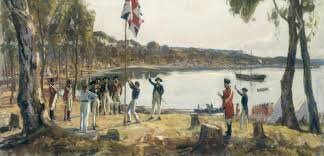
Di Sims: 'The aliens are silver skinned and are wearing metallic adornments', The Deja Vu analogy, Toastmasters speech - 1993
1993, Newcastle, New South Wales, Australia
I would like to invite you to journey with me to the year 2000.
Let’s imagine it’s a long weekend holiday - it’s Australia Day And we are enjoying a BBQ and get together with family and friends. And we are thinking about the great neighbourhood we are lucky enough to live in We are feeling fortunate to have so many nice relatives and friends at our BBQ
A deafening noise and blinding flash attracts our attention from our social chit chat. And we watch over the fence as a space ship looking object lands in the nearby park The hatch opens and human shaped aliens emerge from the space craft. The aliens are silver skinned and are wearing metallic adornments They all hold unusual gun type weapons Our children are excited and fascinated by these new uninvited visitors Two of our neighbours approach these silver beings and the strange weapons are pointed at them.
They are struck and stunned by a streak lightning flash emitted from the guns
Another courageous neighbour shouts protests about the assault on the motionless men and he too receives the same streak lightning flash. We are overcome with fear – our mobile phones are not working we can’t call triple 0 We retreat to the security of the house- our land line phones are also dead as are all of our electrical appliances. It is very eerie and we can hear little traffic noise outside We watch as the aliens set up a tent city with silver foil and plastic looking igloos. The 3 stunned and motionless men are carried into a neighbours house We wonder if they are still breathing , how hurt are they , how can we call for help and an ambulance. We are terrified and encourage our curious kids to come away from the windows.
Let’s imagine that 10 more years have passed and the year is 2010 These aliens now outnumber us. Our homes have been replaced by these strange metallic igloos. Most of our homes were simply burnt to the ground. Our kids toys were removed and destroyed . Our musical instruments suffered the same fate. All Entertainment systems were crushed and removed from our communities. We have heard no music for ten years – we are punished if we sing or hum a few favourite tunes.
Communication is limited and the aliens are in complete control of our lifestyles and living standards. We are subjected to three fumigations and hosings daily because the aliens consider our hygiene standards inadequate and primitive. Our children are taken away at birth because many parents will not comply with the stringent regulations and customs that the aliens insist on us practising. The aliens can educate children to tertiary level in 3 years – this is achieved with brain implants. The children are encouraged to disrespect all human elders and to only adhere to alien requests. Celebrations of birthdays, weddings and similar happy occasions are forbidden and classed as barbaric customs. Most children born since 2000 can communicate comfortably with the aliens. We have no control over their behaviour or their destiny They are encouraged to travel into space to seek further education and learning. Many return and are not interested in the welfare of their family. We long for another BBQ and get together to talk about old times But these are only a pipe dream because all gatherings are also banned.
Two of our older family members have recently died. We feel that they may have lived if only our human doctor could have treated them. They were placed in iron lung looking devices and isolated from us. Their illness was caused by new drugs that the aliens introduced. Our old folk were not aware of the potential harm that excessive use would cause and the aliens simply laughed at their stupidly for overuse of these mind altering substances.
We are sure they died from fear and trepidation. How we wish we could have said goodbye with just a simple funeral service. But again funerals are also illegal and considered primitive. We were unable to bury them in the cemetery according to their wishes but instead they were removed and placed in metallic bare tomb. No flowers or tombstone at their final resting place. These aliens have suppressed every custom and pleasure that we once enjoyed. Most of us can still recall that Australia Day BBQ and we remember discussing the forthcoming Olympics. 2000 in Australia was a utopia compared to the subservient existence that we are experiencing in 2010.
Let’s return to 1993. We pray that such a situation never occurs – we pray that it remains simply science fiction that is used to simply entertain us in a sifi movie or book. My friends unfortunately this atrocity did occur.
The year was not 2000 but the 1700’s. The space ships were the Endeavour followed by the ships of the first fleet and the many more ships. The silver aliens we Englishmen. The stun guns were rifles The new drugs were alcohols and tobaccos. The BBQ’s , birthdays and get togethers were corroborees and dreamtime customs.
This analogy is alarming and frightening. An air of déjà vu does exist I encourage all of you to set aside any preconceived prejudice of our indigenous brothers and sisters. Please help dispel the apathy that so many Australians display toward indigenous affairs. Imagine our reaction if some alien culture chose Australia as it’s newest prison for the punishment of alien criminals.
Our forefathers began the destruction and inhibition of an entire culture. I suggest we follow the example of a very humble Australian – the late Professor Fred Hollows who was described by an ABC journalist as ‘A man who saw what others refused to see’ – then refused to ignore it. Our Indigenous countrymen have a heritage that they legitimately posses and are rightfully proud of. Fortunately our generation has not been invaded by aliens but unfortunately the indigenous people were. I ask that we demonstrate more understanding OF THIS CULTURAL BACKBONE of Australia. Di Sims . ( First presented in 1993)
Louis Farrakhan: 'Here are 30 million people who don't wear their own names', Phil Donahue Show - 1990
Phil Donahue: Pleased to welcome you to part two of the Donahue two-part program featuring Minister Louis Farrakhan, who, at the end of our last program, left an awful lot of unhappy people in our audience. Not necessarily unhappy at anything he said, but unhappy because they had no time at all to say anything. So this is our attempt to give you an opportunity to express yourself and ask Minister Farrakhan to respond. Whom didn't we... Yes. Yes.
Audience 1: I would just like to say that I am terrified that even you, someone who is obviously educated, has given up hope completely. When you call upon us, you say white folk, you say black people, Jewish people. Why can't we come together? We obviously can come together. We just have to, we just have to find a way to do it.
Minister Louis Farrahkan: The desire is good. But the reality is the total opposite of your desire. And unfortunately, as a young lady, you are not in the position of power to make the decisions to make America work.
Audience 1: You don't-
Minister Louis Farrahkan: May I? As an audience of intelligent people, I would like to just take a moment to say to you that I really don't think you fully understand what has happened to these people that you look at as second-class or inferior citizens in this nation. Black people who were brought to this country were stripped of their names, language, culture, religion, God, and taken totally away from the history of themselves. Here are 30 million people who don't wear their own names. They wear your names. Who don't speak their own language. They speak English, which is not their language. They never, never were allowed their own cultural expression of Africa.
Don't you realise that when you turn a people upside-down and inside-out, then sell them, not for a day, not for a year, but for 300 years, and deny us the human right to know, to read a book, to learn, to understand. And then after 300 years of that, you allow us into the church. But by that time, you've painted Jesus white, God white, the angels white. And then all these black people have been subjected to a form of white supremacy, which produces in the reverse, a black inferiority. And this is fulfilling what Jesus said as a man, "Thinketh." So is He, and as long as our people think the way they think, we will never be able to do what we as a people should do to correct darkened vision.
Phil Donahue: Over here, please.
Audience 2: Several people in the audience have said the things that he's saying, but you really haven't been specific. What is he saying that you have a problem with? And why is it when a black man stands up to speak for his people and all the people stand up and speak for their people, there's no problem with it. But you're saying, "He said black. He said Jew." When people talk, they talk like that. But why is it when a black man stands up to speak for his people, you feel so threatened? Everybody's paranoid. And you talk about, it's not segregation. We live in Harlem. We live in Watts. We live in Bedford-Stuyvesant. That's a form of segregation. We walk through Bensonhurst, we get killed. So what are you talking about?
Audience 3: What I'd like to say, there was somebody over there in the audience who said that they were afraid. They were scared of when they were talking about the... What he was saying. You see. And what I'm saying is the other day, you asked Mandela that same question about fearing, white people fearing, what will the black folks do and stuff. We should be running down the street, screaming, ramping, and raving. Because when you look at the statistics, who is the one dying? From the policemen, from the KKK, from the skinheads, from the black people. We're getting-
Phil Donahue: If anybody should be scared, it should be the people going-
Audience 3: Right. It should be us who should be scared of y'all sitting in here.
Audience 4: Excuse me. I was brought up in quote, Bedford-Stuyvesant, in my town, but I would like to say what scares us is I think we hear violence.
Minister Louis Farrahkan: May I respond? May I respond, please? I'm sorry.
Audience 5: All right, Minister Farrakhan, would you explain why it is relevant at this stage, in 1990, with all that we've gone through, why it is still relevant to try and to educate or to get white people to understand the plight of black people. Shouldn't the energy be directed to us?
Audience 6: Right on.
Minister Louis Farrahkan: If I may. My work is directly to black people. I spend 99% of my time dealing with us to help us reform our minds and spirit, that we may do for ourselves. However, when you live in a society like this, and we know that in order to affect a solution to a problem between black and white, then there's going to have to be some meaningful dialogue between black and white in order to affect a solution.
The young lady said she's afraid of violence and isn't it sad that we who have been the victims of so much violence, now, whites fear violence from us. We do not have a history of killing white people. White people have a history of killing us. And what you fear... May I say this, sir? What you fear, and it's a deep guilt thing that white folks suffer. You are afraid that if we ever come to power, we will do to you and your fathers, what you and your people have done to us. And I think you are judging us by the state of your own mind. And that is not necessarily the mind of black people.
Audience 6: I'm with you in that you're talking about wanting to have meaningful dialogue and that's a problem, right away. I don't know what's going to make whites happy, for Pete's sake. You're talking about trying to find a solution to your problem. You're trying hard to do that. And we're tuning you right out. We're arguing with you. We're not agreeing with anything. We're not trying to give you a chance. For Pete's sake, what do we want?
Audience 7: As-salamu alaikum. Minister Farrakhan, there's a situation now with one in four black males are in prison or in jail or in some type of probation situation. When I look around, even myself being a black reporter, and they talk about racism of a black and white person go to the job, a black person's going to get the job. I never find that out. And we're in New York City with a black mayor and I still haven't seen it. And when I see Minister Farrakhan, not only the brother's enlightened me, but he gives me hope to not give up, not go get a pistol and stick somebody up. So when I see you, not only are you to lighten the hope, but I think, white America, you need to listen, and please don't harm this brother because we love him.
Audience 8: Getting back to what she said, what exactly do we have a problem with? Before you made a statement, you said that I think that... Well, not of. You said that white people think that you're inferior to us. I don't believe that. I'm part of the youth of America. I am not prejudiced. I feel more prejudiced right now than I've ever felt. Not against black. I am not prejudiced against black people. Some of my best friends are black people. I am... What's the problem with that? You let him speak. Let me speak.
Phil Donahue: You wanted to speak to this young woman?
Audience 9: No, no. I don't want to speak to that-
Phil Donahue: Who wants to talk to her? Yeah.
Audience 10: What do you mean, you feel more prejudiced right now?
Speaker 12: Because the way he's saying, he's-
Phil Donahue: Because why?
Audience 2: What he's saying right now. I mean, I feel that you are prejudiced towards white people.
Speaker 4: Excuse me. Excuse me. I think it's like he said, it might be a fear or misunderstanding that you have, because what fear has he put or what has he actually said here today that makes you feel prejudiced?
Speaker 12: I think that he said that we think that they're inferior. I think it's partly part of your own complex that you have to get over because I don't feel you're inferior. I've nothing against black people.
Speaker 14: Excuse me, excuse me. This is the situation. Every young white adult says, "I have not done this to black people. I have not done that to black people." But your forefathers are the ones who have set us in the situation we are in. Now, what I am saying is this. When Matt Turner stood up, you all rejected him. You killed him. When Marcus Garvey stood up, you all rejected him, enslaved him. He died a broken heart.
Now, what I am saying is this, your fathers have put us in the condition we are in. And today, you are profiting from what your forefathers have done. Now. Now. My grandchildren are going to be raised and your children are going to say to them, they have not done to them, because you are the ones who are going to do to my grandchildren, what they're going to experience if the situation continues. Now, what I am saying is this. When we talk about America falling, what we are saying is this. If you all want to control America, then we must have a land base that we control. You all cannot continue printing the dollar bill and then expect us to abide by your rules when you do not want to give us jobs. Therefore, I am saying that we have now got to come into negotiations and Minister Farrakhan is the man to listen to.
Minister Louis ...: It becomes apparent more and more, as we listen to each other and try to talk to each other, that we don't perceive reality the same. And as we're talking about either reconciling differences or separating, it becomes clear that if two people are looking at the same thing and perceiving it so differently, then the two people are operating under a different stimulus. And so, when the young lady says, "I am prejudiced." To be prejudiced means to judge before the fact. After 400 years of living and experiencing, we're not prejudiced. We are looking at the reality of what we have suffered and continue to suffer.
Phil Donahue: Are you there? Are you there, caller?
Speaker 15: Yes.
Phil Donahue: Thank you for waiting. I am sorry it took us a while to get you, but go ahead. I know you'll be brief.
Speaker 15: I'm a white American, born into poverty, and our repayment. You know, the opportunities are here in America and why can't we just start now? We hear all this violence. Why can't we just talk in a positive way and go forward, instead of remembering all these things that are in the past that are negative, they were not good for [crosstalk 00:12:05] or white people.
Phil Donahue: Yes, Minister Farrakhan commenting.
Minister Louis Farrahkan: According to the state of black America, by the Urban League. "If we started right now," they said, "We could never close the gap to black poverty and white poverty." She said, "Let us start right now. Let's forget the past." Notice this.
When Jewish people remember the Holocaust and want the world to remember the Holocaust. Wait, wait, wait. Why do you want the world to remember? Because if the world does not remember, it is likely to repeat itself, and Jewish persons who suffered from the Holocaust want the world to remember this because the world turned its back while Jews were put in ovens. I, as a black person, want my people to remember what we have suffered and what we continue to suffer so that we will say, like the Jews, "Never again. Never again."
Speaker 16: Okay. I've been listening in this corner right here and I've heard a whole lot of negative things from the white people here. When you were trying to explain yourself, the white people don't want to hear you explain yourself, they drown you out. They start already trying to drown you out and talk over you. There's a certain amount of white arrogance here and they don't want to listen to what black people are saying. They don't understand because they don't want to understand. I've heard a woman here say, "Go back to Africa." Somebody said, "We have a black holiday. What does that mean?" So what? What does that mean? He did not say that, he said, if we have a choice, what some of us can go and some of us can stay. But there's no understanding in here. People are just trying to talk.
Minister Louis Farrahkan Just remember, just remember, to those arrogant persons. When you tell us, "Go back," please remember where you came from. And when you want to relegate somebody to a specific place, just remember what your origin is in this world. Please, I'm not trying to be disrespectful, but I want you to understand that you, wherever you are on the earth, you are not a native anywhere. You came there and took it from the native people who are there. So please don't talk about going back because if others talk to you about that, where would you go?
James Baldwin: 'I am not your Negro" Dick Cavett show - 1968
13 June 1968, New York City, New York, USA
Dick Cavett: I would like to add someone to our group here, Professor Paul Weiss, a Sterling Professor of Philosophy at Yale.
Were you able to listen to the show backstage?
Prof. Paul Weiss: A deal of it, but then I was behind the [inaudible 00:00:24]. So I did hear only some of it.
Dick Cavett: Did you hear anything that you disagreed with?
Prof. Paul Weiss: I disagreed with a great deal of it. And of course, a good deal I agree with. I think he's overlooking one very important matter, I think. Each one of us, I think, is terribly alone. He lives his own individual life. There's all kinds of obstacles in the way of religion or colour or size or shape or lack of ability. The problem is to become a man.
James Baldwin:: But what I was discussing was not that problem, really. I was discussing the difficulties, the obstacles, the very real danger of death thrown up by the society when a Negro, when a black man, attempts to become a man.
Prof. Paul Weiss: All this emphasis upon black men and white does emphasise something which is here, but it emphasises, or exaggerates it. And therefore mixes, or put people together in groups, which they ought not to be in. I have more in common with a black scholar than I have with a white man who's against scholarship. And you have more in common with a white author than you have with someone who's against all literature. So why must we always concentrate on colour or religion or this, there are other ways of connecting men.
James Baldwin: I'll tell you this. When I left this country in 1948, I left this country for one reason only, one reason. I didn't care where I went, I might have gone to Hong Kong, I might have gone to Timbuktu. I ended up in Paris, on the streets of Paris, with forty dollars in my pocket on the theory that nothing worse could happen to me there, that it already happened to me here.
You talk about making it as a writer by yourself. You have to be able then to turn up all the intangibles in which you live because once you turn your back on this society, you may die. You may die, and it's very hard for the typewriter and concentrate on that if you're afraid of the world around you. The years I lived in Paris did one thing for me. They released me from that particular social terror, which was not the paranoia of my own mind, but a real social danger, visible the face of every cop, every boss, everybody.
I don't know what most white people in this country feel, but I can only include what they feel from the state of their institutions. I don't know if white Christians hate Negros or not, but I know that we have a Christian Church, which is white and a Christian Church, which is black. I know it's not the [inaudible 00:02:37], but the most segregated hour in American life is high noon on Sunday. That says a great deal for me about a Christian nation, it means I can't afford to trust most white Christians and certainly cannot trust the Christian Church. I don't know whether the labour unions and their bosses really hate me. That doesn't matter. But I know I'm not in their unions. I don't know if the real estate lobby has anything against black people, but I know the real estate lobby is keeping me in the ghetto. I don't know if the board of education hates black people, but I know the textbooks they give my children to read, and the schools that we have to go to. Now this is the evidence. You want me to make an act of faith, risking myself, my life, my woman, my assistant, my children on some idealism, which you assure only exists in America, which I have never seen.
Gary Chambers Jr: 'Sitting over there shopping while we talk about Robert E. Lee!', East Baton Rouge Parish School Board hearing - 2020
18 June 2020, East Baton Rouge, Louisiana, USA
So I had intended to get up here and talk about how racist Robert E. Lee was. But I'm going to talk about you [madam] sitting over there shopping while we talking about Robert E. Lee. This a picture of you shopping. While we talking about racism and history in this country. Only white members of this board got up while we were up here talking too, because you don't give a damn and it's clear, but I'm going to tell you what the slaves, my ancestors, said about Robert E. Lee, since you don't know history, sister. Let me tell you that they said when he got the plantation, after he got off the field with 27,000 people dying at Gettysburg, tiny Robert E. Lee was a brutal slave master. Not only did when he whooped the slaves, he said, lay it on them hard. After he said, lay it on him hard, he said, put Brian on a sort of burner.
That's what Robert E. Lee did. And you set your arrogant self in here and sit on there shopping while the pain and the hurt of the people of this community is on display. Because you don't give a damn and you should resign. You should have resigned two years ago when you choked a white man in his house. You should have resigned two weeks ago when you got on TV and said foolishness, and you should walk out of here and resign and never come back because you are the example of racism in this community. You are horrible, not to the rest of the board. You have an obligation to the people in this community. And 81% of them are black. And do you need a Klan rally outside Mr. Goldade before you end it, because holding it up means that you put that building in jeopardy.
You do, sir, because all over the country, they burning stuff down. And black folks in this city have stood with protestors. I ain't seen you elected officials out there with them, making sure that nothing goes South in Baton Rouge. It's been folks in this community who give a damn, not just when it's comfortable, but every time and four years ago, we came down here. Mr. Drake, they said you a good man. Be a good man. Black folks say you a good man. White folks say you a good man. Your legacy is attached to tonight, brother, your legacy. Now, let me say to the black members of the board, it's the most solidarity I've seen out of y'all FL. Let's keep it there. Let's stand on this moving forward. Because we don't need to apologise for Connie Evelyn. She showed you who she was when she was sitting next to you while you were talking shopping.
You don't need another example. Now, when do we, as Baton Rouge, stop being in 1856. If you want to name the building after somebody, how about PBS Pitch Back, the first black governor of the state of Louisiana, when he was governor during reconstruction, you want another name? Oscar Dunn, who was the Lieutenant governor of the state of Louisiana in the 1860s that gave the right for Derrius Landis and Don Collins and Evelyn where Jackson and Tramell. I want to give you, you want to name it after somebody from reconstruction. Name it after the people who fought for Appalachian of Civic. If you want to name it after somebody, I know the right people. The people who on the right side of history. But it's your ancestor that the school is named after. So you holding onto your heritage, but we built this joint for free and we've done begging you to do what's right.
Speaker 1: Thank you sir. Next.
Michael Holding: 'History is written by the conqueror, not those that are conquered', pre Test match comments on race - 2020
9 July 2020, Southampton, United Kingdom
When I say education, I mean going back in history. What people need to understand is that this thing stems from a long time ago, hundreds of years ago. The dehumanisation of the black race is where it started. People will tell you, 'that's a long time ago, get over it'. No. You don't get over things like that. Society has not gotten over something like that.
Think about religion. The image of Jesus Christ is pale skin, blond hair, blue eyes. Where Jesus came from, who in that part of the world looks that way? That is brainwashing, to show you 'this is what the image of perfection is'. If you look at plays from those days, Judas, who betrayed Jesus, is a black man. Brainwashing people to think, 'he is a black man, he is the bad man'.
Go through history. Thomas Edison invented the light bulb, everybody knows that, but he invented the light bulb with a paper filament that burned out in no time at all. Can you tell me who invented the filament that makes these lights shine? Nobody knows, because he was a black man and it was not taught in schools. Lewis Howard Latimer invented the carbon filament to allow lights to continue to shine, yet who knows that?
Everything should be taught. In my school days, I was never taught anything good about black people and you cannot have a society that is brought up like that where you only teach what is convenient to the teacher. History is written by the conqueror, not those that are conquered. History is written by the people who do the harm, not by the people who are harmed. We need to go back and teach both sides of history.
Until we do that and educate the entire human race, this thing will not stop. We need to teach and re-educate, as a lot of black people in this world are growing up believing that they are lesser than other people and that cannot be right.
People tell me there is nothing called white privilege. Give me a break. I don't see white people going into a store in Oxford Street and being followed. A black man walks in and someone is following him everywhere he goes. That is basic white privilege.
I don't want people to think I think all white people are racist and walk around thinking racist things. It's not, 'I'm black, I don't like white people', or 'I am white, I don't like black people'.
There was a study done at Yale University in 2016, where they got 130 pre-school teachers to go into a room and watch a video and look out for bad behaviour. There were black boys, white boys, black girls, white girls.
There was no bad behaviour in the video but they had a tracker of the teachers' eyes and at the end, they got the results and their eyes had constantly looked at the black kids, black boys the majority.
One person didn't want the results released, but 129 of the teachers were embarrassed. They did not even know, they were unconscious. The society in which we grow, it is almost osmosis; it seeps into you, and subconsciously affects your mind.
There was a 2014 study, also at Yale, with police officers. They were shown pictures of black kids and white kids - kids meaning early teens. Each police officer was asked at the end how old he thought the black kids and white kids were. On average, the police officers gave the black kids' age four and a half years older than the white kids, guessing the age of the white kids easily.
If you are a police officer confronting a 14-year-old and you think in your mind he is 18, 19 years old, your attitude is going to be different. He is no longer an innocent 14-year-old, he is a senior, approaching adulthood and your approach is going to be different. That is something that has to be tackled.
We know there has been abuse of black people by police officers, not just in England or the US, all over the place. Unless society is cleansed and sorted, we will continue to have this problem.

Michael Kirby: 'To honour Daniel, we must resolve to talk about depression', Launch of Daniel Solomons Memorial Scholarship - 2015
30 April 2015, Sydney, Australia
Daniel Solomons committed suicide on 23 April 2013. A Memorial Scholarship was established in his name, and Justice Michael Kirby spoke at the launch event. The name of the talk is, “Lawyers Suicide: The Influence of Legal Studies and Practice, Stress and Clinical Depression and Sexuality’. Daniel’s mother Sandra Solomons also spoke at the event.
CONTRADICTIONS AND DISCORDANCIES
This is not an evening for joy and humour. Ashurst have offered their Sydney office for the launch of the Daniel Solomons Memorial Scholarship. Daniel was their employee. Before that, he was a gifted student at Moriah College. He received the Premier’s Medal for all round excellence in his High School Certificate results. He graduated in an Arts/Law course at the University of New South Wales, with first class honours. He was respected by his colleagues at Ashurst. He was admired for his analytical skills. He was studying for admission to practise at the New South Wales Bar. Two years and a week ago, on 23 April 2013, he took his own life. His death has been a devastation to his partner and his family, his work colleagues, the members of his intended Bar chambers. His is another story of might have beens.
I honour the lovely, discordant, evocative Jewish music, played by the quintet. I appreciate the fine food and the wines. But this is not an evening for enjoyment. Losing Daniel has left a hole in the heart of too many. The sharpest loss has been felt by those present at the event:
His parents, Sandra and David Solomons.
His sisters Michele and Rebecca, who grew up with him.
His domestic partner and faithful friend, David Darley, who is here with his mother, Sandra Darley, still close to Daniel’s family.
His two grandmothers who are both present.
His uncles, cousins and other family members.
His school friends from Moriah College.
His University friends from UNSW.
His work colleagues at Ashurst, who cherished his dazzling abilities.
Jordana Wong from UNSW Law, substituting for Dean David Dixon, who planned the scholarship to continue Daniel’s passions.
And the rest of us who are here, seeking to find meaning out of this tragic anniversary.
This cannot be a usual dinner with laughter and celebration. We have serious work to do. And if we shed tears, that will be entirely appropriate. Yet tears are also not enough. We must respond to Daniel’s family’s determination to establish a scholarship that will recognise in others, and support, the same courage, idealism and determination to change things that Daniel exhibited in his short life.
COMMONALITIES
I feel an affinity for Daniel Solomons. Not to be too boastful (for Daniel and I would never be such) we were both pretty brilliant at school, and at university.
We were both enthusiastic and energised by our early work experience. We loved solving the problems of the law, Daniel and I.
We were both good writers. It is a genetic thing. A capacity to communicate simply. To write in the same language that we talk – a simple tongue derived from the Saxons, that now conquers the world.
We both tended to think outside the square. This irritated some people. But it helped us to see things to which others were blind.
We were both challengers of settled things. And, as we grew up, we knew, from our experiences with love and life, that many things needed changing, including in the law.
Undeservedly you might think, we both were lucky in love. We both won handsome and intelligent partners and (for a reason we could never fully understand) they loved us. Daniel’s, David Darley. My Johan van Vloten. Luck in love, we knew, could not be methodically planned. It was a gift from the Gods.
It is good that tonight we honour David Darley and his mother. Often, you know, this is done for wives or husbands but not for LGBT partners. Yet they are flesh and blood. They hurt. They weep too.
DIFFERENCES
Emanuel Poulos of Ashurst has shared with us a thoughtful and moving description of Daniel’s life in the Firm. So well-constructed and full of detail. Daniel’s sudden death, and its circumstances, would have been a terrible shock to his work colleagues. He had so much to offer and to look forward to. The support by Ashurst for Daniel’s scholarship. It will be one way to keep alive the flame of memory and to honour his unusual personality. It will support those selected who decide to make the study of law their dream. It will help those who need something more, to get started. And who demonstrate personal courage, as Daniel did, seeking knowledge and enlightenment despite challenges, whether personal, financial or both.
Still, there were differences between Daniel’s life and mine:
I am nearing the end. He was knocking on the entrance door. I applied for articles to Dawson Waldron Edwards and Nichols (a predecessor of Ashurst). I may have been brilliant. But they rejected my application. My father was not a lawyer. That was often a prerequisite in those days. Daniel was accepted here. I never made it to a top tier firm. Often in the High Court, I would look at the coversheet of appeal books. The old firms that rejected me may have changed their names. But it did not deceive me. I knew who they were. It did not make a difference to my judgment. But I still remembered. Daniel, on the other hand, entered the magic circle.
Daniel’s office was, let’s face it, a mess. Mine has always been antiseptically neat and tidy.
Towards the end of his life, Daniel, who had suffered anxiety, came to suffer from clinical depression. I never have. Depression is not an easy journey. In Samuel Coleridge’s poem “Dejection” he describes how it feels:
A grief without a pang, void, dark and drear,
A drowsy stifled unimpassioned grief,
Which finds no natural outlet or relief,
In word, or sigh, or tear.
To honour Daniel, we must resolve to talk about depression. To analyse its causes. Above all, to understand why it is so common amongst law students, legal practitioners and judges. Although I did not feel its pain myself, I spent many years of enforced silence about another demon of others that Daniel knew: sexual difference. So it is not hard for me to understand the challenge of depression. The way out of the closet is to put it on the table, turn it around, examine it, acknowledge it and challenge its corrosive effects.
RESISTENCE
After I was appointed to the High Court of Australia, in February 1996, I was soon afterwards invited to address a judicial conference in Brisbane. I was asked to talk on any subject I might choose. Perhaps they were hoping for the Rule against Perpetuities or the Statute of Mortmain. Instead, fresh from a recent conference in Canada, I selected stress. Judicial stress. Stress done to judges. Stress done by judges. Little did I know that I could not have chosen a more stressful topic for my audience.
The commentator, Justice Jim Thomas of the Supreme Court of Queensland, was antagonistic to my theme. He blamed his wife, who, he said, had berated him for even coming to respond to such an inappropriate and irrelevant theme. Most of the judicial attendees at that conference appeared relieved and mischievously happy to tweak the tail of the new High Court Justice for daring to choose a “touchy-feely” subject. How rude of him. A few supported me; but not many. However, I stood my ground. That was another thing I shared with Daniel. The sometimes irrational belief in our own correctness. I have kept gnawing away at this subject since 1976: betraying a naively simple belief in rational persuasion. Now there are fewer lawyers who are dismissive of the topic. Too much evidence of its impact. Too many suicides and breakdowns to sustain the code of silence. Now, most law deans, chief judges and leading lawyers know that this subject is serious. We will honour Daniel’s life by treating is as such.
SUICIDAL DIMENSION
Suicide is now such a serious problem in our world that even the United Nations World Health Organisation (WHO) has provided a first report addressing the topic. According to the report, someone in our world commits suicide every 40 seconds. This is more than the aggregate of victims of wars and natural disasters. The largest toll is amongst the elderly. The highest rates occur in Central and Eastern Europe and in Asia with 25% of cases occurring in developed countries. Men are almost twice as likely as women to take their own lives. Inferentially, this is because women have better networks; they are more willing to talk about issues that trouble them; and to seek help. They are less likely to feel an obligation of denial. They will seek help beyond their own limited knowledge and experience. Lonely self-help will often not provide the solution.
The WHO report took a decade to produce. It found that the rates of suicide in developed countries (12.7 per 100,000) were slightly higher than in developing low and middle income countries (11.2). The very highest rates in the world occurred in North Korea, India, Indonesia and Nepal. Worldwide, the most suicide prone countries included Guyana (44.2 per 100,000); followed by North and South Korea (38.5 and 28.9 respectively), Sri Lanka (28.8), Lithuania (28.2), India (21.1) and Southern Sudan (19.8). Russia and Uganda each had 19.5. The purpose of the WHO report is to encourage a new global strategy. The Organisation hopes that this will reduce suicide rates by 10% before 2020.
Australia has a rate of about 11.5 per 100,000. Every year approximately 2,000 Australians commit suicide, with up to 40 times that number making an attempt to end their lives. Suicide is the leading cause of death in Australia for young men under 44 years and for women under 34 years. One person dies by suicide in Australia approximately every 4 hours.
One issue which the Australian Institute for Suicide Research and Prevention is currently studying is the particular impact of human sexuality on the suicide rate. This is why the Institute has recently appealed to persons who know someone who committed suicide to assist them with their research into the impact of minority sexual orientation or gender identity. These are topics that can occasionally lead to feelings of isolation, low self-worth, fear of violence and hostility.
Although we have known the basic facts of the science of sexual orientation for more than 50 years, recent research and experience shows that often there is good reason for people, including young people, to feel depressed and discouraged because of their sexual orientation or gender identity. They may keep up appearances. But, particularly if they are suffering from clinical depression, the appearances may simply mask the inner turmoil that is going on. Sometimes that turmoil will lead them to an exit strategy. For people who face what they see as unrelieved stress and pain, suicide can appear a rational way out of unyielding conflict and misery.
Many young people in Australia come up against hostility and animosity because of their sexual orientation or gender identity. A recent report by Beyondblue revealed high levels of homophobia amongst Australian teenage boys between the ages of 14-17. A quarter of the cohort considered that it was acceptable to describe something they did not like as “gay”: assimilating the insult with the description. Most participants in the study agreed that homophobic discrimination was common in their circle and they realised that it could lead to depression and anxiety. However, despite this insight, a significant minority indicated attitudes that would escalate such responses:
38% indicated that they would not be happy being friends with a same-sex attracted person;
41% said that lesbian, gay and bisexual people make them uncomfortable;
34% of boys were unsure whether ending a friendship if someone said they were same-sex attracted would be discrimination;
Around 19% saw homosexuality as immoral; and
17% regarded it as a “passing phase”.
DOING SOMETHING
The response to this problem in Australian society (which would appear to be larger than in most other western countries) demands institutional and individual responses. The places where such responses need to occur obviously include educational institutions. Some of these are under the control of religious (“Faith”) organisations that are resistant to changing the environment that gives rise to the discrimination, hostility and potentially terminal responses on the part of those targeted. Not all those who commit suicide amongst young Australians are from sexual minorities (LGBTI). But clearly some are. The higher rates of suicide amongst young males appears significant.
When the Australian Federal Government launched a “Safe Schools Coalition Australia” initiative, supported by federal funding of $8 million, to support an active campaign against bullying in schools, this was criticized by the Australian Christian Lobby. It called for a boycott. Nor is its approach confined to evangelical Christian churches. In March 2015, I wrote to a senior official in a Roman Catholic educational institution, drawing attention to reports that students had been refused accreditation of a LGBTI student group which would have financial and venue advantages for them. The institution had also reportedly refused permission to the students to meet on the university premises. The response by the senior executive of the institution was discouraging:
“As a [religious institution] recognised by Australian law, we believe that we have a right (and duty) to run [our body] in a way that is consistent with and gives witness to our Faith. We clearly identify our Objects in all of our recruitment materials and we ask all students to respect the Objects. We do not assert this as a justification for unjust discrimination, as we are absolutely opposed to unjust discrimination, but we do assert that this allows us to approach and deal with issues in ways that may be different to the practices of secular institutions but are none the less valuable and important. By way of illustration; while a secular [organisation] may well affiliate clubs with a “Pro-Gay Marriage” advocacy purpose, [we] would not, and indeed could not affiliate a … gay marriage advocacy club without completely undermining our existence… which operates within a ‘context of Catholic faith and values’. However, our commitment to pastoral care, human dignity and opposition to unjust discrimination means that we must - and do – ensure that all students continue to feel free to exercise their own judgment and discernment on such matters and are free to act in accordance with their conscience. Furthermore, we do not ban or prohibit such issues from being discussed publicly or privately at [our institution], and indeed to do so would be counter to the purpose and role. We would however, seek genuine debate, which means we would normally require the case for [our Faith’s] position to be debated together with any opposing positions. “
The fundamental message of this response remains that the institution concerned is happy to receive public funds to support its mission. But that mission is certainly hostile to the actuality of LGBTI students. Those students who are not themselves Catholic (and even some who are) might dismiss the institution’s unfriendly approach as predicable unequal treatment and just move on. But some students, particularly those raised in a Catholic tradition, could easily feel conflicted, stressed and unworthy by reason of such an environment.
Recently, the Holy See refused to accept the appointment of an ambassador accredited by the Government of France. He was openly gay. His offence, it seems, was that he did not keep his sexual orientation to himself. Demanding this of experienced ambassadors may perhaps be surmountable in countries like Saudi Arabia, The Russian Federation and Uganda and possibly the Vatican. But for young students in an Australian educational institution, it only serves to sharpen the anxieties, stress and depression. This can clearly have deleterious consequences for those exposed to suicidal thoughts. But especially for young people who may love their religion and hate themselves for being unchangeably gay, as science teaches that they are.
Earlier, there were similar religious attitudes in the United States and in South Africa to support racial discrimination against minorities and miscegenation. Apartheid in South Africa was often supported by the Dutch Reformed Church (which has since recanted) on the basis of scriptural texts. These problems are bad enough as an intellectual dilemma for people growing up. But are particularly harmful as they apply to vulnerable young people who may be suicidal in what should be a nurturing environment. I may be wrong, but I cannot see that such attitudes in publicly funded institutions in Australia are compatible either with legal and constitutional principle or with the pastoral and legal duty of care owed by every educational institution to those in their charge, given increasing knowledge of the risks.
In Daniel’s case, he had no religious conflicts we know of as he grew up in Moriah College. He was surrounded by love and protection by his family, teachers and fellow pupils. Yet, even then, he was caught in the chains of suicide. Daniel’s basic problems were that he suffered from clinical depression, a recognised pathology. And he worked in the law. For such a person, this is an especially hazardous occupation.
CLINICAL DEPRESSION
I have just returned from a conference in England, most of whose participants were statisticians and biological scientists. Statisticians are drawn from the most brilliant of students. I know this from my time as Chancellor of Macquarie University, with its degrees in mathematics, statistics and actuarial studies. I was, I think, the only lawyer at the conference. One participant, Professor Lewis Wolpert, an expert in cell and developmental biology at University College London, talked of the challenge of severe depression. He has given papers and written books on the subject. He talked openly about his own experience with depression. He explained that:
“If you can describe your severe depression, you probably have not had one. It is indescribable and one enters a world with little relation to the real one. It was the worst experience in my life, even worse than the death of my wife from cancer. With her dying, I could do things to help her and I mourned afterwards. But with my depression, there was nothing I felt I could do and I believed that I would never get better. My state bore no resemblance to anything I had ever experienced before. I had had periods of feeling low but they were nothing like my depressed state. I was totally self-involved and negative and thought about suicide all the time. I just wanted to be left alone.”
Cognitive therapy eventually gave assistance to Professor Wolpert. He gradually got better. But his family were embarrassed about his depression. They would tell no one. He knew from his reading that only 10% of patients with severe depression do not have a relapse. He regarded William Styron’s Darkness Visible as an outstanding exposition of the problem. Styron points out that:
“The pain of severe depression is quite unimaginable to those who have not suffered it, and it kills in many instances as it cannot be borne.”
Cultural and social inhibitions in many countries prevent identification, treatment and support during such an illness. Pharmaceutical drugs can sometimes help. Professor Wolpert found that physical exercise was useful. He saw an analogy between depression and cancer, in the sense that it is a normal process of living (sadness) that has become disordered and magnified. He tried to analyse the condition from an evolutionary point of view. Feelings that are so common in society could have some advantages for the individual. A “social competition hypothesis” suggests that depression is an adaptation whose function is to inhibit aggression by rivals and superiors when one’s status is low. It is a means of yielding, when there is acute social competition. It thus reduces the efforts of the aggressor. But Professor Wolpert is not convinced. Especially when depression leads to suicide, it is hard to see an evolutionary value in it. It may have a perceived individual value, as terminating unendurable pain. It may, like sexual orientation, simply be a variant in nature whose purpose is not always clear and may not matter much given its reality as part of human experience. If it exists, that is enough. Society must respond. It must seek to palliate and help the subject and to avoid needless termination of the subject’s life.
LAWYERS’ RESPONSES
Those who suffer the indescribable pain, recounted by Professor Wolpert, are rendered extremely vulnerable if their career choice has taken them into the law. The law is usually a very public vocation. Its top practitioners are on display most of the time. They face fierce competition. They are often perfectionists. Overachievers. Trapped in “pin striped prisons”. We now know that law places special and excessive pressures on students and practitioners. Working in symbiosis with depression, this can trigger suicidal thoughts and actions. As wise commentators have observed, because lawyers generally sell their talent in modules of time, there is always pressure on them to sell more and more time, until there is no time left for the other priorities of life.
There is some evidence that pressures of this kind are heaviest in large firms where it is harder to maintain a life/work balance. Although many firms today (and some law schools, even judicial institutions) have attempted remedial measures to show that they care about the challenge of depression and the risks (including suicide) that it brings, commentators repeatedly observe that the lawyers most at risk commonly do not believe that these efforts are real or intended to be taken seriously:
“… [P]rivate practice lawyers are often subject to tight, client-driven deadlines and exacting internal performance targets – the competitive and confrontational nature of legal practice leaves many believing that such wellbeing policies are not worth the paper they are written on. ‘A few months ago, my firm distributed helpful tips, printed on colourful postcards, suggesting we ought to “go for a swim in the ocean” or “go home and cook a meal with your family”, wrote one lawyer anonymously… in 2013. “Apparently the irony of recommending such fun and whimsy to a group of employees who are effectively required to remain at the office upwards of 14 hours/day for months on end was lost on the hopeful folks in human resources. Under such conditions, and with the profession’s poor track record in looking after its own, such cynicism is well placed.”
Certainly, there does now seem to be a growing realisation of the existence of a true crisis in legal employment as a career choice. In a recent poll asking “is life as a lawyer what you thought it would be when you were a student?”, more than 37% of respondents said “No, I wish I was working in a different career”. Only 11% of the 444 respondents to the survey said their law career had fulfilled all their expectations.
Plainly, we have a problem here. Estimates suggest that one in three lawyers from law school to final retirement, suffer at some stage from depression and low self-esteem. A number will face serious suicidal imaginings. If one of Google’s lawyers’ suicides and inserts the name of the city or town, names will come up that one knew but sometimes had forgotten. Tristan Jepson was such a name. His parents established the Foundation in his name in his name to tackle the issue. Daniel Solomons was another young lawyer who fell victim to suicidal depression. Most of his colleagues did not know, could not understand and could not believe that such a talented and handsome, much admired person would suffer the condition at the end of his life. Or respond as he did. But that is the fact. Lawyers have to face the facts.
Shortly before the launch of the Daniel Solomons Scholarship, yet another Sydney lawyer, a specialist in tax, who had taken a part in advocacy for a genuine response to suicide risks, took his own life. This challenge is always with us. It goes on. It does not disappear.
WHAT CAN WE DO?
The beginning of wisdom is the accumulation of knowledge. The Tristan Jepson Foundation has sponsored research by Professor Ian Hickie of the Sydney University Brain and Mind Institute. There must be more such research. The burgeoning legal industry and the multiplying Australian law schools – now numbering more than thirty five – should contribute to it. They have a stake in addressing the challenge successfully. So have we all. So has our society.
As with sexual orientation and gender identity, those who have faced the challenge of depression and suicidal thoughts need to come forward, stand up and identify themselves if they can. They should bravely become role models for those who do not yet dare. Tristan and Daniel did not live long enough to follow the lead of Lewis Wolpert in acknowledging the condition, facing it squarely in the eyes and seeking to communicate its burdens and dangers to their fellows. So this is the great opportunity loss we have suffered through the deaths of these young men. We must act before more join them.
My own decision, (with my partner Johan van Vloten) to be open about my sexual orientation was, in part, motivated by a feeling of obligation to young LGBTI people (including lawyers) coming along behind us. I cannot respect the attitudes of the Faith organisations quoted in these remarks who enter the educational space and alienate and humiliate a vulnerable cohort who came under their direct influence. They seem to be far from the loving message of the religion they purport to promote. In particular, they seem distant from the response of Pope Francis, soon after his election to the See of Rome, declaring of the sexual minorities: “Who am I to judge?”
Eventually, Faith organisations, Christian and non-Christian, will have to reconcile themselves to the science of the origins, causes and features of diverse sexual orientation and gender identity. It is not binary. Meantime, they should be brought to understand that their practices promote homophobia in society, as is recorded in the recent Australian survey on the attitude of teenage males. They cause or aggravate low self-esteem, lack of honesty and consignment to silence or duplicity that feeds depression and suicidal conduct. Especially in the stressful world of legal studies and of contemporary legal practice.
Lawyers and law students should support the Tristan Jepson Foundation and the Daniel Solomons Scholarship. These parental-driven initiatives help us to fill the void left by the loss of such gifted, young people. Not all of them are LGBTI. Not all of them suffer clinical depression. Not all of them are remembered as they should be. But all of them deserve to be respected. This way, we can learn from their pain. We can respond to their cry of despair.
The Daniel Solomons Memorial Scholarship is a practical initiative in a great ocean of neglect and indifference. Daniel’s life and death should not have been in vain.
Tania Major: 'Four of my classmates have already committed suicide and I'm 22 years old', 'Here I am', Address to PM - 2003
6 August 2003, Cape York, Queensland, Australia
Video extract of speech from 2:17min. mark to 3:29min
Here I am: a young Cape York woman addressing the Prime Minister of Australia directly. The fact that you are here today, Mr Howard, is largely due to the hard work and vision of our leaders.
We are proud of their efforts. Especially I want to mention Noel Pearson. He has been my mentor and contributed to paying for my education. We are also proud of the efforts of our elders who have struggled to keep our culture alive.
I thank you for coming here today and acknowledge that your visit might signify the start of a new era in Cape York Peninsulas Aboriginal governance. I say 'might' because there is a huge job in front of us and if we are going to succeed we need your commitment as well as our own. I hope this is truly the start of a new relationship between Government and Cape York Peninsula people.
In less than 60 years the people of my tribe have gone from being an independent nation to cultural prisoners to welfare recipients. Is it any wonder that there are so many problems facing Indigenous Australians today? Prime Minister, I want you to gain a brief picture of the life of young people in our communities.
When I was growing up in Kowanyama there were 15 people in my class. Today I am the only one that has gone to University, let alone finished secondary education. I'm also the only girl in my class who did not have a child at 15. Of the boys in my class seven have been incarcerated, two for murder, rape and assault. Of the 15 there are only three of us who are not alcoholics. And, Prime Minister, one of the saddest things I must report to you is that four of my class mates have already committed suicide. I am 22 years old.
Now if this paints a grim picture of community life for you, it should. Life as a young Aboriginal person is not easy, in any setting. Life for a young Aboriginal woman is even harder. We have to fight for respect from everyone.
The story of my fellow students is a lesson in the magnitude of the problems that young Indigenous people in Cape York face. The two issues that, in my opinion, are central to changing this story are education and health. And your Government's policies affect these things.
Two months ago I told the Queensland Principals conference that the levels of literacy and numeracy are very low in Aboriginal communities. I told them that when I went to school in Brisbane it was as if I had missed out on my primary education.
There is a huge gap between what we get in communities and what other kids get in cities. I got straight As at Kowanyama but when I got to Brisbane I was getting Cs and Ds. It really goes to show that there was something seriously wrong with the education system in our communities.
One of the problems facing education in remote Indigenous schools is that teachers tend to be just out of training and generally stay for only a year or two. There was not one teacher who stayed for the whole of my nine years at school, even the principals. On top of the racism that Aboriginal people face every day of our lives this seeming lack of commitment by teachers makes you feel they don't care.
Prime Minister we need to review the curriculum in these communities because it's pitched at a very low level. I have had to draw the conclusion that Governments and educationalists see us as less than white people.
It was really sad to go to school in my community because the attitude in the whole community was that white kids are much smarter than me. How can the education being offered to our young people be justified?
Education should be uplifting not serve to reinforce lack of self-esteem and the heart wrenching low expectations that my mob suffer from. If we cannot get education right then we are doomed.
We need a massive re-assessment of education policies and an equally massive investment in education. Government let down most of my classmates. Noel Pearson helped me to an education, but most young people won't be assisted by a sponsor.
I got a chance in my life, worked hard with support from family and friends and today I stand before you as a qualified criminologist. All across Cape York I see and meet young Murris; smart, brave, compassionate, talented and beautiful. What is missing from their lives is an education that promotes self-confidence and drive.
With these qualities, hundreds of Cape York Peninsula Murris could be the next group of doctors, lawyers, painters, mechanics, criminologists or engineers. We have spent so long listening to some whitefellas telling us we are stupid, lazy no-hopers that the majority of my people actually believe it.
The relationship between poor education and poor health is clear. People whose self-esteem and pride have been decimated by a sub-standard education system and a social system that creates an addiction to passive welfare have little reason to live healthy lives.
Prime Minister, our health is getting worse not better. The policies that determine the delivery of health services are deeply flawed by a bureaucracy that does not want to let go and hear our voices. Health services are too often confined to the clinic. It's a patch ‘em up and spit ‘em out kind of health regime.
In Kowanyama we had the only doctor based in a Cape York Aboriginal community. She left two weeks ago because the Queensland Health bureaucracy did not support her. Her practice epitomised the sort of health system we need. She understood the relationship between physical, mental and spiritual health. She took health out of the clinic and into the lives and homes of community people. She took her responsibilities to serve the community seriously and now she's gone. Another blow to my community's already low morale.
Prime Minister, it's problems and challenges such as the ones I've described to you already that led me to stand in last October's ATSIC election. I decided to run because I believe ATSIC provides a great opportunity to advocate for my people; to have a say in distributing funding throughout Cape York Peninsula and influence State and Federal Government policy decisions that affect me and my people.
It is great privilege for me to represent my community and I hope that with experience I will be an effective ATSIC Councillor.
I know that in the coming months your Government will decide the future of ATSIC and I hope that you will understand that ATSIC is more than the Board of Commissioners and the Canberra bureaucracy. ATSIC is also people like myself and my Chairperson Eddie Woodley. People who are from community and work hard for community.
Prime Minister, we recognise that Governments cannot solve our problems for us. As young people we are trying to take responsibility for our future. We are working with our Elders to address the terrible problems of grog, illicit drugs and violence. We are working hard to create economic, training and employment opportunities for ourselves. We are supporting our fellow young people to achieve their potential.
Mr Howard, I ask not that you fix these problems for us but that you and your Government see us as equal partners in the huge task of rebuilding our families, communities and Cape York Peninsula.
You have demonstrated your commitment by engaging your government at the recent family and domestic violence summit and, for what it's worth Prime Minister, my own view is that the level of domestic violence and child abuse sums up all that has been wrong with Aboriginal Affairs policy.
We need a new relationship to address this frightening reality in our lives. Aboriginal people are reluctant to admit that young girls and women are being raped by their own people because of the blanket of shame. I am asking you to help lift that blanket.
The fact that you are here today is a good start in the process of change and I urge you, as a fair-minded man, not just as Prime Minister, to become part of the solution. I stand up here as a proud Aboriginal woman, a Kokoberra woman as well as a criminologist and I thank you for your time and attention.
Meyne Wyatt: 'Silence is violence, complacency is complicity', Q & A monologue on racism - 2020
8 June 2020, Sydney, Australia
I'm always gonna be your black friend, aren't I?
That's all anybody ever sees.
I'm never just an actor. I'm an Indigenous actor.
I love reppin', but I don't hear old Joe Bloggs being called quite white Anglo-Saxon actor.
I'm always in the black show, the black play. I'm always the angry one, the tracker, the drinker, the thief. Sometimes I want to be seen for my talent, not my skin colour, not my race.
I hate being a token. Some box to tick, part of some diversity angle.
"What are you whingeing for? You're not a real one anyway. You're only part." What part, then? My foot? My arm? My leg? You're either black or you're not. You want to do a DNA test? Come suck my blood.
"How are we to move forward if we dwell on the past?" That's your privilege. You get to ask that question. Ours is we can dance and we're good at sport.
You go to weddings we go to funerals.
No, no, no, you're not your ancestors, it's not your fault you have white skin, but you do benefit from it.
You can be OK. I have to be exceptional. I mess up, I'm done. There's no path back for me. There's no road to redemption. Being black and successful comes at a cost. You take a hit whether you like it or not. Because you want your blacks quiet and humble.
You can't stand up, you have to sit down.
Ask the brother-boy Adam Goodes. A kid says some racist shit — not ignorant — racist. Calling a black fella an ape? C'mon man we was flora and fauna before 1967, nah actually we didn't even exist at all. This was a learning moment. He taught that kid a lesson. Didn't like that a black man standing up for himself? Nah, they didn't like that. "Shut up, boy, you stay in your lane. Any time you touch a ball, we're gonna boo your arse. So he showed them a scary black, throwing imaginary spears and shit. Did they like that? They didn't like that. Every arena and stadium booed him. "It's because of the way the flog pays football." Bullshit. No-one booed him the way they booed him until he stood up and said something about race. The second he stood up, everybody came out of the woodworks to give him shit. And he's supposed to sit there and take it?
I'll tell you right now, Adam Goodes has taken it, his whole life he's taken it. I've taken it.
No matter what, no matter how big, how small, I'll get some racist shit on a weekly basis and I'll take it.
It used to be in your face, "Ya boong, ya black dog, coon", kind of shit. "I'm gonna chase ya down the ditch with my baseball bat", skinhead shit when I was 14 years old.
"Nah, we're progressive, now, we'll give you the small, subtle shit". The shit that's always been there. Not the obvious, in-your-face shit. It's the "we can't be seen to be racist" kind of shit.
Security guard following me around the store, asking to search my bag.
Walking up to the counter first being served, second or third or last kind of shit.
Or hailing down a cab and watching it slow down to look at my face and then drive off. More than once. More than twice. More than once-twice on any one occasion — yeah, that shit, I'll get weekly. Sometimes I'll get days in a row if I'm really lucky. And that's the kind of shit I let them think they're getting way with.
To be honest, I can't be bothered. I can't be bothered teaching their ignorant arses on a daily basis.
I don't have the energy or the enthusiasm.
It's exhausting, and I like living my life.
But on occasion, when you caught me on a bad day where I don't feel like taking it, I'll give you that angry black you've been asking for and I'll tear you a new asshole.
Not because of that one time, because of my whole life.
At least Adam danced and they still pissed and moaned.
But t's not about that one time, it's about all those times.
And seeing us as animals, that shit needs to stop.
Black deaths in custody, that shit needs to stop.
I want to be what you want me to be. I want to be what I want to be.
Never trade your authenticity for approval.
Be crazy, take a risk, be different, offend your family. Call them out. Silence is violence. Complacency is complicity.
I don't want to be quiet.
I don't want to be humble.
I don't want to sit down.
Kimberly Jones: 'they are lucky that what Black people are looking for is equality and not revenge', The Reasons for Riots - 2020
“So…I’ve been seeing a lot of things talking of the people making commentary. Interestingly enough the ones I’ve noticed that have been making the commentary are wealthy Black people making the commentary about we should not be rioting we should not be looting we should not be tearing up our communities and then there’s been the argument of the other side of “we should be hitting them in the pocket”, “we should be focusing on the black out days where we don’t spend money.”
But you know, I feel like we should do both and I feel like I support both and I’ll tell you why I support both: I support both because when you have a civil unrest like this there are three type of people in the streets. There are the protestors, there are the rioters, and there are the looters.
The protesters are there because they actually care about what is happening in the community they want to raise their voices and there are there strictly to protest.
You have the rioters who are angry who are anarchists who really just want to fuck shit up and that’s what they’re gonna do regardless. And the you have the looters.
The looters are there almost exclusively there just to do just that. To Loot.
Now. People are like, “what did you gain? What did you get from looting?” I think that as long as we are focusing on the “what” we’re not focusing on the “why” and that’s my issue with that. As long as we’re focusing on *what* they’re doing, we’re not focusing on *why* they’re doing it. And some people are like, “Those aren’t people who are legitimately angry about what’s happening, those are people who just wanna get stuff.” Okay. Well then let’s go with that. Let’s say that’s what it is. Let’s ask ourselves, why in this country in 2020 the financial gap between poor Blacks and the rest of the world is at such a distance that people feel like their only hope, and only opportunity to get some of the things that we flaunt and flash in front of them all the time is to walk through a broken glass window and get it…that they are so hopeless that getting that necklace, getting that TV, getting that change, getting that bed, getting that phone, whatever it is that they’re gonna get is that in that moment when the riots happen and that presents an opportunity of looting that that’s they’re only opportunity for them to get it, we need to be questioning that why. Why are people that poor, why are people that broke, why are people that food insecure, that clothing insecure that they feel that their only shot…that they are shooting their shot by walking through a broken glass window to get what they need?
And then people wanna talk about “well there’s plenty of people who pulled themselves up by their bootstraps…and got it on their own…why can’t they do that?”
Let me explain something to you about economics in America and I am so glad that as a child I got an opportunity to spend time at PUSH where they taught me this. We must not forget that economics was the reason that Black people were brought to this country. We came to do the agricultural work in the south and the textile work in the North. Do you understand that? That’s what we came to do. We came to do the agricultural work in the South and the textile work in the North.
Now if I right now decided that I want to play monopoly with you and for 400 rounds of playing monopoly I didn’t allow you to have any money, I didn’t allow you to have anything on the board, I didn’t allow for you to have anything. And then we play another 50 rounds of monopoly and everything you gained and that you earned while playing those rounds was taken from you. That was Tulsa. That was Rosewood. Those are places where we built Black economic wealth, where we were self-sufficient where we owned our stores, where we owned our property, and they burned them to the ground.
So that’s 450 years. So for 400 rounds of monopoly you don’t get to play at all. Not only do you not get to play you have to play on the behalf of the person that you’re playing against! You have to play and make money and earn wealth for them and then you have to turn it over to them. So then for 50 years you finally get a little bit and you’re allowed play and everytime they don’t like the way that you’re playing or that you’re catching up or that you’re doing something to be self-sufficient, they burn your game, they burn your cards, they burn your monopoly money. And then finally at the release—and at the onset of that—they allow you to play and they say “okay now you catch up.” Now at this point, the only way you’re going to catch up in the game is if the person shares the wealth, correct? But what if every time you seek to share the wealth then there’s psychological warfare against you to say “oh, you’re an equal opportunity hire.” So if I play 400 rounds of monopoly with you and I had to play and give you every dime that I made and then for 50 years every time that I played, you didn’t like what I did, you got to burn it like they did in Tulsa, and like they did in Rosewood…how can you win? How can you win?! You can’t win. The game is fixed. So. When they say, “why do you burn down the community?”, “Why do you burn down your own neighborhood?”…It’s not ours! We don’t own anything! We don’t own ANYthing.
There is…Trevor Noah said it so beautifully last night. There’s a social contract that we all have. That if you steal or if I steal then the person who is the authority comes in and they fix the situation. But the person who fixes the situation is killing us! So the social contract is broken! And if the social contract is broken, why the fuck do I give a shit about burning the fucking football Hall of fame…about burning a fucking Target? You BROKE the contract when you killed us in the streets and didn’t give a fuck. You broke the contract when for 400 years we played your game and built your wealth. You broke the contract when we built our wealth again on our own by our bootstraps in Tulsa and you dropped bombs on us…when we built it in Rosewood and you came in and you slaughtered us. You broke the contract. So fuck your Target. Fuck your Hall of Fame.
As far as I’m concerned, they could burn this bitch to the ground. And it still wouldn’t be enough. And they are lucky that what Black people are looking for is equality and not revenge.”
Kimberly Latrice Jones is a YA author who wrote ‘I’m Not Dying with You Tonight’.

Muhammad Ali: 'How come is everything white?', Parkinson interview - 1971
Aired 17 October 1971, London, United Kingdom
I asked my momma, I said, ‘Momma, how come everything is white?’ I said, Why is Jesus white with blonde hair and blue eyes? Why is the Lord’s Supper all white men?
Angels are white, Pope, Mary and even the angels.,
I said, ‘Mother, When we die, do we go to heaven?’
She said, ‘Naturally we go to heaven’
I said, ‘What happeend to all the black angels when they took the pictures?’
..
And the angel food cake was the white cake, and the devil food cake was the chocolate cake.
I always wondered .. and the president lived in the White House,
And Mary had a little lamb, his feet as white as snow, and Snow White, and everything was white.
Santa Claus was white.
And everything bad was black.
The little ugly duckling was a black duck. And the black cat was the bad luck. And if I threaten you I’m going to blackmail you.
I said, ‘Mama, why don’t they call it whitemail, they lie too!’
I was always curious, and this is when I knew something was wrong.
Desiree Barnes: 'And you f*cking think THIS is a protest!' Plea to looters, NYC riots - 2020
Freelance videographer Dan LaDue shot video and posted to @newyorkcity on Instagram
1 June 2020, New York City, USA
These are fucking people who live in public housing. And you just made a fucking melee.
You took down bus routes. There are people who live in this neighbourhood who have to go back uptown to work.
And you are here, profiting off our fucking pain.
So you fucking protestors, every single last one of you. You think about what it’s like to be a black woman in this fucking neighbourhood, who lives with people public housing, who now has fucking shit to walk through.
Who bag your groceries, who drop off your food, who defend you, who go uptown to a fucking hospital, to serve his community.
So if you’re out here, be fucking responsible.
Have a fucking plan .
You can protest all you want but the shit I just saw take place, I know there are people out here, homeless people who fucking rely on those banks to charge their phones. And you think it’s okay to take down a neighborhood. You don’t see corporations here. There are human beings that live in this goddamn neighborhood.
You do this shit in Harlem, you do this shit in Brooklyn.
And I swear on everything. These people in this neighbourhood deserve better. And I’m not talking about the gentrification, I’m not talking about the fucking students who come here and pay cash to go to NYU,.
I am talking about the people who go to a methadone clinic down the goddamn street.
And you fucking think this is a protest?
I gave my fucking blood sweat and tears for this country. I served this country for ten goddamn years. So when you think about this anger and this fucking rage, ‘cause there is a way to get answers.
Every single last one of you better be fucking registered to vote. Every single last one of you.
Yes ma’am.
We are.
So do me favour, for every single last person out here protesting, remember, there’s three homeless men who rely on that as a charging station. And what, what … will it even work now?
For the sake of what, so you can go back home to your fucking comforts. Sit in your house and think that you did some fucking work today?
There are people out here who work in these bodegas. Who are security officers. Who are maybe not descendants of slavery, but who came over here as immigrants to do their jobs. And you’ve created an unsafe, goddamned environment!
And I am tired of it!
I don’t care how you decide to organise and protest, but you don’t fucking riot.
You don’t burn crap in my goddamned neighbourhood.
I am a resident here, and you will fucking realise this resident doesn’t look like any of you.
‘Cause she is black. She has a fucking right to be mad! But when you come in here with your fucking privilege, and you take down resources that my community needs, these houses, these buildings are dilapidated, because of fucking - we don’t have patrons here!
There are immigrants who fucking built a fucking eyebrow threading studio, and we got spray paint on their crap.
So you wanna fucking do something? Make sure you’re registered to vote. Don’t start another goddamned fire, and you better pass it on to all your fucking friends.
You stay out of our fucking neighbourhoods, and you take this shit, to the corporations. You take it to Washington!
But you don’t fucking come on this block, period.
This is a fucking neighbourhood, with immigrants. And you can treat it as such.
Trevor Noah: 'Imagine if you grew up in a community where every day someone had their knee on your neck'',The Daily Show monologue, Minneapolis Protests - 2020
29 May 2020, New York City, USA
Hey, what's going on? Everybody? You know, what's really interesting about what's happening in America right now is that a lot of people don't seem to realize how dominos connect, how one piece knocks another piece that knocks another piece and in the end creates a giant wave each story seems completely unrelated and yet at the same time, I feel like everything that happens in the world connects to something else in some way shape or form and I think this Use this new cycle that we witnessed in. The last week was a perfect example of that. Amy Cooper George Floyd and you know the people of Minneapolis Amy Cooper was for many people, I think, the catalyst and by the way, I should mention that all of this is like against the backdrop of coronavirus, you know people stuck in their houses for one of the longest periods we can remember. People losing more jobs than anyone can ever remember. People struggling to make do more than they can ever remember and I think all of that compounded by the fact that there seems to be no genuine plan from leadership like no one knows what's going to happen.
No, no one knows how long they are supposed to be good, how long they supposed to stay inside, how long they’re supposed to flatten the curve. No one knows any of these things. And so what happens is you have a group of people who are stuck inside? All of us as a society - we're stuck inside and we then start to consume. We see what's happening in the world and I think Amy Cooper was one of the first moments, one of the first dominoes that that we saw get knocked down post Corona for many people and that was a world where you quickly realize that while everyone is facing the battle against coronavirus, black people in America are still facing the battle against racism and coronavirus. And the reason I say, it's a domino is because think about how many black Americans just have read and seen the news of how black people are disproportionately affected by coronavirus and not because of something inherently inside black people, but rather because of the lives black people have lived. In America for so long, you know coronavirus exposed all of it.
And now here you had this woman.
Who we've all seen the video now.
Blatant lie, blatantly knew how to use the power of her whiteness to threaten the life of another man and his Blackness what we saw with her was a really really powerful explicit example of an understanding of racism in a structural way, when she looked when she looked at at at at that man when she looked at Cooper and she said to him I'm going to call 911 and I'm going to tell them there's an African American man threatening my life. She knew how powerful that was.
And that in itself is telling you know. It tells you how she perceives the police, it tells you how she perceives her perception or her relationship with the police as a white woman. It shows you how she perceives a black man's relationship with the police and the police’s relationship with him. it was it was really … it was it was it was … powerful.
Because so many people act like they don't know what what black Americans were talking about when they said any had Amy Cooper had a distinct understanding she was like, oh, I know I know that you're afraid of interacting with the police because there is a presumption of your guilt because of your Blackness.
I know that as a white woman, I can weaponize this tool against you and I know that by the time we've sifted through who was right or wrong, there's a good chance that you will have lost in some way shape or form.
So for me that was that was the first domino and so now you living in a world where so many people are watching this video. So many people are being triggered because in many ways it was like a it was like a gotcha, you know, it was like a it was like it was like the curtain had been pulled back. Aha.
So you do this because it's always been spoken about but this was like it was powerful to see it being used. And I think a lot of people were triggered by that, a lot of people, a lot of people were like ‘damn we knew it was real but this is like real real’, you know.
I think a lot of people so angry that some of the outrage that came to her was because of her dog and I mean I get it, you know, but it was it was a lot of people felt like a lot of people felt like it would have been great if the dog shelters had the same I guess power or or if police departments were run by the people who run dog shelters because they seem to act like this. They didn't waste time.
They were like, nope. We'd like our dog back lady.
Which I'm going to be honest, I think was that was a that was a … I mean that was a hell of a punishment. Her job is one thing - taking a white lady's dog. That was a nice dog. And so that was the first domino, you know, It was the first domino where I felt like you could feel something stirring.
And all of this again is in the back door of a backdrop. It's coronavirus has happened. The numbers have come out, you know, the story of Ahmaud Arbery in Georgia. That story is coming all of these things are happening.
And then the video of George Floyd comes out and I don't know what made that video more painful for people to watch; the fact that that man was having his life taken in front of our eyes, the fact that we're watching someone being murdered by someone whose job is to protect and serve, or the fact that he seems so calm doing it, you know.
Oftentimes we’re always told that police feared for their life. It was like a threatened and you know, you always feel like an asshole wouldn't when you like you didn't fear for your life. How … why did you feel about … how did you feel but now more and more we're starting to see that is like not doesn't seem like there's a fear. It just seems like it's you can do it. So you did it.
There was a black man on the ground in handcuffs and you you could take his life. So you did. Almost knowing that they would be no ramifications. And then again everyone on the internet has to watch this. Everyone sees it … it floods our timelines as people.
And and I think one ray of sunshine for me in that moment was seeing how many people instantly condemned what they saw, you know, and maybe it's because I'm an optimistic person but I don't think I've ever seen anything like that. Especially not in America. I haven't seen a police video come out and and just see across the board … I mean even Fox News commentators and and police chiefs from around the country immediately condemning what they saw, no questions, not what was he doing? Not just going. No this what happened here was wrong. It was wrong, this person got murdered on camera.
And then the police were fired great, but I think what people take for granted is Is how much for so many people that feels like nothing, you know, how many of us as human beings can take the life of another human being and then have firing be the worst thing that happens to us. And yes, we don't know where the case will go. Don't get me wrong, but it just it feels like there is no moment of justice. There is no, you know, if you're watching a movie you'd at least want the cops … you'd want to see the perpetrators in handcuffs. You want to see the perpetrators facing some sort of justice.
Yes, they might come out on bail et cetera. But I think there's a lot of catharsis that comes with seeing that justice being doled out when the riots happened. That for me was an interesting culmination of everything. I saw so many people online saying these riots are disgusting. This is not how a society should be run.
You do not loot and you do not burn and you do not … this is not how our society is built and that actually triggered something in me when I was like man, okay Society but what is society? And fundamentally when you boil it down, society is a contract is a contract that we signed as human beings amongst each other.
We sign a contract with each other as people with it’s spoken on spoken and we say amongst this group of us. We agree in common rules, common ideals and common practices that are going to define us as a group. That's what I think is society and it's a contract. And as with most contracts the contract is only as strong as the people who are abiding by it.
But if you think of being a black person in America who is living in Minneapolis or Minnesota or any place where you're not having a good time …
Ask yourself this question when you watch those people what vested interest do they have in maintaining the contract?
Why like why don't we all loot? Why why don't why doesn't everybody take widened because we've agreed on things. There are so many people who are starving out there. There's so many people who don't have this, so many people there are people who are destitute. They're people who when the virus hits and they don't have a second paycheck, are already broke, which is insane, but that's that's the reality but still think about how many people who don't have. The Have Nots say, ‘you know what I'm still going to play by the rules, even though I have nothing because I still wish for the society to work and exist.’
And then some members of that society namely black American people watch time and time again how the contract that they have signed with society is not being honoured by the society that has forced them to sign it with them when you watch Armaud Arbery being shot and you hear that those men have been released and were it not for the video on the outrage. those people would be living their lives. What part of the contract is that in society when when you see George Floyd on the ground and you see a man losing his life?
In a way that no person should ever have to lose their life at the hands of someone who's supposed to enforce the law. What part of the contract is that? And a lot of people say well what good does this do? Yeah, but what good doesn't it do - that's the question people don't ask the other way around. What good does it do to loot Target? How does it help you to loot Target? Yeah, but how does it help you to not loot Target - answer that question because the only reason you didn't lootTarget before was because you were upholding society’s contract There is no contract if law and people in power don't uphold their end of it and that's the thing. I think people don't understand sometimes is that Is that we need people at the top to be the most accountable because they are the ones who are basically setting the tone and the tenor for everything that we do in society. It's the same way we tell parents to set an example for their kids. The same way we tell captains or coaches to set an example for their players. The same way you tell teachers to set an example for their students. The reason we do that is because we understand and society that if you lead by example, there is a good chance that people follow that example that you have set.
And so if the example law enforcement to setting is that they do not adhere to the laws, then why should the citizens of that society adhere to the laws when in fact the law enforcers themselves don't? There's a there's a really fantastic chapter in Malcolm Gladwell's book David and Goliath where he talks about the principles. what is it, he talks about the principles … the principles of legitimacy.
And he says in order for us to argue that any society, I mean any legal body or any power is legitimate, we have to agree on core principles and those three principles if I remember correctly is: number one, we have to agree on what the principles are. Number two, we have to believe that the people who are enforcing the principles are going to enforce them fairly; and number three we have to agree that everyone in that society is going be treated fairly according to those principles. It is safe to say in this one week alone and maybe even from the beginning of coronavirus really blowing out in America, black Americans have seen their principles completely delegitimized.
Because if you're a black person in America right now and you're watching this, if you're a black American person specifically and you're watching this what principles are you seeing? I think sometimes the thing we need to remember and it's something I haven't remembered my whole life. I liked it. See you you start to learn these things. You know, when you when you travel the world when you read, when you learn about society, I think is that like when you are a have and when you are a have not you see the world in very different ways and a lot of the time people say to the have-nots. This is not the right way to handle things.
When Colin Kaepernick kneels they say this is not the right way to protest.
When Martin Luther King had children as part of his protests in Birmingham, Alabama people said to have children at your protest is not the right way to do things … when he marched in Selma people said this is not the right way to do things.
When people marched through the streets in South Africa during apartheid, they said this is not the right way to do things. When people burn things they say it's not …. It's never the right way because there's never, there is never a right way to protest and I've said this before there is no right way to protest because that's what protest is.
It cannot be right because you are protesting against a thing that is stopping you.
And so I think what a lot of people don't realize is the same way you might have experienced even more anger and more just visceral disdain watching those people loot that Target.
Think to yourselves Or maybe it would help you, if you think about that that that unease that you felt watching that Target being looted … try to imagine how it must feel for black Americans when they watch themselves being looted every single day because that's fundamentally what's happening in America.
Police in America are looting black bodies and I know someone might think that's an extreme phrase but it's not because here's the thing. I think a lot of people don't realize George Floyd died … that is part of the reason the story became so big… is because he died …. but how many George Floyd's are there that don't die.
How many men are having knees put on their necks? How many Sandra Blands are out there being tossed around? We don't we don't it doesn't make the news because it's not grim enough. It doesn't even get us enough anymore. It's only the deaths the gruesome deaths that stick out but imagine to yourself if you grew up in a community where every day someone had their knee on your neck, where every day somebody was out there were pressing you every single day. You tell me what that does to you as a society as a community as a group of people and when you know that this is happening because of the color of your skin … not because the people are saying it's happening because of the color of skin, but rather because it is only happening to you and you are the only people who have that skin color. And I know this people who say yeah, but like well, how come black people don't care when black people kill? That man is one of the dumbest arguments ever. Of course they care. If you've ever been to a hood anywhere not just in America, but anywhere in the world, you know how much black people care about that. If you know anything about under policing and over-policing though, you would understand how that comes to be.
The police show black people how valuable their lives are considered by the society. And so then those people who live in those communities know how to or not deal with those lives because best believe if you kill a white person, especially in America, there is a whole lot more justice that is coming your way then if you killed some black body in a black neighborhood somewhere.
And so to anyone who watched that video, don't ask yourself if it's right or wrong to loot. Or don't ask yourself, well, what does looting help? And no, no … ask yourself that ask yourself that question. Ask yourself why it got you that much more watching watching these people loot because they were destroying the contract that you thought they had signed with your society.
And now think to yourself, imagine if you were with them watching that contract being ripped up every single day ask yourself how you'd feel.
Fannie Lou Hamer: 'The flag is drenched with our blood', from 'The Heritage of Slavery' - 1968
1968, Charleston, South Carolina, USA
Mississippi is still a very rough place. People is not just walking out like they used to do in the past, walking up and shooting a man down, and getting maybe two or three hundred people carryin’ out and lynching you, but it’s in a more settled way.
They let you starve to death, not give you jobs. These are some of the things that are happening right now in Mississippi.
See Mississippi is not actually Mississippi’s problem.
Mississippi is America’s problem. Because if America wanted to do something about what is going on in Mississippi, it could have stopped by now.
It wouldn’t have been in the last two years, between forty and fifty churches bombed and burned.
This lead me to say, you know, all of the burning and bombing, it was done to us in the houses …
Nobody never said too much about that, and nothing was done.
But let something be burned by a black man, and then, my god.
You see the flag is drenched with our blood. Because you see so many of our ancestors was killed because we never have accepted slavery.
We’ve had to live on it, but we never wanted it.
So we know that this flag is drenched with our blood. So what the young people are saying now, give us a chance to be young men, respected as a man, as we know this country was built on the black backs of black people across this country, and if we don’t have it, you aint gonna have it either, because we gonna tear it up, that’s what these people are saying …
And people ought to understand that.
I don’t see why they don’t understand that. They know what they’ve done to us. All across this country. They know what they’ve done to us.
This country is desperately sick, and man is on the critical list.
I really don’t know where we go from here.
Here is the full documentary, ‘The Heritage of Slavery’, by George Foster, 1968
Edith Mayhew: "God, help us...God, help us...God, help us”, 100th anniversary of Armistice Day - 2018
11 November 2018, St Paul’s Anglican Church, Cooma, NSW, Australia
In 1914 there had been no war between the major powers since 1871, what was then a long period of 43 years. Generals knew war as involving horses, sabres and rifles, not machine guns, gas, massive artillery, trenches, aircraft, tanks and submarines. Statesman and politicians were no wiser.
WW1 began in confusion, miscalculation and stupid mistakes, pretty much by accident. 4 years later it finished in much the same way, on this day 100 years ago.
For 4 years, while statesman and generals blundered, the massed armies of Europe and its dominions writhed in a gruesome festival of mud and blood.
What effect did that essentially European conflict have on Australia? Let me put the figures into terms that would apply to today’s Australian population.
2 million people enlisted
310,000 were killed, and 780,000 wounded, gassed or taken prisoner, a total of around 1.1 million directly affected.
And let’s relate it to our town. In Cooma, of a total population of around 3200, at least 53 were killed, and about twice that number were injured or gassed. There are 22 names on the pillars of the Uniting church alone, one of 4 major churches in the town at that time. Brass plates on the walls of this church show the effect on those who worshipped here.
Imagine with today’s population of about 7000, if 112 mostly young men were killed, and 250 wounded, just from Cooma township.
Any wonder there are more than 3000 war memorials in NSW alone.
It changed Australia probably more than it changed Europe.
Australian troops were the highest paid of all the forces. Australians were sent home for bad behaviour in greater numbers than other forces. Gallipoli was a disaster. Even had it been successful, Churchill’s campaign would almost certainly not have shortened the war at all.
Soldiers were not always straight of limb and true of eye. They didn’t always die with their face to the foe. One cook at Gallipoli was blown limb from limb when trying to unload food for breakfast. Many died of infections. Often it was not heroic or at all romantic.
But some great things came out of this most appalling of wars.
Australia became a nation. In theory it had been so since 1901, but for the first time Australians fought as the Australian Infantry Forces, along with the Kiwis. In that way the defeat at Gallipoli was the real birth of this country. We grew up, and in a war involving our “mother country”, we cut the apron strings from it.
There were numerous examples of bravery and courage. In extraordinary circumstances, ordinary people can doextraordinary things.
And there was mateship. In adversity the bonds between the soldiers grew strong. Soldiers fought for each other.
The first stirrings of respect for first Australians started in WW1. Indigenous Australians were valued members of the forces, and fought alongside Australians of European descent...although they had to enlist as “half caste”.
Australia produced a General head and shoulders above the field in WW1 for intelligence and ability, John Monash. As a part time soldier and a Jew, he had to be much smarter and capable to achieve command... and he was.
Soldiers learnt that the propaganda was wrong...the enemy were human, not monsters. Respect grew for other cultures. An enemy General, Attaturk, taught us a great lesson when he said
“There is no difference between the Johnnies and the Mehmets to us where they lay side by side here in this country of ours. You, the mothers who sent their sons from faraway countries, wipe away your tears; your sons are now lying in our bosom, and are in peace...after having lost their lives on this land they have become our sons as well”
Those words are now on an Australian memorial at Gallipoli.
Some wars are fought for freedom and democracy, and for the best of reasons. Remembering those who died in those wars is something most of us are comfortable with.
It is hard to make a case that WW1 was a just war.
But regard for those who risked and gave their lives should never be lessened by what we think of the righteousness of the cause.
It is simple really. We are a democracy. It is we who send troops to war, every one of us. If it is not we who go, then we owe a debt to those who do. It is right to honour them.
Remembering those who died, who were injured or who suffered from involvement with war should not , and must not depend on how we feel about that war.
It is right to honour and remember them. We do so today.
Sacrifice for others can be a reflection of the sacrifice of Jesus for us. John wrote “The greatest way to show love for friends is to die for them”. If that is true for humans, how much greater it is for God, our creator, to treat us as friends and sacrifice himself...that is what John was writing about.
There are wonderful ideas in many religions and philosophies, but surely none as impressive as a God who is always with us, always cares for us, and comes down to our level to sacrifice himself for us.
In a moment we will pray.
We will rejoice and celebrate the end of the madness that was WW1. We will thank God for the peace that most of us have lived our whole lives in.
But the three word prayer of the soldier, scared and fearing for his life in a trench on the hideous Western front in WW1 is perfect on its own. All of us can use this prayer. Every day.
He said “God HELP us ”...there may just have been an expletive in there too...then he realized what he was saying and said ”God, help us.”
It became his daily prayer, said three times...”God, help us...God, help us...God, help us”.
You see he acknowledged God was with him even in the worst situation.
He acknowledged God cared for him.
He asked for help, for himself and for others.
He wasn’t in a position to overthink it, or say a long prayer. He didn’t even say what help he wanted. He left that to God.
But his prayer was just right as it was.
When things are tough in our own lives, let us turn to God. Let that be our simple prayer too.
Please God, help us.
Amen
Killer Mike: 'It is your duty not to burn your own house down', Atlanta protests press conference - 2020
29 May 2020, Atlanta, Georgia, USA
I didn’t want to come, and I don’t want to be here. I’m the son of an Atlanta City Police Officer. My cousin is an Atlanta City Police Officer, and my other cousin he’s a police officer. I got a lot of love and respect for police officers down to the original eight police officers in Atlanta that, even after becoming police, had to dress in a YMCA because white officers didn’t want to get dressed with niggers.
And, here we are, 80 years later. I watched a white officer assassinate a black man, and I know that tore your heart out. I know it’s crippling, and I have nothing positive to say in this moment because I don’t want to be here. But, I’m responsible to be here because it wasn’t just Doctor King and people dressed nicely who marched and protested to progress this city and so many other cities. It was people like my grandmother, people like my aunts and uncles, who are members of the SCLC and NAACP. And, in particular, Reverend James Orange, Mrs. Alice Johnson and Reverend Love, who we just lost last year.
So, I’m duty bound to be here to simply say that it is your duty not to burn your own house down for anger with an enemy. It is your duty to fortify your own house so that you may be a house of refuge in times of organization. Now is the time to plot, plan, strategize, organize, and mobilize. It is time to beat up prosecutors you don’t like at the voting booth. It is time to hold mayoral offices accountable, chiefs and deputy chiefs. Atlanta is not perfect, we’re a lot better than we ever were, and we’re a lot better than cities are.
I’m mad as hell. I woke up wanting to see the world burn down yesterday because I’m tired of seeing black men die. He casually put his knee on a human being’s neck for nine minutes as he died like a zebra in the clutch of a lion’s jaw. And, we watch it like murder porn over and over again. That’s why children are burning to the ground. They don’t know what else to do.
It is the responsibility of us to make this better right now. We don’t want to see one officer charged. We want to see four officers prosecuted and sentenced. We don’t want to see Targets burning. We want to see the system that sets up for systemic racism burnt to the ground.
As I sit here in Georgia, home of Stephens, Georgia, former vice president of the Confederacy … White man said that fundamental law stated that whites were naturally the superior race, and the Confederacy was built on a Cornerstone. It’s called a Cornerstone Speech. Look it up. The Cornerstone Speech that blacks would be always be subordinate … That officer believed that speech because he killed that man like an animal.
In this city, officers have done horrendous things, and they have been prosecuted. This city’s cut different. In this city, you can find over 50 restaurants owned by black women. I didn’t say minority, and I didn’t say women of color. So, after you burn down your own home, what do you have left but char and ash?
CNN? Ted did a great thing. I love CNN. I love Cartoon Network. But, I’d like to say to CNN right now: karma’s a mother. Stop feeding fear and anger every day. Stop making people feel so fearful. Give them hope.
I’m glad they only took down a sign and defaced a building, and they’re not killing human beings like that policeman did. I’m glad they only destroyed some brick and mortar, and they didn’t rip a father from a son. They didn’t rip a son from a mother like the policeman did. When a man yells for his mother in duress and pain and she’s dead, he is essentially yelling, “Please, God. Don’t let it happen to me.” We watched that.
So, my question for us, on the other side of this camera, is after it burns, will we be left with char, or will we rise like a phoenix out of the ashes that Atlanta has always done? Will we use this as a moment to say that we will not do what other cities have done, and in fact, we will get better than we’ve been.
We got good enough to destroy cash bonds. You don’t have to worry about going to jail for something petty. We got smart enough to decriminalize marijuana. How smart are we going to be in the next 15 to 20 years, to keep us ahead of this curve so that, much like when South Africa suffered apartheid, you had Andy and other politicians that could make sure that Atlanta said, “Coca-Cola, we love you, but if you don’t pull out of South Africa, we’re going to leave. We’re not going to drink Coca-Cola anymore.” Coca-Cola jumped on their side, and apartheid ended.
So, we have an opportunity now because I’m mad. I don’t have any good advice. What I can tell you is that if you sit in your homes tonight instead of burning your home to the ground, you will have time to properly plot, plan, strategize, and organize and mobilize in an effective way.
Two of the most effective ways is first taking your butt to the computer and making sure you fill out your Census so that people know who you are and where you are. The next thing is making sure you exercise your political bully power and going to local elections and beating up the politicians that you don’t like.
You got a prosecutor that sent your partner to jail, and you know it was bullshit? Put a new prosecutor in there. Now’s your election to do it. You want a different senator that’s more progressive, that’s puts marijuana through? Now is the time to do that, but it is not time to burn down your own home.
I love and I respect you. I hate I don’t have more to say. I hate I can’t fix it in a snap. I hate Atlanta’s not perfect for as good as we are. But, we have to be better than this moment. We have to be better than burning down our own homes because if we lose Atlanta, what else we got? We lose an ability to plot, to plan, to strategize, to organize, and to properly mobilize.
I want you to go home. I want you to talk to 10 of your friends. I want you guys to come up with real solutions. I would like for the Atlanta city police department to bring back the community review board, one that Alice Johnson was formerly under, under Chief Turner. We need a review board here because we need to get ahead of it before an officer does some stupid shit. We need to get ahead of it.
That’s my recommendation to my mayor and my chief. Let’s get a review board. Let’s get ahead of it, and let’s give them power. We don’t need an officer that makes a mistake once, twice, three times and finally he kills a boy on national TV, and the next thing you know the country is burning down. We don’t need a dumb-ass president repeating what segregation has said. If you start looting, we start shooting. But, the problem is, some officers black, and some people going to shoot back. And, that’s not good for our community, either.
I love and respect you all. I hope that we find a way out of it because I don’t have the answers, but I do know we must plot. We must plan. We must strategize, organize, and mobilize. Thank you for allowing me some time to speak. I’d like to appreciate our chief, of what she said on YouTube. I thought it was very bold to do. I’d like to appreciate our mayor for talking to us like a black mama and telling us to take our ass at home, and I’d like to thank my friends for convincing me to come here. And, I defer to Joe Beasley now because he knows a hell of a lot more than we do. Thank you all.