
• Genre
  • About
  • Submissions
  • Donate
  • Search
Menu

Speakola

All Speeches Great and Small
  • Genre
  • About
  • Submissions
  • Donate
  • Search
Share a political speech

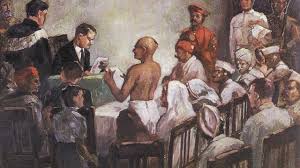
Mahatma Gandhi: "Non violence is the first article of my faith", Statement in The Great Trial - 1922

February 1, 2018

23 March 1922, Ahmadabad, India

The trial is famous for many reasons, including the British judge rising to greet the accused.

I plead guilty to all the charges. I observe that the King’s name has been omitted from the charge, and it has been properly omitted.”]

Court : Mr. Gandhi, do you wish to make any statement on the question of sentence?

Gandhiji : I would like to make a statement.
Court : Could you give me in writing to put it on record?

Gandhiji : I shall give it as soon as I finish it.

[Gandhiji then made the following oral statement followed by a written statement that he read.]

Before I read this statement I would like to state that I entirely endorse the learned Advocate-General’s remarks in connection with my humble self. I think that he has made, because it is very true and I have no desire whatsoever to conceal from this court the fact that to preach disaffection towards the existing system of Government has become almost a passion with me, and the Advocate-General is entirely in the right when he says that my preaching of disaffection did not commence with my connection with Young India but that it commenced much earlier, and in the statement that I am about to read, it will be my painful duty to admit before this court that it commenced much earlier than the period stated by the Advocate-General. It is a painful duty with me but I have to discharge that duty knowing the responsibility that rests upon my shoulders, and I wish to endorse all the blame that the learned Advocate-General has thrown on my shoulders in connection with the Bombay occurrences, Madras occurrences and the Chauri Chuara occurrences. Thinking over these things deeply and sleeping over them night after night, it is impossible for me to dissociate myself from the diabolical crimes of Chauri Chaura or the mad outrages of Bombay. He is quite right when he says, that as a man of responsibility, a man having received a fair share of education, having had a fair share of experience of this world, I should have known the consequences of every one of my acts. I know them. I knew that I was playing with fire. I ran the risk and if I was set free I would still do the same. I have felt it this morning that I would have failed in my duty, if I did not say what I said here just now.
I wanted to avoid violence. Non-violence is the first article of my faith. It is also the last article of my creed. But I had to make my choice. I had either to submit to a system which I considered had done an irreparable harm to my country, or incur the risk of the mad fury of my people bursting forth when they understood the truth from my lips. I know that my people have sometimes gone mad. I am deeply sorry for it and I am, therefore, here to submit not to a light penalty but to the highest penalty. I do not ask for mercy. I do not plead any extenating act. I am here, therefore, to invite and cheerfully submit to the highest penalty that can be inflicted upon me for what in law is a deliberate crime, and what appears to me to be the highest duty of a citizen. The only course open to you, the Judge, is, as I am going to say in my statement, either to resign your post, or inflict on me the severest penalty if you believe that the system and law you are assisting to administer are good for the people. I do not except that kind of conversion. But by the time I have finished with my statement you will have a glimpse of what is raging within my breast to run this maddest risk which a sane man can run.

[He then read out the written statement : ] I owe it perhaps to the Indian public and to the public in England, to placate which this prosecution is mainly taken up, that I should explain why from a staunch loyalist and co-operator, I have become an uncompromising disaffectionist and non-co-operator. To the court too I should say why I plead guilty to the charge of promoting disaffection towards the Government established by law in India.

My public life began in 1893 in South Africa in troubled weather. My first contact with British authority in that country was not of a happy character. I discovered that as a man and an Indian, I had no rights. More correctly I discovered that I had no rights as a man because I was an Indian.

But I was not baffled. I thought that this treatment of Indians was an excrescence upon a system that was intrinsically and mainly good. I gave the Government my voluntary and hearty co-operation, criticizing it freely where I felt it was faulty but never wishing its destruction.

Consequently when the existence of the Empire was threatened in 1899 by the Boer challenge, I offered my services to it, raised a volunteer ambulance corps and served at several actions that took place for the relief of Ladysmith. Similarly in 1906, at the time of the Zulu ‘revolt’, I raised a stretcher bearer party and served till the end of the ‘rebellion’. On both the occasions I received medals and was even mentioned in dispatches. For my work in South Africa I was given by Lord Hardinge a Kaisar-i-Hind gold medal. When the war broke out in 1914 between England and Germany, I raised a volunteer ambulance cars in London, consisting of the then resident Indians in London, chiefly students. Its work was acknowledge by the authorities to be valuable. Lastly, in India when a special appeal was made at the war Conference in Delhi in 1918 by Lord Chelmsford for recruits, I struggled at the cost of my health to raise a corps in Kheda, and the response was being made when the hostilities ceased and orders were received that no more recruits were wanted. In all these efforts at service, I was actuated by the belief that it was possible by such services to gain a status of full equality in the Empire for my countrymen.

The first shock came in the shape of the Rowlatt Act-a law designed to rob the people of all real freedom. I felt called upon to lead an intensive agitation against it. Then followed the Punjab horrors beginning with the massacre at Jallianwala Bagh and culminating in crawling orders, public flogging and other indescribable humiliations. I discovered too that the plighted word of the Prime Minister to the Mussalmans of India regarding the integrity of Turkey and the holy places of Islam was not likely to be fulfilled. But in spite of the forebodings and the grave warnings of friends, at the Amritsar Congress in 1919, I fought for co-operation and working of the Montagu-Chemlmsford reforms, hoping that the Prime Minister would redeem his promise to the Indian Mussalmans, that the Punjab wound would be healed, and that the reforms, inadequate and unsatisfactory though they were, marked a new era of hope in the life of India.
But all that hope was shattered. The Khilafat promise was not to be redeemed. The Punjab crime was whitewashed and most culprits went not only unpunished but remained in service, and some continued to draw pensions from the Indian revenue and in some cases were even rewarded. I saw too that not only did the reforms not mark a change of heart, but they were only a method of further raining India of her wealth and of prolonging her servitude.

I came reluctantly to the conclusion that the British connection had made India more helpless than she ever was before, politically and economically. A disarmed India has no power of resistance against any aggressor if she wanted to engage, in an armed conflict with him. So much is this the case that some of our best men consider that India must take generations, before she can achieve Dominion Status. She has become so poor that she has little power of resisting famines. Before the British advent India spun and wove in her millions of cottages, just the supplement she needed for adding to her meagre agricultural resources. This cottage industry, so vital for India’s existence, has been ruined by incredibly heartless and inhuman processes as described by English witness.

Little do town dwellers how the semi-starved masses of India are slowly sinking to lifelessness. Little do they know that their miserable comfort represents the brokerage they get for their work they do for the foreign exploiter, that the profits and the brokerage are sucked from the masses. Little do realize that the Government established by law in British India is carried on for this exploitation of the masses. No sophistry, no jugglery in figures, can explain away the evidence that the skeletons in many villages present to the naked eye. I have no doubt whatsoever that both England and the town dweller of India will have to answer, if there is a God above, for this crime against humanity, which is perhaps unequalled in history. The law itself in this country has been used to serve the foreign exploiter. My unbiased examination of the Punjab Marital Law cases has led me to believe that at least ninety-five per cent of convictions were wholly bad. My experience of political cases in India leads me to the conclusion, in nine out of every ten, the condemned men were totally innocent. Their crime consisted in the love of their country. In ninety-nine cases out of hundred, justice has been denied to Indians as against Europeans in the courts of India. This is not an exaggerated picture. It is the experience of almost every Indian who has had anything to do with such cases. In my opinion, the administration of the law is thus prostituted, consciously or unconsciously, for the benefit of the exploiter.

The greater misfortune is that the Englishmen and their Indian associates in the administration of the country do not know that they are engaged in the crime I have attempted to describe. I am satisfied that many Englishmen and Indian officials honestly systems devised in the world, and that India is making steady, though, slow progress. They do not know, a subtle but effective system of terrorism and an organized display of force on the one hand, and the deprivation of all powers of retaliation or self-defense on the other, as emasculated the people and induced in them the habit of simulation. This awful habit has added to the ignorance and the self-deception of the administrators. Section 124 A, under which I am happily charged, is perhaps the prince among the political sections of the Indian Penal Code designed to suppress the liberty of the citizen. Affection cannot be manufactured or regulated by law. If one has no affection for a person or system, one should be free to give the fullest expression to his disaffection, so long as he does not contemplate, promote, or incite to violence. But the section under which mere promotion of disaffection is a crime. I have studied some of the cases tried under it; I know that some of the most loved of India’s patriots have been convicted under it. I consider it a privilege, therefore, to be charged under that section. I have endeavored to give in their briefest outline the reasons for my disaffection. I have no personal ill-will against any single administrator, much less can I have any disaffection towards the King’s person. But I hold it to be a virtue to be disaffected towards a Government which in its totality has done more harm to India than any previous system. India is less manly under the British rule than she ever was before. Holding such a belief, I consider it to be a sin to have affection for the system. And it has been a precious privilege for me to be able to write what I have in the various articles tendered in evidence against me.

In fact, I believe that I have rendered a service to India and England by showing in non-co-operation the way out of the unnatural state in which both are living. In my opinion, non-co-operation with evil is as much a duty as is co-operation with good. But in the past, non-co-operation has been deliberately expressed in violence to the evil-doer. I am endeavoring to show to my countrymen that violent non-co-operation only multiples evil, and that as evil can only be sustained by violence, withdrawal of support of evil requires complete abstention from violence. Non-violence implies voluntary submission to the penalty for non-co-operation with evil. I am here, therefore, to invite and submit cheerfully to the highest penalty that can be inflicted upon me for what in law is deliberate crime, and what appears to me to be the highest duty of a citizen. The only course open to you, the Judge and the assessors, is either to resign your posts and thus dissociate yourselves from evil, if you feel that the law you are called upon to administer is an evil, and that in reality I am innocent, or to inflict on me the severest penalty, if you believe that the system and the law you are assisting to administer are good for the people of this country, and that my activity is, therefore, injurious to the common weal.


Source: http://www.mkgandhi.org/speeches/gto1922.h...

Enjoyed this speech? Speakola is a labour of love and I’d be very grateful if you would share, tweet or like it. Thank you.

Facebook Twitter Facebook
In 1920-39 Tags MAHATMA GANDHI, GANDHI, NON VIOLENCE, THE GREAT TRIAL, TRANSCRIPT, COURTROOM, JUDGE, INDIA, HOME RULE, INDEPENDENCE
Comment

King George V: 'The eyes of the whole Empire are on Ireland today', Opening of Northern Ireland parliament - 1921

February 1, 2018

22 June 1921, Belfast, Northern Ireland

Members of the Senate and of the House of Commons, For all who love Ireland, as I do with all my heart, this is a profoundly moving occasion in Irish history. My memories of the Irish people date back to the time when I spent many happy days in Ireland as a midshipman. My affection for the Irish people has been deepened by the successive visits since that time, and I have watched with constant sympathy the course of their affairs.

I could not have allowed myself to give Ireland by deputy alone My earnest prayers and good wishes in the new era which opens with this ceremony, and I have therefore come in person, as the head of the Empire, to inaugurate this parliament on Irish soil. I inaugurate it with deep felt hope and I feel assured that you will do your utmost to make it an instrument of happiness and good government for all parts of the community which you represent.

This is a great and critical occasion in the history of the Six Counties – but not for the Six Counties alone, for everything which interests them touches Ireland, and everything which touches Ireland finds an echo in the remotest parts of the Empire. Few things are more earnestly desired throughout the English speaking world than a satisfactory solution of the age long Irish problems, which for generations embarrassed our forefathers, as they now weigh heavily upon us…

I am confident that the important matters entrusted to the control and guidance of the Northern Parliament will be managed with wisdom and with moderation, with fairness and due regard to every faith and interest, and with no abatement of that patriotic devotion to the Empire which you proved so gallantly in the Great War… My hope is broader still. The eyes of the whole Empire are on Ireland today, that Empire in which so many nations and races have come together in spite of ancient feuds, and in which new nations have come to birth within the lifetime of the youngest in this Hall.

I am emboldened by that thought to look beyond the sorrow and the anxiety which have clouded of late My vision of Irish affairs. I speak from a full heart when… I appeal to all Irishmen to pause, to stretch out the hand of forbearance and conciliation, to forgive and to forget, and to join in making for the land which they love a new era of peace, contentment, and goodwill… For this the parliament of the United Kingdom has in the fullest measure provided the powers; for this the parliament of Ulster is pointing the way. The future lies in the hands of My Irish people themselves.

May this historic gathering be the prelude of a day in which the Irish people, North and South, under one parliament or two, as those parliaments may themselves decide, shall work together in common love for Ireland upon the sure foundations of mutual justice and respect.

Source: http://alphahistory.com/northernireland/ge...

Enjoyed this speech? Speakola is a labour of love and I’d be very grateful if you would share, tweet or like it. Thank you.

Facebook Twitter Facebook
In 1920-39 Tags GEORGE V, KING, TRANSCRIPT, NORTHERN IRELAND, HOME RULE, UNITED KINGDOM
Comment
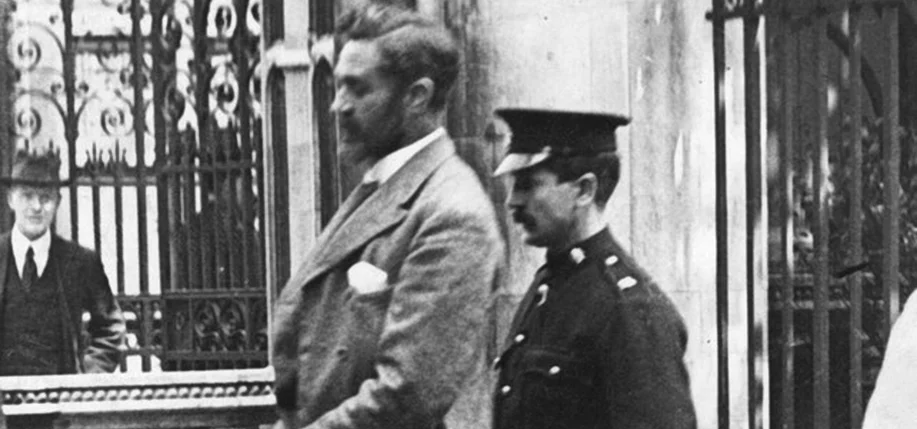
Roger Casement.jpg

Roger Casement: 'In Ireland alone, in this twenthieth century, is loyalty held to be a crime',Speech from the dock - 1916

February 1, 2018

29 June 1916, London, Great Britain

Sir Roger Casement was a British soldier and consul, who was knighted before he took up the Irish nationalist cause in 1911. He was executed post Easter Uprising in 1916. This is his speech from the dock.

My Lord Chief Justice, as I wish my words to reach a much wider audience than I see before me here, I intend to read all that I propose to say. What I shall read now is something I wrote more than twenty days ago. I may say, my lord, at once, that I protest against the jurisdiction of this court in my case on this charge, and the argument, that I am now going to read, is addressed not to this court, but to my own countrymen.

There is an objection, possibly not good in law, but surely good on moral grounds, against the application to me here of this old English statute, 565 years old, that seeks to deprive an Irishman today of life and honour, not for "adhering to the King's enemies", but for adhering to his own people.

When this statute was passed, in 1351, what was the state of men's minds on the question of a far higher allegiance -- that of a man to God and His kingdom? The law of that day did not permit a man to forsake his Church, or deny his God, save with his life. The "heretic", then, had the same doom as the "traitor".

Today a man may forswear God and His heavenly kingdom, without fear or penalty -- all earlier statutes having gone the way of Nero's edicts against the Christians, but that constitutional phantom "the King" can still dig up from the dungeons and torture-chambers of the Dark Ages a law that takes a man's life and limb for an exercise of conscience.

If true religion rests on love, it is equally true that loyalty rests on love. The law that I am charged under has no parentage in love, and claims the allegiance of today on the ignorance and blindness of the past.

I am being tried, in truth, not by my peers of the live present, but by the fears of the dead past; not by the civilization of the twentieth century, but by the brutality of the fourteenth; not even by a statute framed in the language of the land that tries me, but emitted in the language of an enemy land -- so antiquated is the law that must be sought today to slay an Irishman, whose offence is that he puts Ireland first.

Loyalty is a sentiment, not a law. It rests on love, not on restraint. The government of Ireland by England rests on restraint, and not on law; and since it demands no love, it can evoke no loyalty...

Judicial assassination today is reserved only for one race of the King's subjects -- for Irishmen, for those who cannot forget their allegiance to the realm of Ireland. The Kings of England, as such, had no rights in Ireland up to the time of Henry VIII, save such as rested on compact and mutual obligation entered into between them and certain princes, chiefs, and lords of Ireland. This form of legal right, such as it was, gave no King of England lawful power to impeach an Irishman for high treason under this statute of King Edward III of England until an Irish Act, known as Poyning's Law, the tenth of Henry VII, was passed in 1494 at Drogheda, by the Parliament of the Pale in Ireland, and enacted as law in that part of Ireland. But, if by Poyning's Law an Irishman of the Pale could be indicted for high treason under this Act, he could be indicted in only one way, and before one tribunal -- by the laws of the Realm of Ireland and in Ireland. The very law of Poyning, which, I believe, applies this statute of Edward III to Ireland, enacts also for the Irishman's defence "all these laws by which England claims her liberty".

And what is the fundamental charter of an Englishman's Liberty? That he shall be tried by his peers. With all respect, I assert this court is to me, an Irishman, charged with this offence, a foreign court -- this jury is for me, an Irishman, not a jury of my peers to try me on this vital issue, for it is patent to every man of conscience that I have a right, an indefeasible right, if tried at all, under this statute of high treason, to be tried in Ireland, before an Irish court and by an Irish jury. This court, this jury, the public opinion of this country, England, cannot but be prejudiced in varying degrees against me, most of all in time of war. I did not land in England. I landed in Ireland. It was to Ireland I came; to Ireland I wanted to come; and the last place I desired to land was in England.

But for the Attorney-General of England there is only "England"; there is no Ireland; there is only the law of England, no right of Ireland; the liberty of Ireland and of an Irishman is to be judged by the power of England. Yet for me, the Irish outlaw, there is a land of Ireland, a right of Ireland, and a charter for all Irishmen to appeal to, in the last resort, a charter, that even the very statutes of England itself cannot deprive us of -- nay more, a charter that Englishmen themselves assert as the fundamental bond of law that connects the two kingdoms. This charge of high treason involves a moral responsibility, as the very terms of the indictment against myself recite, inasmuch as I committed the acts I am charged with to the "evil example of others in like case". What was the evil example I set to others in the like case, and who were these others? The "evil example" charged is that I asserted the right of my own country and the "others" I appealed to, to aid my endeavour, were my own countrymen. The example was given, not to Englishmen, but to Irishmen, and the "like case" can never arise in England, but only in Ireland. To Englishmen I set no evil example, for I made no appeal to them. I asked no Englishman to help me. I asked Irishmen to fight for their rights. The "evil example" was only to other Irishmen, who might come after me, and in "like case" seek to do as I did. How, then, since neither my example, nor my appeal was addressed to Englishmen, can I be rightfully tried by them?

If I did wrong in making that appeal to Irishmen to join with me in an effort to fight for Ireland, it is by Irishmen, and by them alone, I can be rightfully judged. From this court and its jurisdiction I appeal to those I am alleged to have wronged, and to those I am alleged to have injured by my "evil example" and claim that they alone are competent to decide my guilt or innocence. If they find me guilty, the statute may affix the penalty, but the statute does not override or annul my right to seek judgment at their hands.

This is so fundamental a right, so natural a right, so obvious a right, that it is clear that the Crown were aware of it when they brought me by force and by stealth from Ireland to this country. It was not I who landed in England, but the Crown who dragged me here, away from my own country to which I had returned with a price upon my head, away from my own countrymen whose loyalty is not in doubt, and safe from the judgment of my peers whose judgment I do not shrink from. I admit no other judgment but theirs. I accept no verdict save at their hands.

I assert from this dock that I am being tried here, not because it is just, but because it is unjust. Place me before a jury of my own countrymen, be it Protestant or Catholic, Unionist or Nationalist, Sinn Féineach or Orangemen, and I shall accept the verdict, and bow to the statute and all its penalties. But I shall accept no meaner finding against me, than that of those, whose loyalty I have endangered by my example, and to whom alone I made appeal. If they adjudge me guilty, then guilty I am. It is not I who am afraid of their verdict -- it is the Crown. If this is not so, why fear the test? I fear it not. I demand it as my right.

This is the condemnation of English rule, of English-made law, of English government in Ireland, that it dare not rest on the will of the Irish people, but exists in defiance of their will: that it is a rule, derived not from right, but from conquest.

Conquest, my Lord, gives no title; and, if it exists over the body, it fails over the mind. It can exert no empire over men's reason and judgment and affections; and it is from this law of conquest without title to the reason, judgment, and affection of my own countrymen that I appeal.

I can answer for my own acts and speeches. While one English party was responsible for preaching a doctrine of hatred, designed to bring about civil war in Ireland, the other, and that the party in power, took no active steps to restrain a propaganda that found its advocates in the Army, Navy, and Privy Council -- in the House of Parliament, and in the State Church -- a propaganda the methods of whose expression were so grossly illegal and utterly unconstitutional that even the Lord Chancellor of England could find only words and no repressive action to apply to them. Since lawlessness sat in high places in England, and laughed at the law as at the custodians of the law, what wonder was it that Irishmen should refuse to accept the verbal protestations of an English Lord Chancellor as a sufficient safeguard for their lives and liberties? I know not how all my colleagues on the Volunteer Committee in Dublin reviewed the growing menace, but those with whom I was in closest cooperation redoubled, in face of these threats from without, our efforts to unite all Irishmen from within. Our appeals were made to Protestant and Unionist as much almost as to Catholic and Nationalist Irishmen.

We hoped that, by the exhibition of affection and goodwill on our part toward our political opponents in Ireland, we should yet succeed in winning them from the side of an English party whose sole interest in our country lay in its oppression in the past, and in the present in its degradation to the mean and narrow needs of their political animosities. It is true that they based their actions, so they averred, on "ears for the empire", and on a very diffuse loyalty that took in all the peoples of the empire, save only the Irish. That blessed word empire that bears so paradoxical resemblance to charity! For if charity begins at home, empire begins in other men's homes, and both may cover a multitude of sins. I, for one, was determined that Ireland was much more to me than empire, and, if charity begins at home, so must loyalty. Since arms were so necessary to make our organization a reality, and to give to the minds of Irishmen, menaced with the most outrageous threats, a sense of security, it was our bounden duty to get arms before all else. I decided, with this end in view, to go to America, with surely a better right to appeal to Irishmen there for help in an hour of great national trial, than those envoys of empire could assert for their weekend descents on Ireland, or their appeals to Germany.

If, as the right honourable gentleman, the present Attorney-General, asserted in a speech at Manchester, Nationalists would neither fight for Home Rule nor pay for it, it was our duty to show him that we knew how to do both. Within a few weeks of my arrival in the United States, the fund that had been opened to secure arms for the Volunteers of Ireland amounted to many thousands of pounds. In every case the money subscribed, whether it came from the purse of the wealthy man, or from the still readier pocket of the poor man, was Irish gold.

We have been told, we have been asked to hope, that after this war Ireland will get Home Rule, as a reward for the lifeblood shed in a cause which, whomever else its success may benefit, can surely not benefit Ireland. And what will Home Rule be in return for what its vague promise has taken, and still hopes to take away from Ireland? It is not necessary to climb the painful stairs of Irish history -- that treadmill of a nation, whose labours are as vain for her own uplifting as the convict's exertions are for his redemption, to review the long list of British promises made only to be broken -- of Irish hopes, raised only to be dashed to the ground. Home Rule, when it comes, if come it does, will find an Ireland drained of all that is vital to its very existence unless it be that unquenchable hope we build on the graves of the dead. We are told that if Irishmen go by the thousand to die, not for Ireland, but for Flanders, for Belgium, for a patch of sand in the deserts of Mesopotamia, or a rocky trench on the heights of Gallipoli, they are winning self-government for Ireland. But if they dare to lay down their lives on their native soil, if they dare to dream even that freedom can be won only at home by men resolved to fight for it there, then they are traitors to their country, and their dream and their deaths are phases of a dishonourable phantasy.

But history is not so recorded in other lands. In Ireland alone, in this twentieth century, is loyalty held to be a crime. If loyalty be something less than love and more than law, then we have had enough of such loyalty for Ireland and Irishmen. If we are to be indicted as criminals, to be shot as murderers, to be imprisoned as convicts, because our offence is that we love Ireland more than we value our lives, then I do not know what virtue resides in any offer of self-government held out to brave men on such terms. Self-government is our right, a thing born in us at birth, a thing no more to be doled out to us, or withheld from us, by another people than the right to life itself -- than the right to feel the sun, or smell the flowers, or to love our kind. It is only from the convict these things are withheld, for crime committed and proven and Ireland, that has wronged no man, has injured no land, that has sought no dominion over others -- Ireland is being treated today among the nations of the world as if she were a convicted criminal. If it be treason to fight against such an unnatural fate as this, then I am proud to be a rebel, and shall cling to my "rebellion" with the last drop of my blood. If there be no right of rebellion against the state of things that no savage tribe would endure without resistance, then I am sure that it is better for men to fight and die without right than to live in such a state of right as this. Where all your rights have become only an accumulated wrong, where men must beg with bated breath for leave to subsist in their own land, to think their own thoughts, to sing their own songs, to gather the fruits of their own labours, and, even while they beg, to see things inexorably withdrawn from them -- then, surely, it is a braver, a saner and truer thing to be a rebel, in act and in deed, against such circumstances as these, than to tamely accept it, as the natural lot of men.

Source: https://www.newstatesman.com/2010/03/irela...

Enjoyed this speech? Speakola is a labour of love and I’d be very grateful if you would share, tweet or like it. Thank you.

Facebook Twitter Facebook
In 1900-19 Tags ROGER CASEMENT, IRELAND, HOME RULE, SPEECH FROM THE DOCK, EXECUTION, EASTER UPRISING
Comment

Pádraic Pearse: 'Ireland unfree shall never be at peace', O’Donovan Rossa’s funeral - 1915

September 11, 2015

1 August 1915, Glasnevin Cemetery, Dublin, Ireland

It has seemed right, before we turn away from this place in which we have laid the mortal remains of O'Donovan Rossa, that one amongst us should, in the name of all, speak the praise of that valiant man, and endeavour to formulate the thought and the hope that are in us as we stand around his grave. And if there is anything that makes it fitting that I rather than some other. I, rather than one of the grey-haired men who were young with him, and shared in his labour and in his suffering, should speak here, it is, perhaps, that I may be taken as speaking on behalf of a new generation that has been re-baptised in the Fenian faith, and that has accepted the responsibility of carrying out the Fenian programme. I propose to you, then, that here by the grave of this unrepentant Fenian, we renew our baptismal vows; that here by the grave of this unconquered and unconquerable man, we ask of God, each one for himself, such unshakeable purpose, such high and gallant courage, such unbreakable strength of soul as belonged to O'Donovan Rossa.

"Deliberately here we avow ourselves, as he avowed himself in the dock, Irishmen of one allegiance only. We, of the Irish Volunteers, and you others who are associated with us in to-day's task and duty, are bound together, and must stand together henceforth in brotherly union for the achievement of the freedom of Ireland. And we know only one definition of freedom: It is Tone's definition; it is Mitchel's definition; it is Rossa's definition. Let no one blaspheme the cause that the dead generations of Ireland served by giving it any other name and definition than their name and definition.

We stand at Rossa's grave, not in sadness, but rather in exaltation of spirit that it has been given us to come thus into so close a communion with that brave and splendid Gael. Splendid and holy causes are served by men who are themselves splendid and holy. O'Donovan Rossa was splendid in the proud manhood of him--splendid in the heroic grace of him, splendid in the Gaelic strength and clarity and truth of him. And all that splendour, and pride, and strength was compatible with a humility and a simplicity of devotion to Ireland, to all that was olden and beautiful and Gaelic in Ireland; the holiness and simplicity of patriotism of a Michael O'Clery or of an Eoghan O'Growney. The clear true eyes of this man almost alone in his day visioned Ireland as we to-day would surely have her--not free merely but Gaelic as well; not Gaelic merely, but free as well.

In a closer spiritual communion with him now than ever before, or perhaps ever again, in spiritual communion with those of his day living and dead, who suffered with him in English prisons, in communion of spirit too with our own dear comrades who suffer in English prisons to-day, and speaking on their behalf as well as our own, we pledge to Ireland our love, and we pledge to English rule in Ireland our hate. This is a place of peace, sacred to the dead, where men should speak with all charity and with all restraint; but I hold it a Christian thing, as O'Donovan Rossa held it, to hate evil, to hate untruth, to hate oppression, and hating them, to strive to overthrow them. Our foes are strong, and wise, and wary; but strong and wise and wary as they are, they cannot undo the miracles of God, Who ripens in the hearts of young men the seeds sown by the young men of a former generation. And the seeds sown by the young men of '65 and '67 are coming to their miraculous ripening to-day. Rulers and Defenders of Realms had need to be wary it they would guard against such processes. Life springs from death, and from the graves of patriot men and women spring live nations. The defenders of this realm have worked well in secret and in the open. They think that they have pacified Ireland. They think that they have purchased half of us, and intimidated the other half. They think that they have foreseen everything. They think that they have provided against everything; but the fools, the fools, the fools! they have left us our Fenian dead, and while Ireland holds these graves, Ireland unfree shall never be at peace.

Enjoyed this speech? Speakola is a labour of love and I’d be very grateful if you would share, tweet or like it. Thank you.

Facebook Twitter Facebook
In 1900-19 Tags PATRICK PEARSE, EASTER RISING, O'DONOVAN ROSSA, REPUBLICANISM, IRELAND, HOME RULE
Comment

See my film!

Limited Australian Season

March 2025

Details and ticket bookings at

angeandtheboss.com

Support Speakola

Hi speech lovers,
With costs of hosting website and podcast, this labour of love has become a difficult financial proposition in recent times. If you can afford a donation, it will help Speakola survive and prosper.

Best wishes,
Tony Wilson.

Become a Patron!

Learn more about supporting Speakola.

Featured political

Featured
Jon Stewart: "They responded in five seconds", 9-11 first responders, Address to Congress - 2019
Jacinda Ardern: 'They were New Zealanders. They are us', Address to Parliament following Christchurch massacre - 2019
Dolores Ibárruri: "¡No Pasarán!, They shall not pass!', Defense of 2nd Spanish Republic - 1936
Jimmy Reid: 'A rat race is for rats. We're not rats', Rectorial address, Glasgow University - 1972

Featured eulogies

Featured
For Geoffrey Tozer: 'I have to say we all let him down', by Paul Keating - 2009
for James Baldwin: 'Jimmy. You crowned us', by Toni Morrison - 1988
for Michael Gordon: '13 days ago my Dad’s big, beautiful, generous heart suddenly stopped beating', by Scott and Sarah Gordon - 2018

Featured commencement

Featured
Tara Westover: 'Your avatar isn't real, it isn't terribly far from a lie', The Un-Instagrammable Self, Northeastern University - 2019
Tim Minchin: 'Being an artist requires massive reserves of self-belief', WAAPA - 2019
Atul Gawande: 'Curiosity and What Equality Really Means', UCLA Medical School - 2018
Abby Wambach: 'We are the wolves', Barnard College - 2018
Eric Idle: 'America is 300 million people all walking in the same direction, singing 'I Did It My Way'', Whitman College - 2013
Shirley Chisholm: ;America has gone to sleep', Greenfield High School - 1983

Featured sport

Featured
Joe Marler: 'Get back on the horse', Harlequins v Bath pre game interview - 2019
Ray Lewis : 'The greatest pain of my life is the reason I'm standing here today', 52 Cards -
Mel Jones: 'If she was Bradman on the field, she was definitely Keith Miller off the field', Betty Wilson's induction into Australian Cricket Hall of Fame - 2017
Jeff Thomson: 'It’s all those people that help you as kids', Hall of Fame - 2016

Fresh Tweets


Featured weddings

Featured
Dan Angelucci: 'The Best (Best Man) Speech of all time', for Don and Katherine - 2019
Hallerman Sisters: 'Oh sister now we have to let you gooooo!' for Caitlin & Johnny - 2015
Korey Soderman (via Kyle): 'All our lives I have used my voice to help Korey express his thoughts, so today, like always, I will be my brother’s voice' for Kyle and Jess - 2014

Featured Arts

Featured
Bruce Springsteen: 'They're keepers of some of the most beautiful sonic architecture in rock and roll', Induction U2 into Rock Hall of Fame - 2005
Olivia Colman: 'Done that bit. I think I have done that bit', BAFTA acceptance, Leading Actress - 2019
Axel Scheffler: 'The book wasn't called 'No Room on the Broom!', Illustrator of the Year, British Book Awards - 2018
Tina Fey: 'Only in comedy is an obedient white girl from the suburbs a diversity candidate', Kennedy Center Mark Twain Award -  2010
Tina Fey: 'Only in comedy is an obedient white girl from the suburbs a diversity candidate', Kennedy Center Mark Twain Award - 2010

Featured Debates

Featured
Sacha Baron Cohen: 'Just think what Goebbels might have done with Facebook', Anti Defamation League Leadership Award - 2019
Greta Thunberg: 'How dare you', UN Climate Action Summit - 2019
Charlie Munger: 'The Psychology of Human Misjudgment', Harvard University - 1995
Lawrence O'Donnell: 'The original sin of this country is that we invaders shot and murdered our way across the land killing every Native American that we could', The Last Word, 'Dakota' - 2016