• Genre
  • About
  • Submissions
  • Donate
  • Search
Menu

Speakola

All Speeches Great and Small
  • Genre
  • About
  • Submissions
  • Donate
  • Search
Share a political speech

Richard Boyd Barrett: 'If you're going to have moral standards, those standards have to be consistent!' Call for action on Israel apartheid - 2022

March 7, 2022

2 March 2022, Dublin, Ireland

Minister, myself and deputy John Brady requested this debate at the business committee on Amnesty International's utterly damning report that Israel is a state that is operating a system of apartheid, and in doing so are committing crimes against humanity, and call for sanctions to ensure that that system, that inhumane and inhuman system, is dismantled.

Now we called for this debate prior to the barbaric invasion of Ukraine by Vladimir Putin. And all of us have rightly condemned the crimes against humanity that are being committed by Vladimir Putin in Ukraine. And the government has moved instantly, within five days, to sanction Putin's regime and take urgent action. And the strength of language that was used, rightly against Putin, as a barbarian, as a thug, as a murderer, as a warmonger, all of which are true, all of those things, all of those things applied, applied to the state of Israel in its treatment of the Palestinians. And yet the government is 'concerned' about its use of language, and doesn't feel it is appropriate to even use the word apartheid, when Amnesty International, the most respected human rights organisation in the world, and Human Rights Watch, within a very short period of time, issue these damning reports saying that Israel, since its foundation, has been built on a system of oppression and domination and apartheid and racism Involving the murder of unarmed innocent civilians on a regular basis, arbitrary detention and imprisonment, land annexations, the displacement of people, the denial of basic fundamental rights to six million Palestinians who are displaced outside Israel in the Occupied Territories to the rights of their return to their homes, to the illegal blockade of Gaza, which is left, as they say in the report, 'Gaza in a permanent state of humanitarian crisis', denying people access to food, to water, and treating the Arab population as a whole, the Palestinian population as a whole, as an inferior race.

I mean, it doesn't get stronger than this, And yet you want to be careful about your language. You are happy to correctly use the most strong and robust language to describe the crimes against humanity of Vladimir Putin, but you will not use the same strength of language when it comes to describing the Israel's treatment of the Palestinians when it is now being documented and detailed by two of the most respected human rights organisations in the world. And indeed has been alleged by dozens and dozens of non-governmental organisations. And to be honest, anybody who looks honestly at the decades of brutal inhumane, persecution of the Palestinian, successive assaults on Gaza, the annexation of the land and territory, the systematic application of apartheid rules, you don't want to even use the word 'apartheid'. Nevermind sanctions. Five days, sanctions against Putin and his thugs, Seventy years of oppression of the Palestinians. And it wouldn't be —what was the word you used? — It wouldn't be 'helpful' to impose sanctions.

Amnesty International are calling for Israel to be referred to the international criminal courts for crimes against humanity. Will you support it? They are calling for targeted sanctions against Israeli officials who are perpetuating the system of apartheid. Just exactly the same types of sanctions you've just initiated against Vladimir Putin, will you support it? And I think the answer is clearly, you're not going to.

And then we asked the question why. Why? With such strength of feeling Fine Gael and Fianna Fail and Green TDs stood up one after the othe,r saying it was intolerable the thuggery and the warmongering and the brutality of Putin, you wouldn't stand for it, urgent action had to be taken, but we've got to be much more careful with the Palestinians and their treatment. And I haven't even got time to [talk about] the briefing I organised this week about the people of Yemen, and how Saudi Arabia, the most despotic regime in the world, armed to the teeth by the United States, Britain, France, and others, killing 337,000 people in Yemen in the last five years, 10,000 children, any action against the United States for arming them? Or Britain or France? Or Saudi itself?

No, no action, no sanctions, no outrage, words of concern. 'We'll raise it'. 'We'll raise it'. 'We'll call on them to do things'. Now you see, if you're going to have moral standards, those standards have to be consistent, otherwise they are not standards at all. They are just cynicism. And of course, we all know the reason that the standards are not consistent is because to call out the apartheidstate of Israel, would be to run foul of the concerns of certain states that are now presenting themselves as defenders of democracy.and so on, such as the United States, the UK, Germany, and other powers. Whose relationship with Israel, supporting it and backing, it, means that the European Union's moral credentials are bankrupted. And that they are not willing to take the action.

And we go along with that.

That is not acceptable. So I appeal to you, minister. I appeal to you, to uphold the tradition this country has, going right back to its foundation, to opposing oppression of peoples, and standing up against brutal powers that are willing to subjugate people, like the Palestinians or any others.

Show some moral backbone, show some consistency, and support the motion that we have circulated to every TD in this house, which Sinn Fein have now signed, which the number of the Left Independents, which People Before Profit have signed, calling for the adoption of the recommendations of the Amnesty report and for the sanctions that must follow that they recommend. Will you support those things? Because if you don't, to be honest, all the words of concern, all the raising it, means nothing to the Palestinian people.


Source: https://www.youtube.com/watch?v=Wc8JsAxVqp...

Enjoyed this speech? Speakola is a labour of love and I’d be very grateful if you would share, tweet or like it. Thank you.

Facebook Twitter Facebook
In 2020-29 B Tags RICHARD BOYD BARRETT, IRELAND, IRISH PAR, IRISH PARLIAMENT, TRANSCRIPT, IRISH PEOPLE BEFORE PROFIT, SOLIDARITY PARTY, ISRAEL, PALESTINE, APARTHEID, AMNESTY INTERNIONAL, ARGUMENTATIVE, DEBATE, PARLIAMENTARY DEBATE
Comment

Enda Kenny: 'We put away these women because .for too many years we put away our conscience', .Apology to Magdalene Laundries women - 2013

August 4, 2021

19 February 2013, Dublin, Ireland

I begin today’s debate by thanking Dr Martin McAleese and his team for their excellent work on this report.

I thank equally all the women who met with them to assist in its compilation. I also thank the religious orders who cooperated fully with Dr. McAleese.

Together they have helped provide Ireland with a document of truth.

The Magdalene laundries have cast a long shadow over Irish life over our sense of who we are.

It’s just two weeks since we received this report: the first-ever detailed Report into the State’s involvement in the Magdalene Laundries.

It shines a bright and necessary light on a dark chapter of Ireland’s history.

On coming to office the Government was determined to investigate the facts of the State’s involvement.

The government was adamant that these ageing and elderly women would get the compassion and the recognition for which they have fought for so long deserved so deeply and had, until now, been so abjectly denied.

The reality is that for 90 years Ireland subjected these women and their experience to a profound and studied indifference.

I was determined because of this that this Government – this Dáil – would take the necessary time not just to commission the Report but to actually study it and having done so to reflect on its findings.

I believe that was the best way to formulate a plan and strategy that would help us make amends for the State’s role in the hurt of these extraordinary women.

I’m glad that so many of the women themselves agreed with that approach.

And I’m glad that this time of reflection gave me the chance to do the most important thing of all: to meet personally with the Magdalene Women. To sit down with them, face to face, to listen to their stories.

It was a humbling and inspiring experience.

Today, as their Taoiseach, I am privileged to welcome some of these women to this House many of whom have travelled long distances to be here.

I warmly welcome you every one of you to your national parliament, to Dail Eireann.

What we discuss today is your story. What we address today is how you took this country’s terrible ‘secret’ and made it your own. Burying it carrying it in your hearts here at home, or with you to England and to Canada America and Australia on behalf of Ireland and the Irish people.

But from this moment on you need carry it no more. Because today we take it back. Today we acknowledge the role of the State in your ordeal.

We now know that the State itself was directly involved in over a quarter of all admissions to the Magdalene Laundries.

Be it through the social services reformatories psychiatric institutions county homes the prison and probation service and industrial schools.

In fact we have decided to include all the Magdalene women in our response regardless of how they were admitted.

Dr McAleese set out to investigate five areas in particular;

1: The routes by which the women entered the laundries
2: Regulations of the workplace and State inspections
3: State funding of and financial assistance to the laundries
4: The routes by which the girls and women left the laundries
5: Death registrations, burials and exhumations

In all five areas there was found to be direct State involvement.

As I read this Report and as I listened to these women, it struck me that for generations Ireland had created a particular portrait of itself as a good living God-fearing nation.

Through this and other reports we know this flattering self-portrait to be fictitious.

It would be easy to explain away all that happened – all we did in those great moral and social salves of ‘the culture back then’ = the ‘order of the day’, ‘the terrible times that were in it’.

Yes, by any standards it was a cruel, pitiless Ireland distinctly lacking in a quality of mercy. That much is clear, both from the ages of the Report, and from the stories of the women I met.

As I sat with these women as they told their stories it was clear that while every woman’s story was different each of them shared a particular experience of a particular Ireland judgemental intolerant petty and prim.

In the laundries themselves some women spent weeks others months more of them years. But the thread that ran through their many stories was a palpable sense of suffocation not just physical in that they were incarcerated but psychological .spiritual social. Their stories were enriched by an astonishing vividness of recall of situation and circumstance.

Here are some of the things I read in the report and they said directly to me:

“The work was so hard, the regime was cruel.”
“I felt all alone, nobody wanted me.”
“They sent me because they thought I was going to a good school.”
“I seen these older people beside me, I used cry myself to sleep.”
“I was bold, I wasn’t going to school.”
“I was locked up I thought I would never get out.”
“We had to sew at night even when we were sick.”
“I heard a radio sometimes in the distance.”
“We were not allowed to talk to each other.”
“Your letters were checked.”
“I was so short I needed a stool to put washing in.”
“The noise was desperate.”
“I thought I would go mad from the silence.”
“The heat was unbelievable.”
“I broke a cup once and had to wear it hanging around my neck for three days.”
“I felt always tired always wet .always humiliated.”
“My father came for me after three months but I was too ashamed to go home.”
“I never saw my Mam again she died while I was in there.”

The Magdalene Women might have been told that they were washing away a wrong or a sin but we know now and to our shame they were only ever scrubbing away our nation’s shadow.

Today, just as the State accepts its direct involvement in the Magdalene Laundries society too has its responsibility.

I believe I speak for millions of Irish people all over the world when I say we put away these women because .for too many years we put away our conscience.

We swapped our personal scruples for a solid public apparatus that kept us in tune and in step with a sense of what was ‘proper behaviour’ or the ‘appropriate view’ according to a sort of moral code that was fostered at the time particularly in the 1930s, 40s and 50s.

We lived with the damaging idea that what was desirable and acceptable in the eyes of the Church and the State was the same and interchangeable.

Is it this mindset then this moral subservience that gave us the social mores the required and exclusive ‘values’ of the time that welcomed the compliant, obedient and lucky ‘us’ and banished the more problematic, spirited or unlucky ‘them’?

And to our nation’s shame it must be said that if these women had managed to scale the high walls of the laundries they’d have had their work cut out for them to negotiate the height and the depth of the barricades around society’s ‘proper’ heart. For we saw difference as something to be feared and hidden rather than embraced and celebrated.

But were these our ‘values’?

Because we can ask ourselves for a State – least of all a republic.
What is the ‘value’ of the tacit and unchallenged decree that saw society humiliate and degrade these girls and women?

What is the ‘value’ of the ignorance and arrogance that saw us publicly call them ‘Penitents’ for their ‘crime’ of being poor or abused or just plain unlucky enough to be already the inmate of a reformatory, or an industrial school or a psychiatric institution?

We can ask ourselves as the families we were then what was worthy what was good about that great euphemism of ‘putting away’ our daughters our sisters our aunties ?

Those ‘values’ those failures those wrongs characterised Magdalene Ireland.

Today we live in a very different Ireland with a very a different consciousness awareness – an Ireland where we have more compassion empathy insight heart.

We do because at last we are learning those terrible lessons. We do because at last we are giving up our secrets.

We do because in naming and addressing the wrong, as is happening here today, we are trying to make sure we quarantine such abject behaviour in our past and eradicate it from Ireland’s present and Ireland’s future.

In a society guided by the principles of compassion and social justice there never would have been any need for institutions such as the Magdalene Laundries.

The Report shows that the perception that the Magdalene Laundries were reserved for what were offensively and judgementally called “fallen women” is not based upon fact at all but upon prejudice. The women are and always were wholly blameless.

Therefore, I, as Taoiseach, on behalf of the State, the government and our citizens deeply regret and apologise unreservedly to all those women for the hurt that was done to them, and for any stigma they suffered, as a result of the time they spent in a Magdalene Laundry.

I hope that the publication of the McAleese Report and this apology makes some contribution to the healing process.

But in reflecting on this Report I have come to the view that these women deserve more than this formal apology, important though it is. I also want to put in place a process by which we can determine how best to help and support the women in their remaining years.

One of the many things I have learned during my recent meetings with these women is that their circumstances and current needs vary greatly from person to person.

That’s why the Government has today asked the President of the Law Reform Commission, Judge John Quirke, to undertake a three month review and to make recommendations as to the criteria that should be applied in assessing the help that the government can provide in the areas of payments and other supports, including medical cards, psychological and counselling services and other welfare needs.

The terms of reference for Judge Quirke will be published later today and I will also arrange for the representatives of the women to be fully briefed on this process. When Judge Quirke has reported, the government will establish a Fund to assist the women, based on his recommendations.

I am confident that this process will enable us to provide speedy, fair and meaningful help to the women in a compassionate and non adversial way. I am determined that the fund will be primarily used to help the women – as is their stated and strong desire – not for legal or administrative costs.

The McAleese Report also refers to women who recounted similar experiences in other residential laundries, such as the laundry offering services to the public operated in the Training Centre at Stanhope Street, Dublin.

The government has decided that these women should be included in both the apology I have extended today, and in the Fund.

I am also conscious that many of the women I met last week want to see a permanent memorial established to remind us all of this dark part of our history.

I agree that this should be done and intend to engage directly with the representative groups and of as many of the women as possible to agree on the creation of an appropriate memorial to be financed by the Government separately from the funds that are being set aside for the direct assistance for the women.

Let me conclude by again speaking directly to the women whose experiences in Magdalene Laundries have negatively affected their subsequent lives.

As a society, for many years we failed you.

We forgot you or, if we thought of you at all, we did so in untrue and offensive stereotypes.

This is a national shame, for which I again say, I am deeply sorry and offer my full and heartfelt apologies.

At the conclusion of my discussions with one group of the Magdalene Women one of those present sang ‘Whispering Hope’. A line from that song stays in my mind – “when the dark midnight is over, watch for the breaking of day”.

Let me hope that this day and this debate – excuse me – heralds a new dawn for all those who feared that the dark midnight might never end.

Source: https://www.thejournal.ie/full-text-enda-k...

Enjoyed this speech? Speakola is a labour of love and I’d be very grateful if you would share, tweet or like it. Thank you.

Facebook Twitter Facebook
In 2010s MORE 5 Tags MAGDALENE WOMEN, MAGDALENE LAUNDRIES, UNPAID LABOUR, IRELAND, TAOISEACH, THE TAOISEACH, TRANSCRIPT, APOLOGY, STATE APOLOGY
Comment

Eamon de Valera: 'The Ireland that we dreamed of', St Patrick's Day broadcast - 1943

October 14, 2019

17 March 1943, RTE studios, Dublin, Ireland

The ideal Ireland that we would have, the Ireland that we dreamed of, would be the home of a people who valued material wealth only as a basis for right living, of a people who, satisfied with frugal comfort, devoted their leisure to the things of the spirit – a land whose countryside would be bright with cosy homesteads, whose fields and villages would be joyous with the sounds of industry, with the romping of sturdy children, the contest of athletic youths and the laughter of happy maidens, whose firesides would be forums for the wisdom of serene old age.

The home, in short, of a people living the life that God desires that men should live.

With the tidings that make such an Ireland possible, St. Patrick came to our ancestors fifteen hundred years ago promising happiness here no less than happiness hereafter. It was the pursuit of such an Ireland that later made our country worthy to be called the island of saints and scholars. It was the idea of such an Ireland – happy, vigorous, spiritual – that fired the imagination of our poets; that made successive generations of patriotic men give their lives to win religious and political liberty; and that will urge men in our own and future generations to die, if need be, so that these liberties may be preserved.

One hundred years ago, the Young Irelanders, by holding up the vision of such an Ireland before the people, inspired and moved them spiritually as our people had hardly been moved since the Golden Age of Irish civilisation.

Fifty years later, the founders of the Gaelic League similarly inspired and moved the people of their day.

So, later, did the leaders of the Irish Volunteers.

We of this time, if we have the will and active enthusiasm, have the opportunity to inspire and move our generation in like manner. We can do so by keeping this thought of a noble future for our country constantly before our eyes, ever seeking in action to bring that future into being, and ever remembering that it is for our nation as a whole that future must be sought.

Source: https://medium.com/@fitzfromdublin/the-ire...

Enjoyed this speech? Speakola is a labour of love and I’d be very grateful if you would share, tweet or like it. Thank you.

Facebook Twitter Facebook
In 1920-39 MORE Tags EAMON DE VALERA, TRANSCRIPT, ST PATRICK'S DAY, IDEALISED, NATIONALISM, SPIRITUALITY, CATHOLICISM, IRELAND, IRISHNESS, IRISH CHARACTER
Comment
Roger Casement.jpg

Roger Casement: 'In Ireland alone, in this twenthieth century, is loyalty held to be a crime',Speech from the dock - 1916

February 1, 2018

29 June 1916, London, Great Britain

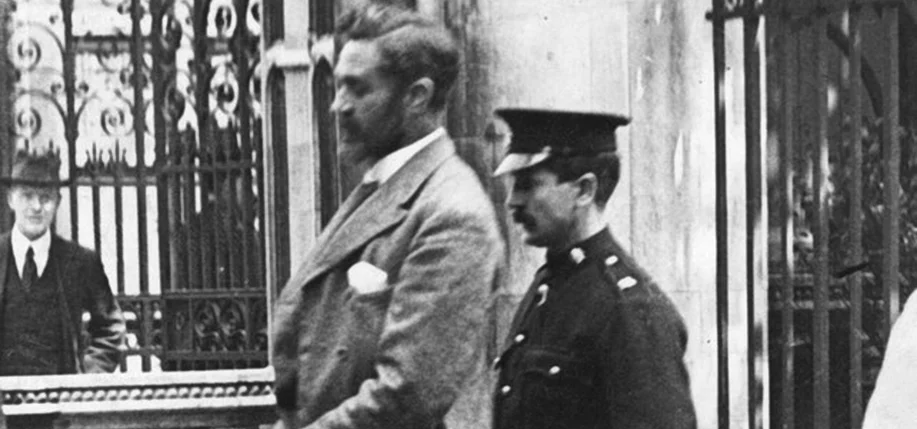
Sir Roger Casement was a British soldier and consul, who was knighted before he took up the Irish nationalist cause in 1911. He was executed post Easter Uprising in 1916. This is his speech from the dock.

My Lord Chief Justice, as I wish my words to reach a much wider audience than I see before me here, I intend to read all that I propose to say. What I shall read now is something I wrote more than twenty days ago. I may say, my lord, at once, that I protest against the jurisdiction of this court in my case on this charge, and the argument, that I am now going to read, is addressed not to this court, but to my own countrymen.

There is an objection, possibly not good in law, but surely good on moral grounds, against the application to me here of this old English statute, 565 years old, that seeks to deprive an Irishman today of life and honour, not for "adhering to the King's enemies", but for adhering to his own people.

When this statute was passed, in 1351, what was the state of men's minds on the question of a far higher allegiance -- that of a man to God and His kingdom? The law of that day did not permit a man to forsake his Church, or deny his God, save with his life. The "heretic", then, had the same doom as the "traitor".

Today a man may forswear God and His heavenly kingdom, without fear or penalty -- all earlier statutes having gone the way of Nero's edicts against the Christians, but that constitutional phantom "the King" can still dig up from the dungeons and torture-chambers of the Dark Ages a law that takes a man's life and limb for an exercise of conscience.

If true religion rests on love, it is equally true that loyalty rests on love. The law that I am charged under has no parentage in love, and claims the allegiance of today on the ignorance and blindness of the past.

I am being tried, in truth, not by my peers of the live present, but by the fears of the dead past; not by the civilization of the twentieth century, but by the brutality of the fourteenth; not even by a statute framed in the language of the land that tries me, but emitted in the language of an enemy land -- so antiquated is the law that must be sought today to slay an Irishman, whose offence is that he puts Ireland first.

Loyalty is a sentiment, not a law. It rests on love, not on restraint. The government of Ireland by England rests on restraint, and not on law; and since it demands no love, it can evoke no loyalty...

Judicial assassination today is reserved only for one race of the King's subjects -- for Irishmen, for those who cannot forget their allegiance to the realm of Ireland. The Kings of England, as such, had no rights in Ireland up to the time of Henry VIII, save such as rested on compact and mutual obligation entered into between them and certain princes, chiefs, and lords of Ireland. This form of legal right, such as it was, gave no King of England lawful power to impeach an Irishman for high treason under this statute of King Edward III of England until an Irish Act, known as Poyning's Law, the tenth of Henry VII, was passed in 1494 at Drogheda, by the Parliament of the Pale in Ireland, and enacted as law in that part of Ireland. But, if by Poyning's Law an Irishman of the Pale could be indicted for high treason under this Act, he could be indicted in only one way, and before one tribunal -- by the laws of the Realm of Ireland and in Ireland. The very law of Poyning, which, I believe, applies this statute of Edward III to Ireland, enacts also for the Irishman's defence "all these laws by which England claims her liberty".

And what is the fundamental charter of an Englishman's Liberty? That he shall be tried by his peers. With all respect, I assert this court is to me, an Irishman, charged with this offence, a foreign court -- this jury is for me, an Irishman, not a jury of my peers to try me on this vital issue, for it is patent to every man of conscience that I have a right, an indefeasible right, if tried at all, under this statute of high treason, to be tried in Ireland, before an Irish court and by an Irish jury. This court, this jury, the public opinion of this country, England, cannot but be prejudiced in varying degrees against me, most of all in time of war. I did not land in England. I landed in Ireland. It was to Ireland I came; to Ireland I wanted to come; and the last place I desired to land was in England.

But for the Attorney-General of England there is only "England"; there is no Ireland; there is only the law of England, no right of Ireland; the liberty of Ireland and of an Irishman is to be judged by the power of England. Yet for me, the Irish outlaw, there is a land of Ireland, a right of Ireland, and a charter for all Irishmen to appeal to, in the last resort, a charter, that even the very statutes of England itself cannot deprive us of -- nay more, a charter that Englishmen themselves assert as the fundamental bond of law that connects the two kingdoms. This charge of high treason involves a moral responsibility, as the very terms of the indictment against myself recite, inasmuch as I committed the acts I am charged with to the "evil example of others in like case". What was the evil example I set to others in the like case, and who were these others? The "evil example" charged is that I asserted the right of my own country and the "others" I appealed to, to aid my endeavour, were my own countrymen. The example was given, not to Englishmen, but to Irishmen, and the "like case" can never arise in England, but only in Ireland. To Englishmen I set no evil example, for I made no appeal to them. I asked no Englishman to help me. I asked Irishmen to fight for their rights. The "evil example" was only to other Irishmen, who might come after me, and in "like case" seek to do as I did. How, then, since neither my example, nor my appeal was addressed to Englishmen, can I be rightfully tried by them?

If I did wrong in making that appeal to Irishmen to join with me in an effort to fight for Ireland, it is by Irishmen, and by them alone, I can be rightfully judged. From this court and its jurisdiction I appeal to those I am alleged to have wronged, and to those I am alleged to have injured by my "evil example" and claim that they alone are competent to decide my guilt or innocence. If they find me guilty, the statute may affix the penalty, but the statute does not override or annul my right to seek judgment at their hands.

This is so fundamental a right, so natural a right, so obvious a right, that it is clear that the Crown were aware of it when they brought me by force and by stealth from Ireland to this country. It was not I who landed in England, but the Crown who dragged me here, away from my own country to which I had returned with a price upon my head, away from my own countrymen whose loyalty is not in doubt, and safe from the judgment of my peers whose judgment I do not shrink from. I admit no other judgment but theirs. I accept no verdict save at their hands.

I assert from this dock that I am being tried here, not because it is just, but because it is unjust. Place me before a jury of my own countrymen, be it Protestant or Catholic, Unionist or Nationalist, Sinn Féineach or Orangemen, and I shall accept the verdict, and bow to the statute and all its penalties. But I shall accept no meaner finding against me, than that of those, whose loyalty I have endangered by my example, and to whom alone I made appeal. If they adjudge me guilty, then guilty I am. It is not I who am afraid of their verdict -- it is the Crown. If this is not so, why fear the test? I fear it not. I demand it as my right.

This is the condemnation of English rule, of English-made law, of English government in Ireland, that it dare not rest on the will of the Irish people, but exists in defiance of their will: that it is a rule, derived not from right, but from conquest.

Conquest, my Lord, gives no title; and, if it exists over the body, it fails over the mind. It can exert no empire over men's reason and judgment and affections; and it is from this law of conquest without title to the reason, judgment, and affection of my own countrymen that I appeal.

I can answer for my own acts and speeches. While one English party was responsible for preaching a doctrine of hatred, designed to bring about civil war in Ireland, the other, and that the party in power, took no active steps to restrain a propaganda that found its advocates in the Army, Navy, and Privy Council -- in the House of Parliament, and in the State Church -- a propaganda the methods of whose expression were so grossly illegal and utterly unconstitutional that even the Lord Chancellor of England could find only words and no repressive action to apply to them. Since lawlessness sat in high places in England, and laughed at the law as at the custodians of the law, what wonder was it that Irishmen should refuse to accept the verbal protestations of an English Lord Chancellor as a sufficient safeguard for their lives and liberties? I know not how all my colleagues on the Volunteer Committee in Dublin reviewed the growing menace, but those with whom I was in closest cooperation redoubled, in face of these threats from without, our efforts to unite all Irishmen from within. Our appeals were made to Protestant and Unionist as much almost as to Catholic and Nationalist Irishmen.

We hoped that, by the exhibition of affection and goodwill on our part toward our political opponents in Ireland, we should yet succeed in winning them from the side of an English party whose sole interest in our country lay in its oppression in the past, and in the present in its degradation to the mean and narrow needs of their political animosities. It is true that they based their actions, so they averred, on "ears for the empire", and on a very diffuse loyalty that took in all the peoples of the empire, save only the Irish. That blessed word empire that bears so paradoxical resemblance to charity! For if charity begins at home, empire begins in other men's homes, and both may cover a multitude of sins. I, for one, was determined that Ireland was much more to me than empire, and, if charity begins at home, so must loyalty. Since arms were so necessary to make our organization a reality, and to give to the minds of Irishmen, menaced with the most outrageous threats, a sense of security, it was our bounden duty to get arms before all else. I decided, with this end in view, to go to America, with surely a better right to appeal to Irishmen there for help in an hour of great national trial, than those envoys of empire could assert for their weekend descents on Ireland, or their appeals to Germany.

If, as the right honourable gentleman, the present Attorney-General, asserted in a speech at Manchester, Nationalists would neither fight for Home Rule nor pay for it, it was our duty to show him that we knew how to do both. Within a few weeks of my arrival in the United States, the fund that had been opened to secure arms for the Volunteers of Ireland amounted to many thousands of pounds. In every case the money subscribed, whether it came from the purse of the wealthy man, or from the still readier pocket of the poor man, was Irish gold.

We have been told, we have been asked to hope, that after this war Ireland will get Home Rule, as a reward for the lifeblood shed in a cause which, whomever else its success may benefit, can surely not benefit Ireland. And what will Home Rule be in return for what its vague promise has taken, and still hopes to take away from Ireland? It is not necessary to climb the painful stairs of Irish history -- that treadmill of a nation, whose labours are as vain for her own uplifting as the convict's exertions are for his redemption, to review the long list of British promises made only to be broken -- of Irish hopes, raised only to be dashed to the ground. Home Rule, when it comes, if come it does, will find an Ireland drained of all that is vital to its very existence unless it be that unquenchable hope we build on the graves of the dead. We are told that if Irishmen go by the thousand to die, not for Ireland, but for Flanders, for Belgium, for a patch of sand in the deserts of Mesopotamia, or a rocky trench on the heights of Gallipoli, they are winning self-government for Ireland. But if they dare to lay down their lives on their native soil, if they dare to dream even that freedom can be won only at home by men resolved to fight for it there, then they are traitors to their country, and their dream and their deaths are phases of a dishonourable phantasy.

But history is not so recorded in other lands. In Ireland alone, in this twentieth century, is loyalty held to be a crime. If loyalty be something less than love and more than law, then we have had enough of such loyalty for Ireland and Irishmen. If we are to be indicted as criminals, to be shot as murderers, to be imprisoned as convicts, because our offence is that we love Ireland more than we value our lives, then I do not know what virtue resides in any offer of self-government held out to brave men on such terms. Self-government is our right, a thing born in us at birth, a thing no more to be doled out to us, or withheld from us, by another people than the right to life itself -- than the right to feel the sun, or smell the flowers, or to love our kind. It is only from the convict these things are withheld, for crime committed and proven and Ireland, that has wronged no man, has injured no land, that has sought no dominion over others -- Ireland is being treated today among the nations of the world as if she were a convicted criminal. If it be treason to fight against such an unnatural fate as this, then I am proud to be a rebel, and shall cling to my "rebellion" with the last drop of my blood. If there be no right of rebellion against the state of things that no savage tribe would endure without resistance, then I am sure that it is better for men to fight and die without right than to live in such a state of right as this. Where all your rights have become only an accumulated wrong, where men must beg with bated breath for leave to subsist in their own land, to think their own thoughts, to sing their own songs, to gather the fruits of their own labours, and, even while they beg, to see things inexorably withdrawn from them -- then, surely, it is a braver, a saner and truer thing to be a rebel, in act and in deed, against such circumstances as these, than to tamely accept it, as the natural lot of men.

Source: https://www.newstatesman.com/2010/03/irela...

Enjoyed this speech? Speakola is a labour of love and I’d be very grateful if you would share, tweet or like it. Thank you.

Facebook Twitter Facebook
In 1900-19 Tags ROGER CASEMENT, IRELAND, HOME RULE, SPEECH FROM THE DOCK, EXECUTION, EASTER UPRISING
Comment

Gerry Adams: 'Our struggle reached a defining moment', speech to IRA to end armed struggle - 2005

June 28, 2017

6 April 2005, Dublin, Ireland

I want to speak directly to the men and women of Oglaigh na hEireann, the volunteer soldiers of the Irish Republican Army.

In time of great peril you stepped into the Bearna Baoil, the gap of danger. When others stood idly by, you and your families gave your all, in defence of a risen people and in pursuit of Irish freedom and unity.

Against mighty odds you held the line and faced down a huge military foe, the British Crown Forces and their surrogates in the unionist death squads.

Eleven years ago, the (Irish Republican) Army leadership ordered a complete cessation of military operations.

This courageous decision was in response to proposals put forward by the Sinn Fein leadership to construct a peace process, build democratic politics and achieve a lasting peace.

Since then - despite many provocations and setbacks - the cessation has endured.

And more than that, when elements within the British and Irish establishments and rejectionist unionism delayed progress, it was the IRA leadership which authorised a number of significant initiatives to enhance the peace process.

On a number of occasions, commitments have been reneged on. These include commitments from the two governments.

The Irish Republican Army has kept every commitment made by its leadership.

The most recent of these was last December when the IRA was prepared to support a comprehensive agreement.

At that time, the army leadership said the implementation of this agreement would allow everyone, including the IRA, to take its political objectives forward by peaceful and democratic means.

That agreement perished on the rock of unionist intransigence. The shortsightedness of the two governments compounded the difficulties.

Since then, there has been a vicious campaign of vilification against republicans, driven in the main by the Irish government. There are a number of reasons for this.

The growing political influence of Sinn Fein is a primary factor.

The unionists also for their part, want to minimise the potential for change, not only on the equality agenda but on the issues of sovereignty and ending the union.

The IRA is being used as the excuse by them all not to engage properly in the process of building peace with justice in Ireland.

For over 30 years, the IRA showed that the British government could not rule Ireland on its own terms.

You asserted the legitimacy of the right of the people of this island to freedom and independence. Many of your comrades made the ultimate sacrifice.

Your determination, selflessness and courage have brought the freedom struggle towards its fulfilment.

That struggle can now be taken forward by other means. I say this with the authority of my office as president of Sinn Fein.

In the past I have defended the right of the IRA to engage in armed struggle. I did so because there was no alternative for those who would not bend the knee, or turn a blind eye to oppression, or for those who wanted a national republic.

Now there is an alternative.

I have clearly set out my view of what that alternative is. The way forward is by building political support for republican and democratic objectives across Ireland and by winning support for these goals internationally.

I want to use this occasion therefore to appeal to the leadership of Oglaigh na hEireann to fully embrace and accept this alternative.

Can you take courageous initiatives which will achieve your aims by purely political and democratic activity?

I know full well that such truly historic decisions can only be taken in the aftermath of intense internal consultation. I ask that you initiate this as quickly as possible.

I understand fully that the IRA's most recent positive contribution to the peace process was in the context of a comprehensive agreement. But I also hold the very strong view that republicans need to lead by example.

There is no greater demonstration of this than the IRA cessation in the summer of 1994.

Sinn Fein has demonstrated the ability to play a leadership role as part of a popular movement towards peace, equality and justice.

We are totally committed to ending partition and to creating the conditions for unity and independence.

Sinn Fein has the potential and capacity to become the vehicle for the attainment of republican objectives.

The Ireland we live in today is also very different place from 15 years ago. There is now an all-Ireland agenda with huge potential.

Nationalists and republicans have a confidence that will never again allow anyone to be treated as second-class citizens. Equality is our watchword.

The catalyst for much of this change is the growing support for republicanism.

Of course, those who oppose change are not going to simply roll over. It will always be a battle a day between those who want maximum change and those who want to maintain the status quo.

But if republicans are to prevail, if the peace process is to be successfully concluded and Irish sovereignty and re-unification secured, then we have to set the agenda - no-one else is going to do that.

So, I also want to make a personal appeal to all of you - the women and men volunteers who have remained undefeated in the face of tremendous odds.

Now is the time for you to step into the Bearna Baoil again; not as volunteers risking life and limb but as activists in a national movement towards independence and unity.

Such decisions will be far reaching and difficult. But you never lacked courage in the past. Your courage is now needed for the future.

It won't be easy. There are many problems to be resolved by the people of Ireland in the time ahead.

Your ability as republican volunteers, to rise to this challenge will mean that the two governments and others cannot easily hide from their obligations and their responsibility to resolve these problems.

Our struggle has reached a defining moment.

I am asking you to join me in seizing this moment, to intensify our efforts, to rebuild the peace process and decisively move our struggle forward. 

Source: http://news.bbc.co.uk/2/hi/uk_news/norther...

Enjoyed this speech? Speakola is a labour of love and I’d be very grateful if you would share, tweet or like it. Thank you.

Facebook Twitter Facebook
In 2000s MORE Tags IRISH REPUBLICAN ARMY, IRA, GERRY ADAMS, SINN FEIN, REPUBLIC OF IRELAND, IRELAND, NORTHERN IRELAND, PARTITION, NON-VIOLENCE, TRANSCRIPT
Comment

Charles Haughey: 'We are living away beyond our means', televised address -

January 4, 2017

9 January 1980,

I wish to talk to you this evening about the state of the nation’s affairs and the picture I have to paint is not, unfortunately, a very cheerful one.

The figures which are now just becoming available to us show one thing very clearly. As a community we are living away beyond our means. I do not mean that everyone in the community is living too well. Clearly many are not and have barely enough to get by. But taking us all together, we have been living at a rate which is simply not justified by the amount of goods and services we are producing.

To make up the difference, we have been borrowing enormous amounts of money, borrowing at a rat which just cannot continue. As few simple figures will make this very clear.

At home, the government’s current income from taxes and all other sources in 1979 fell short of what was needed to pay the running costs of the state by about £520m million. To meet this and our capital programme, we had to borrow in 1979 over £1000 million. That amount equals to one-seventh of our entire national output.

The situation in regard to our trading with the outside world in 1979 was bad also. Our income from abroad fell short of what we had to pay out by about £760 million which led to a fall in our reserves.

To fully understand our situation, we must look not just on the home scene but also on the troubled and unstable world around us. There are wars and rumours or wars. There is political instability in some of the most important areas of the world. A very serious threat exists to the world’s future supply of energy. We can no longer be sure that we will be able to go on paying the prices now being demanded for all the oil and other fuels we require to keep our factories going and to keep our homes and institutions supplied with light, heat and power they need. We will, of course push exploration for our own oil ahead as rapidly as possible but in the short term the burden of oil prices will continue to be a crushing one.

All this indicates that we must, first of all, as a matter of urgency, set about putting our domestic affairs in order and secondly, improving our trade with the rest of the world on so far as we can do so.

We will have to continue to cut down on government spending. The government is taking far too much by way of taxes from individual members of the community. But even this amount is not enough to meet our commitments. We will just have to reorganise government spending so that we can only undertake the things which we can afford.

In trying to bring government expenditure within manageable proportions, we will, of course, be paying particular attention to the needs of the poorer and weaker sections of the community and make sure they are looked after. Other essential community expenditure will have to be undertaken also. But there are many things which will just have to be curtailed or postponed, until such time as we can get the financial situation right.

There is one things above all else which we can do to help get the situation right and which is entirely within our control. I refer to industrial relations. Any further serious interruption in production, or in the provision of essential services, in 1980 would be a major disaster. I believe that everyone listening to me tonight shares my anxiety about our situation in that respect.

Strikes, go-slows, work-to-rule, stoppages in key industries and essentials services, were too often a feature of life in 1979. They caused suffering and hardship; at time it looked as if we were becoming one of those countries where basic services could not be relied upon to operate as part of normal life.

Immediately following my election as Taoiseach, I received countless messages from all over the country from people in every walk of life, appealing to me to do something about this situation.

Let us clearly understand, however that this is not a one-sided affair. Managements that do not give first-class attention to their firm’s industrial relations, who ignore situations and let them drift into confrontation, are just as blameworthy as the handful of wild men who slap an unofficial picket and stop thousands of workers from earning their living.

Apportioning blame, however, is not going to get us anywhere. What we need is a new way forward and that is my primary purpose, as head of government, in talking to you tonight.

Source: http://www.politics.ie/forum/history/69891...

Enjoyed this speech? Speakola is a labour of love and I’d be very grateful if you would share, tweet or like it. Thank you.

Facebook Twitter Facebook
In 1980-99 Tags CHARLES HAUGHEY, FF, IRELAND, IRISH PRIME MINISTER, TAOISEACH, CONSERVATIVE PARTY, TRANSCIRPT, THE TAOISEACH
Comment

Taoiseach John Bruton: 'The murder of a journalist in the course of her work is sinister in the extreme', statement following murder of Veronica Guerin - 1996

January 4, 2017

26 June 1996, Dublin, Ireland

We are shocked when we hear of the death of any young person. We are even more shocked when we hear that her death was a result of murder, in cold blood, in broad daylight, on a roadside in Dublin. What makes it even more shocking is to hear that the young person murdered was an investigative reporter who was known for her determination to go about her business in a courageous, innovative and committed way. On behalf of the Government and on my own behalf I extend my deepest sympathy to her husband Graham, to her son, Cathal, and to the parents, family, friends and journalistic colleagues of Veronica Guerin. I telephoned my sympathy to the Sunday Independent and to the general secretary of the National Union of Journalists.

We in this House knew Veronica Guerin best as a journalist, but some Members will recall her contribution to the Forum for a New Ireland in 1982 and 1983. That was an early indication from a talented young person of her interest in Irish public life. Deputies opposite will be especially aware of her work for the Fianna Fáil delegation. Deputies in other parties who attended the forum will recall her tact, friendship and diplomacy as the forum sought to reach agreement, which it did, on a very important report. That agreement was greatly facilitated by the work of the late Veronica Guerin.

Her work in recent times established her as a particular gifted and professional investigative journalist. She wrote about the unacceptable face of life, about murders, drug dealing and crime. She did so with care and compassion. In doing so she made an important contribution to public life. Without the work she did, much of the recent public debate on crime would not have been as well informed as it was.

Her contribution to journalism was recognised not just at home but also abroad. In December 1995, Veronica won the prestigious International Press Freedom Award, and when it was being conferred on her at a ceremony in New York, she was cited for her fearless courage and determination. Veronica Guerin was a gifted journalist. Arising out of the work she was doing, her life was previously threatened, and she was attacked on at least three occasions. In February last year she was shot in her home, no doubt to discourage her from a particular line of journalistic investigation. From her hospital bed she said, on that occasion, “I won't be intimidated”, and she was not. She was not deterred. She continued her work undaunted and undiminished in her enthusiasm, despite this bloody intimidation.

The murder of a journalist in the course of her work is sinister in the extreme. Someone, somewhere, decided to take her life, and almost certainly did so to prevent information coming into the public arena. Journalism is a vital and well established element in our democracy. This country benefits from a strong, free media. The independence of the media is one of the hallmarks of a strong and vibrant democracy. Journalists must be independent not only of political influence, commercial influence, personal or sectoral influence; journalists must also now be independent of threats and terror from what-ever source. That a journalist should be callously murdered in the line of duty is an attack on democracy, because it is an attack on one of the pillars of our democracy. The full resources of the State will be brought to bear in bringing to justice those responsible for today's murder. Veronica Guerin deserves no less. Her family and friends, many of them in this House, deserve no less. Her journalistic colleagues deserve no less. The best tribute we can pay to her life and to her work is to redouble our efforts in the defence of democracy.

On a personal note, there is little that can be said on this occasion that can be of any immediate consolation to Veronica's husband, Graham, or to her small son, Cathal, who must now grow up to adulthood without his mother, but it may in time be some small consolation to them for it to be recalled to them the unparalleled shock seen on the faces of Deputies on all sides in this House when, some time this morning, the news of Veronica's killing spread through the House. Members felt this loss in a very personal way. Those expressions of utter speechlessness and utter inability to comprehend what had happened speak perhaps more eloquently than anything we can say now of the contribution that Veronica Guerin made during her all too short life, to the public life of this country. That knowledge may, in time, be of some small consolation to the people who suffer her loss so grievously now and for whom no words of consolation at this stage can serve.

Source: http://oireachtasdebates.oireachtas.ie/deb...

Enjoyed this speech? Speakola is a labour of love and I’d be very grateful if you would share, tweet or like it. Thank you.

Facebook Twitter Facebook
In 1980-99 Tags THE TAOISEACH, JOHN BRUTON, VERNOICA GUERIN, MURDER, ORGANISED CRIME, IRELAND, TRANSCRIPT, CRIME
Comment

Eamon de Valera: Response to Churchill's criticism about neutrality - 1945

March 26, 2016

16 May 1945, broadcast, Ireland

Three days earlier, in his Victory in Europe speech, Winston Churchill had been critical of de Valera and Irish neutrality in WW2.

I have here before me the pencilled notes from which I broadcast to you on 3 September 1939. I had so many other things to do on that day that I could not find time to piece them together into a connected statement. From these notes I see that I said that noting the march of events your Government had decided its policy the previous spring, and had announced its decision to the world.

The aim of our policy, I said, would to keep our people out of the war. I reminded you of what I had said in the Dail that in our circumstances, with our history and our experience after the last war and with a part of our country still unjustly severed from us; no other policy was possible.

Certain newspapers have been very persistent in looking for my answer to Mr. Churchill's recent broadcast . I know the kind of answer I am expected to make. I know the answer that first springs to the lips of every man of Irish blood who heard or read that speech, no matter in what circumstances or in what part of the world he found himself.

I know the reply I would have given a quarter of a century ago. But I have deliberately decided that that is not the reply I shall make tonight. I shall strive not to be guilty of adding any fuel to the flames of hatred and passion which, if continued to be fed, promise to burn up whatever is left by the war of decent human feeling in Europe.

Allowances can be made for Mr. Churchill's statement, however unworthy, in the first flush of his victory. No such excuse could be found for me in this quieter atmosphere. There are, however some things which it is my duty to say, some things which it is essential to say. I shall try to say them as dispassionately as I can.

Mr. Churchill makes it clear that, in certain circumstances, he would have violated our neutrality and that he would justify his action by Britain's necessity. It seems strange to me that Mr. Churchill does not see that this, if accepted, would mean Britain's necessity would become a moral code and that when this necessity became sufficiently great, other people's rights were not to count.

It is quite true that other great Powers believe in this same code-in their own regard-and have behaved in accordance with it. That is precisely why we have the disastrous succession of wars-World War No. 1 and World War No. 2-and shall it be World War No. 3?

Surely Mr. Churchill must see that if his contention be admitted in our regard, a like justification can be framed for similar acts of aggression elsewhere and no small nation adjoining a great Power could ever hope to be permitted to go it own way in peace.

It is indeed fortunate that Britain's necessity did not reach the point when Mr. Churchill would have acted. All credit to him that he successfully resisted the temptation which, I have not doubt, may times assailed him in his difficulties and to which I freely admit many leaders might have easily succumbed. It is indeed; hard for the strong to be just to the weak, but acting justly always has its rewards.

By resisting his temptation in this instance, Mr. Churchill, instead of adding another horrid chapter to the already bloodstained record of the relations between England and this country, has advanced the cause of international morality an important step-one of the most important, indeed, that can be taken on the road to the establishment of any sure basis for peace.

As far as the peoples of these two islands are concerned, it may, perhaps, mark a fresh beginning towards the realisation of that mutual comprehension to which Mr. Churchill has referred for which, I hope, he will not merely pray but work also, as did his predecessor who will yet, I believe, find the honoured place in British history which is due to him, as certainly he will find it in any fair record of the relations between Britain and ourselves.

That Mr. Churchill should be irritated when our neutrality stood in the way of what he thought he vitally needed, I understand, but that he or any thinking person in Britain or elsewhere should fail to see the reason for our neutrality, I find it hard to conceive.

I would like to put a hypothetical question-it is a question I have put to many Englishmen since the last war. Suppose Germany had won the war, had invaded and occupied England, and that after a long lapse of time and many bitter struggles, she was finally brought to acquiesce in admitting England's right to freedom, and let England go, but not the whole of England, all but, let us say, the six southern counties.

These six southern counties, those, let us suppose, commanding the entrance to the narrow seas, Germany had singled out and insisted on holding herself with a view to weakening England as a whole, and maintaining the securing of her own communications through the Straits of Dover.

Let us suppose further, that after all this had happened, Germany was engaged in a great war in which she could show that she was on the side of freedom of a number of small nations, would Mr. Churchill as an Englishman who believed that his own nation had as good a right to freedom as any other, not freedom for a part merely, but freedom for the whole--would he, whilst Germany still maintained the partition of his country and occupied six counties of it, would he lead this partitioned England to join with Germany in a crusade? I do not think Mr. Churchill would.

Would he think the people of partitioned England an object of shame if they stood neutral in such circumstances? I do not think Mr. Churchill would.

Mr. Churchill is proud of Britain's stand alone, after France had fallen and before America entered the War.

Could he not find in his heart the generosity to acknowledge that there is a small nation that stood alone not for one year or two, but for several hundred years against aggression; that endured spoliations, famines, massacres in endless succession; that was clubbed many times into insensibility, but that each time on returning consciousness took up the fight anew; a small nation that could never be got to accept defeat and has never surrendered her soul?

Mr. Churchill is justly proud of his nation's perseverance against heavy odds. But we in this island are still prouder of our people's perseverance for freedom through all the centuries. We, of our time, have played our part in the perseverance, and we have pledged our selves to the dead generations who have preserved intact for us this glorious heritage, that we, too, will strive to be faithful to the end, and pass on this tradition unblemished.

Many a time in the past there appeared little hope except that hope to which Mr. Churchill referred, that by standing fast a time would come when, to quote his own words: "…the tyrant would make some ghastly mistake which would alter the whole balance of the struggle."

I sincerely trust, however, that it is not thus our ultimate unity and freedom will be achieved, though as a younger man I confess I prayed even for that, and indeed at times saw not other.

In latter years, I have had a vision of a nobler and better ending, better for both our people and for the future of mankind. For that I have now been long working. I regret that it is not to this nobler purpose that Mr. Churchill is lending his hand rather than, by the abuse of a people who have done him no wrong, trying to find in a crisis like the present excuse for continuing the injustice of the mutilation of our country.

I sincerely hope that Mr. Churchill has not deliberately chosen the latter course but, if he has, however regretfully we may say it, we can only say, be it so.

Meanwhile, even as a partitioned small nation, we shall go on and strive to play our part in the world continuing unswervingly to work for the cause of true freedom and for peace and understanding between all nations."

Source: http://www.thephora.net/forum/showthread.p...

Enjoyed this speech? Speakola is a labour of love and I’d be very grateful if you would share, tweet or like it. Thank you.

Facebook Twitter Facebook
In 1940-59 Tags EAMON DE VALERA, IRELAND, WW2, NEUTRALITY, THE TROUBLES
Comment

Pádraic Pearse: 'Ireland unfree shall never be at peace', O’Donovan Rossa’s funeral - 1915

September 11, 2015

1 August 1915, Glasnevin Cemetery, Dublin, Ireland

It has seemed right, before we turn away from this place in which we have laid the mortal remains of O'Donovan Rossa, that one amongst us should, in the name of all, speak the praise of that valiant man, and endeavour to formulate the thought and the hope that are in us as we stand around his grave. And if there is anything that makes it fitting that I rather than some other. I, rather than one of the grey-haired men who were young with him, and shared in his labour and in his suffering, should speak here, it is, perhaps, that I may be taken as speaking on behalf of a new generation that has been re-baptised in the Fenian faith, and that has accepted the responsibility of carrying out the Fenian programme. I propose to you, then, that here by the grave of this unrepentant Fenian, we renew our baptismal vows; that here by the grave of this unconquered and unconquerable man, we ask of God, each one for himself, such unshakeable purpose, such high and gallant courage, such unbreakable strength of soul as belonged to O'Donovan Rossa.

"Deliberately here we avow ourselves, as he avowed himself in the dock, Irishmen of one allegiance only. We, of the Irish Volunteers, and you others who are associated with us in to-day's task and duty, are bound together, and must stand together henceforth in brotherly union for the achievement of the freedom of Ireland. And we know only one definition of freedom: It is Tone's definition; it is Mitchel's definition; it is Rossa's definition. Let no one blaspheme the cause that the dead generations of Ireland served by giving it any other name and definition than their name and definition.

We stand at Rossa's grave, not in sadness, but rather in exaltation of spirit that it has been given us to come thus into so close a communion with that brave and splendid Gael. Splendid and holy causes are served by men who are themselves splendid and holy. O'Donovan Rossa was splendid in the proud manhood of him--splendid in the heroic grace of him, splendid in the Gaelic strength and clarity and truth of him. And all that splendour, and pride, and strength was compatible with a humility and a simplicity of devotion to Ireland, to all that was olden and beautiful and Gaelic in Ireland; the holiness and simplicity of patriotism of a Michael O'Clery or of an Eoghan O'Growney. The clear true eyes of this man almost alone in his day visioned Ireland as we to-day would surely have her--not free merely but Gaelic as well; not Gaelic merely, but free as well.

In a closer spiritual communion with him now than ever before, or perhaps ever again, in spiritual communion with those of his day living and dead, who suffered with him in English prisons, in communion of spirit too with our own dear comrades who suffer in English prisons to-day, and speaking on their behalf as well as our own, we pledge to Ireland our love, and we pledge to English rule in Ireland our hate. This is a place of peace, sacred to the dead, where men should speak with all charity and with all restraint; but I hold it a Christian thing, as O'Donovan Rossa held it, to hate evil, to hate untruth, to hate oppression, and hating them, to strive to overthrow them. Our foes are strong, and wise, and wary; but strong and wise and wary as they are, they cannot undo the miracles of God, Who ripens in the hearts of young men the seeds sown by the young men of a former generation. And the seeds sown by the young men of '65 and '67 are coming to their miraculous ripening to-day. Rulers and Defenders of Realms had need to be wary it they would guard against such processes. Life springs from death, and from the graves of patriot men and women spring live nations. The defenders of this realm have worked well in secret and in the open. They think that they have pacified Ireland. They think that they have purchased half of us, and intimidated the other half. They think that they have foreseen everything. They think that they have provided against everything; but the fools, the fools, the fools! they have left us our Fenian dead, and while Ireland holds these graves, Ireland unfree shall never be at peace.

Enjoyed this speech? Speakola is a labour of love and I’d be very grateful if you would share, tweet or like it. Thank you.

Facebook Twitter Facebook
In 1900-19 Tags PATRICK PEARSE, EASTER RISING, O'DONOVAN ROSSA, REPUBLICANISM, IRELAND, HOME RULE
Comment

Robert Emmet: 'Let no man write my epitaph', From the dock - 1803

August 28, 2015

19 September, 1803, Dublin, Ireland

Robert Emmet was an Irish nationalist and Republican, orator and rebel leader. He led an abortive rebellion against British rule in 1803.

My Lords:

What have I to say why sentence of death should not be pronounced on me according to law?  I have nothing to say that can alter your predetermination, nor that it will become me to say with any view to the mitigation of that sentence which you are here to pronounce, and I must abide by.  But I have that to say which interests me more than life, and which you have labored (as was necessarily your office in the present circumstances of this oppressed country) to destroy.  I have much to say why my reputation should be rescued from the load of false accusation and calumny which has been heaped upon it.  I do not imagine that, seated where you are, your minds can be so free from impurity as to receive the least impression from what I am going to utter--I have no hopes that I can anchor my character in the breast of a court constituted and trammeled as this is--I only wish, and it is the utmost I expect, that your lordships may suffer it to float down your memories untainted by the foul breath of prejudice, until it finds some more hospitable harbor to shelter it from the storm by which it is at present buffeted.

Was I only to suffer death after being adjudged guilty by your tribunal, I should bow in silence and meet the fate that awaits me without a murmur; but the sentence of law which delivers my body to the executioner will, through the ministry of that law, labor in its own vindication to consign my character to obloquy--for there must be guilt somewhere: whether in the sentence of the court in the catastrophe, posterity must determine. A man in my situation, my lords, has not only to encounter the difficulties of fortune. and the force of power over minds which it has corrupted or subjugated. but the difficulties of established prejudice: the man dies, but his memory lives. That mine may not perish, that it may live in the respect of my countrymen, I seize upon this opportunity to vindicate myself from some of the charges alleged against me. When my spirit shall be wafted to a more friendly port; when my shade shall have joined the bands of those martyred heroes who have shed their blood on the scaffold and in the field, in defense of their country and of virtue. this is my hope: I wish that my memory and name may animate those who survive me, while I look down with complacency on the destruction of that perfidious government which upholds its domination by blasphemy of the Most High-which displays its power over man as over the beasts of the forest-which sets man upon his brother, and lifts his hand in the name of God against the throat of his fellow who believes or doubts a little more or a little less than the government standard--a government which is steeled to barbarity by the cries of the orphans and the tears of the widows which it has made.

[Interruption by the court.]

I appeal to the immaculate God--I swear by the throne of heaven, before which I must shortly appear--by the blood of the murdered patriots who have gone before me that my conduct has been through all this peril and all my purposes governed only by the convictions which I have uttered, and by no other view than that of their cure, and the emancipation of my country from the superinhuman oppression under which she has so long and too patiently travailed; and that I confidently and assuredly hope that, wild and chimerical as it may appear, there is still union and strength in Ireland to accomplish this noble enterprise. of this I speak with the confidence of intimate knowledge, and with the consolation that appertains to that confidence. Think not, my lords, I say this for the petty gratification of giving you a transitory uneasiness; a man who never yet raised his voice to assert a lie will not hazard his character with posterity by asserting a falsehood on a subject so important to his country, and on an occasion like this. Yes. my lords. a man who does not wish to have his epitaph written until his country is liberated will not leave a weapon in the power of envy, nor a pretense to impeach the probity which he means to preserve even in the grave to which tyranny consigns him.

[Interruption by the court.]

Again I say, that what I have spoken was not intended for your lordship, whose situation I commiserate rather than envy-my expressions were for my countrymen; if there is a true Irishman present. let my last words cheer him in the hour of his affliction.

[Interruption by the court.]

I have always understood it to be the duty of a judge. when a prisoner has been convicted, to pronounce the sentence of the law; I have also understood that judges sometimes think it their duty to hear with patience and to speak with humanity. to exhort the victim of the laws. and to offer with tender benignity his opinions of the motives by which he was actuated in the crime, of which he had been adjudged guilty: that a judge has thought it his duty so to have done. I have no doubt--but where is the boasted freedom of your institutions. where is the vaunted impartiality, clemency. and mildness of your courts of justice, if an unfortunate prisoner, whom your policy, and not pure justice. is about to deliver into the hands of the executioner. is not suffered to explain his motives sincerely and truly. and to vindicate the principles by which he was actuated?

My lords, it may be a part of the system of angry justice, to bow a man's mind by humiliation to the purposed ignominy of the scaffold; but worse to me than the purposed shame, or the scaffold's terrors, would be the shame of such unfounded imputations as have been laid against me in this court: you, my lord [Lord Norbury], are a judge. I am the supposed culprit; I am a man, you are a man also; by a revolution of power, we might change places, though we never could change characters; if I stand at the bar of this court and dare not vindicate my character, what a farce is your justice? If I stand at this bar and dare not vindicate my character. flow dare you calumniate it? Does the sentence of death which your unhallowed policy inflicts on my body also condemn my tongue to silence and my reputation to reproach? Your executioner may abridge the period of my existence. but while I exist I shall not forbear to vindicate my character and motives from your aspersions: and as a man to whom fame is dearer than life, I will make the last use of that life in doing justice to that reputation which is to live after me, and which is the only legacy I can leave to those I honor and love, and for whom I am proud to perish. As men, my lord, we must appear at the great day at one common tribunal. and it will then remain for the searcher of all hearts to show a collective universe who was engaged in the most virtuous actions. or actuated by the purest motives-my country's oppressors or--

[Interruption by the court.]

My lord, will a dying man be denied the legal privilege of exculpating himself, in the eyes of the community, of an undeserved reproach thrown upon him during his trial, by charging him with ambition and attempting to cast away, for a paltry consideration. the liberties of his country? Why did your lordship insult me? or rather why insult justice. in demanding of me why sentence of death should not be pronounced? I know, my lord, that form prescribes that you should ask the question; the form also presumes a right of answering. This no doubt may be dispensed with--and so might the whole ceremony of trial, since sentence was already pronounced at the castle, before your jury was impaneled; your lordships are but the priests of the oracle, and I submit; but I insist on the whole of the forms.

I am charged with being an emissary of France An emissary of France? And for what end? It is alleged that I wished to sell the independence of my country? And for what end? Was this the object of my ambition? And is this the mode by which a tribunal of justice reconciles contradictions? No, I am no emissary; and my ambition was to hold a place among the deliverers of my country--not in power, nor in profit, but in the glory of the achievement!...

Connection with Prance was indeed intended, but only as far as mutual interest would sanction or require. Were they to assume any authority inconsistent with the purest independence. it would be the signal for their destruction: we sought aid, and we sought it, as we had assurances we should obtain it--as auxiliaries in war and allies in peace...

I wished to procure for my country the guarantee which Washington procured for America. To procure an aid, which, by its example, would be as important as its valor, disciplined. gallant, pregnant with science and experience; which would perceive the good and polish the rough points of our character. They would come to us as strangers and leave us as friends, after sharing in our perils and elevating our destiny. These were my objects--not to receive new taskmasters hilt to expel old tyrants: these were my views. and these only became Irishmen. It was for these ends I sought aid from France; because France, even as an enemy. could not he more implacable than the enemy already in the bosom of my country.

[Interruption by the court.]

I have been charged with that importance in the efforts to emancipate my country. as to be considered the keystone of the combination of Irishmen; or, as Your Lordship expressed it, "the life and blood of conspiracy." You do me honor overmuch. You have given to the subaltern all the credit of a superior. There are men engaged in this conspiracy, who are not only superior to me but even to your own conceptions of yourself, my lord; men, before the splendor of whose genius and virtues, I should bow with respectful deference, and who would think themselves dishonored to be called your friend--who would not disgrace themselves by shaking your bloodstained hand--

[Interruption by the court]

What, my lord, shall you tell me, on the passage to that scaffold. Which that tyranny. of which you are only the intermediary executioner. Has erected for my murder. that I am accountable for all the blood that has and will be shed in this struggle of the oppressed against the oppressor?--shall you tell me this--and must I be so very a slave as not to repel it?

I do not fear to approach the omnipotent Judge, to answer for the conduct of my whole life; and am I to be appalled and falsified by a mere remnant of mortality here? By you. too. who, if it were possible to collect all the innocent blood that you have shed in your unhallowed ministry, in one great reservoir. Your Lordship might swim in it.

[Interruption by the court.]

Let no man dare, when I am dead. to charge me with dishonor; let no man attaint my memory by believing that I could have engaged in any cause but that of my country's liberty and independence, or that I could have become the pliant minion of power in the oppression or the miseries of my countrymen. The proclamation of the provisional government speaks for our views; no inference can he tortured from it to countenance barbarity or debasement at home, or subjection. humiliation. or treachery from abroad; I would not have submitted to a foreign oppressor for the same reason that I would resist the foreign and domestic oppressor: in the dignity of freedom I would have fought upon the threshold of my country, and its enemy should enter only by passing over my lifeless corpse. Am I, who lived but for my country, and who have subjected myself to the dangers of the jealous and watchful oppressor, and the bondage of the grave, only to give my countrymen their rights, and my country her independence, and am I to be loaded with calumny and not suffered to resent or repel it--no, God forbid!

If the spirits of the illustrious dead participate in the concerns and cares of those who are dear to them in this transitory life--oh, ever dear and venerated shade of my departed father. look down with scrutiny upon the conduct of your suffering son; and see if I have even for a moment deviated from those principles of morality and patriotism which it was your care to instill into my youthful mind, and for which I am now to offer up my life!

My lords, you are impatient for the sacrifice-the blood which you seek is not congealed by the artificial terrors which surround your victim; it circulates warmly and unruffled, through the channels which God created for noble purposes. but which you are bent to destroy. for purposes so grievous. that they cry to heaven. Be yet patient! I have but a few words more to say. I am going to my cold and silent grave: my lamp of life is nearly e4inguished: my race is run: the grave opens to receive me, and I sink into its bosom! I have but one request to ask at my departure from this world--it is the charity of its silence! Let no man write my epitaph: for as no man who knows my motives dare now vindicate them. let not prejudice or ignorance asperse them. Let them and me repose in obscurity and peace, and my tomb remain uninscribed, until other times, and other men, can do justice to my character; when my country takes her place among the nations of the earth, then, and not till then, let my epitaph be written. I have done.

Enjoyed this speech? Speakola is a labour of love and I’d be very grateful if you would share, tweet or like it. Thank you.

Facebook Twitter Facebook
In Pre 1900 2 Tags ROBERT EMMET, TREASON, COUTROOM, REPUBLICANISM, IRELAND, BRITISH RULE, INDEPENDENCE, TRANSCRIPT
Comment

Colonel Tim Collins: 'We go to liberate, not to conquer', Eve of Battle - 2003

August 19, 2015

19 March 2003, Iraq

This is the eve-of-battle speech made by Colonel Tim Collins to the 1st Battalion of the Royal Irish Regiment in Iraq in 2003.

We go to liberate, not to conquer.

We will not fly our flags in their country. We are entering Iraq to free a people and the only flag which will be flown in that ancient land is their own.

Show respect for them.

There are some who are alive at this moment who will not be alive shortly.

Those who do not wish to go on that journey, we will not send.

As for the others, I expect you to rock their world.

Wipe them out if that is what they choose.

But if you are ferocious in battle remember to be magnanimous in victory.

Iraq is steeped in history.

It is the site of the Garden of Eden, of the Great Flood and the birthplace of Abraham.

Tread lightly there.

You will see things that no man could pay to see

- and you will have to go a long way to find a more decent, generous and upright people than the Iraqis.

You will be embarrassed by their hospitality even though they have nothing.

Don't treat them as refugees for they are in their own country.

Their children will be poor, in years to come they will know that the light of liberation in their lives was brought by you.

If there are casualties of war then remember that when they woke up and got dressed in the morning they did not plan to die this day.

Allow them dignity in death.

Bury them properly and mark their graves.

It is my foremost intention to bring every single one of you out alive.

But there may be people among us who will not see the end of this campaign.

We will put them in their sleeping bags and send them back.

There will be no time for sorrow.

The enemy should be in no doubt that we are his nemesis and that we are bringing about his rightful destruction.

There are many regional commanders who have stains on their souls and they are stoking the fires of hell for Saddam.

He and his forces will be destroyed by this coalition for what they have done.

As they die they will know their deeds have brought them to this place. Show them no pity.

It is a big step to take another human life.

It is not to be done lightly.

I know of men who have taken life needlessly in other conflicts.

I can assure you they live with the mark of Cain upon them.

If someone surrenders to you then remember they have that right in international law and ensure that one day they go home to their family.

The ones who wish to fight, well, we aim to please.

If you harm the regiment or its history by over-enthusiasm in killing or in cowardice, know it is your family who will suffer.

You will be shunned unless your conduct is of the highest - for your deeds will follow you down through history.

We will bring shame on neither our uniform or our nation.

It is not a question of if, it's a question of when.

We know he has already devolved the decision to lower commanders, and that means he has already taken the decision himself.

If we survive the first strike we will survive the attack.

As for ourselves, let's bring everyone home and leave Iraq a better place for us having been there.

Our business now is North.

Source: http://www.telegraph.co.uk/comment/3562917...

Enjoyed this speech? Speakola is a labour of love and I’d be very grateful if you would share, tweet or like it. Thank you.

Facebook Twitter Facebook
In 2000s Tags WAR, WAR ON TERROR, IRAQ WAR, MILITARY, IRELAND, TRANSCRIPT
2 Comments

See my film!

Limited Australian Season

March 2025

Details and ticket bookings at

angeandtheboss.com

Support Speakola

Hi speech lovers,
With costs of hosting website and podcast, this labour of love has become a difficult financial proposition in recent times. If you can afford a donation, it will help Speakola survive and prosper.

Best wishes,
Tony Wilson.

Become a Patron!

Learn more about supporting Speakola.

Featured political

Featured
Jon Stewart: "They responded in five seconds", 9-11 first responders, Address to Congress - 2019
Jacinda Ardern: 'They were New Zealanders. They are us', Address to Parliament following Christchurch massacre - 2019
Dolores Ibárruri: "¡No Pasarán!, They shall not pass!', Defense of 2nd Spanish Republic - 1936
Jimmy Reid: 'A rat race is for rats. We're not rats', Rectorial address, Glasgow University - 1972

Featured eulogies

Featured
For Geoffrey Tozer: 'I have to say we all let him down', by Paul Keating - 2009
for James Baldwin: 'Jimmy. You crowned us', by Toni Morrison - 1988
for Michael Gordon: '13 days ago my Dad’s big, beautiful, generous heart suddenly stopped beating', by Scott and Sarah Gordon - 2018

Featured commencement

Featured
Tara Westover: 'Your avatar isn't real, it isn't terribly far from a lie', The Un-Instagrammable Self, Northeastern University - 2019
Tim Minchin: 'Being an artist requires massive reserves of self-belief', WAAPA - 2019
Atul Gawande: 'Curiosity and What Equality Really Means', UCLA Medical School - 2018
Abby Wambach: 'We are the wolves', Barnard College - 2018
Eric Idle: 'America is 300 million people all walking in the same direction, singing 'I Did It My Way'', Whitman College - 2013
Shirley Chisholm: ;America has gone to sleep', Greenfield High School - 1983

Featured sport

Featured
Joe Marler: 'Get back on the horse', Harlequins v Bath pre game interview - 2019
Ray Lewis : 'The greatest pain of my life is the reason I'm standing here today', 52 Cards -
Mel Jones: 'If she was Bradman on the field, she was definitely Keith Miller off the field', Betty Wilson's induction into Australian Cricket Hall of Fame - 2017
Jeff Thomson: 'It’s all those people that help you as kids', Hall of Fame - 2016

Fresh Tweets


Featured weddings

Featured
Dan Angelucci: 'The Best (Best Man) Speech of all time', for Don and Katherine - 2019
Hallerman Sisters: 'Oh sister now we have to let you gooooo!' for Caitlin & Johnny - 2015
Korey Soderman (via Kyle): 'All our lives I have used my voice to help Korey express his thoughts, so today, like always, I will be my brother’s voice' for Kyle and Jess - 2014

Featured Arts

Featured
Bruce Springsteen: 'They're keepers of some of the most beautiful sonic architecture in rock and roll', Induction U2 into Rock Hall of Fame - 2005
Olivia Colman: 'Done that bit. I think I have done that bit', BAFTA acceptance, Leading Actress - 2019
Axel Scheffler: 'The book wasn't called 'No Room on the Broom!', Illustrator of the Year, British Book Awards - 2018
Tina Fey: 'Only in comedy is an obedient white girl from the suburbs a diversity candidate', Kennedy Center Mark Twain Award -  2010
Tina Fey: 'Only in comedy is an obedient white girl from the suburbs a diversity candidate', Kennedy Center Mark Twain Award - 2010

Featured Debates

Featured
Sacha Baron Cohen: 'Just think what Goebbels might have done with Facebook', Anti Defamation League Leadership Award - 2019
Greta Thunberg: 'How dare you', UN Climate Action Summit - 2019
Charlie Munger: 'The Psychology of Human Misjudgment', Harvard University - 1995
Lawrence O'Donnell: 'The original sin of this country is that we invaders shot and murdered our way across the land killing every Native American that we could', The Last Word, 'Dakota' - 2016