• Genre
  • About
  • Submissions
  • Donate
  • Search
Menu

Speakola

All Speeches Great and Small
  • Genre
  • About
  • Submissions
  • Donate
  • Search
Share a political speech

Martin Kimani: 'Instead, we agreed that we would settle for the borders that we inherited', UN speech on Ukraine war - 2022

February 28, 2022

22 February 2022, United Nations, New York, USA

This situation echoes our history. Kenya and almost every African country was birthed by the ending of empire. Our borders were not of our own drawing. They were drawn in the distant colonial metropoles of London, Paris and Lisbon, with no regard for the ancient nations that they cleaved apart.

Today, across the border of every single African country, live our countrymen with whom we share deep historical, cultural and linguistic bonds.

At independence, had we chosen to pursue states on the basis of ethnic, racial or religious homogeneity, we would still be waging bloody wars these many decades later.

Instead, we agreed that we would settle for the borders that we inherited, but we would still pursue continental political, economic and legal integration. Rather than form nations that looked ever backward into history with a dangerous nostalgia, we chose to look forward to a greatness none of our many nations and peoples had ever known.

We chose to follow the rules of the Organisation of African Unity and the United Nations charter, not because our borders satisfied us, but because we wanted something greater, forged in peace.

We believe that all states formed from empires that have collapsed or retreated have many peoples in them yearning for integration with peoples in neighboring states. This is normal and understandable. After all, who does not want to be joined to their brethren and to make common purpose with them?

However, Kenya rejects such a yearning from being pursued by force. We must complete our recovery from the embers of dead empires in a way that does not plunge us back into new forms of domination and oppression.

We rejected irredentism and expansionism on any basis, including racial, ethnic, religious or cultural factors. We reject it again today.

Kenya registers its strong concern and opposition to the recognition of Donetsk and Luhansk as independent states. We further strongly condemn the trend in the last few decades of powerful states, including members of this Security Council, breaching international law with little regard.

Multilateralism lies on its deathbed tonight. It has been assaulted today as it as it has been by other powerful states in the recent past.

We call on all members to rally behind the Secretary-General in asking him to rally us all to the standard that defends multilateralism. We also call on him to bring his good offices to bear to help the concerned parties resolve this situation by peaceful means.

Let me conclude, Mr. President, by reaffirming Kenya's respect for the territorial integrity of Ukraine within its internationally recognized borders."

Source: https://www.npr.org/2022/02/22/1082334172/...

Enjoyed this speech? Speakola is a labour of love and I’d be very grateful if you would share, tweet or like it. Thank you.

Facebook Twitter Facebook
In 2020-29 A Tags MARTIN KIMANI, UN AMBASSADOR, KENYAN AMBASSADOR, KENYA, UN, UNITED NATIONS, EMPIRE, COLLAPSE OF EMPIRES, RUSSIA, SOVIET UNION, UKRAINE, VLADIMIR PUTIN, TRANSCRIPT
Comment

Pope John Paul II: 'Our Polish freedom costs so much', address to Polish Catholics - 1983

June 28, 2017

18 June 1983, Jasna Gora Monastery, Częstochowa, Poland

Our Lady of Jasna Gora is the teacher of true love for all. And this is particularly important for you, dear young people. In you, in fact, is decided that form of love which all of your life will have and, through you, human life on Polish soil: the matrimonial, family, social and national form - but also the priestly, religious and missionary one. Every life is determined and evaluated by the interior form of love. Tell me what you love, and I will tell you who you are.

I watch! How beautiful it is that this word is found in the call of Jasna Gora. It possesses a profound evangelical ancestry: Christ says many times: 'Watch' (Matt. 26: 41). Perhaps also from the Gospel it passed into the tradition of scouring. In the call of Jasna Gora it is the essential element of the reply that we wish to give to the love by which we are surrounded in the sign of the Sacred Icon.

The response to this love must be precisely the fact that I watch! What does it mean, 'I watch'?

It means that I make an effort to be a person with a conscience. I do not stifle, this conscience and I do not deform it; I call good and evil by name, and I do not blur them; I develop in myself what is good, and I seek to correct what is evil, by overcoming it in myself. This is a fundamental problem which can never be minimized or put on a secondary level. No! It is everywhere and always a matter of the first importance. Its importance is all the greater in proportion to the increase of circumstances which seem to favour our tolerance of evil and the fact that we easily excuse ourselves from this, especially if adults do so.

My dear friends! It is up to you to put up a firm barrier against immorality, a barrier - I say - to those social vices which I will not here call by name but which you yourselves are perfectly aware of. You must demand this of yourselves, even if others do not demand it of you. Historical experiences tell us how much the immorality of certain periods cost the whole nation. Today when we are fighting for the future form of our social life, remember that this form depends on what people will be like. Therefore: watch!

Christ said to the apostles, during his prayer in Gethsemane: 'Watch and pray that you may not enter into temptation' (Matt.26: 41) 'I watch' also means: I see another. I do not close in on myself, in a narrow search for my own interests, my own judgements. 'I watch' means: love of neighbour; it means: fundamental interhuman solidarity. Before the Mother of Jasna Gora I wish to give thanks for all the proofs of this solidarity which have been given by my compatriots, including Polish youth, in the difficult period of not many months ago. It would be difficult for me to enumerate here all the forms of this solicitude which surrounded those who were interned, imprisoned, dismissed from work, and also their families. You know this better than I. I received only sporadic news about it.

May this good thing, which appeared in so many places and so many ways, never cease on Polish soil. May there be a constant confirmation of that 'I watch' of the call of Jasna Gora, which is a response to the presence of the Mother of Christ in the great family of the Poles.

'I watch' also means: I feel responsible for this great common inheritance whose name is Poland. This name defines us all. This name obliges us all. This name costs us all.

Perhaps at times we envy the French, the Germans or the Americans because their name is not tied to such a historical price and because they are so easily free: while our Polish freedom costs so much. My dear ones, I will not make a comparative analysis. I will only say that it is what costs that constitutes value. It is not, in fact, possible to be truly free without an honest and profound relationship with values. We do not want a Poland which costs us nothing. We watch, instead, beside all that makes up the authentic inheritance of the generations, seeking to enrich it. A nation, then, is first of all rich in its people. Rich in man. Rich in youth. Rich in every individual who watches in the name of truth: it is truth, in fact, that gives form to love.

My dear young friends! Before our common Mother and the Queen of our hearts, I desire finally to say to you that she knows your sufferings, your difficult youth, your sense of injustice and humiliation, the lack of prospects for the future that is so often felt, perhaps the temptations to flee to some other world.

Even if I am not among you every day, as was the case for many years in the past, nevertheless I carry in my heart a great solicitude. A great, enormous solicitude. A solicitude for you. Precisely because 'on you depends tomorrow'. I pray for you every day. It is good that we are here together at the hour of the call of Jasna Gora. In the midst of the trials of the present time, in the midst of the trial through which your generation is passing, this call of the millennium continues to be a programme. In it is contained a fundamental way out. Because the way out in whatever dimension - economic, social, political - must happen first in man. Man cannot remain with no way out. Mother of Jasna Gora, you who have been given to us by Providence for the defence of the Polish nation, accept this evening this call of the Polish youth together with the Polish Pope, and help us to persevere in hope! Amen.


Source: https://w2.vatican.va/content/john-paul-ii...

Enjoyed this speech? Speakola is a labour of love and I’d be very grateful if you would share, tweet or like it. Thank you.

Facebook Twitter Facebook
In 1980-99 B Tags POPE JOHN PAUL II, TRANSCRIPT, JASNA GORA, SOLIDARITY, POLAND, POLISH POPE, FREEDOM, COMMUNISM, ANTI-COMMUNISM, SOVIET UNION, COLD WAR, CATHOLICISM
Comment

Vladimir Ilyich Lenin: 'Power to the Soviets', rally for revolution - 1917

June 23, 2017

First published Rabochy Put No. 10, 27 September 1917, delivered prior to that, Moscow, Russia

The key question of every revolution is undoubtedly the question of state power. Which class holds power decides everything. When Dyelo Naroda, the paper of the chief governing party in Russia, recently complained (No. 147) that, owing to the controversies over power, both the question of the Constituent Assembly and that of bread are being forgotten, the Socialist-Revolutionaries should have been answered, “Blame yourselves. For it is the wavering and indecision of your party that are mostly to blame for ‘ministerial leapfrog’, the interminable postponements of the Constituent Assembly, and the undermining by the capitalists of the planned and agreed measures of a grain monopoly and of providing the country with bread.”

The question of power cannot be evaded or brushed aside, because it is the key question determining everything in a revolution’s development, and in its foreign and domestic policies. It is an undisputed fact that our revolution has “wasted” six months in wavering over the system of power; it is a fact resulting from the wavering policy of the Socialist-Revolutionaries and Mensheviks. In the long run, these parties’ wavering policy was determined by the class position of the petty bourgeoisie, by their economic instability in the struggle between capital and labour.

The whole issue at present is whether the petty-bourgeois democrats have learned anything during these great, exceptionally eventful six months. If not, then the revolution is lost, and only a victorious uprising of the proletariat can save it. If they have learned something, the establishment of a stable, unwavering power must be begun immediately.   Only if power is based, obviously and unconditionally, on a majority of the population can it be stable during a popular revolution, i.e., a revolution which rouses the people, the majority of the workers and peasants, to action. Up to now state power in Russia has virtually remained in the hands of the bourgeoisie, who are compelled to make only particular concessions (only to begin withdrawing them the following day), to hand out promises (only to fail to carry them out), to search for all sorts of excuses to cover their domination (only to fool the people by a show of “honest coalition”), etc., etc. In words it claims to be a popular, democratic, revolutionary government, but in deeds it is an anti-popular, undemocratic, counter-revolutionary, bourgeois government. This is the contradiction which has existed so far and which has been a source of the complete instability and inconsistency of power, of that “ministerial leapfrog” in which the S.R.s and Mensheviks have been engaged with such unfortunate (for the people) enthusiasm.

In early June 1917 1 told the All-Russia Congress of Soviets[1] that either the Soviets would be dispersed and die an inglorious death, or all power must be transferred to them. The events of July and August very convincingly bore out these words. No matter what lies the lackeys of the bourgeoisie—Potresov, Plekhanov and others, who designate as “broadening the base” of power its virtual transfer to a tiny minority of the people, to the bourgeoisie, the exploiters—may resort to, only the power of the Soviets can be stable, obviously based on a majority of the people.

Only Soviet power could be stable and not be overthrown even in the stormiest moments of the stormiest revolution. Only this power could assure a continuous and broad development of the revolution, a peaceful struggle of parties within the Soviets. Until this power is created, there will inevitably be indecision, instability, vacillation, endless “crises of power”, a constant farce of ministerial leapfrog, outbreaks on the Right and on the Left.

The slogan, “Power to the Soviets”, however, is very often, if not in most cases, taken quite incorrectly to mean   a “Cabinet of the parties of the Soviet majority”. We would like to go into more detail on this very false notion.

A “Cabinet of the parties of the Soviet majority” means a change of individual ministers, with the entire old government apparatus left intact—a thoroughly bureaucratic and thoroughly undemocratic apparatus incapable of carrying out serious reforms, such as are contained even in the S.R. and Menshevik programmes.

“Power to the Soviets” means radically reshaping the entire old state apparatus, that bureaucratic apparatus which hampers everything democratic. It means removing this apparatus and substituting for it a new, popular one, i.e., a truly democratic apparatus of Soviets, i.e., the organised and armed majority of the people—the workers, soldiers and peasants. It means allowing the majority of the people initiative and independence not only in the election of deputies, but also in state administration, in effecting reforms and various other changes.

To make this difference clearer and more comprehensible, it is worth recalling a valuable admission made some time ago by the paper of the governing party of the S.R.s, Dyelo Naroda. It wrote that even in those ministries which were in the hands of socialist Ministers (this was written during the notorious coalition with the Cadets, when some Mensheviks and S.R.s were ministers), the entire administrative apparatus had remained unchanged, and hampered work.

This is quite understandable. The entire history of the bourgeois-parliamentary, and also, to a considerable extent, of the bourgeois-constitutional, countries shows that a change of ministers means very little, for the real work of administration is in the hands of an enormous army of officials. This army, however, is undemocratic through and through, it is connected by thousands and millions of threads with the landowners and the bourgeoisie and is completely dependent on them. This army is surrounded by an atmosphere of bourgeois relations, and breathes nothing but this atmosphere. It is set in its ways, petrified, stagnant, and is powerless to break free of this atmosphere. It can only think, feel, or act in the old way. This army is bound by servility to rank, by certain privileges of “Civil”   Service; the upper ranks of this army are, through the medium of shares and banks, entirely enslaved by finance capital, being to a certain extent its agent and a vehicle of its interests and influence.

It is the greatest delusion, the greatest self-deception, and a deception of the people, to attempt, by means of this state apparatus, to carry out such reforms as the abolition of landed estates without compensation, or the grain monopoly, etc. This apparatus can serve a republican bourgeoisie, creating a republic in the shape of a “monarchy without a monarch”, like the French Third Republic, but it is absolutely incapable of carrying out reforms which would even seriously curtail or limit the rights of capital, the rights of “sacred private property”, much less abolish those rights. That is why it always happens, under all sorts of “coalition” Cabinets that include “socialists”, that these socialists, even when individuals among them are perfectly honest, in reality turn out to be either a useless ornament of or a screen for the bourgeois government, a sort of lightning conductor to divert the people’s indignation from the government, a tool for the government to deceive the people. This was the case with Louis Blanc in 1848, and dozens of times in Britain and France, when socialists participated in Cabinets. This is also the case with the Chernovs and Tseretelis in 1917. So it has been and so it will be as long as the bourgeois system exists and as long as the old bourgeois, bureaucratic state apparatus remains intact.

The Soviets of Workers’, Soldiers’ and Peasants’ Deputies are particularly valuable because they represent a new type of state apparatus, which is immeasurably higher, incomparably more democratic. The S.R.s and Mensheviks have done everything, the possible and the impossible, to turn the Soviets (particularly the Petrograd Soviet and the All-Russia Soviet, i.e., the Central Executive Committee) into useless talking shops which, under the guise of “control”, merely adopted useless resolutions and suggestions which the government shelved with the most polite and kindly smile. The “fresh breeze” of the Kornilov affair, however, which promised a real storm, was enough for all that was musty in the Soviet to blow away for a while, and for the initiative of the revolutionary people to begin   expressing itself as something majestic, powerful and invincible.

Let all sceptics learn from this example from history. Let those who say: “We have no apparatus to replace the old one, which inevitably gravitates towards the defence of the bourgeoisie,” be ashamed of themselves. For this apparatus exists. It is the Soviets. Don’t be afraid of the people’s initiative and independence. Put your faith in their revolutionary organisations, and you will see in all realms of state affairs the same strength, majesty and invincibility of the workers and peasants as were displayed in their unity and their fury against Kornilov.

Lack of faith in the people, fear of their initiative and independence, trepidation before their revolutionary energy instead of all-round and unqualified support for it—this is where the S.R. and Menshevik leaders have sinned most of all. This is where we find one of the deepest roots of their indecision, their vacillation, their infinite and infinitely fruitless attempts to pour new wine into the old bottles of the old, bureaucratic state apparatus.

Take the history of the democratisation of the army in the 1917 Russian revolution, the history of the Chernov Ministry, of Palchinsky’s “reign”, and of Peshekhonov’s resignation—you will find what we have said above strikingly borne out at every step. Because there was no full confidence in the elected, soldiers’ organisations and no absolute observance of the principle of soldiers electing their commanding officers, the Kornilovs, Kaledins and counter-revolutionary officers came to be at the head of the army. This is a fact. Without deliberately closing one’s eyes, one cannot fail to see that after the Kornilov affair Kerensky’s government is leaving everything as before, that in fact it is bringing back the Kornilov affair. The appointment of Alexeyev, the “peace” with the Klembovskys, Gagarins, Bagrations and other Kornilov men, and leniency in the treatment of Kornilov and Kaledin all very clearly prove that Kerensky is in fact bringing back the Kornilov affair.

There is no middle course. This has been shown by experience. Either all power goes to the Soviets and the army is made fully democratic, or another Kornilov affair occurs.

And what about the history of the Chernov Ministry? Didn’t it prove that every more or less serious step towards actually satisfying the peasants’ needs, every step showing confidence in the peasants and in their mass organisations and actions, evoked very great enthusiasm among them? Chernov, however, had to spend almost four months “haggling” with the Cadets and bureaucrats, who by endless delays and intrigues finally forced him to resign without having accomplished anything. For and during these four months the landowners and capitalists “won the game”—they saved the landed estates, delayed the convocation of the Constituent Assembly, and even started a number of repressions against the land committees.

There is no middle course. This has been shown by experience. Either all power goes to the Soviets both centrally and locally, and all land is given to the peasants immediately, pending the Constituent Assembly’s decision, or the landowners and capitalists obstruct every step, restore the landowners’ power, drive the peasants into a rage and carry things to an exceedingly violent peasant revolt.

The same thing happened when the capitalists (with the aid of Palchinsky) crushed every more or less serious attempt to supervise production, when the merchants thwarted the grain monopoly and broke up the regulated democratic distribution of grain and other foodstuffs just begun by Peshekhonov.

What is now necessary in Russia is not to invent “new reforms”, not to make “plans” for “comprehensive” changes. Nothing of the kind. This is how the situation is depicted—deliberately depicted in a false light—by the capitalists, the Potresovs, the Plekhanovs, who shout against “introducing socialism” and against the “dictatorship of the proletariat”. The situation in Russia in fact is such that the unprecedented burdens and hardships of the war, the unparalleled and very real danger of economic dislocation and famine have of themselves suggested the way out, have of themselves not only pointed out, but advanced reforms and other changes as absolutely necessary. These changes must be the grain monopoly, control over production and distribution, restriction of the issue of paper money, a fair exchange of grain for manufactured goods, etc.

Everyone recognises measures of this kind and in this direction as inevitable, and in many places they have already been launched from the most diverse sides. They have already been launched, but they have been and are being obstructed everywhere by the resistance of the landowners and the capitalists, which is being put up through the Kerensky government (an utterly bourgeois and Bonapartist government in reality), through the old bureaucratic state apparatus, and through the direct and indirect pressure of Russian and “Allied” finance capital.

Not so long ago I. Prilezhayev, lamenting the resignation of Peshekhonov and the collapse of the fixed prices and the grain monopoly, wrote in Dyelo Naroda (No. 147):

“Courage and resolve are what our governments of all compositions have lacked. . . . The revolutionary democrats must not wait; they must themselves show initiative, and intervene in the economic chaos in a planned way. . . . If anywhere, it is here that a firm course and a determined government are necessary.”

That goes without saying. Words of gold. The only trouble is that the author forgot that the question of the firm course to take, of courage and resolve, is not a personal matter, but a question of which class is capable of manifesting courage and resolve. The only class capable of this is the proletariat. A courageous and resolute government ..steering a firm course is nothing but the dictatorship of the proletariat and the poor peasants. I. Prilezhayev unwittingly longs for this dictatorship.

What would such a dictatorship mean in practice? It would mean nothing but the fact that the resistance of the Kornilov men would be broken and the democratisation of the army restored and completed. Two days after its creation ninety-mine per cent of the army would be enthusiastic supporters of this dictatorship. This dictatorship would give land to the peasants and ‘full power to the local peasant committees. How can anyone in his right senses doubt that the peasants would support this dictatorship? What Peshekhonov only promised (“the resistance of the capitalists has been. broken” was what Peshekhonov actually said in his famous speech before the Congress of Soviets), this dictatorship would put into effect, would translate into reality. At the same time the democratic organisations of   food supply, control, etc., that have already begun to form would in no way be eliminated. They would, on the contrary, be supported and developed, and all obstacles in the way of their work would be removed.

Only the dictatorship of the proletariat and the poor peasants is capable of smashing the resistance of the capitalists, of displaying truly supreme courage and determination in the exercise of power, and of securing the enthusiastic, selfless and truly heroic support of the masses both ‘in the army and among the peasants.

Power to the Soviets—this is the only way to make further progress gradual, peaceful and smooth, keeping perfect pace with the political awareness and resolve of the majority of the people and with their own experience. Power to the Soviets means the complete transfer of the country’s administration and economic control into the hands of the workers and peasants, to whom nobody would dare offer resistance and who, through practice, through their own experience, would soon learn how to distribute the land, products and grain properly.

Source: https://www.marxists.org/archive/lenin/wor...

Enjoyed this speech? Speakola is a labour of love and I’d be very grateful if you would share, tweet or like it. Thank you.

Facebook Twitter Facebook
In 1900-19 Tags VLADIMIR LENIN, SOVIET UNION, RUSSIA, POWER TO THE SOVIETS, TRANSCRIPT, ENGLISH, RUSSIAN REVOLUTION, VI LENIN
Comment

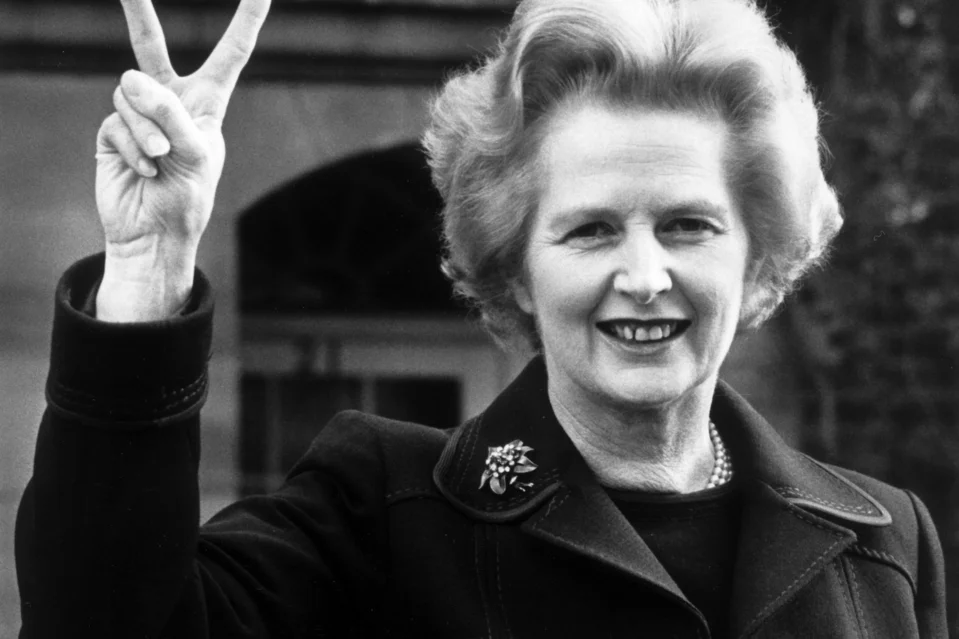
Margaret Thatcher: Britain Awake "Iron Lady" - 1976

March 27, 2016

19 January 1976, Kensisngton Town Hall, London, UK

The first duty of any Government is to safeguard its people against external aggression. To guarantee the survival of our way of life.

The question we must now ask ourselves is whether the present Government is fulfilling that duty. It is dismantling our defences at a moment when the strategic threat to Britain and her allies from an expansionist power is graver than at any moment since the end of the last war.

Military men are always warning us that the strategic balance is tilting against NATO and the west.

But the Socialists never listen. Beginning of section checked against BBC Radio News Report 2200 19 January 1976

They don't seem to realise that the submarines and missiles that the Russians are building could be destined to be used against us.

Perhaps some people in the Labour Party think we are on the same side as the Russians!

But just let's look at what the Russians are doing.

She's ruled by a dictatorship of patient, far-sighted determined men who are rapidly making their country the foremost naval and military power in the world. End of section checked against BBC Radio News Report 2200 19 January 1976.

They are not doing this solely for the sake of self-defence.

A huge, largely land-locked country like Russia does not need to build the most powerful navy in the world just to guard its own frontiers.

No. The Russians are bent on world dominance, and they are rapidly acquiring the means to become the most powerful imperial nation the world has seen.

The men in the Soviet politburo don't have to worry about the ebb and flow of public opinion. They put guns before butter, while we put just about everything before guns.

They know that they are a super power in only one sense—the military sense.

They are a failure in human and economic terms.

But let us make no mistake. The Russians calculate that their military strength will more than make up for their economic and social weakness. They are determined to use it in order to get what they want from us.

Last year on the eve of the Helsinki Conference, I warned that the Soviet Union is spending 20 per cent more each year than the United States on military research and development. 25 per cent more on weapons and equipment. 60 per cent more on strategic nuclear forces.

In the past ten years Russia has spent 50 per cent more than the United States on naval shipbuilding.

Some military experts believe that Russia has already achieved strategic superiority over America.

But it is the balance of conventional forces which poses the most immediate dangers for NATO.

I am going to visit our troops in Germany on Thursday. I am going at a moment when the Warsaw Pact forces—that is, the forces of Russia and her allies—in Central Europe outnumber NATOs by 150,000 men nearly 10,000 tanks and 2,600 aircraft. We cannot afford to let that gap get bigger.

Still more serious gaps have opened up elsewhere—especially in the troubled area of Southern Europe and the Mediterranean.

The rise of Russia as a world-wide naval power, threatens our oil rigs and our traditional life-lines, the sea routes.

Over the past ten years, the Russians have quadrupled their force of nuclear submarines. They are now building one nuclear submarine a month.

They are searching for new naval base facilities all over the world, while we are giving up our few remaining bases.

They have moved into the Indian Ocean. They pose a rising threat to our northern waters and, farther east to Japan's vital sea routes.

The Soviet navy is not designed for self-defence. We do not have to imagine an all-out nuclear war or even a conventional war in order to see how it could be used for political purposes.

I would be the first to welcome any evidence that the Russians are ready to enter into a genuine detente. But I am afraid that the evidence points the other way.

I warned before Helsinki of the dangers of falling for an illusory detente. Some people were sceptical at the time, but we now see that my warning was fully justified.

Has detente induced the Russians to cut back on their defence programme?

Has it dissuaded them from brazen intervention in Angola?

Has it led to any improvement in the conditions of Soviet citizens, or the subject populations of Eastern Europe?

We know the answers.

At Helsinki we endorsed the status quo in Eastern Europe. In return we had hoped for the freer movement of people and ideas across the Iron Curtain. So far we have got nothing of substance.

We are devoted, as we always have been, to the maintenance of peace.

We will welcome any initiative from the Soviet Union that would contribute to that goal.

But we must also heed the warnings of those, like Alexander Solzhenitsyn , who remind us that we have been fighting a kind of ‘Third World War’ over the entire period since 1945—and that we have been steadily losing ground.

As we look back over the battles of the past year, over the list of countries that have been lost to freedom or are imperilled by Soviet expansion can we deny that Solzhenitsyn is right?

We have seen Vietnam and all of Indochina swallowed up by Communist aggression. We have seen the Communists make an open grab for power in Portugal, our oldest ally—a sign that many of the battles in the Third World War are being fought inside Western countries.

And now the Soviet Union and its satellites are pouring money, arms and front-line troops into Angola in the hope of dragging it into the Communist bloc.

We must remember that there are no Queensbury rules in the contest that is now going on. And the Russians are playing to win.

They have one great advantage over us—the battles are being fought on our territory, not theirs.

Within a week of the Helsinki conference, Mr Zarodov , a leading Soviet ideologue, was writing in Pravda about the need for the Communist Parties of Western Europe to forget about tactical compromises with Social Democrats, and take the offensive in order to bring about proletarian revolution.

Later Mr Brezhnev made a statement in which he gave this article his personal endorsement.

If this is the line that the Soviet leadership adopts at its Party Congress next month, then we must heed their warning. It undoubtedly applies to us too.

We in Britain cannot opt out of the world.

If we cannot understand why the Russians are rapidly becoming the greatest naval and military power the world has ever seen if we cannot draw the lesson of what they tried to do in Portugal and are now trying to do in Angola then we are destined—in their words—to end up on ‘the scrap heap of history’.

We look to our alliance with American and NATO as the main guarantee of our own security and, in the world beyond Europe, the United States is still the prime champion of freedom.

But we are all aware of how the bitter experience of Vietnam has changed the public mood in America. We are also aware of the circumstances that inhibit action by an American president in an election year.

So it is more vital then ever that each and every one of us within NATO should contribute his proper share to the defence of freedom.

Britain, with her world-wide experience of diplomacy and defence, has a special role to play. We in the Conservative Party are determined that Britain should fulfil that role. Beginning of section checked against BBC Radio News Report 0700 20 January 1976

We're not harking back to some nostalgic illusion about Britain's role in the past.

We're saying—Britain has a part to play now, a part to play for the future.

The advance of Communist power threatens our whole way of life. That advance is not irreversible, providing that we take the necessary measures now. But the longer that we go on running down our means of survival, the harder it will be to catch up.

In other words: the longer Labour remains in Government, the more vulnerable this country will be. (Applause.) End of section checked against BBC Radio News Report 0700 20 January 1976

What has this Government been doing with our defences?

Under the last defence review, the Government said it would cut defence spending by £4,700 million over the next nine years.

Then they said they would cut a further £110 million.

It now seems that we will see further cuts.

If there are further cuts, perhaps the [ Roy Mason ] Defence Secretary should change his title, for the sake of accuracy, to the Secretary for Insecurity.

On defence, we are now spending less per head of the population than any of our major allies. Britain spends only £90 per head on defence. West Germany spends £130, France spends £115. The United States spends £215. Even neutral Sweden spends £60 more per head than we do.

Of course, we are poorer than most of our NATO allies. This is part of the disastrous economic legacy of Socialism.

But let us be clear about one thing.

This is not a moment when anyone with the interests of this country at heart should be talking about cutting our defences.

It is a time when we urgently need to strengthen our defences.

Of course this places a burden on us. But it is one that we must be willing to bear if we want our freedom to survive.

Throughout our history, we have carried the torch for freedom. Now, as I travel the world, I find people asking again and again, "What has happened to Britain?" They want to know why we are hiding our heads in the sand, why with all our experience, we are not giving a lead.[fo 16]

Many people may not be aware, even now, of the full extent of the threat.

We expect our Governments to take a more far-sighted view.

To give them their due, the Government spelled out the extent of the peril in their Defence White Paper last year, But, having done so, they drew the absurd conclusion that our defence efforts should be reduced.

The Socialists, in fact, seem to regard defence as almost infinitely cuttable. They are much more cautious when it comes to cutting other types of public expenditure.

They seem to think that we can afford to go deeper into debt so that the Government can prop up a loss-making company. And waste our money on the profligate extension of nationalisation and measures such as the Community Land Act.

Apparently, we can even afford to lend money to the Russians, at a lower rate of interest that we have to pay on our own borrowings.

But we cannot afford, in Labour's view, to maintain our defences at the necessary level—not even at a time when on top of our NATO commitments, we are fighting a major internal war against terrorism in Northern Ireland, and need more troops in order to win it.

There are crises farther from home that could affect us deeply. Angola is the most immediate.

In Angola, the Soviet-backed guerrilla movement, the MPLA, is making rapid headway in its current offensive, despite the fact that it controls only a third of the population, and is supported by even less.

The MPLA is gaining ground because the Soviet Union and its satellites are pouring money, guns and front-line troops into the battle.

Six thousand Cuban regular soldiers are still there.

But it is obvious that an acceptable solution for Angola is only possible if all outside powers withdraw their military support.

You might well ask: why on earth should we think twice about what is happening in a far-away place like Angola?

There are four important reasons.

The first is that Angola occupies a vital strategic position. If the pro-Soviet faction wins, one of the immediate consequences will almost certainly be the setting up of Soviet air and naval bases on the South Atlantic.

The second reason is that the presence of Communist forces in this area will make it much more difficult to settle the Rhodesian problem and achieve an understanding between South Africa and black Africa.

The third reason is even more far-reaching.

If the Russians have their way in Angola, they may well conclude that they can repeat the performance elsewhere. Similarly, uncommitted nations would be left to conclude that NATO is a spent force and that their best policy is to pursue an accommodation with Russia.

Fourthly, what the Russians are doing in Angola is against detente.

They seem to believe that their intervention is consistent with detente.

Indeed, Izvestiya recently argued that Soviet support for the Communist MPLA is "an investment in detente"—which gives us a good idea of what they really mean by the word.

We should make it plain to the Russians that we do not believe that what they are doing in Angola is consistent with detente.

It is usually said that NATO policy ends in North Africa at the Tropic of Cancer. But the situation in Angola brings home the fact that NATOs supplylines need to be protected much further south.

In the Conservative Party we believe that our foreign policy should continue to be based on a close understanding with our traditional ally, America.

This is part of our Anglo-Saxon tradition as well as part of our NATO commitment, and it adds to our contribution to the European Community.

Our Anglo-Saxon heritage embraces the countries of the Old Commonwealth that have too often been neglected by politicians in this country, but are always close to the hearts of British people.

We believe that we should build on our traditional bonds with Australia, New Zealand and Canada, as well as on our new ties with Europe.

I am delighted to see that the Australians and the New Zealanders have concluded—as I believe that most people in this country are coming to conclude—that Socialism has failed.

In their two electoral avalanches at the end of last year, they brought back Governments committed to freedom of choice, governments that will roll back the frontiers of state intervention in the economy and will restore incentives for people to work and save.

Our congratulations go to Mr Fraser and Mr Muldoon .

I know that our countries will be able to learn from each other.

What has happened in Australasia is part of a wider reawakening to the need to provide a more positive defence of the values and traditions on which Western civilisation, and prosperity, are based.

We stand with that select body of nations that believe in democracy and social and economic freedom.

Part of Britain's world role should be to provide, through its spokesmen, a reasoned and vigorous defence of the Western concept of rights and liberties: The kind that America's Ambassador to the UN, Mr Moynihan , has recently provided in his powerfully argued speeches.

But our role reaches beyond this. We have abundant experience and expertise in this country in the art of diplomacy in its broadest sense.

It should be used, within Europe, in the efforts to achieve effective foreign policy initiatives.

Within the EEC, the interests of individual nations are not identical and our separate identities must be seen as a strength rather than a weakness.

Any steps towards closer European union must be carefully considered.

We are committed to direct elections within the Community, but the timing needs to be carefully calculated.

But new problems are looming up.

Among them is the possibility that the Communists will come to power through a coalition in Italy. This is a good reason why we should aim for closer links between those political groups in the European Parliament that reject Socialism.

We have a difficult year ahead in 1976.

I hope it will not result in a further decline of Western power and influence of the kind that we saw in 1975.

It is clear that internal violence—and above all political terrorism—will continue to pose a major challenge to all Western societies, and that it may be exploited as an instrument by the Communists.

We should seek close co-ordination between the police and security services of the Community, and of Nato, in the battle against terrorism.

The way that our own police have coped with recent terrorist incidents provides a splendid model for other forces.

The message of the Conservative Party is that Britain has an important role to play on the world stage. It is based on the remarkable qualities of the British people. Labour has neglected that role. MT apparently omitted the following passage in delivery. She noted, "If short of time go to top of page 32 (We are often told)." Pages 29–31 of the text are clipped together.

Our capacity to play a constructive role in world affairs is of course related to our economic and military strength.

Socialism has weakened us on both counts. This puts at risk not just our chance to play a useful role in the councils of the world, but the Survival of our way of life.

Caught up in the problems and hardships that Socialism has brought to Britain, we are sometimes in danger of failing to see the vast transformations taking place in the world that dwarf our own problems, great though they are.

But we have to wake up to those developments, and find the political will to respond to them.

Soviet military power will not disappear just because we refuse to look at it.

And we must assume that it is there to be used—as threat or as force—unless we maintain the necessary deterrents.

We are under no illusions about the limits of British influence. End of passage probably omitted in delivery.

We are often told how this country that once ruled a quarter of the world is today just a group of offshore islands.

Well, we in the Conservative Party believe that Britain is still great.

The decline of our relative power in the world was partly inevitable—with the rise of the super powers with their vast reserves of manpower and resources.

But it was partly avoidable too—the result of our economic decline accelerated by Socialism.

We must reverse that decline when we are returned to Government.

In the meantime, the Conservative Party has the vital task of shaking the British public out of a long sleep.

Sedatives have been prescribed by people, in and out of Government, telling us that there is no external threat to Britain, that all is sweetness and light in Moscow, and that a squadron of fighter planes or a company of marine commandos is less important than some new subsidy.

The Conservative Party must now sound the warning.

There are moments in our history when we have to make a fundamental choice.

This is one such moment—a moment when our choice will determine the life or death of our kind of society,—and the future of our children.

Let's ensure that our children will have cause to rejoice that we did not forsake their freedom.

The "Iron Lady" tag was first used by the Soviet Army newspaper Red Star on 24 January, in response to above speech. The Thatcher counter response is below.

Source: http://www.margaretthatcher.org/document/1...

Enjoyed this speech? Speakola is a labour of love and I’d be very grateful if you would share, tweet or like it. Thank you.

Facebook Twitter Facebook
In 1960-79 Tags MARGARET THATCHER, IRON LADY, COLD WAR, SOVIET UNION, DEFENCE, MILITARY
Comment

Nikita S. Khrushchev: 'Quite a lot has been said about the cult of the individual and about its harmful consequences', The Secret Speech - 1956

June 30, 2015

25 February 1956, Moscow, USSR

Secret Speech Delivered by First Party Secretary at the Twentieth Party Congress of the Communist Party of the Soviet Union, February 25, 1956

Comrades, in the report of the Central Committee of the party at the 20th Congress, in a number of speeches by delegates to the Congress, as also formerly during the plenary CC/CPSU sessions, quite a lot has been said about the cult of the individual and about its harmful consequences. . . .

Allow me first of all to remind you how severely the classics of Marxism-Leninism denounced every manifestation of the cult of the individual. In a letter to the German political worker, Wilhelm Bloss, Marx stated: "From my antipathy to any cult of the individual, I never made public during the existence of the International the numerous addresses from various countries which recognized my merits and which annoyed me. I did not even reply to them, except sometimes to rebuke their authors. Engels and I first joined the secret society of Communists on the condition that everything making for superstitious worship of authority would be deleted from its statute. . . .

The great modesty of the genius of the revolution, Vladimir Ilyich Lenin, is known. Lenin had always stressed the role of the people as the creator of history, the directing and organizational role of the party as a living and creative organism, and also the role of the central committee.

Marxism does not negate the role of the leaders of the workers' class in directing the revolutionary liberation movement.

While ascribing great importance to the role of the leaders and organizers of the masses, Lenin at the same time mercilessly stigmatized every manifestation of the cult of the individual, inexorably combated the foreign-to-Marxism views about a "hero" and a "crowd" and countered all efforts to oppose a "hero" to the masses and to the people.

Lenin taught that the party's strength depends on its indissoluble unity with the masses, on the fact that behind the party follow the people - workers, peasants and intelligentsia. "Only lie will win and retain the power," said Lenin, "who believes in the people, who submerges himself in the fountain of the living creativeness of the people.". . .

During Lenin's life the central committee of the party- was a real expression of collective leadership of the party and of the Nation. Being a militant Marxist-revolutionist, always unyielding in matters of principle, Lenin never imposed by force his views upon his coworkers. He tried to convince; he patiently explained his opinions to others. Lenin always diligently observed that the norms of party life were realized, that the party statute was enforced, that the party congresses and the plenary sessions of the central committee took place at the proper intervals.

In addition to the great accomplishments of V. I. Lenin for the victory of the working class and of the working peasants, for the victory of our party and for the application of the ideas of scientific communism to life, his acute mind expressed itself also in this that lie detected in Stalin in time those negative characteristics which resulted later in grave consequences. Fearing the future fate of the party and of the Soviet nation, V.I. Lenin made a completely correct characterization of Stalin, pointing out that it was necessary to consider the question of transferring Stalin from the position of Secretarv General because of the fact that Stalin is excessively rude, that he does not have a proper attitude toward his comrades, that lie is capricious, and abuses his power. . . .

Vladimir Ilyich said: "Stalin is excessively rude, and this defect, which can be freely tolerated in our midst and in contacts among us Communists, becomes a defect which cannot be tolerated in one holding the position of the Secretary General. Because of this, I propose that the comrades consider the method by which Stalin would be removed from this position and by which another man would be selected for it, a man, who above all , would differ from Stalin in only one quality, namely, greater tolerance, greater loyalty, greater kindness, and more considerate attitude toward the comrades, a less capricious temper, etc.".

As later events have proven, Lenin's anxiety was justified; in the first period after Lenin's death Stalin still paid attention to his (i.e., Lenin's) advice, but, later be began to disregard the serious admonitions of Vladimir Ilyich.

When we analyze the practice of Stalin in regard to the direction of the party and of the country, when we pause to consider everything which Stalin perpetrated, we must be convinced that Lenin's fears were justified. The negative characteristics of Stalin, which, in Lenin's time, were on1v incipient, transformed themselves during the last years into a grave abuse o f power by Stalin, which caused untold harm to our party. . . .

Stalin acted not through persuasion, explanation, and patient cooperation with people, but by imposing his concepts and demanding absolute submission to his opinion. Whoever opposed this concept or tried to prove his viewpoint, and the correctness of his position-was doomed to removal from the leading collective and to subsequent moral and physical annihilation. This was especially true during the period following the 17th party congress, when many prominent party leaders and rank-and-file party workers, honest and dedicated to the cause of communism, fell victim to Stalin's despotism. . . .

Stalin originated the concept enemy of the people. This term automatically rendered it unnecessary that the ideological errors of a man or men engaged in a controversy be proven; this term made possible the usage of the most cruel repression, violating all norms of revolutionary legality, against anyone who in any way disagreed with Stalin, against those who were only suspected of hostile intent, against those who had bad reputations. This concept, enemy of the people, actually eliminated the possibility of any kind of ideological fight or the making of one's views known on this or that issue, even those of a practical character. In the main, and in actuality, the only proof of guilt used, against all norms of current legal science, was the confession of the accused himself, and, as subsequent probing proved, confessions were acquired through physical pressures against the accused. . . .

Lenin used severe methods only in the most necessary cases, when the exploiting classes were still in existence and were vigorously opposing the revolution, when the struggle for survival was decidedly assuming the sharpest forms, even including a civil war.

Stalin, on the other hand, used extreme methods and mass repressions at a time when the revolution was already victorious, when the Soviet state was strengthened, when the exploiting classes were already liquidated, and Socialist relations were rooted solidly in all phases of national economy, when our party was politically consolidated and had strengthened itself both numerically and ideologically. It is clear that here Stalin showed in a whole series of cases his intolerance, his brutality, and his abuse of power. Instead of proving his political correctness and mobilizing the masses, he often chose the path of repression and physical annihilation, not only against actual enemies, but also against individuals who had not committed any crimes against the party and the Soviet Government. Here we see no wisdom but only a demonstration of the brutal force which had once so alarmed V.I Lenin. . . .

Considering the question of the cult of an individual we must first of all show everyone what harm this caused to the interests of our party. . . .

In practice Stalin ignored the norms of party life and trampled on the Leninist principle of collective party leadership.

Stalin's willfulness vis-a-vis the party and its central committee became fully evident after the 17th party congress, which took place in 1934. . . .

It was determined that of the 139 members and candidates of the party's Central Committee who were elected at the 17th congress, 98 persons, that is, 70 percent, were arrested and shot (mostly in 1937-38). [Indignation in the hall.] . . .

The same fate met not only the central committee members but also the majority of the delegates to the 17th party congress. Of 1,966 delegates with either voting or advisory rights, 1,108 persons were arrested on charges of anti-revolutionary crimes, i.e., decidedly more than a majority. This very fact shows how absurd, wild, and contrary to commonsense were the charges of counter-revolutionary crimes made out, as we now see, against a majority of participants at the 17th party congress. [Indignation in the hall.] . . .

What is the reason that mass repressions against activists increased more and more after the 17th party congress? It was because at that time Stalin had so elevated himself above the party and above the nation that he ceased to consider either the central committee or the party. While he still reckoned with the opinion of the collective before the 17th congress, after the complete political liquidation of the Trotskyites, Zinovievites and Bukharinites, when as a result of that fight and Socialist victories the party achieved unity, Stalin ceased to an ever greater degree to consider the members of the party's central committee and even the members of the Political Bureau. Stalin thought that now lie could decide all things alone and all he needed were statisticians; he treated all others in such a way that they could only listen to and praise him.

After the criminal murder of S. M. Kirov, mass repressions and brutal acts of violation of Socialist legality began. On the evening of December 1, 1934, on Stalin's initiative (without the approval of the Political Bureau - which was passed 2 days later, casually) the Secretary of the Presidium of the Central Executive Committee, Yenukidze, signed the following directive:

I. Investigative agencies are directed to speed up the cases of those accused of the preparation or execution of acts of terror.

II. Judicial organs are directed not to hold up the execution of death sentences pertaining to crimes of this category in order to consider the possibility of pardon, because the Presidium of the Central Executive Committee, U.S.S.R, does not consider as possible the receiving of petitions of this sort.

III. The organs of the Commissariat of Internal Affairs are directed to execute the death sentences against criminals of the above-mentioned category immediately after the passage of sentences.

This directive became the basis for mass acts of abuse against Socialist legality. During many of the fabricated court cases the accused were charged with "the preparation" of terroristic acts; this deprived them of any, possibility that their cases might be reexamined, even when they stated before the court that their confessions were secured by force, and when, in a convincing manner, they disproved the accusations against them. . . .

Mass repressions grew tremendously from the end of 1936 after a telegram from Stalin and Zhdanov, dated from Sochi on September 25, 1936, was addressed to Kaganovich, Molotov, and other members of the Political Bureau. The content of the telegram was as follows: "We deem it absolutely necessary and urgent that Comrade Yezhov be nominated to the post of People's Commissar for Internal Affairs. Yagoda has definitely proved himself to be incapable of unmasking the Trotskyite-Zinovievite bloc. The OGPU is 4 years behind in this matter. This is noted by all party workers and by the majority of the representatives of the NKVD." Strictly speaking we should stress that Stalin did not meet with and therefore could not know the opinion of party workers. . . .

The mass repressions at this time were made under the slogan of a fight against the Trotskyites. Did the Trotskyites at this time actually constitute such a danger to our party and to the Soviet state? We should recall that in 1927, on the eve of the 15th party congress, only some 4,000 votes were cast for the Trotskyite-Zinovievite opposition, while there were 724,000 for the party line. During the 10 years which passed between the 15th party congress and the February-March central committee plenum, Trotskyism was completely disarmed; many former Trotskyites had changed their former views and worked in the various sectors building socialism. It is clear that in the situation of Socialist victory there was no basis for mass terror in the country . . . .

The majority of the Central Committee members and candidates elected at the 17th congress and arrested in 1937-38 were expelled from the party illegally through the brutal abuse of the party statute, because the question of their expulsion was never studied at the Central Committee plenum.

Now when the cases of some of these so-called spies and saboteurs were examined it was found that all their cases were fabricated. Confessions of guilt of many- arrested and charged with enemy activity were gained with the help of cruel and inhuman tortures. . . .

An example of vile provocation of odious falsification and of criminal violation of revolutionary legality is the case of the former candidate for the central committee political bureau, one of the most eminent workers of the party and of the Soviet Government, Comrade Eikhe, who was a party member since 1905. [Commotion in the hall.]

Comrade Eikhe was arrested on April 29, 1938, on the basis of slanderous materials, without the sanction of the prosecutor of the USSR, which was finally received 15 months after the arrest.

Investigation of Eikhe's case was made in a manner which most brutally violated Soviet legality and was accompanied by willfulness and falsification.

Eikhe was forced under torture to sign ahead of time a protocol of his confession prepared by the investigative judges, in which he and several other eminent party workers were accused of anti-Soviet activity.

On October 1, 1939, Eikhe sent his declaration to Stalin in which be categorically denied his guilt and asked for an examination of his case. In the declaration he wrote:

"There is no more bitter misery than to sit In the jail of a government for which I have always fought.". . .

On February 2, 1940, Eikhe was brought before the court. Here he did not confess any guilt and said as follows:

"In all the so-called confessions of mine there is not one letter written by me with the exception of my signatures under the protocols which were forced from me. I have made my confession under pressure from the investigative judge who from the time of my arrest tormented me. After that I began to write all this nonsense. The most important thing for me is to tell the court, the party and Stalin that I am not guilty. I have never been guilty of any conspiracy. I will die believing in the truth of party policy as I have believed in it during my whole life."

On February 4 Eikhe was shot. [Indignation in the hall.] It has been definitely established now that Eikhe's case was fabricated; he has been posthumously rehabilitated. . . .

The way in which the former NKVD workers manufactured various fictitious "anti-Soviet centers" and "blocs" with the help of provocatory methods is seen from the confession of Comrade Rozenblum, party member since 1906, who was arrested in 1937 by the Leningrad NKVD.

During the examination in 1955 of the Kornarov case Rozenblum revealed the following fact: when Rozenblum was arrested in 1937 he was subjected to terrible torture during which be was ordered to confess false information concerning himself and other persons. Be was then brought to the office of Zakovsky, who offered him freedom on condition that be make before the court a false confession fabricated in 1937 by the NKVD concerning "sabotage, espionage and diversion in a terroristic center in Leningrad." [Movement in the hall.] . . .

"You, yourself," said Zakovskv, "will not need to invent anything. The NKVD will prepare for you a ready outline for every branch of the center; you will have to study it carefully and to remember well all questions and answers which the court might ask. Pus case will be ready in 4-5 months, or perhaps a half year. During all this time you will be preparing yourself so that you will not compromise the investigation and yourself. Your future will depend on how the trial goes and on its results. If you begin to lie and to testify falsely, blame yourself. If you manage to endure it, you will save your bead and we will feed and clothe you at the government's cost until your death."

This is the kind of vile things which were then practiced. [Movement in the hall.] . .

When we look at many of our novels, films, and historical scientific studies, the role of Stalin in the patriotic war appears to be entirely improbable. Stalin had foreseen everything. The Soviet Army, on the basis of a strategic plan prepared by Stalin long before, used the tactics of so-called active defense, i.e., tactics which, as we know, allowed the Germans to come up to Moscow and Stalingrad. Using such tactics, the Soviet Army, supposedly, thanks only to Stalin's genius, turned to the offensive and subdued the enemy. The epic victory gained through the armed might of the land of the Soviets, through our heroic people, is ascribed in this type of novel, film, and scientific study as being completely due to the strategic genius of Stalin.

We have to analyze this matter carefully because it has a tremendous significance, not only from the historical but especially from the political, educational, and practical point of view. . . .

During the war and after the war, Stalin put forward the thesis that the tragedy which our nation experienced in the first part of the war was the result of the unexpected attack of the Germans against the Soviet Union. But, comrades, this is completely untrue. As soon as Hitler came to power in Germany be assigned to himself the task of liquidating communism. The Fascists were saying this openly; they did not hide their plans. In order to attain this aggressive end, all sorts of pacts and blocs were created, such as the famous Berlin-Rome-Tokyo Axis. Many facts from the prewar period clearly showed that Hitler was going all out to begin a war against the Soviet state and that lie had concentrated large armed units, together with armored units, near the Soviet borders. . . .

We must assert that information of this sort concerning the threat of German armed invasion of Soviet territory was coming in also from our own military and diplomatic sources; however, because the leadership was conditioned against such information, such data was dispatched with fear and assessed with reservation. . . .

Despite these particularly grave warnings, the necessary steps were not taken to prepare the country properly for defense and to prevent it from being caught unaware.

Did we have time and the capabilities for such preparations? Yes; we had the time and capabilities. Our industry was already so developed that it was capable of supplying fully the Soviet Army with everything that it needed. . . .

Had our industry been mobilized properly and in time to supply the army with the necessary materiel, our wartime losses would have been decidedly smaller. Such mobilization had not been, however, started in time. And already in the first days of the war it became evident that our Army was badly armed, that we did not have enough artillery, tanks, and planes to throw the enemy back. . . .

Very grievous consequences, especially in reference to the beginning of the war, followed Stalin's annihilation of many military commanders and political workers during 1937-41 because of his suspiciousness and through slanderous accusations. During these years repressions were instituted against certain parts of military cadres beginning literally at the company and battalion commander level and extending to the higher military centers; during this time the cadre of leaders who had gained military experience in Spain and In the Far East was almost completely liquidated. . . .

After the conclusion of the patriotic war the Soviet nation stressed with pride the magnificent victories gained through great sacrifices and tremendous efforts. The country experienced a period of political enthusiasm. The party came out of the war even more united; in the fire of the war party cadres were tempered and hardened. Under such conditions nobody could have even thought of the possibility of some plot in the party.

And it was precisely at this time that the so-called Leningrad affair was born. As we have now proven, this case was fabricated. Those who innocently lost their lives included Comrades Voznesensky, Kuznetsov, Rodionov, Popkov, and others. . . .

Facts prove that the Leningrad affair is also the result of willfulness which Stalin exercised against party cadres. . . .

We must state that after the war the situation became even more complicated. Stalin became even more capricious, irritable, and brutal; in particular his suspicion grew. His persecution mania reached unbelievable dimensions. Many workers were becoming enemies before his very eyes. After the war Stalin separated himself from the collective even more. Everything was decided by him alone without any consideration for anyone or anything.

This unbelievable suspicion was cleverly taken advantage of by the abject provocateur and vile enemy, Beriya, who had murdered thousands of Communists and loyal Soviet people. The elevation of Voznesensky and Kuznetsov alarmed Beriya. As we have now proven, it had been precisely Beriya who had suggested to Stalin the fabrication by him and by his confidants of materials in the form of declarations and anonymous letters, and in the form of various rumors and talks. . . .

The question arises: Why is it that we see the truth of this affair only now, and why did we not do something earlier, during Stalin's life, in order to prevent the loss of innocent lives? It was because Stalin personally supervised the Leningrad affair, and the majority of the Political Bureau members did not, at that time, know all of the circumstances in these matters, and could not therefore intervene. . . .

The willfulness of Stalin showed itself not only in decisions concerning the internal life of the country but also in the international relations of the Soviet Union.

The July plenum of the Central Committee studied in detail the reasons for the development of conflict with Yugoslavia. It was a shameful role which Stalin played here. The "Yugoslav affair" contained no problems which could not have been solved through party discussions among comrades. There was no significant basis for the development of this "affair;" it was completely possible to have prevented the rupture of relations with that country.

I recall the first days when the conflict between the Soviet Union and Yugoslavia began artificially to be blown up. Once, when I carne from Kiev to Moscow, I was invited to visit Stalin who, pointing to the copy of a letter lately sent to Tito, asked me, "Have you read this?"

Not waiting for my reply be answered, "I will shake my little finger and there will be no more Tito. He will fall.". . .

But this did not happen to Tito. No matter how much or how little Stalin shook, not only his little finger but everything else that be could shake, Tito did not fall. Why? The reason was that, in this case of disagreement with the Yugoslav comrades, Tito had behind him a state and a people who had gone through a severe school of fighting for liberty and independence, a people which gave support to its leaders.

You see to what Stalin's mania for greatness led. He bad completely lost consciousness of reality; he demonstrated his suspicion and haughtiness not only in relation to individuals in the USSR, but in relation to whole parties and nations. . . .

Let us also recall the affair of the doctor plotters. [Animation in the ball.] Actually there was no affair outside of the declaration of the woman doctor Timasbuk, who was probably influenced or ordered by someone (after all, she was an unofficial collaborator of the organs of state security) to write Stalin a letter in which she declared that doctors were applying supposedly improper methods of medical treatment.

Such a letter was sufficient for Stalin to reach an immediate conclusion that there are doctor plotters in the Soviet Union. He issued orders to arrest a group of eminent Soviet medical specialists. He personally issued advice on the conduct of the investigation and the method of interrogation of the arrested persons. He said that the academician Vinogradov should be put in chains, another one should be beaten. Present at this Congress as a delegate is the former Minister of State Security Comrade Ignatiev. Stalin told him curtly, "If you do not obtain confessions from the doctors we will shorten you by a head." [Tumult in the hall.] . . .

In organizing the various dirty and shameful cases, a very base role was played by the rabid enemy of our party, an agent of a foreign intelligence service-Beriya, who had stolen into Stalin's confidence. In what way could this provocateur gain such a position in the part), and in the State, so as to become the First Deputy Chairman of the Council of Ministers of the Soviet Union and a member of the Central Committee Political Bureau? It has now been established that this villain bad climbed up the government ladder over an untold number of corpses.

Were there any signs that Beriya was an enemy of the party? Yes; there were. Already in 1937, at a Central Committee plenum, former People's Commissar of Health Protection Kaminsky said that Beriya worked for the Mussavat intelligence service. But the Central Committee plenum had barely concluded when Kaminsky was arrested and then shot. Had Stalin examined Kaminsky's statement? No; because Stalin believed in Beriya and that was enough for him. And when Stalin believed in anyone or anything, then no one could say anything which was contrary to his opinion; anyone who would dare to express opposition would have met the same fate as Kaminsky. . . .

Comrades, the cult of the individual acquired such monstrous size chiefly because Stalin himself, using all conceivable methods, supported the glorification of his own person. This is supported by numerous facts. One of the most characteristic examples of Stalin's self -glorification and of his lack of even elementary modesty is the edition of his Short Biography, which was published in 1948.

This book is an expression of the most dissolute flattery, an example of making a man into a godhead, of transforming him into an infallible sage, "the greatest leader," "sublime strategist of all times and nations." Finally no other words could be found with which to lift Stalin up to the heavens.

We need not give here examples of the loathsome adulation filling this book. All we need to add is that they all were approved and edited by Stalin personally and some of them were added in his own handwriting to the draft text of the book. . . .

Comrades, if we sharply criticize today the cult of the individual which was so widespread during Stalin's life and if we speak about the many negative phenomena generated by this cult which is so alien to the spirit of Marxism-Leninism, various persons may ask: How could it be? Stalin headed the party and the country for 30 years and many victories were gained during his lifetime. Can we deny this? In my opinion, the question can be asked in this manner only by those who are blinded and hopelessly hypnotized by the cult of the individual, only by those who do not understand the essence of the revolution and of the Soviet State, only by those who do not understand, in a Leninist manner, the role of the party and of the nation in the development of the Soviet society. . . .

Our historical victories were attained thanks to the organizational work of the party, to the many provincial organizations, and to the self-sacrificing work of our great nation. These victories are the result of the great drive and activity of the nation and of the party as a whole; they are not at all the fruit of the leadership of Stalin, as the situation was pictured during the period of the cult of the individual. . . .

Let us consider the first Central Committee plenum after the 19th party congress when Stalin, in his talk at the plenum, characterized Vyacheslav Mikhailovich Molotov and Anastas Ivanovich Mikoyan and suggested that these old workers of our party were guilty of some baseless charges. It is not excluded that had Stalin remained at the helm for another several months, Comrades Molotov and Mikoyan would probably have not delivered any speeches at this congress.

Stalin evidently had plans to finish off the old members of the political bureau. He often stated that political bureau members should be replaced by new ones. . . .

We can assume that this was also a design for the future annihilation of the old political bureau members and in this way a cover for all shameful acts of Stalin, acts which we are now considering.

Comrades, in order not to repeat errors of the past, the central committee has declared itself resolutely against the cult of the individual. We consider that Stalin was excessively extolled. However, in the past Stalin doubtless performed great services to the party, to the working class, and to the international workers' movement. . . .

We should in all seriousness consider the question of the cult of the individual. We cannot let this matter get out of the party, especially not to the press. It is for this reason that we are considering it here at a closed congress session. We should know the limits; we should not give ammunition to the enemy; we should not wash our dirty linen before their eves. I think that the delegates to the congress will understand and assess properly all these proposals. [Tumultuous applause.]

Comrades, we must abolish the cult of the individual decisively, once and for all; we must draw the proper conclusions concerning both ideological-theoretical and practical work.

It is necessary for this purpose:

First, in a Bolshevik manner to condemn and to eradicate the cult of the individual as alien to Marxism-Leninism and not consonant with the principles of party leadership and the norms of party life, and to fight inexorably all attempts at bringing back this practice in one form or another.

To return to and actually practice in all our ideological work, the most important theses of Marxist-Leninist science about the people as the creator of history and as the creator of all material and spiritual good of humanity, about the decisive role of the Marxist party in the revolutionary fight for the transformation of society-, about the victory of communism.

In this connection we will be forced to do much work in order to examine critically from the Marxist-Leninist viewpoint and to correct the widely spread erroneous views connected with the cult of the individual in the sphere of history, philosophy,, economy, and of other sciences, as well as in the literature and t be fine arts. It is especially necessary that in the immediate future we compile a serious textbook of the history of our party which will be edited in accordance with scientific Marxist objectivism, a textbook of the history of Soviet society, a book pertaining to the events of the civil war and the great patriotic war.

Secondly, to continue systematically and consistently the work done by the party's central committee during the last years, a work characterized by minute observation in all party- organizations, from the bottom to the top, of the Leninist principles of party- leadership, characterized, above all, by the main principle of collective leadership, characterized by the observation of the norms of party life described in the statutes of our party, and, finally, characterized by- the wide practice of criticism and self-criticism.

Thirdly, to restore completely the Leninist principles of Soviet Socialist democracy., expressed in the constitution of the Soviet Union, to fight willfulness of individuals abusing their power. The evil caused by acts violating revolutionary Socialist legality which have accumulated during a long time as a result of the negative influence of the cult of the individual has to be completely corrected.

Comrades, the 20tb Congress of the Communist Party of the Soviet Union has manifested with a new strength the unshakable unity- of our party, its cohesiveness around the central committee, its resolute will to accomplish the great task of building communism. [Tumultuous applause.] And the fact that we present in all the ramifications the basic problems of overcoming the cult of the individual which is alien to Marxism-Leninism, as well as the problem of liquidating its burdensome consequences, is an evidence of the great moral and political strength of our party'. [Prolonged applause.]

We are absolutely certain that our party, armed with the historical resolutions of the 20th Congress, will lead the Soviet people along the Leninist path to new, successes, to new victories. [Tumultuous, prolonged applause.]

Long live the victorious banner of our party-Leninism. [Tumultuous, prolonged applause ending in ovation. All rise.]

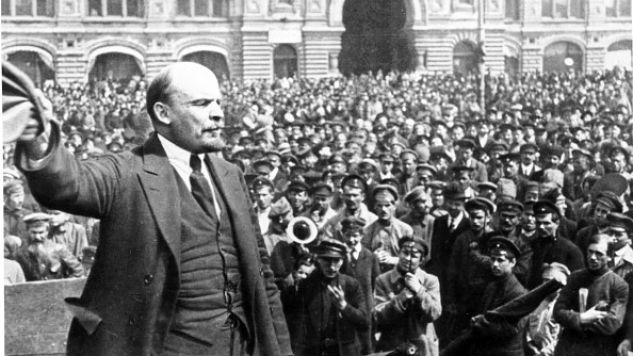
Source: http://legacy.fordham.edu/halsall/mod/1956...

Enjoyed this speech? Speakola is a labour of love and I’d be very grateful if you would share, tweet or like it. Thank you.

Facebook Twitter Facebook
In 1940-59 Tags USSR, KHRUSHCHEV, COLD WAR, RUSSIA, FIRST PARTY SECRETARY, 1950S, TRANSCRIPT, TRANSLATED, LENINISM, ANTI STALIN, BOLSHEVISM, CULT OF PERSONALITY, LONG SPEECHES, CRITICISM OF STALIN, SOVIET UNION, COLLECTIVISATION, SECRET SPEECH, THAW, GREATEST SPEECHES OF TH 1950S, 20TH CENTURY, THE COLD WAR
Comment

John F Kennedy: 'Ask not what your country can do for you', Inaugural address - 1961

June 30, 2015

January 20 1961, Washington DC, USA

Vice President Johnson, Mr. Speaker, Mr. Chief Justice, President Eisenhower, Vice President Nixon, President Truman, reverend clergy, fellow citizens, we observe today not a victory of party, but a celebration of freedom—symbolizing an end, as well as a beginning—signifying renewal, as well as change.

For I have sworn before you and Almighty God the same solemn oath our forebears prescribed nearly a century and three quarters ago. 

The world is very different now. For man holds in his mortal hands the power to abolish all forms of human poverty and all forms of human life. And yet the same revolutionary beliefs for which our forebears fought are still at issue around the globe—the belief that the rights of man come not from the generosity of the state, but from the hand of God. 

We dare not forget today that we are the heirs of that first revolution. Let the word go forth from this time and place, to friend and foe alike, that the torch has been passed to a new generation of Americans—born in this century, tempered by war, disciplined by a hard and bitter peace, proud of our ancient heritage—and unwilling to witness or permit the slow undoing of those human rights to which this Nation has always been committed, and to which we are committed today at home and around the world. 

Let every nation know, whether it wishes us well or ill, that we shall pay any price, bear any burden, meet any hardship, support any friend, oppose any foe, in order to assure the survival and the success of liberty.  This much we pledge—and more.

To those old allies whose cultural and spiritual origins we share, we pledge the loyalty of faithful friends. United, there is little we cannot do in a host of cooperative ventures. Divided, there is little we can do—for we dare not meet a powerful challenge at odds and split asunder. To those new States whom we welcome to the ranks of the free, we pledge our word that one form of colonial control shall not have passed away merely to be replaced by a far more iron tyranny. We shall not always expect to find them supporting our view. But we shall always hope to find them strongly supporting their own freedom—and to remember that, in the past, those who foolishly sought power by riding the back of the tiger ended up inside.  

To those peoples in the huts and villages across the globe struggling to break the bonds of mass misery, we pledge our best efforts to help them help themselves, for whatever period is required—not because the Communists may be doing it, not because we seek their votes, but because it is right. If a free society cannot help the many who are poor, it cannot save the few who are rich. 

To our sister republics south of our border, we offer a special pledge—to convert our good words into good deeds—in a new alliance for progress—to assist free men and free governments in casting off the chains of poverty. But this peaceful revolution of hope cannot become the prey of hostile powers. Let all our neighbors know that we shall join with them to oppose aggression or subversion anywhere in the Americas. And let every other power know that this Hemisphere intends to remain the master of its own house. 

To that world assembly of sovereign states, the United Nations, our last best hope in an age where the instruments of war have far outpaced the instruments of peace, we renew our pledge of support—to prevent it from becoming merely a forum for invective—to strengthen its shield of the new and the weak—and to enlarge the area in which its writ may run.  

Finally, to those nations who would make themselves our adversary, we offer not a pledge but a request: that both sides begin anew the quest for peace, before the dark powers of destruction unleashed by science engulf all humanity in planned or accidental self-destruction. We dare not tempt them with weakness. For only when our arms are sufficient beyond doubt can we be certain beyond doubt that they will never be employed. 

But neither can two great and powerful groups of nations take comfort from our present course—both sides overburdened by the cost of modern weapons, both rightly alarmed by the steady spread of the deadly atom, yet both racing to alter that uncertain balance of terror that stays the hand of mankind's final war.So let us begin anew—remembering on both sides that civility is not a sign of weakness, and sincerity is always subject to proof. Let us never negotiate out of fear. But let us never fear to negotiate. Let both sides explore what problems unite us instead of belaboring those problems which divide us. Let both sides, for the first time, formulate serious and precise proposals for the inspection and control of arms—and bring the absolute power to destroy other nations under the absolute control of all nations.  Let both sides seek to invoke the wonders of science instead of its terrors. Together let us explore the stars, conquer the deserts, eradicate disease, tap the ocean depths, and encourage the arts and commerce. Let both sides unite to heed in all corners of the earth the command of Isaiah—to "undo the heavy burdens ... and to let the oppressed go free." 

And if a beachhead of cooperation may push back the jungle of suspicion, let both sides join in creating a new endeavor, not a new balance of power, but a new world of law, where the strong are just and the weak secure and the peace preserved.  All this will not be finished in the first 100 days. Nor will it be finished in the first 1,000 days, nor in the life of this Administration, nor even perhaps in our lifetime on this planet. But let us begin. 

In your hands, my fellow citizens, more than in mine, will rest the final success or failure of our course. Since this country was founded, each generation of Americans has been summoned to give testimony to its national loyalty. The graves of young Americans who answered the call to service surround the globe. Now the trumpet summons us again—not as a call to bear arms, though arms we need; not as a call to battle, though embattled we are—but a call to bear the burden of a long twilight struggle, year in and year out, "rejoicing in hope, patient in tribulation"—a struggle against the common enemies of man: tyranny, poverty, disease, and war itself. 

Can we forge against these enemies a grand and global alliance, North and South, East and West, that can assure a more fruitful life for all mankind? Will you join in that historic effort?   In the long history of the world, only a few generations have been granted the role of defending freedom in its hour of maximum danger. I do not shrink from this responsibility—I welcome it.

I do not believe that any of us would exchange places with any other people or any other generation. The energy, the faith, the devotion which we bring to this endeavor will light our country and all who serve it—and the glow from that fire can truly light the world. And so, my fellow Americans: ask not what your country can do for you—ask what you can do for your country.  My fellow citizens of the world: ask not what America will do for you, but what together we can do for the freedom of man.  Finally, whether you are citizens of America or citizens of the world, ask of us the same high standards of strength and sacrifice which we ask of you. With a good conscience our only sure reward, with history the final judge of our deeds, let us go forth to lead the land we love, asking His blessing and His help, but knowing that here on earth God's work must truly be our own.

Pulitzer Prize winning historian and Kennedy biographer Fredrik Logevall talked about this speech and JFK’s oratory in a more general sense on the podcast.

Source: http://www.bartleby.com/124/pres56.html

Enjoyed this speech? Speakola is a labour of love and I’d be very grateful if you would share, tweet or like it. Thank you.

Facebook Twitter Facebook
In 1960-79 C Tags PRESIDENTS, JFK, USA, INAUGURATION, COLD WAR, TRANSCRIPT, GREATEST SPEECHES OF THE 1960S, GREATEST SPEECHES OF THE 20TH CENTURY, GREATEST SPEECHES OF ALL TIME, FOREIGN AFFAIRS, COMMUNISM, SOVIET UNION, TED SORONSEN
Comment

See my film!

Limited Australian Season

March 2025

Details and ticket bookings at

angeandtheboss.com

Support Speakola

Hi speech lovers,
With costs of hosting website and podcast, this labour of love has become a difficult financial proposition in recent times. If you can afford a donation, it will help Speakola survive and prosper.

Best wishes,
Tony Wilson.

Become a Patron!

Learn more about supporting Speakola.

Featured political

Featured
Jon Stewart: "They responded in five seconds", 9-11 first responders, Address to Congress - 2019
Jacinda Ardern: 'They were New Zealanders. They are us', Address to Parliament following Christchurch massacre - 2019
Dolores Ibárruri: "¡No Pasarán!, They shall not pass!', Defense of 2nd Spanish Republic - 1936
Jimmy Reid: 'A rat race is for rats. We're not rats', Rectorial address, Glasgow University - 1972

Featured eulogies

Featured
For Geoffrey Tozer: 'I have to say we all let him down', by Paul Keating - 2009
for James Baldwin: 'Jimmy. You crowned us', by Toni Morrison - 1988
for Michael Gordon: '13 days ago my Dad’s big, beautiful, generous heart suddenly stopped beating', by Scott and Sarah Gordon - 2018

Featured commencement

Featured
Tara Westover: 'Your avatar isn't real, it isn't terribly far from a lie', The Un-Instagrammable Self, Northeastern University - 2019
Tim Minchin: 'Being an artist requires massive reserves of self-belief', WAAPA - 2019
Atul Gawande: 'Curiosity and What Equality Really Means', UCLA Medical School - 2018
Abby Wambach: 'We are the wolves', Barnard College - 2018
Eric Idle: 'America is 300 million people all walking in the same direction, singing 'I Did It My Way'', Whitman College - 2013
Shirley Chisholm: ;America has gone to sleep', Greenfield High School - 1983

Featured sport

Featured
Joe Marler: 'Get back on the horse', Harlequins v Bath pre game interview - 2019
Ray Lewis : 'The greatest pain of my life is the reason I'm standing here today', 52 Cards -
Mel Jones: 'If she was Bradman on the field, she was definitely Keith Miller off the field', Betty Wilson's induction into Australian Cricket Hall of Fame - 2017
Jeff Thomson: 'It’s all those people that help you as kids', Hall of Fame - 2016

Fresh Tweets


Featured weddings

Featured
Dan Angelucci: 'The Best (Best Man) Speech of all time', for Don and Katherine - 2019
Hallerman Sisters: 'Oh sister now we have to let you gooooo!' for Caitlin & Johnny - 2015
Korey Soderman (via Kyle): 'All our lives I have used my voice to help Korey express his thoughts, so today, like always, I will be my brother’s voice' for Kyle and Jess - 2014

Featured Arts

Featured
Bruce Springsteen: 'They're keepers of some of the most beautiful sonic architecture in rock and roll', Induction U2 into Rock Hall of Fame - 2005
Olivia Colman: 'Done that bit. I think I have done that bit', BAFTA acceptance, Leading Actress - 2019
Axel Scheffler: 'The book wasn't called 'No Room on the Broom!', Illustrator of the Year, British Book Awards - 2018
Tina Fey: 'Only in comedy is an obedient white girl from the suburbs a diversity candidate', Kennedy Center Mark Twain Award -  2010
Tina Fey: 'Only in comedy is an obedient white girl from the suburbs a diversity candidate', Kennedy Center Mark Twain Award - 2010

Featured Debates

Featured
Sacha Baron Cohen: 'Just think what Goebbels might have done with Facebook', Anti Defamation League Leadership Award - 2019
Greta Thunberg: 'How dare you', UN Climate Action Summit - 2019
Charlie Munger: 'The Psychology of Human Misjudgment', Harvard University - 1995
Lawrence O'Donnell: 'The original sin of this country is that we invaders shot and murdered our way across the land killing every Native American that we could', The Last Word, 'Dakota' - 2016