• Genre
  • About
  • Submissions
  • Donate
  • Search
Menu

Speakola

All Speeches Great and Small
  • Genre
  • About
  • Submissions
  • Donate
  • Search
Share a political speech

Malcolm X: 'It'll be the ballot or the bullet', stump speech - 1964

October 5, 2015

12 April, 1964, Detroit, Michigan, USA

Mr. Moderator, Rev. Cleage, brothers and sisters and friends, and I see some enemies. [laughter, applause] In fact, I think we'd be fooling ourselves if we had an audience this large and didn't realize that there were some enemies present.

This afternoon we want to talk about the ballot or the bullet. The ballot or the bullet explains itself. But before we get into it, since this is the year of the ballot or the bullet, I would like to clarify some things that refer to me personally, concerning my own personal position.

I'm still a Muslim. That is, my religion is still Islam. [applause] My religion is still Islam. I still credit Mr. Muhammad for what I know and what I am. He's the one who opened my eyes. [applause] At present I am the minister of the newly founded Muslim Mosque Incorporated, which has its offices in the Theresa Hotel right in the heart of Harlem, that's the black belt in New York City. And when we realize that Adam Clayton Powell, is a Christian minister, he has Abyssinian Baptist Church, but at the same time he's more famous for his political struggling. And Dr. King is a Christian minister from Atlanta Georgia, or in Atlanta Georgia, but he's become more famous for being involved in the civil rights struggle. There's another in New York, Rev. Galamison, I don't know if you've heard of him out here, he's a Christian minister from Brooklyn, but has become famous for his fight against the segregated school system in Brooklyn. Rev. Cleage, right here, is a Christian minister, here in Detroit, he's head of the Freedom Now Party. All of these are Christian ministers [applause] …all of these are Christian ministers but they don't come to us as Christian ministers, they come to us as fighters in some other category.

I am a Muslim minister. The same as they are Christian ministers, I'm a Muslim minister. And I don't believe in fighting today on any one front, but on all fronts. [applause] In fact, I'm a Black Nationalist freedom fighter. [applause] Islam is my religion but I believe my religion is my personal business. [applause] It governs my personal life, my personal morals. And my religious philosophy is personal between me and the God in whom I believe, just as the religious philosophy of these others is between them and the God in whom they believe. And this is best this way. Were we to come out here discussing religion, we'd have too many differences from the out start and we could never get together.

So today, though Islam is my religious philosophy, my political, economic and social philosophy is black nationalism. You and I – [applause] As I say, if we bring up religion, we'll have differences, we'll have arguments, and we'll never be able to get together. But if we keep our religion at home, keep our religion in the closet, keep our religion between ourselves and our God, but when we come out here we have a fight that's common to all of us against a enemy who is common to all of us. [applause]

The political philosophy of black nationalism only means that the black man should control the politics and the politicians in his own community. The time when white people can come in our community and get us to vote for them so that they can be our political leaders and tell us what to do and what not to do is long gone. [applause]

By the same token, the time when that same white man, knowing that your eyes are too far open, can send another Negro in the community, and get you and me to support him, so that he can use him to lead us astray, those days are long gone too. [applause]

The political philosophy of black nationalism only means that if you and I are going to live in a black community – and that's where we're going to live, 'cause as soon as you move into one of their….soon as you move out of the black community into their community, it's mixed for a period of time, but they're gone and you're right there all by yourself again. [applause]

We must, we must understand the politics of our community and we must know what politics is supposed to produce. We must know what part politics play in our lives. And until we become politically mature, we will always be misled, led astray, or deceived or maneuvered into supporting someone politically who doesn't have the good of our community at heart. So the political philosophy of black nationalism only means that we will have to carry on a program, a political program, of reeducation – to open our people's eyes, make us become more politically conscious, politically mature. And then, we will – whenever we are ready to cast our ballot, that ballot will be cast for a man of the community, who has the good of the community at heart. [applause]

The economic philosophy of black nationalism only means that we should own and operate and control the economy of our community. You would never have found—you can't open up a black store in a white community. White man won't even patronize you. And he's not wrong. He got sense enough to look out for himself. It's you who don't have sense enough to look out for yourself. [applause]

The white man, the white man is too intelligent to let someone else come and gain control of the economy of his community. But you will let anybody come in and control the economy of your community, control the housing, control the education, control the jobs, control the businesses, under the pretext that you want to integrate. Nah, you're out of your mind. [applause]

The political … the economic philosophy of black nationalism only means that we have to become involved in a program of reeducation, to educate our people into the importance of knowing that when you spend your dollar out of the community in which you live, the community in which you spend your money becomes richer and richer, the community out of which you take your money becomes poorer and poorer. And because these Negroes, who have been misled, misguided, are breaking their necks to take their money and spend it with the Man, the Man is becoming richer and richer, and you're becoming poorer and poorer. And then what happens? The community in which you live becomes a slum. It becomes a ghetto. The conditions become rundown. And then you have the audacity to complain about poor housing in a rundown community, while you're running down yourselves when you take your dollar out. [applause]

And you and I are in a double trap because not only do we lose by taking our money someplace else and spending it, when we try and spend it in our own community we're trapped because we haven't had sense enough to set up stores and control the businesses of our community. The man who is controlling the stores in our community is a man who doesn't look like we do. He's a man who doesn't even live in the community. So you and I, even when we try and spend our money on the block where we live or the area where we live, we're spending it with a man who, when the sun goes down, takes that basket full of money in another part of the town. [applause]

So we're trapped, trapped, double-trapped, triple-trapped. Any way we go, we find that we're trapped. Any every kind of solution that someone comes up with is just another trap. But the political and economic philosophy of black nationalism…the economic philosophy of black nationalism shows our people the importance of setting up these little stores, and developing them and expanding them into larger operations. Woolworth didn't start out big like they are today; they started out with a dime store, and expanded, and expanded, and expanded until today they are all over the country and all over the world and they getting some of everybody's money.

Now this is what you and I – General Motors, the same way, it didn't start out like it is. It started out just a little rat-race type operation. And it expanded and it expanded until today it's where it is right now. And you and I have to make a start. And the best place to start is right in the community where we live. [applause]

So our people not only have to be reeducated to the importance of supporting black business, but the black man himself has to be made aware of the importance of going into business. And once you and I go into business, we own and operate at least the businesses in our community. What we will be doing is developing a situation, wherein, we will actually be able to create employment for the people in the community. And once you can create some employment in the community where you live, it will eliminate the necessity of you and me having to act ignorantly and disgracefully, boycotting and picketing some cracker someplace else trying to beg him for a job. [applause]

Anytime you have to rely upon your enemy for a job, you're in bad shape. [applause] When you — and he is your enemy. You wouldn't be in this country if some enemy hadn't kidnapped you and brought you here. [applause] On the other hand, some of you think you came here on the Mayflower. [laughter]

So as you can see, brothers and sisters, today – this afternoon it is not our intention to discuss religion. We're going to forget religion. If we bring up religion we'll be in an argument. And the best way to keep away from arguments and differences, as I said earlier, put your religion at home, in the closet, keep it between you and your God. Because if it hasn't done anything more for you than it has, you need to forget it anyway. [laughter, applause]

Whether you are a Christian or a Muslim or a nationalist, we all have the same problem. They don't hang you because you're a Baptist; they hang you 'cause you're black. [applause] They don't attack me because I'm a Muslim. They attack me 'cause I'm black. They attacked all of us for the same reason. All of us catch hell from the same enemy. We're all in the same bag, in the same boat.

We suffer political oppression, economic exploitation and social degradation. All of 'em from the same enemy. The government has failed us. You can't deny that. Any time you're living in the 20th century, 1964, and you walking around here singing "We Shall Overcome," the government has failed you. [applause] This is part of what's wrong with you, you do too much singing. [laughter] Today it's time to stop singing and start swinging. [laughter, applause]

You can't sing up on freedom. But you can swing up on some freedom. [cheering] Cassius Clay can sing. But singing didn't help him to become the heavyweight champion of the world. Swinging helped him. [applause]

So this government has failed us. The government itself has failed us. And the white liberals who have been posing as our friends have failed us. And once we see that all of these other sources to which we've turned have failed, we stop turning to them and turn to ourselves. We need a self-help program, a do-it-yourself philosophy, a do-it-right-now philosophy, a it's-already-too-late philosophy. This is what you and I need to get with. And the only time – the only way we're going to solve our problem is with a self-help program. Before we can get a self-help program started, we have to have a self-help philosophy. Black nationalism is a self-help philosophy.

What's so good about it – you can stay right in the church where you are and still take black nationalism as your philosophy. You can stay in any kind of civic organization that you belong to and still take black nationalism as your philosophy. You can be an atheist and still take black nationalism as your philosophy. This is a philosophy that eliminates the necessity for division and argument, 'cause if you're black, you should be thinking black. And if you're black and you not thinking black at this late date, well, I'm sorry for you. [applause]

Once you change your philosophy, you change your thought pattern. Once you change your thought pattern you change your attitude. Once you change your attitude it changes your behavior pattern. And then you go on into some action. As long as you got a sit-down philosophy you'll have a sit-down thought pattern. And as long as you think that old sit-down thought, you'll be in some kind of sit-down action. They'll have you sitting in everywhere. [laughter]

It's not so good to refer to what you're going to do as a sit-in. That right there castrates you. Right there it brings you down. What goes with it? What – think of the image of someone sitting. An old woman can sit. An old man can sit. A chump can sit, a coward can sit, anything can sit. Well, you and I been sitting long enough and it's time for us today to start doing some standing and some fighting to back that up. [applause]

When we look at other parts of this Earth upon which we live, we find that black, brown, red and yellow people in Africa and Asia are getting their independence. They're not getting it by singing, 'We Shall Overcome." No, they're getting it through nationalism. It is nationalism that brought about the independence of the people in Asia. Every nation in Asia gained its independence through the philosophy of nationalism. Every nation on the African continent that has gotten its independence brought it about through the philosophy of nationalism. And it will take black nationalism to bring about the freedom of 22 million Afro-Americans, here in this country, where we have suffered colonialism for the past 400 years. [applause]

America is just as much a colonial power as England ever was. America is just as much a colonial power as France ever was. In fact, America is more so a colonial power than they, because she is a hypocritical colonial power behind it. [applause] What is 20th — what, what do you call second-class citizenship? Why, that's colonization. Second-class citizenship is nothing but 20th slavery. How you gonna to tell me you're a second-class citizen? They don't have second-class citizenship in any other government on this Earth. They just have slaves and people who are free! Well, this country is a hypocrite! They try and make you think they set you free by calling you a second-class citizen. No, you're nothing but a 20th century slave. [applause]

Just as it took nationalism to remove colonialism from Asia and Africa, it'll take black nationalism today to remove colonialism from the backs and the minds of twenty-two million Afro-Americans here in this country. And 1964 looks like it might be the year of the ballot or the bullet. [applause]

Why does it look like it might be the year of the ballot or the bullet? Because Negroes have listened to the trickery and the lies and the false promises of the white man now for too long, and they're fed up. They've become disenchanted. They've become disillusioned. They've become dissatisfied. And all of this has built up frustrations in the black community that makes the black community throughout America today more explosive than all of the atomic bombs the Russians can ever invent. Whenever you got a racial powder keg sitting in your lap, you're in more trouble than if you had an atomic powder keg sitting in your lap. When a racial powder keg goes off, it doesn't care who it knocks out the way. Understand this, it's dangerous.

And in 1964, this seems to be the year. Because what can the white man use, now, to fool us? After he put down that March on Washington – and you see all through that now, he tricked you, had you marching down to Washington. Had you marching back and forth between the feet of a dead man named Lincoln and another dead man named George Washington, singing, "We Shall Overcome." [applause]

He made a chump out of you. He made a fool out of you. He made you think you were going somewhere and you end up going nowhere but between Lincoln and Washington. [laughter]

So today our people are disillusioned. They've become disenchanted. They've become dissatisfied. And in their frustrations they want action. And in 1964 you'll see this young black man, this new generation, asking for the ballot or the bullet. That old Uncle Tom action is outdated. The young generation don't want to hear anything about "the odds are against us." What do we care about odds? [applause]

When this country here was first being founded, there were thirteen colonies. The whites were colonized. They were fed up with this taxation without representation. So some of them stood up and said, "Liberty or death!" I went to a white school over here in Mason, Michigan. The white man made the mistake of letting me read his history books. [laughter] He made the mistake of teaching me that Patrick Henry was a patriot, and George Washington – wasn't nothing non-violent about ol' Pat, or George Washington. "Liberty or death" is was what brought about the freedom of whites in this country from the English. [applause]

They didn't care about the odds. Why, they faced the wrath of the entire British Empire. And in those days, they used to say that the British Empire was so vast and so powerful that the sun would never set on it. This is how big it was, yet these thirteen little scrawny states, tired of taxation without representation, tired of being exploited and oppressed and degraded, told that big British Empire, "Liberty or death." And here you have 22 million Afro-Americans, black people today, catching more hell than Patrick Henry ever saw. [applause]

And I'm here to tell you in case you don't know it – that you got a new, you got a new generation of black people in this country who don't care anything whatsoever about odds. They don't want to hear you ol' Uncle Tom, handkerchief-heads talking about the odds. No! [laughter, applause] This is a new generation. If they're going to draft these young black men, and send them over to Korea or to South Vietnam to face 800 million Chinese… [laughter, applause] If you're not afraid of those odds, you shouldn't be afraid of these odds. [applause]

Why is America – why does this loom to be such an explosive political year? Because this is the year of politics. This is the year when all of the white politicians are going to come into the Negro community. You never see them until election time. You can't find them until election time. [applause] They're going to come in with false promises. And as they make these false promises they're going to feed our frustrations, and this will only serve to make matters worse. I'm no politician. I'm not even a student of politics. I'm not a Republican, nor a Democrat, nor an American – and got sense enough to know it. [applause]

I'm one of the 22 million black victims of the Democrats. One of the 22 million black victims of the Republicans and one of the 22 million black victims of Americanism. [applause] And when I speak, I don't speak as a Democrat or a Republican, nor an American. I speak as a victim of America's so-called democracy. You and I have never seen democracy – all we've seen is hypocrisy. [applause]

When we open our eyes today and look around America, we see America not through the eyes of someone who has enjoyed the fruits of Americanism. We see America through the eyes of someone who has been the victim of Americanism. We don't see any American dream. We've experienced only the American nightmare. We haven't benefited from America's democracy. We've only suffered from America's hypocrisy. And the generation that's coming up now can see it. And are not afraid to say it. If you go to jail, so what? If you're black, you were born in jail. [applause]

If you black you were born in jail, in the North as well as the South. Stop talking about the South. As long as you south of the Canadian border, you South. [laughter, applause] Don't call Governor Wallace a Dixie governor, Romney is a Dixie Governor. [applause]

Twenty-two million black victims of Americanism are waking up and they are gaining a new political consciousness, becoming politically mature. And as they become – develop this political maturity, they're able to see the recent trends in these political elections. They see that the whites are so evenly divided that every time they vote, the race is so close they have to go back and count the votes all over again. Which means that any block, any minority that has a block of votes that stick together is in a strategic position. Either way you go, that's who gets it. You're in a position to determine who'll go to the White House and who'll stay in the doghouse. [laughter]

You're the one who has that power. You can keep Johnson in Washington D.C., or you can send him back to his Texas cotton patch. [applause] You're the one who sent Kennedy to Washington. You're the one who put the present Democratic administration in Washington, D.C. The whites were evenly divided. It was the fact that you threw 80 percent of your votes behind the Democrats that put the Democrats in the White House.

When you see this, you can see that the Negro vote is the key factor. And despite the fact that you are in a position to be the determining factor, what do you get out of it? The Democrats have been in Washington, D.C. only because of the Negro vote. They've been down there four years. And they're – all other legislation they wanted to bring up they've brought it up, and gotten it out of the way, and now they bring up you. And now they bring up you! You put them first and they put you last. Because you're a chump! [applause] A political chump.

In Washington, D.C., in the House of Representatives there are 257 who are Democrats. Only 177 are Republican. In the Senate there are 67 Democrats. Only 33 are Republicans. The party that you backed controls two-thirds of the House of Representatives and the Senate and still they can't keep their promise to you. 'Cause you're a chump. [applause]

Any time you throw your weight behind a political party that controls two-thirds of the government, and that party can't keep the promise that it made to you during election-time, and you're dumb enough to walk around continuing to identify yourself with that party, you're not only a chump but you're a traitor to your race. [applause]

What kind of alibi do come up with? They try and pass the buck to the Dixiecrats. Now, back during the days when you were blind, deaf and dumb, ignorant, politically immature, naturally you went along with that. But today, as your eyes come open, and you develop political maturity, you're able to see and think for yourself, and you can see that a Dixiecrat is nothing but a Democrat – in disguise. [applause]

You look at the structure of the government that controls this country, is controlled by 16 senatorial committees and 20 congressional committees. Of the 16 senatorial committees that run the government, 10 of them are in the hands of southern segregationists. Of the 20 congressional committees that run the government, 12 of them are in the hands of southern segregationists. And they're going to tell you and me that the South lost the war? [laughter, applause]

You, today, are in the hands of a government of segregationists. Racists, white supremacists, who belong to the Democratic party but disguise themselves as Dixiecrats. A Dixiecrat is nothing but a Democrat. Whoever runs the Democrats is also the father of the Dixiecrats. And the father of all of them is sitting in the White House. [applause] I say, and I'll say it again, you got a president who's nothing but a southern segregationist [applause] from the state of Texas. They'll lynch in Texas as quick as they'll lynch you in Mississippi. Only in Texas they lynch you with a Texas accent, in Mississippi they lynch you with a Mississippi accent. [cheering]

The first thing the cracker does when he comes in power, he takes all the Negro leaders and invites them for coffee. To show that he's all right. And those Uncle Toms can't pass up the coffee. [laughter, applause] They come away from the coffee table telling you and me that this man is all right [laughter]. 'Cause he's from the South and since he's from the South he can deal with the South. Look at the logic that they're using. What about Eastland? He's from the South. Why not make him the president? If Johnson is a good man 'cause he's from Texas, and being from Texas will enable him to deal with the South, Eastland can deal with the South better than Johnson! [laughter, applause]

Oh, I say you been misled. You been had. You been took. [laughter, applause] I was in Washington a couple of weeks ago while the senators were filibustering and I noticed in the back of the Senate a huge map, and on this map it showed the distribution of Negroes in America. And surprisingly, the same senators that were involved in the filibuster were from the states where there were the most Negroes. Why were they filibustering the civil rights legislation? Because the civil rights legislation is supposed to guarantee boarding rights to Negroes from those states. And those senators from those states know that if the Negroes in those states can vote, those senators are down the drain. [applause] The representatives of those states go down the drain.

And in the Constitution of this country it has a stipulation, wherein, whenever the rights, the voting rights of people in a certain district are violated, then the representative who's from that particular district, according to the Constitution, is supposed to be expelled from the Congress. Now, if this particular aspect of the Constitution was enforced, why, you wouldn't have a cracker in Washington, D.C. [applause]

But what would happen? When you expel the Dixiecrat, you're expelling the Democrat. When you destroy the power of the Dixiecrat, you are destroying the power of the Democratic Party. So how in the world can the Democratic Party in the South actually side with you, in sincerity, when all of its power is based in the South?

These Northern Democrats are in cahoots with the southern Democrats. [applause] They're playing a giant con game, a political con game. You know how it goes. One of 'em comes to you and make believe he's for you. And he's in cahoots with the other one that's not for you. Why? Because neither one of 'em is for you. But they got to make you go with one of 'em or the other.

So this is a con game, and this is what they've been doing with you and me all of these years. First thing, Johnson got off the plane when he become president, he ask, "Where's Dickey?" You know who Dickey is? Dickey is old southern cracker Richard Russell. Lookie here! Yes, Lyndon B. Johnson's best friend is the one who is a head, who's heading the forces that are filibustering civil rights legislation. You tell me how in the hell is he going to be Johnson's best friend? [applause] How can Johnson be his friend and your friend too? No, that man is too tricky. Especially if his friend is still ol' Dickey. [laughter, applause]

Whenever the Negroes keep the Democrats in power they're keeping the Dixiecrats in power. This is true! A vote for a Democrat is nothing but a vote for a Dixiecrat. I know you don't like me saying that. I'm not the kind of person who come here to say what you like. I'm going to tell you the truth whether you like it or not. [applause]

Up here in the North you have the same thing. The Democratic Party don't – they don't do it that way. They got a thing they call gerrymandering. They maneuver you out of power. Even though you can vote they fix it so you're voting for nobody. They got you going and coming. In the South they're outright political wolves, in the North they're political foxes. A fox and a wolf are both canine, both belong to the dog family. [laughter, applause] Now, you take your choice. You going to choose a northern dog or a southern dog? Because either dog you choose, I guarantee you, you'll still be in the doghouse.

This is why I say it's the ballot or the bullet. It's liberty or it's death. It's freedom for everybody or freedom for nobody. [applause] America today finds herself in a unique situation. Historically, revolutions are bloody, oh yes they are. They have never had a bloodless revolution. Or a non-violent revolution. That don't happen even in Hollywood [laughter] You don't have a revolution in which you love your enemy. And you don't have a revolution in which you are begging the system of exploitation to integrate you into it. Revolutions overturn systems. Revolutions destroy systems.

A revolution is bloody, but America is in a unique position. She's the only country in history, in the position actually to become involved in a bloodless revolution. The Russian Revolution was bloody, Chinese Revolution was bloody, French Revolution was bloody, Cuban Revolution was bloody. And there was nothing more bloody than the American Revolution. But today, this country can become involved in a revolution that won't take bloodshed. All she's got to do is give the black man in this country everything that's due him, everything. [applause]

I hope that the white man can see this. 'Cause if you don't see it you're finished. If you don't see it you're going to become involved in some action in which you don't have a chance. We don't care anything about your atomic bomb; it's useless, because other countries have atomic bombs. When two or three different countries have atomic bombs, nobody can use them. So it means that the white man today is without a weapon. If you want some action you've got to come on down to Earth, and there's more black people on Earth than there are white people. [applause]

I only got a couple more minutes. The white man can never win another war on the ground. His days of war – victory – his days of battleground victory are over. Can I prove it? Yes. Take all the action that's going on this Earth right now that he's involved in. Tell me where he's winning – nowhere. Why, some rice farmers, some rice farmers! Some rice-eaters ran him out of Korea, yes they ran him out of Korea. Rice-eaters, with nothing but gym shoes and a rifle and a bowl of rice, took him and his tanks and his napalm and all that other action he's supposed to have and ran him across the Yalu. Why? Because the day that he can win on the ground has passed.

Up in French Indochina, those little peasants, rice-growers, took on the might of the French army and ran all the Frenchmen, you remember Dien Bien Phu! The same thing happened in Algeria, in Africa. They didn't have anything but a rifle. The French had all these highly mechanized instruments of warfare. But they put some guerilla action on. And a white man can't fight a guerilla warfare. Guerilla action takes heart, take nerve, and he doesn't have that. [cheering] He's brave when he's got tanks. He's brave when he's got planes. He's brave when he's got bombs. He's brave when he's got a whole lot of company along with him. But you take that little man from Africa and Asia; turn him loose in the woods with a blade. A blade. [cheering] That's all he needs. All he needs is a blade. And when the sun comes down – goes down and it's dark, it's even-Stephen. [cheering]

So it's the, it's the ballot or the bullet. Today, our people can see that we're faced with a government conspiracy. This government has failed us. The senators who are filibustering concerning your and my rights, that's the government. Don't say it's southern senators, this is the government. This is a government filibuster. It's not a segregationist filibuster, it's a government filibuster. Any kind of activity that takes place on the floor of the Congress or the Senate, that's the government. Any kind of dilly-dallying, that's the government. Any kind of pussy-footing, that's the government. Any kind of act that's designed to delay or deprive you and me, right now, of getting full rights, that's the government that's responsible. And anytime you find the government involved in a conspiracy to violate the citizenship or the civil rights of a people in 1964, then you are wasting your time going to that government expecting redress. Instead you have to take that government to the world court and accuse it of genocide and all of the other crimes that it is guilty of today. [applause]

So those of us whose political and economic and social philosophy is black nationalism have become involved in the civil rights struggle. We have injected ourselves into the civil rights struggle. And we intend to expand it from the level of civil rights to the level of human rights. As long as you fight it on the level of civil rights, you're under Uncle Sam's jurisdiction. You're going to his court expecting him to correct the problem. He created the problem. He's the criminal! You don't take your case to the criminal, you take your criminal to court. [applause]

When the government of South Africa began to trample upon the human rights of the people of South Africa they were taken to the U.N. When the government of Portugal began to trample upon the rights of our brothers and sisters in Angola, it was taken before the U.N. Why, even the white man took the Hungarian question to the U.N. And just this week, Chief Justice Goldberg was crying over three million Jews in Russia, about their human rights – charging Russia with violating the U.N. Charter because of its mistreatment of the human rights of Jews in Russia. Now you tell me how can the plight of everybody on this Earth reach the halls of the United Nations and you have twenty-two million Afro-Americans whose churches are being bombed, whose little girls are being murdered, whose leaders are being shot down in broad daylight? Now you tell me why the leaders of this struggle have never taken [recording impaired ] [their case to the U.N.?]

So our next move is to take the entire civil rights struggle – problem – into the United Nations and let the world see that Uncle Sam is guilty of violating the human rights of 22 million Afro-Americans right down to the year of 1964 and still has the audacity or the nerve to stand up and represent himself as the leader of the free world? [cheering] Not only is he a crook, he's a hypocrite. Here he is standing up in front of other people, Uncle Sam, with the blood of your and mine mothers and fathers on his hands. With the blood dripping down his jaws like a bloody-jawed wolf. And still got the nerve to point his finger at other countries. In 1964 you can't even get civil rights legislation and this man has got the nerve to stand up and talk about South Africa or talk about Nazi Germany or talk about Portugal. No, no more days like those! [applause]

So I say in my conclusion, the only way we're going to solve it: we got to unite. We got to work together in unity and harmony. And black nationalism is the key. How we gonna overcome the tendency to be at each other's throats that always exists in our neighborhood? And the reason this tendency exists – the strategy of the white man has always been divide and conquer. He keeps us divided in order to conquer us. He tells you, I'm for separation and you for integration, and keep us fighting with each other. No, I'm not for separation and you're not for integration, what you and I are for is freedom. [applause] Only, you think that integration will get you freedom; I think that separation will get me freedom. We both got the same objective, we just got different ways of getting' at it. [applause]

So I studied this man, Billy Graham, who preaches white nationalism. That's what he preaches. [applause] I say, that's what he preaches. The whole church structure in this country is white nationalism, you go inside a white church – that's what they preaching, white nationalism. They got Jesus white, Mary white, God white, everybody white – that's white nationalism. [cheering]

So what he does – the way he circumvents the jealousy and envy that he ordinarily would incur among the heads of the church – whenever you go into an area where the church already is, you going to run into trouble. Because they got that thing, what you call it, syndicated … they got a syndicate just like the racketeers have. I'm going to say what's on my mind because the preachers already proved to you that they got a syndicate. [applause] And when you're out in the rackets, whenever you're getting in another man's territory, you know, they gang up on you. And that's the same way with you. You run into the same thing. So how Billy Graham gets around that, instead of going into somebody else's territory, like he going to start a new church, he doesn't try and start a church, he just goes in preaching Christ. And he says anybody who believe in him, you go wherever you find him.

So, this helps all the churches, and since it helps all the churches, they don't fight him. Well, we going to do the same thing, only our gospel is black nationalism. His gospel is white nationalism, our gospel is black nationalism. And the gospel of black nationalism, as I told you, means you should control your own, the politics of your community, the economy of your community, and all of the society in which you live should be under your control. And once you…feel that this philosophy will solve your problem, go join any church where that's preached. Don't join any church where white nationalism is preached. Why, you can go to a Negro church and be exposed to white nationalism. 'Cause when you are on – when you walk in a Negro church and see a white Jesus and a white Mary and some white angels, that Negro church is preaching white nationalism. [applause]

But, when you go to a church and you see the pastor of that church with a philosophy and a program that's designed to bring black people together and elevate black people, join that church. Join that church. If you see where the NAACP is preaching and practicing that which is designed to make black nationalism materialize, join the NAACP. Join any kind of organization – civic, religious, fraternal, political or otherwise that's based on lifting the black man up and making him master of his own community. [applause]

Source: http://www.edchange.org/multicultural/spee...

Enjoyed this speech? Speakola is a labour of love and I’d be very grateful if you would share, tweet or like it. Thank you.

Facebook Twitter Facebook
In 1960-79 Tags MALCOLM X, BALLOT OR THE BULLET, CIVIL RIGHTS, RACIAL EQUALITY, USA, TRANSCRIPT
Comment

Robert Kennedy: 'We make it easy for men of all shades of sanity to acquire weapons they desire', Mindless menace of violence speech - 1968

October 5, 2015

5 April, 1968, City Club of Cleveland, Cleveland, Ohio, USA

Delivered the day after the Martin Luther King assassination and two months before RFK's own assassination.

This is a time of shame and sorrow. It is not a day for politics. I have saved this one opportunity to speak briefly to you about this mindless menace of violence in America which again stains our land and every one of our lives.

It is not the concern of any one race. The victims of the violence are black and white, rich and poor, young and old, famous and unknown. They are, most important of all, human beings whom other human beings loved and needed. No one - no matter where he lives or what he does - can be certain who will suffer from some senseless act of bloodshed. And yet it goes on and on.

Why? What has violence ever accomplished? What has it ever created? No martyr's cause has ever been stilled by his assassin's bullet.

No wrongs have ever been righted by riots and civil disorders. A sniper is only a coward, not a hero; and an uncontrolled, uncontrollable mob is only the voice of madness, not the voice of the people.

Whenever any American's life is taken by another American unnecessarily - whether it is done in the name of the law or in the defiance of law, by one man or a gang, in cold blood or in passion, in an attack of violence or in response to violence - whenever we tear at the fabric of life which another man has painfully and clumsily woven for himself and his children, the whole nation is degraded.

"Among free men," said Abraham Lincoln, “there can be no successful appeal from the ballot to the bullet; and those who take such appeal are sure to lose their cause and pay the costs."

Yet we seemingly tolerate a rising level of violence that ignores our common humanity and our claims to civilization alike. We calmly accept newspaper reports of civilian slaughter in far off lands. We glorify killing on movie and television screens and call it entertainment. We make it easy for men of all shades of sanity to acquire weapons and ammunition they desire.

Too often we honor swagger and bluster and the wielders of force; too often we excuse those who are willing to build their own lives on the shattered dreams of others. Some Americans who preach nonviolence abroad fail to practice it here at home. Some who accuse others of inciting riots have by their own conduct invited them.

Some looks for scapegoats, others look for conspiracies, but this much is clear; violence breeds violence, repression brings retaliation, and only a cleaning of our whole society can remove this sickness from our soul.

For there is another kind of violence, slower but just as deadly, destructive as the shot or the bomb in the night. This is the violence of institutions; indifference and inaction and slow decay. This is the violence that afflicts the poor, that poisons relations between men because their skin has different colors. This is a slow destruction of a child by hunger, and schools without books and homes without heat in the winter.

This is the breaking of a man's spirit by denying him the chance to stand as a father and as a man among other men. And this too afflicts us all. I have not come here to propose a set of specific remedies nor is there a single set. For a broad and adequate outline we know what must be done. When you teach a man to hate and fear his brother, when you teach that he is a lesser man because of his color or his beliefs or the policies he pursues, when you teach that those who differ from you threaten your freedom or your job or your family, then you also learn to confront others not as fellow citizens but as enemies - to be met not with cooperation but with conquest, to be subjugated and mastered.

We learn, at the last, to look at our brothers as aliens, men with whom we share a city, but not a community, men bound to us in common dwelling, but not in common effort. We learn to share only a common fear - only a common desire to retreat from each other - only a common impulse to meet disagreement with force. For all this there are no final answers.

Yet we know what we must do. It is to achieve true justice among our fellow citizens. The question is now what programs we should seek to enact. The question is whether we can find in our own midst and in our own hearts that leadership of human purpose that will recognize the terrible truths of our existence.

We must admit the vanity of our false distinctions among men and learn to find our own advancement in the search for the advancement of all. We must admit in ourselves that our own children's future cannot be built on the misfortunes of others. We must recognize that this short life can neither be ennobled or enriched by hatred or revenge.

Our lives on this planet are too short and the work to be done too great to let this spirit flourish any longer in our land. Of course we cannot vanish it with a program, nor with a resolution.

But we can perhaps remember - even if only for a time - that those who live with us are our brothers, that they share with us the same short movement of life, that they seek - as we do - nothing but the chance to live out their lives in purpose and happiness, winning what satisfaction and fulfillment they can.

Surely this bond of common faith, this bond of common goal, can begin to teach us something. Surely we can learn, at least, to look at those around us as fellow men and surely we can begin to work a little harder to bind up the wounds among us and to become in our hearts brothers and countrymen once again.

Source: http://www.jfklibrary.org/Research/Researc...

Enjoyed this speech? Speakola is a labour of love and I’d be very grateful if you would share, tweet or like it. Thank you.

Facebook Twitter Facebook
In 1960-79 Tags ROBERT KENNEDY, VIOLENCE, USA, FULL TEXT, VIDEO, TRANSCRIPT
Comment

Richard Nixon (undelivered): 'Fate has ordained that the men who went to the moon to explore in peace will stay on the moon to rest in peace', for President Nixon - 1969

August 19, 2015

18 July 1969, Washington DC, USA

Text of William Safire’s speech for President Richard Nixon in the event of a disaster besetting Apollo 11.

Fate has ordained that the men who went to the moon to explore in peace will stay on the moon to rest in peace.

These brave men, Neil Armstrong and Edwin Aldrin, know that there is no hope for their recovery. But they also know that there is hope for mankind in their sacrifice.

These two men are laying down their lives in mankind’s most noble goal: the search for truth and understanding.

They will be mourned by their families and friends; they will be mourned by their nation; they will be mourned by the people of the world; they will be mourned by a Mother Earth that dared send two of her sons into the unknown.

In their exploration, they stirred the people of the world to feel as one; in their sacrifice, they bind more tightly the brotherhood of man.

In ancient days, men looked at stars and saw their heroes in the constellations. In modern times, we do much the same, but our heroes are epic men of flesh and blood.

Others will follow, and surely find their way home. Man’s search will not be denied. But these men were the first, and they will remain the foremost in our hearts.

For every human being who looks up at the moon in the nights to come will know that there is some corner of another world that is forever mankind.


Source: http://watergate.info/1969/07/20/an-undeli...

Enjoyed this speech? Speakola is a labour of love and I’d be very grateful if you would share, tweet or like it. Thank you.

Facebook Twitter Facebook
In 1960-79 Tags UNDELIVERED, TEXT, SAFIRE, ALTERNATIVE HISTORY, M, MOON LANDING, NEIL ARMSTRONG, PRESIDENTS, USA, TRANSCRIPT
Comment

Harvey Milk: 'Without hope the us's give up', Hope Speech - 1977

August 6, 2015

1977, various locations, California, USA

The 'Hope Speech' was the stump speech Milk gave during his campaign in 1977 and 1978. The most famous excerpt is:

'Somewhere in Des Moines or San Antonio there is a young gay person who all of a sudden realizes that he or she is gay; knows that if their parents find out they will be tossed out of the house, their classmates will taunt the child, and the Anita Bryant's and John Briggs' are doing their part on TV.

And that child has several options: staying in the closet, and suicide. And then one day that child might open the paper that says "Homosexual elected in San Francisco" and there are two new options: the option is to go to California, or stay in San Antonio and fight. Two days after I was elected I got a phone call and the voice was quite young. It was from Altoona, Pennsylvania. And the person said "Thanks".

And you've got to elect gay people; so that thousands upon thousands like that child know that there is hope for a better world; there is hope for a better tomorrow. Without hope, not only gays, but those who are blacks, the Asians, the disabled, the seniors, the us's; without hope the us's give up.

I know that you can't live on hope alone, but without it, life is not worth living. And you, and you, and you, and you have got to give them hope.'

Thank you very much


Here is another longer version:

My name is Harvey Milk and I'm here to recruit you.

I've been saying this one for years. It's a political joke. I can't help it--I've got to tell it. I've never been able to talk to this many political people before, so if I tell you nothing else you may be able to go home laughing a bit.

This ocean liner was going across the ocean and it sank. And there was one little piece of wood floating and three people swam to it and they realized only one person could hold on to it. So they had a little debate about which was the person. It so happened that the three people were the Pope, the President, and Mayor Daley. The Pope said he was titular head of one of the greatest religions of the world and he was spiritual adviser to many, many millions and he went on and pontificated and they thought it was a good argument. Then the President said he was leader of the largest and most powerful nation of the world. What takes place in this country affects the whole world and they thought that was a good argument. And Mayor Daley said he was mayor of the backbone of the Untied States and what took place in Chicago affected the world, and what took place in the archdiocese of Chicago affected Catholicism. And they thought that was a good argument. So they did it the democratic way and voted. And Daley won, seven to two.

About six months ago, Anita Bryant in her speaking to God said that the drought in California was because of the gay people. On November 9, the day after I got elected, it started to rain. On the day I got sworn in, we walked to City Hall and it was kinda nice, and as soon as I said the word "I do," it started to rain again. It's been raining since then and the people of San Francisco figure the only way to stop it is to do a recall petition. That's the local joke.

So much for that. Why are we here? Why are gay people here? And what's happening? What's happening to me is the antithesis of what you read about in the papers and what you hear about on the radio. You hear about and read about this movement to the right. That we must band together and fight back this movement to the right. And I'm here to go ahead and say that what you hear and read is what they want you to think because it's not happening. The major media in this country has talked about the movement to the right so the legislators think that there is indeed a movement to the right and that the Congress and the legislators and the city councils will start to move to the right the way the major media want them. So they keep on talking about this move to the right.

So let's look at 1977 and see if there was indeed a move to the right. In 1977, gay people had their rights taken away from them in Miami. But you must remember that in the week before Miami and the week after that, the word homosexual or gay appeared in every single newspaper in this nation in articles both pro and con. In every radio station, in every TV station and every household. For the first time in the history of the world, everybody was talking about it, good or bad. Unless you have dialogue, unless you open the walls of dialogue, you can never reach to change people's opinion. In those two weeks, more good and bad, but more about the word homosexual and gay was written than probably in the history of mankind. Once you have dialogue starting, you know you can break down prejudice. In 1977 we saw a dialogue start. In 1977, we saw a gay person elected in San Francisco. In 1977 we saw the state of Mississippi decriminalize marijuana. In 1977, we saw the convention of conventions in Houston. And I want to know where the movement to the right is happening.

What that is is a record of what happened last year. What we must do is make sure that 1978 continues the movement that is really happening that the media don't want you to know about. That is the movement to the left. It's up to CDC to put the pressures on Sacramento--but to break down the walls and the barriers so the movement to the left continues and progress continues in the nation. We have before us coming up several issues we must speak out on. Probably the most important issue outside the Briggs--which we will come to--but we do know what will take place this June. We know there's an issue on the ballot called Jarvis-Gann. We hear the taxpayers talk about it on both sides. But what you don't hear is that it's probably the most racist issue on the ballot in a long time. In the city and county of San Francisco, if it passes and we indeed have to lay off people, who will they be? The last in, and the first in, and who are the last in but the minorities? Jarvis-Gann is a racist issue. We must address that issue. We must not talk away from it. We must not allow them to talk about the money it's going to save, because look at who's going to save the money and who's going to get hurt.

We also have another issue that we've started in some of the north counties and I hope in some of the south counties it continues. In San Francisco elections we're asking--at least we hope to ask-- that the U.S. government put pressure on the closing of the South African consulate. That must happen. There is a major difference between an embassy in Washington which is a diplomatic bureau. and a consulate in major cities. A consulate is there for one reason only -- to promote business, economic gains, tourism, investment. And every time you have business going to South Africa, you're promoting a regime that's offensive.

In the city of San Francisco, if everyone of 51 percent of that city were to go to South Africa, they would be treated as second-class citizens. That is an offense to the people of San Francisco and I hope all my colleagues up there will take every step we can to close down that consulate and hope that people in other parts of the state follow us in that lead. The battles must be started some place and CDC is the greatest place to start the battles. I know we are pressed for time so I'm going to cover just one more little point. That is to understand why it is important that gay people run for office and that gay people get elected. I know there are many people in this room who are running for central committee who are gay. I encourage you. There's a major reason why. If my non-gay friends and supporters in this room understand it, they'll probably understand why I've run so often before I finally made it. Y'see right now, there's a controversy going on in this convention about the gay governor. Is he speaking out enough? Is he strong enough for gay rights? And there is controversy and for us to say it is not would be foolish. Some people are satisfied and some people are not.

You see there is am major difference--and it remains a vital difference--between a friend and a gay person, a friend in office and a gay person in office. Gay people have been slandered nationwide. We've been tarred and we've been brushed with the picture of pornography. In Dade County, we were accused of child molestation. It's not enough anymore just to have friends represent us. No matter how good that friend may be.

The black community made up its mind to that a long time ago. That the myths against blacks can only be dispelled by electing black leaders, so the black community could be judged by the leaders and not by the myths or black criminals. The Spanish community must not be judged by Latin criminals or myths. The Asian community must not be judged by Asian criminals or myths. The Italian community must not be judged by the mafia, myths. And the time has come when the gay community must not be judged by our criminals and myths.

Like every other group, we must be judged by our leaders and by those who are themselves gay, those who are visible. For invisible, we remain in limbo--a myth, a person with no parents, no brothers, no sisters, no friends who are straight, no important positions in employment. A tenth of the nation supposedly composed of stereotypes and would-be seducers of children--and no offense meant to the stereotypes. But today, the black community is not judged by its friends, but by its black legislators and leaders. And we must give people the chance to judge us by our leaders and legislators. A gay person in office can set a tone, con command respect not only from the larger community, but from the young people in our own community who need both examples and hope.

The first gay people we elect must be strong. They must not be content to sit in the back of the bus. They must not be content to accept pablum. They must be above wheeling and dealing. They must be--for the good of all of us--independent, unbought. The anger and the frustrations that some of us feel is because we are misunderstood, and friends can't feel the anger and frustration. They can sense it in us, but they can't feel it. Because a friend has never gone through what is known as coming out. I will never forget what it was like coming out and having nobody to look up toward. I remember the lack of hope--and our friends can't fulfill it.

I can't forget the looks on faces of people who've lost hope. Be they gay, be they seniors, be they blacks looking for an almost-impossible job, be they Latins trying to explain their problems and aspirations in a tongue that's foreign to them. I personally will never forget that people are more important than buildings. I use the word "I" because I'm proud. I stand here tonight in front of my gay sisters, brothers and friends because I'm proud of you. I think it's time that we have many legislators who are gay and proud of that fact and do not have to remain in the closet. I think that a gay person, up-front, will not walk away from a responsibility and be afraid of being tossed out of office. After Dade County, I walked among the angry and the frustrated night after night and I looked at their faces. And in San Francisco, three days before Gay Pride Day, a person was killed just because he was gay. And that night, I walked among the sad and the frustrated at City Hall in San Francisco and later that night as they lit candles on Castro Street and stood in silence, reaching out for some symbolic thing that would give them hope. These were strong people, whose faces I knew from the shop, the streets, meetings and people who I never saw before but I knew. They were strong, but even they needed hope.

And the young gay people in the Altoona, Pennsylvanias and the Richmond, Minnesotas who are coming out and hear Anita Bryant on television and her story. The only thing they have to look forward to is hope. And you have to give them hope. Hope for a better world, hope for a better tomorrow, hope for a better place to come to if the pressures at home are too great. Hope that all will be all right. Without hope, not only gays, but the blacks, the seniors, the handicapped, the us'es, the us'es will give up. And if you help elect to the central committee and other offices, more gay people, that gives a green light to all who feel disenfranchised, a green light to move forward. It means hope to a nation that has given up, because if a gay person makes it, the doors are open to everyone.

So if there is a message I have to give, it is that I've found one overriding thing about my personal election, it's the fact that if a gay person can be elected, it's a green light. And you and you and you, you have to give people hope. Thank you very much.

Source: http://www.sweetspeeches.com/s/568-harvey-...

Enjoyed this speech? Speakola is a labour of love and I’d be very grateful if you would share, tweet or like it. Thank you.

Facebook Twitter Facebook
In 1960-79 Tags ACTIVIST, LGBT, GAY AND LESBIAN RIGHTS, HARVEY MILK, ASSASSINATION, TRANSCRIPT
Comment

Gough Whitlam: 'It’s time for a new government – a Labor Government', Campaign Launch - 1972

August 6, 2015

13 November 1972, ALP Campaign Launch, Blacktown Civic Centre, Sydney, Australia

Gough Whitlam was the 21st Prime Minister of Asutralia. This was his famous 'It's Time' campaign launch in 1972. 

Men and Women of Australia!

The decision we will make for our country on 2 December is a choice between the past and the future, between the habits and fears of the past, and the demands and opportunities of the future. There are moments in history when the whole fate and future of nations can be decided by a single decision. For Australia, this is such a time. It’s time for a new team, a new program, a new drive for equality of opportunities: it’s time to create new opportunities for Australians, time for a new vision of what we can achieve in this generation for our nation and the region in which we live. It’s time for a new government – a Labor Government.

My fellow citizens –

I put these questions to you:

Do you believe that Australia can afford another three years like the last twenty months? Are you prepared to maintain at the head of your affairs a coalition which has lurched into crisis after crisis, embarrassment piled on embarrassment week after week? Will you accept another three years of waiting for next week’s crisis, next week’s blunder? Will you again entrust the nation’s economy to the men who deliberately, but needlessly, created Australia’s worst unemployment for ten years? Or to the same men who have presided over the worst inflation for twenty years? Can you trust the last-minute promises of men who stood against these very same proposals for twenty-three years? Would you trust your international affairs again to the men who gave you Vietnam? Will you trust your defences to the men who haven’t even yet given you the F-111?

We have a new chance for our nation. We can recreate this nation. We have a new chance for our region. We can help recreate this region.

The war of intervention in Vietnam is ending. The great powers are rethinking and remoulding their relationships and their obligations. Australia cannot stand still at such a time. We cannot afford to limp along with men whose attitudes are rooted in the slogans of the 1950s – the slogans of fear and hate. If we made such a mistake, we would make Australia a backwater in our region and a back number in history. The Australian Labor Party – vindicated as we have been on all the great issues of the past – stands ready to take Australia forward to her rightful, proud, secure and independent place in the future of our region.

And we are determined that the Australian people shall be restored to their rightful place in their own country – as participants and partners in government, as the owners and keepers of the national estate and the nation’s resources, as fair and equal sharers in the wealth and opportunities that this nation should offer in abundance to all its people. We will put Australians back into the business of running Australia and owning Australia. We will revive in this nation the spirit of national cooperation and national self-respect, mutual respect between government and people.

In 24 hours Mr McMahon will present to you a series of proposals purporting to be the Liberal Party program. But it is not what he will say in 24 hours that counts; it is what could have been done in the past 23 years, what has happened in the last 20 months on which the Liberals must be judged. It is the Liberal Party which asks you to take a leap in the dark – the Liberal Party which dispossessed the elected Prime Minister in mid-term, the Liberal Party which has produced half-baked, uncosted proposals in its death-bed repentance. It is the Liberal Party whose election proposals are those which it has denounced and derided for 23 years.

By contrast, the Australian Labor Party offers the Australian people the most carefully developed and consistent program ever placed before them. I am proud of our program. I am proud of our team. I am proud to be the leader of this team.

Our program has three great aims. They are:

to promote quality
to involve the people of Australia in the decision-making processes of our land
and to liberate the talents and uplift the horizons of the Australian people.

We want to give a new life and a new meaning in this new nation to the touchstone of modern democracy – to liberty, equality, fraternity.

We propose a new charter for the children of Australia. The real answer to the modern malaise of juvenile crime, drugs and vandalism is not repression and moralising. The answer is to involve the creative energies of our children and our youth in a creative, concerned community.

We will make pre-school education available to every Australian child. We do this not just because we believe that all Australian children should have the opportunities now available only to children in Canberra, but because pre-school education is the most important single weapon in promoting equality and in overcoming social, economic and language inequalities.

Under a Labor Government, Commonwealth spending on schools and teacher training will be the fastest expanding sector of Budget expenditure. This must be done, not just because the basic resource of this nation is the skills of its people, but because education is the key to equality of opportunity. Sure – we can have education on the cheap … but our children will be paying for it for the rest of their lives.

We will abolish fees at universities and colleges of advanced education. We believe that a student’s merit rather than a parent’s wealth should decide who should benefit from the community’s vast financial commitment to tertiary education. And more, it’s time to strike a blow for the ideal that education should be free. Under the Liberals this basic principle has been massively eroded. We will re-assert that principle at the commanding heights of education, at the level of the university itself.

We intend to raise the basic pension rate to 25% of average weekly earnings. Australia did that in the late ’40’s. Does anyone say we cannot afford it now? The important thing is this: the present method of irregular, uneven and politically inspired pension increases has been a source of needless anxiety, insecurity and indignity to those who depend on pensions for their sole income.

We will establish a universal health insurance system – not just because the Liberal system is grossly inadequate and inefficient, but because we reject a system by which the more one earns the less one pays, a system by which a person on $20,000 a year pays only half as much as a person on $5,000 a year.

We will establish a National Compensation Scheme to reduce the hardships imposed by one of the great factors for inequality in society – inequality of luck.

We will make a massive attack on the problem of land and housing costs. The land is the basic property of the Australian people. It is the people’s land, and we will fight for the right of all Australian people to have access to it at fair prices.

We will give local government full access to the Loan Council and Grants Commission – not only because the burdens borne by taxpayers as rate-payers must be reduced, but because the inequalities between regions must be attacked by the national government acting with and through local government. Rates are Australia’s fastest growing form of taxation. Only the national government has the resources to retard the growth of this burden on Australian home-owners.

We will exert our powers against prices. We will establish a Prices Justification Tribunal not only because inflation will be the major economic problem facing Australia over the next three years but because industrial cooperation and good-will is being undermined by the conviction among employees that the price for labour alone is subject to regulation and restraint.

Under Labor, the national government – itself the largest customer – will move directly and solidly into the field of consumer protection.

We will change the emphasis in immigration from government recruiting to family reunion and to retaining the migrants already here. The important thing is to stop the drift away from Australia. We believe that the Australian people rather than governments should have the real say in the composition of the population.

We will issue national development bonds through an expanded Australian Industry Development Corporation – not just because we are determined to reverse the trend towards foreign control of Australian resources, but because we want ordinary Australians to play their part in buying Australia back.

We will abolish conscription forthwith. It must be done not just because a volunteer army means a better army, but because we profoundly believe that it is intolerable that a free nation at peace and under no threat should cull by lottery the best of its youth to provide defence on the cheap.

We will legislate to give aborigines land rights – not just because their case is beyond argument, but because all of us as Australians are diminished while the aborigines are denied their rightful place in this nation.

We will cooperate whole-heartedly with the New Guinea House of Assembly in reaching successfully its timetable for self-government and independence – not just because it is Australia’s obligation to the United Nations, but because we believe it wrong and unnatural that a nation like Australia should continue to run a colony.

All of us as Australians have to insist that we can do so much better as a nation. We ought to be angry, with a deep determined anger, that a country as rich and skilled as ours should be producing so much inequality, so much poverty, so much that is shoddy and sub-standard. We ought to be angry – with an unrelenting anger – that our aborigines have the world’s highest infant mortality rate. We ought to be angry at the way our so-called leaders have kept us in the dark – Parliament itself as much as the people – to hide their own incapacity and ignorance.

OPEN GOVERNMENT

A key channel for communication between the Parliament and the people will be a number of expert commissions making regular reports and recommendations on new spending. We will revive the Inter-State Commission, ordained in the Constitution; we will extend the jurisdiction of the Commonwealth Grants Commission, established by statute in 1933; we will establish a Conservation and Construction Commission, incorporating the Snowy Mountains Engineering Corporation and the River Murray Commission; on the model of the Universities Commission and the Commission on Advanced Education, we will establish a Pre-School Commission, a Schools Commission, a Hospitals Commission and a Fuel and Energy Commission. These bodies will not merely be exercises in more efficient, more expert administration of public affairs. They will be an expression of our determination to keep the public informed and to keep the public involved in the public debate on the great national affairs and the great national decisions.

If Australia is ever to have decent schools and equal opportunities, if we are ever to have decent hospitals where they are needed, if we are ever to have decent cities and public transport, the national government must be directly involved. For too long the federal system has been used as an alibi. Our national government is less involved in the great national matters than the national government of any other federal system, and yet our national government has a greater share of the national finances and resources than that of any other federal government. In Australia the federal government raises 77% of public revenues, in the United States 64% and in Canada and West Germany 50%. My basic proposition is this: that any basic service or function of our community which can be hitched to the star of the Commonwealth grows in quality and affluence. Any function or activity which is financially limited to the States will grow slowly or even decline. Further, a function will be fairly financed to the extent that the Commonwealth finds the money for it. A function will be unfairly and inadequately financed if the whole burden falls upon the States.

We want the Australian people to know the facts, to know the needs, to know the choices before them. We want them always to help us as a government to make the decisions and to make the right decisions. Australia has suffered heavily from the demeaning idea that the government always knows best with the unspoken assumption always in the background that only the government knows or should know anything. Vietnam was only the most tragic result of that belief; the idea that the government must always know best permitted the Liberals to lie their way into that war. They could never have got away with it otherwise. Over the whole range of policy at home and abroad this corrupting notion of a government monopoly of knowledge and wisdom has led to bad decisions and bad government. The Australian Labor Party will build into the administration of the affairs of this nation machinery that will prevent any government, Labor or Liberal, from ever again cloaking your affairs under excessive and needless secrecy. Labor will trust the people.

ECONOMIC PLANNING

We shall give priority in public cooperation to setting up economic planning machinery with industry and employees’ representatives to restore strong and continuing economic growth. Our program, particularly in education, welfare, hospitals and cities, can only work successfully within a framework of strong uninterrupted growth. Conversely the program will itself be the basis of strong growth. The whole period of the McMahon Government has been marked by the lowest rate of growth experienced in Australia since the 1930s and one of the lowest in the developed world – a paltry 3% a year. The result has been the highest unemployment since 1961 and a needless loss of nearly $1,000 million in lost production in the past year. Even the rate of growth aimed at in the last Budget assumes unemployment of between 150,000 and 200,000 next year. Two years of school-leavers have suffered as a result. This year, 100,000 school-leavers will either be unable to find jobs or be forced into jobs well below their skills, qualifications and expectations. What stage has our country reached when it is regarded as a mark of success for government policies that the population of Australia has fallen for the first time since 1916? Labor’s first priority will be to restore genuine full employment – without qualification, without hedging. This requires that the national government must, by consultation and cooperation with all sections of industry, achieve a growth rate of 6% to 7% in each of the next three years. The leaders of industry, employers and employees alike, are now united in their demands that the national government must plan the broad economic goals and targets for the Australian economy. A Labor Government will establish the machinery for continuing consultation and economic planning to restore and maintain strong growth.

This is the real answer to the parrot-cry “Where’s the money coming from?”. Even at the present low rate of growth, Commonwealth income has nearly doubled in the past six years. At existing rates of taxation it would increase by $5,000 million in the next three years. It is because of the automatic and inevitable massive growth in Commonwealth revenues that a whole range of Labor proposals denounced and derided by the Liberals for years and years have suddenly become possible and desirable on this election eve.

TAXATION

The huge and automatic increase in Commonwealth revenue ensures that rates of taxation need not be increased at any level to implement a Labor Government’s program. The rates for which the wealthier sections of the community including companies are liable are already high enough. The loss which the revenue suffers at this level is not because taxes are too low, but because tax avoidance is too easy. One legal tax avoidance scheme alone cost the revenue at least $30 million last year. A Labor Government will close the loopholes. To do this we will set up a permanent expert committee on taxation to expose the loopholes as fast as lawyers and accountants discover them. We will expand the terms of reference of the Asprey committee on Taxation to include State and local government tax methods.

The most pressing need in the tax field is to retard the trend by which inflation has forced lower and middle income earners into the high tax brackets. The Liberals have imposed huge, silent tax increases by the simple expedient of leaving the tax schedules basically unchanged since 1954. Inflation has done the rest, so that modest income earners of, say, $6,000 are being taxed at rates appropriate for very high income earners by 1954 standards. Our first step towards revising the tax burdens at the lower and middle levels will be to require the Treasury to produce and publish forthwith the “comprehensive review” which Mr McMahon as Treasurer said in August 1969 would be “urgently acted upon”.

PRICES

The key to financing Labor’s program must be strong and continuing economic growth based on sound national planning and national cooperation between government, employers and employees. To obtain that cooperation it is necessary to convince all sections of the community that responsibilities, burdens and opportunities are being shared equally by all sections of the community. Employees as consumers must know that their national government requires equal cooperation from all powerful sections of industry. Labor will protect the consumers. We will establish a Prices Justification Tribunal.

We will establish a Parliamentary Standing Committee to review prices in key sectors. We will strengthen the laws against restrictive trade practices. A Labor Government will not hesitate to use its powers as a customer, and through tariffs, subsidies and contracts to prevent unjustified price rises. The greatest consumer and most powerful customer in Australia is the Commonwealth itself. We will expand the activities of the Defence Standards Laboratories, the Commonwealth Analyst, and the CSIRO to provide a national consumer standards laboratory to conduct its own testing of foods and other goods of importance to community welfare and well-being. These reports will be published.

We will allow the Commonwealth Bank to join all other banks in affording hire purchase services.

EDUCATION

It is our basic proposition that the people are entitled to know. It is our basic belief that the people will respond to national needs once they know those needs. It is in education – the needs of our schools – that we will give prime expression to that proposition and that belief.

Schools

The most rapidly growing sector of public spending under a Labor Government will be education. Education should be the great instrument for the promotion of equality. Under the Liberals it has become a weapon for perpetuating inequality and promoting privilege. For example, the pupils of State and Catholic schools have had less than half as good an opportunity as the pupils of non-Catholic independent schools to gain Commonwealth secondary scholarships, and very much less than half the opportunity of completing their secondary education.

The Labor Party is determined that every child who embarks on secondary education in 1973 shall, irrespective of school or location, have as good an opportunity as any other child of completing his secondary education and continuing his education further. The Labor Party believes that the Commonwealth should give most assistance to those schools, primary and secondary, whose pupils need most assistance.

Education is the prime example of a community service which should involve the entire community – not just the Education Departments and the Catholic school authorities and the Headmasters’ Conference, not just parents and teachers, but the taxpayers as a whole. The quality of the community’s response to the needs of the education system will determine the quality of the system. But the community must first know and understand the needs. We reject the proposition that administrative convenience should over-ride the real needs of schools. We reject the argument that well-endowed schools should get as much help from the Commonwealth as the poorest state or parish school, just because it is easier to count heads than to measure needs.

The Australian Labor Party believes that the Commonwealth should adopt the same methods to assist schools as it has adopted to assist universities and colleges of advanced education – through a Commission. We will establish an Australian Schools Commission to examine and determine the needs of students in Government and non-government primary, secondary and technical schools. I propose to prepare for the statutory Schools Commission as Sir Robert Menzies prepared for the Universities Commission. In December 1956 he wrote to Sir Keith Murray and some other leading educationists to advise him on the immediate needs of universities and their future requirements. They reported to Sir Robert within nine months. I shall write before Christmas to a small group of leading educationists, including representatives of the State and Catholic systems. I shall write in precisely the same terms as Sir Robert, requesting for all schools, as he did for universities, recommendations upon “their financial needs and appropriate means of providing for these needs”. It will not be necessary to delay the appointment of the Commission until legislation has been passed by the new Parliament in 1973. Moreover, their report will be promptly published. In this way the Government and non-Government schools will be able to make their long-terms plans right from the very earliest stages of a Labor Government.

A Federal Labor Government will:

Continue all grants under Commonwealth legislation throughout 1973;
Remove the ceiling imposed by Commonwealth legislation on grants in 1974 and subsequent years;
Allocate the increased grants for 1974 and subsequent years on the basis of recommendations prepared and published by the expert Schools Commission which will include persons familiar with and representative of the State departments, the Catholic system and the teaching profession.

Pre-Schools

The area of greatest inequality in education is pre-school. And it is precisely here that inequality is rivetted on a child for a lifetime. The greatest single aid in removing or modifying the inequalities of background, environment, family income or family nationality (in the case of migrant children) or race (in the case of aborigines) will be the provision of pre-school education. In Canberra, where the Commonwealth cannot escape responsibility, every child enjoys a year at properly equipped and properly staffed pre-school centres. In the States, less than 20% of children do. For an annual cost of $40 million, which would take about six years to attain, we could provide every Australian child with the opportunity – a means of equalising and enriching every child’s life for the rest of his life – now enjoyed fully only by children in Canberra. To administer this program of national enrichment and national equality we will establish a Pre-School Commission. The issue is not only education. It is part of the fundamental issue of equality.

Child care

A woman’s choice between making motherhood her sole career and following another career in conjunction with motherhood depends upon the availability of proper child care facilities. The Pre-School Commission will be responsible for developing these facilities in conjunction with pre-school centres, beginning in areas where the need is most acute. So long as public child care facilities remain inadequate, we will allow fees paid to recognised private centres to be tax deductible to a maximum of $260 a year.

Universities

The inequality which begins before school has become entrenched and inescapable by the time a student is ready for tertiary education. Fees represent less than 5% of university income but a very large percentage of parents’ or students’ income. From the 1974 academic year, fees will be abolished at universities, colleges of advanced education and technical colleges.

The Commonwealth will assume full responsibility for financing tertiary education, as all the Labor leaders, Federal and State, agreed five years ago.

Teachers

Teachers are the nucleus of any education system. A Labor Government will make the same full range of Commonwealth assistance available for the buildings and equipment, the staff and students at all teachers’ colleges as at all other tertiary institutions.

HEALTH

The most notorious single instance of unequal sharing of burdens is the Liberals’ health insurance system.

I personally find quite unacceptable a system whereby the man who drives my Commonwealth car in Sydney pays twice as much for the same family cover as I have, not despite the fact that my income is 4 or 5 times higher than his, but precisely because of my higher income.

Health Insurance

A Federal Labor Government will introduce a universal health insurance scheme. It will be administered by a single Health Fund. Contributions will be paid according to taxable income. An estimated 350,000 Australian families will pay nothing. Four out of five will pay less than their contributions to the existing scheme. Hospital care will be paid for completely by the Fund in whatever ward the patient’s doctor advises. The Fund will pay the full cost of medical treatment if doctors choose to bill the Fund directly, or refund 85% of fees if the patient pays those fees himself.

Our health insurance scheme has been carefully developed, analysed and costed over a period of nearly six years. It embraces the chief recommendations of the Nimmo Report and the Senate Select Committee on Medical and Hospital Costs. I note that the latest complaint from the Australian Medical Association is that its details have been revised three times in the last five years. At least that’s two fewer than doctors have raised their fees.

In staffing the Health Insurance Fund, employment preference will be given to the employees of the present private funds, who will enjoy the entitlements, status and conditions and terms of employment accorded to Commonwealth public servants.

Hospitals

Health insurance is only one aspect of our health proposals and in fact is not the most important. Health is a community affair. Communities must look beyond the person who is sick in bed or who needs medical attention. Each of us needs continuing health services beginning with birth and lasting throughout our lives. A Labor Government will set up an Australian Hospitals Commission to promote the modernisation and regionalisation of hospitals. The Commission will be concerned with more than just hospital services. Its concern and financial support will extend to the development of community-based health services and the sponsoring of preventive health programs. We will sponsor public nursing homes. We will develop community health clinics. These services will call for the employment of increasing numbers of salaried doctors. Let me emphasise that far from restricting the choice of doctors or patients our proposals will widen them and will in fact provide a new avenue of employment and community service to the members of the great medical profession.

Dental health

We will introduce a five-year program to provide free dental services to all Australian school children. The basis of the program will be the training of dental therapists to practise under the supervision of qualified dentists. We will provide grants to the States to enable them to build and staff colleges to train the therapists. The Federal Vice-President of the Australian Dental Association, Dr W D Heffron, has hailed this proposal as a “very important first step in preventative dentistry”.

SOCIAL WELFARE

Just as we propose to bring a total community approach to the nation’s health, we will revolutionise the community’s approach to the problems of welfare, particularly the problems of the aged, the sick, the handicapped, the retarded and the migrant. The great weakness in Australian social welfare is that we rely almost wholly on the provision of cash benefits. Australians should no longer tolerate the view that, once governments have decided the level of cash payments, the community has discharged its obligations to those who depend upon the community for their sole or main income and sustenance.

Welfare services

We will establish an Australian Assistance Plan with the emphasis on providing social workers to provide advice, counselling and above all the sheer human contact that the under-privileged in our community so desperately need and all too often so desperately lack.

Australian welfare services are now badly fragmented between different authorities. Australia urgently needs national development and national co-ordination of the services the various agencies provide. It is not only the manifestly poor or handicapped who have welfare needs. Bereavement, temporary incapacity, loss of the bread-winner or the home-maker can strike any family at any time. The Australian Assistance Plan will provide the basis for cost-sharing with local authorities and voluntary agencies over a wide range of welfare services in each locality. The over-riding aim will be to expand and enhance, co-ordinate yet diversify the activities of welfare agencies, both government and voluntary, with the emphasis on the need for human contact, counsel and compassion as an addition to cash payments. Australia needs more social workers, and we will set out to provide them.

Yet Australia also needs an entirely new approach to the question of cash payments themselves. Labor’s approach is three-fold: we will raise the basic pension rates to a fixed level of average weekly earnings; we will abolish the means test; and we will establish national superannuation.

Pension Rate

The basic pension rate will no longer be tied to the financial and political considerations of annual Budgets. All pensions will be immediately raised by $1.50 and thereafter, every Spring and every Autumn, the basic pension rate will be raised by $1.50 until it reaches 25% of average weekly male earnings. It will never be allowed to fall below that level.

National Superannuation

National superannuation will be established after a thorough inquiry into overseas examples and Australian proposals for such a scheme. In the dying hours of the last Parliament, Mr McMahon announced the appointment of a committee headed by Sir Leslie Melville to inquire into the possibility of national superannuation. We will appoint a committee to recommend a scheme of national superannuation. The inquiry will have as one of its terms of reference the protection of the entitlements under all existing superannuation schemes to ensure that no-one who is contributing or has contributed to such schemes is disadvantaged by the introduction of a national scheme.

Means Test

The means test will be abolished within the life of the next Parliament.

Overseas Pensions

All Australian residents who have gained the right to receive any Australian social service will continue to enjoy that right wherever they choose to live. This concerns principally aged, invalid or widowed migrants who choose to return home, but it will apply to all Australians. It will not depend on the negotiation of reciprocal agreements with other countries or a 20 year residence in Australia.

CITIES

Even the most enlightened and equal approach to social welfare can only scratch the surface of the basic problem of equality and well-being of most of our citizens. We can double and treble social benefits, but we can never make up through cash payments for what we take away in mental and physical well-being and social cohesion through the break-down of community life and community identity. Whatever benefits employees may secure through negotiation or arbitration will be immediately eroded by the costs of living in their cities; no amount of wealth redistribution through higher wages or lower taxes can really offset the inequalities imposed by the physical nature of the cities. Increasingly, a citizen’s real standard of living, the health of himself and his family, his children’s opportunities for education and self-improvement, his access to employment opportunities, his ability to enjoy the nation’s resources for recreation or culture, his ability to participate in the decisions and actions of the community are determined not by his income, not by the hours he works, but by where he lives. This is why Labor believes that the national government must involve itself directly in cities. Practically every major national problem relates to cities. A national government which cuts itself off from responsibility for the nation’s cities is cutting itself off from the nation’s real life. A national government which has nothing to say about cities has nothing relevant or enduring to say about the nation or the nation’s future. Labor is not a city-based party. It is a people-based party, and the overwhelming majority of our people live in cities and towns across our nation.

We shall co-operate with the States, local government and semi-government authorities in a major effort to reduce land and housing costs, and to retard rises in rates and local government charges.

Urban Ministry

We will establish a new Ministry of Urban Affairs to analyse, research and co-ordinate plans for each city and region and to advise the Federal Government on grants for urban purposes.

The burdens of home-owners have been increased in four ways – the cost of land, the cost of building, the cost of money and rates. Partly as a result of those growing burdens, under the McMahon Government the percentage of Australians owning their own nomes has declined for the first time since the 1930s.

Land

The land is the nation’s basic resource. A home is usually the largest investment which a family ever makes; it is an investment which most families have to make. A Labor Government will have two over-riding objectives: to give Australian families access to land and housing at fair prices, and to preserve and enhance the quality of the national estate, of which land is the very foundation.

We will set up a Commonwealth-State Land Development Commission in each State to buy substantial tracts of land in new areas being opened up for housing and to lease or sell at cost fully serviced housing blocks, as in Canberra until two years ago.

In Sydney the average cost of land and dwelling at present is between $22,000 and $23,000. While land prices vary from city to city, and State to State, the leap in land prices in Sydney is an indication of what will happen in every Australian city if the national government fails to act. Spiralling land costs are depriving many young people of any opportunity to acquire their own home. There are 90,000 families on Housing Commission waiting lists throughout Australia. Forty thousand families are registered with the New South Wales Housing Commission – 26,000 are in Sydney alone.

The Commonwealth Government in co-operation with State and local governments will acquire land in the new areas of our capitals, centres and country towns. We will diversify the methods of land tenure to cater for the needs and wishes of all sections and income levels of the community. The model for the land tenure system would be the land policy applied by successive governments in Canberra before January 1971. Before then, land prices in Canberra were the most stable in Australia. With the doctrinaire destruction of that system, Canberra land prices have trebled and quadrupled. Newly acquired land will be allocated according to need, by ballot; the only payment would be an annual land rental. A limited number of sub-divisions will be auctioned for leasehold or freehold.

The Land Development Commissions will also acquire land for national parks; land on which historic buildings or buildings specially worthy of preservation are sited; land along the coastline where the people’s access to their beaches is endangered; land in other areas needing special protection, such as the Blue Mountains. When possible, land of national importance would be handed over with proper safeguards to State governments, local authorities, the National Trust, conservation groups and other such bodies whose purposes are consistent with the Land Development Commission. We will vigorously campaign for the planting of more trees, nature’s air-conditioners and the cities’ lungs.

Building costs

Eight years ago Sir Albert Jennings proved that the cost of building the average house could be reduced by 6% if building and lending authority regulations were unified and the cost of developing the average site could be reduced by 20% if requirements for reticulation of services were standardised. In those eight years the Commonwealth and States have still not enacted the uniform codes. Sir Albert’s calculations are still valid. We will delay no longer.

Interest rates

Four methods have been proposed to counter the rising cost of housing loans: to capitalise child endowment; to liberalise home savings grants; to subsidise interest payments; or to make interest tax deductible. The most effective and equitable course in the interests of all those who have suffered from ever rising interest rates is to introduce a graduated form of tax deductions. Loans for War Service Homes, for which the Commonwealth cannot escape responsibility, still carry the pre-Liberal interest rate. Every other institutional lender has, under the Liberals, increased its interest rate by 3% or 3½%. Home-owners now have to pay much more in interest payments than capital repayments. The Liberals have not been willing to act to reduce interest rates when economic conditions would have allowed. Labor will deliberately plan to reduce interest rates wherever practicable. Meantime, we propose that a limited tax deductibility be available for interest payments. This tax concession will be concentrated amongst the groups which bear the greatest burden. All taxpayers whose actual income is $4,000 or below will be entitled to deduct 100% of their interest rate payments. The percentage of total interest payments which is deductible will be reduced by 1% for every $100 of income in excess of $4,000.

State housing

Since the Liberals amended the original Commonwealth-State Housing Agreement, the proportion of total housing built per year by State authorities has halved. Over the last year and a half, as escalating land prices forced more young people onto housing authority waiting lists, there has been an alarming decline in State housing activity. The authorities cannot purchase sufficient land at the new prices, particularly in New South Wales. The inability to provide housing for those who need it most threatens to reach crisis proportions.

A Labor Government will request each State authority to estimate the funds it will require to reduce the waiting period for houses to twelve months.

We will encourage life assurance funds to re-enter the housing field.

War Service Homes

We will enable the Commonwealth Bank and the War Service Homes Division to lend up to 100% of the value of properties against which their advances are made. The War Service Homes Division will establish a revolving fund of housing finance for the use not only of all returned servicemen, but of all servicemen who henceforth earn an honourable discharge. We will remove the Menzies Government’s 1951 and 1961 restrictions on war service homes.

Rates

Australians pay some of the world’s highest rates for some of the world’s worst municipal services. The cause is the Commonwealth’s refusal to assist local government and the States’ failure to speak up for their own creations. The result has been steeply increased rates and charges, growing inequalities between regions and growing indebtedness.

Grants Commission

We will require the Commonwealth Grants Commission to promote equality between regions, as it has traditionally promoted equality between the States. We will amend the Commonwealth Grants Commission Act to authorise the Commission to inquire into and report upon applications for Commonwealth grants by any semi-government or local government authority or group of authorities, preferably on a regional or district basis. The Commission will determine the amount of Commonwealth help found necessary for that authority or group of authorities by reasonable effort to function at a standard not appreciably below that of other authorities or groups of authorities.

Sewerage

A Labor Government will immediately ask the principal water and sewerage authorities what Commonwealth grants in the present financial year would enable them to embark promptly and economically on an uninterrupted program to provide services to all the premises in their areas by 1978. For subsequent financial years, the Commonwealth Grants Commission will investigate and recommend the size of Commonwealth grants required to see the program through.

Loan Council

Let there be no mistake about Labor’s determination to make local government a genuine partner in the federal system. At next year’s Constitutional Convention we will make direct representation of local government a condition of the Commonwealth’s participation. In 1927, when the first Financial Agreement between the Commonwealth and States established the Loan Council, semi- and local government debts were a mere fraction of State debts. Now semi- and local government authorities have to find as large sums as the State governments for the repayment of loans and payment of interest. It would be inconceivable, if the Financial Agreement were being drawn up now, for these authorities to be completely ignored. At present on the Loan Council each State has one vote and the Commonwealth has two votes and a casting vote. We propose that at next year’s Convention the Loan Council be restructured to consist of one representative from each State government, one representative of the aldermen and councillors in each State chosen by them and four representatives of the Commonwealth. It will then be possible for the Commonwealth, on request, to raise approved loans on behalf of semi- and local government, thus giving them the advantage of the longer period and lower interest appertaining to the loans raised by the Commonwealth on behalf of the States.

URBAN TRANSPORT

After land and housing, there is a third basic element of the city – its transport. Australia must overcome the tyranny of the motor car, or face the destruction of its major cities as decent centres of our culture, our community, our civilisation. The national government must now accept a share of responsibility for the public transport systems of Australian cities.

We will accept the offers of the New South Wales and Victorian Premiers for a transfer of their State railways systems and accept such an offer from any other State. In no other federal system in the world are railways conducted by State governments or within State compartments. For many years the Commonwealth has provided funds for new railways between the State capitals – it is now receiving repayments of $10 million a year from these outlays – and for years it has made outright grants for freeways within the capitals. Despite the pleas of all State Transport Ministers and the advice of its own Bureau of Transport Economics, the Commonwealth has refused to spend a cent on railways within the State capitals.

Many of the Sydney and Melbourne suburbs which have grown most rapidly since the war are still serviced by a single track pre-war railway line. The land, earthworks, platforms and stanchions are available to build a second track without delay. The busiest suburban railway lines have to share their tracks with country trains and goods trains. The land is available to lay an additional commuter track to be used by express trains in one direction in the morning peak hour and in the other in the afternoon peak hour. The Commonwealth must now promptly act as the federal governments for years past have acted in the United States, Canada and West Germany to ensure that rolling stock, signals and tracks provide an efficient and economic alternative public transport service in the cities.

Our urban transport systems are a social asset as well as an economic asset. In planning their use we should consider not only the economic return but the social return. The costly vehicles which are needed for peak hour traffic should not stand idle at other times because economic fares are beyond the pockets of potential passengers. A Labor Government will make grants to urban public transport authorities on condition that they provide free off-peak travel. This subsidy will be paid at the rate of $3 per annum per head of population in the six State capitals and the provincial centres which provide public transport. The return on our outlay – an estimated $26 million a year – will be great in terms not only of accelerated modernisation programs but in terms of the human happiness of those it enables for the first time to visit friends, shops, theatres, museums and other urban resources without the petty worry about fares.

Inter-State Transport

The Inter-State Commission was intended to end the centralisation fostered by all the State governments through their railway systems. It should now provide not only for the co-ordination or our six mainland railway systems and our major ports in the period before the Commonwealth, like other federal governments, inevitably takes responsibility for railways and ports; it is also the ideal instrument for co-ordinating our major roads and shipping lines and airlines and pipelines. It is shameful that there is still only a single track railway between Junee and Albury and such a grossly inadequate highway between Canberra and Albury. It is a scandal that Liberal governments have suppressed the reports of the Bureaux of Roads and Transport Economics.

A Federal Labor Government will promptly restore the machinery the Constitution intended and vest it with the Commonwealth’s full constitutional powers to plan and provide modern means of communications between the States.

REGIONAL DEVELOPMENT

We will stand ready to co-operate with the States in supporting the regional development plans they have already announced. Three State Governments – NSW, Victoria and South Australia – have already selected areas for concentrated and accelerated development. Unlike our opponents in Canberra, we acknowledge the foresight and indeed political courage of those governments in naming specific areas and in courting the inevitable disappointment and even resentment of those areas not chosen. We have to face the fact that if all are called, none will be chosen. The greatest enemy of regional development in Australia has been rivalry between the States and jealousy between centres within the States.

Telephone Charges

Our first help for State programs will be to implement, for all States, the recommendation of the Victorian Decentralisation Committee that “centres nominated for accelerated development be recognised for telephone charging purposes as extensions of the metropolitan area whereby rentals would be equated and calls between these places and the capital charged as for local calls”.

In our first term of office, we will concentrate our own initiatives and endeavours on two areas – Albury-Wodonga and Townsville. At Albury-Wodonga the Commonwealth has the constitutional jurisdiction and the administrative options to establish another inland city the size of Canberra. The Commonwealth was responsible for decisions which have determined the growth – and the burdens – of Townsville more than any other Australian city, except Canberra itself.

Before Christmas, the new Minister for Urban Affairs, Mr Tom Uren, and I will seek a meeting with the Premiers of Victoria and NSW at Albury to initiate a program for the development of the two cities. On the banks of the Murray – for too long a symbol to separate rather than link Australia’s two great States – we will initiate a new era of Commonwealth-State and local government co-operation for the building of new cities throughout Australia.

I am convinced that our determination to make a success of building a new inland city in Australia will have a tremendous effect on lifting the morale of all our fellow citizens whose families have lived and whose hopes have lain, often for generations, away form the great coastal capitals. And let it be a symbol of a great fact of our national life – the interdependence between city and country.

PRIMARY INDUSTRIES

The consistent failure of Liberal-Country Party Governments to provide forward thinking and positive leadership has resulted in politically expedient stop-go decisions which have caused financial hardship and a lack of confidence to major sectors of rural industry throughout Australia.

The failure of the Government to tackle the mounting problems caused by changes in international trade policies, unfair freight rates imposed by overseas shipping companies and inflation throughout Australia has resulted in a breakdown in the economic viability of many rural areas.

A Labor Government will ensure the economic viability of primary industry with the emphasis on financial stability, security and confidence in the future.

Rural Finance

Fundamental to Labor’s policies on resource development, reconstruction and rehabilitation of rural industries and the rural work-force is the ready availability of long term low interest finance.

Rural financing will be carried out effectively through the present banking system and by an expansion of the functions of the Development Bank.

Disasters

Labor believes that the crippling effects of natural disasters like droughts, floods, fires and cyclones must be minimized. We shall establish a national disaster organisation to handle these crises with speed and efficiency.

Water

The conservation of water has always been an integral part of Labor’s development policies as they affect primary industry.

Australia’s water needs underline the growing interdependence between city and country. The proper use of the Murray-Darling system is as vital to Adelaide as it is to the Riverina and Sunraysia. The Ross River and Burdekin Projects are as vital to Townsville as to Townsville’s hinterland. They will be prime responsibilities of the Conservation and Construction Authority, which will be financed from the $47 million which Victoria and New South Wales will pay each year for the next 50 years for the Snowy Mountains Scheme and which will discharge the full range of Commonwealth responsibilities recommended by the Senate Committee on Water Pollution in 1970.

Labor’s policy is firmly moulded on the need for a continuing program of soundly based large and small scale water conservation projects.

Our priorities for water conservation in the rural areas will be concentrated in the proven and established areas where the absence of conserved water is a serious limiting factor to stability and growth. This applies particularly in those areas which are highly susceptible to recurring droughts and where millions of acre feet of water flow wastefully to the sea.

Wheat

A Labor Government will authorize a feasibility study for storing the periodic surpluses of wheat in strategically located areas which are periodically devastated by drought.

At the same time these emergency storages would be used to take advantage of periodic shortages of wheat on world markets.

Wool

Labor recognizes the tremendous contribution which wool makes to the national economy. The Wool Corporation will be empowered to acquire and/or market the Australian wool clip.

Labor’s rural policies are founded on orderly marketing, stabilization and progressive reconstruction. A Labor Government will strive to expand economic stability to every primary industry and rural region.

Forests

A Labor Government will accelerate re-afforestation and the development of forest resources with due regard to environmental factors.

Fishing

The great fishing resources of Australian coastal waters have been neglected by the Liberal/Country Party Government. We will initiate major resource surveys of fishing potential and will assist in the provision of fishing vessels and processing facilities.

Wine

The wine excise tax will be abolished.

NORTHERN DEVELOPMENT

Labor’s objective is to develop the vast and valuable resources of Northern Australia for the benefit of the Australian nation and future Australians.

A Labor Government will establish a Ministry of Northern Development. It is in the North that the great sugar and cattle industries have been established and it is in the North that Australians face the greatest challenge to retain the ownership of the nation’s resources and to base new industries on those resources.

Pilbara

We applaud the vision and vigor shown by the Western Australian Labor Government in drawing up plans for the development of the Pilbara region. A Federal Labor Government will co-operate with the Western Australian Government in the project, for it is truly national in scope and significance.

SHIPPING

It shall be an objective of a Labor Government that an equitable share of Australia’s trade shall be carried in Australian-owned and Australian-manned ships. Future development of Australian shipping will be through expansion into the overseas trade, especially bulk cargoes. To enable a smooth transition into overseas shipping, a Labor Government will establish a joint shipping venture between the ANL and the private Australian shipowners. The Liberal experiment of making the ANL a minor partner in foreign conferences has cost this country ear. We will ensure that the ANL fulfils its proper role as Tasmania’s and Darwin’s life line.

To encourage further maritime employment and ship-building activity, a Labor Government will introduce a system of finance for ship construction along the lines of the Japanese Government’s Import-Export Bank operations to enable shipowners to avoid extensive capital outlays before the ship becomes fully earning. To avoid this long-term financing becoming a burden on the Reserve Bank, the private bankers’ own bank, the Australian Resources Development Bank, will be encouraged to fund ship construction under Commonwealth guarantee.

FOREIGN INVESTMENT

Rural industries no longer hold the dominating position in Australia’s export trade that they once did. But they have been traditionally and overwhelmingly the industries which Australians have controlled, industries from which Australians – all Australians – have derived the benefit and profit, and industries for which Australians – all Australians – have shared the burden in times of hardship and difficulty.

Now, the most profitable and significant of Australia’s industries and resources are under foreign control. Sir John McEwen described this process as selling a bit of the farm year by year to pay our way. Mr McMahon, more than any other Liberal, prevented any effort to limit foreign investment in those years. More than any other Australian, Mr McMahon bears the responsibility for Australia “selling the farm”. But in truth, it has not been the “farm” which has been sold – not the industries like wheat or wool or fruit or dairying or gold, the industries which have faced the crisis and hardships of recent years. It is the strongest and richest of our own industries and services which have been bought up from overseas. It’s time to stop the great takeover of Australia. But more important, it’s time to start buying Australia back. A Labor Government will enable Australia and ordinary Australians to take part in the ownership, development and use of Australian industries and resources.

Takeovers

The protection of Australian enterprises against foreign takeover can only be achieved by explicit government policy. We will establish a Secretariat to report to the government on all matters concerning the flow of foreign investment and all substantial takeovers and mergers.

Drugs

We will strike the fetters off the Commonwealth Serum Laboratory which restrict it to about 2% of the Australian market for ethical drugs – while the cost of 90% of drugs sold in Australia is provided by the Australian taxpayer.

AIDC

We will expand the activities of the Australian Industry Development Corporation to enable it to join with Australian and foreign companies in the exploration, development and processing of Australian resources.

Insurance Funds

Australian capital will be effectively mobilised through the issue of national development bonds, and by encouraging Australian insurance companies to invest in approved development projects. We will guarantee the insurance companies – Australia’s largest reservoir of private capital – against diminished returns in following approved investment policies.

A Labor Government will set this fundamental goal for Australian industry: that Australia shall build her basic requirements of rolling stock, pipelines, ships and light and fighter aircraft in Australia.

Australian development – the ownership of Australian resources – must concern us all as Australians. It is not just a matter for businessmen or directors or investors. It is of direct concern for the overwhelming majority of the Australian work-force – that 90% of the work-force who are employees. Unless Australians re-assert a greater measure of control over their own industries and resources, they will find opportunities within their own country closed to them. And salaried executives will be even more adversely affected than industrial workers, because the upper echelons of management and the most attractive and rewarding opportunities in research, development, decision-making, will be closed to them.

Australia’s most profitable, important and fast growing industries are already in foreign hands; the companies which control them are, more and more, multi-national corporations – corporations whose resources are as large as those of many national governments and larger than any of our own State Governments. Yet we have had this year the spectacle of an Australian party leader – the Deputy Prime Minister of Australia himself – calling upon these foreign corporations to use their immense muscle-power to resist the claims of their own Australian employees.

Petrol

The July petrol strike was the first test of this anti-Australian doctrine, when an Australian Government collaborated with the representatives of some of the largest foreign cartels in the world to prolong a strike in the hope of provoking disruption for the political advantage of the Liberals and the economic advantage of the oil cartel. The conspiracy was thwarted not least because an Australian company would not go along.

Bearing this salutary experience in mind, a Labor Government will give a lead to maximising Australian ownership and control of this great industry by ensuring that where price, availability and accessibility are as good, the Commonwealth will make its purchases from Australian-owned and controlled companies. Labor will buy Australian.

INDUSTRIAL RELATIONS

The strength of the multi-national corporations in the Australian economy requires strong unions, as well as strong governments to deal with them. A Labor Government will facilitate the amalgamation of Australian trade unions. The most enlightened Australian employers welcome amalgamation. So would any prudent and patriotic Australian Government. So would any prudent or patriotic Australian.

The great aims of Labor’s industrial policy will be:

to reduce government interference and intervention in industrial matters;
to put conciliation back into arbitration;
to abolish penal clauses which make strikes in Australia, alone in the English-speaking world, a criminal offence.

Retraining

A great and growing cause of industrial unrest is the sense of insecurity arising from the great technological changes – in white collar employment as much as industrial employment. The economic mismanagement of the McMahon interregnum has highlighted the structural imbalance of industry which is creating a hard-core pool of skilled but unwanted employees.

A Labor Government, in consultation with the employer and employee organisations, will pursue schemes of training and retraining (including adult apprenticeships) to equip employees whose skills or age would prevent them from obtaining other suitable employment to occupy other positions within the same industry or, in the cases of redundancy, to obtain employment in some other industry. There should be no limitation on appropriate training and retraining.

We will use our constitutional powers to ensure recognition of overseas trade and professional qualifications.

Negotiated Agreements

Mr McMahon has declared against industrial agreements through conciliation and negotiation. In so doing, he has not only declared for a policy of confrontation; he has turned against the section of employees who most depend upon negotiation for their earnings and their conditions – the white collar, the salaried and professional employees. Eighty per cent of all agreements are reached not through the courts, but through negotiations. The more highly qualified an Australian is, the more likely it is that he enjoys a negotiated agreement. For the Liberals to insist that awards must be made solely by courts is a declaration of war, not just on the industrial unions but on the overwhelming majority of professional and salaried employees.

Commonwealth Public Service

The largest group of such employees are the Commonwealth’s own employees. It is no coincidence that most industrial unrest occurs amongst government services – because Australian governments are among Australia’s worst employers. It is no coincidence that most industrial unrest occurs among government employees in the three eastern mainland States – where the government in Canberra abets the three Liberal-Country Party governments in their policies of antagonism towards their own employees.

Australia’s largest employer – the Post Office – will be severed from the control of the Public Service Board.

For our own employees we will apply the ILO Maternity Protection Conventions going back to 1919 which guarantee women leave with full pay and benefits for 6 weeks before and 6 weeks after confinement.

We will explore employment opportunities for women who wish to work part-time while their children are at school.

We will apply the principle of equal pay to our own employees and fully support the equal pay case before the Conciliation and Arbitration Commission.

All Commonwealth employees will receive four weeks’ annual leave. In the lifetime of the 28th Parliament their week’s working hours will be reduced by 1¼ hours to 35 hours.

THE QUALITY OF LIFE

There is no greater social problem facing Australia than the good use of expanding leisure. It is the problem of all modern and wealthy communities. It is, above all, the problem of urban societies and thus, in Australia, the most urbanised nation on earth, a problem more pressing for us than for any other nation on earth. For such a nation as ours, this may very well be the problem of the 1980’s; so we must prepare now; prepare the generation of the ’80s – the children and youth of the ’70s – to be able to enjoy and enrich their growing hours of leisure.

Community Centres

One of the major concerns for many families today is the well-being, both physical and mental, of young children. The concern is highest in new areas or where both parents are working, leaving children unattended for long periods after school. Figures on the growing increase in juvenile crime, on drug-taking among youth and on physical fitness show there is real ground for concern.

Labor will establish within each community a community centre – a focal point for both the young and the old, for children and parents. Appropriately this focal point will be the school.

We shall make a series of special capital grants for the establishment of large multi-purpose centres at schools. During the day the centres would be used as assembly halls or for other school activities, educational or sporting. In after-school hours the building could be used for adult education or for useful cultural or artistic activities, art, dancing, sport, photography, etc. by all members of the community. Skills which would prove useful in later life could be gained in an atmosphere which was mostly recreational.

The Commonwealth is presently financing the building of science blocks and libraries because industry demands better trained labour to met modern demands. Labor’s plan will be to improve people for their role not just in industry but in society. The scheme will start with secondary schools but in larger areas it hopefully could, in the future, be extended, wherever necessary, to primary schools.

The scheme will operate in conjunction with a youth leadership course – as it does successfully in Canada where people with an empathy with youth are carefully chosen to help develop skills of young people in sporting, recreational or cultural activities which would take place at the school in after-school hours.

Youth leaders, like pre-school teachers, dental therapists and social workers, are scarce. It will take 3 years to commence producing them in sufficient numbers. We will make a start.

The Labor Party will also develop a cost-sharing formula to develop improved sporting facilities at schools.

As with the multi-purpose buildings these would be available for community use in after-school hours. Principally the facilities would be playing fields and swimming pools. At present an enormous amount of capital is poured into these facilities in those schools which have them. The facilities, however, are used for only a very small portion of each day, not at all at weekends and, when they are used, they are used by only a very small proportion of the community, ie by those actually attending the school.

The schools themselves will, of course, have first call on these facilities but the whole community will benefit by their usage outside school hours. The school can become a focal centre for community living. Initially the development of this program will be a joint responsibility of the Department of Urban Affairs, Education and Health and Welfare.

Tourism

The quality, accessibility and cheapness of Australian leisure should be incomparable in the world. The tourist industry is one of Australia’s largest sources of overseas income and regional employment. We will make grants, loans, tax concessions and other inducements, as recommended by the Australian Tourist Commission, to ensure that Australian cities and tourist centres are provided with accommodation and amenities of international standard.

Following the early passage of the Territorial Sea and Continental Shelf Bill, we will declare the Great Barrier Reef a national park. Townsville, the gateway to the Reef, will be made an international airport.

We will set up a national parks service to administer national parks in the ACT, Jervis Bay and the Northern Territory. We would also work in co-operation with the New South Wales and Victorian Governments for a National Park in the Australian Alps, and with the New South Wales and South Australian Governments to develop a Central Australian wilderness area.

We will encourage Australia’s airlines to provide as cheap holidays within Australia as Australia’s overseas airline has been able to do for overseas travel.

We will vest the Australian Tourist Commission with the Commonwealth’s full constitutional powers to engage in business activities appropriate to tourism, such as the licensing of overseas and interstate travel agents.

ARTS AND MEDIA

Our objects for Australian art are:

to promote a standard of excellence in the arts;
to widen access to, and the understanding and application of, the arts in the community generally;
to help establish and express an Australian identity through the arts;
to promote an awareness of Australian culture abroad.

We believe that the existing Commonwealth agencies should be brought within a single council set up by statute. The Council will be based on a number of autonomous boards with authority to deal with their own budget allocation and staff.

The following boards would be established: Theatre arts (opera, ballet, drama); Music; Literary arts; Visual and plastic arts; Crafts; Film and Television; Aboriginal arts. These boards would have substantial independence and authority to make decisions. Indeed, in their own field of responsibility they would be the major sources of initiative in policy and in communication with those involved in the Arts concerned.

We will pass an act for a public lending right.

We will review quotas for Australian television, cinema and book production and encourage a greater participation of Australian creative talent in their production.

Radio and television will be transferred from the Postmaster-General’s Department to a Department for the Media.

LAW AND ORDER

In a modern society, the enhancement of a nation’s leisure and culture is an essential ingredient in that pursuit of happiness which the American Founding Fathers were not ashamed to profess as one of man’s inalienable rights. Life and liberty are the other inalienable rights they enshrined in one of mankind’s noblest expressions of human aspirations – the Declaration of Independence. In Australia for the first time in our history the shadow – mercifully still only a shadow – of political violence looms upon us. “Law and order” is an issue in this election – not, as our opponents would have it, the repression of dissent and enforcement of conformity, but the genuine cause of protecting and enhancing the life and liberty of our fellow citizens.

Many of the fundamental challenges to be met by the new Labor Government lie in the field of law reform. Labor has evolved a practical program to ensure our basic civil rights and freedoms – to reshape our laws to meet the needs and aspirations of the seventies.

An Ombudsman will be appointed to act as the guardian of the people. He will investigate complaints of unjust treatment by Government departments and agencies, and report directly to the Parliament.

Restrictions on public servants will be reduced to the minimum necessary for the conduct of the affairs of government. Excessive secrecy in government is directly related to the fact that the Liberals have been in power too long: they have a lot to hide. A Labor Government will introduce a Freedom of Information Act along the lines of the United States legislation. This Act will make mandatory the publication of certain kinds of information and establish the general principle that everything must be released unless it falls within certain clearly defined exemptions. Every Australian citizen will have a statutory right to take legal action to challenge the withholding of public information by the Government or its agencies.

We will arrange with the British Government for the Judicial Committee of the Privy Council to be constituted by its Australian members sitting in Australia to hear appeals to the Privy Council from State courts. We will proceed with the Commonwealth Superior Court approved by the Menzies government ten years ago; in particular, it will be a court of administrative appeals. We will pass the Death Penalty Abolition Bills which were passed by the Senate in June 1968 and March 1972 but which, in each case, were shelved by the Liberal ministry in the House of Representatives. We will give the vote to men and women at 18 years of age, as is already done in all other federal systems and most English-speaking countries. We will hold referenda to synchronize elections for the House of Representatives and the Senate and to give the Commonwealth Parliament constitutional powers over interest rates and terms and conditions of employment.

The Commonwealth Police Force will be upgraded with better training, pay, and conditions to meet the growing threat of political terrorism and organised crime. Its facilities will be expanded and its role extended to that of the American FBI. The Commonwealth Police Force will become the key link between Australian law enforcement agencies and Interpol. The fight against international crime and the drug traffic must be primarily a national task.

Law enforcement which has been fragmented among various Commonwealth departments will be integrated by the Attorney-General, whose officers will investigate breaches of all Commonwealth laws, and initiate prosecutions, especially in the areas such as consumer protection where such action is beyond the resources of the citizen.

In the area of economic law reform, we will legislate for a nationwide Companies Act; a Securities and Exchange Commission; an effective Restrictive Trade Practices Act and a modern version of the Australian Industries Preservation Act.

ABORIGINES

There is one group of Australians who have been denied their basic rights to the pursuit of happiness, to liberty and indeed to life itself for 180 years – since the very time when Europeans in the New World first proclaimed those rights as inalienable for all mankind. In 1967 we, the people of Australia, by an overwhelming majority imposed upon the Commonwealth the constitutional responsibility for aborigines and Torres Strait Islanders. The Commonwealth Parliament has still not passed a single law which it could not have passed before and without that referendum. Mr McMahon has side-stepped Mr Gorton’s solemn undertaking of 1969 to abolish discriminatory legislation against aborigines and Torres Strait Islanders. A Labor Government will over-ride Queensland’s discriminatory laws. To ensure that aborigines are made equal before the law, the Commonwealth will pay all legal costs for aborigines in all proceedings in all courts. We will establish once and for all aborigines’ rights to land and insist that, whatever the law of George III says, a tribe and a race with an identity of centuries – of millennia – is as much entitled to own land as even a proprietary company. There will be a separate Ministry for Aboriginal Affairs; it will have offices in each State to give the Commonwealth a genuine presence in the States.

Specifically, we will:

Legislate to establish for land in Commonwealth territories which is reserved for aboriginal use and benefit a system of aboriginal tenure based on the traditional rights of clans and other tribal groups and, under this legislation, vest such land in aboriginal communities;
Invite the Governments of Western Australia and South Australia to join with the Commonwealth in establishing a Central Australian Aboriginal Reserve (including Ayers Rock and Mount Olga) under the control of aboriginal trustees;
Establish an Aboriginal Land Fund to purchase or acquire land for significant continuing aboriginal communities and to appropriate $5 million per year to this fund for the next ten years;
Legislate to prohibit discrimination on grounds of race, ratify all the relevant United Nations and ILO Conventions for this purpose, and set up conciliation procedures to promote understanding and co-operation between aboriginal and other Australians;
Legislate to enable aboriginal communities to be incorporated for their own social and economic purposes.

INTERNATIONAL AFFAIRS AND DEFENCE

Let us never forget this: Australia’s real test as far as the rest of the world, and particularly our region, is concerned is the role we create for our own aborigines. In this sense, and it is a very real sense, the aborigines are our true link with our region. More than any foreign aid program, more than any international obligation which we meet or forfeit, more than any part we may play in any treaty or agreement or alliance, Australia’s treatment of her aboriginal people will be the thing upon which the rest of the world will judge Australia and Australians – not just now, but in the greater perspective of history. The world will little note, nor long remember, Australia’s part in the Vietnam intervention. Even the people of the United States will not recall nor care how four successive Australian Prime Ministers from Menzies to McMahon sought to keep their forces bogged down on the mainland of Asia, no matter what the cost of American blood and treasure, no matter how it weakened America abroad and even more at home. The aborigines are a responsibility we cannot escape, cannot share, cannot shuffle off; the world will not let us forget that.

Vietnam

We now enter a new and more hopeful era in our region. Let us not foul it up this time. Australia has been given a second chance. The settlement agreed upon by Washington and Hanoi is the settlement easily obtainable in 1954. The settlement now in reach – the settlement that 30,000 Australian troops were sent to prevent, the settlement which Mr McMahon described in November 1967 as treachery – was obtainable on a dozen occasions since 1954. Behind it all, behind those 18 years of bombing, butchering and global blundering, was the Dulles policy of containing China.

China

Until barely a year ago, to oppose this policy, even to question it, was being described by Mr McMahon – and even some other people – as treason. If President Nixon had not gone to China nine months after I did, Mr McMahon would still be denouncing me, just as he was on the very eve of President Nixon’s announcement that he would go to Peking. This is the man, this is the party, which expects you to trust them with the conduct of your nation’s international affairs for another three years. A Labor Government will transfer Australia’s China Embassy from Taipei to Peking.

Neutralisation

The two Asian mainland nations with which Australia has been most closely associated in defence agreements – Malaysia and Thailand – have both declared for neutralisation of the South-East Asian region. Australia under Labor will support the efforts of those nations and encourage the United States to support them. The Government of Malaysia has noted that “as neutralisation is phased in, the Five-Power arrangements must be phased out”. The Government of Thailand has noted that neutralisation means the effective end of SEATO.

Five-Power Arrangements

The Australian Labor Party supports these propositions. Pending neutralisation, we will honor the full terms of the Five-Power Arrangements, under which Australia agrees to provide Malaysia and Singapore with personnel, facilities and courses for training their forces and assistance in operational and technical matters and the supply of equipment. We will be willing to make similar arrangements with Indonesia, Papua New Guinea, New Zealand and Fiji. The Five-Power Arrangements do not require an Australian garrison in Singapore; the battalion and battery there will not be replaced when they complete their tour of duty.

A nation’s foreign policy depends on striking a wise, proper and prudent balance between commitment and power. Labor will have four commitments commensurate to our power and resources;

First – our own national security;
Secondly – a secure, united and friendly Papua New Guinea;
Thirdly – achieve closer relations with our nearest and largest neighbour, Indonesia;
Fourthly – promote the peace and prosperity of our neighbourhood.

South Pacific

Our relations with our neighbours in the Pacific and across the Pacific are crucial in achieving each of these objectives. We should be the natural leaders of the South Pacific. A Labor Government will give that leadership on two immediate questions.

Nuclear Tests

We will take the question of French nuclear tests to the International Court of Justice to get an injunction against further tests. We shall act in this matter on the same high legal advice which Mr McMahon has received – but failed to act upon.

We will ratify the Treaty on the Non-Proliferation of Nuclear Weapons.

Sporting Teams

We will give no visas to or through Australia to racially selected sporting teams.

ANZUS

Australia’s basic relationships in the Pacific and the Indian Oceans rest upon two great associations – ANZUS and the Commonwealth of Nations. The majority membership of the Commonwealth is around the shores of these oceans. Both associations are too valuable to be permitted to die through indifference.

The Australian Labor Party will foster close and continuing co-operation with the people of the United States and New Zealand and our other Commonwealth partners to make these associations instruments for justice and peace and for political, social and economic advancement throughout our region.

We now have a new opportunity for sane relations with China, the opportunity for a settlement of the war in Vietnam, the opportunity to institute an era of peace and progress in our region. The time is short. Nothing worthwhile can be done unless we have a government that is willing o break out from and beyond its own path, its own inhibitions, its own failures. Above all, it is a time for a government which will base its foreign policy on Australia’s true national interests and on Australia’s true international obligations, not on the shifts and deceptions of domestic political need. The nation’s security requires balanced, mobile, highly professional and highly flexible armed forces. Labor will maintain such forces, and back them with strong defence industries in Australia. More defence orders will be placed in Australia. Conscription is an impediment to achieving the forces Australia needs. It is an alibi for failing to give proper conditions to regular soldiers. We will abolish conscription forthwith. By abolishing it, Australia will achieve a better army, a better paid army – and a better, united society.

Conscription

When a law divides the community and alienates some of its best, as the National Service Act does, the onus of proof for its retention lies entirely with those who support it.

The Liberals have made no attempt to justify the Act, morally, financially or even militarily. I agree with the Governor of New South Wales, Sir Roden Cutler, VC, that it is difficult to justify in logic or in military terms. I agree with the present Minister for the Army, Mr Katter, that even under the Liberals it would be “dormant” within two years. We, however, will act a little more promptly!

After Labor takes office there will be no further call-ups. All men imprisoned under the National Service Act will be released, pending prosecutions discontinued and existing convictions expunged. Our Minister for Defence and Attorney-General will take the earliest steps to amend the regulations and instructions under the Act to permit conscripts to be discharged when they wish. Conscripts who choose to complete their service will have the full benefits which Labor will introduce for the volunteer army and other forces.

We acknowledge wholeheartedly that the abolition of conscription imposes on us a responsibility to redouble the national efforts to raise sufficient volunteers to keep the Army up to strength. The Gates Commission, whose report on ending the American draft next year President Nixon has accepted, pointed out that the Liberals had never really tried. A Labor Government will.

The defence forces must be shown to be as necessary, and their conditions as attractive, as any other pursuit in the community. The way to attract and retain regular soldiers in peace-time is to guarantee that they and their dependants will be, and after discharge will remain, on a par with civilians of the same age. Defence pay and allowances will be automatically adjusted each year to preserve their purchasing power. The report of the Defence Forces Retirement Benefits Committee, on which our shadow Minister for Defence and Treasurer served, will be adopted without equivocation or delay; those who have greater benefits under existing legislation will retain those benefits. We will pay a $1,000 bonus to any serviceman accepted for re-engagement. Members of the services should be given War Service Homes, repatriation health benefits, civilian rehabilitation training, scholarships for their children and generous retirement and resettlement allowances. These are the methods by which other countries have acquired adequate regular armed forces. They are methods which a Labor Government will employ wholeheartedly in improving and expanding still further Australia’s professional army. They are methods which have never been given a trial by the Liberals.

My fellow Australians!

I have tried tonight to give you in the broad and in some detail a program for Australia under a Labor Government, a picture of what I believe Australia can become over the next three years. Will you believe with me that Australia can be changed, should be changed, must be changed, if we are to have for ourselves and our children a better Australia, with a better grip on the realities of living in the modern world, and in our region as it really is? And will you believe with me that a new government, a new program, a new team, is desperately needed to provide that change? I believe it is, and I believe that most Australians in their heart know these things to be true. We just cannot keep going the way we have these past twenty months. We cannot afford the instability of a government which has had sixty ministerial changes in the six years since Sir Robert Menzies.

We are coming into government after 23 years of opposition. This program is ambitious. I acknowledge that. It has to be so; it should be so, because the backlog is so great. And we cannot expect to clear away that backlog in three months or even three years. Nevertheless, the Australian people are entitled to the clearest possible account of our intentions, our hopes for our nation. As I said before, it is not us but the Liberals who are the truly unknown factor in this election. Before this campaign is out, I shall have completed twenty years as a Member of Parliament. The basic foundations of this speech lie in my very first speeches in the Parliament, because I have never wavered from my fundamental belief that until the national government became involved in great matters like schools and cities, this nation would never fulfil its real capabilities.

For thirteen years now I have had the honor to fill the second highest and then the highest place my party can bestow. Throughout that time I have striven to make the policies of the Australian Labor Party, its machinery, its membership, more and more representative of the whole Australian people and more and more responsive to the needs and hopes of the whole Australian people. This at least I have tried to do, and will continue to do; and, supporting me, I have the best of colleagues and the best of friends.

We of the Labor Party have used these crucial last years in Opposition to prepare ourselves for the great business of moving our nation ahead, to uniting our people in a common co-operative endeavour and to making the democratic system work once more. The determination of a few and the dedication of thousands have reconstructed and welded the Australian Labor Party into the most representative political party Australia has yet known. We come to government with malice toward none; we will co-operate wholeheartedly with all sections of this nation in a national endeavour to expand and equalise for all our people.

We shall need the help and seek the help of the best Australians. We shall rely, of course, on Australia’s great public service; but we shall welcome advice and co-operation from beyond the confines of Canberra.

But the best team, the best policies, the best advisers are not enough. I need your help. I need the help of the Australian people; and given that, I do not for a moment believe that we should set limits on what we can achieve, together, for our country, our people, our future.

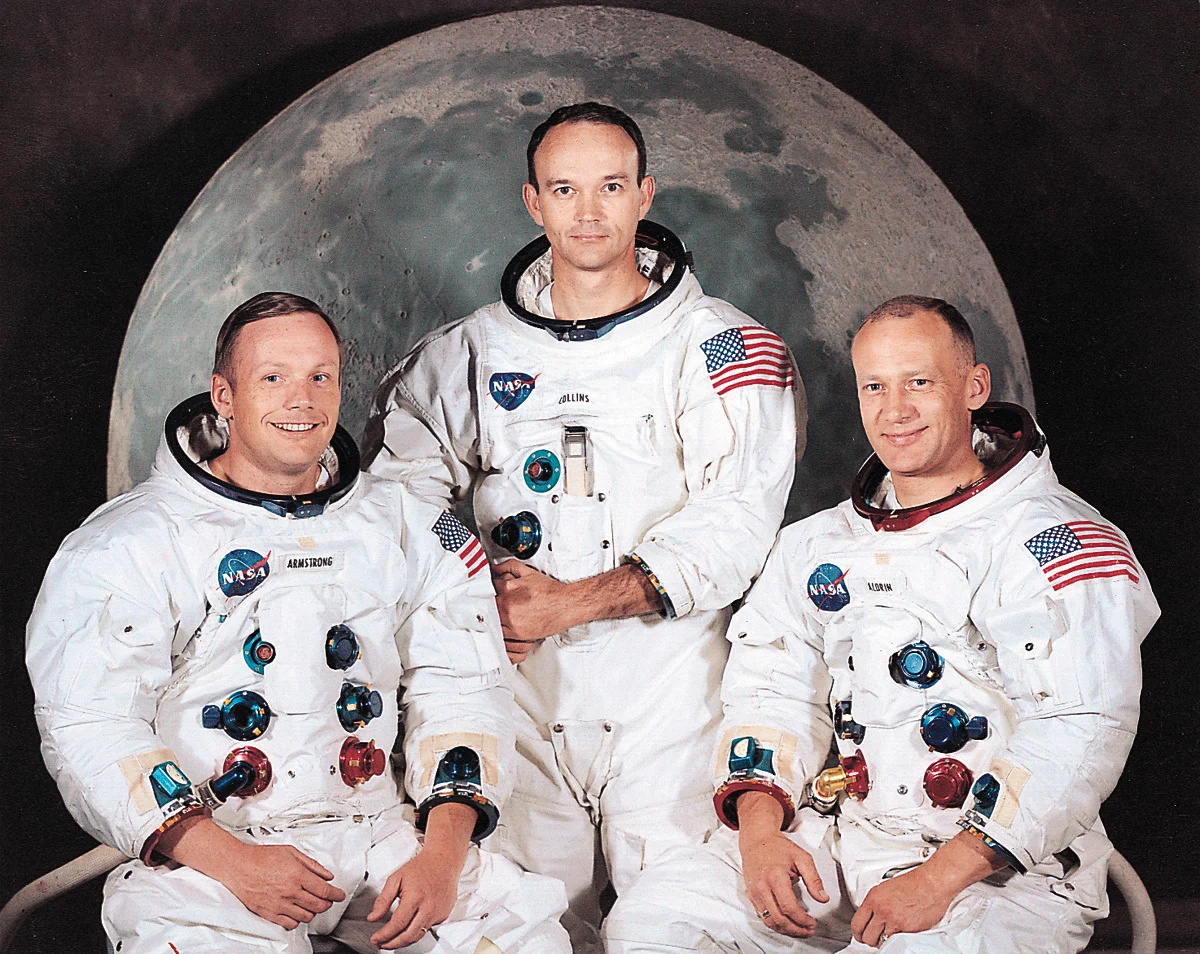
Source: http://whitlamdismissal.com/1972/11/13/whi...

Enjoyed this speech? Speakola is a labour of love and I’d be very grateful if you would share, tweet or like it. Thank you.

Facebook Twitter Facebook
In 1960-79 Tags WHITLAM, PRIME MINISTERS, CAMPAIGN LAUNCH, ELECTIONS, TRANSCRIPT
Comment

Martin Luther King: 'It is a dream deeply rooted in the American dream', I Have a Dream Speech - 1963

August 6, 2015

28 August, 1963, Washington D.C., USA

I am happy to join with you today in what will go down in history as the greatest demonstration for freedom in the history of our nation.

Five score years ago, a great American, in whose symbolic shadow we stand today, signed the Emancipation Proclamation. This momentous decree came as a great beacon light of hope to millions of Negro slaves who had been seared in the flames of withering injustice. It came as a joyous daybreak to end the long night of their captivity.

But one hundred years later, the Negro still is not free. One hundred years later, the life of the Negro is still sadly crippled by the manacles of segregation and the chains of discrimination. One hundred years later, the Negro lives on a lonely island of poverty in the midst of a vast ocean of material prosperity. One hundred years later, the Negro is still languished in the corners of American society and finds himself an exile in his own land. And so we've come here today to dramatize a shameful condition.

In a sense we've come to our nation's capital to cash a check. When the architects of our republic wrote the magnificent words of the Constitution and the Declaration of Independence, they were signing a promissory note to which every American was to fall heir. This note was a promise that all men, yes, black men as well as white men, would be guaranteed the "unalienable Rights" of "Life, Liberty and the pursuit of Happiness." It is obvious today that America has defaulted on this promissory note, insofar as her citizens of color are concerned. Instead of honoring this sacred obligation, America has given the Negro people a bad check, a check which has come back marked "insufficient funds."

But we refuse to believe that the bank of justice is bankrupt. We refuse to believe that there are insufficient funds in the great vaults of opportunity of this nation. And so, we've come to cash this check, a check that will give us upon demand the riches of freedom and the security of justice.

We have also come to this hallowed spot to remind America of the fierce urgency of Now. This is no time to engage in the luxury of cooling off or to take the tranquilizing drug of gradualism. Now is the time to make real the promises of democracy. Now is the time to rise from the dark and desolate valley of segregation to the sunlit path of racial justice. Now is the time to lift our nation from the quicksands of racial injustice to the solid rock of brotherhood. Now is the time to make justice a reality for all of God's children.

It would be fatal for the nation to overlook the urgency of the moment. This sweltering summer of the Negro's legitimate discontent will not pass until there is an invigorating autumn of freedom and equality. Nineteen sixty-three is not an end, but a beginning. And those who hope that the Negro needed to blow off steam and will now be content will have a rude awakening if the nation returns to business as usual. And there will be neither rest nor tranquility in America until the Negro is granted his citizenship rights. The whirlwinds of revolt will continue to shake the foundations of our nation until the bright day of justice emerges.

But there is something that I must say to my people, who stand on the warm threshold which leads into the palace of justice: In the process of gaining our rightful place, we must not be guilty of wrongful deeds. Let us not seek to satisfy our thirst for freedom by drinking from the cup of bitterness and hatred. We must forever conduct our struggle on the high plane of dignity and discipline. We must not allow our creative protest to degenerate into physical violence. Again and again, we must rise to the majestic heights of meeting physical force with soul force.

The marvelous new militancy which has engulfed the Negro community must not lead us to a distrust of all white people, for many of our white brothers, as evidenced by their presence here today, have come to realize that their destiny is tied up with our destiny. And they have come to realize that their freedom is inextricably bound to our freedom.

We cannot walk alone.

And as we walk, we must make the pledge that we shall always march ahead.

We cannot turn back.

There are those who are asking the devotees of civil rights, "When will you be satisfied?" We can never be satisfied as long as the Negro is the victim of the unspeakable horrors of police brutality. We can never be satisfied as long as our bodies, heavy with the fatigue of travel, cannot gain lodging in the motels of the highways and the hotels of the cities. *We cannot be satisfied as long as the negro's basic mobility is from a smaller ghetto to a larger one. We can never be satisfied as long as our children are stripped of their self-hood and robbed of their dignity by signs stating: "For Whites Only."* We cannot be satisfied as long as a Negro in Mississippi cannot vote and a Negro in New York believes he has nothing for which to vote. No, no, we are not satisfied, and we will not be satisfied until "justice rolls down like waters, and righteousness like a mighty stream."

I am not unmindful that some of you have come here out of great trials and tribulations. Some of you have come fresh from narrow jail cells. And some of you have come from areas where your quest -- quest for freedom left you battered by the storms of persecution and staggered by the winds of police brutality. You have been the veterans of creative suffering. Continue to work with the faith that unearned suffering is redemptive. Go back to Mississippi, go back to Alabama, go back to South Carolina, go back to Georgia, go back to Louisiana, go back to the slums and ghettos of our northern cities, knowing that somehow this situation can and will be changed.

Let us not wallow in the valley of despair, I say to you today, my friends.

And so even though we face the difficulties of today and tomorrow, I still have a dream. It is a dream deeply rooted in the American dream.

I have a dream that one day this nation will rise up and live out the true meaning of its creed: "We hold these truths to be self-evident, that all men are created equal."

I have a dream that one day on the red hills of Georgia, the sons of former slaves and the sons of former slave owners will be able to sit down together at the table of brotherhood.

I have a dream that one day even the state of Mississippi, a state sweltering with the heat of injustice, sweltering with the heat of oppression, will be transformed into an oasis of freedom and justice.

I have a dream that my four little children will one day live in a nation where they will not be judged by the color of their skin but by the content of their character.

I have a dream today!

I have a dream that one day, down in Alabama, with its vicious racists, with its governor having his lips dripping with the words of "interposition" and "nullification" -- one day right there in Alabama little black boys and black girls will be able to join hands with little white boys and white girls as sisters and brothers.

I have a dream today!

I have a dream that one day every valley shall be exalted, and every hill and mountain shall be made low, the rough places will be made plain, and the crooked places will be made straight; "and the glory of the Lord shall be revealed and all flesh shall see it together."

This is our hope, and this is the faith that I go back to the South with.

With this faith, we will be able to hew out of the mountain of despair a stone of hope. With this faith, we will be able to transform the jangling discords of our nation into a beautiful symphony of brotherhood. With this faith, we will be able to work together, to pray together, to struggle together, to go to jail together, to stand up for freedom together, knowing that we will be free one day.

And this will be the day -- this will be the day when all of God's children will be able to sing with new meaning:

My country 'tis of thee, sweet land of liberty, of thee I sing.

Land where my fathers died, land of the Pilgrim's pride,

From every mountainside, let freedom ring!

And if America is to be a great nation, this must become true.

And so let freedom ring from the prodigious hilltops of New Hampshire.

Let freedom ring from the mighty mountains of New York.

Let freedom ring from the heightening Alleghenies of Pennsylvania.

Let freedom ring from the snow-capped Rockies of Colorado.

Let freedom ring from the curvaceous slopes of California.

But not only that:

Let freedom ring from Stone Mountain of Georgia.

Let freedom ring from Lookout Mountain of Tennessee.

Let freedom ring from every hill and molehill of Mississippi.

From every mountainside, let freedom ring.

And when this happens, and when we allow freedom ring, when we let it ring from every village and every hamlet, from every state and every city, we will be able to speed up that day when all of God's children, black men and white men, Jews and Gentiles, Protestants and Catholics, will be able to join hands and sing in the words of the old Negro spiritual:

                Free at last! Free at last!

                Thank God Almighty, we are free at last!

Preeminent MLK historian Dr Clayborne Carson, the man chosen by Coretta Scott King as the founding director of the Dr Martin Luther King Centre for Education and Research, was a guest on the podcast, talking about I Have a Dream and other speeches.

Source: http://www.americanrhetoric.com/speeches/m...

Enjoyed this speech? Speakola is a labour of love and I’d be very grateful if you would share, tweet or like it. Thank you.

Facebook Twitter Facebook
In 1960-79 Tags USA, MARTIN LUTHER KING, CIVIL RIGHTS, I HAVE A DREAM, RACIAL EQUALITY, TRANSCRIPT
Comment

John F Kennedy: 'Not because they are easy, but because they are hard', Moon Speech - 1962

August 6, 2015

12 September, 1962, Rice University, Houston, Texas, USA

President Pitzer, Mr. Vice President, Governor, Congressman Thomas, Senator Wiley, and Congressman Miller, Mr. Webb, Mr. Bell, scientists, distinguished guests, and ladies and gentlemen:

I appreciate your president having made me an honorary visiting professor, and I will assure you that my first lecture will be very brief.

I am delighted to be here, and I'm particularly delighted to be here on this occasion.

We meet at a college noted for knowledge, in a city noted for progress, in a State noted for strength, and we stand in need of all three, for we meet in an hour of change and challenge, in a decade of hope and fear, in an age of both knowledge and ignorance. The greater our knowledge increases, the greater our ignorance unfolds.

Despite the striking fact that most of the scientists that the world has ever known are alive and working today, despite the fact that this Nation¹s own scientific manpower is doubling every 12 years in a rate of growth more than three times that of our population as a whole, despite that, the vast stretches of the unknown and the unanswered and the unfinished still far outstrip our collective comprehension.

No man can fully grasp how far and how fast we have come, but condense, if you will, the 50,000 years of man¹s recorded history in a time span of but a half-century. Stated in these terms, we know very little about the first 40 years, except at the end of them advanced man had learned to use the skins of animals to cover them. Then about 10 years ago, under this standard, man emerged from his caves to construct other kinds of shelter. Only five years ago man learned to write and use a cart with wheels. Christianity began less than two years ago. The printing press came this year, and then less than two months ago, during this whole 50-year span of human history, the steam engine provided a new source of power.

Newton explored the meaning of gravity. Last month electric lights and telephones and automobiles and airplanes became available. Only last week did we develop penicillin and television and nuclear power, and now if America's new spacecraft succeeds in reaching Venus, we will have literally reached the stars before midnight tonight.

This is a breathtaking pace, and such a pace cannot help but create new ills as it dispels old, new ignorance, new problems, new dangers. Surely the opening vistas of space promise high costs and hardships, as well as high reward.

So it is not surprising that some would have us stay where we are a little longer to rest, to wait. But this city of Houston, this State of Texas, this country of the United States was not built by those who waited and rested and wished to look behind them. This country was conquered by those who moved forward--and so will space.

William Bradford, speaking in 1630 of the founding of the Plymouth Bay Colony, said that all great and honorable actions are accompanied with great difficulties, and both must be enterprised and overcome with answerable courage.

If this capsule history of our progress teaches us anything, it is that man, in his quest for knowledge and progress, is determined and cannot be deterred. The exploration of space will go ahead, whether we join in it or not, and it is one of the great adventures of all time, and no nation which expects to be the leader of other nations can expect to stay behind in the race for space.

Those who came before us made certain that this country rode the first waves of the industrial revolutions, the first waves of modern invention, and the first wave of nuclear power, and this generation does not intend to founder in the backwash of the coming age of space. We mean to be a part of it--we mean to lead it. For the eyes of the world now look into space, to the moon and to the planets beyond, and we have vowed that we shall not see it governed by a hostile flag of conquest, but by a banner of freedom and peace. We have vowed that we shall not see space filled with weapons of mass destruction, but with instruments of knowledge and understanding.

Yet the vows of this Nation can only be fulfilled if we in this Nation are first, and, therefore, we intend to be first. In short, our leadership in science and in industry, our hopes for peace and security, our obligations to ourselves as well as others, all require us to make this effort, to solve these mysteries, to solve them for the good of all men, and to become the world's leading space-faring nation.

We set sail on this new sea because there is new knowledge to be gained, and new rights to be won, and they must be won and used for the progress of all people. For space science, like nuclear science and all technology, has no conscience of its own. Whether it will become a force for good or ill depends on man, and only if the United States occupies a position of pre-eminence can we help decide whether this new ocean will be a sea of peace or a new terrifying theater of war. I do not say the we should or will go unprotected against the hostile misuse of space any more than we go unprotected against the hostile use of land or sea, but I do say that space can be explored and mastered without feeding the fires of war, without repeating the mistakes that man has made in extending his writ around this globe of ours.

There is no strife, no prejudice, no national conflict in outer space as yet. Its hazards are hostile to us all. Its conquest deserves the best of all mankind, and its opportunity for peaceful cooperation many never come again. But why, some say, the moon? Why choose this as our goal? And they may well ask why climb the highest mountain? Why, 35 years ago, fly the Atlantic? Why does Rice play Texas?

We choose to go to the moon. We choose to go to the moon in this decade and do the other things, not because they are easy, but because they are hard, because that goal will serve to organize and measure the best of our energies and skills, because that challenge is one that we are willing to accept, one we are unwilling to postpone, and one which we intend to win, and the others, too.

It is for these reasons that I regard the decision last year to shift our efforts in space from low to high gear as among the most important decisions that will be made during my incumbency in the office of the Presidency.

In the last 24 hours we have seen facilities now being created for the greatest and most complex exploration in man's history. We have felt the ground shake and the air shattered by the testing of a Saturn C-1 booster rocket, many times as powerful as the Atlas which launched John Glenn, generating power equivalent to 10,000 automobiles with their accelerators on the floor. We have seen the site where the F-1 rocket engines, each one as powerful as all eight engines of the Saturn combined, will be clustered together to make the advanced Saturn missile, assembled in a new building to be built at Cape Canaveral as tall as a 48 story structure, as wide as a city block, and as long as two lengths of this field.

Within these last 19 months at least 45 satellites have circled the earth. Some 40 of them were "made in the United States of America" and they were far more sophisticated and supplied far more knowledge to the people of the world than those of the Soviet Union.

The Mariner spacecraft now on its way to Venus is the most intricate instrument in the history of space science. The accuracy of that shot is comparable to firing a missile from Cape Canaveral and dropping it in this stadium between the the 40-yard lines.

Transit satellites are helping our ships at sea to steer a safer course. Tiros satellites have given us unprecedented warnings of hurricanes and storms, and will do the same for forest fires and icebergs.

We have had our failures, but so have others, even if they do not admit them. And they may be less public.

To be sure, we are behind, and will be behind for some time in manned flight. But we do not intend to stay behind, and in this decade, we shall make up and move ahead.

The growth of our science and education will be enriched by new knowledge of our universe and environment, by new techniques of learning and mapping and observation, by new tools and computers for industry, medicine, the home as well as the school. Technical institutions, such as Rice, will reap the harvest of these gains.

And finally, the space effort itself, while still in its infancy, has already created a great number of new companies, and tens of thousands of new jobs. Space and related industries are generating new demands in investment and skilled personnel, and this city and this State, and this region, will share greatly in this growth. What was once the furthest outpost on the old frontier of the West will be the furthest outpost on the new frontier of science and space. Houston, your City of Houston, with its Manned Spacecraft Center, will become the heart of a large scientific and engineering community. During the next 5 years the National Aeronautics and Space Administration expects to double the number of scientists and engineers in this area, to increase its outlays for salaries and expenses to $60 million a year; to invest some $200 million in plant and laboratory facilities; and to direct or contract for new space efforts over $1 billion from this Center in this City.

To be sure, all this costs us all a good deal of money. This year¹s space budget is three times what it was in January 1961, and it is greater than the space budget of the previous eight years combined. That budget now stands at $5,400 million a year--a staggering sum, though somewhat less than we pay for cigarettes and cigars every year. Space expenditures will soon rise some more, from 40 cents per person per week to more than 50 cents a week for every man, woman and child in the United Stated, for we have given this program a high national priority--even though I realize that this is in some measure an act of faith and vision, for we do not now know what benefits await us.

But if I were to say, my fellow citizens, that we shall send to the moon, 240,000 miles away from the control station in Houston, a giant rocket more than 300 feet tall, the length of this football field, made of new metal alloys, some of which have not yet been invented, capable of standing heat and stresses several times more than have ever been experienced, fitted together with a precision better than the finest watch, carrying all the equipment needed for propulsion, guidance, control, communications, food and survival, on an untried mission, to an unknown celestial body, and then return it safely to earth, re-entering the atmosphere at speeds of over 25,000 miles per hour, causing heat about half that of the temperature of the sun--almost as hot as it is here today--and do all this, and do it right, and do it first before this decade is out--then we must be bold.

I'm the one who is doing all the work, so we just want you to stay cool for a minute. [laughter]

However, I think we're going to do it, and I think that we must pay what needs to be paid. I don't think we ought to waste any money, but I think we ought to do the job. And this will be done in the decade of the sixties. It may be done while some of you are still here at school at this college and university. It will be done during the term of office of some of the people who sit here on this platform. But it will be done. And it will be done before the end of this decade.

I am delighted that this university is playing a part in putting a man on the moon as part of a great national effort of the United States of America.

Many years ago the great British explorer George Mallory, who was to die on Mount Everest, was asked why did he want to climb it. He said, "Because it is there."

Well, space is there, and we're going to climb it, and the moon and the planets are there, and new hopes for knowledge and peace are there. And, therefore, as we set sail we ask God's blessing on the most hazardous and dangerous and greatest adventure on which man has ever embarked.

Thank you.

Source: http://er.jsc.nasa.gov/seh/ricetalk.htm

Enjoyed this speech? Speakola is a labour of love and I’d be very grateful if you would share, tweet or like it. Thank you.

Facebook Twitter Facebook
In 1960-79 Tags PRESIDENTS, SPACE, NASA, JFK, USA, TRANSCRIPT
1 Comment

Gough Whitlam: 'Well may we say God save the Queen', Parliament House - 1975

July 1, 2015

11 November 1975, Parliament House, Canberra, Australia

Gough Whitlam was the 21st Prime Minister of Asutralia. He was dismissed by the Governor General, an unelected vice regal, after a crisis of supply. This was his impromptu speech.

Ladies and gentleman (applause and cheering), well may we say God Save the Queen (pause) because nothing will save the Governor-General (applause and cheering).

The proclamation which you have just heard read by the Governor-General’s official secretary was countersigned ‘Malcolm Fraser’ (boos and jeering) who will undoubtedly go down in Australian history from Remembrance Day 1975 as Kerr’s cur.

They won’t silence the outskirts of Parliament House, even if the inside has been silenced for the next few weeks (cheering).

The Governor-General’s proclamation was signed after he already made an appointment to meet the Speaker at a quarter to five.

The House of Representatives had requested the Speaker to give the Governor-General its decision that Mr Fraser did not have the confidence of the House (pause) and that the Governor-General should call me to form the Government. . . (cheers and applause).

Maintain your rage and enthusiasm through the campaign for the election now to be held and until polling day.


Enjoyed this speech? Speakola is a labour of love and I’d be very grateful if you would share, tweet or like it. Thank you.

Facebook Twitter Facebook
In 1960-79 Tags DISMISSAL, AUSTRALIA, WHITLAM
Comment

John F. Kennedy: 'Ich bin ein Berliner!', Berlin visit - 1963

June 30, 2015

26 June 1963, Berlin, Germany

I am proud to come to this city as the guest of your distinguished Mayor, who has symbolized throughout the world the fighting spirit of West Berlin. And I am proud to visit the Federal Republic with your distinguished Chancellor who for so many years has committed Germany to democracy and freedom and progress, and to come here in the company of my fellow American, General Clay, who has been in this city during its great moments of crisis and will come again if ever needed.

Two thousand years ago the proudest boast was "civis Romanus sum". Today, in the world of freedom, the proudest boast is "Ich bin ein Berliner".

I appreciate my interpreter translating my German!

There are many people in the world who really don't understand, or say they don't, what is the great issue between the free world and the Communist world. Let them come to Berlin. There are some who say that communism is the wave of the future. Let them come to Berlin. And there are some who say in Europe and elsewhere we can work with the Communists. Let them come to Berlin. And there are even a few who say that it is true that communism is an evil system, but it permits us to make economic progress. Lass' sie nach Berlin kommen. Let them come to Berlin.

Freedom has many difficulties and democracy is not perfect, but we have never had to put a wall up to keep our people in, to prevent them from leaving us. I want to say, on behalf of my countrymen, who live many miles away on the other side of the Atlantic, who are far distant from you, that they take the greatest pride that they have been able to share with you, even from a distance, the story of the last 18 years. I know of no town, no city, that has been besieged for 18 years that still lives with the vitality and the force, and the hope and the determination of the city of West Berlin. While the wall is the most obvious and vivid demonstration of the failures of the Communist system, for all the world to see, we take no satisfaction in it, for it is, as your Mayor has said, an offense not only against history but an offense against humanity, separating families, dividing husbands and wives and brothers and sisters, and dividing a people who wish to be joined together.

What is true of this city is true of Germany - real, lasting peace in Europe can never be assured as long as one German out of four is denied the elementary right of free men, and that is to make a free choice. In 18 years of peace and good faith, this generation of Germans has earned the right to be free, including the right to unite their families and their nation in lasting peace, with good will to all people. You live in a defended island of freedom, but your life is part of the main. So let me ask you as I close, to lift your eyes beyond the dangers of today, to the hopes of tomorrow, beyond the freedom merely of this city of Berlin, or your country of Germany, to the advance of freedom everywhere, beyond the wall to the day of peace with justice, beyond yourselves and ourselves to all mankind.

Freedom is indivisible, and when one man is enslaved, all are not free. When all are free, then we can look forward to that day when this city will be joined as one and this country and this great Continent of Europe in a peaceful and hopeful globe. When that day finally comes, as it will, the people of West Berlin can take sober satisfaction in the fact that they were in the front lines for almost two decades.

All free men, wherever they may live, are citizens of Berlin, and, therefore, as a free man, I take pride in the words "Ich bin ein Berliner".

Source: http://www.let.rug.nl/usa/presidents/john-...

Enjoyed this speech? Speakola is a labour of love and I’d be very grateful if you would share, tweet or like it. Thank you.

Facebook Twitter Facebook
In 1960-79 Tags JFK, USA, PRESIDENTS, COLD WAR, GERMANY, TRANSCRIPT
Comment

Nelson Mandela: 'An Ideal for which I am prepared to die', Supreme Court of South Africa -1964

June 30, 2015

I am the first accused. I hold a bachelor's degree in arts and practised as an attorney in Johannesburg for a number of years in partnership with Oliver Tambo. I am a convicted prisoner serving five years for leaving the country without a permit and for inciting people to go on strike at the end of May 1961.

At the outset, I want to say that the suggestion that the struggle in South Africa is under the influence of foreigners or communists is wholly incorrect. I have done whatever I did because of my experience in South Africa and my own proudly felt African background, and not because of what any outsider might have said. In my youth in the Transkei I listened to the elders of my tribe telling stories of the old days. Amongst the tales they related to me were those of wars fought by our ancestors in defence of the fatherland. The names of Dingane and Bambata, Hintsa and Makana, Squngthi and Dalasile, Moshoeshoe and Sekhukhuni, were praised as the glory of the entire African nation. I hoped then that life might offer me the opportunity to serve my people and make my own humble contribution to their freedom struggle.

Some of the things so far told to the court are true and some are untrue. I do not, however, deny that I planned sabotage. I did not plan it in a spirit of recklessness, nor because I have any love of violence. I planned it as a result of a calm and sober assessment of the political situation that had arisen after many years of tyranny, exploitation, and oppression of my people by the whites.

I admit immediately that I was one of the persons who helped to form Umkhonto we Sizwe. I deny that Umkhonto was responsible for a number of acts which clearly fell outside the policy of the organisation, and which have been charged in the indictment against us. I, and the others who started the organisation, felt that without violence there would be no way open to the African people to succeed in their struggle against the principle of white supremacy. All lawful modes of expressing opposition to this principle had been closed by legislation, and we were placed in a position in which we had either to accept a permanent state of inferiority, or to defy the government. We chose to defy the law.

We first broke the law in a way which avoided any recourse to violence; when this form was legislated against, and then the government resorted to a show of force to crush opposition to its policies, only then did we decide to answer violence with violence.

The African National Congress was formed in 1912 to defend the rights of the African people, which had been seriously curtailed. For 37 years - that is, until 1949 - it adhered strictly to a constitutional struggle. But white governments remained unmoved, and the rights of Africans became less instead of becoming greater. Even after 1949, the ANC remained determined to avoid violence. At this time, however, the decision was taken to protest against apartheid by peaceful, but unlawful, demonstrations. More than 8,500 people went to jail. Yet there was not a single instance of violence. I and 19 colleagues were convicted for organising the campaign, but our sentences were suspended mainly because the judge found that discipline and non-violence had been stressed throughout.

During the defiance campaign, the Public Safety Act and the Criminal Law Amendment Act were passed. These provided harsher penalties for protests against [the] laws. Despite this, the protests continued and the ANC adhered to its policy of non-violence. In 1956, 156 leading members of the Congress Alliance, including myself, were arrested. The non-violent policy of the ANC was put in issue by the state, but when the court gave judgment some five years later, it found that the ANC did not have a policy of violence.

In 1960 there was the shooting at Sharpeville, which resulted in the declaration of the ANC as an unlawful organisation. My colleagues man and I, after careful consideration, decided that we would not obey this decree. The African people were not part of the government and did not make the laws by which they were governed. We believed in the words of the Universal Declaration of Human Rights, that "the will of the people shall be the basis of authority of the government", and for us to accept the banning was equivalent to accepting the silencing of the Africans for all time. The ANC refused to dissolve, but instead went underground.

In 1960 the government held a referendum which led to the establishment of the republic. Africans, who constituted approximately 70% of the population, were not entitled to vote, and were not even consulted. I undertook to be responsible for organising the national stay-at-home called to coincide with the declaration of the republic. As all strikes by Africans are illegal, the person organising such a strike must avoid arrest. I had to leave my home and family and my practice and go into hiding to avoid arrest. The stay-at-home was to be a peaceful demonstration. Careful instructions were given to avoid any recourse to violence.

The government's answer was to introduce new and harsher laws, to mobilise its armed forces, and to send Saracens, armed vehicles, and soldiers into the townships in a massive show of force designed to intimidate the people. The government had decided to rule by force alone, and this decision was a milestone on the road to Umkhonto. What were we, the leaders of our people, to do? We had no doubt that we had to continue the fight. Anything else would have been abject surrender. Our problem was not whether to fight, but was how to continue the fight.

We of the ANC had always stood for a non-racial democracy, and we shrank from any action which might drive the races further apart. But the hard facts were that 50 years of non-violence had brought the African people nothing but more and more repressive legislation, and fewer and fewer rights. By this time violence had, in fact, become a feature of the South African political scene.

There had been violence in 1957 when the women of Zeerust were ordered to carry passes; there was violence in 1958 with the enforcement of cattle culling in Sekhukhuneland; there was violence in 1959 when the people of Cato Manor protested against pass raids; there was violence in 1960 when the government attempted to impose Bantu authorities in Pondoland. Each disturbance pointed to the inevitable growth among Africans of the belief that violence was the only way out - it showed that a government which uses force to maintain its rule teaches the oppressed to use force to oppose it.

I came to the conclusion that as violence in this country was inevitable, it would be unrealistic to continue preaching peace and non-violence. This conclusion was not easily arrived at. It was only when all else had failed, when all channels of peaceful protest had been barred to us, that the decision was made to embark on violent forms of political struggle. I can only say that I felt morally obliged to do what I did.

Four forms of violence were possible. There is sabotage, there is guerrilla warfare, there is terrorism, and there is open revolution. We chose to adopt the first. Sabotage did not involve loss of life, and it offered the best hope for future race relations. Bitterness would be kept to a minimum and, if the policy bore fruit, democratic government could become a reality. The initial plan was based on a careful analysis of the political and economic situation of our country. We believed that South Africa depended to a large extent on foreign capital. We felt that planned destruction of power plants, and interference with rail and telephone communications, would scare away capital from the country, thus compelling the voters of the country to reconsider their position. Umkhonto had its first operation on December 16 1961, when government buildings in Johannesburg, Port Elizabeth and Durban were attacked. The selection of targets is proof of the policy to which I have referred. Had we intended to attack life we would have selected targets where people congregated and not empty buildings and power stations.

The whites failed to respond by suggesting change; they responded to our call by suggesting the laager. In contrast, the response of the Africans was one of encouragement. Suddenly there was hope again. People began to speculate on how soon freedom would be obtained.

But we in Umkhonto weighed up the white response with anxiety. The lines were being drawn. The whites and blacks were moving into separate camps, and the prospects of avoiding a civil war were made less. The white newspapers carried reports that sabotage would be punished by death. If this was so, how could we continue to keep Africans away from terrorism?

We felt it our duty to make preparations to use force in order to defend ourselves against force. We decided, therefore to make provision for the possibility of guerrilla warfare. All whites undergo compulsory military training, but no such training was given to Africans. It was in our view essential to build up a nucleus of trained men who would be able to provide the leadership which would be required if guerrilla warfare started.

At this stage it was decided that I should attend the Conference of the Pan-African Freedom Movement which was to be held early in 1962 in Addis Ababa, and after the conference, I would undertake a tour of the African states with a view to obtaining facilities for the training of soldiers. My tour was a success. Wherever I went I met sympathy for our cause and promises of help. All Africa was united against the stand of white South Africa, and even in London I was received with great sympathy by political leaders, such as Mr Gaitskell and Mr Grimond.

I started to make a study of the art of war and revolution and, whilst abroad, underwent a course in military training. If there was to be guerrilla warfare, I wanted to be able to stand and fight with my people and to share the hazards of war with them.

On my return I found that there had been little alteration in the political scene save, that the threat of a death penalty for sabotage had now become a fact.

Another of the allegations made by the state is that the aims and objects of the ANC and the Communist party are the same. The creed of the ANC is, and always has been, the creed of African nationalism. It is not the concept of African nationalism expressed in the cry, "Drive the white man into the sea." The African nationalism for which the ANC stands is the concept of freedom and fulfilment for the African people in their own land. The most important political document ever adopted by the ANC is the "freedom charter". It is by no means a blueprint for a socialist state. It calls for redistribution, but not nationalisation, of land; it provides for nationalisation of mines, banks, and monopoly industry, because big monopolies are owned by one race only, and without such nationalisation racial domination would be perpetuated despite the spread of political power. Under the freedom charter, nationalisation would take place in an economy based on private enterprise.

As far as the Communist party is concerned, and if I understand its policy correctly, it stands for the establishment of a state based on the principles of Marxism. The Communist party sought to emphasise class distinctions whilst the ANC seeks to harmonise them. This is a vital distinction.

It is true that there has often been close cooperation between the ANC and the Communist party. But cooperation is merely proof of a common goal - in this case the removal of white supremacy - and is not proof of a complete community of interests. The history of the world is full of similar examples. Perhaps the most striking is the cooperation between Great Britain, the United States and the Soviet Union in the fight against Hitler. Nobody but Hitler would have dared to suggest that such cooperation turned Churchill or Roosevelt into communists. Theoretical differences amongst those fighting against oppression is a luxury we cannot afford at this stage.

What is more, for many decades communists were the only political group in South Africa prepared to treat Africans as human beings and their equals; who were prepared to eat with us; talk with us, live with us, and work with us. They were the only group which was prepared to work with the Africans for the attainment of political rights and a stake in society. Because of this, there are many Africans who, today, tend to equate freedom with communism. They are supported in this belief by a legislature which brands all exponents of democratic government and African freedom as communists and bans many of them (who are not communists) under the Suppression of Communism Act. Although I have never been a member of the Communist party, I myself have been imprisoned under that act.

I have always regarded myself, in the first place, as an African patriot. Today I am attracted by the idea of a classless society, an attraction which springs in part from Marxist reading and, in part, from my admiration of the structure of early African societies. The land belonged to the tribe. There were no rich or poor and there was no exploitation. We all accept the need for some form of socialism to enable our people to catch up with the advanced countries of this world and to overcome their legacy of extreme poverty. But this does not mean we are Marxists.

I have gained the impression that communists regard the parliamentary system of the west as reactionary. But, on the contrary, I am an admirer. The Magna Carta, the Petition of Right, and the Bill of Rights are documents held in veneration by democrats throughout the world. I have great respect for British institutions, and for the country's system of justice. I regard the British parliament as the most democratic institution in the world, and the impartiality of its judiciary never fails to arouse my admiration. The American Congress, that country's separation of powers, as well as the independence of its judiciary, arouses in me similar sentiments.

I have been influenced in my thinking by both west and east. I should tie myself to no particular system of society other than of socialism. I must leave myself free to borrow the best from the west and from the east.

Our fight is against real, and not imaginary, hardships or, to use the language of the state prosecutor, "so-called hardships". Basically, we fight against two features which are the hallmarks of African life in South Africa and which are entrenched by legislation. These features are poverty and lack of human dignity, and we do not need communists or so-called "agitators" to teach us about these things. South Africa is the richest country in Africa, and could be one of the richest countries in the world. But it is a land of remarkable contrasts. The whites enjoy what may be the highest standard of living in the world, whilst Africans live in poverty and misery. Poverty goes hand in hand with malnutrition and disease. Tuberculosis, pellagra and scurvy bring death and destruction of health.

The complaint of Africans, however, is not only that they are poor and the whites are rich, but that the laws which are made by the whites are designed to preserve this situation. There are two ways to break out of poverty. The first is by formal education, and the second is by the worker acquiring a greater skill at his work and thus higher wages. As far as Africans are concerned, both these avenues of advancement are deliberately curtailed by legislation.

The government has always sought to hamper Africans in their search for education. There is compulsory education for all white children at virtually no cost to their parents, be they rich or poor. African children, however, generally have to pay more for their schooling than whites.

Approximately 40% of African children in the age group seven to 14 do not attend school. For those who do, the standards are vastly different from those afforded to white children. Only 5,660 African children in the whole of South Africa passed their junior certificate in 1962, and only 362 passed matric.

This is presumably consistent with the policy of Bantu education about which the present prime minister said: "When I have control of native education I will reform it so that natives will be taught from childhood to realise that equality with Europeans is not for them. People who believe in equality are not desirable teachers for natives. When my department controls native education it will know for what class of higher education a native is fitted, and whether he will have a chance in life to use his knowledge."

The other main obstacle to the advancement of the African is the industrial colour-bar under which all the better jobs of industry are reserved for whites only. Moreover, Africans who do obtain employment in the unskilled and semi-skilled occupations open to them are not allowed to form trade unions which have recognition. This means that they are denied the right of collective bargaining, which is permitted to the better-paid white workers.

The government answers its critics by saying that Africans in South Africa are better off than the inhabitants of the other countries in Africa. I do not know whether this statement is true. But even if it is true, as far as the African people are concerned it is irrelevant.

Our complaint is not that we are poor by comparison with people in other countries, but that we are poor by comparison with the white people in our own country, and that we are prevented by legislation from altering this imbalance.

The lack of human dignity experienced by Africans is the direct result of the policy of white supremacy. White supremacy implies black inferiority. Legislation designed to preserve white supremacy entrenches this notion. Menial tasks in South Africa are invariably performed by Africans.

When anything has to be carried or cleaned the white man will look around for an African to do it for him, whether the African is employed by him or not. Because of this sort of attitude, whites tend to regard Africans as a separate breed. They do not look upon them as people with families of their own; they do not realise that they have emotions - that they fall in love like white people do; that they want to be with their wives and children like white people want to be with theirs; that they want to earn enough money to support their families properly, to feed and clothe them and send them to school. And what "house-boy" or "garden-boy" or labourer can ever hope to do this?

Pass laws render any African liable to police surveillance at any time. I doubt whether there is a single African male in South Africa who has not had a brush with the police over his pass. Hundreds and thousands of Africans are thrown into jail each year under pass laws.

Even worse is the fact that pass laws keep husband and wife apart and lead to the breakdown of family life. Poverty and the breakdown of family have secondary effects. Children wander the streets because they have no schools to go to, or no money to enable them to go, or no parents at home to see that they go, because both parents (if there be two) have to work to keep the family alive. This leads to a breakdown in moral standards, to an alarming rise in illegitimacy, and to violence, which erupts not only politically, but everywhere. Life in the townships is dangerous. Not a day goes by without somebody being stabbed or assaulted. And violence is carried out of the townships [into] the white living areas. People are afraid to walk the streets after dark. Housebreakings and robberies are increasing, despite the fact that the death sentence can now be imposed for such offences. Death sentences cannot cure the festering sore.

Africans want to be paid a living wage. Africans want to perform work which they are capable of doing, and not work which the government declares them to be capable of. Africans want to be allowed to live where they obtain work, and not be endorsed out of an area because they were not born there. Africans want to be allowed to own land in places where they work, and not to be obliged to live in rented houses which they can never call their own. Africans want to be part of the general population, and not confined to living in their own ghettoes.

African men want to have their wives and children to live with them where they work, and not be forced into an unnatural existence in men's hostels. African women want to be with their menfolk and not be left permanently widowed in the reserves. Africans want to be allowed out after 11 o'clock at night and not to be confined to their rooms like little children. Africans want to be allowed to travel in their own country and to seek work where they want to and not where the labour bureau tells them to. Africans want a just share in the whole of South Africa; they want security and a stake in society.

Above all, we want equal political rights, because without them our disabilities will be permanent. I know this sounds revolutionary to the whites in this country, because the majority of voters will be Africans. This makes the white man fear democracy. But this fear cannot be allowed to stand in the way of the only solution which will guarantee racial harmony and freedom for all. It is not true that the enfranchisement of all will result in racial domination. Political division, based on colour, is entirely artificial and, when it disappears, so will the domination of one colour group by another. The ANC has spent half a century fighting against racialism. When it triumphs it will not change that policy.

This then is what the ANC is fighting. Their struggle is a truly national one. It is a struggle of the African people, inspired by their own suffering and their own experience. It is a struggle for the right to live. During my lifetime I have dedicated myself to this struggle of the African people. I have fought against white domination, and I have fought against black domination. I have cherished the ideal of a democratic and free society in which all persons live together in harmony and with equal opportunities. It is an ideal which I hope to live for and to achieve. But if needs be, it is an ideal for which I am prepared to die.

Source: http://www.theguardian.com/world/2007/apr/...

Enjoyed this speech? Speakola is a labour of love and I’d be very grateful if you would share, tweet or like it. Thank you.

Facebook Twitter Facebook
In 1960-79 Tags MANDELA, SOUTH AFRICA, COURT, TRANSCRIPT
Comment
← Newer Posts

See my film!

Limited Australian Season

March 2025

Details and ticket bookings at

angeandtheboss.com

Support Speakola

Hi speech lovers,
With costs of hosting website and podcast, this labour of love has become a difficult financial proposition in recent times. If you can afford a donation, it will help Speakola survive and prosper.

Best wishes,
Tony Wilson.

Become a Patron!

Learn more about supporting Speakola.

Featured political

Featured
Jon Stewart: "They responded in five seconds", 9-11 first responders, Address to Congress - 2019
Jacinda Ardern: 'They were New Zealanders. They are us', Address to Parliament following Christchurch massacre - 2019
Dolores Ibárruri: "¡No Pasarán!, They shall not pass!', Defense of 2nd Spanish Republic - 1936
Jimmy Reid: 'A rat race is for rats. We're not rats', Rectorial address, Glasgow University - 1972

Featured eulogies

Featured
For Geoffrey Tozer: 'I have to say we all let him down', by Paul Keating - 2009
for James Baldwin: 'Jimmy. You crowned us', by Toni Morrison - 1988
for Michael Gordon: '13 days ago my Dad’s big, beautiful, generous heart suddenly stopped beating', by Scott and Sarah Gordon - 2018

Featured commencement

Featured
Tara Westover: 'Your avatar isn't real, it isn't terribly far from a lie', The Un-Instagrammable Self, Northeastern University - 2019
Tim Minchin: 'Being an artist requires massive reserves of self-belief', WAAPA - 2019
Atul Gawande: 'Curiosity and What Equality Really Means', UCLA Medical School - 2018
Abby Wambach: 'We are the wolves', Barnard College - 2018
Eric Idle: 'America is 300 million people all walking in the same direction, singing 'I Did It My Way'', Whitman College - 2013
Shirley Chisholm: ;America has gone to sleep', Greenfield High School - 1983

Featured sport

Featured
Joe Marler: 'Get back on the horse', Harlequins v Bath pre game interview - 2019
Ray Lewis : 'The greatest pain of my life is the reason I'm standing here today', 52 Cards -
Mel Jones: 'If she was Bradman on the field, she was definitely Keith Miller off the field', Betty Wilson's induction into Australian Cricket Hall of Fame - 2017
Jeff Thomson: 'It’s all those people that help you as kids', Hall of Fame - 2016

Fresh Tweets


Featured weddings

Featured
Dan Angelucci: 'The Best (Best Man) Speech of all time', for Don and Katherine - 2019
Hallerman Sisters: 'Oh sister now we have to let you gooooo!' for Caitlin & Johnny - 2015
Korey Soderman (via Kyle): 'All our lives I have used my voice to help Korey express his thoughts, so today, like always, I will be my brother’s voice' for Kyle and Jess - 2014

Featured Arts

Featured
Bruce Springsteen: 'They're keepers of some of the most beautiful sonic architecture in rock and roll', Induction U2 into Rock Hall of Fame - 2005
Olivia Colman: 'Done that bit. I think I have done that bit', BAFTA acceptance, Leading Actress - 2019
Axel Scheffler: 'The book wasn't called 'No Room on the Broom!', Illustrator of the Year, British Book Awards - 2018
Tina Fey: 'Only in comedy is an obedient white girl from the suburbs a diversity candidate', Kennedy Center Mark Twain Award -  2010
Tina Fey: 'Only in comedy is an obedient white girl from the suburbs a diversity candidate', Kennedy Center Mark Twain Award - 2010

Featured Debates

Featured
Sacha Baron Cohen: 'Just think what Goebbels might have done with Facebook', Anti Defamation League Leadership Award - 2019
Greta Thunberg: 'How dare you', UN Climate Action Summit - 2019
Charlie Munger: 'The Psychology of Human Misjudgment', Harvard University - 1995
Lawrence O'Donnell: 'The original sin of this country is that we invaders shot and murdered our way across the land killing every Native American that we could', The Last Word, 'Dakota' - 2016