• Genre
  • About
  • Submissions
  • Donate
  • Search
Menu

Speakola

All Speeches Great and Small
  • Genre
  • About
  • Submissions
  • Donate
  • Search

Eulogies

Some of the most moving and brilliant speeches ever made occur at funerals. Please upload the eulogy for your loved one using the form below.

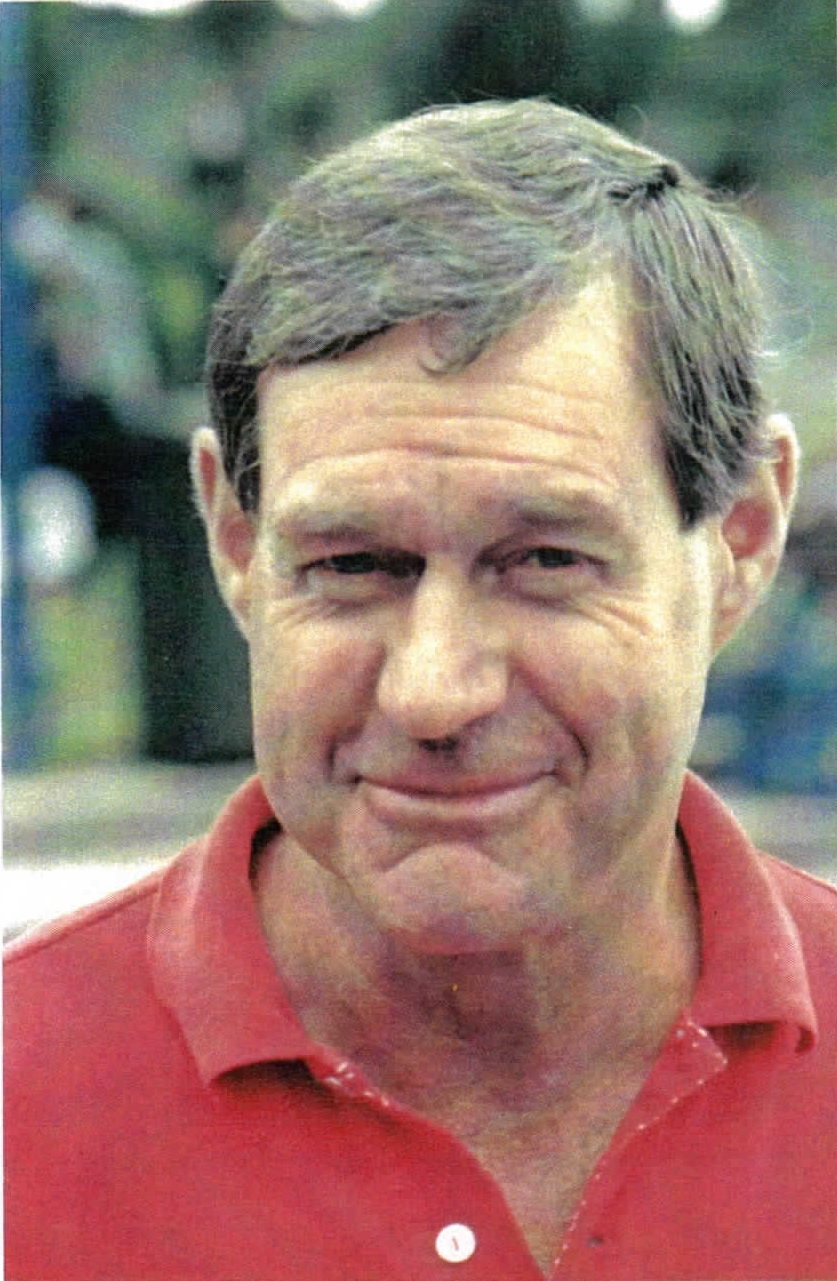
Barry Neil Todd: 9 March 1941 - 28 August 2015

Barry Neil Todd: 9 March 1941 - 28 August 2015

For Barry Todd: 'We mourn the passing of our standard bearer, conscience and father figure', by Mark Dunstan - 2015

October 21, 2015

3 September, 2015, Ormond Uniting Church, Ormond, Melbourne, Australia

The notice of Barry’s passing, which the Club placed in the newspaper, could not be more accurate.  It said,

“Barry Todd, Toddy
The Committee, members and friends of the Elsternwick Cricket Club mourn the passing of our standard bearer, conscience and father figure.  His unwavering commitment, passion and contribution to the Club will never be matched.  Will be sadly missed by all.  A true legend of the ECC.”

I will get to some figures later, but more important is Barry’s impact during more than 60 years of cricket involvement.

Barry had a philosophy which guided his treatment of people on and off the cricket ground.  It may not be fashionable in competitive sport, but he would not speak any less respectfully to an opponent on the ground than he would socialising in the pavilion.  You could say he was successfully immunised against white line fever.

That the Club won the Spirit of Cricket award in the association this year, is a reflection of his influence.

I, with many others, looked to Barry for his Christian approach, his social concern and his wonderful sporting understanding.  He lived all that with a great commitment.  In difficult times, Barry was a source of understanding and support.

If you went with Barry to a sporting or related event, it was difficult to leave.  From the MCG to a subbie meeting he would always find a familiar face and seek a lengthy chat.  It wasn’t small talk.  He sought new information, provided valuable comments and he remembered personal facts and both would walk away enriched.  A mention of Elsternwick CC would prompt the comment, “You’d know Toddy then."

If he didn’t talk face to face, he would ring. Boy, would he ring.

It could be difficult to return a call from Barry.  His home phone could be tied up for hours while he made cricket related calls.  Pre-season preparations and recruiting probably created spikes in Telstra’s profits. 

Club records will have reams of Barry’s hand written notes and lists for all occasions.  Every MC or presenter at social functions and award nights will have received a detailed running sheet with no detail spared.  There would be a list of people to thank, omitting his name as the most important.  He was the master of recognising the efforts of others while down playing his own contribution.

Through the power of his relationships with all those players passing through the Club, he was able to establish the Wickas as a thriving past players’ group.  It will have a subdued 20th annual dinner this year.

At committee meetings, we would turn to Barry when it came to general business.  He invariable had an important point which the rest of us had overlooked.  It often showed a thoughtfulness for a player or member or an appreciation of our civic responsibilities.

The feelings of others were usually paramount in Barry’s thoughts.  That made the selection of teams a potential minefield.  If he was forced to drop a player, Barry was more likely to require consoling than the dropped player.

Barry looked forward to the Club hosting country week games.  He would spend the day chatting to the players and officials from the country teams and was always determined to present them with the best possible experience with his organisation of conditions, afternoon teas and hospitality.  At Elsternwick home games, he would take the first round of drinks into the opposition’s dressing rooms.

Over the last 35 years, since returning from Benalla, Barry has been instrumental in recruiting every captain, coach and most senior players to the club.  Three current players and office bearers at the Club were recruited through his Benalla.

connections.  Others have been cold called and seduced by his mix of genuine sincerity and enthusiasm.  Those same qualities produced close and trusting relationships with people dealing with the club, such as council staff and sponsors, who in some cases became close personal friends.

As a Club Delegate to the VSDCA for 24 years, he ensured that Elsternwick CC was a respected member of the Association and gave inordinate amounts of time to organise the Association’s 90th Anniversary celebration at Elsternwick Park, the centenary dinner and entertainment and when hosting the Championship Final in 1985/86.  He contributed passages to the centenary publication, relying on his passion for and experience of the R.M. Hatch junior competition. 

While coach and manager of the Hatch team, he was keen to give country players an opportunity and visited Gippsland, Shepparton and other towns to conduct clinics and recruit players.  It wasn’t his principle aim, but the result was three premierships in six years.  A remarkable achievement.  Some Association members thought that country recruitment shouldn’t be allowed and suggested a rules amendment.  We referred to it as the Todd amendment.

Barry’s self-effacing nature was summed up when he would do something well and suggest it was “good for him.”  If it was good enough for Barry, it was usually exceptional by any standard.

He was awarded an Australian Sports Medal in 2000 for his contribution to cricket.  Despite the significance of that award, it seems trifling as a recognition of his efforts.

After the force of his deeds, the statistics almost seem unnecessary.  For the record, he debuted in the Elsternwick CC first XI as a 13 year old and played a total of 445 games, of which 115 were in the firsts.  He won the batting average in all four grades, including the significant 1965/66 season when the firsts played in their last final for 27 seasons.  He made a century in the fourths at age 55.

He also played seven seasons for Benalla CC while teaching there.  I had the privilege of starting my senior cricket career in that team captained by Barry.

As an administrator, he has been on the Committee since 1980 and was President for 15 years from 1980/81.  An award for the most outstanding contribution during the season was recently named after Barry.  In truth, he could have won it almost every year.

During nearly all of that time, Lenore has not only supported Barry in his cricket passions, but has been a club stalwart in her own right.  They have been a model for couples in all aspects of life.  It was always a delight to have Neil, Jenny and Kathy at the club in their early years and we understand their enormous loss.  I now know how much interest Barry has taken in encouraging his sporting grandchildren with the construction of a special pitch at home and finding individualised equipment.

I am pre-empting an official announcement, but informal discussions started recently with a view to naming a cricket facility after Barry.  There can only be unanimous support for a Todd Reserve or a Todd Pavilion in the not too distant future.

Barry was a joint author of a publication about Elsternwick Park’s history.  He particularly liked the reference in 1921 to a long term secretary of the Club who helped create Elsternwick Park.  The same words can now be used to say that Elsternwick CC which he has so successfully developed, will forever be to members a lasting monument to his great and generous works on their behalf.
Enjoyed this speech? Speakola is a labour of love and I’d be very grateful if you would share, tweet or like it. Thank you.

Facebook Twitter Facebook
In SUBMITTED 2 Tags CRICKET, LOCAL CRICKET, CLUB LEGEND, MARK DUNSTAN, BARRY TODD, ELSTERNWICK CRICKET CLUB
Comment

For Jack Clancy: 'Give this to Jack, will you, Johnny. He wasn’t really a betting man,' by John Timlin - 2014

October 20, 2015

3 April, 2014, Kew, Melbourne, Australia

As a boy Jack lived with his family in Brighton and helped his Dad with gardening.  Anyone who went to Acheron Avenue would know that Jack learnt a thing or two about that art.  He designed and planted what was one of the best gardens in Camberwell. 

His Dad, Harry, a keen student of the horses and a hopeful punter, invested any small amount of money he could manage on the odd nag.  There was no TAB in those days so the local barber who attended to the Clancy family doubled as an SP bookmaker.  Doubtless, he was one of John Wren’s franchisees.  

One Saturday they were gardening in Brighton when Jack’s father got a tip from the owner of the horse.  Jack had to take 5 shillings to the barber to put on Saint Warden before the 3pm race.  That was fine; only a ten minute walk away so Jack headed off with plenty of time.  But when he got to the level crossing at New Street, the gates closed.  He waited for the Sandringham bound train to come and it roared past but the gates still wouldn’t open.  There was a train coming from the other direction. 

Of course, by the time Jack made it to the barber, the race was over and Saint Warden had won at the juicy odds of 10/1.  Back he trudged with the 5 shillings aware that a win would have been five pounds.  More than his Dad could earn in a week at the Council depot.  He was expecting the wrath of God but, when he told him what happened, Harry Clancy said “Ah well.  That’s life John, that’s life.”

Jack must have told me that story a dozen times over the years and it’s interesting that, despite his love of sport, he was never a gambler, just a devotee of footy tipping where he prided himself on injecting knowledge into the equation and (Pause) just a little bit of luck.

Fast forward nearly half a century to the venue at Martinis Hotel in Rathdowne Street, Carlton now an abandoned building opposite the Housing Commission flats.  On Thursdays Jack, Laurie, Paul and I and sometimes Jack Hibberd and the lawyer, Phil Molan, would have lunch and waste the rest of the afternoon playing pool.  

When we first arrived, we were given the cold shoulder by the locals.  We were outsiders but one of them recognised me from my time at the Pram Factory and the nearby Stewarts Hotel which we frequented. Grudgingly, we were allowed access to the pool table in between their games. 

Some very funny fellows were there, all with nicknames.  Harry Horsetrough was an able teller of tall tales from Tasmania where his family reputedly owned a chain of hotels which suffered losses due to Horsetrough constantly dipping his nose and hand into the cash registers.  Hence the nickname. The family exiled him to Melbourne and dribbled him a stipend for booze and horses.

Horsetrough’s great mate, he was fond of telling us, was Christopher Dale Flannery, aka Rent-a-Kill, a contract killer named in various Underbelly type crimes and also a casual and brutal enforcer for [celebrity footy tycoon ].

We later learned Horsetrough had done time for embezzlement but then most of his mates in the pub had similar records. We were often introduced to folk just released from Pentridge including a couple of murderers, retired. Apart from one bloody fight over a contested pool table booking, it was pretty quiet and we were tolerated. 

On Thursdays about once a month a bloke who people called Merv the Perve came in the side door, looked cautiously around for strangers and off duty coppers and then shouted out things like “Shoes, boys: Julius Marlowes, Hush Puppies, Ezywalkin,  House of Windsor come and get em.  Straight off the wharf”.  Then he’d come in carrying boxes from his panel van and shoe the whole bar for cash.  No questions asked. 

We never bought this stuff even though Horsetrough and Lindsay Loophole told us it was “Right as rain. Right as rain, mate.  Look, the Perve used to be a copper. He’s as clean as a whistle.  No worries.”  Oddly, that made us feel less secure.

Lindsay was particularly friendly with Jack because he’d been a footballer who, like Jack, had played a bit of VFL at Fitzroy.  They swapped notes from their past glories and Lindsay made a reasonable profit by playing and beating everyone at pool.  He also had multiple contacts among prominent Sydney and Melbourne racing identities and a reputation for tipping long odds winners.

Merv’s top offer one year close to Xmas was camel hair overcoats.  He rushed into the bar with a stand holding about ten of these very flash overcoats and called for offers but would settle for fifty bucks each. 

This time Jack, the sartorial flying wedge of the bar, was sorely tempted and I said “Be careful, Jack; they’re hot”.  Laurie, quick as a flash, said “Doesn’t matter; he won’t wear it till winter” and got a big laugh from the bar. But no sale.  The next day there was news of a break-in at a Chapel Street shop which was missing thousands of dollars worth of clothes including camel hair overcoats

The following Thursday Loophole sidled up to Horsetrough and whispered something to him.  Soon the whisper was all round the bar – Loophole had a horse running at Bendigo in an hour and it had been set.  Lost its last three races by a total of 30 lengths due to the services of a jockey known around the traps as Handbrake Harry.  If we got on quickly, we would get 33/1. 

Loophole’s SP connections were offering those odds and we could all join in and he would place the bet.  Horsetrough pulled out a giant roll and gave $200.00.  Others put in $50 and Laurie and I put in $20each.  Jack, still carrying the burden of Saint Warden, was reluctant but Lindsay worked on him and finally he contributed $50.00.  I reckon Loophole left the pub with about $500.00 when he headed for his SP. 

We gathered around a radio and listened to the race which our nag won in a photo finish to great cheers from the bar – fifteen grand richer.  We waited for Loophole to return with the dough but no show.  We waited and waited.  Two days later Horsetrough told me Loophole had done a runner and as far as he and Rent-a-Kill were concerned he was dead meat.  “We know where he is, Johnny.” said Horsetrough.  “He’ll be under the Mascot tarmac soon or’, he said delightedly of another well-known method of body disposal, “In the Altona Simsmetal compactor driving a crushed Holden into the Jap steel furnaces.” 

And, warming to his task, shaking his head, laughing, spilling beer on his camel hair coat, “ Loophole will be back in Australia as a window handle on a Toyota,  Jeez!  Wouldn’t it be good winding him up.”

Jack was not so worried about his money but he did think Loophole’s chances of a quiet life in Melbourne were less certain than his afterlife as a car part.  And, of course, his own experience at the level crossing decades ago was still a caution about this gambling caper.  There were now two examples of misery.

I lost track of the Martini crowd apart from occasionally bumping into Horsetrough raging around Carlton still fuming about the six grand he’d lost. 

Two or three years later I was on the Gold Coast with Max Gillies doing a show at the Casino. To get to the stage, we had to walk through the gambling area past the pokies with Max made up as Bob Hawke and suddenly I spotted Loophole.  He went white.  We calmed him down, talked, reminisced about the old days, the characters and I didn’t mention the bet. 

Horsetrough, he knew had died and it was Rent-a-Kill, rather than himself, who was supporting the Sydney Airport tarmac.  “How’s Jack?” he asked, “Great footballer.  Terrific kick, you know.”  I said he was fine and we went to leave.    Hawkey was squawking his insistence about getting on stage:  “Maate, maate – we’ve got business to do. . . . “  and so on.

Loophole stopped me and pressed a fifty dollar note into my hand saying “Give this to Jack, will you, Johnny.  He wasn’t really a betting man. Not really. A good bloke, your mate, a real good bloke.”

And he was.  A real good bloke. 

Vale Jack.   

A man for all seasons.

Enjoyed this speech? Speakola is a labour of love and I’d be very grateful if you would share, tweet or like it. Thank you.

Facebook Twitter Facebook
In SUBMITTED Tags JACK CLANCY, JOHN TIMLIN, YARN, PRAM FACTORY, GAMBLING
Comment

For Jack Clancy: 'Did I tell this gentle giant that he'd got my name wrong?' by John Clanchy

October 20, 2015

3 April, 2014, The Boulevard, Kew, Melbourne, Australia

Read as part of a memorial event for Jack Clancy. Posted on the tribute site by novellist John Clanchy.

As a lanky, shy, stripling teenager entering Melbourne Uni in the early sixties, I was keen to make new friends by joining the MU Football Club. I set out for the ‘Pavvy’ one March evening with a pair of boots, shorts and a school footy jumper and was welcomed into the warm and lively company of the under-age first year players (the ‘Juniors’). No coach had been appointed for the Juniors at that stage of the year, but a friendly giant had volunteered to coach and look after us in the meantime – a typical gesture of generosity which marked all my interactions with Jack in the ten years which followed.

After our first training session, this gentle-tough giant handed out application forms for joining the Victorian Amateurs Football Association.

‘Fill them in now,’ he told us. ‘We want to make sure you’re signed up and eligible for the first game of the season.’

I didn’t know that Jack was still playing competitive footy himself (captaining the UniReds ‘mixed-age’ team). So I was surprised when he took a form himself and standing bent over the table next to me began to fill it out. I was even more surprised when out of the corner of my eye I saw he’d filled in the first line (Name) and had written J. Clancy.

I was in a terrible dilemma. Did a long drink of a pimply adolescent tell this gentle giant that he’d got my name wrong – that he couldn’t spell – in the face of the astonishing fact that he was so careful of his new charges that he wasfilling in my form for me, and the even more astonishing fact that, among us all newbies whom he’d just met, that he’d remembered my name? Or did I just stay mum and accept the fact that I’d be registered under the wrong name and would have to live with it for as long as I played footy?

I said: ‘Sorry, sir. That’s not how you spell it.’

Jack looked up, laughed, and said, ‘Maybe but that’s how we’ve spelt it for a couple of hundred years.’

‘Perhaps, but it’s not right,’ I said.

‘Don’t be nervous, son,’ he said. ‘You know how to fill in a form?’

‘Yessir.’

I saw in his eyes he was thinking, How did this idiot ever get into University? But also saw that it was immediately blocked out by a second thought: This kid’s so stupid, it’s possible he could actually play football.

‘Okay, son,’ he said, ‘just relax, and do exactly as I do.’

He went back to filling in the rest of his form, and I started on mine.

Moments later I saw him look across and check on my progress and note that I’d filled in the first line (Name): J. Clanchy.

Our eyes met – and I read in his a sudden terrible concern.

‘I didn’t mean it literally, son,’ he said, one hand on my shoulder, the other already reaching for a fresh form.

Vale Jack Clancy. A gentle giant, if ever there was one.

Enjoyed this speech? Speakola is a labour of love and I’d be very grateful if you would share, tweet or like it. Thank you.

Facebook Twitter Facebook
In SUBMITTED Tags JACK CLANCY, JOHN CLANCHY, AFL, VFL, FOOTY, UNIVERSITY BLACKS
Comment
photo supplied

photo supplied

For Mietta O'Donnell: 'All around her was orderly and beautiful perfection', by Wendy Harmer - 2001

October 19, 2015

January, 2001, St Mary Star of Sea, West Melbourne, Australia

Wendy’s friend Mietta O’Donnell died in a car accident in Burnie, Tasmania on January 4, 2001. Mietta’s partner Tony Knox was the driver of their car and was in hospital on the day a requiem Mass was held for her at St Mary Star of Sea, West Melbourne. Knox was later charged, and cleared, of negligence in the collision in which local man Glen Harman also lost his life.

I’m speaking on behalf of Mietta’s family today, and in accordance with their wishes I’m not going to speak about the professional milestones in her career, because I’m sure that we’ll be reading about those for years as people come to understand and unravel her remarkable legacy.

Instead I’d like to offer a personal memoir about the woman I knew and loved dearly and then I’d like to talk about the privilege I enjoyed in having Tony and Mietta as my friends for the past 15 years or so.

Over the last few days I’ve read various newspaper articles about Mietta and often I’ve found it difficult to reconcile the woman I’m reading about and the woman I knew.

A “Queen of Cuisine”, a “Grand Dame of Dining”, a “Cultural Figure”, an “Ambassador for Melbourne”… of course she was all these things…

But more than that, quite simply, she really was the most charming, warm, gentle and loving person you could ever wish to meet.

I have read that Mietta patrolled her domain in the upstairs dining room in expensive gowns, with a personal style variously described as “aloof”, “austere” or even “forbidding”, but for those of us who watched her night, after night, we came to understand that what we were seeing in Mietta was actually pure concentration in the pursuit of absolute perfection.

And night, after night, after night, year, after year that’s exactly what she achieved.

All around her was orderly and beautiful perfection.

Mietta had an eye for detail which was extraordinary.

It was almost like she had X-ray vision or extra sensory perception. She intuitively knew if the slightest thing was out of place.

Every evening she would walk through the room setting the stage … straightening a napkin here, removing a speck of dust from a glass there, adjusting a flower, until it was “just so” and then the performance would begin…

The lamps would be turned on, the lights dimmed, music would swirl through the room and as the first diner arrived, all the staff would strike up asymphony for the senses which was sustained until the last person departed.

No wonder Mietta understood the artistic temperament so well and surrounded herself withactors and musicians.

She, herself, was a maestro.

And in that way that all great artists have, she lived each evening through the eyes of every member of her audience. Her aim was that every person who walked through the door should have a sublime experience.

And if you think about it, why would Mietta want to dedicate her life to offering such an experience to people she had never met and may never meet again?

Certainly not for personal aggrandisement, but because, I think, Mietta understood that to experience beauty and perfection has the ability to uplift the human spirit. To feed the soul.

If we understand that the soul is nurtured by good food and music, wonderful conversation with genuine friends and memories which touch the heart, then Mietta was a truly soulful person.

And when Mietta’s was alive with opera upstairs, jazz and cabaret downstairs and poetry in the bar … And all around her was vibrant and humming with creative energy … Mietta’s soul sang.

As she says in her lovely book “Mietta’s Italian Family Recipes”, it was her Italian grandparents who were her inspiration .

She writes: ”They gave me a glimpse of the sort of pleasure that can be given and gotten through true hospitality - when you give of yourself, of what you enjoy and what you like to surround yourself with. If that is, as it was in my grandparents case, art and music, fine food and wine, gardens and animals and family, it’s not a bad life.”

In the past few days I’ve had many conversations with friends about Mietta and, invariably, they remember some great kindness she showed .

Perhaps it was a welcome home dinner or a birthday lunch, a farewell supper. Often I would get a phone call: “I think so and so needs cheering up so I’m having a dinner, can you come?”

And always you knew, if you were lucky enough to be given such a treat, you would walk in the room to find exactly the people you wanted to see … even if you had been away from town a long time. Just like today.

Except that today there is the profound sadness that Tony isn’t here because, always of course, always when you saw Mietta, there would be Tony.

What a remarkable double act, what an inspirational love story.

If Mietta was the maestro then Tony was the architect who built the stage on which she performed.

Tony and Mietta. Mietta and Tony. You always spoke about them as if they were the one person. It was hard to tell where one finished and the other began.

They moved as one. They were together 24 hours a day for 30 years and still fascinated by each other, still passionate about each other.

Of course they didn’t always agree!

At the table it would be an exasperated, “Oh come on Mietta, get real!” or a firm, “That’s enough Tony” and then in the next breath: “You know Mietta’s absolutely right about this” or “Yes, well ask Tony, he knows everything about that.”

In all the years I knew them I never saw them show any great physical affection … No extravagant kisses or cuddles.

But did you ever watch them eat?

It was such a truly sensuous experience that sometimes you felt the children should be sent from the room.

You felt you were intruding as they spoonfed each other, passed tidbits back and forth and nodded and murmured in their own private language.

In fact, after staying with them once, I wanted to buy them a gift and I went though all the options - music, books, wine - but ended up buying an antique silver set of salt and pepper shakers in the shape of two little wrens sitting on a branch with their heads together.

And I’m reminded here of a story …

It was the only time I ever got to cook for Mietta and Tony.

They visited my husband Brendan and me in Sydney and of course I was in a great state about what I could serve for lunch!

I decided on chicken ravioli and while I slaved over the sauce I sent Brendan into town to buy the handmade gourmet ravioli from a particular little shop.

I served up the dish and it wasn’t until we cut into the pasta that we realised that the chicken had gone off, it was totally rancid and vile and it was only then that Brendan realised that’s what must have been in that package he’d found under the front seat of the car after he’d come from a few hours surfing.

What a disaster! We were mortified!

However it so happened that also on the table was a pile of our tomatoes, still warm from the garden which Mietta and Tony ate for lunch with a bit of bread and salt and declared it “just what they felt like and one of the best meals they ever had”.

To this day I believe them because it makes me feel better, but also because they could have been telling the truth.

Tony and Mietta were two of the most unpretentious people you’d ever meet. Wherever there was fellowship and conversation, that’s where they were happy to be - whether it was in a five star French restaurant or fish and chips on the end of a pier.

And as friends, they were always thinking about how to bring joy into your life, how to honour the friendship.

They travelled to Sydney on Tony’s motorbike when our son was born and walked into the room when he was only hours old with a bottle of champagne. Tony brought his camera and took photographs of him breastfeeding because they thought it would be good to record his first experience of fine dining.

What an adventure they had … what amazing things they achieved … and what plans they had for the future!

Their partnership will always be remembered for it’s physical and intellectual energy; commitment to community and dedication to social change. There was certainly nothing “relaxed and comfortable” about Tony and Mietta.

A friend made a wonderful observation when he said that usually social change is affected by a movement, but in this case, in the cultural life of Melbourne, and indeed Australia, change was affected by just two people -Tony and Mietta.

That’s how dynamic and creative they were as a couple. That’s how powerful and transforming true love can be.

And while they were all those things to the outside world - dynamic, formidable, energetic and forceful - to all those who loved them and were loved by them they were just a blessing.

So today we close one chapter on a great love story. I know it will inspire people for years and, of course, will never be over while Tony is alive.

And it’s time to say farewell to Mietta.

I know that forever in my mind I will be walking through a door and see her there, her hands gently clasped, a perfect size eight in her little silk suit from Milan, her hair “just so” and her little golden Cretan bee earrings and pendant shining in the soft light of the lamps … and that enigmatic smile.

A bit like the Mona Lisa now I think about it.

And I’m also thinking that at last they have in heaven someone who truly understands seating arrangements. What an asset she will be.

Goodbye dear friend. I don’t expect to see your like ever pass this way again.

We will all miss you so much.

We do love you so.

Enjoyed this speech? Speakola is a labour of love and I’d be very grateful if you would share, tweet or like it. Thank you.

Facebook Twitter Facebook
In PUBLIC FIGURE A Tags WENDY HARMER, MIETTA ODONNELL, MELBOURNE, RESTAURANTEUR, FOOD, COMEDY
Comment

For Jack Benny: 'He was stingy to the end. He only gave us eighty years', by Bob Hope - 1975

October 12, 2015

January 1975, Hillside Memorial Park, California, USA

When Benny Kubelsky was born, who in their wildest dreams would imagine that eighty years later, at the event of his passing, every television program, every radio show would stop, and that every magazine and newspaper would headline it on their front pages.

To millions of people who had never met him, who had only seen him or heard him would feel the pain of a very personal loss. For a man who is the undisputed master of comedy timing, you'd have to say this was only time when Jack Benny's timing was all wrong. He left us much too soon. He was stingy to the end. He only gave us eighty years and it wasn't enough.

Jack Benny long ago ceased to be merely a personality and became an institution. If there's a Mount Rushmore for humanitarians, the first stone face might easily resemble him, and if stone could talk it would say, 'Well.'

Perhaps what made Jack Benny such a great laugh maker was that he himself loved to laugh. He was the greatest audience a comedian could ever want. George Burns will attest to that. And of all of use would play jokes on him just to bring him up and hear him laugh. I know it might sound a little corny but there'll be times from now on when the lightening will crackle with a special type of sound or thunder will peal with a special roar, and I'll think to myself that # Fields or Fred Allen must have told Jack a joke.

In his beautiful full lifetime Jack succeeded gloriously. Jack found a great joy in the joy he brought to others. I cannot say it better than these words, his life was gentle and the elements so mixed in him that nature might stand up and say to all the world 'this was a man.'

God keep him, and enjoy him. We did for eighty years.


Source: https://www.youtube.com/watch?v=qNRptoRrpB...

Enjoyed this speech? Speakola is a labour of love and I’d be very grateful if you would share, tweet or like it. Thank you.

Facebook Twitter Facebook
In PUBLIC FIGURE A Tags BOB HOPE, JACK BENNY, COMEDY, TELEVISION, HOLLYWOOD
Comment

for Jack Benny: 'Without Jack Benny, the show will go on, but there will be a big hole in it', by George Burns

October 12, 2015

16 January, 1975, Hollywood, California, USA

George Burns was too upset to complete this eulogy at the funeral. He said it again to a reporter the next day. There is no video or audio of the speech.

Good, honest jokes live forever. Look at Jack Benny. Nobody knew how great he was until he passed away. I knew him for 55 years but even I didn't know how great he was until he was gone.

There was something magic about Jack. Everything he created—the old Maxwell car, the 'stingy' jokes, 'Jell-o Again,'—all that lived for all of us as though it were real.

The pauses. The look. The nerve he had when he used to go next door to the Colmans to borrow a cup of sugar.

Even if he told a bad joke, he made it work for him. I remember one show when he told a bad joke and he said it couldn't be a bad joke because a great writer, Norman Krasna, had written it. So he told it again. And the next week he repeated the whole thing and, within a few weeks, he had a whole thing going about that bad joke.

When Jack Benny got on the stage, he owned it—and he did. When I met him, he was already a great monologist. His opening joke was this. He'd come out holding his violin and he'd just stand there. A long pause. Already he was a master of the long pause. Then he'd say to the orchestra leader, 'How is the show up to now?' And the orchestra leader would say, 'Fine.' 'Well,' Jack would say, 'I'll stop that.'

He was a gentle man. And his humor was as gentle as he was.

He used to use his violin the way I use this cigar—as a prop, as a kind of comedian's security blanket. But he tried to get rid of it. He wanted to be able to stand up on the stage without it. I remember the first time he tried to go on without it. It was in Schenectady, New York. He told two jokes. Nobody laughed. So he quick borrowed a violin from the orchestra and he was all right after that.

He never said a mean thing. Jack's idea of being mean was this. Once we saw a certain comic work. I asked him what he thought of the comic. Jack said, 'Well, he's great but I just can't laugh at him.'

Without Jack Benny, the show will go on, but there will be a big hole in it. It just won't be as good. There's one good thing, though—Jack Benny will stay alive as long as any of us live.


Source: http://tralfaz.blogspot.com/2013/10/george...

Enjoyed this speech? Speakola is a labour of love and I’d be very grateful if you would share, tweet or like it. Thank you.

Facebook Twitter Facebook
In PUBLIC FIGURE A Tags GEORGE BURNS, JACK BENNY, TELEVISION, COMEDY
Comment

Roosevelt Presidential Library

For Franklin D Roosevelt: 'He had brought his country through the worst of its perils', by Winston Churchill - 1945

October 12, 2015

17 April, 1945, House of Commons, Westminster, United Kingdom

I beg to move:

That an humble Address be presented to His Majesty to convey to His Majesty the deep sorrow with which this House has learned of the death of the President of the United States of America and to pray His Majesty that in communicating his own sentiments of grief to the United States Government, he will also be graciously pleased to express on the part of this House their sense of the loss which the British Commonwealth and Empire and the cause of the Allied Nations have sustained, and their profound sympathy with Mrs. Roosevelt and the late President's family and with the Government and people of the United States of America.

My friendship with the great man to whose work and fame we pay our tribute to-day began and ripened during this war. I had met him, but only for a few minutes, after the close of the last war and as soon as I went to the Admiralty in September, 1939, he telegraphed, inviting me to correspond with him direct on naval or other matters if at any time I felt inclined. Having obtained the permission of the Prime Minister, I did so. Knowing President Roosevelt's keen interest in sea warfare, I furnished him with a stream of information about our naval affairs and about the various actions, including especially the action of the Plate River, which lighted the first gloomy winter of the war.

When I became Prime Minister, and the war broke out in all its hideous fury, when our own life and survival hung in the balance, I was already in a position to telegraph to the President on terms of an association which had become most intimate and, to me, most agreeable. This continued through all the ups and downs of the world struggle until Thursday last, when I received my last messages from him. These messages showed no falling off in his accustomed clear vision and vigour upon perplexing and complicated matters. I may mention that this correspondence which, of course, was greatly increased after the United States entry into the war, comprises, to and fro between us, over 1,700 messages. Many of these were lengthy messages and the majority dealt with those more difficult points which come to be discussed upon the level of heads of Governments only after official solutions had not been reached at other stages. To this correspondence there must be added our nine meetings at Argentia, three in Washington, at Casablanca, at Teheran, two at Quebec and, last of all, at Yalta, comprising in all about 120 days of close personal contact, during a great part of which I stayed with him at the White House or at his home at Hyde Park or in his retreat in the Blue Mountains, which he called Shangri-La.

I conceived an admiration for him as a statesman, a man of affairs, and a war leader. I felt the utmost confidence in his upright, inspiring character and outlook and a personal regard-affection I must say-for him beyond my power to express to-day. His love of his own country, his respect for its constitution, his power of gauging the tides and currents of its mobile public opinion, were always evident, but, added to these, were the beatings of that generous heart which was always stirred to anger and to action by spectacles of aggression and oppression by the strong against the weak. It is, indeed, a loss, a bitter loss to humanity that those heart-beats are stilled for ever. President Roosevelt's physical affliction lay heavily upon him. It was a marvel that he bore up against it through all the many years of tumult-and storm. Not one man in ten millions, stricken and crippled as he was, would have attempted to plunge into a life of physical and mental exertion and of hard, ceaseless political controversy. Not one in ten millions would have tried, not one in a generation would have succeeded, not only in entering this sphere, not only in acting vehemently in it, but in becoming indisputable master of the scene. In this extraordinary effort of the spirit over the flesh, the will-power over physical infirmity, he was inspired and sustained by that noble woman his devoted wife, whose high ideals marched with his own, and to whom the deep and respectful sympathy of the House of Commons flows out to-day in all fullness. There is no doubt that the President foresaw the great dangers closing in upon the pre-war world with far more prescience than most well-informed people on either side of the Atlantic, and that he urged forward with all his power such precautionary military preparations as peace-time opinion in the United States could be brought to accept. There never was a moment's doubt, as the quarrel opened, upon which side his sympathies lay.

The fall of France, and what seemed to most people outside this Island, the impending destruction of Great Britain, were to him an agony, although he never lost faith in us. They were an agony to him not only on account of Europe, but because of the serious perils to which the United States herself would have been exposed had we been overwhelmed or the survivors cast down under the German yoke. The bearing of the British nation at that time of stress, when we were all alone, filled him and vast numbers of his countrymen with the warmest sentiments towards our people. He and they felt the blitz of the stern winter of 1940~1, when Hitler set himself to rub out the cities of our country, as much as any of us did, and perhaps more indeed, for imagination is often more torturing than reality. There is no doubt that the bearing of the British and, above all, of the Londoners kindled fires in American bosoms far harder to quench than the conflagrations from which we were suffering. There was also at that time, in spite of General Wavell's victories-all the more, indeed, because of the reinforcements which were sent from this country to him-the apprehension widespread in the United States that we should be invaded by Germany after the fullest preparation in the spring of 1941. It was in February that the President sent to England the late Mr. Wendell Willkie, who, although a political rival and an opposing candidate, felt, as he did on many important points. Mr. Willkie brought a letter from Mr. Roosevelt, which the President had written in his own hand, and this letter contained the famous lines of Longfellow:

". . . Sail on, O ship of State!
Sail on O Union, strong and great!
Humanity with all its fears,
With all the hopes of future years,
Is hanging breathless on thy fate!"

At about that same time he devised the extraordinary measure of assistance called Lend-Lease, which will stand forth as the most unselfish and unsordid financial act of any country in all history. The effect of this was greatly to increase British fighting power and for all the purposes of the war effort to make us, as it were, a much more numerous community. In that autumn I met the President for the first time during the war at Argentia in Newfoundland and together we drew up the Declaration which has since been called the Atlantic Charter and which will, I trust, long remain a guide for both our peoples and for other peoples of the world.

All this time, in deep and dark and deadly secrecy, the Japanese were preparing their act of treachery and greed. When next we met in Washington Japan, Germany and Italy had declared war upon the United States and both our countries were in arms, shoulder to shoulder. Since then we have advanced over the land and over the sea through many difficulties and disappointments, but always with a broadening measure of success. I need not dwell upon the series of great operations which have taken place in the Western Hemisphere, to say nothing of that other immense war proceeding at the other side of the world. Nor need I speak of the plans which we made with our great Ally, Russia, at Teheran, for these have now been carried out for all the world to see.

But at Yalta I noticed that the President was ailing. His captivating smile, his gay and charming manner, had not deserted him but his face had a transparency, an air of purification, and often there was a faraway look in his eyes. When I took my leave of him in Alexandria harbour I must confess that I had an indefinable sense of fear that his health and his strength were on the ebb. But nothing altered his inflexible sense of duty. To the end he faced his innumerable tasks unflinching. One of the tasks of the President is to sign maybe a hundred or two hundred State papers with his own hand every day, commissions and so forth. All this he continued to carry out with the utmost strictness. When death came suddenly upon him "he had finished his mail." That portion of his day's work was done. As the saying goes, he died in harness and we may well say in battle harness, like his soldiers, sailors and airmen, who side by side with ours, are carrying on their task to the end all over the world. What an enviable death was his. He had brought his country through the worst of its perils and the heaviest of its toils. Victory had cast its sure and steady beam upon him. He had broadened and stabilised in the days of peace the foundations of American life and union.

In war he had raised the strength, might and glory of the great Republic to a height never attained by any nation in history. With her left hand she was leading the advance of the conquering Allied Armies into the heart of Germany and with her right, on the other side of the globe, she was irresistibly and swiftly breaking up the power of Japan. And all the time ships, munitions, supplies, and food of every kind were aiding on a gigantic scale her Allies, great and small, in the course of the long struggle.

But all this was no more than worldly power and grandeur, had it not been that the causes of human freedom and of social justice to which so much of his life had been given, added a lustre to all this power and pomp and warlike might, a lustre which will long be discernible among men. He has left behind him a band of resolute and able men handling the numerous interrelated parts of the vast American war machine. He has left a successor who comes forward with firm step and sure conviction to carry on the task to its appointed end. For us. it remains only to say that in Franklin Roosevelt there died the greatest American friend we have ever known and the greatest champion of freedom who has ever brought help and comfort from the new world to the old.

Question put, and agreed to, nemine contradicente.

Resolved:That an humble Address be presented to His Majesty to convey to His Majesty the deep sorrow with which this House has learned of the death of the President of the United States of America and to pray His Majesty that in communicating his own sentiments of grief to the United States Government, he will also be graciously pleased to express on the part of this House their sense of the loss which the British Commonwealth and Empire and the cause of the Allied Nations have sustained, and their profound sympathy with Mrs. Roosevelt and the late President's family and with the Government and people of the United States of America.

Source: http://www.ibiblio.org/pha/policy/1945/194...

Enjoyed this speech? Speakola is a labour of love and I’d be very grateful if you would share, tweet or like it. Thank you.

Facebook Twitter Facebook
In EDITORS CHOICE Tags FDR, FRANKLIN ROOSEVELT, PRESIDENTS, USA, WINSTON CHURCHILL, PARLIAMENT
Comment
James, John and Harry Button, 1996. John's first grandchild.

James, John and Harry Button, 1996. John's first grandchild.

For John Button: 'While as a politician he was skilled with words, as a father he was sometimes uncomfortable with them'', by James Button - 2008

October 2, 2015

15 April, 2008, St Michael's Church, Collins Street, Melbourne


It was exciting growing up around Dad. He brought the heady outside world into our house. The phone was always ringing, visitors were knocking on the door and being ushered into dad's study, which was the classic smoke-filled room. And plots were being hatched – plots to reform the Hawthorn branch of the ALP or to transform Australia, it was the same job. My brothers and I got to meet some intriguing characters. In our living room Nick, aged 10, took the liberty of asking Gough Whitlam if he hated John Kerr. ``Well Nick,'' said Gough, ``as a good Christian one shouldn't hate anyone.'' But Gough, Nick replied. ``What about as a bad Christian?''
                  
In the 60s and 70s the ALP was not so much a party as a cause – and a doomed one, it often seemed. In the wisdom of some in the party, the reason why Labor was unelectable, and the Liberals born to rule, was that Australians were hopelessly conservative and ignorant. My father never believed that. He loved Australia and he thought that if the ALP could come to its senses and change, Australians would come to their senses too. The road was long, though. In the 1961 federal election, he ran for the then blue-ribbon Liberal seat of Chisholm, a seat in which his mother happened to live. The sitting member was Wilfred Kent Hughes, a pillar of the establishment, and dad was predictably slaughtered. At the declaration of the poll Kent Hughes stood up and said in patrician tones, ``It was a fair fight.'' In his speech Dad replied: ``It was neither fair nor a fight. I gained a swing of one – my mother.''
 
Dad told a lot of stories like this around the dinner table. Adventures seemed to happen to him, or else he had the story-teller's gift of turning ordinary life into adventures. Like the time in the '50s he tried to smuggle himself into the Soviet Union with a delegation of Italian communists but was detained at the border. As the Soviet guards on the train examined his passport with no visa an Italian man -- who became a lifelong friend -- leant over and whispered to him: ``Siberia.''
 
He told these stories at our urging, because our family was happiest when he was making us laugh. At night sometimes we would play murder in the dark: he would switch off all the lights in the house and we three boys would hide, screaming in excited terror, as he boomed out one of his kooky poems: ``The grip of steel you soon will feel; it crushes boys to savaloys.'' When we kicked a football in the yard he spent hours assuming a bent over position so that my friend Graham and I could climb on his back and take screamers.
 
But he was away a lot with work, too, and even when around he was often lost in thought. He could be a moody bugger, and cranky too. For us kids he had an elusive quality. Part of him was a mystery, perhaps even to himself. Last week John Cain described his utterances as ``Delphic''. At dad's 70 th birthday party Paul Keating said that ``arguing with John was like wrestling with a column of smoke.'' 
 
He also said last week that John was a political loner, and he was. His honesty helped to make him a loner, and being a loner helped to make him honest. I admired that side of him. When he was a minister I once asked him about a crucial cabinet decision that had not yet been made public. ``I can't tell you,'' he said. ``It's not that I don't trust you – I do – but if it leaks and Hawke eyeballs us one by one I want to be able to look him right back and say I told no one.'' 
 
As a father, though often physically distant, he always kept us close. Whenever I traveled he would demand a detailed itinerary and I would wonder why – until I found myself in a far-flung corner of Mexico and one of his postcards packed with news of home turned up, right on time, at my hotel. One thing Nick and I will never forget is the deep friendship and fondness he and my mother Marj kept for each other. Despite their divorce in 1983, he still came round for tea most Sunday nights; there was never a sense we were not a family. And I know that dad had happy times with his second wife Dorothy and her daughters Kate and Jane, whom he helped to raise.
 
The upside of dad's terseness was that he was never windy; he didn't bang on about his achievements. After my partner May met him she looked forward to hearing dinnertime tales of life at the molten core of politics. But although she and dad had a very good relationship, he parried all her questions with one-line replies. When she asked him to name the hardest thing he had to do in politics he said, ``Going to country Victoria and being demonstrated against by textile workers who had lost their jobs.''
 
I only once saw him completely unbuttoned, if you'll pardon the pun. In 1989 he visited me in New York, where I was living, and we went to a bar in Greenwich Village to hear the 73-year old blues player Jay McShann and his band. We got drunk, banged the table, clinked glasses with strangers, met Jay and the band and at 3am had to be turfed out by the management into the freezing night. We had so much fun we came back the next night and did it all again.

 The only other place I saw my dad really let himself go was at the football. He was seriously, battily, obsessed by football, and by the Geelong football club. More than once, in the Geelong changing rooms, I caught Dad staring a little too intently at Gary Ablett's thighs.  Week after week, year on year, he would draw an oval on a sheet of paper and compile his team in his crimped handwriting, which a secretary of his once compared to the scratchings of a chook. Sometimes he would mail them to the coach, always he would mail them to Nick and I. I think football was a great release from politics. More than that, though, it gave him a chance to be with his two sons, and I know that his love of football was also a love of us.

As the years went on he learnt more how to enjoy life. When we were young his favourite food was a horrid tinned meat called Camp Pie. Once a year, with great palaver, he would cook a family meal. It was always the same: tinned ham steaks, tinned pineapple and boiled rice. But in retirement he taught himself how to cook an excellent prawn curry. He bought a house at the beach, became a gardener, discovered the pleasures of grandchildren. If he did mellow, I give a lot of credit to the partner of his last 10 years, Joan Grant.

 In 2000 Joan nearly died of meningococcal meningitis. Dad found her unconscious in her flat after calling a policeman who knocked the door down. As she lay in a coma for 10 days, dad was with her every day. It was a miracle she survived and I think some fabulous bond between them was forged at that time, one that perhaps makes dad's passing a little easier for Joan, because they knew their time with each other was precious. From the time Dad was diagnosed with cancer six months ago, Joan was with him every moment. She never stopped smiling, teasing him, stroking his head, even when she was exhausted and in despair at the cruelty of the cancer. Nick and I will never forget what you did for dad, Joan. You taught us something about how to live. Typically, Joan will have none of this. When I tell her she has been wonderful she just shrugs and says, ``What else would I do? He gave me the 10 happiest years of my life.''

 Dad died as he had lived. Though he had wanted to live more, he didn't want any ``bullshit'' – one of his favourite words – about his condition. He knew what was happening to him. In the last weeks he was terribly sick and reduced, but he never lost his dignity, his curiosity about the world, or his nerve. I know he had nightmares and Joan and I both tried to talk to him about his fears, thinking it might make things easier. But he was never one for grand speeches. There was a job to be done, the job of dying, and he just wordlessly got on with it. He still liked to banter, though. After one gruelling day in hospital, a young nurse came in with a name tag saying Chelsea. Dad said: ``Hello Chelsea. Are you related to Bill Clinton?'' No, she said. Lucky for you, he said.

 In the last week my family and I have been tremendously moved by the many tributes to him. I think they would have surprised him. He had a healthy ego but he stayed ordinary, he was not conceited. I think, though, he would have been particularly tickled that he was written up on the same day in the literary pages of The Age and in the Footy Record.


 On Saturday Nick and I and my family went to the Geelong St Kilda game at Telstra Dome. For the first time in about 30 years we were going without dad. We met at the top of the stairs at the end of Bourke Street and flowed with the crowd across the footbridge toward the ground. It was warm and festive, everyone was dressed in tribal blue and white and black and red and someone was blowing a trumpet. And there it was, that moment I know dad loved, when there is a fleeting but great sense of collective endeavour, a sense that we're better when we do things together, that the best of the day and of life is still to come.
 
Dad would have enjoyed many things about Saturday. The sun, the grass, the packed stands, the colours, his grandchildren demanding drinks, the moment you recognise each player as he runs out. And as the Cats clocked up the goals on the scoreboard he would have let himself go. He would have embarrassed me by shouting ``Moons'' at Cameron Mooney's marks. David Wojynski's extravagant third quarter running goal would have made him sit back and laugh. So many times on Saturday Nick and I thought, Dad would have loved that. And it really came home to us: we're going to miss him.  

Dad was a friend of ours. You'd always come away from coffee with him with a good story or something sparky he said. He knew things about the world and gave good advice about how to find your way in it. But he'd also ask your advice and listen carefully to the answer. I admired the way he was able to get on with many different kinds of people without being all things to all people. 
 
He was proud of what he did in his writing, and rightly so. Yet while, as a politician and a writer, he was skilled with words, as a father he was sometimes uncomfortable with them. 
 
I have a strong memory of walking back from the MCG to his house in Richmond in about 1983. Geelong had won the last game of the season and dad sat down and drew one of his teams, which he claimed preposterously would win a premiership in about three years. Then he walked us to the gate and we had one of our warm but awkward goodbyes. Nick and I walked off. I looked back and he waved. Then we walked a long way down the street and I looked back again. He was still standing at the gate, looking after us. That was our dad.

James Button is a guest on episode 38 of the Speakola podcast


Enjoyed this speech? Speakola is a labour of love and I’d be very grateful if you would share, tweet or like it. Thank you.

Facebook Twitter Facebook
In EDITORS CHOICE Tags JOHN BUTTON, POLITICIAN, SON, FATHER, FOOTBALL
1 Comment

For Beau: 'I'll always love a dog named Beau', by Jimmy Stewart - 1981

September 30, 2015

27 July, 1981, New York, USA

He never came to me when I would call

Unless I had a tennis ball,

Or he felt like it,

But mostly he didn't come at all.

When he was young

He never learned to heel

Or sit or stay,

He did things his way.

Discipline was not his bag

But when you were with him things sure didn't drag.

He'd dig up a rosebush just to spite me,

And when I'd grab him, he'd turn and bite me.

He bit lots of folks from day to day,

The delivery boy was his favorite prey.

The gas man wouldn't read our meter,

He said we owned a real man-eater.

He set the house on fire

But the story's long to tell.

Suffice it to say that he survived

And the house survived as well.

On the evening walks, and Gloria took him,

He was always first out the door.

The Old One and I brought up the rear

Because our bones were sore.

He would charge up the street with Mom hanging on,

What a beautiful pair they were!

And if it was still light and the tourists were out,

They created a bit of a stir.

But every once in a while, he would stop in his tracks

And with a frown on his face look around.

It was just to make sure that the Old One was there

And would follow him where he was bound.

We are early-to-bedders at our house -- I guess I'm the first to retire.

And as I'd leave the room he'd look at me

And get up from his place by the fire.

He knew where the tennis balls were upstairs,

And I'd give him one for a while.

He would push it under the bed with his nose

And I'd fish it out with a smile.

And before very long He'd tire of the ball

And be asleep in his corner In no time at all.

And there were nights when I'd feel him Climb upon our bed

And lie between us,

And I'd pat his head.

And there were nights when I'd feel this stare

And I'd wake up and he'd be sitting there

And I reach out my hand and stroke his hair.

And sometimes I'd feel him sigh and I think I know the reason why.

He would wake up at night

And he would have this fear

Of the dark, of life, of lots of things,

And he'd be glad to have me near.

And now he's dead.

And there are nights when I think I feel him

Climb upon our bed and lie between us,

And I pat his head.

And there are nights when I think I feel that stare

And I reach out my hand to stroke his hair,

But he's not there.

Oh, how I wish that wasn't so,

I'll always love a dog named Beau.


Source: http://www.mnn.com/family/pets/stories/the...

Enjoyed this speech? Speakola is a labour of love and I’d be very grateful if you would share, tweet or like it. Thank you.

Facebook Twitter Facebook
In PUBLIC FIGURE A Tags JIMMY STEWART, DOG, PET, TELEVISION, ACTOR
Comment

For Ian David 'Badger' Crisp: 'I need you to know that I loved having you as my Dad', by son Angus Crisp

September 16, 2015

8 October, 2012, family service, Melbourne, Australia

Dad, Well, we knew how much you hated the thought of funerals, didn’t like the thought of them and didn’t like going to them, so I hope you don’t mind that we give you this send off. I think it’s important that you know how much we loved you and how much you meant to all of us. Mum, Fiona, Jodie, and Me and especially Annabelle and Bentley.

There’s so much that I know I didn’t say when I had the chance and when I should have, so I’m going to try to make up for it now. I need you to know that I loved having you as my Dad. I loved the time we spent together and I always felt guilty that I didn’t spend enough time with you. I think back to the time you spent with Fiona and I when we were younger and I know how lucky we were. You may not have been around all the time due to you being in Portland and us being in Melbourne, but I know that when we were with you, you were 100% dedicated to us and savouring the time we had together.

In some ways, I think we were luckier than some other kids who took their Dads for granted. We loved spending time with you Dad and loved the time you spent with us. I look at Belle and Bentley and hope that they feel the same way about me as they grow up, and I hope they can show the love of their Dad too. Belle thinks that we should do things that you did with us so that we never forget you. That sounds pretty good to me.

Sorry for being so sad Dad. I know we need to be happy that wherever you are right now, that you’re not in pain, but we will miss you Dad. I’m not sure who I’m going to call anymore when I have a car problem or need a particular tool. I guess it’s time for me to make the step myself and start being the one who does the fixing, the tinkering and the holder of the tools. They are big shoes to fill Dad so I might need some time to warm into them.

Thankyou Dad. For always loving us as kids. For giving us one of the most action filled childhoods a kid could want.

Thankyou for the schooling you and mum provided, the risks you let us take, and the pride you had in all that we did and continue to do.

Thankyou for teaching us and being patient.

Thankyou for being Pa to Jodie and my two beautiful children, Annabelle and Bentley. We are so lucky they got to know their Pa and how much you loved them. They are going to miss you. I promise to never let them forget you and to pass on as much as I can that you passed on to me.

Lastly Dad, thankyou for your book. We will treasure it forever. I don’t think you realized how important this is to us. We’ve put together some photos to send you off with … and some of your favourite music. Hope you like it Dad. Belle and Bentley also have some special cards for you to read on your trip, and to put on your wall. Look after them Dad and we’ll see you when we see you.

Love you Dad.

Enjoyed this speech? Speakola is a labour of love and I’d be very grateful if you would share, tweet or like it. Thank you.

Facebook Twitter Facebook
In SUBMITTED Tags FATHER, SON, FAMILY SERVICE
Comment

For Ron Peters: 'It is a simple hole, an uncomplicated hole, but it is so very deep' by daughter Sue Osborne - 2012

September 7, 2015

Ron Peters died in a car accident on 25 June, 2012.

10 July, 2012, Frankston, Melbourne, Australia

When I started thinking about what to say about Dad, I realised that whatever I said would have to be down-to-earth and uncomplicated, just like Dad. He was a quiet man, a kind man and a very patient man – he had to be with 3 women in the house. As Rhonda has already reminded us, he didn’t say much, so when he spoke, you knew it was important.

One of the earliest memories I have of Dad is playing down in his workshop with his oscilloscope. He would set it up and we would touch things with the sensor and watch the green wavy lines on the display – for hours. It wasn’t the same when Perkin Elmer issued him with a new one, with a blue display. It just lost the magic somehow. Dad had a special table in the workshop – an old dining table from somewhere or other – with a drawer in the front for cutlery. Inside that drawer were the kids’ carpentry tools that Santa had controversially brought us one year. I found out years later that Dad had personally stepped in and spoken to Santa to make sure we received those tools. You knew something was important when Dad spoke up. We loved banging in nails and using the little saws to make little projects under Dad’s guidance.

A lot of the time as we grew up, Dad wasn’t there. He travelled a lot for Perkin Elmer, but we always looked forward to him coming home, because there were always cuddles and kisses to be had. When he came back from an overseas visit, it was even better because there were always presents. Some we would not appreciate until much later (like the ABBA briefcases) and others are still being used today, like my Beatles songbook and my Boogie and Blues songbook. Dad would always manage to choose something for us that was not expected, which made it all the more exciting.

When he was home, Dad would sometimes take us into the office on weekends where we would race up and down the loading dock on the chairs with wheels and play with the office intercom system. We also got to use the Cafe Bar in the staff room and make endless hot chocolates. Sometimes we would go around the corner to the Peters ice cream factory so Dad could buy us an ice cream. Once, we got a free one because he told them our surname was Peters!

Without Dad, I would not have known who Carl Sagan was – we watched Cosmos together and talked about extraterrestrial life. Without Dad, I would not have my love of Pink Floyd. Every time Mum went to a Beta Sigma Phi meeting, Dad would move the stereo speakers to one end of the lounge room and blast us with Moog, Kansas, Charley Pride and Dark Side of the Moon. Dark Side is still one of my personal top 5 albums. I remember watching Hey Hey It’s Saturday with Dad every week, without fail, as well as the Banana Splits on a Sunday night before Countdown. Dad showed me The Goodies and Doctor Who – he had such great taste – we laughed together a lot. By the way, Jon Pertwee was Dad’s favourite Doctor, in case you are wondering.

Dad loved to play the piano when we were little. He never played with sheet music, he played by ear. We used to sit beside him as he pumped the pianola pedals and sing 'There’s a Bridle Hanging on the Wall', and 'My Blue Heaven', at the top of our lungs. He enjoyed listening to Rhonda and I playing the piano too, especially when our ability became good enough to play Beatles tunes, Bach, or Elton John’s 'Song for Guy'. As I got older and went through high school: Dad and I would discuss politics, ethics and the merits (or not) of Tom Baker as Doctor Who.

Dad loaned me his copy of Zen and the Art of Motorcycle Maintenance, complete with copious notes in the margins. I remember very clearly pouring over this book because here, written down, were some of my Dad’s most innermost thoughts on life and how one should live it. In turn I showed him Illusions by Richard Bach, which is in many ways a companion piece to that. He was always interested in what I had to say, no matter what it was about.

He also introduced me to Bond, James Bond. He loved Sean Connery as Bond – especially in Goldfinger and Thunderball. Every time the movies were on the telly, we would be there, watching. To Dad, Sir Sean was the only decent Bond.

He may not have gone to church, but Dad was a very spiritual person. He believed in something that binds us all together. I think this is why he loved the Star Wars movies so much, because The Force really resonated with him. This was also shown in his interest in Native American spirituality, especially the writings of Black Elk. One thing I will always be grateful to Dad for, is that he insisted I complete my degree. When I started my course it was a 3 year diploma. You had to be invited back to do the 4th year to make it a degree. Dad told Mum he wanted me to do the fourth year. Without him making that call, I would not be the librarian I am today and I love him all the more for going in to bat for me on that one.

He didn’t speak out much, but when he did it was important. The day I got married, Dad was VERY quiet. We got into the car to go to the church and he wasn’t saying a lot at all. I looked over and I realised he had tears in his eyes – not crying as such, just glistening. I asked him if he was okay and he told me “I am just so proud of you, Andrew is a good man and he loves you very much. You will be happy together because you are friends – just like your mother and I.” Then we both did cry – just a little. When he spoke up, it was important.

Watching Dad as Gramps has been wonderful. Rachael and Stephen have loved doing all the things with Dad that I used to do as a child – playing in the workshop with wood, and magnets, and marbles. Going to the beach, playing kick to kick, watching The Goodies and just cuddling up to him. He adored all his grandchildren and they adored him right back. They will miss him terribly. There is a hole in our lives where this man, Ron Peters, my Dad, used to be. It is a simple hole, an uncomplicated hole, but it is deep, so very deep. Goodbye Dad. Every time I look in the mirror I will see you and in my heart I will always hold you. Thank you for everything.

Enjoyed this speech? Speakola is a labour of love and I’d be very grateful if you would share, tweet or like it. Thank you.

Facebook Twitter Facebook
In SUBMITTED Tags DAUGHTER, FATHER
Comment

For Maryanne Balmer: 'It’s just F*CK F*CK F*CKITY F*CKED', by Bec Yule - 2014

September 4, 2015

December 2014, Melbourne, Australia

Maryanne has been my friend since I first met her on day one of my son’s kinder journey. While the rest of us were quietly freaking out at the enormity of leaving our BABIES on their own for a whole hour with near-perfect strangers (OMG!!! add emoticon of choice), Maryanne strolled in, gave her daughter a kiss and some words of reassurance and then laconically announced to a mutual friend, “I might just get going, I think Chloe, so Mia can get on with her day.” Right then and there I knew we were going to be mates, because I would make sure of it. She knew stuff. 

It turned out to be a cinch to become her friend. She was one of the easiest people to talk to I have ever met, and she so loved finding out what made people tick. Within a week of me introducing myself, she had invited me to join her mother’s group, as I (cunningly? innocently?) mentioned that my own had recently drifted on to different neighbourhoods and lives. Our family had found our true gang and Maryanne was instrumental in setting that up. Thanks MA, love your work.

In the intervening 9 years, that first recognition of a kindred spirit has proven itself over and over. In her wake, we have realised that for our gang, she was the mum. Slightly older than us all in years, she was millennia ahead of us in wisdom and always went straight to the heart of a conversation. ‘I’d just let that one go’, she’d say and then you could, because you realised of course she was right. ‘Yeah, it’s pretty fuckin’ shit, but does it really matter?’ or, ‘Yep, that is totally fuckin’ shit. What are you going to do about it?’ was all I needed to hear her say, and I’d be back on track. 

For the whole time I’ve known Maryanne, she taught at a local Catholic school, and several cycles of families have navigated the highs and lows of primary school with Maryanne there to guide them through it. Everywhere I went with her she would run into parents from her school, or their children, all of whom wanted to come and give her a hug and bask in the sunshine of her love. She just radiated warmth, and every single person who knew her felt they were special to her. We are now all the colder for our loss.

She would hate me for making her sound like a saint, and she was far from saintly, but she was one of those rare people who make their flaws into virtues by the sheer grace with which they live. She whinged as much as the next person, smoked and drank with abandon, and was often bothered by depression and overwhelming sadness. Together we would wind ourselves into a spitting love fest of fury, matching each other in finding the vilest imprecations possible for the latest inhumanities displayed by successive disgusting governments and lashing ourselves to greater heights of comedic vitriol. Boy did she love a debate and a laugh. 

Like me, she didn’t back away from a fight, but unlike me, she was able to put the passionate vitriol aside and be both tactful and supremely disarming when engaging in battle. As a school councillor dealing with a divisive and incompetent principal, I have remained sane (I think I’m still sane!) thanks to the advice I have received from Maryanne in countless rants she has endured. She taught me the art of empathetic argument and I am not only a better warrior, but a better person for that knowledge. She has slowed me down and made me a more effective advocate. All the while I thought she was just letting me vent. Sneaky, MA!

Being so passionate about all the things that are wrong in the world, she recently completed post-graduate training in student wellbeing so she could be a better teacher, thereby creating better outcomes for her students. As usual, her gang milked this wisdom for the benefit of our own parenting and our kids are certainly the better for her advice. And they know it, too. Telling my children that Maryanne had died was one of the hardest things I have ever had to do. We try to protect our children from the shit in life, and this was the biggest pile they’ve ever come close to smelling, let alone diving into. Somehow a sudden and shocking death is just so much fucking worse than any other kind, and as I told them the news, I saw something break in their hearts that will never be repaired. I recognise it reflected in my own shattered heart and those of the many people in our community I have since told, or just sobbed with. 

The one thing that I have been sure of since hearing the inconceivable news that Maryanne was on life-support, is that her spirit is going to be one pissed off spectral being. She will be FURIOUS on so many levels about the manner of her passing. As a passionate advocate for wellbeing, she will be demanding to see the Transitions Director about the unacceptable lack of professionalism displayed in allowing her to collapse at work, thus possibly traumatising innocent children. She will be irate that she was even at work; if it had to be so sudden, why couldn’t they have at least let her be doing something fun on the way out? She will be fuming at the disruption to all her plans for the future, and pretty fucking pissed off that her beloved friends have been so destroyed by the shocking nature of her sudden departure. Like me, she preferred to be the last one to leave a party... Mostly, though, she would be so completely fucking angry at the injustice of not being around for her beloved Bill and their two beautiful daughters. As I have said to countless friends, the more you think about that one, the shittier it gets. I don’t think even Maryanne could come up with a positive slant to that immense tragedy. It’s just FUCK FUCK FUCKITY FUCKED. So yes. She is one pissed off spirit, and the Transitions Director had better look out...

As I have hopefully managed to illustrate, Maryanne lived a big, generous life, and ours is not a small loss. However, we are all so aware that it pales into insignificance beside the loss faced by her two young daughters and her devestated partner. We, her friends, can do nothing but hold ourselves together, ready to catch any bits of them that fall apart and glue them back together as would be expected of us by Maryanne. As it has turned out, perhaps it was for her family that Maryanne planted and tended her enormous garden of friends. 

Our children, who all adored Maryanne because she made them feel important and loved, each in their own special way, are all so sad, but each of them has a precious story to tell of why they loved this fabulous woman, and that is a gift they will have forever. We, her friends, all have precious stories of her humour, her advice, her silliness, and her totally unique outlook on life – nothing can take that away from us, and we can help her children to remember her as they grow older, by sharing those little moments with them. 

Even though her sudden and premature death makes me incandescent with rage, her laconic voice is in my head still. ‘Yeah, it’s fucking shit, but as long as you can still celebrate the good stuff, it’ll be okay.’ Well, Maryanne, for once I’m not entirely convinced you’re right, but since you aren’t here to argue with, this is me celebrating you, because you make me so happy and you are the BEST stuff.

Love you, Maryanne Balmer. Rest in peace.

Enjoyed this speech? Speakola is a labour of love and I’d be very grateful if you would share, tweet or like it. Thank you.

Facebook Twitter Facebook
In SUBMITTED Tags EULOGY, FRIEND, AUSTRALIA
Comment

For Jim Stynes: 'I love you Jim', by Garry Lyon - 2012

September 2, 2015

22 March, 2012, Channel 9, Melbourne, Australia

Jimmy Stynes was a giant in every sense of the word right from the very first moment I laid eyes on him.

It would be wrong to suggest we were close from Day 1, he was a novelty and for a 16-year-old kid from country Victoria he fulfilled all of my pre-conceived notions of what an Irishman should be - pale, lean and with an accent that was perfect for telling Irish jokes.

Beyond that I didn’t give him too much thought, my mind was captivated by the real footballers at our club, most notably the legendary Melbourne footy club figure Robbie Flower. He was the man I aspire to be.

How did it come to pass then that 27 years down the track, with the greatest respect to Robbie, that the Irish curiosity that I first encountered in the carpark outside of the MCG was to become, and will remain, the person that I judge and measure myself by?

With time and age or some form and degree of maturity comes perspective and I realize that life is more than just football and I now see the irony in that I was to become the leader of the football club and help set a standard for others to follow, all the while it was Jim who was doing the real leading and setting the real standard.

I see that with such clarity now. I didn’t then and it led to doubts about Jimmy.

Why was he not fanatical and obsessed like I was? Why did it appear that football was just a game to him when it was much more to me? Why could he smile an hour after a losing game whereas it took me a whole weekend to get over it?

Why did he not embrace the so-called 'manly elements’ of our game as enthusiastically as the next bloke where drinking beer and attracting girls was a badge of honour, worn as proudly as anything achieved on the playing field? Why could he be as passionate about the welfare of others outside of the club when I was predominantly obsessed with what happened solely within?

Jimmy refused to let the game define who he was. It was just a part of him and it allowed us to marvel at his determination, unwavering self-belief, resilience, strength, skill, endurance and courage.

Why was he so prepared to buck the system and explore an alternative path when the rest of us were so aligned to the one that had trod so rigidly for decades? Why did he not shy away from displaying his emotions where I saw it as a weakness to do so?

Why was he so fervently proud of his Irish heritage when I had barely given mine a second thought? Why was he so sensitive to issues of racial and religious tolerance, ahead of his time, while I was ignorantly part of the problem?

I thought he had it all wrong. What I now know to be true is that those doubts were less about Jim and more about myself, and I say that not self-consciously but with some degree of pride because it means that I’ve truly come to appreciate the man that Jim Stynes was and if that paints me in a lesser light then I’m fine with that because there are few that can compare to him.

Quite simply Jimmy refused to let the game define who he was. It was just a part of him and it allowed us to marvel at his determination, unwavering self-belief, resilience, strength, skill, endurance and courage. But he never let the game compromise what else he had going on in his life.

He showed me that you could be committed but not obsessive, the need to separate the playing field from the field of life, that you can gain satisfaction out of the contest regardless of the result, that you could enjoy the environment and male bonding that footy provided but always maintain a sensitivity to what is right and wrong, that you never get so tunnel visioned that you don’t recognise the needs of others, that you can be both passionate and ruthless in the pursuit of excellence.

He was secure enough to know that displaying vulnerability can be a strength and not a weakness.

So now he’s left us and it doesn’t feel right or fair in any way. I was honoured to have been able to spend some intimate time with him in the past few months and I’ll never forget those moments. We laughed more than we cried which as I’ve written about was consistent throughout our relationship.

I took a photo on one of the last occasions I sat with him and had the chance to say goodbye. It was deeply personal and highly symbolic of our 27-year friendship and it will serve as a constant reminder of him, what he stood for and how profound an impact he had on me, of just how right he got his 45 years.

The photo will sit on my wall at home and every time I look at it, I will think of the man that he was and the one I can only ever hope to be.

I love you Jim.

Source: https://www.youtube.com/watch?v=WNAn1b4NN0...

Enjoyed this speech? Speakola is a labour of love and I’d be very grateful if you would share, tweet or like it. Thank you.

Facebook Twitter Facebook
In PUBLIC FIGURE A Tags GARRY LYON, JIM STYNES, AFL, AUSTRALIA, CANCER, FRIEND, TEAMMATE, TELEVISION
Comment

For Jean Russell Yule: 'I've had fun, darling!', by granddaughter Bec - 2012

September 1, 2015

27 October, 2012, Anglesea, Victoria, Australia

Hi, I’m Bec, Jean’s first grandchild, and she asked that I say something on this momentous occasion, which is both completely terrifying and an honour! I have really loved having the opportunity to talk with all my cousins about our memories of Nanna, and it has been an honour to try and sort those memories into a speech for her to be proud of...standing here today is the terrifying bit! However, it’s very typical of Nanna that she spent her last hours planning her own funeral, and it has been the lifelong lot of her grandchildren to ‘volunteer’ at her bidding, so here I am. 

A long life deserves a long thank you, and this speech reflects the thoughts and memories of 14 grandchildren and great-grandchildren! Deb, Jenn, Martin and I all called Jean Nanna. Naomi, Jemimah and Hannah knew her as Grandma, Graeme and Diane called her Gran and Jess, Finn, Zoe, Emily and Chloe knew her as Great Nanna Yule. Since I got to choose her name first, she’ll be Nanna today!  

My earliest memories of Nanna are at Highett. Martin and I used to love having sleepovers at Nanna and Grandad’s. She was always good for a packet of juicy fruit (until my chewie ended up in Martin’s very curly hair and Mum laid down a ‘no more gum’ rule!) and she’d let us spend hours playing in the caravan they kept in the driveway. We weren’t so keen on walking to the shops with her as she seemed to stop at every second house so she could introduce her darling grandchildren to the entire suburb. Even at a young age, we recognised Nanna as a social networking maestro. A reflection of this wide friendship circle was the legendary number of christmas cards she received every year, festooning her house with them like a flock of birds perched on the rafters. 

I remember watching Nanna and Grandad play tennis with great energy and discuss the game with even more energy afterwards. It seems like only a couple of years ago that she stopped playing tennis, and she was certainly still having an occasional swim at Pt Roadknight right up until last summer. 

I remember the back verandah of the Highett house suddenly bulging at the seams with exotic, colourful handicrafts as my new ‘cousin’ TRADING PARTNERS arrived. As I travelled through Vietnam and Cambodia recently I was struck by how familiar all the traditional crafts felt, as I’d been surrounded by them from a very young age. Naomi recently helped Nanna to complete a history of Trading Partners, and really enjoyed that special time working together. 

Two events stand out from the Highett years as good examples of who Nanna was in my life. I can’t remember in which order they occurred, but both changed my view of the world. I think I was about 8 or 9 when we arrived at Highett for easter lunch, eager to get our usual stash of chocolate. Nanna greeted us with the exciting news that she had decided to stop buying us easter eggs each year, and instead she would donate the money to refugees who needed it. I can still remember the look of hope in her eye as she watched me struggle to pretend that I agreed this was a great idea, while inwardly screaming NOOOOOOOO! I doubt it was meant as a test, but I felt I’d failed it...this watershed 12 second conversation definitely scarred me for life but, perhaps ironically, I also spent 6 years volunteering at the Asylum Seeker Resource Centre in my 30s, so her message eventually reached it’s mark! 

Probably around the same time, I couldn’t sleep one night (no doubt dreaming of long-lost easter eggs!) and got up to find Nanna and Grandad watching a movie. Nanna let me stay up to watch it, as she said it was the story of a very important man. I was glued to the screen for the entire movie, totally enthralled by the life of Dietrich Bonhoeffer… I don’t remember much about the movie, except for the final scene where he is taken from his cell, marched out to the firing squad and shot in cold blood because he wouldn’t recant his view of God (or something like that!). I’m not sure that this helped me sleep, but it gave me a clear idea of the values my grandparents held dear and again, it’s either scarred me for life or helped to form my views!

Jenn also has fond memories of Highett and reminded me of Nanna’s amazing porridge, which has never been possible to replicate, possibly due to the exotic bonlac she used in it! Nanna loved telling tales of her children and grandchildren, and Jenn in particular provided her with many laughs... she loved telling the story of the day she found Jenn cleaning her pet kangaroo’s teeth with Grandad’s tooth brush, and the look of sheer horror on his face! Eating fresh apricots from the tree and cooking custard will always remind us all of days spent body surfing at Anglesea and nights filled with Mahjong and 500 while scoffing down Nanna’s crystalized ginger stash.

It can’t be said that Nanna was a traditional granny type. Her cooking was functional at best (though she did a cracker roast, with good crumble and custard to follow). However she was totally tuned in to the world around her and always had something to say about politics…as you’d all know she ran for state parliament as a democrat, back when they were still keeping the bastards honest. Politics was about the only topic that could potentially cause arguments, but she was always more than happy to set people straight and help them to see she was undoubtedly right! We all grew up listening to Nanna loudly listing the inadequacies of any given government, and all the ways they could be doing things better. I know I yell at the tv in just the same tone of voice she used!

All of us, including my children, were taught to play our favourite games by Nanna, so look out if any of us challenge you to a game of 500, scrabble, mahjong, chinese checkers or Mastermind. We’ve been trained by the games Ninja, world-renowned for always having a ‘Yule-rule’ to get her out of a tight spot!!! You’d be nearly cleared in Mahjong, and Nanna would cough, say ‘kong’ at some discard, pause, and then triumphantly say ‘and mahjong!’. Competitive to the end, no quarter was given for age or infirmity... If you couldn’t beat her fair and square then you didn’t win!

We’ve done a tally and the only one of us to actually beat Nanna at scrabble in our last game with her was Deb… even at 94 she ran rings around us! Watching her run her hands through her hair until it was a white mohawk as she tried to guess Finn’s mastermind challenge recently is an image that will stay with me forever. She got the answer, too, looking like a gleeful cockatoo! 

However, everything took a back seat to conversation – even scrabble.  “Come and talk to me” she would say, patting the chair beside her. The conversations would be wide-ranging and would always seem to meander, but there would be something she wanted to ask about. She always had her own view but she was also keen to hear another perspective. 

Nanna was supportive of anything and everything we did… but she wasn’t afraid to tell you what she thought, either. When I was 20 I started up a business making and selling silk and ceramic giftware in a shop/studio in Fitzroy. I’ll never forget Nanna saying ‘It’s a lovely thing to do, darling, but when do you think you might get a job that uses your degree?’ Diane remembers often having to bite her tongue as Nanna told her exactly what she thought of a particular behaviour...the more foolhardy among us (Jenn and I for example) were more likely to fight back than bite our tongues but looking back as adults we can all see how much she shaped us as people. She taught us to value our minds and our education, but we all knew she was proud of us no matter what field our accomplishments were achieved in. Hannah says, “as long as I was happy, she was happy” and Jemimah remembers always feeling special when Grandma clapped her hands and said with genuine joy, excitement and interest “Good for you darling girl!” 

This joy, excitement and interest was extended to everyone who was ever brought to visit Nanna. All of our friends, our partners and of course, our children, were always treated with the same enthusiastic welcome and a searching conversation in which Nanna would find out which 6 degrees separated her from this new friend. Those of us who had time to introduce our partners and children to Nanna are aware of the blessing received. She was certainly very special to my husband and children and for that I will be forever grateful. I remember how excited she was when Jess, her first great grandchild was born, and she was just as excited with each of the subsequent great grandchildren to arrive. Her genuine interest in people and their stories meant that she could connect with any age and any background. The circle of children who grew up visiting Nanna Yule far exceeds the bloodline, as is obvious here today and the example of a life lived out in passionate and intelligent action against injustice has shaped our journeys and left a legacy within our family and beyond, that is truly inspiring. 

Nanna was a genuine matriarch, always ready to arrange, organise, connect, bestow and provide love, if not actual food. Although she WAS very generous with her large supply of biscuits so you’d never totally starve if relying on her pantry. As we got our P plates and started driving ourselves to Anglesea we all learned to stop at Freshwater Creek and buy lunch to take with us... it was that or go hungry! While I don’t want to speak ill of the dead, she’d hate us to portray her as a saint, so I will point out that she was also very good at getting cross and I doubt there is a single one of her descendants (or house guests!) who hasn’t received a withering rebuke at least once. This trait became more noticeable in her later years... she definitely felt her time was running out, so if you took your time in a scrabble move you’d get a hurry up glare or worse! 

On one of her last trips to Anglesea Deb stopped at the butchers (how our family of wordsmiths loves the fact the anglesea butcher is called Mr Stab!) and picked up a chicken to roast for dinner. She cooked the chook to perfection but for some reason absolutely massacred the bird when it came time to carve. Nanna finally became so enraged that she banished her from the kitchen with a scathing ‘It’s ridiculous, this carving effort of yours!’ and finished the job herself. Although they laughed about it afterwards, Deb has now sworn off chicken carving for life!

The extended Yule family is way overloaded with forceful Capricorns, and january is always a busy month as we all celebrate our birthdays, but January 20 is the Yule equivalent of the Queen’s birthday, and we all made sure every year that Nanna was fully appreciated on her day. Naomi has the mixed blessing of sharing this birthdate. While this made Nanna very proud, Naomi has spent years having her birthday overshadowed every year by watching never-ending Australian Open tennis games and Nanna getting FAR more birthday cards than her. 

In a speech at her 80th birthday, Martin nicknamed Nanna the telephone exchange, and it is true that not much happened without her acting as the information hotline. In later years the accuracy of the reportage sometimes slipped due to her hearing... when I gave birth to Finn I rang her to let her know and was very surprised to hear her say ‘wonderful news, darling’ and hang up. I later learned that she’d hung up so abruptly in order to ring the rest of the family as quickly as possible. It was lucky that she rang Janie first, because she proudly announced that I had had a baby boy and named him SIN. Jane managed to persuade her that she must have got it wrong before she spread THAT rumour around the entire Yule clan!!

Naomi sums up our collective sense of loss well: “Our family and my life will never be the same now that she’s gone and I honestly don’t know if I will ever not miss her. I am grateful for the time I’ve had with her, the force she has been in my life and the love and acceptance she has always given me. I pray that the rest of us are able to carry on the legacy she has left us, with the grace and energy she had.” I would add to this that I’ll miss her sense of humour, her endless goodwill to all, and her unfailing attempts to change the world for the better. She certainly worked hard to instil these qualities in all of us and we are lucky to have had such a long time with her. As Martin puts it “She managed a special relationship with everyone.  All of the contributors to this speech clearly feel they had a special connection with her. They did. Because people were her priority, especially her grandchildren and great-grandchildren.” 

I think all of us feel a very special bond with Pt Roadknight, and that has been inherited from Nanna. Diane put it perfectly: “The trip to Anglesea was always so long for us, coming from Yackandandah, but there was always the same feeling of anticipation and homecoming as we turned down her road, knowing that she would be coming out on to the balcony as we pulled up, waiting to give me a hug and with a roast in the oven. The feeling of warmth I always felt upon arriving at her house and seeing her is something I have never felt anywhere else and I will never forget no matter where I go in the world.” I think wherever Nanna was, her visitors felt that same sense of homecoming, but Pt Roadknight particularly will always feel like a place we can find Nanna when we need her.

Martin’s children Emily and Chloe want to say this: “We love you great nanna, and we miss you now you’re in the sky.  Hopefully you can play with our Pa.”  

My daughter Zoe wants me to read the letter she wrote to Great Nanna after her death. 

Dear Great Nanna,
I loved having you around.
I was lucky to have you.
I wish you were here with us.
Every time I went to your house I would smile when I saw you waving.
It was ANGELsea to me because it had your spirit.
But now you’re going to the real ANGELsea.
Great Nanna I love you. 

This letter was cremated with Nanna last week, and I know it will make her very happy to have it with her as a reminder of how much we all loved her and how much we will miss her.

Having been lucky enough to get the chance to actually say goodbye to Nanna I’d like to finish with our last conversation. As Finn sobbed into her arms and told her how much he loved her she gave him a big Great Nanna squeeze and said ‘Oh, darling, no-one can live forever!’ which made me realise just how much I hadn’t believed that of her. If anyone was going to carry on energetically running things it would be Nanna! 

Mike took the kids out and I realised that she already knew most of what I had to say...a 90th birthday speech and a deathbed speech are worryingly similar apparently! I started to tell her how much she has always inspired me with her passion for human rights, and how she has always known how to do the right thing seemingly effortlessly and it was all getting very earnest and embarrassing when she interrupted me with a glint in her eye and said ‘... and I’ve had FUN, darling!’ and we laughed and hugged and I realised that she had got it in one. My enduring memories of Nanna will always be of her laughing at something, playing games with the joy and enthusiasm of a child and being excited by absolutely everything. What a gift she was.

Thank you.


Enjoyed this speech? Speakola is a labour of love and I’d be very grateful if you would share, tweet or like it. Thank you.

Facebook Twitter Facebook
In SUBMITTED Tags GRANDDAUGHTER, GRANDMOTHER, AUSTRALIA
Comment

Isis: 'Close your eyes, open your mind', by David Kracov - 2015

September 1, 2015

Written August 12, 2015, USA

David Kracov is an American animator and artist. This beautiful pet eulogy first appeared on his facebook page. It is republished on his website.

Isis was my English Bulldog. She was my inspiration, my life, and what made me love waking in the morning, and looking forward to curling up with her early in the evening to help her fall asleep. Isis passed away the day before her fifteenth birthday, and while fifteen is an incredible age for any dog, English bulldogs have an average life of 8-10 years, added to this is that when I rescued Isis, she was not expected to live six days.

To jump ahead, in the last two years of her life, Isis was blind and deaf, and I cannot count how many times people would see me walking her in her jogger (more on that soon) and ask why I do not let her go. When I would come home from a day at my studio I would stomp on the floor causing a vibration that would make Isis wake, and with her gift of scent, she would run straight to me, barking and wagging her little pig tail.

What I learned from her is that even without sight and sound, other senses are just as important. Isis followed me by my scent, and it was amazing to watch her navigate from room to room. I have two other dogs, Aurora, my basset hound, and Anubis, my miniature pinscher. Watching these two acclimate to Isis was amazing. When Isis first went blind she would walk into walls and furniture, so I removed everything to make direct paths for her. But this became unnecessary because both Aurora and Anubis would each walk on either side of Isis and when Isis would begin to walk towards a wall or furniture they would bump her with their bodies and guide her in the right direction. There was never a day that I did not watch in amazement.

Isis slept under my painting table every day and night for fifteen years. Now my friends who know me know I absolutely love to paint and have been known to paint through marathon sessions of 15-16 hours at a time. What almost all of them do not know until now is that these painting marathons were not always because I was lost in my own world of creating, but because Isis was sleeping with her head on my foot and if I moved she would wake. As crazy as this may sound, if you have never seen and heard an English bulldog sleep, I have included a video. Tongue hanging out to the floor, dried like a salami, and the wall-rumbling from the loud snoring. There was just something very comforting to know she was in a blissful dream. In a very eccentric way Isis inspired me to continue to create far into the night.

When Isis could no longer walk long distances she would sit regally in her jogger, like a queen in her throne, as I hiked the canyons and ran along the sea. She sat with her face jutting forward, feeling the wind in her face, and yes, she smiled. She could no longer see the views or hear the crashing of the waves and siren calls of the seagulls, but she would get excited as we ran closer to the beach, smelling the salt air, and feeling the spray of the waves on her face.

Isis taught me that even when we lose things we feel we need, there is always a brighter direction to face. There is a recurring theme in my creations, that of finding the beauty in tragedy. As a tribute to Isis, I now add a small set of two footprints, one representing me, and a set of paw prints for Isis, side-by-side as an homage to our walks in the sand. Because, for me, a butterfly symbolizes life, loss, and the everlasting colorful memories, Isis lived, was lost, and has left me with colorful memories to brighten my days and fill my dreams.

So I ask everyone to close your eyes, open your mind, imagine what others cannot see, and create what others wish to believe.

Source: http://www.david-kracov.com/goodbye-isis/

Enjoyed this speech? Speakola is a labour of love and I’d be very grateful if you would share, tweet or like it. Thank you.

Facebook Twitter Facebook
In SUBMITTED Tags PET, CREATIVITY, DOG, ARTIST, DAVID KRACOV, USA
Comment

For Jerzy Krupinski: "He was 18 when the Nazis invaded Poland", by grandson Peter Cook - 2013

August 31, 2015

Written 20 March, 2013, Melbourne (delivered a few days later)

Jerzy Krupinski 20/02/1920 – 19/03/2014

Last night at 8:25pm my grandfather (Dziadzia in Polish) passed away at 94 years of age. He died about as well as you can, peacefully, in his home, surrounded by his family.

He was born in Warsaw Poland almost a century ago, and has lived a life that is almost incomprehensible to me, living now in Australia.

He was 18 when the Nazis invaded Poland. At 19 his parents were both dead, as was most of his extended family. He was in the Warsaw Ghetto, looking after his little sister, his aunt, his cousin, his fiancée (my grandmother, Babcia) and her sister. He saw the writing on the wall early enough to smuggle them all out of the Ghetto, and then looked after them all for the rest of the war in different parts of Poland, hidden by different people, with new identities.

Out of all of my Dziadzia’s and my Babcia’s extended families, all of their aunts, uncles, cousins, parents and grandparents, these were the only survivors. At the end of the war there was my Dziadzia and the five women he had smuggled out of the Ghetto.

There were some close calls. Dziadzia’s sister Nelly got sent to a concentration camp, but got processed as a Pole and not a Jew, and so she survived and was reunited with her brother after the war. Auntie Nelly is still living in Prague. My great aunt Genia was on a train to a concentration camp, and jumped off through a hole in the floor of the carriage where a plank had been worked loose. The guy who jumped after her was shot, but she survived.

Within a year of the war being over my mother was born.

Despite having seen humanity at it’s worst, and felt the impact of the holocaust in the most direct way possible, Dziadzia remained optimistic. He joined the Communist Party, finished his medical studies, and threw himself into rebuilding Poland under a different model.

Fast forward 14 years, and Stalin was giving Hitler a run for his money in the worst-bloke-in-history stakes. Again my dziadzia saw the writing on the wall (with a little nudge from my babcia – I’m leaving with or without you), and left for Australia.

My mother only found out she was Jewish at the age of 14 upon leaving Poland. After six weeks on a boat they all arrived in Melbourne.

At 40, my age, Dziadzia was in Australia, learning his fourth language (Polish, Russian and French weren’t that helpful apparently), re-sitting his medical exams, and starting from scratch with his two teenage girls.

He had seen genocide first hand, seen the promise of Communism disintegrate, and was entering what he calls his fourth life, starting everything again. If anyone had the right to throw in the towel, or turn to drink, it was him.

But instead he embarked on this chapter of his live with the same optimism and determination that he had brought to everything else. He ended up as the head of the Victorian Institute of Mental Health Research, the first non-Psychiatrist admitted as a fellow of the Royal Australia & New Zealand College of Psychiatry, a widely respected and admired physician, who published prolifically and had made an enormous contribution in his field.  

Although if you asked him what he was most proud of, he would have said his daughters, his grandkids, and more recently his great grandchildren.

If I can channel just a fraction of his courage, his persistence, his optimism, and his faith in humanity (despite all the evidence he had to the contrary), I reckon I’ll be alright.


Source: http://petercook.com/2014/03/20/jerzy-krup...

Enjoyed this speech? Speakola is a labour of love and I’d be very grateful if you would share, tweet or like it. Thank you.

Facebook Twitter Facebook
In SUBMITTED Tags GRANDSON, GRANDFATHER, HOLOCAUST, AUSTRALIA, IMMIGRATION
Comment

For Oliver: 'I want big head!' by Elizabeth Grbic - 2015

August 28, 2015

Written 17th June, 2015, the day after Oliver passed away, Berwick, Victoria

Ever since I started breathing, I’ve wanted a dog of my own.

My mum had always wanted a golden retriever and she got her wish when my dad brought home a toddler aged golden named Toby. She re-named him Denver, after her favourite singer John Denver. I loved Denver more than I could ever say and even though I always claimed him as my own, it was Oliver who well and truly captured my heart.

I was never really a motivated student and this became evident when I started high school in the year 2000. I was terrible at maths and science and very close to failing them in my very first year of high school. To inspire some motivation, my parents promised me that if I passed all of my subjects at the end of the year they would buy me a puppy. Well, I passed and to my disbelief and my siblings jealously, the day after my final day of year seven we drove to a pet store in Oakleigh to buy a dog.

I remember it vividly, there were three golden retriever puppies sitting together and the one in the middle had an abnormally large head for a puppy. I turned to my dad and said ‘I want big head’. He slept on my lap on the car ride home as my sister Jacqueline and I tried to think of a name. We drove through Hallam past a real estate agent named Oliver Hume. Jacqueline yelled out ‘Oliver!’ and it was settled. My little Oliver. He would become more affectionately known as Smolly (because Oliver, Smoliver, Smolly) not that he would ever really respond to anything other than ‘oi, you!’

Oliver’s puppy days are a bit hazy in my memory as I was only 12 at the time but one thing was very clear; we were inseparable from the beginning. Denver, Oliver and I would adventure in our backyard and spend all day long laying on the grass together while I made them daisy chain crowns. One thing I remember clearly was when Oliver first met Denver. He had the courage to eat out of Denver’s bowl and Denver let him know who was boss by biting him on the ear, piercing a hole right through it! I scooped him up and rushed him inside, cradling him on the couch with tears in my eyes. Of course, this wasn’t as big a deal as I thought because after that Denver would let Oliver annoy him just like any little brother would. I often caught Oliver sitting over Denver’s front legs with his face really close to Denver’s as if to say ‘hey, hey, whatcha doing? Wanna play? Come on, let’s play.’

The irony being that Oliver was the complete opposite of a dog, especially a golden retriever. When I told people about Oliver I would always say the same thing; he isn’t golden and he doesn’t retrieve. Because Denver was a beautiful golden colour we assumed Oliver would be too, but he turned out to have very, very white fur. My little white bear. He wasn’t interested in tennis balls or any kind of ball, if you threw anything he would just sit there and look at you like ‘what?’ and if you threw him a ball to catch you would end up in stitches over how terrible his mouth-eye coordination was. We always had wild bunnies running through our yard and I would always see them bounce past Denver and Oliver. Our yard would soon become a meeting place for bunnies because Denver and Oliver never chased them, they barely even paid attention to them. They didn’t dog like other dogs.

I was always surprised when Oliver did act like a dog. Once I found him trotting up our driveway with a blue tongue lizard hanging out of his mouth, a huge grin of pride on his face and me freaking out just a little bit. We set the lizard free thankfully unharmed. Oliver also loved baths, he would jump in before there was even water inside. He loved water so much that when it rained he would go out to the yard and just sit there under the open sky and return to the door sopping wet, wondering why we wouldn’t let him inside. As for his breed namesake, Oliver only ever retrieved once. It was in 2012 when he was 13. He retrieved a tennis ball and I remember being so surprised and happy that I took a photo to commemorate the moment. I think he never did it again just to avoid the same reaction from me.

Denver passed away in 2011 at the age of 16 and dealing with this experience only tightened my bond with Oliver. I lost one of my best friends and Oliver lost his big brother. The poor guy was noticeably sad and I just felt for him. At least I knew what was going on, Oliver must have been watching the door just waiting for Denver to come back. I would always smile when Oliver went out to the backyard and sit right next to the spot where Denver was buried, as if somehow he knew and just wanted to be close to Denver again. Losing Denver was truly devastating and suddenly my 12 year old ignorance of thinking that my furry companions would be by my side forever was shattered. I knew that I never wanted to waste a moment with Oliver ever again. Not that I’d ever felt I’d wasted previous moments, but now I would cherish them so much more.

Oliver was diagnosed with thyroid cancer which affected his breathing and resulted in a huge tumour growing in his throat. When I look back at pictures of him when he was younger it’s almost weird to see him without that big lump on his neck. By the end, it was bigger than his head but he continued on as the young at heart puppy he always was. He made me laugh so much, he was glued to my side and I to his. At the end of it all, it was his age that got the better of him, just as with Denver. Oliver was 15 years old, only a few months from turning 16. When we woke up on June 16 we knew it would be his last day. He kept collapsing and was in a lot of distress. We kept him outside to stay cool and I would sit with him until he fell asleep, go inside and eat, and then go back outside when he woke up and sit with him until he fell asleep again. I was praying that he would just fall asleep and not wake up again, the look in his eyes was killing me. He just wanted help and no one could help him. The best I could do is pet him and tell him how much I loved him.

My dad and I took Oliver to the vet and I sat with him in the waiting area, tears streaming down my face. I sat down with Oliver on the floor while the vet did his work and I looked him in eye and I told him ‘it’s going to be ok buddy, I love you so much, I love you so much,’ and with that he was gone. I couldn’t look at him after that. I wanted to remember him as I last saw him, looking into my eyes, knowing the person looking back at him loved him more than anything in the world. Oliver is now buried in our backyard a meter or so away from Denver. Yellow roses grow where Denver is and white roses grow where Oliver is. How very fitting. The first thing anybody gets to know about me is how much I love my dog Oliver. They know more about him before they know anything about me. I have very few photos of myself that don’t have Oliver in it as well. An ex-boyfriend of mine would say ‘you love that dog more than you love me, don’t you?’ to which I’d reply ‘his name is Oliver, and you’re damn right I do’. Oliver is the truest love I have and while I miss him so much each and every day, he lives on in my heart and I know I will never forget him. And although the experience of losing him has been near on unbearable, it has been worth it because nobody has ever made me feel so happy and so loved the way that Oliver has. Having him by my side from 12 to 27 years old has by far been the best experience of my life.

Other dogs and other people live in my heart but it is Oliver who will own it forever.

Enjoyed this speech? Speakola is a labour of love and I’d be very grateful if you would share, tweet or like it. Thank you.

Facebook Twitter Facebook
In SUBMITTED 2 Tags DOG, PET
Comment

For Carey Leech: 'Words are inadequate, but they are all I have' - by husband Greg Leech, 2008

August 28, 2015

5 September, 2008, Mt Eliza, Victoria, Australia

First of all, please let me say that we have done Carey proud with such an incredible turnout to see her off in style. It comes as no surprise, but I know one thing for certain. She’d sit back, survey the scene and feel really loved. Thanks again.

The fact that Carey was such a perfectly balanced character was no accident. Carey had a simply wonderful upbringing from a loving family. She loved to spend time with her father, Roy, whenever she could, enjoyed a very special and close relationship with her lovely mother Lois and took great pride in the love she had for sister Louise and brother Nigel, both of whom equally loved to have their doting little sister around. Her delight in having a close family never wavered and the lessons learned in that warm and secure environment supplied her with the blueprint she took into her own marriage and motherhood. It was totally based on love and security and she learnt that early in life.

Fast forward to 1984. When I first lay eyes on Carey. She was 18 years old and an apprentice at a printing company at which we both worked. Apart from being, as we all know, absolutely striking to look at, her manner, her seemingly effortless elegance struck me the minute I saw her. And life was never going to be the same. I knew it right then, but it took me a while to convince her of the same thing. In fact two years of pretty determined pursuit! It’s history now that she relented and decided that, for some strange reason, I was worth investigation. She had discovered beer right about that time and I can’t help but feel there could be some correlation between the two occurrences!

Carey took it all in her stride. This was a path she was choosing and she was to embrace that choice, through thick and thin. I like to think she is still embracing it, in that ageless, classy way. Because Carey had the most wonderful virtue of being unburdened by ego. She simply never saw it necessary to inform those around her of her undoubted abilities. I’m sure most present will recognise how, when speaking with Kez, she would sincerely want to know what was happening in your life, only touching on her own trials or triumphs as a matter of course in the conversation. Even then, she would understate her own achievements, not because she had to, but it was her natural way. And she had achievements. Many, many achievements. In fact, it was failure that was the stranger to Carey. It was this care for others that set Carey apart from most. That genuine way of hers, the really wanting to know, to listen. To really listen. She made every person she called ‘friend’ feel special. She made me feel special. Every day. She still makes me feel special.

Back to the story… We became inseparable. We became known for our ability to fully enjoy a party, but it was Carey that was the principal in that. When other mates were getting a tug on the sleeve from their partners at around 1am to hit the road, more than once it was whispered in my ear as they made their reluctant way from a venue, ‘I wish I had a chick like yours’. ‘Keep wishin’ pal’, I’d think to myself as Kez would race from the dance floor, grab me around the shirt collar and rush me back so we could bust a few of our trademark messy moves to Soft Cell’s Tainted Love or some such ‘big-haired ‘80s classic. All the while those gleaming white teeth shining from that so freely-given smile. So we moved through life, married, ate bacon and eggs and read the papers on a Sunday, worked hard, played hard.

And then Spencer arrived… Home-Brand anyone? Carey was a natural mother. We had no idea that was going to be the case, but, once again, failure never turned down Carey Street. This was just another example of her wonderful attribute of celebrating what life brought her. She took to it with the same enthusiasm she approached everything. Angus was on the scene by this time too, and her clear blue eyes were given yet another reason to sparkle. And the next phase of Carey’s wonderful life hove into view. Carey loves her children. In fact, who doesn’t? They became her focus. She happily gave up a career that she’d built on ability and ethic, made her life around our little family, became involved with all their activities and loved every second of it.

It was about this time that it became obvious that our little house in Burwood would split its seams with the addition of Gus. Enter Mount Eliza. Moving to Mount Eliza saw Carey blossom even further. It was within days of our shifting in that she had friends in the area. Most have gone on to become lifelong mates, people that stick true. Because they are the types of people that Carey attracted. It was no fluke that the friends we have made since our move down here in 1999 are so wonderful. People always have wanted to be near Carey and that is why her being gone is so difficult for all of us. There is simply no replacement for her. We are just going to have to keep her spirit alive. We will one day remember her and do it without a tinge of sadness. We will smile like she did. Like she wants us to. That day will come. It’s just not today… or tomorrow.

It was not long after this, in 2001 that Carey was diagnosed with cancer. It shook the foundations of Team Leech, but it was Carey that first arrived at the pragmatic approach she took all the way through her illness. She was to have a double mastectomy, reconstructive surgery and she would push on. She did just that. In fact, she never allowed cancer to define her. Yes, she had it, but her life was filled with quality was her approach. Bravery. It’s a word that is used flippantly, but I have seen bravery that has no words. But she would never tell you about it. It was part of her day, but not once was there a complaint. It was simply inspirational. As I said, words are inadequate, but they are all I have. Carey overcame the disease that first time. She was active beyond belief, played sport, taught swimming to kids that flourished under her understanding tutelage, her life was on track. She attended all the children’s events, organised a goodly amount of them, ate, drank and danced. Her life was good again, and she considered that her cancer was behind her.

Until that day in August of 2005. It was back and it was back in a bad way. What was Carey’s approach? ‘I’ll have treatment and we’ll push on’. Still, she stood in its way and dared it. Still, she remained unfrightened. If courage was enough, well cancer never stood a chance. But cancer is not like that. It’s a sneaky coward that finds other ways. We know how she attended chemotherapy once a week for two and a half years, how she became loved by the patients and nurses there, how she made even that daunting grind a way to bring happiness. It took her slowly, but she kept on. We finally arrived at a point where it was obvious it was going to take her life. With bravery, she informed the boys. Then she set about making everything in the house understandable and easier for us, should she leave. It became her number one priority. Spencer, Angus and myself. Not herself. Us.

In February of this year, she was given weeks to live. As we know, it took until August 30 to claim her. And she passed with the same dignity and truth with which she had led her life. I’ve never felt prouder than I did holding her hand as she was released. And it was beautiful. Even through the period leading up to all but her final days, she laughed, she even danced. Her intellect and humour still defined her. The sparkle had dimmed, but it was still there in those beautiful eyes. Spencer and Angus bravely coped and loved her all the more. They are very special little boys and why wouldn’t they be, having had the privilege of being able to claim this wonderful person as their mother. Carey knows how much they love her and miss her, but she also knows that the agony will pass for the boys, she has delivered them of such emotional and intellectual sophistication. Another of her wonderful, wonderful gifts.

At home, we have a picture of Kez. It’s 1988, she is aboard a galloping horse in Egypt, her long natural blonde hair streaming and cascading behind her, with the pyramids outside Cairo supplying a dramatic backdrop. It’s just a photo of her as a 21 year old girl, in an album at our house, but, this is but one of the images of Carey that define the happiness and unaffected lust for life and all its experiences that she lived every day of her packed life. I will always see that shot in my mind, and feel the freedom she experienced at that moment. I like to believe that she feels just such freedom today and will forever more. I love you Carey. Like you loved me. Ride on my beautiful darling. Until we meet again. Greg.


Enjoyed this speech? Speakola is a labour of love and I’d be very grateful if you would share, tweet or like it. Thank you.

Facebook Twitter Facebook
In SUBMITTED Tags HUSBAND, WIFE, MELBOURNE
Comment

Maureen Lynch: 'I said to her, “Are you ever going to say what you want to do – just once?” by son Sean Lynch - 2009

August 27, 2015

March 2009, Bundoora, Melbourne, Victoria, Australia

My mother passed away in 2009, one day prior to the beginning of a 4 week run I had to do at the Melbourne Comedy Festival with the trio, The Shambles. The festival show became pivitol for my grieving process during that time, but this was the hardest performance of them all (coming one week into the show run)

Thank you all for coming. In case we haven’t met, and there seems to be quite a lot of you out there – I am one of Maureen’s two sons. My name is Sean, or as Mum more often liked to refer to me as “get your haircut”.

In the last few days, I’ve quickly come to realise that the task of compiling a eulogy is near impossible. Aside from having to avoid sappiness or crying in front of a large crowd – the hardest task seems to have been trying to encapsulate, and do justice, to an entire life in the space of a few short minutes. Not simply to let you know what Mum did – but who she was.

The thing is, there is nothing I can say today that will ever give a complete picture of who Maureen Lynch (or Scully) was. I can only give you the insight into the woman I knew, the moments she shared and experienced with me. Hopefully, you can take that and mesh it with your own thoughts – along with the memories of those people you may chat to today, to give you something close to the complete picture. A constantly evolving puzzle for you to solve. So forgive me if I miss anything, or neglect to mention the things that made Mum unique to you – but I guess that’s the point, that she was part of your life in her own way – and hopefully, those are the things that will stick with you the most.

In looking back and thinking about Mums life, it’s really bizarre that it isn’t the major achievements that jump out at you - no matter how many events or moments that, on paper, may have defined her life – for some strange reason, it’s the seemingly insignificant ones, the ones at the time you may have ignored, which now seem the most important to grasp onto. Things like her religious obsession with watching Parkinson, (followed by Quincy and Diagnosis Murder), her outrageously dangerous driving skills, the love of one very specific Dame Edna facial expression, her freakish and almost stalker like knowledge about the lives of the members of Il Divo (and bear in mind, this is a fully grown woman who in the final months would fall asleep at the drop of a hat – but as soon as you threw on that II Divo dvd shot up like she’d just had 8 Red Bulls and a No Doze). Of course, we can’t forget Mum’s ability to predict the winner of every horse race AFTER it had finished “I was going to pick 3 6 and 8 and I would have won the trifecata”, or her complete inability to do any impressions whatsoever – each voice just seeming to merge into one strange American / upper class British sounding hybrid language...

I’ll remember the way Mum not only loved a good phone conversation- she loved a long one too. Now I’m sure many of you have experienced one of these at one time or another. And if you were one of those people on the other end of the line, you’ll have to fill me in later on what they were actually about. Because all I can remember is being woken up countless mornings to the sound of Mum on the phone, in what I can only assume is some kind of “mums language” that kids have yet to decode. “yeah, yeah... oh yeah... no, no... yeah, wha--- no... nrrgg, yeaaah”. And when it came to phone conversations, it seems Mum had no concept of audio range either – something she picked up from her own mother. If you didn’t hang up the phone without being deaf in one ear or early onset tinnitus at the end of the call – then you probably weren’t trying hard enough to keep the conversation going. In fact, there is a part of me that wonders that in the years to come, when I hear Mum’s voice in my head – I’ll wonder if it is just a fading memory, or is it simply Mum, thousands of light years away, talking on the phone in heaven.

Just little things like that - even something as simple as jokingly ballroom dancing together in the kitchen waiting for the potatoes to boil. In a way, I think that it was these seemingly insignificant moments which meant the most to Mum as well. In the last few months, me and Mum (or Mum and I, in case Grandpa wants to correct me) would take little day trips here and there. She really loved going to places with water or a stream – our most recent trip was up to a little bakery in Warrandyte which was right next to the river – why there? because “it’s just relaxing isn’t it”. She said that it always reminded her of the trips to the beach with her aunties as a kid, or simply the times of being walked up the St Kilda peer to get an icecream as a child – which, Aunty Joan, you’ll be glad to know, she often mentioned and always made a point of stressing just how much she really really adored those times. In a way, that's why the storybook of Mum’s life worked out as well as it could have under the circumstances – just a few weeks before she passed away, being able to watch her first born son celebrating his wedding, where else, but on the beach side. “It’s just relaxing isn’t it”.

Mum never really had any vices (aside from sneaking handfuls of chips into her mouth while standing at the cupboard when she thought no one was looking) - she was never a big drinker, she never smoked, and she didn’t part-take in the sort of idiotic activities most people of our age seem to do these days - which is why it was such an odd thing for her to be stricken with a disease that is often caused by those sort of selfish actions. But occasionally she did let loose during Mum and Dad’s monthly dinners with her friends the Joneses and the Johnstons. The general indication that she was onto her second glass of wine for the evening was when that infectious cackle of mums came bursting out of the Joneses dining room amidst a fiercely intense game of Trivial Pursuit. And when you heard that laugh mixed with Chris Jones belting out a “yo hoo hoo you beaaa-utyyyy” – all of us Lynch and Jones kids playing in the room down the hall knew it was nearly time to head home...

I think the reason Mum was so well mannered, always so polite – because if she didn’t like you, there was generally a pretty good reason - was that she grew up in a very old fashioned household in north Fitzroy with her dad, Jack, and mother, Edna – as well as her brother Kevin. But as a kid, Mum was as cheeky as a young girl could be growing up in a fairly religious and somewhat “by-the-book” household. She worked as a barmaid at her uncle’s bar when she was old enough to start saving for her first car – but she would often tell me that even before that, she remembered sitting outside of where the kegs would get changed as a little girl with her friend to smell the beer – just because they liked the smell of the hops – but as soon as they’d hear someone coming they would run away to avoid getting caught.

And Dad, I don’t want to be the one to break this to you – but it seems you weren’t Mum’s only love... there was a young man by the name of Peter Parasopolis who Mum secretly loved - Sure, she was 12 at the time, but first crushes count. In fact, she was so crafty (with her parents not allowing her to go to school dances) that she said her and her school friends would often just go to church just so she could have that 30 minutes after mass for that slight chance to speak to the boys, which she said she never really had the courage to do anyway.

But, for me, it is all of those little imperfections that made Mum so perfect and loveable – because those are the things that made her human, made her a real person, that made her more than just some details on a death certificate.

Mum was the blondest brunette I’ve ever known. Constantly requesting we “stop flicking and put Blue Heelers back on” no matter what day of the week it was, or even if the show was still in production. In fact, I don’t think she ever quite figured out the TV – it was only a few weeks ago that she finally discovered you could listen to a CD on a DVD player “even if you can’t see it?... ooh thats good isn’t it”.

And if death is considered “the big sleep”, heaven help those who are sleeping on the clouds next to mum because that woman snored so loudly that she could, ironically, wake the dead. It’s one of the many amazing DNA traits Mum passed onto me. She gave my brother Matt the ability to be ridiculously and neatly organised, she gave my sister Fi the good sense to embrace the love of her friends, she gave my little sis Kat the skill and god given ability to teach future generations of our children – she gave me sinus problems... thanks Mum!

When you are a child you can’t spend enough time with your parents, then when you hit 13 – 21 you can’t wait to get out of their sight quick enough – but around the twenty two mark I was lucky enough to start to get to know Mum better, as an actual person, as a friend and not just a mum. It’s something everyone should attempt to do with any of their family members when they feel ready, and I’m glad I got the chance to see and know her as something more than just “mum”. I asked her once, a year or so after her diagnosis when we started going for walks, if there was anything she’d like to do with the rest of her life. Sky dive, travel, eating the world’s largest apple slice – and she said it quite matter of factly “I’ve done everything I’ve ever wanted. I’ve raised my kids, I’ve seen them grow”. And that’s what she was like – it was never about her. In fact, you could never quite get a straight answer from her. “Mum, what do you want to do?” “Mum, what do you want to watch?” “Mum, what would you like to eat?” Her immediate response would be, “we can watch that if you want”, “we can get that if you want”, “we can do that it you want”. It was an amazing ability to always put someone else at ease – even sitting through endless episodes of Dad’s woefully terrible and dated TV shows, just to allow people to feel comfortable and not put out, and never complaining if no one ever returned the favour by sitting through an episode of City Homicide with her. Even on the last day at home, within the last 30 minutes of speaking with her, for what would be the last time she would ever be in her home again, as she sat in bed – I asked her, “what channel would you like me to put it on?” and she said “if you want to watch that, you can just leave it on that”. And I said to her, “are you ever going to say what you want to do – just once?”. And she just smiled and giggled.

Part of me thinks that’s what she wanted all along – to ensure everyone else felt special, to make sure everyone else felt comfortable, to make everyone else feel just that little bit spoiled. It’s a kind of devotion that I still can’t fathom, and can only hope to emulate. It’s a devotion that carried on into her Teaching , which was another big piece of Mum’s life. And quite honestly, she would be glad and touched to see so many familiar faces who have passed through St. Damian’s over the years here today. Or as her past students might know her better as - “Mrs Lunch” . And it couldn’t have been an easy task having to be a teacher at the same school where she was also a mother. She mentioned there were several occasions where staff challenged her attendance at after-school meetings because “she’s just a parent”. To which she said she would respond and say “I am a teacher and have as much right to be heard as anyone else” – although she regretted that she didn’t stand up for herself in those situations as often as she should have. But she would come home fuming about how annoying “those grade 5 terrors” were, but she always went back. Even in the last few months, she renewed her teaching registration – knowing full well she would never enter a classroom again – and I asked her why. She simply said “because if I don’t renew it, then it’s gone, I’m not a teacher any more”. I never understood how important that sense of identity that the title gave her until that moment, how much the job gave back to her along with what she gave to it.

It was around the time of Nana getting sick that things changed. It all happened so quickly. Nana was diagnosed and died within the space of a month, and shortly after mum was told of her own terminal illness. Throw in a couple of seizures and a brain tumour, chemo therapy and radio therapy and some dodgy legs – and you’ve got yourself a prime candidate for Domestic Blitz or at the very least, Oprah’s Big Give. But that’s not as I will remember her. To me, she will always be the polite one of the family (unlike the mumbling men in our house). The one that always ensured the house was spotless when the mere mention of a potential guest was uttered. And any time someone who wasn’t an immediate family member turned up, she would race to them like a puppy with a new toy.

The warmth that exploded from her was just phenomenal. In a way, I think my gal Jac, Kat's lad Ryan and Matt’s new wife Jane were some of the best things that ever happened to her as they always were able to match her energy and enthusiasm for conversation. She drove us to school and packed our lunches every single day, she would even walk the 30 minutes to this very school when we didn’t have the car. She stayed up until midnight to help finish our projects, the first to give you the right advice when you needed it, she had an intricate almost Gordon Gecko level knowledge of bank interest rates, she was the first to sit with you when you were scared, dinner at 6pm every night, the last to bed first to rise. She was the first to the scene when the sound of one of the Lynch clan needed to use “the infamous spew bucket” (because Dad “doesn’t do vomit”). However, the most bizarre thing about Mum was that until she showed the first signs of her terminal illness, in the 20 odd years I had lived up to that point - I don’t think I ever saw her with a cold, or the flu, or even slightly run down, despite picking up every snotty tissue and being by the side of every possible ill child to reside in the Lynch household. And while Dad may have steered clear of vomit duties – I really do need to mention that the phrase “in sickness and in health, till death do us part” never applied to anyone more than it did to Dad and Mum over the last three years in particular. They might have had different personalities, but he saw and experienced things no one should ever have to – but he did it, and his devotion was unparalleled and I know Mum was fully aware of it.

The reason we outlive the ones we love is so we know how important they were to us. Nothing will ever replace what Dad, Matt, Fiona, myself and Kathryn have lost this week – absolutely nothing. Knowing that our children will never get to know her is a travesty. So Mum, today we say farewell. And in the words of Parky : “thanks for joining us, it’s been wonderful having you here, hope to see you again - and on behalf of everyone here have a very good night... good night”.


Enjoyed this speech? Speakola is a labour of love and I’d be very grateful if you would share, tweet or like it. Thank you.

Facebook Twitter Facebook
In SUBMITTED Tags MOTHER, SON
Comment

For Alice Leonards: 'I'm all for you' - by granddaughter Clare Wright

August 25, 2015

Cleveland, Ohio. 2007

ALICE ELIZABETH SIZER LEONARDS KRISS WYGANT LEONARDS

 We loved our grandmother.

Grams, as she was known to us, had a twinkle in her eye and a skip in her step that always brought us great pleasure.  She had a zest for life, a quick and intelligent wit and a true appreciation of the delicious details of family life.  She loved to teach, to take the lead, to show an example – but she never moralised or judged, or at least never to her granddaughters.

I remember one trip to Florida when I was fourteen.  Grams took me out to lunch at a fancy restaurant with three of her old work buddies.  They were all elegant women, well educated and well groomed.  The conversation veered from politics to interesting menu items to changes in the public health system to the unseasonable weather.  There was a lot of raucous laughter and hugs all round when departing.  A few weeks later, when I was back in Australia, I received a letter from Grams.  Grams told me that she was concerned that my lack of table manners, as demonstrated at that lunch, were going to prohibit me from getting along in the world.  Respectable and influential people, argued Grams, would expect a fine young woman like me to exhibit exemplary table manners.  She then proceeded to outlines my etiquette misdemeanours and provide the correct method of deportment.  At the time, the words stung somewhat, because I was always sensitive to criticism, but I knew Grams honestly had my best interests at heart and her words of advice were offered out of care and mutual respect.  I knew that for Grams to take the time and effort to scrutinise and direct me, I must truly matter to my grandmother.

And there were numerous other ways in which Grams conveyed her love and appreciation: cards at birthdays, generous and thoughtful gifts (I am still reading my own daughter many of the books that Grams sent my younger sister Rachel over the years), sharing recipes, passing on family stories.  In her last years, before dementia stole the clarity and precision of her mind, Grams sent many long, ‘newsy’ letters.  She faithfully accepted my choices, adopting my husband Damien into her heart and warm family embrace.  She used to send photos of herself; on the back she wrote: ‘I’m all for you’.

The last time I saw Grams was on her final trip to Australia in 1999.  By then, I had 2-year old and 4-month old sons, in whose company Grams delighted.  Grams was 83 years old, but she crawled around on the floor on her hands and knees playing horsies with my toddler.  She was in her element when dealing with exhausted and anxious new mothers and their grizzly, demanding babies.  Grams just loved to jiggle and burp the little boys, and fuss over me.  Was I eating enough to look after my needs?  Was I eating the right foods to make good breast milk?  (Grams was very proud of the fact that she nursed her own babies at a time when the drug companies were pushing formula as the milk of choice; more than that, Grams’ breast milk was taken and analysed to use as a model for a new formula that came to sweep the market.  She was the only nursing mother on the ward.)   I deeply regret that Grams could not have spent more time in Australia with her great-grandchildren, as I know they would have mutually benefited from each other’s company and attention.  My redhead son, in particular, has inherited Grams’ cheekiness as well as her locks.

Grams provided an important anchor point for me.  When I was feeling lost and alone as an 18 year-old travelling abroad, Grams consoled me with the words, “Always be true to yourself”.  She didn’t mean that it was okay to be self-centred or individualistic; indeed Grams showed through her deeds that she was committed to public service.  What she meant was to trust in your heart and have faith in your judgment, staying true to your principles and beliefs.

No doubt Grams made many mistakes in her long and eventful life.  Her own judgment and choices were not always sound or sensible.  But I have no doubt that the true north of her moral compass was love.  And she loved us truly.


Enjoyed this speech? Speakola is a labour of love and I’d be very grateful if you would share, tweet or like it. Thank you.

Facebook Twitter Facebook
In SUBMITTED 2 Tags GRANDMOTHER, GRANDDAUGHTER, CLARE WRIGHT
Comment
← Newer Posts Older Posts →

See my film!

Limited Australian Season

March 2025

Details and ticket bookings at

angeandtheboss.com

Support Speakola

Hi speech lovers,
With costs of hosting website and podcast, this labour of love has become a difficult financial proposition in recent times. If you can afford a donation, it will help Speakola survive and prosper.

Best wishes,
Tony Wilson.

Become a Patron!

Learn more about supporting Speakola.

Featured political

Featured
Jon Stewart: "They responded in five seconds", 9-11 first responders, Address to Congress - 2019
Jacinda Ardern: 'They were New Zealanders. They are us', Address to Parliament following Christchurch massacre - 2019
Dolores Ibárruri: "¡No Pasarán!, They shall not pass!', Defense of 2nd Spanish Republic - 1936
Jimmy Reid: 'A rat race is for rats. We're not rats', Rectorial address, Glasgow University - 1972

Featured eulogies

Featured
For Geoffrey Tozer: 'I have to say we all let him down', by Paul Keating - 2009
for James Baldwin: 'Jimmy. You crowned us', by Toni Morrison - 1988
for Michael Gordon: '13 days ago my Dad’s big, beautiful, generous heart suddenly stopped beating', by Scott and Sarah Gordon - 2018

Featured commencement

Featured
Tara Westover: 'Your avatar isn't real, it isn't terribly far from a lie', The Un-Instagrammable Self, Northeastern University - 2019
Tim Minchin: 'Being an artist requires massive reserves of self-belief', WAAPA - 2019
Atul Gawande: 'Curiosity and What Equality Really Means', UCLA Medical School - 2018
Abby Wambach: 'We are the wolves', Barnard College - 2018
Eric Idle: 'America is 300 million people all walking in the same direction, singing 'I Did It My Way'', Whitman College - 2013
Shirley Chisholm: ;America has gone to sleep', Greenfield High School - 1983

Featured sport

Featured
Joe Marler: 'Get back on the horse', Harlequins v Bath pre game interview - 2019
Ray Lewis : 'The greatest pain of my life is the reason I'm standing here today', 52 Cards -
Mel Jones: 'If she was Bradman on the field, she was definitely Keith Miller off the field', Betty Wilson's induction into Australian Cricket Hall of Fame - 2017
Jeff Thomson: 'It’s all those people that help you as kids', Hall of Fame - 2016

Fresh Tweets


Featured weddings

Featured
Dan Angelucci: 'The Best (Best Man) Speech of all time', for Don and Katherine - 2019
Hallerman Sisters: 'Oh sister now we have to let you gooooo!' for Caitlin & Johnny - 2015
Korey Soderman (via Kyle): 'All our lives I have used my voice to help Korey express his thoughts, so today, like always, I will be my brother’s voice' for Kyle and Jess - 2014

Featured Arts

Featured
Bruce Springsteen: 'They're keepers of some of the most beautiful sonic architecture in rock and roll', Induction U2 into Rock Hall of Fame - 2005
Olivia Colman: 'Done that bit. I think I have done that bit', BAFTA acceptance, Leading Actress - 2019
Axel Scheffler: 'The book wasn't called 'No Room on the Broom!', Illustrator of the Year, British Book Awards - 2018
Tina Fey: 'Only in comedy is an obedient white girl from the suburbs a diversity candidate', Kennedy Center Mark Twain Award -  2010
Tina Fey: 'Only in comedy is an obedient white girl from the suburbs a diversity candidate', Kennedy Center Mark Twain Award - 2010

Featured Debates

Featured
Sacha Baron Cohen: 'Just think what Goebbels might have done with Facebook', Anti Defamation League Leadership Award - 2019
Greta Thunberg: 'How dare you', UN Climate Action Summit - 2019
Charlie Munger: 'The Psychology of Human Misjudgment', Harvard University - 1995
Lawrence O'Donnell: 'The original sin of this country is that we invaders shot and murdered our way across the land killing every Native American that we could', The Last Word, 'Dakota' - 2016