• Genre
  • About
  • Submissions
  • Donate
  • Search
Menu

Speakola

All Speeches Great and Small
  • Genre
  • About
  • Submissions
  • Donate
  • Search

Eulogies

Some of the most moving and brilliant speeches ever made occur at funerals. Please upload the eulogy for your loved one using the form below.

For Cilla Black: 'Ta-ra girl, I'll see you on life's highway', by Paul O'Grady - 2015

August 23, 2015

20 August, 2015, St. Mary's Church, Woolton, Liverpool, UK

I’ve been asked to speak about Cilla on numerous occasions but I never thought I’d be doing it now, at a time like this because I firmly believed that Cilla was indestructible, and I’d most definitely go first, the state of my heart – we discussed my funeral at length, and she had a major role in it that involved a mantilla and lilies so I’m going to have to rethink that aren’t I?

I’ve got fabulous Cilla stories ‘cos we had such a great time together – whenever we went on holiday together, or even if we just went for a simple meal – something always happened – usually to me.

I first met her on Parkinson’s chat show, and we just clicked, we were soul mates. After Bobby died, I went round for dinner to the house, and sat up to 5 in the morning, and we decided to go and stay with Peter Brown in New York, which we did. I introduced her to the finer things of New York – like bars, burlesque shows and nightclubs with such a reputation that taxi drivers were always reticen  to drop us off.

But I always used to say to her, give us your jewellery Cilla, so I’d have the ring, the necklace in my pockets, permanently with my hand in my pockets, terrified in case I lost it.

But she loved life, if you said to me, what do you think about Cilla?’ One word, ‘laughter’. Because that’s all we did. We got up to a lot of trouble but we laughed while we were doing it.

I remember her losing her keys and getting wedged in the window in Barbados, with me holding her ankles.  And when the neighbours came out, she shouted, ‘surprise, surprise!’

I remember the time I broke my nose in her Jacuzzi in Barbados. Pat will tell you about this. Pat come rushing up the stairs, she couldn’t find any ice, she had the bag of frozen sprouts and she smacked it on my face. I think she broke it even more. And Cilla had been sunbathing, she had no makeup on, and her hair was on end, and we all rushed out into the street, and I don’t know where she got it from, she had a denim skirt on, and a sort of terrible black nylon slip. Hat was in the bathing suit, a sort of chiffon ... she looked like Tessie [?]. And I had the frozen sprouts and a toilet roll. And we all rushed off to the hospital. And it was a packed waiting room, and you can imagine the fuss as we got in, and Cilla had taken the water tablets ... and she had a bad cold as well, and so she was in and out of the toilets, and coming out and going [sniffs and wipes nose] We looked like something out of Shameless.

But these are the memories I have of her. I loved this lady, you have no idea. She was one of my closest friends, I absolutely adored her. And even if I hadn’t spoken to her for some time, we always used to pick up where we left off, whenever we got together. And I always found that quite remarkable.

One of things she always used to say to me was, 'Don't tell our Robert.' She said that quite a lot. She also said, 'Don't tell Pat and don't tell Peter Brown,’ so I’m afraid you three, that’s a promise I’m going to fulfil, and I’m not going to sing like a canary today.

She said after Bobby died that I taught her to laugh again and I never knew that until I read it in the papers. But on the other hand she said, 'He sent a guardian angel, only this one had hooves, horn and a tail.'

It’s so good that she’s come home today, because as Robbie said, she was a true girl of Lond- , [horrified] of Liverpool! Because Scottie Rd was never too far away. Neither was Paddy’s Markets. I don’t forget the humiliation of being # on Madison Avenue in New York, and Cilla haggling over the price of the coats. Which I desperately wanted. I don’t know why, it was a sheepskin, full length, and I looked like some geriatric dressed up at an ABBA convention, but Cilla said, 'If you want it Paul, we’ll get it,' and she said to the guy, ‘there’s a mark on this,’ – ‘yeah there’s a big mark on that’, he said, ‘well we’ve got one in our ... ‘

She said, ‘No we’re going home tonight. And then she said the classic line, ‘what will you do if it red ease?]’

She was just - I don’t know - she taught me lots of things. Mainly, never to turn left, no right on a plane! She was a great friend; She was full of fun. She was a wonderful woman, She was talented. She was so witty. She adored her family. She loved her sons, She loved her grandchildren. She was so proud that she came from Scotty Road.; and I’m just so grateful that she allowed me into her whirlwind of a life. And we spent nearly two decades together hellbent, [to priest] if you’ll pardon the expression, through London, New York, Barbados, Spain and the Maldives, and she was just, she was such a great friend, andso I don’t know what I’m going to do really. The light went off a couple of weeks ago and it hasn’t come back on yet. And then – I’m just going to miss her so much, really.

So Cilla, I’d just like to say, thanks for all the fun, thanks for all the laughs, and as I always used to say to yer, ‘Ta-ra girl, I’ll see you on life’s highway.’


Thank you.


Enjoyed this speech? Speakola is a labour of love and I’d be very grateful if you would share, tweet or like it. Thank you.

Facebook Twitter Facebook
In PUBLIC FIGURE A Tags TELEVISION, PAUL O'GRADY, CILLA BLACK, ENGLISH, UK
1 Comment

For Norma Marjorie Perkins (nee Smith): 'My mother was some kind of genius if you think about it', by daughter Suzanne Donisthorpe - 2015

August 23, 2015

25 July 2015, Le Pine, Glen Waverley, Melbourne, Australia

My mother was some kind of genius if you think about it. She worked out how to have a ten star death way back. It's been a lifetime in the planning, but I reckon she pulled it off.

If she wrote it down I think it would go something like this.

First, make yourself loveable. This is the most important part. Be generous, kind, open hearted, compassionate and caring. Love your friends and neighbours and tolerate all the crazy things the world and your family does, but give them the occasional smack if they get too far out of line. Let all your children think that they are the favourite. Keep up with the times. Take an interest in the world and grow wiser as you grow older so you give the next generations something to aspire to. Do good things, don’t just talk about it.

Have a sense of humour even a streak of naughtiness. Insist on whiskey and beer, but wait until your husband the wine connoisseur is gone. Secretly vote Labor but also wait until husband dies. Smoke cigarettes and enjoy them. Everyone is going to die of something.

Next you will need a lot of willing hands to get the nurse to patient ratio needed. So do nursing. That way you will have plenty of friends up for the job when the time comes. Keep in close contact with them. Sure fired bonding exercises include playing cards, scrabble and bemoaning the modern state of nursing. Make it a family tradition. Be inspirational enough to encourage members of the younger generation to take up the profession, so when the time comes there's someone to do the heavy lifting. Make sure they too are devotees of the old school of nursing.

Next- how to die. On your own terms obviously. Do this with grace and quiet determination and begin well in advance so that everyone is clear that a) you will not go into a nursing home and b) you will decide when it's time to go. Make this clear to the medicos so they're arses are covered and you get your own way. Back this up with signed documents while you still have your marbles. Make sure the family are on side.

Next where to die. At home obviously - but how great would it be to have a room that fills with sunshine in the morning and looks out at the garden. It will also need to accommodate a proper hospital bed with all the bells and whistles and a door for the dog. So have a son who will become an architect to design such a room. Feed him a endless supply of Cornflake Cookies and bond with him over a football team. Make it one that can never be accused of letting success go to their heads.

Then get him to marry a woman who is a natural born communicator, a peace keeper, a five star cleaner and could make lists for Australia. Make her not unlike yourself in many ways, but keep the love of football for yourself.

Next food. A ten star farewell requires a top notch caterer who knows exactly what you like and has all your best recipes. She will make delicious soups, endless cheesy biscuits, divine chicken sandwiches and five star meals for the care squad. Give her the ability to feed and entertain the visitors who will be coming to say goodbye in their droves with barista coffee, a variety of tea and delicious snacks. Make her also good with small scruffy dogs, account keeping, filing and games. Bond with her in Gembrook, over scrabble, movies and gardening. Smoke inside with her.

Then to ensure proper immortality, encourage offspring to have children who will grow up to be a joy to their grandmother, can speak for her at her funeral and will carry her to her final destination. Make them as kind, loving and generous as you are and impressive and entertaining enough to brag about to your fellow grandmas.

Next write a list of all your dear friends and neighbours. Give it to the List Queen so that she ensures they come to say goodbye. Remind them of all the happy times you had together. Keep photo albums of all those happy times and remind everyone that being young does not last forever and that every moment is precious.

Next the weather. Make it so cold and rainy for the final week you are staying in bed that people envy you. Proper Pyjama weather. Make it early spring so the flowers are fresh and beautiful. Then when it's all over and you have gone, bring out the sun to help lift the spirits of those who will be grieving. Encourage everyone to think that you have extraordinary power.

Make this goodbye time not too long. It's hard work to die, and even though you relish hard work, a week is about enough. Long enough though, to reunite your family and have them sort out petty differences as they all pitch in for your ten star death.

Long enough too, for them to realise just how special you are and be grateful to have had such a wonderful mother.

Give them the weekend off. Die on Friday night, just after dinner, but not too late so they all get a good night’s sleep.

Finally- slip away peacefully, surrounded by those you love.

So if that's what Norma did when she was alive, imagine what she will do now.

I think we can expect some real change on the global warming front, an outbreak of peace, an end to world hunger, new found humanity towards refugees and if I was Tony Abbot I'd be very, very worried.

Vale Norma, my beautiful mother- see you in the next life.

Enjoyed this speech? Speakola is a labour of love and I’d be very grateful if you would share, tweet or like it. Thank you.

Facebook Twitter Facebook
In SUBMITTED 2 Tags MOTHER, DAUGHTER, SUZANNE DONISTHORPE
Comment
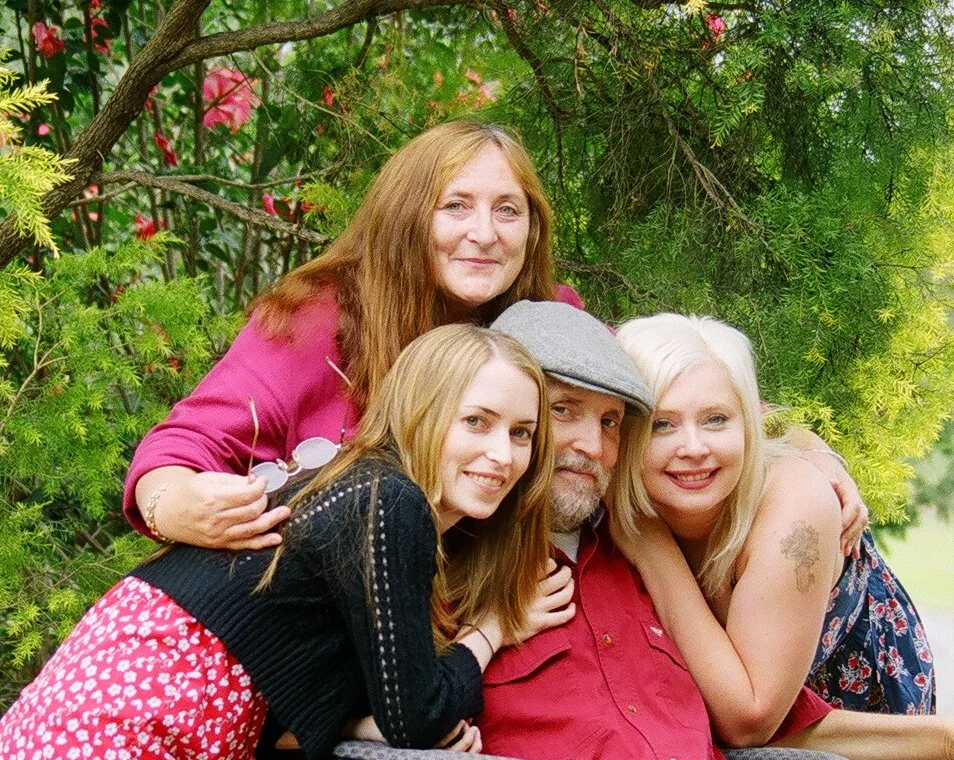
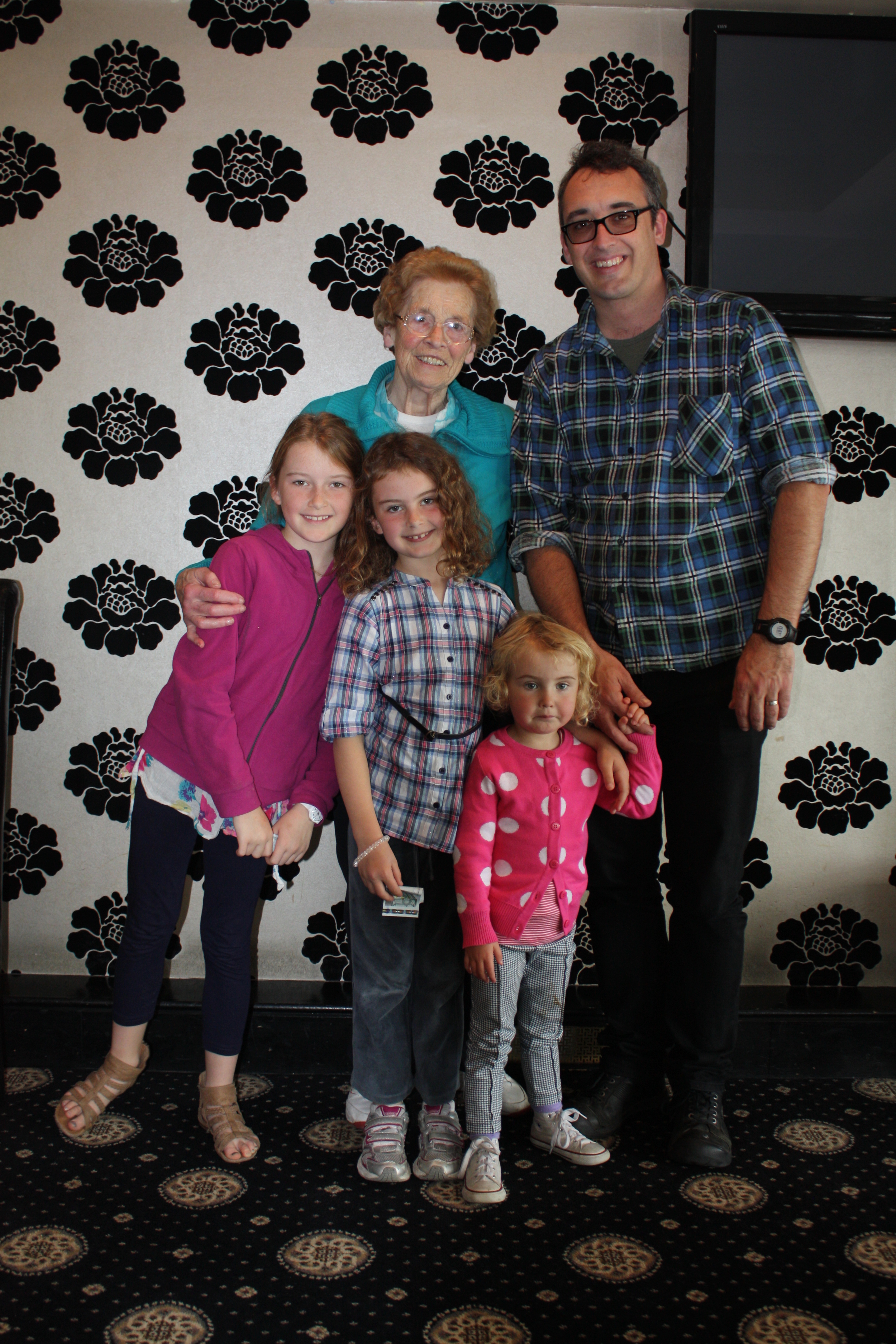
Don Mackay, with Therese (behind), Ali (left) and Melissa (right) - Boxing Day 2006

Don Mackay, with Therese (behind), Ali (left) and Melissa (right) - Boxing Day 2006

For Don Mackay: by Therese, Ian, Melissa & Ali

August 18, 2015

21 May, 2007

DONALD WILLIAM MACKAY - 4TH JULY 1950 - 17TH MAY 2007

Poem written by wife, Therese Mackay,  read at the funeral by the celebrant.

The Man and Me

Sleeping at night my palm opened flat on his chest,
Warmth feeding warmth, I know we are blessed.
No matter the day’s misunderstandings and blues;
No matter points made and lost;
No matter who thinks who’s the boss;
Sleeping always next to him is the life I would choose.

Re arranging pillows, blankets and such;
Both easy to fire off, yet both easy to touch.
Each unwilling to give way, equal to the end.
The Celt in us both, a marvellous brew,
Stirred and stirring, a wondrous stew.
Sleeping hand to chest our rousing battles mend.

Ah! And give me that fire, pure and unpolished,
And give me the spirit, no argument undemolished,
And give me the wickedness and its play,
Give me the empathy and knowing
Give me the common sense for our growing.
And let us wake hand to chest at the start of the day.

How dear to me is the man who breathes beside me at night?
How dear is the spirit, which gives his eyes their light?
How dear to me is the world we share?
There is no measure I can explain
But that his pain gives me also pain
And that our love is sometimes more than we can bear.

For me he stands, young, fair and clear-eyed as in youth.
For me, the things he feels I know, they are truth.
And I will hold these truths like rare and precious treasure,
For in a shifting sea of easy useless lies
The values of such truths are cherished ties
To the love which lives within the heart which is without measure.

So let me lie for hours, my hand upon his chest,
Thinking on the treasures with which we are blessed.
Such as our children treading out into the world to be,
Carrying the dreams of all our life;
Treasures as sacred as the man and wife
And as sacred as the love which binds the man to me.

With Love Therese

Ian Mackay's part (brother)

The dash between 1950 and 2007 is the period Don was with us. It is the most important dash that we know. It fulfils his life and the love that we know both from Don and to him.

My portion of Dons life is mainly from birth till his early twenties.

Born on 4th July 1950 the fourth child of Rod & Kath Mackay in the western town of Moree. His family consisted of firstly Jeanette… (Tet) Judith… (Jude) and myself, Ian. … Not counting the main proponents of the family Dad (Rod) & Mum (Kath).

My sisters used to dote on me until this kid called “Don” arrived, it changed after that and he became the dotee. That didn’t matter all that much as they couldn’t play marbles and didn’t go much on catching frogs.

Not much to do in Moree

One evening at dinner not long after his first birthday Don said to us and all, “We should go to the Snowy and build the Eucumbene Dam as they need people like us”. He was a very advanced child. As a group of half a dozen we set off to build a dam. Turns out it was a bit bigger than the six of us could handle, so we called in a few more people (1000 actually) it took about six years to complete. Those six years probably formed Don into the person he became in later years.

The things that we got up to as kids would have sent you to a home of some sort or other. It included, the four of us setting out for a bike ride of a lifetime, ending up in a pigsty at the original dam site, with a raging fire that could have burnt an average National park. Someone volunteered me to get Mum and Dad (Tet I’m sure) in a raging stormy freezing cold on a 10 mile ride in the dark, with the cavalry Mum & Dad the three eldest – me included were chastised severely. “What were you thinking taking this young baby out in this weather”. As quick as Tet said “Mum at least he is warm and dry and he is not a baby he is four years old. It ended well. The kids could do no wrong.

The Shooting

Don & I were shooting tadpoles and frogs in a creek near home. I had just shot a frog and Don said give me a shot: I gave him the slug gun and he said to me “see how you like it” and promptly shot me in the foot. That was the start of his GREENY ATTITUDE. Not content with the foot shooting when we got home he reloaded the slug gun and chased me around the house.

Fishing

A mate and myself were going fishing and knocked off a bunch of carrots from the headmaster's place to eat while fishing next thing Don and his mate Ian ‘Ackenzie’, his real name was Mackenzie but Don couldn’t get his tongue around that, caught us and dobbed us into the headmaster- Mr Faulkner. Don got extra points for that. The mate and I panicked when called to his office, but being a great teacher he didn’t go crook instead gave us a lesson on tying fishhooks.

The remainder of our stay in the Adaminaby Dam site was filled with family love and love of family a really great place to grow up as a child.

Dam completed, Don called us together again and said that the people were having troubles with a dam at Tan Tanungra and felt that we should help a fairly uneventful part of our lives Don schooled at New Adaminaby. Tet worked with Dad and Jude helped mum at the local shop.

Don again gathered us after our Sunday roast and weekly caster oil and said, “there are problems with a power site at the Lake Macquarie we should go and help”

Swansea this joint had it all
TV - never seen that
Beaches - been on holiday
Lakes - made them
Fishing - caught millions and masses of adventures that four kids from the Snowy had never seen.

Don became a super star at Soccer in the under 14s and we both completed schooling there. From there the family fragmented.

Tet married Jack Holmes and had a son Phillip all died in a car accident 1969.
Jude married Buddy who died in a car accident in 1965.
I married Monika and had a son Terry and daughter Jenny.
Jude remarried, Kevin and had a son Rodney and daughter Joanne.

Don said they were calling from Port Headland in WA. The family fragmented further, as mum and dad with Don in tow headed there to sort out the problems the Port mob encountered.

The problem solved and plans to return to Swansea were completed. However Dad encountered cancer and lost the battle in the Sir Charles Gardiner Hospital in Perth on 31 Jan 1966.

Don and mum returned to the eastern states, I got leave from Vietnam to see Dad before he passed but unfortunately due to slow transport missed seeing him before passing. My leave was far to short and I returned to Vietnam whilst Mum and Don went to Maroon country in Brisbane where the tied up with Jude.

With Brisbane a temporary base Don now 17 headed to Blackwater mines 4-500 kilometres west of Rocky. This part of his life was born “The wild child” bought new cars and demolished them at a rapid rate.

Mum returned to Cardiff and Don soon followed and sort of lost the Wild Child a bit when he met

Therese and had two daughters
Melissa in 1974
Alison in 1977.

The remainder of his story is related by Therese through Garry our celebrant.

To have known Don as a brother was a privilege and to have loved and be loved by him irreplaceable.

DON REST IN PEACE, WE ALL LOVE YOU.

Therese Mackay's part (wife)

Don and Therese met in Newcastle in 1972 and joined forces about three weeks after that meeting. Don was then working as a Fitter for Hodge Industrial installing underground petrol tanks and bowsers all across NSW.

In 1974 Melissa was born to them and Don’s boss offered them the use of a large caravan to use so that Don would not want to come home each weekend to be with his family and could spend months moving around NSW working.

This was a wonderful 18 months and there were few areas they did not get to spend time. Blayney in winter in an uninsulated caravan was an experience. Opening the van door at the tick gates and seeing their red kelpie, called Red, slithering around in the beetroot which had fallen out of the fridge, because someone had forgotten to put the pin in the fridge door was another.

Port Macquarie was one of the towns they visited and Don was offered work from Gordon Hunt should he ever move here.

In late ’76 they moved to Port Macquarie.

Alison was born in 1977 and the family was complete.

They lived in a small house just past Sea Acres near Johnson’s Fruit shop, which cost $12 a week. Here they were home. Chooks, ducks, a dog – Boris, cats – (Don was never too keen on these creatures) and Lucky - Don’s horse, two happy little girls and little money made this a happy home for Don and Therese

He worked on building sites and drove a backhoe and truck and was able to turn his hand to most things he tried.

In 1982 Don was badly injured while working in the canals behind Settlement City.

He became a quadriplegic and spent a seven-month stay at Royal North Shore Hospital (Sydney). Therese, Melissa and Alison moved for that period living near the hospital, with Therese’s eldest sister Veronica. All returned to Port Macquarie when Don was well enough

After a settling period, Don along with his wife Therese became involved in issues in which he believed in passionately. He lobbied Council in the ‘80’s for better wheelchair access and struck a deal with them that he would go halves in the cost of construction of wheelchair access on major access points around the CBD.

In the early ‘90’s he manned the RSPCA phone and was passionate about his commitment to this. Although it’s a well known fact Don was not a great cat lover, he abhorred cruelty of any sort and would too often be upset by the callousness of human beings to their pets and livestock.

His mother died in 1997. He not only looked out for his mother’s needs but also Therese’s mother and was always quick to see when others were had difficulties. He had a great compassion for others who were suffering illness or other.

When his sister Judy was dying in Queensland in 1998 he and Therese spent the last three months with her only leaving a few days before she passed away. This was a special time and he spent many days just quietly sitting by his sister’s bedside talking and laughing about family.

He believed ardently in the right of the individual to freedom of choice on issues regarding Fluoridation, and other and it is well known he did not suffer fools gladly. He was very active in the fight against the privatisation of Port Macquarie Hospital and he worked for years tirelessly to have the hospital returned to public hands.

Unfortunately he was stuck in bed on the day the Hospital Action Group had its celebration outside the hospital grounds once again when the hospital was finally handed back to the people of NSW in 2004, but he spent that morning harassing the local media, as was his wont, into speaking with the Hospital Action Group who were there from the beginning of the fight in early 1992.

He became actively involved in One Nation, and along with Marge Rowsell from Taree organised the original meeting in the Civic Centre when Pauline came to Port Macquarie and filled the Civic Centre to overflowing on a Tuesday morning. When Pauline moved away from One Nation so did Don. He was outraged by her jailing and worked as hard as he could writing letters etc to help raise awareness of the injustice often saying that if it could happen to such a public figure as Pauline, it could happen to any one of us, and that we each, on our own, must always fight against injustice when we are able…

When Pauline was released, fully exonerated he was over the moon.

Don and Therese moved out here to Craggy Island in early 2004. The sense of peace and beauty they both felt the first day they saw this place is still here with us and for Therese it is the essence of her husband and a fitting place for this service.

Becoming a Quadriplegic was bad enough, but Don was unlucky in that he was suffered constant pain and would comment on those few days when it totally lifted how good the day was. As the years went on this became much worse. His courage and endurance, still being able to be concerned about others, smiling, fooling about, being involved and interested and most of all never complaining, was truly wonderful to experience. It was heartbreaking at times when people did not understand his fragility and his exhaustion and bravery he showed by just facing the days at times.

The family are aware of the many roles Don played in life and on the small screen, where just the placement of a wig, or a hat and he would transform into little fat Eadie from Picnic at Hanging Rock which should now be known as “Picnic at Don Rock”…and his Mafia alter ego called “The Don” was done as seamlessly as he did everything.

There was the eighth day of the week “Don Day” which was a special day for the kids.

His force of personality and its many facets became something of a miracle to his family and especially Therese, Melissa and Alison. He was constantly concerned about their welfare, and that of the extended family, and he seemed to grow more compassionate, the more he suffered.

Melissa and Alison joke about the fact that they quickly learnt to never say they were bored because when they did he would give them jobs to do. Now adults they say they are grateful for this. He was fiercely independent and a gentle and concerned loving husband and father.

He passed away at his home on Thursday 17th May, two days before his eldest daughter Melissa and her fiancé Chris were due to be married. He had been in RNSH for 5 weeks and was flown home the night of his passing. Unable to speak because of the Ventilator for the past 5 weeks, when it was finally turned off, he softly talked and joked with those of us gathered for about two hours. He died with his family around him and was loved gently as he went with dignity and concern for others welfare the last things he expressed.

The manner of his passing after the terrible suffering he endured, will never be forgotten by those of us present, and has left us with no fear of death… none at all. Yet another of the precious gifts he left to those he loved. He was beautiful to the end and died quietly with his daughters and wife and other loved ones… in a quiet room... at home at last. He deserved such a peaceful seamless death to this life. His compassion and empathy for others; his sense of fun and stirring; his generosity; his unpredictability; his intense love of the natural world; so much, but more even was the love he held for his children Melissa and Alison, and his wife Therese. He loved them without conditions. Its known Don had his rough edges but the rough diamonds are always the best, and are always more precious

Thanks must go out to Therese’s sisters Veronica, Joan and Jackie for their support. Jackie spent the last day in the hospital with Don while the family drove home to meet the Air Ambulance. She went on the flight with him so that he always had someone with him he loved. Thanks to Carmel, Patsy, Mike, Rod, Neil and Renata, and Donna, and they know why.

The effort made by Don’s Doctor Dr Mark Stewart and the Air Ambulance and others made it possible for Don to have his last wish, which was to die at home.

He is survived by Therese his wife, Melissa and Alison his daughters and Ian his brother.

Goodbye for now our lovely Eadie… See you round like a rissole.

Melissa’s part (daughter)

One things for sure this world will never be the same again without Don or better known as Noddy to Ali, Mum and I.

Whenever I think of him it always makes me smile and a million memories come rushing to me. Each one making me happier. Dad had a wonderful sense of fun and a wicked wicked sense of humour. Which left a lot of people not quite sure, was he laughing at them? That made it funnier. Alison and I from a young age absolutely loved when he was being wickedly funny. Kids love it when someone can get away with saying and doing things naughty. Ali do you remember your first communion? I know mum and I sure do! Only 20 cents for a glass of water. We had some amazing times as a family, you couldn’t ask or wish for a better dad. He was always always there for you, and nothing was ever too much. The gap in our little family is going to be felt, but he is always with us, because he promised me once. I remember when dad was in hospital, his arms were tied with restraints, mum and I untied them and he stretched out his arms like he was going to fly away. I said jokingly, YOUR FREE! And he laughed and smiled it was the most beautiful smile. So I hope he is free and still has that beautiful smile, that I’ll never forget.

He deserves all the wonders of complete freedom and happiness.

Melissa Mackay
 

Alison’s part (daughter)

Where do I start, when trying to say goodbye, or a final “see you later” to you Dad? I know that you will always be with me & that I will meet you again, but for now you need to rest. I am so sorry for what happened to you at Royal North Shore Hospital, it was as you said “Shithouse”. We were lucky to have been with you at the end. I hope that you could feel all the love from us.

You & Mum gave us such a fun & rich childhood; there was always much laughter in the house. There are so many stories and great times that will always be with my heart. Thankyou for teaching me so many things its strange but I still remember each moment so clear when you taught me to tie my shoelaces, to dive properly into the pool, my times tables, telling the time on a real clock. All the times you watched me swimming by myself in the pool because I was always to scared jaws would get me if you weren’t watching. You would try to sneak away after a long while but I’d always catch you and you’d always come back out.

There were always lots of cuddles in our house, interesting games of monopoly, jobs if we admitted boredom, and there was always a right way to do jobs and a short time in which to begin them. That was just you though Dad and it became slightly amusing as we got older.

We have so many funny home videos of us four and others, but by far the best was our “Picnic at Don Rock!” you played Edie brilliantly and we have so many one-liners from it that will always make us laugh.

Thank you Dad for always being so helpful and kind to me. You always tried to make things better for me. All the phone calls over the last few years I will cherish. All the stories you told, all the silly voices we did. You taught me how to cope with things that were beyond my grasp, and always when the seriousness was over you’d get me chuckling again.

People tell me that I am like you in many ways and I am proud of that. You always taught me to stand up for myself too, which I am grateful for. You did so with such phrases as “Don’t take shit” and “are you gunna put up with that?” Dad you always taught me to be strong and fair. Two qualities that you have.

I will always love and cherish you, there have just been so many funny and warm times shared. I am so lucky to of have had a father like you, a friend like you and a teacher like you.

Take care Dad wherever you are right now, and always know how proud I am of you for who you are, how you lived, how you dealt with hardship’s, how you joked and how you loved.

I love you

Love always Ali

Enjoyed this speech? Speakola is a labour of love and I’d be very grateful if you would share, tweet or like it. Thank you.

Facebook Twitter Facebook
In SUBMITTED Tags FATHER, HUSBAND, BROTHER
Comment
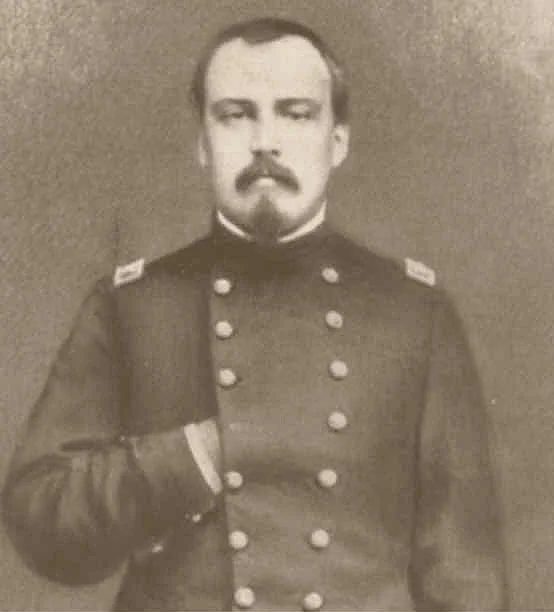
Robert Ingersoll

Robert Ingersoll

For Ebon C Ingersoll: 'I am going to do that which the dead oft promised he would do for me', by brother Robert C Ingersoll - 1879

August 13, 2015

3 June 1879, Washington D.C, USA

I am going to do that which the dead oft promised he would do for me. 
The loved and loving brother, husband, father, friend, died where manhood’s morning almost touches noon, and while the shadows still were falling toward the west.  
He had not passed on life’s highway the stone that marks the highest point, but, being weary for a moment, lay down by the wayside, and, using his burden for a pillow, fell into that dreamless sleep that kisses down his eyelids still. While yet in love with life and raptured with the world, he passed to silence and pathetic dust.  
Yet, after all, it may be best, just in the happiest, sunniest hour of all the voyage, while eager winds are kissing every sail, to dash against the unseen rock, and in an instant hear the billows roar above a sunken ship. For, whether in mid-sea or ’mong the breakers of the farther shore, a wreck at last must mark the end of each and all. And every life, no matter if its every hour is rich with love and every moment jeweled with a joy, will, at its close, become a tragedy as sad and deep and dark as can be woven of the warp and woof of mystery and death.  
This brave and tender man in every storm of life was oak and rock, but in the sunshine he was vine and flower. He was the friend of all heroic souls. He climbed the heights and left all superstitions far below, while on his forehead fell the golden dawning of the grander day.  
He loved the beautiful, and was with color, form, and music touched to tears. He sided with the weak, and with a willing hand gave alms; with loyal heart and with purest hands he faithfully discharged all public trusts. 
He was a worshiper of liberty, a friend of the oppressed. A thousand times I have heard him quote these words: “For justice all place a temple, and all seasons, summer.” He believed that happiness was the only good, reason the only torch, justice the only worship, humanity the only religion, and love the only priest. He added to the sum of human joy; and were every one to whom he did some loving service to bring a blossom to his grave, he would sleep to-night beneath a wilderness of flowers.  
Life is a narrow vale between the cold and barren peaks of two eternities. We strive in vain to look beyond the heights. We cry aloud, and the only answer is the echo of our wailing cry. From the voiceless lips of the unreplying dead there comes no word; but in the night of death hope sees a star, and listening love can hear the rustle of a wing.  
He who sleeps here, when dying, mistaking the approach of death for the return of health, whispered with his last breath: “I am better now.” Let us believe, in spite of doubts and dogmas, and tears and fears, that these dear words are true of all the countless dead.  
And now to you who have been chosen, from among the many men he loved, to do the last sad office for the dead, we give his sacred dust. Speech can not contain our love. There was, there is, no greater, stronger, manlier man


Source: http://www.bartleby.com/268/10/9.html

Enjoyed this speech? Speakola is a labour of love and I’d be very grateful if you would share, tweet or like it. Thank you.

Facebook Twitter Facebook
In PUBLIC FIGURE A Tags AGNOSTIC, CIVIL WAR, USA, BROTHER, LAWYER
Comment

For John 'Starky' Gigacz: 'Dovidenia, Starky', by son Andrew Gigacz

August 13, 2015

29 August, 2014, Melbourne, Australia

John Gigacz, my father, was born on the 3rd of August 1922 and died last Saturday, a long way from where his life began, in distance – his birthplace, Brezno in Slovakia is 15,500 kilometres from here; in time – Dad was 92 years old; and in cultural attitude – when Dad was a baby, he wasn’t a very good sleeper and his parents used opium to quiet him down – definitely not something that would be approved of today!

John grew up in the village of Sumiac, but his adult life would take him to a number of places around the world, firstly to America, including New York, a city he loved, and Chicago – or as he pronounced it, Chicago [as in ‘chip’]. (As you will hear shortly, John had a great command of the English language but pronunciation wasn’t always a strong suit.) His second major trip was to Austria, made by somewhat unusual means – he got there by swimming across the Danube in 1949 to escape the communist regime that controlled what was then Czechoslovakia, leaving behind his own mother and father, whom he would never see again.

After a year in Salzburg, John was granted refugee status and approved for migration to Australia. After a voyage of several months on a ship called the Hellenic Prince, he arrived in Australia in January 1951, and spent several weeks at a migrant centre in Bonegilla, not far from Albury, before taking a job, picking grapes along the Murray.

Keen to settle into the Australian way of life, John quickly befriended several fellow fruitpickers, and was happy to accompany them to the local pub. Never having been a heavy drinker, John spent one early night at the local trying to keep up with his mates but failed miserably. His mates took him back home in a wheelbarrow that evening.

John was also to meet his future wife, our Mum, while fruitpicking. Having crossed paths with her on several occasions and then lost contact, John bumped into the lady who would become the love of his life at Flinders Street station in 1953. Determined not to let her go this time, John met up with her the next day, presented her with a violet posy and asked her to marry him. Fortunately for all of us, she said yes.

John and Evelyn married at St Joseph’s Church in Hawthorn in November 1954 – John wearing the suit that I’m wearing now - and started a family soon after. Stefan was born in September 1955, with John, Anthony, Jamie, Katie and Andrew following over the next 10 years. John became an important part of the parish of Sacred Heart, always willing to lend a hand in the development of the Sacred Heart community. As I grew up, I remember him taking on many roles, helping out at working bees, reading at Mass, singing in the choir and doing countless visitations as a member of the St Vincent de Paul Society. He was a man of strong faith and Jesus was a guiding light for him throughout his life.

For his entire working life in Melbourne, John was employed at ICI in Deer Park, forming many friendships with his colleagues there, as well as through the Sacred Heart community. One of the people he met early in his time at ICI was a man by the name of Hugh. Before he met him, John had seen his name written down, and with English not being his first language, he decided to pronounce the name the way it was spelt: H-U-G-H. Upon their introduction, he said, “Pleased to meet you, Hoog-her”.

John in fact had a very strong grasp of the English language. He read voraciously and was always looking to improve himself. But he did struggle occasionally with the nuances of English pronunciation, grammar and syntax. I remember he used to ask, “How did Bulldogs go today?” Not, “How did THE Bulldogs go”, just, “How did Bulldogs go?” He also sometimes got words in the wrong order, or at least not in the order WE’D use. Instead of trial and error, it was error and trial. And with him it wasn’t the Big Bad Wolf, it was the Bad Big Wolf. And I remember him talking about the seven lives of a cat.  Perhaps in Slovakia things were so bad that cats couldn’t afford nine lives.

Slovakia in fact was never far from Dad’s mind. Once technology made phoning overseas a simple process, Dad would ring his sister Marca, regularly, catching up on all the latest news from his family and friends in his homeland and passing on news from faraway Australia.

Dad also never forgot how welcome he was made to feel when he came to Australia and he was keen to make others feel just as welcome in later years. He spent many a Sunday in the 1980s visiting the migrant hostel in Maribyrnong, helping out new arrivals – most from Vietnam – in whatever way he could.

Above all, John was devoted to his family, his wife – our mum – Evelyn, his six kids and 15 his grandchildren. There was nothing he wouldn’t do for us. He happily did the grocery shopping and he ferried us to and from swimming at dawn, or cricket on the weekends.

Mind you, things didn’t always go to plan. Once when shopping at the supermarket, he left baby Jamie waiting in the pram at the turnstile while he popped in and grabbed a few grocery items. (You could do that sort of thing in those days and no-one batted an eyelid.) After collecting and paying for the groceries, Dad went home and it was only when Mum asked, “Where’s baby Jamie?” that he realised he’d left him behind. Jamie was still there sleeping happily in the pram when Dad got back there in record time.

Dad was our barber when we were kids, even my sister Katie’s, which led to her looking like just another one of us boys in her early years. One time his aim was slightly askew and he snipped the top of Jamie’s ear off. Being the resourceful man that he was, Dad just sticky taped the tiny bit of ear back on. Amazingly, it worked!

Dad had a thing about hair. He thought men should be clean-shaven, with short hair and that hair should most definitely NOT be parted in the middle. When I started to grow my hair long (parted down the centre) and not shave very often in my late teens, he HATED it. One time we got into a huge argument about it, and Dad shouted “Real men don’t have hair like that!” It was at that moment that I realised he was standing under the picture of Jesus that was a permanent feature of our lounge room. I simply pointed at the picture and Dad turned around to see an image of our Lord, wearing a beard and long hair, parted down the middle. It was one of the very few times I saw him speechless. Dad had the last laugh on that one, though. Even if I wanted to grow long hair now I couldn’t!

But if he differed with his family on issues – and his political views differed vastly from mine and those of several other family members – he was always respectful of the right of others to have those different views. He would argue black and blue against them but he didn’t love his family and friends any less for having those views.

He loved us all very dearly and we all loved him as much. Thank you Dad for being a wonderful, loving husband to our mum Evelyn, a fantastic, caring father to all of us kids and a happily devoted “Starky” to your 15 grandkids.

Dovidenia, Starky

Enjoyed this speech? Speakola is a labour of love and I’d be very grateful if you would share, tweet or like it. Thank you.

Facebook Twitter Facebook
In SUBMITTED Tags JOHN GIGACZ, ANDREW GIGACZ, FATHER, SON, AFL, FOOTBALL
Comment

John Howard: 'As the sun sets over this beautiful island we gather here in sorrow', Bali Bombings Memorial Service - 2002

August 6, 2015

17 October, 2002, Australian Consulate, Bali, Indonesia

There is no available audio or video of this speech.

As the sun sets over this beautiful island we gather here in sorrow, in anguish, in disbelief and in pain.

There are no words that I can summon to salve in anyway the hurt and the suffering and the pain being felt by so many of my fellow countrymen and women and by so many of the citizens of other nations.

I can say though to my Australian countrymen and women that there are 19 and a half million Australians who are trying however inadequately to feel for you and to support you at this time of unbearable grief and pain.

The wanton, cruel and barbaric character of what occurred last Saturday night has shocked our nation to the core and now the anguish that so many are feeling, the painful process of identification which has prolonged that agony for so many, the sense of bewilderment and disbelief that so many young lives with so much before them should have been taken away in such blind fury, hatred and violence.

I can on behalf of all the people of Australia declare to you that we will do everything in our power to bring to justice those who were responsible for this foul deed.

We will work with our friends in Indonesia to do that and we will work to others to achieve an outcome of justice.

Can I say to our Balinese friends, the lovely people of Bali, who have been befriended over the decades, by the generations of so many Australians who have come here, we grieve for you, we feel for you, we thank you from the bottom of our hearts for the love and support you have extended to our fellow countrymen and women over these past days.

As the chaplain said there will be scars left on people for the rest of their life, both physical and emotional.

Our nation has been changed by this event.

Perhaps we may not be so carefree as we have been in the past but we will never lose our openness, our sense of adventure.

The young of Australia will always travel, they will always seek fun in different parts, they will always reach out to the young of other nations, they will always be open, fun-loving and decent men and women.

So as we grapple inadequately and in despair to try and comprehend what has happened, let us gather ourselves together, let us wrap our arms not only around our fellow Australians but our arms around the people of Indonesia, of Bali, let us wrap our arms around the people of other nations and the friends and relatives of the nationals of other countries who died in this horrible event.

It will take a long time for these foul deeds to be seen in any kind of context, they can never be understood, they can never be excused.

Australia has been affected very deeply but the Australian spirit has not been broken, the spirit remains strong and free and open and tolerant.

I know that is what all of those who lost their lives would have wanted and I know that is what those who grieve for them want.

Source: http://www.smh.com.au/articles/2002/10/18/...

Enjoyed this speech? Speakola is a labour of love and I’d be very grateful if you would share, tweet or like it. Thank you.

Facebook Twitter Facebook
In PUBLIC FIGURE A Tags MEMORIAL, TERRORISM, JOHN HOWARD, PRIME MINISTER
Comment

For Aunty Nuala: 'She was a woman painted in vivid colour', by nephew Joe Kelly

August 5, 2015

In 1973 we moved to the Australian town of Mildura.  If you have never been to Mildura it is hard to explain.  It sits as a desert outpost, marooned in a sea of red dust.  In 1973 it was a frontier town full of frontier people – people looking for a new start or to forget an old life.  By day the sun bleached all color from any life that pressed its way into the desert moonscape, by night the sandstorms stripped whatever was left.  This is where we made our home.

Our years in Mildura made us used to people who existed in shades – people who were polite but reserved.  People who told their stories in pauses, every exchange a trade of trust for detail.  In simple terms, the people we had known were hard to know and hard to please.

In 1983, our father Des died and life’s crazy tide delivered us back to Ireland – to Galway. Nothing in our life to date had prepared us for our Aunty Nuala.  She was a woman painted in vivid colour.  A woman of stories and history and trust and love.  A smoke tinged, brandy wielding character who, to us, looked like she could better Hemmingway in a bar fight and delight in telling you the tale.  Someone who said what she meant and meant every word of what she said. To our mum she was the fearless older sister, to us a protective auntie who helped us navigate a new and unfamiliar town.

Nuala found us in a state of disrepair. We had lost our father and lost the only home we knew.  Nuala was a skilled nurse who had for her entire life selflessly tended to the pain of others.  What is amazing about Nuala is that she did this while holding nothing back. To us, as to countless others, Nuala gave fully and unconditionally.  Intuitively she gave us space when we needed it and was the first to offer a shoulder to cry on.    She had a press that housed an unending supply of sweets and crisps.  She was magic.

Her throaty laugh is probably what we will miss the most.  That and her wild tales of her wilder youth in London, a footloose fancy-free nurse chasing adventure down every street.  She’ll remain in our memories a woman naturally full of vivacity, hilarity and gusto, a woman who loved bigger than anyone we have ever known, who poured that love into those around her. And we’ll be forever grateful that she was part of our family and we were part of hers.  We will be forever grateful that she shared with us her greatest loves – Tom and David.  We will love her and miss her.  But we will never forget her.


Enjoyed this speech? Speakola is a labour of love and I’d be very grateful if you would share, tweet or like it. Thank you.

Facebook Twitter Facebook
In SUBMITTED Tags AUNT, IRELAND, NEPHEW
Comment

For Maya Angelou: 'She spoke to the essence of black women', by Michelle Obama - 2014

August 3, 2015

June 7, 2014, Wake Forest University's Wait Chapel, North Carolina, USA

To the family — Guy, to all of you — to the friends, President Clinton, Oprah, my mother Cicely Tyson, Ambassador Young — let me just share something with you: My mother, Marian Robinson, never cares about anything I do. But when Dr. Maya Angelou passed, she said, “You’re going, aren’t you?” I said, “Well, Mom, I’m not really sure, I have to check with my schedule’ she said “You are going. Right?” I said “Well, I’m gonna get back to you, I have to check with the people, figure it out.” I came back and said that I was scheduled to go and she said “That’s good. Now I’m happy.”

It is such a profound honor — truly a proud honor — to be here today on behalf of myself and my husband as we celebrate one of the greatest spirits our world has ever known, our dear friend Dr. Maya Angelou. In the Book of Psalms it reads, “I praise you for I am fearfully and wonderfully made; wonderful are your works, my soul knows very well. My frame was not hidden from you when I was being made in secret, intricately woven in the depths of the earth.”

What a perfect description of Maya Angelou and the gift she gave to her family and all who loved her. She taught us that we are each wonderfully made, intricately woven and put on this earth for purpose far greater than we could ever imagine.

When I think of Maya Angelou I think of the affirming power of her words. The first time I read “Phenomenal Woman” I was struck by how she celebrated black women’s beauty like no one had ever dared to before. Our curves, our stride, our strength, our grace. Her words were clever, and sassy. They were powerful and sexual and boastful. And in that one singular poem, Maya Angelou spoke to the essence of black women but she also graced us with an anthem for all women, a call for all of us to embrace our God-given beauty.

And oh, how desperately black girls needed that message. As a young woman I needed that message. As a child, my first doll was Malibu Barbie — that was the standard for perfection. That was what the world told me to aspire to.

But then I discovered Maya Angelou, and her words lifted me right out of my own little head. Her message was very simple: She told us that our worth had nothing to do with what the world might say. Instead she said, “Each of us comes form the creator trailing wisps of glory.” She reminded us that we must each find our own voice, decide our own value, and then announce it to the world with all the pride and joy that is our birthright as members of the human race.

Dr. Angelou’s words sustained me on every step of my journey. Through lonely moments in ivy-covered classrooms and colorless skyscrapers. Through blissful moments mothering two splendid baby girls. Through long years on the campaign trail where at times my very womanhood was dissected and questioned. For me, that was the power of Maya Angelou’s words — words so powerful that they carried a little black girl from the South Side of Chicago all the way to the White House.

And today as First Lady whenever the term “authentic” is used to describe me I take it as a tremendous compliment because I know that I am following in the footsteps of great women like Maya Angelou. But really, I am just a beginner. I am baby authentic.

Maya Angelou, now she was the original. She was the master. For at a time when there were such stifling constraints on how black women could exist in the world, she serenely disregarded all the rules with fiercely passionate unapologetic self. She was comfortable in every inch of her gloriously brown skin.

But for Dr. Angelou her own transition was never enough. You see, she didn’t just want to be phenomenal herself. She wanted us all to be phenomenal right alongside her.

So that’s what she did throughout her lifetime. She gathered so many of us under her wing. I wish I was a daughter. But I was right under that wing — sharing her wisdom, her genius and her boundless love.

I first came into her presence in 2008, when she spoke at a campaign rally here in North Carolina. At that point she was in a wheelchair, hooked up to an oxygen tank to help her breathe. But let me tell you, she rolled up like she owned the place. She took the stage as she always did — like she’d been born there. And I was so completely awed and overwhelmed by her presence I could barely concentrate on what she was saying to me.

But while I don’t remember her exact words I do remember exactly how she made me feel.

She made me feel like I owned the place, too. She made me feel like I had been born on that stage right next to her. And I remember thinking to myself, “Maya Angelou knows who I am! And she is rooting for me! So now, I’m good. I can do this. I can do this.”

And that’s really true for us all. Because in so many ways Maya Angelou knew us. She knew our hope, our pain, our ambition, our fear, our anger, our shame. And she assured us that in spite of it all — in fact, because of it all — we were good. And in doing so, she paved the way for me, and Oprah and so many others just to be our good ol’ black women selves. She showed us that eventually, if we stayed true to who we are, then the world would embrace us.

And she did this not just for black women but for all women. For all human beings. She taught us all that it is okay to be your regular old self, whatever that is. Your poor self, your broken self, your brilliant, bold, phenomenal self. That was Maya Angelou’s reach.

She touched me, she touched you, she touched all of you she touched people all across the globe — including a young white woman from Kansas who named her daughter after Maya and raised her son to be the first black President of the United States.

So when I heard that Dr. Angelou had passed, I felt a deep sense of loss. I also felt a profound sense of peace — because there is no question that Maya Angelou will always be with us. Because there was something truly divine about Maya. I know that now as always, she is right where she belongs.

May her memory be a blessing to us all.

Thank you. God bless.

This is the poem Michelle Obama refers to. From poetryfoundation.org

Phenomenal Woman


Pretty women wonder where my secret lies.
I’m not cute or built to suit a fashion model’s size   
But when I start to tell them,
They think I’m telling lies.
I say,
It’s in the reach of my arms,
The span of my hips,   
The stride of my step,   
The curl of my lips.   
I’m a woman
Phenomenally.
Phenomenal woman,   
That’s me.
I walk into a room
Just as cool as you please,   
And to a man,
The fellows stand or
Fall down on their knees.   
Then they swarm around me,
A hive of honey bees.   
I say,
It’s the fire in my eyes,   
And the flash of my teeth,   
The swing in my waist,   
And the joy in my feet.   
I’m a woman
Phenomenally.
Phenomenal woman,
That’s me.
Men themselves have wondered   
What they see in me.
They try so much
But they can’t touch
My inner mystery.
When I try to show them,   
They say they still can’t see.   
I say,
It’s in the arch of my back,   
The sun of my smile,
The ride of my breasts,
The grace of my style.
I’m a woman
Phenomenally.
Phenomenal woman,
That’s me.
Now you understand
Just why my head’s not bowed.   
I don’t shout or jump about
Or have to talk real loud.   
When you see me passing,
It ought to make you proud.
I say,
It’s in the click of my heels,   
The bend of my hair,   
the palm of my hand,   
The need for my care.   
’Cause I’m a woman
Phenomenally.
Phenomenal woman,
That’s me.

Source: https://medium.com/thelist/michelle-obama-...

Enjoyed this speech? Speakola is a labour of love and I’d be very grateful if you would share, tweet or like it. Thank you.

Facebook Twitter Facebook
In EDITORS CHOICE Tags TRANSCRIPT & VIDEO, MAYA ANGELOU, WRITER, USA, MICHELLE OBAMA, CIVIL RIGHTS, POET, FIRST LADY, AUTHOR
Comment

For Kathleen Callinan: 'Sometimes death makes you leave out the bad bits but there were no bad bits', by son Damian - 2008

August 3, 2015

20 February, 2008, St Mary's Greensborough, Melbourne

Gidday … how are you going? … tough crowd … sorry, always wanted to say that!.

The others in the family don’t know this but a long time ago Mum said to me … ‘On the altar at my funeral I want a long stick … leaning against a priests cassock … on purple fabric … with a pair of large unworn men’s sandals’ … unfortunately I forgot all about it … but I turned up today and coincidentally the parish already had it set up … weird.

[It was Lent & I’d noticed the display at the previous night’s Rosary]

My name is Damian and I’m the youngest of Kathleen & Adrian’s Famous 5, though they are still yet to provide photographic evidence that would contradict rumours I’m adopted. Making me the Timmy of the Famous 5 … That’s the rest of the family down there … put your hands up … in laws & Bernie … grand kids … great grand kids … cousins … and if there are any illegitimate offspring out there, today’s probably not a good day to bring it up … I’ll introduce to the rest of the band … Aunty Dorothy on keys … Chris on guitar … and David on computer.

Dad said to me the other night that he had faith in me and I could say whatever I wanted to today … kind … but silly man. So hear we go …

I’ve been wondering over the last few days what mum has been up to she left us.

  • I presume the first thing she would have done when she arrived at the gates of heaven would have been to explain to St. Peter that she is allergic to garlic and that mushrooms disagree with her IBT … and asked about the vegetarian options for when Helen, Jo & I arrive.

  • She would then have made sure she had at least 2 remote control wands for the front gates for when she’s out after 7.

  • Once inside she would have found the best pie shop.

  • She would have then gone through the heaven gold book and pulled out any vouchers that members of the family could use.

  • Joined the library; the craft group and flashed her Beef & Burgundy life membership at Bacchus.

  • Once she got into her unit she would have made sure the VCR wasn’t too low for her to program … then put the kettle on, cracked a packet of jam fancies; sat down on her brand new Jason recliner and picked up the phone to ring God and chatted to him … for a fair while. She would have had a list of things to ask… mass times & happy hour times … made sure God reminded Adrian to put on his hat when he walked up to get the paper … & a shade cloth for the front of the unit would be good … & eventually the Lord would hold the phone slightly away from His ear and shake His head in wonder & finally realise that of all His creations, my mothers gift of speech was His indeed greatest triumph.

We’re not exactly sure what mum was doing in the fateful moment before the accident but one thing is certain … mum would have been mid sentence. What that sentence was, we’ll never know and it remains as one of the many ‘incomplete’ transactions with mum … Shell & David not getting to have the dinner with her they were about to enjoy … Paul not getting his Sunday night call in Townsville … Chris not getting to finish one of her crosswords … Net not taking mum down to Sorrento one more time before the rebuild.

But the great thing about mum is she didn’t die with incomplete thoughts. There was no ‘must get around to loving him a bit more soon’ … ‘must remember to tell her I love her’ … she did it all the time … a phone call rarely ended without a ‘love you lots.’ Even the tone of her voice instantly made you happy.

For those of you who don’t know her, here’s a beginners guide to my mum. I’ll start with something not many people know …

… ‘My mum could land an off break on a 10 cent piece!’ …

She’d always told us she played cricket as a schoolgirl at Santa Maria but we rarely saw any evidence … until one day.  I was playing alone in the backyard throwing the ball against the garage wall then hastily taking a stance to dispatch the ball back into the hydrangeas. Mum came out with a basket of washing under her arm. Tiring of my Bradmanesque solo test, I pestered her to play with me and eventually she relented. She took the ball and went to the Jeanie Mac end which afforded only the briefest of run ups. Now just on a good length of our pitch was ‘the hump’, that looked like an elephant had been buried arse up. Chris used to exploit it by relentlessly peppering me with bouncers until one day I ran inside with a hump growing out of my temple. I thought mum knew nothing about the hump but she found it first ball and soon had me flinching as a ball after ball spat from outside off back towards me keeping me trapped in my crease … after awhile I just said ‘I’ll give you hand with the washing.’


… ‘My mum could cook the apron off Margaret Fulton’ …

She could work her magic on everything … except rabbit. Her pavlova is the stuff of legend. The Andersons only used to have us over for Christmas ‘cos of mums Pav. Her scones were to die for … bad choice of words. Mum’s favoured cookbook was the red & white checked Women’s Weekly ‘Simple City.’ However, she began to outgrow the CWA style of cooking and sought nouveau cuisines and soon a ‘Mixed Grill’ was being replaced by ‘Kai Si Mingh’ and ‘Shepherds Pie’ by ‘Apricot Chicken.’ Paul says there was a minor revolt in the early 60’s but by the mid 70’s mum’s kitchen had put down the insurrection and her empire reached its zenith. It was at this pivotal moment in our family history that mum attempted a dish called  … ‘Brazillian Casserole’ … I’m not exactly sure what it was but given it’s name we can presume that it was perhaps a casserole without hair. The only two ingredients any of us remember are beef and … instant coffee. We put salt on it … pepper on it … even ice cream, but nothing could make it stay down. It was the only time dad ever wanted a dog so he could have slipped his plate under the table.

Her other triumph of recent years was the ‘Flying Bed & Butter Pudding.’ While mums cooking skills never faded, her mobility wasn’t so good of late. One night in Armstrong Street after another stellar entrée and main, mum popped into the kitchen to bring out the piece de resistance … ‘Berry Infused Bread & Butter Pudding’ She appeared in the door frame with tray in hand and then just as quickly disappeared as she tripped sending the entire dessert sprawling across the floor in a text book funniest home video moment. But rather than get upset she simply helped us pick up the least dodgy bits and we ate it anyway.

‘My mum could sew the apron off Tonia Toddman.’ …

Many in the room were the beneficiary of her skill and generosity of time. Net & Shell … & her good friends Dorothy & Gerry … & Aunty Joan … who would already have mum playing bridge up above by now wearing one of her frocks.

Having a mum who sewed a bit was probably more of a boon for my sisters than my brothers & I. For Net & Shell it meant an endless supply of dresses; skirts … even klots from the latest fashion magazines. For us it meant endless hours standing looking into shop windows staring at the clothes we would never wear. If I pointed out a garment in a shop a mum would take it off the rack, turn it inside out and say … ‘I can make that!’ She would then ‘have a go’ and make something just far enough away from the original for it to stand out … t-shirts with a skateboard motif but with a boat neck … denim shorts with pleats … Paul, Chris & I lived in fear of casual clothes days at school.

 … ‘My mum was a bit of spunk’ …

Have a look at her!! … Being the youngest, mum was in her mid 40’s by the time she was dropping me off to school & even at that age I’d look around at all the other younger mums and think … not a patch on my beautiful mum and no-one … no-one dressed as well as her … she made the 70’s her own!!

 … ‘My mum was grouse fun to go on holidays with’ …

Our family had many holidays, none more famous than the trip to Townsville to stay with the Dorney’s, most of whom have made the trek to be here today. 5 kids in a Holden station wagon for 2500 kilometres. I was only 3 at the time but I can remember some things. It’s funny when you are the youngest by some distance you tend to be absorbed into family stories whether you were there or not. I often think I can remember particular events I was part of simply because I’ve heard the stories so many times. Just after Pearl Harbour in ’41, we were all listening to the crystal set and mum said to us … ‘Remember the time we got held up by Ned Kelly?’ and I said … ‘Yeah … he took my ipod’ … and mum said … ‘Don’t be silly, you weren’t even born then … now go and get the mutton from the meatbox like I asked you before.’

Over recent years Jo & I have been lucky enough to have many trips way with mum and dad … and mum was such good company. She was so appreciative of us but the truth was, when one finished I couldn’t wait to plan the next one. The next plan was to take them on tour with me in June… mum and dad roadies of sorts… now dad has to show his bum crack and carry the speakers on his own.

… ’My mum is the most loving person I’ve ever known’ …

The only thing dad asked me to make sure I mentioned today was that her love was ‘unconditional.’ I thanked for them that in one of my shows and it meant a lot to both of them. But what does it mean? It means in mum’s case, an unfaltering love for dad … us … and Margie & John & Dorothy & The other Callinans & Andersons & Dorneys & O’Connells … there were no category 4 restrictions with mums love. And I’ve seen in the faces of my nieces, nephews and cousins today and in the hospital as we said our goodbyes to mum, how far that love spread.

No matter what we did she loved us the same. Dad does unconditional love at Olympic standard as well. Mum had multiple gold medals in the discipline. Through relationship breakdowns; career changes and whatever life threw at all of us … she has been the constant … the reassuring voice that would love you through anything … it sounds easy … it’s not. Most of us at least on occasions love with judgement and conditions … she never did.

On Saturday night … the night before the accident, Bernie my cousin and her husband Graeme had invited me to perform my show “Sportsman’s Night” at their Yarra Valley winery as part of the Grape Grazing Festival. Chris & Lisa offered to drive mum and dad up and soon it ballooned into a family reunion of sorts with siblings, cousins and friends of mum and dad as well. At one point in the show I said something wildly inappropriate about Mary McKillop, which I won’t mention in these hallowed walls lest they come down upon us, but see me outside where its safer & I’ll fill in the gaps. Anyway I found myself looking at mum as I spoke. Dad leaned over and put his hand on her lap, but mum looked at me like I’d just told her Chris Judd had had a change of heart and was going to Collingwood … she was beaming at me.

I loved my mum! And more and more as I got older. Sometimes I just wanted to squeeze her cos she was so cute and proud and loving. Sometimes death makes you leave out the bad bits but there were no bad bits.

Sure she used to bang on a bit, and she used to talk about doctors and priests too much … don’t worry, it was all good about you Steve, Jim & Owen … and she used to repeat stories all the time but we all do that … sure she used to bang on a bit and talk about priests and doctors and repeat stories but …

But most of all, my mum loved my dad … and he loved her! I’m so proud to have them as role models.

There’s been many varied chapters to their lives together … their post-war courting; electricity free Myrniong, Bacchus Marsh, Warragul, Watsonia; international travels … but to me it’s been the 24 years since dad retired that are the happiest. They have enjoyed every second together and have been like giddy teenagers.

They’ve loved their time at ‘The Village’ as they call it and happily call themselves Village People. Mum has lapped up life there in the same way she has attacked new challenges late in life … like the computer & the George Foreman grill … I went to happy hour with them one night and it was like being in the film Cocoon. I loved it … but I left hastily at the end in case I got invited to an orgy.

My dad has been heroically strong this week in the face of the most devastating event in his life but he has honoured mum and us and let her love carry him through. And his strength has helped me see mums spirit carry on in the family … I love my dad.

To finish I’m going to produce a document that will shock even my immediate family. Much has been made in recent years of dad and his long awaited memoirs, but unbeknownst to us, mum tiring of his slow progress has written her own.

I’ll just read a couple of extracts now … the rest will be published soon.

EXTRACT 1 – Splades

“I discovered the most marvellous thing in Myer yesterday. It looks like a spoon at first but when you look more closely, you can see that it also looks like a fork. They call it a splade. It’s beaut for eating canteloupe. I’m going to make it my life works to ensure that everyone in Australia has a set … then I’ll take on America!!”

EXTRACT 2 – Meeting Dad

“I was at the football this afternoon watching Brunswick YCW and I met the man of my dreams … boy was he a looker.  Anyway he was about to ask me out when Tom Duffy barged in and introduced me to some coot called Callinan who wants me to come on a date to watch him in the theatre. He’s got Buckleys.”

EXTRACT 3 – Myrniong

“Adrian has got a teaching post in the country. We will be living in a place called Myrniong which he tells me is a huge town with a warm climate and all the mod cons. Its close to everything so we won’t need a car”

EXTRACT 4 – Coffee Casserole 

“Sick of the family not appreciating my cooking so tonight I’m going to throw some instant coffee in a crockpot with some rabbit and call it something exotic … Brazillian casserole! Yeah that’ll do.” 

Jo has put together a photo montage with the assistance of Paul & Michelle and others finding their favourite photos. That’s right, my eulogy has a ‘film clip.’

But before we do that. Whenever we went away I would always buy something for mum. We did buy her a salad dressing but then suspected it may have contained garlic … but we did get her some loquat jam, which has been sitting in my car as I kept forgetting to give it to her. So to make sure I have no incomplete business with mum … here’s your jam mother dear.


Enjoyed this speech? Speakola is a labour of love and I’d be very grateful if you would share, tweet or like it. Thank you.

Facebook Twitter Facebook
In SUBMITTED Tags MOTHER, SON, AUSTRALIA, CATHOLIC, FUNNY, DAMIAN CALLINAN
Comment

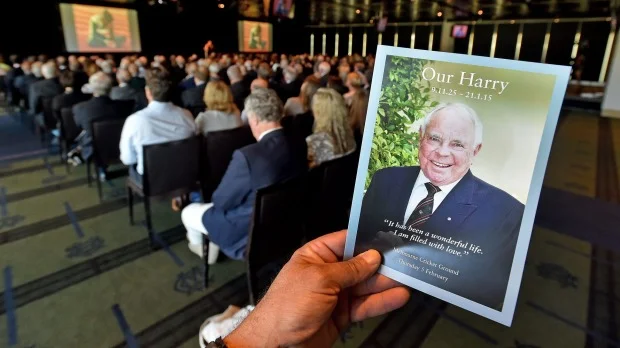
For Harry Gordon: 'His storytelling just flowed, clear and purling like a mountain creek', by Les Carlyon - 2015

July 29, 2015

5 February, 2015, Melbourne Cricket Ground

 I shouldn’t say this . . . but I can’t help thinking that Harry would see today as a missed opportunity.

Harry loved a lunch, as many of us here today know.

And at this time – around two o’clock – he’d be calling for a third bottle of wine.   And he’d be telling people -- usually John Fitzgerald -- not to interrupt him while he told a short anecdote that would only take another twenty or thirty minutes.  

And, if it happened to be a large gathering -- and Harry’s lunches usually were -- he’d eventually make a formal speech and go around the room, singling out people for praise and reminding them of something they wrote in 1953.

You tried to avoid eye contact, hoping Harry wouldn’t see you – but he always did.

And Harry not only loved a lunch.   He loved this place, this stadium that once had a red-brick cinder track.

So what an opportunity missed today.

The MCG: he could have picked out someone he knew in the Ponsford Stand and called him ‘old bloke’.

What an opportunity missed.   All these people, all of us his friends and more than that his admirers . . . people who owe him simply because of what he was and what he taught us by example.

I’m so old I first met Harry fifty-four years ago.   He was assistant editor of the Sun News-Pictorial and I was a first-year cadet, wide-eyed and clueless.  

But I felt I had known him long before then.   As a kid growing up in the bush I used to read his stuff in The Sun.

This was the era of Dave Sands and Vic Patrick in the boxing rings, and of Betty Cuthbert, John Landy and Dawn Fraser at the Melbourne Olympics.

And even as a teenager I sensed there was something special about Harry’s work.   I couldn’t identify what it was then. It was just a voice inside me saying: ‘This bloke’s different’.

His storytelling just flowed, clear and purling like a mountain creek.  

Here was someone who seemed to live in a different place to most other journalists.   There was a relaxed quality to his prose – no clichés, no showing off, no agenda.   He led you along by the hand.   He was the master of the anecdote that widened out into the bigger story.

Here was someone who obviously crafted every word, every sentence, someone who lived in this exotic halfway house between journalism and literature.

And you also felt that here was a generous spirit.   Harry could scold in print without being mean.  

And when I eventually met Harry in the flesh at The Sun he was exactly the way he seemed in his copy – friendly, with a radiant smile that came from somewhere deep inside, a great finisher of other people’s copy and an island of civility in the alcoholic haze that hung over the subs’ room in those days.

That was my first view of Harry and he never changed.   In his late eighties he was still boyish, still curious, still enthusiastic, still generous.

He’d send you an email about a new book he’d just read.   “This bloke can really write,” he’d say with all the excitement of an explorer who’s just discovered a new continent.   He was eighty-nine going on seventeen.

Harry became editor of The Sun at the same time as Graham Perkin was editor of the Age.

On the night of the Faraday kidnappings the Sun was hours -- many hours -- ahead of us at the Age.   The Sun had photos of the kidnapped school children in its first edition and we didn’t.

Graham rang Harry around midnight – I overheard the conversation -- and suggested Harry should give us the photos.   In the public interest was the quaint way Graham put it.   Harry, always the gentleman, said, yes, of course, he’d help, he’d never do anything against the public interest.

He put the phone down and after a very long delay – some say hours -- he handed the photos to a copy boy and told him to walk very slowly to the Age.

Harry, the former middleweight champ of Melbourne High, might have had gentle ways, but he was always the fiercest of competitors.   If he had to knock you out, he always sent flowers to the hospital afterwards.

Harry held lots of other high editorial positions after he moved on from the Sun.   But I’d suggest these were the lesser things.  

Harry’s legacy is the stuff he wrote in newspapers and books – his words.   His was always a human voice.   I can’t recall him ever writing anything about infrastructure reform.

It was a voice so natural that it almost seemed that Harry wasn’t trying – which of course he was.   But the effect was to give the reader the impression that the whole thing was just a happy accident – it just wrote itself.   And so often it gave us, the readers, words and images that still run around in our heads.

We’re here to mourn Harry today.

But I remind you of something Red Smith, the great American sportswriter, wrote long ago after the death of a colleague he admired.   Don’t mourn for the dead, Smith wrote, and went on to say:

This is a loss to the living, to everyone with a feeling for written English handled with respect and taste and grace.

So while we mourn for Harry today, we also need to mourn for us, the living. . . because Harry elevated us all, and made journalism look better than it really is, simply by his presence in the world.

[ends]                   

Enjoyed this speech? Speakola is a labour of love and I’d be very grateful if you would share, tweet or like it. Thank you.

Facebook Twitter Facebook
In EDITORS CHOICE Tags HARRY GORDON, EULOGY, FRIEND, COLLEAGUE, JOURNALISM, SPORTSWRITING
Comment

For Harry Gordon: 'I miss you calling me kid, kid', by son Michael Gordon - 2015

July 29, 2015

5 February 2015, Melbourne Cricket Ground, Melbourne

I’d like to begin by sharing with you the opening of the memoir that Harry intended to write, but never progressed beyond the words I am about to read. It was tentatively titled The Boxer’s Son and this is how it began:

“When my father’s heart stopped beating, I was nursing his hand, stroking the back of it. His right hand, lumpy and gnarled: a paw that always seemed a bit large for such a small and compact man. It had been broken more than once, and never well mended, and the bumps around the back of the thumb made it feel like a chunk of mallee root.

“My father had been a prize-fighter, a bantamweight professional boxer, and that mis-shapen right hand had been his most significant tool of trade. It had done most of the damage he inflicted through close to 150 fights, many of them 20-rounders. It had even killed a man, another boxer who happened to be his best friend.

“I was perhaps 10 years old, maybe 12, when I first learned about the death of George Mendes. It was there in his scrapbook….”

And that is as far as he got.

*******

I grew up with the story of how Harry’s dad, my grandfather who we all called Pa, killed George Mendes, his best mate, after a reluctant Pa agreed to the fight because Mendes was having a child and needed the money; how Pa tragically caught him while he was mid-air, switching feet, with the result that he hit his head hard on the canvas and died; and how that fight effectively ended two brilliant careers.

What I didn’t know, until the last week, was how Pa got into the fight game. The answer was in one of dad’s scrap books.

As a paperboy, Pa fought for the prime spot to sell papers at Flinders Street station, though he had never been taught how to box or even been in a gym.  One of the fight promoters of the time, Arty Powell, used to allow a few of the paper boys in to see fights for free at the Pavillion, opposite Her Majesty’s Theatre in Exhibition Street, on condition that, in the event that someone on the bill failed to front up, they would enter the ring.

On March 25, 1917, it happened and young Harry, 15 years old and weighing seven stone and nine pounds (or 48 kilos), stepped into to the breach. He knocked out his opponent in the first round, and his next two fights ended the same way. Pa’s real name was Arthur Gordon Parish, but the promoter called him Harry Gordon and it stuck.

Pa went on to become one of the gamest fighters Australia ever produced, and he taught his son how to box in the back yard of their home in Elwood, with the result that Harry became middle weight champion at Melbourne High.

*****

If there was another trait that Harry inherited from his father, it was humility, and the ability to mix easily in any company.

Inside the Elwood house, on the lino kitchen floor, Harry’s mum, a former singer and dancer, with a capacity for exaggeration, used to teach little girls how to tap-dance to make some extra money during the Depression. So Harry learnt to tap-dance, too. Whatever imagination and creativity he possessed, Harry has said, came form his mum.

*******

Two weeks ago, I nursed my father’s hand, along with Johnny and Sally, and Joy, when his big heart stopped beating. It was in better shape than Pa’s.

In the preceding days, as we sat with Harry, I read to him from Hack Attack, Nick Davies’ account of how he broke the hacking scandal in the British press. It’s a pacy tale, and Harry enjoyed listening to it and would nod approvingly when Davies turned a neat phrase.

Early on, Davies observes that reporters are really very similar, and tend to run on a volatile combination of imagination and anxiety and luck. As generalisations go, it’s a good one, but it didn’t apply to Harry, who never seemed anxious and was propelled by a mix of curiosity, creativity, idealism and an ability to see some things that others could not.

Others in the press box who watched John Landy pass up the chance for a world record, to see that a fallen mate was OK, knew they had witnessed something special, but only Harry called it for what it was: one of the finest acts in the history of sport.

*****

In Hack Attack, Davies also paints a rather frightening portrait of the newsrooms of Fleet Street, especially the tabloids, suggesting they are run by puffed-up, foul-mouthed, self-important editors who can’t tell the difference between leadership and spite.

What struck me was how different this culture was from the one Harry nurtured when he was editor at The Sun and, later, editor-in-chief at the Courier Mail in Brisbane. Harry’s management strategy was to help his colleagues be the best they could be by encouraging, not intimidating, by rewarding (if only with his time and advice), not punishing.

The number of journalists who have made contact in recent days to describe how Harry either hired them, inspired them or shaped their careers is in the dozens, and reads like a who’s who of the profession.

It reminds me of the number of coaches who learnt their craft under Yabby Jeans at Hawthorn in the 80s, or the still growing band of Alastair Clarkson protégés who are making their marks at other clubs.

*******

Harry was blessed to have two innings in journalism and love. The first career began as a 16-year-old copy boy on the Daily Telegraph and Harry was, to quote from the title of his first book, a young man in a hurry: at 21, he was in Singapore, covering the execution of Japanese war criminals; at 24, in Korea covering a brutal war and seeing active service; at 27, in Helsinki, covering his first Olympics; and rising from one of the more junior to the most senior position at the Herald and Weekly Times during a career spanning 37 years.

He ran The Sun in the late sixties and summed up his feelings as editor in a note I found in his computer: “Finger on the pulse,” he wrote. “Answered every letter, loved it, great staff, great papers, big stories: the Kennedys, the moon landing, West Gate Bridge disaster, Ronald Ryan… great circulations. A golden time.”

*****

His first love was my mum, Dorothy Scott, who a was a member of the Maroubra Surf Life Saving Club.

Mum’s passing in 1984 was the great tragedy of Harry’s life, and his departure from the Herald and Weekly Times soon followed. It was then that the generosity he had shown to others was reciprocated with offers to be a contributing editor to the new Australian edition of Time magazine; to return to the Olympics and write columns at Seoul; to write The Hard Way, the history of the Hawthorn Football Club, which I worked with Harry to update as One For All in 2009; and to become the official historian of the Australian Olympic Committee.

The second love was Joy, who lived over the side fence and would toss over eggs or bread when Harry’s fridge was bare.

*******

Harry achieved a lot, but he had a lot of fun along the way, getting as big a kick out of frivolous things as he did standing up the Victorian Parliament, or Joh Bjekle-Petersen. Lou Richards tells the story of the day they sat at our house at Hawthorn, writing captions for the backs of footy cards and laughing themselves silly at their own jokes.

He loved his pattern of life, from the hall of fame selection committee meetings; to the trips away with Joy; to family get-togethers at Christmas; to Grand Final week, starting with the Carbine Club lunch, building to the lunch with old colleagues in journalism on the Friday and culminating with the big game.

This year he saw his 12th Hawthorn premiership, and after watching the game we met my kids and their mates at the Blazer Bar for a few celebratory beers. One of them, a Hawthorn supporter, later told me that talking with Harry was the highlight of his grand final.

*****

What sort of father was he? Most of all, he was passionate, someone who greeted each day with enthusiasm and a sense of adventure, generosity and optimism – traits that never left him. He was also competitive, whether the game was 21-up basketball, or beach cricket or (when he was younger) kick-to-kick.

He was proud of his kids and loyal, too, and sometimes to a point that defied logic. At my wedding, for instance, my brother had a disagreement with the person who ran the restaurant where we were celebrating and, as he tends to do, employed some colourful language to make a point. When the owner complained to Harry, he replied that it could not have been John because “my boys don’t swear”!

Over the years, Harry became more a sibling than a parent to us kids and even our kids, and Johnny, Harry and I were the Gordon brothers. We called each other 'kid' and I will always fondly recall how, when he came back from one extended trip overseas, he said: “I miss you calling me 'kid', kid.”

In hospital the day he died, I told him how I’d miss reading him the first paragraph of bigger pieces I had written before they were published. From underneath the oxygen mask, he retorted: “And the last!”

Harry worked hard on his first and final paragraphs, and what came in between flowed like a river. His last words were among his finest.

Addressing the family he told us he’d enjoyed a wonderful life and how grateful and full of love he felt – a sentiment that would be magnified if he was in this room today.

Enjoyed this speech? Speakola is a labour of love and I’d be very grateful if you would share, tweet or like it. Thank you.

Facebook Twitter Facebook
In SUBMITTED Tags JOURNALIST, FATHER, SON
Comment

For Robert Kennedy: 'What it really adds up to is love,' by Edward Kennedy - 1968

July 16, 2015

8 June 1968, St. Patrick's Cathedral, New York, USA

Your Eminences, Your Excellencies, Mr. President:

On behalf of Mrs. Kennedy, her children, the parents and sisters of Robert Kennedy, I want to express what we feel to those who mourn with us today in this Cathedral and around the world.

We loved him as a brother, and as a father, and as a son. From his parents, and from his older brothers and sisters -- Joe and Kathleen and Jack -- he received an inspiration which he passed on to all of us. He gave us strength in time of trouble, wisdom in time of uncertainty, and sharing in time of happiness. He will always be by our side.

Love is not an easy feeling to put into words. Nor is loyalty, or trust, or joy. But he was all of these. He loved life completely and he lived it intensely.

A few years back, Robert Kennedy wrote some words about his own father which expresses [sic] the way we in his family felt about him. He said of what his father meant to him, and I quote:

"What it really all adds up to is love -- not love as it is described with such facility in popular magazines, but the kind of love that is affection and respect, order and encouragement, and support. Our awareness of this was an incalculable source of strength, and because real love is something unselfish and involves sacrifice and giving, we could not help but profit from it."

And he continued,

"Beneath it all, he has tried to engender a social conscience. There were wrongs which needed attention. There were people who were poor and needed help. And we have a responsibility to them and to this country. Through no virtues and accomplishments of our own, we have been fortunate enough to be born in the United States under the most comfortable conditions. We, therefore, have a responsibility to others who are less well off."

That is what Robert Kennedy was given. What he leaves to us is what he said, what he did, and what he stood for. A speech he made to the young people of South Africa on their Day of Affirmation in 1966 sums it up the best, and I would like to read it now:

"There is discrimination in this world and slavery and slaughter and starvation. Governments repress their people; millions are trapped in poverty while the nation grows rich and wealth is lavished on armaments everywhere. These are differing evils, but they are the common works of man. They reflect the imperfection of human justice, the inadequacy of human compassion, our lack of sensibility towards the suffering of our fellows. But we can perhaps remember -- even if only for a time -- that those who live with us are our brothers; that they share with us the same short moment of life; that they seek -- as we do -- nothing but the chance to live out their lives in purpose and happiness, winning what satisfaction and fulfillment they can.

Surely, this bond of common faith, this bond of common goal, can begin to teach us something. Surely, we can learn, at least, to look at those around us as fellow men. And surely we can begin to work a little harder to bind up the wounds among us and to become in our own hearts brothers and countrymen once again. The answer is to rely on youth -- not a time of life but a state of mind, a temper of the will, a quality of imagination, a predominance of courage over timidity, of the appetite for adventure over the love of ease. The cruelties and obstacles of this swiftly changing planet will not yield to the obsolete dogmas and outworn slogans. They cannot be moved by those who cling to a present that is already dying, who prefer the illusion of security to the excitement and danger that come with even the most peaceful progress.

It is a revolutionary world we live in, and this generation at home and around the world has had thrust upon it a greater burden of responsibility than any generation that has ever lived. Some believe there is nothing one man or one woman can do against the enormous array of the world's ills. Yet many of the world's great movements, of thought and action, have flowed from the work of a single man. A young monk began the Protestant reformation; a young general extended an empire from Macedonia to the borders of the earth; a young woman reclaimed the territory of France; and it was a young Italian explorer who discovered the New World, and the 32 year-old Thomas Jefferson who [pro]claimed that "all men are created equal."

These men moved the world, and so can we all. Few will have the greatness to bend history itself, but each of us can work to change a small portion of events, and in the total of all those acts will be written the history of this generation. *It is from numberless diverse acts of courage and belief that human history is shaped.* Each time a man stands up for an ideal, or acts to improve the lot of others, or strikes out against injustice, he sends forth a tiny ripple of hope, and crossing each other from a million different centers of energy and daring, those ripples build a current that can sweep down the mightiest walls of oppression and resistance.

Few are willing to brave the disapproval of their fellows, the censure of their colleagues, the wrath of their society. Moral courage is a rarer commodity than bravery in battle or great intelligence. Yet it is the one essential, vital quality for those who seek to change a world that yields most painfully to change. And I believe that in this generation those with the courage to enter the moral conflict will find themselves with companions in every corner of the globe.

For the fortunate among us, there is the temptation to follow the easy and familiar paths of personal ambition and financial success so grandly spread before those who enjoy the privilege of education. But that is not the road history has marked out for us. Like it or not, we live in times of danger and uncertainty. But they are also more open to the creative energy of men than any other time in history. All of us will ultimately be judged, and as the years pass we will surely judge ourselves on the effort we have contributed to building a new world society and the extent to which our ideals and goals have shaped that event.

The future does not belong to those who are content with today, apathetic toward common problems and their fellow man alike, timid and fearful in the face of new ideas and bold projects. Rather it will belong to those who can blend vision, reason and courage in a personal commitment to the ideals and great enterprises of American Society. Our future may lie beyond our vision, but it is not completely beyond our control. It is the shaping impulse of America that neither fate nor nature nor the irresistible tides of history, but the work of our own hands, matched to reason and principle, that will determine our destiny. There is pride in that, even arrogance, but there is also experience and truth. In any event, it is the only way we can live.

That is the way he lived. That is what he leaves us.

My brother need not be idealized, or enlarged in death beyond what he was in life; to be remembered simply as a good and decent man, who saw wrong and tried to right it, saw suffering and tried to heal it, saw war and tried to stop it.

Those of us who loved him and who take him to his rest today, pray that what he was to us and what he wished for others will some day come to pass for all the world.

As he said many times, in many parts of this nation, to those he touched and who sought to touch him:

"Some men see things as they are and say why.
I dream things that never were and say why not."

Source: http://www.americanrhetoric.com/speeches/e...

Enjoyed this speech? Speakola is a labour of love and I’d be very grateful if you would share, tweet or like it. Thank you.

Facebook Twitter Facebook
In EDITORS CHOICE Tags ROBERT KENNEDY, EDWARD KENNEDY, ASSASSINATION, USA, TRANSCRIPT
Comment

For Graham Chapman: "Good riddance ... the freeloading bastard!" by John Cleese - 1989

July 16, 2015

3 December 1989, St Bartholomew's, London, UK

Graham Chapman, co-author of the ‘Parrot Sketch,’ is no more.

He has ceased to be, bereft of life, he rests in peace, he has kicked the bucket, hopped the twig, bit the dust, snuffed it, breathed his last, and gone to meet the Great Head of Light Entertainment in the sky, and I guess that we’re all thinking how sad it is that a man of such talent, such capability and kindness, of such intelligence should now be so suddenly spirited away at the age of only forty-eight, before he’d achieved many of the things of which he was capable, and before he’d had enough fun.

Well, I feel that I should say, “Nonsense. Good riddance to him, the freeloading bastard! I hope he fries."

And the reason I think I should say this is, he would never forgive me if I didn’t, if I threw away this opportunity to shock you all on his behalf. Anything for him but mindless good taste. I could hear him whispering in my ear last night as I was writing this:

“Alright, Cleese, you’re very proud of being the first person to ever say ‘sh**’ on television. If this service is really for me, just for starters, I want you to be the first person ever at a British memorial service to say ‘f***’!”

You see, the trouble is, I can’t. If he were here with me now I would probably have the courage, because he always emboldened me. But the truth is, I lack his balls, his splendid defiance. And so I’ll have to content myself instead with saying ‘Betty Mardsen…’

But bolder and less inhibited spirits than me follow today. Jones and Idle, Gilliam and Palin. Heaven knows what the next hour will bring in Graham’s name. Trousers dropping, blasphemers on pogo sticks, spectacular displays of high-speed farting, synchronized incest. One of the four is planning to stuff a dead ocelot and a 1922 Remington typewriter up his own arse to the sound of the second movement of Elgar’s cello concerto. And that’s in the first half.

Because you see, Gray would have wanted it this way. Really. Anything for him but mindless good taste. And that’s what I’ll always remember about him—apart, of course, from his Olympian extravagance. He was the prince of bad taste. He loved to shock. In fact, Gray, more than anyone I knew, embodied and symbolised all that was most offensive and juvenile in Monty Python. And his delight in shocking people led him on to greater and greater feats. I like to think of him as the pioneering beacon that beat the path along which fainter spirits could follow.

Some memories. I remember writing the undertaker speech with him, and him suggesting the punch line, ‘All right, we’ll eat her, but if you feel bad about it afterwards, we’ll dig a grave and you can throw up into it.’ I remember discovering in 1969, when we wrote every day at the flat where Connie Booth and I lived, that he’d recently discovered the game of printing four-letter words on neat little squares of paper, and then quietly placing them at strategic points around our flat, forcing Connie and me into frantic last minute paper chases whenever we were expecting important guests.

I remember him at BBC parties crawling around on all fours, rubbing himself affectionately against the legs of gray-suited executives, and delicately nibbling the more appetizing female calves. Mrs. Eric Morecambe remembers that too.

I remember his being invited to speak at the Oxford union, and entering the chamber dressed as a carrot—a full length orange tapering costume with a large, bright green sprig as a hat—-and then, when his turn came to speak, refusing to do so. He just stood there, literally speechless, for twenty minutes, smiling beatifically. The only time in world history that a totally silent man has succeeded in inciting a riot.

I remember Graham receiving a Sun newspaper TV award from Reggie Maudling. Who else! And taking the trophy falling to the ground and crawling all the way back to his table, screaming loudly, as loudly as he could. And if you remember Gray, that was very loud indeed.

It is magnificent, isn’t it? You see, the thing about shock… is not that it upsets some people, I think; I think that it gives others a momentary joy of liberation, as we realised in that instant that the social rules that constrict our lives so terribly are not actually very important.

Well, Gray can’t do that for us anymore. He’s gone. He is an ex-Chapman. All we have of him now is our memories. But it will be some time before they fade.


Similar on Speakola

Eric Idle's eulogy for George Harrison

John Cleese on political correctness for Big Think

Source: https://www.funeralwise.com/plan/eulogy/ch...

Enjoyed this speech? Speakola is a labour of love and I’d be very grateful if you would share, tweet or like it. Thank you.

Facebook Twitter Facebook
In EDITORS CHOICE Tags MONTY PYTHON, GRAHAM CHAPMAN, JOHN CLEESE, FRIEND, COMEDY
Comment

For Phillip Hughes: 'We must dig in and get through to tea', by Michael Clarke - 2014

July 16, 2015

3 December, 2014, Macksville, NSW, Australia

I'm deeply honoured to have been asked by Phillip's family to speak today. I am humbled to be in the presence of you, his family, his friends and his community. He was so proud of Macksville and it is easy to see why today.

Taken from the game, his family and loved ones at the age of just 25, he left a mark on our game that needs no embellishment.

I don't know about you, but I keep looking for him. I know it is crazy but I expect any minute to take a call from him or to see his face pop around the corner.

Is this what we call the spirit? If so, then his spirit is still with me. And I hope it never leaves.

I walked to the middle of the SCG on Thursday night, those same blades of grass beneath my feet where he and I and so many of his mates here today have built partnerships, taken chances and lived out the dreams we paint in our heads as boys. The same stands where the crowds rose to their feet to cheer him on and that same fence he sent the ball to time and time again. And it is now forever the place where he fell.

I stood there at the wicket, I knelt down and touched the grass. I swear he was with me.

Picking me up off my feet to check if I was OK. Telling me we just needed to dig in and get through to tea. Telling me off for that loose shot I played. Chatting about what movie we might watch that night. And then passing on a useless fact about cows.

I could see him swagger back to the other end, grin at the bowler, and call me through for a run with such a booming voice a bloke in the car park would hear it.

The heart of a man who lived his life for this wonderful game we play, and whose soul enriched not just our sport, but all of our lives.

Is this what indigenous Australians believe about a person's spirit being connected with the land upon which they walk? If so, I know they are right about the SCG. His spirit has touched it and it will be forever be a sacred ground for me.

I can feel his presence there and I can see how he has touched so many people around the world. The tributes to him from cricket lovers kept me going. The photos, the words, the prayers and the sense of communion in this loss from people across the globe have shown me his spirit in action. It has sustained me and overwhelmed me in equal measure.

And the love of my band of baggy green  and gold brothers and sisters has held me upright when I thought I could not proceed. His spirit has brought us closer together - something I know must be him at work because it is so consistent with how he played and lived. He always wanted to bring people together and he always wanted to celebrate his love for the game and its people.

Is this what we call the spirit of cricket? From the little girl in Karachi holding a candlelight tribute to masters of the game like Tendulkar, Warne and Lara showing their grief to the world, the spirit of cricket binds us all together.

We feel it in the thrill of a cover drive. Or the taking of a screamer at gully, whether by a 12-year-old boy in Worcester or by Brendon McCullum in Dubai. It is in the brilliant hundred and five-wicket haul, just as significant to the players in a Western Suburbs club game as it is in a Test match.

The bonds that lead to cricketers from around the world putting their bats out, that saw people who didn't even know Phillip lay flowers at the gates of Lord's and that brought every cricketing nation on earth to make its own heartfelt tribute.

The bonds that saw players old and new rush to his bedside. From wherever they heard the news to say their prayers and farewells. This is what makes our game the greatest game in the world.

Phillip's spirit, which is now part of our game forever, will act as a custodian of the sport we all love.

We must listen to it. We must cherish it. We must learn from it. We must dig in and get through to tea. And we must play on.

So rest in peace my little brother. I'll see you out in the middle.

Source: http://www.bbc.com/sport/0/cricket/3030830...

Enjoyed this speech? Speakola is a labour of love and I’d be very grateful if you would share, tweet or like it. Thank you.

Facebook Twitter Facebook
In EDITORS CHOICE Tags CRICKET, TEAMMATE, PHILLIP HUGHES, SPORT, TEAM
Comment

For Lee Kwan Yew: 'Yeye showed me that you could make a difference in this world', by grandson Li Hongyi - 2015

July 16, 2015

29 March 2015, Mandai Crematorium, Singapore

Some years ago when I was preparing to go to university, Yeye gave me a camera. This was the first and only time he ever gave me a present. Over the next few years I got deeply into photography and took thousands of photos of my time in college. After I graduated I got a book printed with my favourite ones. I presented it to him as a thank you for his gift and hopefully to show him I had done something good with it.

Yeye was more than a grandfather to me. He was an inspiration. As a child, I looked up to him and wanted to grow up to be the kind of man he was. And even now, I still do.

We would have lunch with Yeye and Nainai every Sunday at their house. We always ate simple things: mee rebus, nasi lemak, popiah. He was never one concerned with luxury or lavishness. The idea that he would care about how fancy his food was or what brand his clothes were was ridiculous. His mind was always on more important things. He would have discussions with our parents while my cousins and I would sit by the side and listen. I would always feel a bit silly after listening. He made me realize how petty all my little concerns were and how there were so many bigger problems in the world. He made me want to do something more with my life.

He was not an especially charming man. Yet when he spoke you felt compelled to listen. Because when he spoke you knew he was being straight with you. He was not trying to cajole or flatter. He would be completely frank and honest. After speaking to him in person you knew that his speeches were not puffed up fluff. They were truly his opinions on the matters he cared most about. He would never echo empty slogans or narrow-minded ideologies; it was always thoroughly researched and well-considered perspectives. I had the privilege once of accompanying Yeye to a ceremony in Washington where he was receiving an award. Hearing him speak and watching the entire room listen made me feel so proud. His charisma came not from showmanship but from pure substance.

Yeye understood the limits of his knowledge. He made it a point to try and understand the flaws and risks of his own perspectives better than anyone else. This was especially true when it came to Singapore. He refused to let blind nationalism run this country into the ground. He cared deeply about this country and made sure that he was aware of any weaknesses that could cause us harm. And yet he was very proud of Singapore and confident that we could be better.

Yeye showed me that you could make a difference in this world. Not just that you could make a difference, but that you could do it with your head held high. You didn’t have to lie, cheat, or steal. You didn’t have to charm, flatter, or cajole. You didn’t have to care about frivolous things or play silly games. You could do something good with your life, and the best way to do so was to have good principles and conduct yourself honourably.

People admired Yeye for his brilliant mind. They admired him for his ability to lead and rally us together. They admired him for all of his staggering accomplishments. These are all true. But to me, what made him a great man was the person he chose to be. A man of character, clarity, and conviction. We should remember him less as a man who gave us great gifts, and more as a man who showed us the kind of people we could be.

When Yeye gave me that camera years ago, he wrote me a note. It was a simple note without any flowery language or cheap sentiment. He simply told me that he hoped I made good use of it. I hope I have.

Enjoyed this speech? Speakola is a labour of love and I’d be very grateful if you would share, tweet or like it. Thank you.

Facebook Twitter Facebook
In EDITORS CHOICE Tags GRANDSON, PRIME MINISTER, LEE KWAN YEW
Comment

For the war dead: 'Comfort, therefore, not condolence, is what I have to offer to the parents of the dead', Pericles - 431-404 BC

July 16, 2015

circa 431-404 BC, Athens, annual public funeral for war dead

Most of my predecessors in this place have commended him who made this speech part of the law, telling us that it is well that it should be delivered at the burial of those who fall in battle. For myself, I should have thought that the worth which had displayed itself in deeds would be sufficiently rewarded by honours also shown by deeds; such as you now see in this funeral prepared at the people's cost. And I could have wished that the reputations of many brave men were not to be imperilled in the mouth of a single individual, to stand or fall according as he spoke well or ill. For it is hard to speak properly upon a subject where it is even difficult to convince your hearers that you are speaking the truth. On the one hand, the friend who is familiar with every fact of the story may think that some point has not been set forth with that fullness which he wishes and knows it to deserve; on the other, he who is a stranger to the matter may be led by envy to suspect exaggeration if he hears anything above his own nature. For men can endure to hear others praised only so long as they can severally persuade themselves of their own ability to equal the actions recounted: when this point is passed, envy comes in and with it incredulity. However, since our ancestors have stamped this custom with their approval, it becomes my duty to obey the law and to try to satisfy your several wishes and opinions as best I may.

I shall begin with our ancestors: it is both just and proper that they should have the honour of the first mention on an occasion like the present. They dwelt in the country without break in the succession from generation to generation, and handed it down free to the present time by their valour. And if our more remote ancestors deserve praise, much more do our own fathers, who added to their inheritance the empire which we now possess, and spared no pains to be able to leave their acquisitions to us of the present generation. Lastly, there are few parts of our dominions that have not been augmented by those of us here, who are still more or less in the vigour of life; while the mother country has been furnished by us with everything that can enable her to depend on her own resources whether for war or for peace. That part of our history which tells of the military achievements which gave us our several possessions, or of the ready valour with which either we or our fathers stemmed the tide of Hellenic or foreign aggression, is a theme too familiar to my hearers for me to dilate on, and I shall therefore pass it by. But what was the road by which we reached our position, what the form of government under which our greatness grew, what the national habits out of which it sprang; these are questions which I may try to solve before I proceed to my panegyric upon these men; since I think this to be a subject upon which on the present occasion a speaker may properly dwell, and to which the whole assemblage, whether citizens or foreigners, may listen with advantage.

Our constitution does not copy the laws of neighbouring states; we are rather a pattern to others than imitators ourselves. Its administration favours the many instead of the few; this is why it is called a democracy. If we look to the laws, they afford equal justice to all in their private differences; if no social standing, advancement in public life falls to reputation for capacity, class considerations not being allowed to interfere with merit; nor again does poverty bar the way, if a man is able to serve the state, he is not hindered by the obscurity of his condition. The freedom which we enjoy in our government extends also to our ordinary life. There, far from exercising a jealous surveillance over each other, we do not feel called upon to be angry with our neighbour for doing what he likes, or even to indulge in those injurious looks which cannot fail to be offensive, although they inflict no positive penalty. But all this ease in our private relations does not make us lawless as citizens. Against this fear is our chief safeguard, teaching us to obey the magistrates and the laws, particularly such as regard the protection of the injured, whether they are actually on the statute book, or belong to that code which, although unwritten, yet cannot be broken without acknowledged disgrace.

Further, we provide plenty of means for the mind to refresh itself from business. We celebrate games and sacrifices all the year round, and the elegance of our private establishments forms a daily source of pleasure and helps to banish the spleen; while the magnitude of our city draws the produce of the world into our harbour, so that to the Athenian the fruits of other countries are as familiar a luxury as those of his own.

If we turn to our military policy, there also we differ from our antagonists. We throw open our city to the world, and never by alien acts exclude foreigners from any opportunity of learning or observing, although the eyes of an enemy may occasionally profit by our liberality; trusting less in system and policy than to the native spirit of our citizens; while in education, where our rivals from their very cradles by a painful discipline seek after manliness, at Athens we live exactly as we please, and yet are just as ready to encounter every legitimate danger. In proof of this it may be noticed that the Lacedaemonians do not invade our country alone, but bring with them all their confederates; while we Athenians advance unsupported into the territory of a neighbour, and fighting upon a foreign soil usually vanquish with ease men who are defending their homes. Our united force was never yet encountered by any enemy, because we have at once to attend to our marine and to dispatch our citizens by land upon a hundred different services; so that, wherever they engage with some such fraction of our strength, a success against a detachment is magnified into a victory over the nation, and a defeat into a reverse suffered at the hands of our entire people. And yet if with habits not of labour but of ease, and courage not of art but of nature, we are still willing to encounter danger, we have the double advantage of escaping the experience of hardships in anticipation and of facing them in the hour of need as fearlessly as those who are never free from them.

Nor are these the only points in which our city is worthy of admiration. We cultivate refinement without extravagance and knowledge without effeminacy; wealth we employ more for use than for show, and place the real disgrace of poverty not in owning to the fact but in declining the struggle against it. Our public men have, besides politics, their private affairs to attend to, and our ordinary citizens, though occupied with the pursuits of industry, are still fair judges of public matters; for, unlike any other nation, regarding him who takes no part in these duties not as unambitious but as useless, we Athenians are able to judge at all events if we cannot originate, and, instead of looking on discussion as a stumbling-block in the way of action, we think it an indispensable preliminary to any wise action at all. Again, in our enterprises we present the singular spectacle of daring and deliberation, each carried to its highest point, and both united in the same persons; although usually decision is the fruit of ignorance, hesitation of reflection. But the palm of courage will surely be adjudged most justly to those, who best know the difference between hardship and pleasure and yet are never tempted to shrink from danger. In generosity we are equally singular, acquiring our friends by conferring, not by receiving, favours. Yet, of course, the doer of the favour is the firmer friend of the two, in order by continued kindness to keep the recipient in his debt; while the debtor feels less keenly from the very consciousness that the return he makes will be a payment, not a free gift. And it is only the Athenians, who, fearless of consequences, confer their benefits not from calculations of expediency, but in the confidence of liberality.

In short, I say that as a city we are the school of Hellas, while I doubt if the world can produce a man who, where he has only himself to depend upon, is equal to so many emergencies, and graced by so happy a versatility, as the Athenian. And that this is no mere boast thrown out for the occasion, but plain matter of fact, the power of the state acquired by these habits proves. For Athens alone of her contemporaries is found when tested to be greater than her reputation, and alone gives no occasion to her assailants to blush at the antagonist by whom they have been worsted, or to her subjects to question her title by merit to rule. Rather, the admiration of the present and succeeding ages will be ours, since we have not left our power without witness, but have shown it by mighty proofs; and far from needing a Homer for our panegyrist, or other of his craft whose verses might charm for the moment only for the impression which they gave to melt at the touch of fact, we have forced every sea and land to be the highway of our daring, and everywhere, whether for evil or for good, have left imperishable monuments behind us. Such is the Athens for which these men, in the assertion of their resolve not to lose her, nobly fought and died; and well may every one of their survivors be ready to suffer in her cause.

Indeed if I have dwelt at some length upon the character of our country, it has been to show that our stake in the struggle is not the same as theirs who have no such blessings to lose, and also that the panegyric of the men over whom I am now speaking might be by definite proofs established. That panegyric is now in a great measure complete; for the Athens that I have celebrated is only what the heroism of these and their like have made her, men whose fame, unlike that of most Hellenes, will be found to be only commensurate with their deserts. And if a test of worth be wanted, it is to be found in their closing scene, and this not only in cases in which it set the final seal upon their merit, but also in those in which it gave the first intimation of their having any. For there is justice in the claim that steadfastness in his country's battles should be as a cloak to cover a man's other imperfections; since the good action has blotted out the bad, and his merit as a citizen more than outweighed his demerits as an individual. But none of these allowed either wealth with its prospect of future enjoyment to unnerve his spirit, or poverty with its hope of a day of freedom and riches to tempt him to shrink from danger. No, holding that vengeance upon their enemies was more to be desired than any personal blessings, and reckoning this to be the most glorious of hazards, they joyfully determined to accept the risk, to make sure of their vengeance, and to let their wishes wait; and while committing to hope the uncertainty of final success, in the business before them they thought fit to act boldly and trust in themselves. Thus choosing to die resisting, rather than to live submitting, they fled only from dishonour, but met danger face to face, and after one brief moment, while at the summit of their fortune, escaped, not from their fear, but from their glory.

So died these men as became Athenians. You, their survivors, must determine to have as unfaltering a resolution in the field, though you may pray that it may have a happier issue. And not contented with ideas derived only from words of the advantages which are bound up with the defence of your country, though these would furnish a valuable text to a speaker even before an audience so alive to them as the present, you must yourselves realize the power of Athens, and feed your eyes upon her from day to day, till love of her fills your hearts; and then, when all her greatness shall break upon you, you must reflect that it was by courage, sense of duty, and a keen feeling of honour in action that men were enabled to win all this, and that no personal failure in an enterprise could make them consent to deprive their country of their valour, but they laid it at her feet as the most glorious contribution that they could offer. For this offering of their lives made in common by them all they each of them individually received that renown which never grows old, and for a sepulchre, not so much that in which their bones have been deposited, but that noblest of shrines wherein their glory is laid up to be eternally remembered upon every occasion on which deed or story shall call for its commemoration. For heroes have the whole earth for their tomb; and in lands far from their own, where the column with its epitaph declares it, there is enshrined in every breast a record unwritten with no tablet to preserve it, except that of the heart. These take as your model and, judging happiness to be the fruit of freedom and freedom of valour, never decline the dangers of war. For it is not the miserable that would most justly be unsparing of their lives; these have nothing to hope for: it is rather they to whom continued life may bring reverses as yet unknown, and to whom a fall, if it came, would be most tremendous in its consequences. And surely, to a man of spirit, the degradation of cowardice must be immeasurably more grievous than the unfelt death which strikes him in the midst of his strength and patriotism!

Comfort, therefore, not condolence, is what I have to offer to the parents of the dead who may be here. Numberless are the chances to which, as they know, the life of man is subject; but fortunate indeed are they who draw for their lot a death so glorious as that which has caused your mourning, and to whom life has been so exactly measured as to terminate in the happiness in which it has been passed. Still I know that this is a hard saying, especially when those are in question of whom you will constantly be reminded by seeing in the homes of others blessings of which once you also boasted: for grief is felt not so much for the want of what we have never known, as for the loss of that to which we have been long accustomed. Yet you who are still of an age to beget children must bear up in the hope of having others in their stead; not only will they help you to forget those whom you have lost, but will be to the state at once a reinforcement and a security; for never can a fair or just policy be expected of the citizen who does not, like his fellows, bring to the decision the interests and apprehensions of a father. While those of you who have passed your prime must congratulate yourselves with the thought that the best part of your life was fortunate, and that the brief span that remains will be cheered by the fame of the departed. For it is only the love of honour that never grows old; and honour it is, not gain, as some would have it, that rejoices the heart of age and helplessness.

Turning to the sons or brothers of the dead, I see an arduous struggle before you. When a man is gone, all are wont to praise him, and should your merit be ever so transcendent, you will still find it difficult not merely to overtake, but even to approach their renown. The living have envy to contend with, while those who are no longer in our path are honoured with a goodwill into which rivalry does not enter. On the other hand, if I must say anything on the subject of female excellence to those of you who will now be in widowhood, it will be all comprised in this brief exhortation. Great will be your glory in not falling short of your natural character; and greatest will be hers who is least talked of among the men, whether for good or for bad.

My task is now finished. I have performed it to the best of my ability, and in word, at least, the requirements of the law are now satisfied. If deeds be in question, those who are here interred have received part of their honours already, and for the rest, their children will be brought up till manhood at the public expense: the state thus offers a valuable prize, as the garland of victory in this race of valour, for the reward both of those who have fallen and their survivors. And where the rewards for merit are greatest, there are found the best citizens.

And now that you have brought to a close your lamentations for your relatives, you may depart.

Source: http://legacy.fordham.edu/halsall/ancient/...

Enjoyed this speech? Speakola is a labour of love and I’d be very grateful if you would share, tweet or like it. Thank you.

Facebook Twitter Facebook
In EDITORS CHOICE Tags ANCIENT GREECE
Comment

For Jack Clancy: 'No-one ever sat on a bench as well as Jack Clancy', by Ray Wilson - 2014

July 16, 2015

3 April, 2014, The Boulevard, Kew, Melbourne

Most of the tributes to Jack have emphasized his extensive range of disciplines and interests. But we at University Blacks, given his 59 years of commitment to the club, could be forgiven for thinking it was his sole passion. Sort of an upmarket version of Collingwood’s Joffa.

With others covering Jack the family man, Jack the academic, Jack the innovator in film studies, Jack the crusader for the ABC, Jack the bon vivant, to name a few of this extraordinary man’s extraordinary talents, my focus falls to Jack and football.

First some facts. After a couple of seasons starring for the Blacks, one week mid season in 1957 Fitzroy selected him in the senior VFL team as a reserve. No interchange then, and Jack never took the field. A knee injury conspired to make it his only game. His coach Bill Stephen spoke at a luncheon in 2006 for Jack’s 50 years of service, and Bill reported that “no-one ever sat on a bench as well as Jack Clancy”.

He returned to the Blacks, played seniors for a few years, and in the University Reds and Blacks Reserves for what seemed forever. He won two best player in the competition awards, and captained and coached teams to premierships. He is in the Reds, now Fitzroy Reds, Team of the Century, and is honoured in the Melbourne University Team of the Modern Era, the period post 1945. Once retired, he held every possible office at the Blacks and the umbrella MUFC from chairman down. As he moved from being a contemporary of young players to an elder statesman, his ability to communicate with, understand and mentor them was amazing. It was all delivered with the hand of friendship and respect for the individual, no matter if it was the star player in the Seniors or the trainer for the Clubbies. I am so pleased my sons Tony and Ned, who are here today, knew him so well. A parent can’t buy that sort of help.

It is commonly said the test of a person is not in times of triumph, but adversity. Jack was one of only two long term supporters who, week after long week, followed the club in its 17 year slide from A Grade to E Grade by the 1990’s. Heroics of A Grade clashes with Old Xaverians and Old Scotch must have been distant memories while watching Blacks players being pulverized in the winter mud at Fawkner and Thomastown. Around such men is a culture moulded.

On the morning of the Blacks winning B Grade Grand Final in 2012, The Age carried a piece on the competing clubs. It quoted AFL legend David Parkin, who has stayed involved with the Blacks since his son coached us 10 years ago, as saying ”I’d have to say that the culture at the Blacks is the best culture of any footy club I’ve been involved with, including Carlton and Hawthorn.” On Jack’s tribute page 1980’s player Nick Heath has written, “Matthew Arnold said ‘Culture is the acquainting of ourselves with the best that has been known and said in the world, and thus with the history of the human spirit.’? Nick added “Seems like he knew Jack pretty well”.

Now Jack was no short term operator. For 33 years the Blacks’ best player count was held in the backyard at Acheron St. Patsy, the award winning translator could accurately translate the French word for tolerance as “Patsy Clancy”. For thousands of men that backyard holds some of their warmest, if foggiest, memories. And for most it is their only acquaintance with the complete works of George Eliot, or Schubert’s Trout Quintet in A Major.

The Blacks descent saw the historically mighty Blacks and the historically sociable Reds in the same grade, so Jack donated a cup. Paul Daffey’s book about grass roots football, Local Rites, records it “In 1998, the Rouge et Noir Cup was struck. The cup was named after the flamboyant 1836 novel, Le Rouge et le Noir by French writer Stendhal. Only in the Amateurs could football and French literature be mentioned in the same sentence.” What Daffey didn’t record was at a lunch to announce the cup Jack made the speech entirely in French, using an Irish accent.

Jack is the central character in a legendary story from intervarsity trips. The University of Tasmania players were on the same overnight train to Adelaide, and a cocktail of youthful competitiveness and youthful incapacity to handle alcohol caused a card game to cease being conducted with the participants remaining seated. The ensuing disturbance led to the police boarding the train at Ararat. A Tasmanian was quick to point to Jack as the instigator, and he was promptly bundled off the train and spent the night behind bars. Days later as the two teams lined up, some Melbourne players informed the Tasmanians that Jack was an absolute animal on the field, and was hell bent on retribution for his jailing. Amazingly his direct opponent was the police informant, who suitably terrified, never set foot near Jack all day, leaving him to kick six easy goals.

I’ve been back at the Blacks for just 15 years. We have won three senior premierships in the past 10 years and were a finalist in A Grade last year. I know that would have warmed Jack’s beautiful heart, by then housed in his failing body. From time to time I’m asked why I do it. I usually answer that a 160 year old club with such an admired culture, a culture which Jack Clancy helped mould in his own image and which has been such a positive influence on thousands of men, is worth the effort. What I hope I told Jack often enough is that his loyalty through the dark days was, and remains, such a powerful motivation that I and others would be ashamed not to follow his lead. All AFL clubs these days have leadership groups. The Blacks had Jack Clancy. I reckon we’ve had them covered for true leadership.

Rob Clancy rang me three weeks ago to ask about holding this function at the new Pavillion at the Melbourne University Oval. Jack would have loved that. But it is not available until May. But it is planned to take Jack back to the oval for a final visit, which fittingly for Jack will last for an eternity, as will his memory at University Blacks.

I have liked, admired and respected so many men and women I have met through football, but I loved Jack Clancy. I’ll miss him so much.

Source: http://www.footyalmanac.com.au/FA2015/jack...

Enjoyed this speech? Speakola is a labour of love and I’d be very grateful if you would share, tweet or like it. Thank you.

Facebook Twitter Facebook
In SUBMITTED Tags VFL, FOOTBALL, FRIEND, RAY WILSON, JACK CLANCY, AFL
1 Comment

For Keith Rule: 'Solomon in a singlet', Andrew Rule - 1998

July 15, 2015

27 June, 1998, Lake Tyers, Victoria, Australia

The morning after we got the news, I went out to your woodheap. There was that big old axe you used in the bush all those years ago, just as you'd left it, stuck in the chopping block like a signature. I split wood until the memories and the tears came flooding in. Then I dropped the axe back in the block, nose down, handle sticking up, as neat as you please. Just like you would, Dad.

Remember how we used to get around in the old Blitz army truck, the one you'd bought when you were 16 and drove for years before you got a licence? I hadn't started school, but I'd begun my education, sprawled on the petrol tank that doubled as a seat, my head on your lap, lulled by the old side-valve V-8 grumbling away behind its thin tin cowling.

I watched the way you used to pat the old girl into gear, those huge work-stained hands easing the gear stick through the unforgiving crash box while you double-clutched and caught the revs just right.

"Listen to her," you'd say as we labored up a hill with tons of timber or a bulldozer on the back, "slurping petrol fast as you could pour it out of a two-gallon bucket." And you'd laugh and sing King of the Road.

You turned 24 the week I was born, so I remember you as a young bloke, a father of three boys by 27. Fair-haired, under six foot and around 13 stone in the old scale, equal parts bone and muscle, common sense and good humor, wrapped inside a blue singlet with the honest smell of sweat and gum trees. You didn't alter much in 30 years. Later, people sometimes took us for brothers born a dozen years apart.

Like the best dogs, horses and people, you were tough, but never mean. We'd marvel at how you picked up hot coals when they fell from the fire, juggle them casually and toss them back. Your heart was a lot softer than your hands. Once, when a visitor produced sandwiches she'd made specially, you saw the one she offered had been fly-blown on the trip. Rather than hurt her feelings, you took it, thanked her, and ate it.

Chivalry, Mum called it.

Whatever it was about you, we liked it. Little boys in books wanted to be firemen or train drivers, but yours wanted to be sleeper cutters, like you . . .

You'd set up your landing in the shade, preferably to catch a lazy afternoon breeze sneaking up a gully from the lake. You'd fall a tree, measure off nine feet the ancient way, stepping out the log heel to toe, then saw it off and snig it to the landing with the tractor.

You'd belt the bark with the back of the axe to loosen it, then slit it open and lever it off as easily as a slaughterman skins sheep. You'd save sheets of stringy bark and, if it rained, we'd lean them against a tree, shelter under it and drink sweet coffee from your steel Thermos.

You used most tools well, but the axe was your favorite. Your good axe had an oversized head, razor sharp, and a succession of hickory handles worn silky smooth with use.

You could do nearly anything with it, and did.

At lunchtime, you'd put the sandwiches on a fresh-sawn sleeper, which smelt so sharp and sweet and clean, and cut them from corner to corner with the axe, as neatly as if you'd used a kitchen knife. You used it to sharpen the stubby carpenter's pencil for marking the ends of the logs. You used it as delicately as a scalpel to notch the ends of the log - right on the pencil mark - ready for the string line.

And, when you finished with the axe, you'd casually drop it, nose first, into the boards and stick it in perfectly, every time, with the handle rising just right. As neat as you please.
You'd shake the battered tin of blue powder to coat the string, stick it in those tiny cuts at each end, pull it taut, pluck it up and twang it. Presto! A straight blue line on the wet, virgin sapwood. You started the swing-saw and backed it rhythmically down the log, the machine straddling it with skinny legs on tiny tyres, the howling circular blade's cruel shark teeth throwing up a plume of sawdust as graceful as a rooster's tail . . .

And that's when your little boys got a chance to sneak into the bush, dragging the axe. We'd cut a whippy wattle stick, and "borrow" a length of your good cord as a bowstring. But only if you'd notch the ends of the bow with the axe. You always did, and more besides.

Sometimes, with two sure hits and a quick trim, you'd make a cricket bat from a sleeper offcut. You made us a ripper billy cart, the chassis made of hardwood, the front tapered with the axe, the steering a piece of light rope, like reins.

Your own childhood had been spent fishing, riding, shooting and swimming, and you always had a soft spot for childish pastimes. But you had limits. One day we squabbled too much over the swing you'd made with a tyre and a rope, slung from a big roundleaf tree. You vaulted the fence, axe in hand, and cut the rope without a word. Solomon in a singlet.

Later, after we'd reflected on our sins, you put the swing up again. That was you, Dad: slow to anger, quick to forgive and forget, always practical. You were never keen on punishment or revenge, and mostly turned the other cheek. About all that made you angry was injustice to another person or cruelty to animals.

You despised callousness or misplaced sentimentality that let animals suffer. If they were sick or injured, and couldn't be helped, you put them out of their misery.

With a bullet - or a lightning strike with the axe. "Quick and clean," you used to say. You always gave an old dog or an old horse a good feed and a pat before they took the walk from which only you returned.

Not that you liked killing anything. Remember your youngest boy conning you to let a sheep go instead of slaughtering it? You decided we could go without fresh meat rather than upset him. One of the few times I saw you angry in public was when you fronted a youth being rough with sheep in the saleyards. He got the message.

Our world was small, and it seemed to us you could do nearly anything in it that was worth doing. You could swim strongly, box a bit, shoot well and drive anything, and you taught us how. You'd started work at 14, got the truck at 16, had a bulldozer not long after you got the vote, and a pilot's licence. And, later, a couple of boats that gave us golden memories of summers on Lake Tyers.

You knew a thousand practical things, wisdom won from experience as a farmer and bushman.
Like the shine on your axe handle, it came only with time and hard work, but you were always willing to share it. All our lives you've shown people how to do things in that easygoing way, and kept learning yourself. "You can learn one thing from anybody," you always said.

You could sharpen any saw. You were a bush carpenter and mechanic, a handy welder and blacksmith. You grew up around horses, and helped drove cattle as a boy. You could stitch harness, use a stockwhip and a branding iron. You milked 26 Jersey cows and raised pigs. You could tan a kangaroo hide, set a wild dog trap, whistle a fox, rob a beehive, butcher a sheep or shear one. You could mend a chair or chair a meeting.

You cleared land, burning windrows and stumps, and sowed down pasture, but never wasted a stick of useful timber. You could quote Paterson and Gordon by the verse and drop a line of Shakespeare, Steele Rudd, Runyon or the Bible to suit most occasions. You could play tunes on a gumleaf, sing a lullaby in the local Aboriginal dialect, or make a bark humpy - a legacy of growing up on Lake Tyers Aboriginal station, where you were the only white player in the football teams of the early 1950s.

You played on heart and toughness. You had to. You played hurt every week because of what you nonchalantly called your "crook foot", a twisted instep caused by childhood polio that left you with a lifetime limp.

But your foot didn't stop you rucking four quarters without a rest in Nowa Nowa's winning grand final team of 1956. Your mates chaired you off the field, and they gave you a trophy for the most determined player. Mum still laughs about how all the local girls lined up to kiss you after that legendary game.

FOR A man who cut down plenty of trees, you loved them. You knew individual trees among thousands, and could find them in the bush years afterwards. You could look at a piece of sawn timber and say if it was grey or roundleaf box, mahogany or messmate, silvertop or stringybark.

Once, you amazed a neighbor by glancing at his new stockyards and telling him exactly where he'd poached the red box timber from, deep in the state forest two kilometres away.

When you went wheat farming on the open plains near Bendigo in the 1970s, you missed the tall timber and the whisper of wind in the gum leaves at night.

Perhaps that's one reason you were among the first to regrow trees on country where a century of ringbarking and burning had made bleak, bare paddocks. You planted, fenced in and watered hundreds of trees in a belt running a mile across the farm. You planted roadsides, and made plantations in places where salt was rising to blight the soil.

And still you missed the bush.

Your sleeper quota was gone, but you were younger than most sleeper cutters you'd known, and still strong. You'd been one of the last in East Gippsland to start out with a crosscut saw, a broadaxe and splitting wedges, tools that hadn't changed much since medieval times.

You learnt from axemen who'd worked in the bush since the turn of the century, and you spent your teens splitting logs into billets, then squaring them into sleepers with the broadaxe. And you never forgot how, even after chainsaws and swingsaws took over. Which is why, when Victoria's oldest farm, Emu Bottom, at Sunbury, needed authentic mortised posts and split rails to restore it so a television series could be filmed there, you took the contract. The owner, who was to become a friend over the following 20 years, was resigned to buying rare old fences to rebuild, but you told him you could split new posts and rails the traditional way. He was delighted.

And so began your second life as a bushman. You mortised posts and split rails for Emu Bottom, then hewed bush timber with the broadaxe to restore and extend its historic woolshed. People heard of your work and sought you out. You were invited to field days and demonstrations and started building showpiece fences and entrances all over Victoria.

One of your fences is part of a world-class jumping course at Werribee Park equestrian centre. You and an old mate put on an exhibition with the crosscut saw and broadaxe at the Scienceworks museum in Melbourne. You supplied and helped build more than a kilometre of picture-perfect post and rail on a $2 million vineyard and stud in the Yarra Valley.

Along the way you befriended a younger generation of timber men in the mountain ash forests above Healesville, loggers who'd grown up with machinery, but liked the way you could use old hand tools to turn timber into something special.

Like your own little boys long ago, they watched you study each log and niggle it with your hook to set it up just right before you struck a blow. They began saving logs for you that would split easily, helped you load up, shared a beer and a yarn with you after work and became your friends.

You were touched when one of "the young fellas" borrowed your wedges and a little advice to learn how to split rails and shape the ends with an axe. You obliged when a group dedicated to preserving old crafts asked you to give a step-by-step demonstration, which they filmed for posterity. And so, thanks to you, a dying craft has been saved.

But not the craftsman.

It took a while, Dad, but you've finally run up against something you can't fix with the axe. It's cancer, though none of us knew that until it was too late.

As I write this you lie in bed in the next room. I strain to hear you cough and clear your throat, and listen for the murmur of your voice, as you serve out the little time left to us. Those familiar sounds have become precious in a few short weeks.

If courage is grace under pressure, you've got it. As ever, your concerns have been for others, even as that strong body has wasted away, leaving little but strength of character.

I saw you sob for the first time in 40 years when you had to tell your mother you would die before she does. You thanked her for giving you a lovely childhood, and told us later you'd planned a eulogy for her that recalled those happy times. Instead, I'm writing yours, and it's the hardest job I've ever done.

You're sad, too, because you think you've let your grandchildren down. You'd decided to retire from farming and cut back the timber work to spend time with them. Only a few weeks before you became ill, you bought a nine-seat station wagon to drive them around. Instead, we used it just a month ago to take you on a last trip to the bush at Lake Tyers.

Well, Dad, you haven't let anybody down, ever. That's one reason so many people have come from all over to see you, as the news has spread on the bush telegraph. Every day, they stream in off the highway and down the gravel road to the old brick house to say goodbye. We knew you knew a lot of people; we didn't realise how many of them loved you, too.

You've always said that material things don't matter - that people do. "Remember, good friends are like gold," you told me the other day, your voice as strong as your body is frail.

Now, as the clock creeps towards midnight and the end of another precious day, so many memories still echo around my head, as they have these last bitter-sweet weeks.

You always liked the yarn about the stonemasons who were asked what they were doing.
"Cutting stone," one says sourly. "Making a living," says the next, matter of factly.
"I'm building a cathedral!" exclaims the third.

You've always been a cathedral builder. Always believed in what you were doing. Always shown that there can be art and dignity in simple things, in fashioning the functional so it pleases the eye.

Once, when you were burning huge windrows of fallen timber, watching a cascade of sparks shoot up to join the stars, you said that's the way you wanted to go. "I don't want to be buried in the cold, old ground," you said. "A man ought to make his own coffin and be put in a windrow."

Well, Dad, you've left your run a bit late to make your own coffin, but we'll do it for you. One of your friends has offered ironbark and box timber you dressed with a broadaxe for him; another some redgum from an ancient giant you felled, reluctantly, on the Campaspe River flats.

There'll be hand-forged horseshoes for handles, just the way you'd do it, and sprays of gumleaves from trees you planted. Your broadaxe, the one you started with 50 years ago, will be fixed to the lid. We might even get a truck about your own vintage and twitch you down tight with your own chain and twitch "dog".

You'll be gone, but you'll never be dead while we're around. You have nine grandchildren, and when we tell them how to do things, it will really be you that's teaching them.

When they learn to drive, they'll pat their way through the gears gently, like you did. With "just a trickle of throttle," like you always said.

When they cut wood they'll be using one of your axes. We'll show them how you split the tough ones. When they jam the blade, we'll show them how to free it without breaking the handle, the way you showed us.

And when they finish chopping, they'll drop it into the edge of the block, handle up, neat as you please. Just like you.

Life is mostly froth and bubble,
Two things stand like stone,
Kindness in another's trouble,
Courage in your own.

                                      -- Adam Lindsay Gordon

 Andrew Rule was the guest on the 44th episode of the Speakola podcast and recorded the eulogy for me.


Source: The Age, Saturday 27th June 1998, ...

Enjoyed this speech? Speakola is a labour of love and I’d be very grateful if you would share, tweet or like it. Thank you.

Facebook Twitter Facebook
In SUBMITTED Tags FATHER, SON, ANDREW RULE
2 Comments

For Mohandas Gandhi: by Jawaharlal Nehru, 'The light has gone out of our lives and there is darkness everywhere,' - 1948

July 2, 2015

30 January, 1948, national radio broadcast

Friends and Comrades,

The light has gone out of our lives and there is darkness everywhere. I do not know what to tell you and how to say it. Our beloved leader, Bapu as we called him, the Father of the Nation, is no more. Perhaps I am wrong to say that. Nevertheless, we will never see him again as we have seen him for these many years. We will not run to him for advice and seek solace from him, and that is a terrible blow, not to me only, but to millions and millions in this country. And it is a little difficult to soften the blow by any other advice that I or anyone else can give you.

The light has gone out, I said, and yet I was wrong. For the light that shone in this country was no ordinary light. The light that has illumined this country for these many years will illumine this country for many more years, and a thousand years later, that light will be seen in this country and the world will see it and it will give solace to innumerable hearts. For that light represented something more than the immediate past, it represented the living, the eternal truths, reminding us of the right path, drawing us from error, taking this ancient country to freedom.

All this has happened when there was so much more for him to do. We could never think that he was unnecessary or that he had done his task. But now, particularly, when we are faced with so many difficulties, his not being with us is a blow most terrible to bear.

A madman has put an end to his life, for I can only call him mad who did it, and yet there has been enough of poison spread in this country during the past years and months, and this poison has had an effect on people’s minds. We must face this poison, we must root out this poison, and we must face all the perils that encompass us, and face them not madly or badly, but rather in the way that our beloved teacher taught us to face them.

The first thing to remember now is that none of us dare misbehave because he is angry. We have to behave like strong and determined people, determined to face all the perils that surround us, determined to carry out the mandate that our great teacher and our great leader has given us, remembering always that if, as I believe, his spirit looks upon us and sees us, nothing would displease his soul so much as to see that we have indulged in any small behaviour or any violence.

So we must not do that. But that does not mean that we should be weak, but rather that we should, in strength and in unity, face all the troubles that are in front of us. We must hold together, and all our petty troubles and difficulties and conflicts must be ended in the face of this great disaster. A great disaster is a symbol to us to remember all the big things of life and forget the small things of which we have thought too much. In his death he has reminded us of the big things of life, the living truth, and if we remember that, then it will be well with India…

It was proposed by some friends that Mahatmaji’s body should be embalmed for a few days to enable millions of people to pay their last homage to him. But it was his wish, repeatedly expressed, that no such thing should happen, that this should not be done, that he was entirely opposed to any embalming of his body, and so we decided that we must follow his wishes in this matter, however much others might have wished otherwise.

And so the cremation will take place on Saturday in Delhi city by the side of the Jamuna River. On Saturday forenoon, about 11.30 a.m., the bier will be taken out at Birla House and it will follow a prescribed road and go to the Jamuna River. The cremation will take place there at about 4 p.m. The place and the route will be announced by radio and the Press.

People in Delhi who wish to pay their last homage should gather along this route. I will not advise too many of them to come to Birla House, but rather to gather on both sides of this long route from Birla House to the Jamuna River. And I trust that they will remain there in silence without any demonstrations. That is the best way and the most fitting way to pay homage to this great soul. Also, Saturday should be a day of fasting and prayer for all of us.

Those who live elsewhere, out of Delhi and in other parts of India, will no doubt take such part as they can in this last homage. For them also, let this be a day of fasting and prayer. And at the appointed time for cremation, that is 4 p.m. on Saturday afternoon, people should go to the river or to the sea and offer prayers there. And while we pray, the greatest prayer that we can offer is to take a pledge to dedicate ourselves to the truth, and to the cause for which this great countryman of ours lived and for which he has died. That is the best prayer that we can offer him and his memory. That is the best prayer we can offer to India and ourselves.

JAI HIND.

Source: http://www.thehindu.com/opinion/op-ed/we-m...

Enjoyed this speech? Speakola is a labour of love and I’d be very grateful if you would share, tweet or like it. Thank you.

Facebook Twitter Facebook
In EDITORS CHOICE Tags GANDHI, NEHRU, INDIA, 1940s, ASSASSINATION
1 Comment

For Sonny Bono: 'He could see above the tallest people', Cher - 1998

July 2, 2015

9 January 1998, Palm Springs, CA, USA

Please excuse my papers, but I've been writing this stupid eulogy for the last 48 hours. And, of course, I know that this would make Sonny really happy. It's like Den said: "He got the last laugh on you."

So because I've had to write some of it down doesn't mean that I'm unprepared. It just means that I'm over prepared in that this is probably the most important thing I've ever done in my life. Don't pay any attention [weeping].

This is probably going to happen from time to time. And I also know that he is some place loving this.... Also, I have to wear the glasses that I made so much fun of him. I called him Mr. Magoo. I said, "You know, you've got to get some better glasses. You know, I don't care if you're Republican or not, you've got to look cooler than this." So now I have to wear the glasses that I make fun of him for saying. There are a couple of things -- I want to tell some stories -- but there are a couple of things I really want to get perfect for him. So I have to read....

Some people were under the misconception that Son was a short man, but he was heads and tails taller than anyone else. He could see above the tallest people. He had a vision of the future and just how he was going to build it. And his enthusiasm was so great that he just swept everybody along with him. Not that we knew where he was going, but we just wanted to be there. He was also successful at anything he ever tried. Not the first time he tried maybe, but he just -- he kept going. If he was really -- But if he really wanted something, he kept going until he achieved it....Once he told me that, when he was a teenager, he got his nose broken six times because he used to get into fights with guys that were much bigger than him. And he said that they would just be beating the crap out of him and would just be keep going back and going back and going back. I said, "Well, why?" And he said, "Because eventually I would just wear them down." And if you know him, we all got worn down.

Some people thought that Son wasn't very bright, but he was smart enough to take an introverted 16-year-old girl and a scrappy little Italian guy with a bad voice and turn them into the most successful and beloved couple of this generation. And some people thought that Son wasn't to be taken seriously because he allowed himself to be the butt of the jokes on the Sonny and Cher show. What people don't realize is that he created Sonny and Cher. And -- And he knew what was right for us, you know? He just always knew the right thing. And he wanted to make people laugh so much that he had the confidence to be the butt of the joke because he created the joke.

When I was 16 years old, I met Sonny -- Salvatore Philip Bono. And the first time I ever saw him, he walked in this room. And I had never seen anything like him before in my life. Because he was Sonny way before we were Sonny and Cher. He had this thing about him. He walked into this room, and I swear to God I saw him and like everybody else in the room was just washed away in this soft kind of focus filter -- kind of like when Maria saw Tony at the dance. And -- And I looked at him, and he had like this weird hair-do between Caesar and Napoleon. As a matter of fact, one of the first things that he ever told me was that he was a descendant of Napoleon, and that his father had shortened the name of Bonaparte to Bono when they came to this country. But that he didn't want to make too big of a deal out of this. Now you have to realize, at this time, he was talking to a girl who thought that Mount Rushmore was a natural phenomenon. So we were definitely a marriage made in heaven....

I lied to him about how old I was. I've told this story, but somehow it always keeps coming back. I told him that I was 18, and of course I wasn't. I was the most bizarre 16-year-old that you probably would come across. I had all kinds of phobias and all kinds of insecurities and all kinds of energies that just couldn't be harnessed. Except Son saw something. And I didn't have a place to stay and he said, "You know, you can come and live with me because I have twin beds and really I don't find you attractive." I didn't really know how to take it, but I was really glad to have a place to stay.

And when people would call or come over and say, "Who's that girl?" "Oh, that's just Cher." We spent this whole time together and I was just Cher. I was this kid and he kind of took care of me. I told my mom I was living with a stewardess. And every time that my mom would call, I always said, "Mom, call me before you come over." Every time my mom would call, I'd grab all of Sonny's clothes and run down the street and throw all his clothes into my girlfriend's living room window. And I lost most of his clothes that year. One time he came into the house and he had his jockey shorts in his hand and he said, "Cher, you've just got to stop doing this. I found these on the street."

So nothing happened with us romantically until my mom made me move out. When I was packing my things, we both just looked at each other and we started crying and I didn't even know why. And then I just realized once I was there that I just missed him so much -- I was so used to him being a part of my life. And I also had to tell him at that time that I wasn't 18. That I was 17, but I was about to turn 18. And when we were crying -- he actually cried too -- I said, "Well, I'm not 17 about to turn 18. I'm 16 about to turn 17, but I can't go through the rest of my life without you. So if my mother threatens to put you in jail, could you just do it anyway." So my mother kept threatening him all that year. But then I turned 18 and everything was all right.

I want to close...but I wanted to tell Mary and Chesare and Chianna how proud I am of what he made himself after we were separated and his accomplishments. And I know that a person just doesn't decide to become a Congressman in the middle of their life and then be one. But it's so typical of Sonny to do something so crazy like that. And also it puts my mind at peace to know that in the end of his days that he had such a wonderful family life. And I know how much he loved Mary and Chesare and Chianna. And I know how much they loved him. And also I know how much he loved his friends. He was the greatest friend. And if you'd seen our house for the last five days -- Mary's house for the last five days -- we can't get rid of everybody. Everybody's just there, you know. And it's the way he would have wanted it. He would have been in the middle cooking -- not eating, just tasting. And making everybody else eat.

So the last thing I want to say is, when I was young, there was this section in the Reader's Digest. And it was called "The Most Unforgettable Character I've Ever Met." And for me that person is Sonny Bono. And no matter how long I live or who I meet in my life, that person will always be "Son" for me.

Thank you.   

Source: http://www.americanrhetoric.com/speeches/c...

Enjoyed this speech? Speakola is a labour of love and I’d be very grateful if you would share, tweet or like it. Thank you.

Facebook Twitter Facebook
In EDITORS CHOICE Tags CHER, SONNY BONO, SINGER, USA, 1990s
Comment
← Newer Posts Older Posts →

See my film!

Limited Australian Season

March 2025

Details and ticket bookings at

angeandtheboss.com

Support Speakola

Hi speech lovers,
With costs of hosting website and podcast, this labour of love has become a difficult financial proposition in recent times. If you can afford a donation, it will help Speakola survive and prosper.

Best wishes,
Tony Wilson.

Become a Patron!

Learn more about supporting Speakola.

Featured political

Featured
Jon Stewart: "They responded in five seconds", 9-11 first responders, Address to Congress - 2019
Jacinda Ardern: 'They were New Zealanders. They are us', Address to Parliament following Christchurch massacre - 2019
Dolores Ibárruri: "¡No Pasarán!, They shall not pass!', Defense of 2nd Spanish Republic - 1936
Jimmy Reid: 'A rat race is for rats. We're not rats', Rectorial address, Glasgow University - 1972

Featured eulogies

Featured
For Geoffrey Tozer: 'I have to say we all let him down', by Paul Keating - 2009
for James Baldwin: 'Jimmy. You crowned us', by Toni Morrison - 1988
for Michael Gordon: '13 days ago my Dad’s big, beautiful, generous heart suddenly stopped beating', by Scott and Sarah Gordon - 2018

Featured commencement

Featured
Tara Westover: 'Your avatar isn't real, it isn't terribly far from a lie', The Un-Instagrammable Self, Northeastern University - 2019
Tim Minchin: 'Being an artist requires massive reserves of self-belief', WAAPA - 2019
Atul Gawande: 'Curiosity and What Equality Really Means', UCLA Medical School - 2018
Abby Wambach: 'We are the wolves', Barnard College - 2018
Eric Idle: 'America is 300 million people all walking in the same direction, singing 'I Did It My Way'', Whitman College - 2013
Shirley Chisholm: ;America has gone to sleep', Greenfield High School - 1983

Featured sport

Featured
Joe Marler: 'Get back on the horse', Harlequins v Bath pre game interview - 2019
Ray Lewis : 'The greatest pain of my life is the reason I'm standing here today', 52 Cards -
Mel Jones: 'If she was Bradman on the field, she was definitely Keith Miller off the field', Betty Wilson's induction into Australian Cricket Hall of Fame - 2017
Jeff Thomson: 'It’s all those people that help you as kids', Hall of Fame - 2016

Fresh Tweets


Featured weddings

Featured
Dan Angelucci: 'The Best (Best Man) Speech of all time', for Don and Katherine - 2019
Hallerman Sisters: 'Oh sister now we have to let you gooooo!' for Caitlin & Johnny - 2015
Korey Soderman (via Kyle): 'All our lives I have used my voice to help Korey express his thoughts, so today, like always, I will be my brother’s voice' for Kyle and Jess - 2014

Featured Arts

Featured
Bruce Springsteen: 'They're keepers of some of the most beautiful sonic architecture in rock and roll', Induction U2 into Rock Hall of Fame - 2005
Olivia Colman: 'Done that bit. I think I have done that bit', BAFTA acceptance, Leading Actress - 2019
Axel Scheffler: 'The book wasn't called 'No Room on the Broom!', Illustrator of the Year, British Book Awards - 2018
Tina Fey: 'Only in comedy is an obedient white girl from the suburbs a diversity candidate', Kennedy Center Mark Twain Award -  2010
Tina Fey: 'Only in comedy is an obedient white girl from the suburbs a diversity candidate', Kennedy Center Mark Twain Award - 2010

Featured Debates

Featured
Sacha Baron Cohen: 'Just think what Goebbels might have done with Facebook', Anti Defamation League Leadership Award - 2019
Greta Thunberg: 'How dare you', UN Climate Action Summit - 2019
Charlie Munger: 'The Psychology of Human Misjudgment', Harvard University - 1995
Lawrence O'Donnell: 'The original sin of this country is that we invaders shot and murdered our way across the land killing every Native American that we could', The Last Word, 'Dakota' - 2016