
• Genre
  • About
  • Submissions
  • Donate
  • Search
Menu

Speakola

All Speeches Great and Small
  • Genre
  • About
  • Submissions
  • Donate
  • Search
Share a political speech

Abba Essan: 'The noose around Israel’s neck is tightening gradually', speech to Special Assembly of the UN - 1967

January 30, 2023

19 June 1967, UN Headquarters, New York, USA

In recent weeks the Middle East has passed through a crisis whose shadows darken the world. This crisis has many consequences but only one cause. Israel’s rights to peace, security, sovereignty, economic development and maritime freedom – indeed its very right to exist – has been forcibly denied and aggressively attacked. This is the true origin of the tension which torments the Middle East. All the other elements of the conflict are the consequences of this single cause. There has been danger, there is still peril in the Middle East because Israel’s existence, sovereignty and vital interests have been and are violently assailed.

The threat to Israel’s existence, its peace, security, sovereignty and development has been directed against her in the first instance by the neighbouring Arab States. But all the conditions of tension, all the impulses of aggression in the Middle East have been aggravated by the policy of one of the Great Powers which, under our Charter, bear primary responsibilities for the maintenance of international peace and security. I shall show how the Soviet Union has been unfaithful to that trust. The burden of responsibility lies heavy upon her.

I come to this rostrum to speak for a united people which, having faced danger to the national survival, is unshakably resolved to resist any course which would renew the perils from which it has emerged.

The General Assembly is chiefly preoccupied by the situation against which Israel defended itself on the morning of 5 June. I shall invite every peace-loving State represented here to ask itself how it would have acted on that day if it faced similar dangers. But if our discussion is to have any weight or depth, we must understand that great events are not born in a single instant of time. It is beyond all honest doubt that, between 14 May and 5 June, Arab Governments, led and directed by President Nasser, methodically prepared and mounted an aggressive assault designed to bring about Israel’s immediate and total destruction. My authority for that conviction rests on the statements and actions of Arab Governments themselves. There is every reason to believe what they say and to observe what they do.

During Israel’s first decade, the intention to work for her destruction by physical violence has always been part of the official doctrine and policy of Arab States. But many members of the United Nations hoped and believed that relative stability would ensue from the arrangements discussed in the General Assembly in March 1957. An attempt has been made to inaugurate a period of non-belligerency and co-existence in the relations between the UAR and Israel. A United Nations Emergency Force was to separate the armies in Sinai and Gaza. The Maritime Powers were to exercise free and innocent passage in the Gulf of Aqaba and the Straits of Tiran, Terrorist attacks against Israel were to cease. The Suez Canal was to be opened to Israeli shipping, as the Security Council had decided six years before.

In March 1957 these hopes and expectations were endorsed in the General Assembly by the United States, France, the United Kingdom, Canada, other States in Europe, the Americas, Africa, Asia and Australia. These assurances, expressed with special solemnity by the four Governments which I have mentioned, induced Israel to give up positions which she then held at Gaza and at the entrance to the Straits of Tiran and in Sinai. Non-belligerency, maritime freedom and immunity from terrorist attack were henceforth to be secured, not by Israel’s own pressure but by the concerted will of the international community. Egypt expressed no opposition to these arrangements. Bright hopes for the future illuminated this hall ten years ago.

There were times during the past decade when it really seemed that a certain stability had been achieved. As we look back it becomes plain that the Arab Government regarded the 1957 arrangements merely as a breathing space enabling them to gather strength for a later assault. At the end of 1962 President Nasser said:

We feel that the soil of Palestine is the soil of Egypt and of the whole Arab world. Why do we all mobilize? Because we feel that the land of Palestine is part of our land, and we are ready to sacrifice ourselves for it.

The present Foreign Minister of Egypt, Mahmoud Riad, echoed his master’s voice:

The sacred Arab struggle will not come to an end until Palestine is restored to its owners.

In March 1963 the official Cairo radio continued the campaign of menace:

Arab unity is taking shape towards the great goal i.e., the triumphant return to Palestine with the banner of unity flying high in front of the holy Arab march.

The newspaper Al Gumhuriya published an official announcement on the same day:

The noose around Israel’s neck is tightening gradually … Israel is not mightier than the empires which were vanquished in the Arab East and West… The Arab people will take possession of their full rights in their united homeland.

Egypt is not a country in which the press utters views and opinions independently of the official will. There is thus significance in the statement of Al Akhbar on 4 April 1963:

The liquidation of Israel will not be realized through a declaration of war against Israel by Arab States, but Arab unity and inter-Arab understanding will serve as a hangman’s rope for Israel.

The Assembly will note that the imagery of a hangman’s rope or of a tightening noose occurs frequently in the macabre vocabulary of Nasserism. He sees himself perpetually presiding over a scaffold. In June 1967 the metaphor of encirclement and of strangulation was to come vividly to life, in Israel’s hour of solitude and danger.

In February 1964 Nasser enunciated in simple terms what was to become his country’s policy during the period of preparation:

The possibilities of the future will be war with Israel. It is we who will dictate the place.

A similar chorus of threats arose during this period from other Arab capitals. President Arif of Iraq and President Ben Bella of Algeria were especially emphatic and repetitive in their threat to liquidate Israel. The Syrian attitude was more ominous because it affected a neighbouring frontier. Syrian war propaganda has been intense in the past few years. In 1964 the Syrian Defence Minister, General Abdulla Ziada, announced:

The Syrian army stands as a mountain to crush Israel and to demolish her. This army knows how to crush its enemies.

Early last year Syria began to proclaim and carry out what it called a ‘popular war’ against Israel. The Syrian concept of ‘popular war’ expressed itself in the dispatch of trained terrorist groups into Israel territory to blow up installations and communication centres, to kill, maim, cripple and terrorize civilians in peaceful homes and farms. Sometimes the terrorists, trained in Syria, were dispatched through Jordan or Lebanon. The terrorist war was formally declared by President AI-Atassi on 22 May 1966, when he addressed soldiers on the Israel-Syrian front:

We raise the slogan of the people’s liberation war. We want total war with no limits, a war that will destroy the Zionist base.

The Syrian Defence Minister, Hafiz Asad, said two days later:

We say: We shall never call for, nor accept, peace. We shall only accept war and the restoration of the usurped land. We have resolved to drench this land with our blood, to oust you, aggressors, and throw you into the sea for good. We must meet as soon as possible and fight a single liberation war on the level of the whole area against Israel, Imperialism and all enemies of the people.

Mr. President, from that day to this, not a week passed without Syrian officials adding to this turgid stream of invective and hate. From that day to this, there has not been a single month without terrorist acts, offensive to every impulse of human compassion and international civility, being directed from Syria against Israel citizens and territory. I would have no difficulty in filling the General Assembly’s records with a thousand official statements by Arab leaders in the past two years announcing their intention to destroy Israel by diverse forms of organized physical violence. The Arab populations have been conditioned by their leaders to the anticipation of a total war, preceded by the constant harassment of the prospective victim.

From 1948 to this very day there has not been one statement by any Arab representative of a neighbouring Arab State indicating readiness to respect existing agreements or the permanent renunciation of force, to recognize Israel’s sovereign right of existence or to apply to Israel any of the central provisions of the United Nations Charter.

For some time Israel showed a stoic patience in her reaction to these words of menace. This was because the threats were not accompanied by a capacity to carry them into effect. But the inevitable result of this campaign of menace was the burden of a heavy race of arms. We strove to maintain an adequate deterrent strength and the decade beginning in March 1957 was not monopolized by security considerations alone. Behind the wall of a strong defence, with eyes vigilantly fixed on dangerous borders, we embarked on a constructive era in the national

enterprise. These were years of swift expansion in our agriculture and industry, of intensive progress in the sciences and arts, of a widening international vocation, symbolized in the growth of strong links with the developing world. At the end of this first decade, Israel had established relations of commerce and culture with all the Americas, and with most of the countries of Western, Central and Eastern Europe. In her second decade she built constructive links with the emerging countries of the developing world with which we are tied by a common aspiration to translate national freedom into creative economic growth and progress.

Fortified by friendships in all five continents, inspired by its role in the great drama of developments, intensely preoccupied by tasks of spiritual cooperation with kindred communities in various parts of the world, and in the efforts to assure the Jewish survival after the disastrous blows of Nazi oppressions, tenaciously involved in the development of original social ideas, Israel went on with its work. We could not concern ourselves exclusively with the torrent of hatred pouring in upon us from Arab Governments. In the era of modern communication a nation is not entirely dependent on its regional context. The wide world is open to the voice of friendship. Arab hostility towards Israel became increasingly isolated, while our position in the international family became more deeply entrenched. Many in the world drew confidence from the fact that a very small nation could, by its exertion and example, rise to respected levels in social progress, scientific progress and the human arts, and so our policy was to deter the aggression of our neighbours so long as it was endurable, to resist it only when failure to resist would have invited its intensified renewal, to withstand Arab violence without being obsessed by it, and even to search patiently here and there for any glimmer of moderation and realism in the Arab mind. We also pursued the hope of bringing all the Great Powers to a harmonious policy in support of the security and sovereignty of Middle Eastern States. It was not easy to take this course. The sacrifice imposed upon our population by Arab violence was cumulative in its effects, but as it piled up month by month the toll of death and bereavement was heavy and in the last few years it was evident that this organized murder was directed by a central hand.

We were able to limit our response to this aggression so long as its own scope appeared to be limited. President Nasser seemed for some years to be accumulating inflammable material without an immediate desire to set it alight. He was heavily engaged in domination and conquest elsewhere. His speeches were strong against Israel, but his bullets, guns and poison gases were for the time being used to intimidate other Arab States and to maintain a colonial war against the villagers of the Yemen and the peoples of the Arabian Peninsula.

But Israel’s danger was great. The military build-up in Egypt proceeded at an intensive rate. It was designed to enable Egypt to press its war plans against Israel while maintaining its violent adventures elsewhere. In the face of these developments, Israel was forced to devote an increasing part of its resources to self-defence. With the declaration by Syria of the doctrine of ‘a day by day military confrontation’, the situation in the Middle East grew darker. The Palestine Liberation Organization, the Palestine Liberation Army, the Unified Arab Command, the intensified expansion of military forces and equipment in Egypt, Syria, Lebanon, Jordan and more remote parts of the Arab continent – these were the signals of a growing danger to which we sought to alert the mind and conscience of the world.

In three tense weeks between 14 May and 5 June, Egypt, Syria and Jordan, assisted and incited by more distant Arab States, embarked on a policy of immediate and total aggression.

June 1967 was to be the month of decision. The ‘final solution’ was at hand.

There was no convincing motive for the aggressive design which was now unfolded. Egyptian and Soviet sources had claimed that a concentrated Israeli invasion of Syria was expected during the second or third week in May. No claim could be more frivolous or far-fetched. It is true that Syria was sending terrorists into Israel to lay mines on public roads and, on one occasion, to bombard the Israeli settlement at Manara from the Lebanese border. The accumulation of such actions had sometimes evoked Israeli responses always limited in scope and time. All that Syria had to do to ensure perfect tranquillity on her frontier with Israel was to discourage the terrorist war. Not only did she not discourage these actions – she encouraged them; she gave them every moral and practical support. But the picture of Israeli troop concentrations in strength for an invasion of Syria was a monstrous fiction. Twice Syria refused to cooperate with suggestions by the UN authorities, and accepted by Israel, for a simultaneous and reciprocal inspection of the Israel-Syrian frontier. On one occasion the Soviet Ambassador complained to my Prime Minister of heavy troop concentrations in the north of Israel. When invited to join the Prime Minister that very moment in a visit to any part of Israel which he would like to see, the distinguished envoy brusquely refused. The prospect of finding out the truth at first hand seemed to fill him with a profound disquiet. But by 9 May, the Secretary-General of the United Nations from his own sources on the ground had ascertained that no Israeli troop concentration existed. This fact had been directly communicated to the Syrian and Egyptian Governments. The excuse had been shattered, but the allegations still remained. The steps which I now describe could not possibly have any motive or justification if an Israeli troop concentration, as both Egypt and Syria knew, did not exist. Indeed the Egyptian build-up ceased to be described by its authors as the result of any threat to Syria.

On 14 May Egyptian forces began to move into Sinai.

On 16 May the Egyptian Command ordered the United Nations Emergency Force to leave the border. The following morning the reason became clear. For on 17 May 1967, at 6 in the morning, Radio Cairo broadcast that Field-Marshal Amer had issued alert orders to the Egyptian armed forces. Nor did he mention Syria as the excuse. This announcement reads:

1. The state of preparedness of the Egyptian armed forces will increase to the full level of preparedness for war, beginning 14,30 hours last Sunday.

2. Formations and units allocated in accordance with the operational plans will advance from their present locations to the designated positions.

3. The armed forces are to be in full preparedness to carry out ally combat tasks on the Israel front in accordance with developments.

On 18 May Egypt called for the total removal of the United Nations Emergency Force. The Secretary-General of the United Nations acceded to this request and moved to carry it out, without reference to the Security Council or the General Assembly, without carrying out the

procedures indicated by Secretary-General Hammarskjöld in the event of a request for a withdrawal being made, without heeding the protesting voices of some of the permanent members of the Security Council and of the Government at whose initiative the force had been established, without consulting Israel on the consequent prejudice to her military security and her vital maritime freedom, and without seeking such delay as would enable alternative measures to be concerted for preventing belligerency by sea and a dangerous confrontation of forces by land.

It is often said that United Nations procedures are painfully slow. This decision was disastrously swift. Its effect was to make Sinai safe for belligerency from north to south, to create a sudden disruption of the local security balance, and to leave an international maritime interest exposed to almost certain threat. I have already said that Israel’s attitude to the peace-keeping functions of the United Nations has been traumatically affected by its experience. What is the use of a fire brigade which vanishes from the scene as soon as the first smoke and flames appear? Is it surprising that we are firmly resolved never again to allow a vital Israel interest and our very security to rest on such a fragile foundation?

The clouds now gathered thick and fast. Between 14 May and 23 May Egyptian concentrations in Sinai increased day by day. Israel took corresponding measures. In the absence of an agreement to the contrary it is, of course, legal for any State to place its armies wherever it chooses in its territory. It is equally true that nothing could be more uncongenial to the prospect of peace than to have large armies facing each other across a narrow space, with one of them clearly bent on an early assault. For the purpose of the concentration was not in doubt. On 18 May at 24.00 hours, the Cairo Radio, Saut el-Arab, published the following Order of the Day by Abdul Mushin Murtagi, the General then commanding Sinai:

The Egyptian forces have taken up positions in accordance with a definite plan. Our forces are definitely ready to carry the battle beyond the borders of Egypt. Morale is very high among the members of our armed forces because this is the day for which they have been waiting – to make a holy war in order to return the plundered land to its owners.

In many meetings with army personnel they asked when the holy war would begin; the time has come to give them their wish.

On 21 May, General Amer gave the order to mobilize reserves. Now came the decisive step. All doubt that Egypt had decided upon immediate or early war was now dispelled. Appearing at an Air Force base at 6 o’clock in the morning, President Nasser announced that he would blockade the Gulf of Aqaba to Israeli ships, adding: ‘The Jews threaten war and we say by all means, we are ready for war.’

But the Jews were not threatening war. Prime Minister Eshkol was calling for a de-escalation of forces. Nasser treated this as a sign of weakness.

On 25 May, Cairo Radio announced:

The Arab people is firmly resolved to wipe Israel off the map and to restore the honour of the Arabs of Palestine.

On the following day, 26 May, Nasser spoke again:

The Arab people wants to fight. We have been waiting for the right time when we will be completely ready. Recently we have felt that our strength has been sufficient and that if we make battle with Israel we shall be able, with the help of God, to conquer Sharm el-Sheikh implies a confrontation with Israel. Taking this step makes it imperative that we be ready to undertake a total war with Israel.

Writing in Al Ahram on 26 May, Nasser’s mouthpiece, Hassanain Haykal, wrote, with engaging realism:

I consider that there is no alternative to armed conflict between the United Arab Republic and the Israeli enemy. This is the first time that the Arab challenge to Israel attempts to change an existing fact in order to impose a different fact in its place.

On 28 May, Nasser had a press conference. He was having them every day. He said:

We will not accept any possibility of co-existence with Israel.

And on the following day:

If we have succeeded to restore the situation to what it was before 1956, there is no doubt that God will help us and will inspire us to restore the situation to what it was prior to 1948.

There are various ways of threatening Israel’s liquidation. Few ways could be clearer than this.

The troop concentrations and blockade were now to be accompanied by encirclement. The noose was to be fitted around the victim’s neck. Other Arab States were closing the ring. On 30 May, Nasser signed the Defence Agreement and described its purpose in these terms:

The armies of Egypt, Jordan, Syria and Lebanon are stationed on the borders of Israel in order to face the challenge. Behind them stand the armies of Iraq, Algeria, Kuwait, Sudan and the whole of the Arab nation.

This deed will astound the world. Today they will know that the Arabs are ready for the fray. The hour of decision has arrived.

On 4 June, Nasser made a statement on Cairo Radio after signing the protocol associating Iraq with the Egyptian-Jordanian Defence Pact. Here are his words:

… We are facing you in the battle and are burning with desire for it to start, in order to obtain revenge. This will make the whole world realize what the Arabs are and what Israel is …

Mr. President, nothing has been more startling in recent weeks than to read discussions about who planned, who organized, who initiated, who wanted and who launched this war. Here we have a series of statements, mounting in crescendo from vague warning through open threat, to precise intention.

Here we have the vast mass of the Egyptian armies in Sinai with seven infantry and two armoured divisions, the greatest force ever assembled in that peninsula in all its history. Here we

have 40,000 regular Syrian troops poised to strike at the Jordan Valley, from advantageous positions in the hills. Here we have the mobilized forces of Jordan, with their artillery and mortars trained on Israel’s population centres in Jerusalem and along the vulnerable narrow coastal plain. Troops from Iraq, Kuwait and Algeria converge towards the battlefront at Egypt’s behest. 900 tanks face Israel on the Sinai border, while 200 more are poised to strike the isolated town of Eilat at Israel’s southern tip. The military dispositions tell their own story. The northern Negev was to be invaded by armour and bombarded from the Gaza Strip. From 27 May onward, Egyptian air squadrons in Sinai were equipped with operation orders instructing them in detail on the manner in which Israeli airfields, pathetically few in number, were to be bombarded, thus exposing Israel’s crowded cities to easy and merciless assault. Egyptian air sorties came in and out of Israel’s southern desert to reconnoitre, inspect and prepare for the assault. An illicit blockade had cut Israel off from all her commerce with the eastern half of the world.

Those who write this story in years to come will give a special place in their narrative to Nasser’s blatant decision to close the Straits of Tiran in Israel’s face. It is not difficult to understand why this outrage had a drastic impact. In 1957 the maritime nations, within the framework of the United Nations General Assembly, correctly enunciated the doctrine of free and innocent passage to the Straits. When that doctrine was proclaimed – and incidentally, not challenged by the Egyptian representative at that time – it was little more than an abstract principle for the maritime world. For Israel it was a great but still unfulfilled prospect; it was not yet a reality. But during the ten years in which we and the other States of the maritime community have relied upon that doctrine and upon established usage, the principle had become a reality consecrated by hundreds of sailings under dozens of flags and the establishment of a whole complex of commerce and industry and communication. A new dimension has been added to the map of the world’s communication. And on that dimension we have constructed Israel’s bridge towards the friendly States of Asia and Africa, a network of relationships which is the chief pride of Israel in the second decade of its independence and on which its economic future depends.

All this, then, had grown up as an effective usage under the United Nations’ flag. Does Mr. Nasser really think that he can come upon the scene in ten minutes and cancel the established legal usage and interests of ten years?

There was in his wanton act a quality of malice. For surely the closing of the Straits of Tiran gave no benefit whatever to Egypt except the perverse joy of inflicting injury on others. It was an anarchic act, because it showed a total disregard for the law of nations, the application of which in this specific case had not been challenged for ten years. And it was, in the literal sense, an act of arrogance, because there are other nations in Asia and East Africa that trade with the port of Eilat, as they have every right to do, through the Straits of Tiran and across the Gulf of Aqaba. Other sovereign States from Japan to Ethiopia, from Thailand to Uganda, from Cambodia to Madagascar, have a sovereign right to decide for themselves whether they wish or do not wish to trade with Israel. These countries are not colonies of Cairo. They can trade with Israel or not trade with Israel as they wish, and President Nasser is not the policeman of other African and Asian States.

Here then was a wanton intervention in the sovereign rights of other States in the eastern half of the world to decide for themselves whether or not they wish to establish trade relations with either or both of the two ports at the head of the Gulf of Aqaba.

When we examine, then, the implications of this act, we have no cause to wonder that the international shock was great. There was another reason too for that shock. Blockades have traditionally been regarded, in the pre-Charter parlance, as acts of war. To blockade, after all, is to attempt strangulation – and sovereign States are entitled not to have their States strangled.

The blockade is by definition an act of war, imposed and enforced through violence.

Never in history have blockade and peace existed side by side. From 24 May onward the question of who started the war or who fired the first shot became momentously irrelevant. There is no difference in civil law between murdering a man by slow strangulation or killing him by a shot in the head. From the moment at which the blockade was imposed, active hostilities had commenced and Israel owed Egypt nothing of her Charter rights. If a foreign Power sought to close Odessa or Copenhagen or Marseilles or New York harbour by the use of force, what would happen? Would there be any discussion about who had fired the first shot? Would anyone ask whether aggression had begun? Less than a decade ago the Soviet Union proposed a draft resolution in the General Assembly on the question of defining aggression. The resolution reads:

In an international conflict, that State shall be declared an attacker which first commits one of the following acts:

a. Naval blockade of the coastal ports of another State.

This act constituted in the Soviet view aggression as distinguished from other specific acts designated in the Soviet draft as indirect aggression. In this particular case the consequences of Nasser’s action had been fully announced in advance. On 1 March 1967 my predecessor announced that:

Interference, by armed force, with ships of the Israel flag exercising free and innocent passage in the Gulf of Aqaba and through the Straits of Tiran will be regarded by Israel as an attack entitling her to exercise her inherent right of selfdefence under Article 51 of the United Nations Charter and to take all such measures as are necessary to ensure the free and innocent passage of its ships in the Gulf and in the Straits.

The Representative of France declared that any obstruction of free passage in the Straits or Gulf was contrary to international law ‘entailing a possible resort to the measures authorized by Article 51 of the Charter’.

The United States, inside and outside of the United Nations, gave specific endorsement to Israel’s right to invoke her inherent right of self-defence against any attempt to blockade the Gulf. Nasser was speaking with acute precision when he stated that Israel now faced the choice either between being choked to death in her southern maritime approaches or to await the death blow from northern, Sinai.

Nobody who lived through those days in Israel, between 23 May and 5 June, will ever forget the air of doom that hovered over our country. Hemmed in by hostile armies ready to strike, affronted and beset by a flagrant act of war, bombarded day and night by predictions of her approaching extinction, forced into a total mobilization of all her manpower, her economy and commerce beating with feeble pulse, her main supplies of vital fuel choked by a belligerent act, Israel faced the greatest peril of her existence that she had known since her resistance against aggression nineteen years before, at the hour of her birth. There was peril wherever she looked and she faced it in deepening solitude. On 24 May and on succeeding days, the Security Council conducted a desultory debate which sometimes reached a point of levity. The Soviet Representative asserted that he saw no reason for discussing the Middle East situation at all. The Bulgarian delegate uttered these unbelievable words:

At the present moment there is really no need for an urgent meeting of the Security Council.

A crushing siege bore down upon us. Multitudes throughout the world trembled for Israel’s fate. The single consolation lay in the surge of public opinion which rose up in Israel’s defence. From Paris to Montevideo, from New York to Amsterdam, tens of thousands of persons of all ages, peoples and affiliations marched in horrified protest at the approaching stage of genocide. Writers and scientists, religious leaders, trade union movements and even the Communist parties in France, Holland, Switzerland, Norway, Austria and Finland asserted their view that Israel was a peace-loving State whose peace was being wantonly denied. In the history of our generation it is difficult to think of any other hour in which progressive world opinion rallied in such tension and agony of spirit.

To understand the full depth of pain and shock, it is necessary to grasp the full significance of what Israel’s danger meant. A small sovereign State had its existence threatened by lawless violence. The threat to Israel was a menace to the very foundations of the international order. The State thus threatened bore a name which stirred the deepest memories of civilized mankind and the people of Israel, the remnant of millions, who, in living memory, had been wiped out by a dictatorship more powerful, though scarcely more malicious, than Nasser’s Egypt. What Nasser had predicted, what he had worked for with undeflecting purpose, had come to pass – the noose was tightly drawn.

On the fateful morning of 5 June, when Egyptian forces moved by air and land against Israel’s western coast and southern territory, our country’s choice was plain. The choice was to live or perish, to defend the national existence or to forfeit it for all time.

From these dire moments Israel emerged in five heroic days from awful peril to successful and glorious resistance. Alone, unaided, neither seeking nor receiving help, our nation rose in self- defence. So long as men cherish freedom, so long as small States strive for the dignity of existence, the exploits of Israel’s armies will be told from one generation to another with the deepest pride. The Soviet Union has described our resistance as aggression and sought to have it condemned. We reject this accusation with all our might. Here was armed force employed in a just and righteous cause, as righteous as the defenders at Valley Forge, as just as the expulsion of Hitler’s bombers from the British skies, as noble as the protection of Stalingrad against the Nazi

hordes, so was the defence of Israel’s security and existence against those who sought our nation’s destruction.

What should be condemned is not Israel’s action, but the attempt to condemn it. Never have freedom, honour, justice, national interest and international morality been so righteously protected. While fighting raged on the Egyptian-Israel frontier and on the Syrian front, we still hoped to contain the conflict. Jordan was given every chance to remain outside the struggle. Even after Jordan had bombarded and bombed Israel territory at several points, we still proposed to the Jordanian monarch that he abstain from general hostilities. A message to this effect reached him several hours after the outbreak of hostilities on the southern front on 5 June.

Jordan answered not with words but with shells. Artillery opened fire fiercely along the whole front with special emphasis on the Jerusalem area. Thus Jordan’s responsibility for the second phase of the concerted aggression is established beyond doubt. This responsibility cannot fail to have its consequences in the peace settlement. As death and injury rained on the city, Jordan had become the source and origin of Jerusalem’s fierce ordeal. The inhabitants of the city can never forget this fact or fail to draw its conclusions.

Mr. President, I have spoken of Israel’s defence against the assaults of neighbouring States. This is not the entire story. Whatever happens in the Middle East for good or ill, for peace or conflict, is powerfully affected by what the Great Powers do or omit to do. When the Soviet Union initiates a discussion here, our gaze is inexorably drawn to the story of its role in recent Middle Eastern history. It is a sad and shocking story, it must be frankly told.

Since 1955 the Soviet Union has supplied the Arab States with 2,000 tanks, of which more than 1,000 have gone to Egypt. The Soviet Union has supplied the Arab States with 700 modem fighter aircraft and bombers, more recently with ground missiles, and Egypt alone has received from the USSR 540 field guns, 130 medium guns, 200 120-mm. mortars, anti-aircraft guns, 175 rocket launchers, 650 anti-tank guns, seven destroyers, a number of Luna M and SPKA 2 ground-to-ground missiles, 14 submarines and 46 torpedo boats of various types including missile-carrying boats. The Egyptian army has been trained by Soviet experts. This has been attested to by Egyptian officers captured by Israel. Most of this equipment was supplied to the Arab States after the Cairo Summit Conference of Arab leaders in January 1964 had agreed on a specific programme for the destruction of Israel, after they had announced and hastened to fulfil this plan by accelerating their arms purchases from the Soviet Union. The proportions of Soviet assistance are attested to by the startling fact that in Sinai alone the Egyptians abandoned equipment and offensive weapons of Soviet manufacture whose value is estimated at two billion dollars.

Together with the supply of offensive weapons, the Soviet Union has encouraged the military preparations of the Arab States.

Since 1961 the Soviet Union has assisted Egypt in its desire to conquer Israel. The great amount of offensive equipment supplied to the Arab States strengthens this assessment.

A Great Power which professes its devotion to peaceful settlement and the rights of States has for fourteen years afflicted the Middle East with a headlong armaments race, with the paralysis of the United Nations as an instrument of security and against those who defend it.

The constant increase and escalation of Soviet armaments in Arab countries has driven Israel to a corresponding, though far smaller, procurement programme. Israel’s arms purchases were precisely geared to the successive phases of Arab, and especially Egyptian, rearmament. On many occasions in recent months we and others have vainly sought to secure Soviet agreement for a reciprocal reduction of arms supplies in our region. These efforts have borne no fruit. The expenditure on social and economic progress of one half of what has been put into the purchase of Soviet arms would have been sufficient to redeem Egypt from its social and economic ills. A corresponding diversion of resources from military to social expenditure would have taken place in Israel. A viable balance of forces could have been achieved at a lower level of armaments, while our region could have moved forward to higher standards of human and social welfare. For Israel’s attitude is clear. We should like to see the arms race slowed down. But if the race is joined, we are determined not to lose it. A fearful waste of economic energy in the Middle East is the direct result of the Soviet role in the constant stimulation of the race in arms.

It is clear from Arab sources that the Soviet Union has played a provocative role in spreading alarmist and incendiary reports of Israeli intentions against Arab Governments.

On 9 June President Nasser said:

Our friends in the USSR warned the visiting parliamentary delegation in Moscow, at the beginning of last month, that there exists a plan of attack against Syria.

Similarly an announcement by Tass on 23 May states:

The Defence and Foreign Affairs Committee of the Knesset has accorded the Cabinet special powers to carry out war operations against Syria. Israeli forces concentrating on the Syrian border have been put in a state of alert for war. General mobilization has also been proclaimed in the country …

There was not one word of truth in this story. But its diffusion in the Arab countries could only have an incendiary result.

Cairo Radio broadcast on 28 May (0500 hours) an address by Marshal Grechko at a farewell party in honour of the former Egyptian Minister of Defence, Shams el-Din Badran:

The USSR, her armed forces, her people and Government will stand by the Arabs and will continue to encourage and support them. We are your faithful friends and we shall continue aiding you because this is the policy of the Soviet nation, its Party and Government. On behalf of the Ministry of Defence and in the name of the Soviet nation we wish you success and victory.

This promise of military support came less than a week after the illicit closing of the Tiran Straits, an act which the USSR has done nothing to condemn.

The USSR has exercised her veto right in the Security Council five times. Each time a just and constructive judgement has been frustrated. On 22 January 1964 France, the United Kingdom and the United States presented a draft resolution to facilitate work on the west bank of the River Jordan in the B’not Ya’akov Canal Project. The Soviet veto held up regional water development for several years. On 29 March 1964, a New Zealand resolution simply reiterating UN policy on blockade along the Suez Canal was frustrated by Soviet dissent. On 19 August 1964, a United Kingdom and United States resolution on the murder of two Israelis at Almagor was denied adoption by Soviet opposition. On 21 December 1964, the USSR vetoed a United Kingdom and United States resolution on incidents at Tel Dan, including the shelling of Dan, Dafna and Sha’ar Yashuv. On 2 November 1966, Argentina, Japan, the Netherlands, New Zealand and Nigeria joined to express regret at ‘infiltration from Syria and loss of human life caused by the incidents in October and November 1966’. This was one of the few resolutions sponsored by member states from five continents.

The Soviet use of the veto has had a dual effect. First, it prevented any resolution which an Arab State has opposed from being adopted by the Council. Secondly, it has inhibited the Security Council from taking constructive action in disputes between an Arab State and Israel because of the certain knowledge that the veto would be applied in what was deemed to be the Arab interest. The consequences of the Soviet veto policy have been to deny Israel any possibility of just and equitable treatment in the Security Council and to nullify the Council as a constructive factor in the affairs of the Middle East.

Does all this really add up to a constructive intervention by the USSR in the Arab-Israel tension? The position becomes graver when we recall the unbridled invective against the Permanent Representative of Israel in the Security Council. In its words and in the letter to the Israel Government, the USSR has formulated an obscene comparison between the Israel Defence Forces and the Hitlerite hordes-which overran Europe in the Second World War. There is a flagrant breach of international morality and human decency in this comparison. Our nation never compromised with Hitler Germany. It never signed a pact with it as did the USSR in 1939.

To associate the name of Israel with the accursed tyrant who engulfed the Jewish people in a tidal wave of slaughter is to violate every canon of elementary taste and fundamental truth.

In the light of this history, the General Assembly will easily understand Israel’s reaction to the Soviet initiative in convening this special session for the purpose of condemning our country and recommending a withdrawal to the position that existed before 5 June.

Your (the Soviet) Government’s record in the stimulation of the arms race, in the paralysis of the Security Council, in the encouragement throughout the Arab world of unfounded suspicion concerning Israel’s intentions, your constant refusal to say a single word of criticism at any time of declarations threatening the violent overthrow of Israel’s sovereignty and existence – all this gravely undermines your claims to objectivity. You come here in our eyes not as a judge or prosecutor, but rather as a legitimate object of international criticism for the part that you have played in the sombre events which have brought our region to a point of explosive tension.

If the Soviet Union had made an equal distribution of its friendship amongst the peoples of the Middle East, if it had refrained from exploiting regional rancours and tensions for the purpose of its own global policy, if it had stood in even-handed devotion to the legitimate interests of all States, the crisis which now commands our attention and anxiety would never have occurred. To the charge of aggression I answer that Israel’s resistance at the lowest ebb of its fortunes will resound across history, together with the uprising of our battered remnants in the Warsaw Ghetto, as a triumphant assertion of human freedom. From the dawn of its history the people now rebuilding a State in Israel has struggled often in desperate conditions against tyranny and aggression. Our action on 5 June falls nobly within that tradition. We have tried to show that even a small State and a small people have the right to live. I believe that we shall not be found alone in the assertion of that right, which is the very essence of the Charter of the United Nations. Similarly, the suggestion that everything goes back to where it was before 5 June is totally unacceptable. The General Assembly cannot ignore the fact that the Security Council, where the primary responsibility lay, has emphatically rejected such a course. It was not Israel, but Syria, Egypt and Jordan, which violently shattered the previous situation to smithereens. It cannot be recaptured. It is a fact of technology that it is easier to fly to the moon than to reconstruct a broken egg. The Security Council acted wisely in rejecting a backward step, advocated by the Soviet Union. To go back to the situation out of which the conflict arose would mean that all the conditions for renewed hostilities would be brought together again. I repeat what I said to the Security Council. Our watchword is not ‘backward to belligerency’ but ‘forward to peace’.

What the Assembly should prescribe is not a formula for renewed hostilities, but a series of principles for the construction of a new future in the Middle East. With the cease-fire established, our progress must be not backward to an armistice regime which has collapsed under the weight of years and the brunt of hostility. History summons us forward to permanent peace and the peace that we envisage can only be elaborated in frank and lucid dialogue between Israel and each of the States which have participated in the attempt to overthrow its sovereignty and undermine its existence. We dare not be satisfied with intermediate arrangements which are neither war nor peace. Such patchwork ideas carry within themselves the seeds of future tragedy. Free from external pressures and interventions, imbued with a common love for a region which they are destined to share, the Arab and Jewish nations must now transcend their conflicts in dedication to a new Mediterranean future in concert with a renascent Europe and an Africa and Asia which have emerged at last to their independent role on the stage of history.

In free negotiation with each of our neighbours we shall offer durable and just solutions redounding to our mutual advantage and honour. The Arab States can no longer be permitted to recognize Israel’s existence only for the purpose of plotting its elimination. They have come face to face with us in conflict. Let them now come face to face with us in peace.

In peaceful conditions we could imagine communications running from Haifa to Beirut and Damascus in the north, to Amman and beyond in the east, and to Cairo in the south. The opening of these blocked arteries would stimulate the life, thought and commerce in the region beyond any level otherwise conceivable. Across the southern Negev, communication between the Nile

Valley and the Fertile Crescent could be resumed without any change in political jurisdiction. What is now often described as a wedge between Arab lands would become a bridge. The kingdom of Jordan, now cut off from its maritime outlet, could freely import and export its goods on the Israeli coast. On the Red Sea, cooperative action could expedite the port developments at Eilat and Aqaba, which give Israel and Jordan their contact with a resurgent East Africa and a developing Asia.

The Middle East, lying athwart three continents, could become a busy centre of air communications, which are now impeded by boycotts and the necessity to take circuitous routes. Radio, telephone and postal communications, which now end abruptly in mid-air, would unite a divided region. The Middle East, with its historic monuments and scenic beauty, could attract a vast movement of travellers and pilgrims if existing impediments were removed. Resources which lie across national frontiers – the minerals of the Dead Sea and the phosphates of the Negev and the Arava – could be developed in mutual interchange of technical knowledge. Economic cooperation in agricultural and industrial development could lead to supra-national arrangements like those which mark the European community. The United Nations could establish an economic commission for the Middle East similar to the commissions now at work in Europe, Latin America and the Far East. The specialized agencies could intensify their support of health and educational development with greater efficiency if a regional harmony were attained. The development of and zones, the desalination of water and the conquest of tropical disease are common interests of the entire region, congenial to a sharing of knowledge and experience.

In the institutions of scientific research and higher education of both sides of the frontiers, young Israelis and Arabs could join in a mutual discourse of learning. The old prejudices could be replaced by a new comprehension and respect born of a reciprocal dialogue in the intellectual domain. In such a Middle East, military budgets would spontaneously find a less exacting point of equilibrium. Excessive sums devoted to security could be diverted to development projects.

Thus, in full respect of the region’s diversity, an entirely new story, never known or told before, would unfold across the Eastern Mediterranean. For the first time in history, no Mediterranean nation is in subjection. All are endowed with sovereign freedom. The challenge now is to use this freedom for creative growth. There is only one road to that end. It is the road of recognition, of direct contact, of true cooperation. It is the road of peaceful co-existence. This road, as the ancient prophets of Israel foretold, leads to Jerusalem.

Jerusalem, now united after her tragic division, is no longer an arena for gun emplacements and barbed wire. In our nation’s long history there have been few hours more intensely moving than the hour of our reunion with the Western Wall. A people had come back to the cradle of its birth. It has renewed its links with the memories which that reunion evokes. For twenty years there has not been free access by men of all faiths to the shrines which they hold in unique reverence. This access now exists. Israel is resolved to give effective expression, in cooperation with the world’s great religions, to the immunity and sanctity of all the Holy Places. The prospect of a negotiated peace is less remote than it may seem. Israel waged her defensive struggle in pursuit of two objectives – security and peace. Peace and security, with their territorial, economic and demographic implications, can only be built by the free negotiation which is the true essence of sovereign responsibility. A call to the recent combatants to negotiate the conditions of their future co-existence is the only constructive course which this Assembly could take.

We ask the Great Powers to remove our tormented region from the scope of global rivalries, to summon its Governments to build their common future themselves, to assist it, if they will, to develop social and cultural levels worthy of its past.

We ask the developing countries to support a dynamic and forward-looking policy and not to drag the new future back into the outworn past.

To the small nations, which form the bulk of the international family, we offer the experience which teaches us that small communities can best secure their interests by maximal self-reliance. Nobody will help those who will not help themselves; we ask the small nations, in the solidarity of our smallness, to help us to stand firm against intimidation and threat, such as those by which we are now assailed. We ask world opinion, which rallied to us in our plight, to accompany us faithfully in our new opportunity. We ask the United Nations, which was prevented from offering us security in our recent peril, to respect our independent quest for peace and security which are the Charter’s higher ends. We shall do what the Security Council decided should be done – and reject the course which the Security Council emphatically and wisely rejected. It may seem that Israel stands alone against numerous and powerful adversaries. But we have faith in the undying forces in our nation’s history which have so often given the final victory to spirit over matter, to inner truth over mere quantity. We believe in the vigilance of history which has guarded our steps. The Guardian of Israel neither slumbers nor sleeps.

The Middle East, tired of wars, is ripe for a new emergence of human vitality. Let the opportunity not fall again from our hands.
Source: https://israeled.org/resources/documents/a...

Enjoyed this speech? Speakola is a labour of love and I’d be very grateful if you would share, tweet or like it. Thank you.

Facebook Twitter Facebook
In 1960-79 C Tags ABBA ESSAN, UN, UNITED NATIONS, 6 DAY WAR, ISRAEL, PALESTINE, EGYPT, TRANSCRIPT
Comment

Richard Boyd Barrett: 'If you're going to have moral standards, those standards have to be consistent!' Call for action on Israel apartheid - 2022

March 7, 2022

2 March 2022, Dublin, Ireland

Minister, myself and deputy John Brady requested this debate at the business committee on Amnesty International's utterly damning report that Israel is a state that is operating a system of apartheid, and in doing so are committing crimes against humanity, and call for sanctions to ensure that that system, that inhumane and inhuman system, is dismantled.

Now we called for this debate prior to the barbaric invasion of Ukraine by Vladimir Putin. And all of us have rightly condemned the crimes against humanity that are being committed by Vladimir Putin in Ukraine. And the government has moved instantly, within five days, to sanction Putin's regime and take urgent action. And the strength of language that was used, rightly against Putin, as a barbarian, as a thug, as a murderer, as a warmonger, all of which are true, all of those things, all of those things applied, applied to the state of Israel in its treatment of the Palestinians. And yet the government is 'concerned' about its use of language, and doesn't feel it is appropriate to even use the word apartheid, when Amnesty International, the most respected human rights organisation in the world, and Human Rights Watch, within a very short period of time, issue these damning reports saying that Israel, since its foundation, has been built on a system of oppression and domination and apartheid and racism Involving the murder of unarmed innocent civilians on a regular basis, arbitrary detention and imprisonment, land annexations, the displacement of people, the denial of basic fundamental rights to six million Palestinians who are displaced outside Israel in the Occupied Territories to the rights of their return to their homes, to the illegal blockade of Gaza, which is left, as they say in the report, 'Gaza in a permanent state of humanitarian crisis', denying people access to food, to water, and treating the Arab population as a whole, the Palestinian population as a whole, as an inferior race.

I mean, it doesn't get stronger than this, And yet you want to be careful about your language. You are happy to correctly use the most strong and robust language to describe the crimes against humanity of Vladimir Putin, but you will not use the same strength of language when it comes to describing the Israel's treatment of the Palestinians when it is now being documented and detailed by two of the most respected human rights organisations in the world. And indeed has been alleged by dozens and dozens of non-governmental organisations. And to be honest, anybody who looks honestly at the decades of brutal inhumane, persecution of the Palestinian, successive assaults on Gaza, the annexation of the land and territory, the systematic application of apartheid rules, you don't want to even use the word 'apartheid'. Nevermind sanctions. Five days, sanctions against Putin and his thugs, Seventy years of oppression of the Palestinians. And it wouldn't be —what was the word you used? — It wouldn't be 'helpful' to impose sanctions.

Amnesty International are calling for Israel to be referred to the international criminal courts for crimes against humanity. Will you support it? They are calling for targeted sanctions against Israeli officials who are perpetuating the system of apartheid. Just exactly the same types of sanctions you've just initiated against Vladimir Putin, will you support it? And I think the answer is clearly, you're not going to.

And then we asked the question why. Why? With such strength of feeling Fine Gael and Fianna Fail and Green TDs stood up one after the othe,r saying it was intolerable the thuggery and the warmongering and the brutality of Putin, you wouldn't stand for it, urgent action had to be taken, but we've got to be much more careful with the Palestinians and their treatment. And I haven't even got time to [talk about] the briefing I organised this week about the people of Yemen, and how Saudi Arabia, the most despotic regime in the world, armed to the teeth by the United States, Britain, France, and others, killing 337,000 people in Yemen in the last five years, 10,000 children, any action against the United States for arming them? Or Britain or France? Or Saudi itself?

No, no action, no sanctions, no outrage, words of concern. 'We'll raise it'. 'We'll raise it'. 'We'll call on them to do things'. Now you see, if you're going to have moral standards, those standards have to be consistent, otherwise they are not standards at all. They are just cynicism. And of course, we all know the reason that the standards are not consistent is because to call out the apartheidstate of Israel, would be to run foul of the concerns of certain states that are now presenting themselves as defenders of democracy.and so on, such as the United States, the UK, Germany, and other powers. Whose relationship with Israel, supporting it and backing, it, means that the European Union's moral credentials are bankrupted. And that they are not willing to take the action.

And we go along with that.

That is not acceptable. So I appeal to you, minister. I appeal to you, to uphold the tradition this country has, going right back to its foundation, to opposing oppression of peoples, and standing up against brutal powers that are willing to subjugate people, like the Palestinians or any others.

Show some moral backbone, show some consistency, and support the motion that we have circulated to every TD in this house, which Sinn Fein have now signed, which the number of the Left Independents, which People Before Profit have signed, calling for the adoption of the recommendations of the Amnesty report and for the sanctions that must follow that they recommend. Will you support those things? Because if you don't, to be honest, all the words of concern, all the raising it, means nothing to the Palestinian people.


Source: https://www.youtube.com/watch?v=Wc8JsAxVqp...

Enjoyed this speech? Speakola is a labour of love and I’d be very grateful if you would share, tweet or like it. Thank you.

Facebook Twitter Facebook
In 2020-29 B Tags RICHARD BOYD BARRETT, IRELAND, IRISH PAR, IRISH PARLIAMENT, TRANSCRIPT, IRISH PEOPLE BEFORE PROFIT, SOLIDARITY PARTY, ISRAEL, PALESTINE, APARTHEID, AMNESTY INTERNIONAL, ARGUMENTATIVE, DEBATE, PARLIAMENTARY DEBATE
Comment

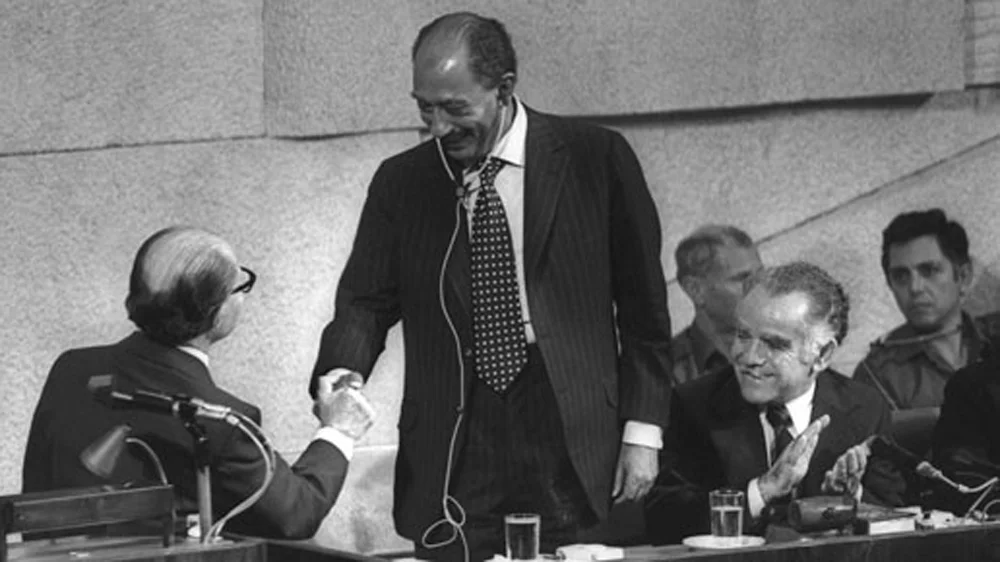
Anwar al-Sadat: 'We accept to live with you in permanent peace', Address to Israeli Knesset - 1977

June 28, 2017

20 November 1977, Givat Ram, Jerusalem, Israel

In the name of God, the Gracious and Merciful.

Mr. Speaker, Ladies and Gentlemen:

Peace and the mercy of God Almighty be upon you and may peace be for us all, God willing. Peace for us all on the Arab land, and in Israel as well, as in every part of this big world, which is so complexed by its sanguinary conflicts, disturbed by its sharp contradictions, menaced now and then by destructive wars launched by man to annihilate his fellow man. Finally, amidst the ruins of what man has built and the remains of the victims of Mankind, there emerges neither victor nor vanquished. The only vanquished remains man, God's most sublime creation, man whom God has created - as Ghandi the apostle of peace puts it: to forge ahead to mould the way of life and worship God Almighty.

I come to you today on solid ground, to shape a new life, to establish peace. We all, on this land, the land of God; we all, Muslims, Christians and Jews, worship God and no one but God. God's teachings and commandments are love, sincerity, purity and peace.

I do not blame all those who received my decision - when I announced it to the entire world before the Egyptian People's Assembly - with surprise and amazement. Some, gripped by the violent surprise, believed that my decision was no more than verbal juggling to cater for world public opinion. Others, still, interpreted it as political tactics to camouflage my intention of launching a new war. I would go as far as to tell you that one of my aides at the Presidential Office contacted me at a late hour following my return home from the People's Assembly and sounded worried as he asked me: "Mr. President, what would be our reaction if Israel should actually extend an invitation to you?" I replied calmly, I will accept it immediately. I have declared that I will go to the end of the world; I will go to Israel, for I want to put before the People of Israel all the facts.

I can see the point of all those who were astounded by my decision or those who had any doubts as to the sincerity of the intentions behind the declaration of my decision. No one would have ever conceived that the President of the biggest Arab State, which bears the heaviest burden and the top responsibility pertaining to the cause of war and peace in the Middle East, could declare his readiness to go to the land of the adversary while we were still in a state of war. Rather, we all are still bearing the consequences of four fierce wars waged within thirty years. The families of the 1973 October War are still moaning under the cruel pains of widowhood and bereavement of sons, fathers and brothers.

As I have already declared, I have not consulted, as far as this decision is concerned, with any of my colleagues and brothers, the Arab Heads of State or the confrontation States. Those of them who contacted me, following the declaration of this decision, expressed their objection, because the feeling of utter suspicion and absolute lack of confidence between the Arab States and the Palestinian People on the one hand, and Israel on the other, still surges in us all. It is sufficient to say that many months in which peace could have been brought about had been wasted over differences and fruitless discussions on the procedure for the convocation of the Geneva Conference, all showing utter suspicion and absolute lack of confidence.

But, to be absolutely frank with you, I took this decision after long thinking, knowing that it constitutes a grave risk for, if God Almighty has made it my fate to assume the responsibility on behalf of the Egyptian People and to share in the fate-determining responsibility of the Arab Nation and the Palestinian People, the main duty dictated by this responsibility is to exhaust all and every means in a bid to save my Egyptian Arab People and the entire Arab Nation the horrors of new, shocking and destructive wars, the dimensions of which are foreseen by no other than God himself.

After long thinking, I was convinced that the obligation of responsibility before God, and before the people, make it incumbent on me that I should go to the farthest corner of the world, even to Jerusalem, to address Members of the Knesset, the representatives of the People of Israel, and acquaint them with all the facts surging in me. Then, I would leave you to decide for yourselves. Following this, may God Almighty determine our fate.

Ladies and Gentlemen, there are moments in the life of nations and peoples when it is incumbent on those known for their wisdom and clarity of vision to overlook the past, with all its complexities and weighing memories, in a bold drive towards new horizons. Those who, like us, are shouldering the same responsibility entrusted to us, are the first who should have the courage to take fate-determining decisions which are in consonance with the circumstances. We must all rise above all forms of fanaticism, self-deception and obsolete theories of superiority. The most important thing is never to forget that infallibility is the prerogative of God alone.

If I said that I wanted to save all the Arab People the horrors of shocking and destructive wars, I most sincerely declare before you that I have the same feelings and bear the same responsibility towards all and every man on earth, and certainly towards the Israeli People.

Any life lost in war is a human life, irrespective of its being that of an Israeli or an Arab. A wife who becomes a widow is a human being entitled to a happy family life, whether she be an Arab or an Israeli. Innocent children who are deprived of the care and compassion of their parents are ours, be they living on Arab or Israeli land. They command our top responsibility to afford them a comfortable life today and tomorrow.

For the sake of them all, for the safeguard of the lives of all our sons and brothers, for affording our communities the opportunity to work for the progress and happiness of man and his right to a dignified life, for our responsibilities before the generations to come, for a smile on the face of every child born on our land - for all that, I have taken my decision to come to you, despite all hazards, to deliver my address.

I have shouldered the prerequisites of the historical responsibility and, therefore, I declared - on 4 February 1971, to be precise - that I was willing to sign a peace agreement with Israel. This was the first declaration made by a responsible Arab official since, the outbreak of the Arab-Israeli conflict.

Motivated by all these factors dictated by the responsibilities of leadership, I called, on 16 October 1973, before the Egyptian People's Assembly, for an international conference to establish permanent peace based on justice. I was not in the position of he who was pleading for peace or asking for a ceasefire.

Motivated by all these factors dictated by duties of history and leadership, we signed the first disengagement agreement, followed by the second disengagement agreement in Sinai. Then we proceeded trying both open and closed doors in a bid to find a certain path leading to a durable and just peace. We opened our hearts to the peoples of the entire world to make them understand our motivations and objectives, and to leave them actually convinced of the fact that we are advocates of justice and peace-makers.

Motivated by all these factors, I decided to come to you with an open mind and an open heart, and with a conscious determination, so that we might establish permanent peace based on justice.

It is so fated that my trip to you, the trip of peace, should coincide with the Islamic feast, the holy Feast of Courban Bairam, the Feast of Sacrifice when Abraham - peace be upon him - great-grandfather of the Arabs and Jews, submitted to God; I say when God Almighty ordered him, and to Him Abraham went, with dedicated sentiments, not out of weakness, but through a giant spiritual force and by a free will, to sacrifice his very own son, prompted by a firm and unshakable belief in ideals that lend life a profound significance.

This coincidence may carry a new meaning to us all, which may become a genuine aspiration heralding security and peace.

Ladies and Gentlemen, let us be frank with each other, using straight-forward words and a clear conception, with no ambiguity. Let us be frank with each other today while the entire world, both East and West, follows these unparalleled moments which could prove to be a radical turning point in the history of this part of the world, if not in the history of the world as a whole. Let us be frank with each other as we answer this important question: how can we achieve permanent peace based on justice?

I have come to you carrying my clear and frank answer to this big question, so that the people in Israel as well as the whole world might hear it, and so that all those whose devoted prayers ring in my ears, pleading to God Almighty that this historic meeting may eventually lead to the results aspired to by millions, might also hear it.

Before I proclaim my answer, I wish to assure you that, in my clear and frank answer, I am basing myself on a number of facts which no one can deny.

The first fact: no one can build his happiness at the expense of the misery of others.

The second fact: never have I spoken or will ever speak in two languages. Never have I adopted or will adopt two policies. I never deal with anyone except in one language, one policy, and with one face.

The third fact: direct confrontation and a straight line are the nearest and most successful methods to reach a clear objective.

The fourth fact: the call for permanent and just peace, based on respect for the United Nations resolutions, has now become the call of the whole world. It has become a clear expression of the will of the international community, whether in official capitals, where policies are made and decisions taken, or at the level of world public opinion which influences policy-making and decision-taking.

The fifth fact: and this is probably the clearest and most prominent, is that the Arab Nation, in its drive for permanent peace based on justice, does not proceed from a position of weakness or hesitation, but it has the potential of power and stability which tells of a sincere will for peace. The Arab-declared intention stems from an awareness prompted by a heritage of civilization that, to avoid an inevitable disaster that will befall us, you and the entire world, there is no alternative to the establishment of permanent peace based on justice - peace that is not shaken by storms, swayed by suspicion, or jeopardized by ill intentions.

In the light of these facts which I meant to place before you the way I see them, I would also wish to warn you in all sincerity; I warn you against some thoughts that could cross your minds; frankness makes it incumbent upon me to tell you the following:

First: I have not come here for a separate agreement between Egypt and Israel. This is not part of the policy of Egypt. The problem is not that of Egypt and Israel. Any separate peace between Egypt and Israel, or between any Arab confrontation State and Israel, will not bring permanent peace based on justice in the entire region. Rather, even if peace between all the confrontation States and Israel were achieved, in the absence of a just solution to the Palestinian problem, never will there be that durable and just peace upon which the entire world insists today.

Second: I have not come to you to seek a partial peace, namely to terminate the state of belligerency at this stage, and put off the entire problem to a subsequent stage. This is not the radical solution that would steer us to permanent peace.

Equally, I have not come to you for a third disengagement agreement in Sinai, or in the Golan and the West Bank. For this would mean that we are merely delaying the ignition of the fuse; it would mean that we are lacking the courage to confront peace, that we are too weak to shoulder the burdens and responsibilities of a durable peace based on justice.

I have come to you so that together we might build a durable peace based on justice, to avoid the shedding of one single drop of blood from an Arab or an Israeli. It is for this reason that I have proclaimed my readiness to go to the farthest corner of the world.

Here, I would go back to the answer to the big question: how can we achieve a durable peace based on justice?

In my opinion, and I declare it to the whole world from this forum, the answer is neither difficult nor impossible, despite long years of feud, blood vengeance, spite and hatred, and breeding generations on concepts of total rift and deep-rooted animosity. The answer is not difficult, nor is it impossible, if we sincerely and faithfully follow a straight line.

You want to live with us in this part of the world. In all sincerity, I tell you, we welcome you among us, with full security and safety. This, in itself, is a tremendous turning point; one of the landmarks of a decisive historical change.

We used to reject you. We had our reasons and our claims, yes. We used to brand you as "so-called" Israel, yes. We were together in international conferences and organizations and our representatives did not, and still do not, exchange greetings, yes. This has happened and is still happening.

It is also true that we used to set, as a precondition for any negotiations with you, a mediator who would meet separately with each party. Through this procedure, the talks of the first and second disengagement agreements took place.

Our delegates met in the first Geneva Conference without exchanging a direct word. Yes, this has happened.

Yet, today I tell you, and declare it to the whole world, that we accept to live with you in permanent peace based on justice. We do not want to encircle you or be encircled ourselves by destructive missiles ready for launching, nor by the shells of grudges and hatred. I have announced on more than one occasion that Israel has become a fait accompli, recognized by the world, and that the two super powers have undertaken the responsibility of its security and the defence of its existence.

As we really and truly seek peace, we really and truly welcome you to live among us in peace and security.

There was a huge wall between us which you tried to build up over a quarter of a century, but it was destroyed in 1973. It was a wall of a continuously inflammable and escalating psychological warfare. It was a wall of fear of the force that could sweep the entire Arab Nation. It was a wall of propaganda, that we were a Nation reduced to a motionless corpse. Rather, some of you had gone as far as to say that, even after 50 years, the Arabs would not regain any strength. It was a wall that threatened always with the long arm that could reach and strike anywhere. It was a wall that warned us against extermination and annihilation if we tried to use our legitimate right to liberate the occupied territories. Together we have to admit that that wall fell and collapsed in 1973.

Yet, there remained another wall. This wall constitutes a psychological barrier between us. A barrier of suspicion. A barrier of rejection. A barrier of fear of deception. A barrier of hallucinations around any action, deed or decision. A barrier of cautious and erroneous interpretations of all and every event or statement. It is this psychological barrier which I described in official statements as representing 70 percent of the whole problem.

Today, through my visit to you, I ask you: why don't we stretch our hands with faith and sincerity so that, together, we might destroy this barrier? Why shouldn't ours and your will meet with faith and sincerity, so that together we might remove all suspicion of fear, betrayal and ill intentions? Why don't we stand together with the bravery of men and the boldness of heroes who dedicate themselves to a sublime objective? Why don't we stand together with the same courage and boldness to erect a huge edifice of peace that builds and does not destroy? An edifice that is a beacon for generations to come - the human message for construction, development and the dignity of man? Why should we bequeath to the coming generations the plight of bloodshed, death, orphans, widowhood, family disintegration, and the wailing of victims?

Why don't we believe in the wisdom of God conveyed to us by the Proverbs of Solomon:

"Deceit is in the heart of them that imagine evil; but to the counsellors of peace is joy. Better is a dry morsel, and quietness therewith, than a house full of sacrifices with strife."

Why don't we repeat together from the Psalms of David:

"Hear the voice of my supplications, when I cry unto thee, when I lift up my hands toward they holy oracle. Draw me not away with the wicked, and with the workers of iniquity, which speak peace to their neighbours, but mischief is in their hearts. Give them according to their deeds, and according to the wickedness of their endeavours."

To tell you the truth, peace cannot be worth its name unless it is based on justice, and not on the occupation of the land of others. It would not be appropriate for you to demand for yourselves what you deny others. With all frankness, and with the spirit that has prompted me to come to you today, I tell you: you have to give up, once and for all, the dreams of conquest, and give up the belief that force is the best method for dealing with the Arabs. You should clearly understand and assimilate the lesson of confrontation between you and us.

Expansion does not pay. To speak frankly, our land does not yield itself to bargaining. It is not even open to argument. To us, the national soil is equal to the holy valley where God Almighty spoke to Moses - peace be upon him. None of us can, or accept to, cede one inch of it, or accept the principle of debating or bargaining over it.

I sincerely tell you that before us today lies the appropriate chance for peace, if we are really serious in our endeavours for peace. It is a chance that time cannot afford once again. It is a chance that, if lost or wasted, the plotter against it will bear the curse of humanity and the curse of history.

What is peace for Israel? It means that Israel lives in the region with her Arab neighbours, in security and safety. To such logic, I say yes. It means that Israel lives within her borders, secure against any aggression. To such logic, I say yes. It means that Israel obtains all kinds of guarantees that ensure those two factors. To this demand, I say yes. More than that: we declare that we accept all the international guarantees you envisage and accept. We declare that we accept all the guarantees you want from the two super powers or from either of them, or from the Big Five, or some of them.

Once again, I declare clearly and unequivocally that we agree to any guarantees you accept because, in return, we shall obtain the same guarantees.

In short, then, when we ask: what is peace for Israel, the answer would be: it is that Israel live within her borders with her Arab neighbours, in safety and security within the framework of all the guarantees she accepts and which are offered to the other party. But how can this be achieved? How can we reach this conclusion which would lead us to permanent peace based on justice?

There are facts that should be faced with all courage and clarity. There are Arab territories which Israel has occupied by armed force. We insist on complete withdrawal from these territories, including Arab Jerusalem.

I have come to Jerusalem, as the City of Peace, which will always remain as a living embodiment of coexistence among believers of the three religions. It is inadmissible that anyone should conceive the special status of the City of Jerusalem within the framework of annexation or expansionism, but it should be a free and open city for all believers.

Above all, the city should not be severed from those who have made it their abode for centuries. Instead of awakening the prejudices of the Crusaders, we should revive the spirit of Ornar ibn el-Khattab and Saladdin, namely the spirit of tolerance and respect for rights. The holy shrines of Islam and Christianity are not only places of worship, but a living testimony of our uninterrupted presence here politically, spiritually and intellectually. Let us make no mistake about the importance and reverence we Christians and Muslims attach to Jerusalem.

Let me tell you, without the slightest hesitation, that I did not come to you under this dome to make a request that your troops evacuate the occupied territories. Complete withdrawal from the Arab territories occupied in 1967 is a logical and undisputed fact. Nobody should plead for that. Any talk about permanent peace based on justice, and any move to ensure our coexistence in peace and security in this part of the world, would become meaningless, while you occupy Arab territories by force of arms. For there is no peace that could be in consonance with, or be built on, the occupation of the land of others. Otherwise, it would not be a serious peace.

Yes, this is a foregone conclusion which is not open to discussion or debate - if intentions are sincere and if endeavours to establish a just and durable peace for ours and the generations to come are genuine.

As for the Palestinians cause, nobody could deny that it is the crux of the entire problem. Nobody in the world could accept, today, slogans propagated here in Israel, ignoring the existence of the Palestinian People, and questioning their whereabouts. The cause of the Palestinian People and their legitimate rights are no longer ignored or denied today by anybody. Rather, nobody who has the ability of judgement can deny or ignore it.

It is an acknowledged fact received by the world community, both in the East and in the West, with support and recognition in international documents and official statements. It is of no use to anybody to turn deaf ears to its resounding voice which is being heard day and night, or to overlook its historical reality. Even the United States, your first ally which is absolutely committed to safeguard Israel's security and existence, and which offered and still offers Israel every moral, material and military support - I say - even the United States has opted to face up to reality and facts, and admit that the Palestinian People are entitled to legitimate rights and that the Palestinian problem is the core and essence of the conflict and that, so long as it continues to be unresolved, the conflict will continue to aggravate, reaching new dimensions. In all sincerity, I tell you that there can be no peace without the Palestinians. It is a grave error of unpredictable consequences to overlook or brush aside this cause.

I shall not indulge in past events since the Balfour Declaration sixty years ago. You are well acquainted with the relevant facts. If you have found the legal and moral justification to set up a national home on a land that did not all belong to you, it is incumbent upon you to show understanding of the insistence of the People of Palestine on establishing, once again (sic) a state on their land. When some extremists ask the Palestinians to give up this sublime objective, this, in fact, means asking them to renounce their identity and every hope for the future.

I hail the Israeli voices that called for the recognition of the Palestinian People's rights to achieve and safeguard peace. Here I tell you, ladies and gentlemen, that it is no use to refrain from recognizing the Palestinian People and their rights to statehood and rights of return.

We, the Arabs, have faced this experience before, with you and with the reality of Israeli existence. The struggle took us from war to war, from victims to more victims, until you and we have today reached the edge of a horrifying abyss and a terrifying disaster, unless, together, we seize the opportunity, today, of a durable peace based on justice.

You have to face reality bravely as I have done. There can never be any solution to a problem by evading it or turning a deaf ear to it. Peace cannot last if attempts are made to impose fantasy concepts on which the world has turned its back and announced its unanimous call for the respect of rights and facts. There is no need to enter a vicious circle as to Palestinian rights. It is useless to create obstacles. Otherwise the march of peace will be impeded or peace will be blown up.

As I have told you, there is no happiness to the detriment of others. Direct confrontation and straight-forwardness are the short-cut and the most successful way to reach a clear objective. Direct confrontation concerning the Palestinian problem, and tackling it in one single language with a view to achieving a durable and just peace, lie in the establishment of their state. With all the guarantees you demand, there should be no fear of a newly-born state that needs the assistance of all countries of the world. When the bells of peace ring, there will be no hands to beat the drums of war. Even if they existed, they would be soundless.

Conceive with me a peace agreement in Geneva that we would herald to a world thirsty for peace, a peace agreement based on the following points:

First: ending the Israeli occupation of the Arab territories occupied in 1967.

Second: achievement of the fundamental rights of the Palestinian People and their right to self-determination, including their right to establish their own state.

Third: the right of all states in the area to live in peace within their boundaries, which will be secure and guaranteed through procedures to be agreed upon, which provide appropriate security to international boundaries, in addition to appropriate international guarantees.

Fourth: commitment of all states in the region to administer the relations among them in accordance with the objectives and principles of the United Nations Charter, particularly the principles concerning the non-resort to force and the solution of differences among them by peaceful means.

Fifth: ending the state of belligerency in the region.

Ladies and Gentlemen, peace is not the mere endorsement of written lines; rather, it is a rewriting of history. Peace is not a game of calling for peace to defend certain whims or hide certain ambitions. Peace is a giant struggle against all and every ambition and whim. Perhaps the examples taken from ancient and modern history teach us all that missiles, warships and nuclear weapons cannot establish security. Rather, they destroy what peace and security build. For the sake of our peoples, and for the sake of the civilizations made by man, we have to defend man everywhere against the rule of the force of arms, so that we may endow the rule of humanity with all the power of the values and principles that promote the sublime position of Mankind.

Allow me to address my call from this rostrum to the People of Israel. I address myself with true and sincere words to every man, woman and child in Israel.

From the Egyptian People who bless this sacred mission of peace, I convey to you the message of peace, the message of the Egyptian People who do not know fanaticism, and whose sons, Muslims, Christians, and Jews, live together in a spirit of cordiality, love and tolerance. This is Egypt whose people have entrusted me with that sacred message, the message of security, safety and peace. To every man, woman and child in Israel, I say: encourage your leadership to struggle for peace. Let all endeavours be channelled towards building a huge edifice for peace, instead of strongholds and hideouts defended by destructive rockets. Introduce to the entire world the image of the new man in this area, so that he might set an example to the man of our age, the man of peace everywhere.

Be the heralds to your sons. Tell them that past wars were the last of wars and the end of sorrows. Tell them that we are in for a new beginning to a new life - the life of love, prosperity, freedom and peace.

You, bewailing mother; you, widowed wife; you, the son who lost a brother or a father; you, all victims of wars - fill the earth and space with recitals of peace. Fill bosoms and hearts with the aspirations of peace. Turn the song into a reality that blossoms and lives. Make hope a code of conduct and endeavour. The will of peoples is part of the will of God.

Ladies and Gentlemen, before I came to this place, with every beat of my heart and with every sentiment, I prayed to God Almighty, while performing the Curban Bairarn prayers, and while visiting the Holy Sepulchre, to give me strength and to confirm my belief that this visit may achieve the objectives I look forward to, for a happy present and a happier future.

I have chosen to set aside all precedents and traditions known by warring countries, in spite of the fact that occupation of the Arab territories is still there. Rather, the declaration of my readiness to proceed to Israel came as a great surprise that stirred many feelings and astounded many minds. Some opinions even doubted its intent. Despite that, the decision was inspired by all the clarity and purity of belief, and with all the true expression of my People's will and intentions.

And I have chosen this difficult road which is considered, in the opinion of many, the most difficult road. I have chosen to come to you with an open heart and an open mind. I have chosen to give this great impetus to all international efforts exerted for peace. I have chosen to present to you, and in your own home, the realities devoid of any schemes or whims, not to manoeuver or to win a round, but for us to win together, the most dangerous of rounds and battles in modern history - the battle of permanent peace based on justice.

It is not my battle alone, nor is it the battle of the leadership in Israel alone. It is the battle of all and every citizen in all our territories whose right it is to live in peace. It is the commitment of conscience and responsibility in the hearts of millions.

When I put forward this initiative, many asked what is it that I conceived as possible to achieve during this visit, and what my expectations were. And, as I answered the questioners, I announce before you that I have not thought of carrying out this initiative from the concept of what could be achieved during this visit, but I have come here to deliver a message. I have delivered the message, and may God be my witness.

I repeat with Zechariah, "Love right and justice."

I quote the following verses from the holy Koran:

"We believe in God and in what has been revealed to us and what was revealed to Abraham, Ismail, Isaac, Jacob, and the tribes and in the books given to Moses, Jesus, and the prophets from their lord. We make no distinction between one and another among them and to God we submit."

Source: http://www.jewishvirtuallibrary.org/addres...

Enjoyed this speech? Speakola is a labour of love and I’d be very grateful if you would share, tweet or like it. Thank you.

Facebook Twitter Facebook
In 1960-79 B Tags ANWAR AL-SADAT, EGYPT, ISRAEL, ARAB-ISRAEL, PEACE, KNESSET, TRANSCRIPT
Comment

Sajid Javid: 'I did what any cool, calm, future Cabinet minister would do. I hit him', Union of Jewish Students Conference - 2014

October 28, 2015

14 December 2014, Amélie House, Golders Green, London, UK

Shalom Aleichem.

Thank you for coming, and thank you for inviting me along today.

It’s always great to see young people getting engaged with the political process.

I vividly remember my own experience of student politics.

Back then I was a little younger.

And a lot hairier…

Who knows, maybe in a few years one of you will be standing here as a member of the Cabinet. After all, I never thought it would happen to me.

I remember when I became an MP four years ago; I was driving home from the count.

And I turned to my wife and said “Laura, did you ever imagine, in your wildest dreams, that one day I would actually be a Member of Parliament?”

And she looked me in the eye and said: “Darling, in my wildest dreams, you don’t feature at all”.

It’s not the only time I’ve been put firmly in my place.

My first ministerial job was Economic Secretary to the Treasury.

And my very first task in that job was to welcome an important Japanese delegation that was visiting Westminster.

I was introduced to them alongside the Permanent Secretary, the department’s most senior civil servant.

But after the translator explained who we were, our guests looked a little confused.

Afterwards I found out that he had translated my job title, “Economic Secretary”, as “Cheap Typist”.

It could have been worse.

The Permanent Secretary was introduced as the “Typist With No Hope Of Promotion”.

Now of course I’m Culture Secretary.

It’s a job that’s nothing if not varied.

On Monday I was watching the Godfather Live at the Royal Albert Hall.

Yesterday I was at the Hawthorns for West Brom against Villa.

This afternoon I’m here with the Union of Jewish Students.

And right after this speech I’ll be off to the X-Factor final.

And that was a pretty quiet week!

The range of events I find myself attending shows the incredible size and scope of this country’s cultural life.

From local theatre groups operating out of church halls to international hits like Doctor Who and Downton, our creative sector really is the envy of the world.

Not so long ago many parents would despair at the thought of their children working on stage or screen.

“You need to get a proper job – be a doctor or a lawyer…”

But today, the creative sector is big business, a serious career choice.

It’s worth more than £70 billion a year to the UK.

That’s something like £8 million an hour.

And the creative industries are growing faster than almost every other part of the economy.

That’s no mean feat when you consider that, overall, we’re already growing faster than any other G8 nation.

I want to support this phenomenally successful sector.

That’s why the Government is creating all kinds of opportunities to develop and nurture our young talent.

Earlier this year I had the pleasure of visiting the National Film and Television School.

It’s funded by the taxpayer and has a seriously impressive track record.

But we’re also investing in the grass roots.

For example, we’re spending up to £76 million a year on music hubs in schools.

And in the Autumn Statement the Chancellor announced that post-graduate students aged under 30 will be able to apply for government loans to fund a masters degree.

It’s a move that will help thousands of creative young people access the advanced training they need to build a career in what is an incredibly competitive global industry.

Making sure this kind of support exists is a big part of being Secretary of State for Culture, Media and Sport.

But there’s more to my job than pushing the economic case for culture.

Some people think I’m a one-trick pony, that the only thing I understand and appreciate is finance and economics.

And it’s true that I used to work for a couple of international investment banks.

When I became an MP in 2010 I had an odd sensation.

I was the only member of the new intake who was moving into a more popular profession! Then when I took over at DCMS a lot of people thought I wasn’t the right man for the job.

“What does this banker know about culture?” they asked.

At least I think they said “Banker”…

And you know what?

I do appreciate the financial side of things.

But I’m also very much aware of what art and culture is really for.

What it really does.

How it talks to us, and about us, and feeds into our national story.

Art brings us together, it unites us.

It transcends boundaries and creates understanding.

It breaks down barriers and builds up bridges.

And it gives us a unique insight into different cultures and lifestyles, whether they’re right here on our doorstep, or on the other side of the world.

Modern Britain is home to a staggering range of art and culture.

And that’s a reflection of the multi-faceted society in which we live.

I’m not just talking about diversity in the traditional sense – black and white, gay and straight, Muslim and Jew.

That diversity is undoubtedly important, and I’ll come back to it later.

But I’m also talking about the vast, almost unlimited array of ideas and points of view that have always been so intrinsic to British culture.

There’s the old saying that goes, “two Jews, three opinions”.

I think you could say the same of Britons in general.

From the letters page of your local paper to the bar of your local pub, from the trending topics of Twitter to the floor of the House of Commons, we have never been shy about expressing an incredible range of thoughts and opinions.

To borrow your president’s favourite phrase, we are unified, not uniform.

We are British, but we express that Britishness in many different ways.

And the diversity of our daily life is reflected in the diversity of our art.

That’s what art is for, after all. It tells us who we are.

Shows us our strengths and weaknesses.

Celebrates our better natures and shines a light on the darker corners of our lives.

Ultimately it’s about understanding and expressing what it means to be human.

But that cannot happen if art is censored.

Art can stir incredible passions and spark fierce debate.

It has been fuelling our emotions for centuries, millennia even.

And that’s a good thing, a positive thing.

We can all question whether Tracey Emin’s bed is truly a work of artistic genius.

But none of us should be allowed to ban it from a gallery, or tell others that they must not, cannot, see it and decide for themselves.

It sounds obvious, indisputable.

Sadly, not everyone agrees.

This summer, for the first time in the near 70-year history of the Edinburgh Festival, a performance was cancelled because of political pressure and threats of violence.

Dozens of protesters picketed the venue where a play called The City was being staged. Witnesses spoke of demonstrators screaming abuse at children of 12 and 14.

The police said they could not guarantee the safety of the performers or of the audience.

The play didn’t contain offensive material.

It wasn’t inciting hatred, or pushing a political agenda.

It was simply an innovative musical telling an old-fashioned detective story.

The protesters were demanding that it be censored for one reason and one reason only.

The theatre company behind The City had received some funding from the Israeli government.

A month later the Tricycle Theatre, just a few miles from here, announced that the internationally respected UK Jewish Film Festival was no longer welcome.

Why?

Because the organisers had accepted a small grant – less than £1,500 – from the Israeli embassy.

Neither grant came with political conditions attached.

Just as when the Arts Council awards funding to UK artists, there were no attempts to dictate content or censor views.

Yet the connection to Israel was enough.

The protesters came out and the shutters came down.

The moment I heard about the Tricycle ban I knew I couldn’t just let it go.

It’s completely unacceptable for a theatre to act in this way, and I didn’t shy away from telling its directors that.

And I’m pleased to say that, after lengthy discussions, the Tricycle and the UK Jewish Film Festival have resolved their differences.

This story, at least, has a happy ending.

But the problem continues elsewhere.

As I’m sure you’re all aware, there’s an increasingly vocal campaign for a full-scale cultural boycott of Israel.

It’s a campaign I have no time for, and there’s a very simple reason why.

Last month I spoke at a conference for newspaper editors.

I was talking about the various attacks on media freedom that we’ve seen recently.

The so-called right to be forgotten, for example.

And the use of anti-terror legislation against journalists.

And I told them that I believe the free press is an absolute concept.

Something you support 100 per cent or not at all.

That you just can’t say “I believe in media freedom, but…”

The same is true of art and culture.

It simply doesn’t make sense to say “I believe in freedom of artistic expression, but…”

Yet that’s exactly what we’re hearing, including from some voices at the National Union of Students.

“I believe in artistic freedom, but only for people whose politics I agree with.”

“I believe in artistic freedom, but only if it’s not backed by Israel.”

“I believe in artistic freedom, but not for Jews.”

Let me be very clear – I don’t believe in artistic and cultural boycotts.

Nor, I’m proud to say, does my party.

As we have said many times, a cultural boycott would achieve nothing. It would be needlessly divisive, and would run counter to the long history of cultural freedom that this country holds dear.

Britain is currently leading the way in imposing economic sanctions on Russia over its actions in Ukraine.

But that’s not a reason to stop the British Museum loaning part of the Parthenon Sculptures to a museum in St Petersburg.

Because culture is bigger than politics.

It should rise above what divides us, not be used to create that division.

It should be used to build understanding, not incite hatred.

We don’t have to like an artist.

We don’t have to support them.

We even have every right to peacefully protest against them if we want to.

But silencing artists, denying their freedom of expression?

That is simply wrong.

It was wrong when Gurpreet Kaur Bhatti’s Behzti came under siege from members of the Sikh community.

It was wrong when Christian groups tried to drive Jerry Springer The Musical off the stage.

And it’s wrong when Jewish artists are targeted simply because of their connection to Israel. A century ago William Howard Taft called anti-Semitism a “Noxious weed”.

A century later, I don’t want to see that weed taking root in any aspect of British life.

That’s why I will always be proud to stand up and resist calls for boycotts of Israel.

I know that such calls are nothing more than a smokescreen for the oldest hatred.

That’s why I am proud to see the government taking real action against anti-Semites who want to gain a foothold in Britain’s universities.

We’re denying a platform to extremists who would abuse our freedoms in order to sow the seeds of division.

And that’s why I’m proud of the work we’re doing with the Holocaust Educational Trust.

We’re paying for two teenagers from every British school to visit Auschwitz, letting them see for themselves the horrors of the Shoah.

I had the privilege of joining a group of children from my constituency when they visited two years ago.

I’ve read a great deal about the atrocities of the Nazi regime.

And I was extremely moved by the permanent Holocaust exhibition at the Imperial War Museum.

But nothing can prepare you for the experience of actually being there.

The Prime Minister found that for himself when he visited this week.

I’m sure everyone who goes to Auschwitz is touched by what they see in different ways.

For me, I will never forget the sight of a case filled with thousands upon thousands of shoes taken from those who were murdered.

Mixed in among them there were countless tiny pairs that had clearly been stolen from the feet of children.

As a parent – and as a human being – it’s a sight that will live with me forever.

As the Holocaust Educational Trust says, when we understand where prejudice leads, we can stop it in its tracks.

And doing so is something that’s very close to my heart.

Because I know what it’s like to face prejudice and hatred.

Growing up in the 70s and 80s and looking like I do, it was almost inevitable.

There was one time at school when a classmate called me “Paki” to my face.

I did what any cool, calm, future Cabinet minister would do.

I hit him.

And then he hit me, and I hit him back and things sort of went downhill from there…

About 10 years later I bumped into him at the shops, and he told me he was sorry for what he’d done, which I really appreciated.

And I remember when I left university and first went for a job interview at a major City bank.

Let’s just say the panel made it pretty clear my face wasn’t going to fit in there.

But for everything I experienced, I’ve never tried to hide who I am or where I come from.

I know that my background, my culture, my heritage made me what I am today.

That’s why, at the start of my of party Conference speech earlier this year, I told the audience that I’m proud to be the child of immigrants.

It’s who I am.

It’s what I am.

The same was true of Yehudi Menuhin.

He was born an American and died a British citizen.

But for his whole life he was, of course, Jewish through and through.

I know that his name, Yehudi, is the Hebrew word for “Jew”.

But what I didn’t know until recently was the story of how he came to be called that.

You see, not long before Menuhin was born his parents were out house-hunting together.

I think it might have been in New York.

They thought they’d found the perfect place.

But as they were leaving, the landlady, unaware of their background, cheerily told them that: “You’ll be glad to know I don’t take Jews!”

His parents were rightly appalled, though sadly not surprised.

But they were proud people.

They didn’t want to hide in the shadows.

To deny who they were.

To simply ignore the bigotry of others.

So there and then, they decided that their unborn child would be given a name that declared his race and religion to the world.

That’s why, a few months later, they called their first and only son “Yehudi” – “The Jew”.

And as he grew up and toured the globe, probably the greatest violinist of all time, his name proclaimed not just who he was, but what he was.

It shouted it from posters, album covers and programmes around the world.

Celebrating his heritage, not hiding it.

Just as his parents intended.

Fifteen years after Menuhin’s death, his life gives an example we should all be following.

British culture is built on many cultures, many ideas.

And while we should always be proud of our nationality we should never be ashamed of our backgrounds.

Quite the opposite.

We should draw on our experience of life so that we can excel in whatever walk of life we end up in.

Whether it’s as the doctors and lawyers our parents wanted to see, or as leading lights in Britain’s booming creative industries.

That’s true of me as an Asian man just as it should be true of you as Jewish students.

Our history and our traditions make us who we are.

They shape us, they influence us, and in the melting pot of modern Britain they have the potential to create incredible art, literature and music.

The kind of work that reflects who we are and tells the world something about ourselves. The kind of work the rest of the world can only dream of matching.

So by all means disagree about art and culture.

I want you to debate it, discuss it, defend it and decry it.

But whatever you think of an artist’s work, you must never allow them to be silenced by the politics of prejudice.

Source: https://www.gov.uk/government/speeches/saj...

Enjoyed this speech? Speakola is a labour of love and I’d be very grateful if you would share, tweet or like it. Thank you.

Facebook Twitter Facebook
In 2010s MORE 3 Tags SAJID JAVID, ARTS, CULTURE, RACISM, JEWISH STUDENTS, ISRAEL, CULTURE MINISTER, TRANSCRIPT
Comment

Golda Meir: 'We Have No Alternative' - United Nations 1948

June 30, 2015

2 January, 1948, United Nations, NYC, USA

I have had the privilege of representing Palestine Jewry in this country and in other countries when the problems that we faced were those of building more kibbutzim, of bringing in more Jews in spite of political obstacles and Arab riots.

We always had faith that in the end we would win, that everything we were doing in the country led to the independence of the Jewish people and to a Jewish state.

Long before we had dared pronounce that word, we knew what was in store for us.

Today we have reached a point when the nations of the world have given us their decision - the establishment of a Jewish state in a part of Palestine. Now in Palestine we are fighting to make this resolution of the United Nations a reality, not because we wanted to fight. If we had the choice, we would have chosen peace to build in peace.

We have no alternative

Friends, we have no alternative in Palestine. The Mufti and his men have declared war upon us. We have to fight for our lives, for our safety, and for what we have accomplished in Palestine, and perhaps above all, we must fight for Jewish honour and Jewish independence. Without exaggeration, I can tell you that the Jewish community in Palestine is doing this well. Many of you have visited Palestine; all of you have read about our young people and have a notion as to what our youth is like. I have known this generation for the last twenty-seven years. I thought I knew them. I realize now that even I did not.

These young boys and girls, many in their teens, are bearing the burden of what is happening in the country with a spirit that no words can describe. You see these youngsters in open cars—not armoured cars—in convoys going from Tel Aviv to Jerusalem, knowing that every time they start out from Tel Aviv or from Jerusalem there are probably Arabs behind the orange groves or the hills, waiting to ambush the convoy.

These boys and girls have accepted the task of bringing Jews over these roads in safety as naturally as though they were going out to their daily work or to their classes in the university.

We must ask the Jews the world over to see us as the front line .

All we ask of Jews the world over, and mainly of the Jews in the United States, is to give us the possibility of going on with the struggle.

When trouble started, we asked young people from the age of seventeen to twenty-five who were not members of Haganah, to volunteer. Up to the day that I left home on Thursday morning, when the registration of this age group was still going on, over 20,000 young men and women had signed up. As of now we have about 9,000 people mobilized in the various parts of the country. We must triple this number within the next few days.

We have to maintain these men. No government sends its soldiers to the front and expects them to take along from their homes the most elementary requirements—blankets, bedding, clothing.

A people that is fighting for its very life knows how to supply the men they send to the front lines. We too must do the same.

Thirty-five of our boys, unable to go by car on the road to besieged Kfar Etzion to bring help, set out by foot through the hills; they knew the road, the Arab villages on that road, and the danger they would have to face. Some of the finest youngsters we have in the country were in that group, and they were all killed, every one of them. We have a description from an Arab of how they fought to the end for over seven hours against hundreds of Arabs According to this Arab, the last boy killed, with no more ammunition left, died with a stone in his hand.

We will fight to the end

I want to say to you, friends, that the Jewish community in Palestine is going to fight to the very end. If we have arms to fight with, we will fight with those, and if not, we will fight with stones in our hands.

I want you to believe me when I say that I came on this special mission to the United States today not to save 700,000 Jews. During the last few years the Jewish people lost 6,000,000 Jews, and it would be audacity on our part to worry the Jewish people throughout the world because a few hundred thousand more Jews were in danger. That is not the issue.

The issue is that if these 700,000 Jews in Palestine can remain alive, then the Jewish people as such is alive and Jewish independence is assured. If these 700,000 people are killed off, then for many centuries, we are through with this dream of a Jewish people and a Jewish homeland.

My friends, we are at war. There is no Jew in Palestine who does not believe that finally we will be victorious. That is the spirit of the country. We have known Arab riots since 1921 and ’29 and ’36. We know what happened to the Jews of Europe during this last war. And every Jew in the country also knows that within a few months a Jewish state in Palestine will be established.

We knew that the price we would have to pay would be the best of our people. There are over 300 killed by now. There will be more. There is no doubt that there will be more. But there is also no doubt that the spirit of our young people is such that no matter how many Arabs invade the country, their spirit will not falter. However, this valiant spirit alone cannot face rifles and machine guns. Rifles and machine guns without spirit are not worth very much, but spirit without arms can in time be broken with the body.

Much must be prepared now so that we can hold out. There are unlimited opportunities, but are we going to get the necessary means? Considering myself not as a guest, but as one of you, I say that the question before each one is simply whether the Yishuv, and the youngsters that are in the front line, will have to fail because money that should have reached Palestine today will reach it in a month or two months from now?

Is it possible that time should decide the issue not because Palestinian Jews are cowards, not because they are incapable, but merely because they lack the material means to carry on?

I have come to the United States, and I hope you will understand me if I say that it is not an easy matter for any of us to leave home at present—to my sorrow I am not in the front line. I am not with my daughter in the Negev or with other sons and daughters in the trenches. But I have a job to do.

I have come here to try to impress Jews in the United States with the fact that within a very short period, a couple of weeks, we must have in cash between twenty-five and thirty million dollars. In the next two or three weeks we can establish ourselves. Of that we are convinced, and you must have faith; we are sure that we can carry on.

I said before that the Yishuv will give, is giving of its means. But please remember that even while shooting is going on, we must carry on so that our economy remains intact. Our factories must go on. Our settlements must not be broken up.

We know that this battle is being waged for those not yet in the country.

There are 30,000 Jews detained right next door to Palestine in Cyprus. I believe that within a very short period, within the next two or three months at most, these 30,000 will be with us, among them thousands of infants and young children. We must now think of preparing means of absorbing them. We know that within the very near future, hundreds of thousands more will be coming in. We must see that our economy is intact.

I want you to understand that there is no despair in the Yishuv. This is true not only of the young people. I have travelled the road from Tel Aviv to Jerusalem and other roads quite a bit. I have seen these dangerous buses filled not only with young Haganah men and girls, but with old people travelling the roads as a matter of course.

When you go to Tel Aviv now, you will find the city full of life; only the shooting that you hear on the outskirts of Tel Aviv and Jaffa reminds one that the situation in the country is not normal. But it would be a crime on my part not to describe the situation to you exactly as it is.

Merely with our ten fingers and merely with spirit and sacrifice, we cannot carry on this battle, and the only hinterland that we have is you. The Mufti has the Arab states—not all so enthusiastic about helping him but states with government budgets. The Egyptian government can vote a budget to aid our antagonists. The Syrian government can do the same

We have no Government but we have millions of Jews in the Diaspora

We have no government. But we have millions of Jews in the Diaspora, and exactly as we have faith in our youngsters in Palestine I have faith in Jews in the United States; I believe that they will realize the peril of our situation and will do what they have to do.

I know that we are not asking for something easy. I myself have sometimes been active in various campaigns and fund collections, and I know that collecting at once a sum such as I ask is not simple.

But I have seen our people at home. I have seen them come from the offices to the clinics when we called the community to give their blood for a blood bank to treat the wounded. I have seen them lined up for hours, waiting so that some of their blood can be added to this bank.

It is blood plus money that is being given in Palestine.

I know that many of you would be as anxious as our people to be on the very front line. I do not doubt that there are many young people among the Jewish community in the United States who would do exactly what our young people are doing in Palestine.

We are not a better breed; we are not the best Jews of the Jewish people. It so happened that we are there and you are here. I am certain that if you were in Palestine and we were in the United States, you would be doing what we are doing there, and you would ask us here to do what you will have to do.

I want to close with paraphrasing one of the greatest speeches that was made during the Second World War—the words of Churchill.

I am not exaggerating when I say that the Yishuv in Palestine will fight in the Negev and will fight in Galilee and will fight on the outskirts of Jerusalem until the very end. You cannot decide whether we should fight or not. We will. The Jewish community in Palestine will raise no white flag for the Mufti. That decision is taken. Nobody can change it. You can only decide one thing: whether we shall be victorious in this fight or whether the Mufti will be victorious. That decision American Jews can make. It has to be made quickly within hours, within days.

And I beg of you—don’t be too late. Don’t be bitterly sorry three months from now for what you failed to do today. The time is now.

I have spoken to you without a grain of exaggeration. I have not tried to paint the picture in false colours. It consists of spirit and certainty of our victory on the one hand, and dire necessity for carrying on the battle on the other.

I want to thank you again for having given me the opportunity at a conference that I am certain has a full agenda to say these few words to you. I leave the platform without any doubt in my mind or my heart that the decision that will be taken by American Jewry will be the same as that which was taken by the Jewish community in Palestine, so that within a few months from now we will all be able to participate not only in the joy of resolving to establish a Jewish state, but in the joy of laying the cornerstone of the Jewish state.

Source: http://tamilnation.co/ideology/golda.htm

Enjoyed this speech? Speakola is a labour of love and I’d be very grateful if you would share, tweet or like it. Thank you.

Facebook Twitter Facebook
In 1940-59 C Tags ISRAEL, UNITED NATIONS, NATIONALISM, WW2, PALESTINE, TRANSCRIPT
Comment

See my film!

Limited Australian Season

March 2025

Details and ticket bookings at

angeandtheboss.com

Support Speakola

Hi speech lovers,
With costs of hosting website and podcast, this labour of love has become a difficult financial proposition in recent times. If you can afford a donation, it will help Speakola survive and prosper.

Best wishes,
Tony Wilson.

Become a Patron!

Learn more about supporting Speakola.

Featured political

Featured
Jon Stewart: "They responded in five seconds", 9-11 first responders, Address to Congress - 2019
Jacinda Ardern: 'They were New Zealanders. They are us', Address to Parliament following Christchurch massacre - 2019
Dolores Ibárruri: "¡No Pasarán!, They shall not pass!', Defense of 2nd Spanish Republic - 1936
Jimmy Reid: 'A rat race is for rats. We're not rats', Rectorial address, Glasgow University - 1972

Featured eulogies

Featured
For Geoffrey Tozer: 'I have to say we all let him down', by Paul Keating - 2009
for James Baldwin: 'Jimmy. You crowned us', by Toni Morrison - 1988
for Michael Gordon: '13 days ago my Dad’s big, beautiful, generous heart suddenly stopped beating', by Scott and Sarah Gordon - 2018

Featured commencement

Featured
Tara Westover: 'Your avatar isn't real, it isn't terribly far from a lie', The Un-Instagrammable Self, Northeastern University - 2019
Tim Minchin: 'Being an artist requires massive reserves of self-belief', WAAPA - 2019
Atul Gawande: 'Curiosity and What Equality Really Means', UCLA Medical School - 2018
Abby Wambach: 'We are the wolves', Barnard College - 2018
Eric Idle: 'America is 300 million people all walking in the same direction, singing 'I Did It My Way'', Whitman College - 2013
Shirley Chisholm: ;America has gone to sleep', Greenfield High School - 1983

Featured sport

Featured
Joe Marler: 'Get back on the horse', Harlequins v Bath pre game interview - 2019
Ray Lewis : 'The greatest pain of my life is the reason I'm standing here today', 52 Cards -
Mel Jones: 'If she was Bradman on the field, she was definitely Keith Miller off the field', Betty Wilson's induction into Australian Cricket Hall of Fame - 2017
Jeff Thomson: 'It’s all those people that help you as kids', Hall of Fame - 2016

Fresh Tweets


Featured weddings

Featured
Dan Angelucci: 'The Best (Best Man) Speech of all time', for Don and Katherine - 2019
Hallerman Sisters: 'Oh sister now we have to let you gooooo!' for Caitlin & Johnny - 2015
Korey Soderman (via Kyle): 'All our lives I have used my voice to help Korey express his thoughts, so today, like always, I will be my brother’s voice' for Kyle and Jess - 2014

Featured Arts

Featured
Bruce Springsteen: 'They're keepers of some of the most beautiful sonic architecture in rock and roll', Induction U2 into Rock Hall of Fame - 2005
Olivia Colman: 'Done that bit. I think I have done that bit', BAFTA acceptance, Leading Actress - 2019
Axel Scheffler: 'The book wasn't called 'No Room on the Broom!', Illustrator of the Year, British Book Awards - 2018
Tina Fey: 'Only in comedy is an obedient white girl from the suburbs a diversity candidate', Kennedy Center Mark Twain Award -  2010
Tina Fey: 'Only in comedy is an obedient white girl from the suburbs a diversity candidate', Kennedy Center Mark Twain Award - 2010

Featured Debates

Featured
Sacha Baron Cohen: 'Just think what Goebbels might have done with Facebook', Anti Defamation League Leadership Award - 2019
Greta Thunberg: 'How dare you', UN Climate Action Summit - 2019
Charlie Munger: 'The Psychology of Human Misjudgment', Harvard University - 1995
Lawrence O'Donnell: 'The original sin of this country is that we invaders shot and murdered our way across the land killing every Native American that we could', The Last Word, 'Dakota' - 2016