
• Genre
  • About
  • Submissions
  • Donate
  • Search
Menu

Speakola

All Speeches Great and Small
  • Genre
  • About
  • Submissions
  • Donate
  • Search
Share a political speech

Margaret Thatcher: 'To try to suppress nationhood and concentrate power at the centre of a European conglomerate would be highly damaging',Bruges speech - 1988

December 2, 2020

20 Septemnber 1988, Bruges, Belgium

Prime Minister, Rector, Your Excellencies, Ladies and Gentlemen:

First, may I thank you for giving me the opportunity to return to Bruges and in very different circumstances from my last visit shortly after the Zeebrugge Ferry disaster, when Belgian courage and the devotion of your doctors and nurses saved so many British lives.

And second, may I say what a pleasure it is to speak at the College of Europe under the distinguished leadership of its Professor LukaszewskiRector.

The College plays a vital and increasingly important part in the life of the European Community.

And third, may I also thank you for inviting me to deliver my address in this magnificent hall.

What better place to speak of Europe's future than a building which so gloriously recalls the greatness that Europe had already achieved over 600 years ago.

Your city of Bruges has many other historical associations for us in Britain. Geoffrey Chaucer was a frequent visitor here.

And the first book to be printed in the English language was produced here in Bruges by William Caxton.

Britain and Europe

Mr. Chairman, you have invited me to speak on the subject of Britain and Europe. Perhaps I should congratulate you on your courage.

If you believe some of the things said and written about my views on Europe, it must seem rather like inviting Genghis Khan to speak on the virtues of peaceful coexistence!

I want to start by disposing of some myths about my country, Britain, and its relationship with Europe and to do that, I must say something about the identity of Europe itself.

Europe is not the creation of the Treaty of Rome.

Nor is the European idea the property of any group or institution.

We British are as much heirs to the legacy of European culture as any other nation. Our links to the rest of Europe, the continent of Europe, have been the dominant factor in our history.

For three hundred years, we were part of the Roman Empire and our maps still trace the straight lines of the roads the Romans built.

Our ancestors—Celts, Saxons, Danes—came from the Continent. [end p1]

Our nation was—in that favourite Community word— “restructured” under the Norman and Angevin rule in the eleventh and twelfth centuries.

This year, we celebrate the three hundredth anniversary of the glorious revolution in which the British crown passed to Prince William of Orange and Queen Mary.

Visit the great churches and cathedrals of Britain, read our literature and listen to our language: all bear witness to the cultural riches which we have drawn from Europe and other Europeans from us.

We in Britain are rightly proud of the way in which, since Magna Carta in the year 1215, we have pioneered and developed representative institutions to stand as bastions of freedom.

And proud too of the way in which for centuries Britain was a home for people from the rest of Europe who sought sanctuary from tyranny.

But we know that without the European legacy of political ideas we could not have achieved as much as we did.

From classical and mediaeval thought we have borrowed that concept of the rule of law which marks out a civilised society from barbarism.

And on that idea of Christendom, to which the Rector referred—Christendom for long synonymous with Europe—with its recognition of the unique and spiritual nature of the individual, on that idea, we still base our belief in personal liberty and other human rights.

Too often, the history of Europe is described as a series of interminable wars and quarrels.

Yet from our perspective today surely what strikes us most is our common experience. For instance, the story of how Europeans explored and colonised—and yes, without apology—civilised much of the world is an extraordinary tale of talent, skill and courage.

But we British have in a very special way contributed to Europe.

Over the centuries we have fought to prevent Europe from falling under the dominance of a single power.

We have fought and we have died for her freedom.

Only miles from here, in Belgium, lie the bodies of 120,000 British soldiers who died in the First World War.

Had it not been for that willingness to fight and to die, Europe would have been united long before now—but not in liberty, not in justice.

It was British support to resistance movements throughout the last War that helped to keep alive the flame of liberty in so many countries until the day of liberation.

Tomorrow, King Baudouin will attend a service in Brussels to commemorate the many brave Belgians who gave their lives in service with the Royal Air Force—a sacrifice which we shall never forget.

And it was from our island fortress that the liberation of Europe itself was mounted.

And still, today, we stand together.

Nearly 70,000 British servicemen are stationed on the mainland of Europe.

All these things alone are proof of our commitment to Europe's future. [end p2]

The European Community is one manifestation of that European identity, but it is not the only one.

We must never forget that east of the Iron Curtain, people who once enjoyed a full share of European culture, freedom and identity have been cut off from their roots.

We shall always look on Warsaw, Prague and Budapest as great European cities.

Nor should we forget that European values have helped to make the United States of America into the valiant defender of freedom which she has become.

Europe's Future

This is no arid chronicle of obscure facts from the dust-filled libraries of history.

It is the record of nearly two thousand years of British involvement in Europe, cooperation with Europe and contribution to Europe, contribution which today is as valid and as strong as ever [sic].

Yes, we have looked also to wider horizons—as have others—and thank goodness for that, because Europe never would have prospered and never will prosper as a narrow-minded, inward-looking club.

The European Community belongs to all its members.

It must reflect the traditions and aspirations of all its members.

And let me be quite clear.

Britain does not dream of some cosy, isolated existence on the fringes of the European Community. Our destiny is in Europe, as part of the Community.

That is not to say that our future lies only in Europe, but nor does that of France or Spain or, indeed, of any other member.

The Community is not an end in itself.

Nor is it an institutional device to be constantly modified according to the dictates of some abstract intellectual concept.

Nor must it be ossified by endless regulation.

The European Community is a practical means by which Europe can ensure the future prosperity and security of its people in a world in which there are many other powerful nations and groups of nations.

We Europeans cannot afford to waste our energies on internal disputes or arcane institutional debates.

They are no substitute for effective action.

Europe has to be ready both to contribute in full measure to its own security and to compete commercially and industrially in a world in which success goes to the countries which encourage individual initiative and enterprise, rather than those which attempt to diminish them.

This evening I want to set out some guiding principles for the future which I believe will ensure that Europe does succeed, not just in economic and defence terms but also in the quality of life and the influence of its peoples. [end p3]

Willing Cooperation Between Sovereign States

My first guiding principle is this: willing and active cooperation between independent sovereign states is the best way to build a successful European Community.

To try to suppress nationhood and concentrate power at the centre of a European conglomerate would be highly damaging and would jeopardise the objectives we seek to achieve.

Europe will be stronger precisely because it has France as France, Spain as Spain, Britain as Britain, each with its own customs, traditions and identity. It would be folly to try to fit them into some sort of identikit European personality.

Some of the founding fathers of the Community thought that the United States of America might be its model.

But the whole history of America is quite different from Europe.

People went there to get away from the intolerance and constraints of life in Europe.

They sought liberty and opportunity; and their strong sense of purpose has, over two centuries, helped to create a new unity and pride in being American, just as our pride lies in being British or Belgian or Dutch or German.

I am the first to say that on many great issues the countries of Europe should try to speak with a single voice.

I want to see us work more closely on the things we can do better together than alone.

Europe is stronger when we do so, whether it be in trade, in defence or in our relations with the rest of the world.

But working more closely together does not require power to be centralised in Brussels or decisions to be taken by an appointed bureaucracy.

Indeed, it is ironic that just when those countries such as the Soviet Union, which have tried to run everything from the centre, are learning that success depends on dispersing power and decisions away from the centre, there are some in the Community who seem to want to move in the opposite direction.

We have not successfully rolled back the frontiers of the state in Britain, only to see them re-imposed at a European level with a European super-state exercising a new dominance from Brussels.

Certainly we want to see Europe more united and with a greater sense of common purpose.

But it must be in a way which preserves the different traditions, parliamentary powers and sense of national pride in one's own country; for these have been the source of Europe's vitality through the centuries.

Encouraging change

My second guiding principle is this: Community policies must tackle present problems in a practical way, however difficult that may be.

If we cannot reform those Community policies which are patently wrong or ineffective and which are rightly causing public disquiet, then we shall not get the public support for the Community's future development.

And that is why the achievements of the European Council in Brussels last February are so important. [end p4]

It was not right that half the total Community budget was being spent on storing and disposing of surplus food.

Now those stocks are being sharply reduced.

It was absolutely right to decide that agriculture's share of the budget should be cut in order to free resources for other policies, such as helping the less well-off regions and helping training for jobs.

It was right too to introduce tighter budgetary discipline to enforce these decisions and to bring the Community spending under better control.

And those who complained that the Community was spending so much time on financial detail missed the point. You cannot build on unsound foundations, financial or otherwise, and it was the fundamental reforms agreed last winter which paved the way for the remarkable progress which we have made since on the Single Market.

But we cannot rest on what we have achieved to date.

For example, the task of reforming the Common Agricultural Policy is far from complete.

Certainly, Europe needs a stable and efficient farming industry.

But the CAP has become unwieldy, inefficient and grossly expensive. Production of unwanted surpluses safeguards neither the income nor the future of farmers themselves.

We must continue to pursue policies which relate supply more closely to market requirements, and which will reduce over-production and limit costs.

Of course, we must protect the villages and rural areas which are such an important part of our national life, but not by the instrument of agricultural prices.

Tackling these problems requires political courage.

The Community will only damage itself in the eyes of its own people and the outside world if that courage is lacking.

Europe Open to Enterprise

My third guiding principle is the need for Community policies which encourage enterprise.

If Europe is to flourish and create the jobs of the future, enterprise is the key.

The basic framework is there: the Treaty of Rome itself was intended as a Charter for Economic Liberty.

But that it is not how it has always been read, still less applied.

The lesson of the economic history of Europe in the 70's and 80's is that central planning and detailed control do not work and that personal endeavour and initiative do.

That a State-controlled economy is a recipe for low growth and that free enterprise within a framework of law brings better results.

The aim of a Europe open to enterprise is the moving force behind the creation of the Single European Market in 1992. By getting rid of barriers, by making it possible for companies to operate on a European scale, we can best compete with the United States, Japan and other new economic powers emerging in Asia and elsewhere. [end p5]

And that means action to free markets, action to widen choice, action to reduce government intervention.

Our aim should not be more and more detailed regulation from the centre: it should be to deregulate and to remove the constraints on trade.

Britain has been in the lead in opening its markets to others.

The City of London has long welcomed financial institutions from all over the world, which is why it is the biggest and most successful financial centre in Europe.

We have opened our market for telecommunications equipment, introduced competition into the market services and even into the network itself—steps which others in Europe are only now beginning to face.

In air transport, we have taken the lead in liberalisation and seen the benefits in cheaper fares and wider choice.

Our coastal shipping trade is open to the merchant navies of Europe.

We wish we could say the same of many other Community members.

Regarding monetary matters, let me say this. The key issue is not whether there should be a European Central Bank.

The immediate and practical requirements are:

• to implement the Community's commitment to free movement of capital—in Britain, we have it;

• and to the abolition through the Community of exchange controls—in Britain, we abolished them in 1979;

• to establish a genuinely free market in financial services in banking, insurance, investment;

• and to make greater use of the ecu.

This autumn, Britain is issuing ecu-denominated Treasury bills and hopes to see other Community governments increasingly do the same.

These are the real requirements because they are what the Community business and industry need if they are to compete effectively in the wider world.

And they are what the European consumer wants, for they will widen his choice and lower his costs.

It is to such basic practical steps that the Community's attention should be devoted.

When those have been achieved and sustained over a period of time, we shall be in a better position to judge the next move.

It is the same with frontiers between our countries.

Of course, we want to make it easier for goods to pass through frontiers.

Of course, we must make it easier for people to travel throughout the Community.

But it is a matter of plain common sense that we cannot totally abolish frontier controls if we are also to protect our citizens from crime and stop the movement of drugs, of terrorists and of illegal immigrants. [end p6]

That was underlined graphically only three weeks ago when one brave German customs officer, doing his duty on the frontier between Holland and Germany, struck a major blow against the terrorists of the IRA.

And before I leave the subject of a single market, may I say that we certainly do not need new regulations which raise the cost of employment and make Europe's labour market less flexible and less competitive with overseas suppliers.

If we are to have a European Company Statute, it should contain the minimum regulations.

And certainly we in Britain would fight attempts to introduce collectivism and corporatism at the European level—although what people wish to do in their own countries is a matter for them.

Europe Open to the World

My fourth guiding principle is that Europe should not be protectionist.

The expansion of the world economy requires us to continue the process of removing barriers to trade, and to do so in the multilateral negotiations in the GATT.

It would be a betrayal if, while breaking down constraints on trade within Europe, the Community were to erect greater external protection.

We must ensure that our approach to world trade is consistent with the liberalisation we preach at home.

We have a responsibility to give a lead on this, a responsibility which is particularly directed towards the less developed countries.

They need not only aid; more than anything, they need improved trading opportunities if they are to gain the dignity of growing economic strength and independence.

Europe and Defence

My last guiding principle concerns the most fundamental issue—the European countries' role in defence.

Europe must continue to maintain a sure defence through NATO.

There can be no question of relaxing our efforts, even though it means taking difficult decisions and meeting heavy costs.

It is to NATO that we owe the peace that has been maintained over 40 years.

The fact is things are going our way: the democratic model of a free enterprise society has proved itself superior; freedom is on the offensive, a peaceful offensive the world over, for the first time in my life-time.

We must strive to maintain the United States' commitment to Europe's defence. And that means recognising the burden on their resources of the world role they undertake and their point that their allies should bear the full part of the defence of freedom, particularly as Europe grows wealthier.

Increasingly, they will look to Europe to play a part in out-of-area defence, as we have recently done in the Gulf.

NATO and the Western European Union have long recognised where the problems of Europe's defence lie, and have pointed out the solutions. And the time has come when we must give substance to our declarations about a strong defence effort with better value for money. [end p7]

It is not an institutional problem.

It is not a problem of drafting. It is something at once simpler and more profound: it is a question of political will and political courage, of convincing people in all our countries that we cannot rely for ever on others for our defence, but that each member of the Alliance must shoulder a fair share of the burden.

We must keep up public support for nuclear deterrence, remembering that obsolete weapons do not deter, hence the need for modernisation.

We must meet the requirements for effective conventional defence in Europe against Soviet forces which are constantly being modernised.

We should develop the WEU, not as an alternative to NATO, but as a means of strengthening Europe's contribution to the common defence of the West.

Above all, at a time of change and uncertainly in the Soviet Union and Eastern Europe, we must preserve Europe's unity and resolve so that whatever may happen, our defence is sure.

At the same time, we must negotiate on arms control and keep the door wide open to cooperation on all the other issues covered by the Helsinki Accords.

But let us never forget that our way of life, our vision and all we hope to achieve, is secured not by the rightness of our cause but by the strength of our defence.

On this, we must never falter, never fail.

The British Approach

Mr. Chairman, I believe it is not enough just to talk in general terms about a European vision or ideal.

If we believe in it, we must chart the way ahead and identify the next steps.

And that is what I have tried to do this evening.

This approach does not require new documents: they are all there, the North Atlantic Treaty, the Revised Brussels Treaty and the Treaty of Rome, texts written by far-sighted men, a remarkable Belgian—Paul Henri Spaak—among them.

However far we may want to go, the truth is that we can only get there one step at a time.

And what we need now is to take decisions on the next steps forward, rather than let ourselves be distracted by Utopian goals.

Utopia never comes, because we know we should not like it if it did.

Let Europe be a family of nations, understanding each other better, appreciating each other more, doing more together but relishing our national identity no less than our common European endeavour.

Let us have a Europe which plays its full part in the wider world, which looks outward not inward, and which preserves that Atlantic community—that Europe on both sides of the Atlantic—which is our noblest inheritance and our greatest strength.

May I thank you for the privilege of delivering this lecture in this great hall to this great college (applause).
Source: https://www.margaretthatcher.org/document/...

Enjoyed this speech? Speakola is a labour of love and I’d be very grateful if you would share, tweet or like it. Thank you.

Facebook Twitter Facebook
In 1980-99 B Tags MARGARET THATCHER, BRUGES SPEECH, EUROPEAN UNION, EU, BREXIT, NATIONALISM, SOCIALISM, FEDERALIST, COSNERVATIVE PARTY
Comment

Eamon de Valera: 'The Ireland that we dreamed of', St Patrick's Day broadcast - 1943

October 14, 2019

17 March 1943, RTE studios, Dublin, Ireland

The ideal Ireland that we would have, the Ireland that we dreamed of, would be the home of a people who valued material wealth only as a basis for right living, of a people who, satisfied with frugal comfort, devoted their leisure to the things of the spirit – a land whose countryside would be bright with cosy homesteads, whose fields and villages would be joyous with the sounds of industry, with the romping of sturdy children, the contest of athletic youths and the laughter of happy maidens, whose firesides would be forums for the wisdom of serene old age.

The home, in short, of a people living the life that God desires that men should live.

With the tidings that make such an Ireland possible, St. Patrick came to our ancestors fifteen hundred years ago promising happiness here no less than happiness hereafter. It was the pursuit of such an Ireland that later made our country worthy to be called the island of saints and scholars. It was the idea of such an Ireland – happy, vigorous, spiritual – that fired the imagination of our poets; that made successive generations of patriotic men give their lives to win religious and political liberty; and that will urge men in our own and future generations to die, if need be, so that these liberties may be preserved.

One hundred years ago, the Young Irelanders, by holding up the vision of such an Ireland before the people, inspired and moved them spiritually as our people had hardly been moved since the Golden Age of Irish civilisation.

Fifty years later, the founders of the Gaelic League similarly inspired and moved the people of their day.

So, later, did the leaders of the Irish Volunteers.

We of this time, if we have the will and active enthusiasm, have the opportunity to inspire and move our generation in like manner. We can do so by keeping this thought of a noble future for our country constantly before our eyes, ever seeking in action to bring that future into being, and ever remembering that it is for our nation as a whole that future must be sought.

Source: https://medium.com/@fitzfromdublin/the-ire...

Enjoyed this speech? Speakola is a labour of love and I’d be very grateful if you would share, tweet or like it. Thank you.

Facebook Twitter Facebook
In 1920-39 MORE Tags EAMON DE VALERA, TRANSCRIPT, ST PATRICK'S DAY, IDEALISED, NATIONALISM, SPIRITUALITY, CATHOLICISM, IRELAND, IRISHNESS, IRISH CHARACTER
Comment

M. Kemal Atatürk: 'How happy it is to say that I am a Turk!', 10th anniversary of Turkish Republic - 1933

June 30, 2017

29 October 1933, Turkey

The Turkish Nation!
We are in the fifteenth year of the start of our war of liberation. This is the greatest day marking the tenth year of our Republic. May it be celebrated.
At this moment as a member of the great Turkish nation, I feel the deepest joy and excitement for having achieved this happy day.

My citizens,
We have accomplished many and great tasks in a short time. The greatest of these is the Turkish Republic, the basis of which is the Turkish heroism and the great Turkish culture. We owe this success to the cooperative progress of the Turkish nation and its valuable army.
However we can never consider what we have achieved to be sufficient, because we must, and are determined to accomplish even more and greater tasks. We shall raise our country to the level of the most prosperous and civilized nations of the world. We shall endow our nation with the broadest means and sources of welfare. We shall raise our national culture above the contemporary level of civilization.
Therefore, we should judge the measure of time not according to the lax mentality of past centuries, but in terms of the concepts of speed and movement of our century. Compared to the past, we shall work harder. We shall perform greater tasks in a shorter time. I have no doubt that we shall succeed in this, because the Turkish nation is of excellent character. The Turkish nation is intelligent, because the Turkish nation is capable of overcoming difficulties of national unity, and because it holds the torch of positive sciences.
I must make it clear with due emphasis, that a historical quality of the Turkish nation, which is an exalted human community, is its love for fine arts and progress in them. This is why our national ideal is to constantly foster and promote, with all means and measures, our nation’s excellent character, its tireless industriousness, intelligence, devotion to science, love for fine arts and sense of national unity. This ideal, which very well suits the Turkish nation, will enable it to succeed in performing the civilized task falling on it in securing true peace for all mankind.

The Great Turkish Nation!
You have heard me speak on many occasions over the last fifteen years promising success in the tasks we undertook. I am happy that none of my promises have been false ones which could have shaken my nation’s confidence in me.
Today, I repeat with the same faith and determination that it will soon be acknowledged once again by the entire civilized world that the Turkish nation, who has been progressing towards the national ideal in exact unison, is a great nation. Never have doubted that the great, but forgotten, civilized characteristic and the great civilized talents of the Turkish nation, will, in its progress henceforth, rise like a new sun from the high horizon of civilization for the future.

The Turkish nation,
I express my heartfelt wish that you will celebrate, after each decade elapsing into eternity, this great national day, in greater honor, happiness, peace and prosperity.

How happy it is to say that I am a Turk!

Source: http://www.ataturksociety.org/about-atatur...

Enjoyed this speech? Speakola is a labour of love and I’d be very grateful if you would share, tweet or like it. Thank you.

Facebook Twitter Facebook
In 1920-39 Tags MUSTAFA KEMAL ATATURK, 10TH ANNIVERSARY, TURKEY, NATIONALISM, NATIONAL DAY, TRANSCRIPT
Comment

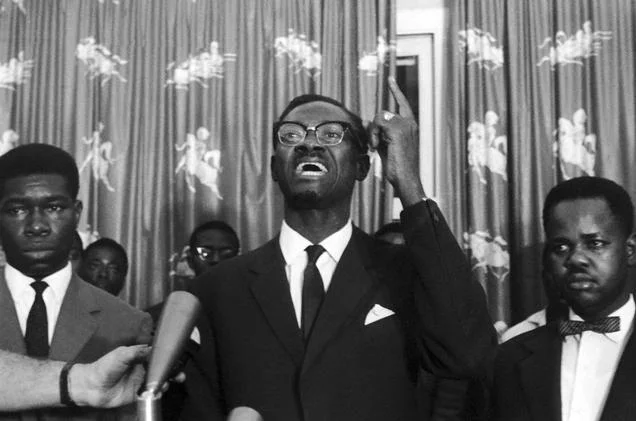
Patrice Lamumba: 'It was filled with tears, fire and blood', Independence Day speech - 1960

March 2, 2016

30 June 1960, Palais de la Nation, Kinshasa, Democratic Republic of the Congo

Patrice Lamumba was the first democratically elected Prime Minister for the Congo. He is talking about the oppression of Belgian colonialism in this speech. He was assassinated on 17th January 1961.

Men and women of the Congo,

Victorious independence fighters,

I salute you in the name of the Congolese Government.

I ask all of you, my friends, who tirelessly fought in our ranks, to mark this June 30, 1960, as an illustrious date that will be ever engraved in your hearts, a date whose meaning you will proudly explain to your children, so that they in turn might relate to their grandchildren and great-grandchildren the glorious history of our struggle for freedom.

Although this independence of the Congo is being proclaimed today by agreement with Belgium, an amicable country, with which we are on equal terms, no Congolese will ever forget that independence was won in struggle, a persevering and inspired struggle carried on from day to day, a struggle, in which we were undaunted by privation or suffering and stinted neither strength nor blood.

It was filled with tears, fire and blood. We are deeply proud of our struggle, because it was just and noble and indispensable in putting an end to the humiliating bondage forced upon us.

That was our lot for the eighty years of colonial rule and our wounds are too fresh and much too painful to be forgotten.

We have experienced forced labour in exchange for pay that did not allow us to satisfy our hunger, to clothe ourselves, to have decent lodgings or to bring up our children as dearly loved ones.

Morning, noon and night we were subjected to jeers, insults and blows because we were "Negroes". Who will ever forget that the black was addressed as "tu", not because he was a friend, but because the polite "vous" was reserved for the white man?

We have seen our lands seized in the name of ostensibly just laws, which gave recognition only to the right of might.

We have not forgotten that the law was never the same for the white and the black, that it was lenient to the ones, and cruel and inhuman to the others.

We have experienced the atrocious sufferings, being persecuted for political convictions and religious beliefs, and exiled from our native land: our lot was worse than death itself.

We have not forgotten that in the cities the mansions were for the whites and the tumbledown huts for the blacks; that a black was not admitted to the cinemas, restaurants and shops set aside for "Europeans"; that a black travelled in the holds, under the feet of the whites in their luxury cabins.

Who will ever forget the shootings which killed so many of our brothers, or the cells into which were mercilessly thrown those who no longer wished to submit to the regime of injustice, oppression and exploitation used by the colonialists as a tool of their domination?

All that, my brothers, brought us untold suffering.

But we, who were elected by the votes of your representatives, representatives of the people, to guide our native land, we, who have suffered in body and soul from the colonial oppression, we tell you that henceforth all that is finished with.

The Republic of the Congo has been proclaimed and our beloved country's future is now in the hands of its own people.

Brothers, let us commence together a new struggle, a sublime struggle that will lead our country to peace, prosperity and greatness.

Together we shall establish social justice and ensure for every man a fair remuneration for his labour.

We shall show the world what the black man can do when working in liberty, and we shall make the Congo the pride of Africa.

We shall see to it that the lands of our native country truly benefit its children.

We shall revise all the old laws and make them into new ones that will be just and noble.

We shall stop the persecution of free thought. We shall see to it that all citizens enjoy to the fullest extent the basic freedoms provided for by the Declaration of Human Rights.

We shall eradicate all discrimination, whatever its origin, and we shall ensure for everyone a station in life befitting his human dignity and worthy of his labour and his loyalty to the country.

We shall institute in the country a peace resting not on guns and bayonets but on concord and goodwill.

And in all this, my dear compatriots, we can rely not only on our own enormous forces and immense wealth, but also on the assistance of the numerous foreign states, whose co-operation we shall accept when it is not aimed at imposing upon us an alien policy, but is given in a spirit of friendship.

Even Belgium, which has finally learned the lesson of history and need no longer try to oppose our independence, is prepared to give us its aid and friendship; for that end an agreement has just been signed between our two equal and independent countries. I am sure that this co-operation will benefit both countries. For our part, we shall, while remaining vigilant, try to observe the engagements we have freely made.

Thus, both in the internal and the external spheres, the new Congo being created by my government will be rich, free and prosperous. But to attain our goal without delay, I ask all of you, legislators and citizens of the Congo, to give us all the help you can.

I ask you all to sink your tribal quarrels: they weaken us and may cause us to be despised abroad.

I ask you all not to shrink from any sacrifice for the sake of ensuring the success of our grand undertaking.

Finally, I ask you unconditionally to respect the life and property of fellow-citizens and foreigners who have settled in our country; if the conduct of these foreigners leaves much to be desired, our Justice will promptly expel them from the territory of the republic; if, on the contrary, their conduct is good, they must be left in peace, for they, too, are working for our country's prosperity.

The Congo's independence is a decisive step towards the liberation of the whole African continent.

Our government, a government of national and popular unity, will serve its country.

I call on all Congolese citizens, men, women and children, to set themselves resolutely to the task of creating a national economy and ensuring our economic independence.

Eternal glory to the fighters for national liberation!

Long live independence and African unity!

Long live the independent and sovereign Congo!

Source: https://www.marxists.org/subject/africa/lu...

Enjoyed this speech? Speakola is a labour of love and I’d be very grateful if you would share, tweet or like it. Thank you.

Facebook Twitter Facebook
In 1940-59 C Tags PATRICE LAMUMBA, TEARS FIRE AND BLOOD, INDEPENDENCE DAY, REPUBLIC OF CONGO, BELGIAN CONGO, NATIONALISM, COLONIALISM, POST COLONIALISM, SELF DETERMINATION, AFRICA, AFRICAN SELF DETERMINATION, TRANSCRIPT
Comment

Mhairi Black: 'I would have to ask on who is the sun shining?', maiden speech - 2015

August 6, 2015

14 July, 2015, House of Commons, Westminster, United Kingdom

Firstly in my maiden speech I want to pay tribute to my predecessor Douglas Alexander. He served the constituency for many years. After all, I was only three when he was elected. But it is because of that fact that I want to thank him for all he did for the constituency and I especially want to take a moment to commend him for the dignified way that he handled himself on what must have been a very difficult election night. He did himself proud, he did his party proud, and I wish him the best for the future.

Now, when I discovered it is tradition to speak bout the history of your constituency in a maiden speech, I decided to do some research despite the fact I’ve lived there all my life. And as one of the tale end doing the maiden speech of my colleagues in the SNP I’ve noticed that my colleagues quite often mention Rabbie Burns a lot and they all try to form this intrinsic connection between him and their own constituency and own him for themselves. I however feel no need to do this for during my research I discovered a fact which trumps them all. William Wallace was born in my constituency.

Now, my constituency has a fascinating history far beyond the Hollywood film and historical name. from the mills of Paisley, to the industries of Johnstone, right to the weavers in Kilbarchan, it’s got a wonderful population with a cracking sense of humour and much to offer both the tourists and to those who reside there. But the truth is that within my constituency it’s not all fantastic. We’ve watched our town centres deteriorate. We’re watched our communities decline. Our unemployment level is higher than that of the UK average. One in five children in my constituency go to bed hungry every night. Paisley Job Centre has the third highest number of sanctions in the whole of Scotland.

Before I was elected I volunteered for a charitable organisation and there was a gentleman who I grew very fond of. He was one of these guys who has been battered by life in every way imaginable. You name it, he’s been through it. And he used to come in to get food from this charity, and it was the only food that he had access to and it was the only meal he would get. And I sat with him and he told me about his fear of going to the Job Centre. He said “I’ve heard the stories Mhairi, they try and trick you out, they’ll tell you you’re a liar. I’m not a liar Mhairi, I’m not.” And I told him “It’s OK, calm down. Go, be honest, it’ll be fine.”

I then didn’t see him for about two or three weeks. I did get very worried, and when he finally did come back in I said to him “how did you get on?”

And without saying a word he burst into tears. That grown man standing in front of a 20-year-old crying his eyes out, because what had happened to him was the money that he would normally use to pay for his travel to come to the charity to get his food he decided that in order to afford to get to the Job Centre he would save that money. Because of this, he didn’t eat for five days, he didn’t drink. When he was on the bus on the way to the Job Centre he fainted due to exhaustion and dehydration. He was 15 minutes later for the Job Centre and he was sanctioned for 13 weeks.

Now, when the Chancellor spoke in his budget about fixing the roof while the sun is shining, I would have to ask on who is the sun shining? When he spoke about benefits not supporting certain kinds of lifestyles, is that the kind of lifestyle that he was talking about?

Mhairi Black, the twenty year old SNP MP for Paisley and Renfrewshire South
If we go back even further when the Minister for Employment was asked to consider if there was a correlation between the number of sanctions and the rise in food bank use she stated, and I quote, “food banks play an important role in local welfare provision.” Renfrewshire has the third highest use of food banks use and food bank use is going up and up. Food banks are not part of the welfare state, they are symbol that the welfare state is failing.

Now, the Government quite rightly pays for me through tax payers money to be able to live in London whilst I serve my constituents. My housing is subsidised by the tax payer. Now, the Chancellor in his budget said it is not fair that families earning over £40,000 in London should have their rents paid for my other working people. But it is OK so long as you’re an MP? In this budget the Chancellor also abolished any housing benefit for anyone below the age of 21. So we are now in the ridiculous situation whereby because I am an MP not only am I the youngest, but I am also the only 20-year-old in the whole of the UK that the Chancellor is prepared to help with housing. We now have one of the most uncaring, uncompromising and out of touch governments that the UK has seen since Thatcher.

It is here now that I must turn to those who I share a bench with. Now I have in this chamber for ten weeks, and I have very deliberately stayed quiet and have listened intently to everything that has been said. I have heard multiple speeches from Labour benches standing to talk about the worrying rise of nationalism in Scotland, when in actual fact all these speeches have served to do is to demonstrate how deep the lack of understanding about Scotland is within the Labour party.

I like many SNP members come from a traditional socialist Labour family and I have never been quiet in my assertion that I feel that it is the Labour party that left me, not the other way about. The SNP did not triumph on a wave of nationalism; in fact nationalism has nothing to do with what’s happened in Scotland. We triumphed on a wave of hope, hope that there was something different, something better to the Thatcherite neo-liberal policies that are produced from this chamber. Hope that representatives genuinely could give a voice to those who don’t have one.

I don’t mention this in order to pour salt into wounds which I am sure are very open and very sore for many members on these benches, both politically and personally. Colleagues, possibly friends, have lost their seats. I mention it in order to hold a mirror to the face of a party that seems to have forgotten the very people they’re supposed to represent, the very things they’re supposed to fight for.

After hearing the Labour leader’s intentions to support the changes of tax credits that the Chancellor has put forward, I must make this plea to the words of one of your own and a personal hero of mine. Tony Benn once said that in politics there are weathercocks and sign posts. Weathercocks will spin in whatever direction the wind of public opinion may blow them, no matter what principal they may have to compromise. And then there are signposts, signposts which stand true, and tall, and principled. And they point in the direction and they say this is the way to a better society and it is my job to convince you why. Tony Benn was right when he said the only people worth remembering in politics were signposts.

Harriet Harman has called on her party to abstain on voting on the welfare and work bill
Now, yes we will have political differences, yes in other parliaments we may be opposing parties, but within this chamber we are not. No matter how much I may wish it, the SNP is not the sole opposition to this Government, but nor is the Labour party. It is together with all the parties on these benches that we must form an opposition, and in order to be affective we must oppose not abstain. So I reach out a genuine hand of friendship which I can only hope will be taken. Let us come together, let us be that opposition, let us be that signpost of a better society. Ultimately people are needing a voice, people are needing help, let’s give them it.

Source: https://speakola.squarespace.com/config#/p...

Enjoyed this speech? Speakola is a labour of love and I’d be very grateful if you would share, tweet or like it. Thank you.

Facebook Twitter Facebook
In 2010s MORE 5 Tags UNITED KINGDOM, MAIDEN SPEECH, SCOTLAND, HOUSE OF COMMONS, MHAIRI BLACK, SNP, SCOTTISH NATIONAL PARTY, NATIONALISM, TRANSCRIPT
Comment

Harold McMillan: 'The Wind of Change', South Africa visit - 1960

June 30, 2015

3 February 1960, South African parliamentm South Africa

It is, as I have said, a special privilege for me to be here in 1960 when you are celebrating what I might call the golden wedding of the Union. At such a time it is natural and right that you should pause to take stock of your position, to look back at what you have achieved, to look forward to what lies ahead. In the fifty years of their nationhood the people of South Africa have built a strong economy founded upon a healthy agriculture and thriving and resilient industries.

No one could fail to be impressed with the immense material progress which has been achieved. That all this has been accomplished in so short a time is a striking testimony to the skill, energy and initiative of your people. We in Britain are proud of the contribution we have made to this remarkable achievement. Much of it has been financed by British capital. …

… As I've travelled around the Union I have found everywhere, as I expected, a deep preoccupation with what is happening in the rest of the African continent. I understand and sympathise with your interests in these events and your anxiety about them.

Ever since the break up of the Roman empire one of the constant facts of political life in Europe has been the emergence of independent nations. They have come into existence over the centuries in different forms, different kinds of government, but all have been inspired by a deep, keen feeling of nationalism, which has grown as the nations have grown.

In the twentieth century, and especially since the end of the war, the processes which gave birth to the nation states of Europe have been repeated all over the world. We have seen the awakening of national consciousness in peoples who have for centuries lived in dependence upon some other power. Fifteen years ago this movement spread through Asia. Many countries there, of different races and civilisations, pressed their claim to an independent national life.

Today the same thing is happening in Africa, and the most striking of all the impressions I have formed since I left London a month ago is of the strength of this African national consciousness. In different places it takes different forms, but it is happening everywhere.

The wind of change is blowing through this continent, and whether we like it or not, this growth of national consciousness is a political fact. We must all accept it as a fact, and our national policies must take account of it.

Well you understand this better than anyone, you are sprung from Europe, the home of nationalism, here in Africa you have yourselves created a free nation. A new nation. Indeed in the history of our times yours will be recorded as the first of the African nationalists. This tide of national consciousness which is now rising in Africa, is a fact, for which both you and we, and the other nations of the western world are ultimately responsible.

For its causes are to be found in the achievements of western civilisation, in the pushing forwards of the frontiers of knowledge, the applying of science to the service of human needs, in the expanding of food production, in the speeding and multiplying of the means of communication, and perhaps above all and more than anything else in the spread of education.

As I have said, the growth of national consciousness in Africa is a political fact, and we must accept it as such. That means, I would judge, that we've got to come to terms with it. I sincerely believe that if we cannot do so we may imperil the precarious balance between the East and West on which the peace of the world depends.

The world today is divided into three main groups. First there are what we call the Western Powers. You in South Africa and we in Britain belong to this group, together with our friends and allies in other parts of the Commonwealth. In the United States of America and in Europe we call it the Free World. Secondly there are the Communists – Russia and her satellites in Europe and China whose population will rise by the end of the next ten years to the staggering total of 800 million. Thirdly, there are those parts of the world whose people are at present uncommitted either to Communism or to our Western ideas. In this context we think first of Asia and then of Africa. As I see it the great issue in this second half of the twentieth century is whether the uncommitted peoples of Asia and Africa will swing to the East or to the West. Will they be drawn into the Communist camp? Or will the great experiments in self-government that are now being made in Asia and Africa, especially within the Commonwealth, prove so successful, and by their example so compelling, that the balance will come down in favour of freedom and order and justice? The struggle is joined, and it is a struggle for the minds of men. What is now on trial is much more than our military strength or our diplomatic and administrative skill. It is our way of life. The uncommitted nations want to see before they choose.

Source: http://africanhistory.about.com/od/erainde...

Enjoyed this speech? Speakola is a labour of love and I’d be very grateful if you would share, tweet or like it. Thank you.

Facebook Twitter Facebook
In 1960-79 C Tags SOUTH AFRICA, UK, PRIME MINISTERS, TRANSCRIPT, NATIONALISM, INDEPENDENCE
Comment

Charles de Gaulle: 'The flame of French resistance', radio broadcasts - 1940

June 30, 2015

18, 19 and 22 June 1940,  broadcast by BBC

The leaders who, for many years past, have been at the head of the French armed forces have set up a government.

Alleging the defeat of our armies, this government has entered into negotiations with the enemy with a view to bringing about a cessation of hostilities.

It is quite true that we were, and still are, overwhelmed by enemy mechanised forces, both on the ground and in the air. It was the tanks, the planes, and the tactics of the Germans, far more than the fact that we were outnumbered, that forced our armies to retreat. It was the German tanks, planes, and tactics that provided the element of surprise which brought our leaders to their present plight.

But has the last word been said? Must we abandon all hope? Is our defeat final and irremediable? To those questions I answer - No!

Speaking in full knowledge of the facts, I ask you to believe me when I say that the cause of France is not lost. The very factors that brought about our defeat may one day lead us to victory.

For, remember this, France does not stand alone. She is not isolated. Behind her is a vast empire, and she can make common cause with the British empire, which commands the seas and is continuing the struggle. Like England, she can draw unreservedly on the immense industrial resources of the United States.

This war is not limited to our unfortunate country. The outcome of the struggle has not been decided by the battle of France. This is a world war. Mistakes have been made, there have been delays and untold suffering, but the fact remains that there still exists in the world everything we need to crush our enemies some day.

Today we are crushed by the sheer weight of mechanised force hurled against us, but we can still look to a future in which even greater mechanised force will bring us victory. The destiny of the world is at stake.

I, General de Gaulle, now in London, call on all French officers and men who are at present on British soil, or may be in the future, with or without their arms; I call on all engineers and skilled workmen from the armaments factories who are at present on British soil, or may be in the future, to get in touch with me.

Whatever happens, the flame of French resistance must not and shall not die.

Tomorrow I shall broadcast again from London.

June 19 1940

Frenchmen must now be fully aware that all ordinary forms of authority have disappeared.

Faced by the bewilderment of my countrymen, by the disintegration of a government in thrall to the enemy, by the fact that the institutions of my country are incapable, at the moment, of functioning, I, General de Gaulle, a French soldier and military leader, realise that I now speak for France. I n the name of France, I make the following solemn declaration: It is the bounden duty of all Frenchmen who still bear arms to continue the struggle. For them to lay down their arms, to evacuate any position of military importance, or agree to hand over any part of French territory, however small, to enemy control, would be a crime against our country. For the moment I refer particularly to French North Africa - to the integrity of French North Africa.

The Italian armistice is nothing but a clumsy trap. In the Africa of Clauzel, Bugeaud, Lyautey, and Noguès, honour and duty strictly enjoin that the French should refuse to carry out the conditions imposed by the enemy.

The thought that the panic of Bordeaux could make itself felt across the sea is not to be borne.

Soldiers of France, wherever you may be, arise!

June 22 1940

The French government, after having asked for an armistice, now knows the conditions dictated by the enemy.

The result of these conditions would be the complete demobilisation of the French land, sea, and air forces, the surrender of our weapons and the total occupation of French territory. The French government would come under German and Italian tutelage.

It may therefore be said that this armistice would not only be a capitulation, but that it would also reduce the country to slavery. Now, a great many Frenchmen refuse to accept either capitulation or slavery, for reasons which are called: honour, common sense, and the higher interests of the country.

I say honour, for France has undertaken not to lay down arms save in agreement with her allies. As long as the allies continue the war, her government has no right to surrender to the enemy. The Polish, Norwegian, Belgian, Netherlands, and Luxemburg governments, though driven from their territories, have thus interpreted their duty. I say common sense, for it is absurd to consider the struggle as lost. True, we have suffered a major defeat. We lost the battle of France through a faulty military system, mistakes in the conduct of operations, and the defeatist spirit shown by the government during recent battles. But we still have a vast empire, our fleet is intact, and we possess large sums in gold. We still have the gigantic potentialities of American industry. The same war conditions which caused us to be beaten by 5,000 planes and 6,000 tanks can tomorrow bring victory by means of 20,000 tanks and 20,000 planes.

I say the higher interests of the country, for this is not a Franco-German war to be decided by a single battle. This is a world war. No one can foresee whether the neutral countries of today will not be at war tomorrow, or whether Germany's allies will always remain her allies. If the powers of freedom ultimately triumph over those of servitude, what will be the fate of a France which has submitted to the enemy?

Honour, common sense, and the interests of the country require that all free Frenchmen, wherever they be, should continue the fight as best they may.

It is therefore necessary to group the largest possible French force wherever this can be done. Everything which can be collected by way of French military elements and potentialities for armaments production must be organised wherever such elements exist.

I, General de Gaulle, am undertaking this national task here in England.

I call upon all French servicemen of the land, sea, and air forces; I call upon French engineers and skilled armaments workers who are on British soil, or have the means of getting here, to come and join me.

I call upon the leaders, together with all soldiers, sailors, and airmen of the French land, sea, and air forces, wherever they may now be, to get in touch with me.

I call upon all Frenchmen who want to remain free to listen to my voice and follow me.

Long live free France in honour and independence!

Source: http://www.theguardian.com/theguardian/200...

Enjoyed this speech? Speakola is a labour of love and I’d be very grateful if you would share, tweet or like it. Thank you.

Facebook Twitter Facebook
In 1940-59 Tags FRANCE, WW2, DE GAULLE, PRESIDENTS, NATIONALISM, TRANSCRIPT, TRANSLATED
Comment

Golda Meir: 'We Have No Alternative' - United Nations 1948

June 30, 2015

2 January, 1948, United Nations, NYC, USA

I have had the privilege of representing Palestine Jewry in this country and in other countries when the problems that we faced were those of building more kibbutzim, of bringing in more Jews in spite of political obstacles and Arab riots.

We always had faith that in the end we would win, that everything we were doing in the country led to the independence of the Jewish people and to a Jewish state.

Long before we had dared pronounce that word, we knew what was in store for us.

Today we have reached a point when the nations of the world have given us their decision - the establishment of a Jewish state in a part of Palestine. Now in Palestine we are fighting to make this resolution of the United Nations a reality, not because we wanted to fight. If we had the choice, we would have chosen peace to build in peace.

We have no alternative

Friends, we have no alternative in Palestine. The Mufti and his men have declared war upon us. We have to fight for our lives, for our safety, and for what we have accomplished in Palestine, and perhaps above all, we must fight for Jewish honour and Jewish independence. Without exaggeration, I can tell you that the Jewish community in Palestine is doing this well. Many of you have visited Palestine; all of you have read about our young people and have a notion as to what our youth is like. I have known this generation for the last twenty-seven years. I thought I knew them. I realize now that even I did not.

These young boys and girls, many in their teens, are bearing the burden of what is happening in the country with a spirit that no words can describe. You see these youngsters in open cars—not armoured cars—in convoys going from Tel Aviv to Jerusalem, knowing that every time they start out from Tel Aviv or from Jerusalem there are probably Arabs behind the orange groves or the hills, waiting to ambush the convoy.

These boys and girls have accepted the task of bringing Jews over these roads in safety as naturally as though they were going out to their daily work or to their classes in the university.

We must ask the Jews the world over to see us as the front line .

All we ask of Jews the world over, and mainly of the Jews in the United States, is to give us the possibility of going on with the struggle.

When trouble started, we asked young people from the age of seventeen to twenty-five who were not members of Haganah, to volunteer. Up to the day that I left home on Thursday morning, when the registration of this age group was still going on, over 20,000 young men and women had signed up. As of now we have about 9,000 people mobilized in the various parts of the country. We must triple this number within the next few days.

We have to maintain these men. No government sends its soldiers to the front and expects them to take along from their homes the most elementary requirements—blankets, bedding, clothing.

A people that is fighting for its very life knows how to supply the men they send to the front lines. We too must do the same.

Thirty-five of our boys, unable to go by car on the road to besieged Kfar Etzion to bring help, set out by foot through the hills; they knew the road, the Arab villages on that road, and the danger they would have to face. Some of the finest youngsters we have in the country were in that group, and they were all killed, every one of them. We have a description from an Arab of how they fought to the end for over seven hours against hundreds of Arabs According to this Arab, the last boy killed, with no more ammunition left, died with a stone in his hand.

We will fight to the end

I want to say to you, friends, that the Jewish community in Palestine is going to fight to the very end. If we have arms to fight with, we will fight with those, and if not, we will fight with stones in our hands.

I want you to believe me when I say that I came on this special mission to the United States today not to save 700,000 Jews. During the last few years the Jewish people lost 6,000,000 Jews, and it would be audacity on our part to worry the Jewish people throughout the world because a few hundred thousand more Jews were in danger. That is not the issue.

The issue is that if these 700,000 Jews in Palestine can remain alive, then the Jewish people as such is alive and Jewish independence is assured. If these 700,000 people are killed off, then for many centuries, we are through with this dream of a Jewish people and a Jewish homeland.

My friends, we are at war. There is no Jew in Palestine who does not believe that finally we will be victorious. That is the spirit of the country. We have known Arab riots since 1921 and ’29 and ’36. We know what happened to the Jews of Europe during this last war. And every Jew in the country also knows that within a few months a Jewish state in Palestine will be established.

We knew that the price we would have to pay would be the best of our people. There are over 300 killed by now. There will be more. There is no doubt that there will be more. But there is also no doubt that the spirit of our young people is such that no matter how many Arabs invade the country, their spirit will not falter. However, this valiant spirit alone cannot face rifles and machine guns. Rifles and machine guns without spirit are not worth very much, but spirit without arms can in time be broken with the body.

Much must be prepared now so that we can hold out. There are unlimited opportunities, but are we going to get the necessary means? Considering myself not as a guest, but as one of you, I say that the question before each one is simply whether the Yishuv, and the youngsters that are in the front line, will have to fail because money that should have reached Palestine today will reach it in a month or two months from now?

Is it possible that time should decide the issue not because Palestinian Jews are cowards, not because they are incapable, but merely because they lack the material means to carry on?

I have come to the United States, and I hope you will understand me if I say that it is not an easy matter for any of us to leave home at present—to my sorrow I am not in the front line. I am not with my daughter in the Negev or with other sons and daughters in the trenches. But I have a job to do.

I have come here to try to impress Jews in the United States with the fact that within a very short period, a couple of weeks, we must have in cash between twenty-five and thirty million dollars. In the next two or three weeks we can establish ourselves. Of that we are convinced, and you must have faith; we are sure that we can carry on.

I said before that the Yishuv will give, is giving of its means. But please remember that even while shooting is going on, we must carry on so that our economy remains intact. Our factories must go on. Our settlements must not be broken up.

We know that this battle is being waged for those not yet in the country.

There are 30,000 Jews detained right next door to Palestine in Cyprus. I believe that within a very short period, within the next two or three months at most, these 30,000 will be with us, among them thousands of infants and young children. We must now think of preparing means of absorbing them. We know that within the very near future, hundreds of thousands more will be coming in. We must see that our economy is intact.

I want you to understand that there is no despair in the Yishuv. This is true not only of the young people. I have travelled the road from Tel Aviv to Jerusalem and other roads quite a bit. I have seen these dangerous buses filled not only with young Haganah men and girls, but with old people travelling the roads as a matter of course.

When you go to Tel Aviv now, you will find the city full of life; only the shooting that you hear on the outskirts of Tel Aviv and Jaffa reminds one that the situation in the country is not normal. But it would be a crime on my part not to describe the situation to you exactly as it is.

Merely with our ten fingers and merely with spirit and sacrifice, we cannot carry on this battle, and the only hinterland that we have is you. The Mufti has the Arab states—not all so enthusiastic about helping him but states with government budgets. The Egyptian government can vote a budget to aid our antagonists. The Syrian government can do the same

We have no Government but we have millions of Jews in the Diaspora

We have no government. But we have millions of Jews in the Diaspora, and exactly as we have faith in our youngsters in Palestine I have faith in Jews in the United States; I believe that they will realize the peril of our situation and will do what they have to do.

I know that we are not asking for something easy. I myself have sometimes been active in various campaigns and fund collections, and I know that collecting at once a sum such as I ask is not simple.

But I have seen our people at home. I have seen them come from the offices to the clinics when we called the community to give their blood for a blood bank to treat the wounded. I have seen them lined up for hours, waiting so that some of their blood can be added to this bank.

It is blood plus money that is being given in Palestine.

I know that many of you would be as anxious as our people to be on the very front line. I do not doubt that there are many young people among the Jewish community in the United States who would do exactly what our young people are doing in Palestine.

We are not a better breed; we are not the best Jews of the Jewish people. It so happened that we are there and you are here. I am certain that if you were in Palestine and we were in the United States, you would be doing what we are doing there, and you would ask us here to do what you will have to do.

I want to close with paraphrasing one of the greatest speeches that was made during the Second World War—the words of Churchill.

I am not exaggerating when I say that the Yishuv in Palestine will fight in the Negev and will fight in Galilee and will fight on the outskirts of Jerusalem until the very end. You cannot decide whether we should fight or not. We will. The Jewish community in Palestine will raise no white flag for the Mufti. That decision is taken. Nobody can change it. You can only decide one thing: whether we shall be victorious in this fight or whether the Mufti will be victorious. That decision American Jews can make. It has to be made quickly within hours, within days.

And I beg of you—don’t be too late. Don’t be bitterly sorry three months from now for what you failed to do today. The time is now.

I have spoken to you without a grain of exaggeration. I have not tried to paint the picture in false colours. It consists of spirit and certainty of our victory on the one hand, and dire necessity for carrying on the battle on the other.

I want to thank you again for having given me the opportunity at a conference that I am certain has a full agenda to say these few words to you. I leave the platform without any doubt in my mind or my heart that the decision that will be taken by American Jewry will be the same as that which was taken by the Jewish community in Palestine, so that within a few months from now we will all be able to participate not only in the joy of resolving to establish a Jewish state, but in the joy of laying the cornerstone of the Jewish state.

Source: http://tamilnation.co/ideology/golda.htm

Enjoyed this speech? Speakola is a labour of love and I’d be very grateful if you would share, tweet or like it. Thank you.

Facebook Twitter Facebook
In 1940-59 C Tags ISRAEL, UNITED NATIONS, NATIONALISM, WW2, PALESTINE, TRANSCRIPT
Comment

See my film!

Limited Australian Season

March 2025

Details and ticket bookings at

angeandtheboss.com

Support Speakola

Hi speech lovers,
With costs of hosting website and podcast, this labour of love has become a difficult financial proposition in recent times. If you can afford a donation, it will help Speakola survive and prosper.

Best wishes,
Tony Wilson.

Become a Patron!

Learn more about supporting Speakola.

Featured political

Featured
Jon Stewart: "They responded in five seconds", 9-11 first responders, Address to Congress - 2019
Jacinda Ardern: 'They were New Zealanders. They are us', Address to Parliament following Christchurch massacre - 2019
Dolores Ibárruri: "¡No Pasarán!, They shall not pass!', Defense of 2nd Spanish Republic - 1936
Jimmy Reid: 'A rat race is for rats. We're not rats', Rectorial address, Glasgow University - 1972

Featured eulogies

Featured
For Geoffrey Tozer: 'I have to say we all let him down', by Paul Keating - 2009
for James Baldwin: 'Jimmy. You crowned us', by Toni Morrison - 1988
for Michael Gordon: '13 days ago my Dad’s big, beautiful, generous heart suddenly stopped beating', by Scott and Sarah Gordon - 2018

Featured commencement

Featured
Tara Westover: 'Your avatar isn't real, it isn't terribly far from a lie', The Un-Instagrammable Self, Northeastern University - 2019
Tim Minchin: 'Being an artist requires massive reserves of self-belief', WAAPA - 2019
Atul Gawande: 'Curiosity and What Equality Really Means', UCLA Medical School - 2018
Abby Wambach: 'We are the wolves', Barnard College - 2018
Eric Idle: 'America is 300 million people all walking in the same direction, singing 'I Did It My Way'', Whitman College - 2013
Shirley Chisholm: ;America has gone to sleep', Greenfield High School - 1983

Featured sport

Featured
Joe Marler: 'Get back on the horse', Harlequins v Bath pre game interview - 2019
Ray Lewis : 'The greatest pain of my life is the reason I'm standing here today', 52 Cards -
Mel Jones: 'If she was Bradman on the field, she was definitely Keith Miller off the field', Betty Wilson's induction into Australian Cricket Hall of Fame - 2017
Jeff Thomson: 'It’s all those people that help you as kids', Hall of Fame - 2016

Fresh Tweets


Featured weddings

Featured
Dan Angelucci: 'The Best (Best Man) Speech of all time', for Don and Katherine - 2019
Hallerman Sisters: 'Oh sister now we have to let you gooooo!' for Caitlin & Johnny - 2015
Korey Soderman (via Kyle): 'All our lives I have used my voice to help Korey express his thoughts, so today, like always, I will be my brother’s voice' for Kyle and Jess - 2014

Featured Arts

Featured
Bruce Springsteen: 'They're keepers of some of the most beautiful sonic architecture in rock and roll', Induction U2 into Rock Hall of Fame - 2005
Olivia Colman: 'Done that bit. I think I have done that bit', BAFTA acceptance, Leading Actress - 2019
Axel Scheffler: 'The book wasn't called 'No Room on the Broom!', Illustrator of the Year, British Book Awards - 2018
Tina Fey: 'Only in comedy is an obedient white girl from the suburbs a diversity candidate', Kennedy Center Mark Twain Award -  2010
Tina Fey: 'Only in comedy is an obedient white girl from the suburbs a diversity candidate', Kennedy Center Mark Twain Award - 2010

Featured Debates

Featured
Sacha Baron Cohen: 'Just think what Goebbels might have done with Facebook', Anti Defamation League Leadership Award - 2019
Greta Thunberg: 'How dare you', UN Climate Action Summit - 2019
Charlie Munger: 'The Psychology of Human Misjudgment', Harvard University - 1995
Lawrence O'Donnell: 'The original sin of this country is that we invaders shot and murdered our way across the land killing every Native American that we could', The Last Word, 'Dakota' - 2016