• Genre
  • About
  • Submissions
  • Donate
  • Search
Menu

Speakola

All Speeches Great and Small
  • Genre
  • About
  • Submissions
  • Donate
  • Search

Richard Pryor: 'I am here tonight. To explain why black people. Will never be nominated for anything' Oscars host monologue - 1977

February 2, 2016

28 March 1977, at the Dorothy Chandler Pavilion, Los Angeles, USA

I am here tonight. To explain. Why. No Black Poeple. Will ever be nominated for anything.

Black people love to act. We can cry at the drop of a hat. [cries]

Or laugh. [laughs]

These are some of the things black people can do.

We are also going to stop entertaining.

That will show you.

We refuse to be in show business altogether.

We are quitting.

Then see who sings and dances for you.


Source: http://www.nbcnews.com/news/nbcblk/richard...

Enjoyed this speech? Speakola is a labour of love and I’d be very grateful if you would share, tweet or like it. Thank you.

Facebook Twitter Facebook
In FILM & TV Tags RICHARD PRYOR, OSCARS HOST, ACADEMY AWARDS, OSCARSSOWHITE, TRANSCRIPT
Comment

Kurt Vonnegut: 'Perhaps a real masterpiece cannot be crucified on a cross of this design', Shapes of Stories, University of Chicago

February 2, 2016

Date unknown, University of Chicago, Illinois, USA

Vonnegut, the great novelist, also submitted an anthropology masters thesis on the way a character's fortunes in a story can be represented pictorially, in graphs. The thesis was rejected.

Now let me give you a marketing tip. The people who can afford to buy books and magazines and go to the movies don’t like to hear about people who are poor or sick, so start your story up here [indicates top of the G-I axis]. You will see this story over and over again. People love it, and it is not copyrighted. The story is ‘Man in Hole,’ but the story needn’t be about a man or a hole. It’s: somebody gets into trouble, gets out of it again [draws line A]. It is not accidental that the line ends up higher than where it began. This is encouraging to readers.

Now there’s a Franz Kafka story [begins line D toward bottom of G-I axis]. A young man is rather unattractive and not very personable. He has disagreeable relatives and has had a lot of jobs with no chance of promotion. He doesn’t get paid enough to take his girl dancing or to go to the beer hall to have a beer with a friend. One morning he wakes up, it’s time to go to work again, and he has turned into a cockroach [draws line downward and then infinity symbol]. It’s a pessimistic story.

The question is, does this system I’ve devised help us in the evaluation of literature? Perhaps a real masterpiece cannot be crucified on a cross of this design. How about Hamlet? It’s a pretty good piece of work I’d say. Is anybody going to argue that it isn’t? I don’t have to draw a new line, because Hamlet’s situation is the same as Cinderella’s, except that the sexes are reversed.

His father has just died. He’s despondent. And right away his mother went and married his uncle, who’s a bastard. So Hamlet is going along on the same level as Cinderella when his friend Horatio comes up to him and says, ‘Hamlet, listen, there’s this thing up in the parapet, I think maybe you’d better talk to it. It’s your dad.’ So Hamlet goes up and talks to this, you know, fairly substantial apparition there. And this thing says, ‘I’m your father, I was murdered, you gotta avenge me, it was your uncle did it, here’s how.’

Well, was this good news or bad news? To this day we don’t know if that ghost was really Hamlet’s father. If you have messed around with Ouija boards, you know there are malicious spirits floating around, liable to tell you anything, and you shouldn’t believe them. Madame Blavatsky, who knew more about the spirit world than anybody else, said you are a fool to take any apparition seriously, because they are often malicious and they are frequently the souls of people who were murdered, were suicides, or were terribly cheated in life in one way or another, and they are out for revenge.

So we don’t know whether this thing was really Hamlet’s father or if it was good news or bad news. And neither does Hamlet. But he says okay, I got a way to check this out. I’ll hire actors to act out the way the ghost said my father was murdered by my uncle, and I’ll put on this show and see what my uncle makes of it. So he puts on this show. And it’s not like Perry Mason. His uncle doesn’t go crazy and say, ‘I-I-you got me, you got me, I did it, I did it.’ It flops. Neither good news nor bad news. After this flop Hamlet ends up talking with his mother when the drapes move, so he thinks his uncle is back there and he says, ‘All right, I am so sick of being so damn indecisive,’ and he sticks his rapier through the drapery. Well, who falls out? This windbag, Polonius. This Rush Limbaugh. And Shakespeare regards him as a fool and quite disposable.

You know, dumb parents think that the advice that Polonius gave to his kids when they were going away was what parents should always tell their kids, and it’s the dumbest possible advice, and Shakespeare even thought it was hilarious.

‘Neither a borrower nor a lender be.’ But what else is life but endless lending and borrowing, give and take?

‘This above all, to thine own self be true.’ Be an egomaniac!

Neither good news nor bad news. Hamlet didn’t get arrested. He’s prince. He can kill anybody he wants. So he goes along, and finally he gets in a duel, and he’s killed. Well, did he go to heaven or did he go to hell? Quite a difference. Cinderella or Kafka’s cockroach? I don’t think Shakespeare believed in a heaven or hell any more than I do. And so we don’t know whether it’s good news or bad news.

I have just demonstrated to you that Shakespeare was as poor a storyteller as any Arapaho.

But there’s a reason we recognize Hamlet as a masterpiece: it’s that Shakespeare told us the truth, and people so rarely tell us the truth in this rise and fall here [indicates blackboard]. The truth is, we know so little about life, we don’t really know what the good news is and what the bad news is.

And if I die — God forbid — I would like to go to heaven to ask somebody in charge up there, ‘Hey, what was the good news and what was the bad news?’

This diagram was created by graphic designer Maya Eilam . It first appeared in this article on Gizmodo. 


Source: https://www.brainpickings.org/2012/11/26/k...

Enjoyed this speech? Speakola is a labour of love and I’d be very grateful if you would share, tweet or like it. Thank you.

Facebook Twitter Facebook
Tags KURT VONNEGUT, SHAPES OF STORIES, LECTURE, GRAPHS, MASTERS THESIS, ANTHROPOLOGY, UNIVERSITY OF CHICAGO, HAMLET, TRANSCRIPT
1 Comment

Steve Kilbey: 'It put me off awards until tonight -- this is the first award ceremony I've been at', ARIA Hall of Fame - 2010

February 2, 2016

7 November 2010, Sydney Opera House, Sydney, Australia

Steve Kilbey is the lead singer-songwriter and bass guitarist in The Church.

Wow. George Negus. Next time I appear in Waverley Court, will you come and be a character witness for me, please? That's gotta carry some weight, right?

Oh, look. You know what, you know in rock n roll we procrastinate a lot, and I said, I was saying to these guys (who were saying) are you gonna have a speech? No no speech, no speech, and then I haven't got a speech. I could have had a speech going on the thing down there [autoprompt] like Chuggy did.

I haven't got a speech. The truth is, as I was sitting here, I realised something that I've always thought -- I think people in Australia, I've felt sorry for people in England. When I first met Marty, he didn't know about all the amazing music we had in Australia. And I spent all this time, we were playing him The Real Thing and The Masters Apprentices, and I grew up in Canberra and to me Australian music, there was no question about whether it was as good as the other stuff –- it was.

There was the American stuff, there was the English stuff, and there was the Australian stuff. And the first thing that I ever saw was a package tour with Normie Rowe, and the Easybeats, and MPD Ltd, and Bobby & Laurie – you know they did the 'When I hear a love call', everyone was stamping on the floor and it was amazing. And then all the bands that came up , bands we don't think of a lot now, like the Dave Miller Set, do you remember that song? 'He's Got His Love To Keep Him Warm'?

It was amazing stuff. People overseas never got to hear it.

Peter and I went and saw Hush at the Canberra Theatre -- we thought they were amazing! When Les Gock did this... we were going wow, this is great! Get Rocked! And then we did a gig, and we turned up and Skyhooks were playing. I couldn't believe how amazing Skyhooks were, not just 'cos they were funny and stuff, but there was the dual guitar thing that they had going on.

Years later, The Church were supporting The Sunnyboys at a festival, and we decided to be late, 'cos we weren't going on before The Sunnyboys, and we were standing there and we had explained it quite adequately why we were legitimately late, and Red Symons came in and said 'I know you meant to do it, it's all part of the game, you meant to be late, you didn't want to go on before them', and he kind of re-opened the whole thing up again.

It was great to be busted by Red Symons. So many amazing, amazing Australian bands. The people we have been inducted with - I almost said induced - the people we have been inducted with tonight are amazing. The Models, an amazing band, I read a review of myself that said I was weird and angular. I went and saw The Models play and when I saw Sean Kelly, I felt like Doug Parkinson, he was so much weirder and more angular than me.

A year later, I went to a party in a house in Melbourne, and I chatted up a girl with red hair, and it turned out to be Sean's girlfriend. And when we received our awards from 3XY for The Most Promising Bands of 1981, they said go and shake hands with your award, and Sean lent in and said 'Steve you're a …' And it put me off awards until tonight -- this is the first award ceremony I've been at.

The Models -- a really truly amazing band.

Ok, The Loved Ones, I agree with Chuggy, The Loved Ones insinuated so much raw dirty sexuality, much more than Mick Jagger, much more than anyone else, when you heard them you knew, even though I was twelve, I knew there was something very rude going on in the world of the adults. An Amazing amazing -- the way he sang was just like that (flips the bird) to authority, but not with the sort of blatant stuff you have nowadays of axing school teachers, and strippers, it was just implied, and that's why it was so much better. And I still don't know -- was Gerry Humphrys Barry Humphries' brother, or not? He wasn't?

Ok, Ok. He what? Oh, he encouraged the rumour.

Wow, The Loved Ones, 'Magic Box', I remember in the '80s we were still raving about Magic Box all the time. Listen to Magic Box, a fantastic record.

John Williamson, look I'm not a huge ... I don't know a real lot about Country, but I've had five daughters and all of them at some stage, I've amused with that 'you silly gallah, I'm better by far than a white cockatoo, or a budgerigar, they squeak and squawk and try and talk, why me and them's like cheese and chalk'.

Poetry, man.

Johnny Young, I remember I used to do an imitation of you at school, 'Car-olyn' (*clapping*), you used to clap, with your hands straight out when you clapped. Where is he? You did didn't you.  Your records were on Clarion label, Normie Rowe's records were on Sunshine, and Ray Brown's were on Leedon. But they all kind of looked the same, they were all Festival. I seriously, I reckon Smiley, I reckon The Star, which is an amazing song, the bit, the 'step aside', and 'The Real Thing', I had the pleasure of playing bass for Russell when he was induced -- inducted -- a couple of years ago. I was so overcome that I completely fucked up most of the bass line in it, and our Mellotron blew up, but still, what an amazing...

I was living in Canberra at the time. 'The Real Thing' was number one for about sixteen weeks. It was number one, it didn't go away, it was just, like, omnipresent. I hadn't had any LSD by that stage, but I knew what it was going to be like when I finally had it. Amazing. And the wonderful Irony that you're Mr Clean, and you wrote these songs!

He wasn't Mr Clean? Wow.

And then of course with that whole thing with Molly had the coaxial cables with the two 8-tracks in Melbourne, it's just an amazing legendary record. People overseas are just crazy to have missed out on that, why weren't all those songs hits in England and America? I don't know either.

Who else was there? Was that everybody that was on with us? We had some amazing adventures in the old days with Chuggy. Back in 1981, Chuggy was our manager, he was fantastic.

[Continued clip 2]

Chuggy, we had some amazing adventures, I remember the night when you signed us up, I was sitting there, and I was scared to say 'no', and your henchman, instead of putting a cigar in my mouth, he put a joint in my mouth, and I sat there and he said, 'so that's it then, ' and was like 'Yes!'.

And then in 1981 Chuggy organised our first tour of Tasmania, and aviation was a little different in those days. It was an old World War I, World War II – sorry Chuggy – it was an old World War II aeroplane, and the gear, in those days bands carried these colossal Pas with them, and it was all strapped down one side and the band was down the other side, and when we took off, the door opened. And we're looking at Melbourne through an open door, and the gear broke free and was running around, I had a four-way bin rolling towards me. And Chuggy, you know what you said? You said, 'Michael Chugg, killed in airplane crash. The Church were there, too'.

(From the audience, Chuggy yells, 'I have no memory of that at all!')

No, I bet you don't.

On the same tour, we played a gig in Launceston, and as we exited the venue, a young Taswegian lady was standing there with her bosoms bare, and she said, 'look, you mainlanders. Genuine Tassie tits!' and Marty walked over and went over and went, 'Cheers'. She would be a grandmother now, that woman.

On the same tour, our front of house man, punched an overzealous reporter in the eye and gave him a big black eye. And he stood right in front of me all night, crying. That was very daunting.

We've had loads of marvellous adventures in the music business, and I should have some poignant memory for each and all of you, like sailing in yachts in the Mediterranean with Michael Gudinski and stuff like that. But, my mother's here, so all of those anecdotes are no longer applicable.

I'm still amazed by Richard Wilkins' hair! I am. I'm sitting, I'm looking at it from behind, and I'm thinking he looks like a schoolboy from behind. It's so thick and fluffy and blond. It's amazing. And I can remember when you were Richard Wild. Was it like, Wild, or were you like Oscar Wilde?

Anyway, look, we've been kicked off the best record companies in Australia, we've been kicked off all the best publishing companies, and look, this is a great honour and I hope our foot is still in and out of the, in and out of -- what is it? In and out of the grave. 

And thank you very much for this great honour. I know some of my friends here want to thank some people, so thank you very much.

Enjoyed this speech? Speakola is a labour of love and I’d be very grateful if you would share, tweet or like it. Thank you.

Facebook Twitter Facebook
In MUSIC Tags STEVE KILBEY, THE CHURCH, ARIA, HALL OF FAME, ACCEPTANCE, LIFETIME ACHIEVEMENT
Comment

Steve Martin: 'I said, "Leave the lamppost"' Tribute to Gene Kelly, AFI Life Achievement Award - 1985

February 1, 2016

March 7 1985, Los Angeles, California, USA (televised CBS)

I guess of all the people here tonight, it is I who has been closest to gene throughout the years.

I remember it was the early fifties,and Gene and Stanley Donen were directing a film, and I dropped by to see my pal Gene.

And they were very glum, kinda depressed and I said, ‘what’s the matter?’

And they said, ‘this damn weather. We can’t get this number shot.’

I sat there for a minute, and I said, ‘why don’t you shoot it anyway?’

Stanley Donen said, ‘Get him out of here! I don’t want this guy around.’

Well, the rain kept up, and Stanley said, ‘What the heck, well do what Steve said and we’ll shoot it anyway. Let’s just get this lamppost out of here and we’ll be ready to go.’

I said, ‘leave the lamppost.’

Gene said, ‘But Steve, what’ll I do when I get to the lamppost?’

I said, ‘swing around it a couple of time, make it like a big deal.’

The rest is history.

That film was ‘On the Town’.

The number was cut from the film, and Gene never spoke to me again.

Source: https://www.youtube.com/watch?v=vVk1WDPF5Q...

Enjoyed this speech? Speakola is a labour of love and I’d be very grateful if you would share, tweet or like it. Thank you.

Facebook Twitter Facebook
In FILM & TV Tags STEVE MARTIN, GENE KELLY, AMERICAN FILM INSTITUTE, LIFETIME ACHIEVEMENT
Comment

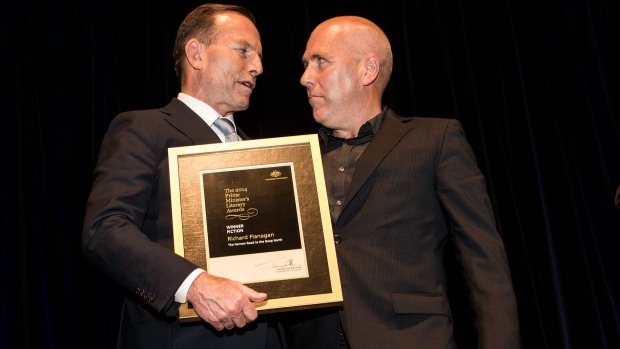
Richard Flanagan: 'Words, my father told me, were the first beautiful things he ever knew', Prime Minister's Award for fiction - 2014

January 28, 2016

8 December 2014, Australia

Richard Flanagan's novel 'The Narrow Road to the Deep North' was joint winner of the fiction prize with Steven Carroll's 'A World of Other People'.

I thank the judges and the Prime Minister for this award.
I commend the Prime Minister for continuing with these prizes at a time of austerity. And I commend the Prime Minister for lending the event here tonight the authority of his office simply by being here. These are not small things, but large symbols of what a civilised society should be—one in which culture is not understood as an economic utility, or a political embarrassment, but as the necessary nub of who we are.

As the ideas of our country grow vaporous, as some young Australians find more in common with murderous fantasies in far off lands than the society in which they live, we need that culture more than ever to remind us of all that we share, for our security ever lies not in our capacity to exclude some, but to include all.

It is often said that politics shouldn't be about symbols, but acts. But in the end acts are symbols, and symbols are powerful acts. We find in symbols our meaning to live, and that meaning can be wicked, or it can be a source of hope. We choose what we wish to celebrate for reasons bad or good: a beheading—or a book.

This book would not be what it is without my publishing company, Random House, nor my publisher of near twenty years, an editor of genius, Ms Nikki Christer, and I thank her from the bottom of my heart.

For penurious writers—who in Australia on average earn according to the Australia Council less than $11,000 a year—a prize such as this—one of the world's richest— means one very simple thing: that they can continue to write for a few more years without fear of poverty. In any past year I would have welcomed this money to help me in the struggle to write, and in any future year—were I ever again to know such honour as this, I will, with delight, use the money for a few celebratory drinks and the rest to keep writing.

This year though I have been—as you may have heard—unexpectedly lucky. For all that, I am not a wealthy man, and though I could put this prize money into my mortgage, I intend to use it differently.

And there are two reasons for this. Let me explain them.

The origins of this novel lie in my late father's experience as a Japanese POW. The lesson that my father took from the POW camps and imparted to me was that the measure of any civilised society was its willingness to look after its weakest. In the camps the officers were levied, their money used to buy food and medicines for the sick.

Money is like shit, my father used say. Pile it up and it stinks. Spread it around and you can grow things.

My book only exists because in that hellish place long ago the strong helped the weak. These were concrete acts that became for me, growing up, symbols of what a good society might be.

Of what our Australia is.

My other reason is this: if me standing here tonight means anything it is the power of literacy to change lives. The difference between my illiterate grandparents and me is two generations of free state education and literacy.

Words, my father told me, were the first beautiful things he ever knew.

I intend to donate this $40,000 to the Indigenous Literacy Foundation for its work with indigenous children, helping them to read. I hope it might perhaps grow a few things.

My mortgage will go on as mortgages do, but if one of those books helps a few children to advance beyond the most basic literacy to one that is liberating, then I will consider the money better spent. 

And if just one of those children in turn becomes a writer, if just one brings to Australia and to the world an idea of the universe that arises out of that glorious lineage of sixty thousand years of Australian civilisation, then I will think this prize has rewarded not just me, but us all. And for that we will all owe this prize an immense debt of gratitude.

Thank you.

Flanagan's book also won the Man Booker Prize. Buy it here.

Source: http://www.randomhouse.com.au/blog/richard...

Enjoyed this speech? Speakola is a labour of love and I’d be very grateful if you would share, tweet or like it. Thank you.

Facebook Twitter Facebook
In BOOKS Tags RICHARD FLANAGAN, PRIME MINISTER'S LITERARY AWARD, FICTION, NARROW ROAD TO THE DEEP NORTH, BURMA RAILWAY, INDIGENOUS LITERACY, LITERACY, LITERATURE
Comment

Elizabeth Gilbert: '‘Ole!’ to you, nonetheless, just for having the sheer human love and stubbornness to keep showing up', Your Elusive Creative Genius TED - 2009

January 20, 2016

February 2009, TED Talk, USA

I am a writer. Writing books is my profession but it's more than that, of course. It is also my great lifelong love and fascination. And I don't expect that that's ever going to change. But, that said, something kind of peculiar has happened recently in my life and in my career, which has caused me to have to recalibrate my whole relationship with this work. And the peculiar thing is that I recently wrote this book, this memoir called "Eat, Pray, Love" which, decidedly unlike any of my previous books, went out in the world for some reason, and became this big, mega-sensation, international bestseller thing. The result of which is that everywhere I go now, people treat me like I'm doomed. Seriously -- doomed, doomed! Like, they come up to me now, all worried, and they say, "Aren't you afraid you're never going to be able to top that? Aren't you afraid you're going to keep writing for your whole life and you're never again going to create a book that anybody in the world cares about at all, ever again?"

So that's reassuring, you know. But it would be worse, except for that I happen to remember that over 20 years ago, when I was a teenager, when I first started telling people that I wanted to be a writer, I was met with this same sort of fear-based reaction. And people would say, "Aren't you afraid you're never going to have any success? Aren't you afraid the humiliation of rejection will kill you? Aren't you afraid that you're going to work your whole life at this craft and nothing's ever going to come of it and you're going to die on a scrap heap of broken dreams with your mouth filled with bitter ash of failure?"

Like that, you know.

The answer -- the short answer to all those questions is, "Yes." Yes, I'm afraid of all those things. And I always have been. And I'm afraid of many, many more things besides that people can't even guess at, like seaweed and other things that are scary. But, when it comes to writing, the thing that I've been sort of thinking about lately, and wondering about lately, is why? You know, is it rational? Is it logical that anybody should be expected to be afraid of the work that they feel they were put on this Earth to do. And what is it specifically about creative ventures that seems to make us really nervous about each other's mental health in a way that other careers kind of don't do, you know? Like my dad, for example, was a chemical engineer and I don't recall once in his 40 years of chemical engineering anybody asking him if he was afraid to be a chemical engineer, you know? "That chemical-engineering block, John, how's it going?" It just didn't come up like that, you know? But to be fair, chemical engineers as a group haven't really earned a reputation over the centuries for being alcoholic manic-depressives.

We writers, we kind of do have that reputation, and not just writers, but creative people across all genres, it seems, have this reputation for being enormously mentally unstable. And all you have to do is look at the very grim death count in the 20th century alone, of really magnificent creative minds who died young and often at their own hands, you know? And even the ones who didn't literally commit suicide seem to be really undone by their gifts, you know. Norman Mailer, just before he died, last interview, he said, "Every one of my books has killed me a little more." An extraordinary statement to make about your life's work. But we don't even blink when we hear somebody say this, because we've heard that kind of stuff for so long and somehow we've completely internalized and accepted collectively this notion that creativity and suffering are somehow inherently linked and that artistry, in the end, will always ultimately lead to anguish.

And the question that I want to ask everybody here today is are you guys all cool with that idea? Are you comfortable with that? Because you look at it even from an inch away and, you know -- I'm not at all comfortable with that assumption. I think it's odious. And I also think it's dangerous, and I don't want to see it perpetuated into the next century. I think it's better if we encourage our great creative minds to live.

And I definitely know that, in my case -- in my situation -- it would be very dangerous for me to start sort of leaking down that dark path of assumption, particularly given the circumstance that I'm in right now in my career. Which is -- you know, like check it out, I'm pretty young, I'm only about 40 years old. I still have maybe another four decades of work left in me. And it's exceedingly likely that anything I write from this point forward is going to be judged by the world as the work that came after the freakish success of my last book, right? I should just put it bluntly, because we're all sort of friends here now -- it's exceedingly likely that my greatest success is behind me. So Jesus, what a thought! That's the kind of thought that could lead a person to start drinking gin at nine o'clock in the morning, and I don't want to go there.

I would prefer to keep doing this work that I love.

And so, the question becomes, how? And so, it seems to me, upon a lot of reflection, that the way that I have to work now, in order to continue writing, is that I have to create some sort of protective psychological construct, right? I have to sort of find some way to have a safe distance between me, as I am writing, and my very natural anxiety about what the reaction to that writing is going to be, from now on. And, as I've been looking, over the last year, for models for how to do that, I've been sort of looking across time, and I've been trying to find other societies to see if they might have had better and saner ideas than we have about how to help creative people sort of manage the inherent emotional risks of creativity.

And that search has led me to ancient Greece and ancient Rome. So stay with me, because it does circle around and back. But, ancient Greece and ancient Rome -- people did not happen to believe that creativity came from human beings back then, OK? People believed that creativity was this divine attendant spirit that came to human beings from some distant and unknowable source, for distant and unknowable reasons. The Greeks famously called these divine attendant spirits of creativity "daemons." Socrates, famously, believed that he had a daemon who spoke wisdom to him from afar.

The Romans had the same idea, but they called that sort of disembodied creative spirit a genius. Which is great, because the Romans did not actually think that a genius was a particularly clever individual. They believed that a genius was this, sort of magical divine entity, who was believed to literally live in the walls of an artist's studio, kind of like Dobby the house elf, and who would come out and sort of invisibly assist the artist with their work and would shape the outcome of that work.

So brilliant -- there it is, right there, that distance that I'm talking about -- that psychological construct to protect you from the results of your work. And everyone knew that this is how it functioned, right? So the ancient artist was protected from certain things, like, for example, too much narcissism, right? If your work was brilliant, you couldn't take all the credit for it, everybody knew that you had this disembodied genius who had helped you. If your work bombed, not entirely your fault, you know? Everyone knew your genius was kind of lame.

And this is how people thought about creativity in the West for a really long time. And then the Renaissance came and everything changed, and we had this big idea, and the big idea was, let's put the individual human being at the center of the universe above all gods and mysteries, and there's no more room for mystical creatures who take dictation from the divine. And it's the beginning of rational humanism, and people started to believe that creativity came completely from the self of the individual. And for the first time in history, you start to hear people referring to this or that artist as being a genius, rather than having a genius.

And I got to tell you, I think that was a huge error. You know, I think that allowing somebody, one mere person to believe that he or she is like, the vessel, you know, like the font and the essence and the source of all divine, creative, unknowable, eternal mystery is just a smidge too much responsibility to put on one fragile, human psyche. It's like asking somebody to swallow the sun. It just completely warps and distorts egos, and it creates all these unmanageable expectations about performance. And I think the pressure of that has been killing off our artists for the last 500 years.

And, if this is true, and I think it is true, the question becomes, what now? Can we do this differently? Maybe go back to some more ancient understanding about the relationship between humans and the creative mystery. Maybe not. Maybe we can't just erase 500 years of rational humanistic thought in one 18 minute speech. And there's probably people in this audience who would raise really legitimate scientific suspicions about the notion of, basically, fairies who follow people around rubbing fairy juice on their projects and stuff. I'm not, probably, going to bring you all along with me on this.

But the question that I kind of want to pose is -- you know, why not? Why not think about it this way? Because it makes as much sense as anything else I have ever heard in terms of explaining the utter maddening capriciousness of the creative process. A process which, as anybody who has ever tried to make something -- which is to say basically everyone here --- knows does not always behave rationally. And, in fact, can sometimes feel downright paranormal.

I had this encounter recently where I met the extraordinary American poet Ruth Stone, who's now in her 90s, but she's been a poet her entire life and she told me that when she was growing up in rural Virginia, she would be out working in the fields, and she said she would feel and hear a poem coming at her from over the landscape. And she said it was like a thunderous train of air. And it would come barreling down at her over the landscape. And she felt it coming, because it would shake the earth under her feet. She knew that she had only one thing to do at that point, and that was to, in her words, "run like hell." And she would run like hell to the house and she would be getting chased by this poem, and the whole deal was that she had to get to a piece of paper and a pencil fast enough so that when it thundered through her, she could collect it and grab it on the page. And other times she wouldn't be fast enough, so she'd be running and running, and she wouldn't get to the house and the poem would barrel through her and she would miss it and she said it would continue on across the landscape, looking, as she put it "for another poet." And then there were these times -- this is the piece I never forgot -- she said that there were moments where she would almost miss it, right? So, she's running to the house and she's looking for the paper and the poem passes through her, and she grabs a pencil just as it's going through her, and then she said, it was like she would reach out with her other hand and she would catch it. She would catch the poem by its tail, and she would pull it backwards into her body as she was transcribing on the page. And in these instances, the poem would come up on the page perfect and intact but backwards, from the last word to the first.

So when I heard that I was like -- that's uncanny, that's exactly what my creative process is like.

That's not at all what my creative process is -- I'm not the pipeline! I'm a mule, and the way that I have to work is I have to get up at the same time every day, and sweat and labor and barrel through it really awkwardly. But even I, in my mulishness, even I have brushed up against that thing, at times. And I would imagine that a lot of you have too. You know, even I have had work or ideas come through me from a source that I honestly cannot identify. And what is that thing? And how are we to relate to it in a way that will not make us lose our minds, but, in fact, might actually keep us sane?

And for me, the best contemporary example that I have of how to do that is the musician Tom Waits, who I got to interview several years ago on a magazine assignment. And we were talking about this, and you know, Tom, for most of his life, he was pretty much the embodiment of the tormented contemporary modern artist, trying to control and manage and dominate these sort of uncontrollable creative impulses that were totally internalized.

But then he got older, he got calmer, and one day he was driving down the freeway in Los Angeles, and this is when it all changed for him. And he's speeding along, and all of a sudden he hears this little fragment of melody, that comes into his head as inspiration often comes, elusive and tantalizing, and he wants it, it's gorgeous, and he longs for it, but he has no way to get it. He doesn't have a piece of paper, or a pencil, or a tape recorder.

So he starts to feel all of that old anxiety start to rise in him like, "I'm going to lose this thing, and I'll be be haunted by this song forever. I'm not good enough, and I can't do it." And instead of panicking, he just stopped. He just stopped that whole mental process and he did something completely novel. He just looked up at the sky, and he said, "Excuse me, can you not see that I'm driving?"

"Do I look like I can write down a song right now? If you really want to exist, come back at a more opportune moment when I can take care of you. Otherwise, go bother somebody else today. Go bother Leonard Cohen."

And his whole work process changed after that. Not the work, the work was still oftentimes as dark as ever. But the process, and the heavy anxiety around it was released when he took the genie, the genius out of him where it was causing nothing but trouble, and released it back where it came from, and realized that this didn't have to be this internalized, tormented thing. It could be this peculiar, wondrous, bizarre collaboration, kind of conversation between Tom and the strange, external thing that was not quite Tom.

When I heard that story, it started to shift a little bit the way that I worked too, and this idea already saved me once. It saved me when I was in the middle of writing "Eat, Pray, Love," and I fell into one of those sort of pits of despair that we all fall into when we're working on something and it's not coming and you start to think this is going to be a disaster, the worst book ever written. Not just bad, but the worst book ever written. And I started to think I should just dump this project. But then I remembered Tom talking to the open air and I tried it. So I just lifted my face up from the manuscript and I directed my comments to an empty corner of the room. And I said aloud, "Listen you, thing, you and I both know that if this book isn't brilliant that is not entirely my fault, right? Because you can see that I am putting everything I have into this, I don't have any more than this. If you want it to be better, you've got to show up and do your part of the deal. But if you don't do that, you know what, the hell with it. I'm going to keep writing anyway because that's my job. And I would please like the record to reflect today that I showed up for my part of the job."

Because --

Because in the end it's like this, OK -- centuries ago in the deserts of North Africa, people used to gather for these moonlight dances of sacred dance and music that would go on for hours and hours, until dawn. They were always magnificent, because the dancers were professionals and they were terrific, right? But every once in a while, very rarely, something would happen, and one of these performers would actually become transcendent. And I know you know what I'm talking about, because I know you've all seen, at some point in your life, a performance like this. It was like time would stop, and the dancer would sort of step through some kind of portal and he wasn't doing anything different than he had ever done, 1,000 nights before, but everything would align. And all of a sudden, he would no longer appear to be merely human. He would be lit from within, and lit from below and all lit up on fire with divinity.

And when this happened, back then, people knew it for what it was, you know, they called it by its name. They would put their hands together and they would start to chant, "Allah, Allah, Allah, God, God, God." That's God, you know. Curious historical footnote: when the Moors invaded southern Spain, they took this custom with them and the pronunciation changed over the centuries from "Allah, Allah, Allah," to "Olé, olé, olé," which you still hear in bullfights and in flamenco dances. In Spain, when a performer has done something impossible and magic, "Allah, olé, olé, Allah, magnificent, bravo," incomprehensible, there it is -- a glimpse of God. Which is great, because we need that.

But, the tricky bit comes the next morning, for the dancer himself, when he wakes up and discovers that it's Tuesday at 11 a.m., and he's no longer a glimpse of God. He's just an aging mortal with really bad knees, and maybe he's never going to ascend to that height again. And maybe nobody will ever chant God's name again as he spins, and what is he then to do with the rest of his life? This is hard. This is one of the most painful reconciliations to make in a creative life. But maybe it doesn't have to be quite so full of anguish if you never happened to believe, in the first place, that the most extraordinary aspects of your being came from you. But maybe if you just believed that they were on loan to you from some unimaginable source for some exquisite portion of your life to be passed along when you're finished, with somebody else. And, you know, if we think about it this way, it starts to change everything.

This is how I've started to think, and this is certainly how I've been thinking in the last few months as I've been working on the book that will soon be published, as the dangerously, frighteningly over-anticipated follow up to my freakish success.

And what I have to sort of keep telling myself when I get really psyched out about that is don't be afraid. Don't be daunted. Just do your job. Continue to show up for your piece of it, whatever that might be. If your job is to dance, do your dance. If the divine, cockeyed genius assigned to your case decides to let some sort of wonderment be glimpsed, for just one moment through your efforts, then "Olé!" And if not, do your dance anyhow. And "Olé!" to you, nonetheless. I believe this and I feel that we must teach it. "Olé!" to you, nonetheless, just for having the sheer human love and stubbornness to keep showing up.

Thank you

Thank you.


Source: http://www.ted.com/talks/elizabeth_gilbert...

Enjoyed this speech? Speakola is a labour of love and I’d be very grateful if you would share, tweet or like it. Thank you.

Facebook Twitter Facebook
In BOOKS Tags ELIZABETH GILBERT, TED, TEDTALK, EAT PRAY LOVE, AUTHOR, CREATIVITY, WRITING
Comment

Virginia Woolf: 'But words do not live in dictionaries; they live in the mind', On Craftsmanship - 1937

January 20, 2016

20 April 1937, BBC radio broadcast, United Kingdom

The title of this series is “Words Fail Me,” and this particular talk is called “Craftsmanship.” We must suppose, therefore, that the talker is meant to discuss the craft of words — the craftsmanship of the writer. But there is something incongruous, unfitting, about the term “craftsmanship” when applied to words. The English dictionary, to which we always turn in moments of dilemma, confirms us in our doubts. It says that the word “craft” has two meanings; it means in the first place making useful objects out of solid matter — for example, a pot, a chair, a table. In the second place, the word “craft” means cajolery, cunning, deceit. Now we know little that is certain about words, but this we do know — words never make anything that is useful; and words are the only things that tell the truth and nothing but the truth. Therefore, to talk of craft in connection with words is to bring together two incongruous ideas, which if they mate can only give birth to some monster fit for a glass case in a museum. Instantly, therefore, the title of the talk must be changed, and for it substituted another — A Ramble round Words, perhaps. For when you cut off the head of a talk it behaves like a hen that has been decapitated. It runs round in a circle till it drops dead — so people say who have killed hens. And that must be the course, or circle, of this decapitated talk. Let us then take for our starting point the statement that words are not useful. This happily needs little proving, for we are all aware of it. When we travel on the Tube, for example, when we wait on the platform for a train, there, hung up in front of us, on an illuminated signboard, are the words “Passing Russell Square.” We look at those words; we repeat them; we try to impress that useful fact upon our minds; the next train will pass Russell Square. We say over and over again as we pace, “Passing Russell Square, passing Russell Square.” And then as we say them, the words shuffle and change, and we find ourselves saying, “Passing away saith the world, passing away. . . . The leaves decay and fall, the vapours weep their burthen to the ground. Man comes. . . . ” And then we wake up and find ourselves at King’s Cross.

Take another example. Written up opposite us in the railway carriage are the words: “Do not lean out of the window.” At the first reading the useful meaning, the surface meaning, is conveyed; but soon, as we sit looking at the words, they shuffle, they change; and we begin saying, “Windows, yes windows — casements opening on the foam of perilous seas in faery lands forlorn.” And before we know what we are doing, we have leant out of the window; we are looking for Ruth in tears amid the alien corn. The penalty for that is twenty pounds or a broken neck.

This proves, if it needs proving, how very little natural gift words have for being useful. If we insist on forcing them against their nature to be useful, we see to our cost how they mislead us, how they fool us, how they land us a crack on the head. We have been so often fooled in this way by words, they have so often proved that they hate being useful, that it is their nature not to express one simple statement but a thousand possibilities — they have done this so often that at last, happily, we are beginning to face the fact. We are beginning to invent another language — a language perfectly and beautifully adapted to express useful statements, a language of signs. There is one great living master of this language to whom we are all indebted, that anonymous writer — whether man, woman or disembodied spirit nobody knows — who describes hotels in the Michelin Guide. He wants to tell us that one hotel is moderate, another good, and a third the best in the place. How does he do it? Not with words; words would at once bring into being shrubberies and billiard tables, men and women, the moon rising and the long splash of the summer sea — all good things, but all here beside the point. He sticks to signs; one gable; two gables; three gables. That is all he says and all he needs to say. Baedeker carries the sign language still further into the sublime realms of art. When he wishes to say that a picture is good, he uses one star; if very good, two stars; when, in his opinion, it is a work of transcendent genius, three black stars shine on the page, and that is all. So with a handful of stars and daggers the whole of art criticism, the whole of literary criticism could be reduced to the size of a sixpenny bit — there are moments when one could wish it. But this suggests that in time to come writers will have two languages at their service; one for fact, one for fiction. When the biographer has to convey a useful and necessary fact, as, for example, that Oliver Smith went to college and took a third in the year 1892, he will say so with a hollow 0 on top of the figure five. When the novelist is forced to inform us that John rang the bell after a pause the door was opened by a parlourmaid who said, “Mrs. Jones is not at home,” he will to our great gain and his own comfort convey that repulsive statement not in words, but in signs — say, a capital H on top of the figure three. Thus we may look forward to the day when our biographies and novels will be slim and muscular; and a railway company that says: “Do not lean out of the window” in words will be fined a penalty not exceeding five pounds for the improper use of language.

Words, then, are not useful. Let us now enquire into their other quality, their positive quality, that is, their power to tell the truth. According once more to the dictionary there are at least three kinds of truth God’s or gospel truth; literary truth; and home truth (generally. unflattering). But to consider each separately would take too long. Let us then simplify and assert that since the only test of truth is length of life, and since words survive the chops and changes of time longer than any other substance, therefore they are the truest. Buildings fall; even the earth perishes. What was yesterday a cornfield is to-day a bungalow. But words, if properly used, seem able to live for ever. What, then, we may ask next, is the proper use of words? Not, so we have said, to make a useful statement; for a useful statement is a statement that can mean only one thing. And it is the nature of words to mean many things. Take the simple sentence “Passing Russell Square.” That proved useless because besides the surface meaning it contained so many sunken meanings. The word “passing” suggested the transiency of things, the passing of time and the changes of human life. Then the word “Russell” suggested the rustling of leaves and the skirt on a polished floor also the ducal house of Bedford and half the history of England. Finally the word “Square” brings in the sight, the shape of an actual square combined with some visual suggestion of the stark angularity of stucco. Thus one sentence of the simplest kind rouses the imagination, the memory, the eye and the ear — all combine in reading it.

But they combine — they combine unconsciously together. The moment we single out and emphasize the suggestions as we have done here they become unreal; and we, too, become unreal — specialists, word mongers, phrase finders, not readers. In reading we have to allow the sunken meanings to remain sunken, suggested, not stated; lapsing and flowing into each other like reeds on the bed of a river. But the words in that sentence Passing Russell Square-are of course very rudimentary words. They show no trace of the strange, of the diabolical power which words possess when they are not tapped out by a typewriter but come fresh from a human brain — the power that is to suggest the writer; his character, his appearance, his wife, his family, his house — even the cat on the hearthrug. Why words do this, how they do it, how to prevent them from doing it nobody knows. They do it without the writer’s will; often against his will. No writer presumably wishes to impose his own miserable character, his own private secrets and vices upon the reader. But has any writer, who is not a typewriter, succeeded in being wholly impersonal? Always, inevitably, we know them as well as their books. Such is the suggestive power of words that they will often make a bad book into a very lovable human being, and a good book into a man whom we can hardly tolerate in the room. Even words that are hundreds of years old have this power; when they are new they have it so strongly that they deafen us to the writer’s meaning — it is them we see, them we hear. That is one reason why our judgments of living writers are so wildly erratic. Only after the writer is dead do his words to some extent become disinfected, purified of the accidents of the living body.

Now, this power of suggestion is one of the most mysterious properties of words. Everyone who has ever written a sentence must be conscious or half-conscious of it. Words, English words, are full of echoes, of memories, of associations — naturally. They have been out and about, on people’s lips, in their houses, in the streets, in the fields, for so many centuries. And that is one of the chief difficulties in writing them today — that they are so stored with meanings, with memories, that they have contracted so many famous marriages. The splendid word “incarnadine,” for example — who can use it without remembering also “multitudinous seas”? In the old days, of course, when English was a new language, writers could invent new words and use them. Nowadays it is easy enough to invent new words — they spring to the lips whenever we see a new sight or feel a new sensation — but we cannot use them because the language is old. You cannot use a brand new word in an old language because of the very obvious yet mysterious fact that a word is not a single and separate entity, but part of other words. It is not a word indeed until it is part of a sentence. Words belong to each other, although, of course, only a great writer knows that the word “incarnadine” belongs to “multitudinous seas.” To combine new words with old words is fatal to the constitution of the sentence. In order to use new words properly you would have to invent a new language; and that, though no doubt we shall come to it, is not at the moment our business. Our business is to see what we can do with the English language as it is. How can we combine the old words in new orders so that they survive, so that they create beauty, so that they tell the truth? That is the question.

And the person who could answer that question would deserve whatever crown of glory the world has to offer. Think what it would mean if you could teach, if you could learn, the art of writing. Why, every book, every newspaper would tell the truth, would create beauty. But there is, it would appear, some obstacle in the way, some hindrance to the teaching of words. For though at this moment at least a hundred professors are lecturing upon the literature of the past, at least a thousand critics are reviewing the literature of the present, and hundreds upon hundreds of young men and women are passing examinations in English literature with the utmost credit, still — do we write better, do we read better than we read and wrote four hundred years ago when we were unlectured, uncriticized, untaught? Is our Georgian literature a patch on the Elizabethan? Where then are we to lay the blame? Not on our professors; not on our reviewers; not on our writers; but on words. It is words that are to blame. They are the wildest, freest, most irresponsible, most unteachable of all things. Of course, you can catch them and sort them and place them in alphabetical order in dictionaries. But words do not live in dictionaries; they live in the mind. If you want proof of this, consider how often in moments of emotion when we most need words we find none. Yet there is the dictionary; there at our disposal are some half-a-million words all in alphabetical order. But can we use them? No, because words do not live in dictionaries, they live in the mind. Look again at the dictionary. There beyond a doubt lie plays more splendid than Antony and Cleopatra; poems more lovely than the Ode to A Nightingale; novels beside which Pride and Prejudice or David Copperfield are the crude bunglings of amateurs. It is only a question of finding the right words and putting them in the right order. But we cannot do it because they do not live in dictionaries; they live in the mind. And how do they live in the mind? Variously and strangely, much as human beings live, by ranging hither and thither, by falling in love, and mating together. It is true that they are much less bound by ceremony and convention than we are. Royal words mate with commoners. English words marry French words, German words, Indian words, Negro words, if they have a fancy. Indeed, the less we enquire into the past of our dear Mother English the better it will be for that lady’s reputation. For she has gone a-roving, a-roving fair maid.

Thus to lay down any laws for such irreclaimable vagabonds is worse than useless. A few trifling rules of grammar and spelling are all the constraint we can put on them. All we can say about them, as we peer at them over the edge of that deep, dark and only fitfully illuminated cavern in which they live — the mind — all we can say about them is that they seem to like people to think and to feel before they use them, but to think and to feel not about them, but about something different. They are highly sensitive, easily made self-conscious. They do not like to have their purity or their impurity discussed. If you start a Society for Pure English, they will show their resentment by starting another for impure English — hence the unnatural violence of much modern speech; it is a protest against the puritans. They are highly democratic, too; they believe that one word is as good as another; uneducated words are as good as educated words, uncultivated words as cultivated words, there are no ranks or titles in their society. Nor do they like being lifted out on the point of a pen and examined separately. They hang together, in sentences, in paragraphs, sometimes for whole pages at a time. They hate being useful; they hate making money; they hate being lectured about in public. In short, they hate anything that stamps them with one meaning or confines them to one attitude, for it is their nature to change.

Perhaps that is their most striking peculiarity — their need of change. It is because the truth they try to catch is many-sided, and they convey it by being themselves many-sided, flashing this way, then that. Thus they mean one thing to one person, another thing to another person; they are unintelligible to one generation, plain as a pikestaff to the next. And it is because of this complexity that they survive. Perhaps then one reason why we have no great poet, novelist or critic writing to-day is that we refuse words their liberty. We pin them down to one meaning, their useful meaning, the meaning which makes us catch the train, the meaning which makes us pass the examination. And when words are pinned down they fold their wings and die. Finally, and most emphatically, words, like ourselves, in order to live at their ease, need privacy. Undoubtedly they like us to think, and they like us to feel, before we use them; but they also like us to pause; to become unconscious. Our unconsciousness is their privacy; our darkness is their light. . . . That pause was made, that veil of darkness was dropped, to tempt words to come together in one of those swift marriages which are perfect images and create everlasting beauty. But no — nothing of that sort is going to happen to-night. The little wretches are out of temper; disobliging; disobedient; dumb. What is it that they are muttering? “Time’s up! Silence!”

Source: https://ebooks.adelaide.edu.au/w/woolf/vir...

Enjoyed this speech? Speakola is a labour of love and I’d be very grateful if you would share, tweet or like it. Thank you.

Facebook Twitter Facebook
In BOOKS Tags VIRGINIA WOOLF, LANGUAGE, WORDS, BEAUTY, LITERATURE, RADIO BROADCAST
Comment

William Lyon Phelps: 'Literature is the immortal part of history', The Pleasure of Books - 1933

January 19, 2016

6 April 1933, radio broadcast

The habit of reading is one of the greatest resources of mankind; and we enjoy reading books that belong to us much more than if they are borrowed. A borrowed book is like a guest in the house; it must be treated with punctiliousness, with a certain considerate formality. You must see that it sustains no damage; it must not suffer while under your roof. You cannot leave it carelessly, you cannot mark it, you cannot turn down the pages, you cannot use it familiarly. And then, some day, although this is seldom done, you really ought to return it.

But your own books belong to you; you treat them with that affectionate intimacy that annihilates formality. Books are for use, not for show; you should own no book that you are afraid to mark up, or afraid to place on the table, wide open and face down. A good reason for marking favorite passages in books is that this practice enables you to remember more easily the significant sayings, to refer to them quickly, and then in later years, it is like visiting a forest where you once blazed a trail. You have the pleasure of going over the old ground, and recalling both the intellectual scenery and your own earlier self.

Everyone should begin collecting a private library in youth; the instinct of private property, which is fundamental in human beings, can here be cultivated with every advantage and no evils. One should have one's own bookshelves, which should not have doors, glass windows, or keys; they should be free and accessible to the hand as well as to the eye. The best of mural decorations is books; they are more varied in color and appearance than any wallpaper, they are more attractive in design, and they have the prime advantage of being separate personalities, so that if you sit alone in the room in the firelight, you are surrounded with intimate friends. The knowledge that they are there in plain view is both stimulating and refreshing. You do not have to read them all. Most of my indoor life is spent in a room containing six thousand books; and I have a stock answer to the invariable question that comes from strangers. "Have you read all of these books?"
"Some of them twice." This reply is both true and unexpected.

There are of course no friends like living, breathing, corporeal men and women; my devotion to reading has never made me a recluse. How could it? Books are of the people, by the people, for the people. Literature is the immortal part of history; it is the best and most enduring part of personality. But book-friends have this advantage over living friends; you can enjoy the most truly aristocratic society in the world whenever you want it. The great dead are beyond our physical reach, and the great living are usually almost as inaccessible; as for our personal friends and acquaintances, we cannot always see them. Perchance they are asleep, or away on a journey. But in a private library, you can at any moment converse with Socrates or Shakespeare or Carlyle or Dumas or Dickens or Shaw or Barrie or Galsworthy. And there is no doubt that in these books you see these men at their best. They wrote for you. They "laid themselves out," they did their ultimate best to entertain you, to make a favorable impression. You are necessary to them as an audience is to an actor; only instead of seeing them masked, you look into their innermost heart of heart.

Source: http://www.historyplace.com/speeches/phelp...

Enjoyed this speech? Speakola is a labour of love and I’d be very grateful if you would share, tweet or like it. Thank you.

Facebook Twitter Facebook
In BOOKS Tags LIBRARIES, BOOKS, WILLIAM LYON PHELPS, READING, PLEASURE OF BOOKS
Comment

Cuba Gooding Jr.: 'I love you ... everybody!', Oscars Acceptance speech - 1997

January 19, 2016

24 March 1997, Shrine Auditorium & Expo Center, Los Angeles, USA

I know I have a little bit of time so I'm gonna rush and say everybody, and you cut away, I won't be mad at you. Tom said don't forget to thank your wife. I will never forget to thank my high school sweetheart and the mother of my children, Spencer and Mason. I love you, Sara. And my parents who are here, Shirley and Cuba the first. And... God, I love you. Hallelujah. Thank you, Father God, for putting me through what you put me through, but I'm here and I'm happy. I just want to... [Music begins to play]. Oh, here we go... Okay, the studio, I love you. And Cameron Crowe and... Tom Cruise! I love you, brother! I love you, man! [Applause starts.] Derek Brose, Shawn Suttles, Keith Butler, all my behind-the-scenes crew. Regina King, I love you! You did a great job when we made the movie! Everybody involved with the movie! [Loud cheering begins.] I love you! Oh my goodness! Here we are! I love you but keep going. [Unintelligible], everybody, I love you! I love you all! Cameron Crowe! James L. Brooks! [Standing ovation begins.] James L. Brooks, I love you! Everybody who's involved with this! I love you! I love you! I love you! ...Everybody involved!

Source: http://aaspeechesdb.oscars.org/link/069-2/

Enjoyed this speech? Speakola is a labour of love and I’d be very grateful if you would share, tweet or like it. Thank you.

Facebook Twitter Facebook
In FILM & TV Tags CUBA GOODING JR, JERRY MCGUIRE
Comment

Jacob Tremblay: 'I know where to put this. Right there on the shelf beside my Millennium Falcon' Best Young Performer, Critics Choice Award - 2016

January 18, 2016

17 June 2016, Los Angeles, California, USA

This is super cool. This is the best day of my life.

I first want to say thank you to all the critics that voted for me. It must be a super hard job with all the other great actors in this category.

I also want to thank Team Room who is Lenny, Emma, Bree, Ed and all the other producers over there.

And all the other cast and crew.

I think that us working together made this movie come true.

And this award doesn't just go to me for that, it goes to all of you guys as well.

I also want to thank my parents and I love them very much.

And I know where to put this. Right on the shelf right beside my Millennium Falcon.


Source: https://www.youtube.com/watch?v=sjjf_rrCq7...

Enjoyed this speech? Speakola is a labour of love and I’d be very grateful if you would share, tweet or like it. Thank you.

Facebook Twitter Facebook
In FILM & TV Tags JACOB TREMBLAY, CUTE, CRITICS CHOICE
Comment

Marlon Brando (read by Sacheen Littlefeather): 'He has asked me to tell you ... that he very regretfully cannot accept this very generous award' Academy awards - 1973

January 6, 2016

27 March 1973, Dorothy Chandler Pavillion, Los Angeles, CA, USA

Hello. My name is Sacheen Littlefeather. I'm Apache and I am president of the National Native American Affirmative Image Committee. I'm representing Marlon Brando this evening and he has asked me to tell you in a very long speech, which I cannot share with you presently because of time but I will be glad to share with the press afterwards, that he very regretfully cannot accept this very generous award. And the reasons for this being are the treatment of American Indians today by the film industry – excuse me – and on television in movie reruns, and also with recent happenings at Wounded Knee. I beg at this time that I have not intruded upon this evening and that we will in the future, our hearts and our understandings will meet with love and generosity. Thank you on behalf of Marlon Brando.

Source: http://aaspeechesdb.oscars.org/link/045-1/

Enjoyed this speech? Speakola is a labour of love and I’d be very grateful if you would share, tweet or like it. Thank you.

Facebook Twitter Facebook
In FILM & TV Tags MARLON BRANDO, THE GODFATHER, WOUNDED KNEE, NATIVE AMERICAN RIGHTS
Comment

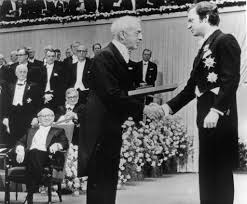
Saul Bellow: 'We do not, we writers, represent mankind adequately', Nobel acceptance - 1976

January 1, 2016

12 December 1976, Stockholm, Sweden

Video excerpt of Saul Bellow's speech here

I was a very contrary undergraduate more than 40 years ago. It was my habit to register for a course and then to do most of my reading in another field of study. So that when I should have been grinding away at "Money and Banking" I was reading the novels of Joseph Conrad. I have never had reason to regret this. Perhaps Conrad appealed to me because he was like an American - he was an uprooted Pole sailing exotic seas, speaking French and writing English with extraordinary power and beauty. Nothing could be more natural to me, the child of immigrants who grew up in one of Chicago's immigrant neighborhoods of course! - a Slav who was a British sea captain and knew his way around Marseilles and wrote an Oriental sort of English. But Conrad's real life had little oddity in it. His themes were straightforward - fidelity, command, the traditions of the sea, hierarchy, the fragile rules sailors follow when they are struck by a typhoon. He believed in the strength of these fragile-seeming rules, and in his art. His views on art were simply stated in the preface to The Nigger of the Narcissus. There he said that art was an attempt to render the highest justice to the visible universe: that it tried to find in that universe, in matter as well as in the facts of life, what was fundamental, enduring, essential. The writer's method of attaining the essential was different from that of the thinker or the scientist. These, said Conrad, knew the world by systematic examination. To begin with the artist had only himself; he descended within himself and in the lonely regions to which he descended, he found "the terms of his appeal". He appealed, said Conrad, "to that part of our being which is a gift, not an acquisition, to the capacity for delight and wonder... our sense of pity and pain, to the latent feeling of fellowship with all creation - and to the subtle but invincible conviction of solidarity that knits together the loneliness of innumerable hearts... which binds together all humanity - the dead to the living and the living to the unborn."

This fervent statement was written some 80 years ago and we may want to take it with a few grains of contemporary salt. I belong to a generation of readers that knew the long list of noble or noble-sounding words, words like "invincible conviction" or "humanity" rejected by writers like Ernest Hemingway. Hemingway spoke for the soldiers who fought in the First World War under the inspiration of Woodrow Wilson and other rotund statesmen whose big words had to be measured against the frozen corpses of young men paving the trenches. Hemingway's youthful readers were convinced that the horrors of the 20th Century had sickened and killed humanistic beliefs with their deadly radiations. I told myself, therefore, that Conrad's rhetoric must be resisted. But I never thought him mistaken. He spoke directly to me. The feeling individual appeared weak - he felt nothing but his own weakness. But if he accepted his weakness and his separateness and descended into himself intensifying his loneliness, he discovered his solidarity with other isolated creatures.

I feel no need now to sprinkle Conrad's sentences with skeptical salt. But there are writers for whom the Conradian novel - all novels of that sort - are gone forever. Finished. There is, for instance, M. Alain Robbe-Grillet, one of the leaders of French literature, a spokesman for "thingism" - choseisme. He writes that in great contemporary works, Sartre's Nausea, Camus' The Stranger, or Kafka's The Castle, there are no characters; you find in such books not individuals but - well, entities. "The novel of characters," he says, "belongs entirely in the past. It describes a period: that which marked the apogee of the individual." This is not necessarily an improvement; that Robbe-Grillet admits. But it is the truth. Individuals have been wiped out. "The present period is rather one of administrative numbers. The world's destiny has ceased, for us, to be identified with the rise and fall of certain men of certain families." He goes on to say that in the days of Balzac's bourgeoisie it was important to have a name and a character; character was a weapon in the struggle for survival and success. In that time, "It was something to have a face in a universe where personality represented both the means and the end of all exploration." But our world, he concludes, is more modest. It has renounced the omnipotence of the person. But it is more ambitious as well, "since it looks beyond. The exclusive cult of the 'human' has given way to a larger consciousness, one that is less anthropocentric." However, he comforts us, a new course and the promise of new discoveries lie before us.

On an occasion like this I have no appetite for polemics. We all know what it is to be tired of "characters". Human types have become false and boring. D.H. Lawrence put it early in this century that we human beings, our instincts damaged by Puritanism, no longer care for, were physically repulsive to one another. "The sympathetic heart is broken," he said. He went further, "We stink in each other's nostrils." Besides, in Europe the power of the classics has for centuries been so great that every country has its "identifiable personalities" derived from Molière, Racine, Dickens or Balzac. An awful phenomenon. Perhaps this is connected with the wonderful French saying. "Sil y a un caractère, il est mauvais." It leads one to think that the unoriginal human race tends to borrow what it needs from convenient sources, much as new cities have often been made out of the rubble of old ones. Then, too, the psychoanalytic conception of character is that it is an ugly rigid formation - something we must resign ourselves to, not a thing we can embrace with joy. Totalitarian ideologies, too, have attacked bourgeois individualism, sometimes identifying character with property. There is a hint of this in M. Robbe-Grillet's argument. Dislike of personality, bad masks, false being have had political results.

But I am interested here in the question of the artist's priorities. Is it necessary, or good, that he should begin with historical analysis, with ideas or systems? Proust speaks in Time Regained of a growing preference among young and intelligent readers for works of an elevated analytical, moral or sociological tendency. He says that they prefer to Bergotte (the novelist in Remembrance of Things Past) writers who seem to them more profound. "But," says Proust, "from the moment that works of art are judged by reasoning, nothing is stable or certain, one can prove anything one likes."

The message of Robbe-Grillet is not new. It tells us that we must purge ourselves of bourgeois anthropocentricism and do the classy things that our advanced culture requires. Character? "Fifty years of disease, the death notice signed many times over by the serious essayists," says Robbe-Grillet, "yet nothing has managed to knock it off the pedestal on which the 19th century had placed it. It is a mummy now, but one still enthroned with the same phony majesty, among the values revered by traditional criticism."

The title of Robbe-Grillet's essay is On Several Obsolete Notions. I myself am tired of obsolete notions and of mummies of all kinds but I never tire of reading the master novelists. And what is one to do about the characters in their books? Is it necessary to discontinue the investigation of character? Can anything so vivid in them now be utterly dead? Can it be that human beings are at a dead end? Is individuality really so dependent on historical and cultural conditions? Can we accept the account of those conditions we are so "authoritatively" given? I suggest that it is not in the intrinsic interest of human beings but in these ideas and accounts that the problem lies. The staleness, the inadequacy of these repels us. To find the source of trouble we must look into our own heads.

The fact that the death notice of character "has been signed by the most serious essayists" means only that another group of mummies, the most respectable leaders of the intellectual community, has laid down the law. It amuses me that these serious essayists should be allowed to sign the death notices of literary forms. Should art follow culture? Something has gone wrong.

There is no reason why a novelist should not drop "character" if the strategy stimulates him. But it is nonsense to do it on the theoretical ground that the period which marked the apogee of the individual, and so on, has ended. We must not make bosses of our intellectuals. And we do them no good by letting them run the arts. Should they, when they read novels, find nothing in them but the endorsement of their own opinions? Are we here on earth to play such games?

Characters, Elizabeth Bowen once said, are not created by writers. They pre-exist and they have to be found. If we do not find them, if we fail to represent them, the fault is ours. It must be admitted, however, that finding them is not easy. The condition of human beings has perhaps never been more difficult to define. Those who tell us that we are in an early stage of universal history must be right. We are being lavishly poured together and seem to be experiencing the anguish of new states of consciousness. In America many millions of people have in the last forty years received a "higher education" - in many cases a dubious blessing. In the upheavals of the Sixties we felt for the first time the effects of up-to-date teachings, concepts, sensitivities, the pervasiveness of psychological, pedagogical, political ideas.

Every year we see scores of books and articles which tell the Americans what a state they are in - which make intelligent or simpleminded or extravagant or lurid or demented statements. All reflect the crises we are in while telling us what we must do about them; these analysts are produced by the very disorder and confusion they prescribe for. It is as a writer that I am considering their extreme moral sensitivity, their desire for perfection, their intolerance of the defects of society, the touching, the comical boundlessness of their demands, their anxiety, their irritability, their sensitivity, their tendermindedness, their goodness, their convulsiveness, the recklessness with which they experiment with drugs and touch-therapies and bombs. The ex-Jesuit Malachi Martin in his book on the Church compares the modern American to Michelangelo's sculpture, The Captive. He sees "an unfinished struggle to emerge whole" from a block of matter. The American "captive" is beset in his struggle by "interpretations, admonitions, forewarnings and descriptions of himself by the self-appointed prophets, priests, judges and prefabricators of his travail," says Martin.

Let me take a little time to look more closely at this travail. In private life, disorder or near-panic. In families - for husbands, wives, parents, children - confusion; in civic behavior, in personal loyalities, in sexual practices (I will not recite the whole list; we are tired of hearing it) - further confusion. And with this private disorder goes public bewilderment. In the papers we read what used to amuse us in science fiction - The New York Times speaks of death rays and of Russian and American satellites at war in space. In the November Encounter so sober and responsible an economist as my colleague, Milton Friedman, declares that Great Britain by its public spending will soon go the way of poor countries like Chile. He is appalled by his own forecast. What - the source of that noble tradition of freedom and democratic rights that began with Magna Carta ending in dictatorship? "It is almost impossible for anyone brought up in that tradition to utter the word that Britain is in danger of losing freedom and democracy; and yet it is a fact!"

It is with these facts that knock us to the ground that we try to live. If I were debating with Professor Friedman I might ask him to take into account the resistance of institutions, the cultural differences between Great Britain and Chile, differences in national character and traditions, but my purpose is not to get into debates I can't win but to direct your attention to the terrible predictions we have to live with, the background of disorder, the visions of ruin.

You would think that one such article would be enough for a single number of a magazine but on another page of Encounter Professor Hugh Seton-Watson discusses George Kennan's recent survey of American degeneracy and its dire meaning for the world. Describing America's failure, Kennan speaks of crime, urban decay, drug-addiction, pornography, frivolity, deteriorated educational standards and concludes that our immense power counts for nothing. We cannot lead the world and, undermined by sinfulness, we may not be able to defend ourselves. Professor Seton-Watson writes, "Nothing can defend a society if its upper 100,000 men and women, both the decision-makers and those who help to mould the thinking of the decision-makers, are resolved to capitulate."

So much for the capitalist superpower. Now what about its ideological adversaries? I turn the pages of Encounter to a short study by Mr. George Watson, Lecturer in English at Cambridge, on the racialism of the Left. He tells us that Hyndman, the founder of the Social Democratic Federation, called the South African war the Jews' war; that the Webbs at times expressed racialist views (as did Ruskin, Carlyle and T. H. Huxley before them); he relates that Engels denounced the smaller Slav peoples of Eastern Europe as counter-revolutionary ethnic trash; and Mr. Watson in conclusion cites a public statement by Ulrike Meinhof of the West German "Red Army Faction" made at a judicial hearing in 1972 approving of "revolutionary extermination". For her, German anti-semitism of the Hitler period was essentially anticapitalist. "Auschwitz," she is quoted as saying, "meant that six million Jews were killed and thrown on the waste heap of Europe for what they were: money Jews (Geldjuden)."

I mention these racialists of the Left to show that for us there is no simple choice between the children of light and the children of darkness. Good and evil are not symmetrically distributed along political lines. But I have made my point; we stand open to all anxieties. The decline and fall of everything is our daily dread, we are agitated in private life and tormented by public questions.

And art and literature - what of them? Well, there is a violent uproar but we are not absolutely dominated by it. We are still able to think, to discriminate, and to feel. The purer, subtler, higher activities have not succumbed to fury or to nonsense. Not yet. Books continue to be written and read. It may be more difficult to reach the whirling mind of a modern reader but it is possible to cut through the noise and reach the quiet zone. In the quiet zone we may find that he is devoutly waiting for us. When complications increase, the desire for essentials increases too. The unending cycle of crises that began with the First World War has formed a kind of person, one who has lived through terrible, strange things, and in whom there is an observable shrinkage of prejudices, a casting off of disappointing ideologies, an ability to live with many kinds of madness, an immense desire for certain durable human goods - truth, for instance, or freedom, or wisdom. I don't think I am exaggerating; there is plenty of evidence for this. Disintegration? Well, yes. Much is disintegrating but we are experiencing also an odd kind of refining process. And this has been going on for a long time. Looking into Proust's Time Regained I find that he was clearly aware of it. His novel, describing French society during the Great War, tests the strength of his art. Without art, he insists, shirking no personal or collective horrors, we do not know ourselves or anyone else. Only art penetrates what pride, passion, intelligence and habit erect on all sides - the seeming realities of this world. There is another reality, the genuine one, which we lose sight of. This other reality is always sending us hints, which, without art, we can't receive. Proust calls these hints our "true impressions." The true impressions, our persistent intuitions, will, without art, be hidden from us and we will be left with nothing but a "terminology for practical ends which we falsely call life." Tolstoy put the matter in much the same way. A book like his Ivan Ilyitch also describes these same "practical ends" which conceal both life and death from us. In his final sufferings Ivan Ilyitch becomes an individual, a "character", by tearing down the concealments, by seeing through the "practical ends."

Proust was still able to keep a balance between art and destruction, insisting that art was a necessity of life, a great independent reality, a magical power. But for a long time art has not been connected, as it was in the past, with the main enterprise. The historian Edgar Wind tells us in Art and Anarchy that Hegel long ago observed that art no longer engaged the central energies of man. These energies were now engaged by science - a "relentless spirit of rational inquiry." Art had moved to the margins. There it formed "a wide and splendidly varied horizon." In an age of science people still painted and wrote poetry but, said Hegel, however splendid the gods looked in modern works of art and whatever dignity and perfection we might find "in the images of God the Father and the Virgin Mary" it was of no use: we no longer bent our knees. It is a long time since the knees were bent in piety. Ingenuity, daring exploration, freshness of invention replaced the art of "direct relevance." The most significant achievement of this pure art, in Hegel's view, was that, freed from its former responsibilities, it was no longer "serious." Instead it raised the soul through the "serenity of form above any painful involvement in the limitations of reality." I don't know who would make such a claim today for an art that raises the soul above painful involvements with reality. Nor am I sure that at this moment, it is the spirit of rational inquiry in pure science that engages the central energies of man. The center seems (temporarily perhaps) to be filled up with the crises I have been describing.

There were European writers in the 19th Century who would not give up the connection of literature with the main human enterprise. The very suggestion would have shocked Tolstoy and Dostoevski. But in the West a separation between great artists and the general public took place. They developed a marked contempt for the average reader and the bourgeois mass. The best of them saw clearly enough what sort of civilization Europe had produced, brilliant but unstable, vulnerable, fated to be overtaken by catastrophe, the historian Erich Auerbach tells us. Some of these writers, he says, produced "strange and vaguely terrifying works, or shocked the public by paradoxical and extreme opinions. Many of them took no trouble to facilitate the understanding of what they wrote - whether out of contempt for the public, the cult of their own inspiration, or a certain tragic weakness which prevented them from being at once simple and true."

In the 20th Century, theirs is still the main influence, for despite a show of radicalism and innovation our contemporaries are really very conservative. They follow their l9th-Century leaders and hold to the old standard, interpreting history and society much as they were interpreted in the last century. What would writers do today if it would occur to them that literature might once again engage those "central energies", if they were to recognize that an immense desire had arisen for a return from the periphery, for what was simple and true?

Of course we can't come back to the center simply because we want to; but the fact that we are wanted might matter to us and the force of the crisis is so great that it may summon us back to such a center. But prescriptions are futile. One can't tell writers what to do. The imagination must find its own path. But one can fervently wish that they - that we - would come back from the periphery. We do not, we writers, represent mankind adequately. What account do Americans give of themselves, what accounts of them are given by psychologists, sociologists, historians, journalists, and writers? In a kind of contractual daylight they see themselves in the ways with which we are so desperately familiar. These images of contractual daylight, so boring to Robbe-Grillet and to me, originate in the contemporary world view: We put into our books the consumer, civil servant, football fan, lover, television viewer. And in the contractual daylight version their life is a kind of death. There is another life coming from an insistent sense of what we are which denies these daylight formulations and the false life - the death in life - they make for us. For it is false, and we know it, and our secret and incoherent resistance to it cannot stop, for that resistance arises from persistent intuitions. Perhaps humankind cannot bear too much reality, but neither can it bear too much unreality, too much abuse of the truth.

We do not think well of ourselves; we do not think amply about what we are. Our collective achievements have so greatly "exceeded" us that we "justify" ourselves by pointing to them. It is the jet plane in which we commonplace human beings have crossed the Atlantic in four hours that embodies such value as we can claim. Then we hear that this is closing time in the gardens of the West, that the end of our capitalist civilization is at hand. Some years ago Cyril Connolly wrote that we were about to undergo "a complete mutation, not merely to be defined as the collapse of the capitalist system, but such a sea-change in the nature of reality as could not have been envisaged by Karl Marx or Sigmund Freud." This means that we are not yet sufficiently shrunken; we must prepare to be smaller still. I am not sure whether this should be called intellectual analysis or analysis by an intellectual. The disasters are disasters. It would be worse than stupid to call them victories as some statesmen have tried to do. But I am drawing attention to the fact that there is in the intellectual community a sizeable inventory of attitudes that have become respectable - notions about society, human nature, class, politics, sex, about mind, about the physical universe, the evolution of life. Few writers, even among the best, have taken the trouble to re-examine these attitudes or orthodoxies. Such attitudes only glow more powerfully in Joyce or D.H. Lawrence than in the books of lesser men; they are everywhere and no one challenges them seriously. Since the Twenties, how many novelists have taken a second look at D.H. Lawrence, or argued a different view of sexual potency or the effects of industrial civilization on the instincts? Literature has for nearly a century used the same stock of ideas, myths, strategies. "The most serious essayists of the last fifty years," says Robbe-Grillet. Yes, indeed. Essay after essay, book after book, confirm the most serious thoughts - Baudelairian, Nietzschean, Marxian, Psychoanalytic, etcetera, etcetera - of these most serious essayists. What Robbe-Grillet says about character can be said also about these ideas, maintaining all the usual things about mass society, dehumanization and the rest. How weary we are of them. How poorly they represent us. The pictures they offer no more resemble us than we resemble the reconstructed reptiles and other monsters in a museum of paleontology. We are much more limber, versatile, better articulated, there is much more to us, we all feel it.

What is at the center now? At the moment, neither art nor science but mankind determining, in confusion and obscurity, whether it will endure or go under. The whole species - everybody - has gotten into the act. At such a time it is essential to lighten ourselves, to dump encumbrances, including the encumbrances of education and all organized platitudes, to make judgments of our own, to perform acts of our own. Conrad was right to appeal to that part of our being which is a gift. We must hunt for that under the wreckage of many systems. The failure of those systems may bring a blessed and necessary release from formulations, from an over-defined and misleading consciousness. With increasing frequency I dismiss as merely respectable opinions I have long held - or thought I held - and try to discern what I have really lived by, and what others live by. As for Hegel's art freed from "seriousness" and glowing on the margins, raising the soul above painful involvement in the limitations of reality through the serenity of form, that can exist nowhere now, during this struggle for survival. However, it is not as though the people who engaged in this struggle had only a rudimentary humanity, without culture, and knew nothing of art. Our very vices, our mutilations, show how rich we are in thought and culture. How much we know. How much we even feel. The struggle that convulses us makes us want to simplify, to reconsider, to eliminate the tragic weakness which prevented writers - and readers - from being at once simple and true.

Writers are greatly respected. The intelligent public is wonderfully patient with them, continues to read them and endures disappointment after disappointment, waiting to hear from art what it does not hear from theology, philosophy, social theory, and what it cannot hear from pure science. Out of the struggle at the center has come an immense, painful longing for a broader, more flexible, fuller, more coherent, more comprehensive account of what we human beings are, who we are, and what this life is for. At the center humankind struggles with collective powers for its freedom, the individual struggles with dehumanization for the possession of his soul. If writers do not come again into the center it will not be because the center is pre-empted. It is not. They are free to enter. If they so wish.

The essence of our real condition, the complexity, the confusion, the pain of it is shown to us in glimpses, in what Proust and Tolstoy thought of as "true impressions". This essence reveals, and then conceals itself. When it goes away it leaves us again in doubt. But we never seem to lose our connection with the depths from which these glimpses come. The sense of our real powers, powers we seem to derive from the universe itself, also comes and goes. We are reluctant to talk about this because there is nothing we can prove, because our language is inadequate and because few people are willing to risk talking about it. They would have to say, "There is a spirit" and that is taboo. So almost everyone keeps quiet about it, although almost everyone is aware of it.

The value of literature lies in these intermittent "true impressions". A novel moves back and forth between the world of objects, of actions, of appearances, and that other world from which these "true impressions" come and which moves us to believe that the good we hang onto so tenaciously - in the face of evil, so obstinately - is no illusion.

No one who has spent years in the writing of novels can be unaware of this. The novel can't be compared to the epic, or to the monuments of poetic drama. But it is the best we can do just now. It is a sort of latter-day lean-to, a hovel in which the spirit takes shelter. A novel is balanced between a few true impressions and the multitude of false ones that make up most of what we call life. It tells us that for every human being there is a diversity of existences, that the single existence is itself an illusion in part, that these many existences signify something, tend to something, fulfill something; it promises us meaning, harmony and even justice. What Conrad said was true, art attempts to find in the universe, in matter as well as in the facts of life, what is fundamental, enduring, essential.

From Nobel Lectures, Literature 1968-1980, Editor-in-Charge Tore Frängsmyr, Editor Sture Allén, World Scientific Publishing Co., Singapore, 1993

Source: http://www.nobelprize.org/nobel_prizes/lit...

Enjoyed this speech? Speakola is a labour of love and I’d be very grateful if you would share, tweet or like it. Thank you.

Facebook Twitter Facebook
In BOOKS Tags SAUL BELLOW, NOVELIST, NOBEL PRIZE
Comment

Bertrand Russell: 'All human activity is prompted by desire', Nobel acceptance - 1950

January 1, 2016

Audio of opening paragraph is here

11 December 1950,  receiving Nobel Prize for Literature, Stockholm, Sweden

Your Royal Highness, ladies and gentleman,

I have chosen this subject for my lecture tonight because I think that most current discussions of politics and political theory take insufficient account of psychology. Economic facts, population statistics, constitutional organization, and so on, are set forth minutely. There is no difficulty in finding out how many South Koreans and how many North Koreans there were when the Korean War began. If you will look into the right books you will be able to ascertain what was their average income per head, and what were the sizes of their respective armies. But if you want to know what sort of person a Korean is, and whether there is any appreciable difference between a North Korean and a South Korean; if you wish to know what they respectively want out of life, what are their discontents, what their hopes and what their fears; in a word, what it is that, as they say, «makes them tick», you will look through the reference books in vain. And so you cannot tell whether the South Koreans are enthusiastic about UNO, or would prefer union with their cousins in the North. Nor can you guess whether they are willing to forgo land reform for the privilege of voting for some politician they have never heard of. It is neglect of such questions by the eminent men who sit in remote capitals, that so frequently causes disappointment. If politics is to become scientific, and if the event is not to be constantly surprising, it is imperative that our political thinking should penetrate more deeply into the springs of human action. What is the influence of hunger upon slogans? How does their effectiveness fluctuate with the number of calories in your diet? If one man offers you democracy and another offers you a bag of grain, at what stage of starvation will you prefer the grain to the vote? Such questions are far too little considered. However, let us, for the present, forget the Koreans, and consider the human race.

All human activity is prompted by desire. There is a wholly fallacious theory advanced by some earnest moralists to the effect that it is possible to resist desire in the interests of duty and moral principle. I say this is fallacious, not because no man ever acts from a sense of duty, but because duty has no hold on him unless he desires to be dutiful. If you wish to know what men will do, you must know not only, or principally, their material circumstances, but rather the whole system of their desires with their relative strengths.

There are some desires which, though very powerful, have not, as a rule, any great political importance. Most men at some period of their lives desire to marry, but as a rule they can satisfy this desire without having to take any political action. There are, of course, exceptions; the rape of the Sabine women is a case in point. And the development of northern Australia is seriously impeded by the fact that the vigorous young men who ought to do the work dislike being wholly deprived of female society. But such cases are unusual, and in general the interest that men and women take in each other has little influence upon politics.

The desires that are politically important may be divided into a primary and a secondary group. In the primary group come the necessities of life: food and shelter and clothing. When these things become very scarce, there is no limit to the efforts that men will make, or to the violence that they will display, in the hope of securing them. It is said by students of the earliest history that, on four separate occasions, drought in Arabia caused the population of that country to overflow into surrounding regions, with immense effects, political, cultural, and religious. The last of these four occasions was the rise of Islam. The gradual spread of Germanic tribes from southern Russia to England, and thence to San Francisco, had similar motives. Undoubtedly the desire for food has been, and still is, one of the main causes of great political events.

But man differs from other animals in one very important respect, and that is that he has some desires which are, so to speak, infinite, which can never be fully gratified, and which would keep him restless even in Paradise. The boa constrictor, when he has had an adequate meal, goes to sleep, and does not wake until he needs another meal. Human beings, for the most part, are not like this. When the Arabs, who had been used to living sparingly on a few dates, acquired the riches of the Eastern Roman Empire, and dwelt in palaces of almost unbelievable luxury, they did not, on that account, become inactive. Hunger could no longer be a motive, for Greek slaves supplied them with exquisite viands at the slightest nod. But other desires kept them active: four in particular, which we can label acquisitiveness, rivalry, vanity, and love of power.

Acquisitiveness - the wish to possess as much as possible of goods, or the title to goods - is a motive which, I suppose, has its origin in a combination of fear with the desire for necessaries. I once befriended two little girls from Estonia, who had narrowly escaped death from starvation in a famine. They lived in my family, and of course had plenty to eat. But they spent all their leisure visiting neighbouring farms and stealing potatoes, which they hoarded. Rockefeller, who in his infancy had experienced great poverty, spent his adult life in a similar manner. Similarly the Arab chieftains on their silken Byzantine divans could not forget the desert, and hoarded riches far beyond any possible physical need. But whatever may be the psychoanalysis of acquisitiveness, no one can deny that it is one of the great motives - especially among the more powerful, for, as I said before, it is one of the infinite motives. However much you may acquire, you will always wish to acquire more; satiety is a dream which will always elude you.

But acquisitiveness, although it is the mainspring of the capitalist system, is by no means the most powerful of the motives that survive the conquest of hunger. Rivalry is a much stronger motive. Over and over again in Mohammedan history, dynasties have come to grief because the sons of a sultan by different mothers could not agree, and in the resulting civil war universal ruin resulted. The same sort of thing happens in modern Europe. When the British Government very unwisely allowed the Kaiser to be present at a naval review at Spithead, the thought which arose in his mind was not the one which we had intended. What he thought was, «I must have a Navy as good as Grandmamma's». And from this thought have sprung all our subsequent troubles. The world would be a happier place than it is if acquisitiveness were always stronger than rivalry. But in fact, a great many men will cheerfully face impoverishment if they can thereby secure complete ruin for their rivals. Hence the present level of taxation.

Vanity is a motive of immense potency. Anyone who has much to do with children knows how they are constantly performing some antic, and saying «Look at me». «Look at me» is one of the most fundamental desires of the human heart. It can take innumerable forms, from buffoonery to the pursuit of posthumous fame. There was a Renaissance Italian princeling who was asked by the priest on his deathbed if he had anything to repent of. «Yes», he said, «there is one thing. On one occasion I had a visit from the Emperor and the Pope simultaneously. I took them to the top of my tower to see the view, and I neglected the opportunity to throw them both down, which would have given me immortal fame». History does not relate whether the priest gave him absolution. One of the troubles about vanity is that it grows with what it feeds on. The more you are talked about, the more you will wish to be talked about. The condemned murderer who is allowed to see the account of his trial in the press is indignant if he finds a newspaper which has reported it inadequately. And the more he finds about himself in other newspapers, the more indignant he will be with the one whose reports are meagre. Politicians and literary men are in the same case. And the more famous they become, the more difficult the press-cutting agency finds it to satisfy them. It is scarcely possible to exaggerate the influence of vanity throughout the range of human life, from the child of three to the potentate at whose frown the world trembles. Mankind have even committed the impiety of attributing similar desires to the Deity, whom they imagine avid for continual praise.

But great as is the influence of the motives we have been considering, there is one which outweighs them all. I mean the love of power. Love of power is closely akin to vanity, but it is not by any means the same thing. What vanity needs for its satisfaction is glory, and it is easy to have glory without power. The people who enjoy the greatest glory in the United States are film stars, but they can be put in their place by the Committee for Un-American Activities, which enjoys no glory whatever. In England, the King has more glory than the Prime Minister, but the Prime Minister has more power than the King. Many people prefer glory to power, but on the whole these people have less effect upon the course of events than those who prefer power to glory. When Blücher, in 1814, saw Napoleon's palaces, he said, «Wasn't he a fool to have all this and to go running after Moscow.» Napoleon, who certainly was not destitute of vanity, preferred power when he had to choose. To Blücher, this choice seemed foolish. Power, like vanity, is insatiable. Nothing short of omnipotence could satisfy it completely. And as it is especially the vice of energetic men, the causal efficacy of love of power is out of all proportion to its frequency. It is, indeed, by far the strongest motive in the lives of important men.

Love of power is greatly increased by the experience of power, and this applies to petty power as well as to that of potentates. In the happy days before 1914, when well-to-do ladies could acquire a host of servants, their pleasure in exercising power over the domestics steadily increased with age. Similarly, in any autocratic regime, the holders of power become increasingly tyrannical with experience of the delights that power can afford. Since power over human beings is shown in making them do what they would rather not do, the man who is actuated by love of power is more apt to inflict pain than to permit pleasure. If you ask your boss for leave of absence from the office on some legitimate occasion, his love of power will derive more satisfaction from a refusal than from a consent. If you require a building permit, the petty official concerned will obviously get more pleasure from saying «No» than from saying «Yes». It is this sort of thing which makes the love of power such a dangerous motive.

But it has other sides which are more desirable. The pursuit of knowledge is, I think, mainly actuated by love of power. And so are all advances in scientific technique. In politics, also, a reformer may have just as strong a love of power as a despot. It would be a complete mistake to decry love of power altogether as a motive. Whether you will be led by this motive to actions which are useful, or to actions which are pernicious, depends upon the social system, and upon your capacities. If your capacities are theoretical or technical, you will contribute to knowledge or technique, and, as a rule, your activity will be useful. If you are a politician you may be actuated by love of power, but as a rule this motive will join itself on to the desire to see some state of affairs realized which, for some reason, you prefer to the status quo. A great general may, like Alcibiades, be quite indifferent as to which side he fights on, but most generals have preferred to fight for their own country, and have, therefore, had other motives besides love of power. The politician may change sides so frequently as to find himself always in the majority, but most politicians have a preference for one party to the other, and subordinate their love of power to this preference. Love of power as nearly pure as possible is to be seen in various different types of men. One type is the soldier of fortune, of whom Napoleon is the supreme example. Napoleon had, I think, no ideological preference for France over Corsica, but if he had become Emperor of Corsica he would not have been so great a man as he became by pretending to be a Frenchman. Such men, however, are not quite pure examples, since they also derive immense satisfaction from vanity. The purest type is that of the eminence grise - the power behind the throne that never appears in public, and merely hugs itself with the secret thought: «How little these puppets know who is pulling the strings.» Baron Holstein, who controlled the foreign policy of the German Empire from 1890 to 1906, illustrates this type to perfection. He lived in a slum; he never appeared in society; he avoided meeting the Emperor, except on one single occasion when the Emperor's importunity could not be resisted; he refused all invitations to Court functions, on the ground that he possessed no court dress. He had acquired secrets which enabled him to blackmail the Chancellor and many of the Kaiser's intimates. He used the power of blackmail, not to acquire wealth, or fame, or any other obvious advantage, but merely to compel the adoption of the foreign policy he preferred. In the East, similar characters were not very uncommon among eunuchs.

I come now to other motives which, though in a sense less fundamental than those we have been considering, are still of considerable importance. The first of these is love of excitement. Human beings show their superiority to the brutes by their capacity for boredom, though I have sometimes thought, in examining the apes at the zoo, that they, perhaps, have the rudiments of this tiresome emotion. However that may be, experience shows that escape from boredom is one of the really powerful desires of almost all human beings. When white men first effect contact with some unspoilt race of savages, they offer them all kinds of benefits, from the light of the gospel to pumpkin pie. These, however, much as we may regret it, most savages receive with indifference. What they really value among the gifts that we bring to them is intoxicating liquor which enables them, for the first time in their lives, to have the illusion for a few brief moments that it is better to be alive than dead. Red Indians, while they were still unaffected by white men, would smoke their pipes, not calmly as we do, but orgiastically, inhaling so deeply that they sank into a faint. And when excitement by means of nicotine failed, a patriotic orator would stir them up to attack a neighbouring tribe, which would give them all the enjoyment that we (according to our temperament) derive from a horse race or a General Election. The pleasure of gambling consists almost entirely in excitement. Monsieur Huc describes Chinese traders at the Great Wall in winter, gambling until they have lost all their cash, then proceeding to lose all their merchandise, and at last gambling away their clothes and going out naked to die of cold. With civilized men, as with primitive Red Indian tribes, it is, I think, chiefly love of excitement which makes the populace applaud when war breaks out; the emotion is exactly the same as at a football match, although the results are sometimes somewhat more serious.

It is not altogether easy to decide what is the root cause of the love of excitement. I incline to think that our mental make-up is adapted to the stage when men lived by hunting. When a man spent a long day with very primitive weapons in stalking a deer with the hope of dinner, and when, at the end of the day, he dragged the carcass triumphantly to his cave, he sank down in contented weariness, while his wife dressed and cooked the meat. He was sleepy, and his bones ached, and the smell of cooking filled every nook and cranny of his consciousness. At last, after eating, he sank into deep sleep. In such a life there was neither time nor energy for boredom. But when he took to agriculture, and made his wife do all the heavy work in the fields, he had time to reflect upon the vanity of human life, to invent mythologies and systems of philosophy, and to dream of the life hereafter in which he would perpetually hunt the wild boar of Valhalla. Our mental make-up is suited to a life of very severe physical labor. I used, when I was younger, to take my holidays walking. I would cover twenty-five miles a day, and when the evening came I had no need of anything to keep me from boredom, since the delight of sitting amply sufficed. But modern life cannot be conducted on these physically strenuous principles. A great deal of work is sedentary, and most manual work exercises only a few specialized muscles. When crowds assemble in Trafalgar Square to cheer to the echo an announcement that the government has decided to have them killed, they would not do so if they had all walked twenty-five miles that day. This cure for bellicosity is, however, impracticable, and if the human race is to survive - a thing which is, perhaps, undesirable - other means must be found for securing an innocent outlet for the unused physical energy that produces love of excitement. This is a matter which has been too little considered, both by moralists and by social reformers. The social reformers are of the opinion that they have more serious things to consider. The moralists, on the other hand, are immensely impressed with the seriousness of all the permitted outlets of the love of excitement; the seriousness, however, in their minds, is that of Sin. Dance halls, cinemas, this age of jazz, are all, if we may believe our ears, gateways to Hell, and we should be better employed sitting at home contemplating our sins. I find myself unable to be in entire agreement with the grave men who utter these warnings. The devil has many forms, some designed to deceive the young, some designed to deceive the old and serious. If it is the devil that tempts the young to enjoy themselves, is it not, perhaps, the same personage that persuades the old to condemn their enjoyment? And is not condemnation perhaps merely a form of excitement appropriate to old age? And is it not, perhaps, a drug which - like opium - has to be taken in continually stronger doses to produce the desired effect? Is it not to be feared that, beginning with the wickedness of the cinema, we should be led step by step to condemn the opposite political party, dagoes, wops, Asiatics, and, in short, everybody except the fellow members of our club? And it is from just such condemnations, when widespread, that wars proceed. I have never heard of a war that proceeded from dance halls.

What is serious about excitement is that so many of its forms are destructive. It is destructive in those who cannot resist excess in alcohol or gambling. It is destructive when it takes the form of mob violence. And above all it is destructive when it leads to war. It is so deep a need that it will find harmful outlets of this kind unless innocent outlets are at hand. There are such innocent outlets at present in sport, and in politics so long as it is kept within constitutional bounds. But these are not sufficient, especially as the kind of politics that is most exciting is also the kind that does most harm. Civilized life has grown altogether too tame, and, if it is to be stable, it must provide harmless outlets for the impulses which our remote ancestors satisfied in hunting. In Australia, where people are few and rabbits are many, I watched a whole populace satisfying the primitive impulse in the primitive manner by the skillful slaughter of many thousands of rabbits. But in London or New York some other means must be found to gratify primitive impulse. I think every big town should contain artificial waterfalls that people could descend in very fragile canoes, and they should contain bathing pools full of mechanical sharks. Any person found advocating a preventive war should be condemned to two hours a day with these ingenious monsters. More seriously, pains should be taken to provide constructive outlets for the love of excitement. Nothing in the world is more exciting than a moment of sudden discovery or invention, and many more people are capable of experiencing such moments than is sometimes thought.

Interwoven with many other political motives are two closely related passions to which human beings are regrettably prone: I mean fear and hate. It is normal to hate what we fear, and it happens frequently, though not always, that we fear what we hate. I think it may be taken as the rule among primitive men, that they both fear and hate whatever is unfamiliar. They have their own herd, originally a very small one. And within one herd, all are friends, unless there is some special ground of enmity. Other herds are potential or actual enemies; a single member of one of them who strays by accident will be killed. An alien herd as a whole will be avoided or fought according to circumstances. It is this primitive mechanism which still controls our instinctive reaction to foreign nations. The completely untravelled person will view all foreigners as the savage regards a member of another herd. But the man who has travelled, or who has studied international politics, will have discovered that, if his herd is to prosper, it must, to some degree, become amalgamated with other herds. If you are English and someone says to you, «The French are your brothers», your first instinctive feeling will be, «Nonsense. They shrug their shoulders, and talk French. And I am even told that they eat frogs.» If he explains to you that we may have to fight the Russians, that, if so, it will be desirable to defend the line of the Rhine, and that, if the line of the Rhine is to be defended, the help of the French is essential, you will begin to see what he means when he says that the French are your brothers. But if some fellow-traveller were to go on to say that the Russians also are your brothers, he would be unable to persuade you, unless he could show that we are in danger from the Martians. We love those who hate our enemies, and if we had no enemies there would be very few people whom we should love.

All this, however, is only true so long as we are concerned solely with attitudes towards other human beings. You might regard the soil as your enemy because it yields reluctantly a niggardly subsistence. You might regard Mother Nature in general as your enemy, and envisage human life as a struggle to get the better of Mother Nature. If men viewed life in this way, cooperation of the whole human race would become easy. And men could easily be brought to view life in this way if schools, newspapers, and politicians devoted themselves to this end. But schools are out to teach patriotism; newspapers are out to stir up excitement; and politicians are out to get re-elected. None of the three, therefore, can do anything towards saving the human race from reciprocal suicide.

There are two ways of coping with fear: one is to diminish the external danger, and the other is to cultivate Stoic endurance. The latter can be reinforced, except where immediate action is necessary, by turning our thoughts away from the cause of fear. The conquest of fear is of very great importance. Fear is in itself degrading; it easily becomes an obsession; it produces hate of that which is feared, and it leads headlong to excesses of cruelty. Nothing has so beneficent an effect on human beings as security. If an international system could be established which would remove the fear of war, the improvement in everyday mentality of everyday people would be enormous and very rapid. Fear, at present, overshadows the world. The atom bomb and the bacterial bomb, wielded by the wicked communist or the wicked capitalist as the case may be, make Washington and the Kremlin tremble, and drive men further along the road toward the abyss. If matters are to improve, the first and essential step is to find a way of diminishing fear. The world at present is obsessed by the conflict of rival ideologies, and one of the apparent causes of conflict is the desire for the victory of our own ideology and the defeat of the other. I do not think that the fundamental motive here has much to do with ideologies. I think the ideologies are merely a way of grouping people, and that the passions involved are merely those which always arise between rival groups. There are, of course, various reasons for hating communists. First and foremost, we believe that they wish to take away our property. But so do burglars, and although we disapprove of burglars our attitude towards them is very different indeed from our attitude towards communists - chiefly because they do not inspire the same degree of fear. Secondly, we hate the communists because they are irreligious. But the Chinese have been irreligious since the eleventh century, and we only began to hate them when they turned out Chiang Kai-shek. Thirdly, we hate the communists because they do not believe in democracy, but we consider this no reason for hating Franco. Fourthly, we hate them because they do not allow liberty; this we feel so strongly that we have decided to imitate them. It is obvious that none of these is the real ground for our hatred. We hate them because we fear them and they threaten us. If the Russians still adhered to the Greek Orthodox religion, if they had instituted parliamentary government, and if they had a completely free press which daily vituperated us, then - provided they still had armed forces as powerful as they have now - we should still hate them if they gave us ground for thinking them hostile. There is, of course, the odium theologicum, and it can be a cause of enmity. But I think that this is an offshoot of herd feeling: the man who has a different theology feels strange, and whatever is strange must be dangerous. Ideologies, in fact, are one of the methods by which herds are created, and the psychology is much the same however the herd may have been generated.

You may have been feeling that I have allowed only for bad motives, or, at best, such as are ethically neutral. I am afraid they are, as a rule, more powerful than more altruistic motives, but I do not deny that altruistic motives exist, and may, on occasion, be effective. The agitation against slavery in England in the early nineteenth century was indubitably altruistic, and was thoroughly effective. Its altruism was proved by the fact that in 1833 British taxpayers paid many millions in compensation to Jamaican landowners for the liberation of their slaves, and also by the fact that at the Congress of Vienna the British Government was prepared to make important concessions with a view to inducing other nations to abandon the slave trade. This is an instance from the past, but present-day America has afforded instances equally remarkable. I will not, however, go into these, as I do not wish to become embarked in current controversies.

I do not think it can be questioned that sympathy is a genuine motive, and that some people at some times are made somewhat uncomfortable by the sufferings of some other people. It is sympathy that has produced the many humanitarian advances of the last hundred years. We are shocked when we hear stories of the ill-treatment of lunatics, and there are now quite a number of asylums in which they are not ill-treated. Prisoners in Western countries are not supposed to be tortured, and when they are, there is an outcry if the facts are discovered. We do not approve of treating orphans as they are treated in Oliver Twist. Protestant countries disapprove of cruelty to animals. In all these ways sympathy has been politically effective. If the fear of war were removed, its effectiveness would become much greater. Perhaps the best hope for the future of mankind is that ways will be found of increasing the scope and intensity of sympathy.

The time has come to sum up our discussion. Politics is concerned with herds rather than with individuals, and the passions which are important in politics are, therefore, those in which the various members of a given herd can feel alike. The broad instinctive mechanism upon which political edifices have to be built is one of cooperation within the herd and hostility towards other herds. The co-operation within the herd is never perfect. There are members who do not conform, who are, in the etymological sense, «egregious», that is to say, outside the flock. These members are those who have fallen below, or risen above, the ordinary level. They are: idiots, criminals, prophets, and discoverers. A wise herd will learn to tolerate the eccentricity of those who rise above the average, and to treat with a minimum of ferocity those who fall below it.

As regards relations to other herds, modern technique has produced a conflict between self-interest and instinct. In old days, when two tribes went to war, one of them exterminated the other, and annexed its territory. From the point of view of the victor, the whole operation was thoroughly satisfactory. The killing was not at all expensive, and the excitement was agreeable. It is not to be wondered at that, in such circumstances, war persisted. Unfortunately, we still have the emotions appropriate to such primitive warfare, while the actual operations of war have changed completely. Killing an enemy in a modern war is a very expensive operation. If you consider how many Germans were killed in the late war, and how much the victors are paying in income tax, you can, by a sum in long division, discover the cost of a dead German, and you will find it considerable. In the East, it is true, the enemies of the Germans have secured the ancient advantages of turning out the defeated population and occupying their lands. The Western victors, however, have secured no such advantages. It is obvious that modern war is not good business from a financial point of view. Although we won both the world wars, we should now be much richer if they had not occured. If men were actuated by self-interest, which they are not - except in the case of a few saints - the whole human race would cooperate. There would be no more wars, no more armies, no more navies, no more atom bombs. There would not be armies of propagandists employed in poisoning the minds of Nation A against Nation B, and reciprocally of Nation B against Nation A. There would not be armies of officials at frontiers to prevent the entry of foreign books and foreign ideas, however excellent in themselves. There would not be customs barriers to ensure the existence of many small enterprises where one big enterprise would be more economic. All this would happen very quickly if men desired their own happiness as ardently as they desired the misery of their neighbours. But, you will tell me, what is the use of these utopian dreams ? Moralists will see to it that we do not become wholly selfish, and until we do the millennium will be impossible.

I do not wish to seem to end upon a note of cynicism. I do not deny that there are better things than selfishness, and that some people achieve these things. I maintain, however, on the one hand, that there are few occasions upon which large bodies of men, such as politics is concerned with, can rise above selfishness, while, on the other hand, there are a very great many circumstances in which populations will fall below selfishness, if selfishness is interpreted as enlightened self-interest.

And among those occasions on which people fall below self-interest are most of the occasions on which they are convinced that they are acting from idealistic motives. Much that passes as idealism is disguised hatred or disguised love of power. When you see large masses of men swayed by what appear to be noble motives, it is as well to look below the surface and ask yourself what it is that makes these motives effective. It is partly because it is so easy to be taken in by a facade of nobility that a psychological inquiry, such as I have been attempting, is worth making. I would say, in conclusion, that if what I have said is right, the main thing needed to make the world happy is intelligence. And this, after all, is an optimistic conclusion, because intelligence is a thing that can be fostered by known methods of education.

Source: http://www.nobelprize.org/nobel_prizes/lit...

Enjoyed this speech? Speakola is a labour of love and I’d be very grateful if you would share, tweet or like it. Thank you.

Facebook Twitter Facebook
In BOOKS Tags BERTRAND RUSSELL, MORAL PHILOSOPHY, AUTHOR, NOBEL PRIZE, LOGICIAN
Comment

Anson Cameron: 'If a woman announced herself as a potter and bought a potter’s-wheel she was a trouble-maker', SheppARTon Festival keynote - 2015

December 23, 2015

6 March 2015, Shepparton Festival, Shepparton, Victoria

To the average person in Melbourne I am a sage on the subject of Shepparton. I often diagnose and pontificate on her ailments to enthralled audiences… “Shepparton has sold its soul for a few fibre-glass friesians.” “The people who knocked down her old red-brick post-office should still be in jail.” “The dairy farmers have shot themselves in the gumboot.” “The SPC has made a pact with the devil.”

Of course, when I get back to Shepparton I find I’m the most ignorant man in town on the topic of Shepparton – and I should be talking about almost any other town or topic than Shepparton. Still… ignorance on any topic rarely gives a man who’s asked to speak on it pause, or you’d be able to hear a gnat belch in parliament.

I’ve been writing my memoirs lately – I know, I know, I can hear the murmur go through the crowd. “No, Anson. You’re too young, You’re too young.” But Random House is paying me to do it, so I suspect they think I’m on my last legs.

Anyway, I find when I’m writing about Shepparton I’m writing about a place that might have once existed… but then, given that memory is a type of story, a type of fiction, and maybe even an art itself… then perhaps the Shepparton I’ve been writing about and the Shepparton I’ll be talking about only ever existed once, for one person. And if so this talk of mine is just another landscape painted by a hopeful artist

SHOCKIN AWFUL

Speaking of hopeful artists… This festival has come a long way. If I remember correctly, it started with a much narrower base than it has now. These days it’s a broad-based community arts festival spread across forty venues and three weeks. It encompasses sculpture, musical misadventures, musical masterclasses, opera, theatre, film, quilting, woodwork, a boat regatta and, amazingly, a series of geoglyphs that make one wonder if its not routine these days for the Tallises to getripped off their tits on LSD before ploughing their paddocks. The festival even has one event, a piece of performance art, at which the much-loved favorite son of the town comes home to a hero’s welcome, and after he addresses his people the town’s menfolk stuff his pockets with cash and the ladies pelt the stage with their underthings. “Not now, honey. Stay there. Don’t jump the gun.”

But many years ago this Festival was nothing but an exhibition of paintings. It was situated at what was then called The Civic Centre. Now known as SAM, I believe. We called it the Civic Centre because it was a… Civic Centre.  We despised acronyms in those days.

There was a long verandah outside hung with the canvases of all the aspiring artists within cooee. Hundreds of the things. Paintings of smithys and Smiths and stamen and laymen and ponies and phoneys, and  Furphys and Murphys, and Lady Godivas and shady connivers and Monaros and Camaros and shady Mayors and Lady Mayors and other local dignitaries… with which nothing rhymes.

I think Mooroopna artists may have been ineligible to enter, because Mooroopna, with her usual little-sister’s hubris, had set up a paltry exhibition of her own in competition to the Shepparton one. Still, excepting Mooroopna, all the cracks had gathered to the fray, as it were. And as a boy I used to parade up and down the verandah along the front of the Civic Centre, not looking at the paintings, but eavesdropping on what people were saying about the paintings.

I was gobsmacked, and delighted, by the shit people felt free to pile on other people’s artworks. Shepparton, when the art show rolled around, seemed to be a bubbling cauldron of critical thinking, free expression and undiluted bile.

On the verandah of the Civic Centre I once watched an old lady proudly standing alongside a still-life she’d painted. A man, who I suspect was an orchardist, stepped up to it and said, ‘Huckin pears. What type of idiot paints huckin pears?’ The old lady’s face sagged and a tear came to her eye. Now it’s not uncommon for an artist to go through years of struggle before they meet with success. Everyone can expect a few rugged reviews. But this old woman took up the brush when she was about eighty-five. And by the look on her face I suspect her artistic aspirations died right there, crushed at the hands of that pear-despising orchardist. Exhibitions and Festivals are full of little tragedies.

Another year I remember eavesdropping on two large women as they stood in front of a painting and talked it down. I can’t remember the subject of the actual painting in question, but if I say it was of a rusty watertank I’ll have a fifty percent chance of being right. A lot of budding artists painted rusty tanks back then. There was an hysteria about the things. It wasn’t uncommon to see a rusty tank out in a paddock surrounded by five or six easels and a Mister Whippy van, with the owner of the paddock trying to shoo everyone away.

Anyway, these two hefty women were getting stuck into this painting of the rusty tank, “Oh, it lacks all perspective.” “What even is it?” “My Blue Heeler has more brush-skill than this bloke.”

I was only about six, but even then, I had an unappeasable appetite to embarrass adults. So I stepped between them and the canvas they were belittling, as if I was protecting it and said, “Excuse me… my Dad painted this.” Now, my Dad never painted anything but his sheds… always Mission Brown, for those of you who like detail. But the truth wasn’t then and isn’t now my métier.

One of the women, a particularly big woman, puffed herself up in her sunfrock, which had gravy stains and sauce daubings down the front of it, and I was only little, so to me she looked like a Winnebago that had been decorated by Jackson Pollock, and she eyeballed me and said, “Sonny, I don’t care who painted it… I think it’s shockin awful.”

“Shockin Awful” That phrase has resonated with me down the years. It’s the sort of no-favors, no-nonsense critical honesty an arts festival needs. I have, in later life, come to revere that fearless critic. And I hanker to hear her views on fibreglass Friesians.

So, I come here tonight to honor that lady’s memory and unleash some fearless critical theorem of my own on this town and its Festival. Just think of me as a chubby Sheila in a stained sunfrock, not necessarily blessed with any knowledge or aesthetic sense, but bristling with opinions.

THE COLOURED BOY.

But it wasn’t the Shepparton Art Exhibition that gave me my first experience of real, profound art in this town. My first meeting with art was at Gowrie Street state school when I was disgracing that educational facility with my sporadic attendance.

I was very fond of my Grade One teacher Miss Scott. She drew the most magical scenes on the blackboard in rainbow colored chalks before class. I suppose it’s a comment on the easy wonder the world holds for a child that no visual art I’ve seen since has ever filled me with such mind-boggling awe as Miss Scott’s pictures.

Every morning we’d race each other to be first to class to see what new vista, what fresh masterpiece, this chalk-wielding Da Vinci had conjured. It might be an erupting volcano with lashings of red and orange lava, and white-eyed Indonesians fleeing down its slopes in fear. It might be a blue and yellow seaside scene with dolphins cavorting the way dolphins presumably did. They were, to us, the most astonishing pictures. We did our lessons in our own little Louvre.

Sadly, by the end of each day I would have committed some crime and my punishment would be to clean the blackboard. I felt like a Nazi looting one of the great galleries of Europe. After erasing the picture I’d have to take the wadded felt blackboard duster outside and beat it with a ruler until all the chalk was out of it. As I beat the blackboard duster a cloud of colored chalkdust would rise around me and slowly engulf me.

If Miss Scott had drawn a red hippo eating yellow grass on the blackboard alongside a song about hippos, I would put my hand up and ask her loudly if it was a picture of Deidre Lowe. Deidre Lowe would burst out crying to be compared to a crimson hippo and I would be punished by having to erase the blackboard and then take the duster outside and clean it by beating it with a ruler, thereby raising an orange fog made of red hippo and yellow grass. As my skin became wet and sweaty I would march back and forth through the orange fog and it would settle brightly on me and I would cycle home the color of an Oompa Loompa.

If Miss Scott thought I found this embarrassing - if she thought it might shut me up - she was wrong. I enjoyed leaving school as vividly painted as a rodeo clown. I was a particular wonder to one old couple that used to lean on their wire fence in Cottrell Street as I rode past on my way home. Her eyesight was going, so her husband would narrate my passing for her. ‘Look, Doris. It’s the colored boy. He’s orange today. Orange as orange can be.’ I imagined they thought me some sort of hallucination who’d leapt from the flagon of sweet sherry that was always pugged into the horse manure between them. Most pensioners were drunk in those days.

‘Why is a boy riding around orange?’ he’d ask her. She just shook her head. She didn’t know.

One day Miss Scott was teaching us a song from The Sound of Music. She had drawn an alpine scene on the blackboard, luring us to sing of a lonely goatherd. But I had substituted “old turd” for “goatherd” and sung too loudly, “High on a hill lived a lonely old turd.”

My punishment was to erase those mountains and then go outside and beat the duster clean. Once outside I wanged at the duster and writhed in the green fog made of that obliterated mountainscape upon which the Von Trapp’s lonely goatherd had fed his mangy flock.

As I rode home I saw the old couple in Cottrell Street standing drunkenly holding onto their fence watching their piece of streetscape. I rode along on the footpath slowly, right up close to them to hear what they said. ‘Well… jingoes, Doris… He’s green today. Green as clover.’

‘Who? The Boy?’

‘Yeees. The colored boy.’

‘Sing out to him and ask him why he’s green,’ she said.

So the old fellow yelled out at me, ‘Why are you green?’

‘Cos Goatherd rhymes with Old Turd,’ I shouted back.

I think that probably cleared the matter up for them.

Of all the many wonders and delights you people will be treated with at this Festival over the coming weeks… Dethridge wheels made into flowers, the otherworldly warblings of David Hobson, the many contemporary art installations… I truly doubt you will see anything as avant garde as that old couple were treated to… a rainbow colored boy with an underlying patina of ringworm, wobbling grandly along on a cherry red Malvern Star.

In my multi-colored phase I was, in some ways, the prototype of the plastic cows that graze your streets, I think. A sort of pointless alien who left people blinking, shaking their heads and asking, “What the hell was that…?”

THE URGE TO MAKE ART.

Art appears to be non-negotiable, doesn’t it. No sooner do man and woman fill their bellies and warm themselves by the fire than they begin to look about the cave walls and wonder if a bison or kangaroo might look good daubed here or there in ochre or charcoal. Or perhaps if a man has recently been granted the favors of woman he’ll paint her naked on a cave wall as a way of boasting to his mates, in this pre-literate world, that he has met with some success. 

Whatever the impulse - the urge to make art seems innate, fierce, universal. There has never been a society or culture that didn’t, as soon as it had a moment of leisure, or a shekel of disposable income, begin to throw light on the world through the many media we know as art.

Except… around here, we didn’t… as far as I remember.

SOUP CAN.

There was, I recall, to the East of town, a massive Campbell’s Tomato Soup Can atop a tower. And for the five or six people in the district who knew of and rated Andy Warhol’s art, this monument was a thing of pride. For the rest of us it was a tricky way of getting the kids to hassle their mothers for tomato soup for dinner.

But other than that I don’t recall the landscape dotted with public art.

FIELDS OF INDUSTRIALS.

So we took art where we could find it. And for me the most wondrous art in the district were those fields of junk that a certain type of man collected. Here and there the valley was dotted with great collections of what appeared from distance… and quite often from close-up, as yesterday’s crap. But there is no truer museum than a field of accumulated junk. These days I suspect by-laws and officious officials have cleansed the landscape of them and psychologists have diagnosed their curators as suffering some syndrome… Rusty Metal Psychosis, or some such thing.

But there were dozens of these junkfields in the district when I was a kid. And as a child I used to creep among rusty tin, walk swivel-necked through these rearing fields of obsolete critters; car bodies and stock troughs and coils of wire and engine blocks and truck chassis and ploughs and grader blades and sheets of corrugated iron and Ferguson tractors and horse-drawn buggies and Sunshine harvesters and Furphy carts and swingle trees and drums marked with skull-and-bones, and dog kennels and mangles and the silver innards of dead dairies or the contents of some burnt-out hardware store… this was a walk through a gallery… a museum… an adventure park. There were dead contraptions in these fields of junk that were as mysterious to me as a UFO, a dinosaur or a Gregorian Chant.

They echoed of rural history, of industrial progress, of good times and bad, of bankruptcies and booms, of folly and war, of brilliant ideas and crackpot inventions. This is what I had for public art when I was a boy here.

And best of all you could go to these places alone and puzzle over what this or that geriatric contraption might have done. There’s a lot to be said for letting children discover things by themselves… give em a bike and let em piss off… within twenty pushes of the pedals they are in Kansas… a world of their own. And if these fields of junk weren’t art… then it was at least curatorship, it was memory rendered in rust. They were the maverick museums of our valley.

Even today a bullock dray slumped over on shattered grey wooden wheels still speaks to me as coherently and profoundly as any sculpture. There is, I know, a statue of Joe Furphy in Welsford Street. Strangely, for a statue of a storyteller, it doesn’t tell a story as well as one of his brother’s carts.

This is why I love Tank’s sculptures out on the old tip road. Go out and see them. Those mighty flowers made of Dethridge Wheel’s.  There would be men in this room who devised any number of ways to cheat those wheels and fool the water bailiff and pinch a few litres for their pears. And now after years of ushering water to other plants they’ve finally bloomed themselves. Quite poetic, in its way.

NOT MUCH PUBLIC ART

I suppose there wasn’t much public art in Shepparton when I was a kid because we Anglo/Celts were such an ascetic, unadorned people, suspicious of decoration and distrustful of people bunging on side. We were wary of showiness or affectation. If a man wore a cravat he was “Bunging on side”. If a woman announced herself as a potter and bought a potter’s-wheel she was a trouble-maker, probably with a vast palette of mental problems associated with lesbianism.

I remember many conversations between the men of my father’s generation that went like this:

“I hear Evonne Smith’s bought a potter’s wheel.”

‘Jesus. Ceramics.”

“Yeah, pots. Probly vases too.”

“Shit. That’s it then.”

“Yeah. I hope the kids ‘ll be okay.”

You could take the potter’s wheel out of that convo and insert the word “easel” and it would go the same. An easel was thought a dangerous weapon to a marriage.

If artists grew up here, by and large, they went elsewhere to make their art. Flashiness or affectation of any kind was frowned on. We had a lot in common with the Taliban except we drank a heap more grog.

CEMETERY.

You’d see our austere ethos at its most chronic when you’d go out to the cemetery and look at the graves of the immigrants from the British Isles. Unadorned basalt, with names and dates and family connections and every now and then someone rose into the melodramatic heights to mention the deceased had been DEARLY BELOVED. They are the monumental incarnations of a puritan aesthetic.  These days you’ll see grander graves in a pet cemetery.

GREEKS ITALIANS CEMETERY

But wander into the newer areas of the cemetery and you’d find the Italians and Greeks were shouting at God through megaphones - their family crypts made of shiny black marble and decorated with cherubim and seraphim and Saints and alabaster Jesuses and busty Virgins Mary in legion, and they were decorated in gold, and some had photos of the deceased on them, fading beneath beautiful bubbles of glass. They were awe-inspiring to an Anglo/Celt kid. Each grave, each mausoleum, was a work of art and a thundering demand on God’s time and attention.

Sometimes Dad would take us out there, to those lovely sandhills with their peppercorn trees where, a boy who knew his stuff could collect the valuable eggs of the Rainbow Bea-eater, and I’d look at the graves of Furphys who’d been gathered in by their creator, and I’d wonder “How on Earth are my people going to get heard by God while surrounded by this Mediterranean crescendo of architectural splendor? The buggers must all be still queuing in purgatory like Mexicans trying to get into America.

JEALOUS. SUNDAY DRIVES.

I think as kids we were jealous of the ostentation, the freedom of expression of these people, their crypts were the granite equivalent of crying in public… of showing emotion… which we were forbidden to do.

And the easiest way to make sense of art you don’t understand is to despise it. So when I was a kid that’s what we did. Actively and with passion. On Sundays we’d load into our Galaxy 500 and drive out beyond the edge of town, to the orchards where the eagles and lions waited. Out there, in acres of fruit trees Mediterranean immigrants had surrounded their houses with cement critters; vultures, stallions, lions atop gateposts, eagles perched on pillars…

Inside every Italian, there was, it seemed, a Medici who, freed by pear money, became a patron to a Michelangelo working in cement and cliché. Thus each Italian was soon keeper of his own stone menagerie, a job-lot of noble beasts frozen in the act of defending a small orchard.

For us the payoff of an otherwise boring Sunday Drive was ogling and guffawing at this cut-rate renaissance. We’d motor from one palace to the next as Dad pointed out fresh affronts. As with Picasso, this art brought as much pleasure to its delighted detractors than its defenders.

We Cameron children were an amalgam of unpretentious peoples. Scot, Paddy and Pom, a cocktail of dour bloods ran in our veins and nothing in our world and nothing in our knowledge of the wider world and nothing in our imaginations was as racially hubristic, civically antagonistic, tastelessly ostentatious, or just plain un-Australian as a cement eagle with its wings unfurled and given a lick of gold paint. These Italians, these Greeks, these Albanians… what type of crazy people were they? We would roll about on the Galaxy’s back seat in stitches, laughter flipping us like carp on a pier.

WRONG

Of course, as with so many other things, you grow up and realize you’re wrong. I visited Europe and saw the gods and gargoyles ushered from marble by crazily gifted sculptors and realized that centuries and a hemisphere later people around Shepparton were honoring the most vibrant explosion of art humanity has ever known.

And I realized that even if the lions and eagles and cherubim of Shepparton weren’t Michelangelos, the attempt made was exactly the same as the attempt made by Michelangelo… each artist began with a vision as limitless as Michelangelo’s vision. Each local artist and each local patron began with exactly the same impulse in his or her heart as a Michelangelo and his Medici… and that’s enough really, to give them dignity, and worth. And so right here in Shepparton I’d been looking at a faint and worthy echo of The Renaissance, all along. An honoring of ancestors and a promise to continue trying to enrich our brief existence.

END.

For every piece of art knocked up by some dreamer in a shed borrowing her old man’s welding kit, there will be a critic who stands before it and denounces it as “shockin awful”.

BUT I TRIED THOUGH.

For me, the perfect answer to that is a quote from RP McMurphy in One Flew Over The Cuckoos Nest. He’d just tried to lift a massive block of marble to throw it through the bars and let all the inmates escape the asylum. All the guys had bet him he couldn’t lift it. And he huffed and puffed and finally when he collapsed exhausted and they realized he was beaten they began to whoop and holler and celebrate their winnings. And he looked at them and said: “But I tried though. Goddammit, I sure as hell did that much, now, didn't I?”

The silence, shame and awe, when they realized he was the only one who’d ever tried to get out was, of course, the embryonic sound of freedom.

Similarly, every attempt at art, carries an embryonic value.

BELIEF

And what no critic of any sense can denounce is the thing that really matters… the innate, unkillable belief in the artist that they have something to say that matters, something worth hearing, seeing, feeling… that the thing they’re currently hammering, grinding and chipping away at is of value… it’s Michaelangelo’s David, it’s a Frida Kahlo self-portrait. And it’s that belief that’s critical - because it’s a self-fulfilling prophecy. If a community believes it can make good art… one way or another, eventually, it will. You only need to allow that belief. Give it space and license and sustenance. And today one of the ways you do that is through a festival like this.

Of course belief flows both ways. An artist’s belief that they can make something to delight or enlighten a community is a show of love and faith in a community. It’s a way of saying, ‘You guys are worthy… so I’m going to lay my best thing on you.’ No poet reads his  newest best poem to a cat. He reads it to someone he loves.

And if the feast laid out at this festival proves anything it proves that the faith of artists in the people of this district has grown strong. They don’t move away anymore. Shepparton, like Oz, is no longer known for its expats. The urge for Art is now fully rampant in a place that, I can attest, it once wasn’t.

So, whoever’s responsible for that… and I think it might be all of you… congratulations on propagating that urge to make art… that confidence to trust one another with the best thing you’re capable of.       

Have a good Festival. Thank You.

Anson Cameron is a funny and experienced speaker. You can book him for your event here.

His memoir about growing up, terrorising the people of Shepparton, is Boyhoodlum (Penguin Random House, 2015)

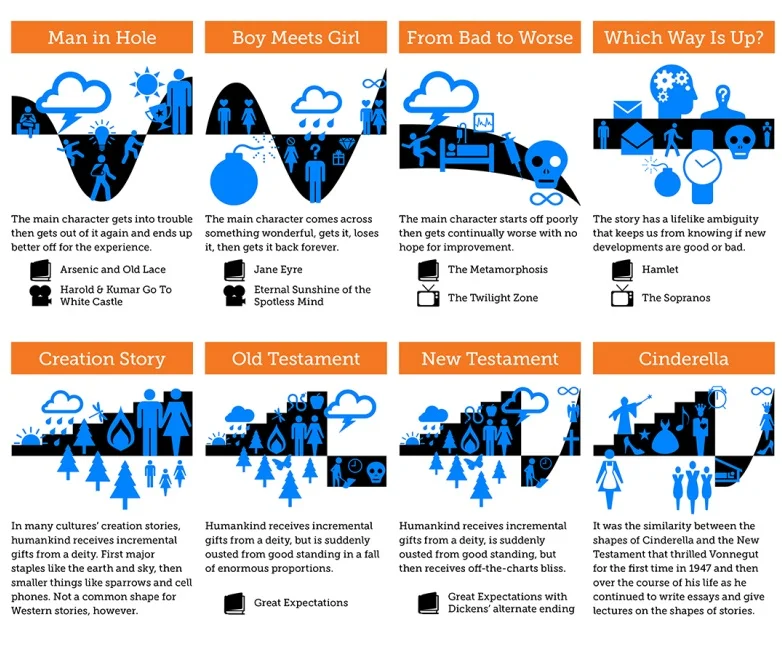
BOYHOODLUM.jpg
Anson Cameron speaking at Opening Night

Anson Cameron speaking at Opening Night


Enjoyed this speech? Speakola is a labour of love and I’d be very grateful if you would share, tweet or like it. Thank you.

Facebook Twitter Facebook
In BOOKS Tags ANSON CAMERON, SHEPPARTON, AUTHOR, HOME TOWN, VICTORIA, AUSTRALIA, BOYHOODLUM
1 Comment

Jeff Douglas: 'My name is Joe, and I am Canadian!!!!', Molson beer commercial - 2000

December 21, 2015

On air, March 2000. Just in time for the NHL playoffs that year. MoslonCanadian beer commercial

Hey. I'm not a lumberjack, or a fur trader.

And I don't live in an igloo, or eat blubber, or own a dogsled.

And I don't know Jimmy, Sally or Suzy from Canada, although I'm certain they're really, really nice.

I have a Prime Minister, not a President.

I speak English and French, NOT American. and I pronounce it 'ABOUT', NOT 'A BOOT'.

I can proudly sew my country's flag on my backpack. I believe in peace keeping, NOT policing. DIVERSITY, NOT assimilation, AND THAT THE BEAVER IS A TRULY PROUD AND NOBLE ANIMAL.

A TOQUE IS A HAT, A CHESTERFIELD IS A COUCH, AND IT IS PRONOUCED 'ZED' NOT 'ZEE', 'ZED'!!!

CANADA IS THE SECOND LARGEST LANDMASS! THE FIRST NATION OF HOCKEY! AND THE BEST PART OF NORTH AMERICA!

MY NAME IS JOE!! AND I AM CANADIAN!!!!!!!!

Source: https://www.youtube.com/watch?v=WMxGVfk09l...

Enjoyed this speech? Speakola is a labour of love and I’d be very grateful if you would share, tweet or like it. Thank you.

Facebook Twitter Facebook
In FILM & TV Tags JOE CANADA, M, MOLSON BEER, COMMERCIAL, I AM CANADIAN, JEFF DOUGLAS
Comment

Justin Heazlewood (The Bedroom Philosopher): 'Painter John Brack has asked 40 Melbournians to stand pefectly still during busy peak hour', response to 'Collins St, 5pm' - 2015

December 18, 2015

August 2015, Wheeler Centre, National Gallery of Victoria, Melbourne, Australia

Source: https://www.youtube.com/watch?v=vQoS_Qibne...

Enjoyed this speech? Speakola is a labour of love and I’d be very grateful if you would share, tweet or like it. Thank you.

Facebook Twitter Facebook
In COMEDY Tags JUSTIN HEAZLEWOOD, THE BEDROOM PHILOSOPHER, JOHN BRACK, PAINTING, FINE ART
Comment

Justin Heazlewood (The Bedroom Philosopher): 'University: discuss', HERDSA Conference - 2015

December 18, 2015

6 July 2015, Melbourne Exhibition Centre, Melbourne, Australia

Justin Heazlewood (aka The Bedroom Philosopher) is the author of Funemployed (Affirm, 2014), a magnificent book on the struggle to make a living in the arts. He delivered this to the Higher Education Research and Development Society of Australasia national conference.

Hey thanks. Thanks for having me here this morning. It's sort of taken me back to my uni days. Already I've heard the word 'disseminate', and 'module' this morning and I am having a small anxiety attack as we speak and I will have to have an extension of some kind.

Just on life.

How many uni students does it take to change a light bulb?

When’s it due in?

Three uni students walk into a bar ...

Discuss.

And the last ticket on the laughs train [toot toot] to Comedysville ...

Knock Knock

Who’s there

Your HECS debt ...

Great. If you found that funny, we’re going to be great friends. If you didn’t find that so funny, you may have to leave immediately.

I haven’t seen this many academics in the one room ... since my last gig, actually. I started a band in Canberra, sort of matching educational policy to the songs of AC/DC, I dunno if you guys heard of us, Acca-dacca-demia? We were sort of well known for a while.

We had some hits: ‘It’s a long way to the office if you want to re-enrol’

You Took Me All Night Long (Ode to my media ethics essay)

Information Superhighway to Hell

So I’m originally from Tasmania but I did university in Canberra.  And there’s a saying, you can take the man out of Tasmania, and then it’s just ‘Tasia’.

I grew up in Burnie, sort of a small town, and when I got to Canberra, you know, whne you come from Tasmania, Canberra’s sort of like New York with roundabouts.

And I remember my first day , I did Professional Writing and I think I had Journalism as my first lecture. Just this pretty surly lecturer, just kind of screaming at us about theimportance of deadlines, 'if you hand your assignment in five minutes late, doesn't matter, instant fail! No excuses, we tend to get a lot of dead of dead grandmothers round exam time.' That was her exact quote on the first day of university. So I'm just sitting there, with this image of these nans, just sort of piled up, cardigans and glasses askew, this unncessary slaughter.

If you look at journalistic grammar, and the safety of grandparents, there is a connection there because if you take the sentence 'Let's eat nan,' for example, and you put the comma in the correct place, the sentence is, "Let's eat, nan'. But if you ignore that comma it just becomes 'Let's eat nan. [pauses]  Oh no, I've eaten my grandma'

Bad gramma is bad for gramma.

H'yeh. It's an illness.

So as far as the actual degree went. The core creative writing subject was great.It made me write, that was pretty much why I was there I think. We were told how to pursue work as a freelance writer – but looking back in retrospect , having tried to make a career out of this, I find it bemusing that in three years nobody told how to write an invoice or to fill out a tax statement, or that you're really running your own small business.

But they certainly found time for subjects like Culture, Identity and Post coloniality. Oh please, can I sign up to that one.

In media studies we watched Road Runner for its narrative structure. You know they say it's best not to over analyse things. So given my epic 9 cotnact hours a week, I basically assignedmyself my own side degree. Cutting my teeth on a spachelor of arts in the school of soft knocks. 

I joined the theatre society where I starred in Psycho Beach Party where I was told I’d have to pash another boy on stage. I was like, 'yeah alright ... now it's starting to feel like uni'.

I wrote for the uni magazine Curio, mostly so I could scam free CDs and do an interview with Powderfinger that I still need to type up. Is that too late?

I started my own band, The Harmonica Lewsinskis. Yeah, people had heard of us but never seen us.

So between the shy Asian students and sports science hoons blaring Shania Twain I sort of had room to swing my freelance sword and develop my sense of innovation, arguably the most important attribute to an artistic career. Even if I couldn’t write an invoice. I guess that okay.

And I graduated, and I guess I found that BA sort of stood for bar attendant, and I got a job as a bar attendant. As far as how I became an artist, I sort of had to make it up as I went along. And a lot of what I learned, I put into my book Funemployed: Life as an artist in Australia, which I'll probably be flogging at the end of this talk.

So perhaps we'll go to the next slide if I may.

I know how much you like Venn diagrams.


At their best our universities are the finishing schools for our soul, shaping skill sets and ideologies and fostering the kind of intelligence you want leaked all over this wide brown country of ours.

I should have thought about my metaphors.

At their worst universities are expensive daycare centres for trainee alcoholics , with resepct – one big snooze button for adulthood.

As a student I sometimes felt I was too naïve to learn, while my lecturers were too jaded to teach.

In the words of captain Picard, however, there is a way to “engage.”

They say the average Gen Z student will have fifteen jobs in their lifetime. Perhaps course outlines and the way we package university degrees should take this into account.  And I'd just like to propose the patented Justin Heazlewood 'Variety pack' (shows Kellogs pack) approach to education.  So maybe Corn flakes could be Law. Coco Pops could be Arts. Sustain could be Business ... 'you gotta sustain yourself in life. Justin, you know, you gotta be able to afford a house', Special K, that'd probably be medicine. Maybe women's medicine?

Just go on to the next graphic here, how an artist spends their time.


I've become a professional artist. A lot of thinking, a lot of worrying, not a lot of maths. Some bitching, we are living in a very hyper competitive world, networking, not working, it's all there.

Students have to face a complex and uncertain future – yes, uncertain whether they’ll end up primary or high school teachers.

It is a complex world though, no doubt. Complex in the way that in World War I & II, there were like literal minefields for people to wade through. Today, students are faced with like metaphorical minefields - oh man! - take the situation of thirty philosophy graduates all going for the same advertising job. Oh what a minefield. Or the irony of being a qualified engineer from Sudan, with a career driving one.

Despite the desperate pleas of my family and Centrelink to simmer down and 'find a nice office job for the love of God Justin'  - I’ve established a career as a writer slash comedian slash wrists. 14 years and counting ... my credit card debt.

Last year I released my book Funemployed, it was my own personal PHD crash course self-help tell-all. You’re not alone, was the takehome message – the arts are a satellite industry and we’re all but orbiting the same sun.

If I knew at uni what I know now, I’d be one of those creepy mature age students answering every question. No one likes them. Uni for me was about time richness, it was aboutexperimentation.  Having the space to fail. Sometimes not knowing what you’re doing, is the best way to learn.

Thank you for having me. I'd like to leave you now with a video called 'I Don't Know What I'm Doing With My Life'. It's about not knowing what I'm doing with my life.

Video from 11:12

You can hire Justin for conferences, debates, MC roles through Speaking Out agency.

Justin Heazlewood's depressingly uplifting arts bible, Funemployed features the thoughts on working in the arts from many of Australia's creative luminaries. You can buy it here.


Source: https://www.youtube.com/watch?v=uByuz_wjAy...

Enjoyed this speech? Speakola is a labour of love and I’d be very grateful if you would share, tweet or like it. Thank you.

Facebook Twitter Facebook
In COMEDY Tags JUSTIN HEAZLEWOOD, THE BEDROOM PHILOSOPHER, COMEDY, UNIVERSITY, ARTS, WRITER, ARTS CAREERS, HERDSA, HIGHER EDUCATION
Comment
Everybody at the launch, releasing their wishbirds

Everybody at the launch, releasing their wishbirds

Cath Crowley: 'It isn’t just the pages that are made of silk, the words themselves seem to be', launch of Gabrielle Wang's 'The Wishbird' - 2013

December 4, 2015

27 July 2013, The Little Bookroom, North Carlton, Melbourne, Victoria

It’s my great pleasure to welcome you here to the launch of “The Wishbird” by Gabrielle Wang.

I told one of my friends that I was launching Gabrielle Wang’s book this Saturday. And she smiled and said, – that’s your magical friend. As opposed to the bulk of my friends who are – non-magical.

But that is how I feel about Gabrielle, even a chai tea with her is an adventure. She’s open to these lovely coincidences and she makes me feel as though writing is not just something I do at my desk, but something I live. She makes me believe that stories find us as much as we find them.

Author of “The Garden of Empress Cassia”, “The Pearl of Tiger Bay”, “The Hidden Monastery”, “The Lion Drummer”, “A Ghost in My Suitcase”, “Little Paradise”, “The Race for the Chinese Zodiac” and “Meet Poppy” from the Our Australian Girl Series.

She’s won the Aurealis Award twice; her books are CBCA notables, highly commended in the Prime Minister’s Literary Awards, shortlisted for the Sakura Medal, Premier’s Awards, YABBA and WAYBRA awards.

Gabi is an Ambassador for the Victorian Premier’s Reading Challenge, and anyone who has heard her speak will be in no doubt at how lucky they are to have her in this role.

I introduce to you the very magical on the page and in person – Gabrielle Wang, a woman with dream eyes and a wish bird heart.

***

I often have dreams about the books I’m going to launch, but none so beautiful than the one I had about “The Wishbird”. I dreamt that the pages were made of silk, and that the words had wings that fluttered.

I had the dream before I had even held the book. Not a surprising thing, if you know Gabi.

I felt quite certain that the dream had come from her that before she went to sleep that night Gabi yawned, thought about it, and flicked me off some of her landscape to get me started.

The only thing better than having a dream like that is being able to ring Gabi, or tweet her, and tell her that you had it.

Some time ago I saw a 3D film at Imax, “The Flight of the Butterflies”, about the migration of the monarch butterfly.

I sat in a dark cinema with a whole lot of little kids wearing 3D glasses, and the dark came down and the film came on, and the forest and the birds and the butterflies rose up and all around me, this lush world filled the cinema. All around me people reached to grab this floating world.

I felt as though I were reading “The Wishbird” in 3D glasses open the book and the world escapes off the page in gorgeous pictures and in words. It isn’t just the pages that are made of silk, the words themselves seem to be. Gabi sent me a modest dream, but then that’s the kind of person she is.

I know it can’t have been this easy, but it feels as though she opened her hands, and out the world flew.

Out flew The Wishbird, Mellow, a wonderful parent, as birds of course, can be, out flew Oriole – a girl who sings songs about rocks carved into strange shapes by the Wind, about her love for Mellow, the magical Wishbird, who is older than the ancient Banyan tree itself.

Out flew her wonderful descriptions, candied cumquats in the market of Soulless and the treasures that Boy finds, a silver ring with a tiny blue stone like a mouse’s tear.

The forest, moonlit, with nests made from fragrant Sandalwood twigs and lined with soft moss, a cluster of turquoise lakes that mirror the white fluffy clouds, and the city of nightmare that Oriole is being flown towards, the city of mouthless people.

Gabrielle’s characters are spectacular. Boy and Oriole are heroes, but they have flaws. They make each other stronger and better, as friends should do. They save each other, they become the heroes they need to be. They learn how to deal with anger and fear, about how to live with integrity when you’re hungry.

And they’re funny along the way. I love that on their scary journey, they make me laugh.

“Boy did not tell Oriole about the Demon Monster’s reputation for eating children, nor did he mention the moving statues in the garden.”

I agree boy, there are some things a girl just doesn’t need to know.

The book is genuinely suspenseful. Each scene leads you towards the next, telling you to hold your breath, wait, there is more to come and the way will be dangerous but don’t worry it will be lit – “the dungeon is dark and damp, but she (Oriole) still felt a little warm as she ate. And she still had her tongue. For now.”

It’s great storytelling incredibly moving- the idea that we can lose our dreams, our music, our forest, the threads that tie us to people close to us, even more frightening that our leaders can convince us that we that we don’t need these things anymore. Or that our leaders can convince us that strangers speaking a language we haven’t heard are to be feared.

It’s an important book.

Oriole must go into another world, where people don’t hear her voice as beautiful. She must endure being locked up and threatened by terrible things. And she must risk all to save the city, her forest, her family, her friend. She must believe that those who are lost, those who have committed brutal acts, are not beyond saving.

“The Wishbird” opens up a discussion on what it is to be human, and how easily we can be convinced that other people aren’t, and how easily our own humanity can be taken – or given – away.

This is a love story – love of words, of music, of dreams, of people, of nature, of colour, of flight.

It’s an adventure.

Open the page.

Let the words fly out.

Purchase the wishbird here

Source: http://cathcrowley.com.au/2013/07/the-wish...

Enjoyed this speech? Speakola is a labour of love and I’d be very grateful if you would share, tweet or like it. Thank you.

Facebook Twitter Facebook
In BOOKS Tags CATH CROWLEY, GABRIELLE WANG, BOOK LAUNCH, CHILDREN'S LITERATURE, YOUNG ADULT, LOVEOZYA
Comment

George Carlin: 'I’m a modern man, a man for the millennium', Mark Twain award acceptance - 2011

November 30, 2015

5 November 2005, Beacon Theatre, New York City, New York, USA

I’m a modern man, a man for the millennium. Digital and smoke free. A diversified multi-cultural, post-modern deconstruction that is anatomically and ecologically incorrect. I’ve been up linked and downloaded, I’ve been inputted and outsourced, I know the upside of downsizing, I know the downside of upgrading. I’m a high-tech low-life. A cutting edge, state-of-the-art bi-coastal multi-tasker and I can give you a gigabyte in a nanosecond!
I’m new wave, but I’m old school and my inner child is outward bound. I’m a hot-wired, heat seeking, warm-hearted cool customer, voice activated and bio-degradable. I interface with my database, my database is in cyberspace, so I’m interactive, I’m hyperactive and from time to time I’m radioactive.

Behind the eight ball, ahead of the curve, ridin the wave, dodgin the bullet and pushin the envelope. I’m on-point, on-task, on-message and off drugs. I’ve got no need for coke and speed. I've got no urge to binge and purge. I’m in-the-moment, on-the-edge, over-the-top and under-the-radar. A high-concept, low-profile, medium-range ballistic missionary. A street-wise smart bomb. A top-gun bottom feeder. I wear power ties, I tell power lies, I take power naps and run victory laps. I’m a totally ongoing big-foot, slam-dunk, rainmaker with a pro-active outreach. A raging workaholic. A working rageaholic. Out of rehab and in denial!

I’ve got a personal trainer, a personal shopper, a personal assistant and a personal agenda. You can’t shut me up. You can’t dumb me down because I’m tireless and I’m wireless, I’m an alpha male on beta-blockers.

I’m a non-believer and an over-achiever, laid-back but fashion-forward. Up-front, down-home, low-rent, high-maintenance. Super-sized, long-lasting, high-definition, fast-acting, oven-ready and built-to-last! I’m a hands-on, foot-loose, knee-jerk head case pretty maturely post-traumatic and I’ve got a love-child that sends me hate mail.

But, I’m feeling, I’m caring, I’m healing, I’m sharing-- a supportive, bonding, nurturing primary care-giver. My output is down, but my income is up. I took a short position on the long bond and my revenue stream has its own cash-flow. I read junk mail, I eat junk food, I buy junk bonds and I watch trash sports! I’m gender specific, capital intensive, user-friendly and lactose intolerant.

I like rough sex. I like tough love. I use the “F” word in my emails and the software on my hard-drive is hardcore--no soft porn.

I bought a microwave at a mini-mall; I bought a mini-van at a mega-store. I eat fast-food in the slow lane. I’m toll-free, bite-sized, ready-to-wear and I come in all sizes. A fully-equipped, factory-authorized, hospital-tested, clinically-proven, scientifically- formulated medical miracle. I’ve been pre-wash, pre-cooked, pre-heated, pre-screened, pre-approved, pre-packaged, post-dated, freeze-dried, double-wrapped, vacuum-packed and, I have an unlimited broadband capacity.

I’m a rude dude, but I’m the real deal. Lean and mean! Cocked, locked and ready-to-rock. Rough, tough and hard to bluff. I take it slow, I go with the flow, I ride with the tide. I’ve got glide in my stride. Drivin and movin, sailin and spinin, jiving and groovin, wailin and winnin. I don’t snooze, so I don’t lose. I keep the pedal to the metal and the rubber on the road. I party hearty and lunch time is crunch time. I’m hangin in, there ain’t no doubt and I’m hangin tough, over and out!

Source: www.pbs.org/mark-twain-prize/

Enjoyed this speech? Speakola is a labour of love and I’d be very grateful if you would share, tweet or like it. Thank you.

Facebook Twitter Facebook
In COMEDY Tags GEROGE CARLIN, COMEDY, COMEDY AWARDS, KENNEDY CENTRE, MARK TWAIN AWARD, MONOLOGUE
Comment

Ben Pobjie: 'Shock is a huge and fundamental part of what makes comedy work', In Defence of Offence, Wheeler Centre - 2011

November 26, 2015

24 March 2011, Wheeler Centre, Melbourne, Australia

Speech was adpated into article for Meanjin. Text below is article rather than transcript.

What are we allowed to laugh at? This may seem like an odd question – we’re “allowed” to laugh at anything we want to, surely? In this country nobody’s going to arrest us for laughing at something. We’re free to indulge our own personal tastes.

But…there is a but. Nobody’s going to arrest you, but that doesn’t mean there are no consequences for laughing at the wrong thing. Laugh at a major car crash, and you’re going to attract, at the very least, some disapproving looks. Laugh at the wrong joke at the wrong time, or in the wrong company, and ostracisation awaits. In truth, we all find ourselves on guard against our own senses of humour lest we inadvertently laugh at something that’s racist, sexist, homophobic, or seen on Two and a Half Men. What we are allowed to laugh at is always relative to the situation – the rules are different at a suburban barbecue than at a Green Party fundraiser, or at a late-night stand-up show than your grandmother’s birthday party – but no matter where you are, there are going to be some unwritten rules about what you should or should not be finding funny if you want to fit in.

Of course, for those of us who are attempting to make a living by making others laugh, the stakes are higher. If laughing at the wrong thing can result in a social faux pas, trying to convince people to laugh at the wrong thing might mean risking your job and seeing your family starve. As somebody who, in the second week of my stint as a radio presenter, received a phone call from a listener which began with the rather blunt question, “are you the guys who think rape is funny?” this was brought home to me with a certain clarity. Fortunately it was only community radio, and the only real consequence of the affair was to give me a bit more spare time in the evenings, but it did demonstrate just how dangerous a business it can be, taking the thoughts in your head that you think are funny, and transmitting them to a wider world that may not only find them unfunny, but sickeningly offensive.

For the record, the answer to the listener’s question was, no, I don’t find rape funny. But yes, our show had just broadcast a joke which featured the word “rape” in it. Some people would find that reason enough to ban someone from the airwaves, and indeed some people did. But there are two issues here: whether jokes about a certain subject ought not be made, and whether jokes about a certain subject indicate that the joker thinks the subject itself is funny.

Let’s start with that most dangerous of comedic grounds – the rape joke, or perhaps more accurately, the joke about rape. Jokes about rape, incidentally, are neither new, nor all that uncommon in popular culture – in fact in many cases they pass by with barely a raised eyebrow: prison rape, for example, is practically a time-tested family comedy staple. So too is the old convention so beloved of British comedies of a certain era: that of the man “chasing” the object of his desire – often in a very literal sense – with the aim of claiming his unwilling quarry, should he manage to be quick enough on his feet. In those scenarios, rape was not so much a crime as a sort of sport: if the woman wants to reject a fellow’s advances, let her get her skates on, and good luck to her if she can get away. The supposed inherent unwillingness of women to have sex, and the dogged determination of men to overcome their resistance, is one of the oldest comedic concepts in the book.

Beyond such ancient tropes as these – which probably are not even recognised as “rape jokes” by many – references to rape in comedy are abundant. From Monty Python, to Family Guy, to Arrested Development, The Office, to Ferris Bueller’s Day Off, comedy has been wrought out of this horrific crime. And undoubtedly there are many who think that it shouldn’t have been. But do those people actually believe that the writers and performers of these jokes “think rape is funny”? That they would witness a rape, and laugh? Or chuckle their way through a rape trial?

The question is important, because it actually goes to the very heart of why comedy exists. Whenever a controversy flares up about comedy that is seen to have gone “too far”, there is a cry that is taken up by the morally outraged: “So you think X is funny, do you?” (for “X”, substitute rape/paedophilia/domestic violence/genocide/sick kids/train timetables) And the implication behind this cry is clear: that when we make jokes, we are making them about things that are inherently funny. That is, that to create comedy, what you do is look around you, see what’s funny, and then point that fact out to the world.

And on the face of it, that seems perfectly reasonable: isn’t that what comedians do? Find the “lighter side”? Obvious, isn’t it? If you make a joke about something, it’s because that something is funny.

Except…it’s not actually true, is it? Comedy’s not actually about showing us what’s funny: it’s about making things funny. And that’s what should be obvious. Look through the history of comedy and it’s littered with jokes, comic scenes, and entire films and TV shows based on the most deadly serious of topics. Comedies about murder, about war, about Nazis, about organised crime. Should we assume that the creators of Dad’s Army thought World War 2 was hilarious? Or the creators of MASH, about Korea? What about the classic Ealing film The Ladykillers? Was it made by men who thought criminal gangs murdering old ladies was giggleworthy?

I suspect the answer to all of these questions is no. The reason these topics were chosen for comedy was not because they are, or were, funny in real life, but rather because the art of comedy is finding a way to create humour out of situations, not depicting life as it is.

This is not just about the grim and potentially offensive subjects. Barely any comedic situations are funny in and of themselves. There is, in fact, nothing particularly funny about running a hotel. Or an office. Or being a psychiatrist. To be perfectly honest, and from personal experience, there’s not even anything particularly funny about the life of a stand-up comedian. Practically any comedy you care to name could have been a drama, or even a tragedy, with the same plot, played differently.

In fact, if we were only to make jokes about things that were funny in real life, what would be the point of comedy in the first place? If comedians were, in fact, to be restricted to that which makes us laugh already, why have comedians? The popular phrase is “it’s funny because it’s true”, but the more accurate cliché is “it’s the way that you tell ‘em”. Anyone can tell a story about something funny that happened to them today: we watch comedies because they tell us stories that are funnier than what happened to us today.

But even so, one might say, why be offensive? There’s plenty of serious, real-life subjects to make light of, without delving into the sort of grim, dangerous territory that sparks angry talkback and furious editorials. Is there really a need to offend, to make comedy out of the very darkest corners of life?

Well, that’s a vexed question. In a literal sense, of course there isn’t. In the world of comedy – in fact, in the world of entertainment and art in general – there isn’t a need for anything in particular. The world won’t end if offensive comedy disappears from it; comedy itself will carry on without offensiveness; we could stick with nice, polite, kindhearted comedy designed not to upset anyone, and everything would, it seems likely, be fine. Nobody would be upset, people would still have a few chuckles, life would go on. So why be offensive?

There are a few reasons. First of all, it can be said, upfront: some people just think the subjects are funny, in and of themselves. Yes, there are people who think rape is funny. Yes, there are genuinely racist and misogynist and homophobic jokes. To argue that so-called offensive comedy can be a good thing isn’t the same as claiming there is no “bad” offensive comedy. There surely is, and it should rightfully be censured. But apart from what one might call the imperative to err on the side of free speech, it’s very important – if sometimes difficult – to distinguish between those who make racist, misogynist, homophobic or otherwise offensive jokes, and those who make jokes about these subjects for reasons other than promoting racism, misogyny, homophobia, et al.

One of these other reasons – and to some this may not sound like much of a defence, but here we go – is shock. The simple fact is that shock is a huge and fundamental part of what makes comedy work – not “shock” in the sense of moral outrage or hysteria, but shock simply in the sense of surprise, of the unexpected. While not wanting to lay down any blanket rules as to what comedy is, at the very least a big slab of it works via that jolt to the brain that comes from an unexpected punchline, an abrupt sight gag, a conversation suddenly taking a surprise twist. Humour works, in large part, through shock – not to our delicate sensibilities, but to our neurons. And the bigger the shock, the bigger the laugh. The sharper the left-turn, the more surprising the punchline, the more out-of-the-blue the pratfall, the funnier we’ll find it. Therefore, in searching for a bigger laugh, the comedian will frequently go for the most “shocking” conclusion to the gag. And so extreme references will find their way into jokes, not out of a desire to offend, and often not even because the sensitive subject is what the joke is about, but simply in an attempt to provoke the greatest spontaneous explosion of laughter. And so, in seeking to make a joke about, say, the Prime Minister, one searches for the most extreme juxtaposition possible, out of nothing more than a wish to be funny. And thus was how we arrived at the aforementioned “do you think rape is funny” call to the radio station.

Now as I said, to many, this reason for being offensive is unlikely to represent a convincing defence. “I only said it because I wanted to shock people” may not absolve the comedian from blame in the court of public opinion – in fact it could inflame matters. But it is to be hoped that when a little insight is given into the construction and function of comedy, more thoughtful observers will at the very least concede that an attempt to shock is not necessarily an attempt to offend, and that even something that offends someone grievously may not have been intended to. Many comedians are happy to be accused of being offensive: few are as happy with being seen as being deliberately hurtful, although both of these are likely to be an occupational hazard. Is it worth facing any such accusations for the sake of a bigger laugh? Each can decide for him or herself, but surely if we’re going to have comedians, we can hardly expect them not to look for every opportunity to be as funny as they possibly can. Isn’t every artist expected as a matter of course to use all tools at their disposal to be the best artist they can be?

But there is another reason why “offensive” jokes may find their way into public, which might be called the more “noble” reason. This involves the use of comedy as release, challenge, and catharsis. It can be useful for us to deal with difficult issues by finding ways to laugh at them. It can demystify them, break down taboos, and challenge us to think in different ways. Often, once we laugh at a subject, we are better able to talk about it. Frightening things like disease and death become less frightening because they have been laughed at. And just as importantly, frightening people become less frightening too. It’s why dictators hate being ridiculed so much: when you’re made ridiculous, it’s a lot harder to scare anyone. The perpetrators of violence in our own society loom less large if they’re figures of fun. Furthermore, jokes can challenge our own preconceptions, and force us to reconsider just what we think about an issue.

In this sense, comedy can be used as a weapon against oppression, but this will necessitate that it deal with sensitive issues. If you want to ridicule a dictator, you have to make jokes about dictators. If you want to ridicule racism, you have to make jokes about racists. And if you want to ridicule rapists, you have to make jokes – deep breath – about rape.

Are these jokes “necessary”? Perhaps not, but that doesn’t mean they don’t have a purpose. And that doesn’t mean the comedians making these jokes are taking an immoral position, or in some way making a statement that the real-life consequences of these issues are themselves “funny”.

However, no matter the intentions, the purpose, or even whether or not the comedian is on the side of the “angels” on a given issue, there will be plenty whose protest against a joke is on the grounds that, there are things that just should not be joked about, full stop.

So, given that the comedian’s job is to perform the base-metal-to-gold trick of making the serious business of life funny, are there any aspects of life that we just shouldn’t even try to make funny? Are there subjects that are simply too serious, too sensitive, too likely to upset and offend, to even mention in a comedic context? Certainly there are few, if any, subjects that haven’t, at some point, been the subject of comedy, but does that make it right? Is it possible to determine the morality of comedy simply by what it’s about, rather than what it contains?

I’ve been asked before, “Is there any subject you would never make a joke about?” and it’s a difficult one to answer. What constitutes a “subject” in this context? If you ask me whether I’d be willing to make a joke about paedophilia, I’d be forced to say yes, I would, and I have. If you ask me whether I’d be willing to make a joke about the little girl who was abducted by a paedophile yesterday, I’d say no. People are going to be offended by both of these jokes, but only one of them will involve the factors of specificity and timeliness that can turn an “offensive” joke into a “cruel” one. And significantly, only one of them has even the slightest chance of being funny. Even allowing for the extreme subjectivity of humour and the impossibility of determining in an absolute sense what is or isn’t funny, there are some jokes that, made at the wrong time, have no chance of succeeding with any but the most bizarre of sense of humour.

But leaving out the specific tragedies that defy humour entirely, I can’t say there is a subject which I would leave completely off-limits. Why should there be? It’s broadly accepted that other art forms should be able to tackle the most difficult of topics – the depraved side of human nature is a constant theme of the “serious drama”, and though the squeamish might avoid such depictions, few argue that a dramatist commits a sin just by addressing it. Why should comedy be any different? It’s just as valid an artform as drama, and can be just as powerful, if not more so, when done well. Comedy, like the other arts, is a means of exploring the universe we find ourselves in, and there’s no reason it should either hold itself to different standards than the other arts, or deny itself the possibility of exploring the full scope of human activity.

It’s also important to recognise that avoiding all possibility of offence is near-impossible. How can anyone be sure that a joke they make won’t upset someone in the audience? The potential for offence in jokes about racism and sexism is obvious, but you could make a joke about crashing your car, not knowing that a member of the audience had lost a family member in a car crash last month. You could make a joke about church not knowing that an audience member had been molested by a priest. You could make a joke about dogs and cats not knowing someone’s beloved pet had died that morning. If we rule out any subject that could conceivably upset someone, we rule out pretty much everything. Which illustrates a crucial point: “that offended me” is not the same thing as “that is offensive”. The former is a subjective statement that cannot be argued with. The second is an objective judgment that will always be damnably difficult to get consensus on.

That doesn’t mean comedians shouldn’t be careful in how they frame their material, of course. You’ve always got to consider the purpose of your joke, the audience, and who your target is; although sometimes, it’s wise to remember, a joke may not have a target at all. Just as a cigar is sometimes just a cigar, sometimes a joke is just a joke.

That’s the crux of the matter: comedians may have many aims: to provoke thought, to stir up anger, to raise important issues, or even to infuriate people. But the vast majority of them want, above all else, to make people laugh as hard and as long as possible. It may be an unfortunate part of the job that once you’ve made a joke, it’s out there, and you can’t control how people are going to take it. But the great comedy figures will risk that, will not be put off mentioning something just because someone might be offended.

In the end, everyone has a perfect right to take offence at anything, and I’ll defend that right, but nobody has a God-given right to go through life without being offended. Which means that if you want to stop me making the jokes I want to make, you better have a more substantial reason than “that’s offensive”. Otherwise, with the greatest respect, my answer will simply be, “So what?”


Source: http://www.wheelercentre.com/broadcasts/be...

Enjoyed this speech? Speakola is a labour of love and I’d be very grateful if you would share, tweet or like it. Thank you.

Facebook Twitter Facebook
In COMEDY Tags BEN POBJIE, COMEDY, OFFENSIVENESS, OFFENCE, JOKES, BAD TASTE, OPINION, WHEELER CENTRE
Comment
← Newer Posts Older Posts →

See my film!

Limited Australian Season

March 2025

Details and ticket bookings at

angeandtheboss.com

Support Speakola

Hi speech lovers,
With costs of hosting website and podcast, this labour of love has become a difficult financial proposition in recent times. If you can afford a donation, it will help Speakola survive and prosper.

Best wishes,
Tony Wilson.

Become a Patron!

Learn more about supporting Speakola.

Featured political

Featured
Jon Stewart: "They responded in five seconds", 9-11 first responders, Address to Congress - 2019
Jacinda Ardern: 'They were New Zealanders. They are us', Address to Parliament following Christchurch massacre - 2019
Dolores Ibárruri: "¡No Pasarán!, They shall not pass!', Defense of 2nd Spanish Republic - 1936
Jimmy Reid: 'A rat race is for rats. We're not rats', Rectorial address, Glasgow University - 1972

Featured eulogies

Featured
For Geoffrey Tozer: 'I have to say we all let him down', by Paul Keating - 2009
for James Baldwin: 'Jimmy. You crowned us', by Toni Morrison - 1988
for Michael Gordon: '13 days ago my Dad’s big, beautiful, generous heart suddenly stopped beating', by Scott and Sarah Gordon - 2018

Featured commencement

Featured
Tara Westover: 'Your avatar isn't real, it isn't terribly far from a lie', The Un-Instagrammable Self, Northeastern University - 2019
Tim Minchin: 'Being an artist requires massive reserves of self-belief', WAAPA - 2019
Atul Gawande: 'Curiosity and What Equality Really Means', UCLA Medical School - 2018
Abby Wambach: 'We are the wolves', Barnard College - 2018
Eric Idle: 'America is 300 million people all walking in the same direction, singing 'I Did It My Way'', Whitman College - 2013
Shirley Chisholm: ;America has gone to sleep', Greenfield High School - 1983

Featured sport

Featured
Joe Marler: 'Get back on the horse', Harlequins v Bath pre game interview - 2019
Ray Lewis : 'The greatest pain of my life is the reason I'm standing here today', 52 Cards -
Mel Jones: 'If she was Bradman on the field, she was definitely Keith Miller off the field', Betty Wilson's induction into Australian Cricket Hall of Fame - 2017
Jeff Thomson: 'It’s all those people that help you as kids', Hall of Fame - 2016

Fresh Tweets


Featured weddings

Featured
Dan Angelucci: 'The Best (Best Man) Speech of all time', for Don and Katherine - 2019
Hallerman Sisters: 'Oh sister now we have to let you gooooo!' for Caitlin & Johnny - 2015
Korey Soderman (via Kyle): 'All our lives I have used my voice to help Korey express his thoughts, so today, like always, I will be my brother’s voice' for Kyle and Jess - 2014

Featured Arts

Featured
Bruce Springsteen: 'They're keepers of some of the most beautiful sonic architecture in rock and roll', Induction U2 into Rock Hall of Fame - 2005
Olivia Colman: 'Done that bit. I think I have done that bit', BAFTA acceptance, Leading Actress - 2019
Axel Scheffler: 'The book wasn't called 'No Room on the Broom!', Illustrator of the Year, British Book Awards - 2018
Tina Fey: 'Only in comedy is an obedient white girl from the suburbs a diversity candidate', Kennedy Center Mark Twain Award -  2010
Tina Fey: 'Only in comedy is an obedient white girl from the suburbs a diversity candidate', Kennedy Center Mark Twain Award - 2010

Featured Debates

Featured
Sacha Baron Cohen: 'Just think what Goebbels might have done with Facebook', Anti Defamation League Leadership Award - 2019
Greta Thunberg: 'How dare you', UN Climate Action Summit - 2019
Charlie Munger: 'The Psychology of Human Misjudgment', Harvard University - 1995
Lawrence O'Donnell: 'The original sin of this country is that we invaders shot and murdered our way across the land killing every Native American that we could', The Last Word, 'Dakota' - 2016