• Genre
  • About
  • Submissions
  • Donate
  • Search
Menu

Speakola

All Speeches Great and Small
  • Genre
  • About
  • Submissions
  • Donate
  • Search

Eulogies

Some of the most moving and brilliant speeches ever made occur at funerals. Please upload the eulogy for your loved one using the form below.

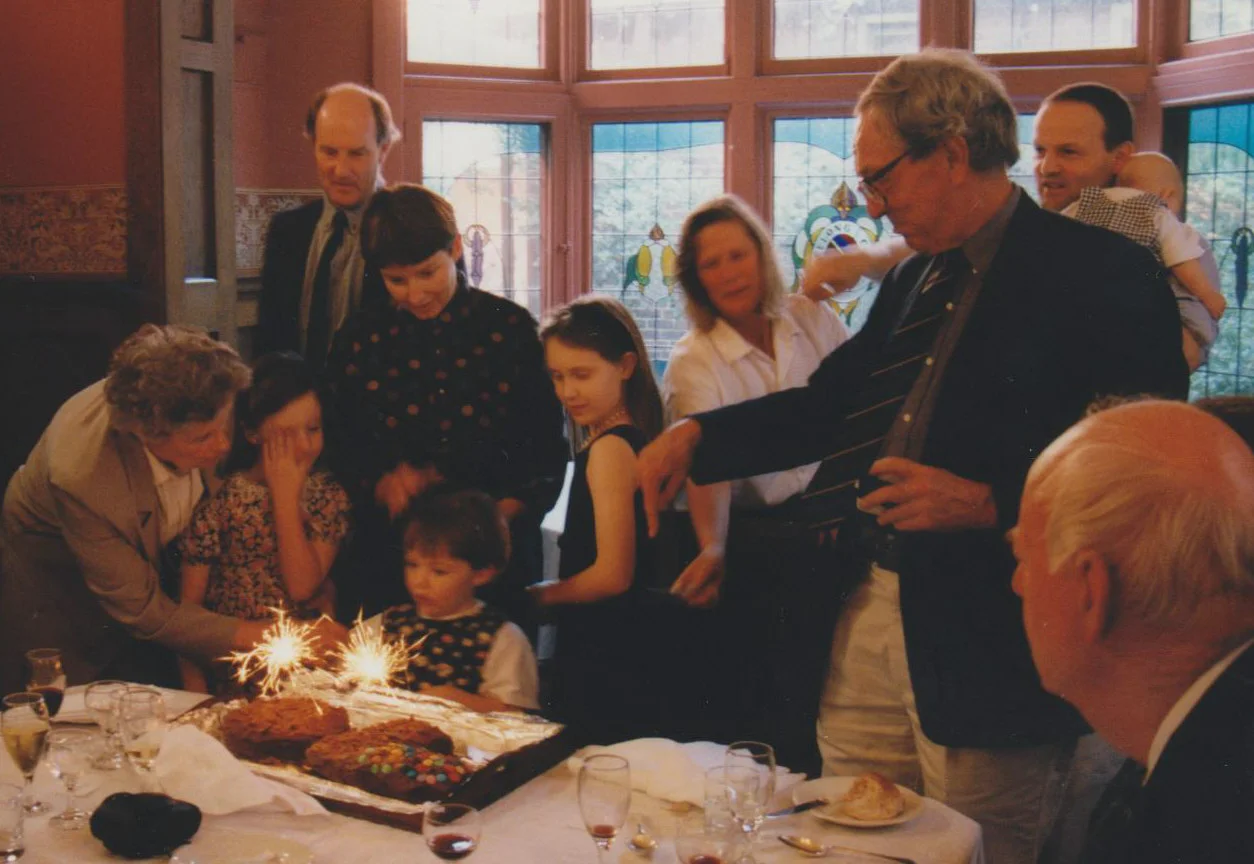
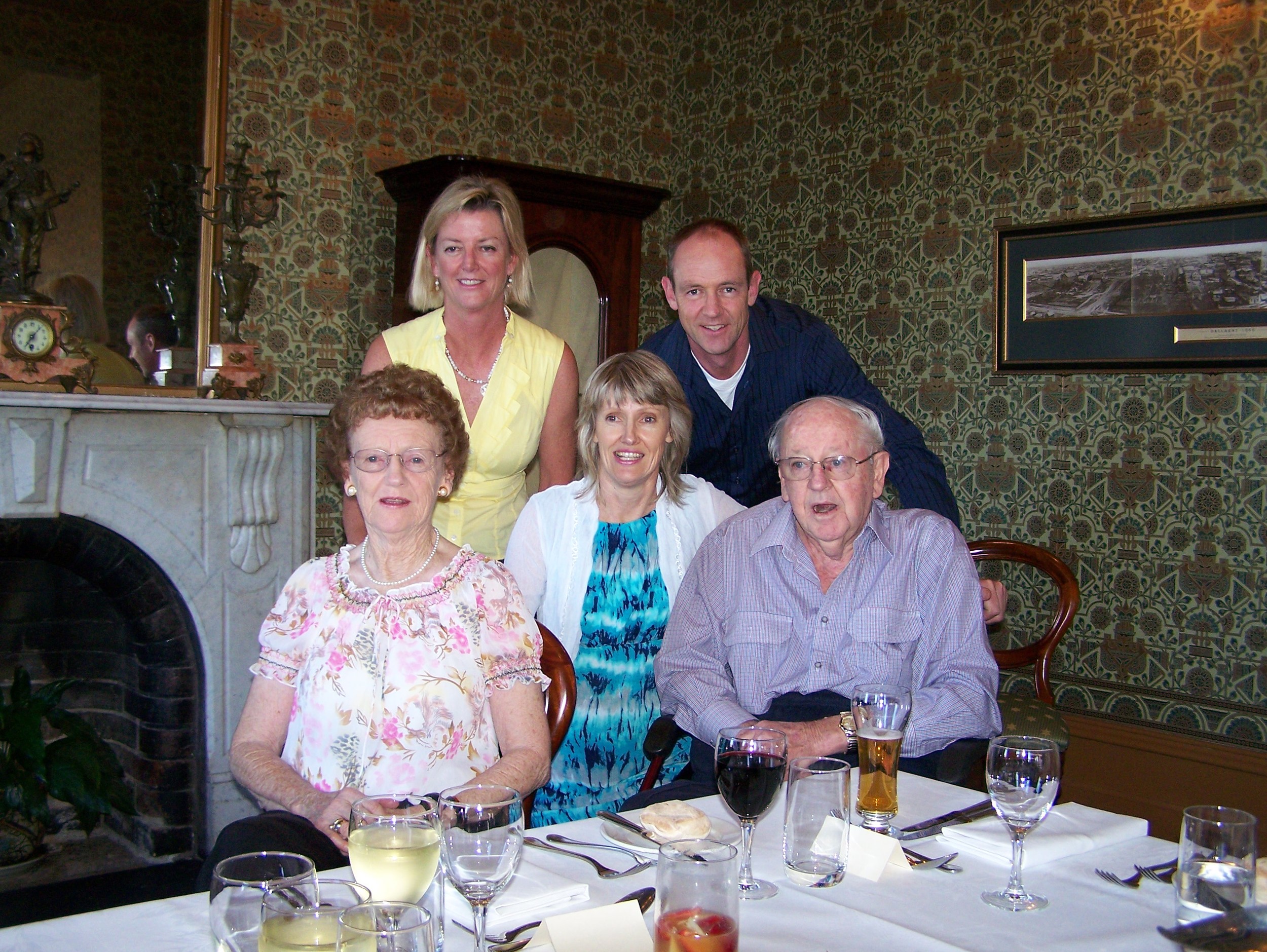
Granddaughter Amy, then 4, in front of Marcelle and Barry's anniversary cake. Marcelle, is leaning over with the knife. Marcelle's husband, Barry, is wielding a camera at front. Chris is holding the baby. Amy is now 22 and studying law at Monash Uni…

Granddaughter Amy, then 4, in front of Marcelle and Barry's anniversary cake. Marcelle, is leaning over with the knife. Marcelle's husband, Barry, is wielding a camera at front. Chris is holding the baby. Amy is now 22 and studying law at Monash University.

For Marcelle Loughnan: 'An altogether softer chorus awaits people who work tirelessly to protect and preserve', by son Chris and granddaughter Amy - 2013

January 25, 2016

16 October 2013, St Mary of the Angels Basilica, Geelong, Victoria, Australia

Chris (son):

Mum. We have come here today to celebrate and honour Marcelle’s, my mum’s, life.

Mum to me was a constant source of love and unconditional support.

She supported me even if I was wrong, my enemies were her enemies.

I think it first dawned on me that she was more than a mother when we visited her sister Mary and our cousins in the country. Together they were like two laughing schoolgirls. Our cousins would say how wonderful she was and could we swap. We would say how wonderful Mary was and could we swap. The truth is they were both wonderful mums.

Mum was getting very tired toward the end but still maintained a dry sense of humour and flashes of that old sparkle in her eyes. Mum was at home in a familiar environment thanks to Gen and Sue’s gift of care to her and the whole family. Thanks Gen and Sue.

Amy my daughter wrote a tribute for me, to her Nana which I would like to share with you.

Amy (granddaughter):

Creating something is difficult. Protecting it can be near impossible.
 
A creator is met with fanfare and accolades.
An altogether softer chorus awaits people who work tirelessly to protect and preserve.
Perhaps because of this, there is a quiet dignity to those who stand guard.
Theirs is a delicate business, which spans a lifetime.
It is difficult to recognize a protector at work, so soft is their guiding hand and light is their touch.
It is only clear eyes that reveal all things treasured and precious are marked
with their fingerprints.
 
Nanna was a potter, a gardener, a grandmother, sister, mother in law, wife, friend and mother to six. More than anything, she taught me the value of taking care of something. She was one of the best protectors I have ever known.
 

Mum knew at the end that the time was coming to rest and stand down.

Thanks mum, I love you and god speed

Enjoyed this speech? Speakola is a labour of love and I’d be very grateful if you would share, tweet or like it. Thank you.

Facebook Twitter Facebook
In SUBMITTED Tags MOTHER, GRANDDAUGHTER, GRANDMOTHER, EULOGY, SON
Comment

For Lemmy Kilmister: 'Precious lord, take my hand', by Dave Grohl - 2016

January 18, 2016

10 January 2016, Forest Lawn Memorial Cemetery, Los Angeles, USA

The funeral streaming had technical difficulties during the amazing Dave Grohl eulogy. It's worth persevering, and the beautiful, tears-inducing Little Richard finale is in full sound from 7.00.

Hi guys

There’s not enough time for me to tell you how much Lemmy meant to me, and all the amazing experiences I had with him.

The first time I met Lemmy was at fucken Crazy Girls about twenty years ago, and I was walking back from the mens’ room,  and on the way back, I looked to my left and I saw Lemmy by himself in the corner on a video game. And it blew my mind. I knew that I couldn’t just go say something because he was on his own in the corner. On the way out I thought, ‘I have to say something. He’s my hero. He’s the one true rock ’n ’roller that bridged my love of ACDC and Sabbath and Zeppelin with my love of GBH and the Ramones and Black Flag. So I walked up and said, ‘Excuse me Lemmy, I don’t want to bother you, but you’ve influenced me so much, you’re my musical hero. I’m a musician. I play in the Foo Fighters, and I was in Nirvana. And he looked up from the video game, and the first thing he ever said to me, he said, “sorry about your friend Kurt [Cobain]”.

And in that moment he revealed this gun-slinging, whiskey-drinking badass, motherfucking rock star to be this gun slinging whiskey drinking badass mother fucking rockstar with a heart, and I walked away thinking if I never see him again, that’s enough, for the rest of my life.

But then we becamse friends. And its one thing when you have a hero, but it’s another when your hero becomes your friend.

And over the years I have a lot of great stories of going to his apartment, and walking through the aisles of pornos ... or going to the Rainbow and ordering two Jack and cokes and the waitress brings two Jack and cokes and he’s fucking male

Or the one time I text him and say, ‘hey man, my band’s playing at the Pantaras Theatre tonight you should come down check it out’,  

I said, it’s an acoustic show, it's not like a big rock gig

[mimes texting] Ok

An hour later, I’m downstairs backstage, and I hear fucking Motorhead blaring out of the dressing room, and I get so excited, “finally someone else in the band’s listening to fucking Motorhead!’ and I open up the door and there’s [mimes catatonic fagging] Lemmy, by himself listening to Motorhead.

My mom was there, so I say to Lemmy, I want you to come and meet my mom, so we walk across the hall way, and in that room was my mother, and my wife, and my daughter who was a baby I think she was six months old at the time. So Lemmy walks in with his drink, and his cigarette, [mimes pointing] ‘that Lemmy, from Motorhead’.

[Throat growling 'Lemmy']

And then he looks and he sees that there’s a baby in a crib, and he puts out his cigarette in his drink, and he puts the drink down. Now to most people that  would seem like nothing. But to me, that was my hero putting out his cigarette in his drink and putting it aside because my daughter was there in the room.

So I think what everybody has always known, at least where I am today, is that Lemmy was not only that gun slinging whiskey drinking badass mother fucking rock n roll  star, but he had the biggest heart and he set such a great example because he was so kind to everyone, people he  didn’t know, people he known for years, he was so kind.

He and I shared a love of Little Richard.

I always said that if there was one person I could meet it would be Little Richard. Because whose more badass than Little Richard? One day I was in the airport, at LAX and I was standing on a curb and a guy came up and said, ‘Hey I heard from Lemmy Kilmister that you wanted to meet Little Richard?’

‘Yeah.’

‘Well that’s my dad.’

‘What?’

And it’s true.  We walk over to this limousine, and he taps on the window, and the window comes down a little bit, and it’s fucken Little Richard sitting there!

Oh my god.

And this guy [whispers]

Windows comes all the way down.

Little Richard says , “I got blessings for you ... ‘ And he signs this bible pamphlet for me and hands it to me, and [Dave pulls out pamphlet to much applause] I kept it.

[Long pause fighting back tears]

And I wanted to give it to him on his birthday.

So last night [audio video glitch]

So this is a song Little Richard sang, and I thought I’d read it. It’s called ‘Precious Lord Take My Hand’

Precious Lord, take my hand
Lead me on, and help me stand
Lord I'm tired, I’m so weak,

Lord you know I’m worn,

Through the storm, through the night
Lead me on to the light
Take my hand precious Lord, lead me home

When my way it gets kinda dreary precious Lord’s somewhere near
When my life is almost gone
Hear my cry, lord
Hear my call
Hold my hand lest I fall
Take my hand precious Lord, lead me home

Cheers Lemmy


Source: https://www.youtube.com/watch?v=IgZWttSDQT...

Enjoyed this speech? Speakola is a labour of love and I’d be very grateful if you would share, tweet or like it. Thank you.

Facebook Twitter Facebook
In EDITORS CHOICE Tags LEMMY KILMISTER, DAVE GROHL, MOTORHEAD, FRIEND, MUSICIAN, ROCK STAR, SPEAKOLIES CELEB
Comment

For Ruby Carter: 'To call Ruby Carter larger than life would be to give life too much credit', by Jane Clifton - 2015

January 18, 2016

19 December 2014, The Memo, St Kilda, Melbourne, Australia

In Melbourne, Glasgow born singer Ruby Carter was known as the 'Godmother of Jazz'. Another great singer, Jane Clifton, was celebrant at her colourful, traffic-stopping funeral. There is no video or audio of the speech.

This is a sad day. Usually I would say that we are here to celebrate a life – and there will be a celebration of Ruby’s life here today – but it is a sad day.

Because it has come as such a shock. Ruby’s passing was so sudden. It’s almost impossible for us to imagine our lives without her presence in it. The streets outside are resounding with the silence of her absence. It’s eerie. It feels wrong.

We knew she was ill.

She’d been battling illness, been in and out of cancer, for a year or so now. Long hard years of debilitating treatment that saw her in and out of hospital, but still managing to crack hardy, still managing to do gigs, still managing to belt out the odd song or three.

This recent round with brain cancer did seem very serious indeed and she’d started to ask me about doing her funeral.

Never an easy conversation to have.

So, a couple of weeks ago I managed to steer her away from the harsh reality of the topic by saying,

‘You know what we should do, Ruby? We should hold a living wake – where we can all get to say what we’d say at your funeral, only you’d get to hear it all.’

She loved that idea.

‘But,’ said Jex, ‘you won’t be allowed to speak. You’d just have to sit there and listen.’

Not so keen on that idea. (Shitpot, Jex!)

But we swung into action, started organising it anyway.

Bernard Galbally managed to book the Espy for Feb 3rd next year, so, that we could do one last, magnificent Ruby Tuesday in honour of her long residency.

I felt absolutely confident she would hang in for the gig.

And, who knows, maybe we could keep that booking and hold a tribute for Ruby….

Even when I went to visit her on the day before she died and saw for myself how things weren’t going so well – she was really having a hard time – I somehow thought that this was a crisis she would pull through.

Such was the size of her spirit, her indomitable presence.

To say she was larger than life is to give life too much credit.

Ruby Carter was unique.

She was born in Glasgow, and I’m not going to say what year she was born in or she might just jump out of that coffin and give me a Glasgow kiss.

Ruby Carter was, is and always will be 45.

Ruby was the daughter of Robina, known as Ruby, and Peter Waterson. They divorced and Ruby’s Mum went on to marry Sandy, when Ruby was 8 years-old. And it was Sandy who was really Ruby’s main father throughout her life.

Sister of Bobby, Alex, Johnny and Joe – we are recording this for the family back in Glasgow, so, best wishes to all of you back there.

Big sister to Geraldine – who is here today.

Auntie to Aisha and Kirsty,

Great-aunt to all the little ones –

Tijana, Gabriella, Molly and James

Mother to Jerry …many of us here today were at her side at Jerry’s funeral in 1995 when he sadly passed away. She took that loss hard - but there was joy to be found as Granny to Jerry’s daughter, Jacqueline – Ruby’s grand-daughter – who is also here today. As is Jerry’s partner, Caroline.

The family grew up in the area of Glasgow known as the Gorbles where they breed ‘em tough. Geraldine told me they were familiar with tinned spaghetti but she’d never seen real spaghetti until she the age of 5 when she saw Ruby, then aged 16, clock someone over the head with a packet of the stuff. The guy had put his hand where it should not to have been and he paid the price.

Ruby attended St John’s Catholic school and later St Margaret’s Catholic School.

She left school at 15 and worked in cafés and in the family fish ‘n chip shop, where she was given the responsibility of closing for the night.

And when she did - she’d shut the doors, turn up the volume on the jukebox, and she and her friends would jive the night away.

Back in those days folks all over the UK would spend their seaside holidays at Butlins Holiday Camps.

Sports, swimming, beauty parades, bingo and live music were part of a great variety of activities on offer and the Camps employed huge numbers of staff.

Ruby’s Dad worked at Butlins on the Ayreshire Coast and managed to get Ruby a job there, too, as a supervisor.

When the singer with the live big band fell ill it was Ruby who stepped up to the mic, effortlessly singing standards with the band like she’d been doing it all her life.

She sang at clubs around Glasgow including The Locarno Ballroom and The Stuart Hotel.

She travelled back and forth to London, appearing as a support act to Tom Jones, Shirley Bassey among others.

Geraldine remembers being one of only two audience members when Ruby did a first gig at the Lorne Hotel at the top end of Sauchiehall Street in downtown Glasgow. The audience built slowly over the next few weeks until a month later you couldn’t get in the door – the place was packed.

She married Nicky Carter in 1957 and Jerry was born in 1958. But times were hard, the marriage didn’t last, and Jerry grew up at home with Ruby’s family.

In 1972 Geraldine came out to Australia with husband Alex who was here to play soccer. They were going to head back home in a couple of years but the weather and the lifestyle out here won them both over – and Geraldine’s lived here ever since.

Ruby came out to visit, nursing a broken heart – courtesy of ‘Big Robert’.

She backed and forthed between here and Glasgow before also making the permanent move in December 1973.

But despite all her experience she didn’t start singing here straightaway when she first arrived. Her head wasn’t in the right place and she didn’t really know any of the local musicians.

She worked at the Chevron and the Fawkner Park Hotels, until little by little, she did get to know people – musicians gravitate towards each other like bees to honey and Ruby never had any difficulty making friends, starting conversations -- and, luckily for all of us, she did begin to sing again.

And the rest, as they say, is history.

I didn’t really know anything about Ruby’s family or her early life -

and I’m grateful to Geraldine and her family for filling me in on the details - she seems to have sprung, fully formed, into my life as a singer of great note, maybe 30 years ago.

I am part of her other family.

This great bunch of people here today who knew her and loved her.

The city of St Kilda where she lived and worked for the past 4 decades. Where she was a familiar and greatly loved local identity. Even before the arrival of the lethal mobility scooter she was a familiar sight on her bicycle.

Always with a kind word or a ‘hello son’ ‘hello hen’ or a quick tongue lashing for all and sundry.

Some people weren’t even aware that she was a singer, they just knew she was special. She ate at the finest restaurants on the block – Cicciolina’s, Lau’s Kitchen and, of course, Claypots – and they were so generous to her with their food and their love because they recognised a good soul.

Then there were her sons, her Number One Sons.

The title of Number One Son was a hotly contested honour and not bestowed lightly. You had to earn it. By – fixing a computer or tuning a TV, driving her to the shops or hospital, or simply playing your instrument like a god.

On a technicality the Number One Son in perpetuity was awarded to Jex Saareladt. But Barney McAll is in fierce litigation over this claim. As is John McAll and don’t even start Stephen Hadley or Paul Williamson or Julien Wilson. Not to mention Bobbie Valentine, wee Dougie de Vries, Ben Robertson, Nick Haywood, Sam Lemann and….the list of 20 or so goes on.

But I believe there is a special category for Russell Smith.

I feel for the Number One Sons, no one will replace Ruby in their lives.

And then there are the girls – all of us jazz girls, living in fear of the Godmother of Jazz, living in hope of her praise.

Rebecca and Nichaud, Shelley, Tanya-Lee, Kate, Margie-Lou, Julie --

How lucky we were, girls, to have Ruby in our lives to show us that you don’t stop singing. Age may weary us and fashion shift but while there’s breath and the sniff of a gig, you just get up and do it.

She was the supreme performer, the supreme entertainer.

When Ruby stepped up to the mic – and in recent years that would be a struggle – people would stop in their tracks.

Who was this strange looking, incomprehensible woman in the red leather coat, beanie and headphones telling us all to ‘have a bit of shoosh!’?

But bemused smiles would disappear when she began to sing and they realised they were in the presence of something, someone, special – that rare creature – a real singer.

Music was her life. She lived and breathed music.

Musicians loved to play with her – and she adored them. It was true sympatico. Although she did have her moods….

Ruby would be the first to admit she was no angel.

I’ve spoken to a few people in the past week who are devastated to learn of her passing because they were in the middle of a fight with her.

Who wasn’t? We’ve all had our run-ins with Ruby. I didn’t speak to her for a whole year – over some stupid, pointless thing. But it never lasted forever. They were just flash fires.

She was bigger than that.

Ruby Carter was a passionate, opinionated, tender, crabby, adorable, infuriating, talented, loving woman – who never forgot your birthday, or your kids’ birthdays, or to call you on Hogmanay or to yell out praise for your solo.

I can’t believe she’s gone, but she will not be forgotten.


This is the video of the jazz parade send off to Ruby's hearse in Acland street after the ceremony.


Source: http://www.smh.com.au/entertainment/music/...

Enjoyed this speech? Speakola is a labour of love and I’d be very grateful if you would share, tweet or like it. Thank you.

Facebook Twitter Facebook
In SUBMITTED Tags RUBY CARTER, MUSIC, JAZZ, SINGER, JANE CLIFTON, MELBOURNE, ST KILDA
1 Comment

for Martin Luther King Jr: 'It isn’t how long one lives, but how well', by Benjamin Mays - 1968

January 6, 2016

9 April 1968, Morehouse College. Atlanta, Georgia, USA

Benjamin Mays was a mentor and teacher to Martin Luther King during Dr King's time as a student at Morehouse College. They became close friends and Dr King called Mays his 'spriitual mentor'. They had a mutual promise to deliver the other's funeral, whomever should die first. Sadly, it was the much younger King. There is no video or audio of the speech.

To be honored by being requested to give the eulogy at the funeral of Dr. Martin Luther King Jr. is like asking one to eulogize his deceased son — so close and so precious was he to me. Our friendship goes back to his student days at Morehouse. It is not an easy task; nevertheless I accept it, with a sad heart and with full knowledge of my inadequacy to do justice to this man. It was my desire that if I predeceased Dr. King, he would pay tribute to me on my final day. It was his wish that if he predeceased me, I would deliver the homily at his funeral. Fate has decreed that I eulogize him. I wish it might have been otherwise; for, after all I am three score years and 10 and Martin Luther is dead at 39.

Although there are some who rejoice in his death, there are millions across the length and breadth of this world who are smitten with grief that this friend of mankind — all mankind — has been cut down in the flower of his youth. So, multitudes here and in foreign lands, queens, kings, heads of governments, the clergy of the world, and the common man everywhere, are praying that God will be with the family, the American people, and the president of the United States in this tragic hour. We hope that this universal concern will bring comfort to the family — for grief is like a heavy load: when shared it is easier to bear. We come today to help the family carry the load.

He was convinced that people could not be moved to abolish voluntarily the inhumanity of man to man by mere persuasion and pleading.

We have assembled here from every section of this great nation and from other parts of the world to give thanks to God that He gave to America, at this moment in history, Martin Luther King Jr. Truly God is no respecter of persons. How strange! God called the grandson of a slave on his father’s side, and the grandson of a man born during the Civil War on his mother’s side, and said to him: Martin Luther, speak to America about war and peace; about social justice and racial discrimination; about its obligation to the poor; and about nonviolence as a way of perfecting social change in a world of brutality and war.

Here was a man who believed with all of his might that the pursuit of violence at any time is ethically and morally wrong; that God and the moral weight of the universe are against it; that violence is self-defeating; and that only love and forgiveness can break the vicious circle of revenge. He believed that nonviolence would prove effective in the abolition of injustice in politics, in economics, in education, and in race relations. He was convinced, also, that people could not be moved to abolish voluntarily the inhumanity of man to man by mere persuasion and pleading, but that they could be moved to do so by dramatizing the evil through massive nonviolent resistance. He believed that nonviolent direct action was necessary to supplement the nonviolent victories won in federal courts. He believed that the nonviolent approach to solving social problems would ultimately prove to be redemptive.

He gave people an ethical and moral way to engage in activities designed to perfect social change without bloodshed and violence.

Out of this conviction, history records the marches in Montgomery, Birmingham, Selma, Chicago and other cities. He gave people an ethical and moral way to engage in activities designed to perfect social change without bloodshed and violence; and when violence did erupt it was that which is potential in any protest which aims to uproot deeply entrenched wrongs. No reasonable person would deny that the activities and the personality of Martin Luther King Jr. contributed largely to the success of the student sit-in movements in abolishing segregation in downtown establishments; and that his activities contributed mightily to the passage of the Civil Rights legislation of 1964 and 1965.

Martin Luther King Jr. believed in a united America. He believed that the walls of separation brought on by legal and de facto segregation, and discrimination based on race and color, could be eradicated. As he said in his Washington Monument address: “I have a dream.”

As he and his followers so often sang: “We shall overcome someday; black and white together.”

He had faith in his country. He died striving to desegregate and integrate America to the end that this great nation of ours, born in revolution and blood, conceived in liberty and dedicated to the proposition that all men are created free and equal, will truly become the lighthouse of freedom where none will be denied because his skin is black and none favored because his eyes are blue; where our nation will be militarily strong but perpetually at peace; economically secure but just; learned but wise; where the poorest — the garbage collectors — will have bread enough and to spare; where no one will be poorly housed; each educated up to his capacity; and where the richest will understand the meaning of empathy. This was his dream, and the end toward which he strove. As he and his followers so often sang: “We shall overcome someday; black and white together.”

Let it be thoroughly understood that our deceased brother did not embrace nonviolence out of fear or cowardice. Moral courage was one of his noblest virtues. As Mahatma Gandhi challenged the British Empire without a sword and won, Martin Luther King Jr. challenged the interracial wrongs of his country without a gun. And he had the faith to believe that he would win the battle for social justice. I make bold to assert that it took more courage for King to practice nonviolence than it took his assassin to fire the fatal shot. The assassin is a coward: He committed his dastardly deed and fled. When Martin Luther disobeyed an unjust law, he accepted the consequences of his actions. He never ran away and he never begged for mercy. He returned to the Birmingham jail to serve his time.

He had only his faith in a just God to rely on; and the belief that “thrice is he armed who has his quarrels just.”

Perhaps he was more courageous than soldiers who fight and die on the battlefield. There is an element of compulsion in their dying. But when Martin Luther faced death again and again, and finally embraced it, there was no external pressure. He was acting on an inner compulsion that drove him on. More courageous than those who advocate violence as a way out, for they carry weapons of destruction for defense. But Martin Luther faced the dogs, the police, jail, heavy criticism, and finally death; and he never carried a gun, not even a knife to defend himself. He had only his faith in a just God to rely on; and the belief that “thrice is he armed who has his quarrels just.” The faith that Browning writes about when he says:

“One who never turned his back but marched breast forward, / Never doubted clouds would break, / Never dreamed, though right were worsted, wrong would triumph, / Held we fall to rise, and baffled to fight better, / Sleep to wake.”

Coupled with moral courage was Martin Luther King Jr.’s capacity to love people. Though deeply committed to a program of freedom for Negroes, he had love and concern for all kinds of peoples.

He would probably say that if death had to come, I am sure there was no greater cause to die for than fighting to get a just wage for garbage collectors.

He drew no distinction between the high and low; none between the rich and the poor. He believed especially that he was sent to champion the cause of the man farthest down. He would probably say that if death had to come, I am sure there was no greater cause to die for than fighting to get a just wage for garbage collectors. He was supra-race, supra-nation, supra-denomination, supra-class and supra-culture. He belonged to the world and to mankind. Now he belongs to posterity.

But there is a dichotomy in all this. This man was loved by some and hated by others. If any man knew the meaning of suffering, King knew. House bombed; living day by day for 13 years under constant threats of death; maliciously accused of being a Communist; falsely accused of being insincere and seeking limelight for his own glory; stabbed by a member of his own race; slugged in a hotel lobby; jailed 30 times; occasionally deeply hurt because his friends betrayed him — and yet this man had no bitterness in his heart, no rancor in his soul, no revenge in his mind; and he went up and down the length and breadth of this world preaching nonviolence and the redemptive power of love. He believed with all of his heart, mind and soul that the way to peace and brotherhood is through nonviolence, love and suffering.

He was severely criticized for his opposition to the war in Vietnam. It must be said, however, that one could hardly expect a prophet of Dr. King’s commitments to advocate nonviolence at home and violence in Vietnam. Nonviolence to King was total commitment not only in solving the problems of race in the United States, butthe problems of the world.

No! He was not ahead of his time. No man is ahead of his time. Every man is within his star, each in his time.

Surely this man was called of God to do this work. If Amos and Micah were prophets in the eighth century B.C., Martin Luther King Jr. was a prophet in the 20th century. If Isaiah was called of God to prophesy in his day, Martin Luther was called of God to prophesy in his time. If Hosea was sent to preach love and forgiveness centuries ago, Martin Luther was sent to expound the doctrine of nonviolence and forgiveness in the third quarter of the 20th century. If Jesus was called to preach the Gospel to the poor, Martin Luther was called to give dignity to the common man. If a prophet is one who interprets in clear and intelligible language the will of God, Martin Luther King Jr. fits that designation. If a prophet is one who does not seek popular causes to espouse, but rather the causes he thinks are right, Martin Luther qualified on that score.

No! He was not ahead of his time. No man is ahead of his time. Every man is within his star, each in his time. Each man must respond to the call of God in his lifetime and not in somebody else’s time. Jesus had to respond to the call of God in the first century A.D., and not in the 20th century. He had but one life to live. He couldn’t wait. How long do you think Jesus would have had to wait for the constituted authorities to accept him? Twenty-five years? A hundred years? A thousand? He died at 33. He couldn’t wait. Paul, Galileo, Copernicus, Martin Luther the Protestant reformer, Gandhi and Nehru couldn’t wait for another time. They had to act in their lifetimes. No man is ahead of his time. Abraham, leaving his country in the obedience to God’s call; Moses leading a rebellious people to the Promised Land; Jesus dying on a cross, Galileo on his knees recanting; Lincoln dying of an assassin’s bullet; Woodrow Wilson crusading for a League of Nations; Martin Luther King Jr. dying fighting for justice for garbage collectors — none of these men were ahead of their time. With them the time was always ripe to do that which was right and that which needed to be done.

Too bad, you say, that Martin Luther King Jr. died so young. I feel that way, too. But, as I have said many times before, it isn’t how long one lives, but how well. It’s what one accomplishes for mankind that matters. Jesus died at 33; Joan of Arc at 19; Byron and Burns at 36; Keats at 25; Marlow at 29; Shelley at 30; Dunbar before 35; John Fitzgerald Kennedy at 46; William Rainey Harper at 49; and Martin Luther King Jr. at 39.

We all pray that the assassin will be apprehended and brought to justice. But, make no mistake, the American people are in part responsible for Martin Luther King Jr.’s death. The assassin heard enough condemnation of King and of Negroes to feel that he had public support. He knew that millions hated King.

We, and not the assassin, represent America at its best. We have the power — not the prejudiced, not the assassin — to make things right.

The Memphis officials must bear some of the guilt for Martin Luther’s assassination. The strike should have been settled several weeks ago. The lowest paid men in our society should not have to strike for a more just wage. A century after Emancipation, and after the enactment of the 13th, 14th and 15th Amendments, it should not have been necessary for Martin Luther King Jr. to stage marches in Montgomery, Birmingham and Selma, and go to jail 30 times trying to achieve for his people those rights which people of lighter hue get by virtue of their being born white. We, too, are guilty of murder. It is time for the American people to repent and make democracy equally applicable to all Americans. What can we do? We, and not the assassin, represent America at its best. We have the power — not the prejudiced, not the assassin — to make things right.

If we love Martin Luther King Jr., and respect him, as this crowd surely testifies, let us see to it that he did not die in vain; let us see to it that we do not dishonor his name by trying to solve our problems through rioting in the streets.

Violence was foreign to his nature. He warned that continued riots could produce a fascist state. But let us see to it also that the conditions that cause riots are promptly removed, as the president of the United States is trying to get us to do so. Let black and white alike search their hearts; and if there be prejudice in our hearts against any racial or ethnic group, let us exterminate it and let us pray, as Martin Luther King Jr. would pray if he could: “Father, forgive them for they know not what they do.” If we do this, Martin Luther King Jr. will have died a redemptive death from which all mankind will benefit….

I close by saying to you what Martin Luther King Jr. believed: If physical death was the price he had to pay to rid America of prejudice and injustice, nothing could be more redemptive. And, to paraphrase the words of the immortal John Fitzgerald Kennedy, permit me to say that Martin Luther King Jr.’s unfinished work on earth must truly be our own.

Source: http://www.bates.edu/150-years/months/apri...

Enjoyed this speech? Speakola is a labour of love and I’d be very grateful if you would share, tweet or like it. Thank you.

Facebook Twitter Facebook
In EDITORS CHOICE Tags MARTIN LUTHER KING, BENJAMIN MAYS, MOREHOUSE COLLEGE, CIVIL RIGHTS, ASSASSINATION, NON-VIOLENCE
Comment

For Bob: 'When you suffer from chronic major depression at the level that Bob did, life can be so very painful', by Karen E Dill-Shackleford

January 5, 2016

22 October 2014, St David's Catholic Church, Arnold, Missouri, USA

Karen Dill-Shackleford is a social psychologist who studies the psychology of everyday media use and the author of 'How Fantasy Becomes Reality'. A psychologist, but not a therapist, Karen's talk reflects on her brother's life and thanks her mother, Joan, for the grace she showed in raising Bob, who suffered severe mental illness. It first appeared in Psychology Today.

I’m Bob’s sister, Karen, here to give his eulogy. For those who don’t know, my parents had three children. My sister, Christine, is the nicest and the most likeable; my brother, Bob, the smartest and most talented; and me: I’m…the youngest. I’m here today to share memories and thoughts about my brother Bob on behalf of myself and of my sister, Christine, and of all my family. We wanted to remember the person he was and to celebrate his life. My sister wants everyone to know that we think that Bob was an awesome brother.

My brother was not average – pretty much in any way. Those of you who knew him well knew that he was incredibly smart and talented. You also know that it was never easy to be Bob. When Bob was a teenager he suffered his first onslaught of mental illness. He was hospitalized with major depression, though they called it a chemical imbalance in those days. I remember how scared he was and how deeply he was hurting. He stayed in the hospital for some time, missing a semester of high school. But that summer he taught himself trigonometry and went back his senior year to calculus class. He finished the year at the top of that calculus class and, when they graduated at Busch Stadium, he gave the address as Salutatorian.

In addition to serious depression, Bob also had to cope with social deficits. I don’t know if he’d been born 10 or 20 years later if someone would have diagnosed him with being on the autism spectrum, perhaps as having Asperger’s Syndrome. In any case, he was very different socially from all the other kids. He also had a speech impediment. Many times my sister and I found ourselves explaining Bob and talking for him. We loved him and we wanted to translate Bob to the world to put everyone at ease.

Similar to people who are on the high functioning end of the autism spectrum, Bob had social deficits, but also noteworthy talents. He eventually earned a degree in mathematics with a minor in computer science. He really loved math and computers and would talk about them endlessly, fixating on the things that intrigued him. Some people who excel at math or computers aren’t good at English, but Bob was also excellent at English. When I was in AP English in high school, my teacher read one of Bob’s essays aloud to our class as an example of an exemplary essay. His challenges kept Bob out of college for a while, and though he was 3 ½ years older than I was, he ended up going to college at Mizzou with me for a time. He hung out with my group of friends and we spent a lot of time together. I remember that he was always helping other people in his classes write their computer code. Those things that flummoxed others came so naturally to Bob. In fact, I recall that he had an old rudimentary computer years ago, a Radio Shack model with a tape recorder attached to it, and with only lines of code, he managed to write a poker game complete with pictures and sounds. I’ll never know how he did it, but he did it.

Bob was also very artistic. When he was in elementary school, the art teacher made a display of only his work in the school hallway, which was unusual. He tried many different kinds of art, from carving bars of soap at home to making charcoal drawings to painting. But maybe his favorite art was photography. One of my favorite memories of Bob is a time that we had a beautiful spring day off of school together and Bob drove us to Bee Tree Park. We walked around and Bob took interesting artistic photos, such as a picture of our feet propped up on the rail of a gazebo.

When you suffer from chronic major depression at the level that Bob did, life can be so very painful. Looking back on Bob’s life, my sister and I have been thinking about the toll mental illness took on him over the years. Christine describes Bob’s depression as a storm, and his episodes like a storm breaking over him. We think that Bob was happiest when he was a child. In those days we called him Robbie or Bobbie. I admit that I called him Roberta as often as I could.

Bob was different, as I say, pretty much always. But when he was little, he laughed and joked a lot. He loved being outside, playing and riding his bike. He was also a little trickster. I recall the days when he would set traps for us so that when we opened a bedroom door, we’d get hit on the head by a cup of water or even flour. He was funny. Bob also loved to do voices and pull faces. He had a sense of humor that was all Bob. He also had a wild laugh, almost a cackle with a wheeze, which he would emit when he was watching silly TV shows. You could hear that laugh all over the house.

Over the years, as Bob’s bouts with depression and the difficult episodes continued to crash onto his shores like breaking storms, it seemed that each impending storm took a greater toll...took away a part of who he was from us and from him. He went through periods where he was so afraid of the world that going out in public was too much for him, and periods where he said almost nothing. As the destruction of those waves hit him time after time, a little bit of Bob would disappear each time.

In the last few years, at times he seemed more remote than ever, less like himself than ever. Bob had a number of pretty awful episodes of mental illness. During these times he sometimes lost touch with reality. A few years ago, he decided that the drugs he was taking for his mental illness were poison. He started to have strange thoughts and beliefs. He called me and told me many unreal things, such as saying that some people can control the weather with their thoughts. At one point, he couldn’t sleep, so he drove around all night, every night for days on end. I feared he would hurt himself or others. Then he got angry with friends and family and took off on the open road, having a series of odd encounters with strangers. My mother tried to get him into the hospital, but red tape got in the way of helping him. While Bob was off his meds and his thoughts had lost touch with reality, our Aunt Betty, our Dad’s twin sister, was very ill with cancer. Sadly, at that time, Bob had convinced himself that she didn’t really have cancer and he told her so. If you don’t know a lot about mental illness, this behavior might seem purely thoughtless or mean. But if you can look inside the mind of a mentally ill person, you can see what may have caused that behavior. Bob loved Aunt Betty so much that he could not deal with the idea that he was losing her. So, in his sick mind, he rejected the idea entirely. I think it’s possible that this was his way of coping. In the end, it was one tragedy piled on top of another one.

This leads me to another reason that I wanted to give Bob’s eulogy. When someone suffers from mental illness, it is also a struggle for those who are close to him. In thinking back on Bob’s life, I think it’s very possible that some of us here are holding onto some guilt or disappointment about times when we felt we didn’t do as much as we might have wanted to do for Bob. If you feel that way at all, I ask you to treat yourself with the same compassion you would offer a good friend and forgive yourself. Bob would want you to do that.

I also want to acknowledge all the people who did their best with Bob, though it was not always easy. So many among us were kind and compassionate. Friends and family took him in, helped him get back on his feet, talked with him or listened when he needed it, and really acted out of love and compassion time and time again. From my dad, Bob, to my stepdad, Leo, to my sister, Christine, to his roommate, Cathy, to aunts, uncles, cousins and friends – to all of you who loved Bob and did your best for him – thank you. There are some very special people in this room and in Bob’s life.

And there’s something else I need to say. Someone else I need to thank. I’m not sure if I can make it through this part or not, but I want to try. I want to thank my mother for all she did for her son. As a mother myself, I know that there are not a lot of medals that get handed out for good mothering, but there are a lot that are deserved. Thought I don’t think there’s a reason in the world that my mother would have been prepared to raise a child like Bob, she always seemed to have a knack for it. She had such a gentle way with Bob. When he did things that were maddening, it hurt her, but she hung in there. She stepped up to the plate every time and tried to help him. She was sweet and kind. She always made Bob feel like he was wanted and welcome, no matter how odd or broken he’d become. The best way I can describe it is that she treated him with a kind of unearthly love that I feel privileged to have seen. Maybe there aren’t any medals for mothering, mom, but there should be. So, I’m giving you an honorary medal today—a gold heart-- for being Bob’s mother and doing it with such extraordinary grace and love.

Speaking of love, I’ve told you about how hard it was to be in Bob’s life. But it’s also true that Bob really did have an extraordinary way of loving those who were close to him. For example, once Bob and I were at a party. Some guy was there who had gotten very drunk and was hitting on all the girls. Well, when this mad Romeo tried to grab me and make me dance with him, my brother, who was 6’2”, swiftly and deftly deflected the guy and moved me out of harm’s way. It was all done without a word and in a few seconds, as if by magic. I remember to this day the way it made me feel – that my brother was there, watching quietly, ready take care of me. It told me that he cared and that he had my back. This may seem a weird kind of story to tell at a funeral, but it strikes me that it tells you a whole lot about my brother. Maybe he didn’t always have the words to relate to other people. But he had the best of intentions and he really loved the people in his life.

As another example, the last year of his life he spent caring for his roommate who was very sick with cancer. He was glad to be there for Cathy and it gave him a renewed sense of purpose in life. When I think back on Bob’s life, what rises to the top for me is that I know that my brother really loved the people around him.

In low moments, I have often felt regret for Bob…regret for the pain he suffered; regret that he could not freely apply his natural talents because of the burdens that mental illness put on him. But I think that I’ve been unfair in judging his life that way. It’s unfair because if I judge his life this way, I haven’t then given him credit for what he did accomplish despite his burdens. He suffered from crippling depression, but he kept fighting that battle all his life. That took an incredible amount of bravery and stamina. He had social deficits, but he still loved being with people. As I mentioned, he ended his days as a friend’s caregiver. Given the weight on his shoulders, he accomplished quite a lot in his too short life.

I’ve mentioned Bob’s challenges; I also wanted to say that I really liked my brother and I loved his sense of humor. -- And besides…really, what is there in life to accomplish but to love and to be loved?

Bob, you loved us well and we loved you. We will miss you.


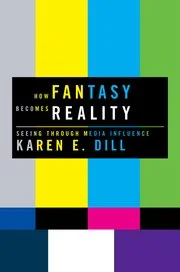
Karen E Dill-Shackleton is a social psychologist and the author of this book. You can purchse it here.


Source: https://www.psychologytoday.com/blog/how-f...

Enjoyed this speech? Speakola is a labour of love and I’d be very grateful if you would share, tweet or like it. Thank you.

Facebook Twitter Facebook
In SUBMITTED Tags BROTHER, DEPRESSION, MENTAL ILLNESS, MOTHER
Comment
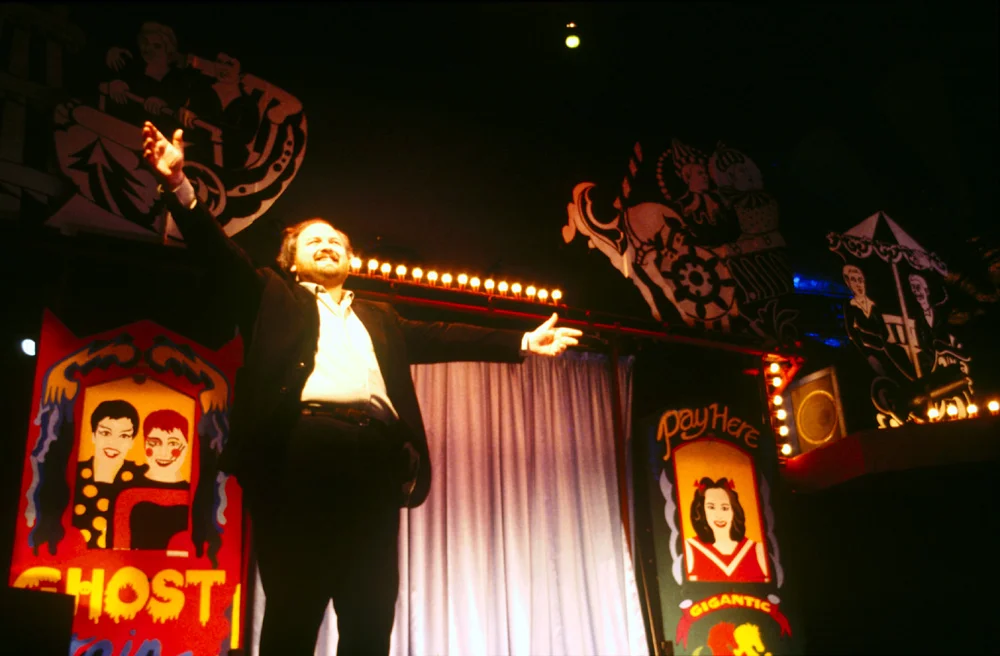
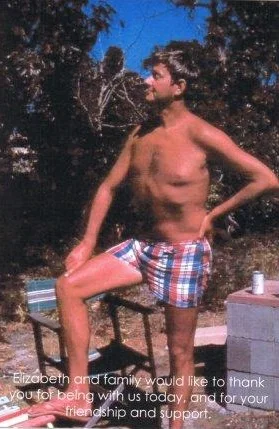
Picture Rennie Ellis, http://www.rennieellis.com.au/

Picture Rennie Ellis, http://www.rennieellis.com.au/

for John Pinder: 'The Last Laugh was a whole alternate world of wonder and whacked-out whimsy', by Brian Nankervis - 2015

December 18, 2015

12 June 2015, John Pinder celebration, Circus Oz Spiegeltent, Melbourne, Australia

I’m sure I heard about John Pinder before I met him. I think that was probably par for the course for someone like John. I was a little young for the TF Much Ballroom, but I loved Daddy Cool and knew they’d played there and besides … how cool was that name? T F Much … too fucking much!

In 1980 I was teaching at Wesley in Glen Waverly and my friend Deborah Hoare was managing the Last Laugh … front of house, in the booth, assigning duties. She rang at 5.15 pm on a Friday afternoon and asked if I wanted to work as a waiter. Sure, that would be great, when? Tonight! Be here at 6 pm, wear something weird and be prepared to be yelled at by Andre in the kitchen. I could carry a tray couldn’t I? Write down orders? Could I spell Osso Bucco? If I was any good I could DJ from the record booth after the show and we’d probably go to L’Alba café in Carlton when we finished and I’d be home by daybreak.

I was playing a staff v student cricket match and I was just about to bat. I was torn -- play a heroic innings (against 11 year olds) or throw my wicket away and enter a mysterious, seductive world in Smith Street, Collingwood; a world I’d witnessed from the outside but wanted to know more about. I was caught on the boundary and in the Wolseley by twenty past and looking for a park in Langridge street by 6 (ish) -- always late!

I wore runners, blue and red tights, a medieval cape, make up applied by Rinski Ginsberg, a fish mask that Dave Swann had made for a Swinburne film and an ice cream container with a revolving propeller in honour of Ross Hannaford. The show was Mommas Little Horror Show, directed by the great Nigel Triffet and it blew my tiny, primary school teaching mind. I met Roger Evans who was charming, well dressed, friendly and welcoming and at some point I met John who was not necessarily any of those. John was slightly scary … a big unit … an unmissable flamboyant figure, all untucked shirts and bad trousers, standing up the back of the main room in front of those heavy, swinging double doors, smoking and clapping, laughing uproariously and encouraging, urging, willing the whole room to embrace the craziness …

And so began a decade of being a waiter and a performer and seeing shows like Fairground Snaps, The Brass Band, the Whittle Family, The Bouncing Cheques and Los Trios Ringbarkus downstairs and Shane Bourne, Rachel Berger, Wendy Harmer, Found Objects, Tony Rickards, Blind Billy Polkinghorn and a tiny, crazy, elderly woman who played piano and sang show tunes from the 40s called Elsa Davis. Roger asked me to drive her home one night and a week later she sent me a handkerchief in the mail as a thank you.

John and Roger and Tory McBride produced Let The Blood Run Free upstairs at Le Joke and they gave us complete freedom and total support and not very much money but we loved it and ended up downstairs on that hallowed stage, then in Adelaide at the Fringe Festival where John arrived out of the blue and helped with the bump in … putting up Phil Pinder’s beautifully painted sets (with Lynda Gibson’s Matron Dorothy Conniving Bitch running up the hallway into infinity) … John on his hands and knees. Smoking, telling stories, pontificating, laughing, telling more stories, urging us on. Make it big! Make it loud … and then, make it bigger and louder!”

The Last Laugh was a whole alternate world of wonder and whacked-out whimsy … created, nurtured and set free by John and Roger. A starting place for so many ideas, acts and possibilities. I loved working there. I made so many friends, so many life long friendships and I learned so much about doing shows … and I met the love of my life, Sue Thomson, at the Last Laugh and I’ll thank John (and Roger) until I too go to that great green room in the sky.

After the Last Laugh I saw John occasionally and it was always a pleasure, always exciting to hear his grand plans and check out the colour of his glasses. Sitting on milk crates at a café in Bondi … or one slightly bleary night in Adelaide where we talked for ten minutes and I didn’t have the heart to tell him that in fact I wasn’t Warren Coleman from The Castanet Club.

The last time I saw John was a few years ago at Roger Evan’s funeral and he, like all of us, was a little shell shocked. There was a vulnerability … a sense of loss about how they had drifted apart, but finally a sense of fierce pride in what they’d achieved. John cried and laughed and showed a heart as big and as significant as the personality we saw when he was on fire at The Laugh … doing deals, schmoozing the press, throwing an osso bucco over his shoulder when someone had the cheek to suggest that it was completely and utterly inedible, standing up the back in front of those doors, laughing outrageously and encouraging, urging and willing all of us on. We will go on!

Thank you John Pinder … you changed our lives!

Enjoyed this speech? Speakola is a labour of love and I’d be very grateful if you would share, tweet or like it. Thank you.

Facebook Twitter Facebook
In PUBLIC FIGURE A Tags BRIAN NANKERVIS, JOHN PINDER, MELBOURNE, THE LAST LAUGH, COMEDY, CABERET
2 Comments
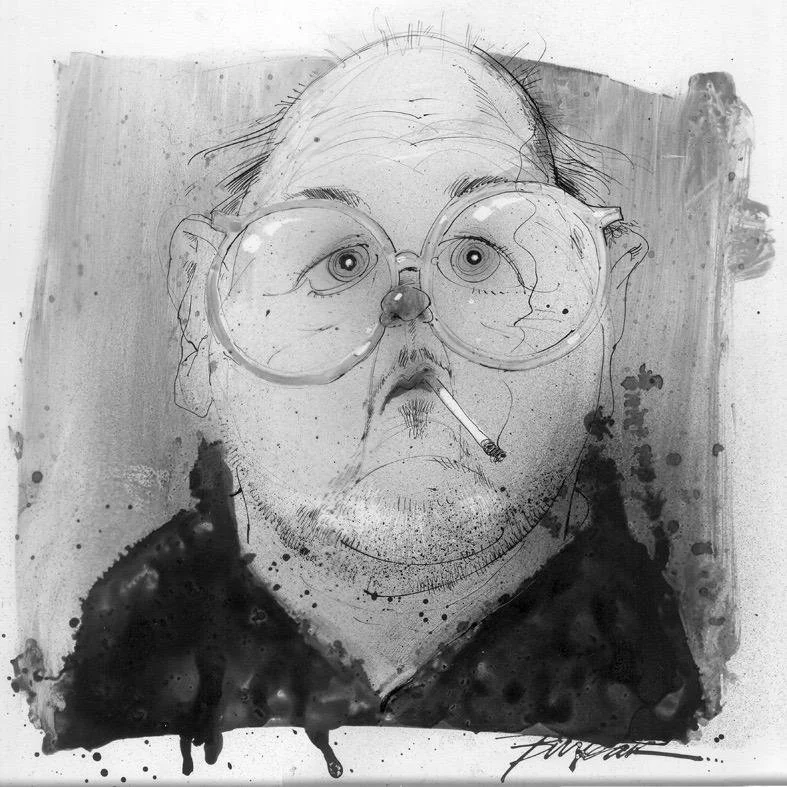
Artwork by Bill Leak

Artwork by Bill Leak

For John Pinder: 'His was a lifelong struggle against the boring, the complacent, the mundane, the ordinary' by Jane Clifton - 2015

December 16, 2015

12 June 2015, Circus Oz Spielgeltent, Melbourne, Australia

Jane was the MC of the Melbourne memorial event for friend and theatrical colleague John Pinder. She introduced other speakers, in between her own thoughts and memories.

We’ve come to say goodbye to John. To tip our collective hat to his many qualities and give thanks for how fortunate we all were to have known him.

John has already been given a spectacular send-off in Sydney.

Shot out of a canon. Well, of course, he was.

We wouldn’t have expected anything less.

It was a great farewell and there are many of us here tonight who wish we could have been there too, to wave goodbye.

Because we feel a great sense of ownership of John, here in Melbourne - even if he was originally a Kiwi. He’s inextricably woven into the cultural fabric of this city, into our comic and theatrical DNA.

Many of us owe him a huge debt of thanks, not only career-wise, but also for the bloody ol’ good time we had of knowing him.

So, tonight, Melbourne, in, where else, but a great big tent, we extend the wake, in a way, we enlarge the tribute, we rack up the testimonials and share our stories of John Pinder.

So, to start with, let me say…

It is good to die without enemies. A glance around this room is testament to the fact that John Pinder had only one -- and that was boredom.

To hear the word ‘Boring!’ issue from his mouth was to send a chill down the spine of any performer. His was a lifelong struggle against the boring, the complacent, the mundane, the ordinary.

In the late 60s Melbourne – musically speaking - was a boring town.

Boring with a capital B, and that stands for Blues.

Yes, brothers and sisters, the heavy hand of the Blues was upon us. We had it bad and that was not good.

The Blues – in the key of either E or C - in 2 distinct forms, fast or slow – was one, long endless hompa-bompa, 12’y, featuring guitar solos so long that some of them are still being played today, posthumously.

The Blues - delivered to us by squadrons of grim-faced men in, flared jeans, pony tails and grimy t-shirts, and blasted through Marshall stacks so high and wide they were visible from the moon, and at an ear-shattering volume that could be heard on Jupiter.

If there was more than one band on the bill the changeover time between acts was longer than Michael Gudinski’s face on pay day.

The Blues - was a chick-free area because, ‘my baby done left me this morning, man, and I forgot to look in the mirror and ask myself why’.

So, when young Pinder rocked into town he started a band agency.

Well, of course he did.

Let It Be was an agency for bands who did not have the Blues. Bands who were as far from Boring as Tony Abbott’s speech patterns are from conventional English.

A newly graduated from the Pink Finks, Ross Wilson, was currently at the helm of the Sons of the Vegetal Mothers but he was about to strap a foxtail to his arse and plonk a set of furry ears above his curly locks. His buddy, Ross Hannaford had an Archie ‘n Jughead-style helicopter cap at the ready. Daddy Cool was about to bring back the bop, the doo-wop and the sweet harmonies of the 50s to our town.

Mike Rudd and Bill Putt had an ethereal, hard driving unit called Spectrum which featured not only the first Hammond Organ I’d ever heard played live but also - the recorder!

MacKenzie Theory had a chick in the line-up, and she wasn’t wearing satin hot-pants or singing oo-wah-oo with one finger stuck in her ear.

Cleis Pearce was a musician! And her instrument was a very small guitar called a violin – an electricified violin, with a wah-wah pedal.

These were bands who’d heard of The incredible String Band and Country Joe and the Fish, Captain Beefheart and King Crimson. Musicians who yearned for whimsy and eccentricity – bands who were anything but boring.

Where was Pinder gonna get gigs for them?

Before the Chinese, most of Melbourne was owned by the Roman Catholics. Part of their vast real estate portfolio was a rambling old joint up the footy end of Brunswick St, opposite the Sisters of Mercy, called Cathedral Hall (they called it Central Hall for a while but I drove past the other day and it’s back to Cathedral – you should take the tour…)

In 1970 this part of town was in no way hip. You could get stabbed just for walking past the Champion or the Builders Arms. And the only other reason you went to Gertrude St in those halcyon, pre-AIDS days was to visit the clap clinic (where Charcoal Lane now stands)

Well, Pinder threw a party at Cathedral Hall and it was a Too Fucking Much Ball. The hippie freaks and love children of this town flocked to Brunswick St in their droves.

You would walk through the foyer of Cathedral Hall in your rainbow crochet and face-paint, past Benny Zabel and his dancers – incredible what that one man could do with a simple set of bed sheets - and watch Pinder’s party unfold before your half-closed eyes.

Up on the balcony Hugh McSpedden and Ellis D Fogg were hard at it projecting the kind of light shows they do with computers these days. Back then it involved a complex array of colour wheels and glass dishes and paint and slides.

They needn’t have bothered.

By the time most TF Much patrons had walked through the door and paid their $2 admission they could have stared at the floor and seen Disneyland on Ice.

Pinder and Bani McSpeddon –- of the famous Leaping McSpeddons -- created something extraordinary with these events.

The bands like Company Caine, were eclectic and wild. The band I sang with was a vast and sprawling ensemble of sometimes 12 or more members, called Lipp and the Double Dekker Brothers and the Fabulous Lippettes featuring the Fantastic Crystal Tap Dancer.

The interminable breaks between bands were papered over by the remarkable innovation of bringing the curtain in and, in true vaudeville style, putting acts on in front them. 

Sometimes there was a pit orchestra – no pit, just a band on floor level, but a pit orchestra nonetheless.

There was always an MC. Usually Ian Wallace -– aka Pudding. Talking in his Pudding voice, reading aloud from Nick Carter novels, ridiculing everyone.

Jenny Brown -– now Jen Jewel Brown -- in buckskin bikini and peasant skirt would recite her own poetry. Tribe would do sketches. Colin Talbot wrote and performed sketches.

It was the whole kit and kaboodle a la Pinder, and it set the bar very high.

How do I know all this? Because I was the only person in that room who was not stoned.

Yes, I am the exception that proves the rule: I can remember and I was there.

It was a miracle I remained straight in that den of hallucination. The smoke was so thick you could barely see the naked bodies through the haze. And, no way was I buying a lentil burger….No matter how delicious they smelled.

Cathedral Hall held about 2000 people, all paying $2, the rent was 50 bucks. You do the maths. A number of pretenders sprang up. Sunbury borrowed a lot of the structure and over in Toorak Rd, Sth Yarra, at the beautiful old Regent Theatre –- where we used to flock for supper shows in the 60s to see black and white foreign films like the Cabinet of Dr Caligari and Last Year at Marienbad –- an American guy named Joe Monterosa tried to mount his own version of Pinder’s TF Much.

The pay was better but the vision came from a very different place. It was not a success. They were forced to burn the joint down to pay the bills….allegedly.

Years later, Michael Roberts would continue the model Pinder created with the Reefer Cabarets down at Ormond Hall. But by then John had moved on.

Boring!

He and Gini and Katie had tripped around Europe in a Combi van and like Toad of Toad Hall he’d fallen in love with a whole new toy called cabaret…..In early 70s Melbourne if you mentioned the word cabaret, you’d be thinking some ritzy tits and feathers show in St Kilda.

If you mentioned theatre restaurants, you’d be thinking Dirty Dicks. Or the famous Swagman Restaurant –- with the smorgasboard that we’re famous for’. You might even think of the old darling Tikki and Johns.

You wouldn’t be thinking young people or pop culture or Berlin.

But John was. He moved a few blocks down Brunswick St to a tiny venue where the bar swung very low. It was called the Flying Trapeze and it changed, forever, the way Melbourne would think of cabaret and, indeed, comedy.

A few years after that he moved back up Brunswick St but took a left turn at Gertrude, heading for the corner of Smith where he opened a bigger and better cabaret venue.

The first time I walked into that building at 64 Smith St on the cnr of Langridge, it was still the Collingwood Dole Office.

Light streamed through the unpainted windows onto the dull public service green walls and open plan desks.

And as I stood there in one of Malcolm Frazer’s dole queues I had plenty of time to look around –- and up, to the gorgeous band shell, and wonder what the hell the history of this building was.

Next time I walked through its door John had let his cousin Phil Pinder loose with a paintbrush and the place would never be the same again. The whole joint was transformed into the most extraordinary, magical interior I’d ever seen.

He’d done it again, John Pinder, this time with Roger Evans at his side, they’d hocked themselves to the back teeth to set the bar really high. And this time it was high enough to swing a trapeze from –- as Circus Oz would go on to prove.

I’m proud to say I waitressed at both the Flying Trapeze and Last Laugh. In what we like to refer to as John Pinder’s Academy of Performing Arts and Sciences, I was proud to strap on an apron and wield a tray alongside the likes of all the Sallys -– Sliffo, Sbootler, Smill -- Amanda Smith, Richard Stubbs, Bryce and Stewart Menzies, Deborah Hoare, and Mark ‘Cutsie’ Cutler, the vacuum-cleaner-wielding terrorist David Swan and Glen Elston with his purple t-shirt that just said ‘Rosemary’.

We, the survivors of Andre Snr and Junior’s hell’s kitchen, we who know the difference between sprinkle and sprig! Amanda and I reminisced briefly the other day about how fit we were when we waitressed at the Laugh, not just because we were young and working hard but because we danced our arses off before and after the show!

And, ladies and gentlemen, the greatest dancer, the man who put Bobby Blue Bland on for us to set up the tables to and the Stones’ Respectable on 11 for us to dance on stage long after the last patron had left the building. The man who has carried the flame of the Last Laugh, long and high, is here tonight. Please welcome, Last Laugh waiter supremo, and co-host of RockWiz, Brian Nankervis!

Let me finish my part of the story by saying that the city of Melbourne owes John Pinder a huge debt of gratitude for the force of his vision and his great leaps of imagination. He taught us all to think big, think global, to recognize that entertainment is a universal thing, it knows now borders. It’s either exciting or it’s boring.

Furthermore, if Adrian Bloody Rawlins can have a statue in Brunswick then surely Pinder deserves some kind of permanent memorial, too. Maybe not a statue, maybe something more abstract, a giant pair of yellow glasses, maybe -– a new kind of Yellow Peril.

Enjoyed this speech? Speakola is a labour of love and I’d be very grateful if you would share, tweet or like it. Thank you.

Facebook Twitter Facebook
In PUBLIC FIGURE A Tags JANE CLIFTON, JOHN PINDER, MUSIC SCENE, MELBOURNE, COMEDY, THEATRE, CABARET
Comment

For Joan Kirner: 'a woman who maintained women could do anything, and led the way', by Penny Wong - 2015

December 11, 2015

9 December 2015, Wheeler Centre, Athenaeum Theatre, Melbourne, Australia

Part of a Wheeler Centre event called 'The Show of the Year', where 12 public figures are allocated a month of the year each. Penny Wong dedicated 'June' to the loss of her friend and mentor, Joan Kirner.

Joan Kirner died on Monday, the first of June 2015, aged 76.

Tonight I remember her passing.

I also celebrate her life, and her legacy.

Joan is best remembered as the first and only woman to serve as Premier of Victoria.

But I want to start with the personal.

For me, Joan was the most personal of political figures.

No one who came into contact with her could fail to be touched by her warmth.

No one from politics, no one from business, and certainly no one from the community sector.

Joan listened, encouraged and counselled.

When the occasion demanded it, she provided comfort with a hug.

I loved spending time with Joan – a feeling I know I shared with many others.

As the founder of EMILY’s List Australia Joan was a friend and mentor to me and many other Labor women seeking to enter Parliament.

Joan was a strong supporter of affirmative action rules that helped change the culture of the Labor Party – and bring a wave of progressive women into national and state politics.

Like Joan, I maintain that our parliaments should reflect the society they represent.

And all Australians have Joan to thank for her efforts to make that aspiration a reality.

Joan dedicated her life to the service of others – as a teacher, parents club president, parliamentarian, minister, premier and social justice advocate.

In each phase of her life she demonstrated principle, courage and determination.

Those of us who knew Joan know what strong views she held.

Yet she never allowed disagreement to overcome friendship, or detract from the pursuit of a common cause.

Joan first came to public attention as head of the Victorian Federation of State Schools Parent Clubs in the early 1970s.

She remained an advocate for education throughout her life.

In 1982 Joan was elected to the Victorian Parliament – an election that saw Labor return to office after 27 years on the Opposition benches.

In 1985, just three years later, Joan was appointed Minister for Conservation, Forests and Lands.

In that portfolio Joan established created the Landcare program and created new national parks.

In 1988 Joan was appointed Minister for Education.

Here Joan’s reputation as a reformer was made with the introduction of the new Victorian Certificate of Education.

Joan became Deputy Premier in 1989.

On 9 August 1990 Joan became Victoria’s first and only woman Premier following the unexpected resignation of John Cain.

There were no easy days in the Kirner Premiership.

The state economy was in strife and internal dissension within the caucus and the labour movement undermined Joan’s attempts to get the government back on track.

Under Joan’s leadership the state government took some hard decisions, including the sale of the State Bank of Victoria.

As Premier, Joan was the subject of unprecedented personal vitriol.

Derogatory labels and snide comments about her dress became the norm in a heated political environment encouraged by the Opposition, a hostile press, and internal division.

An environment that might sound familiar to those of us who served with the first woman Prime Minister of Australia, Julia Gillard.

Joan didn’t buckle, but she did lead Labor to a devastating electoral loss in 1992.

After serving in the shadow ministry for a short period Joan resigned her seat in May 1994 – succeeded by a future Labor Premier, Steve Bracks.

Joan kept working when she left Parliament.

Some of that work was in the public gaze, but much of it was in the community, doing the sort of work that doesn’t generate headlines but makes our world a better place.

Joan remained a passionate advocate for Melbourne’s west – particularly Williamstown – a community she loved, and one that loved her in return.

Joan supported a myriad of women’s and arts organisations, and many progressive causes including the campaign for reproductive rights.

She loved the Essendon Football Club.

I was honoured to be present at Joan’s State Funeral, also in June, surrounded by people who adored and appreciated Joan as much as I did.

I miss her dearly.

Joan’s legacy will endure.

Not just for the state she led, the causes she championed, or the women she supported into Parliament.

But for our daughters, yours and mine, who will benefit from the example, and the work, of a woman who maintained women could do anything, and led the way.

Joan Kirner founded EMILY's List Australia, an organisation that campaigns for gender equality, and this speech was sourced from its facebook feed. On this page, you can give a feminist a Christmas present in Joan's name, and raise money for EMILY's List.

Source: https://www.facebook.com/EMILYsListAus/pho...

Enjoyed this speech? Speakola is a labour of love and I’d be very grateful if you would share, tweet or like it. Thank you.

Facebook Twitter Facebook
In PUBLIC FIGURE A Tags PENNY WONG, SENATOR, JOAN KIRNER, PREMIER, VICTORIA, EMILY'S LIST, WHEELER CENTRE, WOMEN'S RIGHTS, AFFIRMATIVE ACTION, EQUALITY
Comment

For Tom Uren: 'You were a champion, Tom. You’re in the company of legends now', by Martin Flanagan

December 11, 2015

4 February 2015, Sydney Town Hall, Sydney, New South Wales

There is no video or audio of this speech.

Tom Uren was a mountain of a man. I first met him in 1987 when I rang and asked if I could do a story on him. I’m interested in boxing, I said. He said, I don’t talk about boxing. I said my father was on the Burma railway with you. He immediately invited me into his home.

The article meant a lot to me but the Sydney magazine for which I wrote chose to take my portrait of this big, complex man and make him smaller and simpler to fit their pre-conceptions.  I rang Tom and told him I was resigning. His voice thundered down the phone: “Don’t you ever resign!!! You stay in and maintain the struggle!!” That was when our relationship started in earnest.

Tom was a magnificent mixture of a man. The fact he had been a boxer was used by his political opponents to denigrate him, but the aesthetic side of his nature was unusually strong. He loved beauty and saw it in both his wives, Patricia and Christine.  More than once, in his later years, I saw him call Christine Patricia and, being the remarkable woman that she is, Christine received it as a compliment. Tom was so proud of his friendship with the painter Lloyd Rees. He often related how Whitlam said he made Tom spokesman for the environment because Whitlam admired the home environments Tom created.  Tom could laugh, he could cry. He had wisdom; he had ego. Tom Uren was more than happy being Tom Uren.

I told Tom a couple of months before he died that I thought he had a great life. He saw two Australian legends up close, Weary Dunlop and Gough Whitlam. If he was smeared and attacked for his political beliefs in the 1950s, ‘60s and ‘70s, he lived to see himself become someone regarded with sufficient affection by the general public to have him declared a national treasure.

The way Tom told me his story, the major influence on his early life was his mother Agnes. He had an older brother who’d been given to a grieving relative to bring up so that Agnes had twice the love to shower upon Tom. “She taught me to love myself,” he told me. And he did. Tom was the also big kid who has the supreme confidence that comes with being good at most sport. He was a junior champion with the Freshwater Surf Club, he was a good rugby league player. He left school at the age of 13 because he could get a job and his father couldn’t. He took up boxing and aimed to become a champion. At 20, he fought for the Australian heavyweight title and lost.  Tom told me the flu beat him, not the other fighter.

One of the things that sustained him on the Burma Railway was the desire to become a champion boxer. Another was the beauty of the jungle - each evening, he made a point of taking in the trees, the flowers, the birds. At the time, he was still a Christian who kneeled to say his prayers each night. Presumably, none of his army mates said too much because Tom had, after all, fought for the Australian heavyweight title. My father once told me that as a young man Tom Uren had a magnificent physique.

 The five men I have known well who were on the Burma Railway have not been not like other men I’ve met, except maybe some Aboriginal elders. They saw a lot, suffered a lot and each of them had  a deep well of compassion. They went to Hell but weren’t defeated spiritually. Up close, 21-year-old Tom saw a true leader, Weary Dunlop, save lives by taxing his officers to buy medicines and extra food for the seriously ill.  An English group of 400 prisoners camped nearby.  In four weeks, only 50 were left  alive. Tom never forgot stepping over dead bodies going to work each morning.

What kept the Australians alive in greater numbers? Tom’s answer was their “spirit of collectivism”. Tom’s creed became that the strongest man takes the heaviest end of the log. Tom was the strongest man. He stepped between guards and prisoners being beaten. When Tommy got hit, he told his mates it was okay - he could take a punch. He was going to London after the war to be a champion.

He spent the last year of the war in a prison camp in Japan. He saw the discoloured sky above Hiroshima after the atomic bomb. That last year, working in a mine with Japanese civilians, changed him. He realised he didn’t hate the Japanese people. He hated what he called militarism.  And that may have been Yom Uren’s biggest achievement - he grew beyond hate.  

The war ended and he worked a passage on a steamer to England. He took a job stoking the furnaces but the heat re-activated the malaria in his system. A British sportswriter wrote upon his arrival, “He dresses like Anthony Eden, has tons of personality and his name is Tommy Uren”. Another sportswriter wrote that he’d never seen a fighter get up off the canvas as m any times as Tom did in his first fight. One hundred bouts of malaria had taken something from his physical vitality that could never be restored. In the dark of a cinema trying to straighten his broken nose, he was overcome with loneliness. He returned to Australia and Patricia.

If you can judge a man by his friends, you can surely judge him by his great enduring mate from the Burma Railway. For Tom, that was Blue Butterworth. Blue was Weary’s batman and if Weary Dunlop’s is a legend then Blue is a necessary part of that legend also because most of the risks that Weary took  Blue did too. As brave as Weary and as quick-witted, Blue was a bricklayer after the war. He died in 2011; Tom told me he missed Blue every day thereafter.

In 1960, Tom returned to Japan and attended a conference on banning atomic and nuclear weapons. He delivered a speech, giving the Japanese a forthright view of Japanese politics at the time and ended by saying the dropping of atomic bombs on Nagasaki and Hiroshima was a crime against humanity. And this was just the start of his political career. One day, I asked him, “When did you become an environmentalist?”. He replied, “When I went back to Thailand and found the jungle cut down”.

Tom could drive you mad. How well I remember the day we went to see Gough Whitlam in his offices in central Sydney. Tom was responsible for the building as Minister for Administrative Services in the Hawke government.  The man behind the front desk didn’t know who Tom was.  Didn’t know! He was the Minister for Administrative Services in the Hawke government! There was a minor scene. Then we met Whitlam, which was like looking Australian history in the face. Afterwards we caught a train down to Woy Woy to see Blue and Tom used my left ear to broadcast a speech to the people of western Sydney urging them to rise up against the state government. In the end, I got up and went to another carriage.  When Christine told me it was Tom’s wish that today’s service only go for one hour, I did say to her, “I take it he won’t be speaking then”.

But I also know I’m not the only person here today who can say that Tom Uren was like a godfather to them. Tom believed humans could grow. He had grown -  during his early years in the Labor Party, he had been, in his words, a bigoted anti-Catholic; as an old man, he would list Pope John XXIII as one of his principal influences. If Tom was a person who thought highly of himself, he never stopped thinking of others. When he poured his belief into you, it was like standing beneath a waterfall from which you emerged larger.  Tom lived a public life that ran in a straight line from first to last.  He shrugged off going to prison for his political beliefs and, ultimately, he never despaired,  because Tom Uren believed that, regardless of race or colour or creed, there are always in the world what he called “people of goodwill” to whom we can appeal. You were a champion, Tom. You’re in the company of legends now.


Enjoyed this speech? Speakola is a labour of love and I’d be very grateful if you would share, tweet or like it. Thank you.

Facebook Twitter Facebook
In PUBLIC FIGURE A Tags TOM UREN, MARTIN FLANAGAN, WRITER, POLITICIAN, BURMA RAILWAY, GOUGH WHITLAM, BOB HAWKE
Comment

for Christopher Hitchens: 'As if Christopher felt the only person really worth really arguing with was The Hitch'' by Martin Amis - 2012

December 6, 2015

Video from 1.34.11

20 April 2012, Vanity Fair Memorial, Cooper Union, New York, USA

I'm Martin Amis, or 'Little Keith', as Hitch always called me. 'My dear little Keith', he used to call me, and I used to call him, 'my dear Hitch'. The most salient and striking thing about Christopher is how widely he was loved. Not just by us, family and friends, but by you. And one struggles to think of a public intellectual with a following half as passionate.

I wonder why this is? There are several elements in it I think, before I reach for the central one.

First -- very handsome. In a phrase that he used to like using, 'handsomer than a man has the right to be'. And we were both very fond of Humbert Humbert's self description in Lolita where he says about halfway through the novel, “I wonder if during the course of these tragic notes, I have sufficiently stressed the sending quality of my striking, if perhaps somewhat brutal good looks”.

Hitch wasn't, his good looks weren't brutal, they were sort of full and friendly. And my middle daughter, Fernanda, was once in the kitchen, age 5, and she said “it look's like Hitch”, and the man on the screen was the handsome actor, Sam Neil.

I also think that his voice was very important. It was a perfect voice, without any mannerism or any kinds of poncy intonations, that I can't seem to purge my own voice of. And as I said, contributing as I told you, to the charisma of The Hitch.

“The Hitch has landed”, he used to say on the phone when he landed at Heathrow. And when we did Charlie Rhodes the other night, when we remembered him, I and others. Charlie, I think, was surprised and a bit alarmed to learn that Hitch often referred to himself in the third person.

This is not a habit consonant with cloudless mental health in most cases. Though, The Hitch was one of the sanest people I've ever known -- not always rational, and by no means always prudent, but penetratingly sane. He knew who he was.

He was also something of a self-mythologiser. 'The Hitch has landed'.

When he took up the Cypriot cause, partitioned Cyprus, he told me, “I'm such a good friend of the Cypriot people, that when I arrive, it says in the headlines of the Nicosia Morning Post, it says “Hitch Flies In”. I said, “what does it say when you leave?” he said, “Hitch Flies Out”.

Very early on, in our early twenties, I said, “Does that girl like The Hitch?”, and he said, “She loves The Hitch, she wants to marry The Hitch”.

Another time he said, “Martin, you're always coming out with phrases like this,”, he says, “Whenever there is injustice, immiseration or oppression, the pen of The Hitch will flash from it's scabbard.”

I've got several stories where Hitch comes out with a great line, and he didn't like this one, he said it was anti-climactic, but I'm very fond of this story. And it seems to crystallise something, and lead us to what was perhaps the heart of the charisma of The Hitch.

He and I were in South Hampton in Long Island having driven that far from where we were staying, in search of the most violent possible film on the Island. This was our idea of happiness, it was to take a bottle of whiskey into a film like Dirty Beast or Scum. Nothing could top that, anyway we were pathetically reduced to Wesley Snipes. And trudging rather grimly towards the cinema, and I said, “No one's recognised The Hitch for at least ten minutes”. And usually he is, every few, ten or twenty yards he's stopped by someone, and then he has a long and friendly conversation with them. And if you ever signed books with The Hitch, he would have a long and friendly conversation with everyone in his queue. Anyway, I said ten minutes must have gone by, and he said, “Longer.” He said, “Much longer -- at least fifteen minutes.” And he said, “And I get more and more pissed off, the longer it goes on.”

He said, “I keep thinking, what can they feel, what can they care, what can they know if they don't recognise The Hitch.”

And as we approached the cinema there was a elderly party rather awkwardly perched on a hydrant, and as we were entering the cinema, he said, “Do you love us, or do you hate us?”.

What he meant was, America, and Americans, he didn't mean him and his wife.

And Hitch said, “I beg your pardon?”

He said, “Do you love us or do you hate us?”.

And Hitch said, “It depends on how you behave.” he said, and went straight into the cinema, rather than sort of curling up with him for half an hour.

I thought that was very good, but also slightly misleading, as if what Hitch did was calmly appraise American behaviour, or whatever reality you presented him with, and give it his judicious appraisal, but he wasn't like that. And we wouldn't have loved him so much if he'd been like that -- there are plenty of people who are like that.

It was more, I think that he was bored by the phrase contrarian, but, what he was was an auto-contrarian. He contradicted himself. As if Christopher felt the only person really worth really arguing with was The Hitch. So we see him tie himself up in knots with supporting Ralph Nader, Bush-Cheney in 2004, collusion in the impeachment of Bill Clinton, and Iraq of course.

And what people don't see, but I think sense, is that he suffered very much from those isolations that he brought on himself.

After the Clinton business, I rang him up, and I'd seen him on television looking not well, and I said to him “How are things?” And he said, “Man, I'm living in a world of pain.” he said. This was two or three weeks after he'd broken [the story].

And he suffered very much I think about Iraq, he didn't talk about it, but you watched him watching the news, and when the vote, when the first democratic election took place in Iraq, the excitement was sort of suppressed excitement, it showed; and the misery during the civil war period of 2005/06.

He was like a Houdini, where he was right most of the time, but every now and then he would go out on a limb, and he would shackle himself so dramatically, that had he escaped, or partially escaped, it would have been all the more amazing.

And that was why he was loved, I think.

He made intellection dramatic with this argument with the self.

I'll just end now with one of his favourite phrases was, 'what could be more agreeable', he used to say. It was one of his very English remarks. He would say it while he, I and others settled down for sixteen or seventeen hours of food, drink, tobacco and conversation. And I just want to ask, who could be more agreeable than The Hitch?

To end on a wishful note, what could be more infinitely agreeable, imagine what it would do to your heart, if The Hitch had landed, and he was on his way to join us here, at Cooper Union.

Thank you.

Source: https://www.youtube.com/watch?v=Er8YIqfOy6...

Enjoyed this speech? Speakola is a labour of love and I’d be very grateful if you would share, tweet or like it. Thank you.

Facebook Twitter Facebook
In PUBLIC FIGURE A Tags CHRISTOPHER HITCHENS, MARTIN AMIS, FRIEND, INTELLECTUAL, AUTHOR, VANITY FAIR
Comment

For Jerzy Krupinski: 'It's always been hard to reconcile the guy that evaded the Nazis for 5 years, but was barely able to change a light-bulb' by Ben Cook - 2014

December 6, 2015

22 March 2014, Melbourne Australia

I remember Dzia Dzia's retirement party when I was about 7 years old. When the then state minister for education Tom Roper gave a speech I realised the Dzia Dzia must've been pretty important. Then growing up, hearing the stories and reading his book, I came to learn what a brave man he was, considered a hero by many. 12 years ago, at the age of 82, he was proof reading my masters thesis and advising me on some pretty hard-core statistical analysis, I really became aware of what a sharp and intelligent guy he was.

But those aren't the things that define Dzia Dzia for me.

When I think of Dzia Dzia, I think of what a generous, loveable and unself-consciously quirky person he was. And to be honest, it's always been hard to reconcile the guy that evaded the Nazis for 5 years, but was barely able to change a light-bulb, let alone a tyre.

I think of Dzia Dzia the swimmer, well into his 70s banging out 800m a day in the Brighton Sea baths, and swimming deep into the colder months. But if you've got the image of Dzia Dzia slicing through the water like a seal, I'll have to shatter that illusion. His was more a hybrid of breast stroke, and, let's face it, dog paddle. But he didn't care about the aesthetics. He just loved swimming and that's the point. He kept swimming in the sea baths until getting rescued became such a regular occurrence that the life guards politely insisted he look at other options.

I don't think Dzia Dzia ever owned a pair of Reeboks, but their old slogan "Life is not a spectator sport" suited him perfectly. For him, sport is about participation, not watching.

But not all sports were created equal. I remember once he walked in when we were watching cricket, he watched for a minute, and then he said "I don't see the point of this game, sometimes they hit it, sometimes they don't, sometimes they run, sometimes they don't". And he walked out leaving us dumbfounded. After such a brutally succinct dismissal, cricket has never been the same for me.

I think of Dzia Dzia's infatuation with the Centre Road shopping center in Bentleigh, which he claimed was the best in Melbourne. Multiple fruit shops, multiple butchers, and each with their specialty. And a shopping trip would consist of a visit to whichever had the cheapest price of whatever he needed. If that meant green apples at one shop, and red apples at another, so be it. And if he had to sacrifice quality for price, that's wasn't an issue either.

Not that he saw it that way. Dzia Dzia was always adamant that expensive wines, whiskeys and perfumes were a waste of money. Why spend $100 on bottle of Channel No 5 when you can get a perfectly good replica for $15. But getting mum a bottle of Channelette perfume for Christmas was a mistake he only made once. And whether or not he really believed this, it was a good way to torment my dad and uncle Peter - I don't think you guys ever did manage to arrange the double blind whiskey test.

I think of Dzia Dzia's massive repertoire of jokes. A couple stand out, but not as much as Babcia's immortal observation: "with these jokes you can hang yourself."

And his driving?

Well, I had a bit here about his driving. But before the service I noticed that as the funeral director was wheeling the coffin through the door back behind me, he miscued and bumped the coffin into the door frame. I thought that was a lovely tribute. Especially the way he sheepishly checked to see if anyone had noticed, and then continued as if nothing had happened.

Remarkable for the fact that he kept his license deep into his 80s, as much as that he got it in the first place. Mum says you'll take 1000 reversing dings over one serious accident. But I say, just turn around and have a look.

But lastly, wherever Dzia Dzia may have moved onto now, I hope the waitresses have been forewarned not to bring out his tea before his dessert. Dessert can wait, but the tea goes cold and you've got nothing to wash down your dessert with. And if the waitresses haven't been forewarned, they'll find out pretty quickly.

So Dzia Dzia, I know you were a hero to many, but you weren't to me. You were our Dzia Dzia, I love you for that. And I say with deep affection, there will never be another like you.

Enjoyed this speech? Speakola is a labour of love and I’d be very grateful if you would share, tweet or like it. Thank you.

Facebook Twitter Facebook
In SUBMITTED 2 Tags JERZY KRUPINSKY, BEN COOK, GRANDFATHER, DZIA DZIA, POLAND, FUNNY
Comment

For Graham Webb: (song and eulogy) 'I can't fit a giant into a shoebox', by sons Mal and John Webb - 2015

December 5, 2015

24 November 2015, Centennial Park, Adelaide, Australia


Mal Webb contributed original song Follicle Drive which he sang at the funeral. He is a songwriter, musician and instrumentalist from Melbourne. You can find his work here. His brother John Webb's magnificent eulogy is below.

Follicle Drive

The things I really loved
That I'll miss the most about my Dad
Are the things that could also drive me mad
He was a full on guy with a bursting brain
And a thirst for how and why
Sustained by a heart like a steam train

His ingrained sense of justice drove him on
Relentlessly he strove to champion what's right and fair
And all this with a gentlemanly air

And his voice, above all, would resound
Facts and stories would abound
Right into his anecdotage
Telling tangential tales related unabated
He was vaccinated with a gramophone needle
So he often stated

His many favourite phrases stay with me
Like music in my mind, they linger
While I picture that triumphant pointing of his finger

[Chorus]
"Aahh! That's fixed it, as good as a bought one
Aahh! You crumb! That's a wizard idea.
If dropped naked on a desert island, I would survive
Follicle Drive"

"Follicle Drive" is the name Dad gave to the subject of the research paper he was writing when he died.
His colleagues are continuing with his work.

Whether trains, lacrosse, genetics, fishing, rowing
Yes, whatever the endeavour he was keen as mustard
Truly an enthusiast
Infusing others with his eager educative passion
For doing stuff.

He loved lists and labels, fixing things, he hated waste
Post office red rubber bands on footpaths
would invariably end up in his pocket.
And I've ended up the same

I grew up helping with repairs
Soaked in brake fluid, acetone and Araldite
Holding torches for him, with him saying
"Shine it on my hands, not on my face!"
All to the soundtrack of the Goons

His science, I never understood
But I knew that it was good!
The sheer breadth of his intellect
So vast it brought us all to unexpected paths of thought
[Chorus]...

At the age of 5, to help me to explain my lack of red hair
He taught me how to say "it's a recessive gene".
He taught me sooo much
And in return, I taught him how to hug
And creative ways of eating something green.

His legendary high diaphram never really held him back.
And that crumb still had hair on his head
When he sailed over the horizon...
[Chorus]...

 ©Mal Webb 2015


The eulogy was delivered by Mal's brother, John Webb

Because I'm my father's son, my first impulse was to try to tell his whole story. Detailed, accurate, ordered: with headings, sub-headings, labels in Letraset: COMPLETE.
But then I was given ten minutes to do it. So, because I'm my father's son, I quickly realised I had to look at this from a different angle and then I got to work.

I can't fit a giant into a shoebox, but I can show you some of his works. My Dad was defined by, and now lives forever, through his works, and his deeds. He expressed his love for people through what he built or repaired for them, often when he had no other way to express it. When he handed you something he had just fixed he would loudly say, "THAT, is as good as a bought one" but he could possibly mean, "I have done you wrong, and I hope this makes it better".
Dad was a unique, passionate and complicated guy with a sometimes-confronting and intense manner, a huge voice and an odd turn of phrase. His voice helped him to be a superlative science teacher with a knack for keeping order in a big class, yet he had a rampant infectious enthusiasm that must have inspired many to pursue science as a career.

However as an aside, I should mention that Olivia Newton-John, whose charity we support today, was put on the road to success as an entertainer after Dad failed her in fifth form biology. A fact he was quite pleased about.

Dad used words that no-one else used. If you were annoying him you were a ‘crumb’, if you were annoying him a lot, you were an 'absolute crumb' , and if there were more than two of you, the collective noun was 'a pack'.
If something was really good it was 'wizard'.  If you belonged to the medical profession, you were a 'medic', NEVER a Doctor.

I now refer you to the objects:

The crossbow.
This magnificent thing was built by Dad for his kids when we lived in Canberra in the seventies. You'll note that there is a Perspex view of the trigger mechanism, which he went to great lengths and much research to get right. It's an example of fine craftsmanship with hand tools. Each component was painted a different colour to demonstrate how it worked. It is a permanent reminder of Dad's high intellect, his lifelong obsession with finding out how things worked, and then his equal obsession with ensuring he passed on what he knew. He loved weaponry and the ingenuity of it, and he wanted this crossbow to work properly and in fact with spear gun rubber it was quite deadly. He handed it to us after delivering a very strongly worded procedure and safety demonstration and it provided many happy hours of target shooting.


Dad always insisted that no matter the age, kids needed to learn like adults. He would tell us facts without dumbing them down and could answer questions about literally anything. He was our Google. We learned to use real tools properly, we learned to tie on barbed fish hooks and use sharp knives, we rode bikes on the road and we learned correct scientific names for animals and plants. For me and my siblings, the yellow winged grasshoppers that swarmed the front lawn in Canberra were not "yellow wingers" as our friends called them, but Gastrimargus musicus.

Dad also taught us about chromosomes, and when I was about ten, he would take us to the Genetics department at Melbourne Uni and he would get us to carefully cut up photographs of karyotypes of locusts for his PhD thesis and mount them on card in their correct order for photographing. It was difficult work, but if you got it right consistently you were paid handsomely and we would all have pizza for lunch.

Life with Dad as a father could be that nice. But he could also be away a lot, and quick tempered with children, especially during the PhD years. My mother Susan was often left to manage four kids on her own, while he avidly pursued his other interests.
Dad found parenthood difficult. His own father was ill for many years and he had no sisters, so he was largely flying blind when my sister Cath arrived on the scene. Dad developed strong theories and rigid procedures for how to be a father to a daughter, and very early on, Cath began to give him strong feedback. Their relationship eventually became a long campaign between two great powers, each struggling desperately to change and understand the other. Sometimes there would be a truce, sometimes full scale war. By the time me, Mary and Mal came along, Cath had convinced Dad to soften his disciplinarian line. We were allowed to pursue our lives and careers where they took us, sometimes following Dad, sometimes following Mum, sometimes just going our own way. Dad was proud of us all and expressed amazement at what we all did. Cath ironically followed Dad into teaching, but in the arts, and became a talented ceramicist, then a conservationist. Mary followed Dad into science and science writing. Mal shrugged Dad's entreaties to become an engineer or mathematician, and instead leaned to Mum's side of the family and went headlong into a life of music. I became interested in agriculture and more particularly dairying, following my Mum's father's interest, but I also took Dad's advice and studied Ag science. However, I think if Dad was labelling my specimen jar honestly he'd now texta "MISCELLANEOUS" on it. Incidentally; peace was eventually declared between Cath and Dad. And it was a wonderful thing to see.

In the end, from Dad we inherited an exactly-against-the-odds hair colour gene expression, passion for what we do, four good brains and the understanding that working hard is the way to succeed. We now pass this on to our kids and Dad was always fascinated to see how the DNA had fallen and how his grandchildren were developing: sometimes he'd see a little of himself peering back at him, sometimes someone else entirely.

Again, I'm my father's son, and the discussion has wandered. One last remark about the crossbow. Dad's brother Neil's son, our cousin Simon, will be looking at the crossbow with horror. He came to visit us in Canberra when the crossbow was our new toy, and because he missed Dad's safety briefing, he used it to hunt blowflies in the garage, and learned that lead-tipped bolts bust windows.

The trains.
Dad built these models of the Victorian Railways S class steam locomotive and the S class diesel that superseded it in 1952. There were only ever four of these beautiful steam engines built and Dad always thought it was always a great tragedy that all of them were scrapped before anyone thought of preserving such things. And so do I.

Dad had an intense enthusiasm for all things rail and as kids we spent many very happy days on steam train trips with cinders in our eyes and hair, madly excited by the noise and the heat, the smell of coal, steam and oil and the drama of vintage steam locomotion. Dad would be totally absorbed in the engines and would bellow over the noise of a hissing safety valve to explain pistons, superheaters and motion gear to us. He'd laugh when the whistle made us jump. To this day, I hear a distant steam whistle and the impulse to dive into a car and find it is overwhelming, and so it was for Dad.

Train travel defined many of his life adventures. He deeply felt the romance of it. He would tell you a story of how he travelled by train to Seymour, and then to Puckapunyal for National service, and the fact that the train was hauled by an R class engine was the detail that finished the picture.

Travel also became part of our family culture. As kids we moved around following Dad's science career. Melbourne to Canberra then back to Melbourne then back to Canberra again. The family became used to moving, settling for a while then moving again.
We became good at keeping in touch with distant friends, but it also gave me a feeling that change was always around the corner and that people would always come and go.

Dad followed his passions and didn't have much interest in staying somewhere for the sake of appearing settled. And this led to him declaring in 1988 that he had one more move to make and it was to Adelaide. I believe that the choice between staying with Susan, the mother of his children and wonderful wife of twenty eight years, or to throw it all in to re-kindle a passionate romance with Noela must have been heartbreaking. At the time I was very angry at his decision, but eventually grew to respect that sometimes someone must just follow their heart. To the baffled spectator, Dad's relationship with Noela always seemed like an improbable mix of two opposites. But time is the ultimate judge, and they remained devoted to eachother for nearly thirty years.


Noela loses Dad to his fight with cancer at a time when she has her own epic struggle going on. All I can do is wish her strength and her family courage.

Where was I? The steam train model was actually meant to be the project I did for cubs, with parents allowed to help. But the project developed a life of its own, and Dad largely built it himself. I was allowed to paint some of it and screw in some wheels. It's a beautiful and faithful representation of an engine that Dad saw and loved as a boy and missed terribly forever. It includes a battery operated headlight that ingeniously uses the welding rod handrails to complete the circuit.
The diesel was built for Mal. Dad felt that it was a fitting conciliatory gesture to build a model of the engine that replaced the one he loved. No hard feelings.


The lacrosse sticks
The old stick.
Before you are possibly, the first and last lacrosse sticks that Dad ever repaired, with about 55 years between them. The glue is the same on both. Slow-set Araldite. Dad's adhesive of choice for most of his life. It was mixed of two parts and Dad always pointed out that the hardener was horrifically poisonous, usually while he was wiping off excess with a handkerchief that would then be stuffed back in his pocket, where it would later be used to blow his nose.
 
Dad started playing lacrosse when the gear was all wood and leather in the fifties. He and his brother played together and he always said that Keith was a much better player than he was, with a marvellously damaging shot on goal. Dad always did that. He underrated himself and he always generously compared himself unfavourably to others. It extended to all areas of his life: "Noela is much more intelligent than I am" he would say, or "your cousin Andrew is a much better fisherman than I am" or "I was never much chop as a lacrosse referee". It was an endearing trait, but it probably also contributed to his endless drive to improve and learn and then to teach. He was never quite satisfied with what he'd just done and always thought he could do better.

Lacrosse was his favourite sport and he was deeply involved for most of his life, though an intense involvement with the ANU rowing club intervened, filling the void during our five years in Canberra. Both sports have acknowledged Dad's passing this week, but the lacrosse community has reacted with overwhelming sadness. Dad co-founded the Eltham lacrosse club in 1963 and was a keen player, coach or supporter for all of the club's life, while it sometimes struggled and mostly thrived into the success we see today. However, he was a member of many clubs over the years including Melbourne University, Coburg, University High, Uni High Old Boys, Camberwell and Adelaide University.
He also helped to found the Doncaster club, which he had to sadly watch fold. He made it his business to help out struggling clubs and was loved and now remembered warmly for it. While Dad was very keen on the sport, he also thought himself a mediocre player, and would throw himself into the running of a club to compensate. People soon understood that to have Dad in your club was to be lucky enough to have a mad enthusiast, a tireless worker, a great recruiter, a patient skills coach, a talented gear mender and labeller and someone who saw things differently and who could bring lateral thinking to problems.
Oh, and it nearly went without saying: a great friend.

Everything seemed possible to Dad and he had no patience with anyone who said otherwise on the grounds that it had never been done, or would upset the status quo. He could often see the clear answer to a problem, but fail to see the politics in the background. It led to him once sadly saying to me that not being a better politician stopped him from getting to the top in many endeavours.

However, for all that, in the early eighties, Dad was a successful president of the then Victorian Amateur Lacrosse Association, He often said that he felt self-conscious about the fact that he was the first president who never played the sport at state level. Of course, it didn't matter. People in the sport valued him and voted for him because of his sense of fairness and the great things they'd seen him do at club level, and backed him to do the same in the role as president.
 
I followed my Dad into the sport with the Eltham club, along with my brother Mal for a time and even my sister Cath, who played for a while in a fledgling competition in Canberra. Don't look for it now.

Lacrosse is the sport that hardly anyone plays, or even knows about. Yet, most that do play can never get it out of their system. Dad was very happy to see his passion for lacrosse carried on and he recently said that for him it was completely addictive. A sport in which deft skill and real danger produces a beautiful spectacle. And so it is that I will play on next year for the Bendigo club, despite Dad's worry that I may get killed. Another mediocre player, trying to help out a struggling club in the best Webb tradition.

The modern stick
This stick is from Dad's time at his last club, Adelaide University. It has a nice action and Dad was very happy with how he'd repaired and re-strung it. Dad was a particularly fierce defender of the Adelaide and Melbourne University clubs' right to exist. Like many other clubs, the Adelaide Uni sent me wonderful messages from their members, paying tribute to Dad's passing as a massive loss to their club and their sport. It makes for sad reading, though there are moments to make you smile. One fellow made reference to Dad's unique ability to fill the tape on an answering machine. I laughed out loud, because I had the same trouble decades earlier and as a defence, I bought a machine that only allowed 30 seconds of message at a time. Instead of doing what everyone else did and summarise, Dad would ring 5 or 6 times to ensure he said his piece in full. He loved to talk and he was loud.

And that reminds me of a story. When Dad became ill with cancer, he brought to bear on it all his intelligence, his will to understand and his great bravery. He was wise and measured in how he sought treatment and gave himself the best possible chance to beat it. We held our breaths while he stared down surgery, and then chemotherapy, but I knew we had a fight on our hands when I rang him in hospital and at the other end came silence and then a faint voice. A small weak voice, lost in delirium.


My father’s voice always had permanence about it. It was his greatest trademark and the shock of hearing him quiet, bewildered, and with not much to say, will forever stay with me.
My wonderful siblings and I tried to come to Dad's rescue and with the help of some of Dad's devoted and amazing Adelaide friends and the outstanding care he got at Marten Aged Care he was given back his ability to be himself again. Something I'll always be thankful for. We had many great times before he died, especially lacrosse on the front lawn, with Dad teaching my boys the basic skills. But he was doomed and he never really got his voice back fully.  I last saw him two weeks ago and there were some ominous signs and I have a clear picture in my mind of a final loving smile he gave me and tears starting in his eyes when he said "You'd better get out of here, I cry easily at the moment".

Alas, I now believe I have gone on a bit too long, but forgive me, I'm my father's son.


Enjoyed this speech? Speakola is a labour of love and I’d be very grateful if you would share, tweet or like it. Thank you.

Facebook Twitter Facebook
In SUBMITTED Tags GRAHAM WEBB, MAL WEBB, MUSICIAN, ORIGINAL SONG, JOHN WEBB, LACROSSE, OBJECTS, RED HAIR
Comment

For Cal Orr: 'He told Eleanor there were to be under no circumstances any tea lights', by Chris Johnston - 2015

December 4, 2015

24 August 2015, Melbourne, Australia

Thanks all for coming. Cal would have loved this except I reckon he would have thought there was too much talk, not enough action. He was a man who liked to get straight to the point which is maybe why we liked each other so much.

Thanks to Brad. Benno. Andy. Sam. Thanks to Eleanor. What a wonderfully strong and kind woman she is. Thanks to Henry, who has inherited two great qualities from his father – a wicked sense of humour and also courage. Last Friday he was in the moment as best he could and stared death in the face and held its hand and also didn’t back away from his emotions, so good on him for that.

I want to talk some more about courage. In one of his final gestures Cal stipulated something for today which took great courage. He told Eleanor there were to be under no circumstances any tea lights.

Which takes a lot of guts in this day and age of activated almonds. Imagine. No tealights at a memorial. It’s like even in death he can still open my eyes to a whole new way of living.

Seriously though – courage. We know he had loads of it in living with the disease for so long and submitting to the nasty treatments in the hope they would help. But it’s not courage from a fighting point of view. It wasn’t a battle because he didn’t choose to be in it. And it wasn’t a fight because it just lived in him. It was just there everyday and so his was perfect everyday courage. Rainer Rilke was an Austrian poet in the early 1900s and he said that real courage is facing the strange and the inexplicable like when love is offered out of the blue or when death comes. But he also said courage is better seen in people who however modestly or privately are brave enough to make a mark on the world, to create something. To do it their own way.

Sound familiar?

I was talking to Cal’s mum Julia the other day. We let loose a whole lot of balloons that were red and blue, the Demons colours. They flew towards the sea by the way.  It took a lot of courage and inner strength to keep barracking for Melbourne but he did. It’s like the tealights – NO TEALIGHTS! GO DEES!

Anyway I asked Julia if he was always the same. Funny and forthright and 100% sure of the odd way he went about things. He was described this week by his friend Louise as a loveable loudmouth and I reckon that’s about right. Julia said, yes, yes, he was always the same. She said Cal was a bit younger than his brother who also died too soon and his sisters and so a lot of the time it was just him and his mum tootling around and she loved that. Except if she told him not to do something as a little kid he would do it more. So she had to adopt a kind of reverse psychology to avoid anti-social behaviour. She said he had a scar on his chin from an incident when he was quite young in Scotland on a trike which he took down a hilly road at extreme speed, presumably because he was told not to or told it couldn’t be done. Julia said above all when he was little Cal was fun.

And by now we know the famous story of Cal leaving the hospital a couple of weeks ago to go out on the town. But that’s not all, he went with the two Shaun’s, Holt and Miljoen. Even in a healthy specimen that takes some constitution. At this point he could barely eat and was spewing up something brown and liquidy on the hour, but he went out and had a laugh with his great mates and sometime during the night ate an egg and bacon Mcmuffin – just to see where he was really at, he said. Like a canary in a coalmine, testing the gas. He got back to the Alfred at 2am. He said to me I don’t feel so good Johnsty. It must have been the McMuffin.

Then when he came home here last week things went downhill pretty quickly which was a blessing but also a curse. But mostly a blessing I think. We got him here to the surf club the day before he died and it was a flawless day with blue sky and warmish for the first time since last Autumn and it was offshore and 3-4 foot, and we got him up here and between mini morphine naps he watched the surfers one last time and it was pretty beautiful, but also sad. That night he was in strife and the next morning too and then what happened was he stumbled in the bedroom trying to get from the hospital bed to the dunny and we propped him up and put him in his own bed and suddenly he wasn’t agitated anymore, and there it was that he died not long later. It was of course all a cunning plan to get back into his own bed, he planned it meticulously I’m sure and it worked, he won, what a cheek.

So what I want you all to know was it was a good death. He was at home, he wasn’t in pain and he wasn’t alone. For that we should be grateful.

So he had courage of the best kind. And I guess what people like this offer to others is inspiration and that’s how I feel about Cal. Every time I saw him I felt better and felt energised and excited by new ideas or new thoughts. He did a really nice thing for my son Kit when he turned ten; he gave him some drumsticks because he knew Kit played the drums and the drumsticks belonged to Tre Cool, the Green Day drummer. Not exactly sure how Cal acquired them but as always he would have found a way, legally or illegally.

I found that inspiring. Just a simple act of generosity and thoughtfulness. There are some incredibly talented musicians in this room today and I know that they would also say they found Cal inspiring. Some have told me that straight up. It was almost as if he could will you on to greatness, or allow you to be the best that you could be. These are rare virtues. I will miss him so so much. My wife Penny said to me the other night when I was down in the dumps – he really helped you didn’t he? And I said yeah he really helped me.

But I guess this is where we stand up and smile like he always did and be true, like he always was.  

Enjoyed this speech? Speakola is a labour of love and I’d be very grateful if you would share, tweet or like it. Thank you.

Facebook Twitter Facebook
In SUBMITTED Tags CHRIS JOHNSTON, FRIEND, CAL ORR, MUSICIAN
Comment

For Mark Fisher: 'We beg, we pray, we demand that this epidemic end!', by Bob Rafsky - 1992

December 2, 2015

2 November 1992, New York City, NY, USA

Known as the 'Bury Me Furiously' speech. Delivered on the eve of the US presidential election, outside the Bush re-election committee's Manhattan offices, upon the death of AIDS activist Mark Lowe Fisher. Fisher - a key figure in ACT UP - had published a manifesto weeks prior to his death outlining his wishes for a "political funeral", including a public procession: "... I want my death to be as strong a statement as my life continues to be. I want my own funeral to be fierce and defiant, to make the public statement that my death from AIDS is a form of political assassination."

Let everyone here know that this is not a political funeral for Mark Fisher - who wouldn't
let us burn or bury his courage or his love for us anymore than he would let the earth
take his body until it was already in flight. He asked for this ceremony - not so we could
bury him - but so we could celebrate his undying anger.

This isn't a political funeral for Mark. It's a political funeral for the man who killed
him, and so many others, and is slowly killing me: whose name curls my tongue and curdles
my breath.

George Bush, we believe you'll be defeated tomorrow because we believe there's still
justice left in the universe, and some compassion left in the American people. But whether or
not you are - here and now - standing by Mark's body, we put this curse on you. Mark's spirit
will haunt you until the end of your days. So that, in the moment of your defeat - you'll
remember our defeats, and in the moment of your death - you'll remember our deaths.

As for Mark, when the living can no longer speak, the dead may speak for them. Mark's
voice is here with us, as is the voice of Pericles, who two millennia ago mourned the
Athenian soldiers who didn't have to die and in whose death he was complicit, but who had
the nobility to say that their memorial was the whole earth.

Let the whole earth hear us now: We beg, we pray, we DEMAND that this epidemic END.

Not just so that we may live, but so that Mark's soul may rest in peace at last.

In anger and in grief, this fight is not over 'til all of us are safe.

Act up, fight back, fight AIDS.


This is Mark Fisher's 'Bury Me Furiously' request

I am a person with AIDS.

I think about what's happened to my life since I was diagnosed over two years ago. I think about all the passion and precious time I've spent fighting this government's indifference toward me and all people with AIDS. And I realize that a lot of people out there -- gay, lesbian and straight -- still do not believe that the AIDS crisis is a political crisis.

My friends and I have decided we don't want discreet memorial services. We understand our friends and families need to mourn. But we also understand that we are dying because of a government and a health care system that couldn't care less.

I think of the late David Wojnarowicz, who wrote: "I imagine what it would be like if friends had a demonstration each time a lover or a friend or a stranger died of AIDS. I imagine what it would be like if, each time a lover, friend or stranger died of this disease, their friends, lovers or neighbors would take the dead body and drive with it in a car a hundred miles an hour to Washington D.C. and blast though the gates of the White House and come to a screeching halt before the entrance and dump their lifeless form on the front steps."

These words sharpen my thoughts and plan. I have decided that when I die I want my fellow AIDS activists to execute my wishes for my political funeral.

I suspect -- I know -- my funeral will shock people when it happens. We Americans are terrified of death. Death takes place behind closed doors and is removed from reality, from the living. I want to show the reality of my death, to display my body in public; I want the public to bear witness. We are not just spiraling statistics; we are people who have lives, who have purpose, who have lovers, fiends and families. And we are dying of a disease maintained by a degree of criminal neglect so enormous that it amounts to genocide.

I want my death to be as strong a statement as my life continues to be. I want my own funeral to be fierce and defiant, to make the public statement that my death from AIDS is a form of political assassination.

We are taking this action out of love and rage.

Bury Me Furiously
Mark Lowe Fisher, November 17, 1953 - October 29, 1992

Source: http://www.vidqt.com/id/K9z-AbaPIWM?lang=e...

Enjoyed this speech? Speakola is a labour of love and I’d be very grateful if you would share, tweet or like it. Thank you.

Facebook Twitter Facebook
In PUBLIC FIGURE A Tags BOB RAFSKY, BURY ME FURIOUSLY, AIDS, GEROGE BUSH, PROTEST, AIDS EPIDEMIC, ACT UP
Comment

For Jonah Lomu: 'I want to thank the Lomus for sharing your son, not just with New Zealand but with the whole world', by Eric Rush - 2015

November 30, 2015

30 November 2015, Eden Park, Auckland, New Zealand

Eric Rush begins at 1.15.00 approximately. 

It’s a great honour to be up here today to speak on behalf of Jonah’s rugby mates. And there’s a lot of us here today.

Whenever me and big fella got together, we used to take the mickey out of each other. And that’s not going to change today, so, I’m gonna tell a few stories about the big fella, and I hope he doesn’t sit up.

I first met Jonah out at Wesley. I got invited to training out there, and all I saw was this big man-child running around having fun with his mates. You know he was 6’5”, I think he was only 115 kgs at that time, but he was just a beast.

I remember thinking, ‘geez this guy’s not bad, and then I met him playing touch at the Weymouth Rugby Club,  and I wasn’t the fastest winger around, but I was faster than Glenn Oswald, so I wasn’t exactly slow.

And so I saw this big fella marking me, and I had a go at him, on the outside a couple of times, and he was just jogging beside me, smiling, as he caught me. And I thought, far out, this guy’s not bad, alright!’

I went up to him after the game. I said, ‘mate you played pretty good touch, have you ever played Sevens?’

He said, ‘Na.’

I said, ‘we got a bit of a Sevens team, are you keen to have a crack?’

‘Yep.’

I said, ‘Mate, we’re off to Singapore in a few weeks, you wanna come?’

‘Sweet’

That was pretty much the extent of his vocabulary back then ... so 

We took him up to the Cook Island Sevens, and the Singapore Sevens, and he made the New Zealand team the very next year.

And you know he was just a freak right from the start. The first time we played in Hong Kong, his idol was David Campese, and he just talked about Campo the whole time, and when Campo came up to meet him in Hong Kong, he actually greeted Jonah by name. 

And Jonah was being the cool guy, you know, ‘how’re ya bro, how’re ya bro,’ .. he didn’t smile or nothing. As soon as Campo left, man, this big smile come up ... ‘Bro he knows my name! He knows my name! By the end of that weekend, he knew his name all right, cos Jonah run over him, around him and right through him!

After the game Campo came up to me and asked, ‘Who the hell was that big ... ‘ well, that large dark person,  I’ll put it in those words. He said, ‘the sooner he goes away the better,’ but anyway ...

As I got to know the big fella, it’s sort of like he was two different people, because he was an absolute beast on the field -- I knew he was going to play well when the nostrils started flaring up, and I always used to make fun of him, I’d say nobody could catch him because whenever the nostrils flared up, he took all the oxygen and nobody had anything else to catch him .... So as soon as I knew those nostrils were flaring, we were away, man, we were away ...

But off the paddock you know he was such a humble guy, such a humble, respectful, generous guy. You know I’m glad he had managers over the years because the fella would’ve ended up with nothing,  because he’d give it all away.

He was just a typical Islander boy I guess. That’s how they’re brought up. To be respectful. Michael Jones told me there’s an old Polynesian saying: ‘it’s better to walk into a room, sit at the back, and be asked to go to the front, than to go into the room, sit at the front and be told to sit at the back.’

So any time there’s a group thing, all the brown fellas will always be at the back, because it’s not cool to be out the front.

Jonah was one of those fellas. Definitely. He was definitely one of those guys.

But you know, I had the great fortune to travel, to do all of the islands -- Cooks Islands, Samoa, Fiji, Tonga, and the Pacific Islanders are the friendliest people in the world. Until the whistle goes. And then it’s, watch out mate, because it’s ...

I think the only way I used to get the big fella up for a game, I only learned two Tongan words, apart from the bad ones, but the only words you had to say to him was, ‘tium tamatine ?? Which loosely translated is ‘kill him!’ So he was a pretty easy fella to motivate, just quietly.

I obviously had a lot to do with him, we did a lot of training on fields around South Auckland. It was a love hate relationship. I loved training. He loved the Manako City Food Court. Though we did it. And that’s one thing. A lot of people said Jonah was never fit enough, I disagree with that, because whenever he played, he never let anybody down through fitness. And he always came to training, and he was always ready to take the challenge on.

And that’s one thing about this fella, he was never scared of a challenge.

And some of those training runs, I know, definitely hurt him.

It was about this time that the cars started coming into his life, and Phil used to have kittens about all the cars this fella started collecting.

And his best mate at the time was this little Asian fella called Arnie. He was his best mate. Arnie used to soup up the cars, and Jonah put the sounds in them.

And that big green truck of his. Man, far out! He’d come and pick you up and you gotta drive along, like this, with your fingers in your ears. And your shirt going like this. And he’s nodding away ... hell, I hated going for rides with that fella!

But he also had a bit of a stubborn streak, I’m sure Nadine would agree with this. And anybody who knows him, Haki, I’m sure she knows about this too. When he had his mind set against something, you didn’t try to talk him around because it was very very hard work. The thing is, you didn’t tell Jonah to do anything. If you asked him, he’d run through a brick wall for you.

And when Laurie [Mains] became the All Black coach, and selected Jonah at the start -- those two never got on very well at all. Because Jonah didn’t know how to talk to this southern man, this Waitangi type from down on the South Island, and Laurie Mains didn’t know how to talk to a young Islands boy from the south side.

So I kinda became the go-between. Between the two of them for many of their conversations. So Laurie would tell me what he wanted to know, I go and ask Jonah to get the answer, go back, tell Laurie.

And for some reason, at All Blacks, Laurie wouldn’t let us eat eggs. And one morning,  it was before one of the trials before the 95 World Cup, the coaches all went to the gym. So we’re in the breakfast room, and the boys are just going for it, man, we’re eating anything we like. And Jonah had this French stick, this baguette, and he had sixteen boiled eggs in it. And he was eating it like this [demonstrates] and somebody was taking photos of him. And anyway, Laurie Mains come walking back into the breakfast room, and he went through the roof.

He comes over to me, and he says, ‘what the bloody hell is he eating now!’

And I’m just having my Weet-Bix man, I’m just trying to stay in the team, you know. He says, ‘you bloody well get over there and tell him to think about what he’s eating.’

So I went over to Jonah, I says, ‘mate, Laurie’s a bit angry about what you’re eating.’

He says to me, ‘you go tell him to go get f***cked’

I’m looking back at Laurie. He’s waiting for the answer.

I walk back over.

‘Oh, he says he’s just about finished.’

So it was pretty rocky at the start, but by the end of that year, Laurie Mains in his last test match was carried off the field on the shoulders of all the players, and Jonah was one of those fellas who carried him off. So they came a very long way. And a great respect and friendship.

And you know it’s never happened to another All Black coach since. Although to be fair to this year’s All Blacks, it’s a pretty hard ask to get Steve Hansen up on shoulders.

Life wasn’t easy being Jonah Lomu. And you know I had the privilege and a lot of the boys who played are here today, they saw it up close.

In New Zealand, we love getting people up onto their pedestal, but soon as they get there we love nothing better than chopping them down. And unfortunately for Jonah he was at the top of that tree for a long time. And I saw some things that had been behind him, away from the cameras, and it was pretty tough stuff. And I really felt sorry for Jo ... you know he was loved by people but you know there was always somebody out there who wanted to have a go at him.

And I saw all that stuff, and so as a consequence, he was actually a very private man. He kept his friends and his family very close, and for the most famous rugby player in the world, I also believe he was one of the loneliest rugby players in the world too.

'Cause he had only a few close friends, and his family. And that was the reason. That all changed when Nadine came along and gave him his two sons. You know all of us mates, when them two boys came along, we got brushed, we got brushed big time, because it had nothing to do with us and it was great, because, you know, it was the first time I seen a real joy in him.

And as Hardy said just before me, the real tragedy of his death is that he's not going to see these fellas grow up.

But Nadine, I just want you to know, I've been around the fella a long time, and it's the happiest I've seen him. It's the happiest I've ever seen that fella. So I know he's gone, but I know he'll be looking down over you and the boys, and all the mates and family will be there to help as well. You are not alone.

Jonah feared no man. But he did fear one person and that was his mum, Hepi. ‘Cause he was the jandal, I think he was still scarred from the jandal, Hepi! But when his  mum said things, he acted. He didn’t listen to anybody else but his mum.

And to you and to Missy and to your sons in law, I just want to thank all of the Lomus for sharing your son, not just with New Zealand but with the whole world.

It must have been hard for you guys because everyone wanted a piece of the big fella. So i just wanted to say thank you for sharing your son with us.

Jonah reached heights on the football field that had never been seen before, and you know it’s hard to imagine anybody reaching those heights ever again.  I’m sure somebody’s gonna come along one day, and it’s going to be a great sight to see, because the benchmark has been set pretty high.

He was an inspiration to a whole generation of kids growing up in this country, and across the world.

And not just in rugby either. I think there’s still another whole generation of Julian Saveas and Joseph Parkers and Manu Vatuvai, and Valerie and Stephen Adams,  there’s a whole generation of kids still to be inspired by this guy. He was feared the world over, probably more so overseas than here in New Zealand as Harley said too, and the best part of this fella is that he did it all without the slightest hint or arrogance or ego.

When the Dallas Cowboys came knocking, and it was a big contract, he showed me that contract, it was a lot of money, and he turned it down.

I said, ‘why’d you turn it down?’, and he said, ‘oh, it’s only money. It’s not everything.’

I said, ‘money’s not everything , but it’s right up there with oxygen, bro, you do need it, you know? And that’s a lot of oxygen, brother. That’s a lot of oxygen.’

All he said to me was, ‘I just want to play rugby with my mates, and I want to play in that black jersey for as long as I can. And that’s the reason he stayed with football.

He’s going to be remembered as a colossus on the football field, no doubt about that. But I‘m going to remember him as a good mate. And most importantly, as a loving dad.

To Joey, on behalf of all your mates who are here today, brother, we’re just blessed [pause] ... we’re just blessed to be a part of your amazing journey, mate. We’re going to miss you big man. We’re definitely going to miss you. So rest in peace, brother. Thank you.


Source: https://www.tvnz.co.nz/one-news/new-zealan...

Enjoyed this speech? Speakola is a labour of love and I’d be very grateful if you would share, tweet or like it. Thank you.

Facebook Twitter Facebook
In PUBLIC FIGURE A Tags NEW ZEALAND, ALL BLACKS, ERIC RUSH, ATHLETE, VIDEO, JONAH LOMU, FULL TRANSCRIPT, RUGBY
Comment
Ian MacInnes, pictured with wife Margaret and three adult children

Ian MacInnes, pictured with wife Margaret and three adult children

For Ian MacInnes: 'Imagine being the man I have just described and coming to the realisation that you would never run again?', by son Don MacInnes - 2011

November 18, 2015

20 July 2011, Ararat, Victoria, Australia

Welcome. On behalf of the MacInnes Family I sincerely thank-you for coming to sunny Ararat this afternoon to celebrate the life of my father.

Its circumstances like these that bring you back to places – both physically and in your memory. In this case it’s the Ararat Uniting Church sometime in the mid 1970’s on a Sunday morning with the family -- and few others here today would’ve been present -- sitting somewhere over there. As kids we would be taken out to Sunday School after about 20 minutes but even that seemed an eternity. I used to try to count the bricks in the wall to kill a few moments –- there’s a hint kids when you start to get sick of me.  As an elder of the Presbyterian Church, some days it was Ian MacInnes who took up the collection. On one particular day, Dad had finished collecting and for some reason he and Alan Bellis – the other elder collecting on the day -  would go and occupy the pew at the very back of the church. Also on this particular day the church had a new and progressive minister who asked the congregation to hold hands while he said a prayer. Dad and Alan were seated alone down the back Now do you think THEY were going to hold hands? -– Dad loved to tell the story –- he looked at Alan and said, ‘People will start to talk…!”

Ian Donald MacInnes was born on the 23rd January, 1929 here in Ararat to Mary and Donald MacInnes of Borreraig – a farm just west of the township of Buangor. We’ll hear a little more of Ian’s mother Mary later. My grandfather, Donald,  had migrated from the Isle of Skye after invitation from his uncle who had selected Borreraig well before the turn of the century. Now that’s the 19th century kids. Kids? --  sorry they’re counting bricks!  Ian came home to three sisters – Flora, Marion and Doris. His fourth sister Catherine arrived three years later. Mary MacInnes ran a regimented and religious household -- feeding, clothing and educating everyone through the depression years. Donald was a woolgrower and employed local men on Borreraig like the White Brothers. As Ian had no brothers, these blokes taught him how to play footy and barrack for Collingwood. Father Donald from Skye had little interest in football so Ian would walk across the paddocks to Reg Whites on a Saturday afternoon to listen to the footy on the radio -– diligently keeping score with pen and paper.

Growing up in Buangor was all about the open space, the hills, the gum trees, the creeks and the animals. Have look around you if you come out to the Buangor Cemetery this afternoon –- this was Ian’s environment as a kid and right through his life until only recently. It was a classic Australian childhood of the times -– getting up to mischief, rabbiting or taking a horse and buggy five miles south to the Fiery Creek to fish for perch in the late afternoon and eels by the light of the hurricane lamp at night.

He took us kids back there as a father and some of our fondest memories are sitting on the banks of the long waterhole or on the fiery creek near Doug Hopkins Challicum homestead. We would watch the platypus play on the logs late on stormy evenings. You’ve got to have patience to take kids fishing!

Like many people here today, Ian attended Buangor Primary School and then on to Ararat High School where he excelled on many fronts. He was Captain of forms, Captain of House and captain of the cricket and football teams. He made a century for the School and was athletics champion every year. Although he never played, when the time came he picked up a racquet and won the School tennis championship.

As it happened, the Ararat High School girl’s tennis champion was Margaret Burke –- a young lass from Moyston.

As a kid I had some idea that dad was an athlete –- but because of his disability, I’d never seen him run and he was a modest man. If I climbed high enough in the hallway cupboard there was an old leather sports bag. In it were moth eaten red and white woollen football socks, plain brown leather spikes and blue sashes -– like artefacts in a sports museum. It wasn’t until years later in the Buangor Pub I was cornered by Des Brennan and the legendary Brian ‘Muncher’ Moloney who took the time to tell me just what a gifted athlete my father had been.

But it wasn’t all ‘great fellow, well done’ at school. Mum told me the story recently about Ian on the eve of his leaving certificate Physics Exam. He and a mate decided to go to the Astor Cinema, just up the street there, to catch a movie instead of studying for the exam. When the lights came up, who was sitting behind them ….? Mr Crebbins,  the Physics teacher.

After high school, Ian was sent off to Dookie Agricultural College near Shepparton. There he honed not only more sporting skills but knowledge of the new agricultural ideas of the day. On his return to Borreraig, he introduced the shearing machine superseding the old hand shears and to his father’s horror, immediately lost some sheep to cold weather due to the new machines leaving less wool on the sheep.

Around this time, Dad had reconnected with Margaret Burke. She was embarking on her teaching career at the Glenthompson Primary School. After a couple of successful dates, Margaret thought she might test Ian’s level of interest and invited him to a dance -– the catch was it was in Glenthompson -– a fair hike from Buangor. Dad showed his hand by driving all the way down in his Ford Prefect, one of the lucky few young men to have wheels in those days, and it would seem, the girl of his dreams from Moyston.

The year was 1949 and the Ararat Football Club had a strong team and was looking for their first flag in 29 years. Ian’s pace and skill made him an ideal wingman and the 20-year-old was getting a senior game among men who could more than hold their own in an era when country football was king and the Wimmera League drew crowds in their thousands.

Come September, the young Ian MacInnes was selected on a wing in Ararat’s Grand Final team against arch rival Stawell. In front of a crowd of 10,000 at the Horsham City Oval, the Rats led at every change and won by six goals. As you could imagine, this town went crazy. Mum tells of the train ride back to Ararat with the whistle blowing for the last few miles, then a reception at the Town Hall with a huge crowd and celebrations into the night.

Life must have seemed pretty good for the young Ian MacInnes but a cruel blow was just around the corner. On a December day that year, Dad was out washing his pride and joy –- the Ford Prefect -- when he was struck down in pain. Polio had its epidemics in those years and Ian was to be one of the unlucky ones to contract the cruel disease. Imagine spending the best part of a year in hospital including your 21st birthday? Imagine being the man I have just described and coming to the realisation that you would never run again. Imagine the courage and determination it takes to pick yourself up after such a blow and live your life -  creating the impression to everyone that there’s really nothing wrong at all. These are the defining characteristics of my father and I came to realise this as I became old enough to understand the effort and sacrifice he made to create a wonderful family life for his three children.

But he didn’t do it all on his own. Margaret Burke is a loyal and persistent individual and she stuck by him in his darkest days. A compassionate transfer to teach in Ballarat was arranged for her, where Dad was in hospital, and the love affair between Ian and Margaret remained post-polio.

My Grandfather Donald had died not long after Dad returned home from Dookie and with his mother retiring to Ararat, it was down to Ian to recover and run Borreraig.

In 1952 Dad married Margaret Burke and Ian and Margaret MacInnes began a 59 year partnership. They made a great team, often sharing traditional roles with Dad’s limited physical capacities. Out around the ewes and lambs Mum was a great gate opener – you had to be clever to work most of the old carry-me-back gates – each with a latch system different to the next. I also recall getting home from school and there would be Dad, preparing the evening meal in the kitchen. He got the job done but it was fairly basic.


In 1956 along came first daughter Wendy and in 1958 the arrival of Shona coincided with the building of a brand-new brick veneer home at the corner of the Warrak Road and the Western Highway. This was to be the house where us three kids grew up and the five of us played out the trials and tribulations of family life.

Of these times we have many treasured memories. Some that stand out include:

Easter – crisp autumn mornings out around the ewes and lambs – opening the aforementioned gates and saving ewes and lambs in trouble. It never got too tedious as Dad would always need to return home for a coffee sooner than later. For us kids that would mean bottle feeding lambs and feeding ourselves with hot cross buns and Easter eggs. In more recent years, Ian would get enormous pleasure from watching his nine grandchildren hunting for Easter eggs through the living room window from his chair.

Shearing – this was the business end of the farming calendar and for almost a month around September / October we would be absorbed by Shearing. Ian was a woolgrower who liked to focus on the product. He was not much interested in Machinery – Gordon Allender and Ian MacInnes were at opposite ends of the machinery spectrum. Ian was just interested in the wool and he grew a very good product. In his latter yearsit almost seemed as if each of his thousands of sheep were treated like pets. Shearing was a special time sometimes with a wool classer staying in the sleep out. The familiar smell of  lanolin was in the air ( I might be romanticising a bit here – it was really lanolin with a strong dose of sheep shit). The boss of the board was Dad and there’s people here today who worked for my father. He was a good boss who could joke along with the best of them but he had the respect of all and when he wanted something done it always got done! So to those of you out there- too many to name –but  you know who you are- who always stepped up when help was needed – and not always on the payroll – On behalf of my family I sincerely thank you now.


Community – by the time I got to Ararat High School my best mate was, and still is, Jim Dunn. His dad, Jim senior, was Mayor of Ararat and, as a kid from the provinces, I thought that was pretty special. But Jim would say to me “but your Dad’s Mayor of Buangor”. What he meant was that Ian MacInnes was heavily involved in the Buangor Community. President of the School Council and the Hall Committee, Captain of the Fire Brigade, Trustee of the Cemetery (planning for today?). He was also Ian MacInnes JP – Justice of the Peace and locals regularly dropped in to get a signature. One of his great regrets was that there never was the Bar room Brawl he’d hoped for at the Buangor Pub – so he could go down wearing his JP badge and ‘read the riot act’. All this community service meant that Dad was out at a meeting every other night. Whenever a prisoner escaped from the Jail, it was always a night Dad would be out at a meeting so it would be my job to go over to the truck to bring the 22 inside.

Dads involvement in the community flowed through to create, with the great work of all the other Buangor families, a group of people who knew each other well and participated in the life of the township.  School activities, Dances and Send-Offs at the hall, ladies bring a plate and the men talk outside, the Christmas concerts. We kids loved them all through that endless time known as childhood.

As each of us kids left for the Big Smoke and Boarding School, Ian and Margaret’s nest got emptier and emptier. By 1977 we were all gone. That means they spent longer on their own than they did with us kids but that time was punctuated with visits to town to watch us do School stuff or play sport. But we came home as well, me to work on the farm every holiday and all of us invited our school and uni friends to come up and stay. Many people here today will remember Ian sitting in his chair having a couple of Stubbies while we drank slabs and partied on. He would love to banter with us all or sit on the  verandah watching the cricket matches on the back lawn – making disparaging comments about the skills-  or lack of them - on display.

We are so pleased that during these years,  Mum and Dad were able to travel both around Australia and Europe. In particular he was able to visit Scotland and go to Skye to visit the relatives left behind when Donald emigrated. Dad adored each of his nine grandchildren. They came to stay at Borreraig where Mum could try to educate them even more while Dad urged her to lay off and let them have some fun. It was a time for him to relax, let down his guard and be a real person to them – and they responded with an intense love that sees them naturally grieving for the loss of their beloved  Mac . Its just so fitting that they will shortly carry him out for the last time here today.

Twelve years ago I moved to Ballarat to be closer to Mum and Dad to lend a hand as they reached their seventies. The ironic thing is that the older he got the less help he accepted – the ‘I can do this on my own attitude’ that clearly got him through the challenge of polio. But as he approached 80, we noticed Dad mellowing, a tear now and then and revealing his emotions and giving away some of his feelings about his life and those he shared it with.

Mim and Mac were still going around the ewes and lambs only a few years ago when I was relieved that they agreed to retire to Ballarat. On the day Dad left Borreraig he simply got up, walked out and shut the door. He was never one to let sentimentality interfere with what was necessary. It was the last time he walked. When he got to Ballarat he had fall and never walked again. As usual Mum just got on with the business of looking after him and thankfully they had a couple of peaceful and comfortable years of retirement.

Early this year Dads health and mind started to slip. When he went to a nursing home only months ago he hated it – with a passion! Just last week he got a chest infection and died within 72 hours with his family around him. All the clichés apply: good innings, time to go, went quickly.

So we come to the end of the road. On behalf of Wendy, Shona and Margaret I say goodbye Dad. We love you dearly and, best of all we had a bloody great time!

Enjoyed this speech? Speakola is a labour of love and I’d be very grateful if you would share, tweet or like it. Thank you.

Facebook Twitter Facebook
In SUBMITTED Tags SON, DON MACINNES, ARARAT, POLIO, FATHER, IAN MACINNES, SPORT, AUSTRALIA, COUNTRY AUSTRALIA
2 Comments

for Tom Hafey: 'Tommy shaped our lives, he was a father figure and mentor, he was an advisor', by Kevin Bartlett - 2014

November 11, 2015

19 May 2014, Melbourne Cricket Ground, Melbourne, Australia

Tommy was pretty lucky to kick a goal with his first kick in AFL football, because it was the only goal he kicked.

I can remember Tommy turning up to my daughter Cara's engagement party, and he turned up in just in a pair of shorts. No shoes, no top. And my son-in-law said to him, 'aren't you wearing a shirt, Tommy?'

He said, 'I didn't think it was formal'.

Now for those that don't know, Tommy drove a Jeep, D'you know that? He drove a Jeep. He drove a Jeep, all over the country. He didn't buy a Jeep, he drove a Jeep. He shot a commercial for Jeep, and the deal was that he’d get a new Jeep every three months.

Jeep figured that a man over eighty would drive to church on a Sunday, and maybe pick up the paper.

 Jeep figured that after three months, it would have fifteen hundred ks on the clock, and would be sold as a new car.

Jeep didn't figure that after three months, that it would have eighty four thousand kilometres on the clock, and would be sent to the wreckers.

Tommy drove a Jeep alright, to every football club and netball club in the land.

He had some favourite sayings; 'If you want loyalty, get a dog', That was to all the football committees that sacked him.

'You'd run faster if chased by a crocodile', that's what he used to say to players when he thought they could run a lot faster than they were on the field.

 He always answered the question, 'how do you like your tea, Tommy?' with, 'Hot and strong. If not I'll send it back', and he did.

 'He's so slow he couldn't catch Humphrey B Bear'. That was a player that just couldn't run.

And of course, 'Sensational, but getting better' was his favourite one.

Tommy actually thought that getting up at five twenty in the morning and walking across the road in his Speedo's, swimming across Port Phillip Bay and back, in icy water, and then running ten ks, followed by a thousand sit-ups and a thousand push-ups was a great way to start a day.

He didn't convince me, nor many of his friends.

And then of course, he saw himself as a beach inspector, because then he'd walk along the beach to pick up syringes. His record was thirty eight in one day, he was really proud of that record. No gloves, just put 'em in the towel.

His first training session at Richmond as coach was two laps of the ‘Tan. He said 'Do your best' and off we all went. We never saw him again. Except for the several players he lapped. Those he lapped, please put up your hand in this room. The next training session was ten 440s with sixty seconds break in-between, and then the third one, which was on the Friday night (we trained the Monday Wednesdays and Fridays) the third training session was twenty 200s. Twenty 200s, I should say, with a sixty second rest.

Tommy ran them all until he absolutely dropped because you had a little chunky legs and he ran those four-hundreds, and that's where the legend was made, and everyone at the club said, well how good is this. Because all of a sudden you had this coach who turned up and he's beating everyone around the ‘Tan, and he's beating everyone in the four-hundreds, and he's beating everyone in the two-hundreds. I mean, it was quite remarkable. And the legend was made.

You know, nothing much has changed in football, Tommy's first game as coach of Richmond was against Carlton at Princes Park. And the siren didn't work at the end of the game. So, nothing has changed in football.

And they couldn't find the cow-bell to actually ring.

We believe to this very day -- just a Carlton conspiracy. The game actually continued on, and a policeman on his horse charged out onto the ground to alert the umpires that the game had ended. Richmond full back was a young man called Billy Walford, I played with him in the under nineteens, he was playing full back that day in just his fourth game of AFL football, recalls that he had to run around the horse to actually contest the ball. That should have alerted the umpire that the game was over. The Tigers won by six points, and of course, the Hafey era began.

That game was the start of the clubs golden era of premierships, '67, '69, '73, and '74. When a little club, of course, hadn't played in finals for twenty four years and Tommy took over, with a bunch of very experienced players in Roger Dean and Neville Crow and Mike Patterson andBull Richardson -- Freddy Swift, of course was there -- and a bunch of young kids came up from the under nineteens. A lot of us came up and then he went out and recruited of course, Royce Hart came across from Tasmania, Barry Richardson from Saint Pat's College, Michael Green, of course, also in the under nineteens came down from Assumption College.

And then in 1967 against a very very formidable Geelong side, which at that stage had  the likes of Polly Farmer and Doug Wade, and Billy Goggin and Gordon Hynes, Kenny Newlands and Sam Newman, I mean they had a fantastic side, they were a team of champions like they are today. And Richmond of course, did not have one player who had actually played in any final until that final series. And in that grand final, Richmond won its first grand final in twenty four years against Geelong.

And then of course it carried on in '69, '73 and '74 and Hafey's Heroes were born.

I had the best seat in the house, of course, at Carlton, when he coached his first game, because I was 19th man, so in those days you sat next to the coach. I told him at half time that he didn't have a clue, for I was the greatest rover in the game and I was on the bench. I was eighteen at the time. He ignored me and the following week he dropped me. Should've kept my mouth shut, I reckon.

Most Saturday nights there was a function at Tommy and Maur’s, which was fantastic, Tommy believed in keeping everyone together and it was always at Tommy's and Maur’s. He'd go out and buy the Kentucky Fried Chicken or the Fish n Chips. The players could have a drink, there'd always be a cup of tea on of course around the kitchen.

He would say, of course, at training on the Thursday night, 'there's a function on at my place, it's not compulsory, not compulsory to attend’, he always made that point, ‘not compulsory to attend’, but if you didn't, you won't be selected the following week. There was always a rider, and it was always a packed house, at Tommy and Maur’s.

Tommy was proud that every birthday and every twenty-first, engagement and wedding was a club function, he prided the club on that, that it was a club function, because that's what he thought football was all about, getting the players together, and the wives, and the girlfriends, getting all the kids there, because he felt if you had a happy club, you're going to have a very very good football club.

And that's what Richmond was.

Tommy shaped our lives, he was a father figure and mentor, he was an advisor, and he was a conduit that actually joined us all together.

Tommy's time at Collingwood was an extraordinary one when you look back at it. Wooden spooners to a grand final draw in 1977 was incredible.

I can remember when Tommy rang me and told me he was going over to Collingwood, I was so upset and disappointed that he'd decided to leave Richmond. He rang me and said he was going to resign as the coach of the Richmond Football Club, which to me and I said, ‘Well reconsider, because the players love you,’ and he said, ‘No, I have to move on.’

So it was with great disappointment when he did. But he took Collingwood from wooden spooners to that grand final, and Tommy still maintains they would have won that if the great Phil Carman had've been able to play after being suspended, I think, against North Melbourne. He'd kicked five goals in both games they played that year. So he was a mighty loss and they drew that first grand final, and lost the second one.

Of course, in total, five grand finals in his first five years including that drawn grand final, and then he was sacked.

We had a lunch date at the Commonwealth Cafeteria, we had lunch three times a week for ten years -- Mondays, Wednesdays and Fridays. Tommy would always drop in and we'd have lunch at the Commonwealth Cafeteria, 'cause I worked at Telecom, well, I attended Telecom. I became very good at darts and chess and so Tommy would drop in and we'd have lunch at the Commonwealth Cafeteria on the twelfth floor at the top end of Spring Street.

He came to my work on this particular day and I said, 'How're ya going, Tom', and he always said 'Sensational, but getting better', and he said, 'but there has been better days'. And I said, 'Why's that, Tommy?' and he said, 'I've just been sacked as coach of Collingwood’.

He was shocked by that because he had a phone call to come down to the Club, and he went down to the Club and he expected them to say ‘keep going,’ they'd started the season pretty ordinary, ‘keep going, we're a hundred percent behind you, you've done a mighty job.’

But, he was sacked.

And he came to my work, and when he told me that I said to him, 'Well, let's forget lunch, you've probably got so many things on your mind'.

He said, 'Don't be crazy, lamb roast is on the menu today!’

So we went up to the top of the twelfth floor of the Commonwealth Building and there we were having lamb roast and I kept thinking to myself, the biggest story in football is about to break, and here's Tommy having lunch at the Commonwealth Cafeteria -- because he had this great ability to just move on. Just move on. He didn't believe in rejection at all, and was already looking forward to the future.

He loved his time down at Geelong and it was great to see Bruce Nankervis here today, the only person I ever got reported for striking in AFL football. So it’s great to see Bruce, it was an accidental king-hit, too, Bruce, I'm sorry about that. 

But he did love his time down at Geelong, by the sea. In his first game as coach of the Cats, Gary Ablett Senior played his first game for the Cats on a wing, and booted four goals.

Everyone's entitled to an off-day, even Gazza.

In the centre, playing his first game was Greg Williams.

Greg Williams had written a letter to Tommy, asking him to give him a chance. He'd been rejected by Carlton, and he'd been a great player up in Bendigo, but for some reason he wrote this letter to Tommy saying that he was slow, he was small, probably had attributes that some people didn't like, but he said he could win the ball a lot, he could pass it off, he’d like to be a team person, and he liked to bring other people into the game, and he begged Tommy for a chance.

And that's how he got down to Geelong. Tommy answered the letter, got him down there and Greg Williams lined up in the centre in that very first game Tommy coached down at Geelong.

And on the other wing, of course, was the great Michael Turner. Not a bad centre line. Abblett, Williams and Turner. Second only to ... you know who. Bourke, Barrett and Clay.

In Sydney, he did great things, Tommy, in Sydney.

I don't think he quite gets the recognition that he deserves in shaping the national game.

He became coach in 1986, was a great admirer of Geoff Edelston, I know he has a lot of critics, but Tommy said he was absolutely fantastic, in the way that he helped generate interest up there in Sydney.

And with a group of players that went up there, Greg Williams followed Tommy up to Sydney, Gerard Healy, Bernard Toohey were some of the guys that went up there, Geoff Edelston, always, Tommy speaks so highly of.

 He became coach in 1986 after the Swans had finished tenth the previous year, in a twelve team competition. Not easy up in Sydney then, as you know, not even easy today.

In his first year he had Sydney rocking and rolling, and finished second after the home and away season. Which is not a bad effort. Second on top of the ladder. He drew crowds of forty thousand to the Sydney Cricket Ground, can you believe that, in 1986, and forty thousand people went to Sydney Cricket Ground to see Sydney Swans play Hawthorn. And thirty eight thousand turned up to the SCG when they played Carlton.

These are massive figures. This is in the mid nineteen-eighties, could you imagine, even today those figure would stand up and people would be thrilled.

In 1987, the Swans in round sixteen, versus West Coast, Sydney kicked 30.21. In round seventeen, the next week, versus Essendon, his team kicked 36.20. And in round eighteen, the very next week, against Richmond, they booted 31.12.

So, thirty goals, thirty six goals, and thirty one goals. He had Sydney rocking.

What a way to play football. Three weeks of football the likes we've never seen before or since, was when Tommy, of course, was coaching the Sydney Swans.

The following year, the Swans finished seventh, now that today, gets you into the finals.

Back then it got you the sack. In fact today, if you finished seventh you might get a three year contract extension.

Since then of course, he devoted his life, he's inspired and motivated children, young adults around the country, and those in industry.

Tommy started that when he was down at Geelong, there was no full time coaching in those days, so what he did was, to fill in his time, and he thought it'd be great for the Geelong Football Club, to get out there and promote the club, that he would travel around to all the schools in Geelong, and talk to all the kids, as the family has mentioned.

He loved that, it was fantastic. And you heard those great stories, but he wanted to do that. One, you could follow Geelong, and two, he thought it'd be great to educate the kids on living a good life.

Tommy related stories of course, of AFL players, to everyone at every talk, every speech he made. Because he didn't believe in rejection at all, it was just to motivate you to actually go on to do bigger and better things.

He related stories of AFL players being cut from their clubs and then went to other clubs to win Best and Fairest awards, Brownlow medals, win premierships, become All-Australians and captain their clubs. He had a list as long as his arm that he could give some demonstration to kids, to say, if you got knocked back, don't worry about it, pick yourself up, dust yourself down because I've just told you of all these guys who've gone on and done great things.

And he also loved telling about cricketers who left their State, batsmen and bowlers and wicket keepers who went to another State, and then of course, went on to play for Australia in test cricket.

He loved that, he loved those stories. Because he felt they were uplifting.

Tommy of course, lived in Canberra for a period of time, as we know, and played rugby league up there as a young boy, and then when he went to Sydney, he really embraced Rugby League. And he got a lot of the Rugby people around to take training and also for tackling and that was one of the strengths of all Tommy's sides, was tackling.

He only had one player that never tackled, that was me. But, it was impossible for me to tackle because I had the ball all the time, so...

But he used to get it in for the other players, and he did that up in Sydney and the idea was to make them the strongest tackling team in the business, so he loved rugby league, he loved it. He loved Australian Rules Football, it was always number one, but he loved the toughness of the people in rugby league. He loved the way that they went about it, he loved their character.

Just recently I was visiting Tommy in hospital and Craig Bellamy was there. He coach of course, of Melbourne Storm, he loved Melbourne Storm, what a fan he was of Storm, and CEO Frank Ponissi was there as well.

Great friends of Tommy, and they came in to see Tommy.

And Tommy was in bed and I just thought I'd wind him up a bit by saying to Craig Bellamy there in the company of Frank Ponissi as well, I said, 'How do you rate Billy Slater, Tommy?' And he said, 'Billy Slater! Billy Slater would win the Brownlow medal in his first year of AFL footy, he could open the bowling for Australia, he could beat Usain Bolt at the Olympic Games, and he could ride the winner of the Melbourne Cup.'

I think it's fair to say he had a high opinion of Billy Slater.

Tommy loved setting himself goals, we heard the girls talk about this before, you know, silly ones, I used to say to him, 'you're crazy', 'you're silly', 'why wont you have a cake or biscuit?', because forty five years ago in a New Years resolution he got up and said ‘I'm not going to eat cake and biscuit any more.’

I mean, how stupid is that? Then he decided that he wasn't going to eat sweets for the last thirty five years, he hasn't even eaten a sweet. And of course, we heard the girls talk about it, he told me, he said, he rang up the start of this year, I had New Years Eve with him, he said, 'I'm going to read twenty books this year, twenty books, that's my goal', Twenty books. Always sporty books of course, nothing too heavy, always about sport, and people who'd done great things.

He said, 'I'm going to try ten new restaurants this year,' that was another thing he wanted to do, always had to go to ten new restaurants, didn't mean that he didn't go to the old ones, he did eat mainly at Dimattinas, I will say that. Frankie was always very kind with the bill.

Then of course, he had to go to five concerts, five new concerts a year, that was important to him. Five new concerts. Had to go watch people sing, loved it when it was down at the Palais there, and they had the local Go Show was on there recently, and back to the rocking and rolling from forty five years ago. His great mate Danny Finley was there of course, with MPD, ‘Mike, Peter and Danny’ -- managed Tommy for so many years and did a marvellous, marvellous job. When Tommy was at Collingwood, at Sydney and at Geelong, and he was a life-long friend, and Danny of course, was a famous drummer in ‘Mike Peter and Danny’, MPD, Little Boy Blue, Little Boy Sad, I may even sing a few bars if I keep going ...

But, he loved to go to concerts, he loved music and we heard it before, his beautiful granddaughter Sam, singing a marvellous song.

And of course, the other thing he loved to do was ring everyone in Australia, that's what he loved.

No matter where he went, around the country, for some reason, Tommy had this, this memory where he knew where every former player lived, every former player resided, so if was giving a talk somewhere, he'd go fifty ks out of his way because he'd knock on somebody's door and he'd say, 'You won't believe who I saw the other day', and then away he would go.

He would do silly things, in actual fact, he would do things like -- he was a workaholic, he did love talking to people all the time. He had to meet people, he had to be there in their company.

He'd go to Mildura and I'd say, 'What are you doing this weekend, Tommy?' and he'd say, 'I'm going to Mildura.' I'd say, 'that's great',

 'On the Monday,' and then, 'I've got to get up very early Tuesday morning 'cause I've got to drive to Shepparton for a dinner, a luncheon there at Shepparton.'

I'd say, 'That's fair way, Tommy', 'Oh no, she'll be right', so then I'd say so what then, home?'

He'd say, 'No, I've got a function in Mildura.'

I used to say, 'Tommy if you're in Mildura, and you've got to drive all the way to Shepparton, I mean it's a bit difficult to go the whole way back to Mildura, isn't it?',

 'No, no, no, no. She's fine.'

Of course, he was a shocking driver, as everyone knows. Shocking driver.

He got pulled up once, out the front of Punt Road, got pulled up by the (police), he was sitting at the lights -- Tommy drove very very fast, by the way, very fast. He was sitting at the lights, and he was looking in his rear vision mirror, and he was very late for a speaking engagement. And he was at the lights, waiting for the lights to change, and then he took off. He knew the police car was behind him. The police car, very quickly put on their siren and pulled him over. And Tommy was in a hurry.

So the police pulled him over, and as you know, when they pull you over, they sit in their car for a short period of time. Tommy was pulled over in his car. But unlike most people who sit in their car, he jumped out of his car, he ran back and he said, 'I'm in a hurry, what's going on?'

And they said, 'Well, you were travelling too fast'

He said, 'That is rubbish!' he said, 'I saw you in my rear vision mirror, I'm not going to take off and break the speed limit when I can see you in my rear vision mirror!' he said. 'That's rubbish!'

The bloke said, 'Well we clocked you doing seventy five ks.'

And Tommy said, 'Check it out, it's wrong!', and ran back, jumped in his car and took off.

I said to Tommy, 'What did they do?' He said, 'They just sat there in amazement.' Just took off!

Tonight, on behalf of Tommy, I'd say, go home, do five push ups, have five sit ups, go for a walk or go for a jog, and say “sensational, but getting better”.

And always remember, Tommy drove a Jeep.

 

Enjoyed this speech? Speakola is a labour of love and I’d be very grateful if you would share, tweet or like it. Thank you.

Facebook Twitter Facebook
In PUBLIC FIGURE A Tags TOM HAFEY, RICHMOND, AFL, VFL, FOOTY, AUSSIE RULES, COACH, KEVIN BARTLETT, KB, TRANSCRIPT
Comment

for Gough Whitlam: 'I was but three when he passed by but I shall be grateful 'til the day I die', by Cate Blanchett - 2014

November 11, 2015

4 November 2014, Sydney Town Hall, Australia

When I heard Gough Whitlam had died, I was filled with an inordinate sadness. A great sorrow. I wasn't even in school when his primeministership was ended. Why was I so sad? His public presence over the course of my life was important, but he was no show pony. So what had gone?

The loss I felt came down to something very deep and very simple. I am the beneficiary of free, tertiary education. When I went to university I could explore different courses and engage with the student union in extracurricular activity. It was through that that I discovered acting.

I am the product of an Australia that wanted, and was encouraged, to explore its voice culturally.

I am the beneficiary of good, free healthcare, and that meant the little I earned after tax and rent could go towards seeing shows, bands, and living inside my generation's expression. I am a product of the Australia Council.

I am the beneficiary of a foreign policy that put us on the world stage and on the front foot in our region. I am the product of an Australia that engages with the globeand engages honestly with its history and its indigenous peoples.

I am a small part of Australia's coming of age, and so many of those initiatives were enacted when I was three.

In 2004, after working overseas for a few years, I returned to Australia to work on a production of Hedda Gabler at the Sydney Theatre Company, a company I love. A theatre company, like so many theatre companies, that would not exist without the Whitlam initiatives, or more importantly, the ongoing Whitlam legacy.

Anyway, I also shot an Australian film that year called Little Fish. This was a decidedly urban story set in a culturally diverse suburb of western Sydney. The tale of a young woman in a relationship with an Asian-Australian man, a chequered history with drugs, and a lot of personal ghosts. A story like Little Fish would not have been told without the massive changes to the Australian cultural conversation initiated, and shaped, by Gough Whitlam's legacy.

In 1972 an Australian film or drama would have been a kind of country idyll, with no connection to urbanity or multiculturalism. Little Fish starred Hugo Weaving, Noni Hazlehurst and Sam Neill; all wonderful actors and themselves direct beneficiaries – and indeed products – of the wave of Australian cinematic and theatrical creativity unleashed by Gough Whitlam's time in government.

This story embraced Asia and multiculturalism. It was a brutal, sharp and unromantic tale. It was made by a wonderful Australian director, Rowan Woods, and an Australian writer and now producer Jacquelin Perske, both of whom graduated from the AFTRS – probably without fees – and produced by Porchlight Pictures, with the help and guidance of government film bodies that all found their voice, and their true shape, under and out of initiatives made in Gough Whitlam's time in government. Little Fish represented in its own small way a maturing of the Australian dramatic voice on so many levels – nearly 30 years after the initial changes and support were put in place by Gough Whitlam.

I tell this story not to wave a personal Little Fish flag, but for this simple reason. It was a film shot, for the most part, in Cabramatta – hello everyone in Cabramatta – the heart of Gough's seat. And quite simply today I was faced with talking about the impact of Gough Whitlam on women and the arts, and I was overwhelmed.

So, I stuck a random pin in the map, because his effect on the geo-cultural-political map of Australia is so vast that wherever you stick the pin in you get a wealth of Gough's legacy. Hugo Weaving, Noni Hazlehurst, Sam Neill, Rowan Woods, Jacquelin Perske, Vincent Sheehan, AFTRS, STC, Cabramatta, multiculturalism, urban stories, Australia's relationship with Asia, a complex national identity scrutinising itself through difficult and well-wrought drama; the list goes on. And that is just one pin stab in one art form from one beneficiary's perspective. It's exhausting just trying to conceive of it.

Speaking of exhausting, I am a working mother of three, and when I took on the role of Little Fish I had just had my second child. Noone batted an eyelid. No one passed judgment. And no one deemed me incapable. Because the culture around women and their right to work as equals in Australia, had already been addressed significantly by Gough Whitlam.

Supporting mothers' benefits. Before 1973, only widows were entitled to pensions, and thus the new benefit created the choice for single mothers in how they raise their children, and began combating some of the stigmas surrounding single motherhood itself.

Equal pay for equal work began with the 1972 equal pay case at the Commonwealth Conciliation and Arbitration Commissionand was extended in 1974 when  the Commission  included women workers in the adult minimum wage for the very first time.

In the early '70s there were a series of international conventions to which Australia was not yet a party. Gough, who was a huge believer in the UN and the Universal Declaration of Human Rights, was active in signing us up to those agreements and initiatives.

The Whitlam government was also a pioneerin awarding numerous senior positions to women in such crucial areas of government as the courts, the public service, and the diplomatic service. Whitlam was the first leader to appoint a prime ministerial adviser on matters relating to the welfare of women and children – enter, the great Elizabeth Reid.

He established the Family Court – a cornerstone reform – and in the Family Law Act of 1975 he made the space for fault-free divorce, which allowed women to exit from abusive relationships and re-engage with society with dignity and with equality.

Women were probably the main beneficiaries of free tertiary education. So here today I may stand as an exemplar, but if you combine the modernising and enabling capacity afforded women by his legislation you can begin to see that the nation was truly changed by him through the arts and through gender, thereby leading us towards an inclusive, compassionate maturity. So much of this achievement is directly attributable to policy initiatives Gough Whitlam began with a series of reforms to extend the degree and quality of social opportunities to women in Australia.

But there is so much to say. Even from my own small, tiny, irrelevant experience, that what I would actually love to do at this memorial is pretend to be Gough Whitlam for a minute. (Don't worry I'm not going to imitate him, no-one could).

He said of his government:

"In any civilised community, the arts and associated amenities must occupy a central place. Their enjoyment should not be seen as remote from everyday life. Of all the objectives of my government, none had a higher priority then the encouragement of the arts - the preservation and enrichment of our cultural and intellectual heritage. Indeed I would argue that all other objectives of a Labor government – social reform, justice and equity in the provision of welfare services and educational opportunities – have as their goal the creation of a society in which the arts and the appreciation of spiritual and intellectual values can flourish. Our other objectives are all means to an end. The enjoyment of the arts is an end in itself."

I was but three when he passed by but I shall be grateful 'til the day I die.

The scale of Gough Whitlam's ambition and vision will be forever remembered.


Source: http://www.smh.com.au/comment/cate-blanche...

Enjoyed this speech? Speakola is a labour of love and I’d be very grateful if you would share, tweet or like it. Thank you.

Facebook Twitter Facebook
In EDITORS CHOICE Tags ARTS COUNCIL, GOUGH WHITLAM, CATE BLANCHETT, MEMORIAL, MEDICARE, EDUCATION
Comment

For Adrian Bennetto: 'The lucky star may seem dim on a day like today', by son Casey Bennetto - 2013

November 5, 2015

29 July, 2013, Melbourne, Australia

"Born under a lucky star!" If you spent time with Dad, it was a phrase with which you became familiar. Of course the old saw about "the harder you work, the luckier you get" was as true here as ever, but Dad's gratitude was always genuine nonetheless, and often delivered with a beaming smile, surprised anew at his good fortune. "Born under a lucky star!"

If you'd been around when he was actually born, you would have got pretty good odds on a lucky star being involved. With their father gone early, Dad and Damien were left to find their paternal role models where they could. In essence, he had to teach himself how to be a man, in a time and environment where man was often pronounced with a capital M. It can't have been easy, but in the process I guess it established one of his defining characteristics: Adrian Bennetto was a man who knew his own mind.

You can see it in his expression in those early university photos - although I know his mind was not very highly rated by some then, and nor was it the first aspect of him that attracted general comment. The washboard stomach! The muscles! It was a devotion to physical fitness that he retained to the very end. (Pause for extended laughter.) But there's a cheeky confidence in some of those shots that looks like it could go either way. This guy will either climb the highest mountain in the world, or pull off the heist of the century.

Of course, according to him, he effectively did both shortly thereafter, in the successful courting of Elizabeth Rosemary Ellis. If Mum's parents were taken aback when the jock suitor suddenly demonstrated cryptic crossword chops, or his English tutors were surprised when the average student started having profound insights about Gatsby, they would soon cotton on to his way of thinking: Pay attention, and you might learn something.

And there was always more to learn. He devoured Conrad. He was as at home with Slaughterhouse-Five and Catch-22 as he was with The Glass Key. If there was a common thread, it was still often to do with what it was to be a man - it was a lifelong, resonant theme to him - but his personal curriculum was always widening.

So in music, of course, it was Frank and Miles and Louis, Getz and Mulligan and Bill Evans, always Bill Evans, above all Bill Evans. Yet it was also Chuck Berry and The Beach Boys, Vanilla Fudge, Simon & Garfunkel, The Rocky Horror Show. You couldn't pin him down. Then, increasingly, Vivaldi and top-flight sopranos and the great man, Johann Sebastian Bach.

Dwell on that for a moment. Bach and Bill Evans - both champions of complexity and playfulness in the form. Both often regarded as a little too distant and detached, too matter-of-fact, clever rather than heartfelt. It's ironic that, having transcended the perception of the brainless jock, Dad was now thought of by some folks as too concerned with the life of the mind.

And yes, it's true, he was always teaching, and not only professionally. The depth and breadth of his regard was such that any conversation was likely to strike a vein of his knowledge, and then you had to buckle up, 'cos you were going to get the works. The Civil War. Church architecture. Metallurgy. The combustion engine. He proceeded under the assumption that you felt the same way he did - that there was always more to learn. He was perfectly willing to share as much of it as he could recall, and he could recall a lot, and there was no recess bell to save you. It was brilliant, and unspeakably valuable, and often thoroughly exhausting.

But if his regard was fearsome, it paled in comparison to his disregard, which was legendary. If Dad was not interested, you were left in no doubt. At times this went beyond indifference and entered the territory of - what's the phrase? - fucking rude, but there was no malice in it. It was simply how he felt, and he had little patience for the social niceties in which we usually veil such responses.

On the issues that mattered, however, he was always emotionally paying attention. For the grandchildren, "Grandpa" was immediately replaced with "Grumpy", but it was only ever a name; he adored them. He embraced Craig, Steve and Catherine as they joined our family. And there are many, many people here today who can testify to his compassion and unwavering support in their toughest times.

Adrian Bennetto is gone now. So it goes. To Mum, Lise, Kaz and myself, his love and affection have illuminated and warmed our world for so long that to complain now would be downright greedy. We loved him. He knew it. He loved us. We know it still. The lucky star may seem dim on a day like today, but, in the face of all that, it couldn't ever really stop shining - not while there is still so much more to learn.

And I can imagine his own appreciation of the irony that, in the end, he wasn't brought undone by that once-spectacular body (though of course it had betrayed him with illness in recent years) nor by that incredible mind, though it too had encountered unfamiliar darkness and despair. Of course not. In the end it was always going to be his heart - his huge, romantic, unquestionably foolish heart.

There are further eulogies from Adrian's wife, daughters and grandson here

Source: http://cantankerist.com/awb/learning.html

Enjoyed this speech? Speakola is a labour of love and I’d be very grateful if you would share, tweet or like it. Thank you.

Facebook Twitter Facebook
In SUBMITTED Tags ADRIAN BENNETTO, FATHER, SON, TEACHER, HEADMASTER
Comment

For John Lewis Foster: 'He is not here', by daughter Margot Foster - 2013

November 2, 2015

February, 2013, Kooyong Tennis Club, Melbourne, Australia

On behalf of Mum Peter and Catherine I’d like to thank Andrew Terry and Bill for their thoughts and recollections of the bloke generally known as Jake, Big Fella, Large and for some just John.  You have been mates in the way that Fred Flintstone always described Barney Rubble:  asbosom buddies, lifelong friends and pals.

Dad as many of you know was not a great talker – and certainly not about himself.  One of his favourite sayings, and you have already heard a few of them from Peter and Catherine, was that all trouble comes from the mouth.  And so it was thus when I suggested to him last year that I write down the story of his life there being so much I and we don’t know.  My attempts at actually asking him questions were dead in the water from the start so I decided to email him.  I said I would send him a random question a day which he could then answer expansively at his leisure.  I sent 3 questions and got two answers.  I asked him why he was sent to Geelong Grammar.  His reply was that he had a pillow fight with Junior and Ella came upstairs and said you are going to Geelong.  To the question about how he got into water polo from swimming he said “Brighton had a water polo team and it was a bit of fun to throw the ball around after miles of laps”.  And that was that.

So this is some of the story I would have written though it would have been much better with his help.

John Lewis Foster was born in 1931 as you know.  Unlike most of us he didn’t know the actual date of his birth until he had to apply for a passport to go to the 1952 Olympic Games in Helsinki.  His parents Judge Alfred William Foster of the Cth Arbitration Court and his former socialite mother Ella Wilhelmina Jones obviously thought it not important to tell him.  I don’t know if his siblings Junior, here today, Joy and Douglas were similarly uninformed.

Dad went to Geelong for his secondary schooling after the aforementioned pillow fight.  He excelled at swimming and tennis and high jumping.  At some point he went to Taylors before getting into medicine.  One of his memories of Geelong which he always referred to as School was that during the war, when the gardeners had gone off to fight, he and John Landy were tasked with weeding the oval.  He used to sit next to Rupert Murdoch in class and describes him then as being a socialist!

Dad’s tennis took him to Eastbourne as Peter mentioned which was no mean accomplishment.  He played waterpolo in the 1952 and 1956 Olympic Games and at one stage was named as a member of the world’s best team – the only Australian to be so selected.  He was famously photographed by the Sun tending to an injured player during the fiery Russia v Hungary match in 1956.

In the 60s and 70s Dad worked hard and built up his medical practice to be the biggest practice in town and Mum recounted the other day for the first time (Dad never told us) the story of how Bob Ansett came to see him.  Bob had asked around and found out that Dad was the busiest ophthalmologist so it was to him he came reasoning that the busiest is probably the best.  He continued to play tennis and water polo with his mates until he simply decided not to.

Mum met Dad in 1953 at an intervarsity in Brisbane where they were both competing.  They married in 1958, their 55th anniversary being 4th January this year.  They lived in a flat in Armadale before leaving for the wide open spaces of Camberwell until 1996 when the move was made to Port Melbourne.  Dad was attracted to the area by the initial idea of canals from the development into the bay where he could putter about his in his boat and fish.  From 1962 we had the house at Anglesea which survived the 1967 bushfires.  A new house was later built over the road and it was reduced to rubble on Ash Wednesday 1983. The current place rose up in time for Christmas that year. He’d spend time on the beach and out the back where they’re big and green with sometimes only me, Garth Manton and Huey for company.  He enjoyed being at the barbeque which he’d sit at for hours on end even in the freezing cold.  Fishing in his boat with Larry Elam and Mal Seccull drinking many of those large cans of Fosters known as depth chargers; gar fishing at Roadknight  as Andrew mentioned and sometimes taking us up the Anglesea River or out to sea in the tinny, all properly be-lifejacketed in his safety first way.   He loved Anglesea and I am sure when he left to come back to town on 16th January this year he knew he’d never go back.

When we were little kids we’d get into bed with Dad on weekend mornings and he’d tell us about the fantabulous adventures of Mary and Jackie, characters whose stories he made up as he went along.  We spent time in the pool  and occasionally he’d come with us to swimming at the Camberwell or Ashburton pools or play tennis with us at Kooyong, though not often.  We would go to the old South Pacific – where the sun burnt the sand and therefore your feet and the air reeked of Coppertone – where he played water polo and we’d dare ourselves to jump into the deep wary of the sharks on the other side of the cage.

Dad was keen on seat belts in the car before they became mandatory.  He gave us fluoride tablets before the water was fluoridated.  He did fun things including his magic-moo trick when he’d produce blocks of chocolate from under the seat on the way to Anglesea.  On numerous occasions we’d be on the road and he’d flap his arms and say we were Benzing Along.  Once he flapped his arms really hard and said we were about to do the ton:  100mph on the Geelong Road which was exciting and naughty.

We had family trips to Manly when we were little – firstly because I had come home from school and whinged that I’d never been on a plane – and then to Surfers andMooloolaba from time to time.  Our last family holiday was to Hawaii in 1976 when Dad went to a medical conference.

Dad rarely came to watch any of us play sport.  Before we headed off to tennis or swimming or netball or whatever he’d simply saythink of your father there’s only one place to be.  We all knew what that meant.  He would occasionally come to watch me and Peter at our national championships.  In 1984 Mum came to watch me in Tasmania and he went to the Gold Coast to watch Peter.  As he bought Peter a kayak he put in money to enable me and Sue Chapman to row in our own wonderful pair with  great success.  He came to both Olympic Games and as Peter has said Dad couldn’t bear to watch our races.  In my case he had to ask Patsy Patten how we’d gone.  We had fundraising and homecoming events for the Games here at Kooyong and they were such happy occasions.  It is different to be here for something not so happy. 

He was very proud when our family was acknowledged as the only one in Australia to have had 3 Olympians in 3 different sports.  He would have been  just as pleased to know what John Coates AOC President has written to me: As a twice Olympian and father of two Olympic medallists John will not only be remembered for the fine man he was but also in Australian Olympic history as patriarch of one our greatest Olympic families

Dad sold his medical practice in 2000 without a plan.  The last 12 years were effectively wasted.  He spent much time on his computer reading blogs and newsletters and emailing jokes to and from friends.   It is apparent, having used his computer since he died, that he was using 2 fingers with version 1 of windows – we now understand why he spent all day at the bloody thing.  He was also a great reader and those 2 occupations consumed most of his time.  He loved world war 2 books and it was with sadness that I walked past the airport shopthat always had a good stock the week before he died knowing there was no point me going to check out what he might like.

It is sad that Dad didn’t take advantage of his new time to use all the skills and experiences he had accumulated over the years in sport and medicine or to take part in the café and beach life of Port Melbourne.  He was president of Kooyong from 1980 to 1984 (I loved being able to use the presidential carpark to watch the Open).  He was the leader of Kooyong for its Members which Terry has spoken about. When we were at Camberwell he was behind a group that lobbied against the development of flats.  He was tempted to stand for Hawthorn in the 70s but his shyness, plus a plunge in income, in the end stopped him from taking that step.  With John Cain and Nigel Gray he conspired to work to reduce the incidence of smoking the results of which we continue to see. (Catherine got short shrift when she and Jenny Ramsden were sprung having a fag one day).  He became enthused about a beach saving product called Seascape and travelled to Cape Hatteras to research it.  He lobbied the shire council at Anglesea to keep the old reservoir full of water for fire fighting purposes.  He saved the sight and lives of many of his friends, all without fanfare.  But with retirement and no plan all of this activity came to a full stop.

Whilst Dad didn’t show us much overt affection there was no doubt that he loved his dogs.  Firstly Tiggott, then Tiggotty Two and lastly Linka and Maya the golden retrievers.  He just loved the impudent, large and lazy Linky.  A favourite memory is being at Miles Better Beach:  we would take the dogs 100m down the beach and Dad would stand up and wave his arms over his head and the dogs would tear back to him so happy to see him and he them.  That’s why they were in the death notice so please be relieved if you thought there were 2 dead children out there somewhere.  He always called the dogs by their names but rarely us.  I don’t think he ever called me Margot but forever M.  Catherine has as she said was always Lamby and Peter WBB (World’s Best Boy) when young.  In public he would call Mum Elizabeth but at home she was always Ya Mother , Loved One or Adored but mostly just Loved.

Dad was as he was, a function of his dysfunctional upbringing.  A shy man but one with enormous talent and application, a friend to many and one who once loved a party, having Carly Simon and Linda Ronstadt on out loud and even rock concerts including the Beatles in 1964.  He hated his height for some reason and as he got older seemed to become less able to deal with little old ladies coming up to him at Probus saying ooh you’re so tall.  The only time his height was unremarkable was when he was at rowing regattas. 

During his retirement he began to withdraw more and more and the decline probably began about 4 years ago. It was then that he and mum stopped going to Noosa for their annual few weeks.  The 4WD adventures which they both loved had ceased some time before that. 

Dad would not have lived as long as he did without mum and not just since he has been crook.  They both knew that.  Mum has always been there putting up with his good and bad, the drinking and sometimes the horrible.  He would have been a sadder and lonelier man without her energy, enthusiasm, tolerance and when it came to the final crunch her ability to ensure that his every need and demand were met.  She has truly been amazing and I am sure he knew it and appreciated it even if it was not within him to say it out loud more than occasionally over the past 60 years.

In many ways Dad has been absent for some time.  He was the only Dad I had and I just wish that his last few years could have been happier and more fulfilled though he was the master of his own fate and didn’t bother with the dictum doctor heal thyself..  I am proud to say that this successful, handsome, generous and distinguished man, who acted without hubris so often and  who provided so well for us was my father.  I am very sad he is gone and miss very much the idea of Dad as he was in his best years which could’ve, would’ve , should’ve been that Dad to the end – for his sake.  Had he hada last word he would no doubt have said what he always said when exiting an occasion “I am not here”.

He is not here.

Enjoyed this speech? Speakola is a labour of love and I’d be very grateful if you would share, tweet or like it. Thank you.

Facebook Twitter Facebook
In SUBMITTED Tags JOHN FOSTER, MARGOT FOSTER, KOOYONG, MEDICINE, RUPERT MURDOCH
Comment
← Newer Posts Older Posts →

See my film!

Limited Australian Season

March 2025

Details and ticket bookings at

angeandtheboss.com

Support Speakola

Hi speech lovers,
With costs of hosting website and podcast, this labour of love has become a difficult financial proposition in recent times. If you can afford a donation, it will help Speakola survive and prosper.

Best wishes,
Tony Wilson.

Become a Patron!

Learn more about supporting Speakola.

Featured political

Featured
Jon Stewart: "They responded in five seconds", 9-11 first responders, Address to Congress - 2019
Jacinda Ardern: 'They were New Zealanders. They are us', Address to Parliament following Christchurch massacre - 2019
Dolores Ibárruri: "¡No Pasarán!, They shall not pass!', Defense of 2nd Spanish Republic - 1936
Jimmy Reid: 'A rat race is for rats. We're not rats', Rectorial address, Glasgow University - 1972

Featured eulogies

Featured
For Geoffrey Tozer: 'I have to say we all let him down', by Paul Keating - 2009
for James Baldwin: 'Jimmy. You crowned us', by Toni Morrison - 1988
for Michael Gordon: '13 days ago my Dad’s big, beautiful, generous heart suddenly stopped beating', by Scott and Sarah Gordon - 2018

Featured commencement

Featured
Tara Westover: 'Your avatar isn't real, it isn't terribly far from a lie', The Un-Instagrammable Self, Northeastern University - 2019
Tim Minchin: 'Being an artist requires massive reserves of self-belief', WAAPA - 2019
Atul Gawande: 'Curiosity and What Equality Really Means', UCLA Medical School - 2018
Abby Wambach: 'We are the wolves', Barnard College - 2018
Eric Idle: 'America is 300 million people all walking in the same direction, singing 'I Did It My Way'', Whitman College - 2013
Shirley Chisholm: ;America has gone to sleep', Greenfield High School - 1983

Featured sport

Featured
Joe Marler: 'Get back on the horse', Harlequins v Bath pre game interview - 2019
Ray Lewis : 'The greatest pain of my life is the reason I'm standing here today', 52 Cards -
Mel Jones: 'If she was Bradman on the field, she was definitely Keith Miller off the field', Betty Wilson's induction into Australian Cricket Hall of Fame - 2017
Jeff Thomson: 'It’s all those people that help you as kids', Hall of Fame - 2016

Fresh Tweets


Featured weddings

Featured
Dan Angelucci: 'The Best (Best Man) Speech of all time', for Don and Katherine - 2019
Hallerman Sisters: 'Oh sister now we have to let you gooooo!' for Caitlin & Johnny - 2015
Korey Soderman (via Kyle): 'All our lives I have used my voice to help Korey express his thoughts, so today, like always, I will be my brother’s voice' for Kyle and Jess - 2014

Featured Arts

Featured
Bruce Springsteen: 'They're keepers of some of the most beautiful sonic architecture in rock and roll', Induction U2 into Rock Hall of Fame - 2005
Olivia Colman: 'Done that bit. I think I have done that bit', BAFTA acceptance, Leading Actress - 2019
Axel Scheffler: 'The book wasn't called 'No Room on the Broom!', Illustrator of the Year, British Book Awards - 2018
Tina Fey: 'Only in comedy is an obedient white girl from the suburbs a diversity candidate', Kennedy Center Mark Twain Award -  2010
Tina Fey: 'Only in comedy is an obedient white girl from the suburbs a diversity candidate', Kennedy Center Mark Twain Award - 2010

Featured Debates

Featured
Sacha Baron Cohen: 'Just think what Goebbels might have done with Facebook', Anti Defamation League Leadership Award - 2019
Greta Thunberg: 'How dare you', UN Climate Action Summit - 2019
Charlie Munger: 'The Psychology of Human Misjudgment', Harvard University - 1995
Lawrence O'Donnell: 'The original sin of this country is that we invaders shot and murdered our way across the land killing every Native American that we could', The Last Word, 'Dakota' - 2016