• Genre
  • About
  • Submissions
  • Donate
  • Search
Menu

Speakola

All Speeches Great and Small
  • Genre
  • About
  • Submissions
  • Donate
  • Search

Richard Feynman: 'I believe that has some significance for our problem', testimony to Rogers Commission regarding Challenger disaster -

September 6, 2016

1986, Roger Commission report submitted 9 July 2006 to President Reagan

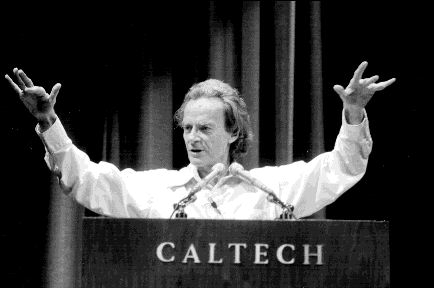
Feynman was a great Nobel prize winning scientist. He conducted a little experiment as part of the Rogers Commission that is one of the great public 'gotcha' moments ever, and testament to the power of an inquiring mind. The temperature on Challenger launch day was 32F.

Feynman: Before the event, from information that was available and understanding that was available, was it fully appreciated everywhere, that this seal would become unsatisfactory at some temperature, and was there some sort of a suggestion of a temperature at which the SRB shouldn’t be run?

NASA personnel : Yes sir, there was a suggestion of that, to answer the first question- given the configuration that we ran that the seal would function at that temperature. That was the final judgment.

----

Feynman: I took this stuff that I got out of your seal, and I put it in ice water, and I discovered that when you put some pressure on it for a while and then undo it, it doesn’t stretch back, it stays the same dimension. In other words ... for a fewseconds at least, and more seconds than that, there’s no resilience in this particular material, when it’s at a temperature of thirty two degrees. I believe that has some significance for our problem.

Source: https://www.youtube.com/watch?v=raMmRKGkGD...

Enjoyed this speech? Speakola is a labour of love and I’d be very grateful if you would share, tweet or like it. Thank you.

Facebook Twitter Facebook
In SCIENCE AND TECHNOLOGY Tags CHALLENGER DISASTER, RICHARD FEYNMAN, NASA, SCIENCE, EXPERIMENTS, SCIENTIFIC INQUIRY, ROGERS COMMISSION, NOBEL PRIZE, SPACE TRAVEL, SPACE DISASTER, TRANSCRIPT
Comment

Stephen Jay Gould: 'Evolution and the 21st Century', American Institute of Biological Sciences - 2000

September 5, 2016

March 2000, American Institute of Biological Sciences, Museum of Natural History, Smithsonian Institution, Washington DC, USA

Transcript is embedded into YouTube video above

Source: https://www.youtube.com/watch?v=DRB19MYxaU...

Enjoyed this speech? Speakola is a labour of love and I’d be very grateful if you would share, tweet or like it. Thank you.

Facebook Twitter Facebook
In SCIENCE AND TECHNOLOGY Tags STEPHEN JAY GOULD, TRANSCRIPT, YOUTUBE, EVOLUTIONARY BIOLOGIST, SMITHSONIAN, SCIENCE & RELIGION, CHARLES DARWIN
Comment

Stephen Jay Gould: On Evolution - 1995

September 5, 2016

1995, web education program released by The Voyager Company

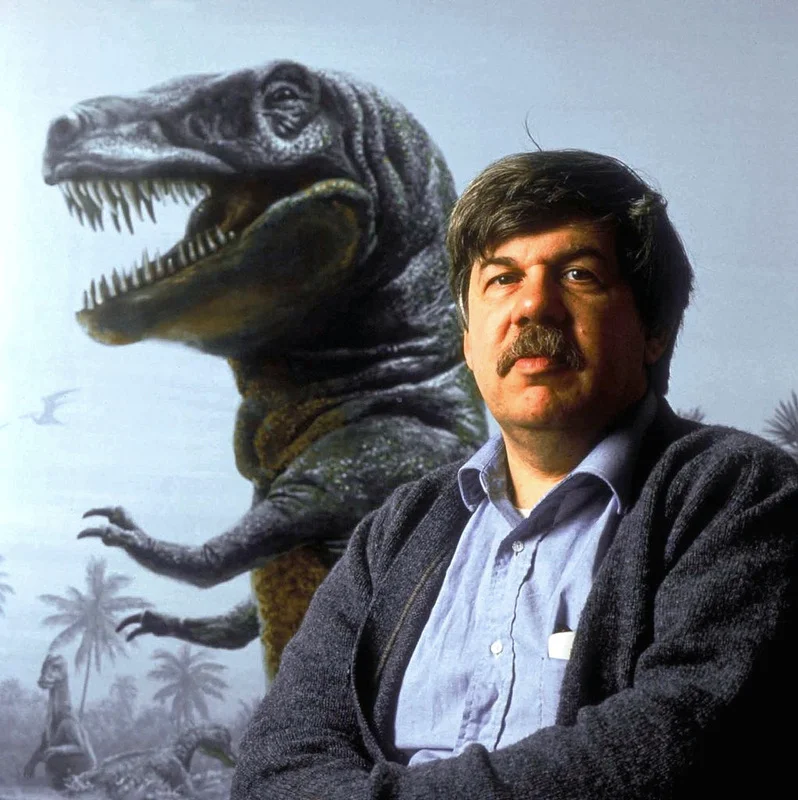
Gould's most significant contribution to evolutionary biology was the theory of punctuated equilibrium, which he developed with Niles Eldredge in 1972. The theory proposes that most evolution is characterized by long periods of evolutionary stability, which is infrequently punctuated by swift periods of branching evolution.


Source: https://www.youtube.com/watch?v=fHsW1wlcOp...

Enjoyed this speech? Speakola is a labour of love and I’d be very grateful if you would share, tweet or like it. Thank you.

Facebook Twitter Facebook
In SCIENCE AND TECHNOLOGY Tags STEPHEN JAY GOULD, FIRST PERSON: STEPHEN JAY GOULD ON EVOLUTION, BIOLOGIST, NATURAL SELECTION, RELIGION, SCIENCE & RELIGION
1 Comment

Robert Wilson: ' It only has to do with the respect with which we regard one another, the dignity of men, our love of culture', Testimony for superconductor

September 5, 2016

17 April 1969, Joint Committee on Atomic Energy, Congress, Washington DC, USA

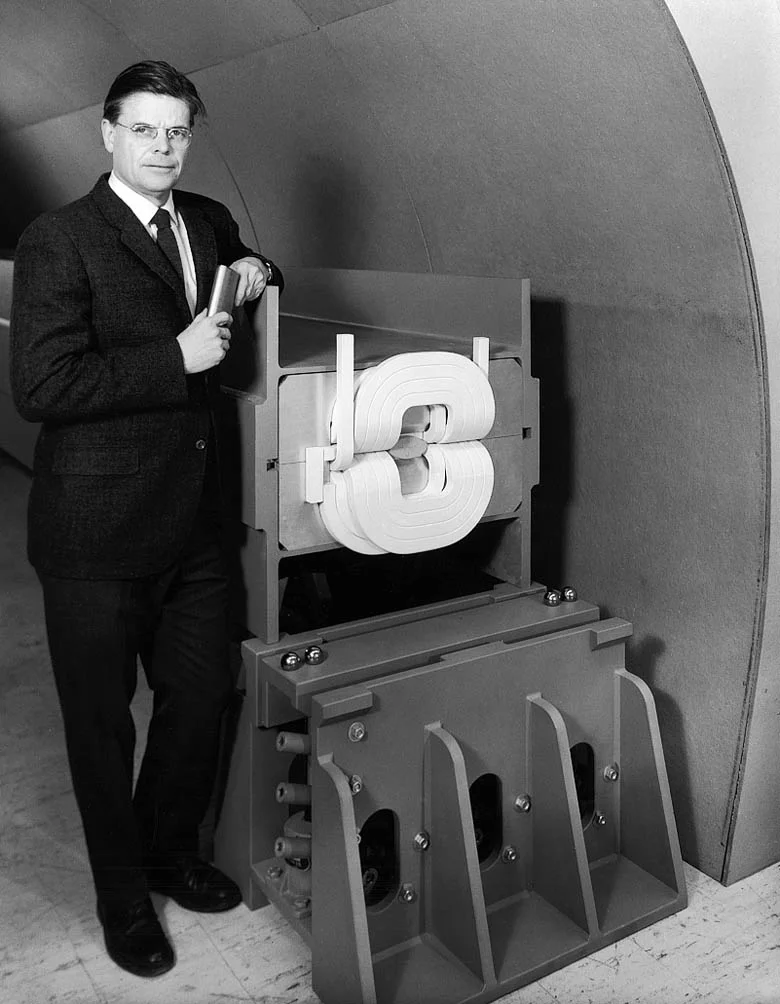
Dr Robert Wilson was arguing for the building of Fermilab's first particle accelerator. Testimony was part of the AEC Authorizing Legislation for FY 1970. The famous part is excerpted at the top. Below is full testimony. Particle accelerators transformed modern physics.

SENATOR PASTORE. Is there anything connected in the hopes of this accelerator that in any way involves the security of the country?

DR. WILSON. No, sir; I do not believe so.

SENATOR PASTORE. Nothing at all?

DR. WILSON. Nothing at all.

SENATOR PASTORE. It has no value in that respect?

DR. WILSON. It only has to do with the respect with which we regard one another, the dignity of men, our love of culture. It has to do with those things.

It has nothing to do with the military. I am sorry.

SENATOR PASTORE. Don't be sorry for it.

DR. WILSON. I am not, but I cannot in honesty say it has any such application.

SENATOR PASTORE. Is there anything here that projects us in a position of being competitive with the Russians, with regard to this race?

DR. WILSON. Only from a long-range point of view, of a developing technology. Otherwise, it has to do with: Are we good painters, good sculptors, great poets? I mean all the things that we really venerate and honor in our country and are patriotic about.

In that sense, this new knowledge has all to do with honor and country but it has nothing to do directly with defending our country except to help make it worth defending.

Read Wilson's entire testimony from the beginning of the hearing below.

SENATOR PASTORE. Here we are. We have these Senators going all over the District of Columbia. It has been on the front pages. They are going all over the country showing how many people are starving, how many people are hungry, how many people live in rat-ridden houses.

Here we are, asking for $250 million to build a machine that is an experimental machine, in fundamental high energy physics, and we cannot be told exactly what we are trying to find out through that machine.

DR. WILSON. Senator Pastore, I and my colleagues will be spending a good part of our lives building and using this machine. We have a deep and very personal commitment to it. May I try to explain what it is we are trying to find out.

We are building this machine for specific purposes as well as for general exploration. In the first place we expect to get answers to questions that men have been asking for a long time.

One of these questions has to do with simplicity. Is there a simple understanding of nature? Are there a few elementary particles which could explain all of the complexity of matter and of life?

Our present picture is one of tremendous complexity. You have heard about the hundreds of so-called "elementary" particles. But we believe that there must be an underlying simplicity, perhaps three sub-particles or something of that kind, that will bring clarity and make that which is so complex now turn out to be very simple. Going to 200 Bev gives us a good chance to find such subparticles.

There is another aspect of our study. This concerns the different kinds of forces. Three of these are now quite familiar: gravitational forces, electromagnetic forces, nuclear forces. The understanding of these three forces has been all important to our past and will be all important to our future, to the future of all men. There is also a mysterious fourth kind of force called the "weak" force.

We know just enough about this weak force to expect that it may become stronger and stronger as the energy of the colliding particles is increased. We also now know that there are specific experiments that can be made which will tell us about the nature of this force as we move into the energy range that will be made available by our 200-Bev synchrotron. It has become perfectly clear to us that there are specific experimens that can be done with the 200-Bev machine that cannot be done with other machines, and which will give us definitive information about the "weak" force.

Now, forces, sir are the movers of the atoms, the basis of all motion and hence of life and of technology. When I was a student, the nuclear force was considered to be an academic matter, a force which had nothing to do with our lives. We studied it only in a quest for simplicity, just for the pure understanding of it. It turns out that this knowledge has made vast amounts of energy available. A deeper understanding and a more fundmental understanding of the "weak" force could be as relevant to our lives as the other forces, not only in the gratification we will have in the knowledge itself, but in the technology that will inevitably come from that understanding.

SENATOR PASTORE. The thing that bothers me is that some of the same people who are looking for these unknown, imaginary forces that may be real, are the same people who are opposed to the ABM because they say it will not work.

What will work, and what will not work? You say that we are looking for something that will explain the forces of nature. Could you be a little more explicit about that? In what way will it affect nature, do you think?

DR. WILSON. In looking for the nature of the forces that would hold the particles together in the nucleus-

SENATOR PASTORE. Why?

DR. WILSON. We did find out how to control the nucleus, how to make nuclear energy. That is what this committee is all about. Nuclear energy has affected nature. One can see the possibility now of using nuclear forces for controlling our environment better than ever, or digging canals, or for preventing pollution. For example, I live in Chicago, and the more nuclear plants that are built near Chicago, the more bearable is the air that I breathe there. I can see a direct effect of nuclear energy in decreasing pollution.

We will also see a decrease in the cost of electricity, for all men, especially as time goes on. Because of the construction of cyclotrons in the past, we see these things coming to pass within our lifetimes. I am confident that in a similar way, as we learn about this weak force, we will ultimately understand more about the other forces and then be able to utilize them more fully. We know that this force although mysterious, is just as real as the other forces, we know how to go about studying it, and that is what we are getting down to doing.

Had we not built those previous nuclear accelerators, we would not have nuclear energy today. We would have more pollution of the air we breathe because more coal would be burned, while it lasted.

Because of the kind of research that we are now starting, men will eventually be able to enjoy a richer life, in an intellectual and spiritual sense certainly, but also in their physical well-being.

SENATOR PASTORE. Is there anything connected in the hopes of this accelerator that in any way involves the security of the country?

DR. WILSON. No, sir; I do not believe so.

SENATOR PASTORE. Nothing at all?

DR. WILSON. Nothing at all.

SENATOR PASTORE. It has no value in that respect?

DR. WILSON. It only has to do with the respect with which we regard one another, the dignity of men, our love of culture. It has to do with those things.

It has nothing to do with the military. I am sorry.

SENATOR PASTORE. Don't be sorry for it.

DR. WILSON. I am not, but I cannot in honesty say it has any such application.

SENATOR PASTORE. Is there anything here that projects us in a position of being competitive with the Russians, with regard to this race?

DR. WILSON. Only from a long-range point of view, of a developing technology. Otherwise, it has to do with: Are we good painters, good sculptors, great poets? I mean all the things that we really venerate and honor in our country and are patriotic about.

In that sense, this new knowledge has all to do with honor and country but it has nothing to do directly with defending our country except to help make it worth defending.

SENATOR PASTORE. Is there any necessity for pushing for completion of this accelerator so that you will have a beam by June of 1972?

DR. WILSON. To me, it is like planting a tree. You know the story about the master who asked his servant to plant a tree in the afternoon. "I am too busy to do it then," said the servant, "besides, there is no hurry for it will take 20 years to grow." "In that case, plant it this morning," replied the wise master.

SENATOR PASTORE. When you consider priorities, I know exactly what you mean, provided we have the money.

After all, when you have people who are hungry, the big question here is: Is it more important to put a man on the moon, or to fill the stomachs of our starving children?

DR. WILSON. It is most important to fill the stomachs of our starving children.

SENATOR PASTORE. You would put that as the first priority, would you not?

DR. WILSON. Yes, sir.

SENATOR PASTORE. Of course.

DR. WILSON. But it is also important to get on with the things that make life worth living, and, fortunately, it is possible to do these things in a manner which also contributes to the feeding of hungry children. We have seen great developments in the science of elementary particles in this country-a golden age of physics. We should not lose the tremendous momentum that has built up in this field. We should not pass up this opportunity. We have a great American tradition. The moment to move is here. We have the men who are ready and enthusiastic to get on with it. If we falter, I can see the whole effort dispersed and lost.

SENATOR PASTORE. My experience has been it is easy to authorize, but hard to get the money.

Let me ask you this question: Why do we set this target date for June 1972? Could that be extended?

DR. WILSON. Of course it could be extended.

SENATOR PASTORE. How much harm would it do if you did?

DR. WILSON. For one thing, it will cost more money. The extra money will take food away from the mouths of the babies in 5 years, unless they are then being adequately fed.

We have assembled a group of talented men, a group of just the right size, to do this job in this time. Now those men could easily take much more time. Their salaries will continue no matter what. It will just cost more.

But there is also a question of doing something with enthusiasm, which is how we are doing it, and with a determination to do it rapidly and economically.

If we are not to do it with enthusiasm and rapidly, then it can still be done, but it will be done by second-rate people in a bureaucratic manner and it will be done expensively.

SENATOR PASTORE. I am going to make the same argument you are making now when I go into conference with the House, but you will be surprised how those ears are plugged.

I don't want to get into the academics of this, because after all I am supporting this accelerator. I don't want any misunderstanding. Especially if you call it the Enrico Fermi Accelerator.

I want a practical argument for when we get down to the funding of this, and someone says, "All right, it is authorized for $250 million, but you are asking for $96 million this year. If we made this $50 million, what would it do to you?"

I want to get some answers. What would it do to you?

DR. WILSON. It will have one effect: it will slow us down. When I was here last year, we asked for $75 million. Reason prevailed, and we came down to $25 million. We even accommodated to the $14.5 million we eventually received.

I am still determined, and my colleagues in the laboratory, to do the job on the 5-year schedule. However, now we are asking for $96 million in order to keep to that schedule.

CHAIRMAN HOLIFIELD. Is that to spend this year?

DR. WILSON. No. That is to obligate. The spending will be somewhat less, of course.

CHAIRMAN HOLIFIELD. Now you are getting to it. What is your spending program? In other words, out of this $96 million authorization for the fiscal year 1970?

DR. McDANIEL. Estimated at about $20 million, sir.

SENATOR PASTORE. The point is, unless you appropriate, you cannot obligate. That is the point. No matter what you spend, you have to have the authority to obligate, and that comes not from the authorization, it comes from the money.

DR. WILSON. We need the obligational authority for $96 million. Our spending will be less than that.

SENATOR PASTORE. In other words, we would have to appropriate the $96 million for you to carry out your job, no matter what you spent, because you will be obligating all that money, obligating $96 million, which will be spent beyond this fiscal year.

DR. WILSON. Yes.

SENATOR PASTORE. You only expect to spend $20 million, but if we gave you a funding of $20 million, then you could obligate the $20 million, and that would throw it out of kilter.

DR. WILSON. I am more optimistic about our ability to spend. I would expect to spend somewhat more than the $20 million. However, that is the figure that results from the customary ratio of costs and obligations.

SENATOR PASTORE. Essentially, the major purpose of this bevatron is for fundamental high-energy physics research, which is an educational and academic process, is it not?

DR. WILSON. And a cultural process, yes, but with the firm expectation that technological developments will come. Directly, but after a very long time; from the results of the research will come new technology. However, there will be a bonus that will come indirectly but very soon, through the technological inventions, that is "Spin-off," that results whenever such work is done.

Thus, because we are doing extremely difficult technical things, and because we are working in a strange kind of research, we know from past experience that new techniques inevitably develop, techniques which have paid, more than paid, for the cost of the basic research that was not pointed to such developments.

The klystron of the linac at Stanford, the vacuum pumps for the early cyclotron research, and the high-frequency oscillator tubes which were so valuable during the war, computer techniques, all these resulted from work on accelerators.

SENATOR PASTORE. Would you say as far as you know, the whole scientific community is behind this, without a dissent?

DR. WILSON. They do not dissent to me, sir.

CHAIRMAN HOLIFIELD. You know, Dr. Wilson, as I listened to your eloquent appeal for this, my mind went back before the days of Enrico Fermi to a time when St. Paul stood before King Agrippa, and King Agrippa said to St. Paul that he wanted him to explain his belief in the Christian principles. St. Paul was so eloquent that when he got through, King Agrippa said, "Almost thou persuadest me to be a Christian."

I am saying that, leaving out the "almost." I am saying, "Thou hast persuadest me to support this to the best of my ability."

SENATOR PASTORE. That is fine, but I was not worrying about Agrippa. I was a little worried about the taxpayers a-griping.

CHAIRMAN HOLIFIELD. The I think I should repeat for my colleague who sits on the Appropriations Committee, and anything that I can say that will strengthen his soul and purpose to where he can become as eloquent as I know he has been on many occasions, that I went through a little exercise when he was not here.

I want you to get the full benefit of it.

I had the morning Post before me, which said in a right- hand column that our gross national product this year would be over $900 billion. It went on to say that corporate profits in 1968 were the highest they had ever been in the history of this country, or in the world.

SENATOR PASTORE. $51 billion, after taxes.

CHAIRMAN HOLIFIELD. And the per capita earnings of our people have gone up.

SENATOR PASTORE. To $2,700 per year.

CHAIRMAN HOLIFIELD. Right. And that employment is at an alltime high.

SENATOR PASTORE. 75.9 million.

CHAIRMAN HOLIFIELD. And unemployment is at an alltime low.

SENATOR PASTORE. 2.8 million, or 2.6 percent.

I am making a speech Monday night. I know all of these figures.

CHAIRMAN HOLIFIELD. I have made this speech before a skeptical group of 400 big business people who thought we were in a financial crisis.

I can go on with some more, that the annual savings are the greatest they have ever been in our savings institutions in this country.

Therefore , I state unequivocally that we are not in a crisis, that this country is in a position to build a half dozen 200 Bev's, if we had the guts to go ahead, because we have the facilities to do it, we have the greatest productive machinery in the world.

I deny the fact that we are in a financial crisis. I say that about 98 percent of this financial crisis is hocum, and propaganda.

You use those figures you know so well when you get before your friends.

SENATOR PASTORE. I know, but I wish you would talk to Wilbur Mills.

CHAIRMAN HOLIFIELD. I will.

DR. WILSON. I wonder if I can say one last thing.

CHAIRMAN HOLIFIELD. Now that you are confirmed, you may go ahead.

DR. WILSON. We do expect to pay our way, Senator Pastore. When we spend Federal money, the taxpayers' money, then we have an obligation to give a fair return immediately. One of the things that we are doing, I am sure, is near and dear to your heart. We are taking a very positive stand with regard to racial problems.

We have spent a large amount of time and effort on open housing.

By now, essentially all of the communities in the vicinity of the project, some 20, have passed open housing legislation. We have instituted a training program in collaboration with Oak Ridge National Laboratory, where we have taken young men out of the inner city of Chicago.They came out to our laboratory for a period of orientation. Then we sent them to Oak Ridge for technical training. In 6 months, they will be back with guaranteed jobs, 23 young men.

Twenty percent of our staff are nonwhite. We are going beyond that. Every time we let a contract, we have a prebid conference. We have Mr. Kennard Williams, our equal opportunity officer, read the law to the contractors. We have found them most cooperative, for they are anxious to see a solution to the racial problem too. We have also initiated a program of finding and then spending much of our money with small black industries. In other words, we are directly channeling some of that $250 million so as to help fill those hungry mouths you were describing.

SENATORE PASTORE. I congratulate you.

REPRESENTATIVE PRICE. You already have people from minority groups working on the site now?

DR. WILSON. We certainly do.

CHAIRMAN HOLIFIELD. Senator Pastore was in the forefront of this principle, and fought for it from the beginning.

SENATORE PASTORE. That was my only objection at the time.

CHAIRMAN HOLIFIELD. I know it. I sometimes think you objected in order to achieve the result that is now being achieved.

SENATORE PASTORE. I hope I am just as successful on Enrico Fermi. I want to get these Congressmen off my back.

CHAIRMAN HOLIFIELD. You cannot get the Senator off the track. He is going to stay right with Enrico Fermi.

SENATORE PASTORE. Thank you, Dr. Wilson.

Source: http://history.fnal.gov/testimony.html

Enjoyed this speech? Speakola is a labour of love and I’d be very grateful if you would share, tweet or like it. Thank you.

Facebook Twitter Facebook
Comment

James Watson: 'How we discovered DNA", TED Talks - 2005

September 5, 2016

23 February 2005, TED2005, Monterey, California, USA

This talk was delivered for TED2005. You can find full video and transcript here.

Well, I thought there would be a podium, so I'm a bit scared. (Laughter) Chris asked me to tell again how we found the structure of DNA. And since, you know, I follow his orders, I'll do it. But it slightly bores me. (Laughter) And, you know, I wrote a book. So I'll say something -- (Laughter) -- I'll say a little about, you know, how the discovery was made, and why Francis and I found it. And then, I hope maybe I have at least five minutes to say what makes me tick now.

 In back of me is a picture of me when I was 17. I was at the University of Chicago, in my third year, and I was in my third year because the University of Chicago let you in after two years of high school. So you -- it was fun to get away from high school -- (Laughter) -- because I was very small, and I was no good in sports, or anything like that.

But I should say that my background -- my father was, you know, raised to be an Episcopalian and Republican, but after one year of college, he became an atheist and a Democrat. (Laughter) And my mother was Irish Catholic, and -- but she didn't take religion too seriously. And by the age of 11, I was no longer going to Sunday Mass, and going on birdwatching walks with my father. So early on, I heard of Charles Darwin. I guess, you know, he was the big hero. And, you know, you understand life as it now exists through evolution.

And at the University of Chicago I was a zoology major, and thought I would end up, you know, if I was bright enough, maybe getting a Ph.D. from Cornell in ornithology. Then, in the Chicago paper, there was a review of a book called "What is Life?" by the great physicist, Schrodinger. And that, of course, had been a question I wanted to know. You know, Darwin explained life after it got started, but what was the essence of life?

 And Schrodinger said the essence was information present in our chromosomes, and it had to be present on a molecule. I'd never really thought of molecules before. You know chromosomes, but this was a molecule, and somehow all the information was probably present in some digital form. And there was the big question of, how did you copy the information?

So that was the book. And so, from that moment on, I wanted to be a geneticist -- understand the gene and, through that, understand life. So I had, you know, a hero at a distance. It wasn't a baseball player; it was Linus Pauling. And so I applied to Caltech and they turned me down. (Laughter) So I went to Indiana, which was actually as good as Caltech in genetics, and besides, they had a really good basketball team. (Laughter) So I had a really quite happy life at Indiana. And it was at Indiana I got the impression that, you know, the gene was likely to be DNA. And so when I got my Ph.D., I should go and search for DNA.

So I first went to Copenhagen because I thought, well, maybe I could become a biochemist, but I discovered biochemistry was very boring. It wasn't going anywhere toward, you know, saying what the gene was; it was just nuclear science. And oh, that's the book, little book. You can read it in about two hours. And -- but then I went to a meeting in Italy. And there was an unexpected speaker who wasn't on the program, and he talked about DNA. And this was Maurice Wilkins. He was trained as a physicist, and after the war he wanted to do biophysics, and he picked DNA because DNA had been determined at the Rockefeller Institute to possibly be the genetic molecules on the chromosomes. Most people believed it was proteins. But Wilkins, you know, thought DNA was the best bet, and he showed this x-ray photograph. Sort of crystalline. So DNA had a structure, even though it owed it to probably different molecules carrying different sets of instructions. So there was something universal about the DNA molecule. So I wanted to work with him, but he didn't want a former birdwatcher, and I ended up in Cambridge, England.

So I went to Cambridge, because it was really the best place in the world then for x-ray crystallography. And x-ray crystallography is now a subject in, you know, chemistry departments. I mean, in those days it was the domain of the physicists. So the best place for x-ray crystallography was at the Cavendish Laboratory at Cambridge. And there I met Francis Crick. I went there without knowing him. He was 35. I was 23. And within a day, we had decided that maybe we could take a shortcut to finding the structure of DNA. Not solve it like, you know, in rigorous fashion, but build a model, an electro-model, using some coordinates of, you know, length, all that sort of stuff from x-ray photographs. But just ask what the molecule -- how should it fold up?

And the reason for doing so, at the center of this photograph, is Linus Pauling. About six months before, he proposed the alpha helical structure for proteins. And in doing so, he banished the man out on the right, Sir Lawrence Bragg, who was the Cavendish professor. This is a photograph several years later, when Bragg had cause to smile. He certainly wasn't smiling when I got there, because he was somewhat humiliated by Pauling getting the alpha helix, and the Cambridge people failing because they weren't chemists. And certainly, neither Crick or I were chemists, so we tried to build a model. And he knew, Francis knew Wilkins. So Wilkins said he thought it was the helix. X-ray diagram, he thought was comparable with the helix.

So we built a three-stranded model. The people from London came up. Wilkins and this collaborator, or possible collaborator, Rosalind Franklin, came up and sort of laughed at our model. They said it was lousy, and it was. So we were told to build no more models; we were incompetent. (Laughter) And so we didn't build any models, and Francis sort of continued to work on proteins. And basically, I did nothing. And -- except read. You know, basically, reading is a good thing; you get facts. And we kept telling the people in London that Linus Pauling's going to move on to DNA. If DNA is that important, Linus will know it. He'll build a model, and then we're going to be scooped.

 And, in fact, he'd written the people in London: Could he see their x-ray photograph? And they had the wisdom to say "no." So he didn't have it. But there was ones in the literature. Actually, Linus didn't look at them that carefully. But about, oh, 15 months after I got to Cambridge, a rumor began to appear from Linus Pauling's son, who was in Cambridge, that his father was now working on DNA. And so, one day Peter came in and he said he was Peter Pauling, and he gave me a copy of his father's manuscripts. And boy, I was scared because I thought, you know, we may be scooped. I have nothing to do, no qualifications for anything. (Laughter)

And so there was the paper, and he proposed a three-stranded structure. And I read it, and it was just -- it was crap. (Laughter) So this was, you know, unexpected from the world's -- (Laughter) -- and so, it was held together by hydrogen bonds between phosphate groups. Well, if the peak pH that cells have is around seven, those hydrogen bonds couldn't exist. We rushed over to the chemistry department and said, "Could Pauling be right?" And Alex Hust said, "No." So we were happy. (Laughter)

And, you know, we were still in the game, but we were frightened that somebody at Caltech would tell Linus that he was wrong. And so Bragg said, "Build models." And a month after we got the Pauling manuscript -- I should say I took the manuscript to London, and showed the people. Well, I said, Linus was wrong and that we're still in the game and that they should immediately start building models. But Wilkins said "no." Rosalind Franklin was leaving in about two months, and after she left he would start building models. And so I came back with that news to Cambridge, and Bragg said, "Build models." Well, of course, I wanted to build models. And there's a picture of Rosalind. She really, you know, in one sense she was a chemist, but really she would have been trained -- she didn't know any organic chemistry or quantum chemistry. She was a crystallographer.

And I think part of the reason she didn't want to build models was, she wasn't a chemist, whereas Pauling was a chemist. And so Crick and I, you know, started building models, and I'd learned a little chemistry, but not enough. Well, we got the answer on the 28th February '53. And it was because of a rule, which, to me, is a very good rule: Never be the brightest person in a room, and we weren't. We weren't the best chemists in the room. I went in and showed them a pairing I'd done, and Jerry Donohue -- he was a chemist -- he said, it's wrong. You've got -- the hydrogen atoms are in the wrong place. I just put them down like they were in the books. He said they were wrong.

So the next day, you know, after I thought, "Well, he might be right." So I changed the locations, and then we found the base pairing, and Francis immediately said the chains run in absolute directions. And we knew we were right. So it was a pretty, you know, it all happened in about two hours. From nothing to thing. And we knew it was big because, you know, if you just put A next to T and G next to C, you have a copying mechanism. So we saw how genetic information is carried. It's the order of the four bases. So in a sense, it is a sort of digital-type information. And you copy it by going from strand-separating. So, you know, if it didn't work this way, you might as well believe it, because you didn't have any other scheme. (Laughter)

But that's not the way most scientists think. Most scientists are really rather dull. They said, we won't think about it until we know it's right. But, you know, we thought, well, it's at least 95 percent right or 99 percent right. So think about it. The next five years, there were essentially something like five references to our work in "Nature" -- none. And so we were left by ourselves, and trying to do the last part of the trio: how do you -- what does this genetic information do? It was pretty obvious that it provided the information to an RNA molecule, and then how do you go from RNA to protein? For about three years we just -- I tried to solve the structure of RNA. It didn't yield. It didn't give good x-ray photographs. I was decidedly unhappy; a girl didn't marry me. It was really, you know, sort of a shitty time. (Laughter)

So there's a picture of Francis and I before I met the girl, so I'm still looking happy. (Laughter) But there is what we did when we didn't know where to go forward: we formed a club and called it the RNA Tie Club. George Gamow, also a great physicist, he designed the tie. He was one of the members. The question was: How do you go from a four-letter code to the 20-letter code of proteins? Feynman was a member, and Teller, and friends of Gamow. But that's the only -- no, we were only photographed twice. And on both occasions, you know, one of us was missing the tie. There's Francis up on the upper right, and Alex Rich -- the M.D.-turned-crystallographer -- is next to me. This was taken in Cambridge in September of 1955. And I'm smiling, sort of forced, I think, because the girl I had, boy, she was gone. (Laughter)

And so I didn't really get happy until 1960, because then we found out, basically, you know, that there are three forms of RNA. And we knew, basically, DNA provides the information for RNA. RNA provides the information for protein. And that let Marshall Nirenberg, you know, take RNA -- synthetic RNA -- put it in a system making protein. He made polyphenylalanine, polyphenylalanine. So that's the first cracking of the genetic code, and it was all over by 1966. So there, that's what Chris wanted me to do, it was -- so what happened since then? Well, at that time -- I should go back. When we found the structure of DNA, I gave my first talk at Cold Spring Harbor. The physicist, Leo Szilard, he looked at me and said, "Are you going to patent this?" And -- but he knew patent law, and that we couldn't patent it, because you couldn't. No use for it. (Laughter)

And so DNA didn't become a useful molecule, and the lawyers didn't enter into the equation until 1973, 20 years later, when Boyer and Cohen in San Francisco and Stanford came up with their method of recombinant DNA, and Stanford patented it and made a lot of money. At least they patented something which, you know, could do useful things. And then, they learned how to read the letters for the code. And, boom, we've, you know, had a biotech industry. And, but we were still a long ways from, you know, answering a question which sort of dominated my childhood, which is: How do you nature-nurture?

And so I'll go on. I'm already out of time, but this is Michael Wigler, a very, very clever mathematician turned physicist. And he developed a technique which essentially will let us look at sample DNA and, eventually, a million spots along it. There's a chip there, a conventional one. Then there's one made by a photolithography by a company in Madison called NimbleGen, which is way ahead of Affymetrix. And we use their technique. And what you can do is sort of compare DNA of normal segs versus cancer. And you can see on the top that cancers which are bad show insertions or deletions. So the DNA is really badly mucked up, whereas if you have a chance of surviving, the DNA isn't so mucked up. So we think that this will eventually lead to what we call "DNA biopsies." Before you get treated for cancer, you should really look at this technique, and get a feeling of the face of the enemy. It's not a -- it's only a partial look, but it's a -- I think it's going to be very, very useful.

So, we started with breast cancer because there's lots of money for it, no government money. And now I have a sort of vested interest: I want to do it for prostate cancer. So, you know, you aren't treated if it's not dangerous. But Wigler, besides looking at cancer cells, looked at normal cells, and made a really sort of surprising observation. Which is, all of us have about 10 places in our genome where we've lost a gene or gained another one. So we're sort of all imperfect. And the question is well, if we're around here, you know, these little losses or gains might not be too bad. But if these deletions or amplifications occurred in the wrong gene, maybe we'll feel sick.

 So the first disease he looked at is autism. And the reason we looked at autism is we had the money to do it. Looking at an individual is about 3,000 dollars. And the parent of a child with Asperger's disease, the high-intelligence autism, had sent his thing to a conventional company; they didn't do it. Couldn't do it by conventional genetics, but just scanning it we began to find genes for autism. And you can see here, there are a lot of them. So a lot of autistic kids are autistic because they just lost a big piece of DNA. I mean, big piece at the molecular level. We saw one autistic kid, about five million bases just missing from one of his chromosomes. We haven't yet looked at the parents, but the parents probably don't have that loss, or they wouldn't be parents. Now, so, our autism study is just beginning. We got three million dollars. I think it will cost at least 10 to 20 before you'd be in a position to help parents who've had an autistic child, or think they may have an autistic child, and can we spot the difference? So this same technique should probably look at all. It's a wonderful way to find genes.

And so, I'll conclude by saying we've looked at 20 people with schizophrenia. And we thought we'd probably have to look at several hundred before we got the picture. But as you can see, there's seven out of 20 had a change which was very high. And yet, in the controls there were three. So what's the meaning of the controls? Were they crazy also, and we didn't know it? Or, you know, were they normal? I would guess they're normal. And what we think in schizophrenia is there are genes of predisposure, and whether this is one that predisposes -- and then there's only a sub-segment of the population that's capable of being schizophrenic.

Now, we don't have really any evidence of it, but I think, to give you a hypothesis, the best guess is that if you're left-handed, you're prone to schizophrenia. 30 percent of schizophrenic people are left-handed, and schizophrenia has a very funny genetics, which means 60 percent of the people are genetically left-handed, but only half of it showed. I don't have the time to say. Now, some people who think they're right-handed are genetically left-handed. OK. I'm just saying that, if you think, oh, I don't carry a left-handed gene so therefore my, you know, children won't be at risk of schizophrenia. You might. OK? (Laughter)

So it's, to me, an extraordinarily exciting time. We ought to be able to find the gene for bipolar; there's a relationship. And if I had enough money, we'd find them all this year. I thank you.

Source: https://www.ted.com/talks/james_watson_on_...

Enjoyed this speech? Speakola is a labour of love and I’d be very grateful if you would share, tweet or like it. Thank you.

Facebook Twitter Facebook
In SCIENCE AND TECHNOLOGY Tags JAMES WATSON, DNA, FRANCIS CRICK, CRICK AND WATSON, NOBEL PRIZE, GENETICS
Comment

Carl Sagan: 'Man in his arrogance thinks himself a great work', Cosmos: A Personal Voyage (TV) - 1980

September 5, 2016

first aired 28 September 1980, PBS, USA

'See that star?”

"You mean that bright red one?” his daughter asks in return

"Yes, it might not be there anymore. It might be gone by now, exploded or something. Its light is still crossing space, just reaching our eyes now. But we don't see it as it is, we see it as it was.”

Many people experience a stirring sense of wonder when they first confront this simple truth. Why? why should it be so compelling. The immense distances to the stars and the galaxies means we see everything in the past. Some as they were before the earth came to be. Telescopes are time machines.

Long ago, when an early galaxy began to pour light out in to the surrounding darkness no witness could have known that billions of years later. Some remote clumps of rock and metal, ice and organic molecules would fall together to form a place that we call earth. And surely nobody could have imagined that life would arise, and thinking beings evolve who would one day capture a fraction of that light and would try to puzzle out what sent it on its way.

We can recognize here a shortcoming, in some circumstances serious, in our ability to understand the world. Characteristically, willie-nilly we seem compelled to project our own nature onto nature. Man in his arrogance thinks himself a great work worthy of the interposition of a deity. Darwin wrote in his notebook, more humble, and I think truer to consider himself created from animals.

We're johnny-come-latelys; we live in the cosmic boondocks; we emerged from microbes in muck; Apes are our cousins; our thoughts are not entirely our own, and on top of that we're making a mess of our planet and becoming a danger to ourselves.

The trapdoor beneath our feet swings open. We find ourselves in bottomless free fall. We are lost in a great darkness and there is nobody to send out a search party. Given so harsh a reality, of course we are inclined to shut our eyes and pretend that we are safe and snug at home, that the fall is only a bad dream. If it takes a little myth and ritual to get us through a night that seems endless, who among us cannot sympathize and understand?

We long to be here for a purpose. Even though, despite much self-deception, none is evident. The significance of our lives and our fragile planet is then determined by our own wisdom and courage. We are the custodians of life's meaning. We long for parents to care for us, to forgive us of our errors, to save us from our childish mistakes. But knowledge of preferable to ignorance. Better, by far, to embrace the harsh reality than a reassuring fable.

Modern science has been a voyage into the unknown, with a lesson in humility waiting at every stop. Our common sense intuitions can be mistaken. Our preferences don't count. We do not live in a privileged reference frame. If we crave some cosmic purpose, then let us find ourselves a worthy goal.


Related content: Richard Feynman, Cargo Cult speech, Caltech, "The first principle is that you must not fool yourself'.

During the Middle Ages there were all kinds of crazy ideas, such as that a piece of rhinoceros horn would increase potency. Then a method was discovered for separating the ideas--which was to try one to see if it worked, and if it didn't work, to eliminate it. This method became organized, of course, into science.

Read speech


Source: https://www.youtube.com/watch?v=cSrL0BXsO4...

Enjoyed this speech? Speakola is a labour of love and I’d be very grateful if you would share, tweet or like it. Thank you.

Facebook Twitter Facebook
In SCIENCE AND TECHNOLOGY Tags CARL SAGAN, MAN IN HIS ARROGANCE, TRANSCRIPT, COSMOS A PERSONAL VOYAGE, RELIGION, SCIENCE & RELIGION, EVOLUTION, MAN IN THE UNIVERSE, UNIVERSE
2 Comments

Andrew Denton: 'Watching my father, Kit, die remains the most profoundly shocking experience of my life', National Press Club - 2016

September 5, 2016

10 August 2016, National Press Club, Canberra, Australia

I’ve come here today to try and light a fire.

Let me strike the first spark by telling you the story of 90-year-old South Australian Eileen Dawe. As she was dying of cancer last year, Eileen kept a diary. Despite her clearly-stated wish to die she was forced to endure 17 painful weeks until the disease finally took her. Hoping to hasten nature’s course she began to starve herself to death. In her diary she wrote “My country’s laws decree ‘Death by a thousand cuts for me’”. 

If you've ever dieted for a week you know how unpleasant that is. Imagine a month of it. Or more. Weaker and weaker, with all the unpleasantness of starvation PLUS the symptoms of her cancer. Weaker still, and still not dead. 

How can our laws allow such a thing? Not just allow but insist on it. And why – despite polls which consistently show Australians overwhelmingly support a law that would have helped Eileen to die humanely - has no Australian parliament responded to the public will?

I’m going to come back to that, but first a quick rundown of how I get to be standing in front of you today. The two-times failed Gold Logie nominee now deeply engaged in what is literally a life and death issue.

Watching my father, Kit, die remains the most profoundly shocking experience of my life.

He was 67, and though clearly dying of heart failure, and obviously in great pain, dad was assisted to die in the only way that Australia’s law then (and now) would allow: He was given ever-increasing doses of sedatives, to settle the pain.

When your heart fails, fluid backs up in your lungs and you spend all day, every day, fighting for breath. Its like waterboarding - trying to suck air through a damp mask, drowning and being revived again. Of course Morphine couldn't relieve his distress. Not his and not ours. He never got a high enough dose to actually kill him. The images of those final days will never be erased.

That was 19 years ago. In the years since, whenever I’ve talked about it, I’ve been struck by how many respond with similar stories about people they love dying slowly, in pain, and, and sometimes terror, while being denied proper medical help.

So 18 months ago I set out to discover why good people are being forced to die bad deaths.  

I travelled to places where laws to assist dying have been operating successfully for many years… to Belgium, The Netherlands and Oregon.

I discovered that, contrary to what I had heard in Australia, it IS possible to construct laws with strong safeguards and protections.  I discovered that after up to 20 years living with these laws, they have strong and widespread public support; that the fears have not been realised. There is no slippery slope.

I discovered families profoundly grateful that, thanks to these laws, people they loved had been offered a choice, and the reassurance of control, over what would, otherwise, have been cruel, lingering deaths.

Perhaps most significantly of all, I discovered a golden rule that applies the world over:  And that is most people do not want to die.  They will do just about anything to stay alive, to be with family, to celebrate a grandchild’s birthday, to wake up and marvel at the beauty of a sunrise.

Take Oregon, where the number of people legally helped to end their life is less than 0.5% of all deaths annually. By law they must be dying of a terminal illness to be prescribed life-ending medicine. Yet nearly 40% of them choose, in the end, not to take it.

People give up only because the suffering or the daily loss of dignity they experience every day means they that for them there is, indeed, something worse than death.

I documented this journey of discovery in a podcast series called Better Off Dead -- 17 episodes in all, culminating in a call from Bob Hawke for Australia to introduce assisted dying laws.

It’s still available freely online but what’s changed since I launched the series earlier this year is that both Canada and California have enacted their own voluntary assisted dying laws. Meaning there are now over 100 million people in the world who have full choice about what happens to them at the end of their life.

None of them Australians.

It’s not that we lack the desire: polls show support for voluntary euthanasia in this country consistently runs at over 70 pc. It’s not that we lack the wit - I mean we’ve done it before. It was Australia which enacted the world’s first assisted dying law.

Many of you will remember - the Northern Territory, 20 years ago, and the first man to use it was a 66-year old Darwin carpenter called Bob Dent, dying from prostate cancer.  Both his testicles had been removed, he’d lost 25 kilograms, wore a catheter and leg bag and, as he said himself, couldn’t get a hug in case his ribs cracked.

Under that law, Bob and 3 others got the release they so desperately wanted – but in less than a year, the Howard government overturned not the law itself, but the law which permitted Territories to make such laws.  Just to make sure. 

“One of the most effective political campaigns in recent history” is how Fairfax’s Michael Gordon described it at the time. “It is also the story of a network - all the principals are Catholics - its influential connections, its single-mindedness and the tactics it employed”

A network which kept its profile so low …”as to be almost subterranean”. This, Gordon wrote, was “an integral component of the strategy”

We’ll come back to those subterranean forces. As I have discovered – they are still with us, working against the clear popular will for assisted dying laws. Using the old, crude but sadly effective weapons of denial and deception.

But first, let’s look at the consequence of their work. Let’s face the truth about what’s actually happening across our country in the absence of such laws. The Damage Done – as we’ve titled this book – describes the landscape with shocking clarity.

The daughter whose dying mother beseeches her to end the pain … who actually picks up the pillow, and hovers above that loved face .. but reels away, unable to go through with it.  We can name that daughter: she was TV journalist Tracy Spicer.

The grandfather so wracked by late-stage cancer he writes a farewell message on his “TO DO TODAY” pad before hanging himself on the clothes line behind the house.  His name’s Ken. Here’s the note. The son who found his body has Downs Syndrome.

A woman dying of Motor Neurone Disease, desperate for release but too ill to fly to a jurisdiction with kinder laws “It’s so much worse than I imagined”, she scrawls on a blackboard, and asks her friend Elisabeth to make sure these words are seen. Her own contribution to law reform.

Just 3 of the 72 testimonies within. Written by the dying and their loved ones; detailing trauma and suffering on a staggering scale.

These testimonies come from people aged 14 to 100 and from all walks of life. They represent almost every Australian State and Territory. They are blue collar, white collar, devoutly religious, avowedly not. The diseases they have faced are mostly cancer, but also MS, Motor Neurone Disease and other medical horrors.

What brings them together is the cruel way they all suffered – or suffer still, with descriptions such as “akin to torture” and “like a horror movie”. What strikes the reader are the repeated expressions from those left behind of shock, anger, and helplessness, sometimes reaching back decades.

Perhaps bravest of all are the testimonies from doctors and nurses, some of whom openly admit to committing the crime of assisting a patient to die. The trauma many of them have had to deal with in the face of their patients’ suffering is palpable. The guilt others still feel because the law forbade them from helping, just as keen.

Had the abuses, cruelty, and harm inflicted by our laws, and so vividly captured in this book, happened within one institution, our politicians would surely have acted on them long ago.

But because they have happened in many places – palliative care wards, nursing homes, general hospitals, people’s houses – and because each has been a private tragedy, they have been invisible. Ignorable. Deniable.

What is undeniable is that desperate people take desperate measures. And here we turn away from anecdote and private pain to the formal findings of the cross-party Victorian Parliamentary Inquiry into End of Life Choices, the most extensive inquiry of its kind ever held in Australia, which reported in June this year. And which mirrored the anguished testimonies listed here.

It found repeated examples of inadequate pain relief and of deep suffering beyond the reach, even, of palliative care. It found doctors breaking the law and relatives being put on trial to relieve the torment of their patients and loved ones. Most shocking was the testimony of Victorian Coroner, John Olle, who detailed the horrific ways in which desperately ill Victorians were – are -  taking their own lives to end their suffering.

His evidence rocked the Committee, and was so distressing the Coroner had to collect himself three times while speaking – including the case of a 90-year-old man with cancer who killed himself by repeatedly firing a nail gun into his head and chest. Coroner Olle went out of his way to stress that these were people without a history of mental illness, from loving families, faced with the slow, ‘irreversible decline’ of chronic disease.

He said his office saw no way of preventing these deaths, quoting directly: 

“To my knowledge the people we are talking about have made an absolute clear decision. The only assistance that could be offered is to meet their wishes, not to prolong their life”

He estimated the number of elderly Victorians dying in this way - by suicide to escape the ravages of disease - at 1 a week.

Faced with such evidence, the Committee found that maintaining the status quo was unacceptable and this was a clear case for law reform.

Its recommendation, by a majority of 6-2, was that voluntary assisted dying - with strong safeguards - be introduced as another option at the end of life.

How, you might ask, can all this evidence – all these experiences, all this torment– not lead to a change of the law in this country? How can we turn our backs on what we know is happening, this terrible and widespread suffering?

Well, let us see how it happened last time. 

~ - ~ - ~

The story of how the Northern Territory law came to be repealed by Parliament bears repeating, because the forces that stopped it then are still in play.

The joint operation was led on the Liberal side by a young Kevin Andrews – a leading member of the conservative Lyons Forum, dubbed by some the “God Squad” – who worked in tandem with rising Labor star Tony Burke.  Only 25 and not even in the Federal parliament, Tony was an ambitious young foot soldier with the Shop, Distributive and Allied Employees Union.

They were supported by a grouping of conservative politicians, from both parties.  Their campaign was also given significant extra-parliamentary support from two wealthy and well connected Catholic businessmen.

Looking back now, two things are striking.

First is that on the questions that are most fundamental to how we live, love and die, religious belief trumps everything.  This is the theocracy hidden inside our democracy.

Second is that what Kevin Andrews and Tony Burke engineered was an outright denial of the will of the people of the Northern Territory, as expressed through their elected representatives.

It’s an issue where denialism is still rampant today. Denial of the public will. Denial of the evidence.

I learned first hand how this works when I attended an international conference hosted by the HOPE anti-euthanasia organisation in Adelaide last year. Convened by a one-time senior officer of the Catholic Archdiocese of Adelaide, the conference heard a lot about how to influence politicians. This was how former New Hampshire legislator Nancy Elliott, spelt out the tactics that had worked for her in the States.

“When you have lots of arguments,” she said, “if one argument gets blown out of the water, you still have more, and each argument will reach somebody else”

For instance, one way to oppose assisted dying is to suggest it is a threat to disabled people. I'll explain why this is untrue later, but as Nancy enthused: “Right now the disability argument is really kicking it. It's very powerful. Will it always be powerful? We don't know. Two, three, four years from now that may have holes kicked in it, just for different reasons, so we have to be flexible.”

Citing elder abuse and suicide contagion as other possible arguments, she went on to say: “You only have to convince legislators that they don't want this bill. You don't have to win their hearts and minds; all you have to do is get them to say, ‘Not this bill’, and then you have got your win”

I call these tactics FUD….Fear, Uncertainty, Doubt. Sow one seed of FUD and you can reap a harvest of political inaction. Just scare the hell out of people. Without ever engaging with the evidence accumulated over 20 years in countries with assisted dying laws.

And here it is: ONE, the majority of the people who access these laws overseas are dying of cancer, and are in the last weeks, or even days of their lives.

TWO, the groups most in need of protection from abuse under these laws – the elderly and the disabled – have faced no increased risk under them.

THREE, these laws have not adversely affected the relationship between patients and doctors but in fact, its opposite.

And FOUR, that there is a powerful palliative effect in simply giving people the means of ending the horror. Some sense of control. Even if they choose not to use it.

This evidence is overwhelmingly accepted by the people, medical professions, media, courts, and parliaments in the places where these laws exist.

If you aren’t even going to proceed on the basis of evidence, what are you doing? You’re engaging in a deliberate strategy of denialism and the propagation of myths.

Myths that have been planted in the minds of many as the truth because, at face value, they sound plausible. I went to test them.

Myth 1. The slippery slope.

The idea being that, once you write a law to assist people to die, there is no way of controlling it. Let me take that face on. It’s such a potent and alarming proposition, I searched assiduously for credible evidence of it in countries with assisted dying laws - and found none.

Nor did the Victorian Committee, which travelled overseas to the same countries to speak with doctors, medical and legal experts, palliative care specialists, disability rights groups, and opponents of these laws, to see how they were working. Instead, they found:

 rigorous safeguards, monitoring procedures and high levels of compliance sitting within robust regulatory frameworks focussed on transparency, patient-centred care and choice. 

Instances of assisted dying are rare, they reported, and assistance in dying is, in the vast majority of cases, provided to people in what would otherwise be the final weeks of their lives. 

They concluded: We found no evidence of institutional corrosion or the often cited ‘slippery slope’. 

Neither did the Quebec Select Committee before them, which spent two years on its own investigation before recommending for a law on assisted dying. It reached the same conclusion as Victoria: no slippery slope … and tiny numbers of people using the law.

The numbers? In The Netherlands, according to official data accepted by their Parliament, those assisted to die comprises less than 4% of all deaths each year. In Belgium, it’s less than 2%. And in Oregon, remember, it’s less than half of one percent.

In all three places, after decades of operation, public support for these laws is in excess of 80%; opposition under 10%. All these numbers have been stable for many years.

So let’s say it clear, and move on: no slippery slope.

Myth 2. No law can be written to safeguard the vulnerable.

The most frequent dog-whistle used by opponents of assisted dying. The insinuation that those most vulnerable in our society, the elderly and the disabled, will be coerced to die under these laws because they have become a ‘burden’.

As Archbishop, Anthony Fisher, so cleverly put it at a public debate last year:  Putting granny out of her misery so easily becomes putting granny out of ours.

As with the slippery slope, there is no credible evidence from overseas to support this. Rather, there’s a mountain of widely accepted, publicly available, peer-reviewed, evidence to disprove it.

Representatives of peak elderly and disability groups who I spoke with in Belgium, The Netherlands and Oregon reported no abuse – or threat of abuse – to their members in all the years these laws have operated.

Australian palliative care physician Dr Linda Sheahan used her 2012 Churchill Fellowship to explore how these laws work overseas. Not an advocate for assisted dying - but an advocate for an informed debate about it - Dr Sheahan concluded:

The Slippery Slope in terms of risk to vulnerable groups has not been demonstrated by the data.

Why? Because once you understand how these laws work you understand how they protect the vulnerable. More on that later.

Myth 3. If things get bad doctors will help you anyway.

They might and, as the Victorian Committee found, some Australian doctors do. I suspect many of us in the room know such cases. All these doctors are liable to prosecution and some -  for ethical or legal reasons - refuse to take the risk.

And if they do help it must be done covertly. Which results in a terrible irony, the very situation anti-euthanasia campaigners seek to avoid. People despatched in secret - for who knows what motive? No supervision. No record. No regulation.

That is the current status quo. Patients have no right to insist on relief from their suffering. Doctors have every right to refuse. Its not only dangerous and murky, but also deeply unfair. Because, while the person in bed 2a may get that extra morphine, the person in bed 2b may not.

And what if the person in bed 2b is you?

Why should any of us be put at this risk?  No one is protected. Not the doctor and not the patient. That’s why we need laws, and open, transparent decisions. 

Myth 4. Powerful drugs and palliative care can eliminate pain and distress at the end of life.

Australia has one of the best palliative care systems in the world. We should be proud of it. Any serious proponent of assisted dying supports their work and agrees they should be better resourced. But all the resources in the world won’t address everybody’s suffering and Palliative Care Australia knows it.

In their own words they “cannot relieve all pain and suffering even with optimal care”. Their statistics, collected every year from 106 palliative care units around Australia, prove it. The Victorian Inquiry found the same.

This is not to criticize their work. The numbers of people truly beyond their help are small. But they exist. And their suffering, as recorded in this book, is savage. This is the reality of modern medicine. Yes, it can keep us alive longer. But it can’t always treat what comes with that.

It is also a statistical fact that those who might seek assisted dying aren’t all in hospital. Some are struggling to cope in nursing institutions and old-aged facilities. Others at home. In his evidence to the Victorian Inquiry, Coroner Olle stated clearly that many of those whose suicides he recorded, were people ‘unlikely to qualify for palliative care’

And, of course, there are others suffering with long-term, incurable illnesses, such as advanced MS and Motor Neurone Disease, whom no amount of palliative care will adequately help.

As to the argument made by some doctors that ‘powerful drugs at the end of life can treat all pain’: It’s a medical sleight of hand. True in most cases, but not in all. Here is Professor Richard Chye Head of Palliative Care at St Vincent’s Sacred Heart, Sydney:

I’m not going to say I'm going to control everybody's physical pain … because there will always be some patients who will have pain that is not controlled … but I also make sure that I tell patients ...  I am going to help you live with that pain’.

But pain is only part of the story. Because the relevant word here is not ‘pain’, but ‘suffering’.

I don’t want to force you to sit through a litany of symptoms that can create suffering but they include panic brought on by suffocation, delirium, nausea and mental anguish.

Sometimes they overlap. Often they are compounded by multiple side effects from multiple drugs. The option most usually taken when they can no longer be controlled is palliative sedation - being put into a coma.

For many patients and their families this is perfectly acceptable.

But not every patient wants to die in a coma while their family watches on. And it neatly sidesteps the reality that this option is a response to suffering has already happened. Suffering that may have lasted days, weeks, even months.

And if this was your mother, your sister, your father, would that be enough? Would you want them to be ‘helped to live’ with that suffering - or should they be offered the chance to escape it? What would you want for yourself?

Everyone I spoke to in palliative care, whether they believed in a law or not, acknowledged the existence of ‘bad deaths’. Patients who they ‘wish they could have done more’ for.

And in these hardest cases no one is spared. As one palliative care physician told me:  The dying are the witnesses to their family’s pain just as the family are witnesses to theirs.

~ - ~ - ~

The leadership of Palliative Care Australia opposes a law for assisted dying. This opposition is more than purely medical. Almost 60% of Australia’s palliative care services are provided by the Catholic Church. Their core ethos is to ‘neither prolong nor hasten death’.

Yet the conversation within palliative care is slowly changing, partly due to the research of Dr Sheahan. Her study of practices overseas show that in places where these laws exist palliative care services have actually strengthened.

Significantly, the Victorian Inquiry recommended strongly in favour of increased resources and funding for palliative care in conjunction with an assisted dying law.

It also highlighted the words of the ‘father of Australian palliative care’, Professor Ian Maddocks, who said:

Rather than fighting a rear-guard action, I suggest the proponents of palliative care join forces with advocates of assisted dying, and with mutual respect and dialogue ensure that laws are framed with a care and precision that allows no abuse and promotes best outcomes.

He’s right. The aims of palliative care – to alleviate suffering and make possible a ‘good death’, for the dying and their families – are also the aims of those who seek a more compassionate law.

It is important, in writing that law, that palliative care be brought to the table.

~ - ~ - ~

And then there’s disability communities, with their own unique concerns and divided opinions.  

Some strongly oppose assisted dying. This comes from their lived experience of being viewed as having lives of less value. I have no doubt this experience is genuine.

Others are strongly in support. They want the same choices available to them as for anyone else.

Both rightly demand to have adequate safeguards in place so that a person is never pressured into ending their life. They, too, must be heard when writing a law.

~ - ~ - ~

So what might that law look like?

Based on those that have been successfully written overseas, it would have three bedrock principles:

To access it, you must be a mentally competent adult. This excludes children or those with dementia or Alzheimer’s disease.

Your request must be voluntary.

You must suffer from a physical illness. This excludes purely psychiatric suffering.

At a minimum, you should be diagnosed with a terminal illness. This is defined in Oregon as “an incurable and irreversible disease which will, within reasonable medical judgment produce death within six months". Though some, like myself, would argue against a time limit because some conditions have a longer prognosis but are nonetheless intolerable.

For example: There is a strong case for a law that will also help those suffering from chronic, degenerative illnesses such as MND and MS. The suffering which can last months or years in these conditions may be, in some ways, greater than that of an illness such as cancer.  Almost half of the cases listed by Coroner Olle fall within this definition.

Before excluding them we have to ask ourselves ‘is that fair?’ If not, I would argue that the criteria for acceptance be an “irreversible and incurable physical condition which is unbearable to the sufferer”, a broader law closer to those in Europe and Canada.

The gates someone has to go through to qualify are the same in either case. They are many.

The first gate is you and your natural aversion to being dead. Only you can ask for assistance. And only if you are of sound mind.

The second is to convince two doctors, independent of each other - at least one of whom practices in your disease - that your symptoms are either terminal or irreversible, incurable, and unbearable.

As in the Netherlands, the first consultation should be without the family, so the doctor, usually your GP, can determine if this is, indeed, your considered wish.

The third gate is that a request for assistance to die must be put once in writing - independently witnessed - and twice orally.

The fourth: both doctors have to explore all treatment options with you, including palliative care.

The fifth gate is that should either doctor consider that any psychological disorder is impairing your judgement they will refer you to a psychiatrist, as happens in Canada, California, Oregon, Belgium and the Netherlands.

Once your primary doctor is satisfied you have met all the criteria, she will then write you a prescription for life-ending medicine, which you can drink.

Having received it, you have to complete a form attesting this is your decision and you fully understand its consequences. This to be included in your medical record.

All of which leads to the final gate: Again, you.

Only you can decide to drink the medicine. As Oregon shows, many choose not to. You can rescind your request for it at any time.

If your disease means you can no longer swallow, a doctor may legally inject you.

Your written requests and medical record, both doctors notes and, if required, the psychiatrists’, all go to the Coroners office and also a committee of review. In the Netherlands this consists of a doctor, lawyer, and ethicist. Both bodies have the power to call in doctors for questioning and to refer their conduct to police for prosecution.

That is what a law for assisted dying would look like. Not a license to bump off granny. A carefully written law you can access only if you have an extreme medical condition and which protects doctors from prosecution should they follow strict criteria.

I want to emphasise that what I'm proposing is a law to make legal a practice that’s already happening in Australia. But happening - as the Victorian Inquiry found - “without regulation, without support, without transparency or accountability, and from the evidence received, sometimes without consent."

~ - ~ - ~

In Australia right now, if you are dying and wish to end your suffering, by law you are allowed to commit suicide, with all the darkness and trauma that entails.

Also by law, you can opt for a slow exit, refusing treatment, including food and water, even if its life sustaining. This can take days, even weeks, and was described to me by a senior palliative physician as psychologically painful, both for the person going through it and their loved ones watching on.

How extraordinary is this, to live in a society where it is legally and ethically acceptable for a dying patient to endure a slow, tortuous death by dehydration and starvation – or to end their life violently and alone … yet it is legally and ethically unacceptable for that same dying patient to choose a quick and painless end to their suffering.

Yet this is the position that the Church and the AMA continue to lobby for. Not their constituencies, surveys suggest - only 29 pc of Australian doctors are actually members of the AMA; a majority of Catholics polled support assisted dying laws.

But their well-connected hierarchies are not for turning.

And those most affected by the power of these vested interests – the elderly, the sick, the grief-stricken, the traumatised – are, often, those least capable of pushing back. It’s an unfair fight.

So I have formed an organisation to fight for them. It’s called Go Gentle Australia. Our aim is to bring awareness to the suffering that is happening in our community and to galvanize that 70% of public support so that politicians can no longer ignore it.

We are being supported in this by people representing many groups –  doctors, nurses,  palliative care, cancer support, the disability community, the elderly, the legal fraternity, and politicians from all parties.

We don’t argue for a ‘right to die’. Death is not as a right. Death is a fact at the end of life.

We do argue for the right to have a choice about what happens to us at the end of our lives. Not to be coerced, when we are at our most vulnerable, into cruel and avoidable suffering.

Our first priority is to get a law properly debated – on the evidence - within every State parliament. Our second is to get a sensible and compassionate law passed. To stop this damage.

We have received financial backing from a number of organisations and some of Australia’s most respected business names. We’ll be saying more about them in due course, but I would like to mention one: Peter Joseph, Chairman of the Black Dog Institute and former Chair at St Vincent’s Hospital Sydney, who is here as our guest and has offered this statement:

"It's simple: a good life includes a good death. Just as we should live free from needless suffering, so we should die. In my opinion the suicide rate in this country would drop significantly if assisted dying was seen as part of assisted living ". 

We are also working closely with a key medical group that officially supports an assisted dying law. Significantly, the one that see the suffering of patients daily and up close: Australia’s nurses’ union, the ANMF.

But we are under no illusions about the behind-the-scenes power, and deep pockets, of those who oppose reform.

This book is the first part of our campaign. We have also created this print ad. It’s full page and we can’t afford to run it, so this might be the only time it’s seen. But we’d be delighted if someone would like to run it for us.

~ - ~ - ~

The Damage Done is not intended as a critique of Australia’s palliative care services or the dedicated doctors and nurses who give of their best. Rather it reveals what happens despite their efforts.

It is intended, however, as a rebuke to those politicians who have been derelict in their duty these past two decades, when 28 attempts have been made in different State parliaments to pass an assisted dying law. Not one has got to a stage where even the detail of such a law could be debated.

By failing to properly examine the claim that ‘no safeguard can be devised to protect the vulnerable ‘, our politicians have failed, instead, to protect the people they represent.

After all, who could be more vulnerable or in need of protection than the dying and their families?

There is every reason to believe the damage and despair found unacceptable by the Victorian Inquiry exists across Australia. And will likely increase as our population ages.

That harm, and the testimonies collected here, ask hard questions of us.

Simply opposing laws on moral or ethical grounds is not an answer to these questions. Denial and manipulation of evidence is not an answer. This is a serious public health issue.

That elderly Australians are killing themselves violently at the rate of more than one a week, because there is no other way they can be legally helped to end their suffering, is a national tragedy.

And for all those who do end their lives, how many others lie in nursing homes and hospitals, wishing they could be helped, mercifully, to do the same?

How many patients are dying without enough pain relief because doctors are terrified to give them more?

How many doctors, confronted by the suffering of their patients, are being forced to break the law, knowing they have no protection?

And how many Australians are suffering years of chronic, unrelenting pain … while their families are scarred with trauma and guilt because they can do nothing to help the ones they love when they most desperately need it?

In the words of Coroner Olle: There is a cry for help.  It may be muted, it may be veiled, but it is there nonetheless. And they all know it - including doctors.  They know that this person is screaming for help but no one is going to answer this call.  Not in this society.  

I believe that no compassionate society would knowingly support this.

We are a compassionate society. But we have not been aware of the scale of the damage.

That’s why I’ve come to light a fire.

A fire for all the people in this book and also for those whose stories we do not yet know. I invite them to come forward and make it bigger.

I invite those doctors and nurses who’ve seen this suffering, and know it to be wrong, to add to this fire and light it in their hospitals and their communities.

I invite all state coroners to build it higher by joining Coroner Olle in casting light on how our elderly are dying.

Let us make a fire so big no politician can ever again ignore it.

To those whose beliefs instruct you that only God can decide how a human being should die, I urge you, step aside. May your beliefs sustain you and those you love, but do not impose them on the rest of us.

To those doctors for whom ‘doing no harm’ means that you cannot, in conscience, participate, I urge you, too, to step aside.  Do not stand in the way of other doctors who, in equally good conscience, see leaving a patient to suffer when they are beyond meaningful medical help as doing more harm.

Step aside and let no one question your right to do so. The very core of these laws is that they are voluntary. For doctors and nurses as much as patients.

And to those doctors who are sitting on the fence because you think it’s all being taken care of, or because you don’t understand how these laws work, educate yourselves.

The safeguards written into these laws protect, not just your patients, but also you.

To the politicians of South Australia, who, for the 14th time, have a Bill before them – and to those of Victoria, Tasmania and NSW, who can expect new Bills within the year – I urge you: Do your duty.

Debate these laws properly. Understand what they are. Look at the evidence from overseas about how these safeguards work. And read this book.

Enough copies have been printed for every State and Federal politician in Australia.

Should you continue to stand in the way of a law for assisted dying, let it be in full knowledge of the suffering taking place in our community because of that refusal.

Write this law. And right this wrong.

Source: http://www.gogentleaustralia.org.au/transc...

Enjoyed this speech? Speakola is a labour of love and I’d be very grateful if you would share, tweet or like it. Thank you.

Facebook Twitter Facebook
In LAWS AND JUSTICE Tags ASSISTED DYING, EUTHANASIA, ANDREW DENTON, NATIONAL PRESS CLUB, END OF LIFE, DYING WITH DIGNITY, DEATH, MEDICAL, LAW REFORM, ACTIVIST, SPEAKOLIES 2016
Comment

Carl Sagan: 'Science is more than a body of knowledge. It's a way of thinking', Carl Sagan's last interview - 1996

August 8, 2016

27 May 1996, interview with Charlie Rose, USA

SAGAN: My feeling, Charlie, is that it's not that pseudoscience and superstition and New Age so-called "beliefs" and fundamentalist zealotry are something new. They've been with us for as long as we've been human. But we live in an age based on science and technology, with formidable technological powers.

ROSE: Science and technology are propelling us forward at accelerating rates.

SAGAN: That's right. And if we don't understand it, and by "we" I mean "the general public," if it's something that, "Oh, I'm not good at that, I don't know anything about it," then who is making all the decisions about science and technology that are going to determine what kind of future our children live in? Just some members of Congress? But there's no more than a handful of members of Congress with any background in science at all. And the Republican Congress has just abolished its own Office of Technology Assessment—the organization that gave them bipartisan, competent advice on science and technology. They say, "We don't want to know. Don't tell us about science and technology."

ROSE: Surprising. What's the danger of all this? I mean, this is not the thing that...

SAGAN: There's two kinds of dangers. One is what I just talked about. That we've arranged a society based on science and technology in which nobody understands anything about science and technology, and this combustible mixture of ignorance and power, sooner or later, is going to blow up in our faces. I mean, who is running the science and technology in a democracy if the people don't know anything about it? And the second reason that I'm worried about this is that science is more than a body of knowledge. It's a way of thinking. A way of skeptically interrogating the universe with a fine understanding of human fallibility. If we are not able to ask skeptical questions, to interrogate those who tell us that something is true, to be skeptical of those in authority, then we're up for grabs for the next charlatan political or religious who comes ambling along. It's a thing that Jefferson laid great stress on. It wasn't enough, he said, to enshrine some rights in a Constitution or a Bill of Rights. The people had to be educated, and they had to practice their skepticism and their education. Oherwise we don't run the government—the government runs us.


Source: http://www.collective-evolution.com/2013/1...

Enjoyed this speech? Speakola is a labour of love and I’d be very grateful if you would share, tweet or like it. Thank you.

Facebook Twitter Facebook
In SCIENCE AND TECHNOLOGY Tags CARL SAGAN, CHARLIE ROSE, SCIENCE, PSEUDOSCIENCE
2 Comments

Dudley Field Malone: 'There is never a duel with the truth', defence of evolution teacher John Scopes 'Monkey Trial' - 1925

August 8, 2016

July 15, 1925, Dayton, Tennessee, USA

John Thomas Scopes was on trial for teaching evolution in a Tennessee state funded school, in violation of the Butler Act. This was his attorney's spirited defense. Scopes was found guilty and fined $100 which was later overturned on a technicality.

What I don't understand is this, your Honor, the prosectution inside and outside of the court has been ready to try the case and this is the case. What is the issue that has gained the attention, not only of the American people, but people everywhere? Is it a mere technical question as to whether the defendant Scopes taught the paragraph in the book of science? You think, your Honor, that the News Association in London, which sent you that very complimentary telegram you were good enough to me to show me in this case, because the issue is whether John Scopes taught a couple of paragraphs out of his book? Oh, no, the issue is as broad as Mr. Brayn has published it and why the fear? If the issue is as broad as they make it, why the fear of meeting the issue? Why, where issues are drawn by evidence, where the truth and nothing but the truth are scrutinized and where statements can be answered by expert witnesses on the other side -- what is the psychology of fear? I don't understand it. My old chief -- I never saw him back away from a great issue before. I feel that the prosectution here is filled with a needless fear. I believe that if they withdraw their objection and hear the evidence of our experts their minds would not only improve but their souls would be purified.

I believe and we believe that men who are God-fearing, who are giving their lives to study and observation, to the teaching of the young -- are the teachers and scientists of this country in a combination to destroy the morals of the children to whom they have dedicated their lives? Are preachers the only ones in America who care about our youth? Is the church the the only source of morality in this country? And I would like to say something for the children of the country. We have no fears about the young people of America. They are a pretty smart generation. Any teacher who teaches the boys or the girls today an incredible theory -- we need not worry about those children of this generation paying much attention to it. The children of this generation are pretty wise. People, as a matter of fact I feel that the children of this generation are probably much wiser than many of their elders. The least that this generation can do, your Honor, is to give the next generation all the facts, all the available data, all the theories, all the information that learning, that study, that observations has produced -- give it to the children in the hope of heaven that they will make a better world of this than we have been able to make it. We have just had a war with twenty million dead. Civilization is not so proud of the work of the adults. Civilization need not be so proud of what the grown-ups have done. For God's sake let the chidren have their minds kept open -- close no doors to their knowledge; shut no door from them. Make the distinction between theology and science. let them have both. let them both be taught. Let them both live....

We want everything we have to say on religion and on science told and we are ready to submit our theories to the direct and cross-examination of the prosecution. We have come in here ready for a battle. We have come in here for this duel.

I don't know anything about dueling, your Honor. It is against the law of God. It is against the church. It is against the law of Tennessee, but does the opposition mean by duel that our defendant shall be strapped to a board and they alone shall carry the sword? Is our only weapon the witnesses who shall testify to the accuracy of our theory -- is our weapon to be taken from us, so that the duel will be entirely one-sided? That isn't my idea of a duel. Moreover it isn't going to be a duel.

There is never a duel with the truth. The truth always wins and we are not afraid of it. The truth is no coward. The truth does not need the law. The truth does not need the forces of government. The truth does not need Mr. Bryan. the truth is imperishable, eternal, and immortal and needs no human agency to support it. We are ready to tell the truth as we understand it and we do not fear all the truth that they can present as facts. We are ready. We are ready. We feel we stand with progress. We feel we stand with science. we feel we stand with intelligence. We feel we stand with fundamental freedom in America We are not afraid. Where is the fear? We meet it! Where is the fear? We defy it! We ask your honor to admit the evidence as a matter of correct law, as a matter of sound procedure and as a matter of justice to the defense in this case. (Profound and continued applause.)

(The bailiff raps for order.)


Source: http://historicalthinkingmatters.org/scope...

Enjoyed this speech? Speakola is a labour of love and I’d be very grateful if you would share, tweet or like it. Thank you.

Facebook Twitter Facebook
In LAWS AND JUSTICE Tags SCIENCE, EDUCATION, TENNESSEE, TRANSCRIPT, DUDLEY FIELD MALONE, SCOPES TRIAL, JOHN THOMAS SCOPES, EVOLUTION, MONKEY TRIAL
Comment

Albert Einstein: 'Principles of Research' - for Max Planck's 60th birthday - 1918

August 8, 2016

23 April 1918, Berlin, Germany

In the temple of science are many mansions, and various indeed are they that dwell therein and the motives that have led them thither. Many take to science out of a joyful sense of superior intellectual power; science is their own special sport to which they look for vivid experience and the satisfaction of ambition; many others are to be found in the temple who have offered the products of their brains on this altar for purely utilitarian purposes. Were an angel of the Lord to come and drive all the people belonging to these two categories out of the temple, the assemblage would be seriously depleted, but there would still be some men, of both present and past times, left inside. Our Planck is one of them, and that is why we love him.

I am quite aware that we have just now light-heartedly expelled in imagination many excellent men who are largely, perhaps chiefly, responsible for the building of the temple of science; and in many cases our angel would find it a pretty ticklish job to decide. But of one thing I feel sure: if the types we have just expelled were the only types there were, the temple would never have come to be, any more than a forest can grow which consists of nothing but creepers. For these people any sphere of human activity will do, if it comes to a point; whether they become engineers, officers, tradesmen, or scientists depends on circumstances. Now let us have another look at those who have found favor with the angel. Most of them are somewhat odd, uncommunicative, solitary fellows, really less like each other, in spite of these common characteristics, than the hosts of the rejected. What has brought them to the temple? That is a difficult question and no single answer will cover it. To begin with, I believe with Schopenhauer that one of the strongest motives that leads men to art and science is escape from everyday life with its painful crudity and hopeless dreariness, from the fetters of one's own ever shifting desires. A finely tempered nature longs to escape from personal life into the world of objective perception and thought; this desire may be compared with the townsman's irresistible longing to escape from his noisy, cramped surroundings into the silence of high mountains, where the eye ranges freely through the still, pure air and fondly traces out the restful contours apparently built for eternity.

With this negative motive there goes a positive one. Man tries to make for himself in the fashion that suits him best a simplified and intelligible picture of the world; he then tries to some extent to substitute this cosmos of his for the world of experience, and thus to overcome it. This is what the painter, the poet, the speculative philosopher, and the natural scientist do, each in his own fashion. Each makes this cosmos and its construction the pivot of his emotional life, in order to find in this way the peace and security which he cannot find in the narrow whirlpool of personal experience.

What place does the theoretical physicist's picture of the world occupy among all these possible pictures? It demands the highest possible standard of rigorous precision in the description of relations, such as only the use of mathematical language can give. In regard to his subject matter, on the other hand, the physicist has to limit himself very severely: he must content himself with describing the most simple events which can be brought within the domain of our experience; all events of a more complex order are beyond the power of the human intellect to reconstruct with the subtle accuracy and logical perfection which the theoretical physicist demands. Supreme purity, clarity, and certainty at the cost of completeness. But what can be the attraction of getting to know such a tiny section of nature thoroughly, while one leaves everything subtler and more complex shyly and timidly alone? Does the product of such a modest effort deserve to be called by the proud name of a theory of the universe?

In my belief the name is justified; for the general laws on which the structure of theoretical physics is based claim to be valid for any natural phenomenon whatsoever. With them, it ought to be possible to arrive at the description, that is to say, the theory, of every natural process, including life, by means of pure deduction, if that process of deduction were not far beyond the capacity of the human intellect. The physicist's renunciation of completeness for his cosmos is therefore not a matter of fundamental principle.

The supreme task of the physicist is to arrive at those universal elementary laws from which the cosmos can be built up by pure deduction. There is no logical path to these laws; only intuition, resting on sympathetic understanding of experience, can reach them. In this methodological uncertainty, one might suppose that there were any number of possible systems of theoretical physics all equally well justified; and this opinion is no doubt correct, theoretically. But the development of physics has shown that at any given moment, out of all conceivable constructions, a single one has always proved itself decidedly superior to all the rest. Nobody who has really gone deeply into the matter will deny that in practice the world of phenomena uniquely determines the theoretical system, in spite of the fact that there is no logical bridge between phenomena and their theoretical principles; this is what Leibnitz described so happily as a "pre-established harmony." Physicists often accuse epistemologists of not paying sufficient attention to this fact. Here, it seems to me, lie the roots of the controversy carried on some years ago between Mach and Planck.

The longing to behold this pre-established harmony is the source of the inexhaustible patience and perseverance with which Planck has devoted himself, as we see, to the most general problems of our science, refusing to let himself be diverted to more grateful and more easily attained ends. I have often heard colleagues try to attribute this attitude of his to extra-ordinary will-power and discipline -wrongly, in my opinion. The state of mind which enables a man to do work of this kind is akin to that of the religious worshiper or the lover; the daily effort comes from no deliberate intention or program, but straight from the heart. There he sits, our beloved Planck, and smiles inside himself at my childish playing-about with the lantern of Diogenes. Our affection for him needs no thread¬bare explanation. May the love of science continue to illumine his path in the future and lead him to the solution of the most important problem in present-day physics, which he has himself posed and done so much to solve. May he succeed in uniting quantum theory with electrodynamics and mechanics in a single logical system.

Source: http://www.neurohackers.com/index.php/fr/m...

Enjoyed this speech? Speakola is a labour of love and I’d be very grateful if you would share, tweet or like it. Thank you.

Facebook Twitter Facebook
In SCIENCE AND TECHNOLOGY Tags ALBERT EINSTEIN, MAX PLANCK, PHYSICS, THEORETICAL PHYSICISTS, RESEARCH, SCIENCE, PRINCIPLES OF RESEARCH, TRANSCRIPT
Comment

Stan Grant: "This week Australia is a boy in a hood strapped to a chair", Wallace Wurth lecture, UNSW - 2016

August 4, 2016

29 July 2016, UNSW Kensington Campus, Sydney, Australia

The lecture was given only a few days after damning allegations were revealed on ABC's Four Corners program about treatment of Indigenous children in the Don Dale Youth Detention Centre in Australia's Northern Territory.

There was a speech I had planned to give tonight. I wished it to be a speech rational and measured.

In this speech I would have appealed to the best of Australia – to what Abraham Lincoln would have called the better angels of our nature.

In this speech I would have wished to locate Indigenous people within the framework of the grand tradition of liberal western democracy.

In this speech I would have spoken of Hegel's idea of man "not being at home in the world".

I would have asked how we – the first peoples of this land – could be at home in a world imposed upon us.

In this speech I would have spoken of Edmund Burke's template for society – that it be a covenant between those living those who have passed and those yet to come.

What is this covenant that would link my ancestors and my children – for us it would not be the glory of nations won but of nations lost.

How then after having our world upended could I pledge allegiance to what has supplanted us?

In this speech I could have touched on those thinkers who are the pillars of western democratic ideas – I would have told of wrestling with John Locke and JS Mill.

How they have inspired me yet left me reeling from their implicit harsh judgment of the society and culture that I am drawn from.

I would have told of feeling both drawn to the steadfastness and stoicism of conservatism yet wonder how so many of those who lay claim to the mantle conservative today can be so mean spirited and have a deficit of generosity.

This speech would have looked to contemporary thinkers like Australian Duncan Ivison.

Ivison strives for a theory of justice that enables us to feel at home in the world when we are no longer alienated from the institutions and practices of this society – that being at home in the world is not just having to be resigned to accepting or accommodating injustice.

I would have quoted the late American philosopher John Rawls and his idea of reconciliation through public reason – of people being able to endorse the institutions and practices of society and not merely tolerate them.

I would have explored what American political scientist William Connolly has termed the 'vital centre of the nation'

I would have returned to John Stuart Mill – the Mill who could speak of a centre that could "soften the extreme form and fill up the intervals between us"?

This speech I wished to give would have sought amity with a tradition that has excluded us.

In this speech I would have sought those things that can unite us not those things that divide.

In this speech I would have chosen carefully my words.

In this speech I would have sought less to inflame and more to comfort.

I cannot give that speech it is best saved for another day.

That speech would have come from my head but I wish to speak from my heart.

Some of my own people have criticised me for being too faithful to diplomacy.

They find fault in my hope or optimism. To my critics I give Australia too much credit.

In another week I might challenge them – but not this week.

This week they are right.

This week I have struggled to contain a pulsating rage.

I have moved from boiling anger to simmering resentment but the feeling has not passed nor do I wish it too.

Even as I write, my words are powered by a coursing fury. My hands hover above the keyboard in a clenched fist.

This is an anger that comes from the certainty of being.

This is an anger that speaks to my soul.

This anger I know to be just.

This speech tonight does not look to Lincoln's first inaugural – then the great American president spoke words of brotherhood to a fractured nation on the eve of war.

"We are not enemies but friends", he said.

"We must not be enemies. Though passion may have strained it must not break our bonds of affection."

How I wish I could say that tonight. Another time – yes – but not tonight.

For this speech I look to Lincoln's second inaugural.

Here he stood before a country bloodied and worn.

Victory was at hand and slavery at an end.

But this president was tired.

His country lay in ruin. His assassin lurked in the audience.

Lincoln leaned on the gospels to lay at the feet of the nation the sin of slavery:

"Woe unto the world because of offenses – for it must needs be that offences come, but woe to the man by whom those offences cometh."

Woe to the man by whom those offences cometh.

What offences we have seen this past week.

How can I stand here and speak to the idea of our place in an indissoluble commonwealth when this week my people have been reminded that our place is so often behind this nation's bars.

This week we know what Australia looks like.

This week Australia is a boy in a hood strapped to a chair.

This week Australia is Aboriginal boys tear gassed, locked down and beaten.

These are the images on our television screens.

These boys who look like my boys.

I watched my teenage son as he saw this unfold before him. I saw him lose his place in the world – with each scene of horror he became less sure of his country.

For he has been raised not to believe in our worst.

He has been spared the fate of so many of his people.

But on that night he wondered at the difference between himself and the boys on the screen.

For in these boys he sees something of himself and he asks how his country can allow this.

When I saw the boys I saw a tragedy my son had escaped but I saw a reminder of a brutality his grandfather and my grandfather had endured.

I saw in those boys the broken bones and stab wounds and dark ink jail tattoos of my father.

I recalled the story of my mother's father dragged from his bed by police accused of drinking.

The same man arrested and tied to a tree like a dog.

There are those who would rather I not speak of these things.

There are those who accuse me of having a nostalgia for injustice.

A nostalgia for injustice – as if these wounds on the body and soul of my mother and father are things of memory.

As if we choose to cling to suffering – as if this injustice is a thing recalled and not a thing lived.

A nostalgia for injustice – such a charge could be levelled only by someone certain of his place in this country.

A certainty denied to a people – the first people – still searching for ours. Estranged in the land of our ancestors.

It could be levelled only by someone who sees injustice and brutality as something to be pondered and not endured.

It is a charge brought by people comfortable in their own history while they tell us to forget ours – to get over it.

These are people who value their traditions exalt their heroes and deny ours.

I wonder: would they dismiss the memories of the Jewish people so lightly?

Are the Jewish memories of suffering too, merely a nostalgia for injustice?

These are people who proclaim themselves conservatives but with their meanness debase the very traditions they claim to uphold.

These people who seize on difference – gay, Muslim, Asian, black – to vilify, divide and demonise.

All the while reserving for themselves the right to define our country and set the price of inclusion.

They are the people who wrap their words in civility to mask the beating heart of their bigotry.

How do these people square their supposed conservatism and professed love of country with the words of British conservative writer Roger Scruton when he says: "individuals must be free which means being free from the insolent claims of those who wish to redesign them."

Yet these people seek to redesign us to tell us who we should be and how we should think.

These people would tell those boys on our television screens this week – the boys crying in agony - that they live in an imagined world of pain.

They would tell them that they are to blame for their treatment.

They would tell the family of a 10-year-old indigenous girl who takes her own life that they live in an imagined world of sadness.

They would tell our people in overcrowded housing in communities ravaged by violence and drug and alcohol abuse that they revel in their misery.

They tell me I have a nostalgia for injustice.

No, we have no nostalgia for injustice because we have not first had the chance to forget.

Polish Nobel prize winning poet Czeslav Milosc spoke of his people carrying the 'memory of wounds'.

The memory of wounds – as Milosc wrote –perhaps all memory is the memory of wounds.

Certainly for us these memories sit deep within our soul.

Rather than long for these memories – rather than seek them out to give meaning to my identity in a perfect world I would wish them away.

But what has been done cannot be undone.

What has been seen cannot be unseen.

The scars of my father and the memory of my grandfather – these stories and images – the graveyard crosses of people gone too young are seared into my minds eyes as surely as the charred flesh and the stench of blood from a lifetime of reporting haunts my night's sleep.

The memory of a hooded, bound boy in a cell is now similarly burned in my consciousness.

Australia was redeemed in part from complicity in this disgrace only by the national outrage.

The Prime Minister responded by calling immediately for a royal commission.

It may meet a minimum requirement for action but forgive us if we lack faith.

We have been poked and prodded for two centuries.

We have been the subject of endless inquiry.

The heads of our people rest still in glass jars in foreign museums and our skeletons contained in cardboard boxes – the artefacts of inquiry.

Two decades ago we held a royal commission into black deaths in custody – it was supposed to end the culture of incarceration.

Today almost every face – man woman and child – behind bars in the Northern Territory is black.

Nationally, barely 3 per cent of the population comprise a quarter of those in jails.

It is not to excuse their individual crimes to make plain the fact that every one of those people – indigenous people – are a product of this country's history.

It is a history still yet to be given its full account.

It is a history still yet to puncture the public consciousness.

It is a history born of terra nullius – the founding of a nation on the lie of the empty land.

It is a history lamented in the 1960s by anthropologist W.E.H Stanner as the "'great Australian Silence".

It was he said: "A cult of forgetting practiced on a national scale."

Half a century later his words ring just as true.

Rather than this royal commission how more necessary is a truth and reconciliation commission.

A full reckoning of our Nation's past, that may set loose the chains of history that bind this country's first and today most miserably impoverished people.

In my caution I have argued against such things fearing it would harden division.

Now I accept that we need this mirror into our soul.

How can we continue to look at endemic child suicide, intractable disadvantage and our choking jail cells as mere pieces of a policy puzzle scattered on a board devoid of the outline of our troubled past.

If we are to remember the fallen of Pozieres and Fromelles, then surely we can remember the fallen warriors who resisted the invasion of their lands on this soil 200-plus years ago.

We can remember my people the Wiradjuri and the martial law of Bathurst.

We can recall the words of William Cox given the first land grant on the plains west of the Blue Mountains.

"It is better that all the blacks be shot and their carcasses used to manure the ground which is all the good they are fit for."

And shot they were – and poisoned and herded over cliffs – others ravaged by disease.

Half the population wiped out in a matter of years in what the Sydney Gazette reported as an "exterminating war."

And this is just the story of my own blood – each of our hundreds of nations has its own similar history.

This truth telling would make good on the demand of French philosopher Paul Ricouer:

"We must remember because remembering is a moral duty, we owe a debt to the victims. By remembering and telling we stop them from being buried twice."

Stop them from being buried twice – Australia's war dead are etched on walls of remembrance: 'lest we forget'.

Our dead lie in fields forgotten - histories still untold.

Without such truth where is our reconciliation?

Is it just to be measured in economic statistics?

Must closing the gap be the only measure of our justice?

Without such truth what is this thing we are calling recognition?

I sit on the referendum council and this week the word itself: recognition has felt small.

In this week it reeks of incremental shift when we cry out for fundamental change.

What is this perversity – that we should ask Australia to finally recognise us?

That we should ask for others to decide whether we have a place in a constitution that was designed for our exclusion?

This recognition lives in the netherworld of symbolism when so many of the lives of our people are crushed by a real world that has never truly recognised them – that has rendered them invisible: out of sight and out of mind.

We are asking Australia to recognise us when most Australians still admit to having never met an Indigenous person.

They may likely hang a dot painting on their wall having never touched the hand of the painter.

This recognition doesn't speak to my father – he recognises himself when he speaks with the power of his language: still alive when Australia would have seen it silenced.

Balladhu Wiradjuri Gibbir – dyirramadilinya badhu Wiradjuri! I am a Wiradjuri man – proudly Wiradjuri.

In this week: how can this recognition excite our people, weary of a struggle for rights so long denied.

Support for this recognition feels insipid and its supporters can speak only an air of resignation that the best we can get is less than we deserve.

I had thought that recognition may complete our nation – that it may fill the unfilled void.

I saw it as a chance for Australians to recognise ourselves. I am prepared to say that I put too much store in the power of this symbolism.

Now my arguments feel timid.

Recognition on these terms feels like betrayal of those who have fought for a justice more deserving: more dignified.

Recognition risks shrinking our ambitions to fit a miserable national mood where the polity has lost faith in its politicians.

This recognition is hostage to politics and politics is often the enemy of the truth.

This recognition demands finding common cause with those who have no interest in enlarging our nation but containing it.

This recognition demands a dispiriting compromise with those who seek to do nothing more than the least they can do.

To give full flight to our aspirations would be to court failure.

What a damning state of affairs in a country that remains the only commonwealth nation not to enshrine the sovereign rights of its first peoples.

Are we really so stricken with lethargy on this subject?

Must we be comfortable with our laggard status?

Do we not look to New Zealand or the United States or Canada and ask why we too cannot negotiate treaties?

Treaty even unattainable sings to the heart of indigenous people here in a way that recognition cannot.

If recognition is then to mean anything then we need to infuse it with the urgency of now.

It needs to speak with hope to the hooded beaten boys in dark prison cells.

It needs to rise above the transactions of our daily lives to sing in our hearts.

It needs to whisper to the conscience of our political leaders.

If it is to mean anything it needs to be imbued with the power to reorder our lives…to give real voice to the first peoples.

If the constitution is our rule book then we need to rewrite those rules.

Anything less will speak to the poverty of our spirit not the breadth of our vision.

Can we do this? That part of me that wants to believe struggles with what my eyes this week have seen.

Those boys: links in a chain that has bound us for 200 years.

This recognition: what is it without truth?

To quote the poet Milosc: "Crimes against human rights never confessed and never publicly denounced, are a poison which destroys the possibility of friendship between nations."

Can we confess these truths?

My people have spoken this country's confession even when no one would listen.

Our heroes have sought to fill out this country. They have held its greatness to great account.

Our warriors of the frontier: Pemulwuy, Windradyne, Yagun, Jandamarra, Tunnerminnerwait and so many others who resisted invasion and whose names should fall from the lips of schoolchildren as easily as Captain Cook, Arthur Phillip or Ned Kelly.

Their spirit has lived in those who have followed.

Joe Anderson – otherwise known as King Burraga of the Tharawal people – who said in 1933:

"All the black man wants is representation in federal parliament. There is plenty of fish in the river for us all and land to grow all we want."

Victorian Aboriginal leader William Cooper who in 1937 petitioned King George for representation in Parliament.

The years have not diminished our struggle. We have fought on many fronts.

In 1963 the Yirrkala bark petitions were recognised by the Australian parliament.

The Yolngu People asserted the ownership of their lands and the right to be heard.

In 1966 Vincent Lingiari walked off Wave Hill station to demand equal pay and won his land when Gough Whitlam poured the sand through Vincent's fingers.

Charles Perkins led a bus load of students to smash segregation outback New South Wales.

In 1972 a group of activists pitched a tent on the lawns of parliament house.

In 1988 Yolngu leader Gallarwuy Yunnipingu presented the Barunga statement to Prime Minister Bob Hawke demanding what the Yirrkala people had demanded in their petition to the Queen: a treaty.

Eddie Mabo a man from Murray Island took his battle to the highest court in the land and did not live to see his claim vindicated: this was indeed his land.

After the apology to the stolen generations Gallarwuy Yunnipingu gave a speech talking about what he called 'serious business': a final settlement.

Still we wait.

This week we ask again: how long do we wait?

I don't put myself in this pantheon.

I live in the enormous shadow they cast.

So I turn to words; the words of a man I turned to as I began this speech.

I turn to the speech I had hoped to give.

I recalled the words of Lincoln's first inaugural, his appeal to his nation's better angels.

I return to the words of the weary Lincoln. The Lincoln at the start of his second term, a man whose death stalked him as he spoke.

"Let us finish the work we are in, to bind up the nation's wounds."

Mandang Guwu – Thank you.

Stan Grant was a guest on episode 8 of the Speakola podcast, talking about his Australian Dream speech.


Source: http://www.smh.com.au/comment/this-week-au...

Enjoyed this speech? Speakola is a labour of love and I’d be very grateful if you would share, tweet or like it. Thank you.

Facebook Twitter Facebook
In EQUALITY Tags DON DALE DETENTION CENTRE, STAN GRANT, ABORIGINAL, DEATHS IN CUSTODY, INCARERATION, BLACK LIVES MATTER, FOUR CORNERS, UNSW, TRANSCRIPT, RACISM, CORRECTIONAL FACILITIES, NORTHERN TERRITORY, SPEAKOLIES 2016
Comment

John Pilger: 'A world war has begun, break the silence', UIniversity of Sydney - 2016

August 4, 2016

22 March 2016, University of Sydney, Australia, 2016

I have been filming in the Marshall Islands, which lie north of Australia, in the middle of the Pacific Ocean. Whenever I tell people where I have been, they ask, "Where is that?" If I offer a clue by referring to "Bikini", they say, "You mean the swimsuit."

Few seem aware that the bikini swimsuit was named to celebrate the nuclear explosions that destroyed Bikini island. Sixty-six nuclear devices were exploded by the United States in the Marshall Islands between 1946 and 1958 -- the equivalent of 1.6 Hiroshima bombs every day for twelve years.

Bikini is silent today, mutated and contaminated.  Palm trees grow in a strange grid formation. Nothing moves. There are no birds. The headstones in the old cemetery are alive with radiation. My shoes registered "unsafe" on a Geiger counter. 

Standing on the beach, I watched the emerald green of the Pacific fall away into a vast black hole. This was the crater left by the hydrogen bomb they called "Bravo". The explosion poisoned people and their environment for hundreds of miles, perhaps forever.

On my return journey, I stopped at Honolulu airport and noticed an American magazine called Women's Health. On the cover was a smiling woman in a bikini swimsuit, and the headline: "You, too, can have a bikini body."  A few days earlier, in the Marshall Islands, I had interviewed women who had very different "bikini bodies"; each had suffered thyroid cancer and other life-threatening cancers.

Unlike the smiling woman in the magazine, all of them were impoverished: the victims and guinea pigs of a rapacious  superpower that is today more dangerous than ever.

I relate this experience as a warning and to interrupt a distraction that has consumed so many of us.  The founder of modern propaganda, Edward Bernays, described this phenomenon as "the conscious and intelligent manipulation of the habits and opinions" of democratic societies. He called it an "invisible government".

How many people are aware that a world war has begun? At present, it is a war of propaganda, of lies and distraction, but this can change instantaneously with the first mistaken order, the first missile.

In 2009, President Obama stood before an adoring crowd in the centre of Prague, in the heart of Europe. He pledged himself to make "the world free from nuclear weapons". People cheered and some cried. A torrent of platitudes flowed from the media. Obama was subsequently awarded the Nobel Peace Prize.

It was all fake. He was lying.

The Obama administration has built more nuclear weapons, more nuclear warheads, more nuclear delivery systems, more nuclear factories.  Nuclear warhead spending alone rose higher under Obama than under any American president. The cost over thirty years is more than $1 trillion.

A mini nuclear bomb is planned. It is known as the B61 Model 12. There has never been anything like it. General James Cartwright, a former Vice Chairman of the Joint Chiefs of Staff, has said, "Going smaller [makes using this nuclear] weapon more thinkable."

In the last eighteen months, the greatest build-up of military forces since World War Two -- led by the United States -- is taking place along Russia's western frontier.  Not since Hitler invaded the Soviet Union have foreign troops presented such a demonstrable threat to Russia.

Ukraine - once part of the Soviet Union -  has become a CIA theme park. Having orchestrated a coup in Kiev, Washington effectively controls a regime that is next door and hostile to Russia: a regime rotten with Nazis, literally. Prominent parliamentary figures in Ukraine are the political descendants of the notorious OUN and UPA fascists. They openly praise Hitler and call for the persecution and expulsion of the Russian speaking minority.

This is seldom news in the West, or it is inverted to suppress the truth.

In Latvia, Lithuania and Estonia -- next door to Russia - the US military is deploying combat troops, tanks, heavy weapons. This extreme provocation of the world's second nuclear power is met with silence in the West.

What makes the prospect of nuclear war even more dangerous is a parallel campaign against China.

Seldom a day passes when China is not elevated to the status of a "threat".  According to Admiral Harry Harris, the US Pacific commander, China is "building a great wall of sand in the South China Sea".

What he is referring to is China building airstrips in the Spratly Islands, which are the subject of a dispute with the Philippines - a dispute without priority until Washington pressured and bribed the government in Manila and the Pentagon launched a propaganda campaign called "freedom of navigation".

What does this really mean?  It means freedom for American warships to patrol and dominate the coastal waters of China.  Try to imagine the American reaction if Chinese warships did the same off the coast of California.

I made a film called The War You Don't See, in which I interviewed distinguished journalists in America and Britain: reporters such as Dan Rather of CBS, Rageh Omar of the BBC, David Rose of the Observer.

All of them said that had journalists and broadcasters done their job and questioned the propaganda that Saddam Hussein possessed weapons of mass destruction; had the lies of George W. Bush and Tony Blair not been amplified and echoed by journalists, the 2003 invasion of Iraq might not have happened, and  hundreds of thousands of men, women and children would be alive today.

The propaganda laying the ground for a war against Russia and/or  China is no different in principle. To my knowledge, no journalist in the Western "mainstream" -- a Dan Rather equivalent, say --asks why China is building airstrips in the South China Sea.

The answer ought to be glaringly obvious. The United States is encircling China with a network of bases, with ballistic missiles, battle groups, nuclear -armed bombers.

This lethal arc extends from Australia to the islands of the Pacific, the Marianas and the Marshalls and Guam, to the Philippines, Thailand, Okinawa, Korea and  across Eurasia to Afghanistan and India. America has hung a noose around the neck of China. This is not news. Silence by media; war by media.

In 2015, in high secrecy, the US and Australia staged the biggest single air-sea military exercise in recent history, known as Talisman Sabre. Its aim was to rehearse an Air-Sea Battle Plan, blocking sea lanes, such as the Straits of Malacca and the Lombok Straits, that cut off China's access to oil, gas and other vital raw materials from the Middle East and Africa.

In the circus known as the American presidential campaign, Donald Trump is being presented as a lunatic, a fascist.  He is certainly odious; but he is also a media hate figure.  That alone should arouse our scepticism.

Trump's views on migration are grotesque, but no more grotesque than those of David Cameron. It is not Trump who is the Great Deporter from the United States, but the Nobel Peace Prize winner, Barack Obama.

According to one prodigious liberal commentator, Trump is "unleashing the dark forces of violence" in the United States. Unleashing them?  

This is the country where toddlers shoot their mothers and the police wage a murderous war against black Americans. This is the country that has attacked and sought to overthrow more than 50 governments, many of them democracies, and bombed from Asia to the Middle East, causing the deaths and dispossession of millions of people.

No country can equal this systemic record of violence. Most of America's wars (almost all of them against defenceless countries) have been launched not by Republican presidents but by liberal Democrats: Truman, Kennedy, Johnson, Carter, Clinton, Obama.

In 1947, a series of National Security Council directives described the paramount aim of American foreign policy as "a world substantially made over in [America's] own image".  The ideology was messianic Americanism. We were all Americans. Or else. Heretics would be converted, subverted, bribed, smeared or crushed.

Donald Trump is a symptom of this, but he is also a maverick. He says the invasion of Iraq was a crime; he doesn't want to go to war with Russia and China. The danger to the rest of us is not Trump, but Hillary Clinton. She is no maverick. She embodies the resilience and violence of a system whose vaunted "exceptionalism" is totalitarian with an occasional liberal face.

As presidential  election day draws near, Clinton will be hailed as the first female president, regardless of her crimes and lies - just as Barack Obama was lauded as the first black president and liberals swallowed his nonsense about "hope". And the drool goes on.

Described by the Guardian columnist Owen Jones as "funny, charming, with a coolness that eludes practically every other politician", Obama the other day sent drones to slaughter 150 people in Somalia.  He kills people usually on Tuesdays, according to the New York Times, when he is handed a list of candidates for death by drone. So cool. 

In the 2008 presidential campaign, Hillary Clinton threatened to "totally obliterate" Iran with nuclear weapons.  As Secretary of State under Obama, she participated in the overthrow of the democratic government of Honduras. Her contribution to the destruction of Libya in 2011 was almost gleeful. When the Libyan leader, Colonel Gaddafi, was publicly sodomised with a knife - a murder made possible by American logistics - Clinton gloated over his death: "We came, we saw, he died."

One of Clinton's closest allies is Madeleine Albright, the former secretary of State, who has attacked young women for not supporting "Hillary". This is the same Madeleine Albright  who infamously celebrated on TV the death of half a million Iraqi children as "worth it".

Among Clinton's biggest backers are the Israel lobby and the arms companies that fuel the violence in the Middle East.  She and her husband have received a fortune from Wall Street. And yet, she is about to be ordained the women's candidate, to see off the evil Trump, the official demon. Her supporters include distinguished feminists: the likes of Gloria Steinem in the US and Anne Summers in Australia.

A generation ago, a post-modern cult now known as "identity politics" stopped many intelligent, liberal-minded people examining the causes and individuals they supported -- such as the fakery of Obama and Clinton;  such as bogus progressive movements like Syriza in Greece, which betrayed the people of that country and allied with their enemies.

Self absorption, a kind of "me-ism", became the new zeitgeist in privileged western societies and signaled the demise of great collective movements against war, social injustice, inequality,  racism and sexism.

Today, the long sleep may be over. The young are stirring again. Gradually. The thousands in Britain who supported Jeremy Corbyn as Labour leader are part of this awakening - as are those who rallied to support Senator Bernie Sanders.

In Britain last week, Jeremy Corbyn's closest ally, his shadow treasurer John McDonnell, committed a Labour government to pay off the debts of piratical banks and, in effect, to continue so-called austerity. 

In the US, Bernie Sanders has promised to support Clinton if or when she's nominated. He, too, has voted for America's use of violence against countries when he thinks it's "right". He says Obama has done "a great job".

In Australia, there is a kind of mortuary politics, in which tedious parliamentary games are played out in the media while refugees and Indigenous people are persecuted and inequality grows, along with the danger of war. The government of Malcolm Turnbull has just announced a so-called defence budget of $195 billion that is a drive to war.  There was no debate. Silence.

What has happened to the great tradition of popular direct action, unfettered to parties? Where is the courage, imagination and commitment required to begin the long journey to a better, just and peaceful world? Where are the dissidents in art, film, the theatre, literature? 

Where are those who will shatter the silence? Or do we wait until the first nuclear missile is fired? 

Source: http://johnpilger.com/articles/a-world-war...

Enjoyed this speech? Speakola is a labour of love and I’d be very grateful if you would share, tweet or like it. Thank you.

Facebook Twitter Facebook
In WAR & CONFLICT Tags JOHN PILGER, GEOPOLITICS, WORLD WAR 3, NUCLEAR WEAPONS
Comment

Brian Williams: 'I understand the anger and the frustration and the distrust of law enforcement', hospital presser post Dallas ambush - 2016

August 4, 2016

11 July 2016, Parkland Memorial Hospital, Dallas, Texas, USA

Hello my name’s Brian Williams.

I want to state first and foremost I stand with the Dallas police department. I stand with law enforcement all over this country.

This experience has been very personal for me, and a turning point in my life.

There was the added dynamic of officers being shot. We routinely care for multiple gunshot victims. But the preceding days of more black men dying at the hands of police officers affected me. I think the reasons are obvious. I fit that demographic of individuals. But I abhor what has been done to these officers and I grieve with their families.

I understand the anger and the frustration and the distrust of law enforcement, but they are not the problem. The problem is the lack of open discussions about the impact of race relations in this country. I think about it everyday that I was unable to save those cops when they came here that night. It weighs on my mind constantly. This killing, it has to stop.

Black men dying and being forgotten. People retaliating against the people who are sworn to defend us. We have to come together. And end all this.

…

When I see police officers eating at a restaurant I pick up their tab. I even one time a year ago bought one of the Dallas PD officers some ice cream, when I was out with my daughter to get ice cream. I want my daughter seeing me interacting with police that way, so she doesn’t grow up with the same burden that I carry, when it comes to interaction with law enforcement.

I want those officers also to see me, a black man, and understand, I support you, I will defend me, and I will care for you. That doesn’t mean, that I do not fear you.

That does not mean, that if you approach me, I will not immediately have a visceral reaction to start worrying for my personal safety.

But I’ll control that the best I can, and not let that impact how I deal with law enforcement.

Source: http://edition.cnn.com/2016/07/11/us/emoti...

Enjoyed this speech? Speakola is a labour of love and I’d be very grateful if you would share, tweet or like it. Thank you.

Facebook Twitter Facebook
In EQUALITY Tags TRANSCRIPT, BRIAN WILLIAMS, SURGEON, BLACK LIVES MATTER, BLUE LIVES MATTER, POLICE SHOOTINGS, AMBUSH OF POLICE, RACE, RACIAL EQUALITY, RACIAL CONFLICT, USA, GUNS, SPEAKOLIES 2016
Comment

Chris Sarra: 'We are stronger than we believe and smarter than we know', NAIDOC Person of the Year - 2016

July 18, 2016

8 July 2016, NAIDOC awards, Darwin, Australia

To watch video of this speech, see NITV facebook page

It’s my wedding anniversary tonight. So thank you to my wife, Grace. Sixteen years. I think last year we were at State of Origin, watching Queensland win. Greatest game of all.

I acknowledge the traditional custodians of the land, the Larrakia people. I’m so honoured to be here on your country.

Thank you to my wife and children, my family, for your ongoing support.

Thank you to my friends and colleagues, who are part of the stronger smarter revolution.

And that’s a real revolution.

A revolution with an authentic belief in the humanity of Aboriginal Australia and Torres Strait Islander Australia. And of all Australians, and our capacity to be exceptional together .

Some years ago, I was pretty down and I thank those who stood by me during this time ... a time when I had never felt so culturally, spiritually or professionally disempowered but you continued to believe in me, and gave me licence to keep believing in myself.

This honour in some ways belongs to our ghost children.

Those Aboriginal girls and boys, who chose to die by their own hand, who no longer believed that the future could be better, or that they had a place in it.

It belongs to Indigenous students rotting in classrooms that no minister or millionaire would send their children to ... to those kids I say this: in more than 500 Stronger Smarter schools nationwide, students just like you, are coming to school, staying in school and succeeding.

And you are not forgotten … and we will come for you.

This honour in some way belongs to Indigenous parents and communities, across Australia, who are working with schools to deliver on the life-giving promise of a stronger smarter future.

It also belongs to more than 2,000 school and community leaders in this education revolution for our children. They’ve worked their guts out to deliver what most thought was impossible.

This is an emotional moment for me. We're closing the gap in Indigenous education

Your work honours Aboriginal Australia and Torres Strait Islander Australia and the teaching profession. And I salute you for this.

For as long as I can remember, thanks to my mum and my dad, I’ve always known that being Aboriginal was awesome. That I was no better or worse than any other. And that hard work, service and compassion was my obligation.

That even in the face of inhumanity, I should treat people as I wanted to be treated.

Those values and beliefs strengthen my core and kept safe my soul.

Armed with this truth, even when victimised, no one could make me their victim ... not the government, whose laws stole the land that my grandfather Broome was promised in return for his hard work.

Not the drunk neighbour who called us little black bastards, even when we mowed his lawn for him.

Not the teachers who had limited beliefs in who I was and what I could achieve.

Not even the university, which used my black face to attract money for projects, but then couldn’t trust me to execute its delivery.

None of your racism, none of your hurt, none of your lies that others said about me or my culture rang true. None broke through to that precious place where my self-belief resides.

Aboriginal people are exceptional. When we can all acknowledge that, the gap will close

The battle to create equal futures has a frustratingly long way to go. Plenty of people must play a part.

To those of us who feel broken or insufficient, who feel anything but powerful, remember this: of all the billions ever born, it is we, Australia’s first people ... we alone share the blood of the world’s oldest civilisation on the planet.

And to this end, this note, I have a message for Jack Dempsey, mayor of Bundaberg, to Annastacia Palaszczuk, premier of Queensland, and to Malcolm Turnbull, who will probably be the prime minister of Australia.

I am a descendant of the Gurang Gurang and Taribilang Bunda people.

And when you are ready, and when you have the courage and you are bold enough, I am ready on behalf of my people and my people are ready to speak with you about a treaty.

For tens of thousands of years, our sovereign nations shared borders, trade and travel. Our laws were strong. Our faith was deep. And our songs enchanted. Culture enlightened our souls, and dreamings lit the way.

The past 200 years, by contrast, were everything the past 50,000 years were not.

In the blink of an historical eye, we were banished to the edges of the worlds we’d governed for eons.

There was a disruption to our excellence. Our parents and theirs were stripped of all they loved – their kids, homes, land and culture. Our people weren’t called slaves, but laboured as such – shackled, starved, never paid wages. Black diggers fought and died for a nation that denied them the right to vote.

The damage and privations continue for many today.

And I acknowledge those complexities and stand with you in acknowledging that all Australians have a part to play in resolving them – that is a truth.

But other truths are also at play. Those challenges, as complex as they are, do not define us.

Those who despise or pity us or think we are less, their blindness, that is their affliction and loss. And it doesn’t matter how many blackfellas they can line up to help them believe that.

We are more than victims and mere survivors. The scars we carry aren’t who we are. They aren’t signs of guilt or capability. They are the not the truth about our potential or capacity.

They are a part of ourselves that still need healing. And healing cannot happen while ever we believe the lies that we are a weak, desperate people, devoid of humanity and incapable of helping ourselves.

Council should be sacked for not flying Aboriginal flag in Naidoc week, says MP

The truth is this: we are stronger than we believe and smarter than we know.

For 50,000 history-making years, our old people lived like kings in lands where camels die of thirst.

They stood as ironbark – upright, strong, tall, standing and unbreakable.

Their lessons, their songlines, their legacy and their dreamings. They are our true north.

They are the truth not only of who we were, but who we can be again.

My brothers and sisters, believe me when I say this.

We are stronger than we believe. And smarter than we know.

Solidly anchored by an honourable past, more than any other human beings on the planet, we can take our place in an honourable future. We have survived – and now we must thrive.

Source: https://www.theguardian.com/australia-news...

Enjoyed this speech? Speakola is a labour of love and I’d be very grateful if you would share, tweet or like it. Thank you.

Facebook Twitter Facebook
In EQUALITY Tags CHRIS SARRA, TREATY, NAIDOC, PERSON OF THE YEAR, TRANSCRIPT, SPEAKOLIES 2016
Comment

Jesse Williams: 'Police somehow manage to de-escalate, disarm and not kill white people every day', BET Humanitarian Award - 2016

June 27, 2016

26 June 2016, Black Entertainment Television Awards, California, USA

This award, this is not for me. This is for the real organisers all over the country. The activists, the civil rights attorneys, the struggling parents, the families, the teachers, the students, that are realising that a system built to divide and impoverish and destroy us cannot stand if we do. It's kind of basic mathematics, the more we learn about who we are and how we got here, the more we will mobilise. Now this is also in particular for the black women, in particular, who have spent their lifetimes dedicated to nurturing everyone before themselves. We can and will do better for you. 

Now what we've been doing is looking at the data and we know that police somehow manage to de-escalate, disarm and not kill white people every day. So what's going to happen is we are going to have equal rights and justice in our own country or we will restructure their function and ours.

Yesterday would’ve been young Tamir Rice’s 14th birthday, so I don’t want to hear anymore about how far we’ve come when paid public servants can pull a drive-by on a 12-year-old playing alone in a park in broad daylight, killing him on television then going home to make a sandwich. Tell Rekia Boyd how it’s so much better to live in 2012 than 1612 or 1712. Tell that to Eric Garner. Tell that to Sandra Bland. Tell that to Darrien Hunt.

Now the thing is though, all of us in here getting money, that alone isn’t going to stop this. Now dedicating our lives to get money just to give it right back for someone’s brand on our body, when we spent centuries praying with brands on our bodies and now we pray to get paid for brands on our bodies.

There has been no war that we have not fought and died on the front lines of. There has been no job we haven't done, there's been no tax they haven't levied against us, and we've paid all of them. But freedom is somehow always conditional here, 'You’re free,’ they keep telling us, ‘But she would’ve been alive if she hadn’t acted so… free'.

Freedom is always coming in the hereafter, but, you know what though, the hereafter is a hustle. And let's get a couple of things straight, just a little sidenote, the burden of the brutalised is not to comfort the bystander. That's not our job, stop with all that. If you have a critique for the resistance, our resistance, then you better have an established record of critique of our oppression. If you have no interest in equal rights for black people than do not make suggestions to those who do. Sit down.

We’ve been floating this country on credit for centuries, and we’re done watching and waiting while this invention called whiteness uses and abuses us, burying black people out of sight and out of mind, while extracting our culture, our dollars, our entertainment like oil, black gold. Ghettoising and demeaning our creations then stealing them, gentrifying our genius and then trying us on like costumes before discarding our bodies like rinds of strange fruit. The thing is, just because we’re magic, doesn’t mean we’re not real.


Source: http://www.independent.co.uk/news/people/j...

Enjoyed this speech? Speakola is a labour of love and I’d be very grateful if you would share, tweet or like it. Thank you.

Facebook Twitter Facebook
In EQUALITY 2 Tags JESSE WILLIAMS, BLACK LIVES MATTER, BET AWARDS, BLACK ENTERTAINMENT TELEVISION, GREY'S ANATOMY, TRANSCRIPT, RACIAL EQUALITY, CIVIL RIGHTS, BLACK RIGHTS, SPEAKOLIES 2016
Comment

"Emily Doe" (pseudonym): 'You don’t know me, but you’ve been inside me, and that’s why we’re here today", Brock Turner trial - 2016

June 4, 2016

2 June 2016, Santa Clara Superior Court, California, USA

This was the victim impact statement read by his victim to Brock Allen Turner when he was sentenced to six months in county jail and probation for sexual assault. The sexual assualt, which reads a lot like rape, occurred in January 2013 at Stanford. In sentencing, the judge said he feared a longer sentence would have a 'severe imapct' on Turner. The victim used this statement to describe the impact on her.

It was published in full by Buzzfeed.

Your Honor, if it is all right, for the majority of this statement I would like to address the defendant directly.

You don’t know me, but you’ve been inside me, and that’s why we’re here today.

On January 17th, 2015, it was a quiet Saturday night at home. My dad made some dinner and I sat at the table with my younger sister who was visiting for the weekend. I was working full time and it was approaching my bed time. I planned to stay at home by myself, watch some TV and read, while she went to a party with her friends. Then, I decided it was my only night with her, I had nothing better to do, so why not, there’s a dumb party ten minutes from my house, I would go, dance like a fool, and embarrass my younger sister. On the way there, I joked that undergrad guys would have braces. My sister teased me for wearing a beige cardigan to a frat party like a librarian. I called myself “big mama”, because I knew I’d be the oldest one there. I made silly faces, let my guard down, and drank liquor too fast not factoring in that my tolerance had significantly lowered since college.

The next thing I remember I was in a gurney in a hallway. I had dried blood and bandages on the backs of my hands and elbow. I thought maybe I had fallen and was in an admin office on campus. I was very calm and wondering where my sister was. A deputy explained I had been assaulted. I still remained calm, assured he was speaking to the wrong person. I knew no one at this party. When I was finally allowed to use the restroom, I pulled down the hospital pants they had given me, went to pull down my underwear, and felt nothing. I still remember the feeling of my hands touching my skin and grabbing nothing. I looked down and there was nothing. The thin piece of fabric, the only thing between my vagina and anything else, was missing and everything inside me was silenced. I still don’t have words for that feeling. In order to keep breathing, I thought maybe the policemen used scissors to cut them off for evidence.

Then, I felt pine needles scratching the back of my neck and started pulling them out my hair. I thought maybe, the pine needles had fallen from a tree onto my head. My brain was talking my gut into not collapsing. Because my gut was saying, help me, help me.

I shuffled from room to room with a blanket wrapped around me, pine needles trailing behind me, I left a little pile in every room I sat in. I was asked to sign papers that said “Rape Victim” and I thought something has really happened. My clothes were confiscated and I stood naked while the nurses held a ruler to various abrasions on my body and photographed them. The three of us worked to comb the pine needles out of my hair, six hands to fill one paper bag. To calm me down, they said it’s just the flora and fauna, flora and fauna. I had multiple swabs inserted into my vagina and anus, needles for shots, pills, had a Nikon pointed right into my spread legs. I had long, pointed beaks inside me and had my vagina smeared with cold, blue paint to check for abrasions.

After a few hours of this, they let me shower. I stood there examining my body beneath the stream of water and decided, I don’t want my body anymore. I was terrified of it, I didn’t know what had been in it, if it had been contaminated, who had touched it. I wanted to take off my body like a jacket and leave it at the hospital with everything else.

On that morning, all that I was told was that I had been found behind a dumpster, potentially penetrated by a stranger, and that I should get retested for HIV because results don’t always show up immediately. But for now, I should go home and get back to my normal life. Imagine stepping back into the world with only that information. They gave me huge hugs and I walked out of the hospital into the parking lot wearing the new sweatshirt and sweatpants they provided me, as they had only allowed me to keep my necklace and shoes.

My sister picked me up, face wet from tears and contorted in anguish. Instinctively and immediately, I wanted to take away her pain. I smiled at her, I told her to look at me, I’m right here, I’m okay, everything’s okay, I’m right here. My hair is washed and clean, they gave me the strangest shampoo, calm down, and look at me. Look at these funny new sweatpants and sweatshirt, I look like a P.E. teacher, let’s go home, let’s eat something. She did not know that beneath my sweatsuit, I had scratches and bandages on my skin, my vagina was sore and had become a strange, dark color from all the prodding, my underwear was missing, and I felt too empty to continue to speak. That I was also afraid, that I was also devastated. That day we drove home and for hours in silence my younger sister held me.

My boyfriend did not know what happened, but called that day and said, “I was really worried about you last night, you scared me, did you make it home okay?” I was horrified. That’s when I learned I had called him that night in my blackout, left an incomprehensible voicemail, that we had also spoken on the phone, but I was slurring so heavily he was scared for me, that he repeatedly told me to go find [my sister]. Again, he asked me, “What happened last night? Did you make it home okay?” I said yes, and hung up to cry.

I was not ready to tell my boyfriend or parents that actually, I may have been raped behind a dumpster, but I don’t know by who or when or how. If I told them, I would see the fear on their faces, and mine would multiply by tenfold, so instead I pretended the whole thing wasn’t real.

I tried to push it out of my mind, but it was so heavy I didn’t talk, I didn’t eat, I didn’t sleep, I didn’t interact with anyone. After work, I would drive to a secluded place to scream. I didn’t talk, I didn’t eat, I didn’t sleep, I didn’t interact with anyone, and I became isolated from the ones I loved most. For over a week after the incident, I didn’t get any calls or updates about that night or what happened to me. The only symbol that proved that it hadn’t just been a bad dream, was the sweatshirt from the hospital in my drawer.

One day, I was at work, scrolling through the news on my phone, and came across an article. In it, I read and learned for the first time about how I was found unconscious, with my hair disheveled, long necklace wrapped around my neck, bra pulled out of my dress, dress pulled off over my shoulders and pulled up above my waist, that I was butt naked all the way down to my boots, legs spread apart, and had been penetrated by a foreign object by someone I did not recognize. This was how I learned what happened to me, sitting at my desk reading the news at work. I learned what happened to me the same time everyone else in the world learned what happened to me. That’s when the pine needles in my hair made sense, they didn’t fall from a tree. He had taken off my underwear, his fingers had been inside of me. I don’t even know this person. I still don’t know this person. When I read about me like this, I said, this can’t be me, this can’t be me. I could not digest or accept any of this information. I could not imagine my family having to read about this online. I kept reading. In the next paragraph, I read something that I will never forgive; I read that according to him, I liked it. I liked it. Again, I do not have words for these feelings.

It’s like if you were to read an article where a car was hit, and found dented, in a ditch. But maybe the car enjoyed being hit. Maybe the other car didn’t mean to hit it, just bump it up a little bit. Cars get in accidents all the time, people aren’t always paying attention, can we really say who’s at fault.

And then, at the bottom of the article, after I learned about the graphic details of my own sexual assault, the article listed his swimming times. She was found breathing, unresponsive with her underwear six inches away from her bare stomach curled in fetal position. By the way, he’s really good at swimming. Throw in my mile time if that’s what we’re doing. I’m good at cooking, put that in there, I think the end is where you list your extracurriculars to cancel out all the sickening things that’ve happened.

The night the news came out I sat my parents down and told them that I had been assaulted, to not look at the news because it’s upsetting, just know that I’m okay, I’m right here, and I’m okay. But halfway through telling them, my mom had to hold me because I could no longer stand up.

The night after it happened, he said he didn’t know my name, said he wouldn’t be able to identify my face in a lineup, didn’t mention any dialogue between us, no words, only dancing and kissing. Dancing is a cute term; was it snapping fingers and twirling dancing, or just bodies grinding up against each other in a crowded room? I wonder if kissing was just faces sloppily pressed up against each other? When the detective asked if he had planned on taking me back to his dorm, he said no. When the detective asked how we ended up behind the dumpster, he said he didn’t know. He admitted to kissing other girls at that party, one of whom was my own sister who pushed him away. He admitted to wanting to hook up with someone. I was the wounded antelope of the herd, completely alone and vulnerable, physically unable to fend for myself, and he chose me. Sometimes I think, if I hadn’t gone, then this never would’ve happened. But then I realized, it would have happened, just to somebody else. You were about to enter four years of access to drunk girls and parties, and if this is the foot you started off on, then it is right you did not continue. The night after it happened, he said he thought I liked it because I rubbed his back. A back rub.

Never mentioned me voicing consent, never mentioned us even speaking, a back rub. One more time, in public news, I learned that my ass and vagina were completely exposed outside, my breasts had been groped, fingers had been jabbed inside me along with pine needles and debris, my bare skin and head had been rubbing against the ground behind a dumpster, while an erect freshman was humping my half naked, unconscious body. But I don’t remember, so how do I prove I didn’t like it.

I thought there’s no way this is going to trial; there were witnesses, there was dirt in my body, he ran but was caught. He’s going to settle, formally apologize, and we will both move on. Instead, I was told he hired a powerful attorney, expert witnesses, private investigators who were going to try and find details about my personal life to use against me, find loopholes in my story to invalidate me and my sister, in order to show that this sexual assault was in fact a misunderstanding. That he was going to go to any length to convince the world he had simply been confused.

I was not only told that I was assaulted, I was told that because I couldn’t remember, I technically could not prove it was unwanted. And that distorted me, damaged me, almost broke me. It is the saddest type of confusion to be told I was assaulted and nearly raped, blatantly out in the open, but we don’t know if it counts as assault yet. I had to fight for an entire year to make it clear that there was something wrong with this situation.

When I was told to be prepared in case we didn’t win, I said, I can’t prepare for that. He was guilty the minute I woke up. No one can talk me out of the hurt he caused me. Worst of all, I was warned, because he now knows you don’t remember, he is going to get to write the script. He can say whatever he wants and no one can contest it. I had no power, I had no voice, I was defenseless. My memory loss would be used against me. My testimony was weak, was incomplete, and I was made to believe that perhaps, I am not enough to win this. His attorney constantly reminded the jury, the only one we can believe is Brock, because she doesn’t remember. That helplessness was traumatizing.

Instead of taking time to heal, I was taking time to recall the night in excruciating detail, in order to prepare for the attorney’s questions that would be invasive, aggressive, and designed to steer me off course, to contradict myself, my sister, phrased in ways to manipulate my answers. Instead of his attorney saying, Did you notice any abrasions? He said, You didn’t notice any abrasions, right? This was a game of strategy, as if I could be tricked out of my own worth. The sexual assault had been so clear, but instead, here I was at the trial, answering questions like:

How old are you? How much do you weigh? What did you eat that day? Well what did you have for dinner? Who made dinner? Did you drink with dinner? No, not even water? When did you drink? How much did you drink? What container did you drink out of? Who gave you the drink? How much do you usually drink? Who dropped you off at this party? At what time? But where exactly? What were you wearing? Why were you going to this party? What’ d you do when you got there? Are you sure you did that? But what time did you do that? What does this text mean? Who were you texting? When did you urinate? Where did you urinate? With whom did you urinate outside? Was your phone on silent when your sister called? Do you remember silencing it? Really because on page 53 I’d like to point out that you said it was set to ring. Did you drink in college? You said you were a party animal? How many times did you black out? Did you party at frats? Are you serious with your boyfriend? Are you sexually active with him? When did you start dating? Would you ever cheat? Do you have a history of cheating? What do you mean when you said you wanted to reward him? Do you remember what time you woke up? Were you wearing your cardigan? What color was your cardigan? Do you remember any more from that night? No? Okay, well, we’ll let Brock fill it in.

I was pummeled with narrowed, pointed questions that dissected my personal life, love life, past life, family life, inane questions, accumulating trivial details to try and find an excuse for this guy who had me half naked before even bothering to ask for my name. After a physical assault, I was assaulted with questions designed to attack me, to say see, her facts don’t line up, she’s out of her mind, she’s practically an alcoholic, she probably wanted to hook up, he’s like an athlete right, they were both drunk, whatever, the hospital stuff she remembers is after the fact, why take it into account, Brock has a lot at stake so he’s having a really hard time right now.

And then it came time for him to testify and I learned what it meant to be revictimized. I want to remind you, the night after it happened he said he never planned to take me back to his dorm. He said he didn’t know why we were behind a dumpster. He got up to leave because he wasn’t feeling well when he was suddenly chased and attacked. Then he learned I could not remember.

So one year later, as predicted, a new dialogue emerged. Brock had a strange new story, almost sounded like a poorly written young adult novel with kissing and dancing and hand holding and lovingly tumbling onto the ground, and most importantly in this new story, there was suddenly consent. One year after the incident, he remembered, oh yeah, by the way she actually said yes, to everything, so.

He said he had asked if I wanted to dance. Apparently I said yes. He’d asked if I wanted to go to his dorm, I said yes. Then he asked if he could finger me and I said yes. Most guys don’t ask, can I finger you? Usually there’s a natural progression of things, unfolding consensually, not a Q and A. But apparently I granted full permission. He’s in the clear. Even in his story, I only said a total of three words, yes yes yes, before he had me half naked on the ground. Future reference, if you are confused about whether a girl can consent, see if she can speak an entire sentence. You couldn’t even do that. Just one coherent string of words. Where was the confusion? This is common sense, human decency.

According to him, the only reason we were on the ground was because I fell down. Note; if a girl falls down help her get back up. If she is too drunk to even walk and falls down, do not mount her, hump her, take off her underwear, and insert your hand inside her vagina. If a girl falls down help her up. If she is wearing a cardigan over her dress don’t take it off so that you can touch her breasts. Maybe she is cold, maybe that’s why she wore the cardigan.

Next in the story, two Swedes on bicycles approached you and you ran. When they tackled you why didn’t say, “Stop! Everything’s okay, go ask her, she’s right over there, she’ll tell you.” I mean you had just asked for my consent, right? I was awake, right? When the policeman arrived and interviewed the evil Swede who tackled you, he was crying so hard he couldn’t speak because of what he’d seen.

Your attorney has repeatedly pointed out, well we don’t know exactly when she became unconscious. And you’re right, maybe I was still fluttering my eyes and wasn’t completely limp yet. That was never the point. I was too drunk to speak English, too drunk to consent way before I was on the ground. I should have never been touched in the first place. Brock stated, “At no time did I see that she was not responding. If at any time I thought she was not responding, I would have stopped immediately.” Here’s the thing; if your plan was to stop only when I became unresponsive, then you still do not understand. You didn’t even stop when I was unconscious anyway! Someone else stopped you. Two guys on bikes noticed I wasn’t moving in the dark and had to tackle you. How did you not notice while on top of me?

You said, you would have stopped and gotten help. You say that, but I want you to explain how you would’ve helped me, step by step, walk me through this. I want to know, if those evil Swedes had not found me, how the night would have played out. I am asking you; Would you have pulled my underwear back on over my boots? Untangled the necklace wrapped around my neck? Closed my legs, covered me? Pick the pine needles from my hair? Asked if the abrasions on my neck and bottom hurt? Would you then go find a friend and say, Will you help me get her somewhere warm and soft? I don’t sleep when I think about the way it could have gone if the two guys had never come. What would have happened to me? That’s what you’ll never have a good answer for, that’s what you can’t explain even after a year.

On top of all this, he claimed that I orgasmed after one minute of digital penetration. The nurse said there had been abrasions, lacerations, and dirt in my genitalia. Was that before of after I came?

To sit under oath and inform all of us, that yes I wanted it, yes I permitted it, and that you are the true victim attacked by Swedes for reasons unknown to you is appalling, is demented, is selfish, is damaging. It is enough to be suffering. It is another thing to have someone ruthlessly working to diminish the gravity of validity of this suffering.

My family had to see pictures of my head strapped to a gurney full of pine needles, of my body in the dirt with my eyes closed, hair messed up, limbs bent, and dress hiked up. And even after that, my family had to listen to your attorney say the pictures were after the fact, we can dismiss them. To say, yes her nurse confirmed there was redness and abrasions inside her, significant trauma to her genitalia, but that’s what happens when you finger someone, and he’s already admitted to that. To listen to your attorney attempt to paint a picture of me, the face of girls gone wild, as if somehow that would make it so that I had this coming for me. To listen to him say I sounded drunk on the phone because I’m silly and that’s my goofy way of speaking. To point out that in the voicemail, I said I would reward my boyfriend and we all know what I was thinking. I assure you my rewards program is non transferable, especially to any nameless man that approaches me.

He has done irreversible damage to me and my family during the trial and we have sat silently, listening to him shape the evening. But in the end, his unsupported statements and his attorney’s twisted logic fooled no one. The truth won, the truth spoke for itself.

You are guilty. Twelve jurors convicted you guilty of three felony counts beyond reasonable doubt, that’s twelve votes per count, thirty ­six yeses confirming guilt, that’s one hundred percent, unanimous guilt. And I thought finally it is over, finally he will own up to what he did, truly apologize, we will both move on and get better. hen I read your statement.

If you are hoping that one of my organs will implode from anger and I will die, I’m almost there. You are very close. This is not a story of another drunk college hook­up with poor decision making. Assault is not an accident. Somehow, you still don’t get it. Somehow, you still sound confused. I will now read portions of the defendant’s statement and respond to them.

You said, Being drunk I just couldn’t make the best decisions and neither could she.

Alcohol is not an excuse. Is it a factor? Yes. But alcohol was not the one who stripped me, fingered me, had my head dragging against the ground, with me almost fully naked. Having too much to drink was an amateur mistake that I admit to, but it is not criminal. Everyone in this room has had a night where they have regretted drinking too much, or knows someone close to them who has had a night where they have regretted drinking too much. Regretting drinking is not the same as regretting sexual assault. We were both drunk, the difference is I did not take off your pants and underwear, touch you inappropriately, and run away. That’s the difference.

You said, If I wanted to get to know her, I should have asked for her number, rather than asking her to go back to my room.

I’m not mad because you didn’t ask for my number. Even if you did know me, I would not want be in this situation. My own boyfriend knows me, but if he asked to finger me behind a dumpster, I would slap him. No girl wants to be in this situation. Nobody. I don’t care if you know their phone number or not.

You said, I stupidly thought it was okay for me to do what everyone around me was doing, which was drinking. I was wrong.

Again, you were not wrong for drinking. Everyone around you was not sexually assaulting me. You were wrong for doing what nobody else was doing, which was pushing your erect dick in your pants against my naked, defenseless body concealed in a dark area, where partygoers could no longer see or protect me, and my own sister could not find me. Sipping fireball is not your crime. Peeling off and discarding my underwear like a candy wrapper to insert your finger into my body, is where you went wrong. Why am I still explaining this.

You said, During the trial I didn’t want to victimize her at all. That was just my attorney and his way of approaching the case.

Your attorney is not your scapegoat, he represents you. Did your attorney say some incredulously infuriating, degrading things? Absolutely. He said you had an erection, because it was cold.

You said, you are in the process of establishing a program for high school and college students in which you speak about your experience to “speak out against the college campus drinking culture and the sexual promiscuity that goes along with that.”

Campus drinking culture. That’s what we’re speaking out against? You think that’s what I’ve spent the past year fighting for? Not awareness about campus sexual assault, or rape, or learning to recognize consent. Campus drinking culture. Down with Jack Daniels. Down with Skyy Vodka. If you want talk to people about drinking go to an AA meeting. You realize, having a drinking problem is different than drinking and then forcefully trying to have sex with someone? Show men how to respect women, not how to drink less.

Drinking culture and the sexual promiscuity that goes along with that. Goes along with that, like a side effect, like fries on the side of your order. Where does promiscuity even come into play? I don’t see headlines that read, Brock Turner, Guilty of drinking too much and the sexual promiscuity that goes along with that. Campus Sexaul Assault. There’s your first powerpoint slide. Rest assured, if you fail to fix the topic of your talk, I will follow you to every school you go to and give a follow up presentation.

Lastly you said, I want to show people that one night of drinking can ruin a life.

A life, one life, yours, you forgot about mine. Let me rephrase for you, I want to show people that one night of drinking can ruin two lives. You and me. You are the cause, I am the effect. You have dragged me through this hell with you, dipped me back into that night again and again. You knocked down both our towers, I collapsed at the same time you did. If you think I was spared, came out unscathed, that today I ride off into sunset, while you suffer the greatest blow, you are mistaken. Nobody wins. We have all been devastated, we have all been trying to find some meaning in all of this suffering. Your damage was concrete; stripped of titles, degrees, enrollment. My damage was internal, unseen, I carry it with me. You took away my worth, my privacy, my energy, my time, my safety, my intimacy, my confidence, my own voice, until today.

See one thing we have in common is that we were both unable to get up in the morning. I am no stranger to suffering. You made me a victim. In newspapers my name was “unconscious intoxicated woman”, ten syllables, and nothing more than that. For a while, I believed that that was all I was. I had to force myself to relearn my real name, my identity. To relearn that this is not all that I am. That I am not just a drunk victim at a frat party found behind a dumpster, while you are the All­ American swimmer at a top university, innocent until proven guilty, with so much at stake. I am a human being who has been irreversibly hurt, my life was put on hold for over a year, waiting to figure out if I was worth something.

My independence, natural joy, gentleness, and steady lifestyle I had been enjoying became distorted beyond recognition. I became closed off, angry, self deprecating, tired, irritable, empty. The isolation at times was unbearable. You cannot give me back the life I had before that night either. While you worry about your shattered reputation, I refrigerated spoons every night so when I woke up, and my eyes were puffy from crying, I would hold the spoons to my eyes to lessen the swelling so that I could see. I showed up an hour late to work every morning, excused myself to cry in the stairwells, I can tell you all the best places in that building to cry where no one can hear you. The pain became so bad that I had to explain the private details to my boss to let her know why I was leaving. I needed time because continuing day to day was not possible. I used my savings to go as far away as I could possibly be. I did not return to work full time as I knew I’d have to take weeks off in the future for the hearing and trial, that were constantly being rescheduled. My life was put on hold for over a year, my structure had collapsed.

I can’t sleep alone at night without having a light on, like a five year old, because I have nightmares of being touched where I cannot wake up, I did this thing where I waited until the sun came up and I felt safe enough to sleep. For three months, I went to bed at six o’clock in the morning.

I used to pride myself on my independence, now I am afraid to go on walks in the evening, to attend social events with drinking among friends where I should be comfortable being. I have become a little barnacle always needing to be at someone’s side, to have my boyfriend standing next to me, sleeping beside me, protecting me. It is embarrassing how feeble I feel, how timidly I move through life, always guarded, ready to defend myself, ready to be angry.

You have no idea how hard I have worked to rebuild parts of me that are still weak. It took me eight months to even talk about what happened. I could no longer connect with friends, with everyone around me. I would scream at my boyfriend, my own family whenever they brought this up. You never let me forget what happened to me. At the of end of the hearing, the trial, I was too tired to speak. I would leave drained, silent. I would go home turn off my phone and for days I would not speak. You bought me a ticket to a planet where I lived by myself. Every time a new article come out, I lived with the paranoia that my entire hometown would find out and know me as the girl who got assaulted. I didn’t want anyone’s pity and am still learning to accept victim as part of my identity. You made my own hometown an uncomfortable place to be.

You cannot give me back my sleepless nights. The way I have broken down sobbing uncontrollably if I’m watching a movie and a woman is harmed, to say it lightly, this experience has expanded my empathy for other victims. I have lost weight from stress, when people would comment I told them I’ve been running a lot lately. There are times I did not want to be touched. I have to relearn that I am not fragile, I am capable, I am wholesome, not just livid and weak.

When I see my younger sister hurting, when she is unable to keep up in school, when she is deprived of joy, when she is not sleeping, when she is crying so hard on the phone she is barely breathing, telling me over and over again she is sorry for leaving me alone that night, sorry sorry sorry, when she feels more guilt than you, then I do not forgive you. That night I had called her to try and find her, but you found me first. Your attorney’s closing statement began, “[Her sister] said she was fine and who knows her better than her sister.” You tried to use my own sister against me? Your points of attack were so weak, so low, it was almost embarrassing. You do not touch her.

You should have never done this to me. Secondly, you should have never made me fight so long to tell you, you should have never done this to me. But here we are. The damage is done, no one can undo it. And now we both have a choice. We can let this destroy us, I can remain angry and hurt and you can be in denial, or we can face it head on, I accept the pain, you accept the punishment, and we move on.

Your life is not over, you have decades of years ahead to rewrite your story. The world is huge, it is so much bigger than Palo Alto and Stanford, and you will make a space for yourself in it where you can be useful and happy. But right now, you do not get to shrug your shoulders and be confused anymore. You do not get to pretend that there were no red flags. You have been convicted of violating me, intentionally, forcibly, sexually, with malicious intent, and all you can admit to is consuming alcohol. Do not talk about the sad way your life was upturned because alcohol made you do bad things. Figure out how to take responsibility for your own conduct.

Now to address the sentencing.When I read the probation officer’s report, I was in disbelief, consumed by anger which eventually quieted down to profound sadness. My statements have been slimmed down to distortion and taken out of context. I fought hard during this trial and will not have the outcome minimized by a probation officer who attempted to evaluate my current state and my wishes in a fifteen minute conversation, the majority of which was spent answering questions I had about the legal system. The context is also important. Brock had yet to issue a statement, and I had not read his remarks.

My life has been on hold for over a year, a year of anger, anguish and uncertainty, until a jury of my peers rendered a judgment that validated the injustices I had endured. Had Brock admitted guilt and remorse and offered to settle early on, I would have considered a lighter sentence, respecting his honesty, grateful to be able to move our lives forward. Instead he took the risk of going to trial, added insult to injury and forced me to relive the hurt as details about my personal life and sexual assault were brutally dissected before the public. He pushed me and my family through a year of inexplicable, unnecessary suffering, and should face the consequences of challenging his crime, of putting my pain into question, of making us wait so long for justice.

I told the probation officer I do not want Brock to rot away in prison. I did not say he does not deserve to be behind bars. The probation officer’s recommendation of a year or less in county jail is a soft time­out, a mockery of the seriousness of his assaults, an insult to me and all women. It gives the message that a stranger can be inside you without proper consent and he will receive less than what has been defined as the minimum sentence. Probation should be denied. I also told the probation officer that what I truly wanted was for Brock to get it, to understand and admit to his wrongdoing.

Unfortunately, after reading the defendant’s report, I am severely disappointed and feel that he has failed to exhibit sincere remorse or responsibility for his conduct. I fully respected his right to a trial, but even after twelve jurors unanimously convicted him guilty of three felonies, all he has admitted to doing is ingesting alcohol. Someone who cannot take full accountability for his actions does not deserve a mitigating sentence. It is deeply offensive that he would try and dilute rape with a suggestion of “promiscuity”. By definition rape is the absence of promiscuity, rape is the absence of consent, and it perturbs me deeply that he can’t even see that distinction.

The probation officer factored in that the defendant is youthful and has no prior convictions. In my opinion, he is old enough to know what he did was wrong. When you are eighteen in this country you can go to war. When you are nineteen, you are old enough to pay the consequences for attempting to rape someone. He is young, but he is old enough to know better.

As this is a first offence I can see where leniency would beckon. On the other hand, as a society, we cannot forgive everyone’s first sexual assault or digital rape. It doesn’t make sense. The seriousness of rape has to be communicated clearly, we should not create a culture that suggests we learn that rape is wrong through trial and error. The consequences of sexual assault needs to be severe enough that people feel enough fear to exercise good judgment even if they are drunk, severe enough to be preventative.

The probation officer weighed the fact that he has surrendered a hard earned swimming scholarship. How fast Brock swims does not lessen the severity of what happened to me, and should not lessen the severity of his punishment. If a first time offender from an underprivileged background was accused of three felonies and displayed no accountability for his actions other than drinking, what would his sentence be? The fact that Brock was an athlete at a private university should not be seen as an entitlement to leniency, but as an opportunity to send a message that sexual assault is against the law regardless of social class.

The Probation Officer has stated that this case, when compared to other crimes of similar nature, may be considered less serious due to the defendant’s level of intoxication. It felt serious. That’s all I’m going to say.

What has he done to demonstrate that he deserves a break? He has only apologized for drinking and has yet to define what he did to me as sexual assault, he has revictimized me continually, relentlessly. He has been found guilty of three serious felonies and it is time for him to accept the consequences of his actions. He will not be quietly excused.

He is a lifetime sex registrant. That doesn’t expire. Just like what he did to me doesn’t expire, doesn’t just go away after a set number of years. It stays with me, it’s part of my identity, it has forever changed the way I carry myself, the way I live the rest of my life.

To conclude, I want to say thank you. To everyone from the intern who made me oatmeal when I woke up at the hospital that morning, to the deputy who waited beside me, to the nurses who calmed me, to the detective who listened to me and never judged me, to my advocates who stood unwaveringly beside me, to my therapist who taught me to find courage in vulnerability, to my boss for being kind and understanding, to my incredible parents who teach me how to turn pain into strength, to my grandma who snuck chocolate into the courtroom throughout this to give to me, my friends who remind me how to be happy, to my boyfriend who is patient and loving, to my unconquerable sister who is the other half of my heart, to Alaleh, my idol, who fought tirelessly and never doubted me. Thank you to everyone involved in the trial for their time and attention. Thank you to girls across the nation that wrote cards to my DA to give to me, so many strangers who cared for me.

Most importantly, thank you to the two men who saved me, who I have yet to meet. I sleep with two bicycles that I drew taped above my bed to remind myself there are heroes in this story. That we are looking out for one another. To have known all of these people, to have felt their protection and love, is something I will never forget.

And finally, to girls everywhere, I am with you. On nights when you feel alone, I am with you. When people doubt you or dismiss you, I am with you. I fought everyday for you. So never stop fighting, I believe you. As the author Anne Lamott once wrote, “Lighthouses don’t go running all over an island looking for boats to save; they just stand there shining.” Although I can’t save every boat, I hope that by speaking today, you absorbed a small amount of light, a small knowing that you can’t be silenced, a small satisfaction that justice was served, a small assurance that we are getting somewhere, and a big, big knowing that you are important, unquestionably, you are untouchable, you are beautiful, you are to be valued, respected, undeniably, every minute of every day, you are powerful and nobody can take that away from you. To girls everywhere, I am with you. Thank you.


Source: https://www.buzzfeed.com/claudiakoerner/st...

Enjoyed this speech? Speakola is a labour of love and I’d be very grateful if you would share, tweet or like it. Thank you.

Facebook Twitter Facebook
In LAWS AND JUSTICE Tags BROCK TURNER, SEXUAL ASSAULT, TRANSCRIPT, RAPE, STANFORD UNIVERSITY, CRIME, SPEAKOLIES 2016
Comment
Anne Tudor (left) and Edie Mayhew

Anne Tudor (left) and Edie Mayhew

Edie Mayhew and Anne Tudor: "Dementia has actually strengthened our relationship', Let's Talk About Sex: Relationships and Intimacy As We Age Conference, Alzheimers Australia - 2016

June 4, 2016

8 September 2015, Melbourne, Australia

This was a keynote at a conference organised by Alzheimers Australia and COTA Victoria. Edie is now 65 and living with dementia. She was diagnosed in her late 50s. She and Anne have been a couple for many years, and have delivered similar talks around the country. In 2015, they received a volunteers award from the Victorian Department of Health.

LOVE LIFTS US UP …. 

Hi I'm Edie, and this is my partner Anne. Today I'm going to talk about our experience in dealing with a diagnosis of dementia and the impact this dreadful disease has had on our relationship.

I was diagnosed with Younger Onset Dementia, Alzheimer's Disease five years ago this month. I was aged 59 at the time.

The title of our presentation is taken from the Joe Cocker's song “Up Where We Belong”. A few years ago our YOD Art group was asked to choose a song or poem which had personal meaning to create a collage. This was my choice.

Anne noticed worrying signs and changes in me from 2005. I rely on her memory to be able to give you an accurate picture of the last 10 years. She says I started withdrawing to the study after dinner and spent hours at the computer playing computer games. Initially she thought I was doing paperwork for my business as a Driving Instructor but she eventually worked out I was playing Hearts on the computer.

I stopped sitting and relaxing with Anne in the evenings as we'd always done and would only watch sports programs on TV. Previously we'd watch several programs together on Aunty or SBS. I was becoming more and more negative. I didn't particularly want to socialise, especially when there were more than a few people. I told Anne some time later that I couldn't follow group conversations and didn't want to repeat myself.

Anne says I used to get defensive or angry if she tried to talk to me about changes she observed. If she came into the study I used to shut down the computer so she wouldn't see what I was doing. I didn't get away with much, Anne seemed to be able to catch me out all the time!

We had developed strong and healthy communication over our years together. We were both committed to resolving misunderstandings and differences and working through issues which arise in relationships. We had no secrets. We had no need for them. But now I was no longer able to put into words what was going on for me; I didn't want to think about what was going on in my head let alone my life. I didn't tell Anne that I was forgetting where to pick up clients from for their driving lesson and that I was going to the wrong house.

My memory had been one of my strongest assets. My attention to detail and ability to remember dates, addresses etc was well known. We were stopped by a police officer for a licence check one night and I didn't have my driver's licence with me. But when I told the officer my driving licence number, he shook his head and waved us on.

I was progressively cutting off from myself, my thoughts, my feelings and Anne. In addition to increasingly disengaging, I was becoming more forgetful, easily frustrated, lethargic, defensive and negative, particularly at night. I'd get angry with Anne sometimes and stomp out of our bed into another room. I'd accuse her of saying and doing things I'd thought she'd said or done. Of course I'd forget about moving beds and getting angry and would make excuses about not wanting to spoil her nights sleep. I was in a bad place.

Fortunately I don't have any memory of this time, because if I did I'm certain it would have been the most depressing, frightening and isolated time of my life. Apparently we'd arrange to meet for lunch and I wouldn't turn up and I'd forget about arrangements which had been made to catch up with friends. Remembering events and dates and organising myself was becoming more and more difficult. I was increasingly leaving more to Anne to arrange holidays, shop, cook, and clean.

We went on safari to the Kruger National Park in 2007, and to Vienna, Prague, Croatia and Norway in 2008. Unlike all previous travel, I didn't get involved in any of the organising, despite Anne's attempts to engage me in the process. I was very keen to travel of course, as we had travelled far and wide over the years. Twice at airports during this period when Anne went to the toilet, I went off looking for her and she found me wandering in a distressed state. I stopped contacting friends and initiating outings. I was leaving for work earlier and earlier.

Neither of us handled this period of our lives before diagnosis very well. I was blocking out everything and everyone, refusing to admit there was a problem and unwilling to share my fears, vulnerability and grief.

Anne was getting increasingly concerned, frustrated and impatient with me.

We were in unchartered waters withdrawing from each other as a way of trying to manage the situation. It was the worst time of our lives. When I was having a knee replacement in 2008, our bank rang and told Anne we were two months behind in credit card payments and that a third payment was almost due. I had always been an exemplary bookkeeper and financial manager and Anne had left all financial matters in my capable hands. But when she found a mountain of unattended bills and a very late BAS statement she reluctantly inherited my role. I used to sit at the desk with those stupid, unpaid bills every weeknight and yet still managed to ignore them. When I think about that now, that was quite an achievement!

I had many serious falls from 2006-2009. The last one was when we away with family and I tripped, fell and shattered my patella. Fortunately the knee replacement I'd had four months earlier wasn't damaged. After it was wired we went on a planned holiday to North Queensland with friends. Although all this unfathomable stuff was going on and I was in a full leg brace and totally dependent for six weeks, we never at any point actually gave up on life or stopped wanting to be together. Although we were both depressed at the time, we are so grateful that in our darkest times, and there were many, our love for each other, though truly tested, remained steadfast and enabled each of us to go on.

Anne persisted in trying to get me to see our GP for two years. I finally agreed early in 2009. When I came home Anne asked me what the doctor said and I told her she said there was nothing wrong. I don't even know whether I actually went to see the GP, or if I did whether I'd forgotten to tell her why I was there. Anne insisted we'd go back together. My memory problems were finally getting addressed and I could start to believe that maybe we could get through this terrible time. I underwent a comprehensive neuropsychological assessment over several weeks followed by appointments with other specialists. We now attended all appointments together and I was no longer feeling frightened or isolated. Our open and honest communication returned.

Anne had already decided in 2009 that she needed to either work at home or retire. She was concerned about safety issues so I came up with a master-plan to create a separate entrance, hallway and toilet at the rear of the house and convert the study into a practice room. It enabled Anne to continue to work for a further 3 ½ years in an environment which worked really well for everyone. I now knew that I still had something to offer and I was wanting to take some pressure off Anne. I was no longer disengaged. After the neuropsychological review in mid 2010 the neuropsychologist wanted to come to our home to give us the feedback. He said that significant deterioration had occurred in the 12 months, particularly in new learning and memory and indicated the likelihood of Alzheimer's.

We sat silently in the lounge room for a long time after he left, feeling appreciative for the thoughtful, caring way we were informed but numbed by the news as well. Eventually we stood up and cried in each other's arms for a long time. The silent presence in the room was the previous experience we had with Alzheimer's; Anne's mother had died in 2005 after living with Alzheimer's for more than 20 years. We had moved from Melbourne 23 years earlier to assist her father in her care and Anne became her primary carer after her father died in 2002.

We knew a great deal about dementia. The thought of Anne having to face this dreaded disease again had paralysed me and it was the main reason I shut down for so long and had so much difficulty in facing the situation and talking to Anne about it. My motto must have been “If a thought is unbearable, it's best not to think it and it'll go away”. It didn't work, because my denial and avoidance made our lives much more difficult than they needed to be.

Anne says having a partner with dementia is a very different experience to having a parent with dementia. I must have felt guilty that I was going to be a burden for Anne, I didn't understand at the time that there was nothing for me to feel guilty about, and Anne had to overcome her reluctance to take command of the situation and not leave it to me to make good decisions.

A specialist neuropsychiatrist in Younger Onset Dementia confirmed Alzheimer's in September, 2010 after a PET scan and a review of the earlier MRI. We now knew what we were dealing with; there was relief in that and a growing belief that we could launch ourselves to a better place, in time. It had been more than five years since Anne had first expressed her concerns to me.

The first two years were a maelstrom. I had to retire from the work I loved; we had to sell my car and try to sell the business. There was a succession of new people entering our lives, local, state and federal bureaucracy, financial institutions, lawyers and organisations and agencies which support people with Dementia. The required form filling was unbelievable but thankfully Younger Onset Key Workers assist newly diagnosed families through the process now.

We became actively involved in the Younger Onset Dementia world by participating in the three day Alzheimer's Australia “Living with Memory Loss” program. It was a great experience for us and helped establish a small, local community of care and support with people in a similar position. I joined Alzheimer's Australia Victoria Reference Group and Alzheimer's Australia National Advisory Committee. I'd been on committees throughout my 6 work life. A whole new world was opening up for me again and I was now beginning to feel more positive.

We also commenced major renovations to our home which were completed within two years of my diagnosis. It was stressful and inconvenient, especially when we didn't have a kitchen, and then a bathroom, but it was worth it as it has made our lives simpler, easier and more comfortable. We also have a beautiful garden and a gorgeous 14 year old dog called Shinji.  We have lived where we live for 16 years and we both love our home and its location, and we plan on staying there for as long as possible. 

We'd be the first to acknowledge there are no short-cuts to truly accepting such significant change to our life circumstances, and that we didn't handle things as well in the first couple of years as we do now. Anne told me, I once said to her “I may as well be dead”. I can't imagine ever thinking or saying that now. Good communication between us is a key to where we are today as well as the support of significant others.

We gradually learned to accept then embrace our new reality and the changes that happen along the way. We both had to learn to manage our feelings in these new circumstances. When I was being fractious Anne had to learn not to react. We both had to learn to accept our limitations and not have unreasonable expectations of ourselves or each other. We both had to face the awful grief, terrible sense of loss and fear of the unknown that comes with truly facing a new reality. We had to accept that the future we'd planned, of travel and retirement and long, lazy lunches with friends was not to be. But in facing the truth together it became possible to accept it and this brought with it a serenity and even deeper love and respect. We gradually became more relaxed, contented and good humoured.

For five years now, since diagnosis, we have seen each other grow to a place of acceptance, contentment and peace. It's not devoid of frustration and stress for Anne, I know, but negative feelings soon subside because that's not what we want our lives to be. I used to be so hard on my myself, but I'm not now. We choose to be on the side of life and we are grateful for what we have, and that helps us deal with our reality. 

There is no doubt that dementia is disabling, challenging and life changing, but there is much more to the story than that. I choose not to allow dementia to dictate my thoughts and feelings. I prefer to think about my capacities rather than what I've lost. I have this moment in time and that's enough. And for us, dementia has actually strengthened our relationship, brought us even closer and given us opportunities and experiences we otherwise wouldn't have had.

Love is at the centre of my life now. Peace and calm descended on our household towards the end of 2012 and it continues. Anne retired in June last year and that has made life even better for both of us. We enjoy spending time together, but we also have our structure and routines that gives us time apart.

I so look forward to the end of the day when we're together again.

We have been fortunate to travel to China, Botswana and Vietnam since my diagnosis. We may not travel overseas again, but that really doesn't matter. Dementia forces the end of some things, not all things, but it also opens us up to new things as well. We would like to acknowledge the importance of others in our dementia journey, people we've met through Alzheimer's Australia, Younger Onset Dementia community, couples and individuals who are in the same position as ourselves, and staff who support people with dementia; special family members and friends who stay connected as well as professionals who assist us along the way. We appreciate you and thank you for your help and encouragement.

My relationship with Anne is a very loving, positive and enjoyable partnership. We have known each other for most of our adult lives and been in a relationship for just over 31 years. We've had the most amazing life together. We all know there is so much more to sexuality than sex. We're more playful and appreciative of each other. We embrace, cuddle and hold hands more, although we've always been very tactile. There is more tenderness, thoughtfulness, care and respect. We know we're both wanting to be the best we can for each other. I am always telling Anne, “I love you with all my heart.” I write it on her back in bed at night and on any part I can find during the day. I have never loved her more, nor have I ever felt as loved by her. I don't remember a lot, but I know that the most important thing to me is our deep love for each other. What else could I possibly need?

I can honestly say I have never felt more contented in my life. I don't feel pressure, anger, frustration, fear or regret at all. I don't have bad memories. We are here for each other. We feel blessed. I often find myself looking at Anne and I'm overwhelmed and bursting with feelings of love and gratitude. And I just have to tell her, again and again, how much I love her.

I believe our increased intimacy has enabled both of us to experience deep personal and spiritual growth and healing. Together we are more than two. I describe us as “Team formidable”. Recently Anne and I were having a conversation about the many good things which have happened to us and the many amazing people we have met since dementia has entered our lives. Actually Anne was doing all the talking, about dementia being transformational and giving us opportunities to grow and so on and so forth. And I just said to her, “ Our hearts are bigger ”. After a couple of minutes, Anne closed her mouth, shook her head, and said “Edie, you've just said in four words what I was trying to say in 100. That is the most profound and beautiful thing you have ever said”.

Our wish for everyone here today is, whatever your connection to dementia, We hope it makes your heart bigger too. Thank you.

Anne Tudor and Edie Mayhew

Anne Tudor and Edie Mayhew

Enjoyed this speech? Speakola is a labour of love and I’d be very grateful if you would share, tweet or like it. Thank you.

Facebook Twitter Facebook
In HEALTH Tags DEMENTIA, ALTZHEIMERS, EDIE MAYHEW, ANNE TUDOR, TRANSCRIPT, LOVE, RELATIONSHIPS, INTIMACY, LGBT, SPEAKOLIES 2016
Comment

Oliver Wendell Holmes: "In our youths, our hearts were touched with fire", Memorial Day speech - 1884

May 31, 2016

30 May 1884, Keene, New Hampshire, USA

Speech delivered before John Sedgwick Post No. 4, Grand Army of the Republic

Not long ago I heard a young man ask why people still kept up Memorial Day, and it set me thinking of the answer. Not the answer that you and I should give to each other-not the expression of those feelings that, so long as you live, will make this day sacred to memories of love and grief and heroic youth--but an answer which should command the assent of those who do not share our memories, and in which we of the North and our brethren of the South could join in perfect accord.

So far as this last is concerned, to be sure, there is no trouble. The soldiers who were doing their best to kill one another felt less of personal hostility, I am very certain, than some who were not imperilled by their mutual endeavors. I have heard more than one of those who had been gallant and distinguished officers on the Confederate side say that they had had no such feeling. I know that I and those whom I knew best had not. We believed that it was most desirable that the North should win; we believed in the principle that the Union is indissoluable; we, or many of us at least, also believed that the conflict was inevitable, and that slavery had lasted long enough. But we equally believed that those who stood against us held just as sacred conviction that were the opposite of ours, and we respected them as every men with a heart must respect those who give all for their belief. The experience of battle soon taught its lesson even to those who came into the field more bitterly disposed. You could not stand up day after day in those indecisive contests where overwhelming victory was impossible because neither side would run as they ought when beaten, without getting at least something of the same brotherhood for the enemy that the north pole of a magnet has for the south--each working in an opposite sense to the other, but each unable to get along without the other. As it was then , it is now. The soldiers of the war need no explanations; they can join in commemorating a soldier's death with feelings not different in kind, whether he fell toward them or by their side.

But Memorial Day may and ought to have a meaning also for those who do not share our memories. When men have instinctively agreed to celebrate an anniversary, it will be found that there is some thought of feeling behind it which is too large to be dependent upon associations alone. The Fourth of July, for instance, has still its serious aspect, although we no longer should think of rejoicing like children that we have escaped from an outgrown control, although we have achieved not only our national but our moral independence and know it far too profoundly to make a talk about it, and although an Englishman can join in the celebration without a scruple. For, stripped of the temporary associations which gives rise to it, it is now the moment when by common consent we pause to become conscious of our national life and to rejoice in it, to recall what our country has done for each of us, and to ask ourselves what we can do for the country in return.

So to the indifferent inquirer who asks why Memorial Day is still kept up we may answer, it celebrates and solemnly reaffirms from year to year a national act of enthusiasm and faith. It embodies in the most impressive form our belief that to act with enthusiam and faith is the condition of acting greatly. To fight out a war, you must believe something and want something with all your might. So must you do to carry anything else to an end worth reaching. More than that, you must be willing to commit yourself to a course, perhpas a long and hard one, without being able to foresee exactly where you will come out. All that is required of you is that you should go somewhither as hard as ever you can. The rest belongs to fate. One may fall-at the beginning of the charge or at the top of the earthworks; but in no other way can he reach the rewards of victory.

When it was felt so deeply as it was on both sides that a man ought to take part in the war unless some conscientious scruple or strong practical reason made it impossible, was that feeling simply the requirement of a local majority that their neighbors should agree with them? I think not: I think the feeling was right-in the South as in the North. I think that, as life is action and passion, it is required of a man that he should share the passion and action of his time at peril of being judged not to have lived.

If this be so, the use of this day is obvious. It is true that I cannot argue a man into a desire. If he says to me, Why should I seek to know the secrets of philosophy? Why seek to decipher the hidden laws of creation that are graven upon the tablets of the rocks, or to unravel the history of civilization that is woven in the tissue of our jurisprudence, or to do any great work, either of speculation or of practical affairs? I cannot answer him; or at least my answer is as little worth making for any effect it will have upon his wishes if he asked why I should eat this, or drink that. You must begin by wanting to. But although desire cannot be imparted by argument, it can be by contagion. Feeling begets feeling, and great feeling begets great feeling. We can hardly share the emotions that make this day to us the most sacred day of the year, and embody them in ceremonial pomp, without in some degree imparting them to those who come after us. I believe from the bottom of my heart that our memorial halls and statues and tablets, the tattered flags of our regiments gathered in the Statehouses, are worth more to our young men by way of chastening and inspiration than the monuments of another hundred years of peaceful life could be.

But even if I am wrong, even if those who come after us are to forget all that we hold dear, and the future is to teach and kindle its children in ways as yet unrevealed, it is enough for us that this day is dear and sacred.

Accidents may call up the events of the war. You see a battery of guns go by at a trot, and for a moment you are back at White Oak Swamp, or Antietam, or on the Jerusalem Road. You hear a few shots fired in the distance, and for an instant your heart stops as you say to yourself, The skirmishers are at it, and listen for the long roll of fire from the main line. You meet an old comrade after many years of absence; he recalls the moment that you were nearly surrounded by the enemy, and again there comes up to you that swift and cunning thinking on which once hung life and freedom--Shall I stand the best chance if I try the pistol or the sabre on that man who means to stop me? Will he get his carbine free before I reach him, or can I kill him first?These and the thousand other events we have known are called up, I say, by accident, and, apart from accident, they lie forgotten.

But as surely as this day comes round we are in the presence of the dead. For one hour, twice a year at least--at the regimental dinner, where the ghosts sit at table more numerous than the living, and on this day when we decorate their graves--the dead come back and live with us.

I see them now, more than I can number, as once I saw them on this earth. They are the same bright figures, or their counterparts, that come also before your eyes; and when I speak of those who were my brothers, the same words describe yours.

I see a fair-haired lad, a lieutenant, and a captain on whom life had begun somewhat to tell, but still young, sitting by the long mess-table in camp before the regiment left the State, and wondering how many of those who gathered in our tent could hope to see the end of what was then beginning. For neither of them was that destiny reserved. I remember, as I awoke from my first long stupor in the hospital after the battle of Ball's Bluff, I heard the doctor say, "He was a beautiful boy", [Web note: Lt. William L. Putnam, 20th Mass.] and I knew that one of those two speakers was no more. The other, after passing through all the previous battles, went into Fredericksburg with strange premonition of the end, and there met his fate.[Web Note: Cpt. Charles F. Cabot, 20th Mass.]

I see another youthful lieutenant as I saw him in the Seven Days, when I looked down the line at Glendale. The officers were at the head of their companies. The advance was beginning. We caught each other's eye and saluted. When next I looked, he was gone. [Web note: Lt. James. J. Lowell, 20th Mass.]

I see the brother of the last-the flame of genius and daring on his face--as he rode before us into the wood of Antietam, out of which came only dead and deadly wounded men. So, a little later, he rode to his death at the head of his cavalry in the Valley.

In the portraits of some of those who fell in the civil wars of England, Vandyke has fixed on canvas the type who stand before my memory. Young and gracious faces, somewhat remote and proud, but with a melancholy and sweet kindness. There is upon their faces the shadow of approaching fate, and the glory of generous acceptance of it. I may say of them , as I once heard it said of two Frenchmen, relics of the ancien regime, "They were very gentle. They cared nothing for their lives." High breeding, romantic chivalry--we who have seen these men can never believe that the power of money or the enervation of pleasure has put an end to them. We know that life may still be lifted into poetry and lit with spiritual charm.

But the men, not less, perhaps even more, characteristic of New England, were the Puritans of our day. For the Puritan still lives in New England, thank God! and will live there so long as New England lives and keeps her old renown. New England is not dead yet. She still is mother of a race of conquerors--stern men, little given to the expression of their feelings, sometimes careless of their graces, but fertile, tenacious, and knowing only duty. Each of you, as I do, thinks of a hundred such that he has known.[Web note: Unfortunately for New England, no such "conquerors" have played for the Red Sox since 1918]. I see one--grandson of a hard rider of the Revolution and bearer of his historic name--who was with us at Fair Oaks, and afterwards for five days and nights in front of the enemy the only sleep that he would take was what he could snatch sitting erect in his uniform and resting his back against a hut. He fell at Gettysburg. [Web note: Col. Paul Revere, Jr., 20th Mass.].

His brother , a surgeon, [Web note: Edward H.R. Revere] who rode, as our surgeons so often did, wherever the troops would go, I saw kneeling in ministration to a wounded man just in rear of our line at Antietam, his horse's bridle round his arm--the next moment his ministrations were ended. His senior associate survived all the wounds and perils of the war, but , not yet through with duty as he understood it, fell in helping the helpless poor who were dying of cholera in a Western city.

I see another quiet figure, of virtuous life and quiet ways, not much heard of until our left was turned at Petersburg. He was in command of the regiment as he saw our comrades driven in. He threw back our left wing, and the advancing tide of defeat was shattered against his iron wall. He saved an army corps from disaster, and then a round shot ended all for him. [Web note: Major Henry Patten, 20th Mass.]

There is one who on this day is always present on my mind. [Web note: Henry Abbott, 20th Mass.] He entered the army at nineteen, a second lieutenant. In the Wilderness, already at the head of his regiment, he fell, using the moment that was left him of life to give all of his little fortune to his soldiers.I saw him in camp, on the march, in action. I crossed debatable land with him when we were rejoining the Army together. I observed him in every kind of duty, and never in all the time I knew him did I see him fail to choose that alternative of conduct which was most disagreeable to himself. He was indeed a Puritan in all his virtues, without the Puritan austerity; for, when duty was at an end, he who had been the master and leader became the chosen companion in every pleasure that a man might honestly enjoy. His few surviving companions will never forget the awful spectacle of his advance alone with his company in the streets of Fredericksburg.[Web note: The legendary suicidal charge of the 20th Mass. Regiment occurred on Dec. 11, 1862.] In less than sixty seconds he would become the focus of a hidden and annihilating fire from a semicircle of houses. His first platoon had vanished under it in an instant, ten men falling dead by his side. He had quietly turned back to where the other half of his company was waiting, had given the order, "Second Platoon, forward!" and was again moving on, in obedience to superior command, to certain and useless death, when the order he was obeying was countermanded. The end was distant only a few seconds; but if you had seen him with his indifferent carriage, and sword swinging from his finger like a cane, you would never have suspected that he was doing more than conducting a company drill on the camp parade ground. He was little more than a boy, but the grizzled corps commanders knew and admired him; and for us, who not only admired, but loved, his death seemed to end a portion of our life also.

There is one grave and commanding presence that you all would recognize, for his life has become a part of our common history. [Web note: William Bartlett, 20th Mass.]. Who does not remember the leader of the assault of the mine at Petersburg? The solitary horseman in front of Port Hudson, whom a foeman worthy of him bade his soldiers spare, from love and admiration of such gallant bearing? Who does not still hear the echo of those eloquent lips after the war, teaching reconciliation and peace? I may not do more than allude to his death, fit ending of his life. All that the world has a right to know has been told by a beloved friend in a book wherein friendship has found no need to exaggerate facts that speak for themselves. I knew him ,and I may even say I knew him well; yet, until that book appeared, I had not known the governing motive of his soul. I had admired him as a hero. When I read, I learned to revere him as a saint. His strength was not in honor alone, but in religion; and those who do not share his creed must see that it was on the wings of religious faith that he mounted above even valiant deeds into an empyrean of ideal life.

I have spoken of some of the men who were near to me among others very near and dear, not because their lives have become historic, but because their lives are the type of what every soldier has known and seen in his own company. In the great democracy of self-devotion private and general stand side by side. Unmarshalled save by their own deeds, the army of the dead sweep before us, "wearing their wounds like stars." It is not because the men I have mentioned were my friends that I have spoken of them, but, I repeat, because they are types. I speak of those whom I have seen. But you all have known such; you, too, remember!

It is not of the dead alone that we think on this day. There are those still living whose sex forbade them to offer their lives, but who gave instead their happiness. Which of us has not been lifted above himself by the sight of one of those lovely, lonely women, around whom the wand of sorrow has traced its excluding circle--set apart, even when surrounded by loving friends who would fain bring back joy to their lives? I think of one whom the poor of a great city know as their benefactress and friend. I think of one who has lived not less greatly in the midst of her children, to whom she has taught such lessons as may not be heard elsewhere from mortal lips. The story of these and her sisters we must pass in reverent silence. All that may be said has been said by one of their own sex---

But when the days of golden dreams had perished,
And even despair was powerless to destroy,
Then did I learn how existence could be cherished,
Strengthened, and fed without the aid of joy.
Then did I check the tears of useless passion,
weaned my young soul from yearning after thine
Sternly denied its burning wish to hasten
Down to that tomb already more than mine.

Comrades, some of the associations of this day are not only triumphant, but joyful. Not all of those with whom we once stood shoulder to shoulder--not all of those whom we once loved and revered--are gone. On this day we still meet our companions in the freezing winter bivouacs and in those dreadful summer marches where every faculty of the soul seemed to depart one after another, leaving only a dumb animal power to set the teeth and to persist-- a blind belief that somewhere and at last there was bread and water. On this day, at least, we still meet and rejoice in the closest tie which is possible between men-- a tie which suffering has made indissoluble for better, for worse.

When we meet thus, when we do honor to the dead in terms that must sometimes embrace the living, we do not deceive ourselves. We attribute no special merit to a man for having served when all were serving. We know that, if the armies of our war did anything worth remembering, the credit belongs not mainly to the individuals who did it, but to average human nature. We also know very well that we cannot live in associations with the past alone, and we admit that, if we would be worthy of the past, we must find new fields for action or thought, and make for ourselves new careers.

But, nevertheless, the generation that carried on the war has been set apart by its experience. Through our great good fortune, in our youth our hearts were touched with fire. It was given to us to learn at the outset that life is a profound and passionate thing. While we are permitted to scorn nothing but indifference, and do not pretend to undervalue the worldly rewards of ambition, we have seen with our own eyes, beyond and above the gold fields, the snowy heights of honor, and it is for us to bear the report to those who come after us. But, above all, we have learned that whether a man accepts from Fortune her spade, and will look downward and dig, or from Aspiration her axe and cord, and will scale the ice, the one and only success which it is his to command is to bring to his work a mighty heart.

Such hearts--ah me, how many!--were stilled twenty years ago; and to us who remain behind is left this day of memories. Every year--in the full tide of spring, at the height of the symphony of flowers and love and life--there comes a pause, and through the silence we hear the lonely pipe of death. Year after year lovers wandering under the apple trees and through the clover and deep grass are surprised with sudden tears as they see black veiled figures stealing through the morning to a soldier's grave. Year after year the comrades of the dead follow, with public honor, procession and commemorative flags and funeral march--honor and grief from us who stand almost alone, and have seen the best and noblest of our generation pass away.

But grief is not the end of all. I seem to hear the funeral march become a paean. I see beyond the forest the moving banners of a hidden column. Our dead brothers still live for us, and bid us think of life, not death--of life to which in their youth they lent the passion and joy of the spring. As I listen , the great chorus of life and joy begins again, and amid the awful orchestra of seen and unseen powers and destinies of good and evil our trumpets sound once more a note of daring, hope, and will.

Source: http://people.virginia.edu/~mmd5f/memorial...

Enjoyed this speech? Speakola is a labour of love and I’d be very grateful if you would share, tweet or like it. Thank you.

Facebook Twitter Facebook
In WAR & CONFLICT Tags OLIVER WENDELL HOLMES, TRANSCRIPT, MEMORIAL DAY, JUSTICE, JUDGE
Comment

Robert Reich: "By the way, I will believe that corporations are people when Georgia and Texas execute them", Mario Savio Memorial Lecture, Occupy Cal - 2011

May 19, 2016

18 November 2011, Berkeley, San Francisco, California, USA

I’ll be short

(laughter)

Forty-seven years ago, as you know, we were graced with the eloquence and the power of Mario Savio’s words, from these steps. And they were words that echoed and ricocheted across America. Words about the importance and centrality of freedom of speech and assembly and freedom of expression and social justice. And those words continue to live on — in fact, the sentiments and words that Mario Savio expressed 47 years ago are as relevant if not more relevant today than they were then.

Because today, unlike then, we have a few Supreme Court decisions: Citizens United against the federal elections commission.

(The crowd boos)

(pause)

Did you just boo? The Supreme Court of the United States? There are few Supreme Court decisions that have said that essentially, money is speech and corporations are people.

When you think that money speaks and corporations are people, then it becomes extraordinarily important to protect the First Amendment rights of ordinary Americans, of regular citizens, of students, of everybody else who doesn’t have the money and who is not a corporation.

(Applause)

By the way, I will believe that corporations are people when Georgia and Texas execute them.

(Applause)

Now the First Amendment, the right to speak that is not always convenient — it is not always inexpensive; it is sometimes messy.

And because it is sometimes inconvenient and sometimes expensive and sometimes messy — just like democracy — there is a temptation sometimes to want to contain it, to limit it. But it is more important than it has ever been that we all go out of our way, every one of us: leaders, politicians, those of us who have authority and those of us who do not have authority.

It becomes doubly important that we honor the First Amendment and that we are willing and make ourselves willing to pay the price of freedom of speech and also indirectly or — because freedom of speech is so related to democracy — directly the price of a democratic system of government.

Now in 1964, the issues that Berkeley students wanted to speak up about, the issues that actually underlay this Free Speech Movement, were issues having to do fundamentally with civil rights. The struggle for civil rights. The struggle for voting rights. Also the gathering storm of the Vietnam War and war in Southeast Asia.

And also the grinding poverty that America was then experiencing in our cities and also in rural America. Well, as you all know, although we have made some progress, many of these kinds of issues, issues of fundamental social justice, are still very much with us.

For that reason, it is doubly important that our democracy give people the opportunity to speak up about what must be done. Enable our democracy to function as it should function, not with money, not simply with privilege but with the ability of people to join together and make their voices heard.

(Applause)

Now the issues today that Berkeley students want to speak up about — and now I don’t want to be presumptuous. You have different issues. Some of you are extraordinarily dedicated and concerned about rising fees and tuitions, so high in fact and coming so readily and so quickly that they are making higher education unaffordable, unavailable to so many young people who are otherwise qualified. And that is a valid and deeply valid and important concern.

(Applause)

Some of you are concerned also about the increasing concentration of wealth and income in our society, an increasing concentration that has meant, for example, that the 400 richest Americans now own more of America than the bottom 150 million Americans.

(The crowd boos)

But fundamentally — and let me try to connect some of these dots — fundamentally, the problem with concentrated income wealth and fundamentally with an education system that is no longer available to so many young people and even a K-12 system that is letting so many people down — the fundamental problem is that we are losing equal opportunity in America. We are losing the moral foundation stone on which this country and our democracy are built.

(The crowd cheers)

Now, there are some people out there who say we can not afford education any longer, we cannot afford, as a nation, to provide social services to the poor. We cannot, some people say, any longer, afford as a nation to provide the safety nets for the poor and the infirm or for the people who fall down for no fault of their own. But how can that be true if we are now richer than we have ever been before?

(The crowd cheers)

How can that be true that we cannot afford to do all sorts of things that we need to do for our people when we are the richest nation — and continue to be — the richest nation in the world? And again, let me connect the dots, because over the past three decades, this economy has doubled in size, but most Americans have not seen much gain. If you adjust for inflation, what you see is the median wage has barely risen. Where did all the money and resources go?

Class?

(The crowd laughs)

They went to the top. And, look it. Let’s be clear about this. We are not vilifying people because they are rich. The problem here is that when so much income and wealth go to the top, political power also goes to the top. Particularly when, as I indicated to you, there are no longer any controls on the amount of money spent on politics. And I don’t want to hit on David and Charles Koch.

All right, I will.

I mean, they are emblematic of the problem. It is not wealth, per se — it is the irresponsible use of the wealth to undermine our democratic system. And today, unlike the time in which Mario Cuomo. Mario Cuomo? Mario Savio. I know Mario Cuomo.

Unlike the time Mario Savio was here and talking — then, the typical CEO in America was earning 30 times what the average worker was earning. Today, the typical CEO in America is earning more than 300 times what the average worker is earning.

(The crowd jeers)

But you see, again, the problem has to do with what that does to our democracy. It undermines our democracy. When all that money can come down from the wealthy, from the corporations, when there are no limits to the amount of money that can infect and undermine and corrupt our democracy, then what do we have left? What do we have left?

(Several people yell, “Tents!”)

I want to tell you something. And that is how proud I am to be a member of this wonderful community. Not only is the University of California, Berkeley, the best system and institution of public education in the world, but more importantly, it has for years, for decades dedicated itself to the principles of free expression, of social justice and of democracy, and implicitly we understand the connections between all of those points.

You must also — and in fact I’m sure you do — feel in your gut that the Occupy movement — the Occupy Cal, the Occupy Oakland, occupations are going on all over this country — are ways in which people are beginning to respond to the crisis of our democracy. And I am so proud of you here today. Your dedication to these principles, your willingness to be patient, your willingness to spend hours in general assemblies, your willingness to put up with what you have put up with is already making a huge difference.

(Applause)

You are already succeeding. Some of you may feel a little bit — what are we doing here? What exactly is our goal? I urge you, I urge you to be patient with yourselves, because with regard to every social movement of the last half-century or more, it started with a sense of moral outrage. Things were wrong, and the actual coalescence of that moral outrage into specific demands for specific changes came later. The moral outrage was the beginning, the sense of injustice. The days of apathy are over, folks.

(Applause)

Once this has begun, it cannot be stopped and will not be stopped.

(Applause)

And one final point. The summer before Mario Savio was here, on these steps, he was down in Mississippi registering voters — that was Freedom Summer of 1964. If you can permit me a personal note: because I was always short for my age — I was always very short; in fact, when I was a little boy I was even shorter — I was always getting beat up.

It is OK. There are always bullies, but you know what I did? I learned at an early age that the way to stop getting beat up was to make alliances with bigger guys who were older than I and also bigger than I was and they protected me. They were my own protection racket. And one of the boys, during the summers that I spent up in the mountains with my grandmother, one of the boys who was a protector of me, older than me, his name was Mickey. And I grew very fond of Mickey.

And then that same summer of 1964, that same freedom summer, Mickey — his full name was Michael Schwerner — Michael and two other civil rights workers were down in Mississippi exactly the same time Mario Savio was there. They were brutally tortured and murdered by racists who felt that they — my friend, my protector and his two colleagues — were a threat to the status quo in Mississippi.

But when I heard that Mickey Schwerner had been brutally murdered, himself had been murdered by even bigger bullies, I sensed that something fundamental had to change. Not only in American society, but also in me. And all of you, right now, understand intuitively that if we allowed America to continue in the direction it was going on, with the wealth and the income and the power and the political potential for corruption and all that represents, that the bullies would be in charge.

And you know and you understand how important it is to fight the bullies, to protect the powerless, to make sure that the people without a voice have a voice. And for that reason — if there were no other reasons, and there are many others — for that reason, I want to thank each and every one of you for what you are doing. Thank you.

Source: http://www.dailycal.org/2011/11/18/transcr...

Enjoyed this speech? Speakola is a labour of love and I’d be very grateful if you would share, tweet or like it. Thank you.

Facebook Twitter Facebook
In LAWS AND JUSTICE Tags ROBERT REICH, PROFESSOR, BERKELEY, OCCUPY CAL, INCOME INEQUALITY, MARIO SAVIO LECTURE, DEMOCRACY
Comment

JK Rowling: 'I had no idea the phrase, “I’m praying for you,” could sound so intimidating', PEN America Literary Gala - 2016

May 18, 2016

16 May 2016, American Museum of Natural History, New York City, USA

Video for this one is here

Personally, I want to say thank you very, very much for this huge honor, given as it is by an organization that I have admired very deeply for many, many years. It’s also been an absolute privilege to share this stage tonight with your previous honorees. PEN’s campaigns on behalf of imprisoned writers are essential and inspirational, though it is sad to reflect how needed your defense of writers continues to be today.

Speaking personally, I have very little to complain about where my freedom of expression is concerned. I was once confronted by a Christian fundamentalist in a toy shop here in New York. I had no idea the phrase, “I’m praying for you,” could sound so intimidating. A bomb threat was once made to a store at which I was appearing. The premises were searched, nothing was found, the event went ahead. And the Harry Potter books have figured frequently on lists of the most banned. But, as such lists feature many of my favorite writers, I’ve always been very flattered to be included. Of course, I can afford to take these things lightly, protected as I am by citizenship of a liberal nation where freedom of expression is a fundamental right. My critics are at liberty to claim that I’m trying to convert children to Satanism. And I’m free to explain that I’m exploring human nature and morality, or to say, “You’re an idiot,” depending on which side of the bed I got out of that day.

However, I’ve never taken these freedoms for granted. In my 20s, I worked for Amnesty International, where I learned exactly how high a price people across the world have paid and continue to pay for the freedoms that we in the West sometimes take for granted. In fact, I worry that we may be in danger of allowing their erosion through sheer complacency. The tides of populism and nationalism currently sweeping many developed countries have been accompanied by demands that unwelcome and inconvenient voices be removed from public discourse. “Mainstream media” has become a term of abuse in some quarters. It seems that unless a commentator or television channel or a newspaper reflects exactly the complainant’s worldview it must be guilty of bias or corruption.

Intolerance of alternative viewpoints is spreading to places that make me, a moderate and a liberal, most uncomfortable. Only last year, we saw an online petition to ban Donald Trump from entry to the U.K. It garnered half a million signatures.

[An audience member claps. Rowling holds up her hand.]

Just a moment.

I find almost everything that Mr. Trump says objectionable. I consider him offensive and bigoted. But he has my full support to come to my country and be offensive and bigoted there. His freedom to speak protects my freedom to call him a bigot. His freedom guarantees mine. Unless we take that absolute position without caveats or apologies, we have set foot upon a road with only one destination. If my offended feelings can justify a travel ban on Donald Trump, I have no moral ground on which to argue that those offended by feminism or the fight for transgender rights or universal suffrage should not oppress campaigners for those causes. If you seek the removal of freedoms from an opponent simply on them grounds that they have offended you eat, you have crossed the line to stand alongside tyrants who imprison, torture and kill on exactly the same justification.

I’d like to conclude these remarks by reading you two short passages from the blog of a teenage girl. In 2009, Tal Al-Mallouhi became one of the youngest prisoners of conscience in the world when she was taken from her home by Syrian security forces. She was 18 years old. Her friends and family had to wait 11 months to find that she had been charged with giving aid to foreign country. Her parents have been permitted to see her only once. There are fears she may have been tortured. This is some of the material that was considered so dangerous and inflammatory that she remains incarcerated:

I do not like the words of the poet Rudyard Kipling: the East is East and the West is West and never the twain shall meet. Instead, I promote the union of the East and West. They meet somewhere. With rational thought, two great souls from here and from there can agree with each other, irrespective of the vast separation of time and space. Oh my brother human, if I disagree with you in thoughts, principles or beliefs, does this deny the fact that we are both human? All you and I have to do is to respect each other. Tolerate the views of your opponents coolly and patiently. While listening to them, do not think to respond before listening to all opposing opinions.

I repeat that beautiful plea for plurality, tolerance and the importance of rational discourse in the hope that Tal Al-Mallouhi will soon be freed. In the meantime, long may PEN continue to fight for her, for the freedoms on which a liberal society rests and without which no literature can have no value. Thank you very much indeed.

Source: http://on.wsj.com/25aqN0G

Enjoyed this speech? Speakola is a labour of love and I’d be very grateful if you would share, tweet or like it. Thank you.

Facebook Twitter Facebook
In MEDIA Tags JK ROWLING, PRESS FREEDOM, DONALD TRUMP, PEN, PEN AMERICA, TRANSCRIPT, FREEDOM OF SPEECH
Comment
← Newer Posts Older Posts →

See my film!

Limited Australian Season

March 2025

Details and ticket bookings at

angeandtheboss.com

Support Speakola

Hi speech lovers,
With costs of hosting website and podcast, this labour of love has become a difficult financial proposition in recent times. If you can afford a donation, it will help Speakola survive and prosper.

Best wishes,
Tony Wilson.

Become a Patron!

Learn more about supporting Speakola.

Featured political

Featured
Jon Stewart: "They responded in five seconds", 9-11 first responders, Address to Congress - 2019
Jacinda Ardern: 'They were New Zealanders. They are us', Address to Parliament following Christchurch massacre - 2019
Dolores Ibárruri: "¡No Pasarán!, They shall not pass!', Defense of 2nd Spanish Republic - 1936
Jimmy Reid: 'A rat race is for rats. We're not rats', Rectorial address, Glasgow University - 1972

Featured eulogies

Featured
For Geoffrey Tozer: 'I have to say we all let him down', by Paul Keating - 2009
for James Baldwin: 'Jimmy. You crowned us', by Toni Morrison - 1988
for Michael Gordon: '13 days ago my Dad’s big, beautiful, generous heart suddenly stopped beating', by Scott and Sarah Gordon - 2018

Featured commencement

Featured
Tara Westover: 'Your avatar isn't real, it isn't terribly far from a lie', The Un-Instagrammable Self, Northeastern University - 2019
Tim Minchin: 'Being an artist requires massive reserves of self-belief', WAAPA - 2019
Atul Gawande: 'Curiosity and What Equality Really Means', UCLA Medical School - 2018
Abby Wambach: 'We are the wolves', Barnard College - 2018
Eric Idle: 'America is 300 million people all walking in the same direction, singing 'I Did It My Way'', Whitman College - 2013
Shirley Chisholm: ;America has gone to sleep', Greenfield High School - 1983

Featured sport

Featured
Joe Marler: 'Get back on the horse', Harlequins v Bath pre game interview - 2019
Ray Lewis : 'The greatest pain of my life is the reason I'm standing here today', 52 Cards -
Mel Jones: 'If she was Bradman on the field, she was definitely Keith Miller off the field', Betty Wilson's induction into Australian Cricket Hall of Fame - 2017
Jeff Thomson: 'It’s all those people that help you as kids', Hall of Fame - 2016

Fresh Tweets


Featured weddings

Featured
Dan Angelucci: 'The Best (Best Man) Speech of all time', for Don and Katherine - 2019
Hallerman Sisters: 'Oh sister now we have to let you gooooo!' for Caitlin & Johnny - 2015
Korey Soderman (via Kyle): 'All our lives I have used my voice to help Korey express his thoughts, so today, like always, I will be my brother’s voice' for Kyle and Jess - 2014

Featured Arts

Featured
Bruce Springsteen: 'They're keepers of some of the most beautiful sonic architecture in rock and roll', Induction U2 into Rock Hall of Fame - 2005
Olivia Colman: 'Done that bit. I think I have done that bit', BAFTA acceptance, Leading Actress - 2019
Axel Scheffler: 'The book wasn't called 'No Room on the Broom!', Illustrator of the Year, British Book Awards - 2018
Tina Fey: 'Only in comedy is an obedient white girl from the suburbs a diversity candidate', Kennedy Center Mark Twain Award -  2010
Tina Fey: 'Only in comedy is an obedient white girl from the suburbs a diversity candidate', Kennedy Center Mark Twain Award - 2010

Featured Debates

Featured
Sacha Baron Cohen: 'Just think what Goebbels might have done with Facebook', Anti Defamation League Leadership Award - 2019
Greta Thunberg: 'How dare you', UN Climate Action Summit - 2019
Charlie Munger: 'The Psychology of Human Misjudgment', Harvard University - 1995
Lawrence O'Donnell: 'The original sin of this country is that we invaders shot and murdered our way across the land killing every Native American that we could', The Last Word, 'Dakota' - 2016