• Genre
  • About
  • Submissions
  • Donate
  • Search
Menu

Speakola

All Speeches Great and Small
  • Genre
  • About
  • Submissions
  • Donate
  • Search

Andy Burnham: 'There can be no arbitrary time limits on justice and accountability', response to Hillsborough vedict - 2016

May 16, 2016

27 April 2016, House of Commons, United Kingdom


Mr Speaker.

At long last – justice for the 96, for their families, for all Liverpool supporters, for an entire city.

But it took too long in coming and took too great a toll on too many.

Now those responsible must be held to account for 96 unlawful deaths and a 27-year cover-up.

Thankfully, the jury saw through the lies and I am sure this House will today join me in thanking them for devoting two years of their lives to this most important public duty.

When it came, their verdict was simple, clear, powerful, emphatic.

But it begged the question – how could something so obvious have taken so long?hree reasons.

First, a police force which has consistently put protecting itself above protecting people harmed by Hillsborough.

Second, collusion between that force and complicit print media.

Third, a flawed judicial system that gives the upper hand to those in authority over and above ordinary people.

Let me take each of those issues in turn, Mr Speaker, starting with the South Yorkshire Police.

Can the Home Secretary assure me there will be no holding back in pursuing prosecutions?

The CPS has said that files will be submitted by December. While we understand the complexity, can she urge them to do whatever they can to bring that date forward?

Of course, the behaviour of some officers, while reprehensible, was not necessarily criminal.

But, through retirement, police officers can still escape misconduct proceedings.

In her Policing and Crime Bill, the Home Secretary proposes a 12-month period after retirement where proceedings can be initiated.

One of the lessons of Hillsborough is that there must be no arbitrary time limits on justice and accountability.

So will the Home Secretary work with me to insert a Hillsborough clause into her Bill – ending the scandal of retirement as an escape route and of wrong-doers claiming full pensions – and apply it retrospectively?

The much bigger question for the South Yorkshire Police to answer today is this: why, at this Inquest, did they go back on their 2012 public apology?

When the Lord Chief Justice quashed the original inquest, he requested that the new one not degenerate into an "adversarial battle".

Sadly, Mr Speaker, that is exactly what happened.

Shamefully, the cover-up continued in this Warrington court room.

Millions of pounds of public money were spent re-telling discredited lies.

Lawyers for retired officers threw disgusting slurs; those for today's force tried to establish that others were responsible for the opening of the gate.

If the police had chosen to maintain its apology, this Inquest would have been much shorter.

But they didn't and they put the families through hell once again.

It pains me to say that the NHS, through the Yorkshire Ambulance Service, was guilty of the same.

Does the Home Secretary agree that, because of his handling of this Inquest, the position of the Chief Constable is now untenable?

Does she further agree that the problems go deeper?

I promised the families the whole truth about Hillsborough.

I don't believe they will have it until we know the truth about Orgreave.

This force used the same underhand tactics against its own people in the aftermath of the miners' strike that it would later use, to more deadly effect, against the people of Liverpool.

There has been an IPCC report on Orgreave. But parts of it are redacted. It has been put to me that those contain evidence of direct links between Orgreave and Hillsborough.

This is a time for transparency, not secrecy – time for the people of South Yorkshire to know the full truth about their police force.

So will the Home Secretary accept the legal submission from the Orgreave Truth & Justice Campaign and set up a disclosure process?

This force hasn't learned and hasn't changed.

Mr Speaker, let me be clear – I don't blame the ordinary police officers, the men and women who did their best on the day and who today are out keeping our streets safe.

But I do blame their leadership and culture, which seems rotten to the core.

Orgreave, Hillsborough, Rotherham – how much more evidence do we need before we act?

So will the Home Secretary now order the fundamental reform of this force and consider all potential options?

Let me turn to collusion between police and the media.

The malicious briefings given in the immediate aftermath were devastatingly efficient. They created a false version of events which lingered until yesterday.

No-one in the police or media has ever been held to account for the incalculable harm they caused in smearing a whole city in its moment of greatest grief.

Imagine how it felt to be my constituent Lee Walls, who had come through Gate C just before 3pm with his friend Carl Brown.

Carl died but Lee survived. But days later, he had to read that he was to blame.

Give the weakness of the press regulatory system back then, the survivors of this tragedy had no ability to correct the lies.

But is it any different today?

If a tragedy like Hillsborough were to happen now, victims would not be able to undo quickly the damage of a misleading front-page.

Leveson recommended a second-stage inquiry to look at the sometimes unhealthy relationship between police and press.

I know the Hillsborough families feel strongly that this must be taken forward.

So will the Government end the delay and honour the Prime Minister's promises to the victims of press intrusion?

I turn to the judicial system.

I have attended this Inquest on many occasions. I saw how hard it was on the families.

Trapped for two years in a temporary courtroom and told to show no emotion as police lawyers smeared the dead and those who survived.

Beyond cruel.

And I welcome Bishop James new role in explaining just how cruel, to this House and the country.

The original Inquest was similarly brutal and didn't even get to the truth.

Just as the first Inquest muddied the waters after the clarity of the Taylor Report, so this Inquest at moments lost sight of the Hillsborough Independent Panel report.

One of the reasons why it produced a different outcome though is because, this time, the families had the best lawyers in the land.

If they could have afforded them back in 1990, history might have been different.

At many inquests today, there is often a mismatch between the legal representation of public bodies and those of the bereaved.

Why should the authorities be able to spend public money like water to protect themselves while families have no such help?

So will the Government consider further reforms to the coronial system, including giving the bereaved at least equal legal funding as public bodies?

This, the longest case in English legal history, must mark a watershed in how victims are treated.

Mr Speaker, the last question is for us.

What kind of country leaves people, who did no more than wave off their loved-ones to a football match, sitting in a court room 27 years later begging for the reputations of their sons, daughters, brothers, sisters and fathers?

The answer is one that needs to do some deep soul-searching.

This cover-up went right to the top.

It was advanced in the committee rooms of this House and in the press rooms of 10 Downing Street.

It persisted because of collusion between elites in politics, police and the media.

But this Home Secretary stood outside of that. And today I express my sincere admiration and gratitude to her for the stance she has consistently taken in righting this wrong.

But my final words go to the Hillsborough families.

I think today of those who did not live to see this day.

Of the courageous Anne Williams.

Of my constituent Stephen Whittle, the "97th victim", who gave his own ticket to a friend on the morning of the match and later took his own life.

I think of people like Phil Hammond, who sacrificed his own health to this struggle.

I think of the many people who died from outside Merseyside, recognising this was not just Liverpool's but the country's tragedy.

I think of Leigh lad Carl Brown and his devoted mum Delia who still visits his grave most days.

I think of Trevor and Jenni Hicks and their heart-breaking testimony to the new Inquest.

But I think most of my friend Margaret Aspinall.

She didn't just sacrifice everything for her own son James.

She took on the heavy burden of fighting for everyone else's loved-ones too. And, by God, didn't she do them proud.

It has been the privilege of my life to work with them all.

They have prevailed against all the odds.

They have kept their dignity in the face of terrible adversity.

They could not have shown a more profound love for those they lost on that day.

They truly represent the best of what our country is all about.

Now it must reflect on how it came to let them down for so long.

Source: https://www.youtube.com/watch?v=b0Ju_uzPR3...

Enjoyed this speech? Speakola is a labour of love and I’d be very grateful if you would share, tweet or like it. Thank you.

Facebook Twitter Facebook
In LAWS AND JUSTICE Tags DISASTER, ANDY BURNHAM, HILLSBOROUGH, THE 96, FOOTBALL, LIVERPOOL FC
Comment

Dan Hannan: 'It’s not just the financial price of EU membership – it’s the democratic price', Spectator Brexit debate - 2016

May 15, 2016

25 April 2016, London Palladium, London, Uk

This is a summary of remarks rather than a transcript

Tonight, I’m inviting you to make me redundant – and, into the bargain, make Nigel redundant. And I wouldn’t be doing if I were not confident that there will be plenty of openings for newly-unemployed MEPs in the boom that would follow our exit from the European Union. Why do we tie ourselves to the one part of the world that is not experiencing significant economic growth? The eurozone, incredibly, was the same size at the end of last year as it was in 2006. Every continent on this planet has grown over the past decade except Antartica and the European Union. We are a trading people. We dont sit on great natural resources here, we have to make our way by what we by and sell, that means we have to be where the customers are. And that means as long as we’re in the European Union, we cannot sign independent trade deals with non-EU countries.

The EU deal with Australia is being held up because some Italian tomato-growers are challenging it. The EU deal with Canada is being held up due to an unrelated dispute about Romanian visa. How have we put ourselves in a position where we can’t do those deals? Liz Kendall quotes some Davos men telling us that we can’t leave because we’d be worse off – but wages would rise, prices would fall. If we stay in, neither will happen.

It’s not just the financial price of EU membership – it’s the democratic price. We fought a civil war in this country to establish the principle that laws should not be passed nor taxes raised except by our own elected representatives. And now supreme power is held by people who tend to owe their positions to having just lost elections: Peter Mandelson, Neil Kinnock and what have you.

No one is talking about drawbridges or isolation. Nowhere else in the world do countries apologise for wanting to live under their own laws. New Zealand is not about to join Australia. Japan is not applying to join China – and do you hear anyone complaining about these bigoted Sino-sceptics in Tokyo? It is a natural healthy thing for a democracy to live under its own laws whilst trading with every other country in the world. The United Kingdom is the world’s fifth-largest country, its fourth-largest military power. How much bigger do we have to be before we have the confidence to raise our eyes to more distant horizons?

Source: http://blogs.spectator.co.uk/2016/04/live-...

Enjoyed this speech? Speakola is a labour of love and I’d be very grateful if you would share, tweet or like it. Thank you.

Facebook Twitter Facebook
In NATIONAL IDENTITY Tags DANIEL HANNAN, BREXIT, SPECTATOR DEBATE, TRANSCRIPT
Comment

Caitlin Moran: 'What you must do right now, and for the rest of your life, is learn how to build a girl', A Letter to Teeange Girls, Letters Live - 2016

May 10, 2016

12 March 2016, Freemasons Hall, Covent Garden, London, UK

This open letter 'to the girls I meet at my book signings' was performed at Letters Live, a literary event series inspired by Shaun Usher's Letters of Note. Republished with permission of Caitlin Moran.

I can tell instantly as when you step up, darling. I know. The posture, the sleeves over the hands, something in your eyes – you the girls who are struggling right now.

Some of you are hard and tense with overeating. Others, anorexic, feel like starving baby birds when I  hug you – a handful of brittle bamboo canes. Maybe your arms are furious with criss-cross razor lines, or studs in your ear, your nose, your tongue, where you have tried to reclaim your bodies from something, or someone, with the snap of a piercing gun.

Sometimes your parents are there – standing in the background, nervous, their faces anxiously projecting, “She likes you. Please make her feel better now. Oh Christ, don’t break her.”

Other times, your parents aren’t there, but still present – their carelessness or rejection as tangible as if they were standing a foot away, casting mile-long shadows.

What do I say to you girl - you beautiful girls? You girls who are having the Bad Year – the Bad Year where you cannot remember why you were happy aged 12, and cannot imagine being happy at 21? What can I say in one minute, two minutes, three minutes?

So many things. That panic and anxiety will lie to you – they are gonzo, malign commentators on the events of your life. Their counsel is wrong. You are as high, wired and badly advised by adrenaline as you would be by cocaine.

Panic and anxiety are mad, drugged fools. Do not listen to their grinding-toothed, sweaty bulls***.

What you must do right now, and for the rest of your life, is learn how to build a girl. You.

Here is a promise, and a fact: you will never, in your life, ever have to deal with anything more than the next minute. However much it feels like you are approaching an event – an exam, a conversation, a decision, a kiss – where, if you screw it up, the entire future will just burn to hell in front of you and you will end, you are not.

That will never happen. That is not what happens.

The minutes always come one at a time, inside hours that come one at a time, inside days that come one at a time – all orderly strung, like pearls on a necklace, suspended in a graceful line. You will never, ever have to deal with more than the next 60 seconds.

Do the calm, right thing that needs to be done in that minute. The work, or the breathing, or the smile. You can do that, for just one minute. And if you can do a minute, you can do the next.

Pretend you are your own baby. You would never cut that baby, or starve it, or overfeed it until it cried in pain, or tell it it was worthless. Sometimes, girls have to be mothers to themselves. Your body wants to live – that’s all and everything it was born to do. Let it do that, in the safety you provide it. Protect it. That is your biggest job. To protect your skin, and heart.

Buy flowers – or if you are poor, steal one from someone’s garden; the world owes you that much at least: blossom – and put them at the end of the bed. When you wake, look at it, and tell yourself you are the kind of person who wakes up and sees flowers. This stops your first thought being, “I fear today. Today is the day maybe I cannot survive any more,” which I know is what you would otherwise think. Thinking about blossom before you think about terror is what girls must always do, in the Bad Years.

And the most important thing? To know that you were not born like this. You were not born scared and self-loathing and overwhelmed. Things have been done – which means things can be undone. It is hard work. But you are not scared of hard work, compared with everything else you have dealt with. Because what you must do right now, and for the rest of your life, is learn how to build a girl. You.

Love, Caitlin

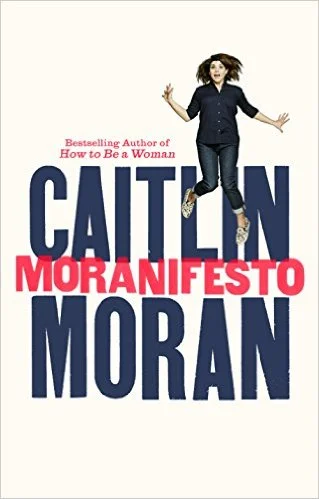
Caitlin Moran has written Moranifesto, which contains this letter. "‘I’ve lived through ten iOS upgrades on my Mac – and that’s just something I use to muck about on Twitter. Surely capitalism is due an upgrade or two?’

Source: http://www.stylist.co.uk/home/caitlin-mora...

Enjoyed this speech? Speakola is a labour of love and I’d be very grateful if you would share, tweet or like it. Thank you.

Facebook Twitter Facebook
In SOCIETY Tags CAITLIN MORAN, TRANSCRIPT, LETTERS LIVE, LETTERS OF NOTE, YOUNG GIRLS, ADVICE, SPEAKOLIES 2016, GOLD SPEAKOLIE
Comment

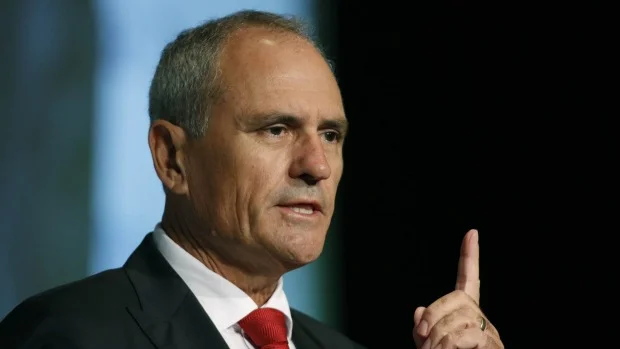
Ken Henry: 'Narratives are stories, in whatever form they take', Address to Curtin Public Policy Forum - 2007

April 13, 2016

4 September 2007, Perth, Western Australia, Australia

Ken Henry was Secretary to the Department of Treasury 2001-11. The speech is entitled 'Challenges Confronting Economic Policy Advisers' and this is only the concluding excerpt. The full speech is here.

I have argued that economic policy advisors must provide ministers with advice which is analytically-sound, strategically-focused and compelling.  When advisors do this, they contribute to the development of broader economic narratives.  They furnish ministers with a set of themes, priorities and strategies which can be woven into compelling economic stories – stories, which, if told well, can powerfully shape policy debate in the community. 

Narratives are stories, in whatever form they take – oral, written or visual.  Conventional narratives in literature or the cinema have a beginning, middle and end.  Good ones provide drama, arising from a predicament that ensnares the principal character; they have plenty of action, the steps the character takes to escape the predicament, with unexpected plot twists and complications thrown in; and there is a resolution, culminating in the achievement of a visionary aspiration or objective.

Economic narratives can be viewed in a similar way.  They are stories about our economic development: they describe a context of economic opportunities and risks we face as a society; they detail the policy actions we should take to respond to these; and they talk about the goals and aspirations we can realise, if we are successful. 

Economic narratives have played a significant role in Australian public life.  Each phase of Australia’s economic development – the Federation of the Australian colonies in 1901, the Great Depression, post-World War II reconstruction, the period of stagflation in the 1970s and early 1980s, and the subsequent internationalisation of the Australian economy, continuing to this day – has been accompanied by its own economic narrative.  These narratives drew on deeply-held community values and fears; they were invoked in support of policy reform and institutional change; and they gave meaning and coherence to events as they unfolded. 

Narratives are a powerful, and perhaps poorly understood, leadership tool.  They provide depth, focus and context for policy debate, furnishing advocates with persuasive arguments in favour of, and sometimes against, policy reform.  They can be a force for good or ill.  Good narratives are grounded in sound economic thinking and policy analysis.  They foster support for reforms which strengthen market frameworks, improve the allocation of resources and, over time, increase the wellbeing of the Australian people.  Dysfunctional narratives, on the other hand, are often associated with narrow interests and misguided policies – they can be invoked to resist necessary reforms, to the detriment of the community; they can stimulate fears and anxieties, without offering solutions. 

Public debate inevitably involves a contest between alternative, overlapping and conflicting narratives.  One of the enduring benefits of an open society is the opportunity it provides for this contest to be played out.  It is quite significant that the contest is not always played out between the major political parties.  On many issues, the government and opposition of the day find themselves in broad agreement.  Yet there is still a contest.  In a pragmatic, somewhat sceptical, and empirically-motivated society like Australia, narrative contests often turn on practical results and commonsense.  But they also turn on values – the capacity of a narrative to ‘speak to’, or ‘connect with’, the average person’s experiences and aspirations.  I’ll return to this point.

While good narratives can be very powerful motivators, it’s worth bearing in mind that they can also become dysfunctional.  A good story isn’t necessarily based on assumptions and propositions of enduring relevance, and it can take one down paths of unintended, perhaps even perverse, consequences.  

I’ve been speaking at a rather abstract level.  Let me make things more concrete by referring to the most important, and arguably enduring, Australian economic narrative in the past quarter century – the proposition that Australia had to open its economy to the world to achieve sustainable growth and rising living standards.  Or, to put it slightly differently, the imperative of developing an economy in which international engagement and economic security were in harmony.  

I am talking about the broad sweep of economic reforms that started in the early 1980s, were deepened and broadened in the 1990s and added to in this decade.  The same economic narrative continues to drive policy development today.  You are all familiar with the main elements of the story, but the bits I’d highlight include: the floating of the currency in 1983 and the liberalisation of the capital account, the liberalisation of the domestic financial sector, the progressive dismantling of industry protection, competition-enhancing product market reforms and greater labour market flexibility. 

Market liberalising measures exposed sheltered parts of the economy to competitive forces, both external and internal, making the economy more flexible, and ultimately more resilient and productive.  They drove access to cheaper, better and a wider range of inputs and final goods and services; a more efficient allocation of labour and capital, supporting specialisation in areas of comparative advantage; access to international financial markets, enabling the financing of investment, smoothing of consumption, and management of risk; transfer of technology and skills; and enhanced competition in domestic markets, promoting innovation and competitive pricing.  And they were complemented by a wider range of reforms designed to enhance the efficiency of resource allocation and support macroeconomic stability, including: tax reform; strong medium-term frameworks for monetary and fiscal policy; a clearer articulation of the operational independence of the Reserve Bank of Australia; and measures to boost national savings, including through superannuation, and reduce public sector debt.     

Taken together, these reforms fundamentally changed Australia’s system of economic governance.  They took us from a highly-protected and over-regulated economy with a short-term and reactive macroeconomic policy focus, to an open, flexible and dynamic economy, with expectations anchored by credible macroeconomic policy frameworks. 

The results of the economic transformation have been well documented.  Australia is experiencing its 16th consecutive year of growth; our living standards, measured by real GDP per capita, are now well above the OECD average; unemployment is at 32 year lows; workforce participation is at [    ] year highs; and inflation is well contained, the headline rate having averaged just [  ] per cent a year since the economy emerged from the recession of the early 1990s.  Just as importantly, our more flexible economy has proven extraordinarily resilient in the face of major shocks, including the Asian financial crisis of 1997-98; the bursting of the tech-bubble in 2000; the United States recession in 2001; a very severe drought; and, in recent years, the global commodities boom that has given us terms of trade that, at other times in our history, would have sparked damaging inflation breakouts and macroeconomic policy crisis. 

The story I have outlined above is well known, but it is important not to lose sight of the powerful narrative which underpinned, gave direction to, and marshalled support for these changes:  The proposition that Australia had to open its economy to achieve sustained growth and rising living standards.

The ultimate mark of this narrative’s success is that it is today taken for granted.  When it was first articulated, however, it challenged a long-established conventional wisdom – the view, held by many policy-makers and opinion-leaders throughout Australia’s history, that economic security, that is, both prosperity and stability, could be achieved only by insulating the economy from market forces, both international and domestic.  The new narrative did not overturn this protectionist belief-system overnight, but in the course of the 1980s it increasingly set the tone for national debate on economic policy.  A small number of academics, policy-makers and political figures had always championed its insights, but it was eventually accepted, grudgingly in some cases, by a much wider array of opinion leaders and interest groups, including unions and formerly protected industry sectors.  Ultimately, it won the support of a large section of the Australian community.  It told them a story about Australia’s place in the world, and the changes we needed to make to secure our economy, that was both credible and compelling. 

Some might argue that the market-opening reforms of the past quarter century could have taken place without any supporting narrative.  They might point out that by the early 1980s it was obvious to all that Australia’s pre-reform economic model was not working.  And they might add that once the initial reforms were in place – those that exposed the economy to the discipline of international markets – the pressure for subsequent measures, especially to increase the flexibility of product and labour markets, was unavoidable.  There is something in these observations, but they are overstated.  Moreover, it doesn’t follow that the narrative I have been talking about played no role.  By the early 1980s it should have been obvious to all that the inward-focussed, heavily regulated, protectionist model was failing.  But it was far from obvious to all that the market liberalising initiatives of late 1983 and 1984 were necessary.  They were, in fact, quite controversial.  One reason for their being so controversial was the fact that, at the time, the compelling narrative I have been talking about had not been clearly articulated.  Indeed, it wasn’t until after Treasurer Keating’s famous ‘banana republic’ statement in the middle of 1986 that the narrative started to gain traction.   

Further support for the power of the narrative comes from noting that when governments in other countries have introduced ambitious reforms without persuasive narratives that could be understood and accepted by their citizens, the reforms have met with strong resistance; in most cases, reforming governments have lost office.  Australia’s dominant, market-opening economic narrative, in contrast, has proved remarkably resilient.  Its core promise – to bring international engagement and economic security into harmony – took some time to realise.  In the early years, there were some dramatic setbacks.  The early steps to open the economy exposed it more directly to the harsh judgements and frequent vagaries of international capital markets.  In the course of the 1980s, we experienced dramatic swings in the value of the currency, our current account blew out and our foreign indebtedness escalated.  Yet throughout this period of instability and turmoil, mainstream political and community support for the market-opening narrative did not seriously falter.  Even in the midst of the recession of the early 1990s, with the unemployment rate climbing to 11.2 per cent, the narrative wasn’t seriously damaged.  While there certainly was some vigorous debate, as one would expect in an open society, the reform imperative had developed sufficient momentum to sustain forward progress in those difficult years.  Perhaps nothing better makes that point than the fact that in 1992, with unemployment at 10.8 per cent, tariffs were cut.                

The dominant economic narrative of the past quarter century has proved remarkably resilient and influential.  It’s worth considering why that has been the case.  I would highlight three things.  First, the narrative articulated clearly an embarrassing failure – our standard of living was falling relative to that of an increasingly integrated developed world.  Second, it appealed to deeply-held community values and aspirations – our nation’s enduring quest for economic stability and prosperity, and, at the individual level, the high value we place on opportunity.  And third, it provided a clear statement of the reform strategy, grounded in well-reasoned economic principles – setting out what we needed to do, as a society, and why, to respond to the challenge.

Ultimately, as I have said, the particular power of this narrative was its ability to reconcile, to bring into harmony, two seemingly contradictory realities, our desire for economic security, on the one hand, and the necessity of international engagement, on the other. 

The dominant narrative of the past 25 years is no less relevant today.  The Government’s wide-ranging and ambitious international policy agenda attests to that – our hosting of the G-20 forum of finance ministers and central bankers last year, our hosting of APEC this year, our commitment to institution-building in the Pacific, the effective partnership we are building with Indonesia, our close ties with other key regional powers.  Important parts of the domestic reform agenda can also be seen as part of that dominant narrative. 

But I wonder whether the very success of the narrative – reflected in the fact that Australia’s economy is now open, flexible and resilient – won’t have some people wondering about a broader narrative that might support the next phase of our economic development. 

I don’t have such a narrative in my top drawer; and even if I did, it would be presumptuous of me to start reading from it.  But if I were to sit down and write one, I reckon I would start by observing that most of the big policy issues we talk about today concern attempts to reconcile, or bring into harmony, the ideas of opportunity and sustainability.  These are broader concepts than international engagement and economic stability – the two key elements of our current narrative – and they have been with us for centuries, not decades. 

The concepts of opportunity and sustainability underpin a range of economic, environmental and social policy debates.  Some of their economic policy dimensions are well understood.  The Government’s two Intergenerational Reports, issued in 2002 and earlier this year, have highlighted a number of these.  Those reports have drawn attention to the fiscal, and broader economic, pressures associated with our ageing population and provided a framework for thinking about how best to respond to them.  This framework is summed up in the 3Ps – the truism that our ability to satisfy the aspirations of future generations of Australians depends upon our population, the level of labour force participation, and our productivity.  The central message of the two IGRs has been that our ability to satisfy those aspirations, and also to secure the long-term sustainability of the budget, depends on the pursuit of further productivity- and participation-enhancing reforms. 

Labour force participation relates to a broader notion of economic opportunity.  Policies that lift labour force participation – including vocational education and training, tax and welfare changes to reduce disincentives to work, retraining of the long-term unemployed and employment initiatives for Indigenous Australians – also enhance economic opportunities.  As does anything that governments might be able to do to ensure, in Noel Pearson’s compelling words, that Indigenous people ‘have the capabilities to choose a life that they have reason to value’.

The enhancement of economic opportunity, based on positive incentives and robust capabilities, remains the most practical thing governments can do to advance the development of their citizens.

But what about sustainability?  Many Australians would see development as being unsustainable, almost by definition, and they would view the enhancement of economic opportunity as being antithetical to sustainability.  Because so much of our past expression of economic opportunity appears to have been associated with environmental degradation, they might appear to have a strong argument – being able to point to the destruction of about 99 per cent of our temperate native grasslands and the biodiversity they used to contain; extensive weed infestation, soil erosion and salinity; the extermination, in recent times, of 61 species of flora and 54 species of fauna; and the fact that another 1,551 species of flora and fauna are regarded by the Department of Environment and Water Resources as either ‘critically endangered’, ‘endangered’, ‘vulnerable’ or ‘conservation dependent’.

But this view, understandable as it is, is based on a misunderstanding of economic opportunity and, indeed, of development.  Economists see opportunity and sustainability as being very closely related concepts: unless I can sustain past achievements am I not denying myself the opportunity of further development? 

Indeed, many economists would agree that our improved living standards have not always been consistent with sustainable development, given that, unlike the people from Europe who came to this continent 220 years ago, we do not have the opportunity to appreciate the existence of species like the thylacine and 114 others.  Few of us will ever see a yellow-footed rock wallaby or a hairy nosed wombat.  Those who went before us have denied us these opportunities.  And in that loss of opportunity there has been, in the language of Nobel Laureate Amartya Sen, a loss of freedom – a loss of ‘freedom to have – or safeguard – what (we) value and to which (we) have reason to attach importance’. And that freedom is a constitutive component of development. 

A concern with sustainability, then, can be viewed as safeguarding a fundamental component of development. 

And Australians have more reasons than most for thinking about opportunity and sustainability.  Ours is the driest inhabited continent on earth and, if the climate change science proves right, the inhabited parts of the continent are only going to get a lot dryer.  The energy-intensity of Australian production is well above the OECD average, and climate change mitigation efforts will make energy more expensive.  We have the most geographically dispersed population among OECD countries and, if the central forecasts of the future freight task are correct, we will witness, over the next 15 years, a doubling of the number of trucks on roads that are already under considerable pressure.  While this is true also of a number of other countries, our population is about to start ageing rapidly as a consequence of the collapse in the birth rate that occurred in the late 1960s and 1970s.   Several of our neighbours in the Pacific are becoming increasingly fragile, with increasing expectations on us to assist them address deep seated governance and development challenges.  Closer to home, the life expectancy of Indigenous males is 17 years less than non-Indigenous, Indigenous imprisonment rates are 17 times the national rate and Indigenous infant mortality rate is nearly three times the non-indigenous rate.  And we have our own governance challenges, with three levels of government operating in an increasingly complex environment reflective of a distinct lack of coherence in roles and responsibilities.

In the articulation of these challenges I can discern the raw materials for a powerful narrative to guide future economic development; a narrative that would appeal to strong community values and aspirations, to sustain what we have and to enhance economic opportunity; a narrative that would be both relevant and compelling.


Source: http://archive.treasury.gov.au/documents/1...

Enjoyed this speech? Speakola is a labour of love and I’d be very grateful if you would share, tweet or like it. Thank you.

Facebook Twitter Facebook
In SOCIETY Tags KEN HENRY, TREASURY, PUBLIC SERVANT, ECONOMIST, POLICY, NARRATIVES, COMMUNICATION
Comment

Rob Carlton: 'That's my stick', Wheeler Centre Show & Tell - 2016

April 12, 2016

17 February 2016, Wheeler Centre, Melbourne, Australia

Tony Wilson hosted a 'Show and Tell for Grown Ups' session at the The Wheeler Centre. The other guests were Sofija Stefanovic and Alison Lester. There will be more Show and Tell for Grown Ups in July 2016.

Tony: It is, ladies and gentlemen, it's a stick.

Rob: If I put it there it blends into the background though, you can't see, it's got a camouflage going on. Maybe... can you see that? Alright. There you are.

Tony: It's a stick.

Rob: It's my stick!

Tony: So, talk us through, ah, a stick.

Rob: So, I was thinking about this, and this stick kinda comes within a story, within a story, I think. And certainly by the end of this, we'll know whether there's a story in it at all.

So that stick, was in my house growing up, it was always part of our lives. My mum and dad were amazing cooks, my dad loved cooking curries, and for as long as I can remember, that stick was in our kitchen, in Bayview, which was my home where you get a real sense of home.

And that stick was used to stir our curries.

And at some point, I think in my teens, I learned that that stick was brought into my family when – before I was born – about 18 months before I was born, when my mum and dad and two older sisters were living in New Zealand and my older brother Richard was born.

And at eight weeks of age, my brother Richard died of cot-death, and my mum and my dad and my sisters walked down to the beach, on a lonely cold, windy day. An Australian family sitting on a beach in New Zealand, trying to gather courage together, and they picked up that stick. And they bought it home. And I learned about that when I was in my teens, and it was always this wonderful thing, it was something that was just there and we always used it and it was part of our life.

And then my mum and dad got a bit older, and as wise parents do, when they start to get older, they divested themselves of all these things that, should they go under a bus, it won't mean anything to anyone else –

[adjusts wilting microphone] Hang on, I'm an old roadie, don't worry about this. Being an actor, you can pretty much do EVERY job...um ...Coffee anyone?

Tony: A long time since you've done those ones though, isn't it?

Rob: (laughs) So, yeah, when older people ... being sensible ... so they gave it to me. It was my stick. 'Cos I was the replacement boy. And so I now got this stick and I then have it my house and I've got twin boys, my eleven year old boys, and I explain to them everything that goes on in my life, and I tell them that this is my stick and this is how we came to get it. And they call it ‘The Stick Of Richard Life’. My little boys call it ‘The Stick Of Richard Life’, so that's the name.

So here's where the story gets into a bit of a different sort of story and it starts to go slightly skewiff. Right. Oh, and don't worry about me, I do get emotional, but trust me, I'm feeling fine ...(laughs)

So we then, in Sydney we do something that's called Story Club, and we sit down and write a sixteen hundred word story and we read it out in a big oversized chair. Now the theme of Story Club this month was 'Sense of impending doom' – write a story about when you had a sense of impending doom.

Now, here's the bizarre thing. I don't have a sense of impending doom. I've never had a sense of impending doom, and it remains one of the great mysteries of my life, how my mum and dad were able to bring me up in a world that was only ever going to shine on me, that was only ever going to give me joy and wonder and happiness if I showed it to the world.

I was never mollycoddled, I never ever got a sense that this world would take me away. And how my mum and dad did that after going through what they went through, remains a mystery.

So, I wrote this story. And I framed my story up with this stick, and talked about the irony of growing up without this impending doom, given everything I should have had should have been fear and worry.

So I write this story, and I read it out and it was good, man! I nailed it. (laughs)

But then, of course, I've gotta tell my mum and dad, and I’ve done this thing, and am I cashing in on the family heartache and grief? ... and then, oh dearie me, I wasn't doing that, I know what I'm like, I was honest and clear in my intent. So I wasn't doing that, but for the first time ever, I felt reticent. A little. To tell my mum and dad about my story that I'd written for fear of the emotions that it would bring up.

And shortly thereafter I came down to Melbourne, and I was having dinner, and I did think to myself, what shall I do in this situation? And so I do what I always do, I arrived and spilled my guts immediately - (laughs), that’s just how I roll.

And so that led to this, um – now we're gonna be here 'til eight o'clock – So I told my mum and dad, this is what I've done. And of course my mum and dad are amazing people, and so emotionally courageous, and transparent and we talked about that, the detail, I'd never really got an understanding of what my dad went through.

My dad’s framing of those horrible days back in New Zealand forty six years ago was always 'it was so much worse for your mum', 'you see, Rob, back then our lives, it was segregated, I would go to work but your mum was at home with the children, and she carried Richard, and she was looking after Richard, and she was with Richard for every hour of every day’, and this was my understanding of that time. And in fact, my story, when I wrote it, it focused on that moment that my sister would tell me, she stills remembers that moment of mum running down the garden path, saying 'He's gone! He's gone!'

And it's a heartbreaking image in my mind, but that was my memory of this time, and I wrote this story. So I have this interesting evening with my mum and dad, and then I go to the theatre just down here, and my older sister, by chance – it's her birthday and she's at the theatre – and she rarely goes to the theatre, and I hadn't organised to be there with her, she was there with her husband and we go and see a show together – it was poor – and we meet in the foyer afterwards, we go to the Curve Bar afterwards, and they say, ‘how are you’ and I say I'm really well, but I've just had this really interesting, incredible night with mum and dad talking about the detail of that day Richard died.’

And I said, ’you know, I'd talked about this, and I'd talked about that and I said about the moment with mum running down the garden path ... and I was just sad ...’

And she said, 'Oh, but Rob, that's not the clearest memory of my day.'

I said, ‘what is it?'

And she said, 'Dad.'

And I'd never heard anything about my Dad's response on that day. I'd only ever heard it through the prism of dad saying 'it was so much worse for your mum', and that was it.

I said, ‘What do you mean?’

Now I may lose it through this bit, again don't worry, I'm brave.

So we're standing in the Curve Bar, having this conversation, and my sister says, 'My most potent memory of that day, when they put Richard in the back of the ambulance – Dad banging on the roof of the ambulance, and howling.'

And she told me that, and I had this emotional punch, it was like a fist jamming into my chest and I literally went [howls] and bent down and started sobbing and sobbing, and I couldn't stand up and I bent down to my knees and it was, I was like a groaning wreck.

I've never felt anything like that in my life. Nothing since, nothing before. And at that moment I felt guilt, and I felt shame. I felt that I hadn't honoured my father's grief, I felt as a son I didn't really know the truth of the most horrific thing in my father's life. And I'd written a story and I honoured my mum and her bravery and courage and optimism.

But, I felt like I'd sold my father out a little bit.

It was an astonishing moment. And being what I am, I needed to kind of try and make a reparation. So, I thought about this and a week or two later I –

Oh and then mum and dad said, ‘Will you show us the story?’ Haah, shit! And it's mad. I mean like, it's an adventure story, it's a road trip story, so, no sense of impending doom, man. And me and my buddy go on a road trip, we hitch-hike, we spend a night with an attempted murderess, there's nudity, there's panel vans, there's you know, a lot of low-level criminality, and I think, but, you can read that mum and dad, but there's also The Stick Of Richard Life stuff.

So I sent it to them and Mum and Dad read it and they ring up and they say, 'Oh, we read your story' and say some nice (things) and dad gets on the phone, and he’s very proper and he says, 'Ooh helloo' – you know I've written plays – and he says, 'I've seen a lot of the things you've done, Rob, but, I've never read your prose, and they're quite beautiful, crisp, not too many long words, very clear, I mean beautifully done, a lovely story, obviously very sad, and I'm sure the people that heard it were crying, but in terms of the quality of the literature, very well done.'

I'm sittin' there thinking, fu-uck.

I said, 'Thanks dad, but I gotta say..', this thing – and I didn't want to talk about that moment [indicates banging on the roof of the ambulance] it was not for me to bring up, that moment -  but I did say, I'd been thinking about this, and I said, ‘You know dad, I really don't feel that I've ever really, I guess, honoured or accepted or talked to you about what you really went through, it's always been through the prism of a family, through the prism of what mum went through and what my sisters, but I never really ...’

And he said 'Oh no, well yes, it was obviously very very difficult, very sad', but – and then boom, like a switch, straight to the dominant story – it was so much worse for your mother, there was nothing really difficult for me, I had to go to work, this is the way it was, it's your mother, it's your mother, it's your mother.

And I didn't test it further, because that is my Dad's story.

Now, two things to come out of this: one, I think it gave me an insight into what it is different members of the family do, and when we come to an experience and we walk away with our own story of it, each member of a family, each member of that experience has their own narrative that they need so that they can keep moving forward in a way that helps everybody get forward. And at that point in time, I truly believe that my dad needed to sublimate the heartache and the pain of what it is to lose his only son, in order for my mum to repair, and my sisters to grow, and for me, should I arrive, to be born into a world that still has hope, and that every time I go to sleep isn't the most frightening time in the world, for a family. Which I think it would have been. So I think that's what my dad had to do, and that's what he clung to, and that was his story.

And then the thing I've been thinking on, in this last month – my dad died on Christmas Eve – it wasn't guilt I felt that day, or shame or sadness, when my sister told me about that image [indicates banging both hands on the roof] and the ambulance. I have a feeling it was an inherited memory.

The feeling was so visceral, it was so strong, it was, I mean, the time was instantaneous, when my sister said this was what your dad did, I hit the deck and I was howling, and I don't know how we as human beings learn, what we learn, what knowledge is innate, what we're born with, what's nature, what's nurture, but it's my feeling that that particular experience that my dad went through forty six years ago, has somehow, through the wonder of procreation found its way somewhere into my heart and body, and my dad's experience rests now with me.

That's my stick.

Rob discusses this speech and salon storytelling generally in episode 17 of the Speakola podcast


Source: http://www.wheelercentre.com/broadcasts/sh...

Enjoyed this speech? Speakola is a labour of love and I’d be very grateful if you would share, tweet or like it. Thank you.

Facebook Twitter Facebook
In HEALTH Tags ROB CARLTON, WHEELER CENTRE, SHOW AND TELL, TONY WILSON, TRANSCRIPT, FATHER, SON, MOTHER, COT DEATH, TRAGEDY, INHERITED MEMORY, SPEAKOLIES 2016, BRONZE SPEAKOLIE
2 Comments

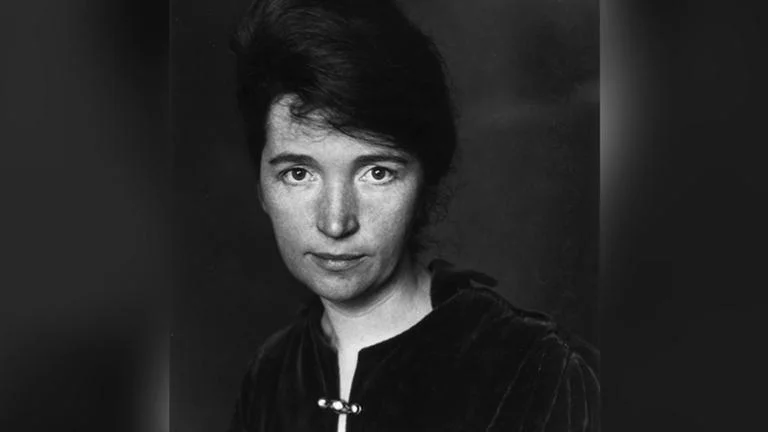
Margaret Sanger: 'We claim that woman should have the right over her own body and to say if she shall or if she shall not be a mother', The Morality of Birth Control - 1921

April 7, 2016

18 November 1921, Park Theatre, New York, USA

The meeting tonight is a postponement of one which was to have taken place at the Town Hall last Sunday evening. It was to be a culmination of a three day conference, two of which were held at the Hotel Plaza, in discussing the Birth Control subject in its various and manifold aspects.

The one issue upon which there seems to be most uncertainty and disagreement exists in the moral side of the subject of Birth Control.  It seemed only natural for us to call together scientists, educators, members of the medical profession and the theologians of all denominations to ask their opinion upon this uncertain and important phase of the controversy. Letters were sent to the most eminent men and women in the world. We asked in this letter, the following questions: 

1. Is over-population a menace to the peace of the world?  

2. Would the legal dissemination of scientific Birth Control information through the medium of clinics by the medical profession be the most logical method of checking the problem of over-population?

3. Would knowledge of Birth Control change the moral attitude of men and women toward the marriage bond or lower the moral standards of the youth of the country?

4. Do you believe that knowledge which enables parents to limit the families will make for human happiness, and raise the moral, social and intellectual standards of population?

We sent such a letter not only to those who, we thought, might agree with us, but we sent it also to our known opponents.  Most of these people answered.  Every one who answered did so with sincerity and courtesy, with the exception of one group whose reply to this important question as demonstrated at the Town Hall last Sunday evening was a disgrace to liberty-loving people, and to all traditions we hold dear in the United States. I believed that the discussion of the moral issue was one which did not solely belong to theologians and to scientists, but belonged to the people. And because I believed that the people of this country may and can discuss this subject with dignity and with intelligence I desired to bring them together, and to discuss it in the open.

When one speaks of moral, one refers to human conduct. This implies action of many kinds, which in turn depends upon the mind and the brain. So that in speaking of morals one must remember that there is a direct connection between morality and brain development. Conduct is said to be action in pursuit of ends, and if this is so, then we must hold the irresponsibility and recklessness in our action is immoral, while responsibility and forethought put into action for the benefit of the individual and the race becomes in the highest sense the finest kind of morality.

We know that every advance that woman has made in the last half century has been made with opposition, all of which has been based upon the grounds of immorality.  When women fought for higher education, it was said that this would cause her to become immoral and she would lose her place in the sanctity of the home.  When women asked for the franchise it was said that this would lower her standard of morals, that it was not fit that she should meet with and mix with the members of the opposite sex, but we notice that there was no objection to her meeting with the same members of the opposite sex when she went to church.

The church has ever opposed the progress of woman on the ground that her freedom would lead to immorality. We ask the church to have more confidence in women. We ask the opponents of this movement to reverse the methods of the church, which aims to keep women moral by keeping them in fear and in ignorance, and to inculcate into them a higher and truer morality based upon knowledge. And ours is the morality of knowledge. If we cannot trust woman with the knowledge of her own body, then I claim that two thousand years of Christian teaching has proved to be a failure.

We stand on the principle that Birth Control should be available to every adult man and woman.  We believe that every adult man and woman should be taught the responsibility and the right use of knowledge.  We claim that woman should have the right over her own body and to say if she shall or if she shall not be a mother, as she sees fit. We further claim that the first right of a child is to be desired. While the second right is that it should be conceived in love, and the third, that it should have a heritage of sound health.

Upon these principles the Birth Control movement in America stands. When it comes to discussing the methods of Birth Control, that is far more difficult.  There are laws in this country which forbid the imparting of practical information to the mothers of the land.  We claim that every mother in this country, either sick or well, has the right to the best, the safest, the most scientific information.  This information should be disseminated directly to the mothers through clinics by members of the medical profession, registered nurses and registered midwives.

Our first step is to have the backing of the medical profession so that our laws may be changed, so that motherhood may be the function of dignity and choice, rather than one of ignorance and chance. Conscious control of offspring is now becoming the ideal and the custom in all civilized countries. Those who oppose it claim that however desirable it may be on economic or social grounds, it may be abused and the morals of the youth of the country may be lowered.  Such people should be reminded that there are two points to be considered.  First, that such control is the inevitable advance in civilization.  Every civilization involves an increasing forethought for others, even for those yet unborn.  The reckless abandonment of the impulse of the moment and the careless regard for the consequences, is not morality. The selfish gratification of temporary desire at the expense of suffering to lives that will come may seem very beautiful to some, but it is not our conception of civilization, or is it our concept of morality.

In the second place, it is not only inevitable, but it is right to control the size of the family for by this control and adjustment we can raise the level and the standards of the human race.  While Nature’s way of reducing her numbers is controlled by disease, famine and war, primitive man has achieved the same results by infanticide, exposure of infants, the abandonment of children, and by abortion.  But such ways of controlling population is no longer possible for us.  We have attained high standards of life, and along the lines of science must we conduct such control.  We must begin farther back and control the beginnings of life.  We must control conception.  This is a better method, it is a more civilized method, for it involves not only greater forethought for others, but finally a higher sanction for the value of life itself.

Society is divided into three groups.  Those intelligent and wealthy members of the upper classes who have obtained knowledge of Birth Control and exercise it in regulating the size of their families.  They have already benefited by this knowledge, and are today considered the most respectable and moral members of the community. They have only children when they desire, and all society points to them as types that should perpetuate their kind.

The second group is equally intelligent and responsible.  They desire to control the size of their families, but are unable to obtain knowledge or to put such available knowledge into practice.

The third are those irresponsible and reckless ones having little regard for the consequence of their acts, or whose religious scruples prevent their exercising control over their numbers.  Many of this group are diseased, feeble-minded, and are of the pauper element dependent entirely upon the normal and fit members of society for their support.  There is no doubt in the minds of all thinking people that the procreation of this group should be stopped. For if they are not able to support and care for themselves, they should certainly not be allowed to bring offspring into this world for others to look after. We do not believe that filling the earth with misery, poverty and disease is moral.  And it is our desire and intention to carry on our crusade until the perpetuation of such conditions has ceased.

We desire to stop at its source the disease, poverty and feeble-mindedness and insanity which exist today, for these lower the standards of civilization and make for race deterioration.  We know that the masses of people are growing wiser and are using their own minds to decide their individual conduct.  The more people of this kind we have, the less immorality shall exist.  For the more responsible people grow, the higher do they and shall they attain real morality.

Source: http://www.americanrhetoric.com/speeches/m...

Enjoyed this speech? Speakola is a labour of love and I’d be very grateful if you would share, tweet or like it. Thank you.

Facebook Twitter Facebook
In HEALTH Tags BIRTH CONTROL, MARGARET SANGER, WOMEN'S RIGHTS, CONTRACEPTION, FEMINISM
Comment

Glennon Doyle Melton: 'It's braver to be Clark Kent than it is to be Superman', Lessons from the Mental Hospital, TEDx - 2013

April 7, 2016

uploaded 31 May 2013, TEDx Traverse City, Michigan, 2013

Hi. I have been trying to weasel my way out of being on the stage for weeks. I am doing fine. But about a month ago I was up early panicking about this. And I watched in all of Tech Talk that Brené Brown did on vulnerability. Dr. Brown is one of my heroes. She is a shame researcher and I am a recovering bulimic, alcoholic and drug user. So I’m sort of a shame researcher too. It’s just that most of my work is done out in the field.

And Dr. Brown defined courage like this. She said, “Courage is to tell the story of who you are with your whole heart.” And that got me thinking about another one of my heroes Georgia O’Keeffe and how she said, “Whether you succeed or not is irrelevant. There is no such thing. Making the unknown known is what is important”.

So here I am to tell you the story of who I am with my whole heart and to make some unknowns known.

When I was eight-years-old, I started to feel exposed and I started to feel very very awkward. Every day I was pushed out of my house and into school all oily and fuzzy and conspicuous and to meet the other girls seemed so cool, and together and easy.

And I started to feel like a loser in a world that preferred superheroes. So I made my own capes and I tied them tight around me. My capes were pretending and addiction. But we all have our own superhero capes; don’t we? Perfectionism and overworking, snarkiness and apathy, they’re all superhero capes.

And our capes are what we put over our real selves so that our real tender selves don’t have to be seen and can’t be hurt. Our superhero capes are what we keep us from having to feel much at all, because every good and bad thing is deflected off of them.

And so for 18 years, my capes of addiction and pretending kept me safe and hidden. People think of us addicts as insensitive liars but we don’t start out that way.

We start out as extremely sensitive truth tellers. We feel so much pain and so much love and we sense that the world doesn’t want us to feel that much and doesn’t want to need as much comfort as we need. So we start pretending. We try to pretend like we’re the people that we think we’re supposed to be. We numb and we hide and we pretend and that pretending does eventually turn into a life of lies. But to be fair, we thought we were supposed to be lying.

They tell us since we’re little that when someone asks us how we’re doing, the only appropriate answer is: “Fine. And you?”

But the thing is that people are truth tellers. We are born to make our unknown known. We will find somewhere to do it. So in private, with the booze or the over-shopping or the alcohol or the food, we tell the truth. We say actually I’m not fine. Because we don’t feel safe telling that truth in the real world we make our own little world and that’s addiction. That’s whatever cape you put on.

And so what happens is all of us end up living in these little teeny, controllable, predictable, dark worlds instead of altogether in the big, bright, messy one.

I binged and purged for the first time when I was 8 and I continued every single day for the next 18 years. It seems normal to me but you’re surprised.

Every single time that I got anxious or worried or angry, I thought something was wrong with me. And so I took that nervous energy to the kitchen and I stuffed it all down with food and then I panicked and I purged. And after all of that, I was laid out on the bathing floor and I was so exhausted and so numb that I never had to go back and deal with whatever it was that it made me uncomfortable in the first place. And that’s what I wanted. I did not want to deal with the discomfort and messiness of being a human being.

So when I was a senior in high school, I finally decided to tell the truth in the real world. I walked into my guidance counselor’s office and I said ”actually I’m not fine. Someone help me”. And I was sent to a mental hospital.

And in the mental hospital, for the first time in my life, I found myself in a world that made sense to me. In high school, we had to care about geometry when our hearts were breaking because we were just bullied in the hallway, or no one would sit with us at lunch. And we had to care about ancient Rome when all we really wanted to do was learn how to make and keep a real friend. We had to act tough when we felt scared and we had to act confident when we felt really confused.

Acting — pretending was a matter of survival. High school is kind of like the real-world sometimes. But in the mental hospital, there was no pretending. The zig was up. We had classes about how to express how we really felt through music and art and writing. We had classes about how to be a good listener and how to be brave enough to tell our own story, while being kind enough not to tell anybody else’s. We held each other’s hands sometimes just because we felt like we needed to.

Nobody was ever allowed to be left out. Everybody was worthy. That was the rule just because she existed and so in there, we were brave enough to take off our capes. All I ever needed to now I learned in the mental hospital.

I remember this sandy haired girl who was so beautiful and she told the truth on her arms. And I held her hand one day while she was crying. And I saw that her arms were just sliced up like pre-cut S. In there, people wore their scars on the outside, so you knew where they stood. And they told the truth, so you knew why they stooped in there.

So I graduated from high school and I went on to college, which was way crazier than the mental hospital. In college, I added on the capes of alcoholism and drug use. This Sun rose every day and I started bingeing and purging. And then when the sun set I drank myself stupid. The sunrise is usually people’s signal to get up but it was my signal every day to come down — to come down from the booze and the boys and the drugs and I could not come down. That was to be avoided at all cost. So I hated the sunrise.

I closed the blinds, and I put the pillow over my head when my spinning brain would torture me about the people who were going out into their day into the late to make relationships and pursue their dreams and have a day – and I had no day; I only had night.

And these days, I like to think of hope as that sunrise. It comes out every single day to shine on everybody equally. It comes out to shine on the sinners and the saints and druggists and the cheerleaders. It never withholds; it doesn’t judge. And if you spend your entire life in the dark and then one day just decide to come out, it’ll be there waiting for you — just waiting to warm you.

All those years I thought of that sunrise as searching and accusatory and judgmental. But it wasn’t – it was just hope’s daily invitation to need to come back to life. And I think if you still have a day, if you’re still alive, you’re still invited.

I actually graduated from college which makes me both grateful to and extremely suspicious of my alma mater. And I found myself sort of in the real world and sort of not.

On Mother’s Day, 2002 – I am not good at years – we’ll just say on Mother’s Day, I had spun deeper and deeper. I wasn’t even Glennon anymore. I was just bulimia, I was just alcoholism. I was just a pile of capes. But on Mother’s day — one Mother’s day I found myself on a cold bathroom floor, hung over, shaking and holding a positive pregnancy test.

And as I sat there with my back literally against a wall, shaking and understanding watched over me. And in that moment on the bathroom floor, I understood that even in my state, even lying on the floor that someone out there had deemed me worthy of an invitation to a very very important event.

And so that day on the bathroom floor, I decided to show up. Just to show up, to climb out of my dark individual controllable world and out into the big, bright, messy one. And I didn’t know how to be a sober person or how to be a mother, or how to be a friend. So I just promised myself that I would show up and I would do the next right thing. Just show up Glennon even if you’re scared. Just do the next right thing even when you’re shaking.

And so I stood up. Now what they don’t tell you about getting sober, about peeling off your capes, is that it gets helluva lot worse before it gets better. Getting sober is like recovering from frostbite. It’s all of those feelings that you’ve numbed for so long. Now they’re there and they are present. And at first it just feels kind of tingly and uncomfortable but then those feelings start to feel like daggers, the pain, the love, the guilt, the shame, it’s all piled on top of you with nowhere to run.

But what I learned during that time is that sitting with the pain and the joy of being a human being, while refusing to run for any exits is the only way to become a real human being. And so these days I’m not a superhero and I’m not a perfect human being. But I am a fully human being. And I am proud of that.

I am fortunately and frustratingly still exactly the same person as I was when I was 20 and 16 and eight-years-old. I still feel scared all the time, anxious all the time. Really all the time. I still get very high and very low in life daily. But I finally accepted the fact that sensitive is just how I was made, that I don’t have to hide it, and I don’t have to fix it, I am not broken.

And I have actually started to wonder if maybe you’re sensitive too. Maybe you feel great pain and deep joy but you just don’t feel safe talking about it in the real world. And so now instead of trying to make myself tougher, I write and I serve people to help create a world where sensitive people don’t need superhero capes, or we can all just come out into the big bright messy world and tell the truth and forgive each other for being human and admit together that yes, life is really hard but also insist that together we can do hard things.

Maybe, it’s okay, to say actually today I am not fine. Maybe it’s okay to remember that we’re human beings and to stop doing long enough to think and to love and to share and to listen.

This weekend was Mother’s Day which marked the 11th year anniversary of the day I decided to show up. And I spent the day on the beach with my three children and my two dogs and my one husband. My long-suffering husband you can only imagine. And life is beautiful and life is brutal. Life is brutaful, all the time and every day. And only one thing has made the difference for me and that is this: I used to numb my feelings and hide and now I feel my feelings and I share. That’s the only difference in my life these days.

I’m not afraid of my feelings anymore. I know they can come and they won’t kill me and they can take over for a little while if they need to but at the end of the day what they are is really just guides. They’re just guides to tell me what is the next right thing for me to do. Loneliness – it leads us to connection with other people. And jealousy – it guides us to what we’re supposed to do next and paying guides just to help other people and being overwhelmed – it helps us – it guides us to ask for help.

And so I’ve learned that if I honor my feelings as my own personal profits and instead of running I just be still but there are prizes to be won and those prizes are peace and dignity and friendship.

So I received an email last week and let’s now take to my computer at home.

And it just said, “Dear Glennon, it’s braver to be Clark Kent than it is to be Superman. Carry on Warrior”.

And so today I would say to you that we don’t anymore superheroes. We just need awkward, oily, honest human beings out in the bright, big, messy world. And I will see you there.


You can buy Glennon Doyle Melton's book 'Carry on Warrior' here.

Source: http://tedxtalks.ted.com/video/Lessons-fro...

Enjoyed this speech? Speakola is a labour of love and I’d be very grateful if you would share, tweet or like it. Thank you.

Facebook Twitter Facebook
In HEALTH Tags GLENNON DOYLE MELTON, GLENNON MELTON, LESSONS FROM THE MENTAL HOSPITAL, DEPRESSION, ALCOHOLISM, BRENE BROWN, TRANSCRIPT, EATING DISORDER, BULEMIA
Comment

Steve Jobs: 'Everything around you that you call life was made up by people that were no smarter than you', PBS documentary 'The Lost Interview' - 1995

April 4, 2016

1995, California, USA (original flm 'Triumph of the Nerds' released 12 June 1996)

When you grow up you tend to get told the world is the way it is and you're life is just to live your life inside the world. Try not to bash into the walls too much. Try to have a nice family, have fun, save a little money.

That's a very limited life. Life can be much broader once you discover one simple fact: Everything around you that you call life was made up by people that were no smarter than you and you can change it, you can influence it, you can build your own things that other people can use.

Once you learn that, you'll never be the same again.

Source: https://www.youtube.com/watch?v=zQYTvVrBeM...

Enjoyed this speech? Speakola is a labour of love and I’d be very grateful if you would share, tweet or like it. Thank you.

Facebook Twitter Facebook
In SOCIETY Tags WISDOM, CHANGE THE WORLD, PBS, STEVE JOBS
Comment

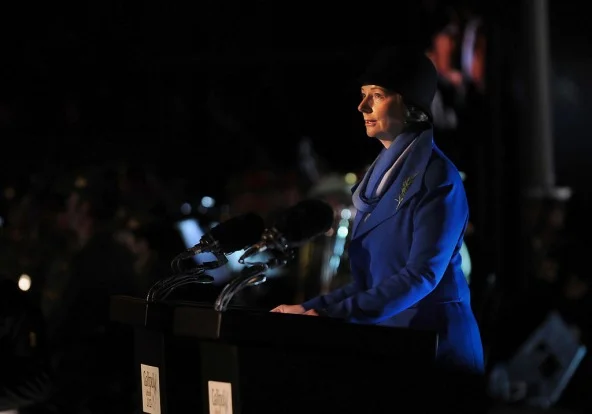
Julia Gillard: 'So this is a place hallowed by sacrifice and loss', Anzac Day - 2012

March 28, 2016

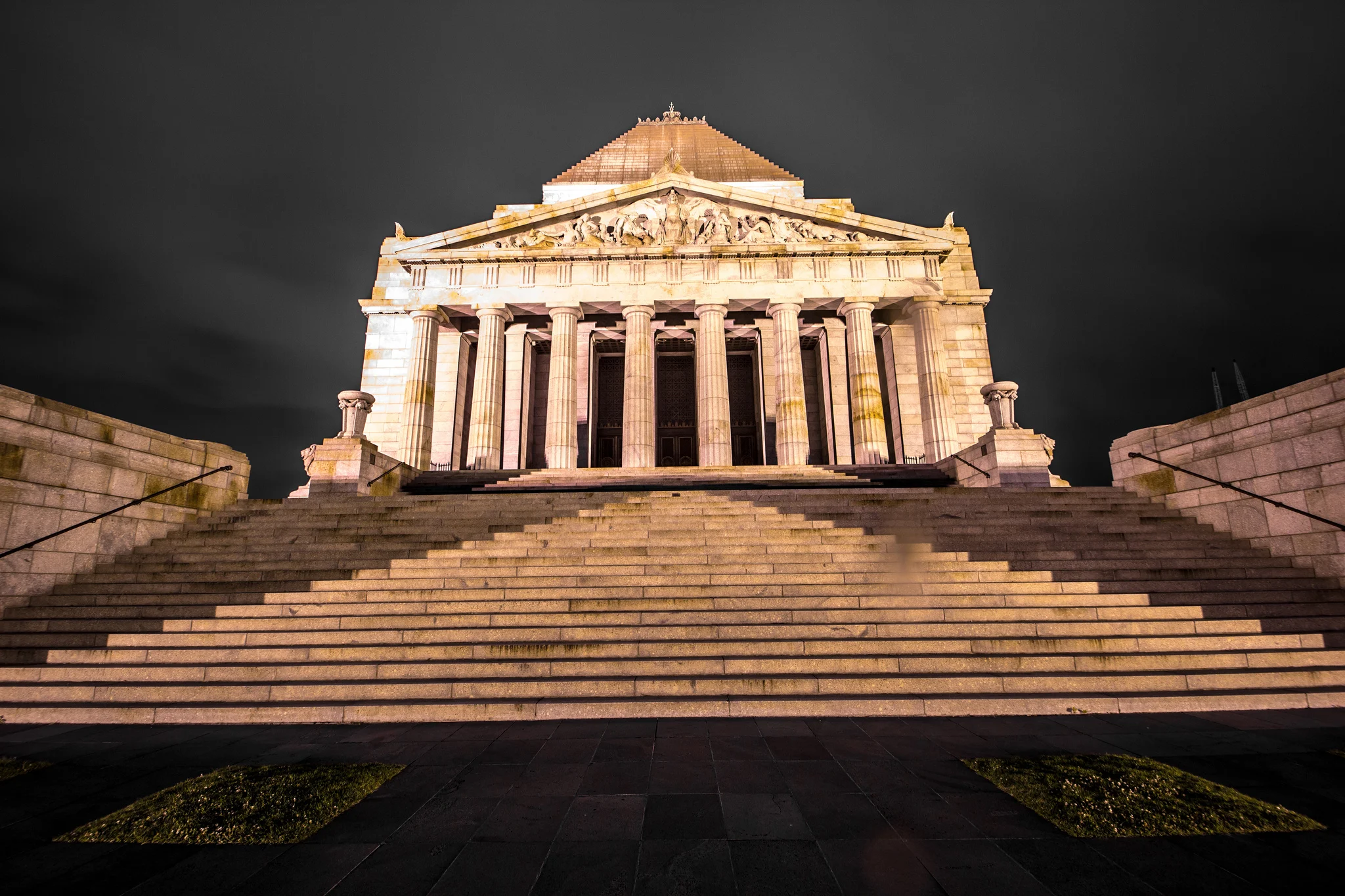
25 April 2012, Anzac Cove, Gallipoli, Turkey

Julia Gillard was the 27th Prime Minister of Australia, and the first woman to hold the position.

They were strangers in a strange land.

Men who came from "the ends of the earth" in an enterprise of hope to end a far-off, dreadful war.

But it was not to be.

Even at dawn, the shadows were already falling over this fate-filled day.

Advertisement

Here on these beaches and hills, so foreign and yet so familiar, a skilled enemy lay in wait, led by a man destined to become a great leader.

A world of war was described in the mortal struggles of a million men on the narrow confines of this peninsula.

For the allies, this was a battle of nations fought by great powers and the might of their empires for a wider strategic goal.

For the Turks, this was a defence of the soil and sanctity of home, for which Ataturk ordered his men not only to attack but to die.

And the men who fought here from our nation, our allies and from Turkey did die – terrible deaths that spared no age or rank or display of courage.

Over 130,000 men gave their lives in this place, two-thirds of them on the Turkish side and 8700 from Australia.

So this is a place hallowed by sacrifice and loss.

It is, too, a place shining with honour – and honour of the most vivid kind.

A place where foes met in equality and respect, and attained a certain nobility through their character and conduct.

Eight months later, this campaign ended as it had begun – at dawn.

At 3.57 on December 20, 1915, the last Diggers quietly slipped away.

They did not begrudge the victory of their enemy, which was hard-fought and deserved.

They did share a regret greater than any defeat – having to leave their mates behind.

So the Australian and New Zealand commander, General Godley, left a message asking the Ottoman forces to respect the Anzac graves.

But no such invitation was required.

The Turkish honoured our fallen and embraced them as their own sons.

And later they did something rare in the pages of history – they named this place in honour of the vanquished as Anzac Cove.

We therefore owe the Republic of Turkey a profound debt.

No nation could have better guarded our shrines or more generously welcomed our pilgrims.

A worthy foe has proved to be an even greater friend.

Through Turkey's hospitality, we do today what those who left these shores most dearly hoped:

We come back.

As we will always come back.

To give the best and only gift that can matter anymore – our remembrance.

We remember what the Anzacs did in war.

And for what they did to shape our nation in peace.

In this place, they taught us to regard Australia and nowhere else as home.

Here where they longed for the shape and scent of the gum leaf and the wattle, not the rose or the elm.

Where they remembered places called Weipa and Woolloomooloo, Toowoomba and Swan Hill.

Or the sight of Mt Clarence as their ships pulled away from Albany, for so many the last piece of Australian soil they would ever live to see.

This is the legend of Anzac, and it belongs to every Australian.

Not just those who trace their origins to the early settlers but those like me who are migrants and who freely embrace the whole of the Australian story as their own.

For Indigenous Australians, whose own wartime valour was a profound expression of the love they felt for the ancient land.

And for Turkish-Australians who have not one but two heroic stories to tell their children.

All of us remember, because all of us inhabit the freedom the Anzacs won for us.

These citizen-soldiers, who came here untested and unknown, and who "founded a deathless monument of valour" through the immensity of their sacrifice.

This dawn will turn to darkness at the ending of today.

But the sun will never set on the story of their deeds.

Now and for all time, we will remember them.

Lest We Forget.


 Julia Gillard’s speechwriter Michael Cooney is a guest on the 45th episode of the podcast, and talks about some pagination dramas that unfolded at Gallipoli!


Source: http://www.smh.com.au/federal-politics/a-p...

Enjoyed this speech? Speakola is a labour of love and I’d be very grateful if you would share, tweet or like it. Thank you.

Facebook Twitter Facebook
In WAR & CONFLICT Tags JULIA GILLARD, ANZAC DAY, ANZAC COVE, WAR, WW1, TURKEY
Comment

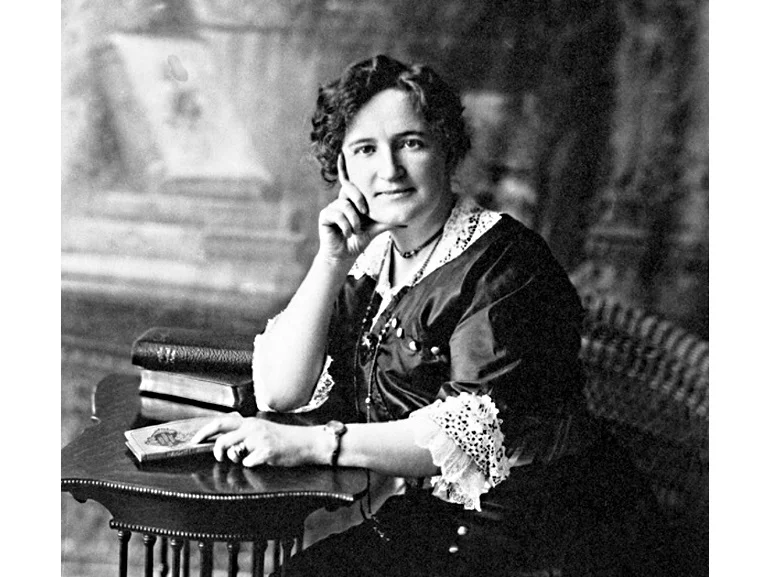
Nellie McClung: 'Man’s place is to provide for his family, a hard enough task in these strenuous days' 'Should men vote? - 1914

March 28, 2016

28 January 1914, Manitoba, Canada

Nellie McClung was a Canadian suffragette from the province of Manitoba. Following a statment from the Premier of Manitoba, Sir Redmond Roblin, that giving women the vote would be tantamount to breaking up the home, McLung and fellow suffragettes staged a mock parliament. This was the most famous speech. Manitoba granted women the vote on 28 January 1916, exactly two years later.


 (Hands in front, locking fingers with the thumbs straight up, gently moving them up and down, before speaking….Teeter back on heels.) Gentlemen of the Delegation, I am glad to see you. (Cordial paternalism) Glad to see you—come any time, and ask for anything you like. We like delegations—and I congratulate this delegation on their splendid, gentlemanly manners. If the men in England had come before their Parliament with the frank courtesy you have shown, they might still have been enjoying the privilege of meeting their representatives in this friendly way.

But, gentlemen, you are your own answer to the question; you are the product of an age which has not seen fit to bestow the gift you ask, and who can say that you are not splendid specimens of mankind? No! No! any system which can produce the virile, splendid type of men we have before us today, is good enough for me, and (drawing up shoulders, facetious) if it is good enough for me—it is good enough for anybody.

But my dear young friends, I am convinced you do not know what you’re asking me to do (didactic, patient); you do not know what you ask. You have not thought of it, of course, with the natural thoughtlessness of your sex. You ask for something which may disrupt the whole course of civilization. Man’s place is to provide for his family, a hard enough task in these strenuous days. We hear of women leaving home, and we hear it with deepest sorrow. Do you know why women leave home? There is a reason. Home is not made sufficiently attractive. Would letting politics enter the home help matters? Ah no! Politics would unsettle our men. Unsettled men mean unsettled bills—unsettled bills mean broken homes—broken vows—and then divorce. (Heavy sorrow, apologetic for mentioning unpleasant things.)

(Exalted mood) Man has a higher destiny than politics! What is home without a bank account? The man who pays the grocer rules the world. Shall I call men away from the useful plow and harrow, to talk loud on street corners about things which do not concern them? Ah, no, I love the farm and the hallowed associations—the dear old farm, with the drowsy tinkle of cowbells at eventide. There I see my father’s kindly smile so full of blessing, hardworking, rough-handed man he was, maybe, but able to look the whole world in the face…. You ask me to change all this.

(Draw huge white linen handkerchief, crack it by the corner like a whip and blow nose like a trumpet) I am the chosen representative of the people, elected to the highest office this fair land has to offer. I must guard well its interests. No upsetting influence must mar our peaceful firesides. Do you never read, gentlemen? (Biting sarcasm) Do you not know of the disgraceful happenings in countries cursed by manhood suffrage? Do you not know the fearful odium into which the polls have fallen—is it possible you do not know the origin of that offensive word “Poll-cat”, do you not know that men are creatures of habit—give them an inch—and they will steal the whole sub-division, and although it is quite true, as you say, the polls are only open once in four years—when men once get the habit—who knows where it will end—it is hard enough to keep them at home now! No, history is full of unhappy examples of men in public life; Nero, Herod, King John—you ask me to set these names before your young people. Politics has a blighting, demoralizing influence on men. It dominates them, pursues them even after their earthly career is over. Time and again it has been proven that men came back and voted—even after they were dead.

So you ask me to disturb the sacred calm of our cemeteries? (Horrified) We are doing very well just as we are, very well indeed. Women are the best students of economy. Every woman is a student of political economy. We look very closely at every dollar of public money, to see if we couldn’t make a better use of it ourselves, before we spend it. We run our elections as cheaply as they are run anywhere. We always endeavour to get the greatest number of votes for the least possible amount of money. That is political economy.

(Responding to an outcry—furious) You think you can instruct a person older than yourself, do you—you, with the brains of a butterfly, the acumen of a bat; the backbone of a jelly-fish. You can tell me something, can you? I was managing governments when you were sitting in your high chair, drumming on a tin plate with a spoon. (Booming) You dare to tell me how a government should be conducted?

(Storming up and down, hands at right angles to the body) But I must not lose my temper (calming, dropping voice) and I never do—never—except when I feel like it—and am pretty sure I can get away with it. I have studied self-control, as you all know—I have had to, in order that I may be a leader. If it were not for this fatal modesty, which on more than one occasion has almost blighted my political career, I would say I believe I have been a leader, a factor in building up this fair province; I would say that I believe I have written my name large across the face of this province.

But gentlemen, I am still of the opinion, even after listening to your cleverly worded speeches, that I will go on just as I have been doing, without the help you so generously offer. My wish for this fair, flower-decked land is that I may long be spared to guide its destiny in world affairs. I know there is no one but me—I tremble when I think of what might happen to these leaderless lambs—but I will go forward confidently, hoping that the good ship may come safely into port, with the same old skipper on the bridge. We are not worrying about the coming election, as you may think. We rest in confidence of the result, and will proudly unfurl, as we have these many years, the same old banner of the grand old party that had gone down many times to disgrace, but thank God, never to defeat

Source: http://www.l-ruth-carter.com/blog/should-m...

Enjoyed this speech? Speakola is a labour of love and I’d be very grateful if you would share, tweet or like it. Thank you.

Facebook Twitter Facebook
In EQUALITY Tags NELLIE MCCLUNG, SUFFRAGETTE, EQUALITY, HUMOUR, SATIRE, MOCK PARLIAMENT, CANADA, MANITOBA, FEMINISM, WOMEN'S RIGHTS
1 Comment

Jean Nidetch: 'I woke up that morning and I was having a 'thin day', Weight Watchers Origin Story - unknown

March 26, 2016

Unknown, USA

Nidetch claims this is the moment she decided to lose weight, which ultimately led her to founding Weight Watchers

And I remember the day vividly. It was October 1961. I woke up that morning and I was having thin day. You know, you can weigh 214ibs and you can have a thin day. Of course!  You just get up and you're thin, and I felt fabulous. I put on my size 44 muumuu and I remember putting ribbon in my hair, I felt so [inaudible 00:00:33].

As I floated, it seemed, down to the local supermarket, I felt wonderful. When I got into to supermarket, I was pushing the cart in and out of the aisles and filling it with the goodies in case we should have a snowstorm. I told every checker, when she was checking me out, "That's for my children." I want you to know, a checker doesn't care why you buy it. What's worse, my children like Graham Crackers, but all the chocolate cookies I bought were for my children.

As I was walking in and out of the aisle, I met a lady that I had met before. You see, part of the whole thing was that I didn't like her the first time I met her, and there she was, facing me, and she said, "Jean, you look so wonderful," and I thought, "She's noticing. I'm thin."

Then she said, "When are you due?"

Finally I knew I had to do something, so I went to a city obesity clinic.


Source: https://www.youtube.com/watch?v=UPQIkmpeHI...

Enjoyed this speech? Speakola is a labour of love and I’d be very grateful if you would share, tweet or like it. Thank you.

Facebook Twitter Facebook
In HEALTH Tags JEAN NIDETCH, DIETING, WEIGHT WATCHERS, SELF DETERMINATION, TRANSCRIPT
Comment

Bella Abzug: 'Do you know me?', Centre for American Women and Politics (CAWP) - 1983

March 26, 2016

1983, parody ad shot at Rutgers Unviersity, New Jersey, USA

In 1970, Bella Abzug became the first Jewish woman to be elected to Congress. Her campaign slogan was 'A woman's place is in the house: The House of Representatives'. In 1973 she discovered that despite being in Congress, any credit card in her name had to read Mrs Martin Abzug and her husband had to sign for it. She fought to change the law, and did in 1974, when President Ford signed the Depository Institutions Amendments Act, 1974. 

Do you know me?

Well,  American Express did not know me, because when I was in the Congress of the united States, and I applied for an American Express card, they said I couldn’t get one unless my husband signed for it.

So I called up Martin, my husband and said, ‘what do you believe? Do you love me? Because American Express doesn’t and they you to sign for my card.’

He said, ‘I love you, Bella. I wouldn’t trade you even for Joe Namath (an American football quarterback], But American Express is going to have to give you your own card, and I’m going to fight with you until we do.’

And so in the Congress of the united states we passed the credit law, in which we were able to get women to get their own credit,  and so I didn’t know whether I should really get an American Express card, but I decided I would so I could tell this story.

So now i have an American Express card, so I can tell this story.

Women fought for their own credit, and American Express had to give in.

So carry an American Express card as a symbol of women’s right to credit!

[off camera applause]

Source: http://eloquentwoman.blogspot.com.au/2013/...

Enjoyed this speech? Speakola is a labour of love and I’d be very grateful if you would share, tweet or like it. Thank you.

Facebook Twitter Facebook
In EQUALITY Tags PARODY, WOMEN'S RIGHTS, BELLA ABZUG, AMERICAN EXPRESS, CREDIT LAWS, CREDIT CARDS, BANKING
Comment

Neville Clark: 'We come to this sacred place not to glorify', The Spirit of ANZAC - 2014

March 15, 2016

25 April 2014, Shrine of Remembrance, Melbourne, Australia

Neville Clarke is a former headmaster of Mentone Grammar School in south eastern Melbourne.

We come to this sacred place not to glorify; certainly not to celebrate (the modern cult of celebrity would have been unrecognisable at ANZAC: as CJ Dennis's Ginger knew, 'It's a crook to tell / A tale that marks for praise a single one'.). If we are true to the purpose for which this Shrine was built, however, we come to commemorate. The Australian and New Zealand Army Corps gave to two new nations a new spirit which neither of them could have imagined before.

Australians and New Zealanders knew that they had to fight in 1914 because they knew the cost to themselves if the British Empire should go down – they'd go down with it. Australians and New Zealanders have not fought in wars to gain anything: Australians and New Zealanders have fought in wars not to lose something – freedom. To protect their nationhood – and their freedom – the A.N.Z.A.C. went to war with a spirit of determination which has marked their successors ever since.

The determination, for instance, of the tragic, successive waves of the Light Horse in the charge at The Nek in order to give the equally heroic New Zealanders the best chance of seizing Chunuk Bair, tactical key to the Gallipoli Peninsula.

The determination shown at Passchendaele by the Machine Gun Section Commander who wrote down his orders for his Section, all of whom had – like him – volunteered to man a potentially fatal outpost. His orders?

  1. This position will be held and the section will remain here until relieved.
  2. The enemy must not be allowed to interfere with this programme.
  3. If the section cannot remain here alive, it will remain here dead, but in any case it will remain here.
  4. Should all the guns be blown out, the section will use Mills grenades and other novelties.
  5. Finally, the position, as stated, will be held.

The section did indeed remain until relieved, fully 18 days later, and these orders became so famous along the Western Front that for many years they were promulgated in British Army Orders and, in 1940 in Dunkirk, were hailed in the press as 'the spirit that won the last war.' And the author, and Section Commander? A Tasmanian clergyman.

The determination of the Bomber Command aircrews to fly straight and level through the death zone to give themselves the best chance of hitting their targets in the Ruhr Valley.

The determination of the Captain and crew of HMAS 'Yarra' to protect a three-ship convoy by steering their own diminutive craft directly into the path of the Japanese heavy cruiser squadron.

The determination of the walking wounded from Kokoda not to clog up the 'fuzzy-wuzzy' stretcher line but to keep moving themselves, if necessary by crawling on their knees.

The determination of the POW's that no Australian should die alone on the Railway of Death.

The determination of the nursing sisters to maintain their honour and show o fear to their captors after the Banka Island massacre.

The determination of the exhausted division in the pivotal coastal sector at Alamein to bring upon themselves if necessary the whole weight of the Afrika Korps counter-attack to enable a break-out further inland.

The determination to mount the slopes of Maryang San, to advance through the rubber trees of Long Tan, or to search through the green valleys and up the desert crags of Afghanistan.

The determination to keep the home fires burning till the boys came home.

This spirit of determination has lead inevitably to sacrifice, not just the fact of sacrifice which, between 1914 and 1918 for instance, resulted in irreparable loss for two young nations, but also a spirit of sacrifice, a team spirit if you will, through which many lives were saved by selfless acts of courage, for the sake of comrades-in-arms, and ultimately for freedom.

And it was this spirit of sacrifice which was defined 2,000 years ago, and for all Eternity, by a brave and beloved leader whose words are engraved on the stone at the heart of this Shrine.

Greater love hath no man that this, that a man lay down his life for his friends.


Enjoyed this speech? Speakola is a labour of love and I’d be very grateful if you would share, tweet or like it. Thank you.

Facebook Twitter Facebook
In WAR & CONFLICT Tags SACRIFICE, SHRINE OF REMEBRANCE, NEVILLE CLARKE, WAR, HEADMASTER, ANZAC DAY
Comment

Severn Cullis-Suzuki: 'If you don't know how to fix it, please, stop breaking it', UN Earth Summit - 1992

March 10, 2016

1992, United Nations, Rio de Janeiro, Brazil

Ms Suzuki is the daughter of noted environmentalist and academic, David Suzuki.

Hello, I'm Severn Suzuki speaking for E.C.O. - The Environmental Children's organisation.

We are a group of twelve and thirteen-year-olds from Canada trying to make a difference:

Vanessa Suttie, Morgan Geisler, Michelle Quigg and me.

We raised all the money ourselves to come six thousand miles to tell you adults you must change your ways. Coming here today, I have no hidden agenda. I am fighting for my future.

Losing my future is not like losing an election or a few points on the stock market. I am here to speak for all generations to come.

I am here to speak on behalf of the starving children around the world whose cries go unheard.

I am here to speak for the countless animals dying across this planet because they have nowhere left to go. We cannot afford to be not heard.

I am afraid to go out in the sun now because of the holes in the ozone. I am afraid to breathe the air because I don't know what chemicals are in it.

I used to go fishing in Vancouver with my dad until just a few years ago we found the fish full of cancers. And now we hear about animals and plants going exinct every day - vanishing forever.

In my life, I have dreamt of seeing the great herds of wild animals, jungles and rainforests full of birds and butterfilies, but now I wonder if they will even exist for my children to see.

Did you have to worry about these little things when you were my age?

All this is happening before our eyes and yet we act as if we have all the time we want and all the solutions.

I'm only a child and I don't have all the solutions, but I want you to realise, neither do you!

You don't know how to fix the holes in our ozone layer.
You don't know how to bring salmon back up a dead stream.
You don't know how to bring back an animal now extinct.
And you can't bring back forests that once grew where there is now desert.

If you don't know how to fix it, please stop breaking it!

Here, you may be delegates of your governments, business people, organisers, reporters or poiticians - but really you are mothers and fathers, brothers and sister, aunts and uncles - and all of you are somebody's child.

I'm only a child yet I know we are all part of a family, five billion strong, in fact, 30 million species strong and we all share the same air, water and soil - borders and governments will never change that.

I'm only a child yet I know we are all in this together and should act as one single world towards one single goal.

In my anger, I am not blind, and in my fear, I am not afraid to tell the world how I feel.

In my country, we make so much waste, we buy and throw away, buy and htrow away, and yet northern countries will not share with the needy. Even when we have more than enough, we are afraid to lose some of our wealth, afraid to share.

In Canada, we live the privileged life, with plenty of food, water and shelter - we have watches, bicycles, computers and television sets.

Two days ago here in Brazil, we were shocked when we spent some time with some children living on the streets.

And this is what one child told us: "I wish I was rich and if I were, I would give all the street children food, clothes, medicine, shelter and love and affection."

If a child on the street who has nothing, is willing to share, why are we who have everyting still so greedy?

I can't stop thinking that these children are my age, that it makes a tremendous difference where you are born, that I could be one of those children living in the Favellas of Rio; I could be a child starving in Somalia; a victim of war in the Middle East or a beggar in India.

I'm only a child yet I know if all the money spent on war was spent on ending poverty and finding environmental answers, what a wonderful place this earth would be!

At school, even in kindergarten, you teach us to behave in the world. You teach us:

not to fight with others,
to work things out,
to respect others,
to clean up our mess,
not to hurt other creatures
to share - not be greedy

Then why do you go out and do the things you tell us not to do?

Do not forget why you're attending these conferences, who you're doing this for - we are your own children.

You are deciding what kind of world we will grow up in. Parents should be able to comfort their children by saying "everyting's going to be alright', "we're doing the best we can" and "it's not the end of the world".

But I don't think you can say that to us anymore. Are we even on your list of priorities? My father always says "You are what you do, not what you say."

Well, what you do makes me cry at night. you grown ups say you love us. I challenge you, please make your actions reflect your words. Thank you for listening.


Source: https://www.youtube.com/watch?v=EaOJrJ_oqF...

Enjoyed this speech? Speakola is a labour of love and I’d be very grateful if you would share, tweet or like it. Thank you.

Facebook Twitter Facebook
In ENVIRONMENT Tags EARTH SUMMIT, UNITED NATIONS, SEVERN CULLIS-SUZUKI, DAVID SUZUKI, ENVIRONMENT, CHILDREN
Comment

Brene Brown: 'The power of vulnerability', TED Talk - 2011

March 8, 2016

12 June 2010, TEDx Houston, Houston, Texas, USA

 So, I'll start with this: a couple years ago, an event planner called me because I was going to do a speaking event. And she called, and she said, "I'm really struggling with how to write about you on the little flyer." And I thought, "Well, what's the struggle?" And she said, "Well, I saw you speak, and I'm going to call you a researcher, I think, but I'm afraid if I call you a researcher, no one will come, because they'll think you're boring and irrelevant."

And I was like, "Okay." And she said, "But the thing I liked about your talk is you're a storyteller. So I think what I'll do is just call you a storyteller." And of course, the academic, insecure part of me was like, "You're going to call me a what?" And she said, "I'm going to call you a storyteller." And I was like, "Why not 'magic pixie'?"

I was like, "Let me think about this for a second." I tried to call deep on my courage. And I thought, you know, I am a storyteller. I'm a qualitative researcher. I collect stories; that's what I do. And maybe stories are just data with a soul. And maybe I'm just a storyteller. And so I said, "You know what? Why don't you just say I'm a researcher-storyteller." And she went, "Ha ha. There's no such thing."

So I'm a researcher-storyteller, and I'm going to talk to you today -- we're talking about expanding perception -- and so I want to talk to you and tell some stories about a piece of my research that fundamentally expanded my perception and really actually changed the way that I live and love and work and parent.

And this is where my story starts. When I was a young researcher, doctoral student, my first year, I had a research professor who said to us, "Here's the thing, if you cannot measure it, it does not exist." And I thought he was just sweet-talking me. I was like, "Really?" and he was like, "Absolutely." And so you have to understand that I have a bachelor's and a master's in social work, and I was getting my Ph.D. in social work, so my entire academic career was surrounded by people who kind of believed in the "life's messy, love it." And I'm more of the, "life's messy, clean it up, organize it and put it into a bento box."

And so to think that I had found my way, to found a career that takes me -- really, one of the big sayings in social work is, "Lean into the discomfort of the work." And I'm like, knock discomfort upside the head and move it over and get all A's. That was my mantra. So I was very excited about this. And so I thought, you know what, this is the career for me, because I am interested in some messy topics. But I want to be able to make them not messy. I want to understand them. I want to hack into these things that I know are important and lay the code out for everyone to see.

So where I started was with connection. Because, by the time you're a social worker for 10 years, what you realize is that connection is why we're here. It's what gives purpose and meaning to our lives. This is what it's all about. It doesn't matter whether you talk to people who work in social justice, mental health and abuse and neglect, what we know is that connection, the ability to feel connected, is -- neurobiologically that's how we're wired -- it's why we're here.

So I thought, you know what, I'm going to start with connection. Well, you know that situation where you get an evaluation from your boss, and she tells you 37 things that you do really awesome, and one "opportunity for growth?"

03:54 And all you can think about is that opportunity for growth, right? Well, apparently this is the way my work went as well, because, when you ask people about love, they tell you about heartbreak. When you ask people about belonging, they'll tell you their most excruciating experiences of being excluded. And when you ask people about connection, the stories they told me were about disconnection.

 So very quickly -- really about six weeks into this research -- I ran into this unnamed thing that absolutely unraveled connection in a way that I didn't understand or had never seen. And so I pulled back out of the research and thought, I need to figure out what this is. And it turned out to be shame. And shame is really easily understood as the fear of disconnection: Is there something about me that, if other people know it or see it, that I won't be worthy of connection?

 The things I can tell you about it: It's universal; we all have it. The only people who don't experience shame have no capacity for human empathy or connection. No one wants to talk about it, and the less you talk about it, the more you have it. What underpinned this shame, this "I'm not good enough," -- which, we all know that feeling: "I'm not blank enough. I'm not thin enough, rich enough, beautiful enough, smart enough, promoted enough." The thing that underpinned this was excruciating vulnerability. This idea of, in order for connection to happen, we have to allow ourselves to be seen, really seen.

 And you know how I feel about vulnerability. I hate vulnerability. And so I thought, this is my chance to beat it back with my measuring stick. I'm going in, I'm going to figure this stuff out, I'm going to spend a year, I'm going to totally deconstruct shame, I'm going to understand how vulnerability works, and I'm going to outsmart it. So I was ready, and I was really excited. As you know, it's not going to turn out well.

You know this. So, I could tell you a lot about shame, but I'd have to borrow everyone else's time. But here's what I can tell you that it boils down to -- and this may be one of the most important things that I've ever learned in the decade of doing this research.

My one year turned into six years: Thousands of stories, hundreds of long interviews, focus groups. At one point, people were sending me journal pages and sending me their stories -- thousands of pieces of data in six years. And I kind of got a handle on it. I kind of understood, this is what shame is, this is how it works. I wrote a book, I published a theory, but something was not okay -- and what it was is that, if I roughly took the people I interviewed and divided them into people who really have a sense of worthiness -- that's what this comes down to, a sense of worthiness -- they have a strong sense of love and belonging -- and folks who struggle for it, and folks who are always wondering if they're good enough.

There was only one variable that separated the people who have a strong sense of love and belonging and the people who really struggle for it. And that was, the people who have a strong sense of love and belonging believe they're worthy of love and belonging. That's it. They believe they're worthy. And to me, the hard part of the one thing that keeps us out of connection is our fear that we're not worthy of connection, was something that, personally and professionally, I felt like I needed to understand better. So what I did is I took all of the interviews where I saw worthiness, where I saw people living that way, and just looked at those.

What do these people have in common? I have a slight office supply addiction, but that's another talk. So I had a manila folder, and I had a Sharpie, and I was like, what am I going to call this research? And the first words that came to my mind were "whole-hearted." These are whole-hearted people, living from this deep sense of worthiness. So I wrote at the top of the manila folder, and I started looking at the data. In fact, I did it first in a four-day, very intensive data analysis, where I went back, pulled the interviews, the stories, pulled the incidents. What's the theme? What's the pattern? My husband left town with the kids because I always go into this Jackson Pollock crazy thing, where I'm just writing and in my researcher mode.

And so here's what I found. What they had in common was a sense of courage. And I want to separate courage and bravery for you for a minute. Courage, the original definition of courage, when it first came into the English language -- it's from the Latin word "cor," meaning "heart" -- and the original definition was to tell the story of who you are with your whole heart. And so these folks had, very simply, the courage to be imperfect. They had the compassion to be kind to themselves first and then to others, because, as it turns out, we can't practice compassion with other people if we can't treat ourselves kindly. And the last was they had connection, and -- this was the hard part -- as a result of authenticity, they were willing to let go of who they thought they should be in order to be who they were, which you have to absolutely do that for connection.

The other thing that they had in common was this: They fully embraced vulnerability. They believed that what made them vulnerable made them beautiful. They didn't talk about vulnerability being comfortable, nor did they really talk about it being excruciating -- as I had heard it earlier in the shame interviewing. They just talked about it being necessary. They talked about the willingness to say, "I love you" first ... the willingness to do something where there are no guarantees ... the willingness to breathe through waiting for the doctor to call after your mammogram. They're willing to invest in a relationship that may or may not work out. They thought this was fundamental.

 I personally thought it was betrayal. I could not believe I had pledged allegiance to research, where our job -- you know, the definition of research is to control and predict, to study phenomena for the explicit reason to control and predict. And now my mission to control and predict had turned up the answer that the way to live is with vulnerability and to stop controlling and predicting. This led to a little breakdown --

-- which actually looked more like this. And it did.

 I call it a breakdown; my therapist calls it a spiritual awakening.

A spiritual awakening sounds better than breakdown, but I assure you, it was a breakdown. And I had to put my data away and go find a therapist. Let me tell you something: you know who you are when you call your friends and say, "I think I need to see somebody. Do you have any recommendations?" Because about five of my friends were like, "Wooo, I wouldn't want to be your therapist."

I was like, "What does that mean?" And they're like, "I'm just saying, you know. Don't bring your measuring stick."

 I was like, "Okay." So I found a therapist. My first meeting with her, Diana -- I brought in my list of the way the whole-hearted live, and I sat down. And she said, "How are you?" And I said, "I'm great. I'm okay." She said, "What's going on?" And this is a therapist who sees therapists, because we have to go to those, because their B.S. meters are good.

 And so I said, "Here's the thing, I'm struggling." And she said, "What's the struggle?" And I said, "Well, I have a vulnerability issue. And I know that vulnerability is the core of shame and fear and our struggle for worthiness, but it appears that it's also the birthplace of joy, of creativity, of belonging, of love. And I think I have a problem, and I need some help." And I said, "But here's the thing: no family stuff, no childhood shit."

"I just need some strategies."

Thank you. So she goes like this.

And then I said, "It's bad, right?" And she said, "It's neither good nor bad."

"It just is what it is." And I said, "Oh my God, this is going to suck.

 And it did, and it didn't. And it took about a year. And you know how there are people that, when they realize that vulnerability and tenderness are important, that they surrender and walk into it. A: that's not me, and B: I don't even hang out with people like that.

For me, it was a yearlong street fight. It was a slugfest. Vulnerability pushed, I pushed back. I lost the fight, but probably won my life back.

 And so then I went back into the research and spent the next couple of years really trying to understand what they, the whole-hearted, what choices they were making, and what we are doing with vulnerability. Why do we struggle with it so much? Am I alone in struggling with vulnerability? No.

So this is what I learned. We numb vulnerability -- when we're waiting for the call. It was funny, I sent something out on Twitter and on Facebook that says, "How would you define vulnerability? What makes you feel vulnerable?" And within an hour and a half, I had 150 responses. Because I wanted to know what's out there. Having to ask my husband for help because I'm sick, and we're newly married; initiating sex with my husband; initiating sex with my wife; being turned down; asking someone out; waiting for the doctor to call back; getting laid off; laying off people. This is the world we live in. We live in a vulnerable world. And one of the ways we deal with it is we numb vulnerability.

And I think there's evidence -- and it's not the only reason this evidence exists, but I think it's a huge cause -- We are the most in-debt ... obese ... addicted and medicated adult cohort in U.S. history. The problem is -- and I learned this from the research -- that you cannot selectively numb emotion. You can't say, here's the bad stuff. Here's vulnerability, here's grief, here's shame, here's fear, here's disappointment. I don't want to feel these. I'm going to have a couple of beers and a banana nut muffin.

 I don't want to feel these. And I know that's knowing laughter. I hack into your lives for a living. God.

 You can't numb those hard feelings without numbing the other affects, our emotions. You cannot selectively numb. So when we numb those, we numb joy, we numb gratitude, we numb happiness. And then, we are miserable, and we are looking for purpose and meaning, and then we feel vulnerable, so then we have a couple of beers and a banana nut muffin. And it becomes this dangerous cycle.

One of the things that I think we need to think about is why and how we numb. And it doesn't just have to be addiction. The other thing we do is we make everything that's uncertain certain. Religion has gone from a belief in faith and mystery to certainty. "I'm right, you're wrong. Shut up." That's it. Just certain. The more afraid we are, the more vulnerable we are, the more afraid we are. This is what politics looks like today. There's no discourse anymore. There's no conversation. There's just blame. You know how blame is described in the research? A way to discharge pain and discomfort. We perfect. If there's anyone who wants their life to look like this, it would be me, but it doesn't work. Because what we do is we take fat from our butts and put it in our cheeks.

Which just, I hope in 100 years, people will look back and go, "Wow."

And we perfect, most dangerously, our children. Let me tell you what we think about children. They're hardwired for struggle when they get here. And when you hold those perfect little babies in your hand, our job is not to say, "Look at her, she's perfect. My job is just to keep her perfect -- make sure she makes the tennis team by fifth grade and Yale by seventh." That's not our job. Our job is to look and say, "You know what? You're imperfect, and you're wired for struggle, but you are worthy of love and belonging." That's our job. Show me a generation of kids raised like that, and we'll end the problems, I think, that we see today. We pretend that what we do doesn't have an effect on people. We do that in our personal lives. We do that corporate -- whether it's a bailout, an oil spill ... a recall. We pretend like what we're doing doesn't have a huge impact on other people. I would say to companies, this is not our first rodeo, people. We just need you to be authentic and real and say ... "We're sorry. We'll fix it."

But there's another way, and I'll leave you with this. This is what I have found: To let ourselves be seen, deeply seen, vulnerably seen ... to love with our whole hearts, even though there's no guarantee -- and that's really hard, and I can tell you as a parent, that's excruciatingly difficult -- to practice gratitude and joy in those moments of terror, when we're wondering, "Can I love you this much? Can I believe in this this passionately? Can I be this fierce about this?" just to be able to stop and, instead of catastrophizing what might happen, to say, "I'm just so grateful, because to feel this vulnerable means I'm alive." And the last, which I think is probably the most important, is to believe that we're enough. Because when we work from a place, I believe, that says, "I'm enough" ... then we stop screaming and start listening, we're kinder and gentler to the people around us, and we're kinder and gentler to ourselves.

That's all I have. Thank you.


Enjoyed this speech? Speakola is a labour of love and I’d be very grateful if you would share, tweet or like it. Thank you.

Facebook Twitter Facebook
In HEALTH Tags BRENE BROWN, VULNERABILITY, TEDTALK, SHAME, PSYCHOLOGY, TED
Comment

Pia Mancini: 'How to upgrade democracy for the internet era', TED Global - 2014

March 8, 2016

7 October 2014, TED Global, Copacabana Palace Hotel, Rio de Janeiro, Brazil

I have the feeling that we can all agree that we're moving towards a new model of the state and society. But, we're absolutely clueless as to what this is or what it should be. It seems like we need to have a conversation about democracy in our day and age.

Let's think about it this way: We are 21st-century citizens, doing our very, very best to interact with 19th century-designed institutions that are based on an information technology of the 15th century. Let's have a look at some of the characteristics of this system. First of all, it's designed for an information technology that's over 500 years old. And the best possible system that could be designed for it is one where the few make daily decisions in the name of the many. And the many get to vote once every couple of years. In the second place, the costs of participating in this system are incredibly high. You either have to have a fair bit of money and influence, or you have to devote your entire life to politics. You have to become a party member and slowly start working up the ranks until maybe, one day, you'll get to sit at a table where a decision is being made. And last but not least, the language of the system — it's incredibly cryptic. It's done for lawyers, by lawyers, and no one else can understand.

So, it's a system where we can choose our authorities, but we are completely left out on how those authorities reach their decisions. So, in a day where a new information technology allows us to participate globally in any conversation, our barriers of information are completely lowered and we can, more than ever before, express our desires and our concerns. Our political system remains the same for the past 200 years and expects us to be contented with being simply passive recipients of a monologue.

So, it's really not surprising that this kind of system is only able to produce two kinds of results: silence or noise. Silence, in terms of citizens not engaging, simply not wanting to participate. There's this commonplace [idea] that I truly, truly dislike, and it's this idea that we citizens are naturally apathetic. That we shun commitment. But, can you really blame us for not jumping at the opportunity of going to the middle of the city in the middle of a working day to attend, physically, a public hearing that has no impact whatsoever? Conflict is bound to happen between a system that no longer represents, nor has any dialogue capacity, and citizens that are increasingly used to representing themselves. And, then we find noise: Chile, Argentina, Brazil, Mexico Italy, France, Spain, the United States, they're all democracies. Their citizens have access to the ballot boxes. But they still feel the need, they need to take to the streets in order to be heard. To me, it seems like the 18th-century slogan that was the basis for the formation of our modern democracies, "No taxation without representation," can now be updated to "No representation without a conversation." We want our seat at the table.

And rightly so. But in order to be part of this conversation, we need to know what we want to do next, because political action is being able to move from agitation to construction. My generation has been incredibly good at using new networks and technologies to organize protests, protests that were able to successfully impose agendas, roll back extremely pernicious legislation, and even overthrow authoritarian governments. And we should be immensely proud of this. But, we also must admit that we haven't been good at using those same networks and technologies to successfully articulate an alternative to what we're seeing and find the consensus and build the alliances that are needed to make it happen. And so the risk that we face is that we can create these huge power vacuums that will very quickly get filled up by de facto powers, like the military or highly motivated and already organized groups that generally lie on the extremes. But our democracy is neither just a matter of voting once every couple of years.

But it's not either the ability to bring millions onto the streets. So the question I'd like to raise here, and I do believe it's the most important question we need to answer, is this one: If Internet is the new printing press, then what is democracy for the Internet era? What institutions do we want to build for the 21st-century society? I don't have the answer, just in case. I don't think anyone does. But I truly believe we can't afford to ignore this question anymore. So, I'd like to share our experience and what we've learned so far and hopefully contribute two cents to this conversation.

Two years ago, with a group of friends from Argentina, we started thinking, "how can we get our representatives, our elected representatives, to represent us?" Marshall McLuhan once said that politics is solving today's problems with yesterday's tools. So the question that motivated us was, can we try and solve some of today's problems with the tools that we use every single day of our lives? Our first approach was to design and develop a piece of software called DemocracyOS. DemocracyOS is an open-source web application that is designed to become a bridge between citizens and their elected representatives to make it easier for us to participate from our everyday lives.

So first of all, you can get informed so every new project that gets introduced in Congress gets immediately translated and explained in plain language on this platform. But we all know that social change is not going to come from just knowing more information, but from doing something with it. So better access to information should lead to a conversation about what we're going to do next, and DemocracyOS allows for that. Because we believe that democracy is not just a matter of stacking up preferences, one on top of each other, but that our healthy and robust public debate should be, once again, one of its fundamental values.

So DemocracyOS is about persuading and being persuaded. It's about reaching a consensus as much as finding a proper way of channeling our disagreement. And finally, you can vote how you would like your elected representative to vote. And if you do not feel comfortable voting on a certain issue, you can always delegate your vote to someone else, allowing for a dynamic and emerging social leadership. It suddenly became very easy for us to simply compare these results with how our representatives were voting in Congress.

But, it also became very evident that technology was not going to do the trick. What we needed to do to was to find actors that were able to grab this distributed knowledge in society and use it to make better and more fair decisions. So we reached out to traditional political parties and we offered them DemocracyOS. We said, "Look, here you have a platform that you can use to build a two-way conversation with your constituencies." And yes, we failed. We failed big time. We were sent to play outside like little kids. Amongst other things, we were called naive. And I must be honest: I think, in hindsight, we were. Because the challenges that we face, they're not technological, they're cultural. Political parties were never willing to change the way they make their decisions. So it suddenly became a bit obvious that if we wanted to move forward with this idea, we needed to do it ourselves.

And so we took quite a leap of faith, and in August last year, we founded our own political party, El Partido de la Red, or the Net Party, in the city of Buenos Aires. And taking an even bigger leap of faith, we ran for elections in October last year with this idea: if we want a seat in Congress, our candidate, our representatives were always going to vote according to what citizens decided on DemocracyOS. Every single project that got introduced in Congress, we were going vote according to what citizens decided on an online platform. It was our way of hacking the political system. We understood that if we wanted to become part of the conversation, to have a seat at the table, we needed to become valid stakeholder and the only way of doing it is to play by the system rules.

But we were hacking it in the sense that we were radically changing the way a political party makes its decisions. For the first time, we were making our decisions together with those who we were affecting directly by those decisions. It was a very, very bold move for a two-month-old party in the city of Buenos Aires. But it got attention. We got 22,000 votes, that's 1.2 percent of the votes, and we came in second for the local options. So, even if that wasn't enough to win a seat in Congress, it was enough for us to become part of the conversation, to the extent that next month, Congress, as an institution, is launching for the first time in Argentina's history, a DemocracyOS to discuss, with the citizens, three pieces of legislation: two on urban transportation one on the use of public space.

Of course, our elected representatives are not saying, "Yes, we're going to vote according to what citizens decide," but they're willing to try. They're willing to open up a new space for citizen engagement and hopefully they'll be willing to listen as well.

Our political system can be transformed, and not by subverting it, by destroying it, but by rewiring it with the tools that Internet affords us now. But a real challenge is to find, to design to create, to empower those connectors that are able to innovate, to transform noise and silence into signal and finally bring our democracies to the 21st century. I'm not saying it's easy. But in our experience, we actually stand a chance of making it work. And in my heart, it's most definitely worth trying. Thank you. (Applause)

Enjoyed this speech? Speakola is a labour of love and I’d be very grateful if you would share, tweet or like it. Thank you.

Facebook Twitter Facebook
In SOCIETY Tags PIA MANCINI, TEDTALK, DEMOCRACY, ARGENTINA, INTERNET AGE
Comment

Leslie Cannold: 'I had an abortion ... or maybe I didn't', TEDx Canberra - 2012

March 8, 2016

2012, TEDx event, Canberra, Australia

I had an abortion. Or maybe I didn’t. Why does it matter?

Abortion shame is very zeitgeist at the moment. Or, more precisely and far more happily, anti-shame is very zeitgeist. In The New York Times, in a number of online magazines and on websites like 1 in 3, 45 Million Voices and Exhale women are speaking out. They’re resisting the shame by breaking their silence about their abortions.

But the success of this fledgling speak-out movement is far from guaranteed. Indeed if we want it to succeed we are going to have to help. But before I can tell you what it is that you can do to stand up for women, I really need to take you on a bit of a 360 around shame. I need to talk to you about what it is, how it works and what it does to its victims.

So I thought what I would ask you to do is just actually stop looking at me for a minute, and have a look around you. So look at your neighbours, smile at them, we’re at TED – “it’s cool!”(does a little dance) – and now focus in on the women. So just meet the eyes of the women and smile while I tell you that one in three of those women will have an abortion in her lifetime. Now that would be true if this were an Australian audience or a British audience or an American audience. One in three women will have an abortion in their lifetime. And if you haven’t yet, you can stop looking at each other now.

Now there are a lot of ways that I could have made that point. I could have thrown something like this up on the screen (illustration of 1 in 3 women) and I could have said “One in three Australian, British and American women will have an abortion in their lifetime”. I could have said “According to the World Health Organisation, abortion – medical or surgical – is one of the safest and most common medical procedures. But it’s not the same, is it? What if I had said “Ok, have a look around at everybody in the audience, focus in on the women while I tell you that every single one of those women in the next five years is going to blow her nose”. Not the same.

That is shame.

We actually aren’t born feeling ashamed of anything. We’re not ashamed of our nakedness, we’re not ashamed of our bodily functions, our sexual desires, our reproduction or abortion. We learn, from our communities, what is shameful. And it is the real or perceived oversight of those communities that make us feel shame.

Now shame is about fear, but what are we afraid of? This is Renee Brown (shows picture on screen). She gave a fantastic TED talk – which I really commend to you – about shame and when I went screaming off to find her academic work. And what I discovered was that according to Brown, what shame IS, is the acutely anxiety inducing experience that we are flawed and that others are going to find out. That we are flawed in comparison to other people and other people are going to find that out. And when they do, they’re going to demean us, or ridicule us, or judge us and cast us out.

So I’ve used that word cast out for a reason. And the reason is that I’m trying to underscore the fact that the consequences that people fear, the fear that shame evokes in people, the consequences they fear of being shamed are very, very real. They’re very, very significant.

So in ancient times, if a woman brought shame on her name, or her family, or her community she could literally be thrown out of that community. Cast out. She could be stoned. In some places in the world today, that is still the case.

In our world, a woman might be afraid if people find out that she’s had an abortion that her church community will evict her. Or she might be worried that her family, or her boyfriend, or her husband might throw her out of the house. Or that her friends will start a whisper campaign about her. But the thing is, that those fears all cut to something very, very essential about us; very, very primal. And indeed that is why shame is such an ancient form of social control. Because it actually goes to something that may be hardwired in us. Which is this desire to stay in connection with other human beings. Shame evokes the fear of disconnection.

I had an abortion. Or maybe I didn’t. Why do you care?

That’s the shame cycle (Diagram of shame=silence=ignorance etc.). Shame equals silence equals ignorance. But before I can tell you and will tell you about that silence and that ignorance and how it hurts women I wanna tell you one thing that shame doesn’t do.

Shame does not stop women having abortions.

Now the data on this is not great and I’m a researcher so I care about this kind of stuff, and it’s not great because it’s difficult data to get and because abortion is stigmatised so the research funding isn’t there. But from what we can tell, shame does not stop many, if any women from having abortions. But that doesn’t mean it doesn’t hurt women. It does. And it hurts them by silencing them and by causing ignorance. So let’s talk about that.

Silent women can’t ask for support. Two thirds of women fear that if others find out their abortion they will look down on them and so, nearly that number – 58 to 60% – don’t tell their friends and their family about their abortion and talk about their abortion little or not at all.

Silent women can’t share information. So if I reach out to someone and say “Oh my God, I’ve got, I’m pregnant when I don’t wanna be, I don’t know what to do” and someone says to me “Oh you know, that’s terrible, like that happened to me too and here’s how I felt and here’s how it went and I went to this clinic and it was terrific or I went to that one and it wasn’t so good but WHATEVER you do if you go to this one, be really careful because across the street, there’s a building that’s dolled up to look like the abortion clinic but it’s actually not an abortion clinic at all. It’s run by a pro-life agency and by the time you even work out where you are, they will have told you a whole bunch of false information about abortion, they may have told you you’re going to hell, and by the time you stumble out of there you’ll have missed your appointment.”

Silent women DON’T ask for the laws they need and deserve. And indeed this was actually how I came into the shame issue because I am an abortion rights activist. And in order to change the laws, to try to get things out of the law that hurt women, to try to put things into the law to protect women, I actually need to raise awareness amongst decision makers and amongst the public that there is a problem. So if you think about any news item that you’ve ever seen or a newspaper article about some broad social issue, you’ll see that it starts with a story. It starts with a story of a particular person and that’s so that it doesn’t seem so abstract and you can actually see that this broad social issue that’s being spoken about is actually hurting someone and that’s why it is, we need to make the effort to change things.

But if I can’t get women to tell their stories, I can’t get things in the media. Or if I do get them in the media, I get them buried at the back of the news bulletin or at the back of the paper where they have less influence. I couldn’t even get women to come to Canberra and talk to politicians. And that means that it’s really hard for me to make some of the changes that I wanna make.

So you’ve gotta ask yourself; if shame is so bad for women, then why is it still happening? And who is doing it?

Well the answer to who’s doing it is the Shame Stokers. And the reason is that shame is a gift that just keeps on giving. Shame equals silence equals ignorance equals shame equals silence equals more ignorance equals more shame and more silence and more ignorance. And that silence and that ignorance is the fertiliser for the ground on which repressive abortion laws and policies flourish.

So I wanna give you a bit of a feel for what Shame Stoking looks and sounds like. Because the weird thing is that women who’ve had abortions can hear it and it is around us all the time. But people who aren’t tuned into it can’t hear it. So it’s really important that you see it, you hear it and you recognise when it’s about. Ok, so here’s some examples, and I should say to you that I could have picked from thousands, so this is really just a tasting plate.

“A legacy of unutterable shame.” That was said by an Australian Health Minister, who said that Australia’s abortion rate was a national tragedy that left a legacy of unutterable shame.

“Vaginally penetrated when they got pregnant.” This was said very recently by an American legislator who was one of a number who’s trying to change laws, and indeed some of these laws have been successfully implemented, that require a woman who is seeking abortion to have an ultrasound. But you see most women who have abortions have them very early on in pregnancy, which means that kind of usual ultrasound doesn’t work. You can’t see anything; it’s all just too small. So, instead, they mandate that a probe be inserted inside that woman. This is a non-medically indicated, trans-vaginal ultrasound. The woman’s doctor is forced to give it to her, even though there’s no medical reason for it and she may have denied consent. And when it was pointed out to this legislator that in any other context you would call that rape, he essentially said “Well, we don’t have to worry about those sort of women because, after all, they were vaginally penetrated when they got pregnant.”

And our final Shame Stoking is “abortion is a worse moral scandal than priests sexually abusing young people”. This was said by a Catholic Archbishop, again not long ago, to a group of young people. And I just wanna stop for a minute on this one, and just underscore what is really being said here. So what is being said is, the moral evil that we need to concern ourselves about is NOT men in positions of authority and trust who rape children and or then cover it up. The REAL moral problem of our time is women who have abortions.

So there’s a couple of messages that the Shame Stokers are sending us there.

One message is DIRECT to women who’ve had abortions. So what they’re worried about is if they talk about their abortion, they’ll be shamed and judged and cast out. And the Shame Stokers are saying to them “you bet your LIFE you will. You put your head above the parapet Missy and we will kick you in the teeth.”

And the second message the Shame Stokers are sending is to all of us. And it’s really a lesson worth learning. And it is this. That if you don’t tell your own story, other people will tell that story for you. Silence does not stay silent for long.

So. This is an optimistic challenge, right. And I’ve just dragged ya right down into the mud. Do not worry because we are heading up! And the reason we are heading up is because there is absolutely nothing that I have just told you that you can not do something about.

(Crowd starts applauding) You bet! You bet!

Communities cause shame. And communities can stop it. So let’s talk about what you can do.

Reach out. (Photo of two hands holding, “You are not alone” written on their arms.) Women who’ve had abortions who feel supported experience less shame. And less of shame’s noxious, down stream consequences. So let the women in your world know that you are NOT a Shame Stoker. That if they talk to you about a problem pregnancy or an abortion, you will NOT judge them. You will NOT shame them. But YOU will listen with empathy and compassion, and let them know that they are not alone.

You can dance. (Photo of a woman wearing a T-shirt that says “Abortion. A fact of life. Let’s end the stigma.) At the end of this month in Melbourne, women, and men are going to get out onto the street wearing T-shirts like that and they’re going to say exactly that. “We are not Shame Stokers.” They are going to say to women “We wanna stand up for you and AGAINST abortion shame”. And we are hoping, umm, Reproductive Choice Australia is hoping – ‘cause we’re organising this event – we are desperately hoping it’s gonna catch on like wildfire; we want it to go right around the globe; we want communities everywhere to kick this sort of positive, uplifting message to send out to the women in their community that says “The time for shame is over”. And if you can’t get to one of those flashmobs and/or if you do go and you wanna do something else, you can actually take that precise pledge online. You can pledge that you will not engage in abortion shaming and you will not tolerate it when others do so. So please keep an eye out for that opportunity.

So if you do all that, what do you get? So instead of this negative, downward cycle -of shame equals silence equals ignorance which causes more shame and more silence and more ignorance – you get an upward spiral. (Diagram of empathy=connection=empowerment, etc.).

You get, empathy equals connection equals empowerment equals empathy equals connection equals empowerment for women. So, some of you may have seen this, I’ll just give you a quick chance to just run your eyes over it. I in no way mean to disrespect the person who said this. Ok, he said, he was one of the first people to speak out against the Nazi’s and he deserves heaps of respect. But I’ve put it up there because the truth is that I don’t really like it.

(Quote by Martin Niemoller. “First they came for the Socialists, and I did not speak out because I was not a Socialist. Then they came for the Trade Unionists, and I did not speak out because I was not a Trade Unionist. Then they came for the Jews, and I did not speak out because I was not a Jew. Then they came for me, and there was no one left to speak for me.”)

And I don’t really like it because, even though it’s true, even though it is true – that one of the reasons we act morally is because we’re worried that if we don’t stand up for people – women who have abortions, say – that women who have abortions won’t stand up for us. That is true. But I’m looking for something morally, much bigger than that.

I’m looking for something more Lady Diana. Who in the midst of the Aids crisis, when people were seeking to shun and stigmatise and judge and cast out anybody who was thought to have the virus and gay men; she started REACHING out her hand to touch those people and to shake their hands.

I’m looking for something more like the King of Denmark, who the apocryphal story goes – when the Nazi’s came into Denmark and said “You have to brand all your Jews with a star” he said “Well, fine. But if that’s gonna happen, I’m gonna wear a star too and so is every Dane.”

I’m looking for people who wanna say “Not by my hand, not on my watch, because I am the strong one. And standing up for women against abortion shame – it is just the right thing to do.”

And so. I had an abortion. Or maybe I didn’t. But I hope by now you know, that it doesn’t matter either way…because we won’t be silent any more.

Thank you.

Enjoyed this speech? Speakola is a labour of love and I’d be very grateful if you would share, tweet or like it. Thank you.

Facebook Twitter Facebook
In HEALTH Tags LESLIE CANNOLD, ETHICS, ABORTION, STIGMA, WOMENS RIGHTS, WOMEN
Comment

Richard Feynman: There's plenty of room at the bottom', Nanotechnology lecture - 1959

March 2, 2016

29 December 1959, Pasadena, California, USA

Richard Feymann was a Nobel Prize winning physicist and the father's of nanotechnology. In this after dinner speech, delivered at a time when computers filled rooms, he imagines present day scenarios where wires are only a few atoms thick.

I imagine experimental physicists must often look with envy at men like Kamerlingh Onnes, who discovered a field like low temperature superconductivity, which seems to be bottomless and in which one can go down and down. Such a man is then a leader and has some temporary monopoly in a scientific adventure. Percy Bridgman, in designing a way to obtain higher pressures, opened up another new field and was able to move into it and to lead us all along. The development of ever higher vacuum was a continuing development of the same kind.
I would like to describe a field, in which little has been done, but in which an enormous amount can be done in principle. This field is not quite the same as the others in that it will not tell us much of fundamental physics (in the sense of, “What are the strange particles?”) but it is more like solid-state physics in the sense that it might tell us much of great interest about the strange phenomena that occur in complex situations. Furthermore, a point that is most important is that it would have an enormous number of technical applications.
What I want to talk about is the problem of manipulating and controlling things on a small scale.


As soon as I mention this, people tell me about miniaturization, and how far it has progressed today. They tell me about electric motors that are the size of the nail on your small finger. And there is a device on the market, they tell me, by which you can write the Lord's Prayer on the head of a pin. But that's nothing; that's the most primitive, halting step in the direction I intend to discuss. It is a staggeringly small world that is below. In the year 2000, when they look back at this age, they will wonder why it was not until the year 1960 that anybody began seriously to move in this direction.


Why cannot we write the entire 24 volumes of the Encyclopedia Brittanica on the head of a pin?


Let's see what would be involved. The head of a pin is a sixteenth of an inch across. If you magnify it by 25,000 diameters, the area of the head of the pin is then equal to the area of all the pages of the Encyclopedia Brittanica. Therefore, all it is necessary to do is to reduce in size all the writing in the Encyclopaedia by 25,000 times. Is that possible? The resolving power of the eye is about 1/120 of an inch---that is roughly the diameter of one of the little dots on the fine half-tone reproductions in the Encyclopedia. This, when you demagnify it by 25,000 times, is still 80 angstroms in diameter---32 atoms across, in an ordinary metal. In other words, one of those dots still would contain in its area 1,000 atoms. So, each dot can easily be adjusted in size as required by the photoengraving, and there is no question that there is enough room on the head of a pin to put all of the Encyclopedia Brittanica.


Furthermore, it can be read if it is so written. Let's imagine that it is written in raised letters of metal; that is, where the black is in the Encyclopedia, we have raised letters of metal that are actually 1/25,000 of their ordinary size. How would we read it?


If we had something written in such a way, we could read it using techniques in common use today. (They will undoubtedly find a better way when we do actually have it written, but to make my point conservatively I shall just take techniques we know today.) We would press the metal into a plastic material and make a mold of it, then peel the plastic off very carefully, evaporate silica into the plastic to get a very thin film, then shadow it by evaporating gold at an angle against the silica so that all the little letters will appear clearly, dissolve the plastic away from the silica film, and then look through it with an electron microscope!


There is no question that if the thing were reduced by 25,000 times in the form of raised letters on the pin, it would be easy for us to read it today. Furthermore; there is no question that we would find it easy to make copies of the master; we would just need to press the same metal plate again into plastic and we would have another copy.

How do we write small?
The next question is: How do we write it? We have no standard technique to do this now. But let me argue that it is not as difficult as it first appears to be. We can reverse the lenses of the electron microscope in order to demagnify as well as magnify. A source of ions, sent through the microscope lenses in reverse, could be focused to a very small spot. We could write with that spot like we write in a TV cathode ray oscilloscope, by going across in lines, and having an adjustment which determines the amount of material which is going to be deposited as we scan in lines.


This method might be very slow because of space charge limitations. There will be more rapid methods. We could first make, perhaps by some photo process, a screen which has holes in it in the form of the letters. Then we would strike an arc behind the holes and draw metallic ions through the holes; then we could again use our system of lenses and make a small image in the form of ions, which would deposit the metal on the pin.


A simpler way might be this (though I am not sure it would work): We take light and, through an optical microscope running backwards, we focus it onto a very small photoelectric screen. Then electrons come away from the screen where the light is shining. These electrons are focused down in size by the electron microscope lenses to impinge directly upon the surface of the metal. Will such a beam etch away the metal if it is run long enough? I don't know. If it doesn't work for a metal surface, it must be possible to find some surface with which to coat the original pin so that, where the electrons bombard, a change is made which we could recognize later.


There is no intensity problem in these devices---not what you are used to in magnification, where you have to take a few electrons and spread them over a bigger and bigger screen; it is just the opposite. The light which we get from a page is concentrated onto a very small area so it is very intense. The few electrons which come from the photoelectric screen are demagnified down to a very tiny area so that, again, they are very intense. I don't know why this hasn't been done yet!


That's the Encyclopedia Brittanica on the head of a pin, but let's consider all the books in the world. The Library of Congress has approximately 9 million volumes; the British Museum Library has 5 million volumes; there are also 5 million volumes in the National Library in France. Undoubtedly there are duplications, so let us say that there are some 24 million volumes of interest in the world.


What would happen if I print all this down at the scale we have been discussing? How much space would it take? It would take, of course, the area of about a million pinheads because, instead of there being just the 24 volumes of the Encyclopaedia, there are 24 million volumes. The million pinheads can be put in a square of a thousand pins on a side, or an area of about 3 square yards. That is to say, the silica replica with the paper-thin backing of plastic, with which we have made the copies, with all this information, is on an area of approximately the size of 35 pages of the Encyclopaedia. That is about half as many pages as there are in this magazine. All of the information which all of mankind has every recorded in books can be carried around in a pamphlet in your hand---and not written in code, but a simple reproduction of the original pictures, engravings, and everything else on a small scale without loss of resolution.


What would our librarian at Caltech say, as she runs all over from one building to another, if I tell her that, ten years from now, all of the information that she is struggling to keep track of--- 120,000 volumes, stacked from the floor to the ceiling, drawers full of cards, storage rooms full of the older books---can be kept on just one library card! When the University of Brazil, for example, finds that their library is burned, we can send them a copy of every book in our library by striking off a copy from the master plate in a few hours and mailing it in an envelope no bigger or heavier than any other ordinary air mail letter.


Now, the name of this talk is “There is Plenty of Room at the Bottom”---not just “There is Room at the Bottom.” What I have demonstrated is that there is room---that you can decrease the size of things in a practical way. I now want to show that there is plenty of room. I will not now discuss how we are going to do it, but only what is possible in principle---in other words, what is possible according to the laws of physics. I am not inventing anti-gravity, which is possible someday only if the laws are not what we think. I am telling you what could be done if the laws are what we think; we are not doing it simply because we haven't yet gotten around to it.

Information on a small scale

Suppose that, instead of trying to reproduce the pictures and all the information directly in its present form, we write only the information content in a code of dots and dashes, or something like that, to represent the various letters. Each letter represents six or seven ``bits'' of information; that is, you need only about six or seven dots or dashes for each letter. Now, instead of writing everything, as I did before, on the surface of the head of a pin, I am going to use the interior of the material as well.


Let us represent a dot by a small spot of one metal, the next dash, by an adjacent spot of another metal, and so on. Suppose, to be conservative, that a bit of information is going to require a little cube of atoms 5 times 5 times 5---that is 125 atoms. Perhaps we need a hundred and some odd atoms to make sure that the information is not lost through diffusion, or through some other process.


I have estimated how many letters there are in the Encyclopaedia, and I have assumed that each of my 24 million books is as big as an Encyclopaedia volume, and have calculated, then, how many bits of information there are (10^15). For each bit I allow 100 atoms. And it turns out that all of the information that man has carefully accumulated in all the books in the world can be written in this form in a cube of material one two-hundredth of an inch wide--- which is the barest piece of dust that can be made out by the human eye. So there is plenty of room at the bottom! Don't tell me about microfilm!


This fact---that enormous amounts of information can be carried in an exceedingly small space---is, of course, well known to the biologists, and resolves the mystery which existed before we understood all this clearly, of how it could be that, in the tiniest cell, all of the information for the organization of a complex creature such as ourselves can be stored. All this information---whether we have brown eyes, or whether we think at all, or that in the embryo the jawbone should first develop with a little hole in the side so that later a nerve can grow through it---all this information is contained in a very tiny fraction of the cell in the form of long-chain DNA molecules in which approximately 50 atoms are used for one bit of information about the cell.

Better electron microscopes
If I have written in a code, with 5 times 5 times 5 atoms to a bit, the question is: How could I read it today? The electron microscope is not quite good enough, with the greatest care and effort, it can only resolve about 10 angstroms. I would like to try and impress upon you while I am talking about all of these things on a small scale, the importance of improving the electron microscope by a hundred times. It is not impossible; it is not against the laws of diffraction of the electron. The wave length of the electron in such a microscope is only 1/20 of an angstrom. So it should be possible to see the individual atoms. What good would it be to see individual atoms distinctly?


We have friends in other fields---in biology, for instance. We physicists often look at them and say, “You know the reason you fellows are making so little progress?'” (Actually I don't know any field where they are making more rapid progress than they are in biology today.) ``You should use more mathematics, like we do.'' They could answer us---but they're polite, so I'll answer for them: “What you should do in order for us to make more rapid progress is to make the electron microscope 100 times better.'”


What are the most central and fundamental problems of biology today? They are questions like: What is the sequence of bases in the DNA? What happens when you have a mutation? How is the base order in the DNA connected to the order of amino acids in the protein? What is the structure of the RNA; is it single-chain or double-chain, and how is it related in its order of bases to the DNA? What is the organization of the microsomes? How are proteins synthesized? Where does the RNA go? How does it sit? Where do the proteins sit? Where do the amino acids go in? In photosynthesis, where is the chlorophyll; how is it arranged; where are the carotenoids involved in this thing? What is the system of the conversion of light into chemical energy?


It is very easy to answer many of these fundamental biological questions; you just look at the thing! You will see the order of bases in the chain; you will see the structure of the microsome. Unfortunately, the present microscope sees at a scale which is just a bit too crude. Make the microscope one hundred times more powerful, and many problems of biology would be made very much easier. I exaggerate, of course, but the biologists would surely be very thankful to you---and they would prefer that to the criticism that they should use more mathematics.
The theory of chemical processes today is based on theoretical physics. In this sense, physics supplies the foundation of chemistry. But chemistry also has analysis. If you have a strange substance and you want to know what it is, you go through a long and complicated process of chemical analysis. You can analyze almost anything today, so I am a little late with my idea. But if the physicists wanted to, they could also dig under the chemists in the problem of chemical analysis. It would be very easy to make an analysis of any complicated chemical substance; all one would have to do would be to look at it and see where the atoms are. The only trouble is that the electron microscope is one hundred times too poor. (Later, I would like to ask the question: Can the physicists do something about the third problem of chemistry---namely, synthesis? Is there a physical way to synthesize any chemical substance?


The reason the electron microscope is so poor is that the f- value of the lenses is only 1 part to 1,000; you don't have a big enough numerical aperture. And I know that there are theorems which prove that it is impossible, with axially symmetrical stationary field lenses, to produce an f-value any bigger than so and so; and therefore the resolving power at the present time is at its theoretical maximum. But in every theorem there are assumptions. Why must the field be symmetrical? I put this out as a challenge: Is there no way to make the electron microscope more powerful?

The marvellous biological system


The biological example of writing information on a small scale has inspired me to think of something that should be possible. Biology is not simply writing information; it is doing something about it. A biological system can be exceedingly small. Many of the cells are very tiny, but they are very active; they manufacture various substances; they walk around; they wiggle; and they do all kinds of marvellous things---all on a very small scale. Also, they store information. Consider the possibility that we too can make a thing very small which does what we want---that we can manufacture an object that manoeuvres at that level!
There may even be an economic point to this business of making things very small. Let me remind you of some of the problems of computing machines. In computers we have to store an enormous amount of information. The kind of writing that I was mentioning before, in which I had everything down as a distribution of metal, is permanent. Much more interesting to a computer is a way of writing, erasing, and writing something else. (This is usually because we don't want to waste the material on which we have just written. Yet if we could write it in a very small space, it wouldn't make any difference; it could just be thrown away after it was read. It doesn't cost very much for the material).

Miniaturizing the computer

I don't know how to do this on a small scale in a practical way, but I do know that computing machines are very large; they fill rooms. Why can't we make them very small, make them of little wires, little elements---and by little, I mean little. For instance, the wires should be 10 or 100 atoms in diameter, and the circuits should be a few thousand angstroms across. Everybody who has analyzed the logical theory of computers has come to the conclusion that the possibilities of computers are very interesting---if they could be made to be more complicated by several orders of magnitude. If they had millions of times as many elements, they could make judgments. They would have time to calculate what is the best way to make the calculation that they are about to make. They could select the method of analysis which, from their experience, is better than the one that we would give to them. And in many other ways, they would have new qualitative features.


If I look at your face I immediately recognize that I have seen it before. (Actually, my friends will say I have chosen an unfortunate example here for the subject of this illustration. At least I recognize that it is a man and not an apple.) Yet there is no machine which, with that speed, can take a picture of a face and say even that it is a man; and much less that it is the same man that you showed it before---unless it is exactly the same picture. If the face is changed; if I am closer to the face; if I am further from the face; if the light changes---I recognize it anyway. Now, this little computer I carry in my head is easily able to do that. The computers that we build are not able to do that. The number of elements in this bone box of mine are enormously greater than the number of elements in our “wonderful'” computers. But our mechanical computers are too big; the elements in this box are microscopic. I want to make some that are submicroscopic.


If we wanted to make a computer that had all these marvellous extra qualitative abilities, we would have to make it, perhaps, the size of the Pentagon. This has several disadvantages. First, it requires too much material; there may not be enough germanium in the world for all the transistors which would have to be put into this enormous thing. There is also the problem of heat generation and power consumption; TVA would be needed to run the computer. But an even more practical difficulty is that the computer would be limited to a certain speed. Because of its large size, there is finite time required to get the information from one place to another. The information cannot go any faster than the speed of light---so, ultimately, when our computers get faster and faster and more and more elaborate, we will have to make them smaller and smaller.


But there is plenty of room to make them smaller. There is nothing that I can see in the physical laws that says the computer elements cannot be made enormously smaller than they are now. In fact, there may be certain advantages.

Miniaturization by evaporation


How can we make such a device? What kind of manufacturing processes would we use? One possibility we might consider, since we have talked about writing by putting atoms down in a certain arrangement, would be to evaporate the material, then evaporate the insulator next to it. Then, for the next layer, evaporate another position of a wire, another insulator, and so on. So, you simply evaporate until you have a block of stuff which has the elements--- coils and condensers, transistors and so on---of exceedingly fine dimensions.


But I would like to discuss, just for amusement, that there are other possibilities. Why can't we manufacture these small computers somewhat like we manufacture the big ones? Why can't we drill holes, cut things, solder things, stamp things out, mold different shapes all at an infinitesimal level? What are the limitations as to how small a thing has to be before you can no longer mold it? How many times when you are working on something frustratingly tiny like your wife's wrist watch, have you said to yourself, ``If I could only train an ant to do this!'' What I would like to suggest is the possibility of training an ant to train a mite to do this. What are the possibilities of small but movable machines? They may or may not be useful, but they surely would be fun to make.


Consider any machine---for example, an automobile---and ask about the problems of making an infinitesimal machine like it. Suppose, in the particular design of the automobile, we need a certain precision of the parts; we need an accuracy, let's suppose, of 4/10,000 of an inch. If things are more inaccurate than that in the shape of the cylinder and so on, it isn't going to work very well. If I make the thing too small, I have to worry about the size of the atoms; I can't make a circle of ``balls'' so to speak, if the circle is too small. So, if I make the error, corresponding to 4/10,000 of an inch, correspond to an error of 10 atoms, it turns out that I can reduce the dimensions of an automobile 4,000 times, approximately---so that it is 1 mm. across. Obviously, if you redesign the car so that it would work with a much larger tolerance, which is not at all impossible, then you could make a much smaller device.


It is interesting to consider what the problems are in such small machines. Firstly, with parts stressed to the same degree, the forces go as the area you are reducing, so that things like weight and inertia are of relatively no importance. The strength of material, in other words, is very much greater in proportion. The stresses and expansion of the flywheel from centrifugal force, for example, would be the same proportion only if the rotational speed is increased in the same proportion as we decrease the size. On the other hand, the metals that we use have a grain structure, and this would be very annoying at small scale because the material is not homogeneous. Plastics and glass and things of this amorphous nature are very much more homogeneous, and so we would have to make our machines out of such materials.


There are problems associated with the electrical part of the system---with the copper wires and the magnetic parts. The magnetic properties on a very small scale are not the same as on a large scale; there is the ``domain'' problem involved. A big magnet made of millions of domains can only be made on a small scale with one domain. The electrical equipment won't simply be scaled down; it has to be redesigned. But I can see no reason why it can't be redesigned to work again.

Problems of lubrication


Lubrication involves some interesting points. The effective viscosity of oil would be higher and higher in proportion as we went down (and if we increase the speed as much as we can). If we don't increase the speed so much, and change from oil to kerosene or some other fluid, the problem is not so bad. But actually we may not have to lubricate at all! We have a lot of extra force. Let the bearings run dry; they won't run hot because the heat escapes away from such a small device very, very rapidly.


This rapid heat loss would prevent the gasoline from exploding, so an internal combustion engine is impossible. Other chemical reactions, liberating energy when cold, can be used. Probably an external supply of electrical power would be most convenient for such small machines.


What would be the utility of such machines? Who knows? Of course, a small automobile would only be useful for the mites to drive around in, and I suppose our Christian interests don't go that far. However, we did note the possibility of the manufacture of small elements for computers in completely automatic factories, containing lathes and other machine tools at the very small level. The small lathe would not have to be exactly like our big lathe. I leave to your imagination the improvement of the design to take full advantage of the properties of things on a small scale, and in such a way that the fully automatic aspect would be easiest to manage.
A friend of mine (Albert R. Hibbs) suggests a very interesting possibility for relatively small machines. He says that, although it is a very wild idea, it would be interesting in surgery if you could swallow the surgeon. You put the mechanical surgeon inside the blood vessel and it goes into the heart and ``looks'' around. (Of course the information has to be fed out.) It finds out which valve is the faulty one and takes a little knife and slices it out. Other small machines might be permanently incorporated in the body to assist some inadequately-functioning organ.


Now comes the interesting question: How do we make such a tiny mechanism? I leave that to you. However, let me suggest one weird possibility. You know, in the atomic energy plants they have materials and machines that they can't handle directly because they have become radioactive. To unscrew nuts and put on bolts and so on, they have a set of master and slave hands, so that by operating a set of levers here, you control the ``hands'' there, and can turn them this way and that so you can handle things quite nicely.


Most of these devices are actually made rather simply, in that there is a particular cable, like a marionette string, that goes directly from the controls to the ``hands.'' But, of course, things also have been made using servo motors, so that the connection between the one thing and the other is electrical rather than mechanical. When you turn the levers, they turn a servo motor, and it changes the electrical currents in the wires, which repositions a motor at the other end.


Now, I want to build much the same device---a master-slave system which operates electrically. But I want the slaves to be made especially carefully by modern large-scale machinists so that they are one-fourth the scale of the ``hands'' that you ordinarily manoeuvre. So you have a scheme by which you can do things at one- quarter scale anyway---the little servo motors with little hands play with little nuts and bolts; they drill little holes; they are four times smaller. Aha! So I manufacture a quarter-size lathe; I manufacture quarter-size tools; and I make, at the one-quarter scale, still another set of hands again relatively one-quarter size! This is one-sixteenth size, from my point of view. And after I finish doing this I wire directly from my large-scale system, through transformers perhaps, to the one-sixteenth-size servo motors. Thus I can now manipulate the one-sixteenth size hands.


Well, you get the principle from there on. It is rather a difficult program, but it is a possibility. You might say that one can go much farther in one step than from one to four. Of course, this has all to be designed very carefully and it is not necessary simply to make it like hands. If you thought of it very carefully, you could probably arrive at a much better system for doing such things.


If you work through a pantograph, even today, you can get much more than a factor of four in even one step. But you can't work directly through a pantograph which makes a smaller pantograph which then makes a smaller pantograph---because of the looseness of the holes and the irregularities of construction. The end of the pantograph wiggles with a relatively greater irregularity than the irregularity with which you move your hands. In going down this scale, I would find the end of the pantograph on the end of the pantograph on the end of the pantograph shaking so badly that it wasn't doing anything sensible at all.


At each stage, it is necessary to improve the precision of the apparatus. If, for instance, having made a small lathe with a pantograph, we find its lead screw irregular---more irregular than the large-scale one---we could lap the lead screw against breakable nuts that you can reverse in the usual way back and forth until this lead screw is, at its scale, as accurate as our original lead screws, at our scale.


We can make flats by rubbing unflat surfaces in triplicates together---in three pairs---and the flats then become flatter than the thing you started with. Thus, it is not impossible to improve precision on a small scale by the correct operations. So, when we build this stuff, it is necessary at each step to improve the accuracy of the equipment by working for awhile down there, making accurate lead screws, Johansen blocks, and all the other materials which we use in accurate machine work at the higher level. We have to stop at each level and manufacture all the stuff to go to the next level---a very long and very difficult program. Perhaps you can figure a better way than that to get down to small scale more rapidly.


Yet, after all this, you have just got one little baby lathe four thousand times smaller than usual. But we were thinking of making an enormous computer, which we were going to build by drilling holes on this lathe to make little washers for the computer. How many washers can you manufacture on this one lathe?

A hundred tiny hands

When I make my first set of slave ``hands'' at one-fourth scale, I am going to make ten sets. I make ten sets of ``hands,'' and I wire them to my original levers so they each do exactly the same thing at the same time in parallel. Now, when I am making my new devices one-quarter again as small, I let each one manufacture ten copies, so that I would have a hundred ``hands'' at the 1/16th size.


Where am I going to put the million lathes that I am going to have? Why, there is nothing to it; the volume is much less than that of even one full-scale lathe. For instance, if I made a billion little lathes, each 1/4000 of the scale of a regular lathe, there are plenty of materials and space available because in the billion little ones there is less than 2 percent of the materials in one big lathe.


It doesn't cost anything for materials, you see. So I want to build a billion tiny factories, models of each other, which are manufacturing simultaneously, drilling holes, stamping parts, and so on.


As we go down in size, there are a number of interesting problems that arise. All things do not simply scale down in proportion. There is the problem that materials stick together by the molecular (Van der Waals) attractions. It would be like this: After you have made a part and you unscrew the nut from a bolt, it isn't going to fall down because the gravity isn't appreciable; it would even be hard to get it off the bolt. It would be like those old movies of a man with his hands full of molasses, trying to get rid of a glass of water. There will be several problems of this nature that we will have to be ready to design for.

Rearranging the atoms

But I am not afraid to consider the final question as to whether, ultimately---in the great future---we can arrange the atoms the way we want; the very atoms, all the way down! What would happen if we could arrange the atoms one by one the way we want them (within reason, of course; you can't put them so that they are chemically unstable, for example).


Up to now, we have been content to dig in the ground to find minerals. We heat them and we do things on a large scale with them, and we hope to get a pure substance with just so much impurity, and so on. But we must always accept some atomic arrangement that nature gives us. We haven't got anything, say, with a “checkerboard'” arrangement, with the impurity atoms exactly arranged 1,000 angstroms apart, or in some other particular pattern.


What could we do with layered structures with just the right layers? What would the properties of materials be if we could really arrange the atoms the way we want them? They would be very interesting to investigate theoretically. I can't see exactly what would happen, but I can hardly doubt that when we have some control of the arrangement of things on a small scale we will get an enormously greater range of possible properties that substances can have, and of different things that we can do.


Consider, for example, a piece of material in which we make little coils and condensers (or their solid state analogs) 1,000 or 10,000 angstroms in a circuit, one right next to the other, over a large area, with little antennas sticking out at the other end---a whole series of circuits. Is it possible, for example, to emit light from a whole set of antennas, like we emit radio waves from an organized set of antennas to beam the radio programs to Europe? The same thing would be to beam the light out in a definite direction with very high intensity. (Perhaps such a beam is not very useful technically or economically.)


I have thought about some of the problems of building electric circuits on a small scale, and the problem of resistance is serious. If you build a corresponding circuit on a small scale, its natural frequency goes up, since the wave length goes down as the scale; but the skin depth only decreases with the square root of the scale ratio, and so resistive problems are of increasing difficulty. Possibly we can beat resistance through the use of superconductivity if the frequency is not too high, or by other tricks.

Atoms in a small world

When we get to the very, very small world---say circuits of seven atoms---we have a lot of new things that would happen that represent completely new opportunities for design. Atoms on a small scale behave like nothingon a large scale, for they satisfy the laws of quantum mechanics. So, as we go down and fiddle around with the atoms down there, we are working with different laws, and we can expect to do different things. We can manufacture in different ways. We can use, not just circuits, but some system involving the quantized energy levels, or the interactions of quantized spins, etc.


Another thing we will notice is that, if we go down far enough, all of our devices can be mass produced so that they are absolutely perfect copies of one another. We cannot build two large machines so that the dimensions are exactly the same. But if your machine is only 100 atoms high, you only have to get it correct to one-half of one percent to make sure the other machine is exactly the same size---namely, 100 atoms high!


At the atomic level, we have new kinds of forces and new kinds of possibilities, new kinds of effects. The problems of manufacture and reproduction of materials will be quite different. I am, as I said, inspired by the biological phenomena in which chemical forces are used in repetitious fashion to produce all kinds of weird effects (one of which is the author).
The principles of physics, as far as I can see, do not speak against the possibility of manoeuvring things atom by atom. It is not an attempt to violate any laws; it is something, in principle, that can be done; but in practice, it has not been done because we are too big.
Ultimately, we can do chemical synthesis. A chemist comes to us and says, ``Look, I want a molecule that has the atoms arranged thus and so; make me that molecule.'' The chemist does a mysterious thing when he wants to make a molecule. He sees that it has got that ring, so he mixes this and that, and he shakes it, and he fiddles around. And, at the end of a difficult process, he usually does succeed in synthesizing what he wants. By the time I get my devices working, so that we can do it by physics, he will have figured out how to synthesize absolutely anything, so that this will really be useless.


But it is interesting that it would be, in principle, possible (I think) for a physicist to synthesize any chemical substance that the chemist writes down. Give the orders and the physicist synthesizes it. How? Put the atoms down where the chemist says, and so you make the substance. The problems of chemistry and biology can be greatly helped if our ability to see what we are doing, and to do things on an atomic level, is ultimately developed---a development which I think cannot be avoided.


Now, you might say, “Who should do this and why should they do it?” Well, I pointed out a few of the economic applications, but I know that the reason that you would do it might be just for fun. But have some fun! Let's have a competition between laboratories. Let one laboratory make a tiny motor which it sends to another lab which sends it back with a thing that fits inside the shaft of the first motor.

High school competition

Just for the fun of it, and in order to get kids interested in this field, I would propose that someone who has some contact with the high schools think of making some kind of high school competition. After all, we haven't even started in this field, and even the kids can write smaller than has ever been written before. They could have competition in high schools. The Los Angeles high school could send a pin to the Venice high school on which it says, ``How's this?'' They get the pin back, and in the dot of the ``i'' it says, ``Not so hot.''


Perhaps this doesn't excite you to do it, and only economics will do so. Then I want to do something; but I can't do it at the present moment, because I haven't prepared the ground. It is my intention to offer a prize of $1,000 to the first guy who can take the information on the page of a book and put it on an area 1/25,000 smaller in linear scale in such manner that it can be read by an electron microscope.


And I want to offer another prize---if I can figure out how to phrase it so that I don't get into a mess of arguments about definitions---of another $1,000 to the first guy who makes an operating electric motor---a rotating electric motor which can be controlled from the outside and, not counting the lead-in wires, is only 1/64 inch cube.


I do not expect that such prizes will have to wait very long for claimants.


This is an updated version of the lecture from 1984



Source: http://muonray.blogspot.com.au/2012/12/ric...

Enjoyed this speech? Speakola is a labour of love and I’d be very grateful if you would share, tweet or like it. Thank you.

Facebook Twitter Facebook
In SCIENCE AND TECHNOLOGY Tags RICHARD FEYNMAN, NANOTECHNOLOGY, SCIENCE, TECHNOLOGY, MINIATURISATION, PHYSICS, PHYSICIST, TRANSCRIPT
Comment

Newton Minow: 'What you will see is a vast wasteland', National Association of Broadcasters Convention - 1961

March 2, 2016

Speech in full

9 May 1961, FCC Address, National Association of Broadcasters, Washington DC, USA

Governor Collins, distinguished guests, ladies and gentlemen. Governor Collins you're much too kind, as all of you have been to me the last few days. It's been a great pleasure and an honor for me to meet so many of you. And I want to thank you for this opportunity to meet with you today.

As you know, this is my first public address since I took over my new job. When the New Frontiersmen rode into town, I locked myself in my office to do my homework and get my feet wet. But apparently I haven't managed yet to stay out of hot water. I seem to have detected a very nervous apprehension about what I might say or do when I emerged from that locked office for this, my maiden station break.

So first let me begin by dispelling a rumor. I was not picked for this job because I regard myself as the fastest draw on the New Frontier. Second, let me start a rumor. Like you, I have carefully read President Kennedy's messages about the regulatory agencies, conflict of interest, and the dangers of ex parte contacts. And, of course, we at the Federal Communications Commission will do our part. Indeed, I may even suggest that we change the name of the FCC to The Seven Untouchables.

It may also come as a surprise to some of you, but I want you to know that you have my admiration and my respect. Yours is a most honorable profession. Anyone who is in the broadcasting business has a tough row to hoe. You earn your bread by using public property. When you work in broadcasting you volunteer for public service, public pressure, and public regulation. You must compete with other attractions and other investments, and the only way you can do it is to prove to us every three years that you should have been in business in the first place.

I can think of easier ways to make a living.

But I cannot think of more satisfying ways.

I admire your courage -- but that doesn't mean that I would make life any easier for you. Your license lets you use the public's airwaves as trustees for 180 million Americans. The public is your beneficiary. If you want to stay on as trustees, you must deliver a decent return to the public -- not only to your stockholders. So, as a representative of the public, your health and your product are among my chief concerns.

Now as to your health, let's talk only of television today. 1960 gross broadcast revenues of the television industry were over 1,268,000,000 dollars. Profit before taxes was 243,900,000 dollars, an average return on revenue of 19.2 per cent. Compare these with 1959, when gross broadcast revenues were 1,163,900,000 dollars, and profit before taxes was 222,300,000, an average return on revenue of 19.1 per cent. So the percentage increase of total revenues from '59 to '60 was 9 per cent, and the percentage increase of profit was 9.7 per cent. This, despite a recession throughout the country. For your investors, the price has indeed been right.

So I have confidence in your health, but not in your product. It is with this and much more in mind that I come before you today.

One editorialist in the trade press wrote that "the FCC of the New Frontier is going to be one of the toughest FCC's in the history of broadcast regulation." If he meant that we intend to enforce the law in the public interest, let me make it perfectly clear that he is right: We do. If he meant that we intend to muzzle or censor broadcasting, he is dead wrong. It wouldn't surprise me if some of you had expected me to come here today and say to you in effect, "Clean up your own house or the government will do it for you." Well, in a limited sense, you would be right because I've just said it.

But I want to say to you as earnestly as I can that it is not in that spirit that I come before you today, nor is it in that spirit that I intend to serve the FCC. I am in Washington to help broadcasting, not to harm it; to strengthen it, not weaken it; to reward it, not to punish it; to encourage it, not threaten it; and to stimulate it, not censor it. Above all, I am here to uphold and protect the public interest.

Now what do we mean by "the public interest?" Some say the public interest is merely what interests the public. I disagree. And so does your distinguished president, Governor Collins. In a recent speech -- and of course as I also told you yesterday -- In a recent speech he said,

Broadcasting to serve the public interest, must have a soul and a conscience, a burning desire to excel, as well as to sell; the urge to build the character, citizenship, and intellectual stature of people, as well as to expand the gross national product. ...By no means do I imply that broadcasters disregard the public interest. ...But a much better job can be done, and should be done.

I could not agree more with Governor Collins. And I would add that in today's world, with chaos in Laos and the Congo aflame, with Communist tyranny on our Caribbean doorstep, relentless pressures on our Atlantic alliance, with social and economic problems at home of the gravest nature, yes, and with the technological knowledge that makes it possible, as our President has said, not only to destroy our world but to destroy poverty around the world -- in a time of peril and opportunity, the old complacent, unbalanced fare of action-adventure and situation comedies is simply not good enough.

Your industry possesses the most powerful voice in America. It has an inescapable duty to make that voice ring with intelligence and with leadership. In a few years, this exciting industry has grown from a novelty to an instrument of overwhelming impact on the American people. It should be making ready for the kind of leadership that newspapers and magazines assumed years ago, to make our people aware of their world.

Ours has been called the jet age, the atomic age, the space age. It is also, I submit, the television age. And just as history will decide whether the leaders of today's world employed the atom to destroy the world or rebuild it for mankind's benefit, so will history decide whether today's broadcasters employed their powerful voice to enrich the people or to debase them.

If I seem today to address myself chiefly to the problems of television, I don't want any of you radio broadcasters to think that we've gone to sleep at your switch. We haven't. We still listen. But in recent years most of the controversies and cross-currents in broadcast programming have swirled around television. And so my subject today is the television industry and the public interest.

Like everybody, I wear more than one hat. I am the chairman of the FCC. But I am also a television viewer and the husband and father of other television viewers. I have seen a great many television programs that seemed to me eminently worthwhile and I am not talking about the much bemoaned good old days of "Playhouse 90" and "Studio One."

I'm talking about this past season. Some were wonderfully entertaining, such as "The Fabulous Fifties," "The Fred Astaire Show," and "The Bing Crosby Special"; some were dramatic and moving, such as Conrad's "Victory" and "Twilight Zone"; some were marvelously informative, such as "The Nation's Future," "CBS Reports," "The Valiant Years." I could list many more -- programs that I am sure everyone here felt enriched his own life and that of his family. When television is good, nothing -- not the theater, not the magazines or newspapers -- nothing is better.

But when television is bad, nothing is worse. I invite each of you to sit down in front of your television set when your station goes on the air and stay there, for a day, without a book, without a magazine, without a newspaper, without a profit and loss sheet or a rating book to distract you. Keep your eyes glued to that set until the station signs off. I can assure you that what you will observe is a vast wasteland.

You will see a procession of game shows, formula comedies about totally unbelievable families, blood and thunder, mayhem, violence, sadism, murder, western bad men, western good men, private eyes, gangsters, more violence, and cartoons. And endlessly, commercials -- many screaming, cajoling, and offending. And most of all, boredom. True, you'll see a few things you will enjoy. But they will be very, very few. And if you think I exaggerate, I only ask you to try it.

Is there one person in this room who claims that broadcasting can't do better? Well a glance at next season's proposed programming can give us little heart. Of 73 and 1/2 hours of prime evening time, the networks have tentatively scheduled 59 hours of categories of action-adventure, situation comedy, variety, quiz, and movies. Is there one network president in this room who claims he can't do better? Well, is there at least one network president who believes that the other networks can do better? Gentlemen, your trust accounting with your beneficiaries is long overdue. Never have so few owed so much to so many.

Why is so much of television so bad? I've heard many answers: demands of your advertisers; competition for ever higher ratings; the need always to attract a mass audience; the high cost of television programs; the insatiable appetite for programming material. These are some of the reasons. Unquestionably, these are tough problems not susceptible to easy answers. But I am not convinced that you have tried hard enough to solve them.

I do not accept the idea that the present over-all programming is aimed accurately at the public taste. The ratings tell us only that some people have their television sets turned on and of that number, so many are tuned to one channel and so many to another. They don't tell us what the public might watch if they were offered half-a-dozen additional choices. A rating, at best, is an indication of how many people saw what you gave them. Unfortunately, it does not reveal the depth of the penetration, or the intensity of reaction, and it never reveals what the acceptance would have been if what you gave them had been better -- if all the forces of art and creativity and daring and imagination had been unleashed. I believe in the people's good sense and good taste, and I am not convinced that the people's taste is as low as some of you assume.

My concern with the rating services is not with their accuracy. Perhaps they are accurate. I really don't know. What, then, is wrong with the ratings? It's not been their accuracy -- it's been their use.

Certainly, I hope you will agree that ratings should have little influence where children are concerned. The best estimates indicate that during the hours of 5 to 6 P.M. sixty per cent of your audience is composed of children under twelve. And most young children today, believe it or not, spend as much time watching television as they do in the schoolroom. I repeat -- let that sink in, ladies and gentlemen -- most young children today spend as much time watching television as they do in the schoolroom. It used to be said that there were three great influences on a child: home, school, and church. Today, there is a fourth great influence, and you ladies and gentlemen in this room control it.

If parents, teachers, and ministers conducted their responsibilities by following the ratings, children would have a steady diet of ice cream, school holidays, and no Sunday school. What about your responsibilities? Is there no room on television to teach, to inform, to uplift, to stretch, to enlarge the capacities of our children? Is there no room for programs deepening their understanding of children in other lands? Is there no room for a children's news show explaining something to them about the world at their level of understanding? Is there no room for reading the great literature of the past, for teaching them the great traditions of freedom? There are some fine children's shows, but they are drowned out in the massive doses of cartoons, violence, and more violence. Must these be your trademarks? Search your consciences and see if you cannot offer more to your young beneficiaries whose future you guide so many hours each and every day.

Now what about adult programming and ratings? You know, newspaper publishers take popularity ratings too. And the answers are pretty clear: It is almost always the comics, followed by advice to the lovelorn columns. But, ladies and gentlemen, the news is still on the front page of all newspapers; the editorials are not replaced by more comics; and the newspapers have not become one long collection of advice to the lovelorn. Yet newspapers do not even need a license from the government to be in business; they do not use public property. But in television, where your responsibilities as public trustees are so plain, the moment that the ratings indicate that westerns are popular there are new imitations of westerns on the air faster than the old coaxial cable could take us from Hollywood to New York. Broadcasting cannot continue to live by the numbers. Ratings ought to be the slave of the broadcaster, not his master. And you and I both know -- You and I both know that the rating services themselves would agree.

Let me make clear that what I am talking about is balance. I believe that the public interest is made up of many interests. There are many people in this great country and you must serve all of us. You will get no argument from me if you say that, given a choice between a western and a symphony, more people will watch the western. I like westerns too, but a steady diet for the whole country is obviously not in the public interest. We all know that people would more often prefer to be entertained than stimulated or informed. But your obligations are not satisfied if you look only to popularity as a test of what to broadcast. You are not only in show business; you are free to communicate ideas as well as relaxation.

And as Governor Collins said to you yesterday when he encouraged you to editorialize -- as you know the FCC has now encouraged editorializing for years. We want you to do this; we want you to editorialize, take positions. We only ask that you do it in a fair and a responsible manner. Those stations that have editorialized have demonstrated to you that the FCC will always encourage a fair and responsible clash of opinion.

You must provide a wider range of choices, more diversity, more alternatives. It is not enough to cater to the nation's whims; you must also serve the nation's needs. And I would add this: that if some of you persist in a relentless search for the highest rating and the lowest common denominator, you may very well lose your audience. Because, to paraphrase a great American who was recently my law partner, the people are wise, wiser than some of the broadcasters -- and politicians -- think.

As you may have gathered, I would like to see television improved. But how is this to be brought about? By voluntary action by the broadcasters themselves? By direct government intervention? Or how?

Let me address myself now to my role not as a viewer but as chairman of the FCC. I could not if I would, chart for you this afternoon in detail all of the actions I contemplate. Instead, I want to make clear some of the fundamental principles which guide me.

First: the people own the air. And they own it as much in prime evening time as they do at six o'clock Sunday morning. For every hour that the people give you -- you owe them something. And I intend to see that your debt is paid with service.

Second: I think it would be foolish and wasteful for us to continue any worn-out wrangle over the problems of payola, rigged quiz shows, and other mistakes of the past. There are laws on the books which we will enforce. But there is no chip on my shoulder. We live together in perilous, uncertain times; we face together staggering problems; and we must not waste much time now by rehashing the clichés of past controversy. To quarrel over the past is to lose the future.

Third: I believe in the free enterprise system. I want to -- I want to see broadcasting improved, and I want you to do the job. I am proud to champion your cause. It is not rare for American businessmen to serve a public trust. Yours is a special trust because it is imposed by law.

Fourth: I will do all I can to help educational television. There are still not enough educational stations, and major centers of the country still lack usable educational channels. If there were a limited number of printing presses in this country, you may be sure that a fair proportion of them would be put to educational use. Educational television has an enormous contribution to make to the future, and I intend to give it a hand along the way. If there is not a nation-wide educational television system in this country, it will not be the fault of the FCC.

Fifth: I am unalterably opposed to governmental censorship. There will be no suppression of programming which does not meet with bureaucratic tastes. Censorship strikes at the tap root of our free society.

Sixth: I did not come to Washington to idly observe the squandering of the public's airwaves. The squandering of our airwaves is no less important than the lavish waste of any precious natural resource. I intend to take the job of chairman of the FCC very seriously. I happen to believe in the gravity of my own particular sector of the New Frontier. There will be times perhaps when you will consider that I take myself or my job too seriously. Frankly, I don't care if you do. For I am convinced that either one takes this job seriously -- or one can be seriously taken.

Now how will these principles be applied? Clearly at the heart of the FCC's authority lies its power to license, to renew or fail to renew, or to revoke a license. As you know, when your license comes up for renewal, your performance is compared with your promises. I understand that many people feel that in the past licenses were often renewed pro forma. I say to you now: renewal will not be pro forma in the future. There is nothing permanent or sacred about a broadcast license.

But simply matching promises and performance is not enough. I intend to do more. I intend to find out whether the people care. I intend to find out whether the community which each broadcaster serves believes he has been serving the public interest. When a renewal is set down for a hearing, I intend, whenever possible, to hold a well-advertised public hearing, right in the community you have promised to serve. I want the people who own the air and the homes that television enters to tell you and the FCC what's been going on. I want the people -- if they're truly interested in the service you give them -- to make notes, document cases, tell us the facts. And for those few of you who really believe that the public interest is merely what interests the public, I hope that these hearings will arouse no little interest.

The FCC has a fine reserve of monitors -- almost 180 million Americans gathered around 56 million sets. If you want those monitors to be your friends at court, it's up to you.

Now some of you may say, "Yes, but I still do not know where the line is between a grant of a renewal and the hearing you just spoke of." My answer is: Why should you want to know how close you can come to the edge of the cliff? What the Commission asks of you is to make a conscientious, good-faith effort to serve the public interest. Everyone of you serves a community in which the people would benefit by educational, and religious, instructive and other public service programming. Every one of you serves an area which has local needs -- as to local elections, controversial issues, local news, local talent. Make a serious, genuine effort to put on that programming. And when you do, you will not be playing brinkmanship with the public interest.

Now what I've been saying applies to the broadcast stations. Now a station break for the networks -- and will last even longer than 40 seconds: You networks know your importance in this great industry. Today, more than one half of all hours of television station programming comes from the networks; in prime time, this rises to more than three fourths of the available hours.

You know that the FCC has been studying network operations for some time. I intend to press this to a speedy conclusion with useful results. I can tell you right now, however, that I am deeply concerned with concentration of power in the hands of the networks. As a result, too many local stations have foregone any efforts at local programming, with little use of live talent and local service. Too many local stations operate with one hand on the network switch and the other on a projector loaded with old movies. We want the individual stations to be free to meet their legal responsibilities to serve their communities.

I join Governor Collins in his views so well expressed to the advertisers who use the public air. And I urge the networks to join him and undertake a very special mission on behalf of this industry. You can tell your advertisers, "This is the high quality we are going to serve -- take it or other people will. If you think you can find a better place to move automobiles, cigarettes, and soap, then go ahead and try." Tell your sponsors to be less concerned with costs per thousand and more concerned with understanding per millions. And remind your stockholders that an investment in broadcasting is buying a share in public responsibility. The networks can start this industry on the road to freedom from the dictatorship of numbers.

But there is more to the problem than network influences on stations or advertiser influences on networks. I know the problems networks face in trying to clear some of their best programs -- the informational programs that exemplify public service. They are your finest hours, whether sustaining or commercial, whether regularly scheduled or special. These are the signs that broadcasting knows the way to leadership. They make the public's trust in you a wise choice.

They should be seen. As you know, we are readying for use new forms by which broadcast stations will report their programming to the Commission. You probably also know that special attention will be paid in these forms to reports of public service programming. I believe that stations taking network service should also be required to report the extent of the local clearance of network public service programs, and when they fail to clear them, they should explain why. If it is to put on some outstanding local program, this is one reason. But if it is simply to run an old movie, that's an entirely different matter. And the Commission should consider such clearance reports carefully when making up its mind about the licensee's over-all programming.

We intend to move -- and as you know, and as I want to say publicly, the FCC was rapidly moving in other new areas before the new Administration arrived in Washington. And I want to pay my public respects to my very able predecessor, Fred Ford, and to my colleagues on the Commission, each of whom has welcomed me to the FCC with warmth and cooperation.

We have approved an experiment with pay TV, and in New York we are testing the potential of UHF broadcasting. Either or both of these may revolutionize television. Only a foolish prophet would venture to guess the direction they will take, and their effect. But we intend that they shall be explored fully, for they are part of broadcasting's New Frontier. The questions surrounding pay TV are largely economic. The questions surrounding UHF are largely technological. We are going to give the infant -- the infant pay TV a chance to prove whether it can offer a useful service; we are going to protect it from those who would strangle it in its crib.

As for UHF, I'm sure you know about our test in the canyons of New York City. We will take every possible positive step to break through the allocations barrier into UHF. We will put this sleeping giant to use and in the years ahead we may have twice as many channels operating in cities where now there are only two or three. We may have a half dozen networks instead of three.

I have told you that I believe in the free enterprise system. I believe that most of television's problems stem from lack of competition. This is the importance of UHF to me: with more channels on the air, we will be able to provide every community with enough stations to offer service to all parts of the public. Programs with a mass market appeal required by mass product advertisers certainly will still be available. But other stations will recognize the need to appeal to more limited markets and to special tastes. In this way, we can all have a much wider range of programs. Television should thrive on this competition, and the country should benefit from alternative sources of service to the public. And, Governor Collins, I hope the NAB will benefit from many new members.

Another and perhaps the most important frontier: Television will rapidly join the parade into space. International television will be with us soon. No one knows how long it will be until a broadcast from a studio in New York will be viewed in India as well as in Indiana, will be seen in the Congo as it is seen in Chicago. But as surely as we are meeting here today, that day will come; and once again our world will shrink.

What will the people of other countries think of us when they see our western bad men and good men punching each other in the jaw in between the shooting? What will the Latin American or African child learn of America from this great communications industry? We cannot permit television in its present form to be our voice overseas.

There is your challenge to leadership. You must reexamine some fundamentals of your industry. You must open your minds and open your hearts to the limitless horizons of tomorrow. I can suggest some words that should serve to guide you:

Television and all who participate in it are jointly accountable to the American public for respect for the special needs of children, for community responsibility, for the advancement of education and culture, for the acceptability of the program materials chosen, for decency and decorum in production, and for propriety in advertising. This responsibility cannot be discharged by any given group of programs, but can be discharged only through the highest standards of respect for the American home, applied to every moment of every program presented by television.

Program materials should enlarge the horizons of the viewer, provide him with wholesome entertainment, afford helpful stimulation, and remind him of the responsibilities which the citizen has towards his society.

Now those are not my words. They are yours. They are taken literally, verbatim, from your own Television Code. They reflect the leadership and aspirations of your own great industry. I urge you to respect them as I do. And I urge you to respect the intelligent and farsighted leadership of Governor LeRoy Collins, and to make this meeting a creative act. I urge you at this meeting and, after you leave, back home, at your stations and your networks, to strive ceaselessly to improve your product and to better serve your viewers, the American people.

I hope that we at the FCC will not allow ourselves to become so bogged down in the mountain of papers, hearings, memoranda, orders, and the daily routine that we close our eyes to this wider view of the public interest. And I hope that you broadcasters will not permit yourselves to become so absorbed in the daily chase for ratings, sales, and profits that you lose this wider view. Now more than ever before in broadcasting's history the times demand the best of all of us.

We need imagination in programming, not sterility; creativity, not imitation; experimentation, not conformity; excellence, not mediocrity. Television is filled with creative, imaginative people. You must strive to set them free.

Television in its young life has had many hours of greatness -- its "Victory at Sea," its Army-McCarthy hearings, its "Peter Pan," its "Kraft Theaters," its "See It Now," its "Project 20," the World Series, its political conventions and campaigns, and the Great Debates. And it's had its endless hours of mediocrity and its moments of public disgrace. There are estimates today that the average viewer spends about 200 minutes daily with television, while the average reader spends 38 minutes with magazines, 40 minutes with newspapers. Television has grown faster than a teenager, and now it is time to grow up.

What you gentlemen broadcast through the people's air affects the people's taste, their knowledge, their opinions, their understanding of themselves and of their world -- and their future.

Just think for a moment of the impact of broadcasting in the past few days. Yesterday was one of the great days of my life. Last week the President asked me to ride over with him when he came to speak here at the NAB. And when I went to the White House he said, "Do you think it would be a good idea to take Commander Shepard?" And, of course, I said it would be magnificent. And I was privileged to ride here yesterday in a car with the President and the Vice President, Commander and Mrs. Shepard. This was an unexpected, unscheduled stop. And Commander Shepard said to me, "Where are we going?" "What is this group?" And I said, "This is the National Association of Broadcasters at its annual convention."

This is the group, this is the industry that made it possible for millions of Americans to share with you that great moment in history; that his gallant flight was witnessed by millions of anxious Americans who saw in it an intimacy which they could achieve through no other medium, in no other way. It was one of your finest hours. The depth of broadcasting's contribution to public understanding of that event cannot be measured. And it thrilled me -- as a representative of the government that deals with this industry -- to say to Commander Shepard the group that he was about to see.

I say to you ladies and gentlemen -- I remind you what the President said in his stirring inaugural. He said: Ask not what America can do for you; ask what you can do for America.¹ I say to you ladies and gentlemen: Ask not what broadcasting can do for you; ask what you can do for broadcasting. And ask what broadcasting can do for America.

I urge you, I urge you to put the people's airwaves to the service of the people and the cause of freedom. You must help prepare a generation for great decisions. You must help a great nation fulfill its future.

Do this! I pledge you our help.

Thank you.

Source: http://www.americanrhetoric.com/speeches/n...

Enjoyed this speech? Speakola is a labour of love and I’d be very grateful if you would share, tweet or like it. Thank you.

Facebook Twitter Facebook
In MEDIA Tags FCC, NEWTON MINOW, VAST WASTELAND, TELEVISION, BROADCASTING
Comment

John Cleese: 'I am offended every day', political correctness is killing comedy, Big Think - 2016

February 26, 2016

uploaded to YouTube 31 January 2016, for Big Think

I’m offended every day. For example, the British newspapers every day offend me with their laziness, their nastiness, and their inaccuracy, but I’m not going to expect someone to stop that happening; I just simply speak out about it.

Sometimes when people are offended they want — you can just come in and say, “Right, stop that,” to whoever it is offending them. And, of course, as a former chairman of the BBC one said, “There are some people who I would wish to offend.” And I think there’s truth in that too. So the idea that you have to be protected from any kind of uncomfortable emotion is what I absolutely do not subscribe to.

And a fellow who I helped write two books about psychology and psychiatry was a renowned psychiatrist in London called Robin Skynner said something very interesting to me. He said, “If people can’t control their own emotions, then they have to start trying to control other people’s behavior.” And when you’re around super-sensitive people, you cannot relax and be spontaneous because you have no idea what’s going to upset them next.

And that’s why I’ve been warned recently don’t to go to most university campuses because the political correctness has been taken from being a good idea, which is let’s not be mean in particular to people who are not able to look after themselves very well — that’s a good idea — to the point where any kind of criticism or any individual or group could be labeled cruel.

And the whole point about humor, the whole point about comedy, and believe you me I thought about this, is that all comedy is critical. Even if you make a very inclusive joke like “How would you make God laugh? Answer: Tell him your plans.” Now that’s about the human condition; it’s not excluding anyone. It’s saying we all have all these plans, which probably won’t come and isn’t it funny how we still believe they’re going to happen?

So that’s a very inclusive joke. It’s still critical. All humor is critical. If you start to say, “We mustn’t; we mustn’t criticize or offend them,” then humor is gone. With humor goes a sense of proportion.

And then as far as I’m concerned, you’re living in 1984.

Source: http://bigthink.com/videos/john-cleese-on-...

Enjoyed this speech? Speakola is a labour of love and I’d be very grateful if you would share, tweet or like it. Thank you.

Facebook Twitter Facebook
In LAWS AND JUSTICE Tags JOHN CLEESE, COMEDY, OFFENSE, POLITICAL CORRECTNESS, TRANSCRIPT, 1984, ORWELL
Comment
← Newer Posts Older Posts →

See my film!

Limited Australian Season

March 2025

Details and ticket bookings at

angeandtheboss.com

Support Speakola

Hi speech lovers,
With costs of hosting website and podcast, this labour of love has become a difficult financial proposition in recent times. If you can afford a donation, it will help Speakola survive and prosper.

Best wishes,
Tony Wilson.

Become a Patron!

Learn more about supporting Speakola.

Featured political

Featured
Jon Stewart: "They responded in five seconds", 9-11 first responders, Address to Congress - 2019
Jacinda Ardern: 'They were New Zealanders. They are us', Address to Parliament following Christchurch massacre - 2019
Dolores Ibárruri: "¡No Pasarán!, They shall not pass!', Defense of 2nd Spanish Republic - 1936
Jimmy Reid: 'A rat race is for rats. We're not rats', Rectorial address, Glasgow University - 1972

Featured eulogies

Featured
For Geoffrey Tozer: 'I have to say we all let him down', by Paul Keating - 2009
for James Baldwin: 'Jimmy. You crowned us', by Toni Morrison - 1988
for Michael Gordon: '13 days ago my Dad’s big, beautiful, generous heart suddenly stopped beating', by Scott and Sarah Gordon - 2018

Featured commencement

Featured
Tara Westover: 'Your avatar isn't real, it isn't terribly far from a lie', The Un-Instagrammable Self, Northeastern University - 2019
Tim Minchin: 'Being an artist requires massive reserves of self-belief', WAAPA - 2019
Atul Gawande: 'Curiosity and What Equality Really Means', UCLA Medical School - 2018
Abby Wambach: 'We are the wolves', Barnard College - 2018
Eric Idle: 'America is 300 million people all walking in the same direction, singing 'I Did It My Way'', Whitman College - 2013
Shirley Chisholm: ;America has gone to sleep', Greenfield High School - 1983

Featured sport

Featured
Joe Marler: 'Get back on the horse', Harlequins v Bath pre game interview - 2019
Ray Lewis : 'The greatest pain of my life is the reason I'm standing here today', 52 Cards -
Mel Jones: 'If she was Bradman on the field, she was definitely Keith Miller off the field', Betty Wilson's induction into Australian Cricket Hall of Fame - 2017
Jeff Thomson: 'It’s all those people that help you as kids', Hall of Fame - 2016

Fresh Tweets


Featured weddings

Featured
Dan Angelucci: 'The Best (Best Man) Speech of all time', for Don and Katherine - 2019
Hallerman Sisters: 'Oh sister now we have to let you gooooo!' for Caitlin & Johnny - 2015
Korey Soderman (via Kyle): 'All our lives I have used my voice to help Korey express his thoughts, so today, like always, I will be my brother’s voice' for Kyle and Jess - 2014

Featured Arts

Featured
Bruce Springsteen: 'They're keepers of some of the most beautiful sonic architecture in rock and roll', Induction U2 into Rock Hall of Fame - 2005
Olivia Colman: 'Done that bit. I think I have done that bit', BAFTA acceptance, Leading Actress - 2019
Axel Scheffler: 'The book wasn't called 'No Room on the Broom!', Illustrator of the Year, British Book Awards - 2018
Tina Fey: 'Only in comedy is an obedient white girl from the suburbs a diversity candidate', Kennedy Center Mark Twain Award -  2010
Tina Fey: 'Only in comedy is an obedient white girl from the suburbs a diversity candidate', Kennedy Center Mark Twain Award - 2010

Featured Debates

Featured
Sacha Baron Cohen: 'Just think what Goebbels might have done with Facebook', Anti Defamation League Leadership Award - 2019
Greta Thunberg: 'How dare you', UN Climate Action Summit - 2019
Charlie Munger: 'The Psychology of Human Misjudgment', Harvard University - 1995
Lawrence O'Donnell: 'The original sin of this country is that we invaders shot and murdered our way across the land killing every Native American that we could', The Last Word, 'Dakota' - 2016