
• Genre
  • About
  • Submissions
  • Donate
  • Search
Menu

Speakola

All Speeches Great and Small
  • Genre
  • About
  • Submissions
  • Donate
  • Search
Share a political speech

John F Kennedy: 'America's stake in Vietnam', Conference on Vietnam luncheon - 1956

June 22, 2022

1 June 1956, Washington DC, USA

There is no video or audio of this speech.

It is a genuine pleasure to be here today at this vital Conference on the future of Vietnam, and America's stake in that new nation, sponsored by the American Friends of Vietnam, an organization of which I am proud to be a member. Your meeting today at a time when political events concerning Vietnam are approaching a climax, both in that country and in our own Congress, is most timely. Your topic and deliberations, which emphasize the promise of the future more than the failures of the past, are most constructive. I can assure you that the Congress of the United States will give considerable weight to your findings and recommendations; and I extend to all of you who have made the effort to participate in this Conference my congratulations and best wishes.

It is an ironic and tragic fact that this Conference is being held at a time when the news about Vietnam has virtually disappeared from the front pages of the American press, and the American people have all but forgotten the tiny nation for which we are in large measure responsible. This decline in public attention is due, I believe, to three factors:

First, it is due in part to the amazing success of President Diem in meeting firmly and with determination the major political and economic crises which had heretofore continually plagued Vietnam. (I shall say more about this point later, for it deserves more consideration from all Americans interested in the future of Asia).
Secondly, it is due in part to the traditional role of American journalism, including readers as well as writers, to be more interested in crises than in accomplishments, to give more space to the threat of wars than the need for works, and to write larger headlines on the sensational omissions of the past than the creative missions of the future.
Third and finally, our neglect of Vietnam is the result of one of the most serious weaknesses that has hampered the long-range effectiveness of American foreign policy over the past several years - and that is the overemphasis upon our role as "volunteer fire department" for the world. Whenever and wherever fire breaks out -- in Indochina, in the Middle East, in Guatemala, in Cyprus, in the Formosan Straits -- our firemen rush in, wheeling up all their heavy equipment, and resorting to every known method of containing and extinguishing the blaze. The crowd gathers -- the usually successful efforts of our able volunteers are heartily applauded -- and then the firemen rush off to the next conflagration, leaving the grateful but still stunned inhabitants to clean up the rubble, pick up the pieces, and rebuild their homes with whatever resources are available.

The role, to be sure, is a necessary one; but it is not the only role to be played, and the others cannot be ignored. A volunteer fire department halts, but rarely prevents, fires. It repels but rarely rebuilds; it meets the problems of the present but not of the future. And while we are devoting our attention to the Communist arson in Korea, there is smoldering in Indochina; we turn our efforts to Indochina until the alarm sounds in Algeria -- and so it goes.

Of course Vietnam is not completely forgotten by our policy-makers today -- I could not in honesty make such a charge and the facts would easily refute it -- but the unfortunate truth of the matter is that, in my opinion, Vietnam would in all likelihood be receiving more attention from our Congress and Administration, and greater assistance under our aid programs, if it were in imminent danger of Communist invasion or revolution. Like those peoples of Latin America and Africa whom we have very nearly overlooked in the past decade, the Vietnamese may find that their devotion to the cause of democracy, and their success in reducing the strength of local Communist groups, have had the ironic effect of reducing American support. Yet the need for that support has in no way been reduced. (I hope it will not be necessary for the Diem Government -- or this organization -- to subsidize the growth of the South Vietnam Communist Party in order to focus American attention on that nation's critical needs!)

No one contends that we should now rush all our firefighting equipment to Vietnam, ignoring the Middle East or any other part of the world. But neither should we conclude that the cessation of hostilities in Indochina removed that area from the list of important areas of United States foreign policy. Let us briefly consider exactly what is "America's Stake in Vietnam":

First, Vietnam represents the cornerstone of the Free World in Southeast Asia, the keystone to the arch, the finger in the dike. Burma, Thailand, India, Japan, the Philippines, and obviously Laos and Cambodia are among those whose security would be threatened if the Red Tide of Communism overflowed into Vietnam. In the past, our policy-makers have sometimes issued contradictory statements on this point -- but the long history of Chinese invasions of Southeast Asia being stopped by Vietnamese warriors should have removed all doubt on this subject.
Moreover, the independence of a Free Vietnam is crucial to the free world in fields other than the military. Her economy is essential to the economy of Southeast Asia; and her political liberty is an inspiration to those seeking to obtain or maintain their liberty in all parts of Asia - and indeed the world. The fundamental tenets of this nation's foreign policy, in short, depend in considerable measure upon a strong and free Vietnamese nation.
Secondly, Vietnam represents a proving ground of democracy in Asia. However we may choose to ignore it or deprecate it, the rising prestige and influence of Communist China in Asia are unchallengeable facts. Vietnam represents the alternative to Communist dictatorship. If this democratic experiment fails, if some one million refugees have fled the totalitarianism of the North only to find neither freedom nor security in the South, then weakness, not strength, will characterize the meaning of democracy in the minds of still more Asians. The United States is directly responsible for this experiment -- it is playing an important role in the laboratory where it is being conducted. We cannot afford to permit that experiment to fail.
Third and in somewhat similar fashion, Vietnam represents a test of American responsibility and determination in Asia. If we are not the parents of little Vietnam, then surely we are the godparents. We presided at its birth, we gave assistance to its life, we have helped to shape its future. As French influence in the political, economic, and military spheres has declined in Vietnam, American influence has steadily grown. This is our offspring -- we cannot abandon it, we cannot ignore its needs. And if it falls victim to any of the perils that threaten its existence -- Communism, political anarchy, poverty, and the rest -- then the United States, with some justification, will be held responsible; and our prestige in Asia will sink to a new low.
Fourth and finally, America's stake in Vietnam, in her strength and in her security, is a very selfish one -- for it can be measured, in the last analysis, in terms of American lives and American dollars. It is now well known that we were at one time on the brink of war in Indochina -- a war which could well have been more costly, more exhausting, and less conclusive than any war we have ever known. The threat to such war is not now altogether removed from the horizon. Military weakness, political instability, or economic failure in the new state of Vietnam could change almost overnight the apparent security which has increasingly characterized that area under the leadership of Premier Diem. And the key position of Vietnam in Southeast Asia, as already discussed, makes inevitable the involvement of this nation's security in any new outbreak of trouble.

It is these four points, in my opinion, that represent America's stake in Vietnamese security. And before we look to the future, let us stop to review what the Diem Government has already accomplished by way of increasing that security. Most striking of all, perhaps, has been the rehabilitation of more than ¾ of a million refugees from the North. For these courageous people dedicated to the free way of life, approximately 45,000 houses have been constructed, 2,500 wells dug, 100 schools established, and dozens of medical centers and maternity homes provided.

Equally impressive has been the increased solidarity and stability of the Government, the elimination of rebellious sects and the taking of the first vital steps toward true democracy. Where once colonialism and Communism struggled for supremacy, a free and independent republic has been proclaimed, recognized by over 40 countries of the free world. Where once a playboy emperor ruled from a distant shore, a constituent assembly has been elected.

Social and economic reforms have likewise been remarkable. The living conditions of the peasants have been vastly improved, the wastelands have been cultivated, and a wider ownership of the land is gradually being encouraged. Farm cooperatives and farmer loans have modernized an outmoded agricultural economy; and a tremendous dam in the center of the country has made possible the irrigation of a vast area previously uncultivated. Legislation for better labor relations, health protection, working conditions, and wages has been completed under the leadership of President Diem.

Finally, the Vietnamese army -- now fighting for its own homeland and not its colonial masters -- has increased tremendously in both quality and quantity. General O'Daniel can tell you more about these accomplishments.

But the responsibility of the United States for Vietnam does not conclude, obviously, with a review of what has been accomplished thus far with our help. Much more needs to be done; much more, in fact, than we have been doing up to now. Military alliances in Southeast Asia are necessary but not enough. Atomic superiority and the development of new ultimate weapons are not enough. Informational and propaganda activities, warning of the evils of Communism and the blessings of the American way of life, are not enough in a country where concepts of free enterprise and capitalism are meaningless, where poverty and hunger are not enemies across the 17th parallel but enemies within their midst. As Ambassador Chuong has recently said: "People cannot be expected to fight for the Free World unless they have their own freedom to defend, their freedom from foreign domination as well as freedom from misery, oppression, corruption."

I shall not attempt to set forth the details of the type of aid program this nation should offer the Vietnamese -- for it is not the details of that program that are as important as the spirit with which it is offered and the objectives it seeks to accomplish. We should not attempt to buy the friendship of the Vietnamese. Nor can we win their hearts by making them dependent upon our handouts. What we must offer them is a revolution -- a political, economic, and social revolution far superior to anything the Communists can offer -- far more peaceful, far more democratic, and far more locally controlled. Such a Revolution will require much from the United States and much from Vietnam. We must supply capital to replace that drained by the centuries of colonial exploitation; technicians to train those handicapped by deliberate policies of illiteracy; guidance to assist a nation taking those first feeble steps toward the complexities of a republican form of government. We must assist the inspiring growth of Vietnamese democracy and economy, including the complete integration of those refugees who gave up their homes and their belongings to seek freedom. We must provide military assistance to rebuild the new Vietnamese Army, which every day faces the growing peril of Vietminh Armies across the border.

And finally, in the councils of the world, we must never permit any diplomatic action adverse to this, one of the youngest members of the family of nations -- and I include in that injunction a plea that the United States never give its approval to the early nationwide elections called for by the Geneva Agreement of 1954. Neither the United States nor Free Vietnam was a party to that agreement -- and neither the United States nor Free Vietnam is ever going to be a party to an election obviously stacked and subverted in advance, urged upon us by those who have already broken their own pledges under the Agreement they now seek to enforce.

All this and more we can offer Free Vietnam, as it passes through the present period of transition on its way to a new era -- an era of pride and independence, and era of democratic and economic growth -- an era which, when contrasted with the long years of colonial oppression, will truly represent a political, social and economic revolution.

This is the revolution we can, we should, we must offer to the people of Vietnam -- not as charity, not as a business proposition, not as a political maneuver, nor simply to enlist them as soldiers against Communism or as chattels of American foreign policy -- but a revolution of their own making, for their own welfare, and for the security of freedom everywhere. The Communists offer them another kind of revolution, glittering and seductive in its superficial appeal. The choice between the two can be made only by the Vietnamese people themselves. But in these times of trial and burden, true friendships stand out. As Premier Diem recently wrote a great friend of Vietnam, Senator Mansfield, "It is only in winter that you can tell which trees are evergreen." And I am confident that if this nation demonstrates that it has not forgotten the people of Vietnam, the people of Vietnam will demonstrate that they have not forgotten us.

Source: https://www.jfklibrary.org/Research/Resear...

Enjoyed this speech? Speakola is a labour of love and I’d be very grateful if you would share, tweet or like it. Thank you.

Facebook Twitter Facebook
In 1940-59 C Tags JFK, JOHN F KENNEDY, SENATOR JOHN F KENNEDY, SENATOR, FUTURE PRESIDENT, TRANSCRIPT, VIETNAM, VIETNAM WAR
Comment

Lyndon Johnson: 'We will stand in Vietnam', press conference escalating war - 1965

June 22, 2022

28 July 1965, Washington DC, USA

My fellow Americans:

Not long ago I received a letter from a woman in the Midwest. She wrote:

Dear Mr. President:

In my humble way I am writing to you about the crisis in Viet-Nam. I have a son who is now in Viet-Nam. My husband served in World War II. Our country was at war, but now, this time, it is just something that I don't understand. Why?"

Well, I have tried to answer that question dozens of times and more in practically every State in this Union. I have discussed it fully in Baltimore in April, in Washington in May, in San Francisco in June. Let me again, now, discuss it here in the East Room of the White House.

Why must young Americans, born into a land exultant with hope and with golden promise, toil and suffer and sometimes die in such a remote and distant place?

The answer, like the war itself, is not an easy one, but it echoes clearly from the painful lessons of half a century. Three times in my lifetime, in two World Wars and in Korea, Americans have gone to far lands to fight for freedom. We have learned at a terrible and a brutal cost that retreat does not bring safety and weakness does not bring peace.

It is this lesson that has brought us to Viet-Nam. This is a different kind of war. There are no marching armies or solemn declarations. Some citizens of South Viet-Nam at times, with understandable grievances, have joined in the attack on their own government.

But we must not let this mask the central fact that this is really war. It is guided by North Viet-Nam and it is spurred by Communist China. Its goal is to conquer the South, to defeat American power, and to extend the Asiatic dominion of communism. There are great stakes in the balance. Most of the non-Communist nations of Asia cannot, by themselves and alone, resist the growing might and the grasping ambition of Asian communism.

Our power, therefore, is a very vital shield. If we are driven from the field in Viet-Nam, then no nation can ever again have the same confidence in American promise, or in American protection.

In each land the forces of independence would be considerably weakened, and an Asia so threatened by Communist domination would certainly imperil the security of the United States itself.

We did not choose to be the guardians at the gate, but there is no one else.

Nor would surrender in Viet-Nam bring peace, because we learned from Hitler at Munich that success only feeds the appetite of aggression. The battle would be renewed in one country and then another country, bringing with it perhaps even larger and crueler conflict, as we have learned from the lessons of history.

Moreover, we are in Viet-Nam to fulfill one of the most solemn pledges of the American Nation. Three Presidents--President Eisenhower, President Kennedy, and your present President--over 11 years have committed themselves and have promised to help defend this small and valiant nation.

Strengthened by that promise, the people of South Viet-Nam have fought for many long years. Thousands of them have died. Thousands more have been crippled and scarred by war. We just cannot now dishonor our word, or abandon our commitment, or leave those who believed us and who trusted us to the terror and repression and murder that would follow.

This, then, my fellow Americans, is why we are in Viet-Nam.

My fellow Americans:

Once again in man's age-old struggle for a better life and a world of peace, the wisdom, courage, and compassion of the American people are being put to the test. This is the meaning of the tragic conflict in Vietnam.

In meeting the present challenge, it is essential that our people seek understanding, and that our leaders speak with candor.

I have therefore directed that this report to the American people be compiled and widely distributed. In its pages you will find statements on Vietnam by three leaders of your Government--by your President, your Secretary of State, and your Secretary of Defense.

These statements were prepared for different audiences, and they reflect the differing responsibilities of each speaker. The congressional testimony has been edited to avoid undue repetition and to incorporate the sense of the discussions that ensued.

Together, they construct a clear definition of America's role in the Vietnam conflict:

the dangers and hopes that Vietnam holds for all free men
the fullness and limits of our national objectives in a war we did not seek
the constant effort on our part to bring this war we do not desire to a quick and honorable end.

What are our goals in that war-strained land?

First, we intend to convince the Communists that we cannot be defeated by force of arms or by superior power. They are not easily convinced. In recent months they have greatly increased their fighting forces and their attacks and the number of incidents.

I have asked the Commanding General, General Westmoreland, what more he needs to meet this mounting aggression. He has told me. We will meet his needs.

I have today ordered to Viet-Nam the Air Mobile Division and certain other forces which will raise our fighting strength from 75,000 to 125,000 men almost immediately. Additional forces will be needed later, and they will be sent as requested.

This will make it necessary to increase our active fighting forces by raising the monthly draft call from 17,000 over a period of time to 35,000 per month, and for us to step up our campaign for voluntary enlistments.

After this past week of deliberations, I have concluded that it is not essential to order Reserve units into service now. If that necessity should later be indicated, I will give the matter most careful consideration and I will give the country--you--an adequate notice before taking such action, but only after full preparations.

We have also discussed with the Government of South Viet-Nam lately, the steps that we will take to substantially increase their own effort, both on the battlefield and toward reform and progress in the villages. Ambassador Lodge is now formulating a new program to be tested upon his return to that area.

These steps, like our actions in the past, are carefully measured to do what must be done to bring an end to aggression and a peaceful settlement.

We do not want an expanding struggle with consequences that no one can perceive, nor will we bluster or bully or flaunt our power, but we will not surrender and we will not retreat.

For behind our American pledge lies the determination and resources, I believe, of all of the American Nation.

Second, once the Communists know, as we know, that a violent solution is impossible, then a peaceful solution is inevitable.

We are ready now, as we have always been, to move from the battlefield to the conference table. I have stated publicly and many times, again and again, America's willingness to begin unconditional discussions with any government, at any place, at any time. Fifteen efforts have been made to start these discussions with the help of 40 nations throughout the world, but there has been no answer.

But we are going to continue to persist, if persist we must, until death and desolation have led to the same conference table where others could now join us at a much smaller cost.

Let me also add now a personal note. I do not find it easy to send the flower of our youth, our finest young men, into battle. I have spoken to you today of the divisions and the forces and the battalions and the units, but I know them all, every one. I have seen them in a thousand streets, of a hundred towns, in every State in this Union--working and laughing and building, and filled with hope and life. I think I know, too, how their mothers weep and how their families sorrow.

This is the most agonizing and the most painful duty of your President.

There is something else, too. When I was young, poverty was so common that we didn't know it had a name. An education was something that you had to fight for, and water was really life itself. I have now been in public life 35 years, more than three decades, and in each of those 35 years I have seen good men, and wise leaders, struggle to bring the blessings of this land to all of our people.

And now I am the President. It is now my opportunity to help every child get an education, to help every Negro and every American citizen have an equal opportunity, to have every family get a decent home, and to help bring healing to the sick and dignity to the old.

As I have said before, that is what I have lived for, that is what I have wanted all my life since I was a little boy, and I do not want to see all those hopes and all those dreams of so many people for so many years now drowned in the wasteful ravages of cruel wars. I am going to do all I can do to see that that never happens.

But I also know, as a realistic public servant, that as long as there are men who hate and destroy, we must have the courage to resist, or we will see it all, all that we have built, all that we hope to build, all of our dreams for freedom--all, all will be swept away on the flood of conquest.

So, too, this shall not happen. We will stand in Vietnam.


Source: http://millercenter.org/president/lbjohnso...

Enjoyed this speech? Speakola is a labour of love and I’d be very grateful if you would share, tweet or like it. Thank you.

Facebook Twitter Facebook
In 1960-79 C Tags LBJ, VIETNAM, HO CHI MINH, PRESS CONFERENCE, DOMINO THEORY, TRANSCRIPT, CONSCRIPTION, ESCALATION, VIETNAM WAR, PRESIDENT JOHNSON, LYNDON B. JOHNSON, CHINA, COMMUNISM
Comment

Rennie Davis: 'We intent to put Mayor Daley on trial', Chicago 7 Press conference 1970

February 8, 2022

8 January 1970, Chicago, Illinois, USA

1970, Chicago Illinois, USA

Tomorrow morning at 10:00 AM, we intend to bring Mayor Richard J Daley to this courtroom in which we intend to put him on trial for the crimes against black people and brown people and young people in the city of Chicago. We are inviting the people of this city to come to the federal building at noon tomorrow to be jurors in this trial of mayor Daley.

We intend to serve the mayor of the city of Chicago with an indictment cataloguing his crimes. And this indictment, which we will serve in the morning on the mayor, will be in behalf of all black people in the city of Chicago who have been clubbed by police, all poor people who have been robbed of their homes by the mayor's urban renewal programs, all welfare recipients who have been deprived by case workers of their normal $4 monthly laundry allowance, young people with long hair who have been harassed and intimidated and malaligned and imprisoned in this city for their culture.

Tomorrow ends the fifteenth week of one of the more outrageous political trials in American history. And we think that it's appropriate that the man who is perhaps most responsible for bringing this indictment against us, be brought to trial now by the men who he has tried to turn into political scapegoats for his own criminal activity. We think that it's a time when Chicagoans should join us in trying to squeeze every bit of justice that we can out and against the man that we feel is the leading public criminal in Chicago, Mayor. Daley.

All right. We'll all answer questions.

Reporter: How are you going to serve this indictment on the mayor?

The mayor will be served as he enters the courtroom on the 23rd floor of the federal building at 10:00 AM tomorrow.

Reporter: And how will you conduct a trial if you have a trial on the mayor?

The purpose will be to try legally to make the mayor a hostile witness for the defence. Since he clearly is a hostile witness to these to the defendants, our courtroom strategy though, as to the manner in which we will put the mayor on trial, will be made clear by our activities and will not be announced at this time.

Reporter: What will you try to bring out of the mayor as a witness?

Well, I think that what we want to focus on is the criminal activity that has gone on in the name of law and order in this city. From the 'shoot to kill' order, following the tragic assassination of Dr. King, right up to the recent murder of Fred Hampton by the state's attorney's office here in Chicago. These range of crimes that we feel the courts ignore, public officials ignore, the press ignore, are going to be brought into the courtroom in a public trial of the mayor tomorrow morning.

Reporter: Don't you feel you'll have more problems talking about these things with the mayor than you have had on almost any other witness. So far.

We expect to have problems, but we expect to raise all of these issues. We think that it's an opportunity for black people and young people and decent people across this city and across this country who have been outraged by these activities and by what occurred at the democratic convention over a year ago, to now raise fully in a public arena with a mayor of Chicago under oath the central questions of this trial. And those questions have to do with who is responsible for the war in Vietnam, who is responsible for the racism in this country. Who is responsible for the neglect of our inner cities. And who responsible for trying to turn the victims of oppression into criminals while the real criminals go free, whether they're in Washington or in Chicago,

Reporter: So you're going to serve him at 10 30, what form of service is this going to be?

We will have a formal indictment of his crimes prepared and will be served personally by the defendants as he comes in the courtroom tomorrow.

Reporter: Is he a symbol of everything you say is wrong with this country?

I think that he is certainly a symbol of the real conspiracy in America. A man who probably more than any other is directly responsible for this trial and for these indictments. But we will have in the indictment a number of co-conspirators that will range from Richard Nixon to General Westmoreland, to John Mitchell, to Edward Hanrahan and local officials in Chicago.

Reporter: There's a rumour that the mayor may not appear tomorrow. Have you heard anything about that?

We understand from his office that he will be here as his subpoena indicates at 10 o'clock for regular trial proceedings in the morning.

Reporter: What do you think the judge Hoffman is going to allow this line of questioning of the mayor?

Well, the line of questioning is going to take place. The court may object. They've objected all along to the real questions being raised in this trial, but we're going to insist that these questions be raised in this courtroom while the mayor is on the stand and under oath,

Fellow defendant: He upheld one of our objections today. See that's a noticeable change.

Reporter: You mentioned this to a certain extent, but could you comment on the significance of your facing mayor Daley and the similarity between the confrontation during the democratic convention? Is this the high point of the trial? Is this a climax?

No, I don't think this is a climax it's a time when one of the real criminals is on the stand. We intend to subpoena Lyndon Johnson and General Westmoreland and other individuals who are also responsible in our judgement for the real crimes. This is really our first opportunity to have a man that we feel is directly responsible for the police riot around the Democratic Convention a year ago. And we're gonna raise the relevant questions in the courtroom tomorrow.

Reporter: When you intend to subpoena Westmoreland and LBJ?

Well, the subpoena on LBJ has I understand been issued, but we have not received any indication as to whether it's been received or what the status of that is.

Reporter: Rennie, there was an indication in the courtroom last week that you were going to call Ramsey Clark and the announcement that he was meeting with the representative of the defence and the government. Ramsey Clark told CBS on Friday that he had met with representatives of the defence and the government, but that he had not been subpoenaed. Can you shed any light on that?

Reporter: Well, not very much. It's a legal question for us [jump cut].

... and I don't think at this point that the jury feels that we're duplicating witnesses or going over incidences or parts of the evidence that have already been told.

Thanks. Thank you.

Source: https://www.youtube.com/watch?v=1u_wyUNf4o...

Enjoyed this speech? Speakola is a labour of love and I’d be very grateful if you would share, tweet or like it. Thank you.

Facebook Twitter Facebook
In 1960-79 C Tags RENNIE DAVIS, ANTI WAR, VIETNAM, MAYOR DALY, CHICAGO, TRIAL, CHICAGO 7, PROTEST, 1970s, ACTIVISM, MAYOR DALEY, SHOW TRIAL
Comment

Robert F Kennedy: Candidacy for Presidency - 1968

May 20, 2020

16 March 1968, Washington D.C. USA

Source: http://www.4president.org/Speeches/rfk1968...

Enjoyed this speech? Speakola is a labour of love and I’d be very grateful if you would share, tweet or like it. Thank you.

Facebook Twitter Facebook
In 1960-79 C Tags ROBERT F KENNEDY, CAMPAIGN ANNOUNCEMENT, TRANSCRIPT, RUN FOR PRESIDENT, ANNOUNCEMENT, RFK, BOBBY KENNEDY, PRESIDENT, 1968 ELECTION, VIETNA, VIETNAM, PRESIDENT JOHNSON, EUGENE MCCARTHY, RICHARD NIXON, DEMORATIC PARTY
Comment

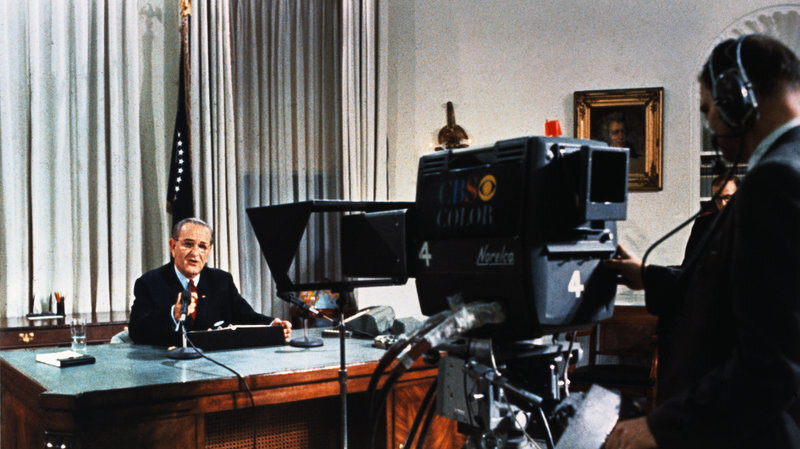
Lyndon B. Johnson: 'Accordingly, I shall not seek, and I will not accept, the nomination of my party for another term as your president', Address to the Nation - 1968

October 10, 2019

31 March 1968, Oval Office, Washington DC, USA

Good evening, my fellow Americans:

Tonight I want to speak to you of peace in Vietnam and Southeast Asia.

No other question so preoccupies our people. No other dream so absorbs the 250 million human beings who live in that part of the world. No other goal motivates American policy in Southeast Asia.

For years, representatives of our Government and others have traveled the world--seeking to find a basis for peace talks.

Since last September, they have carried the offer that I made public at San Antonio. That offer was this:

That the United States would stop its bombardment of North Vietnam when that would lead promptly to productive discussions--and that we would assume that North Vietnam would not take military advantage of our restraint.

Hanoi denounced this offer, both privately and publicly. Even while the search for peace was going on, North Vietnam rushed their preparations for a savage assault on the people, the government, and the allies of South Vietnam.

Their attack--during the Tet holidays--failed to achieve its principal objectives.

It did not collapse the elected government of South Vietnam or shatter its army--as the Communists had hoped.

It did not produce a "general uprising" among the people of the cities as they had predicted.

The Communists were unable to maintain control of any of the more than 30 cities that they attacked. And they took very heavy casualties.

But they did compel the South Vietnamese and their allies to move certain forces from the countryside into the cities.

They caused widespread disruption and suffering. Their attacks, and the battles that followed, made refugees of half a million human beings.

The Communists may renew their attack any day.

They are, it appears, trying to make 1968 the year of decision in South Vietnam--the year that brings, if not final victory or defeat, at least a turning point in the struggle.

This much is clear: If they do mount another round of heavy attacks, they will not succeed in destroying the fighting power of South Vietnam and its allies.

But tragically, this is also clear: Many men--on both sides of the struggle--will be lost. A nation that has already suffered 20 years of warfare will suffer once again. Armies on both sides will take new casualties. And the war will go on.

There is no need for this to be so.

There is no need to delay the talks that could bring an end to this long and this bloody war.

Tonight, I renew the offer I made last August--to stop the bombardment of North Vietnam. We ask that talks begin promptly, that they be serious talks on the substance of peace. We assume that during those talks Hanoi will not take advantage of our restraint.

We are prepared to move immediately toward peace through negotiations.

So, tonight, in the hope that this action will lead to early talks, I am taking the first step to deescalate the conflict. We are reducing--substantially reducing--the present level of hostilities.

And we are doing so unilaterally, and at once.

Tonight, I have ordered our aircraft and our naval vessels to make no attacks on North Vietnam, except in the area north of the demilitarized zone where the continuing enemy buildup directly threatens allied forward positions and where the movements of their troops and supplies are clearly related to that threat.

The area in which we are stopping our attacks includes almost 90 percent of North Vietnam's population, and most of its territory. Thus there will be no attacks around the principal populated areas, or in the food-producing areas of North Vietnam.

Even this very limited bombing of the North could come to an early end--if our restraint is matched by restraint in Hanoi. But I cannot in good conscience stop all bombing so long as to do so would immediately and directly endanger the lives of our men and our allies. Whether a complete bombing halt becomes possible in the future will be determined by events.

Our purpose in this action is to bring about a reduction in the level of violence that now exists.

It is to save the lives of brave men--and to save the lives of innocent women and children. It is to permit the contending forces to move closer to a political settlement.

And tonight, I call upon the United Kingdom and I call upon the Soviet Union--as cochairmen of the Geneva Conferences, and as permanent members of the United Nations Security Council--to do all they can to move from the unilateral act of deescalation that I have just announced toward genuine peace in Southeast Asia.

Now, as in the past, the United States is ready to send its representatives to any forum, at any time, to discuss the means of bringing this ugly war to an end.

I am designating one of our most distinguished Americans, Ambassador Averell Harriman, as my personal representative for such talks. In addition, I have asked Ambassador Llewellyn Thompson, who returned from Moscow for consultation, to be available to join Ambassador Harriman at Geneva or any other suitable place--just as soon as Hanoi agrees to a conference.

I call upon President Ho Chi Minh to respond positively, and favorably, to this new step toward peace.

But if peace does not come now through negotiations, it will come when Hanoi understands that our common resolve is unshakable, and our common strength is invincible.

Tonight, we and the other allied nations are contributing 600,000 fighting men to assist 700,000 South Vietnamese troops in defending their little country.

Our presence there has always rested on this basic belief: The main burden of preserving their freedom must be carried out by them--by the South Vietnamese themselves.

We and our allies can only help to provide a shield behind which the people of South Vietnam can survive and can grow and develop. On their efforts--on their determination and resourcefulness--the outcome will ultimately depend.

That small, beleaguered nation has suffered terrible punishment for more than 20 years.

I pay tribute once again tonight to the great courage and endurance of its people. South Vietnam supports armed forces tonight of almost 700,000 men--and I call your attention to the fact that this is the equivalent of more than 10 million in our own population. Its people maintain their firm determination to be free of domination by the North.

There has been substantial progress, I think, in building a durable government during these last 3 years. The South Vietnam of 1965 could not have survived the enemy's Tet offensive of 1968. The elected government of South Vietnam survived that attack--and is rapidly repairing the devastation that it wrought.

The South Vietnamese know that further efforts are going to be required:

--to expand their own armed forces,
--to move back into the countryside as quickly as possible,
--to increase their taxes,
--to select the very best men that they have for civil and military responsibility,
--to achieve a new unity within their constitutional government, and
--to include in the national effort all those groups who wish to preserve South Vietnam's control over its own destiny.

Last week President Thieu ordered the mobilization of 135,000 additional South Vietnamese. He plans to reach--as soon as possible--a total military strength of more than 800,000 men.

To achieve this, the Government of South Vietnam started the drafting of 19-year-olds on March 1st. On May 1st, the Government will begin the drafting of 18-year-olds.

Last month, 10,000 men volunteered for military service--that was two and a half times the number of volunteers during the same month last year. Since the middle of January, more than 48,000 South Vietnamese have joined the armed forces--and nearly half of them volunteered to do so.

All men in the South Vietnamese armed forces have had their tours of duty extended for the duration of the war, and reserves are now being called up for immediate active duty.

President Thieu told his people last week:

"We must make greater efforts and accept more sacrifices because, as I have said many times, this is our country. The existence of our nation is at stake, and this is mainly a Vietnamese responsibility."

He warned his people that a major national effort is required to root out corruption and incompetence at all levels of government.

We applaud this evidence of determination on the part of South Vietnam. Our first priority will be to support their effort.

We shall accelerate the reequipment of South Vietnam's armed forces--in order to meet the enemy's increased firepower. This will enable them progressively to undertake a larger share of combat operations against the Communist invaders.

On many occasions I have told the American people that we would send to Vietnam those forces that are required to accomplish our mission there. So, with that as our guide, we have previously authorized a force level of approximately 525,000.

Some weeks ago--to help meet the enemy's new offensive--we sent to Vietnam about 11,000 additional Marine and airborne troops. They were deployed by air in 48 hours, on an emergency basis. But the artillery, tank, aircraft, medical, and other units that were needed to work with and to support these infantry troops in combat could not then accompany them by air on that short notice.

In order that these forces may reach maximum combat effectiveness, the Joint Chiefs of Staff have recommended to me that we should prepare to send--during the next 5 months--support troops totaling approximately 13,500 men.

A portion of these men will be made available from our active forces. The balance will come from reserve component units which will be called up for service.

The actions that we have taken since the beginning of the year:

--to reequip the South Vietnamese forces,
--to meet our responsibilities in Korea, as well as our responsibilities in Vietnam,
--to meet price increases and the cost of activating and deploying reserve forces,
--to replace helicopters and provide the other military supplies we need, all of these actions are going to require additional expenditures.

The tentative estimate of those additional expenditures is $2.5 billion in this fiscal year, and $2.6 billion in the next fiscal year.

These projected increases in expenditures for our national security will bring into sharper focus the Nation's need for immediate action: action to protect the prosperity of the American people and to protect the strength and the stability of our American dollar.

On many occasions I have pointed out that, without a tax bill or decreased expenditures, next year's deficit would again be around $20 billion. I have emphasized the need to set strict priorities in our spending. I have stressed that failure to act and to act promptly and decisively would raise very strong doubts throughout the world about America's willingness to keep its financial house in order.

Yet Congress has not acted. And tonight we face the sharpest financial threat in the postwar era--a threat to the dollar's role as the keystone of international trade and finance in the world.

Last week, at the monetary conference in Stockholm, the major industrial countries decided to take a big step toward creating a new international monetary asset that will strengthen the international monetary system. I am very proud of the very able work done by Secretary Fowler and Chairman Martin of the Federal Reserve Board.

But to make this system work the United States just must bring its balance of payments to--or very close to--equilibrium. We must have a responsible fiscal policy in this country. The passage of a tax bill now, together with expenditure control that the Congress may desire and dictate, is absolutely necessary to protect this Nation's security, to continue our prosperity, and to meet the needs of our people.

What is at stake is 7 years of unparalleled prosperity. In those 7 years, the real income of the average American, after taxes, rose by almost 30 percent--a gain as large as that of the entire preceding 19 years.

So the steps that we must take to convince the world are exactly the steps we must take to sustain our own economic strength here at home. In the past 8 months, prices and interest rates have risen because of our inaction.

We must, therefore, now do everything we can to move from debate to action--from talking to voting. There is, I believe--I hope there is--in both Houses of the Congress--a growing sense of urgency that this situation just must be acted upon and must be corrected.

My budget in January was, we thought, a tight one. It fully reflected our evaluation of most of the demanding needs of this Nation.

But in these budgetary matters, the President does not decide alone. The Congress has the power and the duty to determine appropriations and taxes.

The Congress is now considering our proposals and they are considering reductions in the budget that we submitted.

As part of a program of fiscal restraint that includes the tax surcharge, I shall approve appropriate reductions in the January budget when and if Congress so decides that that should be done.

One thing is unmistakably clear, however: Our deficit just must be reduced. Failure to act could bring on conditions that would strike hardest at those people that all of us are trying so hard to help.

These times call for prudence in this land of plenty. I believe that we have the character to provide it, and tonight I plead with the Congress and with the people to act promptly to serve the national interest, and thereby serve all of our people.

Now let me give you my estimate of the chances for peace:

--the peace that will one day stop the bloodshed in South Vietnam,
--that will permit all the Vietnamese people to rebuild and develop their land,
--that will permit us to turn more fully to our own tasks here at home.

I cannot promise that the initiative that I have announced tonight will be completely successful in achieving peace any more than the 30 others that we have undertaken and agreed to in recent years.

But it is our fervent hope that North Vietnam, after years of fighting that have left the issue unresolved, will now cease its efforts to achieve a military victory and will join with us in moving toward the peace table.

And there may come a time when South Vietnamese--on both sides--are able to work out a way to settle their own differences by free political choice rather than by war.

As Hanoi considers its course, it should be in no doubt of our intentions. It must not miscalculate the pressures within our democracy in this election year.

We have no intention of widening this war.

But the United States will never accept a fake solution to this long and arduous struggle and call it peace.

No one can foretell the precise terms of an eventual settlement.

Our objective in South Vietnam has never been the annihilation of the enemy. It has been to bring about a recognition in Hanoi that its objective--taking over the South by force--could not be achieved.

We think that peace can be based on the Geneva Accords of 1954--under political conditions that permit the South Vietnamese--all the South Vietnamese--to chart their course free of any outside domination or interference, from us or from anyone else.

So tonight I reaffirm the pledge that we made at Manila--that we are prepared to withdraw our forces from South Vietnam as the other side withdraws its forces to the north, stops the infiltration, and the level of violence thus subsides.

Our goal of peace and self-determination in Vietnam is directly related to the future of all of Southeast Asia--where much has happened to inspire confidence during the past 10 years. We have done all that we knew how to do to contribute and to help build that confidence.

A number of its nations have shown what can be accomplished under conditions of security. Since 1966, Indonesia, the fifth largest nation in all the world, with a population of more than 100 million people, has had a government that is dedicated to peace with its neighbors and improved conditions for its own people. Political and economic cooperation between nations has grown rapidly.

I think every American can take a great deal of pride in the role that we have played in bringing this about in Southeast Asia. We can rightly judge--as responsible Southeast Asians themselves do--that the progress of the past 3 years would have been far less likely--if not completely impossible--if America's sons and others had not made their stand in Vietnam.

At Johns Hopkins University, about 3 years ago, I announced that the United States would take part in the great work of developing Southeast Asia, including the Mekong Valley, for all the people of that region. Our determination to help build a better land--a better land for men on both sides of the present conflict--has not diminished in the least. Indeed, the ravages of war, I think, have made it more urgent than ever.

So, I repeat on behalf of the United States again tonight what I said at Johns Hopkins--that North Vietnam could take its place in this common effort just as soon as peace comes.

Over time, a wider framework of peace and security in Southeast Asia may become possible. The new cooperation of the nations of the area could be a foundation-stone. Certainly friendship with the nations of such a Southeast Asia is what the United States seeks--and that is all that the United States seeks.

One day, my fellow citizens, there will be peace in Southeast Asia.

It will come because the people of Southeast Asia want it--those whose armies are at war tonight, and those who, though threatened, have thus far been spared.

Peace will come because Asians were willing to work for it--and to sacrifice for it--and to die by the thousands for it.

But let it never be forgotten: Peace will come also because America sent her sons to help secure it.

It has not been easy--far from it. During the past 4½ years, it has been my fate and my responsibility to be Commander in Chief. I have lived---daily and nightly--with the cost of this war. I know the pain that it has inflicted. I know, perhaps better than anyone, the misgivings that it has aroused.

Throughout this entire, long period, I have been sustained by a single principle: that what we are doing now, in Vietnam, is vital not only to the security of Southeast Asia, but it is vital to the security of every American.

Surely we have treaties which we must respect. Surely we have commitments that we are going to keep. Resolutions of the Congress testify to the need to resist aggression in the world and in Southeast Asia.

But the heart of our involvement in South Vietnam--under three different presidents, three separate administrations--has always been America's own security.

And the larger purpose of our involvement has always been to help the nations of Southeast Asia become independent and stand alone, self-sustaining, as members of a great world community--at peace with themselves, and at peace with all others.

With such an Asia, our country--and the world--will be far more secure than it is tonight.

I believe that a peaceful Asia is far nearer to reality because of what America has done in Vietnam. I believe that the men who endure the dangers of battle--fighting there for us tonight--are helping the entire world avoid far greater conflicts, far wider wars, far more destruction, than this one.

The peace that will bring them home someday will come. Tonight I have offered the first in what I hope will be a series of mutual moves toward peace.

I pray that it will not be rejected by the leaders of North Vietnam. I pray that they will accept it as a means by which the sacrifices of their own people may be ended. And I ask your help and your support, my fellow citizens, for this effort to reach across the battlefield toward an early peace.

Finally, my fellow Americans, let me say this:

Of those to whom much is given, much is asked. I cannot say and no man could say that no more will be asked of us.

Yet, I believe that now, no less than when the decade began, this generation of Americans is willing to "pay any price, bear any burden, meet any hardship, support any friend, oppose any foe to assure the survival and the success of liberty."

Since those words were spoken by John F. Kennedy, the people of America have kept that compact with mankind's noblest cause.

And we shall continue to keep it.

Yet, I believe that we must always be mindful of this one thing, whatever the trials and the tests ahead. The ultimate strength of our country and our cause will lie not in powerful weapons or infinite resources or boundless wealth, but will lie in the unity of our people.

This I believe very deeply.

Throughout my entire public career I have followed the personal philosophy that I am a free man, an American, a public servant, and a member of my party, in that order always and only.

For 37 years in the service of our Nation, first as a Congressman, as a Senator, and as Vice President, and now as your President, I have put the unity of the people first. I have put it ahead of any divisive partisanship.

And in these times as in times before, it is true that a house divided against itself by the spirit of faction, of party, of region, of religion, of race, is a house that cannot stand.

There is division in the American house now. There is divisiveness among us all tonight. And holding the trust that is mine, as President of all the people, I cannot disregard the peril to the progress of the American people and the hope and the prospect of peace for all peoples.

So, I would ask all Americans, whatever their personal interests or concern, to guard against divisiveness and all its ugly consequences.

Fifty-two months and 10 days ago, in a moment of tragedy and trauma, the duties of this office fell upon me. I asked then for your help and God's, that we might continue America on its course, binding up our wounds, healing our history, moving forward in new unity, to clear the American agenda and to keep the American commitment for all of our people.

United we have kept that commitment. United we have enlarged that commitment.

Through all time to come, I think America will be a stronger nation, a more just society, and a land of greater opportunity and fulfillment because of what we have all done together in these years of unparalleled achievement.

Our reward will come in the life of freedom, peace, and hope that our children will enjoy through ages ahead.

What we won when all of our people united just must not now be lost in suspicion, distrust, selfishness, and politics among any of our people.

Believing this as I do, I have concluded that I should not permit the Presidency to become involved in the partisan divisions that are developing in this political year.

With America's sons in the fields far away, with America's future under challenge right here at home, with our hopes and the world's hopes for peace in the balance every day, I do not believe that I should devote an hour or a day of my time to any personal partisan causes or to any duties other than the awesome duties of this office--the Presidency of your country.

Accordingly, I shall not seek, and I will not accept, the nomination of my party for another term as your President.

But let men everywhere know, however, that a strong, a confident, and a vigilant America stands ready tonight to seek an honorable peace--and stands ready tonight to defend an honored cause--whatever the price, whatever the burden, whatever the sacrifice that duty may require.

Thank you for listening.

Good night and God bless all of you.

Lyndon Johnson resignation.jpg

Rare footage of President Lydon Johnson rehearsing the speech

Source: http://www.historyplace.com/speeches/lbj-d...

Enjoyed this speech? Speakola is a labour of love and I’d be very grateful if you would share, tweet or like it. Thank you.

Facebook Twitter Facebook
In 1960-79 B Tags LYNDON B JOHNSON, ADDRESS TO NATION, RETIREMENT SPEECH, TELEVISED ADDRESS, VIETNAM, SOUTH EAST ASIA, VIETNAM WAR, TRANSCRIPT
Comment
Ho Chi Minh Ba Dinh.jpg

Ho Chi Minh: "All men are created equal", Declaration of Independence - 1945

December 11, 2018

2 September 1945, Ba Dinh Square, Hanoi, Vietnam

All men are created equal. They are endowed by their Creator with certain inalienable Rights; among these are Life, Liberty, and the pursuit of Happiness.”

This immortal statement was made in the Declaration of Independence of the United States of America in 1776. In a broader sense, this means: All the peoples on the earth are equal from birth, all the peoples have a right to live and to be happy and free.

The Declaration of the Rights of Man and the Citizen, made at the time of the French Revolution, in 1791, also states: “All men are born free and with equal rights, and must always remain free and have equal rights.”

Those are undeniable truths.

Nevertheless, for more than eighty years, the French imperialists, abusing the standard of Liberty, Equality, and Fraternity, have violated our Fatherland and oppressed our fellow-citizens. They have acted contrary to the ideals of humanity and justice.

Politically, they have deprived our people of every democratic liberty.

They have enforced inhuman laws; they have set up three distinct political regimes in the North, the Centre and the South of Viet Nam in order to wreck our country’s oneness and prevent our people from being united.

They have built more prisons than schools. They have mercilessly massacred our patriots. They have drowned our uprisings in seas of blood.

They have fettered public opinion and practised obscurantism.

The have weakened our race with opium and alcohol.

In the field of economics, they have sucked us dry, driven our people to destitution and devastated our land.

They have robbed us of our ricefields, our mines, our forests and our raw materials. They have monopolised the issuing of bank­notes and the import and export trade.

They have invented numerous unjustifiable taxes and reduced our people, especially our peasantry, to extreme poverty.

They have made it impossible for our national bourgeoisie to prosper; they have mercilessly exploited our workers.

In the autumn of 1940, when the Japanese fascists invaded Indochina to establish new bases against the Allies, the French colonialists went down on their bended knees and opened the doors of our country to welcome the Japanese in.

Thus, from that date, our people were subjected to the double yoke of the French and the Japanese. Their sufferings and miseries increased. The result was that towards the end of last year and the beginning of this year, from Quang Tri province to the North of Vietnam, more than two million of our fellow-citizens died from starvation.

On the 9th of March this year, the French troops were disarmed by the Japanese. The French colonialists either fled or surrendered, showing that not only were they incapable of “protecting” us, but that, in a period of five years, they had twice sold our country to the Japanese.

Before the 9th of March, how often the Viet Minh had urged the French to ally themselves with it against the Japanese! But instead of agreeing to this proposal, the French colonialists only intensified their terrorist activities against the Viet Minh. After their defeat and before fleeing, they massacred the political prisoners detained at Yen Bai and Cao Bang.

In spite of all this, our fellow-citizens have always manifested a lenient and humane attitude towards the French. After the Japanese putsch of March 9, 1945, the Viet Minh helped many Frenchmen to cross the frontier, rescued others from Japanese jails, and protected French lives and property. In fact, since the autumn of 1940, our country had ceased to be a French colony and had become a Japanese possession.

When the Japanese surrendered to the Allies, our entire people rose to gain power and founded the Democratic Republic of Vietnam.

The truth is that we have wrested our independence from the Japanese, not from the French.

The French have fled, the Japanese have capitulated, Emperor Bao Dai has abdicated. Our people have broken the chains which have fettered them for nearly a century and have won independence for Viet Nam. At the same time they have overthrown the centuries-old monarchic regime and established a democratic republican regime.

We, the Provisional Government of the new Viet Nam, representing the entire Vietnamese people, hereby declare that from now on we break off all relations of a colonial character with France; cancel all treaties signed by France on Viet Nam, and abolish all privileges held by France in our country.

The entire Vietnamese people are of one mind in their determination to oppose all wicked schemes by the French colonialists.

We are convinced that the Allies, which at the Teheran and San Francisco Conferences upheld the principle of equality among the nations, cannot fail to recognize the right of the Vietnamese people to independence.

A people who have courageously opposed French enslavement for more than eight years, a people who have resolutely sided with the Allies against the fascists during these last years, such a people must be free, such a people must be independent.

For these reasons, we, the Provisional Government of the Democratic Republic of Viet Nam, solemnly make this declaration to the world:

Viet Nam has the right to enjoy freedom and independence and in fact has become a free and independent country. The entire Vietnamese people are determined to mobilize all their physical and mental strength, to sacrifice their lives and property in order to safeguard their freedom and independence.

Source: http://www.indiana.edu/~kdhist/H105-docume...

Enjoyed this speech? Speakola is a labour of love and I’d be very grateful if you would share, tweet or like it. Thank you.

Facebook Twitter Facebook
In 1940-59 B Tags HO CHI MINH, VIETNAM, VIETNAMESE INDEPENDENCE, FRENCH, COLONIALISM, POST COLONIALISM, COMMINISM, TRANSCRIPT
Comment

See my film!

Limited Australian Season

March 2025

Details and ticket bookings at

angeandtheboss.com

Support Speakola

Hi speech lovers,
With costs of hosting website and podcast, this labour of love has become a difficult financial proposition in recent times. If you can afford a donation, it will help Speakola survive and prosper.

Best wishes,
Tony Wilson.

Become a Patron!

Learn more about supporting Speakola.

Featured political

Featured
Jon Stewart: "They responded in five seconds", 9-11 first responders, Address to Congress - 2019
Jacinda Ardern: 'They were New Zealanders. They are us', Address to Parliament following Christchurch massacre - 2019
Dolores Ibárruri: "¡No Pasarán!, They shall not pass!', Defense of 2nd Spanish Republic - 1936
Jimmy Reid: 'A rat race is for rats. We're not rats', Rectorial address, Glasgow University - 1972

Featured eulogies

Featured
For Geoffrey Tozer: 'I have to say we all let him down', by Paul Keating - 2009
for James Baldwin: 'Jimmy. You crowned us', by Toni Morrison - 1988
for Michael Gordon: '13 days ago my Dad’s big, beautiful, generous heart suddenly stopped beating', by Scott and Sarah Gordon - 2018

Featured commencement

Featured
Tara Westover: 'Your avatar isn't real, it isn't terribly far from a lie', The Un-Instagrammable Self, Northeastern University - 2019
Tim Minchin: 'Being an artist requires massive reserves of self-belief', WAAPA - 2019
Atul Gawande: 'Curiosity and What Equality Really Means', UCLA Medical School - 2018
Abby Wambach: 'We are the wolves', Barnard College - 2018
Eric Idle: 'America is 300 million people all walking in the same direction, singing 'I Did It My Way'', Whitman College - 2013
Shirley Chisholm: ;America has gone to sleep', Greenfield High School - 1983

Featured sport

Featured
Joe Marler: 'Get back on the horse', Harlequins v Bath pre game interview - 2019
Ray Lewis : 'The greatest pain of my life is the reason I'm standing here today', 52 Cards -
Mel Jones: 'If she was Bradman on the field, she was definitely Keith Miller off the field', Betty Wilson's induction into Australian Cricket Hall of Fame - 2017
Jeff Thomson: 'It’s all those people that help you as kids', Hall of Fame - 2016

Fresh Tweets


Featured weddings

Featured
Dan Angelucci: 'The Best (Best Man) Speech of all time', for Don and Katherine - 2019
Hallerman Sisters: 'Oh sister now we have to let you gooooo!' for Caitlin & Johnny - 2015
Korey Soderman (via Kyle): 'All our lives I have used my voice to help Korey express his thoughts, so today, like always, I will be my brother’s voice' for Kyle and Jess - 2014

Featured Arts

Featured
Bruce Springsteen: 'They're keepers of some of the most beautiful sonic architecture in rock and roll', Induction U2 into Rock Hall of Fame - 2005
Olivia Colman: 'Done that bit. I think I have done that bit', BAFTA acceptance, Leading Actress - 2019
Axel Scheffler: 'The book wasn't called 'No Room on the Broom!', Illustrator of the Year, British Book Awards - 2018
Tina Fey: 'Only in comedy is an obedient white girl from the suburbs a diversity candidate', Kennedy Center Mark Twain Award -  2010
Tina Fey: 'Only in comedy is an obedient white girl from the suburbs a diversity candidate', Kennedy Center Mark Twain Award - 2010

Featured Debates

Featured
Sacha Baron Cohen: 'Just think what Goebbels might have done with Facebook', Anti Defamation League Leadership Award - 2019
Greta Thunberg: 'How dare you', UN Climate Action Summit - 2019
Charlie Munger: 'The Psychology of Human Misjudgment', Harvard University - 1995
Lawrence O'Donnell: 'The original sin of this country is that we invaders shot and murdered our way across the land killing every Native American that we could', The Last Word, 'Dakota' - 2016