
• Genre
  • About
  • Submissions
  • Donate
  • Search
Menu

Speakola

All Speeches Great and Small
  • Genre
  • About
  • Submissions
  • Donate
  • Search
Share a political speech

John F Kennedy: 'America's stake in Vietnam', Conference on Vietnam luncheon - 1956

June 22, 2022

1 June 1956, Washington DC, USA

There is no video or audio of this speech.

It is a genuine pleasure to be here today at this vital Conference on the future of Vietnam, and America's stake in that new nation, sponsored by the American Friends of Vietnam, an organization of which I am proud to be a member. Your meeting today at a time when political events concerning Vietnam are approaching a climax, both in that country and in our own Congress, is most timely. Your topic and deliberations, which emphasize the promise of the future more than the failures of the past, are most constructive. I can assure you that the Congress of the United States will give considerable weight to your findings and recommendations; and I extend to all of you who have made the effort to participate in this Conference my congratulations and best wishes.

It is an ironic and tragic fact that this Conference is being held at a time when the news about Vietnam has virtually disappeared from the front pages of the American press, and the American people have all but forgotten the tiny nation for which we are in large measure responsible. This decline in public attention is due, I believe, to three factors:

First, it is due in part to the amazing success of President Diem in meeting firmly and with determination the major political and economic crises which had heretofore continually plagued Vietnam. (I shall say more about this point later, for it deserves more consideration from all Americans interested in the future of Asia).
Secondly, it is due in part to the traditional role of American journalism, including readers as well as writers, to be more interested in crises than in accomplishments, to give more space to the threat of wars than the need for works, and to write larger headlines on the sensational omissions of the past than the creative missions of the future.
Third and finally, our neglect of Vietnam is the result of one of the most serious weaknesses that has hampered the long-range effectiveness of American foreign policy over the past several years - and that is the overemphasis upon our role as "volunteer fire department" for the world. Whenever and wherever fire breaks out -- in Indochina, in the Middle East, in Guatemala, in Cyprus, in the Formosan Straits -- our firemen rush in, wheeling up all their heavy equipment, and resorting to every known method of containing and extinguishing the blaze. The crowd gathers -- the usually successful efforts of our able volunteers are heartily applauded -- and then the firemen rush off to the next conflagration, leaving the grateful but still stunned inhabitants to clean up the rubble, pick up the pieces, and rebuild their homes with whatever resources are available.

The role, to be sure, is a necessary one; but it is not the only role to be played, and the others cannot be ignored. A volunteer fire department halts, but rarely prevents, fires. It repels but rarely rebuilds; it meets the problems of the present but not of the future. And while we are devoting our attention to the Communist arson in Korea, there is smoldering in Indochina; we turn our efforts to Indochina until the alarm sounds in Algeria -- and so it goes.

Of course Vietnam is not completely forgotten by our policy-makers today -- I could not in honesty make such a charge and the facts would easily refute it -- but the unfortunate truth of the matter is that, in my opinion, Vietnam would in all likelihood be receiving more attention from our Congress and Administration, and greater assistance under our aid programs, if it were in imminent danger of Communist invasion or revolution. Like those peoples of Latin America and Africa whom we have very nearly overlooked in the past decade, the Vietnamese may find that their devotion to the cause of democracy, and their success in reducing the strength of local Communist groups, have had the ironic effect of reducing American support. Yet the need for that support has in no way been reduced. (I hope it will not be necessary for the Diem Government -- or this organization -- to subsidize the growth of the South Vietnam Communist Party in order to focus American attention on that nation's critical needs!)

No one contends that we should now rush all our firefighting equipment to Vietnam, ignoring the Middle East or any other part of the world. But neither should we conclude that the cessation of hostilities in Indochina removed that area from the list of important areas of United States foreign policy. Let us briefly consider exactly what is "America's Stake in Vietnam":

First, Vietnam represents the cornerstone of the Free World in Southeast Asia, the keystone to the arch, the finger in the dike. Burma, Thailand, India, Japan, the Philippines, and obviously Laos and Cambodia are among those whose security would be threatened if the Red Tide of Communism overflowed into Vietnam. In the past, our policy-makers have sometimes issued contradictory statements on this point -- but the long history of Chinese invasions of Southeast Asia being stopped by Vietnamese warriors should have removed all doubt on this subject.
Moreover, the independence of a Free Vietnam is crucial to the free world in fields other than the military. Her economy is essential to the economy of Southeast Asia; and her political liberty is an inspiration to those seeking to obtain or maintain their liberty in all parts of Asia - and indeed the world. The fundamental tenets of this nation's foreign policy, in short, depend in considerable measure upon a strong and free Vietnamese nation.
Secondly, Vietnam represents a proving ground of democracy in Asia. However we may choose to ignore it or deprecate it, the rising prestige and influence of Communist China in Asia are unchallengeable facts. Vietnam represents the alternative to Communist dictatorship. If this democratic experiment fails, if some one million refugees have fled the totalitarianism of the North only to find neither freedom nor security in the South, then weakness, not strength, will characterize the meaning of democracy in the minds of still more Asians. The United States is directly responsible for this experiment -- it is playing an important role in the laboratory where it is being conducted. We cannot afford to permit that experiment to fail.
Third and in somewhat similar fashion, Vietnam represents a test of American responsibility and determination in Asia. If we are not the parents of little Vietnam, then surely we are the godparents. We presided at its birth, we gave assistance to its life, we have helped to shape its future. As French influence in the political, economic, and military spheres has declined in Vietnam, American influence has steadily grown. This is our offspring -- we cannot abandon it, we cannot ignore its needs. And if it falls victim to any of the perils that threaten its existence -- Communism, political anarchy, poverty, and the rest -- then the United States, with some justification, will be held responsible; and our prestige in Asia will sink to a new low.
Fourth and finally, America's stake in Vietnam, in her strength and in her security, is a very selfish one -- for it can be measured, in the last analysis, in terms of American lives and American dollars. It is now well known that we were at one time on the brink of war in Indochina -- a war which could well have been more costly, more exhausting, and less conclusive than any war we have ever known. The threat to such war is not now altogether removed from the horizon. Military weakness, political instability, or economic failure in the new state of Vietnam could change almost overnight the apparent security which has increasingly characterized that area under the leadership of Premier Diem. And the key position of Vietnam in Southeast Asia, as already discussed, makes inevitable the involvement of this nation's security in any new outbreak of trouble.

It is these four points, in my opinion, that represent America's stake in Vietnamese security. And before we look to the future, let us stop to review what the Diem Government has already accomplished by way of increasing that security. Most striking of all, perhaps, has been the rehabilitation of more than ¾ of a million refugees from the North. For these courageous people dedicated to the free way of life, approximately 45,000 houses have been constructed, 2,500 wells dug, 100 schools established, and dozens of medical centers and maternity homes provided.

Equally impressive has been the increased solidarity and stability of the Government, the elimination of rebellious sects and the taking of the first vital steps toward true democracy. Where once colonialism and Communism struggled for supremacy, a free and independent republic has been proclaimed, recognized by over 40 countries of the free world. Where once a playboy emperor ruled from a distant shore, a constituent assembly has been elected.

Social and economic reforms have likewise been remarkable. The living conditions of the peasants have been vastly improved, the wastelands have been cultivated, and a wider ownership of the land is gradually being encouraged. Farm cooperatives and farmer loans have modernized an outmoded agricultural economy; and a tremendous dam in the center of the country has made possible the irrigation of a vast area previously uncultivated. Legislation for better labor relations, health protection, working conditions, and wages has been completed under the leadership of President Diem.

Finally, the Vietnamese army -- now fighting for its own homeland and not its colonial masters -- has increased tremendously in both quality and quantity. General O'Daniel can tell you more about these accomplishments.

But the responsibility of the United States for Vietnam does not conclude, obviously, with a review of what has been accomplished thus far with our help. Much more needs to be done; much more, in fact, than we have been doing up to now. Military alliances in Southeast Asia are necessary but not enough. Atomic superiority and the development of new ultimate weapons are not enough. Informational and propaganda activities, warning of the evils of Communism and the blessings of the American way of life, are not enough in a country where concepts of free enterprise and capitalism are meaningless, where poverty and hunger are not enemies across the 17th parallel but enemies within their midst. As Ambassador Chuong has recently said: "People cannot be expected to fight for the Free World unless they have their own freedom to defend, their freedom from foreign domination as well as freedom from misery, oppression, corruption."

I shall not attempt to set forth the details of the type of aid program this nation should offer the Vietnamese -- for it is not the details of that program that are as important as the spirit with which it is offered and the objectives it seeks to accomplish. We should not attempt to buy the friendship of the Vietnamese. Nor can we win their hearts by making them dependent upon our handouts. What we must offer them is a revolution -- a political, economic, and social revolution far superior to anything the Communists can offer -- far more peaceful, far more democratic, and far more locally controlled. Such a Revolution will require much from the United States and much from Vietnam. We must supply capital to replace that drained by the centuries of colonial exploitation; technicians to train those handicapped by deliberate policies of illiteracy; guidance to assist a nation taking those first feeble steps toward the complexities of a republican form of government. We must assist the inspiring growth of Vietnamese democracy and economy, including the complete integration of those refugees who gave up their homes and their belongings to seek freedom. We must provide military assistance to rebuild the new Vietnamese Army, which every day faces the growing peril of Vietminh Armies across the border.

And finally, in the councils of the world, we must never permit any diplomatic action adverse to this, one of the youngest members of the family of nations -- and I include in that injunction a plea that the United States never give its approval to the early nationwide elections called for by the Geneva Agreement of 1954. Neither the United States nor Free Vietnam was a party to that agreement -- and neither the United States nor Free Vietnam is ever going to be a party to an election obviously stacked and subverted in advance, urged upon us by those who have already broken their own pledges under the Agreement they now seek to enforce.

All this and more we can offer Free Vietnam, as it passes through the present period of transition on its way to a new era -- an era of pride and independence, and era of democratic and economic growth -- an era which, when contrasted with the long years of colonial oppression, will truly represent a political, social and economic revolution.

This is the revolution we can, we should, we must offer to the people of Vietnam -- not as charity, not as a business proposition, not as a political maneuver, nor simply to enlist them as soldiers against Communism or as chattels of American foreign policy -- but a revolution of their own making, for their own welfare, and for the security of freedom everywhere. The Communists offer them another kind of revolution, glittering and seductive in its superficial appeal. The choice between the two can be made only by the Vietnamese people themselves. But in these times of trial and burden, true friendships stand out. As Premier Diem recently wrote a great friend of Vietnam, Senator Mansfield, "It is only in winter that you can tell which trees are evergreen." And I am confident that if this nation demonstrates that it has not forgotten the people of Vietnam, the people of Vietnam will demonstrate that they have not forgotten us.

Source: https://www.jfklibrary.org/Research/Resear...

Enjoyed this speech? Speakola is a labour of love and I’d be very grateful if you would share, tweet or like it. Thank you.

Facebook Twitter Facebook
In 1940-59 C Tags JFK, JOHN F KENNEDY, SENATOR JOHN F KENNEDY, SENATOR, FUTURE PRESIDENT, TRANSCRIPT, VIETNAM, VIETNAM WAR
Comment

Chris Murphy: 'What are we doing? Why are we here?', speech following Ulvade school massacre - 2022

May 25, 2022

25 May 2022, Washington DC, USA

Mr. President, there are 14 kids dead in an elementary school in Texas right now. What are we doing? What are we doing?

Just days after a shooter walked into a grocery store to gun down African American patrons, we have another Sandy Hook on our hands. What are we doing? There were more mass shootings than days in the year. Our kids are living in fear every single time they set foot in a classroom because they think they're going to be next. What are we doing?

Why do you spend all this time running for the United States Senate? Why do you go through all the hassle of getting this job, of putting yourself in a position of authority, if your answer is that, as the slaughter increases, as our kids run for their lives, we do nothing? What are we doing?

Why are you here if not to solve a problem as existential as this? This isn't inevitable. These kids weren't unlucky. This only happens in this country and nowhere else. Nowhere else do little kids go to school thinking that they might be shot that day.

Nowhere else do parents have to talk to their kids, as I have had to do, about why they got locked into a bathroom and told to be quiet for five minutes just in case a bad man entered that building. Nowhere else does that happen except here in the United States of America. And it is a choice. It is our choice to let it continue. What are we doing?

In Sandy Hook Elementary school after those kids came back into those classrooms, they had to adopt a practice in which there would be a safe word that the kids would say. If they started to get thoughts in their brain about what they saw that day, if they started to get nightmares during the day, reliving stepping over their classmates bodies as they tried to flee the school. In one classroom, that word was "monkey."

And over and over and over, through the day, kids would stand up and yell ‘monkey’. And a teacher or a paraprofessional would have to go over to that kid, take them out of the classroom, talk to them about what they had seen, worked them through their issues. Sandy Hook will never, ever be the same. This community in Texas will never, ever be the same.

Why? Why are we here if not to try to make sure that fewer schools and fewer communities go through what Sandy Hook has gone through, what Uvalde is going through? Our heart is breaking for these families. Every ounce of love and thoughts and prayers we can send, we are sending.

But I'm here on this floor to beg, to literally get down on my hands and knees and beg my colleagues. Find a path forward here, work with us to find a way to pass laws that make this less likely. I understand my Republican colleagues will not agree to everything that I may support, but there is a common denominator that we can find.

There is a place where we can achieve agreement that may not guarantee that American never, ever again sees a mass shooting, that may not overnight cut in half the number of murders that happen in America. It will not solve the problem of American violence by itself. But by doing something, we at least stop sending this quiet message of endorsement to these killers, whose brains are breaking, who see the highest levels of government doing nothing, shooting after shooting.

What are we doing? Why are we here? What are we doing? I yield the floor.

Source: https://au.news.yahoo.com/sen-murphy-14-st...

Enjoyed this speech? Speakola is a labour of love and I’d be very grateful if you would share, tweet or like it. Thank you.

Facebook Twitter Facebook
In 2020-29 B Tags CHRIS MURPHY, SEN. CHRIS MURPHY, ULVADE SHOOTING, TEXAS SCHOOL SHOOTING, SANDY HOOK, TRANSCRIPT, GUN CONTROL, DEMOCRAT, SENATOR, CONNECTICUT
Comment

Jacqui Lambie: 'Vaccinated Australians, you are patriots', debate over One Naton's Anti Vaccine Mandate Bill - 2021

November 25, 2021

22 November 2021, Senate, Canberra, Australia

If you want to champion against discrimination, you don't want One Nation.

One Nation wants autistic children to be taken out of public schools because, and I quote, they're a "strain" on the rest of the class. People don't choose to be autistic. Taking them out of school is discrimination. And One Nation just loves it.

One Nation wants a ban on any immigration from majority-Muslim countries. Even if the person isn't Muslim. People don't choose what country they're born in. That is discrimination. One Nation has no problem with that either.

One Nation is opposed to same-sex marriage. People don't choose to be gay. That is discrimination. One Nation has no issue with that either. One Nation is not a fighter against discrimination. One Nation seeks to profit from it. It's just a fundraising exercise for them.

And that's all this is: this bill is supposed to be about fighting the discrimination of people who haven't been vaccinated against COVID-19. The only people who need protection from discrimination are people who can't receive the vaccination for reasons outside of their control.

They shouldn't be discriminated against, but if you're able to get vaccinated and you choose not to, discrimination is the wrong word. That's not discrimination. You have freedom to make a choice, but if you make a choice, those choices have consequences.

You can't call every consequence a choice - of choice - a discrimination. If you get behind the wheel of a car and drive twice the speed limit, you might be comfortable taking that risk with your safety, but you'd be putting other people's lives at risk and you don't have the right to do that. And you will more than likely lose your license. You are not being discriminated against.

You choose to do something that puts other people's lives at risk. And you will be accountable. You'll be held accountable for that choice. It is that simple. That's what we're talking about here. People who don't get the vaccine, I'm making a choice, you have a choice. We all have choices to make. We all get a choice.
You're making a choice that means you're more likely to get COVID and you're more likely to spread it to someone else. And that is your choice. It is your right. I want to make that clear and I support that choice, but you don't get to decide how the rest of Australia responds to that choice.

You can't force someone else to react a certain way to you because of your freedom to choose. That's not how we do things in this country. We've got freedom of speech in Australia. But you can't stop people reacting to what you say with your freedom of speech. We have a freedom of assembly, but you can't stop the rest of us from calling you out if you're being disruptive and rude. Having the freedom to choose isn't the same as having freedom to avoid the consequences of that choice. Some might say that if you're vaccinated, because you're required to, in order to keep your job, you've been forced to get vaccinated. That's not right. And that's not being truthful at all.

That is not correct. If you want to work with vulnerable people, you need to do a police check. If you want to work with kids, you do have to have a Working with Children check. That is the way it is. And we do that to keep people safe. How bout that? We put others before ourselves. You can decide not to choose those checks.

No one's forcing you, but if you don't do them, you can't work where you want to work. It's as simple as that, that is the way it is. If you want to work as a cabbie you need a license to drive a cab. People without licenses are not being discriminated against. If you want to work in aged care, you need to have a flu vaccine.

That rule has been in place before COVID-19 was even a twinkle in a Chinese bat's eye for goodness' sake. That's the way it is. You have a right to choose. You don't have a right to put vulnerable people's lives at risk. You don't have that right. And so you shouldn't have that right. You don't have the right to go into an aged care home unvaccinated and risk starting a COVID outbreak for the elderly.

I have constituents with autoimmune conditions who run businesses. If they're forced to serve unvaccinated customers, they'll have to choose between risking their lives or shutting down their businesses. You don't have the right to force them to make that choice either. We have pubs in Hobart that will have to close

if a single COVID [positive] person walks into them. Those pub owners should be able to choose to protect themselves and their staff. And they should be able to say, I can't afford to have an unvaccinated person in here. They're already on their knees. They should not be forced to pay for another person's choice not to get the vaccine.

This is the point. Nobody has the right to make someone's life less safe. That's not what freedoms mean. That's not what freedoms mean at all. You had the freedom to make your own choices. Everyone else has the freedom to respond to your choices and you don't get to control that no matter how much you might want to.

Now, I get that some people have a lot of fear about the vaccine. I understand that, for some, putting that needle in your arm is a hard choice to make. It's good to ask questions about how the vaccine was developed, where it comes from and how we know if it's safe. And I've asked plenty of those questions myself.

I put it to the Department of Health. I've put it to the TGA and I wouldn't have it any other way. That's a democratic process in this country. But the problem is politicians like Senator Hanson and Senator Roberts are using people's fear to boost their own election campaigns. And they're using fear to make money.
And that's what this is about from One Nation.

They not being straight with you people out there. Not straight at all. It's all about cash. It's all about power and it's all about One Nation's seats. And that's all this is - a grab for cash and seats from One Nation. I reckon a lot of their supporters would think twice if they saw the absolute hypocrisy of these politicians, these two, honestly. One Nation pretend to be on the side of the people, but they are happy to tell fibs to their own voters.

if it means they can make a quick buck or two. Take an example. Senator Hanson went on Sky News and said that the TGA had published data saying a whole bunch of people had died from COVID-19 vaccine and the journalist pulled her up straight away and told her that's wrong. The journalist called her out for misleading Sky's viewers.

And you know what happened? Senator Hanson backed down. She admitted she had the facts wrong. That she'd have to look at it again. But the next day, the very next day, she went right back to saying the same crap anyway, like nothing had happened. Like that's acceptable behavior in this country. That's leadership, is it, Senator Hanson? My goodness.

I've got things wrong in the past. I accept that and I'll admit it and I'll fix it and I'll move it on. That's how it works. If you get it wrong and say you got it wrong and stand by that. What sort of person accepts they're wrong, but just keeps saying the wrong thing anyway? What sort of person does that?

Let's be clear. I don't want people being forced to get vaccinated. I don't think we should ever do that, but I think there's a world of difference between opposing that and supporting this damn bill. This bill says the freedom of the unvaccinated is more important than the freedom of the vaccinated.

Really?

It says that nine in 10 Australian adults, who have gone out and got the jab, don't get a choice themselves. That we don't have a choice to keep COVID out of our work sites, our aged care homes, our pubs, our cafes, our houses, away from our kids. It says some people should be allowed to make consequence-free decisions.

That some people should be able to yell fire in a crowded room and get away with it. Scot-free. I don't think so. Not on my watch. Here's the thing: being held accountable for your own actions isn't called discrimination. It's called being, you wouldn't believe it, a goddamn, bloody adult. That's right, it's being an adult. It's putting others before yourself.

And that's what this country is supposed to be about.

We don't have lockdowns or border restrictions because state premiers love discrimination. That's rubbish. We have them because state premiers don't want to be - don't want people dying. Because they don't want to be playing Russian roulette with our own people's lives. That's why they doing it. That is why they're doing it.

One Nation is the champion for the right for unvaccinated COVID- carrying mainlanders to get to come to Tasmania and create an outbreak. I don't think so. I don't think so. It's not going to happen under my watch and I doubt very much if it's going to happen under Premier Gutwein's watch. We're not going to stand for it.

One Nation are just the enemy of health workers and officials who would have to clean up after the outbreak. Everybody pays for COVID-19. Every day we have to deal with lockdown and restrictions is a day when a business goes bust, a family breaks down in despair and a person takes their own life. The way out of lockdowns and restrictions is vaccinations, because there is nothing else on the table.

Let's be honest about that.

It's how we protect ourselves. It's how we protect each other. It's how we stand together, it's how we fight back. It is the only weapon we have. We need to do everything we possibly can to keep ourselves safe. Our kids safe. Our grandchildren safe. And our friends and family. That's what we need to do. Sometimes sacrifices have to be made. They have to be made.

You are patriots. We should be celebrating vaccinated Australians. You're fighting for our freedoms to take control of our lives again. That's what you're doing and good on you. A proud day for you today and so it should be. Good on you for showing the courage to do so. You're the best we have.

You are the front line fighters and you are displaying the kinds of qualities that make this country the great country it is. Cause that's what it takes: sacrifice.

I was brought up believing in responsibility, to look after people that can't look after themselves, and that nobody owes you anything. So go out and earn what you want. Go out there and earn it. This bill flies in the face of all of that. And that's why I absolutely oppose every, every bit of it.

Source: https://www.facebook.com/jacquilambienetwo...

Enjoyed this speech? Speakola is a labour of love and I’d be very grateful if you would share, tweet or like it. Thank you.

Facebook Twitter Facebook
In 2020-29 A Tags JACQUI LAMBIE, TRANSRIPT, COVID-19, PANDEMIC, VACCINATION, VACCINATION MANDATES, FREEDOM, SOCIETY, ONE NATION, PAULINE HANSON, MALCOLM ROBERTS, SENATOR
Comment

George Brandis: 'To ridicule that community is an appalling thing to do'. response to Pauline Hanson burqa stunt: 2017

November 16, 2017

16 August 2017, Canberra, Australia

Senator Hanson, no, we will not be banning the burqa.

Now Senator Hanson I am not going to pretend to ignore the stunt that you have tried to pull today by arriving in the chamber dressed in a burqa when we all know that you are not an adherent of the Islamic faith.

I would caution you and counsel you Senator Hanson, with respect, to be very, very careful of the offence you may do to the religious sensibilities of other Australians.

We have about half a million Australians in this country of the Islamic faith and the vast majority of them are law-abiding, good Australians. And Senator Hanson it is absolutely consistent with being a good, law-abiding Australian and a strict, adherent Muslim.

Now Senator Hanson, for the last four years, I have had responsibility, pre-eminently, among the ministers, subject to the Prime Minister, for national security policy.

And I can tell you, senator Hanson, that it has been the advice of each Director-General of security with whom I have worked, and each Commissioner of the Australian Federal Police with whom I have worked, that it is vital for their intelligence and law enforcement work that they work cooperatively with the Muslim community.

And to ridicule that community, to drive it into a corner, to mock its religious garments is an appalling thing to do and I would ask you to reflect on what you have done.

Source: https://www.businessinsider.com.au/the-ful...

Enjoyed this speech? Speakola is a labour of love and I’d be very grateful if you would share, tweet or like it. Thank you.

Facebook Twitter Facebook
In 2010s MORE 3 Tags GEORGE BRANDIS, SENATOR, ATTORNEY-GENERAL, BURQA, MUSLIMS, BURQA BAN, TRANSCRIPT, QUESTION TIME, PARLIAMENT
Comment

Nick McKim: 'If you're not outraged, you're not paying attention', response to Charllotesville - 2017

August 17, 2017

15 August 2017, Canberra, Australia

I want to speak about the appalling acts of violence by Nazis in Charlottesville in the US on the weekend and to speak about the death of Ms Heather Heyer, a brave 32-year-old who lost her life while protesting against hatred. She was run down by a car driven by a Nazi. Many other people were injured.

What happened in Charlottesville on the weekend was an act of terrorism. This conclusion is absolutely inescapable. What's happened in the United States has been the clearest demonstration—if we needed one—of how easily hateful words can become hateful deeds. If you're not outraged, you're not paying attention.

In response to Charlottesville, what did we get from Donald Trump? A mealy-mouthed statement about the violence that, in his words, 'many sides' had committed. Donald Trump has not only embraced but encouraged extremist elements within the US society. He's brought many of them, in fact, right into the heart of his administration. So perhaps his timid, mealy-mouthed response shouldn't surprise, but it is in any event an abject failure of leadership.

But tonight I warn that parts of our political class here in Australia are sleepwalking us in the same direction that the United States is going. Frighteningly, we risk the same consequences. In response to the atrocity at Charlottesville, what we got from our Prime Minister was radio silence—no emergency meetings of important-sounding committees, no condemnation of the attack at all, no urgent review of the terror warning, no flag-clad press conferences, not even actually a press release. If you're not outraged, you're not paying attention.

Of course, our Prime Minister's political career has been defined by his coddling of and his compromising with extremists in his own party. He's allowed those people to set his government's agenda, and he's refused to hold them to account for their words and their actions. He didn't offer a syllable of protest when a member of his government, Mr Christensen, spoke at a Reclaim Australia rally. Reclaim Australia is a group that has at least one of its members facing terrorism charges. Nor did Mr Turnbull lift a finger to prevent Mr Christensen going onto a white supremacist podcast, where he laughed it up with anti-Semites and Nazis. This is despite the ASIO head, Duncan Lewis, warning about the threat posed by radical right-wing groups and telling a Senate committee that that threat is increasing. Mr Turnbull has done nothing to reprimand Mr Christensen. If you're not outraged, you're not paying attention.

Mr Turnbull has allowed the ongoing torture and the deliberate causing of harm to people seeking asylum in our country on Manus Island and Nauru under the watch of his immigration minister, Mr Dutton. Our Prime Minister has appeased Mr Dutton—if you like, rewarded him—for the harm he's deliberately causing to some of our fellow human beings by giving him greatly increased ministerial powers and supporting him in the introduction of citizenship laws that passed through the House this week that have got throwbacks to the White Australia policy. At a time when racism in this country is on the rise, Mr Turnbull ignored multicultural Australia and the interests of Aboriginal and Torres Strait Islander people in this country to try and gut the protections against hate speech contained in the Racial Discrimination Act. If you're not outraged, you're not paying attention.

But the extremism in this country is not contained to this building. There's also an increasingly radical element to the media, with obvious but frightening parallels to the United States. It's of course difficult to think of a more egregious example than Quadrant's Roger Franklin, who called for the ABC to be bombed. We shouldn't overlook the consistent racism of people like Andrew Bolt and people like his News Corp stablemates, Gary Johns and Jennifer Oriol, whose writing contains horrific elements that range from racist dog whistling to downright racist foghorning. Look at the disgraceful campaign against Yassmin Abdel-Magied, who was basically run out of the country for a seven-word Facebook post. She was run out of the country, I might add, by the very people who claim to support freedom of speech in Australia. This was a vindictive effort by some of the worst elements of this parliament and the press—notably, Prue MacSween, who said she'd like to run Yassmin over. If you're not outraged, you're not paying attention.

Whilst Sky News has in its employ a good deal of credible journalists, by night that channel becomes a fiesta of the far right, where people who should be unemployable spew vitriol and whip up hatred against minorities in this country. Even triple j had a neo-Nazi on this week to argue his case. We shouldn't dismiss the threats that hate speech pose just because they come from mainstream outlets. Nor can false balance be used to justify giving airtime to Nazis. It's extraordinary that someone even needs to say this in our country today. What's happening in Australia, driven by elements in this parliament and in the media, is nothing less than the continued normalisation of extremism.

We cannot continue sleepwalking in this country until we see a repeat of Charlottesville on our own lands. We cannot allow the continued attacks on multicultural communities and on minority groups in this country and the continued setting of one group of Australians against another. We cannot allow our Prime Minister to continue to appease and give succour to extremists, whether they be in his own party or in the media or in the wider community. We cannot and we must not sit silently by as our rights are eroded and our harmony undermined.

Heather Heyer's last Facebook post before she was murdered in an act of terror by a Nazi in Charlottesville on the weekend was this:

If you're not outraged, you're not paying attention.

Let's honour her memory. Let's pay attention, let's get outraged and let's fight back.

Source: http://nick-mckim.greensmps.org.au/article...

Enjoyed this speech? Speakola is a labour of love and I’d be very grateful if you would share, tweet or like it. Thank you.

Facebook Twitter Facebook
In 2010s MORE 3 Tags TERRORISM, CHARLOTTESVILLE, NICK MCKIM, AUSTRALIA, SENATOR, SENATE, TRANSCRIPT
Comment

Penny Wong: 'We love our children', Opposing plebiscite on same sex marriage - 2017

August 9, 2017

9 August 2017, Parliament House, Canberra, Australia

Penny Wong is an openly gayshadow minister for the Labor opposition, opposing the government's legislation to conduct a plebiscite on same sex marraige.

This motion is not about giving Australians a say. This motion is about weakness and division on that side of the Parliament. This motion is about a government so divided that they have to handball a hard decision to the community to make it because they can't make it in their party room. That is what this is about. No amount of words can hide from the fact that this is one big massive handball, because this is a government without a leader, utterly divided on this issue. That is what this vote is about.

The reality is this is all a stunt and everybody knows that. Now, I have a lot of regard for Senator Mathias Cormann. He is generally a very decent person to deal with and he is trying valiantly to create some logic over what is an utterly ridiculous position. It is a stunt and an expensive stunt. There are a lot of things you could do with $120 million: GP visits, more teachers. I am sure we can go through a whole range of things that $122 million can be spent on far better than a vote that is not going to be binding.

We talk a lot about democracy and Australians having their say. But Eric Abetz is not going to change his vote if this is successful. Senator [Cory] Bernardi is not going to change his position. It is like one big opinion survey to get over the fact the Liberal party room can't make a decision because they are so divided on the issue and because Malcolm Turnbull, regrettably, has not had the courage of his conviction. This is a vote whose sole aim is to stop the members of this Parliament being given a chance to do their job and vote. This is a vote because some in the Coalition can never countenance equality and they are never going to change their minds. They simply cannot countenance people like me and others being equal. Simple as that. They are not going to change their minds on this issue. If you just bring on a vote, we can save the country $120 million and frankly, put us all out of our misery of having to keep talking about this issue, because, frankly, the country has moved on.

I would also make this point – we do live in a parliamentary democracy. We are elected to do a job. Sometimes we do it well, sometimes we do it less well. We are elected to come here and vote, to make decisions. This country didn't have a plebiscite or a postal ballot on the Racial Discrimination Act, the Sex Discrimination Act, native title legislation, scrapping of the white Australia policy, whether women should get equal pay. I don't think Tony Abbott took to a people's vote cutting billions out of health and education. I don't think the government took to a people's vote whether corporations should get a big tax cut, but on this they want us to have our say. 

I want to comment on the comment by Senator Cormann this could be a unifying moment and that people could be respectful. I hope that people watching me in this debate would not think I am a shrinking violet. I know what a hard debate is like. But I tell you, have a read of some of the things which are said about us and our families and then come back here and tell us this is a unifying moment. The Australian Christian lobby described our children as the stolen generation. We love our children. And I object, as do every person who cares about children, and as do all those couples in this country, same-sex couples who have kids, to be told our children are a stolen generation. You talk about unifying moments? It is not a unifying moment. It is exposing our children to that kind of hatred.

I wouldn't mind so much if you were prepared to speak out on it. If the Prime Minister was prepared to stand up and say "that is wrong". Maybe he can stand up for some people who don't have a voice. Because we know the sort of debate that is already there. Let me say, for many children in same-sex couple families and for many young LGBTI kids, this ain't a respectful debate already.

Labor will be opposing this motion and we do so because of our long-standing position, which has been considered by the party, and our opposition to a plebiscite. What I would say to the crossbench is you made the right decision last time. Please make the same decision on this occasion.

Source: http://www.theage.com.au/federal-politics/...

Enjoyed this speech? Speakola is a labour of love and I’d be very grateful if you would share, tweet or like it. Thank you.

Facebook Twitter Facebook
In 2010s MORE 3 Tags SENATOR, LGBTI, SAME SEX MARRIAGE, PENNY WONG
Comment

Al Franken: 'First you have to have the boots', Why I am a Democrat, Commonwealth Club -2017

July 25, 2017

6 July 2017 Commonwealth Club of California, California, USA

You know, in my book I write, I start off basically saying why I'm a Democrat, that's my first chapter. I'm a Democrat because I grew up in Minnesota, in Saint Louis Park, Minnesota, and my dad didn't graduate high school, he's was a printing salesman.

I grew up, my brother and I and my parents grew up in, we grew up in a two bedroom, one bathroom house. I felt like the luckiest kid in the world because - I was! I was growing up middle class, at the height of the middle class, in America, in Minnesota, in Saint Louis Park,

I thought I could do anything, and I think that people don't feel like that any more and for very good reason. I think that's why we lost this election because there's so many people angry about 40 years of that.

My wife, who I met my freshman year of college, she grew up very differently. Her father, a decorated World War II vet, died in a car accident when she was 18 months old. She had a three month old sister then and three older siblings, and her mom was 29 years old and widowed with five kids. She had a high school education and they barely made it.

They made it because of Social Security survivor benefits. Sometimes they were hungry, sometimes they turned the heat off in the winter, this is Portland, Maine, but they made it. Every one of the girls in the family, the four girls when to college. They went to college on combinations of scholarships and Pell Grants.

At that time a full Pell Grant paid 80% of a public college education, today it pays about 35%.

I know kids, one of the big issues in my first campaign was the affordability of college and it still continues. We fight, I mean, we fight on that, but we're not in the majority, and that's a lot to do with the states, how much the states kick in on public education.

They made it. When the baby, when Bootsie went to high school, my mother-in-law got a GI loan, $300 to go to college. She got three moreloans, graduated from college, became a grade school teacher and because she taught Title One kids, poor kids, she had all her loans forgiven. My brother-in-law went in the Coast Guard. Every member of that family became a contributing member of our society, middle class, and that's why I'm a Democrat.

They tell you in this country you have to pull yourself up by your bootstraps, but first you have to have the boots.

The government gave my wife's family the boots, and that's why I'm a Democrat.

Source: https://www.youtube.com/watch?v=msg6e4viI4...

Enjoyed this speech? Speakola is a labour of love and I’d be very grateful if you would share, tweet or like it. Thank you.

Facebook Twitter Facebook
In 2010s MORE 3 Tags AL FRANKEN, SENATOR, COMMONWEALTH CLUB, DEMOCRATIC PARTY, SOCIAL SECURITY, WELFARE, WELFARE STATE, USA, REPUBLICAN PARTY, TRANSCRIPT
Comment

Gordon Smith: 'We have to learn the lessons of history', remarks on war in Iraq - 2006

January 18, 2017

Smith was a Republican Senator for Oregan who voted in favour of the war in Iraq in 2003

Mr. President, I know it is probably appropriate to speak of our colleagues, and I will do that on the record. I rise tonight, however, to speak about a subject heavy on my mind. It is the subject of the war in Iraq.

I have never worn the uniform of my country. I am not a soldier or a veteran. It is one of the regrets of my life. But I am a student of history, particularly military history, and it is that perspective which I brought to the Senate 10 years ago as a newly elected Member of this Chamber.

When we came to the vote on Iraq, it was an issue of great moment for me. No issue is more difficult to vote on than war and peace, because it involves the lives of our soldiers, our young men and women. It involves the expenditure of our treasure, putting on the line the prestige of our country. It is not a vote taken lightly. I have tried to be a good soldier in this Chamber. I have tried to support our President, believing at the time of the vote on the war in Iraq that we had been given good intelligence and knowing that Saddam Hussein was a menace to the world, a brutal dictator, a tyrant by any standard, and one who threatened our country in many different ways, through the financing and fomenting of terrorism. For those reasons and believing that we would find weapons of mass destruction, I voted aye.

I have been rather silent on this question ever since. I have been rather quiet because, when I was visiting Oregon troops in Kirkuk in the Kurdish area, the soldiers said to me: Senator, don't tell me you support the troops and not our mission. That gave me pause. But since that time, there have been 2,899 American casualties. There have been over 22,000 American men and women wounded. There has been an expenditure of $290 billion a figure that approaches the expenditure we have every year on an issue as important as Medicare. We have paid a price in blood and treasure that is beyond calculation by my estimation.

Now, as I witness the slow undoing of our efforts there, I rise to speak from my heart. I was greatly disturbed recently to read a comment by a man I admire in history, one Winston Churchill, who after the British mandate extended to the peoples of Iraq for 5 years, wrote to David Lloyd George, Prime Minister of England:

At present we are paying 8 millions a year for the privilege of living on an ungrateful volcano.

When I read that, I thought, not much has changed. We have to learn the lessons of history and sometimes they are painful because we have made mistakes.

Even though I have not worn the uniform of my country, I, with other colleagues here, love this Nation. I came into politics because I believed in some things. I am unusually proud of the fact of our recent history, the history of our Nation since my own birth. At the end of the Second World War, there were 15 nations on earth that could be counted as democracies that you and I would recognize. Today there are 150 nations on earth that are democratic and free. That would not have happened had the United States been insular and returned to our isolationist roots, had we laid down the mantle of world leadership, had we not seen the importance of propounding and encouraging the spread of democracy, the rule of law, human rights, and the values of our Bill of Rights. It is a better world because of the United States of America, and the price we have paid is one of blood and treasure.

Now we come to a great crossroads. A commission has just done some, I suppose, good work. I am still evaluating it. I welcome any ideas now because where we are leaves me feeling much like Churchill, that we are paying the price to sit on a mountain that is little more than a volcano of ingratitude.

Yet as I feel that, I remember the pride I felt when the statue of Saddam Hussein came down. I remember the thrill I felt when three times Iraqis risked their own lives to vote democratically in a way that was internationally verifiable as well as legitimate and important. Now all of those memories seem much like ashes to me.

The Iraq Study Group has given us some ideas. I don't know if they are good or not. It does seem to me that it is a recipe for retreat. It is not cut and run, but it is cut and walk. I don't know that that is any more honorable than cutting and running, because cutting and walking involves greater expenditure of our treasure, greater loss of American lives.

Many things have been attributed to George Bush. I have heard him on this floor blamed for every ill, even the weather. But I do not believe him to be a liar. I do not believe him to be a traitor, nor do I believe all the bravado and the statements and the accusations made against him. I believe him to be a very idealistic man. I believe him to have a stubborn backbone. He is not guilty of perfidy, but I do believe he is guilty of believing bad intelligence and giving us the same.

I can't tell you how devastated I was to learn that in fact we were not going to find weapons of mass destruction. But remembering the words of the soldier—don't tell me you support the troops but you don't support my mission—I felt the duty to continue my support. Yet I believe the President is guilty of trying to win a short war and not understanding fully the nature of the ancient hatreds of the Middle East. Iraq is a European creation. At the Treaty of Versailles, the victorious powers put together Kurdish, Sunni, and Shia tribes that had been killing each other for time immemorial. I would like to think there is an Iraqi identity. I would like to remember the purple fingers raised high. But we cannot want democracy for Iraq more than they want it for themselves. And what I find now is that our tactics there have failed.

Again, I am not a soldier, but I do know something about military history. And what that tells me is when you are engaged in a war of insurgency, you can't clear and leave. With few exceptions, throughout Iraq that is what we have done. To fight an insurgency often takes a decade or more. It takes more troops than we have committed. It takes clearing, holding, and building so that the people there see the value of what we are doing. They become the source of intelligence, and they weed out the insurgents. But we have not cleared and held and built. We have cleared and left, and the insurgents have come back.

I, for one, am at the end of my rope when it comes to supporting a policy that has our soldiers patrolling the same streets in the same way, being blown up by the same bombs day after day. That is absurd. It may even be criminal. I cannot support that anymore. I believe we need to figure out how to fight the war on terror and to do it right. So either we clear and hold and build, or let's go home.

There are no good options, as the Iraq Study Group has mentioned in their report. I am not sure cutting and walking is any better. I have little confidence that the Syrians and the Iranians are going to be serious about helping us to build a stable and democratic Iraq. I am at a crossroads as well. I want my constituents to know what is in my heart, what has guided my votes.

What will continue to guide the way I vote is simply this: I do not believe we can retreat from the greater war on terror. Iraq is a battlefield in that larger war. But I do believe we need a presence there on the near horizon at least that allows us to provide intelligence, interdiction, logistics, but mostly a presence to say to the murderers that come across the border: We are here, and we will deal with you. But we have no business being a policeman in someone else's civil war.

I welcome the Iraq Study Group's report, but if we are ultimately going to retreat, I would rather do it sooner than later. I am looking for answers, but the current course is unacceptable to this Senator. I suppose if the President is guilty of one other thing, I find it also in the words of Winston Churchill. He said:

After the First World War, let us learn our lessons. Never, never believe that any war will be smooth and easy or that anyone who embarks on this strange voyage can measure the tides and the hurricanes. The statesman who yields to war fever must realize that once the signal is given, he is no longer the master of policy but the slave of unforeseeable and uncontrollable events.

That is a lesson we are learning again. I am afraid, rather than leveling with the American people and saying this was going to be a decade-long conflict because of the angst and hatred that exists in that part of the world, that we tried to win it with too few troops in too fast a time. Lest anyone thinks I believe we have failed militarily, please understand I believe when President Bush stood in front of "Mission Accomplished" on an aircraft carrier that, in purely military terms, the mission was accomplished in the wars in Afghanistan and Iraq. But winning a battle, winning a war, is different than winning a peace.

We were not prepared to win the peace by clearing, holding, and building. You don't do that fast and you don't do it with too few troops. I believe now that we must either determine to do that, or we must redeploy in a way that allows us to continue to prosecute the larger war on terror. It will not be pretty. We will pay a price in world opinion. But I, for one, am tired of paying the price of 10 or more of our troops dying a day. So let's cut and run, or cut and walk, or let us fight the war on terror more intelligently than we have, because we have fought this war in a very lamentable way.

Those are my feelings. I regret them. I would have never voted for this conflict had I reason to believe that the intelligence we had was not accurate. It was not accurate, but that is history. Now we must find a way to make the best of a terrible situation, at a minimum loss of life for our brave fighting men and women. So I will be looking for every opportunity to clear, build, hold, and win or how to bring our troops home.

I yield the floor.

Source: https://en.wikisource.org/wiki/Floor_State...

Enjoyed this speech? Speakola is a labour of love and I’d be very grateful if you would share, tweet or like it. Thank you.

Facebook Twitter Facebook
In 2000s MORE Tags GORDON SMITH, SENATE, SENATOR, OREGAN, TRANSCRIPT, IRAQ WAR, IRAQ, GEORGE W BUSH
Comment

Malarndirra McCarthy: 'Let the people of the Northern Territory have a say', maiden speech - 2016

September 24, 2016

15 September 2016, Parliament House, Canberra, Australia

Yuwu bajinda nya-wirdi kulu kirna-balirra yinda nyawirdi nyuwu-ja barrawu, bajirru yiurru wiji marnajingulaji ngathangka, bajirru yirru li-wirdiwalangu ji-awarawu li-Ngunawal Ngambri barra jina barra awara yirrunga, bajrru li-ngaha li-malarngu marnaji anka nya-ngathanya bii, li-ngatha kulhakulha, li-ngatha li-nganji karnirru-balirra.

Yes, let us begin. You are there, senior one—Mr President. We have no word for ‘President’ in Yanyuwa, so I refer to you as ‘senior one’. And I thank you for this place, and for all you others also here with me, and you, the traditional owners, the Ngunawal and Ngambri, for this country. This is your country.

To my family and friends who are here today: thank you. Thank you for making the journey. I especially acknowledge my father, John McCarthy, and my son Grayson, who are here with me. And I know my son CJ is watching from his university room in Dallas, Texas; a big hello to you, my son. And to Adam, sitting for his year 11 exam: good luck to you, my son.

I am here today starting off with Yanyuwa, the language of my mother’s families in Borroloola in the Gulf of Carpentaria, nearly 1,000 kilometres south-east of Darwin. My families, they gave me this language, the language of my country. I am a woman whose spirit has come from the salt water, and we are known as li-antha wirriyarra, which means our spiritual origin comes from the sea—from the sea country. And I welcome my Kuku, John Bradley and Nona. Thank you. Bauji barra.

The old people would sing the kujika, the songline. They would follow the path of many kujika, the songlines, like the brolga, the kurdarraku, of my grandmother’s country—the beautiful brolga country; the country where my spirit always returns to. They would sing of the shark dreaming, and how it travelled from Queensland all the way down the coast to the gulf country and out to the islands of my families. And we dance the dance of the mermaids, the ngardiji, the ngardiji kujika of the Gulf and Barkly country, linking so many of our first nations peoples.

I grew up with the old men and women, the marlbu and barrdi bardis, and I am here thinking about them now, and I am thinking about my own path. My road has been a long road like the song, the kujika, that belongs to the old people. And I am standing here in this place, the Australian Senate, in the place of the people, to represent not just my own people—the Yanyuwa, the Garrwa, the Mara and the Kudanji peoples—but to stand for all people of the Northern Territory: all clan groups, all families who call the Northern Territory home, whether they live on the vast cattle stations of the Northern Territory or whether they have travelled from countries like Asia, Africa or the Middle East to forge a new life for their families away from strife-torn lives that offered no future. I stand here for you, too.

In 1842, my McCarthy ancestor sailed the seas from Ireland aboard the ship Palestine to Australia. And he did not come as a convict like hundreds of others before him; instead, he came as a free man. He chose to come, to make this country his home, not just for him but for his young family, to live in Australia, to build his future, his dream, in the land of opportunity, an unknown land yet filled with much hope and prosperity.

It was on the north coast of New South Wales that he made his home as the local magistrate. In the years and decades that followed, his descendants would toil on the land as farmers and timber-getters before my grandad, Alf McCarthy, then moved to Sydney to work in a box factory at Chiswick and then became a tram conductor on the Sydney trams. Along with my grandmother, Mary, they would raise their three sons: my dad, John McCarthy, who is here today; my Uncle Ray, who is also here, with Aunt Angela, and their children and grandchildren; and my Uncle Kevin, along with his wife, Regina, who are sending all their love now as I speak. I am deeply thankful for the love, support and richness in wisdom of my McCarthy families, as I am of my Yanyuwa and Garrawa families. Yo yamalu bingi; it makes my spirit feel really good.

I share with you all my kujika, my songline that weaves its way from the gulf country across the first-nation’s lands of Aboriginal people in Australia. As a journalist, a storyteller for 20 years—for the ABC, for SBS and for the much-needed NITV—I was able to tell the stories of the lives of thousands and thousands of Australians, and even internationally, with the World Indigenous Television Broadcasters Network, trying to improve the lives of Indigenous people the world over through Indigenous media. I commend wholeheartedly the work of Indigenous media in Australia. Our country needs you. I especially want to acknowledge amazing women journalists, like those in the gallery today: the ABC’s Lindy Kerin, NITV’s Natalie Ahmat and the awesome, inspiring Caroline Jones.

I am honoured to be elected to represent all people of the Northern Territory in this chamber—to the Australian Senate—and to do so as a member of the Australian Labor Party.

As my McCarthy ancestor sailed his way across the seas to Australia, my Yanyuw ancestors sailed their way across the northern seas from the gulf country, to the land of the Macassan, Sulawesi, to the Torres Strait through to Papua New Guinea. The Macassans traded with the Yanyuwa, as they did with the Yolngu people of north-east Arnhem Land and the Anindilyakwa people of Groote Eylandt and the Nungubuyu people of Numbulwar. All of us are interconnected through kujika, through songline. For example, the brolga kujika connects the families of Numbulwar and Groote Eylandt with our families in the gulf country. That is the law of the first-nation’s peoples that defines our connection to country and culture and kin.

In the eyes of first-nation’s people, cultural exchange both amongst clan groups within Australia and with people outside Australia was a natural part of life well before Captain Cook arrived in 1788. There was already a thriving economic foreign trade occurring between Australia and with countries to our north. It is Aboriginal people who were the diplomats with foreign countries, the trading partners who shared knowledge and exchanged agriculture and marine sources of food and tools in the form of harpoons for hunting and knowledge of carving canoes to set sail in the unpredictable wet season seas. Only last month, in the landmark native title hearing in Borroloola, this diplomatic mission between the Yanyuwa and the Macassans was formally recognised in the Western system of law. The Federal Court recognised this relationship. Yet Aboriginal people have always had a system of governance here, and in Yanyuw we refer to it through the kujika.

In 1966, when Vincent Lingiari led the Wave Hill Walk-Off, demanding equal pay and equal rights for his country men and women, my families in the gulf country supported his fight for justice and that of the Gurindji people. So too did thousands of other Australians across the country who believed in a fair go for all. In recent weeks the Gurindji commemorated 50 years since the walk-off and recognised the important role Australian unions played in the late sixties supporting those Australians who could not win their battle for equal pay alone.

Still today the union movement stands beside those who push for a better way of life. I acknowledge in particular the support of those in the gallery today, such as Kay Densley, with the CPSU NT, and her team. Special thanks to Joseph Scales of the Australian Services Union, the MUA and, yes, the CFMEU, as well as United Voice, the ETU, the AMWU and the ACTU. The Turnbull government’s decision to go to an early election in the hope of diminishing the role of unions in this country spectacularly backfired when the Australian people moved away from his vision in their thousands. They recognise that trade unions continue to play a vital role in ensuring justice and equity for all Australians, for we all know that pay equity is not fully enjoyed by all Australians, and homelessness has a human face, and sometimes it is much of my family’s.

In the kinship way, it is my brother, who prefers to sleep in the long grass in Darwin city because it all becomes too hard. At other times the human face is one of someone who has just given up trying to exist between dispassionate laws and the high expectations of those whose job it is to carry them out. The town of Katherine in the Northern Territory has the highest rate of homelessness in the Territory, while Alice Springs is in desperate need of a visionary future that inspires our youth and lightens the load on families. It is a vision I so much want to work on with my fellow federal colleagues: the member for Lingiari, Warren Snowdon, and the member for Solomon, Luke Gosling, in paving a future for the Northern Territory filled with much hope and opportunity, and my fellow Indigenous colleagues, Senator Pat Dodson and Linda Burney.

I congratulate Chief Minister Michael Gunner and his NT Labor caucus on their recent victory in the Territory, and I certainly look very much forward to working closely with his team. I thank all the NT Labor branches and party members for your overwhelming support in my election to the Senate. Your faith in me helped to also restore my faith that serving the people of the Territory, and indeed Australia, is an honourable path and one that has ignited my spirit once again after the loss of my seat in Arnhem in the 2012 Territory election.

I sincerely congratulate the new member for Arnhem, Selena Uibo, for restoring this beautiful bush seat back to Labor. I acknowledge most sincerely, too, former senator Nova Peris and, before her, former senator Trish Crossin. Both women have supported me in my road to the Senate here today. For their graciousness, patient advice and respect for the challenges I have had to face to get here, I say a heartfelt thank you. To my staff, Mandy Taylor and Charlie Powling, thank you for joining me on this journey.

When the Commonwealth parliament passed the Aboriginal Land Rights (Northern Territory) Act in 1976, it was the Yanyuwa people who stepped up to claim back our land. As a young girl, I watched my grandparents, my elders, as they prepared to give evidence about how the Yanyuwa cared for country, especially the islands north of Borroloola. They gave evidence in an old police station, and they could pretty much only speak in Yanyuwa. They were difficult times, and trying to give evidence was something that we had to continuously learn from. In that time, we found that we could not explain things as well as we would have liked to the Western understanding of Aboriginal culture.

It was to be another four decades of litigation—in Borroloola, in Darwin and in Melbourne. It was litigation that passed on to us, the Yanyuwa descendants, to continue to fight for recognition of who we are, li-antha wirriyarra, a people whose spiritual origin comes from the sea. But we did not walk that journey alone. It was only possible with the steadfast support of the Northern Land Council, and I acknowledge all those staff and council members over those 40 years who walked with my families.

We talk about recognition of Australia’s First Peoples in the Constitution, and I pay tribute to all those in the campaign to support recognition. It is most certainly way overdue, and I say these next sentences without any disrespect to those of you. I urge parliamentarians in both houses to understand this: the Yanyuwa are a people whose struggle for country and recognition took nearly 40 years, and so many elders died well before such recognition and, most importantly, any respect ever took place. Such long, drawn-out legal battles have wearied many families of so many first nation peoples, constantly trying to defend their sense of self, identity and country, who have fought for land rights. Maybe that was the intention; I do not know. Battle fatigued, perhaps we are better to acquiesce. But we are still here, and we are not going to go away.

So I understand fully the impatience and, in some cases, total rejection felt by so many first nation peoples towards the Australian parliament’s push for recognition. It is a difficult pill to swallow, as first peoples, to yet again have to ask others to respect us—our place, our culture and our families—in this country, when we know we have been here well over 60,000 years.

With nearly 30 per cent of the Territory population Indigenous, we will only have half a vote in any referendum, let alone a referendum on recognition, because we are not a state. Is it not time to consider seriously a vision for the north and a vision for the future of all our territories such as Christmas and Cocos Islands? We need a vision that unites over 100 Aboriginal language groups just in the Northern Territory alone, the multicultural communities who have made it home and the descendants of the Afghan cameleers and early pioneers.

It is time the Commonwealth encouraged more seriously the growth of the Northern Territory as perhaps the seventh state in the Australian Federation. Allow the people of the Northern Territory to fully make our own decisions, determine our own future, by engaging in a fair partnership so that we, who have won our lands back—nearly 50 per cent of the landmass—and the young people of the Territory feel they have solid employment, a future filled with shared prosperity and hope.

The Commonwealth must prepare a way for the inclusion of more senators and more members of the House of Representatives so that the people of the Territory can become not just a state but an equal state here in the Australian parliament. It might be 10 or 20 years, but let there be a vision that at least starts.

The Mabo court ruling in 1992 overturned terra nullius. Let the people of the Northern Territory overturn the disbelief that even treaties are unattainable in Australia. Let the people of the Northern Territory have a say. In the year of the Mabo decision, I was questioned over my identity as a Yanyuwa Garrawa woman in the Borroloola land claim process. I found the interrogation focused more on how it could be that an educated Aboriginal woman must somehow not be quite real as a traditional owner of country. How could it be possible to be highly educated in the Western world and still live with a deep sense of cultural understanding in a culture thousands of years old?

It was thanks to the firm belief of my father, a school teacher from Sydney who inspired my educational upbringing, both in the Western ways and in maintaining a strong understanding of Borroloola families, kinship and culture shared by my mother—bless her soul—and shared by my maternal grandparents. I was educated in Borroloola, in Alice Springs and in Sydney, and all the while travelling backwards and forwards to the families in the Gulf Country. It was as a little girl in primary school in Alice Springs that I first saw the man who I would one day sit here in the Senate with—Senator Pat Dodson—when he worked with the Catholic Church in Alice Springs.

I would like to acknowledge the staff and students of St Scholastica’s College, my former high school, who are present in the gallery today. In 1988, I became the first Aboriginal student to become college captain, and I acknowledge my schoolmates who are here, in particular Yvonne Weldon of the Wiradjuri people of New South Wales and her family, Aunty Ann and the Coe families of Cowra. I pay my respects to the memory of the late great Mum Shirl, who was witness to ensuring that both Yvonne and I would finish well with the Good Sams. Today, another Indigenous student sits in the gallery who will be the 2017 college captain: Alice Dennison. I sincerely wish you all the best. I also acknowledge the students and staff of Saint Ignatius’ College, in particular the first nation’s students who danced Senator Dodson and I into the Senate on our first day with our fellow senators.

I now ask Prime Minister Malcolm Turnbull: please reconsider your plebiscite bill. Please pull back from this brink of public vitriol and make marriage equality a reality in this parliament. We need only be reminded of the hateful and hurtful commentary on race that ended the career of an AFL hero in Swans legend Adam Goodes—do not let that happen here to any of these families in Australia.

My kujika has allowed me to see both worlds—that of the Western world view and that of the Yanyuwa/Garrawa world view. I am at home in both. I am neither one, without the other. But what of those who cannot balance the two and what of those who do not have the same?

I think of the women in my life struggling still just to survive—I call them my mothers, sisters, my friends—who endured tremendous acts of violence against them, with broken limbs, busted faces, amputations and sexual assaults. I stand here with you. My aunt who lost her job that she had had for 10 years without warning simply because she spoke out about the lack of housing for her families, I stand here with you. To the descendants of the stolen generation still seeking closure, I stand with you. To the people with disabilities forever striving for better access to the most basic things in life, I am with you.

And then there is my young cousin-sister who struggled with her identity as a lesbian in a strong traditional Aboriginal culture. Her outward spirit was full of fun and laughter, yet inside she was suffocating from the inability to find balance in her cultural world view and that of the expectations of the broader Australian society around her. So one night she left this world, just gave up, at the age of 23.

To the sista girls and brutha boys who struggle with their sexual identity, I say to you: stay strong, I stand here with you. To the people of the Northern Territory and the Christmas and Cocos (Keeling) Islands, I stand here with you.

Bauji Barra. Thank you.

Source: http://australianpolitics.com/2016/09/14/s...

Enjoyed this speech? Speakola is a labour of love and I’d be very grateful if you would share, tweet or like it. Thank you.

Facebook Twitter Facebook
In 2010s MORE 3 Tags MALARNDIRRA MCCARTHY, LABOR PARTY, AUSTRALIAN LABOR PARTY, TRANSCRIPT, MAIDEN SPEECH, INDIGENOUS PEOPLE, ABORIGINAL PEOPLE, HOMELESSNESS, SAME SEX MARRAIGE, LGBTI, PLEBISCITE, SENATOR, SENATE
Comment

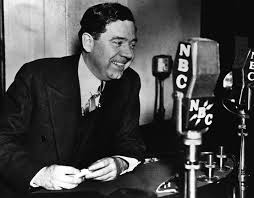
Huey Long: 'What's Morgan and Baruch and Rockefeller and Mellon going to do with all that grub?', Share Our Wealth rally - 1934

April 13, 2016

11 December 1934, Washington DC, USA

Huey Long started the Share Our Wealth movement. He was an FDR suppoerter who became disillusioned with the New Deal, and wanted to tax the super-rich, introduce death duties, and increase property taxes on the super-rich. Share Our Wealth rallies were attended around the nation. Long was assassinated in 1935.

According to the tables which we have assembled, it is our estimate, that four percent of the American people own 85 percent of the wealth of America.

And that over 70% of the people of America don’t own enough to pay the debts that they owe.

How many men ever went to a barbecue and would let one man take off the table what's intended for 9/10th of the people to eat? The only way to be able to feed the balance of the people is to make that man come back and bring back some of that grub that he ain't got no business with!

Now we got a barbecue. We have been praying to the Almighty to send us to a feast. We have knelt on our knees morning and nighttime. The Lord has answered the prayer.  He has called the barbecue. "Come to my feast," He said to 125 million American people. But Morgan and Rockefeller and Mellon and Baruch have walked up and took 85 percent of the victuals off the table!

Now, how are you going to feed the balance of the people? What's Morgan and Baruch and Rockefeller and Mellon going to do with all that grub? They can't eat it, they can't wear the clothes, they can't live in the houses.

Giv'em a yacht!  Giv'em a Palace! Send 'em to Reno and give them a new wife when they want it, if that's what they want. But when they've got everything on God's loving earth that they can eat and they can wear and they can live in, and all that their children can live in and wear and eat, and all of their children's children can use, then we've got to call Mr Morgan and Mr Mellon an Mr Rockefeller back and say, come back here, put that stuff back on this table here that you took away from here that you don't need. Leave something else for the American people to consume. And that's the program.

Source: http://xroads.virginia.edu/~ma01/Kidd/thes...

Enjoyed this speech? Speakola is a labour of love and I’d be very grateful if you would share, tweet or like it. Thank you.

Facebook Twitter Facebook
In 1920-39 Tags HUEY LONG, SHARE OUR WEALTH, SHARE THE WEALTH, TRANSCRIPT, US SENATE, SENATOR
Comment

Huey Long: 'We do not propose a division of wealth, but we propose to limit poverty'. Every Man a King - 1934

April 13, 2016

23 February 1934, radio address to nation, USA

At the time of the speech Long was a US Senator. He started the 'Share Our Wealth' movement. He was assassinated in 1935, while planning to run for President in 1936.

Is that a right of life, when the young children of this country are being reared into a sphere which is more owned by 12 men that is by 120 million people?

Ladies and gentlemen, I have only 30 minutes in which to speak to you this evening, and I, therefore, will not be able to discuss in detail so much as I can write when I have all of the time and space that is allowed me for the subjects, but I will undertake to sketch them very briefly without manuscript or preparation, so that you can understand them so well as I can tell them to you tonight.

I contend, my friends, that we have no difficult problem to solve in America, and that is the view of nearly everyone with whom I have discussed the matter here in Washington and elsewhere throughout the United States -- that we have no very difficult problem to solve.

It is not the difficulty of the problem which we have; it is the fact that the rich people of this country -- and by rich people I mean the super-rich -- will not allow us to solve the problems, or rather the one little problem that is afflicting this country, because in order to cure all of our woes it is necessary to scale down the big fortunes, that we may scatter the wealth to be shared by all of the people.

We have a marvelous love for this Government of ours; in fact, it is almost a religion, and it is well that it should be, because we have a splendid form of government and we have a splendid set of laws. We have everything here that we need, except that we have neglected the fundamentals upon which the American Government was principally predicated.

How may of you remember the first thing that the Declaration of Independence said? It said, "We hold these truths to be self-evident, that there are certain inalienable rights of the people, and among them are life, liberty, and the pursuit of happiness"; and it said, further, "We hold the view that all men are created equal."

Now, what did they mean by that? Did they mean, my friends, to say that all me were created equal and that that meant that any one man was born to inherit $10,000,000,000 and that another child was to be born to inherit nothing?

Did that mean, my friends, that someone would come into this world without having had an opportunity, of course, to have hit one lick of work, should be born with more than it and all of its children and children's children could ever dispose of, but that another one would have to be born into a life of starvation?

That was not the meaning of the Declaration of Independence when it said that all men are created equal of "That we hold that all men are created equal."

Now was it the meaning of the Declaration of Independence when it said that they held that there were certain rights that were inalienable -- the right of life, liberty, and the pursuit of happiness. Is that right of life, my friends, when the young children of this country are being reared into a sphere which is more owned by 12 men than it is by 120,000,000 people?

Is that, my friends, giving them a fair shake of the dice or anything like the inalienable right of life, liberty, and the pursuit of happiness, or anything resembling the fact that all people are created equal; when we have today in America thousands and hundreds of thousands and millions of children on the verge of starvation in a land that is overflowing with too much to eat and too much to wear? I do not think you will contend that, and I do not think for a moment that they will contend it.

Now let us see if we cannot return this Government to the Declaration of Independence and see if we are going to do anything regarding it. Why should we hesitate or why should we quibble or why should we quarrel with one another to find out what the difficulty is, when we know what the Lord told us what the difficulty is, and Moses wrote it out so a blind man could see it, then Jesus told us all about it, and it was later written in the Book of James, where everyone could read it?

I refer to the Scriptures, now, my friends, and give you what it says not for the purpose of convincing you of the wisdom of myself, not for the purpose ladies and gentlemen, of convincing you of the fact that I am quoting the Scripture means that I am to be more believed than someone else; but I quote you the Scripture, rather refer you to the Scripture, because whatever you see there you may rely upon will never be disproved so long as you or your children or anyone may live; and you may further depend upon the fact that not one historical fact that the Bible has ever contained has ever yet been disproved by any scientific discovery or by reason of anything that has been disclosed to man through his own individual mind or through the wisdom of the Lord which the Lord has allowed him to have.

But the Scripture says, ladies and gentlemen, that no country can survive, or for a country to survive it is necessary that we keep the wealth scattered among the people, that nothing should be held permanently by any one person, and that 50 years seems to be the year of jubilee in which all property would be scattered about and returned to the sources from which it originally came, and every seventh year debt should be remitted.

Those two things the Almighty said to be necessary -- I should say He knew to be necessary, or else He would not have so prescribed that the property would be kept among the general run of the people and that everyone would continue to share in it; so that no one man would get half of it and hand it down to a son, who takes half of what was left, and that son hand it down to another one, who would take half of what was left, until, like a snowball going downhill, all of the snow was off of the ground except what the snowball had.

I believe that was the judgment and the view and the law of the Lord, that we would have to distribute wealth every so often, in order that there could not be people starving to death in a land of plenty, as there is in America today. We have in American today more wealth, more goods, more food, more clothing, more houses than we have ever had. We have everything in abundance here. We have the farm problem, my friends, because we have too much cotton, because we have too much wheat, and have too much corn, and too much potatoes.

We have a home-loan problem because we have too many houses, and yet nobody can buy them and live in them.

We have trouble, my friends, in the country, because we have too much money owing, the greatest indebtedness that has ever been given to civilization, where it has been shown that we are incapable of distributing to the actual things that are here, because the people have not money enough to supply themselves with them, and because the greed of a few men is such that they think it is necessary that they own everything, and their pleasure consists in the starvation of the masses, and in their possessing things they cannot use, and their children cannot use, but who bask in the splendor of sunlight and wealth, casting darkness and despair and impressing it on everyone else.

"So, therefore," said the Lord, in effect, "if you see these things that now have occurred and exist in this and other countries, there must be a constant scattering of wealth in any country if this country is to survive."

"Then," said the Lord, in effect, "every seventh year there shall be a remission of debts; there will be no debts after 7 years." That was the law.

Now, let us take America today. We have in American today, ladies and gentlemen, $272,000,000,000 of debt. Two hundred and seventy-two thousand millions of dollars of debts are owed by the various people of this country today. Why, my friends, that cannot be paid. It is not possible for that kind of debt to be paid.

The entire currency of the United States is only $6,000,000,000. That is all of the money that we have got in America today. All the actual money you have got in all of your banks, all that you have got in the Government Treasury, is $6,000,000,000; and if you took all that money and paid it out today you would still owe $266,000,000,000; and if you took all that money and paid again you would still owe $260,000,000,000; and if you took it, my friends, 20 times and paid it you would still owe $150,000,000,000.

You would have to have 45 times the entire money supply of the United States today to pay the debts of the people of America, and then they would just have to start out from scratch, without a dime to go on with.

So, my friends, it is impossible to pay all of these debts, and you might as well find out that it cannot be done. The United States Supreme Court has definitely found out that it could not be done, because, in a Minnesota case, it held that when a State has postponed the evil day of collecting a debt it was a valid and constitutional exercise of legislative power.

Now, ladies and gentlemen, if I may proceed to give you some other words that I think you can understand -- I am not going to belabor you by quoting tonight -- I am going to tell you what the wise men of all ages and all times, down even to the present day, have all said: That you must keep the wealth of the country scattered, and you must limit the amount that any one man can own. You cannot let any man own $300,000,000,000 or $400,000,000,000. If you do, one man can own all of the wealth that they United States has in it.

Now, my friends, if you were off on an island where there were 100 lunches, you could not let one man eat up the hundred lunches, or take the hundred lunches and not let anybody else eat any of them. If you did, there would not be anything else for the balance of the people to consume.

So, we have in America today, my friends, a condition by which about 10 men dominate the means of activity in at least 85 percent of the activities that you own. They either own directly everything or they have got some kind of mortgage on it, with a very small percentage to be excepted. They own the banks, they own the steel mills, they own the railroads, they own the bonds, they own the mortgages, they own the stores, and they have chained the country from one end to the other, until there is not any kind of business that a small, independent man could go into today and make a living, and there is not any kind of business that an independent man can go into and make any money to buy an automobile with; and they have finally and gradually and steadily eliminated everybody from the fields in which there is a living to be made, and still they have got little enough sense to think they ought to be able to get more business out of it anyway.

If you reduce a man to the point where he is starving to death and bleeding and dying, how do you expect that man to get hold of any money to spend with you? It is not possible. Then, ladies and gentlemen, how do you expect people to live, when the wherewith cannot be had by the people?

In the beginning I quoted from the Scriptures. I hope you will understand that I am not quoting Scripture to convince you of my goodness personally, because that is a thing between me and my Maker, that is something as to how I stand with my Maker and as to how you stand with your Maker. That is not concerned with this issue, except and unless there are those of you who would be so good as to pray for the souls of some of us. But the Lord gave his law, and in the Book of James they said so, that the rich should weep and howl for the miseries that had come upon them; and, therefore, it was written that when the rich hold goods they could not use and could not consume, you will inflict punishment on them, and nothing but days of woe ahead of them.

Then we have heard of the great Greek philosopher, Socrates, and the greater Greek philosopher, Plato, and we have read the dialog between Plato and Socrates, in which one said that great riches brought on great poverty, and would be destructive of a country. Read what they said. Read what Plato said; that you must not let any one man be too poor, and you must not let any one man be too rich; that the same mill that grinds out the extra rich is the mill that will grind out the extra poor, because, in order that the extra rich can become so affluent, they must necessarily take more of what ordinarily would belong to the average man.

It is a very simple process of mathematics that you do not have to study, and that no one is going to discuss with you.

So that was the view of Socrates and Plato. That was the view of the English statesmen. That was the view of American statesmen. That was the view of American statesmen like Daniel Webster, Thomas Jefferson, Abraham Lincoln, William Jennings Bryan, and Theodore Roosevelt, and even as late as Herbert Hoover and Franklin D. Roosevelt.

Both of these men, Mr. Hoover and Mr. Roosevelt, came out and said there had to be a decentralization of wealth, but neither one of them did anything about it. But, nevertheless, they recognized the principle. The fact that neither one of them ever did anything about it is their own problem that I am not undertaking to criticize; but had Mr. Hoover carried out what he says ought to be done, he would be retiring from the President's office, very probably, 3 years from now, instead of 1 year ago; and had Mr. Roosevelt proceeded along the lines that he stated were necessary for the decentralization of wealth, he would have gone, my friends, a long way already, and within a few months he would have probably reached a solution of all of the problems that afflict this country.

But I wish to warn you now that nothing that has been done up to this date has taken one dime away from these big-fortune holders; they own just as much as they did, and probably a little bit more; they hold just as many of the debts of the common people as they ever held, and probably a little bit more; and unless we, my friends, are going to give the people of this country a fair shake of the dice, by which they will all get something out of the funds of this land, there is not a chance on the topside of this God's eternal earth by which we can rescue this country and rescue the people of this country.

It is necessary to save the Government of the country, but is much more necessary to save the people of America. We love this country. We love this Government. It is a religion, I say. It is a kind of religion people have read of when women, in the name of religion, would take their infant babes and throw them into the burning flame, where they would be instantly devoured by the all-consuming fire, in days gone by; and there probably are some people of the world even today, who, in the name of religion, throw their tear-dimmed eyes into the sad faces of their fathers and mothers, who cannot given them food and clothing they both needed, and which is necessary to sustain them, and that goes on day after day, and night after night, when day gets into darkness and blackness, knowing those children would arise in the morning without being fed, and probably to bed at night without being fed.

Yet in the name of our Government, and all alone, those people undertake and strive as hard as they can to keep a good government alive, and how long they can stand that no one knows. If I were in their place tonight, the place where millions are, I hope that I would have what I might say -- I cannot give you the word to express the kind of fortitude they have; that is the word -- I hope that I might have the fortitude to praise and honor my Government that had allowed me here in this land, where there is too much to eat and too much to wear, to starve in order that a handful of men can have so much more than they can ever eat or they can ever wear.

Now, we have organized a society, and we call it "Share Our Wealth Society," a society with the motto "every man a king."

Every man a king, so there would be no such thing as a man or woman who did not have the necessities of life, who would not be dependent upon the whims and caprices and ipsi dixit of the financial martyrs for a living. What do we propose by this society? We propose to limit the wealth of big men in the country. There is an average of $15,000 in wealth to every family in America. That is right here today.

We do not propose to divide it up equally. We do not propose a division of wealth, but we propose to limit poverty that we will allow to be inflicted upon any man's family. We will not say we are going to try to guarantee any equality, or $15,000 to families. No; but we do say that one third of the average is low enough for any one family to hold, that there should be a guaranty of a family wealth of around $5,000; enough for a home, and automobile, a radio, and the ordinary conveniences, and the opportunity to educate their children; a fair share of the income of this land thereafter to that family so there will be no such thing as merely the select to have those things, and so there will be no such thing as a family living in poverty and distress.

We have to limit fortunes. Our present plan is that we will allow no one man to own more than $50,000,000. We think that with that limit we will be able to carry out the balance of the program. It may be necessary that we limit it to less than $50,000,000. It may be necessary, in working out of the plans, that no man's fortune would be more than $10,000,000 or $15,000,000. But be that as it may, it will still be more than any one man, or any one man and his children and their children, will be able to spend in their lifetimes; and it is not necessary or reasonable to have wealth piled up beyond that point where we cannot prevent poverty among the masses.

Another thing we propose is old-age pension of $30 a month for everyone that is 60 years old. Now, we do not give this pension to a man making $1,000 a year, and we do not give it to him if he has $10,000 in property, but outside of that we do.

We will limit hours of work. There is not any necessity of having over-production. I think all you have got to do, ladies and gentlemen, is just limit the hours of work to such an extent as people will work only so long as is necessary to produce enough for all of the people to have what they need. Why, ladies and gentleman, let us say that all of these labor-saving devices reduce hours down to where you do not have to work but 4 hours a day; that is enough for these people, and then praise be the name of the Lord, if it gets that good. Let it be good and not a curse, and then we will have 5 hours a day and 5 days a week, or even less that that, and we might give a man a whole month off during a year, or give him 2 months; and we might do what other countries have seen fit to do, and what I did in Louisiana, by having schools by which adults could go back and learn the things that have been discovered since they went to school.

We will not have any trouble taking care of the agricultural situation. All you have to do is balance your production with your consumption. You simply have to abandon a particular crop that you have too much of, and all you have to do is store the surplus for the next year, and the Government will take it over. When you have good crops in the area in which the crops that have been planted are sufficient for another year, put in your public works in the particular year when you do not need to raise any more, and by that means you get everybody employed. When the Government has enough of any particular crop to take care of all of the people, that will be all that is necessary; and in order to do all of this, our taxation is going to be to take the billion-dollar fortunes and strip them down to frying size, not to exceed $50,000,000, and it is necessary to come to $10,000,000, we will come to $10,000,000. We have worked the proposition out to guarantee a limit upon property (and no man will own less than one third the average), and guarantee a reduction of fortunes and a reduction of hours to spread wealth throughout this country. We would care for the old people above 60 and take them away from this thriving industry and given them a chance to enjoy the necessities and live in ease, and thereby lift from the market the labor which would probably create a surplus of commodities.

Those are the things we propose to do. "Every man a king." Every man to eat when there is something to eat; all to wear something when there is something to wear. That makes us all sovereign.

You cannot solve these things through these various and sundry alphabetical codes. You can have the N.R.A. and P.W.A. and C.W.A. and the U.U.G. and G.I.N. and any other kind of "dad-gummed" lettered code. You can wait until doomsday and see 25 more alphabets, but that is not going to solve this proposition. Why hide? Why quibble? You know what the trouble is. The man that says he does not know what the trouble is just hiding his face to keep from seeing the sunlight.

God told you what the trouble was. The philosophers told you what the trouble was; and when you have a country where one man owns more than 100,000 people, or a million people, and when you have a country where there are four men, as in America, that have got more control over things than all the 120,000,000 people together, you know what the trouble is.

We had these great incomes in this country; but the farmer, who plowed from sunup to sundown, who labored here from sunup to sundown for 6 days a week, wound up at the end of the with practically nothing.

And we ought to take care of the veterans of the wars in this program. That is a small matter. Suppose it does cost a billion dollars a year -- that means that the money will be scattered throughout this country. We ought to pay them a bonus. We can do it. We ought to take care of every single one of the sick and disabled veterans. I do not care whether a man got sick on the battlefield or did not; every man that wore the uniform of this country is entitled to be taken care of, and there is money enough to do it; and we need to spread the wealth of the country, which you did not do in what you call the N.R.A.

If the N.R.A. has done any good, I can put it all in my eye without having it hurt. All I can see that N.R.A. has done is to put the little man out of business -- the little merchant in his store, the little Dago that is running a fruit stand, or the Greek shoe-shining stand, who has to take hold of a code of 275 pages and study with a spirit level and compass and looking-glass; he has to hire a Philadelphia lawyer to tell him what is in the code; and by the time he learns what the code is, he is in jail or out of business; and they have got a chain code system that has already put him out of business. The N.R.A. is not worth anything, and I said so when they put it through.

Now, my friends, we have got to hit the root with the axe. Centralized power in the hands of a few, with centralized credit in the hands of a few, is the trouble.

Get together in your community tonight or tomorrow and organize one of our Share Our Wealth societies. If you do not understand it, write me and let me send you the platform; let me give you the proof of it.

This is Huey P. Long talking, United States Senator, Washington, D.C. Write me and let me send you the data on this proposition. Enroll with us. Let us make known to the people what we are going to do. I will send you a button, if I have got enough of them left. We have got a little button that some of our friends designed, with our message around the rim of the button, and in the center "Every man a king." Many thousands of them are meeting through the United States, and every day we are getting hundreds and hundreds of letters. Share Our Wealth societies are now being organized, and people have it within their power to relieve themselves from this terrible situation.

Look at what the Mayo brothers announced this week, these greatest scientists of all the world today, who are entitled to have more money than all the Morgans and the Rockefellers, or anyone else, and yet the Mayos turn back their big fortunes to be used for treating the sick, and said they did not want to lay up fortunes in this earth, but wanted to turn them back where they would do some good; but the other big capitalists are not willing to do that, are not willing to do what these men, 10 times more worthy, have already done, and it is going to take a law to require them to do it.

Organize your Share Our Wealth Society and get your people to meet with you, and make known your wishes to your Senators and Representatives in Congress.

Now, my friends, I am going to stop. I thank you for this opportunity to talk to you. I am having to talk under the auspices and by the grace and permission of the National Broadcasting System tonight, and they are letting me talk free. If I had the money, and I wish I had the money, I would like to talk to you more often on this line, but I have not got it, and I cannot expect these people to give it to me free except on some rare instance. But, my friends, I hope to have the opportunity to talk with you, and I am writing to you, and I hope that you will get up and help in the work, because the resolution and bills are before Congress, and we hope to have your help in getting together and organizing your Share Our Wealth society.

Now, that I have but a minute left, I want to say that I suppose my family is listening in on the radio in New Orleans, and I will say to my wife and three children that I am entirely well and hope to be home before many more days, and I hope they have listened to my speech tonight, and I wish them and all their neighbors and friends everything good that may be had.

I thank you, my friends, for your kind attention, and I hope you will enroll with us, take care of your own work in the work of this Government, and share or help in our Share Our Wealth society.

I thank you.

Source: http://www.americanrhetoric.com/speeches/h...

Enjoyed this speech? Speakola is a labour of love and I’d be very grateful if you would share, tweet or like it. Thank you.

Facebook Twitter Facebook
In 1920-39 Tags HUEY LONG, EVERY MAN A KING, LOUISIANA, NEW DEAL, SHARE OUR WEALTH, FDR, SENATE, SENATOR, TRANSCRIPT
Comment

Robert Byrd: 'I weep for my country', Speech against Iraq invasion - 2003

April 4, 2016

19 March 2003, US Senate, Washington DC, USA

I believe in this beautiful country. I have studied its roots and gloried in the wisdom of its magnificent Constitution. I have marveled at the wisdom of its founders and framers. Generation after generation of Americans has understood the lofty ideals that underlie our great Republic. I have been inspired by the story of their sacrifice and their strength.

But, today I weep for my country. I have watched the events of recent months with a heavy, heavy heart. No more is the image of America one of strong, yet benevolent peacekeeper. The image of America has changed. Around the globe, our friends mistrust us, our word is disputed, our intentions are questioned.

Instead of reasoning with those with whom we disagree, we demand obedience or threaten recrimination. Instead of isolating Saddam Hussein, we seem to have isolated ourselves. We proclaim a new doctrine of preemption which is understood by few and feared by many. We say that the United States has the right to turn its firepower on any corner of the globe which might be suspect in the war on terrorism. We assert that right without the sanction of any international body. As a result, the world has become a much more dangerous place.

We flaunt our superpower status with arrogance. We treat U.N. Security Council members like ingrates who offend our princely dignity by lifting their heads from the carpet. Valuable alliances are split. After war has ended, the United States will have to rebuild much more than the country of Iraq. We will have to rebuild America’s image around the globe.

The case this Administration tries to make to justify its fixation with war is tainted by charges of falsified documents and circumstantial evidence. We cannot convince the world of the necessity of this war for one simple reason. This is a war of choice.

There is no credible information to connect Saddam Hussein to 9/11. The twin towers fell because a world-wide terrorist group, al-Qaida, with cells in over 60 nations, struck at our wealth and our influence by turning our own planes into missiles, one of which would likely have slammed into the dome of this beautiful Capitol except for the brave sacrifice of the passengers on board.

The brutality seen on September 11th and in other terrorist attacks we have witnessed around the globe are the violent and desperate efforts by extremists to stop the daily encroachment of western values upon their cultures. That is what we fight. It is a force not confined to borders. It is a shadowy entity with many faces, many names, and many addresses.

But, this Administration has directed all of the anger, fear, and grief which emerged from the ashes of the twin towers and the twisted metal of the Pentagon towards a tangible villain, one we can see and hate and attack. And villain he is. But, he is the wrong villain. And this is the wrong war. If we attack Saddam Hussein, we will probably drive him from power. But, the zeal of our friends to assist our global war on terrorism may have already taken flight.

The general unease surrounding this war is not just due to “orange alert.” There is a pervasive sense of rush and risk and too many questions unanswered. How long will we be in Iraq? What will be the cost? What is the ultimate mission? How great is the danger at home? A pall has fallen over the Senate Chamber. We avoid our solemn duty to debate the one topic on the minds of all Americans, even while scores of thousands of our sons and daughters faithfully do their duty in Iraq.

What is happening to this country? When did we become a nation which ignores and berates our friends? When did we decide to risk undermining international order by adopting a radical and doctrinaire approach to using our awesome military might? How can we abandon diplomatic efforts when the turmoil in the world cries out for diplomacy?

Why can this President not seem to see that America’s true power lies not in its will to intimidate, but in its ability to inspire?

War appears inevitable. But, I continue to hope that the cloud will lift. Perhaps Saddam will yet turn tail and run. Perhaps reason will somehow still prevail. I along with millions of Americans will pray for the safety of our troops, for the innocent civilians in Iraq, and for the security of our homeland. May God continue to bless the United States of America in the troubled days ahead, and may we somehow recapture the vision which for the present eludes us.

Source: http://www.salon.com/2008/03/19/byrd/

Enjoyed this speech? Speakola is a labour of love and I’d be very grateful if you would share, tweet or like it. Thank you.

Facebook Twitter Facebook
In 2000s Tags ROBERT BYRD, SENATOR, US SENATE, IRAQ WAR, INVASION
Comment

See my film!

Limited Australian Season

March 2025

Details and ticket bookings at

angeandtheboss.com

Support Speakola

Hi speech lovers,
With costs of hosting website and podcast, this labour of love has become a difficult financial proposition in recent times. If you can afford a donation, it will help Speakola survive and prosper.

Best wishes,
Tony Wilson.

Become a Patron!

Learn more about supporting Speakola.

Featured political

Featured
Jon Stewart: "They responded in five seconds", 9-11 first responders, Address to Congress - 2019
Jacinda Ardern: 'They were New Zealanders. They are us', Address to Parliament following Christchurch massacre - 2019
Dolores Ibárruri: "¡No Pasarán!, They shall not pass!', Defense of 2nd Spanish Republic - 1936
Jimmy Reid: 'A rat race is for rats. We're not rats', Rectorial address, Glasgow University - 1972

Featured eulogies

Featured
For Geoffrey Tozer: 'I have to say we all let him down', by Paul Keating - 2009
for James Baldwin: 'Jimmy. You crowned us', by Toni Morrison - 1988
for Michael Gordon: '13 days ago my Dad’s big, beautiful, generous heart suddenly stopped beating', by Scott and Sarah Gordon - 2018

Featured commencement

Featured
Tara Westover: 'Your avatar isn't real, it isn't terribly far from a lie', The Un-Instagrammable Self, Northeastern University - 2019
Tim Minchin: 'Being an artist requires massive reserves of self-belief', WAAPA - 2019
Atul Gawande: 'Curiosity and What Equality Really Means', UCLA Medical School - 2018
Abby Wambach: 'We are the wolves', Barnard College - 2018
Eric Idle: 'America is 300 million people all walking in the same direction, singing 'I Did It My Way'', Whitman College - 2013
Shirley Chisholm: ;America has gone to sleep', Greenfield High School - 1983

Featured sport

Featured
Joe Marler: 'Get back on the horse', Harlequins v Bath pre game interview - 2019
Ray Lewis : 'The greatest pain of my life is the reason I'm standing here today', 52 Cards -
Mel Jones: 'If she was Bradman on the field, she was definitely Keith Miller off the field', Betty Wilson's induction into Australian Cricket Hall of Fame - 2017
Jeff Thomson: 'It’s all those people that help you as kids', Hall of Fame - 2016

Fresh Tweets


Featured weddings

Featured
Dan Angelucci: 'The Best (Best Man) Speech of all time', for Don and Katherine - 2019
Hallerman Sisters: 'Oh sister now we have to let you gooooo!' for Caitlin & Johnny - 2015
Korey Soderman (via Kyle): 'All our lives I have used my voice to help Korey express his thoughts, so today, like always, I will be my brother’s voice' for Kyle and Jess - 2014

Featured Arts

Featured
Bruce Springsteen: 'They're keepers of some of the most beautiful sonic architecture in rock and roll', Induction U2 into Rock Hall of Fame - 2005
Olivia Colman: 'Done that bit. I think I have done that bit', BAFTA acceptance, Leading Actress - 2019
Axel Scheffler: 'The book wasn't called 'No Room on the Broom!', Illustrator of the Year, British Book Awards - 2018
Tina Fey: 'Only in comedy is an obedient white girl from the suburbs a diversity candidate', Kennedy Center Mark Twain Award -  2010
Tina Fey: 'Only in comedy is an obedient white girl from the suburbs a diversity candidate', Kennedy Center Mark Twain Award - 2010

Featured Debates

Featured
Sacha Baron Cohen: 'Just think what Goebbels might have done with Facebook', Anti Defamation League Leadership Award - 2019
Greta Thunberg: 'How dare you', UN Climate Action Summit - 2019
Charlie Munger: 'The Psychology of Human Misjudgment', Harvard University - 1995
Lawrence O'Donnell: 'The original sin of this country is that we invaders shot and murdered our way across the land killing every Native American that we could', The Last Word, 'Dakota' - 2016