• Genre
  • About
  • Submissions
  • Donate
  • Search
Menu

Speakola

All Speeches Great and Small
  • Genre
  • About
  • Submissions
  • Donate
  • Search
Share a political speech

Keith Oibermann: 'Mr President, the war isn't about you, or golf'. Special Comment MSNBC - 2008

January 18, 2017

14 May 2008, MSNBC studio, USA

President Bush has resorted anew to the sleaziest fear-mongering and mass manipulation of an administration and public life dedicated to realizing the lowest of our expectations. And he has now applied these poisons to the 2008 presidential election, on behalf of the party at whose center he and John McCain lurk.

Mr. Bush has predicted that the election of a Democratic president could "eventually lead to another attack on the United States." This ludicrous, infuriating, holier-than-thou and most importantly bone-headedly wrong statement came during a May 13 interview with Politico.com and online users of Yahoo.

The question was phrased as follows: "If we were to pull out of Iraq next year, what's the worst that could happen, what's the doomsday scenario?"

The president replied: "Doomsday scenario of course is that extremists throughout the Middle East would be emboldened, which would eventually lead to another attack on the United States. The biggest issue we face is, it's bigger than Iraq, it's this ideological struggle against cold-blooded killers who will kill people to achieve their political objectives."

Mr. Bush, at long last, has it not dawned on you that the America you have now created, includes "cold-blooded killers who will kill people to achieve their political objectives?" They are those in — or formerly in — your employ, who may yet be charged some day with war crimes.

Through your haze of self-congratulation and self-pity, do you still have no earthly clue that this nation has laid waste to Iraq to achieve your political objectives? "This ideological struggle," Mr. Bush, is taking place within this country.

It is a struggle between Americans who cherish freedom, ours and everybody else's, and Americans like you, sir, to whom freedom is just a brand name, just like "Patriot Act" is a brand name or "Protect America" is a brand name.

But wait, there's more: You also said "Iraq is the place where al-Qaida and other extremists have made their stand and they will be defeated." They made no "stand" in Iraq, sir, you allowed them to assemble there!

As certainly as if that were the plan, the borders were left wide open by your government's farcical post-invasion strategy of "they'll greet us as liberators." And as certainly as if that were the plan, the inspiration for another generation of terrorists in another country was provided by your government's farcical post-invasion strategy of letting the societal infra-structure of Iraq dissolve, to be replaced by an American viceroy, enforced by merciless mercenaries who shoot unarmed Iraqis and then evade prosecution in any country by hiding behind your skirts, sir.

Terrorism inside Iraq is your creation, Mr. Bush!

It was a Yahoo user who brought up the second topic upon whose introduction Mr. Bush should have passed, or punted, or gotten up and left the room claiming he heard Dick Cheney calling him.

"Do you feel," asked an ordinary American, "that you were misled on Iraq?"

"I feel like — I felt like, there were weapons of mass destruction," the president said. "You know, 'mislead' is a strong word, it almost connotes some kind of intentional — I don't think so, I think there was a — not only our intelligence community, but intelligence communities all across the world shared the same assessment. And so I was disappointed to see how flawed our intelligence was."

Flawed.

You, Mr. Bush, and your tragically know-it-all minions, threw out every piece of intelligence that suggested there were no such weapons.

You, Mr. Bush, threw out every person who suggested that the sober, contradictory, reality-based intelligence needed to be listened to, and fast.

You, Mr. Bush, are responsible for how "intelligence communities all across the world shared the same assessment."

You and the sycophants you dredged up and put behind the most important steering wheel in the world propagated palpable nonsense and shoved it down the throat of every intelligence community across the world and punished anybody who didn't agree it was really chicken salad.

And you, Mr. Bush, threw under the bus, all of the subsequent critics who bravely stepped forward later to point out just how much of a self-fulfilling prophecy you had embraced, and adopted as this country's policy in lieu of, say, common sense.

The fiasco of pre-war intelligence, sir, is your fiasco.

You should build a great statue of yourself turning a deaf ear to the warnings of realists, while you are shown embracing the three-card monte dealers like Richard Perle and Donald Rumsfeld and Dick Cheney.

That would be a far more fitting tribute to your legacy, Mr. Bush, than this presidential library you are constructing as a giant fable about your presidency, an edifice you might as well claim was built from "Iraqi weapons of mass destruction" because there will be just as many of those inside your presidential library as there were inside Saddam Hussein's Iraq.

Of course if there is one overriding theme to this president's administration it is the utter, always-failing, inability to know when to quit when it is behind. And so Mr. Bush answered yet another question about this layered, nuanced, wheels-within-wheels garbage heap that constituted his excuse for war.

"And so you feel that you didn't have all the information you should have or the right spin on that information?"

"No, no," replied the President. "I was told by people, that they had weapons of mass destruction …"

People? What people? The insane informant "Curveball?" The Iraqi snake-oil salesman Ahmed Chalabi? The American snake-oil salesman Dick Cheney?

"I was told by people that they had weapons of mass destruction, as were members of Congress, who voted for the resolution to get rid of Saddam Hussein.

"And of course, the political heat gets on and they start to run and try to hide from their votes."

Mr. Bush, you destroyed the evidence that contradicted the resolution you jammed down the Congress's throat, the way you jammed it down the nation's throat. When required by law to verify that your evidence was accurate, you simply resubmitted it, with phrases amounting to "See, I done proved it" virtually written in the margins in crayon.

You defied patriotic Americans to say "The Emperor Has No Clothes," only with the stakes — as you and the mental dwarves in your employ put it — being a "mushroom cloud over an American city."

And as a final crash of self-indulgent nonsense, when the incontrovertible truth of your panoramic and murderous deceit has even begun to cost your political party seemingly perpetual congressional seats in places like North Carolina and Mississippi, you can actually say with a straight face, sir, that for members of Congress "the political heat gets on and they start to run and try to hide from their votes" — while you greet the political heat and try to run and hide from your presidency, and your legacy — 4,000 of the Americans you were supposed to protect — dead in Iraq, with your only feeble, pathetic answer being, "I was told by people that they had weapons of mass destruction."

Then came Mr. Bush's final blow to our nation's solar plexus, his last reopening of our common wounds, his last remark that makes the rest of us question not merely his leadership or his judgment but his very suitably to remain in office.

"Mr. President," he was asked, "you haven't been golfing in recent years. Is that related to Iraq?"

"Yes," began perhaps the most startling reply of this nightmarish blight on our lives as Americans on our history. "It really is. I don't want some mom whose son may have recently died to see the Commander in Chief playing golf. I feel I owe it to the families to be as — to be in solidarity as best as I can with them. And I think playing golf during a war just sends the wrong signal."

Golf, sir? Golf sends the wrong signal to the grieving families of our men and women butchered in Iraq? Do you think these families, Mr. Bush, their lives blighted forever, care about you playing golf? Do you think, sir, they care about you?

You, Mr. Bush, let their sons and daughters be killed. Sir, to show your solidarity with them you gave up golf? Sir, to show your solidarity with them you didn't give up your pursuit of this insurance-scam, profiteering, morally and financially bankrupting war.

Sir, to show your solidarity with them you didn't even give up talking about Iraq, a subject about which you have incessantly proved without pause or backwards glance, that you may literally be the least informed person in the world?

Sir, to show your solidarity with them, you didn't give up your presidency? In your own words"solidarity as best as I can" is to stop a game? That is the "best" you can do?

Four thousand Americans give up their lives and your sacrifice was to give up golf! Golf. Not "Gulf" — golf.

And still it gets worse. Because it proves that the president's unendurable sacrifice, his unbearable pain, the suspension of getting to hit a ball with a stick, was not even his own damned idea.

"Mr. President, was there a particular moment or incident that brought you to that decision, or how did you come to that?"

"I remember when [diplomat Sergio Vieira] de Mello, who was at the U.N., got killed in Baghdad as a result of these murderers taking this good man's life. And I was playing golf, I think I was in central Texas, and they pulled me off the golf course and I said, it's just not worth it any more to do."

Your one, tone-deaf, arrogant, pathetic, embarrassing gesture, and you didn't even think of it yourself? The great Bushian sacrifice — an Army private loses a leg, a Marine loses half his skull, 4,000 of their brothers and sisters lose their lives — and you lose golf, and they have to pull you off the golf course to get you to just do that?

If it's even true.

Apart from your medical files, which dutifully record your torn calf muscle and the knee pain which forced you to give up running at the same time — coincidence, no doubt — the bombing in Baghdad which killed Sergio Vieira de Mello of the U.N. and interrupted your round of golf was on Aug. 19, 2003.

Yet CBS News has records of you playing golf as late as Oct. 13 of that year, nearly two months later.

Mr. Bush, I hate to break it to you 6 1/2 years after you yoked this nation and your place in history to the wrong war, in the wrong place, against the wrong people, but the war in Iraq is not about you.

It is not, Mr. Bush, about your grief when American after American comes home in a box.

It is not, Mr. Bush, about what your addled brain has produced in the way of paranoid delusions of risks that do not exist, ready to be activated if some Democrat, and not your twin Mr. McCain, succeeds you.

The war in Iraq, your war, Mr. Bush, is about how you accomplished the derangement of two nations, and how you helped funnel billions of taxpayer dollars to lascivious and perennially thirsty corporations like Halliburton and Blackwater, and how you sent 4,000 Americans to their deaths for nothing.

It is not, Mr. Bush, about your golf game! And, sir, if you have any hopes that next Jan. 20 will not be celebrated as a day of soul-wrenching, heart-felt thanksgiving, because your faithless stewardship of this presidency will have finally come to a merciful end, this last piece of advice:

When somebody asks you, sir, about Democrats who must now pull this country back from the abyss you have placed us at ...

When somebody asks you, sir, about the cooked books and faked threats you foisted on a sincere and frightened nation …

When somebody asks you, sir, about your gallant, noble, self-abnegating sacrifice of your golf game so as to soothe the families of the war dead.

This advice, Mr. Bush: Shut the hell up!

Source: http://www.nbcnews.com/id/24632990/#.WH4V0...

Enjoyed this speech? Speakola is a labour of love and I’d be very grateful if you would share, tweet or like it. Thank you.

Facebook Twitter Facebook
In 2000s Tags KEITH OIBERMANN, SPECIAL COMMENT, MSNBC, TRANSCRIPT
Comment

Louis V Gutierrez: "If the new President comes for the Muslims, I will be a Muslim", speech to Congress about Donald Trump - 2017

January 16, 2017

10 January 2017, Congress, Washington D.C., USA

Mr. Speaker, let me tell you where I will not be on inauguration day.  I will not be here or outside at the inauguration ceremony.

I will be in Washington late that evening because the event I am going to is on January 21st.  It is the Women’s March on Washington.

You can get more information on Facebook which is how I heard about it.

Or I should say, how my wife Soraida heard about it.

I said to her a little after election day, I said, “You know honey, I don’t think I can go to DC and watch Donald Trump get sworn in,” and she said, “oh you’re going to Washington, just not for that” and she told me about the women’s march.

She said you and I are going together.

Now, I can already hear the phones ringing in my office with people calling to say, “Oh, you Democrats are sore losers and you just hate Republicans.”

No.  I went to two George Bush inaugurations and I work with Republicans all the time.  Just read Breitbart which seems to write an article anytime I even glance favorably at a Republican colleague.

But this is different.

I knew that George W. Bush and I would disagree on many issues from trade to health care to the war in Iraq, but I never thought George W. Bush was trying to make my own country hostile to me, my wife, my daughters and my grandson.  I never felt he was a threat to the nation I love so deeply and have served now for almost a quarter century.

The reason I am not going is that I cannot bring myself to justify morally or intellectually the immense power we are placing in that man’s hands. 

I could not look at my wife, my daughters or my grandson in the eye if I sat there and attended as if everything that candidate Donald Trump had said about The women, about The Latinos, or The Blacks, The Muslims or any of the other things he said in his speeches and Tweets – that any of that is OK or erased from my memory.

We all heard the tape when Donald Trump was bragging – bragging – about grabbing women by their private parts without their consent. 

It is something I can never un-hear.

Bragging to that guy on TV that he would grab women below the belt as a way of hitting on them.

Sorry.  That is never OK.

It is never just locker room talk.

It is offensive and, if he ever actually did it, it is criminal.

I hang out with Republicans - with Republican elected-officials…in an actual locker room in the Rayburn Building and if they ever started talking like that, I wouldn’t just walk away, I would tell them to their faces why they are wrong and I would not allow it to go unnoticed or be dismissed as normal or excusable.  I don’t know a Republican Member of this body who would let that type of comment just slide by as if it were OK.

So that’s why I will hold hands with my wife and march with the women on January 21st in Washington.

And that is why I am calling on all of my progressive allies to come march with the women as well.

If you care about a living wage, come join the women.  If you care about the environment, come join the march.

We know as a society, when women win, we all win, so I plan to be there

It is deeply personal and deeply patriotic to march, to make my opinions known by walking with my allies arm-in-arm.

I want to be able to look my two beautiful Latina daughters and my beautiful half-Puerto Rican/half-Mexican, 100% American grandson in the eye with a clear conscience.

When the new President denigrates Latinos or Mexicans or immigrants as drug-dealers and criminals, I want to be able to say I did not condone or allow that type of speech to go mainstream; That was not normalized on my watch.

Because the future President said the American-born children of immigrants were not capable of being American judges, I cannot sit there at his inauguration as if that is OK and I forgive him.

I am deeply honored to return to the U.S. Congress, and I want to thank the people of the Fourth District for the trust and confidence they have placed in me. 

My constituents knew when they voted for me that I would be a fighter and I cannot let them down.

If the new President comes for the Muslims, I will be a Muslim.

If they come for Planned Parenthood, I will stand with Planned Parenthood.

When they deny climate science, I will make my voice heard.

I will use whatever peaceful means available to make sure the words and actions of our new President do not become the new mainstream.

And that, Mr. Speaker, is why I will not be here for the inauguration and why I will be marching with women from across the country.


Source: https://gutierrez.house.gov/media-center/p...

Enjoyed this speech? Speakola is a labour of love and I’d be very grateful if you would share, tweet or like it. Thank you.

Facebook Twitter Facebook
In 2010s MORE 3 Tags LOUIS V GUTIERREZ, TRANSCRIPT, DONALD TRUMP, INAUGURATION, WOMEN'S MARCH, PROTEST, ELECTION 2016
Comment

Joe Biden: 'I've always had someone to lean on', accepting Presidential Medal of Freedom - 2016

January 13, 2017

12 January 2016, White House, Washington D.C., USA

(The Medal of Freedom is presented.)  (Applause.)
 
THE VICE PRESIDENT:  Mr. President.  (Applause.)  Please, please, thank you.  Thank you.  (Applause.)  Please.  Thank you. 
 
Ricchetti, you're fired.  (Laughter.)  For the press, Ricchetti is my chief of staff.  (Laughter.)
 
I had no inkling.  I thought we were coming over, Michelle, to -- for you, Jill, and Barack and I and a couple of senior staff to toast one another and say what an incredible journey it’s been.
 
Mr. President, you got right the part about my leaning on Jill.  But I’ve also leaned on you and a lot of people in this room.  I look around the room, and I see great friends like Ted Kaufman, who has been -- has so much wisdom.  Guys like Mel Monzack.  I look around here and I’m startled.  I keep seeing people I don't expect.  Madam President, how are you?  Mr. President, look at my new boss over there.  (Laughter.) 
 
But you know, I get a lot of credit I don't deserve, to state the obvious and -- because I’ve always had somebody to lean on.  From back that time in 1972, when the accident happened, I leaned on -- and I mean this in literal sense; Chris knows this -- Dodd knows this, and Mel knows this, and Ted knows this -- I leaned on my sons Beau and Hunter.  And I continue to lean on Hunter who continues to in a bizarre kind of way raise me.  I mean I’ve leaned on them.
 
And, Mr. President, you observed early on that when either one of my boys would walk in the room, they’d walk up and say, Dad, what can I get you?  Dad, what do you need?  
 
And then Jill came along, and she saved our lives.  She -- no man deserves one great love, let alone two.  And -- but everybody knows here, I am Jill’s husband.  Everybody knows that I love her more than she loves me.  (Laughter.)  With good reason.  (Laughter.)  And she gave me the most precious gift, the love of my life, the life of my love, my daughter, Ashley.
 
And I continue to lean on the family.  Mr. President, you kidded me once.  You heard that the preparation for the two debates -- vice presidential debates that I had -- I only had two that Beau and Hunt would be the last people in the room.  And Beau would say, look at me, Dad.  Look at me.  Remember, remember home base.  Remember.  
 
And the Secret Service can tell you, Mr. President, that Beau and Hunt and Ashley continue to have to corral me.  We were at one of the national parks, and I was climbing up on top of a bridge to jump off the bridge with a bunch of young kids.  And I hear my sons yelling, Dad, get down.  Now!  (Laughter.)  And I just started laughing so hard I couldn’t stop.  And I said, I was just going to do a flip -- a full gainer off here.  
 
He said, Dad, the Secret Service doesn't want you up there.  Dad.  Look at me, Dad.  (Laughter.)  
 
So we've never figured out who the father is in this family.  (Laughter.) 
 
And, Mr. President, you know that with good reason there is no power in the vice presidency.  Matter of fact I just did for Nancy Pelosi’s daughter a reading of the Constitution.  You probably did one for her.  And they had me read the provisions relating to the vice presidency in the Constitution.  And there is no inherent power, nor should there be.
 
But, Mr. President, you have more than kept your commitment to me by saying that you wanted me to help govern.  The President’s line often -- other people don't hear it that often, but when someone would say, can you get Joe to do such and such.  He says, I don't do his schedule.  He doesn't do mine.  
 
Every single thing you've asked me to do, Mr. President, you have trusted me to do.  And that is -- that's a remarkable thing.  I don't think according to -- I see the President of Georgetown here, as well.  I don't think according to the presidential, vice presidential scholars that kind of relationship has existed. I mean, for real.  It’s all you, Mr. President.  It’s all you.
 
The reason why when you send me around the world, nothing gets -- as my mom would say, gets missed between the cup and the lip, it’s because they know when I speak, I speak for you.  
 
And it’s been easy, Mr. President, because we not only have the same political philosophy and ideology, I tell everybody -- and I’ve told them from the beginning.  And I’m not saying this to reciprocate.  I’ve never known a President and few people I’ve ever met my whole life -- I can count on less than one hand -- who have had the integrity and the decency and the sense of other people’s needs like you do.  
 
I know you were upset when I told the story about when Hunt and I were worried that Beau would have to -- that he would, as a matter of honor, decide he had to step down as attorney general while he was fighting his battle because he had aphasia.  He was losing his ability to speak, and he didn't want to ever be in a position where to him everything was about duty and honor. 
 
And I said, and he may resign.  I don't know I just have the feeling he may.  And Hunt and I had talked about this.  And I said, he doesn't have any other income, but we're all right because Hunt’s there, and I can sell the house.  
 
We were having a private lunch like we do once a week.  And this man got up, came over, grabbed me by the shoulders, looked me in the eye, and said, don't you sell that house.  You love that house.
 
I said, it’s no big deal, Mr. President.  He said, I’ll give you the money.  We’ll give you the money.  Promise me, promise me you won’t sell that house.
 
I remember when Ashley, Mr. President, we were in the Oval, and Ashley was in an elevator, and the elevator plummeted to the -- she was with a group of people -- I forget which building in Philadelphia, and it plummeted to the ground.  And immediately the Service was worried that she may have been badly hurt.  And I got up to take the call, and you didn't let up until you made sure your service followed through and made sure everything was all right.
 
But you know, Mr. President, we kid about both about marrying up.  We both did, that kind of thing.  But the truth of the matter is -- I said this to Michelle last night.  Michelle is the finest First Lady in my view that has ever served in the office.  There’s been other great First Ladies, but I really genuinely mean it.  (Applause.) 
 
When I got to meet Michelle’s brother, and he told me about how you guys were raised, and I got to know and love your mom, if your mom -- were your mom 15 years older, she could have been my mom.  Literally, the way you were raised, the way we were raised, there wasn’t any difference.  And I knew that this decision to join you, which was the greatest honor of my life, was the right decision on the night we had to go and accept the nomination, the formal -- we’d be nominated at the convention.  And Finnegan, who is now 18 years old, was then 10 years old.  And she came to me, and she said, Pop, is it okay if the room that we're in -- Finnegan, Maisy, and Naomi -- that we have the beds taken out.  And I said, why?  She said, maybe the Obama girls and your brothers’ children, maybe they would come down, all sleep together in sleeping bags.  (Laughter.)  And I give you my word as a Biden, I knew when I left to go to the convention, open that door, and saw them cuddled together, I knew this was the right decision.  I knew it was the right decision.  I really did.  Because, Mr. President, the same values set -- the same values set.
 
Folks, you know, I joke with my staff that I don't know why they pay them anything, because they get to advise me.  (Laughter.)  Let me explain what I mean by that.  As the President of the University of Delaware, where my heart resides, and my home campus of Delaware, as he can tell you, it's -- I get to give you advice.  I get to be the last guy in the room and give you advice on the most difficult decisions anyone has to make in the whole world.  But I get to walk out, and you make it all by yourself.  All by yourself.  
 
Harry Truman was right about the buck stopping at the desk.  And I've never, never, never, never, never, never, never, never once doubted, on these life and death decisions, I never once doubted that your judgement was flawed -- not once.  Not once.  
 
And we've disagreed, and we've argued, and we've raised our voices, one of which we made a deal we'd be completely open like brothers with one another.  But, Mr. President, I watched you under intense fire.  I will venture to say that no President in history has had as many novel crises land on his desk in all of history.  The Civil War was worse, the World War Two was worse, but, Mr. President, almost every one of the crises you faced was a case of first instance -- a case of first instance.  And I watched that prodigious mind and that heart as big as your head -- I've watched you.  I've watched how you've acted.
 
When you see a woman or man under intense pressure, you get a measure -- and you know that, Michelle, and your daughters know it, as well.  This is a remarkable man.  And I just hope that the asterisk in history that is attached to my name when they talk about this presidency is that I can say I was part of the journey of a remarkable man who did remarkable things for this country.  (Applause.)
 
You know, I can't let a comment go by without quoting an Irish poet.  (Laughter.)  Jill and I talk about why you were able to develop the way you developed and with the heart you have.  Michelle and I have talked about it.  I've confided in Michelle, I've gone to her for advice.  We've talked about this man.  You give me insight.  And I think it's because -- Mr. President, you gave me credit for having understanding other people's misery and suffering.  Mr. President, there is not one single, solitary ounce of entitlement in you, or Michelle, or your beautiful daughters -- and you girls are incredible, you really are.  That’s not hyperbole, you really are.  Not one ounce of entitlement.
 
And Seamus Heaney in one of his poems said -- (laughter) -- when you can find someone who says it better, use it.  He said, you carried your own burden and very soon, your symptoms of creeping privilege disappeared.  You carried your own burdens, and very soon, the creeping symptoms of privilege disappeared.
 
Mr. President, you have sometimes been like a lone wolf, but you carried yourself in a way that’s pretty remarkable.  The history of the journey -- your journey -- is something people are going to write about a long time, and I’m not being solicitous when I say this.  And you’re so fortunate, both of you, to have found each other because all that grounding, all that you have, made this guy totally whole.  And it’s pretty amazing.
 
Mr. President, this honor is not only well beyond what I deserve, but it’s a reflection on the extent and generosity of your spirit.  I don’t deserve this, but I know it came from the President’s heart.  There is a Talmudic saying that says, what comes from the heart, enters the heart.  Mr. President, you have creeped into our heart -- you and your whole family, including Mom -- and you occupy it.  It’s an amazing thing that happened.  I knew how smart you were.  I knew how honorable you were.  I knew how decent you were from the couple years we worked in the Senate, and I knew what you were capable of.  But I never fully expected that you’d occupy the Bidens’ heart, from Hunter, to Ashley, my sister, all of us.  All of us.
 
And Mr. President, I’m indebted to you.  I’m indebted to your friendship, I’m indebted to your family, and as I’ll tell you -- I’ll end on a humorous note.  We’re having a lunch -- lunches, and mostly it’s what’s ever in either one of our minds.  We’ll talk about family an awful lot.  And about six months in, President looks at me, he said, you know, Joe, you know what surprised me?  How we’ve become such good friends.  (Laughter.)  And I said, surprised you?  (Laughter.)
 
But that is candid Obama, and it’s real, and, Mr. President, you know as long as there’s a breath in me, I’ll be there for you, my whole family will be, and I know, I know it is reciprocal.  And I want to thank you all so very, very, very much.  All of you in here.  (Applause.)


Enjoyed this speech? Speakola is a labour of love and I’d be very grateful if you would share, tweet or like it. Thank you.

Facebook Twitter Facebook
In 2010s MORE Tags JOE BIDEN, MEDAL OF FREEDOM, BARACK OBAMA, TRANSCRIPT
Comment

Michelle Obama: 'I want our young people to know that they matter', last speech as First Lady - 2016

January 9, 2017

5 November 2016, White House, Washington D.C., USA

OBAMA: Hey! (Applause.) What’s going on? (Applause.) Thank you all so much. You guys, that’s a command — rest yourselves. (Laughter.) We’re almost at the end. (Laughter.) Hello, everyone. And, may I say for the last time officially, welcome to the White House. Yes! (Applause.) Well, we are beyond thrilled to have you all here to celebrate the 2017 National School Counselor of the Year, as well as all of our State Counselors of the Year. These are the fine women, and a few good men — (laughter) — one good man — who are on this stage, and they represent schools from across this country.

And I want to start by thanking Terri for that wonderful introduction and her right-on-the-spot remarks. I’m going to say a lot more about Terri in a few minutes, but first I want to take a moment to acknowledge a few people who are here.

First, our outstanding Secretary of Education, John King. (Applause.) As well as our former Education Secretary, Arne Duncan. (Applause.) I want to take this time to thank you both publicly for your dedication and leadership and friendship. We couldn’t do this without the support of the Department of Education under both of your leadership. So I’m grateful to you personally, and very proud of all that you’ve done for this country.

I also want to acknowledge a few other special guests we have in the audience. We’ve got a pretty awesome crew. As one of my staff said, “You roll pretty deep.” (Laughter.) I’m like, well, yeah, we have a few good friends. We have with us today Ted Allen, La La Anthony, Connie Britton, Andy Cohen — yeah, Andy Cohen is here — (laughter) — Carla Hall, Coach Jim Harbaugh and his beautiful wife, who’s a lot better looking than him — (laughter) — Lana Parrilla, my buddy Jay Pharoah, Kelly Rowland, Usher —

AUDIENCE MEMBER: Woo!

MRS. OBAMA: Keep it down. (Laughter.) Keep it together, ladies. Wale is here. And of course, Allison Williams and her mom are here.

And all these folks are here because they’re using their star power to inspire our young people. And I’m so grateful to all of you for stepping up in so many ways on so many occasions. I feel like I’ve pestered you over these years, asking time and time again, “Well, where are you going to be?” “I’m going to be in New York.” “Can you come? Can you come here? Can you do this? Can you take that? Can you ask for that? Can you come? Can we rap? Can we sing?” (Laughter.) So thank you all so much. It really means the world to this initiative to have such powerful, respected and admired individuals speaking on behalf of this issue. So congratulations on the work that you’ve done, and we’re going to keep working.

And today, I especially want to recognize all these — extraordinary leadership team that was behind Reach Higher from day one. And this isn’t on the script so they don’t know this. I want to take time to personally acknowledge a couple of people. Executive Director Eric Waldo. (Applause.) Where is Eric? He’s in the — you’ve got to step out. (Applause.) Eric is acting like he’s a ham, but he likes the spotlight. (Laughter.) He’s acting a little shy. I want to recognize our Deputy Director, Stephanie Sprow. Stephanie. (Applause.) And he’s really not going to like this because he tries to pretend like he doesn’t exist at all, but our Senior Advisor, Greg Darnieder. (Applause.) There you go. Greg has been a leader in education his entire life. I’ve known him since I was a little organizer person. And it’s just been just a joy to work with you all. These individuals, they are brilliant. They are creative. They have worked miracles with hardly any staff or budget to speak of — which is how we roll in the First Lady’s Office. (Laughter.) And I am so proud and so, so grateful to you all for everything that you’ve done. So let’s give them a round of applause. (Applause.)

And finally, I want to recognize all of you who are here in this audience. We have our educators, our leaders, our young people who have been with us since we launched Reach Higher back in 2014. Now, when we first came up with this idea, we had one clear goal in mind: We wanted to make higher education cool. We wanted to change the conversation around what it means and what it takes to be a success in this country. Because let’s be honest, if we’re always shining the spotlight on professional athletes or recording artists or Hollywood celebrities, if those are the only achievements we celebrate, then why would we ever think kids would see college as a priority?

So we decided to flip the script and shine a big, bright spotlight on all things educational. For example, we made College Signing Day a national event. We wanted to mimic all the drama and excitement traditionally reserved for those few amazing football and basketball players choosing their college and university teams. We wanted to focus that same level of energy and attention on kids going to college because of their academic achievements. Because as a nation, that’s where the spotlight should also be — on kids who work hard in school and do the right thing when no one is watching, many beating daunting odds.

Next, we launched Better Make Room. It’s a social media campaign to give young people the support and inspiration they need to actually complete higher education. And to really drive that message home, you may recall that I debuted my music career — (laughter) — rapping with Jay about getting some knowledge by going to college. (Laughter and applause.)

We are also very proud of all that this administration has done to make higher education more affordable. We doubled investments in Pell grants and college tax credits. We expanded income-based loan repayment options for tens of millions of students. We made it easier to apply for financial aid. We created a College Scorecard to help students make good decisions about higher education. And we provided new funding and support for school counselors. (Applause.) Altogether, we made in this administration the largest investment in higher education since the G.I. Bill. (Applause.) And today, the high school graduation rate is at a record high, and more young people than ever before are going to college.

And we know that school counselors like all of the folks standing with me on this stage have played a critical role in helping us get there. In fact, a recent study showed that students who met with a school counselor to talk about financial aid or college were three times more likely to attend college, and they were nearly seven times more likely to apply for financial aid.

So our school counselors are truly among the heroes of the Reach Higher story. And that’s why we created this event two years ago, because we thought that they should finally get some recognition. (Applause.) We wanted everyone to know about the difference that these phenomenal men and women have been making in the lives of our young people every day. And our 2017 School Counselor of the Year, Terri Tchorzynski, is a perfect example.

As you heard, Terri works at the Calhoun Area Career Center, a career and technical education school in Michigan. And here’s what Terri’s principal said about her in his letter of recommendation. He said, “Once she identifies a systemic need, she works tirelessly to address it.”

So when students at Terri’s school reported feeling unprepared to apply for higher education, Terri sprang into action to create a school-wide, top-to-bottom college-readiness effort. Under Terri’s leadership, more students than ever before attended workshops on resume writing, FAFSA completion — yes, I can now say FAFSA — (laughter) — and interview preparation. I can barely say it. (Laughter.) They did career and personal — personality assessments. They helped plan a special college week. And they organized a Military Day, hosting recruiters from all branches of our armed forces. And because of these efforts, today, 75 percent of Calhoun’s seniors now complete key college application steps, and Terri’s school has won state and national recognition.

And all of this is just one small part of what Terri does for her students each day. I can go on and on about all the time she spends one-on-one with students, helping them figure out their life path. Terri told us — as you heard, she told us about one of those students, so we reached out to Kyra. And here’s what Kyra had to say in her own words. Kyra wrote that “Mrs. Tchorzynski has helped me grow to love myself. She helped me with my doubts and insecurities.” She said, my life has changed “for the better in all aspects.” Kyra said, “She held my hand through my hardest times.” She said, “Mrs. Tchorzynski is my lifesaver.” That’s what Kyra said. (Laughter.)

And this is what each of you do every single day. You see the promise in each of your students. You believe in them even when they can’t believe in themselves, and you work tirelessly to help them be who they were truly meant to be. And you do it all in the face of some overwhelming challenges — tight budgets, impossible student- counselor ratios — yeah, amen — (laughter) — endless demands on your time.

You all come in early, you stay late. You reach into your own pockets — and see, we’ve got the amen corner. (Laughter.) You stick with students in their darkest moments, when they’re most anxious and afraid. And if anyone is dealing with a college [high school] senior or junior, you know what this feels like. These men and women show them that those kids matter; that they have something to offer; that no matter where they’re from or how much money their parents have, no matter what they look like or who they love or how they worship or what language they speak at home, they have a place in this country.

And as I end my time in the White House, I can think of no better message to send our young people in my last official remarks as First Lady. So for all the young people in this room and those who are watching, know that this country belongs to you — to all of you, from every background and walk of life. If you or your parents are immigrants, know that you are part of a proud American tradition — the infusion of new cultures, talents and ideas, generation after generation, that has made us the greatest country on earth.

If your family doesn’t have much money, I want you to remember that in this country, plenty of folks, including me and my husband — we started out with very little. But with a lot of hard work and a good education, anything is possible — even becoming President. That’s what the American Dream is all about. (Applause.)

If you are a person of faith, know that religious diversity is a great American tradition, too. In fact, that’s why people first came to this country — to worship freely. And whether you are Muslim, Christian, Jewish, Hindu, Sikh — these religions are teaching our young people about justice, and compassion, and honesty. So I want our young people to continue to learn and practice those values with pride. You see, our glorious diversity — our diversities of faiths and colors and creeds — that is not a threat to who we are, it makes us who we are. (Applause.) So the young people here and the young people out there: Do not ever let anyone make you feel like you don’t matter, or like you don’t have a place in our American story — because you do. And you have a right to be exactly who you are. But I also want to be very clear: This right isn’t just handed to you. No, this right has to be earned every single day. You cannot take your freedoms for granted. Just like generations who have come before you, you have to do your part to preserve and protect those freedoms. And that starts right now, when you’re young.

Right now, you need to be preparing yourself to add your voice to our national conversation. You need to prepare yourself to be informed and engaged as a citizen, to serve and to lead, to stand up for our proud American values and to honor them in your daily lives. And that means getting the best education possible so you can think critically, so you can express yourself clearly, so you can get a good job and support yourself and your family, so you can be a positive force in your communities.

And when you encounter obstacles — because I guarantee you, you will, and many of you already have — when you are struggling and you start thinking about giving up, I want you to remember something that my husband and I have talked about since we first started this journey nearly a decade ago, something that has carried us through every moment in this White House and every moment of our lives, and that is the power of hope — the belief that something better is always possible if you’re willing to work for it and fight for it.

It is our fundamental belief in the power of hope that has allowed us to rise above the voices of doubt and division, of anger and fear that we have faced in our own lives and in the life of this country. Our hope that if we work hard enough and believe in ourselves, then we can be whatever we dream, regardless of the limitations that others may place on us. The hope that when people see us for who we truly are, maybe, just maybe they, too, will be inspired to rise to their best possible selves.

That is the hope of students like Kyra who fight to discover their gifts and share them with the world. It’s the hope of school counselors like Terri and all these folks up here who guide those students every step of the way, refusing to give up on even a single young person. Shoot, it’s the hope of my — folks like my dad who got up every day to do his job at the city water plant; the hope that one day, his kids would go to college and have opportunities he never dreamed of.

That’s the kind of hope that every single one of us — politicians, parents, preachers — all of us need to be providing for our young people. Because that is what moves this country forward every single day — our hope for the future and the hard work that hope inspires.

So that’s my final message to young people as First Lady. It is simple. (Applause.) I want our young people to know that they matter, that they belong. So don’t be afraid — you hear me, young people? Don’t be afraid. Be focused. Be determined. Be hopeful. Be empowered. Empower yourselves with a good education, then get out there and use that education to build a country worthy of your boundless promise. Lead by example with hope, never fear. And know that I will be with you, rooting for you and working to support you for the rest of my life.

And that is true I know for every person who are here — is here today, and for educators and advocates all across this nation who get up every day and work their hearts out to lift up our young people. And I am so grateful to all of you for your passion and your dedication and all the hard work on behalf of our next generation. And I can think of no better way to end my time as First Lady than celebrating with all of you.

So I want to close today by simply saying thank you. Thank you for everything you do for our kids and for our country. Being your First Lady has been the greatest honor of my life, and I hope I’ve made you proud.

Enjoyed this speech? Speakola is a labour of love and I’d be very grateful if you would share, tweet or like it. Thank you.

Facebook Twitter Facebook
In 2010s MORE Tags MICHELLE OBAMA, FIRST LADY, TRANSCRIPT, LAST SPEECH AS FIRST LADY, GOODBYE, USA
Comment

Charles Haughey: 'We are living away beyond our means', televised address -

January 4, 2017

9 January 1980,

I wish to talk to you this evening about the state of the nation’s affairs and the picture I have to paint is not, unfortunately, a very cheerful one.

The figures which are now just becoming available to us show one thing very clearly. As a community we are living away beyond our means. I do not mean that everyone in the community is living too well. Clearly many are not and have barely enough to get by. But taking us all together, we have been living at a rate which is simply not justified by the amount of goods and services we are producing.

To make up the difference, we have been borrowing enormous amounts of money, borrowing at a rat which just cannot continue. As few simple figures will make this very clear.

At home, the government’s current income from taxes and all other sources in 1979 fell short of what was needed to pay the running costs of the state by about £520m million. To meet this and our capital programme, we had to borrow in 1979 over £1000 million. That amount equals to one-seventh of our entire national output.

The situation in regard to our trading with the outside world in 1979 was bad also. Our income from abroad fell short of what we had to pay out by about £760 million which led to a fall in our reserves.

To fully understand our situation, we must look not just on the home scene but also on the troubled and unstable world around us. There are wars and rumours or wars. There is political instability in some of the most important areas of the world. A very serious threat exists to the world’s future supply of energy. We can no longer be sure that we will be able to go on paying the prices now being demanded for all the oil and other fuels we require to keep our factories going and to keep our homes and institutions supplied with light, heat and power they need. We will, of course push exploration for our own oil ahead as rapidly as possible but in the short term the burden of oil prices will continue to be a crushing one.

All this indicates that we must, first of all, as a matter of urgency, set about putting our domestic affairs in order and secondly, improving our trade with the rest of the world on so far as we can do so.

We will have to continue to cut down on government spending. The government is taking far too much by way of taxes from individual members of the community. But even this amount is not enough to meet our commitments. We will just have to reorganise government spending so that we can only undertake the things which we can afford.

In trying to bring government expenditure within manageable proportions, we will, of course, be paying particular attention to the needs of the poorer and weaker sections of the community and make sure they are looked after. Other essential community expenditure will have to be undertaken also. But there are many things which will just have to be curtailed or postponed, until such time as we can get the financial situation right.

There is one things above all else which we can do to help get the situation right and which is entirely within our control. I refer to industrial relations. Any further serious interruption in production, or in the provision of essential services, in 1980 would be a major disaster. I believe that everyone listening to me tonight shares my anxiety about our situation in that respect.

Strikes, go-slows, work-to-rule, stoppages in key industries and essentials services, were too often a feature of life in 1979. They caused suffering and hardship; at time it looked as if we were becoming one of those countries where basic services could not be relied upon to operate as part of normal life.

Immediately following my election as Taoiseach, I received countless messages from all over the country from people in every walk of life, appealing to me to do something about this situation.

Let us clearly understand, however that this is not a one-sided affair. Managements that do not give first-class attention to their firm’s industrial relations, who ignore situations and let them drift into confrontation, are just as blameworthy as the handful of wild men who slap an unofficial picket and stop thousands of workers from earning their living.

Apportioning blame, however, is not going to get us anywhere. What we need is a new way forward and that is my primary purpose, as head of government, in talking to you tonight.

Source: http://www.politics.ie/forum/history/69891...

Enjoyed this speech? Speakola is a labour of love and I’d be very grateful if you would share, tweet or like it. Thank you.

Facebook Twitter Facebook
In 1980-99 Tags CHARLES HAUGHEY, FF, IRELAND, IRISH PRIME MINISTER, TAOISEACH, CONSERVATIVE PARTY, TRANSCIRPT, THE TAOISEACH
Comment

Taoiseach John Bruton: 'The murder of a journalist in the course of her work is sinister in the extreme', statement following murder of Veronica Guerin - 1996

January 4, 2017

26 June 1996, Dublin, Ireland

We are shocked when we hear of the death of any young person. We are even more shocked when we hear that her death was a result of murder, in cold blood, in broad daylight, on a roadside in Dublin. What makes it even more shocking is to hear that the young person murdered was an investigative reporter who was known for her determination to go about her business in a courageous, innovative and committed way. On behalf of the Government and on my own behalf I extend my deepest sympathy to her husband Graham, to her son, Cathal, and to the parents, family, friends and journalistic colleagues of Veronica Guerin. I telephoned my sympathy to the Sunday Independent and to the general secretary of the National Union of Journalists.

We in this House knew Veronica Guerin best as a journalist, but some Members will recall her contribution to the Forum for a New Ireland in 1982 and 1983. That was an early indication from a talented young person of her interest in Irish public life. Deputies opposite will be especially aware of her work for the Fianna Fáil delegation. Deputies in other parties who attended the forum will recall her tact, friendship and diplomacy as the forum sought to reach agreement, which it did, on a very important report. That agreement was greatly facilitated by the work of the late Veronica Guerin.

Her work in recent times established her as a particular gifted and professional investigative journalist. She wrote about the unacceptable face of life, about murders, drug dealing and crime. She did so with care and compassion. In doing so she made an important contribution to public life. Without the work she did, much of the recent public debate on crime would not have been as well informed as it was.

Her contribution to journalism was recognised not just at home but also abroad. In December 1995, Veronica won the prestigious International Press Freedom Award, and when it was being conferred on her at a ceremony in New York, she was cited for her fearless courage and determination. Veronica Guerin was a gifted journalist. Arising out of the work she was doing, her life was previously threatened, and she was attacked on at least three occasions. In February last year she was shot in her home, no doubt to discourage her from a particular line of journalistic investigation. From her hospital bed she said, on that occasion, “I won't be intimidated”, and she was not. She was not deterred. She continued her work undaunted and undiminished in her enthusiasm, despite this bloody intimidation.

The murder of a journalist in the course of her work is sinister in the extreme. Someone, somewhere, decided to take her life, and almost certainly did so to prevent information coming into the public arena. Journalism is a vital and well established element in our democracy. This country benefits from a strong, free media. The independence of the media is one of the hallmarks of a strong and vibrant democracy. Journalists must be independent not only of political influence, commercial influence, personal or sectoral influence; journalists must also now be independent of threats and terror from what-ever source. That a journalist should be callously murdered in the line of duty is an attack on democracy, because it is an attack on one of the pillars of our democracy. The full resources of the State will be brought to bear in bringing to justice those responsible for today's murder. Veronica Guerin deserves no less. Her family and friends, many of them in this House, deserve no less. Her journalistic colleagues deserve no less. The best tribute we can pay to her life and to her work is to redouble our efforts in the defence of democracy.

On a personal note, there is little that can be said on this occasion that can be of any immediate consolation to Veronica's husband, Graham, or to her small son, Cathal, who must now grow up to adulthood without his mother, but it may in time be some small consolation to them for it to be recalled to them the unparalleled shock seen on the faces of Deputies on all sides in this House when, some time this morning, the news of Veronica's killing spread through the House. Members felt this loss in a very personal way. Those expressions of utter speechlessness and utter inability to comprehend what had happened speak perhaps more eloquently than anything we can say now of the contribution that Veronica Guerin made during her all too short life, to the public life of this country. That knowledge may, in time, be of some small consolation to the people who suffer her loss so grievously now and for whom no words of consolation at this stage can serve.

Source: http://oireachtasdebates.oireachtas.ie/deb...

Enjoyed this speech? Speakola is a labour of love and I’d be very grateful if you would share, tweet or like it. Thank you.

Facebook Twitter Facebook
In 1980-99 Tags THE TAOISEACH, JOHN BRUTON, VERNOICA GUERIN, MURDER, ORGANISED CRIME, IRELAND, TRANSCRIPT, CRIME
Comment

Indira Gandhi: 'You and your husband both had foreseen that death might come to him violently', Presentation of Nehru Award to Coretta Scott King - 1969

December 29, 2016

24 January 1969, New Dehli, India

This is a poignant moment for all of us. We remember vividly your last visit to our country. We had hoped that on this occasion, Dr. King and you would be standing side by side on this platform. That was not to be. He is not with us but we feel his spirit. We admired Dr. King. We felt his loss as our own. The tragedy rekindled memories of the great martyrs of all time who gave their lives so that men might live and grow. We thought of the great men in your own country who fell to the assassin's bullet and of Mahatma Gandhi's martyrdom here in this city, this very month, twenty-one years ago. Such events remain as wounds in the human consciousness, reminding us of battles, yet to be fought and tasks still to be accomplished. We should not mourn for men of high ideals. Rather we should rejoice that we had the privilege of having had them with us, to inspire us by their radiant personalities. So today we are gathered not to offer you grief, but to salute a man who achieved so much in so short a time. It is befitting, Madam, that you whom he called the "courage by my side", you who gave him strength and encouragement in his historic mission, should be with us to receive this award.

You and your husband both had foreseen that death might come to him violently. It was perhaps inherent in the situation. Dr. King chose death for the theme of a sermon, remarking that he would like to be remembered as a drum major for justice, for peace and for righteousness. When you were once asked what you would do if your husband were assassinated, you were courage personified, replying that you might weep but the work would go on. Your face of sorrow, so beautiful in its dignity coupled with infinite compassion, will forever be engraved in our hearts.

Mahatma Gandhi also had foreseen his end and had prepared himself for it. Just as training for violence included learning to kill, the training for non-violence, he said, included learning how to die. The true badge of the satyagrahi is to be unafraid.

As if he too had envisaged the martyrdoms of Mahatma Gandhi and Martin Luther King, Rabindranath Tagore once sang:

In anger we slew him,

With love let us embrace him now,

For in death he lives again amongst us,

The mighty conqueror of death.

This award, Madam, is the highest tribute our nation can bestow on work for understanding and brotherhood among men. It is named after a man who himself was a peace-maker and who all his life laboured passionately for freedom, justice and peace in India and throughout the world. Dr. Martin Luther King's struggle was for these same values. He paid for his ideals with his blood, forging a new bond among the brave and the conscientious of all races and all nations.

Dr. King's dream embraced the poor and the oppressed of all lands. His work ennobled us. He spoke of the right of man to survive and recognized three threats to the survival of man--racial injustice, poverty and war. He realised that even under the lamp of affluence which was held aloft by science, lay the shadow of poverty, compelling two-thirds of the peoples of the world to exist in hunger and want. He proclaimed that mankind could be saved from war only if we cared enough for peace to sacrifice for it.

Dr. Martin Luther King drew his inspiration from Christ, and his method of action from Mahatma Gandhi. Only through truth can untruth be vanquished. Only through love can hatred be quenched. This is the path of the Buddha and of Christ, and in our own times, that of Mahatma Gandhi and of Martin Luther King.

They believed in the equality of all men. No more false doctrine has been spread than that of the superiority of one race over another. It is ironical that there should still be people in this world who judge men not by their moral worth and intellectual merit but by the pigment of their skin or other physical characteristics.

Some governments still rest on the theory of racist superiority--such as the governments of South Africa and the lawless regime in Rhodesia. Unregenerate groups in other countries consider one colour superior to another. Our own battle is not yet over. Caste and other prejudices still survive, but most of us are ashamed of them and recognise them as evils to be combated. We are trying hard to eradicate them.

While there is bondage anywhere, we ourselves cannot be fully free. While there is oppression anywhere, we ourselves cannot soar high. Martin Luther King was convinced that one day the misguided people who believed in racial superiority would realise the error of their ways. His dream was that white and black, brown and yellow would live and grow together as flowers in a garden with their faces turned towards the sun. As you yourself said, "All of us who believe in what Martin Luther King stood for, must see to it that his spirit never dies". That spirit can never die. There may be setbacks in our fight for the equality of all men. There may be moments of gloom. But victory must and will be ours. Let us not rest until the equality of all races and religions becomes a living fact. That is the most effective and lasting tribute that we can pay to Dr. King.

Source: http://gos.sbc.edu/g/gandhi2.html

Enjoyed this speech? Speakola is a labour of love and I’d be very grateful if you would share, tweet or like it. Thank you.

Facebook Twitter Facebook
In 1960-79 Tags INDIRA GANDHI, CORETTA SCOTT KING, MARTIN LUTHER KING, ASSASSINATION, NEHRU, NEHRU AWARD, MARTYR, TRANSCRIPT, INDIA
Comment

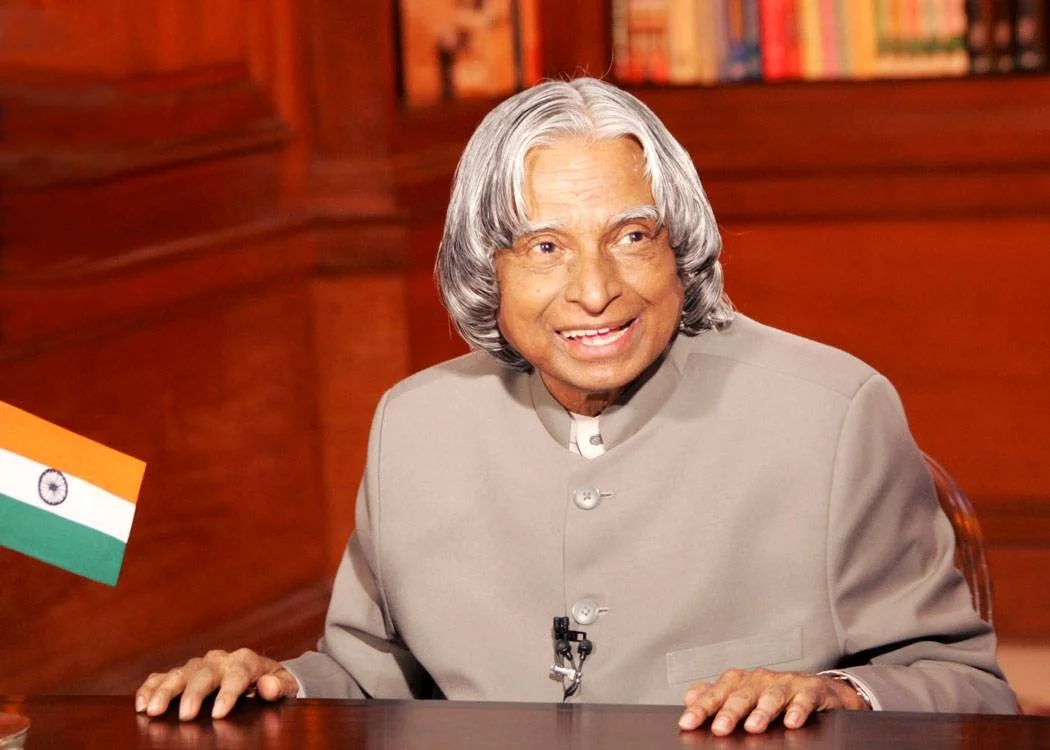
Dr A P J Abdul Kalam: 'Dynamics of Unity of Nations', address to European Parliament - 2007

December 18, 2016

24 April 2007, European Parliament Strasbourg, Germany

Friends, my greetings to all of you. I would particularly like to greet Mr Hans-Gert Pöttering, Mr Harald Rømer, Mr Klaus Welle and Mr Ciril Stokelj.

Good afternoon, Ladies and Gentlemen.

I am indeed delighted to be with the honourable Members of the European Parliament on the occasion of the Golden Jubilee year of the European Union. I was wondering what thoughts I could share with you. As you are aware, as a democratic nation India has experience in providing leadership to over one billion people with multi-language, multicultural and multi-religious systems. I wish to share this experience with you, friends.

European civilisation has a unique place in human history. Its people were valiantly engaged in the adventure of exploring the Planet Earth, resulting in the discovery of many ideas and systems. Europe has seen the birth of pioneers in science, leading to the development of technologies. Europe was the theatre of conflicts among the nations lasting hundreds of years, including the two World Wars. Now, with this backdrop and these dynamics, you have established the European Union with a vision of peace and prosperity for the entire region. The European Union has become an example for connectivity among nations, probably with no possibility of war, leading to lasting regional peace.

Before I started out on my journey to Europe, I was thinking: why are Europe and India unique and natural partners? Do we share a common history and heritage and, possibly in the future, a common destiny? This was the question. I was astonished by what I found: the depth and vitality of our inter-connectedness, through language, culture, ancient beliefs, ideologies and the movement of people, have stood the test of time. This has matured into a very strong bond through sustained trade and intellectually satisfying collaboration in many areas of science and technology. For example, on 23 April 2007, the Italian scientific satellite Agile was launched by the Indian Polar Satellite Launch Vehicle rocket system into a very precise orbit. Scientists from India and Europe are very excited. Let us congratulate them.

India is a country that has learnt over the years to evolve and maintain a unique unity amid diversity. Similarly, the European Union’s greatest contribution has been to demonstrate to the world that it is possible to build a strong union of nations without compromising national identities. It has become an inspirational model and an example to emulate for every region in the world. The European Union and India support a social form of economic development and we encourage a model of growth with equity. Both are conscious of the need for growth to respect the environment and to make it sustainable for future generations. With India’s and the European Union’s centuries of valuable experience, we can develop a doctrine of global cooperation based on the foundation of regional collaboration and core competencies of our nations.

The European Union and India radiate a message to the world that regional cooperation and interregional collaboration will lead to a win-win situation for all, so that we can have a politically and socio-economically emergent civilisation. Our contribution will be successful if, before the 21st century is over, we are able to make all regions transform into happy unions leading to the emergence of a world of unions. In this context, I am reminded of the dream of an Indian poet who said 3000 years ago in the Tamil classic: ,which means, ‘I am a world citizen. Every citizen is my own kith and kin’. He said that 3000 years ago.

Against this backdrop, I have brought from India a message to launch three important Indo-European tasks that could contribute to global peace and prosperity. I propose these missions on the basis of India’s experience and the European Union’s dynamics.

The first task is the evolution of an enlightened society, in which citizens have a system of values, leading to a prosperous and peaceful world.

The second idea is creating energy independence. Normally people talk about energy security. I am talking about energy independence: a three-dimensional approach to energy choice that aims to achieve a clean world.

The third aim is a World Knowledge Platform to bring together the core skills of the European Union and India in certain areas in order to provide solutions to critical issues like water, healthcare and capacity-building.

When nations join together to build a cohesive society, it is necessary to ensure that the benefits of development encompass all sections of society. Worldwide poverty, illiteracy, unemployment and deprivation are driving forward the forces of anger and violence. These forces are linked to some earlier real or perceived historical enmities, tyrannies, injustice, inequalities, ethnic issues and religious fundamentalism that are flowing into an outburst of extremism worldwide. Both India and the European Union have witnessed and are witnessing the unsavoury acts of certain misguided sections of society. Together we must address the root causes of such phenomena in order to find lasting ways to promote peace. How do we do that?

We need a carrier of eternal goodness and wholesomeness in human conduct, which is called ‘righteousness’. As we say in India:

‘Where there is righteousness in the heart

There is beauty in the character.

When there is beauty in the character,

There is harmony in the home.

When there is harmony in the home,

There is order in the nation.

When there is order in the nation,

There is peace in the world.’

(Applause)

Honourable Members, this is true for the whole world. When we need peace in the world, we need order in the nation. We need harmony in the home. Whether in Europe, India or in any part of the world the origin is righteousness in the heart. How do we instill righteousness in the heart of every citizen of the world? This is my area of specialisation and I would like to talk to you about it.

First, I wish to discuss the evolution of an enlightened society. With this spirit of righteousness in the heart, I would like to present to this important gathering a methodology for developing a happy, prosperous and peaceful society in our world, which I call ‘Evolution of Enlightened society’. I have shared these thoughts with many intellectuals in national and international circles. We need to create an enlightened society with three components: 1) education with a value system; 2) religion transforming into spirituality; and 3) economic development for societal transformation.

Beginning with the first component, we have seen that the seeds of peace in the world have their origin in the righteousness in the heart of every individual. Such righteous citizens lead to the emergence of an enlightened society. Education with a value system has to be designed so that the righteousness in the heart is developed in young minds. That should be the mission of education. The prime learning environment is five to seventeen years of age. That reminds me of what an ancient Greek teacher said a few thousand years ago: ‘Give me a child for seven years; afterwards, let God or the devil take the child. They cannot change my child’.

This shows the power of great teachers and what they can inculcate in young minds. Parents and teachers must instill moral leadership in children. It requires the ability to have insight into the uniqueness and universality of human consciousness. True education is the acquisition of enlightened feelings and enlightened powers to understand daily events and to understand the permanent truth linking man to his environment, human and planetary.

I remember the lectures given when I was a student a long time ago — nearly 57 years ago — at the Jesuit institution of St Joseph’s College in Tiruchirappalli in southern India by the college’s highest authority, the Reverend Father Rector Kalathil. Every Monday, the Reverend Father would take an hour-long class. He used to talk about good human beings present and past and about what makes a good human being. In this class, he used to give lectures on people such as Buddha, Confucius, St Augustine, Caliph Omar, Mahatma Gandhi, Einstein, and Abraham Lincoln and to tell moral stories related to our civilisational heritage. In the moral science class, Father Kalathil used to highlight the best aspect of how these great people had evolved as good human beings through parental care, teaching and the companionship of great books. Even though these lessons were given to me in 1950 during my college days, they inspire me even today.

It is essential that in schools and colleges in every nation, important teachers at the institution give hour-long weekly lectures on civilisational heritage and the derived value system. This may be called a Moral Science class and will teach young minds to love their country and other human beings and to elevate them to higher planes. I have suggested this methodology to education experts in my country. The European Union may like to consider developing a system that would enable a student to learn these fundamental lessons for the benefit of all.

Let me turn to the issue of transforming religion into spiritual force. Many in the world believe it is a difficult task, but I disagree. I would like to share an experience that convinced me that it is possible for religion to be transformed into a spiritual force.

How do we do that? As you all know, religion has two components: theology and spirituality. Even though theology is unique to every religion, the spiritual component spreads the value to be absorbed by human beings in order to promote a good life and the welfare of society in the pursuit of material life. I witnessed the coming together of religion and science in a major task.

In the early 1960s, the founder of the Indian Space Research Programme, Professor Vikram Sarabhai, and his team had located the most technically suitable place for space research after considering many alternatives. The town of Thumba in Kerala in southern India was selected for space research as it was near the magnetic equator. This made it ideally suited to ionospheric and electrojet research in the upper atmosphere. I was fortunate to work with Professor Vikram Sarabhai for about eight years.

The major challenge for Vikram Sarabhai was to locate the site in a specific area. As was usual, Professor Sarabhai approached the Kerala Government administrators first. After seeing the land and the sea coast, he was told that thousands of fishermen lived there and that the place had an ancient church, the St Mary Magdalene Church, a Bishop’s House and a school. It would be very difficult, therefore, to allocate this land and the administration was willing to provide land in an alternative area. Similarly, the political authorities also believed that it would be a difficult situation owing to the existence of important institutions and concern for people who were to be relocated. However, the Professor was very determined.

It was suggested that he should approach the only person who could advise and help. That was the Bishop, Father Peter Bernard Pereira. Professor Sarabhai, approached the Bishop one Saturday evening. I still remember their meeting, which proved to be historic. Many of us witnessed the event. Father Pereira exclaimed, ‘Oh Vikram, you are asking for my children’s home, the fishermen’s home, my home, the Bishop’s House, and God’s home, the church. How is it possible?’. Both had a special quality: they could smile even in difficult situations. Father Pereira asked Professor Sarabhai to come to church on Sunday morning at 9 a.m. and he turned up on Sunday with his team. Prayers were taking place with a reading from the Bible by Father Pereira. After the prayer was over, the Bishop invited Professor Sarabhai to come to the dais. The Reverend Father introduced him to the congregation. ‘Dear children’, said the Bishop, ‘here is a scientist, Professor Vikram Sarabhai. What does science do? All of us, including this church, experience the light from electricity. I am able to talk to you through the microphone because of technology. Doctors treat patience thanks to medical science. Science through technology enhances the comfort and quality of human life. What do I do as a preacher? I pray for you people, for your wellbeing and for your peace. In short, Vikram and I are doing the same: both science and spirituality seek the Almighty’s blessings for human prosperity in body and mind. Professor Sarabhai says that he will build within a year alternative facilities near the coast. Now, dear children, can we give our homes, my home and God’s home for a great scientific mission?’

He asked the question. There total silence, as there is now. Then the entire congregation got up and said ‘Amen’, which made the whole church reverberate.

That was the church where we had our design centre and where we started rocket assembly, and the Bishop’s house was where the scientists worked. Later, the Thumba Equatorial Rocket Launching Station led to the establishment of the Vikram Sarabhai Space Centre and the space activities led to the emergence of multiple space centres throughout the country. This church has become an important centre of learning, where thousands of people learn about the dynamic history of India’s space programme and the great minds of a scientist and a spiritual leader. Of course, the people of Thumba received well-equipped facilities, a place of worship and an educational centre elsewhere as promised.

When I think of this event, I can see how enlightened spiritual and scientific leaders can come together to give reverence to human life. Of course, the birth of TERLS and the VSSC gave the country the ability to launch vehicles, spacecraft and space applications that have accelerated social and economic development in India to unprecedented levels.

Professor Vikram Sarabhai and Father Peter Bernard Pereira are no longer with us, but those who are responsible for creation and making flowers blossom will themselves be a different kind of flower, as described in the Bhagwat Gita. It says, ‘See the flower, how generously it distributes perfume, honey. It gives to all, gives freely of its love. When its work is done, it falls away quietly. Try to be like the flower, unassuming despite all its qualities’. What a beautiful message to humanity on the purpose of life, reflecting the spiritual component. Can we bridge the spiritual component of the religions to bring peace to nations and to the world?

I was asked to talk about cultural dialogue and would like to recall an incident that commonly occurs in many parts of my country. I witnessed this event as a young boy of 10. In our house, periodically, I used to see three unique people meet: Pakshi Lakshmana Shastrigal, who was the head priest of the famous Rameshwaram temple, a Vedic scholar, Reverend Father Bodal, who built the first church on Rameshwaram Island, and my father who was an imam in the mosque. All three used to sit and discuss the island’s problems and find solutions. In addition, they built several religious connectivities with compassion. These connectivities quietly spread to others on the island like the fragrance from the flowers. This sight always comes to my mind whenever I discuss with people the dialogue of religions. India has had this advantage of integration of minds for thousands of years. Throughout the world, the need to have a frank dialogue among cultures, religions and civilisations has been felt now more than ever.

These two instances give me confidence that religions can be bridged through spiritual components. Whenever I meet the young and experienced in my country, I narrate these two experiences. Many in my country and the world over may have such experiences. We have to spread such ‘glad tidings’ to every part of the world.

Now let us discuss the third important component of enlightened society, which is to achieve economic development for societal transformation. Let me take India as an example; it may be true to many parts of the world, including the European Union.

The Indian Economy is in an ascent phase. There is considerable growth in the manufacturing and service sectors. We have a mission of spreading this economic growth throughout the country, including the rural sector. Nearly 220 million people out of a billion people must have their quality of life raised in both rural and urban areas. Even though GDP growth indicates our economic growth, people’s participation is essential to achieving the required targets. It is essential to ensure that citizens are empowered with good quality of life encompassing nutritious food, good habitat, clean environment, affordable healthcare, quality education and productive employment, integrated with our value system drawn from civilisational heritage leading to the comprehensive development of the nation that will bring smiles to one billion people. These are indicators for the growth of the National Prosperity Index. To achieve that growth rate, we have identified five areas where India has a core competence for integrated action: 1) agriculture and food processing; 2) education and healthcare; 3) information and communication technology; 4) infrastructure development, including PURA (Providing Urban Amenities in Rural Areas); and 5) self-reliance in critical technologies. We propose to realise the vision of transforming India into a developed nation before 2020 by energising and igniting the minds of the 540 million youth of the nation below 25 years of age.

So far we have discussed the three-dimensional approach of providing value-based education, religion transforming India’s spiritual force and economic development for societal transformation leading to the evolution of an enlightened society. This integrated three-dimensional methodology for the evolution of enlightened society will pave the way for peaceful, prosperous, happy nations and, thereby, for a world free from extremisms and further seeds of extremism. On my website www.presidentofindia.nic.in, I have stated how an empowered world body is essential to evolve the nations of enlightened citizens. I will be very happy to exchange thoughts, ideas and action related to this mission with the honourable Members after they have seen my website.

Let me now discuss the second mission, ‘Leading to Energy Independence’. When we analyse the critical problems facing the planet today, two important issues come to our minds. Firstly, the continuous depletion of fossil-material-derived oil, gas and coal reserves, as predicted by the World Energy Forum, of which you are all aware. The second is the continuous degradation of the environment, primarily due to extensive use of fossil materials to generate energy. The solution to these problems can be found through energy independence, which I have presented to my country. It may be applicable to many nations. What form of energy independence do I propose in India?

India has 17% of the world’s population, but only about 0.8% of the world’s known oil and natural gas resources. Based on the progress visualised for the nation during the next two decades, its power-generating capacity has to increase to 400 000 MW by the year 2030 from the present capacity of 130 000 MW. This takes into consideration the energy economies planned and the design and production of energy-efficient equipment and systems.

I have proposed various systems. Solar cell efficiency, common to the European Union and India, has to increase from the present level of 20% to 55% through intensified research on carbon-nanotube-based solar cells. Regarding thorium reactors, thorium is a non-fissile material. It has to be converted into a fissile material using fast breeder technology. In the biofuels area, the challenge is biofuel plantation for higher yield, esterification technologies for higher output and changes to automobile power plants. These three research areas need intensive cooperation between the European Union and India. I would suggest setting up an India-EU renewable energy development programme for advanced R[amp]D in all forms of renewable energy, leading to the availability of commercial-class large-scale power plants within the next decade.

(Applause)

I should like to conclude with the ‘World Knowledge Platform’. With India’s experience of two successful international cooperative ventures from concept to realisation and marketing, I would suggest developing the ‘World Knowledge Platform’ to bring together the core competences of the nations of the EU and India in science and technology, leading to the development of unique systems for global applications. The ‘World Knowledge Platform’ will enable joint design, development, cost-effective production and marketing of the knowledge products, systems and services in various domains based on the core competence of partner nations in the international market. The ‘World Knowledge Platform’ is a meeting place for science, technology, industry, management and marketing.

You may ask about the missions of the ‘World Knowledge Platform’. The convergence of biotechnology, nanotechnology and IT is expected to touch every area of concern to humanity. The ‘World Knowledge Platform’ will take up missions in some of the areas discussed further, which are of the utmost importance to all of us and to making our world a safe, sustainable, peaceful and prosperous place to live.

The first is water: desalination of sea water using solar energy, channelisation, networking of rivers and cost-effective safe drinking water.

The second is healthcare: diagnosis, drug delivery system, development and production of vaccines for HIV, TB, malaria and cardiac diseases.

The third is agriculture and food processing: increased production of food grain in an environment of reduced land, reduced water and reduced manpower; preservation of food; food processing; cost effective storage and distribution.

The fourth is knowledge products: hardware, software and networking and storage products, including handheld micro and nano electronic devices.

The fifth is transportation systems: fossil-fuel-free transportation systems using renewable energies, safety systems, hardware and embedded software integration.

The sixth is habitat: an energy-efficient, water-efficient, pollution-free habitat.

The seventh is disaster prediction and management: earthquake forecasting, assessing in advance the quantum of rain for particular cloud conditions.

Finally, capacity-building: quality human resource development for all the above areas, including the development of personnel with world-class skills.

The European Union represents a wealth of scientific potential with a rich culture for research. India has emerged as a leading country, with its demonstrated scientific and technological potential in many societal missions, and is now on the ascent. The combined strength of the nations can be utilised for the advantage of both India and the EU by joining together as partners in creating the ‘World Knowledge Platform’.

In conclusion, as we have seen, there is a visible common thread to our dreams and problems. When I am with you, I have a feeling that there are beautiful solutions from beautiful minds. Beautiful minds generate creativity. This is the common heritage of both India and the European Union.

I have presented three missions: ‘the evolution of an enlightened society’, ‘leading to energy independence’ and ‘creating the ‘World Knowledge Platform’. These Indo-EU missions will reinforce further our strategic partnership and become the foundation for making changes to the life of 1.5 billion people, ultimately leading to the confluence of civilisations.

To meet the challenges of these missions, we can draw inspiration from the saying of Maharishi Patanjali from about 2 500 years ago. He said: ‘When you are inspired by some great purpose, some extraordinary project, all your thoughts break their bounds. Your mind transcends limitations, your consciousness expands in every direction, and you find yourself in a new, great and wonderful world. Dormant forces, faculties and talents come alive, and you discover yourself to be a greater person by far than you ever dreamt yourself to be.’

I have great admiration for the European Union. In this context I have composed a poem which I should like to share with you.

(Applause)

The title of the poem is ‘The message from Mother India to the European Union’.

‘Beautiful environment leads to beautiful minds.

Beautiful environment leads to beautiful minds.

Beautiful minds generate freshness and creativity,

Created the explorers of land and sea,

Created the European Union,

Created the explorers of land and sea,

Create minds that innovate,

Create great scientific minds everywhere. Why?

Go back to the many discoveries.

Discover the continent.

Do you realise you have discovered a continent?

Discover the continent and unknown lands.

Venture into unexplored parts.

Create new highways.

In the minds of the best,

In the minds of the best was to us also born,

Generated seeds of the battle and hatred,

Hundreds of years of war and blood.

Millions of my wonderful children lost in the land and sea.

Tears flooded many nations,

Many engulfed in an ocean of sadness.

Then came the vision of the European Union.

Took the vote never to turn human knowledge against ourselves or others.

United in their thinking, action emanated to make Europe prosperous,

And peace bound the European Union.

Those glad tidings captivated the people of the planet of my galaxy.

Those glad tidings captivated the people of the planet of my galaxy.

Oh, European Union let your mission spread everywhere like the air we breathe.

That is my poem.

(Applause)

Finally, friends, let me convey the greetings of the one billion people of my country to all the honourable Members of the European Parliament and, through you, to all the citizens of European Union countries.

May God bless you all.

(The House rose and accorded the speaker a standing ovation)


Source: http://www.pib.nic.in/newsite/erelease.asp...

Enjoyed this speech? Speakola is a labour of love and I’d be very grateful if you would share, tweet or like it. Thank you.

Facebook Twitter Facebook
In 2000s MORE Tags DR A P J ABDUL KALAM, INDIA, INTERNATIONAL AFFAIRS, EUROPEAN PARLIAMENT, TRANSCRIPT
1 Comment

Dr A P J Abdul Kalam: 'My vision for India', IIT Hyderabad - 2011

December 18, 2016

25 May 2011, IIT Hyderabad, Sangareddy district, Telangana, India

I have three visions for India. In 3000 years of our history people from all over the world have come and invaded us, captured our lands, conquered our minds. From Alexander onwards the Greeks, the Turks, the Moguls, the Portuguese, the British, the French, the Dutch, all of them came and looted us, took over what was ours. Yet we have not done this to any other nation. We have not conquered anyone. We have not grabbed their land, their culture and their history and tried to enforce our way of life on them. Why? Because we respect the freedom of others. That is why my FIRST VISION is that of FREEDOM. I believe that India got its first vision of this in 1857, when we started the war of Independence. It is this freedom that we must protect and nurture and build on. If we are not free, no one will respect us.

We have 10 percent growth rate in most areas. Our poverty levels are falling. Our achievements are being globally recognised today. Yet we lack the self-confidence to see ourselves as a developed nation, self-reliant and self-assured. Isn’t this incorrect? MY SECOND VISION for India is DEVELOPMENT. For fifty years we have been a developing nation. It is time we see ourselves as a developed nation. We are among top five nations in the world in terms of GDP.

I have a THIRD VISION. India must stand up to the world. Because I believe that unless India stands up to the world, no one will respect us. Only strength respects strength. We must be strong not only as a military power but also as an economic power. Both must go hand-in-hand. My good fortune was to have worked with three great minds. Dr.Vikram Sarabhai, of the Dept. of Space, Professor Satish Dhawan, who succeeded him and Dr. Brahm Prakash, father of nuclear material. I was lucky to have worked with all three of them closely and consider this the great opportunity of my life.

I was in Hyderabad giving this lecture, when a 14 year-old girl asked me for my autograph. I asked her what her goal in life is. She replied: I want to live in a developed India. For her, you and I will have to build this developed India. You must proclaim India is not an underdeveloped nation; it is a highly developed nation.

You say that our government is inefficient. You say that our laws are too old. You say that the municipality does not pick up the garbage. You say that the phones don’t work, the railways are a joke, the airline is the worst in the world, and mails never reach their destination. You say that our country has been fed to the dogs and is the absolute pits. You say, say and say. What do you do about it?

Dear Indians, I am echoing J.F.Kennedy’s words to his fellow Americans to relate to Indians ……. “ASK WHAT WE CAN DO FOR INDIA AND DO WHAT HAS TO BE DONE TO MAKE INDIA WHAT AMERICA AND OTHER WESTERN COUNTRIES ARE TODAY.”


Related content: Narendra Modi, 'We will be 100% successful", speech at Madison Square Garden.

"To my dear brothers and sisters settled in America. To all the distinguished and strong members of the American democracy present here, to all the brothers and sisters in India watching today’s event via Internet and TV, and those who couldn’t make it inside the event and are outside; I welcome and acknowledge them."

Read transcript and listen to speech

Source: https://rufusonline.blogspot.com.au/2011/1...

Enjoyed this speech? Speakola is a labour of love and I’d be very grateful if you would share, tweet or like it. Thank you.

Facebook Twitter Facebook
In 2010s MORE Tags DR A P J ABDUL KALAM, INDIA, PRESIDENT, MY VISION FOR INDIA, TRANSCRIPT
7 Comments

Bal Gangadhar Tilak: 'Freedom is my birthright', 1st anniversary Home Rule League - 1917

December 18, 2016

April 1917, Nashik, India

I am young in spirit though old in body. I do not wish to lose this privilege of youth. To deny the growing capacity to my thinking power is to admit that I have no right to speak on this resolution. Whatever I am going to speak today is eternally young. The body might grow old, decrepit and it might perish, but the soul is immortal. Similarly, if there might be an apparent lull in our Home Rule activities, the freedom of the spirit behind it is eternal and indestructible, and it will secure liberty for us.

The Soul means Parameshwar and the mind will not get peace till it gets identified with Him. If one body is worn out the soul will take another: so assures the Gita. This philosophy is quite old. Freedom is my birthright. So long as it is awake within me, I am not old. No weapon can cut this spirit, no fire can burn it, no water can wet it, no wind can dry it. I say further that no CID can burn it. I declare the same principle to the Superintendent of Police who is sitting before me, to the Collector who had been invited to attend this meeting and to the Government shorthand writer who is busy taking down notes of our speeches.

This principle will not disappear even if it seems to be killed. We ask for Home Rule and we must get it. The Science which ends in Home Rule is the Science of Politics and not the one which ends in slavery. The Science of Politics is the "Vedas" of the country. You have a soul and I only want to wake it up. I want to tear off the blind that has been let down by ignorant, designing and selfish people. The Science of Politics consists of two parts. The first is Divine and the second is Demonic. The slavery of a Nation comes into the latter part. There cannot be a moral justification for the Demonic part of the Science of Politics. A Nation which might justify this is guilty of sin in the sight of God. Some people have the courage to declare what is harmful to them and some have not that courage. The political and religious teaching consists in giving the knowledge of this principle. Religious and political teachings are not separate, though they appear to be so on account of foreign rule. All philosophies are included in the Science of Politics.

Who does not know the meaning of Home Rule? Who does not want it? Would you like it, if I enter your house and take possession of your cooking department? I must have the right to manage the affairs in my own house. It is only lunatics and children who do not know how to manage their own affairs.

The cardinal creed of the conferences is that a member must be above 21 years of age; do you not, therefore, think that you want your own rights? Not being lunatics or children you uuderstand your own business, your own rights and, therefore, you know Home Rule. We are told we are not fit for Home Rule. A century has passed away and the British Rule has not made us fit for Home Rule; now we will make our own efforts and fit ourselves for it.

To offer irrelevant excuses, to hold out any temptation and to make other offers will be putting a stigma on the English policy. England is trying to protect the small state of Belgium with the help of India; how can it then say that we should not have Home Rule? Those who find fault with us are avaricious people. But there are people who find fault even with the All-Merciful God. We must work hard to save the soul of our Nation without caring for anything. The good of our country consists in guarding this - our birthright. The Congress has passed this Home Rule resolution. The Provincial Conference is only a child of the Congress, which submits to mandates of its father. We will follow Shri Ramachandra in obeying the order of our father the Congress. We are determined to make efforts to get this resolution enforced even if the effort leads us to the desert, compels us to live incognito, makes us suffer any hardship and even if it finally brings us to death. Shri Ramachandra did it. Do not pass this resolution by merely clapping your hands but by taking a solemn vow that you will work for it. We will work for it by every possible constitutional and law-abiding method to get Home Rule.

Through the grace of God, England has changed its mind towards us. We feel our efforts will not be without success. England proudly thought that a tiny nation might be able to protect the Empire by itself. This pride has gone down. England has now begun to feel that it must make changes in the constitution of the Empire. Lloyd George has openly confessed that England cannot go on without the help of India. All notions about a Nation of a thousand years old have to be changed. The English people have discovered that the wisdom of all their parties is not sufficient. The Indian soldiers have saved the lives of the British soldiers on the French battlefield and have showed their bravery. Those who once considered us as slaves have begun now to call us brothers. God has brought about all these changes. We must push our demands while the notion of this brotherhood is existing in the minds of the English. We must inform them that we, thirty crores of the Indian people, are ready to lay down our lives for the Empire; and that while we are with them none shall dare cast an evil glance at the Empire.

Related content: Mahatma Gandhi "There is no room for anarchism in India', Banaras University 1916.

" I wish to tender my humble apology for the long delay that took place before I was able to reach this place. And you will readily accept the apology when I tell you that I am not responsible for the delay nor is any human agency responsible for it. "

Full speech

Source: http://www.youthaffairz.in/historyjuly2012...

Enjoyed this speech? Speakola is a labour of love and I’d be very grateful if you would share, tweet or like it. Thank you.

Facebook Twitter Facebook
In 1900-19 Tags BAL GANGADHAR TILAK, TRANSCRIPT, HOME RULE LEAGUE, FREEDOM IS MY BIRTHRIGHT, INDEPENDENCE, INDIA, BRITISH RULE
Comment

Rabindranath Tagore: 'Such is the tragic tale of the gradual loss of my faith in the claims of the European nations to civilization', Crisis of Civilisation, 80th birthday - 1941

December 18, 2016

7 May 1941, Santiniketan University, Bengal, India

Today I complete eighty years of my life .As I look back on the vast stretch of years that lie behind me and see in clear perspective the history of my early development, I am struck by the change that has taken place both in my own attitude and in the psychology of my countrymen -- a change that carries within it a cause of profound tragedy.

Our direct contact with the larger world of men was linked up with the contemporary history of the English people whom we came to know in those earlier days. It was mainly through their mighty literature that we formed our ideas with regard to these newcomers to our Indian shores. In those days the type of learning that was served out to us was neither plentiful nor diverse, nor was the spirit of scientific enquiry very much in evidence. Thus their scope being strictly limited, the educated of those days had recourse to English language and literature. Their days and nights were eloquent with the stately declamations of Burke, with Macaulay’s long-rolling sentences; discussions centred upon Shakespeare's drama and Byron's poetry and above all upon the large-hearted liberalism of the nineteenth-century English politics.

At the time though tentative attempts were being made to gain our national independence, at heart we had not lost faith in the generosity of the English race. This belief was so firmly rooted in the sentiments of our leaders as to lead them to hope that the victor would of his own grace pave the path of freedom for the vanquished. This belief was based upon the fact that England at the time provided a shelter to all those who had to flee from persecution in their own country. Political martyrs who had suffered for the honour of their people were accorded unreserved welcome at the hands of the English.

I was impressed by this evidence of liberal humanity in the character of the English and thus I was led to set them on the pedestal of my highest respect. This generosity in their national character had not yet been vitiated by imperialist pride. About this time, as a boy in England, I had the opportunity of listening to the speeches of John Bright, both in and outside Parliament. The large-hearted, radical liberalism of those speeches, overflowing all narrow national bounds, had made so deep an impression on my mind that something of it lingers even today, even in these days of graceless disillusionment.

Certainly that spirit of abject dependence upon the charity of our rulers was no matter for pride. What was remarkable, however, was the wholehearted way in which we gave our recognition to human greatness even when it revealed itself in the foreigner. The best and noblest gifts of humanity cannot be the monopoly of a particular race or country; its scope may not be limited nor may it be regarded as the miser’s hoard buried underground. That is why English literature which nourished our minds in the past, does even now convey its deep resonance to the recesses of our heart.

It is difficult to find a suitable Bengali equivalent for the English word 'civilization'. That phase of civilization with which we were familiar in this country has been called by Manu 'Sadachar' (literally, proper conduct), that is, the conduct prescribed by the tradition of the race. Narrow in themselves these time-honoured social conventions originated and held good in a circumscribed geographical area, in that strip of land, Brahmavarta by name, bound on either side by the rivers Saraswati and Drisadvati. That is how a pharisaic formalism gradually got the upper hand of free thought and the ideal of 'proper conduct' which Manu found established in Brahmavarta steadily degenerated into socialized tyranny. During my boyhood days the attitude towards the cultured and educated section of Bengal, nurtured on English learning, was charged with a feeling of revolt against these rigid regulations of society.

A perusal of what Rajnarain Bose has written describing the ways of the educated gentry of those days will amply bear out what I have said just now. In place of these set codes of conduct we accepted the ideal of 'civilization' as represented by the English term.

In our own family this change of spirit was welcomed for the sake of its sheer rational and moral force and its influence was felt in every sphere of our life. Born in that atmosphere, which was moreover coloured by our intuitive bias for literature, I naturally set the English on the throne of my heart. Thus passed the first chapters of my life. Then came the parting of ways accompanied with a painful feeling of disillusion when I began increasingly to discover how easily those who accepted the highest truths of civilization disowned them with impunity whenever questions of national self-interest were involved.

There came a time when perforce I had to snatch myself away from the mere appreciation of literature. As I emerged into the stark light of bare facts, the sight of the dire poverty of the Indian masses rent my heart. Rudely shaken out of my dreams, I began to realize that perhaps in no other modern state was there such hopeless dearth of the most elementary needs of existence. And yet it was this country whose resources had fed for so long the wealth and magnificence of the British people.

While I was lost in the contemplation of the great world of civilization, I could never have remotely imagined that the great ideals of humanity would end in such ruthless travesty. But today a glaring example of it stares me in the face in the utter and contemptuous indifference of a so-called civilized race to the wellbeing of crores of Indian people. That mastery over the machine, by which the British have consolidated their sovereignty over their vast Empire, has been kept a sealed book, to which due access has been denied to this helpless country. And all the time before our very eyes Japan has been transforming herself into a mighty and prosperous nation. I have seen with my own eyes the admirable use to which Japan has put in her own country the fruits of this progress.

I have also been privileged to witness, while in Moscow, the unsparing energy with which Russia has tried to fight disease and illiteracy, and has succeeded in steadily liquidating ignorance and poverty, wiping off the humiliation from the face of a vast continent. Her civilization is free from all invidious distinction between one class and another, between one sect and another. The rapid and astounding progress achieved by her made me happy and jealous at the same time.

One aspect of the Soviet administration which particularly pleased me was that it provided no scope for unseemly conflict of religious differences, nor set one community against another by unbalanced distribution of political favours. That I consider a truly civilized administration which impartially serves the common interests of the people.

While other imperialist powers sacrifice the welfare of the subject races to their own national greed, in the USSR I found a genuine attempt being made to harmonise the interests of the various nationalities that are scattered over its vast area. I saw peoples and tribes, who, only the other day, were nomadic savages being encouraged and indeed trained, to avail themselves freely of the benefits of civilization. Enormous sums are being spent on their education to expedite the process.

When I see elsewhere some two hundred nationalities -- which only a few years ago were at vastly different stages of development -- marching ahead in peaceful progress and amity, and when I look about my own country and see a very highly evolved and intellectual people drifting into the disorder of barbarism, I cannot help contrasting the two systems of governments, one based on co-operation, the other on exploitation, which have made such contrary conditions possible.

I have also seen Iran, newly awakened to a sense of national self sufficiency, attempting to fulfil her own destiny freed from the deadly grinding-stones of two European powers. During my recent visit to that country I discovered to my delight that Zoroastrians who once suffered from the fanatical hatred of the major community and whose rights had been curtailed by the ruling power were now free from this age-long repression, and that civilized life had established itself in the happy land. It is significant that Iran's good fortune dates from the day when she finally disentangled herself from the meshes of European diplomacy. With all my heart I wish Iran well.

Turning to the neighbouring kingdom of Afghanistan I find that though there is much room for improvement in the field of education and social development, yet she is fortunate in that she can look forward to unending progress; for none of the European powers, boastful of their civilization, has yet succeeded in overwhelming and crushing her possibilities.

Thus while these other countries were marching ahead, India, smothered under the dead weight of British administration, lay static in her utter helplessness. Another great and ancient civilization for whose recent tragic history the British cannot disclaim responsibility, is China. To serve their own national profit the British first doped her people with opium and then appropriated a portion of her territory. As the world was about to forget the memory of this outrage, we were painfully surprised by another event. While Japan was quietly devouring North China, her act of wanton aggression was ignored as a minor incident by the veterans of British diplomacy.

We have also witnessed from this distance how actively the British statesmen acquiesced in the destruction of the Spanish Republic. On the other hand, we also noted with admiration how a band of valiant Englishmen laid down their lives for Spain. Even though the English had not aroused themselves sufficiently to their sense of responsibility towards China in the Far East, in their own immediate neighbourhood they did not hesitate to sacrifice themselves to the cause of freedom.

Such acts of heroism reminded me over again of the true English spirit to which in those early days I had given my full faith, and made me wonder how imperialist greed could bring about so ugly a transformation in the character of so great a race. Such is the tragic tale of the gradual loss of my faith in the claims of the European nations to civilization.

In India the misfortune of being governed by a foreign race is daily brought home to us not only in the callous neglect of such minimum necessities of life as adequate provision for food, clothing, education and medical facilities for the people, but in an even unhappier form in the way people have divided themselves. The pity of it is that the blame is laid at the door of our own society. So frightful a culmination of the history of our people would never have been possible, but for the encouragement it has received from secret influences emanating from high places.

One cannot believe that Indians are in any way inferior to the Japanese in intellectual capacity. The most effective difference between these two eastern peoples is that whereas India lies at the mercy of the British, Japan has been spared the shadow of alien domination. We know what we have been deprived of. That which was truly best in their own civilizations, the upholding of the dignity of human relationships, has no place in the British administration of this country.

If in its place they have established, with baton in hand, a reign of 'law and order', in other words a policeman's rule, such mockery of civilization can claim no respect from us. It is the mission of civilization to bring unity among people and establish peace and harmony. But in unfortunate India the social fabric is being rent into shreds by unseemly outbursts of hooliganism daily growing in intensity, right under the very aegis of 'law and order'.

In India, so long as no personal injury is inflicted upon any member of the ruling race, this barbarism seems to be assured of perpetuity, making us ashamed to live under such an administration.


Source: https://www.scribd.com/doc/163829907/Rabin...

Enjoyed this speech? Speakola is a labour of love and I’d be very grateful if you would share, tweet or like it. Thank you.

Facebook Twitter Facebook
In 1940-59 Tags RABINDRANATH TAGORE, LITERATURE, BENGAL, MODERNISM, TRANSCRIPT, CRISIS OF CIVILISATION, POET, WW2, TOTALITARIANISM
Comment

Dilma Rousseff: "We are not in a dialogue between my neck and the gallows, senator" -

December 18, 2016

7 May 2008, Palácio do Congresso Nacional, Brasilia, Brazil

This was an answer from Brazilian left-wing politician (later to become president) Dilma Rousseff, in response to a question made by senator Agripino Maia, a former member of the authoritarian military dictatorship that ruled the country from 1964 to the late 80s. Maia questioned the honesty of Rousseff's statements. It was asked over 15 years after those dark days had passed, but it sought to compare Rousseff's current political predicaments with her behaviour as a victim of that regime's brutal policies. Rousseff delivered this famous smack down.

Senator José Agripino Maia (DEM):  You have lied to the dictatorship; are you going to lie here?

Dilma Rousseff: ny comparison between the military dictatorship and Brazilian democracy can only come from those who do not value the Brazilian democracy.

I was 19, I spent three years in jail and was brutally tortured, senator. And anyone who dares to tell the truth to his interrogators, compromises the life of their equal and gives people away to be killed. I am very proud to have lied, senator, because lying in torture is not easy. Now, in democracy, truth is spoken; on the face of torture, the ones who have courage, dignity, they lie. And that (applause), and that, senator, is part of, and integrates my biography; I'm very proud, and I'm not talking about heroes.

Happy is the people who does not have such heroes, senator, because to endure torture is something very difficult, because we are all very fragile, all of us. We are humans, we feel pain, and the seduction, the temptation to talk about what happened and tell the truth is immense senator, the pain is unbearable, you can not imagine how unbearable it is.

So I am proud to have lied, I pride myself immensely in having lied, because I saved companions of their own torture and death. I have no commitment to the dictatorship in terms of telling the truth. I was in a field and they were in another, and what was at stake was my life and that of my companions.

And this country, which has gone through everything it did, which built democracy, which allows me to be here today, which allows me to speak to you, has no similarity to that; this dialogue here is of the democratic kind. The opposition can ask me questions, I'll be able to answer. We're on equal human and material conditions.

We are not in a dialogue between my neck and the gallows, senator. I'm here in a democratic, civilized dialogue, and so I believe and respect this moment. Because of that, at every time, I've come here before this committee. So I start my speech by saying that, because that is the rescue of the process that took place in Brazil. I will repeat again:

There is no room for truth, and that's what kills in the dictatorship. What kills in the dictatorship is that there is no room for the truth because there is no room for life, Senator. Because some truths, even the most trivial, can lead to death. All that’s needed is to just “botch the cooking” while in the interrogation.

And I believe, senator, that we were at different times of our lives in ’70.
I assure to you, I was between 19 and 21 years old and, in fact, I fought the military dictatorship, and of that I'm very proud.


Source: https://www.youtube.com/watch?v=Tiyezo1fLR...

Enjoyed this speech? Speakola is a labour of love and I’d be very grateful if you would share, tweet or like it. Thank you.

Facebook Twitter Facebook
In 2000s Tags DILMA ROUSSEFF, AGRIPINO MAIA, DICTATORSHIP, MILITARY JUNTA, DEMOCRACY, PRESIDENT, BRAZIL, PARLIAMENT, SENATE COMMITTEE
Comment

Napoleon Bonaparte: 'Soldiers of my Old Guard: I bid you farewell', Farewell to Imperial guard - 1814

December 18, 2016

20 April 1814, courtyard at Fontainebleau, Paris, France

Soldiers of my Old Guard: I bid you farewell. For twenty years I have constantly accompanied you on the road to honor and glory. In these latter times, as in the days of our prosperity, you have invariably been models of courage and fidelity. With men such as you our cause could not be lost; but the war would have been interminable; it would have been civil war, and that would have entailed deeper misfortunes on France.
I have sacrificed all of my interests to those of the country.

I go, but you, my friends, will continue to serve France. Her happiness was my only thought. It will still be the object of my wishes. Do not regret my fate; if I have consented to survive, it is to serve your glory. I intend to write the history of the great achievements we have performed together. Adieu, my friends. Would I could press you all to my heart.

Source: http://www.historyplace.com/speeches/napol...

Enjoyed this speech? Speakola is a labour of love and I’d be very grateful if you would share, tweet or like it. Thank you.

Facebook Twitter Facebook
In Pre 1900 Tags FAREWELL TO OLD GUARD, NAPOLEON BONAPARTE, IMPERIAL GUARD, FRANCE
Comment

Thomas Jefferson: 'We are all Republicans, we are all Federalists', Inaugural address - 1801

December 12, 2016

4 March 1801, Capitol, Washington DC, USA

Called upon to undertake the duties of the first executive office of our country, I avail myself of the presence of that portion of my fellow-citizens which is here assembled to express my grateful thanks for the favor with which they have been pleased to look toward me, to declare a sincere consciousness that the task is above my talents, and that I approach it with those anxious and awful presentiments which the greatness of the charge and the weakness of my powers so justly inspire. A rising nation, spread over a wide and fruitful land, traversing all the seas with the rich productions of their industry, engaged in commerce with nations who feel power and forget right, advancing rapidly to destinies beyond the reach of mortal eye -- when I contemplate these transcendent objects, and see the honor, the happiness, and the hopes of this beloved country committed to the issue and the auspices of this day, I shrink from the contemplation, and humble myself before the magnitude of the undertaking. Utterly, indeed, should I despair did not the presence of many whom I here see remind me that in the other high authorities provided by our Constitution I shall find resources of wisdom, of virtue, and of zeal on which to rely under all difficulties. To you, then, gentlemen, who are charged with the sovereign functions of legislation, and to those associated with you, I look with encouragement for that guidance and support which may enable us to steer with safety the vessel in which we are all embarked amidst the conflicting elements of a troubled world.

During the contest of opinion through which we have passed the animation of discussions and of exertions has sometimes worn an aspect which might impose on strangers unused to think freely and to speak and to write what they think; but this being now decided by the voice of the nation, announced according to the rules of the Constitution, all will, of course, arrange themselves under the will of the law, and unite in common efforts for the common good. All, too, will bear in mind this sacred principle, that though the will of the majority is in all cases to prevail, that will to be rightful must be reasonable; that the minority possess their equal rights, which equal law must protect, and to violate would be oppression. Let us, then, fellow-citizens, unite with one heart and one mind. Let us restore to social intercourse that harmony and affection without which liberty and even life itself are but dreary things. And let us reflect that, having banished from our land that religious intolerance under which mankind so long bled and suffered, we have yet gained little if we countenance a political intolerance as despotic, as wicked, and capable of as bitter and bloody persecutions. During the throes and convulsions of the ancient world, during the agonizing spasms of infuriated man, seeking through blood and slaughter his long-lost liberty, it was not wonderful that the agitation of the billows should reach even this distant and peaceful shore; that this should be more felt and feared by some and less by others, and should divide opinions as to measures of safety. But every difference of opinion is not a difference of principle. We have called by different names brethren of the same principle. We are all Republicans, we are all Federalists. If there be any among us who would wish to dissolve this Union or to change its republican form, let them stand undisturbed as monuments of the safety with which error of opinion may be tolerated where reason is left free to combat it. I know, indeed, that some honest men fear that a republican government can not be strong, that this Government is not strong enough; but would the honest patriot, in the full tide of successful experiment, abandon a government which has so far kept us free and firm on the theoretic and visionary fear that this Government, the world's best hope, may by possibility want energy to preserve itself? I trust not. I believe this, on the contrary, the strongest Government on earth. I believe it the only one where every man, at the call of the law, would fly to the standard of the law, and would meet invasions of the public order as his own personal concern. Sometimes it is said that man can not be trusted with the government of himself. Can he, then, be trusted with the government of others? Or have we found angels in the forms of kings to govern him? Let history answer this question.

Let us, then, with courage and confidence pursue our own Federal and Republican principles, our attachment to union and representative government. Kindly separated by nature and a wide ocean from the exterminating havoc of one quarter of the globe; too high-minded to endure the degradations of the others; possessing a chosen country, with room enough for our descendants to the thousandth and thousandth generation; entertaining a due sense of our equal right to the use of our own faculties, to the acquisitions of our own industry, to honor and confidence from our fellow-citizens, resulting not from birth, but from our actions and their sense of them; enlightened by a benign religion, professed, indeed, and practiced in various forms, yet all of them inculcating honesty, truth, temperance, gratitude, and the love of man; acknowledging and adoring an overruling Providence, which by all its dispensations proves that it delights in the happiness of man here and his greater happiness hereafter -- with all these blessings, what more is necessary to make us a happy and a prosperous people? Still one thing more, fellow-citizens -- a wise and frugal Government, which shall restrain men from injuring one another, shall leave them otherwise free to regulate their own pursuits of industry and improvement, and shall not take from the mouth of labor the bread it has earned. This is the sum of good government, and this is necessary to close the circle of our felicities.

About to enter, fellow-citizens, on the exercise of duties which comprehend everything dear and valuable to you, it is proper you should understand what I deem the essential principles of our Government, and consequently those which ought to shape its Administration. I will compress them within the narrowest compass they will bear, stating the general principle, but not all its limitations. Equal and exact justice to all men, of whatever state or persuasion, religious or political; peace, commerce, and honest friendship with all nations, entangling alliances with none; the support of the State governments in all their rights, as the most competent administrations for our domestic concerns and the surest bulwarks against antirepublican tendencies; the preservation of the General Government in its whole constitutional vigor, as the sheet anchor of our peace at home and safety abroad; a jealous care of the right of election by the people -- a mild and safe corrective of abuses which are lopped by the sword of revolution where peaceable remedies are unprovided; absolute acquiescence in the decisions of the majority, the vital principle of republics, from which is no appeal but to force, the vital principle and immediate parent of despotism; a well-disciplined militia, our best reliance in peace and for the first moments of war till regulars may relieve them; the supremacy of the civil over the military authority; economy in the public expense, that labor may be lightly burthened; the honest payment of our debts and sacred preservation of the public faith; encouragement of agriculture, and of commerce as its handmaid; the diffusion of information and arraignment of all abuses at the bar of the public reason; freedom of religion; freedom of the press, and freedom of person under the protection of the habeas corpus, and trial by juries impartially selected. These principles form the bright constellation which has gone before us and guided our steps through an age of revolution and reformation. The wisdom of our sages and blood of our heroes have been devoted to their attainment. They should be the creed of our political faith, the text of civic instruction, the touchstone by which to try the services of those we trust; and should we wander from them in moments of error or of alarm, let us hasten to retrace our steps and to regain the road which alone leads to peace, liberty, and safety.

I repair, then, fellow-citizens, to the post you have assigned me. With experience enough in subordinate offices to have seen the difficulties of this the greatest of all, I have learnt to expect that it will rarely fall to the lot of imperfect man to retire from this station with the reputation and the favor which bring him into it. Without pretensions to that high confidence you reposed in our first and greatest revolutionary character, whose preeminent services had entitled him to the first place in his country's love and destined for him the fairest page in the volume of faithful history, I ask so much confidence only as may give firmness and effect to the legal administration of your affairs. I shall often go wrong through defect of judgment. When right, I shall often be thought wrong by those whose positions will not command a view of the whole ground. I ask your indulgence for my own errors, which will never be intentional, and your support against the errors of others, who may condemn what they would not if seen in all its parts. The approbation implied by your suffrage is a great consolation to me for the past, and my future solicitude will be to retain the good opinion of those who have bestowed it in advance, to conciliate that of others by doing them all the good in my power, and to be instrumental to the happiness and freedom of all.

Relying, then, on the patronage of your good will, I advance with obedience to the work, ready to retire from it whenever you become sensible how much better choice it is in your power to make. And may that Infinite Power which rules the destinies of the universe lead our councils to what is best, and give them a favorable issue for your peace and prosperity.


Source: http://www.emersonkent.com/speeches/dismis...

Enjoyed this speech? Speakola is a labour of love and I’d be very grateful if you would share, tweet or like it. Thank you.

Facebook Twitter Facebook
In Pre 1900 Tags THOMAS JEFFERSON, PRESIDENTS, FOUNDING FATHERS, INAUGURATION, INAUGURAL SPEECH, USA, TRANSCRIPT
Comment

George Washington: 'A passionate attachment of one nation for another produces a variety of evils', farewell address - 1796

December 12, 2016

19 September 1796, Congress Hall, Philadelphia, USA

Friends and Fellow Citizens:

The period for a new election of a citizen to administer the executive government of the United States being not far distant, and the time actually arrived when your thoughts must be employed in designating the person who is to be clothed with that important trust, it appears to me proper, especially as it may conduce to a more distinct expression of the public voice, that I should now apprise you of the resolution I have formed, to decline being considered among the number of those out of whom a choice is to be made.

I beg you, at the same time, to do me the justice to be assured that this resolution has not been taken without a strict regard to all the considerations appertaining to the relation which binds a dutiful citizen to his country; and that in withdrawing the tender of service, which silence in my situation might imply, I am influenced by no diminution of zeal for your future interest, no deficiency of grateful respect for your past kindness, but am supported by a full conviction that the step is compatible with both.

The acceptance of, and continuance hitherto in, the office to which your suffrages have twice called me have been a uniform sacrifice of inclination to the opinion of duty and to a deference for what appeared to be your desire. I constantly hoped that it would have been much earlier in my power, consistently with motives which I was not at liberty to disregard, to return to that retirement from which I had been reluctantly drawn. The strength of my inclination to do this, previous to the last election, had even led to the preparation of an address to declare it to you; but mature reflection on the then perplexed and critical posture of our affairs with foreign nations, and the unanimous advice of persons entitled to my confidence, impelled me to abandon the idea.

I rejoice that the state of your concerns, external as well as internal, no longer renders the pursuit of inclination incompatible with the sentiment of duty or propriety, and am persuaded, whatever partiality may be retained for my services, that, in the present circumstances of our country, you will not disapprove my determination to retire.

The impressions with which I first undertook the arduous trust were explained on the proper occasion. In the discharge of this trust, I will only say that I have, with good intentions, contributed towards the organization and administration of the government the best exertions of which a very fallible judgment was capable. Not unconscious in the outset of the inferiority of my qualifications, experience in my own eyes, perhaps still more in the eyes of others, has strengthened the motives to diffidence of myself; and every day the increasing weight of years admonishes me more and more that the shade of retirement is as necessary to me as it will be welcome. Satisfied that if any circumstances have given peculiar value to my services, they were temporary, I have the consolation to believe that, while choice and prudence invite me to quit the political scene, patriotism does not forbid it.

In looking forward to the moment which is intended to terminate the career of my public life, my feelings do not permit me to suspend the deep acknowledgment of that debt of gratitude which I owe to my beloved country for the many honors it has conferred upon me; still more for the steadfast confidence with which it has supported me; and for the opportunities I have thence enjoyed of manifesting my inviolable attachment, by services faithful and persevering, though in usefulness unequal to my zeal. If benefits have resulted to our country from these services, let it always be remembered to your praise, and as an instructive example in our annals, that under circumstances in which the passions, agitated in every direction, were liable to mislead, amidst appearances sometimes dubious, vicissitudes of fortune often discouraging, in situations in which not unfrequently want of success has countenanced the spirit of criticism, the constancy of your support was the essential prop of the efforts, and a guarantee of the plans by which they were effected. Profoundly penetrated with this idea, I shall carry it with me to my grave, as a strong incitement to unceasing vows that heaven may continue to you the choicest tokens of its beneficence; that your union and brotherly affection may be perpetual; that the free Constitution, which is the work of your hands, may be sacredly maintained; that its administration in every department may be stamped with wisdom and virtue; that, in fine, the happiness of the people of these States, under the auspices of liberty, may be made complete by so careful a preservation and so prudent a use of this blessing as will acquire to them the glory of recommending it to the applause, the affection, and adoption of every nation which is yet a stranger to it.

Here, perhaps, I ought to stop. But a solicitude for your welfare, which cannot end but with my life, and the apprehension of danger, natural to that solicitude, urge me, on an occasion like the present, to offer to your solemn contemplation, and to recommend to your frequent review, some sentiments which are the result of much reflection, of no inconsiderable observation, and which appear to me all-important to the permanency of your felicity as a people. These will be offered to you with the more freedom, as you can only see in them the disinterested warnings of a parting friend, who can possibly have no personal motive to bias his counsel. Nor can I forget, as an encouragement to it, your indulgent reception of my sentiments on a former and not dissimilar occasion.

Interwoven as is the love of liberty with every ligament of your hearts, no recommendation of mine is necessary to fortify or confirm the attachment.

The unity of government which constitutes you one people is also now dear to you. It is justly so, for it is a main pillar in the edifice of your real independence, the support of your tranquility at home, your peace abroad; of your safety; of your prosperity; of that very liberty which you so highly prize. But as it is easy to foresee that, from different causes and from different quarters, much pains will be taken, many artifices employed to weaken in your minds the conviction of this truth; as this is the point in your political fortress against which the batteries of internal and external enemies will be most constantly and actively (though often covertly and insidiously) directed, it is of infinite moment that you should properly estimate the immense value of your national union to your collective and individual happiness; that you should cherish a cordial, habitual, and immovable attachment to it; accustoming yourselves to think and speak of it as of the palladium of your political safety and prosperity; watching for its preservation with jealous anxiety; discountenancing whatever may suggest even a suspicion that it can in any event be abandoned; and indignantly frowning upon the first dawning of every attempt to alienate any portion of our country from the rest, or to enfeeble the sacred ties which now link together the various parts.

For this you have every inducement of sympathy and interest. Citizens, by birth or choice, of a common country, that country has a right to concentrate your affections. The name of American, which belongs to you in your national capacity, must always exalt the just pride of patriotism more than any appellation derived from local discriminations. With slight shades of difference, you have the same religion, manners, habits, and political principles. You have in a common cause fought and triumphed together; the independence and liberty you possess are the work of joint counsels, and joint efforts of common dangers, sufferings, and successes.

But these considerations, however powerfully they address themselves to your sensibility, are greatly outweighed by those which apply more immediately to your interest. Here every portion of our country finds the most commanding motives for carefully guarding and preserving the union of the whole.

The North, in an unrestrained intercourse with the South, protected by the equal laws of a common government, finds in the productions of the latter great additional resources of maritime and commercial enterprise and precious materials of manufacturing industry. The South, in the same intercourse, benefiting by the agency of the North, sees its agriculture grow and its commerce expand. Turning partly into its own channels the seamen of the North, it finds its particular navigation invigorated; and, while it contributes, in different ways, to nourish and increase the general mass of the national navigation, it looks forward to the protection of a maritime strength, to which itself is unequally adapted. The East, in a like intercourse with the West, already finds, and in the progressive improvement of interior communications by land and water, will more and more find a valuable vent for the commodities which it brings from abroad, or manufactures at home. The West derives from the East supplies requisite to its growth and comfort, and, what is perhaps of still greater consequence, it must of necessity owe the secure enjoyment of indispensable outlets for its own productions to the weight, influence, and the future maritime strength of the Atlantic side of the Union, directed by an indissoluble community of interest as one nation. Any other tenure by which the West can hold this essential advantage, whether derived from its own separate strength, or from an apostate and unnatural connection with any foreign power, must be intrinsically precarious.

While, then, every part of our country thus feels an immediate and particular interest in union, all the parts combined cannot fail to find in the united mass of means and efforts greater strength, greater resource, proportionably greater security from external danger, a less frequent interruption of their peace by foreign nations; and, what is of inestimable value, they must derive from union an exemption from those broils and wars between themselves, which so frequently afflict neighboring countries not tied together by the same governments, which their own rival ships alone would be sufficient to produce, but which opposite foreign alliances, attachments, and intrigues would stimulate and embitter. Hence, likewise, they will avoid the necessity of those overgrown military establishments which, under any form of government, are inauspicious to liberty, and which are to be regarded as particularly hostile to republican liberty. In this sense it is that your union ought to be considered as a main prop of your liberty, and that the love of the one ought to endear to you the preservation of the other.

These considerations speak a persuasive language to every reflecting and virtuous mind, and exhibit the continuance of the Union as a primary object of patriotic desire. Is there a doubt whether a common government can embrace so large a sphere? Let experience solve it. To listen to mere speculation in such a case were criminal. We are authorized to hope that a proper organization of the whole with the auxiliary agency of governments for the respective subdivisions, will afford a happy issue to the experiment. It is well worth a fair and full experiment. With such powerful and obvious motives to union, affecting all parts of our country, while experience shall not have demonstrated its impracticability, there will always be reason to distrust the patriotism of those who in any quarter may endeavor to weaken its bands.

In contemplating the causes which may disturb our Union, it occurs as matter of serious concern that any ground should have been furnished for characterizing parties by geographical discriminations, Northern and Southern, Atlantic and Western; whence designing men may endeavor to excite a belief that there is a real difference of local interests and views. One of the expedients of party to acquire influence within particular districts is to misrepresent the opinions and aims of other districts. You cannot shield yourselves too much against the jealousies and heartburnings which spring from these misrepresentations; they tend to render alien to each other those who ought to be bound together by fraternal affection. The inhabitants of our Western country have lately had a useful lesson on this head; they have seen, in the negotiation by the Executive, and in the unanimous ratification by the Senate, of the treaty with Spain, and in the universal satisfaction at that event, throughout the United States, a decisive proof how unfounded were the suspicions propagated among them of a policy in the General Government and in the Atlantic States unfriendly to their interests in regard to the Mississippi; they have been witnesses to the formation of two treaties, that with Great Britain, and that with Spain, which secure to them everything they could desire, in respect to our foreign relations, towards confirming their prosperity. Will it not be their wisdom to rely for the preservation of these advantages on the Union by which they were procured ? Will they not henceforth be deaf to those advisers, if such there are, who would sever them from their brethren and connect them with aliens?

To the efficacy and permanency of your Union, a government for the whole is indispensable. No alliance, however strict, between the parts can be an adequate substitute; they must inevitably experience the infractions and interruptions which all alliances in all times have experienced. Sensible of this momentous truth, you have improved upon your first essay, by the adoption of a constitution of government better calculated than your former for an intimate union, and for the efficacious management of your common concerns. This government, the offspring of our own choice, uninfluenced and unawed, adopted upon full investigation and mature deliberation, completely free in its principles, in the distribution of its powers, uniting security with energy, and containing within itself a provision for its own amendment, has a just claim to your confidence and your support. Respect for its authority, compliance with its laws, acquiescence in its measures, are duties enjoined by the fundamental maxims of true liberty. The basis of our political systems is the right of the people to make and to alter their constitutions of government. But the Constitution which at any time exists, till changed by an explicit and authentic act of the whole people, is sacredly obligatory upon all. The very idea of the power and the right of the people to establish government presupposes the duty of every individual to obey the established government.

All obstructions to the execution of the laws, all combinations and associations, under whatever plausible character, with the real design to direct, control, counteract, or awe the regular deliberation and action of the constituted authorities, are destructive of this fundamental principle, and of fatal tendency. They serve to organize faction, to give it an artificial and extraordinary force; to put, in the place of the delegated will of the nation the will of a party, often a small but artful and enterprising minority of the community; and, according to the alternate triumphs of different parties, to make the public administration the mirror of the ill-concerted and incongruous projects of faction, rather than the organ of consistent and wholesome plans digested by common counsels and modified by mutual interests.

However combinations or associations of the above description may now and then answer popular ends, they are likely, in the course of time and things, to become potent engines, by which cunning, ambitious, and unprincipled men will be enabled to subvert the power of the people and to usurp for themselves the reins of government, destroying afterwards the very engines which have lifted them to unjust dominion.

Towards the preservation of your government, and the permanency of your present happy state, it is requisite, not only that you steadily discountenance irregular oppositions to its acknowledged authority, but also that you resist with care the spirit of innovation upon its principles, however specious the pretexts. One method of assault may be to effect, in the forms of the Constitution, alterations which will impair the energy of the system, and thus to undermine what cannot be directly overthrown. In all the changes to which you may be invited, remember that time and habit are at least as necessary to fix the true character of governments as of other human institutions; that experience is the surest standard by which to test the real tendency of the existing constitution of a country; that facility in changes, upon the credit of mere hypothesis and opinion, exposes to perpetual change, from the endless variety of hypothesis and opinion; and remember, especially, that for the efficient management of your common interests, in a country so extensive as ours, a government of as much vigor as is consistent with the perfect security of liberty is indispensable. Liberty itself will find in such a government, with powers properly distributed and adjusted, its surest guardian. It is, indeed, little else than a name, where the government is too feeble to withstand the enterprises of faction, to confine each member of the society within the limits prescribed by the laws, and to maintain all in the secure and tranquil enjoyment of the rights of person and property.

I have already intimated to you the danger of parties in the State, with particular reference to the founding of them on geographical discriminations. Let me now take a more comprehensive view, and warn you in the most solemn manner against the baneful effects of the spirit of party generally.

This spirit, unfortunately, is inseparable from our nature, having its root in the strongest passions of the human mind. It exists under different shapes in all governments, more or less stifled, controlled, or repressed; but, in those of the popular form, it is seen in its greatest rankness, and is truly their worst enemy.

The alternate domination of one faction over another, sharpened by the spirit of revenge, natural to party dissension, which in different ages and countries has perpetrated the most horrid enormities, is itself a frightful despotism. But this leads at length to a more formal and permanent despotism. The disorders and miseries which result gradually incline the minds of men to seek security and repose in the absolute power of an individual; and sooner or later the chief of some prevailing faction, more able or more fortunate than his competitors, turns this disposition to the purposes of his own elevation, on the ruins of public liberty.

Without looking forward to an extremity of this kind (which nevertheless ought not to be entirely out of sight), the common and continual mischiefs of the spirit of party are sufficient to make it the interest and duty of a wise people to discourage and restrain it.

It serves always to distract the public councils and enfeeble the public administration. It agitates the community with ill-founded jealousies and false alarms, kindles the animosity of one part against another, foments occasionally riot and insurrection. It opens the door to foreign influence and corruption, which finds a facilitated access to the government itself through the channels of party passions. Thus the policy and the will of one country are subjected to the policy and will of another.

There is an opinion that parties in free countries are useful checks upon the administration of the government and serve to keep alive the spirit of liberty. This within certain limits is probably true; and in governments of a monarchical cast, patriotism may look with indulgence, if not with favor, upon the spirit of party. But in those of the popular character, in governments purely elective, it is a spirit not to be encouraged. From their natural tendency, it is certain there will always be enough of that spirit for every salutary purpose. And there being constant danger of excess, the effort ought to be by force of public opinion, to mitigate and assuage it. A fire not to be quenched, it demands a uniform vigilance to prevent its bursting into a flame, lest, instead of warming, it should consume.

It is important, likewise, that the habits of thinking in a free country should inspire caution in those entrusted with its administration, to confine themselves within their respective constitutional spheres, avoiding in the exercise of the powers of one department to encroach upon another. The spirit of encroachment tends to consolidate the powers of all the departments in one, and thus to create, whatever the form of government, a real despotism. A just estimate of that love of power, and proneness to abuse it, which predominates in the human heart, is sufficient to satisfy us of the truth of this position. The necessity of reciprocal checks in the exercise of political power, by dividing and distributing it into different depositaries, and constituting each the guardian of the public weal against invasions by the others, has been evinced by experiments ancient and modern; some of them in our country and under our own eyes. To preserve them must be as necessary as to institute them. If, in the opinion of the people, the distribution or modification of the constitutional powers be in any particular wrong, let it be corrected by an amendment in the way which the Constitution designates. But let there be no change by usurpation; for though this, in one instance, may be the instrument of good, it is the customary weapon by which free governments are destroyed. The precedent must always greatly overbalance in permanent evil any partial or transient benefit, which the use can at any time yield.

Of all the dispositions and habits which lead to political prosperity, religion and morality are indispensable supports. In vain would that man claim the tribute of patriotism, who should labor to subvert these great pillars of human happiness, these firmest props of the duties of men and citizens. The mere politician, equally with the pious man, ought to respect and to cherish them. A volume could not trace all their connections with private and public felicity. Let it simply be asked: Where is the security for property, for reputation, for life, if the sense of religious obligation desert the oaths which are the instruments of investigation in courts of justice ? And let us with caution indulge the supposition that morality can be maintained without religion. Whatever may be conceded to the influence of refined education on minds of peculiar structure, reason and experience both forbid us to expect that national morality can prevail in exclusion of religious principle.

It is substantially true that virtue or morality is a necessary spring of popular government. The rule, indeed, extends with more or less force to every species of free government. Who that is a sincere friend to it can look with indifference upon attempts to shake the foundation of the fabric?

Promote then, as an object of primary importance, institutions for the general diffusion of knowledge. In proportion as the structure of a government gives force to public opinion, it is essential that public opinion should be enlightened.

As a very important source of strength and security, cherish public credit. One method of preserving it is to use it as sparingly as possible, avoiding occasions of expense by cultivating peace, but remembering also that timely disbursements to prepare for danger frequently prevent much greater disbursements to repel it, avoiding likewise the accumulation of debt, not only by shunning occasions of expense, but by vigorous exertion in time of peace to discharge the debts which unavoidable wars may have occasioned, not ungenerously throwing upon posterity the burden which we ourselves ought to bear. The execution of these maxims belongs to your representatives, but it is necessary that public opinion should co-operate. To facilitate to them the performance of their duty, it is essential that you should practically bear in mind that towards the payment of debts there must be revenue; that to have revenue there must be taxes; that no taxes can be devised which are not more or less inconvenient and unpleasant; that the intrinsic embarrassment, inseparable from the selection of the proper objects (which is always a choice of difficulties), ought to be a decisive motive for a candid construction of the conduct of the government in making it, and for a spirit of acquiescence in the measures for obtaining revenue, which the public exigencies may at any time dictate.

Observe good faith and justice towards all nations; cultivate peace and harmony with all. Religion and morality enjoin this conduct; and can it be, that good policy does not equally enjoin it? It will be worthy of a free, enlightened, and at no distant period, a great nation, to give to mankind the magnanimous and too novel example of a people always guided by an exalted justice and benevolence. Who can doubt that, in the course of time and things, the fruits of such a plan would richly repay any temporary advantages which might be lost by a steady adherence to it ? Can it be that Providence has not connected the permanent felicity of a nation with its virtue ? The experiment, at least, is recommended by every sentiment which ennobles human nature. Alas! is it rendered impossible by its vices?

In the execution of such a plan, nothing is more essential than that permanent, inveterate antipathies against particular nations, and passionate attachments for others, should be excluded; and that, in place of them, just and amicable feelings towards all should be cultivated. The nation which indulges towards another a habitual hatred or a habitual fondness is in some degree a slave. It is a slave to its animosity or to its affection, either of which is sufficient to lead it astray from its duty and its interest. Antipathy in one nation against another disposes each more readily to offer insult and injury, to lay hold of slight causes of umbrage, and to be haughty and intractable, when accidental or trifling occasions of dispute occur. Hence, frequent collisions, obstinate, envenomed, and bloody contests. The nation, prompted by ill-will and resentment, sometimes impels to war the government, contrary to the best calculations of policy. The government sometimes participates in the national propensity, and adopts through passion what reason would reject; at other times it makes the animosity of the nation subservient to projects of hostility instigated by pride, ambition, and other sinister and pernicious motives. The peace often, sometimes perhaps the liberty, of nations, has been the victim.

So likewise, a passionate attachment of one nation for another produces a variety of evils. Sympathy for the favorite nation, facilitating the illusion of an imaginary common interest in cases where no real common interest exists, and infusing into one the enmities of the other, betrays the former into a participation in the quarrels and wars of the latter without adequate inducement or justification. It leads also to concessions to the favorite nation of privileges denied to others which is apt doubly to injure the nation making the concessions; by unnecessarily parting with what ought to have been retained, and by exciting jealousy, ill-will, and a disposition to retaliate, in the parties from whom equal privileges are withheld. And it gives to ambitious, corrupted, or deluded citizens (who devote themselves to the favorite nation), facility to betray or sacrifice the interests of their own country, without odium, sometimes even with popularity; gilding, with the appearances of a virtuous sense of obligation, a commendable deference for public opinion, or a laudable zeal for public good, the base or foolish compliances of ambition, corruption, or infatuation.

As avenues to foreign influence in innumerable ways, such attachments are particularly alarming to the truly enlightened and independent patriot. How many opportunities do they afford to tamper with domestic factions, to practice the arts of seduction, to mislead public opinion, to influence or awe the public councils? Such an attachment of a small or weak towards a great and powerful nation dooms the former to be the satellite of the latter.

Against the insidious wiles of foreign influence (I conjure you to believe me, fellow-citizens) the jealousy of a free people ought to be constantly awake, since history and experience prove that foreign influence is one of the most baneful foes of republican government. But that jealousy to be useful must be impartial; else it becomes the instrument of the very influence to be avoided, instead of a defense against it. Excessive partiality for one foreign nation and excessive dislike of another cause those whom they actuate to see danger only on one side, and serve to veil and even second the arts of influence on the other. Real patriots who may resist the intrigues of the favorite are liable to become suspected and odious, while its tools and dupes usurp the applause and confidence of the people, to surrender their interests.

The great rule of conduct for us in regard to foreign nations is in extending our commercial relations, to have with them as little political connection as possible. So far as we have already formed engagements, let them be fulfilled with perfect good faith. Here let us stop. Europe has a set of primary interests which to us have none; or a very remote relation. Hence she must be engaged in frequent controversies, the causes of which are essentially foreign to our concerns. Hence, therefore, it must be unwise in us to implicate ourselves by artificial ties in the ordinary vicissitudes of her politics, or the ordinary combinations and collisions of her friendships or enmities.

Our detached and distant situation invites and enables us to pursue a different course. If we remain one people under an efficient government. the period is not far off when we may defy material injury from external annoyance; when we may take such an attitude as will cause the neutrality we may at any time resolve upon to be scrupulously respected; when belligerent nations, under the impossibility of making acquisitions upon us, will not lightly hazard the giving us provocation; when we may choose peace or war, as our interest, guided by justice, shall counsel.

Why forego the advantages of so peculiar a situation? Why quit our own to stand upon foreign ground? Why, by interweaving our destiny with that of any part of Europe, entangle our peace and prosperity in the toils of European ambition, rivalship, interest, humor or caprice?

It is our true policy to steer clear of permanent alliances with any portion of the foreign world; so far, I mean, as we are now at liberty to do it; for let me not be understood as capable of patronizing infidelity to existing engagements. I hold the maxim no less applicable to public than to private affairs, that honesty is always the best policy. I repeat it, therefore, let those engagements be observed in their genuine sense. But, in my opinion, it is unnecessary and would be unwise to extend them.

Taking care always to keep ourselves by suitable establishments on a respectable defensive posture, we may safely trust to temporary alliances for extraordinary emergencies.

Harmony, liberal intercourse with all nations, are recommended by policy, humanity, and interest. But even our commercial policy should hold an equal and impartial hand; neither seeking nor granting exclusive favors or preferences; consulting the natural course of things; diffusing and diversifying by gentle means the streams of commerce, but forcing nothing; establishing (with powers so disposed, in order to give trade a stable course, to define the rights of our merchants, and to enable the government to support them) conventional rules of intercourse, the best that present circumstances and mutual opinion will permit, but temporary, and liable to be from time to time abandoned or varied, as experience and circumstances shall dictate; constantly keeping in view that it is folly in one nation to look for disinterested favors from another; that it must pay with a portion of its independence for whatever it may accept under that character; that, by such acceptance, it may place itself in the condition of having given equivalents for nominal favors, and yet of being reproached with ingratitude for not giving more. There can be no greater error than to expect or calculate upon real favors from nation to nation. It is an illusion, which experience must cure, which a just pride ought to discard.

In offering to you, my countrymen, these counsels of an old and affectionate friend, I dare not hope they will make the strong and lasting impression I could wish; that they will control the usual current of the passions, or prevent our nation from running the course which has hitherto marked the destiny of nations. But, if I may even flatter myself that they may be productive of some partial benefit, some occasional good; that they may now and then recur to moderate the fury of party spirit, to warn against the mischiefs of foreign intrigue, to guard against the impostures of pretended patriotism; this hope will be a full recompense for the solicitude for your welfare, by which they have been dictated.

How far in the discharge of my official duties I have been guided by the principles which have been delineated, the public records and other evidences of my conduct must witness to you and to the world. To myself, the assurance of my own conscience is, that I have at least believed myself to be guided by them.

In relation to the still subsisting war in Europe, my proclamation of the twenty-second of April, I793, is the index of my plan. Sanctioned by your approving voice, and by that of your representatives in both houses of Congress, the spirit of that measure has continually governed me, uninfluenced by any attempts to deter or divert me from it.

After deliberate examination, with the aid of the best lights I could obtain, I was well satisfied that our country, under all the circumstances of the case, had a right to take, and was bound in duty and interest to take, a neutral position. Having taken it, I determined, as far as should depend upon me, to maintain it, with moderation, perseverance, and firmness.

The considerations which respect the right to hold this conduct, it is not necessary on this occasion to detail. I will only observe that, according to my understanding of the matter, that right, so far from being denied by any of the belligerent powers, has been virtually admitted by all.

The duty of holding a neutral conduct may be inferred, without anything more, from the obligation which justice and humanity impose on every nation, in cases in which it is free to act, to maintain inviolate the relations of peace and amity towards other nations.

The inducements of interest for observing that conduct will best be referred to your own reflections and experience. With me a predominant motive has been to endeavor to gain time to our country to settle and mature its yet recent institutions, and to progress without interruption to that degree of strength and consistency which is necessary to give it, humanly speaking, the command of its own fortunes.

Though, in reviewing the incidents of my administration, I am unconscious of intentional error, I am nevertheless too sensible of my defects not to think it probable that I may have committed many errors. Whatever they may be, I fervently beseech the Almighty to avert or mitigate the evils to which they may tend. I shall also carry with me the hope that my country will never cease to view them with indulgence; and that, after forty five years of my life dedicated to its service with an upright zeal, the faults of incompetent abilities will be consigned to oblivion, as myself must soon be to the mansions of rest.

Relying on its kindness in this as in other things, and actuated by that fervent love towards it, which is so natural to a man who views in it the native soil of himself and his progenitors for several generations, I anticipate with pleasing expectation that retreat in which I promise myself to realize, without alloy, the sweet enjoyment of partaking, in the midst of my fellow-citizens, the benign influence of good laws under a free government, the ever-favorite object of my heart, and the happy reward, as I trust, of our mutual cares, labors, and dangers.

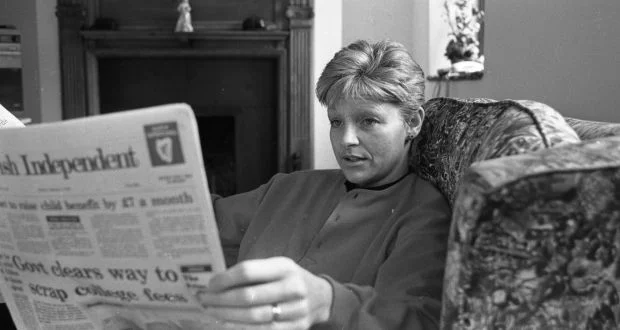
 

Source: https://www.ourdocuments.gov/doc.php?flash...

Enjoyed this speech? Speakola is a labour of love and I’d be very grateful if you would share, tweet or like it. Thank you.

Facebook Twitter Facebook
In Pre 1900 Tags GEORGE WASHINGTON, TRANSCRIPT, PRESIDENTS, USA, FOUNDING FATHERS, FAREWELL ADDRESS, CONGRESS
1 Comment

Oliver Cromwell: 'In the name of God, go!' speech dismissing Rump Parliament - 1653

December 12, 2016

20 April 1653, London, England

It is high time for me to put an end to your sitting in this place,

which you have dishonored by your contempt of all virtue, and defiled by your practice of every vice.

Ye are a factious crew, and enemies to all good government.

Ye are a pack of mercenary wretches, and would like Esau sell your country for a mess of pottage, and like Judas betray your God for a few pieces of money.

Is there a single virtue now remaining amongst you? Is there one vice you do not possess?

Ye have no more religion than my horse. Gold is your God. Which of you have not bartered your conscience for bribes? Is there a man amongst you that has the least care for the good of the Commonwealth?

Ye sordid prostitutes have you not defiled this sacred place, and turned the Lord's temple into a den of thieves, by your immoral principles and wicked practices?

Ye are grown intolerably odious to the whole nation. You were deputed here by the people to get grievances redressed, are yourselves become the greatest grievance.

Your country therefore calls upon me to cleanse this Augean stable, by putting a final period to your iniquitous proceedings in this House; and which by God's help, and the strength he has given me, I am now come to do.

I command ye therefore, upon the peril of your lives, to depart immediately out of this place.

Go, get you out! Make haste! Ye venal slaves be gone! So! Take away that shining bauble there, and lock up the doors.

In the name of God, go!


Source: http://www.emersonkent.com/speeches/dismis...

Enjoyed this speech? Speakola is a labour of love and I’d be very grateful if you would share, tweet or like it. Thank you.

Facebook Twitter Facebook
In Pre 1900 Tags OLIVER CROMWELL, RUMP PARLIAMENT, DISMISSAL OF PARLIAMENT, LORD PROTECTOR, STUART, TRANSCRIPT, ENGLISH REVOLUTION, ENGALND
4 Comments

King Charles I: 'I go from a corruptible to an incorruptible crown', Speech from the scaflold - 1649

December 12, 2016

30 January 1649, outside Whitehall, London, England


I shall be very little heard of anybody here, I shall therefore speak a word unto you here.

Indeed I could hold my peace very well, if I did not think that holding my peace would make some men think that I did submit to the guilt as well as to the punishment. But I think it is my duty to God first and to my country for to clear myself both as an honest man and a good King, and a good Christian.

I shall begin first with my innocence.

In truth I think it not very needful for me to insist long upon this, for all the world knows that I never did begin a War with the two Houses of Parliament. And I call God to witness, to whom I must shortly make an account, that I never did intend for to encroach upon their privileges. They began upon me, it is the Militia they began upon, they confessed that the Militia was mine, but they thought it fit for to have it from me. And, to be short, if any body will look to the dates of Commissions, of their commissions and mine, and likewise to the Declarations, will see clearly that they began these unhappy troubles, not I. So that as the guilt of these enormous crimes that are laid against me I hope in God that God will clear me of it.

I will not, I am in charity, God forbid that I should lay it upon the two Houses of Parliament. There is no necessity of either. I hope that they are free of this guilt, for I do believe that ill instruments between them and me has been the chief cause of all this bloodshed; so that by way of speaking, as I find myself clear of this, I hope and pray God that they may too; yet for all this, God forbid that I should be so ill a Christian as not to say that Gods Judgments are just upon me.

Many times He does pay justice by an unjust sentence, that is ordinary. I will only say this, that an unjust sentence that I suffered to take effect, is punished now by an unjust sentence upon me. That is, so far as I have said, to show you that I am an innocent man.

Now to show you that I am a good Christian; I hope there is [pointing to D. Juxon] a good man that will bear me witness that I have forgiven all the world, and even those in particular that have been the chief causers of my death. Who they are, God knows, I do not desire to know, God forgive them. But this is not all, my charity must go further.

I wish that they may repent, for indeed they have committed a great sin in that particular. I pray God, with St. Stephen, that this be not laid to their charge. Nay, not only so, but that they may take the right way to the peace of the kingdom, for my charity commands me not only to forgive particular men, but my charity commands me to endeavor to the last gasp the peace of the kingdom.

So, Sirs, I do wish with all my soul, and I do hope there is some here [turning to some gentlemen that wrote] that will carry it further, that they may endeavor the peace of the kingdom.

Now, sirs, I must show you both how you are out of the way and will put you in a way.

First, you are out of the way, for certainly all the way you have ever had yet, as I could find by anything, is by way of conquest. Certainly this is an ill way, for Conquest, sirs, in my opinion, is never just, except that there be a good just cause, either for matter of wrong or just title. And then if you go beyond it, the first quarrel that you have to it, that makes it unjust at the end that was just at the first. But if it be only matter of conquest, there is a great robbery, as a pirate said to Alexander the Great, that he was the great robber, he was just a petty robber. And so, sirs, I do think the way that you are in, is much out of the way.

Now, sirs, to put you in the way, believe it, you will never do right, nor God will never prosper you, until you give God his due, the King his due (that is, my successors) and the people their due. I am as much for them as any of you.

You must give God his due by regulating rightly His church according to the Scripture, which is now out of order. For to set you in a way particularly, now I cannot, but only this. A national synod freely called, freely debating among themselves, must settle this, when that every opinion is freely and clearly heard.

For the King, indeed I will not, [then turning to a gentlemen that touched the ax] Hurt not the Ax, that may hurt me.

For the King the Laws of the land will clearly instruct you for that; therefore, because it concerns my own particular, I only give you a touch of it.

For the people, and truly I desire their liberty and freedom as much as any body whomsoever. But I must tell you that their liberty and freedom consists in having of government. Those Laws by which their life and their goods may be most their own. It is not for having share in government, sirs. That is nothing pertaining to them. A subject and a sovereign are clean different things, and therefore until they do that, I mean, that you do put the people in that liberty as I say, certainly they will never enjoy themselves.

Sirs, it was for this that now I am come here. If I would have given way to an arbitrary way, for to have all laws changed according to the power of the sword, I needed not to have come here. And therefore I tell you, and I pray God it be not laid to your charge, that I am the martyr of the people.

In truth, sirs, I shall not hold you much longer, for I will only say thus to you. That in truth I could have desired some little time longer, because I would have put then that I have said in a little more order, and a little better digested than I have done. And, therefore, I hope that you will excuse me.

I have delivered my conscience. I pray God, that you do take those courses that are best for the good of the kingdom and your own salvation.

[William Juxon, Archbishop of Canterbury:]

Will Your Majesty, though it may be very well known Your Majesties affections to religion, yet it may be expected, that You should, say somewhat for the world's satisfaction.

[King:]

I thank you very heartily, my Lord, for that. I had almost forgotten it.

In truth, sirs, my conscience in religion, I think, is very well known to all the world. And therefore, I declare before you all that I die a Christian, according to the profession of the Church of England, as I found it left me by my father.

And this honest man [pointing to Juxon] I think will witness it.
[Then turning to the Officers]

Sirs, excuse me for this same. I have a good Cause, and I have a gracious God. I will say no more.


[Then turning to Colonel Hacker]

Take care that they do not put me to pain. And sir, this, and it please you...

[But then a gentleman coming near the Ax, the King said]

Take heed of the ax, pray, take heed of the ax.
 

[Then to the Executioner]

I shall say but very short prayers, and when I thrust out my hands.

[Then the King called to Juxon for His night cap and put it on. Then to the Executioner]

Does my hair trouble you?

[The Executioner desired Him to put it all under His cap, which the King did accordingly, by the help of the Executioner and the Bishop. Then the King turning to Juxon:]

I have a good cause, and a gracious God on my side.
 

[Juxon:]

There is but one Stage more, which is turbulent and troublesome, yet it is a short one. You may consider it will soon carry you a very great way. It will carry you from earth to heaven. And there you shall find a great deal of cordial, joy, and comfort.


[King:]

I go from a corruptible, to an incorruptible Crown, where no disturbance can be, no disturbance in the world.


[Juxon:]

You are exchanged from a temporal to an eternal crown. A good exchange.


[The King then asked the Executioner]

Is my hair well?

[Then the king took off his cloak and his George, giving his George to Juxon, saying:]

Remember.

[Then the King put off his doublet and, being in his waistcoat, put his cloak on again. Then looking upon the block, the king said to the Executioner:]

You must set it fast.


[Executioner:]

It is fast, sir.


[King:]

It might have been a little higher.


[Executioner:]

It can be no higher, sir.


[King:]

When I put out my hands this way, then.


[After having said a few words as he stood to himself with hands and eyes lift up, immediately stooping down, the king laid his neck on the block. Then the Executioner again putting his hair under his cap, the king said:]

Stay for the sign.

[Executioner:]

Yes, I will, and it please Your Majesty.


[After a very little pause, the king stretching forth his hands, the Executioner at one blow, severed his head from his body.]

Source: http://www.emersonkent.com/speeches/execut...

Enjoyed this speech? Speakola is a labour of love and I’d be very grateful if you would share, tweet or like it. Thank you.

Facebook Twitter Facebook
In Pre 1900 Tags KING CHARLES 1, KING CHARLES I, CHARLES I, BRITISH CROWN, MONARCHY, REGICIDE, EXECUTION, TRANSCRIPT, CROMWELL, ENGLAND
Comment

Maximilien Robespierre: 'Never has the world which He created offered to Him a spectacle so worthy of His notice', On the Festival of the Supreme Being - 1794

December 8, 2016

8 June 1794, Paris, France


The day forever fortunate has arrived, which the French people have consecrated to the Supreme Being. Never has the world which He created offered to Him a spectacle so worthy of His notice. He has seen reigning on the earth tyranny, crime, and imposture. He sees at this moment a whole nation, grappling with all the oppressions of the human race, suspend the course of its heroic labours to elevate its thoughts and vows toward the great Being who has given it the mission it has undertaken and the strength to accomplish it.

Is it not He whose immortal hand, engraving on the heart of man the code of justice and equality, has written there the death sentence of tyrants? Is it not He who, from the beginning of time, decreed for all the ages and for all peoples liberty, good faith, and justice?

He did not create kings to devour the human race. He did not create priests to harness us, like vile animals, to the chariots of kings and to give to the world examples of baseness, pride, perfidy, avarice, debauchery, and falsehood. He created the universe to proclaim His power. He created men to help each other, to love each other mutually, and to attain to happiness by the way of virtue.

It is He who implanted in the breast of the triumphant oppressor remorse and terror, and in the heart of the oppressed and innocent calmness and fortitude. It is He who impels the just man to hate the evil one, and the evil man to respect the just one. It is He who adorns with modesty the brow of beauty, to make it yet more beautiful. It is He who makes the mother's heart beat with tenderness and joy. It is He who bathes with delicious tears the eyes of the son pressed to the bosom of his mother. It is He who silences the most imperious and tender passions before the sublime love of the fatherland. It is He who has covered nature with charms, riches, and majesty. All that is good is His work, or is Himself. Evil belongs to the depraved man who oppresses his fellow man or suffers him to be oppressed.

The Author of Nature has bound all mortals by a boundless chain of love and happiness. Perish the tyrants who have dared to break it!

Republican Frenchmen, it is yours to purify the earth which they have soiled, and to recall to it the justice that they have banished! Liberty and virtue together came from the breast of Divinity. Neither can abide with mankind without the other.

O generous People, would you triumph over all your enemies? Practice justice, and render the Divinity the only worship worthy of Him. O People, let us deliver ourselves today, under His auspices, to the just transports of a pure festivity. Tomorrow we shall return to the combat with vice and tyrants. We shall give to the world the example of republican virtues. And that will be to honour Him still.

The monster which the genius of kings had vomited over France has gone back into nothingness. May all the crimes and all the misfortunes of the world disappear with it! Armed in turn with the daggers of fanaticism and the poisons of atheism, kings have always conspired to assassinate humanity. If they are able no longer to disfigure Divinity by superstition, to associate it with their crimes, they try to banish it from the earth, so that they may reign there alone with crime.

O People, fear no more their sacrilegious plots! They can no more snatch the world from the breast of its Author than remorse from their own hearts. Unfortunate ones, uplift your eyes toward heaven! Heroes of the fatherland, your generous devotion is not a brilliant madness. If the satellites of tyranny can assassinate you, it is not in their power entirely to destroy you. Man, whoever thou mayest be, thou canst still conceive high thoughts for thyself. Thou canst bind thy fleeting life to God, and to immortality. Let nature seize again all her splendor, and wisdom all her empire! The Supreme Being has not been annihilated.

It is wisdom above all that our guilty enemies would drive from the republic. To wisdom alone it is given to strengthen the prosperity of empires. It is for her to guarantee to us the rewards of our courage. Let us associate wisdom, then, with all our enterprises. Let us be grave and discreet in all our deliberations, as men who are providing for the interests of the world. Let us be ardent and obstinate in our anger against conspiring tyrants, imperturbable in dangers, patient in labors, terrible in striking back, modest and vigilant in successes. Let us be generous toward the good, compassionate with the unfortunate, inexorable with the evil, just toward every one. Let us not count on an unmixed prosperity, and on triumphs without attacks, nor on all that depends on fortune or the perversity of others. Sole, but infallible guarantors of our independence, let us crush the impious league of kings by the grandeur of our character, even more than by the strength of our arms.

Frenchmen, you war against kings; you are therefore worthy to honor Divinity. Being of Beings, Author of Nature, the brutalized slave, the vile instrument of despotism, the perfidious and cruel aristocrat, outrages Thee by his very invocation of Thy name. But the defenders of liberty can give themselves up to Thee, and rest with confidence upon Thy paternal bosom. Being of Beings, we need not offer to Thee unjust prayers. Thou knowest Thy creatures, proceeding from Thy hands. Their needs do not escape Thy notice, more than their secret thoughts. Hatred of bad faith and tyranny burns in our hearts, with love of justice and the fatherland. Our blood flows for the cause of humanity. Behold our prayer. Behold our sacrifices. Behold the worship we offer Thee.

Source: http://www.historyplace.com/speeches/robes...

Enjoyed this speech? Speakola is a labour of love and I’d be very grateful if you would share, tweet or like it. Thank you.

Facebook Twitter Facebook
In Pre 1900 Tags ROBESPIERRE, TRANSCRIPT, FESTIVAL OF THE SUPREME BEING, CULT, FRENCH REVOLUTION, CATHOLICISM, MAXIMILIEN ROBESPIERRE
Comment

Tony Blair: 'It's the chain reaction that terror brings with it', The case against terrorism - 2006

December 8, 2016

28 July 2006, Joint News conference, White House, Washington DC, USA


I don't think, actually, it's anything to do with a loss of American influence at all. I think -- we've got to go back and ask what changed policy, because policy has changed in the past few years. And what changed policy was September the 11th.

That changed policy, but actually, before September the 11th this global movement with a global ideology was already in being. September the 11th was the culmination of what they wanted to do. But, actually -- and this is probably where the policymakers, such as myself, were truly in error -- is that even before September the 11th, this was happening in all sorts of different ways in different countries.

I mean, in Algeria, for example, tens and tens of thousands of people lost their lives. This movement has grown, it is there, it will latch on to any cause that it possibly can and give it a dimension of terrorism and hatred.

You can see this. You can see it in Kashmir, for example. You can see it in Chechnya. You can see it in Palestine. Now, what is its purpose?

Its purpose is to promote its ideology based upon the perversion of Islam, and to use any methods at all, but particularly terrorism, to do that, because they know that the value of terrorism to them is -- as I was saying a moment or two ago, it's not simply the act of terror, it's the chain reaction that terror brings with it.

Terrorism brings the reprisal; the reprisal brings the additional hatred; the additional hatred breeds the additional terrorism, and so on. But in a small way, we lived through that in Northern Ireland over many, many decades.

Now, what happened after September the 11th -- and this explains, I think, the President's policy, but also the reason why I have taken the view, and still take the view that Britain and America should remain strong allies, shoulder-to-shoulder in fighting this battle, is that we are never going to succeed unless we understand they are going to fight hard. The reason why they are doing what they're doing in Iraq at the moment -- and, yes, it's really tough as a result of it -- is because they know that if, right in the center of the Middle East, in an Arab, Muslim country, you've got a non- sectarian democracy, in other words people weren't governed either by religious fanatics or secular dictators, you've got a genuine democracy of the people, how does their ideology flourish in such circumstances?

So they have imported the terrorism into that country, preyed on whatever reactionary elements there are to boost it. And that's why we have the issue there; that's why the Taliban are trying to come back in Afghanistan.

That is why, the moment it looked as if you could get progress in Israel and Palestine, it had to be stopped. That's the moment when, as they saw there was a problem in Gaza, so they realized, well, there's a possibility now we can set Lebanon against Israel.

Now, it's a global movement, it's a global ideology. And if there's any mistake that's ever made in these circumstances, it's if people are surprised that it's tough to fight, because you're up against an ideology that's prepared to use any means at all, including killing any number of wholly innocent people.

And I don't dispute part of the implication of your question at all, in the sense that you look at what is happening in the Middle East and what is happening in Iraq and Lebanon and Palestine, and, of course, there's a sense of shock and frustration and anger at what is happening, and grief at the loss of innocent lives.

But it is not a reason for walking away. It's a reason for staying the course, and staying it no matter how tough it is, because the alternative is actually letting this ideology grip a larger and larger number of people.

And it is going to be difficult. Look, we've got a problem even in our own Muslim communities in Europe, who will half-buy into some of the propaganda that's pushed at it -- the purpose of America is to suppress Islam, Britain has joined with America in the suppression of Islam. And one of the things we've got to stop doing is stop apologizing for our own positions.

Muslims in America, as far as I'm aware of, are free to worship; Muslims in Britain are free to worship. We are plural societies. It's nonsense, the propaganda is nonsense. And we're not going to defeat this ideology until we in the West go out with sufficient confidence in our own position and say, this is wrong.

It's not just wrong in its methods, it's wrong in its ideas, it's wrong in its ideology, it's wrong in every single wretched reactionary thing about it. And it will be a long struggle, I'm afraid. But there's no alternative but to stay the course with it. And we will.


Source: http://www.prnewswire.com/news-releases/re...

Enjoyed this speech? Speakola is a labour of love and I’d be very grateful if you would share, tweet or like it. Thank you.

Facebook Twitter Facebook
In 2010s MORE Tags TONY BLAIR, TERRORISM, SEPTEMBER 11, 9-11, IRAQ WAR, GEORGE W BUSH
Comment

Bill Clinton: 'My days in this office are nearly through, but my days of service, I hope, are not', farewell address - 2000

December 8, 2016

18 January 2001, Oval Office, Washington DC, USA

My fellow citizens, tonight is my last opportunity to speak to you from the Oval Office as your President. I am profoundly grateful to you for twice giving me the honor to serve, to work for you and with you to prepare our Nation for the 21st century.
And I'm grateful to Vice President Gore, to my Cabinet Secretaries, and to all those who have served with me for the last eight years.
This has been a time of dramatic transformation, and you have risen to every new challenge. You have made our social fabric stronger, our families healthier and safer, our people more prosperous. You, the American people, have made our passage into the global information age an era of great American renewal.
In all the work I have done as President—every decision I have made, every executive action I have taken, every bill I have proposed and signed—I've tried to give all Americans the tools and conditions to build the future of our dreams in a good society with a strong economy, a cleaner environment, and a freer, safer, more prosperous world.
I have steered my course by our enduring values: opportunity for all, responsibility from all, a community of all Americans. I have sought to give America a new kind of Government, smaller, more modern, more effective, full of ideas and policies appropriate to this new time, always putting people first, always focusing on the future.
Working together, America has done well. Our economy is breaking records with more than 22 million new jobs, the lowest unemployment in 30 years, the highest homeownership ever, the longest expansion in history. Our families and communities are stronger. Thirty-five million Americans have used the family leave law; 8 million have moved off welfare. Crime is at a 25-year low. Over 10 million Americans receive more college aid, and more people than ever are going to college. Our schools are better. Higher standards, greater accountability, and larger investments have brought higher test scores and higher graduation rates. More than 3 million children have health insurance now, and more than 7 million Americans have been lifted out of poverty. Incomes are rising across the board. Our air and water are cleaner. Our food and drinking water are safer. And more of our precious land has been preserved in the continental United States than at any time in a 100 years.
America has been a force for peace and prosperity in every corner of the globe. I'm very grateful to be able to turn over the reins of leadership to a new President with America in such a strong position to meet the challenges of the future.
Tonight I want to leave you with three thoughts about our future. First, America must maintain our record of fiscal responsibility.
Through our last four budgets we've turned record deficits to record surpluses, and we've been able to pay down $600 billion of our national debt—on track to be debt-free by the end of the decade for the first time since 1835. Staying on that course will bring lower interest rates, greater prosperity, and the opportunity to meet our big challenges. If we choose wisely, we can pay down the debt, deal with the retirement of the baby boomers, invest more in our future, and provide tax relief.
Second, because the world is more connected every day, in every way, America's security and prosperity require us to continue to lead in the world. At this remarkable moment in history, more people live in freedom than ever before. Our alliances are stronger than ever. People all around the world look to America to be a force for peace and prosperity, freedom and security.
The global economy is giving more of our own people and billions around the world the chance to work and live and raise their families with dignity. But the forces of integration that have created these good opportunities also make us more subject to global forces of destruction, to terrorism, organized crime and narcotrafficking, the spread of deadly weapons and disease, the degradation of the global environment.
The expansion of trade hasn't fully closed the gap between those of us who live on the cutting edge of the global economy and the billions around the world who live on the knife's edge of survival. This global gap requires more than compassion; it requires action. Global poverty is a powder keg that could be ignited by our indifference.
In his first Inaugural Address, Thomas Jefferson warned of entangling alliances. But in our times, America cannot and must not disentangle itself from the world. If we want the world to embody our shared values, then we must assume a shared responsibility.
If the wars of the 20th century, especially the recent ones in Kosovo and Bosnia, have taught us anything, it is that we achieve our aims by defending our values and leading the forces of freedom and peace. We must embrace boldly and resolutely that duty to lead - to stand with our allies in word and deed and to put a human face on the global economy, so that expanded trade benefits all peoples in all nations, lifting lives and hopes all across the world.
Third, we must remember that America cannot lead in the world unless here at home we weave the threads of our coat of many colors into the fabric of one America. As we become ever more diverse, we must work harder to unite around our common values and our common humanity. We must work harder to overcome our differences, in our hearts and in our laws. We must treat all our people with fairness and dignity, regardless of their race, religion, gender, or sexual orientation, and regardless of when they arrived in our country—always moving toward the more perfect Union of our Founders' dreams.
Hillary, Chelsea, and I join all Americans in wishing our very best to the next President, George W. Bush, to his family and his administration, in meeting these challenges, and in leading freedom's march in this new century.
As for me, I'll leave the Presidency more idealistic, more full of hope than the day I arrived, and more confident than ever that America's best days lie ahead.
My days in this office are nearly through, but my days of service, I hope, are not. In the years ahead, I will never hold a position higher or a covenant more sacred than that of President of the United States. But there is no title I will wear more proudly than that of citizens.
Thank you. God bless you, and God bless America

Source: http://millercenter.org/president/clinton/...

Enjoyed this speech? Speakola is a labour of love and I’d be very grateful if you would share, tweet or like it. Thank you.

Facebook Twitter Facebook
In 2000s MORE Tags LEGACY, FAREWELL ADDRESS, USA, TRANSCRIPT, PRESIDENTS, BILL CLINTON, WHITE HOUSE
Comment
← Newer Posts Older Posts →

See my film!

Limited Australian Season

March 2025

Details and ticket bookings at

angeandtheboss.com

Support Speakola

Hi speech lovers,
With costs of hosting website and podcast, this labour of love has become a difficult financial proposition in recent times. If you can afford a donation, it will help Speakola survive and prosper.

Best wishes,
Tony Wilson.

Become a Patron!

Learn more about supporting Speakola.

Featured political

Featured
Jon Stewart: "They responded in five seconds", 9-11 first responders, Address to Congress - 2019
Read more →
Jacinda Ardern: 'They were New Zealanders. They are us', Address to Parliament following Christchurch massacre - 2019
Read more →
Dolores Ibárruri: "¡No Pasarán!, They shall not pass!', Defense of 2nd Spanish Republic - 1936
Read more →
Jimmy Reid: 'A rat race is for rats. We're not rats', Rectorial address, Glasgow University - 1972
Read more →

Featured eulogies

Featured
For Geoffrey Tozer: 'I have to say we all let him down', by Paul Keating - 2009
Read more →
for James Baldwin: 'Jimmy. You crowned us', by Toni Morrison - 1988
Read more →
for Michael Gordon: '13 days ago my Dad’s big, beautiful, generous heart suddenly stopped beating', by Scott and Sarah Gordon - 2018
Read more →

Featured commencement

Featured
Tara Westover: 'Your avatar isn't real, it isn't terribly far from a lie', The Un-Instagrammable Self, Northeastern University - 2019
Read more →
Tim Minchin: 'Being an artist requires massive reserves of self-belief', WAAPA - 2019
Read more →
Atul Gawande: 'Curiosity and What Equality Really Means', UCLA Medical School - 2018
Read more →
Abby Wambach: 'We are the wolves', Barnard College - 2018
Read more →
Eric Idle: 'America is 300 million people all walking in the same direction, singing 'I Did It My Way'', Whitman College - 2013
Read more →
Shirley Chisholm: ;America has gone to sleep', Greenfield High School - 1983
Read more →

Featured sport

Featured
Joe Marler: 'Get back on the horse', Harlequins v Bath pre game interview - 2019
Read more →
Ray Lewis : 'The greatest pain of my life is the reason I'm standing here today', 52 Cards -
Read more →
Mel Jones: 'If she was Bradman on the field, she was definitely Keith Miller off the field', Betty Wilson's induction into Australian Cricket Hall of Fame - 2017
Read more →
Jeff Thomson: 'It’s all those people that help you as kids', Hall of Fame - 2016
Read more →

Fresh Tweets


Featured weddings

Featured
Dan Angelucci: 'The Best (Best Man) Speech of all time', for Don and Katherine - 2019
Read more →
Hallerman Sisters: 'Oh sister now we have to let you gooooo!' for Caitlin & Johnny - 2015
Read more →
Korey Soderman (via Kyle): 'All our lives I have used my voice to help Korey express his thoughts, so today, like always, I will be my brother’s voice' for Kyle and Jess - 2014
Read more →

Featured Arts

Featured
Bruce Springsteen: 'They're keepers of some of the most beautiful sonic architecture in rock and roll', Induction U2 into Rock Hall of Fame - 2005
Read more →
Olivia Colman: 'Done that bit. I think I have done that bit', BAFTA acceptance, Leading Actress - 2019
Read more →
Axel Scheffler: 'The book wasn't called 'No Room on the Broom!', Illustrator of the Year, British Book Awards - 2018
Read more →
Tina Fey: 'Only in comedy is an obedient white girl from the suburbs a diversity candidate', Kennedy Center Mark Twain Award -  2010
Tina Fey: 'Only in comedy is an obedient white girl from the suburbs a diversity candidate', Kennedy Center Mark Twain Award - 2010
Read more →

Featured Debates

Featured
Sacha Baron Cohen: 'Just think what Goebbels might have done with Facebook', Anti Defamation League Leadership Award - 2019
Read more →
Greta Thunberg: 'How dare you', UN Climate Action Summit - 2019
Read more →
Charlie Munger: 'The Psychology of Human Misjudgment', Harvard University - 1995
Read more →
Lawrence O'Donnell: 'The original sin of this country is that we invaders shot and murdered our way across the land killing every Native American that we could', The Last Word, 'Dakota' - 2016
Read more →