• Genre
  • About
  • Submissions
  • Donate
  • Search
Menu

Speakola

All Speeches Great and Small
  • Genre
  • About
  • Submissions
  • Donate
  • Search
Share a political speech
Alexei Navalny.jpg

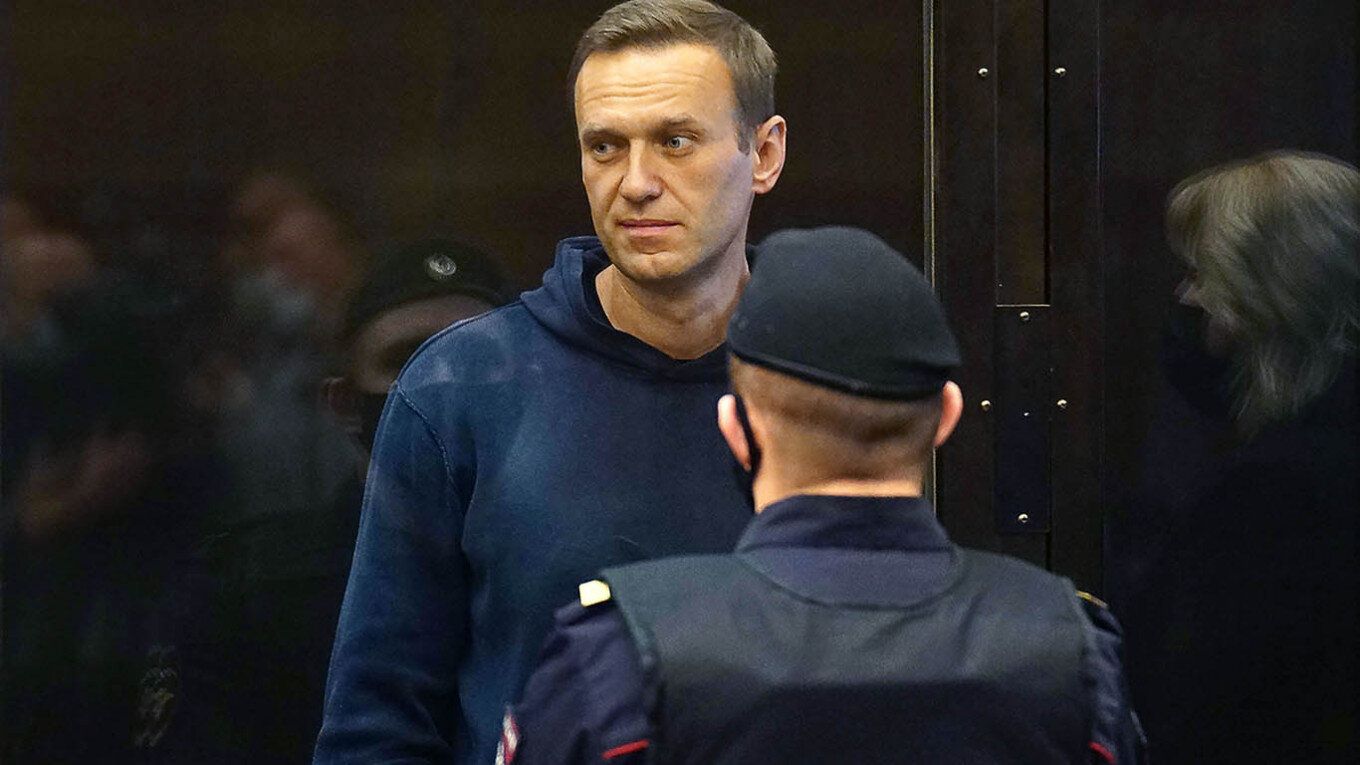
Alexei Navalny: 'Now we'll have Vladimir the Poisoner of Underpants', Closing Statement at trial - 2021

February 3, 2021

3 February 2021, Moscow, Russia

Navalny gives his closing statement.

Let’s talk about the elephant in the room: It’s about putting me in jail because of a trial that was ruled to be unlawful. ... We know why this is happening. The reason: The hatred and fear of one man in a bunker. Because I offended him by surviving after they tried to kill me on his orders,” he says, using a term he frequently uses to refer to Putin.

No matter how much [Putin] tries to pose as a geopolitician, his main resentment toward me is that he will go down in history as a poisoner. There was Alexander the Liberator and Yaroslav the Wise. Now we’ll have Vladimir the Poisoner of Underpants. The police are guarding me and half of Moscow is cordoned off because we have shown that he is demanding to steal underwear from opponents and smear them with chemical weapons.

We have 20 million people below the poverty line; tens of millions live without the slightest prospects for the future. Life in Moscow is more or less fine, but if you drive 100 kilometers away it's full of poverty. The whole country lives in this poverty, and [the government is] trying to shut them up with such show trials.
It's easy to lock me up. The main thing in this process is to intimidate a huge number of people, this is how it works. They are putting one person behind bars to scare millions,” Navalny says. “I really hope that this process will be perceived as... a sign of weakness. ... You can't put millions and hundreds of thousands in jail — and I hope people will begin to realize that. Once they do — and this moment will come — you won't be able to jail everyone.


Source: https://www.washingtonpost.com/world/europ...

Enjoyed this speech? Speakola is a labour of love and I’d be very grateful if you would share, tweet or like it. Thank you.

Facebook Twitter Facebook
In 2020-29 A Tags ALEXEI NAVALNY, OPPOSITION LEADER, COUTROOM, SHOW TRIAL, TRANSCRIPT, RUSSIA, VLADIMIR PUTIN, PRESIDENT PUTIN, POISON, UNDERPANTS
Comment

Bill Clinton: 'I did not have sexual relations with that woman', Press Conference - 1998

February 3, 2021

26 January 1998, White House, Washington DC, USA

Thank you.

Now I have to go back to work on my State of the Union speech, and I worked on it till pretty late last night, but want to say one thing to the American people, I want you to listen to me, I’m going to say this again, I did not have sexual relations with that woman, Miss Lewinsky, I never told anybody to lie, not a single time, never. These allegations are false, and I need to go back to work for the American people. Thank you.

Source: https://www.youtube.com/watch?v=luLpdr4n8m...

Enjoyed this speech? Speakola is a labour of love and I’d be very grateful if you would share, tweet or like it. Thank you.

Facebook Twitter Facebook
In 1980-99 B Tags BILL CLINTON, PRESIDENT CLINTON, MONICA LEWINSKY, DENIAL, PRESS CONFERENCE, LIE, TRANSCRIPT
Comment
Frederick Douglass.jpg

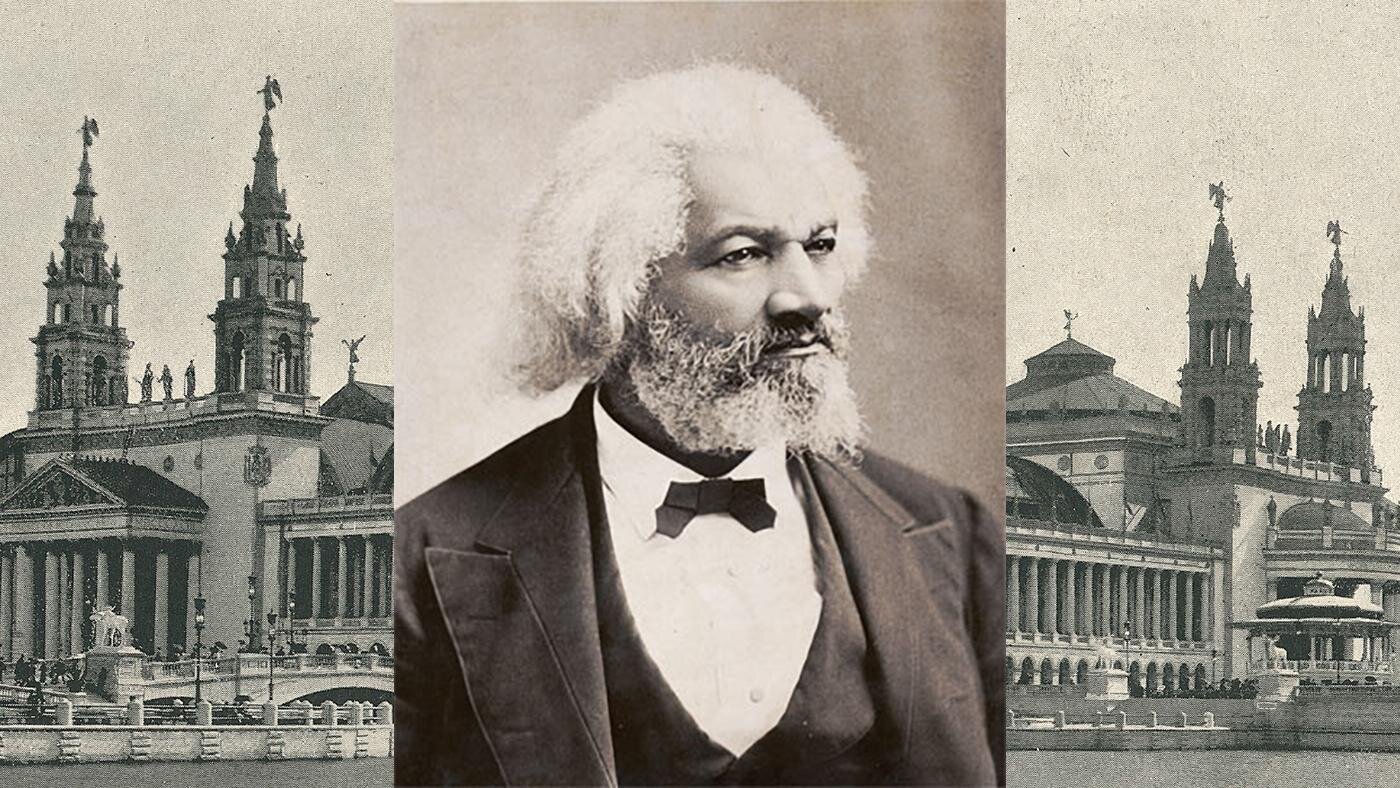
Frederick Douglass: 'My subject is Haiti, the Black Republic', Lecture on Haiti - 1893

January 29, 2021

2 January 1893, Haiti Pavilion, Chicago World Fair, Illinois, USA

No man should presume to come before an intelligent American audience without a commanding object and an earnest purpose. In whatever else I may be deficient, I hope I am qualified, both in object and purpose, to speak to you this evening.

My subject is Haiti, the Black Republic; the only self-made Black Republic in the world. I am to speak to you of her character, her history, her importance and her struggle from slavery to freedom and to statehood. I am to speak to you of her progress in the line of civilization; of her relation with the United States; of her past and present; of her probable destiny; and of the bearing of her example as a free and independent Republic, upon what may be the destiny of the African race in our own country and elsewhere.

If, by a true statement of facts and a fair deduction from them, I shall in any degree promote a better understanding of what Haiti is, and create a higher appreciation of her merits and services to the world; and especially, if I can promote a more friendly feeling for her in this country and at the same time give to Haiti herself a friendly hint as to what is hopefully and justly expected of her by her friends, and by the civilized world, my object and purpose will have been accomplished.

There are many reasons why a good understanding should exist between Haiti and the United States. Her proximity; her similar government and her large and increasing commerce with us, should alone make us deeply interested in her welfare, her history, her progress and her possible destiny.

Haiti is a rich country. She has many things which we need and we have many things which she needs. Intercourse between us is easy. Measuring distance by time and improved steam navigation, Haiti will one day be only three days from New York and thirty-six hours from Florida; in fact our next door neighbor. On this account, as well as others equally important, friendly and helpful relations should subsist between the two countries. Though we have a thousand years of civilization behind us, and Haiti only a century behind her; though we are large and Haiti is small; though we are strong and Haiti is weak; though we are a continent and Haiti is bounded on all sides by the sea, there may come a time when even in the weakness of Haiti there may be strength to the United States.

Now, notwithstanding this plain possibility, it is a remarkable and lamentable fact, that while Haiti is so near us and so capable of being so serviceable to us; while, like us, she is trying to be a sister republic and anxious to have a government of the people, by the people and for the people; while she is one of our very best customers, selling her coffee and her other valuable products to Europe for gold, and sending us her gold to buy our flour, our fish, our oil, our beef and our pork; while she is thus enriching our merchants and our farmers and our country generally, she is the one country to which we turn the cold shoulder.

We charge her with being more friendly to France and to other European countries than to ourselves. This charge, if true, has a natural explanation, and the fault is more with us than with Haiti. No man can point to any act of ours to win the respect and friendship of this black republic. If, as is alleged, Haiti is more cordial to France than to the United States, it is partly because Haiti is herself French. Her language is French; her literature is French, her manners and fashions are French; her ambitions and aspirations are French; her laws and methods of government are French; her priesthood and her education are French; her children are sent to school in France and their minds are filled with French ideas and French glory.

But a deeper reason for coolness between the countries is this: Haiti is black, and we have not yet forgiven Haiti for being black [applause] or forgiven the Almighty for making her black. [Applause.] In this enlightened act of repentance and forgiveness, our boasted civilization is far behind all other nations. [Applause.] In every other country on the globe a citizen of Haiti is sure of civil treatment. [Applause.] In every other nation his manhood is recognized and respected. [Applause.] Wherever any man can go, he can go. [Applause.] He is not repulsed, excluded or insulted because of his color. [Applause.] All places of amusement and instruction are open to him. [Applause.] Vastly different is the case with him when he ventures within the border of the United States. [Applause.] Besides, after Haiti had shaken off the fetters of bondage, and long after her freedom and independence had been recognized by all other civilized nations, we continued to refuse to acknowledge the fact and treated her as outside the sisterhood of nations.

No people would be likely soon to forget such treatment and fail to resent it in one form or another. [Applause.] Not to do so would justly invite contempt.

In the nature of the country itself there is much to inspire its people with manliness, courage and self-respect. In its typography it is wonderfully beautiful, grand and impressive. Clothed in its blue and balmy atmosphere it rises from the surrounding sea in surpassing splendor. In describing the grandeur and sublimity of this country, the Haitian may well enough adopt the poetic description of our own proud country: [Applause.]

A land of forests and of rock,
Of deep blue sea and mighty rivers
Of mountains reared aloft to mock,
The thunder shock, the lightning's quiver;
My own green land forever.

It is a land strikingly beautiful, diversified by mountains, valleys, lakes, rivers and plains, and contains in itself all the elements of great and enduring wealth. Its limestone formation and foundation are a guarantee of perpetual fertility. Its tropical heat and insular moisture keep its vegetation fresh, green and vigorous all the year round. At an altitude of eight thousand feet, its mountains are still covered with woods of great variety and of great value. Its climate, varying with altitude like that of California, is adapted to all constitutions and productions.

Fortunate in its climate and soil, it is equally fortunate in its adaptation to commerce. Its shore line is marked with numerous indentations of inlets, rivers, bays and harbors, where every grade of vessel may anchor in safety. Bulwarked on either side by lofty mountains rich with tropical verdure from base to summit, its blue waters dotted here and there with the white wings of commerce from every land and sea, the Bay of Port au Prince almost rivals the far-famed Bay of Naples, the most beautiful in the world.

One of these bays has attracted the eyes of American statesmanship. The Mole St. Nicolas of which we have heard much and may hear much more, is a splendid habor. It is properly styled the Gibraltar of that country. It commands the Windward Passage, the natural gateway of the commerce both of the new and old world. Important now, our statesmanship sees that it will be still more important when the Nicaragua Canal shall be completed. Hence we want this harbor for a naval station. It is seen that the nation that can get it and hold it will be master of the land and sea in its neighborhood. Some rash things have been said by Americans about getting possession of this harbor. [Applause.] We are to have it peaceably, if we can, forcibly, if we must. I hardly think we shall get it by either process, [Applause.] for the reason that Haiti will not surrender peacefully, and it would cost altogether too much to wrest it from her by force. [Applause.] I thought in my simplicity when Minister and Council General to Haiti, that she might as an act of comity, make this concession to the United States, but I soon found that the judgment of the American Minister was not the judgment of Haiti. Until I made the effort to obtain it I did not know the strength and vigor of the sentiment by which it would be withheld. [Applause.] Haiti has no repugnance to losing control over a single inch of her territory. [Applause.] No statesman in Haiti would dare to disregard this sentiment. It could not be done by any government without costing the country revolution and bloodshed. [Applause.] I did not believe that President Harrison wished me to press the matter to any such issue. [Applause.] On the contrary, I believe as a friend to the colored race he desired peace in that country. [Applause.]

The attempt to create angry feeling in the United States against Haiti because she thought proper to refuse us the Mole St. Nicolas, is neither reasonable nor creditable. There was no insult or broken faith in the case. Haiti has the same right to refuse that we had to ask, and there was insult neither in the asking nor in the refusal. [Applause.]

Neither the commercial, geographical or numerical importance of Haiti is to be despised. [Applause.] If she wants much from the world, the world wants much that she possesses. [Applause.] She produces coffee, cotton, log-wood, mahogany and lignum-vitae. The revenue realized by the government from these products is between nine and ten millions of dollars. With such an income, if Haiti could be kept free from revolutions, she might easily become, in proportion to her territory and population, the richest country in the world. [Applause] And yet she is comparatively poor, not because she is revolutionary.

The population of Haiti is estimated to be nearly one million. I think the actual number exceeds this estimate. In the towns and cities of the country the people are largely of mixed blood and range all the way from black to white. But the people of the interior are of pure negro blood. The prevailing color among them is a dark brown with a dash of chocolate in it. They are in many respects a fine looking people. There is about them a sort of majesty. They carry themselves proudly erect as if conscious of their freedom and independence. [Applause.] I thought the women quite superior to the men. They are elastic, vigorous and comely. They move with the step of a blooded horse. The industry, wealth and prosperity of the country depends largely upon them. [Applause.] They supply the towns and cities of Haiti with provisions, bringing them from distances of fifteen and twenty miles, and they often bear an additional burden in the shape of a baby. This baby burden is curiously tied to the sides of the mother. They seem to think nothing of their burden, the length of the journey or the added weight of the baby. Thousands of these country women in their plain blue gowns and many colored turbans, every morning line the roads leading into Port au Prince. The spectacle is decidedly striking and picturesque. Much of the marketing is also brought down from the mountains on donkeys, mules, small horses and horned cattle. In the management of these animals we see in Haiti a cruelty inherited from the old slave system. They often beat them unmercifully.

I HAVE SAID THAT THE MEN did not strike me as equal to the women, and I think that this is largely due to the fact that most of the men are compelled to spend much of their lives as soldiers in the service of their country, and this is a life often fatal to the growth of all manly qualities. Every third man you meet within the streets of Port au Prince is a soldier. His vocation is unnatural. He is separated from home and industry. He is tempted to spend much of his time in gambling, drinking and other destructive vices; vices which never fail to show themselves repulsively in the manners and forms of those addicted to them. As I walked through the streets of Port au Prince and saw these marred, shattered and unmanly men, I found myself taking up over Haiti the lament of Jesus over Jerusalem, and saying to myself, "Haiti! Poor Haiti! When will she learn and practice the things that make for her peace and happiness?"

NO OTHER LAND HAS BRIGHTER SKIES. No other land has purer water, richer soil, or a more happily diversified climate. She has all the natural conditions essential to a noble, prosperous and happy country. [Applause.] Yet, there she is, torn and rent by revolutions, by clamorous factions and anarchies; floundering her life away from year in a laby rinth of social misery. Every little while we find her convulsed by civil war, engaged in the terrible work of death; frantically shedding her own blood and driving her best mental material into hopeless exile. Port au Prince, a city of sixty thousand souls, and capable of being made one of the healthiest, happiest and one of the most beautiful cities of the West Indies, has been destroyed by fire once in each twenty-five years of its history. The explanation is this: Haiti is a country of revolutions. They break forth without warning and without excuse. The town may stand at sunset and vanish in the morning. Splendid ruins, once the homes of the rich, meet us on every street. Great warehouses, once the property of successful merchants, confront us with their marred and shattered walls in different parts of the city. When we ask: "Whence these mournful ruins?" and "Why are they not rebuilt?" we are answered by one word-- a word of agony and dismal terror, a word which goes to the core of all this people's woes; It is, "revolution!" Such are the uncertainties and insecurities caused by this revolutionary madness of a part of her people, that no insurance company will insure property at a rate which the holder can afford to pay. Under such a condition of things a tranquil mind is impossible. There is ever a chronic, feverish looking forward to possible disasters. Incendiary fires; fires set on foot as a proof of dissatisfaction with the government; fires for personal revenge, and fires to promote revolution are of startling frequency. This is sometimes thought to be due to the character of the race. Far from it. [Applause.] The common people of Haiti are peaceful enough. They have no taste for revolutions. The fault is not with the ignorant many, but with the educated and ambitious few. Too proud to work, and not disposed to go into commerce, they make politics a business of their country. Governed neither by love nor mercy for their country, they care not into what depths she may be plunged. No president, however virtuous, wise and patriotic, ever suits them when they themselves happen to be out of power.

I wish I could say that these are the only conspirators against the peace of Haiti, but I cannot. They have allies in the United States. Recent developments have shown that even a former United States Minister, resident and Consul General to that country has considered against the present government of Haiti. It so happens that we have men in this country who, to accomplish their personal and selfish ends, will fan the flame of passion between the factions in Haiti and will otherwise assist in setting revolutions afoot. To their shame be it spoken, men in high American quarters have boasted to me of their ability to start a revolution in Haiti at pleasure. They have only to raise sufficient money, they say, with which to arm and otherwise equip the malcontents, of either faction, to effect their object. Men who have old munitions of war or old ships to sell; ships that will go down in the first storm, have an interest in stirring up strife in Haiti. It gives them a market for their worthless wares. Others of a speculative turn of mind and who have money to lend at high rates of interest are glad to conspire with revolutionary chiefs of either faction, to enable them to start a bloody insurrection. To them, the welfare of Haiti is nothing; the shedding of human blood is nothing; the success of free institutions is nothing, and the ruin of neighboring country is nothing. They are sharks, pirates and Shylocks, greedy for money, no matter at what cost of life and misery to mankind.

It is the opinion of many, and it is mine as well, that these revolutions would be less frequent if there were less impunity afforded the leaders of them. The so-called right of asylum is extended to them. This right is merciful to the few, but cruel to the many. While these crafty plotters of mischief fail in their revolutionary attempts, they can escape the consequences of their treason and rebellion by running into the foreign legations and consulates. Once within the walls of these, the right of asylum prevails and they know that they are safe from pursuit and will be permitted to leave the country without bodily harm. If I were a citizen of Haiti, I would do all I could to abolish this right of Asylum. During the late trouble at Port au Prince, I had under the protection of the American flag twenty of the insurgents who, after doing their mischief, were all safely embarked to Kingston without punishment, and since then have again plotted against the peace of their country. The strange thing is, that neither the government nor the rebels are in favor of the abolition of this so-called right of asylum, because the fortunes of war may at some time make it convenient to the one or the other of them to find such shelter.

Manifestly, this revolutionary spirit of Haiti is her curse, her crime, her greatest calamity and the explanation of the limited condition of her civilization. It makes her an object of distress to her friends at home and abroad. It reflects upon the colored race everywhere. Many who would have gladly believed in her ability to govern herself wisely and successfully are compelled at times to bow their heads in doubt and despair. Certain it is that while this evil spirit shall prevail, Haiti cannot rise very high in the scale of civilization. While this shall prevail, ignorance and superstition will flourish and no good thing can grow and prosper within her borders. While this shall prevail, she will resemble the man cutting himself among the tombs. While this shall prevail, her rich and fruitful soil will bring forth briers, thorns and noxious weeds. While this evil spirit shall prevail, her great natural wealth will be wasted and her splendid possibilities will be blasted. While this spirit shall prevail, she will sadden the hearts of her friends and rejoice the hearts of her enemies. While this spirit of turbulence shall prevail, confidence in her public men will be weakened, and her well-won independence will be threatened. Schemes of aggression and foreign protectorates will be invented. While this evil spirit shall prevail, faith in the value and stability of her institutions, so essential to the happiness and well-being of her people, will vanish. While it shall prevail, the arm of her industry will be paralyzed, the spirit of enterprise will languish, national opportunities will be neglected, the means of education will be limited the ardor of patriotism will be quenched, her national glory will be tarnished, and her hopes and the hopes of her friends will be blighted.

In its presence, commerce is interrupted, progress halts, streams go unbridged, highways go unrepaired, streets go unpaved, cities go unlighted, filth accumulates in her market places, evil smells affront the air, and disease and pestilence are invited to their work of sorrow, pain and death.

Port au Prince should be one of the finest cities in the world. There is no natural cause for its present condition. No city in the world is by nature more easily drained of impurities and kept clean. The land slopes to the water's edge, and pure sparkling mountain streams flow through its streets on their way to the sea. With peace firmly established within her borders, this city might be as healthy as New York, and Haiti might easily lead all the other islands of the Caribbean Sea in the race of civilization.

You will ask me about the President of Haiti. I will tell you. Whatever may be said or thought of him to the contrary I affirm that there is no man in Haiti, who more fully understands or more deeply feels the need of peace in his country than does President Hyppolite. No purer patriot ever ruled the country. His administration, from the first to the last, has had the welfare of his country in view. It is against the fierce revolutionary spirit of a part of his countrymen that he has had to constantly watch and contend. It has met him more fiercely at the seat of his government than elsewhere.

Unhappily, his countrymen are not his only detractors. Though a friend and benefactor of his country, and though bravely battling against conspiracy, treason and rebellion, instead of receiving the sympathy and support of the American Press and people, this man has been denounced as a cruel monster. I declare to you, than this, no judgment of President Hyppolite could be more unjust and more undeserved.

I know him well and have studied his character with care, and no man can look into his thoughtful face and hear his friendly voice without feeling that he is in the presence of a kind hearted man. The picture of him in the New York papers, which some of you have doubtless seen, does him no manner of justice, and, in fact, does him startling injustice. It makes him appear like a brute, while he is in truth a fine looking man, "black, but comely." His features are regular, his bearing dignified, his manner polished, and he makes for himself the impression of a gentleman and a scholar. His conduct during the recent troubles in Haiti was indeed, prompt, stern and severe, but, in the judgment of the most thoughtful and patriotic citizens of than country, it was not more stringent than the nature of the case required. Here, as elsewhere, desperate cases require desperate remedies. Governments must be a terror to evil-doers if they would be praised to those who do well. It will no do for a government with the knife of treason at its throat, to bear the sword in vain. [Applause.]

I invoke for the President of Haiti the charity and justice we once demanded for our President. Like Abraham Lincoln, President Hyppolite was duly elected President of Haiti and took the oath of office prescribed by his country, and when treason and rebellion raised their destructive heads, he like Mr. Lincoln, struck them down otherwise he would have been struck down by them. [Applause.] Hyppolite did the same. If one should be commended for his patriotism, so should the other. While representing the United States in Haiti, I was repeatedly charged in certain quarters, with being a friend to Haiti. I am not ashamed of that charge. I own at once, that the charge is true, and I would be ashamed to have it otherwise than true. I am indeed a friend to Haiti, but not in the sense my accusers would have you believe. They would have it that I preferred the interest of Haiti, to the just claims of my own country, and this charge I utterly deny and defy any man to prove it. I am a friend of Haiti and a friend of every other people upon whom the yoke of slavery had been imposed. In this I only stand with philanthropic men and women everywhere. I am the friend of Haiti in the same sense in which General Harrison, the President of the United States, himself is a friend of Haiti. I am glad to be able to say here and now of him, that I found in President Harrison no trace of the vulgar prejudice which is just now so malignant in some parts of our southern country towards the negro. He sent me not to represent in Haitiour race prejudice, but the best sentiments of our loyal, liberty-loving American people. No mean or mercenary mission was set before me. His advice to me was worthy of his lofty character. He authorized me in substance to do all that I could consistently with my duty to the United States, for the welfare of Haiti and, as far as I could, to persuade her to value and preserve her free institutions, and to remove all all ground for there proaches now hurled at her and at the colored race through her example.

The language of the President was worthy of the chief magistrate of the American people--a people who should be too generous to profit by the misfortune of others; too proud to stoop to meanness; to honest to practice duplicity; too strong to menance the weak, and every way too great to be small. I went to Haiti, imbued with the noble sentiments of General Harrison. For this reason, with others, I named him as worthy to be his own successor, and I could have named no other more worthy of the honor.

From the beginning of our century until now, Haiti and its inhabitants under one aspect or another, have, for various reasons, been very much in the thoughts of the American people. While slavery existed amongst us, her example was a sharp thorn in our side and a source of alarm and terror. She came into the sisterhood of nations through blood. She was described at the time of her advent, as a very hell of horrors. Her very name was pronounced with a shudder. She was a startling and frightful surprise and a threat to all slave-holders throughout the world, and the slave-holding world has had its questioning eye upon her career ever since.

By reason of recent events and abolition of slavery, the enfranchisement of the negro in our country, and the probable completion of the Nicaragua canal, Haiti has under another aspect, become, of late, interesting to American statesmen. More thought, more ink and paper have been devoted to her than to all the other West India Islands put together. This interest is both political and commercial, for Haiti is increasingly important in both respects. But aside from politics and aside from commerce, there is, perhaps, no equal number of people anywhere on the globe, in whose history, character and destiny there is more to awaken sentiment, thought and inquiry, than is found in the history of her people.

The country itself, apart from its people, has special attractions. First things have ever had a peculiar and romantic interest, simply because they are first things. In this, Haiti is fortunate. She has in many things been first. She has been made the theatre of great events. She was the first of all the cis-Atlantic world, upon which the firm foot of the progressive, aggressive and all-conquering white man was permanently set. Her grand old tropical forests, fields and mountains, were among the first of the New World to have their silence broken by trans-Atlantic song and speech. She was the first to be invaded by the Christian religion and to witness its forms and ordinances. She was the first to see a Christian church and to behold the cross of Christ. She was also the first to witness the bitter agonies of the negro bending under the blood-stained lash of Christian slave-holders. Happily too, for her, she was the first of the New World in which the black man asserted his right to be free and was brave enough to fight for his freedom and fortunate enough to gain it.

In thinking of Haiti, a painful, perplexing and contradictory fact meets us at the outset. It is: that negro slavery was brought to the New World by the same people from whom Haiti received her religion and her civilization. No people have ever shown greater religious zeal or have given more attention to the ordinances of the Christian church than have the Spaniards; yet no people were ever guilty of more injustice and blood-chilling cruelty to their fellowmen than these same religious Spaniards. Men more learned in the theory of religion than I am, may be able to explain and reconcile these two facts; but to my they seem to prove that men may be very pious, and yet very pitiless; very religious and yet practice the foulest crimes. These Spanish Christians found in Haiti a million of harmless men and women, and in less than sixty years they had murdered nearly all of them. With religion on their lips, the tiger in their hearts and the slave whip in their hands, they lashed these innocent natives to toil, death and extinction. When these pious souls had destroyed the natives, they opened the slave trade with Africa as a merciful device. Such, at least, is the testimony of history.

Interesting as Haiti is in being the cradle in which American religion and civilization were first rocked, its present inhabitants are still more interesting as having been actors in great moral and social events. These have been scarcely less portentous and startling than the terrible earthquakes which have some times moved their mountains and shaken down their towns and cities. The conditions in which the Republican Government of Haiti originated, were peculiar. The great fact concerning its people, is, that they were negro slaves and by force conquered their masters and made themselves free and independent. As a people thus made free and having remained so for eighty-seven years, they are now asked to justify their assumption of statehood at the bar of the civilized world by conduct becoming a civilized nation.

The ethnologist observes them with curious eyes, and questions them on the ground of race. The statesman questions their ability to govern themselves; while the scholar and philanthropist are interested in their progress, their improvement and the question of their destiny.

But, interesting as they are to all these and to others, the people of Haiti, by reason of ancestral identity, are more interesting to the colored people of the United States than to all others, for the Negro, like the Jew, can never part with his identity and race. Color does for the one what religion does for the other and makes both distinct from the rest of mankind. No matter where prosperity or misfortune may chance to drive the negro, he is identified with and shares the fortune of his race. We are told to go to Haiti; to go to Africa. Neither Haiti nor Africa can save us from common doom. Whether we are here or there, we must rise or fall with the race. Hence, we can do about as much for Africa or Haiti by good conduct and success here as anywhere else in the world. The talk of the bettering ourselves by getting rid of the white race, is a great mistake. It is about as idle for the black man to think of getting rid of the white man, as it is for the white man to think of getting rid of the black. They are just the two races which cannot be excluded from any part of the globe, nor can they exclude each other; so we might as well decide to live together here as to go elsewhere Besides, for obvious reasons, until we can make ourselves respected in the United States, we shall not be respected in Haiti,. Africa, or anywhere else.

Of my regard and friendship for Haiti, I have already spoken. I have, too, already spoken somewhat of her faults, as well, for they are many and grievous. I shall, however, show before I get through, that, with all her faults, you and I and all of us have reason to respect Haiti for her services to the cause of liberty and human equality throughout the world, and for the noble qualities she exhibited in all the trying conditions of her early history.

I have, since my return to the United States, been pressed on all sides to foretell what will be the future of Haiti-whether she will ever master and subdue the turbulent elements within her borders and become an orderly Republic. Whether she will maintain her liberty and independence, or, at last, part with both and become a subject of some one or another of the powerful nations of the world by which she seems to be coveted. The question still further is, whether she will fall away into anarchy, chaos and barbarism, or rise to the dignity and happiness of a highly civilized nation and be a credit to the colored race? I am free to say that I believe she will fulfill the latter condition and destiny. By one class of writers, however, such as Mr. Froude and his echoes, men and women who write what they know the prejudice of the hour will accept and pay for, this question has been vehemently answered already against Haiti and the possibilities of the negro race generally.

They tell us that Haiti is already doomed--that she is on the down-grade to barbarism; and, worse still, they affirm that when the negro is left to himself there or elsewhere, he inevitably gravitates to barbarism. Alas, for poor Haiti! and alas, for the poor negro everywhere, if this shall prove true!

The argument as stated against Haiti, is, that since her freedom, she has become lazy; that she is given to gross idolatry, and that these evils are on the increase. That voodooism, fetishism, serpent worship and cannibalism are prevalent there; that little children are fatted for slaughter and offered as sacrifices to their voodoo deities; that large boys and girls run naked through the streets of the towns and cities, and that things are generally going from bad to worse.

In reply to these dark and damning allegations, it will be sufficient only to make a general statement. I admit at once, that there is much ignorance and much superstition in Haiti. The common people there believe much in divinations, charms, witchcraft, putting spells on each other, and in the supernatural and miracle working power of their voodoo priests generally. Owing to this, there is a feeling of superstition and dread of each other, the destructive tendency of which cannot be exaggerated. But it is amazing how much of such darkness society has borne and can bear and is bearing without falling to pieces and without being hopelessly abandoned to barbarism.

Let it be remembered that superstition and idolatry in one form or another have not been in the past, nor are they in the present, confined to any particular place or locality, and that, even in our enlightened age, we need not travel far from our own country, from England, from Scotland, from Ireland, France, Germany or Spain to find considerable traces of gross superstition. We consult familiar spirits in America. Queen Victoria gets water from the Jordan to christen her children, as if the water of that river were any better than the water of any other river. Many go thousands of miles in this age of light to see an old seamless coat supposed to have some divine virtue. Christians at Rome kiss the great toe of a black image called St. Peter, and go up stairs on their knees, to gain divine favor. Here, we build houses and call them God's houses, and go into them to meet God, as if the Almighty dwelt in temples made with men's hands. I am not, myself, altogether free from superstition. I would rather sit at a table with twelve persons than at one with thirteen; and would rather see the new moon first over my right shoulder than over my left, though my reason tells me that it makes no manner of difference over which shoulder I see the new moon or the old. And what better is the material of one house than that of another?

Can man build a house more holy than the house which God himself has built for the children of men? If men are denied a future civilization because of superstition, there are others than the people of Haiti who must be so denied. In one form or another, superstition will be found everywhere and among all sorts of people, high or low. New England once believed in witches, and yet she has become highly civilized.

Haiti is charged with the terrible crime of sacrificing little children to her voodoo gods, and you will want to know what I have to say about this shocking allegation. My answer is: That while I lived in Haiti I made diligent inquiry about this alleged practice so full of horror. I questioned many persons concerning it, but I never met a man who could say that he ever saw an instance of the kind; nor did I ever see a man who ever met any other man who said he had seen such an act of human sacrifice. This I know is not conclusive, for strange things have sometimes been done in the name of God, and in the practice of religion. You know that our good father Abraham (not Abraham Lincoln) once thought that it would please Jehovah to have him kill his son Isaac and offer him a sacrifice on the altar. Men in all ages have thought to gain divine favor of their divinities or to escape their wrath by offering up to them something of great and special value. Sometimes it was the firstlings of the flock, and sometimes it was the fat of fed beasts, fed for the purpose of having it nice and acceptable to the divine being. As if a divine being could be greatly pleased with the taste or smell of such offerings. Men have become more sensible of late. They keep, smell and eat their fat beef and mutton themselves.

As to the little boys and girls running nude in the streets, I have to say, that while there are instances of the kind, and more of them we, with the ideas of our latitude, would easily tolerate, they are nevertheless the exceptions to the general rule in Haiti. You will see in the streets of Port au Prince, one hundred decently dressed children to one that is nude; yet, our newspaper correspondents and six-day tourists in Haiti, would lead you to think that nudity is there the rule and decent clothing the exception. It should be remembered also, that in a warm climate like that of Haiti, the people consider more the comfort of their children in this respect than any fear of improper exposure of their little innocent bodies.

A word about snake worship. This practice is not new in the history of religion. It is as old as Egypt and is a part of our own religious system. Moses lifted up the serpent in the wilderness as a remedy for a great malady, and our Bible tells us of some wonderful things done by the serpent in the way of miraculous healing. Besides, he seems to have been on hand and performed marvelous feats in the Garden of Eden, and to have wielded a potent and mysterious influence in deciding the fate of mankind for time and eternity. Without the snake, the plan of salvation itself would not be complete. No wonder then that Haiti, having heard so much of the serpent in these respectable quarters and sublime relations, has acquired some respect for a divinity so potent and so ancient.

But the future of Haiti. What is it to be? Will it be civilization or barbarism? Will she remain an independent state, or be swallowed up by one or another of the great states? Whither is she tending? In considering these questions, we should allow no prejudice to influence us on the one hand or the other. If it be true that the Negro, left to himself, lapses into barbarism, as is alleged; the Negro above and beyond all others in the world should know it and should acknowledge it.

But it is said that the people of Haiti are lazy. Well, with the conditions of existence so easy and the performance of work so uninviting, the wonder is not that the men of Haiti are lazy, but that they work at all. But it is not true that the people of Haiti are as lazy as they are usually represented to be. There is much hard work done in Haiti, both mental and physical. This is true, not only of accessible altitudes where the air is cool and bracing, but it is so in the low lands, where the climate is hot, parching and enervating. No one can see the ships afloat in the splendid harbors of Haiti, and see the large imports and exports of the country, without seeing also that somebody there has been at work. A revenue of millions does not come to a country where no work is done.

Plainly enough; we should take no snap judgment on a question so momentous. It should not be determined by a dash of the pen and upon mere appearances of the moment. There are ebbs and flows in the tide of human affairs, and Haiti is no exception to this rule. There have been times in her history when she gave promise of great progress, and others, when she seemed to retrograde . We should view her in the light broad light of her whole history, and observe well her conduct in the various vicissitudes through which she has passed. Upon such broad view I am sure Haiti will be vindicated.

It was once said by the great Daniel O'Connell, that the history of Ireland might be traced, like a wounded man through a crowd, by the blood. The same may be said of the history of Haiti as a free state. Her liberty was born in blood, cradled in misfortune, and has lived more or less in a storm of revolutionary turbulence. It is important to know how she behaved in these storms. As I view it, there is one great fundamental and soul-cheering fact concerning her. It is this: Despite all the trying vicissitudes of her history, despite all the machinations of her enemies at home, in spite of all temptations from abroad, despite all her many destructive revolutions, she has remained true to herself, true to her autonomy, and still remains a free and independent state. No power on this broad earth has yet induced or seduced her to seek a foreign protector, or has compelled her to bow her proud neck to a foreign government. We talk of assuming protectorate over Haiti. We had better not attempt it. The success of such an enterprise is repelled by her whole history. She would rather abandon her ports and harbors, retire to her mountain fastnesses, or burn her towns and shed her warm, red, tropical blood over their ashes than to submit to the degradation of any foreign yoke, however friendly. In whatever may be the sources of her shame and misfortune, she has one source of great complacency; she lives proudly in the glory of her bravely won liberty and her blood bought independence, and no hostile foreign foot has been allowed to tread her scared soil in peace from the hour of her independence until now. Her future autonomy is at least secure. Whether civilized or savage, whatever the future may have in store for her, Haiti is the black man's country, now forever. [Applause.]

In just vindication of Haiti, I can go one step further. I can speak of her, not only words of admiration, but words of gratitude as well. She has grandly served the cause of universal human liberty. We should not forget that the freedom you and I enjoy to-day; that the freedom that eight hundred thousand colored people enjoy in the British West Indies; the freedom that has come to the colored race the world over, is largely due to the brave stand taken by the black sons, of Haiti ninety years ago. When they struck for freedom, they builded better than they knew. Their swords were not drawn and could not be drawn simply for themselves alone. They were linked and interlinked with their race, and striking for their freedom, they struck for the freedom of every black man in the world. [Prolonged applause.]

It is said of ancient nations, that each had its special mission in the world and that each taught the world some important lesson. The Jews taught the world a religion, a sublime conception of the Deity. The Greeks taught the world philosophy and beauty. The Romans taught the world jurisprudence. England is foremost among the modern nations in commerce and manufactures. Germany has taught the world to think, while the American Republic is giving the world an example of a Government by the people, of the people and for the people. [Applause.] Among these large bodies, the little community of Haiti, anchored in the Caribbean Sea, has had her mission in the world, and a mission which the world had much need to learn. She has taught the world the danger of slavery and the value of liberty. In this respect she has been the greatest of all our modern teachers.

Speaking for the Negro, I can say, we owe much to Walker for his appeal; to John Brown [applause] for the blow struck at Harper's Ferry, to Lundy and Garrison for their advocacy [applause], We owe much especially to Thomas Clarkson, [applause], to William Wilberforce, to Thomas Fowell Buxton, and to the anti-slavery societies at home and abroad; but we owe incomparably more to Haiti than to them all. [Prolonged applause.] I regard her as the original pioneer emancipator of the nineteenth century. [Applause.] It was her one brave example that first of all started the Christian world into a sense of the Negro's manhood. I was she who first awoke the Christian world to a sense of "the danger of goading too far the energy that slumbers in a black man's arm." [Applause.] Until Haiti struck for freedom, the conscience of the Christian world slept profoundly over slavery. It was scarcely troubled even by a dream of this crime against justice and liberty. The Negro was in its estimation a sheep like creature, having no rights which white men were bound to respect, a docile animal, a kind of ass, capable of bearing burdens, and receiving strips from a white master without resentment, and without resistance. The mission of Haiti was to dispel this degradation and dangerous delusion, and to give to the world a new and true revelation of the black man's character. This mission she has performed and performed it well. [Applause.]

Until she spoke no Christian nation had abolished negro slavery. Until she spoke no christian nation had given to the world an organized effort to abolish slavery. Until she spoke the slave ship, followed by hungry sharks, greedy to devour the dead and dying slaves flung overboard to feed them, plouged in peace the South Atlantic painting the sea with the Negro's blood. Until she spoke, the slave trade was sanctioned by all the Christian nations of the world, and our land of liberty and light included. Men made fortunes by this infernal traffic, and were esteemed as good Christians, and the standing types and representations of the Saviour of the World. Until Haiti spoke, the church was silent, and the pulpit was dumb. Slavetraders lived and slave-traders died. Funeral sermons were preached over them, and of them it was said that they died in the triumphs of the christian faith and went to heaven among the just.

To have any just conception or measurement of the intelligence, solidarity and manly courage of the people of Haiti when under the lead of Toussaint L'Ouverture, [prolonged applause] and the dauntless Dessalines, you must remember what the conditions were by which they were surrounded; that all the neighboring islands were slaveholding, and that to no one of all these islands could she look for sympathy, support and co-operation. She trod the wine press alone. Her hand was against the Christian world, and the hand of the Christian world was against her. Her's was a forlorn hope, and she knew that she must do or die.

In Greek or Roman history nobler daring cannot be found. It will ever be a matter of wonder and astonishment to thoughtful men, that a people in abject slavery, subject to the lash, and kept in ignorance of letters, as these slaves were, should have known enough, or have had left in them enough manhood, to combine, to organize, and to select for themselves trusted leaders and with loyal hearts to follow them into the jaws of death to obtain liberty. [Applause.]

In forecasting the future of this people, then, I insist that some importance shall be given to this and to another grand initial fact: that the freedom of Haiti was not given as a boon, but conquered as a right ! [Applause.] Her people fought for it. They suffered for it, and thousands of them endured the most horrible tortures, and perished for it. It is well said that a people to whom freedom is given can never wear it as grandly as can they who have fought and suffered to gain it. Here, as elsewhere, what comes easily, is liable to go easily. But what man will fight to gain, that, man will fight to maintain. To this test Haiti was early subjected, and she stood this test like pure gold. [Applause.]

To re-enslave her brave self-emancipated sons of liberty, France sent in round number's, to Haiti during the years 1802-1803,50,000 of her veteran troops, commanded by he most experienced and skillful generals. History tells us what became of these brave and skillful warriors from France. It shows that they shared the fate of Pharaoh and his hosts. Negro manhood, Negro bravery, Negro military genius and skill, assisted by yellow fever and pestilence made short work of them. The souls of them by thousands were speedily sent into eternity, and their bones were scattered on the mountains of Haiti, there to bleach, burn and vanish under the fierce tropical sun. Since 1804 Haiti has maintained national independence. [Applause.] I fling these facts at the feet of the detractors of the Negro and of Haiti. They may help them to solve the problem of her future. They not only indicate the Negro's courage, but demonstrate his intelligence as well. [Applause.]

No better test of the intelligence of people can be had than is furnished in their laws, their institutions and their great men. To produce these in any considerable degree of perfection, a high order of ability is always required. Haiti has no cause to shrink from this test or from any other.

Human greatness is classified in three divisions: first, greatness of administration; second greatness of organization; and the third, greatness of discovery, the latter being the highest or der of human greatness. In all three of these divisions, Haiti appears to advantage. Her Toussaint L'Ouvertures, her Dessalines, her Christophes, her Petions, her Reguad and others, their enemies being judges, were men of decided ability. [Applause.] They were great in all the three department of human greatness. Let any man in our highly favored country, undertake to organize an army of raw recruits, and especially let any colored man undertake to organize men of his own color, and subject them to military discipline, and he will at once see the hard task that Haiti had on hand, in resisting France and slavery, and be held to admire the ability and character displayed by he sons in making and managing her armies and achieving her freedom. [Applause.]

But Haiti did more than raise armies and discipline troops. She organized a Government and maintained a Government during eighty-seven years. Though she has been ever and anon swept by whirlwinds of lawless turbulence; though she has been shaken by earthquakes of anarchy at home, and has encountered the chilling blasts of prejudice and hate from the outside world, though she has been assailed by fire and sword, from without and within, she has, through all the machinations of her enemies, maintained a well defined civil government, and maintains it to-day. [Applause.] She is represented at all courts of Europe, by able men, and, in turn, she has representatives from all the nations of Europe in her capitol.

She has her judiciary, her executive and legislative departments. She has her house of representatives and her senate. All the functions of government have been, and are now being, regularly performed within her domain. What does all this signify? I answer. Very much to her credit. If it be true that all present, and all the future rests upon all the past, there is a solid ground to hope for Haiti. There is a fair chance that she may yet be highly progressive, prosperous and happy. [Applause.]

Those who have studied the history of civilization, with the largest range of observation and the most profound philosophical generalization, tell us that men are governed by their antecedents; that what they did under one condition of affairs they will be likely to do under similar conditions, whenever such shall arise. Haiti has in the past, raised many learned, able and patriotic men. She has made wise laws for own government. Among her citizens she has had scholars and statesmen, learned editors, able lawyers and eminent physicians. She has now, men of education in the church and in her government, and she is now, as ever, in the trend of civilization. She may be slow and halting in the race, but her face is in the right direction. [Applause.]

THE STATEMENT THAT SHE IS ON THE DOWN GRADE TO BARBARISM is easily made, but hard to sustain. It is not all borne out by my observation and experience while in that country. It is my good fortune to possess the means of comparison, as to "what Haiti was and what Haiti is;" what she was twenty years ago, and what she is now. I visited that country twenty years ago and have spent much time there since, and I have no hesitation in saying that, with all that I have said of her revolutions and defective civilization, I can report a marked and gratifying improvement in the condition of her people, now, compared with what it was twenty years ago. [Applause.]

IN PORT AU PRINCE, which may be taken as a fair expression of the general condition of the country, I saw more apparent domestic happiness, more wealth, more personal neatness, more attention to dress, more carriage rolling through the streets, more commercial activity, more schools, more well clothed and well cared for children, more churches, more teachers, more Sisters of Charity more respect for marriage, more family comfort, more attention to sanitary conditions, more and better water supply, more and better Catholic clergy, more attention to religious observances, more elegant residences, and more of everything desirable than I saw there twenty years ago. [Applause.]

AT THAT TIME HAITI was isolated. She was outside of telegraphic communication with the civilized world. She now has such connection. She has paid for a cable of her own and with her own money.

THIS HAS BEEN ACCOMPLISHED under the much abused President Hyppolite. [Applause.] Then, there was no effort to light any of the streets. Now, the main streets are lighted. The streets are full of carriages at night, but none are allowed to appear without lighted lamps, and every attention is given to the peace and good order of the citizens. There is much loud talk in Haiti, but blows are seldom exchanged between Haitians.

EVEN HER REVOLUTIONS are less sanguinary and ruthless now, than formerly. They have in many cases been attended with great disregard of private rights, with destruction of property and the commission of other crimes, but nothing of the kind was permitted to occur in the revolution by which President Hyppolite, was raised to power. He was inaugurated in a manner as orderly as that inducting into office any President of the United States. [Applause.]

BEFORE WE DECIDE AGAINST THE probability of progress in Haiti, we should look into the history of the progress of other nations. Some of the most enlightened and highly civilized states of the world of to-day, were, a few centuries ago, as deeply depraved in morals, manners and customs, as Haiti is alleged to be now. Prussia, which is to-day the arbiter of peace and war in Europe and holds in her borders the profoundest thinkers of the nineteenth century, was, only three centuries ago, like Haiti, the theatre of warring factions, and the scene of flagrant immoralities. France, England, Italy and Spain have all gone through the strife and turmoil of factional war, the like of which now makes Haiti a by-word, and a hissing to a mocking earth. As they have passed through the period of violence, why may not Haiti do the same? [Applause.]

IT SHOULD ALSO BE REMEMBERED THAT HAITI IS STILL IN HER CHILDHOOD. Given her time! Give her time!! While eighty years may be a good old age for a man, it can only be as a year in the life of a nation. With a people beginning a national life as Haiti did, with such crude material within, and such antagonistic forces operating upon her from without, the marvel is, not that she is far in the rear of civilization, but that she has survived in any sense as a civilized nation.

THOUGH SHE IS STILL AN INFANT, she is out of the arms of her mother. Though she creeps, rather than walks; stumbles often and sometimes falls, her head is not broken, and she still lives and grows, and I predict, will yet be tall and strong. Her wealth is greater, her population is larger, her credit is higher, her currency is sounder, her progress is surer, her statesmen are abler, her patriotism is nobler, and her government is steadier and firmer than twenty years ago. I predict that out of civil strife, revolution and war, there will come a desire for peace. Out of division will come a desire for union; out of weakness a desire for strength, out of ignorance a desire for knowledge, and out of stagnation will come a desire for progress. [Applause.] Already I find in her a longing for peace. Already she feels that she has had enough and more than enough of war. Already she perceives the need of education, and is providing means to obtain it on a large scale. Already she has added five hundred schools to her forces of education, within the two years of Hyppolite's administration. [Applause,] In the face of such facts; in the face of the fact that Haiti still lives, after being boycotted by all the Christian world; in the face of the fact of her known progress within the last twenty years in the face of the fact that she has attached herself to the car of the world's civilization, I will not, I cannot believe that her star is to go out in darkness, but I will rather believe that whatever may happen of peace or war Haiti will remain in the firmament of nations, and, like the star of the north, will shine on and shine on forever. [Prolonged applause.]

DEDICATION CEREMONIES

Of the Haitian Pavilion

Then Mr Douglass continues:

Ladies and Gentlemen:-- .......... The first part of my mission here to-day is to speak a few words of this pavilion. In taking possession of it and dedicating it to the important purposes for which it has been erected within the grounds of the World's Columbian Exposition, Mr. Charles A. Preston and myself, as the Commissioners, appointed by the government of Haiti, to represent that government in all that belongs to such a mission in connection with the Exposition, wish to express our satisfaction with the work thus far completed. There have been times during the construction of this pavilion, when we were very apprehensive that its completion might be delayed to an inconvenient date. Solicitude on that point is now happily ended. The building which was once a thought is now a fact and speaks for itself. The vigor and punctuality of its builders are entitled to high praise. They were ready to give us possession before we were ready to accept it.

That some pains have been taken to have this pavilion in keeping with the place it occupies and to have it consistent with the character of the young nation it represents, is manifest. It is also equally manifest that it has been placed here at a considerable cost. The theory that the world was made out of nothing does not apply here. Material itself, it has required material aid to bring it into existence and to give it the character and completeness it possesses. It could not have been begun or finished without having behind it, the motive power of money, as well as the influence of an enligtened mind and a liberal spirit. It is no disparagement to other patriotic citizens of Haiti who have taken an interest in the subject of the World's Columbian Exposition, when I say, that we have found these valuable and necessary qualities pre-minently embodied in the President of the Republic of Haiti. His Excellency General Hyppolite, has been the supreme motive power and the main-spring by which this pavilion has found a place in these magnificent grounds. The moment when his attention was called to the importance of having his country well represented in this Exposition he comprehended the significance of the fact and has faithfully and with all diligence endeavored to forward such measures as were necessary to attain this grand result. It is an evidence not only of the high intelligence of President Hyppolite, but also of the confidence reposed in his judgment by his country-men that this building has taken its place here, amid the splendors and architectural wonders which have sprung up here as if by magic to dazzle and astonish the world. Whatever else may be said of President Hyppolite by his detractors he has thoroughly vindicated his sagacity and his patriotism by endeavoring to lead his country in the paths of peace, prosperity and glory. And as for herself, we may well say, that from the beginning of her national career until now, she has been true to herself and has been wisely sensible of her surroundings. No act of hers is more creditable than her presence here. She has never flinched when called by her right name. She has never been ashamed of her cause or of her color. Honored by an invitation from the government of the United States to take her place here, and be represented among the foremost civilized nations of the earth, she did not quail or hesitate. Her presence here to-day is a proof that she has the courage and ability to stand up and be counted in the great procession of our nineteenth century's civilization. [Applause]

Though this pavilion is modest in its dimensions and unpretentious in its architectural style and proportions, though it may not bear favorable comparison with the buildings of the powerful nations by which it is surrounded, I dare say, that it will not counted in any sense unworthy of the high place which it occupies or of the people whose interests it represents. The nations of the Old World can count their years by thousand, their populations by millions and their wealth by mountains of gold. It was not to be expected that Haiti with its limited territory, its slender population and wealth could rival, or would try to rival here the splendors created by those older nations, and yet I will be allowed to say for her, that it was in her power to have erected a building much larger and finer than the one we now occupy. She has however, wisely chosen to put no strain upon her resources and has been perfectly satisfied to erect an edifice, admirably adapted to its uses and entirely respectable in its appearance. In this she has shown her good taste not less than her good sense. [Applause.]

For ourselves as Commissioners under whose supervision and direction this pavilion has been erected, I may say, that we feel sure that Haiti will heartily approve our work and that no citizen of that country shall visit the World's Columbian Exposition will be ashamed of its appearance, or will fail to look upon it and contemplate it with satisfied complacency. Its internal appointments are consistent with its external appearance. They bear the evidence of proper and thoughtful consideration for the taste, comfort and convience of visitors, as well as for the appropriate display of the productions of the country which shall be here exhibited. Happy in these respects it is equally happy in another, Its location and situation are desirable. It is not a candle put under a bushel, but a city set upon a hill. [Applause.] For this we cannot too much commend the liberality of the honorable commissioners and managers of these grounds. They might have easily consulted the customs and prejudices unhappily existing in certain parts of our country, and relegated our little pavilion to an obscure and undesirable corner, but they have acted in the spirit of human brotherhood, and in harmony with the grand idea underlying this Exposition.

They have given us one of the very best sites which could have been selected. We cannot complain either of obscurity or isolation. We are situated upon one of the finest avenues of these grounds, standing upon our verandah we may view one of the largest of our inland seas, we may inhale its pure and refreshing breezes, we can contemplate its tranquil beauty in its calm and its awful sublimity and power when its crested billows are swept by the storm. The neighboring pavilions which surround us are the works and exponents of the wealth and genius of the greatest nations on the earth. Here upon this grand high way thus located, thus elevated and thus surrounded, our unpretentious pavilion will be sure to attract the attention of multitudes from all the civilized countries on the globe, and no one of all of them who shall know the remarkable and thrilling events in the history of the brave people here represented, will view it with other than sympathy, respect and esteem. [Applause.]

Finally, Haiti, will be happy to meet and welcome her friends here. While the gates of the World's Columbian Exposition shall be open, the doors of this pavilion shall be open and a warm welcome shall be given to all who shall see fit to honor us with their presence. Our emblems of welcome will be neither brandy nor wine. No intoxicants will be served here, but we shall give all comers a generous taste of our Haitian coffee, made in the best manner by Haitian hands. They shall find it pleasant in flavor and delightful in aroma. Here, as in the sunny climes of Haiti, we shall do honor to that country's hospitality which permits no weary traveler to set foot upon her rich soil and go away hungry or thirsty. [Applause.] Whether upon her fertile plains or on the verdant sides of her incomparable mountains, whether in the mansions of the rich or in the cottages of the poor, the stranger is ever made welcome there to taste her wholesome bread, her fragrant fruits and her delicious coffee. [Applause.] It is proposed that this generous spirit of Haiti shall pervade and characterize this pavilion during all the day that Haiti shall be represented upon these ample grounds.

But gentlemen, I am reminded that on this occasion we have another important topic which should not be passed over in silence. We meet to-day on the anniversary of the independence of Haiti and it would be an unpardonable omission not to remember it with all honor, at this time and in this place [Applause.]

Considering what the environments of Haiti were ninety years ago; considering the antecedents of her people, both at home and in Africa; considering their ignorance, their weakness, their want of military training; considering their destitution of the munitions of war, and measuring the tremendous moral and material forces that confronted and opposed them, the achievement of their independence, is one of the most remarkable and one of the most wonderful events in the history of this eventful century, and I may almost say, in the history of mankind. Our American Independence was a task of tremendous proportions. In contemplation of it the boldest held their breath and many brave men shrank from it appalled. But as herculean, as was that task and dreadful as were the hardships and sufferings is imposed, it was nothing in its terribleness when compared with the appalling nature of the war which Haiti dared to wage for her freedom and her independence. Her success was a surprise and a startling astonishment to the world. [Applause.] Our war of the Revolution had a thousand years of civilization behind it. The men who led it were descended from statement and heroes. Their ancestry, were the men who had defied the powers of royalty and wrested from an armed and reluctant king the grandest declaration of human rights ever given to the world. [Applause.] They had the knowledge and character naturally inherited from long years of personal and political freedom. They belonged to the ruling race of this world and the sympathy of the world was with them. But far different was it with the men of Haiti. The world was all against them. They were slaves accustomed to stand and tremble in the presence of haughty masters. Their education was obedience to the will of others, and their religion was patience and resignation to the rule of pride and cruelty. As a race they stood before the world as the most abject, helpless and degraded of mankind. Yet from these men of the negro race, came brave men, men who loved liberty more than life [Applause]; wisemen, statesmen, warriorsand heroes, men whose deeds stamp them as worthy to rank with the greatest and noblest of mankind; men who have gained their freedom and independence against odds as formidable as ever confronted a righteous cause or its advocates. Aye, and they not only gained their liberty and independence, but they have never surrendered what they gained to any power on earth. [Applause.] This precious inheritance they hold to-day, and I venture to say here in the ear of all the world that they never will surrender that inheritance. [Prolonged Applause.]

Much has been said of the savage and sangninary character of the warfare waged by the Haitians against their masters and against the invaders sent from France by Bonaparte with the purpose to enslave them; but impartial history records the fact, that every act of blood and torture committed by the Haitians during that war was more than duplicated by the French. The revolutionists did only what was essential to success in gaining their freedom and independence and what any other people assailed by such an enemy for such a purpose would have done. [Applause.]

They met deception with deception, arms with arms, harassing warfare with harassing warfare, fire with fire, blood with blood, and they never would have gained their freedom and independence if they had not thus matched the French at all points.

History will be searched in vain for a warrior, more humane, more free from the spirit of revenge, more disposed to protect him enemies, and less disposed to practice retaliation for acts of cruelty than General Toussiant L'Ouvertue. [Prolonged Applause.] His motto from the beginning of war to the end of his participation in it, was protection to the white colonists and no retaliation of injuries. [Applause.] No man in the island had been more loyal to France, to the French Republic and to Bonaparte was fitting out a large fleet and was about to send a large army to Haiti to conquer and reduce his people to slavery he, like a true patriot and a true man determined to defeat his infernal intention by preparing for defense. [Applause.]

Standing on the heights of Cape Samana he with his trusted generals watched and waited for the arrival of one of the best equipped and most formidable armies ever sent against a foe so comparatively weak and helpless as Haiti then appeared to be. It was composed of veteran troops, troops that had seen service on the Rhine, troops that had carried French arms in glory to Egypt and under the shadow of the eternal pyramids. He had at last seen the ships of this powerful army one after another to the number of fifty-four vessels come within the waters of his beloved country.

Who will ever be able to measure the mental agony of this man, as he stood on those heights and watched and waited for this enemy to arrive, coming with fetters and chains for the limbs and slave whips for the backs of his people. What heart does not ache even in the contemplation of his misery.

It is not for me here to trace the course and particulars of the then impending conflict and tell of the various features of this terrible war; a conflict that must ever be contemplated with a shudder. That must be left to history, left to the quiet and patience of the study.

Like all such prolonged conflicts, the tide of battle did not always set in the favor of the right. Crushing disaster, bitter disappointment, intense suffering, grievous defections and blasted hopes were often the lot of the defenders of liberty and independence. The patience, courage and fortitude with which these were borne, fully equals the same qualities exhibited by the armies of William the Silent, when contending for religious liberty against the superior armies of the Spanish Inquisition under Philip of Spain. It was more heroic in the brave Dutch people to defend themselves by the water of their dykes, than for the dusky sons of Haiti to defend their liberties by famine on their plains and fire on their mountains. The difference was simply the difference in color. True heroism is the same whether under one color or another, though men are not always sufficiently impartial to admit it. [Applause.]

The world will never cease to wonder at the failure of the French and the success of the blacks. Never did there appear a more unequal contest. The greatest military captain of the age backed by the most warlike nation in the world, had set his heart upon the subjugation of the despised sons of Haiti; he spared no pains and hesitated to employ no means however revolting to compass this purpose. Though he availed himself of bloodhounds from Cuba to hunt down and devour women and children; though he practiced fraud, duplicity and murder; though he scorned to observe the rules of civilized warfare; though he sent against poor Haiti his well-equipped and skillfully commanded army of fifty thousand men; though the people against whom his army came were unskilled in the arts of war; though by a treachery the most dishonorable and revolting the invaders captured and sent Toussaint L' Ouverture in chains to France to perish in an icy prison; though his swords were met with barrel hoops; though wasting war defaced and desolated the country for a dozen years--Haiti was still free! Her spirit was unbroken and her brave sons were still at large in her mountains ready to continue the war, if need be, for a century. [Applause.]

When Bonaparte had done his worst and the bones of his unfortunate soldiers whitened upon a soil made rich with patriot blood, and the shattered remnant of his army was glad to escape with its life, the heroic chiefs of Haiti in the year 1803 declared her INDEPENDENCE and she has made good that declaration down to 1893. [Prolonged applause] Her presence here to-day in the grounds of this World's Columbian Exposition at the end of the four hundredth anniversary of the discovery of the American Continent, it is ar re-affirmation of her existence and independence as a nation, and of her place among the sisterhood of nations. [Applause.] Col. Davis Speaks. When Mr. Douglas has finished, Director-General Davis was called upon. He said among other things:

I am here to signify by my presence the appreciation of Exposition management of the gallant little republic which thus leads all the foreign nations in the matter of completing its stately pavillion as a general rendezvous on these grounds for its visiting citizens. It is not in this handsome building alone that Haiti will be fittingly represented at the Fair. Allotments have been made to it in the Departments of Agriculture, Mines and Mining, Forestry, and others. With a sagacity that is full of promise for the future, Haiti, is preparing to give an object lesson, teaching the abundance and variety of its natural resources that are only awaiting development.

Had we the time there is much in the past as well as in the future of Haiti that would be pleasant food for thought and speculation. We do not forget that to Haiti Columbus gave the name of Hispaniola, because it was looked on by him as the choicest fruit his discovery, as well for the beauty of its mountains, valleys, rivers and plains as for the superiority of its inhabitants. Its natives were a well-formed and spirited race of a gentle and peaceable disposition, "fairer and handsomer than the natives of the other islands." They were hospitable to a fault as the people are there to-day. "There is not in the world," wrote Columbus, "a better nation nor a better land."

But the fairest of lands may be made, as Columbus himself came to learn to his sorrow, a theatre for treachery and malevolent aspersion. The very men whom he had lead into this veritable Utopia conspired to destroy him in order that they might reap the fruits of his genius and build their fame and fortunes upon the ruins of his own; and they actually succeeded in sending him home in chains from a port of this beautiful island. But now, after four centuries have passed, his fame is secure while the names of his maligners are lost in merited oblivion.

Source: http://faculty.webster.edu/corbetre/haiti/...

Enjoyed this speech? Speakola is a labour of love and I’d be very grateful if you would share, tweet or like it. Thank you.

Facebook Twitter Facebook
In Pre 1900 Tags FREDERICK DOUGLASS, HAITI, RACIAL EQUALITY, BLACK RIGHTS, TRANSCRIPT, LECTURE ON HAITI, CHICAGO
Comment

Learned Hand: 'Liberty lies in the hearts of men and women' The Spirit of Liberty - 1944

January 21, 2021

21 May 1944, Central Park, New York City, USA

We have gathered here to affirm a faith, a faith in a common purpose, a common conviction, a common devotion. Some of us have chosen America as the land of our adoption; the rest have come from those who did the same. For this reason we have some right to consider ourselves a picked group, a group of those who had the courage to break from the past and brave the dangers and the loneliness of a strange land. What was the object that nerved us, or those who went before us, to this choice? We sought liberty; freedoms from oppression, freedom from want, freedom to be ourselves. This we then sought; this we now believe that we are by way of winning. What do we mean when we say that first of all we seek liberty? I often wonder whether we do not rest our hopes too much upon constitutions, upon laws and upon courts. These are false hopes; believe me, these are false hopes. Liberty lies in the hearts of men and women; when it dies there, no constitution, no law, no court can even do much to help it. While it lies there it needs no constitution, no law, no court to save it. And what is this liberty which must lie in the hearts of men and women? It is not the ruthless, the unbridled will; it is not freedom to do as one likes. That is the denial of liberty, and leads straight to its overthrow. A society in which men recognize no check upon their freedom soon becomes a society where freedom is the possession of only a savage few; as we have learned to our sorrow.

What then is the spirit of liberty? I cannot define it; I can only tell you my own faith. The spirit of liberty is the spirit which is not too sure that it is right; the spirit of liberty is the spirit which seeks to understand the mind of other men and women; the spirit of liberty is the spirit which weighs their interests alongside its own without bias; the spirit of liberty remembers that not even a sparrow falls to earth unheeded; the spirit of liberty is the spirit of Him who, near two thousand years ago, taught mankind that lesson it has never learned but never quite forgotten; that there may be a kingdom where the least shall be heard and considered side by side with the greatest. And now in that spirit, that spirit of an America which has never been, and which may never be; nay, which never will be except as the conscience and courage of Americans create it; yet in the spirit of that America which lies hidden in some form in the aspirations of us all; in the spirit of that America for which our young men are at this moment fighting and dying; in that spirit of liberty and of America I ask you to rise and with me pledge our faith in the glorious destiny of our beloved country.

Source: https://www.thefire.org/first-amendment-li...

Enjoyed this speech? Speakola is a labour of love and I’d be very grateful if you would share, tweet or like it. Thank you.

Facebook Twitter Facebook
In 1940-59 C Tags LEARNED HAND, SPIRIT OF LIBERTY, TRANSCRIPT, I AM AMERICAN DAY, JUDGE, WW2, WWII, LIBERTY
Comment

Arnold Schwarzenegger: 'The more you temper a sword, the stronger it becomes', video address on Capitol riots - 2021

January 21, 2021

10 January 2021, California, USA

As an immigrant to this country, I would like to say a few words to my fellow Americans and to our friends around the world about the events of recent days. Now, I grew up in Austria. I am very aware of Kristallnacht, or the Night of Broken Glass. It was a night of rampage against the Jews carried out in 1938 by the Nazi equivalent of the Proud Boys. Wednesday was the Day of Broken Glass right here in the United States. The broken glass was in the windows of the United States Capitol. But the mob did not just shatter the windows of the Capitol. They shattered the ideas we took for granted. They did not just break down the doors of the building that housed the American democracy. They trampled the very principles on which our country was founded.

Now, I grew up in the ruins of a country that suffered the loss of its democracy. I was born in 1947, two years after the Second World War. Growing up, I was surrounded by broken men drinking away their guilt over their participation in the most evil regime in history. Not all of them were rabid antisemites or Nazis. Many just went along step-by-step down the road. They were the people next door.

Now, I’ve never shared this so publicly because it is a painful memory. But my father would come home drunk once or twice a week and he would scream and hit us and scare my mother. I did not hold him totally responsible because our neighbor was doing the same thing to his family, and so was the next neighbor over. I heard it my own ears and saw it with my own eyes. They were in physical pain from the shrapnel in their bodies and in emotional pain from what they saw or did.

It all started with lies and lies and lies, and intolerance. So being from Europe, I’ve seen firsthand how things can spin out of control. I know there is a fear in this country and all over the world that something like this could happen right here. Now, I do not believe it is, but I do believe that we must be aware of the dire consequences of selfishness and cynicism. President Trump sought to overturn the results of an election and of a fair election. He sought a coup by misleading people with lies. My father and our neighbors were misled also with lies, and I know where such lies lead.

President Trump is a failed leader. He will go down in history as the worst president ever. The good thing is that he soon will be as irrelevant as an old Tweet. But what are we to make of those elected officials who have enabled his lies and his treachery? I will remind them of what Teddy Roosevelt said, “Patriotism means to stand by the country. It does not mean to stand by the president.” And John F. Kennedy wrote a book called Profiles in Courage. A number of members of my own party, because of their own spinelessness, would never see their names in such a book, I guarantee you.

They’re complicit with those who carried the flag of self-righteous insurrection into the Capitol. But it did not work. Our democracy held firm. Within hours, the Senate and the House of Representatives were doing the people’s business and certifying the election of President Elect Biden. What a great display of democracy.

Now, I grew up Catholic. I went to church, went to Catholic school. I learned the bible and my catechism, and all of this. And from those days, I remember a phrase that is relevant today, a servant’s heart. It means serving something larger than yourself. See, what we need right now is from our elected representatives is a public servant’s heart. We need public servants that serve something larger than their own power or their own party. We need public servants who will serve higher ideals, the ideas on which this country was founded, the ideas that other countries look up to.

Now, over the past few days, friends from all over the world have been calling and calling and calling me, calling me distraught and worried about us as a nation. One woman was in tears about America, wonderful tears of idealism about what America should be. Those tears should remind us of what America means to the world. Now, I’ve told everyone who has called that, as heartbreaking as all of this is, America will come back from these dark days and shine our lights once again.

Now, you see this sword? This is the Conan sword. Now, here’s the thing about swords; the more you temper a sword, the stronger it becomes. The more you pound it with a hammer and then heat it in the fire and then thrust it into the cold water, and then pound it again and plunge it into the fire and into the water, the more often you do that, the stronger it becomes. Now, I’m not telling you all this because I want you to become an expert sword maker, but our democracy is like the steel of this sword. The more it is tempered, the stronger it becomes. Our democracy has been tempered by wars, injustices, and insurrections.

I believe, as shaken as we are by the events of recent days, we will come out stronger because we now understand what can be lost. We need reforms, of course, so that this never ever happens again. We need to hold accountable the people that brought us to this unforgivable point. And we need to look past ourselves, our parties, and disagreements, and put our democracy first. And we need to heal, together, from the trauma of what has just happened. We need to heal, not as Republicans or as Democrats, but as Americans.

Now, to begin this process, no matter what your political affiliation is, I ask you to join me in saying to President Elect Biden, “President Elect Biden, we wish you great success as our president. If you succeed, our nation succeeds. We support you with all our hearts as you seek to bring us together. And to those who think they can overturn the United States Constitution, know this: you will never win. President Elect Biden, we stand with you today, tomorrow, and forever in defense of our democracy from those who would threaten it.” May God bless all of you and may God bless America.

Source: https://www.rev.com/blog/transcripts/arnol...

Enjoyed this speech? Speakola is a labour of love and I’d be very grateful if you would share, tweet or like it. Thank you.

Facebook Twitter Facebook
In 2020-29 A Tags TRANSCRIPT, REPUBLICAN, CAPITOL RIOTS, DONALD TRUMP, PRESIDENT TRUMP, INCITEMENT OF RIOT, CONAN SWORD, ARNOLD SCHWARZENEGGER
Comment

Amanda Gorman: 'But while democracy can be periodically delayed, it can never be permanently defeated', Inauguration poem - 2021

January 21, 2021

Mr. President, Dr. Biden, Madam Vice President, Mr. Emhoff, Americans and the world,

When day comes we ask ourselves,
where can we find light in this never-ending shade?
The loss we carry,
a sea we must wade
We've braved the belly of the beast
We've learned that quiet isn't always peace
And the norms and notions
of what just is
Isn’t always just-ice
And yet the dawn is ours
before we knew it
Somehow we do it
Somehow we've weathered and witnessed
a nation that isn’t broken
but simply unfinished
We the successors of a country and a time
Where a skinny Black girl
descended from slaves and raised by a single mother
can dream of becoming president
only to find herself reciting for one
And yes we are far from polished
far from pristine
but that doesn’t mean we are
striving to form a union that is perfect
We are striving to forge a union with purpose
To compose a country committed to all cultures, colors, characters and
conditions of man
And so we lift our gazes not to what stands between us
but what stands before us
We close the divide because we know, to put our future first,
we must first put our differences aside
We lay down our arms
so we can reach out our arms
to one another
We seek harm to none and harmony for all
Let the globe, if nothing else, say this is true:
That even as we grieved, we grew
That even as we hurt, we hoped
That even as we tired, we tried
That we’ll forever be tied together, victorious
Not because we will never again know defeat
but because we will never again sow division
Scripture tells us to envision
that everyone shall sit under their own vine and fig tree
And no one shall make them afraid
If we’re to live up to our own time
Then victory won’t lie in the blade
But in all the bridges we’ve made
That is the promise to glade
The hill we climb
If only we dare
It's because being American is more than a pride we inherit,
it’s the past we step into
and how we repair it
We’ve seen a force that would shatter our nation
rather than share it
Would destroy our country if it meant delaying democracy
And this effort very nearly succeeded
But while democracy can be periodically delayed
it can never be permanently defeated
In this truth
in this faith we trust
For while we have our eyes on the future
history has its eyes on us
This is the era of just redemption
We feared at its inception
We did not feel prepared to be the heirs
of such a terrifying hour
but within it we found the power
to author a new chapter
To offer hope and laughter to ourselves
So while once we asked,
how could we possibly prevail over catastrophe?
Now we assert
How could catastrophe possibly prevail over us?
We will not march back to what was
but move to what shall be
A country that is bruised but whole,
benevolent but bold,
fierce and free
We will not be turned around
or interrupted by intimidation
because we know our inaction and inertia
will be the inheritance of the next generation
Our blunders become their burdens
But one thing is certain:
If we merge mercy with might,
and might with right,
then love becomes our legacy
and change our children’s birthright
So let us leave behind a country
better than the one we were left with
Every breath from my bronze-pounded chest,
we will raise this wounded world into a wondrous one
We will rise from the gold-limbed hills of the west,
we will rise from the windswept northeast
where our forefathers first realized revolution
We will rise from the lake-rimmed cities of the midwestern states,
we will rise from the sunbaked south
We will rebuild, reconcile and recover
and every known nook of our nation and
every corner called our country,
our people diverse and beautiful will emerge,
battered and beautiful
When day comes we step out of the shade,
aflame and unafraid
The new dawn blooms as we free it
For there is always light,
if only we’re brave enough to see it
If only we’re brave enough to be it

Source: https://www.rev.com/blog/transcripts/amand...

Enjoyed this speech? Speakola is a labour of love and I’d be very grateful if you would share, tweet or like it. Thank you.

Facebook Twitter Facebook
In 2020-29 A Tags AMANDA GORMAN, THE HILL WE CLIMB, INAUGURATION POEM, PRESIDENT JOE BIDEN, JOE BIDEN
Comment

Joe Biden: 'We must end this uncivil war', Inaugural address - 2021

January 21, 2021

20 January 2021, Washington DC, USA

Chief Justice Roberts, Vice President Harris, Speaker Pelosi, Leader Schumer, Leader McConnell, Vice President Pence, and my distinguished guests, my fellow Americans, this is America's day. This is democracy's day, a day of history and hope, of renewal and resolve. Through a crucible for the ages, America has been tested anew. And America has risen to the challenge. Today we celebrate the triumph, not of a candidate, but of a cause, the cause of democracy. The people, the will of the people, has been heard, and the will of the people has been heeded.

We've learned again that democracy is precious. Democracy is fragile. And at this hour, my friends, democracy has prevailed. (Applause)

So now, on this hallowed ground, where just a few days ago violence sought to shake the Capitol's very foundation, we come together as one nation under God, indivisible, to carry out the peaceful transfer of power as we have for more than two centuries. As we look ahead in our uniquely American way, restless, bold, optimistic, and set our sights on the nation we know we can be and we must be.

I thank my predecessors of both parties for their presence here today. I thank them from the bottom of my heart. (applause) And I know -- (applause) And I know the resilience of our constitution and the strength, the strength of our nation, as does President Carter who I spoke with last night, who cannot be with us today, but whom we salute for his lifetime in service.

I've just taken the sacred oath each of those patriots have taken. The oath first sworn by George Washington. But the American story depends not on any one of us, not on some of us, but on all of us, on we the people, who seek a more perfect union. This is a great nation. We are good people. And over the centuries, through storm and strife, in peace and in war, we've come so far, but we still have far to go.

We'll press forward with speed and urgency, for we have much to do in this winter of peril and significant possibilities. Much to repair, much to restore, much to heal, much to build, and much to gain. Few people in our nation's history have been more challenged or found a time more challenging or difficult than the time we're in now.

Once in a century virus that silently stalks the country. It's taken as many lives in one year as America lost in all of World War II. Millions of jobs have been lost, hundreds of thousands of
businesses closed, a cry for racial justice some 400 years in the making moves us. The dream of justice for all will be deferred no longer. (Applause)

A cry for survival comes from planet itself. A cry that can't be any more desperate or any more clear, and now a rise of political extremism, white supremacy, domestic terrorism that we must confront and we will defeat. (Applause)

To overcome these challenges, to restore the soul and secure the future of America, requires so much more than words. It requires the most elusive of all things in a democracy, unity. Unity. In another January, on New Year's Day in 1863, Abraham Lincoln signed the emancipation proclamation. When he put pen to paper, the president said, and I quote, "if my name ever goes down into history, it'll be for this act, and my whole soul is in it."

"My whole soul is in it." Today, on this January day, my whole soul is in this: bringing America together, uniting our people, uniting our nation. And I ask every American to join me in this cause. (Applause)

Uniting to fight the foes we face, anger, resentment and hatred, extremism, lawlessness, violence, disease, joblessness and hopelessness. With unity, we can do great things, important things.

We can right wrongs. We can put people to work in good jobs. We can teach our children in safe schools. We can overcome the deadly virus. We can reward -- reward work and rebuild the middle class and make health care secure for all. We can deliver racial justice and we can make America once again the leading force for good in the world.

I know speaking of unity can sound to some like a foolish fantasy these days. I know that the forces that divide us are deep and they are real. But I also know they are not new. Our history has been a constant struggle between the American ideal that we all are created equal, and the harsh ugly reality that racism, nativism, fear, demonization have long torn us apart.

The battle is perennial, and victory is never assured. Through civil war, the great depression, World War, 9/11, through struggle, sacrifices, and setbacks, our better angels have always prevailed. In each of these moments, enough of us -- enough of us -- have come together to carry all of us forward, and we can do that now.

History, faith, and reason show the way, the way of unity. We can see each other, not as adversaries, but as neighbors. We can treat each other with dignity and respect. We can join forces, stop the shouting, and lower the temperature. For without unity, there is no peace, only bitterness and fury.

No progress, only exhausting outrage. No nation, only a state of chaos. This is our historic moment of crisis and challenge, and unity is the path forward. And we must meet this moment as the United States of America. If we do that, I guarantee you, we will not fail. We have never, ever, ever, ever failed in America when we've acted together.

And so today, at this time, in this place, let's start afresh, all of us. Let's begin to listen to one another again.

Hear one another. See one another. Show respect to one another. Politics doesn't have to be a raging fire, destroying everything in its path. Every disagreement doesn't have to be a cause for total war. And we must reject the culture in which facts themselves are manipulated, and even manufactured. (Applause)

My fellow Americans, we have to be different than this. America has to be better than this, and I believe America is so much better than this. Just look around. Here we stand, in the shadow of the Capitol dome, as it was mentioned earlier, completed amid the civil war, when the union itself was literally hanging in the balance. Yet, we endured. We prevailed.

Here we stand, looking out on the great mall where Dr. King spoke of his dream. Here we stand where, 108 years ago at another inaugural, thousands of protesters tried to block brave women marching for the right to vote. And today, we mark the swearing of the first woman in American history elected to national office, Vice President Kamala Harris.

Don't tell me things can't change! (applause)

Here we stand, across the Potomac, from Arlington Cemetary, where heroes who gave the last full measure of devotion, rest in eternal peace. And here we stand, just days after a riotous mob thought they could use violence to silence the will of the people, to stop the work of our democracy, to drive us from this sacred ground. It did not happen. It will never happen. Not today. Not tomorrow. Not ever.

Not ever. (Cheers and applause) To all those who supported our campaign, I'm humbled by the faith you've placed in us. To all of those who did not support us, let me say this. Hear me out as we move forward. Take a measure of me and my heart.

If you still disagree, so be it. That's democracy. That's America. The right to dissent peaceably. Within the guardrails of our republic, it's perhaps this nation's greatest strength. Yet hear me clearly, disagreement must not lead to disunion. And I pledge this to you, I will be a president for all Americans, all Americans. (Applause)

And I promise you, I will fight as hard for those who did not support me as for those who did. (Applause) Many centuries ago, St. Augustin, a saint in my church, wrote that a people was a multitude defined by the common objects of their love. Defined by the common objects of their love. What are the common objects we as Americans love, that define us as Americans.

I think we know. Opportunity, security, liberty, dignity, respect, honor and, yes, the truth. (Applause) The recent weeks and months have taught us a painful lesson. There is truth and there are lies, lies told for power and for profit.

And each of us has a duty and a responsibility as citizens, as Americans, and especially as leaders, leaders who have pledged to honor our Constitution and protect our nation, to defend the truth and defeat the lies. (Applause)

Look -- (Applause) -- I understand that many of my fellow Americans view the future with fear and trepidation. I understand they worry about their jobs. I understand like my dad, they lay in bed wondering, can I keep my health care, can I pay my mortgage. Thinking about their families, about what comes next. I promise you, I get it.

But the answer is not to turn inward, to retreat into competing factions, distrusting those who don't look like -- look like you or worship the way you do or don't get their news from the same source as you do. We must end this uncivil war that pits red against blue, rural versus -- rural versus urban, conservative versus liberal. We can do this if we open our souls instead of hardening our hearts.

If we show a little tolerance and humility, and if we are willing to stand in the other person's shoes -- as my mom would say -- just for a moment, stand in their shoes. Because here's the thing about life: there's no accounting for what fate will deal you.

Some days, when you need a hand. There are other days when we're called to lend a hand. That's how it has to be. That's what we do for one another.

And if we are this way, our country will be stronger, more prosperous, more ready for the future. And we can still disagree. My fellow Americans, in the work ahead of us, we're going to need each other. We need all our strength to preserve -- to persevere through this dark winter. We're entering what may be the toughest and deadliest period of the virus.

We must set aside politics and finally face this pandemic as one nation, one nation. And I promise you this. As the Bible says, "weep, ye may endure for a night, but joy cometh in the morning." We will get through this together. Together. Look, folks, all my colleagues that I served with in the house and the senate up here, we all understand, the world is watching, watching all of us today. So here's my message to those beyond our borders.

America has been tested, and we've come out stronger for it. We will repair our alliances and engage with the world once again. Not to meet yesterday's challenges, but today's and tomorrow's challenges. (Applause)

And we'll lead not merely by the example of our power, but by the power of our example. (Applause) We'll be a strong and trusted partner for peace, progress, and security.

Look, you all know, we've been through so much in this nation. In my first act as president, I'd like to ask you to join me in a moment of silent prayer to remember all those who we lost in this past year to the pandemic, those 400,000 fellow Americans -- moms, dads, husbands, wives, sons, daughters, friends, neighbors, and co-workers. We'll honor them by becoming the people and the nation we know we can and should be.

So, I ask you, let's say a silent prayer for those who have lost their lives and those left behind and for our country.

(MOMENT OF SILENCE)

Amen. Folks, this is a time of testing. We face an attack on our democracy and on truth. A raging virus, growing inequity, the sting of systemic racism, a climate in crisis. America's role in the world. Any one of these would be enough to challenge us in profound ways. But the fact is, we face them all at once. Presenting this nation with one of the gravest responsibilities we've had. Now we're going to be tested.

Are we going to step up, all of us? It's time for boldness, for there is so much to do. And this is certain. I promise you, we will be judged, you and I, by how we resolve these cascading crises of our era. We will rise to the occasion, is the question. Will we master this rare and difficult hour?

Will we meet our obligations, and pass along a new and better world to our children? I believe we must. I'm sure you do as well. I believe we will. And when we do, we'll write the next great chapter in the history of the United States of America, the American story, a story that might sound something like a song that means a lot to me. It's called "American Anthem." And there's one verse that stands out, at least for me.

And it goes like this: "The work and prayers of centuries have brought us to this day. What shall be our legacy? What will our children say? Let me know in my heart when my days are through. America, America, I gave my best to you." Let's add. Let's, us, add our own work and prayers to the unfolding story of our great nation.

If we do this, then when our days are through, our children and our children's children will say of us, they gave their best, they did their duty, they healed a broken land. My fellow Americans, I close the day where I began, with a sacred oath before God and all of you. I give you my word, I will always level with you. I will defend the Constitution. I'll defend our democracy. I'll defend America.

And I'll give all, all of you, keep everything you -- I do in your service, thinking not of power but of possibilities, not of personal injuries but the public good. And together we shall write an American story of hope, not fear. Of unity, not division. Of light, not darkness. A story of decency and dignity, love and healing, greatness and goodness.

May this be the story that guides us, the story that inspires us, and the story that tells ages yet to come that we answered the call of history, we met the moment. Democracy and hope, truth and justice, did not die on our watch, but thrived, that America secured liberty at home and stood once again as a beacon to the world. That is what we owe our forebears, one another, and generations to follow.

So, with purpose and resolve, we turn to those tasked of our time, sustained by faith, driven by conviction, and devoted to one another and the country we love with all our hearts. May God bless America and may God protect our troops. Thank you, America.

Source: https://abc11.com/joe-biden-inaugural-addr...

Enjoyed this speech? Speakola is a labour of love and I’d be very grateful if you would share, tweet or like it. Thank you.

Facebook Twitter Facebook
In 2020-29 A Tags PRESIDENT BIDEN, INAUGURATION, INAUGURAL ADDRESS, UNITY, USA, PRESIDENT, PRESIDENT ADDRESS
Comment

Donald Trump: 'This monument will never be desecrated', Independence Day speech - 2020

December 28, 2020

Well, thank you very much.  And Governor Noem, Secretary Bernhardt — very much appreciate it — members of Congress, distinguished guests, and a very special hello to South Dakota.  (Applause.)

As we begin this Fourth of July weekend, the First Lady and I wish each and every one of you a very, very Happy Independence Day.  Thank you.  (Applause.)

Let us show our appreciation to the South Dakota Army and Air National Guard, and the U.S. Air Force for inspiring us with that magnificent display of American air power — (applause) –and of course, our gratitude, as always, to the legendary and very talented Blue Angels.  Thank you very much.  (Applause.)

Let us also send our deepest thanks to our wonderful veterans, law enforcement, first responders, and the doctors, nurses, and scientists working tirelessly to kill the virus.  They’re working hard.  (Applause.)  I want to thank them very, very much.

We’re grateful as well to your state’s Congressional delegation: Senators John Thune — John, thank you very much — (applause) — Senator Mike Rounds — (applause) — thank you, Mike — and Dusty Johnson, Congressman.  Hi, Dusty.  Thank you.  (Applause.)  And all others with us tonight from Congress, thank you very much for coming.  We appreciate it.

There could be no better place to celebrate America’s independence than beneath this magnificent, incredible, majestic mountain and monument to the greatest Americans who have ever lived.

Today, we pay tribute to the exceptional lives and extraordinary legacies of George Washington, Thomas Jefferson, Abraham Lincoln, and Teddy Roosevelt.  (Applause.)  I am here as your President to proclaim before the country and before the world: This monument will never be desecrated — (applause) — these heroes will never be defaced, their legacy will never, ever be destroyed, their achievements will never be forgotten, and Mount Rushmore will stand forever as an eternal tribute to our forefathers and to our freedom.  (Applause.)

AUDIENCE:  USA!  USA!  USA!

THE PRESIDENT:  We gather tonight to herald the most important day in the history of nations: July 4th, 1776.  At those words, every American heart should swell with pride.  Every American family should cheer with delight.  And every American patriot should be filled with joy, because each of you lives in the most magnificent country in the history of the world, and it will soon be greater than ever before.  (Applause.)

Our Founders launched not only a revolution in government, but a revolution in the pursuit of justice, equality, liberty, and prosperity.  No nation has done more to advance the human condition than the United States of America.  And no people have done more to promote human progress than the citizens of our great nation.  (Applause.)

It was all made possible by the courage of 56 patriots who gathered in Philadelphia 244 years ago and signed the Declaration of Independence.  (Applause.)  They enshrined a divine truth that changed the world forever when they said: “…all men are created equal.”

These immortal words set in motion the unstoppable march of freedom.  Our Founders boldly declared that we are all endowed with the same divine rights — given [to] us by our Creator in Heaven.  And that which God has given us, we will allow no one, ever, to take away — ever.  (Applause.)

Seventeen seventy-six represented the culmination of thousands of years of western civilization and the triumph not only of spirit, but of wisdom, philosophy, and reason.

And yet, as we meet here tonight, there is a growing danger that threatens every blessing our ancestors fought so hard for, struggled, they bled to secure.

Our nation is witnessing a merciless campaign to wipe out our history, defame our heroes, erase our values, and indoctrinate our children.

AUDIENCE:  Booo —

THE PRESIDENT:  Angry mobs are trying to tear down statues of our Founders, deface our most sacred memorials, and unleash a wave of violent crime in our cities.  Many of these people have no idea why they are doing this, but some know exactly what they are doing.  They think the American people are weak and soft and submissive.  But no, the American people are strong and proud, and they will not allow our country, and all of its values, history, and culture, to be taken from them.  (Applause.)

AUDIENCE:  USA!  USA!  USA!

THE PRESIDENT:   One of their political weapons is “Cancel Culture” — driving people from their jobs, shaming dissenters, and demanding total submission from anyone who disagrees.  This is the very definition of totalitarianism, and it is completely alien to our culture and our values, and it has absolutely no place in the United States of America.  (Applause.)  This attack on our liberty, our magnificent liberty, must be stopped, and it will be stopped very quickly.  We will expose this dangerous movement, protect our nation’s children, end this radical assault, and preserve our beloved American way of life.  (Applause.)

In our schools, our newsrooms, even our corporate boardrooms, there is a new far-left fascism that demands absolute allegiance.  If you do not speak its language, perform its rituals, recite its mantras, and follow its commandments, then you will be censored, banished, blacklisted, persecuted, and punished.  It’s not going to happen to us.  (Applause.)

Make no mistake: this left-wing cultural revolution is designed to overthrow the American Revolution.  In so doing, they would destroy the very civilization that rescued billions from poverty, disease, violence, and hunger, and that lifted humanity to new heights of achievement, discovery, and progress.

To make this possible, they are determined to tear down every statue, symbol, and memory of our national heritage.

AUDIENCE MEMBER:  Not on my watch!  (Applause.)

THE PRESIDENT:  True.  That’s very true, actually.  (Laughter.)  That is why I am deploying federal law enforcement to protect our monuments, arrest the rioters, and prosecute offenders to the fullest extent of the law.  (Applause.)

AUDIENCE:  Four more years!  Four more years!  Four more years!

THE PRESIDENT:  I am pleased to report that yesterday, federal agents arrested the suspected ringleader of the attack on the statue of Andrew Jackson in Washington, D.C. — (applause) — and, in addition, hundreds more have been arrested.  (Applause.)

Under the executive order I signed last week — pertaining to the Veterans’ Memorial Preservation and Recognition Act and other laws — people who damage or deface federal statues or monuments will get a minimum of 10 years in prison.  (Applause.)  And obviously, that includes our beautiful Mount Rushmore.  (Applause.)

Our people have a great memory.  They will never forget the destruction of statues and monuments to George Washington, Abraham Lincoln, Ulysses S. Grant, abolitionists, and many others.

The violent mayhem we have seen in the streets of cities that are run by liberal Democrats, in every case, is the predictable result of years of extreme indoctrination and bias in education, journalism, and other cultural institutions.

Against every law of society and nature, our children are taught in school to hate their own country, and to believe that the men and women who built it were not heroes, but that were villains.  The radical view of American history is a web of lies — all perspective is removed, every virtue is obscured, every motive is twisted, every fact is distorted, and every flaw is magnified until the history is purged and the record is disfigured beyond all recognition.

This movement is openly attacking the legacies of every person on Mount Rushmore.  They defile the memory of Washington, Jefferson, Lincoln, and Roosevelt.  Today, we will set history and history’s record straight.  (Applause.)

Before these figures were immortalized in stone, they were American giants in full flesh and blood, gallant men whose intrepid deeds unleashed the greatest leap of human advancement the world has ever known.  Tonight, I will tell you and, most importantly, the youth of our nation, the true stories of these great, great men.

From head to toe, George Washington represented the strength, grace, and dignity of the American people.  From a small volunteer force of citizen farmers, he created the Continental Army out of nothing and rallied them to stand against the most powerful military on Earth.

Through eight long years, through the brutal winter at Valley Forge, through setback after setback on the field of battle, he led those patriots to ultimate triumph.  When the Army had dwindled to a few thousand men at Christmas of 1776, when defeat seemed absolutely certain, he took what remained of his forces on a daring nighttime crossing of the Delaware River.

They marched through nine miles of frigid darkness, many without boots on their feet, leaving a trail of blood in the snow.  In the morning, they seized victory at Trenton.  After forcing the surrender of the most powerful empire on the planet at Yorktown, General Washington did not claim power, but simply returned to Mount Vernon as a private citizen.

When called upon again, he presided over the Constitutional Convention in Philadelphia, and was unanimously elected our first President.  (Applause.)  When he stepped down after two terms, his former adversary King George called him “the greatest man of the age.”  He remains first in our hearts to this day.  For as long as Americans love this land, we will honor and cherish the father of our country, George Washington.  (Applause.)  He will never be removed, abolished, and most of all, he will never be forgotten.  (Applause.)

Thomas Jefferson — the great Thomas Jefferson — was 33 years old when he traveled north to Pennsylvania and brilliantly authored one of the greatest treasures of human history, the Declaration of Independence.  He also drafted Virginia’s constitution, and conceived and wrote the Virginia Statute for Religious Freedom, a model for our cherished First Amendment.

After serving as the first Secretary of State, and then Vice President, he was elected to the Presidency.  He ordered American warriors to crush the Barbary pirates, he doubled the size of our nation with the Louisiana Purchase, and he sent the famous explorers Lewis and Clark into the west on a daring expedition to the Pacific Ocean.

He was an architect, an inventor, a diplomat, a scholar, the founder of one of the world’s great universities, and an ardent defender of liberty.  Americans will forever admire the author of American freedom, Thomas Jefferson.  (Applause.)  And he, too, will never, ever be abandoned by us.  (Applause.)

Abraham Lincoln, the savior of our union, was a self-taught country lawyer who grew up in a log cabin on the American frontier.

The first Republican President, he rose to high office from obscurity, based on a force and clarity of his anti-slavery convictions.  Very, very strong convictions.

He signed the law that built the Transcontinental Railroad; he signed the Homestead Act, given to some incredible scholars — as simply defined, ordinary citizens free land to settle anywhere in the American West; and he led the country through the darkest hours of American history, giving every ounce of strength that he had to ensure that government of the people, by the people, and for the people did not perish from this Earth.  (Applause.)

He served as Commander-in-Chief of the U.S. Armed Forces during our bloodiest war, the struggle that saved our union and extinguished the evil of slavery.  Over 600,000 died in that war; more than 20,000 were killed or wounded in a single day at Antietam.  At Gettysburg, 157 years ago, the Union bravely withstood an assault of nearly 15,000 men and threw back Pickett’s charge.

Lincoln won the Civil War; he issued the Emancipation Proclamation; he led the passage of the 13th Amendment, abolishing slavery for all time — (applause) — and ultimately, his determination to preserve our nation and our union cost him his life.  For as long as we live, Americans will uphold and revere the immortal memory of President Abraham Lincoln.  (Applause.)

Theodore Roosevelt exemplified the unbridled confidence of our national culture and identity.  He saw the towering grandeur of America’s mission in the world and he pursued it with overwhelming energy and zeal.

As a Lieutenant Colonel during the Spanish-American War, he led the famous Rough Riders to defeat the enemy at San Juan Hill.  He cleaned up corruption as Police Commissioner of New York City, then served as the Governor of New York, Vice President, and at 42 years old, became the youngest-ever President of the United States.  (Applause.)

He sent our great new naval fleet around the globe to announce America’s arrival as a world power.  He gave us many of our national parks, including the Grand Canyon; he oversaw the construction of the awe-inspiring Panama Canal; and he is the only person ever awarded both the Nobel Peace Prize and the Congressional Medal of Honor.  He was — (applause) — American freedom personified in full.  The American people will never relinquish the bold, beautiful, and untamed spirit of Theodore Roosevelt.  (Applause.)

No movement that seeks to dismantle these treasured American legacies can possibly have a love of America at its heart.  Can’t have it.  No person who remains quiet at the destruction of this resplendent heritage can possibly lead us to a better future.

The radical ideology attacking our country advances under the banner of social justice.  But in truth, it would demolish both justice and society.  It would transform justice into an instrument of division and vengeance, and it would turn our free and inclusive society into a place of repression, domination, and exclusion.

They want to silence us, but we will not be silenced.  (Applause.)

AUDIENCE:  USA!  USA!  USA!

AUDIENCE MEMBER:  We love you!

THE PRESIDENT:  Thank you.  Thank you very much.  Thank you very much.

We will state the truth in full, without apology:  We declare that the United States of America is the most just and exceptional nation ever to exist on Earth.

We are proud of the fact — (applause) — that our country was founded on Judeo-Christian principles, and we understand — (applause) — that these values have dramatically advanced the cause of peace and justice throughout the world.

We know that the American family is the bedrock of American life.  (Applause.)

We recognize the solemn right and moral duty of every nation to secure its borders.  (Applause.)  And we are building the wall.  (Applause.)

We remember that governments exist to protect the safety and happiness of their own people.  A nation must care for its own citizens first.  We must take care of America first.  It’s time.  (Applause.)

We believe in equal opportunity, equal justice, and equal treatment for citizens of every race, background, religion, and creed.  Every child, of every color — born and unborn — is made in the holy image of God.  (Applause.)

We want free and open debate, not speech codes and cancel culture.

We embrace tolerance, not prejudice.

We support the courageous men and women of law enforcement.  (Applause.)  We will never abolish our police or our great Second Amendment, which gives us the right to keep and bear arms.  (Applause.)

We believe that our children should be taught to love their country, honor our history, and respect our great American flag.  (Applause.)

We stand tall, we stand proud, and we only kneel to Almighty God.  (Applause.)

This is who we are.  This is what we believe.  And these are the values that will guide us as we strive to build an even better and greater future.

Those who seek to erase our heritage want Americans to forget our pride and our great dignity, so that we can no longer understand ourselves or America’s destiny.  In toppling the heroes of 1776, they seek to dissolve the bonds of love and loyalty that we feel for our country, and that we feel for each other.  Their goal is not a better America, their goal is the end of America.

AUDIENCE:  Booo —

THE PRESIDENT:  In its place, they want power for themselves.  But just as patriots did in centuries past, the American people will stand in their way — and we will win, and win quickly and with great dignity.  (Applause.)

We will never let them rip America’s heroes from our monuments, or from our hearts.  By tearing down Washington and Jefferson, these radicals would tear down the very heritage for which men gave their lives to win the Civil War; they would erase the memory that inspired those soldiers to go to their deaths, singing these words of the Battle Hymn of the Republic: “As He died to make men Holy, let us die to make men free, while God is marching on.”  (Applause.)

They would tear down the principles that propelled the abolition of slavery in America and, ultimately, around the world, ending an evil institution that had plagued humanity for thousands and thousands of years.  Our opponents would tear apart the very documents that Martin Luther King used to express his dream, and the ideas that were the foundation of the righteous movement for Civil Rights.  They would tear down the beliefs, culture, and identity that have made America the most vibrant and tolerant society in the history of the Earth.

My fellow Americans, it is time to speak up loudly and strongly and powerfully and defend the integrity of our country.  (Applause.)

AUDIENCE:  USA!  USA!  USA!

THE PRESIDENT:  It is time for our politicians to summon the bravery and determination of our American ancestors.  It is time.  (Applause.)  It is time to plant our flag and protect the greatest of this nation, for citizens of every race, in every city, and every part of this glorious land.  For the sake of our honor, for the sake of our children, for the sake of our union, we must protect and preserve our history, our heritage, and our great heroes.  (Applause.)

Here tonight, before the eyes of our forefathers, Americans declare again, as we did 244 years ago: that we will not be tyrannized, we will not be demeaned, and we will not be intimidated by bad, evil people.  It will not happen.  (Applause.)

AUDIENCE:  USA!  USA!  USA!

THE PRESIDENT:  We will proclaim the ideals of the Declaration of Independence, and we will never surrender the spirit and the courage and the cause of July 4th, 1776.

Upon this ground, we will stand firm and unwavering.  In the face of lies meant to divide us, demoralize us, and diminish us, we will show that the story of America unites us, inspires us, includes us all, and makes everyone free.

We must demand that our children are taught once again to see America as did Reverend Martin Luther King, when he said that the Founders had signed “a promissory note” to every future generation.  Dr. King saw that the mission of justice required us to fully embrace our founding ideals.  Those ideals are so important to us — the founding ideals.  He called on his fellow citizens not to rip down their heritage, but to live up to their heritage.  (Applause.)

Above all, our children, from every community, must be taught that to be American is to inherit the spirit of the most adventurous and confident people ever to walk the face of the Earth.

Americans are the people who pursued our Manifest Destiny across the ocean, into the uncharted wilderness, over the tallest mountains, and then into the skies and even into the stars.

We are the country of Andrew Jackson, Ulysses S. Grant, and Frederick Douglass.  We are the land of Wild Bill Hickock and Buffalo Bill Cody.  (Applause.)  We are the nation that gave rise to the Wright Brothers, the Tuskegee Airmen — (applause) — Harriet Tubman, Clara Barton, Jesse Owens, George Patton — General George Patton — the great Louie Armstrong, Alan Shepard, Elvis Presley, and Mohammad Ali.  (Applause.)  And only America could have produced them all.  (Applause.)  No other place.

We are the culture that put up the Hoover Dam, laid down the highways, and sculpted the skyline of Manhattan.  We are the people who dreamed a spectacular dream — it was called: Las Vegas, in the Nevada desert; who built up Miami from the Florida marsh; and who carved our heroes into the face of Mount Rushmore.  (Applause.)

Americans harnessed electricity, split the atom, and gave the world the telephone and the Internet.  We settled the Wild West, won two World Wars, landed American astronauts on the Moon — and one day very soon, we will plant our flag on Mars.

We gave the world the poetry of Walt Whitman, the stories of Mark Twain, the songs of Irving Berlin, the voice of Ella Fitzgerald, the style of Frank Sinatra — (applause) — the comedy of Bob Hope, the power of the Saturn V rocket, the toughness of the Ford F-150 — (applause) — and the awesome might of the American aircraft carriers.

Americans must never lose sight of this miraculous story.  You should never lose sight of it, because nobody has ever done it like we have done it.  So today, under the authority vested in me as President of the United States — (applause) — I am announcing the creation of a new monument to the giants of our past.  I am signing an executive order to establish the National Garden of American Heroes, a vast outdoor park that will feature the statues of the greatest Americans to ever live.  (Applause.)

From this night and from this magnificent place, let us go forward united in our purpose and re-dedicated in our resolve.  We will raise the next generation of American patriots.  We will write the next thrilling chapter of the American adventure.  And we will teach our children to know that they live in a land of legends, that nothing can stop them, and that no one can hold them down.  (Applause.)  They will know that in America, you can do anything, you can be anything, and together, we can achieve anything.  (Applause.)

Uplifted by the titans of Mount Rushmore, we will find unity that no one expected; we will make strides that no one thought possible.  This country will be everything that our citizens have hoped for, for so many years, and that our enemies fear — because we will never forget that American freedom exists for American greatness.  And that’s what we have:  American greatness.  (Applause.)

Centuries from now, our legacy will be the cities we built, the champions we forged, the good we did, and the monuments we created to inspire us all.

My fellow citizens: America’s destiny is in our sights.  America’s heroes are embedded in our hearts.  America’s future is in our hands.  And ladies and gentlemen: the best is yet to come.  (Applause.)

AUDIENCE:  USA!  USA!  USA!

THE PRESIDENT:  This has been a great honor for the First Lady and myself to be with you.  I love your state.  I love this country.  I’d like to wish everybody a very happy Fourth of July.  To all, God bless you, God bless your families, God bless our great military, and God bless America.  Thank you very much.  (Applause.)

Source: https://www.youtube.com/watch?v=mXD4zPY4Ai...

Enjoyed this speech? Speakola is a labour of love and I’d be very grateful if you would share, tweet or like it. Thank you.

Facebook Twitter Facebook
In 2020-29 A Tags DONALD TRUMP, TRANSCRIPT, MOUNT RUSHMORE, INDEPENDENCE DAY, DECLARATION OF INDEPENDENCE, AMERICAN EXCEPTIONALISM, CONSTITUTION
Comment

Angela Merkel: 'We are a community in which each life and each person counts', address to the nation on COVID-19 - 2020

December 16, 2020

18 March 2020, Berlin, Germany

Fellow citizens,

The coronavirus is changing daily life in our country dramatically at the present. Our idea of normality, of public life, social togetherness -- all of this is being put to the test as never before.

Millions of you cannot go to work; your children cannot go to school or kindergarten; theaters and cinemas and shops are closed; and, perhaps what is most difficult, we all miss social encounters that we otherwise take for granted. Of course, each of us has many questions and concerns in a situation like this about the days ahead.

I’m addressing you in this unconventional way1 today because I want to tell you what guides me as Federal Chancellor and all my colleagues in the Federal Government in this situation. This is part of what open democracy is about: that we make political decisions transparent and explain them; that we justify and communicate our actions as best we can, so that people are able to understand them.

I firmly believe that we will pass this test if all citizens genuinely see this as THEIR task.

Allow me therefore to say that this is serious. Please also take this seriously.

Since German reunification, no, since the Second World War, there has not been a challenge for our country in which action in a spirit of solidarity on our part was so important.

I would like explain where we currently stand in this epidemic and what the Federal Government and the state levels are doing to protect everyone in our community and to limit the economic, social, and cultural fallout. However, I also want to tell you why all of you are needed here, and what each and every individual can do to help.

As far as the epidemic is concerned -- and everything I tell you about this comes from the Federal Government’s ongoing consultations with the experts from the Robert Koch Institute and other scientists and virologists: the most intensive research is being conducted around the world, but there is still neither a way to treat the coronavirus nor is there a vaccine.

[Animation explaining the impact of social distancing.]

As long as this is the case -- and this is what is guiding all of our actions -- then only one thing matters, namely that we slow the spread of the virus, flatten the curve over the course of several months, and buy time. Time in which the research community can develop a medicine and vaccine. But, above all, time to allow those who fall ill to receive the best possible treatment.

Germany has an excellent healthcare system, perhaps one of the best in the world. We can take solace in this. But our hospitals would also be completely overwhelmed if, in the shortest space of time, too many patients were admitted, suffering severe symptoms as a result of the virus.

These are not just abstract numbers in statistics, but this is about a father or grandfather, a mother or grandmother, a partner -- this is about people. And

I would like first of all to address all those who as doctors, nurses, or in a different capacity work in our hospitals and in our healthcare system in general. You are on the front lines of this fight for us. You are the first to see the sick and to see how severe the symptoms of the virus can sometimes be. And, day in, day out, you keep going back to work and are there to help people. You are doing tremendous work, and I would like to thank you from the bottom of my heart.

So, our aim is to slow the virus down as it makes its way through Germany. And we must, and this is absolutely vital, focus our attention on one thing above all else: namely, powering down public life as far as possible -- with reason and a sense of proportion, of course, since the state will continue to function. It goes without saying that supply chains will continue to be guaranteed, and we want to keep as much economic activity going as possible.

But we must now reduce everything that could put people at risk, everything that could harm not only individuals but also the community. We must limit the risk of one person infecting another as much as we possibly can.

I know how dramatic the restrictions already are: no events, no trade fairs, no concerts any more; and, for the time being, also no school, no university, no kindergarten, no more playing at the playground. I know how invasive the closures that the Federation and the Länder have agreed to are in our lives, and also in terms of how we see ourselves as a democracy. These are restrictions, the likes of which the Federal Republic has never seen before.

Allow me to assure you that, for someone like me, for whom the freedom of travel and the freedom of movement were a hard-fought right,2 such restrictions can only be justified if they are absolutely imperative. These should never be put in place lightly in a democracy and should only be temporary. But they are vital at the moment in order to save lives.

This is why, since the beginning of the week, more intensive border controls and restrictions on entry for a number of our most important neighboring countries have been in force.

Things are already very difficult for the economy, for major companies, and also for small businesses, for shops, restaurants, and freelancers. Things will get even more difficult in the weeks to come.

I assure you that the Federal Government is doing everything that it can to cushion the economic impact -- and, above all, to safeguard jobs.

We can and we will do whatever it takes in order to help our companies and their employees get through this most difficult time.

And everyone can rest assured that the food supply is guaranteed at all times, and that if supermarket shelves happen to be empty on one day, they will be filled again on the next. I want to tell everyone going to the supermarket that bulk-buying makes sense; it always has. But only within reason. Panic buying, as if there’s no tomorrow, is pointless and, at the end of the day, shows a complete lack of solidarity.

And allow me to express my thanks to those who are too seldom thanked: those working as supermarket cashiers or restocking shelves, who are currently doing one of the most difficult jobs that there are at the moment. Thank you for being there for your fellow citizens and for keeping us all going.

Let me talk now about what I believe is most urgent today. All measures taken by the state would come to nothing if we were to fail to use the most effective means for preventing the virus from spreading too rapidly -- and that is we ourselves. As indiscriminately as each one of us can be affected by the virus, each and every one of us must help -- first and foremost by taking seriously what matters today; not panicking, but also not thinking for a single moment that he or she doesn’t matter after all. No one is expendable. Everyone counts, and we need a collective effort.

That is the message an epidemic brings home -- how vulnerable we all are, how much we depend on the considerate behavior of others and, ultimately, how, through joint action, we can protect ourselves and offer one another encouragement and support.

Every individual counts. We are not condemned to accept the spread of this virus as an inevitable fact of life. We have the means to fight it. We must be considerate and keep a safe distance from one another. Virologists are giving us clear advice: no more handshakes; we must wash our hands thoroughly and often; and we must keep at least one and a half meter's distance between ourselves and others. Ideally, we should avoid all contact with the elderly, because they are particularly at risk.

I know that this is asking a great deal of us. Especially when times are hard, we want to be close to one another. We show affection by staying close, and by reaching out to each other. But at this time, we must do the exact opposite. Every single one of us must understand that, right now, the only way to show we care is by keeping our distance.

A well-meant visit or a trip that is not essential can spread infection and really should not take place right now. There is a reason why experts say that grandparents and grandchildren should not come into contact with each other right now.

Everyone who avoids unnecessary encounters helps all those who are in hospitals providing care to more and more people each day. So that is how we will save lives. This will be difficult for many, and it will also be important not to abandon anyone and to take care of all those who need a dose of cheer and encouragement. As families, and as a society, we will find other ways to help each other.

Even now, we have come up with many creative ideas for standing up to this virus and its impact on society. Even now, grandchildren are recording podcasts for their grandparents, letting them know they are not alone.

We all must discover how we can show affection and express friendship. We are staying in touch via Skype, phone, email, and maybe also by writing old-fashioned letters. The post [postal mail], after all, is being delivered. We’re hearing about beautiful examples of neighbors helping one another. People are assisting the elderly who cannot themselves go shopping. I am certain there’s plenty more we can do. We will prove, as a community, that we will not abandon one another.

I therefore urge you to abide by the rules that will remain in place for the time being. The government will constantly reassess what measures can be adjusted and also what further measures may still be necessary.

This is a developing situation, and we will ensure that we continue to learn from it so that we can adjust our thinking and deploy new instruments at any time. If we do so, then we will explain our reasons once again.

Therefore, I call on you to not believe any rumors, but rather only the official messages that we will always translate into many languages.

We are a democracy. We thrive not because we are forced to do something, but because we share knowledge and encourage active participation. This is a historic task, and it can only be mastered if we face it together.

I have absolutely no doubt that we will overcome this crisis. But how many victims will it claim? How many loved ones will we lose? The answer, to a great extent, lies in our hands. Right now, we can take decisive action all together. We can accept these current limitations and support one another.

The situation is serious, and the outcome uncertain. Our success will also largely depend on how disciplined each and every one of us is in following the rules.

Even though this is something we have never experienced before, we must show that we can act warm-heartedly and rationally -- and thereby save lives. It is up to each and every one of us to do so, without any exception.

Take good care of yourself and your loved ones.

Thank you.

Source: https://www.americanrhetoric.com/speeches/...

Enjoyed this speech? Speakola is a labour of love and I’d be very grateful if you would share, tweet or like it. Thank you.

Facebook Twitter Facebook
In 2020-29 Tags ANGELA MERKEL, ADDRESS TO THE NATION, TELEVISED ADDRESS, COVID-19, CORONAVIRUS, TRANSCRIPT, GERMAN, SUBTITLES, ENGLISH TRANSLATION
Comment

Angela Merkel: 'If the price we pay is 590 deaths a day, then that is unacceptable in my view', COVID Christmas speech -2020

December 16, 2020

10 December 2020, Berlin, Germany

Enjoyed this speech? Speakola is a labour of love and I’d be very grateful if you would share, tweet or like it. Thank you.

Facebook Twitter Facebook
In 2020-29 Tags ANGELA MERKEL, TRANSCRIPT, FOREIGN LANGUAGE, COVID-19, CORONAVIRUS
Comment
Yukio Mishima.jpg

Yukio Mishima: 'It is a wretched affair', coup attempt - 1970

December 10, 2020

25 November 1970, JGSDF Camp Ichigaya, Tokyo, Japan

It is a wretched affair, to have to speak to Jieitai men in circumstances like these. I thought, that the Jieitai was the last hope of Nippon, the last stronghold of the Japanese soul. But..... Japanese people today think of most money, just money. where is our national spirit today? The politicians care nothing for Japan. they are greedy for power. The Jieitai, must be the soul of Nippon. The soldiers! The army! But.... we were betrayed by the Jieitai! Listen! Listen! Hear me out! We thought that the Jieitai was the soul of national honor! The nation has no spiritual foundation. that is why you don't agree with me! You don't understand Japan. The Jieitai must put things right! Listen! Be quiet, will you! Listen! Don't you hear! Listen! Hear me out! Just listen to me! What happened last year? On October 21? There was a demonstration, an anti-war demonstration. On October 21 last year. In Shinjuku. And the police put it down. The police! after that there was, and there will be, no chance to amend the Constitution. So, the Jiminto (the Liberal Democratic Party), the politicians, decided that they could use the police. The police would deal with the demonstrations, Don't you see? Look! The government did not use the Jieitai. The Armed Forces stayed in their barracks. The Constitution is fixed forever. There will be no chance to amend it. Do you understand? All right. Listen! Since last October 21, since that time, it is you who protect the Constitution. The Jieitai defends the Constitution. There will be no chance to amend it. Not for twenty years! The Jieitai waited for that chance, with tears in their eyes. Too late! Why don't you understand? Think about October 21 last year! Since that time I have waited for the Jieitai to act! When would the Jieitai come to its senses? I waited. there will be no further chance to revise the Constitution! The Jieitai will never become an army! It has no foundation, no center! The Jieitai must rise. Why? To protect Japan! You must protect Japan! To protect Japan! Yes, to protect Japan! Japanese tradition! Our history! Our culture! The Emperor! Listen! Listen! Listen! Listen! A man appeals to you! A man! I am staking my life on this! Do you hear? Do you follow me? If you do not rise with, if the Jieitai will not rise, the Constitution will never be amended! You will just be American mercenaries! American troops! I have waited for four years! Yes, four years! I wanted the Jietai to rise! Four years! I have come to the last thirty minutes, Yes the last thirty minutes. I am waiting, i want... Are you bushi? Are you men? You are soldiers! Then why do you not stand by the Constitution? You back the Constitution that denies your very existence! Then you have no future! You will never be saved! It is the end! The Constitution will remain forever. You are finished! You are unconstitutional! Listen! You are unconstitutional! The Jieitai is unconstitutional! You are all unconstitutional! Don't you understand? Don't you see what is happening? Don't you understand that it is you who defend the constitution? Why not? Why don't you understand? I have been waiting for you. Why don't you wake up? There you are in your tiny world. You do nothing for Nippon! Will any of you rise with me? You say that! Have you studied Bu (the warrior ethic)? Do you understand the way of the sword? What does the sword mean to a Japanese?... I ask you. Are you men? Are you bushi? I see that you are not. You will not rise. You will do nothing! The constitution means nothing to you. You are not interested. I have lost my dream of Jieitai! I salute the emperor! Tenno Heika Banzai! Tenno Heika Banzai!It is a wretched affair, to have to speak to Jieitai men in circumstances like these. I thought, that the Jieitai was the last hope of Nippon, the last stronghold of the Japanese soul. But..... Japanese people today think of most money, just money. where is our national spirit today? The politicians care nothing for Japan. they are greedy for power. The Jieitai, must be the soul of Nippon. The soldiers! The army! But.... we were betrayed by the Jieitai! Listen! Listen! Hear me out! We thought that the Jieitai was the soul of national honor! The nation has no spiritual foundation. that is why you don't agree with me! You don't understand Japan. The Jieitai must put things right! Listen! Be quiet, will you! Listen! Don't you hear! Listen! Hear me out! Just listen to me! What happened last year? On October 21? There was a demonstration, an anti-war demonstration. On October 21 last year. In Shinjuku. And the police put it down. The police! after that there was, and there will be, no chance to amend the Constitution. So, the Jiminto (the Liberal Democratic Party), the politicians, decided that they could use the police. The police would deal with the demonstrations, Don't you see? Look! The government did not use the Jieitai. The Armed Forces stayed in their barracks. The Constitution is fixed forever. There will be no chance to amend it. Do you understand? All right. Listen! Since last October 21, since that time, it is you who protect the Constitution. The Jieitai defends the Constitution. There will be no chance to amend it. Not for twenty years! The Jieitai waited for that chance, with tears in their eyes. Too late! Why don't you understand? Think about October 21 last year! Since that time I have waited for the Jieitai to act! When would the Jieitai come to its senses? I waited. there will be no further chance to revise the Constitution! The Jieitai will never become an army! It has no foundation, no center! The Jieitai must rise. Why? To protect Japan! You must protect Japan! To protect Japan! Yes, to protect Japan! Japanese tradition! Our history! Our culture! The Emperor! Listen! Listen! Listen! Listen! A man appeals to you! A man! I am staking my life on this! Do you hear? Do you follow me? If you do not rise with, if the Jieitai will not rise, the Constitution will never be amended! You will just be American mercenaries! American troops! I have waited for four years! Yes, four years! I wanted the Jietai to rise! Four years! I have come to the last thirty minutes, Yes the last thirty minutes. I am waiting, i want... Are you bushi? Are you men? You are soldiers! Then why do you not stand by the Constitution? You back the Constitution that denies your very existence! Then you have no future! You will never be saved! It is the end! The Constitution will remain forever. You are finished! You are unconstitutional! Listen! You are unconstitutional! The Jieitai is unconstitutional! You are all unconstitutional! Don't you understand? Don't you see what is happening? Don't you understand that it is you who defend the constitution? Why not? Why don't you understand? I have been waiting for you. Why don't you wake up? There you are in your tiny world. You do nothing for Nippon! Will any of you rise with me? You say that! Have you studied Bu (the warrior ethic)? Do you understand the way of the sword? What does the sword mean to a Japanese?... I ask you. Are you men? Are you bushi? I see that you are not. You will not rise. You will do nothing! The constitution means nothing to you. You are not interested. I have lost my dream of Jieitai! I salute the emperor! Tenno Heika Banzai! Tenno Heika Banzai!

Source: https://www.youtube.com/watch?v=Ctufj50w9a...

Enjoyed this speech? Speakola is a labour of love and I’d be very grateful if you would share, tweet or like it. Thank you.

Facebook Twitter Facebook
In 1960-79 C Tags COUP ATTEMPT, IT IS A WRETCHED AFFAIR, JIETAI, YUKIO MISHIMA, AUTHOR, EMPORER, ANTI CONSTITUTION, SUICIDE
Comment

Van Jones: 'Today is a good day', reaction to Biden election result - 2020

December 2, 2020

8 November 2020, New York City, New York, USA

Well, it’s easier to be a parent this morning. It’s easier to be a dad. It’s easier to tell your kids character matters — it matters. Tell them the truth matters. Being a good person matters.

It’s easier to a whole lot of people. If you’re Muslim in this country, you don’t have to worry if the president doesn’t want you here. If you’re an immigrant, you don’t have to worry if the president is going to have your babies snatched away or send dreamers back for no reason.

This is vindication for a lot of people who have really suffered. “I can’t breathe” — that wasn’t just George Floyd. A lot of people felt like they couldn’t breathe. Every day you’re waking up, you’re getting these tweets and you just don’t know. You’re going to the store and people who have been afraid to show their racism are getting nastier and nastier to you. You’re worrying about your kids and you’re worrying about your sister: Can she just go to Walmart and get back into her car without somebody saying something to her? You spent so much of your life energy just trying to hold it together.

This is a big deal for us, just to get some peace and have a chance for a reset. The character of the country matters. Being a good man matters. I just want my sons to look at this, look at this, it’s easy to do it the cheap way and get away with stuff. But it comes back around, it comes back around. It’s a good day for this country. And I’m sorry for the people who lost, for them its not a good day. For a whole lot of people it’s a good day.

Source: https://www.indiewire.com/2020/11/van-jone...

Enjoyed this speech? Speakola is a labour of love and I’d be very grateful if you would share, tweet or like it. Thank you.

Facebook Twitter Facebook
In 2020-29 Tags VAN JONES, CNN, ELECTION 2020, TEARS, MONOLOGUE, TELEVISION, JOE BIDEN, TRUMP, TRUMP LOSES, EMOTION
Comment

Gabriel Sterling: 'Someone is going to get killed', condemning threats against election officials - 2020

December 2, 2020

1 December 2020, Atlanta, Georgia, USA

Good afternoon. My name is Gabriel Sterling. I'm the voting system implementation manager for the state of Georgia. And just to give y'all a heads up, this is going to be sort of a two-part press conference today. At the beginning of this, I'm going to do my best to keep it together because it has all gone too far. All of it.

Joe diGenova today asked for Chris Krebs, a patriot who ran CISA to be shot. A 20 something tech in Gwinnett County today has death threats and a noose put out saying he should be hung for treason because he was transferring a report on batches from an EMS to a county computer so he could read it. It has to stop.

Mr. President, you have not condemned these actions or this language. Senators, you have not condemned this language or these actions. This has to stop. We need you to step up, and if you're going to take a position of leadership, show some. My boss, Secretary Raffensperger, his address is out there. They have people doing caravans in front of their house. They've had people come on to their property. Tricia, his wife of 40 years is getting sexualized threats through her cell phone. It has to stop. This is elections. This is the backbone of democracy. And all of you who have not said a damn word are complicit in this. It's too much. Yes. Fight for every legal vote. Go through your due process. We encourage you. Use your first amendment. That's fine. Death threats, physical threats, intimidation, it's too much. It's not right. They've lost the moral high ground to claim that it is.

I don't have all the best words to do this because I'm angry. The straw that broke the camel's back today is, again, this 20 year old contractor for a voting system company, just trying to do his job, just there. In fact, I talked to Dominion today and they said he's one of the better ones they got. His family is getting harassed now. There's a noose out there with his name on it. That's not right. I've got police protection outside my house. Fine. You know, I took a higher profile job. I get it. Secretary ran for office. His wife knew that too. This kid took a job. He just took a job and it's just wrong. I can't begin to explain the level of anger I have right now over this. And every American, every Georgian, Republican and Democrat alike, should have that same level of anger.

Mr. President, it looks like you likely lost the state of Georgia. We're investigating. There's always a possibility. I get it and you have the rights to go through the courts. What you don't have the ability to do, and you need to step up and say this, is stop inspiring people to commit potential acts of violence. Someone's going to get hurt. Someone's going to get shot. Someone's going to get killed and it's not right. It's not right.

And y'all, I don't have anything scripted. This is, like I said, I'm going to do my best to keep it together. All of this is wrong. diGenova, who said for Chris Krebs to get shot, is a former U.S. attorney. He knows better. The people around the President know better. Mr. President, as the Secretary said yesterday, people aren't giving you the best advice of what's actually going on the ground. It's time to look forward. If you want to run for re-election in four years, fine. Do it. But everything we're seeing right now, there's not a path. Be the bigger man here and step in. Tell your supporters don't be violent. Don't intimidate. All that's wrong. It's un-American.

Gabriel Sterling was a guest on episode 23 of the podcast

Source: https://www.youtube.com/watch?v=nH9FnY0qvN...

Enjoyed this speech? Speakola is a labour of love and I’d be very grateful if you would share, tweet or like it. Thank you.

Facebook Twitter Facebook
In 2020-29 Tags GABRIEL STERLING, GEORGIA ELECTION, ATLANTA, ELECTION 2020, TRUMP, MAGA, CONSPIRACY THEORISTS, DEATH THREATS, VIOLENCE, TRANSCRIPT
Comment

Margaret Thatcher: 'To try to suppress nationhood and concentrate power at the centre of a European conglomerate would be highly damaging',Bruges speech - 1988

December 2, 2020

20 Septemnber 1988, Bruges, Belgium

Prime Minister, Rector, Your Excellencies, Ladies and Gentlemen:

First, may I thank you for giving me the opportunity to return to Bruges and in very different circumstances from my last visit shortly after the Zeebrugge Ferry disaster, when Belgian courage and the devotion of your doctors and nurses saved so many British lives.

And second, may I say what a pleasure it is to speak at the College of Europe under the distinguished leadership of its Professor LukaszewskiRector.

The College plays a vital and increasingly important part in the life of the European Community.

And third, may I also thank you for inviting me to deliver my address in this magnificent hall.

What better place to speak of Europe's future than a building which so gloriously recalls the greatness that Europe had already achieved over 600 years ago.

Your city of Bruges has many other historical associations for us in Britain. Geoffrey Chaucer was a frequent visitor here.

And the first book to be printed in the English language was produced here in Bruges by William Caxton.

Britain and Europe

Mr. Chairman, you have invited me to speak on the subject of Britain and Europe. Perhaps I should congratulate you on your courage.

If you believe some of the things said and written about my views on Europe, it must seem rather like inviting Genghis Khan to speak on the virtues of peaceful coexistence!

I want to start by disposing of some myths about my country, Britain, and its relationship with Europe and to do that, I must say something about the identity of Europe itself.

Europe is not the creation of the Treaty of Rome.

Nor is the European idea the property of any group or institution.

We British are as much heirs to the legacy of European culture as any other nation. Our links to the rest of Europe, the continent of Europe, have been the dominant factor in our history.

For three hundred years, we were part of the Roman Empire and our maps still trace the straight lines of the roads the Romans built.

Our ancestors—Celts, Saxons, Danes—came from the Continent. [end p1]

Our nation was—in that favourite Community word— “restructured” under the Norman and Angevin rule in the eleventh and twelfth centuries.

This year, we celebrate the three hundredth anniversary of the glorious revolution in which the British crown passed to Prince William of Orange and Queen Mary.

Visit the great churches and cathedrals of Britain, read our literature and listen to our language: all bear witness to the cultural riches which we have drawn from Europe and other Europeans from us.

We in Britain are rightly proud of the way in which, since Magna Carta in the year 1215, we have pioneered and developed representative institutions to stand as bastions of freedom.

And proud too of the way in which for centuries Britain was a home for people from the rest of Europe who sought sanctuary from tyranny.

But we know that without the European legacy of political ideas we could not have achieved as much as we did.

From classical and mediaeval thought we have borrowed that concept of the rule of law which marks out a civilised society from barbarism.

And on that idea of Christendom, to which the Rector referred—Christendom for long synonymous with Europe—with its recognition of the unique and spiritual nature of the individual, on that idea, we still base our belief in personal liberty and other human rights.

Too often, the history of Europe is described as a series of interminable wars and quarrels.

Yet from our perspective today surely what strikes us most is our common experience. For instance, the story of how Europeans explored and colonised—and yes, without apology—civilised much of the world is an extraordinary tale of talent, skill and courage.

But we British have in a very special way contributed to Europe.

Over the centuries we have fought to prevent Europe from falling under the dominance of a single power.

We have fought and we have died for her freedom.

Only miles from here, in Belgium, lie the bodies of 120,000 British soldiers who died in the First World War.

Had it not been for that willingness to fight and to die, Europe would have been united long before now—but not in liberty, not in justice.

It was British support to resistance movements throughout the last War that helped to keep alive the flame of liberty in so many countries until the day of liberation.

Tomorrow, King Baudouin will attend a service in Brussels to commemorate the many brave Belgians who gave their lives in service with the Royal Air Force—a sacrifice which we shall never forget.

And it was from our island fortress that the liberation of Europe itself was mounted.

And still, today, we stand together.

Nearly 70,000 British servicemen are stationed on the mainland of Europe.

All these things alone are proof of our commitment to Europe's future. [end p2]

The European Community is one manifestation of that European identity, but it is not the only one.

We must never forget that east of the Iron Curtain, people who once enjoyed a full share of European culture, freedom and identity have been cut off from their roots.

We shall always look on Warsaw, Prague and Budapest as great European cities.

Nor should we forget that European values have helped to make the United States of America into the valiant defender of freedom which she has become.

Europe's Future

This is no arid chronicle of obscure facts from the dust-filled libraries of history.

It is the record of nearly two thousand years of British involvement in Europe, cooperation with Europe and contribution to Europe, contribution which today is as valid and as strong as ever [sic].

Yes, we have looked also to wider horizons—as have others—and thank goodness for that, because Europe never would have prospered and never will prosper as a narrow-minded, inward-looking club.

The European Community belongs to all its members.

It must reflect the traditions and aspirations of all its members.

And let me be quite clear.

Britain does not dream of some cosy, isolated existence on the fringes of the European Community. Our destiny is in Europe, as part of the Community.

That is not to say that our future lies only in Europe, but nor does that of France or Spain or, indeed, of any other member.

The Community is not an end in itself.

Nor is it an institutional device to be constantly modified according to the dictates of some abstract intellectual concept.

Nor must it be ossified by endless regulation.

The European Community is a practical means by which Europe can ensure the future prosperity and security of its people in a world in which there are many other powerful nations and groups of nations.

We Europeans cannot afford to waste our energies on internal disputes or arcane institutional debates.

They are no substitute for effective action.

Europe has to be ready both to contribute in full measure to its own security and to compete commercially and industrially in a world in which success goes to the countries which encourage individual initiative and enterprise, rather than those which attempt to diminish them.

This evening I want to set out some guiding principles for the future which I believe will ensure that Europe does succeed, not just in economic and defence terms but also in the quality of life and the influence of its peoples. [end p3]

Willing Cooperation Between Sovereign States

My first guiding principle is this: willing and active cooperation between independent sovereign states is the best way to build a successful European Community.

To try to suppress nationhood and concentrate power at the centre of a European conglomerate would be highly damaging and would jeopardise the objectives we seek to achieve.

Europe will be stronger precisely because it has France as France, Spain as Spain, Britain as Britain, each with its own customs, traditions and identity. It would be folly to try to fit them into some sort of identikit European personality.

Some of the founding fathers of the Community thought that the United States of America might be its model.

But the whole history of America is quite different from Europe.

People went there to get away from the intolerance and constraints of life in Europe.

They sought liberty and opportunity; and their strong sense of purpose has, over two centuries, helped to create a new unity and pride in being American, just as our pride lies in being British or Belgian or Dutch or German.

I am the first to say that on many great issues the countries of Europe should try to speak with a single voice.

I want to see us work more closely on the things we can do better together than alone.

Europe is stronger when we do so, whether it be in trade, in defence or in our relations with the rest of the world.

But working more closely together does not require power to be centralised in Brussels or decisions to be taken by an appointed bureaucracy.

Indeed, it is ironic that just when those countries such as the Soviet Union, which have tried to run everything from the centre, are learning that success depends on dispersing power and decisions away from the centre, there are some in the Community who seem to want to move in the opposite direction.

We have not successfully rolled back the frontiers of the state in Britain, only to see them re-imposed at a European level with a European super-state exercising a new dominance from Brussels.

Certainly we want to see Europe more united and with a greater sense of common purpose.

But it must be in a way which preserves the different traditions, parliamentary powers and sense of national pride in one's own country; for these have been the source of Europe's vitality through the centuries.

Encouraging change

My second guiding principle is this: Community policies must tackle present problems in a practical way, however difficult that may be.

If we cannot reform those Community policies which are patently wrong or ineffective and which are rightly causing public disquiet, then we shall not get the public support for the Community's future development.

And that is why the achievements of the European Council in Brussels last February are so important. [end p4]

It was not right that half the total Community budget was being spent on storing and disposing of surplus food.

Now those stocks are being sharply reduced.

It was absolutely right to decide that agriculture's share of the budget should be cut in order to free resources for other policies, such as helping the less well-off regions and helping training for jobs.

It was right too to introduce tighter budgetary discipline to enforce these decisions and to bring the Community spending under better control.

And those who complained that the Community was spending so much time on financial detail missed the point. You cannot build on unsound foundations, financial or otherwise, and it was the fundamental reforms agreed last winter which paved the way for the remarkable progress which we have made since on the Single Market.

But we cannot rest on what we have achieved to date.

For example, the task of reforming the Common Agricultural Policy is far from complete.

Certainly, Europe needs a stable and efficient farming industry.

But the CAP has become unwieldy, inefficient and grossly expensive. Production of unwanted surpluses safeguards neither the income nor the future of farmers themselves.

We must continue to pursue policies which relate supply more closely to market requirements, and which will reduce over-production and limit costs.

Of course, we must protect the villages and rural areas which are such an important part of our national life, but not by the instrument of agricultural prices.

Tackling these problems requires political courage.

The Community will only damage itself in the eyes of its own people and the outside world if that courage is lacking.

Europe Open to Enterprise

My third guiding principle is the need for Community policies which encourage enterprise.

If Europe is to flourish and create the jobs of the future, enterprise is the key.

The basic framework is there: the Treaty of Rome itself was intended as a Charter for Economic Liberty.

But that it is not how it has always been read, still less applied.

The lesson of the economic history of Europe in the 70's and 80's is that central planning and detailed control do not work and that personal endeavour and initiative do.

That a State-controlled economy is a recipe for low growth and that free enterprise within a framework of law brings better results.

The aim of a Europe open to enterprise is the moving force behind the creation of the Single European Market in 1992. By getting rid of barriers, by making it possible for companies to operate on a European scale, we can best compete with the United States, Japan and other new economic powers emerging in Asia and elsewhere. [end p5]

And that means action to free markets, action to widen choice, action to reduce government intervention.

Our aim should not be more and more detailed regulation from the centre: it should be to deregulate and to remove the constraints on trade.

Britain has been in the lead in opening its markets to others.

The City of London has long welcomed financial institutions from all over the world, which is why it is the biggest and most successful financial centre in Europe.

We have opened our market for telecommunications equipment, introduced competition into the market services and even into the network itself—steps which others in Europe are only now beginning to face.

In air transport, we have taken the lead in liberalisation and seen the benefits in cheaper fares and wider choice.

Our coastal shipping trade is open to the merchant navies of Europe.

We wish we could say the same of many other Community members.

Regarding monetary matters, let me say this. The key issue is not whether there should be a European Central Bank.

The immediate and practical requirements are:

• to implement the Community's commitment to free movement of capital—in Britain, we have it;

• and to the abolition through the Community of exchange controls—in Britain, we abolished them in 1979;

• to establish a genuinely free market in financial services in banking, insurance, investment;

• and to make greater use of the ecu.

This autumn, Britain is issuing ecu-denominated Treasury bills and hopes to see other Community governments increasingly do the same.

These are the real requirements because they are what the Community business and industry need if they are to compete effectively in the wider world.

And they are what the European consumer wants, for they will widen his choice and lower his costs.

It is to such basic practical steps that the Community's attention should be devoted.

When those have been achieved and sustained over a period of time, we shall be in a better position to judge the next move.

It is the same with frontiers between our countries.

Of course, we want to make it easier for goods to pass through frontiers.

Of course, we must make it easier for people to travel throughout the Community.

But it is a matter of plain common sense that we cannot totally abolish frontier controls if we are also to protect our citizens from crime and stop the movement of drugs, of terrorists and of illegal immigrants. [end p6]

That was underlined graphically only three weeks ago when one brave German customs officer, doing his duty on the frontier between Holland and Germany, struck a major blow against the terrorists of the IRA.

And before I leave the subject of a single market, may I say that we certainly do not need new regulations which raise the cost of employment and make Europe's labour market less flexible and less competitive with overseas suppliers.

If we are to have a European Company Statute, it should contain the minimum regulations.

And certainly we in Britain would fight attempts to introduce collectivism and corporatism at the European level—although what people wish to do in their own countries is a matter for them.

Europe Open to the World

My fourth guiding principle is that Europe should not be protectionist.

The expansion of the world economy requires us to continue the process of removing barriers to trade, and to do so in the multilateral negotiations in the GATT.

It would be a betrayal if, while breaking down constraints on trade within Europe, the Community were to erect greater external protection.

We must ensure that our approach to world trade is consistent with the liberalisation we preach at home.

We have a responsibility to give a lead on this, a responsibility which is particularly directed towards the less developed countries.

They need not only aid; more than anything, they need improved trading opportunities if they are to gain the dignity of growing economic strength and independence.

Europe and Defence

My last guiding principle concerns the most fundamental issue—the European countries' role in defence.

Europe must continue to maintain a sure defence through NATO.

There can be no question of relaxing our efforts, even though it means taking difficult decisions and meeting heavy costs.

It is to NATO that we owe the peace that has been maintained over 40 years.

The fact is things are going our way: the democratic model of a free enterprise society has proved itself superior; freedom is on the offensive, a peaceful offensive the world over, for the first time in my life-time.

We must strive to maintain the United States' commitment to Europe's defence. And that means recognising the burden on their resources of the world role they undertake and their point that their allies should bear the full part of the defence of freedom, particularly as Europe grows wealthier.

Increasingly, they will look to Europe to play a part in out-of-area defence, as we have recently done in the Gulf.

NATO and the Western European Union have long recognised where the problems of Europe's defence lie, and have pointed out the solutions. And the time has come when we must give substance to our declarations about a strong defence effort with better value for money. [end p7]

It is not an institutional problem.

It is not a problem of drafting. It is something at once simpler and more profound: it is a question of political will and political courage, of convincing people in all our countries that we cannot rely for ever on others for our defence, but that each member of the Alliance must shoulder a fair share of the burden.

We must keep up public support for nuclear deterrence, remembering that obsolete weapons do not deter, hence the need for modernisation.

We must meet the requirements for effective conventional defence in Europe against Soviet forces which are constantly being modernised.

We should develop the WEU, not as an alternative to NATO, but as a means of strengthening Europe's contribution to the common defence of the West.

Above all, at a time of change and uncertainly in the Soviet Union and Eastern Europe, we must preserve Europe's unity and resolve so that whatever may happen, our defence is sure.

At the same time, we must negotiate on arms control and keep the door wide open to cooperation on all the other issues covered by the Helsinki Accords.

But let us never forget that our way of life, our vision and all we hope to achieve, is secured not by the rightness of our cause but by the strength of our defence.

On this, we must never falter, never fail.

The British Approach

Mr. Chairman, I believe it is not enough just to talk in general terms about a European vision or ideal.

If we believe in it, we must chart the way ahead and identify the next steps.

And that is what I have tried to do this evening.

This approach does not require new documents: they are all there, the North Atlantic Treaty, the Revised Brussels Treaty and the Treaty of Rome, texts written by far-sighted men, a remarkable Belgian—Paul Henri Spaak—among them.

However far we may want to go, the truth is that we can only get there one step at a time.

And what we need now is to take decisions on the next steps forward, rather than let ourselves be distracted by Utopian goals.

Utopia never comes, because we know we should not like it if it did.

Let Europe be a family of nations, understanding each other better, appreciating each other more, doing more together but relishing our national identity no less than our common European endeavour.

Let us have a Europe which plays its full part in the wider world, which looks outward not inward, and which preserves that Atlantic community—that Europe on both sides of the Atlantic—which is our noblest inheritance and our greatest strength.

May I thank you for the privilege of delivering this lecture in this great hall to this great college (applause).

Source: https://www.margaretthatcher.org/document/...

Enjoyed this speech? Speakola is a labour of love and I’d be very grateful if you would share, tweet or like it. Thank you.

Facebook Twitter Facebook
In 1980-99 B Tags MARGARET THATCHER, BRUGES SPEECH, EUROPEAN UNION, EU, BREXIT, NATIONALISM, SOCIALISM, FEDERALIST, COSNERVATIVE PARTY
Comment

John Major: 'The values of liberal society are stalled, if not in retreat' The State We're In', Middle Temple, Treasurer's Lecture - 2020

November 17, 2020

premiered 9 November 2020, London, United Kingdom

It is a privilege to be invited to deliver this lecture and my only regret is that it is remote – with no live audience ….. nor the delights of a Middle Temple dinner.

Given the date, my subject is appropriate. On this day in 1923, Hitler failed to seize power in Germany; in 1938, it marked Kristallnacht and the Nazi assault on Jews; and, in 1989, the Berlin Wall fell.

Each of these events impacted on the wider world – and that wider world will now impact on “The State We’re In”.

The future of that State requires plain speaking if we are to be honest with our nation.

And, of course, with ourselves. The great powers of our age are the United States, China, and the European Union.

The world they straddle is fractious. The values of liberal society are stalled, if not in retreat. America and China are in a Trade War and an embryonic Cold War. Europe and America are far apart on many issues, but both deplore China’s authoritarian direction under President Xi.

Lesser powers like Russia – the Great Disrupter – and Turkey continue to subvert and to meddle.

Free trade and globalisation are now widely questioned.

Migration and radical Islam are an ever present problem.

Populism continues to promote prejudice and racial intolerance.

And, in many nation states, autocracy has grown – and democracy has fallen back.

Our world seems ill at ease, at a moment when harmony and collective decision making seem more and more essential for our security and well-being.

The post-War settlement is out of date.

The United Nations is hamstrung by the rules of its own Security Council.

The World Trade Organisation is paralysed, with no functioning resolution dispute procedure.

The World Health Organisation is under-funded, under-powered and under attack.

Despite all this, no nation seems prepared to lead the case for reform.

The financial crash of 2007 weakened many countries and the lives of billions of people; and, in the year of Covid, trillions of dollars have been diverted from growth as the virus has increased hardship on every Continent.

This is the wider context in which the United Kingdom must prepare for our future, whilst facing the added challenges of Covid-19 – and Brexit.

Our country has many virtues but, if we are to be successful in this challenging environment, we need to be cruelly honest with ourselves about what needs to be done to ensure our political and economic wellbeing.

If we’re complacent, we betray our own interests. If we see ourselves through rose-tinted spectacles, then we will deceive ourselves.

Complacency and nostalgia are the route to national decline. So I favour reality and optimism – but with the warning that false optimism is deceit by another name.

We are no longer a great power. We will never be so again. In a world of nearly 8 billion people, well under 1% are British.

We are a top second-rank power but, over the next half century – however well we perform – our small size and population makes it likely we will be passed by the growth of other, far larger, countries.

In recent decades, we have consoled ourselves that we “punch above our weight” in international affairs. I think that was true: but that was then, and this is now.

Our hefty international influence rested on our history and reputation, buttressed by our membership of the European Union and our close alliance with the United States.

Suddenly, we are no longer an irreplaceable bridge between Europe and America. We are now less relevant to them both.

COVID

At home, we must face Covid.

Covid has already left many families bereaved and bereft. It has changed lives and work patterns, cost billions, increased national debt and annual deficits.

It has destroyed public tolerance of austerity, and made tax rises inevitable – although not, if we are sensible, until the economy is more healthy.

The virus also presents a formidable obstacle to one of the Government’s better instincts. Their intention is to level up the regions and help individuals “left behind”. The pernicious effect of Covid will be to level down.

The problem is not so much the gap between rich and poor, but that the poor may become so indebted and destitute they are unable to maintain themselves – or their families.

The classic response to tide people over – until the private sector returns to full capacity – is for social subsidy out of taxation.

But billions upon billions have already been spent, and friction between the extent of need and the capacity to help is inevitable.

And there are many in need of help – businesses forced to shut down, the unemployed, the self-employed, the care sector, health, the arts, sport: the demands on the Exchequer are beyond anything we have known in peacetime.

The Government deserves credit for what has been spent so far, to set against criticism for unmet needs.

But I do find it surprising that – in the midst of the Covid crisis – the Government appears to be fostering disputes with the Judiciary, where all Governments should tread carefully; the Civil Service, upon whose help the Government depends; and the BBC, still the most respected broadcaster on the planet.

These are unmerited distractions from the issues the country needs them to focus on.

BREXIT

The core change in the New Britain being forged is – Brexit. It has been hidden behind Covid for a few months. It has not gone away. You have to be wilfully in denial not to see the damage already done, and not to be concerned at what it might mean.

Brexit divided England and Wales from Scotland and Northern Ireland. It divided political parties and families; the young and their elders; business and trade unions; and friend from friend. As its full impact becomes apparent in the New Year, old wounds may re-open.

There is no consensus on Brexit, and never has been. It was a bitterly divisive policy, and uncorked a populism that may be difficult to quell.

The Referendum debate was unlike any I have known before. Emotion overcame reality. And, in the search for hearts and minds and votes, fiction defeated fact and fostered a belief in a past that never was – whilst boosting enthusiasm for a future that may never be.

If that mode of politics takes root, it will kill all respect in our system of government.

In the Referendum, Britons voted to leave the European Union. I have never hidden my view, nor have I changed it. To my mind – and I am no starry-eyed European – Brexit is the worst foreign policy decision in my lifetime.

I have seen the EU from the inside and know its frustrations. But have no doubt we were better off in than we will be out.

The decision to leave will damage our future in many ways, and the reassurances we are given are unconvincing.

Brexit was sold to our electors on false premises.

Promises made will not – indeed, cannot – be kept. To leave the EU – to separate ourselves from our neighbours – was sold as “regaining sovereignty”, but it is, and will prove to be, a long and painful ball and chain on our national wellbeing.

After the Referendum, Brexiteers did not even bother to argue the merits of their case – why should they? – it was “the will of the people”.

And once “the will of the people” was asserted as a repeated mantra – and the Brexit leaders claimed to speak for all “the people” – any opposition to Brexit became illegitimate, and any contrary view was howled down.

Free speech for those who supported remaining in the EU came at a price. They were pilloried as “Remoaners”: sticking to long-held principles and policies, and warning of clear dangers ahead was depicted as “sour grapes by sore losers”.

Even Judges were denounced as “Enemies of the People” for ruling on a Point of Law. Opponents of Brexit were cowed, and free speech was curtailed. It was shameful. No democracy should find itself in such a position.

Overseas, the outcome of the Referendum delighted our enemies and dismayed our friends. As our nation voted against its history and its self-interest, a bemused world looked on, wondering why we had chosen to become poorer and less influential.

Brexit was sold to the nation as a win-win situation. It is not. We were promised we would stay in the Single Market. We have not. We were told trade with the EU would be frictionless. It will not be.

We were promised we would save billions in payments to the European Union: a bus was driven around the country telling us so. Not so: Brexit is costing billions – not saving them.

We were told that our “liberated country” could cut back on bureaucracy and regulations. We now know they will increase – and dramatically.

We were promised we would strike lucrative trade deals with America, India, China and others in quick time. Japan apart – we have not.

More recently – and for the first time in our long history – Ministers have proposed legislation giving them powers to break the law. This is a slippery slope down which no democratic Government should ever travel.

And, it was claimed, Brexit wouldn’t increase support for Scottish independence or a united Ireland. It has.

It defies logic that intelligent men and women making such extravagant promises did not know they were undeliverable – and yet they continued to make them.

It was politics. It was campaigning. It was for a cause.

It was also unforgiveable.

If that is how we are going to conduct our public affairs, then not only will our politics truly fall into a bad place, but our word as a nation will no longer be trusted.

POST-BREXIT TRADE

Trade has always been the life-blood of our prosperity.

We were promised a comprehensive trade deal with the EU. We were told this would be “the easiest deal in history” because “we hold all the cards”. Apparently not.

As the politics changed, the promises were ditched.

We can now look forward to a flimsy, barebones deal – or no deal at all. This is a wretched betrayal of what our electors were led to believe.

It now seems that on 1 January next year, Brexit may be even more brutal than anyone expected.

Brexit is no friend of free trade with Europe. It may set up new tariff barriers. And it certainly will:

set up non-tariff barriers;
damage supply chains;
add to regulations;
demand new customs and security declarations;
require Rules of Origin to prove where spare parts came from; – require tens of thousands of customs agents to process new bureaucracy; – create huge stockpiling dilemmas; and
require new massive storehouses to hold supplies.

These costs and complexities are the certain legacy of Brexit. This is as a result of our negotiating failure – and it is a failure.

Because of our bombast, our blustering, our threats and our inflexibility – our trade will be less profitable, our Treasury poorer, our jobs fewer, and our future less prosperous.

This is not hindsight wisdom: this outcome was not only foreseeable, it was foreseen. Unfortunately, in a brilliant mis-direction, all warnings were scorned as “Project Fear” and ignored. And, to add tragedy to farce, it was the people who were misled who will now lose out.

The Government has not been frank about our negotiations with Europe.

They say we are merely asking for a Canada deal, but that’s not so. We are asking for a deal without tariffs or quotas and for more on haulage, on energy, on aviation – and we are a bigger trading rival than Canada and nearer to the EU.

The Canada comparison is – to put it kindly – disingenuous. And to refer to an Australian deal is absurd.

There is no Australia deal. It is a fantasy: a euphemism for no deal at all – and the Government should say so.

Its reputation will suffer if it is not honest with the British people about this.

It is time to stop putting Ministers on the media who speak to a pre-prepared script and parrot misleading or pointless slogans.

There are hopes of trade deals with America, China and India. They would be welcome but, once again, the promises are overdone.

One day, I am sure, we will get the much-heralded trade deal with America, originally promised for last Spring, then Summer – now, who knows?

When it does come, it will benefit America far more than us. It may be symbolically important, but it won’t be an economic game-changer.

The promised trade deal with China is highly unlikely in any near timescale. Our ice-cold diplomatic relations with Russia rule out a trade deal with her, too.

And, if we wish to have a trade deal with India, the Government must realise that we cannot seek it on a Monday, and restrict immigration from India on Tuesday – it is a poor optic and a worse negotiating strategy.

The macro arguments against Brexit: the economic and social damage, our weaker position in the world, and the loss of trade advantages, may seem remote. They won’t prove to be.

WIDER IMPACT OF BREXIT

And lesser issues will impact directly:

the loss of freedom of movement in Europe;
higher food prices;
more expensive holidays;
the withdrawal of EU driving licences;
the cost of health insurance without the free cover of the European Health Card;
the loss of the Pet Passport Scheme and the expensive – and time consuming – effort to get approval for pets to travel;
higher roaming charges for mobile phones;
slower entry and more delays at European airports; and
the loss of the automatic right to work, live or study in the EU.

Small irritations, some may say, but – collectively – a significant loss of freedom that will be an unwelcome surprise to many as Europe itself begins to “take back control”.

When the present phase of Brexit is over, it is important we negotiate a more comprehensive relationship with the EU than is likely to emerge from the present negotiations.

We should seek bilateral agreements in areas of trade and policy which have not been agreed in these rushed negotiations.

We should work with the EU to address global problems.

And we should recognise that the nations of the EU are bound with ourselves in ties of common interest, history and future destiny.

To ignore this would be a dereliction of our national interests.

SCOTTISH INDEPENDENCE

One deeply troubling effect of Brexit is the risk of breaking up the UK by increased support for Scotland to leave the Union, and Northern Ireland to unite with the South.

Neither will do so immediately, but the combination of Brexit – and the unpopularity of our present Westminster Government in Scotland – has increased the likelihood of a breach.

I remain a convinced Unionist. Every part of the UK is richer – and of more weight in the world – if they stay together.

The most likely to leave is Scotland. If she does, it will not only weaken Scotland, but also undermine the rump of the UK.

It will be a step into the unknown for us both.

The problem is politics.

The raison d’être of the SNP is an independent Scotland while – for many Conservatives – Unionism is at the heart of their philosophy. It is a challenge to see whether that chasm can be bridged.

To keep the Union together will require consensus, consideration and consultation. The Government must engage, coax, encourage, and examine every possible route to find an arrangement that will obtain a majority for union.

It will be difficult – and is made even more so by the posturing of English and Scottish nationalists.

In law, the Scots require the approval of the Westminster Government before they can legally hold a new independence referendum.

But refusing one might help the separatist case, by adding to the list of grievances the Scottish National Party exploit with such skill.

The choice for the UK Government is either to agree the referendum can take place – or to refuse to permit it. Both options come with great risk. But the lessons of Brexit may offer a way ahead.

The Westminster Government could agree for an Independence Referendum to take place, on the basis of two referenda. The first to vote upon the principle of negotiations, and the second upon the outcome of them.

The purpose of the second referendum would be that Scottish electors would know what they were voting for, and be able to compare it to what they now have. This did not happen with Brexit: had it done so, there may have been no Brexit.

Many Scottish voices – and especially business – may support the logic of this: it may focus minds away from a short-term reflex opposition to a perceived English Government, and back to the mutual and long-term virtues of the Union.

NORTHERN IRELAND

Brexiteers affected not to notice that Northern Ireland’s support for the European Union pulled the Six Counties more into the orbit of the Republic of Ireland.

This was exacerbated when the Prime Minister’s renegotiation of Theresa May’s Withdrawal Deal left Northern Ireland more integrated with the Republic than the rest of the United Kingdom.

It was sold as a triumph, but it was a surrender.

These developments accompanied a third reality: the Nationalist population in Northern Ireland is growing faster than the Unionists, and is close to a majority.

The conjunction of these events is to increase the future possibility of a border poll – already sought by Sinn Fein – to vote upon a united Ireland.

I doubt that such a poll would be won at present. Not all Nationalists will vote for unity. The Republic would find it hard to absorb the weak economic structure of the North.

The time for a poll is not yet come. But it will. And if – when it does – the Northern Irish vote for unification, then those who ignored the warnings that Brexit posed will have to answer for the dismantling of a further part of the United Kingdom.

And, here in Middle Temple, one issue cannot be ignored. The Rule of Law.

Earlier I referred – in passing – to the provisions in the Internal Markets Bill that empower a Minister to disregard aspects of the Treaty the Prime Minister agreed earlier this year.

This action is unprecedented in all our history – and for good reason. It has damaged our reputation around the world.

Lawyers everywhere are incredulous that the UK – often seen as the very cradle of the Rule of Law – could give themselves the power to break the law.

Moreover, at a moment when we need to maximise our commercial activities, this Bill has had a corrosive impact on the reputation of English and Welsh jurisdiction.

This may have a practical cost.

International dispute resolution can be conducted anywhere overseas and the Bill could erode the present pre-eminent position of the UK and, perhaps, especially London.

Was this considered when the Bill was drafted? Was there consultation with the legal profession? If not, why not? And if there was consultation – why was it ignored?

Similar concerns apply to the clause that seeks to exclude Judicial Review in delegated legislation.

I cannot believe it is compatible with the Rule of Law to protect executive Acts from judicial scrutiny: put simply, Ministers must be subject to legal restraints. They cannot be above the law.

And all individuals must have access to the law. Our delivery of justice must be seen to be fair and impartial – access to the law must not depend upon the size of your bank account.

Magna Carta promised:

“To no one will we sell, to no one deny or delay right or justice”.

And yet, an individual – if denied legal aid – may not have the resources to right an injustice. That can deny justice: it cannot be right.

Nor can it be right to denigrate our Judiciary. They are not the “Enemies of the People”: they are the guarantors of our liberties under the law.

It is the responsibility of Parliament to uphold these liberties if they are threatened by any source: not to do so would be to curtail an essential freedom.

I have set out some concerns about the present state of our country. But I wouldn’t wish to be misunderstood.

SUMMATION

Throughout my life I have travelled widely and – in the last 20 years – almost incessantly.

In all my travels I have found nowhere I would wish to live, other than here in the UK.

That said, I believe we have a duty to make life better for this – and future generations – to whom we will be passing a difficult legacy.

In hard times, there is often an inflection point that changes minds, and compels policy that otherwise could not be easily implemented.

The combination of hazards before us may be such a moment.

To make it so, policy should be set to pave the way to a fairer, better, safer, and – in time – more prosperous future.

We will all have to bear burdens for such aspirations to become a reality, but that is both our privilege and our responsibility.

The very core of well-being is an expanding economy, efficient health provision and quality education.

The Government’s “levelling up” strategy is essential. So is – sooner rather than later – a credible system of social care for the elderly.

For future employment, we will have to focus increasingly on vocational education, and give such skills the respect they deserve.

It is essential we remain a United Kingdom – and reinforce the values that have built our reputation. If we cannot again be a great power, we can be a great example.

If we cannot compel, we can influence.

We can build up our soft power to sustain our profile.

We can use our diplomacy to raise issues that need multi-nation action.

We can be “Global Britain” in more ways than trade. But, to be so, we must reject the narrow nationalism that some have imported into our politics.

We must put aside the notion of “British exceptionalism”: it is a fantasy baked into the minds of those who do not know how the world has changed.

But – we can be exceptional.

All this – and more – can be achieved.

We like to think of ourselves as the land of hope and glory. “Hope” is essential – most especially during the darkest of times.

But I am ambivalent about the “glory”.

I will settle for a land that is united and prosperous; which rises above challenges – as it has done so often in the past; whose word is trusted both near and far; and whose people are seen to be decent, fair and compassionate to all.

In every corner of our United Kingdom that remains the instinctive heartbeat. And it is one which I hope will always prevail.

Source: https://www.middletemple.org.uk/news/treas...

Enjoyed this speech? Speakola is a labour of love and I’d be very grateful if you would share, tweet or like it. Thank you.

Facebook Twitter Facebook
In 2020-29 Tags SIR JOHN MAJOR, JOHN MAJOR, MIDDLE TEMPLE, TRANSCRIPT, SCOTTISH INDEPENDENCE, CHINA, BREXIT, COVID-19, DEMNOCRACY, AUTOCRACY, WORLD
Comment

Eddie S. Glaude Jr: 'The country has been playing politics for a long time on this hatred', Television interview - 2019

November 9, 2020

5 August 2019, New Jersey, USA

I mean, America is not unique in its sins as a country. We are not unique in our evils, to be honest with you. I think where we may be singular, is in our refusal to acknowledge them, and the legends and myths we tell about our inherent goodness, to hide and cover and conceal so that we can maintain a kinda wilful ignorance that protects our innocence.

See the thing is when the tea party was happening, we were saying, pundits, ‘oh, it’s just about economic populism, it’s not about race’.

When people knew, people knew, social scientists were already writing that what was driving the tea party were anxieties about demographic shifts, that the country was changing, that they were seeing these racially ambiguous babies on Cheerios commercials. That the country wasn’t quite feeling like it was a white nation anymore.

People were screaming, from the top of their lungs, ‘this is not just economic popularism. This is the ugly underbelly of the country.’

See the thing is is this. And I’ll say this, and I’ll take the hit on it.

There are communities that have had to bear the brunt of America confronting, white America confronting the danger of their innocence. And it happens every generation., So somehow we have to … ‘oh my god, is this who we are?’

And just again, here is another generation of babies. Think about it, a two-year-old, had his bones broken by two parents trying to shield him from being killed. A woman, who has been married to this man, for as long as I’ve been on the planet almost, lost her husband … for what!

And so what we know is the country has been playing politics for a long time on this hatred, we know this.
So it’s easy for us to place it all on Donald Trump’s shoulders, it’s easy for us to place Pittsburgh on his shoulders, it’s easy for me to place Charlottesville on his shoulders, it’s easy for us to place El Paso on his shoulders, this is us!

And if we are going to get past this, we can’t blame it on him. He’s a manifestation of the ugliness that’s in us.

I’ve had the privilege of growing up in a tradition that didn’t believe in the myths and the legends because we had to bear the brunt of them.

Either we are going to change Nicole, or we are going to do this again, and again, and again, and babies are going to have to grow up without mothers, and fathers, uncles and aunts, friends – while we are trying to finally convince white folk to leave behind a history that will maybe, maybe … or embrace a history … that might set them free. From being white. Finally.


Source: https://publish.twitter.com/?query=https%3...

Enjoyed this speech? Speakola is a labour of love and I’d be very grateful if you would share, tweet or like it. Thank you.

Facebook Twitter Facebook
In 2010s MORE 4 Tags EDDIE S GLAUDE JR, TRANSCRIPT, TV INTERVIEW, HISTORY, RACISM, AFRICAN AMERICANS, ELECTION 2020, DEPARTMENT OF AFRICAN AMERICA STUDIES, PRINCETON UNIVERSITY
Comment

Kamala Harris: 'But while I may be the first woman in this office, I will not be the last', Vice President acceptance - 2020

November 8, 2020

7 November 2020, Wilmington, Delaware, USA

Good evening.
So Congressman John Lewis, Congressman John Lewis, before his passing, wrote: “Democracy is not a state. It is an act.” And what he meant was that America’s democracy is not guaranteed. It is only as strong as our willingness to fight for it, to guard it and never take it for granted. And protecting our democracy takes struggle. It takes sacrifice. But there is joy in it, and there is progress. Because we the people have the power to build a better future.

And when our very democracy was on the ballot in this election, with the very soul of America at stake, and the world watching, you ushered in a new day for America.

To our campaign staff and volunteers, this extraordinary team — thank you for bringing more people than ever before into the democratic process and for making this victory possible. To the poll workers and election officials across our country who have worked tirelessly to make sure every vote is counted — our nation owes you a debt of gratitude as you have protected the integrity of our democracy.

And to the American people who make up our beautiful country, thank you for turning out in record numbers to make your voices heard. And I know times have been challenging, especially the last several months — the grief, sorrow and pain, the worries and the struggles. But we have also witnessed your courage, your resilience and the generosity of your spirit.

For four years, you marched and organized for equality and justice, for our lives, and for our planet. And then, you voted. And you delivered a clear message. You chose hope and unity, decency, science and, yes, truth.

You chose Joe Biden as the next president of the United States of America. And Joe is a healer, a uniter, a tested and steady hand, a person whose own experience of loss gives him a sense of purpose that will help us, as a nation, reclaim our own sense of purpose. And a man with a big heart who loves with abandon. It’s his love for Jill, who will be an incredible first lady. It’s his love for Hunter, Ashley, and his grandchildren, and the entire Biden family. And while I first knew Joe as vice president, I really got to know him as the father who loved Beau, my dear friend, who we remember here today.

And to my husband, Doug, our children Cole and Ella, my sister Maya, and our whole family — I love you all more than I can ever express. We are so grateful to Joe and Jill for welcoming our family into theirs on this incredible journey. And to the woman most responsible for my presence here today — my mother, Shyamala Gopalan Harris, who is always in our hearts.

When she came here from India at the age of 19, she maybe didn’t quite imagine this moment. But she believed so deeply in an America where a moment like this is possible. And so, I’m thinking about her and about the generations of women — Black women, Asian, White, Latina, Native American women who throughout our nation’s history have paved the way for this moment tonight. Women who fought and sacrificed so much for equality, liberty and justice for all, including the Black women, who are often, too often overlooked, but so often prove that they are the backbone of our democracy. All the women who worked to secure and protect the right to vote for over a century: 100 years ago with the 19th Amendment, 55 years ago with the Voting Rights Act and now, in 2020, with a new generation of women in our country who cast their ballots and continued the fight for their fundamental right to vote and be heard.

Tonight, I reflect on their struggle, their determination and the strength of their vision — to see what can be, unburdened by what has been. And I stand on their shoulders. And what a testament it is to Joe’s character that he had the audacity to break one of the most substantial barriers that exists in our country and select a woman as his vice president.

But while I may be the first woman in this office, I will not be the last, because every little girl watching tonight sees that this is a country of possibilities. And to the children of our country, regardless of your gender, our country has sent you a clear message: Dream with ambition, lead with conviction, and see yourselves in a way that others may not, simply because they’ve never seen it before, but know that we will applaud you every step of the way.

And to the American people: No matter who you voted for, I will strive to be a vice president like Joe was to President Obama — loyal, honest and prepared, waking up every day thinking of you and your family. Because now is when the real work begins. The Hard work. The Necessary work. The Good work. The essential work to save lives and beat this pandemic. To rebuild our economy so it works for working people, to root out systemic racism in our justice system and society. To combat the climate crisis. To unite our country and heal the soul of our nation.

And the road ahead will not be easy. But America is ready, and so are Joe and I. We have elected a president who represents the best in us. A leader the world will respect and our children can look up to. A Commander in Chief who will respect our troops and keep our country safe. And a President for all Americans. It is now my great honor to introduce the President-elect of the United States of America, Joe Biden.

Source: https://www.washingtonpost.com/politics/20...

Enjoyed this speech? Speakola is a labour of love and I’d be very grateful if you would share, tweet or like it. Thank you.

Facebook Twitter Facebook
In 2020-29 Tags KAMALA HARRIS, VICE PRESIDENT, TRANSCRIPT, ELECTION 2020, JOE BIDEN, FIRST WOMAN VICE PRESIDENT
Comment

Cori Bush: 'This is our moment, and this is our time', Congressional district victory speech - 2020

November 8, 2020

3 November 2020, St Louis, Missouri, USA

To you the people of St Louis, thank you.

I was running … I was that person running for my life across a parking lot, running from an abuser. I remember hearing bullets whizz past my head and at that moment I wondered: “How do I make it out of this life?”

I was uninsured. I’ve been that uninsured person, hoping my healthcare provider wouldn’t embarrass me by asking me if I had insurance. I wondered: “How will I bear this?”

I was a single parent. I’ve been that single parent struggling paycheck to paycheck, sitting outside the payday loan office, wondering “how much more will I have to sacrifice?”

I was that Covid-19 patient. I’ve been that Covid-19 patient gasping for breath, wondering, “How long will it be until I can breathe freely again?”

I’m still that same person. I’m proud to stand before you today knowing it was this person, with these experiences, that moved the voters of St Louis to do something historic. St Louis: my city, my home, my community. We have been surviving and grinding, just scraping by for so long, and now this is our moment to finally, finally start living and growing and thriving. So, as the first Black woman, nurse, and single mother to have the honour to represent Missouri in the United States Congress, let me just say this. To the Black women. The Black girls. The nurses. The essential workers. The single mothers. . This. Is. OUR. Moment.

Six years ago, St Louis captured the eyes and ears of the entire world during the Ferguson uprising. We could not stand the injustice any longer, so – in the tradition of every one of our ancestors who fought for a better world – we organized for Michael Brown, Jr. We organised for 400 days, side by side, arm in arm, St Louis strong. And now in the face of a global pandemic and relentless attacks on our right to vote, we organized all the way to the ballot box. We mailed in our ballots, we voted absentee, we reached our families, our friends, our neighbours, and our peers – and we showed up … St Louis strong.

For years, we’ve lived under leadership that shut us out of our own government. For years, we’ve been left out in the cold: protesting in the streets, sleeping in our cars or tents, working three part-time jobs just to pay the bills. And today, today, we, all of us, are headed to Congress - St Louis strong!

My message today is to every Black, Brown, immigrant, queer, and trans person, and to every person locked out of opportunities to thrive because of oppressive systems; I’m here to serve you. To every person who knows what it’s like to give a loved one that “just make it home safely baby” talk; I'm here to serve you.

To every parent facing a choice between putting food on the table and keeping a roof over their head; I’m here to serve you. To every precious child in our failing foster system: I'm here to serve you too.

To every teacher doing the impossible to teach through this pandemic; I’m here to serve you. To every student struggling to the finish line; finish, finish, finish. I'm here to serve you.

To every differently abled person denied equal access; I'm here to serve you.

To every person living unhoused on the streets; I'm here to serve you.

To every family that’s lost someone to gun violence; I'm here to serve you.

To every person who’s lost a job, or a home, or healthcare, or hope; I'm here right now, today, elected, to serve you.

It is the greatest honour of my life to accept the responsibility to serve every single person across Missouri’s first congressional district, as your first-ever Black congresswoman-elect. This is our moment, y'all.

Tonight, we the people are victorious. We, we the people are going to Congress. Because we the people have committed to a vision of America that works for all of us. An America that treats every person with respect. That recognizes healthcare as a human right. That believes every person deserves food to eat, a home to live in, and a dignified life. Our America, not Trump's America, our America, will be led not by the small-mindedness of a powerful few, but the imagination of a mass movement that includes all of us. That is the America we are fighting for.

Everything that I do begins with those who have the least in our community, who’ve suffered the most, and who have the greatest tho potential and the greatest to offer. Why is that? Because I myself have lived paycheck to paycheck. I struggled for years under the burden of student debt. I’ve been evicted by landlords. I’ve worried about how I was going to put food on the table for my two kids. I’ve been underinsured and uninsured. And for every one of those stories that I can tell you about my life, I know there are thousands more in our community. And those are the stories that I am carrying, I am carrying, I am carrying, oh I am carrying with me and will uplift in the People’s House as your congresswoman.

So it is my job now to serve you – not just lead, not just demand, but serve you.

This is a where things have shifted. Change has happened. So we got to flow with that change. Now is the time to move from that place of struggle to a place of living and a place of striving so I am speaking to Sty Louis, I'm speaking to the people, I'm speaking into this district, I'm speaking into Missouri, I'm speaking into our country that now is the time and we will live. We will live, we will stand tall, we will rise up, we will do this work together, we won't allow anyone to push us back, or tell us we can't have and we're not good enough, we will do this together, we've already started the work, you started the work, you stood tall, you believed and now we have what we asked for, we are about to change St Louis, this is not about Cori. This is about what you did today, what you have done over the last few days, you've stood up and said 'this is who I want to represent'. And so I am here, ready to serve you, but I'm serving you as you go with me. So it's like I'm carrying you in my bag. Taking you to committee. I'm carrying you n my bag. Taking you to the floor. I'm carrying you in my bag, taking you to go vote, because that is what this is for.

So St Louis. If you know nothing else, you remember this. Your congresswoman elect, soon to be congresswoman, loves you. Your congresswoman - elect - loves you. And I need you to get that, because if I love you, I care that you eat. If I love you, I care that you have shelter and adequate safe housing, if I love you, I care that you have clean water and clean air and that you have a liveable wage. if I love you, I care that the police don't murder you, if I love you, I care that you make it home safely, I care that you are able to have a dignity, and have a quality of life, the same as the next person, the same as the person who don't look like you, the same as those that didn't grow up the way that you did, the same as those who don't have the same socio economic status as you. I care.

So regardless of whatever was, this is our moment, and this is our time, and that's how it will be. And so when you walk away from here, you walk with chest puffed out that change has come to this district and change has come by way of first - we are going to love and respect and honour one another, and change the face of this district and become who we know we can be tp have a safe, loving thriving,, welcoming community.

This moment is brought to us, by us – by our movement for social, racial and economic justice. Now, our movement is going to Congress. And we will meet the challenges of this moment as a movement: side by side, arm in arm, with our fists in the air, with our fists in the air – ready to serve each other until every single one of us is free.

Thank you for electing me as your first black Congresswoman.

Source: https://www.youtube.com/watch?v=RgWLt7BhR0...

Enjoyed this speech? Speakola is a labour of love and I’d be very grateful if you would share, tweet or like it. Thank you.

Facebook Twitter Facebook
In 2020-29 Tags CORI BUSH, MISSOURI, FIRST BLACK CONGRESSWOMAN, TRANSCRIPT, THIS IS OUR MOMENT, ELECTION 2020, ST LOUIS
Comment

Donald Trump: 'We will not allow corruption to steal our election', post election update - 2020

November 8, 2020

6 November 2020, White House, Washington DC, USA

Thank you very much. Thank you.

Good evening. I’d like to provide the American people with an update on our efforts to protect the integrity of our very important 2020 election. If you count the legal votes, I easily win. If you count the illegal votes, they can try to steal the election from us. If you count the votes that came in late, we’re looking to them very strongly, but a lot of votes came in late.

I’ve already decisively won many critical states, including massive victories in Florida, Iowa, Indiana, Ohio, to name just a few. We won these and many other victories despite historic election interference from big media, big money, and big tech. As everybody saw, we won by historic numbers, and the pollsters got it knowingly wrong. They got it knowingly wrong. We had polls that were so ridiculous and everybody knew it at the time.

There was no blue wave that they predicted. They thought there was going to be a big blue wave. That was false. That was done for suppression reasons. But instead there was a big red wave, and it’s been properly acknowledged actually by the media. They were, I think, very impressed, but that was after the fact. That doesn’t do us any good.

We kept the Senate despite having twice as many seats to defend as Democrats, and in a really much more competitive states. We did a fantastic job with the Senate. I think we’re very proud of what’s happened there. We had many more seats to defend. They spent almost $200 million on Senate races in South Carolina and Kentucky alone, two races, and hundreds of millions of dollars overall against us.

At the national level, our opponents major donors were Wall Street bankers and special interests. Our major donors were police officers, farmers, everyday citizens. Yet for the first time ever, we lost zero races in the House. I was talking to Kevin McCarthy today. He said he couldn’t believe it. Zero racist, very unusual thing, zero, and actually won many new seats with, I think, many more on the way.

This was also the year of the Republican woman. More Republican women were elected to Congress than ever before. That’s a great achievement. I won the largest share of non-white voters of any Republican in 60 years, including historic numbers of Latino, African American, Asian American, and Native American voters. The largest ever in our history. We grew our party by 4 million voters. The greatest turnout in Republican Party history.

Democrats are the party of the big donors. The big media, the big tech, it seems, and Republicans have become the party of the American worker, and that’s what’s happened. And we’re also, I believe the party of inclusion. As everyone now recognizes, media polling was election interference in the truest sense of that word, by powerful special interests.

These really phony polls, I have to call them phony polls, fake polls, were designed to keep our voters at home, create the illusion of momentum for Mr. Biden and diminish Republican’s ability to raise funds. They were what’s called suppression polls, everyone knows that now, and it’s never been used to the extent that it’s been used on this last election.

To highlight just a few examples, the day before election, Quinnipiac, which was wrong on every occasion that I know of, had Joe Biden up by five points in Florida, and they were off by 8.4 points and I won Florida easily, easily. So they had me losing Florida by a lot and I ended up winning Florida by a lot. Other than that, they were very accurate.

They had him up four points in Ohio and they were off by 12.2 points, and I also won Ohio, great state of Ohio very easily. And the Washington Post said, “Biden up 17 points in Wisconsin,” and it was basically even. They were off by about 17 points, and they knew that, they’re not stupid people. They knew that. Suppression.

There are now only a few states yet to be decided in the presidential race. The voting apparatus of those states are run in all cases by Democrats. We were winning in all the key locations by a lot, actually, and then our numbers started miraculously getting whittled away in secret and they wouldn’t allow legally permissible observers.

We went to court in a couple of instances and we were able to get the observers put in. And when the observers got there, they wanted them 60, 70 feet away, 80 feet, 100 feet away or outside the building to observe people inside the building. And we won a case, a big case, and we have others happening.

There are lots of litigation, even beyond our litigation. There’s a tremendous amount of litigation generally because of how unfair this process was, and I predicted that. I’ve been talking about mail-in voting for a long time. It’s really destroyed our system. It’s a corrupt system and it makes people corrupt, even if they aren’t by nature, but they become corrupt. It’s too easy. They want to find out how many votes they need, and then they seem to be able to find them. They wait and wait, and then they find them, and you see that on Election Night.

We were ahead in vote in North Carolina by a lot, a tremendous number of votes, and we’re still ahead by a lot, but not as many because they’re finding ballots all of a sudden. “Oh, we have some mail-in ballots.” It’s amazing how those mail-in ballots are so one-sided too. I know that it’s supposed to be to the advantage of the Democrats, but in all cases they’re so one-sided.

We were up by nearly 700,000 votes in Pennsylvania. I won Pennsylvania by a lot. And that gets whittled down to, I think they said now we’re up by 90,000 votes and they’ll keep coming and coming and coming. They find them all over and they don’t want us to have any observers. Although we won a court case, the judge said, “You have to have observers.” Likewise in Georgia … And they’re appealing, actually they’re appealing. We want a case that we want people to watch and we want to observers and they’re actually appealing, which is sort of interesting. I wonder why they’d appeal? All we want to do is have people watch as they do the vote tabulations.

Likewise in Georgia, I won by a lot, a lot, with a lead of over getting close to 300,000 votes on Election Night in Georgia. And by the way, got whittled down and now it’s getting to be to a point where I’ll go from winning by a lot to perhaps being even down a little bit.

In Georgia, a pipe burst in a far away location, totally unrelated to the location of what was happening and they stopped counting for four hours. And a lot of things happened. The election apparatus in Georgia is run by Democrats. We also had margins of 300,000 in Michigan. We were way up in Michigan, won the state. And in Wisconsin, we did likewise fantastically well, and that got whittled down. In every case, they got whittled down.

Today, we’re on track to win Arizona. We only need to carry, I guess, 55% of the remaining vote, 55% margins, and that’s a margin that we’ve significantly exceeded. So we’ll see what happens with that, but we’re on track to do okay in Arizona. Our goal is to defend the integrity of the election. We’ll not allow the corruption to steal such an important election, or any election for that manner. And we can’t allow silence, anybody to silence our voters and manufacture results.

I’ve never had, I’ve been doing a lot of public things for a long time, I’ve never had anything that’s been as inspirational by people calling, talking, sending things to us. I’ve never seen such love and such affection and such spirit as I’ve seen for this. People know what’s happening and they see what’s happening and just before their eyes, and there are many instances which will be reported very shortly.

There’s tremendous litigation going on, and this is a case where they’re trying to steal an election. They’re trying to rig an election and we can’t let that happen. Detroit and Philadelphia, known as two of the most corrupt political places anywhere in our country easily, cannot be responsible for engineering the outcome of a presidential race, a very important presidential race.

In Pennsylvania, Democrats have gone to the State Supreme Court to try and ban our election observers and very strongly. Now we won the case, but they’re going forward. They don’t want anybody in there. They don’t want anybody watching them as they count the ballots, and I can’t imagine why. There’s absolutely no legitimate reason why they would not want to have people watching this process, because if it’s straight, they should be proud of it. Instead, they’re trying obviously to commit fraud. There’s no question about that.

In Philadelphia, observers have been kept far away, very far away. So far that people are using binoculars to try and see, and there’s been tremendous problems caused. They put a paper on all of the windows so you can’t see in, and the people that are banned are very unhappy and become somewhat violent.

The Eleventh Circuit ruled that in Georgia, the votes have been in by Election Day, that they should be in by Election Day, and they weren’t. Votes are coming in after Election Day. And they had a ruling already that you have to have the votes in by Election Day. To the best of my knowledge, votes should be in by Election Day, and they didn’t do that. Democrat officials never believed they could win this election honestly, I really believe that. That’s why they did the mail-in ballots, where there’s tremendous corruption and fraud going on.

That’s why they mailed out tens of millions of unsolicited ballots without any verification measures whatsoever, and I’ve told everybody that these things would happen because I’ve seen it happen. I watched a lot of different elections before they decided to go with this big, massive election with tens of millions of ballots going out to everybody. In many cases, totally unsolicited.

This was unprecedented in American history. This was by design. Despite years of claiming to care about the election security, they refuse to include any requirement to verify signatures, identities, or even determined whether they’re eligible or ineligible to vote. People are walking in there, they have no idea. They just take in the numbers. They’re writing down things, the workers, and doing a lot of bad things. And we have a lot of information coming and litigation that you’ll see that will shake even you people up, and you’ve seen it all.

The officials overseeing the counting in Pennsylvania and other key states are all part of a corrupt Democrat machine that you’ve written about. And for a long time, you’ve been writing about the corrupt Democrat machine. I went to school there and I know a lot about it. It hasn’t changed since a long time ago and hasn’t changed. It has gotten worse.

In Pennsylvania, partisan Democrats have allowed ballots in the state to be received three days after the election, and we think much more than that, and they’re counting those without even postmarks or any identification whatsoever. So you don’t have postmarks, you don’t have identification.

There have been a number of disturbing irregularities across the nation. Our campaign has been denied access to observe any counting in Detroit. Detroit is another place, and I wouldn’t say has the best reputation for election integrity. Poll workers in Michigan were duplicating ballots. But when our observers attempted to challenge the activity, those poll workers jumped in front of the volunteers to block their views so that they couldn’t see what they were doing and it became a little bit dangerous.

One major hub for counting ballots in Detroit covered up the windows again with large pieces of cardboard, and so they wanted to protect and block the counting area. They didn’t want anybody seeing the counting, even though these were observers who were legal observers that were supposed to be there.

In Detroit, there were hours of unexplained delay in delivering many of the votes for counting. The final batch did not arrive until 4:00 in the morning. And even though the polls closed at 8:00 o’clock, so they brought it in and the batches came in and nobody knew where they came from.

We’ve also been denied access to observe in critical places in Georgia. In multiple swing states, counting was halted for hours and hours on Election Night. With results withheld from major Democrat run locations only to appear later, and they certainly appeared and they all had the name Biden on them, or just about all. I think almost all. They all had the name Biden on them, which is a little strange.

I challenge Joe and every Democrat to clarify that they only want legal votes because they talk about votes and I think they should use the word legal, legal votes. We want every legal vote counted, and I want every legal vote counted. We want openness and transparency, no secret count rooms, no mystery ballots, no illegal votes being cast after Election Day. You have Election Day and the laws are very strong on that. You have an Election Day and they don’t want votes cast after Election Day and they want the process to be an honest one. It’s so important.

We want an honest election and we want an honest count and we want honest people working back there because it’s a very important job. So that’s the way this country is going to win. That’s the way the United States will win, and we think we will win the election very easily. We think there’s going to be a lot of litigation because we have so much evidence, so much proof, and it’s going to end up perhaps at the highest court in the land, we’ll see. But we think there’ll be a lot of litigation because we can’t have an election stolen by like this.

And I tell you, He trum Small elections were a disaster. Small, very easy to handle elections were disastrous. This is a large scale version, and it’s getting worse and worse every day. We’re hearing stories that are horror stories, absolute horror stories, and we can’t let that happen to the United States of America.

It’s not a question of who wins, Republican, Democrat, Joe, myself. We can’t let that happen to our country. We can’t be disgraced by having something like this happen. So it will be hopefully cleared up. Maybe soon, I hope soon, but it’ll probably go through a process, a legal process. And as you know, I’ve claimed certain states and he’s claiming states and we can both claim the States, but ultimately I have a feeling judges are going to have to rule. But there’s been a lot of shenanigans and we can’t stand for that in our country. Thank you very much.

Mr. President [crosstalk 00:16:50]

Source: https://www.rev.com/blog/transcripts/donal...

Enjoyed this speech? Speakola is a labour of love and I’d be very grateful if you would share, tweet or like it. Thank you.

Facebook Twitter Facebook
In 2020-29 Tags DONALD TRUMP, POST ELECTION REMARKS, MAIL IN VOTING, ELECTION 2020, JOE BIDEN, BIDEN 2020, TRANSCRIPT, DEMOCRACY
Comment

Donald Trump: 'Frankly, we did win this election', Election night remarks - 2020

November 8, 2020

4 November 2020, White House, Washington DC, USA

Well, thank you very much. Thank you. Thank you very much. Please sit. Thank you. This is without question the latest news conference I’ve ever had. Thank you. I appreciate it very much. And I want to thank the American people for their tremendous support, millions and millions of people voted for us tonight. And a very sad group of people is trying to disenfranchise that group of people and we won’t stand for it. We will not stand for it.

I want to thank the first lady, my entire family, and Vice President Pence, Mrs. Pence for being with us all through this. And we were getting ready for a big celebration. We were winning everything and all of a sudden it was just called off. The results tonight have been phenomenal and we are getting ready… I mean, literally we were just all set to get outside and just celebrate something that was so beautiful, so good. Such a vote, such a success to citizens of this country have come out in record numbers. This is a record. There’s never been anything like it to support our incredible movement. We won states that we weren’t expected to win. Florida, we didn’t win it. We won it by a lot.

We won the great State of Ohio. We won Texas, we won Texas. We won Texas. We won Texas by 700,000 votes and they don’t even include it in the tabulations. It’s also clear that we have won Georgia. We’re up by 2.5% or 117,000 votes with only 7% left. They’re never going to catch us. They can’t catch us. Likewise we’ve clearly won North Carolina. Where we’re up 1.4%. We’re 77,000 votes with only approximately 5% left. They can’t catch us. We also, if you look and you see Arizona, we have a lot of life in that. And somebody declared that it was a victory for… And maybe it will be. I mean, that’s possible. But certainly there were a lot of votes out there that we could get because we’re now just coming into what they call Trump territory. I don’t know what you call it. But these were friendly Trump voters. And that could be overturned.

The gentleman that called it, I watched tonight. He said, “Well, we think it’s fairly unlikely that he could catch.” Well, fairly unlikely? And we don’t even need it. We don’t need that. That was just a state that if we would have gotten it, it would have been nice. Arizona. But there’s a possibility, maybe even a good possibility. In fact, since I saw that originally it’s been changed and the numbers have substantially come down just in a small amount of votes. So we want that obviously to stay in play. But most importantly, we’re winning Pennsylvania by a tremendous amount of votes.

We’re up 600… Think of this. Think of this. Think of this. We’re up 690,000 votes in Pennsylvania, 690,000. These aren’t even close. This is not like, “Oh, it’s close…” With 64% of the vote in, it’s going to be almost impossible to catch. And we’re coming into good Pennsylvania areas where they happen to like your president. I mean, it’s very good. So we’ll probably expand that. We’re winning Michigan, but I’ll tell you, I looked at the numbers. I said, “Wow.” I looked, I said, “Wow, that’s a lot.” By almost 300,000 votes and 65% of the vote is in and we’re winning Wisconsin. And I said, “Well, we don’t need all of them. We need…” Because when you add Texas in, which wasn’t added, I spoke with the really wonderful governor of Texas just a little while ago, Greg Abbott, he said, “Congratulations.” He called me to congratulate me on winning Texas.

I mean, we won Texas. I don’t think they finished quite the tabulation, but there’s no way. And it was almost complete, but he congratulated me. Then he said, “By the way, what’s going on? I’ve never seen anything like this.” Can I tell you what, nobody has. So we won by 107,000 votes with 81% of the vote. That’s Michigan. So when you take those three states in particular and you take all of the others, I mean, we have so many… We had such a big night. You just take a look at all of these states that we’ve won tonight, and then you take a look at the kind of margins that we’ve won it by, and all of a sudden, it’s not like we’re up 12 votes and we have 60% left. We won states. And all of a sudden I said, “What happened to the election? It’s off.” And we have all these announcers saying what happened? And then they said, “Oh.”

Because you know what happened? They knew they couldn’t win so they said, “Let’s go to court.” And did I predict this, Newt? Did I say this? I’ve been saying this from the day I heard they were going to send out tens of millions of ballots. They said exactly, because either they were going to win or if they didn’t win, they’ll take us to court. So Florida was a tremendous victory. 377,000 votes. Texas, as we said. Ohio, think of this. Ohio a tremendous state, a big state. I love Ohio. We won by 8.1%, 460,00…think of this. Almost 500,000 votes. North Carolina, a big victory with North Carolina. So we won there. We lead by 76,000 votes with almost nothing left. And all of a sudden everything just stopped.

This is a fraud on the American public. This is an embarrassment to our country. We were getting ready to win this election. Frankly, we did win this election. We did win this election. So our goal now is to ensure the integrity for the good of this nation. This is a very big moment. This is a major fraud in our nation. We want the law to be used in a proper manner. So we’ll be going to the US Supreme Court. We want all voting to stop. We don’t want them to find any ballots at four o’clock in the morning and add them to the list. Okay? It’s a very sad moment. To me this is a very sad moment and we will win this. And as far as I’m concerned, we already have won it.

So I just want to thank you. I want to thank all of our support. I want to thank all of the people that worked with us. And Mr. Vice President, say a few words, please. Please.

Thank you, Mr. President. I want to join you in thanking more than 60 million Americans who have already cast their vote for four more years for president Donald Trump in the White House. While the votes continue to be counted, we’re going to remain vigilant, as the president said. The right to vote has been at the centre of our democracy since the founding of this nation and we’re going to protect the integrity of the vote. But I really believe with all of my heart, with the extraordinary margins, Mr. President, that you’ve inspired in the states that you just described, and the way that you launched this movement across the country to make America great again, I truly do believe as you do that we are on the road to victory and we will make America great again, again. Thank you, Mr. President.

Thank you very much. Thank you very much.

Source: https://www.rev.com/blog/transcripts/donal...

Enjoyed this speech? Speakola is a labour of love and I’d be very grateful if you would share, tweet or like it. Thank you.

Facebook Twitter Facebook
In 2020-29 Tags DONALD TRUMP, ELECTION NIGHT, TRANSCRIPT, FRAUD, "VICTORY SPEECH", ELECTION 2020
Comment
← Newer Posts Older Posts →

See my film!

Limited Australian Season

March 2025

Details and ticket bookings at

angeandtheboss.com

Support Speakola

Hi speech lovers,
With costs of hosting website and podcast, this labour of love has become a difficult financial proposition in recent times. If you can afford a donation, it will help Speakola survive and prosper.

Best wishes,
Tony Wilson.

Become a Patron!

Learn more about supporting Speakola.

Featured political

Featured
Jon Stewart: "They responded in five seconds", 9-11 first responders, Address to Congress - 2019
Jacinda Ardern: 'They were New Zealanders. They are us', Address to Parliament following Christchurch massacre - 2019
Dolores Ibárruri: "¡No Pasarán!, They shall not pass!', Defense of 2nd Spanish Republic - 1936
Jimmy Reid: 'A rat race is for rats. We're not rats', Rectorial address, Glasgow University - 1972

Featured eulogies

Featured
For Geoffrey Tozer: 'I have to say we all let him down', by Paul Keating - 2009
for James Baldwin: 'Jimmy. You crowned us', by Toni Morrison - 1988
for Michael Gordon: '13 days ago my Dad’s big, beautiful, generous heart suddenly stopped beating', by Scott and Sarah Gordon - 2018

Featured commencement

Featured
Tara Westover: 'Your avatar isn't real, it isn't terribly far from a lie', The Un-Instagrammable Self, Northeastern University - 2019
Tim Minchin: 'Being an artist requires massive reserves of self-belief', WAAPA - 2019
Atul Gawande: 'Curiosity and What Equality Really Means', UCLA Medical School - 2018
Abby Wambach: 'We are the wolves', Barnard College - 2018
Eric Idle: 'America is 300 million people all walking in the same direction, singing 'I Did It My Way'', Whitman College - 2013
Shirley Chisholm: ;America has gone to sleep', Greenfield High School - 1983

Featured sport

Featured
Joe Marler: 'Get back on the horse', Harlequins v Bath pre game interview - 2019
Ray Lewis : 'The greatest pain of my life is the reason I'm standing here today', 52 Cards -
Mel Jones: 'If she was Bradman on the field, she was definitely Keith Miller off the field', Betty Wilson's induction into Australian Cricket Hall of Fame - 2017
Jeff Thomson: 'It’s all those people that help you as kids', Hall of Fame - 2016

Fresh Tweets


Featured weddings

Featured
Dan Angelucci: 'The Best (Best Man) Speech of all time', for Don and Katherine - 2019
Hallerman Sisters: 'Oh sister now we have to let you gooooo!' for Caitlin & Johnny - 2015
Korey Soderman (via Kyle): 'All our lives I have used my voice to help Korey express his thoughts, so today, like always, I will be my brother’s voice' for Kyle and Jess - 2014

Featured Arts

Featured
Bruce Springsteen: 'They're keepers of some of the most beautiful sonic architecture in rock and roll', Induction U2 into Rock Hall of Fame - 2005
Olivia Colman: 'Done that bit. I think I have done that bit', BAFTA acceptance, Leading Actress - 2019
Axel Scheffler: 'The book wasn't called 'No Room on the Broom!', Illustrator of the Year, British Book Awards - 2018
Tina Fey: 'Only in comedy is an obedient white girl from the suburbs a diversity candidate', Kennedy Center Mark Twain Award -  2010
Tina Fey: 'Only in comedy is an obedient white girl from the suburbs a diversity candidate', Kennedy Center Mark Twain Award - 2010

Featured Debates

Featured
Sacha Baron Cohen: 'Just think what Goebbels might have done with Facebook', Anti Defamation League Leadership Award - 2019
Greta Thunberg: 'How dare you', UN Climate Action Summit - 2019
Charlie Munger: 'The Psychology of Human Misjudgment', Harvard University - 1995
Lawrence O'Donnell: 'The original sin of this country is that we invaders shot and murdered our way across the land killing every Native American that we could', The Last Word, 'Dakota' - 2016