
19 February 2013, Dublin, Ireland
I begin today’s debate by thanking Dr Martin McAleese and his team for their excellent work on this report.
I thank equally all the women who met with them to assist in its compilation. I also thank the religious orders who cooperated fully with Dr. McAleese.
Together they have helped provide Ireland with a document of truth.
The Magdalene laundries have cast a long shadow over Irish life over our sense of who we are.
It’s just two weeks since we received this report: the first-ever detailed Report into the State’s involvement in the Magdalene Laundries.
It shines a bright and necessary light on a dark chapter of Ireland’s history.
On coming to office the Government was determined to investigate the facts of the State’s involvement.
The government was adamant that these ageing and elderly women would get the compassion and the recognition for which they have fought for so long deserved so deeply and had, until now, been so abjectly denied.
The reality is that for 90 years Ireland subjected these women and their experience to a profound and studied indifference.
I was determined because of this that this Government – this Dáil – would take the necessary time not just to commission the Report but to actually study it and having done so to reflect on its findings.
I believe that was the best way to formulate a plan and strategy that would help us make amends for the State’s role in the hurt of these extraordinary women.
I’m glad that so many of the women themselves agreed with that approach.
And I’m glad that this time of reflection gave me the chance to do the most important thing of all: to meet personally with the Magdalene Women. To sit down with them, face to face, to listen to their stories.
It was a humbling and inspiring experience.
Today, as their Taoiseach, I am privileged to welcome some of these women to this House many of whom have travelled long distances to be here.
I warmly welcome you every one of you to your national parliament, to Dail Eireann.
What we discuss today is your story. What we address today is how you took this country’s terrible ‘secret’ and made it your own. Burying it carrying it in your hearts here at home, or with you to England and to Canada America and Australia on behalf of Ireland and the Irish people.
But from this moment on you need carry it no more. Because today we take it back. Today we acknowledge the role of the State in your ordeal.
We now know that the State itself was directly involved in over a quarter of all admissions to the Magdalene Laundries.
Be it through the social services reformatories psychiatric institutions county homes the prison and probation service and industrial schools.
In fact we have decided to include all the Magdalene women in our response regardless of how they were admitted.
Dr McAleese set out to investigate five areas in particular;
1: The routes by which the women entered the laundries
2: Regulations of the workplace and State inspections
3: State funding of and financial assistance to the laundries
4: The routes by which the girls and women left the laundries
5: Death registrations, burials and exhumations
In all five areas there was found to be direct State involvement.
As I read this Report and as I listened to these women, it struck me that for generations Ireland had created a particular portrait of itself as a good living God-fearing nation.
Through this and other reports we know this flattering self-portrait to be fictitious.
It would be easy to explain away all that happened – all we did in those great moral and social salves of ‘the culture back then’ = the ‘order of the day’, ‘the terrible times that were in it’.
Yes, by any standards it was a cruel, pitiless Ireland distinctly lacking in a quality of mercy. That much is clear, both from the ages of the Report, and from the stories of the women I met.
As I sat with these women as they told their stories it was clear that while every woman’s story was different each of them shared a particular experience of a particular Ireland judgemental intolerant petty and prim.
In the laundries themselves some women spent weeks others months more of them years. But the thread that ran through their many stories was a palpable sense of suffocation not just physical in that they were incarcerated but psychological .spiritual social. Their stories were enriched by an astonishing vividness of recall of situation and circumstance.
Here are some of the things I read in the report and they said directly to me:
“The work was so hard, the regime was cruel.”
“I felt all alone, nobody wanted me.”
“They sent me because they thought I was going to a good school.”
“I seen these older people beside me, I used cry myself to sleep.”
“I was bold, I wasn’t going to school.”
“I was locked up I thought I would never get out.”
“We had to sew at night even when we were sick.”
“I heard a radio sometimes in the distance.”
“We were not allowed to talk to each other.”
“Your letters were checked.”
“I was so short I needed a stool to put washing in.”
“The noise was desperate.”
“I thought I would go mad from the silence.”
“The heat was unbelievable.”
“I broke a cup once and had to wear it hanging around my neck for three days.”
“I felt always tired always wet .always humiliated.”
“My father came for me after three months but I was too ashamed to go home.”
“I never saw my Mam again she died while I was in there.”
The Magdalene Women might have been told that they were washing away a wrong or a sin but we know now and to our shame they were only ever scrubbing away our nation’s shadow.
Today, just as the State accepts its direct involvement in the Magdalene Laundries society too has its responsibility.
I believe I speak for millions of Irish people all over the world when I say we put away these women because .for too many years we put away our conscience.
We swapped our personal scruples for a solid public apparatus that kept us in tune and in step with a sense of what was ‘proper behaviour’ or the ‘appropriate view’ according to a sort of moral code that was fostered at the time particularly in the 1930s, 40s and 50s.
We lived with the damaging idea that what was desirable and acceptable in the eyes of the Church and the State was the same and interchangeable.
Is it this mindset then this moral subservience that gave us the social mores the required and exclusive ‘values’ of the time that welcomed the compliant, obedient and lucky ‘us’ and banished the more problematic, spirited or unlucky ‘them’?
And to our nation’s shame it must be said that if these women had managed to scale the high walls of the laundries they’d have had their work cut out for them to negotiate the height and the depth of the barricades around society’s ‘proper’ heart. For we saw difference as something to be feared and hidden rather than embraced and celebrated.
But were these our ‘values’?
Because we can ask ourselves for a State – least of all a republic.
What is the ‘value’ of the tacit and unchallenged decree that saw society humiliate and degrade these girls and women?
What is the ‘value’ of the ignorance and arrogance that saw us publicly call them ‘Penitents’ for their ‘crime’ of being poor or abused or just plain unlucky enough to be already the inmate of a reformatory, or an industrial school or a psychiatric institution?
We can ask ourselves as the families we were then what was worthy what was good about that great euphemism of ‘putting away’ our daughters our sisters our aunties ?
Those ‘values’ those failures those wrongs characterised Magdalene Ireland.
Today we live in a very different Ireland with a very a different consciousness awareness – an Ireland where we have more compassion empathy insight heart.
We do because at last we are learning those terrible lessons. We do because at last we are giving up our secrets.
We do because in naming and addressing the wrong, as is happening here today, we are trying to make sure we quarantine such abject behaviour in our past and eradicate it from Ireland’s present and Ireland’s future.
In a society guided by the principles of compassion and social justice there never would have been any need for institutions such as the Magdalene Laundries.
The Report shows that the perception that the Magdalene Laundries were reserved for what were offensively and judgementally called “fallen women” is not based upon fact at all but upon prejudice. The women are and always were wholly blameless.
Therefore, I, as Taoiseach, on behalf of the State, the government and our citizens deeply regret and apologise unreservedly to all those women for the hurt that was done to them, and for any stigma they suffered, as a result of the time they spent in a Magdalene Laundry.
I hope that the publication of the McAleese Report and this apology makes some contribution to the healing process.
But in reflecting on this Report I have come to the view that these women deserve more than this formal apology, important though it is. I also want to put in place a process by which we can determine how best to help and support the women in their remaining years.
One of the many things I have learned during my recent meetings with these women is that their circumstances and current needs vary greatly from person to person.
That’s why the Government has today asked the President of the Law Reform Commission, Judge John Quirke, to undertake a three month review and to make recommendations as to the criteria that should be applied in assessing the help that the government can provide in the areas of payments and other supports, including medical cards, psychological and counselling services and other welfare needs.
The terms of reference for Judge Quirke will be published later today and I will also arrange for the representatives of the women to be fully briefed on this process. When Judge Quirke has reported, the government will establish a Fund to assist the women, based on his recommendations.
I am confident that this process will enable us to provide speedy, fair and meaningful help to the women in a compassionate and non adversial way. I am determined that the fund will be primarily used to help the women – as is their stated and strong desire – not for legal or administrative costs.
The McAleese Report also refers to women who recounted similar experiences in other residential laundries, such as the laundry offering services to the public operated in the Training Centre at Stanhope Street, Dublin.
The government has decided that these women should be included in both the apology I have extended today, and in the Fund.
I am also conscious that many of the women I met last week want to see a permanent memorial established to remind us all of this dark part of our history.
I agree that this should be done and intend to engage directly with the representative groups and of as many of the women as possible to agree on the creation of an appropriate memorial to be financed by the Government separately from the funds that are being set aside for the direct assistance for the women.
Let me conclude by again speaking directly to the women whose experiences in Magdalene Laundries have negatively affected their subsequent lives.
As a society, for many years we failed you.
We forgot you or, if we thought of you at all, we did so in untrue and offensive stereotypes.
This is a national shame, for which I again say, I am deeply sorry and offer my full and heartfelt apologies.
At the conclusion of my discussions with one group of the Magdalene Women one of those present sang ‘Whispering Hope’. A line from that song stays in my mind – “when the dark midnight is over, watch for the breaking of day”.
Let me hope that this day and this debate – excuse me – heralds a new dawn for all those who feared that the dark midnight might never end.
Jacinda Ardern: 'I stand before you as a symbol of the Crown that wronged you nearly 50 years ago', apology to Pacific People for the Dawn Raids - 2021
1 August 2021, Auckland, New Zealand
Tēnā koutou katoa,
Kia orana kotou katoatoa,
Fakaalofa lahi atu ki mutolu oti,
Tālofa nī, Mālō nī koutou,
Ni sa bula vinaka,
Fakatalofa atu,
Noa'ia 'e mauri,
Kam na mauri,
Malo e lelei, Sioto'ofa,
Mālō lava le lagi e mamā ma le soifua maua,
Oue tulou, tulou atu, tulouna lava
Māori address
Tēnei te mihi māhana ki a koutou katoa - ngā uri o te Moana Nui a Kiwa,
kua rauika nei i raro i te kaupapa whakahirahira o te wā.
(Translation - Warm greetings to you all - the descendants of the Pacific, who have assembled here at this time for this very important occasion.)
Tongan address
Tapu mo e Ta'ehāmai
Mo e ngaahi tu'unga 'oku fa'a fakatapua.
Kau kole ke mou tali 'a e kole fakamolemole teu fai.
(Translation: In obeisance to the Unseen (God) and in respect of all the positions/strata/hierarchical ranks that are normally acknowledged. I ask that you accept the apology that I will give).
Samoan address
Ou te tula'i atu fua o a'u o 'Ae.
E ui la ua masa'a le ipu vai, ma ua agasala ma agaleaga le Malo i tagata Pasefika
Ma e lē mafai foi e timuga ona faamagalo le o'ona o le sami.
Ae avea ia lo tatou gafa fa'aleagaga e māgalo ai se leo fa'atauva'a.
(Translation: I stand before you as a representative of those who did you harm. Although spilt water cannot be gathered again. And while no amount of rain can remove the bitter salt from the ocean waters, I ask you to let our spiritual connectedness soften your pain, and allow forgiveness to flow on this day).
Welcome to you all who have come here today for this important occasion.
I stand before you as a symbol of the Crown that wronged you nearly 50 years ago.
Today is a day of solemn reflection and over the past weeks, I have particularly reflected on the story of Pacific peoples in New Zealand.
This is a lengthy story that continues to evolve. One part of this bigger story is the migration from the Pacific to Aotearoa in the 1950s and how this has shaped who we are today as a nation made up of many rich and diverse cultures.
We have experienced the Pacific Aotearoa journey shift from one of new settlement to the present-day Pacific diaspora in New Zealand, where Pacific peoples are an integral part of Aotearoa's cultural and social fabric and are active contributors to our economic success.
However, in the multiple chapters of Pacific peoples' story in New Zealand, the chapter of the Dawn Raids stands out as one that continues to cast a long shadow.
During the economic boom of the 1950s, New Zealand encouraged significant migration from the Pacific region to fill labour shortages in the manufacturing and primary production sector.
It was a time of economic prosperity and many migrated from the Pacific to New Zealand as a result.
However, at the downturn of the economy in the early 1970s, parts of our society began to see migrants as jeopardising their financial security and quality of life.
The migrants who became the focal point and scapegoat for these fears were largely Pacific peoples, and when Police and Immigration enforced immigration laws around overstaying, not everyone was targeted.
Instead, Police and Immigration officials overwhelmingly conducted raids on the homes of Pacific families.
Officials, often accompanied by dogs, undertook late night and early morning (dawn) raids of homes.
Residents in those homes were woken abruptly, physically removed from their beds and forced into Police vans to be taken for questioning.
Some were hauled to the police station to appear in court the next day barefoot, in pyjamas or in clothes loaned to them in the holding cells; others were wrongfully detained.
During what became known as the Dawn Raids period, Police also conducted random stops and checks which required any person, on request, to produce their passport or permit if there was good cause to suspect an immigration-related offence, like overstaying a permit.
This lawful provision was exploited to racially profile those who were suspected as being overstayers, with Pacific peoples, Māori, and other people of colour randomly stopped in the street, at churches and schools, and other public places.
I understand that, at the time, public statements were made that a passport should be carried by those who looked like and spoke like they were not born in New Zealand.
Many groups, such as the Citizens Association for Racial Equality, Ngā Tamatoa, Amnesty Aroha, and the Federation of Labour, took to the streets in protest of these actions.
A prominent youth group was the Polynesian Panthers, a social justice movement that was founded in inner-city Auckland in June 1971. This movement operated to bring awareness to the treatment of Pacific peoples and to protest Crown actions and immigration policies.
These protests, coupled with the increasingly negative public reaction, led to the end of the Dawn Raids in 1976.
When we look back, it is now very clear that the immigration laws of the time were enforced in a discriminatory manner and that Pacific peoples were specifically targeted and racially profiled when these activities were carried out.
The statistics are undeniable.
There were no reported raids on any homes of people who were not Pacific; no raids or random stops were exacted towards European people.
Following an inquiry report of the then Race Relations Conciliator, Walter Hirsh, in 1986, it was found that while Pacific peoples comprised roughly a third of overstayers, they represented 86 percent of all prosecutions.
During the same period, overstayers from the United States and Great Britain, who, together, also comprised roughly a third of overstayers, made up only 5 percent of prosecutions.
Apology statement
While these events took place almost 50 years ago, the legacy of the Dawn Raids era lives on today in Pacific communities.
It remains vividly etched in the memory of those who were directly impacted; it lives on in the disruption of trust and faith in authorities, and it lives on in the unresolved grievances of Pacific communities that these events happened and that to this day they have gone unaddressed.
Today, I stand on behalf of the New Zealand Government to offer a formal and unreserved apology to Pacific communities for the discriminatory implementation of the immigration laws of the 1970s that led to the events of the Dawn Raids.
The Government expresses its sorrow, remorse, and regret that the Dawn Raids and random police checks occurred and that these actions were ever considered appropriate.
Our Government conveys to the future generations of Aotearoa that the past actions of the Crown were wrong, and that the treatment of your ancestors was wrong. We convey to you our deepest and sincerest apology.
We also apologise for the impact that these events have had on other peoples, such as Māori and other ethnic communities, who were unfairly targeted and impacted by the random Police checks of the time.
We acknowledge the distress and hurt that these experiences would have caused.
New Zealand's human rights commitments
As a nation, we expect everyone in New Zealand to be treated with dignity and respect and we expect that all individuals are guaranteed their rights without distinction of any kind.
Unfortunately, these expectations were not met in this case and inequities that stem from direct and indirect discrimination continue to exist.
The Government is committed to eliminating racism in all its forms in Aotearoa New Zealand and affording everyone the right to be treated humanely and with respect for their dignity.
I want to emphasise that under our current immigration compliance regime, the Government no longer prioritises compliance activity and deportation on the basis of ethnicity or nationality, but instead seeks to address potential risks to the New Zealand community and the integrity of the immigration system.
As a government we want to honour Pacific ways of seeking reconciliation. We understand that Pacific practices and protocols vary, but the common thread that underpins these practices is the expectation of reconciliation that is meaningful, genuine and that restores the balance from past wrongs.
We want our apology to be in a manner that has meaning to Pacific peoples.
I also hope that our presence and apology here today helps weave together our connections as people.
But I understand that in many cultures, including in Pacific cultures, words alone are not sufficient to convey an apology and it is appropriate to include tangible gestures of goodwill and reconciliation.
We acknowledge the enduring hurt that has been caused to those who were directly affected by the Dawn Raids, as well as the lasting impact these events have had on subsequent generations.
I have heard that, for many people, the hurt was so deep that nearly 50 years later it's a struggle to talk about.
We recognise that no gestures can mend this hurt.
However, we hope that the gestures I am about to outline are accepted as a way of expressing our deepest sorrow whilst recognising the wrongs of the past, to pave a new dawn, and a new beginning for the Pacific peoples of New Zealand.
As a government, we commit to the following gestures of goodwill and reconciliation for our Pacific communities:
We will support the development of an historical account of the Dawn Raids which can be used for education purposes.
As part of this, the community will have the opportunity to come forward and share their experiences.
May the process of gathering an official historic account from written records and oral history provide an opportunity for Pacific peoples to begin a new journey of reconciliation and healing that will help restore mana.
We will ensure resources are available to schools and kura who choose to teach the history of the Dawn Raids, which would include histories of those directly affected.
May this opportunity help future generations gain knowledge and understanding that will help them ensure the mistakes of the past are not ever repeated again.
We will provide $2.1 million in education scholarships and fellowships to Pacific communities in New Zealand.
May this gesture provide opportunities for the pursuit of tertiary education on subjects that will build confidence and pride in Pacific peoples of Aotearoa New Zealand.
And we will provide $1 million in Manaaki New Zealand Short Term Training Scholarships for young leaders from Samoa, Tonga, Tuvalu and Fiji.
May these opportunities grow Pacific leadership that is confident and proud.
Closing comments
Almost 50 years on from the Dawn Raids, the Pacific story continues to shift.
This chapter sees a Pacific Aotearoa that is self-assured, thriving, prosperous and resilient.
We hope that today has brought some much-needed closure and healing for our Pacific communities and that it will enable us to keep growing together as a community and as a nation.
Once again my deepest acknowledgements and respects to all those who were directly affected by the harms caused during the Dawn Raids, including those who continue to suffer and carry the scars.
My acknowledgements and gratitude to the many individuals and organisations who stood up for justice, called out the Dawn Raids for what they were, supported Pacific peoples throughout, and championed the need for an apology.
It is my sincere hope that this apology will go some way in helping the Pacific youth of today know, with certainty, that they have every right to hold their head up high, and feel confident and proud of their Pacific heritage, and in particular the sacrifices their parents and grandparents have made for Aotearoa New Zealand.
May my words today be received in the Spirit of Humility that I convey them.
Ofa atu. Alofa atu.
No reira, Tena Koutou. Tena Koutou. Tena Koutou Katoa.
Kia kaha. Fa'afetai. Malo 'aupito. Metaki maata. Fakaue!
George W Bush: 'The threat comes from Iraq', Address to nation on threat of Iraq - 2002
7 October 2002, Cincinnati, USA , 2002
Thank you for that very gracious and warm Cincinnati welcome. I'm honored to be here tonight. I appreciate you all coming. Tonight I want to take a few minutes to discuss a grave threat to peace and America's determination to lead the world in confronting that threat.
The threat comes from Iraq. It arises directly from the Iraqi regime's own actions, its history of aggression and its drive toward an arsenal of terror.
Eleven years ago, as a condition for ending the Persian Gulf War, the Iraqi regime was required to destroy its weapons of mass destruction, to cease all development of such weapons and to stop all support for terrorist groups. The Iraqi regime has violated all of those obligations. It possesses and produces chemical and biological weapons. It is seeking nuclear weapons. It has given shelter and support to terrorism and practices terror against its own people. The entire world has witnessed Iraq's 11-year history of defiance, deception and bad faith.
We must also never forget the most vivid events of recent history. On September 11 2001, America felt its vulnerability even to threats that gather on the other side of the Earth. We resolved then, and we are resolved today, to confront every threat from any source that could bring sudden terror and suffering to America.
Advertisement
Members of Congress of both political parties, and members of the United Nations Security Council, agree that Saddam Hussein is a threat to peace and must disarm. We agree that the Iraqi dictator must not be permitted to threaten America and the world with horrible poisons and diseases and gases and atomic weapons.
Since we all agree on this goal, the issue is how best can we achieve it?
Many Americans have raised legitimate questions about the nature of the threat, about the urgency of action. Why be concerned now? About the link between Iraq developing weapons of terror and the wider war on terror.
These are all issues we've discussed broadly and fully within my administration, and tonight I want to share those discussions with you.
First, some ask why Iraq is different from other countries or regimes that also have terrible weapons. While there are many dangers in the world, the threat from Iraq stands alone because it gathers the most serious dangers of our age in one place.
Iraq's weapons of mass destruction are controlled by a murderous tyrant who has already used chemical weapons to kill thousands of people. This same tyrant has tried to dominate the Middle East, has invaded and brutally occupied a small neighbor, has struck other nations without warning and holds an unrelenting hostility toward the United States. By its past and present actions, by its technological capabilities, by the merciless nature of its regime, Iraq is unique.
As a former chief weapons inspector of the UN has said, "The fundamental problem with Iraq remains the nature of the regime itself." Saddam Hussein is a homicidal dictator who is addicted to weapons of mass destruction.
Advertisement
Some ask how urgent this danger is to America and the world. The danger is already significant, and it only grows worse with time. If we know Saddam Hussein has dangerous weapons today - and we do - does it make any sense for the world to wait to confront him as he grows even stronger and develops even more dangerous weapons?
In 1995, after several years of deceit by the Iraqi regime, the head of Iraq's military industries defected. It was then that the regime was forced to admit that it had produced more than 30,000 litres of anthrax and other deadly biological agents. The inspectors, however, concluded that Iraq had likely produced two to four times that amount. This is a massive stockpile of biological weapons that has never been accounted for and is capable of killing millions.
We know that the regime has produced thousands of tons of chemical agents, including mustard gas, Sarin nerve gas, VX nerve gas. Saddam Hussein also has experience in using chemical weapons. He's ordered chemical attacks on Iran and on more than 40 villages in his own country. These actions killed or injured at least 20,000 people: more than six times the number of people who died in the attacks of September 11.
And surveillance photos reveal that the regime is rebuilding facilities that it had used to produce chemical and biological weapons. Every chemical and biological weapon that Iraq has or makes is a direct violation of the truce that ended the Persian Gulf War in 1991.Yet Saddam Hussein has chosen to build and keep these weapons, despite international sanctions, UN demands and isolation from the civilized world.
Iraq possesses ballistic missiles with a likely range of hundreds of miles; far enough to strike Saudi Arabia, Israel, Turkey and other nations in a region where more than 135,000 American civilians and service members live and work.
We've also discovered through intelligence that Iraq has a growing fleet of manned and unmanned aerial vehicles [UAVs] that could be used to disperse chemical and biological weapons across broad areas. We're concerned that Iraq is exploring ways of using these UAVs for missions targeting the United States.
And, of course, sophisticated delivery systems aren't required for a chemical or biological attack. All that might be required are a small container and one terrorist or Iraqi intelligence operative to deliver it. And that is the source of our urgent concern about Saddam Hussein's links to international terrorist groups.
Over the years Iraq has provided safe haven to terrorists such as Abu Nidal, whose terror organization carried out more than 90 terrorist attacks in 20 countries that killed or injured nearly 900 people, including 12 Americans.
Advertisement
Iraq has also provided safe haven to Abu Abbas, who is responsible for seizing the Achille Lauro and killing an American passenger. And we know that Iraq is continuing to finance terror and gives assistance to groups that use terrorism to undermine Middle East peace.
We know that Iraq and the al-Qaida terrorist network share a common enemy: the United States of America. We know that Iraq and al-Qaida have had high-level contacts that go back a decade.
Some al-Qaida leaders who fled Afghanistan went to Iraq. These include one very senior al-Qaida leader who received medical treatment in Baghdad this year and who has been associated with planning for chemical and biological attacks.
We've learned that Iraq has trained al-Qaida members in bomb-making and poisons and deadly gases. And we know that after September 11 Saddam Hussein's regime gleefully celebrated the terrorist attacks on America.
Iraq could decide on any given day to provide a biological or chemical weapon to a terrorist group or individual terrorists. Alliance with terrorists could allow the Iraqi regime to attack America without leaving any fingerprints.
Some have argued that confronting the threat from Iraq could detract from the war against terror. To the contrary, confronting the threat posed by Iraq is crucial to winning the war on terror.
When I spoke to Congress more than a year ago, I said that those who harbor terrorists are as guilty as the terrorists themselves. Saddam Hussein is harboring terrorists and the instruments of terror, the instruments of mass death and destruction, and he cannot be trusted. The risk is simply too great that he will use them or provide them to a terror network.
Terror cells and outlaw regimes building weapons of mass destruction are different faces of the same evil. Our security requires that we confront both, and the United States military is capable of confronting both.
Many people have asked how close Saddam Hussein is to developing a nuclear weapon. Well, we don't know exactly, and that's the problem. Before the Gulf War, the best intelligence indicated that Iraq was eight to 10 years away from developing a nuclear weapon. After the war, international inspectors learned that the regime had been much closer. The regime in Iraq would likely have possessed a nuclear weapon no later than 1993.
The inspectors discovered that Iraq had an advanced nuclear weapons development program, had a design for a workable nuclear weapon and was pursuing several different methods of enriching uranium for a bomb. Before being barred from Iraq in 1998, the International Atomic Energy Agency dismantled extensive nuclear weapons-related facilities, including three uranium enrichment sites.
Advertisement
That same year, information from a high-ranking Iraqi nuclear engineer who had defected revealed that, despite his public promises, Saddam Hussein had ordered his nuclear program to continue.
The evidence indicates that Iraq is reconstituting its nuclear weapons program. Saddam Hussein has held numerous meetings with Iraqi nuclear scientists . . . his "nuclear mujaheddin," his nuclear holy warriors.
Satellite photographs reveal that Iraq is rebuilding facilities at sites that have been part of his nuclear program in the past.
Iraq has attempted to purchase high-strength aluminum tubes and other equipment needed for gas centrifuges, which are used to enrich uranium for nuclear weapons.
If the Iraqi regime is able to produce, buy or steal an amount of highly enriched uranium a little larger than a single softball, he could have a nuclear weapon in less than a year.
And if we allow that to happen, a terrible line would be crossed. Saddam Hussein would be in a position to blackmail anyone who opposes his aggression. He would be in a position to dominate the Middle East. He would be in a position to threaten America. And Saddam Hussein would be in a position to pass nuclear technology to terrorists.
Some citizens wonder, "After 11 years of living with this problem, why do we need to confront it now?"
And there's a reason. We have experienced the horror of September 11. We have seen that those who hate America are willing to crash airplanes into buildings full of innocent people. Our enemies would be no less willing, in fact they would be eager, to use biological or chemical or a nuclear weapon.
Knowing these realities, America must not ignore the threat gathering against us. Facing clear evidence of peril, we cannot wait for the final proof, the smoking gun that could come in the form of a mushroom cloud.
As President Kennedy said in October of 1962, "Neither the United States of America nor the world community of nations can tolerate deliberate deception and offensive threats on the part of any nation, large or small. We no longer live in a world," he said, "where only the actual firing of weapons represents a sufficient challenge to a nation's security to constitute maximum peril."
Understanding the threats of our time, knowing the designs and deceptions of the Iraqi regime, we have every reason to assume the worst, and we have an urgent duty to prevent the worst from occurring.
Advertisement
Some believe we can address this danger by simply resuming the old approach to inspections and applying diplomatic and economic pressure. Yet this is precisely what the world has tried to do since 1991.
The UN inspections program was met with systematic deception. The Iraqi regime bugged hotel rooms and offices of inspectors to find where they were going next. They forged documents, destroyed evidence and developed mobile weapons facilities to keep a step ahead of inspectors. Eight so-called presidential palaces were declared off-limits to unfettered inspections. These sites actually encompass 12 square miles, with hundreds of structures both above and below the ground where sensitive materials could be hidden.
The world has also tried economic sanctions and watched Iraqi's billions of dollars in illegal oil revenues to fund more weapons purchases rather than provide for the needs of the Iraqi people.
The world has tried limited military strikes to destroy Iraq's weapons of mass destruction capabilities, only to see them openly rebuilt while the regime again denies they even exist.
The world has tried no-fly zones to keep Saddam from terrorizing his own people, and in the last year alone the Iraqi military has fired upon American and British pilots more than 750 times.
After 11 years during which we've tried containment, sanctions, inspections, even selected military action, the end result is that Saddam Hussein still has chemical and biological weapons and is increasing his capabilities to make more. And he is moving ever closer to developing a nuclear weapon.
Clearly, to actually work, any new inspections, sanctions or enforcement mechanisms will have to be very different. America wants the UN to be an effective organization that helps keep the peace. And that is why we are urging the Security Council to adopt a new resolution setting out tough, immediate requirements.
Among those requirements the Iraqi regime must reveal and destroy, under UN supervision, all existing weapons of mass destruction. To ensure that we learn the truth, the regime must allow witnesses to its illegal activities to be interviewed outside the country. And these witnesses must be free to bring their families with them, so they are all beyond the reach of Saddam Hussein's terror and murder.
And inspectors must have access to any site, at any time without pre-clearance, without delay, without exceptions.
The time of denying, deceiving and delaying has come to an end. Saddam Hussein must disarm himself, or, for the sake of peace, we will lead a coalition to disarm him.
Advertisement
Many nations are joining us and insisting that Saddam Hussein's regime be held accountable. They are committed to defending the international security that protects the lives of both our citizens and theirs.
And that's why America is challenging all nations to take the resolutions of the UN Security Council seriously. These resolutions are very clear. In addition to declaring and destroying all of its weapons of mass destruction, Iraq must end its support for terrorism. It must cease the persecution of its civilian population. It must stop all illicit trade outside the oil-for-food program. It must release or account for all Gulf War personnel, including an American pilot whose fate is still unknown.
By taking these steps and by only taking these steps, the Iraqi regime has an opportunity to avoid conflict.
These steps would also change the nature of the Iraqi regime itself. America hopes the regime will make that choice. Unfortunately, at least so far, we have little reason to expect it. And that's why two administrations - mine and President Clinton's - have stated that regime change in Iraq is the only certain means of removing a great danger to our nation.
I hope this will not require military action, but it may. And military conflict could be difficult. An Iraqi regime faced with its own demise may attempt cruel and desperate measures. If Saddam Hussein orders such measures, his generals would be well advised to refuse those orders. If they do not refuse, they must understand that all war criminals will be pursued and punished.
If we have to act, we will take every precaution that is possible. We will plan carefully. We will act with the full power of the United States military. We will act with allies at our side and we will prevail.
There is no easy or risk-free course of action. Some have argued we should wait, and that's an option. In my view, it's the riskiest of all options, because the longer we wait, the stronger and bolder Saddam Hussein will become. We could wait and hope that Saddam does not give weapons to terrorists or develop a nuclear weapon to blackmail the world. But I'm convinced that is a hope against all evidence.
As Americans, we want peace. We work and sacrifice for peace. But there can be no peace if our security depends on the will and whims of a ruthless and aggressive dictator. I'm not willing to stake one American life on trusting Saddam Hussein.
Failure to act would embolden other tyrants, allow terrorists access to new weapons and new resources, and make blackmail a permanent feature of world events.
Advertisement
The United Nations would betray the purpose of its founding and prove irrelevant to the problems of our time. And through its inaction, the United States would resign itself to a future of fear.
That is not the America I know. That is not the America I serve. We refuse to live in fear.
This nation, in world war and in cold war, has never permitted the brutal and lawless to set history's course. Now, as before, we will secure our nation, protect our freedom and help others to find freedom of their own.
Some worry that a change of leadership in Iraq could create instability and make the situation worse. The situation could hardly get worse for world security and for the people of Iraq.
The lives of Iraqi citizens would improve dramatically if Saddam Hussein were no longer in power, just as the lives of Afghanistan's citizens improved after the Taliban.
The dictator of Iraq is a student of Stalin, using murder as a tool of terror and control, within his own cabinet, within his own army and even within his own family.
On Saddam Hussein's orders, opponents had been decapitated, wives and mothers of political opponents had been systematically raped as a method of intimidation, and political prisoners had been forced to watch their own children being tortured.
America believes that all people are entitled to hope and human rights, to the nonnegotiable demands of human dignity.
People everywhere prefer freedom to slavery, prosperity to squalor, self-government to the rule of terror and torture.
America is a friend to the people of Iraq. Our demands are directed only at the regime that enslaves them and threatens us. When these demands are met, the first and greatest benefit will come to Iraqi men, women and children. The oppression of Kurds, Assyrians, Turkomen, Shia, Sunnis and others will be lifted, the long captivity of Iraq will end, and an era of new hope will begin.
Iraq is a land rich in culture and resources and talent. Freed from the weight of oppression, Iraq's people will be able to share in the progress and prosperity of our time.
If military action is necessary, the United States and our allies will help the Iraqi people rebuild their economy and create the institutions of liberty in a unified Iraq, at peace with its neighbors.
Advertisement
Later this week, the United States Congress will vote on this matter. I have asked Congress to authorize the use of America's military if it proves necessary to enforce UN Security Council demands.
Approving this resolution does not mean that military action is imminent or unavoidable. The resolution will tell the United Nations, and all nations, that America speaks with one voice and it is determined to make the demands of the civilized world mean something.
Congress will also be sending a message to the dictator in Iraq that his only chance - his only choice is full compliance, and the time remaining for that choice is limited.
Members of Congress are nearing an historic vote. I'm confident they will fully consider the facts and their duties.
The attacks of September 11 showed our country that vast oceans no longer protect us from danger. Before that tragic date, we had only hints of al-Qaida's plans and designs. Today, in Iraq, we see a threat whose outlines are far more clearly defined and whose consequences could be far more deadly.
Saddam Hussein's actions have put us on notice, and there's no refuge from our responsibilities.
We did not ask for this present challenge, but we accept it. Like other generations of Americans, we will meet the responsibility of defending human liberty against violence and aggression. By our resolve, we will give strength to others. By our courage, we will give hope to others. And by our actions, we will secure the peace and lead the world to a better day.
May God bless America.

Jan Matthys: 'The father demands the purification and the cleansing of his new Jerusalem', Munster uprising - 1534
June 1535, Munster, Germany
True Christians can serve god the father without hindrance.
The father demands the purification and the cleansing of his new Jerusalem. Our republic cannot tolerate the confusion sewn by impious sects. I advise that we slaughter without delay the Lutherans, and the papists, and all those who are not of the right faith.
None may remain alive in Zion, but those who can offer the father a pure and pleasing worship. The only way to preserve the righteous from the contagion of the impure is to sweep them from the face of the Earth.
I took this translation from Dan Carlin’s amazing Show 48, Prophets of Doom on his Hardcore History podcast. Carlin was quoting historian Anthony Arthur, who was quoting Barren Gould’s translation.

Albert Beveridge: The Phillipines are ours forever', pro imperialism speech - 1901
13 December 1901, Washington DC, USA
MR. PRESIDENT, the times call for candor. The Philippines are ours forever, "territory belonging to the United States," as the Constitution calls them. And just beyond the Philippines are China's illimitable markets. We will not retreat from either. We will not repudiate our duty in the archipelago. We will not abandon our opportunity in the Orient. We will not renounce our part in the mission of our race, trustee, under God, of the civilization of the world. And we will move forward to our work, not howling out regrets like slaves whipped to their burdens but with gratitude for a task worthy of our strength and thanksgiving to Almighty God that He has marked us as His chosen people, henceforth to lead in the regeneration of the world.
This island empire is the last land left in all the oceans. If it should prove a mistake to abandon it, the blunder once made would be irretrievable. If it proves a mistake to hold it, the error can be corrected when we will. Every other progressive nation stands ready to relieve us.
But to hold it will be no mistake. Our largest trade henceforth must be with Asia. The Pacific is our ocean. More and more Europe will manufacture the most it needs, secure from its colonies the most it con-sumes. Where shall we turn for consumers of our surplus? Geography answers the question. China is our natural customer. She is nearer to us than to England, Germany, or Russia, the commercial powers of the present and the future. They have moved nearer to China by securing permanent bases on her borders. The Philippines give us a base at the door of all the East.
Lines of navigation from our ports to the Orient and Australia, from the Isthmian Canal to Asia, from all Oriental ports to Australia converge at and separate from the Philippines. They are a self-supporting, dividend-paying fleet, permanently anchored at a spot selected by the strategy of Providence, commanding the Pacific. And the Pacific is the ocean of the commerce of the future. Most future wars will be conflicts for commerce. The power that rules the Pacific, therefore, is the power that rules the world. And, with the Philippines, that power is and will forever be the American Republic. . . .
But if they did not command China, India, the Orient, the whole Pacific for purposes of offense, defense, and trade, the Philippines are so valuable in themselves that we should hold them. I have cruised more than 2,000 miles through the archipelago, every moment a surprise at its loveliness and wealth. I have ridden hundreds of miles on the islands, every foot of the way a revelation of vegetable and mineral riches. . .
Here, then, senators, is the situation. Two years ago there was no land in all the world which we could occupy for any purpose. Our commerce was daily turning toward the Orient, and geography and trade developments made necessary our commercial empire over the Pacific. And in that ocean we had no commercial, naval, or military base. Today, we have one of the three great ocean possessions of the globe, located at the most commanding commercial, naval, and military points in the Eastern seas, within hail of India, shoulder to shoulder with China, richer in its own resources than any equal body of land on the entire globe, and peopled by a race which civilization demands shall be improved. Shall we abandon it?
That man little knows the common people of the republic, little understands the instincts of our race who thinks we will not hold it fast and hold it forever, administering just government by simplest methods. We may trick up devices to shift our burden and lessen our opportunity; they will avail us nothing but delay. We may tangle conditions by applying academic arrangements of self-government to a crude situation; their failure will drive us to our duty in the end.
The military situation, past, present, and prospective, is no reason for abandonment. Our campaign has been as perfect as possible with the force at hand. We have been delayed, first, by a failure to comprehend the immensity of our acquisition; and, second, by insufficient force; and, third, by our efforts for peace. In February, after the treaty of peace, General Otis had only 3,722 officers and men whom he had a legal right to order into battle. The terms of enlistment of the rest of his troops had expired, and they fought voluntarily and not on legal military compulsion. It was one of the noblest examples of patriotic devotion to duty in the history of the world.
Those who complain do so in ignorance of the real situation. We attempted a great task with insufficient means; we became impatient that it was not finished before it could fairly be commenced; and I pray we may not add that other element of disaster, pausing in the work before it is thoroughly and forever done. That is the gravest mistake we could possibly make, and that is the only danger before us. Our Indian wars would have been shortened, the lives of soldiers and settlers saved, and the Indians themselves benefited had we made continuous and decisive war; and any other kind of war is criminal because ineffective. We acted toward the Indians as though we feared them, loved them, hated them - a mingling of foolish sentiment, inaccurate thought, and paralytic purpose. . . .
Mr. President, that must not be our plan. This war is like all other wars. It needs to be finished before it is stopped. I am prepared to vote either to make our work thorough or even now to abandon it. A lasting peace can be secured only by overwhelming forces in ceaseless action until universal and absolutely final defeat is inflicted on the enemy. To halt before every armed force, every guerrilla band opposing us is dispersed or exterminated will prolong hostilities and leave alive the seeds of perpetual insurrection.
Even then we should not treat. To treat at all is to admit that we are wrong. And any quiet so secured will be delusive and fleeting. And a false peace will betray us; a sham truce will curse us. It is not to serve the purposes of the hour, it is not to salve a present situation that peace should be established. It is for the tranquillity of the archipelago forever. It is for an orderly government for the Filipinos for all the future. It is to give this problem to posterity solved and settled, not vexed and involved. It is to establish the supremacy of the American republic over the Pacific and throughout the East till the end of time.
It has been charged that our conduct of the war has been cruel. Senators, it has been the reverse. I have been in our hospitals and seen the Filipino wounded as carefully, tenderly cared for as our own. Within our lines they may plow and sow and reap and go about the affairs of peace with absolute liberty. And yet all this kindness was misunderstood, or rather not understood. Senators must remember that we are not dealing with Americans or Europeans. We are dealing with Orientals. We are dealing with Orientals who are Malays. We are dealing with Malays instructed in Spanish methods. They mistake kindness for weakness, forbearance for fear. It could not be otherwise unless you could erase hundreds of years of savagery, other hundreds of years of Orientalism, and still other hundreds of years of Spanish character and custom. . .
Mr. President, reluctantly and only from a sense of duty am I forced to say that American opposition to the war has been the chief factor in prolonging it. Had Aguinaldo not understood that in America, even in the American Congress, even here in the Senate, he and his cause were supported; had he not known that it was proclaimed on the stump and in the press of a faction in the United States that every shot his misguided followers fired into the breasts of American soldiers was like the volleys fired by Washington's men against the soldiers of King George, his insurrection would have dissolved before it entirely crystallized.
The utterances of American opponents of the war are read to the ignorant soldiers of Aguinaldo and repeated in exaggerated form among the common people. Attempts have been made by wretches claiming American citizenship to ship arms and ammunition from Asiatic ports to the Filipinos, and these acts of infamy were coupled by the Malays with American assaults on our government at home. The Filipinos do not understand free speech, and therefore our tolerance of American assaults on the American President and the American government means to them that our President is in the minority or he would not permit what appears to them such treasonable criticism. It is believed and stated in Luzon, Panay, and Cebu that the Filipinos have only to fight, harass, retreat, break up into small parties, if necessary, as they are doing now, but by any means hold out until the next presidential election, and our forces will be withdrawn.
All this has aided the enemy more than climate, arms, and battle. Senators, I have heard these reports myself; I have talked with the people; I have seen our mangled boys in the hospital and field; I have stood on the firing line and beheld our dead soldiers, their faces turned to the pitiless southern sky, and in sorrow rather than anger I say to those whose voices in America have cheered those misguided natives on to shoot our soldiers down, that the blood of those dead and wounded boys of ours is on their hands, and the flood of all the years can never wash that stain away. In sorrow rather than anger I say these words, for I earnestly believe that our brothers knew not what they did.
But, senators, it would be better to abandon this combined garden and Gibraltar of the Pacific, and count our blood and treasure already spent a profitable loss than to apply any academic arrangement of self-government to these children. They are not capable of self-government. How could they be? They are not of a self-governing race. They are Orientals, Malays, instructed by Spaniards in the latter's worst estate.
They know nothing of practical government except as they have witnessed the weak, corrupt, cruel, and capricious rule of Spain. What magic will anyone employ to dissolve in their minds and characters those impressions of governors and governed which three centuries of misrule has created? What alchemy will change the Oriental quality of their blood and set the self-governing currents of the American pouring through their Malay veins? How shall they, in the twinkling of an eye, be exalted to the heights of self-governing peoples which required a thousand years for us to reach, Anglo-Saxon though we are?
Let men beware how they employ the term "self-government." It is a sacred term. It is the watchword at the door of the inner temple of liberty, for liberty does not always mean self-government. Self-government is a method of liberty - the highest, simplest, best - and it is acquired only after centuries of study and struggle and experiment and instruction and all the elements of the progress of man. Self-government is no base and common thing to be bestowed on the merely audacious. It is the degree which crowns the graduate of liberty, not the name of liberty's infant class, who have not yet mastered the alphabet of freedom. Savage blood, Oriental blood, Malay blood, Spanish example - are these the elements of self-government?
We must act on the situation as it exists, not as we would wish it. I have talked with hundreds of these people, getting their views as to the practical workings of self-government. The great majority simply do not understand any participation in any government whatever. The most enlightened among them declare that self-government will succeed because the employers of labor will compel their employees to vote as their employer wills and that this will insure intelligent voting. I was assured that we could depend upon good men always being in office because the officials who constitute the government will nominate their successors, choose those among the people who will do the voting, and determine how and where elections will be held.
The most ardent advocate of self-government that I met was anxious that I should know that such a government would be tranquil because, as he said, if anyone criticized it, the government would shoot the offender. A few of them have a sort of verbal understanding of the democratic theory, but the above are the examples of the ideas of the practical workings of self-government entertained by the aristocracy, the rich planters and traders, and heavy employers of labor, the men who would run the government. . . .
In all other islands our government must be simple and strong. It must be a uniform government. Different forms for different islands will produce perpetual disturbance because the people of each island would think that the people of the other islands are more favored than they. In Panay I heard murmurings that we were giving Negros an American constitution. This is a human quality, found even in America, and we must never forget that in dealing with the Filipinos we deal with children.
And so our government must be simple and strong. Simple and strong! The meaning of those two words must be written in every line of Philippine legislation, realized in every act of Philippine administration.
A Philippine office in our Department of State; an American governor-general in Manila, with power to meet daily emergencies; possibly an advisory council with no power except that of discussing measures with the governor-general, which council would be the germ for future legislatures, a school in practical government; American lieutenant governors in each province, with a like council about him if possible, an American resident in each district and a like council grouped about him. Frequent and unannounced visits of provincial governors to the districts of their province; periodical reports to the governor-general; an American board of visitation to make semiannual trips to the archipelago without power of suggestion or interference to officials or people, but only to report and recommend to the Philippine office of our State Department; a Philippine civil service, with promotion for efficiency; the abolition of duties on exports from the Philippines; the establishment of import duties on a revenue basis, with such discrimination in favor of American imports as will prevent the cheaper goods of other nations from destroying American trade; a complete reform of local taxation on a just and scientific basis, beginning with the establishment of a tax on land according to its assessed value; the minting of abundant money for Philippine and Oriental use. The granting of franchises and concessions upon the theory of developing the resources of the archipelago, and therefore not by sale, but upon participation in the profits of the enterprise; the formation of a system of public schools everywhere with compulsory attendance rigidly enforced; the establishment of the English language throughout the Islands, teaching it exclusively in the schools and using it, through interpreters, exclusively in the courts; a simple civil code and a still simpler criminal code, and both common to all the islands except Sulu, Mindanao, and Paluan; American judges for all but smallest offenses; gradual, slow, and careful introduction of the best Filipinos into the working machinery of the government, no promise whatever of the franchise until the people have been prepared for it, all this backed by the necessary force to execute it - this outline of government the situation demands as soon as tranquillity is established. Until then military government is advisable. . . .
The men we send to administer civilized government in the Philippines must be themselves the highest examples of our civilization. I use the word "examples," for examples they must be in that word's most absolute sense. They must be men of the world and of affairs, students of their fellowmen, not theorists nor dreamers. They must be brave men, physically as well as morally. They must be as incorruptible as honor, as stainless as purity, men whom no force can frighten, no influence coerce, no money buy. Such men come high, even here in America. But they must be had.
Better pure military occupation for years than government by any other quality of administration. Better abandon this priceless possession, admit ourselves incompetent to do our part in the world-redeeming work of our imperial race; better now haul down the flag of arduous deeds for civilization and run up the flag of reaction and decay than to apply academic notions of self-government to these children or attempt their government by any but the most perfect administrators our country can produce. I assert that such administrators can be found. . . .
Mr. President, self-government and internal development have been the dominant notes of our first century; administration and the development of other lands will be the dominant notes of our second century. And administration is as high and holy a function as self-government, just as the care of a trust estate is as sacred an obligation as the management of our own concerns. Cain was the first to violate the divine law of human society which makes of us our brother's keeper. And administration of good government is the first lesson in self-government, that exalted estate toward which all civilization tends.
Administration of good government is not denial of liberty. For what is liberty? It is not savagery. It is not the exercise of individual will. It is not dictatorship. It involves government, but not necessarily self-government. It means law. First of all, it is a common rule of action, applying equally to all within its limits. Liberty means protection of property and life without price, free speech without intimidation, justice without purchase or delay, government without favor or favorites. What will best give all this to the people of the Philippines - American administration, developing them gradually toward self-government, or self-government by a people before they know what self-government means?
The Declaration of Independence does not forbid us to do our part in the regeneration of the world. If it did, the Declaration would be wrong, just as the Articles of Confederation, drafted by the very same men who signed the Declaration, was found to be wrong. The Declaration has no application to the present situation. It was written by self-governing men for self-governing men. It was written by men who, for a century and a half, had been experimenting in self-government on this continent, and whose ancestors for hundreds of years before had been gradually developing toward that high and holy estate.
The Declaration applies only to people capable of self-government. How dare any man prostitute this expression of the very elect of self-governing peoples to a race of Malay children of barbarism, schooled in Spanish methods and ideas? And you who say the Declaration applies to all men, how dare you deny its application to the American Indian? And if you deny it to the Indian at home, how dare you grant it to the Malay abroad?
The Declaration does not contemplate that all government must have the consent of the governed. It announces that man's "inalienable rights are life, liberty, and the pursuit of happiness; that to secure these rights governments are established among men deriving their just powers from the consent of the governed; that when any form of government becomes destructive of those rights, it is the right of the people to alter or abolish it." "Life, liberty, and the pursuit of happiness" are the important things; "consent of the governed" is one of the means to those ends.
If "any form of government becomes destructive of those ends, it is the night of the people to alter or abolish it," says the Declaration. "Any forms" includes all forms. Thus the Declaration itself recognizes other forms of government than those resting on the consent of the governed The word "consent" itself recognizes other forms, for "consent" means the understanding of the thing to which the "consent" is given; and there are people in the world who do not understand any form of government. And the sense in which "consent" is used in the Declaration is broader than mere understanding; for "consent" in the Declaration means participation in the government "consented" to. And yet these people who are not capable of "consenting" to any form of government must be governed.
And so the Declaration contemplates all forms of government which secure the fundamental rights of life, liberty, and the pursuit of happiness. Self-government, when that will best secure these ends, as in the case of people capable of self-government; other appropriate forms when people are not capable of self-government. And so the authors of the Declaration themselves governed the Indian without his consent; the inhabitants of Louisiana without their consent; and ever since the sons of the makers of the Declaration have been governing not by theory but by practice, after the fashion of our governing race, now by one form, now by another, but always for the purpose of securing the great eternal ends of life, liberty, and the pursuit of happiness, not in the savage but in the civilized meaning of those terms - life, according to orderly methods of civilized society; liberty regulated by law; pursuit of happiness limited by the pursuit of happiness by every other man.
If this is not the meaning of the Declaration, our government itself denies the Declaration every time it receives the representative of any but a republican form of government, such as that of the sultan, the czar, or other absolute autocrats, whose governments, according to the opposition's interpretation of the Declaration, are spurious governments because the people governed have not "consented" to them.
Senators in opposition are estopped from denying our constitutional power to govern the Philippines as circumstances may demand, for such power is admitted in the case of Florida, Louisiana, Alaska. How, then, is it denied in the Philippines? Is there a geographical interpretation to the Constitution? Do degrees of longitude fix constitutional limitations? Does a thousand miles of ocean diminish constitutional power more than a thousand miles of land?
The ocean does not separate us from the field of our duty and endeavor - it joins us, an established highway needing no repair and landing us at any point desired. The seas do not separate the Philippine Islands from us or from each other. The seas are highways through the archipelago, which would cost hundreds of millions of dollars to construct if they were land instead of water. Land may separate men from their desire; the ocean, never. Russia has been centuries in crossing Siberian wastes; the Puritans cross the Atlantic in brief and flying weeks.
If the Boers must have traveled by land, they would never have reached the Transvaal; but they sailed on liberty's ocean; they walked on civilization's untaxed highway, the welcoming sea. Our ships habitually sailed round the Cape and anchored in California's harbors before a single trail had lined the desert with the whitening bones of those who made it. No! No! The ocean unites us; steam unites us; electricity unites us; all the elements of nature unite us to the region where duty and interest call us.
There is in the ocean no constitutional argument against the march of the flag, for the oceans, too, are ours. With more extended coastlines than any nation of history; with a commerce vaster than any other people ever dreamed of, and that commerce as yet only in its beginnings; with naval traditions equaling those of England or of Greece, and the work of our Navy only just begun; with the air of the ocean in our nostrils and the blood of a sailor ancestry in our veins; with the shores of all the continents calling us, the Great Republic before I die will be the acknowledged lord of the world's high seas. And over them the republic will hold dominion, by virtue of the strength God has given it, for the peace of the world and the betterment of man.
No; the oceans are not limitations of the power which the Constitution expressly gives Congress to govern all territory the nation may acquire. The Constitution declares that "Congress shall have power to dispose of and make all needful rules and regulations respecting the territory belonging to the United States." Not the Northwest Territory only; not Louisiana or Florida only; not territory on this continent only but any territory anywhere belonging to the nation.
The founders of the nation were not provincial. Theirs was the geography of the world. They were soldiers as well as landsmen, and they knew that where our ships should go our flag might follow. They had the logic of progress, and they knew that the republic they were planting must, in obedience to the laws of our expanding race, necessarily develop into the greater republic which the world beholds today, and into the still mightier republic which the world will finally acknowledge as the arbiter, under God, of the destinies of mankind. And so our fathers wrote into the Constitution these words of growth, of expansion, of empire, if you will, unlimited by geography or climate or by anything but the vitality and possibilities of the American people: "Congress shall have power to dispose of and make all needful rules and regulations respecting the territory belonging to the United States."
The power to govern all territory the nation may acquire would have been in Congress if the language affirming that power had not been written in the Constitution; for not all powers of the national government are expressed. Its principal powers are implied. The written Constitution is but the index of the living Constitution. Had this not been true, the Constitution would have failed; for the people in any event would have developed and progressed. And if the Constitution had not had the capacity for growth corresponding with the growth of the nation, the Constitution would and should have been abandoned as the Articles of Confederation were abandoned. For the Constitution is not immortal in itself, is not useful even in itself. The Constitution is immortal and even useful only as it serves the orderly development of the nation. The nation alone is immortal. The nation alone is sacred. The Army is its servant. The Navy is its servant. The President is its servant. This Senate is its servant. Our laws are its methods. Our Constitution is its instrument. . . .
Mr. President, this question is deeper than any question of party politics; deeper than any question of the isolated policy of our country even; deeper even than any question of constitutional power. It is elemental. It is racial. God has not been preparing the English-speaking and Teutonic peoples for a thousand years for nothing but vain and idle self-contemplation and self-admiration. No! He has made us the master organizers of the world to establish system where chaos reigns. He has given us the spirit of progress to overwhelm the forces of reaction throughout the earth. He has made us adepts in government that we may administer government among savage and senile peoples. Were it not for such a force as this the world would relapse into barbarism and night. And of all our race He has marked the American people as His chosen nation to finally lead in the regeneration of the world. This is the divine mission of America, and it holds for us all the profit, all the glory, all the happiness possible to man. We are trustees of the world's progress, guardians of its righteous peace. The judgment of the Master is upon us: "Ye have been faithful over a few things; I will make you ruler over many things."
What shall history say of us? Shall it say that we renounced that holy trust, left the savage to his base condition, the wilderness to the reign of waste, deserted duty, abandoned glory, forget our sordid profit even, because we feared our strength and read the charter of our powers with the doubter's eye and the quibbler's mind? Shall it say that, called by events to captain and command the proudest, ablest, purest race of history in history's noblest work, we declined that great commission? Our fathers would not have had it so. No! They founded no paralytic government, incapable of the simplest acts of administration. They planted no sluggard people, passive while the world's work calls them. They established no reactionary nation. They unfurled no retreating flag.
That flag has never paused in its onward march. Who dares halt it now - now, when history's largest events are carrying it forward; now, when we are at last one people, strong enough for any task, great enough for any glory destiny can bestow? How comes it that our first century closes with the process of consolidating the American people into a unit just accomplished, and quick upon the stroke of that great hour presses upon us our world opportunity, world duty, and world glory, which none but the people welded into an invisible nation can achieve or perform?
Blind indeed is he who sees not the hand of God in events so vast, so harmonious, so benign. Reactionary indeed is the mind that perceives not that this vital people is the strongest of the saving forces of the world; that our place, therefore, is at the head of the constructing and redeeming nations of the earth; and that to stand aside while events march on is a surrender of our interests, a betrayal of our duty as blind as it is base. Craven indeed is the heart that fears to perform a work so golden and so noble; that dares not win a glory so immortal.
Do you tell me that it will cost us money? When did Americans ever measure duty by financial standards? Do you tell me of the tremendous toil required to overcome the vast difficulties of our task? What mighty work for the world, for humanity, even for ourselves has ever been done with ease? Even our bread must we eat by the sweat of our faces. Why are we charged with power such as no people ever knew if we are not to use it in a work such as no people ever wrought? Who will dispute the divine meaning of the fable of the talents?
Do you remind me of the precious blood that must be shed, the lives that must be given, the broken hearts of loved ones for their slain? And this is indeed a heavier price than all combined. And, yet, as a nation, every historic duty we have done, every achievement we have accomplished has been by the sacrifice of our noblest sons. Every holy memory that glorifies the flag is of those heroes who have died that its onward march might not be stayed. It is the nation's dearest lives yielded for the flag that makes it dear to us; it is the nation's most precious blood poured out for it that makes it precious to us. That flag is woven of heroism and grief, of the bravery of men and women's tears, of righteousness and battle, of sacrifice and anguish, of triumph and of glory. It is these which make our flag a holy thing.
Who would tear from that sacred banner the glorious legends of a single battle where it has waved on land or sea? What son of a soldier of the flag whose father fell beneath it on any field would surrender that proud record for the heraldry of a king? In the cause of civilization, in the service of the republic anywhere on earth, Americans consider wounds the noblest decorations man can win, and count the giving of their lives a glad and precious duty.
Pray God that spirit never falls. Pray God the time may never come when Mammon and the love of ease shall so debase our blood that we will fear to shed it for the flag and its imperial destiny. Pray God the time may never come when American heroism is but a legend like the story of the Cid. American faith in our mission and our might a dream dissolved, and the glory of our mighty race departed.
And that time will never come. We will renew our youth at the fountain of new and glorious deeds. We will exalt our reverence for the flag by carrying it to a noble future as well as by remembering its ineffable past. Its immortality will not pass, because everywhere and always we will acknowledge and discharge the solemn responsibilities our sacred flag, in its deepest meaning, puts upon us. And so, senators, with reverent hearts, where dwells the fear of God, the American people move forward to the future of their hope and the doing of His work.
Mr. President and senators, adopt the resolution offered that peace may quickly come and that we may begin our saving, regenerating, and uplifting work. Adopt it, and this bloodshed will cease when these deluded children of our islands learn that this is the final word of the representatives of the American people in Congress assembled. Reject it, and the world, history, and the American people will know where to forever fix the awful responsibility for the consequences that will surely follow such failure to do our manifest duty. How dare we delay when our soldiers' blood is flowing?

George Hoar: 'The Lust for Empire', speech against annexation of The Phillippines - 1900
17 April 1900 , US Senate, Washington DC, USA
It is not my purpose . . . to discuss the general considerations which affect any acquisition of sovereignty by the American people over the Philippine Islands, which has been or may be proposed. I am speaking today only of the theory of constitutional interpretation propounded by the senator from Connecticut. If at any time hereafter the senator shall seek to put his theories into practice by reducing to subjection a distant people, dwelling in the tropics, aliens in blood, most of them Moslem in faith, incapable to speak or comprehend our language, or to read or to write any language, to whom the traditions and the doctrines of civil liberty are unknown, it will be time to point out what terrible results and penalties this departure from our constitutional principles will bring upon us. . . .
The question is this: Have we the right, as doubtless we have the physical power, to enter upon the government of ten or twelve million subject people without constitutional restraint? Of that question the senator from Connecticut takes the affirmative. And upon that question I desire to join issue.
Mr. President, I am no strict constructionist. I am no alarmist. I believe this country to be a nation, a sovereign nation. I believe Congress to possess all the powers which are necessary to accomplish under the most generous and liberal construction the great objects which the men who framed the Constitution and the people who adopted it desired to accomplish by its instrumentality. I was bred, I might almost say I was born, in the faith which I inherited from the men whose blood is in my veins, of the party of Hamilton and Washington and Webster and Sumner, and not in that of Madison or Calhoun or the strict constructionists. . . .
I affirm that every constitutional power, whether it be called a power of sovereignty or of nationality - neither of which phrases is found in terms in the Constitution - or whether it be a power expressly declared and named therein, is limited to the one supreme and controlling purpose declared as that for which the Constitution itself was framed: "In order to form a more perfect union, establish justice, insure domestic tranquillity, provide for the common defense, promote the general welfare, and secure the blessings of liberty to ourselves and our posterity."
Now, the liberal constructionists claim that everything which is done to accomplish either of these purposes, unless expressly prohibited, may be constitutionally done by the lawmaking power. And in that I agree with them. The strict constructionist claims, and has claimed from the time of Madison, that these objects can only be accomplished after ways and fashions expressly described in the Constitution or necessarily implied therein. And in that I disagree with him.
But when the senator from Connecticut undertakes to declare that we may do such things not for the perfect union, the common defense, the general welfare of the people of the United States, or the securing of liberty to ourselves and our children, but for any fancied or real obligation to take care of distant peoples beyond our boundaries, not people of the United States, then I deny his proposition and tell him he can find nothing either in the text of the Constitution or the exposition of the fathers, or the judgments of courts from that day to this, to warrant or support his doctrine.
Further, the 1st Article of the Constitution declares: "All legislative powers herein granted shall be vested in a Congress of the United States." What becomes, in the light of that language, of the senator's repeated assertion that powers not denied may be so exercised? Is not legislative power a power of sovereignty? Therefore, according to the senator's logic, every power of legislation that any foreign government - legislative, constitutional, limited, or despotic - may exercise may be exercised by us. We have heard of limited monarchies, constitutional monarchies, despotisms tempered by assassination; but the logic of the senator from Connecticut makes a pure, unlimited, untempered despotism without any relief from assassins. . . .
But the question with which we now have to deal is whether Congress may conquer and may govern, without their consent and against their will, a foreign nation, a separate, distinct, and numerous people, a territory not hereafter to be populated by Americans, to be formed into American states and to take its part in fulfilling and executing the purposes for which the Constitution was framed, whether it may conquer, control, and govern this people, not for the general welfare, common defense, more perfect union, more blessed liberty of the people of the United States, but for some real or fancied benefit to be conferred against their desire upon the people so governed or in discharge of some fancied obligation to them, and not to the people of the United States.
Now, Mr. President, the question is whether the men who framed the Constitution, or the people who adopted it, meant to confer that power among the limited and restrained powers of the sovereign nation that they were creating. Upon that question I take issue with my honorable friend from Connecticut.
I declare not only that this is not among the express powers conferred upon the sovereignty they created, that it is not among the powers necessarily or reasonably or conveniently implied for the sake of carrying into effect the purposes of that instrument, but that it is a power which it can be demonstrated by the whole contemporaneous history and by our whole history since until within six months they did not mean should exist - a power that our fathers and their descendants have ever loathed and abhorred - and that they believed that no sovereign on earth could rightfully exercise it and that no people on earth could rightfully confer it. They not only did not mean to confer it but they would have cut off their right hands, every one of them, sooner than set them to an instrument which should confer it. . . .
Mr. President, the persons who favor the ratification of this treaty without conditions and without amendment differ among themselves certainly in their views, purposes, and opinions, and as they are so many of them honest and well-meaning persons, we have the right to say in their actual and real opinions. In general, the state of mind and the utterance of the lips are in accord. If you ask them what they want, you are answered with a shout: "Three cheers for the flag! Who will dare to haul it down? Hold onto everything you can get. The United States is strong enough to do what it likes. The Declaration of Independence and the counsel of Washington and the Constitution of the United States have grown rusty and musty. They are for little countries and not for great ones. There is no moral law for strong nations. America has outgrown Americanism."
Mr. President, when I hear from some of our friends this new doctrine of constitutional, interpretation, when I hear attributed to men in high places, counselors of the President himself, that we have outgrown the principles and the interpretation which were sufficient for our thirteen states and our 3 million people in the time of their weakness, and by which they have grown to 75 million and forty-five states, in this hour of our strength it seems to me these counselors would have this nation of ours like some prosperous thriving youth who reverses suddenly all the maxims and rules of living in which he has been educated and says to himself, "I am too big for the Golden Rule. I have outgrown the Ten Commandments. I no longer need the straight waistcoat of the moral law. Like Jeshuron I will wax fat and kick." . . .
In general, the friends of what is called imperialism or expansion content themselves with declaring that the flag which is taken down every night and put up again every morning over the roof of this Senate chamber, where it is in its rightful place, must never be taken down where it has once floated, whether that be its rightful place or not - a doctrine which . . . is not only without justification in international law, but, if it were implanted there, would make of every war between civilized and powerful nations a war of extermination or a war of dishonor to one party or the other.
If you cannot take down a national flag where it has once floated in time of war, we were disgraced when we took our flag down in Mexico and in Vera Cruz, or after the invasion of Canada; England was dishonored when she took her flag down after she captured this capital; and every nation is henceforth pledged to the doctrine that wherever it puts its military foot or its naval power with the flag over it, that must be a war to the death and to extermination or the honor of the state is disgraced by the flag of that nation being withdrawn.
[Hoar then continues his discussion of the constitutionality of imperialism. Move on to his broader ideological point.]
I have made a careful analysis of the constitutional argument of the senator from Connecticut. I think I can do it justice. I have not followed the precise order of his statements. But I have put them in logical order. He says:
First, that the United States is a nation, a sovereign.
Second, that as a nation it possesses every sovereign power not reserved in the Constitution to the states or the people.
Third, that the right to acquire territory was not reserved, and is therefore an inherent sovereign right.
Fourth, that it is a right upon which there is no limitation and that in regard to which there is no qualification.
Fifth, that in the right to acquire territory is found the right to govern it.
Sixth, that this right to govern it is also a sovereign right. . . .
Seventh, that it is a right without constitutional limit. . . .
This power to dispose of the territory or other property belonging to the United States and to make all needful rules and regulations respecting it, and the power implied from that provision, to acquire and hold territory or other property, like other constitutional powers, is a power to be exercised only for constitutional purposes. It is like the power to acquire and dispose of ships, or cannon, or public buildings, or a drove of pack mules, or a library, to be exercised in accomplishment of the purposes of the Constitution and not to be exercised where it is not reasonably necessary or convenient for the accomplishment of those purposes.
We have no more right to acquire land or hold it, or to dispose of it for an unconstitutional purpose, than we have a right to fit out a fleet or to buy a park of artillery for an unconstitutional purpose. Among the constitutional purposes for which Congress may acquire and hold territory and other property are the building of forts, and the establishment of post offices and subtreasuries and custom houses. In all these cases it is accomplishing a clearly constitutional purpose.
One of the constitutional purposes is the enlargement of the country by the admission of new states, and therefore Congress may lawfully acquire, hold, and dispose of territory with reference to the accomplishment of that great constitutional purpose, among others. It may also acquire adjoining or outlying territory, dispose of it, make rules and regulations for it for the purposes of national security and defense, although it may not be expected that the territory so acquired, held, and disposed of shall ever come into the Union as a state. That is, as many people think, the case of Hawaii.
Now, the disposing of and the making rules and regulations for territory acquired for either of these purposes necessarily involves the making laws for the government of the inhabitants - forever, if the territory is not to come in as a state, or during the growing and transition period if and until it shall come in as a state.
But, Mr. President, it is to be observed, and it should not be forgotten, that all this is a constitutional provision which looks chiefly at the land and territory as mere property. And it applies, so far as its terms and its general spirit and purpose are concerned, equally to public lands within a state as to those which are without it. And there is no other provision in the Constitution for making rules and regulations for the territory of the United States or its other property, in the case where the public lands are in Alabama or Florida or Iowa, than where they are in Alaska or Arizona or wherever the public lands are outside any state jurisdiction.
The framers of the Constitution were not thinking mainly and chiefly, when they enacted that clause, of lawmaking, of the government of men, of the rights of citizenship. They were thinking of public property; and although the lawmaking, the rights of men, citizenship have to be recognized from the necessity of the case where the public property is a large tract of land fit for human settlement, yet the language they used and the thought in their minds treated the element of property as the principal, and the element of citizenship as something only temporary and passing, only to last until the property, territory, and inhabitants can be given over to freedom under the jurisdiction of a state, to be admitted as an equal member of our political partnership.
And two things about this clause are quite significant. One is that it is not contained in the article which gives Congress general legislative powers, but is sandwiched in between the section providing for the admission of new states and the section providing for guaranteeing to every state a republican form of government, showing that they were not thinking of conferring a general legislative power over the inhabitants and were only thinking, so far as the inhabitants of a territory were concerned, of the transition or expectant period while they were awaiting admission to statehood. And, Mr. President, you are not now proposing to acquire or own property in the Philippines with dominion as a necessary incident; you are not thinking of the ownership of land there. You propose, now, to acquire dominion and legislative power and nothing else. Where in the Constitution is the grant of power to exercise sovereignty where you have no property? . . .
My proposition, summed up in a nutshell, is this: I admit you have the right to acquire territory for constitutional purposes, and you may hold land and govern men on it for the constitutional purpose of a seat of government or for the constitutional purpose of admitting it as a state. I deny the right to hold land or acquire any property for any purpose not contemplated by the Constitution. The government of foreign people against their will is not a constitutional purpose but a purpose expressly forbidden by the Constitution. Therefore I deny the right to acquire this territory and to hold it by the government for that purpose. . . .
Now, I claim that under the Declaration of Independence you cannot govern a foreign territory, a foreign people, another people than your own; that you cannot subjugate them and govern them against their will, because you think it is for their good, when they do not; because you think you are going to give them the blessings of liberty. You have no right at the cannon's mouth to impose on an unwilling people your Declaration of Independence and your Constitution and your notions of freedom and notions of what is good. That is the proposition which the senator asserted. He does not deny it now.
If the senator gets up and says, "I will not have those people in Iloilo subdued; I 'II not govern the Philippine Islands unless the people consent; they shall be consulted at every step," he would stand in a different position. That is what I am complaining of. When I asked the senator during his speech whether he denied that just governments rested on the consent of the governed, he said, in substance, that he did deny it - that is, his answer was "some of them"; and he then went on to specify places where government did not so rest.
The senator says, "Oh, we governed the Indians against their will when we first came here," long before the Declaration of Independence. I do not think so. I am speaking of other people. Now, the people of the Philippine Islands are clearly a nation - a people three and one-third times as numerous as our fathers were when they set up this nation. If gentlemen say that because we did what we did on finding a great many million square miles of forests and a few hundred or thousand men roaming over it without any national life, without the germ of national life, without the capacity for self-government, without self-government, without desiring self-government, was a violation of your principle, I answer, if it was a violation of your principle it was wrong.
It does not help us out any to say that 150 years ago we held slaves or did something else. If it be a violation of your principle, it is wrong. But if, as our fathers thought and as we all think, it was not a violation of the principle because there was not a people capable of national life or capable of government in any form, that is another thing.
But read the account of what is going on in Iloilo. The people there have got a government, with courts and judges, better than those of the people of Cuba, who, it was said, had a right to self-government, collecting their customs; and it is proposed to turn your guns on them, and say, "We think that our notion of government is better than the notion you have got yourselves." I say that when you put that onto them against their will and say that freedom as we conceive it, not freedom as they conceive it, public interest as we conceive it, not as they conceive it, shall prevail, and that if it does not we are to force it on them at the cannon's mouth - I say that the nation which undertakes that plea and says it is subduing these men for their good when they do not want to be subdued for their good will encounter the awful and terrible rebuke, "Beware of the leaven of the Pharisees, which is hypocrisy."
Henry Cabot Lodge: 'Those men are fighting with a price on their heads and a rope around their necks', Senate speech for intervention in Cuba - 1898
The section on Cuba is at 7mins in above video
13 April 1898, Washington DC, USA
I, UNITED WITH THE REST of the Committee on Foreign Relations, with a single exception, in reporting the concurrent resolution which is now before the Senate. I will say, however, with perfect frankness, that I for one should be very glad if the Senate should see fit to go further in this direction; for I believe that the time has come when the United States should use their good offices to bring to an end the deplorable condition of affairs which now exists in the island of Cuba. In my opinion, the course which would meet with universal approbation of our own people and command the respect of the world would be to offer our good offices to mediate between Spain and the Cubans in order to restore peace and give independence to the island which Spain can no longer hold.
I think there are very few matters which are of more immediate importance to the people of the United States than this, not merely because their sympathies are engaged but also because in the condition of that island and in its future are involved large and most serious interests of the United States. . . .
We know that the railroad lines are cut; that the telegraph wires are down; that every report of a Spanish victory which comes to us in the newspapers is followed by the statement of a fresh insurgent advance. We know, as a matter of fact, that the whole of that island today, except where the Spanish fleets ride at anchor and where the Spanish armies are encamped, is in the hands of the insurgents. We know that they have formed a government; that they have held two elections; that every officer in the Army holds his commission from the civil government which they have established.
We know the terms of the provisional government, and in the presence of these facts, and of the fighting that those men have done, I think it is not unreasonable of them to ask some recognition at the hands of the people of the United States. They have risen against oppression, compared to which the oppression which led us to rebel against England is as dust in the balance and they feel that for this reason, if no other, they should have the sympathy of the people of the United States.
Martinez Campos, the ablest general in Spain, has been recalled because he failed to put down the insurrection - recalled when the insurgent troops had been actually in the suburbs of Havana - and in his place has been sent a man whose only reputation known to the world is that of the most cold-blooded brutality in the last war for liberty in that island. That is the actual condition of Cuba today, speaking broadly and without reference to the details of actions or skirmishes.
Now, Mr. President, the question arises, and I think the time has come and more than come to decide it - What are the duties of the United States in the presence of this war? What action should we take in regard to a condition of affairs which lies right at our threshold? We have heard a good deal in some of the recent debates of the ties of kindred, of our gratitude to other nations with whom we happen to be in controversy, and of how much consideration we should show for the nations of Europe in regard to matters where the interests of the United States are involved.
Whatever may be said as to our relations to some other countries, I think the relations of this country to Spain offer no ties of gratitude or of blood. If that for which the Spanish Empire has stood since the days of Charles V is right, then everything for which the United States stands and has always stood is wrong. If the principles that we stand for are right, then the principles of which Spain has been the great exponent in history are utterly wrong. . . . We have the right to look at this thing purely from the point of view of the interests of humanity and the interests of the United States. There are no ties, no obligations, no traditions to bind us.
Now turn to the other party in this conflict. Turn to the Cubans battling for their liberties. I think, Mr. President, that even the most bitter opponent of the Spanish-Americans would admit that free Cuba, under the constitution which now exists, would be an immense advance in civilization, in all that makes for the progress of humanity, over the government which Spain has given to that island.
The Cubans offer a free press and free speech. Both are suppressed there by Spain. Spain closed a Protestant chapel in the city of Matanzas. The Cubans by their constitution guarantee a free church in a free state. They guarantee liberty of conscience. Those are things in which Americans believe, and the Cubans, whatever their faults or deficiencies may be, stand also for those principles.
Our immediate pecuniary interests in the island are very great. They are being destroyed. Free Cuba would mean a great market to the United States; it would mean an opportunity for American capital, invited there by signal exemptions; it would mean an opportunity for the development of that splended island.
Cuba is but a quarter smaller than the island of Java, and the island of Java sustains 23 million people. Cuba has a population of 1,500,000 and she is one of the richest spots on the face of the earth. She has not grown or prospered because the heavy hand of Spain has been upon her.
Those, Mr. President, are some of the more material interests involved in this question, but we have also a broader political interest in the fate of Cuba. The great island lies there across the Gulf of Mexico. She commands the Gulf, she commands the channel through which all our coastwise traffic between the Gulf and our Northern and Eastern states passes. She lies right athwart the line which leads to the Nicaragua Canal. Cuba in our hands or in friendly hands, in the hands of its own people, attached to us by ties of interest and gratitude, is a bulwark to the commerce, to the safety, and to the peace of the United States.
We should never suffer Cuba to pass from the hands of Spain to any other European power. We may dismiss that aspect of the subject. The question is whether we shall permit the present condition of affairs to continue. The island today is lost to Spain. They may maintain a guerilla warfare for years. They may wipe out every plantation and deluge the island in blood. . . . Spain may ruin the island. She can never hold it or govern it again.
Cuba now is not fighting merely for independence. Those men are fighting, every one of them, with a price on their heads and a rope around their necks. They have shown that they could fight well. They are now fighting the battle of despair. That is the condition today in that island. And here we stand motionless, a great and powerful country not six hours away from these scenes of useless bloodshed and destruction.
I have spoken of our material interests. I have referred to our political interests in the future of Cuba. But, Mr. President, I am prepared to put our duty on a higher ground than either of those, and that is the broad ground of a common humanity. No useful end is being served by the bloody struggle that is now in progress in Cuba, and in the name of humanity it should be stopped. . . .
Of the sympathies of the American people, generous, liberty-loving, I have no question. They are with the Cubans in their struggle for freedom. I believe our people would welcome any action on the part of the United States to put an end to the terrible state of things existing there. We can stop it. We can stop it peacefully. We can stop it, in my judgment, by pursuing a proper diplomacy and offering our good offices. Let it once be understood that we mean to stop the horrible state of things in Cuba and it will be stopped. The great power of the United States, if it is once invoked and uplifted, is capable of greater things than that.
Mr. President, we have a movement in favor of peace and arbitration recently set on foot by some distinguished and very wealthy and eminent citizens of the city of New York and other great cities of the country. They are influenced beyond any question by devotion to the divine principle of "peace on earth and goodwill to men." I cannot suppose that for a moment they mean to confine their opposition to war merely to wars in which we are engaged. They must be opposed to all wars; and they are, I take it, but an expression of the general feeling of the American people that the mission of the great republic is one of peace.
Therefore, Mr. President, here is a war with terrible characteristics flagrant at our very doors. We have the power to bring it to an end. I believe that the whole American people would welcome steps in that direction.
Recognition of belligerency as an expression of sympathy is all very well. I think it is fully justified by the facts in Cuba, but I should like to see some more positive action taken than that. I think we cannot escape the responsibility which is so near to us. We cannot shrug our shoulders and pass by on the other side. If that war goes on in Cuba, with the added horrors which this new general brings with him, the responsibility is on us; we cannot escape it. We should exert every influence of the United States. Standing, as I believe the United States stands for humanity and civilization, we should exercise every influence of our great country to put a stop to that war which is now raging in Cuba and give to that island once more peace, liberty, and independence.
John Quincy Adams: 'She goes not abroad, in search of monsters to destroy', Independence Day speech on US foreign policy - 1821
AND NOW, FRIENDS AND COUNTRYMEN, if the wise and learned philosophers of the elder world, the first observers of nutation and aberration, the discoverers of maddening ether and invisible planets, the inventors of Congreve rockets and Shrapnel shells, should find their hearts disposed to enquire what has America done for the benefit of mankind?
Let our answer be this: America, with the same voice which spoke herself into existence as a nation, proclaimed to mankind the inextinguishable rights of human nature, and the only lawful foundations of government. America, in the assembly of nations, since her admission among them, has invariably, though often fruitlessly, held forth to them the hand of honest friendship, of equal freedom, of generous reciprocity.
She has uniformly spoken among them, though often to heedless and often to disdainful ears, the language of equal liberty, of equal justice, and of equal rights.
She has, in the lapse of nearly half a century, without a single exception, respected the independence of other nations while asserting and maintaining her own.
She has abstained from interference in the concerns of others, even when conflict has been for principles to which she clings, as to the last vital drop that visits the heart.
She has seen that probably for centuries to come, all the contests of that Aceldama the European world, will be contests of inveterate power, and emerging right.
Wherever the standard of freedom and Independence has been or shall be unfurled, there will her heart, her benedictions and her prayers be.
But she goes not abroad, in search of monsters to destroy.
She is the well-wisher to the freedom and independence of all.
She is the champion and vindicator only of her own.
She will commend the general cause by the countenance of her voice, and the benignant sympathy of her example.
She well knows that by once enlisting under other banners than her own, were they even the banners of foreign independence, she would involve herself beyond the power of extrication, in all the wars of interest and intrigue, of individual avarice, envy, and ambition, which assume the colors and usurp the standard of freedom.
The fundamental maxims of her policy would insensibly change from liberty to force....
She might become the dictatress of the world. She would be no longer the ruler of her own spirit....
[America’s] glory is not dominion, but liberty. Her march is the march of the mind. She has a spear and a shield: but the motto upon her shield is, Freedom, Independence, Peace. This has been her Declaration: this has been, as far as her necessary intercourse with the rest of mankind would permit, her practice.

Theodore Roosevelt: 'As for the mother, her very name stands for loving unselfishness and self-abnegation', Speech to Congress of Mothers - 1905
13 March 1905, Washington DC, USA
In our modern industrial civilization there are many and grave dangers to counterbalance the splendors and the triumphs. It is not a good thing to see cities grow at disproportionate speed relatively to the country; for the small land owners, the men who own their little homes, and therefore to a very large extent the men who till farms, the men of the soil, have hitherto made the foundation of lasting national life in every State; and, if the foundation becomes either too weak or too narrow, the superstructure, no matter how attractive, is in imminent danger of falling.
But far more important than the question of the occupation of our citizens is the question of how their family life is conducted. No matter what that occupation may be, as long as there is a real home and as long as those who make up that home do their duty to one another, to their neighbors and to the State, it is of minor consequence whether the man's trade is plied in the country or the city, whether it calls for the work of the hands or for the work of the head.
But the nation is in a bad way if there is no real home, if the family is not of the right kind; if the man is not a good husband and father, if he is brutal or cowardly or selfish, if the woman has lost her sense of duty, if she is sunk in vapid self-indulgence or has let her nature be twisted so that she prefers a sterile pseudo-intellectuality to that great and beautiful development of character which comes only to those whose lives know the fullness of duty done, or effort made and self-sacrifice undergone.
In the last analysis the welfare of the State depends absolutely upon whether or not the average family, the average man and woman and their children, represent the kind of citizenship fit for the foundation of a great nation; and if we fail to appreciate this we fail to appreciate the root morality upon which all healthy civilization is based.
No piled-up wealth, no splendor of material growth, no brilliance of artistic development, will permanently avail any people unless its home life is healthy, unless the average man possesses honesty, courage, common sense, and decency, unless he works hard and is willing at need to fight hard; and unless the average woman is a good wife, a good mother, able and willing to perform the first and greatest duty of womanhood, able and willing to bear, and to bring up as they should be brought up, healthy children, sound in body, mind, and character, and numerous enough so that the race shall increase and not decrease.
There are certain old truths which will be true as long as this world endures, and which no amount of progress can alter. One of these is the truth that the primary duty of the husband is to be the homemaker, the bread-winner for his wife and children, and that the primary duty of the woman is to be the helpmeet, the housewife, and mother. The woman should have ample educational advantages; but save in exceptional cases the man must be, and she need not be, and generally ought not to be, trained for a lifelong career as the family breadwinner; and, therefore, after a certain point the training of the two must normally be different because the duties of the two are normally different. This does not mean inequality of function, but it does mean that normally there must be dissimilarity of function. On the whole, I think the duty of the woman the more important, the more difficult, and the more honorable of the two; on the whole I respect the woman who does her duty even more than I respect the man who does his.
No ordinary work done by a man is either as hard or as responsible as the work of a woman who is bringing up a family of small children; for upon her time and strength demands are made not only every hour of the day, but often every hour of the night. She may have to get up night after night to take care of a sick child, and yet must by day continue to do all her household duties as well; and if the family means are scant she must usually enjoy even her rare holidays taking her whole brood of children with her. The birth pangs make all men the debtors of all women. Above all our sympathy and regard are due to the struggling wives among those whom Abraham Lincoln called the plain people, and whom he so loved and trusted; for the lives of these women are often led on the lonely heights of quiet, self-sacrificing heroism.
Just as the happiest and most honorable and most useful task that can be set any man is to earn enough for the support of his wife and family, for the bringing up and starting in life of his children, so the most important, the most honorable and desirable task which can be set any woman is to be a good and wise mother in a home marked by self-respect and mutual forbearance, by willingness to perform duty, and by refusal to sink into self-indulgence or avoid that which entails effort and self-sacrifice. Of course there are exceptional men and exceptional women who can do and ought to do much more than this, who can lead and ought to lead great careers of outside usefulness in addition to—not as substitutes for—their home work; but I am not speaking of exceptions; I am speaking of the primary duties, I am speaking of the average citizens, the average men and women who make up the nation.
Inasmuch as I am speaking to an assemblage of mothers I shall have nothing whatever to say in praise of an easy life. Yours is the work which is never ended. No mother has an easy time, and most mothers have very hard times, and yet what true mother would barter her experience of joy and sorrow in exchange for a life of cold selfishness, which insists upon perpetual amusement and the avoidance of care, and which often finds its fit dwelling place in some flat designed to furnish with the least possible expenditure of effort the maximum of comfort and of luxury, but in which there is literally no place for children?
The woman who is a good wife, a good mother, is entitled to our respect as is no one else; but she is entitled to it only because, and so long as, she is worthy of it. Effort and self-sacrifice are the laws of worthy life for a man as for the woman; though neither the effort nor the self-sacrifice may be the same for the one as for the other. I do not in the least believe in the patient Griselda type of woman, in the woman who submits to gross and long-continued ill treatment, any more than I believe in a man who tamely submits to wrongful aggression. No wrongdoing is so abhorrent as wrongdoing by a man toward the wife and the children who should arouse every tender feeling in his nature. Selfishness toward them, the lack of tenderness toward them, lack of consideration for them, above all, brutality in any form toward them, should arouse the heartiest scorn and indignation in every upright soul.
I believe in the woman's keeping her self-respect just as I believe in the man's doing so. I believe in her rights just as much as I believe in the man's, and indeed a little more; and I regard marriage as a partnership, in which each partner is in honor bound to think of the rights of the other as well as of his or her own. But I think that the duties are even more important than the rights; and in the long run I think that the reward is ampler and greater for duty well done, than for the insistence upon individual rights, necessary though this, too, must often be. Your duty is hard, your responsibility great; but greatest of all is your reward. I do not pity you in the least On the contrary, I feel respect and admiration for you.
Into the woman's keeping is committed the destiny of the generations to come after us. In bringing up your children you mothers must remember that while it is essential to be loving and tender, it is no less essential to be wise and firm. Foolishness and affection must not be treated as interchangeable terms; and besides training your sons and daughters in the softer and milder virtues you must seek to give them those stem and hardy qualities which in after life they will surely need. Some children will go wrong in spite of the best training; and some will go right even when their surroundings are most unfortunate; nevertheless an immense amount depends upon the family training. If you mothers through weakness bring up your sons to be selfish and to think only of themselves, you will be responsible for much sadness among the women who are to be their wives in the future. If you let your daughters grow up idle, perhaps under the mistaken impression that as you yourselves have had to work hard they shall know only enjoyment, you are preparing them to be useless to others and burdens to themselves. Teach boys and girls alike that they are not to look forward to lives spent in avoiding difficulties, but to lives spent in overcoming difficulties. Teach them that work, for themselves and also for others, is not a curse, but a blessing; seek to make them happy, to make them enjoy life, but seek also to make them face life with the steadfast resolution to wrest success from labor and adversity, and to do their whole duty before God and to man. Surely she who can thus train her sons and her daughters is thrice fortunate among women.
There are many good people who are denied the supreme blessing of children, and for these we have the respect and sympathy always due to those who, from no fault of their own, are denied any of the other great blessings of life. But the man or woman who deliberately foregoes these blessings, whether from viciousness, coldness, shallow-heartedness, self-indulgence, or mere failure to appreciate aright the difference between the all-important and the unimportant—why, such a creature merits contempt as hearty as any visited upon the soldier who runs away in battle, or upon the man who refuses to work for the support of those dependent upon him, and who, though able-bodied, is yet content to eat in idleness the bread which others provide.
The existence of women of this type forms one of the most unpleasant and unwholesome features of modern life. If any one is so dim of vision as to fail to see what a thoroughly unlovely creature such a woman is, I wish he would read Judge Robert Grant's novel, "Unleavened Bread," ponder seriously the character of Selma, and think of the fate that would surely overcome any nation which developed its average and typical woman along such lines. Unfortunately, it would be untrue to say that this type exists only in American novels. That it also exists in American life is made unpleasantly evident by the statistics as to the dwindling families in some localities. It is made evident in equally sinister fashion by the census statistics as to divorce, which are fairly appalling; for easy divorce is now, as it ever has been, a bane to any nation, a curse to society, a menace to the home, an incitement to married unhappiness, and to immorality, an evil thing for men, and a still more hideous evil for women. These unpleasant tendencies in our American life are made evident by articles such as those which I actually read not long ago in a certain paper, where a clergyman was quoted, seemingly with approval, as expressing the general American attitude when he said that the ambition of any save a very rich man should be to rear two children only, so as to give his children an opportunity "to taste a few of the good things of life."
This man, whose profession and calling should have made him a moral teacher, actually set before others the ideal, not of training children to do their duty, not of sending them forth with stout hearts and ready minds to win triumphs for themselves and their country, not of allowing them the opportunity and giving them the privilege of making their own place in the world, but, forsooth, of keeping the number of children so limited that they might "taste a few good things!" The way to give a child a fair chance in life is not to bring it up in luxury, but to see that it has the kind of training that will give it strength of character. Even apart from the vital question of national life, and regarding only the individual interest of the children them selves, happiness in the true sense is a hundredfold more apt to come to any given member of a healthy family of healthy minded children, well brought up, well educated, but taught that they must shift for themselves, must win their own way, and by their own exertions make their own positions of usefulness, than it is apt to come to those whose parents themselves have acted on and have trained their children to act on the selfish and sordid theory that the whole end of life is "to taste a few good things."
The intelligence of the remark is on a par with its morality, for the most rudimentary mental process would have shown the speaker that if the average family in which there are children contained but two children the nation as a whole would decrease in population so rapidly that in two or three generations it would very deservedly be on the point of extinction, so that the people who had acted on this base and selfish doctrine would be giving place to others with braver and more robust ideals. Nor would such a result be in any way regrettable; for a race that practiced such doctrine—that is, a race that practiced race suicide—would thereby conclusively show that it was unfit to exist, and that it had better give place to people who had not forgotten the primary laws of their being.
To sum up, then, the whole matter is simple enough. If either a race or an individual prefers the pleasures of mere effortless ease, of self-indulgence, to the infinitely deeper, the infinitely higher pleasures that come to those who know the toil and the weariness, but also the joy, of hard duty well done, why, that race or that individual must inevitably in the end pay the penalty of leading a life both vapid and ignoble. No man and no woman really worthy of the name can care for the life spent solely or chiefly in the avoidance of risk and trouble and labor. Save in exceptional cases the prizes worth having in life must be paid for, and the life worth living must be a life of work for a worthy end, and ordinarily of work more for others than for one's self.
The man is but a poor creature whose effort is not rather for the betterment of his wife and children than for himself; and as for the mother, her very name stands for loving unselfishness and self-abnegation, and, in any society fit to exist, is fraught with associations which render it holy.
The woman's task is not easy—no task worth doing is easy—but in doing it, and when she has done it, there shall come to her the highest and holiest joy known to mankind; and having done it, she shall have the reward prophesied in Scripture; for her husband and her children, yes, and all people who realize that her work lies at the foundation of all national happiness and greatness, shall rise up and call her blessed.
Theodore Roosevelt: 'Peace is a goddess only when she comes with sword girt on thigh', Naval War College speech - 1897
2 June 1897, Naval War College of Newport Rhode Island, USA,
A century has passed since Washington wrote "To be prepared for war is the most effectual means to promote peace".
We pay to this maxim the lip loyalty we so often pay to Washington's words; but it has never sunk deep into our hearts. Indeed of late years many persons have refused it even the poor tribute of lip loyalty, and prate about the iniquity of war as if somehow that was a justification for refusing to take the steps which can alone in the long run prevent war or avert the dreadful disasters it brings in its train.
The truth of the maxim is so obvious to everyman of really far-sighted patriotism that its mere statement seems trite and useless; and it is not over-creditable to either our intelligence or our love of country that there should be, as there is, need to dwell upon and amplify such a truism.
IN THIS country there is not the slightest danger of an over-development of warlike spirit, and there never has been any such danger. In all our history there has never been a time when preparedness for war was any menace to peace. On the contrary, again and again we have owed peace to the fact that we were prepared for war; and in the only contest which we have had with a European power since the Revolution, the War of 1812, the struggle and all its attendant disasters were due solely to the fact that we were not prepared to face, and were not ready instantly to resent,an attack upon our honor and interest; while the glorious triumphs at sea which redeemed that war were due to the few preparations which we had actually made. We are a great peaceful nation; a nation of merchants and manufacturers, of farmers and mechanics; a nation of workingmen, who labor incessantly with head or hand. It is idle to talk of such a nation ever being led into a course of wanton aggression or conflict with military powers by the possession of a sufficient navy.THE DANGER is of precisely the opposite character. If we forget that in the last resort we can only secure peace by being ready and willing to fight for it, we may someday have bitter cause to realize that a rich nation which is slothful, timid, or unwieldy is an easy prey for any people which still retains those most valuable of all qualities, the soldierly virtues. We but keep to the traditions of Washington, to the traditions of all the great Americans who struggled for the real greatness of America, when we strive to build up those fighting qualities for the lack of which in a nation, as in an individual, no refinement, no culture, no wealth, no material prosperity, can atone.
PREPARATION for war is the surest guaranty for peace. Arbitration is an excellent thing, but ultimately those who wish to see this country at peace with foreign nations will be wise if they place reliance upon a first-class fleet of first-class battleships rather than on any arbitration treaty which the wit of man can devise. Nelson said that the British fleet was the best negotiator in Europe, and there was much truth in the saying. Moreover, while we are sincere and earnest in our advocacy of peace, we must not forget that an ignoble peace is worse than any war...PEACE is a goddess only when she comes with sword girt on thigh. The ship of state can be steered safely only when it is possible to bring her against any foe with "her leashed thunders gathering for the leap". A really great people, proud and high-spirited, would face all the disasters of war rather than purchase that base prosperity which is bought at the price of national honor. All the great masterful races have been fighting races, and the minute that a race loses the hard fighting virtues, then, no matter what else it may retain, no matter how skilled in commerce and finance, in science or art, it has lost its proud right to stand as the equal of the best. Cowardice in a race, as in an individual, is the unpardonable sin, and a willful failure to prepare for any danger may in its effects be as bad as cowardice. The timid man who cannot fight, and the selfish, short-sighted, or foolish man who will not take the steps that will enable him to fight, stand on almost the same plane...THIS NATION cannot stand still if it is to retain its self-respect, and to keep undimmed the honorable traditions inherited from the men who with the sword founded it and by the sword preserved it.... No nation should ever wage war wantonly, but no nation should ever avoid it at the cost of the loss of national honor. A nation should never fight unless forced to; but it should always be ready to fight. The mere fact that it is ready will generally spare it the necessity of fighting....IF IN THE FUTURE we have war, it will almost certainly come because of some action, or lack of action, on our part in the way of refusing to accept responsibilities at the proper time, or failing to prepare for war when war does not threaten. An ignoble peace is even worse than an unsuccessful war; but an unsuccessful war would leave behind it a legacy of bitter memories which would hurt our national development for a generation to com

Tony Abbott: 'We cannot resolve the mystery of needless suffering and death', Memorial to MH17 victims - 2014
7 August 2014, St Patrick’s Cathedral, Melbourne, Australia
It is an honour to be here in this cathedral dedicated to God and to the better angels of our natures, with the religious and civic leaders of our country, in sorrow and in solidarity with the families of the victims of MH17 on this National Day of Mourning.
Three weeks ago tomorrow, the families of 38 Australians woke up to the very worst news imaginable. Their plane had been shot out of the sky and 298 innocent people murdered, including 38 men, women and children who called Australia home.
Children had lost parents, parents had lost children and an aching void had opened in hundreds of lives made worse by the wanton cruelty of shooting down a passenger jet.
There will be a time to judge the guilty, but today we honour the dead and we grieve with the living.
We cannot bring them back, but we will bring them home, as far as we humanly can.
We do rededicate ourselves today to supporting the bereaved, to obtaining justice for the dead and for their families and to working for a better world.
Today the Australian nation expresses its gratitude for the lives so cruelly cut short and we express our solidarity with those who love them.
The dead of flight MH17 reflect what’s best in modern Australia: doctors who work with refugees, teachers who work with indigenous people and children with disabilities, volunteers in our armed forces and with local charities, business innovators and pillars of local communities, young people filled with passion for the life before them.
What could be more typical of modern Australia than a Malaysian married to a Dutchman, raising their children in outer-metropolitan Melbourne? And what predicament could be more heart-rending than that of a family now bereft of the children that are every parents’ greatest joy?
When those we love are snatched away, nothing can ease the pain. Somehow we who have not been bereaved must reach out to those who have and show, by our love, that love has not abandoned them.
You have not been abandoned and you never will be.
As the news of this atrocity broke right around our country, friends and family began calling and visiting those whose world had been shattered. Within a couple of hours, consular officials were making contact with families to let them know that their country was with them in their darkest moments.
Within 24 hours, hundreds of personnel had been mobilised in Canberra and hundreds more were being mobilised to go abroad to bring home our dead with respect and with dignity.
Hundreds of unarmed Australian police and military have been working around the clock to recover remains and belongings from a war zone. Because this is what Australians do in times of trouble. We reach out to people and do what we can to help. We try to create order in the midst of chaos and we try to inject decency into the vilest of situations.
We cannot fill the void in people's hearts. We cannot dull the ache of loss. We cannot resolve the mystery of needless suffering and death but we can armour ourselves against despair by responding to evil with good – unconquerable good.
As the Maslin family have so beautifully put it – love conquers hate.
So I salute all those who have rallied to their fellow Australians and to all the other victims of MH17 and I especially acknowledge Air Chief Marshal Angus Houston, our envoy in Ukraine.
Mostly though, I pay tribute to all those who have lost loved ones. Some of you I have spoken with. Your decency, resilience and compassion have been both humbling and uplifting.
One of you even asked me how I was bearing up because in the depths of your own pain, you were still thinking of others.
Long ago it was written "there is a time to die, a time to weep and a time to mourn”, there is also a time to mend, a time to love, a time for peace and a time for keep.
In time, our thoughts will linger not on how the passengers of flight MH17 died, but on how they lived.
We will remember them as they were - joyful, open, kind and optimistic. A home-sick poet, Dorothea Mackellar, once wrote: "wherever I may die, I know to what brown country my homing thoughts will fly”.
May those who are lost arrive home to the people and the country they loved.
May the God of mercy comfort those left behind and may the God of justice answer all our prayers.
Dean Smith: 'Our country has offered a loving embrace to its own' , Third reading, Marriage Equaltiy Bill - 2017
29 November 2017, Canberra, Australia
Just under three years ago, I moved from no to yes. At 30,000 feet on a flight from Perth to Albany, I reflected on the life of Tori Johnson. Tori lost his life in the Lindt Cafe siege. He was brave, he was courageous and he had a partner named Thomas. On that flight, I thought of their love, I thought of their loss, and it changed me. I realised that people with real lives deserve their love to be blessed and affirmed by the institution of marriage if they so choose.
I am, as many of you know, a man who draws strength from institutions. They are the structures that bind us as communities and as a nation. So I begin by acknowledging my pride in this institution, the Australian Senate. Every senator has brought honour to their state and to the pillar of democracy to which we all belong. This has been a respectful debate—but, I should add, not an insipid one. It has drawn out intellect, wisdom, judgement and compassion. In this debate, we saw the soul of the Attorney; the lived experience of Senator Wong, Senator Rice and Senator Pratt; the conscience of those who oppose this bill; and the conviction of those who supported it. In a time when institutions are questioned, we have seen in this debate how our parliament was meant to work—where life experiences inform decisions, where amendments are weighted and assessed against good argument and where we debate according to an argument's merits rather than taking the political shortcut of questioning each other's motives or integrity. The real question out of this debate is: why isn't our parliament like this more often?
Over the past few years, there have been times when it has been tough to not be part of the majority of my party on this issue. I had to find my place where my conscience and my duty could be reconciled. So I say to all in this chamber: be kind to those who, in following their conscience, choose a different path. They have my respect, and I ask you to give them yours. There it is a cost that accompanies the privilege of service, but that cost should never include giving up one's conscience. It is for that reason that the bill includes protections for religious liberty. I am a conservative. A true conservative does not believe that they are the embodiment of all wisdom. Conservatives are not supposed to resist change; they are simply supposed to weigh change. We weigh change by considering the past as well as listening to our contemporaries. I acknowledge all in this debate.
The debate confirmed the evolutionary nature of this bill. The lack of substantive amendments indicates we got the balance correct. The bill expresses a faith in the current architecture of Australia's religious protections. The architecture is precise. It has allowed a multitude of faiths to thrive, and that will not change. The bill is the fulfilment of the people's will to extend equality to all citizens and it takes away no religious or civil right from anyone.
To those who have opposed this bill, I say: there is enormous goodwill to ensure that this is not the triumph of one group over another but the advancement of the sum of freedoms for all of us. Unlike so much of what characterises modern politics, this is not the triumph of one politician over another or even one party over another. Instead, it has restored faith in our parliament and in this Senate. Maybe, again, there's a broader lesson to be learned.
Like much of what we do here, most of the real winners we will never meet. We will never truly know what it means for the young Australian boy or girl who is working out that they are gay, lesbian, intersex or transgender and who quickly realises they have nothing to fear. We will never meet the thousands of families that will bless their children at marriage ceremonies that will occur because of this bill. Those parents do not think of their children as LGBTI; they think of them by their names. To their parents, they have no rainbow initial, because they see them as flesh and blood. They are kin, and that is what matters most.
And this house, the embodiment of the states, and the other place, the embodiment of our citizens, want the very same thing. We want the very best for our citizens: that they are loved and can be loved. We want them to experience joy and hope, and to experience exhilaration and its companion, heartache, because that is what it means to be human.
In a world where there are more tensions between people than ever, our country has offered a loving embrace to its own. As the Attorney-General said, in the course of a generation, we have seen the LGBTI community move from rejection to tolerance, from tolerance to acceptance, and now from acceptance to embrace. We should be proud of that. I certainly am.
This debate has demonstrated that the bill proposed is evolutionary in nature. There are no substantive changes. Is it perfect? No. As senators Di Natale and McKim admitted in their second reading speeches, it is a compromise. As Senator Kitching reminded us, it even brings together senators Rhiannon and Leyonhjelm—at least for a few brief moments. But a few brief moments of joy is what our country has ached for, because we know it will result in a lifetime of joy for so many others.
As we prepare to vote, we should recall this has been a very long path. Some have put this case for a decade and a half; others, like myself, are latecomers. For all, it has been an accepting and welcoming cause. The Good Book says:
Hope deferred makes the heart sick, but a longing fulfilled is a tree of life.
We can say today, after so long, that our hopes are no longer deferred.
Most in this chamber came from a party, and our parties are in so many ways the modern tribes of our nation. And let me, for a brief moment, express my pride in my party. Liberal and National voters voted yes—71 out of 76 coalition seats voted yes—because coalition voters understand that this reflects the best of our Liberal and conservative traditions.
It is correct to say many people across this chamber can take pride in their role in bringing this to a successful conclusion at this historic juncture. I especially want to thank my coalition Senate colleagues Senator Birmingham, Senator Payne, Senator Reynolds and Senator Hume.
If there is a lesson for my party from this debate, it is that we should not fear free debates. We should not fear conscience. The more the debate was resisted, the more the strength was found to fight for it. At some later point, we should reflect on how we can avoid that tortured process from ever having to happen again.
This debate has been good for the soul of the country, it's been good for the soul of this chamber and it will be good for the souls of LGBTI children throughout our great country. It's been good for us all, no matter whether you were a 'yes' senator or a 'no' senator, because we lived out the call of the saint: in essential things, unity; in important things, diversity; in all things, generosity. Unity, diversity, generosity—they are the hallmark of this bill, they are the hallmark of this chamber and they are the hallmark of our shared great country, Australia. I commend the bill.
Honourable senators: Hear, hear!
Dean Smith: 'Nothing speaks of acceptance more than marriage,' Second reading, Marriage Equality Bill - 2017
16 November 2017, Canberra,Australia
The votes of the Australian people were tallied and the Australian people have voted Yes to changing the Marriage Act.
I know many people questioned the original plebiscite. I did.
Many opposed the postal survey. I did.
And many gay and lesbian people felt uncomfortable asking for equal rights before the law, because why should you supplicate for the same rights and responsibilities as others?
Nevertheless, we must acknowledge with awe and gratitude, the willingness of our countrymen and women to stand beside us, to affirm us and to join us in voting Yes.
On behalf of the gay, lesbian, transgender, bisexual and intersex Australians and their families, I say, with humility and gratitude, thank you.
Yesterday, we saw a glimpse of the country that we all yearn for — a country that is fair-minded, generous and accepting.
We saw a country that was willing to embrace its hopes rather than hold on to its fears.
And many of us across this chamber have seen something of the great Australian story that compelled us into public life.
For the liberals and conservatives who yearned for change, we see in this result the "shining city on a hill" — with more freedom, more acceptance and more grace.
And for those opposite, they have lived out Ben Chifley's magnificent call to "fight for the right" so that "truth and justice will prevail".
In many cases, Australians voted for someone they knew — and in just as many, they voted for someone they didn't.
The wonder of this result is that it brings together young and old, gay and straight, conservative and progressive, immigrant and Indigenous into the most unifying Australian coalition.
True, some wanted a 15-year debate to be over so that we could move on to other pressing issues, but mostly, there was an understanding by our fellow citizens that the life path for a young gay or lesbian teenager or young adult is harder than their heterosexual brothers and sisters.
Australians voted to make that path easier.
It wasn't just a vote of acceptance — it was the deep loving embrace of a big family.
Mr President, every time we stand in this chamber we do so as representatives of the people.
In amending the Marriage Act, we do so knowing that we have the full confidence of the Australian people.
The senators from Tasmania know that 63.6 per cent of Tasmanian voters said Yes.
The senators from Queensland know that 60.7 per cent of Queensland voters said Yes.
The senators from this fine Capital Territory know that 74 per cent of Canberrans voted Yes.
The senators from NSW know that 57.8 per cent of Australia's most populous state voted Yes.
The senators from Victoria know that 64.9 per cent of Victorian residents voted Yes.
The senators from the rugged Top End know that 60.6 per cent of Territorians voted Yes.
The senators from South Australia know that 62.5 per cent of electors voted Yes.
And my 11 brother and sister senators from the great state of Western Australia know that our home state delivered a resounding 63.7 per cent Yes vote.
If ever there was a vote that took us back to being the states' house, I say this is it.
We should also note that 133 electoral divisions out of 150 delivered a Yes vote — in Western Australian it was a clean-sweep where all of its 16 electorates voted Yes.
Mr President, this was not just a vote about a law, but a vote about who we are as a people.
I have listened to hundreds, if not thousands, of LGBTI Australians in past years. Many have written, emailed, Facebooked, tweeted, spoken to me in airports and at functions, or simply picked up the phone.
There is a commonality in all those conversations and in all our lives.
It is that of rejection and acceptance, isolation and inclusion, and shame and pride.
It's the silent chord that runs through all of our lives, but acutely through the lives of LGBTI Australians.
All too often, the biggest hurdle for so many is that of self-acceptance — and finding that path where we can honestly reconcile who we are with the hopes and dreams we have for our lives and what we think are the expectations of others.
I have been fortunate: I have an accepting, embracing and loving family. The heartbeat of their love for me didn't skip a beat. Not everyone is that fortunate.
My own journey of acceptance has been greatly influenced by a book I read as a younger man.
The book was Coming Out Conservative by Martin Liebman. It helped answer that question we all face: What must I do to live an honest and authentic life?
It's a book that has sustained me through good times and bad.
Liebman writes:
"If I have learned anything about life, it is to be yourself. Be what you are, no matter who you are or how you were born. Don't try to be what others want you to be. Accept the difference of others. Include them in your lives. By shutting others out merely because they are different, you diminish your own life and that of your children."
The decision of the Australian people to allow same-sex couples to marry is an offered hand to those deep chords within gay and lesbian Australians.
Nothing speaks of acceptance more than marriage.
Marriage is also the way that we admit adult members to our families.
As Paul Ritchie wrote in Faith, Love and Australia: The conservative case for same-sex marriage:
"Marriage can be a powerful affirmation of our lives. A wedding is the day we see our parents' joyful tears and receive their blessing; it is when we hear our best friend's speech with love hidden in the humour; and it is when the love of our life is admitted to our family, and we to theirs."
It is the day we are blessed by our families. Because of this bill, that blessing will no longer be denied to our LGBTI children.
One of the reasons this bill is so vital is that it reflects the deepest of liberal and conservative ideals.
Liberal because it advances the sum of freedoms, and conservative because it nurtures our families, affirms a vital institution, and strengthens the social fabric which is but the sum of all of our human relationships.
Today I think of John Gorton, the only prime minister to come from the Senate, who 44 years ago moved a motion calling for the decriminalisation of homosexuality.
In him, we saw a liberalism that was empathetic — and a man, who even after achieving the highest office, was still willing to walk a mile in another man's shoes.
Gorton's mantle was taken up by hundreds of Liberal and National Party members who leant their name to the Libs and Nats for Yes campaign. To all, I say thank you.
Jack Kennedy once said, with more than a touch of irony, that "victory has a thousand fathers but defeat is an orphan".
When I look at this victory and the thousands who made it possible, I keep thinking of one man: the one who carried the torch before there were any openly LGBTI members of the Coalition in the Parliament.
That man is the Member for Leichardt, Warren Entsch.
Like John Gorton, he has a wonderful mix of gruffness and empathy that made him the most unexpected but compelling warrior.
This bill is more Warren's than anyone's — we simply walk in the tracks that he has laid.
Mr President, the Australian people have voted to change the Marriage Act. Now we must move decisively on their behalf.
The postal survey was a vote on amending the Marriage Act. Full stop.
Yes, there are other worthy debates about freedom of expression and living out our shared values — and yes, I will be a willing and enthusiastic participant in those debates. But those matters cannot be part of the Marriage Act — they can live for another day.
This bill, in keeping with the express will of the Australian people, is solely about amending the Marriage Act.
I believe this is a comprehensive bill and I am willing to engage in the substantive issues the bill addresses.
This bill seeks to remove existing discrimination from the Marriage Act, protect religious institutions and does not re-introduce commercial discrimination.
Let me be clear: amendments that seek to address other issues, or which seek to deny gay and lesbian Australians with the full rights, responsibilities and privileges that they already have, will be strenuously opposed.
Australians did not vote for equality before the law so that equality before the law that has already been gained is stripped away.
This is a fair bill.
This bill recognises the special place of marriage that transcends our civic and religious life.
In many ways, the undercurrent debate over recent years has been the question: is marriage a holy secular institution or a wholly secular institution?
My message is that it can still be both — without curtailing our civic or religious freedoms.
This bill advances the civic right of all Australians and provides protection for religious institutions to continue to be guided by the tenets of their faith.
Nothing in this bill takes away an existing right, nor does any of it diminish an existing civil freedom.
The change proposed in this bill is not revolutionary, it is evolutionary.
Yesterday's decisive outcome after a 15-year debate is a reflection of Edmund Burke's admonition that: "Time is required to produce that union of minds which alone can produce all the good we aim at. Our patience will produce more than our force."
Mr President, whether we admit it or not, we all bring our full selves to this place.
All of us are a product of our families, our histories, our connections and the parties and communities from which we come. It is the strength and wonder of being a representative body.
I have spoken very much today as a gay Australian.
Let me say a few words as someone who is also a Christian Australian. It is as much a part of who I am as my nationality or indeed my sexuality — and it is, in part, why I wrestled with this issue for so long.
Being true to self is often as much about being true to the people who have loved us and nurtured us. And that equally applies to me.
My faith is not a platform, it's a refuge. It's why on my office desk there stands a crucifix — it gives me strength when there appear to be difficulties ahead.
So I want to acknowledge the very genuine concerns of some Christians and religious people around Australia have expressed during this postal survey and give voice to them.
People voted No, not because they had a particular problem with gay and lesbian Australians, but because they felt it was the easiest expression of their fear about the change in Australian culture towards people of religious faith.
The No advocates spoke much about religious freedom but couldn't point to what freedom was exactly being lost.
That's because what religious people fear has very little to do with laws — but everything to do with culture.
Let me express the fears that many people of faith have in our modern world.
Many Australians voted No because they fear a world where they won't be able to live their identity; where they can't fully express who they are.
They fear a world where they will be shamed for who they are.
They fear a world where their faith will be questioned by internet mobs and government tribunals.
They fear a world where they mightn't be promoted at work if people knew what they believed or how they lived.
They fear a world of ostracism for who they are and what God they follow.
They fear a world where violence might be directed against them by a mad few for no other reason than the faith they profess or the place in which they worship. I understand.
I understand these fears — because they are reflections of the fears that LGBTI citizens have felt through our country's history. Fears about acceptance, fears about jobs, fears about hiding part of you, and yes, fears about violence.
This vote is not about — and must not be about — replacing one persecuted minority with another.
Or giving one group hope, while inflicting another with fear.
It must be about advancing the hopes and dreams of all citizens no matter their sexuality, ethnicity or religion.
As Australians we have a shared inheritance.
Sir Robert Menzies, using the beautiful words of St Paul, said that we are, as Australians, "members of one another". And indeed we are.
The error of our times, Mr President, is that all too often in this chamber we seek to advance the base that elected us rather than the nation that needs us. Where we play to one group rather than advance all.
Yes, this is a great day for our democracy and our country, but it is also a day when we reaffirm our commitment to affirm the different identities of all our citizens — and pledge ourselves to protect them all.
Mr President.
As a young man, I never believed I could serve as a senior adviser to a prime minister or a premier, because I was a gay man. John Howard and Richard Court both proved me wrong.
I never believed that I could be pre-selected to be a Liberal Party candidate and senator. The Liberal Party proved me wrong.
I didn't believe my name would ever be accepted by the people at an election. The people of Western Australia proved me wrong.
And I never believed the day would come when my relationship would be judged by my country to be as meaningful and valued as any other. The Australian people have proven me wrong.
To those who want and believe in change — and to those who seek to seek to frustrate it — I simply say:
Don't underestimate Australia.
Don't underestimate the Australian people.
Don't underestimate our country's sense of fairness, its sense of decency and its willingness to be a country "for all of us".
Not only does our country live these values, it votes for them as well.

John Howard: 'The intention is to pay fair compensation for weapons', Gun rally, Sale - 1996
16 June 1996, Sale, Victoria, Australia
The Port Arthur massacre of 28–29 April 1996 was a mass shooting in which 35 people were killed and 23 others were wounded in Port Arthur,. It horrified the nation and led to a gun buyback and gun control reforms. John Howard led that effort. he wore a flak jacket under his suit for this speech, to angry gun owners in Sale.
Well thank you very much Peter McGauran, to Mr Howard, to my other Parliamentary colleagues, to my fellow Australians.
Last night I saw on national television Mr Ted Drane, the National President of the Shooters' Organisations in Australia- And he said something with which I totally agree. He said that he and his fellow shooters were not criminals, they were Australians. And I want to Start my address to you today by saying at no stage in the weeks that have gone by since the decision taken by the Federal Government and the Police Ministers in that decision, at no stage have I sought to describe or categorise the attitude of people who enjoy shooting or people who are shooters as being in anyway criminal or un-Australian. I have not used language which has thought to label or smear you or other tens of thousands of law abiding citizens.
I acknowledge and I have acknowledged in the very beginning and I do so again today, that the decisions that have been taken by all the Governments in Australia, decisions that were confirmed last Friday at the Premiers' Conference meeting, they are decisions that will inconvenience, they will influence the activities of people who hitherto have engaged in law-abiding pursuits. And at no stage is it the basis of the decision taken by the Federal Government and at no stage is it part of my own personal attitude that in any way any of you or any people who have been involved in what are, up until now, the lawful possession of firearms, in no way have you people been involved in criminal behaviour at no stage. And that is not the basis of the decision. But the basis of the decision ladies and gentlemen is that we believe that it is in the national interest that there be a dramatic reduction in the number of automatic and semi-automatic weapons in the Australian community.
In taking that decision I recognise and my colleagues recognise that many people who previously have been carrying on a lawful pursuit are going to be inconvenienced. I know that, I regret that, I apologise for that but that is the basis of our decision. And it has been taken, ladies and gentlemen because we believe not just because of those tragic events at Port Arthur, they were the culmination of a long series of events in this country which have demonstrated as has been demonstrated in other parts of the world, that there is a clear link between the volume of powerful weapons in the community and the extent to which they are used in an indiscriminate manner.
If you look at these statistics out of countries such as the United States, if you compare them with statistics in other parts of the world there is a clear and irrefutable link. And in taking the decisions that we have taken we are mindful that they will impact unevenly on sections of the community,
I am mindful that people who have never owned a weapon, have never had any desire to own a weapon are not going to be affected in the way in which people such as you are being affected. I know that, I regret that and that is a matter of concern and apology to me but it cannot alter the responsibility of a national Government to take a decision that it believes serves the greater good of the entire Australian community. And that my fellow Australians is the basis of the decision that we have taken. We have not sought in taking this decision to brand any of you people as being anti-social. We have not sought in taking this decision to brand people who enjoy shooting as being engaged in any kind of criminal activity and you will find nothing that I have said and you will find nothing that I will say in the future that will in any way take that attitude.
But there come occasions for any Government to take decisions which can only be effectively implemented in the interests of the overall national good if they involve some disproportionate inconvenience and some disproportionate deprivation for one section of the community. I'm sorry about that but there is no other way that we can achieve the objectives. And it is always, my friends it is always the responsibility of a national Government to weigh up the gains and to set them against the losses. And the gains to the Australian community of there being fewer weapons of great destruction in the community are, in my view and in the view of all governments throughout Australia very, very significant indeed and that is why we have taken the decision.
Now I don't pretend for a moment ladies and gentlemen that the decision that we have taken is going to guarantee that in the future there won't be other mass murders. I don't pretend that for a moment. What I do argue to you my friends is that it Will significantly reduce the likelihood of those occurring in the future. I wouldn't be so foolish as to say that it is going to completely eliminate them. And I know that in the wake of what happened at Port Arthur I know ladies and gentlemen in the wake of what happened at Port Arthur that people have argued that one of the great weaknesses in the present system and one of the causes of mass murder is that we have an approach to mental health laws that are too permissive.
I certainly agree with that and one of things that I said after the decisions had been taken in relation to automatic and semi-automatic weapons was that we are going to investigate whether the practice of governments throughout Australia over the last years in pushing too many people too soon out of mental health institutions unsupervised into the community, whether in fact those practices ought to change. And that is one of the things that we are going to examine.
And I've also expressed the personal view that is shared by many people throughout Australia that one of the causes of the inculcation of violence in our community is the mind-numbing, repetitive violence that is seen on some of our television screens. And I think that along with the approach to mental health issues, they are other issues that must be seriously examined by society.
I don't pretend that it is simply a matter of imposing a stricter regime regarding the possession of automatic or semi-automatic weapons. But that is an element of turning around tho culture in this country and that is the reason why the Government has taken the decision that it has taken.
And I've come here today ladies and gentlemen as I will go to other rural areas of Australia and other provincial areas of Australia to explain directly to people who I know are unhappy with the Government's decision, to go to explain directly to those people the general basis of that decision, to rem-ind you that the effect of the Government's decision is not to take all weapons out of the community.
The effect of the Government's decision has been very, very carefully designed to ensure that, for example, the legitimate use of farmers, of weapons, the entitlement of farmers if they can demonstrate a need to the possession of the low-powered semiautomatic weapons will be retained and the whole purpose of the firearm regulations that have been devised by all the Governments of Australia is to ensure that we achieve our overall objectives of a dramatic withdrawal of the number of potential weapons of destruction from the Australian community.
That is our goal, that is the objective and it is a responsible objective. But in the process we have sought to make reasonable provisions in areas such as primary production. We have also, as you know, decided to introduce an effective, fair compensation scheme for weapons based upon the value of weapons as at March 1996. The goal of the compensation scheme which will be fully met by the Federal Government out of the proceeds of one-oft; special increase in the Medicare levy, which is predicted to raise something like $ 500 million and if there is any surplus, that surplus will be returned through the health insurance levy system so that there will be no money kept out of that other than the money that is used for the compensation scheme.
But ladies and gentlemen the intention is to pay fair compensation for weapons. That is the intention and that is the commitment and there will be a 12 month amnesty during which any of the weapons that are prohibited as a consequence of the decisions taken by the Government can be handed in and proper, fair compensation will be paid. And I give you that undertaking. I acknowledge that we are asking you to give up, we are taking away property you have previously lawfully owned and in those circumstances you are entitled as Australians under the Constitution of this country to have proper compensation based on fair value as at the time of the decision taken by the Government in March of 1996.
I have read during the past few weeks some reactions to the decision taken by the Government. I acknowledge that many of those reactions, although very strong and very vigorous and very determined have been absolutely measured and the sort of reaction that you would expect in a strong, robust, democratic country such as Australia. But I have also heard suggestions, for example, that the whole idea of this is to bring about the complete disarming of the Australian population. I've heard people make suggestions that this is the first step in some kind of march along a road to the deprivation of peoples' individual liberties. I want to say to you ladies and gentlemen that that is a totally unreasonable, it is a totally inaccurate and it is a totally discredited response to the decision that has been taken by the Government. The decision taken by the Government is not part and parcel of some plan to deprive Australians of their liberty. The decision taken by the Government is taken because we are committed to generating a safer Australian community and that is an aspiration. That is an aspiration that hundreds of thousands, indeed millions of Australians support the decision taken.
So ladies and gentlemen, they support it not only in the urban areas of Australia but they support it throughout the rural and provincial areas of Australia as well. I understand why, I understand why many of you feel angry. I understand why many of you are here today to protest against the decision. I fully understand that and I can sympathise with people who have spent a life in a particular sporting pursuit and they find that life is no longer available to them and that is something that I deeply regret and I do deeply regret it but it does not alter the commitment of the Government in the aggregate national good to take decisions which we believe and all governments around Australia believe will bring about a safer Australian community, and that my friends is a proper objective of Government. It is a democratic objective of Government and in taking that decision and implementing that here what we had sought to do my friends is to frame the regulations and to frame the laws in such a way, ladies and gentlemen that people who have legitimate primary industry needs that the retention of weapons that aren't in the automatic or semi-automatic category will be allowed. We are not touching those, we are introducing a regime for registration that will be nation-wide. It's a registration regime that will bring about a significant reduction of weapons, dangerous weapons in the Australian community. And we have based it upon an approach that will give people fair compensation based upon values as at March 1996.
So ladies and gentlemen, I've come here today to explain to you as directly and as simply as I can the basis of the decision, the reason why we have taken it, the reason why, however reluctant you may be to do so to accept that it has been taken in good faith by the Government in the belief that it will add to the overall safety and good of the Australian community.
And that is the greatest and ultimate responsibility of any Government of any Prime Minister of this country, whatever his political stripe, is to take decisions that if he believes or she believes will benefit the overall national good and that is the reason behind this decision.
Ladies and gentlemen I thank you for coming, I thank you for giving me the opportunity, however much many of you will disagree with me, to explain the basis of the Government's decision I would be very happy to answer questions that you might like to ask and I've agreed to meet after the meeting with some representatives of the shooter organisation here in Victoria.
Ladies and gentlemen thank you for coming and I would be very happy to answer any of your questions.
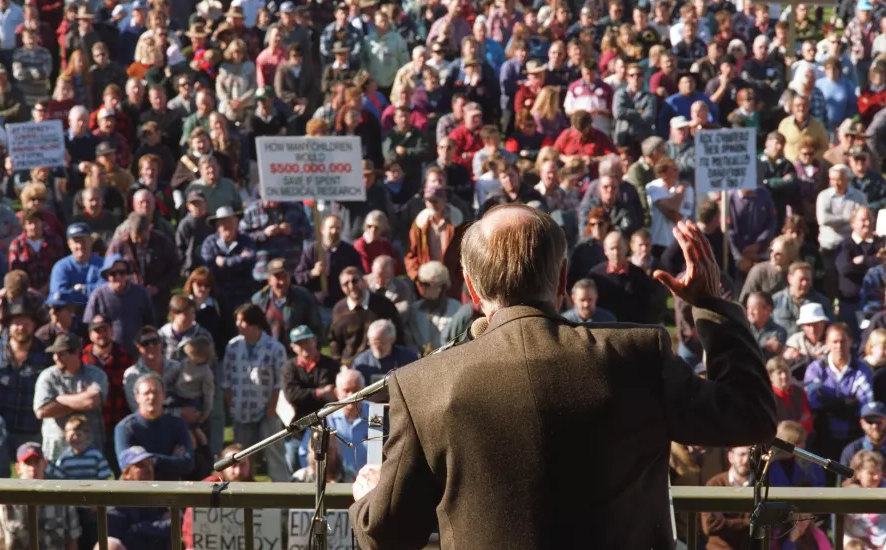
Picture: Colin Murty, Fairfax
Barbara Lee: 'As we act, let us not become the evil we deplore', vote against Authorisation to Use Military Force Bill - 2001
14 September 2001, Capitol, Washington DC, USA
In the days after September 11th 2001, the AUMF was passed granting the President a blank cheque to wage the war on terror. Lee was the only member of Congress not to vote in favour.
Mr. Speaker, I want to thank our ranking member and my friend for yielding time.
Mr. Speaker, I rise today really with a very heavy heart, one that is filled with sorrow for the families and the loved ones who were killed and injured this week. Only the most foolish and the most callous would not understand the grief that has really gripped our people and millions across the world.
This unspeakable act on the United States has forced me, however, to rely on my moral compass, my conscience, and my God for direction.
September 11 changed the world. Our deepest fears now haunt us. Yet I am convinced that military action will not prevent further acts of international terrorism against the United States. This is a very complex and complicated matter.
This resolution will pass, although we all know that the President can wage a war even without it. However difficult this vote may be, some of us must urge the use of restraint. Our country is in a state of mourning. Some of us must say, let us step back for a moment. Let us just pause for a minute and think through the implications of our actions today so that this does not spiral out of control.
I have agonized over this vote, but I came to grips with it today and I came to grips with opposing this resolution during the very painful yet very beautiful memorial service. As a member of the clergy so eloquently said, ``As we act, let us not become the evil that we deplore.''.
Ronald Reagan: 'Once you begin a great movement, there's no telling where it will end', Farewell address to the nation - 1989
11 January 1989, Oval Office, Washington DC, USA
My fellow Americans, this is the 34th time I'll speak to you from the Oval Office, and the last. We've been together eight years now, and soon it'll be time for me to go. But before I do, I wanted to share some thoughts, some of which I have been saving for a long time.
It's been the honor of my life to be your President. So many of you have written the past few weeks to say thanks, but I could say as much to you. Nancy and I are grateful for the opportunity you gave us to serve.
One of the things about the Presidency is that you're always somewhat apart. You spend a lot of time going by too fast in a car someone else is driving, and seeing the people through tinted glass - the parents holding up a child, and the wave you saw too late and couldn't return. And so many times I wanted to stop, and reach out from behind the glass, and connect. Well, maybe I can do a little of that tonight.
People ask how I feel about leaving, and the fact is parting is "such sweet sorrow." The sweet part is California, and the ranch, and freedom. The sorrow? The goodbyes, of course, and leaving this beautiful place.
You know, down the hall and up the stairs from this office is the part of the White House where the President and his family live. There are a few favorite windows I have up there that I like to stand and look out of early in the morning. The view is over the grounds here to the Washington Monument, and then the Mall, and the Jefferson Memorial. But on mornings when the humidity is low, you can see past the Jefferson to the river, the Potomac, and the Virginia shore. Someone said that's the view Lincoln had when he saw the smoke rising from the battle of Bull Run. Well, I see more prosaic things: the grass on the banks, the morning traffic as people make their way to work, now and then a sailboat on the river. Reflections at a Window
I've been thinking a bit at that window. I've been reflecting on what the past eight years have meant, and mean. And the image that comes to mind like a refrain is a nautical one - a small story about a big ship, and a refugee, and a sailor.
It was back in the early Eighties, at the height of the boat people, and the sailor was hard at work on the carrier Midway, which was patrolling the South China Sea. The sailor, like most American servicemen, was young, smart and fiercely observant. The crew spied on the horizon a leaky little boat - and crammed inside were refugees from Indochina hoping to get to America. The Midway sent a small launch to bring them to the ship, and safety. As the refugees made their way through the choppy seas, one spied the sailor on deck, and stood up and called out to him. He yelled, "Hello, American sailor - Hello, Freedom Man."
A small moment with a big meaning, a moment the sailor, who wrote it in a letter, couldn't get out of his mind. And, when I saw it, neither could I.
Because that's what it has to - it was to be an American in the 1980's; We stood, again, for freedom. I know we always have but in the past few years the world - again, and in a way, we ourselves - rediscovered it.
It's been quite a journey this decade, and we held together through some stormy seas. And at the end, together, we are reaching our destination.
The fact is, from Grenada to the Washington and Moscow summits, from the recession of '81 to '82 to the expansion that began in late '82 and continues to this day, we've made a difference. Two Great Triumphs
The way I see it, there were two great triumphs, two things that I'm proudest of. One is the economic recovery, in which the people of America created - and filled - 19 million new jobs. The other is the recovery of our morale: America is respected again in the world, and looked to for leadership.
Something that happened to me a few years ago reflects some of this. It was back in 1981, and I was attending my first big economic summit, which was held that year in Canada. The meeting place rotates among the member countries. The opening meeting was a formal dinner for the heads of government of the seven industrialized nations. Well, I sat there like the new kid in school and listened, and it was all Francois this and Helmut that. They dropped titles and spoke to one another on a first-name basis. Well, at one point I sort of leaned in and said, "My name's Ron."
Well, in that same year, we began the actions we felt would ignite an economic comeback: cut taxes and regulation, started to cut spending. Soon the recovery began.
Two years later, another economic summit, with pretty much the same cast. At the big opening meeting, we all got together, and all of a sudden just for a moment I saw that everyone was just sitting there looking at me. And then one of them broke the silence. "Tell us about the American miracle," he said.
Well, back in 1980, when I was running for President, it was all so different. Some pundits said our programs would result in catastrophe. Our views on foreign affairs would cause war, our plans for the economy would cause inflation to soar and bring about economic collapse. I even remember one highly respected economist saying, back in 1982, that "The engines of economic growth have shut down here and they're likely to stay that way for years to come."
Well, he - and the other "opinion leaders" - were wrong. The fact is, what they called "radical" was really "right"; what they called "dangerous" was just "desperately needed." 'The Great Communicator'
And in all that time I won a nickname - "The Great Communicator." But I never thought it was my style or the words I used that made a difference - it was the content. I wasn't a great communicator, but I communicated great things, and they didn't spring full bloom from my brow, they came from the heart of a great nation - from our experience, our wisdom, and our belief in the principles that have guided us for two centuries.
They called it the Reagan Revolution, and I'll accept that, but for me it always seemed more like the Great Rediscovery: a rediscovery of our values and our common sense.
Common sense told us that when you put a big tax on something, the people will produce less of it. So we cut the people's tax rates, and the people produced more than ever before. The economy bloomed like a plant that had been cut back and could now grow quicker and stronger. Our economic program brought about the longest peacetime expansion in our history: real family income up, the poverty rate down, entrepreneurship booming and an explosion in research and new technology. We're exporting more now than ever because American industry became more competitive, and at the same time we summoned the national will to knock down protectionist walls abroad instead of erecting them at home.
Common sense also told us that to preserve the peace we'd have to become strong again after years of weakness and confusion. So we rebuilt our defenses - and this New Year we toasted the new peacefulness around the globe. Not only have the superpowers actually begun to reduce their stockpiles of nuclear weapons - and hope for even more progress is bright - but the regional conflicts that rack the globe are also beginning to cease. The Persian Gulf is no longer a war zone, the Soviets are leaving Afghanistan, the Vietnamese are preparing to pull out of Cambodia and an American-mediated accord will soon send 50,000 Cuban troops home from Angola. 'We Changed a World'
The lesson of all this was, of course, that because we're a great nation, our challenges seem complex. It will always be this way. But as long as we remember our first principles and believe in ourselves, the future will always be ours.
And something else we learned: once you begin a great movement, there's no telling where it'll end. We meant to change a nation, and instead, we changed a world.
Countries across the globe are turning to free markets and free speech - and turning away from the ideologies of the past. For them, the Great Rediscovery of the 1980's has been that, lo and behold, the moral way of government is the practical way of government. Democracy, the profoundly good, is also the profoundly productive.
When you've got to the point where you can celebrate the anniversaries of your 39th birthday you can sit back sometimes, review your life and see it flowing before you. For me, there was a fork in the river, and it was right in the middle of my life.
I never meant to go into politics: it wasn't my intention when I was young. But I was raised to believe you had to pay your way for the blessings bestowed on you. I was happy with my career in the entertainment world, but I ultimately went into politics because I wanted to protect something precious. 'We the People'
Ours was the first revolution in the history of mankind that truly reversed the course of government, and with three little words: "We the People."
"We the People" tell the Government what to do, it doesn't tell us. "We the people" are the driver - the Government is the car. And we decide where it should go, and by what route, and how fast. Almost all the world's constitutions are documents in which governments tell the people what their privileges are. Our Constitution is a document in which "We the People" tell the Government what it is allowed to do. "We the people" are free.
This belief has been the underlying basis for everything I tried to do these past eight years.
But back in the 1960's when I began, it seemed to me that we'd begun reversing the order of things - that through more and more rules and regulations and confiscatory taxes, the Government was taking more of our freedom. I went into politics in part to put up my hand and say, "Stop!" I was a citizen-politician, and it seemed the right thing for a citizen to do.
I think we have stopped a lot of what needed stopping. And I hope we have once again reminded people that man is not free unless government is limited. There's a clear cause and effect here that is as neat and predictable as a law of physics: as government expands, liberty contracts. Actions Based on Deeds
Nothing is less free than pure communism, and yet we have, the past few years, forged a satisfying new closeness with the Soviet Union. I've been asked if this isn't a gamble, and my answer is no, because we're basing our actions not on words but deeds.
The detente of the 1970's was based not on actions but promises. They'd promise to treat their own people and the people of the world better, but the gulag was still the gulag, and the state was still expansionist, and they still waged proxy wars in Africa, Asia and Latin America.
Well, this time, so far, it's different: President Gorbachev has brought about some internal democratic reforms and begun the withdrawal from Afghanistan. He has also freed prisoners whose names I've given him every time we've met.
But life has a way of reminding you of big things through small incidents. Once, during the heady days of the Moscow Summit, Nancy and I decided to break off from the entourage one afternoon to visit the shops on Arbat Street - that's a little street just off Moscow's main shopping area.
Even though our visit was a surprise, every Russian there immediately recognized us, and called out our names and reached for our hands. We were just about swept away by the warmth - you could almost feel the possibilities in all that joy. But within seconds, a K.G.B. detail pushed their way toward us and began pushing and shoving the people in the crowd. It was an interesting moment. It reminded me that while the man on the street in the Soviet Union yearns for peace, the Government is Communist - and those who run it are Communists - and that means we and they view such issues as freedom and human rights very differently. 'Keep Up Our Guard'
We must keep up our guard - but we must also continue to work together to lessen and eliminate tension and mistrust.
My view is that President Gorbachev is different from previous Soviet leaders. I think he knows some of the things wrong with his society and is trying to fix them. We wish him well. And we'll continue to work to make sure that the Soviet Union that eventually emerges from this process is a less threatening one.
What it all boils down to is this: I want the new closeness to continue. And it will as long as we make it clear that we will continue to act in a certain way as long as they continue to act in a helpful manner. If and when they don't - at first pull your punches. If they persist, pull the plug.
It's still trust - but verify.
It's still play - but cut the cards.
It's still watch closely - and don't be afraid to see what you see.
I've been asked if I have any regrets. Well, I do.
The deficit is one. I've been talking a great deal about that lately, but tonight isn't for arguments, and I'm going to hold my tongue.
But an observation: I've had my share of victories in the Congress, but what few people noticed is that I never won anything you didn't win for me. They never saw my troops; they never saw Reagan's Regiments, the American people. You won every battle with every call you made and letter you wrote demanding action. Much to Be Done
Well, action is still needed. If we're to finish the job, of Reagan's Regiments, we'll have to become the Bush Brigades. Soon he'll be the chief, and he'll need you every bit as much as I did.
Finally, there is a great tradition of warnings in Presidential farewells, and I've got one that's been on my mind for some time.
But oddly enough it starts with one of the things I'm proudest of in the past eight years; the resurgence of national pride that I called "the new patriotism." This national feeling is good, but it won't count for much, and it won't last unless it's grounded in thoughtfulness and knowledge.
An informed patriotism is what we want. And are we doing a good enough job teaching our children what America is and what she represents in the long history of the world?
Those of us who are over 35 or so years of age grew up in a different America. We were taught, very directly, what it means to be an American, and we absorbed almost in the air a love of country and an appreciation of its institutions. If you didn't get these things from your family you got them from the neighborhood, from the father down the street who fought in Korea or the family who lost someone at Anzio. Or you could get a sense of patriotism from school. And if all else failed, you could get a sense of patriotism from the popular culture. The movies celebrated democratic values and implicitly reinforced the idea that America was special. TV was like that, too, through the mid-Sixties. Ahead, to the Nineties
But now we're about to enter the Nineties, and some things have changed. Younger parents aren't sure that an unambivalent appreciation of America is the right thing to teach modern children. And as for those who create the popular culture, well-grounded patriotism is no longer the style.
Our spirit is back, but we haven't reinstitutionalized it. We've got to do a better job of getting across that America is freedom - freedom of speech, freedom of religion, freedom of enterprise - and freedom is special and rare. It's fragile; it needs protection.
We've got to teach history based not on what's in fashion but what's important: Why the pilgrims came here, who Jimmy Doolittle was, and what those 30 seconds over Tokyo meant. You know, four years ago, on the 40th anniversary of D-Day. I read a letter from a young woman writing to her late father, who'd fought on Omaha Beach. Her name was Lisa Zanatta Henn, and she said, we will always remember, we will never forget what the boys of Normandy did. Well, let's help her keep her word.
If we forget what we did, we won't know who we are. I am warning of an eradication of that - of the American memory that could result, ultimately, in an erosion of the American spirit.
Let's start with some basics - more attention to American history and a greater emphasis of civic ritual. And let me offer lesson No. 1 about America : All great change in America begins at the dinner table. So tomorrow night in the kitchen I hope the talking begins. And children, if your parents haven't been teaching you what it means to be an American - let 'em know and nail 'em on it. That would be a very American thing to do.
And that's about all I have to say tonight. Except for one thing.
The past few days when I've been at that window upstairs, I've thought a bit of the shining "city upon a hill." The phrase comes from John Winthrop, who wrote it to describe the America he imagined. What he imagined was important, because he was an early Pilgrim - an early "Freedom Man." He journeyed here on what today we'd call a little wooden boat, and, like the other pilgrims, he was looking for a home that would be free.
I've spoken of the shining city all my political life, but I don't know if I ever quite communicated what I saw when I said it. But in my mind, it was a tall proud city built on rocks stronger than oceans, wind swept, God blessed, and teeming with people of all kinds living in harmony and peace - a city with free ports that hummed with commerce and creativity, and if there had to be city walls, the walls had doors, and the doors were open to anyone with the will and the heart to get here.
That's how I saw it, and see it still. How Stands the City?
And how stands the city on this winter night? More prosperous, more secure and happier than it was eight years ago. But more than that: after 200 years, two centuries, she still stands strong and true on the granite ridge, and her glow has held steady no matter what storm.
And she's still a beacon, still a magnet for all who must have freedom, for all the Pilgrims from all the lost places who are hurtling through the darkness, toward home.
We've done our part. And as I "walk off into the city streets," a final word to the men and women of the Reagan Revolution - the men and women across America who for eight years did the work that brought America back:
My friends, we did it. We weren't just marking time, we made a difference. We made the city stronger - we made the city freer - and we left her in good hands.
All in all, not bad. Not bad at all.
And so, goodbye.
God bless you. And God bless the United States of America.
Roland Burris: 'So let us pay tribute to the suffering of our forefathers by seeking justice for our children', Juneteenth resolution - 2010
16 June 2010, US Senate, Washington DC, USA
On a hot day in the summer of 1776, delegates from across the American colonies gathered in Philadelphia to cast off the yoke of tyranny and assert the fundamental right of self-government.
That moment, a republic was born, our founders ratified a document unique to human history which contained the landmark words, and i quote -- "We hold these truths to be self-evident that all men are created equal." end of quote.
This simple creed became the justification of a great revolutionary war which gave rise to the thriving democracy we inhabit today. Mr. President, that's why we celebrate every Fourth of July as independence day, because of the principles laid out in that remarkable declaration.
But tragically, almost a century after that document was ratified, the equality of all men remain an unfulfilled promise. It began to seem that the declaration of independence defined our aspirations rather than our core beliefs. Slavery, brutal and unjust, remained legal throughout the majority of the 19th century and helped set the stage for the bloodiest war we have ever known.
As President Lincoln had dearly hoped, out of that terrible violence was born a new and more complete freedom, a freedom that wiped out the scourge of slavery once and for all and realized a promise our founding fathers documented for all Americans. Mr. President, that is why on Saturday, many in this country observe another independence day known as Juneteenth.
Slavery ended in the confederate states of America when President Lincoln signed the Emancipation Proclamation on January 1, 1863. Many slaves did not learn of their freedom until much later. Finally, on June 19, 1865, more than two years after the Emancipation Proclamation, Union soldiers led by Major General Gordon Granger arrived in Galveston, Texas. They brought news that must have been almost unbelievable to all who heard it. The Civil War was over, they announced that all slaves were free.
From that day on, former slaves in the southwest celebrated June 19 as the anniversary for their emancipation. That is why i have introduced a Senate resolution observing the historical significance of this date, Juneteenth, independence day.
Over the past 145 years, Juneteenth celebrations have been held to honor African-American freedom, but this date has come to hold even greater significance. Throughout the world, Juneteenth celebrations lifted up the spirit of freedom and railed against the forces of oppression.
At long last, this day is beginning to be recognized as both a national event and a global celebration. Just as the Fourth of July marks the beginning of a journey that continues even today, we must not forget that the long march to freedom that started on june 19 is far from over.
Our country has made great strides in the century and a half since slavery was abolished, but deep wounds are slow to heal. We will never be able to rewrite this terrible history, but we can and we must, Mr. President, do everything we can to rise above it, to seek constructive solutions to the problems that time alone cannot wash away, problems that still affect the African-american communities on a daily basis, from discrimination to crime to health care disparities to unemployment and to substance abuse and so on.
So let us pay tribute to the suffering of our forefathers by seeking justice for our children. Let us remember our past by looking to our future and confronting these problems with bold new solutions. This is the day for all of us to stand together and lift up the liberties we hold so dear, a day to look forward, look ahead to tomorrow and continue to fight for freedom and equality.
So i ask my colleagues to stand with me. I ask them to support my resolution observing the historical significance of Juneteenth, independence day. I invite them to share in the joy of those who greeted union soldiers in Galveston more than 140 years ago. Mr. President, very briefly, on another subject, in terms of President Obama's speech last night on the crisis in the Gulf, i just want to let it be known for the record that i support our president in that speech and every effort that he has made in trying to give direction and a solution to the problems that we're experiencing down on our Gulf coast, and i find it disheartening and disappointing that all of these commentators who want to attack our President, want him to be angry, want him to act -- i have no idea what they want this man to do, but i know that this man is doing all he can for the people of America, and i ask those commentators to get off of his back.
Stop attacking the President who had nothing to do with that problem and is putting everything he has, the resources that America has to solve this problem. This has never happened before in our history. It's a problem beyond comprehension. Yet still these Monday morning quarterbacks set back and criticize and bring out their undocumented types of statements about our President. I just feel emotionally disturbed by what is happening.
So i say to all Americans this President is doing all he can to support this issue that we are facing. And you have got to deal with BP. , you have got to deal with Transocean and you have to deal with Haliburtan. Those are the ones that are responsible for this problem. Let's go after them, make them pay, make them deal -- get the solution, and therefore Americans can move forward.
Thank you, Mr. President. I yield the floor, and i suggest the absence of a quorum. The presiding officer: the clerk will call the roll.
Margaret Thatcher: 'Professor Blunt has admitted that he was recruited for Russian intelligence', statement to House of Commons - 1979
Mr. Speaker
Before the debate begins, I should like to make a statement.
As the House knows, it is the general rule that matters which would entail legislation must not be discussed on a motion for the Adjournment. However, as I reminded the House on Monday, I am given discretion under Standing Order No. 16 to permit incidental reference to legislative action when enforcement of the prohibition would unduly restrict discussion. I propose today to exercise this discretion in respect of the general matter of the possible modification of the Official Secrets Act.
In the Prime Minister's written reply to a question by the hon. Member for Hartlepool (Mr. Leadbitter), reference was made to information conveyed to the Palace. I therefore think it wise at this stage to draw the attention of the House to our well-established rule that any references to the Royal Family must be phrased in courteous language and must not reflect upon the conduct of the Sovereign. This does not, however, inhibit the full discussion of any advice which may or may not have been given to Her Majesty.
The Prime Minister (Mrs. Margaret Thatcher)
In the early part of last week, Professor Blunt was publicly identified as having been a suspect Soviet agent. This disclosure understandably gave rise to grave concern.
Last Thursday, in response to a priority written question from the hon. Member for Hartlepool (Mr. Leadbitter), I thought it right to confirm that Professor Blunt had indeed been a Soviet agent and to give the House the salient facts. Today we have an opportunity to debate the whole matter. It may be convenient, therefore, if I start by setting out the facts in greater detail.
Professor Blunt has admitted that he was recruited for Russian intelligence when he was at Cambridge before the war. In 1940 he joined the Security Service. [column 403]
To us today it seems extraordinary that a man who had made no secret of his Marxist beliefs could have been accepted for secret work in any part of the public service, let alone the Security Service. But that is with the benefit of hindsight. Perhaps standards were relaxed because it was a time of considerable expansion and recruitment to deal with the wartime tasks of the service, which were directed against Hitler 's Germany.
Professor Blunt has said that during his period in the Security Service from 1940 to 1945 he regularly passed to Russian intelligence anything that came his way which would be of interest to them. We do not know exactly what information he passed; we do know, however, to what information he had access by virtue of his duties. There is no doubt that British interests were seriously damaged by his activities. But it is unlikely that British military operations or British lives were put at risk. Further, the story that he jeopardised the lives of secret agents in the Netherlands is without foundation; he was never in the Special Operations Executive.
After he left the Security Service in 1945 and resumed his career as an art historian, Professor Blunt ceased to have access to classified information. He has said that from 1945 to 1951 he passed no information to the Russians.
In May 1951 an investigation which had continued for some years caught up with Donald Maclean. It was Philby who warned Burgess to tell Maclean that he was about to be interrogated. And it was Burgess who used Blunt as a contact with a Soviet controller to help with the arrangements for Maclean's flight to Russia—a journey in which he was joined by Burgess.
Blunt admits that on one occasion between 1951 and 1956 he assisted Philby in contacting Russian intelligence. He has said that he has had no contact with Russian intelligence since then.
The defection of Burgess and Maclean led to intense and prolonged investigations of the extent to which the security and other public services had been infiltrated by Russian intelligence.
At an early stage in these investigations Professor Blunt came under inquiry. This was as a result of information to the effect [column 404]that Burgess had been heard in 1937 to say that he was working for a secret branch of the Comintern and that Blunt was one of his sources. Blunt denied this. Nevertheless, he remained under suspicion, and became the subject of intensive investigation. He was interviewed on 11 occasions over the following eight years. He persisted in his denial, and no evidence against him was obtained. Of course, until his confession, the authorities did not know the extent of his involvement with the Russians or the period over which it lasted.
It was early in 1964 that new information was received relating to an earlier period which directly implicated Blunt. I cannot disclose the nature of that information but it was not usable as evidence on which to base a prosecution. In this situation, the security authorities were faced with a difficult choice. They could have decided to wait in the hope that further information which could be used as a basis for prosecuting Blunt would, in due course, be discovered. But the security authorities had already pursued their inquiries for nearly 13 years without obtaining firm evidence against Blunt.
There was no reason to expect or hope that a further wait would be likely to yield evidence of a kind which had eluded them so far. Alternatively, they could have confronted Professor Blunt with the new information to see if it would break his denial. But Blunt had persisted in his denial at 11 interviews; the security authorities had no reason to suppose that he would do otherwise at a twelfth. If the security authorities had confronted him with the new information, and he still persisted in his denial, their investigation of him would have been no further forward and they might have prejudiced their own position by alerting him to information which he could then use to warn others.
They therefore decided to ask the Attorney-General, through the acting Director of Public Prosecutions, to authorise them to offer Blunt immunity from prosecution, if he both confessed and agreed to co-operate in their further investigations.
I should like to pause for a moment on this question of granting immunity, because I think that there may remain some misunderstanding about it. It is not [column 405]unusual for the Attorney-General to be asked to authorise immunity from prosecution in return for co-operation in the pursuit of inquiries. It happens from time to time in the course of criminal investigations. Under our constitutional arrangements, the decision is taken by the Attorney-General in his capacity as a Law Officer.
Mr. Dennis Canavan (West Stirlingshire)
It is one law for them and another law for everybody else.
The Prime Minister
He takes it on the basis of what, in his view, is best in the public interest. He may consult his ministerial colleagues but he is not bound by their advice. The decision is his alone.
In this case, the then Attorney-General, Sir John Hobson, decided that it was in the public interest to offer an immunity from prosecution. In fact, to this day there is no evidence which could be used as a basis for prosecution against Blunt. So the offer of immunity was made. Professor Blunt confessed. Both at the time of his confession and subsequently he has co-operated in the inquiries of the security authorities. He had provided information about Russian intelligence activities and about his association with Burgess, Maclean and Philby.
After the Attorney-General's authority to offer immunity had been given, the Queen's private secretary was invited to a meeting with the permanent secretary at the Home Office and the Director-General of the Security Service. The Queen's private secretary was asked to the meeting because Blunt had, since 1945, held an unpaid appointment in the Royal Household for which he had been awarded a knighthood in the Royal Victorian Order in 1956. At this meeting, the Queen's private secretary was told that Professor Blunt was suspected of having been an agent of Russian intelligence, but that, provided he confessed and co-operated in the inquiries of the security authorities, he would be granted immunity from prosecution.
The Queen's private secretary asked what action the Queen was advised to take if Blunt confessed. He was told that the Queen was advised to take no action. Any action would, of course, have alerted Blunt's former Russian controllers and others who were already under suspicion to the fact that he had [column 406]confessed and could well be providing information to our security authorities. After Blunt had been interviewed and had confessed, as I have already described, the Palace duly followed the advice that had already been given.
I turn now to the question of how Ministers were informed. Relations between the Security Service and Ministers are governed by the directive given to the Director-General of the Security Service by the then Home Secretary, Sir David Maxwell Fyfe, in 1952, which is reproduced in Lord Denning 's report of September 1963 at paragraph 238. When discussing and endorsing the principles embodied in that directive, Lord Denning said:
“The Head of the Security Service is responsible directly to the Home Secretary for the efficient and proper working of the Service and not in the ordinary way to the Prime Minister … The Head of the Security Service may approach the Prime Minister himself on matters of supreme importance and delicacy, but this is not to say that the Prime Minister has any direct responsibility for the Security Service … If the Director General of the Security Service is in any doubt as to any aspect of his duties—as, for instance, when he gets information about a Minister or a senior public servant indicating that he may be a security risk—he should consult the Home Secretary. The Home Secretary will then have to take responsibility for further action.”
I can tell the House that in the case of Blunt the Director-General of the Security Service followed scrupulously the procedures which had been laid down. He had a meeting with the Home Secretary on 2 March 1964, in the course of which he told the Home Secretary about the new information implicating Blunt and he indicated that he would be discussing with the Director of Public Prosecutions how to conduct the interview with Blunt, bearing in mind the Security Service's need to obtain as much intelligence as possible about Soviet penetration.
The Home Secretary drew his attention to the need to inform the Queen's private secretary. On 17 June 1964 a further meeting was held between the Home Secretary, his permanent secretary and the Director-General, in which the Director-General reported that Blunt had admitted spying for the Russians throughout the war when he was serving in the Security Service.
The Home Secretary of the day, now Lord Brooke, who, at first, did not recall being told—[Interruption.] At first, he [column 407]did not recall being told, which is quite understandable—[Interruption].
Mr. Speaker
Order.
The Prime Minister
I shall start the sentence again. The Home Secretary of the day, now Lord Brooke, who, at first, did not recall being told, has been reminded of these meetings and has, with characteristic integrity, accepted that his memory must have been at fault. [Interruption.] There is no more honourable or devoted servant.
It is also clear that when the Attorney-General took his decision to authorise the offer of immunity from prosecution he knew that the Home Secretary had been made aware of the matter.
There was therefore no failure on the part of the Security Service to carry out their duty to inform the Home Secretary of these matters. It was for the Home Secretary of these matters. It was for the Home Secretary to decide whether the Prime Minister should be informed. There is no record on this point. Neither Lord Brooke nor Lord Home can recall discussing the matter.
In the light of these events, I see no need to change the principles governing the relationships between the Security Service and Ministers, as set out in the Denning report. I think it right, however, that there should be a clear understanding among all those concerned about how we expect those principles to be applied. I have accordingly agreed the following points with my right hon. Friend the Home Secretary and my right hon. and learned Friend the Attorney-General.
First, the Director-General should report to the Home Secretary if he receives information about a present or former Minister or senior public servant indicating that he may be, or may have been, a security risk, unless circumstances are so exceptional that he judges it necessary to report direct to the Prime Minister.
Secondly, when the Director-General has reported to the Home Secretary, it is the Home Secretary's responsibility to inform the Prime Minister or make sure that the Prime Minister is informed.
Thirdly, if the Attorney-General is asked to authorise a grant of immunity from prosecution in a case involving national security, he should satisfy himself that the Home Secretary is aware [column 408]that the request has been made. In cases of especial doubt or difficulty, the Attorney-General or the Home Secretary, or both, may wish to see that the Prime Minister is also aware that the request has been made. The Attorney-General and the Home Secretary should always be informed of the outcome of the offer of immunity. It is the responsibility of the Home Secretary to ensure that the Prime Minister is informed.
So much for the procedures between the Security Services and Ministers. I turn now to another matter. I am advised that since 1967 successive Prime Ministers and Home Secretaries have all been informed about the position on Blunt.
Further, as I indicated in my written reply, the matter was also brought to the attention of successive Attorneys-General in 1972, June 1974 and June 1979. This was to inform them of the immunity that had been given.
Any legal matters will be dealt with by my right hon. and learned Friend the Attorney-General when he replies to the debate.
I have been asked why a day's notice of my intention to reply to a written question was given to Professor Blunt's solicitor. Had there been any question of prosecuting Blunt, of course there would have been no advance notice—and, indeed, no detailed reply either. Since there was no question of prosecution, there was no question of enabling Blunt to escape justice. His name had already been published, and it was reasonable therefore to tell his solicitor that I was going to give the facts in reply to a question in this House.
Clearly the public services are an attractive target for Soviet penetration, and the Security Service especially so, The service is very conscious of that danger. Indeed, in the light of all that has happened, it should be. Procedures for recruitment, vetting and monitoring members of the public services who have access to classified information have been much extended and improved. Of course nothing can be absolutely proof against penetration. In a democratic society it is always possible that a few will try to use freedom to destroy freedom. We must do everything that we can to prevent them. [column 409]
I will sum up. First, the procedures under which the Security Service is directly responsible to the Home Secretary were scrupulously followed. After 1967 successive Prime Ministers and Home Secretaries were all informed about this case.
Secondly, the immunity was offered to Blunt to get information on Soviet penetration into the public services. Neither at the time nor since has there been any evidence on which he could be prosecuted. I am advised that a confession obtained as a result of an inducement given would not be admissible as evidence in any prosecution.
Thirdly, the events of this case began well over 40 years ago. Many of the principal figures concerned, some of whom I have mentioned, have long since retired, and some have died. For obvious reasons, it is therefore not possible, and never will be, to establish all the facts accurately.
Mr. William Hamilton (Fife, Central)
How many are still living?
The Prime Minister
These are some of the factors that will have to be taken into account in deciding whether there should be an inquiry, a matter on which hon. Members will doubtless wish to express their views.
Fourthly, we have now put beyond doubt the arrangements for reporting to and consulting the Home Secretary and the Prime Minister on security matters.
Mr. Dennis Skinner (Bolsover)
rose——
The Prime Minister
May I go straight through? It is a very carefully marshalled statement.
In practice my right hon. Friend William Whitelawthe Home Secretary and I both make a point of keeping in close touch with the Director-General of the Security Service.
Fifthly, it is important not to be so obsessed with yesterday's danger that we fail to detect today's. We know what happened to a very few of that pre-war generation who had Marxist leanings and who betrayed their country. We find it contemptible and repugnant. Our task now is to guard against their counterparts of today. [column 410]
Finally, the Security Service, by its very nature, has to work in secrecy.
Mr. Eric S. Heffer (Liverpool, Walton)
What about the brother of the right hon. Member for Brighton, Pavilion (Mr. Amery)? The right hon. Lady cannot have it both ways. There were others as well as Marxists.
The Prime Minister
It cannot therefore defend itself in public. That task falls to Ministers. The Government's purpose is to do everything possible to improve the morale and effectiveness of the Security Service, and to do nothing to undermine or weaken it. In that aim I believe that we shall have the support of the House.
Kyaw Moe Tun: 'We will continue to fight', speech UN against Myanmar coup - 2021
26 February 2021, United Nations, New York City, USA
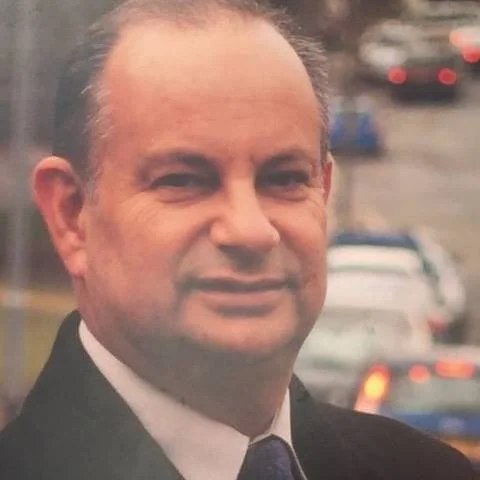
Richard Cohen: 'You don’t have to be a leftwinger to support Palestinian Rights or a rightwinger to uphold Israeli rights', Candidacy for vice president of Board of Deputies of British Jews - 2021
9 May 2021, Westminster, London, United Kingdom
Here today in this Citadel of the Mother of Parliaments, the 9th May, sandwiched as it is between VE day yesterday and tomorrow being the 81st anniversary of the accession to power of Winston Churchill we have good cause to celebrate democracy.
Benjamin Disraeli said that you should aim high because your achievements will never exceed your ambitions. My objective is to strive for the day when the noun “Jew” and the adjective “Jewish” are badges to be worn with pride and respected as much as the word Christian is in Society at large.
Interfaith activities should foster the seeking of common ground but we should never fear challenging the literature and liturgy of other religions especially where they impact negatively on perceptions of Jews.
I have been involved in the bringing of two motions to Plenary. I support engaging with the Ambassador. She has unimpeachable academic credentials, and we can learn much from each other. I have never voted against any bona fide Jewish Organization seeking to join us so long as their policies are lawful ones.
The raison d’etre of the BOD is to advocate and Jonathan Arkush successfully did just that in various European Parliaments in support of the rite of circumcision.. That is why I negotiated with the BBC for years to get our President on to QT which finally occurred in October beating the Jewish Leadership Council to the post.
To anti-Semites I say “When you stop telling lies about us, we will stop telling the truth about you”. We should give them no quarter and take no prisoners. We will expose them on campus in the workplace and in Social Media.
We are bound by our constitution to defend Israel but as good Britons we need feel no compunction about quoting the words of Balfour who said
“The Arab question will require tact, it will require judgment, it will require above all, sympathetic goodwill on the part both of Jew and Arab”
I support “Tikkun Olam” (fixing a broken world) for as Churchill said “What is the use of living, if it be not to strive for noble causes and to make this muddled world a better place for those who will live in it after we are gone?”
So you don’t have to be a leftwinger to support Palestinian Rights or a rightwinger to uphold Israeli rights nor to work for a world where all can walk together in Justice and in Peace.
I therefore respectfully request you to give me your first preference vote, so that we can, together, work to preserve the good and reform the things that need changing.