• Genre
  • About
  • Submissions
  • Donate
  • Search
Menu

Speakola

All Speeches Great and Small
  • Genre
  • About
  • Submissions
  • Donate
  • Search

Eulogies

Some of the most moving and brilliant speeches ever made occur at funerals. Please upload the eulogy for your loved one using the form below.

For Diego Maradona: 'I‘ve just never seen anyone have such a beautiful affection with a football', by Gary Lineker - 2020

July 26, 2022

26 November 2020, London, United Kingdom

He‘s so revered, he’s so worshipped in Argentina. He constantly had a huge entourage around him.

I went to see a game and I’ll never forget it, to see Boca Juniors play. He had his own little box there. I went with his family. And he was standing …. the atmosphere was unbelievable at this game.

And his family, one of his daughters was literally holding him as he was screaming over the balcony, holding him so he wouldn’t actually fall off. He had such an incredible passion for the game.

I never thought in my lifetime I’d see anyone come remotely close to Diego, in terms of ability with a football. I think we’ve seen Messi, who’s very similar in many ways, Argentinian, diminutive, brilliant left foot, but Diego was incredible.

I played, I actually played with him as well for half a game, played for the Rest of the World at Wembley, against, funnily enough, an English league side because it was a centenary, I played for the Rest of the World, because I was at Barcelona at the time.

And all the player, there were people like Platini on the pitch, lots of great great players from around the world. And everyone was totally in awe of him.

The first thing he did was in the dressing room, he sat there; just a pair of shorts. And you know you roll your socks up? He did that and just juggled them on his left foot for about five minutes. And everyone was going whoooah whoooah.’

Then we went out on the pitch and he did something incredible, one of the most unbelievable things I‘ve ever seen on a football pitch. it might not sound that amazing to you at home, but I think you’ll appreciate this.

He juggled the ball all the way out to the centre circle and then he got to the centre circle, still juggling it, and then he went bang, he whacked it as hard he possibly could (up into the air) and he waited. And then it came down and he went bang and did it again. He did it 13 times, and the most he ever did was walk three paces to it.

All of us were standing there going, ‘That’s impossible’. I remember going to training the next day at Barcelona. We all tried it and the best anyone did was three, and they were all running for the third one.

I‘ve just never seen anyone have such a beautiful affection with a football.


Source: https://www.youtube.com/watch?v=MKIFPaR_ZI...

Enjoyed this speech? Speakola is a labour of love and I’d be very grateful if you would share, tweet or like it. Thank you.

Facebook Twitter Facebook
In PUBLIC FIGURE D Tags DIEGO MARADONA, GARY LINIKER, BARCELONA, TRIBUTE, FOOTBALL, FOOTBALLER, SPORT, BT SPORT, PANEL SHOW, TELEVISION, TV
Comment

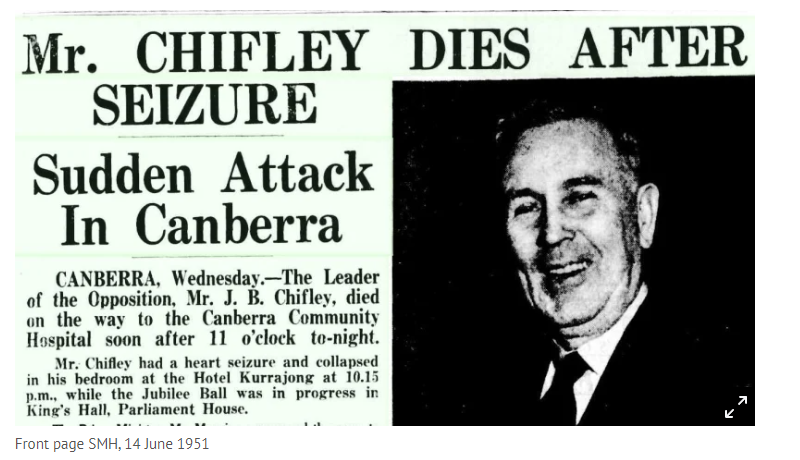
For Ben Chifley: 'On this sorrowful occasion, the festivities of tonight should end', by Sir Robert Menzies - 1951

June 2, 2022

13 June 1951, Jubilee Ball, Canberra, Australia

Mr Chifley, former Prime Minister of Australia and leader of the Opposition, collapsed and died of a cardiac arrest during the course of a jubilee ball. The Prime Minister announced his passing.

It is my sorrowful duty to tell you that tonight, during this celebration, Mr. Chifley, former Prime Minister and Leader of the Opposition, has died.

I do not want to try even to talk about him, because, although we were political opponents, he was a great friend of mine and yours, and a fine Australian.

You will agree that it is appropriate on this sorrowful occasion, that the festivities of tonight should end, and, therefore, in the circumstances there will be no more music.

I do suggest that you have supper and that we then leave quietly, having in our minds very great sorrow for the passing of a fine Australian.

It does not matter about party politics in a case like this: Oddly, enough, in Parliament we get to know each other very well, and we sometimes find we have a warmest friendship among people whose politics are not our own.

Mr. Chifley served this country magnificently for many years.

Sorrow of his own people is shared equally by myself and members of the Government.

I hope this cruel blow for Mrs. Chifley will be softened by the knowledge that there is no Australian who hears this sad news tonight will not have a tear to shed for a man who has served his country.

Indeed, he has served his country and undoubtedly he has hastened his own passing by his devotion to his own land, and, indeed, to the people of the world.

Source: https://www.jenolancaves.org.au/about/hist...

Enjoyed this speech? Speakola is a labour of love and I’d be very grateful if you would share, tweet or like it. Thank you.

Facebook Twitter Facebook
In PUBLIC FIGURE D Tags BEN CHIFLEY, SIR ROBERT MENZIES, DEATH, SUDDEN DEATH, JUBILEE BALL, AUSTRALIAN POLITICS, LABOR PARTY, TRANSCRIPT, 1950s, 1951, HEART ATTACK
Comment

For Douglas MacLeod: '‘What luck, what luck for all of us to have known him!, by Colleen Burke - 2021

May 25, 2022

Facebook won’t allow embed video. Visit link here and go to 2:11;20 to watch Colleen beautiful speech

3 December 2021, Victorian Pride Centre, Melbourne, Australia

Doug and Stephen have spoiled me rotten almost my entire adult life. When I was in my twenties, I told them I wanted a sperm cocktail if I wasn’t married with kids by the time I was 35. I didn’t care who was the Dad, you couldn’t choose one over the other.

‘DougnSteve’ has been one word for a long time: Doug who made laugh and Stephen who loves to laugh. If the baby was blonde or dark we’d know who the Dad was.

I learned about the world through both these men. I always thought of them as much, much older as they were, always so good at being adults. They’d take me to beautiful restaurants, to a 5-star resort and tell me stories about exotic things like mortgages and volcanoes. I’d often find a fiddy in my bag after visiting, to pay for a vet bill or a bald tyre when I thought acting in profit share plays was the way to go. They have always been there for me when pets, parents and people I loved died. ‘You know where we are, we are here,’ is Stephen’s most common phrase. Stephen who sends a thank you note if you had them over lunch. Who says “oh poor baby, when I had a cold” or some minor ailment. Anyway we’ve heard beautiful stories about Doug’s past and I’d like to talk about the end of the story for our storyteller, when the heroes shine through. Some of you know it and some of you won’t.

Doug had an amazing career but the most important part of Doug’s life was Stephen.

I’ve followed their love story for a very long time. They had been together for a short time when I was first smitten by Doug’s charms. It’s been a 40-year marriage that became official in 2018! Stephen would like to thank Magda for her contribution to marriage equality. Stephen had been a carer for Doug after his stroke for a long time, and Doug had survived his first bout of encephalitis when they got married. When Doug was in ICU the first time with this disease, surrounded by machines, the doctors were completely mystified, it took them quite a while to diagnose. Stephen was terrified, there were a million tubes and wires to Doug’s skull and Doug was delirious and when he told the nurses scurrying around him, “This is my boyfriend and this is my girlfriend, and they both like looking at naked men.” Anyway he made it through but he knew he had come close to dying that first round with encephalitis and was determined to marry his man.

His speech at their wedding was very typical of Doug, “there is enormous pressure on me as a writer to come up with the right words so I looked to the greats: I searched through the sonnets of Shakespeare, none of them were good enough for my Stephen; I looked to Chaucer, to Blake, none of them were right. So I looked to the words of the great…. Ronnie Barker: “What luck! What luck to have met this man, this beautiful, kind and sweet man, what luck, what luck!“

I’ve put up a photo of Doug with Sascha my dog. They had something special going on —we’d go for walks and Doug said he felt really powerful walking my wolf. Walking was still a challenge after his stroke. I took him to a bar for dinner in Fitzroy Street where the barman had invited me in previously, and made of a fuss of my dogs. I thought it would be fun for Doug. Anyway, it was a busy Friday night and the owner was pissed off because the dogs were taking up room as they do, spreading themselves out on the floor. He still served us dinner but he was grumpy, and as we were leaving Doug slipped him a 20 to thank him. That’s who Doug was, gracious and polite.

My dogs were a way to reach Doug when he had no words, when he was very ill. He could commune with Sascha but not Tinker so much…. her head was too big apparently. You will see them together later and thank goodness The Alfred and the rehab allows pets on the bed, on the white sheets, no questions asked. During that very harrowing time which, fortunately, Doug had little to no memory of, there were moments of great beauty where his soul, character and talent shone through. On the few occasions I visited him when Stephen wasn’t actually there, (Stephen would have to be almost terminal himself to not be there, he showed up from breakfast to dinner every day for a year bringing Doug delicacies and comfort, never leaving his side, you couldn’t drag him away). Anyway there was a time when Doug could only communicate in verse, he complemented me on fine attire, I can’t remember how he rhymed, something brilliant… and when Stephen called on the phone “You’re company to me is sweeter than wine” and another brilliant rhyme, I won’t even try. Apparently, this rhyming thing happens to other patients too but Doug sounded like Shakespeare. No wonder the nurses loved him

Another time he was really distressed as he could only hum — words weren’t coming out. The man who could repeat the script from a movie word for word after seeing it once, couldn’t speak! So I played him the humming chorus. He calmed down, the composer, the musician that he was, began humming the notes perfectly. A moment of great beauty. No wonder the nurses loved him.

Once he was really concerned, as he was convinced that every object in the rehab room was about to fly and he wanted me to leave to be safe. Our very own Dr Who episode. Stephen and Doug shared a great love, and Doug and I shared a great love of Dr Who. This is who he was even in his confusion, he wanted to put my safety above his. Doug always wanted to write a Dr Who episode. What a fucking cracker it would have been. Great beauty.

When Doug came down with encephalitis a second time, he came close to dying many times and the doctors were convinced he would never leave hospital. And the reason he survived this long is down to one thing, and one thing only — Stephen’s love, and his mantra “you’re getting better Douglas, You’re getting better”. Stephen who moved heaven and earth and brought in a High Court judge to bring him home after a year in hospital. And he gave Doug the best life he possibly could. Stephen who would bring books to any nurse in hospital who was kind to Doug, the nurse who took Doug for wheelies in his wheelchair, the nurse who took the time to hold Doug’s hand. Pretty much every nurse who cared for Doug would fall in love with this man, who was always polite and courteous even when he was in great pain.

Stephen created a family of carers in their home. ‘Home’ that sacred word. I’m bringing you home, Doug. They brought Doug joy; Andrew, Sachie and Nathan, their good friend David and the lady who brought cake, I’m sorry I can’t remember your name, all these amazing humans were Prozac to Doug. They showed up the day he died, showed up to his cremation and showed up today. I think true love is not that heady romance at the start of a relationship, it’s showing up every day as Stephen has done for the last 10 years when things were tough. Let’s face it, things the last three years were hellish. This man who is made of integrity and warmth and empathy. Who tethered the lifeline to Doug in his astronaut pyjamas and kept him going, kept him wanting to live. Despite all the pain that Doug was in, he just wanted to keep waking up and seeing Stephen’s face. I know you all want to show Stephen how sorry you are but keep it brief today. He’s keeping it together beautifully, but there’s years to come when you can show Stephen some love.

I’d like to thank everyone who has showed up today, who’ve given their time and brought their love. I’d like to pay tribute to the people at this amazing venue, the people on the front desk who were always so welcoming, to Justine the CEO who gave us so much time, to Ingrid the venue coordinator who bought those stunning rainbow cups for us to use, and to Dannii and to Michael from Joy FM who went above and beyond to make all this happen. I hope it’s the start of many marriages, celebrations and funerals for this community. What a gorgeous space for it to be held in.

When Doug was dying, I played him the humming chorus again. The doctors told us that hearing is the last sense to go. I thought I must sing, I must sing, bring him some comfort, but I’m really not a good singer. I started playing him my Spotify playlist on my phone, it was all so sudden, just to give him some music. Mama Cass came on — ‘Dream a Little Dream of Me’. I tried to sing along. Poor Doug who we thought was unconscious raised his hand in an ‘oh god, make it stop’ motion. Stephen got more morphine for him. Doug had given his last bit of feedback which we all valued so much. I think the review of your life is who shows up to your funeral. The love of your life and a large group of beautiful friends.

What luck, what luck for all of us to have known him!

We love you Doug


Enjoyed this speech? Speakola is a labour of love and I’d be very grateful if you would share, tweet or like it. Thank you.

Facebook Twitter Facebook
In PUBLIC FIGURE D Tags DOUG MCLEOD, DOUGLAS MCLEOD, COLLEEN BURKE, FRIEND, COMEDY WRITER, ACTOR, TERMINAL ILLNESS, CARING, TRANSCRIPT, LGBTIQ, MARRIAGE EQUALITY, AUTHOR, THE COMEDY COMPANY, END OF LIFE
Comment

For Howard Freeman: 'Dad was an irresistible force in our lives', by son Jeremy Freeman - 2022

May 22, 2022

22 May 2022, Temple Beth Israel, St Kilda, Melbourne , Australia

Many of you were at the funeral and will have heard Rabbi Morgan’s eulogy. On behalf of mum and the rest of the family, I want to thank you Rabbi for your words and your compassion.

So, I’m not going to attempt to recount the life and times of Howard Freeman, OAM, or as he would have said, Oliver Sholom. And he would have said it just like that, as though it was two first names, often abbreviated simply to Oliver.

Dad was an irresistible force in our lives. He set the direction. He led by example. When the seas were choppy, he steadied the ship and got on with the job. Apart from that one time when we went sailing for the day and he spent the homeward journey throwing up overboard.

As you know, he was a Collins Street dentist with a reputation for fine crown and bridge work. He might have been a plumber if not for Headmaster Brigadier Langley at Melbourne High School, who saw that he was good at woodwork and recommended dentistry. When we were little kids and went into town to see him, we thought he owned the T&G building, which he told us stood for the tooth and gum building. I remember enjoying going to see him at work because he was so delighted to see us and show us around, and then clean our teeth, after which we were given a sticker. He had a roll of stickers that had a smiley-faced tooth on them and the words ‘my dentist loves me’. You couldn’t give those stickers out these days.
In those days he was very hard working, but we used to eat dinner together every weeknight. We listened to the 7 o’clock news on 3LO in complete silence while we ate, and then we talked, or mostly he did. And then after dinner if there wasn’t homework then there was TV which we watched together. Four Corners, Fawlty Towers, a movie with adult themes, the children trying to feign indifference during the racy scenes.
We went on pretty good holidays, sometimes to Queensland and often to Mount Buffalo for a week in the summer, where we went on bush walks and rock-climbing adventures with other families, most notably the Cohens and the Mushins. Dad loved Mount Buffalo and the Chalet, including the 3-course meals served on Victorian Railways crockery with proper silverware, and having smoked cod for breakfast. Later, mum and dad would go on many overseas trips including walking tours in Europe and Japan.

Dad and mum loved to entertain, and dad was a gregarious host. He and mum were part of a book group for over 40 years, and I remember book group dinner parties in Prospect Hill Road and later at Cleeve Court as being particularly raucous. Dad was a big fan of cheese fondue when that was a thing, and I think he was disappointed when it wasn’t any more.

Dad was keen on cars and fancied himself as a good driver. After his Rover 3500 fell apart on the way to Mount Buffalo one year, and after the battle with Rover over the cost of repairs, he only ever drove Mercedes Benz cars, and they seemed to get sportier over the years. He also had a knack of parking illegally without getting booked and would prefer to park illegally rather than somewhere legal a little farther away. If he could, he would leave one of us kids in the car with strict instructions not to let the parking inspector give him a ticket. You couldn’t do that these days either.

Dad was a huge fan of classical music and had a large record collection which he would whistle along to in perfect tune. He would play classical music and whistle in the car when driving, and always when our friends were in the car. He and mum would go to the MSO red series concerts and later, when they moved to the Melburnian, the Arts Centre and precinct was on their doorstep.

And as you know, dad was fascinated by history and Australian Jewish History in particular. He would often tell us about the latest aspect he was reading for or from the journal, about the life or achievements of a famous Jewish Australian, or some scandalous thing that had happened at a synagogue. And then there were the excursions that he led us on, around the city of Melbourne, holding a microphone and hauling a portable loudspeaker. Nowadays you can download a tour from the app store and explore by yourself, but it was more fun with dad and his boundless enthusiasm for teaching the history that he loved.

He was honoured to receive the Medal of the Order of Australia in 2007 for service to the Jewish community, particularly through the preservation of historical documents. And yet my memory is also of the effort he put into nominating his Historical Society colleagues and others in the Jewish community for an award, and the thrill he got when one of his nominees received one. He would sometimes hint that someone we knew might be up for a ‘gong’ in the week leading up to Australia day or the Queen’s Birthday.

I don’t recall him ever not being the President of the Australian Jewish Historical Society Victoria Inc., but I do recall him quipping that the 3 nicest words in the English language were ‘immediate past president.’ So, after 38 years that’s what he became.

Dad had a very strong Jewish identity and sense of belonging to an important community. He felt the weight of Jewish history and heritage. He fostered the same feeling in us kids, sending us to Jewish day schools and encouraging our involvement with Jewish youth movements, just as he was involved in Habonim and made many lifelong friends there.

Of course, I’m skirting around something that had a profound influence on his life and that of us all, the sudden unexpected death of Karen, an unspeakable tragedy that cast a long shadow over the life of a young family. And because he couldn’t bear to speak of it, it wasn’t discussed.

So, he threw himself into his work and filled his days with caring for others through dentistry, and with his interests and passion for music, history, art, theatre, literature, dining, travel, family, and friends.
And then years later, another setback, this time with mum developing a life-threatening illness, the treatment for which lasted years and had terrible side effects. And again, he soldiered on, trying not to think about the likely outcome, getting us to school and protecting us from his worst fears. He must have been scraping the bottom of the barrel when he made us a breakfast jaffle filled with baked beans and cottage cheese. Needless to say, there was a mutiny.

Thankfully, disaster was averted, and mum and dad were able to see their children get married and have children of their own.

It’s safe to say that dad’s greatest delights were his grandchildren. Firstly Ella, who arrived as a 61st birthday present, then Oscar, Zara and Yasmin, Alex and then Lucas. He was at first ridiculously silly with them, pulling faces, using rude words, and telling jokes. As they got slightly older, he and mum took them on excursions to the National Gallery of Victoria, walks through the Botanic Gardens, and sometimes to foreign films with subtitles they couldn’t read.

Later, he would tell them about various goings on in the community or in his historical work, with varied success. I’m pretty sure that Ella and Oscar could tell you all about the history of the Queen Victoria Market and the issue of unmarked Jewish graves at the Old Melbourne Cemetery which predated it.

In later years, dad appreciated the help of all those who cared for him just as he had done for others. He spoke highly of his doctors, and they were very fond of him. I don’t think he gave much thought to death or dying, he was too busy living.

Enjoyed this speech? Speakola is a labour of love and I’d be very grateful if you would share, tweet or like it. Thank you.

Facebook Twitter Facebook
In SUBMITTED 4 Tags HOWARD FREEMAN, JEREMY FREEMAN, DENTIST, DENTISTRY, FATHER, SON, TRANSCRIPT, AUSTRALIAN JEWISH HISTORICAL SOCIETY, JEWISH, JUDAISM, 2022, 2020s
Comment

For Bert Newton: 'He cut his 21st cake on television and stayed there for his entire life', by Eddie McGuire - 2021

May 16, 2022

12 November 2021, St Patrick’s Cathedral, Melbourne, Australia

Thank you to Patti, to Matthew, to Lauren for the opportunity to speak of Bert. And if I can be so bold I’d like speak on behalf of those who worked with him,. who loved watching Bert over a lifetime in showbusinesss as the consummate entertainer,

I have the impossible job of condensing our feelings for Bert and his legacy into 4.5 minutes according to the office of protocol, but as Bert would say, we’re live and I have the microphone so I might go a bit longer.

Albert Watson Newton AM MBE, to Graham Kennedy he was ‘Herby’, to Don Lane he was 'Moonface' and to all of us he was Our Bert.

Today we honour his life with a state funeral and Premier Andrews, Patti has asked and the family have asked for me to pass on their deepest gratitude to you and the state of Victoria for bestowing this honour.

Since Bert's passing there has been recognition of his incomparable compering and performances but what has been underlined from story after story is Bert's amazing generosity of spirit.
On camera, on stage, behind the microphone, Bert Newton gave of himself to make a show work, a segment pop, make his colleagues look as good as they could be, to give everything for his beloved audience.

Friend and colleague Peter Ford was one of the many with stories of Bert's generosity, of his noblesse oblige, ‘to whom much is given much is expected’, and Bert never forgot. Peter told the story sworn to secrecy until Bert said he'd carked it, of Bert hearing of a man dying of HIV/AIDS at a time when sufferers were stigmatised and isolated. Not only did Bert visit and spend hours with every person in the ward but gave the man one of his beloved gold Logies, An amazing gesture, one that lifted the morale of all in the depths of their despair with the only reward being that Bert gave those on their worst day something to remember as their best.

Patti had never heard the story until last week when Peter broke it. It did, however, go some way to solve a family mystery. Bert had won some 36 Logies over his career but the family could only find 17. Suddenly it all made sense.

It was just one of a myriad of stories shared by friends and colleagues and strangers and fans. Sam Newman reminded me of the famous Mr Anonymous speech written by Paul Keys, and delivered by Richard Burton in 1983 in paying tribute to Frank Sinatra, another giant of show business. I feel it articulates perfectly the essence of Bert Newton so to paraphrase: 'Bert was a giant, among the givers of the world he stands tallest. He has more than paid rent for the space he occupied on this planet, forged as he is from loyalty and compassion, carefully hidden, hidden because he ordered it. I appear as the heralder off grateful multitudes who have opened those unexpected envelopes, special delivering answers to prayers, those awakened by late-night phone calls which remedied their problems. Those performers, business people politicians and the sick, down on their luck, who suddenly landed the role they never expected and still don’t know who to thank. And for untold beneficiaries of the caring and kindness of this splendid man, who truly was, his brother’s keeper. And they are legion, those whose lives took a turn for the better, because of this man.’

Bert was such a legend that to be even acknowledged by him was to feel like you'd made it.

When he named his toupee ‘Eddie’, he said at the time I was on everything else I may as well be on his head, I was honoured and gratified, first that he knew who I was, second because I'd become part of his act. But thirdly because it was pure Bert - a punch line, a laugh and a nod of support to his colleagues. We've heard of people getting a segment on his shows, the note of congratulations, a phone call, a text, on your best day but more importantly on your worst, because Bert knew both.

Shakespeare wrote in Julius Caesar that “it is common proof that lowliness is young ambition's ladder, where to the climber upward turns his face, but when he attains the utmost round he then turns his back, looks in the clouds, scorning the base degrees by which he did ascend.” The first part is pure Bert. The second is the antithesis. For Bert never turned his back on his people. He joked, he sent them up, he understood them, but was always there for them and he never left them.

But lowliness was his young ambition's ladder. When Bert was a boy, having lost his father age 11, the Fitzroy of the 1940s and 50s was a far cry from the hipster headquarters that it is today. It was one of the toughest parts of the country, it was a notorious slum. So fired by his imagination of what could be, inspired by the Marist Brothers who saw something in this Year 7 boy who had a knack for radio plays, that he walked from his family home to the city, down the very streets outside as a 14-year-old to 3XY.

One year later he was on air, self-taught, self-driven, what he missed in the classroom he learned in the arena of life. Elocution, diction, general knowledge, music, panelling, timing, vaudeville, how to adapt in a fast-changing world, how to interview, how to perform.

He cut his 21st cake on television and stayed there for his entire life. At 84, he was still making headlines with posts on Instagram from his hospital bed. Bert never stopped evolving, never stopped learning, never lost his insatiable appetite for what's new. He was the least jaded old-fashioned performer you would ever meet.

Probably the first performer poached by Channel 9 from Seven, his partnerships have been the most successful and enduring in Australian television history. With Graham Kennedy, they lit up the small screen and would then do an encore performance the very next day on the radio. Bert, the perfect foil for the genius of Kennedy, never there to upstage, always to deliver. Later it would be Don Lane, live crosses to the world, Bert's Wheel, always there was this sense of adventure. As Shaun Micallef said, waiting for the Bert moment that would be the talk of the schoolyard and the workplace the next day, that sense of danger, excitement in a suburban Australia.

But also for us, that sense of pride as we watched "our Bert" match it with the best.

To watch Bert with the likes of Sammy Davis Jr and Debbie Reynolds was to watch kindred spirits riffing out live on TV, unrehearsed, unrestricted and hilarious. In a business known for its enenity and jealousies it was no fluke Graham was best man at Bert and Patti’s wedding, that Don on winning his Gold Logie said, ‘six months at your house, six months at mine pal.’ To watch Bert in his natural habitat at the Logies was a television highlight of the year. How he'd glide onto the stage moving like a dancer, his newly cut suit as he would describe, his patent leather pumps with that air of "I know you've seen all the stars and acts tonight but get ready for this." That mildly amused grin on his face as he readied himself to bring the house down again.

Alongside Bob Hope, John Wayne or an inebriated foreign star it made no difference, Bert either made a performance great or saved the day. As we saw a moment ago, his celebrated sparring with Mohammed Ali was made even more memorable in hindsight by not the so-called faux pas, but by the way Ali realised there was nothing sinister, that Bert was a good man. The Greatest knew greatness when he saw it.

But it wasn’t just the superstars that inspired Bert’s work. He never missed an opportunity. Ali was one thing, Belvedere and Moira, they became household names. Max Morrison, Peter Win, his great friends Pete Smith and Phil Brady, when you were part of Bert's crew, you were there forever.

Bert encouraged so many.

Hugh Jackman said, "By watching Bert I learned how to handle the spotlight with grace, dignity, honour and class."

Rove McManus said, "I lost a mentor and a friend. Our country lost an icon. But most importantly, a family lost their hero and soul mate."

Rhonda Burchmore spoke of Bert being there always with encouragement.

Paul Hogan said he was Mr Television, never took himself seriously but took his job seriously.

Phillip Adams wrote: "Bert is the electronic friend, he is there when you want or need him. Bert is company."

Russell Crowe: "Bert is not about fashion or trends, he's watched them all come and go. He is about intellect, he’s about wisdom born of experience. My life is richer having him as a mate."
Channel 9's Michael Healy said, "Bert was a star."
And Jane Kennedy: "Bert would always support new talent, was up for the gag, he wanted you to succeed."

New Faces' may have been his show, but behind the scenes, Bert lived its ethos.

So Vale, Our Bert, who turned a piano factory in Richmond into television city. The first Melburnian to become the king of Moomba. When the marquees dimmed it was Bert who helped relaunch theatre in this town. He was a star on the wireless and ran the first sports-based radio station. He loved his footy and his beloved Fitzroy and his horses, fittingly passing on Derby Day, the day of the champions.

He sang "It's Time", he looked forward not back. In passing, he has been recognised by the Prime Minister, afforded a state funeral by his beloved Victoria with a flag of his country draped on his coffin, which Patti said he would have loved.

The other constant in his life is the Catholic faith, his funeral here at St Patrick's Cathedral. Last night, the theatres of Melbourne dimmed their lights in Bert Newton's honour.

Seventy years ago, could that young boy have dreamt of what was in front of him? And while there was Bert and Graham, and Bert and Don there was nothing like Bert and Patti.
What a combination. Patti, you shared your husband with us all. Your highs and your lows, your family, Matthew and Lauren, your grandchildren who filled Bert's last few years with love and joy.
There would always have been a Bert, but he was enhanced so much by his Patti. Whether the Gold Logie becomes the Bert Newton award or a theatre, or similar be named in his honour, show business and this city will never be the same.

The young boy from Fitzroy who became a star, then a legend, then an institution and now our greatest memory of the golden years of television. Forever, our Bert.

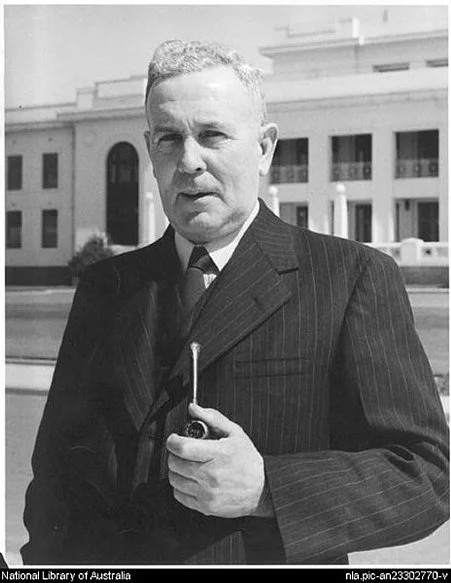
Source: https://www.9news.com.au/national/bert-new...

Enjoyed this speech? Speakola is a labour of love and I’d be very grateful if you would share, tweet or like it. Thank you.

Facebook Twitter Facebook
In PUBLIC FIGURE D Tags EDDIE MCGUIRE, BERT NEWTON, TRANSCRIPT, EULOGY, STATE FUNERAL, TELEVISION, GRAHAM KENNEDY, CHANNEL 9, GOLDEN YEARS OF TELEVISION, TV LEGEND, ENTERTAINER, RADIO, COMEDY
Comment

For Rita Moclair: 'She had to ride 64 miles on the back of the postman’s bike to fetch water from the nearest well', by son John Kelly - 2022

February 28, 2022

15th February, 2022, St Mary’s Catholic Church, Dunolly., Victoria, Australia

Rita Monica Moclair was the youngest of nine. She grew up in rural Galway in the West of Ireland in the 40’s and 50’s. She and her siblings lived in the toe of an old boot on the side of a boreen. She had to ride 64 miles on the back of the postman’s bike to fetch water from the nearest well and she walked barefoot to school every day in snowdrifts neck deep.

She was doted on as the youngest and loved her siblings fiercely in return. She missed them terribly when she moved to Australia. She is survived by her brother Joe and sister Angela.

Despite obtaining her GCE in Ireland, she returned to high school in Mildura as a mother of 8 and enrolled in a number of HSC subjects, excelling in Australian History which she read avidly up until the time she died.

She worked in London in the 50’s but her work there is still so controversial and sensitive that legislation prevents me from identifying it because- even at a remove of 60 years- Empires could be undone if it were to be revealed.

The 60’s were spent raising the first 6 of her 8 children in Belfast, Athlone and Killarney before moving to Mildura in January 1973 where Joe and Romy were born.

Killarney is one of the most beautiful places in Ireland-McGillicuddy’s Reeks, Innisfallen Island, Muckross Gardens, the Gap of Dunloe, Torc Waterfall and Aghadoe Heights were our backyard. Mum loved it despite the occasionally fractious relationship we had with Mrs Murphy next door who once emptied her house of all its furniture in order to build a wall between our two houses in Upper Lewis Road, dispatching her two young sons to patrol it, yelling insults that have passed in to family folklore such as, “Your ma can’t cook a banana.”

She was homesick and heavily pregnant with Joe when we arrived in Mildura, having spent a fortnight acclimatising to our host country at Mont Park Psychiatric Hospital watching World Championship Wrestling and queueing for soup in the canteen before driving through the Wimmera and the Mallee in a two-car convoy, through drought and dust storms and locust plagues and mice infestations before being delivered to vines and orange orchards and three-cornered jacks and pop-up sprinklers and cacti and bungalows and enervating heat. To console herself she’d play Mary O’ Hara’s Spinning Wheel repeatedly, mourning the old country and the family she’d left behind.

She was a model of resilience her entire life and she soon adjusted. Things took a turn for the better when she discovered an Edward Beale salon in Moonee Ponds and managed to get a decent haircut in the Australia of the 1970’s, notwithstanding that it involved two overnight trips on the Vinelander there and back, covering a distance of 1200 kilometres. In 1981 she supported us by opening a shop that sold religious artefacts, importing crates of tea and fabrics from Sri Lanka. She also managed 17 acres of vines, producing walthams, sultanas and currants for sale.

At the end of that year we piled in to our old Holden station wagon and made for Melbourne with Joe as her co-pilot manually operating the high beam by banging a button on the floor of the driver’s side. Mum supported us by delivering groceries and cleaning at half-way houses before securing work at the ATO where she made friends for life in Ranjanee and, later, Christine. The development of Menieres disease forced an early retirement. City traffic intimidated her when we moved to Melbourne, but within a few years she returned home thrilled with herself for having sailed through a congested intersection whilst blithely eating an apple.

One of the most formidable of her many qualities was the unstinting commitment she had to securing first rate educations for her children despite her inability to fund them. She coaxed Xavier College into taking Tony by reminding it of its core Jesuit charter of caring for orphans and widows. When she was called to Whitefriars to discuss Joe’s sub-stellar academic progress she chided the school for its inability to recognize the rare jewel she had entrusted to it. She auditioned a number of equally prestigious institutions such as Siena, Preshill and Sacre Couer who vied for the privilege of educating her precocious and brilliant progeny. She wouldn’t hear of payment.

She returned to Galway in 1984 and rented a house in Renmore. The Ireland she returned to was not the one she had left and that period was tough, although she was buoyed by the release of The Smiths second single which became a staple of her limited pop repertoire and, amongst her children, her most popular cover, totally eclipsing Betty Davis’ Eyes.

She returned to Melbourne in 1986 and lived in Blackburn before moving to Burwood. The backyard was always full of friends, friends of friends and partners and she was always cooking elaborate meals and consoling Pete’s girlfriends, Pete’s estranged fiancees, Pete’s aggrieved exes and women who were on the cusp of instituting proceedings to enforce their contractual rights against him. She continues to receive letters from one of Pete’s exes who is, apparently, doing just fine and has, like, totally moved on.

She left the city and moved to Timor in 2001. She described these 20 years as the happiest of her life. She lived on her own and committed herself to recreating Monet’s Giverny, a Sisyphean task she was never going to complete. Having complained bitterly in the late 90’s of how, despite raising 8 children of her own, she had not been provided with a single grandchild, a flood of fecundity soon ensued. Rebekah was the first in 2001. We were living in Alice Springs then and mum, Hanny, Pete, Tony and Romy drove from Melbourne in a hired camper van to attend her baptism and deafen her with Territory Day fireworks, a round trip of 4,500 kilometres. Being flown above the red centre by James Nugent remained one of her fondest memories.

Once the flood gates opened, Gabriel, Charlie, Maisie, Max, Frances, Eloise, Lucien, Dan, Raphy, Pippa, Ines, Claudia, Helena, Rita, Michael and Lucinda followed like machine gun fire and she was often glad of the geographical distance she had established. She had a prodigious memory and recalled everything of significance about each of them, their friends, their educations, their hobbies, their interests, their fears and aspirations. Each of them felt seen and understood by her.

She loved travelling and managed to see some of the worlds great gardens in Kent and Normandy and Tuscany and Ubud and Kyoto and Kalgoorlie and Coolgardie and Fitzroy Crossing. All of these were fed into her life’s work in Timor. She was a fiend for gazebos and pagodas and rockeries and Japanese bridges and ornamental totems.

In recent years she had eased off travelling and had stopped driving. She remained formidably curious and physically active, but she was deaf as a post. We, as a family, are deeply appreciative of the care for her provided by her neighbours in Timor especially Maree, the Fosters and Leigh who was entrusted with realising her endless projects.

She was a champion. I can’t believe she’s gone, but she was ready. Physically she had declined, but mentally she was as acute as ever. Living on her own terms was non-negotiable. She valued her independence above everything. She lived for her garden- it was a way of repaying Paulette for her generosity in buying Timor and providing it to her so she could live there on her own terms. Ensuring Gabriel attended the Australian Open was an unflagging priority and she hounded me to secure a ticket to the men’s final for him, insisting I call John McPherson to make it happen. One of the last things she did on earth was to sit and watch Rafa snatch his 21st slam knowing that Gabriel was at the venue watching it live thanks to her intervention.

What lessons do we take from mum’s life? Money comes and goes, it’s not important and shouldn’t guide your decisions. Do what you love and success will follow. Be the first to give. Don’t watch Rafa in the final of a slam. Don’t pray that Novak’s plane crashes. Remember that feelings aren’t facts and that you can compel your limbs and muscles to act rightly in spite of your feelings. Whether you can or cannot cook a banana is unimportant, except to the Murphy’s. Pass on your plum pudding recipes. Don’t get Pete to do the dishes. And by somebody I don’t mean Lovedy.

Enjoyed this speech? Speakola is a labour of love and I’d be very grateful if you would share, tweet or like it. Thank you.

Facebook Twitter Facebook
In SUBMITTED 4 Tags JOHN KELLY, RITA MOCLAIR, MOTHER, SON, IRELAND, FAMILY, PNG, PAPUA NEW GUINEA, BELFAST, MILDURA, FUNNY, IRISH, GRANDMOTHER, RAPHAEL NADAL
Comment

For Bill Graham: 'How do you like your blue eyed boy now. Mr Death?' rap by Ken Kesey (with Grateful Dead) - 1991

November 11, 2021

3 November 1991, Golden Gate Park, San Francisco, California, USA

I was in D.C. and when I got the message I thought of two things:
I thought of my son going over a cliff and Bill Graham sending a thousand bucks
to put a thing on the hill that points in all directions in Oregon,
so you can always find your direction from the top of that hill.

And I thought of one more thing, it's a little heavy, but that's what it's about,
Nobody else reaches across the distance and puts your hands on your shoulders about this shit,
I mean, that's the way it's been for a long time, reaching across --
when you guys played Brokendown Palace at that gig,
I knew, Shit, This is the Grateful Dead telling me about my son.
It's as big a time as it gets and old Bill knew it, you know he knew it, he knew it.

And the other thought. The second thought, the warrior thought, the hard thought, the final thought is that we ain't many.
In any given situation there's going to be more dumb people than smart people, we ain't many.

And the second thought was this poem by e.e. cummings

A simple old poem that goes:

Buffalo Bill is defunct
Jesus he was a handsome man
He used to ride on a white horse and shoot clay pigeons
1,2,3,4,5 just like that
and what I want to know
is how do you like your blue eyed boy now, Mister Death?"

Source: https://www.youtube.com/watch?v=Hs8vE0R-X8...

Enjoyed this speech? Speakola is a labour of love and I’d be very grateful if you would share, tweet or like it. Thank you.

Facebook Twitter Facebook
In PUBLIC FIGURE D Tags KEN KESEY, BILL GRAHAM, PROMOTER, HELICOPTER CRASH, TRIBUTE, CONCERT, BILL GRAHAM PRESENTS, RAP, SONG, THE GRATEFUL DEAD
1 Comment

For Margaret McKay: 'Thank you, Margaret, for being my mother', by Ian McKay - 2021

October 28, 2021

14 October 2021, delivered via Zoom , Australia

During the days since Mum died, as you can imagine, I have been reflecting on her life ... and what an extraordinary life it was.

Her life was bookended by the two most significant pandemics in Australia's known history. Mum was born in Cairns, Far North Queensland, in 1921 and like much of Australia and the world, Cairns had suffered significantly from the Spanish flu, and now 100 years later, Mum has ended her life with the world battling the challenge of COVID.

Changes in technology can illustrate the dramatic changes throughout Mum's life.

When Mum was born, her Birth Certificate was handwritten, and funerals were still conducted using horse-drawn hearses. When Mum married in 1960, her Marriage Certificate was typed with a manual typewriter which some of us would remember sometimes resulting in not all letters being perfectly aligned. Now in 2021, with Mum's death, documentation is all computerised, and we are today gathering virtually to celebrate her life.

I suspect that she would have had some difficulty getting her head around a zoom funeral, and I also wonder what she made of everyone entering her room wearing a mask for the last 18 months of her life!

When Mum died in the early hours of Saturday morning, I cast my mind back to Easter 1996. My parents were visiting Sherril and me in Cairns, where we then lived. Dad spoke to me about his concern that Mum was "slipping". Four months later, Dad died, and Mum continued for another 25 years.

In some ways, I have been preparing for this day for several years; however, now it has arrived, it remains a time of sadness and loss while at the same time an opportunity to celebrate a life of service to her community and to God. My cousin Karyl who is with us today summed it up so well last Saturday when she said it was a time of Relief and Grief.

It is difficult to know how to do justice to Mum's life in the relatively short time that I have to speak today. Although Ben did say I could speak as long as I wanted!... given we are on zoom, feel free to have a coffee or a pre-dinner aperitif while I am sharing a few snippets of Mum's life.

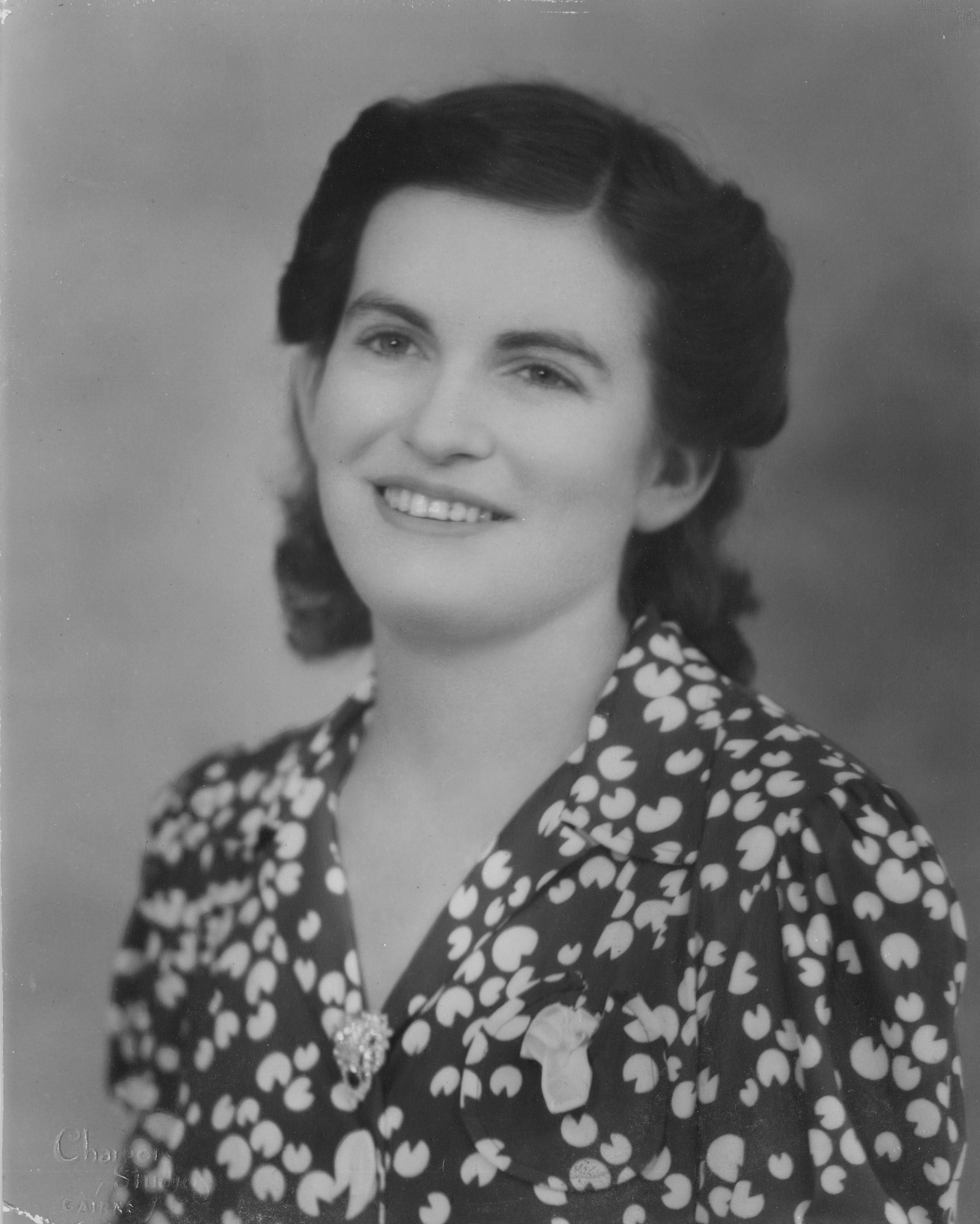
Margaret Davison was born at her parents' home in Sheridan Street, Cairns, on 03 July 1921. Her father, George Davison, had come to Australia from Manchester just before World War 1.

My grandfather George was a prominent accountant in Cairns, very active in the Masonic Lodge and his Church, and was Chairman of the Cairns Aerial Ambulance for many years.

He was proud to have had a short flight in Kingsford Smith's Southern Cross and later meeting Australia's Prime Minister, Sir Robert Menzies.

Mum's mother, Jane Owens, had to wait until after the War to emigrate also from Cheetham Hill in Manchester. In 2003 David and I found her house still being lived in in Manchester.

A brother, Harrison Fawcett Davison, joined Mum to complete the family seven years later in 1928. Harry married Shirlee, and they had three children. Their middle child, Karyl, is now a Uniting Church Minister in Canberra, and I am grateful she is participating in today's service.

Mum commenced her schooling in 1926 at Edge Hill State School though this is now the current Cairns North State School. She was accelerated a year in Grade 5, completing her primary schooling in 1932.

She attended Cairns State High School from 1933 to 1935, passing her Junior Certificate twice as she was too young to go to Teacher's College the first time.

As a young person, Mum played tennis and basketball (what we would now call netball) though I don't think sport was a major part of her life from my conversations with Mum.

In 1936 she made what would have been a significant move then for a 14-year-old by going to Brisbane to study to be a teacher at Turbot Street Teachers College (now part of Queensland University of Technology). In her second year at Teacher's College, she also completed her Senior Certificate by night school.

Clearly, Margaret was a very capable student who perhaps would have had many more opportunities as a young regional girl in a more recent era.

I can clearly remember completing an initial test for membership of MENSA when I was in my late teens. I scored well and was eligible for the final entry test.

Being a fairly confident 18- or 19-year-old, I convinced Mum (against her better judgement) to do the test as well, probably so I could show her what a clever son she had!. Despite not having studied or worked full time for many years, she achieved a result much higher than mine, which indicated she would have had a high probability of being eligible for membership of MENSA.

Mum started teaching at Eton State School near Mackay in 1937. She then was appointed as a very young Principal at Wondecla State School north of Cairns, then returning to Cairns as Principal (or probably then known as Head Mistress) of Caravonica State School.

After two years as a District Relieving Teacher, she was appointed to Cairns State High School. She taught Intermediate (Grade 8) for 12 years before marrying my father, Peter McKay, in December 1960. A marriage of mutual commitment and love that lasted until my father died in 1996.

I never thought to ask Mum or Dad how they met though I assume it was through their mutual involvement in Scouting.

As was the requirement of the day, female teachers were required to resign after they married. Mum didn't recommence teaching until 1972, when she became a casual relief teacher in Townsville Schools for the next 15 years.

I was born just over a year after they were married and was to be their only child.

I was, and am, proud that her last teaching position was three days as Acting Principal at Ravenswood State School in October 1987, where I was Principal while I was at the North Queensland Primary School Cricket Trials. I suspect the Education Department gave Mum the job because she could live in my house and therefore there were no travel expenses required!

For the next decade, Mum continued her involvement in teaching by voluntarily assisting with a class at Belgian Gardens State School one day each week so not "fully" retiring until around 80 years of age.

A little later, Charles will speak about Mum's involvement in Scouting that spanned almost 35 years, so I won't talk too much about that aspect of her life but will mention a couple of things that Charles may not have been aware.

Mum's involvement in Scouting commenced in World War 2 when her Parish Priest told her the Cub Pack needed a Cub Leader as most existing leaders had enlisted. He said that as she was a teacher, she would be perfect as a cub leader!

So, Mum became an Assistant Cub Leader then a Cub Leader at 4th Cairns, which was connected to St John's Church of England. She became the first female Assistant Leader Trainer in Queensland in 1953, received a Letter of Commendation from the Chief Scout of Australia in 1957 before being awarded the Medal of Merit in 1960. In 1964 she was appointed to the International Training Team.

Ray will speak later about Mum's incredible commitment to cricket in North Queensland. A commitment that commenced because of her devotion to supporting her son. When I started playing in 1971, Mum started becoming actively involved, which she continued for more than 25 years, including for a decade after I was no longer living in North Queensland. An amazing commitment that was recognised with two life memberships, as I'm sure Ray will mention.

In addition to Scouting and Cricket, Mum's other great involvement was in Inner Wheel. For those unaware, Inner Wheel is a service club established for Rotarians' wives in the days before women were permitted to join Rotary.

When Dad joined Rotary, Mum soon joined the Inner Wheel Club of Townsville. In 1976 she became Charter President of a new Club, the Inner Wheel Club of Port of Townsville. She later was twice District Chairman of District A76 in North Queensland in 1981-82 and 1994-95.

She was also District Secretary, District Treasurer and District International Officer on various occasions.

In 1983-84 she was Inner Wheel Australia's National Secretary. I once asked her why she didn't consider the National President's role, and she said due to the amount of travel required for the role that she and Dad couldn't afford it; how sad as she was a natural leader.

Inner Wheel recognised her contribution to the community in 2002 by her being awarded a Margarette Golding Award given for highly commendable service to the community. She was the first Queenslander to receive this award and just the fifth in Australia. Even today, 20 years later, there are less than 40 recipients in Australia of this prestigious award.

The single red rose on Mum's coffin is a tribute from Inner Wheel Australia for Mum's commitment to Inner Wheel for almost 50 years.

As if her involvement in Scouting (for almost 35 years), cricket (for more than 25 years) and Inner Wheel (with an active membership of more than 35 years) wasn't enough in her younger years Mum learnt Piano and Elocution, sang in the Cairns Choral Society and Church Choirs, was a Sunday School Teacher in Cairns and Townsville for at least 20 years and was active in amateur theatre with the Cairns Playbox Theatre.

Her tireless voluntary efforts during her life were recognised by being awarded Townsville Senior of the Year in 2002 and a 2003 Premier's Award for Queensland Seniors together with the two cricket life memberships and the Inner Wheel Margarette Golding Award that I mentioned earlier.

I hope I have done justice in painting a picture of Mum's remarkable life of service. I am so proud of her contributions and her achievements.

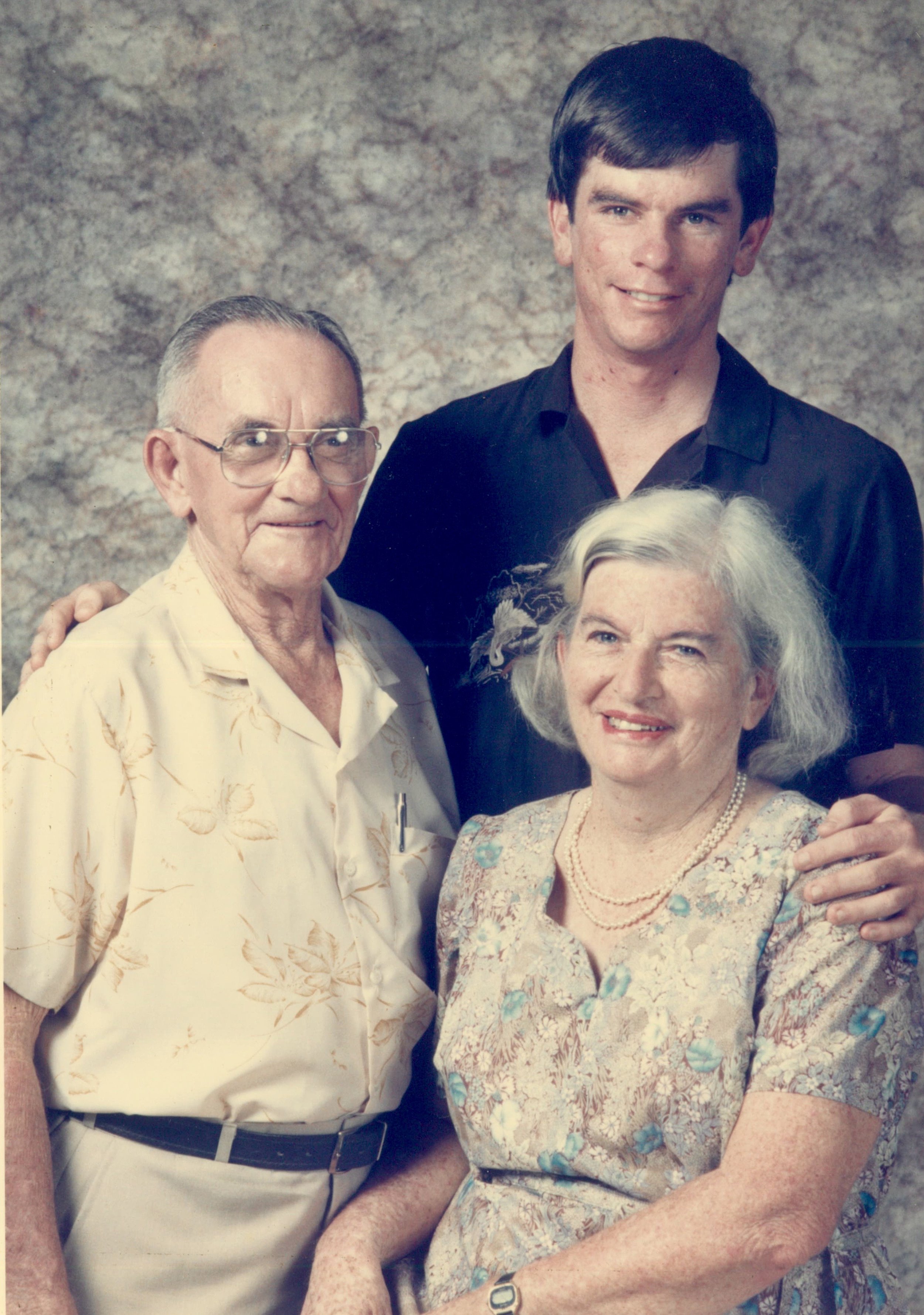
Ian with his parents


But what of Margaret as a mother?

I was always close to Mum. She always showed me that she loved me, was proud of me and wanted what was best for me. I was blessed by her caring and her example of living a Christian life of service.

That's not to say I was always happy with her choices for me, and I certainly was never a "spoilt" only child.

It was a bit of a shock (though very fair) that I immediately was charged board when I started working as I was still living at home. The board was a not-insignificant 25% of my gross pay when I started teaching.

But it didn't stop there! If I asked Mum to buy a toothbrush, toothpaste, or something similar when she was shopping, she was always happy to do so, but the receipt for the purchase was at my place at the dining table that night for reimbursement.

At the time, I thought it was a bit silly and perhaps scroogish, but I later realised what a good life lesson she was giving me.

When a young teacher in Charters Towers with just three years of teaching experience, I was visited by my principal after school one Friday afternoon to tell me the Education Department was offering me the Principalship of a one-teacher school at Ravenswood.

I had not been an applicant for promotion nor was I thinking about a principalship. The Department generously giving me an hour to decide!

What should I do?

Of course, I rang Mum for advice!

Her advice was that the Department had a long memory and that perhaps I might want to be a principal one day, but if I'd said no once, I may be overlooked in the future.

So, I took Mum's advice and said "Yes" ... and, as they say ... the rest is history.

My mother was my rock for my childhood and young adulthood.

It has been my privilege to have done my best to care for and support her in the last years of her life though COVID has made this very difficult in the last 18 months.

Throughout Mum's life, she was very fortunate that she had few health issues with just the normal childhood ailments of Whooping Cough, Chicken Pox and Measles and in mid to later adult life, ongoing problems with sun cancer. The legacy of her parents' northern English skin and life in North Queensland. Unfortunately, Mum gifted me similar skin!

In the early 1970s, she had a slight dose of shingles, but apart from that, she was blessed by generally excellent health.

In her last year's her body started wearing out, and her decline was, I believe, as much about being immobile as anything. Sadly, Mum was largely bedridden for the last six years, which was unfortunate for someone who contributed so much.

Since late 2010 Mum has lived at Mercy Place, and while it was sad to see her steady decline, I would like to acknowledge and thank the care of the staff at Mercy Place in Warrnambool.

In her last year's Mum was saddened to lose her brother, Harry, in 2015, which coincided with becoming largely immobile. Fortunately, we were able to bring Mum to our home for lunch on Harry's birthday in 2012 when Harry and Shirley visited, and there is a lovely photo in the photo tribute of them together for the last time.

Despite Mum's limited mobility, until the last couple of years, she remained interested in cricket, rugby league and tennis on television and what I was doing in my life but even more so what her grandson David was achieving.

Mum never displayed any outward emotions, but her pride in David was enormous at many of his achievements, particularly in Scouting. He was awarded the Australian Scout Medallion and Queens Scout and has attended two World Jamborees. She was also proud of his achievement of twice being awarded Warrnambool Youth of the Year for Community and Leadership.

Mum was also proud that David is serving in the Air Force following on from Peter's service in World War 2. Unfortunately, David never knew his grandfather, but I think that Mum saw David's RAAF Service and Scouting achievements as a tangible link with Peter.

Margaret lived an extraordinary life of service to her community and family, always underpinned strongly by her faith in Jesus as her life's compass.

She lived for an incredible 36 623 days. For most of those days, she made a positive difference in her world and set a strong example for those around her.

I will end with some simple words on a card we received from Sherril and my Rotary Club this week.

The card said,

A mother and grandmother is with us always

First in her lifetime, then forever in our memories.

Mum will always be in my memories. She has given me a template for living a life of integrity and positive contribution to our community underpinned by a living faith.

I will remember Mum with love, affection, and appreciation, and I hope others touched by her life will have similar memories.

Thank you, Margaret, for being my mother.


June 2019 with grandson

Enjoyed this speech? Speakola is a labour of love and I’d be very grateful if you would share, tweet or like it. Thank you.

Facebook Twitter Facebook
In SUBMITTED 4 Tags MARGARET MCKAY, IAN MCKAY, ZOOM FUNERAL, COVID, CHRISTIAN, MOTHER, SON
Comment
John Delaney.png

for John Delaney: "I know you are very proud of the adults we have become", by Anne Delaney - 2020

September 28, 2021

22 September 2020, Corpus Christi Catholic Church, St Ives, Sydney, Australia

Hello - Anne here, John & Joan’s 4th child.

Thank you for coming to Dads, (John Delaney’s) funeral mass – I really appreciate your thoughts and prayers today. I am sorry that I cannot be with you all to formally say farewell to dad but pleased to let you know we are viewing from Melbourne, where we are in our second lockdown to beat this horrible COVID-19 virus. "

2020 will be a year that will be remembered for many reasons – but one, The year we lost our “Big John”.
I did explore all options of what I could do, to be in Sydney, but our health, everyone’s health is most important, and I am at peace with my decision to bury Dad at the earliest time available since he passed, so he can finally be reunited with mum.

As most of you know, my relationship with Dad was a bittersweet one... I can honestly say, it was sweeter more often than not, around 97% sweet. Dad loved us all so much, he lived for the family, “his family”, and that is what he installed in all of us kids. ‘Family is key’. He may have had his favourites, just like we have a favourite footy team we barrack for, or a favourite meal we choose for our birthday dinner, or a favourite season in the year... but his love for the six of us kids was equal. Dad was a homebody, he worked hard in his Insurance job Monday to Friday, and then on the weekends... he loved spending time in his home, and in his garden. He had a good sense of humour, he liked a joke or two, but his faith was very important to him – never missing a Sunday or an All Saints Day mass. When we left home, he would test us by asking, Did we go to Church on the weekend?, and if we said “yes”, he would ask us, what was said in the sermon? or what Saints day was during the week?!

Dad was a proud and private man, with sound work ethics and very strong in his beliefs and thoughts. He thought he knew best.... We as adults always thought it was funny, when he would try to give us advice on “how to sell a home?”, “or buying a home?”, so funny, as the only house he ever bought was 30 Apps Avenue, North Turramurra. This was his castle, and he was happy there.... so happy that he did not want to contemplate leaving.

Dad was a strict and protective dad, he did it in a very caring way, we were the neighbourhood kids, that never received bikes as gifts growing up, as he was concerned about us falling off, or getting hit by a car .... which to his credit, he was right! As I was hit riding a friend’s bike when I was 9 years old and ended up in Hornsby Hospital with broken bones.

Dad was a great provider, he cared for all of us well, allowing us to grow up in a loving, safe family home, in a leafy neighbourhood with a pool in the backyard, and attending nice schools. An area, where we have made lifelong friendships, still to this day. Dad what you did provide us all with, was many hugs, too many that I lost count in my younger years.... but that is why I cannot be with you today, as I am a “people person”, and love a kiss and cuddle, and me not being able to hug my brothers or sisters, or my nieces and nephews, and friends, would be too hard... so best I keep my distance. A 900-kilometer distance.
Thank you for the many great years we had you on this earth, as eighty one years of the 84.5 years you lived, you were in perfect health... just the last couple of years we had a few health scares, but you always remained independent and resilient. There were some testing times, where you really pushed my buttons, but I look back and I believe it was me pushing your buttons, to live your life differently or try something new, like join a friendship group, or go to the theatre, thinking I knew what was best for you, maybe a little bossy at times. I know you are very proud of the adults we have become, just like – we are proud of you. How you managed, after losing Joan, our mum at such a young age, being a widower at 53 years young... you coped well, really well.

As mentioned, Dad, loved time with the family, that was when he was happiest.... I will come to Sydney when we are able to travel across borders and without restrictions, and we as a family can have a celebration of dad’s life.

Rest in peace Dad – I love you - love Anne

Enjoyed this speech? Speakola is a labour of love and I’d be very grateful if you would share, tweet or like it. Thank you.

Facebook Twitter Facebook
In SUBMITTED 4 Tags ANNE DELANEY, JOHN DELANEY, EULOGY, FATHER, DAUGHTER, ZOOM, RECORDING, COVID-19, TRANSCRIPT, CATHOLIC, CATHOLICISM, SYDNEY, AUSTRALIA
Comment
June gillies 2.jpg

For Glenda Gillies: 'She loved the liturgical colours', by son Andrew Gillies - 2018

September 27, 2021

5 July 2018, Burstows Chapel, Kearney’s Spring, Toowoomba, Queensland, Australia

“What a funny little shing” observed big brother Peter as Glenda June Gillies born a few days earlier on the 26th of June 1938 was first shown to him. First daughter of Jack Raymnd Gillingham and Gerda Yuliana Gillingham of Baskerville St in Brighton. Two more daughters followed, Kay Louise and Sue (Susanne) Joan. Because infant Kay could not manage, ‘Glenda’, mum became known as Nenny. This name stuck, with Peter, Kay, Sue and the Rienks and Cook kids calling Mum Nen, Nenny or Aunty Nen all their lives.
Mum's, mum Gerda, a nurse, contracted TB and was ill for much of the later part of her life dying at only 51. This meant Glenda had to help care for her younger sisters with her mum sick and even away. Gerda was born in Denmark and Danish heritage always played an important part in our lives. Danish Pastry, shortbread, and Christmas tree decorations always featured at Christmas. This later developed into a keen interest in genealogy.

From her mum Glenda also learned a love of handcraft including knitting and weaving. Mum in her lifetime turned her hand to many things. Crochet, spinning and dyeing (a passion she shared with Sue, Kay and her good friend Joan Ailand). Mum weaved baskets, learned macramé, made pottery, sketched, and painted. Keith remembers in particular a Gingerbread teapot mum helped Ian make in Morwell to win a prize in a baking comp, the young Keith targeting the spout for eating, much to mum and Ian’s horror.
He also recalls her ability to make something clever from almost anything. Goblet plastic ice cream cups, bottles, card board and foil were turned into the most amazing astronauts. Perfect copies of Neil Armstrong right down to the flag on the sleeve. And landing modules to go with it.

All her life she read voraciously. Her tastes in reading were broad and deep. Jane Austen, feminist authors, theology and science fiction, spilling over into Dr Who on TV with Patrick Traughten always being her favourite Doctor.

Once asked at school what she would like to be she said, “Australia’s first woman Prime Minister”. Although a member of the Labor party for a decade she never pursued a political career for she was too kind hearted and self-effacing. She and her husband Pete were always interested in matters political and passed on a keen interest in current affairs to all their children. Keith remembers her kind heart and interest in public affairs coming together with her sitting up all night with the transistor radio in Melbourne, listening to the Apollo 13 mission, which was going horribly wrong. She would not go to bed until she was certain the crew were safely back on earth.

With Pete she loved bush walking, and the bush in general. She loved animals including our family pets, of note are Kym and Canter, the escape artist dogs, and Diamond the tomcat who had four kittens.
While Jack was quite taken with Herbert W Armstrong's Worldwide Radio Church of God none of the Gillinghams (apart from Glenda’s cousin John) were church goers. Two of Glenda’s classmates and neighbours, Kathy O'Neill and Joan Ailand were very involved in the little Deagon Methodist church. They invited her along to its activities and faith awoke in her.

At Sandgate State School she excelled academically, passing “Scholarship”, and then in High School winning a teacher’s scholarship to do senior. She excelled in her studies including her final exams even though, sick with scarlet fever, she saw little green men running up and down her arm in her Zoology exam. She did a Certificate of Education and became a teacher back at Sandgate State School. She taught for only 3-4 years having to resign when married at 21 but continued to do supply teaching right into her late fifties or early 60s.

Mum never found school teaching easy but was deeply committed to the education and nurture of Children. In every congregation she taught Sunday School and ran kids’ clubs at North Ipswich and Aspley. At Aspley she not only co-ordinated the Sunday School classes she also did the Children’s segment of the service. When her own children struggled at school she encouraged and supported them. Andrew for instance moved from the “D” reading group up to the “A” group between grades 2-6.

She also always loved music. She took part in a production of HMS Pinafore and last Thursday she drew her final breath as a CD of Pinafore reached its finale. She appeared in many backyard productions with her great mate Kathy O’Neil, in the theatre built by Kathy’s Dad, and in full costume made by Kathy’s wonderfully eccentric and very stylish mum Gypsy. Over the years she sang in numerous mostly church choirs and played soprano recorder. She took an interest in church music and was a great help to the very unmusical Pete.

She met Pete William Gillies a quirky local Presbyterian minister, not locally but on an organised coach tour around Tasmania and they married at the Shorncliffe Methodist Church on the 9th of January 1960. A Minister’s wife was expected to be a second minister, the social hub of the church, but while mum was happy to teach Sunday School, she was no social hub. Pete was passionate about God, the church, pastoral care, trivia, tennis, cricket, justice and politics. He was not interested in housework, mowing, changing washers, young children, cooking, administration, tidiness or saving.

It was a loving relationship and at times a very fustigating one, especially for the young girl who had once wanted to be the first woman Prime Minister. In 1961 Ian William, the first of three boys, was born. He was followed just under two years later by Keith Raymond (1962). Pete while visiting Melbourne accepted a call to be the minister in the Victorian town of Morwell so the young family moved from Hawthorne in Brisbane. Andrew was born there (1967) and just 12 months later the family moved to Merbein, then on to North Altona in Melbourne. Mum’s mum, Gerda only lived to see the birth of Ian dying in 1961 before family left Queensland. At Hawthorne and in Victoria, sisters Sue and Kay spent extended periods of time with Mum and Dad. In 1973 the family went on a long adventure, driving from Altona all the way to Koorumba in the gulf. They met up with Jack in Brisbane and all six slept in his new swish camper trailer. The fridge only caught fire once and mum managed to put it out with a jug of water, blowing the fuses in most of the caravan park in the process. Adding to the adventure was Pete’s unique driving style which mum coped with by singing among other things one of today’s hymns “There’s a light upon the mountains”.

In 1974 the family moved back to Queensland where Pete took a call to the North Ipswich parish. Glenda, Ian, and Andrew stayed with Jack at Brighton for the first School term, as the 1974 floods had made a mess of Ipswich. Glenda although no socialite, was still a leader and had a sharp mind. From her time in Ipswich onwards Glenda took on leadership roles working closely with Lola Mavor among others and served as secretary of the National Committee of Adult Fellowship groups for the newly formed Uniting Church in Australia, helping to organise at least one national conference. She also served as a member of the Board of Parish Services. She represented the church at Presbytery and Synod meetings. Mum was perhaps happiest when we lived in North Ipswich. She made good friends and was not far from her youngest sister Sue and her Dad Jack.

She got her licence at 40 and so could take on much of the driving duty to the great relief of all three children. She was very cranky with Pete when he agreed to accept a call to Camp Hill without really telling the family until it was almost too late. Keith keen on sport and public speaking like his dad, found a job as a cadet announcer. Ian and Andrew moved with Glenda & Pete to Camp Hill.

Earlier in 1976 they were also joined by Pete’s brother Basil who had lost most of his eye sight. Glenda dealt with the extra household member with grace. Basil relieved Glenda of some of the household and nurturing duties.

Half way through their time in Camp Hill Pete developed late onset bi-polar disorder. This was incorrectly diagnosed as depression, but Glenda, in a time before Google, knew something was not right and did some research. She convinced Dad’s GP and but not his psychiatrist, so the GP referred Pete to new doctor who was able to stabilise his moods. This was the last straw for Pete’s health, and he was retired early, only 58. The family moved into Basil’s house at Zillmere.

Prior to the move Glenda had upgraded her teaching certificate to a three-year diploma. This taste of study was to lead her with her good friend Joan Ailand to take up studies in Theology. She excelled at this study and had a special flair for languages.

Her keen interest in liturgy and the liturgical year, even extend to her dressing in seasonal colours. For example, purple for Lent or yellow for Easter, making some of the clothes herself. She loved the liturgical colours and all her life had been a maker of banners and charts and other visual aids for worship and Christian Education. (Glenda was a visual person surrounded all her adult life by a bunch of word obsessed males.) In 1996 she received her Bachelor of Theology, studying some of the time with her son Andrew who had first followed in her footsteps and become a teacher and then felt called like his father into ministry.

Ian moved out of home in the 90s and eventually moved to Sydney, among other things he also studied theology. Basil died suddenly at home and only a few years later on the 21st of May in 2004 Pete’s bad health caught up with him. Mum never loved living in church houses, so the house at Zillmere was the first place which she ever felt was her own. She loved the garden choosing and nurturing nearly all the plants.
Keith married in the early 80s to Helen and Glenda enjoyed the grand dogs, especially Bunyip & Nick Knack, but it was to be 2008 before she had her first human grandchild Eli, born to Andrew and Heather who were married early in 2007. Sadly, sister Sue died at only 61 in 2009. Two more grandchildren, Parker (2010) and Ivy (2012) followed. These were her pride and joy in the last years of her life. She would inflict photos of them on any who came near her.

Early in the 2010s it is likely that Glenda began to develop Alzheimer’s disease. Andrew and his busy young family were alerted to her declining health by some of her church friends from Aspley and stepped up visits. In early 2015 she nearly collapsed while out. Kay then Andrew took her in for a period and tried her at home by herself with Andrew visiting every week. She just about coped, but Andrew went away for two weeks and on his return in October 2015 he received a call to say mum had been refusing her meals on wheels. She had become too frail to live at home, so he took her to Toowoomba and she lived with the family for 20 weeks. She loved being with the grand kids, but their normal noise and routine was too much for her, and she really needed someone with her 24 hours a day.

After Easter 2016 also diagnosed with Parkinson’s disease she moved into Tricare’s Toowoomba Aged Care Residence. With healthy food and wonderful care, she thrived, putting on weight and gaining strength, but both the Parkinson’s and dementia progressed and soon, she was no longer able to feed herself, her memory deteriorated further, and eventually she found eating itself difficult, and became bed bound. Just three weeks ago she lost the ability or perhaps the will to swallow.

She kept her quirky sense of humour and sense of fun until very near the end, but the once wonderfully sharp mind had long since gone and for well over two years she had been unable to read a book or do any of the wonderful handcraft that she loved. A week ago, today, at 2:10 pm she peacefully breathed her last with Andrew and Ian in the room with her. She made her 80th birthday with Kay, Keith, Helen, and nephew Adrian all visiting in the last week.

Not mentioned much so far was her faith. It was not their minister Dad who taught the boys to pray, read the Bible and live out their faith in love and service for others, but Glenda by word and example. One of her favourite Bible passages was the Fruit of the Spirit (Gal 5:22-25) and she sought to cultivate this fruit in all her living, patiently serving, encouraging, teaching, loving and supporting all the significant people in her life. She remembered those verses even when her dementia was advanced and one of her last acts of teaching was to teach it to her grandson Eli. Her legacy lives on not only in her boys but in the thousands of Children she taught and encouraged in the faith through well over half a century of discipling.
We love you Glenda, Nenny, mum, Grandma, like all who are in Christ you are a new creation – the old has gone, behold the new has come.

Glenda June Gillies 26th June 1938 – 28th June 2018

June Gillies 1.jpg

Enjoyed this speech? Speakola is a labour of love and I’d be very grateful if you would share, tweet or like it. Thank you.

Facebook Twitter Facebook
In SUBMITTED 4 Tags GLENDA GILLIES, ANDREW GILLIES, SON, MOTHER, CHURCH, EDUCATION, TEACHING, CHRISTIANITY
Comment
Emily and Cam McKie.jpg

For Robert McKie: 'Sample some of the sausage rolls and scones', by son Cameron McKie - 2021

July 21, 2021

13 July 2021, Heidelberg Golf Club, Melbourne, Australia

Dad would always come to your rescue. I was a skinny kid who felt the cold. One frigid cold day’s skiing on Mt Buffalo I must’ve become hypothermic and shuffled off the side of the slope to lay down in the snow for a little sleep. It was Dad who found me (I’m sure he’d purchased my bright red Spicer spray jacket for this exact scenario). Ditching his poles he scooped me up and skied down to the car, handed me over to Mum who stripped me down then wrapped me in blankets, rubbing me furiously to thaw me out while Dad turned the ignition and cranked the heater. Crisis averted. Years later, as a 16-17 year-old, stranded on the other side of town after a party, possibly following a few too many drinks… all I had to do was find a phone box and call home. Anywhere, anytime of the night or early morning. In next to no time Dad would arrive in his dressing gown. He’d drive my friends and I home to safety with no questions asked. No repercussions.

A solution for every problem. When I rolled the HR wagon a couple of months after it was gifted to me, Dad was the first person I rang. He arrived at Blairgowrie within two hours. I fully expected him to tear strips off me, but his only concern was that Nick & I were OK and that no-one else had been hurt or worse. He immediately identified the problem: my over-confidence behind the wheel clearly didn’t match my complete lack of driving skill and duly paid the $300 for me to undertake an advanced driving course (problem – solution). He’s done the same for every grandchild on their 18th birthday ever since.

Dad was adaptable. In the words of Clint Eastwood, “He improvised, he overcame”. Sometime in the 1960’s, realizing that there were too many Rob’s at Brownbuilt for him to make his mark, he promptly changed his name to Bob and set himself apart. Another fun fact: In the late 60’s he developed what sounded like a repetitive strain injury from all the note-taking during lectures at RMIT so he switched from right to left handed 6/52 out from a major exam for which he was granted a half-hour time extension. He passed the exam and wrote with that characteristic backwards-leaning, left-handed scrawl ever since.

Ratio & percentages. Up until late last year it’s been Mum’s health that was always the issue. I’d ring Dad asking after her and he’d say, “She’s 5% better today. If I can keep the food up to her and keep her hydrated, I reckon she’ll be 90% by the end of the week”. If one of the kids was unwell and had a couple of days off school he’d ring for daily updates and always ask for a wellness percentage. Just recently after he’d had a shower from his favorite Home Care worker (Tory – he was pretty fond of Tory) he said he felt a million dollars before quickly revising that figure down to $100,000 given his palliative situation.

Dad sat me down recently to discuss his funeral. He said the difference between a memorable funeral and a so-so one wasn’t so much in the eulogy or the song choices but in the food on offer afterwards. He said you had to encourage as many people as possible to stick around and mingle – and the food was the key. There needed to be plenty of it but more importantly you had to get the ratio right. Dad said he’d been to enough funerals by now to have worked out the perfect formula: 70% sausage rolls: 20% scones with jam & cream: 10% sandwiches. I had a sense I was on Candid Camera, but I duly scribbled down those percentages all the same.

Dad couldn’t always read a room. In his term as president at Watsonia Probus, he fixated on the dwindling numbers of blokes in the club. When the male-to-female ratio hit 30:70 Dad decided he’d propose a motion that only male applicants be accepted into the club until the ratio returned to 40:60. He was convinced he had the numbers but when it came to the vote at the AGM his so-called backers kept their hands firmly in their pockets, leaving Mum swinging in the breeze beside Dad, her hand held tentatively aloft. The motion was roundly rejected. It’s a good thing he never went into politics.

Dad had no interest in football but recognised that a basic knowledge of the game was an essential social networking skill, whether it be chatting with work colleagues, down at the tennis club over a round of golf. When Richmond made the 1980 GF he made sure he secured two tickets. Standing Room, Bay 13. The Tigers won easily but we didn’t hang around for the post-game celebrations. On jumping for joy at the final siren, I’d landed ankle deep in a Collingwood supporter’s Esky. Recognizing the imminent danger, Dad scooped me up and headed for the exit.

He was at the picture framer’s a few years ago helping Mum pick out a frame for one of her lovely paintings when he spotted a commemorative print of the 2017 Premiers. Mum always took care of the Christmas and Birthday shopping, and she wasn’t keen, but occasionally Dad would see something and insist they buy it: “Dood, it’s beautifully framed, has a great picture of Dusty with all the players’ signatures. Duncan will love it”. He was right – it’s hanging in pride of place over Dunc’s mantlepiece.

Dad made mistakes – rarely. The night before my final HSC exam – physics, Dad wandered into my bedroom and asked how my exam prep was going. I told him I’d essentially written off physics as my 5th subject because it was my weakest and would only carry a 10% weighting anyway. Dad refused to accept that this was a wise strategy and proceeded to teach me the entire course over the next 8 hours or so. I passed the exam on next-to-no sleep. A couple of months later Dad and I were down at the Monty Tennis Club loading up his trailer with several stacks of chairs for my 18th Birthday party. Vaguely recalling some of the basic physics he’d taught me, I threw a rope over a pile of chairs when Dad told me not to worry. He assured me they wouldn’t move on the short trip home. I wasn’t convinced but said nothing. Sure enough, as soon as he turned right out of Dobson Street 64 chairs fell out onto Para Road causing traffic chaos. The pair of us never moved so fast, scrambling to throw those chairs back into the trailer.

Measure twice. Cut once Dad was hands-on. He loved to get involved. Always turned up with a boot full of his own tools, screws, extension cords, etc. He loved passing on his knowledge. It was only really in the last couple of years that he became more of an adviser, less hands-on; but he’d still tackle smaller projects at his workbench in his garage. I’d always text him photos of any home improvements I’d made. Even at 50 I still craved his affirmation. Looking through old slides this week, I realized the scale of my projects paled into insignificance next to his. When he completed his impressive rear deck at Astley Street the building inspector told him it would still be standing long after the house had been reduced to rubble. In the week before he died, I drove him out to see Rohan & Jess’s new house under construction. It made his day, to feel involved in the building of something.

Dad wasn’t really an animal person although we must’ve worn him down at some point in the mid 70’s because he agreed to a family cat, Whiskers. Whiks was supposed to be an outside cat, but Mum and I had a pretty loose interpretation of outside, particularly in winter. So, our evening routine would be: dinner on the stove, the pair of us seated on the couch with Whiskers asleep on our laps, Dr Who on the telly. At the sound of the key in the front door I’d leap up, race to the sliding doors and toss the cat out then act like nothing happened. Whiskers would still be airborne when Dad put his keys down on the Laminex bench. He was always onto us though – maybe it was the fresh claw marks in my forearms. Dad never said anything, although he would level an occasional frown of disappointment at us both. (Mum and I tended gang up on Dad). It was a good thing when Em finally came along – she tended to take his side which evened the ledger.

Still on the subject of animals. There’s a well-known sketch of a frog and a pelican. The frog’s in trouble. His head and torso are deep inside the beak of the pelican. His legs are dangling limply outside, but his hands remain tightly gripped around the pelican’s throat. It’s titled, “Never Give Up!” This was Dad’s Mum Jean’s motto - she kept a photocopy on her fridge. Dad fought his disease tooth and nail. Like the frog he knew he was up against it from the outset, but he fought valiantly. We didn’t waste an opportunity over the past 6 months to tell Dad we loved him or to give him a hug. He accepted this affection more and more freely as the disease took its toll. It wasn’t until very late in the piece that he came to accept his fate and, in true Dad fashion, only once he was satisfied that he’d given it his all.

Thank-you all for attending today. Dad/Bob would be truly humbled by this turn-out for his send-off. But I’m sure you all see it as a fitting testament to the quality of the man. So please, if you can, make sure you stick around. Sample some of the sausage rolls and scones. Have a drink and start up a conversation with someone that also knew Dad/Bob, because friends, family and ensuring people stayed connected were what sustained him his whole life.

Robert (Bob) Roy McKie
30/11/37 - 5/7/21

Enjoyed this speech? Speakola is a labour of love and I’d be very grateful if you would share, tweet or like it. Thank you.

Facebook Twitter Facebook
In SUBMITTED 4 Tags ROBERT MCKIE, BOB MCKIE, CAMERON MCKIE, FATHER, 'SON, FUNNY, STORIES, AUSTRALIA, TRANSCRIPT
1 Comment

for Michael Gordon: 'Decency coursed through his veins', by Fergus Hunter & Simon Balderstone - 2018

July 20, 2021

16 February 2015, MCG, Melbourne, Australia 

Fergus Hunter is the son of Simon Balderstone, a lifelong friend of Michael Gordon's, who also spoke beautifully at the memorial. (see below)

Most of the people gathered in this room today are probably here, ultimately, because of words. Powerful words and beautiful words and words of consequence – this was the life’s work of Michael Gordon, the man we loved and admired.

And it’s words that have really vexed me leading up to this because I’m not sure I can muster them to do justice to Micky. Funnily enough, I felt a similar unworthiness when sending him pars for the stories we worked on together over the last few years – stories and years that I treasure.

It was my great luck to have Micky around my entire life. He was like a brother to my father for over 40 years and, as a result, like family to me. He was a constant.

The last time I was in this room was three years ago for Harry’s service. Now Scotty – as is his right – has snatched one of my references and themes here. But I would add that Micky on that day also spoke of Harry’s humility and his ability to mix in any company as well as what Scotty quoted.

That same day, Les Carlyon said this about Harry. He said he could scold in print without being mean, he said his was always a human voice.

And the reason I quote that, again, is the obvious one: they’re describing Micky as well.

He was born from decency, he married it, he surrounded himself with it, he passed it on. Decency coursed through his veins. It twinkled in his eyes and radiated from his easy smile. It imbued every word that came out of his mouth or that he bashed out on a keyboard with those index fingers. When he gave you a famous Gordon hug, decency enveloped you.

That trait – and many others – guided him as a journalist and as a person, two identities that were pretty well intertwined.

A special achievement of his was to spend two decades examining Australia’s two darkest and most challenging issues and still emerge with the respect and admiration of a broad spectrum of people. Debates around Indigenous affairs and refugees are highly emotive and deeply complex, they make people very uncomfortable. But at the end of it all, Micky earned tributes from people like Tony Abbott right through to detainees on Manus Island.

You only achieve that by being as intensely respectful and likeable and reasonable and fair, as decent, as undeniable as Michael Gordon.

That weight also meant a lot of his stories on these things got a run or a better run because it was him writing them. He single handedly elevated important issues. That’s how he used his power. That’s what we’ve lost.

Micky was a lot of things to me. He was boisterous yum cha on grand final weekend, he was the papers spread out over the dining table, he was live music in St Kilda, he was bizarre IT issues in the office (I was only occasionally frustrated by that). He was Melbourne, he was The Age, he was football.

While he was like a second father or uncle for much of my life, I got to have him as a professional mentor and counsellor these last four years, a role I know he played for so many people. There was special poetry for me to get those bylines with him because my dad got those byline with him decades ago (not to age you, dad).

There was a column Micky wrote in 2016 that he was obviously very pleased with – he had that chuffed, humble, satisfied feeling about a column. It seems like he may have mentioned it to a few people. It was on the first anniversary of Malcolm Turnbull’s prime ministership and the main point of pride was that he had snuck in a couple of Neil Young references. You have probably picked up the Neil Young theme in the speeches.

“It’s better to burn out than to fade away,” he quoted.

The Saturday before last, Micky’s body – inexplicably, shockingly, unfairly – decided to burn out. This special man, this giant, didn’t fade away at all. Of course he didn’t. He inspired, scrutinised, and loved right to the end.


Simon Balderstone:

I think I made a strategic error, speaking after Paul (Kelly) singing, especially that song. But seriously, it’s great to follow my troubadour hero, as it completes a Keating – Mabo – Yothu Yindi – Paul Kelly - Mickey – Indigenous circle for me.

There are a thousand stories, a thousand memories, a thousand adjectives to put forward about Mickey, but I just want to in a few minutes provide a bit of a sketch pad, a bit of a framework and outline for you all to colour in, in your own ways.

It was obvious, right from the start, when I first met Mickey when he was the junior at the Industrial Relations round, at Trades Hall, and I had just started at the Age - 1977 – that he was going to be a top journo…and a great friend. I was drawn to that amiable, natural charm…the charm he showed towards everyone – no matter what their station. 

All the qualities he had, built on one another over the decades.

He was always, to so so many, a great role model, a great mentor, adviser, helper, friend…as an example, the parliamentary press gallery is pretty often dog eat dog, but Mickey got on with everyone.

He was chirpy but not cocky.

He was a worker bee, but definitely never a drone!

He was, as we’ve heard, seriously competitive, but not aggressive about it - well, occasionally in Sun vs Age footy matches! Also during runs around the lake, …he’d insist on doing interval work, and constantly broke the group ban on surging.

He was a sentimentalist, with traditions and routines - exercise routines; Grand Final weekends; cloud swallow dumplings; special lunches - carrying on Harry traditions – incl. the Harry lunch….we talked only two weeks ago about how we’d missed last year’s GF weekend but there was no way any of us were going to miss this year’s;  well before that, music weekends in Sydney , with the Cyril B Bunter band and a fledgling group called the Oils ….and special holidays, like Christmas or New Year at Currumbin; Bells Easter weekends – all we consumed were fish and chips and beers; and the weeks at Byron, or Noosa …

…. but as well as being a sentimentalist and loyal, …. he was also, always, open-minded, fresh-minded, for trying something new … (including being a pioneer when it came to surfing journalism, whether it be through Backdoor, or his column) ….

That applied to his music too – he had traditions, favourites…such as Neil Young of course, and The Beach Boys, esp. Brian Wilson, but was always on the lookout for new stuff too, to embrace. -  and he could spot talent too…. Way before she was famous, he spotted Tracy Chapman, singing in a bar in New York, and likewise, in the 80’s, with Paul Kelly, as Jim mentioned. He rang me from New York to tell me about this singer/songwriter, and how he’d just had a kick of footy with him in Central Park!

Micky was gentle and calm but also busy, even frenetic, (especially during what I called his “Club Mickey” days and routines, with activities, routines.…all day, somewhere, an activity to fit in, join in or do….…

He was never a showman - Mickey never made himself the yarn… Yet, as Paul Keating said…not a voyeur, but a participant in the best possible way… that phrase about of yours Paul, I know resonated deeply with Mickey….

He was worldly and wise -  but sometimes so sweetly naïve in his calmness:

When he was in Port Moresby for the South Pacific Forum in 2015, down a very dark road, one night…he and some colleagues were trapped by a RASCALS roadblock, made of 44-gallon drums …blocked in, with the driver desperately going this way and that to try to escape, the RASCALS closed in…Mickey wrote an “armed mob running towards us, pelting us with rocks” …wielding guns, knives. What Mickey didn’t write was that he said: “I’ll get out and calm them down”! –  there was a cacophony of “No way!” - No way Micky:  not everyone is always going to fall for that natural charm – The car blew a tyre, had its mirrors blown away, was damaged by missiles and clubs. But they eventually escaped, when a kind local moved some drums at a dark dead-end, and were protected again later by a copper with an M16 in his boot.

--

Micky got so many good stories, did so many great interviews, by being so decent and trustworthy…gentle, considered, he came away with much more information than some foot-in-the-door, badgering, Spanish-inquisition type journo…

…and also because of his trustworthiness - he never revealed a confidentiality, and “off-the-record” was “off-the-record” …one former polly said to me last week that Mickey never did the wrong thing, never went for target journalism, and always kept his sources secret (which made me realise that the polly must have been one!)

And even when he was naughty he was endearing…after very late nights at the non-members bar at Parliament House, Mickey thought the best way to avoid cops was to drive home to our house in Barrallier Street really slowly, creeping along the side of the road, even half off it…accordingly, the nature strips had to watch out, as did the shrubbery on them - and there was hell to pay on rubbish bin nights!

And Mickey has been so kind to me recently, when I’ve been a bit crook…. that lawn at Berrima which Ferg wrote about so well…the lawn Mickey mowed for us a couple of weeks ago…not sure whether to just let it grow now as a hay paddock, or mow it every second day to keep it Mickey perfect….

To Robyn, Scotty, Sarah, Sally, Johnny…all the family…you’re a remarkable family, full of kind, sweet, strong souls – and we’re there for you.

I’m trying to, as Mickey would say, “feel good, feel strong”.

Love you, Kid!

Enjoyed this speech? Speakola is a labour of love and I’d be very grateful if you would share, tweet or like it. Thank you.

Facebook Twitter Facebook
In PUBLIC FIGURE C Tags FERGUS HUNTER, MICHAEL GORDON, THE AGE, COLLEAGUE, MENTOR, FRIEND, FAMILY FRIEND, TRANSCRIPT
Comment

For Matt Carney: 'Here was a man who could take sharp edges and soften them to a curve', by Emily Rowe - 2011

July 20, 2021

30 June 2011, St Mary’s Church, North Sydney, NSW, Australia

Hi everybody. What a life! I need to say that again.

What a life!

We all wander on through our days and hours and minutes and live with this assumption that it will all keep ticking over.

That tomorrow will follow today, that we will pick up the dry cleaning on Tuesday and have a picnic on Sunday.

Last Saturday night, Matt, Cal and myself sat up and watched Kung Fu Panda together. At a very poignant moment in the movie the shaman turtle said,

“Yesterday is history, tomorrow is a mystery and today is a gift . That is why it is called the present.”

Matt and I locked eyes over Cals head and smiled at each other.

Matt and I met almost 10 years ago. October 2001. At the time I was living in New York.

I met him at a major sculpture show in Chicago. My sister was in from LA exhibiting and I went along to support her. Only weeks before the World Trade Center had been bombed and I was numb, dazed and grief stricken as all New Yorkers were. Matt had booked his trip to the states before that terrible day, but being Matt, bravely set off to America, despite the climate of terror.

The first part of Matt I saw was his leather clad butt up a ladder. I remember eyeing him off and watching him descend.

He was introduced to me in a group of people and when our eyes met I felt like I had known him forever.
Cos Matt was like that. When he gave you his full open smile,

His direct eye contact, you felt like you were the only person in the world. He made everyone feel like that and that’s why you are all here today.

I felt so safe with Matt because although I was in America, the show was full of people from everywhere. Having come from New York people didn’t know what to say to me. They all avoided me. Except Matt.

We talked a lot over those few days and when he kissed me on the forehead goodbye as I went off to New York and he to London he said, ”This is the start of a very long conversation.”

And so it was – the rest is history. I came back to Australia in January 2002 and we were married in January 2003.

Calpurnia was born May 2004. We didn’t muck around.

We had the most fantastic life together. Full of art, and music and literature. Little girl cuddles, bushwalks, Zhenya the husky and closeup our perfect white cat with different colored eyes.

We dove off the rocks at Adventure Bay for abalone, scaled the heights of Fluted Cape.

I watched him nurture the exotic trees in the garden of his mother Natalie’s dascha on Bruny. The arrangement here on his coffin is made up of those trees. The tortured willows, the blue spruce, the grevillieas and filberts.

He loved nature. Loved its force. He would rig up his windsurfer and head out to Simpsons Bay when the roaring 40’s came through and race the cars along the Neck doing 80kms an hour.

He’d come home salty and sandy and cold with a huge grin on his face and yell “I’m alive!” as he came through the door.

And he sure was. He didn’t waste a minute.

His whole life was a celebration. His quest was for meaning.

In his sculpture he worked patiently, conjuring up such beauty for people. Everything boldly declaring,’You are not alone.

His schools of fish, the woman holding the world in the palm of her hands. The filigree leaf of exquisite perfect fibenaci detail.

His bronze woman pouring. The woman offering the cup of life. Woman in Space. Obsession. I could go on forever – better to google him and cruise his website – such a massive body of work for one so young.

He had an amazing work ethic. In the studio 6 days a week. Even when inspiration was slow in coming, he kept working.

These pieces here, the crescents are part of a series he started back in November 2001. He started with the huge pile of scrap metal under his bench and set to make something beautiful from the unwanted.

Here was a man who could take sharp edges and soften them to a curve, rusty sharp lines became the moon. What a gift.

After Cal was born, we started playing music together.

Matt on flute or guitar and I sang. I went back to the piano so I could accompany him on the flute.

And he got serious about the guitar. He fell in love with his guitar and would get up at 4am in the morning to practise before Cal and I awoke.

When we moved to Sydney we started getting some gigs and he encouraged me to start writing songs for us to play. So I did.

And writing from what I knew – they were love songs.

“Hello lovebugs of loveness” he would say to me.

Together everyday, talking art, playing music, raising our daughter we were rarely apart. And to the last , I still swooned when he kissed me.

Matt also unearthed a new passion in the last few years. Technology had advance to a place that now allowed my dyslexic husband to read through audio books. What joy he found! The wisdom of living with immediacy of action blew beyond the stratosphere as he discovered history, science, literature. Down in his workshop he would shape his waxes for casting with his ipod plugged in, soaking it all in.

He had always felt so compromised by his dyslexia and here he had found a way to feed his mind.

The amazing kind father and husband grew.

The already empathic, sensitive, intuitive soul grew.

And when he left us last Thursday, he was perfect.

I blessed him the night before he died. I anointed him with oils and kissed him all over his face.

We didn’t know he was going. He did. He had made peace with relationships he had found troubling, he had been given a chance since he was diagnosed with cancer to really think about what his life meant to him.

And he was happy. Really happy.

He said to me only a few weeks ago,

“Em, If I die, that’s okay. I’ve had an amazing life. I love my life and I have loved all of it. Even the dark times.”

Another time as we were working through the shock of his diagnosis he said to me,

“I don’t have a bucket list. I am doing exactly what I want to be doing. I love my life.”

And last Thursday morning he cupped my face in his hands , kissed me deeply and said,

“I love you more than you will ever know,”

He was a prince among men.

I know that you are all so sad he is gone, but be glad he was a part of your life.

Learn from him. Explore your desires, challenge yourself.

Make beauty. Love freely. Be who you are.

Because this is it. The present .

I have this brief time here to try and capture him . And I could go on forever. And when I sit down that moment will be passed. Don’t waste your moments.

I’m looking forward to talking with you back at Mum and Dads. Sharing our unique precious moments that we had with Matt.

This song is a song Matt and I wrote together and we recorded last year.

It’s called life on love alone and Matts guitar rocks!

I’ll end where I began.

What a life! What a life!,

Emily Rowe is a grief counsellor (The Good Grief Coach) who posted this beautiful speech on Twitter on the tenth anniversary of her husband’s death. She was a guest on the 24th episode of the Speakola podcast, a beautiful chat. She recorded the speech for us too.

Enjoyed this speech? Speakola is a labour of love and I’d be very grateful if you would share, tweet or like it. Thank you.

Facebook Twitter Facebook
In SUBMITTED 4 Tags EMILY ROWE, MATTHEW CARNEY, HUSBAND, WIFE, TRANSCRIPT, SYDNEY, SCULPTOR, ARTIST, GRIEF COUNSELLOR
Comment

For Alexander Wilson: 'A great man died Monday', by son Ken Wilson - 2002

July 13, 2021

7 July 2002, St Michael’s Catholic Chuch, Ashburton, Melbourne, Australia

A great man died on Monday. He wasn’t a world leader, a famous doctor, a war hero or a sports star. He was no business tycoon and you would never see his name in the financial pages. But he was one of the greatest men who ever lived.

He was my father.

I guess you might say he was a person who was never interested in getting credit or receiving honours. He did things like pay his bills on time, go to church on Sunday and got involved in YCW and footy clubs and fund raising for schools. He helped his kids with their homework, drove his wife to the Vic market on his Tuesday off work. He got a great kick out of hauling his kids and their friends to & from footy games when he could.

He had high values and led by example. He treated all people he came across with equal courtesy and I can never remember him passing a person anywhere without greeting them – usually displaying that sharp wit that was his hallmark.

Dad enjoyed simple pastimes like BBQ picnics at Maroondah dam, a round of golf, mowing the lawn, camping at Lakes Entrance and the Grampians, a game a draughts and a good political argument. He spent his life working and sometimes he just didn’t seem to be around, yet he was always there. He was always there, doing what a man had to do. In retirement he was just a little bit partial towards the Richmond Football Club.

This great man died not some much with a smile on his face, as with fulfilment in his heart. He knew he was a great success as a husband, a father, a brother, a son and most of all as a friend.

There is a saying that when an old person dies a library burns down. There are many stories that go with his death, but there are many that we could relate. A brief tale of his life now follows.

He was born on 14th August, 1914 in Balmain St Richmond. He was the sixth of ten children (the 4th died at 10 months). When Dad was around the age of 8-9 he used to sell sliced oranges to the football crowds attending the games at the Punt Road ground. He was a pretty enterprising young fella and soon found he could double his money. He was meant to sell a slice for a penny but sold two for threepence!

In October 1924, the young wilson family moved from the ghetto of Richmond to the new ghetto of Oakleigh, in Queens Ave. Life was pretty tough in the years leading up to the depression and matters became worse when their father committed suicide in November 1928.

That event had a monumental effect on the young Alex. He commenced work as a full time caddy at Metropolitan Golf Club a short time after, but supplemented this by selling flowers on a street corner in South Yarra. He used to walk from Oakleigh to Burwood to collect two pales full of flowers, tram it to South Yarra and sell them. He again turned a handsome profit by selling them at a marked up price and pocketing the difference. He then trudged home to Oakleigh via Burwood to save the tram and bus fares.

This was the physical effects of his father’s death. The mental effects were much greater. He swore himself off alcohol for life and set forth to be the best the best person he could possibly be.

In September 1934, when barely 20 years old, Alex commenced work as a steward at the golf club. Two years later as circumstances would have it, he was appointed head steward, a position he held, except for the war years, until his retirement in 1979. In a 51 year association with the golf club he never took a sicky!

There was a wee slip of a girl that started work in the dining room at the golf club, whom Alex took a bit of a shine too. He started to walk her home from benediction of a Sunday night and one thing lead to another and in March 1942 they were married at Sacred Heart Church in Oakleigh. Moya & Alex celebrated 60 years of marriage this year.

They lived in Ashburton for 53 years, produced 6 children, 17 grandchildren and 4 great grandchildren. There are many stories that could be related of Alex life in the Ashburton
community where he has been active parishioner and fundraiser, from the very beginning, until only 3 years ago.

My brother Ray described Dad’s life as one of SERVICE, and I believe that sums it up – service to his childhood family, then to his own family, the golf club patrons, his church & parish and his God.

It is what he leaves behind that is important, for it is his spirit, kindness, generosity and love which he engendered into his children, and they in turn into theirs.

For us it has been the most wonderful journey, which not so much ends today as sprouts a few new shoots on the tree of life, as we are the living legacy of Alex Wilson.

So from us all, it’s goodbye husband, father and very special friend. We love you and thank you. God bless.


Enjoyed this speech? Speakola is a labour of love and I’d be very grateful if you would share, tweet or like it. Thank you.

Facebook Twitter Facebook
In SUBMITTED 4 Tags ALEXANDER WILSON, KEN WILSON, FATHER, SON, TRANSCRIPT, MELBOURNE
Comment

For James Crawford: 'Leave the ladder down behind you', by Douglas Guilfoyle - 2021

June 30, 2021

2 June 2021, Adelaide, Australia

Many of us were profoundly saddened on Monday 31 May to hear of the passing of a titan – Judge James Crawford SC AC FBA* – and a mentor, colleague and friend to many. I do not wish my recollections to intrude on tributes from family or his closest friends, but I would like to add my pebble of remembrance to the cairn of our collective grief. There is no need here to recite once again his astonishing career and his contributions to the field. I would, instead, like to reflect on what he taught me about being a good PhD supervisor. I was fortunate to have James as a supervisor, and the debt I owe him was one I could only ever pay forward. (In the UK and Australia one usually has a primary supervisor lightly supplemented by a secondary supervisor, rather than a larger advisory committee.)

Ivan Shearer, another great Australian international lawyer sadly no longer with us, once told me a story about James. It is among my favorites. James was visiting Australia and staying with Ivan.

“I got up in the night to go to the loo,” said Ivan. “It was about four in the morning. I passed James’ door and the light was on and I could hear his keyboard tapping. I asked him the next day what on earth he was doing. ‘I was awake,’ James said, ‘so I was helping a PhD student’.”

This, for me, sums up a great deal of James as I knew him. His relentless travelling schedule, his seeming never to sleep, his astonishing capacity for work – and his dedication to his students.

Indeed, I was speaking earlier in the week with another former student of his. We recalled other PhD students at Cambridge would submit a draft chapter to their supervisor and – in the two to four weeks it might take to get comments – relax. Possibly even go on a short holiday. This was not our experience. I once sent James a draft on a Friday morning and, by the time I got in from the pub that night, had a heavily red-lined mark-up sitting in my email with a suggestion I meet him at 9.30 the next morning, a Saturday, in his office at the Lauterpacht Centre. (That I finished my PhD early was not entirely my own doing.) And I was but one of many: I think by the time he left Cambridge for the Hague he had seen over 80 PhD students graduate across the span of his academic career.

We were all of us, the graduate student cohort at Cambridge, in awe of James. I had met him first in 1998 as a competitor in the Jessup Moot, appearing before him in the final round in Washington DC. I had no contact with him again before arriving as an LLM student in Cambridge in 2003. He was not teaching a course that year, though he gave a single guest class in one of the courses I was taking. Thus, I was not well-equipped with confidence for our first PhD supervision meeting. I had been assigned him as a supervisor quite late, Christine Gray having first agreed to take me. (“I have given you to James …,” she emailed me. “This will probably be good for your career. Do not become one of his research assistants.” More on that later.)

At that first supervision meeting in 2004 he asked me, somewhat unpromisingly, to remind him of my topic.

“Stopping and searching ships on the high seas in times of peace and war?” I stammered.

“Not a field I know a great deal about. I am sure I will learn a lot from you. But the topic seems too big. How will you halve it?”

I gulped: “Um, I wrote a bit on the law of naval warfare for my dissertation, so perhaps I should focus on peace-time law enforcement?”

He nodded. “And what will you do first?”

“The treaty practice seems to grow out of narcotics interdiction agreements, so I should probably start with drug smuggling.”

He nodded again. “Good. Write a paper on drug smuggling treaties, then.”

So I left and I did. Most of my early meetings with James were like that. Brief discussions, although thereafter always based on a draft paper he’d already minutely commented on. I left each of our meetings feeling I’d had at least an hour of his time with my head stuffed full of things I needed to think about. In truth, I don’t think any lasted longer than 15-20 minutes. There was little small talk and every sentence he spoke was always precise and densely freighted with meaning.

It took me a year to realize he quite liked me. It also took some time for the modesty of his claim that he learned a great deal from students as he supervised them to sink in. In retrospect, my awestruck approach said much more about me than him. He was notoriously kind to students. So many stories have emerged in the last few days of him corresponding extensively with PhD students or early career academics at other institutions who wrote to him out of the blue. Everyone was worth his time.

It also took me quite some time to realise that James was an excellent supervisor of both the ‘micro’ and ‘macro’ of a PhD. His extensive red-lining was a masterclass in drafting. His legal English was both plain and accessible but was always – always – deeply informed by his vast hinterland of knowledge. And frequently dryly humorous. But the depth of his comments on the tactical level of a text could obscure the clarity of his strategic view.

Our face-to-face discussions were often in retrospect about strategy, the architecture of a PhD. I recall his advice now mostly as axioms. “I think it’s a good idea to write the PhD as the book.” Insanely, I took this advice and it worked. Or, once, when I was really stuck about how to tie my research together into a coherent whole: “I’ve always thought of yours as a dissertation in three parts …” and somehow, something clicked. I was unblocked.

Modesty was a theme in his advice, too. Once, in desperation to show him anything for a month’s fruitless work on the Lotus Case, I showed him a terrible draft – acknowledging it probably had no place in the thesis. His reply: “I’ve more than once had the humiliating experience of drafting 20 pages only to realise at the end of it that I was wrong and had to start again.” Yes, he gave me the crushing, necessary advice that this 20-pages was indeed rubbish – but wrapped in great empathy.

James’ other great gift as a supervisor was that, having achieved the summit of his profession and discipline, he was determined to leave the ladder down behind him. He created opportunities and was encouraging. The stable of researchers he seemed to maintain at all times (and which Christine Gray oddly warned me off joining) were talented young lawyers paid to assist with his prodigious case-load and his academic writing. Many have gone on to PhD study, academia or the bar. Working with James in this capacity was great experience and undoubtedly opened doors.

James was also always ready to pass opportunities to junior lawyers and scholars. He first introduced me to Philippe Sands who was looking at the time for someone to help write a memorandum of advice on a law of the sea issue. Philippe went on to become a colleague, friend and mentor with a profound impact on my career. Philippe, indeed, invited me to join his team for an arbitration, which was the only time I saw James arguing a case on his feet.

Finally, James took a continued interest in the careers of his PhD students and was a tireless referee. In December 2019 I was lucky enough to be able to visit him at the Peace Palace. He was exceedingly kind, talking a little about the issues in the cases before the Court, but showing keen interest in my current work and insisting I send him my recent articles. I did, and within a few days received a pithy reply showing he’d read them closely.

Much earlier in my career I had once, during a flurry of applications, apologized to him for asking for so many references when his time was so valuable. He wrote me that it was in the nature of the supervisor-supervisee relationship that I could call on him for a reference without advance notice for “the term of our joint lives”. It was an act of great generosity, expressed with his usual dry wit.

I am just so sorry that that term has come to an end.

In the end much of what he taught me by example about PhD supervision boils down to: everyone is worth your time; read closely but guide gently; leave the ladder down behind you. Or as Wordsworth put it: “That best portion of a good man’s life [is] his little, nameless, unremembered acts of kindness and of love.”

Source: http://opiniojuris.org/2021/06/02/vale-jud...

Enjoyed this speech? Speakola is a labour of love and I’d be very grateful if you would share, tweet or like it. Thank you.

Facebook Twitter Facebook
In PUBLIC FIGURE D Tags JAMES CRAWFORD, DOUGLAS GUILFOYLE, TRANSCRIPT, JUDGE, JURIST, PHD SUPERVISOR, ACADEMIC, UNIVERSITY OF ADELAIDE
Comment

For Peter Heerey: 'Dad, you’ve had a good life. You’ve had a great life', by Ed Heerey - 2021

May 26, 2021

14 May 2021, St Patrick’s Cathedral, Melbourne, Australia

Speech starts at 8.00

I speak today on behalf of our family: our mother Sally, my brother Tom who joins us by web-stream from Dublin with his wife Jen and their children Emma and Conor, my brother Charlie and his wife Anna and their son Nick, and my wife Mim and our children Sass, Gus and Nevie.

I must admit this is a very difficult task. I have a short time to sum up a long and eventful life.

How do I sum up the life of a man who achieved so much in the law, who loved literature, history and Louis Armstrong, and who only last Christmas was learning new Tik Tok dance routines from his grandchildren?

Dad’s many achievements as a barrister and judge are well-known and well documented, so I won’t focus on them now.

Rather, I want to focus on his greater achievement in life. That achievement was building a rich web of attachments to a wide range of family, friends and colleagues, who I am very glad to see here today.

This achievement became very clear over the last few months, as Dad received a steady stream of visits, phone calls, emails and letters from so many different people from so many parts of his life.

And it occurred to all of us, that this was truly Dad’s greatest passion: cultivating strong connections with the people around him, and nurturing them throughout his life.

As you all know, Dad’s story begins in Hobart, where he grew up with his younger sister Sue. Sue lives in New Zealand and we are very glad to have her and my cousins James and Sarah joining us on the web-stream from Auckland and Hong Kong.

There is no doubt that Dad’s father Francis Xavier Heerey loomed large in his life. Frank Heerey was a veteran of World War One, where he served in Egypt, France and Belgium. After the war, he ran a string of successful pubs around Tasmania, and was elected to the Tasmanian Parliament as a member of the Labor Party.

Dad learned early from his father that true friendship can and should accommodate any difference in opinion. Some of Frank Heerey’s closest friends were his political opponents Leo Doyle and Bill Hodgman, whose sons Brian and Michael became Dad’s own lifelong friends. That provides a lesson for all of us: we must focus on the many things that unite us, rather than the few things that divide us.

Dad was only 25 years old when his father died in 1964. Any time is too soon to lose a father, but aged 25 is sooner than most. There is no doubt that Dad missed his father greatly, and deeply wished that Frank could have known our Mum, and us, his grandsons.

But while Dad carried that regret through his life, he also carried an absolute confidence of his father’s love and support.

Dad only told me a few weeks ago that he was by his father’s side when he died. His father told him “I am proud of you.”

Dad never had reason to doubt his father’s pride and approval.

In our lives, he also made sure that his own sons had no reason to doubt their father’s pride and approval.

Dad moved to Melbourne in 1967 and has lived here ever since. However, he always remained a Tasmanian at heart. Many of his old friends from St Virgil’s College and the University of Tasmania have told us recently how Dad was instrumental in orchestrating regular catch-ups which preserved their friendships over the decades.

And many, many times Dad provided mainlanders with enthusiastic Tasmanian holiday advice, entirely unremunerated by the Tasmanian Tourism Commission.

On moving to Melbourne, Dad gravitated to Hawthorn, where his mother Jean Eileen Brady had grown up near the Church of the Immaculate Conception. In fact, his parents Jean and Frank were married at that Church. Dad used to take us to Mass there when we were young.

He often told the tale that, back in the early 70s, the church once put up a sign which challenged locals to consider “What would you do if Jesus came to Hawthorn?”

One local character wrote the answer: “Move Peter Hudson to centre-half-forward”.

As it turned out, Jesus did not move to Hawthorn in the 1970s, but Dad’s mother Jean did, and she lived not far from us until she passed away in 1976. I remember fondly how she used to add an extra sugar cube to each glass of lemonade when she looked after my brothers and me. We were bouncing off the walls!

Dad threw himself into community life in Hawthorn. Somehow, as a busy barrister with three small children, he found the time to get elected and serve on the Hawthorn City Council, where he made more friends who are here today.

Charlie, Tom and I attended Auburn South Primary School, where our family met a fantastic bunch of local families who became life-long friends, and are also here today.

During that time, Dad was also forging deep ties with his colleagues at the Bar. Many of his contemporaries who started at the Bar with him became his solid friends for life. Very early on, a group of those young barrister friends, and their much better halves, had a Christmas dinner together. They enjoyed it so much they have kept doing it for over 50 years.

As a barrister, Dad was more of a quiet achiever than a loud attention-seeker. However, he was prepared to make a rare exception. Once he was part of a delegation of Australian barristers who travelled to Dublin to meet their counterparts at the Irish Bar.

At their black-tie dinner, it turned out that one of the Irish barristers was a famous tenor who proceeded to entertain the crowd with song after song. The Australians were completely at a loss at how to respond, until Dad jumped up, stood on a chair and recited from memory the whole of Banjo Patterson’s “The Man from Snowy River”. By all accounts, he brought the house down.

The Bar has a strong tradition of formal and informal mentoring. Dad forever appreciated the guidance and assistance provided to him by his mentor Jim Gobbo, and other leading barristers with whom he worked as junior counsel, like Jeff Sher and Tom Hughes.

As he progressed up the ranks, it became his turn to mentor junior barristers. Dad had a string of readers who started out with him and went on to illustrious careers of their own. He took immense pride as each of them took silk and four of them became judges. Again, we are delighted to have them here today.

Dad’s focus on mentoring junior lawyers continued when he was appointed to the Federal Court. Over 19 years he had a string of associates working with him. Each new associate joined an expanding club of former associates which enjoyed an annual Christmas lunch and other ongoing contact with Dad so that he could keep up with progress in their professional and family lives. Many of them now live in other states or countries, but we are delighted to see so many of them here today.

A new chapter opened up for Dad after he retired from the Federal Court at the mandatory age of 70. He returned to the Bar to work as a mediator and arbitrator, and spent 11 years with a group of younger barristers in Dawson Chambers, and later Castan Chambers, named after his old mate Ron Castan. Throughout that time, Dad was the convenor of a regular Friday morning coffee catch-up, and took great interest in how his younger colleagues were getting on.

Those friends at Castan Chambers kindly hosted a farewell function for him in February this year. As it turned out, it was the last public event he attended. All that week, he was quite unwell and it was touch and go whether he would make it at all. In the end, he tapped into some hidden reservoir of energy so that he would not miss the opportunity to spend some quality time with a range of friends from so many different chapters of his life.

His old friend Alex Chernov gave a great speech about their decades together as colleagues and friends at the Bar. Then it was Dad’s turn, and he delivered the last speech of his life. I can’t do justice to it now, but we have a video of the speech skillfully recorded by my brother Charlie on his iPhone – if any of you are interested to see it, please send me an email and I will send you a link.

By that time, Dad had been fighting various types of cancer for several years. He did not want to draw attention to it. On the contrary, he was determined to carry on business as usual, enjoying his regular contacts with old and new friends and colleagues. Somehow, numerous bouts of chemotherapy made no dent at all on his thick head of hair, and he was able to keep doing most of the things he loved right up to late last year.

There is no avoiding the fact that the last four months were difficult for Dad, and for all of us, as his health steadily deteriorated.

But Dad was repaid in spades for all the efforts he made throughout his life, nurturing his wide range of friendships. Day after day, he received visits from friends old and new, travelling from near and far to come and spend time with him. He also received countless calls and emails from those who were unable to travel to Melbourne.

And, thankfully, despite all the challenges of the pandemic and various hotel quarantine debacles, our brother Tom was able to visit from Ireland and spend some significant quality time with Dad and all of us in February and March.

And I would like to pay a special tribute to my mother’s younger sister Jane. We call her Cool Aunt Jane. Back in the day, Jane was a registered nurse. For the best part of three months this year, she put her life in Brisbane on hold and came down here to live with Mum and Dad. She provided priceless care, company and a cheeky sense of humour. Jane: we can never thank you enough.

Only a few weeks ago, I had a brief discussion with Dad which took a sudden profound turn. Indeed, I was running late for a meeting when he decided to raise the biggest question of all: is there a life after this one?

I said to Dad, well, that’s why we make the best of this life. And I held Dad’s hand and said to him: if someone offered me a contract, and that contract guaranteed that I would live 82 years, that I would have children and grandchildren who love me and love each other, and that I would spend the last four months of my life receiving a constant stream of visitors wishing me well – I would sign that contract.

He nodded. And he said: “I’ve had a good life.”

Dad, you’ve had a good life. You’ve had a great life, and you touched the lives of so many others.

On behalf of our family, I thank all of you for the parts that each of you have played in making Dad’s life the life that it was.

A long life, well lived.

Enjoyed this speech? Speakola is a labour of love and I’d be very grateful if you would share, tweet or like it. Thank you.

Facebook Twitter Facebook
In SUBMITTED 4 Tags PETER HEEREY, ED HEEREY, BARRISTER, FATHER, SON, TRANSCRIPT, ST PATRICK'S CATHEDRAL, LAWYER, LEGAL PROFESSION
Comment
Joanne Lisa Murray & Michael Xmas 2014.jpg

For Lisa Murray: 'There will never be another Lisa', by Michael Catley - 2016

May 25, 2021


Is it possible to sum up Lisa’s life in just a few short words? No, it is not. So what should I say about my beautiful little sister? Should I speak of her constant smile and sunny disposition? She kept her spirits high even in the darkest of times and hardest tribulations that she experienced. The death of her beloved baby daughter Madison something she always held close in her heart. Should I speak of her strength of character? The way she took charge in most situations, even as a small child, and led everyone forward towards better times or new places, earning her the nickname “The Captain.”

Maybe I should mention her wicked sense of humour or her great sense of adventure or her everyday joy at the interaction with her customers at work. Perhaps I should talk about her love for everyone she knew, her husband, her boys, her mum and dad, her sister and brother, a genuine, warm, radiant love that we all basked in. The way she ended every call to me with a sincere, “I love you Mike.”

All of these aspects of Lisa and many more combined to make her a unique and wonderful human being. Lisa was caring, kind, energetic and vivacious, filled with life and love and an unselfish need to care for everyone she knew, earning her the love and respect of her peers, her numerous friends and her family as is evidenced here today by all who are present. Although Lisa is now lost to us, she has left behind an everlasting legacy for all of us who she has touched and loved, guaranteeing that she will live forever in our hearts and minds.

There will never be another Lisa and we are all a little poorer now that she has left us. So let us now all try our best to be a bit kinder, a bit more sincere, a bit stronger and a bit more loving just like my beautiful little sister Lisa.

Thank you.

Lisa Murray, 1973

Lisa Murray, 1973

Enjoyed this speech? Speakola is a labour of love and I’d be very grateful if you would share, tweet or like it. Thank you.

Facebook Twitter Facebook
In SUBMITTED 4 Tags LISA ANNE MURRAY, MICHAEL CATLEY, BROTHER, SISTER, TRANSCRIPT, SHORT EULOGY, LOVE, SIBILING
Comment

For Michael Gordon: "A defining column in the cathedral of Australian journalism and opinion" by Paul Keating - 2018

March 2, 2021

16 February 2018, MCG, Jolimont, Melbourne, Australia

Well, we're here to celebrate Michael's life and to mourn his passing, to pay tribute to his life's work, to regret his voice having been stilled. We're also here to share the grief and pass on our condolences to Robin and to his son and daughter, Scott and Sarah.

In a place of many pillars, Michael was a defining column in the cathedral of Australian journalism and opinion. He journalism was marked by its integrity and consistency, a point Jim has already referred to. Perpetually characterised by his own lack of self importance, his determination not to inject himself into his stories, the ability to stand back and talk.

He possessed journalism's most fundamental attribute — to dispassionately assemble facts, to present them in a digestible and intelligent way, to give the reader the credit of understanding their import, to allow the reader the opportunity to come to a conclusion without the story needing colouring.

Michael's journalism carried that quality of understatement, which over time engenders regard in a reader appreciative of fact and insight, particularly in the age of self-expression where bellicosity is too often the hallmark. it takes a strong presence of mind and sense of self to remain unharried, to remain both focused and content with one’s judgements. Michael's line was always marked by that focus and conscientiousness of purpose.

Long careers in journalism and the judgments which attend them are part of the skeins which form the fabric of the country and society. And the loss of any one, an important one, carries a loss to us all. This is why Michael's passing transcends even the primal loss carried by his family and friends.

He was always fascinated by ideas and as his career was fundamentally in political journalism, he was fascinated by political ideas. In my case, this brought him to extend his journalism to a book, which Jim has already mentioned, ‘A Question of Leadership’, which he had published in 1993. This was built around what journalists have since labelled my Plácido Domingo speech, the December 1990 addressed to the National Press Club, perhaps, not perhaps certainly my one and only unguarded speech to the gallery. And the cause of my unguardedness was the death of the secretary to the treasury the previous evening, who had returned from Melbourne to Canberra to participate in an athletics event, only to die tragically coming off the field. In the reflection and sombreness of it, the following night, I was not of a mind to offer an entertaining political speech when someone of such substance, conscientiousness and commitment had been taken from us.

So I focused on the topic of why we were all there. What would we doing there? What was the essence of our mission? What was our duty to public life? And what was the appropriate role of journalists in the political side show? And in the speech I spoke of participants and voyeurs — whether journalists wish to be part of an integral integral to the national project, or whether they wish to sit on the fence and remain voyeurs, to report the high points but too often in the context of sensationalism. Or were they going to be in it for the policy ride and share the uplift, the psychic income or then to be diverted by the then opposition’s alternatives?

I argued what was central to national progress was leadership. That politicians as a class change the world, and that good ones make it very much better.

That is providing they have support on the big upshifts —when we move the whole structure up. I was trying at the time to convey the righteousness of the project and the constructive role journalists had already played in the big reforms to that time, and to not now fall for what was then the Thatcherite agenda of the then opposition.

Well, this whole notion of leadership and the role of leaders and the co-option of the media in the project really got Michael's attention. Mainly for the reason he was already a committed participant, as both Jim and Robyn's remarks make clear, the patriot in him always willed him to the high road agenda. In reality, he could not resist it. The speech got me into great trouble, of course, because of my focus on leadership, where I had said that Australia had never had leadership of the kind that had been provided in the United States at critical by Washington Lincoln and Roosevelt. As it turned out, this caused certain offense in some quarters <laugh> that the United States had a deeper sense of itself than we had, and that it had snatched its independence had written a constitution to guarantee and protect it.

Nevertheless, Michael saw the Plácido Domingo speech as me laying out the contours of an even larger canvas than the reformation of the economy. And hence his book ‘A Question of Leadership’ was written to alert people to that possibility, to that likelihood. So when I became prime minister, it was no surprise to him that having given the country a new economic engine, I wanted to reorient Australia towards Asia, attempt a true reconciliation with the indigenes and embrace a Republic — to let the country discover its blood energy, to let us know who we are and what we are, to give us the power to head full steam into the fastest growing part of the world but with our heads held high.

Michael loved the whole set of ideas, from Mabo to native title, the throw to Asia and of course the Republic. He would occasionally opine what a terrible loss the shift to a Republic had been in later life in conversations I had with him, and agreed that Australia could never be a great country whileever it borrowed the monarch of another country. He understood that there are no queen bees in the human hive, and as Jefferson has said, a monarchy was, of its essence, a tyranny,

Michael believed in an enlightened cosmopolitan Australia, one at a point of justice with its indigenes, open to the world, and ready to embrace its vast neighbourhood. Like the rest of us, he had to end endure the provincialism and the halting progress, but he never stopped believing in the larger schematic.

We will truly miss him.

Source: https://www.youtube.com/watch?v=VSv81ePNld...

Enjoyed this speech? Speakola is a labour of love and I’d be very grateful if you would share, tweet or like it. Thank you.

Facebook Twitter Facebook
In PUBLIC FIGURE D Tags MICHAEL GORDON, PAUL KEATING, PRIME MINISTER, JOURNALIST, JOURNALISM, TRANSCRIPT
Comment

for Gough Whitlam: 'You would go to the barricades wth such a man', by Graham Freudenberg - 2014

March 2, 2021

5 November 2014, Sydney Town Hall, Sydney, Australia

Source: https://www.youtube.com/watch?v=yZbzQ3qymU...

Enjoyed this speech? Speakola is a labour of love and I’d be very grateful if you would share, tweet or like it. Thank you.

Facebook Twitter Facebook
In PUBLIC FIGURE D Tags GOUGH WHITLAM, GRAHAM FREUDENBERG, TRANSCRIPT, LABOR, LABOR PARTY, SPEECHWRITER, WHITLAM, PRIME MINISTER, STATE FUNERAL
Comment
allan jeans cameron schwab.png

For Allan Jeans: 'What a man', by Cameron Schwab - 2011

March 2, 2021

20 July 2011, Melbourne Cricket Ground, Melbourne, Victoria, Australia

Allan Jeans was never a dreamer, he was way too pragmatic for that, but clearly understood that he had the capacity to make or break dreams, and that often proved a heavy burden.

It would be rare that a football conversation would pass with Yabby without some reference to a player who he had dropped from a grand final team.

One sensed that the moment was burned into Yabby’s soul as it surely did with the player concerned. These memories for Yab, were as profound as the outcome of the game itself.

In our game dreams become hope. Hope becomes expectation, often without substance or rationale.

For a man like Yab, with a propensity to personalise obligation like no other, he was often required to do some very heavy lifting.

So it was when Yab was appointed Senior Coach of the Richmond Football Club in 1992. Such were the circumstances of his appointment, and whilst he would never be so indulgent to say it himself, he clearly understood that dreams had already become expectation by the time he had donned the yellow and black tracksuit.

Here was a proud football club, Tigerland, dragging itself up by what were very frayed boot laces, its skin recently saved by the shaking of tins, and the passions stirred by the appointment of an icon coach arriving into the dilapidated rooms which seemed to be held together by nothing more than the smell of liniment, ankle tape and the ambitions of young men yearning to be led.

Our game likes to look at the events of history as a predictor for the future as though somehow we can will these events to repeat themselves.

When Allan Jeans was announced as coach of Richmond, immediate reference was made to the appointment of the first non-Richmond person for almost 30 years, in fact the first since Len Smith in the mid-60s, who himself was the first non-Tiger coach that anyone could recall.

The appointment of Len Smith at Richmond would be a catalyst to a great Tiger era, after many years in the doldrums, with the Tom Hafey coached club becoming the team of their generation. Nothing less was expected of Allan Jeans when he became coach of Richmond.

Adding to the colour of this story was Len Smith, the lesser-known brother of coaching legend Norm was also a great mentor of Yab’s.

Len is widely credited for the invention of the modern running game, and his handwritten exercise books on football are the stuff of football folklore.

Len shared these notes with a young Allan Jeans, although Yabby somehow never seemed young, as he prepared his St Kilda team for the 1965 Grand Final.

To say the Saints were inexperienced on the big day would be an understatement. It was only their second Grand Final and their first since 1913.

Yab kept the letters from Len, and I am sure he read them often, particularly in the last months of his life. They gave him context as the coach he was then, and the coach he would become.

History in fact did repeat, as with Len Smith, Yabby’s stint as Senior Coach of the Tigers would be very short – just one season before ill health cut short his time, but in many ways didn’t reduce the impact on those young ambitious men, most of whom would reflect on the time shared as the most significant of their lives.

The reason for this is simple. For Allan Jeans, identity was fundamental, and he educated and coached based on ensuring you had an understanding of where you have come from, where your place is now, and providing a clear understanding of where you were heading.

This was not a compartmentalised thing – it was one continuum – much like the game plan he preached and his famous three phases.

The basis from which he built this was trust, and Yab was the type of person who trusted easily, and trusted freely.

Whilst he had a somewhat intimidating veneer, his warmth and wisdom quickly become apparent, as he did what he could to help you find who you are, what you want to be, and what you want to stand for.

And for many young men finding their way in this most distracted of environments, identity can be elusive.

You quickly learn however, to benefit from the Yabby’s wisened methodology meant leaving your ego at the door, opening yourself up knowing that your confidences were safe, and you would be emboldened by Yab’s preparedness to reciprocate your openness.

Whilst the Yabby voice is legendary, his silences were often more profound.

“I was born with big ears, so I figured I might as well use them”, he would say, and listen he would. He also had a unique way of creating the space required for you to work it out for yourself – surely the best form of coaching.

He was also the master of the metaphor, often used to provide perspective and reality for a player who may be a tad ahead of himself so as to ensure they knew their place in the natural order.

I remember him talking to a young Tiger Tim Powell, who had played a pretty good game off half-back at Victoria Park against the Magpies. After receiving praise, Powelly mentioned his disappointment at not being given a chance to play on Peter Daicos who had kicked a match-winning 7 goals.

“Son, you’re a car salesmen aren’t you?” asks Yab.

“That’ right” says Powelly,

“Well let me put this in a way that you should relate to”.

“Well Son, you’re a Volks Wagon, and Daicos he’s a Mercedes Benz”.

“Now, do you understand?”

“Yes I do.”

“Success needs no explanation, failure accepts no alibis”, he would say, knowing fully that building resilience means you have to learn from your disappointments. That’s how you find out who you are.

Identity based on self-awareness.

And perhaps his best measure of character, “It’s not how you get knocked down, it’s how you get up”.

When Yab arrived at Richmond, he was asked to have a photo taken with the famous tiger skin that adorned the Richmond Board table. He refused. It wasn’t a snub, he would often talk of the club as ‘your club’, rather than ‘our club’, which could be misconstrued by those who didn’t know the man.

In his mind, he had to earn the right to be a part of it. For him it wasn’t a matter of signing a contract, it was about building respect, which he had earn the right – pay the price.

He had a deep respect for the game, the clubs and its people. He understood the Richmond story, the club from ‘struggle town’ that had once been mighty and wanted to be mighty again.

But the weight was heavy, and his health faltered, and so did the dream. He got through the year on pure courage, and his overwhelming sense of duty.

Somewhere from his moments of silent reflections these past months, he realised that he wanted Richmond to be recognised on this day as one of his clubs. “They were good to me” he said, “I want people to know that, please tell them”.

That photo with the Tiger skin was never taken, but the learnings are imprinted in the minds of those who happened to have the good fortune of spending just one very tough season listening to, and being listened by, Allan Jeans.

What a man.

Source: https://www.designceo.com.au/success-needs...

Enjoyed this speech? Speakola is a labour of love and I’d be very grateful if you would share, tweet or like it. Thank you.

Facebook Twitter Facebook
In PUBLIC FIGURE D Tags ALLAN JEANS, COACH, AFL, FOOTY, CAMERON SCHWAB, FOOTBALL ADMINISTRATOR, TRANSCRIPT
Comment
← Newer Posts Older Posts →

See my film!

Limited Australian Season

March 2025

Details and ticket bookings at

angeandtheboss.com

Support Speakola

Hi speech lovers,
With costs of hosting website and podcast, this labour of love has become a difficult financial proposition in recent times. If you can afford a donation, it will help Speakola survive and prosper.

Best wishes,
Tony Wilson.

Become a Patron!

Learn more about supporting Speakola.

Featured political

Featured
Jon Stewart: "They responded in five seconds", 9-11 first responders, Address to Congress - 2019
Jacinda Ardern: 'They were New Zealanders. They are us', Address to Parliament following Christchurch massacre - 2019
Dolores Ibárruri: "¡No Pasarán!, They shall not pass!', Defense of 2nd Spanish Republic - 1936
Jimmy Reid: 'A rat race is for rats. We're not rats', Rectorial address, Glasgow University - 1972

Featured eulogies

Featured
For Geoffrey Tozer: 'I have to say we all let him down', by Paul Keating - 2009
for James Baldwin: 'Jimmy. You crowned us', by Toni Morrison - 1988
for Michael Gordon: '13 days ago my Dad’s big, beautiful, generous heart suddenly stopped beating', by Scott and Sarah Gordon - 2018

Featured commencement

Featured
Tara Westover: 'Your avatar isn't real, it isn't terribly far from a lie', The Un-Instagrammable Self, Northeastern University - 2019
Tim Minchin: 'Being an artist requires massive reserves of self-belief', WAAPA - 2019
Atul Gawande: 'Curiosity and What Equality Really Means', UCLA Medical School - 2018
Abby Wambach: 'We are the wolves', Barnard College - 2018
Eric Idle: 'America is 300 million people all walking in the same direction, singing 'I Did It My Way'', Whitman College - 2013
Shirley Chisholm: ;America has gone to sleep', Greenfield High School - 1983

Featured sport

Featured
Joe Marler: 'Get back on the horse', Harlequins v Bath pre game interview - 2019
Ray Lewis : 'The greatest pain of my life is the reason I'm standing here today', 52 Cards -
Mel Jones: 'If she was Bradman on the field, she was definitely Keith Miller off the field', Betty Wilson's induction into Australian Cricket Hall of Fame - 2017
Jeff Thomson: 'It’s all those people that help you as kids', Hall of Fame - 2016

Fresh Tweets


Featured weddings

Featured
Dan Angelucci: 'The Best (Best Man) Speech of all time', for Don and Katherine - 2019
Hallerman Sisters: 'Oh sister now we have to let you gooooo!' for Caitlin &amp; Johnny - 2015
Hallerman Sisters: 'Oh sister now we have to let you gooooo!' for Caitlin & Johnny - 2015
Korey Soderman (via Kyle): 'All our lives I have used my voice to help Korey express his thoughts, so today, like always, I will be my brother’s voice' for Kyle and Jess - 2014

Featured Arts

Featured
Bruce Springsteen: 'They're keepers of some of the most beautiful sonic architecture in rock and roll', Induction U2 into Rock Hall of Fame - 2005
Olivia Colman: 'Done that bit. I think I have done that bit', BAFTA acceptance, Leading Actress - 2019
Axel Scheffler: 'The book wasn't called 'No Room on the Broom!', Illustrator of the Year, British Book Awards - 2018
Tina Fey: 'Only in comedy is an obedient white girl from the suburbs a diversity candidate', Kennedy Center Mark Twain Award -  2010
Tina Fey: 'Only in comedy is an obedient white girl from the suburbs a diversity candidate', Kennedy Center Mark Twain Award - 2010

Featured Debates

Featured
Sacha Baron Cohen: 'Just think what Goebbels might have done with Facebook', Anti Defamation League Leadership Award - 2019
Greta Thunberg: 'How dare you', UN Climate Action Summit - 2019
Charlie Munger: 'The Psychology of Human Misjudgment', Harvard University - 1995
Lawrence O'Donnell: 'The original sin of this country is that we invaders shot and murdered our way across the land killing every Native American that we could', The Last Word, 'Dakota' - 2016