• Genre
  • About
  • Submissions
  • Donate
  • Search
Menu

Speakola

All Speeches Great and Small
  • Genre
  • About
  • Submissions
  • Donate
  • Search
Share a political speech

Winston Churchill: 'Masters of our fate', Address to Joint Session of US Congress - 1941

May 23, 2022

26 December 1941, Washington DC, USA

Members of the Senate and of the House of Representatives of the United States, I feel greatly honored that you should have thus invited me to enter the United States Senate Chamber and address the representatives of both branches of Congress. The fact that my American forebears have for so many generations played their part in the life of the United States, and that here I am, an Englishman, welcomed in your midst, makes this experience one of the most moving and thrilling in my life, which is already long and has not been entirely uneventful. I wish indeed that my mother, whose memory I cherish, across the vale of years, could have been here to see. By the way, I cannot help reflecting that if my father had been American and my mother British instead of the other way around, I might have got here on my own. In that case this would not have been the first time you would have heard my voice. In that case I should not have needed any invitation. But if I had it is hardly likely that it would have been unanimous. So perhaps things are better as they are.

I may confess, however, that I do not feel quite like a fish out of water in a legislative assembly where English is spoken. I am a child of the House of Commons. I was brought up in my father's house to believe in democracy. "Trust the people." That was his message. I used to see him cheered at meetings and in the streets by crowds of workingmen way back in those aristocratic Victorian days when as Disraeli said "the world was for the few, and for the very few."

Therefore I have been in full harmony all my life with the tides which have flowed on both sides of the Atlantic against privilege and monopoly and I have steered confidently towards the Gettysburg ideal of government of the people, by the people, for the people.

I owe my advancement entirely to the House of Commons, whose servant I am. In my country as in yours public men are proud to be the servants of the State and would be ashamed to be its masters. The House of Commons, if they thought the people wanted it, could, by a simple vote, remove me from my office. But I am not worrying about it at all.

As a matter of fact I am sure they will approve very highly of my journey here, for which I obtained the King's permission, in order to meet the President of the United States and to arrange with him for all that mapping out of our military plans and for all those intimate meetings of the high officers of the armed services in both countries which are indispensable for the successful prosecution of the war.

I should like to say first of all how much I have been impressed and encouraged by the breadth of view and sense of proportion which I have found in all quarters over here to which I have had access. Anyone who did not understand the size and solidarity of the foundations of the United States, might easily have expected to find an excited, disturbed, self-cantered atmosphere, with all minds fixed upon the novel, startling, and painful episodes of sudden war as they hit America. After all, the United States have been attacked and set upon by three most powerfully armed dictator states, the greatest military power in Europe, the greatest military power in Asia-Japan, Germany and Italy have all declared and are making war upon you, and the quarrel is opened which can only end in their overthrow or yours.

But here in Washington in these memorable days I have found an Olympian fortitude which, far from being based upon complacency, is only the mask of an inflexible purpose and the proof of a sure, well-grounded confidence in the final outcome. We in Britain had the same feeling in our darkest days. We too were sure that in the end all would be well.

You do not, I am certain, underrate the severity of the ordeal to which you and we have still to be subjected. The forces ranged against us are enormous. They are bitter, they are ruthless. The wicked men and their factions, who have launched their peoples on the path of war and conquest, know that they will be called to terrible account if they cannot beat down by force of arms the peoples they have assailed. They will stop at nothing. They have a vast accumulation of war weapons of all kinds. They have highly trained and disciplined armies, navies and air services. They have plans and designs which have long been contrived and matured. They will stop at nothing that violence or treachery can suggest.

It is quite true that on our side our resources in manpower and materials are far greater than theirs. But only a portion of your resources are as yet mobilized and developed, and we both of us have much to learn in the cruel art of war. We have therefore without doubt a time of tribulation before us. In this same time, some ground will be lost which it will be hard and costly to regain. Many disappointments and unpleasant surprises await us. Many of them will afflict us before the full marshalling of our latent and total power can be accomplished.

For the best part of twenty years the youth of Britain and America have been taught that war was evil, which is true, and that it would never come again, which has been proved false. For the best part of twenty years, the youth of Germany, of Japan and Italy, have been taught that aggressive war is the noblest duty of the citizen and that it should be begun as soon as the necessary weapons and organization have been made. We have performed the duties and tasks of peace. They have plotted and planned for war. This naturally has placed us, in Britain, and now places you in the United States at a disadvantage which only time, courage and untiring exertion can correct.

We have indeed to be thankful that so much time has been granted to us. If Germany had tried to invade the British Isles after the French collapse in June, 1940, and if Japan had declared war on the British Empire and the United States at about the same date, no one can say what disasters and agonies might not have been our lot. But now, at the end of December, 1941, our transformation from easy-going peace to total war efficiency has made very great progress.

The broad flow of munitions in Great Britain has already begun. Immense strides have been made in the conversion of American industry to military purposes. And now that the United States is at war, it is possible for orders to be given every day which in a year or eighteen months hence will produce results in war power beyond anything which has been seen or foreseen in the dictator states.

Provided that every effort is made, that nothing is kept back, that the whole manpower, brain power, virility, valor and civic virtue of the English-speaking world, with all its galaxy of loyal, friendly or associated communities and states-provided that is bent unremittingly to the simple but supreme task, I think it would be reasonable to hope that the end of 1942 will see us quite definitely in a better position than we are now. And that the year 1943 will enable us to assume the initiative upon an ample scale.

Some people may be startled or momentarily depressed when, like your President, I speak of a long and a hard war. Our peoples would rather know the truth, somber though it be. And after all, when we are doing the noblest work in the world, not only defending our hearths and homes, but the cause of freedom in every land, the question of whether deliverance comes in 1942 or 1943 or 1944, falls into its proper place in the grand proportions of human history. Sure I am that this day, now, we are the masters of our fate. That the task which has been set us is not above our strength. That its pangs and toils are not beyond our endurance. As long as we have faith in our cause, and an unconquerable willpower, salvation will not be denied us. In the words of the Psalmist: "He shall not be afraid of evil tidings. His heart is fixed, trusting in the Lord."

Not all the tidings will be evil. On the contrary, mighty strokes of war have already been dealt against the enemy-the glorious defense of their native soil by the Russian armies and people; wounds have been inflicted upon the Nazi tyranny and system which have bitten deep and will fester and inflame not only in the Nazi body but in the Nazi mind. The boastful Mussolini has crumpled already. He is now but a lackey and a serf, the merest utensil of his master's will. He has inflicted great suffering and wrong upon his own industrious people. He has been stripped of all his African empire. Abyssinia has been liberated. Our Armies of the East, which were so weak and ill-equipped at the moment of French desertion, now control all the regions from Teheran to Bengazi, and from Aleppo and Cyprus to the sources of the Nile.

For many months we devoted ourselves to preparing to take the offensive in Libya. The very considerable battle which has been proceeding there the last six weeks in the desert, has been most fiercely fought on both sides. Owing to the difficulties of supply upon the desert flank, we were never able to bring numerically equal forces to bear upon the enemy. Therefore we had to rely upon superiority in the numbers and qualities of tanks and aircraft, British and American. For the first time, aided by these-for the first time we have fought the enemy with equal weapons. For the first time we have made the Hun feel the sharp edge of those tools with which he has enslaved Europe. The armed forces of the enemy in Cyrenaica amounted to about 150,000 men, of whom a third were Germans. General Auchinleck set out to destroy totally that armed force, and I have every reason to believe that his aim will be fully accomplished. I am so glad to be able to place before you, members of the Senate and of the House of Representatives, at this moment when you are entering the war, the proof that with proper weapons and proper organization, we are able to beat the life out of the savage Nazi.

What Hitlerism is suffering in Libya is only a sample and a foretaste of what we have got to give him and his accomplices wherever this war should lead us in every quarter of the Globe.

There are good tidings also from blue water. The lifeline of supplies which joins our two nations across the ocean, without which all would fail,-that lifeline is flowing steadily and freely in spite of all that the enemy can do. It is a fact that the British Empire, which many thought eighteen months ago was broken and ruined, is now incomparably stronger and is growing stronger with every month.

Lastly, if you will forgive me for saying it, to me the best tidings of all-the United States, united as never before, has drawn the sword for freedom and cast away the scabbard.

All these tremendous facts have led the subjugated peoples of Europe to lift up their heads again in hope. They have put aside forever the shameful temptation of resigning themselves to the conqueror's will. Hope has returned to the hearts of scores of millions of men and women, and with that hope there burns the flame of anger against the brutal, corrupt invader. And still more fiercely burn the fires of hatred and contempt for the filthy Quislings whom he has suborned.

In a dozen famous ancient states, now prostrate under the Nazi yoke, the masses of the people, all classes and creeds, await the hour of liberation when they too will once again be able to play their part and strike their blows like men. That hour will strike. And its solemn peal will proclaim that night is past and that the dawn has come.

The onslaught upon us, so long and so secretly planned by Japan, has presented both our countries with grievous problems for which we could not be fully prepared. If people ask me, as they have a right to ask me in England, "Why is it that you have not got an ample equipment of modern aircraft and army weapons of all kinds in Malaya and in the East Indies?"-I can only point to the victory General Auchinleck has gained in the Libyan campaign. Had we diverted and dispersed our gradually-growing resources between Libya and Malaya, we should have been found wanting in both theaters.

If the United States has been found at a disadvantage at various points in the Pacific Ocean, we know well that that is to no small extent because of the aid which you have been giving to us in munitions for the defense of the British Isles and for the Libyan campaign, and above all because of your help in the Battle of the Atlantic, upon which all depends and which has in consequence been successfully and prosperously maintained.

Of course, it would have been much better, I freely admit, if we had had enough resources of all kinds to be at full strength at all threatened points. But considering how slowly and reluctantly we brought ourselves to large-scale preparations, and how long these preparations take, we had no right to expect to be in such a fortunate position.

The choice of how to dispose of our hitherto limited resources had to be made by Britain in time of war, and by the United States in time of peace. And I believe that history will pronounce that upon the whole, and it is upon the whole that these matters must be judged, that the choice made was right. Now that we are together, now that we are linked in a righteous comrade-ship of arms, now that our two considerable nations, each in perfect unity, have joined all their life-energies in a common resolve-a new scene opens upon which a steady light will glow and brighten.

Many people have been astonished that Japan should in a single day have plunged into war against the United States and the British Empire. We all wonder why, if this dark design with its laborious and intricate preparations had been so long filling their secret minds, they did not choose our moment of weakness eighteen months ago. Viewed quite dispassionately, in spite of the losses we have suffered and the further punishment we shall have to take, it certainly appears an irrational act. It is of course only prudent to assume that they have made very careful calculations and think they see their way through. Nevertheless, there may be another explanation.

We know that for many years past the policy of Japan has been dominated by secret societies of subalterns and junior officers of the army and navy, who have enforced their will upon successive Japanese cabinets and parliaments by the assassination of any Japanese statesmen who opposed or who did not sufficiently further their aggressive policy. It may be that these societies, dazzled and dizzy with their own schemes of aggression and the prospect of early victories, have forced their country-against its better judgment-into war. They have certainly embarked upon a very considerable undertaking.

After the outrages they have committed upon us at Pearl Harbor, in the Pacific Islands, in the Philippines, in Malaya and the Dutch East Indies, they must now know that the stakes for which they have decided to play are mortal. When we look at the resources of the United States and the British Empire compared to those of Japan; when we remember those of China, which have so long valiantly withstood invasion and tyranny-and when also we observe the Russian menace which hangs over Japan-it becomes still more difficult to reconcile Japanese action with prudence or even with sanity. What kind of a people do they think we are? Is it possible that they do not realize that we shall never cease to persevere against them until they have been taught a lesson which they and the world will never forget?

Members of the Senate, and members of the House of Representatives, I will turn for one moment more from the turmoil and convulsions of the present to the broader spaces of the future. Here we are together, facing a group of mighty foes who seek our ruin. Here we are together, defending all that to free men is dear. Twice in a single generation the catastrophe of world war has fallen upon us. Twice in our lifetime has the long arm of fate reached out across the oceans to bring the United States into the forefront of the battle.

If we had kept together after the last war, if we had taken common measures for our safety, this renewal of the curse need never have fallen upon us. Do we not owe it to ourselves, to our children, to tormented mankind, to make sure that these catastrophes do not engulf us for the third time?

It has been proved that pestilences may break out in the Old World which carry their destructive ravages into the New World, from which, once they are afoot, the New World can not escape. Duty and prudence alike command first that the germ-centers of hatred and revenge should be constantly and vigilantly served and treated in good time, and that an adequate organization should be set up to make sure that the pestilence can be controlled at its earliest beginnings, before it spreads and rages throughout the entire earth.

Five or six years ago it would have been easy, without shedding a drop of blood, for the United States and Great Britain to have insisted on the fulfilment of the disarmament clauses of the treaties which Germany signed after the Great War. And that also would have been the opportunity for assuring to the Germans those materials-those raw materials-which we declared in the Atlantic Charter should not be denied to any nation, victor or vanquished. The chance has passed, it is gone. Prodigious hammer-strokes have been needed to bring us together today.

If you will allow me to use other language, I will say that he must indeed have a blind soul who cannot see that some great purpose and design is being worked out here below of which we have the honor to be the faithful servants. It is not given to us to peer into the mysteries of the future. Still, I avow my hope and faith, sure and inviolate, that in the days to come the British and American peoples will, for their own safety and for the good of all, walk together in majesty, in justice and in peace.

Source: https://www.nationalchurchillmuseum.org/ch...

Enjoyed this speech? Speakola is a labour of love and I’d be very grateful if you would share, tweet or like it. Thank you.

Facebook Twitter Facebook
In 1940-59 Tags WINSTON CHURCHILL, JOINT SESSION OF CONGRESS, WW2, GREAT BRITAIN, PRIME MINISTER, HITLER, PEARL HARBOUR, WORLD WAR 2, TRANSCRIPT, RUSSIA, PACIFIC, JAPAN
Comment

Reinhard Heydrich: 'The Fuhrer has declared his determination to destroy European Jewry', Nazi Wansee Conference, outlining Final Solution - 1942

March 28, 2018

20 January 1942, Wannsee, Germany

This horrendous and genocidal speech was delivered by Reinhard Heydrich to 14 other top ranking Nazis at a villa at Wannsee, just outside of Berlin. It strategises the final solution and is extremely distressing to hear and read. In the recreation above, the speech starts at 28.40.

We have the means, the methods, the organisation, experience and people. And we have the will. This is a historic moment in the struggle against Jewry. The Fuhrer has declared his determination ... to destroy European Jewry. The Fuhrer sees himself ... as exterminating fatal bacteria to save the organism. It is them or us.

What has happened so far? Step by step we have forced the Jews out of all levels of German life ...

We have forced them out of the # of the people partly by transfers to concentration camps, and partly due to Obster -bannFuhrer Eichmann’s organisation by permitting 537,000 Jews to emigrate before the war, and finally ...

We have seen since the beginning of the war the liquidation of hundreds of thousands of Polish, Baltic and Russian Jews. You gentlemen from the Party Chancellory, the Riech Chancellory, the Foreign Office, General Govenment and ministry for the East have been kept informed by Gestapo reports of the Action groups’ activities ...

The Reichsfuhrer SS has forbidden any further emigration of Jews. The Jews remaining in the Reich and all European Jews in our present and future spheres of influence will be evacuated to the East for the final solution ...

We shall work effectively but silently. Total cooperation will be required in this matter of life or death for the Reich. So that we can all envisage what the Jewish question in the Reich involves (pointing to a map of Europe) the red area shows the Reich on the eve of war. This is the Eastern front. Behind in white conquered Eastern territories under Germany’s civilian rule. In pink territories subject to the Reich - in vertical and stripes occupied territories in the rest of Europe. Horiozontal red stripes our Allies or countries under our influence. The dots on the map like fly spots represents the density of the Jewish population. That is our problem the further we advance between Riga and Odessa.

We must deal with settlements of our Jewish opponents. They’ve made themselves comfortable for centuries. In my own home town of Odessa there are more than 70,000 Jewish inhabitants. There were, used to be (laugher). To sum up gentlemen, our Action groups following hard on the heels of our troops have virtually eliminated the Jewish concentrations.  We have influenced the old anti-Semitism by certain procedural measures.

Now the rough work has been done we must begin the period of finer work. We need to work in harmony with the civil administration. We count on you gentlemen as far as the final solution is concerned. What is to be resolved will be resolved here (pointing to the East), at the world’s arse, as my men say. War and gunsmoke have made immense achievements possible. It is the Reichsfuhrer SS’s will that the Jewish question is settled there in one clean sweep. The total Jews concerned - 11,000,000.

This breaks down as follows:

In the old Reich - 130,000
In Austria - 43,000
In the Protectorate - 2,500,000
In the Balkans -  1,600,000
In Occupied France - 165,000
In Unoccupied France - 740,000 (quite a task!)
In the New Europe for which we shall be responsible, in foreign unoccupied countries like England - 350,000
In neutral countries like Switzerland - 18,000 of the Chosen People.

In the final solution we will use the Jews as labour in the East. They will be marched, both sexes segregated, in columns, building roads on the way, breaking rocks, draining marshes. We’ll give them every opportunity to find out what work means, on the extensive industrial plains now being constructed by Comrade Pohl of the SS’s Economic Office ...

Of course, most of these Jews will succumb to natural wastage: the remainder, the toughest , will have to be processed accordingly. Why? Because it is the survival of the fittest. Otherwise they’d seed a new Jewish resurrection. Look at history!

Source: https://www.youtube.com/watch?v=URSNN5mnI2...

Enjoyed this speech? Speakola is a labour of love and I’d be very grateful if you would share, tweet or like it. Thank you.

Facebook Twitter Facebook
In 1940-59 B Tags REINHARD HEYDRICH, WANNSEE CONFERENCE, THE FINAL SOLUTION, GENOCIDE, WW2, HITLER, NAZI PARTY, NAZI, GERMANY, ANTISEMITISM
Comment

Joseph Stalin: 'A grave danger hangs over our country', radio broadcast after Hitler invasion - 1941

March 2, 2018

3 July 1941, Moscow, USSR

Comrades! Citizens! Brothers and sisters! Men of our army and navy! I am addressing you, my friends!

The perfidious military attack on our Fatherland, begun on June 22nd by Hitler Germany, is continuing.

In spite of the heroic resistance of the Red Army, and although the enemy's finest divisions and finest airforce units have already been smashed and have met their doom on the field of battle, the enemy continues to push forward, hurling fresh forces into the attack.

Hitler's troops have succeeded in capturing Lithuania, a considerable part of Latvia, the western part of Byelo-Russia, part of Western Ukraine. The fascist airforce is extending the range of operations of its bombers, and is bombing Murmansk, Orsha, Mogilev, Smolensk, Kiev, Odessa and Sebastopol.

A grave danger hangs over our country.

How could it have happened that our glorious Red Army surrendered a number of our cities and districts to fascist armies? Is it really true that German fascist troops are invincible, as is ceaselessly trumpeted by the boastful fascist propagandists? Of course not!

History shows that there are no invincible armies and never have been. Napoleon's army was considered invincible but it was beaten successively by Russian, English and German armies. Kaiser Wilhelm's German Army in the period of the first imperialist war was also considered invincible, but it was beaten several times by the Russian and Anglo-French forces and was finally smashed by the Anglo-French forces.

The same must be said of Hitler's German fascist army today. This army had not yet met with serious resistance on the continent of Europe. Only on our territory has it met serious resistance. And if, as a result of this resistance, the finest divisions of Hitler's German fascist army have been defeated by our Red Army, it means that this army too can be smashed and will be smashed as were the armies of Napoleon and Wilhelm.

As to part of our territory having nevertheless been seized by Germany fascist troops, this is chiefly due to the fact that the war of fascist Germany on the USSR began under conditions favorable for the German forces and unfavorable for Soviet forces. The fact of the matter is that the troops of Germany, as a country at war, were already fully mobilized, and the 170 divisions hurled by Germany against the USSR and brought up to the Soviet frontiers, were in a state of complete readiness, only awaiting the signal to move into action, whereas Soviet troops had still to effect mobilization and move up to the frontier.

Of no little importance in this respect is the fact that fascist Germany suddenly and treacherously violated the Non-Aggression Pact she concluded in 1939 with the USSR, disregarding the fact that she would be regarded as the aggressor by the whole world.

Naturally, our peace-loving country, not wishing to take the initiative of breaking the pact, could not resort to perfidy.

It may be asked how could the Soviet Government have consented to conclude a Non-Aggression Pact with such treacherous fiends as Hitler and Ribbentrop? Was this not an error on the part of the Soviet Government? Of course not. Non-Aggression Pacts are pacts of peace between states. It was such a pact that Germany proposed to us in 1939.

Could the Soviet Government have declined such a proposal? I think that not a single peace-loving state could decline a peace treaty with a neighboring state, even though the latter was headed by such fiends and cannibals as Hitler and Ribbentrop. Of course only on one indispensable condition, namely, that this peace treaty does not infringe either directly or indirectly on the territorial integrity, independence and honor of the peace-loving state. As is well known, the Non-Aggression Pact between Germany and the USSR is precisely such a pact.

What did we gain by concluding the Non-Aggression Pact with Germany? We secured our country peace for a year and a half, and the opportunity of preparing its forces to repulse fascist Germany should she risk an attack on our country despite the Pact This was a definite advantage for us and a disadvantage for fascist Germany.

What has fascist Germany gained and what has she lost by treacherously tearing up the pact and attacking the USSR?

She has gained a certain advantageous position for her troops for a short period, but she has lost politically by exposing herself in the eyes of the entire world as a blood-thirsty aggressor.

There can be no doubt that this short-lived military gain for Germany is only an episode, while the tremendous political gain of the USSR is a serious lasting factor that is bound to form the basis for development of decisive military successes of the Red Army in the war with fascist Germany.

That is why our whole valiant Red Army, our whole valiant Navy, all our falcons of the air, all the peoples of our country, all the finest men and women of Europe, America and Asia, finally all the finest men and women of Germany--condemn the treacherous acts of German fascists and sympathize with the Soviet Government, approve the conduct of the Soviet Government, and see that ours is a just cause, that the enemy will be defeated, that we are bound to win.

By virtue of this war which has been forced upon us, our country has come to death-grips with its most malicious and most perfidious enemy--German fascism. Our troops are fighting heroically against an enemy armed to the teeth with tanks and aircraft.

Overcoming innumerable difficulties, the Red Army and Red Navy are self-sacrificingly disputing every inch of Soviet soil. The main forces of the Red Army are coming into action armed with thousands of tanks and airplanes. The men of the Red Army are displaying unexampled valor. Our resistance to the enemy is growing in strength and power.

Side by side with the Red Army, the entire Soviet people are rising in defense of our native land.

What is required to put an end to the danger hovering over our country, and what measures must be taken to smash the enemy?

Above all, it is essential that our people, the Soviet people, should understand the full immensity of the danger that threatens our country and should abandon all complacency, all heedlessness, all those moods of peaceful constructive work which were so natural before the war, but which are fatal today when war has fundamentally changed everything.

The enemy is cruel and implacable. He is out to seize our lands, watered with our sweat, to seize our grain and oil secured by our labor. He is out to restore the rule of landlords, to restore Tsarism, to destroy national culture and the national state existence of the Russians, Ukrainians, Byelo-Russians, Lithuanians, Letts, Esthonians, Uzbeks, Tatars, Moldavians, Georgians, Armenians, Azerbaidzhanians and the other free people of the Soviet Union, to Germanize them, to convert them into the slaves of German princes and barons.

Thus the issue is one of life or death for the Soviet State, for the peoples of the USSR; the issue is whether the peoples of the Soviet Union shall remain free or fall into slavery.

The Soviet people must realize this and abandon all heedlessness, they must mobilize themselves and reorganize all their work on new, wartime bases, when there can be no mercy to the enemy.

Further, there must be no room in our ranks for whimperers and cowards, for panic-mongers and deserters. Our people must know no fear in fight and must selflessly join our patriotic war of liberation, our war against the fascist enslavers.

Lenin, the great founder of our State, used to say that the chief virtue of the Bolshevik must be courage, valor, fearlessness in struggle, readiness to fight, together with the people, against the enemies of our country.

This splendid virtue of the Bolshevik must become the virtue of the millions of the Red Army, of the Red Navy, of all peoples of the Soviet Union.

All our work must be immediately reconstructed on a war footing, everything must be subordinated to the interests of the front and the task of organizing the demolition of the enemy.

The people of the Soviet Union now see that there is no taming of German fascism in its savage fury and hatred of our country which has ensured all working people labor in freedom and prosperity.

The peoples of the Soviet Union must rise against the enemy and defend their rights and their land. The Red Army, Red Navy and all citizens of the Soviet Union must defend every inch of Soviet soil, must fight to the last drop of blood for our towns and villages, must display the daring initiative and intelligence that are inherent in our people.

We must organize all-round assistance for the Red Army, ensure powerful reinforcements for its ranks and the supply of everything it requires, we must organize the rapid transport of troops and military freight and extensive aid to the wounded.

We must strengthen the Red Army's rear, subordinating all our work to this cause. All our industries must be got to work with greater intensity to produce more rifles, machine-guns, artillery, bullets, shells, airplanes; we must organize the guarding of factories, power-stations, telephonic and telegraphic communications and arrange effective air raid precautions in all localities.

We must wage a ruthless fight against all disorganizers of the rear, deserters, panic-mongers, rumor-mongers; we must exterminate spies, diversionists and enemy parachutists, rendering rapid aid in all this to our destroyer battalions.

We must bear in mind that the enemy is crafty, unscrupulous, experienced in deception and the dissemination of false rumors We must reckon with all this and not fall victim to provocation.

All who by their panic-mongering and cowardice hinder the work of defence, no matter who they are, must be immediately haled before the military tribunal. In case of forced retreat of Red Army units, all rolling stock must be evacuated, the enemy must not be left a single engine, a single railway car, not a single pound of grain or a gallon of fuel.

The collective farmers must drive off all their cattle, and turn over their grain to the safe-keeping of State authorities for transportation to the rear. All valuable property, including non-ferrous metals, grain and fuel which cannot be withdrawn, must without fail be destroyed.

In areas occupied by the enemy, guerrilla units, mounted and on foot, must be formed, diversionist groups must be organized to combat the enemy troops, to foment guerrilla warfare everywhere, to blow up bridges and roads, damage telephone and telegraph lines, set fire to forests, stores, transports.

In the occupied regions conditions must be made unbearable for the enemy and all his accomplices. They must be hounded and annihilated at every step, and all their measures frustrated.

This war with fascist Germany cannot be considered an ordinary war. It is not only a war between two armies, it is also a great war of the entire Soviet people against the German fascist forces.

The aim of this national war in defense of our country against the fascist oppressors is not only elimination of the danger hanging over our country, but also aid to all European peoples groaning under the yoke of German fascism.

In this war of liberation we shall not be alone. In this great war we shall have loyal allies in the peoples of Europe and America, including the German people who are enslaved by the Hitlerite despots.

Our war for the freedom of our country will merge with the struggle of the peoples of Europe and America for their independence, for democratic liberties.

It will be a united front of peoples standing for freedom and against enslavement and threats of enslavement by Hitler's fascist armies.

In this connection the historic utterance of the British Prime Minister Churchill regarding aid to the Soviet Union and the declaration of the United States Government signifying its readiness to render aid to our country, which can only evoke a feeling of gratitude in the hearts of the peoples of the Soviet Union, are fully comprehensible and symptomatic.

Comrades, our forces are numberless. The overweening enemy will soon learn this to his cost. Side by side with the Red Army many thousands of workers, collective farmers, intellectuals are rising to fight the enemy aggressor. The masses of our people will rise up in their millions.

The working people of Moscow and Leningrad have already commenced to form vast popular levies in support of the Red Army. Such popular levies must be raised in every city which is in danger of enemy invasion, all working people must be roused to defend our freedom, our honor, our country--in our patriotic war against German Fascism.

In order to ensure the rapid mobilization of all forces of the peoples of the U.S.S.R. and to repulse the enemy who treacherously attacked our country, a State Committee of Defense has been formed in whose hands the entire power of the State has been vested.

The State Committee of Defense has entered upon its functions and calls upon all people to rally around the Party of Lenin-Stalin and around the Soviet Government, so as to self-denyingly support the Red Army and Navy, demolish the enemy and secure victory.

All our forces for support of our heroic Red Army and our glorious Red Navy! All forces of the people--for the demolition of the enemy!

Forward, to our victory!

Source: http://www.ibiblio.org/pha/policy/1941/410...

Enjoyed this speech? Speakola is a labour of love and I’d be very grateful if you would share, tweet or like it. Thank you.

Facebook Twitter Facebook
In 1940-59 B Tags JOSEPH STALIN, A GRAVE DANGER, GERMAN INVASION, HITLER, WW2, RADIO BROADCAST, TRANSLATED, RUSSIA, USSR, TRANSCRIPT
Comment

Franklin D Roosevelt: 'We must be the great arsenal of democracy', fireside chat broadcast - 1940

March 1, 2018

29 December 1940, Washington DC, USA

This is not a fireside chat on war. It is a talk on national security, because the nub of the whole purpose of your President is to keep you now, and your children later, and your grandchildren much later, out of a last-ditch war for the preservation of American independence and all of the things that American independence means to you and to me and to ours.
Tonight, in the presence of a world crisis, my mind goes back eight years to a night in the midst of a domestic crisis. It was a time when the wheels of American industry were grinding to a full stop, when the whole banking system of our country had ceased to function.
I well remember that while I sat in my study in the White House, preparing to talk with the people of the United States, I had before my eyes the picture of all those Americans with whom I was talking. I saw the workmen in the mills, the mines, the factories; the girl behind the counter; the small shopkeeper; the farmer doing his spring plowing; the widows and the old men wondering about their life's savings.

I tried to convey to the great mass of American people what the banking crisis meant to them in their daily lives.

Tonight, I want to do the same thing, with the same people, in this new crisis which faces America.

We met the issue of 1933 with courage and realism.

We face this new crisis -- this new threat to the security of our nation -- with the same courage and realism.

Never before since Jamestown and Plymouth Rock has our American civilization been in such danger as now.

For, on September 27th, 1940, this year, by an agreement signed in Berlin, three powerful nations, two in Europe and one in Asia, joined themselves together in the threat that if the United States of America interfered with or blocked the expansion program of these three nations -- a program aimed at world control -- they would unite in ultimate action against the United States.

The Nazi masters of Germany have made it clear that they intend not only to dominate all life and thought in their own country, but also to enslave the whole of Europe, and then to use the resources of Europe to dominate the rest of the world.

It was only three weeks ago their leader stated this: " There are two worlds that stand opposed to each other." And then in defiant reply to his opponents, he said this: "Others are correct when they say: With this world we cannot ever reconcile ourselves .... I can beat any other power in the world." So said the leader of the Nazis.

In other words, the Axis not merely admits but the Axis proclaims that there can be no ultimate peace between their philosophy of government and our philosophy of government.
In view of the nature of this undeniable threat, it can be asserted, properly and categorically, that the United States has no right or reason to encourage talk of peace, until the day shall come when there is a clear intention on the part of the aggressor nations to abandon all thought of dominating or conquering the world.

At this moment, the forces of the states that are leagued against all peoples who live in freedom are being held away from our shores. The Germans and the Italians are being blocked on the other side of the Atlantic by the British, and by the Greeks, and by thousands of soldiers and sailors who were able to escape from subjugated countries. In Asia the Japanese are being engaged by the Chinese nation in another great defense.

In the Pacific Ocean is our fleet.

Some of our people like to believe that wars in Europe and in Asia are of no concern to us. But it is a matter of most vital concern to us that European and Asiatic war-makers should not gain control of the oceans which lead to this hemisphere.

One hundred and seventeen years ago the Monroe Doctrine was conceived by our Government as a measure of defense in the face of a threat against this hemisphere by an alliance in Continental Europe. Thereafter, we stood (on) guard in the Atlantic, with the British as neighbors. There was no treaty. There was no "unwritten agreement."

And yet, there was the feeling, proven correct by history, that we as neighbors could settle any disputes in peaceful fashion. And the fact is that during the whole of this time the Western Hemisphere has remained free from aggression from Europe or from Asia.

Does anyone seriously believe that we need to fear attack anywhere in the Americas while a free Britain remains our most powerful naval neighbor in the Atlantic? And does anyone seriously believe, on the other hand, that we could rest easy if the Axis powers were our neighbors there?

If Great Britain goes down, the Axis powers will control the continents of Europe, Asia, Africa, Australia, and the high seas -- and they will be in a position to bring enormous military and naval resources against this hemisphere. It is no exaggeration to say that all of us, in all the Americas, would be living at the point of a gun -- a gun loaded with explosive bullets, economic as well as military.

We should enter upon a new and terrible era in which the whole world, our hemisphere included, would be run by threats of brute force. And to survive in such a world, we would have to convert ourselves permanently into a militaristic power on the basis of war economy.
Some of us like to believe that even if (Great) Britain falls, we are still safe, because of the broad expanse of the Atlantic and of the Pacific.

But the width of those (these) oceans is not what it was in the days of clipper ships. At one point between Africa and Brazil the distance is less from Washington than it is from Washington to Denver, Colorado -- five hours for the latest type of bomber. And at the North end of the Pacific Ocean America and Asia almost touch each other.

Why, even today we have planes that (which) could fly from the British Isles to New England and back again without refueling. And remember that the range of a (the) modern bomber is ever being increased.

During the past week many people in all parts of the nation have told me what they wanted me to say tonight. Almost all of them expressed a courageous desire to hear the plain truth about the gravity of the situation. One telegram, however, expressed the attitude of the small minority who want to see no evil and hear no evil, even though they know in their hearts that evil exists. That telegram begged me not to tell again of the ease with which our American cities could be bombed by any hostile power which had gained bases in this Western Hemisphere. The gist of that telegram was: "Please, Mr. President, don't frighten us by telling us the facts."

Frankly and definitely there is danger ahead -- danger against which we must prepare. But we well know that we cannot escape danger (it), or the fear of danger, by crawling into bed and pulling the covers over our heads.

Some nations of Europe were bound by solemn non-intervention pacts with Germany. Other nations were assured by Germany that they need never fear invasion. Non-intervention pact or not, the fact remains that they were attacked, overrun, (and) thrown into (the) modern (form of) slavery at an hour's notice, or even without any notice at all. As an exiled leader of one of these nations said to me the other day, "The notice was a minus quantity. It was given to my Government two hours after German troops had poured into my country in a hundred places."
The fate of these nations tells us what it means to live at the point of a Nazi gun.

The Nazis have justified such actions by various pious frauds. One of these frauds is the claim that they are occupying a nation for the purpose of "restoring order." Another is that they are occupying or controlling a nation on the excuse that they are "protecting it" against the aggression of somebody else.

For example, Germany has said that she was occupying Belgium to save the Belgians from the British. Would she then hesitate to say to any South American country, "We are occupying you to protect you from aggression by the United States?"

Belgium today is being used as an invasion base against Britain, now fighting for its life. And any South American country, in Nazi hands, would always constitute a jumping-off place for German attack on any one of the other republics of this hemisphere.

Analyze for yourselves the future of two other places even nearer to Germany if the Nazis won. Could Ireland hold out? Would Irish freedom be permitted as an amazing pet exception in an unfree world? Or the Islands of the Azores which still fly the flag of Portugal after five
centuries? You and I think of Hawaii as an outpost of defense in the Pacific. And yet, the Azores are closer to our shores in the Atlantic than Hawaii is on the other side.

There are those who say that the Axis powers would never have any desire to attack the Western Hemisphere. That (this) is the same dangerous form of wishful thinking which has destroyed the powers of resistance of so many conquered peoples. The plain facts are that the Nazis have proclaimed, time and again, that all other races are their inferiors and therefore subject to their orders. And most important of all, the vast resources and wealth of this American Hemisphere constitute the most tempting loot in all of the round world.

Let us no longer blind ourselves to the undeniable fact that the evil forces which have crushed and undermined and corrupted so many others are already within our own gates. Your Government knows much about them and every day is ferreting them out.

Their secret emissaries are active in our own and in neighboring countries. They seek to stir up suspicion and dissension to cause internal strife. They try to turn capital against labor, and vice versa. They try to reawaken long slumbering racist and religious enmities which should have no place in this country. They are active in every group that promotes intolerance. They exploit for their own ends our own natural abhorrence of war. These trouble-breeders have but one purpose. It is to divide our people, to divide them into hostile groups and to destroy our unity and shatter our will to defend ourselves.

There are also American citizens, many of then in high places, who, unwittingly in most cases, are aiding and abetting the work of these agents. I do not charge these American citizens with being foreign agents. But I do charge them with doing exactly the kind of work that the dictators want done in the United States.

These people not only believe that we can save our own skins by shutting our eyes to the fate of other nations. Some of them go much further than that. They say that we can and should become the friends and even the partners of the Axis powers. Some of them even suggest that we should imitate the methods of the dictatorships. But Americans never can and never will do that.

The experience of the past two years has proven beyond doubt that no nation can appease the Nazis. No man can tame a tiger into a kitten by stroking it. There can be no appeasement with ruthlessness. There can be no reasoning with an incendiary bomb. We know now that a nation can have peace with the Nazis only at the price of total surrender.

Even the people of Italy have been forced to become accomplices of the Nazis, but at this moment they do not know how soon they will be embraced to death by their allies.

The American appeasers ignore the warning to be found in the fate of Austria, Czechoslovakia, Poland, Norway, Belgium, the Netherlands, Denmark and France. They tell you that the Axis powers are going to win anyway; that all of this bloodshed in the world could be saved, that the United States might just as well throw its influence into the scale of a dictated peace, and get the best out of it that we can.

They call it a "negotiated peace." Nonsense! Is it a negotiated peace if a gang of outlaws surrounds your community and on threat of extermination makes you pay tribute to save your own skins?

Such a dictated peace would be no peace at all. It would be only another armistice, leading to the most gigantic armament race and the most devastating trade wars in all history. And in these contests the Americas would offer the only real resistance to the Axis powers.

With all their vaunted efficiency, with all their (and) parade of pious purpose in this war, there are still in their background the concentration camp and the servants of God in chains.

The history of recent years proves that the shootings and the chains and the concentration camps are not simply the transient tools but the very altars of modern dictatorships. They may talk of a "new order" in the world, but what they have in mind is only (but) a revival of the oldest and the worst tyranny. In that there is no liberty, no religion, no hope.

The proposed "new order" is the very opposite of a United States of Europe or a United States of Asia. It is not a government based upon the consent of the governed. It is not a union of ordinary, self-respecting men and women to protect themselves and their freedom and their dignity from oppression. It is an unholy alliance of power and pelf to dominate and to enslave the human race.

The British people and their allies today are conducting an active war against this unholy alliance. Our own future security is greatly dependent on the outcome of that fight. Our ability to "keep out of war" is going to be affected by that outcome.

Thinking in terms of today and tomorrow, I make the direct statement to the American people that there is far less chance of the United States getting into war if we do all we can now to support the nations defending themselves against attack by the Axis than if we acquiesce in their defeat, submit tamely to an Axis victory, and wait our turn to be the object of attack in another war later on.

If we are to be completely honest with ourselves, we must admit that there is risk in any course we may take. But I deeply believe that the great majority of our people agree that the course that I advocate involves the least risk now and the greatest hope for world peace in the future.
The people of Europe who are defending themselves do not ask us to do their fighting. They ask us for the implements of war, the planes, the tanks, the guns, the freighters which will enable them to fight for their liberty and for our security. Emphatically we must get these weapons to them, get them to them in sufficient volume and quickly enough, so that we and our children will be saved the agony and suffering of war which others have had to endure.

Let not the defeatists tell us that it is too late. It will never be earlier. Tomorrow will be later than today.

Certain facts are self-evident.

In a military sense Great Britain and the British Empire are today the spearhead of resistance to world conquest. And they are putting up a fight which will live forever in the story of human gallantry.

There is no demand for sending an American Expeditionary Force outside our own borders. There is no intention by any member of your Government to send such a force. You can, therefore, nail -- nail any talk about sending armies to Europe as deliberate untruth.
Our national policy is not directed toward war. Its sole purpose is to keep war away from our country and away from our people.

Democracy's fight against world conquest is being greatly aided, and must be more greatly aided, by the rearmament of the United States and by sending every ounce and every ton of munitions and supplies that we can possibly spare to help the defenders who are in the front lines. And it is no more unneutral for us to do that than it is for Sweden, Russia and other nations near Germany to send steel and ore and oil and other war materials into Germany every day in the week.

We are planning our own defense with the utmost urgency, and in its vast scale we must integrate the war needs of Britain and the other free nations which are resisting aggression.
This is not a matter of sentiment or of controversial personal opinion. It is a matter of realistic, practical military policy, based on the advice of our military experts who are in close touch with existing warfare. These military and naval experts and the members of the Congress and the Administration have a single-minded purpose -- the defense of the United States.

This nation is making a great effort to produce everything that is necessary in this emergency -- and with all possible speed. And this great effort requires great sacrifice.

I would ask no one to defend a democracy which in turn would not defend everyone in the nation against want and privation. The strength of this nation shall not be diluted by the failure of the Government to protect the economic well-being of its (all) citizens.

If our capacity to produce is limited by machines, it must ever be remembered that these machines are operated by the skill and the stamina of the workers. As the Government is determined to protect the rights of the workers, so the nation has a right to expect that the men who man the machines will discharge their full responsibilities to the urgent needs of defense.

The worker possesses the same human dignity and is entitled to the same security of position as the engineer or the manager or the owner. For the workers provide the human power that turns out the destroyers, and the (air)planes and the tanks.

The nation expects our defense industries to continue operation without interruption by strikes or lockouts. It expects and insists that management and workers will reconcile their differences by voluntary or legal means, to continue to produce the supplies that are so sorely needed.
And on the economic side of our great defense program, we are, as you know, bending every effort to maintain stability of prices and with that the stability of the cost of living.

Nine days ago I announced the setting up of a more effective organization to direct our gigantic efforts to increase the production of munitions. The appropriation of vast sums of money and a well coordinated executive direction of our defense efforts are not in themselves enough. Guns, planes, (and) ships and many other things have to be built in the factories and the arsenals of America. They have to be produced by workers and managers and engineers with the aid of machines which in turn have to be built by hundreds of thousands of workers throughout the land.

In this great work there has been splendid cooperation between the Government and industry and labor, and I am very thankful.

American industrial genius, unmatched throughout all the world in the solution of production problems, has been called upon to bring its resources and its talents into action. Manufacturers of watches, of farm implements, of linotypes, and cash registers, and automobiles, and sewing machines, and lawn mowers and locomotives are now making fuses, bomb packing crates, telescope mounts, shells, and pistols and tanks.

But all of our present efforts are not enough. We must have more ships, more guns, more planes -- more of everything. And this can only be accomplished if we discard the notion of "business as usual." This job cannot be done merely by superimposing on the existing productive facilities the added requirements of the nation for defense.

Our defense efforts must not be blocked by those who fear the future consequences of surplus plant capacity. The possible consequences of failure of our defense efforts now are much more to be feared.

And after the present needs of our defense are past, a proper handling of the country's peacetime needs will require all of the new productive capacity -- if not still more.
No pessimistic policy about the future of America shall delay the immediate expansion of those industries essential to defense. We need them.

I want to make it clear that it is the purpose of the nation to build now with all possible speed every machine, every arsenal, every (and) factory that we need to manufacture our defense material. We have the men -- the skill -- the wealth -- and above all, the will.

I am confident that if and when production of consumer or luxury goods in certain industries requires the use of machines and raw materials that are essential for defense purposes, then such production must yield, and will gladly yield, to our primary and compelling purpose.
So I appeal to the owners of plants -- to the managers -to the workers -- to our own Government employees -- to put every ounce of effort into producing these munitions swiftly and without stint. (And) With this appeal I give you the pledge that all of us who are officers of your Government will devote ourselves to the same whole-hearted extent to the great task that (which) lies ahead.

As planes and ships and guns and shells are produced, your Government, with its defense experts, can then determine how best to use them to defend this hemisphere. The decision as to how much shall be sent abroad and how much shall remain at home must be made on the basis of our overall military necessities.

We must be the great arsenal of democracy. For us this is an emergency as serious as war itself. We must apply ourselves to our task with the same resolution, the same sense of urgency, the same spirit of patriotism and sacrifice as we would show were we at war.
We have furnished the British great material support and we will furnish far more in the future. There will be no "bottlenecks" in our determination to aid Great Britain. No dictator, no combination of dictators, will weaken that determination by threats of how they will construe that determination.

The British have received invaluable military support from the heroic Greek army and from the forces of all the governments in exile. Their strength is growing. It is the strength of men and women who value their freedom more highly than they value their lives.
I believe that the Axis powers are not going to win this war. I base that belief on the latest and best of information.

We have no excuse for defeatism. We have every good reason for hope -- hope for peace, yes, and hope for the defense of our civilization and for the building of a better civilization in the future.

I have the profound conviction that the American people are now determined to put forth a mightier effort than they have ever yet made to increase our production of all the implements of defense, to meet the threat to our democratic faith.

As President of the United States I call for that national effort. I call for it in the name of this nation which we love and honor and which we are privileged and proud to serve. I call upon our people with absolute confidence that our common cause will greatly succeed.

Source: https://millercenter.org/the-presidency/pr...

Enjoyed this speech? Speakola is a labour of love and I’d be very grateful if you would share, tweet or like it. Thank you.

Facebook Twitter Facebook
In 1940-59 B Tags FDR, FRANKLIN ROOSEVELT, ARSENAL OF DEMOCRACY, FIRESIDE CHAT, RADIO BROADCAST, PRESIDENT, WW2, HITLER, TRANSCRIPT, DEMOCRACY, BRITAIN, BATTLE OF BRITAIN
Comment
Neville chamberlain 2.jpg

Neville Chamberlain: 'What has become of the assurance "We don't want Czechs in the Reich"?' speech following Hitler's annexation of Czechoslovakia - 1939

February 26, 2018

17 March 1939, Birmingham, United Kingdom

I had intended to-night to talk to you upon a variety of subjects, upon trade and employment, upon social service, and upon finance. But the tremendous events which have been taking place this week in Europe have thrown everything else into the background, and I feel that what you, and those who are not in this hall but are listening to me, will want to hear is some indication of the views of His Majesty's Government as to the nature and the implications of those events.

One thing is certain. Public opinion in the world has received a sharper shock than has ever yet been administered to it, even by the present regime in Germany. What may be the ultimate effects of this profound disturbance on men's minds cannot yet be foretold, but I am sure that it must be far-reaching in its results upon the future. Last Wednesday we had a debate upon it in the House of Commons. That was the day on which the German troops entered Czecho-Slovakia, and all of us, but particularly the Government, were at a disadvantage because the information that we had was only partial; much of it was unofficial. We had no time to digest it, much less to form a considered opinion upon it. And so it necessarily followed that I, speaking on behalf of the Government, with all the responsibility that attaches to that position, was obliged to confine myself to a very restrained and cautious exposition, on what at the time I felt I could make but little commentary. And, perhaps naturally, that somewhat cool and objective statement gave rise to a misapprehension, and some people thought that because I spoke quietly, because I gave little expression to feeling, therefore my colleagues and I did not feel strongly on the subject. I hope to correct that mistake to-night.

But I want to say something first about an argument which has developed out of these events and which was used in that debate, and has appeared since in various organs of the press. It has been suggested that this occupation of Czecho-Slovakia was the direct consequence of the visit which I paid to Germany last autumn, and that, since the result of these events has been to tear up the settlement that was arrived at at Munich, that proves that the whole circumstances of those visits were wrong. It is said that, as this was the personal policy of the Prime Minister, the blame for the fate of Czecho-Slovakia must rest upon his shoulders. That is an entirely unwarrantable conclusion The facts as they are to-day cannot change the facts as they were last September. If I was right then, I am still right now. Then there are some people who say: "We considered you were wrong in September, and now we have been proved to be right." Let me examine that. When I decided to go to Germany I never expected that I was going to escape criticism. Indeed,; I did not go there to get popularity. I went there first and foremost because, in what appeared to be an almost desperate situation, that seemed to me to offer the only chance of averting a European war. And I might remind you that, when it was first announced that I was going, not a voice was raised in criticism. Everyone applauded that effort. It was only later, when it appeared that the results of the final settlement fell short of the expectations of some who did not fully appreciate the facts-it was only then that the attack began, and even then it was not the visit, it was the terms of settlement that were disapproved.

Well, I have never denied that the terms which I was able to secure at Munich were not those that I myself would have desired. But, as I explained then, I had to deal with no new problem. This was something that had existed ever since the Treaty of Versailles-a problem that ought to have been solved long ago if only the statesmen of the last twenty years had taken broader and more enlightened views of their duty. It had become like a disease which had been long neglected, and a surgical operation was necessary to save the life of the patient.

After all, the first and the most immediate object of my visit was achieved. The peace of Europe was saved; and, if it had not been for those visits, hundreds of thousands of families would to-day have been in mourning for the flower of Europe's best manhood. I would like once again to express my grateful thanks to all those correspondents who have written me from all over the world to express their gratitude and their appreciation of what I did then and of what I have been trying to do since.

Really I have no need to defend my visits to Germany last autumn, for what was the alternative? Nothing that we could have done, nothing that France could have done, or Russia could have done could possibly have saved Czecho-Slovakia from invasion and destruction. Even if we had subsequently gone to war to punish Germany for her actions, and if after the frightful losses which would have been inflicted upon all partakers in the war we had been victorious in the end, never could we have reconstructed Czecho-Slovakia as she was framed by the Treaty of Versailles.

But I had another purpose, too, in going to Munich. That was to further the policy which I have been pursuing ever since I have been in my present position-a policy which is sometimes called European appeasement, although I do not think myself that that is a very happy term or one which accurately describes its purpose. If that policy were to succeed, it was essential that no Power should seek to obtain a general domination of Europe; but that each one should be contented to obtain reasonable facilities for developing its own resources, securing its own share of international trade, and improving the conditions of its own people. I felt that, although that might well mean a clash of interests between different States, nevertheless, by the exercise of mutual goodwill and understanding of what were the limits of the desires of others, it should be possible to resolve all differences by discussion and without armed conflict. I hoped in going to Munich to find out by personal contact what was in Herr Hitler's mind, and whether it was likely that he would be willing to co-operate in a programme of that kind. Well, the atmosphere in which our discussions were conducted was not a very favourable one, because we were in the middle of an acute crisis; but, nevertheless, in the intervals between more official conversations I had some opportunities of talking with him and of hearing his views, and I thought that results were not altogether unsatisfactory. When I came back after my second visit I told the House of Commons of a conversation I had had with Herr Hitler, of which I said that, speaking with great earnestness, he repeated what he had already said at Berchtesgaden-namely, that this was the last of his territorial ambitions in Europe, and that he had no wish to include in the Reich people of other races than German. Herr Hitler himself confirmed this account of the conversation in the speech which he made at the Sportpalast in Berlin, when he said: "This is the last territorial claim which I have to make in Europe." And a little later in the same speech he said: "I have assured Mr. Chamberlain, and I emphasise it now, that when this problem is solved Germany has no more territorial problems in Europe." And he added: "I shall not be interested in the Czech State any more, and I can guarantee it. We don't want any Czechs any more."

And then in the Munich Agreement itself, which bears Herr Hitler's signature, there is this clause: "The final determination of the frontiers will be carried out by the international commission"-the final determination. And, lastly, in that declaration which he and I signed together at Munich, we declared that any other question which might concern our two countries should be dealt with by the method of consultation.

Well, in view of those repeated assurances, given voluntarily to me, I considered myself justified in founding a hope upon them that once this Czecho-Slovakian question was settled, as it seemed at Munich it would be, it would be possible to carry farther that policy of appeasement which I have described. But, notwithstanding, at the same time I was not prepared to relax precautions until I was satisfied that the policy had been established and had been accepted by others, and therefore, after Munich, our defence programme was actually accelerated, and it was expanded so as to remedy certain weaknesses which had become apparent during the crisis. I am convinced that after Munich the great majority of British people shared my hope, and ardently desired that that policy should be carried further. But to-day I share their disappointment, their indignation, that those hopes have been so wantonly shattered.

How can these events this week be reconciled with those assurances which I have read out to you? Surely, as a joint signatory of the Munich Agreement, I was entitled, if Herr Hitler thought it ought to be undone, to that consultation which is provided for in the Munich declaration. Instead of that he has taken the law into his own hands. Before even the Czech President was received, and confronted with demands which he had no power to resist, the German troops were on the move, and within a few hours they were in the Czech capital.

According to the proclamation which was read out in Prague yesterday, Bohemia and Moravia have been annexed to the German Reich. Non-German inhabitants, who, of course, include the Czechs, are placed under the German Protector in the German Protectorate. They are to be subject to the political, military and economic needs of the Reich. They are called self-governing States, but the Reich is to take charge of their foreign policy, their customs and their excise, their bank reserves, and the equipment of the disarmed Czech forces. Perhaps most sinister of all, we hear again of the appearance of the Gestapo, the secret police, followed by the usual tale of wholesale arrests of prominent individuals, with consequences with which we are all familiar.

Every man and woman in this country who remembers the fate of the Jews and the political prisoners in Austria must be filled to-day with distress and foreboding. Who can fail to feel his heart go out in sympathy to the proud and brave people who have so suddenly been subjected to this invasion, whose liberties are curtailed, whose national independence has gone? What has become of this declaration of "No further territorial ambition"? What has become of the assurance "We don't want Czechs in the Reich"? What regard had been paid here to that principle of self-determination on which Herr Hitler argued so vehemently with me at Berchtesgaden when he was asking for the severance of Sudetenland from Czecho-Slovakia and its inclusion in the German Reich?

Now we are told that this seizure of territory has been necessitated by disturbances in Czecho-Slovakia. We are told that the proclamation of this new German Protectorate against the will of its inhabitants has been rendered inevitable by disorders which threatened the peace and security of her mighty neighbour. If there were disorders, were they not fomented from without? And can anybody outside Germany take seriously the idea that they could be a danger to that great country, that they could provide any justification for what has happened?

Does not the question inevitably arise in our minds, if it is so easy to discover good reasons for ignoring assurances so solemnly and so repeatedly given, what reliance can be placed upon any other assurances that come from the same source?

There is another set of questions which almost inevitably must occur in our minds and to the minds of others, perhaps even in Germany herself. Germany, under her present regime, has sprung a series of unpleasant surprises upon the world. The Rhineland, the Austrian Anschluss, the severance of Sudetenland-all these things shocked and affronted public opinion throughout the world. Yet, however much we might take exception to the methods which were adopted in each of those cases, there was something to be said, whether on account of racial affinity or of just claims too long resisted-there was something to be said for the necessity of a change in the existing situation.

But the events which have taken place this week in complete disregard of the principles laid down by the German Government itself seem to fall into a different category, and they must cause us all to be asking ourselves: "Is this the end of an old adventure, or is it the beginning of a new?"

"Is this the last attack upon a small State, or is it to be followed by others? Is this, in fact, a step in the direction of an attempt to dominate the world by force?"

Those are grave and serious questions. I am not going to answer them to-night. But I am sure they will require the grave and serious consideration not only of Germany's neighbours, but of others, perhaps even beyond the confines of Europe. Already there are indications that the process has begun, and it is obvious that it is likely now to be speeded up.

We ourselves will naturally turn first to our partners in the British Commonwealth of Nations and to France, to whom we are so closely bound, and I have no doubt that others, too, knowing that we are not disinterested in what goes on in South-Eastern Europe, will wish to have our counsel and advice.

In our own country we must all review the position with that sense of responsibility which its gravity demands. Nothing must be excluded from that review which bears upon the national safety. Every aspect of our national life must be looked at again from that angle. The Government, as always, must bear the main responsibility, but I know that all individuals will wish to review their own position, too, and to consider again if they have done all they can to offer their service to the State.

I do not believe there is anyone who will question my sincerity when I say there is hardly anything I would not sacrifice for peace. But there is one thing that I must except, and that is the liberty that we have enjoyed for hundreds of years, and which we will never surrender. That I, of all men, should feel called upon to make such a declaration-that is the measure of the extent to which these events have shattered the confidence which was just beginning to show its head and which, if it had been allowed to grow, might have made this year memorable for the return of all Europe to sanity and stability.

It is only six weeks ago that I was speaking in this city, and that I alluded to rumours and suspicions which I said ought to be swept away. I pointed out that any demand to dominate the world by force was one which the democracies must resist, and I added that I could not believe that such a challenge was intended, because no Government with the interests of its own people at heart could expose them for such a claim to the horrors of world war.

And, indeed, with the lessons of history for all to read, it seems incredible that we should see such a challenge. I feel bound to repeat that, while I am not prepared to engage this country by new unspecified commitments operating under conditions which cannot now be foreseen, yet no greater mistake could be made than to suppose that, because it believes war to be a senseless and cruel thing, this nation has so lost its fibre that it will not take part to the utmost of its power in resisting such a challenge if it ever were made. For that declaration I am convinced that I have not merely the support, the sympathy, the confidence of my fellow-countrymen and countrywomen, but I shall have also the approval of the whole British Empire and of all other nations who value peace, indeed, but who value freedom even more.

Source: http://avalon.law.yale.edu/wwii/blbk09.asp

Enjoyed this speech? Speakola is a labour of love and I’d be very grateful if you would share, tweet or like it. Thank you.

Facebook Twitter Facebook
In 1920-39 MORE Tags NEVILLE CHAMBERLAIN, SUDETENLAND, CZECHOSLOVAKIA, HITLER, DECLARATION OF WAR, WW2, TRANSCRIPT, BIRMINGHAM SPEECH
Comment

Winston Churchill: 'The locust years', on UK appeasement and inaction - 1936

February 8, 2018

12 November 1936, House of Commons, London, United Kingdom

I have, with some friends, put an Amendment on the Paper. It is the same as the Amendment which I submitted two years ago, and I have put it in exactly the same terms because I thought it would be a good thing to remind the House of what has happened in these two years. Our Amendment in November 1934 was the culmination of a long series of efforts by private Members and by the Conservative party in the country to warn His Majesty's Government of the dangers to Europe and to this country which were coming upon us through the vast process of German rearmament then already in full swing. The speech which I made on that occasion was much censured as being alarmist by leading Conservative newspapers, and I remember that Mr Lloyd George congratulated the Prime Minister, who was then Lord President, on having so satisfactorily demolished my extravagant fears.

What would have been said, I wonder, if I could two years ago have forecast to the House the actual course of events? Suppose we had then been told that Germany would spend for two years £800,000,000 a year upon warlike preparations; that her industries would be organised for war, as the industries of no country have ever been; that by breaking all Treaty engagements she would create a gigantic air force and an army based on universal compulsory service, which by the present time, in 1936, amounts to upwards of thirty-nine divisions of highly equipped troops, including mechanised divisions of almost unmeasured strength and that behind all this there lay millions of armed and trained men, for whom the formations and equipment are rapidly being prepared to form another eighty divisions in addition to those already perfected. Suppose we had then known that by now two years of compulsory military service would be the rule, with a preliminary year of training in labour camps; that the Rhineland would be occupied by powerful forces and fortified with great skill, and that Germany would be building with our approval, signified by treaty, a large submarine fleet.

Suppose we had also been able to foresee the degeneration of the foreign situation, our quarrel with Italy, the Italo-German association, the Belgian declaration about neutrality - which, if the worst interpretation of it proves to be true, so greatly affects the security of this country - and the disarray of the smaller Powers of Central Europe. Suppose all that had been forecast - why, no one would have believed in the truth of such a nightmare tale. Yet just two years have gone by and we see it all in broad daylight. Where shall we be this time two years? I hesitate now to predict.

Let me say, however, that I will not accept the mood of panic or of despair. There is another side - a side which deserves our study, and can be studied without derogating in any way from the urgency which ought to animate our military preparations. The British Navy is, and will continue to be, incomparably the strongest in Europe. The French Army will certainly be, for a good many months to come, at least equal in numbers and superior in maturity to the German Army. The British and French Air Forces together are a very different proposition from either of those forces considered separately. While no one can prophesy, it seems to me that the Western democracies, provided they are knit closely together, would be tolerably safe for a considerable number of months ahead. No one can say to a month or two, or even a quarter or two, how long this period of comparative equipoise will last. But it seems certain that during the year 1937 the German Army will become more numerous than the French Army, and very much more efficient than it is now. It seems certain that the German Air Force will continue to improve upon the long lead which it already has over us, particularly in respect of long-distance bombing machines. The year 1937 will certainly be marked by a great increase in the adverse factors which only intense efforts on our part can, to effective extent, countervail.

The efforts at rearmament which France and Britain are making will not by themselves be sufficient. It will be necessary for the We~tern democracies, even at some extension of their risks, to gather round them all the elements of collective security or of combined defensive strength against aggression - if you prefer, as I do myself, to call it so - which can be assembled on the basis of the Covenant of the League of Nations. Thus I hope we may succeed in again achieving a position of superior force, and then will be the time, not to repeat the folly which we committed when we were all-powerful and supreme, but to invite Germany to make common cause with us in assuaging the griefs of Europe and opening a new door to peace and disarmament.

I now turn more directly to the issues of this Debate. Let us examine our own position. No one can refuse his sympathy to the Minister for the Co-ordination of Defence. From time to time my right hon. Friend lets fall phrases or facts which show that he realises, more than anyone else on that bench it seems to me, the danger in which we stand. One such phrase came from his lips the other night. He spoke of "the years that the locust hath eaten". Let us see which are these "years that the locust hath eaten" even if we do not pry too closely in search of the locusts who have eaten these precious years. For this purpose we must look into the past. From the year 1932, certainly from the beginning of 1933, when Herr Hitler came into power, it was general public knowledge in this country that serious rearmament had begun in Germany. There was a change in the situation. Three years ago, at the Conservative Conference at Birmingham, that vigorous and faithful servant of this country, Lord Lloyd, moved the following resolution:

That this Conference desires to record its grave anxiety in regard to the inadequacy of the provisions made for Imperial Defence.

That was three years ago, and I see, from The Times report of that occasion, that l said:

"During the last four or five years the world had grown gravely darker..... We have steadily disarmed, partly with a sincere desire to give a lead to other countries, and partly through the severe financial pressure of the time. But a change must now be made. We must not continue longer on a course in which we alone are growing weaker while every other nation is growing stronger"

The resolution was passed unanimously, with only a rider informing the Chancellor of the Exchequer that all necessary burdens of taxation would be cheerfully borne. There were no locusts there, at any rate.

I am very glad to see the Prime Minister [Mr Baldwin] restored to his vigour, and to learn that he has been recuperated by his rest and also, as we hear, rejuvenated. It has been my fortune to have ups and downs in my political relations with him, the downs on the whole predominating perhaps, but at any rate we have always preserved agreeable personal relations, which, so far as I am concerned, are greatly valued. I am sure he would not wish in his conduct of public affairs that there should be any shrinking from putting the real issues of criticism which arise, and would certainly proceed in that sense. My right hon. Friend has had all the power for a good many years, and therefore there rests upon him inevitably the main responsibility for everything that has been done, or not done, and also the responsibility for what is to be done or not done now. So far as the air is concerned, this responsibility was assumed by him in a very direct personal manner even before he became Prime Minister. I must recall the words which he used in the Debate on 8 March 1934, nearly three years ago. In answer to an appeal which I made to him, both publicly and privately, he said:

Any Government of this country - a National Government more than any, and this Government - will see to it that in air strength and air power this country shall no longer be in a position inferior to any country within striking distance of our shores.

Well, Sir, I accepted that solemn promise, but some of my friends, like Sir Edward Grigg and Captain Guest, wanted what the Minister for the Co-ordination of Defence, in another state of being, would have called 'further and better particulars', and they raised a debate after dinner, when the Prime Minister, then Lord President, came down to the House and really showed less than his usual urbanity in chiding those Members for even venturing to doubt the intention of the Government to make good in every respect the pledge which he had so solemnly given in the afternoon. I do not think that responsibility was ever more directly assumed in a more personal manner. The Prime Minister was not successful in discharging that task, and he admitted with manly candour a year later that he had been led into error upon the important question of the relative strength of the British and German air power.

No doubt as a whole His Majesty's Government were very slow in accepting the unwelcome fact of German rearmament. They still clung to the policy of one-sided disarmament. It was one of those experiments, we are told, which had to be, to use a vulgarism, 'tried out', just as the experiments of non-military sanctions against Italy had to be tried out. Both experiments have now been tried out, and Ministers are accustomed to plume themselves upon the very clear results of those experiments. They are held to prove conclusively that the policies subjected to the experiments were all wrong, utterly foolish, and should never be used again, and the very same men who were foremost in urging those experiments are now foremost in proclaiming and denouncing the fallacies upon which they were based. They have bought their knowledge, they have bought it dear, they have bought it at our expense, but at any rate let us be duly thankful that they now at last possess it.

In July 1935, before the General Election, there was a very strong movement in this House in favour of the appointment of a Minister to concert the action of the three fighting Services. Moreover, at that time the Departments of State were all engaged in drawing up the large schemes of rearmament in all branches which have been laid before us in the White Paper and upon which we are now engaged. One would have thought that that was the time when this new Minister or Co-ordinator was most necessary. He was not, however, in fact appointed until nearly nine months later, in March 1936. No explanation has yet been given to us why these nine months were wasted before the taking of what is now an admittedly necessary measure. The Prime Minister dilated the other night, no doubt very properly, the great advantages which had flowed from the appointment of the Minister for the Co-ordination of Defence. Every argument used to show how useful has been the work which he has done accuses the failure to appoint him nine months earlier, when inestimable benefits would have accrued to us by the saving of this long period.

When at last, in March, after all the delays, the Prime Minister eventually made the appointment, the arrangement of duties was so ill-conceived that no man could possibly discharge them with efficiency or even make a speech about them without embarrassment. I have repeatedly pointed out the obvious mistake in organisation of jumbling together - and practically everyone in the House is agreed upon this - the functions of defence with those of a Minister of Supply. The proper organisation, let me repeat, is four Departments - the Navy, the Army, the Air and the Ministry of Supply, with the Minister for the co-ordination of Defence over the four, exercising a general supervision, concerting their actions, and assigning the high priorities of manufacture in relation to some comprehensive strategic conception. The House is familiar with the many requests and arguments which have been made to the Government to create a Ministry of Supply. These arguments have received powerful reinforcement from another angle in the report the Royal Commission on Arms Manufacture. The first work of this new Parliament, and the first work of the Minister for the Co-ordination of Defence if he had known as much about the subject when he was appointed as he does now, would have been to set up a Ministry of Supply which should, step by step, have taken over the whole business of the design and manufacture of all the supplies needed by the Air Force and the Army, and everything needed for the Navy, except warships, heavy ordnance, torpedoes and one or two ancillaries. All the best of the industries of Britain should have been surveyed from a general integral standpoint, and all existing resources utilised so far as was necessary to execute the programme.

The Minister for the Co-ordination of Defence has argued as usual against a Ministry of Supply. The arguments which he used were weighty, and even ponderous - it would disturb and delay existing programmes; it would do more harm than good; it would upset the life and industry of the country; it would destroy the export trade and demoralise finance at the moment when it was most needed; it would turn this country into one vast munitions camp. Certainly these are massive arguments, if they are true. One would have thought that they would carry conviction to any man who accepted them. But then my right hon. Friend went on somewhat surprisingly to say, 'The decision is not final'. It would be reviewed again in a few weeks. What will you know in a few weeks about this matter that you do not know now, that you ought not to have known a year ago, and have not been told any time in the last six months? What is going to happen in the next few weeks which will invalidate all these magnificent arguments by which you have been overwhelmed, and suddenly make it worth your while to paralyse the export trade, to destroy the finances, and to turn the country into a great munitions camp?

The First Lord of the Admiralty in his speech the other night went even farther. He said, 'We are always reviewing the position. Everything, he assured us is entirely fluid. I am sure that that is true. Anyone can see what the position is. The Government simply cannot make up their minds, or they cannot get the Prime Minister to make up his mind. So they go on in strange paradox, decided only to be undecided, resolved to be irresolute, adamant for drift, solid for fluidity, all-powerful to be impotent. So we go on preparing more months and years - precious, perhaps vital to the greatness of Britain - for the locusts to eat. They will say to me, 'A Minister of Supply is not necessary, for all is going well.' I deny it. 'The position is satisfactory.' It is not true. 'All is proceeding according to plan.' We know what that means.

Let me come to the Territorial Army. In March of this year I stigmatised a sentence in the War Office Memorandum about the Territorial Army, in which it was said the equipment of the Territorials could not be undertaken until that of the Regular Army had been completed. What has been done about all that?

It is certain the evils are not yet removed. I agree wholeheartedly with all that was said by Lord Winterton the other day about the Army and the Territorial Force. When I think how these young men who join the Territorials come forward, almost alone in the population, and take on a liability to serve anywhere in any part of the world, not even with a guarantee to serve in their own units; come forward in spite of every conceivable deterrent; come forward - 140,000 of them, although they are still not up to strength - and then find that the Government does not take their effort seriously enough even to equip and arm them properly, I marvel at their patriotism. It is a marvel; it is also a glory, but a glory we have no right to profit by unless we can secure proper and efficient equipment for them.

A friend of mine the other day saw a number of persons engaged in peculiar evolutions, genuflections and gestures in the neighbourhood of London. His curiosity was excited. He wondered whether it was some novel form of gymnastics, or a new religion - there are new religions which are very popular in some countries nowadays - or whether they were a party of lunatics out for an airing. On approaching closer he learned that they were a Searchlight Company of London Territorials who were doing their exercises as well as they could without having the searchlights. Yet we are told there is no need for a Ministry of Supply.

In the manoeuvres of the Regular Army many of the most important new weapons have to be represented by flags and discs. When we remember how small our land forces are altogether only a few hundred thousand men - it seems incredible that the very flexible industry of Britain, if properly handled, could not supply them with their modest requirements. In Italy, whose industry is so much smaller, whose wealth and credit are a small fraction of this country's, a Dictator is able to boast that he has bayonets and equipment for 8,000,000 men. Halve the figure, if you like, and the moral remains equally cogent. The Army lacks almost every weapon which is required for the latest form of modern war. Where are the anti-tank guns, where are the short-distance wireless sets, where the field anti-aircraft guns against low-flying armoured aeroplanes? We want to know how it is that this country, with its enormous motoring and motor-bicycling public, is not able to have strong mechanised divisions, both Regular and Territorial. Surely, when so much of the interest and the taste of our youth is moving in those mechanical channels, and when the horse is receding with the days of chivalry into the past, it ought to be possible to create an army of the size we want fully up to strength and mechanised to the highest degree.

Look at the Tank Corps. The tank was a British invention. This idea, which has revolutionised the conditions of modern war, was a British idea forced on the War Office by outsiders. Let me say they would have just as hard work today to force a new idea on it. I speak from what I know. During the War we had almost a monopoly, let alone the leadership, in tank warfare, and for several years afterwards we held the foremost place. To England all eyes were turned. All that has gone now. Nothing has been done in 'the years that the locust hath eaten' to equip the Tank Corps with new machines. The medium tank which they possess, which in its day was the best in the world, is now looking obsolete. Not only in numbers for there we have never tried to compete with other countries - but in quality these British weapons are now surpassed by those of Germany, Russia, Italy and the United States. All the shell plants and gun plants in the Army, apart from the very small peace-time services, are in an elementary stage. A very long period must intervene before any effectual flow of munitions can be expected, even for the small forces of which we dispose. Still we are told there is no necessity for a Ministry of Supply, no emergency which should induce us to impinge on the normal course of trade. If we go on like this, and I do not see what power can prevent us from going on like this, some day there may be a terrible reckoning, and those who take the responsibility so entirely upon themselves are either of a hardy disposition or they are incapable of foreseeing the possibilities which may arise.

Now I come to the greatest matter of all, the air. We received on Tuesday night, from the First Lord of the Admiralty, the assurance that there is no foundation whatever for the statement that we are 'vastly behind hand' with our Air Force programme. It is clear from his words that we are behind hand. The only question is, what meaning does the First Lord attach to the word 'vastly'? He also used the expression, about the progress of air expansion, that it was 'not unsatisfactory'. One does not know what his standard is. His standards change from time to time. In that speech of the 11th of September about the League of Nations there was one standard, and in the Hoare-Laval Pact there was clearly another.

In August last some of us went in a deputation to the Prime Minister in order to express the anxieties which we felt about national defence, and to make a number of statements which we preferred not to be forced to make in public. I personally made a statement on the state of the Air Force to the preparation of which I had devoted several weeks and which, I am sorry to say took an hour to read. My right hon. Friend the Prime Minister listened with his customary exemplary patience. I think I told him beforehand that he is a good listener, and perhaps he will retort that he learned to be when I was his colleague. At any rate, he listened with patience, and that is always something. During the three months that have passed since then I have checked those facts again in the light of current events and later acknowledge, and were it not that foreign ears listen to all that is said here, or if we were in secret Session, I would repeat my statement here. And even if only one half were true I am sure the House would consider that a very grave state of emergency existed, and also, I regret to say, a state of things from which a certain suspicion of mismanagement cannot be excluded. I am not going into any of those details. I make it a rule, as far as I possibly can, to say nothing in this House upon matters which am not sure are already known to the General Staffs of foreign countries; but there is one statement of very great importance which the Minister for the Co-ordination of Defence made in his speech on Tuesday. He said:

"The process of building up squadrons and forming new training units and skeleton squadrons is familiar to everybody connected with the Air Force. The number of squadrons in present circumstances at home today is eighty, and that figure includes sixteen auxiliary squadrons, but excludes the Fleet Air Arm, and, of course, does not include the squadrons abroad".

From that figure, and the reservations by which it was prefaced, it is possible for the House, and also for foreign countries, to deduce pretty accurately the progress of our Air Force expansion. I feel, therefore, at liberty to comment on it.

Parliament was promised a total of seventy one new squadrons, making a total of 124 squadrons in the home defence force, by 31 March 1937. This was thought to be the minimum compatible with our safety. At the end of the last financial year our strength was fifty three squadrons, including auxiliary squadrons. Therefore, in the thirty two weeks which have passed since the financial year began we have added twenty eight squadrons - that is to say, less than one new squadron each week. In order to make the progress which Parliament was promised, in order to maintain the programme which was put forward as the minimum, we shall have to add forty three squadrons in the remaining twenty weeks, or over two squadrons a week. The rate at which new squadrons will have to be formed from now till the end of March will have to be nearly three times as fast as hitherto. I do not propose to analyse the composition of the eighty squadrons we now have, but the Minister, in his speech, used a suggestive expression, 'skeleton squadrons' applying at least to a portion of them but even if every one of the eighty squadrons had an average strength of twelve aeroplanes, each fitted with war equipment, and the reserves upon which my right hon. Friend dwelt, we should only have a total of 960 first-line home-defence aircraft.

What is the comparable German strength? I am not going to give an estimate and say that the Germans have not got more than a certain number, but I will take it upon myself to say that they most certainly at this moment have not got less than a certain number. Most certainly they have not got less than 1,500 first-line aeroplanes, comprised in not less than 130 or 140 squadrons, including auxiliary squadrons. It must also be remembered that Germany has not got in its squadrons any machine the design and construction of which is more than three years old. It must also be remembered that Germany has specialised in long-distance bombing aeroplanes and that her preponderance in that respect is far greater than any of these figures would suggest.

We were promised most solemnly by the Government that air parity with Germany would be maintained by the home defence forces. At the present time, putting everything at the very best, we are, upon the figures given by the Minister for the Co-ordination of Defence, only about two-thirds as strong as the German Air Force, assuming that I am not very much under stating their present strength. How then does the First Lord of the Admiralty [Sir Samuel Hoare] think it right to say:

On the whole, our forecast of the strength of other Air Forces proves to be accurate; on the other hand, our own estimates have also proved to be accurate. I am authorised to say that the position is satisfactory'. I simply cannot understand it. Perhaps the Prime Minister will explain the position. I should like to remind the House that I have made no revelation affecting this country and that I have introduced no new fact in our air defence which does not arise from the figures given by the Minister and from the official estimates that have been published.

What ought we to do? I know of only one way in which this matter can be carried further. The House ought to demand a Parliamentary inquiry. It ought to appoint six, seven or eight independent Members, responsible, experienced, discreet Members, who have some acquaintance with these matters and are representative of all parties, to interview Ministers and to find out what are, in fact, the answers to a series of questions; then to make a brief report to the House, whether of reassurance or of suggestion for remedying the shortcomings. That, I think, is what any Parliament worthy of the name would do in these circumstances. Parliaments of the past days in which the greatness of our country was abuilding would never have hesitated. They would have felt they could not discharge their duty to their constituents if they did not satisfy themselves that the safety of the country was being effectively maintained.

The French Parliament, through its committees, has a very wide, deep knowledge of the state of national defence, and I am not aware that their secrets leak out in any exceptional way. There is no reason why our secrets should leak out in any exceptional way. It is because so many members of the French Parliament are associated in one way or another with the progress of the national defence that the French Government were induced to supply, six years ago, upward of £60,000,000 sterling to construct the Maginot Line of fortifications, when our Government was assuring them that wars were over and that France must not lag behind Britain in her disarmament. Even now I hope that Members of the House of Commons will rise above considerations of party discipline, and will insist upon knowing where we stand in a matter which affects our liberties and our lives. I should have thought that the Government, and above all the Prime Minister, whose load is so heavy, would have welcomed such a suggestion.

Owing to past neglect, in the face of the plainest warnings, we have now entered upon a period of danger greater than has befallen Britain since the U-boat campaign was crushed; perhaps, indeed, it is a more grievous period than that, because at that time at least we were possessed of the means of securing ourselves and of defeating that campaign. Now we have no such assurance. The era of procrastination, of half-measures, of soothing and baffling expedients, of delays, is coming to its close. In its place we are entering a period of consequences. We have entered a period in which for more than a year, or a year and a half, the considerable preparations which are now on foot in Britain will not, as the Minister clearly showed, yield results which can be effective in actual fighting strength; while during this very period Germany may well reach the culminating point of her gigantic military preparations, and be forced by financial and economic stringency to contemplate a sharp decline, or perhaps some other exit from her difficulties. It is this lamentable conjunction of events which seems to present the danger of Europe in its most disquieting form. We cannot avoid this period; we are in it now. Surely, if we can abridge it by even a few months, if we can shorten this period when the German Army will begin to be so much larger than the French Army, and before the British Air Force has come to play its complementary part, we may be the architects who build the peace of the world on sure foundations.

Two things, I confess, have staggered me, after a long Parliamentary experience, in these Debates. The first has been the dangers that have so swiftly come upon us in a few years, and have been transforming our position and the whole outlook of the world. Secondly, I have been staggered by the failure of the House of Commons to react effectively against those dangers. That, I am bound to say, I never expected. I never would have believed that we should have been allowed to go on getting into this plight, month by month and year by year, and that even the Government's own confessions of error would have produced no concentration of Parliamentary opinion and force capable of lifting our efforts to the level of emergency. I say that unless the House resolves to find out the truth for itself it will have committed an act of abdication of duty without parallel in its long history.

Source: http://www.churchill-society-london.org.uk...

Enjoyed this speech? Speakola is a labour of love and I’d be very grateful if you would share, tweet or like it. Thank you.

Facebook Twitter Facebook
In 1920-39 MORE Tags WINSTON CHURCHILL, GERMANY, THE LOCUST YEARS, MILITARISATION, APPEASEMENT, UNITED KINGDOM, HITLER
Comment
Mosley fascists 1935.jpg

Oswald Mosley: 'The soul of Empire is alive, and England again dares to be great', Blackshirts meeting, Albert Hall - 1935

February 2, 2018

24 March 1935, Albert Hall, London, UK

We count it a privilege to live in an age when England demands that great things shall be done, a privilege to be of this generation which learns to say, 'What can we give?', rather than, 'What can we take?' For thus our generation learns there are greater things than slothful ease, greater things than safety, and more terrible things than death.

This shall be the epic generation which scales again the the heights of time and history to see once more the immortal lights -- the lights of sacrifice and high endeavour summoning through ordeal the soul of humanity to the sublime and the eternal. The alternatives of our age are heroism or oblivion. There are no lesser paths in the history of great nations. Can we, therefore, doubt which path to choose?

Let us tonight at this great meeting  give the answer. Hold high the head of England; lift strong the voice of Empire. Let us to Europe and to the world proclaim that the heart of this great people is undaunted and invincible. This flag still challenges the winds of destiny. This flame still burns. This glory shall not die. The soul of Empire is alive, and England again dares to be great.


Enjoyed this speech? Speakola is a labour of love and I’d be very grateful if you would share, tweet or like it. Thank you.

Facebook Twitter Facebook
In 1920-39 MORE Tags OSWALD MOSLEY, FASCIST, BLACKSHIRTS, GREAT BRITAIN, SOUL OF EMPIRE, TRANSCRIPT, HITLER, HITLERITE
Comment

Henry A. Wallace: 'The century on which we are entering can be and must be the century of the common man', Free World Association address- 1942

January 31, 2018

8 May 1942, Commodore Hotel, New York City, USA

Madam Chairman, and you who have spoken so eloquently tonight, and you who represent 33 different nations on this particular occasion; and I wish especially to recognize those who are representing the 14 nations from Latin America:

I want to say to all -- all who in a formal or an informal way represent most if not all of the free people -- free peoples of the world who are met here tonight, that we are meeting in the interests of the millions of all the nations who have freedom in their souls. To my mind, this meeting has just one purpose: to let those millions in the other countries know that here in the United States are 130 million men, women, and children who are in this war to the finish. Our American people are utterly resolved to go on until they can strike the relentless blows that will assure a complete victory, and with it a new day for the lovers of freedom everywhere on this earth.

This is a fight between a slave world and a free world. Just as in the United States in 1862, we could not remain "half slave" and "half free,"1 so in 1942 the world must make its decision for a complete victory, one way or the other.

As we begin the final stages of this fight to the death between the free world and the slave world, it is worthwhile to refresh our minds about the march of freedom for the common man. The idea of freedom -- the freedom that we in the United States know and love so well -- is derived from the Bible, with its extraordinary emphasis on the dignity of the individual. Democracy is the only true political expression of Christianity.

The prophets of the Old Testament were the first to preach social justice. But that which was sensed by the prophets many centuries before Christ was not given complete and powerful political expression until our nation, here in the United States, was formed as a Federal Union a century and a half ago. Even then, the march of the common people had just begun. Most of them did not yet know how to read and write. There were no public schools. Men and women can not be really free until they have plenty to eat, and time and ability to read and think and talk things over. Down the years, the people of the United States have moved steadily forward in the practice of democracy. Through universal education, they can now read and write and form opinions of their own. They have learned, and are still learning, the art of production -- how to make a living. They have learned, and are still learning, the art of self-government.

If we were to measure freedom by standards of nutrition, education, and self-government, we might rank the United States and certain nations of Western Europe very high. But this would not be fair to other nations where education has become widespread only in the last 20 years. In many nations, a generation ago, 9 out of 10 of the people could not read or write. Russia, for example, was changed from an illiterate to a literate nation within one generation and, in the process, Russia's appreciation of freedom was tremendously increased. In China, the growth in education in reading -- and the ability of the people to read and write during the past 30 years has been matched by an increased interest in real liberty.

Everywhere, reading and writing are accompanied by industrial progress, and industrial progress, sooner or later, inevitably brings a strong labor -- labor movement. From a long-time and fundamental point of view, there are no backward peoples which are lacking in mechanical sense. Russians, Chinese, and the Indians both of India and the Americas, all learn to read and write and operate machines just as well as your children or my children. Everywhere the common people are on the march. By the millions they are learning to read and write, learning to think together, learning to use tools. They're learning to think and work together in labor movements, some of which may be extreme or a little impractical at first, but which eventually will settle down to serve effectively the interests of the common man.

When the freedom-loving people march; when the farmers have an opportunity to buy land at reasonable prices and sell the produce of their land through their own organizations; when workers have the opportunity to form unions and bargain through them collectively; and when the children of all the people have an opportunity to attend schools which teach them that truth of the real world -- when these opportunities are open to everyone, then the world moves straight ahead.

But in countries where the ability to read and write has been recently acquired -- mind you, 62% of the world today do not yet know how to read and write. But in those countries where the ability has been recently acquired or where the people have had no long experience in governing themselves on the basis of their own thinking, it is easy for demagogues to arise and prostitute the mind of the common man to their own base ends. Such a demagogue may get financial help from some person of wealth who is unaware of what the end result will be. With this backing, the demagogue may dominate the minds of the people, and, from whatever degree of freedom they have, lead them back into a most degraded slavery. Herr Thyssen, the wealthy German steel man, little realized what he was doing when he gave Hitler enough money to enable him to play on the minds of the German people.

The demagogue is the curse of the modern world, and of all the demagogues, the worst are those financed by well-meaning wealthy men who sincerely believe that their wealth is likely to be safer if they can hire men with political "it" to change the -- the sign posts and lure the people back into slavery. Unfortunately for the wealthy men who finance movements of this sort, as well as for the people themselves, the successful demagogue is a powerful genie who, when once let out of his bottle, refuses to obey anyone's command. As long as his spell holds, he defies God Himself, and Satan is turned loose on the world.

Through the -- Through the leaders of the Nazi revolution, Satan is now trying to lead the common man of the whole world back into slavery and darkness. For the stark truth is that the violence preached by the Nazis is the devil's own religion of darkness. So also is the doctrine that one race or one class is by heredity superior and that all other races or classes are supposed to be slaves. The belief in one Satan-inspired Fuhrer, with his Quislings, his Lavals, his Mussolinis -- his "gauleiters" in every nation in the world -- is the last and ultimate darkness. Is there any hell hotter than that of being a Quisling, unless it is that of being a Laval or a Mussolini?

In a twisted sense, there is something almost great in the figure of the Supreme Devil operating through a human form, in a Hitler who has the daring to spit straight into the eye of God and man. But the Nazi system has a heroic position for only one leader. By definition only one person is allowed to retain full sovereignty over his own soul. All the rest are stooges. They are stooges who have been mentally and politically degraded, and who feel that they can get square with the world only by mentally and politically degrading other people. These stooges are really psychopathic cases. Satan has turned loose upon us the insane.

The search of the freedom -- The march of freedom of the past 150 years has been a long-drawn-out people's revolution. In this Great Revolution of the people, there were the American Revolution of 1775, the French Revolution of 1792, the Latin-American revolutions of the Bolivarian era, the German Revolution of 1848, and the Russian Revolution of 191[7]. Each spoke for the common man in terms of blood on the battlefield. Some went to excess. But the significant thing is that the people groped their way to the light. More of them learned to think and work together.

The people's revolution aims at peace and not at violence, but if the rights of the common man are attacked, it unleashes the ferocity of the she-bear who has lost a cub. When the Nazi psychologists tell their master Hitler that we in the United States may be able to produce hundreds of thousands of planes, but that we have no will to fight, they are only fooling themselves and him. The truth is that when the rights of the American people are transgressed, as these rights have been transgressed, the American people will fight with a relentless fury which will drive the ancient Teutonic gods back cowering into their caves. The Götterdämmerung has come for Odin and his crew.2

The people are on the march toward an even fuller freedom than the most fortunate peoples of the world have hitherto enjoyed. No Nazi counter-revolution will stop it. The common man will smoke the Hitler stooges out into the open in the United States, in Latin America, in India. He will -- He will destroy their influence. No Lavals, no Mussolinis will be tolerated in a Free World.

The people, in their millennial and revolutionary march toward manifesting here on earth the dignity that is in every human soul, hold as their credo the Four Freedoms enunciated by President Roosevelt in his message to Congress on January 6th, 1941. These four freedoms are the very core of the revolution for which the United Nations have taken their stand. We who live in the United States may think there is nothing very revolutionary about freedom of religion, freedom of expression, and freedom from fear -- freedom from the secret police. But when we begin to think about the significance of freedom from want for the average man, then we know that the revolution of the past 150 years has not been completed, either here in the United States or any place else in the world. We know that this revolution can not stop until freedom from want has actually been attained.

And now, as we move forward toward realizing the Four Freedoms of this people's revolution, I would like to speak about four duties.

It is my belief that every freedom, every right, every privilege has its price, its corresponding duty without which it can not be enjoyed. The four duties of the people's revolution, as I see them, as of this day, are these:

1. The duty to produce to the limit.

2. The duty to transport as rapidly as possible to the line of battle.

3. The duty to fight with all that is in us.

And,

4. The duty to build a peace -- just, charitable, and enduring.

The fourth duty is that which inspires the other three.

We failed in our job after World War Number One. We did not know how to -- how to go about it, to build an enduring world-wide peace. We did not have the nerve to follow through and prevent Germany from rearming. We did not -- We did not insist that she "learn war no more." We did not build a peace treaty on the fundamental doctrine of the people's revolution. We did not strive whole-heartedly to create a world where there could be freedom from want for all the peoples. But by our very errors we learned much, and after this war we shall be in position to utilize our knowledge in building a world which is economically, politically, and, I hope, spiritually sound.

Modern science, which is a by-product and essential part of the people's revolution, has made it technologically possible to see that all the people of the world get enough to eat. Half in fun, half seriously, I said the other day to Madame Litvinov: "The object of this war is to make it sure that everyone can have a quart of milk to drink every day." And she said: "Yes, even half a pint." The peace must mean a better standard of living for the common man, not merely in the United States and England, but also in India, Russia, China, and Latin America -- not merely in the United Nations, but also in Germany, Italy, and Japan.

Some have spoken of the "American Century." I say that the century on which we are entering -- the century which will come into being after this war -- can be and must be the century of the common man.

Perhaps it will be America's opportunity to -- to support the Freedom[s] and Duties by which the common man must live. Everywhere, the common man must learn to build his own industries with his own hands in practical fashion. Everywhere, the common man must learn to increase his productivity so that he and his children can eventually pay to the world community all that they have received. No nation will have the God-given right to exploit other nations. Older nations will have the privilege to help younger nations get started on the path to industrialization, but there must be neither military nor economic imperialism.

The methods of the 19th century will not work in the people's century, which is now about to begin. India, China, and Latin America have a tremendous stake in the people's century. As their masses learn to read and write, and as they become productive mechanics, their standard of living will double and treble. Modern science, when devoted whole-heartedly to the general welfare, has in it potentialities of which we do not yet dream.

And modern science must be released from German slavery. International cartels that serve American greed and German will to power must go. Cartels in the peace to come must be subjected to international control for the common man, as well as being under adequate control by the respective home governments. In this way, we can prevent the Germans from again building a war machine while we sleep. With international monopoly pools under control, it will be possible for inventions to serve all the people instead of only the few.

Yes, and when the time of peace comes, the citizen will again have a duty; the consumer will have a duty -- the supreme duty of sacrificing the lesser interest for the greater interest of the general welfare. Those who write the peace must think of the whole world. There can be no privileged peoples. We ourselves in the United States are no more a master race than the Nazis. And we can not perpetuate economic warfare without planting the seeds of military warfare. We must use our power at the peace table to build an economic peace that is charitable and enduring.

If we really believe that we are fighting for a people's peace, all the rest becomes easy. Production? Yes. It will be easy to get production without either strikes or sabotage, production with the whole-hearted cooperation between willing arms and keen brains; enthusiasm, zip, energy geared to the tempo of keeping everlastingly at it day after day. Hitler knows as well as those of us who sit in on the War Production Board meetings that we here in the United States are winning the battle of production. He knows that both labor and business in the United States are doing a most remarkable job and that his only hope is to crash through to a complete victory some time during the next six months.

Then there is the task of transportation to the line of battle by truck, and railroad car, and ship. We shall joyously deny ourselves so that our transportation system is improved by at least 30 percent. And there will have to be some denying, and you're going to hear plenty about it.

I need say little about the duty to fight. Some people declare, and Hitler believes, that the American people have grown soft in the last generation. Hitler agents continually preach in South America that we are cowards, unable to use, like the "brave" German soldiers, the weapons of modern war. It is true that American youth hates war with a holy hatred. But because of that fact and because Hitler and the German people stand as the very symbol of war, we shall fight with a tireless enthusiasm until war, and the possibility of war, have been removed from this planet. We shall cleanse the plague spot of Europe, which is Hitler's Germany, not the real Germany, and with it the hellhole of Asia, which is Japan.

The American people have always had guts and always will have. You know the story of Bomber Pilot Dixon, and Radioman Gene Aldrich, and Ordnanceman Tony Pastula -- the story which Americans will be telling their children for generations to come as an illustration man's ability to master any fate. These men lived for 34 days on the open sea in a rubber life raft, 8 feet by 4 feet, with no food but that which they took from the sea and the air with one pocket knife and a pistol. And yet they lived it through and came at last to the beach of an island they did not know. In spite of their suffering, they stood like men, with no weapon left to protect themselves, no shoes on their feet or clothes on their backs, and walked in military file because, they said, "If there were Japs, we didn't want to be crawling."

The American fighting men, and all the fighting men of the United Nations, will need to summon all their courage during the next few months. I am convinced that the summer and fall of 1942 will be a time of supreme crisis for all of us. Hitler, like the prize fighter who realizes that he is on the verge of being knocked out, is gathering all his remaining forces for one last, desperate blow. There is abject fear in the heart of the madman and a growing discontent among his people as he prepares for his last all-out offensive.

We may be sure that Hitler and Japan will cooperate to do the unexpected -- perhaps an attack by Japan against Alaska and our northwest coast at the time when German transport planes will be shuttled across from Dakar to furnish leadership and stiffening to a German uprising in Latin America. In any event, the psychological and sabotage offensive in the United States and Latin America will be timed to coincide with, or anticipate by a few weeks, the height of the military offensive.

We must be especially prepared to stifle the fifth columnists in the United States who will try to sabotage not merely our war material plants but, even more important -- infinitely more important -- our minds. We must be prepared for the worst kind of fifth-column work in Latin America, much of it operating through the agency of governments with which the United States at present is at peace. When I say this, I recognize that the peoples -- the peoples both of Latin America and of the nations supporting the agencies through which the fifth columnists work, are overwhelmingly on the side of the democracies. We must expect the offensive against us on the military, propaganda and sabotage fronts, both in the United States and Latin America, to reach its apex some time during the next few months. The convulsive efforts of the dying madman will be so great that some of us may be deceived into thinking that the situation is bad at the very time when it is really getting better.

But in the case of most of us, the events of the next few months, disturbing though they may be, will only increase our will to bring about complete victory in this war of liberation. Prepared in spirit, we cannot be surprised. Psychological terrorism will fall flat. As we nerve ourselves for the supreme effort in this hemisphere we must not forget the sublime heroism of the oppressed in Europe and Asia, whether it be in the mountains of Yugoslavia, the factories of Czechoslovakia and France, the farms of Poland, Denmark, Holland, and Belgium, among the seamen of Norway, or in the occupied areas of China and the Dutch East Indies. Everywhere the soul of man is letting the tyrant know that slavery of the body does not end resistance.

There can be no half measures. North, South, East, West, and Middle West -- the will of the American people is for complete victory.

No compromise with Satan is possible. We shall not rest until the victims under the Nazi and Japanese yoke are freed. We shall fight for a complete peace as well as a complete victory.

The people's revolution is on the march, and the devil and all his angels can not prevail against it. They can not prevail, for on the side of the people is the Lord.

He giveth power to the faint; [and] to them that have no might He increaseth strength....they that wait upon the Lord...shall mount up with wings as eagles; they shall run, and not be weary; [and] they shall walk, and not be faint.

Strong in the strength of the Lord, we who fight in the people's cause will never stop until that cause is won.

Source: http://www.americanrhetoric.com/speeches/h...

Enjoyed this speech? Speakola is a labour of love and I’d be very grateful if you would share, tweet or like it. Thank you.

Facebook Twitter Facebook
In 1940-59 B Tags HENRY WALLACE, HENRY A. WALLACE, VICE PRESIDENT, CENTURY OF THE COMMON MAN, WW2, HITLER, TRANSCRIPT
Comment

Winston Churchill: 'If the British Empire and its Commonwealth last for a thousand years, men will still say, "This was their finest hour" - 1940

January 19, 2016

18 June 1940, House of Commons, Westminster, UK

I spoke the other day of the colossal military disaster which occurred when the French High Command failed to withdraw the northern Armies from Belgium at the moment when they knew that the French front was decisively broken at Sedan and on the Meuse. This delay entailed the loss of fifteen or sixteen French divisions and threw out of action for the critical period the whole of the British Expeditionary Force. Our Army and 120,000 French troops were indeed rescued by the British Navy from Dunkirk but only with the loss of their cannon, vehicles and modern equipment. This loss inevitably took some weeks to repair, and in the first two of those weeks the battle in France has been lost. When we consider the heroic resistance made by the French Army against heavy odds in this battle, the enormous losses inflicted upon the enemy and the evident exhaustion of the enemy, it may well be the thought that these 25 divisions of the best-trained and best-equipped troops might have turned the scale. However, General Weygand had to fight without them. Only three British divisions or their equivalent were able to stand in the line with their French comrades. They have suffered severely, but they have fought well. We sent every man we could to France as fast as we could re-equip and transport their formations.

I am not reciting these facts for the purpose of recrimination. That I judge to be utterly futile and even harmful. We cannot afford it. I recite them in order to explain why it was we did not have, as we could have had, between twelve and fourteen British divisions fighting in the line in this great battle instead of only three. Now I put all this aside. I put it on the shelf, from which the historians, when they have time, will select their documents to tell their stories. We have to think of the future and not of the past. This also applies in a small way to our own affairs at home. There are many who would hold an inquest in the House of Commons on the conduct of the Governments-and of Parliaments, for they are in it, too-during the years which led up to this catastrophe. They seek to indict those who were responsible for the guidance of our affairs. This also would be a foolish and pernicious process. There are too many in it. Let each man search his conscience and search his speeches. I frequently search mine.

Of this I am quite sure, that if we open a quarrel between the past and the present, we shall find that we have lost the future. Therefore, I cannot accept the drawing of any distinctions between Members of the present Government. It was formed at a moment of crisis in order to unite all the Parties and all sections of opinion. It has received the almost unanimous support of both Houses of Parliament. Its Members are going to stand together, and, subject to the authority of the House of Commons, we are going to govern the country and fight the war. It is absolutely necessary at a time like this that every Minister who tries each day to do his duty shall be respected; and their subordinates must know that their chiefs are not threatened men, men who are here today and gone tomorrow, but that their directions must be punctually and faithfully obeyed. Without this concentrated power we cannot face what lies before us. I should not think it would be very advantageous for the House to prolong this Debate this afternoon under conditions of public stress. Many facts are not clear that will be clear in a short time. We are to have a secret Session on Thursday, and I should think that would be a better opportunity for the many earnest expressions of opinion which Members will desire to make and for the House to discuss vital matters without having everything read the next morning by our dangerous foes.

The disastrous military events which have happened during the past fortnight have not come to me with any sense of surprise. Indeed, I indicated a fortnight ago as clearly as I could to the House that the worst possibilities were open; and I made it perfectly clear then that whatever happened in France would make no difference to the resolve of Britain and the British Empire to fight on, 'if necessary for years, if necessary alone." During the last few days we have successfully brought off the great majority of the troops we had on the line of communication in France; and seven-eighths of the troops we have sent to France since the beginning of the war-that is to say, about 350,000 out of 400,000 men-are safely back in this country. Others are still fighting with the French, and fighting with considerable success in their local encounters against the enemy. We have also brought back a great mass of stores, rifles and munitions of all kinds which had been accumulated in France during the last nine months.

We have, therefore, in this Island today a very large and powerful military force. This force comprises all our best-trained and our finest troops, including scores of thousands of those who have already measured their quality against the Germans and found themselves at no disadvantage. We have under arms at the present time in this Island over a million and a quarter men. Behind these we have the Local Defense Volunteers, numbering half a million, only a portion of whom, however, are yet armed with rifles or other firearms. We have incorporated into our Defense Forces every man for whom we have a weapon. We expect very large additions to our weapons in the near future, and in preparation for this we intend forthwith to call up, drill and train further large numbers. Those who are not called up, or else are employed during the vast business of munitions production in all its branches-and their ramifications are innumerable-will serve their country best by remaining at their ordinary work until they receive their summons. We have also over here Dominions armies. The Canadians had actually landed in France, but have now been safely withdrawn, much disappointed, but in perfect order, with all their artillery and equipment. And these very high-class forces from the Dominions will now take part in the defense of the Mother Country.

Lest the account which I have given of these large forces should raise the question: Why did they not take part in the great battle in France? I must make it clear that, apart from the divisions training and organizing at home, only 12 divisions were equipped to fight upon a scale which justified their being sent abroad. And this was fully up to the number which the French had been led to expect would be available in France at the ninth month of the war. The rest of our forces at home have a fighting value for home defense which will, of course, steadily increase every week that passes. Thus, the invasion of Great Britain would at this time require the transportation across the sea of hostile armies on a very large scale, and after they had been so transported they would have to be continually maintained with all the masses of munitions and supplies which are required for continuous battle-as continuous battle it will surely be.

Here is where we come to the Navy-and after all, we have a Navy. Some people seem to forget that we have a Navy. We must remind them. For the last thirty years I have been concerned in discussions about the possibilities of oversea invasion, and I took the responsibility on behalf of the Admiralty, at the beginning of the last war, of allowing all regular troops to be sent out of the country. That was a very serious step to take, because our Territorials had only just been called up and were quite untrained. Therefore, this Island was for several months particularly denuded of fighting troops. The Admiralty had confidence at that time in their ability to prevent a mass invasion even though at that time the Germans had a magnificent battle fleet in the proportion of 10 to 16, even though they were capable of fighting a general engagement every day and any day, whereas now they have only a couple of heavy ships worth speaking of-the Scharnhorst and the Gneisenau. We are also told that the Italian Navy is to come out and gain sea superiority in these waters. If they seriously intend it, I shall only say that we shall be delighted to offer Signor Mussolini a free and safeguarded passage through the Strait of Gibraltar in order that he may play the part to which he aspires. There is a general curiosity in the British Fleet to find out whether the Italians are up to the level they were at in the last war or whether they have fallen off at all.

Therefore, it seems to me that as far as sea-borne invasion on a great scale is concerned, we are far more capable of meeting it today than we were at many periods in the last war and during the early months of this war, before our other troops were trained, and while the B.E.F. had proceeded abroad. Now, the Navy have never pretended to be able to prevent raids by bodies of 5,000 or 10,000 men flung suddenly across and thrown ashore at several points on the coast some dark night or foggy morning. The efficacy of sea power, especially under modern conditions, depends upon the invading force being of large size; It has to be of large size, in view of our military strength, to be of any use. If it is of large size, then the Navy have something they can find and meet and, as it were, bite on. Now, we must remember that even five divisions, however lightly equipped, would require 200 to 250 ships, and with modern air reconnaissance and photography it would not be easy to collect such an armada, marshal it, and conduct it across the sea without any powerful naval forces to escort it; and there would be very great possibilities, to put it mildly, that this armada would be intercepted long before it reached the coast, and all the men drowned in the sea or, at the worst blown to pieces with their equipment while they were trying to land. We also have a great system of minefields, recently strongly reinforced, through which we alone know the channels. If the enemy tries to sweep passages through these minefields, it will be the task of the Navy to destroy the mine-sweepers and any other forces employed to protect them. There should be no difficulty in this, owing to our great superiority at sea.

Those are the regular, well-tested, well-proved arguments on which we have relied during many years in peace and war. But the question is whether there are any new methods by which those solid assurances can be circumvented. Odd as it may seem, some attention has been given to this by the Admiralty, whose prime duty and responsibility is to destroy any large sea-borne expedition before it reaches, or at the moment when it reaches, these shores. It would not be a good thing for me to go into details of this. It might suggest ideas to other people which they have not thought of, and they would not be likely to give us any of their ideas in exchange. All I will say is that untiring vigilance and mind-searching must be devoted to the subject, because the enemy is crafty and cunning and full of novel treacheries and stratagems. The House may be assured that the utmost ingenuity is being displayed and imagination is being evoked from large numbers of competent officers, well-trained in tactics and thoroughly up to date, to measure and counterwork novel possibilities. Untiring vigilance and untiring searching of the mind is being, and must be, devoted to the subject, because, remember, the enemy is crafty and there is no dirty trick he will not do.

Some people will ask why, then, was it that the British Navy was not able to prevent the movement of a large army from Germany into Norway across the Skagerrak? But the conditions in the Channel and in the North Sea are in no way like those which prevail in the Skagerrak. In the Skagerrak, because of the distance, we could give no air support to our surface ships, and consequently, lying as we did close to the enemy's main air power, we were compelled to use only our submarines. We could not enforce the decisive blockade or interruption which is possible from surface vessels. Our submarines took a heavy toll but could not, by themselves, prevent the invasion of Norway. In the Channel and in the North Sea, on the other hand, our superior naval surface forces, aided by our submarines, will operate with close and effective air assistance.

This brings me, naturally, to the great question of invasion from the air, and of the impending struggle between the British and German Air Forces. It seems quite clear that no invasion on a scale beyond the capacity of our land forces to crush speedily is likely to take place from the air until our Air Force has been definitely overpowered. In the meantime, there may be raids by parachute troops and attempted descents of airborne soldiers. We should be able to give those gentry a warm reception both in the air and on the ground, if they reach it in any condition to continue the dispute. But the great question is: Can we break Hitler's air weapon? Now, of course, it is a very great pity that we have not got an Air Force at least equal to that of the most powerful enemy within striking distance of these shores. But we have a very powerful Air Force which has proved itself far superior in quality, both in men and in many types of machine, to what we have met so far in the numerous and fierce air battles which have been fought with the Germans. In France, where we were at a considerable disadvantage and lost many machines on the ground when they were standing round the aerodromes, we were accustomed to inflict in the air losses of as much as two and two-and-a-half to one. In the fighting over Dunkirk, which was a sort of no-man's-land, we undoubtedly beat the German Air Force, and gained the mastery of the local air, inflicting here a loss of three or four to one day after day. Anyone who looks at the photographs which were published a week or so ago of the re-embarkation, showing the masses of troops assembled on the beach and forming an ideal target for hours at a time, must realize that this re-embarkation would not have been possible unless the enemy had resigned all hope of recovering air superiority at that time and at that place.

In the defense of this Island the advantages to the defenders will be much greater than they were in the fighting around Dunkirk. We hope to improve on the rate of three or four to one which was realized at Dunkirk; and in addition all our injured machines and their crews which get down safely-and, surprisingly, a very great many injured machines and men do get down safely in modern air fighting-all of these will fall, in an attack upon these Islands, on friendly. soil and live to fight another day; whereas all the injured enemy machines and their complements will be total losses as far as the war is concerned.

During the great battle in France, we gave very powerful and continuous aid to. the French Army, both by fighters and bombers; but in spite of every kind of pressure we never would allow the entire metropolitan fighter strength of the Air Force to be consumed. This decision was painful, but it was also right, because the fortunes of the battle in France could not have been decisively affected even if we had thrown in our entire fighter force. That battle was lost by the unfortunate strategical opening, by the extraordinary and unforseen power of the armored columns, and by the great preponderance of the German Army in numbers. Our fighter Air Force might easily have been exhausted as a mere accident in that great struggle, and then we should have found ourselves at the present time in a very serious plight. But as it is, I am happy to inform the House that our fighter strength is stronger at the present time relatively to the Germans, who have suffered terrible losses, than it has ever been; and consequently we believe ourselves possessed of the capacity to continue the war in the air under better conditions than we have ever experienced before. I look forward confidently to the exploits of our fighter pilots-these splendid men, this brilliant youth-who will have the glory of saving their native land, their island home, and all they love, from the most deadly of all attacks.

There remains, of course, the danger of bombing attacks, which will certainly be made very soon upon us by the bomber forces of the enemy. It is true that the German bomber force is superior in numbers to ours; but we have a very large bomber force also, which we shall use to strike at military targets in Germany without intermission. I do not at all underrate the severity of the ordeal which lies before us; but I believe our countrymen will show themselves capable of standing up to it, like the brave men of Barcelona, and will be able to stand up to it, and carry on in spite of it, at least as well as any other people in the world. Much will depend upon this; every man and every woman will have the chance to show the finest qualities of their race, and render the highest service to their cause. For all of us, at this time, whatever our sphere, our station, our occupation or our duties, it will be a help to remember the famous lines: He nothing common did or mean, Upon that memorable scene.

I have thought it right upon this occasion to give the House and the country some indication of the solid, practical grounds upon which we base our inflexible resolve to continue the war. There are a good many people who say, "Never mind. Win or lose, sink or swim, better die than submit to tyranny-and such a tyranny." And I do not dissociate myself from them. But I can assure them that our professional advisers of the three Services unitedly advise that we should carry on the war, and that there are good and reasonable hopes of final victory. We have fully informed and consulted all the self-governing Dominions, these great communities far beyond the oceans who have been built up on our laws and on our civilization, and who are absolutely free to choose their course, but are absolutely devoted to the ancient Motherland, and who feel themselves inspired by the same emotions which lead me to stake our all upon duty and honor. We have fully consulted them, and I have received from their Prime Ministers, Mr. Mackenzie King of Canada, Mr. Menzies of Australia, Mr. Fraser of New Zealand, and General Smuts of South Africa-that wonderful man, with his immense profound mind, and his eye watching from a distance the whole panorama of European affairs-I have received from all these eminent men, who all have Governments behind them elected on wide franchises, who are all there because they represent the will of their people, messages couched in the most moving terms in which they endorse our decision to fight on, and declare themselves ready to share our fortunes and to persevere to the end. That is what we are going to do.

We may now ask ourselves: In what way has our position worsened since the beginning of the war? It has worsened by the fact that the Germans have conquered a large part of the coast line of Western Europe, and many small countries have been overrun by them. This aggravates the possibilities of air attack and adds to our naval preoccupations. It in no way diminishes, but on the contrary definitely increases, the power of our long-distance blockade. Similarly, the entrance of Italy into the war increases the power of our long-distance blockade. We have stopped the worst leak by that. We do not know whether military resistance will come to an end in France or not, but should it do so, then of course the Germans will be able to concentrate their forces, both military and industrial, upon us. But for the reasons I have given to the House these will not be found so easy to apply. If invasion has become more imminent, as no doubt it has, we, being relieved from the task of maintaining a large army in France, have far larger and more efficient forces to meet it.

If Hitler can bring under his despotic control the industries of the countries he has conquered, this will add greatly to his already vast armament output. On the other hand, this will not happen immediately, and we are now assured of immense, continuous and increasing support in supplies and munitions of all kinds from the United States; and especially of aeroplanes and pilots from the Dominions and across the oceans coming from regions which are beyond the reach of enemy bombers.

I do not see how any of these factors can operate to our detriment on balance before the winter comes; and the winter will impose a strain upon the Nazi regime, with almost all Europe writhing and starving under its cruel heel, which, for all their ruthlessness, will run them very hard. We must not forget that from the moment when we declared war on the 3rd September it was always possible for Germany to turn all her Air Force upon this country, together with any other devices of invasion she might conceive, and that France could have done little or nothing to prevent her doing so. We have, therefore, lived under this danger, in principle and in a slightly modified form, during all these months. In the meanwhile, however, we have enormously improved our methods of defense, and we have learned what we had no right to assume at the beginning, namely, that the individual aircraft and the individual British pilot have a sure and definite superiority. Therefore, in casting up this dread balancesheet and contemplating our dangers with a disillusioned eye, I see great reason for intense vigilance and exertion, but none whatever for panic or despair.

During the first four years of the last war the Allies experienced nothing but disaster and disappointment. That was our constant fear: one blow after another, terrible losses, frightful dangers. Everything miscarried. And yet at the end of those four years the morale of the Allies was higher than that of the Germans, who had moved from one aggressive triumph to another, and who stood everywhere triumphant invaders of the lands into which they had broken. During that war we repeatedly asked ourselves the question: How are we going to win? and no one was able ever to answer it with much precision, until at the end, quite suddenly, quite unexpectedly, our terrible foe collapsed before us, and we were so glutted with victory that in our folly we threw it away.

We do not yet know what will happen in France or whether the French resistance will be prolonged, both in France and in the French Empire overseas. The French Government will be throwing away great opportunities and casting adrift their future if they do not continue the war in accordance with their Treaty obligations, from which we have not felt able to release them. The House will have read the historic declaration in which, at the desire of many Frenchmen-and of our own hearts-we have proclaimed our willingness at the darkest hour in French history to conclude a union of common citizenship in this struggle. However matters may go in France or with the French Government, or other French Governments, we in this Island and in the British Empire will never lose our sense of comradeship with the French people. If we are now called upon to endure what they have been suffering, we shall emulate their courage, and if final victory rewards our toils they shall share the gains, aye, and freedom shall be restored to all. We abate nothing of our just demands; not one jot or tittle do we recede. Czechs, Poles, Norwegians, Dutch, Belgians have joined their causes to our own. All these shall be restored.

What General Weygand called the Battle of France is over. I expect that the Battle of Britain is about to begin. Upon this battle depends the survival of Christian civilization. Upon it depends our own British life, and the long continuity of our institutions and our Empire. The whole fury and might of the enemy must very soon be turned on us. Hitler knows that he will have to break us in this Island or lose the war. If we can stand up to him, all Europe may be free and the life of the world may move forward into broad, sunlit uplands. But if we fail, then the whole world, including the United States, including all that we have known and cared for, will sink into the abyss of a new Dark Age made more sinister, and perhaps more protracted, by the lights of perverted science. Let us therefore brace ourselves to our duties, and so bear ourselves that, if the British Empire and its Commonwealth last for a thousand years, men will still say, "This was their finest hour."

Source: http://www.winstonchurchill.org/resources/...

Enjoyed this speech? Speakola is a labour of love and I’d be very grateful if you would share, tweet or like it. Thank you.

Facebook Twitter Facebook
In 1940-59 Tags WINSTON CHURCHILL, CHURCHILL, WW2, FALL OF FRANCE, FINEST HOUR, PARLIAMENT, HITLER, TRANSCRIPT
Comment

Adolf Hitler: 'Behind and around me stands the Party with which I became great and which has become great through me', Declaring War Against United States - 1941

June 30, 2015

11 December 1941, Reichstag, Berlin, Germany

Deputies, Men of the German Reichstag! A year of events of historical significance is drawing to an end. A year of the greatest decisions lies ahead. In these serious times, I speak to you, Deputies of the German Reichstag, as to the representatives of the German nation. Beyond and above that, the whole German people should take note of this glance into the past, as well as of the coming decisions the present and future impose upon us.

After the renewed refusal of my peace offer in January 1940 by the then British Prime Minister and the clique which supported or else dominated him, it became clear that this war-against all reasons of common, sense and necessity-must be fought to its end. You know me, my old Party companions: you know I have always been an enemy of half measures or weak decisions. If the Providence has so willed that the German people cannot be spared this fight, then I can only be grateful that it entrusted me with the leadership in this historic struggle which, for the next 500 or 1,000 years, will be described as decisive, not only for the history of Germany, but for the whole of Europe and indeed the whole world. The German people and their soldiers are working and fighting today, not only for the present, but for the coming, nay the most distant, generations. A historical revision on a unique scale has been imposed on us by the Creator.

Shortly after the end of the campaign in Norway, the German Command was forced, first of all, to ensure the military security of the conquered areas. Since then the defences of the conquered countries have changed considerably. From Kirkenes to the Spanish Frontier there is a belt of great bases and fortifications; many airfields have been built, naval bases and protections for submarines which are practically invulnerable from sea or air. More than 1,500 new batteries have been planned and constructed. A network of roads and railways was constructed so that today communications from the Spanish Frontier to Petsamo are independent of the sea. These installations in no wise fall behind those of the Western Wall, and work continues incessantly on strengthening them. I am irrevocably determined to make the European Front unassailable by any enemy.

This defensive work was supplemented by offensive warfare. German surface and underwater naval Forces carried on their constant war of attrition against the British Merchant Navy and the ships in its service. The German Air Force supported these attacks by reconnaissance, by damaging enemy shipping, by numerous retaliatory raids which have given the English a better idea of the so charming war caused by their present Prime Minister.

In the middle of last year Germany was supported above all by Italy. For many months a great part of British power weighed on the shoulders of Italy. Only because of their tremendous superiority in heavy tanks could the English create a temporary crisis in North Africa. On 24th March a small community of German-Italian units under Rommel's command began the counter-attack. (Dates on which certain points fell.) The German Africa Corps performed outstanding achievements though they were completely unaccustomed to the climate of this theatre of war. Just as once in Spain, now in North Africa Germans and Italians have taken up arms against the same enemy.

While in these bold measures the North African Front was again secured by the blood of German and Italian soldiers, the shadow of a terrible danger threatening Europe gathered overhead. Only in obedience to bitter necessity did I decide in my heart in 1939, to make the attempt, at least, to create the pre-requisites for a lasting peace in Europe by eliminating the causes of German-Russian tension. This was psychologically difficult owing to the general attitude of the German people, and above all, of the Party, towards Bolshevism. It was not difficult from a purely material point of view-because Germany was only intent on her economic interests in all the territories which England declared to be threatened by us and which she attacked with her promises of aid-for you will allow me to remind you that England, throughout the spring and late summer of 1939, offered its aid to numerous countries, declaring that it was our intention to invade those countries and thus deprive them of their liberty. The German Reich and its Government were therefore able to affirm, with a clear conscience, that these allegations were false and had no bearing whatsoever on reality. Add to this the military realization that in case of war, which British diplomacy was to force on the German people a two front war would ensue and call for very great sacrifice.

When, on top of all this, the Baltic States and Rumania showed themselves prone to accept the British Pacts of assistance and thus let it be seen that they, too, believed in such a threat, it was not only the right of the Reich Government, but its duty to fix the limits of German interests. The countries in question, and above all, the Reich Government, could not but realize that the only factor which could be a buttress against the East was Germany. The moment they severed their connection with the German Reich, and entrusted their fate to the aid of that Power which, in its proverbial selfishness, has never rendered aid, but always requested it, they were lost. Yet the fate of these countries roused the sympathy of the German people. The winter struggle of the Finns forced on us a feeling mixed with bitterness and admiration. Admiration because we have a heart sensitive to sacrifice and heroism, being a nation of soldiers ourselves: bitterness, because with our eyes fixed on the menacing enemy in the West, and on the danger in the East, we were not in a position to render military assistance. As soon as it became evident that Soviet Russia deduced the right to wipe out the nations living outside the limits of the German sphere of interest, as a result of that limitation of interests our subsequent relations were merely governed by utilitarian considerations, while our reason and feelings were hostile.

With every month I became more convinced that the plans of the men in Kremlin aimed at domination and annihilating all Europe. I have had to submit to the nation the full extent of the Russian military preparations. At a time when Germany had only a few divisions in the provinces bordering on Russia it would have been evident to a blind man that a concentration of power of singular and world historic dimensions was taking place, and that not in order to defend something which was threatened, but merely in order to attack an object it did not seem possible to defend. The lightning conclusion of the Western campaign, however, robbed the Moscow overlords of their hope of an early flagging of German power. This did not alter their intentions-it merely led to a postponement of the date on which they intended to strike. In the summer of 1941 they thought the time was ripe. A new Mongolian storm was now to sweep Europe. At the same time, however, Mr. Churchill spoke on the English aspect of the struggle with Germany. He saw fit, in a cowardly manner, to deny that in the secret session of 1940 in the House of Commons that he pointed out that the entry of Russians into the war which was to come in 1941 at the very latest, was the most important factor which would make a successful conclusion of the war possible. This was also to enable England to take the offensive. In the spring of that year, Europe was to feel the full extent of the might of a world power which seemed to dispose of inexhaustible human material and resources. Dark clouds began to gather on the European sky. For, my Deputies, what is Europe? There is no fitting geographical definition of our Continent, but only a national and cultural one.

Not the Urals form the frontier of our Continent, but the eternal line which divides the Eastern and Western conceptions of life. There was a time when Europe was that Greek Island into which Nordic tribes had penetrated in order to light a torch for the first time which from then onwards began slowly, but surely to brighten the world of man. When these Greeks repulsed the invasion of the Persian conquerors they did not only defend their homeland, which was Greece, but that idea which we call Europe today. And then Europe traveled from Hellas to Rome. With the Greek spirit and Greek culture, the Roman way of thinking and Roman statesmanship were joined. An Empire was created which, to this day has not been equaled in its significance and creative power, let alone outdone. When, however the Roman legions were defending Rome against the African onslaught of Carthage and at last gained a victory, again it was not Rome they were fighting for, but the Europe of that time, which consisted of the Greek-Roman world.

The next incursion against this homestead of European culture was carried out from the distant East. A terrible stream of barbarous, uncultured hordes sallied forth from the interior of Asia deep into the hearts of the European Continent, burning, looting, murdering-a true scourge of the Lord. In the battle of the Catalonian fields the (West?) was formed. On the ruins of Rome the West was built, and its defence was a task, not only of the Romans, but also above all of the Teutons (Germans). In centuries to come the West, enlightened by Greek culture, built the Roman Empire and then expanded by the colonization of the Teutons was able to call itself Europe. Whether it was the German Emperor who was repelling the attacks from the East on the Field of Lech or whether Africa was being pushed back from Spain in long fighting, it was also a struggle of Europe, coming into being, against a surrounding world alien in its very essence. Once Rome had been given its due for the creative defense of this continent, Teutons took over the defense and the protection of a family of nations which might still differentiate and differ in their political structure and objective, but which nevertheless represented a cultural unity with blood ties. And it was from this Europe that a spiritual and cultural abundance went out, of which everyone must be aware who is willing to seek truth instead of denying it.

Thus it was not England who brought culture to the Continent, but the offspring of Teutonic nationhood on the Continent who went as Anglo-Saxons and Normans to that Island made possible a development in a way surely unique. In just the same way, it was not America who discovered Europe, but the other way around. And everything which America has not drawn from Europe may well appear worthy of admiration to a juda-ised, mixed race; Europe, on the other hand, sees in it a sign of cultural decay.

Deputies and Men of the German Reichstag, I had to make this survey, for the fight which, in the first months of this year, gradually began to become clear, and of which the German Reich is this time called to be the leader also far exceeds the interests of our nation and country. Just as the Greeks once faced the Persians in war, and the Romans faced the Mongolians, the Spanish heroes defended not only Spain, but the whole of Europe against Africa, just so Germany is fighting today, not for herself, but for the entire Continent. And it is a fortunate symptom that this realization is today so deep in the subconscious of most European nations that, whether by taking up their position openly or whether by the stream of volunteers, they are sharing in this struggle.

When, on the 6th of April of this year, the German and Italian Armies took up their positions for the fight against Yugoslavia and Greece, it was the introduction of the great struggle in which we are still involved. The revolt in Belgrade which led to the overthrow of the former Regent and his Government was decisive for the further course of events in this part of Europe, for England was also a party to this putsch. But the chief role was played by Soviet Russia. What I refused to Mr. Molotov on his visit to Berlin, Stalin now thought he could achieve by a revolutionary movement, even against our will. Without consideration for the agreements which had been concluded, the intentions of the Bolsheviks in power grew still wider. The Pact of Friendship with the new revolutionary regime illuminated the closeness of the threatening danger like lightning.

The feats achieved by the German Armed Forces were given worthy recognition in the German Reichstag on the 4th of May. But what I was then unfortunately unable to express was the realization that we were progressing at tremendous speed toward a fight with a State which was not yet intervening because it was not yet fully prepared, and because it was impossible to use the aerodromes and landing grounds at that time of year on account of the melting snow.

My deputies, when in 1940 I realized from communication in the English House of Commons and the observation of the Russian troop movements on our frontiers that there was the possibility of danger arising in the East of the Reich, I immediately gave orders to set up numerous new armoured motorised infantry divisions. The conditions for this were available from the point of view both of material and personnel. I will give you, my Deputies, and indeed the whole German people, only one assurance: the more the democracies speak much about armaments, as is easily understandable, the more National Socialist Germany works. It was so in the past, it is not different today. Every year brings us increased, and above all, improved weapons, there where decisions will be made. In spite of my determination under no circumstances to allow our opponent to make the first stab in our heart-in spite of that my decision was a very difficult one. If democratic newspapers today declare that, had I known the strength of our Bolshevik opponent more accurately, I would have hesitated to attack, they understand the position just a little as they understand me. I sought no war. On the contrary I did everything to avoid it. But I would have been forgetful of my duty and responsibility if, in spite of realizing the inevitability of a fight by force of arms, I had failed to draw the only possible conclusions. In view of the mortal danger from Soviet Russia, not only to the German Reich, but to all Europe, I decided, if possible a few days before the outbreak of this more struggle, to give the signal to attack myself.

Today, we have overwhelming and authentic proof that Russia intended to attack; we are also quite clear about the date on which the attack was to take place. In view of the great danger, the proportions of which we realise perhaps only today to the fullest extent, I can only thank God that He enlightened me at the proper time and that He gave me the strength to do what had to be done!

To this, not only millions of German soldiers owe their lives, but Europe its very existence. This much I may state today: had this wave of over 20,000 tanks, hundreds of divisions, tens of thousands of guns, accompanied by more than 10,000 aircraft, suddenly moved against the Reich, Europe would have been lost. Fate has destined a number of nations to forestall this attack, to ward it off with the sacrifice of their blood. Had Finland not decided immediately to take up arms for the second time, the leisurely bourgeois life of the other Nordic countries would soon have come to an end.

Had the German Reich not faced the enemy with her soldiers and arms, a flood would have swept over Europe, which once and for all would have finished the ridiculous British idea of maintaining the European balance of power in all its senselessness and stupid tradition. Had Slovaks, Hungarians, Rumanians not taken over part of the protection of this European world, the Bolshevik hordes would have swept like Attila's Huns over the Danubian countries, and at the cost of the Ionic Sea, Tartars and Mongols would have enforced today the revision of the Montreux Agreement. Had Italy, Spain and Croatia not sent their divisions, the establishment of a European defense Front would have been impossible, from which emanated the idea of the New Europe as propaganda to all other nations.

Sensing and realising this, the volunteers have come from Northern and Western Europe, Norwegians, Danes, Dutchmen, Flemings, Belgians, even Frenchmen-volunteers who gave the struggle of the United Powers of the Axis the character of a European crusade-in the truest sense of the world.

The time has not yet come to talk about the planning and the conduct of this campaign, but I believe that I may sketch in a few sentences what has been achieved in this most gigantic of all struggles, in which memories of the various impressions might so easily fade because of the vastness of the space and the great number of important events.

The attack began on 22nd of June; with irresistible daring the frontier fortifications which were destined to secure the Russian advance against us were broken through and on the 23rd Grodno fell. On the 24th Vilna and Kovoo were taken after Brest-Litovsk had been occupied. On the 26th Duenaburg was in our hands and on 10th July, the first two great pincer battles of Bialystok and Minsk were concluded: 324,000 prisoners, 3,332 tanks and 1,809 guns fell to us. Already, on 13th July, the Stalin Line was broken through on all important points. On the 16th Smolensk fell after heavy fighting, and on the 19th German and Rumanian formations forced the crossing of the Dniester. On the 6th of August, the Battle of Smolensk was concluded in many pockets and again 310,000 Russians fell into German captivity, while 3,205 tanks and 3,120 guns were destroyed or captured. Only three days later the fate of another Russian Army group was sealed and on 9th August another 103,000 Russians were taken prisoner in the Battle of Ouman; 317 tanks and 1,100 guns destroyed or captured. On 17th August Nicolaeff was taken, on the 21st, Kherson. On the same day the Battle of Gomel was concluded with 84,000 prisoners taken and 124 tanks, as well as 808 guns captured or destroyed. On the 21st August, the Russian positions between Lakes Peipus and Ilmen were broken through and on the 26th the bridgehead at Dniepropetrovsk fell into our hands. On 28th August German troops marched into Reval and Boltisk Port after heavy fighting, while on the 30th the Finns took Viipuri. By conquering Schluesselburg on the 8th September, Leningrad was finally cut off, also from the South. On 6th September we succeeded in establishing bridgeheads on the Dnieper and on the 8th Poltava fell into our hands. On 9th September German formations stormed the citadel of Kiev and the occupation of Oesel was crowned by taking the Capital. Only now the greatest operations matured into the expected successes; on 27th September the Battle of Kiev was concluded; 665,000 prisoners began to move westwards, 884 tanks and 3,178 guns remained as booty in the pockets. As early as 2nd October the break-through battle on the Central Front began, while on 11th October the battle on the Sea of Azov was successfully concluded; again 107,000 prisoners, 212 tanks and 672 guns were counted. On 16th October, German and Rumanian troops marched into Odessa after hard fighting. On 8th October the break-through battle on the Central Front was concluded with a new success, unique in history, when 663,000 prisoners were only part of its results; 1,242 tanks and 5,452 guns were either destroyed or captured. On 31st October, the conquest of Dagoo was concluded.

On 24th October, the industrial centre of Kharkov was taken. On 28th October, the entrance of the Crimea was finally forced at great speed, and on 2nd November already the capital Sinferopol was taken by storm. On 6th November we had pierced through the Crimea up to Kerch.

On 1st December, the total number of Soviet prisoners amounted to 3,806,865; the number of tanks destroyed or captured was 21,391, that of guns, 32,541 and that of aeroplanes, 17,322. During the same period 2,191 British planes were shot-down. The Navy sank 4,170,611 g.r.t. of British shipping, the air force 2,346,080 g.r.t.; a total of 6,516,791 g.r.t. was thus destroyed. [Note: Figures checked, as they do not tally.]

My Deputies, my German people, those are sober facts or perhaps dry figures. Yet, may they never disappear from the history and, above all from the memory and the consciousness, of our own German people. For behind those figures are hidden the achievements, the sacrifices, the privations, the everlasting heroic courage and the readiness to die of millions of the best men of our own nation and of the States allied to us.

All this had to be fought for by my staking health and life and by effort of which those at home can hardly have an idea. Marching for an endless distance, tormented by heat and thirst, often held up by the mud of bottomless roads which would drive them almost to despair, exposed, from the Black Sea to the Arctic Sea, to the inhospitability of a climate which from the blazing heat of the July and August days, dropped to the wintry storms of November and December, tortured by insects, suffering from dirt and vermin, freezing in snow and ice, they have fought-the Germans and the Finns, Italians, Slovaks, Hungarians and Rumanians, the Croats, the volunteers from the North and West European countries, all in all the soldiers of the Eastern Front.

The beginning of winter only will now check this movement; at the beginning of summer it will again no longer be possible to stop the movement. On this day I do not want to mention any individual section of the Armed Forces, I do not want to praise any particular command; they have all made a supreme effort. And yet, understanding and justice compel me to state one thing again and again; amongst our German soldiers the heaviest burden is born today, as in the past, by our matchless German infantry

From 22nd June to 1st December the German Army lost in this heroic fight 158,773 killed, 563,082 wounded and 31,191 missing. The Air Force lost 3,231 killed, 8,453 wounded and 2,028 missing. The Navy lost 210 killed, 232 wounded and 115 missing. The total losses of the armed forces are thus 162,314 killed, 571,767 wounded and 33,334 missing. [Note: The figures for soldiers killed do not tally.] That is to say, in killed and wounded slightly more than the field of death of the Somme Battle, in missing a little less than half those missing at that time. But all fathers and sons of our German people.

And now permit me to define my attitude to that other world, which has its representative in that man, who, while our soldiers are fighting in snow and ice, very tactfully likes to make his chats from the fireside, the man who is the main culprit of this-war. When in 1939 the conditions of our national interest in the then Polish State became more and more intolerable, I tried at first to eliminate those intolerable conditions by way of a peaceful settlement. For some time it seemed as though the Polish Government itself had seriously considered to agree to a sensible settlement. I may add that in German proposals nothing was demanded that had not been German property in former times. On the contrary, we renounced very much of what, before the World War, had been German property. You will recall the dramatic development of that time, in which the sufferings of German nationals increased continuously. You, my deputies, are in the best position to gauge the extent of the blood sacrifice, if you compare it to the casualties of the present war. The campaign in the East has so far cost the German armed forces about 160,000 killed; but in the midst of peace more than 62,000 Germans were killed during those months, some under the most cruel tortures. It could hardly be contested that the German Reich had had a right to object to such conditions on its Frontiers and to demand that they should cease to exist and that it was entitled to think of its own safety; this could hardly be contested at a time when other countries were seeking elements of their safety even in foreign continents. The problems which had to be overcome were of no territorial significance. Mainly they concerned Danzig and the union with the Reich of the torn-off province, East Prussia. More difficult were the cruel persecutions the Germans were exposed to, in Poland particularly. The other minorities, incidentally, had to suffer a fate hardly less bitter.

When in August the attitude of Poland-thanks to the carte blanche guarantee received from England-became still stiffer, the Government of the Reich found it necessary to submit, for the last time, a proposal on the basis of which we were willing to enter into negotiations with Poland-negotiations of which we fully and completely apprised the then British Ambassador. I may recall these proposals today: "Proposal for the settlement of the problem of the Danzig Corridor and of the question of the German-Polish minorities. The situation between the German Reich and Poland has become so strained that any further incident may lead to a clash between the Armed Forces assembled on both sides. Any peaceful settlement must be so arranged that the events mainly responsible for the existing situation cannot occur again-a situation which has caused a state of tension, not only in Eastern Europe, but also in other regions. The cause of this situation lies in the impossible Frontiers laid down by the Versailles dictate and the inhuman treatment of the German minorities in Poland. I am now going to read the proposals in question. [Hitler then proceeded to read the first 12 points of these proposals.] The same goes for the proposals for safeguarding the minorities. This is the offer of an agreement such as could not have been made in a more loyal and magnanimous form by any government other than the National Socialist Government of the German Reich.

The Polish Government at that period refused even as much as to consider this proposal. The question then arises: how could such an unimportant State dare simply to refuse an offer of this nature and furthermore, not only indulge in further atrocities to its German inhabitants who had given that country the whole of its culture, but even order mobilization? Perusal of documents of the Foreign Office in Warsaw has given us later some surprising explanations. There was one man who, with devilish lack of conscience, used all his influence to further the warlike intentions of Poland and to eliminate all possibilities of understanding. The reports which the then Polish Ambassador in Washington Count Potocki, sent to his Government are documents from which it may be seen with a terrifying clearness to what an extent one man alone and the forces driving him are responsible for the second World War. The question next arises, how could this man fall into such fanatical enmity toward a country which in the whole of its history has never done the least harm either to America or to him personally?

So far as Germany's attitude towards America is concerned, I have to state: (i) Germany is perhaps the only great power which has never had a colony either in North or South America, or otherwise displayed there any political activity, unless mention be made of the emigration of many millions of Germans and of their work, which, however, has only been to the benefit of the American Continent and of the U.S.A. (ii) In the whole history of the coming into being and of the existence of the U.S.A. the German Reich has never adopted a politically unfriendly, let alone hostile attitude, but, on the contrary with the blood of many of its sons, it helped to defend the U.S.A. The German Reich never took part in any war against the U.S.A. It itself had war imposed upon it by the U.S.A. in 1917, and then for reasons which have been thoroughly revealed by an investigation committee set up by President Roosevelt himself. There are no other differences between the German and the American people, either territorial or political, which could possibly touch the interests let alone the existence of the U.S.A. There was always a difference of constitution, but that cannot be a reason for hostilities so long as the one state does not try to interfere with the other. America is a Republic, a Democracy, and today is a Republic under strong authoritative leadership. The ocean lies between the two States. The divergences between Capitalist America and Bolshevik Russia, if such conceptions had any truth in them, would be much greater than between America led by a President and Germany led by a Führer.

But it is a fact that the two conflicts between Germany and the U.S.A. were inspired by the same force and caused by two men in the U.S.A.-Wilson and Roosevelt. History has already passed its verdict on Wilson, his name stands for one of the basest breaches of the given word, that led to disruption not only among the so-called vanquished, but also among the victors. This breach of his word alone made possible the Dictate of Versailles. We know today that a group of interested financiers stood behind Wilson and made use of this paralytic professor because they hoped for increased business. The German people have had to pay for having believed this man with the collapse of their political and economic existence.

But why is there now another President of the U.S.A. who regards it as his only task to intensify anti-German feeling to the pitch of war? National-Socialism came to power in Germany in the same year as Roosevelt was elected President. I understand only too well that a world-wide distance separates Roosevelt's ideas and my ideas. Roosevelt comes from a rich family and belongs to the class whose path is smoothed in the Democracies. I am only the child of a small, poor family and had to fight my way by work and industry. When the Great War came, Roosevelt occupied a position where he got to know only its pleasant consequences, enjoyed by those who do business while others bleed. I was only one of those who carry out orders, as an ordinary soldier, and naturally returned from the war just as poor as I was in Autumn 1914. I shared the fate of millions, and Franklin Roosevelt only the fate of the so-called Upper Ten Thousand.

After the war Roosevelt tried his hand at financial speculation: he made profits out of the inflation, out of the misery of others, while I, together with many hundreds of thousands more, lay in hospital. When Roosevelt finally stepped on the political stage with all the advantages of his class, I was unknown and fought for the resurrection of my people. When Roosevelt took his place at the head of the U.S.A., he was the candidate of a Capitalist Party which made use of him: when I became Chancellor of the German Reich, I was the Führer of the popular movement I had created. The powers behind Roosevelt were those powers I had fought at home. The Brains Trust was composed of people such as we have fought against in Germany as parasites and removed from public life.

And yet there is something in common between us. Roosevelt took over a State in a very poor economic condition, and I took over a Reich faced with complete ruin, also thanks to Democracy. In the U.S.A. there were 13,000,000 unemployed, and in Germany 7,000,000 part-time workers. The finances of both States were in a bad way, and ordinary economic life could scarcely be maintained. A development then started in the U.S.A. and in the German Reich which will make it easy for posterity to pass a verdict on the correctness of the theories.

While an unprecedented revival of economic life, culture and art took place in Germany under National Socialist leadership within the space of a few years, President Roosevelt did not succeed in bringing about even the slightest improvements in his own country. And yet this work must have been much easier in the U.S.A. where there live scarcely 15 persons on a square kilometer, as against 140 in Germany. If such a country does not succeed in assuring economic prosperity, this must be a result either of the bad faith of its leaders in power, or of a total inefficiency on the part of the leading men. In scarcely five years, economic problems had been solved in Germany and unemployment had been overcome. During the same period, President Roosevelt had increased the State Debt of his country to an enormous extent, had decreased the value of the dollar, had brought about a further disintegration of economic life, without diminishing the unemployment figures. All this is not surprising if one bears in mind that the men he had called to support him, or rather, the men who had called him, belonged to the Jewish element, whose interests are all for disintegration and never for order. While speculation was being fought in National Socialist Germany, it thrived astoundingly under the Roosevelt regime.

Roosevelt's New Deal legislation was all wrong: it was actually the biggest failure ever experienced by one man. There can be no doubt that a continuation of this economic policy would have done this President in peace time, in spite of all his dialectical skill. In a European State he would surely have come eventually before a State Court on a charge of deliberate waste of the national wealth; and he would have scarcely escaped at the hands of a Civil Court, on a charge of criminal business methods.

This fact was realized and fully appreciated also by many Americans including some of high standing. A threatening opposition was gathering over the head of this man. He guessed that the only salvation for him lay in diverting public attention from home to foreign policy. It is interesting to study in this connection the reports of the Polish Envoy in Washington, Potocki. He repeatedly points out that Roosevelt was fully aware of the danger threatening the card castle of his economic system with collapse, and that he was therefore urgently in need of a diversion in foreign policy. He was strengthened in this resolve by the Jews around him. Their Old Testament thirst for revenge thought to see in the U.S.A. an instrument for preparing a second "Purim" for the European nations which were becoming increasingly anti-Semetic. The full diabolical meanness of Jewry rallied round this man, and he stretched out his hands.

Thus began the increasing efforts of the American President to create conflicts, to do everything to prevent conflicts from being peacefully solved. For years this man harboured one desire-that a conflict should break out somewhere in the world. The most convenient place would be in Europe, where American economy could be committed to the cause of one of the belligerents in such a way that a political interconnection of interests would arise calculated slowly to bring America nearer such a conflict. This would thereby divert public interest from bankrupt economic policy at home towards foreign problems.

His attitude to the German Reich in this spirit was particularly sharp. In 1937, Roosevelt made a number of speeches, including a particularly mean one pronounced in Chicago on 5th October, 1937. Systematically he began to incite American public opinion against Germany. He threatened to establish a kind of Quarantine against the so-called Authoritarian States. While making these increasingly spiteful and inflammatory speeches, President Roosevelt summoned the American Ambassadors to Washington to report to him. This event followed some further declarations of an insulting character; and ever since, the two countries have been connected with each other only through Chargés d'Affaires.

From November 1938 onwards, his systematic efforts were directed towards sabotaging any possibility of an appeasement policy in Europe. In public, he was hypocritically pretending to be for peace; but at the same time he was threatening any country ready to pursue a policy of peaceful understanding with the freezing of assets, with economic reprisals, with demands for the repayment of loans, etc. Staggering information to this effect can be derived from the reports of Polish Ambassadors in Washington, London, Paris and Brussels.

In January, 1939, this man began to strengthen his campaign of incitement and threatened to take all possible Congressional measures against the Authoritarian States, with the exception of war, while alleging that other countries were trying to interfere in American affairs and insisting on the maintenance of the Monroe Doctrine, he himself began from March 1939 onwards, to meddle in European affairs which were no concern at all of the President of the U.S.A., since he does not understand those problems, and even if he did understand them and the historic background behind them, he would have just as little right to worry about the central European area as the German Reich has to judge conditions in a U.S. State and to take an attitude towards them.

But Mr. Roosevelt went even farther. In contradiction to all the tenets of international law, he declared that he would not recognize certain Governments which did not suit him, would not accept readjustments, would maintain Legations of States dissolved long before or actually set them up as legal Governments. He even went so far as to conclude agreements with such Envoys, and thus to acquire a right simply to occupy foreign territories.

On 5th April, 1939, came Roosevelt's famous appeal to myself and the Duce. It was a clumsy combination of geographical and political ignorance and of the arrogance of the millionaire circles around him. It asked us to give undertakings to conclude non-aggression Pacts indiscriminately with any country, including mostly countries which were not even free, since Mr. Roosevelt's allies had annexed them or changed them into Protectorates. You will remember, my Deputies, that I then gave a polite and clear reply to this meddling gentleman. For some months at least, this stopped the flow of eloquence from this honest warmonger. But his place was taken by his honourable spouse. She-declined to live with her sons in a world such as the one we have worked out. And quite right, for this is a world of labour and not of cheating and trafficking.

After a little rest, the husband of that woman came back on the scene and on the 4th November, 1939, engineered the reversion of the Neutrality Law so as to suspend the ban on the export of arms, in favor of a one-sided delivery of arms to Germany's opponents. He then begins, somewhat as in Asia and in China, but the roundabout way of an economic infiltration to establish a community of interests destined to become operative sooner or later. In the same month, he recognizes, as a so-called Government in exile, a gang of Polish emigrants, whose only political foundation was a few million gold coins taken with them from Warsaw. On the 9th of April he goes on and he orders the blocking of Norwegian and Danish assets under the lying pretext of placing them beyond the German reach, although he knows perfectly well that the Danish Government in its financial administration is not in anyway being interfered with, let alone controlled, by Germany. To the various exiled Governments recognized by him, the Norwegian is now added. On the 15th May, 1940, he recognizes the Dutch and Belgian emigre Governments. This is followed by blocking Dutch and Belgian assets. His true mentality then comes clearly to light in a telegram of 15th June to the French Prime Minister, Reynaud. He advises him that the American government will double its help to France, provided that France continues the war against Germany. So as to give still greater expression to this, his wish for a continuation of the war, he issues a, declaration that the American Government will not recognize the results of the conquest of territories-i.e., the restoration to Germany of lands which had been stolen from her. I don't need to assure you, Members of the Reichstag, that it is a matter of complete indifference to every German Government whether the President of the U.S.A. recognizes the frontiers of Europe or no, and that this indifference will likewise continue, in the future. I merely quote this to illustrate the methodical incitement which has come from this man who speaks hypocritically of peace, but always urges to war.

But now he is seized with fear that if peace is brought about in Europe, his squandering of billions of money or armaments will be looked upon (as plain fraud), since nobody will attack America-and he then himself must provoke this attack upon his country. On the 17th July, 1940, the American President orders the blocking of French assets with a view, as he puts it, to placing them beyond German reach, but really in order to transfer the French gold from Casablanca to America with the assistance of an American cruiser. In July 1940 he tries by enlisting American citizens in the British Air Force and by training British airmen in the U.S.A. to pave ever better the way to war. In August 1940, a military programme is jointly drawn up between the U.S.A. and Canada. To make the establishment of a Canadian-U.S. Defence Committee plausible-plausible at least to the biggest fools-he invents from time to time crises, by means of which he pretends that America is being threatened with aggression.

This he wishes to impress upon the American people by suddenly returning on the 3rd April to Washington with all speed on account of the alleged danger of the situation. In September 1940 he draws still nearer to the war. He turns over to the British Fleet 50 destroyers of the American Navy in return for which, to be sure, he takes over several British bases in North and South America.

From all these actions, it may be clearly seen how, with all his hatred for Socialist Germany, he forms the resolution of taking over, as safely and securely as possible, the British Empire in the moment of its downfall. Since England is no longer in the position to pay cash for all the American deliveries, he imposes the Lease-Lend Law on the American people. He thus receives powers to lend or lease support to countries, the defence of which may appear to him as vital in America's interests. Then in (indistinct) 1941, as Germany cannot be made to react to any of his gestures, he takes yet a further step. As far back as the 9th December 1939, American (?cruisers) in the security zone handed over the German ship Columbus to the British ships. In the circumstances she had to be sunk (note: i.e. scuttled). On the same day, U.S. forces co-operated to prevent the attempted escape of the German steamer Arauca. On the 27th January, 1940, the U.S. cruiser (named, but indistinct) in contravention of International Law advised enemy naval forces of the movements of the German steamers, Arauca, La Plata and Mangoni. On the 27th June, 1940, he ordered, in complete contravention of International Law, a restriction of the freedom of movements of foreign ships in U.S. harbours. In November, 1940, he ordered the German ships (?Reugeu), Niederwald and Rhein to be shadowed by American ships until these steamers were compelled to scuttle themselves so as not to fall into enemy hands. On 30th April, 1941, followed the opening up of the Red Sea to U.S. ships, so that they could carry supplies to the British armies in the Near East. Meanwhile, in March, all German ships were requisitioned by the American authorities. In the course of this German nationals were treated in a most inhuman manner, and in contravention of all notions of international law certain places of residence were assigned them, travelling restrictions imposed upon them, and so on. Two German officers who had escaped from Canadian captivity, were-again contrary to all the dictates of international law-handcuffed and handed over to the Canadian authorities. 24th March the same President who stands against every aggression, acclaimed Simovitch [Chief of Aviation, Yugoslavia] and his companions who (?gained their positions) by aggression and by removing the lawful government of the country. Roosevelt some months before sent Colonel Donavan, a completely unworthy creature, to the Balkans, to Sofia and Belgrade, to engineer a rising against Germany and Italy.

In April, he promised help to Yugoslavia and Greece under the Lend-Lease Act. At the end of April, this man recognized the Yugoslav and Greek emigre governments, and once more against international law, blocked the Yugoslav and Greek assets. From the middle of April onwards, American watch over the Western Atlantic by U.S.A. patrols was extended, and reports were made to the British. On the 26th April, Roosevelt transferred to the British 20 motor-torpedo-boats and at the same time, British warships were being repaired in U.S. ports. On 5th May, the illegal arming and repairing of Norwegian ships for England took place. On 4th June American troop transports arrived in Greenland, to build airdromes. On 9th June, came the first British report that, on Roosevelt's orders, a U.S. warship had attacked a German U-boat with depth charges near Greenland. On 4th June, German assets in the U.S.A. were illegally blocked. On the 7th June Roosevelt demanded under mendacious pretexts, that German consuls should be withdrawn and German consulates closed. He also demanded the closing of the German Press Agency, Trans ocean, the German Information Library and the German Reichs bank Central Office. On 6th and 7th July, Iceland, which is within the German fighting zone, was occupied by American Forces or the orders of Roosevelt. He intended, first of all, to force Germany to make war and to make the German U-boat warfare as ineffective as it was in 1915-16. At the same time, he promised American help to the Soviet Union. On 10th June, the Navy Minister, Knox, suddenly announced an American order to shoot at Axis warships. On 4th September, the U.S. destroyer Greer obeying orders, operated with British aircraft against German U-boats in the Atlantic. Five days later, a German U-boat noticed the U.S. destroyer acting as escort in a British convoy. On 11th September Roosevelt finally made a speech in which he confirmed and repeated his order to fire on all Axis ships. On 29th September, U.S. escort-vessels attacked a German U-boat with depth charges east of Greenland. On 7th October, the U.S. destroyer Kearney acting as an escort vessel for Britain, again attacked German U-boat with depth-charges. Finally, on 6th November U.S. forces illegally seized the German steamer, Odenwald, and took it to an American port where the crew were taken prisoner.

I will pass over the insulting attacks made by this so-called President against me. That he calls me a gangster is uninteresting. After all, this expression was not coined in Europe but in America, no doubt because such gangsters are lacking here. Apart from this, I cannot be insulted by Roosevelt for I consider him mad just as Wilson was. I don't need to mention what this man has done for years in the same way against Japan. First he incites war then falsifies the causes, then odiously wraps himself in a cloak of Christian hypocrisy and slowly but surely leads mankind to war, not without calling God to witness the honesty of his attack-in the approved manner of an old Freemason. I think you have all found it a relief that now, at last, one State has been the first to take the step of protest against his historically unique and shame less ill-treatment of truth, and of right-which protest this man has desired and about which he cannot complain. The fact that the Japanese Government, which has been negotiating for year with this man, has at last become tired of being mocked by him in such an unworthy way, fills us all, the German people, and think, all other decent people in the world, with deep satisfaction.

We have seen what the Jews have done in Soviet Russia. We have made the acquaintance of the Jewish Paradise on earth. Millions of German soldiers have been able to see this country where the international Jews have destroyed people and property. The President of the U.S.A. ought finally to understand-I say this only because of his limited intellect-that we know that the aim of this struggle is to destroy one State after another. But the present German Reich has nothing more in common with the old Germany. And we, for our part, will now do what this provocateur has been trying to do so much for years. Not only because we are the ally of Japan, but also because Germany and Italy have enough insight and strength to comprehend that, in these historic times, the existence or non-existence of the nations, is being decided perhaps for ever. We clearly see the intention of the rest of the world towards us. They reduced Democratic Germany to hunger. They would exterminate our social things of today. When Churchill and Roosevelt state that they want to build up a new social order, later on, it is like a hairdresser with a bald head recommending an unfortunate hair-restorer. These men, who live in the most socially backward states, have misery and distress enough in their own countries to occupy themselves with the distribution of foodstuffs.

As for the German nation, it needs charity neither from Mr. Churchill nor from Mr. Roosevelt, let alone from Mr. Eden. It wants only its rights! It will secure for itself this right to life even if thousands of Churchills and Roosevelts conspire against it.

In the whole history of the German nation, of nearly 2,000 years, it has never been so united as today and, thanks to National Socialism it will remain united in the future. Probably it has never seen so clearly, and rarely been so conscious of its honour. I have therefore arranged for his passports to be handed to the American Chargé d'Affaires today, and the following ... [drowned in applause].

As a consequence of the further extension of President Roosevelt's policy, which is aimed at unrestricted world domination and dictatorship the U.S.A. together with England have not hesitated from using any means to dispute the rights of the German, Italian and Japanese nations to the basis of their natural existence. The Governments of the U.S.A. and of England have therefore resisted, not only now but also for all time, every just understanding meant to bring about a better New Order in the world. Since the beginning of the war the American President, Roosevelt, has been guilty of a series of the worst crimes against international law; illegal seizure of ships and other property of German and Italian nationals were coupled with the threat to, and looting of, those who were deprived of their liberty by being interned. Roosevelt's ever increasing attacks finally went so far that he ordered the American Navy to attack everywhere ships under the German and Italian flags, and to sink them-this in gross violation of international law. American ministers boasted of having destroyed German submarines in this criminal way. German and Italian merchantships were attacked by American cruisers, captured and their crews imprisoned. With no attempt at an official denial there has now been revealed in America President Roosevelt's plan by which, at the latest in 1943, Germany and Italy were to be attacked in Europe by military means. In this way the sincere efforts of Germany and Italy to prevent an extension of the war and to maintain relations with the U.S.A. in spite of the unbearable provocations which have been carried on for years by President Roosevelt, have been frustrated. Germany and Italy have been finally compelled, in view of this, and in loyalty to the Tri-Partite act, to carry on the struggle against the U.S.A. and England jointly and side by side with Japan for the defense and thus for the maintenance of the liberty and independence of their nations and empires.

The Three Powers have therefore concluded the following Agreement, which was signed in Berlin today:

"In their unshakable determination not to lay down arms until the joint war against the U.S.A. and England reaches a successful conclusion, the German, Italian, and Japanese Governments have agreed on the following points:

Article I. Germany, Italy and Japan will wage the common war forced upon them by the U.S.A. and England with all the means of power at their disposal, to a victorious conclusion.

Article II. Germany, Italy and Japan undertake not to conclude an armistice or peace with the U.S.A. or with England without complete mutual understanding.

Article III. Germany, Italy and Japan will continue the closest cooperation even after the victorious conclusion of the war in order to bring about a just new order in the sense of the Tri-Partite Pact concluded by them on the 27th September 1940.

Article IV. This Agreement comes into force immediately after signature and remains in force as long as the Tri-Partite Pact of 27th September 1940. The Signatory Powers will confer in time before this period ends about the future form of the co-operation provided for in Article III of this Agreement."

Deputies, Members of the German Reichstag:

Ever since my last peace proposal of July 1940 was rejected, we have realized that this struggle has to be fought out to its last implications. That the Anglo-Saxon-Jewish-Capitalist World finds itself now in one and the same Front with Bolshevism does not surprise us National Socialists: we have always found them in company. We have concluded the struggle successfully inside Germany and have destroyed our adversaries after 16 years struggle for power. When, 23 years ago, I decided to enter political life and to lift this nation out of its decline, I was a nameless, unknown soldier. Many among you know how difficult were the first few years of this struggle. From the time when the Movement I consisted of seven men, until we took over power in January 1933, the path was so miraculous that only Providence itself with its blessing could have made this possible.

Today I am at the head of the strongest Army in the world, the most gigantic Air Force and of a proud Navy. Behind and around me stands the Party with which I became great and which has become great through me. The enemies I see before me are the same enemies as 20 years ago, but the path along which I look forward cannot be compared with that on which I look back. The German people recognizes the decisive hour of its existence millions of soldiers do their duty, millions of German peasants and workers, women and girls, produce bread for the home country and arms for the Front. We are allied with strong peoples, who in the same need are faced with the same enemies. The American President and his Plutocratic clique have mocked us as the Have-nots-that is true, but the Have-nots will see to it that they are not robbed of the little they have.

You, my fellow party members, know my unalterable determination to carry a fight once begun to its successful conclusion. You know my determination in such a struggle to be deterred by nothing, to break every resistance which must be broken. In September 1939 I assured you that neither force nor arms nor time would overcome Germany. I will assure my enemies that neither force of arms nor time nor any internal doubts, can make us waver in the performance of our duty. When we think of the sacrifices of our soldiers, any sacrifice made by the Home Front is completely unimportant. When we think of those who in past centuries have fallen for the Reich, then we realize the greatness of our duty. But anybody who tries to evade this duty has no claim to be regarded in our midst as a fellow German. Just as we were unmercifully hard in our struggle for power we shall be unmercifully hard in the struggle to maintain our nation.

At a time when thousands of our best men are dying nobody must expect to live who tries to depreciate the sacrifices made at the Front. Immaterial under what camouflage he tries to disturb this German Front, to undermine the resistance of our people, to weaken the authority of the regime, to sabotage the achievements of the Home Front, he shall die for it! But with the difference that this sacrifice brings the highest honour to the soldier at the Front, whereas the other dies dishonoured and disgraced.

Our enemies must not deceive themselves. In the 2,000 years of German history known to us, our people have never been more united than today. The Lord of the Universe has treated us so well in the past years that we bow in gratitude to a providence which has allowed us to be members of such a great nation. We thank Him that we also can be entered with honour into the ever-lasting book of German history!

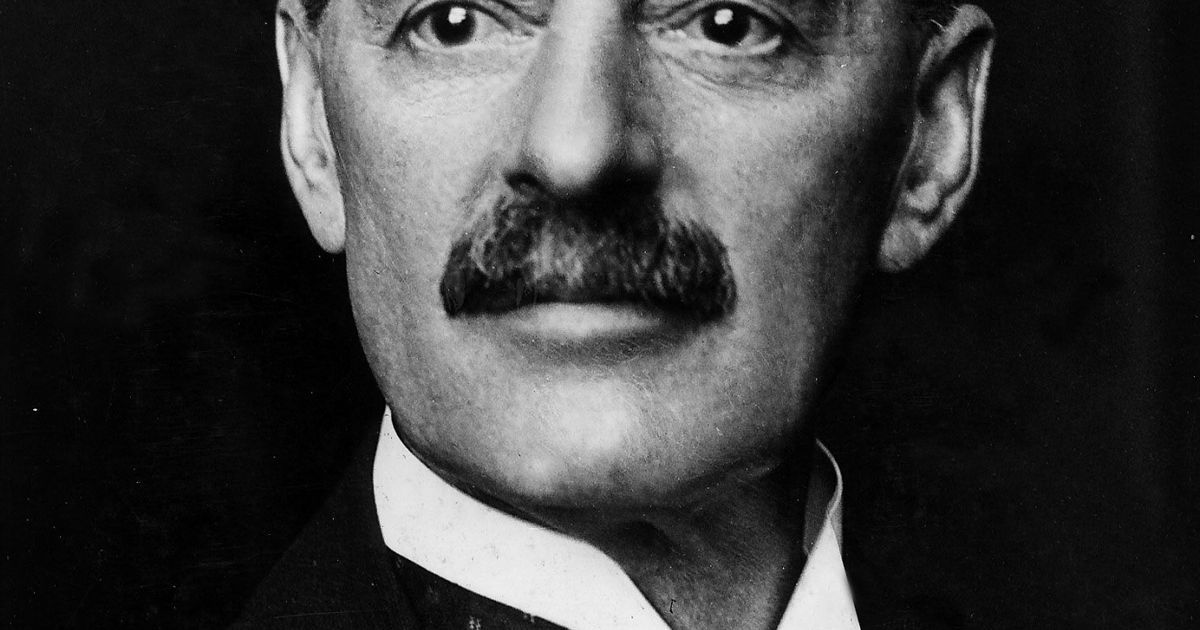
Source: http://www.jewishvirtuallibrary.org/jsourc...

Enjoyed this speech? Speakola is a labour of love and I’d be very grateful if you would share, tweet or like it. Thank you.

Facebook Twitter Facebook
In 1940-59 Tags WW2, HITLER, WAR, DECLARATION OF WAR, TRANSCRIPT, TRANSLATED
Comment

Dwight Eisenhowser: 'You are about to embark upon the Great Crusade', Order of the Day - 1944

June 30, 2015

6 June 1944, D-Day, United Kingdom

Soldiers, Sailors and Airmen of the Allied Expeditionary Forces:

You are about to embark upon the Great Crusade, toward which we have striven these many months. The eyes of the world are upon you. The hopes and prayers of liberty-loving people everywhere march with you. In company with our brave Allies and brothers-in-arms on other Fronts you will bring about the destruction of the German war machine, the elimination of Nazi tyranny over oppressed peoples of Europe, and security for ourselves in a free world.

Your task will not be an easy one. Your enemy is well trained, well equipped and battle-hardened. He will fight savagely.

But this is the year 1944. Much has happened since the Nazi triumphs of 1940-41. The United Nations have inflicted upon the Germans great defeats, in open battle, man-to-man. Our air offensive has seriously reduced their strength in the air and their capacity to wage war on the ground. Our Home Fronts have given us an overwhelming superiority in weapons and munitions of war, and placed at our disposal great reserves of trained fighting men. The tide has turned. The free men of the world are marching together to victory.

I have full confidence in your courage, devotion to duty, and skill in battle. We will accept nothing less than full victory.

Good Luck! And let us all beseech the blessing of Almighty God upon this great and noble undertaking.

Source: http://www.americanrhetoric.com/speeches/d...

Enjoyed this speech? Speakola is a labour of love and I’d be very grateful if you would share, tweet or like it. Thank you.

Facebook Twitter Facebook
In 1940-59 Tags WW2, GENERALS, PRESIDENTS, USA, D-DAY SPEECH, ORDER OF THE DAY, EISENHOWER, WORLD WAR 2, GENERAL, WARTIME, MILITARY SPEECHES, D-DAY, NAZI, HITLER, GREATEST SPEECHES OF THE 1940S, GREATEST SPEECHES BY AMERICAN PRESIDENTS, PRESIDENT, FUTURE PRESIDENT, DWIGHT EISENHOWER, GENERAL EISENHOWER, GREAT CRUSADE
Comment

See my film!

Limited Australian Season

March 2025

Details and ticket bookings at

angeandtheboss.com

Support Speakola

Hi speech lovers,
With costs of hosting website and podcast, this labour of love has become a difficult financial proposition in recent times. If you can afford a donation, it will help Speakola survive and prosper.

Best wishes,
Tony Wilson.

Become a Patron!

Learn more about supporting Speakola.

Featured political

Featured
Jon Stewart: "They responded in five seconds", 9-11 first responders, Address to Congress - 2019
Jacinda Ardern: 'They were New Zealanders. They are us', Address to Parliament following Christchurch massacre - 2019
Dolores Ibárruri: "¡No Pasarán!, They shall not pass!', Defense of 2nd Spanish Republic - 1936
Jimmy Reid: 'A rat race is for rats. We're not rats', Rectorial address, Glasgow University - 1972

Featured eulogies

Featured
For Geoffrey Tozer: 'I have to say we all let him down', by Paul Keating - 2009
for James Baldwin: 'Jimmy. You crowned us', by Toni Morrison - 1988
for Michael Gordon: '13 days ago my Dad’s big, beautiful, generous heart suddenly stopped beating', by Scott and Sarah Gordon - 2018

Featured commencement

Featured
Tara Westover: 'Your avatar isn't real, it isn't terribly far from a lie', The Un-Instagrammable Self, Northeastern University - 2019
Tim Minchin: 'Being an artist requires massive reserves of self-belief', WAAPA - 2019
Atul Gawande: 'Curiosity and What Equality Really Means', UCLA Medical School - 2018
Abby Wambach: 'We are the wolves', Barnard College - 2018
Eric Idle: 'America is 300 million people all walking in the same direction, singing 'I Did It My Way'', Whitman College - 2013
Shirley Chisholm: ;America has gone to sleep', Greenfield High School - 1983

Featured sport

Featured
Joe Marler: 'Get back on the horse', Harlequins v Bath pre game interview - 2019
Ray Lewis : 'The greatest pain of my life is the reason I'm standing here today', 52 Cards -
Mel Jones: 'If she was Bradman on the field, she was definitely Keith Miller off the field', Betty Wilson's induction into Australian Cricket Hall of Fame - 2017
Jeff Thomson: 'It’s all those people that help you as kids', Hall of Fame - 2016

Fresh Tweets


Featured weddings

Featured
Dan Angelucci: 'The Best (Best Man) Speech of all time', for Don and Katherine - 2019
Hallerman Sisters: 'Oh sister now we have to let you gooooo!' for Caitlin & Johnny - 2015
Korey Soderman (via Kyle): 'All our lives I have used my voice to help Korey express his thoughts, so today, like always, I will be my brother’s voice' for Kyle and Jess - 2014

Featured Arts

Featured
Bruce Springsteen: 'They're keepers of some of the most beautiful sonic architecture in rock and roll', Induction U2 into Rock Hall of Fame - 2005
Olivia Colman: 'Done that bit. I think I have done that bit', BAFTA acceptance, Leading Actress - 2019
Axel Scheffler: 'The book wasn't called 'No Room on the Broom!', Illustrator of the Year, British Book Awards - 2018
Tina Fey: 'Only in comedy is an obedient white girl from the suburbs a diversity candidate', Kennedy Center Mark Twain Award -  2010
Tina Fey: 'Only in comedy is an obedient white girl from the suburbs a diversity candidate', Kennedy Center Mark Twain Award - 2010

Featured Debates

Featured
Sacha Baron Cohen: 'Just think what Goebbels might have done with Facebook', Anti Defamation League Leadership Award - 2019
Greta Thunberg: 'How dare you', UN Climate Action Summit - 2019
Charlie Munger: 'The Psychology of Human Misjudgment', Harvard University - 1995
Lawrence O'Donnell: 'The original sin of this country is that we invaders shot and murdered our way across the land killing every Native American that we could', The Last Word, 'Dakota' - 2016