• Genre
  • About
  • Submissions
  • Donate
  • Search
Menu

Speakola

All Speeches Great and Small
  • Genre
  • About
  • Submissions
  • Donate
  • Search
Share a political speech

Nancy Astor: 'I admit that the country is not ripe for, and does not now want, Prohibition', maiden speech - 1920

October 30, 2015

24 February, 1920, House of Commons, Westminster, United Kingdom

Viscountess Astor was the first woman MP in the House of Commons. Her maiden speech on harmful effects of alcohol caused a stir because of its strength of purpose, and controversial nature of subject matter. Winston Churchill later complained: “I felt as if a woman had entered my bathroom and I had nothing to protect myself with except a sponge.” 

I shall not begin by craving the indulgence of the House. I am only too conscious of the indulgence and the courtesy of the House. I know that it was very difficult for some hon. Members to receive the first lady M.P. into the House. [HON. MEMBERS: "Not at all!"] It was almost as difficult for 1624 some of them as it was for the lady M.P. herself to come in. Hon. Members, however, should not be frightened of what Plymouth sends out into the world. After all, I suppose when Drake and Raleigh wanted to set out on their venturesome careers, some cautious person said, "Do not do it; it has never been tried before. You stay at home, my sons, cruising around in home waters." I have no doubt that the same thing occurred when the Pilgrim Fathers set out. I have no doubt that there were cautious Christian brethren who did not understand their going into the wide seas to worship God in their own way. But, on the whole, the world is all the better for those venturesome and courageous west country people, and I would like to say that I am quite certain that the women of the whole world will not forget that it was the fighting men of Devon who dared to send the first woman to represent women in the Mother of Parliaments. Now, as the west country people are a courageous lot, it is only right that one of their representatives should show some courage, and I am perfectly aware that it does take a bit of courage to address the House on that vexed question, Drink. However, I dare do it. The hon. Member (Sir J. D. Rees) is more than polite. In fact, I should say that he goes almost a bit too far. However. I will consider his proposal if I can convert him.

The issue raised by the hon. Member is really quite clear, although I admit that he did not make it as clear as I would have liked. Do we want the welfare of the community, or do we want the prosperity of the Trade? Do we want national efficiency, or do we want national inefficiency? That is what it comes to. So I hope to be able to persuade the House. Are we really trying for a better world, or are we going to slip back to the same old world before 1914? I think that the hon. Member is not moving with the times. He speaks of vexatious laws and restrictions. I quite agree with him that most laws are vexatious. When we want to go 50 or 60 miles an hour down the Bath Road it is very tiresome, when we come to a village, to have to go 10 miles an hour. Why do we have to do it? It is for the good of the community. We might kill children. He talks about the restrictions. I maintain that they brought a great deal of good to the community. 1625 There were two gains. First, there were the moral gains. I should like to tell you about them. The convictions of drunkenness among women during the War were reduced to one-fifth after these vexatious restrictions were brought in. I take women, because, as the hon. Member has said, most of the men were away fighting. Does the House realise what that means? The convictions of drunkenness among women were reduced to one-fifth at a time when many women, thousands of them, were earning more than they had ever dreamed of earning in their lives, which generally means, so they say in industrial communities, that there is more spent on drink. Also women were going through not only a physical strain but the most awful mental tortures. Then the deaths from delirium tremens were greatly reduced. I do not know whether hon. Members have seen the tortures of delirium tremens, but it is a national gain if you can reduce them. The deaths of children from over-laying were halved. That was after these vexatious restrictions were brought in.

These are some of the gains that you can set out on paper. I could talk for five hours on the moral gains. I will not do it, but I could talk for hours on the moral gains which you cannot put on paper, they are so enormous. I am perfectly certain, if hon. Members would really stop to think, that they would not cavil at these vexatious restrictions. Already, we have lost some of these gains. The convictions among women have doubled in the last year since the restrictions have been slightly modified, and they are four times as many among men. That is something that I should like the House to think of. Think what these increased convictions mean. Just think, twice as many convictions among women! Does the House realise what that means? How I wish that I was really an orator. I would like to tell you about drink. I have as good a sense of humour as any other hon. Member, but when I think of the ruin and the desolation and the misery which drink brings into the houses of the working men and women as well as of the well-to-do, I find it a little difficult to be humorous. It was only the other day—I had been down to my constituency—that I was coming back from what they call the poorer parts of the town, and I stopped outside a public 1626 house where I saw a child about five years old waiting for its mother. It did not have to wait long. Presently she reeled out. The child went forward to her, but it soon retreated. Oh the oaths and curses of that poor woman and the shrieks of that child as it fled from her. That is not an easy thing to forget. That is what goes on when you have increased drunkenness among women. I am thinking of the women and children. I am not so tremendously excited about what you call the freedom of the men. The men will get their freedom. I do not want to rob them of anything that is good. I only want to ask them to consider others. There is a story—no, I had better not give it. I do not really want to harrow the feelings of the House! But I do want hon. Members to think about these things. What really happens? It is a most terrible thing to talk about it. The freedom of the subject! We, the women, know, and the men know, thousands of us in the country who work amongst the slums, and in prisons and hospitals, we know where John Barleycorn, as you are pleased to call him, leads to. It is not to Paradise. It promises Heaven, and too often it leads to Hell. I will not go on, because it would not be quite fair; but I do beg hon. Members to think of these things, and when they are talking about freedom, to think of the children.

After all, the thought of every man for himself is a thoroughly materialistic doctrine. There is a doctrine of going out to look for the lost sheep; I feel somehow that that is a better spirit to go on with than to be always clamouring about the freedom of the subject. We talk about our war gains and efficiency. You talk about liquor control. What was it set up for? It was set up for national efficiency. It was not set up for temperance. It did pretty well. The War Office and the Admiralty both commended the Liquor Control Board for having greatly gained that for which it was set up. No one would call the War Office or the Admiralty Pussyfoots. [HON. MEMBERS: "Hear, hear!"] There are several among them, but you can hardly look upon them as prejudiced Pussyfoots. In 1916 the Liquor Control Board unanimously reported that they had enormously increased efficiency by the Regulations which the hon. Gentleman opposite wants 1627 swept away. The Liquor Board said more, and I would like hon. Members who are always talking about national efficiency and economy to think of this. I want to see whether you are in earnest about this matter or whether it is camouflage. The Liquor Control Board said that the State could not get the maximum of efficiency so long as the drink trade was in private hands. That is what they said. Why did they say so? It is simple. You cannot reconcile the interests of the State with the interests of the trade. If you could there never would have been any licensing laws; there would never have been any drink question. Why cannot you reconcile the two? I will tell you. Because, Mr. Deputy-Speaker, the interests of the trade is to sell as much of its goods as possible. No one can say that is to the interest of the State. I do not blame the trade, but one must say that its interest is absolutely opposed to the interest of the State. The real lesson for the country, so far as drink is concerned, is that State Purchase gets the largest amount of progress with the least amount of unrest. That is really what is meant by our War lessons.

The hon. Member spoke of Carlisle. What was the result at Carlisle? The areas all around Carlisle, nearly every one of them, who were originally against the Liquor Control Board's acquisition of the Carlisle area subsequently asked to be taken in. That is really the result of Carlisle. I am glad the hon. Member mentioned Carlisle. I hope someone who follows will deal with all the facts and figures of Carlisle, because they are something of which to be very proud. There are certain things at Carlisle which we are not able to get anywhere else in England. That is wonderful. I could go on for hours but, as I say, having got the indulgence of the House I will not try it too far.

The hon. Baronet talks about pacifists and temperance men not being fighting men. I notice that he is a little frightened of revolutions. What makes revolutions? Reactionaries make revolutions. Then the hon. Gentleman talks about the working man. I suppose when he refers to working men he takes the broad interpretation taken by my Labour friends which interpretation includes anything from a countess to a docker. I know a good deal about the working man. I 1628 would not insult him by telling him, so long as you can prove to him that the conditions of women and children have improved under these restrictions, that he was not willing to have them. I have never found him so. I have spent five years amongst working men in hospitals.

I admit that the country is not ripe for, and does not now want, Prohibition. The hon. Member is perfectly right there. I am not pressing for Prohibition. I am far too intelligent for that. Frankly, I say that I believe that men will get nearer the Paradise they seek if they try to get it through a greater inspiration than drink. I hope very much from the bottom of my heart that at some time the people of England will come to Prohibition. I myself believe it will come. I say so frankly. I am not frightened of saying it. I am not afraid at all of working men. I have told it to them for five years, and they know perfectly well what I think. I hope the time will come when the working man will go dry. But we are not yet ready. Do not let hon. Members deceive themselves for one minute. The working man is as good a father as any other man. Show him the figures. Show him what the Liquor Control Board has done for women and children. Tell him the truth. Do not always tell him that his liberty is being taken away, and that the rich man wants to get more work out of him. It is not true, and you know it. I am all for telling the truth, no matter how disagreeable it is. What I find is that if you care enough about people they will listen to the truth. I think the whole world is sick of lies. I believe that you have got to like men or you cannot say "Boo!" without insulting them. The hon. Member has said that he and his friends were willing during the War to put up with drink control for the purpose of winning the War. It is not true. Ever since the Liquor Control Board started the hon. Member and his friends have been kicking against it.

Oh, yes! Oh, yes! It is you, Sir, who are deceiving, it is not I, and if is not the Liquor Control Board. All during the War when the Government and the Admiralty, and the War Office, said that the Liquor Control Board was helping efficiency and helping to win the War, what did you do in the Great War, you and your friends? No, Sir, the hon. Member and his friends 1629 were always kicking against the Liquor Control Board. [HON. MEMBERS: "No!"] Oh, yes: look in the OFFICIAL REPORT, and you will see that you were always complaining, and at the time of the nation's dire peril you were always trying to hamper the Liquor Control Board. No, yon have not got a pretty record, you and your friends. I am not saying that there were not some perfectly patriotic brewers. There were, hut I do say that there were some brewers who really were all during the War kicking against restrictions of any kind. That is perfectly true, and the hon. Member knows it himself. It is really not a pretty story. I thought the hon. Member was going to complain about the hardships of the trade, but he did not do so. I have, however, heard others do it, and I can tell you that the drink trade, in spite of its hardships, managed to profiteer to the tune of many millions out of the working men. That is what they did in the Great War. Brewery companies which were nearly ruined before the War have now got millions. [HON. MEMBERS: "No!"] Yes, that is so, and any hon. Members can look into it and they will see it for themselves. I am not blaming them, but I think if the hon. Member and his friends are the real friends of the working men they will urge the brewers to disgorge some of their War profits.

What are they doing with their war profits? They are advertising. There are some very offensive posters put up by the brewers, but I will not deal with them, except to dwell on those which are most likely to mislead the country. There is the poster of a fine English working man pointing to a reformed public house with a beautiful cheerful fire, where it is said that he can get tea, coffee and buns. Do you think the brewing trade are going to press the sale of tea, coffee, and buns? The brewers are spending thousands of pounds to induce Parliament to let them make their public-houses more attractive and more profitable, and this in spite of the record of convictions amongst women being double and amongst men four times what they were. I do not believe that the Government or the House is going to play their game. I do not think the country is really ripe for prohibition, but I am certain it is ripe for drasticdrink reforms. [HON. MEMBERS: "No!"] I know what I am talking about, and you must remember that women have got a vote now and we mean to use it, and use it wisely, not for the benefit of any section of society, but for the benefit of the whole. I want to see what the Government is going to do. As the House knows, I am a great admirer of the Prime Minister, and one of the reasons I have always admired him was the way he faced this vexed question of drink during the War. I know that politicians are a little frightened of the trade, and of this sort of thing, but the Prime Minister was not. He came out and said during the War that the State could not afford to let go its hold on the trade, which had beaten them in the past. I want the Prime Minister to remember those words when he introduces his drink Bill. He also said: that drink was a greater enemy than the German submarine. I want to see that the drink submarine does not torpedo the Prime Minister. I want to see whether the Prime Minister is master in his own house. I do not believe that the Prime Minister is in the strangle hold of the trade and the profiteers. It is not the trade and the profiteers who put the Prime Minister where he is. There are thousands of people who really believe in him over this drink question and they trust him. I do not know whether there are many hon. Members who feel that way, but I do, and I can tell the House that my name is legion in the country. There is a real awakening throughout the country. [Laughter.] You can laugh, but there really are people in England, and thousands of them, who want to see the country better and they are willing to give up their appetites.
[An HON. MEMBER: "We all do that!"] If you all do it then you have to face this question of drink. If you want national efficiency you will have to oppose excessive drink for that alone. You know that. When labourers are intoxicated do you really get the maximum out of them?

I do ask hon. Members not to misread the spirit of the times. Do not go round saying that you want England a country fit for heroes to live in, do not talk about it unless you mean to do it. I do not want to rob the hon. Member opposite of anything that has given him pleasure. I do not really want to take the joy out of the world, or happiness, or anything that really makes for the betterment of the world; but you know, and I know, that drink really promises everything and gives you nothing. You know it, and the House knows it, and the world is beginning to recognise it. We have no right to think of this question in terms of our appetite, and we have to think of it in something bigger than that. I want you to think of the effect of these restrictions in terms of women and babies. Think of the thousands of children whose fathers even had to put up with more than these vexatious restrictions, who laid down their lives. Think of their fatherless children. Supposing they were your children or my children, would you want them to grow up with the trade flourishing? I do not believe the House would. I do not want you to look on your lady Member as a fanatic or a lunatic. I am simply trying to speak for hundreds of women and children throughout the country who cannot speak for themselves. I want to tell you that I do know the working man, and I know that, if you do not try to fool him, if you tell him the truth about drink, he would be as willing as anybody else to put up with so-called vexatious restrictions.

Enjoyed this speech? Speakola is a labour of love and I’d be very grateful if you would share, tweet or like it. Thank you.

Facebook Twitter Facebook
In 1920-39 Tags NANCY ASTOR, VISCOUNTESS ASTOR, FIRST FEMALE MP, TRANSCRIPT
Comment

Neville Chamberlain: 'May He defend the right. It is the evil things that we shall be fighting against', Declaration of War - 1939

October 26, 2015

3 September, 1939, national BBC broadcast, London, United Kingdom

This morning the British Ambassador in Berlin handed the German Government a
final Note stating that, unless we heard from them by 11 o'clock that they were
prepared at once to withdraw their troops from Poland, a state of war would
exist between us.

I have to tell you now that no such undertaking has been received, and that
consequently this country is at war with Germany.

You can imagine what a bitter blow it is to me that all my long struggle to win
peace has failed. Yet I cannot believe that there is anything more or anything
different that I could have done and that would have been more successful.

Up to the very last it would have been quite possible to have arranged a peaceful
and honourable settlement between Germany and Poland, but Hitler would not have it.
He had evidently made up his mind to attack Poland whatever happened, and
although He now says he put forward reasonable proposals which were rejected by
the Poles, that is not a true statement. The proposals were never shown to the
Poles, nor to us, and, although they were announced in a German broadcast on
Thursday night, Hitler did not wait to hear comments on them, but ordered his
troops to cross the Polish frontier. His action shows convincingly that there is
no chance of expecting that this man will ever give up his practice of using force
to gain his will. He can only be stopped by force.

We and France are today, in fulfilment of our obligations, going to the aid of
Poland, who is so bravely resisting this wicked and unprovoked attack on her
people. We have a clear conscience. We have done all that any country could do to
establish peace. The situation in which no word given by Germany's ruler could be
trusted and no people or country could feel themselves safe has become intolerable.
And now that we have resolved to finish it, I know that you will all play your part
with calmness and courage.

At such a moment as this the assurances of support that we have received from the
Empire are a source of profound encouragement to us.

The Government have made plans under which it will be possible to carry on the
work of the nation in the days of stress and strain that may be ahead. But these
plans need your help. You may be taking your part in the fighting services or as
a volunteer in one of the branches of Civil Defence. If so you will report for
duty in accordance with the instructions you have received. You may be engaged in
work essential to the prosecution of war for the maintenance of the life of the
people - in factories, in transport, in public utility concerns, or in the supply
of other necessaries of life. If so, it is of vital importance that you should
carry on with your jobs.

Now may God bless you all. May He defend the right. It is the evil things that we
shall be fighting against - brute force, bad faith, injustice, oppression and
persecution - and against them I am certain that the right will prevail.

Source: http://www.bbc.co.uk/archive/ww2outbreak/7...

Enjoyed this speech? Speakola is a labour of love and I’d be very grateful if you would share, tweet or like it. Thank you.

Facebook Twitter Facebook
In 1920-39 Tags PRIME MINISTERS, UNITED KINGDOM, UK, DECLARATION OF WAR, WW2, GERMANY, TRANSCRIPT, NEVILLE CHAMBERLAIN
Comment

King Edward VIII: 'A few hours ago I discharged my last duty as King and Emperor', Abdication Speech - 1936

October 26, 2015

11 December, 1936, London, United Kingdom

At long last I am able to say a few words of my own. I have never wanted to withhold anything, but until now it has not been constitutionally possible for me to speak.

A few hours ago I discharged my last duty as King and Emperor, and now that I have been succeeded by my brother, the Duke of York, my first words must be to declare my allegiance to him. This I do with all my heart.

You all know the reasons which have impelled me to renounce the throne. But I want you to understand that in making up my mind I did not forget the country or the empire, which, as Prince of Wales and lately as King, I have for twenty-five years tried to serve.

But you must believe me when I tell you that I have found it impossible to carry the heavy burden of responsibility and to discharge my duties as King as I would wish to do without the help and support of the woman I love.

And I want you to know that the decision I have made has been mine and mine alone. This was a thing I had to judge entirely for myself. The other person most nearly concerned has tried up to the last to persuade me to take a different course.

I have made this, the most serious decision of my life, only upon the single thought of what would, in the end, be best for all.

This decision has been made less difficult to me by the sure knowledge that my brother, with his long training in the public affairs of this country and with his fine qualities, will be able to take my place forthwith without interruption or injury to the life and progress of the empire. And he has one matchless blessing, enjoyed by so many of you, and not bestowed on me -- a happy home with his wife and children.

During these hard days I have been comforted by her majesty my mother and by my family. The ministers of the crown, and in particular, Mr. Baldwin, the Prime Minister, have always treated me with full consideration. There has never been any constitutional difference between me and them, and between me and Parliament. Bred in the constitutional tradition by my father, I should never have allowed any such issue to arise.

Ever since I was Prince of Wales, and later on when I occupied the throne, I have been treated with the greatest kindness by all classes of the people wherever I have lived or journeyed throughout the empire. For that I am very grateful.

I now quit altogether public affairs and I lay down my burden. It may be some time before I return to my native land, but I shall always follow the fortunes of the British race and empire with profound interest, and if at any time in the future I can be found of service to his majesty in a private station, I shall not fail.

And now, we all have a new King. I wish him and you, his people, happiness and prosperity with all my heart. God bless you all! God save the King!

Source: http://www.historyplace.com/speeches/edwar...

Enjoyed this speech? Speakola is a labour of love and I’d be very grateful if you would share, tweet or like it. Thank you.

Facebook Twitter Facebook
In 1920-39 Tags KING EDWARD VIII, ABDICATION, WINDSOR, UNITED KINGDOM, ROYAL FAMILY, TRANSCRIPT
Comment

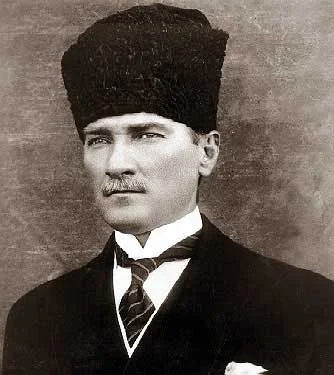
Mustafa Kemal Atatürk - 'There is no difference between the Johnnies and the Mehmets', Gallipoli - 1934

September 11, 2015

1934, date and place unknown (see below)

Those heroes that shed their blood

And lost their lives.

You are now lying in the soil of a friendly country.

Therefore, rest in peace.

There is no difference between the Johnnies

And the Mehmets to us where they lie side by side

Here in this country of ours,

You, the mothers,

Who sent their sons from far away countries

Wipe away your tears,

Your sons are now lying in our bosom

And are in peace

After having lost their lives on this land they have

Become our sons as well.

There is some conjecture as to whether Atatürk ever said these famous words, at least in this form.  Read this interesting article.

Source: http://www.theguardian.com/news/2015/apr/2...

Enjoyed this speech? Speakola is a labour of love and I’d be very grateful if you would share, tweet or like it. Thank you.

Facebook Twitter Facebook
In 1920-39 Tags ATATURK, TURKEY, GALLIPOLI, WW1, PRESIDENTS
Comment

Otto Wels: 'You cannot take our honour', speech against Hitler's Enabling Act - 1933

September 11, 2015

Above video doesn’t have English subtitles. This one, backed by Mozart, which I can’t embed, does. It’s amazing.


23 March, 1933, Kroll Opera House, Berlin, Germany

With the communists excluded, Social Democrats leader Otto Wels was the only person to speak out against Hitler's Enabling Act when it was debated at the makeshift Reichstag at Kroll Opera House on 23 March 1933. The Act legally enabled Hitler's dictatorship, by allowing the Nazis to bypass parliament for a period of four years (eventually extended of course!). Wels went into exile in June 1933, and died in France in 1939. A brave man.

Translation: Thomas Dunlap

Ladies and gentlemen! We Social Democrats agree with the foreign policy demand raised by the Reich Chancellor of equal treatment for Germany, [and do so] all the more emphatically since we have always fundamentally championed it. In this context, I may be permitted the personal remark that I was the first German who stood up to the untruth of Germany’s guilt for the outbreak of the world war before an international forum, at the Bern Conference on February 3, 1919. Never was a principle of our party able to or did in fact prevent us from representing the just demands of the German nation to the other peoples of the world. The day before yesterday, as well, the Reich Chancellor made a statement in Potsdam to which we subscribe. It says: “From the lunacy of the theory of eternal winners and losers came the madness of reparations and, in their wake, the catastrophe of the world economy.” This statement is true for foreign politics; it is no less true for domestic politics. Here, too, the theory of eternal winners and losers is, as the Reich Chancellor says, lunacy. But the words of the Reich Chancellor remind us of others that were spoken in the National Assembly on July 23, 1919. At that time it was said: “We are defenseless; defenseless but not without honor. To be sure, the enemies are after our honor, there is no doubt. However, that this attempt at defamation will one day redound back upon the instigators, that it is not our honor that is being destroyed by this global catastrophe, that is our belief to the last breath.” (Interjection from the National Socialists: Who said that?)

This appears in a declaration that a social democratic-led government issued at the time in the name of the German people before the whole world, four hours before the truce expired, in order to prevent the enemies from marching further. – That declaration is a valuable supplement to the statement by the Reich Chancellor. A dictated peace is followed by few blessings, least of all at home. A real national community cannot be based on it. Its first prerequisite is equal law. The government may protect itself against raw excesses of polemics; it may rigorously prevent incitements to acts of violence and acts of violence in and of themselves. This may happen, if it is done toward all sides evenly and impartially, and if one foregoes treating defeated opponents as though they were proscribed. Freedom and life can be taken from us, but not our honor. After the persecutions that the Social Democratic Party has suffered recently, no one will reasonably demand or expect that it vote for the Enabling Act proposed here. The elections of March 5 have given the governing parties the majority and thus the possibility of governing in strict adherence to the words and meaning of the constitution. Where such a possibility exists, there is also an obligation to take it. Criticism is salutary and necessary. Never before, since there has been a German Reichstag, has the control of public affairs by the elected representatives of the people been eliminated to such an extent as is happening now, and is supposed to happen even more through the new Enabling Act. Such omnipotence of the government must have all the more serious repercussions inasmuch as the press, too, lacks any freedom of expression. Ladies and gentlemen! The situation that prevails in Germany today is often described in glaring colors. But as always in such cases, there is no lack of exaggeration. As far as my party is concerned, I declare here: we have neither asked for intervention in Paris, nor moved millions to Prague, nor spread exaggerated news abroad. It would be easier to stand up to such exaggerations if the kind of reporting that separates truth from falsehood were possible at home. It would be even better if we could attest in good conscience that full protection in justice has been restored for all. That, gentlemen, is up to you. The gentlemen of the National Socialist party call the movement they have unleashed a national revolution, not a National Socialist one. So far, the relationship of their revolution to socialism has been limited to the attempt to destroy the social democratic movement, which for more than two generations has been the bearer of socialist ideas and will remain so. If the gentlemen of the National Socialist Party wanted to perform socialist acts, they would not need an Enabling Law. They would be assured of an overwhelming majority in this house. Every motion submitted by them in the interest of workers, farmers, white-collar employees, civil servants, or the middle class could expect to be approved, if not unanimously, then certainly with an enormous majority.

And yet, they first want to eliminate the Reichstag in order to continue their revolution. But the destruction of that which exists does not make a revolution. The people are expecting positive accomplishments. They are waiting for effective measures against the terrible economic misery that exists not only in Germany but in the whole world. We Social Democrats bore the responsibility in the most difficult of times and for that we had stones cast at us. Our accomplishments for the reconstruction of the state and the economy, for the liberation of occupied territories, will stand the test of history. We have established equal justice for all and a social labor law. We have helped to create a Germany in which the path to leadership of the state is open not only to princes and barons, but also to men from the working class. You cannot back away from that without relinquishing your own leader. The attempt to turn back the wheel of history will be futile. We Social Democrats know that one cannot undo the facts of power politics with mere legal protests. We see the power-political fact of your present rule. But the people’s sense of justice is also a political power, and we shall not cease to appeal to this sense of justice. The Weimar Constitution is not a socialist constitution. But we stand by the principles enshrined in, the principles of a state based on the rule of law, of equal rights, of social justice. In this historic hour, we German Social Democrats solemnly pledge ourselves to the principles of humanity and justice, of freedom and socialism. No Enabling Act gives you the power to destroy ideas that are eternal and indestructible. After all, you yourselves have professed your adherence to Socialism. The Socialist Law has not destroyed social democracy. German social democracy will draw new strength also from the latest persecutions. We greet the persecuted and the oppressed. We greet our friends in the Reich. Your steadfastness and loyalty deserve admiration. The courage of your convictions and your unbroken optimism guarantee a brighter future.

Source of original German text: Otto Wels’s Speech against the Passage of the Enabling Act (March 23, 1933), in Paul Meier-Benneckenstein, ed., Dokumente der deutschen Politik, Volume 1: Die Nationalsozialistische Revolution 1933, edited by Axel Friedrichs. Berlin, 1935, pp. 36-38.

Source: https://www.youtube.com/watch?v=SimPsL7LYH...

Enjoyed this speech? Speakola is a labour of love and I’d be very grateful if you would share, tweet or like it. Thank you.

Facebook Twitter Facebook
In 1920-39 Tags OTTO WELS, ADOLF HITLER, GERMANY, WEIMAR, ENABLING ACT, WW2, TRANSCRIPT, TRANSLATED
1 Comment

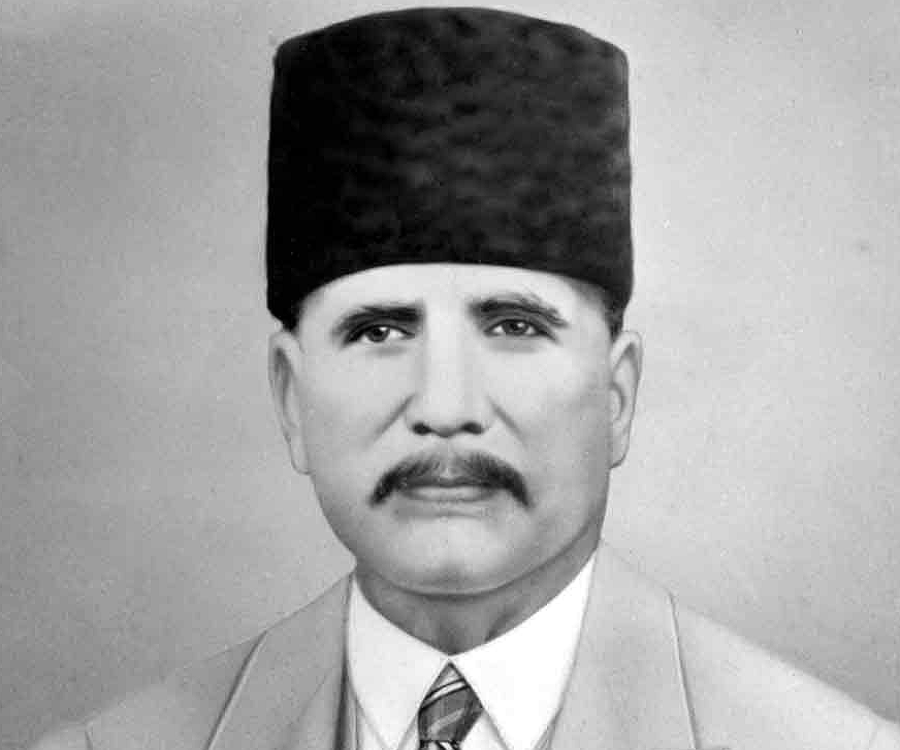
Muhammad Iqbal: 'Muslim India within India', Allalahad Address - 1930

September 11, 2015

29 December 1930, 25th Session of the All-India Muslim League, Allahabad, India

Gentlemen, I am deeply grateful to you for the honour you have conferred upon me in inviting me to preside over the deliberations of the All-India Muslim League at one of the most critical moments in the history of Muslim political thought and activity in India. I have no doubt that in this great assembly there are men whose political experience is far more extensive than mine, and for whose knowledge of affairs I have the highest respect. It will, therefore, be presumptuous on my part to claim to guide an assembly of such men in the political decisions which they are called upon to make today. I lead no party; I follow no leader. I have given the best part of my life to a careful study of Islam, its law and polity, its culture, its history and its literature. This constant contact with the spirit of Islam, as it unfolds itself in time, has, I think, given me a kind of insight into its significance as a world fact. It is in the light of this insight, whatever its value, that, while assuming that the Muslims of India are determined to remain true to the spirit of Islam, I propose not to guide you in your decisions, but to attempt the humbler task of bringing clearly to your consciousness the main principle which, in my opinion, should determine the general character of these decisions.

Islam and Nationalism

It cannot be denied that Islam, regarded as an ethical ideal plus a certain kind of polity – by which expression I mean a social structure regulated by a legal system and animated by a specific ethical ideal – has been the chief formative factor in the life-history of the Muslims of India. It has furnished those basic emotions and loyalties which gradually unify scattered individuals and groups, and finally transform them into a well-defined people, possessing a moral consciousness of their own. Indeed it is not an exaggeration to say that India is perhaps the only country in the world where Islam, as a people-building force, has worked at its best. In India, as elsewhere, the structure of Islam as a society is almost entirely due to the working of Islam as a culture inspired by a specific ethical ideal. What I mean to say is that Muslim society, with its remarkable homogeneity and inner unity, has grown to be what it is, under the pressure of the laws and institutions associated with the culture of Islam.

The ideas set free by European political thinking, however, are now rapidly changing the outlook of the present generation of Muslims both in India and outside India. Our younger men, inspired by these ideas, are anxious to see them as living forces in their own countries, without any critical appreciation of the facts which have determined their evolution in Europe. In Europe Christianity was understood to be a purely monastic order which gradually developed into a vast church organisation. The protest of Luther was directed against this church organisation, not against any system of polity of a secular nature, for the obvious reason that there was no such polity associated with Christianity. And Luther was perfectly justified in rising in revolt against this organisation; though, I think, he did not realise that in the peculiar conditions which obtained in Europe, his revolt would eventually mean the complete displacement of [the] universal ethics of Jesus by the growth of a plurality of national and hence narrower systems of ethics.

Thus the upshot of the intellectual movement initiated by such men as Rousseau and Luther was the break-up of the one into [the] mutually ill-adjusted many, the transformation of a human into a national outlook, requiring a more realistic foundation, such as the notion of country, and finding expression through varying systems of polity evolved on national lines, i.e. on lines which recognise territory as the only principle of political solidarity. If you begin with the conception of religion as complete other-worldliness, then what has happened to Christianity in Europe is perfectly natural. The universal ethics of Jesus is displaced by national systems of ethics and polity. The conclusion to which Europe is consequently driven is that religion is a private affair of the individual and has nothing to do with what is called man's temporal life.

Islam does not bifurcate the unity of man into an irreconcilable duality of spirit and matter. In Islam God and the universe, spirit and matter, Church and State, are organic to each other. Man is not the citizen of a profane world to be renounced in the interest of a world of spirit situated elsewhere. To Islam, matter is spirit realising itself in space and time. Europe uncritically accepted the duality of spirit and matter, probably from Manichaean thought. Her best thinkers are realising this initial mistake today, but her statesmen are indirectly forcing the world to accept it as an unquestionable dogma. It is, then, this mistaken separation of spiritual and temporal which has largely influenced European religious and political thought and has resulted practically in the total exclusion of Christianity from the life of European States. The result is a set of mutually ill-adjusted States dominated by interests not human but national. And these mutually ill-adjusted States, after trampling over the moral and religious convictions of Christianity, are today feeling the need of a federated Europe, i.e. the need of a unity which the Christian church organisation originally gave them, but which, instead of reconstructing it in the light of Christ's vision of human brotherhood, they considered fit to destroy under the inspiration of Luther.

A Luther in the world of Islam, however, is an impossible phenomenon; for here there is no church organisation similar to that of Christianity in the Middle Ages, inviting a destroyer. In the world of Islam we have a universal polity whose fundamentals are believed to have been revealed but whose structure, owing to our legists' [=legal theorists'] want of contact with the modern world, today stands in need of renewed power by fresh adjustments. I do not know what will be the final fate of the national idea in the world of Islam. Whether Islam will assimilate and transform it, as it has before assimilated and transformed many ideas expressive of a different spirit, or allow a radical transformation of its own structure by the force of this idea, is hard to predict. Professor Wensinck of Leiden (Holland) wrote to me the other day: "It seems to me that Islam is entering upon a crisis through which Christianity has been passing for more than a century. The great difficulty is how to save the foundations of religion when many antiquated notions have to be given up. It seems to me scarcely possible to state what the outcome will be for Christianity, still less what it will be for Islam." At the present moment the national idea is racialising the outlook of Muslims, and thus materially counteracting the humanizing work of Islam. And the growth of racial consciousness may mean the growth of standards different [from] and even opposed to the standards of Islam.

I hope you will pardon me for this apparently academic discussion. To address this session of the All-India Muslim League you have selected a man who is [=has] not despaired of Islam as a living force for freeing the outlook of man from its geographical limitations, who believes that religion is a power of the utmost importance in the life of individuals as well as States, and finally who believes that Islam is itself Destiny and will not suffer a destiny. Such a man cannot but look at matters from his own point of view. Do not think that the problem I am indicating is a purely theoretical one. It is a very living and practical problem calculated to affect the very fabric of Islam as a system of life and conduct. On a proper solution of it alone depends your future as a distinct cultural unit in India. Never in our history has Islam had to stand a greater trial than the one which confronts it today. It is open to a people to modify, reinterpret or reject the foundational principles of their social structure; but it is absolutely necessary for them to see clearly what they are doing before they undertake to try a fresh experiment. Nor should the way in which I am approaching this important problem lead anybody to think that I intend to quarrel with those who happen to think differently. You are a Muslim assembly and, I suppose, anxious to remain true to the spirit and ideals of Islam. My sole desire, therefore, is to tell you frankly what I honestly believe to be the truth about the present situation. In this way alone it is possible for me to illuminate, according to my light, the avenues of your political action.

The Unity of an Indian Nation

What, then, is the problem and its implications? Is religion a private affair? Would you like to see Islam as a moral and political ideal, meeting the same fate in the world of Islam as Christianity has already met in Europe? Is it possible to retain Islam as an ethical ideal and to reject it as a polity, in favor of national polities in which [the] religious attitude is not permitted to play any part? This question becomes of special importance in India, where the Muslims happen to be a minority. The proposition that religion is a private individual experience is not surprising on the lips of a European. In Europe the conception of Christianity as a monastic order, renouncing the world of matter and fixing its gaze entirely on the world of spirit, led, by a logical process of thought, to the view embodied in this proposition. The nature of the Prophet's religious experience, as disclosed in the Quran, however, is wholly different. It is not mere experience in the sense of a purely biological event, happening inside the experient and necessitating no reactions on its social environment. It is individual experience creative of a social order. Its immediate outcome is the fundamentals of a polity with implicit legal concepts whose civic significance cannot be belittled merely because their origin is revelational.

The religious ideal of Islam, therefore, is organically related to the social order which it has created. The rejection of the one will eventually involve the rejection of the other. Therefore the construction of a polity on national lines, if it means a displacement of the Islamic principle of solidarity, is simply unthinkable to a Muslim. This is a matter which at the present moment directly concerns the Muslims of India. "Man," says Renan, "is enslaved neither by his race, nor by his religion, nor by the course of rivers, nor by the direction of mountain ranges. A great aggregation of men, sane of mind and warm of heart, creates a moral consciousness which is called a nation." Such a formation is quite possible, though it involves the long and arduous process of practically remaking men and furnishing them with a fresh emotional equipment. It might have been a fact in India if the teaching of Kabir and the Divine Faith of Akbar had seized the imagination of the masses of this country. Experience, however, shows that the various caste units and religious units in India have shown no inclination to sink their respective individualities in a larger whole. Each group is intensely jealous of its collective existence. The formation of the kind of moral consciousness which constitutes the essence of a nation in Renan’s sense demands a price which the peoples of India are not prepared to pay.

The unity of an Indian nation, therefore, must be sought not in the negation, but in the mutual harmony and cooperation, of the many. True statesmanship cannot ignore facts, however unpleasant they may be. The only practical course is not to assume the existence of a state of things which does not exist, but to recognise facts as they are, and to exploit them to our greatest advantage. And it is on the discovery of Indian unity in this direction that the fate of India as well as of Asia really depends. India is Asia in miniature. Part of her people have cultural affinities with nations of the east, and part with nations in the middle and west of Asia. If an effective principle of cooperation is discovered in India, it will bring peace and mutual goodwill to this ancient land which has suffered so long, more because of her situation in historic space than because of any inherent incapacity of her people. And it will at the same time solve the entire political problem of Asia.

It is, however, painful to observe that our attempts to discover such a principle of internal harmony have so far failed. Why have they failed? Perhaps we suspect each other’s intentions and inwardly aim at dominating each other. Perhaps, in the higher interests of mutual cooperation, we cannot afford to part with the monopolies which circumstances have placed in our hands, and [thus we] conceal our egoism under the cloak of nationalism, outwardly simulating a large-hearted patriotism, but inwardly as narrow-minded as a caste or tribe. Perhaps we are unwilling to recognise that each group has a right to free development according to its own cultural traditions. But whatever may be the causes of our failure, I still feel hopeful. Events seem to be tending in the direction of some sort of internal harmony. And as far as I have been able to read the Muslim mind, I have no hesitation in declaring that if the principle that the Indian Muslim is entitled to full and free development on the lines of his own culture and tradition in his own Indian home-lands is recognized as the basis of a permanent communal settlement, he will be ready to stake his all for the freedom of India.

The principle that each group is entitled to its free development on its own lines is not inspired by any feeling of narrow communalism. There are communalisms and communalisms. A community which is inspired by feelings of ill-will towards other communities is low and ignoble. I entertain the highest respect for the customs, laws, religious and social institutions of other communities. Nay, it is my duty, according to the teaching of the Quran, even to defend their places of worship, if need be. Yet I love the communal group which is the source of my life and behaviour; and which has formed me what I am by giving me its religion, its literature, its thought, its culture, and thereby recreating its whole past as a living operative factor, in my present consciousness. Even the authors of the Nehru Report recognise the value of this higher aspect of communalism. While discussing the separation of Sind they say, "To say from the larger viewpoint of nationalism that no communal provinces should be created, is, in a way, equivalent to saying from the still wider international viewpoint that there should be no separate nations. Both these statements have a measure of truth in them. But the staunchest internationalist recognises that without the fullest national autonomy it is extraordinarily difficult to create the international State. So also without the fullest cultural autonomy – and communalism in its better aspect is culture – it will be difficult to create a harmonious nation."

Muslim India Within India

Communalism in its higher aspect, then, is indispensable to the formation of a harmonious whole in a country like India. The units of Indian society are not territorial as in European countries. India is a continent of human groups belonging to different races, speaking different languages, and professing different religions. Their behaviour is not at all determined by a common race-consciousness. Even the Hindus do not form a homogeneous group. The principle of European democracy cannot be applied to India without recognising the fact of communal groups. The Muslim demand for the creation of a Muslim India within India is, therefore, perfectly justified. The resolution of the All-Parties Muslim Conference at Delhi is, to my mind, wholly inspired by this noble ideal of a harmonious whole which, instead of stifling the respective individualities of its component wholes, affords them chances of fully working out the possibilities that may be latent in them. And I have no doubt that this House will emphatically endorse the Muslim demands embodied in this resolution.

Personally, I would go farther than the demands embodied in it. I would like to see the Punjab, North-West Frontier Province, Sind and Baluchistan amalgamated into a single State. Self-government within the British Empire, or without the British Empire, the formation of a consolidated North-West Indian Muslim State appears to me to be the final destiny of the Muslims, at least of North-West India. The proposal was put forward before the Nehru Committee. They rejected it on the ground that, if carried into effect, it would give a very unwieldy State. This is true in so far as the area is concerned; in point of population, the State contemplated by the proposal would be much less than some of the present Indian provinces. The exclusion of Ambala Division, and perhaps of some districts where non-Muslims predominate, will make it less extensive and more Muslim in population – so that the exclusion suggested will enable this consolidated State to give a more effective protection to non-Muslim minorities within its area. The idea need not alarm the Hindus or the British. India is the greatest Muslim country in the world. The life of Islam as a cultural force in the country very largely depends on its centralisation in a specified territory. This centralisation of the most living portion of the Muslims of India, whose military and police service has, notwithstanding unfair treatment from the British, made the British rule possible in this country, will eventually solve the problem of India as well as of Asia. It will intensify their sense of responsibility and deepen their patriotic feeling.

Thus, possessing full opportunity of development within the body politic of India, the North-West Indian Muslims will prove the best defenders of India against a foreign invasion, be that invasion one of ideas or of bayonets. The Punjab with 56 percent Muslim population supplies 54 percent of the total combatant troops in the Indian Army, and if the 19,000 Gurkhas recruited from the independent State of Nepal are excluded, the Punjab contingent amounts to 62 percent of the whole Indian Army. This percentage does not take into account nearly 6,000 combatants supplied to the Indian Army by the North-West Frontier Province and Baluchistan. From this you can easily calculate the possibilities of North-West Indian Muslims in regard to the defence of India against foreign aggression. The Right Hon'ble Mr. Srinivasa Sastri thinks that the Muslim demand for the creation of autonomous Muslim states along the north-west border is actuated by a desire "to acquire means of exerting pressure in emergencies on the Government of India." I may frankly tell him that the Muslim demand is not actuated by the kind of motive he imputes to us; it is actuated by a genuine desire for free development which is practically impossible under the type of unitary government contemplated by the nationalist Hindu politicians with a view to secure permanent communal dominance in the whole of India.

Nor should the Hindus fear that the creation of autonomous Muslim states will mean the introduction of a kind of religious rule in such states. I have already indicated to you the meaning of the word religion, as applied to Islam. The truth is that Islam is not a Church. It is a State conceived as a contractual organism long before Rousseau ever thought of such a thing, and animated by an ethical ideal which regards man not as an earth-rooted creature, defined by this or that portion of the earth, but as a spiritual being understood in terms of a social mechanism, and possessing rights and duties as a living factor in that mechanism. The character of a Muslim State can be judged from what the Times of India pointed out some time ago in a leader [=front-page article] on the Indian Banking Inquiry Committee. "In ancient India," the paper points out, "the State framed laws regulating the rates of interest; but in Muslim times, although Islam clearly forbids the realisation of interest on money loaned, Indian Muslim States imposed no restrictions on such rates." I therefore demand the formation of a consolidated Muslim State in the best interests of India and Islam. For India, it means security and peace resulting from an internal balance of power; for Islam, an opportunity to rid itself of the stamp that Arabian Imperialism was forced to give it, to mobilise its law, its education, its culture, and to bring them into closer contact with its own original spirit and with the spirit of modern times.

Federal States

Thus it is clear that in view of India's infinite variety in climates, races, languages, creeds and social systems, the creation of autonomous States, based on the unity of language, race, history, religion and identity of economic interests, is the only possible way to secure a stable constitutional structure in India. The conception of federation underlying the Simon Report necessitates the abolition of the Central Legislative Assembly as a popular assembly, and makes it an assembly of the representatives of federal States. It further demands a redistribution of territory on the lines which I have indicated. And the Report does recommend both. I give my wholehearted support to this view of the matter, and venture to suggest that the redistribution recommended in the Simon Report must fulfill two conditions. It must precede the introduction of the new constitution, and must be so devised as to finally solve the communal problem. Proper redistribution will make the question of joint and separate electorates automatically disappear from the constitutional controversy of India. It is the present structure of the provinces that is largely responsible for this controversy.

[The Hindu thinks that separate electorates are contrary to the spirit of true nationalism, because he understands the word nation to mean a kind of universal amalgamation in which no communal entity ought to retain its private individuality. Such a state of things, however, does not exist. Nor is it desirable that it should exist. India is a land of racial and religious variety. Add to this the general economic inferiority of the Muslims, their enormous debt, especially in the Punjab, and their insufficient majorities in some of the provinces as at present constituted, and you will begin to see clearly the meaning of our anxiety to retain separate electorates. In such a country and in such circumstances territorial electorates cannot secure adequate representation of all interests, and must inevitably lead to the creation of an oligarchy. The Muslims of India can have no objection to purely territorial electorates if provinces are demarcated so as to secure comparatively homogeneous communities possessing linguistic, racial, cultural and religious unity.

Federation As Understood in the Simon Report

But in so far as the question of the powers of the Central Federal State is concerned, there is a subtle difference of motive in the constitutions proposed by the pundits of India and the pundits of England. The pundits of India do not disturb the Central authority as it stands at present. All that they desire is that this authority should become fully responsible to the Central Legislature which they maintain intact and where their majority will become further reinforced on the nominated element ceasing to exist. The pundits of England, on the other hand, realising that democracy in the Centre tends to work contrary to their interests and is likely to absorb the whole power now in their hands, in case a further advance is made towards responsible government, have shifted the experience of democracy from the Centre to the provinces. No doubt, they introduce the principle of Federation and appear to have made a beginning by making certain proposals; yet their evaluation of this principle is determined by considerations wholly different to those which determine its value in the eyes of Muslim India. The Muslims demand federation because it is pre-eminently a solution of India’s most difficult problem, i.e. the communal problem. The Royal Commissioners' view of federation, though sound in principle, does not seem to aim at responsible government for federal States. Indeed it does not go beyond providing means of escape from the situation which the introduction of democracy in India has created for the British, and wholly disregards the communal problem by leaving it where it was.

Thus it is clear that, in so far as real federation is concerned, the Simon Report virtually negatives the principle of federation in its true significance. The Nehru Report, realising [a] Hindu majority in the Central Assembly, reaches a unitary form of government because such an institution secures Hindu dominance throughout India; the Simon Report retains the present British dominance behind the thin veneer of an unreal federation, partly because the British are naturally unwilling to part with the power they have so long wielded and partly because it is possible for them, in the absence of an inter-communal understanding in India, to make out a plausible case for the retention of that power in their own hands. To my mind a unitary form of government is simply unthinkable in a self-governing India. What is called "residuary powers" must be left entirely to self-governing States, the Central Federal State exercising only those powers which are expressly vested in it by the free consent of federal States. I would never advise the Muslims of India to agree to a system, whether of British or of Indian origin, which virtually negatives the principle of true federation, or fails to recognise them as a distinct political entity.

Federal Scheme As Discussed in the Round Table Conference

The necessity for a structural change in the Central Government was seen probably long before the British discovered the most effective means for introducing this change. That is why at rather a late stage it was announced that the participation of the Indian Princes in the Round Table Conference was essential. It was a kind of surprise to the people of India, particularly the minorities, to see the Indian Princes dramatically expressing their willingness at the Round Table Conference to join an all-India federation and, as a result of their declaration, Hindu delegates – uncompromising advocates of a unitary form of government – quietly agreeing to the evolution of a federal scheme. Even Mr. Sastri who only a few days before had severely criticised Sir John Simon for recommending a federal scheme for India, suddenly became a convert and admitted his conversion in the plenary session of the Conference – thus offering the Prime Minister of England an occasion for one of his wittiest observations in his concluding speech. All this has a meaning both for the British who have sought the participation of the Indian Princes, and for the Hindus who have unhesitatingly accepted the evolution of an all-India federation. The truth is that the participation of the Indian Princes, among whom only a few are Muslims, in a federation scheme serves a double purpose. On the one hand, it serves as an all-important factor in maintaining the British power in India practically as it is; on the other hand, it gives [an] overwhelming majority to the Hindus in an All-India Federal Assembly.

It appears to me that the Hindu-Muslim differences regarding the ultimate form of the Central Government are being cleverly exploited by British politicians through the agency of the Princes who see in the scheme prospects of better security for their despotic rule. If the Muslims silently agree to any such scheme, it will simply hasten their end as a political entity in India. The policy of the Indian federation thus created, will be practically controlled by [the] Hindu Princes forming the largest group in the Central Federal Assembly. They will always lend their support to the Crown in matters of Imperial concern; and in so far as internal administration of the country is concerned, they will help in maintaining and strengthening the supremacy of the Hindus. In other words, the scheme appears to be aiming at a kind of understanding between Hindu India and British Imperialism – you perpetuate me in India, and I in return give you a Hindu oligarchy to keep all other Indian communities in perpetual subjection. If, therefore, the British Indian provinces are not transformed into really autonomous States, the Princes' participation in a scheme of Indian federation will be interpreted only as a dexterous move on the part of British politicians to satisfy, without parting with any real power, all parties concerned – Muslims with the word federation; Hindus with a majority in the Centre; the British Imperialists – with the substance of real power.

The number of Hindu States in India is far greater than Muslim States; and it remains to be seen how the Muslim demand for 33 percent [of the] seats in the Central Federal Assembly is to be met within a House or Houses constituted of representatives taken from British India as well as Indian States. I hope the Muslim delegates are fully aware of the implications of the federal scheme as discussed in the Round Table Conference. The question of Muslim representation in the proposed all-India federation has not yet been discussed. "The interim report," says Reuters' summary, "contemplates two chambers in the Federal Legislature, each containing representatives both of British India and States, the proportion of which will be a matter of subsequent consideration under the heads which have not yet been referred to the Sub-Committee." In my opinion the question of proportion is of the utmost importance and ought to have been considered simultaneously with the main question of the structure of the Assembly.

The best course, I think, would have been to start with a British Indian Federation only. A federal scheme born of an unholy union between democracy and despotism cannot but keep British India in the same vicious circle of a unitary Central Government. Such a unitary form may be of the greatest advantage to the British, to the majority community in British India, and to the Indian Princes; it can be of no advantage to the Muslims, unless they get majority rights in five out of eleven Indian provinces with full residuary powers, and one-third share of seats in the total House of the Federal Assembly. In so far as the attainment of sovereign powers by the British Indian provinces is concerned, the position of His Highness the Ruler of Bhopal, Sir Akbar Hydari, and Mr. Jinnah is unassailable. In view, however, of the participation of the Princes in the Indian Federation, we must now see our demand for representation in the British Indian Assembly in a new light. The questions is not one of [the] Muslim share in a British Indian Assembly, but one which relates to representation of British Indian Muslims in an All-India Federal Assembly. Our demand for 33 per cent must now be taken as a demand for the same proportion in the All-India Federal Assembly, exclusive of the share allotted to the Muslim states entering the Federation.

The Problem of Defence

The other difficult problem which confronts the successful working of a federal system in India is the problem of India's defence. In their discussion of this problem the Royal Commissioners have marshalled all the deficiencies of India in order to make out a case for Imperial administration of the Army. "India and Britain," say the Commissioners, "are so related that India's defence cannot, now or in any future which is within sight, be regarded as a matter of purely Indian concern. The control and direction of such an army must rest in the hands of agents of Imperial Government." Now, does it [not] necessarily follow from this that further progress towards the realisation of responsible government in British India is barred until the work of defence can be adequately discharged without the help of British officers and British troops? As things are, there is a block on the line of constitutional advance. All hopes of evolution in the Central Government towards the ultimate goal prescribed in the declaration of 20th August 1917, are in danger of being indefinitely frustrated, if the attitude illustrated by the Nehru Report is maintained, that any future change involves the putting of the administration of the army under the authority of an elected Indian Legislature. Further to fortify their argument they emphasize the fact of competing religions and rival races of widely different capacity, and try to make the problem look insoluble by remarking that "the obvious fact that India is not, in the ordinary and natural sense, a single nation is nowhere made more plain than in considering the difference between the martial races of India and the rest." These features of the question have been emphasised in order to demonstrate that the British are not only keeping India secure from foreign menace but are also the "neutral guardians" of internal security.

However, in federated India, as I understand federation, the problem will have only one aspect, i.e. external defence. Apart from provincial armies necessary for maintaining internal peace, the Indian Federal Congress can maintain, on the north-west frontier, a strong Indian Frontier Army, composed of units recruited from all provinces and officered by efficient and experienced military men taken from all communities. I know that India is not in possession of efficient military officers, and this fact is exploited by the Royal Commissioners in the interest of an argument for Imperial administration. On this point I cannot but quote another passage from the Report which, to my mind, furnishes the best argument against the position taken up by the Commissioners. "At the present moment," says the Report, "no Indian holding the King's Commission is of higher army rank than a captain. There are, we believe, 39 captains of whom 25 are in ordinary regimental employ. Some of them are of an age which would prevent their attaining much higher rank, even if they passed the necessary examination before retirement. Most of these have not been through Sandhurst, but got their Commissions during the Great War." Now, however genuine may be the desire, and however earnest the endeavour to work for this transformation, overriding conditions have been so forcibly expressed by the Skeen Committee (whose members, apart from the Chairman and the Army Secretary, were Indian gentlemen) in these words: Progress...must be contingent upon success being secured at each stage and upon military efficiency being maintained, though it must in any case render such development measured and slow. A higher command cannot be evolved at short notice out of existing cadres of Indian officers, all of junior rank and limited experience. Not until the slender trickle of suitable Indian recruits for the officer class – and we earnestly desire an increase in their numbers – flows in much greater volume, not until sufficient Indians have attained the experience and training requisite to provide all the officers for, at any rate, some Indian regiments, not until such units have stood the only test which can possibly determine their efficiency, and not until Indian officers have qualified by a successful army career for the high command, will it be possible to develop the policy of Indianisation to a point which will bring a completely Indianised army within sight. Even then years must elapse before the process could be completed."

Now I venture to ask: who is responsible for the present state of things? Is it due to some inherent incapacity of our martial races, or to the slowness of the process of military training? The military capacity of our martial races is undeniable. The process of military training may be slow as compared to other processes of human training. I am no military expert to judge this matter. But as a layman I feel that the argument, as stated, assumes the process to be practically endless. This means perpetual bondage for India, and makes it all the more necessary that the Frontier Army, as suggested by the Nehru Report, be entrusted to the charge of a committee of defence, the personnel of which may be settled by mutual understanding.

Again, it is significant that the Simon Report has given extraordinary importance to the question of India's land frontier, but has made only passing references to its naval position. India has doubtless had to face invasions from her land frontier; but it is obvious that her present masters took possession of her on account of her defenceless sea coast. A self-governing and free India will, in these days, have to take greater care of her sea coast than [of her] land frontiers.

I have no doubt that if a Federal Government is established, Muslim federal States will willingly agree, for purposes of India's defence, to the creation of neutral Indian military and naval forces. Such a neutral military force for the defence of India was a reality in the days of Mughal rule. Indeed in the time of Akbar the Indian frontier was, on the whole, defended by armies officered by Hindu generals. I am perfectly sure that the scheme for a neutral Indian army, based on a federated India, will intensify Muslim patriotic feeling, and finally set at rest the suspicion, if any, of Indian Muslims joining Muslims from beyond the frontier in the event of an invasion.

The Alternative

I have thus tried briefly to indicate the way in which the Muslims of India ought, in my opinion, to look at the two most important constitutional problems of India. A redistribution of British India, calculated to secure a permanent solution of the communal problem, is the main demand of the Muslims of India. If, however, the Muslim demand of a territorial solution of the communal problem is ignored, then I support, as emphatically as possible, the Muslim demands repeatedly urged by the All-India Muslim League and the All-India Muslim Conference. The Muslims of India cannot agree to any constitutional changes which affect their majority rights, to be secured by separate electorates in the Punjab and Bengal, or [which] fail to guarantee them 33 percent representation in any Central Legislature. There were two pitfalls into which Muslim political leaders fell. The first was the repudiated Lucknow Pact, which originated in a false view of Indian nationalism and deprived the Muslims of India of chances of acquiring any political power in India. The second is the narrow-visioned sacrifice of Islamic solidarity, in the interests of what may be called Punjab ruralism, resulting in a proposal which virtually reduces the Punjab Muslims to a position of minority. It is the duty of the League to condemn both the Pact and the proposal.

The Simon Report does great injustice to the Muslims in not recommending a statutory majority for the Punjab and Bengal. It would make the Muslims either stick to the Lucknow Pact or agree to a scheme of joint electorates. The despatch of the Government of India on the Simon Report admits that since the publication of that document the Muslim community has not expressed its willingness to accept any of the alternatives proposed by the Report. The despatch recognises that it may be a legitimate grievance to deprive the Muslims in the Punjab and Bengal of representation in the councils in proportion to their population merely because of weightage allowed to Muslim minorities elsewhere. But the despatch of the Government of India fails to correct the injustice of the Simon Report. In so far as the Punjab is concerned – and this is the most crucial point – it endorses the so-called "carefully balanced scheme" worked out by the official members of the Punjab Government which gives the Punjab Muslims a majority of two over Hindus and Sikhs combined, and a proportion of 49 percent of the House as a whole. It is obvious that the Punjab Muslims cannot be satisfied with less than a clear majority in the total House. However, Lord Irwin and his Government do recognise that the justification for communal electorates for majority communities would not cease unless and until by the extension of franchise their voting strength more correctly reflects their population; and further unless a two-thirds majority of the Muslim members in a provincial Council unanimously agree to surrender the right of separate representation. I cannot, however, understand why the Government of India, having recognised the legitimacy of the Muslim grievances, have not had the courage to recommend a statutory majority for the Muslims in the Punjab and Bengal.

Nor can the Muslims of India agree to any such changes which fail to create at least Sind as a separate province and treat the North-West Frontier Province as a province of inferior political status. I see no reason why Sind should not be united with Baluchistan and turned into a separate province. It has nothing in common with Bombay Presidency. In point of life and civilization the Royal Commissioners find it more akin to Mesopotamia and Arabia than India. The Muslim geographer Mas'udi noticed this kinship long ago when he said: "Sind is a country nearer to the dominions of Islam." The first Omayyad ruler is reported to have said of Egypt: "Egypt has her back towards Africa and face towards Arabia." With necessary alterations the same remark describes the exact situation of Sind. She has her back towards India and face towards Central Asia. Considering further the nature of her agricultural problems which can invoke no sympathy from the Bombay Government, and her infinite commercial possibilities, dependent on the inevitable growth of Karachi into a second metropolis of India, it is unwise to keep her attached to a Presidency which, though friendly today, is likely to become a rival at no distant period. Financial difficulties, we are told, stand in the way of separation. I do not know of any definite authoritative pronouncement on the matter. But assuming there are any such difficulties, I see no reason why the Government of India should not give temporary financial help to a promising province in her struggle for independent progress.

As to the North-West Frontier Province, it is painful to note that the Royal Commissioners have practically denied that the people of this province have any right to reform. They fall far short of the Bray Committee, and the Council recommended by them is merely a screen to hide the autocracy of the Chief Commissioner. The inherent right of the Afghan to light a cigarette is curtailed merely because he happens to be living in a powder house. The Royal Commissioners' epigrammatic argument is pleasant enough, but far from convincing. Political reform is light, not fire; and to light every human being is entitled, whether he happens to live in a powder house or a coal mine. Brave, shrewd, and determined to suffer for his legitimate aspirations, the Afghan is sure to resent any attempt to deprive him of opportunities of full self-development. To keep such a people contented is in the best interest of both England and India. What has recently happened in that unfortunate province is the result of a step-motherly treatment shown to the people since the introduction of the principle of self-government in the rest of India. I only hope that British statesmanship will not obscure its view of the situation by hoodwinking itself into the belief that the present unrest in the province is due to any extraneous causes.

The recommendation for the introduction of a measure of reform in the North-West Frontier Province made in the Government of India's despatch is also unsatisfactory. No doubt, the despatch goes farther than the Simon Report in recommending a sort of representative Council and a semi-representative cabinet, but it fails to treat this important Muslim province on [an] equal footing with other Indian provinces. Indeed the Afghan is, by instinct, more fitted for democratic institutions than any other people in India.

The Round Table Conference

I think I am now called upon to make a few observations on the Round Table Conference. Personally I do not feel optimistic as to the results of this Conference. It was hoped that away from the actual scene of communal strife and in a changed atmosphere, better counsels would prevail and a genuine settlement of the differences between the two major communities of India would bring India's freedom within sight. Actual events, however, tell a different tale. Indeed, the discussion of the communal question in London has demonstrated more clearly than ever the essential disparity between the two great cultural units of India. Yet the Prime Minister of England apparently refuses to see that the problem of India is international and not national. He is reported to have said that "his government would find it difficult to submit to Parliament proposals for the maintenance of separate electorates, since joint electorates were much more in accordance with British democratic sentiments." Obviously he does not see that the model of British democracy cannot be of any use in a land of many nations; and that a system of separate electorates is only a poor substitute for a territorial solution of the problem. Nor is the Minorities Sub-Committee likely to reach a satisfactory settlement. The whole question will have to go before the British Parliament; and we can only hope that the keen-sighted representatives of [the] British nation, unlike most of our Indian politicians, will be able to pierce through the surface of things and see clearly the true fundamentals of peace and security in a country like India. To base a constitution on the concept of a homogeneous India, or to apply to India principles dictated by British democratic sentiments, is unwittingly to prepare her for a civil war. As far as I can see, there will be no peace in the country until the various peoples that constitute India are given opportunities of free self-development on modern lines without abruptly breaking with their past.

I am glad to be able to say that our Muslim delegates fully realise the importance of a proper solution of what I call [the] Indian international problem. They are perfectly justified in pressing for a solution of the communal question before the question of responsibility in the Central Government is finally settled. No Muslim politician should be sensitive to the taunt embodied in that propaganda word– communalism – expressly devised to exploit what the Prime Minister calls British democratic sentiments, and to mislead England into assuming a state of things which does not really exist in India. Great interests are at stake. We are 70 millions, and far more homogeneous than any other people in India. Indeed the Muslims of India are the only Indian people who can fitly be described as a nation in the modern sense of the word. The Hindus, though ahead of us in almost all respects, have not yet been able to achieve the kind of homogeneity which is necessary for a nation, and which Islam has given you as a free gift. No doubt they are anxious to become a nation, but the process of becoming a nation is kind of travail, and in the case of Hindu India involves a complete overhauling of her social structure.

Nor should the Muslim leaders and politicians allow themselves to be carried away by the subtle but fallacious argument that Turkey and Persia and other Muslim countries are progressing on national, i.e. territorial, lines. The Muslims of India are differently situated. The countries of Islam outside India are practically wholly Muslim in population. The minorities there belong, in the language of the Quran, to the 'people of the Book'. There are no social barriers between Muslims and the 'people of the Book'. A Jew or a Christian or a Zoroastrian does not pollute the food of a Muslim by touching it, and the law of Islam allows intermarriage with the 'people of the Book'. Indeed the first practical step that Islam took towards the realisation of a final combination of humanity was to call upon peoples possessing practically the same ethical ideal to come forward and combind. The Quran declares: "O people of the Book! Come, let us join together on the 'word' (Unity of God), that is common to us all." The wars of Islam and Christianity, and later, European aggression in its various forms, could not allow the infinite meaning of this verse to work itself out in the world of Islam. Today it is being gradually realised in the countries of Islam in the shape of what is called Muslim Nationalism.

It is hardly necessary for me to add that the sole test of the success of our delegates is the extent to which they are able to get the non-Muslim delegates of the Conference to agree to our demands as embodied in the Delhi Resolution. If these demands are not agreed to, then a question of a very great and far-reaching importance will arise for the community. Then will arrive the moment for independent and concerted political action by the Muslims of India. If you are at all serious about your ideals and aspirations, you must be ready for such an action. Our leading men have done a good deal of political thinking, and their thought has certainly made us, more or less, sensitive to the forces which are now shaping the destinies of peoples in India and outside India. But, I ask, has this thinking prepared us for the kind of action demanded by the situation which may arise in the near future?

Let me tell you frankly that, at the present moment, the Muslims of India are suffering from two evils. The first is the want of personalities. Sir Malcolm Hailey and Lord Irwin were perfectly correct in their diagnosis when they told the Aligarh University that the community had failed to produce leaders. By leaders I mean men who, by Divine gift or experience, possess a keen perception of the spirit and destiny of Islam, along with an equally keen perception of the trend of modern history. Such men are really the driving forces of a people, but they are God’s gift and cannot be made to order.

The second evil from which the Muslims of India are suffering is that the community is fast losing what is called the herd instinct. This [loss] makes it possible for individuals and groups to start independent careers without contributing to the general thought and activity of the community. We are doing today in the domain of politics what we have been doing for centuries in the domain of religion. But sectional bickerings in religion do not do much harm to our solidarity. They at least indicate an interest in what makes the sole principle of our structure as a people. Moreover, the principle is so broadly conceived that it is almost impossible for a group to become rebellious to the extent of wholly detaching itself from the general body of Islam. But diversity in political action, at a moment when concerted action is needed in the best interests of the very life of our people, may prove fatal.

How shall we, then, remedy these two evils? The remedy of the first evil is not in our hands. As to the second evil, I think it is possible to discover a remedy. I have got definite views on the subject; but I think it is proper to postpone their expression till the apprehended situation actually arises. In case it does arise, leading Muslims of all shades of opinion will have to meet together, not to pass resolutions, but finally to determine the Muslim attitude and to show the path to tangible achievement. In this address I mention this alternative only because I wish that you may keep it in mind and give some serious thought to it in the meantime.

The Conclusion

[[10a]] Gentlemen, I have finished. In conclusion I cannot but impress upon you that the present crisis in the history of India demands complete organisation and unity of will and purpose in the Muslim community, both in your own interest as a community, and in the interest of India as a whole. The political bondage of India has been and is a source of infinite misery to the whole of Asia. It has suppressed the spirit of the East and wholly deprived her of that joy of self-expression which once made her the creator of a great and glorious culture. We have a duty towards India where we are destined to live and die. We have a duty towards Asia, especially Muslim Asia. And since 70 millions of Muslims in a single country constitute a far more valuable asset to Islam than all the countries of Muslim Asia put together, we must look at the Indian problem not only from the Muslim point of view, but also from the standpoint of the Indian Muslim as such. Our duty towards Asia and India cannot be loyally performed without an organised will fixed on a definite purpose. In your own interest, as a political entity among other political entities of India, such an equipment is an absolute necessity.

Our disorganised condition has already confused political issues vital to the life of the community. I am not hopeless of an intercommunal understanding, but I cannot conceal from you the feeling that in the near future our community may be called upon to adopt an independent line of action to cope with the present crisis. And an independent line of political action, in such a crisis, is possible only to a determined people, possessing a will focalised by a single purpose. Is it possible for you to achieve the organic wholeness of a unified will? Yes, it is. Rise above sectional interests and private ambitions, and learn to determine the value of your individual and collective action, however directed on material ends, in the light of the ideal which you are supposed to represent. Pass from matter to spirit. Matter is diversity; spirit is light, life and unity.

One lesson I have learnt from the history of Muslims. At critical moments in their history it is Islam that has saved Muslims and not vice versa. If today you focus your vision on Islam and seek inspiration from the ever-vitalising idea embodied in it, you will be only reassembling your scattered forces, regaining your lost integrity, and thereby saving yourself from total destruction. One of the profoundest verses in the Holy Quran teaches us that the birth and rebirth of the whole of humanity is like the birth and rebirth of a single individual. Why cannot you who, as a people, can well claim to be the first practical exponents of this superb conception of humanity, live and move and have your being as a single individual? I do not wish to mystify anybody when I say that things in India are not what they appear to be. The meaning of this, however, will dawn upon you only when you have achieved a real collective ego to look at them. In the words of the Quran, "Hold fast to yourself; no one who erreth can hurt you, provided you are well guided"

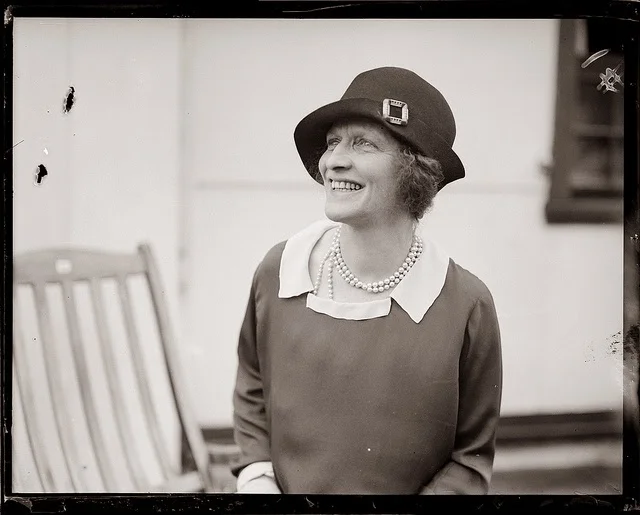
Source: http://www.columbia.edu/itc/mealac/pritche...

Enjoyed this speech? Speakola is a labour of love and I’d be very grateful if you would share, tweet or like it. Thank you.

Facebook Twitter Facebook
In 1920-39 Tags INDIA, PAKISTAN, MUSLIM INDIA, IQBAL, TRANSCRIPT
Comment

Robert Menzies: 'It is my malencholy duty', Declaration of War - 1939

August 6, 2015

3 September 1939, radio broadcast, Australia

Fellow Australians, it is my melancholy duty to inform you officially that in consequence of a persistence by Germany in her invasion of Poland, Great Britain has declared war upon her and that, as a result, Australia is also at war. No harder task can fall to the lot of a democratic leader than to make such an announcement. Great Britain and France, with the cooperation of the British Dominions, have struggled to avoid this tragedy. They have, as I firmly believe, been patient. They have kept the door of negotiation open. They have given no cause for aggression. But in the result, their efforts have failed and we are therefore, as a great family of nations, involved in a struggle which we must at all costs win and which we believe in our hearts we will win.

What I want to do tonight is just to put before you, honestly, and as clearly as I can, a short account of how this crisis has developed.

The history of recent months in Europe has been an eventful one. It will exhibit to the eyes of the future student some of the most remarkable instances of a ruthlessness and indifference to common humanity which the darkest centuries of European history can scarcely parallel. Moreover, it will, I believe, demonstrate that the leader of Germany has, for a long time, steadily pursued a policy which was deliberately designed to produce either war or a subjugation of one non-German country after another by the threat of war.

We all have vivid recollections of September of last year. Speaking in Berlin on September the 26th 1938, Hitler said, referring to the Sudeten German problem, which was then approaching its acutest stage, ‘And now the last problem which must be solved, and which will be solved, concerns us. It is the last territorial claim which I have to make in Europe.’ Four days later, at Munich, when the problem had been settled on terms which provided for the absorption of the Sudeten country into Germany, and which otherwise professed to respect the integrity of the remainder of the Czechoslovak state, Hitler participated with the Prime Minister of Great Britain in a statement which went out to all the world. It’s most important sentence was this: ‘We are resolved that the method of consultation shall be the method adopted to deal with any other question that may concern our two countries, and we are determined to continue our efforts to remove possible causes of difference, and thus to contribute to assure the peace of Europe.’

What a strange piece of irony that seems today, only 12 months later. In those 12 months, what has happened? In cold-blooded breach of the solemn obligations implied in both the statements I have quoted, Hitler has annexed the whole of the Czechoslovak state. Has, without flickering an eyelid, made a pact with Russia, a country the denouncing and reviling of which has been his chief stock-in-trade ever since he became chancellor. And has now, under circumstances which I will describe to you, invaded with armed force and in defiance of civilised opinion, the independent nation of Poland. Your own comments on this dreadful history will need no reinforcement by me. All I need say is, that whatever the inflamed ambitions of the German Fuhrer may be, he will undoubtedly learn, as other great enemies of freedom have learned before, that no empire, no dominion, can be soundly established upon a basis of broken promises or dishonoured agreements.

Let me now say something about the events of the last few days. The facts are not really in dispute. They are, for the most part, contained in documents which are now a matter of record.

On Friday August the 25th, that is, nine days ago, Hitler asked the British Ambassador to call on him, and had a long interview with him. Hitler said that he wished to make a move towards England, as decisive as his recent Russian move, but that first the problem of Danzig and the Corridor must be solved. He went on to indicate that he was looking forward to a general European settlement and that if this could be achieved, he would be willing to accept a reasonable limitation of armaments. On Saturday August the 26th, the British Ambassador flew to London to give a detailed account of his conversation to the British Government. On Sunday the 27th, the British Cabinet fully considered the whole matter and, incidentally, was apprised by me of the views of the Australian Government. On Monday August the 28th, the British reply, which I may say was entirely in line with our own views, was taken back to Berlin and was delivered to Hitler in the evening. That reply stated that the British Government desired a complete and lasting understanding between the two countries and agreed that a prerequisite to such a state of affairs was a settlement of the German-Polish differences. It emphasised the obligations which Great Britain had to Poland and made it clear that Great Britain could not acquiesce in a settlement which would put in jeopardy the independence of a state to which it had given its guarantee. The government said, however, that it would be prepared to participate in an international guarantee or any settlement reached by direct negotiation between Germany and Poland which did not prejudice Poland’s essential interests. The note pointed out that the Polish Government was ready to enter into discussions and that it was hoped that the German Government would do the same.

On the night of Tuesday August the 29th, Hitler communicated to Sir Neville Henderson his reply to the British note. In it he reiterated his demands, but agreed to accept the British Government’s offer of its good offices in securing the dispatch to Berlin of a Polish emissary. In the meantime, it was stated, the German Government would draw up proposals acceptable to itself and would, if possible, place these at the disposal of the British Government before the arrival of the Polish negotiator. Astonishingly enough, for the German proposals were not then even drafted, the note went on to say that the German Government counted on the arrival of the Polish emissary on Wednesday August the 30th, which was the very next day. Sir Neville Henderson pointed out at once that this was an impossible condition, but Hitler assured him that it was only intended to stress the urgency of the matter. On the Wednesday, Hitler’s communication was received by the British Government and their reply was handed by Sir Neville Henderson to von Ribbentrop, the German Foreign Minister, at midnight. At the same time the British Ambassador asked whether the German proposals which were to be drawn up were ready, and suggested that von Ribbentrop should invite the Polish Ambassador to call and should hand to him the proposals for transmission to his government. I would have thought this was a very sensible suggestion. But von Ribbentrop rejected it in violent terms. Von Ribbentrop then produced a lengthy document containing the German proposals, which you subsequently saw in the newspapers, and read it aloud in German at top speed. Sir Neville Henderson naturally asked for a copy of the document but the reply was that it now was too late as the Polish representative had not arrived in Berlin by midnight.

You see what a travesty the whole thing was. The German Government was treating Poland as in default, because she had not by Wednesday night offered an opinion upon, or discussed with Germany, a set of proposals of which, in fact, she had at that time never heard. Indeed, apart from the hurried reading to which I’ve referred, the British Government had no account of these proposals until they were broadcast in Germany on Thursday August the 31st. On the night of August the 31st, the Polish ambassador at Berlin saw von Ribbentrop and told him that the Polish Government was willing to negotiate with Germany about their disputes on an equal basis. The only reply was that German troops passed the Polish frontier and began war upon the Poles at dawn on the morning of Friday September the 1st.

One further fact should be mentioned and it is this. In the British Government’s communication of August the 30th, it informed the German Chancellor that it recognised the need for speed and that it also recognised the dangers which arose from the fact that two mobilised armies were facing each other on opposite sides of the Polish frontier, and that accordingly, it strongly urged that both Germany and Poland should undertake that during the negotiations no aggressive military movements would take place. That being communicated to Poland, the Polish Government on Thursday August the 31st, categorically stated that it was prepared to give a formal guarantee that during negotiations Polish troops would not violate the frontiers provided a corresponding guarantee was given by Germany. The German Government made no reply whatever.

My comments on these events need not be very long. The matter was admirably stated by the British Prime Minister to the House of Commons in these words: 'It is plain therefore that Germany claims to treat Poland as in the wrong because she had not by Wednesday night entered upon discussions with Germany about a set of proposals of which she had never heard.’

Let me elaborate this a little. You can make an offer of settlement for two entirely different purposes. You may make your offer genuinely and hoping to have it accepted or discussed with a view to avoiding war. On the other hand, you may make it, hoping to use it as window dressing and with no intention or desire to have it accepted. If I were to make an offer to my neighbour about a piece of land in dispute between us, and before he had had the faintest opportunity of dealing with my offer, I’ve violently assaulted him, my offer would stand revealed as a fraud. If Germany had really desired a peaceful settlement of questions relating to Danzig and the Corridor, she would have taken every step to see that her proposals were adequately considered by Poland and that there was proper opportunity for discussion. In other words, if Germany had wanted peace, does anybody believe that there would today be fighting on the Polish frontier, or that Europe would be plunged into war? Who wanted war? Poland? Great Britain? France? A review of all these circumstances makes it clear that the German Chancellor has, throughout this week of tension, been set upon war and that the publication of his proposals for settlement was designed merely as a bid for world opinion before he set his armies on the move.

We have of course been deluged with propaganda from Berlin. We have been told harrowing stories of the oppression of Germans. We have been told that Poland invaded Germany. We have even been told, somewhat contradictorily, that Germany was forced to invade Poland in order to defend herself against aggression. The technique of German propaganda, of carefully fomented agitations in neighbouring countries, the constant talk of persecution and injustice – these are all nauseatingly familiar to us. We made the acquaintance of all of them during the dispute over Czechoslovakia, and we may well ask what has become of the Czech minority and the Slovak minority since the forced absorption of their country into the German state. It is plain, indeed it is brutally plain, that the Hitler ambition has been not, as he once said, to unite the German peoples under one rule but to bring under that rule as many European countries, even of alien race, as can be subdued by force.

If such a policy were allowed to go unchecked there could be no security in Europe and there could be no just peace for the world. A halt has been called. Force has had to be resorted to, to check the march of force. Honest dealing, the peaceful adjustment of differences, the rights of independent peoples to live their own lives, the honouring of international obligations and promises, all these things are at stake. There never was any doubt as to where Great Britain stood in relation to them. There can be no doubt that where Great Britain stands there stand the people of the entire British world.

Bitter as we all feel at this wanton crime, this is not a moment for rhetoric. Prompt as the action of many thousands must be, it is for the rest a moment for quiet thinking, for that calm fortitude that rests not upon the beating of drums but upon the unconquerable spirit of man created by God in his own image. What may be before us we do not know, nor how long the journey. But this we do know: that truth is our companion on that journey; that truth is with us in the battle; and that truth must win.

Before I end, may I say this to you – in the bitter months that have come, calmness, resoluteness, confidence and hard work will be required as never before. This war will involve not only soldiers and sailors and airmen, but supplies, foodstuffs, money. Our staying power, and particularly the staying power of the mother country, will be best assisted by keeping our production going; by continuing our avocations and our business as freely as we can; by maintaining employment and, with it, our strength. I know that in spite of the emotions we are all feeling, you will show that Australia is ready to see it through. May God in his mercy and compassion grant that the world may soon be delivered from this agony.

Source: http://speakingfrog.com/?p=789#.VcK3Yflbz1...

Enjoyed this speech? Speakola is a labour of love and I’d be very grateful if you would share, tweet or like it. Thank you.

Facebook Twitter Facebook
In 1920-39 Tags PRIME MINISTERS, WW2, DECLARATION OF WAR, AUSTRALIA, MENZIES
Comment

John Monash: 'It is an occasion for elevating the public spirit' - 1930

August 6, 2015

26 April 1930, Melbourne, Australia

Spoken at a reunion of ex-servicemen. Sole surviving extract.

I want to point out that a public celebration like we had yesterday (Anzac Day), is very much wider, and has a deeper significance than appears on the surface. It is true that it is intended as an act of remembrance of our comrades who have gone, as an act of homage to their memory, and an act of pride in the achievements of Australia, but it is something more than that.

It is an occasion for elevating the public spirit and public sentiment. We are gathering together our citizens in hundreds of thousands, who have presented to them noble ideals and noble thoughts, and they are animated by common ideals of worthy purpose.

Heaven knows we need such stimulation today. That is why I have tried to throw myself whole-heartedly into another project - the great memorial known as the Shrine of Remembrance. I think that, too, when it is completed in all its glory and grandeur, will become an object of reverence to the community, and will have an influence which will be uplifting, and will band the community together in elevated thought and common national purpose.


Source: http://www.blackincbooks.com/books/well-ma...

Enjoyed this speech? Speakola is a labour of love and I’d be very grateful if you would share, tweet or like it. Thank you.

Facebook Twitter Facebook
In 1920-39 Tags WW1, ANZAC DAY, JOHN MONASH, AUSTRALIA, TRANSCRIPT
Comment

Franklin Roosevelt: 'The Only Thing We Have to Fear is Fear Itself', First inaugural speech - 1933

June 30, 2015

4 March 1933, Washington DC, USA

President Hoover, Mr. Chief Justice, my friends:

This is a day of national consecration. And I am certain that on this day my fellow Americans expect that on my induction into the Presidency, I will address them with a candor and a decision which the present situation of our people impels.

This is preeminently the time to speak the truth, the whole truth, frankly and boldly. Nor need we shrink from honestly facing conditions in our country today. This great Nation will endure, as it has endured, will revive and will prosper.

So, first of all, let me assert my firm belief that the only thing we have to fear is fear itself -- nameless, unreasoning, unjustified terror which paralyzes needed efforts to convert retreat into advance. In every dark hour of our national life, a leadership of frankness and of vigor has met with that understanding and support of the people themselves which is essential to victory. And I am convinced that you will again give that support to leadership in these critical days.

In such a spirit on my part and on yours we face our common difficulties. They concern, thank God, only material things. Values have shrunk to fantastic levels; taxes have risen; our ability to pay has fallen; government of all kinds is faced by serious curtailment of income; the means of exchange are frozen in the currents of trade; the withered leaves of industrial enterprise lie on every side; farmers find no markets for their produce; and the savings of many years in thousands of families are gone. More important, a host of unemployed citizens face the grim problem of existence, and an equally great number toil with little return. Only a foolish optimist can deny the dark realities of the moment.

And yet our distress comes from no failure of substance. We are stricken by no plague of locusts. Compared with the perils which our forefathers conquered, because they believed and were not afraid, we have still much to be thankful for. Nature still offers her bounty and human efforts have multiplied it. Plenty is at our doorstep, but a generous use of it languishes in the very sight of the supply.

Primarily, this is because the rulers of the exchange of mankind's goods have failed, through their own stubbornness and their own incompetence, have admitted their failure, and have abdicated. Practices of the unscrupulous money changers stand indicted in the court of public opinion, rejected by the hearts and minds of men.

True, they have tried. But their efforts have been cast in the pattern of an outworn tradition. Faced by failure of credit, they have proposed only the lending of more money. Stripped of the lure of profit by which to induce our people to follow their false leadership, they have resorted to exhortations, pleading tearfully for restored confidence. They only know the rules of a generation of self-seekers. They have no vision, and when there is no vision the people perish.

Yes, the money changers have fled from their high seats in the temple of our civilization. We may now restore that temple to the ancient truths. The measure of that restoration lies in the extent to which we apply social values more noble than mere monetary profit.

Happiness lies not in the mere possession of money; it lies in the joy of achievement, in the thrill of creative effort. The joy, the moral stimulation of work no longer must be forgotten in the mad chase of evanescent profits. These dark days, my friends, will be worth all they cost us if they teach us that our true destiny is not to be ministered unto but to minister to ourselves, to our fellow men.

Recognition of that falsity of material wealth as the standard of success goes hand in hand with the abandonment of the false belief that public office and high political position are to be valued only by the standards of pride of place and personal profit; and there must be an end to a conduct in banking and in business which too often has given to a sacred trust the likeness of callous and selfish wrongdoing. Small wonder that confidence languishes, for it thrives only on honesty, on honor, on the sacredness of obligations, on faithful protection, and on unselfish performance; without them it cannot live.

Restoration calls, however, not for changes in ethics alone. This Nation is asking for action, and action now.

Our greatest primary task is to put people to work. This is no unsolvable problem if we face it wisely and courageously. It can be accomplished in part by direct recruiting by the Government itself, treating the task as we would treat the emergency of a war, but at the same time, through this employment, accomplishing great -- greatly needed projects to stimulate and reorganize the use of our great natural resources.

Hand in hand with that we must frankly recognize the overbalance of population in our industrial centers and, by engaging on a national scale in a redistribution, endeavor to provide a better use of the land for those best fitted for the land.

Yes, the task can be helped by definite efforts to raise the values of agricultural products, and with this the power to purchase the output of our cities. It can be helped by preventing realistically the tragedy of the growing loss through foreclosure of our small homes and our farms. It can be helped by insistence that the Federal, the State, and the local governments act forthwith on the demand that their cost be drastically reduced. It can be helped by the unifying of relief activities which today are often scattered, uneconomical, unequal. It can be helped by national planning for and supervision of all forms of transportation and of communications and other utilities that have a definitely public character. There are many ways in which it can be helped, but it can never be helped by merely talking about it.

We must act. We must act quickly.

And finally, in our progress towards a resumption of work, we require two safeguards against a return of the evils of the old order. There must be a strict supervision of all banking and credits and investments. There must be an end to speculation with other people's money. And there must be provision for an adequate but sound currency.

These, my friends, are the lines of attack. I shall presently urge upon a new Congress in special session detailed measures for their fulfillment, and I shall seek the immediate assistance of the 48 States.

Through this program of action we address ourselves to putting our own national house in order and making income balance outgo. Our international trade relations, though vastly important, are in point of time, and necessity, secondary to the establishment of a sound national economy. I favor, as a practical policy, the putting of first things first. I shall spare no effort to restore world trade by international economic readjustment; but the emergency at home cannot wait on that accomplishment.

The basic thought that guides these specific means of national recovery is not nationally -- narrowly nationalistic. It is the insistence, as a first consideration, upon the interdependence of the various elements in and parts of the United States of America -- a recognition of the old and permanently important manifestation of the American spirit of the pioneer. It is the way to recovery. It is the immediate way. It is the strongest assurance that recovery will endure.

In the field of world policy, I would dedicate this Nation to the policy of the good neighbor: the neighbor who resolutely respects himself and, because he does so, respects the rights of others; the neighbor who respects his obligations and respects the sanctity of his agreements in and with a world of neighbors.

If I read the temper of our people correctly, we now realize, as we have never realized before, our interdependence on each other; that we can not merely take, but we must give as well; that if we are to go forward, we must move as a trained and loyal army willing to sacrifice for the good of a common discipline, because without such discipline no progress can be made, no leadership becomes effective.

We are, I know, ready and willing to submit our lives and our property to such discipline, because it makes possible a leadership which aims at the larger good. This, I propose to offer, pledging that the larger purposes will bind upon us, bind upon us all as a sacred obligation with a unity of duty hitherto evoked only in times of armed strife.

With this pledge taken, I assume unhesitatingly the leadership of this great army of our people dedicated to a disciplined attack upon our common problems.

Action in this image, action to this end is feasible under the form of government which we have inherited from our ancestors. Our Constitution is so simple, so practical that it is possible always to meet extraordinary needs by changes in emphasis and arrangement without loss of essential form. That is why our constitutional system has proved itself the most superbly enduring political mechanism the modern world has ever seen.

It has met every stress of vast expansion of territory, of foreign wars, of bitter internal strife, of world relations. And it is to be hoped that the normal balance of executive and legislative authority may be wholly equal, wholly adequate to meet the unprecedented task before us. But it may be that an unprecedented demand and need for undelayed action may call for temporary departure from that normal balance of public procedure.

I am prepared under my constitutional duty to recommend the measures that a stricken nation in the midst of a stricken world may require. These measures, or such other measures as the Congress may build out of its experience and wisdom, I shall seek, within my constitutional authority, to bring to speedy adoption.

But, in the event that the Congress shall fail to take one of these two courses, in the event that the national emergency is still critical, I shall not evade the clear course of duty that will then confront me. I shall ask the Congress for the one remaining instrument to meet the crisis -- broad Executive power to wage a war against the emergency, as great as the power that would be given to me if we were in fact invaded by a foreign foe.

For the trust reposed in me, I will return the courage and the devotion that befit the time. I can do no less.

We face the arduous days that lie before us in the warm courage of national unity; with the clear consciousness of seeking old and precious moral values; with the clean satisfaction that comes from the stern performance of duty by old and young alike. We aim at the assurance of a rounded, a permanent national life.

We do not distrust the -- the future of essential democracy. The people of the United States have not failed. In their need they have registered a mandate that they want direct, vigorous action. They have asked for discipline and direction under leadership. They have made me the present instrument of their wishes. In the spirit of the gift I take it.

In this dedication -- In this dedication of a Nation, we humbly ask the blessing of God.

May He protect each and every one of us.

May He guide me in the days to come.

Source: http://www.americanrhetoric.com/speeches/f...

Enjoyed this speech? Speakola is a labour of love and I’d be very grateful if you would share, tweet or like it. Thank you.

Facebook Twitter Facebook
In 1920-39 Tags USA, PRESIDENTS, INAUGURATION, ROOSEVELT, FDR, TRANSCRIPT, GREATEST SPEECHES OF ALL TIME, GREATEST SPEECHES OF THE 20TH CENTURY, 20TH CENTURY
Comment
← Newer Posts

See my film!

Limited Australian Season

March 2025

Details and ticket bookings at

angeandtheboss.com

Support Speakola

Hi speech lovers,
With costs of hosting website and podcast, this labour of love has become a difficult financial proposition in recent times. If you can afford a donation, it will help Speakola survive and prosper.

Best wishes,
Tony Wilson.

Become a Patron!

Learn more about supporting Speakola.

Featured political

Featured
Jon Stewart: "They responded in five seconds", 9-11 first responders, Address to Congress - 2019
Jacinda Ardern: 'They were New Zealanders. They are us', Address to Parliament following Christchurch massacre - 2019
Dolores Ibárruri: "¡No Pasarán!, They shall not pass!', Defense of 2nd Spanish Republic - 1936
Jimmy Reid: 'A rat race is for rats. We're not rats', Rectorial address, Glasgow University - 1972

Featured eulogies

Featured
For Geoffrey Tozer: 'I have to say we all let him down', by Paul Keating - 2009
for James Baldwin: 'Jimmy. You crowned us', by Toni Morrison - 1988
for Michael Gordon: '13 days ago my Dad’s big, beautiful, generous heart suddenly stopped beating', by Scott and Sarah Gordon - 2018

Featured commencement

Featured
Tara Westover: 'Your avatar isn't real, it isn't terribly far from a lie', The Un-Instagrammable Self, Northeastern University - 2019
Tim Minchin: 'Being an artist requires massive reserves of self-belief', WAAPA - 2019
Atul Gawande: 'Curiosity and What Equality Really Means', UCLA Medical School - 2018
Abby Wambach: 'We are the wolves', Barnard College - 2018
Eric Idle: 'America is 300 million people all walking in the same direction, singing 'I Did It My Way'', Whitman College - 2013
Shirley Chisholm: ;America has gone to sleep', Greenfield High School - 1983

Featured sport

Featured
Joe Marler: 'Get back on the horse', Harlequins v Bath pre game interview - 2019
Ray Lewis : 'The greatest pain of my life is the reason I'm standing here today', 52 Cards -
Mel Jones: 'If she was Bradman on the field, she was definitely Keith Miller off the field', Betty Wilson's induction into Australian Cricket Hall of Fame - 2017
Jeff Thomson: 'It’s all those people that help you as kids', Hall of Fame - 2016

Fresh Tweets


Featured weddings

Featured
Dan Angelucci: 'The Best (Best Man) Speech of all time', for Don and Katherine - 2019
Hallerman Sisters: 'Oh sister now we have to let you gooooo!' for Caitlin & Johnny - 2015
Korey Soderman (via Kyle): 'All our lives I have used my voice to help Korey express his thoughts, so today, like always, I will be my brother’s voice' for Kyle and Jess - 2014

Featured Arts

Featured
Bruce Springsteen: 'They're keepers of some of the most beautiful sonic architecture in rock and roll', Induction U2 into Rock Hall of Fame - 2005
Olivia Colman: 'Done that bit. I think I have done that bit', BAFTA acceptance, Leading Actress - 2019
Axel Scheffler: 'The book wasn't called 'No Room on the Broom!', Illustrator of the Year, British Book Awards - 2018
Tina Fey: 'Only in comedy is an obedient white girl from the suburbs a diversity candidate', Kennedy Center Mark Twain Award -  2010
Tina Fey: 'Only in comedy is an obedient white girl from the suburbs a diversity candidate', Kennedy Center Mark Twain Award - 2010

Featured Debates

Featured
Sacha Baron Cohen: 'Just think what Goebbels might have done with Facebook', Anti Defamation League Leadership Award - 2019
Greta Thunberg: 'How dare you', UN Climate Action Summit - 2019
Charlie Munger: 'The Psychology of Human Misjudgment', Harvard University - 1995
Lawrence O'Donnell: 'The original sin of this country is that we invaders shot and murdered our way across the land killing every Native American that we could', The Last Word, 'Dakota' - 2016