• Genre
  • About
  • Submissions
  • Donate
  • Search
Menu

Speakola

All Speeches Great and Small
  • Genre
  • About
  • Submissions
  • Donate
  • Search
Share a political speech

Richard Nixon: 'I have never been a quitter', Resignation speech - 1974

February 9, 2016

8 August 1974, Oval Office, Washington DC, USA

Good evening.

This is the 37th time I have spoken to you from this office, where so many decisions have been made that shaped the history of this Nation. Each time I have done so to discuss with you some matter that I believe affected the national interest.

In all the decisions I have made in my public life, I have always tried to do what was best for the Nation. Throughout the long and difficult period of Watergate, I have felt it was my duty to persevere, to make every possible effort to complete the term of office to which you elected me.

In the past few days, however, it has become evident to me that I no longer have a strong enough political base in the Congress to justify continuing that effort. As long as there was such a base, I felt strongly that it was necessary to see the constitutional process through to its conclusion, that to do otherwise would be unfaithful to the spirit of that deliberately difficult process and a dangerously destabilizing precedent for the future.

But with the disappearance of that base, I now believe that the constitutional purpose has been served, and there is no longer a need for the process to be prolonged.

I would have preferred to carry through to the finish whatever the personal agony it would have involved, and my family unanimously urged me to do so. But the interest of the Nation must always come before any personal considerations.

From the discussions I have had with Congressional and other leaders, I have concluded that because of the Watergate matter I might not have the support of the Congress that I would consider necessary to back the very difficult decisions and carry out the duties of this office in the way the interests of the Nation would require.

I have never been a quitter. To leave office before my term is completed is abhorrent to every instinct in my body. But as President, I must put the interest of America first. America needs a full-time President and a full-time Congress, particularly at this time with problems we face at home and abroad.

To continue to fight through the months ahead for my personal vindication would almost totally absorb the time and attention of both the President and the Congress in a period when our entire focus should be on the great issues of peace abroad and prosperity without inflation at home.

Therefore, I shall resign the Presidency effective at noon tomorrow. Vice President Ford will be sworn in as President at that hour in this office.

As I recall the high hopes for America with which we began this second term, I feel a great sadness that I will not be here in this office working on your behalf to achieve those hopes in the next 21/2 years. But in turning over direction of the Government to Vice President Ford, I know, as I told the Nation when I nominated him for that office 10 months ago, that the leadership of America will be in good hands.

In passing this office to the Vice President, I also do so with the profound sense of the weight of responsibility that will fall on his shoulders tomorrow and, therefore, of the understanding, the patience, the cooperation he will need from all Americans.

As he assumes that responsibility, he will deserve the help and the support of all of us. As we look to the future, the first essential is to begin healing the wounds of this Nation, to put the bitterness and divisions of the recent past behind us, and to rediscover those shared ideals that lie at the heart of our strength and unity as a great and as a free people.

By taking this action, I hope that I will have hastened the start of that process of healing which is so desperately needed in America.

I regret deeply any injuries that may have been done in the course of the events that led to this decision. I would say only that if some of my Judgments were wrong, and some were wrong, they were made in what I believed at the time to be the best interest of the Nation.

To those who have stood with me during these past difficult months, to my family, my friends, to many others who joined in supporting my cause because they believed it was right, I will be eternally grateful for your support.

And to those who have not felt able to give me your support, let me say I leave with no bitterness toward those who have opposed me, because all of us, in the final analysis, have been concerned with the good of the country, however our judgments might differ.

So, let us all now join together in affirming that common commitment and in helping our new President succeed for the benefit of all Americans.

I shall leave this office with regret at not completing my term, but with gratitude for the privilege of serving as your President for the past 51/2 years. These years have been a momentous time in the history of our Nation and the world. They have been a time of achievement in which we can all be proud, achievements that represent the shared efforts of the Administration, the Congress, and the people.

But the challenges ahead are equally great, and they, too, will require the support and the efforts of the Congress and the people working in cooperation with the new Administration.

We have ended America's longest war, but in the work of securing a lasting peace in the world, the goals ahead are even more far-reaching and more difficult. We must complete a structure of peace so that it will be said of this generation, our generation of Americans, by the people of all nations, not only that we ended one war but that we prevented future wars.

We have unlocked the doors that for a quarter of a century stood between the United States and the People's Republic of China.

We must now ensure that the one quarter of the world's people who live in the People's Republic of China will be and remain not our enemies but our friends.

In the Middle East, 100 million people in the Arab countries, many of whom have considered us their enemy for nearly 20 years, now look on us as their friends. We must continue to build on that friendship so that peace can settle at last over the Middle East and so that the cradle of civilization will not become its grave.

Together with the Soviet Union we have made the crucial breakthroughs that have begun the process of limiting nuclear arms. But we must set as our goal not just limiting but reducing and finally destroying these terrible weapons so that they cannot destroy civilization and so that the threat of nuclear war will no longer hang over the world and the people.

We have opened the new relation with the Soviet Union. We must continue to develop and expand that new relationship so that the two strongest nations of the world will live together in cooperation rather than confrontation.

Around the world, in Asia, in Africa, in Latin America, in the Middle East, there are millions of people who live in terrible poverty, even starvation. We must keep as our goal turning away from production for war and expanding production for peace so that people everywhere on this earth can at last look forward in their children's time, if not in our own time, to having the necessities for a decent life.

Here in America, we are fortunate that most of our people have not only the blessings of liberty but also the means to live full and good and, by the world's standards, even abundant lives. We must press on, however, toward a goal of not only more and better jobs but of full opportunity for every American and of what we are striving so hard right now to achieve, prosperity without inflation.

For more than a quarter of a century in public life I have shared in the turbulent history of this era. I have fought for what I believed in. I have tried to the best of my ability to discharge those duties and meet those responsibilities that were entrusted to me.

Sometimes I have succeeded and sometimes I have failed, but always I have taken heart from what Theodore Roosevelt once said about the man in the arena, "whose face is marred by dust and sweat and blood, who strives valiantly, who errs and comes short again and again because there is not effort without error and shortcoming, but who does actually strive to do the deed, who knows the great enthusiasms, the great devotions, who spends himself in a worthy cause, who at the best knows in the end the triumphs of high achievements and who at the worst, if he fails, at least fails while daring greatly."

I pledge to you tonight that as long as I have a breath of life in my body, I shall continue in that spirit. I shall continue to work for the great causes to which I have been dedicated throughout my years as a Congressman, a Senator, a Vice President, and President, the cause of peace not just for America but among all nations, prosperity, justice, and opportunity for all of our people.

There is one cause above all to which I have been devoted and to which I shall always be devoted for as long as I live.

When I first took the oath of office as President 51/2 years ago, I made this sacred commitment, to "consecrate my office, my energies, and all the wisdom I can summon to the cause of peace among nations."

I have done my very best in all the days since to be true to that pledge. As a result of these efforts, I am confident that the world is a safer place today, not only for the people of America but for the people of all nations, and that all of our children have a better chance than before of living in peace rather than dying in war.

This, more than anything, is what I hoped to achieve when I sought the Presidency. This, more than anything, is what I hope will be my legacy to you, to our country, as I leave the Presidency.

To have served in this office is to have felt a very personal sense of kinship with each and every American. In leaving it, I do so with this prayer: May God's grace be with you in all the days ahead.

NOTE: The President spoke at 9: 01 p.m. in the Oval Office at the White House. The address was broadcast live on radio and television.
Source: http://www.pbs.org/newshour/spc/character/...

Enjoyed this speech? Speakola is a labour of love and I’d be very grateful if you would share, tweet or like it. Thank you.

Facebook Twitter Facebook
In 1960-79 Tags RICHARD NIXON, RESIGNATION, WATERGATE, USA, PRESIDENTS
Comment

Margaret Thatcher: 'We are told [in the bible] we must work and use our talents to create wealth', The Sermon on the Mound - 1988

February 9, 2016

21 May 1988, General Assembly Church of Scotland, The Mound, Edinburgh, Scotland

I am greatly honoured to have been invited to attend the opening of this 1988 General Assembly of the Church of Scotland; and I am deeply grateful that you have now asked me to address you.

I am very much aware of the historical continuity extending over four centuries, during which the position of the Church of Scotland has been recognised in constitutional law and confirmed by successive Sovereigns. It sprang from the independence of mind and rigour of thought that have always been such powerful characteristics of the Scottish people, as I have occasion to know. [muted laughter] It has remained close to its roots and has inspired a commitment to service from all people.

I am therefore very sensible of the important influence which the Church of Scotland exercises in the life of the whole nation, both at the spiritual level and through the extensive caring services which are provided by your Church's department of social responsibility. And I am conscious also of the value of the continuing links which the Church of Scotland maintains with other Churches.

Perhaps it would be best, Moderator, if I began by speaking personally as a Christian, as well as a politician, about the way I see things. Reading recently, I came across the starkly simple phrase:

"Christianity is about spiritual redemption, not social reform".

Sometimes the debate on these matters has become too polarised and given the impression that the two are quite separate. But most Christians would regard it as their personal Christian duty to help their fellow men and women. They would regard the lives of children as a precious trust. These duties come not from any secular legislation passed by Parliament, but from being a Christian.

But there are a number of people who are not Christians who would also accept those responsibilities. What then are the distinctive marks of Christianity?

They stem not from the social but from the spiritual side of our lives, and personally, I would identify three beliefs in particular:

First, that from the beginning man has been endowed by God with the fundamental right to choose between good and evil. And second, that we were made in God's own image and, therefore, we are expected to use all our own power of thought and judgement in exercising that choice; and further, that if we open our hearts to God, He has promised to work within us. And third, that Our Lord Jesus Christ, the Son of God, when faced with His terrible choice and lonely vigil chose to lay down His life that our sins may be forgiven. I remember very well a sermon on an Armistice Sunday when our Preacher said, "No one took away the life of Jesus , He chose to lay it down".

I think back to many discussions in my early life when we all agreed that if you try to take the fruits of Christianity without its roots, the fruits will wither. And they will not come again unless you nurture the roots.

But we must not profess the Christian faith and go to Church simply because we want social reforms and benefits or a better standard of behaviour;but because we accept the sanctity of life, the responsibility that comes with freedom and the supreme sacrifice of Christ expressed so well in the hymn:

"When I survey the wondrous Cross, On which the Prince of glory died, My richest gain I count but loss, And pour contempt on all my pride."

May I also say a few words about my personal belief in the relevance of Christianity to public policy—to the things that are Caesar's?

The Old Testament lays down in Exodus the Ten Commandments as given to Moses , the injunction in Leviticus to love our neighbour as ourselves and generally the importance of observing a strict code of law. The New Testament is a record of the Incarnation, the teachings of Christ and the establishment of the Kingdom of God. Again we have the emphasis on loving our neighbour as ourselves and to "Do-as-you-would-be-done-by".

I believe that by taking together these key elements from the Old and New Testaments, we gain: a view of the universe, a proper attitude to work, and principles to shape economic and social life.

We are told we must work and use our talents to create wealth. "If a man will not work he shall not eat" wrote St. Paul to the Thessalonians. Indeed, abundance rather than poverty has a legitimacy which derives from the very nature of Creation.

Nevertheless, the Tenth Commandment—Thou shalt not covet—recognises that making money and owning things could become selfish activities. But it is not the creation of wealth that is wrong but love of money for its own sake. The spiritual dimension comes in deciding what one does with the wealth. How could we respond to the many calls for help, or invest for the future, or support the wonderful artists and craftsmen whose work also glorifies God, unless we had first worked hard and used our talents to create the necessary wealth? And remember the woman with the alabaster jar of ointment.

I confess that I always had difficulty with interpreting the Biblical precept to love our neighbours "as ourselves" until I read some of the words of C.S. Lewis. He pointed out that we don't exactly love ourselves when we fall below the standards and beliefs we have accepted. Indeed we might even hate ourselves for some unworthy deed.

None of this, of course, tells us exactly what kind of political and social institutions we should have. On this point, Christians will very often genuinely disagree, though it is a mark of Christian manners that they will do so with courtesy and mutual respect. [Applause] What is certain, however, is that any set of social and economic arrangements which is not founded on the acceptance of individual responsibility will do nothing but harm.

We are all responsible for our own actions. We can't blame society if we disobey the law. We simply can't delegate the exercise of mercy and generosity to others. The politicians and other secular powers should strive by their measures to bring out the good in people and to fight down the bad: but they can't create the one or abolish the other. They can only see that the laws encourage the best instincts and convictions of the people, instincts and convictions which I'm convinced are far more deeply rooted than is often supposed.

Nowhere is this more evident than the basic ties of the family which are at the heart of our society and are the very nursery of civic virtue. And it is on the family that we in government build our own policies for welfare, education and care.

You recall that Timothy was warned by St. Paul that anyone who neglects to provide for his own house (meaning his own family) has disowned the faith and is "worse than an infidel".

We must recognise that modern society is infinitely more complex than that of Biblical times and of course new occasions teach new duties. In our generation, the only way we can ensure that no-one is left without sustenence, help or opportunity, is to have laws to provide for health and education, pensions for the elderly, succour for the sick and disabled.

But intervention by the State must never become so great that it effectively removes personal responsibility. The same applies to taxation; for while you and I would work extremely hard whatever the circumstances, there are undoubtedly some who would not unless the incentive was there. And we need their efforts too.

Moderator, recently there have been great debates about religious education. I believe strongly that politicians must see that religious education has a proper place in the school curriculum. [Applause]

In Scotland, as in England, there is an historic connection expressed in our laws between Church and State. The two connections are of a somewhat different kind, but the arrangements in both countries are designed to give symbolic expression to the same crucial truth: that the Christian religion—which, of course, embodies many of the great spiritual and moral truths of Judaism—is a fundamental part of our national heritage. And I believe it is the wish of the overwhelming majority of people that this heritage should be preserved and fostered. [Applause] For centuries it has been our very life blood. And indeed we are a nation whose ideals are founded on the Bible.

Also, it is quite impossible to understand our history or literature without grasping this fact, and that's the strong practical case for ensuring that children at school are given adequate instruction in the part which the Judaic-Christian tradition has played in moulding our laws, manners and institutions. How can you make sense of Shakespeare and Sir Walter Scott, or of the constitutional conflicts of the 17th century in both Scotland and England, without some such fundamental knowledge?

But I go further than this. The truths of the Judaic-Christian tradition are infinitely precious, not only, as I believe, because they are true, but also because they provide the moral impulse which alone can lead to that peace, in the true meaning of the word, for which we all long.

To assert absolute moral values is not to claim perfection for ourselves. No true Christian could do that. What is more, one of the great principles of our Judaic-Christian inheritance is tolerance. People with other faiths and cultures have always been welcomed in our land, assured of equality under the law, of proper respect and of open friendship. There's absolutely nothing incompatible between this and our desire to maintain the essence of our own identity. There is no place for racial or religious intolerance in our creed.

When Abraham Lincoln spoke in his famous Gettysburg speech of 1863 of "government of the people, by the people, and for the people", he gave the world a neat definition of democracy which has since been widely and enthusiastically adopted. But what he enunciated as a form of government was not in itself especially Christian, for nowhere in the Bible is the word democracy mentioned. Ideally, when Christians meet, as Christians, to take counsel together their purpose is not (or should not be) to ascertain what is the mind of the majority but what is the mind of the Holy Spirit—something which may be quite different. [Applause]

Nevertheless I am an enthusiast for democracy. And I take that position, not because I believe majority opinion is inevitably right or true—indeed no majority can take away God-given human rights—but because I believe it most effectively safeguards the value of the individual, and, more than any other system, restrains the abuse of power by the few. And that is a Christian concept.

But there is little hope for democracy if the hearts of men and women in democratic societies cannot be touched by a call to something greater than themselves. Political structures, state institutions, collective ideals—these are not enough.

We Parliamentarians can legislate for the rule of law. You, the Church, can teach the life of faith.

But when all is said and done, the politician's role is a humble one. I always think that the whole debate about the Church and the State has never yielded anything comparable in insight to that beautiful hymn "I Vow to Thee my Country". It begins with a triumphant assertion of what might be described as secular patriotism, a noble thing indeed in a country like ours:

"I vow to thee my country all earthly things above; entire, whole and perfect the service of my love".

It goes on to speak of "another country I heard of long ago" whose King can't be seen and whose armies can't be counted, but "soul by soul and silently her shining bounds increase". Not group by group, or party by party, or even church by church—but soul by soul—and each one counts.

That, members of the Assembly, is the country which you chiefly serve. You fight your cause under the banner of an historic Church. Your success matters greatly—as much to the temporal as to the spiritual welfare of the nation. I leave you with that earnest hope that may we all come nearer to that other country whose "ways are ways of gentleness and all her paths are peace." [Applause]

Source: http://www.margaretthatcher.org/document/1...

Enjoyed this speech? Speakola is a labour of love and I’d be very grateful if you would share, tweet or like it. Thank you.

Facebook Twitter Facebook
In 1980-99 Tags MARGARET THATCHER, SCOTLAND, SERMON ON THE MOUND, PROSPERITY, GOD, RELIGION, CHRISTIANITY
Comment

George H W Bush: 'Some people have urged the United States to choose', Chicken Kiev speech - 1991

February 9, 2016

1 August 1991, Ukrainian parliament, Kiev, Ukraine

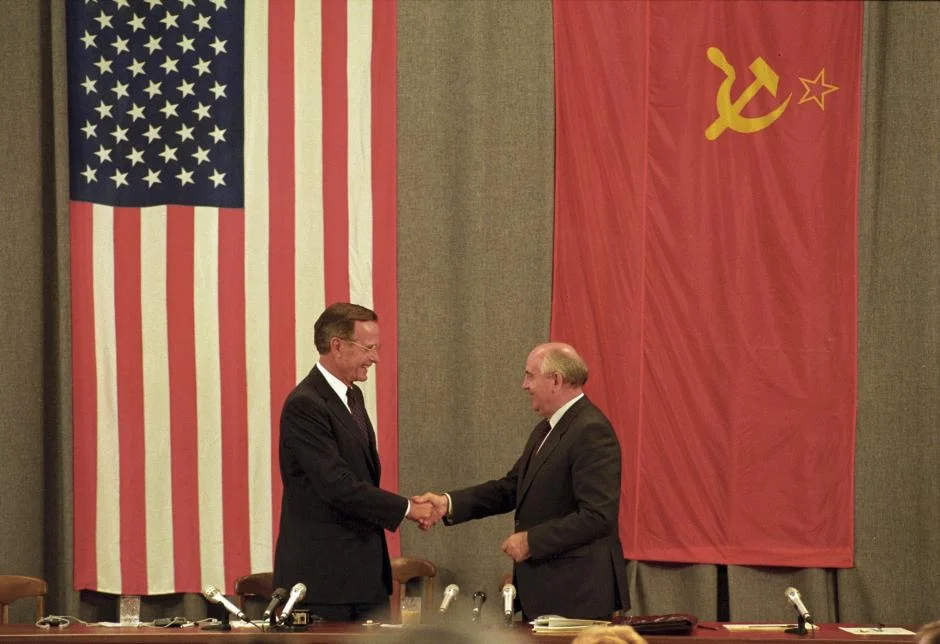
This speech upset Ukrainian nationalists and American conservatives, for seemingly preferring Ukraine stay in USSR rather than forge towards independence. William Safire dubbed it the 'Chicken Kiev speech'. Ukraine declared its independence 23 days later on 24 August 1991.

Well, first, thank all of you for that warm welcome. And may I take this opportunity to thank all people of Ukraine that gave us such a warm welcome, such a heartfelt greeting. Every American in that long motorcade -- and believe me, it was long -- was moved and touched by the warmth of the welcome of Ukraine. We'll never forget it.

Chairman Kravchuk, thank you, sir. And to the Deputies of the Soviet, Supreme Soviet, may I salute you. Members of the clergy that are here, members of the diplomatic corps, representatives of American pharmaceutical and health care corporations who I understand are with us today, and distinguished guests all. Barbara and I are delighted to be here -- very, very happy. We have only one regret, and that is that I've got to get home on Thursday night -- I can still make it. And the reason is, our Congress goes out tomorrow, finishes their session they're in now, and I felt it was important to be there on that last day of the final session.

This beautiful city brings to mind the words of the poet Alexander Dovzhenko: "The city of Kiev is an orchard. Kiev is a poet. Kiev is an epic. Kiev is history. Kiev is art."

Centuries ago, your forebears named this country Ukraine, or "frontier," because your steppes link Europe and Asia. But Ukrainians have become frontiersmen of another sort. Today you explore the frontiers and contours of liberty.

Though my stay here is, as I said, far too short, I have come here to talk with you and to learn. For those who love freedom, every experiment in building an open society offers new lessons and insights. You face an especially daunting task. For years, people in this nation felt powerless, overshadowed by a vast government apparatus, cramped by forces that attempted to control every aspect of their lives.

Today, your people probe the promises of freedom. In cities and Republics, on farms, in business, around university campuses, you debate the fundamental questions of liberty, self-rule, and free enterprise. Americans, you see, have a deep commitment to these values. We follow your progress with a sense of fascination, excitement, and hope. This alone is historic. In the past, our nations engaged in duels of eloquent bluff and bravado. Now, the fireworks of superpower confrontation are giving way to the quieter and far more hopeful art of cooperation.

I come here to tell you: We support the struggle in this great country for democracy and economic reform. And I would like to talk to you today about how the United States views this complex and exciting period in your history, how we intend to relate to the Soviet central Government and the Republican governments.

In Moscow, I outlined our approach: We will support those in the center and the Republics who pursue freedom, democracy, and economic liberty. We will determine our support not on the basis of personalities but on the basis of principles. We cannot tell you how to reform your society. We will not try to pick winners and losers in political competitions between Republics or between Republics and the center. That is your business; that's not the business of the United States of America.

Do not doubt our real commitment, however, to reform. But do not think we can presume to solve your problems for you. Theodore Roosevelt, one of our great Presidents, once wrote: To be patronized is as offensive as to be insulted. No one of us cares permanently to have someone else conscientiously striving to do him good; what we want is to work with that someone else for the good of both of us. That's what our former President said. We will work for the good of both of us, which means that we will not meddle in your internal affairs.

Some people have urged the United States to choose between supporting President Gorbachev and supporting independence-minded leaders throughout the U.S.S.R. I consider this a false choice. In fairness, President Gorbachev has achieved astonishing things, and his policies of glasnost, perestroika, and democratization point toward the goals of freedom, democracy, and economic liberty.

We will maintain the strongest possible relationship with the Soviet Government of President Gorbachev. But we also appreciate the new realities of life in the U.S.S.R. And therefore, as a federation ourselves, we want good relations -- improved relations -- with the Republics. So, let me build upon my comments in Moscow by describing in more detail what Americans mean when we talk about freedom, democracy, and economic liberty.

No terms have been abused more regularly, nor more cynically than these. Throughout this century despots have masqueraded as democrats, jailers have posed as liberators. We can restore faith to government only by restoring meaning to these concepts.

I don't want to sound like I'm lecturing, but let's begin with the broad term "freedom." When Americans talk of freedom, we refer to people's abilities to live without fear of government intrusion, without fear of harassment by their fellow citizens, without restricting other's freedoms. We do not consider freedom a privilege, to be doled out only to those who hold proper political views or belong to certain groups. We consider it an inalienable individual right, bestowed upon all men and women. Lord Acton once observed: The most certain test by which we judge whether a country is really free is the amount of security enjoyed by minorities.

Freedom requires tolerance, a concept embedded in openness, in glasnost, and in our first amendment protections for the freedoms of speech, association, and religion -- all religions.

Tolerance nourishes hope. A priest wrote of glasnost: Today, more than ever the words of Paul the Apostle, spoken, 2,000 years ago, ring out: They counted as among the dead, but look, we are alive. In Ukraine, in Russia, in Armenia, and the Baltics, the spirit of liberty thrives.

But freedom cannot survive if we let despots flourish or permit seemingly minor restrictions to multiply until they form chains, until they form shackles. Later today, I'll visit the monument at Babi Yar -- a somber reminder, a solemn reminder, of what happens when people fail to hold back the horrible tide of intolerance and tyranny.

Yet freedom is not the same as independence. Americans will not support those who seek independence in order to replace a far-off tyranny with a local depotism. They will not aid those who promote a suicidal nationalism based upon ethnic hatred.

We will support those who want to build democracy. By democracy, we mean a system of government in which people may vie openly for the hearts -- and yes, the votes -- of the public. We mean a system of government that derives its just power from the consent of the governed, that retains its legitimacy by controlling its appetite for power. For years, you had elections with ballots, but you did not enjoy democracy. And now, democracy has begun to set firm roots in Soviet soil.

The key to its success lies in understanding government's proper role and its limits. Democracy is not a technical process driven by dry statistics. It is the very human enterprise of preserving freedom, so that we can do the important things, the really important things: raise families, explore our own creativity, build good and fruitful lives.

In modern societies, freedom and democracy rely on economic liberty. A free economy is nothing more than a system of communication. It simply cannot function without individual rights or a profit motive, which give people an incentive to go to work, an incentive to produce.

And it certainly cannot function without the rule of law, without fair and enforceable contracts, without laws that protect property rights and punish fraud.

Free economies depend upon the freedom of expression, the ability of people to exchange ideas and test out new theories. The Soviet Union weakened itself for years by restricting the flow of information, by outlawing devices crucial to modern communications, such as computers and copying machines. And when you restricted free movement -- even tourist travel -- you prevented your own people from making the most of their talent. You cannot innovate if you cannot communicate.

And finally, a free economy demands engagement in the economic mainstream. Adam Smith noted two centuries ago, trade enriches all who engage in it. Isolation and protectionism doom its practitioners to degradation and want.

I note this today because some Soviet cities, regions, and even Republics have engaged in ruinous trade wars. The Republics of this nation have extensive bonds of trade, which no one can repeal with the stroke of a pen or the passage of a law. The vast majority of trade conducted by Soviet companies -- imports and exports -- involves, as you know better than I, trade between Republics. The nine-plus-one agreement holds forth the hope that Republics will combine greater autonomy with greater voluntary interaction -- political, social, cultural, economic -- rather than pursuing the hopeless course of isolation.

And so, American investors and businessmen look forward to doing business in the Soviet Union, including the Ukraine. We've signed agreements this week that will encourage further interaction between the U.S. and all levels of the Soviet Union. But ultimately, our trade relations will depend upon our ability to develop a common language, a common language of commerce -- currencies that communicate with one another, laws that protect innovators and entrepreneurs, bonds of understanding and trust.

It should be obvious that the ties between our nations grow stronger every single day. I set forth a Presidential initiative that is providing badly needed medical aid to the Soviet Union. And this aid expresses Americans' solidarity with the Soviet peoples during a time of hardship and suffering. And it has supplied facilities in Kiev that are treating victims of Chernobyl. You should know that America's heart -- the hearts of all -- went out to the people here at the time of Chernobyl.

We have sent teams to help you improve upon the safety of Ukrainian nuclear plants and coal mines. We've also increased the number of cultural exchanges with the Republics, including more extensive legal, academic, and cultural exchanges between America and Ukraine.

We understand that you cannot reform your system overnight. America's first system of government -- the Continental Congress -- failed because the States were too suspicious of one another and the central government too weak to protect commerce and individual rights. In 200 years, we have learned that freedom, democracy, and economic liberty are more than terms of inspiration. They're more than words. They are challenges.

Your great poet Shevchenko noted: Only in your own house can you have your truth, your strength, and freedom. No society ever achieves perfect democracy, liberty, or enterprise; it if makes full use of its people's virtues and abilities, it can use these goals as guides to a better life.

And now, as Soviet citizens try to forge a new social compact, you have the obligation to restore power to citizens demoralized by decades of totalitarian rule. You have to give them hope, inspiration, determination -- by showing your faith in their abilities. Societies that don't trust themselves or their people cannot provide freedom. They can guarantee only the bleak tyranny of suspicion, avarice, and poverty.

An old Ukrainian proverb says: When you enter a great enterprise, free your soul from weakness. The peoples of the U.S.S.R. have entered a great enterprise, full of courage and vigor. I have come here today to say: We support those who explore the frontiers of freedom. We will join these reformers on the path to what we call -- appropriately call a new world order.

You're the leaders. You are the participants in the political process. And I go home to an active political process. So, if you saw me waving like mad from my limousine, it was in the thought that maybe some of those people along the line were people from Philadelphia or Pittsburgh or Detroit where so many Ukrainian-Americans live, where so many Ukrainian-Americans are with me in the remarks I've made here today.

This has been a great experience for Barbara and me to be here. We salute you. We salute the changes that we see. I remember the French expression, vive la difference, and I see different churnings around this Chamber, and that is exactly the way it ought to be. One guy wants this and another one that. That's the way the process works when you're open and free -- competing with ideas to see who is going to emerge correct and who can do the most for the people in Ukraine.

And so, for us this has been a wonderful trip, albeit far too short. And may I simply say, may God bless the people of Ukraine. Thank you very, very much.

Source: https://en.wikisource.org/wiki/Chicken_Kie...

Enjoyed this speech? Speakola is a labour of love and I’d be very grateful if you would share, tweet or like it. Thank you.

Facebook Twitter Facebook
Comment

Pat Buchanan: 'it's not the kind of change we can abide in a nation we still call "God's country"', RNC Concession speech - 1992

February 9, 2016

17 August 1992, Astrodome, Houston, Texas, USA

What a terrific crowd this is. What a terrific crowd.

This may even be larger than the crowd I had in Ellijay, Georgia. Don't laugh. We carried Ellijay.

Listen, my friends, we may have taken the long way home, but we finally got here to Houston. And the first thing I want to do tonight is to congratulate President George Bush and to remove any doubt about where we stand. The primaries are over; the heart is strong again; and the Buchanan brigades are enlisted -- all the way to a great Republican comeback victory in November.

My friends -- My friends, like many of you -- like many of you last month, I watched that giant masquerade ball up at Madison Square Garden, where 20,000 liberals and radicals came dressed up as moderates and centrists in the greatest single exhibition of cross-dressing in American political history.

You know, one -- one by one -- one by one the prophets of doom appeared at the podium. The Reagan decade, they moaned, was a terrible time in America, and they said the only way to prevent worse times is to turn our country's fate and our country's future over to the Party that gave us McGovern, Mondale, Carter, and Michael Dukakis. Where do they find these leaders? No way, my friends. The American people are not going to go back to the discredited liberalism of the 1960s and the failed liberalism of the 1970s, no matter how slick the package in 1992.

(Hold it, my friends.)

You know, the malcontents -- the malcontents of Madison Square Garden notwithstanding, the 1980s were not terrible years in America. They were great years. You know it. And I know it. And everyone knows it except for the carping critics who sat on the sidelines of history, jeering at one of the great statesmen of modern time: Ronald Reagan. You know out of -- Remember that time out of Jimmy Carter's days of malaise, Ronald Reagan crafted -- Ronald Reagan crafted the greatest peacetime economic recovery in history: three million new businesses, and 20 million new jobs. Under the Reagan Doctrine, one by one, it was the Communist dominos that began to fall. First, Grenada was liberated by U.S. airborne troops of the U.S. Marine Corps. Then, the mighty Red Army was driven out of Afghanistan with American weapons. And then in Nicaragua, that squalid Marxist regime was forced to hold free elections by Ronald Reagan's Contra army, and the Communists were thrown out of power. Fellow Americans you ought to remember, it was under our Party that the Berlin Wall came down and Europe was reunited. It was under our Party that the Soviet Empire collapsed, and the captive nations broke free.

You know it is said that every American President will be remembered in history with but a single sentence. George Washington was the father of his country. Abraham Lincoln freed the slaves and saved the Union. And Ronald Reagan won the Cold War. And it is time -- And it is just about time -- It is just about time that my old colleagues, the columnists and commentators, looking down on us tonight from their sky boxes and anchor booths, gave Ronald Reagan the full credit he deserves for leading America to victory in the Cold War. Most of all, my friends -- Most of all, Ronald Reagan made us proud to be Americans again. We never felt better about our country; and we never stood taller in the eyes of the world than when "the Gipper" was at the helm.

But we are here tonight, my friends, not only to celebrate, but to nominate. An American President has many roles. He is our first diplomat, the architect of American foreign policy. And which of these two men is more qualified for that great role? George Bush has been U.N. Ambassador, Director of the CIA, envoy to China. As Vice President, George Bush co-authored and cosigned the policies that won the Cold War. As President, George Bush presided over the liberation of Eastern Europe and the termination of the Warsaw Pact. And what about Mr. Clinton? Well, Bill Clinton -- Bill Clinton couldn't find 150 words to discuss foreign policy in an acceptance speech that lasted almost an hour. You know, as was said -- as was said of another Democratic candidate, Bill Clinton's foreign policy experience is pretty much confined to having had breakfast once at the International House of Pancakes.

You know, let's recall what happened -- let us look at the record and recall what happened. Under President George Bush, more human beings escaped from the prison house of tyranny to freedom than in any other four-year period in history.

And for any man -- let me tell you -- for any man to call this a record of failure is the cheap political rhetoric of politicians who only know how to build themselves up by tearing America down -- and we don't want that kind of leadership in the United States.

The presidency, my friends -- The presidency is also an office that Theodore Roosevelt called America's "bully pulpit." Harry Truman said it was "preeminently a place of moral leadership." George Bush is a defender of right-to-life, and a champion of the Judeo-Christian values and beliefs upon which America was founded.

Mr. Clinton -- Mr. Clinton however, has a different agenda. At its top is unrestricted -- unrestricted abortion on demand. When the Irish-Catholic Governor of Pennsylvania, Robert Casey, asked to say a few words on behalf of the 25 million unborn children destroyed since Roe v Wade, Bob Casey was told there was no room for him at the podium at Bill Clinton's convention, and no room at the inn. Yet -- Yet a militant leader of the homosexual rights movement could rise at that same convention and say: "Bill Clinton and Al Gore represent the most pro-lesbian and pro-gay ticket in history." And so they do. Bill Clinton says he supports "school choice" -- but only for state-run schools. Parents who send their children to Christian schools, or private schools, or Jewish schools, or Catholic schools, need not apply.

Elect me, and you get "two for the price of one," Mr. Clinton says of his lawyer-spouse. And what -- And what does Hillary believe? Well, Hillary believes that 12-year-olds should have the right to sue their parents. And Hillary has compared marriage and the family, as institutions, to slavery and life on an Indian reservation. Well, speak for yourself, Hillary.

Friends -- Friends, this -- This, my friends -- This is radical feminism. The agenda that Clinton & Clinton would impose on America: abortion on demand, a litmus test for the Supreme Court, homosexual rights, discrimination against religious schools, women in combat units. That's change, all right. But that's not the kind of change America needs. It's not the kind of change America wants. And it's not the kind of change we can abide in a nation we still call "God's country."

The President -- The President of the United States is also -- The President of the United States is also America's Commander-in-Chief. He's the man we authorize to send fathers and sons and brothers and friends into battle. George Bush was 17 years old when they bombed Pearl Harbor. He left his high school graduation; he walked down to the recruiting office; and he signed up to become the youngest fighter pilot in the Pacific war.

And Mr. Clinton? And Bill Clinton? I'll tell you where he was. I'll tell you where he was. I'll tell you where he was. Let me tell you where he was. I'll tell you -- I'll tell you where he was. When Bill Clinton's time came in Vietnam, he sat up in a dormitory room in Oxford, England, and figured out how to dodge the draft.

Let me ask the question to this convention: Which of these two men has won the moral authority to send young Americans into battle? I suggest respectfully -- I suggest respectfully, it is the American patriot and war hero, Navy Lieutenant J. G. George Herbert Walker Bush! My fellow Americans -- My fellow Americans, this campaign is about philosophy, and it is about character; and George Bush wins hands down on both counts. And it is time all of us came home and stood beside him.

As his running mate, Mr. Clinton chose Albert Gore. But just how moderate is Prince Albert? Well according to the National Taxpayers Union, Al Gore beat out Teddy Kennedy, two straight years, for the title of "biggest spender in the U.S. Senate" and Teddy Kennedy isn't moderate about anything. I'm not kidding. I'm not kidding about Teddy. How many 60-year-olds do you know who still go to Florida for spring break?

You know up at that great -- at that great big costume party they held up in New York, Mr. Gore made a startling declaration. Henceforth, Albert Gore said, the "central organizing principle" ofgovernments everywhere must be: the environment. Wrong, Albert. The central organizing principle of this republic is: freedom. And from the ancient -- And from the ancient forests -- from the ancient forests of Oregon and Washington, to the Inland Empire of California, America's great middle class has got to start standing up to these environmental extremists who put birds and rats and insects ahead of families, workers, and jobs.

One year ago -- You know, one year ago, my friends -- One year ago I could not have dreamt I would be here tonight. I was just one of many panelists on what President Bush calls "those crazy Sunday talk shows." But I disagreed with the President and so we challenged the President in the Republican primaries, and we fought as best we could. From February to June, President Bush won 33 of those primaries. I can't recall exactly how many we won. I'll get you the figure tomorrow.

But tonight I do want to speak from the heart to the 3 million people who voted for Pat Buchanan for President. I will never -- I will never -- I will never forget you, or the great honor you have done me. But I do believe -- I do believe deep in my heart that the right place for us to be now, in this presidential campaign, is right beside George Bush. This Party -- This Party is my home. This Party is our home and we've got to come home to it. And don't let anyone tell you any different.

Yes, we disagreed with President Bush, but we stand with him for the freedom to choose religious schools, and we stand with him against the amoral idea that gay and lesbian couples should have the same standing in law as married men and women. We stand with President Bush -- We stand with President Bush for right-to-life and for voluntary prayer in the public schools. And we stand against putting our wives and daughters and sisters into combat units of the United States Army. And we stand, my -- my friends -- We also stand with President Bush in favor of the right of small towns and communities to control the raw sewage of pornography that so terribly pollutes our popular culture. We stand with President Bush in favor of federal judges who interpret the law as written, and against would-be Supreme Court justices like Mario Cuomo who think they have a mandate to rewrite the Constitution.

Friends, this election is about more than who gets what. It is about who we are. It is about what we believe and what we stand for as Americans. There is a religious war going on in this country. It is a cultural war, as critical to the kind of nation we shall be as the Cold War itself. For this war is for the soul of America. And in that struggle for the soul of America, Clinton & Clinton are on the other side, and George Bush is on our side. And so to the Buchanan Brigades out there, we have to come home and stand beside George Bush.

In these six months of campaigning from Concord, New Hampshire to California, I came to know our country better than I have known it ever before in my life, and I gathered up memories that are going to be with me the rest of my days.

There was that day-long ride through the great state of Georgia in a bus Vice President Bush himself had used in 1988 called Asphalt One. The ride ended in a 9:00 PM speech in a tiny town in southern Georgia called Fitzgerald.

There were those workers at the James River Paper Mill, in Northern New Hampshire in a town called Groveton -- tough, hearty men. None of them would say a word to me as I came down the line, shaking their hands one by one. They were under a threat of losing their jobs at Christmas. And as I moved down the line, one tough fellow about my age just looked up and said to me, "Save our jobs."

Then there was the legal secretary that I met at the Manchester airport on Christmas Day who came running up to me and said, "Mr. Buchanan, I'm going to vote for you." And then she broke down weeping, and she said, "I've lost my job; I don't have any money, and they're going to take away my little girl. What am I going to do?"

My friends, these people are our people. They don't read Adam Smith or Edmund Burke, but they come from the same schoolyards and the same playgrounds and towns as we came from. They share our beliefs and our convictions, our hopes and our dreams. These are the conservatives of the heart. They are our people. And we need to reconnect with them. We need to let them know we know how bad they're hurting. They don't expect miracles of us, but they need to know we care.

There were the people -- There were the people that, my friends -- There were the people of Hayfork, a tiny town up in California's Trinity Alps, a town that is now under a sentence of death because a federal judge has set aside nine million acres for the habitat of the spotted owl -- forgetting about the habitat of the men and women who live and work in Hayfork.

And there were the brave people -- And there were the brave people of Koreatown who took the worst of those L.A. riots, but still live the family values we treasure, and who still deeply believe in the American dream.

Friends, in these wonderful -- In these wonderful 25 weeks of our campaign, the saddest days were the days of that riot in L.A., the worst riot in American history. But out of that awful tragedy can come a message of hope. Hours after that riot ended, I went down to the Army compound in South Los Angeles, where I met the troopers of the 18th Cavalry who had come to save the city of Los Angeles. An officer of the 18th Cav said, "Mr. Buchanan, I want you to talk to a couple of our troopers. And I went over and I met these young fellows. They couldn't have been 20 years old. They could not have been 20 years old. And they recounted their story.

They had come into Los Angeles late in the evening of the second day, and the rioting was still going on. And two of them walked up a dark street, where the mob had burned and looted every single building on the block but one, a convalescent home for the aged. And the mob was headed in, to ransack and loot the apartments of the terrified old men and women inside. The troopers came up the street, M-16s at the ready. And the mob threatened and cursed, but the mob retreated because it had met the one thing that could stop it: force, rooted in justice, and backed by moral courage.

Now, Greater -- Greater love than this -- "Greater love than this hath no man than that he lay down his life for his friend."¹ Here were 19-year-old boys ready to lay down their lives to stop a mob from molesting old people they did not even know. And as those boys took back the streets of Los Angeles, block by block, my friends, we must take back our cities, and take back our culture, and take back our country.

God bless you, and God bless America.

Source: http://www.americanrhetoric.com/speeches/p...

Enjoyed this speech? Speakola is a labour of love and I’d be very grateful if you would share, tweet or like it. Thank you.

Facebook Twitter Facebook
In 1980-99 Tags PAT BUCHANAN, CULTURE WAR SPEECH, GEROGE BUSH, BILL CLINTON, RIGHT TO LIFE
Comment

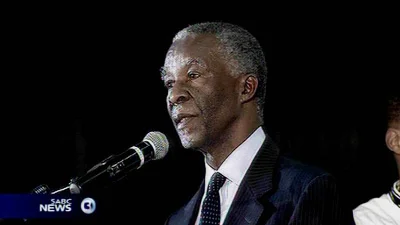
Thabo Mbeki: 'We are moving forward in the effort to combine ourselves into one nation of many colours', Inauguration as President - 1999

February 9, 2016

16 June 1999, Union Buildings, Pretoria, South Africa

I am honoured to welcome you all to our seat of government as we carry out the solemn act of the inauguration of the President of our Republic.

I feel greatly privileged that so many of you could travel from all corners of the globe, from everywhere in Africa and from all parts of our country to lend importance and dignity to this occasion.

That sense of privilege, which will stay with us for all time, is intensified by our recognition of the fact that never before have we, as a people, hosted this large a number of high level delegations representing the peoples of the world.

We thank you most sincerely for your presence which itself constitutes a tribute to the millions of our people and a profound statement of hope that all of us will, together, continue to expand the frontiers of human dignity.

For us, as South Africans, this day is as much a Day for the Inauguration of the new government as it is a Day of Salute for a generation that pulled our country out of the abyss and placed it on the pedestal of hope, on which it rests today.

I speak of the generation represented pre-eminently by our outgoing President, Nelson Mandela - the generation of Oliver Tambo, Walter Sisulu, Govan Mbeki, Albertina Sisulu, Ray Alexander and others.

Fortunately, some of these titans are present here today, as they should be. None of us can peer into their hearts to learn what they feel as this infant democracy they brought into the world begins its sixth year of existence.

But this I can say, that we who are their offspring know that we owe to them much of what is humane, noble and beautiful in the thoughts and actions of our people, as they strive to build a better world for themselves.

For throughout their lives, they struggled against everything that was ugly, mean, brutish and degrading of the dignity of all human beings.

And because they did, being prepared to pay the supreme price to uphold good over evil, they planted a legacy among our people which drives all of us constantly to return to the starting point and say - I am my brother's keeper! I am my sister's keeper!

And because we are one another's keepers, we surely must be haunted by the humiliating suffering which continues to afflict millions of our people.

Our nights cannot but be nights of nightmares while millions of our people live in conditions of degrading poverty.

Sleep cannot come easily when children get permanently disabled, both physically and mentally, because of lack of food.

No night can be restful when millions have no jobs, and some are forced to beg, rob and murder to ensure that they and their own do not perish from hunger.

Our minds will continue the restless inquiry to find out how it is possible to have a surfeit of productive wealth in one part of our common globe and intolerable poverty levels elsewhere on that common globe.

There can be no moment of relaxation while the number of those affected by HIV-AIDS continue to expand at an alarming pace.

Our days will remain forever haunted when frightening numbers of the women and children of our country fall victim to rape and other crimes of violence.

Nor can there be peace of mind when the citizens of our country feel they have neither safety nor security because of the terrible deeds of criminals and their gangs.

Our days and our nights will remain forever blemished as long as our people are torn apart and fractured into contending factions by reason of the racial and gender inequalities, which continue to characterise our society.

Neither can peace attend our souls as long as corruption continues to rob the poor of what is theirs and to corrode the value system, which sets humanity apart from the rest of the animal world.

The full meaning of liberation will not be realised until our people are freed both from oppression and from the dehumanising legacy of deprivation we inherited from our past.

What we did in 1994 was to begin the long journey towards the realisation of this goal. When the millions of our people went to the polls 12 days ago, they mandated us to pursue this outcome.

Our country is in that period of time which the seTswana-speaking people of Southern Africa graphically describe as "mahube a naka tsa kgomo" - the dawning of the dawn, when only the tips of the horn of the cattle can be seen etched against the morning sky.

As the sun continues to rise to banish the darkness of the long years of colonialism and apartheid, what the new light over our land must show is a nation diligently at work to create a better life for itself.

What it must show is a palpable process of the comprehensive renewal of our country - its rebirth - driven by the enormous talents of all our people, both black and white, and made possible by the knowledge and realisation that we share a common destiny, regardless of the shapes of our noses.

What we will have to see in the rising light is a government that is fully conscious of the fact that it has entered into a contract with the people, to work in partnership with them to build a winning nation.

In practical and measurable ways, we have to keep pace with the rising sun, progressing from despair to hope, away from a brutal past that forever seeks to drag us backwards towards a new tomorrow that speaks of change in a forward direction.

History and circumstance have given us the rare possibility to achieve these objective.

To ensure that we transform the possibility to reality, we will have to nurture the spirit among our people which made it possible for many to describe the transition of 1994 as a miracle - the same spirit which, in many respects, turned this year's election campaign into a festival in clebration of democracy.

As Africans, we are the children of the abyss, who have sustained a backward march for half-a-millennium.

We have been a source for human slaves. Our countries were turned into the patrimony of colonial powers. We have been victim to our own African predators.

If this is not merely the wish being father to the thought, something in the air seems to suggest that we are emerging out of the dreadful centuries which in the practice, and in the ideology and consciousness of some, defined us as sub-human.

As South Africans, whatever the difficulties, we are moving forward in the effort to combine ourselves into one nation of many colours, many cultures and divers origins.

No longer capable of being falsely defined as a European outpost in Africa, we are an African nation in the complex process simultaneously of formation and renewal.

And in that process, we will seek to educate both the young and ourselves about everything all our forebears did to uphold the torch of freedom.

It is in this spirit that we are, this year, observing the Centenary of the Commencement of the Anglo-Boer War and the 120th Anniversary of the Battle of Isandhlwana.

We will also work to rediscover and claim the African heritage, for the benefit especially of our young generations.

From South Africa to Ethiopia lie strewn ancient fossils which, in their stillness, speak still of the African origins of all humanity.

Recorded history and the material things that time left behind also speak of Africa's historic contribution to the universe of philosophy, the natural sciences, human settlement and organisation and the creative arts.

Being certain that not always were we the children of the abyss, we will do what we have to do to achieve our own Renaissance.

We trust that what we will do will not only better our own condition as a people, but will also make a contribution, however small, to the success of Africa's Renaissance, towards the identification of the century ahead of us as the African Century.

23 years ago this day, children died in Soweto, Johannesburg in a youth uprising which democratic South Africa honours as our National Youth Day.

As we speak, both our own, as well as international athletes, are competing in our annual Comrades Marathon which, this year, is dedicated to Nelson Mandela.

Our best wishes go to all these, the long distance runners of the Marathon.

Those who complete the course will do so only because they do not, as fatigue sets in, convince themselves that the road ahead is still too long, the inclines too steep, the loneliness impossible to bear and the prize itself of doubtful value.

We too, as the peoples of South Africa and Africa, must together run our own Comrades Marathon, as comrades who are ready to take to the road together, refusing to be discouraged by the recognition that the road is very long, the inclines very steep and that, at times, what we see as the end is but a mirage.

When the race is run, all humanity and ourselves will acknowledge the fact that we only succeeded because we succeeded to believe in our own dreams!

Every year the rains will fall to bless our efforts!

That too is a dream!

But because it is our dream, we are able still to demand of our ancestors - pula! nala!

Source: http://www.theguardian.com/world/1999/jun/...

Enjoyed this speech? Speakola is a labour of love and I’d be very grateful if you would share, tweet or like it. Thank you.

Facebook Twitter Facebook
In 1980-99 Tags THABO MBEKI, INAUGURATION, SOUTH AFRICA, PRESIDENTS, ANC
Comment

Thabo Mbeki: 'I am an African', On adoption of new South African Constitution - 1996

February 9, 2016

8 May 1996, Cape Town, South Africa

I am an African.

I owe by being to the hills and the valleys, the mountains and the glades, the rivers, the deserts, the trees, the flowers, the seas and the ever-changing seasons that define the face of our native land.

My body has frozen in our frosts and in our latter day snows. It has thawed in the warmth of our sunshine and melted in the heat of the midday sun. The crack and the rumble of the summer thunders, lashed by startling lightening, have been a cause both of trembling and of hope.

The fragrances of nature have been as pleasant to us as the sight of the wild blooms of the citizens of the veld.

The dramatic shapes of the Drakensberg, the soil-coloured waters of the Lekoa, iGqili noThukela, and the sands of the Kgalagadi, have all been panels of the set on the natural stage on which we act out the foolish deeds of the theatre of our day.

At times, and in fear, I have wondered whether I should concede equal citizenship of our country to the leopard and the lion, the elephant and the springbok, the hyena, the black mamba and the pestilential mosquito.

A human presence among all these, a feature on the face of our native land thus defined, I know that none dare challenge me when I say—I am an African!

I owe my being to the Khoi and the San whose desolate souls haunt the great expanses of the beautiful Cape - they who fell victim to the most merciless genocide our native land has ever seen, they who were the first to lose their lives in the struggle to defend our freedom and dependence and they who, as a people, perished in the result.

Today, as a country, we keep an audible silence about these ancestors of the generations that live, fearful to admit the horror of a former deed, seeking to obliterate from our memories a cruel occurrence which, in its remembering, should teach us not and never to be inhuman again.

I am formed of the migrants who left Europe to find a new home on our native land. Whatever their own actions, they remain still, part of me.

In my veins courses the blood of the Malay slaves who came from the East. Their proud dignity informs my bearing, their culture a part of my essence. The stripes they bore on their bodies from the lash of the slave master are a reminder embossed on my consciousness of what should not be done.

I am the grandchild of the warrior men and women that Hintsa and Sekhukhune led, the patriots that Cetshwayo and Mphephu took to battle, the soldiers Moshoeshoe and Ngungunyane taught never to dishonour the cause of freedom.

My mind and my knowledge of myself is formed by the victories that are the jewels in our African crown, the victories we earned from Isandhlwana to Khartoum, as Ethiopians and as the Ashanti of Ghana, as the Berbers of the desert.

I am the grandchild who lays fresh flowers on the Boer graves at St Helena and the Bahamas, who sees in the mind's eye and suffers the suffering of a simple peasant folk, death, concentration camps, destroyed homesteads, a dream in ruins.

I am the child of Nongqause. I am he who made it possible to trade in the world markets in diamonds, in gold, in the same food for which my stomach yearns.

I come of those who were transported from India and China, whose being resided in the fact, solely, that they were able to provide physical labour, who taught me that we could both be at home and be foreign, who taught me that human existence itself demanded that freedom was a necessary condition for that human existence.

Being part of all these people, and in the knowledge that none dare contest that assertion, I shall claim that - I am an African.

I have seen our country torn asunder as these, all of whom are my people, engaged one another in a titanic battle, the one redress a wrong that had been caused by one to another and the other, to defend the indefensible.

I have seen what happens when one person has superiority of force over another, when the stronger appropriate to themselves the prerogative even to annul the injunction that God created all men and women in His image.

I know what if signifies when race and colour are used to determine who is human and who, sub-human.

I have seen the destruction of all sense of self-esteem, the consequent striving to be what one is not, simply to acquire some of the benefits which those who had improved themselves as masters had ensured that they enjoy.

I have experience of the situation in which race and colour is used to enrich some and impoverish the rest.

I have seen the corruption of minds and souls as (word not readable) of the pursuit of an ignoble effort to perpetrate a veritable crime against humanity.

I have seen concrete expression of the denial of the dignity of a human being emanating from the conscious, systemic and systematic oppressive and repressive activities of other human beings.

There the victims parade with no mask to hide the brutish reality - the beggars, the prostitutes, the street children, those who seek solace in substance abuse, those who have to steal to assuage hunger, those who have to lose their sanity because to be sane is to invite pain.

Perhaps the worst among these, who are my people, are those who have learnt to kill for a wage. To these the extent of death is directly proportional to their personal welfare.

And so, like pawns in the service of demented souls, they kill in furtherance of the political violence in KwaZulu-Natal. They murder the innocent in the taxi wars.

They kill slowly or quickly in order to make profits from the illegal trade in narcotics. They are available for hire when husband wants to murder wife and wife, husband.

Among us prowl the products of our immoral and amoral past - killers who have no sense of the worth of human life, rapists who have absolute disdain for the women of our country, animals who would seek to benefit from the vulnerability of the children, the disabled and the old, the rapacious who brook no obstacle in their quest for self-enrichment.

All this I know and know to be true because—I am an African!

Because of that, I am also able to state this fundamental truth that I am born of a people who are heroes and heroines.

I am born of a people who would not tolerate oppression.

I am of a nation that would not allow that fear of death, torture, imprisonment, exile or persecution should result in the perpetuation of injustice.

The great masses who are our mother and father will not permit that the behaviour of the few results in the description of our country and people as barbaric.

Patient because history is on their side, these masses do not despair because today the weather is bad. Nor do they turn triumphalist when, tomorrow, the sun shines.

Whatever the circumstances they have lived through and because of that experience, they are determined to define for themselves who they are and who they should be.

We are assembled here today to mark their victory in acquiring and exercising their right to formulate their own definition of what it means to be African.

The constitution whose adoption we celebrate constitutes and unequivocal statement that we refuse to accept that our Africanness shall be defined by our race, colour, gender of historical origins.

It is a firm assertion made by ourselves that South Africa belongs to all who live in it, black and white.

It gives concrete expression to the sentiment we share as Africans, and will defend to the death, that the people shall govern.

It recognises the fact that the dignity of the individual is both an objective which society must pursue, and is a goal which cannot be separated from the material well-being of that individual.

It seeks to create the situation in which all our people shall be free from fear, including the fear of the oppression of one national group by another, the fear of the disempowerment of one social echelon by another, the fear of the use of state power to deny anybody their fundamental human rights and the fear of tyranny.

It aims to open the doors so that those who were disadvantaged can assume their place in society as equals with their fellow human beings without regard to colour, race, gender, age or geographic dispersal.

It provides the opportunity to enable each one and all to state their views, promote them, strive for their implementation in the process of governance without fear that a contrary view will be met with repression.

It creates a law-governed society which shall be inimical to arbitrary rule.

It enables the resolution of conflicts by peaceful means rather than resort to force.

It rejoices in the diversity of our people and creates the space for all of us voluntarily to define ourselves as one people.

As an African, this is an achievement of which I am proud, proud without reservation and proud without any feeling of conceit.

Our sense of elevation at this moment also derives from the fact that this magnificent product is the unique creation of African hands and African minds.

Bit it is also constitutes a tribute to our loss of vanity that we could, despite the temptation to treat ourselves as an exceptional fragment of humanity, draw on the accumulated experience and wisdom of all humankind, to define for ourselves what we want to be.

Together with the best in the world, we too are prone to pettiness, petulance, selfishness and short-sightedness.

But it seems to have happened that we looked at ourselves and said the time had come that we make a super-human effort to be other than human, to respond to the call to create for ourselves a glorious future, to remind ourselves of the Latin saying: Gloria est consequenda—Glory must be sought after!

Today it feels good to be an African.

It feels good that I can stand here as a South African and as a foot soldier of a titanic African army, the African National Congress, to say to all the parties represented here, to the millions who made an input into the processes we are concluding, to our outstanding compatriots who have presided over the birth of our founding document, to the negotiators who pitted their wits one against the other, to the unseen stars who shone unseen as the management and administration of the Constitutional Assembly, the advisers, experts and publicists, to the mass communication media, to our friends across the globe—congratulations and well done!

I am an African.

I am born of the peoples of the continent of Africa.

The pain of the violent conflict that the peoples of Liberia, Somalia, the Sudan, Burundi and Algeria is a pain I also bear.

The dismal shame of poverty, suffering and human degradation of my continent is a blight that we share.

The blight on our happiness that derives from this and from our drift to the periphery of the ordering of human affairs leaves us in a persistent shadow of despair.

This is a savage road to which nobody should be condemned.

This thing that we have done today, in this small corner of a great continent that has contributed so decisively to the evolution of humanity says that Africa reaffirms that she is continuing her rise from the ashes.

Whatever the setbacks of the moment, nothing can stop us now!
Whatever the difficulties, Africa shall be at peace!
However improbable it may sound to the sceptics, Africa will prosper!

Whoever we may be, whatever our immediate interest, however much we carry baggage from our past, however much we have been caught by the fashion of cynicism and loss of faith in the capacity of the people, let us err today and say—nothing can stop us now!


Here is an emotional abridged version overlaid with music and images.

Source: http://www.nathanielturner.com/iamanafrica...

Enjoyed this speech? Speakola is a labour of love and I’d be very grateful if you would share, tweet or like it. Thank you.

Facebook Twitter Facebook
In 1980-99 Tags THABO MBEKI, SOUTH AFRICA, PARLIAMENT, CONSTITUTION
Comment

George W Bush: 'These acts shatter steel, but they cannot dent the steel of American resolve', Address to Nation, post 9-11 attacks - 2001

February 9, 2016

Good evening.

Today, our fellow citizens, our way of life, our very freedom came under attack in a series of deliberate and deadly terrorist acts. The victims were in airplanes or in their offices: secretaries, business men and women, military and federal workers, moms and dads, friends and neighbors. Thousands of lives were suddenly ended by evil, despicable acts of terror. The pictures of airplanes flying into buildings, fires burning, huge -- huge structures collapsing have filled us with disbelief, terrible sadness, and a quiet, unyielding anger. These acts of mass murder were intended to frighten our nation into chaos and retreat. But they have failed. Our country is strong.

A great people has been moved to defend a great nation. Terrorist attacks can shake the foundations of our biggest buildings, but they cannot touch the foundation of America. These acts shatter steel, but they cannot dent the steel of American resolve. America was targeted for attack because we're the brightest beacon for freedom and opportunity in the world. And no one will keep that light from shining. Today, our nation saw evil -- the very worst of human nature -- and we responded with the best of America. With the daring of our rescue workers, with the caring for strangers and neighbors who came to give blood and help in any way they could.

Immediately following the first attack, I implemented our government's emergency response plans. Our military is powerful, and it's prepared. Our emergency teams are working in New York City and Washington D.C. to help with local rescue efforts. Our first priority is to get help to those who have been injured, and to take every precaution to protect our citizens at home and around the world from further attacks. The functions of our government continue without interruption. Federal agencies in Washington which had to be evacuated today are reopening for essential personnel tonight and will be open for business tomorrow. Our financial institutions remain strong, and the American economy will be open for business as well.

The search is underway for those who were behind these evil acts. I have directed the full resources of our intelligence and law enforcement communities to find those responsible and to bring them to justice. We will make no distinction between the terrorists who committed these acts and those who harbor them.

I appreciate so very much the members of Congress who have joined me in strongly condemning these attacks. And on behalf of the American people, I thank the many world leaders who have called to offer their condolences and assistance. America and our friends and allies join with all those who want peace and security in the world, and we stand together to win the war against terrorism.

Tonight, I ask for your prayers for all those who grieve, for the children whose worlds have been shattered, for all whose sense of safety and security has been threatened. And I pray they will be comforted by a Power greater than any of us, spoken through the ages in Psalm 23:

Even though I walk through the valley of the shadow of death, I fear no evil for you are with me.

This is a day when all Americans from every walk of life unite in our resolve for justice and peace. America has stood down enemies before, and we will do so this time. None of us will ever forget this day, yet we go forward to defend freedom and all that is good and just in our world.

Thank you. Good night. And God bless America.

Source: http://www.americanrhetoric.com/speeches/g...

Enjoyed this speech? Speakola is a labour of love and I’d be very grateful if you would share, tweet or like it. Thank you.

Facebook Twitter Facebook
In 2000s Tags GEORGE W BUSH, 9-11, SEPTEMBER 11, TELEVISED ADDRESS, ADDRESS TO NATION, TERRORISM, OSAMA BIN LADEN
Comment

Ray Nagin: 'This city will be chocolate at the end of the day.', aftermath of Hurricane Katrina - 2006

February 4, 2016

17 January 2006, City Hall, New Orleans, USA

These were off the cuff remarks at a MLK day event at City Hall. Nagin was later forced to apologise for 'Chocolate City' remark. He denied he was only interested in the African-American population, explaining "How do you make chocolate? You take dark chocolate, and you mix it with white milk and it becomes a delicious drink. That's the chocolate I'm talking about.'

I greet you all in the spirit of peace this morning. I greet you all in the spirit of love this morning, and more importantly, I greet you all in the spirit of unity. Because if we're unified, there's nothing we cannot do.

Now, I'm supposed to give some remarks this morning and talk about the great Dr. Martin Luther King Jr. You know when I woke up early this morning, and I was reflecting upon what I could say that could be meaningful for this grand occasion. And then I decided to talk directly to Dr. King.

Now you might think that's one Katrina post-stress disorder. But I was talking to him and I just wanted to know what would he think if he looked down today at this celebration. What would he think about Katrina? What would he think about all the people who were stuck in the Superdome and Convention Center and we couldn't get the state and the federal government to come do something about it? And he said, "I wouldn't like that."

And then I went on to ask him, I said, "Mr. King, when they were marching across the Mississippi River bridge, some of the folks that were stuck in the Convention Center, that were tired of waiting for food and tired of waiting on buses to come rescue them, what would he say as they marched across that bridge? And they were met at the parish line with attack dogs and machine guns firing shots over their heads?" He said, "I wouldn't like that either.''

Then I asked him to analyze the state of black America and black New Orleans today and to give me a critique of black leadership today. And I asked him what does he think about black leaders always or most of the time tearing each other down publicly for the delight of many? And he said, "I really don't like that either.''

And then finally, I said, "Dr. King, everybody in New Orleans is dispersed. Over 44 different states. We're debating whether we should open this or close that. We're debating whether property rights should trump everything or not. We're debating how should we rebuild one of the greatest cultural cities the world has ever seen. And yet still yesterday we have a second-line and everybody comes together from around this and that and they have a good time for the most part, and then knuckleheads pull out some guns and start firing into the crowd and they injure three people." He said, "I definitely wouldn't like that.''

And then I asked him, I said, "What is it going to take for us to move and live your dream and make it a reality?'' He said, "I don't think we need to pay attention anymore as much about the other folk and racists on the other side.'' He said the thing we need to focus on as a community, black folks I'm talking to, is ourselves.

What are we doing? Why is black-on-black crime such an issue? Why do our young men hate each other so much that they look their brother in the face and they will take a gun and kill him in cold blood? He said we as a people need to fix ourselves first. He said the lack of love is killing us. And it's time, ladies and gentlemen.

Dr. King, if he was here today, he would be talking to us about this problem, about the problem we have among ourselves. And as we think about rebuilding New Orleans, surely God is mad at America, he's sending hurricane after hurricane after hurricane and it's destroying and putting stress on this country. Surely he's not approving of us being in Iraq under false pretense. But surely he's upset at black America, also. We're not taking care of ourselves. We're not taking care of our women. And we're not taking care of our children when you have a community where 70 percent of its children are being born to one parent.

We ask black people: it's time. It's time for us to come together. It's time for us to rebuild a New Orleans, the one that should be a chocolate New Orleans. And I don't care what people are saying Uptown or wherever they are. This city will be chocolate at the end of the day.

This city will be a majority African-American city. It's the way God wants it to be. You can't have New Orleans no other way; it wouldn't be New Orleans. So before I get into too much more trouble, I'm just going to tell you in my closing conversation with Dr. King, he said, "I never worried about the good people -- or the bad people I should say -- who were doing all the violence during civil rights time.'' He said, "I worried about the good folks that didn't say anything or didn't do anything when they knew what they had to do.''

It's time for all of us good folk to stand up and say "We're tired of the violence. We're tired of black folks killing each other. And when we come together for a secondline, we're not going to tolerate any violence." Martin Luther King would've wanted it that way, and we should. God bless all.

Source: http://www.nola.com/news/t-p/stories/01170...

Enjoyed this speech? Speakola is a labour of love and I’d be very grateful if you would share, tweet or like it. Thank you.

Facebook Twitter Facebook
In 2000s Tags RAY NAGIN, MAYOR, NEW ORELANS, HURRICANE KATRINA, NATURAL DISASTER, RACIAL EQUALITY, MARTIN LUTHER KING, TRANSCRIPT
Comment

Barack Obama: 'After a firefight, they killed Osama bin Laden and took custody of his body', Death of Osama bin Laden - 2011

February 4, 2016

1 May 2011, White House, Washington DC, USA

The address was delivered at 11.35PM. The long walk up the red carpet is some of the best presidential 'cowboy' choreography ever.

Good evening.  Tonight, I can report to the American people and to the world that the United States has conducted an operation that killed Osama bin Laden, the leader of al Qaeda, and a terrorist who’s responsible for the murder of thousands of innocent men, women, and children.

It was nearly 10 years ago that a bright September day was darkened by the worst attack on the American people in our history.  The images of 9/11 are seared into our national memory -- hijacked planes cutting through a cloudless September sky; the Twin Towers collapsing to the ground; black smoke billowing up from the Pentagon; the wreckage of Flight 93 in Shanksville, Pennsylvania, where the actions of heroic citizens saved even more heartbreak and destruction.

And yet we know that the worst images are those that were unseen to the world.  The empty seat at the dinner table.  Children who were forced to grow up without their mother or their father.  Parents who would never know the feeling of their child’s embrace.  Nearly 3,000 citizens taken from us, leaving a gaping hole in our hearts.

On September 11, 2001, in our time of grief, the American people came together.  We offered our neighbors a hand, and we offered the wounded our blood.  We reaffirmed our ties to each other, and our love of community and country.  On that day, no matter where we came from, what God we prayed to, or what race or ethnicity we were, we were united as one American family.

We were also united in our resolve to protect our nation and to bring those who committed this vicious attack to justice.  We quickly learned that the 9/11 attacks were carried out by al Qaeda -- an organization headed by Osama bin Laden, which had openly declared war on the United States and was committed to killing innocents in our country and around the globe.  And so we went to war against al Qaeda to protect our citizens, our friends, and our allies.

Over the last 10 years, thanks to the tireless and heroic work of our military and our counterterrorism professionals, we’ve made great strides in that effort.  We’ve disrupted terrorist attacks and strengthened our homeland defense.  In Afghanistan, we removed the Taliban government, which had given bin Laden and al Qaeda safe haven and support.  And around the globe, we worked with our friends and allies to capture or kill scores of al Qaeda terrorists, including several who were a part of the 9/11 plot.

Yet Osama bin Laden avoided capture and escaped across the Afghan border into Pakistan.  Meanwhile, al Qaeda continued to operate from along that border and operate through its affiliates across the world.

And so shortly after taking office, I directed Leon Panetta, the director of the CIA, to make the killing or capture of bin Laden the top priority of our war against al Qaeda, even as we continued our broader efforts to disrupt, dismantle, and defeat his network.

Then, last August, after years of painstaking work by our intelligence community, I was briefed on a possible lead to bin Laden.  It was far from certain, and it took many months to run this thread to ground.  I met repeatedly with my national security team as we developed more information about the possibility that we had located bin Laden hiding within a compound deep inside of Pakistan.  And finally, last week, I determined that we had enough intelligence to take action, and authorized an operation to get Osama bin Laden and bring him to justice.

Today, at my direction, the United States launched a targeted operation against that compound in Abbottabad, Pakistan.  A small team of Americans carried out the operation with extraordinary courage and capability.  No Americans were harmed.  They took care to avoid civilian casualties.  After a firefight, they killed Osama bin Laden and took custody of his body.

For over two decades, bin Laden has been al Qaeda’s leader and symbol, and has continued to plot attacks against our country and our friends and allies.  The death of bin Laden marks the most significant achievement to date in our nation’s effort to defeat al Qaeda.

Yet his death does not mark the end of our effort.  There’s no doubt that al Qaeda will continue to pursue attacks against us.  We must –- and we will -- remain vigilant at home and abroad.

As we do, we must also reaffirm that the United States is not –- and never will be -– at war with Islam.  I’ve made clear, just as President Bush did shortly after 9/11, that our war is not against Islam.  Bin Laden was not a Muslim leader; he was a mass murderer of Muslims.  Indeed, al Qaeda has slaughtered scores of Muslims in many countries, including our own.  So his demise should be welcomed by all who believe in peace and human dignity.

Over the years, I’ve repeatedly made clear that we would take action within Pakistan if we knew where bin Laden was.  That is what we’ve done.  But it’s important to note that our counterterrorism cooperation with Pakistan helped lead us to bin Laden and the compound where he was hiding.  Indeed, bin Laden had declared war against Pakistan as well, and ordered attacks against the Pakistani people.

Tonight, I called President Zardari, and my team has also spoken with their Pakistani counterparts.  They agree that this is a good and historic day for both of our nations.  And going forward, it is essential that Pakistan continue to join us in the fight against al Qaeda and its affiliates.

The American people did not choose this fight.  It came to our shores, and started with the senseless slaughter of our citizens.  After nearly 10 years of service, struggle, and sacrifice, we know well the costs of war.  These efforts weigh on me every time I, as Commander-in-Chief, have to sign a letter to a family that has lost a loved one, or look into the eyes of a service member who’s been gravely wounded.

So Americans understand the costs of war.  Yet as a country, we will never tolerate our security being threatened, nor stand idly by when our people have been killed.  We will be relentless in defense of our citizens and our friends and allies.  We will be true to the values that make us who we are. And on nights like this one, we can say to those families who have lost loved ones to al Qaeda’s terror:  Justice has been done.

Tonight, we give thanks to the countless intelligence and counterterrorism professionals who’ve worked tirelessly to achieve this outcome.  The American people do not see their work, nor know their names.  But tonight, they feel the satisfaction of their work and the result of their pursuit of justice.

We give thanks for the men who carried out this operation, for they exemplify the professionalism, patriotism, and unparalleled courage of those who serve our country.  And they are part of a generation that has borne the heaviest share of the burden since that September day.

Finally, let me say to the families who lost loved ones on 9/11 that we have never forgotten your loss, nor wavered in our commitment to see that we do whatever it takes to prevent another attack on our shores.

And tonight, let us think back to the sense of unity that prevailed on 9/11.  I know that it has, at times, frayed.  Yet today’s achievement is a testament to the greatness of our country and the determination of the American people.

The cause of securing our country is not complete.  But tonight, we are once again reminded that America can do whatever we set our mind to.  That is the story of our history, whether it’s the pursuit of prosperity for our people, or the struggle for equality for all our citizens; our commitment to stand up for our values abroad, and our sacrifices to make the world a safer place.

Let us remember that we can do these things not just because of wealth or power, but because of who we are:  one nation, under God, indivisible, with liberty and justice for all.

Thank you.  May God bless you.  And may God bless the United States of America.

Source: https://www.whitehouse.gov/blog/2011/05/02...

Enjoyed this speech? Speakola is a labour of love and I’d be very grateful if you would share, tweet or like it. Thank you.

Facebook Twitter Facebook
In 2010s Tags OSAMA BIN LADEN, WAR ON TERROR, BARACK OBAMA, PRESIDENTS, USA, AL QAEDA, TRANSCRIPT
Comment

Bill Clinton: - "Indeed I did have a relationship with Ms Lewinsky that was not appropriate", Address to nation - 1998

February 3, 2016

17 August 1998, Washington DC, USA

Good evening.

This afternoon in this room, from this chair, I testified before the Office of Independent Counsel and the grand jury.

I answered their questions truthfully, including questions about my private life, questions no American citizen would ever want to answer.

Still, I must take complete responsibility for all my actions, both public and private. And that is why I am speaking to you tonight.

As you know, in a deposition in January, I was asked questions about my relationship with Monica Lewinsky. While my answers were legally accurate, I did not volunteer information.

Indeed, I did have a relationship with Ms. Lewinsky that was not appropriate. In fact, it was wrong. It constituted a critical lapse in judgment and a personal failure on my part for which I am solely and completely responsible.

But I told the grand jury today and I say to you now that at no time did I ask anyone to lie, to hide or destroy evidence or to take any other unlawful action.

I know that my public comments and my silence about this matter gave a false impression. I misled people, including even my wife. I deeply regret that.

I can only tell you I was motivated by many factors. First, by a desire to protect myself from the embarrassment of my own conduct.

I was also very concerned about protecting my family. The fact that these questions were being asked in a politically inspired lawsuit, which has since been dismissed, was a consideration, too.

In addition, I had real and serious concerns about an independent counsel investigation that began with private business dealings 20 years ago - dealings, I might add, about which an independent federal agency found no evidence of any wrongdoing by me or my wife over two years ago.

The independent counsel investigation moved on to my staff and friends, then into my private life. And now the investigation itself is under investigation.

This has gone on too long, cost too much and hurt too many innocent people.

Now, this matter is between me, the two people I love most - my wife and our daughter - and our God. I must put it right, and I am prepared to do whatever it takes to do so.

Nothing is more important to me personally. But it is private, and I intend to reclaim my family life for my family. It's nobody's business but ours.

Even presidents have private lives. It is time to stop the pursuit of personal destruction and the prying into private lives and get on with our national life.

Our country has been distracted by this matter for too long, and I take my responsibility for my part in all of this. That is all I can do.

Now it is time - in fact, it is past time - to move on.

We have important work to do - real opportunities to seize, real problems to solve, real security matters to face.

And so tonight, I ask you to turn away from the spectacle of the past seven months, to repair the fabric of our national discourse, and to return our attention to all the challenges and all the promise of the next American century.

Thank you for watching. And good night.

Source: http://www.historyplace.com/speeches/clint...

Enjoyed this speech? Speakola is a labour of love and I’d be very grateful if you would share, tweet or like it. Thank you.

Facebook Twitter Facebook
In 1980-99 Tags BILL CLINTON, MONICA LEWINSKY, TRANSCRIPT, OVAL OFFICE, IMPEACHMENT, LEWINSKY SCANDAL, PRESIDENTS
Comment

Bill Clinton: 'Many believe there is an inevitable clash between Western civilization and Western values, and Islamic civilizations and values', UN General Assembly - 1998

February 3, 2016

21 September 1998, United Nations HQ, New York, USA

This was President Clinton's first major speech after his admissions in relation to the Lewinsky affair on 17 August 1998. He chose the topic of terrorism.

Thank you very much. Mr. President, Mr. Secretary-General, the delegates of this 53d session of the General Assembly, let me begin by thanking you for your very kind and generous welcome and by noting that at the opening of this General Assembly the world has much to celebrate.

Peace has come to Northern Ireland after 29 long years. Bosnia has just held its freest elections ever. The United Nations is actively mediating crises before they explode into war all around the world. And today, more people determine their own destiny than at any previous moment in history.

We celebrate the 50th anniversary of the Universal Declaration of Human Rights with those rights more widely embraced than ever before. On every continent, people are leading lives of integrity and self-respect, and a great deal of credit for that belongs to the United Nations.

Still, as every person in this room knows, the promise of our time is attended by perils. Global economic turmoil today threatens to undermine confidence in free markets and democracy. Those of us who benefit particularly from this economy have a special responsibility to do more to minimize the turmoil and extend the benefits of global markets to all citizens. And the United States is determined to do that.

We still are bedeviled by ethnic, racial, religious, and tribal hatreds; by the spread of weapons of mass destruction; by the almost frantic effort of too many states to acquire such weapons. And despite all efforts to contain it, terrorism is not fading away with the end of the 20th century. It is a continuing defiance of Article 3 of the Universal Declaration of Human Rights, which says, and I quote, "Everyone has the right to life, liberty, and security of person."

Here at the U.N., at international summits around the world, and on many occasions in the United States, I have had the opportunity to address this subject in detail, to describe what we have done, what we are doing, and what we must yet do to combat terror. Today I would like to talk to you about why all nations must put the fight against terrorism at the top of our agenda.

Obviously, this is a matter of profound concern to us. In the last 15 years, our citizens have been targeted over and over again: in Beirut; over Lockerbie; in Saudi Arabia; at home in Oklahoma City, by one of our own citizens, and even here in New York, in one of our most public buildings; and most recently on August 7th in Nairobi and Dar es Salaam, where Americans who devoted their lives to building bridges between nations, people very much like all of you, died in a campaign of hatred against the United States.

Because we are blessed to be a wealthy nation with a powerful military and worldwide presence active in promoting peace and security, we are often a target. We love our country for its dedication to political and religious freedom, to economic opportunity, to respect for the rights of the individual. But we know many people see us as a symbol of a system and values they reject, and often they find it expedient to blame us for problems with deep roots elsewhere.

But we are no threat to any peaceful nation, and we believe the best way to disprove these claims is to continue our work for peace and prosperity around the world. For us to pull back from the world's trouble spots, to turn our backs on those taking risks for peace, to weaken our own opposition to terrorism, would hand the enemies of peace a victory they must never have.

Still, it is a grave misconception to see terrorism as only, or even mostly, an American problem. Indeed, it is a clear and present danger to tolerant and open societies and innocent people everywhere. No one in this room, nor the people you represent, are immune.

Certainly not the people of Nairobi and Dar es Salaam; for every American killed there, roughly 20 Africans were murdered and 500 more injured, innocent people going about their business on a busy morning. Not the people of Omagh, in Northern Ireland, where the wounded and killed were Catholics and Protestants alike, mostly children and women—and two of them pregnant—people out shopping together, when their future was snuffed out by a fringe group clinging to the past. Not the people of Japan who were poisoned by sarin gas in the Tokyo subway. Not the people of Argentina who died when a car bomb decimated a Jewish community center in Buenos Aires. Not the people of Kashmir and Sri Lanka killed by ancient animosities that cry out for resolution. Not the Palestinians and Israelis who still die year after year, for all the progress toward peace. Not the people of Algeria, enduring the nightmare of unfathomable terror with still no end in sight. Not the people of Egypt, who nearly lost a second President to assassination. Not the people of Turkey, Colombia, Albania, Russia, Iran, Indonesia, and countless other nations where innocent people have been victimized by terror.

Now, none of these victims are American, but every one was a son or a daughter, a husband or wife, a father or mother, a human life extinguished by someone else's hatred, leaving a circle of people whose lives will never be the same. Terror has become the world's problem. Some argue, of course, that the problem is overblown, saying that the number of deaths from terrorism is comparatively small, sometimes less than the number of people killed by lightning in a single year. I believe that misses the point in several ways.

First, terrorism has a new face in the 1990's. Today, terrorists take advantage of greater openness and the explosion of information and weapons technology. The new technologies of terror and their increasing availability, along with the increasing mobility of terrorists, raise chilling prospects of vulnerability to chemical, biological, and other kinds of attacks, bringing each of us into the category of possible victim. This is a threat to all humankind.

Beyond the physical damage of each attack, there is an even greater residue of psychological damage, hard to measure but slow to heal. Every bomb, every bomb threat has an insidious effect on free and open institutions, the kinds of institutions all of you in this body are working so hard to build.

Each time an innocent man or woman or child is killed, it makes the future more hazardous for the rest of us, for each violent act saps the confidence that is so crucial to peace and prosperity. In every corner of the world, with the active support of U.N. agencies, people are struggling to build better futures, based on bonds of trust connecting them to their fellow citizens and with partners and investors from around the world.

The glimpse of growing prosperity in Northern Ireland was a crucial factor in the Good Friday Agreement. But that took confidence— confidence that cannot be bought in times of violence. We can measure each attack and the grisly statistics of dead and wounded, but what are the wounds we cannot measure?

In the Middle East, in Asia, in South America, how many agreements have been thwarted after bombs blew up? How many businesses will never be created in places crying out for investments of time and money? How many talented young people in countries represented here have turned their backs on public service? The question is not only how many lives have been lost in each attack but how many futures were lost in their aftermath.

There is no justification for killing innocents. Ideology, religion, and politics, even deprivation and righteous grievance, do not justify it. We must seek to understand the roiled waters in which terror occurs; of course, we must.

Often, in my own experience, I have seen where peace is making progress, terror is a desperate act to turn back the tide of history. The Omagh bombing came as peace was succeeding in Northern Ireland. In the Middle East, whenever we get close to another step toward peace, its enemies respond with terror. We must not let this stall our momentum. The bridging of ancient hatreds is, after all, a leap of faith, a break with the past, and thus a frightening threat to those who cannot let go of their own hatred. Because they fear the future, in these cases, terrorists seek to blow the peacemakers back into the past.

We must also acknowledge that there are economic sources of this rage as well. Poverty, inequality, masses of disenfranchised young people are fertile fields for the siren call of the terrorists and their claims of advancing social justice. But deprivation cannot justify destruction, nor can inequity ever atone for murder. The killing of innocents is not a social program.

Nevertheless, our resolute opposition to terrorism does not mean we can ever be indifferent to the conditions that foster it. The most recent U.N. human development report suggests the gulf is widening between the world's haves and have-nots. We must work harder to treat the sources of despair before they turn into the poison of hatred. Dr. Martin Luther King once wrote that the only revolutionary is a man who has nothing to lose. We must show people they have everything to gain by embracing cooperation and renouncing violence. This is not simply an American or a Western responsibility; it is the world's responsibility.

Developing nations have an obligation to spread new wealth fairly, to create new opportunities, to build new open economies. Developed nations have an obligation to help developing nations stay on the path of prosperity and— and—to spur global economic growth. A week ago I outlined ways we can build a stronger international economy to benefit not only all nations but all citizens within them.

Some people believe that terrorism's principal fault line centers on what they see as an inevitable clash of civilizations. It is an issue that deserves a lot of debate in this great hall. Specifically, many believe there is an inevitable clash between Western civilization and Western values, and Islamic civilizations and values. I believe this view is terribly wrong. False prophets may use and abuse any religion to justify whatever political objectives they have, even cold-blooded murder. Some may have the world believe that Almighty God himself, the Merciful, grants a license to kill. But that is not our understanding of Islam.

A quarter of the world's population is Muslim, from Africa to Middle East to Asia and to the United States, where Islam is one of our fastest growing faiths. There are over 1,200 mosques and Islamic centers in the United States, and the number is rapidly increasing. The 6 million Americans who worship there will tell you there is no inherent clash between Islam and America. Americans respect and honor Islam.

As I talk to Muslim leaders in my country and around the world, I see again that we share the same hopes and aspirations: to live in peace and security, to provide for our children, to follow the faith of our choosing, to build a better life than our parents knew, and pass on brighter possibilities to our own children. Of course, we are not identical. There are important differences that cross race and culture and religion which demand understanding and deserve respect.

But every river has a crossing place. Even as we struggle here in America, like the United Nations, to reconcile all Americans to each other and to find greater unity in our increasing diversity, we will remain on a course of friendship and respect for the Muslim world. We will continue to look for common values, common interests, and common endeavors. I agree very much with the spirit expressed by these words of Mohammed: "Rewards for prayers by people assembled together are twice those said at home."

When it comes to terrorism, there should be no dividing line between Muslims and Jews, Protestants and Catholics, Serbs and Albanians, developed societies and emerging countries. The only dividing line is between those who practice, support, or tolerate terror, and those who understand that it is murder, plain and simple.

If terrorism is at the top of the American agenda—and should be at the top of the world's agenda—what, then, are the concrete steps we can take together to protect our common destiny? What are our common obligations? At least, I believe, they are these: to give terrorists no support, no sanctuary, no financial assistance; to bring pressure on states that do; to act together to step up extradition and prosecution; to sign the global anti-terror conventions; to strengthen the biological weapons and chemical conventions; to enforce the Chemical Weapons Convention; to promote stronger domestic laws and control the manufacture and export of explosives; to raise international standards for airport security; to combat the conditions that spread violence and despair.

We are working to do our part. Our intelligence and law enforcement communities are tracking terrorist networks in cooperation with other governments. Some of those we believe responsible for the recent bombing of our Embassies have been brought to justice. Early this week I will ask our Congress to provide emergency funding to repair our Embassies, to improve security, to expand the worldwide fight against terrorism, to help our friends in Kenya and Tanzania with the wounds they have suffered.

But no matter how much each of us does alone, our progress will be limited without our common efforts. We also will do our part to address the sources of despair and alienation through the Agency for International Development in Africa, in Asia, in Latin America, in Eastern Europe, in Haiti, and elsewhere. We will continue our strong support for the U.N. Development Program, the U.N. High Commissioners for Human Rights and Refugees, UNICEF, the World Bank, the World Food Program. We also recognize the critical role these agencies play and the importance of all countries, including the United States, in paying their fair share.

In closing, let me urge all of us to think in new terms on terrorism, to see it not as a clash of cultures or political action by other means or a divine calling but a clash between the forces of the past and the forces of the future, between those who tear down and those who build up, between hope and fear, chaos and community.

The fight will not be easy. But every nation will be strengthened in joining it, in working to give real meaning to the words of the Universal Declaration on Human Rights we signed 50 years ago. It is very, very important that we do this together.

Eleanor Roosevelt was one of the authors of the Universal Declaration. She said in one of her many speeches in support of the United Nations, when it was just beginning, "All agreements and all peace are built on confidence. You cannot have peace and you cannot get on with other people in the world unless you have confidence in them."

It is not necessary that we solve all the world's problems to have confidence in one another. It is not necessary that we agree on all the world's issues to have confidence in one another. It is not even necessary that we understand every single difference among us to have confidence in one another. But it is necessary that we affirm our belief in the primacy of the Universal Declaration on Human Rights, and therefore, that together we say terror is not a way to tomorrow; it is only a throwback to yesterday. And together—together—we can meet it and overcome its threats, its injuries, and its fears with confidence. Thank you very much.


Source: http://www.state.gov/p/io/potusunga/207552...

Enjoyed this speech? Speakola is a labour of love and I’d be very grateful if you would share, tweet or like it. Thank you.

Facebook Twitter Facebook
In 1980-99 Tags UNITED NATIONS, TERRORISM, WEAPON'S OF MASS DESTRUCTION, BILL CLINTON, TRANSCRIPT
Comment

George W Bush: 'The people who knocked these buildings down will hear all of us soon', Bullhorn speech - 2001

January 20, 2016

14 September 2001, Ground Zero, New York City, New York, USA

Thank you all. I want you all to know -- it [bullhorn] can't go any louder --  I want you all to know that America today, America today is on bended knee, in prayer for the people whose lives were lost here, for the workers who work here, for the families who mourn. The nation stands with the good people of New York City and New Jersey and Connecticut as we mourn the loss of thousands of our citizens

Rescue Worker: I can't hear you!

President Bush: I can hear you! I can hear you! The rest of the world hears you! And the people -- and the people who knocked these buildings down will hear all of us soon!

Rescue Workers: [Chanting] U.S.A.! U.S.A.! U.S.A.! U.S.A.! U.S.A.! U.S.A.! U.S.A.! U.S.A.!

President Bush: The nation -- The nation sends its love and compassion --

Rescue Worker: God bless America!

President Bush: -- to everybody who is here. Thank you for your hard work. Thank you for makin' the nation proud, and may God bless America.

Rescue Workers: [Chanting] U.S.A.! U.S.A.! U.S.A.! U.S.A.!

Source: http://www.americanrhetoric.com/speeches/g...

Enjoyed this speech? Speakola is a labour of love and I’d be very grateful if you would share, tweet or like it. Thank you.

Facebook Twitter Facebook
In 2000s Tags 9-11, SEPTEMBER 11, TERRORISM, GROUND ZERO, GEORGE W BUSH, BULLHORN SPEECH, TRANSCRIPT
Comment

Aung San Suu Kyi: 'You have to know why the world is the way it is or you have to want to know', Sakharov Award for Freedom of Thought - 2013

January 20, 2016

October 2013, European Parliament, Strasbourg, Germany

Aung San Suu Kyi received this award in absentia during her period of house arrest. In 2013, she attended in person to collect it.

This is for me a joyous and a deeply meaningful occasion. A joyous one because I have been given the opportunity to thank all of you for the support you have given me and my party and all those who believe in democracy in Burma for over two decades.

And it is deeply meaningful because the Sakharov Prize is very meaningful. It was given to me in 1990. That was a year of great significance in the history of Burmese politics. That was the year in which the first democratic elections in over two decades were held in my country. In these elections, my party, the National League for Democracy, won over 82% of the seats that were contested. But we were never allowed to take office. We were never allowed to even call parliament. We were never allowed to implement the wishes of the people as had been expressed through those elections. Instead, our party was repressed. Our people were persecuted and we had to struggle on for a couple more decades before we had come to this stage.

Where are we now? I think we have to look at it in a very practical way. We have made progress since 1990. But we have not made sufficient progress. But before I talk about this I would like to say a few words about what the Prize meant to me at that time. I had become familiar with Professor Sakharov through the writings of others as well as through his own writings. I was sent a copy of memoir, of his memoirs while I was under house arrest. And I remember the day when I received it because whenever I received books from my family at that time it was always a very exciting moment for me because this was my contact with the outside world. And I got into the habit of always smelling the books before I read them. There is something very nice about the smell of fresh printer’s ink. And this was for me the beginning of a very pleasurable few hours, reading a new book.

When I read Professor Sakharov’s book, I was struck by the fact that he was so down to earth and so practical and so scientific in his approach to politics. I have to confess I didn’t quite understand some of his scientific comments but it made me feel very good simply to be reading them. I remember reading them on a very sunny day. Sunny like today here in Strasbourg, but of course we have many more sunny days in Burma, and thinking this was a happy occasion for me even though I was under house arrest to be able to read something by a man who I admired and a man who I saw as a great champion of human rights and freedom of thought.

Freedom of thought (applause),…freedom of thought is essential to human progress. If we stop freedom of thought, we stop progress in our world. Because of this it is so important that we teach our children, our young people, the importance of freedom of thought. Freedom of thought begins with the right to ask questions. And this right our people in Burma have not had for so long that some of our young people do not quite know how to ask questions. One of the tasks we have set ourselves, in my party, the National League for Democracy is to teach our people to ask questions, not to accept everything that is done to them without asking why.

'Why' is one of the most important words in any language. . If you do not have this curiosity and if you do not have the intelligence in order to be able to express this curiosity in terms that others can understand than we will not be able to contribute to progress in our world. How many of our people over these past few decades ever ask themselves why that had to submit to the authority of people who did not have the mandate of the general public. I do not think very many did. It was taken for granted that those who had power and authority could do exactly as they please. This was something that we could not accept.

During our years of oppression many of our people were arrested almost on a daily basis and we had to teach them to ask those who came to arrest them why. We had to teach them their basic rights and we had to say to them, if someone comes to arrest you in the middle of the night you have to right to ask do you have a warrant. Even that many of our people did not know. I have to confess that one of those who took our teachings very seriously and asked those who had come to arrest him if they had a warrant was answered, don’t be silly we’ve already decided how many years you’re going to be imprisoned. So this is the kind of society in which we had to live for many years.

But we have made progress. That I think we admit we recognize, not sufficient progress. Our people are just beginning to learn that freedom of thought is possible but we want to make sure that the right to think freely and to live in accordance with a conscience has to be preserved. This right is not yet guaranteed 100%. We still have to work very hard before the basic law of the land, which is the constitution, will guarantee us the right to live in accordance with our conscience. That is why we insist that the present constitution must be changed to be a truly democratic one.

I think Professor Sakharov would agree that if we are to be firmly on the road to democracy, that is to say, if we are to adopt a system that respects the will of the people, it would not due to have a constitution that subjects the people to the authority of one particular organization, an unelected organization, which is the military. I have often said sometimes to the annoyance of many of my colleagues that I have a great fondness for the Burmese military. This is very natural because my father was the founder of the army and I was brought up to love it and to look upon it as our family and one of the great aims, the main aims, of our democracy movement was to bring about national reconciliation, which means reconciliation between the then ruling army and the civilians who wanted democracy. We are still trying to achieve such a reconciliation but in order to achieve such a reconciliation we need the help of all our friends all over the world.

I accept and I’m very proud to accept (applause) that it is the people of my country who must do most, who must work hardest and who will ultimately be responsible for the democratization of our country but at the same time in this day and age we cannot ignore the fact that the weight of international opinion is immense, that the world has great power over any particular society anywhere. We are in the age of globalization, which has its drawbacks, which has its problems, but also has great advantages in that nowhere in the world can people what other people think. (applause)

This brings me back to freedom of thought. Because you are in a position to be able to think freely and to be able to live in accordance with you conscience, you have great power, you have great strength in you endeavors to help our people to engage with freedom of thought and to be able to live in accordance with our conscience. When the European parliament, the European Union, the European Commission, when the free world recognized our movement for democracy in Burma it have us the strength to go one despite great odds. There were those who said to us that we should give up because we were trying to achieve the unachievable but I have never thought that anything that human beings wanted to achieve for the society in which we live was beyond reach. We only have to have the will and determination to pursue our goals.

Our goals are very simple. Our people simply want to live in dignity and in peace. We want to be free from want and free from fear. These are the freedoms that are recognized as most important by the community of nations as reflected in the United Nations charter of human rights. Because we wish to live free from want and free from fear we have had to face want and we have had to face our own fears and overcome them. This we have managed to do because of the solidarity not just of our own people but of the world at large.

Solidarity is a beautiful word because it means that you reach out to those who are different from you and who have to cope with different circumstances because we recognize that we all share the same human needs and same values. It is the values that count most of all. The value of freedom of thought, the value of democratic practices, the value of respect for your fellow human beings. I have never claimed that democracy was a perfect system because we human beings are not perfect. We are not capable of producing a system that is perfect. But I think there is something nice and challenging about imperfection. If we were all perfect I think it would be a very boring world. But as it is (applause) because we have to cope everyday with our imperfections everyday can become a day of excitement. You wake up and say to yourself now which one of my many imperfections shall I work on today and that makes it very interesting and very challenging.

But it is more important that we work on the imperfections of societies and of laws and of practices that truly hurt us as human beings, that erode the foundation of human dignity. It is because of this that we feel our quest for democracy is not yet at an end. We will not achieve perfection as I said earlier but we do want to get to the point where we can say that the laws of the land, the institutions of our society, guarantee that our people can live in human dignity as far as it is possible for human beings to do so.

We all have to be responsible for ourselves. I accept the concept that respect for yourself must be the foundation of respect for others. It is only if you respect yourself as a human being and you have faith in your ability to achieve what should be achieved that you will be able to help others. You in the European Union have been fortunate to be born in country, or perhaps not born in those countries but you have made those countries, the kind of countries where you could live as dignified human beings.

There are many countries in the European Union now which as the time when we started our movement for democracy in 1988 did not yet enjoy the fruits of a democratic society. It is say but I’m proud and sad at the same time to say that the democratic revolution started in Burma before it started in the Czech Republic or Slovakia or Romania or I can name a great number of countries that only started getting on to the road to democracy in 1989, a who year after we had started. (applause) But they outstepped us. They went forward and we were left behind. But now we are on the road towards democracy. We have not got there yet and we would like you to be aware of fact that we still need your help and your support and your understanding that we need still to make a lot more progress before we can say we are were Professor Sakharov would have wished us to be. And he would have wished us to be in a place where freedom of thought was the birthright of every single citizen of our country. And to achieve this position of a society which would have had the approval of Professor Sakharov, we will have to work harder. Our people will have to do the greater part of the work but I do believe that all of you can help us in our endeavors.

I’ve always said there’s no hope without endeavor. Hope has no meaning unless we are prepared to work to realize our hopes and dreams but in order to that we do need to have friends. We need those who believe in us. Friends are those who believe in us and who want to help us whatever it is that we are trying to achieve.

So I would like to take this opportunity as I thank you for the Sakharov Prize to say that I hope you will be our friends in our continuing endeavor to achieve democratic rights for our people. I hope you will give us the understanding that we need to resolve the many problems that our country is having to face today. I hope we will have your help from freeing our people from want and from fear because it is a fact that fear is still very much part of our society. Unless we are free from fear we will not be able to give our children the kind of future that we would like them to have.

The future of our country is in our young people as the future of the world is in the hands of our young people. We would like you to understand that we need help with education, with health, with development, inclusive development, the future of our country might be safe, the future of our children and our young people might be assured. But in order to achieve progress in those areas we need basically the kind of political system that will give our people the right to shape their own destiny.

When the fathers of the independence movement were working to free our country from colonial rule they said we want the right to shape our own destiny. This is still what we need in Burma, the right of our people to shape our own destiny. We want to be able to decide what we think is best for ourselves. We want to be able to learn to sort out our differences. We want to be able to come to a united position in spite of our differences because Burma is a country of many peoples, of many opinions, of many religions, of many races. We have to all come together and create unity out of diversity that the destiny that build will be one that is right not just for now but for generations to come.

And as we work to achieve such an end we hope that you will be with us to point out our mistakes when we need to know that we’ve made mistakes, to help us when you think that we’re doing the right thing and always to remember that ultimately we are one. Whether we are Europeans, whether we are Asians, whether we are Africans, or Australians, or Americans, we are all one because of our shared common human values based on the belief that we have the right to the birth right of every human being which is a dignified and secure existence.

Security, freedom, dignity, if we had these three we could say that it has been worth while being born into this world and I would like all the young people of Burma and young people all over the world to be able to feel that it was right that they have been born into this world.

I would not like young people to ask this question, why were we born at all. I want them to ask every kind of question but for them to question why they have been born to a situation which does not assure them of their right to dignity and to freedom from want and from fear, that is not the kind of question I would want anyone to ask.

So, may I conclude by saying once again how much I appreciate everything you have done to support our people in their endeavors to live with their conscience freely and proudly and I would like to say that there will come a time when our people too can make our own contribution to the world. I’m confident now that the young people of Burma will one day be valued citizens of the world helping to promote those rights and those achievements which Professor Sakharov would have approved. Thank you. (applause)

Source: http://allmyneighbors.org/2013/10/22/full-...

Enjoyed this speech? Speakola is a labour of love and I’d be very grateful if you would share, tweet or like it. Thank you.

Facebook Twitter Facebook
In 2010s MORE Tags AUNG SAN SUU KYI, SAKHAROV PRIZE, FREEDOM OF THOUGHT, FREEDOM FROM FEAR, TRANSCRIPT
Comment

Aung San Suu Kyi: 'It is not power that corrupts but fear', Freedom from Fear -1990

January 20, 2016

October 1990, European Parliament, Strasbourg, Germany

This speech was written on the occasion of Aung San Suu Kyi, then under house arrest, being awarded the Sakharov Prize For Freedom of Thought, in absentia in 1990.

Fear of losing power corrupts those who wield it and fear of the scourge of power corrupts those who are subject to it. Most Burmese are familiar with the four a-gati, the four kinds of corruption.

Chanda-gati, corruption induced by desire, is deviation from the right path in pursuit of bribes or for the sake of those one loves. Dosa-gati is taking the wrong path to spite those against whom one bears ill will, and moga-gati is aberration due to ignorance. But perhaps the worst of the four is bhaya-gati, for not only does bhaya, fear, stifle and slowly destroy all sense of right and wrong, it so often lies at the root of the other three kinds of corruption. Just as chanda-gati, when not the result of sheer avarice, can be caused by fear of want or fear of losing the goodwill of those one loves, so fear of being surpassed, humiliated or injured in some way can provide the impetus for ill will. And it would be difficult to dispel ignorance unless there is freedom to pursue the truth unfettered by fear. With so close a relationship between fear and corruption it is little wonder that in any society where fear is rife corruption in all forms becomes deeply entrenched.


Public dissatisfaction with economic hardships has been seen as the chief cause of the movement for democracy in Burma, sparked off by the student demonstrations 1988. It is true that years of incoherent policies, inept official measures, burgeoning inflation and falling real income had turned the country into an economic shambles. But it was more than the difficulties of eking out a barely acceptable standard of living that had eroded the patience of a traditionally good-natured, quiescent people - it was also the humiliation of a way of life disfigured by corruption and fear.


The students were protesting not just against the death of their comrades but against the denial of their right to life by a totalitarian regime which deprived the present of meaningfulness and held out no hope for the future. And because the students' protests articulated the frustrations of the people at large, the demonstrations quickly grew into a nationwide movement. Some of its keenest supporters were businessmen who had developed the skills and the contacts necessary not only to survive but to prosper within the system. But their affluence offered them no genuine sense of security or fulfilment, and they could not but see that if they and their fellow citizens, regardless of economic status, were to achieve a worthwhile existence, an accountable administration was at least a necessary if not a sufficient condition. The people of Burma had wearied of a precarious state of passive apprehension where they were 'as water in the cupped hands' of the powers that be.


Emerald cool we may be

As water in cupped hands

But oh that we might be

As splinters of glass

In cupped hands.


Glass splinters, the smallest with its sharp, glinting power to defend itself against hands that try to crush, could be seen as a vivid symbol of the spark of courage that is an essential attribute of those who would free themselves from the grip of oppression. Bogyoke Aung San regarded himself as a revolutionary and searched tirelessly for answers to the problems that beset Burma during her times of trial. He exhorted the people to develop courage: 'Don't just depend on the courage and intrepidity of others. Each and every one of you must make sacrifices to become a hero possessed of courage and intrepidity. Then only shall we all be able to enjoy true freedom.'


The effort necessary to remain uncorrupted in an environment where fear is an integral part of everyday existence is not immediately apparent to those fortunate enough to live in states governed by the rule of law. Just laws do not merely prevent corruption by meting out impartial punishment to offenders. They also help to create a society in which people can fulfil the basic requirements necessary for the preservation of human dignity without recourse to corrupt practices. Where there are no such laws, the burden of upholding the principles of justice and common decency falls on the ordinary people. It is the cumulative effect on their sustained effort and steady endurance which will change a nation where reason and conscience are warped by fear into one where legal rules exist to promote man's desire for harmony and justice while restraining the less desirable destructive traits in his nature.
In an age when immense technological advances have created lethal weapons which could be, and are, used by the powerful and the unprincipled to dominate the weak and the helpless, there is a compelling need for a closer relationship between politics and ethics at both the national and international levels.

The Universal Declaration of Human Rights of the United Nations proclaims that 'every individual and every organ of society' should strive to promote the basic rights and freedoms to which all human beings regardless of race, nationality or religion are entitled. But as long as there are governments whose authority is founded on coercion rather than on the mandate of the people, and interest groups which place short-term profits above long-term peace and prosperity, concerted international action to protect and promote human rights will remain at best a partially realized struggle. There will continue to be arenas of struggle where victims of oppression have to draw on their own inner resources to defend their inalienable rights as members of the human family.


The quintessential revolution is that of the spirit, born of an intellectual conviction of the need for change in those mental attitudes and values which shape the course of a nation's development. A revolution which aims merely at changing official policies and institutions with a view to an improvement in material conditions has little chance of genuine success. Without a revolution of the spirit, the forces which produced the iniquities of the old order would continue to be operative, posing a constant threat to the process of reform and regeneration. It is not enough merely to call for freedom, democracy and human rights. There has to be a united determination to persevere in the struggle, to make sacrifices in the name of enduring truths, to resist the corrupting influences of desire, ill will, ignorance and fear.


Saints, it has been said, are the sinners who go on trying. So free men are the oppressed who go on trying and who in the process make themselves fit to bear the responsibilities and to uphold the disciplines which will maintain a free society. Among the basic freedoms to which men aspire that their lives might be full and uncramped, freedom from fear stands out as both a means and an end. A people who would build a nation in which strong, democratic institutions are firmly established as a guarantee against state-induced power must first learn to liberate their own minds from apathy and fear.


Always one to practise what he preached, Aung San himself constantly demonstrated courage - not just the physical sort but the kind that enabled him to speak the truth, to stand by his word, to accept criticism, to admit his faults, to correct his mistakes, to respect the opposition, to parley with the enemy and to let people be the judge of his worthiness as a leader. It is for such moral courage that he will always be loved and respected in Burma - not merely as a warrior hero but as the inspiration and conscience of the nation. The words used by Jawaharlal Nehru to describe Mahatma Gandhi could well be applied to Aung San:


'The essence of his teaching was fearlessness and truth, and action allied to these, always keeping the welfare of the masses in view.'


Gandhi, that great apostle of non-violence, and Aung San, the founder of a national army, were very different personalities, but as there is an inevitable sameness about the challenges of authoritarian rule anywhere at any time, so there is a similarity in the intrinsic qualities of those who rise up to meet the challenge. Nehru, who considered the instillation of courage in the people of India one of Gandhi's greatest achievements, was a political modernist, but as he assessed the needs for a twentieth-century movement for independence, he found himself looking back to the philosophy of ancient India: 'The greatest gift for an individual or a nation . .. was abhaya, fearlessness, not merely bodily courage but absence of fear from the mind.'
Fearlessness may be a gift but perhaps more precious is the courage acquired through endeavour, courage that comes from cultivating the habit of refusing to let fear dictate one's actions, courage that could be described as 'grace under pressure' - grace which is renewed repeatedly in the face of harsh, unremitting pressure.


Within a system which denies the existence of basic human rights, fear tends to be the order of the day. Fear of imprisonment, fear of torture, fear of death, fear of losing friends, family, property or means of livelihood, fear of poverty, fear of isolation, fear of failure. A most insidious form of fear is that which masquerades as common sense or even wisdom, condemning as foolish, reckless, insignificant or futile the small, daily acts of courage which help to preserve man's self-respect and inherent human dignity. It is not easy for a people conditioned by fear under the iron rule of the principle that might is right to free themselves from the enervating miasma of fear. Yet even under the most crushing state machinery courage rises up again and again, for fear is not the natural state of civilized man.


The wellspring of courage and endurance in the face of unbridled power is generally a firm belief in the sanctity of ethical principles combined with a historical sense that despite all setbacks the condition of man is set on an ultimate course for both spiritual and material advancement. It is his capacity for self-improvement and self-redemption which most distinguishes man from the mere brute. At the root of human responsibility is the concept of perfection, the urge to achieve it, the intelligence to find a path towards it, and the will to follow that path if not to the end at least the distance needed to rise above individual limitations and environmental impediments. It is man's vision of a world fit for rational, civilized humanity which leads him to dare and to suffer to build societies free from want and fear. Concepts such as truth, justice and compassion cannot be dismissed as trite when these are often the only bulwarks which stand against ruthless power.


Source: http://www.thirdworldtraveler.com/Burma/Fr...

Enjoyed this speech? Speakola is a labour of love and I’d be very grateful if you would share, tweet or like it. Thank you.

Facebook Twitter Facebook
In 1980-99 Tags AUNG SAN SUU KYI, BURMA, MYANMAR, HOUSE ARREST, SAKHAROV PRIZE, HUMAN RIGHTS, TRANSCRIPT
Comment

Elizabeth II: 'I can give you my heart and my devotion to these old islands', First televised Queen's speech - 1957

January 20, 2016

25 December 1957, Sandringham House, Norfolk, United Kingdom

This was the first Queen's speech to be televised. 

Happy Christmas.

Twenty-five years ago my grandfather broadcast the first of these Christmas messages. Today is another landmark because television has made it possible for many of you to see me in your homes on Christmas Day. My own family often gather round to watch television as they are this moment, and that is how I imagine you now.

I very much hope that this new medium will make my Christmas message more personal and direct.

It is inevitable that I should seem a rather remote figure to many of you. A successor to the Kings and Queens of history; someone whose face may be familiar in newspapers and films but who never really touches your personal lives. But now at least for a few minutes I welcome you to the peace of my own home.

That it is possible for some of you to see me today is just another example of the speed at which things are changing all around us. Because of these changes I am not surprised that many people feel lost and unable to decide what to hold on to and what to discard. How to take advantage of the new life without losing the best of the old.

But it is not the new inventions which are the difficulty. The trouble is caused by unthinking people who carelessly throw away ageless ideals as if they were old and outworn machinery.

They would have religion thrown aside, morality in personal and public life made meaningless, honesty counted as foolishness and self-interest set up in place of self-restraint.

At this critical moment in our history we will certainly lose the trust and respect of the world if we just abandon those fundamental principles which guided the men and women who built the greatness of this country and Commonwealth.

Today we need a special kind of courage, not the kind needed in battle but a kind which makes us stand up for everything that we know is right, everything that is true and honest. We need the kind of courage that can withstand the subtle corruption of the cynics so that we can show the world that we are not afraid of the future.

It has always been easy to hate and destroy. To build and to cherish is much more difficult. That is why we can take a pride in the new Commonwealth we are building.

This year Ghana and Malaya joined our brotherhood. Both these countries are now entirely self-governing. Both achieved their new status amicably and peacefully.

This advance is a wonderful tribute to the efforts of men of goodwill who have worked together as friends, and I welcome these two countries with all my heart.

Last October I opened the new Canadian Parliament, and as you know this was the first time that any Sovereign had done so in Ottawa. Once again I was overwhelmed by the loyalty and enthusiasm of my Canadian people.

Also during 1957 my husband and I paid visits to Portugal, France, Denmark and the United States of America. In each case the arrangements and formalities were managed with great skill but no one could have 'managed' the welcome we received from the people.

In each country I was welcomed as Head of the Commonwealth and as your representative. These nations are our friends largely because we have always tried to do our best to be honest and kindly and because we have tried to stand up for what we believe to be right.

In the old days the monarch led his soldiers on the battlefield and his leadership at all times was close and personal.

Today things are very different. I cannot lead you into battle, I do not give you laws or administer justice but I can do something else, I can give you my heart and my devotion to these old islands and to all the peoples of our brotherhood of nations.

I believe in our qualities and in our strength, I believe that together we can set an example to the world which will encourage upright people everywhere.

I would like to read you a few lines from 'Pilgrim's Progress', because I am sure we can say with Mr Valiant for Truth, these words:

"Though with great difficulty I am got hither, yet now I do not repent me of all the trouble I have been at to arrive where I am. My sword I give to him that shall succeed me in my pilgrimage and my courage and skill to him that can get it. My marks and scars I carry with me, to be a witness for me that I have fought his battles who now will be my rewarder."

I hope that 1958 may bring you God's blessing and all the things you long for.

And so I wish you all, young and old, wherever you may be, all the fun and enjoyment, and the peace of a very happy Christmas.

Source: http://www.royal.gov.uk/imagesandbroadcast...

Enjoyed this speech? Speakola is a labour of love and I’d be very grateful if you would share, tweet or like it. Thank you.

Facebook Twitter Facebook
In 1940-59 Tags QUEEN ELIZABETH II, ELIZABETH WINDSOR, QUEEN'S SPEECH, CHRISTMAS SPEECH, UNITED KINGDOM, MONARCHY, TRANSCRIPT
Comment

Bill Clinton: 'I want you to know that the world is looking to you', Sydney - 1996

January 20, 2016

21 November 1996, Sydney Botanic Gardens, Sydney, Australia

Thank you. Thank you very much. Thank you, Prime Minister. Thank you, Premier Carr. Mr. Lord Mayor, Mrs. Howard, Mrs. Carr. Andrew Hoy, thank you very much for reminding us how you defeated us in Atlanta—[laughter]— and thank you for what you said about the Olympics.

Premier, you invited me to come back in the year 2000 to the Olympics. I have to make full disclosure—this morning when I woke up, the very first thing Hillary said to me was, "Now, in 2000, I think you ought to make me your official representative to the Olympics in Sydney," which means I suppose I'll have to come back as her valet if I wish to come. [Laughter] But I've had such a good time here, I'd like to come back in any capacity.

I thank you all very much for your hospitality. It's a great privilege for me to stand here in Sydney Harbor, to be in these beautiful botanical gardens, where I had the privilege this morning to go on my morning run right by this site; to see the magnificent opera house, where I had the chance to tour on an impromptu basis this morning. A wonderful and surprised guard even took me up to the organ, and I virtually got to count all 10,500 pipes. [Laughter] This is a magnificent place. I'm also glad to be here in the shadow of Harbor Bridge. If any of you followed our campaign at all, you know I'm kind of into bridges this year. [Laughter] And I think that that's a bridge that will take you into the 21st century in good shape.

As the Prime Minister and the Premier have said, Americans have visited Sydney and felt welcome for a long time. You might be interested to know that almost exactly 100 years ago, our great American writer Mark Twain came to Australia. Now, Mark Twain is famous for many things, his great books "Connecticut Yankee in King Arthur's Court," "Tom Sawyer," "Huckleberry Finn," all those books, but those of us in public life in America appreciate him because he was always puncturing the pompous and always reminding people that they should have a very sort of philosophical and goodhumored attitude about their troubles in life.

And we got to talking about Mark Twain last night in this very harbor, and I told the Prime Minister—I said, "Prime Minister, you're riding high now, but the first time you get in trouble remember what Mark Twain said about dogs. Mark Twain said, ‘Every dog should have a few fleas; keeps them from worrying so much about being a dog."' [Laughter] Now, whenever I complain at home, that's what my staff tells me. Just once I'd like to be a flea instead of a dog, though, in this business. [Laughter]

Anyway, Mark Twain came here almost 100 years ago, and I found out something that I did not know until we decided to make this trip. Like all of us, he was struck by what he said was "the lavish hospitality of Sydney's people." He liked the warmth of Sydney in every way. But he said that Sydney reminded him, more than any other place, of one particular town in America, which was exactly as far north of the Equator as Sydney is south of it, my hometown, Little Rock, Arkansas. Interesting. Except Sydney got the better of the comparison—[laughter]—because while he said they were a lot alike and the people were very friendly, Sydney was better because it didn't have Little Rock's cold winters. He wrote, "You could cut up an Arkansas winter into a hundred Sydney winters and still have enough left for Arkansas and all the poor." Well, that's another reason for me to come back in Sydney's winter, to see if it's true.

This is a remarkable community and a remarkable nation. In this new global culture that we're all experiencing, Australia's contribution has been far out of proportion to its population in modern art, in learning, in music, in theater, in opera, in the cinema; the novels of Patrick White, Thomas Keneally, David Malouf; the paintings of Sidney Nolan, Russell Drysdale, Utopia artists; the films of Baz Luhrmann, Peter Weir, and so many others; and according to the young people in my group, bands like Midnight Oil and Silverchair; Dame Joan Sutherland; and great jazz musicians. I want to thank you, Prime Minister, for making it possible for me to hear James Morrison and Grace Knight yesterday. They were magnificent. Thank you very much.

I'm glad to stand here today with Andrew Hoy, who did lead your remarkable team to its remarkable showing in the centennial Olympics in Atlanta. His own gold medal performance, repeating his victory in Barcelona, were one of the things that made the games such a great success. And I am very pleased that at the dawn of our new century, the Olympic torch will arrive here in Sydney. We know the Olympics will be an enormous success for Sydney, just as they were for Atlanta.

The Olympics have captured the imagination and the heart of people everywhere. I have thought a lot about why, maybe because we all love athletics and maybe because we all love competition, but I think there's more to it than that. And there's something I hope you will be able to play upon here in Sydney because you're perfectly positioned to do it. I think people yearn for the Olympics today because they work pretty much the way we think the world should work. There are rules and everybody follows them, and everybody has a chance to play without regard to their race or gender or where they start out in life, and people are valued based on their performance and their effort.

Even those who do not win medals—and most of the people who will come to Sydney won't come close to winning a medal—but everybody gets a chance to do his or her best, to reach down deep inside, and everybody's better off for having tried. Unlike so many other human endeavors, including the field of politics, no one wins by tripping his or her opponent up in the competition or standing before a microphone and bad-mouthing the other side. You only win by playing by the rules and doing well. And I think the world should work more that way.

When the world comes to Sydney for the Olympics, either literally or over the electronic media, they'll have a chance to see a city and a nation struggling to meet that ideal. We have a chance on the verge of this new century to make it possible for more people than ever in human history to live out their dreams and to live up to their God-given potential.

This city has people who traced their origins to more than 140 different nations. There are only 197 different national groups represented in the Olympics. In our largest county, Los Angeles County, we have people from over 150 of those groups. We're becoming an increasingly interconnected world. Australia has a higher percentage of immigrants who came here and built decent lives and strengthened your country through hard work than almost any other country on Earth.

When you drive down the streets of Sydney tonight and you look at all these different people making a contribution to your country, think with sadness but prayerful hope about all the people who live around the world who are still being persecuted because they are different from their neighbors, because they have different religious views or they're from different racial or ethnic or tribal groups.

Think of the terrible spectacle we have seen in Africa just in the last few days, hundreds of thousands of refugees trooping back and forth looking for a safe place to spend the night, parents losing their children along the way, just because they're in different tribes. And to those of us of untrained eyes who have never been there, they look the same as those who carry guns and would oppress them.

Think of what it's like in the Holy Land, for all of us who are either Jewish or Muslim or Christians, where people still believe they cannot live with one another because they worship only one God but in a different way.

Think of what it is like in Bosnia, where there is literally biologically no difference between the Serbs, the Croats, and the Muslims; where they belong to different religious groups by accident of political history; where people killed each other's children with abandon after having lived for decades in peace.

But there is a lot of evidence that we can all do better than that. And when the world comes to Sydney, they will see that. So think about that. Think about how every day in every way, when you bring in people who are those like me who trace their roots to England or Ireland or Scotland, to various Asian countries or South Asia or Latin America or the Middle East or Africa—every day you do that when the world is looking at you, you offer a rebuke to all those who would take away the lives and the futures and the fortunes of the children of this world because they are different from them.

We somehow must find a way to let our children define themselves in terms of who they are, not who they are not; in terms of what they believe, not what someone else believes; in terms of what is good inside them and what can be developed into something really beautiful, instead of what can be developed in terms of hatred, so they can know that they're better than somebody else who's different from them. That is the single great challenge that is keeping us from making the 21st century the era of greatest possibility in human history. And I cannot think of a better place in the entire world, a more shining example of how people can come together as one nation and one community than Sydney, Australia.

I'm so grateful that you'll be here for the Olympics in 2000. I want you to know that the world is looking to you. And I also want you to know that America will keep looking to you. The Prime Minister mentioned our comradeship in World War I, the first time our soldiers ever fought together. The Australians had been in combat for more than 3 years when America's troops first went to France. And one of them asked the Americans, "Are you going to win the war for us?" The American answered, "Well, I hope we'll fight like the Australians." Ever since then the spirit of Australia has been renowned in America. We respect it, and we love working with you.

Again let me say, as I did in Canberra yesterday, the United States and people all over the world are especially in your debt for your determination to end nuclear explosions on Earth and your leadership in helping us to complete the Comprehensive Test Ban Treaty.

We are in your debt for setting a standard of caring about people beyond your shores. Time and again you have sent peacekeepers into harm's way to end bloodshed: Rwanda, Haiti, Somalia, Cambodia. Almost two-thirds of all the United Nations peacekeeping missions have had Australian troops. Whenever the troubled places of the Earth call out, Australia has always been there to help. Throughout the Asia-Pacific region and the entire world, you are seen as a beacon of strength and freedom and democracy.

Today, when for the first time in history more than half the world's people actually are ruled by governments of their own choosing, we know it is the powerful example of Australia and other freedom-loving peoples that made it possible. Today, more people will live lives of dignity and peace because of the work that Australia has done in the historic struggle for freedom.

So let me say again, I have had a wonderful time here. I have enjoyed it immensely. I am about to go try to survive a golf game with your most famous golfer. But more than anything else, on behalf of all the American people, I want to thank you for what you have done and been for the United States and the world together. And I want to wish you well as we work through this 21st century together. And I want to ask you to remember again when the Olympics comes here, if you can live by the rules which govern the Olympics and show that light to the world, it will stand as a beacon of hope for all that everyone who lives on the face of the Earth can become in this great new century. And that can be the enduring legacy of Sydney in the year 2000.

Thank you. God bless you. God bless Australia and the United States.

Source: http://www.presidency.ucsb.edu/ws/?pid=522...

Enjoyed this speech? Speakola is a labour of love and I’d be very grateful if you would share, tweet or like it. Thank you.

Facebook Twitter Facebook
In 1980-99 B Tags BILL CLINTON, AUSTRALIA, DEMOCRACY, TRANSCRIPT, PRESIDENTS, PACIFIC, OLYMPICS
Comment

Elizabeth I: 'I have the heart and stomach of a king', Speech to the troops at Tilbury - 1588

January 19, 2016

8 August 1588 (9 August Old Style), Tilbury, United Kingdom

Delivered on the eve of the battle against the Spanish Armada

My loving people,

We have been persuaded by some that are careful of our safety, to take heed how we commit our selves to armed multitudes, for fear of treachery; but I assure you I do not desire to live to distrust my faithful and loving people. Let tyrants fear, I have always so behaved myself that, under God, I have placed my chiefest strength and safeguard in the loyal hearts and good-will of my subjects; and therefore I am come amongst you, as you see, at this time, not for my recreation and disport, but being resolved, in the midst and heat of the battle, to live and die amongst you all; to lay down for my God, and for my kingdom, and my people, my honour and my blood, even in the dust. I know I have the body but of a weak and feeble woman; but I have the heart and stomach of a king, and of a king of England too, and think foul scorn that Parma or Spain, or any prince of Europe, should dare to invade the borders of my realm; to which rather than any dishonour shall grow by me, I myself will take up arms, I myself will be your general, judge, and rewarder of every one of your virtues in the field. I know already, for your forwardness you have deserved rewards and crowns; and We do assure you in the word of a prince, they shall be duly paid you. In the mean time, my lieutenant general2 shall be in my stead, than whom never prince commanded a more noble or worthy subject; not doubting but by your obedience to my general, by your concord in the camp, and your valour in the field, we shall shortly have a famous victory over those enemies of my God, of my kingdom, and of my people.


Source: http://www.luminarium.org/renlit/tilbury.h...

Enjoyed this speech? Speakola is a labour of love and I’d be very grateful if you would share, tweet or like it. Thank you.

Facebook Twitter Facebook
In Pre 1900 Tags ELIZABETH 1, SPEECH TO THE TROOPS, PRE BATTLE, FILM, TRANSCRIPT
Comment

Scarlett Johansson: 'Less than half of all eligible voters between the ages of 18 and 24 voted', DNC - 2012

January 19, 2016

6 September 2012, Charlotte, North Carolina, USA

It's an honor to be here tonight. I speak to you not as a representative of young Hollywood, but as a representative of the many millions of young Americans, particularly young women, who depend on public and nonprofit programs to help them survive.

I grew up in New York City with four siblings. My father barely made enough to get by. We moved every year, and we finally settled in a housing development for lower middle income families. We went to public schools and depended on programs for school transport and lunches, as did most of my friends. My girlfriends from high school to this day still depend on Planned Parenthood and often Medicaid for important health care services.

In 2008, less than half of all eligible voters between the ages of 18 and 24 voted. Young America, why are we only speaking with half our voice when so many issues at stake here directly affect us? You know who I'm voting for. I'm not going to tell you who to vote for. I'm here to ask you to commit to vote.

It's never been easier than now. Go to commit.BarackObama.com to register, to find your polling location and any other information you need. It's that easy.

Earlier this week, Chelsea Clinton reminded us that we are the generation whose voices haven't been heard. Vote so that your voice is heard. Over the last two days, we've been reminded of something that perhaps we forgot: what has been accomplished, and what is at stake.

Whether we can get health care, afford college, be guaranteed equal pay—all at risk. And that's why I'm here today—to use whatever attention I'm fortunate enough to receive to shed the spotlight on what's at stake for all of us.

When I was a little girl, my mother—a registered Democrat—would take me into the polling booth, and tell me which buttons to press and when to pull the lever. Is that even legal? I remember the excitement I felt in that secret box, and feeling like my mom's vote wasn't just about the candidate, it was about our family—and all the families just like ours.

This last election, I finally got to punch those buttons for me, for real. I wore my "I voted" pin the whole day. It was my finest accessory. And this year, on November 6th, I'm filled with that same enthusiasm, that same pride, to press the button to reelect President Barack Obama!

So get out there and exercise your right to vote.

Source: http://www.huffingtonpost.com/2012/09/06/s...

Enjoyed this speech? Speakola is a labour of love and I’d be very grateful if you would share, tweet or like it. Thank you.

Facebook Twitter Facebook
In 2010s MORE Tags SCARLETT JOHANSSON, DEMOCRATIC NATIONAL CONVENTION, DNC, BARACK OBAMA, CELEBRITY ENDORSEMENT, YOUTH VOTE, GET OUT THE VOTE, TRANSCRIPT
Comment

Hillary Clinton: 'We are living in what I call the Age of Participation', Women in the World summit - 2012

January 19, 2016

10 March 2012, Women in the World Summit, New York, 2012

So how do you like my jacket? (Laughter and applause.) I cannot believe what just happened. (Laughter.) I really had no idea what was going to be portrayed or done by Meryl. I thought we might get some extraordinary renditions of everyone from Aung San Suu Kyi to Indira Gandhi, a reprise of Margaret Thatcher. And it was quite astonishing because I’ve always admired her. And as she said, we do unfortunately throughout our lives as girls and women often cast an appraising eye on each other. I’m just glad she didn’t do a movie called The Devil Wears Pantsuits. (Laughter.)

But just as I marked various stages of my life by remembering what amazing role she was playing at the time, it is quite a humbling experience to have someone who I admire so greatly say what she said today. Because the work that I’ve done has been work that I felt drawn to for some of the same reasons that Meryl and I share these generational experiences, particularly these big-hearted mothers who challenged us to go as far as our efforts could take us.

So here we are at the end – it truly is the end – of the conference that has brought all of these women of the world, in the world, to New York. And I want to thank Tina Brown and her entire team that worked so hard to enable everyone to see what I get to see all the time. (Applause.) I just can’t thank you enough. (Applause.) 

Because for me, it has not been so much work as a mission, it has not been as strenuous as it has been inspiring, to have had the chance throughout my life, but certainly in these last 20 years, to have the privilege of meeting women and girls in our own country and then throughout the world who are taking a stand, whose voices are being heard, who are assuming the risks that come with sticking your neck out, whether you are a democracy activist in Burma or a Georgetown law student in the United States. (Applause.)

My life has been enriched, and I want yours to be as well. I am thrilled that so many of you have taken the time out of your own lives to celebrate these stories of these girls and women. And of course, now I hope that through your own efforts, through your own activism, through the foundations, through your political involvement, through your businesses, through every channel you have, you will leave here today thinking about what you too can do. Because when I flag in energy, when I do recognize that what my friends are telling me – that I need more sleep – is probably true, I think about the women whom I have had the honor to work with. Women like Dr. Gao, who Meryl met, who is about – well, she’s shorter than the podium. She is in her 80s now. She did have bound feet. She became a doctor and she was the physician who sounded the alarm about HIV/AIDS despite the Chinese Government’s efforts for years to silence her.

Or I think about Vera, the activist from Belarus whom I met. She’s worked so hard to shine a spotlight on the abuses happening right inside Europe one more time – another regime that believes silencing voices, locking up dissidents, rigging elections, is the only way to stay in power. So she and her allies brave the abuse every single day to say no, there is another way. 

Or Inex, who Meryl also mentioned, who I got to know during our efforts on behalfof the peace process in Northern Ireland. And she was reaching across all of these deep divides between the communities there, trying to forge understanding and build bridges. And like Muhtaren, the Pakistani young woman who had been so brutally assaulted for some absurd remnant out of an ancient belief in settling scores between families which should have no place in any country in the 21st century – (applause) – she was expected to kill herself. Well, of course; you’ve been shamed, you’ve been dishonored; through no fault of your own, you are now dead to us, so just finish the job. Well, she not only didn’t, but she is a living rebuke to not only those who assaulted her but to the government that did not recognize it needs to protect all of its girls and women, because without their full involvement in their society, there can never be the progress that is so necessary.

Now, I doubt any of these women would have ever imagined being mentioned on a stage by an Oscar-winning actress. I know I didn’t imagine I would be so mentioned on this stage. (Laughter.) But they are because they are special. We know about their stories. Somehow, we have seen their struggles break through the indifference and the resistance to telling the stories of girls and women who are struggling against such odds across the world. 

But they also represent so much more. Because this hall – I know because I know many of you – are filled with women and men who are on the front lines fighting for change, for justice, for freedom, for equal rights. And there are tens of millions more who need our support. So what does it mean to be a Woman in the World? Well, I too believe it means facing up to the obstacles you confront, and each of us confront different kinds. It means never giving up – giving up on yourself, giving upon your potential, giving up on your future. It means waking early, working hard, putting a family, a community, a country literally on your back, and building a better life.

You heard from Zin Mar Aung, the Burmese democracy activist who spoke earlier. When I met her late last year when I, on your behalf, on behalf of our country, went to Burma, I discussed with her and other activists what civil society would now be able to do to further the political and the economic reforms that the people so desperately need. And we did honor her along with nine extraordinary other women as International Women of Courage at the State Department. 

She, as you could see, came out of prison not embittered, although she had every right to be so, but determined, determined to make her contribution. She didn’t have time to feel sorry for herself, to worry whether her hair was the right shade or the right length. She got to work. And because of her, she’s founded four organizations, she’s working with young people and women to build civil society and citizenship. She raises funds for orphanages, she helps the families of political prisoners trying tore-enter into society, and she is one of those watering the seeds of democracy.

Or consider the young Nepali woman Suma, who sang so beautifully for us. (Applause.) You know what her story was. Six years old, sold into indentured servitude, working under desperate conditions, not allowed to go to school, not even allowed to speak her own native language. But then finally rescued by an NGO, an organization supported by the United States State Department, your tax dollars, called Room to Read, helped her enroll in a local school. We’ve helped 1,200 girls across India, Nepal, Bangladesh, and Sri Lanka complete their secondary education.

So there is much we can do together. And I have to tell you, I thought it was exquisitely appropriate as I woke up and was getting ready this morning to open The New York Times front page and see Christine Lagarde and Angela Merkel there. (Applause.) I know both of them and I think they are worthy of our appreciation and admiration, because boy, do they have hard jobs. Christine, who was here, is demonstrating not only her leadership at the IMF but also sending a message that there is no longer any reason that women cannot achieve in business, finance, the economy. And Chancellor Merkel is carrying Europe on her shoulders, trying to navigate through this very difficult economic crisis.

Now, I also heard a report of the call to action and the passion that Leymah Gbowee, our Nobel Peace Prize winner, along with President Ellen Johnson Sirleaf from Liberia summoned you to. Now, for those of you who have seen the movie Pray the Devil Back to Hell, you know what happened in Liberia in the spring of 2003. But for others of you who may not yet have seen it, I urge you to do so, because thousands of women from all walks of life – Christians and Muslims together – flooded the streets, marching, singing, praying. Dressed all in white, they sat in a fish market under the hot sun under a banner that said: “The women of Liberia want peace now.” 

And they built a network and they delivered for their children and for future generations. It was an extraordinary accomplishment. (Applause.)

And when the peace talks finally happened in Ghana – not in Liberia – they went to Ghana. They staged a sit-in at the negotiations, linked arms, blocked the doors until the men inside reached an agreement. So the peace was signed, the dictator fled, but still they did not rest. They turned their energies to building an enduring peace. They worked to elect Ellen Johnson Sirleaf, who became the first woman ever elected president of an African country. And in January, I had the honor of attending her second inauguration. (Applause.) 

I just saw my good friend, President Jahjaga of Kosovo. She’s a very young president, but already her life is a testament for what women can do to promote peace and security. She was still a student when the war started. She saw so much suffering. She wanted to help. So after finishing her studies, she became a police officer. She worked closely with international troops to forge a fragile peace. She rose through the ranks and eventually became the leader of the new Kosovo police force. And then just last year, she became the first woman elected president anywhere in the Balkans. (Applause.) And she has worked to bring her country together to promote the rule of law, ethnic reconciliation, regional stability – all the while standing up for the rights and opportunities of women and girls.

You can look around the world today and you can see the difference that individual women leaders are making. Dilma Rousseff in Brazil, former Chilean President Michelle Bachelet, who’s now leading UN women. They carry an enormous load for the rest of us, because it is hard for any leader – male or female. But I don’t fear contradiction when I say it is harder for women leaders. There are so many built-in expectations, stereotypes, caricatures that are still deeply embedded in psyches and cultures.

When I sat down alone for dinner with Aung San Suu Kyi back in November, it really did feel like meeting an old friend, even though it was the first time we’ve had a chance to see each other in person. Of course, from afar I had admired her and appreciated her courage. I went to the house where she had been unjustly imprisoned. Over dinner, we talked about the national struggle, but we also talked about the personal struggle. How does one who has been treated so unjustly overcome that personal sense of anger, of the years that were lost, families that were no longer seen, in order to be a leader that unites and brings people together? Nelson Mandela set such a high standard, and he often told me how going to prison forced him to overcome the anger he felt as a young man, because he knew when he walked out that prison door, if he were still angry, if he still was filled with hatred, he would still be in prison. 

Now, Aung San Suu Kyi, like Nelson Mandela, would have been remembered in history forever if she had not made the decision to enter politics, as he did as well. So there she is at, I think, 67, out traveling in an open car through the heat of the countryside, meeting crowds of tens of thousands, even hundreds of thousands, absorbing their hopes that they are putting on to her. She knows that when she crosses into politics, even though it is ultimately the way change is made that can last, she moves from being an icon to a politician. I know that route. (Laughter.) And I know how hard it is to be able to balance one’s ideals, one’s aspirations, with the give and take of any political process anywhere in the world. 

Now, we can tell stories all night and we can talk about the women who have inspired us. But what inspires me is not just who they are, but what they do. They roll their sleeves up and they get to work. And this has such important implications for our own country and for our national security, because our most important goals – from making peace and countering extremism to broadening prosperity and advancing democracy – depend to a very large degree on the participation and partnership of women. 

Nations that invest in women’s employment, health, and education are just more likely to have better outcomes. Their children will be healthier and better educated. And all over the world, we’ve seen what women do when they get involved in helping to bring peace. So this is not just the right thing to do for us to hold up these women, to support them, to encourage their involvement; this is a strategic imperative. 

And that’s why at the State Department, I’ve made women a cornerstone of American foreign policy. I’ve instructed our diplomats and development experts to partner with women, to find ways to engage and build on their unique strengths, help women start businesses, help girls attend school, push that women activists will be involved in peace talks and elections. It also means taking on discrimination, marginalization, rape as a tactic of war. I have seen the terrible abuses and what that does to the lives of women, and I know that we cannot rest until it is ended. 

In December, we launched a U.S. National Action Plan on Women, Peace, and Security, which is our roadmap for how we accelerate and institutionalize efforts across the United States Government to advance women’s participation. And we’re taking on some really tough problems. We’re trying to build local capacity. We’re giving grants to train women activists and journalists in Kenya in early-warning systems for violence. We’re supporting a new trauma center for rape victims in Sudan. We’re helping women in the Central African Republic access legal and economic services. We’re improving the collection of medical evidence for the prosecution of gender-based violence in the Democratic Republic of the Congo.

And that’s just the beginning, because from around the world, from Iraq and Afghanistan to Sudan to the new transitional democracies in the Middle East and North Africa, we’re expecting our embassies to develop local strategies to empower women politically, economically, and socially. 

But we are watching carefully what is happening. We are concerned about the revolutions in the Middle East and North Africa. They held so much promise, but they also carried real risks, especially for women. We saw women on the front lines of the revolutions, most memorably in Cairo’s Tahrir Square. They marched, they blogged, they tweeted, they risked their lives alongside their sons and brothers – all in the name of dignity and opportunity. But after the revolution, too often they have found their attempts to participate in their new democracies blocked. We were delighted that our great Supreme Court Justice Ruth Bader Ginsburg went on a State Department-sponsored trip to Egypt and Tunisia. And while there, she rightly said the daughters of the Middle East “should be able to aspire and achieve based on the talent God gave them and not be held back by any laws made by men.” (Applause.) 

Just a few weeks ago in a town hall meeting in Tunis, a young woman wearing a headscarf stood up and talked about her experience working in partnership with the U.S. Embassy in a program that we call Bridge to Democracy. She said that often people she met were surprised that a young women wearing a hijab would work with Americans, and that we would work with her. Gradually, she said, these preconceptions broke down and increasingly people are just eager to find new partners to help build their new democracy. I told her that in America, in Tunisia, anywhere in the world, women should have the right to make their own choices about what they wear, how they worship, the jobs they do, the causes they support. These are choices women have to make for themselves, and they are a fundamental test of democracy.

Now, we know that young woman in Tunisia and her peers across the region already are facing extremists who will try to strip their rights, curb their participation, limit their ability to make choices for themselves. Why extremists always focus on women remains a mystery to me. But they all seem to. It doesn’t matter what country they’re in or what religion they claim. They want to control women. They want to control how we dress, they want to control how we act, they even want to control the decisions we make about our own health and bodies. (Applause.) Yes, it is hard to believe that even here at home, we have to stand up for women’s rights and reject efforts to marginalize any one of us, because America needs to set an example for the entire world. (Applause.) And it seems clear to me that to do that, we have to live our own values and we have to defend our own values. We need to respect each other, empower all our citizens, and find common ground.

We are living in what I call the Age of Participation. Economic, political, and technological changes have empowered people everywhere to shape their own destinies in ways previous generations could never have imagined. All these women – these Women in the World – have proven that committed individuals, often with help, help from their friends, can make a difference in their own lives and far beyond.

So let me have the great privilege of ending this conference by challenging each of you. Every one of us needs to be part of the solution. Each of us must truly be a Woman in the World. We need to be as fearless as the women whose stories you have applauded, as committed as the dissidents and the activists you have heard from, as audacious as those who start movements for peace when all seems lost. Together, I do believe that it is part of the American mission to ensure that people everywhere, women and men alike, finally have the opportunity to live up to their own God-given potential. So let’s go forth and make it happen. Thank you very much. (Applause.)


Source: http://iipdigital.usembassy.gov/st/english...

Enjoyed this speech? Speakola is a labour of love and I’d be very grateful if you would share, tweet or like it. Thank you.

Facebook Twitter Facebook
In 2010s Tags HILLARY CLINTON, SECRETARY OF STATE, WOMEN'S RIGHTS, GENDER EQUALITY, WOMEN IN THE WORLD, TRANSCRIPT
Comment

Nelson Mandela: 'I therefore place the remaining years of my life in your hands', first speech after release from prison - 1990

January 19, 2016

11 February 1990, Capte Town, South Africa

Friends, comrades and fellow South Africans.

I greet you all in the name of peace, democracy and freedom for all.

I stand here before you not as a prophet but as a humble servant of you, the people. Your tireless and heroic sacrifices have made it possible for me to be here today. I therefore place the remaining years of my life in your hands.

On this day of my release, I extend my sincere and warmest gratitude to the millions of my compatriots and those in every corner of the globe who have campaigned tirelessly for my release.

I send special greetings to the people of Cape Town, this city which has been my home for three decades. Your mass marches and other forms of struggle have served as a constant source of strength to all political prisoners.

I salute the African National Congress. It has fulfilled our every expectation in its role as leader of the great march to freedom.

I salute our President, Comrade Oliver Tambo, for leading the ANC even under the most difficult circumstances.

I salute the rank and file members of the ANC. You have sacrificed life and limb in the pursuit of the noble cause of our struggle.

I salute combatants of Umkhonto we Sizwe, like Solomon Mahlangu and Ashley Kriel who have paid the ultimate price for the freedom of all South Africans.

I salute the South African Communist Party for its sterling contribution to the struggle for democracy. You have survived 40 years of unrelenting persecution. The memory of great communists like Moses Kotane, Yusuf Dadoo, Bram Fischer and Moses Mabhida will be cherished for generations to come.

I salute General Secretary Joe Slovo, one of our finest patriots. We are heartened by the fact that the alliance between ourselves and the Party remains as strong as it always was.

I salute the United Democratic Front, the National Education Crisis Committee, the South African Youth Congress, the Transvaal and Natal Indian Congresses and COSATU and the many other formations of the Mass Democratic Movement.

I also salute the Black Sash and the National Union of South African Students. We note with pride that you have acted as the conscience of white South Africa. Even during the darkest days in the history of our struggle you held the flag of liberty high. The large-scale mass mobilisation of the past few years is one of the key factors which led to the opening of the final chapter of our struggle.

I extend my greetings to the working class of our country. Your organised strength is the pride of our movement. You remain the most dependable force in the struggle to end exploitation and oppression.

I pay tribute to the many religious communities who carried the campaign for justice forward when the organisations for our people were silenced.

I greet the traditional leaders of our country - many of you continue to walk in the footsteps of great heroes like Hintsa and Sekhukune.

I pay tribute to the endless heroism of youth, you, the young lions. You, the young lions, have energised our entire struggle.

I pay tribute to the mothers and wives and sisters of our nation. You are the rock-hard foundation of our struggle. Apartheid has inflicted more pain on you than on anyone else.

On this occasion, we thank the world community for their great contribution to the anti-apartheid struggle. Without your support our struggle would not have reached this advanced stage. The sacrifice of the frontline states will be remembered by South Africans forever.

My salutations would be incomplete without expressing my deep appreciation for the strength given to me during my long and lonely years in prison by my beloved wife and family. I am convinced that your pain and suffering was far greater than my own.

Before I go any further I wish to make the point that I intend making only a few preliminary comments at this stage. I will make a more complete statement only after I have had the opportunity to consult with my comrades.

Today the majority of South Africans, black and white, recognise that apartheid has no future. It has to be ended by our own decisive mass action in order to build peace and security. The mass campaign of defiance and other actions of our organisation and people can only culminate in the establishment of democracy. The destruction caused by apartheid on our sub-continent is in- calculable. The fabric of family life of millions of my people has been shattered. Millions are homeless and unemployed. Our economy lies in ruins and our people are embroiled in political strife. Our resort to the armed struggle in 1960 with the formation of the military wing of the ANC, Umkhonto we Sizwe, was a purely defensive action against the violence of apartheid. The factors which necessitated the armed struggle still exist today. We have no option but to continue. We express the hope that a climate conducive to a negotiated settlement will be created soon so that there may no longer be the need for the armed struggle.

I am a loyal and disciplined member of the African National Congress. I am therefore in full agreement with all of its objectives, strategies and tactics.

The need to unite the people of our country is as important a task now as it always has been. No individual leader is able to take on this enormous task on his own. It is our task as leaders to place our views before our organisation and to allow the democratic structures to decide. On the question of democratic practice, I feel duty bound to make the point that a leader of the movement is a person who has been democratically elected at a national conference. This is a principle which must be upheld without any exceptions.

Today, I wish to report to you that my talks with the government have been aimed at normalising the political situation in the country. We have not as yet begun discussing the basic demands of the struggle. I wish to stress that I myself have at no time entered into negotiations about the future of our country except to insist on a meeting between the ANC and the government.

Mr De Klerk has gone further than any other Nationalist president in taking real steps to normalise the situation. However, there are further steps as outlined in the Harare Declaration that have to be met before negotiations on the basic demands of our people can begin. I reiterate our call for, inter alia, the immediate ending of the State of Emergency and the freeing of all, and not only some, political prisoners. Only such a normalised situation, which allows for free political activity, can allow us to consult our people in order to obtain a mandate.

The people need to be consulted on who will negotiate and on the content of such negotiations. Negotiations cannot take place above the heads or behind the backs of our people. It is our belief that the future of our country can only be determined by a body which is democratically elected on a non-racial basis. Negotiations on the dismantling of apartheid will have to address the over- whelming demand of our people for a democratic, non-racial and unitary South Africa. There must be an end to white monopoly on political power and a fundamental restructuring of our political and economic systems to ensure that the inequalities of apartheid are addressed and our society thoroughly democratised.

It must be added that Mr De Klerk himself is a man of integrity who is acutely aware of the dangers of a public figure not honouring his undertakings. But as an organisation we base our policy and strategy on the harsh reality we are faced with. And this reality is that we are still suffering under the policy of the Nationalist government.

Our struggle has reached a decisive moment. We call on our people to seize this moment so that the process towards democracy is rapid and uninterrupted. We have waited too long for our freedom. We can no longer wait. Now is the time to intensify the struggle on all fronts. To relax our efforts now would be a mistake which generations to come will not be able to forgive. The sight of freedom looming on the horizon should encourage us to redouble our efforts.

It is only through disciplined mass action that our victory can be assured. We call on our white compatriots to join us in the shaping of a new South Africa. The freedom movement is a political home for you too. We call on the international community to continue the campaign to isolate the apartheid regime. To lift sanctions now would be to run the risk of aborting the process towards the complete eradication of apartheid.

Our march to freedom is irreversible. We must not allow fear to stand in our way. Universal suffrage on a common voters` role in a united democratic and non-racial South Africa is the only way to peace and racial harmony.

In conclusion I wish to quote my own words during my trial in 1964. They are true today as they were then:

"I have fought against white domination and I have fought against black domination. I have cherished the ideal of a democratic and free society in which all persons live together in harmony and with equal opportunities. It is an ideal which I hope to live for and to achieve. But if needs be, it is an ideal for which I am prepared to die."
Source: http://www.bet.com/news/global/2013/12/05/...

Enjoyed this speech? Speakola is a labour of love and I’d be very grateful if you would share, tweet or like it. Thank you.

Facebook Twitter Facebook
In 1980-99 Tags NELSON MANDELA, RELEASE FROM PRISON, SOUTH AFRICA, RACIAL EQUALITY, APARTHEID, TRANSCRIPT
Comment
← Newer Posts Older Posts →

See my film!

Limited Australian Season

March 2025

Details and ticket bookings at

angeandtheboss.com

Support Speakola

Hi speech lovers,
With costs of hosting website and podcast, this labour of love has become a difficult financial proposition in recent times. If you can afford a donation, it will help Speakola survive and prosper.

Best wishes,
Tony Wilson.

Become a Patron!

Learn more about supporting Speakola.

Featured political

Featured
Jon Stewart: "They responded in five seconds", 9-11 first responders, Address to Congress - 2019
Jacinda Ardern: 'They were New Zealanders. They are us', Address to Parliament following Christchurch massacre - 2019
Dolores Ibárruri: "¡No Pasarán!, They shall not pass!', Defense of 2nd Spanish Republic - 1936
Jimmy Reid: 'A rat race is for rats. We're not rats', Rectorial address, Glasgow University - 1972

Featured eulogies

Featured
For Geoffrey Tozer: 'I have to say we all let him down', by Paul Keating - 2009
for James Baldwin: 'Jimmy. You crowned us', by Toni Morrison - 1988
for Michael Gordon: '13 days ago my Dad’s big, beautiful, generous heart suddenly stopped beating', by Scott and Sarah Gordon - 2018

Featured commencement

Featured
Tara Westover: 'Your avatar isn't real, it isn't terribly far from a lie', The Un-Instagrammable Self, Northeastern University - 2019
Tim Minchin: 'Being an artist requires massive reserves of self-belief', WAAPA - 2019
Atul Gawande: 'Curiosity and What Equality Really Means', UCLA Medical School - 2018
Abby Wambach: 'We are the wolves', Barnard College - 2018
Eric Idle: 'America is 300 million people all walking in the same direction, singing 'I Did It My Way'', Whitman College - 2013
Shirley Chisholm: ;America has gone to sleep', Greenfield High School - 1983

Featured sport

Featured
Joe Marler: 'Get back on the horse', Harlequins v Bath pre game interview - 2019
Ray Lewis : 'The greatest pain of my life is the reason I'm standing here today', 52 Cards -
Mel Jones: 'If she was Bradman on the field, she was definitely Keith Miller off the field', Betty Wilson's induction into Australian Cricket Hall of Fame - 2017
Jeff Thomson: 'It’s all those people that help you as kids', Hall of Fame - 2016

Fresh Tweets


Featured weddings

Featured
Dan Angelucci: 'The Best (Best Man) Speech of all time', for Don and Katherine - 2019
Hallerman Sisters: 'Oh sister now we have to let you gooooo!' for Caitlin & Johnny - 2015
Korey Soderman (via Kyle): 'All our lives I have used my voice to help Korey express his thoughts, so today, like always, I will be my brother’s voice' for Kyle and Jess - 2014

Featured Arts

Featured
Bruce Springsteen: 'They're keepers of some of the most beautiful sonic architecture in rock and roll', Induction U2 into Rock Hall of Fame - 2005
Olivia Colman: 'Done that bit. I think I have done that bit', BAFTA acceptance, Leading Actress - 2019
Axel Scheffler: 'The book wasn't called 'No Room on the Broom!', Illustrator of the Year, British Book Awards - 2018
Tina Fey: 'Only in comedy is an obedient white girl from the suburbs a diversity candidate', Kennedy Center Mark Twain Award -  2010
Tina Fey: 'Only in comedy is an obedient white girl from the suburbs a diversity candidate', Kennedy Center Mark Twain Award - 2010

Featured Debates

Featured
Sacha Baron Cohen: 'Just think what Goebbels might have done with Facebook', Anti Defamation League Leadership Award - 2019
Greta Thunberg: 'How dare you', UN Climate Action Summit - 2019
Charlie Munger: 'The Psychology of Human Misjudgment', Harvard University - 1995
Lawrence O'Donnell: 'The original sin of this country is that we invaders shot and murdered our way across the land killing every Native American that we could', The Last Word, 'Dakota' - 2016