
• Genre
  • About
  • Submissions
  • Donate
  • Search
Menu

Speakola

All Speeches Great and Small
  • Genre
  • About
  • Submissions
  • Donate
  • Search

Eulogies

Some of the most moving and brilliant speeches ever made occur at funerals. Please upload the eulogy for your loved one using the form below.

For Ian Miller: 'He even took his final breaths with little fuss', by son Simon Miller - 2026

November 20, 2026

29 September 2026, Lathlain Park, Perth, Australia

It feels appropriate for us to gather at this place, at Lathlain Park, to reflect upon and celebrate Dad’s life.

As Otis has just done, I too would like to acknowledge the Whadjuk (wodJUK) people of the Noongar nation as the traditional owners of the unceded and sovereign country on which we stand. There are wisdoms, stories and dreaming connected to this country spanning back millennia. The stories we are sharing today and the connection to place that I want to describe now, should be understood in that context, as generational, but as a mere fragment of deep time.

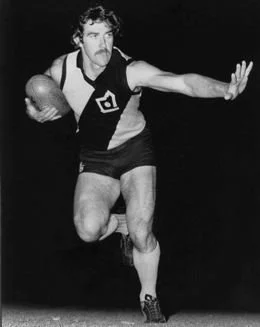
Dad’s senior playing career started on the oval below us in 1967 at age 17 years. But his connection with this place started well before that.

Shortly after the Perth Football Club moved its home from the WACA to Lathlain Park in 1959, Dad’s father Bob was appointed league coach.

On the oval below us, a 10-year-old Ian kicked a ball on the periphery of the men training, observed the way in which they came together, and felt the physicality and camaraderie of it.

At this place he absorbed disciplines, routines and protocols.

He watched his father leading these men.

At this place as a child, Dad also experienced the communal good spirits of men, women and families at post-match functions in a smoky Perth social club – the same place we will convene to share company and reflect upon his life at the conclusion of this Service.

Like Bob, Dad also coached the Perth League team at this place.

As a child, I also kicked a ball here on the periphery of the men, observed the way in which they came together, and felt the physicality and camaraderie of it.

I also watched my father leading men.

And, as children we also experienced the communal good spirits of post-match functions in a smoky Perth social club.

Mum has shared some stories of the fun that was had later in the evenings when the kids had been shipped off home to bed with the grandparents.

Fi, recalls the disappointment of match days when the creche below the grandstand, run by a kindly Perth matriarch, was open. On these days, instead of free roaming the outer, Fi would be bundled to the creche along with toddler Jen and cousin Emma. A memory of an effervescent Luke Webster being locked in a cupboard by the Perth matriarch, now stands as either a frightening fact, or a fond and amusing anecdote of the match day creche. I think Luke turned out ok regardless.

For me, accompanying Dad to Sunday morning training sessions at this place was treasured time.

“Dad, can I come to training?”

Sunday morning training was a time when he was more available. On game days and during the week it was business. On Sundays, more liberated and relaxed.

But not all Sunday morning sessions were relaxed.

The Demons didn’t experience a whole lot of success in the period that Dad was coaching here and on one Sunday morning, following what must have been a decent flogging, Dad told me to take one of the waterlogged Burley footballs and go out onto the oval for a kick. He needed to speak to the team – “come back in 20 minutes”.

I left the rooms but didn’t go far. While loitering I heard a man’s stern raised voice. Is that Dad? I was shocked, I had never heard his voice raised or this tone from him. I slunk back into the doorway of the rooms and watched from a corner. It was a bit exciting. The team was sitting on the change room bench or on the floor. A couple were standing. All had lowered heads.

The crescendo to the dressing down was something along the lines of:

“There is no Clark Kent who is going to jump into a telephone box. There is no superman who is going to do this. You need to do this.”

This Sunday parable on responsibility and accountability is seared into my memory.

Also seared into my 6-year-old memory of Sunday morning training, is a physical altercation with a 4-year-old Ben Cousins which left me in tears. Cuz, I know that you are watching this on a livestream. Its ok mate, I am over it!

Liz was in the womb in Dad’s last year as coach of Perth in 1984 – literally absorbing the atmosphere of the smoky social club in different ways. Those were the days!

Fast forwarding some decades, Liz’ husband Phil would play with Perth at this place, and in recent years attend Perth Football Club alumni events with Dad here at Lathlain.

Chubby showed us around the Perth rooms last week when we were sorting arrangements for today, a nostalgia and feeling of connection emerged, through memory, from Bob and Dad’s names scribed on the number 3 locker and the many photos of Dad and his friends on the walls of the club.

While Dad had been present and worked in this Eagles building for a few years, and some of our kids had been here with their Poppy, none of Fi, Jen, Liz or I had yet been to this building.

Our experience of the place of the West Coast Eagles was at Subiaco Oval.

The glass and steel here was unfamiliar, but the embrace, warmth and tears of Dad’s extended family of colleagues in the foyer below was the continuation of a story that has built over decades.

While my family have been here away from our home in Trentham in country Victoria, the Eagles have generously provided us with adjacent accommodation for the last couple of weeks.

This has given me a chance to again spend some time on that oval, more than 40 years since Sunday morning training. This time with my sons and a Burley.

I prepared this eulogy with a view across to this building, and to the imperial training centre that bears the name of Dad’s great friend.

Connections to place, new, old and through generations.

___

The respect and kindness and love that has been written of, spoken of and felt for Dad since his death has been beautiful, and even a bit overwhelming.

For about a week, in WA at least, I think he was the most famous person being feted for the unfamous things that he did.

It felt a bit like the sentiment that was shared when actor Sam Neil died recently. The tributes to Sam Neil were more about his personhood than his movies.

Similarly with Dad, the football achievements, although many, secondary to the way he made people feel and going the extra mile in private.

At first instance, these things do not seem remarkable, but perhaps they are.

Warmth and care, having a bit of time for everyone, no matter who.
___

Ian was a wonderful father to Fi, Jen, Liz and I.

He made us feel safe.

He supported and was proud of each of us, whatever life decisions we made.

Finding words to do justice to the feelings that arise with the death of a parent is a difficult task. Probably one of the reasons they invented poetry.

He was also a wonderful husband to Robin. Their partnership was one of mutual respect and love.

Together, they cultivated for us a home and upbringing of warmth and comfort.

One of the enduring strengths of their relationship was that they each gave the other space.

Mum knew that Dad needed space for football. It was part of him.

Dad knew that Mum needed space for her family and her passions of creativity.

Mum had a special bond with her identical twin sister Alison. A type of bond that may be peculiar to identical twins. They shared much. They were each themselves, but at the same time each other.

Ali died a few months ago, so this is an immense period of loss for Mum.

So special and consuming the relationship of identical twins, Dad may have been heard to utter a phrase in periodic frustration once or twice over the years:

“Well, I only married one of them!”

But their frustrations with each other were not large in the scheme of things, and Robin and Ian have been a spectacularly winning combination.

Mum and Dad both went to Applecross High School. Dad was a year older. They knew of each other, but that was it. 6 years passed since Dad finished at Applecross with no contact. Then there was a whirlwind.

Dad had been back and forth between Perth and Melbourne during 1973 after Perth didn’t give him a clearance to play in the VFL. Chubby will provide some more colour on the football politics, but all we need to know for this love story is that by fortune of a football administrator’s decision, Dad was back in Perth in late 1973.

In Dad’s words from a 2002 interview for the Sandover Club this is what happened;

“So I came back, finished ’73, met my wife, got married, went back in January, and spent 4 great years in Melbourne.”

The slightly elongated version of that story is that after a very short period of courting, Ian proposed to Robin in a car park, both in pyjamas following a pyjama party, got married 6 weeks later and flew to Melbourne a week after that to start their new life as husband and wife.

Amazingly, the house they lived in less than 1 kilometre from the family home of my wife who I met in Edinburgh 26 years later – connection.

Mum and Dad were a hip thing when they arrived in Melbourne. Even gracing the front page of the Herald Sun with a marvellously staged photo of Mum kicking a footy and Dad feigning a tackle. 70s gold.

While in Melbourne Mum would write to her sister Ali. Here is an extract from one of those letters:

12 April 1976

Well Fitzroy did it again – lost. They certainly had their chances kicking 7 points in the last quarter. George Young kicked 8 goals for St Kilda! He’s a pretty cool character. Had tea with Peta + George after the game. Ian played well and has regained his confidence. He had a couple of heavy knocks – one in which he went down and heard all of the bones in his neck crack. Was relieved when he could move it. On Sunday morning he was aching all over – from his neck to the top of the leg on his buttock where he had also had a kick. Takes all week to recover from the previous game.

Ian carried his football protocols into marriage. One of these was that a good night’s sleep was imperative for preparation. So separate beds on a Friday night.

Relatedly, giving birth during the season would be inconvenient.

I was born in May 1976 in Melbourne – on a Friday – clearly a disturbance as the stat sheet for the Fitzroy v Collingwood game the next day reveals that Dad only had 2 disposals. Fi was an improvement, born in Perth in July 1978 – on a Sunday. Itis clear that Dad played in the Royals v Falcons game the day before, although no stat sheet is available.

None of this was optimal. From here on they eased the pressure, got their rhythm right and had summer babies. Jen born in January 1982, and Liz born in January 1985 – day of week not applicable.

And Mum also played a very direct role in football over the years, hosting young men, cooking them meals and chatting at our kitchen table.

A balance of give and take.

A life of love, to Dad’s final moments.

__

In 2008, Dad became Poppy.

Over the next 18 years he welcomed his nine cherished grandchildren: Joe, Freya, Harper, Otis, Sam, Isla, Jade, Will and Tess.

He embraced this final family role with love, generosity and the extra softness that grandparenting invites.

Dad also welcomed Gav, Rachel, Phil and Ash into the family with the same warmth, generosity and love.

__

Dad’s life was full of many friendships and accompanying these friendships was laughter.

Chubby and Bill have the most unmistakable, thunderous and long laughs and it was not possible to find a way to sleep as a kid when either of them or, worse, both of them, were around having dinner or a drink.

I didn’t mind. I would find myself smiling under the covers or hovering to be in on the conversation and the joke.

For all the time I can remember at Thelma St, Dad would have a Sunday night telephone call with Bryan Cousins.

As the phone was connected to the wall, the conversation was a shared experience. First topic family. Second topic Cuz’ dog. Third topic Cuz’ horses. Fourth topic football. The humour and enthusiasm for life and family that Cuz and Dad shared was infectious.

I have lived away from Perth now for half of my life. So a lot of phone calls. If I called Dad and asked him what he had been up to, whenever he told me about an evening out with friends, he would always just describe it as:

“A bit of humour.”

__

Dad grew up in Como with parents Bob and Dolly and brother Peter.

They lived on Thelma Street.

A happy and free time, cricket and footy on the streets, open doors, friends and family.

Around the block was Aunty Mary and Uncle Bill’s house with cousins Paul and Tren.

Cousins Gavin and Glenn were just on the other side of the Canning bridge.

Dad went to Como Primary School. Fi, Jen, Liz and I would also go to Como Primary. It was a background connection that we all enjoyed and felt. School motto “Only our best”.

Things were not all roses for our man Ian at Como however. Dad’s schoolmate and Best Man, and fellow Thelma St resident, Barry Cribb shared with me a story of a terrible indiscretion.

As customary in any School of the era, the boys would be kicking a football at the lunch break. The rule was no kicking after the bell had gone to return to class. On the day in question, Ian took the last kick. Both after the bell and off the side of the boot straight into the back of Mr Morris’s head!

For this act, a sheepish Ian was hauled to the Principal’s office where he received “the cuts” as the appropriate corporal punishment of the day.

Barry says that, rather than harbouring bitterness toward his superiors as most young lads might do, Dad was accepting and respectful about the whole business.

“Well, I deserved it, I broke the rules.”

After finishing High School at Applecross, Dad went to Secondary Teachers College in Nedlands to study Phys Ed.

Friend Rod Rate was a lecturer at the Teachers College.

On Fridays, Rod took the gymnastics classes, core to any phys ed curricula.

Rod also happened to be the South Fremantle Football Club Fitness Coach. The opening round fixture in 1970 was Perth v South Fremantle.

There was opportunity here.

A conspiracy was hatched at Fremantle Oval to make use Rod’s Friday access to Dad. It was agreed that Rod would make Dad work extra hard at gym class to take an edge off him. On the eve of the season opener, Rod proceeded to direct Dad to do headspring after headspring after headspring. The compliant student followed the instruction of the teacher.

The next day Dad lined up at centre half forward. His neck was sore as hell and his agility clearly hindered. Dad was doing so little in the match that Mal Atwell moved him out of the key position and onto the half forward flank. The plan was working and the conspirators gave each other nods with silent smiles. That is until the last kick of the day when a cock necked Ian was forced to move in the non-preferred direction and kicked the winning goal.

South Fremantle would go on to play Perth in the 1970 Grand Final. Rod and Dad had a friendly wager. If South won, Dad would pay Rod his losing player’s match payment. Perth lost and Dad, true to his word, gave Rod his full $6 Grand Final match payment.

Dad’s first teaching job was at Cannington Senior High. The other PE teacher at Cannington was Richard Aggiss. At the time, Richard was a member of the Australian hockey team. Richard went on to be coach of the Kookaburras and an international coaching legend. Not a bad PE teacher combo for the kids at Cannington!

Dad also taught Phys Ed at Como High before taking a job at De La Salle College in Melbourne.

The Christian Brothers overlooking the fact that Dad had not taken the catechism to allow a VFL star onto staff.

Ian was not a religious man, even after his stint teaching with the Catholics.

We knew this. Even so, it was still a very big surprise to learn from Adrian Barich’s column in the Sunday Times Magazine last week that he had actually rejected God when he left an up-and-coming Gary Ablett out of the 1982 Perth squad.

Dad enjoyed teaching and had a great rapport with his students. A mix of mentoring and guiding young people a recurring theme.

A bit of the teacher never left him.

When I was at Aquinas, Dad came down to take a year 10 training session. While he was addressing the group, a couple of my school peers were talking and not paying attention. Dad singled them out immediately.

“If you boys would rather be somewhere else then it is no skin off my nose if you go.”

I was mercilessly reminded of “no skin off my nose” for the remainder of my schooling.

During their 4 years in Melbourne, Mum and Dad made some enduring friendships.

One of those was with Fitzroy Lions captain John Murphy and wife Judy.

I thanked John last week for arranging the Lions black armband tribute to Dad in the preliminary final against Hawthorn. In our family, we had named this the ‘Poppy match’. We were ecstatic with the result and felt it fitting that the Poppy Match was the best game of the season. At least it was for a week until the Grand Final.

I know that it may be too soon for some in the room, but given the occasion, I feel obliged to be truthful here today. Something never quite gelled with Dad and the Dockers. Something ingrained in the psyche, he was never able to shake a misgiving for the Fremantle interloper. So, in his heart of hearts, and with his grandkids wearing his Lions jersey’s here today, I know that Dad would have wanted the season to end this way.

Just like grand final merch, I had another version prepared and ready for today which ran along the lines of Dad timing his departure without having to witness a Dockers Premiership.

Another of the great Melbourne friendships was with Peter and Gwen Crimmins.

Dad started his friendship with Crimmo when they were part of the Australian All Stars team which played exhibition matches against Carlton in London, Athens and Singapore at the end of the 1972 season.

Crimmo was captain of Hawthorn.

At the time, Crimmo had the Puma Agency for Australia. To buy gear for your sports shop you needed to go through the agent.

The story then goes that Dad was the first player in Australia to be sponsored and paid by Puma to wear their boots and gear.

Crimmo died of testicular cancer at the age of 28, 3 days after Hawthorn won the 1976 premiership and 4 months after I was born. They named it the Crimmo Cup.

Crimmo is my godfather and Mum and Dad continued their great friendship with Gwen over the rest of Dad’s life and Gwen remains one of Mum’s closest friends.

While he was in Melbourne Dad was noticing that specialist sports shops were becoming more of a thing.

When he returned to Perth at the end of 1977, he brought back this cutting edge Eastern States intelligence.

A family meeting was held with Peter, Bob and Dolly, and it was decided that Millers Sports and Hardware in Vic Park, a shop Bob and Dolly had been running since the early 1950s, would become Millers Sports with Peter and Ian taking the lead roles and Bob and Dolly continuing in the business in a more supportive fashion.

The transition seemed pre-destined in any event. The family was good at sport and had zero handy trade skills. I never saw Dad even hammer a single nail. The remaining hardware from the shop that was distributed amongst the family rusted in sheds through lack of use.

When Mum and Dad moved back to Perth from Melbourne, we lived in a house in Bullcreek for a couple of years before they bought Bob and Dolly’s house in Thelma St - Dad moving back to his childhood home with his young family.

This was special for us. We ran, rode, played and skated in the same street, hit and kicked balls over the same fences, sometimes retrieving with permission, sometimes not, in the same way Dad did. The half-court tennis court that Mum and Dad put in on the quarter acre block the scene of epic barefoot tennis, basketball, first pedals on bikes and more.

In that backyard I so often heard Dad say to me:

“two hands for beginners”

“eye on the ball”

“get your body behind it”

and on chest marks, embarrassingly “hug it like your girlfriend.”

Whenever I had a kick with Bob it was the same backyard repertoire. Having your Grandad say “hug it like your girlfriend” even more embarrassing than your Dad saying it.

In the early 1980s Millers Sports moved to Garden City Shopping Centre.

In time the business moved to also include surf wear.

It was a family business in the best sense.

Dad, Peter, Nanna and Pop were a seamless organic unit. There was no friction. Each complimented the other and played their role and it was a rare and special gift to be able to spend so much time with family at the shop.

According to industry peers, during the 80’s and 90’s, Millers Sports was the leading sports store destination in the State.

Dad was instrumental in forming WA’s first buying group in the sports trade. 6 stores which grew and went from strength to strength prior to the arrival of large national franchises and online shopping.

The mantra provided by Dad and Peter to staff was “the customer is always right. If you can’t sort it out on that basis send them to me.” We knew that they didn’t really believe the first bit! But if the customer did require Dad or Peter to step in, a diplomatic resolution would be found with little fuss.

In those days, before the arrival of professional football, Dad would work at the shop and then go to training. Peter worked Saturdays during the season.

In the 90’s, if you were working during late night shopping on a Thursday you could pop along a couple of shops down the Garden City mall and ask Woosha, the pharmacist, to fill a script and wish him luck for the game on the weekend.

Through the 90s Dad was a West Coast Eagles volunteer. The Match Committee members did not receive any payment between 1990 and 95. Between 95 and 99

they received a nominal honorarium for their very significant time commitment. Still for all intents a volunteer.

Dad would not have exchanged that experience for any sum of money.

Over the years, hundreds of young people worked in the shop in casual roles. Again, Dad mentoring, developing and guiding young people a theme.

Good friends of each of Fi, Jen and Liz and I were employed in casual roles, creating another great link.

Our friends all loved Dad. He loved us having parties in the backyard. He would engage in just the right way, never overstaying a welcome.

In 1994, Mum and Dad left their children to travel to the Grand Final – delegating to 18-year-old me guardianship responsibilities for their younger children. Of course, I took this very seriously and arranged for 20 or so mates to watch the game in the backyard. The TV was perched outside, antenna adjusted and keg primed. Every time the coach’s box was shown on the channel 7 coverage there would be a unified chorus of:

“Serge, Big Serge”

and then a compulsory scull of beer.

In the 90’s the Millers Surf T-shirt became a coveted item. it was not for sale to the general public. Scarcity created the buzz. In an act of promotional genius or subtle coercion, Dad would issue some of these t-shirts to the Eagles playing group. The aim was to have players seen on tv interviews or in pre-season training wearing the branded t-shirts. This actually happened quite a lot. However, it is not clear whether the t-shirts were worn so often because they were cool, or if there was a sense that Dad was keeping score and that those who did not wear one were less likely to be selected.

Sadly, the 50-year-old family business did not survive. This was a very difficult time for the extended family, for our family and for Dad.

A loss of financial security, loss of identity, publicly and personally.

The family home was lost.

Friends chipped in to buy a second-hand car and pay the school fees.

The support and generosity of Dad’s community of friends best described as acts of love.

It was an adversity Dad faced with dignity. With humility. Without grudge. With head up.

This, at any time, and above all achievements, is when I was most proud of Dad. His character was exposed and it stood tall.

Each life has its turns.

An opportunity arose, and his final career chapter commenced.

Dad was always cognisant of the opportunity the Eagles granted him. He remained quietly grateful. He never took the role or the club for granted. For him, it was a vocation, not a job.

____

In his final years, Dad endured a series of health challenges. In 2025, he was diagnosed with Progressive Supranuclear Palsy, or PSP, a rare and little-known life-limiting neurological condition. He faced his deteriorating condition – losing the ability to walk and to care for himself, a slowing down of his speech, and finally the need to leave home for an aged care facility, with the same dignity, head held high and humility that he had faced any other adversity in life. He even took his final breaths with little fuss, quietly, peacefully, and surrounded by loved ones.

____

Ian’s recipe:

Look someone in the eye when you speak to them.
Remember something about the person and ask them about it.
If you don’t know anything, ask a question or say something affirming anyway.
Make a person feel seen.
Say hi to absolutely everyone on your morning walk.
Remember all names.
Use some humour.
Listen.
Don’t dominate.
Listen again.
Get to the airport early.
Keep the lawn mown, service your car and don’t forget to order the security door.

The tools of his trade were a pen and a calendar notebook and phone numbers. The birthdays and ages of everyone he knew neatly written in the yearly diary.

This was all he needed until the discovery of text messages. Dad in time becoming magisterial in his utilisation of the short, well-timed check in text.

how are you going
well done
happy birthday
good luck
bad luck
have a good break……

Not long messages. But contact. People appreciate it.

I am not sure exactly when his discovery of the text occurred, but he was not at the vanguard. If we say that mass use of the text on a Nokia brick started to occur around the year 2000, it may have been as late as 2005 that Dad began to really dedicate himself to text craft.

In 2005, Mum and Dad came to visit Rach and I in London and we then spent some time on a holiday in France and Spain. Dad was incessantly texting. And he seemed to be loving it. We teased that he was worse than Warnie.

__

Football was one of the great settings in which Dad’s character found expression. It was where he formed friendships, mentored young people, contributed to a community and found opportunities to serve.

But those qualities were not confined to football. They were present in our family, in all of his friendships, in the way he conducted himself in business, and in the care he showed to the people who worked with him and for him.

Helen Garner writes in her personal novel The Season that football can reveal deeper things about people. Family love. Belonging. Joy and disappointment. Beauty and violence. The ways we care for one another.

Football was very important to Dad. But people were always more important.

Wherever I went, there always seemed to be someone who knew him.

At a house-warming barbeque in Footscray, our friend and Brendan Gale’s sister was telling me that it really gave her the shits that everyone kept telling her what a nice guy Brendan was, and that he was the nicest guy in football. At the barbeque, she introduced me to Brendan, and the first thing he said was:

“Oh Serge, yes I know Serge. He is the nicest guy in football.”

A few months ago, at the charity where I work in Melbourne, we invited Matt Finnis, the former head of the AFL Players Association, to speak about leadership. Before the session, knowing his history in football, I mentioned Dad’s name. Matt’s reaction was immediately positive. He told me about how important Dad had been in creating the template for player welfare across the AFL.

We then moved into the session, where Matt and I had an exchange about Plato’s philosophy and leadership. I have been thinking about that conversation ever since.

Plato believed that leadership begins with character. Not power. Not status. Not recognition.

Looking back, that feels less like philosophy and more like a description of Dad.

In football, in business, among his friends and, most importantly, within his family, he led without fanfare. He listened. He encouraged. He gave his time freely. He made people feel seen.

That is why people remember him.

That is why people loved him.

You have left a wonderful legacy.

Thank you, Dad.

Reflection by daughter in law Rachel Coghlan

One of my very early experiences of meeting and getting to know Ian was on a trip to the Basque region of France and Spain with Robin and Simon. Simon and I were living in London at the time, with frequent trips to the continent inhaling all the food, culture, art, literature, philosophy and languages on offer.

Ian, then my future father-in-law, showed mild interest (at best) in the soaring light-filled atrium and modern art of Frank Gehry’s Guggenheim Museum Bilbao, or the Belle Epoque architectural elegance of Biarritz, including the grand historic hotel in which we stayed. But it was in San Sebastian, eating pintxos and drinking table wine along the tapas alleys of the Old Town, where I first enjoyed his signature spirit and heart. He learned four essential Spanish words - gambas a la plancha (grilled prawns), shouted them repeatedly through the tapas crawls, and never forgot them. When we both bought t-shirts from and screen printed with the name of a local San Sebastian clothing company – Callate la Boca (shut your mouth) - his Latin language vocabulary peaked gloriously. Ian’s joy was deliciously simple: the company and connection of people, lots of stories about people, good food, immense pride in his family, and a bit of silliness.

In the spirit of melding the highbrow and language with simplicity, this is a poem by French philosopher Simone Weil, one of Simon’s current favourites. It is a poem about simple giving and enduring warmth. Ian’s legacy was a billion little acts uncomplicated and easy, that added up to something completely extraordinary.

 Il restera de toi - What Will Remain of You

Il restera de toi ce que tu as donné,
Au lieu de le garder dans des coffres rouillés.

What will remain of you is what you gave,
instead of keeping it in rusting chests.
What will remain of you, from your secret garden,
a forgotten flower that did not wither.
What you have given will bloom in others,
whoever loses their life will one day find it.
What will remain of you is what you offered,
between open arms one morning in the sun.
What will remain of you is what you lost,
what you waited for beyond the alarm clocks.
What you suffered will live again in others,
whoever loses their life will one day find it.
What will remain of you: a fallen tear,
a smile that sprouted in the eyes of your heart.
What will remain of you is what you sowed,
what you shared with the beggars of happiness.
What you sowed will germinate in others,
whoever loses their life will one day find it.
Enjoyed this speech? Speakola is a labour of love and I’d be very grateful if you would share, tweet or like it. Thank you.

Facebook Twitter Facebook
In SUBMITTED 4 Tags IAN MILLER, FATHER, SON, SIMON MILLER, EULOGY, FOOTY, AFL, WAFL, WESTERN AUSTRALIA, SPORT, PERTH FOOTBALL CLUB, WEST COAST EAGLES
Comment

For Shiri, Ariel and Kfir Bibas: 'I remember the first time I said “mi amor” to you', by Yarden Bibas - 2025

October 7, 2026

26 February 2025, Israel

I remember the first time I said “mi amor” to you.

It was at the very beginning of our relationship.

You told me to only call you that if I was certain I loved you, not to say it carelessly.

I didn’t say it then because I didn’t want you to think I was rushing to say “I love you.”

Shiri, I’ll confess to you now that I already loved you back then when I said “mi amor.”

Shiri, I love you and will always love you!

Shiri, you are everything to me!

You are the best wife and mother there could be.

Shiri, you are my best friend.

Mishmish, who will help me make decisions now? How am I supposed to make decisions without you?

Do you remember our last decision together?

In the safe room, I asked if we should “fight or surrender.”

You said fight, so I fought.

Shiri, I’m sorry I couldn’t protect you all.

If only I had known what would happen, I wouldn’t have fired.

I think about everything we went through together — there are so many beautiful memories.

I remember Ariel and Kfir’s births.

I remember the days we would sit at home or in a café, just the two of us, talking for hours about everything under the sun. It was wonderful. I miss those times deeply.

Your presence is profoundly missed.

I want to tell you about everything that’s happening in the world and here in Israel.

Shiri, everyone knows and loves us — you can’t imagine how surreal all this madness is.

Shiri, people tell me they’ll always be by my side, but they’re not you. So please stay close to me and don’t go far!

Shiri, this is the closest I’ve been to you since Oct. 7th, and I can’t kiss or hug you, and it’s breaking me!

Shiri, please watch over me … Protect me from bad decisions.

Shield me from harmful things and protect me from myself.

Guard me so I don’t sink into darkness.

Mishmish, I love you!

Chuki, Ariel.

You made me a father.

You transformed us into a family.

You taught me what truly matters in life and about responsibility.

The day you were born, I matured instantly because of you.

You taught me so much about myself, and I want to thank you.

So thank you, my beloved.

Ariel, I hope you’re not angry with me for failing to protect you properly and for not being there for you.

I hope you know I thought about you every day, every minute.

I hope you’re enjoying paradise.

I’m sure you’re making all the angels laugh with your silly jokes and impressions.

I hope there are plenty of butterflies for you to watch, just like you did during our picnics.

Chuki, be careful when you climb down from your cloud not to step on Toni … Teach Kfir all your impressions and make everyone laugh up there.

Ariel, I love you “the most in the world, always in the world,” just as you used to tell us.

Poopik, Kfir.

I didn’t think our family could be more perfect, and then you came and made it even more perfect …

I remember your birth.

I remember during the delivery when the midwife suddenly stopped everything — we were frightened and thought something was wrong — but it was just to tell us we had another redhead.

Mom and I laughed and rejoiced.

You brought more light and happiness to our little home.

You came with your sweet, captivating laugh and smile, and I was instantly hooked! It was impossible not to nibble on you all the time.

Kfir, I’m sorry I didn’t protect you better, but I need you to know that I love you deeply and miss you terribly!

I miss nibbling on you and hearing your laughter.

I miss our morning games when mom would ask me to watch you before I went to work.

I cherished those little moments so much, and I miss them now more than ever!

Kfir, I love you the most in the world, always in the world!

I have so many more things to tell you all, but I’ll save them for when we’re alone.

Source: https://nypost.com/2025/02/26/world-news/r...

Enjoyed this speech? Speakola is a labour of love and I’d be very grateful if you would share, tweet or like it. Thank you.

Facebook Twitter Facebook
In SUBMITTED 4 Tags HAMAS, ISRAEL, TRANSCRIPT
Comment

Josh Frydenberg: 'Prime Minister, you have failed us', Speech at Bondi Memorial - 2025

October 7, 2026

Thank you, everyone, for being here.

I’m here to pay my respects to the souls of 15 innocent people, who have lost their life in the deadliest terrorist attack in Australia’s history. In the greatest loss of Jewish life since October 7 anywhere around the world outside the state of Israel.

Rabbis, Holocaust survivors and the beautiful 10-year-old Matilda. Her parents said they gave her that name because it was the most Australian name they knew.

What a tragedy. This massacre at Bondi is the greatest stain on this nation. Has brought the greatest shame to our nation. I’m here to mourn, but I am also here to warn. Unless our governments, federal and state, take urgent, unprecedented and strong action, as night follows day we will be back grieving the loss of innocent life in another terrorist attack in our country.

This was all too predictable. Ever since those hours after Hamas’ horrific attack on October 7, we saw the heinous scenes on the steps of another national icon, the Sydney Opera House, with people celebrating that death and destruction. Who was apprehended that day? None of those who hate Australia and hate Jewish people, but a simple Jewish man holding in solidarity the Israeli flag.

And since that day, we have seen the doxxing of Jewish creatives, the cancelling of Jewish artists, the boycotting of Jewish businesses, the graffiti-ing of our schools, the harassment, the intimidation of Jewish students and staff on our university campuses and of course the firebombing of our synagogues and day care centres and daily, daily protests of hate in this, the lucky country, which is lucky no more.

And for 2½ years, as the Australian Jewish community and others have raised the alarm bells, they were told by people who should know better that this was not as significant as they had said. We were told they didn’t say “gas the Jews” on the steps of the Opera House, they simply said “where are the Jews?”

The university vice-chancellor at the ANU, when one of her students went out publicly and supported a listed terrorist organisation, Hamas, we were told: “I don’t agree with what she has said, but it is her right under academic freedom to say it.”

And then we have the nurses in Bankstown calling for the death of Israelis and we are told it’s just a joke. When a caravan has a deadly message against Jewish people, we are told it is just a hoax.

Well, the greatest massacre in Australia’s history is no hoax. It is no joke. It’s a horrible, evil crime. So make no mistake, I am here, we are here to fight for the soul of Australia and to fight for the survival of the Australian Jewish community that has been here since the arrival of the First Fleet. Just over 100,000 strong. It has produced Australia’s greatest citizen soldier, Sir John Monash, who would be turning in his grave right now.

Our first Australian-born governor-general, Sir Isaac Isaacs, and the man who brought a touch of healing to our country, Sir Zelman Cowen, and Olympic gold medallist Jessica Fox. Chief scientists and our greatest philanthropists, Frank Lowy, and industrialists: this is what the Jewish community has contributed in that 125 years or more, and this is how our government repays us.

We, as a Jewish community, have been abandoned and left alone by our government. Our governments have failed every Australian when it comes to fighting hate and antisemitism.

It is time for [Albanese] to accept personal responsibility for the death of 15 innocent people, including a 10-year-old child. It is time our prime minister accepted accountability for what has happened here.

Josh Frydenberg

Our prime minister, our government, has allowed Australia to be radicalised on his watch. It is time for him to accept personal responsibility for the death of 15 innocent people, including a 10-year-old child. It is time our prime minister accepted accountability for what has happened here. And it’s time our leaders stood up and led at last.

This is a time for accountability and action. So prime minister, I am going to give you some ideas about what you need to do.

Firstly, prime minister, ban the hate preachers. On October 8, in Lakemba ... you had Islamic preachers say that October 7 [Hamas attack] was an act of courage and pride. When the Muslim community hears that message for the last 2½ years, is this any surprise? The shooter here, who did this, was linked to a factory of hate in Bankstown. How can that factory of hate be allowed to open its doors for one day more? I say no, I say never.

Second: Prime Minister, ban these extremist organisations that have been allowed to flourish on your watch in our country, when you have been prime minister. Hizb ut-Tahrir is banned in the United Kingdom. It is banned in Germany. It is banned in moderate Muslim states. Yet it is not banned here in Australia.

Eighteen months ago, the Channel Nine papers and 60 Minutes with Nick McKenzie exposed how Hizb ut-Tahrir was grooming young men in schools, online and across Australian society. Prime Minister, for 18 months what have you done? The answer is nothing, and the result is this.

Prime Minister, weeks ago, you had extremist right-wing organisations, Nazi sympathisers, standing on the steps of the Victorian parliament and the New South Wales parliament. Premier of Victoria, Premier of New South Wales, Prime Minister of Australia, what have you done? Nothing. That was your answer. This is the result. Ban those organisations immediately.

Third: Prosecute those who incite violence and hate that has produced this. I interviewed the prime minister for my documentary 18 months ago on antisemitism. I put to the prime minister that Dennis Richardson, one of Australia’s most distinguished security professionals, the former head of ASIO, the former secretary of defence, the former secretary of foreign affairs, the former Australian ambassador to the United States said that the statement “from the river to the sea, Palestine will be free” was a very violent statement that had no place on our streets. And I put to you, I put to you, Prime Minister, that this is what Dennis Richardson said. And you agreed. You said it had no place on our streets. Yet what have you done, Prime Minister? Nothing! Nothing!

And people are allowed to parade on our streets with Hezbollah, Hamas, ISIS flags and signs that say “Jews are Nazis”, “Zionists are terrorists”, yet where are the prosecutions? Where is the action?

Prime Minister, what other country in the world are people in your country allowed to call for the abolition of? No other country, except the state of Israel. Well, I can tell you, I won’t accept it and the people here will never accept it.

Fourth: Stop the protests. For 2 ½ years, we have put up with daily protests which have become incubators of hate. There is a ceasefire in the Middle East. Israel launched a defensive action against a listed terrorist organisation that took more than 1200 innocent lives and hundreds of Israelis hostage. And you have allowed these protests, unabated, to go on for 2½ years, destroying businesses and now destroying lives. Stop the protests!

Fifth: Invest in education. When I did the documentary on antisemitism, I interviewed Julia Gillard. Julia Gillard said one of the reasons for the level of hate rising in our country is because young people don’t have the information, the understanding. The knowledge of either the history of the Holocaust or the history of the Middle East. Across Australia, there is some Holocaust education but it is piecemeal. It is uncoordinated and it is different according to different states.

You are the prime minister of Australia, and the history of the Holocaust is that bad things happen when good people stay silent. So it’s up to you – not to sprinkle a bit of money around Holocaust education after a horrific terrorist attack but to take the initiative now, with whole-scale, wholesale, wide-scale reform to our education system.

Teach Australian values of tolerance, respect. This was an attack on Australia and this needs root-and-branch change of our education system so that this never happens again.

Sixth: Prime Minister, put in place a much more effective and rigorous and strong immigration system. On your watch, thousands of people have come from a terrorist hot spot without sufficient security checks. Your home affairs minister, who couldn’t even put his face here in daytime, has to send officials out of the room to make promises about ISIS brides. You tell me how that is in Australia’s national interest? You tell me how bringing people to this country who don’t accept, who don’t know our democratic ideals, our values of tolerance, you tell me how that makes any of us, Jewish and non-Jewish alike, more safe? It doesn’t. And until you change our immigration system to remind people it is a privilege to come to this country, it is a privilege to stay in this country, it is not their right, then nothing will change.

Seventh: Prime Minister, and this brings great shame to you and your home affairs minister and your government: You hand-picked a special envoy on antisemitism. She put together a comprehensive program that had initiatives for everything from the digital and media space to our universities and to our creative arts, to hard security, to soft security. She talks in that report about more resources for operational security. And today, we are talking about a graphic and tragic failure of operational security.

Yet she presented her report to your government more than 150 days ago, in July of this year. It has been gathering dust on your desk. If there were ever a metaphor, if there was ever a sign, if there was ever an example, if there was ever an illustration of your failure, of your government’s failure to treat the dangerous rise of antisemitism with the urgency and the importance that it deserves, that was it. For 150-plus days you had a report and you did nothing. And this is the result.

And finally, Prime Minister – no ifs, no buts, no equivocations, no distractions – you must call a royal commission into what has happened here and into the rise of antisemitism in our country.

Prime Minister, you have supported a royal commission into our banks. You have supported a royal commission into our welfare system. You have supported a royal commission into aged care, and now the deadliest terrorist attack in Australia’s history has occurred on your watch. There is no ifs, there is no buts, there must be a royal commission called immediately. And we here deserve answers.

We don’t need pious words of comfort, we need answers. How did people come into this country with these views that are so antithetical to our democratic ideals? How did these people in Australia go unchecked to the Philippines for terrorist training? How did these people acquire licensed firearms that they used on innocent civilians? How were these people radicalised in Islamic ideology? And how with some 1000 people here in a heightened threat environment, did we just have three police, ill-equipped to provide the first and fundamental duty of both the state and the federal government to protect the safety of their citizens?

And we need answers, we need solutions, we need action. And Prime Minister, I heard you say yesterday that you are ready for the fight on guns. Well, let me tell you, guns may have stolen the life of 15 innocent civilians, but it was radical Islamist ideology that pulled the trigger.

And if you, Prime Minister, can’t say those words, Islamist ideology, if you can’t speak them, you can’t solve them.

So, Prime Minister, you have failed us. Your government has failed us. You sit in a chair. It is time you earned that title. If you don’t want to do the job, give it to somebody who will.

Enjoyed this speech? Speakola is a labour of love and I’d be very grateful if you would share, tweet or like it. Thank you.

Facebook Twitter Facebook
In PUBLIC FIGURE D Tags JOSH FRYDENBERG, BONDI MASSACRE, JEWISH COMMUNITY, MEMORIAL, TRANSCRIPT
Comment

For Ro'i Rotberg: 'Yesterday morning Ro'i was murdered', by Moshe Dayan - 1956

October 7, 2026

30 April 1956, Nahal Oz, Israel

Yesterday morning Ro'i was murdered. The morning's silence dazzled him, and he didn't see those lurking for his soul at the edge of the furrow. It's not among the Arabs in Gaza but in our own midst that we must seek Roi's blood.

How did we shut our eyes to the reality of our fate, unwilling to see the destiny of our generation in its full cruelty? Have we forgotten that this small group of young boys, settled in Nahal Oz, is carrying the heavy gates of Gaza on its shoulders?

Beyond this, hundreds of thousands of eyes and arms huddle together and pray for our coming weakness, so that they may tear us to pieces. Have we forgotten this? Don't we know that in order for the hope of our destruction to perish we must be armed and ready, morning and night?

We are a generation of settlement, and without the steel helmet and the canon's maw we cannot plant and build a home. Our children won't have lives to live if we won't dig shelters. And without a barbed wire fence and a machine gun, we won't be able to pave a path or drill for water.

The millions of Jews who were exterminated and have no land are watching us from the ashes of Israeli history and command us to settle and rebuild a land for our people.

But beyond the furrow that marks the border lies a surging sea of hatred and vengeance, yearning for the day serenity will dull our alertness, for the day that we'll listen to the ambassadors of conspiring hypocrisy, calling us to lay down our weapons.

Roi's blood is crying out to us, and only to us, from his shredded body. Although we have sworn a thousandfold that our blood shall not flow in vain, yesterday we were tempted again. We listened. We believed.

We will make our reckoning with ourselves today. Let us not flinch from the hatred that accompanies and fills the lives of hundreds of thousands of Arabs, who are sitting and longing for the moment their hands can get our blood. We must not avert our gaze, lest our hands be weakened.

That is our generation's fate and our life's choice -- to be willing and armed, strong and unyielding, lest the sword be knocked from our fist and our lives cut down.

Ro'i Rotberg -- the blond boy who left Tel-Aviv to build his home alongside the gates of Gaza, to serve as our wall.

Ro'i -- the light in his heart blinded his eyes, and he did not see the flash of the blade.

The yearning for peace deafened his ears, and he did not hear the sound of murder lurking.

The gates of Gaza weighed too heavily on his shoulders and defeated him.

Original Hebrew as Delivered

אתמול עם בוקר נרצח רועי. השקט של בוקר האביב סנוורו, ולא ראה את האורבים לנפשו, על קו התלם.

לא מהערבים אשר בעזה, כי אם מעצמנו נבקש את דמו של רועי. איך עצמנו עינינו מלהסתכל נכוחה בגורלנו, ומלראות את ייעוד דורנו במלוא אכזריותו? הנשכח מאיתנו כי קבוצת נערים זו, היושבת בנחל עוז, נושאת על כתפיה את שערי עזה הכבדים, שערים אשר מעברם מצטופפים מאות אלפי עיניים וידיים המתפללות כי תבוא, בכדי שיוכלו לקורענו לגזרים, השכחנו זאת? הן אנו יודעים, כי על מנת שתגווע התקווה להשמידנו, חייבים אנו להיות, בוקר וערב, מזוינים וערוכים. דור התנחלות אנו, ובלי כובע הפלדה ולוע התותח לא נוכל לטעת ולבנות בית. לילדינו לא יהיו חיים אם לא נחפור מקלטים, ובלי גדר תיל ומקלע לא נוכל לסלול דרך ולקדוח מים. מיליוני היהודים אשר הושמדו ואין להם ארץ צופים אלינו מאפר ההיסטוריה הישראלית, ומצווים עלינו להתנחל ולקומם ארץ לעמנו. אך מעבר לתלם הגבול, גואה ים של שנאה ומאוויי נקם, המצפה ליום בו תקהה השלווה את דריכותנו, ליום בו נאזין לשגרירי הצביעות המתנכלת, הקוראים לנו להניח את נשקנו. אלינו ורק אלינו זועקים דמי רועי וגופו השסוע. על שאלף נדרנו כי דמנו לא ייגר לשווא, ואתמול שוב נתפתינו, האזנו והאמנו. את חשבוננו עם עצמנו נעשה היום.

אל נירתע מלראות את המשטמה המלווה וממלאת חיי מאות אלפי ערבים, היושבים ומצפים לרגע בו תוכל ידם להשיג את דמנו. אל נסב את עינינו פן תיחלש ידינו. זו גזרת דודנו, זו ברירת חיינו, להיות נכונים וחמושים חזקים ונוקשים, או כי תישמט מאגרופנו החרב, וייכרתו חיינו. רועי רוטברג, הנער הבלונדיני אשר הלך מתל אביב לבנות ביתו בשערי עזה, להיות חומה לנו. רועי, האור שבלבו עיוור את עיניו, ולא ראה את ברק המאכלת. הערגה לשלום החרישה את אוזניו, ולא שמע את קול הרצח האורב.

כבדו שערי עזה מכתפיו ויוכלו לו.

Source: https://www.americanrhetoric.com/speeches/...

Enjoyed this speech? Speakola is a labour of love and I’d be very grateful if you would share, tweet or like it. Thank you.

Facebook Twitter Facebook
In PUBLIC FIGURE D Tags RO'I ROTBERG, EULOGY, MOSHE DAYAN, ISRAEL, GAZA, TRANSCRIPT
Comment

For Ray Gordon: 'He noticed my shirt wasn’t tucked in and I thanked him for looking after me' by son John Gordon - 2024

July 13, 2026

16 May 2024, Holy Rosary Church, Nedlands, Western Australia

In  October 1926, Winnie the Pooh was published, Chuck Berry was born and on the 27th in Dunedin New Zealand,  Francis Raymond Gordon was born to Maud and Frank Gordon.

Frank had fought and been wounded in World War 1 and returned to work as a blacksmith and welder for the Dunedin Tramways,  and Maud Nicolson was a teacher and pianist  from the gold mining town of St Bathans in Central Otago.

Life was always a struggle for the family carrying some legacy debt and especially after the outbreak of World war 2 when Frank was enlisted to make tanks for a private company  but was paid as a soldier. Dad took on a milk round dispensing milk from an urn carried on his bike in the bitterly cold Dunedin pre-dawn. His mother, despite severe asthma, wanted to ensure Ray had the best possible education and she too went out to work.  Frank and Maud determined that Ray would have a better life than they and saved enough to buy Ray a set of the wonderful Arthur Mee’s Childrens Encyclopaedia which he loved and voraciously absorbed setting himself up as  a lifelong font of history and literature, and a quiz champion.  

From 1931 to 1939 Dad went to St Clair school – which he loved – and then Kings High – where he received  education from some outstanding teachers, but also prejudice and discrimination directed to his appearance and clothing. For example his first football boots were school shoes into which his clever dad (who could make anything) had hammered stops which could be removed to revert to use as shoes. Despite being captain of cricket and soccer and an NCO in Air cadets some teachers did not think such appearances should be rewarded with positions and honours. I suspect this attitude was the genesis of a lifelong philosophy Dad adopted to deal with arrogance, entitlement and bigotry he used to call ”confounding the ungodly”.  Probably deriving from Psalm 55.

For example if a bowler ridiculed or mocked you or your team, the only appropriate response in dad’s mind was to hit him back over his head for six and win the game. If a pompous official asserted the rules over a practical solution or if injustice was being deployed over a just outcome, it was incumbent on you to confound the ungodly and take steps to assert practicality or justice.  The approach made a lasting impression on me.  One of dad’s many lasting gifts.   

Also at Kings High with dad was James K Baxter, New Zealand’s greatest poet who was saved a beating from bullies by Dad’s timely intervention. 30 years later when dad used to wait for us to finish swimming training at Beatty Park at 7 in the morning we would come to the car and he would often be reading a volume of Baxter’s poems.

 During the difficult childhood years Dad used to love going up to spend time with his mother’s family who ran the Post office at  St Bathans  where he said he could run wild and free and explore the hills and landscapes, beginning a lifelong understanding of, and passion for, the earth, the land and its riches, and developing a self-reliance and independence which was so fundamental to his being a successful geological engineer in some of the remotest places on earth.

On one occasion as a lad  he heard one of the old miners complaining to his aunt at the Bathans Post office that he had something of  an immovable blockage in his tummy.  When dad saw the old bloke go into the dunny up the hill, young Ray took matters into his own hands and discharged a .22 cartridge into the roof of the outhouse, instantly causing both panic and then merciful  relief.

Dad decided to leave Kings High and spend his final year of school at St Kevins College, Oamaru where he played rugby with two future All Blacks captains,  broke the NZ inter school hurdling record, and was awarded the McKechnie cup as the school’s outstanding sportsman, scholar and boy, matriculating to the University of Otago where he studied geology and mining engineering.

Having done everything to get their son a good education and as happy a home and family life as possible,  Dad’s Mum died in 1947 aged only 51, and he lived with his dad Frank until 1953 when he too passed away too young aged 61. Ray and Frank had a challenge going to outdo each other with the heat of the curries they made for dinner, often leaving them gasping, crying and grasping for a cold Speights. Dad was so grateful to his parents for their love and all they sacrificed to ensure he got a chance at a good education and to develop his clearly evident intellectual and athletic potentials.  But those years were not easy and no doubt the difficulties and early deaths impacted his character and took their emotional toll.

After Frank’s death Dad was taken in by his Aunt Gladys Nicolson-Garrett and her husband Fred, who worried at the rowdy crowd – mainly from the Union Rugby Club - with whom young Ray was spending his time, With some justification. The club had regular bus trips to race meetings. One day at Wingatui word got round that their team mate Lexy Hare who was a jockey had given the lads ‘the wink’ and the Union punters all rushed to get their money on Lexy who was the favourite. The race started and Lexy promptly jumped off his horse leaving the Union boys pondering on how they had managed  to get the  message so wrong. Of course, dad always said that if you were out of luck at the end of the day at the track,  you would just have to find bookie Peter Gallagher, who for a quid, would let you know who would win the last at Omakau!  Many years later Dad parlayed those  betting skills into a big win at the 1970 Perth Cup.   

 At the Uni of Otago dad completed geology and mining engineering degrees. During vacations he worked at meat freezing works and in coal mines. At Uni he was  a triple blue. He played cricket for the West Coast, soccer for New Zealand Universities, athletics for Otago and NZU, tennis for Vincent County and rugby for Uni of Otago. He also edited the student newspaper and designed and constructed the Engineering student’s  float for the graduation parade incorporating a keg of beer  and a concealed toilet – the prototype porta loo!

Dad married the love of his life, Noeline Cull in 1957, “the best thing I ever did”, Dad confided recently, and they formed a wonderful partnership until Mum tragically passed away in    2011 after a long illness during which Dad walked up to the home to be with her every day.  Dad told me later he was so grateful for Noeline, and all  she did, packing up and leaving family and friends to come to WA and then spending so much time on her own with a young family with his work taking him away for months on end to all corners of the state.

 And that was true but sometimes we got to holiday at places where dad was working like Waroona and Meckering  and when dad was back we treasured the time he spent playing cricket and footy with us at Rosalie Park or taking us to the WACA to see the  shield games and a chicken pie in Queens gardens, the birthday parties still remembered fondly by my St Louis comrades here today, the picnics and the Sunday barbeques at home, taking us camping and fishing.

As one product of it I can vouch that Mum and dad  were a true partnership to which each contributed unique gifts and a whole lot of love. We were inestimably lucky to have them both and for so long.

After Dad left University he  joined the Ministry of Works In New Zealand and  worked on the Roxburgh Hydro, found a solution to soil and rock problems where no-one else could to construct the Homer Tunnel and was a key engineer on the  construction of the Alexandra, Kawarau and Gates of Haast bridges.

His work took him to remote and rugged parts of the New Zealand South Island including Kaitangata and Greymouth where he experienced the full range of human character and  a fair share of the unexplained. On one wet and freezing day, lost and walking for miles on the West Coast he and his companions felt the presence of TS Elliot’s “third who walked beside them” from “The Wasteland”. On another, atop the  Red Hills Ranges they saw countryside that could not be there and heard the music of the spheres.

Feeling compelled to try and evolve civilized society  in  places where little of it seemed evident, Dad and his workmates established the Kaitangata Philosophical Society for discussion of Philosophy, Literature, poetry and music,  and on Sundays the cold and stark rooms and corridors of the Boarding House would fill with Beethoven’s fifth Piano concerto and Rachmaninov’s second symphony and suddenly feel less remote and far more civilised.

Dad’s talents and reputation as a geologist and engineer became noticed and he soon was weighing offers from the Govt. of Burma, the Shah of Iran and the Geological Survey of Western Australia.

Ray joined the Geological Survey of Western Australia in 1962 and was soon in charge of some of the biggest geological site investigations in Australia including such significant structural legacies as the Ord Diversion dam and main dam, harbour developments at mining ports in the state's north-west, and mapping of the state’s geological and mineral resources, all still today part of the reason for this state's – and Australia’s - continuing wealth. He probably can lay claim to having driven as many miles, and having set foot in more parts of this state, than any other person ever. He cheated death on a number of frightening occasions and has seen some things which defy rational explanation.  

One thing which defied rational explanation was why country and western star Smokey Dawson tried to drive through the flooding Fitzroy River in a small red sports car to make it to a gig on time. Fortunately for Smokey dad had also just arrived at the river in his Landrover with a rope and winch on the front and was able to wade out and attach it to Smokey’s car which at this stage was heading fairly rapidly towards the coast. Smokey’s gratitude did not extend to a free ticket to the gig and he drove off with the empties clinking on the back seat.

Other work dad did over the years with the Survey included saving the Waroona dam from collapse and later when he was in his own business, he worked on the development of Boddington gold mine, and the development of ports at Esperance and Oakajee as well as the dredging of Port Hedland harbour. One of his last jobs was consulting on the airport rail link.

One day at the Survey he was called in to advise on the rock cuttings for the Trans Australian Railroad near Toodyay.   He arrived, had a look round, noticed this odd development in the rock walls and went straight to the site manager. "You need to get everyone out of here. NOW" he said. Some 20-30 men and their machines were working in and on the cutting. They were ordered out. Within an hour the whole thing collapsed. It would have been one of the country's biggest industrial disasters. It passed with barely a mention outside the official reports. But Dad’s skill and expertise in geological science  and rock engineering had saved the lives of every man on that job.

Sixty years later it is  gratifying to reflect on the ripples from that event. Those men may have died. Their families would have suffered immeasurably. Their children and grandchildren may never have been born. And the ripples widen and deepen as the years pass. Thanks to one man.

Another example of the mark of the man was one of the first cases I was given when I became a lawyer. It was for a woman whose home in the hills was falling apart because the builder hadn’t tested the clay content of the soil properly. Dad had been called in and was so concerned for the woman and her children that he refused to charge a fee and continued to advise us as the hotly contested litigation progressed. Confound the ungodly.  Eventually it settled in her favour and I learnt some significant lessons about the use we can make of professional skills for those who most need them.

Another key interest of Ray’s professional life arose not long after dad had started at the Survey. Some rocks had fallen from Kings Park onto Bernies' Burger bar  and the adjacent Shell garage in Mounts Bay Road.  Dad was asked to go and inspect and ordered wire netting to catch the deteriorating limestone. Over the years he has developed that expertise becoming the go-to consultant for governments on dangerous  limestone caves and cliffs in WA including at Rottnest, Devils Elbow, Fremantle, Kings Park  and Gracetown after the fall. I suspect his knowledge has saved more lives although it also resulted in a three metre fall for Dad from a wire ladder in a dangerous cave near Yanchep resulting in a broken wrist. Fortunately a Dr Gordon was working in Joondalup that day and was able to organize the necessary ER attention.

He  took on the study of limestone as a PHD thesis at Curtin University where he lectured Engineering and Geology for many years, becoming  its oldest ever awarded doctorate at 85.  He told the Sunday Times he was surprised because he always thought he would burn out rather than rust. 

I’m not sure why he got the doctorate. I mean “Fine and coarser grained laminae alternate and there is cross-stratification on a large scale with bedding dips of up to 35 degrees. Subaerial exposure leads to the important facies of karst, calcrete and paleosol, giving the limestones a vast range of physical properties ranging from calcrete caprock to soft marl.” Sounds  just like common knowledge to me. The publication became the first, and go-to,  text book on limestone problems in the world.

Dad also lectured at UWA for nearly 50 years, originally being forced by the ungodly in the GSWA to take two hours leave each week to deliver a 50 minute lecture. In 2007 he was awarded a Doctorate for his services to soil and rock Engineering and to the University, and was invited to address the graduation ceremony with an entertaining and reflective address. Think Tim Minchin with shorter hair.


After Dad’s death and the obituary in the Post newspapers one of dad’s former engineering students now a credentialled engineer himself reached out to share his fond recollections of dad’s lectures at UWA. 

It has actually been a little humbling to see the messages from people who have reached out from all walks of life in the last few weeks. One – here today, Chris Foley - remembered being coached by Dad at athletics; two more were young engineers working with him in the 80s on major projects up north. The engineering student. His carer, Fiona. He clearly was admired and respected by a vast circle of people from disparate walks of life.

Being from the Shaky Isles, Ray’s other professional interest was earthquakes and when WA shook in October 1968 he was placed in charge of the fascinating investigation based in a caravan at Meckering showgrounds (where Steve and I spent the rather after-shocking summer holiday). He named the South West Seismic Zone and was appointed to the Premer’s Earthquake Advisory committee where he pushed for mandatory building standards for new constructions in earthquake prone areas. But he was undermined by  Ungodly Public Servants who told government that they were not necessary. Until the destruction in Newcastle in 1989 when Dad was vindicated, the ungodly were confounded and more lives have since been saved by his intelligence and reason. 

In Perth Ray played rugby for Western Suburbs winning a premiership, and he coached rugby teams at the University of WA and athletics at St Louis school. He represented WA in the Coles “Across the Nation Quiz” on channel 7 and twice reached the  finals of Australian Mastermind.

He loved watching sport especially the Otago Highlanders, the All Blacks, the Black Caps, the Western Australian cricket team and the Perth Scorchers. He had a deep passion for music and poetry and there was always music playing at home when there was no sport to watch.  He was a man of great faith and for many years attended, and later, provided music for this Church, Holy Rosary in Nedlands.

For 60 years he lived at 43 Williams Rd, improved it with his own hands and loved it always.

He loved a laugh. For hours he could tell stories of the people and places he had known. We shared some wonderful moments over the years at the place in Halls Head. He loved the sunsets and the light, and ending the day with a cold La Trappe.

Everything interested Dad. He never stopped reading, his mind inquiring. Once when the Mormons knocked on the door, to Mum’s horror, Dad asked them in. He wanted to know about their beliefs – it was typical;  he needed the how and why. By the time they had finished about six weekly meetings they asked him to become their Bishop. He politely declined. He never wavered in his Catholic faith.

What most interested Dad was family. He was interested in anything I did and he always required updates on Tallulah and Samuel, whom he could see so rarely but loved so dearly.  He assumed they would not be interested in an old fogey like him but he always wanted to talk about their achievements, their interests, their ambitions; and he cherished the people they have become. Tallulah is working in Singapore and can’t be here today but she wanted me to give her love to Grandad and to say how impressed she is with all he achieved in his life.

He loved his  90th birthday party and Christmases when the whole of his family was together. His own early family life was tough. But it made so much more clear to him in his later years how important family was and he told me there was nothing more important in life.

The care and assistance Dad  received in his last year from Stephen, and in particular, from Annette, has been nothing short of remarkable. Dad called Annette his “treasure”.

Family and faith. In our last morning together I read him some of his favourite poems. One he requested was Macaulay’s “Horatio at the Gate” with the wonderful lines ;

“Then out spake brave Horatius,

The Captain of the gate:

‘To every man upon this earth

Death cometh soon or late.

And how can man die better

Than facing fearful odds,

For the ashes of his fathers,

And the temples of his Gods,”

And there it was  -  Family and faith with a little bit of confounding the ungodly.

In his retirement Dad researched in New Zealand and wrote a history of the St Bathans gold fields called St Bathans Gold which is now for sale at the old Bank next to the Post Office. It was to fulfill a promise he’d made to Aunt Gladys aka Aunty Mame. Writing it took him back to his happy place. Or at least one of them. He also loved the WA outback where the

“bush had friends to meet him, and their kindly voices greet him

In the murmur of the breezes and the river on its bars,

And he sees the vision splendid of the sunlit plains extended,

And at night the wond'rous glory of the everlasting stars”[1].

Sixty four years and seven months this man has been part of my life. A lifetime. My lifetime. As I said goodbye to my father in the palliative care ward of the Bethesda  hospital and walked out into the bright Perth sunshine, I knew I would probably never see him again. We had just spoken our last words on this earth. All of those things we had said, all of the good times, all of the things he had taught me, the times and stories we shared, the sacrifices he had made for me, the things he had bought for me to ensure I had what I needed as a child and the assistance he gave me in my work at Wittenoom and Ok Tedi. All of those things were now history. My memories alone, not to be shared with him.

I had been lucky of course that he had lived to the age he had, with a sharp mind, always ready for an old story, or a laugh. Maybe one of our favourite poems. We read a few that last day.

We chatted about the La Trappe beer we had shared with Stephen the night before, and the wonderful surprise victory the Eagles had pulled off over the Dockers. So trivial. So important. Small pleasures. Shared moments at the end of so many shared years.

We both knew this would probably be the last time. You don’t end up where he was and expect to go home or enjoy another birthday. He said he thought when he had the episode at his home a few days ago that he wouldn’t see me again and was glad I had made it over. I said I was glad too.

He asked me to comb his hair. He still wanted to appear his best lying in a bed in a room that was now his home. It was the least I could do for him. After all he had done for me. I hoped I had made him proud and that I had made his life better, especially in the years since he lost the love of his life, Noeline, my mum.

He noticed my shirt wasn’t tucked in and I thanked him for looking after me as he had done all my life. I said I loved him. He said he loved me too. That I was a good son. He was a great dad. I said I would try and get back from Melbourne in a couple of weeks.

But weeks are like mountains. Sometimes they are so high that you can’t see the other side.

I started writing this when I got to the airport that day. As I wrote I had this notion that if I pressed SAVE he would always be with me. But it was only my words that were saved. And that doesn’t seem enough to do justice to him.

I hope – and, yes, pray - he is right and that we will meet again in some wonderful glorious hereafter.  His faith believed, gives me hope that it is true. He usually was right about stuff.

We also read from Tennyson[2] that last day

‘The lights begin to twinkle from the rocks;
The long day wanes; the slow moon climbs; the deep
Moans round with many voices.  Come, my friends.
'T is not too late to seek a newer world.
Push off, and sitting well in order smite
The sounding furrows; for my purpose holds
To sail beyond the sunset, and the baths
Of all the western stars, until I die.
It may be that the gulfs will wash us down;
It may be we shall touch the Happy Isles,
And see the great Achilles, whom we knew.
Tho' much is taken, much abides; and tho'
We are not now that strength which in old days
Moved earth and heaven, that which we are, we are,—
One equal temper of heroic hearts,
Made weak by time and fate, but strong in will
To strive, to seek, to find, and not to yield.

The world goes on. But not with him in it. No-one will much notice except his family, now really just seven of us. We are the ones who know and will always care. He loved us and we loved him. And we will miss him and will value the wonderful things he said, the treasured memories he left us and the  truly significant life he led.  We were enriched by his life. We are all diminished by his passing.   

Good bye my Dad. We love you.

[1] Clancy of the Overflow – AB Patterson

[2] Ulysses

Enjoyed this speech? Speakola is a labour of love and I’d be very grateful if you would share, tweet or like it. Thank you.

Facebook Twitter Facebook
In SUBMITTED 4 Tags FRANK GORDON, JOHN GORDON, FATHER SON, SON, FATHER, FAMILY, GEOLOGY, WESTERN AUSTRALIA, UNIVERSITY OF WESTERN AUSTRALIA
Comment

For Anne Bravos: 'They say that only the good die young', by brother David Bravos - 2023

April 22, 2026

16 June 2023, Williamstown, Victoria, Australia

Firstly, on behalf of the family, I’d like to thank every one of you for coming today. It is no surprise to know that Anne was able to touch so many lives in the course of her own but it is heartwarming nonetheless to see what that looks like, also knowing that there are many more people who send their love and well wishes even if they can’t be here with us today.

Before I talk more about Anne and our experience with her, I’d like to touch a little bit on her illness. Seven weeks ago, Anne was outwardly fine. Even when she first had symptoms, she thought little of it… so little of it in fact that she didn’t seek medical help. She had other things to do and didn’t want to cause a fuss. Her housemate Gemma eventually spoke up, reaching out to the family because she was worried about Anne. We took the choice out of Anne’s hands but even then we didn’t seem to have much to worry about. That was just over six weeks ago. None of us knew at the time, but Anne had already spent her last night out of hospital. 

I want to share a few lessons we’ve learnt from Anne’s life today, and that is the first. Speaking up for those you care about can be such an important thing. Anne’s reluctance to cause a fuss was one of many things we loved about her however in this case, by someone speaking up, by starting treatment, futile as it may have been from the beginning, we were bought invaluable time with her. We owe Gemma a tremendous debt of gratitude. 

They say that only the good die young, and I suppose Anne very much showed that. She was so good, to so many people in so many ways, and she was far too young to bring us together like this. It seems so deeply unfair, and I’ve spent a lot of the last week wanting to take all of my sadness and frustration and hurt and anger and yell it into the void, as if it might ascribe some blame to some power that be. However, I know Anne would never be one for that sort of futile action. EVen at the last, she was very particular with the things and the people she used energy on, and she would choose to seek the good. 

She wasn’t always like that though, and the simple fact is I can’t stand here and say what a wonderful sister she’s always been because she wasn’t always. Louis recalls his first day of school when Anne told him his socks were on the wrong feet. He dutifully took his shoes and socks off- a slow task for a five year old- and switched the socks. Once he had his shoes back on, Anne once again insisted they were on the wrong feet, so he took them off and switched them again. Anne walked on. Louis was nearly late for his first day of pre-primary. I’m somewhat impressed by the depth of calculation that shows. Anne herself was only seven at the time and executed that with skill far beyond her years. I remember similar experiences growing up. Anne was never violent, however she was very clever when it came to teasing her two younger brothers (she was generally quite good with the youngest, Peter). Indeed, her method was generally to do something or say something that would stay with you. She chose torment over actually torture, calculation over callousness. She made it so I would doubt everything I did. If I did it poorly, it was because of my own faults, yet if I did something too well she’d remind me that I’d put in too much effort and that would never win me respect. Eventually- mercifully- she moved away, and when she returned, by which point myself and Louis were into adult life, we found that she seemed to have forgotten all about the 18 years prior, reaching out to us to spend time together when our paths crossed and being open to chatting whenever we felt like it. We pushed on, cautiously optimistic at first, wondering what ulterior motive she had, but in no time at all she had gone from the older sister everyone imagines to the older sister everyone wants. Having lived so far for so long I know Anne was always keen to catch up whenever one of us flew cross country, and we’d often message about all sorts of things. A few years back when I was on a game show, Anne drew a design, and organised tshirts to be printed so everyone who attended the filming could show their support. She did that all herself with no prompt or push from anyone; it’s just something she wanted to do for her brother. Whenever one of us had a new tattoo, we’d excitedly share it, and knowing Anne’s appreciation of tattoos you can imagine that meant we chatted reasonably frequently. That being said, and as much as Anne would never be one to brag, I doubt I was the only one excitedly contacted when the official Mad As Hell instagram reposted a tattoo that Anne had got of the kraken from that show. Ever Anne, she mused a few weeks ago how great a loss it was that no one would be able to appreciate her tattoos much longer. Having a love of theatre, I was always immensely proud of Anne whenever a set she worked on made it to Perth, perhaps none moreso than the production of Matilda. Anne had made a very small error when painting with a stencil, nearly impossible to spot unless she told you about it beforehand, but seeing that gave me tremendous pride that it was her work making its way around the country. 

In terms of family, Anne’s greatest impact was on her three nieces. Sophia, Eleanor and Lucy all had a terrific role model, the magnitude of which I’m sure anyone with a wonderful aunt or uncle can appreciate. Sophia and Eleanor spent a great deal of time with Anne doing all sorts of activities and learning a great deal. When my daughter Lucy was born, with the WA borders at the time impenetrable, we would frequently get postcards and pictures she’d drawn of us, generally out of the blue. The one time- and how we rue now that it was only one time- Anne spent time with Lucy, we expected that she’d have the same experiences as anyone else new, and Lucy would be troublesome. We were impressed but not surprised to find that was not at all the case; Lucy had a great time, and settled down when she needed to. I feel the three nieces owe some of the tremendous fortitude they’ve shown throughout this whole experience to Anne’s influence. I believe it is Anne’s three beloved nieces who have lost the most. 

Last August, Anne, Louis and myself travelled to the US for a family reunion, and since I travelled separately I arrived slightly later. Anne and Louis hired a car and drove from LA to San Francisco, and I recall a pang of envy seeing their adventures, not at what they were doing, but the time they were having. I suppose that sums up the sort of older sister Anne had become. Her and I travelled on together to New York from there, we spent the first day driving to a theme park, and whether out of thriftiness or just wanting me to be happy, we ran around the quiet park getting all the rides done as quickly as we could. I was immensely frustrated with her the next day, as we were right there in the Big Apple, and yet Anne elected to sleep in. She had had let me have the main bed and she took the couch in the living room so I didn’t want to wake her. I was then amazed, and again frustrated, that when I went into the city to try to fit as much adventure in as I could, Anne stayed in and took advantage of access to Netflix. Reflecting on this now, I see that as frustrating as it was, it was simply Anne being Anne. She’d identified that our accommodation had all the tools to keep her happy and comfortable, so why would one leave a cool, air conditioned space where she could do something she knew she’d enjoy, to go out in the heat and humidity for something you might not enjoy at all. As I said, Anne was always very particular about what she put her effort towards.

There’s so much than can give one pause when a loved one is facing a health battle. Partially because there is a lot of waiting to be done, but also how unusual it is to see so much of a hospital. What struck us all throughout Anne’s journey was how she was unwavering in the parts of her that made her, her. She was surprisingly philosophical throughout. Early on, when she was advised that treatment would have to begin as soon as possible, she quoted MacBeth; “'If it were done when 'tis done, then 'twere well / It were done quickly.”

Anne was always pragmatic, and whilst she was talking about treatment at the time, I feel that she would have applied it to the bigger picture.

What was particularly noteworthy, though perhaps not at all surprising, was how kind Anne was to those she dealt with. Anne slept in 12 different hospital rooms in her journey. Plans and ideas changed daily. The only thing consistent with the news she received was the fact that it kept getting worse. If ever there was a time for someone to be forgiven for letting a negative emotion slip, this was it. Yet Anne always listened and said thanks. It was truly amazing to see Anne calmly and kindly deal with the very worst news one can get, the very worst conversation one can have with a doctor, and ensure she said thankyou as the doctor left. Indeed, even as energy failed her and the mere task of speaking became unduly tiresome, she still made very sure to be thankful. Thanking her doctors and nurses was something she just did. Anne thanking her doctors and nurses were the last words I ever heard her speak.

People may imagine that with the benefit of foresight one might contribute to this sort of thing before they pass. I did try to discuss it with Anne, but as I said, she was unwavering in being herself. She made a joke then changed the subject and carried on as if I’d never mentioned it. I suppose that in life, as with her bullying at a young age, Anne left us to think about our lessons rather than teaching us directly.  

She taught us that people like her don’t exist in a vacuum. If she had all the tools needed to be a kind, caring person, I’ll bet the rest of us do too.

She taught us that who we are at our worst is who we truly are. For Anne, those two personas were one and the same. We can only strive to ensure we can say the same for ourselves.

She taught us that success and money aren’t the same thing. In terms of possession and money, I can’t think of anyone I know who had less than Anne. But if we define success as spending your time doing what you enjoy, then I know no one more successful.

And she taught me that you’re very unlikely to regret hugging someone you care about, and telling them how important they are. However, she also taught me that you might well regret waiting too long to start doing that. 

Enjoyed this speech? Speakola is a labour of love and I’d be very grateful if you would share, tweet or like it. Thank you.

Facebook Twitter Facebook
In SUBMITTED 4 Tags ANNE BRAVOS, DAVID BRAVOS, BROTHER, SISTER, EULOGY, CANCER, GALL BLADDER
Comment

For Keith Connolly: 'But he was OUR old codger', by son Rohan Connolly - 2005

March 4, 2026

23 December 2005, Astor Theatre, St Kilda, Melbourne, Australia

I’m sure it’s pretty obvious to most of you by now, if it wasn’t already, that Keith Connolly was a name that meant very different things to different people.

You’ve had a glimpse of the young man, the political activist, the journalist, film buff. Now, as Keith’s youngest son, it’s my duty to fill you in on Keith Connolly, the Silly Old Bugger.

It’s fair to say Dad wasn’t the world’s most practical man. A towering intellect he most certainly was, a towering handyman, perhaps not. Dad could pop up to his well-stocked reference library and give the answers you needed to practically any question in a flash, but he was never likely any day soon to pop down to the tool shed to whip up a spice rack.

So good was Dad at being impractical, in fact, he might well have “clumsied” for Australia had it been a sport. Check your Commonwealth Games guides. It probably is.

Mind you, it never curbed his attempts to prove otherwise, particularly in the kitchen. In fact, dad was ahead of his time in many ways, especially when it came to culinary enthusiasms. He developed an evangelistic-like fervour about a short-lived eating utensil fad of the 1970s, the splade.

You might remember, it was supposed to be both a fork and spoon, but actually didn’t do either job very well. Perhaps that impracticality was the attraction, but I know for some years you’d get a scornful look from Dad if you ever dared hand him a mere fork!

He was very impressed with the brand new pizza cutter he brought home one day. So impressed that after several weeks constant use, the rest of us felt like we’d been living at Toto’s. There was his obsession for a time with marinading, with an accompanying basting brush. Even Dad realized he’d had gone too far the day, brush in hand, he stood over a large pot of soup looking completely perplexed.

For several years, as the last child left at home, with Mum traveling regularly overseas with her tour groups, Dad and I had just each other for company at 28 The Avenue. They were times which forged the very strong bond between us, much of that bonding done as we labored together to remove the black muck from the bottom of the burnt saucepan, or mopping up the laundry after he’d put a load of washing on and left the plug in the sink again.

By the time I started work on The Sun News-Pictorial, with dad working just 20 metres down the open office floor on The Herald, I knew what to expect. It was shortly after computers had replaced typewriters in the newsroom. Dad would regularly take that familiar-looking walk down the room to Sun sport to ask me how to clear his screen or log-on yet again.

The bloke who passed for an IT department in those days watched this scene repeatedly, both appalled and fascinated. One day he couldn’t take it any more. He sidled over to me as dad shuffled off and asked: “Who is that old codger?” To which my response was: “….. umm, ahh…..oh yeah, that’s my dad.” …. And yes, he is.”

But he was OUR old codger. And we, and anyone else who bothered to know anything of the man, realised the brilliance of the mind and decency of spirit in the heart beneath that obviously cunningly-crafted physical veneer of practical incompetence.

As a teenager, my friends certainly used to think Dad was pretty cool for an old bloke with silver hair and a walking stick. Particularly so after they learned that his role on the Film Censorship Board of Review basically consisted of being flown to Sydney every fortnight to watch porno movies.

He only told them because he’d caught a late flight home one night after another board meeting, stuck his head in the loungeroom door and sprung my mates and I watching the sort of movie that 18-year-old boys watch. If my friends expected outrage, they were sadly disappointed: “Dads weary response was: “Oh god, not again’”.

Of course, I’m most grateful to Dad for having instilled in me a love of both journalism and sport. I can still remember being taken to film previews in the city by dad, and going into The Herald office beforehand, where the exciting atmosphere of a busy newsroom and papers going to press got me well and truly hooked.

Dad never pushed it at me, but was always eager to help me learn what I wanted and needed to know about the industry. He was and remained to the end my own personal sub-editor, his mastery of the language and quick mind giving me that elusive intro with deadline fast approaching more times than I care to remember.

Sport is where Dad, metaphorically speaking, let it all hang out. In five years sharing office space with him, I lost count of the number of times people said to me: “I can’t believe Keith is your father”. To which my response was invariably: “You haven’t watched the football with him.”

Dad loved Essendon, but hated Collingwood with equal ferocity. I still remember coming home from the 1981 grand final to find him looking relieved but somewhat chastened, large pieces of what had once been a coffee mug scattered around the television set.

Sure, Carlton had once again thankfully denied Collingwood a premiership, but the Magpies had been 21 points up late in the third quarter. It was Mark Williams’ right-foot snap which had inflicted the killer blow on the china, dad mumbled apologetically.

Cricket was just as big, if not an even bigger passion, the game’s healthy literary tradition simply allowing him to combine two great loves in one, our bookshelves always jammed with the writings of Neville Cardus and a burgeoning set of Wisden Cricket Almanacs.

Dad took me to some form of cricket, be it a Test match, Shield game or even a district game at the Albert Ground, countless summer weekends in my youth. He took me to my first game of VFL football, many more, and was a regular at Essendon games in his reserved seat until only a few years ago.

I was always amused by dad’s “thing” about Kevin Sheedy. I really do believe that they in fact had plenty in common, namely endurance, and courage under duress. And, yes, each could waffle on at times. I’m really sorry I never got the pair of them together. It might have finished days, several dozen bottles of red and several hundred tangents later, but by Christ it would have been an interesting conversation.

As was any conversation involving Keith Connolly. Yeah, sure, he couldn’t change a washer, or even re-light the pilot on the gas hot water system, for that matter. But he was still the smartest, most thoughtful and decent Silly Old Bugger I’ve come across.

Goodbye Dad. This Silly Younger Bugger wants you to know how much he loved you, how proud he was to have been your son, and like so many of us here today, how privileged he feels simply to have known you.

Source: https://www.smh.com.au/national/the-editor...

Enjoyed this speech? Speakola is a labour of love and I’d be very grateful if you would share, tweet or like it. Thank you.

Facebook Twitter Facebook
In SUBMITTED 4 Tags KEITH CONNOLLY, ROHAN CONNOLLY, JOURNALISM, HERALD, HERALD SUN, FILM INDUSTRY, FUNNY, EULOGY, SPORTSWRITER, FILM CRITIC
Comment

For Jo Connolly: 'She could do it all, really', by son Rohan Connolly - 2023

March 4, 2026

16 July 2023, The Avenue, East Malvern, Melbourne, Australia

So you’ve heard about Jo Connolly’s political life and you’ve heard about her travel adventures. It’s my task today to tell you a bit about the other bit of her life, the more domestic part.

But if you thought that was just another way of saying more mundane, you’d be very wrong. Because nothing mum did or anything with which she engaged was ever mundane.

Mum had had to grow up quickly looking after four kids by the time she was 28. By the time I, the youngest, was a little kid, she had the whole motherhood thing down pat. She could do it in her sleep, effortlessly and successfully.

And so the routine that goes with helping little ones grow needed a bit of spicing up to keep both of us interested. And she loved that. She was incredibly resourceful, a legacy of growing up herself in a difficult time when people had to make do with very little.

All manner of household objects could be fashioned into toys by her capable hands. And her very capable mind could come up with all sorts of little games which served not only to educate but to entertain.

I remember vividly the times spent with her at home when I was three or four years old learning to read, to write, and to think. So good a teacher was she that by the time I started kindergarten I already felt ready to take on HSC.

And I reckon even then I could rattle off who’d won the VFL premiership in which year from 1897 onwards. It was mum, and dad of course, who fostered that love of learning for which all four of us Connolly kids remained ever grateful.

And look, let’s be honest, she wasn’t above a little sly indoctrination to go with that education, either.

Like probably became a little clear one day at home here in the early ‘70s, when mum asked a 10 or 11-year-old Linda if she could pop down to the milk bar and pick her up some chocolate, her parting words as her young daughter walked out of the house: “But not Cadbury”.

Linda duly passed this information on to the milk bar owner, who understandably then asked: “Why not Cadbury?” Even at that age, Linda knew instinctively there must be sound political reasoning, so responded with what (to us at least) would have seemed obvious. “Because they exploit the peanut pickers of third world countries”.

Upon arrival at home, almost as an afterthought, Linda checked again that she had the right cause. “So why couldn’t I get Cadbury?” she asked. “It’s too sweet,” said mum without batting an eyelid, clearly thinking wrong reason, right motive.

Mum was so smitten by South America and its culture that when she returned from that first six-month trip she had literally suitcases full of clothes from the region she’d bought for us and wanted us to wear, alpaca jumpers, ponchos, headbands.

I remember being taken along on a visit to some family friends so completely wrapped up in Latin American dress I felt like I was about five seconds away from being called Rafael instead of Rohan and being made to learn the pan flute every day after school. Not for the first or last time, I pushed back. But even then I recognized it was all out of Mum’s enthusiasm for different things, different cultures and different people.

That benefitted all of us, particularly me. Mum’s connection with the local Chilean community led to me playing soccer for South Yarra for several years with a team of Chilean kids. They were all very gifted at the game. I was far less-skilled but the bigger body they needed in defence.

It worked out well. Mum got to mingle with the Chilenos while I played, we had plenty of success, and I also got my first girlfriend, a sister of one our team members. I also nearly got the living suitcase belted out of me one day when were playing a Croatian team and things got willing between groups of spectators.

After we’d won the game and insults were exchanged, my impetuous 15yo sensibilities took over and I rolled down mum’s car window as we drove off to scream: “You’re a pack of fascist pricks”.

I thought mum would be proud of me, but it wasn’t really the case as we were chased up Springvale Rd by two carloads of rather pissed off Croatians who ended up blocking us in in the middle of a busy intersection.

It was about the one time I saw Mum’s sense of self-preservation overtake her maternal instincts as a group of angry young men started hammering on Mum’s car. “It wasn’t me, it was him,” she pleaded. Thanks mum.

Then there was the time in 1989 we were all very anxious when mum had taken a tour group to China and been in Tiananmen Square literally hours before the infamous events which unfolded there. Dad was doing long days at the Melbourne Film Festival in his role as film critic for The Herald, and so had set up an answering machine (this was pre mobile phones of course) as we crossed fingers we’d hear from Mum soon.

Dad, noted for his fierce intellect, but never for his brevity, had recorded a perhaps overly-detailed message for playback in which among other things, he talked about that year’s Ashes series in England, in which we were doing particularly well.

It’s fair to say Mum was a little short on time, money and patience when she was able to finally make contact days later. So when concerned patrons at the Film Festival asked Dad whether Mum was OK, he was able to respond: “Yes, she rang from the deepest recesses of the Mongolian desert to tell me that she was OK, and that I’m a fuckwit.”

Those here who follow football will know that unlike Dad, who had renounced his West Australian football heritage and become an enthusiastic Essendon supporter, something he instilled in all of us, mum resolutely refused to fall in line, waiting instead until the West Coast Eagles entered the competition in 1987 to get on board the football bandwagon.

Like all WA footy fans, mum did a beautiful line in conspiracy theory about the eastern states. Any reversals for West Coast were always obviously a result of biased umpiring or all that travel they had to do.

Mum’s loyalty to her home state was rewarded though, the Eagles having won four AFL flags over the journey. Until this year, anyway when the bottom of the ladder side started to stink it up like few teams previously.

In fact, and I hope this doesn’t sound too macabre, but I think Mum knew what was coming when she checked out, because in the first two games after she died, West Coast lost to Adelaide by 122 points, then Sydney by an incredible 171 points, the fourth highest margin in footy history.

Mum, if you’re listening to this, no, I don’t think with some fairer umpiring they might have cut that losing margin to under three figures, but nice try.

The other perversely serendipitous thing about the timing of Mum’s passing is that it happened so close to the sad loss of her lifelong best friend Liz Milne, whose sons Peter and David are here today, and thanks so much for coming guys.

They’d met when mum took me to kindergarten in 1969 and they simply loved each other’s company, as much at the end as when they’d first met and incredibly, in seven different decades. When Linda rang to tell me mum had had a stroke, only weeks after Liz had one and passed away, the first thing I thought was: “She’s gone out in sympathy”. A very loyal and a very mum thing to do.

I grumbled about how often mum was away when I was a kid, but boy did she step up to the plate when Lucia and I had our own kids, Andrea and David.

My brother Steve died just six months before our daughter Andrea was born 11 weeks prematurely in late 1995, another major trauma to deal with. But Mum’s resilience won the day and her care and support for our baby was something to behold.

It was repeated six or so years later when David was born even more prematurely. I know both of them remember very fondly the very special relationship they shared with their grandma, and the time they spent in this house in her care when either parent was working or otherwise engaged.

I know I lost count of the number of times I’d pick Andrea and David up to be regaled by some fascinating new fact they’d learned from their grandma, be it about history, geography, the arts, music, you name it.

Lucia and I are very proud of our wonderful kids and we know that mum has played a part too in making them the fine young adults they are today.

She could do it all, really. Play the political firebrand, the intrepid traveller, and yes, be a mum and a grandma, all with equal aplomb. Oh yeah, just thought of something, she was pretty damn good at Scrabble, too.

Mum, on behalf of us all, thank you so much. You touched the lives of everyone here in different ways, and we’re all grateful for it. I’m sorry though, no matter how much I love you, you’re never going to see me caught wearing a bloody poncho!

Enjoyed this speech? Speakola is a labour of love and I’d be very grateful if you would share, tweet or like it. Thank you.

Facebook Twitter Facebook
In SUBMITTED 4 Tags JO CONNOLLY, ROHAN CONOLLY, MOTHER, SON, EULOGY, MELBOURNE, FOOTY, WESTERN AUSTRALIA, TRAVEL, CHINA, TIANANMEN SQUARE
Comment

For Amanda Brotchie: 'Goodbye, my beautiful girl', by husband Adam Zwar - 2026

February 10, 2026

5 January 2026, St Kilda RSL, Melbourne, Australia

On the afternoon of June 2, 2002, I was happy. There was no reason to be, and I’m not usually an optimistic person, so it felt great, but strange. The St Kilda Film Festival Awards were that night, and I’d already been told we hadn’t won because one of the judges had very much hated our short film Wilfred. And yet there I was, bouncing around that apartment.

That night, I arrived at the Palace Cinemas in St Kilda, took my seat, and seconds later, a woman sat down eight seats away. A minute passed. For no real reason, I leaned forward and looked down the row at her at the exact moment she leaned forward and looked back at me. In her memory of the event, she felt it was a serendipitous connection between two people. Whereas all I remember was – “Oh no, I’ve been caught checking her out”.

At the afterparty, the woman came up to me and said she was disappointed that Wilfred hadn’t won Best Comedy. She said her name was Amanda, and I asked her if I could buy her a drink. I was surprised she said “Yes.” A little later, she excused herself to talk to other people, and as she walked away, I remember thinking: That’s her. That’s the one. Dad always said, “Son, when you know, you know.” But Dad also gave Christopher Skase a reference, saying he was a fit and proper person to buy Channel Seven – so I took that rule with a grain of salt. But here I was – I knew. And I knew.

I tracked her down later and asked if I could buy her another drink. Again, she said, “Yes.” Again, I was surprised. There was another guy also interested in her that night. He asked for her number under the guise of organising a card game, which is Amanda’s weakness– she loves games nights. And, as she gave him her number, I was nearby, watching on, thinking – “There’s gonna be no card night, mate. No card night.” There was no card night.

Amanda and I went home to her place to watch the Big Brother finale, which she had taped. After that, we talked and talked. And for some reason, the conversation got onto cricket, and she correctly named the Australian batting order for the 80/81 series against India, which, of course, meant we would have to move in together. Later, she would tell me that when I hugged her goodbye, she said she felt “home”. I felt the same.

We moved in together within six weeks, and I lived to impress her. In those early days, we would lie in bed in the dark, chatting until very late, and I would try to make her laugh. And when one of my jokes didn’t get the requisite vocal response, I would lean over and touch her cheek to see if she was at least smiling. If she wasn’t – that simple act ensured she did. It sounds creepy and manipulative now I’m saying it out loud – but it was lovingly creepy and manipulative.

When I first proposed to her, she said something along the lines of “Wow, that’s a big step.” Now, an emotionally mature person would’ve responded by saying – “That’s completely fine. You take as much time as you want. I’ll be here when you’re ready.” But, I said: “No, don’t worry about it then!! I’m sorry I asked!!!”

I didn’t propose again until there was assurance – probably in writing – and notarised – that she would say “Yes”.

When we got back from our honeymoon, she acknowledged that an unwelcome pattern had emerged in her directing career. She would work with the writer on their scripts. (And by the way, her script editing always made scripts soar beyond their potential.) Then, just as the film was about to be financed, the producers would decide to replace her with a mediocre man, who no one would ever hear from again. And if we did hear from them again, it’s because they were selling duplexes in Parramatta. This was the playing field for Australian female directors in the late ‘90s, early 2000s. Even if they’d won an AFI award, as Amanda had. But she never held grudges. In our household, I ran the office in charge of grudges. It was an efficient operation. Particularly, when it came to anyone who’d wronged her. The receipts were logged and noted.

Sometimes I would bring up the slights others had inflicted on her. And she’d say, “Oh that. I’d forgotten about that. Can’t you let it go?” And I’d say, “No. I’m German, babe. This is what my people do.”

So, with her directing career in a quiet period, Amanda decided to return to Uni to pursue a PhD in linguistics, where she would live on a remote island in Vanuatu, creating a writing system and grammar for a language that had never been written down before, and then analysing its narrative structure.

To do this, she would need to learn Bislama – the lingua franca of Vanuatu – so she could communicate with the people about the language they were trying to preserve – and she would live in a hut in an isolated village for five months with one tap, malaria and 10,000 giant centipedes. If one of the centipedes stung you, the pain sensation was similar to a hot needle repeatedly stabbing you in the arm for three hours.

When Amanda told me of the plan, I remember being confused about why she was doing it. But I was looking at it from my point of view. What I hadn’t quite got my head around was that I’d married an adventurer. This was her métier. She loved it. She loved the challenge, the new experiences, the sleeping in the jungle. Whereas I love a concierge and a turndown service.

Before she left, I gave her a handmade book filled with blank pages for her to write a diary of her adventure. I have that diary at home. About a quarter of the way through, she writes about me visiting the island and describes me getting off the plane and looking “smaller than she remembered.” Which is not the compliment it sounds like.

When she returned home, we wrote the TV show Lowdown while she finished her PhD. I have memories of her sitting at her computer, her whole torso shaking with laughter. That generally meant she wasn’t writing the PhD. She was writing Lowdown, or more particularly, the character of Alex, which she used to exorcise everything that frustrated her about me.

Amanda loved learning. She was always curious. And honoured every challenge with a thoroughness and attention to detail. As Doctor Who showrunner Russell T Davies said of her: “She was bright and sharp and kind and questioning and always determined to make things better, better, better. Ooh, she could be beady, peering at the script, niggling away at something… until we all realised she was right! God, we adored her.”

Her perfectionism wasn’t pervasive. It was a happy perfectionism that got the job done.

That’s why not getting pregnant confounded her. We went on an Odyssean journey to get pregnant. Miscarriages, IVF, donor eggs. Finally, we decided to move to the US to adopt. We were matched with a birth mother through an agency. Met her in Florida. Flew her to LA. Paid for her medical expenses. Amanda took her under her wing, looked after her cat, and made her life blissful. The woman had the baby. She gave it to us. We were parents for two days, and then the woman decided she wanted the baby back. We were gutted.

But after spending a week on the couch, crying, fate intervened, and Amanda’s directing career took off. First, she directed Girlboss for Kay Cannon, then Picnic at Hanging Rock, A Place to Call Home, How to Stay Married, Squinters, and The Letdown with her friends Sarah and Al. After that, England and Sally Wainwright came calling with Gentleman Jack, Renegade Nell and Riot Women, and then Russell T. Davies tapped her for Doctor Who.

Amanda suffered from depression. She went through a lot of hardship. She pulled herself out of it with meditation, structure, and Wordle. And she was so happy in the final 5 years of her life. She loved her job. She loved her friends and family. She was so proud of her nieces Taylor and Brit. And nephew Cody. She said they were like oxygen to her. And then there was her sister, Rebecca. Rebecca was Amanda’s rock. The Dean Martin to Amanda’s Jerry Lewis. No matter where Amanda flew in her life - physically or emotionally - Bec and her husband, Daryl, were her safety net - they were there with emotional support, a bed, excellent advice, and sometimes a truck to carry stuff.

There was her pharmacist father, Norman, whose precision, sense of style and love of cricket she admired and inherited. And then there was her mother, Joy, actress and director. As a female director, she cracked the glass ceiling so Amanda could soar.

Some quick facts: Amanda had an otherworldly sense of smell – that she could also use to detect bullshit. She never called it out directly. Instead, she’d ask calm, reasonable questions, gently backing liars into a corner like a sweet, five-foot-three Perry Mason, until they either told the truth or burst into tears.

She never put down anyone’s creative output; she’d just refer to things as “not being her cup of tea,” which, coming from her, was devastating. She had a profound sense of justice. She liked things to be symmetrical. And she had an extraordinary ability to make people feel seen.

Amanda smiled at me whenever I walked into any room she was in. A smile that never stopped taking my breath away. Even when she was very sick, she would smile whenever I turned up. A few months ago, I thanked her for doing that and told her how much it meant to me. I’m not sure she was aware she even did it. The honour of having that in your life - the agony of it being taken away.

So here we find ourselves in an Amanda-less physical world. That smile, that laugh, that wit, and that unflappable happiness are no longer here.

And when I say unflappable. Not even dying rocked her. Five days before she took her last breath, the palliative care doctor told her, “Unfortunately, all we can do now is make you comfortable.” Amanda said, “Not unfortunately. I’ve had a great life. And now I’m getting ready for the next adventure.” The author Bradley Trevor Greive said it best when he called Amanda: “A deeply serious thinker. Slight of frame, huge of heart, she bent light with her gaze and held countless worlds inside her mind.”

On her last night of being conscious, she said she was so happy and so grateful. And here we are - so grateful and sad. Sweetheart, if there is an eternity, I will be looking for you throughout it. To find you and hold you again would mean everything to me. Goodbye, my beautiful girl.

Source: https://thisisthekicker.substack.com/p/ama...

Enjoyed this speech? Speakola is a labour of love and I’d be very grateful if you would share, tweet or like it. Thank you.

Facebook Twitter Facebook
In SUBMITTED 4 Tags AMANDA BROTCHIE, ADAM ZWAR, HUSBAND, WIFE, FILMMAKER, TELEVISION, HOW WE MET, ROMANCE, LOVE STORY, EULOGY, FUNNY, TRANSCRIPT, WILFRED, AUSTRALIAN TV, DOCTOR WHO, CANCER, DEATH, ADOPTION
1 Comment

For Philippa Ryan: 'Mum valued literature for the window it offered into people', by daughter Kate Ryan - 2024

October 23, 2025


20 March 2024, Carmelite Monastery, Kew, Melbourne, Australia

It’s no surprise that, as Jo mentioned, one of Mum’s first jobs was a reader’s advisor because she was a wide ranging and extremely open reader. Despite her genteel air, Mum was not put off by challenging subject matter. In the last few years, my son Rory recommended Irish writer Sally Rooney’s Normal People and she consumed this novel of young adult sexuality, depression and family violence with great attention. Only a few months ago she read Richard Flanagan’s Question 7, a memoir about the strands of chance and history that allowed for Flanagan’s birth, including his father’s experience as a slave labourer near Hiroshima when the atomic bomb was dropped. For her 97th birthday my daughter Honor gave her the actor Gabriel Byrne’s Walking With Ghosts, a memoir of growing up poor in rural Ireland and discovering the transcendence of the stage, as well as revealing Byrne’s struggle with alcoholism and depression. Mum discussed the book in some detail with Honor, delighting in Byrne’s distinctive Irish voice, considering his personality, and admiring the lyricism of his language use.

Going back a bit, I remember Mum describing a family holiday at Dromana, where her adolescent protest and ennui was expressed in a sullen refusal to do anything except read War and Peace, even on the beach. She was fond of black humour in a book – a trait she shared with our father Maurice and passed onto all of us. In the last month of her life I lent her a book called O Caledonia by Scottish writer Elspeth Barker and though she did not have the strength to finish it, we talked about its brilliant sentences. And Mum was not bothered by the fact that, in the early pages, we learn that the heroine Janet was disliked by her parents, and fatally stabbed in a mouldering Scottish castle at the age of 16, an event which – believe it or not – is described with comic verve. Mum loved the characterisation of Janet’s nanny, a tough-as-nails Scot who had ‘a face like the north sea’. She was a big fan, too, of the William books by Richmal Crompton, a funny, ironic children’s series about a chaotic 11-year-old, leader of a gang called the Outlaws. Then there was Lucky Jim by Kingsley Amis, a black comic tale about a reluctant history academic steeped in alcohol and extra marital affairs.

Mum loved the anarchic energy of Edward Lear’s poem The Owl and the Pussycat, with its unlikely lovers dining on quince and slices of mince, which they ate with a runcible spoon.

And I remember her delight in reciting an A A Milne poem for children entitled King John’s Christmas, about a king who longs for Father Christmas to leave him a present, but appears unlikely to get one, because he is – apparently – very unlikeable.

The first line is the following: King John was not a good man, he had his little ways, and sometimes no one spoke to him for days and days and days.

Just what King John’s little ways are, is not illuminated, It is in this gap, but also the fact that Father Christmas does, ultimately, take pity on him and deliver one longed-for present - a great red India rubber ball bouncing through his open window at the eleventh hour - that provided the humour for Mum. Humour bound up with an awareness of human frailty and of our propensity for compassion. Frailty that we all have and compassion that we all try to find within ourselves.

Philippa Ryan was Readers' Advisor at the State Library of Victoria, 1950s


Mum valued literature not for its own sake, though perhaps for this too, but for the window it offered onto people. She liked to analyse and discuss each story I published in some little- read literary journal and each made its way onto the section of her bookshelf dedicated to me.

At the age of 95 she read my novel not once but twice, almost certainly the only reader to do so. She said she would discuss it fully after the second reading as she wanted to consider properly the book’s structure and themes. She also seems to have recommended it to everyone in her circle, including her podiatrist.

For many years she was in a book group with her sister Brenda and her great friends Kaye Cole and Faye Courson. Kaye, who was known for strong opinions, would sometimes dismiss a book with little compunction, but I don’t remember Mum ever doing so.

Such willingness to go where a book took her reflected her curiosity, her compassion, her profound interest in people and how they functioned in the world. Books mattered to her, not as an escape from the world but as a way to understand it and those who inhabited it.

In her last days her book pile included Andre Agassi’s Open (she was a big tennis fan), Edward St Aubyn’s novel Never Mind, Robyn Davidson’s memoir Unfinished Woman and Gabbie Stroud’s The Things that Matter Most, a novel about the trials and tribulations of a modern primary school, probably because she wanted to keep in touch with the day-to-day life of her grandson Finlay, who was embarking on a teaching career.

Just before she died I read Mum Tyger Tyger by William Blake, a poem I remember her reciting to me as a child.

Tyger Tyger, burning bright, 
In the forests of the night; 
What immortal hand or eye, 
Could frame thy fearful symmetry?

 In what distant deeps or skies. 
Burnt the fire of thine eyes?
On what wings dare he aspire?
What the hand, dare seize the fire?

This seems fitting subject matter. For all her gentle qualities, Mum was a courageous woman who embraced the complexity of life. She was fascinated with the world for what it was – humorous, dark, wondrous, sometimes frightening and often complex – but always interesting.

I will miss her greatly.

Enjoyed this speech? Speakola is a labour of love and I’d be very grateful if you would share, tweet or like it. Thank you.

Facebook Twitter Facebook
In SUBMITTED 4 Tags PHILIPPA RYAN, KATE RYAN, MOTHER, DAUGHTER, READER, BOOKS, READING, LITERATURE, TRANSCRIPT, 2024, STATE LIBRARY OF VICTORIA
Comment

For Jimmy Carter: 'I’m looking forward to our reunion', by Steve Ford (written by President Gerard Ford) - 2025

September 10, 2025

9 January 2025, Washington National Cathedral, Washington DC, USA

Now, Dad was thrilled to agree. After that call, as you can imagine, both of them got off the phone, had a pretty good chuckle, considering which one of them would return in person to deliver that second eulogy. As you know, Dad died in 2006 and President Carter’s eulogy continues to bring comfort, smile, laughter, joy, pride to our family. And thus, on behalf of my dad, it’s an honor to share Dad’s eulogy to his old friend.

I can just see my dad getting his yellow legal pad out with his pen and writing this for his beloved friend. — Steve Ford

By fate of a brief season, Jimmy Carter and I were rivals. But for the many wonderful years that followed, friendship bonded us as no two presidents since John Adams and Thomas Jefferson. It is said that President Adams’ last words were “Thomas Jefferson still survives.” Now since Jimmy has a good decade on me, I’m hedging my bets by entrusting my remembrances of Jimmy to my son Steve.

According to a map, it’s a long way between Grand Rapids, Michigan, and Plains, Georgia. But distances have a way of vanishing when measured in values, rather than miles, and it was because of our shared values that Jimmy and I respected each other as adversaries, even before we cherished one another as dear friends.

Now this is not to say that Jimmy never got under my skin — but has there ever been a group of politicians that didn’t do that to one another? During our 1976 contest, Jimmy knew my political vulnerabilities, and he successfully pointed them out. Now I didn’t like it, but little could I know that the outcome of that 1976 election would bring about one of my deepest and most enduring friendships.

In the summer of 1981, the two of us found ourselves together again, this time aboard Air Force One, bound for the funeral of the great peacemaker Anwar Sadat. There’s an old line to the effect that two presidents in a room is one too many. Frankly, I wondered how awkward that long flight might be to Cairo — and it was a long flight, but the return trip was not nearly long enough. For it was somewhere over the Atlantic that Jimmy and I forged a friendship that transcends politics.

We immediately decided to exercise one of the privileges of a former president, forgetting that either one of us had ever said any harsh words about the other one in the heat of battle. Then we got on to much more enjoyable subjects, discussing our families, our faith, and sharing our experiences and discovering that there is, indeed, life after the White House.

We commiserated over the high cost of building presidential libraries — and the even more regrettable fact that most of that fundraising for these otherwise admirable institutions fell to us personally. On the spot, we agreed to participate in programs at each other’s library, beginning with a series of conferences on arms control. And if that wasn’t newsworthy enough, we told reporters on the plane that a lasting Middle East peace would require the United States to make tough decisions, like confronting the Palestinian issue directly, thereby building on the work to which President Sadat had literally given his life. It was the first time, but by no means the last time, that our unlikely partnership ruffled feathers in the Washington establishment.

Jimmy Carter and Gerald Ford on Air Force One in 1981. Dirck Halstead / Getty Images

Now, honesty and truth-telling were synonymous with the name Jimmy Carter. Those traits were instilled in him by his loving parents, Lillian and Earl Carter, and the strength of his honesty was reinforced by his upbringing in the rural South, poised on the brink of social transformation. He displayed that honesty throughout his life as a naval officer, state legislator, governor, president and world leader.

For Jimmy Carter, honesty was not an aspirational goal; it was part of his very soul. Now I think Jimmy wrote more books than any former president. Once asked if he really enjoyed writing, he replied with that familiar twinkle in his eye: “It beats picking cotton.” But I think he enjoyed writing for another reason: As an author, he was under no pressure to tailor his opinions to some political constituency or potential contributor.

Now both of us had experienced the harsh reality that defeat at the polls can be painful. But we also came to know a more important consequence: Political defeat and writing can also be liberating, if it frees you to discuss topics that aren’t necessarily consistent with short-term political popularity.

Now Jimmy learned early on that it was not enough merely to bear witness in a pew on a Sunday morning. Inspired by his faith, he pursued brotherhood across boundaries of nationhood, across boundaries of tradition, across boundaries of caste. In America’s urban neighborhoods and in rural villages around the world, he reminded us that Christ had been a carpenter. And in Third World villages, he successfully campaigned — not for votes, but for the eradication of diseases that shamed the developed world as they ravaged the undeveloped one.

Now, of course, not all of Jimmy’s time was spent building houses, eradicating disease, brokering ceasefires, monitoring elections. While Jimmy is probably the only former president to conduct a weekly Bible class, I know for certain he is the only former president to perform a duet of “On the Road Again” with Willie Nelson. Georgia wasn’t just on Jimmy’s mind — it was in his blood. However far he traveled, he never forgot where he came home to or where, now, in the end, he would finally come home to.

Of the many things Jimmy and I had in common, the most important is this: We both married way above ourselves — way above. With Jimmy every step of the way was his first lady from Plains. In a life rich with blessings, none was greater for Jimmy than the love he shared with Rosalynn and the love the two of them shared with their children, grandchildren and great-grandchildren.

Like Jimmy, Rosalynn was — and is — a symbol of American compassion. Like no other first lady in our history, Rosalynn Carter is indeed a true citizen of the world. And she became a beloved friend to my wife, Betty, and me and to all the Ford family. While the Carter and Ford men were a decidedly mixed record when it came to lobbying Congress, Rosalynn and Betty were unbeatable in their advocacy for millions of people whom they brought out of the shadows of despair and shame.

Now is the time to say goodbye — our grief comforted with the joy and the thanksgiving of knowing this man, this beloved man, this very special man. He was given the gift of years, and the American people and the people of the world will be forever blessed by his decades of good works.

Jimmy Carter’s legacy of peace and compassion will remain unique as it is timeless. The entire Ford family, we extend our love to you, and we add our prayers to the prayers of tens of millions of people around the world. May God bless and watch over this good man. May he grant peace to the Carter family as they say goodbye to a man whose life was lived to the fullest, with a faith demonstrated in countless good works, with a mission richly fulfilled, and a soul rewarded with everlasting life.

As for myself, Jimmy, I’m looking forward to our reunion. We have much to catch up on.

Thank you, Mr. President. Welcome home, old friend.

Jimmy Carter and Gerald Ford on Air Force One in 1981. Dirck Halstead / Getty Images

Source: https://www.msnbc.com/top-stories/latest/r...

Enjoyed this speech? Speakola is a labour of love and I’d be very grateful if you would share, tweet or like it. Thank you.

Facebook Twitter Facebook
In PUBLIC FIGURE D Tags JIMMY CARTER, STEVE FORD, GERARD FORD, PRESIDENT, PRESIDENTS
Comment

For Wayne Duncan: 'You're from Daddy Cool, you're a fuckin legend', by Craig Horne - 2016

September 10, 2025

December 2016, Melbourne Australia

I met Wayne Duncan for the first time on a Sunday afternoon at the Flowerdale Hotel in the mid-90’s.

Jeff Burstin and myself I had been playing as duo at the Flowerdale for sometime when the owner, Ian Keddie asked us to put a band together for a Christmas in July celebration. Jeff called his old mates Gary Young and Wayne Duncan and The Hornets were born.

I was suddenly singing in a band with Jeff Burstin, Gary Young and Wayne Duncan…are you kidding? These were blokes I’d seen and admired in a host of Melbourne bands for most of my adult life.

I was literally in heaven;

Pause

For the next few years The Hornets played bars, festivals and venues all around Victoria and in that time I got to know Wayne very well, a couple of observations…

Firstly women of a certain age loved him.

Maybe it was that pixy face of his, or his cheeky smile, but where ever The Hornets played, women lined-up in front of the band with their copies of “Daddy Who Daddy Cool” or whatever clutched to their eager breasts, their hands gripping permanent marker pens hoping for a kind word from their hero… Wayne always obliged.

Secondly middle-aged men also loved Wayne and liked to do things for him… like lump out his amp at the end of a gig, or buy him a beer in the break. Even the Premier of Victoria liked to perform acts of kindness for our Wayne.

One memorable sunny Sunday afternoon, The Hornets had played the St Andrews Hotel and I dropped Wayne at his Avenue home in Surrey Hills, just down the road from the then Victorian Premier.

As we drove up the street, I noticed a rather large man wearing an ill-fitting tracksuit pushing a Victor motor-mower up and down Wayne’s front nature strip.

As we pulled up outside the house, Wayne fell out of the front seat still clutching a traveller in his right hand, he looked up at the Easter -Island visage of Jeff Kennett and said something like…”Gidday Jeff, thanks for doing this mate, would you like a drink?” And offered the Premier the half full/half empty bottle of warm chardonnay, to which Mr Kennett politely declined and continued mowing.

I couldn’t resist writing a small article for The Age about a certain Melbourne rock star that employed the Premier of Victoria as his private gardener.

There was also the time Wayne was enjoying a three-month holiday in South Gippsland at the expense of Her Majesty. Wearing his green tracksuit Wayne arrived at his allotted accommodation carrying his bedding in his arms and sat forlornly on his bunk.

A shadow fell across the room and Wayne looked up to see a 6 foot three brick-shithouse filling the entrance to his rather humble accommodation. Wayne noticed tear drops tattooed on the gentleman’s cheek …here stood a murderer and lifer.

The man ordered Wayne to stand – and fearing the worst –Wayne obeyed and resigned himself to his fate. But then something remarkable happened, the brute took the bedding from Wayne’s arms and said in a gentle voice…

“ I’ll makeup your bunk mate… you’re from Daddy Cool, you’re a fuckin legend…’

Then, lowering his voice, the brick-shithouse added …”Ya have any trouble in here mate, just see me….”

But that summed up Wayne, people loved him, family, friends, fans we all loved him. We loved his gentleness, his encyclopedic knowledge of music, his sunglasses worn at night and his Converse runners worn….constantly. We loved his loyalty and his kindness and we loved him because he was unique…in every sense of the word.

I will miss when playing with The Hornets looking to my left and seeing an empty space where Wayne sat, his 1963 Jazzmaster balanced on his right hip and his eyes fixed on Jeff Burstin imploring him to reveal the key, the chords or even the name of the song we were currently playing.

That’s the thing about Wayne it didn’t matter that maybe he played the odd wrong note …. as Sam See recently said …”no-one plays like Wayne ….it doesn’t matter if he is sometimes wrong; he always sounds right. “

And Wayne was always right, he was the right bass player for Daddy Cool, the right father for his daughters and son, the right grandfather for grand kids, the right partner for Anne and the right friend for all of us.

Wayne… you are irreplaceable and you will live at the center of all of our hearts for the rest of our lives…

Vale Wayne Duncan

Enjoyed this speech? Speakola is a labour of love and I’d be very grateful if you would share, tweet or like it. Thank you.

Facebook Twitter Facebook
In PUBLIC FIGURE D Tags WAYNE DUNCAN, BASS, BASS GUITAR, BASSIST, DADDY COOL, MUSICIAN, CRAIG HORNE, AUSTRALIAN MUSIC, BLUES, THE HORNETS, TRANSCRIPT
Comment

For Grigory Kats: 'A long, adventurous and fruitful life', by grandson Alex Kats - 2025

September 10, 2025

2 September 2025, Melbourne, Australia

Eulogy commences at 4.36 in above video

My grandfather was a man of many contrasts, a complicated man, but also a man of principle, strong-willed, tough yet caring and devoted. He lived according to principles that he created for himself, dedicated the first part of his adulthood to providing for his family after living through episodes that no one should, and spent the second half of his life in a foreign land, but one that he quickly embraced and came to love.

He was also a man of many names. His full Russian name was Gri-gory Yefimovitch Kats, his Hebrew name was Gershon ben Chaim HaKohen, but the name most of his Russian friends and family called him was simply Grisha. In the army he was Officer Kats and later Captain Kats, in the Communist Party he was Comrade Kats, in Australia he was either Gregory or Mr Kats.

In his more than 99 years, he was many things to many people, but deep down he was a family man, the last survivor of his generation and very resilient, in more ways than one. His kids called him Papa, his grandkids called him Grandpa or sometimes the Russian equivalent, Deda, and his great grandkids also called him Grandpa. One example of his devotion to family was when my sister Rachel was just a baby, and we all lived with our grandparents whilst our mother was in hospital. One evening, my dad was working nightshift, grandma and my aunt were out, I was staying over at a friend’s, so it was up to grandpa to babysit the six-month old. But he had the sniffles and as the evening wore on, got significantly sicker. In his old style way, he hadn’t told anyone he was sick and didn’t want to infect the baby, so he didn’t allow himself to enter the baby’s room and had a very miserable few hours trying to comfort the child from another room whilst blowing his own nose and feeling sorry for himself. In spite of everything, he kept to his principles. I suspect his wife and daughter got an earful when they got home, but it is a story he told proudly because it is one that shows the man he had become – a family man of principle.

But it wasn’t always that way. He was born on 10 June 1926 in Uman, Ukraine, a town that has now become synonymous with Jewish pilgrimages. In those days it was mostly populated by pious Jews, and his was one such family. He was the seventh child in his family, though two had died before he was even born. His parents, Chaim and Chaya – whose names are both derived from the Hebrew word for life – were well known in town, with his father acting as the Shamash of their local shule. By the time he was born, his parents were more ready to become grandparents than parents again, and in fact, just months after Grigory was born, the eldest of the family, his sister Roza, gave birth to her own son and also became his wet nurse. For the first few years of his life, he thought his sister was his own mother. Though they walked across the street to visit his parents on a daily basis, he initially thought they were his grandparents.

By the time of Grigory’s birth, the family consisted of Itzhak, who was known at home as Alex and is the one I am named after, who was 11 years older than Grigory; Nakhum, who was 17 years older, Yaakov, who was 19 years older, and Roza, who was 21 at the time of his birth.

In almost every way, Grigory was not only the youngest in his family, but sometimes felt forgotten. He grew up with his nephew Dimitry, who was virtually his twin brother, and life was mostly idyllic in their little hamlet in a very Jewish part of town, but he never quite knew where he fit in or what his place in society was. What he did learn however was that he had to be resilient and fend for himself. As a 6 or 7 year old, he survived a Stalin imposed famine, after which the extended family was split up, and for Jewish life in the shtetls of Ukraine, it was the beginning of the end. His family, like so many others, simply walked out of a house and town they had lived in for generations and only took what they could carry. For his mother, that meant all the family’s Mezuzahs and other mostly Jewish heirlooms, but by the time they arrived in Moscow, Jewish practice for all of them except his mother, also fell by the wayside. So much so that when Grigory turned 13 in 1939, he didn’t even have a Bar Mitzvah because of the impending war.

He was however very adventurous and enterprising. When they first arrived in Moscow, he was still constantly hungry but easily made friends. He was also a natural leader, so one day he led his group of friends to the woods behind their neighbourhood where they found an old farmhouse, though it looked abandoned. They did however find a few large barrels filled with freshly picked mushrooms. For hours, they filled their stomachs with the fungi, and came back for the next few days until all the shrooms were consumed. But from that day on, he developed a lifelong distaste for mushrooms because every time he saw them, they reminded him of famine, starvation and poverty. He vowed then never to be in a situation where he would have to again beg for money or food, and developed his own version of a moral compass.   

Still in high school, he joined a pre-military academy, and one October day in 1941, after arriving at school, all the boys from his school, with just the clothes on their backs and their satchels in hand, were herded onto a train and taken north to Siberia. It would be more than a week before he could call home to tell his family where he was, and a few months before supplies arrived. They stayed there, in an abandoned coalmine till late 1944, undertaking schooling as well as military training, ready to be called up if and when required. But they were never required. Unlike others, in his time in Siberia he never got frostbite and didn’t even get sick. Sometimes he would pray to the god he no longer believed in to get sick, just so that he could end up in the warmth of the sick bay, but his prayers were in vain.

After school and after the war, he stayed in the army and went to Officer’s school, but on a brief visit back to his family home in Moscow in the summer of 1945, he discovered that only his mother, his sister with her family, and his brother Nachum had survived. Two brothers had been killed and his father had died just days earlier when he knew the war was finally over.

Grigory barely even had time to grieve because he literally had to leave the next day. One of his first postings as an Officer was to the town of Stanislav, later renamed Ivano Frankivsk, back in Ukraine. He rented an apartment and the Jewish landlady immediately took a liking to him. Apart from charging him a reduced rate, she kept asking if he was ready for a Shidduch because she was a matchmaker. He eventually agreed, and just weeks before his 20th birthday, he went on a date with Gizella Miller, known to everyone as Nina. She was from the Polish town of Yazlovetz, which is now part of Ukraine, and had come to Stanislav after the war. Within weeks they were living together, but his apartment was too small and she shared with members of her family, so Grigory, using all of his well-honed Chutzpah, negotiated his way to a small but nicely appointed one room apartment in a Jewish neighbourhood.

By April 1947, they were ready to get married, but with rabbis unavailable, synagogues closed and no money, they simply went to the registry office, brought along a Jewish couple from their building as witnesses, signed all the paperwork, had a L’Chaim afterwards, and with no fuss, then went back to work.

In December 1947 they welcomed the arrival of their son Yefim, also known as Chaim, named after Grigory’s father. Five and a bit years later, they had a daughter, whom they named Maya, after Nina’s father, Majer (pronounced Meir). For 17 years, Grigory had a career in the Russian Army, rising to the rank of Captain, and in that time, he and the family were stationed all over the country and even in Hungary for a time, following the revolution in that country. He even had a few near death experiences, but always pulled through unscathed, even when others around him got injured. He rose no higher than captain, in part because of insubordination. Though it wasn’t accidental or inadvertent defiance; he simply decided that some rules didn’t make sense to him so he refused to follow them. But he was very clever and cunning, using his Yiddishe Kop, to decide which rules he could get away with breaking. This was a trait that stayed with him his whole life.

In the army Grigory was briefly a weightlifter and generally very good at sport. He even at one point also coached a basketball team. For someone so short, he was always a big character and everyone obeyed him. This served him well in his next career move as the manager of an elite rowing academy. Part of his role was to arrange their training camps around the country, and to manage their international travel when they went abroad for European competitions. This is when he used his cunning and Chutzpah again, and on many occasions got much better deals for his teams than anyone had before. He sometimes even gave his teams days off to explore the sights of the towns they were in, which was virtually unheard of.

In the 1970s, after Nina’s brother had come to Australia and his son was making plans to also leave mother Russia, Grigory would have none of it because he was still a proud member of the Communist party, though he also know that Jewish life in Russia was not ideal and both he and his son had lost job opportunities because they were Jewish. So although he was very reluctant to leave when his son, daughter in law and baby grandson left Russia, a year later he was also finally convinced to leave.

Grigory, Nina and their daughter Maya arrived in Melbourne in April 1980. Less than half a year later, their second grandchild was born and soon after Grigory found a role as the manager of a poultry shop on Chapel Street owned by the Fleiszig family. It wasn’t a kosher shop and he didn’t care, but working for a Jewish family always gave him comfort. For us as grandkids, it was also fun to visit the shop, to have plenty of chicken and fresh eggs at home, and to see him being in charge. He never shied away from hard work and carried heavy boxes on a daily basis. But he also knew how to have a good time.

Using his Chutzpah again, with almost no money and broken English, he managed to convince a bank manager to grant him a home loan without a deposit, and that apartment in Elwood was the site of very many Russian Jewish gatherings. In fact, Grigory and Nina became known as the Russian Jewish matchmakers of Melbourne, whilst their home was sometimes called the little restaurant on Avoca Avenue, such were grandma’s cooking skills and grandpa’s hosting skills. We had many adventures there as kids, including most of our Jewish festival celebrations growing up. Grandpa wasn’t always too keen about them, but grandma insisted and he mostly knew when to keep his mouth shut. It also became the place where grandma especially doted on all her grandkids, including her new granddaughter who was born in late 1989. For all of us grandkids, our grandparents were always loving, supportive and very generous. I even lived at my grandparents’ home for some months in the early 90s.

Grigory meanwhile became a fan of nice cars, and every few years he bought a new one. They used that car, together with other couples, to travel around most of Australia, with their favourite destination being the Gold Coast. Grigory could do that drive from Melbourne in a day and a half, and loved soaking up the sunshine and the playing the pokies with friends. They often also drove to Echuca just for the day to play the pokies across the border in NSW. They never won too much, but the adventure of it always excited Grigory.

By the time they arrived in Australia, Grigory had completely forsaken his commitment to Communism. Their one and only overseas trip was to Israel in 1993. It was a dream come true for Nina and an eye opening experience for Grigory. Both of them loved the place but didn’t understand it. But for Grigory especially, that trip cemented his anti-Communism stance, so much so that he became a conservative voter.
He retired in 1998, just months before his beloved wife died. It is probably not a coincidence that she died on 27 August, and he died on 29 August, both within the Hebrew month of Elul. After her passing, he was never quite the same. On many occasions, he would say that he wished she was with him to enjoy their retirement together. He had two short-lived relationships in his later years, but it was clear he still missed his wife. He would also say, whenever we called and asked him how he was, now that he was alone, that he was “Still Alive.” That became his catchphrase, and even he would sometimes joke about it.

In many ways, although he retired from the army, the army never left him. He was always a pedant, extremely punctual, a resilient, determined and stubborn man, who said what he thought and usually didn’t concern himself with the repercussions of his words. As he aged, these traits became even more obvious. He didn’t have a lot of hobbies, but meeting his friends was one, and together they settled into a well-honed routine of going to his favourite coffee shop on Centre Road and having coffee and cake there every day at 11am. He was also a pessimistic optimist who believed he would survive to the next day, but just in case, went shopping every day whilst on Centre Rd and only bought what he need for tomorrow. One time, ahead of a public holiday, Rachel and I called him to ask if we could join him the following day for coffee. He loved the idea, but when we said we could be free from 10, he said, “Why 10? Coffee time is at 11.” 

The beginning of his own demise started with the death of his wife and increased significantly after the death of his daughter eight years ago. Just before that point he stopped driving and started to walk with a stick. He was physically and mentally much older, but remained fiercely independent, and even when we found carers for him to look after him at home, he rejected some of them – unsurprisingly all the male ones – because they didn’t conform to his standards. Even in the last few years, as his dementia increased and so did his falls, he still didn’t want to go into care and continued to have very strong views about the world. He also wanted to ensure that when the apartment he bought after grandma died was finally sold, that we would get the best value for it. Thinking about his family legacy was never far from his mind. At this point I want to publicly thank the carers and staff at Jewish Care who looked after him.

The family members that he liked and still recognised were the ones that he cared about right up to his final days. And those final days, though they came quickly in the end, there were at least five occasions between Covid and last week, when there were calls to say that he was on his final legs, but somehow his will to live was strong. Even just a couple of months ago, he repeated his commonly articulated phrase, that ‘It’s very hard to die.” And in his case it was certainly true. But in the end, once the palliative treatment began last Wednesday, on 27 August – the same date that grandma died – it only took two days. Now he has been reunited with his dear wife and they will be buried together in the double plot that he bought many years ago.

We were all blessed to have him in our lives for as long as we did, and he certainly led a long, adventurous and fruitful life, one that we will never forget and one that we will take great appreciation from.

Yehi Zichron Baruch – May his memory be a blessing


Enjoyed this speech? Speakola is a labour of love and I’d be very grateful if you would share, tweet or like it. Thank you.

Facebook Twitter Facebook
In SUBMITTED 4 Tags GRIGORY KATS, GRANDFATHER, GRANDSON, ALEX KATS, UKRAINE, JEWISH, TRANSCRIPT
Comment

For Ian Mason: 'The funniest man I ever met', by John Allen - 2024

September 10, 2025

4 September 2024, Camberwell Grammar School, Melbourne, Australia

In preparing these reflections, a colleague said to me: 'Mase seemed to know everyone, and everyone knew Mase'.

That led me to recall a tale told by John Stafford, whose long life we celebrated recently. Staff loved this story, so as he is no longer here to tell it, shall narrate it in his memory.

Many years ago Staff was taking a Year 9 excursion to the Port of Melbourne. The plan was for the boys to board a cargo ship but this apparently was disallowed. Staff and his fellow teacher were immersed in discussion with the Port Authority while the boys were waiting, standing on the pier.

A boom came over their heads, Sitting on top of it was a wharfie (sporting a tattoo; something CGS boys would never have seen, as they were the precinct of seamen, wharfies and criminals which often constituted the same identity), singlet in the of colour blue, fag in the corner corner of his mouth. The boom stopped just over the boys' heads.

The wharfie called out, 'G'day boys. You're schoolboys aren't you? I was a schoolboy once. What youse doin' here?

The class nodded at this chap, a world away from Mont Albert  Road Canterbury, One lad apparently explaining that they were schoolboys and apparently not allowed on the boat, and teacher was discussing matters with the captain of the cargo ship.

'School boys', mused the grarled figure on the beam. ‘I  know a teacher. 'Funny  bloke. Likes a sip or two. His name’s Mason. Do you know Mason.’

‘Sure’ replied a boy , ‘He's a teacher at our school'.

'Bloody hell! Mason!'

The Wharfie stood up on his boom and cried out, "Hey Captain. Let the kids on board or we're all out!'

What we all appreciate is that that tale could not be told of any person here... but no-one here would for a moment doubt the veracity of that story, or be surprised that its subject was that magnetic personality, lan Mason.

Only once, during his student years at CGS, did my son, Andrew, ask if I could place him in a particular class. Having had !an as his Year 10 English teacher, he asked if he could go into his class in Year 12.

'Why?' I asked.

'Well, Andrew replied, 'He'll make me work really hard with no excuses... and he's the funniest man I've ever met.'

These two qualities exemplified lan. With the minimum of fuss, no-one worked harder than lan —there at his table in the common room, later at his desk when we have had offices, by 7.20 each morning. School holidays didn’t exist for Ian. He was there every day – assiduously correcting student work, which was always returned for the next class, writing text studies, preparing exercises and tests, tabulating results, editing Spectemur and The Camberwell Grammarian. Yes he worked hard and demanded others, whether they be students or staff, to do the same.

Following Tony Brown, I was Head of English for 26 years. I simply could not have managed that unwavering task without the support of lan. The English classrooms in the M block are duly named in his honour.

Yet it wasn't simply work that made Ian such an important figure in the school. Once in my early years as a teacher I was struggling sa to know how best to maange a difficult situation. ‘Ask Mase’  advised a colleague. ‘He knows more about boys than anyone else here.’ 

As for 'the funniest man I've ever met'. Well, where does one start? At times one recalls almost incidental moments. While lan would not allow anyone other than his students to enter his classroom, I was able to sneak in occasionally. Some of you will  remember, prior to the advent of photocopies we had a gestetnor machine, where one ran-off light yellow copies of faintly printed material which smelt of methylated spirits. I recall one occasion in my early years going into lan's classroom where the boys were busy doing a test.

One boy came out was a very faintly printed question paper and said, 'Mr. Mason, I'm having trouble reading this'.
'Well, replied, his teacher, with tongue-in-cheek, it is after all a comprehension test.'

We were teaching the Ancient Greek play Antigone, by Sophocles, I came into Ian’s classroom as he was giving the class a spelling test of Ancient Greek names. ‘Oedipus, Creon, Jocasta. Now the playwrights. Aristophanes, Aeschylus, Euripides, Sophocles, Ponyrides.’

'Excuse me Mr Mason', queried one perplexed student. ‘Who was Ponyrides?'
"Oh,  hang on,"  said the teacher. I'm getting muddled. I looked at the
wrong list. These are the things I have to do with my daughter on the weekend, she likes horse riding. Pony Rides!’ Testing. Always testing, and creating hilarity in doing so. All of us here will have a catalogue of stories.

Together, lan and I were teachers of English at Camberwell Grammar School for 110 years. Hence I had the privilege of getting to know that veritable dynamo very well indeed. During that time he deeply enriched my life, as he did that of all present here this afternoon, together with thousands of students, staff and the extended family of Camberwell Grammar School and, yes, even the odd Wharfie.

Vale lan, dear friend.

.

Enjoyed this speech? Speakola is a labour of love and I’d be very grateful if you would share, tweet or like it. Thank you.

Facebook Twitter Facebook
In SUBMITTED 4 Tags IAN MASON, JOHN ALLEN, CAMBERWELL GRAMMAR SCHOOL, TEACHER, EULOGY, ENGLISH TEACHER, AUSTRALIA
Comment

For Rosalinda Wearne: 'She was never without a "plan"', by Suzette Wearne - 2023

September 8, 2025

6 September 2023, Mornington, Australia

While everyone who knew Mum knew she was a force of nature, few understand how she became that. So I want to tell you a bit about how Mum grew up.   

Rosalinda was born in 1948 in Dumaguete, a small city in the central islands of the Philippines. She wasn’t born in a hospital with doctors and midwives, but on a makeshift bed on the dirt floor of a bamboo shack that was her parents’ home. Valeriana, her mother, gave birth to 10 children that same way, including two sets of twins.  

When she was four, Valeriana sent Rose to live with her grandparents in the jungle outskirts of Dumaguete. This was so that Valeriana could cope with her other children, and newborn twins one of whom didn’t survive infancy.  

Mum loved telling us how she traipsed many miles of perilous mountain landscape to and from elementary school every weekday.  

Rosalinda is in the centre of frame

By her own account, Mum was a mischievous little girl. The childhood stories she told had the flavour of a Looney Toons episode set in the Third World. Let me give you an example:  

When she was seven years old, Mum was sitting atop a large carabao (water buffalo) in her grandfather’s rice field, by her own account shouting bossily at her cousins from a great height. Eventually one of Mum’s cousins had enough, and kicked the carabao hard on its rear, causing it to bolt. Mum fell off, landed on her head and passed out. 

On regaining consciousness, little Rose found herself alone in a vast rice patty, with no way to tell how long she had been unconscious other than the fact of the sun setting where it wasn’t before. In a brain scan Mum had in 2017, an area of damage consistent with this accident was discovered. Still it was a story Mum loved to tell, and it finished as all these stories did, with her rambunctious: ‘HA!’ 

Though Mum’s early life was one of great poverty, she never said a bad word of it. She didn’t once complain about the starvation, violence and grief that coloured her early years, and that left an indelible mark on her personality. The one thing Mum exaggerated was her good fortune. Despite being sent away from her mother several times in her formative years, or maybe because of this, she thought Valeriana hung the moon.  

Mum’s father Daniel was a complicated man who died very young in circumstances shocking enough to justify a memoir. Mum used to recall how he would sing to her when he came home drunk of an afternoon ‘Rosalinda, Rosalinda, you are my darling.’ Mum named her accidental third child after her Dad. 

It isn’t fashionable to say this but the religious fervour that has a stranglehold on the poorest parts of the Philippines gave Mum her fortitude, optimism and extremely generous nature. Mum’s Catholic faith shaped her very straightforward worldview. She loved God heaps. All of her life, In any argument, on any subject with any opponent, Mum believed she could establish dominance by citing from memory the books of the Old Testament: Genesis, Exodus, Leviticus, Numbers and Deuteronomy, Joshua, Judges, Ruth, First and Second Samuel and so on. It was her ‘Checkmate’. 

In 1975, Mum was a seamstress altering clothes from the window of a rented dwelling in Davao when she first clapped eyes on a skinny 30-year-old Australian with a motorbike and a guitar and more than a passing resemblance to John Lennon. In Mum’s eyes this guy occupied a category above that of the world’s most famous rockstar: he was a catholic priest. 

However complicated their union was from the start, Mum and Dad cared for each other deeply. Their love knew no boundaries and it never went away. The first chapter of this love story was passionate and exciting, but also, because of Dad’s commitment to the church and the gossipy milieu in which they found each other, it was a secret. No one knew could know about Peter and Rose but Peter and Rose. 

In 1976 Mum and Dad’s romance was punctured by a pregnancy scare. It was bad timing because Peter had shortly beforehand arranged to return to Australia to convalesce after a stomach bug caused him to lose a huge amount of weight. Before leaving Mum’s side, Dad had asked her to please, when her period came, let him know that she wasn’t pregnant with a Telegram message only the two of them would understand, that wouldn’t give away their illicit love affair. That code was: ‘The Eagle has landed.’ 

 In 1976 Rose’s only way of communicating to Peter across the oceans was via Telegram. A Telegram was a message from one party to another typed out by a third party, that could be read by any number of postal workers. Like a Whatsapp message but with a total absence of privacy and a three-week delay. 

Three weeks went by before Peter received the Telegram, much anticipated albeit with an unexpected message: ‘Peter. The Eagle has not landed. I am PREGNANT. Rose.’ 

Perfect golden-skinned baby Philip Jerome Wearne was born in Cebu in October 1977. Peter and Rose married the following February.  In conversations about their future, Peter asked Rose if she would consider relocating permanently to Australia. He had not finished the question before Rose was zipping up her suitcase and marching to the consulate office, Visa application in hand.  

Always, Mum was on a forward trajectory that makes Bill Gates look lazy.  She was never without a—and this is a word I will forever associate with Mum—‘plan’. Most of her plans were realised because, let’s face it, most involved paving. When we arrived at Gascoyne Court, Frankston in 1990, our new home was a rustic, mid-century cedar-roofed house, embedded in dense native flora and glorious Eucalypts, at the end of a crushed rock driveway. Mum thought it was pangit ka-ayo. Ugly as fuck.  

She achieved dominion by paving every square inch of the front and back yard. To this day it is a monument to one woman’s belief in the potential of the humble brick.  

To save up for this, and of course to send material financial support to her beloved family in the Philippines, she worked like a trojan. She produced a range of products for her market stall and also incredibly well-made bespoke items. If Betty wanted her husband’s recliner re-upholstered by the following weekend, Mum could deliver. Ironing board cover blown out and needing one to match the living room curtains? Rosalinda to the rescue. At the peak of her career, the whole of Victoria knew who to call for any of their manchester needs. How else to account for Mum’s proudest claim that she once sold six chair cushions to Nick Riewoldt’s brother’s wife.  

Mum worked strange hours. Before a weekend craft market she sewed through the night, and at dawn would depart for Shepperton, Dingley, Frankston or Main Street Mornington. On setting up she would put one of her children in charge of serving customers while she slept hidden under decorated card-tables for an hour or two. Occasionally one of her limbs would take the opportunity to flop into public view. A thin brown forearm, or a leg in a parachute tracksuit, a little bare foot with a cracked heel. To be one of Mum’s children was to often feel like Polly or Manuel from Fawlty Towers trying to conceal from a hotel guest something absurd and very funny.  

Wednesday evenings after the Main Street Mornington market we’d share a meal of lumpia and fish and rice, Mum excitedly recounting customer orders, her husband and three kids roasting her and each other without mercy, our laughter spilling into the court.  

Mum was so proud that she could rise to any sewing-related challenge. We thought there was not enough return on investment, and too little recognition of her excellence. But Mum’s sewing gave her joy and purpose until the end.  

Mum endured a lot of racial prejudice over the course of her life. The accent that somehow grew stronger with every passing year made her a target. But she was no one’s fool. Mum thought it was hilarious when a stranger would speak to her slowly and carefully as if she were 5 years old. A true eccentric, one of the weird things Mum used to do in public, at Coles or at the bank, was pretend be (in her words) ‘fresh off the boat’. Why? I don’t know for sure, but it might have to do with the fact that in her later years, more than once, Mum would have a cashier scan all her grocery items before realising she didn’t have her bank card with her. Here, a stranger would step in, offering $30 or to pay for her shopping completely. Mum was awed by the generosity of the average Joe, to people like her.  

In 2017 I got a phone call from Mum. 

‘Do you want the good news or the bad news?’ 

‘The good?’ I said. 

She said ‘There is no good news, only bad. Vic Roads has cancelled my drivers license.’ 

From then on, Mum caught the bus into Frankston and home again often. But she didn’t own a Seniors MYKI and never paid for a ticket. One day I said to her, ‘I don’t understand how this works. How do you get away with not paying for public transport?’ That incredible smile widened across her face and she said: ‘The bus drivers think I am a ding-a-ling and can’t speak English.’  

Good on you Mum, stickin’ it to the man. 

We create the meaning of our lives through the stories we tell. Rosalinda’s life was no walk in the park but the way she told it, it was a triumph. And it was a triumph. We will continue to share stories that celebrate her character and keep her indomitable spirit alive, as long as there is air in our lungs. 

Mum, I know you got your licence back and are driving around in a van delivering chair pillows, fried rice and pancit. I know you’re beaming with pride about the obstacles you overcame; all your many successes; and what Dad, Phil, Dan and I could only achieve because of the person you were.  

Enjoyed this speech? Speakola is a labour of love and I’d be very grateful if you would share, tweet or like it. Thank you.

Facebook Twitter Facebook
In SUBMITTED 4 Tags ROSALINDA WEARNE, MOTHER, SUZETTE WEARNE, DAUGHTER, TRANSCRIPT, THE PHILIPPINES, IMMIGRATION, FUNNY, CATHOLIC, RELIGION, IMMIGRANT STORIES
Comment

For Margaret Wilson - 'The bells of St Stephen's, tolling for Mum', by Tony Wilson - 2025

June 17, 2025


8 May 2025, Leonda, Hawthorn, Melbourne, Australia

Somewhere, in the back of my mind, I’ve wondered where I might be when the terrible day arrived. I would never have guessed 16000 kilometres away in an Airbnb in Budapest, barely awake but already trying to share a Dave Barry article about his prostate on the family group chat. It was Dad who called, dialing my phone number that has and always will end with Mum’s birthday 10.06.45, and I could tell by the tremor in his breathing that this was it. This was the day. I was cold all over before he started speaking: ‘Tony, I’m so sorry I have to tell you this but your mother, your beautiful mum who we’ve all loved so much, died today.’

Two hours later, Polly and I were in the square in front of St Stephens when the bells started ringing. We stepped into the middle of the square, and the bells just rang and rang and rang. We stood shoulder to shoulder, gazing up at this glorious cathedral, and the deafening cacophony didn’t let up. On and on it went. People began to assemble on the church steps, hundreds of people, but Polly and I didn’t move, squinting into the sun and the spires, faces flushed, tears streaming, and it all continued for nearly an hour. The bells of St Stephens, tolling for Mum.

Look it’s possible they were also tolling for the Pope, who died an hour earlier, but I’m going to say they were for Mum. And although none of us Wilsons are particularly religious, I did picture her at the gates of heaven, and I imagined a carnival atmosphere up there, just a great day to be at the pearly gates. And I thought two things. I thought firstly, there’s absolutely no way my beautiful, kind, generous mother isn’t getting into heaven. And secondly, I really hope she doesn’t let the Pope queue jump.

Of course Mum wouldn’t want me dwelling for too long at the gates of heaven in this eulogy. There’s a reason we’re at a reception centre and not a church. She was raised a North Balwyn Methodist, the eldest of five girls, and lived the tearaway social life you’d expect from North Balwyn Methodists in the 50s and early 60s. Even now, if an organist strays into this place and leans on the opening notes of ‘All People Who on Earth Do Dwell’, the three remaining Voutier girls will leap to their feet, ready for choral action. I’m not even ruling Mum out.

She was so smart, such an academic talent. In Year 7, she won a scholarship to MLC, but her father didn’t let her take it up because with four girls following, it might not be fair on everyone. Later, she graduated near the top of her class at Balwyn High, and went to Melbourne Uni to study Science and a Dip Ed. Teaching wasn’t her first choice, but her father again had strong views, this time that his daughters choose either nursing or teaching. These were the good jobs for girls, he reckoned, and that’s where the Commonwealth funded scholarships were too. Mum actually loved science, loved her science friends, although teaching not so much. A lot of the Year 12 boys at Benalla High asked her out during her teaching training year and she wasn’t a fan of that. She did courses throughout her life — computing courses in the early days of the Logo programming language, horticultural courses at Burnley, somehow fitting it all in between parenting four children. When she thought Sam’s Year 12 biology teacher was missing the mark, she purchased the first year uni text book and taught her the course herself. They got 100%. They got into medicine. Pippa did the same a few years later. Sam gave an amazing speech at Mum’s 75th birthday about women of Mum’s generation and the sacrifices they made. So much of her talent, her phenomenal talent, was lavished on us.

She was a spectacular beauty, and it’s been a running joke amongst her four children that her puny, pretty genes were no match for dad’s pale balding genetic headkickers. We don’t care though. Who wants to be a nine or a ten anyway? It’s character building down in the sixes and sevens. I for one can walk past any building site and nobody ever hassles me.

It also gave Mum things to work on. It was impossible to enter a room without her commenting on my appearance. ‘Do you want me to shave your neck, darling?’ ‘What are you taking for your face rash? Do you think it’s because you’re drinking milk? I think it might be the dairy. Look at your nails! You can’t let them get like that? Do you want me to cut them? Does Tam cut them for you?’

When I applied for Race Around the World in 1998, and made it to the finals, Mum had one of her greatest grooming masterstrokes. ‘I think you should tint your eyelashes’ she said. ‘It’ll work, I promise you, make your eyes seem bigger.’ A day or two later, I was in a salon — yes, we Wilson kids are nothing if not compliant — getting my lashes done. Six months later, me and my long irresistible lashes won Race Around the World. Was it all because of the eyelashes? Well we’ll never know, but, yes, yes Mum, it was.

Mum had her own television moment three decades earlier. In 1969, Dad was playing league footy at Hawthorn and the Sporting Globe and Channel 7 had a Miss Footy competition. The idea was that wives and girlfriends were circled in the paper, and for that glory alone you won you $5, some Dr Scholl’s orthopaedic sandals, a Volutis perm styled by Lillian and Antonio, and dinner at the Southern Cross Hotel. It was also an entry ticket to the Miss Footy Trivia Quiz on Channel 7s World of Sport. Mum’s face got circled but she was initially indifferent. The truth was she already had a pair of orthopaedic sandals and knew absolutely nothing about footy — also, the prize the previous year had been a trip to Mildura.

It all changed though when details of the 1969 prize were released. It was an all-expenses trip to Japan and Hong Kong, staying at the five star Mandarin hotels. The total value of the trip was more than Dad’s annual salary as a teacher. They’d been married two years and neither of them had ever been overseas before.

And so Mum rote learned the history of football, basically the whole lot, from Brownlow Medallists to club theme songs, club presidents, everything. Dad was her tutor and put lists all over the house. I can’t imagine how exciting this must have been for him. His young, beautiful bride whispering John Coleman’s career goalkicking stats into his ear. Mum learned it all, of course she did, and breezed into the last eight, then the last four, only to play out two tense grand final draws with Lyn Grinlington, a young teenage Hawks fan who, unlike Mum, actually liked football. Their rivalry captured the sporting world in the spring of 1969. ‘Beauty and Brains too!’ is one article we have clipped from the Herald. Another went with ‘Quiz Cuties at it Again’. In the end, Mum was simply too good. The winning question was ‘Which Richmond premiership player before the war coached a different team to a premiership after the war?’ The answer I hear you screaming is — Checker Hughes. Mum knew it, Lyn didn’t, and finally, gloriously, they were off to Japan and Hong Kong. Second prize was $50 worth of hair care products.

Between 1971 and 1979 she had the four of us, and she lavished so much love in our direction, it’s really difficult to describe. But she was demanding too. I only have to say words like Suzuki method, and Montessori technique for you to get a bit of an idea. She also convinced pre school Samantha that frozen peas were lollies. Imagine Sam’s surprise when she went to her first birthday party in prep. When Mum picked her up, the host mum said to our Mum, ‘I’m worried she’s going to be sick. She’s had nine chocolate crackles’. Ah Sam. What a moment. It’s hard to go back to frozen peas after copher.

She was also fanatical about restricting television, ‘half an hour a day, that’s it, then homework or reading.’ It was an ongoing espionage battle. Ned was our sentry, listening for the crunch of tyres on gravel when she was coming back from the shops. Sometimes, like a secret agent, she’d attempt surprise attacks, parking down the street and then sprinting in to place hand or cheek again the back of the box to feel if it was warm. If the Stasi caught us watching more than Get Smart, we’d be banned from Get Smart the following night. There were no real winners in this war. When I think about it, it’s an utter disgrace how many series she binged over the last few years. I should at least once have hid outside in the bushes and then jumped out. ‘Mum, no more Bridgeton! Go read your novel!’

Mum didn’t need any motivation to read novels. She was such a prolific reader, the east Melbourne library was a favourite place of hers. Ticking as it did two crucial Margaret Wilson boxes – the ones marked ‘books’ and ‘thrift’.

As a child, she read us everything from Seven Little Australians to The Wind in the Willows to Tolkien. As a teen, she put me onto John Wyndham, Aldous Huxley, JD Salinger, Margaret Atwood, Eli Wiesel, Toni Morrison and Clive James. As an adult she fed me Kate Atkinson, Cormac McCarthy, Kate Grenville, Ann Pratchett, Geraldine Brooks, Christopher Koch, Jennifer Egan and David Mitchell. And so many more, of course. She was never without a book or a reading recommendation. It was the same with the other kids, and the grandkids. She was Margaret Wilson, Mother of Readers. I said in a post this week, my father gave me sport, but my mother gave me words. It’s been difficult to find the right ones now. It’s unbelievable that she’s gone.

She’d even tolerate Macdonalds if it meant we’d read more books. In the eighties, she had a bribery deal going with us. If we went to Balwyn Library to choose new books, she’d allow us the fast food extravagance of a trip to the Maccas that shared the same carpark. One day, we were settling in for the rare treat of a junior burger, when out of nowhere she produced Tupperware containers. And what devilry was this?

They were filled with fresh lettuce, sliced tomatoes, cucumber, sliced cheese. ‘Mum, what are those!’ we hissed. ‘Well — ‘ she said, ‘I think my chopped salad is a fair bit healthier than their chopped salad. And I’ve got a nifty name for the burgers! We can call them Big Mags!

Big Mags. It’s mum’s Abbey Road in her discography of over-parenting.

There are some things I’ll always associate with Mum:

  • Stylish clothes

  • Fine art

  • Bead necklaces

  • A mastery of DIY dress ups

  • Half finished coffees

  • Cross word puzzles

  • Tuna mornay

  • Chops

  • Inadequate sunscreening

  • A VTAC insiders knowledge of which VCE subjects get standardised up and which go down;

  • Reedy hymn singing

  • 3MBS and ABC Classic FM

  • Replacement swear words like ‘sheeba’, ‘ruddy’, and ‘blow me down’;

  • Apologetic phone calls, ‘I’m sorry are you at work?’;

  • Nervous gasps of ‘oh god’ from the passenger seat;

  • A love of bargains;

  • A desire for two for one surgery – go in for your hip replacement, get your varicose veins done at the same time! It brought untold joy when Harry had his lens columboma and herniated belly button fixed under the same anaesthetic;

  • Fine interior decorating and an obsession with things looking stylish. Let’s never forget that Mum made this tasteful grey lid cover for her recycling bin, because she thought the yellow lid was spoiling the ambience of her front yard;

  • Hairbrained schemes;

  • Scrabble;

  • Her hugs at the end of each visit;

  • The sense that when I was growing up, I had the best mum – the smartest mum, the most beautiful mum. And it went for dad too. The sense we had the best parents.

None of us were ready for this.

One of the sentences I love most in the eulogy section of Speakola is from Stephen Colbert, whose mother Lorna had eleven children, lost three, lived to 92, and was a supermum on par with our own. In the week of her death he said on his show:

I know it may sound greedy to want more days with a person who lived so long, but the fact that my mother was 92 does not diminish, it only magnifies the enormity of the room whose doors have quietly shut.

The fact is our own Mum’s room could have been so much smaller. I remember I was in the Clyde when I called her in 1993 and she told me that she had bowel cancer with lymphatic involvement. The pub was noisy and it was surreal — a 50-50 chance of survival, a coin toss. I remember feeling numb and sick. We had to face up to the possibility of losing her when she was just 48. Pippa said to me the other day, ‘I couldn’t have handled losing her then. We don’t get more time now, but imagine if we’d lost her then.’ The fact she did that year of chemo, and she did it so bravely and without a ‘why me’, or a word of complaint — and the fact we were lucky — so many people get cancer and just aren’t lucky.

I’m so grateful my beautiful mum got to enjoy old age, got to meet her amazing, talented grandchildren, see then all get to double figures. I couldn’t have handled losing her then either.

I stood alone with Mum’s body on Tuesday and thanked her for everything. I thanked her for giving me life, and for giving me THIS life. She gave all of us her natural intelligence, which is part of the genetic pot luck, but she did everything else with such unbelievable energy and effort. She read to us, she put endless time into every interest or hobby, and she conquered the everyday mayhem of having four children, and Tam and I know, it’s a bloody mountain. Washing, bathing, shopping, medicating, comforting, disciplining, feeding, cleaning up, driving, counselling, in her case, a lot of optometry, just endless, thankless, mothering. Mum did it year after year, and she did it at A+ level.

Mum, I think of you at the end, alone, and it’s heartbreaking. I wish I’d been there to tell you I love you, to thank you for all that you’ve given us. I hope there wasn’t any pain, or if there was, that it was brief, I hope you weren’t too afraid, and that you felt our embrace — of Dad and us kids and your grandkids and your sisters and your friends. I really hope you felt that. We’re your boats that you set free upon the water. I know that you were proud of us. Your last words to me were on the phone at the airport were ‘have a great trip, you’ve earned it’. Well I’ll say the same back to you Mum. Have a great trip. You’ve earned it.

So long, Mum. We’ll miss you and think of you always.


Enjoyed this speech? Speakola is a labour of love and I’d be very grateful if you would share, tweet or like it. Thank you.

Facebook Twitter Facebook
In SUBMITTED 4 Tags MARGARET WILSON, TONY WILSON, MOTHER, SON, AUSTRALIA, CELEBRATION OF LIFE, TRANSCRIPT
Comment

For Jan Deane: 'I just loved to hear her voice' , 'Our Fiery One' by Joel Deane - 2024

October 8, 2024

5 September 2024, St Brendan’s, Shepparton, Victoria, Australia

Memories.
Like the corners of my mind.
Misty watercolour memories
Of the way we were.


Those are the opening lyrics of Barbra Streisand’s signature song, ‘The Way We Were’.

Jan loved Babs… And she loved that song… And she sang it more than once… And, believe me, she could sing.

Jan had such a powerful voice. She really did.

The first time I remember hearing Jan’s voice was in a production in the 1970s.

I’m pretty sure it was Oklahoma… but don’t quote me on that.

I was just a kid and there was my aunt – up on stage, up in lights – burning the house down with that voice of hers.

The image and the sound of her up there is emblazoned in my memory.

From 1978 to 2014 – opening with Carousel and taking a final curtain call with A Month of Sundays – Jan worked on a string of highly-professional productions for Shepparton Theatre Arts Group, Bendigo Community Theatre, and the Albury Wodonga Theatre Company.

Over those 36 years, she won multiple Georgy Awards and Victorian Music Theatre Guild Awards.

Out of all those stellar productions – too many to list – two stand out because they demonstrate Jan’s versatility – and longevity.

In 1979, Jan played Maria in STAG’s production of The Sound of Music.

Thirty-four years later – in 2013 – she returned to The Sound of Music… but this time played the Mother Abbess in an Albury-Wodonga production – and, according to reliable reports, brought the house down every night.

As I said, Jan had a powerful voice – but she didn’t just use her voice to sing.

As a TV star on GMV6 in the 1980s – she used her voice as the host of The Morning Show to inform and entertain thousands of people across regional Victoria and New South Wales.

As a co-host on 3SR’s morning radio show – she kept using her voice to entertain and sang live in the studio every Friday.

But – professionally speaking – I feel Jan really found her voice when she moved to Bendigo to work as a journalist at 3BO, then the ABC.

I may be biased there. Jan and I both started working in the fourth estate around the same time – in the 1980s.

And, for the uninitiated let me explain, newsrooms can be a bit like a large, dysfunctional family – except your journo siblings are a collection of pirates and bleeding hearts and broken toys… and they play indoor cricket in the office and have the cheek to call your desk the Jan Deane Stand.

The point I’m trying to make is this: journalism is more a way of life than a job – and Jan loved it and excelled at it.

Speaking as a fellow journo – I know my aunt particularly loved her time at Aunty.

She worked in the ABC’s Bendigo, Ballarat and Melbourne newsrooms – before finishing up back at home in Shepparton.

And I was always so proud when I heard her read the news on 774.

Proud because I knew she’d sweated over every fact and figure – not to mention the syntax – and I just loved to hear her voice.

That doesn’t mean I always agreed with what that voice was saying.

You see, I worked as a press secretary for the Labor Party for many of those years.

Interactions between press secs and journos are often antagonistic, but – I have to say – the ABC journos treated me very well back then.

I suspect they were kind to me because I was Jan’s nephew.

I suspect some of the politicians I worked with also put up with me because I was Jan’s nephew.

One of those politicians – Premier Jacinta Allan – called me shortly after Jan’s death.

It wasn’t a perfunctory phone call.

Jacinta remembered Jan very well and very fondly – particularly from her days at 3BO – and was upset that she’d died too soon.

In the interests of editorial balance – which Jan was a stickler for – I should add that Wendy Lovell, the Liberal Member for Northern Victoria Region, also posted a heartfelt message honouring Jan as her friend.


Jan certainly made her voice heard in public – but what about her private voice?

Born on October 31, 1953, …

daughter of Patrick and Jean Deane, both of whom she adored, …

sister of Barry, Peter, Ann, Paul, Patrick, Denis, Kay and Margo, …

the second of four daughters and seventh of nine children, …

Jan grew up just around the corner from here – at 15 Oram Street.

Castle Deane is gone now but its front verandah was Jan’s first stage.

You see, 15 Oram Street was a drop punt from Deakin Reserve. That meant hundreds of footy fans walked past the Deane’s front yard after a Saturday game.

Twelve-year-old Jan – with Kay and Margo singing backup – made the most of this captive audience, belting out a medley of Beatles tunes.

Jan was also a diligent student at St Brendan’s Primary and Sacred Heart College – she loved French poetry – but she and Kay did cause a minor scandal when they sang the Beatles’ ‘Let It Be’ during a lunchtime concert.

Apparently, the nuns thought the line about ‘Mother Mary’ unsuitable.

But what was Jan really like with her family behind closed doors?

I think Margo put it best. She called Jan ‘our fiery one’ and ‘a tower of strength’.

Growing up, I saw Jan’s fiery side more than once – but here’s the thing: Jan’s anger was never directed at her many nieces and nephews.

Jan’s anger was almost always about some injustice – some wrong that should be put right – rather than some annoying kid.

I’m not saying Jan was perfect – after all, she barracked for Essendon; which might explain her gift for ballistic profanity – what I am saying is that, within the Deane clan, she was a voice of reason.

I spoke with Jan often in the years after the death of my father, her brother Barry, and she helped me come to terms with that loss – and, in those conversations, she was, as Margo said, a tower of strength.

I know I’m not the only person – within and without the family – to have benefited from Jan’s fiery strength.

And I will never forget something Jan said in our penultimate conversation – after her wonderful 70th birthday bash, before the July funeral of her brother Paul.

We were discussing the factional dynamics of large families when I asked Jan how she dealt with, let’s say, disagreements – and she said to me:

‘You don’t have to agree with someone to love them.’

Wise words from a strong woman.

Perhaps that’s why there’s been such a huge outpouring of love for Jan since she died.

ABC Shepparton and Albury-Wodonga ran on-air tributes. There were articles in The Shepparton News, The Australian and Radio Today. And I’ve spent hours reading wonderful social media posts from dozens of colleagues and friends.

On behalf of Jan’s surviving siblings – Peter, Patrick, Denis, Kay, and Margo – I want to thank everyone for your kind thoughts – and prayers.

Jan Deane had a fierce voice … a funny voice … a forgiving voice … a beautiful voice.

Hers is a voice we will not hear again on this temporal stage – but I believe it is now singing on the spiritual plane.

God bless you, Jan.

Enjoyed this speech? Speakola is a labour of love and I’d be very grateful if you would share, tweet or like it. Thank you.

Facebook Twitter Facebook
In SUBMITTED 4 Tags JAN DEANE, JOEL DEANE, EULOGY, AUNT, NEPHEW, SHEPPARTON, ABC, JOURNALISM, SINGING, TRANSCRIPT, 2020s, 2024
Comment

For Norman Harris: 'I’m either out dancing, playing golf or chasing rainbows', by daughter Michelle Sammann - 2024

October 8, 2024

“Hi, you’ve reached Norm. I’m not home at the moment. I’m either out dancing, playing golf or chasing rainbows. So please leave a message and I’ll get back to you soon.”

This was Dad’s answering machine message for many years. Chances are that if you rang him at home, you would get this message. He was really difficult to contact because he was never home. Even if you did leave a message, he never listened to it anyway. He made the most out of every day. There was always somewhere to go or someone to visit. His interests were many and varied. His life was like a jigsaw puzzle with many pieces, but few of us knew the entire picture. And that’s just the way he liked it.

Born into a working- class family, he and his younger sister Margaret grew up in inner city Melbourne. His early life was influenced by two defining events. His mother contracted tuberculosis and had to leave the family for an extended length of time. He was also sent a Catholic boys boarding school called St Patricks College in Ballarat. He later described this as an all-male concentration camp that he survived by thinking on his feet and excelling at sport. His sporting skills saved him from expulsion when he was caught shredding the leather straps used for punishment with a razor blade. No doubt this was where his lifelong quality of resilience originated from.

After surviving boarding school, he left early and worked as a trainee Industrial Chemist in the tanning industry. This was followed by Fairfield Infectious Diseases Hospital, and then The Department of Microbiology at Melbourne University. It was here where things started getting interesting. He excelled at the extracurricular activities of University life including running BBQ’s, organising Christmas parties, tapping beer barrels and running Melbourne Cup sweeps. He mixed with students, academics and professors, enjoyed long lunches in Lygon Street and frequented Jimmy Watson’s wine bar. During his time there he assisted two Nobel Prize winners. As a side hustle, he was the projectionist at an Italian cinema in Carlton. Looking towards his future career, he completed a part time diploma at RMIT where he studied Medical Laboratory Technology.

RMIT was also where he spend the majority of his career and worked as the Laboratory Manager in the Department of Applied Biology for over 25 years. He made lifelong friends at RMIT and once again enjoyed extended lunches, social gatherings, weekend outings and trips away. Many great times were spent at the pubs around Carlton drinking Guinness with his work friends. He attended several National and International scientific conferences and sometimes he hosted visiting academics. At these times, he revelled in his job as chief tour guide and self-appointed Australian ambassador.

Saturdays were spent playing football for Alphington followed by dancing at the Heidelberg town Hall where he met his future wife Beryl. Always competitive, he and Beryl entered dance competitions and in 1961, won at the Moomba Dancing Championships at Melbourne Town Hall. They married in 1962 and set about building a life together, a new home in Lower Templestowe and starting a family.

Tragedy struck our family twice is a short space of time. Dad was left a widower at age 33 when his wife Beryl suddenly died leaving him with 3 young children including a newborn baby. He made the heartbreaking decision to give up his youngest son Trevor to his sister Margaret and her first husband Ron to raise. He became a single Dad doing his best. Home life was pretty messy. He was working full time and raising two small children. He was flying by the seat of his pants. There was no guidebook to follow. He wrote it as he went along. He couldn’t have done it without the help of the extended family and neighbours. Once he hired a live in housekeeper, only to return home from work one day with various items stolen, the housekeeper gone and my brother and I home alone. He excelled at cooking burnt lamb chops under the grill with Deb packet mashed potato and Surprise peas. He gourmet meal go to was apricot chicken in the Crock Pot.

Several year later his oldest son Stephen tragically died of an asthma attack at home when he was just 13 years old. Dad put the trauma and emotions of these two tragedies in a sealed box in his heart and labelled it Never to be Opened Again. But, with much support from family, friends and neighbours, he prevailed, and life went on. His indomitable spirit, resilience and optimistic attitude allowed him to overcome unimaginable adversity.

He played football, cricket, volleyball and squash. He tried his hand at rat breeding and chicken farming. He build three gardens from scratch. Country drives got exciting when he would stop to pick up road-kill. Koalas, foxes and possums were stuffed and mounted at his work and later found their way to show and tell at my Primary school. He joined a group called Parents without Partners. Together they build a raft and rowed it down the Yarra River in Templestowe in what was The Great Raft Race of 1979. Later he became the only Dad at my Calisthenics competitions; but he did have to outsource the costume making. He supported my teenage horse obsession and learnt how to tow a horse float, construct a jump and was elected as district commissioner of the Eltham Pony Club.

He had a habit of bending the rules to suit his needs. This consisted of what we termed “Doing a Norm” which entailed gaining free or discount entry somewhere, or talking his way into somewhere he shouldn’t be. Often it was the full VIP package. As a child I remember being highly embarrassed when he insisted I was years younger than my actual age in order to get into the movies at a cheaper price. He would talk to anyone and everyone. Most embarrassingly he would often introduce us to his new-found friend which might include a waiter at a restaurant, a nurse in hospital or any other random person he met when out and about.

He was King of the big day out and often headed off somewhere for the day, destination unknown, with little planning, no food or water and not enough petrol. I have many memories as a child of us running out of petrol or him losing his car keys. We would return home after dark, hungry, dirty, exhausted but happy. When his grandchildren were young, he took them to the MCG one day and lost the car in the carpark. The kids ran around for hours after the match trying to find his car, which was finally located as darkness set in. Meanwhile I waited at home anxiously hoping they would eventually arrive back before bedtime. History was repeating itself.

Our family would often return home from being out to find a present from him at the front door. These gems included animal skulls and bones, old books, newspaper articles, opp shop curios or hard rubbish junk. Anything he thought we might be remotely interested in.

Sometimes this was a whole dead fish in a plastic bag hanging on the front doorknob. This was from the Buxton Trout farm which he has bought after a visit to his sister Margaret. We never knew how long it had been there. Should we be grateful for a free dinner or risk a bout of family food poisoning? Our decision often depended on the daytime temperature. Sometimes it was lamb shanks. For a man who rarely cooked, he certainly had lots of recipe ideas.

Sometimes I would be at home and hear whistling near the side gate. This was quickly followed by the pattering of the dog’s feet down the side path and I knew that Dad was out there pushing a dog bone through the bars in the side gate. The dog would return to the backyard with a juicy bone and shortly thereafter the doorbell would ring. Dad had a habit of dropping in unannounced which usually happened around either lunch or dinnertime. I’m sure he had a well-worn route amongst family and friends in the Easters Suburbs. If the doorbell rang around a meal- time, we instantly knew who it was. He always tried to secretly feed our dog under the dinner table, but we all knew about it.

He loved to travel. He has ridden a mule down into the Grand Canyon, a camel in Egypt, hot air ballooned over the Serengeti in Tanzania, attended The Japan Cup with race caller Bill Collins and hiked from coast to coast across Britain. On this last trip, a search party was called out when he took a wrong turn. On a trip to Morocco he lost his watch, lost track of time and missed his flight to Austria where we were waiting to catch up with him. Two days later he resurfaced and surprised us at a Bavarian castle in Germany. On a trip through India, he befriended the tour guide and soon declared himself the assistant guide for the rest of the trip. Before a trip to Ireland, he wrote to Guinness and told them he was president of The Australian Guinness Club which earned him a VIP tour of the factory. He once sailed around Australia on the Queen Mary 2, where he gained a free passage in exchange for being a “distinguished gentleman”, dancing every night with the unaccompanied ladies. And recently, I found a photo of Dad in Indonesia posing with a couple of orang utangs. On the back he had written ‘My family’.

Retirement gave him time to focus on playing golf (where his maths let him down), Genealogy (where he proudly traced his family back to the 1850’s in London) and Bushwalking (where he enjoyed leading walks at The Maroondah Bushwalking Club). The Dandenong Ranges was like a second home to him. He loved walking the many trails, visiting cafes and enjoying the scenery. For fun one year, he worked in one of the cattle pavilions at The Royal Melbourne Show. There he organised a competition to see which one of the bulls had the biggest testicles.

He was a member of the Melbourne Racing Club for over 30 years. He also became a co-owner of several syndicate racehorses, and a few times enjoyed going into the owners’ room after his horse won where he enjoyed a free feed and a drink. He was always good for a tip on Cup Day.

He faced Prostate Cancer head on and beat it, without much fuss.

Later in life, he went back to ballroom dancing at The Mitcham Dance group where he made many new friends, organised social outings and enjoyed running The Monte Carlo. I have heard that this has now been renamed the Normie Carlo in his honour.

He fancied himself as a bit of a writer. He wrote and published an article about a walking safari he did in Kenya. And who can forget his historical piece he wrote about the history of Olinda. For months and months all we heard about was the history of Olinda. He loved going to the cinema and was always quick with a review of the latest movie. He was a life-long Carlton supporter and his eyes would fill with tears when his beloved Carlton hit the front.

I can’t remember the number of times that he lost his wallet.

Dad was many things;

• Stubborn

• Haphazard

• Messy

• Unreliable

• Frustrating

• NOT a style icon

• Tardy

• Secretive

• An enigma

He was also;

• Thoughtful

• Optimistic

• Irrepressible

• Unique

• Cheeky

• A teller of jokes

• A happy crier

• An excellent grandfather

• He had a heart of gold.

He was always coy about his age and loved people thinking he was 10 years younger than he was. For the record he would have turned 88 next Thursday. He lived his later life in complete denial of his age, his medical conditions or need for any support. In recent years he had home help and a nurse checking on him every morning to help him with his daily medications. He hated it. He would often get impatient waiting for the nurse and abscond to his local café before they arrived. This would trigger frantic calls to me at work or in one instance, a call to police for a welfare check. He refused to use a Webster Pack for his medications. This resulted in Baptcare putting his medications into a steel box with a combination lock so they could keep track of them. He went on strike over this, refusing to take any medication until they told him the combination, which of course defeated the purpose of the whole system. He won. The weekly cleaner was lucky to make it through the front door. Recently during a lengthy stay at The Austin Hospital, when a nurse asked “Do you know where are you Norm?” His reply was “Alcatraz!”

He never dwelt on the negatives. He rarely talked about the adversity that he had faced in life. He overcame great tragedy and always saw the glass as half full. He marched to the beat of his own drum. He lived life his way. On his terms. And that’s just the way he liked it.

The answering machine has now fallen silent. The doorbell will no longer ring around dinner time. The car has stopped driving and has no need for petrol. His passport is gathering dust. The dancing music has stopped. His hiking boots are packed away.

But I encourage you to follow in his footstep. One day go on a day trip and drive up into The Dandenongs. Walk one of the many lovely trails. Enjoy the trees and the birdlife. Stop and chat to random people you pass. Afterwards go to Olinda and get a coffee. Read the newspaper at the café and secretly tear out an interesting article. Pass it onto a family member or friend. Think of Norm and smile.

If the aim of life is to make the most out of every day, Dad, you get a gold star.

Congratulations Dad, for yours was a life well lived.


Enjoyed this speech? Speakola is a labour of love and I’d be very grateful if you would share, tweet or like it. Thank you.

Facebook Twitter Facebook
In SUBMITTED 4 Tags NORM HARRIS, NORMAN HARRIS, FATHER, DAUGHTER, MICHELLE SAMMANN
Comment

For Gladys Hammond: 'Happy birthday, my lovely mother', by Joan Cavanagh - 2019

September 4, 2024

16 March 2019, Frankston, Victoria

This was delivered by daughter Joan on what would have been Gladys Hammond’s 102nd birthday. It was the day of her funeral.

Dearest Mother I thank you for many things

I thank you firstly for the gift of life and for giving me over 70 years of unconditional love .

I thank you for all those good wholesome meals while growing up including the rissoles- done to a frazzle wiith mountains of cabbage supplemented by tonics like Parish’s Food, Saunders Malt and Cod Liver Oil. (while on the other side teaching the neighbours the intricaticies of choux pastry.)

Thank you for dancing the Charleston down the passageway in our house. The image of your skirt flapping, lovely legs flying, imaginary beads twirling and the fancy footwork will remain with me forever..

Thankyou for the memory of the goodnight kiss smelling of humble Three Flowers Face Powder in early life and fine French perfume in later years.

Thank you for protecting us from the savage goat which was attacking our glass doors when we and you were all ill with measles I thank you for telling us we were beautiful.

Thankyou for teaching me that education is important for women.

I thank you for the enormous personal sacrifices you made to raise and educate us.

I thank you eeking out the few shillings from that tightest of tight budget for my piano lessons.

Thank you for understanding my separation anxiety and taking me (and only me) on what was to be your child-free holiday to Queensland with Dad.

Thank you for the times you shepherded four small children onto public transport to visit the Museum, Art Gallery or Botanical Gardens but perhaps not for the time you put us in the train carriage then dashed to the loo and the train went without you. Thankfully our screams were heard.

I owe to you my love of flowers and gardening, of animals and of nature, of music, literature, theatre,and film. (Just as you had the experience as a child of seeing Anna Pavlova dance, so you took me as a young girl to see Dame Margot Fonteyn)

I thank you for the experience of having a mother who always saw the best in people and who had the ability to rise above adversity. You could easily have despaired at your lot and perhaps you did this privately at times.

I thank you for mirroring my joy when receiving the news of my pregnancies and at the birth of my children and for being a loving grandmother to them. I laugh when I recall my phone call to tell you that Adam was on the way after a couple of years of marriage and you saying ” Oh Joan, thank goodness. I thought you were too thin”.

I smile when I think of your trips to Melbourne having the pleasure of the purchase but returning it when reality hit. This was much to the chagrin of our father.

I thank you for the example of friendship. You had friendships that spanned more than 65 years – with Wynne, Ethel and Betty Knight. I watched your friendship with Betty Thompson nurtured through letters that went back and forth between Brim and Ferntree Gully, chatty epistles that outlined the daily rhythms of both your lives.

Thank you for teaching me the importance of community- you lived this example until you could physically no longer do it. Always participating in events including the local flower show ( where you won first prize for your floral arrangement), to being an active member of the Ladies Guild and church community and many other community activities in FTG and Frankston.

I thank you for your generosity- not just to me but to everybody including every charity that sent a self addressed envelope! I recall you saying that Mr Grey from the Cancer Council had written to appeal to you personally for help.

I have in my wardrobe the jacket from your favourite outfit, your Fletcher Jones suit. It fits. I will wear it knowing I will continue to be enveloped in your love. What I hope is that I can also fill your shoes and walk the rest of my life with the same grace and dignity that you did.

Today is your birthday. Happy Birthday, my lovely Mother.

Joan


Enjoyed this speech? Speakola is a labour of love and I’d be very grateful if you would share, tweet or like it. Thank you.

Facebook Twitter Facebook
In SUBMITTED 4 Tags MOTHER, DAUGHTER, JOAN CAVANAGH, GLADYS HAMMOND, TRANSCRIPT, EULOGY, BIRTHDAY, 102nd BIRTHDAY
Comment

for Lawrence Moran: 'My dad, he knew everything and could do anything', by Andrew Moran - 2023

May 22, 2024

9 November 2023, Surrey Hills, Melbourne, Australia

Andrew Moran's eulogy for father Laurie Moran

My Dad - he knew everything, and could do anything. Just the way it’s supposed to be. We knew about the footy, the cricket, the athletics. We knew about the brilliant medical physician. We had everything - good education, big house, summer holidays at Sorrento, footy games, tennis coaching.

I was the only kid in school with stationery sponsored by an antacid company! Enormous Christmas celebrations with dozens of cousins. A few times we even got to go to Ireland to see Mum’s family - what an adventure! Even more cousins!

Beneath it all, though, lurked an awkward, unspoken truth: fathers don’t actually know everything.

My children will soon learn this the hard way, but as a child, you’re sometimes forced to confront some uncomfortable realities:

Despite Laurie’s protestations, occasionally Hawthorn do, in fact, want to win.

In 2008, Luke Hodge himself proved Dad wrong, that what Hawthorn really needed was a few more “Gary Ayres” type players.

The well-known Tasmanian brewery that supplied Dad’s favoured drop is not actually pronounced “James BO-AGS”.

And it turns out that some things actually DO happen in the first five minutes of an appointment.

There were the things that neither of us really figured out, like how to bring down your golf handicap, or what’s the point of tapas.

And then there are the things I learned:

I learned how to be nice, no matter what.

I learned how to be a good host, whoever is in your house.

I learned how to BBQ sausages and chicken, under his watch as he enjoyed a quiet beer after work.

I learned how to catch a wave in the surf. “I got dumped”, I cried. “Don’t,” he replied. Here endeth the lesson.

I learned to finish what you said you’d do.

I learned to be fair, even when the world is not.

I learned to keep going until I finished, even if it seemed futile at the time.

Above all, I learned how to be a father. If I can do half of what my father did for me and my siblings, I’ll achieve something special.

My parents had a lot to confront when they found out their son was born with a major disability. They spent the next 30 years raising an incredible son, all the while not neglecting any of their other children for a second.

What a lesson! What a gift we’ve been granted! Empathy! My parents never spoke about how difficult it was. They only ever encouraged us to think of others, and how we could help.

I’ll always remember my Dad taught me this lesson.

Another lesson Dad taught me was about singing. When I grew up, kids who stood up in public to sing, or dance, or speak, were routinely called some pretty ordinary names in this country. But at my house, I had the ultimate role model.

This family man, this gifted doctor and footy star, would host family and friends with beautiful wines, delicious food, and a song! This guy made it cool to sing in public. People loved it, and I couldn’t believe it. I didn’t know other dads like this. To a boy who could sing, and who loved music, a dad who had a beautiful voice and made singing cool meant everything. He gave me the confidence to sing in public, and now that’s the career I love.

My Dad. Greatest man I ever knew.

Enjoyed this speech? Speakola is a labour of love and I’d be very grateful if you would share, tweet or like it. Thank you.

Facebook Twitter Facebook
In SUBMITTED 4 Tags ANDREW MORAN, LAURIE MORAN, TRANSCRIPT
Comment
Older Posts →

See my film!

Limited Australian Season

March 2025

Details and ticket bookings at

angeandtheboss.com

Support Speakola

Hi speech lovers,
With costs of hosting website and podcast, this labour of love has become a difficult financial proposition in recent times. If you can afford a donation, it will help Speakola survive and prosper.

Best wishes,
Tony Wilson.

Become a Patron!

Learn more about supporting Speakola.

Featured political

Featured
Jon Stewart: "They responded in five seconds", 9-11 first responders, Address to Congress - 2019
Read more →
Jacinda Ardern: 'They were New Zealanders. They are us', Address to Parliament following Christchurch massacre - 2019
Read more →
Dolores Ibárruri: "¡No Pasarán!, They shall not pass!', Defense of 2nd Spanish Republic - 1936
Read more →
Jimmy Reid: 'A rat race is for rats. We're not rats', Rectorial address, Glasgow University - 1972
Read more →

Featured eulogies

Featured
For Geoffrey Tozer: 'I have to say we all let him down', by Paul Keating - 2009
Read more →
for James Baldwin: 'Jimmy. You crowned us', by Toni Morrison - 1988
Read more →
for Michael Gordon: '13 days ago my Dad’s big, beautiful, generous heart suddenly stopped beating', by Scott and Sarah Gordon - 2018
Read more →

Featured commencement

Featured
Tara Westover: 'Your avatar isn't real, it isn't terribly far from a lie', The Un-Instagrammable Self, Northeastern University - 2019
Read more →
Tim Minchin: 'Being an artist requires massive reserves of self-belief', WAAPA - 2019
Read more →
Atul Gawande: 'Curiosity and What Equality Really Means', UCLA Medical School - 2018
Read more →
Abby Wambach: 'We are the wolves', Barnard College - 2018
Read more →
Eric Idle: 'America is 300 million people all walking in the same direction, singing 'I Did It My Way'', Whitman College - 2013
Read more →
Shirley Chisholm: ;America has gone to sleep', Greenfield High School - 1983
Read more →

Featured sport

Featured
Joe Marler: 'Get back on the horse', Harlequins v Bath pre game interview - 2019
Read more →
Ray Lewis : 'The greatest pain of my life is the reason I'm standing here today', 52 Cards -
Read more →
Mel Jones: 'If she was Bradman on the field, she was definitely Keith Miller off the field', Betty Wilson's induction into Australian Cricket Hall of Fame - 2017
Read more →
Jeff Thomson: 'It’s all those people that help you as kids', Hall of Fame - 2016
Read more →

Fresh Tweets


Featured weddings

Featured
Dan Angelucci: 'The Best (Best Man) Speech of all time', for Don and Katherine - 2019
Read more →
Hallerman Sisters: 'Oh sister now we have to let you gooooo!' for Caitlin & Johnny - 2015
Read more →
Korey Soderman (via Kyle): 'All our lives I have used my voice to help Korey express his thoughts, so today, like always, I will be my brother’s voice' for Kyle and Jess - 2014
Read more →

Featured Arts

Featured
Bruce Springsteen: 'They're keepers of some of the most beautiful sonic architecture in rock and roll', Induction U2 into Rock Hall of Fame - 2005
Read more →
Olivia Colman: 'Done that bit. I think I have done that bit', BAFTA acceptance, Leading Actress - 2019
Read more →
Axel Scheffler: 'The book wasn't called 'No Room on the Broom!', Illustrator of the Year, British Book Awards - 2018
Read more →
Tina Fey: 'Only in comedy is an obedient white girl from the suburbs a diversity candidate', Kennedy Center Mark Twain Award -  2010
Tina Fey: 'Only in comedy is an obedient white girl from the suburbs a diversity candidate', Kennedy Center Mark Twain Award - 2010
Read more →

Featured Debates

Featured
Sacha Baron Cohen: 'Just think what Goebbels might have done with Facebook', Anti Defamation League Leadership Award - 2019
Read more →
Greta Thunberg: 'How dare you', UN Climate Action Summit - 2019
Read more →
Charlie Munger: 'The Psychology of Human Misjudgment', Harvard University - 1995
Read more →
Lawrence O'Donnell: 'The original sin of this country is that we invaders shot and murdered our way across the land killing every Native American that we could', The Last Word, 'Dakota' - 2016
Read more →