• Genre
  • About
  • Submissions
  • Donate
  • Search
Menu

Speakola

All Speeches Great and Small
  • Genre
  • About
  • Submissions
  • Donate
  • Search
Share a political speech

Theodore Roosevelt: 'It is not the critic who counts', Citizenship in a Republic speech - 1910

April 4, 2016

23 April 1910, Sorbonne, France

Because the speech is long, we'll lift one of the most quoted paragraphs in history to the top:

It is not the critic who counts; not the man who points out how the strong man stumbles, or where the doer of deeds could have done them better. The credit belongs to the man who is actually in the arena, whose face is marred by dust and sweat and blood; who strives valiantly; who errs, who comes short again and again, because there is no effort without error and shortcoming; but who does actually strive to do the deeds; who knows great enthusiasms, the great devotions; who spends himself in a worthy cause; who at the best knows in the end the triumph of high achievement, and who at the worst, if he fails, at least fails while daring greatly, so that his place shall never be with those cold and timid souls who neither know victory nor defeat.

Now the speech in full

Strange and impressive associations rise in the mind of a man from the New World who speaks before this august body in this ancient institution of learning. Before his eyes pass the shadows of mighty kings and war-like nobles, of great masters of law and theology; through the shining dust of the dead centuries he sees crowded figures that tell of the power and learning and splendor of times gone by; and he sees also the innumerable host of humble students to whom clerkship meant emancipation, to whom it was well-nigh the only outlet from the dark thralldom of the Middle Ages.              

This was the most famous university of medieval Europe at a time when no one dreamed that there was a New World to discover. Its services to the cause of human knowledge already stretched far back into the remote past a time when my forefathers, three centuries ago, were among the sparse bands of traders, ploughmen, wood-choppers, and fisher folk who, in hard struggle with the iron unfriendliness of the Indian-haunted land, were laying the foundations of what has now become the giant republic of the West. To conquer a continent, to tame the shaggy roughness of wild nature, means grim warfare; and the generations engaged in it cannot keep, still less add to, the stores of garnered wisdom which where once theirs, and which are still in the hands of their brethren who dwell in the old land. To conquer the wilderness means to wrest victory from the same hostile forces with which mankind struggled on the immemorial infancy of our race. The primeval conditions must be met by the primeval qualities which are incompatible with the retention of much that has been painfully acquired by humanity as through the ages it has striven upward toward civilization. In conditions so primitive there can be but a primitive culture. At first only the rudest school can be established, for no others would meet the needs of the hard-driven, sinewy folk who thrust forward the frontier in the teeth of savage men and savage nature; and many years elapse before any of these schools can develop into seats of higher learning and broader culture.               

The pioneer days pass; the stump-dotted clearings expand into vast stretches of fertile farm land; the stockade clusters of log cabins change into towns; the hunters of game, the fellers of trees, the rude frontier traders and tillers of the soil, the men who wander all their lives long through the wilderness as the heralds and harbingers of an oncoming civilization, themselves vanish before the civilization for which they have prepared the way. The children of their successors and supplanters, and then their children and their children and children’s children, change and develop with extraordinary rapidity. The conditions accentuate vices and virtues, energy and ruthlessness, all the good qualities and all the defects of an intense individualism, self-reliant, self-centered, far more conscious of its rights than of its duties, and blind to its own shortcomings. To the hard materialism of the frontier days succeeds the hard materialism of an industrialism even more intense and absorbing than that of the older nations; although these themselves have likewise already entered on the age of a complex and predominantly industrial civilization.              

As the country grows, its people, who have won success in so many lines, turn back to try to recover the possessions of the mind and the spirit, which perforce their fathers threw aside in order better to wage the first rough battles for the continent their children inherit. The leaders of thought and of action grope their way forward to a new life, realizing, sometimes dimly, sometimes clear-sightedly, that the life of material gain, whether for a nation or an individual, is of value only as a foundation, only as there is added to it the uplift that comes from devotion to loftier ideals. The new life thus sought can in part be developed afresh from what is roundabout in the New World; but it can be developed in full only be freely drawing upon the treasure-houses of the Old World, upon the treasures stored in the ancient adobes of wisdom and learning, such as this is where I speak to-day. It is a mistake for any nation to merely copy another; but it is even a greater mistake, it is a proof of weakness in any nation, not to be anxious to learn from one another and willing and able to adapt that learning to the new national conditions and make it fruitful and productive therein. It is for us of the New World to sit at the feet of Gamaliel of the Old; then, if we have the right stuff in us, we can show that Paul in his turn can become a teacher as well as a scholar.

Today I shall speak to you on the subject of individual citizenship, the one subject of vital importance to you, my hearers, and to me and my countrymen, because you and we a great citizens of great democratic republics. A democratic republic such as ours—an effort to realize its full sense government by, of, and for the people—represents the most gigantic of all possible social experiments, the one fraught with great responsibilities alike for good and evil. The success of republics like yours and like ours means the glory, and our failure of despair, of mankind; and for you and for us the question of the quality of the individual citizen is supreme. Under other forms of government, under the rule of one man or very few men, the quality of the leaders is all-important. If, under such governments, the quality of the rulers is high enough, then the nations for generations lead a brilliant career, and add substantially to the sum of world achievement, no matter how low the quality of average citizen; because the average citizen is an almost negligible quantity in working out the final results of that type of national greatness. But with you and us the case is different. With you here, and with us in my own home, in the long run, success or failure will be conditioned upon the way in which the average man, the average women, does his or her duty, first in the ordinary, every-day affairs of life, and next in those great occasional cries which call for heroic virtues. The average citizen must be a good citizen if our republics are to succeed. The stream will not permanently rise higher than the main source; and the main source of national power and national greatness is found in the average citizenship of the nation. Therefore it behooves us to do our best to see that the standard of the average citizen is kept high; and the average cannot be kept high unless the standard of the leaders is very much higher.

It is well if a large proportion of the leaders in any republic, in any democracy, are, as a matter of course, drawn from the classes represented in this audience to-day; but only provided that those classes possess the gifts of sympathy with plain people and of devotion to great ideals. You and those like you have received special advantages; you have all of you had the opportunity for mental training; many of you have had leisure; most of you have had a chance for enjoyment of life far greater than comes to the majority of your fellows. To you and your kind much has been given, and from you much should be expected. Yet there are certain failings against which it is especially incumbent that both men of trained and cultivated intellect, and men of inherited wealth and position should especially guard themselves, because to these failings they are especially liable; and if yielded to, their-your- chances of useful service are at an end. Let the man of learning, the man of lettered leisure, beware of that queer and cheap temptation to pose to himself and to others as a cynic, as the man who has outgrown emotions and beliefs, the man to whom good and evil are as one. The poorest way to face life is to face it with a sneer. There are many men who feel a kind of twisted pride in cynicism; there are many who confine themselves to criticism of the way others do what they themselves dare not even attempt. There is no more unhealthy being, no man less worthy of respect, than he who either really holds, or feigns to hold, an attitude of sneering disbelief toward all that is great and lofty, whether in achievement or in that noble effort which, even if it fails, comes to second achievement. A cynical habit of thought and speech, a readiness to criticize work which the critic himself never tries to perform, an intellectual aloofness which will not accept contact with life’s realities—all these are marks, not as the possessor would fain to think, of superiority but of weakness. They mark the men unfit to bear their part painfully in the stern strife of living, who seek, in the affection of contempt for the achievement of others, to hide from others and from themselves in their own weakness. The role is easy: there is none easier, save only the role of the man who sneers alike at both criticism and performance.

It is not the critic who counts; not the man who points out how the strong man stumbles or where the doer of deeds could have done them better. The credit belongs to the man who is actually in the arena, whose face is marred by dust and sweat and blood; who strives valiantly; who errs, who comes short again and again, because there is no effort without error and shortcoming; but who does actually strive to do the deeds; who knows great enthusiasms, the great devotions; who spends himself in a worthy cause; who at the best knows in the end the triumph of high achievement, and who at the worst, if he fails, at least fails while daring greatly, so that his place shall never be with those cold and timid souls who neither know victory nor defeat. Shame on the man of cultivated taste who permits refinement to develop into fastidiousness that unfits him for doing the rough work of a workaday world. Among the free peoples who govern themselves there is but a small field of usefulness open for the men of cloistered life who shrink from contact with their fellows. Still less room is there for those who deride the slight of what is done by those who actually bear the brunt of the day; nor yet for others who always profess that they would like to take action, if only the conditions of life were not exactly what they actually are. The man who does nothing cuts the same sordid figure in the pages of history, whether he be a cynic, or fop, or voluptuary. There is little use for the being whose tepid soul knows nothing of great and generous emotion, of the high pride, the stern belief, the lofty enthusiasm, of the men who quell the storm and ride the thunder. Well for these men if they succeed; well also, though not so well, if they fail, given only that they have nobly ventured, and have put forth all their heath and strength. It is war-worn Hotspur, spent with hard fighting, he of the many errors and valiant end, over whose memory we love to linger, not over the memory of the young lord who “but for the vile guns would have been a valiant soldier.”

France has taught many lessons to other nations: surely one of the most important lessons is the lesson her whole history teaches, and that a high artistic and literary development is compatible with notable leadership in arms and statecraft. The brilliant gallantry of the French soldier has for many centuries been proverbial; and during these same centuries at every court in Europe the “freemasons of fashion” have treated the French tongue as their common speech; while every artist and man of letters, and every man of science able to appreciate that marvelous instrument of precision, French prose, had turned toward France for aid and inspiration. How long the leadership in arms and letters has lasted is curiously illustrated by the fact that the earliest masterpiece in a modern tongue is the splendid French epic which tells of Roland’s doom and the vengeance of Charlemagne when the lords of the Frankish hosts where stricken at Roncesvalles. Let those who have, keep, let those who have not, strive to attain, a high standard of cultivation and scholarship. Yet let us remember that these stand second to certain other things. There is need of a sound body, and even more of a sound mind. But above mind and above body stands character—the sum of those qualities which we mean when we speak of a man’s force and courage, of his good faith and sense of honor. I believe in exercise for the body, always provided that we keep in mind that physical development is a means and not an end. I believe, of course, in giving to all the people a good education. But the education must contain much besides book-learning in order to be really good. We must ever remember that no keenness and subtleness of intellect, no polish, no cleverness, in any way make up for the lack of the great solid qualities. Self restraint, self mastery, common sense, the power of accepting individual responsibility and yet of acting in conjunction with others, courage and resolution—these are the qualities which mark a masterful people. Without them no people can control itself, or save itself from being controlled from the outside. I speak to brilliant assemblage; I speak in a great university which represents the flower of the highest intellectual development; I pay all homage to intellect and to elaborate and specialized training of the intellect; and yet I know I shall have the assent of all of you present when I add that more important still are the commonplace, every-day qualities and virtues.               

Such ordinary, every-day qualities include the will and the power to work, to fight at need, and to have plenty of healthy children. The need that the average man shall work is so obvious as hardly to warrant insistence. There are a few people in every country so born that they can lead lives of leisure. These fill a useful function if they make it evident that leisure does not mean idleness; for some of the most valuable work needed by civilization is essentially non-remunerative in its character, and of course the people who do this work should in large part be drawn from those to whom remuneration is an object of indifference. But the average man must earn his own livelihood. He should be trained to do so, and should be trained to feel that he occupies a contemptible position if he does not do so; that he is not an object of envy if he is idle, at whoever end of the social scale he stands, but an object of contempt an object of derision. In the next place, the good man should be both a strong and a brave man; that is, he should be able to fight, he should be able to serve his country as a soldier, if the need arises. There are well-meaning philosophers who declaim against the unrighteousness of war. They are right only if they lay all their emphasis upon the unrighteousness. War is a dreadful thing, and unjust war is a crime against humanity. But it is such a crime because it is unjust, not because it is a war. The choice must ever be in favor of righteousness, and this is whether the alternative be peace or whether the alternative be war. The question must not be merely, is there to be peace or war? The question must be, is it right to prevail? Are the great laws or righteousness once more to be fulfilled? And the answer from a strong and virile person must be “Yes,” whatever the cost. Every honorable effort should always be made to avoid war, just as every honorable effort should always be made the individual in private life to keep out of a brawl, to keep out of trouble; but no self-respecting individual, no self-respecting nation, can or ought to submit to wrong.

Finally, even more important than ability to work, even more important than ability to fight at need, is it to remember that chief of blessings for any nations is that it shall leave its seed to inherit the land. It was the crown of blessings in Biblical times and it is the crown of blessings now. The greatest of all curses is in the curse of sterility, and the severest of all condemnations should be that visited upon willful sterility. The first essential in any civilization is that the man and woman shall be father and mother of healthy children, so that the race shall increase and not decrease. If that is not so, if through no fault of the society there is failure to increase, it is a great misfortune. If the failure is due to the deliberate and willful fault, then it is not merely a misfortune, it is one of those crimes of ease and self-indulges, of shrinking for pain and effort and risk, which in the long run Nature punishes more heavily than any other. If we of the great republics, if we, the free people who claim to have emancipated ourselves from the thralldom of wrong and error, bring down on our heads the curse that comes upon the willfully barren, then it will be an idle waste of breath to prattle of our achievements, to boast of all that we have done. No refinement of life, no delicacy of taste, no material progress, no sordid heaping up riches, no sensuous development of art and literature, can in any way compensate for the loss of the great fundamental virtues; and of these great fundamental virtues the greatest is the race’s power to perpetuate the race. Character must show itself in the man’s performance both of the duty he owes himself and of the duty he owes the state. The man’s foremost duty is owed to himself and his family; and he can do this duty only by earning money, by providing what is essential to material well-being; it is only after this has been done that he can hope to build a higher superstructure on the solid material foundation; it is only after this has been done that he can help in his movements for the general well-being. He must pull his own weight first, and only after this can his surplus strength be of use to the general public. It is not good to excite that bitter laughter which expresses contempt; and contempt is what we feel for the being whose enthusiasm to benefit mankind is such that he is a burden to those nearest him; who wishes to do great things for humanity in the abstract, but who cannot keep his wife in comfort or educate his children.

Nevertheless, while laying all stress on this point, while not merely acknowledging but insisting upon the fact that there must be a basis of material well-being for the individual as for the nation, let us with equal emphasis insist that this material well-being represents nothing but the foundation, and the foundation, though indispensable, is worthless unless upon it is raised the superstructure of a higher life. That is why I decline to recognize the mere multimillionaire, the man of mere wealth, as an asset of value to any country; and especially as not an asset to my own country. If he has earned or uses his wealth in a way that makes him a real benefit, of real use—and such is often the case—why, then he does become an asset of real worth. But it is the way in which it has been earned or used, and not the mere fact of wealth, that entitles him to the credit. There is need in business, as in most other forms of human activity, of the great guiding intelligences. Their places cannot be supplied by any number of lesser intelligences. It is a good thing that they should have ample recognition, ample reward. But we must not transfer our admiration to the reward instead of the deed rewarded; and if what should be the reward exists without the service having been rendered, then admiration will only come from those who are men of soul. The truth is that, after a certain measure of tangible material success or ward has been achieve, the question of increasing it becomes of constantly less importance compared to the other things that can be done in life. It is a bad thing for a nation to raise and to admire a false standard of success; and there can be no falser standard than that set by the deification of material well-being in and for itself. But the man, having far surpassed the limits of providing for the wants; both of the body and mind, of himself and of those depending upon him, then piles up a great fortune, for the acquisition of retention of which he returns no corresponding benefit to the nation as a whole, should himself be made to feel that, so far from being desirable, he is an unworthy, citizen of the community: that is to be neither admired nor envied; that his right-thinking fellow countrymen put him low in the scale of citizenship, and leave him to be consoled by the admiration of those whose level of purpose is even lower than his own.

My position as regards the moneyed interests can be put in a few words. In every civilized society property rights must be carefully safeguarded; ordinarily, and in the great majority of cases, human rights and property rights are fundamentally and in the long run identical; but when it clearly appears that there is a real conflict between them, human rights must have the upper hand, for property belongs to man and not man to property. In fact, it is essential to good citizenship clearly to understand that there are certain qualities which we in a democracy are prone to admire in and of themselves, which ought by rights to be judged admirable or the reverse solely from the standpoint of the use made of them. Foremost among these I should include two very distinct gifts—the gift of money-making and the gift of oratory. Money-making, the money touch I have spoken of above. It is a quality which in a moderate degree is essential. It may be useful when developed to a very great degree, but only if accompanied and controlled by other qualities; and without such control the possessor tends to develop into one of the least attractive types produced by a modern industrial democracy. So it is with the orator. It is highly desirable that a leader of opinion in democracy should be able to state his views clearly and convincingly. But all that the oratory can do of value to the community is enable the man thus to explain himself; if it enables the orator to put false values on things, it merely makes him power for mischief. Some excellent public servants have not that gift at all, and must merely rely on their deeds to speak for them; and unless oratory does represent genuine conviction based on good common sense and able to be translated into efficient performance, then the better the oratory the greater the damage to the public it deceives. Indeed, it is a sign of marked political weakness in any commonwealth if the people tend to be carried away by mere oratory, if they tend to value words in and for themselves, as divorced from the deeds for which they are supposed to stand. The phrase-maker, the phrase-monger, the ready talker, however great his power, whose speech does not make for courage, sobriety, and right understanding, is simply a noxious element in the body politic, and it speaks ill for the public if he has influence over them. To admire the gift of oratory without regard to the moral quality behind the gift is to wrong to the republic.

Of course all that I say of the orator applies with even greater force to the orator’s latter day and more influential brother, the journalist. The power of the journalist is great, but he is entitled neither to respect nor admiration because of that power unless it is used aright. He can do, and often does, great good. He can do, and he often does, infinite mischief. All journalists, all writers, for the very reason that they appreciate the vast possibilities of their profession, should bear testimony against those who deeply discredit it. Offenses against taste and morals, which are bad enough in a private citizen, are infinitely worse if made into instruments for debauching the community through a newspaper. Mendacity, slander, sensationalism, inanity, vapid triviality, all are potent factors for the debauchery of the public mind and conscience. The excuse advanced for vicious writing that the public demands it and that demand must be supplied, can no more be admitted than if it were advanced by purveyors of food who sell poisonous adulterations. In short, the good citizen in a republic must realize that they ought to possess two sets of qualities, and that neither avails without the other. He must have those qualities which make for efficiency; and that he also must have those qualities which direct the efficiency into channels for the public good. He is useless if he is inefficient. There is nothing to be done with that type of citizen of whom all that can be said is that he is harmless. Virtue which is dependent upon a sluggish circulation is not impressive. There is little place in active life for the timid good man. The man who is saved by weakness from robust wickedness is likewise rendered immune from robuster virtues. The good citizen in a republic must first of all be able to hold his own. He is no good citizen unless he has the ability which will make him work hard and which at need will make him fight hard. The good citizen is not a good citizen unless he is an efficient citizen.

But if a man’s efficiency is not guided and regulated by a moral sense, then the more efficient he is the worse he is, the more dangerous to the body politic. Courage, intellect, all the masterful qualities, serve but to make a man more evil if they are merely used for that man’s own advancement, with brutal indifference to the rights of others. It speaks ill for the community if the community worships those qualities and treats their possessors as heroes regardless of whether the qualities are used rightly or wrongly. It makes no difference as to the precise way in which this sinister efficiency is shown. It makes no difference whether such a man’s force and ability betray themselves in a career of money-maker or politician, soldier or orator, journalist or popular leader. If the man works for evil, then the more successful he is the more they should be despised and condemned by all upright and far-seeing men. To judge a man merely by success is an abhorrent wrong; and if the people at large habitually so judge men, if they grow to condone wickedness because the wicked man triumphs, they show their inability to understand that in the last analysis free institutions rest upon the character of citizenship, and that by such admiration of evil they prove themselves unfit for liberty. The homely virtues of the household, the ordinary workaday virtues which make the woman a good housewife and housemother, which make the man a hard worker, a good husband and father, a good soldier at need, stand at the bottom of character. But of course many other must be added thereto if a state is to be not only free but great. Good citizenship is not good citizenship if only exhibited in the home. There remains the duties of the individual in relate to the State, and these duties are none too easy under the conditions which exist where the effort is made to carry on the free government in a complex industrial civilization. Perhaps the most important thing the ordinary citizen, and, above all, the leader of ordinary citizens, has to remember in political life is that he must not be a sheer doctrinaire. The closer philosopher, the refined and cultured individual who from his library tells how men ought to be governed under ideal conditions, is of no use in actual governmental work; and the one-sided fanatic, and still more the mob-leader, and the insincere man who to achieve power promises what by no possibility can be performed, are not merely useless but noxious.

The citizen must have high ideals, and yet he must be able to achieve them in practical fashion. No permanent good comes from aspirations so lofty that they have grown fantastic and have become impossible and indeed undesirable to realize. The impractical visionary is far less often the guide and precursor than he is the embittered foe of the real reformer, of the man who, with stumblings and shortcomings, yet does in some shape, in practical fashion, given effect to the hopes and desires of those who strive for better things. Woe to the empty phrase-maker, to the empty idealist, who, instead of making ready the ground for the man of action, turns against him when he appears and hampers him when he does work! Moreover, the preacher of ideals must remember how sorry and contemptible is the figure which he will cut, how great the damage he will do, if he does not himself, in his own life, strive measurably to realize the ideals that he preaches for others. Let him remember also that the worth of the ideal must be largely determined by the success with which it can in practice be realized. We should abhor the so-called “practical” men whose practicality assumes the shape of that peculiar baseness which finds its expression in disbelief in morality and decency, in disregard of high standards of living and conduct. Such a creature is the worst enemy of the body of politic. But only less desirable as a citizen is his nominal opponent and real ally, the man of fantastic vision who makes the impossible better forever the enemy of the possible good.

We can just as little afford to follow the doctrinaires of an extreme individualism as the doctrinaires of an extreme socialism. Individual initiative, so far from being discouraged, should be stimulated; and yet we should remember that, as society develops and grows more complex, we continually find that things which once it was desirable to leave to individual initiative can, under changed conditions, be performed with better results by common effort. It is quite impossible, and equally undesirable, to draw in theory a hard-and-fast line which shall always divide the two sets of cases. Thus everyone who is not cursed with the pride of the closet philosopher will see, if he will only take the trouble to think about of our closet phenomena. For instance, when people lived on isolated farms or in little hamlets, each house can be left to attend to its own drainage and water-supply; but the mere multiplication of families in a given area produces new problems which, because they differ in size, are found to differ not only in degree, but in kind from the old; and the questions of drainage and water-supply have to be considered from the common standpoint. It is not a matter for abstract dogmatizing to decide when this point is reached; it is a matter to be tested by practical experiment. Much of the discussion about socialism and individualism is entirely pointless, because of the failure to agree on terminology. It is not good to be a slave of names. I am a strong individualist by personal habit, inheritance, and conviction; but it is a mere matter of common sense to recognize that the State, the community, the citizens acting together, can do a number of things better than if they were left to individual action. The individualism which finds its expression in the abuse of physical force is checked very early in the growth of civilization, and we of to-day should in our turn strive to shackle or destroy that individualism which triumphs by greed and cunning, which exploits the weak by craft instead of ruling them by brutality. We ought to go with any man in the effort to bring about justice and the equality of opportunity, to turn the tool-user more and more into the tool-owner, to shift burdens so that they can be more equitably borne. The deadening effect on any race of the adoption of a logical and extreme socialistic system could not be overstated; it would spell sheer destruction; it would produce grosser wrong and outrage, fouler immortality, than any existing system. But this does not mean that we not with great advantage adopt certain of the principles professed by some given set of men who happen to call themselves Socialists; to be afraid to do so would be to make a mark of weakness on our part.

But we should not take part in acting a lie any more than in telling a lie. We should not say that men are equal when they are not equal, nor proceed upon the assumption that there is an equality where it does not exist; but we should strive to bring about a measurable equality, at least to the extent of preventing the inequality which is due to force or fraud. Abraham Lincoln, a man of the plain people, blood of their blood, and bone of their bone, who all his life toiled and wrought and suffered for them, at the end died for them, who always strove to represent them, who would never tell an untruth to or for them, spoke of the doctrine of equality with his usual mixture of idealism and sound common sense. He said (I omit what was merely local significance):

“I think the authors of the Declaration of Independence intended to include all men, but they did not mean to declare all men equal in all respects. They did not mean to say all men were equal in color, size, intellect, moral development or social capacity. They defined with tolerable distinctness in what they did consider all men created equal-equal in certain inalienable rights, among which are life, liberty and pursuit of happiness. This they said, and this they meant. They did not mean to assert the obvious untruth that all were actually enjoying that equality, or yet that they were about to confer it immediately upon them. They meant to set up a standard maxim for free society which should be familiar to all—constantly looked to, constantly labored for, and, even though never perfectly attained, constantly approximated, and thereby constantly spreading and deepening its influence, and augmenting the happiness and value of life to all people, everywhere.”

We are bound in honor to refuse to listen to those men who would make us desist from the effort to do away with the inequality which means injustice; the inequality of right, opportunity, of privilege. We are bound in honor to strive to bring even nearer the day when, as far is humanly possible, we shall be able to realize the ideal that each man shall have an equal opportunity to show the stuff that is in him by the way in which he renders service. There should, so far as possible, be equal of opportunity to render service; but just so long as there inequality of service there should and must be inequality of reward. We may be sorry for the general, the painter, the artists, the worker in any profession or of any kind, whose misfortune rather than whose fault is that he does his work ill. But the reward must go to the man who does his work well; for any other course is to create a new kind of privilege, the privilege of folly and weakness; and special privilege is injustice, whatever form it takes.

To say that the thriftless, the lazy, the vicious, the incapable, ought to have reward given to those who are far-sighted, capable, and upright, is to say what is not true and cannot be true. Let us try to level up, but let us beware of the evil of leveling down. If a man stumbles, it is a good thing to help him to his feet. Every one of us needs a helping hand now and then. But if a man lies down, it is a waste of time to try and carry him; and it is a very bad thing for every one if we make mane feel that the same reward will come to those who shirk their work and those who do it. Let us, then, take into account the actual facts of life and not be misled into following any proposal for achieving the millennium, for recreating the golden age, until we have subjected it to hardheaded examination. On the other hand, it is foolish to reject a proposal merely because it is advanced by visionaries. If a given scheme is proposed, look at it on its merits, and, in considering it, disregard formulas. It does not matter in the least who proses it, or why. It seems good, try it. If it proves good, accept it; otherwise reject it. There are plenty of good men calling themselves Socialists with whom, up to a certain point, it is quite possible to work. If the next step is one which both we and they wish to take, why of course take it, without any regard to the fact that our views as to the tenth step may differ. But, on the other hand, keep clearly in mind that, though it has been worthwhile to take one step, this does not in the least mean that it may not be highly disadvantageous to take the next. It is just as foolish to refuse all progress because people demanding it desire at some points to go to absurd extremes, as it would be to go to these absurd extremes simply because some of the measure advocated by the extremists were wise. 

The good citizen will demand liberty for himself, and as a matter of pride he will see to it that others receive liberty which he thus claims as his own. Probably the best test of true love of liberty in any country is the way in which minorities are treated in that country. Not only should there be complete liberty in matters of religion and opinion, but complete liberty for each man to lead his life as he desires, provided only that in so he does not wrong his neighbor. Persecution is bad because it is persecution, and without reference to which side happens at the most to be the persecuted and which the persecuted. Class hatred is bad in just the same way, and without regard to the individual who, at a given time, substitutes loyalty to a class for loyalty to a nation, of substitutes hatred of men because they happen to come in a certain social category, for judgment awarded them according to their conduct. Remember always that the same measure of condemnation should be extended to the arrogance which would look down upon or crush any man because he is poor and to envy and hatred which would destroy a man because he is wealthier. The overbearing brutality of the man of wealthier or power, and the envious and hateful malice directed against the wealth or power, are really at root merely different manifestations of the same quality, merely two sides of the same shield. The man who, if born to wealth and power, exploits and ruins his less fortunate brethren is at heart the same as the greedy and violent demagogue who excites those who have not property to plunder those who have. The gravest wrong upon his country is inflicted by that man, whatever his station, who seeks to make his countrymen divide primarily in the line that separated class from class, occupation from occupation, men of more wealth from men of less wealth, instead of remembering that the only safe standard is that which judges each man on his worth as a man, whether he be rich or whether he be poor, without regard to his profession or to his station in life. Such is the only true democratic test, the only test that can with propriety be applied in a republic. There have been many republics in the past, both in what we call antiquity and in what we call the Middle Ages. They fell, and the prime factor in their fall was the fact that the parties tended to divide along the wealth from poverty. It made no difference which side was successful; it made no difference whether the republic fell under the rule of and oligarchy or the rule of a mob. In either case, when once loyalty to a class had been substituted for loyalty to the republic, the end of the republic was at hand. There is no greater need to-day than the need to keep ever in mind the fact that the cleavage between right and wrong, between good citizenship and bad citizenship, runs at right angles to, and not parallel with, the lines of cleavage between class and class, between occupation and occupation. Ruin looks us in the face if we judge a man by his position instead of judging him by his conduct in that position.

In a republic, to be successful we must learn to combine intensity of conviction with a broad tolerance of difference of conviction. Wide differences of opinion in matters of religious, political, and social belief must exist if conscience and intellect alike are not to be stunted, if there is to be room for healthy growth. Bitter internecine hatreds, based on such differences, are signs, not of earnestness of belief, but of that fanaticism which, whether religious or antireligious, democratic or antidemocratic, it itself but a manifestation of the gloomy bigotry which has been the chief factor in the downfall of so many, many nations.

Of one man in especial, beyond any one else, the citizens of a republic should beware, and that is of the man who appeals to them to support him on the ground that he is hostile to other citizens of the republic, that he will secure for those who elect him, in one shape or another, profit at the expense of other citizens of the republic. It makes no difference whether he appeals to class hatred or class interest, to religious or antireligious prejudice. The man who makes such an appeal should always be presumed to make it for the sake of furthering his own interest. The very last thing an intelligent and self-respecting member of a democratic community should do is to reward any public man because that public man says that he will get the private citizen something to which this private citizen is not entitled, or will gratify some emotion or animosity which this private citizen ought not to possess. Let me illustrate this by one anecdote from my own experience. A number of years ago I was engaged in cattle-ranching on the great plains of the western United States. There were no fences. The cattle wandered free, the ownership of each one was determined by the brand; the calves were branded with the brand of the cows they followed. If on a round-up an animal was passed by, the following year it would appear as an unbranded yearling, and was then called a maverick. By the custom of the country these mavericks were branded with the brand of the man on whose range they were found. One day I was riding the range with a newly hired cowboy, and we came upon a maverick. We roped and threw it; then we built a fire, took out a cinch-ring, heated it in the fire; and then the cowboy started to put on the brand. I said to him, “It’s so-and-so’s brand,” naming the man on whose range we happened to be. He answered: “That’s all right, boss; I know my business.” In another moment I said to him: “Hold on, you are putting on my brand!” To which he answered: “That’s all right; I always put on the boss’s brand.” I answered: “Oh, very well. Now you go straight back to the ranch and get whatever is owing to you; I don’t need you any longer.” He jumped up and said: “Why, what’s the matter? I was putting on your brand.” And I answered: “Yes, my friend, and if you will steal for me then you will steal from me.”

Now, the same principle which applies in private life applies also in public life. If a public man tried to get your vote by saying that he will do something wrong in your interest, you can be absolutely certain that if ever it becomes worth his while he will do something wrong against your interest. So much for the citizenship to the individual in his relations to his family, to his neighbor, to the State. There remains duties of citizenship with the Sates, the aggregation of all the individuals, owes in connection with other States, with other nations. Let me say at once that I am no advocate for a foolish cosmopolitanism. I believe that a man must be a good patriot before he can be, and as the only possible way of being, a good citizen of the world. Experience teaches us that the average man who protests that his international feeling swamps his national feeling, that he does not care for his country because he cares so much for mankind, in actual practice proves himself the foe of mankind; that the man who says that he does not care to be a citizen of any one country, because he is the citizen of the world he happens at the moment to be in. In the dim future all moral needs and moral standards may change; but at present, if a man can view his own country and all other countries from the same level with tepid indifference, it is wise to distrust him, just as it is wise to distrust the man who can take the same dispassionate view of his wife and mother. However broad and deep a man’s sympathies, however intense his activities, he need have no fear that they will be cramped by love of his native land.

Now, this does not mean in the least that a man should not wish to do good outside of his native land. On the contrary, just as I think that the man who loves his family is more apt to be a good neighbor than the man who does not, so I think that the most useful member of the family of nations is normally a strongly patriotic nation. So far from patriotism being inconsistent with a proper regard for the rights of other nations, I hold that the true patriot, who is as jealous of national honor as a gentleman of his own honor, will be careful to see that the nations neither inflect nor suffer wrong, just as a gentleman scorns equally to wrong others or to suffer others to wrong him. I do not for one moment admit that a man should act deceitfully as a public servant in his dealing with other nations, any more than he should act deceitfully in his dealings as a private citizen with other private citizens. I do not for one moment admit that a nation should treat other nations in a different spirit from that in which an honorable man would treat other men.

In practically applying this principle to the two sets of cases there is, of course, a great practical difference to be taken into account. We speak of international law; but international law is something wholly different from private or municipal law, and the capital difference is that there is a sanction for the one and no sanction for the other; that there is an outside force which compels individuals to obey the one, while there is no such outside force to compel obedience as regards to the other. International law will, I believe, as the generations pass, grow stronger and stronger until in some way or other there develops the power to make it respected. But as yet it only in the first formative period. As yet, as a rule, each nation is of necessity to judge for itself in matters of vital importance between it and its neighbors, and actions must be of necessity, where this is the case, be different from what they are where, as among private citizens, there is an outside force whose action is all-powerful and must be invoked in any crisis of importance. It is the duty of wise statesman, gifted with the power of looking ahead, to try to encourage and build up every movement which will substitute or tend to substitute some other agency for force in the settlement of international disputes. It is the duty of every honest statesman to try to guide the nation so that it shall not wrong any other nation. But as yet the great civilized peoples, if they are to be true to themselves and to the cause of humanity and civilization, must keep in mind that in the last resort they must possess both the will and the power to resent wrong-doings from others. The men who sanely believe in a lofty morality preach righteousness; but do not preach weakness, whether among private citizens or among nations. We believe that our ideals should be so high, but not so high as to make it impossible measurably to realize them. We sincerely and earnestly believe in peace; but if peace and justice conflict, we scorn the man who would not stand for justice though the whole world came in arms against him.

And now, my hosts, a word in parting. You and I belong to the only two republics among the great powers of the world. The ancient friendship between France and the United States has been, on the whole, a sincere and disinterested friendship. A calamity to you would be a sorrow to us. But it would be more than that. In the seething turmoil of the history of humanity certain nations stand out as possessing a peculiar power or charm, some special gift of beauty or wisdom or strength, which puts them among the immortals, which makes them rank forever with the leaders of mankind. France is one of these nations. For her to sink would be a loss to all the world. There are certain lessons of brilliance and of generous gallantry that she can teach better than any of her sister nations. When the French peasantry sang of Malbrook, it was to tell how the soul of this warrior-foe took flight upward through the laurels he had won. Nearly seven centuries ago, Froisart, writing of the time of dire disaster, said that the realm of France was never so stricken that there were not left men who would valiantly fight for it. You have had a great past. I believe you will have a great future. Long may you carry yourselves proudly as citizens of a nation which bears a leading part in the teaching and uplifting of mankind.


Full version of the speech delivered in a way that in no way does it justice!

Source: http://www.theodorerooseveltcenter.org/Lea...

Enjoyed this speech? Speakola is a labour of love and I’d be very grateful if you would share, tweet or like it. Thank you.

Facebook Twitter Facebook
In 1900-19 Tags THEODORE ROOSEVELT, THE MAN IN THE ARENA, CITIZENSHIP IN A REPUBLIC, CRITICS, PRESIDENTS, TRANSCRIPT, SORBONNE, FRANCE, USA
Comment

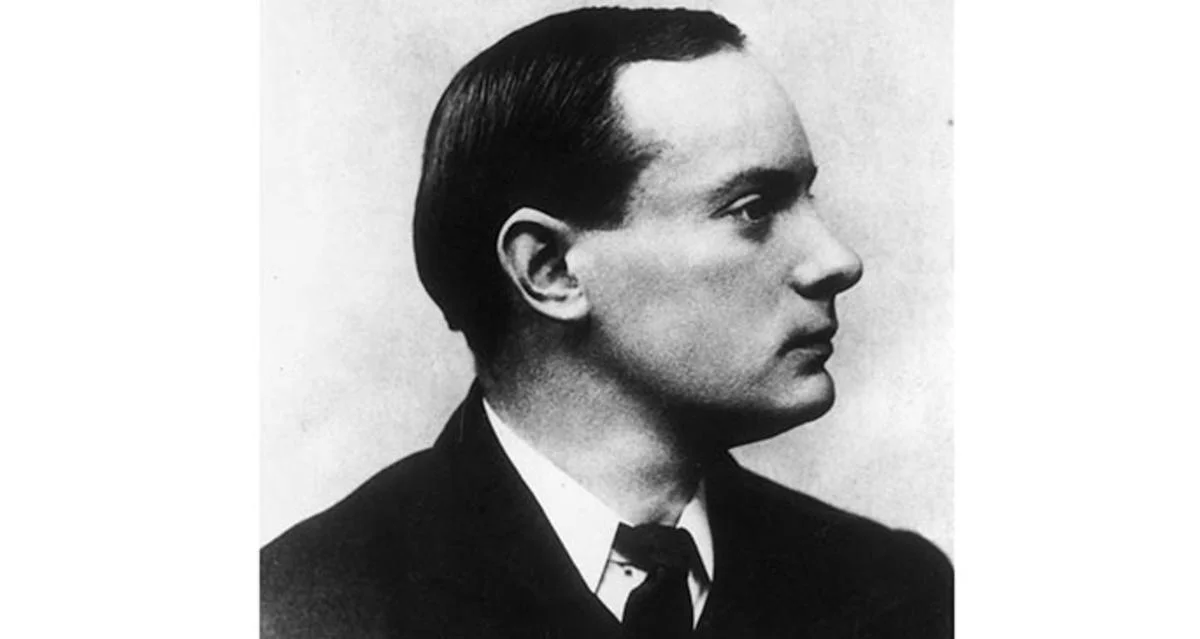
Pádraic Pearse: 'We declare the right of the people of Ireland to the ownership of Ireland', Proclamation of an Irish Republic - 1916

March 26, 2016

23 March 1916, outside General Post Office, Dublin, Ireland

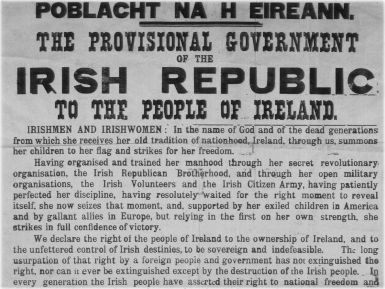
THE PROVISIONAL GOVERNMENT
OF THE
IRISH REPUBLIC
TO THE PEOPLE OF IRELAND

IRISHMEN AND IRISHWOMEN: In the name of God and of the dead generations from which she receives her old tradition of nationhood, Ireland, through us, summons her children to her flag and strikes for her freedom.

Having organised and trained her manhood through her secret revolutionary organisation, the Irish Republican Brotherhood, and through her open military organisations, the Irish Volunteers and the Irish Citizen Army, having patiently perfected her discipline, having resolutely waited for the right moment to reveal itself, she now seizes that moment, and supported by her exiled children in America and by gallant allies in Europe, but relying in the first on her own strength, she strikes in full confidence of victory.

We declare the right of the people of Ireland to the ownership of Ireland and to the unfettered control of Irish destinies, to be sovereign and indefeasible. The long usurpation of that right by a foreign people and government has not extinguished the right, nor can it ever be extinguished except by the destruction of the Irish people.

In every generation the Irish people have asserted their right to national freedom and sovereignty; six times during the past three hundred years they have asserted it in arms. Standing on that fundamental right and again asserting it in arms in the face of the world, we hereby proclaim the Irish Republic as a Sovereign Independent State, and we pledge our lives and the lives of our comrades in arms to the cause of its freedom, of its welfare, and of its exaltation among the nations.

The Irish Republic is entitled to, and hereby claims, the allegiance of every Irishman and Irishwoman. The Republic guarantees religious and civil liberty, equal rights and equal opportunities to all its citizens, and declares its resolve to pursue the happiness and prosperity of the whole nation and of all its parts, cherishing all of the children of the nation equally, and oblivious of the differences carefully fostered by an alien Government, which have divided a minority from the majority in the past.

Until our arms have brought the opportune moment for the establishment of a permanent National Government, representative of the whole people of Ireland and elected by the suffrages of all her men and women, the Provisional Government, hereby constituted, will administer the civil and military affairs of the Republic in trust for the people.

We place the cause of the Irish Republic under the protection of the Most High God, Whose blessing we invoke upon our arms, and we pray that no one who serves that cause will dishonour it by cowardice, inhumanity, or rapine. In this supreme hour the Irish nation must, by its valour and discipline, and by the readiness of its children to sacrifice themselves for the common good, prove itself worthy of the august destiny to which it is called. 

Signed on behalf of the Provisional Government:

THOMAS J. CLARKE
SEAN Mac DIARMADA   THOMAS MacDONAGH
P. H. PEARSE   EAMONN CEANNT
JAMES CONNOLLY   JOSEPH PLUNKETT

Source: http://goireland.about.com/od/theeasterris...

Enjoyed this speech? Speakola is a labour of love and I’d be very grateful if you would share, tweet or like it. Thank you.

Facebook Twitter Facebook
In 1900-19 Tags PATRICK PEARSE, EASTER UPRISING, PROCLAMATION OF IRISH REPUBLIC, MARTYR
Comment

Theodore Roosevelt: 'It is not what comes into a man's mouth, but what comes out of it that counts', Strength and Decency - 1903

January 19, 2016

16 August 1903, Oyster Bay, New York, USA

Address at the quarterly meeting of the Society of the Holy Name of Brooklyn and Long Island

I am particularly glad to see such a society as this flourishing as your society has flourished, because the future welfare of our nation depends upon the way in which we can combine in our men – in our young men – decency and strength. Just this morning when attending service on the great battleship Kearsarge I listened to a sermon addressed to the officers and enlisted men of the navy, in which the central thought was that each American must be a good man or he could not be a good citizen. And one of the things dwelt upon in that sermon was the fact that a man must be clean of mouth as well as clean of life – must show by his words as well as by his actions his fealty to the Almighty if he was to be what we have a right to expect from men wearing the national uniform. We have good Scriptural authority for the statement that it is not what comes into a man’s mouth but what goes out of it that counts. I am not addressing weaklings, or I should not take the trouble to come here. I am addressing strong, vigorous men, who are engaged in the active hard work of life; and life to be worth living must be a life of activity and hard work. I am speaking to men engaged in the hard, active work of life, and therefore to men who will count for good or for evil.

It is peculiarly incumbent upon you who have strength to set a right example to others. I ask you to remember that you cannot retain your self-respect if you are loose and foul of tongue, that a man who is to lead a clean and honorable life must inevitably suffer if his speech likewise is not clean and honorable. Every man here knows the temptations that beset all of us in this world. At times any man will slip. I do not expect perfection, but I do expect genuine and sincere effort toward being decent and cleanly in thought, in word, and in deed. As I said at the outset, I hail the work of this society as typifying one of those forces which tend to the betterment and uplifting of our social system. Our whole effort should be toward securing a combination of the strong qualities with those qualities which we term virtues. I expect you to be strong. I would not respect you if you were not. I do not want to see Christianity professed only by weaklings; I want to see it a moving spirit among men of strength. I do not expect you to lose one particle of your strength or courage by being decent. On the contrary, I should hope to see each man who is a member of this society, from his membership in it become all the fitter to do the rough work of the world; all the fitter to work in time of peace; and if, which may Heaven forfend, war should come, all the fitter to fight in time of war. I desire to see in this country the decent men strong and the strong men decent, and until we get that combination in pretty good shape we are not going to be by any means as successful as we should be. There is always a tendency among very young men and among boys who are not quite young men as yet to think that to be wicked is rather smart; to think it shows that they are men. Oh, how often you see some young fellow who boasts that he is going to “see life,” meaning by that that he is going to see that part of life which it is a thousandfold better should remain unseen! I ask that every man here constitute himself his brother’s keeper by setting an example to that younger brother which will prevent him from getting such a false estimate of life. Example is the most potent of all things. If any one of you in the presence of younger boys, and especially the younger people of our own family, misbehave yourself, if you use coarse and blasphemous language before them, you can be sure that these younger people will follow your example and not your precept. It is no use to preach to them if you do not act decently yourself. You must feel that the most effective way in which you can preach is by your practice.

As I was driving up here a friend who was with us said that in his experience the boy who went out into life with a foul tongue was apt so to go because his kinsfolk, at least his intimate associates, themselves had foul tongues. The father, the elder brothers, the friends, can do much toward seeing that the boys as they become men become clean and honorable men.

I have told you that I wanted you not only to be decent, but to be strong. These boys will not admire virtue of a merely anaemic type. They believe in courage, in manliness. They admire those who have the quality of being brave, the quality of facing life as life should be faced, the quality that must stand at the root of good citizenship in peace or in war. If you are to be effective as good Christians you must possess strength and courage, or your example will count for little with the young, who admire strength and courage. I want to see you, the men of the Holy Name Society, you who embody the qualities which the younger people admire, by your example give those young people the tendency, the trend, in the right direction; and remember that this example counts in many other ways besides cleanliness of speech. I want to see every man able to hold his own with the strong, and also ashamed to oppress the weak. I want to see each young fellow able to do a man’s work in the world, and of a type which will not permit imposition to be practised upon him. I want to see him too strong of spirit to submit to wrong, and, on the other hand, ashamed to do wrong to others. I want to see each man able to hold his own in the rough work of actual life outside, and also, when he is at home, a good man, unselfish in dealing with wife, or mother, or children. Remember that the preaching does not count if it is not backed up by practice. There is no good in your preaching to your boys to be brave if you run away. There is no good in your preaching to them to tell the truth if you do not. There is no good in your preaching to them to be unselfish if they see you selfish with your wife, disregardful of others. We have a right to expect that you will come together in meetings like this; that you will march in processions; that you will join in building up such a great and useful association as this; and, even more, we have a right to expect that in your own homes and among your own associates you will prove by your deeds that yours is not a lip-loyalty merely; that you show in actual practice the faith that is in you.

Source: http://www.artofmanliness.com/strength-and...

Enjoyed this speech? Speakola is a labour of love and I’d be very grateful if you would share, tweet or like it. Thank you.

Facebook Twitter Facebook
In 1900-19 Tags THEODORE ROOSEVELT, STRENGTH AND DECENCY, VALUES, PRESIDENTS, USA, TRANSCRIPT
Comment

Theodore Roosevelt: 'The Right of the People to Rule', campaign speech - 1912

January 6, 2016

20 March 1912, Carnegie Hall, New York, USA

The great fundamental issue now before before our people can be stated briefly. It is, Are the American people fit to govern themselves, to rule themselves, to control themselves? I believe they are. My opponents do not. I believe in the right of the people to rule. I believe that the majority of the plain people of the United States will, day in and day out, make fewer mistakes in governing themselves than any smaller class or body of men, no matter what their training, will make in trying to govern them. I believe, again, that the American people are, as a whole, capable of self-control and of learning by their mistakes. Our opponents pay lip-loyalty to this doctrine; but they show their real beliefs by the way in which they champion every device to make the nominal rule of the people a sham.

I have scant patience with this talk of the tyranny of the majority. Wherever there is tyranny of the majority, I shall protest against it with all my heart and soul. But we are today suffering from the tyranny of minorities. It is a small minority that is grabbing our coal-deposits, our water-powers, and our harbor fronts. A small minority is battening on the sale of adulterated foods and drugs. It is a small minority that lies behind monopolies and trusts. It is a small minority that stands behind the present law of master and servant, the sweat-shops, and the whole calendar of social and industrial injustice. It is a small minority that is to-day using our convention system to defeat the will of a majority of the people in the choice of delegates to the Chicago Convention.

The only tyrannies from which men, women, and children are suffering in real life are the tyrannies of minorities. If the majority of the American people were in fact tyrannous over the minority, if democracy had no greater self-control than empire, then indeed no written words which our forefathers put into the Constitution could stay that tyranny.

No sane man who has been familiar with the government of this country for the last twenty years will complain that we have had too much of the rule of the majority. The trouble has been a far different one that, at many times and in many localities, there have held public office in the States and in the nation men who have, in fact, served not the whole people, but some special class or special interest. I am not thinking only of those special interests which by grosser methods, by bribery and crime, have stolen from the people.

I am thinking as much of their respectable allies and figureheads, who have ruled and legislated and decided as if in some way the vested rights of privilege had a first mortgage on the whole United States, while the rights of all the people were merely an unsecured debt. Am I overstating the case? Have our political leaders always, or generally, recognized their duty to the people as anything more than a duty to disperse the mob, see that the ashes are taken away, and distribute patronage? Have our leaders always, or generally, worked for the benefit of human beings, to increase the prosperity of all the people, to give each some opportunity of living decently and bringing up his children well? The questions need no answer.

Now there has sprung up a feeling deep in the hearts of the people-not of the bosses and professional politicians, not of the beneficiaries of special privilege-a pervading belief of thinking men that when the majority of the people do in fact, as well as theory, rule, then the servants of the people will come more quickly to answer and obey, not the commands of the special interests, but those of the whole people. To reach toward that end the Progressives of the Republican party in certain States have formulated certain proposals for change in the form of the State government - certain new "checks and balances" which may check and balance the special interests and their allies. That is their purpose. Now turn for a moment to their proposed methods.

First, there are the "initiative and referendum," which are so framed that if the legislatures obey the command of some special interest, and obstinately refuse the will of the majority, the majority may step in and legislate directly. No man would say that it was best to conduct all legislation by direct vote of the people-it would mean the loss of deliberation, of patient consideration but, on the other hand, no one whose mental arteries have not long since hardened can doubt that the proposed changes are needed when the legislatures refuse to carry out the will of the people. The proposal is a method to reach an undeniable evil. Then there is the recall of public officers the principle that an officer chosen by the people who is unfaithful may be recalled by vote of the majority before he finishes his term. I will speak of the recall of judges in a moment - leave that aside - but as to the other officers, I have heard no argument advanced against the proposition, save that it will make the public officer timid and always currying favor with the mob. That argument means that you can fool all the people all the time, and is an avowal of disbelief in democracy. If it be true-and I believe it is not it is less important than to stop those public officers from currying favor with the interests. Certain States may need the recall, others may not; where the term of elective office is short it may be quite needless; but there are occasions when it meets a real evil, and provides a needed check and balance against the special interests.

Then there is the direct primary-the real one, not the New York one-and that, too, the Progressives offer as a check on the special interests. Most clearly of all does it seem to me that this change is wholly good-for every State. The system of party government is not written in our constitutions, but it is none the less a vital and essential part of our form of government. In that system the party leaders should serve and carry out the will of their own party. There is no need to show how far that theory is from the facts, or to rehearse the vulgar thieving partnerships of the corporations and the bosses, or to show how many times the real government lies in the hands of the boss, protected from the commands and the revenge of the voters by his puppets in office and the power of patronage. We need not be told how he is thus entrenched nor how hard he is to overthrow. The facts stand out in the history of nearly every State in the Union. They are blots on our political system. The direct primary will give the voters a method ever ready to use, by which the party leader shall be made to obey their command. The direct primary, if accompanied by a stringent corrupt-practices act, will help break up the corrupt partnership of corporations and politicians.

My opponents charge that two things in my program are wrong because they intrude into the sanctuary of the judiciary. The first is the recall of judges; and the second, the review by the people of, judicial decisions on certain constitutional questions. I have said again and again that I do not advocate the recall of judges in all States and in all communities. In my own State I do not advocate it or believe it to be needed, for in this State our trouble lies not with corruption on the bench, but with the effort by the honest but wrong-headed judges to thwart the people in their struggle for social justice and fair dealing. The integrity of our judges from Marshall to White and Holmes-and to Cullen and many others in our own State -- is a fine page of American history. But I say it soberly: Democracy has a right to approach the sanctuary of the courts when a special interest has corruptly found sanctuary there; and this is exactly what has happened in some of the States where the recall of the judges is a living issue. I would far more willingly trust the whole people to judge such a case than some special tribunal-perhaps appointed by the same power that chose the judge-if that tribunal is not itself really responsible to the people and is hampered and clogged by the technicalities of impeachment proceedings.

I have stated that the courts of the several States -- not always but often -- have construed the "due process" clause of the State constitutions as if it prohibited the whole people of the State from adopting methods of regulating the use of property so that human life, particularly the lives of the working men, shall be safer, freer, and happier. No one can successfully impeach this statement. I have insisted that the true construction of "due process" is that pronounced by Justice Holmes in delivering the unanimous opinion of the Supreme Court of the United States, when he said: "The police power extends to all the great public need. It may be put forth in aid of what is sanctioned by usage, or held by the prevailing morality or strong and preponderant opinion to be greatly and immediately necessary to the public welfare."

I insist that the decision of the New York court of appeals in the Ives case, which set aside the will of the majority of the people as to the compensation of injured workmen in dangerous trades, was intolerable and based on a wrong political philosophy. I urge that in such cases where the courts construe the due process clause as if property rights, to the exclusion of human rights, had a first mortgage on the Constitution, the people may, after sober deliberation, vote, and finally determine whether the law which the court set aside shall be valid or not. By this method can be clearly and finally ascertained the preponderant opinion of the people which Justice Holmes makes the test of due process in the case of laws enacted in the exercise of the police power. The ordinary methods now in vogue of amending the Constitution have in actual practice proved wholly inadequate to secure justice in such cases with reasonable speed, and cause intolerable delay and injustice, and those who stand against the changes I propose are champions of wrong and injustice, and of tyranny by the wealthy and the strong over the weak and the helpless.

So that no man may misunderstand me, let me recapitulate:

(1) I am not proposing anything in connection with the Supreme Court of the United States, or with the Federal Constitution.

(2) I am not proposing anything having any connection with ordinary suits, civil or criminal, as between individuals.

(3) I am not speaking of the recall of judges.

(4) I am proposing merely that in a certain class of cases involving police power, when a State court has set aside as unconstitutional a law passed hy the legislature for the general welfare, the question of the validity of the law-which should depend, as Justice Holmes so well phrases it, upon the prevailing morality or preponderant opinion-be submitted for final determination to a vote of the people, taken after due time for consideration.

And I contend that the people, in the nature of things, must be better judges of what is the preponderant opinion than the courts, and that the courts should not be allowed to reverse the political philosophy of the people. My point is well illustrated by a recent decision of the Supreme Court, holding that the court would not take jurisdiction of a case involving the constitutionality of the initiative and referendum laws of Oregon. The ground of the decision was that such a question was not judicial in its nature, but should be left for determination to the other co-ordinate departments of the government. Is it not equally plain that the question whether a given social policy is for the public good is not of a judicial nature, but should besettled by the legislature, or in the final instance by the people themselves?

The President of the United States, Mr. Taft, devoted most of a recent speech to criticism of this proposition. He says that it "is utterly without merit or utility, and, instead of being in the interest of all the people, and of the stability of populargovernment, is sowing the seeds of confusion and tyranny." (By this he, of course, means the tyranny of the majority, that is, the tyranny of the American people as a whole.) He also says that my proposal (which, as he rightly sees, is merely a proposal to give the people a real, instead of only a nominal, chance to construe and amend a State constitution with reasonable rapidity) would make such amendment and interpretation "depend on the feverish, uncertain, and unstable determination of successive votes on different laws by temporary and changing majorities"; and that "it lays the axe at the root of the tree of well-ordered freedom, and subjects the guaranties of life, liberty, and property without remedy to the fitful impulse of atemporary majority of an electorate."

This criticism is really less a criticism of my proposal than a criticism of all popular government. It is wholly unfounded, unless it is founded on the belief that the people are fundamentally untrustworthy. If the Supreme Court's definition of due process in relation to the police power is sound, then an act of the legislature to promote the collective interests of the community must be valid, if it embodies a policy held by the prevailing morality or a preponderant opinion to be necessary to the public welfare.

This is the question that I propose to submit to the people. How can the prevailing morality or a preponderant opinion be better and more exactly ascertained than by a vote of the people? The people must know better than the court what their own morality and their own opinion is. I ask that you, here, you and the others like you, you the people, be given the chance to state your own views of justice and public morality, and not sit meekly by and have your views announced for you by well-meaning adherents of outworn philosophies, who exalt the pedantry of formulas above the vital needs of human life.

The object I have in view could probably be accomplished by an amendment of the State constitutions taking away from the courts the power to review the legislature's determination of a policy of social justice, by defining due process of law inaccordance with the views expressed by Justice Holmes of the Supreme Court. But my proposal seems to me more democratic and, I may add, less radical. For under the method I suggest the people may sustain the court as against the legislature, whereas, if due process were defined in the Constitution, the decision of the legislature would be final.

Mr. Taft's position is the position that has been held from the beginning of our government, although not always so openly held, by a large number of reputable and honorable men who, down at bottom, distrust popular government, and, when they must accept it, accept it with reluctance, and hedge it around with every species of restriction and check and balance, so as to make the power of the people as limited and as ineffective as possible.

Mr. Taft fairly defines the issue when he says that our government is and should be a government of all the people by a representative part of the people. This is an excellent and moderate description of all oligarchy. It defines our government as a government of all the people by a few of the people.

Mr. Taft, in his able speech, has made what is probably the best possible presentation of the case for those who feel in this manner. Essentially this view differs only in its expression from the view nakedly set forth by one of his supporters,  Congressman Campbell. Congressman Campbell, in a public speech in New Hampshire, in opposing the proposition to give the people real and effective control over all their servants, including the judges, stated that this was equivalent to allowing an appeal from the umpire to the bleachers. Doubtless Congressman Campbell was not himself aware of the cynical truthfulness with which he was putting the real attitude of those for whom he spoke. But it unquestionably is their real attitude. Mr.
Campbell's conception of the part the American people should play in self-government is that they should sit on the bleachers and pay the price of admission, but should have nothing to say as to the contest which is waged in the arena by the professional politicians. Apparently Mr. Campbell ignores the fact that the American people are not mere onlookers at a game, that they have a vital stake in the contest, and that democracy means nothing unless they are able and willing to show that they are their own masters.

I am not speaking jokingly, nor do I mean to be unkind; for I repeat that many honorable and well-meaning men of high character take this view, and have taken it from the time of the formation of the nation. Essentially this view is that theConstitution is a straight-jacket to be used for the control of an unruly patient-the people. Now, I hold that this view is not only false but mischievous, that our constitutions are instruments designed to secure justice by securing the deliberate but effective expression of the popular will, that the checks and balances are valuable as far, and only so far, as they accomplish that deliberation, and that it is a warped and unworthy and improper construction of our form of government to see in it only
a means of thwarting the popular will and of preventing justice.

Mr. Taft says that "every class" should have a "voice" in the government. That seems to me a very serious misconception of the American political situation. The real trouble with us is that some classes have had too much voice. One of the mostimportant of all the lessons to be taught and to be learned is that a man should vote, not as a representative of a class, but merely as a good citizen, whose prime interests are the same as those of all other good citizens. The belief in different classes, each having a voice in the government, has given rise to much of our present difficulty; for whosoever believes in these separate classes, each with a voice, inevitably, even although unconsciously, tends to work, not for the good of the whole
people, but for the protection of some special class-usually that to which he himself belongs. The same principle applies when Mr. Taft says that the judiciary ought not to be "representative" of the people in the sense that the legislature and the Executive are.

This is perfectly true of the judge when he is performing merely the ordinary functions of a judge in suits between man and man. It is not true of the judge engaged in interpreting, for instance, the due process clause-where the judge is ascertaining the preponderant opinion of the people (as Judge Holmes states it ). When he exercises that function he has no right to let his political philosophy reverse and thwart the will of the majority. In that function the judge must represent the people or he fails in the test the Supreme Court has laid down. Take the Workmen's Compensation Act here in New York. The legislators gave us a law in the interest of humanity and decency and fair dealing. In so doing they represented the people, and represented them well. Several judges declared that law constitutional in our State, and several courts in other States declared similar laws constitutional, and the Supreme Court of the nation declared a similar law affecting men in interstate business constitutional; but the highest court in the State of New York, the court of appeals, declared that we, the people of New York, could not have such a law. I hold that in this case the legislators and the judges alike occupied representative positions; the difference was merely that the former represented us well and the latter represented us ill.

Remember that the legislators promised that law, and were returned by the people partly in consequence of such promise. That judgment of the people should not have been set aside unless it were irrational. Yet in the Ives case the New York court of appeals praised the policy of the law and the end it sought to obtain; and then declared that the people lacked power to do justice!

Mr. Taft again and again, in quotations I have given and elsewhere through his speech, expresses his disbelief in the people when they vote at the polls. In one sentence he says that the proposition gives "powerful effect to the momentary impulse of a majority of an electorate and prepares the way for the possible exercise of the grossest tyranny." Elsewhere he speaks of the "feverish uncertainty" and "unstable determination" of laws by "temporary and changing majorities"; and again he says that the system I propose "would result in suspension or application of constitutional guaranties according to popular whim," which would destroy "all possible consistency" in constitutional interpretation. I should much like to know the exact distinction that is to be made between what Mr. Taft calls "the fitful impulse of a temporary majority" when applied to a question such as that I raise and any other question. Remember that under my proposal to review a rule of decision by popular vote, amending or construing, to that extent, the Constitution, would certainly take at least two years from the time of the election of the legislature which passed the act. Now, only four months elapse between the nomination and the election of a man as President, to fill for four years the most important office in the land. In one of Mr. Taft's speeches he speaks of "the voice of the people as coming next to the voice of God."

Apparently, then, the decision of the people about the presidency, after four months' deliberation, is to be treated as "next to the voice of God"; but if, after two years of sober thought, they decide that women and children shall be protected in industry, or men protected from excessive hours of labor under unhygienic conditions, or wage-workers compensated when they lose life or limb in the service of others, then their decision forthwith becomes a "whim" and "feverish" and "unstable" and an exercise of "the grossest tyranny" and the "laying of the axe to the root of the tree of freedom."

It seems absurd to speak of a conclusion reached by the people after two years' deliberation, after thrashing the matter out before the legislature, after thrashing it out before the governor, after thrashing it out before the court and by the court, and then after full debate for four or six months, as "the fitful impulse of a temporary majority." If Mr. Taft's language correctly describes such action by the people, then he himself and all other Presidents have been elected by "the fitful impulse of a temporary majority"; then the constitution of each State, and the Constitution of the nation, have been adopted, and all amendments thereto have been adopted, by "the fitful impulse of a temporary majority." If he is right, it was "the fitful impulse of a temporary majority" which founded, and another fitful impulse which perpetuated, this nation.

Mr. Taft's position is perfectly clear. It is that we have in this country a special class of persons wiser than the people, who are above the people, who cannot be reached by the people, but who govern them and ought to govern them; and who protect various classes of the people from the whole people. That is the old, old doctrine which has been acted upon for thousands of years abroad; and which here in America has been acted upon sometimes openly, sometimes secretly, for forty years by many men in public and in private life, and I am sorry to say by many judges; a doctrine which has in fact tended to create a bulwark for privilege, a bulwark unjustly protecting special interests against the rights of the people as a whole. This doctrine is to me a dreadful doctrine; for its effect is, and can only be, to make the courts the shield of privilege against popular rights. Naturally, every upholder and beneficiary of crooked privilege loudly applauds the doctrine. It is behind the shield of that doctrine that crooked clauses creep into laws, that men of wealth and power control legislation. The men of wealth who praise this doctrine, this theory, would do well to remember that to its adoption by the courts is due the distrust so many of our wage-workers now feel for the courts. I deny that that theory has worked so well that we should continue it. I most earnestly urge that the evils and abuses it has produced cry aloud for remedy; and the only remedy is in fact to restore the power to govern directly to the people, and to make the public servant directly responsible to the whole people -- and to no part of them, to no "class" of them.

Mr. Taft is very much afraid of the tyranny of majorities. For twenty-five years here in New York State, in our efforts to get social and industrial justice, we have suffered from the tyranny of a small minority. We have been denied, now by one court, now by another, as in the Bakeshop Case, where the courts set aside the law limiting the hours of labor in bakeries -- the "due process" clause again-as in the Workmen's Compensation Act, as in the Tenement-House Cigar-Factory Case -- in all these and many other cases we have been denied by small minorities, by a few worthy men of wrong political philosophy on the bench, the right to protect our people in their lives, their liberty, and their pursuit of happiness. As for "consistency"-why, the record of the courts, in such a case as the income tax, for instance, is so full of inconsistencies as to make the fear expressed of "inconsistency" on the part of the people seem childish.

Well-meaning, short-sighted persons have held up their hands in horror at my proposal to allow the people themselves to construe the constitution which they themselves made. Yet this is precisely what the Association of the Bar of the City of New York proposed to do in the concurrent resolution which was introduced at their request into our legislature on January 16 last, proposing to amend the State constitution by a section reading as follows: "Nothing contained in this Constitution shall be construed to limit the powers of the legislature to enact laws" such as the Workmen's Compensation Act. In other words, the New York Bar Association is proposing to appeal to the people to construe the constitution in such a way as will directly reverse the court. They are proposing to appeal from the highest court of the State to the people. That is just what I propose to do; the difference is only one of method, not of purpose; my method will give better results, and will give them more quickly. The Bar Association by its action admits that the court was wrong, and sets to work to change the rule which it laid down. As Lincoln announced of the Dred Scott decision in his debates with Douglas: "Somebody has to reverse that decision, since it is made, and we mean to reverse it, and we mean to do it peaceably." Was Lincoln wrong? Was the spirit of the nation that wiped out slavery "the fitful impulse of a temporary majority?"

Remember, I am not discussing the recall of judges -- although I wish it distinctly understood that the recall is a mere piece of machinery to take the place of the unworkable impeachment which Mr. Taft in effect defends, and that if the days of Maynard ever came back again in the State of New York I should favor it. I have no wish to come to it; but our opponents, when they object to all efforts to secure real justice from the courts, are strengthening the hands of those who demand the recall. In a great many States there has been for many years a real recall of judges as regards appointments, promotions, reappointments, and reelections; and this recall was through the turn of a thumbscrew at the end of a long-distance rod in the hands of great interests. I believe that a just judge would feel far safer in the hands of the people than in the hands of those interests.

I stand on the Columbus speech. The principles there asserted are not new, but I believe that they are necessary to the maintenance of free democratic government. The part of my speech in which I advocated the right of the people to be the final arbiters of what is due process of law in the case of statutes enacted for the general welfare will ultimately, I am confident, be recognized as giving strength and support to the courts instead of being revolutionary and subversive. The courts to-day owe the country no greater or clearer duty than to keep their hands off such statutes when they have any reasonably permissible relation to the public good. In the past the courts have often failed to perform this duty, and their failure is the chief cause of whatever dissatisfaction there is with the working of our judicial system. One who seeks to prevent the irrevocable commission of such mistakes in the future may justly claim to be regarded as aiming to preserve and not to destroy the independence and power of the judiciary.

My remedy is not the result of a library study of constitutional law, but of actual and long continued experience in the use of governmental power to redress social and industrial evils. Again and again earnest workers for social justice have said to me that the most serious obstacles that they have encountered during the many years that they have been trying to save American women and children from destruction in American industry have been the courts. That is the judgment of almost all the social workers I know, and of dozens of parish priests and clergymen, and of every executive and legislator who has been seriously attempting to use government as an agency for social and industrial betterment. What is the result of this system of judicial nullification? It was accurately stated by the court of appeals of New York in the employers' liability case, where it was calmly and judicially declared that the people under our Republican government are less free to correct the evils that oppress them than are the people of the monarchies of Europe.

To any man with vision, to any man with broad and real social sympathies, to any man who believes with all his heart in this great democratic Republic of ours, such a condition is intolerable. It is not government by the people, but mere sham government in which the will of the people is constantly defeated. It is out of this experience that my remedy has come; and let it be tried in this field. When, as the result of years of education and debate, a majority of the people have decided upon a remedy for an evil from which they suffer, and have chosen a legislature and executive pledged to embody that remedy in law, and the law has been finally passed and approved, I regard it as monstrous that a bench of judges shall then say to the
people: "You must begin all over again. First amend your Constitution (which will take four years); second, secure the passage of a new law (which will take two years more); third, carry that new law over the weary course of litigation (which will take no human being knows how long); fourth, submit the whole matter over again to the very same judges who have rendered the decision to which you object. Then, if your patience holds out and you finally prevail, the will of the majority of the people may have its way."

Such a system is not popular government, but a mere mockery of popular government. It is a system framed to maintain and perpetuate social injustice, and it can be defended only by those who disbelieve in the people, who do not trust them, and, I am afraid I must add, who have no real and living sympathy with them as they struggle for better things. In lieu of it I propose a practice by which the will of a majority of the people, when they have determined upon a remedy, shall, if their will persists for a minimum period of two years, go straight forward until it becomes a ruling force of life. I expressly propose to provide that sufficient time be taken to make sure that the remedy expresses the will, the sober and well-thought-out judgment, and not the whim, of the people; but, when that has been ascertained, I am not willing that the will of the people shall be frustrated. If this be not a wise remedy, let those who criticize it propose a wise remedy, and not confine themselves to railing at government by a majority of the American people as government by the mob. To propose, as an alternative remedy, slight modifications of impeachment proceedings is to propose no remedy at all-it is to bid us to be content with chaff when we demand bread.

The decisions of which we complain are, as a rule, based upon the constitutional provision that no person shall be deprived of life, liberty, or property without due process of law. The terms "life, liberty, and property" have been used in the constitutions of the English-speaking peoples since Magna Carta. Until within the last sixty years they were treated as having specific meanings; "property" meant tangible property; "liberty" meant freedom from personal restraint, or, in other words, from imprisonment in its largest definition. About 1870 our courts began to attach to these terms new meanings. Now "property" has come to mean every right of value which a person could enjoy, and "liberty" has been made to include the right to make
contracts. As a result, when the State limits the hours for which women may labor, it is told by the courts that this law deprives them of their "liberty"; and when it restricts the manufacture of tobacco in a tenement, it is told that the law deprives the landlord of his "property." Now, I do not believe that any people, and especially our free American people, will long consent that the term "liberty" shall be defined for them by a bench of judges. Every people has defined that term for itself in the course of its historic development. Of course, it is plain enough to see that, in a large way, the political history of man may be grouped about these three terms, "life, liberty, and property." There is no act of government which cannot be brought within their definition, and if the courts are to cease to treat them as words having a limited, specific meaning, then our whole government is brought under the practically irresponsible supervision of judges. As against that kind of a government I insist that the people have the right, and can be trusted, to govern themselves. This our opponents deny; and the issue is sharply drawn between us.

If my critics would only show the same sober judgment of which they declare the people at large to be incapable, they would realize that my proposal is one of moderation and common sense. I wish to quote the remarks of William Draper Lewis, dean of the Law School of the University of Pennsylvania:

To a lawyer the most interesting suggestion Colonel Roosevelt has made is to allow the people, after consideration, to reenact legislation which a court decision has declared is contrary to some clause in the existing State constitution. Anyone who has been asked to draft specific amendments to State constitutions will hesitate to condemn, without serious consideration, the suggestion made by Colonel Roosevelt. To take a concrete instance: The New York court of appeals declared the Workmen's Compensation Act, passed by the New York legislature, unconstitutional, as depriving in its operation the employer of his property without due process of law. A number of amendments to the New York constitution, designed to validate a compensation act, have been drafted, and it is not unlikely that one of them will be adopted. Personally, one or more of these amendments having been shown to me, I cannot but feel that constitutional amendments, designed to meet particular cases, run the danger of being so worded as to produce far-reaching results not anticipated or desired by the people. Colonel Roosevelt's suggestion avoids this difficulty and danger. If a persistent majority of the people of New York State want a workmen's compensation act, they should have it. But, in order to obtain it, they should not be driven to pass an amendment to their State constitution which may have effects which they do not anticipate or desire. Let them pass on the act, as gassed by the legislature, after a full knowledge that their highest court has unanimously expressed its opinion that the act is contrary to the State constitution which the people at a prior election have declared to be their fundamental law. I may not always approve of what the persistent majority wants. I might sometimes think the measure unwise. But that doesn't alter the right of that majority to enforce its will in government. The Roosevelt idea, it seems to me, supplies an instrument by which that majority can enforce its will in the most conservative way. It makes explosions unnecessary.

I would have been very proud to have been the author of that plan, although I want to emphasize the fact that it involves no new principle, only a new method. I don't mind saying, however, that I think it unfortunate that it should have been proposed by Colonel Roosevelt. He is a man of such marked characteristics, and his place in the political world is such, that he arouses intense enthusiasm on the one hand, and intense animosity on the other. Because of this, the great idea which he has propounded is bound to be beclouded, and its adoption to be delayed. It is a pity that anything so important should be confounded with any man's personality.

As regards the dean's last paragraph, I can only say that I wish somebody else whose suggestions would arouse less antagonism had proposed it; but nobody else did propose it, and so I had to. I am not leading this fight as a matter of aesthetic pleasure. I am leading because somebody must lead, or else the fight would not be made at all. I prefer to work with moderate, with rational conservatives, provided only that they do in good faith strive forward toward the light. But when they halt and turn their backs to the light, and sit with the scorners on the seats of reaction, then I must part company with them. We the people cannot turn back. Our aim must be steady, wise progress.

It would be well if our people would study the history of a sister republic. All the woes of France for a century and a quarter have been due to the folly of her people in splitting into the two camps of unreasonable conservatism and unreasonable radicalism.

Had pre-Revolutionary France listened to men like Turgot, and backed them up, all would have gone well. But the beneficiaries of privilege, the Bourbon reactionaries, the short-sighted ultra-conservatives, turned down Turgot; and then found that instead of him they had obtained Robespierre. They gained twenty years' freedom from all restraint and reform, at the cost of the whirlwind of the red terror; and in their turn the unbridled extremists of the terror induced a blind reaction; and so, with convulsion and oscillation from one extreme to another, with alternations of violent radicalism and violent Bourbonism, the French people went through misery toward a shattered goal. May we profit by the experiences of our brother republicans across the water, and go forward steadily, avoiding all wild extremes; and may our ultra-conservatives remember that the rule of the Bourbons brought on the Revolution, and may our would-be revolutionaries remember that no Bourbon was ever such a dangerous enemy of the people and of freedom as the professed friend of both, Robespierre. There is no danger of a revolution in this country; but there is grave discontent and unrest, and in order to remove them there is need of all the wisdom and probity and deep-seated faith in and purpose to uplift humanity we have at our command.

Friends, our task as Americans is to strive for social and industrial justice, achieved through the genuine rule of the people. This is our end, our purpose. The methods for achieving the end are merely expedients, to be finally accepted or rejected according as actual experience shows that they work well or ill. But in our hearts we must have this lofty purpose, and we must strive for it in all earnestness and sincerity, or our work will come to nothing. In order to succeed we need leaders of inspired idealism, leaders to whom are granted great visions, who dream greatly and strive to make their dreams come true; who can kindle the people with the fire from their own burning souls. The leader for the time being, whoever he may be, is
but an instrument, to be used until broken and then to be cast aside; and if he is worth his salt he will care no more when he is broken than a soldier cares when he is sent where his life is forfeit in order that the victory may be won. In the long fight for righteousness the watchword for all of us is spend and be spent. It is of little matter whether any one man fails or succeeds; but the cause shall not fail, for it is the cause of mankind.

We, here in America, hold in our hands the hope of the world, the fate of the coming years; and shame and disgrace will be ours if in our eyes the light of high resolve is dimmed, if we trail in the dust the golden hopes of men. If on this new continent we merely build another country of great but unjustly divided material prosperity, we shall have done nothing; and we shall do as little if we merely set the greed of envy against the greed of arrogance, and thereby destroy the material well-being of all of us. To turn this government either into government by a plutocracy or government by a mob would be to repeat on a larger scale the lamentable failures of the world that is dead. We stand against all tyranny, by the few or by the many. We
stand for 'the rule of the many in the interest of all of us, for the rule of the many in a spirit of courage, of common sense, of high purpose, above all in a spirit of kindly justice toward every man and every woman. We not merely admit, but insist, that there must be self-control on the part of the people, that they must keenly perceive their own duties as well as the rights of others; but we also insist that the people can do nothing unless they not merely have, but exercise to the full, their own rights.

The worth of our great experiment depends upon its being in good faith an experiment -- the first that has ever been tried -- in true democracy on the scale of a continent, on a scale as vast as that of the mightiest empires of the Old World. Surely this is a noble ideal, an ideal for which it is worth while to strive, an ideal for which at need it is worth while to sacrifice much; for our ideal is the rule of all the people in a spirit of friendliest brotherhood toward each and every one of the people.

Source: http://www.americanrhetoric.com/speeches/t...

Enjoyed this speech? Speakola is a labour of love and I’d be very grateful if you would share, tweet or like it. Thank you.

Facebook Twitter Facebook
In 1900-19 Tags THEODORE ROOSEVELT, RIGHT OF THE PEOPLE TO RULE, ELECTION CAMPAIGN, PRESIDENTS, USA, TRANSCRIPT
Comment

Pádraic Pearse: 'Ireland unfree shall never be at peace', O’Donovan Rossa’s funeral - 1915

September 11, 2015

1 August 1915, Glasnevin Cemetery, Dublin, Ireland

It has seemed right, before we turn away from this place in which we have laid the mortal remains of O'Donovan Rossa, that one amongst us should, in the name of all, speak the praise of that valiant man, and endeavour to formulate the thought and the hope that are in us as we stand around his grave. And if there is anything that makes it fitting that I rather than some other. I, rather than one of the grey-haired men who were young with him, and shared in his labour and in his suffering, should speak here, it is, perhaps, that I may be taken as speaking on behalf of a new generation that has been re-baptised in the Fenian faith, and that has accepted the responsibility of carrying out the Fenian programme. I propose to you, then, that here by the grave of this unrepentant Fenian, we renew our baptismal vows; that here by the grave of this unconquered and unconquerable man, we ask of God, each one for himself, such unshakeable purpose, such high and gallant courage, such unbreakable strength of soul as belonged to O'Donovan Rossa.

"Deliberately here we avow ourselves, as he avowed himself in the dock, Irishmen of one allegiance only. We, of the Irish Volunteers, and you others who are associated with us in to-day's task and duty, are bound together, and must stand together henceforth in brotherly union for the achievement of the freedom of Ireland. And we know only one definition of freedom: It is Tone's definition; it is Mitchel's definition; it is Rossa's definition. Let no one blaspheme the cause that the dead generations of Ireland served by giving it any other name and definition than their name and definition.

We stand at Rossa's grave, not in sadness, but rather in exaltation of spirit that it has been given us to come thus into so close a communion with that brave and splendid Gael. Splendid and holy causes are served by men who are themselves splendid and holy. O'Donovan Rossa was splendid in the proud manhood of him--splendid in the heroic grace of him, splendid in the Gaelic strength and clarity and truth of him. And all that splendour, and pride, and strength was compatible with a humility and a simplicity of devotion to Ireland, to all that was olden and beautiful and Gaelic in Ireland; the holiness and simplicity of patriotism of a Michael O'Clery or of an Eoghan O'Growney. The clear true eyes of this man almost alone in his day visioned Ireland as we to-day would surely have her--not free merely but Gaelic as well; not Gaelic merely, but free as well.

In a closer spiritual communion with him now than ever before, or perhaps ever again, in spiritual communion with those of his day living and dead, who suffered with him in English prisons, in communion of spirit too with our own dear comrades who suffer in English prisons to-day, and speaking on their behalf as well as our own, we pledge to Ireland our love, and we pledge to English rule in Ireland our hate. This is a place of peace, sacred to the dead, where men should speak with all charity and with all restraint; but I hold it a Christian thing, as O'Donovan Rossa held it, to hate evil, to hate untruth, to hate oppression, and hating them, to strive to overthrow them. Our foes are strong, and wise, and wary; but strong and wise and wary as they are, they cannot undo the miracles of God, Who ripens in the hearts of young men the seeds sown by the young men of a former generation. And the seeds sown by the young men of '65 and '67 are coming to their miraculous ripening to-day. Rulers and Defenders of Realms had need to be wary it they would guard against such processes. Life springs from death, and from the graves of patriot men and women spring live nations. The defenders of this realm have worked well in secret and in the open. They think that they have pacified Ireland. They think that they have purchased half of us, and intimidated the other half. They think that they have foreseen everything. They think that they have provided against everything; but the fools, the fools, the fools! they have left us our Fenian dead, and while Ireland holds these graves, Ireland unfree shall never be at peace.

Enjoyed this speech? Speakola is a labour of love and I’d be very grateful if you would share, tweet or like it. Thank you.

Facebook Twitter Facebook
In 1900-19 Tags PATRICK PEARSE, EASTER RISING, O'DONOVAN ROSSA, REPUBLICANISM, IRELAND, HOME RULE
Comment

Mark Twain: 'I should like to see the time come when women shall help to make the laws', Votes for Women - 1901

September 11, 2015

20 January, 1901, Hebrew Technical School for Girls, Temple Emmanuel, New York City, USA

It is a small help that I can afford, but it is just such help that one can give as coming from the heart through the mouth. The report of Mr. Meyer was admirable, and I was as interested in it as you have been. Why, I'm twice as old as he, and I've had so much experience that I would say to him, when he makes his appeal for help: "Don't make it for to-day or to-morrow, but collect the money on the spot."

We are all creatures of sudden impulse. We must be worked up by steam, as it were. Get them to write their wills now, or it may be too late by-and-by. Fifteen or twenty years ago I had an experience I shall never forget. I got into a church which was crowded by a sweltering and panting multitude. The city missionary of our town—Hartford—made a telling appeal for help. He told of personal experiences among the poor in cellars and top lofts requiring instances of devotion and help. The poor are always good to the poor. When a person with his millions gives a hundred thousand dollars it makes a great noise in the world, but he does not miss it; it's the widow's mite that makes no noise but does the best work.

I remember on that occasion in the Hartford church the collection was being taken up. The appeal had so stirred me that I could hardly wait for the hat or plate to come my way. I had four hundred dollars in my pocket, and I was anxious to drop it in the plate and wanted to borrow more. But the plate was so long in coming my way that the fever-heat of beneficence was going down lower and lower—going down at the rate of a hundred dollars a minute. The plate was passed too late. When it finally came to me, my enthusiasm had gone down so much that I kept my four hundred dollars—and stole a dime from the plate. So, you see, time sometimes leads to crime.

Oh, many a time have I thought of that and regretted it, and I adjure you all to give while the fever is on you.

Referring to woman's sphere in life, I'll say that woman is always right. For twenty-five years I've been a woman's rights man. I have always believed, long before my mother died, that, with her gray hairs and admirable intellect, perhaps she knew as much as I did. Perhaps she knew as much about voting as I.

I should like to see the time come when women shall help to make the laws. I should like to see that whip-lash, the ballot, in the hands of women. As for this city's government, I don't want to say much, except that it is a shame—a shame; but if I should live twenty-five years longer—and there is no reason why I shouldn't—I think I'll see women handle the ballot. If women had the ballot to-day, the state of things in this town would not exist.

If all the women in this town had a vote to-day they would elect a mayor at the next election, and they would rise in their might and change the awful state of things now existing here.


Source: http://www.gutenberg.org/files/3188/3188-h...

Enjoyed this speech? Speakola is a labour of love and I’d be very grateful if you would share, tweet or like it. Thank you.

Facebook Twitter Facebook
In 1900-19 Tags MARK TWAIN, VOTES FOR WOMEN, WOMEN'S RIGHTS, TRANSCRIPT
Comment

Woodrow Wilson: 'Unless justice be done to others it will not be done to us', 14 points speech - 1918

September 10, 2015

8 January, 1918, Congress, Washington DC, USA

It will be our wish and purpose that the processes of peace, when they are begun, shall be absolutely open and that they shall involve and permit henceforth no secret understandings of any kind. The day of conquest and aggrandizement is gone by; so is also the day of secret covenants entered into in the interest of particular governments and likely at some unlooked-for moment to upset the peace of the world. It is this happy fact, now clear to the view of every public man whose thoughts do not still linger in an age that is dead and gone, which makes it possible for every nation whose purposes are consistent with justice and the peace of the world to avow nor or at any other time the objects it has in view.

We entered this war because violations of right had occurred which touched us to the quick and made the life of our own people impossible unless they were corrected and the world secure once for all against their recurrence. What we demand in this war, therefore, is nothing peculiar to ourselves. It is that the world be made fit and safe to live in; and particularly that it be made safe for every peace-loving nation which, like our own, wishes to live its own life, determine its own institutions, be assured of justice and fair dealing by the other peoples of the world as against force and selfish aggression. All the peoples of the world are in effect partners in this interest, and for our own part we see very clearly that unless justice be done to others it will not be done to us. The programme of the world's peace, therefore, is our programme; and that programme, the only possible programme, as we see it, is this:

I. Open covenants of peace, openly arrived at, after which there shall be no private international understandings of any kind but diplomacy shall proceed always frankly and in the public view.

II. Absolute freedom of navigation upon the seas, outside territorial waters, alike in peace and in war, except as the seas may be closed in whole or in part by international action for the enforcement of international covenants.

III. The removal, so far as possible, of all economic barriers and the establishment of an equality of trade conditions among all the nations consenting to the peace and associating themselves for its maintenance.

IV. Adequate guarantees given and taken that national armaments will be reduced to the lowest point consistent with domestic safety.

V. A free, open-minded, and absolutely impartial adjustment of all colonial claims, based upon a strict observance of the principle that in determining all such questions of sovereignty the interests of the populations concerned must have equal weight with the equitable claims of the government whose title is to be determined.

VI. The evacuation of all Russian territory and such a settlement of all questions affecting Russia as will secure the best and freest cooperation of the other nations of the world in obtaining for her an unhampered and unembarrassed opportunity for the independent determination of her own political development and national policy and assure her of a sincere welcome into the society of free nations under institutions of her own choosing; and, more than a welcome, assistance also of every kind that she may need and may herself desire. The treatment accorded Russia by her sister nations in the months to come will be the acid test of their good will, of their comprehension of her needs as distinguished from their own interests, and of their intelligent and unselfish sympathy.

VII. Belgium, the whole world will agree, must be evacuated and restored, without any attempt to limit the sovereignty which she enjoys in common with all other free nations. No other single act will serve as this will serve to restore confidence among the nations in the laws which they have themselves set and determined for the government of their relations with one another. Without this healing act the whole structure and validity of international law is forever impaired.

VIII. All French territory should be freed and the invaded portions restored, and the wrong done to France by Prussia in 1871 in the matter of Alsace-Lorraine, which has unsettled the peace of the world for nearly fifty years, should be righted, in order that peace may once more be made secure in the interest of all.

IX. A readjustment of the frontiers of Italy should be effected along clearly recognizable lines of nationality.

X. The peoples of Austria-Hungary, whose place among the nations we wish to see safeguarded and assured, should be accorded the freest opportunity to autonomous development.

XI. Rumania, Serbia, and Montenegro should be evacuated; occupied territories restored; Serbia accorded free and secure access to the sea; and the relations of the several Balkan states to one another determined by friendly counsel along historically established lines of allegiance and nationality; and international guarantees of the political and economic independence and territorial integrity of the several Balkan states should be entered into.

XII. The turkish portion of the present Ottoman Empire should be assured a secure sovereignty, but the other nationalities which are now under Turkish rule should be assured an undoubted security of life and an absolutely unmolested opportunity of autonomous development, and the Dardanelles should be permanently opened as a free passage to the ships and commerce of all nations under international guarantees.

XIII. An independent Polish state should be erected which should include the territories inhabited by indisputably Polish populations, which should be assured a free and secure access to the sea, and whose political and economic independence and territorial integrity should be guaranteed by international covenant.

XIV. A general association of nations must be formed under specific covenants for the purpose of affording mutual guarantees of political independence and territorial integrity to great and small states alike.

In regard to these essential rectifications of wrong and assertions of right we feel ourselves to be intimate partners of all the governments and peoples associated together against the Imperialists. We cannot be separated in interest or divided in purpose. We stand together until the end.

For such arrangements and covenants we are willing to fight and to continue to fight until they are achieved; but only because we wish the right to prevail and desire a just and stable peace such as can be secured only by removing the chief provocations to war, which this programme does remove. We have no jealousy of German greatness, and there is nothing in this programme that impairs it. We grudge her no achievement or distinction of learning or of pacific enterprise such as have made her record very bright and very enviable. We do not wish to injure her or to block in any way her legitimate influence or power. We do not wish to fight her either with arms or with hostile arrangements of trade if she is willing to associate herself with us and the other peace- loving nations of the world in covenants of justice and law and fair dealing. We wish her only to accept a place of equality among the peoples of the world, -- the new world in which we now live, -- instead of a place of mastery.

Source: http://www.ourdocuments.gov/doc.php?doc=62...

Enjoyed this speech? Speakola is a labour of love and I’d be very grateful if you would share, tweet or like it. Thank you.

Facebook Twitter Facebook
In 1900-19 Tags 14 POINTS, VERSAILLES, WW1, PEACE, WOODROW WILSON, TRANSCRIPT, AUDIO, USA, PRESIDENTS, CONGRESS
Comment

David Lloyd George: 'The Road Hog of Europe' - 1914

August 6, 2015

19 September 1914, London, United Kingdom

I have come here this afternoon to talk to my fellow countrymen about this great war and the part we ought to take in it. I feel my task is easier after we have been listening to the greatest battle-song in the world.

There is no man in this room who has always regarded the prospects of engaging in a great war with greater reluctance, with greater repugnance, than I have done throughout the whole of my political life. There is no man, either inside or outside of this room, more convinced that we could not have avoided it without national dishonour. I am fully alive to the fact that whenever a nation has been engaged in any war she has always invoked the sacred name of honour. Many a crime has been committed in its name; there are some crimes being committed now. But, all the same, national honour is a reality, and any nation that disregards it is doomed.

Why is our honour as a country involved in this war? Because, in the first place, we are bound in an honourable obligation to defend the independence, the liberty, the integrity of a small neighbour that has lived peaceably, but she could not have compelled us, because she was weak. The man who declines to discharge his debt because his creditor is too poor to enforce it is a blackguard. We entered into this treaty, a solemn treaty, a full treaty, to defend Belgium and her integrity. Our signatures are attached to the document. Our signatures do not stand alone there. This was not the only country to defend the integrity of Belgium. Russia, France, Austria, and Prussia--they are all there. Why did they not perform the obligation? It is suggested that if we quote this treaty it is purely an excuse on our part. It is our low craft and cunning, just to cloak our jealousy of a superior civilization we are attempting to destroy. Our answer is the action we took in 1870. What was that? Mr. Gladstone was then Prime Minister. Lord Granville, I think, was then Foreign Secretary. I have never heard it laid to their charge that they were ever jingo.

What did they do in 1870? That Treaty Bond was this: We called upon the belligerent Powers to respect that treaty. We called upon France; we called upon Germany. At that time, bear in mind, the greatest danger to Belgium came from France and not from Germany. We intervened to protect Belgium against France exactly as we are doing now to protect her against Germany. We are proceeding exactly in the same way. We invited both the belligerent Powers to state that they had no intention of violating Belgian territory. What was the answer given by Bismarck? He said it was superfluous to ask Prussia such a question in view of the treaties in force. France gave a similar answer. We received the thanks at that time from the Belgian people for our intervention in a very remarkable document. This is the document addressed by the municipality of Brussels to Queen Victoria after that intervention:

The great and noble people over whose destinies you preside have just given a further proof of its benevolent sentiments towards this country. The voice of the English nation has been heard above the din of arms. It has asserted the principles of justice and right. Next to the unalterable attachment of the Belgian people to their independence, the strongest sentiment which fills their hearts is that of an imperishable gratitude to the people of Great Britain.

That was in 1870. Mark what follows.

Three or four days after that document of thanks the French Army was wedged up against the Belgian frontier. Every means of escape was shut up by a ring of flame from Prussian cannon. There was one way of escape. What was that? By violating the neutrality of Belgium. What did they do? The French on that occasion preferred ruin, humiliation, to the breaking of their bond. The French Emperor, French Marshals, 100,000 gallant Frenchmen in arms preferred to be carried captive to the strange land of their enemy rather than dishonour the name of their country. It was the last French Army defeat. Had they violated Belgian neutrality the whole history of that war would have been changed. And yet it was the interest of France to break the treaty. She did not do it.

It is now the interest of Prussia to break the treaty, and she has done it. Well, why? She avowed it with cynical contempt for every principle of justice. She says treaties only bind you when it is to your interest to keep them. 'What is a treaty?' says the German Chancellor. 'A scrap of paper.' Have you any L5 notes about you? I am not calling for them. Have you any of those neat little Treasury L1 notes? If you have, burn them; they are only 'scraps of paper'. What are they made of? Rags. What are they worth? The whole credit of the British Empire. 'Scraps of paper.' I have been dealing with scraps of paper within the last month. It is suddenly found the commerce of the world is coming to a standstill. The machine had stopped. Why? I will tell you. We discovered, many of us for the first time--I do not pretend to say that I do not know much more about the machinery of commerce to-day than I did six weeks ago, and there are a good many men like me--we discovered the machinery of commerce was moved by bills of exchange. I have seen some of them--wretched, crinkled, scrawled over, blotched, frowsy, and yet these wretched little scraps of paper moved great ships, laden with thousands of tons of precious cargo, from one end of the world to the other. What was the motive power behind them? The honour of commercial men.

Treaties are the currency of international statesmanship. Let us be fair. German merchants, German traders had the reputation of being as upright and straightforward as any traders in the world. But if the currency of German commerce is to be debased to the level of her statesmanship, no trader from Shanghai to Valparaiso will ever look at a German signature again. This doctrine of the scrap of paper, this doctrine which is superscribed by Bernhardi, that treaties only bind a nation as long as it is to its interest, goes to the root of public law. It is the straight road to barbarism, just as if you removed the magnetic pole whenever it was in the way of a German cruiser, the whole navigation of the seas would become dangerous, difficult, impossible, and the whole machinery of civilization will break down if this doctrine wins in this war.

We are fighting against barbarism. But there is only one way of putting it right. If there are nations that say they will only respect treaties when it is to their interest to do so, we must make it to their interest to do so for the future. What is their defence? Just look at the interview which took place between our Ambassador and great German officials when their attention was called to this treaty to which they were partners. They said: 'We cannot, help that. Rapidity of action was the great German asset. There is a greater asset for a nation than rapidity of action, and that is--honest dealing.

What are her excuses? She said Belgium was plotting against her, that Belgium was engaged in a great conspiracy with Britain and with France to attack her. Not merely is that not true, but Germany knows it is not true. What is her other excuse? France meant to invade Germany through Belgium. Absolutely untrue. France offered Belgium five army corps to defend her if she was attacked. Belgium said: 'I don't require them. I have got the word of the Kaiser. Shall Caesar send a lie?' All these tales about conspiracy have been fanned up since. The great nation ought to be ashamed, ought to be ashamed to behave like a fraudulent bankrupt perjuring its way with its complications. She has deliberately broken this treaty, and we were in honour bound to stand by it.

Belgium has been treated brutally, how brutally we shall not yet know. We know already too much. What has she done? Did she send an ultimatum to Germany? Did she challenge Germany? Was she preparing to make war on Germany? Had she ever inflicted any wrongs upon Germany which the Kaiser was bound to redress? She was one of the most unoffending little countries in Europe. She was peaceable, industrious, thrifty, hard-working, giving offence to no one; and her cornfields have been trampled down, her villages have been burned to the ground, her art treasures have been destroyed, her men have been slaughtered, yea, and her women and children, too. What had she done? Hundreds of thousands of her people have had their quiet, comfortable little homes burned to the dust, and are wandering homeless in their own land. What is their crime? Their crime was that they trusted to the word of a Prussian King. I don't know what the Kaiser hopes to achieve by this war. I have a shrewd idea of what he will get, but one thing is made certain, that no nation in future will ever commit that crime again.

I am not going to enter into these tales. Many of them are untrue; war is a grim, ghastly business at best, and I am not going to say that all that has been said in the way of tales of outrage is true. I will go beyond that, and say that if you turn two millions of men forced, conscripted, and compelled and driven into the field, you will certainly get among them a certain number of men who will do things that the nation itself will be ashamed of. I am not depending on them. It is enough for me to have the story which the Germans themselves avow, admit, defend, proclaim. The burning and massacring, the shooting down of harmless people--why? Because, according to the Germans, they fired on German soldiers. What business had German soldiers there at all? Belgium was acting in pursuance of a most sacred right, the right to defend your own home.

But they were not in uniform when they shot. If a burglar broke into the Kaiser's Palace at Potsdam, destroyed his furniture, shot down his servants, ruined his art treasures, especially those he made himself, burned his precious manuscripts, do you think he would wait until he got into uniform before he shot him down? They were dealing with those who had broken into their households. But their perfidy has already failed. They entered Belgium to save time. The time has gone. They have not gained time, but they have lost their good name.

But Belgium was not the only little nation that has been attacked in this war, and I make no excuse for referring to the case of the other little nation--the case of Servia. The history of Servia is not unblotted. What history in the category of nations is unblotted? The first nation that is without sin, let her cast a stone at Servia. A nation trained in a horrible school, but she won her freedom with her tenacious valour, and she has maintained it by the same courage. If any Servians were mixed up in the assassination of the Grand Duke they ought to be punished. Servia admits that; the Servian Government had nothing to do with it. Not even Austria claimed that. The Servian Prime Minister is one of the most capable and honoured men in Europe.

Servia was willing to punish any one of her subjects who had been proved to have any complicity in that assassination. What more could you expect? What were the Austrian demands? Servia sympathized with her fellow countrymen in Bosnia. That was one of her crimes. She must do so no more. Her newspapers were saying nasty things about Austria. They must do so no longer. That is the Austrian spirit. You had it in Zabern. How dare you criticize a Customs official? And if you laugh it is a capital offence. The colonel threatened to shoot them if they repeated it.

Servian newspapers must not criticize Austria. I wonder what would have happened had we taken the same line about German newspapers. Servia said: 'Very well, we will give orders to the newspapers that they must not criticize Austria in future, neither Austria, nor Hungary, nor anything that is theirs.' Who can doubt the valour of Servia, when she undertook to tackle her newspaper editors? She promised not to sympathize with Bosnia, promised to write no critical articles about Austria. She would have no public meetings at which anything unkind was said about Austria.

That was not enough. She must dismiss from her Army officers whom Austria should subsequently name. But these officers had just emerged from a war where they were adding lustre to the Servian arms--gallant, brave, efficient. I wonder whether it was their guilt or their efficiency that prompted Austria's action. But, mark, the officers were not named. Servia was to undertake in advance to dismiss them from the Army; the names to be sent on subsequently. Can you name a country in the world that would have stood that?

Supposing Austria or Germany had issued an ultimatum of that kind to this country. 'You must dismiss from your Army and from your Navy all those officers whom we shall subsequently name!' Well, I think I could name them now. Lord Kitchener would go; Sir John French would be sent about his business; General Smith-Dorrien would be no more; and I am sure that Sir John Jellicoe would go. And there is another gallant old warrior who would go--Lord Roberts.

It was a difficult situation. Here was a demand made upon her by a great military Power who could put five or six men in the field for every one she could; and that Power supported by the greatest military Power in the world. How did Servia behave? It is not what happens to you in life that matters; it is the way in which you face it. And Servia faced the situation with dignity. She said to Austria. 'If any officers of mine have been guilty and are proved to be guilty, I will dismiss them.' Austria said, 'That is not good enough for me.' It was not guilt she was after, but capacity.

Then came Russia's turn. Russia has a special regard for Servia. She has a special interest in Servia. Russians have shed their blood for Servian independence many a time. Servia is a member of her family, and she cannot see Servia maltreated. Austria knew that. Germany knew that, and Germany turned round to Russia and said: 'Here, I insist that you shall stand by with your arms folded whilst Austria is strangling to death your little brother.' What answer did the Russian Slav give? He gave the only answer that becomes a man. He turned to Austria and said: 'You lay hands on that little fellow and I will tear your ramshackle empire limb from limb.' And he is doing it.

That is the story of the little nations. The world owes much to little nations--and to little men. This theory of bigness--you must have a big empire and a big nation, and a big man--well, long legs have their advantage in a retreat. Frederick the Great chose his warriors for their height, and that tradition has become a policy in Germany. Germany applies that ideal to nations; she will only allow six-feet-two nations to stand in the ranks. But all the world owes much to the little five feet high nations. The greatest art of the world was the work of little nations. The most enduring literature of the world came from little nations. The greatest literature of England came from her when she was a nation of the size of Belgium fighting a great Empire. The heroic deeds that thrill humanity through generations were the deeds of little nations fighting for their freedom. Ah, yes, and the salvation of mankind came through a little nation. God has chosen little nations as the vessels by which He carries the choicest wines to the lips of humanity, to rejoice their hearts, to exalt their vision, to stimulate and to strengthen their faith; and if we had stood by when two little nations were being crushed and broken by the brutal hands of barbarism our shame would have rung down the everlasting ages.

But Germany insists that this is an attack by a low civilization upon a higher. Well, as a matter of fact, the attack was begun by the civilization which calls itself the higher one. Now, I am no apologist for Russia. She has perpetrated deeds of which I have no doubt her best sons are ashamed.

But what Empire has not? And Germany is the last Empire to point the finger of reproach at Russia. But Russia has made sacrifices for freedom--great sacrifices. You remember the cry of Bulgaria when she was torn by the most insensate tyranny that Europe has ever seen. Who listened to the cry? The only answer of the higher civilization was that the liberty of Bulgarian peasants was not worth the life of a single Pomeranian soldier. But the rude barbarians of the North--they sent their sons by the thousands to die for Bulgarian freedom.

What about England? You go to Greece, the Netherlands, Italy, Germany, and France, and all these lands, gentlemen, could point out to you places where the sons of Britain have died for the freedom of these countries. France has made sacrifices for the freedom of other lands than her own. Can you name a single country in the world for the freedom of which the modern Prussian has ever sacrificed a single life? The test of our faith, the highest standard of civilization is the readiness to sacrifice for others.

I would not say a word about the German people to disparage them. They are a great people; they have great qualities of head, of hand, and of heart. I believe, in spite of recent events, there is as great a store of kindness in the German peasant as in any peasant in the world. But he has been drilled into a false idea of civilization,--efficiency, capability. It is a hard civilization; it is a selfish civilization; it is a material civilization. They could not comprehend the action of Britain at the present moment. They say so. 'France', they say, 'we can understand. She is out for vengeance, she is out for territory--Alsace Lorraine. Russia, she is fighting for mastery, she wants Galicia.' They can understand vengeance, they can understand you fighting for mastery, they can understand you fighting for greed of territory; they cannot understand a great Empire pledging its resources, pledging its might, pledging the lives of its children, pledging its very existence, to protect a little nation that seeks for its defence. God made man in His own image--high of purpose, in the region of the spirit. German civilization would re-create him in the image of a Diesler machine--precise, accurate, powerful, with no room for the soul to operate. That is the 'higher' civilization.

What is their demand? Have you read the Kaiser's speeches? If you have not a copy, I advise you to buy it; they will soon be out of print, and you won't have any more of the same sort again. They are full of the clatter and bluster of German militarists--the mailed fist, the shining armour. Poor old mailed fist--its knuckles are getting a little bruised. Poor shining armour--the shine is being knocked out of it. But there is the same swagger and boastfulness running through the whole of the speeches. You saw that remarkable speech which appeared in the _British Weekly_ this week. It is a very remarkable product, as an illustration of the spirit we have got to fight. It is his speech to his soldiers on the way to the front:--

Remember that the German people are the chosen of God. On me, on me as German Emperor, the Spirit of God has descended. I am His weapon, His sword, and His vizard! Woe to the disobedient! Death to cowards and unbelievers!

There has been nothing like it since the days of Mahomet.

Lunacy is always distressing, but sometimes it is dangerous, and when you get it manifested in the head of the State, and it has become the policy of a great Empire, it is about time when that should be ruthlessly put away. I do not believe he meant all these speeches. It was simply the martial straddle which he had acquired; but there were men around him who meant every word of it. This was their religion. Treaties? They tangled the feet of Germany in her advance. Cut them with the sword. Little nations? They hinder the advance of Germany. Trample them in the mire under the German heel. The Russian Slav? He challenges the supremacy of Germany and Europe. Hurl your legions at him and massacre him. Britain? She is a constant menace to the predominancy of Germany in the world. Wrest the trident out of her hands. Ah! more than that. The new philosophy of Germany is to destroy Christianity. Sickly sentimentalism about sacrifice for others--poor pap for German digestion. We will have a new diet. We will force it on the world. It will be made in Germany. A diet of blood and iron. What remains? Treaties have gone; the honour of nations gone; liberty gone. What is left? Germany--Germany is left--Deutschland uber Alles. That is all that is left.

That is what we are fighting, that claim to predominancy of a civilization, a material one, a hard one, a civilization which if once it rules and sways the world, liberty goes, democracy vanishes, and unless Britain comes to the rescue, and her sons, it will be a dark day for humanity. We are not fighting the German people. The German people are just as much under the heel of this Prussian military caste, and more so, thank God, than any other nation in Europe. It will be a day of rejoicing for the German peasant and artisan and trader when the military caste is broken. You know his pretensions. He gives himself the airs of a demi-god. Walking the pavements --civilians and their wives swept into the gutter; they have no right to stand in the way of the great Prussian junker. Men, women, nations --they have all got to go. He thinks all he has got to say is, 'We are in a hurry.' That is the answer he gave to Belgium. 'Rapidity of action is Germany's greatest asset,' which means 'I am in a hurry. Clear out of my way'.

You know the type of motorist, the terror of the roads, with a 60-h.p.car. He thinks the roads are made for him, and anybody who impedes the action of his car by a single mile is knocked down. The Prussian junker is the road-hog of Europe. Small nationalities in his way hurled to the roadside, bleeding and broken; women and children crushed under the wheels of his cruel car. Britain ordered out of his road. All I can say is this: if the old British spirit is alive in British hearts, that bully will be torn from his seat. Were he to win it would be the greatest catastrophe that has befallen democracy since the days of the Holy Alliance and its ascendancy. They think we cannot beat them. It will not be easy. It will be a long job. It will be a terrible war. But in the end we shall march through terror to triumph. We shall need all our qualities, every quality that Britain and its people possess. Prudence in council, daring in action, tenacity in purpose, courage in defeat, moderation in victory, in all things faith, and we shall win.

It has pleased them to believe and to preach the belief that we are a decadent nation. They proclaim it to the world, through their professors, that we are an unheroic nation skulking behind our mahogany counters, whilst we are egging on more gallant races to their destruction. This is a description given to us in Germany--'a timorous, craven nation, trusting to its fleet.' I think they are beginning to find their mistake out already. And there are half a million of young men of Britain who have already registered their vow to their King that they will cross the seas and hurl that insult against British courage against its perpetrators on the battlefields of France and of Germany. And we want half a million more. And we shall get them.

But Wales must continue doing her duty. That was a great telegram that you, my Lord (the Chairman), read from Glamorgan.[2] I should like to see a Welsh army in the field. I should like to see the race who faced the Normans for hundreds of years in their struggle for freedom, the race that helped to win the battle of Crecy, the race that fought for a generation under Glendower, against the greatest captain in Europe--I should like to see that race give a good taste of its quality in this struggle in Europe; and they are going to do it.

I envy you young people your youth. They have put up the age limit for the Army, but I march, I am sorry to say, a good many years even beyond that. But still our turn will come. It is a great opportunity. It only comes once in many centuries to the children of men. For most generations sacrifice comes in drab weariness of spirit to men. It has come to-day to you; it has come to-day to us all, in the form of the glory and thrill of a great movement for liberty, that impels millions throughout Europe to the same end. It is a great war for the emancipation of Europe from the thraldom of a military caste, which has cast its shadow upon two generations of men, and which has now plunged the world into a welter of bloodshed. Some have already given their lives. There are some who have given more than their own lives. They have given the lives of those who are dear to them. I honour their courage, and may God be their comfort and their strength.

But their reward is at hand. Those who have fallen have consecrated deaths. They have taken their part in the making of a new Europe, a new world. I can see signs of its coming in the glare of the battlefield. The people will gain more by this struggle in all lands than they comprehend at the present moment. It is true they will be rid of the menace to their freedom. But that is not all. There is something infinitely greater and more enduring which is emerging already out of this great conflict; a new patriotism, richer, nobler, more exalted than the old. I see a new recognition amongst all classes, high and low, shedding themselves of selfishness; a new recognition that the honour of a country does not depend merely on the maintenance of its glory in the stricken field, but in protecting its homes from distress as well. It is a new patriotism, it is bringing a new outlook for all classes. A great flood of luxury and of sloth which had submerged the land is receding, and a new Britain is appearing. We can see for the first time the fundamental things that matter in life and that have been obscured from our vision by the tropical growth of prosperity.

May I tell you, in a simple parable, what I think this war is doing for us? I know a valley in North Wales, between the mountains and the sea--a beautiful valley, snug, comfortable, sheltered by the mountains from all the bitter blasts. It was very enervating, and I remember how the boys were in the habit of climbing the hills above the village to have a glimpse of the great mountains in the distance, and to be stimulated and freshened by the breezes which, came from the hill-tops, and by the great spectacle of that great valley.

We have been living in a sheltered valley for generations. We have been too comfortable, too indulgent, many, perhaps, too selfish. And the stern hand of fate has scourged us to an elevation where we can see the great everlasting things that matter for a nation; the great peaks of honour we had forgotten--duty and patriotism clad in glittering white: the great pinnacle of sacrifice pointing like a rugged finger to Heaven. We shall descend into the valleys again, but as long as the men and women of this generation last they will carry in their hearts the image of these great mountain peaks, whose foundations are unshaken though Europe rock and sway in the convulsions of a great war.

Source: http://www.gwpda.org/1914/lloydgeorge_hono...

Enjoyed this speech? Speakola is a labour of love and I’d be very grateful if you would share, tweet or like it. Thank you.

Facebook Twitter Facebook
In 1900-19 Tags DAVID LLOYD GEORGE, WW1, PRIME MINISTERS, UNITED KINGDOM, WAR, TRANSCRIPT
Comment

Mahatma Gandhi: 'There is no room for anarchism in India', Banaras University - 1916

August 6, 2015

4 February, 1916, Banaras University, Varanasi, India

Pandit Malaviya had invited Gandhi to speak on the occasion of the opening of the Banaras Hindu University. There were threats against his life, and the dais was surrounded by security forces.

I wish to tender my humble apology for the long delay that took place before I was able to reach this place. And you will readily accept the apology when I tell you that I am not responsible for the delay nor is any human agency responsible for it. The fact is that I am like animal on show, and my keepers in their overkindness always manage to neglect a necessary chapter in this life, and, that is, pure accident. In this case, they did not provide for the series of accidents that happened to us-to me, keepers, and my carriers. Hence this delay.

Friends, under the influence of the matchless eloquence of Mrs. Besant who has just sat down, pray, do not believe that our University has become a finished product, and that all the young men who are to come to the University, that has yet to rise and come into existence, have also come and returned from it finished citizens of a great empire. Do not go away with any such impression, and if you, the student world to which my remarks are supposed to be addressed this evening, consider for one moment that the spiritual life, for which this country is noted and for which this country has no rival, can be transmitted through the lip, pray, believe me, you are wrong. You will never be able merely through the lip, to give the message that India, I hope, will one day deliver to the world. I myself have been fed up with speeches and lectures. I except the lectures that have been delivered here during the last two days from this category, because they are necessary. But I do venture to suggest to you that we have now reached almost the end of our resources in speech-making; it is not enough that our ears are feasted, that our eyes are feasted, but it is necessary that our hearts have got to be touched and that out hands and feet have got to be moved.

We have been told during the last two days how necessary it is, if we are to retain our hold upon the simplicity of Indian character, that our hands and feet should move in unison with our hearts. But this is only by way of preface. I wanted to say it is a matter of deep humiliation and shame for us that I am compelled this evening under the shadow of this great college, in this sacred city, to address my countrymen in a language that is foreign to me. I know that if I was appointed an examiner, to examine all those who have been attending during these two days this series of lectures, most of those who might be examined upon these lectures would fail. And why? Because they have not been touched.

I was present at the sessions of the great Congress in the month of December. There was a much vaster audience, and will you believe me when I tell you that the only speeches that touched the huge audience in Bombay were the speeches that were delivered in Hindustani? In Bombay, mind you, not in Banaras where everybody speaks Hindi. But between the vernaculars of the Bombay Presidency on the one hand and Hindi on the other, no such great dividing line exists as there does between English and the sister language of India; and the Congress audience was better able to follow the speakers in Hindi. I am hoping that this University will see to it that the youths who come to it will receive their instruction through the medium of their vernaculars. Our languages are the reflection of ourselves, and if you tell me that our languages are too poor to express the best thought, then say that the sooner we are wiped out of existence the better for us. Is there a man who dreams that English can ever become the national language of India? Why this handicap on the nation? Just consider for one moment what an equal race our lads have to run with every English lad.

I had the privilege of a close conversation with some Poona professors. They assured me that every Indian youth, because he reached his knowledge through the English language, lost at least six precious years of life. Multiply that by the numbers of students turned out by our schools and colleges, and find out for yourselves how many thousand years have been lost to the nation. The charge against us is that we have no initiative. How can we have any, if we are to devote the precious years of our life to the mastery of a foreign tongue? We fail in this attempt also. Was it possible for any speaker yesterday and today to impress his audience as was possible for Mr. Higginbotham? It was not the fault of the previous speakers that they could not engage the audience. They had more than substance enough for us in their addresses. But their addresses could not go home to us. I have heard it said that after all it is English educated India which is leading and and which is doing all the things for the nation. It would be monstrous if it were otherwise. The only education we receive is English education. Surely we must show something for it. But suppose that we had been receiving during the past fifty years education through our vernaculars, what should we have today? We should have today a free India, we should have our educated men, not as if they were foreigners in their own land but speaking to the heart of the nation; they would be working amongst the poorest of the poor, and whatever they would have gained during these fifty years would be a heritage for the nation. Today even our wives are not the sharers in our best thought. Look at Professor Bose and Professor Ray and their brilliant researches. Is it not a shame that their researches are not the common property of the masses?

Let us now turn to another subject.

The Congress has passed a resolution about self-government, and I have no doubt that the All-India Congress Committee and the Muslim League will do their duty and come forward with some tangible suggestions. But I, for one, must frankly confess that I am not so much interested in what they will be able to produce as I am interested in anything that the student world is going to produce or the masses are going to produce. No paper contribution will ever give us self-government. No amount of speeches will ever make us fit for self-government. It is only our conduct that will fit for us it. And how are we trying to govern ourselves?

I want to think audibly this evening. I do not want to make a speech and if you find me this evening speaking without reserve, pray, consider that you are only sharing the thoughts of a man who allows himself to think audibly, and if you think that I seem to transgress the limits that courtesy imposes upon me, pardon me for the liberty I may be taking. I visited the Vishwanath temple last evening, and ad I was walking through those lanes, these were the thoughts that touched me. If a stranger dropped from above on to this great temple, and he had to consider what we as Hindus were, would he not be justified in condemning us? Is not this great temple a reflection of our own character? I speak feelingly, as a Hindu. Is it right that the lanes of our sacred temple should be as dirty as they are? The houses round about are built anyhow. The lanes are tortuous and narrow. If even our temples are not models of roominess and cleanliness, what can our self-government be? Shall our temples be abodes of holiness, cleanliness and peace as soon as the English have retired from India, either of their own pleasure or by compulsion, bag and baggage?

I entirely agree with the President of the Congress that before we think of self-government, we shall have to do the necessary plodding. In every city there are two divisions, the cantonment and the city proper. The city mostly is a stinking den. But we are a people unused to city life. But if we want city life, we cannot reproduce the easy-going hamlet life. It is not comforting to think that people walk about the streets of Indian Bombay under the perpetual fear of dwellers in the storeyed building spitting upon them. I do a great deal of railway travelling. I observe the difficulty of third-class passengers. But the railway administration is by no means to blame for all their hard lot. We do not know the elementary laws of cleanliness. We spit anywhere on the carriage floor, irrespective of the thoughts that it is often used as sleeping space. We do not trouble ourselves as to how we use it; the result is indescribable filth in the compartment. The so-called better class passengers over we their less fortunate brethern. Among them I have seen the student world also; sometimes they behave no better. They can speak English and they have worn Norfolk jackets and, therefore, claim the right to force their way in and command seating accommodation.

I have turned the searchlight all over, and as you have given me the privilege of speaking to you, I am laying my heart bare. Surely we must set these things right in our progress towards self-government. I now introduce you to another scene. His Highness the Maharaja who presided yesterday over our deliberations spoke about the poverty of India. Other speakers laid great stress upon it. But what did we witness in the great pandal in which the foundation ceremony was performed by the Viceroy? Certain it a most gorgeous show, an exhibition of jewellery, which made a splendid feast for the eyes of the greatest jeweller who chose to come from Paris. I compare with the richly bedecked noble men the millions of the poor. And I feel like saying to these noble men, “There is no salvation for India unless you strip yourselves of this jewellery and hold it in trust for your countrymen in India.” I am sure it is not the desire of the King-Emperor or Lord Hardinge that in order to show the truest loyalty to our King-Emperor, it is necessary for us to ransack our jewellery boxes and to appear bedecked from top to toe. I would undertake, at the peril of my life, to bring to you a message from King George himself that he excepts nothing of the kind.

Sir, whenever I hear of a great palace rising in any great city of India, be it in British India or be it in India which is ruled by our great chiefs, I become jealous at once, and say, “Oh, it is the money that has come from the agriculturists.” Over seventy-five per cent of the population are agriculturists and Mr. Higginbotham told us last night in his own felicitous language, that they are the men who grow two blades of grass in the place of one. But there cannot be much spirit of self-government about us, if we take away or allow others to take away from them almost the whole of the results of their labour. Our salvation can only come through the farmer. Neither the lawyers, nor the doctors, nor the rich landlords are going to secure it.

Now, last but not the least, it is my bounden duty to refer to what agitated our minds during these two or three days. All of us have had many anxious moments while the Viceroy was going through the streets of Banaras. There were detectives stationed in many places. We were horrified. We asked ourselves, “Why this distrust?” Is it not better that even Lord Hardinge should die than live a living death? But a representative of a mighty sovereign may not. He might find it necessary to impose these detectives on us? We may foam, we may fret, we may resent, but let us not forget that India of today in her impatience has produced an army of anarchists. I myself am an anarchist, but of another type. But there is a class of anarchists amongst us, and if I was able to reach this class, I would say to them that their anarchism has no room in India, if India is to conqueror. It is a sign of fear. If we trust and fear God, we shall have to fear no one, not the Maharajas, not the Viceroys, not the detectives, not even King George.

I honour the anarchist for his love of the country. I honour him for his bravery in being willing to die for his country; but I ask him-is killing honourable? Is the dagger of an assassin a fit precursor of an honourable death? I deny it. There is no warrant for such methods in any scriptures. If I found it necessary for the salvation of India that the English should retire, that they should be driven out, I would not hesitate to declare that they would have to go, and I hope I would be prepared to die in defence of that belief. That would, in my opinion, be an honourable death. The bomb-thrower creates secret plots, is afraid to come out into the open, and when caught pays the penalty of misdirected zeal.

I have been told, “Had we not done this, had some people not thrown bombs, we should never have gained what we have got with reference to the partition movement.” (Mrs. Besant : ‘Please stop it.’) This was what I said in Bengal when Mr. Lyon presided at the meeting. I think what I am saying is necessary. If I am told to stop I shall obey. (Turning to the Chairman) I await your orders. If you consider that by my speaking as I am, I am not serving the country and the empire I shall certainly stop. (Cries of ‘Go on.’) (The Chairman : ‘Please, explain your object.’) I am simply. . . (another interruption). My friends, please do not resent this interruption. If Mrs. Besant this evening suggests that I should stop, she does so because she loves India so well, and she considers that I am erring in thinking audibly before you young men. But even so, I simply say this, that I want to purge India of this atmosphere of suspicion on either side, if we are to reach our goal; we should have an empire which is to be based upon mutual love and mutual trust. Is it not better that we talk under the shadow of this college than that we should be talking irresponsibly in our homes? I consider that it is much better that we talk these things openly. I have done so with excellent results before now. I know that there is nothing that the students do not know. I am, therefore, turning the searchlight towards ourselves. I hold the name of my country so dear to me that I exchange these thoughts with you, and submit to you that there is no room for anarchism in India. Let us frankly and openly say whatever we want to say our rulers, and face the consequences if what we have to say does not please them. But let us not abuse.

I was talking the other day to a member of the much-abused Civil Service. I have not very much in common with the members of that Service, but I could not help admiring the manner in which he was speaking to me. He said : “Mr. Gandhi, do you for one moment suppose that all we, Civil Servants, are a bad lot, that we want to oppress the people whom we have come to govern?” “No,,” I said. “Then if you get an opportunity put in a word for the much-abused Civil Service.” And I am here to put in that word. Yes, many members of the Indian Civil Service are most decidedly overbearing; they are tyrannical, at times thoughtless. Many other adjectives may be used. I grant all these things and I grant also that after having lived in India for a certain number of years some of them become somewhat degraded. But what does that signify? They were gentlemen before they came here, and if they have lost some of the moral fibre, it is a reflection upon ourselves.

Just think out for yourselves, if a man who was good yesterday has become bad after having come in contact with me, is he responsible that he has deteriorated or am I? The atmosphere of sycophancy and falsity that surrounds them on their coming to India demoralizes them, as it would many of us. It is well to take the blame sometimes. If we are to receive self-government, we shall have to take it. We shall never be granted self-government. Look at the history of the British Empire and the British nation; freedom loving as it is, it will not be a party to give freedom to a people who will not take it themselves. Learn your lesson if you wish to from the Boer War. Those who were enemies of that empire only a few years ago have now become friends. . . .

(At this point there was an interruption and a movement on the platform to leave. The speech, therefore, ended here abruptly.)

Source: http://www.gandhi-manibhavan.org/gandhicom...

Enjoyed this speech? Speakola is a labour of love and I’d be very grateful if you would share, tweet or like it. Thank you.

Facebook Twitter Facebook
In 1900-19 Tags INDIA, INDEPENDENCE, GANDHI, TRANSCRIPT
Comment

Emmeline Pankhurst: 'I am here as a soldier who has temporarily left the field of battle', Freedom or Death - 1913

August 6, 2015

13 November 1913, Hartford, Connecticut, USA

I do not come here as an advocate, because whatever position the suffrage movement may occupy in the United States of America, in England it has passed beyond the realm of advocacy and it has entered into the sphere of practical politics. It has become the subject of revolution and civil war, and so tonight I am not here to advocate woman suffrage. American suffragists can do that very well for themselves.

I am here as a soldier who has temporarily left the field of battle in order to explain - it seems strange it should have to be explained - what civil war is like when civil war is waged by women. I am not only here as a soldier temporarily absent from the field at battle; I am here - and that, I think, is the strangest part of my coming - I am here as a person who, according to the law courts of my country, it has been decided, is of no value to the community at all; and I am adjudged because of my life to be a dangerous person, under sentence of penal servitude in a convict prison.

It is not at all difficult if revolutionaries come to you from Russia, if they come to you from China, or from any other part of the world, if they are men. But since I am a woman it is necessary to explain why women have adopted revolutionary methods in order to win the rights of citizenship. We women, in trying to make our case clear, always have to make as part of our argument, and urge upon men in our audience the fact - a very simple fact - that women are human beings.

Suppose the men of Hartford had a grievance, and they laid that grievance before their legislature, and the legislature obstinately refused to listen to them, or to remove their grievance, what would be the proper and the constitutional and the practical way of getting their grievance removed? Well, it is perfectly obvious at the next general election the men of Hartford would turn out that legislature and elect a new one.

But let the men of Hartford imagine that they were not in the position of being voters at all, that they were governed without their consent being obtained, that the legislature turned an absolutely deaf ear to their demands, what would the men of Hartford do then? They couldn't vote the legislature out. They would have to choose; they would have to make a choice of two evils: they would either have to submit indefinitely to an unjust state of affairs, or they would have to rise up and adopt some of the antiquated means by which men in the past got their grievances remedied.

Your forefathers decided that they must have representation for taxation, many, many years ago. When they felt they couldn't wait any longer, when they laid all the arguments before an obstinate British government that they could think of, and when their arguments were absolutely disregarded, when every other means had failed, they began by the tea party at Boston, and they went on until they had won the independence of the United States of America.

It is about eight years since the word militant was first used to describe what we were doing. It was not militant at all, except that it provoked militancy on the part of those who were opposed to it. When women asked questions in political meetings and failed to get answers, they were not doing anything militant. In Great Britain it is a custom, a time-honoured one, to ask questions of candidates for parliament and ask questions of members of the government. No man was ever put out of a public meeting for asking a question. The first people who were put out of a political meeting for asking questions, were women; they were brutally ill-used; they found themselves in jail before 24 hours had expired.

We were called militant, and we were quite willing to accept the name. We were determined to press this question of the enfranchisement of women to the point where we were no longer to be ignored by the politicians.

You have two babies very hungry and wanting to be fed. One baby is a patient baby, and waits indefinitely until its mother is ready to feed it. The other baby is an impatient baby and cries lustily, screams and kicks and makes everybody unpleasant until it is fed. Well, we know perfectly well which baby is attended to first. That is the whole history of politics. You have to make more noise than anybody else, you have to make yourself more obtrusive than anybody else, you have to fill all the papers more than anybody else, in fact you have to be there all the time and see that they do not snow you under.

When you have warfare things happen; people suffer; the noncombatants suffer as well as the combatants. And so it happens in civil war. When your forefathers threw the tea into Boston Harbour, a good many women had to go without their tea. It has always seemed to me an extraordinary thing that you did not follow it up by throwing the whiskey overboard; you sacrificed the women; and there is a good deal of warfare for which men take a great deal of glorification which has involved more practical sacrifice on women than it has on any man. It always has been so. The grievances of those who have got power, the influence of those who have got power commands a great deal of attention; but the wrongs and the grievances of those people who have no power at all are apt to be absolutely ignored. That is the history of humanity right from the beginning.

Well, in our civil war people have suffered, but you cannot make omelettes without breaking eggs; you cannot have civil war without damage to something. The great thing is to see that no more damage is done than is absolutely necessary, that you do just as much as will arouse enough feeling to bring about peace, to bring about an honourable peace for the combatants; and that is what we have been doing.

We entirely prevented stockbrokers in London from telegraphing to stockbrokers in Glasgow and vice versa: for one whole day telegraphic communication was entirely stopped. I am not going to tell you how it was done. I am not going to tell you how the women got to the mains and cut the wires; but it was done. It was done, and it was proved to the authorities that weak women, suffrage women, as we are supposed to be, had enough ingenuity to create a situation of that kind. Now, I ask you, if women can do that, is there any limit to what we can do except the limit we put upon ourselves?

If you are dealing with an industrial revolution, if you get the men and women of one class rising up against the men and women of another class, you can locate the difficulty; if there is a great industrial strike, you know exactly where the violence is and how the warfare is going to be waged; but in our war against the government you can't locate it. We wear no mark; we belong to every class; we permeate every class of the community from the highest to the lowest; and so you see in the woman's civil war the dear men of my country are discovering it is absolutely impossible to deal with it: you cannot locate it, and you cannot stop it.

"Put them in prison," they said, "that will stop it." But it didn't stop it at all: instead of the women giving it up, more women did it, and more and more and more women did it until there were 300 women at a time, who had not broken a single law, only "made a nuisance of themselves" as the politicians say.

Then they began to legislate. The British government has passed more stringent laws to deal with this agitation than it ever found necessary during all the history of political agitation in my country. They were able to deal with the revolutionaries of the Chartists' time; they were able to deal with the trades union agitation; they were able to deal with the revolutionaries later on when the Reform Acts were passed: but the ordinary law has not sufficed to curb insurgent women. They had to dip back into the middle ages to find a means of repressing the women in revolt.

They have said to us, government rests upon force, the women haven't force, so they must submit. Well, we are showing them that government does not rest upon force at all: it rests upon consent. As long as women consent to be unjustly governed, they can be, but directly women say: "We withhold our consent, we will not be governed any longer so long as that government is unjust." Not by the forces of civil war can you govern the very weakest woman. You can kill that woman, but she escapes you then; you cannot govern her. No power on earth can govern a human being, however feeble, who withholds his or her consent.

When they put us in prison at first, simply for taking petitions, we submitted; we allowed them to dress us in prison clothes; we allowed them to put us in solitary confinement; we allowed them to put us amongst the most degraded of criminals; we learned of some of the appalling evils of our so-called civilisation that we could not have learned in any other way. It was valuable experience, and we were glad to get it.

I have seen men smile when they heard the words "hunger strike", and yet I think there are very few men today who would be prepared to adopt a "hunger strike" for any cause. It is only people who feel an intolerable sense of oppression who would adopt a means of that kind. It means you refuse food until you are at death's door, and then the authorities have to choose between letting you die, and letting you go; and then they let the women go.

Now, that went on so long that the government felt that they were unable to cope. It was [then] that, to the shame of the British government, they set the example to authorities all over the world of feeding sane, resisting human beings by force. There may be doctors in this meeting: if so, they know it is one thing to feed by force an insane person; but it is quite another thing to feed a sane, resisting human being who resists with every nerve and with every fibre of her body the indignity and the outrage of forcible feeding. Now, that was done in England, and the government thought they had crushed us. But they found that it did not quell the agitation, that more and more women came in and even passed that terrible ordeal, and they were obliged to let them go.

Then came the legislation - the "Cat and Mouse Act". The home secretary said: "Give me the power to let these women go when they are at death's door, and leave them at liberty under license until they have recovered their health again and then bring them back." It was passed to repress the agitation, to make the women yield - because that is what it has really come to, ladies and gentlemen. It has come to a battle between the women and the government as to who shall yield first, whether they will yield and give us the vote, or whether we will give up our agitation.

Well, they little know what women are. Women are very slow to rouse, but once they are aroused, once they are determined, nothing on earth and nothing in heaven will make women give way; it is impossible. And so this "Cat and Mouse Act" which is being used against women today has failed. There are women lying at death's door, recovering enough strength to undergo operations who have not given in and won't give in, and who will be prepared, as soon as they get up from their sick beds, to go on as before. There are women who are being carried from their sick beds on stretchers into meetings. They are too weak to speak, but they go amongst their fellow workers just to show that their spirits are unquenched, and that their spirit is alive, and they mean to go on as long as life lasts.

Now, I want to say to you who think women cannot succeed, we have brought the government of England to this position, that it has to face this alternative: either women are to be killed or women are to have the vote. I ask American men in this meeting, what would you say if in your state you were faced with that alternative, that you must either kill them or give them their citizenship? Well, there is only one answer to that alternative, there is only one way out - you must give those women the vote.

You won your freedom in America when you had the revolution, by bloodshed, by sacrificing human life. You won the civil war by the sacrifice of human life when you decided to emancipate the negro. You have left it to women in your land, the men of all civilised countries have left it to women, to work out their own salvation. That is the way in which we women of England are doing. Human life for us is sacred, but we say if any life is to be sacrificed it shall be ours; we won't do it ourselves, but we will put the enemy in the position where they will have to choose between giving us freedom or giving us death.

So here am I. I come in the intervals of prison appearance. I come after having been four times imprisoned under the "Cat and Mouse Act", probably going back to be rearrested as soon as I set my foot on British soil. I come to ask you to help to win this fight. If we win it, this hardest of all fights, then, to be sure, in the future it is going to be made easier for women all over the world to win their fight when their time comes.

Source: http://www.theguardian.com/theguardian/200...

Enjoyed this speech? Speakola is a labour of love and I’d be very grateful if you would share, tweet or like it. Thank you.

Facebook Twitter Facebook
In 1900-19 Tags SUFFRAGETTE, WOMEN'S RIGHTS, PANKHURST, UNITED KINGDOM, USA, ACTIVIST, TRANSCRIPT
Comment

Theodore Roosevelt: 'The Man With the Muck-Rake' - 1906

August 6, 2015

14 April, 1906, Washington DC, USA

Over a century ago Washington laid the corner stone of the Capitol in what was then little more than a tract of wooded wilderness here beside the Potomac. We now find it necessary to provide by great additional buildings for the business of the government.

This growth in the need for the housing of the government is but a proof and example of the way in which the nation has grown and the sphere of action of the national government has grown. We now administer the affairs of a nation in which the extraordinary growth of population has been outstripped by the growth of wealth in complex interests. The material problems that face us today are not such as they were in Washington's time, but the underlying facts of human nature are the same now as they were then. Under altered external form we war with the same tendencies toward evil that were evident in Washington's time, and are helped by the same tendencies for good. It is about some of these that I wish to say a word today.

In Bunyan's "Pilgrim's Progress" you may recall the description of the Man with the Muck Rake, the man who could look no way but downward, with the muck rake in his hand; who was offered a celestial crown for his muck rake, but who would neither look up nor regard the crown he was offered, but continued to rake to himself the filth of the floor.

In "Pilgrim's Progress" the Man with the Muck Rake is set forth as the example of him whose vision is fixed on carnal instead of spiritual things. Yet he also typifies the man who in this life consistently refuses to see aught that is lofty, and fixes his eyes with solemn intentness only on that which is vile and debasing.

Now, it is very necessary that we should not flinch from seeing what is vile and debasing. There is filth on the floor, and it must be scraped up with the muck rake; and there are times and places where this service is the most needed of all the services that can be performed. But the man who never does anything else, who never thinks or speaks or writes, save of his feats with the muck rake, speedily becomes, not a help but one of the most potent forces for evil.

There are in the body politic, economic and social, many and grave evils, and there is urgent necessity for the sternest war upon them. There should be relentless exposure of and attack upon every evil man, whether politician or business man, every evil practice, whether in politics, business, or social life. I hail as a benefactor every writer or speaker, every man who, on the platform or in a book, magazine, or newspaper, with merciless severity makes such attack, provided always that he in his turn remembers that the attack is of use only if it is absolutely truthful.

The liar is no whit better than the thief, and if his mendacity takes the form of slander he may be worse than most thieves. It puts a premium upon knavery untruthfully to attack an honest man, or even with hysterical exaggeration to assail a bad man with untruth.

An epidemic of indiscriminate assault upon character does no good, but very great harm. The soul of every scoundrel is gladdened whenever an honest man is assailed, or even when a scoundrel is untruthfully assailed.

Now, it is easy to twist out of shape what I have just said, easy to affect to misunderstand it, and if it is slurred over in repetition not difficult really to misunderstand it. Some persons are sincerely incapable of understanding that to denounce mud slinging does not mean the endorsement of whitewashing; and both the interested individuals who need whitewashing and those others who practice mud slinging like to encourage such confusion of ideas.

One of the chief counts against those who make indiscriminate assault upon men in business or men in public life is that they invite a reaction which is sure to tell powerfully in favor of the unscrupulous scoundrel who really ought to be attacked, who ought to be exposed, who ought, if possible, to be put in the penitentiary. If Aristides is praised overmuch as just, people get tired of hearing it; and over-censure of the unjust finally and from similar reasons results in their favor.

Any excess is almost sure to invite a reaction; and, unfortunately, the reactions instead of taking the form of punishment of those guilty of the excess, is apt to take the form either of punishment of the unoffending or of giving immunity, and even strength, to offenders. The effort to make financial or political profit out of the destruction of character can only result in public calamity. Gross and reckless assaults on character, whether on the stump or in newspaper, magazine, or book, create a morbid and vicious public sentiment, and at the same time act as a profound deterrent to able men of normal sensitiveness and tend to prevent them from entering the public service at any price.

As an instance in point, I may mention that one serious difficulty encountered in getting the right type of men to dig the Panama canal is the certainty that they will be exposed, both without, and, I am sorry to say, sometimes within, Congress, to utterly reckless assaults on their character and capacity.

At the risk of repetition let me say again that my plea is not for immunity to, but for the most unsparing exposure of, the politician who betrays his trust, of the big business man who makes or spends his fortune in illegitimate or corrupt ways. There should be a resolute effort to hunt every such man out of the position he has disgraced. Expose the crime, and hunt down the criminal; but remember that even in the case of crime, if it is attacked in sensational, lurid, and untruthful fashion, the attack may do more damage to the public mind than the crime itself.

It is because I feel that there should be no rest in the endless war against the forces of evil that I ask the war be conducted with sanity as well as with resolution. The men with the muck rakes are often indispensable to the well being of society; but only if they know when to stop raking the muck, and to look upward to the celestial crown above them, to the crown of worthy endeavor. There are beautiful things above and round about them; and if they gradually grow to feel that the whole world is nothing but muck, their power of usefulness is gone.

If the whole picture is painted black there remains no hue whereby to single out the rascals for distinction from their fellows. Such painting finally induces a kind of moral color blindness; and people affected by it come to the conclusion that no man is really black, and no man really white, but they are all gray.

In other words, they neither believe in the truth of the attack, nor in the honesty of the man who is attacked; they grow as suspicious of the accusation as of the offense; it becomes well nigh hopeless to stir them either to wrath against wrongdoing or to enthusiasm for what is right; and such a mental attitude in the public gives hope to every knave, and is the despair of honest men. To assail the great and admitted evils of our political and industrial life with such crude and sweeping generalizations as to include decent men in the general condemnation means the searing of the public con science. There results a general attitude either of cynical belief in and indifference to public corruption or else of a distrustful inability to discriminate between the good and the bad. Either attitude is fraught with untold damage to the country as a whole.

The fool who has not sense to discriminate between what is good and what is bad is well nigh as dangerous as the man who does discriminate and yet chooses the bad. There is nothing more distressing to every good patriot, to every good American, than the hard, scoffing spirit which treats the allegation of dishonesty in a public man as a cause for laughter. Such laughter is worse than the crackling of thorns under a pot, for it denotes not merely the vacant mind, but the heart in which high emotions have been choked before they could grow to fruition. There is any amount of good in the world, and there never was a time when loftier and more disinterested work for the betterment of mankind was being done than now. The forces that tend for evil are great and terrible, but the forces of truth and love and courage and honesty and generosity and sympathy are also stronger than ever before. It is a foolish and timid, no less than a wicked thing, to blink the fact that the forces of evil are strong, but it is even worse to fail to take into account the strength of the forces that tell for good.

Hysterical sensationalism is the poorest weapon wherewith to fight for lasting righteousness. The men who with stern sobriety and truth assail the many evils of our time, whether in the public press, or in magazines, or in books, are the leaders and allies of all engaged in the work for social and political betterment. But if they give good reason for distrust of what they say, if they chill the ardor of those who demand truth as a primary virtue, they thereby betray the good cause and play into the hands of the very men against whom they are nominally at war.

In his Ecclesiastical Polity that fine old Elizabethan divine, Bishop Hooker, wrote:

He that goeth about to persuade a multitude that they are not so well governed as they ought to be shall never want attentive and favorable hearers, because they know the manifold defects whereunto every kind of regimen is subject, but the secret lets and difficulties, which in public proceedings are innumerable and inevitable, they have not ordinarily the judgment to consider.

This truth should be kept constantly in mind by every free people desiring to preserve the sanity and poise indispensable to the permanent success of self-government. Yet, on the other hand, it is vital not to permit this spirit of sanity and self-command to degenerate into mere mental stagnation. Bad though a state of hysterical excitement is, and evil though the results are which come from the violent oscillations such excitement invariably produces, yet a sodden acquiescence in evil is even worse.

At this moment we are passing through a period of great unrest-social, political, and industrial unrest. It is of the utmost importance for our future that this should prove to be not the unrest of mere rebelliousness against life, of mere dissatisfaction with the inevitable inequality of conditions, but the unrest of a resolute and eager ambition to secure the betterment of the individual and the nation.

So far as this movement of agitation throughout the country takes the form of a fierce discontent with evil, of a determination to punish the authors of evil, whether in industry or politics, the feeling is to be heartily welcomed as a sign of healthy life.

If, on the other hand, it turns into a mere crusade of appetite against appetite, of a contest between the brutal greed of the "have nots" and the brutal greed of the "haves," then it has no significance for good, but only for evil. If it seeks to establish a line of cleavage, not along the line which divides good men from bad, but along that other line, running at right angles thereto, which divides those who are well off from those who are less well off, then it will be fraught with immeasurable harm to the body politic.

We can no more and no less afford to condone evil in the man of capital than evil in the man of no capital. The wealthy man who exults because there is a failure of justice in the effort to bring some trust magnate to account for his misdeeds is as bad as, and no worse than, the so-called labor leader who clamorously strives to excite a foul class feeling on behalf of some other labor leader who is implicated in murder. One attitude is as bad as the other, and no worse; in each case the accused is entitled to exact justice; and in neither case is there need of action by others which can be construed into an expression of sympathy for crime.

It is a prime necessity that if the present unrest is to result in permanent good the emotion shall be translated into action, and that the action shall be marked by honesty, sanity, and self-restraint. There is mighty little good in a mere spasm of reform. The reform that counts is that which comes through steady, continuous growth; violent emotionalism leads to exhaustion.

It is important to this people to grapple with the problems connected with the amassing of enormous fortunes, and the use of those fortunes, both corporate and individual, in business. We should discriminate in the sharpest way between fortunes well won and fortunes ill won; between those gained as an incident to performing great services to the community as a whole and those gained in evil fashion by keeping just within the limits of mere law honesty. Of course, no amount of charity in spending such fortunes in any way compensates for misconduct in making them.

As a matter of personal conviction, and without pretending to discuss the details or formulate the system, I feel that we shall ultimately have to consider the adoption of some such scheme as that of a progressive tax on all fortunes, beyond a certain amount, either given in life or devised or bequeathed upon death to any individual-a tax so framed as to put it out of the power of the owner of one of these enormous fortunes to hand on more than a certain amount to any one individual; the tax of course, to be imposed by the national and not the state government. Such taxation should, of course, be aimed merely at the inheritance or transmission in their entirety of those fortunes swollen beyond all healthy limits. Again, the national government must in some form exercise supervision over corporations engaged in interstate business-and all large corporations engaged in interstate business-whether by license or otherwise, so as to permit us to deal with the far reaching evils of overcapitalization.

This year we are making a beginning in the direction of serious effort to settle some of these economic problems by the railway rate legislation. Such legislation, if so framed, as I am sure it will be, as to secure definite and tangible results, will amount to something of itself; and it will amount to a great deal more in so far as it is taken as a first step in the direction of a policy of superintendence and control over corporate wealth engaged in interstate commerce; this superintendence and control not to be exercised in a spirit of malevolence toward the men who have created the wealth, but with the firm purpose both to do justice to them and to see that they in their turn do justice to the public at large.

The first requisite in the public servants who are to deal in this shape with corporations, whether as legislators or as executives, is honesty. This honesty can be no respecter of persons. There can be no such thing as unilateral honesty. The danger is not really from corrupt corporations; it springs from the corruption itself, whether exercised for or against corporations.

The eighth commandment reads, "Thou shalt not steal." It does not read, "Thou shalt not steal from the rich man." It does not read, "Thou shalt not steal from the poor man." It reads simply and plainly, "Thou shalt not steal."

No good whatever will come from that warped and mock morality which denounces the misdeeds of men of wealth and forgets the misdeeds practiced at their expense; which denounces bribery, but blinds itself to blackmail; which foams with rage if a corporation secures favors by improper methods, and merely leers with hideous mirth if the corporation is itself wronged.

The only public servant who can be trusted honestly to protect the rights of the public against the misdeeds of a corporation is that public man who will just as surely protect the corporation itself from wrongful aggression.

If a public man is willing to yield to popular clamor and do wrong to the men of wealth or to rich corporations, it may be set down as certain that if the opportunity comes he will secretly and furtively do wrong to the public in the interest of a corporation.

But in addition to honesty, we need sanity. No honesty will make a public man useful if that man is timid or foolish, if he is a hot-headed zealot or an impracticable visionary. As we strive for reform we find that it is not at all merely the case of a long uphill pull. On the contrary, there is almost as much of breeching work as of collar work. To depend only on traces means that there will soon be a runaway and an upset.

The men of wealth who today are trying to prevent the regulation and control of their business in the interest of the public by the proper government authorities will not succeed, in my judgment, in checking the progress of the movement. But if they did succeed they would find that they had sown the wind and would surely reap the whirlwind, for they would ultimately provoke the violent excesses which accompany a reform coming by convulsion instead of by steady and natural growth.

On the other hand, the wild preachers of unrest and discontent, the wild agitators against the entire existing order, the men who act crookedly, whether because of sinister design or from mere puzzle headedness, the men who preach destruction without proposing any substitute for what they intend to destroy, or who propose a substitute which would be far worse than the existing evils-all these men are the most dangerous opponents of real reform. If they get their way they will lead the people into a deeper pit than any into which they could fall under the present system. If they fail to get their way they will still do incalculable harm by provoking the kind of reaction which in its revolt against the senseless evil of their teaching would enthrone more securely than ever the evils which their misguided followers believe they are attacking.

More important than aught else is the development of the broadest sympathy of man for man. The welfare of the wage worker, the welfare of the tiller of the soil, upon these depend the welfare of the entire country; their good is not to be sought in pulling down others; but their good must be the prime object of all our statesmanship.

Materially we must strive to secure a broader economic opportunity for all men, so that each shall have a better chance to show the stuff of which he is made. Spiritually and ethically we must strive to bring about clean living and right thinking. We appreciate that the things of the body are important; but we appreciate also that the things of the soul are immeasurably more important.

The foundation stone of national life is, and ever must be, the high individual character of the average citizen.

Source: http://www.americanrhetoric.com/speeches/t...

Enjoyed this speech? Speakola is a labour of love and I’d be very grateful if you would share, tweet or like it. Thank you.

Facebook Twitter Facebook
In 1900-19 Tags PRESIDENTS, CORRUPTION, USA, 1900s, THEODORE ROOSEVELT, TRANSCRIPT
Comment
← Newer Posts

See my film!

Limited Australian Season

March 2025

Details and ticket bookings at

angeandtheboss.com

Support Speakola

Hi speech lovers,
With costs of hosting website and podcast, this labour of love has become a difficult financial proposition in recent times. If you can afford a donation, it will help Speakola survive and prosper.

Best wishes,
Tony Wilson.

Become a Patron!

Learn more about supporting Speakola.

Featured political

Featured
Jon Stewart: "They responded in five seconds", 9-11 first responders, Address to Congress - 2019
Jacinda Ardern: 'They were New Zealanders. They are us', Address to Parliament following Christchurch massacre - 2019
Dolores Ibárruri: "¡No Pasarán!, They shall not pass!', Defense of 2nd Spanish Republic - 1936
Jimmy Reid: 'A rat race is for rats. We're not rats', Rectorial address, Glasgow University - 1972

Featured eulogies

Featured
For Geoffrey Tozer: 'I have to say we all let him down', by Paul Keating - 2009
for James Baldwin: 'Jimmy. You crowned us', by Toni Morrison - 1988
for Michael Gordon: '13 days ago my Dad’s big, beautiful, generous heart suddenly stopped beating', by Scott and Sarah Gordon - 2018

Featured commencement

Featured
Tara Westover: 'Your avatar isn't real, it isn't terribly far from a lie', The Un-Instagrammable Self, Northeastern University - 2019
Tim Minchin: 'Being an artist requires massive reserves of self-belief', WAAPA - 2019
Atul Gawande: 'Curiosity and What Equality Really Means', UCLA Medical School - 2018
Abby Wambach: 'We are the wolves', Barnard College - 2018
Eric Idle: 'America is 300 million people all walking in the same direction, singing 'I Did It My Way'', Whitman College - 2013
Shirley Chisholm: ;America has gone to sleep', Greenfield High School - 1983

Featured sport

Featured
Joe Marler: 'Get back on the horse', Harlequins v Bath pre game interview - 2019
Ray Lewis : 'The greatest pain of my life is the reason I'm standing here today', 52 Cards -
Mel Jones: 'If she was Bradman on the field, she was definitely Keith Miller off the field', Betty Wilson's induction into Australian Cricket Hall of Fame - 2017
Jeff Thomson: 'It’s all those people that help you as kids', Hall of Fame - 2016

Fresh Tweets


Featured weddings

Featured
Dan Angelucci: 'The Best (Best Man) Speech of all time', for Don and Katherine - 2019
Hallerman Sisters: 'Oh sister now we have to let you gooooo!' for Caitlin & Johnny - 2015
Korey Soderman (via Kyle): 'All our lives I have used my voice to help Korey express his thoughts, so today, like always, I will be my brother’s voice' for Kyle and Jess - 2014

Featured Arts

Featured
Bruce Springsteen: 'They're keepers of some of the most beautiful sonic architecture in rock and roll', Induction U2 into Rock Hall of Fame - 2005
Olivia Colman: 'Done that bit. I think I have done that bit', BAFTA acceptance, Leading Actress - 2019
Axel Scheffler: 'The book wasn't called 'No Room on the Broom!', Illustrator of the Year, British Book Awards - 2018
Tina Fey: 'Only in comedy is an obedient white girl from the suburbs a diversity candidate', Kennedy Center Mark Twain Award -  2010
Tina Fey: 'Only in comedy is an obedient white girl from the suburbs a diversity candidate', Kennedy Center Mark Twain Award - 2010

Featured Debates

Featured
Sacha Baron Cohen: 'Just think what Goebbels might have done with Facebook', Anti Defamation League Leadership Award - 2019
Greta Thunberg: 'How dare you', UN Climate Action Summit - 2019
Charlie Munger: 'The Psychology of Human Misjudgment', Harvard University - 1995
Lawrence O'Donnell: 'The original sin of this country is that we invaders shot and murdered our way across the land killing every Native American that we could', The Last Word, 'Dakota' - 2016