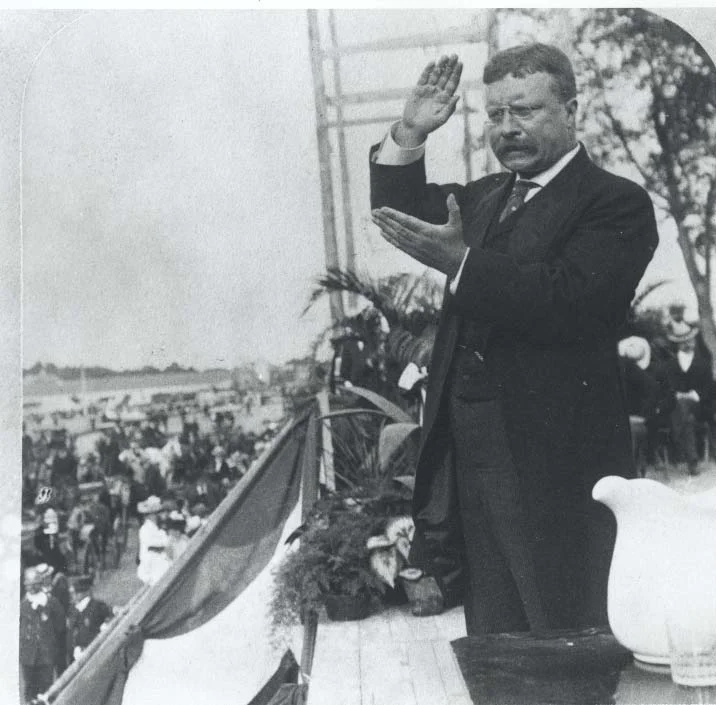
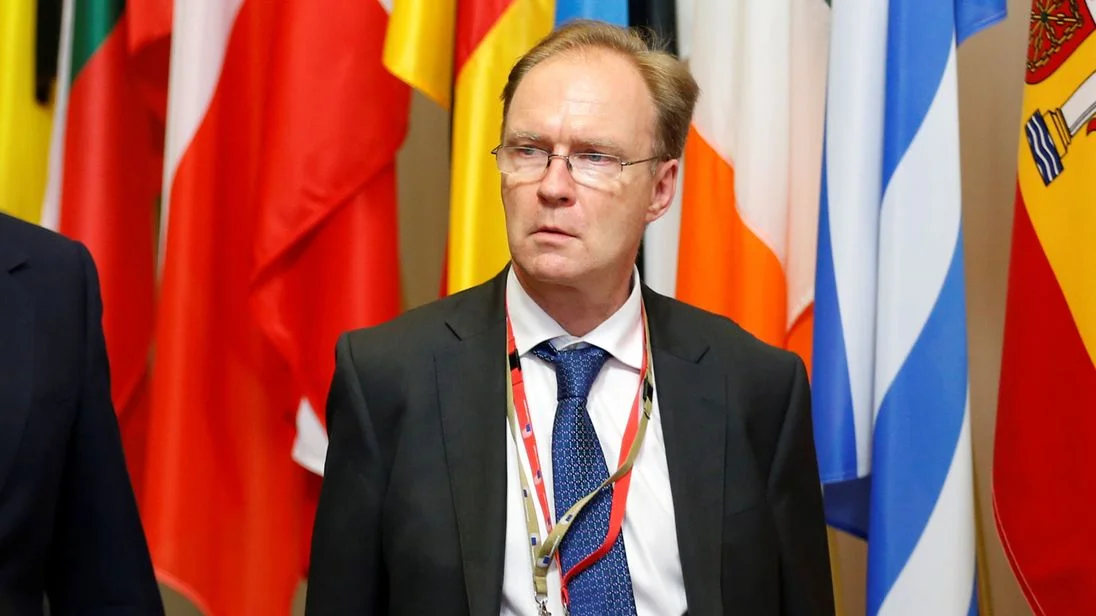
4 July 1948, address to the nation, London, United Kingdom
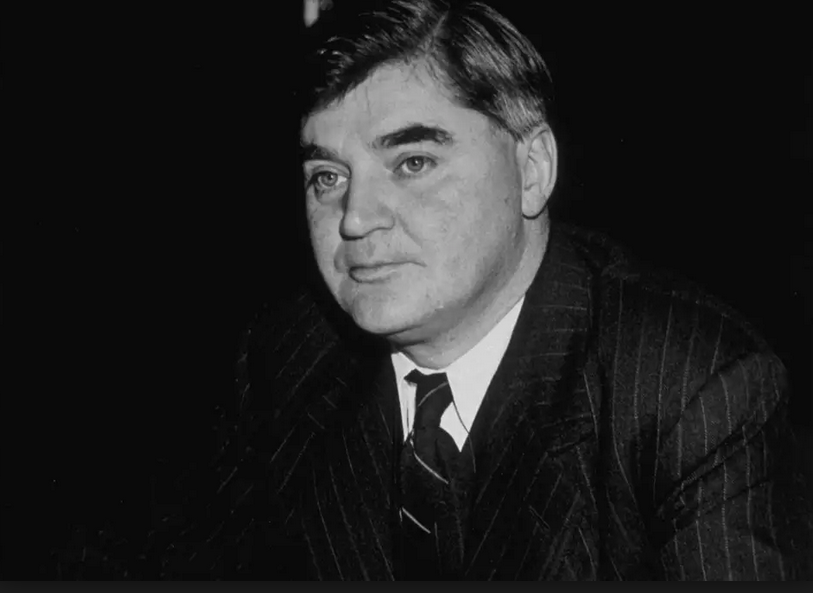
Aneurin (Nye) Bevan: 'I refuse to accept the insurance principle', Speech about NHS -
if anyone knows date and location of this speech, please let us know
I'm proud about the National Health Service. It's a piece of real socialism. It's a piece of real Christianity too, you know.
We had to wait a long time for it.
What I had in mind when we organised the National Health Service in 1946 to 1958. And remember when we did it, you know, you younger ones - this was immediately after the Second World War, when we were as Sir Winston Churchill said, a bankrupt nation. But nevertheless, we did these things. And there's nowhere in any nation in the world, communist or capitalist, any health service to compare with it.
Now, the National Health Service had two main principles:
That the medical arts of science and healing should be made available to people when they needed them, irrespective of whether they could afford to pay for them or not. That was the first principle.
The second principle was that this should be done, not at the expense of the poorer members of the community, but of the well to do.
In short, I refuse to accept the insurance principle. I refuse to accept that the National Health service should be paid for by contributions. I refuse to accept that. I refused to accept it because I thought it was nonsense. If you hadn't fully paid up, you couldn't have a second class operation because your card wasn't full of stamps, could you?
Aneurin (Nye) Bevan: 'It will place this country in the forefront of all countries of the world in medical services?' NHS Bill, second reading - 1946
30 April 1946. Westminster, United Kingdom
I beg to move that the Bill be now read a Second time.
In the last two years there has been such a clamour from sectional interests in the field of national health that we are in danger of forgetting why these proposals are brought forward at all. It is, therefore, very welcome to me – and I am quite certain to hon. Members in all parts of the House – that consideration should now be given, not to this or that sectional interest, but to the requirements of the British people as a whole. The scheme which anyone must draw up dealing with national health must necessarily be conditioned and limited by the evils it is intended to remove. Many of those who have drawn up paper plans for the health services appear to have followed the dictates of abstract principles, and not the concrete requirements of the actual situation as it exists. They drew up all sorts of tidy schemes on paper, which would be quite inoperable in practice.
The first reason why a health scheme of this sort is necessary at all is because it has been the firm conclusion of all parties that money ought not to be permitted to stand in the way of obtaining an efficient health service. Although it is true that the national health insurance system provides a general practitioner service and caters for something like 21 million of the population, the rest of the population have to pay whenever they desire the services of a doctor. It is cardinal to a proper health organisation that a person ought not to be financially deterred from seeking medical assistance at the earliest possible stage. It is one of the evils of having to buy medical advice that, in addition to the natural anxiety that may arise because people do not like to hear unpleasant things about themselves, and therefore tend to postpone consultation as long as possible, there is the financial anxiety caused by having to pay doctors’ bills. Therefore, the first evil that we must deal with is that which exists as a consequence of the fact that the whole thing is the wrong way round. A person ought to be able to receive medical and hospital help without being involved in financial anxiety.
In the second place, the national health insurance scheme does not provide for the self-employed, nor, of course, for the families of dependants. It depends on insurance qualification, and no matter how ill you are, if you cease to be insured you cease to have free doctoring. Furthermore, it gives no backing to the doctor in the form of specialist services. The doctor has to provide himself, he has to use his own discretion and his own personal connections, in order to obtain hospital treatment for his patients and in order to get them specialists, and in very many cases, of course – in an overwhelming number of cases – the services of a specialist are not available to poor people.
Not only is this the case, but our hospital organisation has grown up with no plan, with no system; it is unevenly distributed over the country and indeed it is one of the tragedies of the situation, that very often the best hospital facilities are available where they are least needed. In the older industrial districts of Great Britain hospital facilities are inadequate. Many of the hospitals are too small – very much too small. About 70 per cent. have less than 100 beds, and over 30 per cent. have less than 30. No one can possibly pretend that hospitals so small can provide general hospital treatment. There is a tendency in some quarters to defend the very small hospital on the ground of its localism and intimacy, and for other rather imponderable reasons of that sort, but everybody knows today that if a hospital is to be efficient it must provide a number of specialised services. Although I am not myself a devotee of bigness for bigness sake, I would rather be kept alive in the efficient if cold altruism of a large hospital than expire in a gush of warm sympathy in a small one.
In addition to these defects, the health of the people of Britain is not properly looked after in one or two other respects. The condition of the teeth of the people of Britain is a national reproach. As a consequence of dental treatment having to be bought, it has not been demanded on a scale to stimulate the creation of sufficient dentists, and in consequence there is a woeful shortage of dentists at the present time. Furthermore, about 25 per cent. of the people of Great Britain can obtain their spectacles and get their eyes tested and seen to by means of the assistance given by the approved societies, but the general mass of the people have not such facilities. Another of the evils from which this country suffers is the fact that sufficient attention has not been given to deafness, and hardly any attention has been given so far to the provision of cheap hearing aids and their proper maintenance. I hope to be able to make very shortly a welcome announcement on this question.
One added disability from which our health system suffers is the isolation of mental health from the rest of the health services. Although the present Bill does not rewrite the Lunacy Acts – we shall have to come to that later on – nevertheless, it does, for the first time, bring mental health into the general system of health services. It ought to be possible, and this should be one of the objectives of any civilised health service, for a person who feels mental distress, or who fears that he is liable to become unbalanced in any way to go to a general hospital to get advice and assistance, so that the condition may not develop into a more serious stage. All these disabilities our health system suffers from at the present time, and one of the first merits of this Bill is that it provides a universal health service without any insurance qualifications of any sort. It is available to the whole population, and not only is it available to the whole population freely, but it is intended, through the health service, to generalise the best health advice and treatment. It is intended that there shall be no limitation on the kind of assistance given – the general practitioner service, the specialist, the hospitals, eye treatment, spectacles, dental treatment, hearing facilities, all these are to be made available free.
There will be some limitations for a while, because we are short of many things. We have not enough dentists and it will therefore be necessary for us, in the meantime, to give priority treatment to certain classes – expectant and nursing mothers, children, school children in particular and later on we hope adolescents, Finally we trust that we shall be able to build up a dental service for the whole population. We are short of nurses and we are short, of course, of hospital accommodation, and so it will be some time before the Bill can fructify fully in effective universal service. Nevertheless, it is the object of the Bill, and of the scheme, to provide this as soon as possible, and to provide it universally.
Specialists will be available not only at institutions but for domiciliary visits when needed. Hon. Members in all parts of the House know from their own experience that very many people have suffered unnecessarily because the family has not had the financial resources to call in skilled people. The specialist services, therefore, will not only be available at the hospitals, but will be at the back of the general practitioner should he need them. The practical difficulties of carrying out all these principles and services are very great . When I approached this problem, I made up my mind that I was not going to permit any sectional or vested interests to stand in the way of providing this very valuable service for the British people.
There are, of course, three main instruments through which it is intended that the Health Bill should be worked. There are the hospitals; there are the general practitioners; and there are the health centres. The hospitals are in many ways the vertebrae of the health system, and I first examined what to do with the hospitals. The voluntary hospitals of Great Britain have done invaluable work. When hospitals could not be provided by any other means, they came along. The voluntary hospital system of this country has a long history of devotion and sacrifice behind it, and it would be a most frivolously minded man who would denigrate in any way the immense services the voluntary hospitals have rendered to this country. But they have been established often by the caprice of private charity. They bear no relationship to each other. Two hospitals close together often try to provide the same specialist services unnecessarily, while other areas have not that kind of specialist service at all. They are, as I said earlier, badly distributed throughout the country. It is unfortunate that often endowments are left to finance hospitals in those parts of the country where the well-to-do live while, in very many other of our industrial and rural districts there is inadequate hospital accommodation. These voluntary hospitals are, very many of them, far too small and, therefore, to leave them as independent units is quite impracticable.
Furthermore – I want to be quite frank with the House – I believe it is repugnant to a civilised community for hospitals to have to rely upon private charity. I believe we ought to have left hospital flag days behind. I have always felt a shudder of repulsion when I have seen nurses and sisters who ought to be at their work, and students who ought to be at their work, going about the streets collecting money for the hospitals. I do not believe there is an hon. Member of this House who approves that system. It is repugnant, and we must leave it behind – entirely. But the implications of doing this are very considerable.
I have been forming some estimates of what might happen to voluntary hospital finance when the all-in insurance contributions fall to be paid by the people of Great Britain, when the Bill is passed and becomes an Act, and they are entitled to free hospital services. The estimates I have go to show that between 80 per cent. and 90 per cent. of the revenues of the voluntary hospitals in these circumstances will be provided by public funds, by national or rate funds. And, of course, as the hon. Member reminds me, in very many parts of the country it is a travesty to call them voluntary hospitals. In the mining districts, in the textile districts, in the districts where there are heavy industries it is the industrial population who pay the weekly contributions for the maintenance of the hospitals. When I was a miner I used to find that situation, when I was on the hospital committee. We had an annual meeting and a cordial vote of thanks was moved and passed with great enthusiasm to the managing director of the colliery company for his generosity towards the hospital; and when I looked at the balance sheet, I saw that 97.5 per cent. of the revenues were provided by the miners’ own contributions; but nobody passed a vote of thanks to the miners.
I can assure the hon. and gallant Member that I was no more silent then than I am now. But, of course, it is a misuse of language to call these ‘Voluntary hospitals.” They are not maintained by legally enforced contributions; but, mainly, the workers pay for them because they know they will need the hospitals, and they are afraid of what they would have to pay if they did not provide them. So it is, I say, an impossible situation for the State to find something like 90 per cent of the revenues of these hospitals and still to call them “voluntary.’ So I decided, for this and other reasons, that the voluntary hospitals must be taken over.
I knew very well when I decided this that it would give rise to very considerable resentment in many quarters, but, quite frankly, I am not concerned about the voluntary hospitals’ authorities: I am concerned with the people whom the hospitals are supposed to serve. Every investigation which has been made into this problem has established that the proper hospital unit has to comprise about 1,000 beds – not in the same building but, nevertheless, the general and specialist hospital services can be provided only in a group of that size. This means that a number of hospitals have to be pooled, linked together, in order to provide a unit of that sort. This cannot be done effectively if each hospital is a separate, autonomous body. It is proposed that each of these groups should have a large general hospital, providing general hospital facilities and services, and that there should be a group round it of small feeder hospitals. Many of the cottage hospitals strive to give services that they are not able to give. It very often happens that a cottage hospital harbours ambitions to the hurt of the patients, because they strive to reach a status that they never can reach. In these circumstances, the welfare of the patients is sacrificed to the vaulting ambitions of those in charge of the hospital. If, therefore, these voluntary hospitals are to be grouped in this way, it is necessary that they should submit themselves to proper organisation, and that submission, in our experience, is impracticable if the hospitals, all of them, remain under separate management.
Now, this decision to take over the voluntary hospitals meant, that I then had to decide to whom to give them. Who was to be the receiver? So I turned to an examination of the local government hospital system. Many of the local authorities in Great Britain have never been able to exercise their hospital powers. They are too poor. They are too small. Furthermore, the local authorities of Great Britain inherited their hospitals from the Poor Law, and some of them are monstrous buildings, a cross between a workhouse and a barracks – or a prison. The local authorities are helpless in these matters. They have not been able to afford much money. Some local authorities are first-class. Some of the best hospitals in this country are local government hospitals. But, when I considered what to do with the voluntary hospitals when they had been taken over, and who was to receive them I had to reject the local government unit, because the local authority area is no more an effective gathering ground for the patients of the hospitals than the voluntary hospitals themselves. My hon. Friend said that some of them are too small, and some of them too large. London is an example of being too small and too large at the same time.
It is quite impossible, therefore, to hand over the voluntary hospitals to the local authorities. Furthermore – and this is an argument of the utmost importance – if it be our contract with the British people, if it be our intention that we should universalise the best, that we shall promise every citizen in this country the same standard of service, how can that be articulated through a rate-borne institution which means that the poor authority will not be able to carry out the same thing at all- It means that once more we shall be faced with all kinds of anomalies, just in those areas where hospital facilities are most needed, and in those very conditions where the mass of the poor people will be unable to find the finance to supply the hospitals. Therefore, for reasons which must be obvious – because the local authorities are too small, because their financial capacities are unevenly distributed – I decided that local authorities could not be effective hospital administration units. There are, of course, a large number of hospitals in addition to the general hospitals which the local authorities possess. Tuberculosis sanatoria, isolation hospitals, infirmaries of various kinds, rehabilitation, and all kinds of other hospitals are all necessary in a general hospital service. So I decided that the only thing to do was to create an entirely new hospital service, to take over the voluntary hospitals, and to take over the local government hospitals and to organise them as a single hospital service. If we are to carry out our obligation and to provide the people of Great Britain, no matter where they may be, with the same level of service, then the nation itself will have to carry the expenditure, and cannot put it upon the shoulders of any other authority.
A number of investigations have been made into this subject from time to time, and the conclusion has always been reached that the effective hospital unit should be associated with the medical school. If you grouped the hospitals in about 16 to 20 regions around the medical schools, you would then have within those regions the wide range of disease and disability which would provide the basis for your specialised hospital service. Furthermore, by grouping hospitals around the medical schools, we should be providing what is very badly wanted, and that is a means by which the general practitioners are kept in more intimate association with new medical thought and training. One of the disabilities, one of the shortcomings of our existing medical service, is the intellectual isolation of the general practitioners in many parts of the country. The general practitioner, quite often, practises in loneliness and does not come into sufficiently intimate association with his fellow craftsmen and has not the stimulus of that association, and in consequence of that the general practitioners have not got access to the new medical knowledge in a proper fashion. By this association of the general practitioner with the medical schools through the regional hospital organisation, it will be possible to refresh and replenish the fund of knowledge at the disposal of the general practitioner.
This has always been advised as the best solution of the difficulty. It has this great advantage to which I call the close attention of hon. Members. It means that the bodies carrying out the hospital services of the country are, at the same time, the planners of the hospital service. One of the defects of the other scheme is that the planning authority and executive authority are different. The result is that you get paper planning or bad execution. By making the regional board and regional organisation responsible both for the planning and the administration of the plans, we get a better result, and we get from time to time, adaptation of the plans by the persons accumulating the experience in the course of their administration. The other solutions to this problem which I have looked at all mean that you have an advisory body of planners in the background who are not able themselves to accumulate the experience necessary to make good planners. The regional hospital organisation is the authority with which the specialised services are to be associated, because, as I have explained, this specialised service can be made available for an area of that size, and cannot be made available over a small area.
When we come to an examination of this in Committee, I daresay there will be different points of view about the constitution of the regional boards. It is not intended that the regional boards should be conferences of persons representing different interests and different organisations. If we do that, the regional boards will not be able to achieve reasonable and efficient homogeneity. It is intended that they should be drawn from members of the profession, from the health authorities in the area, from the medical schools and from those who have long experience in voluntary hospital administration. While leaving ourselves open to take the best sort of .individuals on these hospital boards which we can find, we hope before very long to build up a high tradition of hospital administration in the boards themselves. Any system which made the boards conferences, any proposal which made the members delegates, would at once throw the hospital administration into chaos. Although I am perfectly prepared and shall be happy to cooperate with hon. Members in all parts of the House in discussing how the boards should be constituted, I hope I shall not be pressed to make these regional boards merely representative of different interests and different areas. The general hospital administration, therefore, centres in that way.
When we come to the general practitioners we are, of course, in an entirely different field. The proposal which I have made is that the ‘general practitioner shall not be in direct contract with the Ministry of Health, but in contract with new bodies. There exists in the medical ,profession a great resistance to coming under the authority of local government – a great resistance, with which I, to some extent, sympathise. There is a feeling in the medical profession that the general practitioner would be liable to come too much under the medical officer of health, who is the administrative doctor. This proposal does not put the doctor under the local authority; it puts the doctor in contract with an entirely new body – the local executive :council, coterminous with the local health area, county or county borough. On that executive council, the dentists, doctors and chemists will have half the representation. In fact, the whole scheme provides a greater degree of professional representation for the medical profession than any other scheme I have seen.
I have been criticised in some quarters for doing that. I will give the answer now: I have never believed that the demands of a democracy are necessarily satisfied merely by the opportunity of putting a cross against someone’s name every four or five years. I believe that democracy exists in the active participation in administration and policy. Therefore, I believe that it is a wise thing to give the doctors full participation in the administration of their own profession. They must of course, necessarily be subordinated to lay control – we do not want the opposite danger of syndicalism. Therefore, the communal interests must always be safeguarded in this administration. The doctors will be in contract with an executive body of this sort. One of the advantages of that proposal is that the doctors do not become – as some of them have so wildly stated – civil servants. Indeed, one of the advantages of the scheme is that it does not create an additional civil servant.
It imposes no constitutional disability upon any person whatsoever. Indeed, by taking the hospitals from the local authorities and putting them under the regional boards, large numbers of people will be enfranchised who are now disfranchised from participation in local government. So far from this being a huge bureaucracy with all the doctors little civil servants – the slaves of the Minister of Health, as I have seen it described – instead of that, the doctors are under contract with bodies which are not under the local authority, and which are, at the same time, ever open to their own influence and control.
One of the chief problems that I was up against in considering this scheme was the distribution of the general practitioner service throughout the country. The distribution, at the moment, is most uneven. In South Shields before the war there were 4,100 persons per doctor; in Bath 1,590; in Dartford nearly 3,000 and in Bromley 1,620; in Swindon 3,100; in Hastings under 1,200. That distribution of general practitioners throughout the country is most hurtful to the health of our people. It is entirely unfair, and, therefore, if the health services are to be carried out, there must be brought about a redistribution of the general practitioners throughout the country.
Indeed, I could amplify those figures a good deal, but I do not want to weary the House, as Ihave a great deal to say. It was, therefore, decided that there must be redistribution. One of the first consequences of that decision was the abolition of the sale and purchase of practices. If we are to get the doctors where we need them, we cannot possibly allow a new doctor to go in because he has bought somebody’s practice. Proper distribution kills by itself the sale and purchase of practices. I know that there is some opposition to this, and I will deal with that opposition. I have always regarded the sale and purchase of medical practices as an evil in itself. It is tantamount to the sate and purchase of patients. Indeed, every argument advanced about the value of the practice is itself an argument against freedom of choice, because the assumption underlying the high value of a practice is that the patient passes from the old doctor to the new. If they did not pass there would be no value in it. I would like, therefore, to point out to the medical profession that every time they argue for high compensation for the loss of the value of their practices, it is an argument against the free choice which they claim. However, the decision to bring about the proper distribution of general practitioners throughout the country meant that the value of the practices was destroyed. We had, therefore, to consider compensation.
I have never admitted the legal claim, but I admit at once that very real hardship would be inflicted upon doctors if there were no compensation. Many of these doctors look forward to the value of their practices for their retirement. Many of them have had to borrow money to buy practices and, therefore, it would, I think, be inhuman, and certainly most unjust, if no compensation were paid for the value of the practices destroyed. The sum of £66,000,000 is very large. In fact, I think that everyone will admit that the doctors are being treated very generously. However, it is not all loss, because if we had, in providing superannuation, given credit for back service, as we should have had to do, it would have cost £35 million. Furthermore, the compensation will fall to be paid to the dependants when the doctor dies, or when he retires, and so it is spread over a considerable number of years. This global sum has been arrived at by the actuaries and over the figure, I am afraid, we have not had very much control, because the actuaries have agreed it. But the profession itself will be asked to advise as to its distribution among the claimants, because we are interested in the global sum, and the profession, of course, is interested in the equitable distribution of the fund to the claimants.
The doctors claim that the proposals of the Bill amount to direction – not all the doctors say this but some of them do. There is no direction involved at all. When the Measure starts to operate, the doctors in a particular area will be able to enter the public service in that area. A doctor newly coming along would apply to the local executive council for permission to practise in a particular area. His application would then be re-referred to the Medical Practices Committee. The Medical Practices Committee, which is mainly a professional body, would have before it the question of whether there were sufficient general practitioners in that area. If there were enough, the committee would refuse to permit the appointment. No one can really argue that that is direction, because no profession should be allowed to enter the public service in a place where it is not needed. By that method of negative control over a number of years, we hope to bring about over the country a positive redistribution of the general practitioner service. It will not affect the existing situation, because doctors will be able to practise under the new service in the areas to which they belong, but a new doctor, as he comes on, will have to find his practice in a place inadequately served.
I cannot, at the moment, explain to the House what are going to be the rates of remuneration of doctors. The Spens Committee report is not fully available. I hope it will be out next week. I had hoped that it would be ready for this Debate, because this is an extremely important part of the subject, but I have not been able to get the full report. Therefore, it is not possible to deal with remuneration. However, it is possible to deal with some of the principles underlying the remuneration of general practitioners. Some of my hon. Friends on this side of the House are in favour of a full salaried service. I am not. I do not believe that the medical profession is ripe for it, and I cannot dispense with the principle that the payment of a doctor must in some degree be a reward for zeal, and there must be some degree of punishment for lack of it. Therefore, it is proposed that capitation should remain the main source from which a doctor will obtain his remuneration. But it is proposed that there shall be a basic salary and that for a number of very cogent reasons. One is that a young doctor entering practice for the first time needs to be kept alive while he is building up his lists. The present system by which a young man gets a load of debt around his neck in order to practise is an altogether evil one. The basic salary will take care of that.
Furthermore, the basic salary has the additional advantage of being something to which I can attach an increased amount to get doctors to go into unattractive areas. It may also – and here our position is not quite so definite – be the means of attaching additional remuneration for special courses and special acquirements. The basic salary, however, must not be too large otherwise it is a disguised form of capitation. Therefore, the main source at the moment through which a general practitioner will obtain his remuneration will be capitation. I have also made – and I quite frankly admit it to the House – a further concession which I know will be repugnant in some quarters. The doctor, the general practitioner and the specialist, will be able to obtain fees, but not from anyone who is on any of their own lists, nor will a doctor be able to obtain fees from persons on the lists of his partner, nor from those he has worked with in group practice, but I think it is impracticable to prevent him having any fees at all. To do so would be to create a black market. There ought to be nothing to prevent anyone having advice from another doctor other than his own. Hon. Members know what happens in this field sometimes. An individual hears that a particular doctor in some place is good at this, that or the other thing, and wants to go along for a consultation and pays a fee for it. If the other doctor is better than his own all he will need to do is to transfer to him and he gets him free. It would be unreasonable to keep the patient paying fees to a doctor whose services can be got free. So the amount of fee payment on the part of the general population will be quite small. Indeed, I confess at once if the amount of fee paying is great, the system will break down, because the whole purpose of this scheme is to provide free treatment with no fee paying at all. The same principle applies to the hospitals. If an individual wishes to consult, there is no reason why he should be stopped. As I have said, the fact that a person can transfer from one doctor to another ought to keep fee paying within reasonable proportions.
The same principle applies to the hospitals. Specialists in hospitals will be allowed to have fee-paying patients. I know this is criticised and I sympathise with some of the reasons for the criticism, but we are driven inevitably to this fact, that unless we permit some fee-paying patients in the public hospitals, there will be a rash of nursing homes all over the country. If people wish to pay for additional amenities, or something to which they attach value, like privacy in a single ward, we ought to aim at providing such facilities for everyone who wants them. But while we have inadequate hospital facilities, and while rebuilding is postponed it inevitably happens that some people will want to buy something more than the general health service is providing. If we do not permit fees in hospitals, we will lose many specialists from the public hospitals for they will go to nursing homes. I believe that nursing homes ought to be discouraged. They cannot provide general hospital facilities, and we want to keep our specialists attached to our hospitals and not send them into nursing homes. Behind this there is a principle of some importance. If the State owned a theatre it would not charge the same prices for the different seats. It is not entirely analogous, but it is an illustration. For example, in the dental service the same principle will prevail. The State will provide a certain standard of dentistry free, but if a person wants to have his teeth filled with gold, the State will not provide that.
The third instrument to which the health services are to be articulated is the health centre, to which we attach very great importance indeed. It has been described in some places as an experimental idea, but we want it to be more than that, because to the extent that general practitioners can operate through health centres in their own practice, to that extent will be raised the general standard of the medical profession as a whole. Furthermore, the general practitioner cannot afford the apparatus necessary for a proper diagnosis in his own surgery. This will be available at the health centre. The health centre may well be the maternity and child welfare clinic of the local authority also. The provision of the health centre is, therefore, imposed as a duty on the local authority. There has been criticism that this creates a trichotomy in the services. It is not a trichotomy at all. If you have complete unification it would bring you back to paper planning. You cannot get all services through the regional authority, because there are many immediate and personal services which the local authority can carry out better than anybody else. So, it is proposed to leave those personal services to the local authority, and some will be carried out at the health centre. The centres will vary; there will be larger centres at which there will be dental clinics, maternity and child welfare services, and general practitioners’ consultative facilities, and there will also be smaller centres – surgeries where practitioners can see their patients.
The health centres will be managed entirely by the health authorities. The health centre itself will be provided by the local health authority and facilities will be made available there to the general practitioner. The small ones are necessary, because some centres may be a considerable distance from people’s homes. So it will be necessary to have simpler ones, nearer their homes, fixed in a constellation with the larger ones.
The representatives on the local executives will be able to coordinate what is happening at the health centres. As I say, we regard these health centres as extremely valuable, and their creation will be encouraged in every possible way. Doctors will be encouraged to practise there, where they will have great facilities. It will, of course, be some time before these centres can be established everywhere, because of the absence of these facilities.
There you have the three main instruments through which it is proposed that the health services of the future should be articulated. There has been some criticism. Some have said that the preventive services should be under the same authority as the curative services. I wonder whether Members who advance that criticism really envisage the situation which will arise. What are the preventive services – Housing, water, sewerage, river pollution prevention, food inspection – are all these to be under a regional board? If so, a regional board of that sort would want the Albert Hall in which to meet. This, again, is paper planning. It is unification for unification’s sake. There must be a frontier at which the local joins the national health service. You can fix it here or there, but it must be fixed somewhere. It is said that there is some contradiction in the health scheme because some services are left to the local authority and the rest to the national scheme. Well, day is joined to night by twilight, but nobody has suggested that it is a contradiction in nature. The argument that this is a contradiction in health services is purely pedantic, and has no relation to the facts.
It is also suggested that because maternity and child welfare services come under the local authority, and gynaecological services come under the regional board, that will make for confusion. Why should it? Continuity between one and the other is maintained by the user. The hospital is there to be used. If there are difficulties in connection with birth, the gynaecologist at the hospital centre can look after them. All that happens is that the midwife will be in charge the mother will be examined properly, as she ought to be examined then, if difficulties are anticipated, she can have her child in hospital, where she can be properly looked after by the gynaecologist. When she recovers, and is a perfectly normal person, she can go to the maternity and child welfare centre for post-natal treatment. There is no confusion there. The confusion is in the minds of those who are criticising the proposal on the ground that there is a trichotomy in the services, between the local authority, the regional board and the health centre.
I apologise for detaining the House so long, but there are other matters to which I must make some reference. The two Amendments on the Order Paper rather astonish me. The hon. Member for Denbigh informs me, in his Amendment, that I have not sufficiently consulted the medical profession – I intend to read the Amendment to show how extravagant the hon. Member has been. He says that he and his friends are:
“unable to agree to a measure containing such far reaching proposals involving the entire population without any consultations having taken place between the Minister and the organisations and bodies representing those who will be responsible for carrying out its provisions…”
I have had prepared a list of conferences I have attended. I have met the medical profession, the dental profession, the pharmacists, nurses and midwives, voluntary hospitals, local authorities, eye services, medical aid services, herbalists, insurance committees, and various other organisations. I have had 20 conferences. The consultations have been very wide. In addition, my officials have had 13 conferences, so that altogether there have been 33 conferences with the different branches of the profession about the proposals. Can anybody argue that that is not adequate consultation? Of course, the real criticism is that I have not conducted negotiations. I am astonished that such a charge should lie in the mouth of any Member of the House. If there is one thing that will spell the death of the House of Commons it is for a Minister to negotiate Bills before they are presented to the House. I had no negotiations, because once you negotiate with outside bodies two things happen. They are made aware of the nature of the proposals before the House of Commons itself; and furthermore, the Minister puts himself into an impossible position, because, if he has agreed things with somebody outside he is bound to resist Amendments from Members in the House. Otherwise he does not play fair with them. I protested against this myself when I was a Private Member. I protested bitterly, and I am not prepared, strange though it may seem, to do something as a Minister which as a Private Member I thought was wrong. So there has not been negotiation, and there will not be negotiation, in this matter. The House of Commons is supreme, and the House of Commons must assert its supremacy, and not allow itself to be dictated to by anybody, no matter how powerful and how strong he may be.
These consultations have taken place over a very wide field, and, as a matter of fact, have produced quite a considerable amount of agreement. The opposition to the Bill is not as strong as it was thought it would be. On the contrary, there is very considerable support for this Measure among the doctors themselves. I myself have been rather aggrieved by some of the statements which have been made. They have misrepresented the proposals to a very large extent, but as these proposals become known to the medical profession, they will appreciate them, because nothing should please a good doctor more than to realise that, in future, neither he nor his patient will have any financial anxiety arising out of illness.
The leaders of the Opposition have on the Order Paper an Amendment which expresses indignation at the extent to which we are interfering with charitable foundations. The Amendment states that the Bill “gravely menaces all charitable foundations by diverting to purposes other than those intended by the donors the trust funds of the voluntary hospitals.”
I must say that when I read that Amendment I was amused. I have been looking up some precedents. I would like to say, in passing, that a great many of these endowments and foundations have been diversions from the Chancellor of the Exchequer. The main contributor was the Chancellor of the Exchequer. But I seem to remember that, in 1941, hon. Members opposite were very much vexed by what might happen to the public schools, and they came to the House and asked for the permission of the House to lay sacrilegious hands upon educational endowments centuries old. I remember protesting against it at the time – not, however, on the grounds of sacrilege. These endowments had been left to the public schools, many of them for the maintenance of the buildings, but hon. Members opposite, being concerned lest the war might affect their favourite schools, came to the House and allowed the diversion of money from that purpose to the payment of the salaries of the teachers and the masters. There have been other interferences with endowments. Wales has been one of the criminals. Disestablishment interfered with an enormous number of endowments. Scotland also is involved. Scotland has been behaving in a most sacrilegious manner; a whole lot of endowments have been waived by Scottish Acts. I could read out a large number of them, but I shall not do so.
Do hon. Members opposite suggest that the intelligent planning of the modern world must be prevented by the endowments of the dead? Are we to consider the dead more than the living? Are the patients of our hospitals to be sacrificed to a consideration of that sort?
We are not, in fact, diverting these endowments from charitable purposes. It would have been perfectly proper for the Chancellor of the Exchequer to have taken over these funds, because they were willed for hospital purposes, and he could use them for hospital purposes; but we are doing no such thing. The teaching hospitals will be left with all their liquid endowments and more power. We are not interfering with the teaching hospitals’ endowments. Academic medical education will be more free in the future than it has been in the past. Furthermore, something like £32 million belonging to the voluntary hospitals as a whole is not going to be taken from them. On the contrary, we are going to use it, and a very valuable thing it will be; we are going to use it as a shock absorber between the Treasury, the central Government, and the hospital administration. They will be given it as free money which they can spend over and above the funds provided by the State.
I welcome the opportunity of doing that, because I appreciate, as much as hon. Members in any part of the House, the absolute necessity for having an elastic, resilient service, subject to local influence as well as to central influence; and that can be accomplished by leaving this money in their hands. I shall be prepared to consider, when the Bill comes to be examined in more detail, whether any other relaxations are possible, but certainly, by leaving this money in the hands of the regional board, by allowing the regional board an annual budget and giving them freedom of movement inside that budget, by giving power to the regional board to distribute this money to the local management committees of the hospitals, by various devices of that sort, the hospitals will be responsible to local pressure and subject to local influence as well as to central direction.
I think that on those grounds the proposals can be defended. They cover a very wide field indeed, to a great deal of which I have not been able to make reference; but I should have thought it ought to have been a pride to hon. Members in all parts of the House that Great Britain is able to embark upon an ambitious scheme of this proportion. When it is carried out, it will place this country in the forefront of all countries of the world in medical services. I myself, if I may say a personal word, take very great pride and great pleasure in being able to introduce a Bill of this comprehensiveness and value. I believe it will lift the shadow from millions of homes. It will keep very many people alive who might otherwise be dead. It will relieve suffering. It will produce higher standards for the medical profession. It will be a great contribution towards the wellbeing of the common people of Great Britain. For that reason, and for the other reasons I have mentioned, I hope hon. Members will give the Bill a Second Reading.
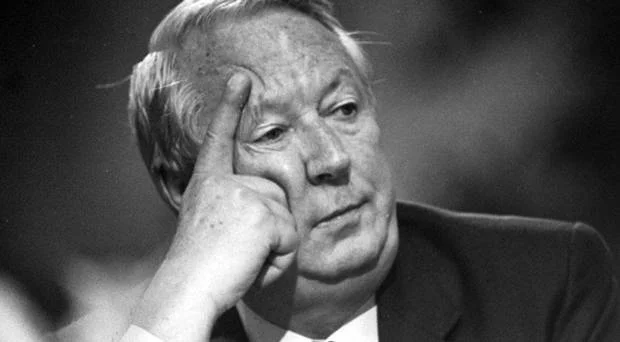
Edward Heath: 'This debate is preventing us from giving real attention and real resources to the problems of crime', Death penalty vote - 1983
13 July 1983, House of Commons, Westminster, United Kingdom
I wish initially to address myself to the general question of capital punishment. I think that my position is well known to all hon. Members. For more than 20 years I have been opposed to capital punishment for all crimes of homicide, and I have always voted against it. I intend to do so tonight. My position is not only as strong as it ever was; it has been confirmed in recent years.
For nearly 20 years capital punishment has been abolished in this country. My hon. and learned Friend the Member for Fylde (Sir E. Gardner), who moved the resolution with great restraint and wisdom, wishes to change the status quo. He and those who support him must prove that it is necessary, in fact vital, to change the status quo. The onus of proof rests with him and his friends. When the House judges the issue and votes tonight, it should ask itself whether the proposer of the resolution and his supporters have proved beyond any shadow of doubt that it is vital to change the status quo.
In my judgment—and I say this with great respect for my hon. and learned Friend whom I have known for many years—he has not proved 'his case. He said quite frankly that he did not intend to rely on statistics. The Home Secretary rightly said the same. If they did, they would have to explain why the increase in homicides began long before the abolition of the death penalty and why the increase in ordinary crimes of violence has been many times greater than the increase in homicides. It is that factor which has produced attention in the public mind. The growth of lesser crimes of violence has been so great that the public has deduced that the only answer is 899 to deal with homicide by capital punishment. That is a confusion in the public mind. A great deal rests upon us to remove that confusion.
My hon. and learned Friend did not introduce the question of retribution and revenge, although it was mentioned by the right hon. Member for Birmingham, Sparkbrook (Mr. Hattersley). I was saddened to hear murmurs in some parts of the House that appeared to support retribution and revenge. Quite frankly, from any moral viewpoint, I find revenge completely unacceptable. I do not believe that it is for the House to decide whether there should be revenge—[Interruption.] If some of my hon. Friends want revenge, I hope that they will say so and also state their position on other issues that they consider require revenge. It is not for the House or for Parliament to decide retribution either. That lies elsewhere at other times. That is why I cannot accept either of the arguments of revenge or retribution.
My hon. and learned Friend said that our purpose must be to secure the safety of the people of this realm to the greatest possible extent. That is the task of Government both externally and internally, and I agree with him entirely. The question at issue is whether the restoration of capital punishment will improve the security of the people of this realm. That issue remains unproven.
My hon. and learned Friend said that that is a matter of judgment. It is. Others would say that it is a matter of instinct—indeed that has already been said—but in my view the judgment, if it is in favour of restoration, is wrong. This is far too great a matter to rest on instinct. We need more substantial reasons than just instinct for changing the status quo.
I come next to the point which in recent years I have found more and more worrying and more and more impressive. I refer to condemnation by mistake. I find it impossible to accept a penalty that is irreversible when it is so apparent that a number of mistakes have been made. One of my hon. Friends said on the radio that if no one else is prepared to hang people he is quite prepared to do the job himself—[HON. MEMBERS: "Which one?"] I ask him a rather different question. Because of his views, is he prepared to be hanged by mistake? I am not asking my hon. Friend to reply on the spur of the moment. I shall let him give due consideration to the problem before he finally makes up his mind.
I wish now to deal with the specific amendments on the Order Paper about the restoration of capital punishment in particular cases. In this respect, I emphasise what was said by the right hon. Member for Sparkbrook and in great detail by my right hon. and learned Friend the Home Secretary about the Homicide Act 1957. I agree with everything that my right hon. and learned Friend said about that. The Homicide Act 1957 was largely shaped by Viscount Kilmuir as Lord Chancellor. I was involved as the Chief Whip of the Government of the day in trying to bring together those who felt strongly about capital punishment and the abolitionists. The Government wanted to lift the problem out of the constant battle in the House of Commons and try to get public support for a final position. That Act lasted for only eight years. It failed, as the Home Secretary said. It failed because the general public was not prepared to support an Act—nor was the judiciary for that matter—which said that one kind of murderer was worthy of the death penalty and that another 900 kind was not; that if a public figure was shot crossing Trafalgar Square that was a matter for the death penalty, but that if a man poisoned his wife that was a matter between the two of them and did not deserve the death penalty.
There is a basic lesson here about trying to pick out particular aspects of homicide for the death penalty. I believe that the public would quickly say "Yes, if there is to be a death penalty, is not such and such a case also worthy of it?" That is the fundamental argument of principle against trying to select particular aspects of homicide as justifying the death penalty.
If there is to be a selection, I regard the case for the selection of terrorism as the weakest. If murder of the police or prison warders were to be selected, I think that the public would say that those people have a rather better chance of looking after themselves than they, the innocent public. Terrorists present great problems. I think that the Home Secretary is underestimating the determination of terrorists in Northern Ireland and elsewhere, quite regardless of death, to carry through their purposes. Even if one is dealing with Arab terrorists, one finds that very few of them are paid marksmen. If they are paid marksmen, they will weigh up the risks against the penalties. If money is what they want they will take the risk. Therefore, I cannot see that the argument for capital punishment for terrorists is a powerful one.
I come now to the definition of terrorism, the importance of which I hope my right hon. and learned Friend will not underestimate, as he glossed over it this afternoon. If there is to be the final capital penalty for terrorism, there is the problem of judges and juries deciding whether a person is a political terrorist. There has been criticism in the Province of attempts to deal with the IRA on the basis that its members should, when arrested, be treated as political prisoners, and it has been said that that is an immense mistake. Exactly this definition, as has so rightly been pointed out, would have to be made permanently for capital punishment if the amendment were agreed. I do not believe that one can gloss over the issue of defining terrorism or of how a jury and the judge would handle it.
Even more important — as the Home Secretary emphasised—is that there is no hope of returning to jury verdicts in Northern Ireland. One will not persuade a jury to convict if there is the death penalty. My right hon. and learned Friend then referred to a judge and perhaps two assessors. But is the Northern Ireland judiciary in favour of dealing with IRA terrorism by a judge and two assessors? I cannot believe for one moment that the judiciary would accept that. I lived through all the problems of 1970 to 1974 and have been back to Northern Ireland many times since. I know the views of the people there and, leaving aside the impact on the IRA, I cannot believe that our judiciary or the Northern Ireland judiciary would be prepared to deal with these cases with an assessor sitting on each side.
Therefore, as my right hon. Friend the Secretary of State for Northern Ireland has already said, it is out of the question for practical reasons to apply capital punishment there. But we cannot punish terrorist murderers on the mainland by imposing the death penalty if we do not do so in Northern Ireland. The number of cases here is comparatively few—a few Arab and other terrorists—but from the public's point of view, let alone all the other considerations, it is impossible to deal with an Arab 901 terrorist who shoots the Israeli ambassador in one way but to deal with the same crime differently in Northern Ireland, which most people consider to be the home of terrorism. Amendment (e) therefore is entirely impractical.
I am astonished—I must not say that—I was taken unawares by the fact that my right hon. and learned Friend the Home Secretary argued as he did. His argument did not seem to deal with any of the basic problems of making terrorism a separate capital crime. Other European countries have had great problems with terrorism—for example, the Federal Republic of Gennany and the Italian Republic. They have dealt with those problems not by bringing back capital punishment, but in other ways, largely by effective police action and by reducing the status of the terrorists so that they could not gain public support. The same is true of the Netherlands. I do not support the argument that we of all European countries should have to reintroduce capital punishment to deal with terrorism.
I conclude with these points. First, we must consider what changes there have been over the past 20 years. One change has been the immense growth of the media—television, radio and the press — and the almost complete removal of privacy. The media's impact in rousing public feeling on the occasion of an execution would be many times what it was in the days before the abolition of capital punishment. One cannot encourage a deeper feeling for the spirituality of man when he is being influenced all the time by the media dealing with executions in that way. That in itself is a powerful argument against capital punishment.
When one considers what has happened in the few states of the United States that have restored capital punishment, one realises the growth in the influence of the media over the past 20 years. It is seen in the horrifying stories that appear before, during and after an execution, especially when men plead for death, which shows that death is not for them a deterrent. I believe that the impact on people is terrible.
Secondly, I am sure, having listened to these debates for 30 years, that the constant emphasis on capital punishment is preventing us from giving real attention and real resources to the problems of crime in a modern democracy. The Government have done a great deal. At one stage criminals had much greater resources than the police. They had better radio facilities, modern communications, such as the use of motorways and other technical devices as well as more up-to-date firearms. The police have now caught up a great deal. We must recognise that if we really are to tackle the per al problems of the country we must turn our attention to that, instead of automatically saying that the answer is hanging and flogging.
I hope, therefore, that this debate can settle it for this Parliament and for many years to come. If my hon. and learned Friend the Member for Fylde is right about that — he said that it might be the last time Parliament would vote on the issue—then I warmly support the fact of him having put the motion forward—though I want to see it defeated—I hope for the last time.
I can claim to speak with a certain amount of experience. When one first comes into the House, one faces many pressures in relation to the way in which one should vote. This has therefore become an early test for many of the victors in the recent general election. My 902 career in the House, covering 33 years, has not been entirely without controversy. I think back to debates on Suez, the abolition of resale price maintenance, the European negotiations, the war in the Middle East, the whole reform of the trade union movement and, for more than 20 years, the abolition of capital punishment.
I can say with honesty to every person who has had the privilege of entering the House that, having said clearly where I stood, and having explained to my constituents why I took up the position that I did, they have accepted that as being the right of their Member of Parliament. I hope that that will always be the case. It is the basis of the British constitution; we are not mandated, we cannot be mandated, by a selection committee, by a constituency committee or by the public as whole.
This is the occasion, above all, when we must use our own judgment. I hope that tonight every hon. Member, and particularly new hon. Members, will feel free to use their judgment. I do not believe that the case for the reintroduction of the death penalty has been proved and I therefore urge the House to reject the motion and all the amendments.
Duff Cooper: 'A moment may come when, owing to the invasion of Czechoslovakia, a European war will begin', Speech opposing Appeasement - 1938
3 October 1938, Westminster, United Kingdom
The House will, I am sure, appreciate the peculiarly difficult circumstances in which I am speaking this afternoon. It is always a painful and delicate task for a Minister who has resigned to explain his reasons to the House of Commons, and my difficulties are increased this afternoon by the fact, of which I am well aware, that the majority of the House are most anxious to hear the Prime Minister and that I am standing between them and him. But I shall have, I am afraid, to ask for the patience of the House, because I have taken a very important, for me, and difficult decision, and I feel that I shall have to demand a certain amount of time in which to make plain to the House the reasons for which I have taken it.
At the last Cabinet meeting that I attended, last Friday evening, before I succeeded in finding my way to No. 10, Downing Street, I was caught up in the large crowd that were demonstrating their enthusiasm and were cheering, laughing, and singing; and there is no greater feeling of loneliness than to be in a crowd of happy, cheerful people and to feel that there is no occasion for oneself for gaiety or for cheering. That there was every cause for relief I was deeply aware, as much as anybody in this country, but that there was great cause for self-congratulation I was uncertain. Later, when I stood in the hall at Downing Street, again among enthusiastic throngs of friends and colleagues who were all as cheerful, happy, glad, and enthusiastic as the crowd in the street, and when I heard the Prime Minister from the window above saying that he had returned, like Lord Beaconsfield, with "peace with honour," claiming that it was peace for our time, once again I felt lonely and isolated; and when later, in the Cabinet room, all his other colleagues were able to present him with 30 bouquets, it was an extremely painful and bitter moment for me that all that I could offer him was my resignation.
Before taking such a step as I have taken, on a question of international policy, a Minister must ask himself many questions, not the least important of which is this: Can my resignation at the present time do any material harm to His Majesty's Government; can it weaken our position; can it suggest to our critics that there is not a united front in Great Britain? Now I would not have flattered myself that my resignation was of great importance, and I did feel confident that so small a blow could easily be borne at the present time, when I think that the Prime Minister is more popular than he has ever been at any period; but had I had any doubts with regard to that facet of the problem, they would have been set at rest, I must say, by the way in which my resignation was accepted, not, I think, with reluctance, but really with relief.
I have always been a student of foreign politics. I have served 10 years in the Foreign Office, and I have studied the history of this and of other countries, and I have always believed that one of the most important principles in foreign policy and the conduct of foreign policy should be to make your policy plain to other countries, to let them know where you stand and what in certain circumstances you are prepared to do. I remember so well in 1914 meeting a friend, just after the declaration of war, who had come back from the British Embassy in Berlin, and asking him whether it was the case, as I had seen it reported in the papers, that the Berlin crowd had behaved very badly and had smashed all the windows of the Embassy, and that the military had had to be called out in order to protect them. I remember my friend telling me that, in his opinion and in that of the majority of the staff, the Berlin crowd were not to blame, that the members of the British Embassy staff had great sympathy with the feelings of the populace, because, they said, "These people have never thought that there was a chance of our coming into the war." They were assured by their Government—and the Government themselves perhaps believed it—that Britain would remain neutral, and therefore it came to, them as a shock when, having already, 31 been engaged with other enemies, as they were, they found that Great Britain had turned against them.
I thought then, and I have always felt, that in any other international crisis that should occur our first duty was to make it plain exactly where we stood and what we would do. I believe that the great defect in our foreign policy during recent months and recent weeks has been that we have failed to do so. During the last four weeks we have been drifting, day by day, nearer into war with Germany, and we have never said, until the last moment, and then in most uncertain terms, that we were prepared to fight. We knew that information to the opposite effect was being poured into the ears of the head of the German State. He had been assured, reassured, and fortified in the opinion that in no case would Great Britain fight.
When Ministers met at the end of August on their return from a holiday there was an enormous accumulation of information from all parts of the world, the ordinary information from our diplomatic representatives, also secret, and less reliable information from other sources, information from Members of Parliament who had been travelling on the Continent and who had felt it their duty to write to their friends in the Cabinet and give them first-hand information which they had received from good sources. I myself had been travelling in Scandinavia and in the Baltic States, and with regard to all this information—Europe was very full of rumours at that time—it was quite extraordinary the unanimity with which it pointed to one conclusion and with which all sources suggested that there was one remedy. All information pointed to the fact that Germany was preparing for war at the end of September, and all recommendations agreed that the one way in which it could be prevented was by Great Britain making a firm stand and stating that she would be in that war, and would be upon the other side.
I had urged even earlier, after the rape of Austria, that Great Britain should make a firm declaration of what her foreign policy was, and then and later I was met with this, that the people of this country are not prepared to fight for Czechoslovakia. That is perfectly true, 32 but I tried to represent another aspect of the situation, that it was not for Czechoslovakia that we should have to fight, that it was not for Czechoslovakia that we should have been fighting if we had gone to war last week. God knows how thankful we all are to have avoided it, but we also know that the people of this country were prepared for it—resolute, prepared, and grimly determined. It was not for Serbia that we fought in 1914. It was not even for Belgium, although it occasionally suited some people to say so. We were fighting then, as we should have been fighting last week, in order that one great Power should not be allowed, in disregard of treaty obligations, of the laws of nations and the decrees of morality to dominate by brutal force the Continent of Europe. For that principle we fought against Napoleon Buonaparte, and against Louis XIV of France and Philip II of Spain. For that principle we must ever be prepared to fight, for on the day when we are not prepared to fight for it we forfeit our Empire, our liberties and our independence.
I besought my colleagues not to see this problem always in terms of Czechoslovakia, not to review it always from the difficult strategic position of that small country, but rather to say to themselves, "A moment may come when, owing to the invasion of Czechoslovakia, a European war will begin, and when that moment comes we must take part in that war, we cannot keep out of it, and there is no doubt upon which side we shall fight. Let the world know that and it will give those who are prepared to disturb the peace reason to hold their hand." It is perfectly true that after the assault on Austria the Prime Minister made a speech in this House—an excellent speech with every word of which I was in complete agreement—and what he said then was repeated and supported by the Chancellor of the Exchequer at Lanark. It was, however, a guarded statement. It was a statement to the effect that if there were such a war it would be unwise for anybody to count upon the possibility of our staying out.
That is not the language which the dictators understand. Together with new methods and a new morality they have introduced also a new vocabulary into Europe. They have discarded the old 33 diplomatic methods of correspondence. Is it not significant that during the whole of this crisis there has not been a German Ambassador in London and, so far as I am aware, the German ChargÉ d'Affaires has hardly visited the Foreign Office? They talk a new language, the language of the headlines of the tabloid Press, and such guarded diplomatic and reserved utterances as were made by the Prime Minister and the Chancellor of the Exchequer mean nothing to the mentality of Herr Hitler or Signor Mussolini. I had hoped that it might be possible to make a statement to Herr Hitler before he made his speech at Nuremberg. On all sides we were being urged to do so by people in this country, by Members in this House, by Leaders of the Opposition, by the Press, by the heads of foreign States, even by Germans who were supporters of the regime and did not wish to see it plunged into a war which might destroy it. But we were always told that on no account must we irritate Herr Hitler; it was particularly dangerous to irritate him before he made a public speech, because if he were so irritated he might say some terrible things from which afterwards there would be no retreat. It seems to me that Herr Hitler never makes a speech save under the influence of considerable irritation, and the addition of one more irritant would not, I should have thought, have made a great difference, whereas the communication of a solemn fact would have produced a sobering effect.
After the chance of Nuremberg was missed I had hoped that the Prime Minister at his first interview with Herr Hitler at Berchtesgaden would make the position plain, but he did not do so. Again, at Godesberg I had hoped that that statement would be made in unequivocal language. Again I was disappointed. Hitler had another speech to make in Berlin. Again an opportunity occurred of telling him exactly where we stood before he made that speech, but again the opportunity was missed, and it was only after the speech that he was informed. He was informed through the mouth of a distinguished English civil servant that in certain conditions we were prepared to fight. We know what the mentality or something of the mentality of that great dictator is. We know that a message delivered strictly according to instructions with at least three qualifying clauses was not likely to produce upon 34 him on the morning after his great oration the effect that was desired. Honestly, I did not believe that he thought there was anything of importance in that message. It certainly produced no effect whatever upon him and we can hardly blame him.
Then came the last appeal from the Prime Minister on Wednesday morning. For the first time from the beginning to the end of the four weeks of negotiations Herr Hitler was prepared to yield an inch, an ell perhaps, but to yield some measure to the representations of Great Britain. But I would remind the House that the message from the Prime Minister was not the first news that he had received that morning. At dawn he had learned of the mobilisation of the British Fleet. It is impossible to know what are the motives of man and we shall probably never be satisfied as to which of these two sources of inspiration moved him most when he agreed to go to Munich, but wo do know that never before had he given in and that then he did. I had been urging the mobilisation of the Fleet for many days. I had thought that this was the kind of language which would be easier for Herr Hitler to understand than the guarded language of diplomacy or the conditional clauses of the Civil Service. I had urged that something in that direction might be done at the end of August and before the Prime Minister went to Berchtesgaden. I had suggested that it should accompany the mission of Sir Horace Wilson. I remember the Prime Minister stating it was the one thing that would ruin that mission, and I said it was the one thing that would lead it to success.
That is the deep difference between the Prime Minister and myself throughout these days. The Prime Minister has believed in addressing Herr Hitler through the language of sweet reasonableness. I have believed that he was more open to the language of the mailed fist. I am glad so many people think that sweet reasonableness has prevailed, but what actually did it accomplish? The Prime Minister went to Berchtesgaden with many excellent and reasonable proposals and alternatives to put before the Fuhrer, prepared to argue and negotiate, as anybody would have gone to such a meeting. He was met by an ultimatum. So far as I am aware no 35 suggestion of an alternative was ever put forward. Once the Prime Minister found himself in the atmosphere of Berchtesgaden and face to face with the personality of Hitler he knew perfectly well, being a good judge of men, that it would be a waste of time to put forward any alternative suggestion. So he returned to us with those proposals, wrapped up in a cloak called "Self-determination," and laid them before the Cabinet. They meant the partition of a country, the cession of territory, they meant what, when it was suggested by a newspaper some weeks or days before, had been indignantly repudiated throughout the country.
After long deliberation the Cabinet decided to accept that ultimatum, and I was one of those who agreed in that decision. I felt all the difficulty of it; but I foresaw also the danger of refusal. I saw that if we were obliged to go to war it would be hard to have it said against us that we were fighting against the principle of self-determination, and I hoped that if a postponement could be reached by this compromise there was a possibility that the final disaster might be permanently avoided. It was not a pleasant task to impose upon the Government of Czechoslovakia so grievous a hurt to their country, no pleasant or easy task for those upon whose support the Government of Czechoslovakia had relied to have to come to her and say "You have got to give up all for which you were prepared to fight"; but, still, she accepted those terms. The Government of Czechoslovakia, filled with deep misgiving, and with great regret, accepted the harsh terms that were proposed to her.
That was all that we had got by sweet reasonableness at Berchtesgaden. Well, I did think that when a country had agreed to be partitioned, when the Government of a country had agreed to split up the ancient Kingdom of Bohemia, which has existed behind its original frontier for more than 1,000 years, that was the ultimate demand that would be made upon it, and that after everything which Herr Hitler had asked for in the first instance had been conceded he would be willing, and we should insist, that the method of transfer of those territories should be conducted in a normal, in a civilised, manner, as such transfers have always been conducted in the past.
36 The Prime Minister made a second visit to Germany, and at Godesberg he was received with flags, bands, trumpets and all the panoply of Nazi parade; but he returned again with nothing but an ultimatum. Sweet reasonableness had won nothing except terms which a cruel and revengeful enemy would have dictated to a beaten foe after a long war. Crueller terms could hardly be devised than those of the Godesberg ultimatum. The moment I saw them I said to myself, "If these are accepted it will be the end of all decency in the conduct of public affairs in the world." We had a long and anxious discussion in the Cabinet with regard to the acceptance or rejection of those terms. It was decided to reject them, and that information, also, was conveyed to the German Government. Then we were face to face with an impossible position, and at the last moment—not quite the last moment, but what seemed the last moment—another effort was made, by the dispatch of an emissary to Herr Hitler with suggestions for a last appeal. That emissary's effort was in vain, and it was only, as the House knows, on that fateful Wednesday morning that the final change of policy was adopted. I believe that change of policy, as I have said, was due not to any argument that had been addressed to Herr Hitler—it has never been suggested that it was—but due to the fact that for the first moment he realised, when the Fleet was mobilised, that what his advisers had been assuring him of for weeks and months was untrue and that the British people were prepared to fight in a great cause.
So, last of all, he came to Munich and terms, of which the House is now aware, were devised at Munich, and those were the terms upon which this transfer of territory is to be carried out. The Prime Minister will shortly be explaining to the House the particulars in which the Munich terms differ from the Godesberg ultimatum. There are great and important differences, and it is a great triumph for the Prime Minister that he was able to acquire them. I spent the greater part of Friday trying to persuade myself that those terms were good enough for me. I tried to swallow them—I did not want to do what I have done—but they stuck in my throat, because it seemed to me that although the modifications which the Prime Minister obtained were important 37 and of great value—the House will realise how great the value is when the Prime Minister has developed them—that still there remained the fact that that country was to be invaded, and I had thought that after accepting the humiliation of partition she should have been spared the ignominy and the horror of invasion. If anybody doubts that she is now suffering from the full horror of invasion they have only to read an article published in the "Daily Telegraph" this morning, which will convince them. After all, when Naboth had agreed to give up his vineyard he should have been allowed to pack up his goods in peace and depart, but the German Government, having got their man down, were not to be deprived of the pleasure of kicking him. Invasion remained; even the date of invasion remained unaltered. The date laid down by Herr Hitler was not to be changed. There are five stages, but those stages are almost as rapid as an army can move. Invasion and the date remained the same. Therefore, the works, fortifications, and guns on emplacements upon which that poor country bad spent an enormous amount of its wealth were to be handed over intact. Just as the German was not to be deprived of the pleasure of kicking a man when he was down, so the army was not to be robbed of its loot. That was another term in the ultimatum which I found it impossible to accept. That was why I failed to bring myself to swallow the terms that were proposed—although I recognised the great service that the Prime Minister had performed in obtaining very material changes in them which would result in great benefit and a great lessening of the sufferings of the people of Czechoslovakia.
Then he brought home also from Munich something more than the terms to which we had agreed. At the last moment, at the farewell meeting, he signed with the Fuhrer, a joint declaration. [An HON. MEMBER: "Secret."] I do not think there was anything secret about the declaration. The joint declaration has been published to the world. I saw no harm, no great harm and no very obvious harm, in the terms of that declaration, but I would suggest that for the Prime Minister of England to sign, without consulting with his colleagues and without, so far as I am aware, any reference to his Allies, obviously without any communication with the Dominions and 38 without the assistance of any expert diplomatic advisers, such a declaration with the dictator of a great State, is not the way in which the foreign affairs of the British Empire should be conducted.
There is another aspect of this joint declaration. After all, what does it say? That Great Britain and Germany will not go to war in future and that everything will be settled by negotiation. Was it ever our intention to go to war? Was it ever our intention not to settle things by communication and counsel? There is a danger. We must remember that this is not all that we are left with as the result of what has happened during the last few weeks. We are left, and we must all acknowledge it, with a loss of esteem on the part of countries that trusted us. We are left also with a tremendous commitment. For the first time in our history we have committed ourselves to defend a frontier in Central Europe.
§ Brigadier-General Sir Henry Croft
It is what you have been asking for.
§ Mr. Cooper
We are left with the additional serious commitment that we are guaranteeing a frontier that we have at the same time destroyed. We have taken away the defences of Czechoslovakia in the same breath as we have guaranteed them, as though you were to deal a man a mortal blow and at the same time insure his life. I was in favour of giving this commitment. I felt that as we had taken so much away we must, in honour, give something in return, but I realised what the commitment meant. It meant giving a commitment to defend a frontier in Central Europe, a difficult frontier to defend because it is surrounded on all sides by enemies. I realised that giving this commitment must mean for ourselves a tremendous quickening-up of our rearmament schemes on an entirely new basis, a far broader basis upon which they must be carried out in future.
I had always been in favour of maintaining an army that could take a serious part in Continental war. I am afraid I differed from the Prime Minister, when I was at the War Office and he was at the Treasury two years ago or more, on this point, but if we are now committed to defend a frontier in Central Europe, it is, in my opinion, absolutely imperative that we should maintain an Army upon 39 something like a Continental basis. It is no secret that the attitude maintained by this Government during recent weeks would have been far stiffer had our defences been far stronger. It has been said that we shall necessarily now increase both the speed at which they are reconditioned and the scale upon which they are reconditioned, but how are we to justify the extra burden laid upon the people of Great Britain if we are told at the same time that there is no fear of war with Germany and that, in the opinion of the Prime Minister, this settlement means peace in our time? That is one of the most profoundly disquieting aspects of the situation.
The Prime Minister has confidence in the good will and in the word of Herr Hitler, although when Herr Hitler broke the Treaty of Versailles he undertook to keep the Treaty of Locarno, and when he broke the Treaty of Locarno he undertook not to interfere further, or to have further territorial aims, in Europe. When he entered Austria by force he authorised his henchmen to give an authoritative assurance that he would not interfere with Czechoslovakia. That was less than six months ago. Still, the Prime Minister believes that he can rely upon the good faith of Hitler; he believes that Hitler is interested only in Germany, as the Prime Minister was assured. Well, there are Germans in other countries. There are Germans in Switzerland, in Denmark and in Alsace; I think that one of the only countries in Europe in which there are no Germans is Spain and yet there are rumours that Germany has taken an interest in that country. But the Prime Minister believed—and he has the advantage over us, or over most of us, that he has met the man—that he can come to a reasonable settlement of all outstanding questions between us. Herr Hitler said that he has got to have some settlement about colonies, but he said that this will never he a question of war. The Prime Minister attaches considerable importance to those words, but what do they mean? Do they mean that Herr Hitler will take "No" for an answer? He has never taken it yet. Or do they mean that he believes that he will get away with this, as he has got away with everything else, without fighting, by well-timed bluff, bluster and blackmail? Otherwise it means very little.
40 The Prime Minister may be right. I can assure you, Mr. Speaker, with the deepest sincerity, that I hope and pray that he is right, but I cannot believe what he believes. I wish I could. Therefore, I can be of no assistance to him in his Government. I should be only a hindrance, and it is much better that I should go. I remember when we were discussing the Godesberg ultimatum that I said that if I were a party to persuading, or even to suggesting to, the Czechoslovak Government that they should accept that ultimatum, I should never be able to hold up my head again. I have forfeited a great deal. I have given up an office that I loved, work in which I was deeply interested and a staff of which any man might be proud. I have given up associations in that work with my colleagues with whom I have maintained for many years the most harmonious relations, not only as colleagues but as friends. I have given up the privilege of serving as lieutenant to a leader whom I still regard with the deepest admiration and affection. I have ruined, perhaps, my political career. But that is a little matter; I have retained something which is to me of great value—I can still walk about the world with my head erect.
Neil Kinnock: 'If Margaret Thatcher is re-elected as prime minister on Thursday, I warn you', campaign speech - 1987
7 June 1983 , Glamorgan, Wales
If Margaret Thatcher is re-elected as prime minister on Thursday, I warn you.
I warn you that you will have pain–when healing and relief depend upon payment.
I warn you that you will have ignorance–when talents are untended and wits are wasted, when learning is a privilege and not a right.
I warn you that you will have poverty–when pensions slip and benefits are whittled away by a government that won’t pay in an economy that can’t pay.
I warn you that you will be cold–when fuel charges are used as a tax system that the rich don’t notice and the poor can’t afford.
I warn you that you must not expect work–when many cannot spend, more will not be able to earn. When they don’t earn, they don’t spend. When they don’t spend, work dies.
I warn you not to go into the streets alone after dark or into the streets in large crowds of protest in the light.
I warn you that you will be quiet–when the curfew of fear and the gibbet of unemployment make you obedient.
I warn you that you will have defence of a sort–with a risk and at a price that passes all understanding.
I warn you that you will be home-bound–when fares and transport bills kill leisure and lock you up.
I warn you that you will borrow less–when credit, loans, mortgages and easy payments are refused to people on your melting income.
If Margaret Thatcher wins on Thursday–
– I warn you not to be ordinary
– I warn you not to be young
– I warn you not to fall ill
– I warn you not to get old.
Tony Benn: 'Don't Arab and Iraqi women weep when their children die?', vote on Iraq bombing - 1998
17 February 1998, Westminster, United Kingdom
I finish just by saying this: war is an easy thing to talk about; there are not many people - a - of the generation that remember it. The right hon. Member for Old Bexley and Sidcup served with distinction in the last war. I never killed anyone but I wore uniform. But I was in London in the blitz in 1940, living in the Millbank tower, where I was born. Some different ideas have come in since. And every night, I went down to the shelter in Thames house. Every morning, I saw dockland burning. Five hundred people were killed in Westminster one night by a land mine. It was terrifying. Aren't Arabs terrified? Aren't Iraqis terrified? Don't Arab and Iraqi women weep when their children die? Does bombing strengthen their determination? What fools we are to live in a generation for which war is a computer game for our children and just an interesting little channel for news item.
Every Member of Parliament tonight who votes for the Government motion will be consciously and deliberately accepting responsibility for the deaths of innocent people if the war begins, as I fear it will. Now that's for their decision to take. But this is a quite unique debate. In my parliamentary experience, where we are asked to share responsibility for a decision we won't really be taking, with consequences for people who have no part to play in the brutality of the regime which we are dealing with.
And I finish with this: on 24 October 1945—the right hon. Member for Old Bexley and Sidcup will remember—the United Nations charter was passed. And the words of that charter are etched into my mind and move me even as I think of them. "We the peoples of the United Nations determined to save succeeding generations from the scourge of war, which twice in our life-time has caused untold suffering to mankind". That was the pledge of that generation to this generation, and it would be the greatest betrayal of all if we voted to abandon the charter, and take unilateral action and pretend that we were doing it in the name of the international community. And I shall vote against the motion for the reasons that I have given the house.
The above is the passage that matches the video. The full speech is below:
I have very little time. I want to develop my argument. There are many others who want to speak. 926 I hope that the House will listen to me. I know that my view is not the majority view in the House, although it may be outside this place.
I regret that I shall vote against the Government motion. The first victims of the bombing that I believe will be launched within a fortnight will be innocent people, many, if not most, of whom would like Saddam to be removed. The former Prime Minister, the right hon. Member for Huntingdon, talked about collateral damage. The military men are clever. They talk not about hydrogen bombs but about deterrence. They talk not about people but about collateral damage. They talk not about power stations and sewerage plants but about assets. The reality is that innocent people will be killed if the House votes tonight—as it manifestly will—to give the Government the authority for military action.
The bombing would also breach the United Nations charter. I do not want to argue on legal terms. If the hon. and learned Member for North-East Fife (Mr. Campbell) has read articles 41 and 42, he will know that the charter says that military action can only be decided on by the Security Council and conducted under the military staffs committee. That procedure has not been followed and cannot be followed because the five permanent members have to agree. Even for the Korean war, the United States had to go to the General Assembly to get authority because Russia was absent. That was held to be a breach, but at least an overwhelming majority was obtained.
Has there been any negotiation or diplomatic effort? Why has the Foreign Secretary not been in Baghdad, like the French Foreign Minister, the Turkish Foreign Minister and the Russian Foreign Minister? The time that the Government said that they wanted for negotiation has been used to prepare public opinion for war and to build up their military position in the Gulf.
Saddam will be strengthened again. Or he may be killed. I read today that the security forces—who are described as terrorists in other countries—have tried to kill Saddam. I should not be surprised if they succeeded.
This second action does not enjoy support from elsewhere. There is no support from Iraq's neighbours. If what the Foreign Secretary says about the threat to the neighbours is true, why is Iran against, why is Jordan against, why is Saudi Arabia against, why is Turkey against? Where is that great support? There is no support from the opposition groups inside Iraq. The Kurds, the Shi'ites and the communists hate Saddam, but they do not want the bombing. The Pope is against it, along with 10 bishops, two cardinals, Boutros Boutros-Ghali and Perez de Cuellar. The Foreign Secretary clothes himself with the garment of the world community, but he does not have that support. We are talking about an Anglo-American preventive war. It has been planned and we are asked to authorise it in advance.
The House is clear about its view of history, but it does not say much about the history of the areas with which we are dealing. The borders of Kuwait and Iraq, which then became sacrosanct, were drawn by the British after the end of the Ottoman empire. We used chemical weapons against the Iraqis in the 1930s. Air Chief Marshal Harris, who later flattened Dresden, was instructed to drop chemical weapons.
When Saddam came to power, he was a hero of the west. The Americans used him against Iran because they hated Khomeini, who was then the figure to be removed. 927 They armed Saddam, used him and sent him anthrax. I am not anxious to make a party political point, because there is not much difference between the two sides on this, but, as the Scott report revealed, the previous Government allowed him to be armed. I had three hours with Saddam in 1990. I got the hostages out, which made it worth going. He felt betrayed by the United States, because the American ambassador in Baghdad had said to him, "If you go into Kuwait, we will treat it as an Arab matter." That is part of the history that they know, even if we do not know it here.
In 1958, 40 years ago, Selwyn Lloyd, the Foreign Secretary and later the Speaker, told Foster Dulles that Britain would make Kuwait a Crown colony. Foster Dulles said, "What a very good idea." We may not know that history, but in the middle east it is known.
The Conservatives have tabled an amendment asking about the objectives. That is an important issue. There is no UN resolution saying that Saddam must be toppled. It is not clear that the Government know what their objectives are. They will probably be told from Washington. Do they imagine that if we bomb Saddam for two weeks, he will say, "Oh, by the way, do come in and inspect"? The plan is misconceived.
Some hon. Members—even Opposition Members—have pointed out the double standard. I am not trying to equate Israel with Iraq, but on 8 June 1981, Israel bombed a nuclear reactor near Baghdad. What action did either party take on that? Israel is in breach of UN resolutions and has instruments of mass destruction. Mordecai Vanunu would not boast about Israeli freedom. Turkey breached UN resolutions by going into northern Cyprus. It has also recently invaded northern Iraq and has instruments of mass destruction. Lawyers should know better than anyone else that it does not matter whether we are dealing with a criminal thug or an ordinary lawbreaker—if the law is to apply, it must apply to all. Governments of both major parties have failed in that.
Prediction is difficult and dangerous, but I fear that the situation could end in a tragedy for the American and British Governments. Suez and Vietnam are not far from the minds of anyone with a sense of history. I recall what happened to Sir Anthony Eden. I heard him announce the ceasefire and saw him go on holiday to Goldeneye in Jamaica. He came back to be replaced. I am not saying that that will happen in this case, but does anyone think that the House is in a position to piggy-back on American power in the middle east? What happens if Iraq breaks up? If the Kurds are free, they will demand Kurdistan and destabilise Turkey. Anything could happen. We are sitting here as if we still had an empire—only, fortunately, we have a bigger brother with more weapons than us.
The British Government have everything at their disposal. They are permanent members of the Security Council and have the European Union presidency for six months. Where is that leadership in Europe which we were promised? It just disappeared. We are also, of course, members of the Commonwealth, in which there are great anxieties. We have thrown away our influence, which could have been used for moderation.
The amendment that I and others have tabled argues that the United Nations Security Council should decide the nature of what Kofi Annan brings back from Baghdad and whether force is to be used. Inspections and sanctions go side by side. As I said, sanctions are brutal for innocent 928 people. Then there is the real question: when will the world come to terms with the fact that chemical weapons are available to anybody? If there is an answer to that, it must involve the most meticulous observation of international law, which I feel we are abandoning.
War is easy to talk about; there are not many people left of the generation which remembers it. The right hon. Member for Old Bexley and Sidcup served with distinction in the last war. I never killed anyone but I wore uniform. I was in London during the blitz in 1940, living where the Millbank tower now stands, where I was born. Some different ideas have come in there since. Every night, I went to the shelter in Thames house. Every morning, I saw docklands burning. Five hundred people were killed in Westminster one night by a land mine. It was terrifying. Are not Arabs and Iraqis terrified? Do not Arab and Iraqi women weep when their children die? Does not bombing strengthen their determination? What fools we are to live as if war is a computer game for our children or just an interesting little Channel 4 news item.
Every Member of Parliament who votes for the Government motion will be consciously and deliberately accepting responsibility for the deaths of innocent people if the war begins, as I fear it will. That decision is for every hon. Member to take. In my parliamentary experience, this a unique debate. We are being asked to share responsibility for a decision that we will not really be taking but which will have consequences for people who have no part to play in the brutality of the regime with which we are dealing.
On 24 October 1945—the right hon. Member for Old Bexley and Sidcup will remember—the United Nations charter was passed. The words of that charter are etched on my mind and move me even as I think of them. It says: We the peoples of the United Nations determined to save succeeding generations from the scourge of war, which twice in our life-time has brought untold sorrow to mankind". That was that generation's pledge to this generation, and it would be the greatest betrayal of all if we voted to abandon the charter, take unilateral action and pretend that we were doing so in the name of the international community. I shall vote against the motion for the reasons that I have given.
Michael Foot: 'He's passed from rising hope to elder statesman without any intervening period whatsoever', Response to no confidence motion - 1979
28 March 1979, Westminster, United Kingdom
The Lord President of the Council and Leader of the House of Commons (Mr. Michael Foot)
The right hon. Member for Penrith and The Border (Mr. Whitelaw) was good enough at the beginning of his speech to make a few kindly references to myself. Therefore, it would be churlish if I did not comment upon them. I had intended to start my speech by making a few remarks on the speeches of the representatives of the smaller parties. However, let me say at once to the right hon. Gentleman that I was especially gratified that he quoted—accurately for a change—my words at the Moss Side by-election. So effective were my words on that occasion, and so overwhelming was the force of my argument, that a good Labour Member was returned to the House of Commons. I am not saying that it was entirely due to my words on that occasion, but it shows that the right hon. Gentleman has not picked on the most damning of all indictments against me for what I might have said.
I shall return later to the speeches of the right hon. Gentleman and the right hon. Lady the Leader of the Opposition. First, I should like to refer to some of the extremely important speeches that have been made by representatives of the smaller parties in the House. I do not know whether all hon. Members understand that this is a House in which smaller parties have rights. [HON. MEMBERS: "Hear, hear."] I do not know why Conservative Members should jeer so readily. It would be discourteous of me not to reply to those speeches.
I refer first to the speech of my hon. Friend the Member for Belfast, West (Mr. Fitt). I am glad that there were a considerable number of hon. Members in the Chamber for my hon. Friend's speech. All those who heard it, whatever their views, would have been deeply moved.
576 My hon. Friend proved again what we on this side of the House have always recognised—that he is a man of great courage and great honour. The House is wise to heed what he says.
I did not agree with everything that my hon. Friend said about the Government and our conduct in Northern Ireland. My hon. Friend is one of my oldest friends in the House, and I believe that when he comes to review everything that he said he will recognise that there were some unjust comments on what has been done by my right hon. Friends. Nevertheless, I respect his speech. Of course, I would have preferred that my hon. Friend could have made a peroration in which he said that he would come into the Lobby with us, but even though that peroration was absent it does not detract from the admiration felt by every hon. Member who heard his speech.
The hon. Member for Antrim, South (Mr. Molyneaux) also speaks for Northern Ireland. He is well aware that my right hon. Friend the Secretary of State for Northern Ireland made a statement just under a year ago on many of the matters that the hon. Gentleman touched on. We are pursuing those policies faithfully and properly. Anyone who reviews what the Government have done in that area cannot doubt the straightforwardness and honesty with which we have approached the problems. I do not believe that the hon. Members who represent Northern Ireland, on both sides of the House, can question what I am saying.
I believe that the right hon. Member for Western Isles (Mr. Stewart) and his party have made an error in the way that they propose to vote. However misguided the right hon. Gentleman may be if he adheres to his apparent resolution to vote in the Lobby with those who are most bitterly opposed to the establishment of a Scottish Assembly, hon. Members who heard his speech must acknowledge the remarkable allegiance that the right hon. Gentleman commands from his followers. It is one of the wonders of the world. There has bean nothing quite like it since the armies of ancient Rome used to march into battle. It is only now that we see the right hon. Gentleman in his full imperial guise.
Hail Emperor, those about to die salute you. 577 Which brings me to the Leader of the Liberal Party. He knows that I would not like to miss him out. I am sure that I shall elicit the support and sympathy of the right hon. Lady when I say that she and I have always shared a common interest in the development of this young man. If the right hon. Lady has anything to say about the matter, I shall be happy to give way to her. I should very much like to know, as I am sure would everybody else, what exactly happened last Thursday night. I do not want to misconstrue anything, but did she send for him or did he send for her—or did they just do it by billet-doux? Cupid has already been unmasked. This is the first time I have ever seen a Chief Whip who could blush. He has every right to blush. Anybody who was responsible for arranging this most grisly of assignations has a lot to answer for.
That brings me to the right hon. Lady. I have never in this House or elsewhere, so far as I know, said anything discourteous to her, and I do not intend to do so. I do not believe that is the way in which politics should be conducted. That does not mean that we cannot exchange occasional pleasantries. What the right hon. Lady has done today is to lead her troops into battle snugly concealed behind a Scottish nationalist shield, with the boy David holding her hand.
I must say to the right hon. Lady—and I should like to see her smile—that I am even more concerned about the fate of the right hon. Gentleman than I am about her. She can look after herself. But the Leader of the Liberal Party—and I say this with the utmost affection—has passed from rising hope to elder statesman without any intervening period whatsoever.
I hope that the House will excuse me if I refer to some of the speeches made by representatives of the smaller parties. Although there have been occasional mischievous attacks made on politicians in this House, and sometimes occasionally on myself, I believe that, especially in a Parliament where there is no absolute majority, it is the duty of the Leader of the House to be prepared to enter into conversation with representatives of all parties. What is more, there is not one spokesman or representative of any smaller party in this House who can say that I have misled him on any occasion in any conversation I have had with him. I 578 believe that that process assists the House in transacting its business, and I believe that the House of Commons will come to learn that.
Let me turn to the central theme of the right hon. Lady's speech. She quoted a book which was written by Anthony Crosland, who was a good friend of hon. Members who sit on the Labour Benches. I hope that she will not mind if I quote from a book, published not so long ago, by Reginald Maudling. I do not do this as a taunt, but I believe that it is of major significance to the House in deciding the vote and to the country at large in the more general debate over the coming weeks and months. It concerns a matter of major significance to our country over the past seven or eight years. Mr. Maud-ling wrote of his experience in the Shadow Cabinet: From the start, there was a tendency in the Shadow Cabinet to move away from the Heath line of policy further to the Right: to this I was totally opposed. In particular, I could not support the arguments of Keith Joseph, who was inclined to say that all we had done in the Government of 1970–74 was wrong and not true Conservatism. I totally disagreed with this, because it seemed to me that Keith was fully entitled to measure himself for a hair shirt if he wanted to, but I was blowed if I could see why he should measure me and Ted at the same time. I am sorry that we do not have the assistance of the right hon. Member for Sidcup (Mr. Heath). That was just a prelude, and Mr. Maudling continued: I could not help recalling Selsdon Park, and the swing to the Right in our policies which occurred then, and how long it had taken in Government to get back to the realities of life. I feared that the same thing was beginning to happen again. I believe that that is an authentic account of what happened in the Shadow Cabinet when the right hon. Lady, out of passionate conviction, led her party back to the Selsdon Park policies. That is the reality of the matter and the reason why the right hon. Lady has never succeeded in securing full political cooperation with the right hon. Member for Sidcup. There is still a great gulf between Selsdon Park Conservatives and those who learnt, in the words of Mr. Maudling, "the realities of life". That comes from someone with great experience in the 1970–74 Government.
Some of us believe that a major purpose in politics is to ensure that our country shall not again have to live 579 through the situation in the period 1970 to 1974. What the right hon. Lady is proposing, which is confirmed by Mr. Maudling's experience inside the Shadow Cabinet, is retreading that path. Nothing more disastrous could happen to our country, not only in industrial relations, which is perhaps most strongly branded on the public's mind, but in almost all areas. It was part of the Selsdon Park policy to abandon support for British industry, drive us into the Common Market on the most disadvantageous terms, and return to the naked laissez-faire policies of the right hon. Member for Leeds, North-East (Sir K. Joseph). Those are the policies to which the right hon. Lady has led her party. I give her full credit. She does it because she believes in it. She would hardly deny it. Or will she deny it and pretend that on this issue she has some special new policy of her own?
The Leader of the Opposition has not been able to explain very successfully to the House her special policy for dealing with devolution. We have made a proposal, but the Leader of the Opposition said in reply to my hon. Friend the Member for West Lothian (Mr. Dalyell) that she proposed—and I think that this is a fair summary of what she said—talks about talks about talks about talks. That is her proposal for devolution. In fact, I think that my summary of her reply is rather complimentary because what she really proposes is to do nothing at all—[HON. MEMBERS: "Good."] Conservative Back Benchers shout "Good" and the hon. Member for Halesowen and Stourbridge (Mr. Stokes) shouts louder than anyone, but the Leader of the Opposition has, on the devolution question, torn up all the original policies of her party—the ones on which they fought the last general election—and now she proposes to do nothing. She has no proposals for a Scottish Assembly or any form of devolution or progress in that direction.
If that is her course, she has come round in a big circle. I will not say full circle, because she has never been very much in favour of devolution. She has torn up the proposals that her party put forward in "The Right Approach" not so many years ago. At that time she said: 580 in our view the Union is more likely to be harmed by doing nothing than by responding to the wish of the people of Scotland for less government from the centre. What the right hon. Lady is doing is what she said a few years ago she was not prepared to do.
We believe that if this House says that it will wipe the Scotland Act off the statute book without proper consideration, very serious injury could be inflicted on the United Kingdom and on the Union itself. This House of Commons should pay resepect to the referendum, even if it does not comply with the full requirement of 40 per cent. laid down in the Bill. It was on that basis that we made our proposal to the right hon. Lady and to the other parties. If we win the vote tonight, we will renew these proposals. I hope that every section of the House, whatever its preliminary views on the matter, will be prepared to discuss these issues afresh, otherwise there will be a deep gulf and breach, which will grow in years to come, between Scotland and the rest of the United Kingdom. That would be a highly dangerous development. I hope that Conservatives will have second thoughts on the subject.
In her speech today, the right hon. Lady sought to make us forget what happened in the years of the previous Conservative Government. She also sought to give a very peculiar impression of the kind of legacy the Conservatives left behind for the Labour Government who came to power in 1974. It is interesting to note the things that she did not mention at all. She did not say a word about the balance of payments. I do not know whether she regards that as a matter of any significance. The fact is that the deficit in our balance of payments in the year that she and her right hon. Friends left office was the biggest in our history—even bigger than the deficit that the Tory Party left us in 1964. But of course she wants all that to be wiped away from the public memory. She wants to have wiped away from the public memory also the real figures of the rate of inflation when the Conservatives left office—what is more, a rising rate of inflation. There was a rate of inflation of 14 per cent. in February, with 15 per cent. and more in the pipeline, and a prophecy then of 20 per cent.—
§ Mr. Rost
What about 8.4 per cent.?
581
§ Mr. Foot
We have heard the old parrot cry from all the right hon. and hon. parrots before, and I dare say that they will utter it again. We shall hear it all through the general election campaign, but it will not alter the fact that the Conservatives left us a rising rate of inflation, zooming upwards, with threshold payments inbuilt to make the rate of inflation continue upwards. That is what they left us, and what we have done is to bring the rate down to less than half what it was when the right hon. Lady and her right hon. and hon. Friends were put out of office. That is another of the major aspects of what has occurred that the Conservatives wish to leave out of the reckoning.
Worst of all, perhaps, the greatest disservice that the right hon. Lady does to the country in the way in which she presents the argument is that she seeks to pretend that all the burdens and problems that we have had to contend with in the past four years—and nobody can say that the storm has not been a fierce one—[HON. MEMBERS: "Ah."] The Conservatives think that there is no storm blowing outside. So ignorant are they of the outside world that they think that there is a storm blowing only here. So incompetent and ill equipped are they to try to put things right that they do not even trouble to know what is happening in other parts of the world.
When my right hon. Friend the Prime Minister goes to conferences to meet the leaders of the United States, Japan and other countries, all that the right hon. Lady and her friends can do in the House is to jeer and sneer as if those were matters of no significance. Moreover, the right hon. Lady does something worse. She says that in some way or other this country has been demeaned in the councils of the world during these past four years. There is no basis for that. It is not what the leaders of the other countries say; it is only what the Leader of the Opposition in this country says. That is not what the other countries have said about the policies that we have advocated at the summit meetings.
Why does not the right hon. Lady say whether she agrees or disagrees with the propositions that we have put at those summit meetings? It is because she wishes to mislead the people of this country into thinking that there is a problem only 582 here, that there is no problem in the wider world. We have had this from the Conservative Party on many occasions before. It has happened so often in our history, and I believe that it will happen again in the coming months when the public go to the polls to decide the issue. The argument must be lifted from the levels where the right hon. Lady would have it to the level of seeing what is happening to our country as a whole. Anyone who looks can see a very different story from the one told by the right hon. Lady today.
It is not the case that we have failed to grapple with all the problems in the past four years. We have started to deal with them, even with the limited power that we have had in this House. We have also, despite all the storms, despite all the setbacks, despite all the hardships, carried out major programmes of social reform at the same time. It is because we were determined to carry out those social changes, those social reforms, those improvements in the social services, despite all the difficulties, determined to share better the wealth produced by this country, even if that wealth was not as great as we wanted to it to be, that we have been able to weather the storm and prepare for other times.
So what will happen? What will once again be the choice at the next election? It will not be so dissimilar from the choice that the country had to make in 1945, or even in 1940 when the Labour Party had to come to the rescue of the country—[HON. MEMBERS: "Oh."]
It was on a motion of the Labour Party that the House of Commons threw out the Chamberlain Government in 1940. It was thanks to the Labour Party that Churchill had the chance to serve the country in the war years. Two-thirds of the Conservative Party at that time voted for the same reactionary policies as they will vote for tonight. It is sometimes in the most difficult and painful moments of our history that the country has turned to the Labour Party for salvation, and it has never turned in vain. We saved the country in 1940, and we did it again in 1945. We set out to rescue the country—or what was left of it—in 1974. Here 583 again in 1979 we shall do the same—[Interruption.]
Neil Kinnock: 'You can't play politics with people's lives', Labour Party Conference - 1985
4 October 1985, Bournemouth, United Kingdom
Thank you. Comrades, Alan, I think you must be all Welsh to give a welcome like that. But wherever you come from, I do thank you and I think movement, the country, will have got that message that you gave them there and then very loud and very clear. There is no mistaking that.
Comrades, before I present my parliamentary report this year, I want to mark the fact that at this Conference we see the retirement of an unusual number of our senior comrades in the trade union movement and also, of course, we have seen this year the retirement of our General Secretary, Jim Mortimer. I want to take this opportunity of paying tribute to all of those people, together with those who are perhaps not so distinguished, for their lifetime of service to this working class movement.
Today, however, we learn with deep sadness that one of those retired friends died this morning. Terry Duffy was blunt, irascible, not always easy to agree with, but as honest as the day was long, and we mourn his death and the fact that he had to endure with immense courage months of a dreadful illness. We send our sincere condolences to his family, and to Terry and to the many others who have made such a contribution to our movement we say thanks for all that they have done.
Comrades, this week in which our Conference meets is the 333rd week of Mrs Thatcher’s government. In this average week in Tory Britain 6,000 people will lose their jobs, 225 businesses will go bankrupt, £400 million will be spent on paying the bills of unemployment, 6,000 more people will be driven by poverty into supplementary benefit; and in this week in the world at large over $10,000 million will be spent on armaments and less than $1,000 million will be spent on official aid; and in this week over 300,000 children will die in the Third World. These are the real challenges that we have to face, at home and abroad. These are the concerns of our nation; they are the crises of our world. These are the problems which we in our party address and must address this week and every other week. Only we will address them this week and every other week, because that is what our party is for.
The Tories do not see things like that. They do not believe that these are great problems of substance at all. They think that all of the woes are simply a matter of ‘presentation’, as they put it. Presentation – that is what their ministers tell each other, that is what their Conference will tell itself next week, that is what the Prime Minister uses to explain everything: it is all a matter of presentation. The unemployment does not really exist, the training centres have not been shut down, the Health Service is safe in their hands: it is all just a matter of presentation. Indeed, they are so convinced of that that they have now got rid of Mr John Selwyn Gummer. He has been sent off to the Ministry of Agriculture, where doubtlessly the expertise that he gained as Chairman of the Tory Party in handling natural fertiliser will come in very handy.
In little Selwyn’s place we have Mr Norman Tebbit, charged with the task, so the newspapers tell us, of explaining the government to the country. The last person to have that commission was Dr Goebbels. Whilst Lord Willie Whitelaw, so the newspapers tell us, retains responsibility for co-ordinating the presentation of government policy. Norman and Willie – surely arsenic and old lace! Still, to give the devil his due, Mr Tebbit has been very frank about his whole function. A few days ago he said: ‘I don’t mind being blackguarded for what we’ve done, but I don’t want to be blackguarded for what we haven’t done.’
He will not mind then if I ask him to take a little time off from commissioning young Tories to litter the streets of Bournemouth and give us a few explanations. Ask him to explain, for instance, how the self-acclaimed party of law and order comes to preside over a record 40 per cent rise in crime in our country in the last six years. How does the declared party of school standards contrive a situation in which Her Majesty’s inspectors can describe the schooling system as ‘inadequate, shabby, dilapidated, outdated’, and then on top of that the Government goads the most temperate of professions – the teachers – into taking prolonged sanctions in the schools they work in? How does the party of the family cut child benefit, cut housing benefit, reduce nursery schooling, turn hundreds of women into immigration widows? How does the party of the family hit the old and the sick by cutting funds in the health and social services? How does the party of the family, indeed of the country and the suburbs, isolate the villages and the suburbs by destroying public transport services? How does the party of the family, above all, so arrange things that this year there is the lowest number of public housing starts in the whole of modern history, the same year in which a Prime Minister makes provision for her retirement with a £450,000 fortress in Dulwich? Is that the mark of the family party?
How is it that the party that promised to roll back the state has arrived at the situation where 1,700,000 more people are entirely dependent on the state because of their poverty during the time the Tories have been in government? How can the party of freedom, the friends of freedom, illegalise trade unionism in GCHQ Cheltenham? How can the party of freedom abolish the right to vote in the Greater London and metropolitan county councils? How can the party of freedom prosecute Sarah Tisdall and Clive Ponting? How can the party of freedom make secret plans to surrender completely the sovereignty of the British people in the event of war? How can the party of freedom do that? That did not happen when the Panzer divisions were at the French coast, when this country was in its most dire jeopardy. The institutions of freedom in this country were maintained. We insist that at tall times of national gravity, at any time of public jeopardy, there is all the more reason for us to sustain the values and the institutions of our democracy in this country. That is what we tell the party of freedom.
How does the party of enterprise preside over record bankruptcies? How does the party of tax cuts arrange that the British people now carry the biggest ever burden of taxation in British history? And how, above all, does the party that got the power by complaining that ‘Labour isn’t working’ claim in the name of sanity that there is a recovery going on, when unemployment rises remorselessly to the point where this Thursday they will record 3.4 million British people registered unemployed even on their fiddle figures? That is an awful lot – 3.4 million – of moaning Minnies, even for the most malevolent Maggie to try and explain away.
They are the paradoxes, they are the inconsistencies, they are the hypocrisies that Norman Tebbit has got to try and explain. No wonder they have given him a professional fiction writer as deputy chairman. But even if Jeffrey Archer was a mixture of the inventive genius of Shakespeare and Houdini and Uri Geller all rolled up into one, he still would not be able to do the trick, because the British people have rumbled. They have rumbled the methods, the motives, the style of the Government. They now understand. The great majority of the British people, including very much those who are not disadvantaged, are now alarmed and ashamed by the way that this Government rules, the divisions it creates, the dangers that it creates in our country. Their concern is recorded in every opinion poll, it is obvious in the statements of clergymen, it is even apparent amongst the soggier elements of the Conservative Party; and the breadth of that concern is evidence of the breadth of decent values and attitudes amongst the British people.
The Government ignores those feelings. They propose no concessions, no changes. All we get is a fleeting visit to what the Prime Minister thinks of as ‘the North’ and we get a Secretary of State for Employment in quarantine in the House of Lords, and then the other response that the Government makes to national crisis is to preach continually that there will be some great miracle of prosperity in some great non-unionised, low wage, tax-dodging, low-tech privatised day that one time will come upon us. It is a myth, mirage, fantasy, and the British people now know that.
They want a government that changes those policies; they want a government that will lift the poor and the unemployed; they want jobs to be generated; and they have demonstrated in overwhelming majorities that they want unemployment and insecurity to be fought by the Government, not used by the Government as the main tool of its economic policies. That is what the British people want. They resent the Tory strategy of fear. They know that fear brings caution, insecurity breeds stagnation. It goes not bring the ‘get up and go’ society that Mrs Thatcher talks about; it brings the ‘keep your head down, hang on to what you’ve got, stay scared’ society. That is what it brings – anxiety. And the penalties of disadvantage do not make confidence or co-operation or strength or stability; they make deference, they make division, they make weakness, yes, and they make conflict too. When tension, division, distrust, racism and idleness are ignited by hopelessness, all of those policies of fear and neglect create chaos in our society and on our streets.
I say that we cannot afford to be ruled by a government that does nothing to combat that lethal mixture of stagnation and strife. We could not afford it at any time, but least of all can we afford it now, when our society must change or decay. We are in that time now, and there must be a better way to face those challenges, those alternatives, than the way that is shown by the Government of Margaret Thatcher.
I believe I know that in this party we do have that better way. I believe we have it because we have the values, the perceptions and the policies that come from democratic socialism. We have the combination of idealism, which stops us throwing in the towel and giving in to he defeatism of toryism, and the realism which makes us buckle down to finding and implementing the answers. That is the essence of what we believe in. That is the combination of idealism and realism that this country needs now. I say to this movement and I say to the country: that combination is more necessary than ever before.
We live in a time of rapidly and radically changing technology. We live at a time of shifts in the whole structure of the world economy; we live at a time of new needs among the peoples of the world and new aspirations among young people and among women – late but welcome new aspirations among half of humankind. In the light of those changes, we need governing policies in this country that can gain change by consent. That will not come from government that bullies and dictates. It will not come from a government that evades changed and dodges the real issues. Change by consent can only be fostered by a government that will deliberately help people to cope with, handle and manage that change. That is the task for us – to promote change in such a way that it advances the people, all of the people.
Change cannot be left to chance. If it is left to chance, it becomes malicious, it creates terrible victims. It has done so generation in, generation out. Change has to be organised. It has to be shaped to the benefit of a society, deliberately, by those who have democratic power in that society; and the democratic instrument of the people who exist for that purpose is the state – yes, the state. To us that means a particular kind of state – an opportunity state, which exists to assist in nourishing talent and rewarding merit; a productive state, which exists to encourage investment and to help expand output; an enabling state, which is at the disposal of the people instead of being dominant over the people. In a word, we want a servant state, which respects those who work for it and reminds them that they work for the people of the country, a state which will give support to the voluntary efforts of those who, in their own time and from their own inspiration, will help the old, the sick, the needy, the young, the ill-housed and the hopeless.
We are democratic socialists. We want to put the state where it belongs in a democracy – under the feet of the people, not over the heads of the people. That is where the state belongs in a democracy. It means the collective contribution of the community for the purpose of individual liberty throughout the community; of individual freedom which is not nominal but real; of freedom which can be exercised in practice because school is good, because the hospital is there, because the training is accessible, because the alternative work is available, because the law is fair, because the streets are safe – real freedoms, real choices, real chances, and, going with them, the real opportunity to meet responsibilities. It is not a state doing things instead of people who could do those things better; it is not a state replacing families or usurping enterprise or displacing initiative or smothering individualism. It is the absolute opposite: it is a servant state doing things that institutions – big institutions, rich institutions, corporate institutions, rich, strong people – will not do, have not done, with anything like the speed or in anything like the scale that is necessary to bring change with consent in our society. That kind of state is the state that we seek under democratic control.
It cannot be done with brutality and it cannot be done with blandness either. That is why the Social Democrats and the Liberals are utterly useless for the purpose of securing change with consent. They are in Polo politics – smooth and firm on the outside and absolutely nothing on the inside. They do not really do anything or say anything to address the real problems. They have just had a fortnight of conferences, most of which they spent talking about themselves and having a sort of a seminar about which David was going to play second fiddle, because we all know which David is going to play first trumpet, don’t we? They cannot be the enablers, for while there are doubtlessly people in their ranks who seek the decent ends of opportunity and production, there is no one there who will commit the means to secure those ends of opportunity and production. That is in the nature of the attitude that they have.
On top of all that in any case all of their aims for the next election are geared to one objective – a permanent, vested interest in instability, a hung Parliament, in which they can be the self-important arbiters of power. That would be contemptible at any time, but at a time when the Government is going to have to get on immediately, urgently, emergently with the task of generating jobs and investment, a strategy which is intent upon horse trading, juggling, balancing and ego flattering is totally contemptible, and the British people should know that.
The Tories meanwhile do not desire enabling ends and plainly will not commit enabling means. In every policy of the Tory government they have shown that their objective is to reduce what we have of an enabling state, what we have of a welfare state, to a rubble of shabby services and lost jobs. Of course they tell us they are not real jobs. Teachers, doctors, nurses, home helps, ancillaries in the schools and in the hospitals, ambulance drivers – they are not real jobs, that is what the Tories tell us. We know they are real jobs. We know they are real jobs because if those jobs are not done, if people are not allowed to do them, the consequent is real pain, real loss of opportunity, real suffering, real misery, yes, and real costs too. That is why they are real jobs, as real as life and death.
We see the Tories’ attitude towards enabling people in the education cuts; we see it in the closure of skill centres and training boards; we see it in the reduction in apprenticeships; we see it in the attempted withdrawal of board and lodging allowances to unemployed youngsters and to the chronically sick who need residences. Above all, we now see the Government’s attitude towards enabling in the proposals made by Norman Fowler in his social security review, which you debated this morning; ‘social security review’ – it would more appropriately be called social insecurity for you and you and you and you. Everybody in this country is going to be disadvantaged if they ever get the chance to implement those policies fully.
In the Labour party we are fighting, and we will go on fighting, those poor law proposals, and as part of that fight early next year we will launch Labour’s freedom and fairness campaign to put the issues to the British people, to give them our alternatives and to show that once again we have real policies for hope to put in place of fear, which is the only Tory policy. Of course hope is cheap; attractive, delightful, but cheap. Help costs money. So in the course of that fight and in our policies for construction and care we have to take full account of the breadth and depth of the ruin made by the policies of eight or maybe even, by then, nine years of applied Thatcherism. The extent of that ruin is awful. Last Wednesday the Association of British Chambers of Commerce reported: ‘Our shrinking manufacturing base and deteriorating trade performance raises a fundamental question about the future of the British economy. How do we pay our way in the world when the oil trade surplus, at present a huge £11.5 thousand million, begins to disappear in the late 1980s. Answers to these questions from economic ministers and senior civil servants have been unsatisfactory.’
Comrades, in the last six years, alone among the major industrial nations, manufacturing production in Britain has actually fallen by 8 per cent; investment in manufacturing production has fallen by 20 per cent; manufactured trade has moved from a surplus of £4,000 million in the last year of the Labour government to a deficit of £4,000 million in the sixth year of the Tory government. In the years since 1979 our economic strength has been eaten away just as surely as if we had been engaged in a war – I put it to this party, I put it to the country, not as a defence, not in any defensive sense whatsoever, but as a salutary fact of life. The Tories have been the party and the government of destruction. If we are to rebuild and recover in this country, this Labour Party must be the party of production. That is where our future lies. It is not a new role for us, but it does require a fresh and vigorous reassertion.
Over the years our enemies and critics – yes, and a few of our friends as well – have given us the reputation of being a party that is solely concerned with redistribution, of being a party much more concerned about the allocation of wealth than the creation of wealth. It was not true; it is not true; it never has been and all our history shows that – from the great industrial development and nationalisation Acts of the Attlee Government, which gave this country a post-war industrial basis, through to the Wilson Government’s investment schemes and initiatives that brought new life to where I come from, to South Wales, to Scotland, to the North-East, to Merseyside to the new towns of the South-East, right through to the actions of the last Labour Government, which ensured that at least we retained a British computer industry, a British motor industry, a machine tool industry, a shipbuilding industry. We have a long record and need give no apology for being the party of production.
Now in the 1980s we face new challenges in our determination that our country shall produce its way out of slump. There is the challenge of the hi-tech industries, which six years ago had a surplus with the rest of the world and now run a £2.3 billion deficit with the rest of the world, as a result of deliberately depressed demand, withdrawal of research and development and expensive money – the policies of the Tory Government. We have challenges too from the traditional industries, those industries dismissed, written off, by a Tory government that calls them ‘smoke-stack’ industries and really think that Britain’s future is as a warehouse, a tourist trap, with nothing to export but our capital. That is the vision they have of the future – totally impractical, ruinous, not only for our generation but for all those to come.
Through our ‘Jobs in Industry’ campaign, in all our policies, we in this party say to the British people: Britain has made it, Britain can make it and, provided that we give to the workers, the managers, the technicians, the people of Britain the means to make it, Britain will make it in the future if we have a Labour government. Those means that they must have at their disposal are training, research and development, and finance for investment over periods and at prices that producers can and will afford. That is absolutely crucial. Other countries do it, and nobody has yet explained satisfactorily to me how it can be, why it should be, that we have a government and a financial system that believe that Britain can’t do it, Britain can’ make it and in any case Britain shouldn’t make it in the future. We cannot afford that surrender mentality from government. We have got to have a government like those of Japan, Germany, Sweden, France and Italy, which put the real interests of their country first. They don’t talk about competing in the world economy as if it is a game of cricket. They talk about competing and they mean it, so they put their money where their speeches are.
I am not saying that an economy can revive and thrive only with government; I am saying that it is a fact of life in a modern economy that there can’t be any real progress while the policies of a government lie like a great stone across the path of productive manufacturing advance. I am not saying that it can only be done with government; I am saying that the fact of life is that we will not revive and thrive without the active support, involvement, participation of government.
To all those defeatists, the real moaning Minnies of Britain, who say: ‘That’s all very well, but British workers won’t respond, British managers won’t respond’, I say: go to the industries in Britain where modernisation has taken place, some of them foreign-owned, and see how, when people have the means, they can stand their corner with any competing industry in the world. I say too to them: go to where, in Labour local authorities, enterprise boards have been established, bringing together public capital and private capital, bringing together people with common objectives, and see how they succeed in measurement by anybody’s terms. Go and see, where people get the chance, how they take that chance, how they use it, how they use money to make production, how they spend some to make some, how they are determined to make modern things for modern markets, and do it successfully – from handicrafts right across to the frontier technologies.
We won’t accept the defeatism, the surrender mentality. That is why the first priority as the next government of Britain will be to invest in Britain. It has been obvious for decades and disastrously clear since the Thatcher Government took away controls on the export of capital six years ago at Britain is a grossly under-invested country. There is less excuse for that now than ever. The Tories have had more oil money in every month that they have been in government than Jim Callaghan’s government had in a whole year of government. They have spent that money on sustaining unemployment, and even as the oil money poured out on that unemployment, even as it poured in to the Exchequer, the investment money poured out of the British economy altogether.
In the last six years, over £60,000 million of investment capital has left Britain. We need that money – not the Labour Party or the Labour Government: Britain needs that money, if we are to rebuild. That is why we are going to establish our scheme to bring the funds back home where they are needed, so that they can be used for generating employment, development and growth in our economy. We are going to use those funds for long-term loans for the purchase of modern machinery, for research and development, for training. We will ensure that the return paid is comparable to what can be got elsewhere, but the difference will be this: those resources will be here, for the process of investment, for the purpose of creating wealth, for the purpose most of all of generating jobs here in Britain.
We don’t make those arguments for getting and using that money out of any jingoistic or nationalistic motive. What we say is this: we need those policies for we simply cannot afford the level of charity shown by the moneyhandlers of Britain towards our advanced industrial competitors. That charity is too expensive for this country to tolerate any longer. We need that money. We need the money to be able to produce; we need the money to be able to generate those jobs, further development, new investment; we need that wealth to reward people for their effort, for their enterprise; and we need that money and the wealth that it generates to provide the means of properly funding the system of justice and opportunity and care which I call the enabling state.
We need that money to make our way in the world, but there are other ways too in which we must make our way in the world. We must make our way morally as well as economically. For us as democratic socialists there can be no retreat from our duties as citizens of the world. We don’t want to be the worlds policemen, we don’t want to pretend that we are the world’s pastor either, but we must be the friends of freedom; and as people who believe that the great privilege of strength, the great privilege of being strong, is the power which it gives to be able to help people who are not strong, we understand where our obligations are in this world.
If the morality won’t convince people, if the ethics won’t convince people, let the practicalities – the material practicalities – convince them. In this world now we either live together or we decay separately. It is in our material interest to ensure that the supplicants of the Third World are turned into customers and consumers by relieving them of the terrible burdens of interest, by the effectiveness of our aid policies and by assisting in their development. That is a clinical fact stripped of all emotion, and I use it to persuade the falterers. But even to them I say that if you had come with me this year to see the different levels of need in the barrios of Managua and the shambas of Tanzania, in the desert settlements of Kenya and, most of all, in the back streets of Addis Ababa – for I have never seen such destitution – I would not have to tickle you with profit. If you had seen and touched and felt and smelt, you would know where your duty as free people, as people with money, as people with power and strength, really lies in this world. I say to those people that they would want to do all they could to give life and to help people make a life for themselves. They would. That is what the British people showed just on the basis of television pictures, even without the touch on the skin of a starving child. The British people showed it and will go on showing that they feel that putting food in people’s stomachs and putting clothes on people’s backs and putting roofs over people’s heads is our place in the world; and, even more than that, they show they understand that helping people to provide the means to grow their food, to make their clothes, to find their freedom, is our place in the world in this democracy.
Just as it is the duty, the privilege, of the strong to help the weak, so it is the duty of the free to help those across this planet who are oppressed because of their beliefs, the colour of their skin, their sex, their poverty, their powerlessness, their principles. We reach out to them, for we must be the friends of those who are oppressed, those who are made captives in their own lands, in our efforts, right throughout this movement, some announced, some more subtle, to secure the release of refuseniks and so-called dissidents in the Soviet Union, in our support for Solidarnosc, in our aid for the democrats of Chile, in our backing, our solidarity, with the democratically elected government of the Republic of Nicaragua. We stand with them. In all those and in many other ways, in our support for the United Nations, we know that for us as free people freedom can have no boundaries.
Comrades, the Government doesn’t know that. Britain should not have to be dragged, fumbling, stumbling and mumbling, into imposing even the most nominal economic sanctions against apartheid South Africa. We should be leading opinion, out of pride in our own liberty and out of the practical knowledge, as we in this movement have counselled for years, that there is only one plausible way that stands the remotest chance of securing peaceful change in South Africa, and that is by the strong imposing of effective economic sanctions against apartheid. Now, when South African businessmen sensibly confer with leaders of the African National Congress, when the United Democratic Front grows bold in its demands for freedom in South Africa and when even the President of the United States of America is obliged to impose embargoes on the apartheid regime, the British government’s excuses and alibis become more lame, more pathetic, more contemptible by the day.
Next month is the Commonwealth Heads of Government Conference. Britain will be stranded, isolated amongst that Commonwealth of nations – rich nations, poor nations, black nations, white nations, north and south – as the only nation that shows any degree of friendship towards apartheid South Africa. We should be taking our place in the world properly, with the Australians, the New Zealanders, the Canadians, and the Zambians, the Tanzanians and those who at the front line have made the most monstrous sacrifices in order to sustain what pressure they can on South Africa.
In taking our proper place in the modern world, rid of all the vanities, the nostalgia for a past whose glory missed most of our people, it is essential that we strip ourselves of illusions; most important, that we strip ourselves of the illusions of nuclear grandeur. Not my phrase – nuclear grandeur, the illusions. That phrase belongs to Field Marshall Lord Carver, former Chief of the Defence Staff. In June he said to the House of Lords: ‘Why do the Government obstinately persist in wasting money on a so-called British independent deterrent? … Our ballistic missiles submarines are not an essential element of NATO’s strategy. Whether they are regarded as an addition to the force assigned to the Supreme Allied Commander Europe or as an independent force, they are superfluous and a waste of money. The essential element is the stationing of United States conventional land and air forces on the Continent; and, in order to persuade the American people that it is right, proper and in their own interests that they should continue to [contribute to the defence of Western Europe], it is essential that we and our fellow-European members of NATO should convince them that we are using our money and manpower effectively to maintain … the capability of our conventional forces … That, my Lords, is the first priority of our defence policy, not illusions of nuclear grandeur.’
I don’t suppose I agree with Field Marshall Lord Carver about everything, but that was a very effective way, from a very effective spokesman, of demonstrating the insanity, the waste, the illusion of Tory Party policy, and demonstrating too the reality and necessity of our complete non-nuclear defence policy to maintain the proper security of our country and alliance. That is our policy, our commitment to the British people, and we will honour it in full.
We want to honour our undertakings in full in every area of policy. We want to say what we mean and mean what we say. We want to keep our promises, and because we want to do that it is essential that we don’t make false promises. That is why we must not casually make promises that are so fanciful, so self-indulgent, so exaggerated that they can be completely falsified by the realities in which we live and the realities that we know we shall encounter. If we do not take that view, if we do make false promises, we shall lose integrity, we shall demonstrate immaturity, we will not convince the people.
Comrades, 463 resolutions have been submitted to this Conference on policy issues, committed honestly, earnestly, and a lot of thought has gone into them. Of those 463, 300 refer to something called the next Labour Government and they refer to what they want that next Labour Government to do. I want to take on many of those commitments. I want to meet many of those demands. I want to respond to many of those calls, in practice – not in words, but in actions. But there is of course a pre-condition to honouring those or any other undertaking that we give. That pre-condition is unavoidable, total and insurmountable, and it is a pre-condition that in this movement we do not want to surmount. It is the pre-condition that we win a general election. There is absolutely no other way to put any of those policies into effect. The only way to restore, the only way to rebuild, the only way to reinstate, the only way to help the poor, to help the unemployed, to help the victimised, is to get the support of those who are not poor, not unemployed, not victimised who support our view. That means, comrades, reaching out to them and showing them that we are at one with their decent values and aims, that we are with their hopes for their children, with their needs, with their ideals of justice, improvement and prosperity in the future.
There are some in our movement who, when I say that we must reach out in that fashion, accuse me of an obsession with electoral politics; there are some who, when I say we must reach out and make a broader appeal to those who only have their labour to sell, who are part of the working classes – no doubt about their credentials – say that I am too preoccupied with winning; there are some who say, when I reach out like that and in the course of seeking that objective, that I am prepared to compromise values. I say to them and I say to everybody else, and I mean it from the depths of my soul: there is no need to compromise values, there is no need in this task to surrender our socialism, there is no need to abandon or even try to hide any of our principles, but there is an implacable need to win and there is an equal need for us to understand that we address an electorate which is sceptical, an electorate which needs convincing, a British public who want to know that our idealism is not lunacy, our realism is not timidity, our eagerness is not extremism, a British public who want to know that our carefulness too is not nervousness.
I speak to you, to this Conference. People say that leaders speak to the television cameras. All right, we have got some eavesdroppers. But my belief has always been this, and I act upon it and will always act upon it. I come here to this Conference primarily, above all, to speak to this movement at its Conference. I say to you at this Conference, the best place for me to say anything, that I will tell you what you already know, although some may need reminding. I remind you, every one of you, of something that every single one of you said in the desperate days before June 9, 1983. You said to each other on the streets, you said to each other in the cars rushing round, you said to each other in the committee rooms: elections are not won in weeks, they are won in years. That is what you said to each other. That is what you have got to remember: not in future weeks or future years; this year, this week, this Conference, now – this is where we start winning elections, not waiting until the returning officer is ready.
Secondly, something else you know. If Socialism is to be successful in this country, it must relate to the practical needs and the mental and moral traditions of the men and women of this country. We must emphasise what we have in common with those people who are our neighbours, workmates and fellow countrymen and women – and we have everything in common with them – in a way we could not do if we were remote, if, like the Tories, we were in orbit around the realities of our society, if, like the Social Democrats and the Liberals, we stood off from those realities, retreated from them, deserted them. But we are of, from, for the people. That is our identity, that is our commitment, that is how much we have in common with the people. Let us emphasise that, let us demonstrate it, let us not hide it away as if it was something extraordinary or evidence of reaction. Let us emphasise what we have in common with the people of this country.
We must not dogmatise or browbeat. We have got to reason with people; we have got to persuade people. That is their due. We have voluntarily, every one of us, joined a political party. We wish a lot more people would come and join us, help us, give us their counsel, their energies, their advice, broaden our participation. But in making the choice to join a political party we took a decision, and it was that, by persuasion, we hoped that we could bring more people with us. So that is the basis on which we have got to act, want to act.
Thirdly, something else you know. There is anger in this country at the devastation brought about by these last six years of Tory government, but strangely that anger is mixed with despair, a feeling that the problems are just too great, too complex, to be dealt with by any government or any policy. That feeling is abroad. We disagree with it, we contend it, we try to give people the rational alternatives, but it exists. If our response to that despair, anger and confusion amounts to little more than slogans, if we give the impression to the British people that we believe that we can just make a loud noise and the Tory walls of Jericho will fall down, they are not going to treat us very seriously at all – and we won’t deserve to be treated very seriously.
Fourthly, I shall tell you again what you know. Because you are from the people, because you are of the people, because you live with the same realities as everybody else lives with, implausible promises don’t win victories. I’ll tell you what happens with impossible promises. You start with far-fetched resolutions. They are then pickled into a rigid dogma, a code, and you go through the years sticking to that, out-dated, mis-placed, irrelevant to the real needs, and you end up in the grotesque chaos of a Labour council, a Labour council, hiring taxis to scuttle round a city handing out redundancy notices to its own workers.
I am telling you, no matter how entertaining, how fulfilling to short-term egos – I tell you and you’ll listen, I’m telling you that you can’t play politics with people’s jobs and with people’s services or with their homes. Comrades, the voice of the people – not the people here; the voice of the real people with real needs – is louder than all the boos that can be assembled. Understand that, please, comrades. In your socialism, in your commitment to those people, understand it. The people will not, cannot, abide posturing. They cannot respect the gesture-generals or the tendency-tacticians.
Comrades, it seems to me lately that some of our number become like latter-day public school-boys. It seems it matters not whether you won or lost, but how you played the game. We cannot take that inspiration from Rudyard Kipling. Those game players get isolated, hammered, blocked off. They might try to blame others – workers, trade unions, some other leadership, the people of the city – for not showing sufficient revolutionary consciousness, always somebody else, and then they claim a rampant victory. Whose victory? Not victory for the people, not victory for them. I see the casualties; we all see the casualties. They are not to be found amongst the leaders and some of the enthusiasts; they are to be found amongst the people whose jobs are destroyed, whose services are crushed, whose living standards are pushed down to deeper depths of insecurity and misery. Comrades, these are vile times under this Tory Government for local democracy, and we have got to secure power to restore real local democracy.
But I look around this country and I see Labour councils, I see socialists, as good as any other socialists, who fought the good fight and who, at he point when they thought they might jeopardise people’s jobs and people’s services, had the intelligence, yes, and the courage to adopt a different course. They truly put jobs and services first before other considerations. They had to make hellish choices. I understand it. You must agonise with them in the choices they had to make – very unpalatable, totally undesirable, but they did it. They found ways. They used all their creativity to find ways that would best protect those whom they employed and those whom they were elected to defend. Those people are leaders prepared to take decisions, to meet obligations, to giver service. They know life is real, life is earnest – too real, too earnest to mistake a Conference Resolution for an accomplished fact; too real, too earnest to mistake a slogan for a strategy; too real, too earnest to allow them to mistake their own individual enthusiasm for mass movement; too real, too earnest to mistake barking for biting. I hope that becomes universal too.
Comrades, I offer you this counsel. The victory of socialism, said a great socialist, does not have to be complete to be convincing. I have no time, he went on, for those who appear to threaten the whole of private property but who in practice would threaten nothing; they are purists and therefore barren. Not the words of some hypnotised moderate, not some petrified pragmatist, but Aneurin Bevan in 1950 at the height of his socialist vision and his radical power and conviction. There are some who will say that power and principle are somehow in conflict. Those people who think that power and principle are in conflict only demonstrate the superficiality, the shallowness, of their own socialist convictions; for whilst they are bold enough to preach those convictions in little coteries, they do not have the depth of conviction to subject those convictions, those beliefs, that analysis, to the real test of putting them into operation in power.
There is no collision between principle and power. For us as democratic socialists the two must go together, like a rich vein that passes through everything that we believe in, everything that we try to do, everything that we will implement. Principle and power, conviction and accomplishment, going together. We know that power without principle is ruthless and vicious, and hollow and sour. We know that principle without power is naïve, idle sterility. That is useless – useless to us, useless to the British people to overcome their travails, useless for our purpose of changing society as democratic socialists. I tell you that now. It is what I have always said, it is what I shall go on saying, because it is what I said to you at the very moment that I was elected leader.
I say to you in complete honesty, because this is the movement that I belong to, that I owe this party everything I have got – not the job, not being leader of the Labour Party, but every life chance that I have had since the time I was a child: the life chance of a comfortable home, with working parents, people who had jobs; the life chance of moving out of a pest and damp-infested set of rooms into a decent home, built by a Labour council under a Labour Government; the life chance of an education that went on for as long as I wanted to take it. Me and millions of others of my generation got all their chances from this movement. That is why I say that this movement, its values, its policies, applied in power, gave me everything that I have got – me and millions like me of my generation and succeeding generations. That is why it is my duty to be honest and that is why it is our function, our mission, our duty – all of us – to see that those life chances exist and are enriched and extended to millions more, who without us will never get the chance of fulfilling themselves. That is why we have got to win, that is what I have always believed and that is what I put to you at the very moment that I was elected.
In 1983 I said to this Conference ‘We have to win. We must not permit any purpose to be superior for the Labour movement to that purpose.’ I still believe it. I will go on saying it until we achieve that victory and I shall live with the consequences, which I know, if this movement is with me, will be victory – victory with our policies intact, no sell-outs, provided that we put nothing before the objective of explaining ourselves and reasoning with the people of this country. We will get that victory with our policies, our principles, intact. I know it can be done. Reason tells me it can be done. The people throughout this movement, who I know in huge majority share all these perceptions and visions and want to give all their energies, they know it can be done. Realism tells me it can be done, and the plain realities and needs of our country tell me it must be done. We have got to win, not for our sakes, but really, truly to deliver the British people from evil. Let’s do it.
Thank you, comrades. Everybody has got the message: we’re not the Liberals or the Tories. Thank you very much.
Lord Neil Kinnock, now 79, is Tony’s guest on episode 18 of the podcast.
Theodore Roosevelt: 'Speak softly and carry a big stick', Minnesota State Fair - 1901
3 September 1901, Minnesota, USA
Four days after Roosevelt spoke at the fair, President McKinley was shot by an assassin in Buffalo, N.Y. and Vice President Roosevelt became President.
In his admirable series of studies of Twentieth century problems Dr. Lyman Abbott has pointed out that we are a nation of pioneers; that the first colonists to our shores were pioneers, and that pioneers selected out from among the descendants of these early pioneers, mingled with others selected afresh from the old world, pushed westward into the wilderness, and laid the foundations for new commonwealths. They were men of hope and energy; for the men of dull content or more dull despair had no part in the great movement into and across the new world. Our country has been populated by pioneers, and therefore it has in it more energy, more enterprise, more expansive power than any other in the wide world.
You whom I am now addressing stand, for the most part, but one generation removed from these pioneers. You are typical Americans, for you have done the great, the characteristic, the typical work of our American life. In making homes and carving out careers for yourselves, and your children, you have built up this state; throughout our history the success of the homemaker has been but another name for the upbuilding of the nation. The men who with ax in the forest and pick in the mountains and plow on the prairies, pushed to completion the dominion of our people over the American wilderness have given the definite shape to our nation. They have shown the qualities of daring, endurance and far-sightedness, of eager desire for victory and stubborn refusal to accept defeat, which go to make up the essential manliness of the American character. Above all they have recognized the practical form the fundamental law of success in American life – the law of worthy work, the law of high, resolute endeavor. We have but little room among our people for the timid, the irresolute and the idle, and it is no less true that there is scant room in the world at large for the nation with mighty thews that dares not to be great. …
Every father and mother here, if they are wise, will bring up their children not to shirk difficulties, but to meet them and overcome them; not to strive after a life of ignoble ease, but to strive to do their duty, first to themselves and their families and then to the whole state; and this duty must inevitably take the shape of work in some form or other. You, the sons of pioneers, if you are true to your ancestry, must make your lives as worthy as they made theirs. They sought for true success, and therefore they did not seek ease. They knew that success comes only to those who lead the life of endeavor. …
No hard and fast rule can be laid down as to where our legislation shall stop in interfering between man and man, between interest and interest. All that can be said is that it is highly undesirable on the one hand, to weaken individual initiative, and on the other hand, that in a constantly increasing number of cases we shall find it necessary in the future to shackle cunning as in the past we have shackled force.
It is not only highly desirable, but necessary, that there should be legislation which shall carefully shield the interest of wage workers, and which shall discriminate in favor of the hones and human employer by removing the disadvantages under which he stands when compared with unscrupulous competitors who have no conscience, and will do right only under fear of punishment.
Nor can legislation stop only with what are termed labor questions. The vast individual and corporate fortunes, the vast combinations of capital which have marked the development of our industrial system, create new conditions, and necessitate a change from the old attitude of state and the nation toward property. …
Right here let me make as vigorous a plea as I know how in favor of saying nothing that we do not mean, and of acting without hesitation up to whatever we say. A good many of you are probably acquainted with the old proverb, “Speak softly and carry a big stick – you will go far.” If a man continually blusters, if he lacks civility, a big stick will not save him from trouble, and neither will speaking softly avail, if back of the softness there does not lie strength, power. In private life there are few beings more obnoxious than the man who is always loudly boasting, and if the boaster is not prepared to back up his words, his position becomes absolutely contemptible. So it is with the nation. It is both foolish and undignified to indulge in undue self-glorification, and, above all, in loose-tongued denunciation of other peoples. Whenever on any point we come in contact with a foreign power, I hope that we shall always strive to speak courteously and respectfully of that foreign power.
Let us make it evident that we intend to do justice. Then let us make it equally evident that we will not tolerate injustice being done us in return. Let us further make it evident that we use no words which we are not which prepared to back up with deeds, and that while our speech is always moderate, we are ready and willing to make it good. Such an attitude will be the surest possible guarantee of that self-respecting peace, the attainment of which is and must ever be the prime aim of a self-governing people. …
This is the attitude we should take as regards the Monroe doctrine. There is not the least need of blustering about it. Still less should it be used as a pretext for our own aggrandizement at the expense of any other American state. But most emphatically, we must make it evident that we intend on this point ever to maintain the old American position. Indeed, it is hard to understand how any man can take any other position now that we are all looking forward to the building of the Isthmian canal. The Monroe doctrine is not international law, but there is no necessity that it should be. …
Our dealings with Cuba illustrate this, and should be forever a subject of just national pride. We speak in no spirit of arrogance when we state as a simple historic fact that never in recent times has any great nation acted with such disinterestedness as we have shown in Cuba. We freed the island from the Spanish yoke. We then earnestly did our best to help the Cubans in the establishment of free education, of law and order, of material prosperity, of the cleanliness necessary to salutary well-being in their great cities. We did all this at great expense of treasure, at some expense of life, and now we are establishing them in a free and independent commonwealth, and have asked in return nothing whatever save that at no time shall their independence be prostituted to the advantage of some foreign rival of ours, or so as to menace our well-being. To have failed to ask this would have amounted to national stultification on our part.
In the Philippines we have brought peace, and we are at this moment giving them such freedom and self-government as they could never under any conceivable conditions have obtained had we turned them loose to sink into a welter of blood, and confusion, or to become the prey of some strong tyranny without or within. The bare recital of the facts is sufficient to show that we did our duty, and what prouder title to honor can a nation have than to have done its duty? We have done our duty to ourselves, and we have done the higher duty of promoting the civilization of mankind. …
Barbarism has and can have no place in a civilized world. It is our duty toward the people living in barbarism to see that they are freed from their chains, and we can only free them by destroying barbarism itself. The missionary, the merchant and the soldier may each have to play a part in this destruction, and in the consequent uplifting of the people. Exactly as it is the duty of a civilized power scrupulously to respect the rights of all weaker civilized powers and gladly to help those who are struggling towards civilization, so it is its duty to put down savagery and barbarism. As in such a work human instruments must be used, and as human instruments are imperfect, this means that at times there will be injustices, that at times, merchant, or soldier, or even missionary may do wrong.
Let us instantly condemn and rectify such wrong when it occurs, and if possible punish the wrong-doer. But, shame, thrice shame to us, if we are so foolish as to make such occasional wrong-doing an excuse for failing to perform a great and righteous task. No only in our own land, but throughout history, the advance of civilization has been of incalculable benefit to mankind, and those through whom it has advanced deserve the higher honor. All honor to the missionary, all honor to the soldier, all honor to the merchant who now in our own day have done so much to bring light into the world’s dark places.
Let me insist again, for fear of possible misconstruction, upon the fact that our duty is two-fold, and that we must raise others while we are benefiting ourselves. In bringing order to the Philippines, our soldiers added a new page to the honor-roll of American history and they incalculably benefited the islanders themselves. Under the wise administration of Gov. Taft the islands now enjoy a peace and liberty of which they have hitherto never even dreamed. But this peace and liberty under the law must be supplemented by material, by industrial development, to the introduction of American industries and products; no merely because this will be a good thing for our people, but infinitely more because it will be of incalculable benefit to the people of the Philippines.
We shall make mistakes; and if we let these mistakes frighten us from work, we shall show ourselves weaklings. Half a century ago Minnesota and the two Dakotas were Indian hunting grounds. We committed plenty of blunders, and now and then worse than blunders, in our dealings with the Indians. But who does not admit at the present day that we were right in wresting from barbarism and adding to civilization the territory out of which we have made these beautiful states? And now we are civilizing the Indian and putting him on a level to which he could never have attained under the old conditions.
In the Philippines let us remember that the spirit and not the mere form of government is the essential matter. The Tagalogs have a hundred-fold the freedom under us that they would have if we had abandoned the islands. We are not trying to subjugate a people; we are trying to develop them, and make them a law-abiding, industrious and educated people, and we hope, ultimately, a self-governing people. In short, in the work we have done, we are but carrying out the true principles of our democracy. We work in a spirit of self-respect for ourselves and of good-will toward others, in a spirit of love for and of infinite faith in mankind. We do not blindly refuse to face the evils that exist; or the shortcomings inherent in humanity; but across blunderings and shirking, across selfishness and meanness of motive, across short-sightedness and cowardice, we gaze steadfastly toward the far horizon of golden triumph.
If you study our past history as a nation you will see we have made many blunders and have been guilty of many shortcomings, and yet that we have always in the end come out victorious because we have refused to be daunted by blunders and defeats—have recognized them, but have preserved in spite of them. So it must be in the future. We gird up our loins as a nation with the stern purpose to play our part manfully in winning the ultimate triumph, and therefore we turn scornfully aside from the paths of mere ease and idleness, and with unfaltering steps tread the rough road of endeavor, smiting down the wrong and battling for the right as Greatheart smote and battled in Bunyan’s immortal story.
Susan Collins: 'I will vote to confirm Brett Kavanaugh', Senate floor - 2018
5 October, 2018, Washington DC, USA
Mr. President, the five previous times that I’ve come to the floor to explain my vote on the nomination of a justice to the United States Supreme Court, I have begun my floor remarks explaining my decision with a recognition of the solemn nature and the importance of the occasion. But today we have come to the conclusion of a confirmation process that has become so dysfunctional, it looks more like a caricature of a gutter-level political campaign than a solemn occasion.
The president nominated Brett Kavanaugh on July 9. Within moments of that announcement, special interest groups raced to be the first to oppose him, including one organization that didn’t even bother to fill in the judge’s name on its pre-written press release. They simply wrote that they opposed Donald Trump’s nomination of “XX” to the Supreme Court of the United States. A number of senators joined the race to announce their opposition, but they were beaten to the punch by one of our colleagues who actually announced opposition before the nominee’s identity was even known.
Since that time, we have seen special interest groups whip their followers into a frenzy by spreading misrepresentations and outright falsehoods about Judge Kavanaugh’s judicial record. Over-the-top rhetoric and distortions of his record and testimony at his first hearing produced short-lived headlines, which although debunked hours later, continued to live on and be spread through social media. Interest groups have also spent an unprecedented amount of dark money opposing this nomination. Our Supreme Court confirmation process has been in steady decline for more than 30 years.
One can only hope that the Kavanaugh nomination is where the process has finally hit rock bottom. Against this backdrop, it is up to each individual senator to decide what the Constitution’s advice and consent duty means. Informed by Alexander Hamilton’s Federalist 76, I have interpreted this to mean that the president has broad discretion to consider a nominee’s philosophy, whereas my duty as a senator is to focus on the nominee’s qualifications as long as that nominee’s philosophy is within the mainstream of judicial thought.
I have always opposed litmus tests for judicial nominees with respect to their personal views or politics, but I fully expect them to be able to put aside any and all personal preferences in deciding the cases that come before them. I’ve never considered the president’s identity or party when evaluating Supreme Court nominations. As a result, I voted in favor of Justices Roberts and Alito, who were nominated by President Bush. Justices Sotomayor and Kagan, who were nominated by President Obama. And Justice Gorsuch, who was nominated by President Trump.
So I began my evaluation of Judge Kavanaugh’s nomination by reviewing his 12-year record on the DC Circuit Court of Appeals, including his more than 300 opinions and his many speeches and law review articles. Nineteen attorneys, including lawyers from the nonpartisan congressional research service, briefed me many times each week and assisted me in evaluating the Judge’s extensive record. I met with Judge Kavanaugh for more than two hours in my office. I listened carefully to the testimony at the committee hearings. I spoke with people who knew him personally, such as Condoleezza Rice and many others. And I talked with Judge Kavanaugh a second time by phone for another hour to ask him very specific additional questions. I also have met with thousands of my constituents, both advocates and many opponents, regarding Judge Kavanaugh.
One concern that I frequently heard was that the judge would be likely to eliminate the Affordable Care Act’s vital protections for people with preexisting conditions. I disagree with this. In a dissent in Seven-Sky v. Holder, Judge Kavanaugh rejected a challenge to the ACA on narrow procedural grounds, preserving the law in full. Many experts have said that his dissent informed Justice Roberts’s opinion upholding the ACA at the Supreme Court.
Furthermore, Judge Kavanaugh’s approach toward the doctrine of sever-ability is narrow. When a part of a statute is challenged on constitutional grounds, he has argued for severing the invalid clause as surgically as possible while allowing the overall law to remain intact. This was his approach in a case that involved a challenge to the structure of the consumer financial protection bureau. In his dissent, Judge Kavanaugh argued for “severing any problematic portions while leaving the remainder intact.” Given the current challenges to the ACA proponents, including myself, of protections for people with preexisting conditions should want a justice who would take just this kind of approach.
Another assertion that I have heard often that Judge Kavanaugh cannot be trusted if a case involving alleged wrongdoing by the president were to come before the court. The basis for this argument seems to be two-fold.
First, Judge Kavanaugh has written that he believes that Congress should enact legislation to protect presidents from criminal prosecution or civil liability while in office. Mr. President, I believe opponents missed the mark on this issue. The fact that judge Kavanaugh offered this legislative proposal suggests that he believes that the president does not have such protection currently.
Second, there are some who argue that given the current special counsel investigation, President Trump should not even be allowed to nominate a justice. That argument ignores our recent history. President Clinton in 1993 nominated Justice Ginsburg after the Whitewater investigation was already underway, and she was confirmed 96 to 3. The next year, just three months after independent counsel Robert Fisk was named to lead the Whitewater investigation, President Clinton nominated Justice Breyer. He was confirmed 87 to 9.
Supreme Court justices have not hesitated to rule against the presidents who have nominated them. Perhaps most notably in The United States vs. Nixon, three Nixon appointees who heard the case joined the unanimous opinion against him. Judge Kavanaugh has been unequivocal in his belief that no president is above the law. He has stated that Marbury vs. Madison, Youngstown Steel vs. Sawyer and The United States vs. Nixon are three of the greatest Supreme Court cases in history. What do they have in common? Each of them is a case where Congress served as a check on presidential power.
And I would note that the fourth case that Judge Kavanaugh has pointed to as the greatest in history was Brown vs. The Board of Education. One Kavanaugh decision illustrates the point about the check on presidential power directly. He wrote the opinion in Hamdan vs. The United States, a case that challenges the Bush administration’s military commission prosecution of an associate of Osama bin Laden. This conviction was very important to the Bush administration, but Judge Kavanaugh, who had been appointed to the DC Circuit by President Bush and had worked in President Bush’s White House, ruled that the conviction was unlawful. As he explained during the hearing, “we don’t make decisions based on who people are or their policy preferences or the moment. We base decisions on the law.”
Others I’ve met with have expressed concerns that Justice Kennedy’s retirement threatens the right of same-sex couples to marry. Yet, Judge Kavanaugh described the Obergefell decision, which legalized same-gender marriages, as an important landmark precedent. He also cited Justice Kennedy’s recent masterpiece cake shop opinion for the court’s majority stating that “the days of treating gay and lesbian Americans, or gay and lesbian couples as second-class citizens who are inferior in dignity and worth are over in the Supreme Court.”
Others have suggested that the judge holds extreme views on birth control. In one case Judge Kavanaugh incurred the disfavor of both sides of the political spectrum for seeking to ensure the availability of contraceptive services for women while minimizing the involvement of employers with religious objections. Although his critics frequently overlook this point, Judge Kavanaugh’s dissent rejected arguments that the government did not have a compelling interest in facilitating access to contraception. In fact, he wrote that the Supreme Court precedent strongly suggested that there was a compelling interest in facilitating access to birth control.
There has also been considerable focus on the future of abortion rights based on the concern that Judge Kavanaugh would seek to overturn Roe v. Wade. Protecting this right is important to me. To my knowledge, Judge Kavanaugh is the first Supreme Court nominee to express the view that precedent is not merely a practice and tradition, but rooted in Article 3 of our Constitution itself. He believes that precedent is not just a judicial policy, it is constitutionally dictated to pay attention and pay heed to rules of precedent. In other words, precedent isn’t a goal or an aspiration. It is a constitutional tenet that has to be followed except in the most extraordinary circumstances.
The judge further explained that precedent provides stability, predictability, reliance and fairness. There are, of course, rare and extraordinary times where the Supreme Court would rightly overturn a precedent. The most famous example was when the Supreme Court in Brown vs. The Board of Education overruled Plessy vs. Ferguson, correcting a “grievously wrong decision” to use the judge’s term, allowing racial inequality. But someone who believes that the importance of precedent has been rooted in the Constitution would follow long-established precedent except in those rare circumstances where a decision is grievously wrong or deeply inconsistent with the law. Those are Judge Kavanaugh’s phrases.
As the judge asserted to me, a long-established precedent is not something to be trimmed, narrowed, discarded, or overlooked. Its roots in the Constitution give the concept of stare decisis greater weight simply because a judge might want to on a whim. In short, his views on honoring precedent would preclude attempts to do by stealth that which one has committed not to do overtly.
Noting that Roe v. Wade was decided 45 years ago and reaffirmed 19 years later in Planned Parenthood vs. Casey, I asked Judge Kavanaugh whether the passage of time is relevant to following precedent. He said decisions become part of our legal framework with the passage of time and that honoring precedent is essential to maintaining public confidence. Our discussion then turned to the right of privacy on which the Supreme Court relied in Griswold vs. Connecticut, a case that struck down a law banning the use and sale of contraceptions. Griswold established the legal foundation that led to roe eight years later. In describing Griswold as settled law, Judge Kavanaugh observed that it was the correct application of two famous cases from the 1920’s, Meyer and Pierce that are not seriously challenged by anyone today.
Finally, in his testimony, he noted repeatedly that Roe had been upheld by Planned Parenthood vs. Casey, describing it as a precedent. When I asked him would it be sufficient to overturn a long-established precedent if five current justices believed that it was wrongly decided, he emphatically said “no.”
Opponents frequently cite then-candidate Donald Trump’s campaign pledge to nominate only judges who would overturn Roe. The Republican platform for all presidential campaigns has included this pledge since at least 1980. During this time Republican presidents have appointed Justices O’Connor, Souter and Kennedy to the Supreme Court. These are the very three Republican president appointed justices who authored the Casey decision which reaffirmed Roe.
Furthermore, pro-choice groups vigorously oppose each of these justice’s nominations. Incredibly, they even circulated buttons with the slogan “Stop Souter or women will die.” Just two years later Justice Souter coauthored the Casey opinion reaffirming a woman’s right to choose. Suffice it to say, prominent advocacy organizations have been wrong.
These same interest groups have speculated that Judge Kavanaugh was selected to do the bidding of conservative ideologues despite his record of judicial Independence. I asked the judge point-blank whether he had made any commitments or pledges to anyone at the White House, to the Federalist Society, to any outside group on how he would decide cases. He unequivocally assured me that he had not.
Judge Kavanaugh has received rave reviews for his 12-year track record as a judge, including for his judicial temperament. The American Bar Association gave him its highest possible rating. Its standing committee on the federal judiciary conducted an extraordinarily thorough assessment, soliciting input from almost 500 people, including his judicial colleagues. The ABA concluded that his integrity, judicial temperament and professional competence met the highest standards.
Lisa Blatt, who has argued more cases before the Supreme Court than any other woman in history, testified, “By any objective measure, Judge Kavanaugh is clearly qualified to serve on the Supreme Court. His opinions are invariably thoughtful and fair.” Ms. Blatt, who clerked for and is an ardent admirer of Justice Ginsburg and who is, in her own words, an unapologetic defender of a woman’s right to choose, says that Judge Kavanaugh fits within the mainstream of legal thought. She also observed that Judge Kavanaugh is remarkably committed to promoting women in the legal profession.
That Judge Kavanaugh is more of a centrist than some of his critics maintain is reflected in the fact that he and Chief Judge Merrick Garland voted the same way in 93 percent of the cases that they heard together. Indeed, Chief Judge Garland joined in more than 96 percent of the majority opinions authored by Judge Kavanaugh, dissenting only once.
Despite all this, after weeks of reviewing Judge Kavanaugh’s record and listening record and listening to 32 hours of his testimony, the Senate’s advice and consent was thrown into a tailspin following the allegations of sexual assault by Professor Christine Blasey Ford. The confirmation process now involved evaluating whether or not Judge Kavanaugh committed sexual assault and lied about it to the Judiciary Committee.
Some argue that because this is a lifetime appointment to our highest court, the public interest requires that it be resolved against the nominee. Others see the public interest as embodied in our long-established tradition of affording to those accused of misconduct a presumption of innocence or in cases in which the facts are unclear, they would argue that the question should be resolved in favor of the nominee.
Mr. President, I understand both viewpoints. And this debate is complicated further by the fact that the Senate confirmation process is not a trial. But certain fundamentally legal principles about due process, the presumption of innocence, and fairness do bear on my thinking, and I cannot abandon them. In evaluating any given claim of misconduct we will be ill served in the long republic if we abandon the presumption of innocence and fairness tempting though it may be.
We must always remember that it is when passions are most inflamed that fairness is most in jeopardy. The presumption of innocence is relevant to the advice and consent function when an accusation departs from a nominees otherwise exemplary record. I worry that departing from this presumption could a lead to a lack of public faith in the judiciary and would be hugely damaging to the confirmation process moving forward.
Some of the allegations levied against Judge Kavanaugh illustrate why the presumption of innocence is so important. I am thinking in particular not at the allegations raised by professor Ford, but of the allegations that when he was a teenager Judge Kavanaugh drugged multiple girls and used their weakened state to facility gang rape.
This outlandish allegation was put forth without any credible supporting evidence and simply parroted public statements of others. That’s such an allegation can find its way into the Supreme Court confirmation process is a stark reminder about why the presumption of innocence is so ingrained in our a American consciousness.
Mr. President, I listened carefully to Christine Blasey Ford’s testimony before the Judiciary Committee. I found her testimony to be sincere, painful, and compelling. I believe that she is a survivor of a sexual assault and that this trauma has upended her life.
Nevertheless, the four witnesses she named could not corroborate any of the events of that evening gathering where she says the assault occurred. None of the individuals Prof. Ford says were at the party has any recollection at all of that night. Judge Kavanaugh forcefully denied the allegations under penalty of perjury. Mark Judge denied under penalty of felony that he had witnessed an assault. P.J. Smith, another person allegedly at the party, denied that he was there under penalty of felony. Professor Ford’s lifelong friend, Leland Kaiser, indicated that under penalty of felony she does not remember that party. And Ms. Kaiser went further. She indicated that not only does she not remember a night like that, but also that she does not even know Brett Kavanaugh.
In addition to the lack of corroborating evidence we also learn facts that have raised more questions. For instance, since these allegations have become public, Prof. Ford testified that not a single person has contacted her to say I was at the party that night.
Furthermore the professor testified that although she does not remember how she got home that evening, she knew that because of the distance she would have needed a ride. Yet, not a single person has come forward to say that they were the ones who drove her home or were in the car with her that night.
And Prof. Ford also indicated that even though she left that small gathering of six or so people abruptly, and without saying goodbye, and distraught, none of them called her the next day or ever to ask why she left. “Is she okay?” Not even her closest friend, Ms. Kaiser.
Mr. President, the Constitution does not provide guidance on how we are supposed to evaluate these competing claims. It leaves that decision up to each senator. This is not a criminal trial, and I do not believe that claims such as these need to be proved beyond a reasonable doubt, nevertheless fairness of this terrible problem.
I have been alarmed and disturbed, however, by some who have suggested that unless Judge Kavanaugh’s nomination is rejected, the Senate is somehow condoning sexual assault. Nothing could be further from the truth. Every person, man or woman, who makes a charge of sexual assault deserves to be heard and treated with respect. The #MeToo movement is real. It matters. It is needed. And it is long overdue.
We know that rape and sexual assault are less likely to be reported to the police than other forms of assault. On average, an estimated 211,000 rapes and sexual assaults go unreported every year. We must listen to survivors, and every day we must seek to stop the criminal behavior that has hurt so many. We owe this to ourselves, our children, and generations to come.
Since the hearing, I have listened to many survivors of sexual assault. Many were total strangers who told me their heart-wrenching stories for the first time in their lives. Some were friends that I had known for decades. Yet with the exception of one woman who had confided in me years ago, I had no idea that they had been the victims of sexual attacks. I am grateful for their courage and their willingness to come forward and I hope that in heightening public awareness they have also lightened burden that they have been quietly bearing for so many years.
To them I pledge to do all that I can to ensure that their daughters and granddaughters never share their experiences. Over the past few weeks, I have been emphatic that the Senate has an obligation to investigate and evaluate the serious allegations of sexual assault. I called for and supported the additional hearing to hear from both Prof. Ford and Judge Kavanaugh. I also pushed for and supported the FBI’s supplemental background check investigation. This was the right thing to do.
Christine Ford never sought the spotlight. She indicated that she was terrified to appear before the Senate Judiciary Committee, and she has shunned attention since then. She seemed completely unaware of Chairman Grassley’s offer to allow her to testify confidentially in California. Watching her, Mr. President, I could not help but feel that some people who wanted to engineer the defeat of this nomination cared little, if at all, for her well-being.
Prof. Ford testified that a very limited of number people had access to her letter, yet that letter found its way into the public domain. She testified that she never gave permission for that very private letter to be released, and yet here we are. We are in the middle of a fight that she never sought, arguing about claims that she wanted to raise confidentially.
Now, one theory I’ve heard espoused repeatedly is that our colleague Sen. Feinstein leaked Prof. Ford’s letter at the 11th hour to derail this process. I want to state this very clearly. I know Senator Dianne Feinstein extremely well, and I believe that she would never do that. I knew that to be the case before she even stated it at the hearing. She is a person of integrity and I stand by her.
I have also heard some argue that the chairman of the committee somehow treated Prof. Ford unfairly. Nothing could be further from the truth. Chairman Grassley along with his excellent staff treated Prof. Ford with compassion and respect throughout the entire process. And that is the way the senator from Iowa has conducted himself throughout a lifetime dedicated to public service.
But the fact remains, Mr. President, someone leaked this letter against professor Ford’s expressed wishes. I suspect regrettably that we will never know for certain who did it. To that leaker who I hope is listening now, let me say that what you did was unconscionable. You have taken a survivor who was not only entitled to your respect but who also trusted you to protect her, and you have sacrificed her well-being in a misguided attempt to win whatever political crusade you think you are fighting.
My only hope is that your callous act has turned this process into such a dysfunctional circus that it will cause the Senate and indeed all Americans to reconsider how we evaluate Supreme Court if that happens, then the appalling lack of compassion you afforded Prof. Ford will at least have some unintended positive consequences.
Mr. President, the politically charged atmosphere surrounding this nomination has reached a fever pitch even before these allegations were known, and it has been challenging even then to separate fact from fiction. We live in a time of such great disunity as the bitter fight over this nomination both in the Senate and among the public clearly demonstrates. It is not merely a case of differing groups having different opinions. It is a case of people bearing extreme ill will toward those who disagree with them. In our intense focus on our differences, we have forgotten the common values that bind us together as Americans.
When some of our best minds are seeking to develop even more sophisticated algorithms designed to link us to websites that only reinforce and cater to our views, we can only expect our differences to intensify. This would have alarmed the drafters of our constitution who were acutely aware that different values and interests could prevent Americans from becoming and remaining a single people.
Indeed, of the six objectives they invoked in the Preamble to the Constitution, the one that they put first was the formation of a more perfect union. Their vision of a more perfect union does not exist today if anything, we appear to be moving farther away from it. It is particularly worrisome that the Supreme Court, the institution that most Americans see as the principle guardian of our shared constitutional heritage is viewed as part of the problem through a political lens.
Mr. President, we’ve heard a lot of charges and countercharges about Judge Kavanaugh, but as those who have known him best have attested, he has been an exemplary public servant, judge, teacher, coach, husband, and father. Despite the turbulent, bitter fight surrounding his nomination, my fervent hope is that Brett Kavanaugh will work to lessen the divisions in the Supreme Court so that we have far fewer 5 to 4 decisions and so that public confidence in our judiciary and our highest court is restored.
Mr. President, I will vote to confirm Judge Kavanaugh. Thank you, Mr. President.
To edit your email preferences, please click here.
To unsubscribe, please click here.
Vital Speeches of the Day
1658 N. Milwaukee Ave. #187, Chicago, IL 60647
Gavin Newsom: 'Every dream depends on the dreamers', Inaugural Address - 2019
7 January 2019, Sacramento , California, USA
So deep does the California Dream run in the history and character of our state that it can feel as enduring as our primeval forests or our majestic mountain ranges. But there is nothing inevitable about it. Every dream depends on the dreamers. It is up to us to renew the California Dream for a new generation. And now more than ever, it is up to us to defend it.
And thankfully we have our champion, Speaker Nancy Pelosi. But there is an administration in Washington hostile to California’s values and interests.
California has always helped write America’s future. And we know the decisions we make, would be important at any time. But what we do today is even more consequential, because of what’s happening in our country. People’s lives, freedom, security, the water we drink, the air we breathe – they all hang in the balance. The country is watching us. The world is waiting on us. The future depends on us. And we will seize this moment.
California is a giant engine of commerce – the most creative and entrepreneurial in the world. We have the resources to ensure a decent standard of living for all. It’s not a question of whether we can do this, but whether we will.
At a time when so much of America is divided, we are united. Our people are big-hearted and fair-minded, when those qualities are more vital than ever. I’ve seen that again in just the past few weeks.
I visited Paradise after the fires swept through, and met people who literally lost everything they owned but were still reaching out to help others.
I went to San Diego and met volunteers providing relief to desperate migrants who others treat like criminals – like the 3-year old girl, just a year older than my youngest, at a shelter who captured my heart.
I spent time with farmers in Fresno who rise and grind before the sun comes up to feed the world.
There are everyday heroes all over our state who work hard, then come home and care for aging parents or new-born children, or who open their homes to foster kids, like my mother Tessa did. She was a single mom raising two children and working three jobs, and she still had room in her heart for more.
That’s the California I know. That’s the California I love. And that’s why I am so confident in our future.
‘Incompetence’ in the White House
Make no mistake, there are powerful forces arrayed against us. Not just politicians in Washington – but drug companies that gouge Californians with sky-high prices. A gun lobby willing to sacrifice the lives of our children to line their pockets. Polluters who threaten our coastline and pay-day lenders who target our most vulnerable. In other places, interests like these still have a tight grip on power. But here in California, we have the power to stand up to them – and we will.
We face serious challenges – some that have been deferred for too long. Even in a booming economy, there is a disquieting sense that things are not as predictable as they once were. That we must now run faster just to stay in place. Stagnant wages. Costs that keep rising – rent, utilities, visiting the doctor – the basics are increasingly out of reach. We face a gulf between the rich and everyone else – and it’s not just inequality of wealth, it’s inequality of opportunity. A homeless epidemic that should keep each and every one of us up at night. An achievement gap in our schools and a readiness gap that holds back millions of our kids. And too many of our children know the ache of chronic hunger. I’ve met families across the state who have to improvise where to tuck their babies in at night – making nests out of blankets on the floor, or turning dresser drawers into makeshift cradles – because they cannot afford a crib.
These aren’t merely policy problems. They are moral imperatives. So long as they persist, we are all diminished. We are all touched by the human condition – whether we ourselves are homeless or jobless, whether we ourselves can pay the bills or have safe drinking water at home. We all have our own frailties and vulnerabilities – we’re all susceptible to suffering and disaster.
So let us resolve to follow the example of rescuers and rebuilders in Paradise and Malibu and Santa Rosa and Ventura – and make sure our fellow Californians share in the compassion and empathy that connect us and make our burdens and anxieties easier to bear.
Our politics doesn’t always reward taking on the hardest problems. The results of our work may not be evident for a long time. But that cannot be our concern.
We will prepare for uncertain times ahead. We will be prudent stewards of taxpayer dollars, pay down debt, and meet our future obligations. And we will build and safeguard the largest fiscal reserve of any state in American history.
But let me be clear: We will be bold. We will aim high and we will work like hell to get there.
Here in California, we will prove that people of good faith, and firm will can still come together to achieve big things. We will offer an alternative to the corruption and incompetence in the White House. Our government will be progressive, principled, and always on the side of the people.
California for all
This will take courage. That’s a word that means different things to different people. To me, courage means doing what is right even when it is hard.
That will be the mission of our Administration. We will be a “California for all.”
We will not be divided between rural and urban or north and south or coastal and inland. We will strive for solidarity, and face our most threatening problems – together.
It is with deep faith in our state and our future that I ask you to join me in the work ahead. Let us be pioneering optimists who look to the future not with trepidation but with creativity and boundless energy. This is a time for courage – and we will rise to meet it.
Our state has been on a journey together since the worst of the Great Recession. Back then, we were $27 billion in debt. Unemployment above 12 percent. The worst credit rating of any state in our nation. Today, our economy is larger than all but four nations in the world. We’ve created nearly 3 million jobs and put away billions for a rainy day.
Where Washington failed on the epochal challenge of climate change, California led, extending our cap-and-trade system and setting bold targets for lowering greenhouse gas emissions, then beating them.
So much of this progress has happened under the leadership of Governor Jerry Brown. It has been an honor to serve with him these past eight years – and to learn from him, not just as his Lieutenant Governor, but throughout my lifetime.
When Jerry last took the oath of office, he reflected on a parable from the Sermon on the Mount. It tells of a foolish man who built his house on sand. A storm washed it away. But a wise man sought a sounder foundation. And when the floods came, and the winds blew and beat on the house he built, it did not fall. “For it was founded upon a rock.” For eight years, California has built a foundation of rock. Our job now is not to rest on that foundation. It is to build our house upon it.
Now more than ever, we Californians know how much a house matters – as so many of our neighbors have lost theirs. Together, let us build a house stronger than the coming storms, yet open to the world. A house that provides shelter to all who need it and sanctuary to all who seek it -- where opportunity abounds for all who will work for it. A true California house, sun-kissed, dream-soaked, and built with the sweat of honest work. We will not have one house for the rich and one for the poor, or one for the native-born and one for the rest. We will build one house for one California.
Because what is a house but a home. And California is our home.
‘A wall that should never be built’
In our home, every child should be loved, fed, and safe. My wife Jennifer and I have four children, and there is nothing more important to us than giving them a good and happy life. But all kids – not just the children of a governor and a filmmaker – should have a good life in California…. Not ripped away from their parents at the border… Not left hungry while politicians seek to pour billions into a wall that should never be built. We will support parents so they can give their kids the love and care they need, especially in those critical early years when so much development occurs.
In our home, no one should live in constant fear of eviction or spend their whole paycheck to keep a roof overhead. We will launch a Marshall Plan for affordable housing and lift up the fight against homelessness from a local matter to a state-wide mission.
In our home, every person should have access to quality, affordable health care. Far-away judges and politicians may try to turn back our progress. But we will never waver in our pursuit of guaranteed health care for all Californians. We will use both our market power and our moral power to demand fairer prices for prescription drugs. We will stop stigmatizing mental health and start supporting it. And in California we will always protect a woman’s right to choose. In our home, we believe in justice for all. We will defend the progress we’ve made to reform our criminal justice system. We will continue the fight against over-incarceration and over-crowding in our prisons. And we will end the outrage of private prisons once and for all.
In our home, working people deserve fair pay, the right to join a union, and the chance at a middle-class life for themselves and their families. We will fight not just for growth at any cost but for inclusive, sustainable growth. We will shape the future of work… and connect higher education and skills training to the next generation of middle-class jobs… because in this time of swift and unsettling change, all Californians should be able to count on a measure of security and a real shot at opportunity.
And those who dream of building something of their own – a restaurant, a bookstore, a family farm – they will get our support. Our small businesses help explain why we have one of the biggest economies on Earth.
For me this is personal. I will never forget the day I got a $20 tip bussing tables at Ramona’s restaurant in San Rafael. I was 16 years old. Trust me, busboys don’t get tips like that. I know it sounds strange, but it changed my life. It meant that my hard work mattered and it motivated me to keep going. Eight years later, I started my own business. So I know how much hard work and sacrifice is behind every small business in this state – and how good it feels when that hard work pays off. California must never turn its back on the entrepreneurial spirit that has always defined us.
And in our home, when trouble comes, we will stand together. When fires strike or the earth shakes, we will be there for each other.
Open door for local leaders
As a former mayor, I learned the wisdom of the African proverb: If you want to go fast, go alone; if you want to go far, go together. To my friends in the legislature, Democrats and Republicans alike, I promise you an open door and an open mind. Californians didn’t send us here to bicker or sulk – they get enough of that from Washington.
And let’s not forget that it is not only in the corridors of the Capitol that change is being forged. I will partner with mayors, sheriffs, and supervisors all over this state, I know the pressures you face. I’ve been there. The only way to fix our problems is if you are empowered to lead the way.
I intend to represent all Californians, not only those who voted for me. I will be a governor for the dock worker in Long Beach, and the farm worker in Lost Hills, the small business owner in Corona, and the teacher in Compton. I recognize that many in our rural communities believe that Sacramento doesn’t care about them – doesn’t even really see them. Well, I see you. I care about you. And I will represent you with pride.
That notion – that we’re all in this together – is a powerful one. It’s also how I was raised. Some of you may know that I lost my father just before Christmas. He was a judge. Justice Bill Newsom. For him, “Justice” was more than a title. It was in his bones. He believed to his core that all people should be treated fairly and with respect. That’s always been a bedrock “California value” to me.
So 15 years ago, when I was a new mayor and I heard politicians in Washington sneering at “California values” and attacking our LGBT community, I remembered what my father taught me: “It’s never the wrong time to do the right thing.” And that’s what we did. In San Francisco, Phyllis Lyon and Del Martin, two women who had been in love for nearly 50 years, had the courage to stand up and say those two powerful words: I do. Thousands more followed in their footsteps. It took a long time, but love won.
Just like fifteen years ago, this is a time for courage. We will stand up for what’s right, and we will defend our people. My pledge to every Californian is this: no matter what comes at us, I will have your back!
If we do this right, the progress we make will never be unmade. As Cesar Chavez said, “You cannot uneducate the person who has learned to read. You cannot humiliate the person who feels pride. You cannot oppress the people who are not afraid anymore.” There is a story we tell about our history, from Sutter’s Mill to Steve Jobs’s garage, about how this is the place where anything is possible. This is the “coast of dreams.” And that’s true. But you shouldn’t have to find gold or make it in the movies or create a billion-dollar start-up to live the California Dream. It is for everyone.
Everyone in California should have a good job with fair pay. Every child should have a great school and a teacher who is supported and respected. Every young person should be able to go to college without crushing debt or to get the training they need to compete and succeed. And every senior should be able to retire with security and live at home with dignity. That is the California Dream. Not to get rich quick or star on the big screen, but to work hard and share in the rewards. To leave a better future for our kids.
The work we have spoken of today cannot be the job of a governor alone, or a legislature, or even the entire government. It will only be achieved if all of us share the spirit of the young DREAMer from Los Angeles I heard recently. She said: “I wasn’t born in California, but California was born in me.”
There’s a spark of California hope and California courage born in all of us. It’s up to us, what we do with it. The eyes of the world are upon us. Now more than ever, America needs California. It needs the guiding light of our values and the progress they make possible. This is where America’s future is made. This is our charge. That is our calling.
Let’s get to work. Thank you and may God bless California.
Michael Bennet: 'When the senator from Texas shut this government down in 2013, my state was flooded', Senate floor response to shutdown - 2019
24 January 2019, Washington DC, USA
i seldom rise on this floor to contradict somebody on the other side, I have worked very hard over the years to work in a bipartisan way with the presiding officer with my Republican colleagues, but these crocodile tears that the senator from Texas is crying for first responders are too hard for me to take.
They’re too hard for me to take!
When the senator from Texas shut this government down in 2013, my state was flooded. It was under water. People were killed. People's houses were destroyed. Their small businesses were ruined forever. And because of the senator from Texas, this government was shut down for politics.
That he surfed to a second-place finish in the Iowa caucuses. That were of no help to the first responders to the teachers, to the students whose schools were closed, with the federal government that was shit down because of the junior senator from Texas.
Now ‘s it’s his business, not my business, why he supports a president who wants to erect a medieval barrier on the border of Texas. Who wants to use Eminent Domain to build that wall. Who wants to declare an unconstitutional emergency to build that wall?
That’s the business of the Senator from Texas. I can assure you, that in Colorado, if a President said he was going to use Eminent Domain to erect a barrier across the State of Colorado, across the rocky mountains of Colorado, he was going to steal the property of our farmers and ranchers to build his medieval wall, there wouldn’t be an elected leader from our state who would support that. The very idea!
Which goes to my final point.. How ludicrous it is that this government is shut down over a promise the President of the United States couldn’t keep! And that America is not interested in having him keep. This idea that he was going to build a medieval wall across the southern border of Texas, take it from the farmers and ranchers that are there, and have the Mexicans pay for it, isn’t true!
That’s why we’re here. Because he’s now saying the taxpayers are going to have to pay for it. That’s not what he said during the campaign. Over and over and over and over again he said Mexico would pay for the wall.
Over and over again.
And now we’re here with a government shutdown over the President’s broken promise, while the Chinese are landing spacecraft on the dark side of the moon., That’s what they’re doing.
Not to mention what they’re doing in Latin America … while we’re shut down. Over a promise he never thought he’d keep and didn’t keep.
Cruz’s response:
There's an old saying among Texas trial lawyers — if you have the facts, you bang the facts. If you have the law, you bang the law. If you don't have either one, you bang the table. We've seen a whole lot of table-banging right here on this floor. The senator from Colorado spent a great deal of time yelling, spent a great deal of time attacking me personally. I will say in all of my time in the Senate, I don't believe I have ever bellowed or yelled at a colleague on the Senate floor and I hope I never do that.”
Margaret Thatcher: 'So long as the gap is smaller, they'd rather have the poor poorer', On Socialism, Last Day in the House - 1990
22 November 1990, Westminster, United Kingdom
On her last day in parliament, Margaret Thatcher was questioned on the widening gap between richest 10% and poorest 10% during her Prime Ministership.
All levels of income are better off than they were in 1979. But what the honorable member is saying is that he would rather the poor were poorer provided the rich were less rich. That way you will never create the wealth for better social services as we have. And what a policy. Yes. He would rather have the poor poorer provided the rich were less rich. That is the Liberal policy. Yes it came out. He didn’t intend it to but it did.
Opposition questioner: The Prime Minister is aware that I detest every single one of her domestic policies…
I think the honorable gentlemen knows that I have the same contempt for his Socialist policies as the people of East Europe who have experienced it (rest of sentence drowned out by cheers). I think I must have hit the right nail on the head when I pointed out that the logic of those policies are they’d rather have the poor poorer. Once they start to talk about the gap, they’d rather the gap be [indicates an everything lower gap]. Not up here [indicates an everybody higher gap]. But that [indicates an everything lower gap]
.
So long as the gap is smaller, they’d rather have the poor poorer.
Jess Phillips: 'The idea that my constituents are not skilled because they do not earn over £30,000 is frankly insulting', Commons Debate - 2019
29 January 2019,. House of Commons, Westminster, London, United Kingdom
The idea that my constituents are not skilled because they do not earn over £30,000 is frankly insulting.
It is insulting on every level to our care workers, our nurses, our teachers.
There are so many people who do not earn over £30,000.
I really think that that needs to be revisited.
Since I was elected I have met many people who earn way more than £30,000 and have literally no discernible skills, not even one.
I met none before - I thought I had met posh people before I came here, but I had actually just met people who eat olives.
I had no idea of how posh a person could be.
Waitrose is apparently not the marker for being really, really posh.
There is a lovely Waitrose in Birmingham Hall Green; it is the one I like to frequent.
I have not necessarily met such people in this place, although there is a smattering.
I would not let some of those very rich people who earn huge amounts of money hold my pint if I had to go and vote while in the bar.
Because they would almost certainly do it wrong.
Ivan Rogers: 'I thought I would therefore talk about nine lessons we need to draw from the last 2 ½ years', 'Brexit, What Next?' University of Liverpool, Heseltine Institute - 2018
12 December 2018, University of Liverpool Central Hub, Liverpool, UK
It’s a great honour to have been invited to give this lecture tonight.
We did not know when we fixed this lecture how critical a week this would be. So, inevitably, I wrote some of this text before knowing how the last 72 hours have unfolded. My remarks are therefore primarily about the lessons we really need to learn from the last 30 months – I might perhaps argue the last 30 years – if we are to emerge the other side of the Brexit process with both our democracy and our economy flourishing.
The stakes could not be higher now. We face the biggest political crisis for at least a couple of generations. The risks are now both a democratic crisis and an economic one.
We just cannot go on as we have been: evading and obfuscating choices – indeed frequently denying, against all evidence, that there are unavoidable choices. And the public will, understandably, not, for a very long time, forgive a political class which, on all sides of the divide, fails to level with it on the choices being made.
This feels a rather unseasonal theme, but as we are approaching Christmas, I thought I would therefore talk about nine lessons we need to draw from the last 2 ½ years, if the next 2 ½ – indeed the next decade – are not to be even more painful.
I wish I could say that I thought these nine lessons were in the process of being digested. Perhaps we do at least have some signs that a genuine debate about types of post Brexit destination, based on something other than complete wishful thinking, is belatedly breaking out.
But the debate in this country – on all sides – continues to suffer from all manner of delusions, fantasies and self-deceptions.
And the debate in the EU on the British question, insofar as there is one, suffers from complacency, fatigue and strategic myopia.
We are in a bad way. And a descent into a deeply troubled and essentially conflictual medium term relationship with the EU, and a deeply divided British politics for a generation, becomes completely inevitable unless we learn these lessons and apply that learning in the next few years.
So here are 9 lessons we need, I think, to learn from the last few years, and the conclusions we need to draw from them.
First Lesson: It has of course to be that “Brexit means Brexit”. I do not mean this facetiously. Well, not primarily, anyway….
I mean that leaving the EU is genuinely a major regime change, with massive political, legal, economic and social consequences.
Being just outside the EU outer perimeter fence – even if that is where we choose to be (which I rather doubt) – is not AT ALL similar to living just inside it. Which, as I have said before, is where David Cameron sought to entrench the U.K. – outside political, monetary, banking, fiscal Union, outside Schengen, and with a pick and choose approach to what used to be the third pillar of justice and home affairs. His was the last attempt to amplify and entrench British exceptionalism WITHIN the EU legal order.
It failed. A majority voted to leave altogether.
And when they did, they were not told that, at the end of the withdrawal phase of the negotiation, there would be another vote on whether they meant it, now that they saw the terms. We can’t rewrite the history of what happened.
And, incidentally, second vote campaigners seem either remarkably coy about whether they want to remain on the terms Cameron negotiated or whether some great new offer will be forthcoming – notably on free movement of people – from EU elites supposedly desperate to give us something now they were not prepared to negotiate with Cameron.
So let me puncture that fantasy first: no such offer will be coming.
If we stayed, we could, contrary to what some allege, keep the existing membership terms.
But that’s not with a promise of improving them. And I have still yet to meet the senior person in any capital who wants to give Member States the right to impose numerical controls on free movement rights.
For every other Member State, without exception, free movement is not at all the same business as external migration.
And THEIR crisis is about external migration. And for them, the British response to that crisis from both the last 2 Prime Ministers – has essentially been: we have an opt-out from that one. What you 27 do via common policies is up to you. We’ll help out with aid in the affected regions.
It still amazes me that virtually the entire British political class still thinks that it’s free movement obsessions are about to be shared in the 27. They aren’t.
BUT…. once you leave the EU, you cannot, from just outside the fence, achieve all the benefits you got just inside it.
First, there will, under NO circumstances, be frictionless trade when outside the Single Market and Customs Union. Frictionless trade comes with free movement. And with the European Court of Justice. More later on that.
Second, voluntary alignment from outside – even where that makes sense or is just inevitable – does NOT deliver all the benefits of membership. Because, unlike members you are not subject to the adjudication and enforcement machinery to which all members are.
And that’s what Brexiteers wanted, right? British laws and British Courts.
Fine. But then market access into what is now their market, governed by supranational laws and Courts of which you are no longer part – and not, as it used to be, yours – is worse and more limited than before.
That is unavoidable. It is not, vindictive, voluntary, a punishment beating, or any of the other nonsense we hear daily. It is just ineluctable reality.
And finally, the solidarity of the club members will ALWAYS be with each other, not with you. We have seen that over the backstop issue over the last 18 months. The 26 supported Dublin, not London. They still do. Nothing the Prime Minister now bids for will change that.
This may be the first Anglo-Irish negotiation in history where the greater leverage is not on London’s side of the table. And the vituperation aimed at Dublin politicians tells one just how well that has gone down with politicians and apparatchiks who had not bothered to work out that this was no longer a bilateral business, and are now appalled to find they are cornered.
Well, just wait till the trade negotiations. The solidarity of the remaining Member States will be with the major fishing Member States, not with the U.K. The solidarity will be with Spain, not the U.K., when Madrid makes Gibraltar-related demands in the trade negotiation endgame. The solidarity will be with Cyprus when it says it wants to avoid precedents which might be applied to Turkey.
I could go on. And on… The Free Trade Agreement talks will be tougher than anything we have seen to date.
Even now, UK politicians, including former Conservative leaders and Foreign Secretaries really seem to think – they even write it – that if we just asserted ourselves more aggressively in negotiations, a typical multi-day, multi-night Summit would deliver them some fundamentally different EU offer.
But the EU is negotiating with us, not as a member, but as a prospective soon-to-be third country. Those glorious, sweaty, fudge-filled Brussels denouements are gone. The Prime Minister is not in a room negotiating with the 27. That’s not how the exit game or the trade negotiation works, or was ever going to.
We need, urgently, on all sides of the spectrum, to start understanding how being a “third country” is different. And the most naïve of all on this remain the Brexiteers who fantasise about a style of negotiation which is only open to members of the club.
We are indeed, a soon-to-be third country and an opponent and rival, not just a partner, now. Again, that is what Brexit advocates argued for. It is time to accept the consequences.
Some of those will be beyond tiresome. And one of them will be that we shall be, like Switzerland, in a state of permanent negotiations with the EU about something highly intractable, on which they may have more metaphorical tanks than us.
Get used to it!
Second lesson: Other people have sovereignty too. And they too may choose to “take back control” of things you would rather they didn’t.
The sovereigntist argument for Brexit, which was one powerful element of the referendum campaign – taking back control of laws, borders and money – is a perfectly legitimate case to make.
If you think the consequences of living in a bloc where the pooling of sovereignty has gone well beyond the technical regulatory domain into huge areas of public life are intolerable for democratic legitimacy and accountability, that is a more than honourable position.
But others who have chosen to pool their sovereignty in ways and to extents which make you feel uncomfortable with the whole direction of the project, have done so because they believe pooling ENHANCES their sovereignty – in the sense of adding to their “power of agency” in a world order in which modestly sized nation states have relatively little say, rather than diminishing it.
They did not want that pooling to stop at the purely technical trade and regulatory domain.
Brexit advocates may think this is fundamental historical error, and has led to overreach by the questionably accountable supranational institutions of their club. They may think that it leads to legislation, opaquely agreed by often unknown legislators, which unduly favours heavyweight incumbent lobbyists.
Fine. There is some justice in plenty of this critique.
Then leave the club. But you cannot, in the act of leaving it, expect the club fundamentally to redesign its founding principles to suit you and to share its sovereignty with you when it still suits you, and to dilute their agency in so doing.
It simply is not going to. And both HMG and Brexit advocates outside it seem constantly to find this frustrating, vexatious and some kind of indication of EU ill will.
We have seen this in both former Brexit Secretaries’ conceptions of how deep mutual recognition agreements should be offered to the U.K., alone of all “third countries” with which the EU deals, and in the initial propositions on both financial services, other services and data.
We saw it with the bizarre – and total non-starter – Schroedinger’s Customs Union FCA proposal of the PM whereby we got all the benefits of staying in a CU whilst leaving it to have a fully sovereign trade policy.
We see it in the constant have your cake and eat it demands which run through every document the European Research Group produce or endorse, and we even see it in the railing against the “subordination to inflexible pooled law of the EU” which Richard Dearlove and others view as intolerable on national security grounds in what the Prime Minister is prepared to sign up to in her proposed deal.
But if by sovereignty we must mean more than purely nominal decision-making power and we mean something about the genuine projection of the UK’s power in a world where autarky mercifully, is not an option, then, as we get into the deeper trade, economic and security negotiations ahead, we are going to need a far more serious national debate about trade-offs.
And the trade-offs are real and difficult. No-one should pretend that all the answers will be great.
To take just one technical example, though it rapidly develops a national security as well as an economic dimension, cross border data flows are completely central to free trade and prosperity – not that you would know it from listening to our current trade debate, which remains bizarrely obsessed with tariffs which, outside agriculture, have become a very modest element in the real barriers to cross border trade.
The EU here is a global player – a global rule maker – able and willing effectively to impose its values, rules and standards extraterritorially.
Before the referendum, we had Brexit-supporting senior Ministers and advisers who should have known better, fantasising about the autonomy we would have to plough our own furrow once sovereignty had been resumed and we were no longer obliged to live under the jackboot of the General Data Protection Regulation (GDPR).
Sobriety only started to set in in this debate after the referendum, as the implications of a failure on the UK’s part to achieve a so-called “adequacy determination” under GDPR from the EU started to sink in – because corporates across a huge range of sectors started to set them out for Ministers.
But it goes well beyond corporates. Ministers start now to understand that the value of the national security exemption in Article 4.2 of the Treaty on the European Union might have been much easier to defend and enforce when we were in the EU, than it will be from outside.
The same applies to so-called “equivalence decisions” in masses of financial sector legislation. Again, the consequences of failure to achieve such decisions will be the substantial erosion of market access into EU markets by U.K. companies.
What, really, are these “equivalence” and “adequacy” stories about? They are the EU projecting power – it does so quite as well as, probably more effectively than, Washington, in multiple critical regulatory areas – and using its pooling of internal sovereignty to impose its values and standards well beyond its borders.
“Going global”, unless it’s purely an empty slogan, is precisely the ability to project both force and influence beyond one’s borders.
Why does the current U.K. debate on sovereignty leave so many corporate players mystified and cold – and I am not, incidentally, for one minute saying such views outweigh others’?
Because in “taking back control” over our laws and leaving the adjudication and enforcement machinery of what used to be our “home” market, we are privileging notional autonomy over law- making over real power to set the rules by which in practice we shall be governed, since departure from norms set by others when we are not in the room will in practice greatly constrain our room for manoeuvre.
The massive costs of deviation will force large scale compliance with rules set when we are not part of setting them.
The EU will decide, on sovereignty and fiscal stability grounds, that it is intolerable for certain kinds of activity to take place completely outside its jurisdiction. We may hate it, and in many instances, it may be unnecessary and unwise.
What, from the outside, though, can we do about it?
We shall, in practice, struggle to achieve even observer status in the setting of policies which will have a major impact on our national life.
In the next few years, we have to have these debates, openly and seriously, or the public will soon conclude that much of the supposed control they won back was just a simulacrum of sovereignty for some empty suits in Westminster, with the real decisions about their lives still taken elsewhere.
That will not end well for some of the right honourable members for the 18th century.
Third lesson: Brexit is a process not an event. And the EU, while strategically myopic, is formidably good at process against negotiating opponents. We have to be equally so, or we will get hammered. Repeatedly.
One cannot seriously simultaneously advance the arguments that the EU has morphed away from the common market we joined, and got into virtually every nook and cranny of U.K. life, eroding sovereignty across whole tracts of the economy, internal and external security, AND that we can extricate ourselves from all that in a trice, recapture our sovereignty and rebuild the capability of the U.K. state to govern and regulate itself in vast areas where it had surrendered sovereignty over the previous 45 years.
The people saying 3 years ago that you could were simply not serious. And they have proven it. They also had not the slightest fag packet plan on what they were going to try and do and in which order.
Bold, confident assertions, during and in the many months after the referendum that we would have a fully fledged trade deal with the EU ready and in force by the day of exit, and, not only that, rafts of further free trade deals with other fast growing countries across the globe, were just risible when they were made, and have now proven empty bluster.
Likewise, all the breezy assertions that “no deal” would pose no great problems for aviation, for road haulage, for medicines, for food, for financial services, for data and for any number of other areas – for most of which, “WTO terms” are simply not a safety harness.
No number of repetitions of the grossly misleading term “WTO deal” makes it any more real or effective. Its proponents – or most of them – know this full well, incidentally.
This is not because of Establishment remainer sabotage.
It was because these were always fantasies, produced by people who at the point they said this stuff, would not have known a “trade Treaty” if they had found one in their soup.
What we needed to do very early on was to recognise the complexity and inevitable longevity of the exit process, work out our viable options, achieve real clarity about where we wanted to land, having worked honestly through the very tough choices we faced – and still do face – and reconcile ourselves to a serious period of transition.
And also to recognise that there could never, on the part of the remaining Member States, be the appetite to have TWO tortuous negotiations with the U.K. – one to deliver a few years of a transition/bridging deal, the other to agree the end state after exit. One such negotiation is enough for everyone. So transitional arrangements were always going to be “off the shelf”.
Put bluntly, none of this happened. Instead, before much of the serious work to look at where we wanted to land post exit had happened, we locked ourselves into a date certain for the invocation of Article 50.
That duly forfeited at a stroke any leverage over how that process would run. And it gave to the 27, who had, by the morning of June 24th, already set out their “no negotiation without (Article 50) notification” position, the first couple of goals of the match in the opening 5 minutes.
All the people who are now loudest in bemoaning the Prime Minister’s deal were, of course, the loudest in cheering from the rafters as she made this fateful error.
Many are now hastily rewriting history to claim they were always against it. They weren’t, though. I remember it rather well.
“Brussels” is nothing if not really expert at using the tensions in domestic national politics to force precisely the moves it most wants you to make, because they weaken yourposition.
People there were just quietly amused with the adulation the Prime Minister duly got for walking straight into the trap.
One really cannot blame the 27 for playing it as they did. Though one can and should blame them for having had too few serious top level discussions about how they see the relationship with the UK working after exit.
Before the Prime Minister had even turned up for her first ever leaders’ meeting, the combination of that decision to guarantee notification by a certain date and the red lines substance of her first Party Conference leaders’ speech had completely cemented the solidarity of the 27, which has held soundly ever since, on how to kick off and to design the sequencing of the process which has led to where we are today.
It’s about the one first order issue on which the EU27 have since held together in near perfect harmony. If that does not tell you something about this Government’s negotiating prowess, what will?
Anyone who understood the dynamic could read it all in the European Council Conclusions in June, October and December of 2016, and in the words of key EU leaders through the autumn of that year.
The Conference speech and the Lancaster House one which followed it were a gift from Heaven to those in the EU – who were many – concerned that the U.K. might be able to divide and rule and introduce internal tensions within the EU.
These speeches were largely for domestic consumption. But for the subsequent negotiation process, they were, as the saying goes “worse than a crime; they were a mistake”.
But in the total self-absorption of Party Conferences and Westminster, no one was paying much attention to how the EU was patiently constructing the process designed to maximise its leverage.
Even by April, when the first set of so-called Guidelines emerged from the leaders at 27, it was hard to get anyone here to read them. We were, as usual, preoccupied more with the noises from the noisy but largely irrelevant in Westminster, while the real work was being done on the other side of the Channel.
But those very expertly crafted Guidelines led completely inexorably to the December 2017 agreement. And the substance of that, in turn, led equally inexorably to all the elements of the deal now on the table which has caused the furore. The battle on sequencing which the then Brexit Secretary declared to be the battle of the summer of 2017, was actually long since lost before he started fighting it.
Anyone who expresses their outrage about the outcome only now is either feigning the level of indignation, or was just not paying attention 12, 18 and 24 months ago, when it mattered.
And because the U.K. had given no serious thought to the question of transitional arrangements until it was too late – precisely because of the fantasies propagated that this would be one of the easiest “trade deals in human history” and all would be definitively tied up legally by exit day – by the time they actually did focus, London was urgently begging for what is now pejoratively termed the “vassal state” transition, precisely because it knew that it could not be ready for a post Brexit equilibrium state by March 2019.
All the EU had to do was to ensure that the transition hinged off a Withdrawal Treaty containing a permanent legal all-weather backstop, and it knew that the U.K. had no alternative but to sign such a Withdrawal Agreement.
No amount of bold, but empty, talk about “no deal” being better than a “bad deal”, however oft repeated at whatever level of Government, made the slightest difference to the 27’s assessment of the negotiating reality: the U.K. needed much more time, and failure to get it would be much worse for it than all alternatives.
As I have said before, I am all for knowing your “best alternative to a negotiated deal” – your BATNA – in all negotiations. You have to know whether you can walk out, and be very sure you understand what could happen if you do, and what you can do to mitigate all downsides.
But if you are emitting all sorts of signals which indicate that you know you cannot, don’t bluff. It just makes you look weak, not strong, and it fools no one.
Those who were suckered into doing, or cheering, the wrong thing in the negotiation at the wrong time for the wrong reason, and duped themselves and others into thinking it would all be extraordinarily simple, cannot acknowledge that of course.
So the narrative has be of “Betrayal” by a remainer elite who sabotaged the “no deal” plans. It is the emerging British equivalent of the Dolchstosslegende – the stab in the back myth – which, post Versailles, the German military – Hindenburg and others – propagated to blame the Weimar civilian elite for having betrayed a supposedly undefeated army.
But the efficacy of “no deal” preparations depends massively, as we are now – very belatedly again – hearing, on what others do, not just on UK actions.
And if you set yourself a ludicrous, unachievable deadline for a complete regime change, don’t be shocked that others use the pressure of the clock and the cliff edge to dictate the shape of Brexit.
It is, in the end, the total absence of a serious realistic plan for the process of Brexit as well as a serious coherent conception of a post Brexit destination, which has delivered this denouement to stage 1 of what will be, whether Brexit proponents like it or not, a much longer process.
For the next stage, we need much less self-absorption, a vastly clearer, less self-deceiving understanding of the incentives on the other side of the table, and a less passive approach to the construction of the process. We need serious substance not plausible bullshit.
We already see in the Withdrawal Agreement the clear signs that, having succeeded with its negotiating plans in this phase, the EU will repeat the clock and cliff edge pressures in the run up the next U.K. election, knowing it can and will exact concessions as the deadline looms. But walking away to a “no deal” outcome, managed or not, does not escape that pressure.
One can of course blame the EU for overdoing their success in ordering the whole negotiations, though this has rather the flavour of blaming Mo Salah for banging in a hat- trick and not stopping at 2.
Has EU tactical negotiating acumen turned into a strategically myopic blunder, because they have overegged it and won the first leg too emphatically? Or can our brave lads recover in the second leg if only they are finally led by a boss who just has enough “belief”?
I think the football metaphors are best stopped there. Except to say that I thought the days when we had persuaded ourselves that we would win a tournament if we could just exhibit more “passion” than the opponents had gone.
It really helps, in a negotiation, actually to know what you are doing and be stone cold sober about the real interests of the other players.
Fourth lesson: it is not possible or democratic to argue that only one Brexit destination is true, legitimate and represents the revealed “Will of the People” and that all other potential destinations outside the EU are “Brexit in Name Only”.
The public voted – in huge numbers – and the majority voted to “leave” and not to “remain”. That much is clear. But people were not asked to give their reasons for voting “leave” or “remain”, and they were multifarious on both sides.
For decades, some of the staunchest standard bearers of the case for leaving the post Maastricht Treaty EU have made the case for staying in the so-called Single Market, remaining a signatory to the EEA Agreement but leaving the institutions of political and juridical integration of the Union.
I have spent years reading eurosceptic tomes – plenty of them very well argued, whether you agree with them or not – arguing that Maastricht, amplified by subsequent Treaties, represented the wrong turn in European integration, and that what we needed to do was to return to the essential mercantile ideas behind the internal market project and jettison U.K. adherence to the rest.
For many people I have talked to, especially outside the metropolitan elite circles who obsess about post Brexit models, that sense of “we only ever joined a Common Market, but it’s turned into something very different and no-one in authority down in London ever asked us whether that is what we wanted” is actually probably the closest to capturing their reasons for voting “leave”.
One can’t now suddenly start denouncing such people as Quisling closet remainers who do not subscribe to the “only true path” Brexit. Let alone insist on public self-criticism from several senior politicians on the Right who themselves, within the last few years, have publicly espoused these views, and praised the Norwegian and Swiss models, the health of their democracies and their prosperity.
In an earlier lecture, I described Brexitism as a revolutionary phenomenon, which radicalised as time went on and was now devouring its own children. This current phase feels ever more like Maoists seeking to crush Rightist deviationists than it does British Conservatism.
To be clear, this is not an argument for an EEA model as opposed to the current proposed deal. I have no time here to rehearse the arguments either for or against this version of Brexit. I have plenty of reservations about the merits for the U.K. of an EEA destination, dating from my Treasury days. It’s no doubt more appealing if you run agriculture and fisheries policy.
Though I have just as many reservations with the proposal on the table. I also deplore the way in which the substance of all the models is constantly distorted by those who do not understand them – opponents and proponents – and then have given them a few days’ thought – in a panic.
My real objection is to the style of argument espoused both by the pro “no deal” Right and by Downing Street which says that no other model but their own is a potentially legitimate interpretation of the Will of the People – which evidently only they can properly discern.
Both fervent leavers and fervent remainers as well as No 10 seem to me now to seek to delegitimise a priori every version of the world they don’t support.
As for the Prime Minister’s proposed model, the entire EU knows that where we have now reached derives from her putting the ending of free movement of people well above all other objectives, and privileging as near frictionless trade in goods as she can get over the interests of UK services sectors.
They are unsurprised by the former but surprised – sometimes gleefully by the latter, as it seems to point precisely to a deal skewed in their favour.
We have essentially sacrificed all ambition on services sectors in return for ending free movement, sold the latter as a boon (when amongst other things, it clearly diminishes the value of a UK passport), and presented the former as a regaining of sovereignty, when it guarantees a major loss of market access in much our largest export market.
Well, by all means argue for it. I fully accept that control of borders – albeit with much confusion about the bit we already have control over, but year after year fail, under this Government, to achieve any control of – was a central referendum issue.
But don’t argue it’s the only feasible Brexit. Or that it’s an economically rational one.
Of course the EU side will now back the Prime Minister in saying it is. They have done a great deal for themselves and they want it to stick. Who can blame them?
Fifth lesson: If WTO terms or existing EU preferential deals are not good enough for the UK in major third country markets, they can’t be good enough for trade with our largest market.
You cannot simultaneously argue that it is perfectly fine to leave a deep free trade agreement with easily our largest export and import market for the next generation, and trade on WTO terms because that is how we and others trade with everyone else…
….AND argue that it is imperative we get out of the EU in order that we can strike preferential trade deals with large parts of the rest of the world, because the existing terms on which we trade with the rest of the world are intolerable.
If moving beyond WTO terms with major markets represents a major step FORWARD in liberalising trade, then deliberately moving back to WTO terms from an existing deep preferential agreement – which is what the Single Market is – represents a major step BACKWARD to less free trade. You really can’t have it both ways.
Well, when I say “you cannot” argue this, clearly many can and do. But it is well beyond incoherent.
It is fine and legitimate to argue that – especially in the current obvious absence of an ability to drive forward major multilateral trade liberalisation at a time when the US has manifestly ceased to be interested in it, and may indeed be setting about deliberalising trade, undermining the World Trade Organisation and regretting having allowed China into it – the UK should aim at a global lattice work of bilateral and plurilateral free trade deals.
It is equally legitimate to argue, as I mentioned earlier, that you only want free trade deals which stop well short of the intrusion on national sovereignty which Single Market harmonisation and mutual recognition via supranational legislation, adjudication and enforcement entails.
As long as one also recognises that all trade deals inevitable erode and trammel one’s sovereignty to some degree – often to a significant degree.
Binding international commitments to opening each other’s markets – on goods, services, government procurement, whatever – seriously limit one’s capacity to regulate sectors of the economy as one might ideally see fit.
Genuinely free global trade actually seriously trammels national sovereignty. Hold the front page.
Indeed, the greatest reason to be a passionate free trader – which I am – is surely precisely that: it curtails the ability of myopic politicians to erect barriers to commerce in the name of sovereignty and national preference against non-national producers.
This is why our current debate on sovereignty and “taking back control” is often frankly so bizarre. It is just comical listening to Right wing populist politicians claiming they are avid free traders and simultaneously saying that one of the purposes of taking back control is to be able to rig domestic markets / competitions in favour of British suppliers / producers.
Protectionism is always someone else’s sin, of course.
And the Tory Party has been through these – decades-long – spasms before. Joseph Chamberlain’s Tariff Reform and Imperial Preference campaign, as loudly pious, nationalist and messianic as many today, led all the way through to his son Neville’s protectionist legislation of the early 1930s which helped worsen a post financial crisis economy. Sound familiar?
A post Brexit Britain which is committed to openness and free trade will need first of all to run hard to stand still, as 2/3 of UK exports are currently either to the EU or to countries with whom the EU has a preferential trade deal, which we shall have first to try and roll over.
Market access into the EU WILL worsen, whatever post exit deal we eventually strike. And the quantum by which our trade flows with the EU will diminish – and that impacts immediately – will outweigh the economic impact of greater market opening which we have to aim to achieve over time in other markets, where the impact will not be immediate but incremental.
As the country debates its future trade policy in the next stage of negotiations both with the EU and with other sizeable markets it needs honesty from politicians that trade agreements take a long time.
That even if every one we aspire to were completed, this will have a really very modest impact on overall UK economic performance.
And that every version of Brexit involves a worsening of the UK’s trade position and a loss of market access to its largest market. As we strive to limit the extent of that worsening, public debate will have to be serious about what the real trade-offs are. Because the EU will be quite brutal in teaching us them.
Meanwhile, before we have even left, we have seen, in the last 2 ½ years, the most anaemic boost to UK net trade triggered by ANY major sterling devaluation since World War 2. For politicians not completely blinded by their own rhetoric, the warning signs for the UK economy as we worsen our trade terms with the Continent are there to see. Again, public debate needs to be based on the realities, not on fantasy. Or the reality will soon catch up with us.
Sixth lesson: the huge problem for the UK with either reversion to WTO terms or with a standard free trade deal with the EU is in services.
This is, perhaps, less a lesson of the last 2 ½ years than the curious case of the dog that has largely failed to bark so far. But it will bark in the next few years. And again, the public needs to be aware of the big trade-offs that are coming next…or resentment when the next set of climbdowns begins will be off the scale.
So far, both during the referendum and since, the trade debate has been dominated by trade in goods, tariffs issues and some discussion of the impact on manufacturing supply chains of departing the Single Market and Customs Union.
I don’t want to be excessively unkind here, but politicians find goods trade and tariffs more graspable than services trade and the huge complexities of non tariff barriers in services sectors. They rarely grasp the extent to which goods and services are bundled together and indissociable. They even more rarely grasp how incredibly tough it is to deliver freer cross border trade in services which, by definition, gets you deep into domestic sovereignty questions in a way which makes removing tariff barriers look
And they even yet more rarely grasp that, however imperfect they think EU attempts at internal cross border services liberalisation, anyone who has negotiated with the US, China, India, Japan or sundry others can tell them why far-reaching market-opening services deals are few and far between.
As the Prime Minister gradually backed away from her original red lines, as she realised she would imperil large tracts of UK manufacturing if she persisted with it, the position softened on quasi Customs Union propositions. Hence the constant howls of betrayal from those who thought October 2016 and Lancaster House mapped the only true path to Brexit.
Her only way to seek to sell this politically – so far with very little sign of success – was to talk boldly about greater autonomy and divergence in services regulation.
The reality, as I say, is that UK services’ industries needs have been sacrificed to the primary goal of ending free movement.
And post exit, and post the end of any transitional arrangement, it is UK services exporters who will face the starkest worsening of trade terms because of the substantial difference between how far services trade is liberalised under even the highly imperfect European services single market, and the very best that is achievable under any other form of free trade or regional agreement on the planet.
Yet it is in services sectors where the U.K. currently has a sizeable trade surplus with the EU, whereas in manufactured goods we have a huge deficit.
For all the imperfections of the Single Market, services trade between Member States is, in many sectors, freer than it is between the federal states of the US, or the states in Canada. The US Government is unable, even if it were willing, to deliver on commitments in many areas in international negotiations, just as it cannot bind its states on government procurement, on which many federal states are as protectionist as it gets.
Not that one ever hears a squeak on this from those who rail at EU protectionism.
But the extent and type of cross border free trade that exists in the Single Market, ceases when you leave. A very large proportion of cross border services trade conducted outside the Single Market only happens because firms have offices physically established in the countries to which they are exporting.
So we know already that cross border supply will diminish pretty radically post exit, and that ease of establishment of legal entities and ambitious deals on the temporary free movement of workers and on the mutual recognition of qualifications will be central to trying to sustain trade flows in much colder conditions, to limit the impact on the U.K. economy.
But a substantial hit on the balance of trade and on the public finances of substantial relocations out of the UK’s jurisdiction is guaranteed, because we have rendered the best mode of supplying services across borders far harder.
The implications are obvious. And again the public is not being told of them. Because the fiction has to be maintained – at least until a first deal is done – that there will be no sort of preferential free movement terms for EU citizens.
We stagger on, constantly postponing the long promised White Paper on immigration post Brexit.
And after it eventually does get published, we know that, in reality, once the FTA negotiations truly get under way, and reality bites on the UK side, the policy, like so many others in the last 30 months, will simply disintegrate in the face of negotiating imperatives.
The EU already knows that the UK will, under whoever’s Premiership, be prepared to pay a heavy price to maintain better access to business, legal, consultancy, and financial services markets than other third countries have, to date, achieved via standard FTAs. Why? Because that’s an economic imperative for a country which has world class services capability, but needs market access.
That EU leverage will be deployed in the years ahead and it will be used to enforce deals on issues like fisheries, on which again referendum campaign commitments will be abandoned in the teeth of reality.
Those saying this now will of course get the ritual denunciations for defeatism, lack of belief, treachery and whatever.
But just give it 2 more years. The Brexiteers, the strength of whose case to the public always resided, as I say, in saying to the public that their leaders had mis-sold them on what the EU was becoming, have now done their own mis-selling. And they are in the middle of the painful process of discovering that, as trade terms worsen on exit, which they denied would happen, they will, under economic duress, have to let down the very communities to whom they promised the post Brexit dividend.
That penny is dropping. Just very slowly.
Seventh lesson: Beware all supposed deals bearing “pluses”.
The “pluses” merely signify that all deficiencies in the named deal will miraculously disappear when we Brits come to negotiate our own version of it.
As the scale of the humiliation they think the Prime Minister’s proposed deal delivers started, far too late, to dawn on politicians who had thought Brexit was a cakewalk – with the emphasis on cake we have seen a proliferation of mostly half-baked cake alternatives. They all carry at least one plus. Canada has acquired
Besides “Canada +++” or SuperCanada, as it was termed by the former Foreign Secretary, we have Norway +, which used to be “NorwaythenCanada” then became “Norwayfornow” and then became “Norway + forever”. And now even “No deal +”, which also makes appearances as managed no deal” and “no deal mini deals”.
What is depressing about the nomenclature is the sheer dishonesty. The pluses are inserted to enable one to say that one is well aware of why existing FTA x or y or Economic Area deal a or b does not really work as a Brexit destination, but that with the additions you are proposing, the template is complete.
We even have the wonderfully preposterous sight of ex Brexit Secretaries alleging that the very Canada + deal they want has already been offered by Presidents Tusk and Juncker and that all that needs doing is to write this as the destination into the Political Declaration.
But let me tell you, as someone dealing with both at the outset of this process: what the EU Institutions mean by Canada + is not remotely what ex Brexit and Foreign Secretaries and the Institute of Economic Affairs scribes mean by it. The title page is the same; the contents pages are different.
Not for nothing did an unkind Brussels source label Boris Johnson’s plan A+ ( another + of course), Chequers 3.0.
It is, as he might have put it, “an inverted pyramid of piffle”. And aside from containing a wish list an understandable wish list – of things that are not actually present in Canada’s EU deal, it does not solve the backstop
“No deal+” is brought to us courtesy of all the people who told a great free trade deal would be struck before we even left because the mercantile interests of key manufacturing players in Member States would prevail against the pettifogging legalistic ivory tower instincts of the Brussels ayatollahs.
Forgive me for pointing out that, as some of us forecast well over 2 years ago, it did not turn out like that. And that the Brussels theologians exhibited rather more flexibility than the key Member States when it came to the crunch.
And that not a peep was heard from the titans of corporate Europe. Except to back very robustly the position in capitals that the continued integrity of the Single Market project was vastly more important to them than the terms of a framework agreement with the U.K. A position which won’t change during the trade negotiations ahead either.
The “no deal + “ fantasy is that if we just had the guts to walk away, refuse to sign the Withdrawal Agreement with the backstop in it, and withhold a good half of the money the Prime Minister promised this time last year, capitals, suddenly realising we were serious, would come running for a series of mini deals which assured full trading continuity in all key sectors on basically unchanged Single Market and Customs Union terms.
I don’t know what tablets these people are taking, but I must confess I wish I were on them. It will be said of them as it was said of the Bourbons, I think: “they have learned nothing and they have forgotten nothing”.
The reality is that if the deal on the table falls apart because we have said “no”, there will not be some smooth rapid suite of mini side deals – from aviation to fisheries, from road haulage to data, from derivatives to customs and veterinary checks, from medicines to financial services, as the EU affably sits down with this Prime Minister or another one.
The 27 will legislate and institute unilaterally temporary arrangements which assure continuity where they need it, and cause us asymmetric difficulties where they can. And a UK Government, which knows the efficacy of most of its contingency planning depends, to a greater or lesser degree on others’ actions out of its control, will then have to react – no doubt with a mixture of inevitable compliance and bellicose retaliation.
We already see the next generation of fantasies out there, and it’s now just a matter of time before a Tory leadership contender offers them publicly as the Houdini act.
A suite of very rapid legal mini deals, accompanied by the existing Withdrawal Agreement deal on citizen’ rights, the complete dropping of the backstop, and only paying the remainder of the 39billion cheque when the mini deals have turned into the miraculous Canada (with lots of pluses) deal.
All of which must happen in months. But of course…
To which the EU answer will be a calm but clear “Dream on. You still want a transition? All existing terms and conditions apply. And when it comes to any FTA – deep or shallower – “nothing is agreed till everything is agreed” – and that still includes the fish”.
They may put it slightly more politely. But not much, in the circumstances.
And to anyone who tells me – and we’ll hear plenty of it in the coming weeks, I assure you – “but the EU stands to lose access to London’s capital markets and their companies will suffer unless they do our quick and dirty “no deal” deal”, I think I would just say “even the last 30 months have evidently still not taught you how the EU functions: try again in another 30…”,
If we lurch, despite Parliament wishing to avoid it, towards a “no deal”, with delusions it can be “managed” into a quick and dirty FTA, that will not end happily or quickly.
I am in no position to second guess those who have to try and model the macro effects of such a scenario. No developed country has left a trade bloc before, let alone in disorderly fashion, and let alone one which has become a lot more than a trade bloc.
But I do fully understand the legal realities. And because so-called “WTO rules” deliver precisely no continuity in multiple key sectors of the economy, we could expect disruption on a scale and of a length that no-one has experienced in the developed world in the last couple of generations.
The complacency that such things cannot and would not ever really happen in modern economies is staggering. Mercifully, it is not shared in either Whitehall or the Berlaymont. But these are outcomes which proper political leadership is about both understanding, contingency planning against – and avoiding.
Markets continue to react, or have until this week, as if something must turn up and that “no deal” is a virtually unimaginable scenario for politicians professing to be serious, to contemplate. That risk has therefore been seriously underpriced for a year or more, because we are dealing with a political generation which has no serious experience of bad times and is frankly cavalier about precipitating events they could not then control, but feel they might exploit.
Nothing is more redolent of the pre First World War era, when very few believed that a very long period of European peace and equilibrium could be shattered in months.
Eighth lesson: you cannot, and should not want to, conduct such a huge negotiation as untransparently as the U.K. has. And in the end, it does you no good to try.
At virtually every stage in this negotiation, the EU side has deployed transparency, whether on its position papers, its graphic presentations of its take on viable options and parameters, its “no deal” notices to the private sector to dictate the terms of the debate and shape the outcome.
A secretive, opaque Government, hampered of course in fairness by being permanently divided against itself and therefore largely unable to articulate any agreed, coherent position, has floundered in its wake.
It is a rather unusual experience for the EU – always portrayed as a bunch of wildly out of touch technocrats producing turgid jargon-ridden Eurocrat prose up against “genuine” politicians who speak “human” – to win propaganda battles. Let alone win them this easily.
But, in fairness, bruising experiences over recent decades as it has had to cope with demands for vastly greater transparency in its conduct of trade policy (which has moved from being the theatre of technocrat nerds to being the hottest topic on the planet – precisely, as I say, because trade negotiations cut to the heart of sovereignty and identity questions as soon as they encroach on “domestic” regulation) have forced Brussels to up its game.
Failure to do so would mean losing all public support for driving trade liberalisation and signing trade deals – which, whether U.K. politicians wish to believe it or not, is what the EU does more of than any other trade bloc on the planet at the moment.
There is absolutely no chance of doing deals with Japan, Canada, the US or Mercosur – or indeed, the UK when that moment comes – unless you can explain comprehensibly to your publics what is in it for them.
The battle for free trade policies – always difficult in the US – has, after all, gone rather convincingly backwards in both major US parties in the last 20 years. I am tempted to say it’s only much of the Tory Eurosceptic Americanophile Establishment which appears not quite to have noticed that.
To be clear, this is not an argument that by applying lipstick to the pig of the Chequers proposal, or the proposed deal now on the table, the course of history would have been changed. You can’t redeem a bad deal by advertising on Facebook.
But the negotiation process, politically, in and beyond Parliament, had to be different from the outset. And it will have to be different at the next stage. You can’t possibly run one of the largest and most complex trade negotiations on the planet, and leave most supposed insiders, let alone a much wider public, in the dark about the extremely difficult choices we shall face.
At extremely sensitive stages negotiators of course have to disappear into a “tunnel”, to have any safe space in which to explore potential landing zones. That is inevitable.
But this Government has repeatedly failed to explain to a wider audience what the real constraints and trade-offs are in arriving at the sort of landing zone the Prime Minister views as some combination of desirable and unavoidable.
Ninth lesson: real honesty with the public is the best – the only – policy if we are to get to the other side of Brexit with a healthy democracy, a reasonably unified country and a healthy economy.
The debate of the last 30 months has suffered from opacity, delusion-mongering and mendacity on all sides.
The Prime Minister’s call for opponents of her deal to “be honest” and not simply wish away intractable problems like the backstop, which was always, and will remain, a central question in any resolution of the issue, is reasonable enough.
I have talked briefly already of the quite extraordinary “cakeism” in the various options in the table.
And at the extremes we have the “no dealers” quite happy to jump off the cliff, lying openly about the extent to which WTO rules provide a safety net if we did, and producing fantasy “managed no deal” options which will not fly for the reasons I have set out.
And the “people’s voters”. I confess I deplore the term itself: they want a second referendum with remain on the ballot – for which one can make a case, given the dismal place we have now ended up, and given possible Parliamentary paralysis, but must surely understand the huge further alienation that would engender amongst those who will think that, yet again, their views are being ignored until they conform.
And even yesterday morning I listened to a Shadow Cabinet Member promising, with a straight face, that, even after a General Election, there would be time for Labour to negotiate a completely different deal – INCLUDING a full trade deal, which would replicate all the advantages of the Single Market and Customs Union. And all before March 30th. I assume they haven’t yet stopped laughing in Brussels.
Too much of our political debate just insults people’s intelligence and just suggests that every facet of Brexit you don’t like is purely a feature of only the Prime Minister’s version of it, rather than intrinsic to leaving.
I dislike plenty of the Prime Minister’s deal. It’s obviously a bad deal. But given her own views and preferences, her bitterly divided Party and the negotiating realities with the other side of the table, I can at least understand that she is on pretty much the only landing zone she could ever reach.
Those aspiring to a radically different one owe us honest accounts, not pipedreams, of how they propose to get there, and the timescale over which they will.
But the dishonesty of the debate has, I am afraid, been fuelled by Government for the last 2½ years.
It took ages before grudging recognition was given to the reality that no trade deal – even an embryonic one – would be struck before exit, and that no trade deals with other players would be in place either.
Even now, though, the Prime Minister still talks publicly about the Political Declaration as if it defined the future relationship with some degree of precision, and defined it largely in line with her own Chequers proposal, when it simply does neither.
It is vague to the point of vacuity in many places, strewn with adjectives and studiously ambiguous in a way that enables it to be sold as offering something to all, without committing anyone fully to anything.
Any number of different final destinations are accommodable within this text, which was precisely the thinking in drafting it, to maximise the chances of it being voted through, when all the EU side was really determined to nail now was within the Withdrawal Treaty: rights, money and the backstop.
For the same reason – the desperate inability to acknowledge that it was going to take very many years to get to the other side of the Brexit process – we have had the bizarre euphemism of the “implementation period” after March 2019, when there is precisely nothing to “implement”, and precisely everything still to negotiate.
I dislike the “vassal state” terminology, but anyone can see the democratic problem with being subject to laws made in rooms where no Brit was present and living under a Court’s jurisdiction where there is no British judge.
And if we are to avoid the backstop coming into force, we are now going to end up prolonging the transition, because the FTA won’t be done by the end of 2020, and the EU well knows the
U.K. won’t be keen on cliff jumping in the run up to an election.
We have had the several bizarre contortions over trying to invent a Customs proposal which enabled us to escape the Common External Tariff but still derive all the advantages of a quasi Customs Union. Even the all U.K. backstop proposal has ended up being called a temporary Arrangement, when we all actually know it to be a temporary Union, as nothing else could fly under WTO rules. But the U word is too toxic for polite company evidently.
On the backstop itself, it was obvious, reading the December 2017 Agreement document from outside Government that this must lead inexorably to where we have now reached.
There was no other endgame from that point. Which was why, a year ago, I started telling corporates they were really seriously underestimating the chances of a “no deal” outcome.
But we got sophistry, evasions, euphemisms and sometimes straight denials at home, whilst in the EU, the PM and senior Ministers several times appeared to be backsliding on clear commitments as soon as they saw draft legal texts giving effect to agreements they had struck.
That deepened the distrust and if anything hardened the EU’s resolve to nail the issue down legally. And, from the apoplectic reaction to the Attorney General’s advice, which elegantly stated the totally obvious, you can now rather see why.
There is no point in my speculating here precisely on what might now get manufactured and its legal status. The EU is always very adroit at such exercises in solemnly reframing things which have already been agreed in ways that make the medicine slip down.
But however they re-emphasise their intention, which I believe, that the backstop should not be permanent, it is the very existence of it in conjunction with the cliff edge which will dictate the shape of the trade negotiations.
We may well now be beyond the point at which any clarification Declaration or Decision can sell.
And if we are, it’s largely because the whole conduct of the negotiation has further burned through trust in the political class.
That, in my view, should force a fundamental rethink of how the next phase is conducted; whether this deal staggers, with some clarification, across the line in several weeks time and we go into the next phase with the cards stacked, or whether we have a new Prime Minister who attempts to reset direction, but will find, as I say, that whatever reset they attempt, rather a lot of the negotiating dynamics and parameters remain completely unchanged.
Either way, my final lesson is that we shall need a radically different method and style if the country is to heal and unify behind some proposed destination.
And that requires leadership which is far more honest in setting out the fundamental choices still ahead, the difficult trade offs between sovereignty and national control and keeping market access for our goods and services in our biggest market, and which sets out to build at least some viable consensus.
I would like to end with a quote which seems to me to be particularly appropriate on this day, at this time. This famous speech is made by a King who has gained power, still holds it, but whose enemies are now openly attacking him. He can no longer find the meaning in the success he has won, or even in life itself. In a compelling image he speaks of life, and in particular of the part he has played in life as: “a walking shadow, a poor player that struts and frets his time upon the stage. It is a tale, told by an idiot, full of sound and fury, signifying nothing.”
The time to lose ourselves in stories has ended. Our politicians can no longer get away with strutting and fretting or with sound and fury. It’s time to wake up from the dream and face the facts.

OPrah Winfrey: 'Being free means you get to think for yourself', Obama campaign rally, UCLA - 2008
3 February 2008, UCLA, Los Angeles, California, USA
We can vote as we believe. And we can do that because that is what the struggle was for. That was what the struggle was for. You know, after Iowa, there were some women who had the nerve to say to me, "How could you, Oprah? How could you? You're a traitor to your gender."
Audience: Boo.
Yes.
Audience: Boo.
That's how I feel. I was both surprised by that comment and insulted. Because I've been a woman my whole life, and every part of me believes in the empowerment of women. But the truth is, I'm a free woman. I'm a free woman. I'm a free woman. I'm a free woman. And being free means you get to think for yourself, and you get to decide for yourself what to do. So, I say I am not a traitor. No, I'm not a traitor. I'm just following my own truth, and that truth has led me to Barack Obama. Oh, yeah. The truth has led me to Barack Obama. And I, too, look forward to the day when I will vote for a woman for this office, and this election has proven that that is possible.
But for me, when you have a man like Barack Obama, who says, as Toni Morrison said, did you all see what Toni Morrison said? Toni Morrison says, "In thinking about the strength of the candidates," I'm going to quote her here. She says, "I stunned myself when I came to the following conclusion, that in addition to keen intelligence, integrity, and a rare authenticity, Barack exhibits something that has nothing to do with age, experience, race, or gender, and something we don't see in any other candidate.
That something," she said, "is creative imagination. Which, coupled with brilliance, equals wisdom. And wisdom is a gift. You can't train for wisdom. You can't inherit wisdom. You can't learn wisdom. You can't get wisdom in the workplace. Barack Obama has the gift of wisdom."
And then, this election has just brought out the best in folks, 'cause I heard from some narrow-minded folks who said I was just voting for him because he was black. And I say, that too was insulting to me. Don't play me small. I'm not that small. I'm not that small. Don't play me small. I would never vote for anyone based on gender or race. I'm voting for Barack Obama not because he's black, I'm voting for Barack Obama because he's brilliant.
Barack Obama: 'This is not normal', University of Illonois, pre mid-terms - 2018
7 September 2018, Urbana-Champaign, Illonois, USA
Hello, Illinois! I.L.L.! I.L.L.! Okay, okay. Just checking to see if you’re awake. Please have a seat, everybody. It is good to be home. It’s good to see corn, beans. I was trying to explain to somebody as we were flying in, that’s corn. That’s beans. They were very impressed at my agricultural knowledge. Please give it up for Amari, once again, for that outstanding introduction.
I have a bunch of good friends here today, including somebody who I served with who is one of the finest senators in the country, and we’re lucky to have your senator, Dick Durbin, is here. I also noticed, by the way, former governor Edgar here, who I haven’t seen in a long time, and somehow he has not aged and it was great to see him.
I want to thank everybody at the U of I system for making it possible for me to be here today. I am deeply honored at the Paul Douglas award that is being given to me.
He is somebody who set the path for so much outstanding public service here in Illinois. Now, I want to start by addressing the elephant in the room. I know people are still wondering why I didn’t speak at the 2017 commencement. The student body president sent a very thoughtful invitation. Students made a spiffy video, and when I declined, I hear there was speculation that I was boycotting campus until Antonio’s pizza reopened. So I want to be clear. I did not take sides in that late-night food debate.
The truth is, after eight years in the white house, I needed to spend some time one on one with Michelle if I wanted to stay married. And she says hello, by the way. I also wanted to spend some quality time with my daughters, who were suddenly young women on their way out the door. And I should add, by the way, now that I have a daughter in college, I can tell all the students here, your parents, they cry privately. It is brutal. So please call. Send a text. We need to hear from you. Just a little something.
Truth was, I was also intent on following a wise American tradition of ex-presidents gracefully exiting the political stage and making room for new voices and new ideas.
We have our first president, George Washington, to thank for setting that example. After he led the colonies to victory as General Washington, there were no constraints on him, really. He was practically a god to those who had followed him into battle. There was no constitution. There were no democratic norms that guided what he should or could do. And he could have made himself all-powerful, could have made himself potentially president for life.
Instead, he resigned as commander in chief and moved back to his country estate. Six years later, he was elected president. But after two terms, he resigned again and rode off into the sunset.
The point Washington made, the point that is essential to American democracy, is that in a government of and by and for the people, there should be no permanent ruling class. There are only citizens, who through their elected and temporary representatives, determine our course and determine our character.
I’m here today because this is one of those pivotal moments when every one of us as citizens of the United States need to determine just who it is that we are. Just what it is that we stand for. And as a fellow citizen — not as an ex-president, but as a fellow citizen — I’m here to deliver a simple message, and that is that you need to vote because our democracy depends on it.
Now, some of you may think I’m exaggerating when I say this November’s elections are more important than any I can remember in my lifetime. I know politicians say that all the time. I have been guilty of saying it a few times, particularly when I was on the ballot. But just a glance at recent headlines should tell you that this moment really is different. The stakes really are higher. The consequences of any of us sitting on the sidelines are more dire.
And it’s not as if we haven’t had big elections before or big choices to make in our history. Fact is, democracy has never been easy, and our founding fathers argued about everything. We waged a civil war. We overcame depression. We’ve lurched from eras of great progressive change to periods of still, most Americans alive today, certainly the students who are here, have operated under some common assumptions about who we are and what we stand for.
Out of the turmoil of the Industrial Revolution and the Great Depression, America adapted a new economy, a 20th century economy, guiding our free market with regulations to protect health and safety and fair competition, empowering workers with union movements, investing in science and infrastructure and educational institutions like U of I, strengthening our system of primary and secondary education, and stitching together a social safety net. All of this led to unrivaled prosperity and the rise of a broad and deep middle class and the sense that if you worked hard, you could climb the ladder of success.
Not everyone was included in this prosperity. There was a lot more work to do. And so in response to the stain of slavery and segregation and the reality of racial discrimination, the civil rights movement not only opened new doors for African-Americans but also opened up the floodgates of opportunity for women and Americans with disabilities and LGBT Americans and others to make their own claims to full and equal citizenship.
And although discrimination remained a pernicious force in our society and continues to this day, and although there are controversies about how to best ensure genuine equality of opportunity, there’s been at least rough agreement among the overwhelming majority of Americans that our country is strongest when everybody’s treated fairly, when people are judged on the merits and the content of their character and not the color of their skin or the way in which they worship God or their last names. And that consensus then extended beyond our borders.
And from the wreckage of world War II, we built a post-war architecture, system of alliances and institutions to underwrite freedom and oppose Soviet totalitarianism and to help poorer countries develop. American leadership across the globe wasn’t perfect. We made mistakes. At times we lost sight of our ideals. We had fierce arguments about Vietnam and we had fierce arguments about Iraq. But thanks to our leadership, a bipartisan leadership, and the efforts of diplomats and peace corps volunteers, and most of all thanks to the constant sacrifices of our men and women in uniform, we not only reduced the prospects of war between the world’s great powers, we not only won the Cold War, we helped spread a commitment to certain values and principles like the rule of law and human rights and democracy and the notion of the inherent dignity and worth of every individual.
And even those countries that didn’t abide by those principles were still subject to shame and still had to at least give lip service to the idea, and that provided a lever to continually improve the prospects for people around the world. That’s the story of America. A story of progress, fitful progress, incomplete progress, but progress. And that progress wasn’t achieved by just a handful of famous leaders making speeches. It was won because of countless acts of quiet heroism and dedication by citizens, by ordinary people, many of them not much older than you. It was won because rather than be bystanders to history, ordinary people fought and marched and mobilized and built, and yes, voted to make history.
Of course, there’s always been another darker aspect to America’s story. Progress doesn’t just move in a straight line. There’s a reason why progress hasn’t been easy and why throughout our history every two steps forward seems to sometimes produce one step back. Each time we painstakingly pull ourselves closer to our founding ideals, that all of us are created equal, endowed by our Creator with certain inalienable rights, the ideals that say every child should have opportunity and every man and woman in this country who’s willing to work hard should be able to find a job and support a family and pursue their small peace of the American dream, ideals that say we have a collective responsibility to care for the sick and the and we have a responsibility to conserve the amazing bounty, the natural resources of this country and of this planet for future generations — each time we’ve gotten closer to those ideals, somebody somewhere has pushed back.
The status quo pushes back. Sometimes the backlash comes from people who are genuinely, if wrongly, fearful of change. More often it’s manufactured by the powerful and the privileged who want to keep us divided and keep us angry and keep us cynical because it helps them maintain the status quo and keep their power and keep their privilege. And you happen to be coming of age during one of those moments.
It did not start with Donald Trump. He is a symptom, not the cause. He’s just capitalizing on resentments that politicians have been fanning for years, a fear and anger that’s rooted in our past but it’s also born out of the enormous upheavals that have taken place in your brief lifetimes.
By the way, it is brief. When I heard Amari was 11 when I got elected and now he’s like started a company — that was yesterday!
But think about it. You’ve come of age in a smaller, more connected world where demographic shifts and the wind of change have scrambled not only traditional economic arrangements but our social arrangements and our religious commitments and our civic institutions. Most of you don’t remember a time before 9/11, when you didn’t have to take off your shoes at an airport. Most of you don’t remember a time when America wasn’t at war or when money and images and information could travel instantly around the globe. Or when the climate wasn’t changing faster than our efforts to address it.
This change has happened fast, faster than any time in human history. And it created a new economy that has unleashed incredible prosperity, but it’s also upended people’s lives in profound ways. For those with unique skills or access to technology and capital, a global market has meant unprecedented wealth. For those not so lucky, for the factory worker, for the office worker, or even middle managers, those same forces may have wiped out your job or at least put you in no position to ask for a raise, and as wages slowed and inequality accelerated, those at the top of the economic pyramid have been able to influence government to skew things even more in their direction.
Cutting taxes on the wealthiest Americans, unwinding regulations and weakening worker protections, shrinking the safety net. So you have come of age during a time of growing inequality, a fracturing of economic opportunity. And that growing economic divide compounded other divisions in our country. Regional, racial, religious, cultural. And made it harder to build consensus on issues. It made politicians less willing to compromise, which increased gridlock, which made people even more cynical about politics. And then the reckless behavior of financial elites triggered a massive financial crisis.
Ten years ago this week a crisis that resulted in the worst recession in any of our lifetimes and caused years of hardship for the American people. For many of your parents, for many of your families. Most of you weren’t old enough to fully focus on what was going on at the time, but when I came into office in 2009, we were losing 800,000 jobs a month. 800,000. Millions of people were losing their homes. Many were worried we were entering into a second great depression.
So we worked hard to end that crisis but also to break some of these longer term trends. The actions we took during that crisis returned the economy to healthy growth and initiated the longest streak of job creation on record. And we covered another 20 million Americans with health insurance and cut our deficits by more than half, partly by making sure that people like me who have been given such amazing opportunities by this country pay our fair share of taxes to help folks coming up behind me.
And by the time I left office, household income was near its all-time high, and the uninsured rate hit an all-time low, poverty rates were falling. I mention this just so when you hear how great the economy is doing right now, let’s just remember when this recovery started. I’m glad it’s continued, but when you hear about this economic miracle that’s been going on, when the job numbers come out, monthly job numbers and suddenly Republicans are saying it’s a miracle, I have to kind of remind them, actually, those job numbers are the same as they were in 2015 and 2016 and -- anyway. I digress.
So we made progress, but -- and this is the truth -- my administration couldn’t reverse 40-year trends in only eight especially once Republicans took over the house of representatives in 2010 and decided to block everything we did. Even things they used to support.
So we pulled the economy out of crisis, but to this day, too many people who once felt solidly middle class still feel very real and very personal economic insecurity. Even though we took out bin Laden and wound down the wars in Iraq and Afghanistan, got Iran to halt its nuclear program, the world’s still full of threats and disorder that come streaming through people’s televisions every single day. And these challenges get people worried and it frays our civic trust and it makes a lot of people feel like the fix is in and the game is rigged and nobody’s looking out for them.
Especially those communities outside our big urban centers. And even though your generation is the most diverse in history with a greater acceptance and celebration of our differences than ever before, those are the kinds of conditions that are ripe for exploitation by politicians who have no compunction and no shame about tapping into America’s dark history of racial and ethnic and religious division. Appealing to tribe, appealing to fear, pitting one group against another, telling people that order and security will be restored if it weren’t for those who don’t look like us or don’t sound like us or don’t pray like we do, that’s an old playbook. It’s as old as time.
And in a healthy democracy, it doesn’t work. Our antibodies kick in, and people of goodwill from across the political spectrum call out the bigots and the fear mongers and work to compromise and get things done and promote the better angels of our nature.
But when there’s a vacuum in our democracy, when we don’t vote, when we take our basic rights and freedoms for granted, when we turn away and stop paying attention and stop engaging and stop believing and look for the newest diversion, the electronic versions of bread and circuses, then other voices fill the void.
A politics of fear and resentment and retrenchment takes hold and demagogues promise simple fixes to complex problems. No promise to fight for the little guy, even as they cater to the wealthiest and most powerful. No promise to clean up corruption and then plunder away. They start undermining norms that ensure accountability and try to change the rules to entrench their power further. They appeal to racial nationalism that’s barely veiled, if veiled at all. Sound familiar?
I understand this is not just a matter of Democrats versus Republicans or liberals versus conservatives. At various times in our history, this kind of politics has infected both parties. Southern Democrats were the bigger defenders of slavery. It took a Republican president, Abraham Lincoln, to end it. Although it was a Democratic president and a majority Democrat Congress spurred on by young marchers and protesters that got the civil rights act and the voting rights act over the finish line, those historic laws also got passed because of the leadership of Republicans like Illinois’s own Everett Dirksen. So neither party has had a monopoly on wisdom.
Neither party has been exclusively responsible for us going backwards instead of forwards. But I have to say this because sometimes we hear a plague on both your houses. Over the past few decades, it wasn’t true when Jim Edgar was governor here in Illinois.
But over the past few decades, the politics of division and resentment and paranoia has unfortunately found a home in the Republican party. This Congress has championed the unwinding of campaign finance laws to give billionaires outside influence over our politics. Systematically attacked voting rights to make it harder for young people and minorities and the poor to vote. Handed out tax cuts without regard to deficits. Slashed the safety net wherever it could, cast dozens of votes to take away health insurance from ordinary Americans, embraced wild conspiracy theories like those surrounding Benghazi or my birth certificate, rejected science, rejected facts on things like climate change, embraced a rising absolutism from a willingness to default on America’s debt by not paying our bills to a refusal to even meet much less consider a qualified nominee for the supreme court because he happened to be nominated by a Democratic president.
None of this is conservative. I don’t mean to pretend I’m channelling Abraham Lincoln now, but that’s not what he had in mind, I think, when he helped form the Republican party. It’s not conservative. It sure isn’t normal. It’s radical. It’s a vision that says the protection of our power and those who back us is all that matters even when it hurts the country. It’s a vision that says the few who can afford high-price lobbyists and unlimited campaign contributions set the agenda, and over the past two years, this vision is now nearing its logical conclusion.
So with Republicans in control of Congress and the White House, without any checks or balances whatsoever, they’ve provided another $1.5 trillion in tax cuts to people like me who I promise don’t need it and don’t even pretend to pay for them. It’s supposed to be the party supposedly of fiscal conservatism. Suddenly deficits do not matter. Even though just two years ago when the deficit was lower, they said I couldn’t afford to help working families or seniors on medicare because the deficit was in existential crisis. What changed? What changed?
They’re subsidizing corporate polluters with taxpayer dollars, allowing dishonest lenders to take advantage of veterans and consumers and students again. They’ve made it so that the only nation on Earth to pull out of the global climate agreement, it’s not North Korea, it’s not Syria, it’s not Russia or Saudi Arabia, it’s us. The only country. There are a lot of countries in the world. We’re the only ones.
They’re undermining our alliances, cozying up to Russia. What happened to the Republican party? Its central organizing principle in foreign policy was the fight against communism, and now they’re cozying up to the former head of the KGB.
Actively blocking legislation that would defend our elections from Russian attack. What happened? Their sabotage of the affordable care act has already cost more than 3 million Americans their health insurance, and if they’re still in power next fall, you better believe they’re coming at it again. They’ve said so. In a healthy democracy, there’s some checks and balances on this kind of behavior, this kind of inconsistency, but right now there’s nothing. Republicans who know better in Congress, and they’re there, they’re quoted saying, yeah, we know this is kind of crazy, are still bending over backwards to shield this behavior from scrutiny or accountability or consequence, seem utterly unwilling to find the backbone to safeguard the institutions that make our democracy work.
And by the way, the claim that everything will turn out okay because there are people inside the White House who secretly aren’t following the president’s orders, that is not a check. I’m being serious here. That’s not how our democracy’s supposed to work. These people aren’t elected. They’re not accountable. They’re not doing us a service by actively promoting 90% of the crazy stuff that’s coming out of this white house, and then saying, don’t worry, we’re preventing the other 10%.
That’s not how things are supposed to work. This is not normal. These are extraordinary times. And they’re dangerous times.
But here’s the good news. In two months we have the chance, not the certainty, but the chance to restore some semblance of sanity to our politics. Because there is actually only one real check on bad policy and abuse of power. That’s you. You and your vote. Look, Americans will always have disagreements on policy. This is a big country. It is a raucous country.
I happen to be a Democrat. I believe our policies are better and we have a bigger, bolder vision of equality and justice and inclusive democracy. We know there are a lot of jobs young people aren’t getting a chance to occupy or aren’t getting paid enough or aren’t getting benefits like insurance. It’s harder for young people to save for a rainy day let alone retirement.
So Democrats aren’t just running on good old ideas like a higher minimum wage, they’re running on good new ideas like medicare for all, giving workers seats on corporate boards, reversing the most egregious corporate tax cuts to make sure college students graduate.
We know that people are tired of toxic corruption and that democracy depends on transparency and accountability, so Democrats aren’t just running on good old ideas like requiring presidential candidates to release their tax returns, but on good new ideas like barring lobbyists from getting paid by foreign governments.
We know that climate change isn’t just coming. It’s here. So Democrats aren’t just running on good old ideas like increasing gas mileage in our cars, which I did and which Republicans are trying to reverse, but on good new ideas like putting a price on carbon pollution.
We know in a smaller, more connected world, we can’t just put technology back in a box. We can’t just put walls up all around America. Walls don’t keep out threats like terrorism or disease. And that’s why we propose leading our alliances and helping other countries develop and pushing back against tyrants.
Democrats talk about reforming our immigration system so, yes, it is orderly and it is fair and it is legal, but it continues to welcome strivers and dreamers from all around the world. That’s why I’m a Democrat. That’s a set of ideas that I believe in. But I am here to tell you that even if you don’t agree with me or Democrats on policy, even if you believe in more libertarian economic theories, even if you are an evangelical and our position on certain social issues is a bridge too far, even if you think my assessment of immigration is mistaken and the Democrats aren’t serious enough about immigration enforcement, I’m here to tell you that you should still be concerned with our current course and should still want to see a restoration of honesty and decency and lawfulness in our government.
It should not be Democratic or Republican. It should not be a partisan issue to say that we do not pressure the attorney general or the FBI to use the criminal justice system as a cudgel to punish our political opponents. Or to explicitly call on the attorney general to protect members of our own party from prosecution because an election happens to be coming up. I’m not making that up. That’s not hypothetical.
It shouldn’t be Democratic or Republican to say that we don’t threaten the freedom of the press because they say things or publish stories we don’t like. I complained plenty about Fox News, but you never heard me threaten to shut them down or call them enemies of the people. It shouldn’t be democratic or Republican to say we don’t target certain groups of people based on what they look like or how they pray.
We are Americans. We’re supposed to stand up to bullies. Not follow them. We’re supposed to stand up to discrimination, and we’re sure as heck supposed to stand up clearly and unequivocally to Nazi sympathizers. How hard can that be? Saying that Nazis are bad.
I’ll be honest, sometimes I get into arguments with progressive friends about what the current political movement requires. There are well-meaning folks passionate about social justice who think things have gotten so bad, the lines have been so starkly drawn, that we have to fight fire with fire. We have to do the same things to the Republicans that they do to adopt their tactics. Say whatever works. Make up stuff about the other.
I don’t agree with that. It’s not because I’m soft. It’s not because I’m interested in promoting an empty bipartisanship. I don’t agree with it because eroding our civic institutions and our civic trust and making people angrier and yelling at each other and making people cynical about government, that always works better for those who don’t believe in the power of collective action.
You don’t need an effective government or a robust press or reasoned debate to work when all you’re concerned about is maintaining power. In fact, the more cynical people are about government, the angrier and more dispirited they are about the prospects for change, the more likely the powerful are able to maintain their power.
But we believe that in order to move this country forward, to actually solve problems and make people’s lives better, we need a well-functioning government. We need our civic institutions to work. We need cooperation among people of different political persuasions. And to make that work, we have to restore our faith in democracy. We have to bring people together, not tear them apart. We need majorities in Congress and state legislatures who are serious about governing and want to bring about real change and improvements in people’s lives. And we won’t win people over by calling them names or dismissing entire chunks of the country as racist or sexist or homophobic.
When I say bring people together, I mean all of our people.
This whole notion that has sprung up recently about Democrats needing to choose between trying to appeal to white working class voters or voters of color and women and LGBT Americans, that’s nonsense. I don’t buy that. I got votes from every demographic. We won by reaching out to everybody and competing everywhere and by fighting for every vote. And that’s what we’ve got to do in this election and every election after that. And we can’t do that if we immediately disregard what others have to say from the start because they’re not like us, because they’re white or they’re black or they’re man or a woman or they’re gay or they’re straight.
If we think that somehow there’s no way they can understand how I’m feeling and therefore don’t have any standing to speak on certain matters because we’re only defined by certain characteristics, that doesn’t work if you want a healthy we can’t do that if we traffic in absolute when it comes to make democracy work, we have to be able to get inside the reality of people who are different, have different experiences, come from different backgrounds. We have to engage them even when it is frustrating. We have to listen to them, even when we don’t like what they have to say.
We have to hope that we can change their minds, and we have to remain open to them changing ours. And that doesn’t mean, by the way, abandoning our principles or caving to bad policy in the interests of maintaining some phony version of civility. That seems to be, by the way, the definition of civility offered by too many congressional Republicans right now. We will be polite so long as we get 100% of what we want and you don’t call us out on the various ways we’re sticking it to people. And we’ll click our tongues and issue vague statements of disappointment when the president does something outrageous, but we won’t actually do anything about it. That’s not civility. That’s abdicating your responsibilities. But again, I digress. Making democracy work means holding on to our principles,
having clarity about our principles, and then having the confidence to get in the arena and have a serious debate. It also means appreciating progress does not happen all at once but when you put your shoulder to the wheel, if you’re willing to fight for it, things do get better. And let me tell you something, particularly young people here.
Better is good. I used to have to tell my young staff this all the time in the white house. Better is good. That’s the history of progress in this country. Not perfect, better. The civil rights act didn’t end racism, but it made things better. Social security didn’t eliminate all poverty for seniors, but it made things better for millions of people. Do not let people tell you the fight’s not worth it because you won’t get everything that you want. The idea that, well, you know, there’s racism in America, so I’m not going to bother voting, no point, that makes no sense. You can make it better. Better is always worth fighting for. That’s how our founders expected this system of self-government to work. Through the testing of ideas and the application of reason and evidence and proof, we could sort through our differences, and nobody would get exactly what they wanted, but it would be possible to find a basis for common ground. And that common ground exists.
Maybe it’s not fashionable to say that right now. It’s hard to see it with all the nonsense in Washington. It’s hard to hear it with all the noise. But common ground exists. I have seen it. I have lived it. I know there are white people who care deeply about black people being treated unfairly. I have talked to them and loved them, and I know there are black people who care deeply about the struggles of white rural I’m one of them. And I have a track record to prove it. I know there are evangelicals who are deeply committed to doing something about climate change. I’ve seen them do the work.
I know there are conservatives who think there’s nothing compassionate about separating immigrant children from their mothers. I know there are Republicans who believe government should only perform a few minimal functions but that one of those functions should be making sure nearly 3,000 Americans don’t die in a hurricane and its aftermath.
Common ground is out there. I see it every day. It’s just how people interact, how people treat each other. You see it on the ball field. You see it at work. You see it in places of worship. But to say that common ground exists doesn’t mean it will inevitably win out.
History shows the power of fear and the closer that we get to Election Day, the more those invested in the politics of fear and division will work -- will do anything to hang on to their recent gains. Fortunately, I am hopeful because out of this political darkness, I am seeing a great awakening of citizenship all across the country. I cannot tell you how encouraged I’ve been by watching so many people get involved for the first time or the first time in a long time. They’re marching and they’re organizing and they’re registering people to vote and they’re running for office themselves.
Look at this crop of Democratic candidates running for Congress and governor, running for the state legislature, running for district attorney, running for school board. It is a movement of citizens who happen to be younger and more diverse and more female than ever before, and that’s really useful. We need more women in charge. But we have first-time candidates. We have veterans of Iraq and Afghanistan. Record numbers of women. Americans who have previously maybe didn’t have an interest in politics as a career but laced up their shoes and rolled up their sleeves and grabbed a clipboard because they, too, believe this time’s different. This moment’s too important to sit out.
And if you listen to what these candidates are talking about in individual races across the country, you’ll find they’re not just running against something, they’re running for something. They’re running to expand opportunity and running to restore the honor to public service. And speaking as a Democrat, that’s when the Democratic party has always made the biggest difference in the lives of the American people. When we led with conviction and principle and bold new ideas. The antidote to a government controlled by a powerful few, a government that divides is a government by the organized, energized, inclusive many. That’s what this moment’s about. That has to be the answer.
You cannot sit back and wait for a savior. You can’t opt out because you don’t feel sufficiently inspired by this or that particular candidate. This is not a rock concert. This is not Coachella. We don’t need a messiah. All we need are decent, honest, hard-working people who are accountable and who have America’s best interests at heart. And they’ll step up and they’ll join our government, and they will make things better if they have support.
One election will not fix everything that needs to be fixed. But it will be a start. And you have to start it. What’s going to fix our democracy is you.
People ask me, what are you going to do for the election? No, the question is what are you going to do? You’re the antidote. Your participation and your spirit and your determination, not just in this election, but in every subsequent election and in the days between elections. Because in the end, the threat to our democracy doesn’t just come from Donald Trump or the current batch of Republicans in Congress or the Koch brothers and their lobbyists or too much compromise from Democrats or Russian hacking. The biggest threat to our democracy is indifference. The biggest threat to our democracy is cynicism.
Cynicism led too many people to turn away from politics and stay home on Election Day. To all the young people who are here today, there are now more eligible voters in your generation than in any other, which means your generation now has more power than anybody to change things. If you want it, you can make sure America gets out of its current funk. If you actually care about it, you have the power to make sure what we see is a brighter future. But to exercise that clout, to exercise that power, you have to show up. In the last midterm elections in 2014, fewer than one in five young people voted.
One in five. Not two in five or three. One in five. Is it any wonder this Congress doesn’t reflect your values and your priorities? Are you surprised by that? This whole project of self-government only works if everybody’s doing their part. Don’t tell me your vote doesn’t matter. I’ve won states in the presidential election because of 5, 10, 20 votes per precinct. And if you thought elections don’t matter, I hope these last two years have corrected that impression.
So if you don’t like what’s going on right now, and you shouldn’t, do not complain, don’t hashtag, don’t get anxious, don’t retreat, don’t binge on whatever it is you’re bingeing on, don’t lose yourself in ironic detachment, don’t put your head in the sand, don’t boo. Vote. Vote. If you are really concerned about how the criminal justice system treats African-Americans, the best way to protest is to vote. Not just for senators and representatives but for mayors and sheriffs and state legislators.
Do what they just did in Philadelphia and Boston and elect states attorneys and district attorneys who are looking at issues in a new light, who realize that the vast majority of law enforcement do the right thing in a really hard job, and we just need to make sure all of them do. If you’re tired of politicians who offer nothing but thoughts and prayers after a mass shooting, you’ve got to do what the parkland kids are doing. Some of them aren’t even eligible to vote yet. They’re out there working to change minds and registering people. And they’re not giving up until we have a Congress that sees your lives as more important than a campaign check from the you’ve got to vote.
If you support the #metoo movement, you’re outraged by stories of sexual harassment and assault, inspired by the women who have shared them, you’ve got to do more than retweet a hashtag. You’ve got to vote. Part of the reason women are more vulnerable in the workplace is because not enough women are bosses in the workplace. Which is why we need to strengthen and enforce laws that protect women in the workplace, not just from harassment, but from discrimination in hiring and promotion and not getting paid the same amount for doing the same work. That requires laws, laws get passed by legislators.
You’ve got to vote. When you vote, you’ve got the power to make it easier to afford college and harder to shoot up a school. When you vote, you’ve got the power to make sure a family keeps its health insurance. You could save somebody’s life. When you vote, you’ve got the
power to make sure white nationalists don’t feel emboldened to March with their hoods off or their hoods on in Charlottesville in the middle of the day. 30 minutes. 30 minutes of your time. Is democracy worth that?
We have been through much darker times than these. And somehow each generation of Americans carried us through to the other side. Not by sitting around and waiting for something to happen, not by leaving it to others to do something, but by leading that movement for change themselves. And if you do that, if you get involved and you get engaged and you knock on some doors and you talk with your friends and you argue with your family members and you change some minds and you vote, something powerful happens. Change happens. Hope happens. Not perfection, not every bit of cruelty and sadness and poverty and disease suddenly stricken from the Earth. There will still be problems, but with each new candidate that surprises you with a victory that you supported, a spark of hope happens.
With each new law that helps a kid read or helps a homeless family find shelter or helps a veteran get the support he or she has earned, each time that happens hope happens. With each new step we take in the direction of fairness and justice and equality and opportunity, hope spreads. And that can be the legacy of your generation.
You can be the generation that at a critical moment stood up and reminded us just how precious this experiment in democracy really is, just how powerful it can be when we fight for it, when we believe in it. I believe in you. I believe you will help lead us in the right direction, and I will be right there with you every step of the way. Thank you, Illinois. God bless you. God bless this country we love.
Thank you.
Ho Chi Minh: "All men are created equal", Declaration of Independence - 1945
2 September 1945, Ba Dinh Square, Hanoi, Vietnam
All men are created equal. They are endowed by their Creator with certain inalienable Rights; among these are Life, Liberty, and the pursuit of Happiness.”
This immortal statement was made in the Declaration of Independence of the United States of America in 1776. In a broader sense, this means: All the peoples on the earth are equal from birth, all the peoples have a right to live and to be happy and free.
The Declaration of the Rights of Man and the Citizen, made at the time of the French Revolution, in 1791, also states: “All men are born free and with equal rights, and must always remain free and have equal rights.”
Those are undeniable truths.
Nevertheless, for more than eighty years, the French imperialists, abusing the standard of Liberty, Equality, and Fraternity, have violated our Fatherland and oppressed our fellow-citizens. They have acted contrary to the ideals of humanity and justice.
Politically, they have deprived our people of every democratic liberty.
They have enforced inhuman laws; they have set up three distinct political regimes in the North, the Centre and the South of Viet Nam in order to wreck our country’s oneness and prevent our people from being united.
They have built more prisons than schools. They have mercilessly massacred our patriots. They have drowned our uprisings in seas of blood.
They have fettered public opinion and practised obscurantism.
The have weakened our race with opium and alcohol.
In the field of economics, they have sucked us dry, driven our people to destitution and devastated our land.
They have robbed us of our ricefields, our mines, our forests and our raw materials. They have monopolised the issuing of banknotes and the import and export trade.
They have invented numerous unjustifiable taxes and reduced our people, especially our peasantry, to extreme poverty.
They have made it impossible for our national bourgeoisie to prosper; they have mercilessly exploited our workers.
In the autumn of 1940, when the Japanese fascists invaded Indochina to establish new bases against the Allies, the French colonialists went down on their bended knees and opened the doors of our country to welcome the Japanese in.
Thus, from that date, our people were subjected to the double yoke of the French and the Japanese. Their sufferings and miseries increased. The result was that towards the end of last year and the beginning of this year, from Quang Tri province to the North of Vietnam, more than two million of our fellow-citizens died from starvation.
On the 9th of March this year, the French troops were disarmed by the Japanese. The French colonialists either fled or surrendered, showing that not only were they incapable of “protecting” us, but that, in a period of five years, they had twice sold our country to the Japanese.
Before the 9th of March, how often the Viet Minh had urged the French to ally themselves with it against the Japanese! But instead of agreeing to this proposal, the French colonialists only intensified their terrorist activities against the Viet Minh. After their defeat and before fleeing, they massacred the political prisoners detained at Yen Bai and Cao Bang.
In spite of all this, our fellow-citizens have always manifested a lenient and humane attitude towards the French. After the Japanese putsch of March 9, 1945, the Viet Minh helped many Frenchmen to cross the frontier, rescued others from Japanese jails, and protected French lives and property. In fact, since the autumn of 1940, our country had ceased to be a French colony and had become a Japanese possession.
When the Japanese surrendered to the Allies, our entire people rose to gain power and founded the Democratic Republic of Vietnam.
The truth is that we have wrested our independence from the Japanese, not from the French.
The French have fled, the Japanese have capitulated, Emperor Bao Dai has abdicated. Our people have broken the chains which have fettered them for nearly a century and have won independence for Viet Nam. At the same time they have overthrown the centuries-old monarchic regime and established a democratic republican regime.
We, the Provisional Government of the new Viet Nam, representing the entire Vietnamese people, hereby declare that from now on we break off all relations of a colonial character with France; cancel all treaties signed by France on Viet Nam, and abolish all privileges held by France in our country.
The entire Vietnamese people are of one mind in their determination to oppose all wicked schemes by the French colonialists.
We are convinced that the Allies, which at the Teheran and San Francisco Conferences upheld the principle of equality among the nations, cannot fail to recognize the right of the Vietnamese people to independence.
A people who have courageously opposed French enslavement for more than eight years, a people who have resolutely sided with the Allies against the fascists during these last years, such a people must be free, such a people must be independent.
For these reasons, we, the Provisional Government of the Democratic Republic of Viet Nam, solemnly make this declaration to the world:
Viet Nam has the right to enjoy freedom and independence and in fact has become a free and independent country. The entire Vietnamese people are determined to mobilize all their physical and mental strength, to sacrifice their lives and property in order to safeguard their freedom and independence.
Peter Shore: "Fear, fear, fear', Brexit speech pre-referendum - 1975
3 June 1875, Oxford Union, Oxford, UK
Three and half years ago, when they were urging us to go in, oh what a campaign it was!
You’ve got to get in to get on” was the slogan of that day. Five or six pounds a week better off for Britain if we can only get in to the Common Market. All the goodies were spread out, and Donald Stokes of Leyland buying one page advertisements saying, “all we need is a great domestic market of 250 million and we will sweep Europe!”
And do you know what has happened? And this is the one significance of the trade figure – I’m not arguing – who cares about the actual details of the size of it – that doesn’t matter. It’s the trend! The trend!
Three years ago, four years ago, we were almost in balance with the Common Market in this country.
What’s happened since? 500 million down in 72′. 1000 million in 73′. 2000 million in 74′. Running now at the rate of 2400 million this year! Don’t you see what that’s going to do to the prosperity of this country! You can’t go on borrowing that.
When you add to that the burdens I mentioned a moment ago, and we under grave threat! We’re in peril at the present time, and the country must know.
Therefore, now what do they say? What is the message that comes now? No longer to tell the British people about the goodies that lie there. No longer that. That won’t wash – will it? Because the evidence will no longer support it.
So the message, the message that comes out is fear, fear, fear.
Fear because you won’t have any food.
Fear of unemployment.
Fear that we’ve somehow been so reduced as a country that we can no longer, as it were, totter about in the world independent as a nation.
And a constant attrition of our moral.
A constant attempt to tell us that what we have and what we had as not only our own achievements, but what generations of Englishman has helped us to achieve, is not worth a damn.
The kind of laughter that greeted the early references that I made that what was involved was the transfer of the whole of our democratic system. Not a damn!
Well, I tell you what we now have to face in Britain, what the whole argument is about. Now that the fraud and the promise has been exposed.
What it’s about is basically about the moral and the self-confidence of our people. We can shape our future. We are 55 million people. If you look around the world today, and you listen to Gough Whitlam and his 14 million Australians. He trades heavily with Japan – and I’m very fond of the Australians – but do you think that he’s going to enter into a relationship with Japan, which gives Japan the right to make the laws in Australia?
Do you think Canada, 22 million of them, and to the south a great and friendly nation – yes, they are – but do you think Canada is going to allow its laws to be written by the 200 million people in some union in America? No, no – of course not.
The whole thing is an absurdity! And therefore I urge you, I urge you to reject it. I urge you to say ‘No’ to this motion! And I urge the whole British country to say ‘No’ on Thursday in the referendum!
Here is the full debate