
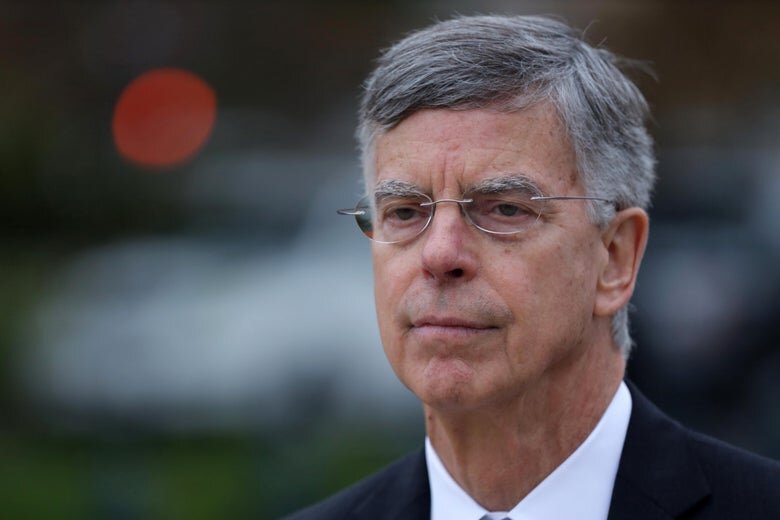
22 October 2019, Washington DC, USA
Jesse Jackson: 'You got a chance, and you got a choice', David and Goliath campaign announcement speech - 1984
16 January 1984, Tendley Baptist Church, Philadelphia, Pennsylvania, USA
There are eight Democrats running for the nomination this time around: You got a chance, and you got a choice.
You want somebody who marched for you to get the right to vote, you got a choice. Want somebody who challenged corporate America to hire and give you contracts, you got a choice. It's choice time! [Loud applause.]
All this talk about qualifications..."What do blacks know about foreign policy?" It's an insult. I was three years old, I came into my consciousness, my Daddy was coming home from the war. Foreign policy. If he was so dumb, how did he get over there and get back? If he didn't know foreign policy, why did they give him a gun? And when they gave it to him he knew which way to shoot. [Cheers and laughter.]
We know foreign policy. When you buy Honda and Toyota, that's foreign policy. Russian Vodka, that's foreign policy. Panasonic and Sony, that's foreign policy. Mercedes Benz, that's foreign policy, and a matter of fact, we came here on a foreign policy!
Yeah! [extended applause and cheers]
I know ya'll are in a hurry, I'm going to leave you now. [crowd shouts, "No!"] It's time for a new course, a new coalition, a new leadership.
Red, yellow, black and white, we are all precious in God's sight!
Somebody got to rise above race, rise above sex, a new leadership, a choice, a chance. Don't cry about what you don't have, use what you got. Reagan won the last time not by genius. Reagan won when we were asleep. He won by the margin of despair. He won by the margin, the fracture of our coalition, he won by the margin of racial division, he won by default.
I close with another story of a little shepherd boy named David. Everybody in town was scared of Goliath.
Philadelphia, your time has come. Don't stop at the Mayor's office, go on higher.
Because you must never forget that about the time we began to take over the cities, Nixon shifted the power to the suburbs. Now Reagan has shifted it to the states. So you have mayors who have more and more responsibility and less and less power. We got more and more votes and fewer and fewer services. We can not stop. We got to rise on higher.
Little David, little David, little David. Took off his unnecessary garments, Little David. Didn't want to get weighted down with a lot of foolishness, little David Too. k what God gave him, a sling shot and a God biscuit, a rock.
Our problem today is that David-- [Jackson's interrupts himself]-- What we need, we need to organize Pennsylvania and win because we are going to stop the rocks that's been lying around and pick them up.
In 1980, Reagan won Massachusetts by 2,500 votes! There were over a hundred thousand students unregistered, over 50,000 blacks, over 50,000 Hispanics. He won by 2,500. Ted Kennedy's state. Rocks just laying around.
He won Illinois by 300,000 votes--800,000 unregistered blacks, 500,000 Hispanics, rocks just laying around! He won. In 1980 three million high school students unregistered to vote. Now they've registered to draft. Rocks still laying around! [Crowd cheers.]
[There were] 11-million college students who could have chosen jobs over jails, peace over war, that didn't vote. Now they're crying. Rocks just laying around! [More cheers.]
Reagan won eight southern states by 182,000 votes when there were three million unregistered blacks in those same eight states. Rocks just laying around! [More cheers.]
He won New York by 165,000 votes. 600,000 students unregistered, 900,000 blacks, 600,000 Hispanics. Rocks just laying around! [Cheers]
In 1980, Reagan won Pennsylvania by 300,000 votes, 400,000 students unregistered. More than 600,000 blacks unregistered! Reagan won Pennsylvania by the margin of despair, by margin of the fracture of our coalition. [Members of the crowd shout "Yeah!"]
[Jackson concludes, shouting over thunderous applause and cheers] Philadelphia, your time has come! Pick up your sling shot, pick up your rock, declare our time has come, a new day has begun! Red, yellow, black and white, we are all precious in God's sight! Our time has come!
Joseph Goebbels: 'Nation, Rise up and let the storm break loose!!' Total War Speech - 1943
18 February 1943, Berlin, Germany
Only three weeks ago I stood in this place to read the Führer’s proclamation on the 10th anniversary of the seizure of power, and to speak to you and to the German people. The crisis we now face on the Eastern Front was at its height. In the midst of the hard misfortunes the nation faced in the battle on the Volga, we gathered together in a mass meeting on the 30th of January to display our unity, our unanimity and our strong will to overcome the difficulties we faced in the fourth year of the war.
It was a moving experience for me, and probably also for all of you, to be bound by radio with the last heroic fighters in Stalingrad during our powerful meeting here in the Sport Palace. They radioed to us that they had heard the Führer’s proclamation, and perhaps for the last time in their lives joined us in raising their hands to sing the national anthems. What an example German soldiers have set in this great age! And what an obligation it puts on us all, particularly the entire German homeland! Stalingrad was and is fate’s great alarm call to the German nation! A nation that has the strength to survive and overcome such a disaster, even to draw from it additional strength, is unbeatable. In my speech to you and the German people, I shall remember the heroes of Stalingrad, who put me and all of us under a deep obligation.
I do not know how many millions of people are listening to me over the radio tonight, at home and at the front. I want to speak to all of you from the depths of my heart to the depths of yours. I believe that the entire German people has a passionate interest in what I have to say tonight. I will therefore speak with holy seriousness and openness, as the hour demands. The German people, raised, educated and disciplined by National Socialism, can bear the whole truth. It knows the gravity of the situation, and its leadership can therefore demand the necessary hard measures, yes even the hardest measures. We Germans are armed against weakness and uncertainty. The blows and misfortunes of the war only give us additional strength, firm resolve, and a spiritual and fighting will to overcome all difficulties and obstacles with revolutionary élan.
Now is not the time to ask how it all happened. That can wait until later, when the German people and the whole world will learn the full truth about the misfortune of the past weeks, and its deep and fateful significance. The heroic sacrifices of heroism of our soldiers in Stalingrad has had vast historical significance for the whole Eastern Front. It was not in vain. The future will make clear why.
When I jump over the past to look ahead, I do it intentionally. The time is short! There is no time for fruitless debates. We must act, immediately, thoroughly, and decisively, as has always been the National Socialist way.
The movement has from its beginning acted in that way to master the many crises it faced and overcame. The National Socialist state also acted decisively when faced by a threat. We are not like the ostrich that sticks its head in the sand so as not to see danger. We are brave enough to look danger in the face, to coolly and ruthlessly take its measure, then act decisively with our heads held high. Both as a movement and as a nation, we have always been at our best when we needed fanatic, determined wills to overcome and eliminate danger, or a strength of character sufficient to overcome every obstacle, or bitter determination to reach our goal, or an iron heart capable of withstanding every internal and external battle. So it will be today. My task is to give you an unvarnished picture of the situation, and to draw the hard conclusions that will guide the actions of the German government, but also of the German people.
We face a serious military challenge in the East. The crisis is at the moment a broad one, similar but not identical in many ways to that of the previous winter. Later we will discuss the causes. Now, we must accept things as they are and discover and apply the ways and means to turn things again in our favor. There is no point in disputing the seriousness of the situation. I do not want to give you a false impression of the situation that could lead to false conclusions, perhaps giving the German people a false sense of security that is altogether inappropriate in the present situation.
The storm raging against our venerable continent from the steppes this winter overshadows all previous human and historical experience. The German army and its allies are the only possible defense. In his proclamation on 30 January, the Führer asked in a grave and compelling way what would have become of Germany and Europe if, on 30 January 1933, a bourgeois or democratic government had taken power instead of the National Socialists! What dangers would have followed, faster than we could then have suspected, and what powers of defense would we have had to meet them? Ten years of National Socialism have been enough to make plain to the German people the seriousness of the danger posed by Bolshevism from the East. Now one can understand why we spoke so often of the fight against Bolshevism at our Nuremberg party rallies. We raised our voices in warning to our German people and the world, hoping to awaken Western humanity from the paralysis of will and spirit into which it had fallen. We tried to open their eyes to the horrible danger from Eastern Bolshevism, which had subjected a nation of nearly 200 million people to the terror of the Jews and was preparing an aggressive war against Europe.
When the Führer ordered the army to attack the East on 22 June 1941, we all knew that this would be the decisive battle of this great struggle. We knew the dangers and difficulties. But we also knew that dangers and difficulties always grow over time, they never diminish. It was two minutes before midnight. Waiting any longer could easily have led to the destruction of the Reich and a total Bolshevization of the European continent.
It is understandable that, as a result of broad concealment and misleading actions by the Bolshevist government, we did not properly evaluate the Soviet Union’s war potential. Only now do we see its true scale. That is why the battle our soldiers face in the East exceeds in its hardness, dangers and difficulties all human imagining. It demands our full national strength. This is a threat to the Reich and to the European continent that casts all previous dangers into the shadows. If we fail, we will have failed our historic mission. Everything we have built and done in the past pales in the face of this gigantic task that the German army directly and the German people less directly face.
I speak first to the world, and proclaim three theses regarding our fight against the Bolshevist danger in the East.
This first thesis: Were the German army not in a position to break the danger from the East, the Reich would fall to Bolshevism, and all Europe shortly afterwards.
Second: The German army, the German people and their allies alone have the strength to save Europe from this threat.
Third: Danger faces us. We must act quickly and decisively, or it will be too late.
I turn to the first thesis. Bolshevism has always proclaimed its goal openly: to bring revolution not only to Europe, but to the entire world, and plunge it into Bolshevist chaos. This goal has been evident from the beginning of the Bolshevist Soviet Union, and has been the ideological and practical goal of the Kremlin’s policies. Clearly, the nearer Stalin and the other Soviet leaders believe they are to realizing their world-destroying objectives, the more they attempt to hide and conceal them. We cannot be fooled. We are not like those timid souls who wait like the hypnotized rabbit until the serpent devours them. We prefer to recognize the danger in good time and take effective action. We see through not only the ideology of Bolshevism, but also its practice, for we had great success with that in our domestic struggles. The Kremlin cannot deceive us. We had fourteen years of our struggle for power, and ten years thereafter, to unmask its intentions and its infamous deceptions.
The goal of Bolshevism is Jewish world revolution. They want to bring chaos to the Reich and Europe, using the resulting hopelessness and desperation to establish their international, Bolshevist-concealed capitalist tyranny.
I do not need to say what that would mean for the German people. A Bolshevization of the Reich would mean the liquidation of our entire intelligentsia and leadership, and the descent of our workers into Bolshevist-Jewish slavery. In Moscow, they find workers for forced labor battalions in the Siberian tundra, as the Führer said in his proclamation on 30 January. The revolt of the steppes is readying itself at the front, and the storm from the East that breaks against our lines daily in increasing strength is nothing other than a repetition of the historical devastation that has so often in the past endangered our part of the world.
That is a direct threat to the existence of every European power. No one should believe that Bolshevism would stop at the borders of the Reich, were it to be victorious. The goal of its aggressive policies and wars is the Bolshevization of every land and people in the world. In the face of such undeniable intentions, we are not impressed by paper declarations from the Kremlin or guarantees from London or Washington. We know that we are dealing in the East with an infernal political devilishness that does not recognize the norms governing relations between people and nations. When for example the English Lord Beaverbrook says that Europe must be given over to the Soviets or when the leading American Jewish journalist Brown cynically adds that a Bolshevization of Europe might solve all of the continent’s problems, we know what they have in mind. The European powers are facing the most critical question. The West is in danger. It makes no difference whether or not their governments and intellectuals realize it or not.
The German people, in any event, is unwilling to bow to this danger. Behind the oncoming Soviet divisions we see the Jewish liquidation commandos, and behind them terror, the specter of mass starvation and complete anarchy. International Jewry is the devilish ferment of decomposition that finds cynical satisfaction in plunging the world into the deepest chaos and destroying ancient cultures that it played no role in building.
We also know our historic responsibility. Two thousand years of Western civilization are in danger. One cannot overestimate the danger. It is indicative that when one names it as it is, International Jewry throughout the world protests loudly. Things have gone so far in Europe that one cannot call a danger a danger when it is caused by the Jews.
That does not stop us from drawing the necessary conclusions. That is what we did in our earlier domestic battles. The democratic Jewry of the “Berliner Tageblatt” and the “Vossischen Zeitung” served communist Jewry by minimizing and downplaying a growing danger, and by lulling our threatened people to sleep and reducing their ability to resist. We could see, if the danger were not overcome, the specter of hunger, misery, and forced labor by millions of Germans. We could see our venerable part of the world collapse, and bury in its ruins the ancient inheritance of the West. That is the danger we face today.
My second thesis: Only the German Reich and its allies are in the position to resist this danger. The European nations, including England, believe that they are strong enough to resist effectively the Bolshevization of Europe, should it come to that. This belief is childish and not even worth refuting. If the strongest military force in the world is not able to break the threat of Bolshevism, who else could do it? (The crowd in the Sportpalast shouts “No one!”). The neutral European nations have neither the potential nor the military means nor the spiritual strength to provide even the least resistance to Bolshevism. Bolshevism’s robotic divisions would roll over them within a few days. In the capitals of the mid-sized and smaller European states, they console themselves with the idea that one must be spiritually armed against Bolshevism (laughter). That reminds us of the statements by bourgeois parties in 1932, who thought they could fight and win the battle against communism with spiritual weapons. That was too stupid even then to be worth refuting. Eastern Bolshevism is not only a doctrine of terrorism, it is also the practice of terrorism. It strives for its goals with an infernal thoroughness, using every resource at its disposal, regardless of the welfare, prosperity or peace of the peoples it ruthlessly oppresses. What would England and America do if, in the worst case, Europe fell into Bolshevism’s arms? Will London perhaps persuade Bolshevism to stop at the English Channel? I have already said that Bolshevism has its foreign legions in the form of communist parties in every democratic nation. None of these states can think it is immune to domestic Bolshevism. In a recent by-election for the House of Commons, the independent, that is communist, candidate got 10,741 of the 22,371 votes cast. This was in a district that had formerly been a conservative stronghold. Within a short time, 10,000 voters, nearly half, had been lost to the communists.
That is proof that the Bolshevist danger exists in England too, and that it will not go away simply because it is ignored. We place no faith in any territorial promises that the Soviet Union may make. Bolshevism set ideological as well as military boundaries, which poses a danger to every nation. The world no longer has the choice between falling back into its old fragmentation or accepting a new order for Europe under Axis leadership. The only choice now is between living under Axis protection or in a Bolshevist Europe.
I am firmly convinced that the lamenting lords and archbishops in London have not the slightest intention of resisting the Bolshevist danger that would result were the Soviet army to enter Europe. Jewry has so deeply infected the Anglo-Saxon states both spiritually and politically that they are no longer have the ability to see the danger. It conceals itself as Bolshevism in the Soviet Union, and plutocratic-capitalism in the Anglo-Saxon states. The Jewish race is an expert at mimicry. They put their host peoples to sleep, paralyzing their defensive abilities. (Shouts from the crowd: “We have experienced it!”). Our insight into the matter led us to the early realization that cooperation between international plutocracy and international Bolshevism was not a contradiction, but rather a sign of deep commonalities. The hand of the pseudo-civilized Jewry of Western Europe shakes the hand of the Jewry of the Eastern ghettos over Germany. Europe is in deadly danger.
I do not flatter myself into believing that my remarks will influence public opinion in the neutral, much less the enemy, states. That is also not my goal or intention. I know that, given our problems on the Eastern Front, the English press tomorrow will furiously attack me with the accusation that I have made the first peace feelers (loud laughter). That is certainly not so. No one in Germany thinks any longer of a cowardly compromise. The entire people thinks only of a hard war. As a spokesman for the leading nation of the continent, however, I claim the right to call a danger a danger if it threatens not threatens not only our own land, but our entire continent. We National Socialists have the duty to sound the alarm against International Jewry’s attempt to plunge the European continent into chaos, and to warn that Jewry has in Bolshevism a terroristic military power whose danger cannot be overestimated.
My third thesis is that the danger is immediate. The paralysis of the Western European democracies before their deadliest threat is frightening. International Jewry is doing all it can to encourage such paralysis. During our struggle for power in Germany, Jewish newspapers tried to conceal the danger, until National Socialism awakened the people. It is just the same today in other nations. Jewry once again reveals itself as the incarnation of evil, as the plastic demon of decay and the bearer of an international culture-destroying chaos.
This explains, by the way, our consistent Jewish policies. We see Jewry as a direct threat to every nation. We do not care what other peoples do about the danger. What we do to defend ourselves is our own business, however, and we will not tolerate objections from others. Jewry is a contagious infection. Enemy nations may raise hypocritical protests against our measures against Jewry and cry crocodile tears, but that will not stop us from doing that which is necessary. Germany, in any event, has no intention of bowing before this threat, but rather intends to take the most radical measures, if necessary, in good time (After this sentence, the chants of the audience prevent the minister from going on for several minutes).
The military challenges of the Reich in the East are at the center of everything. The war of mechanized robots against Germany and Europe has reached its high point. In resisting the grave and direct threat with its weapons, the German people and its Axis allies are fulfilling in the truest sense of the word a European mission. Our courageous and just battle against this world-wide plague will not be hindered by the worldwide outcry of International Jewry. It can and must end only with victory (Here there are loud shouts: “German men, to arms! German women, to work!”).
The tragic battle of Stalingrad is a symbol of heroic, manly resistance to the revolt of the steppes. It has not only a military, but also an intellectual and spiritual significance for the German people. Here for the first time our eyes have been opened to the true nature of the war. We want no more false hopes and illusions. We want bravely to look the facts in the face, however hard and dreadful they may be. The history of our party and our state has proven that a danger recognized is a danger defeated. Our coming hard battles in the East will be under the sign of this heroic resistance. It will require previously undreamed of efforts by our soldiers and our weapons. A merciless war is raging in the East. The Führer was right when he said that in the end there will not be winners and losers, but the living and the dead.
The German nation knows that. Its healthy instincts have led it through the daily confusion of intellectual and spiritual difficulties. We know today that the Blitzkrieg in Poland and the campaign in the West have only limited significance to the battle in the East. The German nation is fighting for everything it has. We know that the German people are defending their holiest possessions: their families, women and children, the beautiful and untouched countryside, their cities and villages, their two thousand year old culture, everything indeed that makes life worth living.
Bolshevism of course has not the slightest appreciation for our nation’s treasures, and would take no heed of them whatsoever if it came to that. It did not do so even for its own people. The Soviet Union over the last 25 years built up Bolshevism’s military potential to an unimaginable degree, and one we falsely evaluated. Terrorist Jewry had 200 million people to serve it in Russia. It cynically used its methods on to create out of the stolid toughness of the Russian people a grave danger for the civilized nations of Europe. A whole nation in the East was driven to battle. Men, women, and even children are employed not only in armaments factories, but in the war itself. 200 million live under the terror of the GPU, partially captives of a devilish viewpoint, partially of absolute stupidity. The masses of tanks we have faced on the Eastern Front are the result of 25 years of social misfortune and misery of the Bolshevist people. We have to respond with similar measures if we do not want to give up the game as lost.
My firm conviction is that we cannot overcome the Bolshevist danger unless we use equivalent, though not identical, methods. The German people face the gravest demand of the war, namely of finding the determination to use all our resources to protect everything we have and everything we will need in the future.
Total war is the demand of the hour. We must put an end to the bourgeois attitude that we have also seen in this war: Wash my back, but don’t get me wet! (Every sentence is met with growing applause and agreement.) The danger facing us is enormous. The efforts we take to meet it must be just as enormous. The time has come to remove the kid gloves and use our fists. (A cry of elemental agreement rises. Chants from the galleries and seats testify to the full approval of the crowd.) We can no longer make only partial and careless use of the war potential at home and in the significant parts of Europe that we control. We must use our full resources, as quickly and thoroughly as it is organizationally and practically possible. Unnecessary concern is wholly out of place. The future of Europe hangs on our success in the East. We are ready to defend it. The German people are shedding their most valuable national blood in this battle. The rest of Europe should at least work to support us. There are many serious voices in Europe that have already realized this. Others still resist. That cannot influence us. If danger faced them alone, we could view their reluctance as literary nonsense of no significance. But the danger faces us all, and we must all do our share. Those who today do not understand that will thank us tomorrow on bended knees that we courageously and firmly took on the task.
It bothers us not in the least that our enemies abroad claim that our total war measures resemble those of Bolshevism. They claim hypocritically that that means there is no need to fight Bolshevism. The question here is not one of method, but of the goal, namely eliminating the danger. (Applause for several minutes) The question is not whether the methods are good or bad, but whether they are successful. The National Socialist government is ready to use every means. We do not care if anyone objects. We are not willing to weaken Germany’s war potential by measures that maintain a high, almost peace-time standard of living for a certain class, thereby endangering our war effort. We are voluntarily giving up a significant part of our living standard to increase our war effort as quickly and completely as possible. This is not an end in itself, but rather a means to an end. Our social standard of living will be even higher after the war. We do not need to imitate Bolshevist methods, because we have better people and leaders, which gives us a great advantage. But things have shown that we must do much more than we have done so far to turn the war in the East decisively in our favor.
As countless letters from the homeland and the front have shown, by the way, the entire German people agrees. Everyone knows that if we lose, all will be destroyed. The people and leadership are determined to take the most radical measures. The broad working masses of our people are not unhappy because the government is too ruthless. If anything, they are unhappy because it is too considerate. Ask anyone in Germany, and he will say: The most radical is just radical enough, and the most total is just total enough to gain victory.
The total war effort has become a matter of the entire German people. No one has any excuse for ignoring its demands. A storm of applause greeted my call on 30 January for total war. I can therefore assure you that the leadership’s measures are in full agreement with the desires of the German people at home and at the front. The people are willing to bear any burden, even the heaviest, to make any sacrifice, if it leads to the great goal of victory. (Lively applause)
This naturally assumes that the burdens are shared equally. (Loud approval) We cannot tolerate a situation in which most people carry the burden of the war, while a small, passive portion attempts to escape its burdens and responsibilities. The measures we have taken, and the ones we will yet take, will be characterized by the spirit of National Socialist justice. We pay no heed to class or standing. Rich and poor, high and low must share the burdens equally. Everyone must do his duty in this grave hour, whether by choice or otherwise. We know this has the full support of the people. We would rather do too much rather than too little to achieve victory. No war in history has ever been lost because of too many soldiers or weapons. Many, however, have been lost because the opposite was true.
It is time to get the slackers moving. (Stormy agreement) They must be shaken out of their comfortable ease. We cannot wait until they come to their senses. That might be too late. The alarm must sound throughout the nation. Millions of hands must get to work throughout the country. The measures we have taken, and the ones we will now take, and which I shall discuss later in this speech, are critical for our whole public and private life. The individual may have to make great sacrifices, but they are tiny when compared to the sacrifices he would have to make if his refusal brought down on us the greatest national disaster. It is better to operate at the right time than to wait until the disease has taken root. One may not complain to the doctor or sue him for bodily injury. He cuts not to kill, but to save the patient’s life.
Again let me say that the heavier the sacrifices the German people must make, the more urgent it is that they be fairly shared. The people want it that way. No one resists even the heaviest burdens of war. But it angers people when a few always try to escape the burdens. The National Socialist government has both the moral and political duty to oppose such attempts, if necessary with draconian penalties. (Agreement) Leniency here would be completely out of place, leading in time to a confusion in the people’s emotions and attitudes that would be a grave danger to our public morale.
We are therefore compelled to adopt a series of measures that are not essential for the war effort in themselves, but seem necessary to maintain moral at home and at the front. The optics of the war, that is, how things outwardly appear, is of decisive importance in this fourth year of war. In view of the superhuman sacrifices that the front makes each day, it has a basic right to expect that no one at home claims the right to ignore the war and its demands. And not only the front demands this, but the overwhelming part of the homeland. The industrious have a right to expect that if they work ten or twelve or fourteen hours a day, a lazy person does not stand next to them who thinks them foolish. The homeland must stay pure and intact in its entirety. Nothing may disturb the picture.
There are therefore a series of measures that take account of the war’s optics. We have ordered, for example, the closing of bars and night clubs. I cannot imagine that people who are doing their duty for the war effort still have the energy to stay out late into the night in such places. I can only conclude that they are not taking their responsibilities seriously. We have closed these establishments because they began to offend us, and because they disturb the image of the war. We have nothing against amusements as such. After the war we will happily go by the rule “Live and let live.” But during a war, the slogan must be “Fight and let fight!”
We have also closed luxury restaurants that demand far more resources than is reasonable. It may be that an occasional person thinks that, even during war, his stomach is the most important thing. We cannot pay him any heed. At the front everyone from the simple soldier to the general field marshal eats from the field kitchen. I do not believe that it is asking too much to insist that we in the homeland pay heed to at least the basic laws of community thinking. We can become gourmets once again when the war is over. Right now, we have more important things to do than worry about our stomachs.
Countless luxury stores have also been closed. They often offended the buying public. There was generally nothing to buy, unless perhaps one paid here and there with butter or eggs instead of money. What good do shops do that no longer have anything to sell, but only use electricity, heating, and human labor that is lacking everywhere else, particularly in the armaments industry.
It is no excuse to say that keeping some of these shops open gives a lovely impression to foreigners. Foreigners will be impressed only by a German victory! (Stormy applause). Everyone will want to be our friend if we win the war. But if we lose, we will be able to count our friends on the fingers of one hand. We have put an end to such illusions. We want to put these people standing in empty shops to useful work in the war economy. This process is already in motion, and will be completed by 15 March. It is of course a major transformation in our entire economic life. We are following a plan. We do not want to accuse anyone unjustly or open them to complaints and accusations from every side. We are only doing what is necessary. But we are doing it quickly and thoroughly.
We would rather wear worn clothing for a few years than have our people wear rags for a few centuries. What good are fashion salons today? They only use light, heat and workers. They will reappear when the war is over. What good are beauty shops that encourage a cult of beauty and take enormous time and energy? In peace they are wonderful, but a waste of time during war. Our women and girls will be able to greet our victorious returning soldiers without their peacetime finery. (Applause)
Government offices will work faster and less bureaucratically. It does not leave a good impression when the office closes on the dot after eight hours. The people are not there for the offices, the offices are there for the people. One has to work until the work is done. That is a requirement of the war. If the Führer can do that, so can his paid employees. If there is not enough work to fill the extended hours, 10 or 20 or 30 percent of the workers can be transferred to war production and replace other men for service at the front. That applies to all offices in the homeland. That by itself may make the work in some offices go more quickly and easily. We must learn from the war to operate quickly, not only thoroughly. The soldier at the front does not have weeks to think things over, to pass his thoughts up the line or let them sit in dusty files. He must act immediately or lose his life. In the homeland we do not lose our lives if we work slowly, but we do endanger the life of our people.
Everyone must learn to pay heed to war morale, and pay attention to the just demands of working and fighting people. We are not spoilsports, but neither will we tolerate those who hinder our efforts.
It is, for example, intolerable that certain men and women stay for weeks in spas and trade rumors, taking places away from soldiers on leave or from workers who are entitled to a vacation after a year of hard work. That is intolerable, and we have put an end to it. The war is not a time for amusement. Until it is over, we take our deepest satisfaction in work and battle. Those who do not understand that by themselves must be taught to understand it, and forced if need be. The harshest measures may be needed.
It does not look good, for example, when we devote enormous propaganda to the theme: “Wheels must roll for victory!,” with the result that people avoid unnecessary travel only to see unemployed pleasure-seekers find more room for themselves in the trains. The railroad serves to transport war goods and travelers on war business. Only those who need a rest from hard work deserve a vacation. The Führer has not had a day of vacation since the war began. Since the first man of the country takes his duty so seriously and responsibly, it must be expected that every citizen will follow his example.
On the other hand, the government is doing all it can to give working people the relaxation they need in these trying times. Theaters, movie houses, and music halls remain in full operation. The radio is working to expand and improve its programming. We have no intention of inflicting a gray winter mood on our people. That which serves the people and keeps up its fighting and working strength is good and essential to the war effort. We want to eliminate the opposite. To balance the measures I have already discussed, I have therefore ordered that cultural and spiritual establishments that serve the people not be decreased, but increased. As long as they aid rather than harm the war effort, they must be supported by the government. That applies to sports as well. Sports are not only for particular circles today, but a matter for the entire people. Military exemptions for athletes are out of place. The purpose of sports is to steel the body, certainly with the goal of using it appropriately in time of the people’s greatest need.
The front shares our desires. The entire German people agrees passionately. It is no longer willing to put up with efforts that only waste time and resources. It will not put up with complicated questionnaires on every possible issue. It does not want to worry about a thousand minor matters that may have been important in peace, but are entirely unimportant during war. It also does not need to be constantly reminded of its duty by references to the great sacrifices of our soldiers at Stalingrad. It knows what it has to do. It wants everyone, high and low, rich and poor, to share a spartan life style. The Führer gives us all an example, one that must be followed by everyone. He knows only work and care. We do not want to leave it all to him, but rather we want to take that part of it from him which we are able to bear.
The present day has a remarkable resemblance for every genuine National Socialist to the period of struggle. We have always acted in the same way. We were with the people through thick and thin, and that is why the people followed us. We have always carried our burdens together with the people, and therefore they did not seem heavy to us, but rather light. The people want to be led. Never in history has the people failed a brave and determined leadership a critical hour.
Let me say a few words in this regard about practical measures in our total war effort that we have already taken.
The problem is freeing soldiers for the front, and freeing workers for the armaments industry. These are the primary goals, even at the cost of our standard of social life. This does not mean a permanent decline in our standard of living. It is only a means to reaching an end, that of total war.
As part of this campaign, hundreds of thousands of military exemptions have been canceled. These exemptions were given because we did not have enough skilled labor to fill the positions that would have been left open by revoking them. The reason for our current measures is to mobilize the necessary workers. That is why we have appealed to men not working in the war economy, and to women who were not working at all. They will not and cannot ignore our call. The duty for women to work is broad. That does not however mean that only those included in the law have to work. Anyone is welcome. The more who join the war effort, the more soldiers we can free for the front.
Our enemies maintain that German women are not able to replace men in the war economy. That may be true for certain fields of heavy labor. But I am convinced that the German woman is determined to fill the spot left by the man leaving for the front, and to do so as soon as possible. We do not need to point out Bolshevism’s example. For years, millions of the best German women have been working successfully in war production, and they wait impatiently to be joined and assisted by others. All those who join in the work are only giving the proper thanks to those at the front. Hundreds of thousands have already joined, and hundreds of thousands more will join. We hope soon to free up armies of workers who will in turn free up armies of fighting front soldiers.
I would think little of German women if I believed that they do not want to listen to my appeal. They will not seek to follow the letter of the law, or to slip through its loopholes. They few who may try will not succeed. We will not accept a doctor’s excuse. Nor will we accept the alibi that one must help one’s husband or relative or good friend as a way of avoiding work. We will respond appropriately. The few who may attempt it will only lose the respect of those around them. The people will despise them. No one expects a woman lacking the requisite physical strength to go to work in a tank factory. There are however numerous jobs in war production that do not demand great physical strength, and which a woman can do even if she comes from the better circles. No one is too good to work, and we all have the choice to give up what we have, or to lose everything.
It is also time to ask women with household help if they really need it. One can take care of the house and children oneself, freeing the servant for other tasks, or leave the house and children in care of the servant or the NSV [the party welfare organization], and go to work oneself. Life may not be as pleasant as it is during peace. But we are not at peace, we are at war. We can be comfortable after we have won the war. Now we must sacrifice our comforts to gain victory.
Soldiers’ wives surely understand this. They know it is their duty to their husbands to support them by doing work that is important to the war effort. That is true above all in agriculture. The wives of farmers must set a good example. Both men and women must be sure that no one does less during war than they did in peace; more work must instead be done in every area.
One may not, by the way, make the mistake of leaving everything to the government. The government can only set the broad guidelines. To give life to those guidelines is the job of working people, under the inspiring leadership of the party. Fast action is essential.
One must go beyond the legal requirements. “Volunteer!” is the slogan. As Gauleiter of Berlin, I appeal here above all to my fellow Berliners. They have given enough good examples of noble behavior and bravery during the war such that they will not fail here. Their practical behavior and good cheer even during war have earned them a good name throughout the world. This good name must be maintained and strengthened! If I appeal to my fellow Berliners to do some important work quickly, thoroughly, and without complaint, I know they will all obey. We do not want to complain about the difficulties of the day or grump to one another. Rather we want to behave not only like Berliners, but like Germans, by getting to work, acting, seizing the initiative and doing something, not leaving it to someone else.
What German woman would want to ignore my appeal on behalf of those fighting at the front? Who would want to put personal comfort above national duty? Who in view of the serious threat we face would want to consider his private needs instead of the requirements of the war?
I reject with contempt the enemy’s claim that we are imitating Bolshevism. We do not want to imitate Bolshevism, we want to defeat it, with whatever means are necessary. The German woman will best understand what I mean, for she has long known that the war our men are fighting today above all is a war to protect her children. Her holiest possession is guarded by our people’s most valuable blood. The German woman must spontaneously proclaim her solidarity with her fighting men. She had better join the ranks of millions of workers in the homeland’s army, and do it tomorrow rather than the day after tomorrow. A river of readiness must flow through the German people. I expect that countless women and above all men who are not doing essential war work will report to the authorities. He who gives quickly gives twice as much.
Our general economy is consolidating. That particularly affects the insurance and banking systems, the tax system, newspapers and magazines that are not essential for the war effort, and nonessential party and government activities, and also requires a further simplification of our life style.
I know that many of our people are making great sacrifices. I understand their sacrifices, and the government is trying to keep them to the necessary minimum. But some must remain, and must be borne. When the war is over, we will build up that which we now are eliminating, more generously and more beautifully, and the state will lend its hand.
I energetically reject the charge that our measures will eliminate the middle class or result in a monopoly economy. The middle class will regain its economic and social position after the war. The current measures are necessary for the war effort. They aim not at a structural transformation of the economy, but merely at winning the war as quickly as possible.
I do not dispute the fact that these measures will cause worry in the coming weeks. They will give us breathing room. We are laying the groundwork for the coming summer, without paying heed to the threats and boasting of the enemy. I am happy to reveal this plan for victory (Stormy applause) to the German people. They not only accept these measures, they have demanded them, demanded them more strongly than ever before during the war. The people want action! It is time for it! We must use our time to prepare for coming surprises.
I turn now to the entire German people, and particularly to the party, as the leader of the totalization of our domestic war effort. This is not the first major task you have faced. You will bring the usual revolutionary élan to bear on it. You will deal with the laziness and indolence that may occasionally show up. The government has issued general regulations, and will issue further ones in coming weeks. The minor issues not dealt with in these regulations must be taken care of by the people, under the party’s leadership. One moral law stands above everything for each of us: to do nothing that harms the war effort, and to do everything that brings victory nearer.
In past years, we have often recalled the example of Frederick the Great in newspapers and on the radio. We did not have the right to do so. For a while during the Third Silesian War, Frederick II had five million Prussians, according to Schlieffen, standing against 90 million enemies. In the second of seven hellish years he suffered a defeat that shook Prussia’s foundations. He never had enough soldiers and weapons to fight without risking everything. His strategy was always one of improvisation. But his principle was to attack the enemy whenever it was possible. He suffered defeats, but that was not decisive. What was decisive is that the Great King remained unbroken, that he was unshaken by the changing fortunes of war, that his strong heart overcame every danger. At the end of seven years of war, he was 51 years old, he had no teeth, he suffered from gout, and was tortured by a thousand pains, but he stood above the devastated battlefield as the victor. How does our situation compare with his?! Let us show the same will and decisiveness as he, and when the time comes do as he did, remaining unshakable through all the twists of fate, and like him win the battle even under the most unfavorable circumstances. Let us never doubt our great cause.
I am firmly convinced that the German people have been deeply moved by the blow of fate at Stalingrad. It has looked into the face of hard and pitiless war. It knows now the awful truth, and is resolved to follow the Führer through thick and thin. (The crowd rises and like the roaring ocean chants: Führer command, we follow! Heil our Führer!” The minister is unable to continue for several minutes.)
The English and American press in recent days has been writing at length about the attitude of the German people during this crisis. The English seem to think that they know the German people much better than we do, its own leadership. They give hypocritical advice on what we should do and not do. They believe that the German people today is the same as the German people of November 1918 that fell victim to their persuasive wiles. I do not need to disprove their assertions. That will come from the fighting and working German people.
To make the truth plain, however, my German comrades, I want to ask you a series of questions. I want you to answer them to the best of your knowledge, according to your conscience. When my audience cheered on 30 January, the English press reported the next day that it was all a propaganda show that did not represent the true opinion of the German people. (Spontaneous shouts of Pfui!” “Lies!” “Let them come here! They will learn differently!”) I have invited to today’s meeting a cross-section of the German people in the best sense of the word. (The minister’s words were accompanied by stormy applause that increased in intensity as he came to the representatives of the army present at the meeting.) In front of me are rows of wounded German soldiers from the Eastern Front, missing legs and arms, with wounded bodies, those who have lost their sight, those who have come with nurses, men in the blush of youth who stand with crutches. Among them are 50 who bear the Knight’s Cross with Oak Leaves, shining examples of our fighting front. Behind them are armaments workers from Berlin tank factories. Behind them are party officials, soldiers from the fighting army, doctors, scientists, artists, engineers and architects, teachers, officials and employees from offices, proud representatives of every area of our intellectual life that even in the midst of war produce miracles of human genius. Throughout the Sportpalast I see thousands of German women. The youth is here, as are the aged. No class, no occupation, no age remained uninvited. I can rightly say that before me is gathered a representative sample of the German population, both from the homeland and the front. Is that true? Yes or no? (The Sportpalast experiences something seen only rarely even in this old fighting locale of National Socialism. The masses spring to their feet. A hurricane of thousands of voices shouts yes. The participants experience a spontaneous popular referendum and expression of will.) You, my hearers, at this moment represent the whole nation. I wish to ask you ten questions that you will answer for the German people throughout the world, but especially for our enemies, who are listening to us on the radio. (Only with difficulty can the minister be heard. The crowd is at the peak of excitement. The individual questions are razor sharp. Each individual feels as if he is being spoken to personally. With full participation and enthusiasm, the crowd answers each question. The Sportpalast rings with a single shout of agreement.)
The English maintain that the German people has lost faith in victory.
I ask you: Do you believe with the Führer and us in the final total victory of the German people?
I ask you: Are you resolved to follow the Führer through thick and thin to victory, and are you willing to accept the heaviest personal burdens?
Second, The English say that the German people are tired of fighting.
I ask you: Are you ready to follow the Führer as the phalanx of the homeland, standing behind the fighting army and to wage war with wild determination through all the turns of fate until victory is ours?
Third: The English maintain that the German people have no desire any longer to accept the government’s growing demands for war work.
I ask you: Are you and the German people willing to work, if the Führer orders, 10, 12 and if necessary 14 hours a day and to give everything for victory?
Fourth: The English maintain that the German people is resisting the government’s total war measures. It does not want total war, but capitulation! (Shouts: Never! Never! Never!)
I ask you: Do you want total war? If necessary, do you want a war more total and radical than anything that we can even imagine today?
Fifth: The English maintain that the German people have lost faith in the Führer.
I ask you: Is your confidence in the Führer greater, more faithful and more unshakable than ever before? Are you absolutely and completely ready to follow him wherever he goes and do all that is necessary to bring the war to a victorious end? (The crowd rises as one man. It displays unprecedented enthusiasm. Thousands of voices join in shouting: “Führer command, we follow!” A wave of shouts of Heil flows through the hall. As if by command, the flags and standards are raised as the highest expression of the sacred moment in which the crowd honors the Führer.)
Sixth, I ask you: Are you ready from now on to give your full strength to provide the Eastern Front with the men and munitions it needs to give Bolshevism the death blow?
Seventh, I ask you: Do you take a holy oath to the front that the homeland stands firm behind them, and that you will give them everything they need to win the victory?
Eighth, I ask you: Do you, especially you women, want the government to do all it can to encourage German women to put their full strength at work to support the war effort, and to release men for the front whenever possible, thereby helping the men at the front?
Ninth, I ask you: Do you approve, if necessary, the most radical measures against a small group of shirkers and black marketers who pretend there is peace in the middle of war and use the need of the nation for their own selfish purposes? Do you agree that those who harm the war effort should lose their heads?
Tenth and lastly, I ask you: Do you agree that above all in war, according to the National Socialist Party platform, the same rights and duties should apply to all, that the homeland should bear the heavy burdens of the war together, and that the burdens should be shared equally between high and low and rich and poor?
I have asked; you have given me your answers. You are part of the people, and your answers are those of the German people. You have told our enemies what they needed to hear so that they will have no illusions or false ideas.
Now, just as in the first hours of our rule and through the ten years that followed, we are bound firmly in brotherhood with the German people. The most powerful ally on earth, the people itself, stands behind us and is determined to follow the Führer, come what may. They will accept the heaviest burdens to gain victory. What power on earth can hinder us from reaching our goal. Now we must and will succeed! I stand before you not only as the spokesman of the government, but as the spokesman of the people. My old party friends are here around me, clothed with the high offices of the people and the government. Party comrade Speer sits next to me. The Führer has given him the great task of mobilizing the German armaments industry and supplying the front with all the weapons it needs. Party comrade Dr. Ley sits next to me. The Führer has charged him with the leadership of the German work force, with schooling and training them in untiring work for the war effort. We feel deeply indebted to our party comrade Sauckel, who has been charged by the Führer to bring hundreds of thousands of workers to the Reich to support our national economy, something the enemy cannot do. All the leaders of the party, the army, and government join with us as well.
We are all children of our people, forged together by this most critical hour of our national history. We promise you, we promise the front, we promise the Führer, that we will mold together the homeland into a force on which the Führer and his fighting soldiers can rely on absolutely and blindly. We pledge to do all in our life and work that is necessary for victory. We will fill our hearts with the political passion, with the ever-burning fire that blazed during the great struggles of the party and the state. Never during this war will we fall prey to the false and hypocritical objectivism that has brought the German nation so much misfortune over its history.
When the war began, we turned our eyes to the nation alone. That which serves its struggle for life is good and must be encouraged. What harms its struggle for life is bad and must be eliminated and cut out. With burning hearts and cool heads we will overcome the major problems of this phase of the war. We are on the way to final victory. That victory rests on our faith in the Führer.
This evening I once again remind the whole nation of its duty. The Führer expects us to do that which will throw all we have done in the past into the shadows. We do not want to fail him. As we are proud of him, he should be proud of us.
The great crises and upsets of national life show who the true men and women are. We have no right any longer to speak of the weaker sex, for both sexes are displaying the same determination and spiritual strength. The nation is ready for anything. The Führer has commanded, and we will follow him. In this hour of national reflection and contemplation, we believe firmly and unshakably in victory. We see it before us, we need only reach for it. We must resolve to subordinate everything to it. That is the duty of the hour. Let the slogan be:
Now, people rise up and let the storm break loose!
(The minister’s final words were lost in unending stormy applause)
Lyndon B. Johnson: 'The destroyers and supporting aircraft acted at once on the orders I gave after the initial act of aggression', Report on Tonkin Gulf Incident - 1964
4 August 1964, Washington DC, USA
My fellow Americans: - As President and Commander in Chief, it is my duty to the American people to report that renewed hostile actions against United States ships on the high seas in the Gulf of Tonkin have today required me to order the military forces of the United States to take action in reply.
The initial attack on the destroyer Maddox, on August 2, was repeated today by a number of hostile vessels attacking two U.S. destroyers with torpedoes. The destroyers and supporting aircraft acted at once on the orders I gave after the initial act of aggression. We believe at least two of the attacking boats were sunk. There were no U.S. losses.
The performance of commanders and crews in this engagement is in the highest tradition of the United States Navy. But repeated acts of violence against the Armed Forces of the United States must be met not only with alert defense, but with positive reply. That reply is being given as I speak to you tonight. Air action is now in execution against gunboats and certain supporting facilities in North Viet-Nam which have been used in these hostile operations.
In the larger sense this new act of aggression, aimed directly at our own forces, again brings home to all of us in the United States the importance of the struggle for peace and security in southeast Asia. Aggression by terror against the peaceful villagers of South Viet-Nam has now been joined by open aggression on the high seas against the United States of America.
The determination of all Americans to carry out our full commitment to the people and to the government of South Viet-Nam will be redoubled by this outrage. Yet our response, for the present, will be limited and fitting. We Americans know, although others appear to forget, the risks of spreading conflict. We still seek no wider war.
I have instructed the Secretary of State to make this position totally clear to friends and to adversaries and, indeed, to all. I have instructed Ambassador Stevenson to raise this matter immediately and urgently before the Security Council of the United Nations. Finally, I have today met with the leaders of both parties in the Congress of the United States and I have informed them that I shall immediately request the Congress to pass a resolution making it clear that our Government is united in its determination to take all necessary measures in support of freedom and in defense of peace in southeast Asia.
I have been given encouraging assurance by these leaders of both parties that such a resolution will be promptly introduced, freely and expeditiously debated, and passed with overwhelming support. And just a few minutes ago I was able to reach Senator Goldwater and I am glad to say that he has expressed his support of the statement that I am making to you tonight.
It is a solemn responsibility to have to order even limited military action by forces whose overall strength is as vast and as awesome as those of the United States of America, but it is my considered conviction, shared throughout your Government, that firmness in the right is indispensable today for peace; that firmness will always be measured. Its mission is peace.
Harry S Truman: 'Only yesterday, we laid to rest the mortal remains of our beloved President', First Speech to Congress - 1945
16 April 1945, Washington DC, USA
Mr. Speaker, Mr. President, Members of the Congress:
It is with a heavy heart that I stand before you, my friends and colleagues, in the Congress of the United States.
Only yesterday, we laid to rest the mortal remains of our beloved President, Franklin Delano Roosevelt. At a time like this, words are inadequate. The most eloquent tribute would be a reverent silence.
Yet, in this decisive hour, when world events are moving so rapidly, our silence might be misunderstood and might give comfort to our enemies.
In His infinite wisdom, Almighty God has seen fit to take from us a great man who loved, and was beloved by, all humanity.
No man could possibly fill the tremendous void left by the passing of that noble soul. No words can ease the aching hearts of untold millions of every race, creed and color. The world knows it has lost a heroic champion of justice and freedom.
Tragic fate has thrust upon us grave responsibilities. We must carry on. Our departed leader never looked backward. He looked forward and moved forward. That is what he would want us to do. That is what America will do.
So much blood has already been shed for the ideals which we cherish, and for which Franklin Delano Roosevelt lived and died, that we dare not permit even a momentary pause in the hard fight for victory.
Today, the entire world is looking to America for enlightened leadership to peace and progress. Such a leadership requires vision, courage and tolerance. It can be provided only by a united nation deeply devoted to the highest ideals.
With great humility I call upon all Americans to help me keep our nation united in defense of those ideals which have been so eloquently proclaimed by Franklin Roosevelt.
I want in turn to assure my fellow Americans and all of those who love peace and liberty throughout the world that I will support and defend those ideals with all my strength and all my heart. That is my duty and I shall not shirk it.
So that there can be no possible misunderstanding, both Germany and Japan can be certain, beyond any shadow of a doubt, that America will continue the fight for freedom until no vestige of resistance remains!
We are deeply conscious of the fact that much hard fighting is still ahead of us.
Having to pay such a heavy price to make complete victory certain, America will never become a party to any plan for partial victory!
To settle for merely another temporary respite would surely jeopardize the future security of all the world.
Our demand has been, and it remains—Unconditional Surrender!
We will not traffic with the breakers of the peace on the terms of the peace.
The responsibility for making of the peace--and it is a very grave responsibility—must rest with the defenders of the peace. We are not unconscious of the dictates of humanity. We do not wish to see unnecessary or unjustified suffering. But the laws of God and of man have been violated and the guilty must not go unpunished. Nothing shall shake our determination to punish the war criminals even though we must pursue them to the ends of the earth.
Lasting peace can never be secured if we permit our dangerous opponents to plot future wars with impunity at any mountain retreat—however distant.
In this shrinking world, it is futile to seek safety behind geographical barriers. Real security will be found only in law and in justice.
Here in America, we have labored long and hard to achieve a social order worthy of our great heritage. In our time, tremendous progress has been made toward a really democratic way of life. Let me assure the forward-looking people of America that there will be no relaxation in our efforts to improve the lot of the common people.
In the difficult days ahead, unquestionably we shall face problems of staggering proportions. However, with the faith of our fathers in our hearts, we do not fear the future.
On the battlefields, we have frequently faced overwhelming odds—and won! At home, Americans will not be less resolute!
We shall never cease our struggle to preserve and maintain our American way of life.
At this moment, America, along with her brave Allies, is paying again a heavy price for the defense of our freedom. With characteristic energy, we are assisting in the liberation of entire nations. Gradually, the shackles of slavery are being broken by the forces of freedom.
All of us are praying for a speedy victory. Every day peace is delayed costs a terrible toll.
The armies of liberation today are bringing to an end Hitler's ghastly threat to dominate the world. Tokyo rocks under the weight of our bombs.
The grand strategy of the United Nations' war has been determined—due in no small measure to the vision of our departed Commander in Chief. We are now carrying out our part of that strategy under the able direction of Admiral Leahy, General Marshall, Admiral King, General Arnold, General Eisenhower, Admiral Nimitz and General MacArthur.
I want the entire world to know that this direction must and will remain—unchanged and unhampered!
Our debt to the heroic men and valiant women in the service of our country can never be repaid. They have earned our undying gratitude. America will never forget their sacrifices. Because of these sacrifices, the dawn of justice and freedom throughout the world slowly casts its gleam across the horizon.
Our forefathers came to our rugged shores in search of religious tolerance, political freedom and economic opportunity. For those fundamental rights, they risked their lives. We well know today that such rights can be preserved only by constant vigilance, the eternal price of liberty!
Within an hour after I took the oath of office, I announced that the San Francisco Conference would proceed. We will face the problems of peace with the same courage that we have faced and mastered the problems of war.
In the memory of those who have made the supreme sacrifice—in the memory of our fallen President—we shall not fail!
It is not enough to yearn for peace. We must work, and if necessary, fight for it. The task of creating a sound international organization is complicated and difficult. Yet, without such organization, the rights of man on earth cannot be protected. Machinery for the just settlement of international differences must be found. Without such machinery, the entire world will have to remain an armed camp. The world will be doomed to deadly conflict, devoid of hope for real peace.
Fortunately, people have retained hope for a durable peace. Thoughtful people have always had faith that ultimately justice must triumph. Past experience surely indicates that, without justice, an enduring peace becomes impossible.
In bitter despair, some people have come to believe that wars are inevitable. With tragic fatalism, they insist that wars have always been, of necessity, and of necessity wars always will be. To such defeatism, men and women of good will must not and can not yield. The outlook for humanity is not so hopeless.
During the dark hours of this horrible war, entire nations were kept going by something intangible—hope! When warned that abject submission offered the only salvation against overwhelming power, hope showed the way to victory.
Hope has become the secret weapon of the forces of liberation!
Aggressors could not dominate the human mind. As long as hope remains, the spirit of man will never be crushed.
But hope alone was not and is not sufficient to avert war. We must not only have hope but we must have faith enough to work with other peace-loving nations to maintain the peace. Hope was not enough to beat back the aggressors as long as the peace-loving nations were unwilling to come to each other's defense. The aggressors were beaten back only when the peace-loving nations united to defend themselves.
If wars in the future are to be prevented the nations must be united in their determination to keep the peace under law.
Nothing is more essential to the future peace of the world than continued cooperation of the nations which had to muster the force necessary to defeat the conspiracy of the Axis powers to dominate the world.
While these great states have a special responsibility to enforce the peace, their responsibility is based upon the obligations resting upon all states, large and small, not to use force in international relations except in the defense of law. The responsibility of the great states is to serve and not to dominate the world.
To build a foundation of enduring peace we must not only work in harmony with our friends abroad, but we must have the united support of our own people.
Even the most experienced pilot cannot bring a ship safely into harbor, unless he has the full cooperation of the crew. For the benefit of all, every individual must do his duty.
I appeal to every American, regardless of party, race, creed, or color, to support our efforts to build a strong and lasting United Nations Organization.
You, the Members of the Congress, surely know how I feel. Only with your help can I hope to complete one of the greatest tasks ever assigned to a public servant. With Divine guidance, and your help, we will find the new passage to a far better world, a kindly and friendly world, with just and lasting peace.
With confidence, I am depending upon all of you.
To destroy greedy tyrants with dreams of world domination, we cannot continue in successive generations to sacrifice our finest youth.
In the name of human decency and civilization, a more rational method of deciding national differences must and will be found!
America must assist suffering humanity back along the path of peaceful progress. This will require time and tolerance. We shall need also an abiding faith in the people, the kind of faith and courage which Franklin Delano Roosevelt always had!
Today, America has become one of the most powerful forces for good on earth. We must keep it so. We have achieved a world leadership which does not depend solely upon our military and naval might.
We have learned to fight with other nations in common defense of our freedom. We must now learn to live with other nations for our mutual good. We must learn to trade more with other nations so that there may be for our mutual advantage—increased production, increased employment and better standards of living throughout the world.
May we Americans all live up to our glorious heritage.
In that way, America may well lead the world to peace and prosperity.
At this moment, I have in my heart a prayer. As I have assumed my heavy duties, I humbly pray Almighty God, in the words of King Solomon:
"Give therefore thy servant an understanding heart to judge thy people, that I may discern between good and bad; for who is able to judge this thy so great a people?"
I ask only to be a good and faithful servant of my Lord and my people.
Lyndon B. Johnson: 'We have suffered a loss that cannot be weighed', First speech as President - 1963
22 November 1963, USA
This is a sad time for all people.
We have suffered a loss that cannot be weighed.
For me it is a deep personal tragedy.
I know that the world shares the sorrow that Mrs Kennedy and her family bear
I will do my best. That is all I can do.
I ask for your help, and God’s.
Bill Clinton: 'Barack Obama is the man for this job', Democratic National Convention - 2008
27 August 2008, Denver Colorado, USA
Thank you. Ladies and gentlemen, I am honored to be here tonight.
(APPLAUSE)
Sit down.
(APPLAUSE)
Thank you. Thank you very much.
(APPLAUSE)
Thank you. Thank you. Thank you.
(APPLAUSE)
I am honored to be here tonight. Please, stop.
AUDIENCE: Bill! Bill! Bill!
CLINTON: Please stop. Sit down. Sit down. Thank you.
AUDIENCE: Bill! Bill! Bill!
Continue reading the main story
CLINTON: Please sit. Please sit.
You know, I -- I love this, and I thank you, but we have important work to do tonight. I am here first to support Barack Obama.
(APPLAUSE)
And, second -- and, second, I'm here to warm up the crowd for Joe Biden...
(APPLAUSE)
... though, as you will soon see, he doesn't need any help from me.
(LAUGHTER)
I love Joe Biden, and America will, too.
What a year we Democrats have had. The primary began with an all-star line up. And it came down to two remarkable Americans locked in a hard-fought contest right to the very end. That campaign generated so much heat, it increased global warming.
(LAUGHTER)
Now, in the end, my candidate didn't win. But I'm really proud of the campaign she ran.
(APPLAUSE)
I am proud that she never quit on the people she stood up for, on the changes she pushed for, on the future she wanted for all our children. And I'm grateful for the chance Chelsea and I had to go all over America to tell people about the person we know and love.
Now, I am not so grateful for the chance to speak in the wake of Hillary's magnificent speech last night.
(LAUGHTER)
But I'll do the best I can.
(APPLAUSE)
Last night, Hillary told us in no uncertain terms that she is going to do everything she can to elect Barack Obama.
(APPLAUSE)
That makes two of us.
(APPLAUSE)
Actually, that makes 18 million of us...
(APPLAUSE)
... because, like Hillary, I want all of you who supported her to vote for Barack Obama in November.
(APPLAUSE)
And here's why. And I have the privilege of speaking here, thanks to you, from a perspective that no other American Democrat, except President Carter, can offer.
Our -- our nation is in trouble on two fronts. The American dream is under siege at home, and America's leadership in the world has been weakened. Middle-class and low-income Americans are hurting, with incomes declining, job losses, poverty, and inequality rising, mortgage foreclosures and credit card debt increasing, health care coverage disappearing, and a very big spike in the cost of food, utilities, and gasoline.
And our position in the world has been weakened by too much unilateralism and too little cooperation...
(APPLAUSE)
... by a perilous dependence on imported oil, by a refusal to lead on global warming, by a growing indebtedness and a dependence on foreign lenders, by a severely burdened military, by a backsliding on global nonproliferation and arms control agreements, and by a failure to consistently use the power of diplomacy, from the Middle East to Africa to Latin America to Central and Eastern Europe.
(APPLAUSE)
Clearly, the job of the next president is to rebuild the American dream and to restore American leadership in the world.
(APPLAUSE)
And here's what I have to say about that. Everything I learned in my eight years as president, and in the work I have done since in America and across the globe, has convinced me that Barack Obama is the man for this job.
(APPLAUSE)
Now, he has a remarkable ability to inspire people, to raise our hopes and rally us to high purpose. He has the intelligence and curiosity every successful president needs. His policies on the economy, on taxes, on health care, on energy are far superior to the Republican alternatives.
(APPLAUSE)
He has shown -- he has shown a clear grasp of foreign policy and national security challenges and a firm commitment to rebuild our badly strained military.
His family heritage and his life experiences have given him a unique capacity to lead our increasingly diverse nation in an ever more interdependent world.
(APPLAUSE)
The long, hard primary tested and strengthened him. And in his first presidential decision, the selection of a running mate, he hit it out of the park.
(APPLAUSE)
With Joe Biden's experience and wisdom, supporting Barack Obama's proven understanding, instincts, and insight, America will have the national security leadership we need.
And so, my fellow Democrats, I say to you: Barack Obama is ready to lead America and to restore American leadership in the world.
(APPLAUSE)
Barack Obama is ready to honor the oath, to preserve, protect and defend the Constitution of the United States.
(APPLAUSE)
Barack Obama is ready to be president of the United States.
(APPLAUSE) As president, he will work for an America with more partners and fewer adversaries. He will rebuild our frayed alliances and revitalize the international institutions which helped to share the cost of the world's problems and to leverage the power of our influence.
He will put us back in the forefront of the world's fight against global warming and the fight to reduce nuclear, chemical and biological weapons.
(APPLAUSE)
He will continue and enhance our nation's commendable global leadership in an area in which I am deeply involved: the fight against AIDS, tuberculosis, and malaria, including -- including -- and this is very important -- a renewal of the battle against HIV and AIDS here at home.
(APPLAUSE)
A President Obama will choose diplomacy first and military force as a last resort.
(APPLAUSE)
Newsletter Sign Up
Continue reading the main story
Morning Briefing
Get what you need to know to start your day in the United States, Canada and the Americas, delivered to your inbox.
You agree to receive occasional updates and special offers for The New York Times's products and services.
See Sample Privacy Policy Opt out or contact us anytime
But, in a world troubled by terror, by trafficking in weapons, drugs and people, by human rights abuses of the most awful kind, by other threats to our security, our interests, and our values, when he cannot convert adversaries into partners, he will stand up to them.
(APPLAUSE)
Barack Obama also will not allow the world's problems to obscure its opportunities.
CLINTON: Everywhere, in rich and poor countries alike, hard- working people need good jobs, secure, affordable health care, food and energy, quality education for their children and economically beneficial ways to fight global warming.
These challenges cry out for American ideas and American innovation. When Barack Obama unleashes them, America will save lives, win new allies, open new markets, and create wonderful new jobs for our own people.
(APPLAUSE)
Most important of all, Barack Obama knows that America cannot be strong abroad unless we are first strong at home.
(APPLAUSE)
People the world over have always been more impressed by the power of our example than by the example of our power.
(APPLAUSE)
Look...
(APPLAUSE)
Look at the example the Republicans have set.
(AUDIENCE BOOS)
In this decade, American workers have consistently given us rising productivity. That means, year after year, they work harder and produce more.
Now, what did they get in return? Declining wages, less than one-fourth as many new jobs as in the previous eight years, smaller health care and pension benefits, rising poverty, and the biggest increase in income inequality since the 1920s.
(AUDIENCE BOOS)
American families by the millions are struggling with soaring health care costs and declining coverage.
I will never forget the parents of children with autism and other serious conditions who told me on the campaign trail that they couldn't afford health care and couldn't qualify their children for Medicaid unless they quit work and starved or got a divorce.
Are these the family values the Republicans are so proud of?
What about the military families pushed to the breaking point by multiple, multiple deployments? What about the assault on science and the defense of torture? What about the war on unions and the unlimited favors for the well-connected?
(AUDIENCE BOOS)
And what about Katrina and cronyism?
(AUDIENCE BOOS)
My fellow Democrats, America can do better than that.
(APPLAUSE)
And Barack Obama will do better than that.
(APPLAUSE)
Wait a minute. But first...
AUDIENCE: Yes, we can! Yes, we can! Yes, we can! Yes, we can! Yes, we can! Yes, we can! Yes, we can! Yes, we can! Yes, we can!
CLINTON: Yes, he can, but, first, we have to elect him.
(APPLAUSE)
The choice is clear. The Republicans in a few days will nominate a good man who has served our country heroically and who suffered terribly in a Vietnamese prison camp. He loves his country every bit as much as we do. As a senator, he has shown his independence of right-wing orthodoxy on some very important issues.
But on the two great questions of this election -- how to rebuild the American dream and how to restore America's leadership in the world -- he still embraces the extreme philosophy that has defined his party for more than 25 years.
(APPLAUSE)
And it is, to be fair to all the Americans who aren't as hard- core Democrats as we, it's a philosophy the American people never actually had a chance to see in action fully until 2001, when the Republicans finally gained control of both the White House and the Congress.
Then we saw what would happen to America if the policies they had talked about for decades actually were implemented. And look what happened.
They took us from record surpluses to an exploding debt; from over 22 million new jobs to just 5 million; from increasing working families' incomes to nearly $7,500 a year to a decline of more than $2,000 a year; from almost 8 million Americans lifted out of poverty to more than 5.5 million driven into poverty; and millions more losing their health insurance.
Now, in spite of all this evidence, their candidate is actually promising more of the same.
(AUDIENCE BOOS)
Think about it: more tax cuts for the wealthiest Americans that will swell the deficit, increase inequality, and weaken the economy; more Band-Aids for health care that will enrich insurance companies, impoverish families, and increase the number of uninsured; more going it alone in the world, instead of building the shared responsibilities and shared opportunities necessary to advance our security and restore our influence.
They actually want us to reward them for the last eight years by giving them four more.
AUDIENCE: No!
CLINTON: Now, let's send them a message that will echo from the Rockies all across America, a simple message: Thanks, but no thanks.
In this case...
(APPLAUSE)
In this case, the third time is not the charm.
(APPLAUSE)
My fellow Democrats, 16 years ago, you gave me the profound honor to lead our party to victory and to lead our nation to a new era of peace and broadly shared prosperity.
Together, we prevailed in a hard campaign in which Republicans said I was too young and too inexperienced to be commander-in-chief.
(APPLAUSE)
Sound familiar?
AUDIENCE: Yes!
CLINTON: It didn't work in 1992, because we were on the right side of history. And it will not work in 2008, because Barack Obama is on the right side of history.
(APPLAUSE)
Now, Senator Obama's life is a 21st-century incarnation of the old-fashioned American dream. His achievements are proof of our continuing progress toward the more perfect union of our founders' dreams. The values of freedom and equal opportunity, which have given him his historic chance, will drive him as president to give all Americans -- regardless of race, religion, gender, sexual orientation, or disability -- their chance to build a decent life and to show our humanity, as well as our strengths, to the world.
We see that humanity, that strength, and our nation's future in Barack and Michelle Obama and their beautiful children.
We see them reinforced by the partnership with Joe Biden, his fabulous wife, Jill, a wonderful teacher, and their family.
Barack Obama will lead us away from the division and fear of the last eight years back to unity and hope.
So if, like me, you believe America must always be a place called Hope, then join Hillary and Chelsea and me in making Barack Obama the next president of the United States.
Thank you, and God bless you. Thank you
Margaret Thatcher: 'Each country has to contribute, and those countries who are industrialised must contribute more to help those who are not', UN Speech on Environment and Cliamte Change - 1989
8 November 1989 , United Nations, New York City, USA
Mr President, it gives me great pleasure to return to the Podium of this assembly. When I last spoke here four years ago, on the 40th anniversary of the United Nations, the message that I and others like me gave was one of encouragement to the organisation to play the great role allotted to it.
Of all the challenges faced by the world community in those four years, one has grown clearer than any other in both urgency and importance—I refer to the threat to our global environment. I shall take the opportunity of addressing the general assembly to speak on that subject alone.
INTRODUCTION
During his historic voyage through the south seas on the Beagle, Charles Darwin landed one November morning in 1835 on the shore of Western Tahiti.
After breakfast he climbed a nearby hill to find advantage point to survey the surrounding Pacific. The sight seemed to him like “a framed engraving” , with blue sky, blue lagoon, and white breakers crashing against the encircling Coral Reef.
As he looked out from that hillside, he began to form his theory of the evolution of coral; 154 years after Darwin 's visit to Tahiti we have added little to what he discovered then.
What if Charles Darwin had been able, not just to climb a foothill, but to soar through the heavens in one of the orbiting space shuttles?
What would he have learned as he surveyed our planet from that altitude? From a moon's eye view of that strange and beautiful anomaly in our solar system that is the earth?
Of course, we have learned much detail about our environment as we have looked back at it from space, but nothing has made a more profound impact on us than these two facts.
First, as the British scientist Fred Hoyle wrote long before space travel was a reality, he said “once a photograph of the earth, taken from the outside is available … a new idea as powerful as any other in history will be let loose” .
That powerful idea is the recognition of our shared inheritance on this planet. We know more clearly than ever [end p1] before that we carry common burdens, face common problems, and must respond with common action.
And second, as we travel through space, as we pass one dead planet after another, we look back on our earth, a speck of life in an infinite void. It is life itself, incomparably precious, that distinguishes us from the other planets.
It is life itself—human life, the innumerable species of our planet—that we wantonly destroy. It is life itself that we must battle to preserve.
For over forty years, that has been the main task of this United Nations.
To bring peace where there was war.
Comfort where there was misery.
Life where there was death.
The struggle has not always been successful. There have been years of failure.
But recent events have brought the promise of a new dawn, of new hope. Relations between the Western nations and the Soviet Union and her allies, long frozen in suspicion and hostility, have begun to thaw.
In Europe, this year, freedom has been on the march.
In Southern Africa—Namibia and Angola—the United Nations has succeeded in holding out better prospects for an end to war and for the beginning of prosperity.
And in South East Asia, too, we can dare to hope for the restoration of peace after decades of fighting.
While the conventional, political dangers—the threat of global annihilation, the fact of regional war—appear to be receding, we have all recently become aware of another insidious danger.
It is as menacing in its way as those more accustomed perils with which international diplomacy has concerned itself for centuries.
It is the prospect of irretrievable damage to the atmosphere, to the oceans, to earth itself.
Of course major changes in the earth's climate and the [end p2] environment have taken place in earlier centuries when the world's population was a fraction of its present size.
The causes are to be found in nature itself—changes in the earth's orbit: changes in the amount of radiation given off by the sun: the consequential effects on the plankton in the ocean: and in volcanic processes.
All these we can observe and some we may be able to predict. But we do not have the power to prevent or control them.
What we are now doing to the world, by degrading the land surfaces, by polluting the waters and by adding greenhouse gases to the air at an unprecedented rate—all this is new in the experience of the earth. It is mankind and his activities which are changing the environment of our planet in damaging and dangerous ways.
We can find examples in the past. Indeed we may well conclude that it was the silting up of the River Euphrates which drove man out of the Garden of Eden.
We also have the example of the tragedy of Easter Island, where people arrived by boat to find a primeval forest. In time the population increased to over 9,000 souls and the demand placed upon the environment resulted in its eventual destruction as people cut down the trees. This in turn led to warfare over the scarce remaining resources and the population crashed to a few hundred people without even enough wood to make boats to escape.
The difference now is in the scale of the damage we are doing.
VAST INCREASE IN CARBON DIOXIDE
We are seeing a vast increase in the amount of carbon dioxide reaching the atmosphere. The annual increase is three billion tonnes: and half the carbon emitted since the Industrial Revolution still remains in the atmosphere.
At the same time as this is happening, we are seeing the destruction on a vast scale of tropical forests which are uniquely able to remove carbon dioxide from the air.
Every year an area of forest equal to the whole surface of the United Kingdom is destroyed. At present rates of clearance we shall, by the year 2000, have removed 65 per cent of forests in the humid tropical zones. [end p3]
The consequences of this become clearer when one remembers that tropical forests fix more than ten times as much carbon as do forests in the temperate zones.
We now know, too, that great damage is being done to the Ozone Layer by the production of halons and chlorofluorocarbons. But at least we have recognised that reducing and eventually stopping the emission of CFCs is one positive thing we can do about the menacing accumulation of greenhouse gases.
It is of course true that none of us would be here but for the greenhouse effect. It gives us the moist atmosphere which sustains life on earth. We need the greenhouse effect—but only in the right proportions.
More than anything, our environment is threatened by the sheer numbers of people and the plants and animals which go with them. When I was born the world's population was some 2 billion people. My Michael Thatchergrandson will grow up in a world of more than 6 billion people.
Put in its bluntest form: the main threat to our environment is more and more people, and their activities: The land they cultivate ever more intensively; The forests they cut down and burn; The mountain sides they lay bare; The fossil fuels they burn; The rivers and the seas they pollute.
The result is that change in future is likely to be more fundamental and more widespread than anything we have known hitherto. Change to the sea around us, change to the atmosphere above, leading in turn to change in the world's climate, which could alter the way we live in the most fundamental way of all.
That prospect is a new factor in human affairs. It is comparable in its implications to the discovery of how to split the atom. Indeed, its results could be even more far-reaching.
THE LATEST SCIENTIFIC EVIDENCE
We are constantly learning more about these changes affecting our environment, and scientists from the Polar Institute in Cambridge and The British Antarctic Survey have been at the leading edge of research in both the Arctic and the Antarctic, warning us of the greater dangers that lie ahead. [end p4]
Let me quote from a letter I received only two weeks ago, from a British scientist on board a ship in the Antarctic Ocean: he wrote, “In the Polar Regions today, we are seeing what may be early signs of man-induced climatic change. Data coming in from Halley Bay and from instruments aboard the ship on which I am sailing show that we are entering a Spring Ozone depletion which is as deep as, if not deeper, than the depletion in the worst year to date. It completely reverses the recovery observed in 1988. The lowest recording aboard this ship is only 150 Dobson units for Ozone total content during September, compared with 300 for the same season in a normal year.” That of course is a very severe depletion.
He also reports on a significant thinning of the sea ice, and he writes that, in the Antarctic, “Our data confirm that the first-year ice, which forms the bulk of sea ice cover, is remarkably thin and so is probably unable to sustain significant atmospheric warming without melting. Sea ice, separates the ocean from the atmosphere over an area of more than 30 million square kilometres. It reflects most of the solar radiation falling on it, helping to cool the earth's surface. If this area were reduced, the warming of earth would be accelerated due to the extra absorption of radiation by the ocean.”
“The lesson of these Polar processes,” he goes on, “is that an environmental or climatic change produced by man may take on a self-sustaining or ‘runaway’ quality … and may be irreversible.” That is from the scientists who are doing work on the ship that is presently considering these matters.
These are sobering indications of what may happen and they led my correspondent to put forward the interesting idea of a World Polar Watch, amongst other initiatives, which will observe the world's climate system and allow us to understand how it works.
We also have new scientific evidence from an entirely different area, the Tropical Forests. Through their capacity to evaporate vast volumes of water vapour, and of gases and particles which assist the formation of clouds, the forests serve to keep their regions cool and moist by weaving a sunshade of white reflecting clouds and by bringing the rain that sustains them.
A recent study by our British Meteorological Office on the Amazon rainforest shows that large-scale deforestation may reduce rainfall and thus affect the climate directly. Past experience shows us that without trees there is no rain, and without rain there are no trees. [end p5]
THE SCOPE FOR INTERNATIONAL ACTION
Mr President, the evidence is there. The damage is being done. What do we, the International Community, do about it?
In some areas, the action required is primarily for individual nations or groups of nations to take.
I am thinking for example of action to deal with pollution of rivers—and many of us now see the fish back in rivers from which they had disappeared.
I am thinking of action to improve agricultural methods—good husbandry which ploughs back nourishment into the soil rather than the cut-and-burn which has damaged and degraded so much land in some parts of the world.
And I am thinking of the use of nuclear power which—despite the attitude of so-called greens—is the most environmentally safe form of energy.
But the problem of global climate change is one that affects us all and action will only be effective if it is taken at the international level.
It is no good squabbling over who is responsible or who should pay. Whole areas of our planet could be subject to drought and starvation if the pattern of rains and monsoons were to change as a result of the destruction of forests and the accumulation of greenhouse gases.
We have to look forward not backward and we shall only succeed in dealing with the problems through a vast international, co-operative effort.
Before we act, we need the best possible scientific assessment: otherwise we risk making matters worse. We must use science to cast a light ahead, so that we can move step by step in the right direction.
The United Kingdom has agreed to take on the task of co-ordinating such an assessment within the Inter-governmental Panel on Climate Change, an assessment which will be available to everyone by the time of the Second World Climate Conference next year.
But that will take us only so far. The report will not be able to tell us where the hurricanes will be striking; who will be flooded; or how often and how severe the droughts will be. Yet we will need to know these things if we are to adapt to future climate change, and that [end p6] means we must expand our capacity to model and predict climate change. We can test our skills and methods by seeing whether they would have successfully predicted past climate change for which historical records exist.
Britain has some of the leading experts in this field and I am pleased to be able to tell you that the United Kingdom will be establishing a new centre for the prediction of climate change, which will lead the effort to improve our prophetic capacity.
It will also provide the advanced computing facilities that scientists need. And it will be open to experts from all over the world, especially from the developing countries, who can come to the United Kingdom and contribute to this vital work.
But as well as the science, we need to get the economics right. That means first we must have continued economic growth in order to generate the wealth required to pay for the protection of the environment. But it must be growth which does not plunder the planet today and leave our children to deal with the consequences tomorrow.
And second, we must resist the simplistic tendency to blame modern multinational industry for the damage which is being done to the environment. Far from being the villains, it is on them that we rely to do the research and find the solutions.
It is industry which will develop safe alternative chemicals for refrigerators and air-conditioning. It is industry which will devise bio-degradable plastics. It is industry which will find the means to treat pollutants and make nuclear waste safe—and many companies as you know already have massive research programmes.
The multinationals have to take the long view. There will be no profit or satisfaction for anyone if pollution continues to destroy our planet.
As people's consciousness of environmental needs rises, they are turning increasingly to ozone-friendly and other environmentally safe products. The market itself acts as a corrective the new products sell and those which caused environmental damage are disappearing from the shelves.
And by making these new products widely available, industry will make it possible for developing countries to [end p7] avoid many of the mistakes which we older industrialised countries have made.
We should always remember that free markets are a means to an end. They would defeat their object if by their output they did more damage to the quality of life through pollution than the well-being they achieve by the production of goods and services.
On the basis then of sound science and sound economics, we need to build a strong framework for international action.
It is not new institutions that we need. Rather we need to strengthen and improve those which already exist: in particular the World Meteorological Organisation and the United Nations Environment Programme.
The United Kingdom has recently more than doubled its contribution to UNEP and we urge others, who have not done so and who can afford it, to do the same.
And the central organs of the United Nations, like this General Assembly, must also be seized of a problem which reaches into virtually all aspects of their work and will do so still more in the future.
CONVENTION ON GLOBAL CLIMATE
The most pressing task which faces us at the international level is to negotiate a framework convention on climate change—a sort of good conduct guide for all nations.
Fortunately we have a model in the action already taken to protect the ozone layer. The Vienna Convention in 1985 and the Montreal Protocol in 1987 established landmarks in international law. They aim to prevent rather than just cure a global environmental problem.
I believe we should aim to have a convention on global climate change ready by the time the World Conference on Environment and Development meets in 1992. That will be among the most important conferences the United Nations has ever held. I hope that we shall all accept a responsibility to meet this timetable.
The 1992 Conference is indeed already being discussed among many countries in many places. And I draw particular attention to the very valuable discussion which members of the Commonwealth had under the Mahathir bin MohamadPrime Minister of Malaysia's chairmanship at our recent Commonwealth Heads of Government Meeting in Kuala Lumpur. [end p8]
But a framework is not enough. It will need to be filled out with specific undertakings, or protocols in diplomatic language, on the different aspects of climate change.
These protocols must be binding and there must be effective regimes to supervise and monitor their application. Otherwise those nations which accept and abide by environmental agreements, thus adding to their industrial costs, will lose out competitively to those who do not.
The negotiation of some of these protocols will undoubtedly be difficult. And no issue will be more contentious than the need to control emissions of carbon dioxide, the major contributor—apart from water vapour—to the greenhouse effect.
We can't just do nothing. But the measures we take must be based on sound scientific analysis of the effect of the different gases and the ways in which these can be reduced. In the past there has been a tendency to solve one problem at the expense of making others worse.
The United Kingdom therefore proposes that we prolong the role of the Inter-governmental Panel on Climate Change after it submits its report next year, so that it can provide an authoritative scientific base for the negotiation of this and other protocols.
We can then agree to targets to reduce the greenhouse gases, and how much individual countries should contribute to their achievement. We think it important that this should be done in a way which enables all our economies to continue to grow and develop.
The challenge for our negotiators on matters like this is as great as for any disarmament treaty. The Inter-governmental Panel's work must remain on target, and we must not allow ourselves to be diverted into fruitless and divisive argument. Time is too short for that.
Before leaving the area where international action is needed, I would make a plea for a further global convention, one to conserve the infinite variety of species—of plant and animal life—which inhabit our planet.
The tropical forests contain a half of the species in the world, so their disappearance is doubly damaging, and it is astonishing but true that our civilisation, whose imagination has reached the boundaries of the universe, does not know, to within a factor of ten, how many species the earth [end p9] supports.
What we do know is that we are losing them at a reckless rate—between three and fifty each day on some estimates—species which could perhaps be helping us to advance the frontiers of medical science. We should act together to conserve this precious heritage.
BRITAIN'S CONTRIBUTION
Every nation will need to make its contribution to the world effort, so I want to tell you how Britain intends to contribute, either by improving our own national performance in protecting the environment, or through the help that we give to others, and I shall tell you under four headings.
First, we shall be introducing over the coming months a comprehensive system of pollution control to deal with all kinds of industrial pollution whether to air, water or land.
We are encouraging British industry to develop new technologies to clean up the environment and minimise the amount of waste it produces—and we aim to recycle 50 per cent of our household waste by the end of the century.
Secondly, we will be drawing up over the coming year our own environmental agenda for the decade ahead. That will cover energy, transport, agriculture, industry—everything which affects the environment.
With regard to energy, we already have a £2 billion programme of improvements to reduce acid rain emissions from our power stations. We shall be looking more closely at the role of non-fossil fuel sources, including nuclear, in generating energy. And our latest legislation requires companies which supply electricity positively to promote energy efficiency.
On transport, we shall look for ways to strengthen controls over vehicle emissions and to develop the lean-burn engine, which offers a far better long-term solution than the three-way catalyst, in terms of carbon dioxide and the greenhouse effect.
We have already reduced the tax on lead-free petrol to encourage its use. That is an example of using market-based incentives to promote good environmental practice and we shall see whether there are other areas where this same principle can be applied.
With regard to agriculture, we recognise that farmers not [end p10] only produce food—which they do with great efficiency—they need to conserve the beauty of the priceless heritage of our countryside. So we are therefore encouraging them to reduce the intensity of their methods and to conserve wild-life habitats.
We are planting new woods and forests—indeed there has been a 50 per cent increase in tree planting in Britain in the last ten years.
We also aim to reduce chemical inputs to the soil and we are bringing forward measures to deal with the complex problem of nitrates in water. All that is part of our own ten-year programme coming up to the end of the century.
Third, we are increasing our investment in research into global environmental problems. I have already mentioned the climate change centre that we are establishing.
In addition we are supporting our own scientists', and in particular the British Antarctic Survey's crucial contribution to the World Ocean Circulation Experiment, as well as the voyages of our aptly-named research ship, the ‘Charles Darwin’.
We have also provided more money for the Climate and Environment Satellite Monitoring Programmes of the European Space Agency.
Fourth, we help poorer countries to cope with their environmental problems through our Aid Programme.
We shall give special help to manage and preserve the tropical forests. We are already assisting in twenty countries and have recently signed agreements with India and Brazil.
And as a new pledge, I can announce today that we aim to commit a further £100 million bilaterally to tropical forestry activities over the next three years, mostly within the framework of the Tropical Forestry Action Plan. That is what we are doing in Britain under those four headings. All of those things.
CONCLUSION
Mr President, the environmental challenge which confronts the whole world demands an equivalent response from the whole world. Every country will be affected and no one can opt out. [end p11]
We should work through this great organisation and its agencies to secure world-wide agreements on ways to cope with the effects of climate change, the thinning of the Ozone Layer, and the loss of precious species.
We need a realistic programme of action and an equally realistic timetable.
Each country has to contribute, and those countries who are industrialised must contribute more to help those who are not.
The work ahead will be long and exacting. We should embark on it hopeful of success, not fearful of failure.
I began with Charles Darwin and his work on the theory of evolution and the origin of species. Darwin 's voyages were among the high-points of scientific discovery. They were undertaken at a time when men and women felt growing confidence that we could not only understand the natural world but we could master it, too.
Today, we have learned rather more humility and respect for the balance of nature. But another of the beliefs of Darwin 's era should help to see us through—the belief in reason and the scientific method.
Reason is humanity's special gift. It allows us to understand the structure of the nucleus. It enables us to explore the heavens. It helps us to conquer disease. Now we must use our reason to find a way in which we can live with nature, and not dominate nature.
At the end of a book which has helped many young people to shape their own sense of stewardship for our planet, its American author quotes one of our greatest English poems, Milton 's “Paradise Lost” .
When Adam in that poem asks about the movements of the heavens, Raphael the Archangel refuses to answer. “Let it speak” , he says,
”The Maker's high magnificence, who built
So spacious, and his line stretcht out so far,
That Man may know he dwells not in his own; An edifice too large for him to fill,
Lodg'd in a small partition, and the rest
Ordain'd for uses to his Lord best known.”
We need our reason to teach us today that we are not, that [end p12] we must not try to be, the lords of all we survey.
We are not the lords, we are the Lord's creatures, the trustees of this planet, charged today with preserving life itself—preserving life with all its mystery and all its wonder.
May we all be equal to that task.
Thank you Mr President.
Lester Pearson: 'It was death on duty', Death of President Kennedy - 1963
22 November 1963, Ottawa, Canada
The world can ill afford his loss. That loss through assassination is one of the great tragedies of history. But for us, now, it is something more. It is a great heart-breaking personal tragedy. And there are millions of people tonight who throughout the world will feel that they have lost a friend. President Kennedy was young. He was a man of courage in war and in peace. He devoted himself to public service. He worked unselfishly for the public good as he saw it. He has paid for his public service with his life. For the president it was death on duty. When a free man falls courageously in action, all freedom grieves, but courage is made easier for others...
Sardar Vallabhbhai Patel: 'You have called a simple farmer to the highest office' Presidential Address to Indian National Congress - 1931
Indian National Congress, Karachi, India
You have called a simple farmer to the highest office, to which any Indian can aspire. I am conscious that your choice of me as first servant is not so much for what little I might have done, but it is the recognition of the amazing sacrifice made by Gujarat for the honour. But in truth every Province did its utmost during the year of the greatest national awakening that we have known in modern times.
NON-VIOLENCE- NO IDLE DREAM
world that mass non-violence is no longer the idle dream of a visionary or a mere human longing, It is a solid fact capable of infinite possibilities for humanity, which is groaning for want of faith, beneath the weight of violence of which it has almost made a fetish. The greatest proof that our movement was 7 non-violent lies in the fact that the peasants falsified the fears of our worst skeptics. They were described as very difficult to organise' for non-violent action and it is they who stood the test with a bravery and an endurance that was beyond all expectation. Women and children too contributed their great share in the fight. They responded to the call by instinct and played a part which we are too near the even adequately to measure. Looked at in the light of non-violence our struggle is a world struggle and it is a matter of great satisfaction that the nations of the earth, especially the United States of America, have heartened us by their sympathy.
The recent settlement however renders it unnecessary to dwell at greater length upon this heroic period in the national life. Your Working Committee has entered into the Settlement in anticipation of your approval. You are now invited formally to endorse it. The Committee having accepted it as your accredited representatives, it is not, I take it, open to you to repudiate it; but it is open to you to pass a vote of no-confidence in the present executive and appoint better agents. But whilst it is but meet that I should draw your attention to the constitutional position, I have no doubt what so ever that you will endorse the settlement which I hold to be perfectly honourable for both the parties. Had we not accepted the settlement we should have put ourselves in the wrong and thereby undone the effect of the sufferings of the past year. Indeed we had always claimed, as Satyagrahis must claim, to be ready and eager for peace. When therefore, the way seemed to be open for peace, we took it. In view of the clear demand on the part of the British Indian Delegation at the Round Table Conference for full responsibility, and in view of the British parties having accepted the position and in view of the appeal made to the Congress by the Premier, the Viceroy and many of our distinguished countrymen, the Working Committee thought that if an honourable truce could be arranged and if it was open to the Congress to press without any reservation for what is considered to be the best for the country, the Congress should, if invited, take part in the Conference and attempt to reach an agreed solution of the constitutional issue. If we failed in the attempt and there was no way open but that of suffering, then it was a privilege of which no power on earth could deprive us.
Under the constitution clause of the settlement it is open to us to press for Purna Swaraj, to ask for complete control over our defence forces, foreign affairs, finance, fiscal policy and the like. There would be safe-guards or reservations, or as the late Pandit Motilalji called them, adjustments, conceived in our own interest. When power passes from one to the other by agreement there are always safeguards in the interest of the party in need of reparation or help: The continued exploitation of India for close on two centuries renders it necessary for us to seek assistance in several respects from external sources. Thus we would need military skill and there is no reason why we may not receive English assistance in this direction. I have taken only one telling illustration out of others that may be suggested.
The defence safeguard may therefore be the retention of British Officers, or, as some would say, even privates, but we could never let our defence be controlled by the British. We must have full power to make mistakes. We may gratefully receive British advice, never dictation.
BRITISH ARMY OF OCCUPATION
The fact is that the British army in India is an army of occupation. Defence is a misnomer. Frankly, the army is for defending British interests and British men and women against any internal uprising. I cannot recall a single instance in which the Indian army was required for the protection of India to fight a foreign power. True, there have been expeditions on the Frontier, wars with Afghanistan; British historians have taught us that they were wars more of agression rather than of defence. We must not. Therefore be frightened by the bogey of foreign designs upon India. In my opinion if we need an army, we certainly do not need the octopus we are daily bleeding to support. If the Congress has its way, the army will suffer immediate reduction to its reasonable proportion.
PURNA SWARAJ-OUR GOAL
Again we have been taught to think that our civil administration will be inefficient and corrupt if we give up the able assistance of highly paid British civilians. The administrative powers that the Congress has exhibited during recent years and the fact of its having on an ever- increasing scale drawn to its assistance some of the best young men and women either without pay or on a mere pittance should sufficiently dispose of the fear of corruption or inefficiency. It would be too great a strain upon our poor purse to have to pay, by way of insurance against corruption, a premium out of all proportion to the. highest possible estimate of corruption that may ever take place. It will therefore be necessary if India is to come to her own, to demand a heavy reduction in the Civil Service expenditure and thus a consequent reduction in the emoluments of the Civil Service.
We have claimed that many of the charges laid upon India are wholly unjust. We have never suggested repudiation of a single obligation, but we have asked and must continue to ask for an impartial investigation into the debits against us wherever we cannot agree.
There is no receding from the Lahore resolution of complete Independence. This independence does not mean, was not intended to mean, a churlish refusal to associate with British or any other power. Independence therefore does not exclude the possibility of equal partnership for mutual benefit and dissolvable at the will of either party. If India is to reach her independence through consultation and agreement, it is reasonable to suppose that there is a strong body of opinion in the country to the effect that before partnership could possibly be conceived there must be a period of complete dissociation. I do not belong to that school. It is, as I think, a sign of weakness and of disbelief in human nature.
FEDRATION OF INDIA
Federation is a fascinating idea. But it introduces new- embarrassments. Princes will not listen to severence? Is it severence of British connection. But if they will come in the true spirit it will be a great gain. Their association must not be to impede the progress of democracy. I hope therefore that they will not take up an
uncompromising attitude that may be wholly inconsistent with the spirit of freedom. I wish they would, without any pressure, give us an earnest of their desire to march abreast of the time-spirit. Surely the fundamental rights of their subjects should be guaranteed as of the rest of the inhabitants of India. All the inhabitants of Federated India should enjoy some common elementary rights. And if there are rights, there must be a common court to give relief from any encroachment upon them. Nor can it be too much to expect that the subjects of the states should be to an extent directly represented on the federal legislature.
COMMUNAL UNITY ESSENTIAL
But before all else comes the question of Hindu Muslim or rather communal unity. The position of the Congress was defined at Lahore. Let me recite the resolution here:
In view of the lapse of the Nehru Report it. is unnecessary to declare the policy of the Congress regarding communal questions, the Congress believing that in an independent India, communal questions can only be solved on strictly national lines. But as the Sikhs, in particular and Muslims and other minorities in general had expressed dissatisfaction over the solution of the communal question proposed in the Nehru Report, the Congress assures the Sikhs, Muslims and other minorities that no solution thereof in any future constitution, can be acceptable to the Congress that does not give full satisfaction to the parties concerned.
Therefore, the Congress can be no party to any constitution which does not contain a solution of the Communal question that is not designed to satisfy the respective parties. As a Hindu, I adopt my predecessor’s formula and present the minorities, with a Swadeshi fountain-pen and paper and let them write out their demands. And, I should endorse them. I know, that it is the quickest method. But it requires courage on the part of the Hindus. What we want is a heart unity not parched-up paper-unity that will break under the slightest strain. That unity can only come when the majority takes courage in both the hands and is prepared to change places with the minority. This would be the highest wisdom. Whether the unity is reached that or any other, it is becoming plainer day after day that it is useless to attend any conference, unless that unity is achieved. The Conference, ran give us an agreement between the British and us, it. can perhaps help us to come nearer to the Princes; but it ran never enable, us to achieve unity. That must be hammered into shape by ourselves. The Congress must leave no stone unturned to realise this much-desired end.
CALL TO PEOPLE
It must be clear to all of us that the Congress can be useful for attaining Pura Swaraj only to the extent that it has gained power. The past twelve months have undoubtedly given it a power which he who runs may see. But it is not enough and can be easily frittered away by hasty action, or by pride. He is a spendthrift who lives on his capital. We must therefore add to our power. One way to do so is on our part to fulfill to the letter the conditions of the settlement. The other is to consolidate our gains. I therefore propose to devote a few lines to this part of our activity.
We have made much headway in the matter of the boycott of foreign cloth. It is a right as well as a duty. Without it, the impoverished millions of India must continue to starve. For if cheap foreign cloth continues to be dumped down in the villages of India, the Charka cannot flourish. Foreign cloth must therefore be banished from the land. It is therefore want of easy employment in their own villages that leads to starvation. Incessant propaganda is necessary to rid the country of chronic unemployment, which has become second nature with our peasantry. The best propaganda is to do sacrificial spinning ourselves and wear khaddar (Khadi). The All-India Spinners' Association has done much valuable work. But it is for the Congress to create this spinning and the khaddar atmosphere. This to my mind is the best and the most effective propaganda of Boycott.
It has been suggested that the argument against foreign cloth applies to indigenous mill cloth. But our mills do not produce all the cloth we need. For years to come they may continue to supply the balance that may be required over and above hand-spun cloth. But even our mills may prove a hindrance, if they compete with khaddar or resort to questionable devices to push their wares. Fortunately many mills are patriotically working in co-operation with the Congress and are beginning to appreciate the virtue of khaddar in the interest of the toiling millions. But I can certainly say that if our mills unpatriotically hurt khaddar instead of complimenting it, they must face an opposition somewhat similar to that against foreign cloth.
The foreign cloth merchants will do well to bear the Congress attitude in mind in this regard. Foreign cloth boycott is apermanent thing, not conceived as a political but as an economic and social measure of permanent value for the welfare of the masses. These merchants, will do well to give up their foreign cloth trade. Everything possible is being done to help them but some very big sacrifice on their part is essential.
English, Japanese and other foreign merchants will, I hope, not misunderstand the Congress attitude. If they will help India, they will deny themselves the India trade in foreign cloth. They have other markets and other enterprises.
CALL TO PEOPLE
It must be clear to all of us that the Congress can be useful for attaining Pura Swaraj only to the extent that it has gained power. The past twelve months have undoubtedly given it a power which he who runs may see. But it is not enough and can be easily frittered away by hasty action, or by pride. He is a spendthrift who lives on his capital. We must therefore add to our power. One way to do so is on our part to fulfill to the letter the conditions of the settlement. The other is to consolidate our gains. I therefore propose to devote a few lines to this part of our activity.
We have made much headway in the matter of the boycott of foreign cloth. It is a right as well as a duty. Without it, the impoverished millions of India must continue to starve. For if cheap foreign cloth continues to be dumped down in the villages of India, the Charka cannot flourish. Foreign cloth must therefore be banished from the land. It is therefore want of easy employment in their own villages that leads to starvation. Incessant propaganda is necessary to rid the country of chronic unemployment, which has become second nature with our peasantry. The best propaganda is to do sacrificial spinning ourselves and wear khaddar (Khadi). The All-India Spinners' Association has done much valuable work. But it is for the Congress to create this spinning and the khaddar atmosphere. This to my mind is the best and the most effective propaganda of Boycott.
It has been suggested that the argument against foreign cloth applies to indigenous mill cloth. But our mills do not produce all the cloth we need. For years to come they may continue to supply the balance that may be required over and above hand-spun cloth. But even our mills may prove a hindrance, if they compete with khaddar or resort to questionable devices to push their wares. Fortunately many mills are patriotically working in co-operation with the Congress and are beginning to appreciate the virtue of khaddar in the interest of the toiling millions. But I can certainly say that if our mills unpatriotically hurt khaddar instead of complimenting it, they must face an opposition somewhat similar to that against foreign cloth.
The foreign cloth merchants will do well to bear the Congress attitude in mind in this regard. Foreign cloth boycott is apermanent thing, not conceived as a political but as an economic and social measure of permanent value for the welfare of the masses. These merchants, will do well to give up their foreign cloth trade. Everything possible is being done to help them but some very big sacrifice on their part is essential.
English, Japanese and other foreign merchants will, I hope, not misunderstand the Congress attitude. If they will help India, they will deny themselves the India trade in foreign cloth. They have other markets and other enterprises.
PICKETING NOT COERCION
This brings me to picketing. This has not been and cannot be given up. I give below the relevant clause of the Settlement.
Picketing shall be unaggressive, and it shall not involve coercion, intimidation, restraint, hostile demonstration, obstruction to the public, or any offence under the ordinary law, and if and when any of these methods is employed in any place, the practice of picketing in that place will be suspended.
Picketing is a common law of right. Its function is gentle persuasion, never coercion or violent restraint on liberty. I use the adjective ‘violent’ advisedly. The restraining force of public opinion there always, will be. It is healthy, elevating, and conducive to the growth of liberty as distinguished from license. Non-violent picketing is designed to create public opinion, an atmosphere which should become irresistible.
This can best be carried on by women. I hope therefore that they will continue the marvelous work begun by them and earn the eternal gratitude of the nation and, what is more, the blessings of the starving millions.
ENCOURAGE SWADESHI
The idea of boycott of British goods is almost as old as the Congress. We know that after the advent of Gandhiji on the political platform, boycott of British goods was replaced by that of foreign—not only British—cloth. He interpreted it in terms of economic and social uplift, whereas the boycott of the British goods as such is a 'political and punitive measure. We must withdraw the political weapon. We cannot be sitting at the friendly conference table and outside making designs to hurt British interests. Whilst therefore we must for the time being.‘withdraw British goods’ boycott, we must intensify Swadeshi, which is the birthright of every nation. Whatever we produce in our country We must encourage to the exclusion of foreign whether British or other. This is the condition of national growth. Thus we must encourage and carry on banking, shipping and the like. We may not belittle or neglect them on the ground of their inferiority or dearness. Only by wide use and helpful criticism may we make them cheaper and better. Equality of treatment in the case of hopless unequals ought to mean raising the less favoured upto the level of the most favoured. Thus equality of treatment for suppressed classes on the part of the so-called superior classes means raising the former to the latter's level; the latter sacrificing their substance and stooping to conquer. In relation to the British we have hitherto occupied a position in some respects lower even than the suppressed classes.
Protection of Indian industries and enterprise to the exclusion of British or foreign, is a condition of our national existence even under a state of partnership. Protection within even the British Commonwealth’ is no newfangled notion. It is in vogue in the Dominions to the extent necessary for their growth.
Just as boycott of foreign cloth is an economic necessity for the sake of the starving millions, boycott of intoxicating drink and drugs is a necessity for the moral welfare of the nation. The idea of total prohibition was born before its political effect was thought of. The Congress conceived it as a measure of self purification. Even if the Government ear-marked the revenue from this traffic for purely prohibition purposes, our picketing of these shops would continue, no doubt subject to the same severe restrictions as in the case of foreign cloth. We cannot rest still, so long as there is a yard of foreign cloth entering the country or a single liquor shop corrupting our misguided countrymen.
The salt raids must stop. Defiance of salt laws for the sake of disobedience must stop.' But the poor, living in the neighbourhood of salt areas, are free to make and sell salt within that neighbourhood. The Salt Tax is not gone, it is true. In view of the likelihood of the Congress participating in the Conference, we may not press for the immediate repeal of the tax which is bound to come very soon. But the poorest on whose behalf the campaign was undertaken are now virtually free from the tax. I hope that no traders will seek to take an undue advantage of the relaxation.
CONSTRUCTIVE WORK
The foregoing perhaps shows you how uninterested I am in many things that interest the intelligentsia. I am not interested in loaves and fishes, or legislative honours. The peasantry does not understand these, they are little affected by them. I believe that Gandhiji's eleven points mean the substance of Swaraj. That which does not satisfy them is no Swaraj. (Whilst I would respect the rights of landlords, Rajas, Maharajas and others to the extent that they do not hurt the sweating millions, my interest lies in helping the downtrodden to rise from their state and be on a level with the tallest in the land). Thank God, the •gospel of Truth and Non-Violence has given these an inkling of their dignity and the power they possess. Much still remains to be done. But let us make up our minds that we exist for them, not they for us. Let us shed our petty rivalries and jealousies, religious feuds and let everyone realise that the Congress represents and exists for the toiling millions and it will become an irresistible power working not for greed or power but for the sake of common humanity.
There is one part of the constructive programme which I have not dealt with already; that is the all important work of removing untouchability. The recent heroic struggle on the part of the nation would have been more glorious if Hindus had purged Hinduism of this evil. But heroism or glory apart, no Swaraj would be worth having without this supreme act of self-purification, and even if Swaraj is won whilst this stain continues to blacken Hinduism, it would be as insecure as a Swaraj without a complete boycott of foreign cloth.
In conclusion, I may not forget our brethren overseas. Their lot in South Africa, in East Africa and in the other parts of the world is still hanging in the balance. Deenabandhu Andrews is happily in South Africa helping our countrymen. Pandit Hirdaya Nath Kunzru has specialised in the Indian question in East Africa. The only consolation the Congress can give is to assure them of its sympathy. They know that their lot must automatically improve to the extent that we approach our goal. In your name I would appeal to the Governments concerned to treat with consideration the members of a nation which is bound at a very early date to enter upon her heritage and which means ill to no nation on earth. We ask them to extend to our nationals the same treatment they would have us, when we are free, to extend to theirs. This is surely not asking too much.
I invite you to conduct your proceedings, over which you have asked me to preside, in a manner befitting the grave occasion at which we have met. Differences of opinion are bound to exist; but I trust that everyone here will co-operate to make our deliberations dignified and conducive to the attainment of our goal.
Sardar Vallabhbhai Patel: 'it is not freedom of the kind that we wanted', Build a Strong India - 1949
12 February 1949, Island Grounds, Madras (Chennai), India
You want me to talk to you in English. I shall obey your command; but take it from me that it will not be long before you yourselves will have to speak in our national language. If you do not do that, you will drag the country backward. We have to exert our maximum effort to go forward. Unless you do that, I am afraid, you will suffer.
After a prolonged struggle the country has secured freedom, but it is not freedom of the kind that we wanted. It is not freedom of the kind that the deliverer of the country expected, and to our shame we have to confess that by our folly we have lost him. Now after his going we must do penance and try our best to deserve the freedom that he obtained for us.
Free India is only a child of a year and a half. It has yet to learn to walk; it has to grow, to be strong, and its future depends upon how we build today. Therefore, we have to nurse it carefully; we have to feed, clothe and strengthen it properly. It is our great good fortune that we have here a rare opportunity to build our own country in our own fashion. History will record what we are doing today.
The first requisite for building a strong, free India is unity and peace. If there is no unity in the country, it is bound to go down. Therefore, we must first of all adjust our differences and behave in such a manner that there is complete harmony and peace in the country. You cannot expect the Government continuously to maintain peace by force. It would be an evil day when in this country the Government has to use repressive measures permanently. Today we are passing through a period of crisis and our young men have, in their impatience, not realised that the freedom which has been obtained with great difficulty is likely to be lost or likely to give no benefit, no advantage, if we do not appreciate that our present duty is to unite and consolidate our freedom.
We lost our leader because we forgot the very first lesson. If we do not realise even after his going that in unity lies our strength, then greater misfortune will befall us.
For unity, we must forget differences of caste and creed and remember that we are all Indians, and all equal. There can be no distinction between man and man in a free country. All must have equal opportunities, equal rights and equal responsibilities. This is difficult for achievement in practice, but we must continuously strive towards that end.
There is one other thing that we have to do to maintain peace and order in this country. For a few years at least, till we are able to stand on our own legs, we must forget that we can every now and then threaten the Government. We cannot function if the Government is to be challenged day after day by groups of people who want to have their own way. What they want may be, according to their own honest thinking, very good; but Gandhiji has put before us the ideal of obtaining what we want by peaceful methods and through truth and non-violence. If people begin to threaten and challenge Government’s authority and try to overthrow it to gain their objectives by force, the latter would not be able to do anything constructive. Forces are existing in this country which would create chaos and disorder, which would weaken the country instead of strengthening it.
We in the Government have been dealing with the R.S.S. movement. They want that Hindu Rajya or Hindu culture should be imposed by force. No Government can tolerate this. There are almost as many Muslims in this country as in the part that has been partitioned away. We are not going to drive them away. It would be an evil day if we started that game, in spite of partition and whatever happens. We must understand that they are going to stay here and it is our obligation and our responsibility to make them feel that this is their country. It is, of course, their responsibility, on the other hand, to discharge their duties as citizens of this country.
We must all understand that partition is behind us. It has to come to stay. I honestly believe that it is good for both the new nations to be rid of a perpetual source of trouble and quarrels. In two hundred years of slavery, the administration created a situation in which we began to drift away from each other. It is good that we have agreed to partition in spite of all its evils; I have never repented my agreeing to partition. From the experience of one year of joint administration when we have not agreed to partition, I know we would have erred grievously and repented if we had not agreed. It would have resulted in a partition not into two countries but into several bits. Therefore, whatever some people may say, I am convinced and I remain convinced that our having agreed to partition has been for the good of the country.
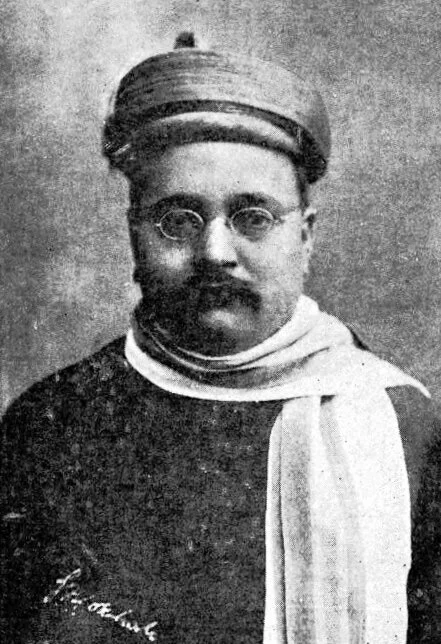
Gopal Krishna Gokhale: 'I am giving up all this to embark on the stormy and uncertain sea of public life', Farewell speech, Fergusson College - 1902
19 September 1902, Fergusson College, Pune, India
Years ago I remember to have read the story of a man, who lived by the side of the sea, who had a nice cottage and fields that yielded him their abundance, and who was surrounded by a loving family. The world thought that he was very happy. But to him the sea had a strange fascination. When it lay gently, heaving like an infant asleep, it appealed to him; when it raged like an angry and roaring lion, it still appealed to him; till at last he could withstand the fatal fascination no longer. And so having disposed of everything and put his all into a boat, he launched it on the bosom of the sea. Twice was he was beaten back by the waves- a warning he would not heed. He made a third attempt when the pitiless sea overwhelmed him. To a certain extent this seems to me to be my position today. Here I am with a settled position in this College, and having for my colleagues, men with whom it is a pleasure and a privilege to work, and whose generosity in overlooking my many faults and magnifying any little services I may have rendered, has often touched me deeply. And yet, I am giving up all this to embark on the stormy and uncertain sea of public life. But I hear within me a voice which urges me to take this course, and I can only ask you to believe me when I say that it is purely from a sense of duty to the best interests of our country, that I am seeking this position of greater freedom, but not necessarily of less responsibility. Public life in this country has few rewards and many trials and discouragements...

Atal Bihari Vajpayee: 'American people have shown that democracy and individual liberty provide the conditions in which knowledge progresses', Joint Meeting of US Congress - 2000
14 September 2000, Washington DC, USA
It is with a deep sense of honour that I speak to you today. I would like to thank you, Mr Speaker, and the members of the Congress for giving me this opportunity.
In November 1999 a remarkable event took place in the House of Representatives. By a vote of 396 to 4, the House adopted a resolution congratulating India and my government on the successful elections completed in October 1999. This display of broad-based bipartisan support for strengthening relations with India is heartening.
It is a source of encouragement to both President Clinton and to me, as we work together to infuse a new quality in our ties. I thank you for the near-unique approach that you have adopted towards my country.
Those of you who saw the warm response to President Clinton's speech to our Parliament in March this year will recognise that similar cross-party support exists in India as well for deeper engagement with the USA.
I am also deeply touched by the resolution adopted in the House two days ago welcoming my visit and the prospect of closer Indo-US understanding.
Mr Speaker,
American people have shown that democracy and individual liberty provide the conditions in which knowledge progresses, science discovers, innovation occurs, enterprise thrives and, ultimately, people advance.
To more than a million and half from my country, America is now home. In turn, their industry, enterprise and skills are contributing to the advancement of American society.
I see in the outstanding success of the Indian community in America, a metaphor of the vast potential that exists in Indo-US relations, and what we can achieve together.
Just as American experience has been a lesson in what people can achieve in a democratic framework, India has been the laboratory of a democratic process rising to meet the strongest challenges that can be flung at it.
In the half century of our independent existence, we have woven an exquisite tapestry. Out of diversity we have brought unity. The several languages of India speak with one voice under the roof of our Parliament.
In your remarkable experiment as a nation state, you have proven the same truth. Out of the huddled masses that you welcomed to your shores you have created a great nation.
For me the most gratifying of the many achievements of Indian democracy has been the change it has brought to the lives of the weak and the vulnerable.
To give just one figure, in recent years it has enabled more than a million women in small towns and distant villages to enter local elected councils and to decide on issues that touch upon their lives.
Two years ago, while much of Asia was convulsed by economic crisis, India held its course.
In the last ten years, we have grown at 6.5 per cent per year: that puts India among the ten fastest growing economies of the world.
Economic activity gets more and more diversified by the year: President Clinton and many among the friends gathered here have had occasion to glimpse our advances in information technology.
We are determined to sustain the momentum of our economy: our aim is to double our per capita income in ten years -- and that means we must grow at 9 per cent a year.
To achieve this order of growth we have ushered in comprehensive reforms. We are committed to releasing the creative genius of our people, the entrepreneurial skills of the men and women of the country, of its scientists and craftsmen. At the same time, we in India, remain committed to the primacy of the State in fulfilling its social obligations to the deprived, the weak and the poor.
Important sectors of the country's infrastructure -- power, insurance, banking, telecom -- are being opened to private initiative, domestic and foreign.
Trade barriers are being lowered.
Mr Speaker, ladies and gentlemen,
There are forces outside our country that believe that they can use terror to unravel the territorial integrity of India. They wish to show that a multi-religious society cannot exit.
They pursue a task in which they are doomed to fail.
No country has faced as ferocious an attack of terrorist violence as India has over the past two decades: 21,000 were killed by foreign sponsored terrorists in Punjab alone, 16,000 have been killed in Jammu and Kashmir.
As many of you here in the Congress have in recent hearings recognised a stark fact: no region is a greater source of terrorism than our neighbourhood.
Indeed, in our neighbourhood -- in this, the 21st century -- religious war has not just been fashioned into, it has been proclaimed to be, an instrument of State policy.
Distance offers no insulation. It should not cause complacence.
You know, and I know: such evil cannot succeed.
But even in foiling it could inflict untold suffering.
That is why the United States and India have begun to deepen their cooperation for combating terrorism. We must redouble these efforts.
Mr Speaker, ladies and gentlemen,
There was a time when we were on the other side of each other's globes. Today, on the digital map, India and the United States are neighbours and partners.
India and the United States have taken the lead in shaping the information age. Over the last decade, this new technology has sustained American prosperity in a way that has challenged conventional wisdom on economic growth.
We are two nations blessed with extraordinary resources and talent. Measured in terms of the industries of tomorrow, we are together defining the partnerships of the future.
But our two countries have the potential to do more to shape the character of the global economy in this century.
We should turn the example of our own cooperation into a partnership that uses the possibilities of the new technologies for defining new ways of fighting poverty, illiteracy, hunger, disease and pollution.
Mr Speaker, ladies and gentlemen,
We believe that India and America can -- and should -- march hand in hand towards a world in which economic conditions improve for all.
A situation that provides comfortable living standards to one-third of the world's population, but condemns the remaining two-thirds to poverty and want, is unsustainable.
The foremost responsibility that the 21st century has cast on all of us is to change this unacceptable legacy of the past.
It should be our common endeavour to overcome this legacy. I, therefore, propose a comprehensive global dialogue on development.
We would be happy to offer New Delhi as the venue for this dialogue.
In this Congress, you have often expressed concern about the future contours of Asia. Will it be an Asia that will be at peace with itself? Or will it be a continent, where countries seek to redraw boundaries and settle claims -- historical of imaginary -- through force?
We seek an Asia where power does not threaten stability and security. We do not want the domination of some to crowd out the space for others. We must create an Asia where cooperative rather than aggressive assertion of national self-interests defines behaviour among nations.
If we want an Asia fashioned on such ideals -- a democratic, prosperous, tolerant, pluralistic, stable Asia -- if we want an Asia where our vital interests are secure, then it is necessary for us to re-examine old assumptions.
It is imperative for India and the United States to work together more closely in pursuit of those goals. In the years ahead, a strong, democratic and economically prosperous India, standing at the crossroads of all the major cultural and economic zones of Asia, will be an indispensable factor of stability in the region.
Our cooperation for peace and stability requires us to also define the principles of our own engagement. We must be prepared to accommodate our respective concerns.
We must have the mutual confidence to acknowledge our respective roles and complementary responsibilities in areas of vital importance to each of us.
Security issues have cost a shadow on our relationship. I believe this is unnecessary. We have much in common and no clash of interests.
We both share a commitment to ultimately eliminating nuclear weapons. We have both declared voluntary moratoriums on testing.
India understands your concerns. We do not wish to unravel your non-proliferation efforts. We wish you to understand our security concerns.
We are at a historic moment in our ties. As we embark on our common endeavour to build a new relationship, we must give practical shape to our shared belief that democracies can be friends, partners and allies.
In recent years, through all the good and difficult times, we have spoken to each other more often than we have even done in the past. I thank President Clinton for this leadership and vision in steering this dialogue. I sincerely thank members of this Congress for supporting and encouraging this process.
As we talk with candor, we open the doors to new possibilities and new areas of cooperation -- in advancing democracy, in combating terrorism, in energy and environment, science and technology and in international peacekeeping. And, we are discovering that our shared values and common interests are leading us to seek a natural partnership of shared endeavours.
India and the United States have taken a decisive step away from the past. The dawn of the new century has marked a new beginning in our relations.
Let us work to fulfill the promise and the hope of today.
Let us remove the shadow of hesitation that lies between us and our joint vision.
Let us use the strength of all that we have in common to build together a future that we wish for ourselves and for the world that we live in.
Thank you.
Zulfiqar Ali Bhutto: 'I am not a rat. I have never ratted in my life?' resignation from United Nations Security Council - 1971
15 December 1971, United Nations, New York
We have met here today at a grave moment in the history of my country and I would request the Council kindly to bear with me and to hear the truth, the bitter truth. I know the United Nations; I know the Security Council I have attended their sessions before. The time has come when, as far as Pakistan is concerned, we shall have to speak the truth whether members of the Council like it or not. We were hoping that the Security Council, mindful of its responsibilities for the maintenance of world peace and justice, would act according to principles and bring an end to a naked, brutal aggression against my people. I came here for this reason. I was needed by the people of Pakistan, and when I was leaving Pakistan I. was in two minds whether: to go to the Security Council to represent the cause of my country, to represent the cause of a people that had been subjected to aggression, or to remain with my people, by their side, while they were being subjected to attack and violence. However, I felt that it was imperative for me to come here and seek justice from the Security Council. But I must say, whether the members like it or not, that the Security Council has denied my country that justice. From the moment I arrived we have been subjected to dilatory tactics.
It will be recalled that when the Indian Foreign Minister spoke and I spoke after him, I said that filibustering was taking place. That was my immediate observation. The Security Council, I am afraid, has excelled; in the art of filibustering, not only on substance but also on procedural matters. With some cynicism, I watched yesterday a full hour of the Security Council's time wasted on whether the members of the Council would be ready to meet at 9.30 a.m. or that bed and breakfast required that they should meet at 11 a.m.
The representative of Somalia referred to the population of East Pakistan as 56 million, but later on he corrected himself to say that the population of Bengal—of Muslim Bengal—was 76 million. If he had waited for a few more days he need not have corrected himself because millions are dying, and it would have come to 56 million if the Council had kept on filibustering and discussing whether it should meet today or tomorrow or the day after tomorrow—whether the lines of communication between New York and Moscow and Peking and other capitals would permit the members to obtain new instructions. Thus, we could have gone on and on. That is why I requested you, Mr. President, to convene a meeting of the Security Council immediately and I am thankful to you for having convened this meeting, because precious time is being lost. My countrymen, my people, are dying. So I think I can facilitate your efforts if I speak now. Perhaps this will be my last speech in the Security Council. So please bear with me because -I have some home truths to tell the Security Council. The world must know. My people must know. I have not come here to accept abject surrender. If the Security Council wants me to be a party to the legalisation of abject surrender, then I say that under no circumstances shall it be so. Yesterday my eleven year old son telephoned me from Karachi and said "Do not come back with a document of surrender. We do not want to see you back in Pakistan if you do that." I will not take back a document of surrender from the Security Council. I will not be a party to the legalisation of aggression.
The Security Council has failed miserably, shamefully. "The Charter of the United Nations," "the San Francisco Conference," "international peace and justice"—these are the words we heard in our youth, and we were inspired by the concept of the United Nations maintaining international peace and justice and security. President Woodrow Wilson said that he fought the First World War to end wars for all time. The League of Nations came into being, and then the United Nations after it. What has the United Nations done? I know of the farce and the fraud of the United Nations. They come here and say, "Excellence, Excellence, comment allez-vous?" and all that. "A very good speech—you have spoken very well, tres bien." We have heard all these things. The United Nations resembles those fashion houses which hide ugly realities by draping ungainly figures in alluring apparel. The concealment of realities is common to both but the ugly realities cannot remain hidden. You do not need a Secretary-General. You need a chief executioner.
Let us face the stark truth. I have got no stakes left for the moment. That is why I am speaking the truth from my heart. For four days we have been deliberating here. For four days the Security Council has procrastinated. Why? Because the object was for Dacca to fall. That was the object. It was quite clear to me from the beginning. All right, so what if Dacca falls? Cities and countries have fallen before. They have come under foreign occupation. China was under foreign occupation for years. Other countries have been under foreign occupation. France was under foreign occupation. Western Europe was under foreign occupation. So what if Dacca falls? So what if the whole of East Pakistan falls? So what if the whole of West Pakistan falls? So what if our state is obliterated? We will build a new Pakistan. We will build a better Pakistan. We will build a greater Pakistan.
The Security Council has acted short-sightedly by acquiescing in these dilatory tactics. You have reached a point when we shall say, "Do what you like." If this point had not been reached we could have made a commit ment. We could have said, "All right, we are prepared to do some things." Now why should we? You want us to be silenced by guns. Why should we say that we shall agree to anything? Now you decide what you like. Your decision will not be binding on us. You can decide what you like. If you had left us a margin of hope, we might have been a party to some settlement.
But the Indians are so short-sighted. Mr. President, you referred to the "distinguished" Foreign Minister of India. What may I ask is so "distinguished" about a policy of aggression he is trying to justify. How is he distinguished when his hands are full of blood, when his heart is full of venom? But you know they do not have vision.
The partition of India in 1947 took place because they did. not have vision. Now also they are lacking in vision. They talk about their ancient civilisation and the mystique of India and all that. But they do not have vision at all. If I had been in his place, I would have acted differently. I extended a hand of friendship to him the other day. He should have seen what I meant. I am not talking as a puppet. I am talking as the authentic leader of the people of West Pakistan who elected me at the polls in a more impressive victory than the victory that Mujibur Rahman received in East Pakistan, and he should have taken cognizance of that. But he did not take cognizance of it. We could have opened a new page, a new chapter in our relations.
As I said, if the French and the Germans can come to terms, why cannot India and Pakistan come to terms? If the Turks and the Greeks can still talk sensibly as civilised people over Cyprus, why cannot India and Pakistan do likewise? If the Soviet Union and the United States can open a new page in their history, if China and the United States can open a new page in their history, why can we not usher a new era in. our relations? We could have done so. But as it was said about the 1967 Arab-Israel war, the military victory of Israel made it more difficult for Israel and the Arabs to reach a settlement. If you want to subjugate Pakistan militarily, you will find it more difficult to bring peace. I say that the choice for us is either to accept living in the-same subcontinent and co-operating for peace and progress, or to be implacable enemies of each other forever.
The Permanent Representative of the Soviet Union does not like my reference to the Roman Empire. I do not know what objection he has to it, unless he sees some similarity between his empire and the Roman Empire. I do not really see why he had any objection to that. But I shall again refer to the Roman Empire, and I hope that the Permanent Representative of the Soviet Union will have no objection to it because we want to have good relations with the Soviet Union and we want to open a new chapter with the Soviet Union because we are neighbours. I go back to the Roman Empire and I say what Cato said to the Romans, "Carthage must be destroyed." If India thinks that it is going to subjugate Pakistan, Eastern Pakistan as well as Western Pakistan—because we are one people, we are one state— then we shall say, "Carthage must be destroyed." We shall tell our children and they will tell their children that Carthage must be destroyed.
So please, Mr. President and members of the Security Council, realise the implications. The Pakistani nation is a brave nation. One of the greatest British generals said that the best infantry fighters in the world are the Pakistanis. We will fight. We will fight for a thousand years, if it comes to that. So do not go by momentary military victories. Stalingrad was over whelmed. Leningrad was besieged for a thousand days. People who want to be free and who want to maintain their personality will fight and will continue to fight for principles.
We were told about the realities; to accept the realities. What are the realities? Realities keep changing, the Permanent Representative of the Soviet Union knows that once the reality was that the Nazis were out side the gates of Moscow, but you fought valiantly, bravely, and the world saluted the Soviet Union for having resisted the realities that were sought to be imposed on it. The reality was that China was under the occupation of Japan, that Manchuria was taken—half of China. That was the reality. Since the Opium War, China has seen reality. The reality for France was that it was under occupation. But there were great men like President de Gaulle who left France and fought from across the seas. Ethiopia was under Fascist domination. But the Ethiopians fought. The Emperor of Ethiopia left his country and sought asylum in Britain. Ethiopia is free today. The realities that matter are those which are not temporary phenomena which are rooted in historic principles. The principle is that Pakistan is an independent, sovereign state which came into being because of the volition of its people. That is the basic reality which has existed for 24 years. Pakistan would not have faced dismemberment like this if it had not been attacked by another country. This is not an internal movement. We have been subjected to attack by a militarily powerful neighbour. Who says that the new reality arose out of free will? Had there been the exercise of free will, India would not have attacked Pakistan. If India talks about the will of the people of East Pakistan and claims that it had to attack Pakistan in order to impose the will of the people of East Pakistan, then what has it done about Kashmir? East Pakistan is an integral part of Pakistan. Kashmir is a disputed territory. Why does India then not permit it to exercise its will?
But yesterday I saw how the Security Council was pandering to India. Even the great powers are pandering to India, saying to us, "Do not misunderstand," "Would you please let us know" and "Would you please answer the following questions; I am not insisting on those questions, but if you do not mind." India is intoxicated today with its military successes.
I told the Indian Permanent Representative in 1967 that we wanted good relations between the two countries—but based on principles, based on justice, based on equity, not based on exploitation and domination, because such relations cannot be lasting. What we want is a lasting, a permanent solution. I do not say this just today; I said that in 1967 to their Permanent Representative who was then the High Commissioner of India to Pakistan. I said that to the Foreign Minister of India when we were negotiating on Kashmir, "Let us settle this problem on the basis of equity and justice, so that we can live as good neighbours." And I add today: we can still live as good neighbours, as friends. Do not wipe out that possibility by military conquest and military power.
This has been the worst form of aggression, of naked aggression. Even Poland was not invaded by Germany in this fashion. Even in that case there were some pretences, some excuses that were made. Here the excuse was, "We have refugees, so we must invade another country." We said, "We are prepared to take those refugees back." If we had said, "We arc not prepared to take them back," then you could have said, "Well, you will be sunk." India's population rises by 13 million a year. The number of refugees was alleged to be 9 million, 10 million. According to our estimate they were 5 million. But that is not important; figures are not important. The point is that we were prepared to take them back. If India's population can grow by 13 million a year, then with all the aid and assistance that India was getting for the refugees, it could have held on for a short period till Pakistan had a civilian government to negotiate the return of the refugees. I told the United States Ambassador in Pakistan that once a civilian govern ment came into power in Pakistan, was prepared to go to the refugee camps myself to talk to them. But India pre-empted it all because the refugee problem was used as a pretext to dismember my country. The regfuee problem was used as a pretext, an ugly, crude pretext, a shameful pretext to invade my country, to invade East Pakistan.
The great powers will forgive me. I have addressed them in this moment of anguish, and they should understand. The great powers or the super powers—the super-duper-powers, the razzling-dazzling powers—the super powers have imposed their super will for the moment. But I am thankful to the people and the Government of the United States among the super powers, for the position it has taken. The people of the United States, to some extent have been misled by massive Indian propaganda. Because we had no paraphernalia of popular administration and government in Pakistan, there was a political vacuum. The Indians took advantage of that political vacuum and they spread out fast to project their point of view. As a result, American public opinion and public opinion in Great Britain and France and other countries was influenced. Unfortunately, nothing was said of the massacres that took place between 1 March and 25 March. No doubt there were mistakes on our side. I said yesterday that mistakes were made, and the Permanent Representative of the Soviet Union said that I had admitted mistakes. Well, that is not a sign of weakness, is it? Do we not all make mistakes? Are India and the Soviet Union the only two countries that have never made mistakes? I have made mistakes personally. But mistakes do not mean that my country must be destroyed, that my country must be dismembered. That is not the consequence of mistakes of government. Which government does not make mistakes? But if some government has made a mistake, does it-follow that the country itself must be dismembered, obliterated? Is that going to be the conclusion of the Security Council if it legalises Indian aggression on the soil of Pakistan?
So you will see now: this is not the end of the road, this is the beginning of the road; this is not the end of the chapter, a new chapter has begun a new page has been written in international relations. This is gunboat diplomacy in its worst form. In a sense, it makes the Hitlerite aggression pale into insignificance because Hitlerite aggression was not accepted by the world. If the world is going to endorse this aggression, it will mean a new and most unfortunate chapter in international relations. A new chapter may have begun in India and Pakistan, but please do not start a new dreadful chapter in international relations. For us, it is a hand-to-hand, day-to-day, minute-to-minute fight. But do not do that to the rest of the world. Please do not permit this kind of naked, shameful barbaric aggression to hold sway. In the old days great warriors swept over the world—Changiz Khan, Subutai Khan, Alexander, Caesar, coming down to the great Napoleon. But this is worse, this is much worse than all that was done by the great conquerors of the world in the past. If the United Nations becomes a party to this kind of conquest, it will be much worse than all that has been done in the past. You will be turning the medium-sized and the small countries into the harlots of the world. You cannot do that. It is against civilised concepts: it is against all the rules of civilisation and of international morality and justice.
The United States Government was criticised for supporting the position of Pakistan. What crime has the United States Government committed? It has taken a position identical to that of the whole world on the India-Pakistan conflict. That position was supported by 105 countries—it was 104 officially, but it was really 105 because one representative did not press the right button. That was the voice of the world. It was an international referendum. You talk about the election of 1970. Well, I am proud of the election of 1970 because my party emerged as the strongest party in West Pakistan. But here was an international poll and India flouted it. With such an attitude towards international opinion, how can India pretend to be sensitive to a national election in another country? The same India that refuses to hold a referendum in Kashmir?
The Permanent Representative of the Soviet Union talked about realities. Mr. Permanent Representative of the Soviet Union look at this reality. I know that you are the representative of a great country. You behave like one. The way you throw out your chest, the way you thump the table. you do not talk like Comrade Malik; you talk like Czar Malik. I see you are smiling. Well, I am not because my heart is bleeding. We want to be friends, but this is not the way to be friends when my country is decimated, sought to be destroyed, wiped out.
Why should China and the United States be criticised when the whole world is for Pakistan? You know that we have won a great political victory. We might have suffered a military defeat, but a political victory is more important than a military defeat because political victory is permanent while military defeat is temporary. The United States Government has acted according to its great traditions by supporting Pakistan, and I. will go to the people of the United States before I return home and tell them the truth. The United States has stood by the traditions of Jefferson, Madison. Hamilton, right down to Roosevelt and Wilson by supporting Pakistan as an independent state, its national integrity and its national unity. What wrong and crime has the United States committed? Why is the Indian delegation so annoyed with the United States? The Indian delegation is annoyed with U.S.—can you imagine that? If it had not been for the massive food assistance that the United States gave to India, India would have had starvation; its millions would have died. What hope will India give to the people of East Pakistan? What picture of hope is it going to give when its own people in Western Bengal sleep in the streets, where there is terrible poverty, where there is terrible injustice and exploitation, when the parliamentary rule in West Bengal has been superseded by presidential rule? Is India going to do better for East Pakistan, for Muslim Bengal, than it has done for West Bengal? Thousands of West Bengali people sleep in the streets of Calcutta. The people of West Bengal are the poorest. India goes hat in hand to the United States for six million tons of food. If they are going to impose presidential-rule in West Bengal, in their Bengal, how can they do any better in our Bengal? They will not. And time will show that they will not.
So the United States has taken a correct and moral position. Thomas Jefferson once said, "I have sworn eternal hostility against any form of tyranny practised over the mind of man". This is a vast form of tyranny practised over the mind of man and over the body of man. So the United States has adhered to its tradition. And if some misguided Senators were here, some young, misguided Senators who have been overtaken by Indian propaganda—and if the Permanent Representative of the United States were not from Texas—I would have told those young Senators that I was setting up the headquarters for a republic of Texas and making the former President-of the United States, Lyndon Johnson, the chief of that republic, in order to spread the cult of Bangladesh everywhere. Why can Texas not be free? Let there be a republic of Texas. We did not buy Bengal as Alaska was bought by the United States. We did not pay money to get our territory. We did not pay dollars to acquire territory. The people of the United States should appreciate the position taken by their Government.
Muslim Bengal was a part of Pakistan of its free will, not through money. We did not buy it as Alaska was purchased. Why do the people of the United States not see that? And we are beholden and thankful to the great People's Republic of China. We shall always remain thankful for the position it has taken. It has taken a position based on principles of justice. And I thank the Third World for having supported a just cause, a right cause.
And now in the Security Council we have been frustrated by a veto. Let us build a monument to the veto, a big monument to the veto. Let us build a monument to the impotence and incapacity of the Security Council and the General Assembly. As you sow, so shall you reap. Remember that Biblical saying. Today, it is Pakistan. We are your guinea pigs today. But there will be other guinea pigs and you will see what happens. You will see how the chain of events unfolds itself. You want us to lick the dust. We are not going to lick the dust.
Britain and France have abstained from voting in order to play a role. I said the other day, with all due respect to those two great powers, that they have really exhausted their position in trying to play a role because now the only role they can play is to accept a shameless fait accompli. Britain and France abstained, and that abstention has cost us dearly. Gallic logic and Anglo-Saxon experience, whatever it is, have cost us dearly. If Britain and France had put their powerful weight behind the international community rather than sitting on the fence, the issue might have been different. There is no such animal as a neutral animal. You take positions. In that respect we admire the Soviet Union; it took a position, a wrong position, but it took a position. You have to take a position on these matters. You have to be either on the side of justice or on the side of injustice; you are either on the side of justice or on the side of injustice; you have to be either on the side of the aggressor or of the victim. There is no third road. It is a black and white situation in these matters; there is no grey involved. You are either for right or you are for wrong; you are either for justice or for injustice; you are either for aggression or for the victim. If the United Kingdom and France had earlier put their full weight behind the verdict of the inter national community, I think that we would not have reached this position. But Great Britain and France want to come back into the subcontinent as Clive and Dupleix, in a different role, the role of peacemakers. They want a foot here and they want a foot there. I know that British interests in East Pakistan required this kind of opportunistic role because in East Pakistan they have their tea estates. They want the jute of East Pakistan. So that is why they sat on the fence. And I am sorry at France's position because with France we had developed very good relations, extremely good relations. But they took this position. And now, today, neither Britain nor France can play a role because their resolution has been overtaken by events. There is a lot of goodwill for France in Pakistan, and they will not get the same goodwill in East Pakistan because in East Pakistan already the clock is now moving in another direction. Everyday that the Indian Army of occupation stays there, it will be a grim reminder for Muslim Bengal that they are under Hindu occupation, and you will see the result of it. You will see how it will turn out. Let them stay—why not? Let them stay. Let them swagger around. If they want to take East Pakistan, let them stay as an army of occupation. They are an army of occupation; how can they be called liberators? They will stay, and they will see how the clock is going to move in a different direction.
Finally, I am not a rat. I have never ratted in my life. I have faced assassination attempts, I have faced imprisonments. I have always confronted crises. Today I am not ratting, but I am leaving your Security Council. I find it disgraceful to my person and to my country to remain here a moment longer than is necessary. I am not boycotting. Impose, Impose any decision, have a treaty worse than the Treaty of Versailles, legalise aggression, legalise occupation, legalise everything that has been illegal upto 15 December 1971. I will not be a party to it. We will fight; we will go back and fight. My country beckons me. Why should I waste my time here in the Security Council? I will not be a party to the ignominious surrender of a part of my country. You can take your Security Council. Here you are. (Ripping papers) I am going.
Lal Bahadur Shastri: End of Second Indo-Pakistan War - 1965
22 September 1965, Delhi, India
Transcript to follow. If you have a translated transcript (or one in Hindi), please post to us at submissions@speakola.com
Some excerpts:
The emphasis on religion as a basis of defining majorities and minorities in a secular state is quite misplaced and contradiction in terms. You all understand, I am sure, that religion does not aim at dividing. On the other hand, all true religions have a basic unity. …
In this vast country of ours, people profess different religions, speak different languages, dress differently and observe different customs; but we are one nation; the history of our struggle for independence and our faith in our future development are our common bonds….
…
Hendrik Verwoerd: 'They will become the conquerors of White South Africa', Senate Speech promoting apartheid - 1959
20 May 1959, Cape Town, South Africa
… Furthermore, I want to argue as follows. If that will be the result, if through the capabilities of the Bantu it happens that here in South Africa there will be a White state, a big and strong White nation, along with various Bantu national units and areas (or states, if you like) how is that different from what we have in Europe? Are there not in other parts of the world such as Europe, South America and Asia, various nations and states next to each other within the same continent or part of a continent? What would have happened to France, to Germany and to Britain if they had lost all their borders and their populations had become intermingled?
And if those nations do not desire anything like that, and if it is not necessary there, and if it cannot happen there, why is it so terrible if in South Africa there are also various nations and territories and even neighbouring states? Do we find that the all-white nations and states in Europe try to or succeed in becoming one unit without borders? Have those nations become intermingled or has a multi-racial state been established in Europe? Or did we see throughout the centuries, even after the one state conquered the other, e.g. when Charlemagne established his empire, that the various nations again split up and re-established their national borders? Therefore, just as in other parts of the world, we must be able to accept that in Africa there can be various states on one continent or part of it.
These states can nevertheless have a bond, the bond of common interest. Such a bond has even become the modern ideal in Europe, viz. in the economic sphere where they are trying to form a common European market. It is the ideal to retain political independence with economic interdependence. That is the spirit which prevails in other parts of the world where states with various borders, large ones and small ones, occur, but suddenly now something like that is inconceivable in South Africa, and dangerous. Now I ask further: If there cannot be such a division, if the possibility of having separate territories as an eventual settlement of political aims is not possible – how long that development will take, I do not know – what is the other way out? The United Party [opposition] has said over and over: Nothing else is possible but a common South Africa, a multi-racial country, although numerically the Bantu will outnumber the Whites three or four times. I repeat, with candour and in the best interests of the White people of South Africa, that I choose an assured White state in South Africa, whatever happens to the other areas, rather than to have my people absorbed in one integrated state in which the Bantu must eventually dominate. One Bantustan for the whole of South Africa is the inevitable consequence of the policy of the United Party.
Therefore to talk about partition and sub-division as being a distasteful pattern is utterly nonsensical, because in terms of both policies there will be Black areas, and in terms of the policy of apartheid the White man will at least control his own area, whatever the difficulties might be and however hard it might be. He at least has the opportunity to save himself, which under a multi-racially controlled state he will not have.
The next argument I want to deal with is the allegation made by the Leader of the Opposition that our course of action shows a lack of confidence in the ability of the White man to retain his leadership. I will have more to say about leadership at a later stage, but at the moment I want merely to say this in regard to that argument, that leadership in a democracy is not retained by men of pious words. It depends on numbers, as anybody who has made a study of the history of any nation knows. In the final result it is force of numbers which predominates – high or low, poor or rich, Black or White – and therefore it is necessary to apply all our energies and to make sacrifices and to work hard to ensure that there will be a White part of South Africa (even though we must accept the presence of the Coloureds) where the Bantu population will not predominate in that community as part of that community.
The next argument of the Hon. the Leader of the Opposition was particularly surprising to me. He said that as recently as the First World War the races in South Africa were still separated, and then the policy of Botha, Smuts and Hertzog, who believed in separate governmental areas, was possible. His further argument was that since the First World War the Bantu workers streamed into the industrialised areas of South Africa, which now makes it impossible to have separate governmental areas. The migration of Bantu from other parts of Africa to South Africa, is also concerned here. Therefore the inflow of the Bantu into the industrial areas in the White parts of South Africa, and also the inflow of Bantu from other parts of Africa, make the ideal which was possible in the past, the ideal of separate government, impossible.
Does the Hon. the Leader of the Opposition realise what he is really saying? He says he admits that before the First World War there was a definite White governmental area here, and therefore Botha, Smuts and Hertzog were justified in saying that we had our own area, and that the Bantu were separate, but that that became impossible as the result of the inflow of Bantu workers from our Native reserves, from the rural areas and from other parts of Africa. My reply to that is that he then accepts a bloodless conquest of the White area by the Bantu, whom the White man wanted to accept only as workers and not as people who would become partners and later the conquerors of this country. If there is any nation in the world which is prepared to allow itself to be robbed of its country by those to whom it only did good and whom it provided with work, then I say that we on this side are not prepared to be “hands-uppers” together with the United Party and to surrender and hand over our country as the result of a bloodless conquest.
I want to compare the position with what would happen in Britain if Britain were to allow Jamaicans to enter the country to seek work to such an extent that in the end they would be in the majority (if immigration on such a scale were possible in such a small country). Would the British just quietly say: We will not stop the inflow, and as soon as they number 70,000,000 or 80,000,000 and we are only 59,000,000 (or whatever the figure may be), then they are in the majority, and because everybody should have equal rights therefore England in future will belong to them! That is ridiculous, but it is in line with what now has to happen in South Africa according to the argument of the United Party.
The in-flowing Black workers have increased in number to such an extent that a multi-racial Government must follow and in that way they will become the conquerors of White South Africa, just as the Jamaicans would be in England if they were permitted to do the same thing that the Leader of the Opposition says took place here since the First World War. That is the most peculiar argument I have ever heard as a plea for the granting of political rights to the Bantu, as is the statement that we should not protect ourselves and should not keep the government of the country in our own hands. In the time of Botha, Smuts and Hertzog it was correct, but not in our time, it seems, because we have been conquered already by the large number of immigrants.
The next argument was that we are changing the map of South Africa; we are forming a horseshoe of the Prime Minister’s Black states. Has the Leader of the Opposition ever considered that neither I nor this party but history, and partly the history of the time when the White man was still landing in Africa, placed the Bantu in the areas where they still are? They inherited it, as we inherited our area. This horseshoe was not created by us or by any organisation we established or by any Act we passed. The Bantu themselves settled there, where the White people found them and where they still are. Is the Leader of the Opposition going to deprive them of that horseshoe? If not, why does he attack us?
He does not want to unify the whole of South Africa, as I said a moment ago. He wants the Bantu to retain their horseshoe. In fact, the heart-lands (in situation, not in numbers) of that horseshoe are Basutoland, Bechuanaland and Swaziland. Just look at the map; those are the heart-lands of that horseshoe, apart from the Transkei and Zulu-land. He therefore also knows that Britain has been in control of that horseshoe from 1910 until now. Did he therefore intend to say that Britain wants to bind South Africa in a vice of Black states in the form of that horseshoe? No, only now, when the National Party is considering safeguarding South Africa by recognising Bantu self-government in those areas, suddenly this is a dangerous horseshoe. It was not us who put the Bantu there. He was there. The United Party wants him to remain there. Nor can we disregard the fact that he is there.
Therefore to say that we are changing the map of South Africa is absolute nonsense. But let me ask this further question: Should one throw up the sponge when one finds oneself in difficulties? If it is true that there is a horseshoe of Black states, due partly to the actions of Britain, must we say then that consequently we must simply allow the rest of South Africa to become mixed and in the final result to become dominated by the Bantu? I look upon this horseshoe argument as one fit for a debating society but not for a serious discussion on the destiny of a nation.
In spite of that, Hon. members on the other side enlarged on it. The Hon. the Leader of the Opposition even came along with the argument about the dangers which would develop on our border under such a future arrangement; inter alia, that it would become a springboard for foreign ideologies, that Communists would be able to take over the areas and that the Bantu states would be able to enter into their own treaties. He also asked which navy, which air force, might perhaps dominate those states? He says that in this way our coastal area is handed over to foreign powers!
These are alarmists stories he is spreading in advance of a far-distant future, when there will be the fullest development. He does not use those stories for the transition period. He is afraid of what will happen if Bantu states come into being one day. Let us assume that it is possible that some of the dangers which the Hon. Leader of the Opposition mentioned may arise. Let me then point out to hon. members opposite that they must be logical.
While I accept for the sake of argument that that may be so, it must be noted in the first place that the same Leader of the Opposition who accused us about these “dangerous” states, later in the debate accused me of wanting to create such weak little states! I believe he even spoke about the immorality of this. On the one hand he talks about the tremendous danger and, on the other, of the creation of weak little states, which would be an injustice.
Let us examine the position if we accept for argument’s sake that they may become dangerous independent states. I contend, of course, and it is my belief, that there are no grounds for the fear and anxiety of the Leader of the Opposition. My belief is that the development of South Africa on the basis of this Bill will create so much friendship, so much gratitude, so many mutual interests in the process of the propulsive development that there will be no danger of hostile Bantu states, but that there will arise what I called a commonwealth, founded on common interests, and linked together by common interests in this southern part of Africa. In other words, I believe that these dangers of foreign ideologies, of foreign navies, and so on, will not materialise.
If the Hon. Leader of the Opposition wants to frighten people, however – fear which I believe will be proved to be unfounded – then my reply to this type of reasoning is that in the long run I would prefer to have a smaller White state in South Africa which will control its own army, its own navy, its own police, its own defence force, and which will stand as a bulwark for White civilisation in the world and which, in the event of an emergency and a clash with ideologies in neighbouring states, will also have the support of the outside world to enable it to maintain itself (in other words, rather a White nation which can fight for its survival), than a bigger state which has already been surrendered to Bantu domination.
I propose now to sketch the consequences, in terms of this same type of reasoning, of the United Party’s policy. What would be the (remember this) eventual position – because after all the Hon. the Leader of the Opposition argues in terms of the situation which will eventually arise when our policy is carried out – what would be the eventual situation in the event of his policy being carried out? Then you would have a multi-racial community and a multi-racial state with ever-expanding control by, and a joint say on the part of, continually developing Natives in one joint country, with the Natives outnumbering the Whites four to one.
(Do not let us take the other groups into account.) What would that involve? A South African army and a South African police force under black generals; an air force under a Black air-marshal; a government with Black Cabinet Ministers; a Parliament with Black Members of Parliament; administrators and mayors, all Black! Now I ask the Hon. Leader of the Opposition: With such an end in view, what hope would there be for the White man? Not only would he not have his own army, his own defence force and his own diplomatic channels to protect himself against foreign ideologies, if there is an emergency, but he would already be under the domination and under the superior power of the army, navy, air force, police service, government – nation-wide – of the Black man. Is that the eventual picture which the leader of the Opposition wants South Africa to choose?
If the Leader of the Opposition wants to come along with alarmist stories about imaginary eventual consequences of our policy than I can do the same about his! Hon. members over there laugh. But if they were not prepared to ridicule their own Leader when he put forward this sort of proposition, why is it so ridiculous when one outlines to them the consequences of the other alternative, the road to Bantu domination?
Their laughter is born out of despair; it is an admission of the weakness and senselessness of this type of argument. In any event this type of speculation gets us nowhere. What we are trying to achieve under our apartheid policy is a South Africa which endeavours to build up reasonable opportunities for the Bantu in such a way and of such a nature that we can secure their permanent friendship and co-operation without giving them domination over the whole of our own area in addition to their own.
And if in the coming years all the wisdom of statesmen is harnessed to allow development to take place in this way, and if the Opposition and its Press and the liberals who oppose this peaceful neighbourly development would stop their venomous attacks, then there would and must be great hope for South Africa. Then friendship with other racial areas and also other colour groups here would grow. But only then, never otherwise.
Tony Blair: 'The kaleidoscope has been shaken', Response to 9-11, Labour Party Coference - 2001
2 October 2001, Brighton, United Kingdom
In retrospect, the Millennium marked only a moment in time. It was the events of September 11 that marked a turning point in history, where we confront the dangers of the future and assess the choices facing humankind.
It was a tragedy. An act of evil. From this nation, goes our deepest sympathy and prayers for the victims and our profound solidarity with the American people.
We were with you at the first. We will stay with you to the last.
Just two weeks ago, in New York, after the church service I met some of the families of the British victims.
It was in many ways a very British occasion. Tea and biscuits. It was raining outside. Around the edge of the room, strangers making small talk, trying to be normal people in an abnormal situation.
And as you crossed the room, you felt the longing and sadness; hands clutching photos of sons and daughters, wives and husbands; imploring you to believe them when they said there was still an outside chance of their loved ones being found alive, when you knew in truth that all hope was gone.
And then a middle-aged mother looks you in the eyes and tells you her only son has died, and asks you: why?
I tell you: you do not feel like the most powerful person in the country at times like that.
Because there is no answer. There is no justification for their pain. Their son did nothing wrong. The woman, seven months pregnant, whose child will never know its father, did nothing wrong.
They don't want revenge. They want something better in memory of their loved ones.
I believe their memorial can and should be greater than simply the punishment of the guilty. It is that out of the shadow of this evil, should emerge lasting good: destruction of the machinery of terrorism wherever it is found; hope amongst all nations of a new beginning where we seek to resolve differences in a calm and ordered way; greater understanding between nations and between faiths; and above all justice and prosperity for the poor and dispossessed, so that people everywhere can see the chance of a better future through the hard work and creative power of the free citizen, not the violence and savagery of the fanatic.
I know that here in Britain people are anxious, even a little frightened. I understand that. People know we must act but they worry what might follow.
They worry about the economy and talk of recession.
And, of course there are dangers; it is a new situation.
But the fundamentals of the US, British and European economies are strong.
Every reasonable measure of internal security is being undertaken.
Our way of life is a great deal stronger and will last a great deal longer than the actions of fanatics, small in number and now facing a unified world against them.
People should have confidence.
This is a battle with only one outcome: our victory not theirs.
What happened on 11 September was without parallel in the bloody history of terrorism.
Within a few hours, up to 7000 people were annihilated, the commercial centre of New York was reduced to rubble and in Washington and Pennsylvania further death and horror on an unimaginable scale. Let no one say this was a blow for Islam when the blood of innocent Muslims was shed along with those of the Christian, Jewish and other faiths around the world.
We know those responsible. In Afghanistan are scores of training camps for the export of terror. Chief amongst the sponsors and organisers is Osama Bin Laden.
He is supported, shielded and given succour by the Taliban regime.
Two days before the 11 September attacks, Masood, the leader of the opposition Northern Alliance, was assassinated by two suicide bombers. Both were linked to Bin Laden. Some may call that coincidence. I call it payment - payment in the currency these people deal in: blood.
Be in no doubt: Bin Laden and his people organised this atrocity. The Taliban aid and abet him. He will not desist from further acts of terror. They will not stop helping him.
Whatever the dangers of the action we take, the dangers of inaction are far, far greater.
Look for a moment at the Taliban regime. It is undemocratic. That goes without saying.
There is no sport allowed, or television or photography. No art or culture is permitted. All other faiths, all other interpretations of Islam are ruthlessly suppressed. Those who practice their faith are imprisoned. Women are treated in a way almost too revolting to be credible. First driven out of university; girls not allowed to go to school; no legal rights; unable to go out of doors without a man. Those that disobey are stoned.
There is now no contact permitted with western agencies, even those delivering food. The people live in abject poverty. It is a regime founded on fear and funded on the drugs trade. The biggest drugs hoard in the world is in Afghanistan, controlled by the Taliban. Ninety per cent of the heroin on British streets originates in Afghanistan.
The arms the Taliban are buying today are paid for with the lives of young British people buying their drugs on British streets.
That is another part of their regime that we should seek to destroy.
So what do we do?
Don't overreact some say. We aren't.
We haven't lashed out. No missiles on the first night just for effect.
Don't kill innocent people. We are not the ones who waged war on the innocent. We seek the guilty.
Look for a diplomatic solution. There is no diplomacy with Bin Laden or the Taliban regime.
State an ultimatum and get their response. We stated the ultimatum; they haven't responded.
Understand the causes of terror. Yes, we should try, but let there be no moral ambiguity about this: nothing could ever justify the events of 11 September, and it is to turn justice on its head to pretend it could.
The action we take will be proportionate; targeted; we will do all we humanly can to avoid civilian casualties. But understand what we are dealing with. Listen to the calls of those passengers on the planes. Think of the children on them, told they were going to die.
Think of the cruelty beyond our comprehension as amongst the screams and the anguish of the innocent, those hijackers drove at full throttle planes laden with fuel into buildings where tens of thousands worked.
They have no moral inhibition on the slaughter of the innocent. If they could have murdered not 7,000 but 70,000 does anyone doubt they would have done so and rejoiced in it?
There is no compromise possible with such people, no meeting of minds, no point of understanding with such terror.
Just a choice: defeat it or be defeated by it. And defeat it we must.
Any action taken will be against the terrorist network of Bin Laden.
As for the Taliban, they can surrender the terrorists; or face the consequences and again in any action the aim will be to eliminate their military hardware, cut off their finances, disrupt their supplies, target their troops, not civilians. We will put a trap around the regime.
I say to the Taliban : surrender the terrorists; or surrender power. It's your choice.
We will take action at every level, national and international, in the UN, in G8, in the EU, in Nato, in every regional grouping in the world, to strike at international terrorism wherever it exists.
For the first time, the UN security council has imposed mandatory obligations on all UN members to cut off terrorist financing and end safe havens for terrorists.
Those that finance terror, those who launder their money, those that cover their tracks are every bit as guilty as the fanatic who commits the final act.
Here in this country and in other nations round the world, laws will be changed, not to deny basic liberties but to prevent their abuse and protect the most basic liberty of all: freedom from terror. New extradition laws will be introduced; new rules to ensure asylum is not a front for terrorist entry. This country is proud of its tradition in giving asylum to those fleeing tyranny. We will always do so. But we have a duty to protect the system from abuse.
It must be overhauled radically so that from now on, those who abide by the rules get help and those that don't, can no longer play the system to gain unfair advantage over others.
Round the world, 11 September is bringing Governments and people to reflect, consider and change. And in this process, amidst all the talk of war and action, there is another dimension appearing.
There is a coming together. The power of community is asserting itself. We are realising how fragile are our frontiers in the face of the world's new challenges.
Today conflicts rarely stay within national boundaries.
Today a tremor in one financial market is repeated in the markets of the world.
Today confidence is global; either its presence or its absence.
Today the threat is chaos; because for people with work to do, family life to balance, mortgages to pay, careers to further, pensions to provide, the yearning is for order and stability and if it doesn't exist elsewhere, it is unlikely to exist here.
I have long believed this interdependence defines the new world we live in.
People say: we are only acting because it's the USA that was attacked. Double standards, they say. But when Milosevic embarked on the ethnic cleansing of Muslims in Kosovo, we acted.
The sceptics said it was pointless, we'd make matters worse, we'd make Milosevic stronger and look what happened, we won, the refugees went home, the policies of ethnic cleansing were reversed and one of the great dictators of the last century, will see justice in this century.
And I tell you if Rwanda happened again today as it did in 1993, when a million people were slaughtered in cold blood, we would have a moral duty to act there also. We were there in Sierra Leone when a murderous group of gangsters threatened its democratically elected Government and people.
And we as a country should, and I as Prime Minister do, give thanks for the brilliance, dedication and sheer professionalism of the British Armed Forces.
We can't do it all. Neither can the Americans.
But the power of the international community could, together, if it chose to.
It could, with our help, sort out the blight that is the continuing conflict in the Democratic Republic of the Congo, where three million people have died through war or famine in the last decade.
A Partnership for Africa, between the developed and developing world based around the New African Initiative, is there to be done if we find the will.
On our side: provide more aid, untied to trade; write off debt; help with good governance and infrastructure; training to the soldiers, with UN blessing, in conflict resolution; encouraging investment; and access to our markets so that we practise the free trade we are so fond of preaching.
But it's a deal: on the African side: true democracy, no more excuses for dictatorship, abuses of human rights; no tolerance of bad governance, from the endemic corruption of some states, to the activities of Mr Mugabe's henchmen in Zimbabwe. Proper commercial, legal and financial systems.
The will, with our help, to broker agreements for peace and provide troops to police them.
The state of Africa is a scar on the conscience of the world. But if the world as a community focused on it, we could heal it. And if we don't, it will become deeper and angrier.
We could defeat climate change if we chose to. Kyoto is right. We will implement it and call upon all other nations to do so.
But it's only a start. With imagination, we could use or find the technologies that create energy without destroying our planet; we could provide work and trade without deforestation.
If humankind was able, finally, to make industrial progress without the factory conditions of the 19th Century; surely we have the wit and will to develop economically without despoiling the very environment we depend upon. And if we wanted to, we could breathe new life into the Middle East Peace Process and we must.
The state of Israel must be given recognition by all; freed from terror; know that it is accepted as part of the future of the Middle East not its very existence under threat. The Palestinians must have justice, the chance to prosper and in their own land, as equal partners with Israel in that future.
We know that. It is the only way, just as we know in our own peace process, in Northern Ireland, there will be no unification of Ireland except by consent - and there will be no return to the days of unionist or Protestant supremacy because those days have no place in the modern world. So the unionists must accept justice and equality for nationalists.
The Republicans must show they have given up violence - not just a ceasefire but weapons put beyond use. And not only the Republicans, but those people who call themselves Loyalists, but who by acts of terrorism, sully the name of the United Kingdom.
We know this also. The values we believe in should shine through what we do in Afghanistan.
To the Afghan people we make this commitment. The conflict will not be the end. We will not walk away, as the outside world has done so many times before.
If the Taliban regime changes, we will work with you to make sure its successor is one that is broad-based, that unites all ethnic groups, and that offers some way out of the miserable poverty that is your present existence.
And, more than ever now, with every bit as much thought and planning, we will assemble a humanitarian coalition alongside the military coalition so that inside and outside Afghanistan, the refugees, millions on the move even before September 11, are given shelter, food and help during the winter months.
The world community must show as much its capacity for compassion as for force.
The critics will say: but how can the world be a community? Nations act in their own self-interest. Of course they do. But what is the lesson of the financial markets, climate change, international terrorism, nuclear proliferation or world trade? It is that our self-interest and our mutual interests are today inextricably woven together.
This is the politics of globalisation.
I realise why people protest against globalisation.
We watch aspects of it with trepidation. We feel powerless, as if we were now pushed to and fro by forces far beyond our control.
But there's a risk that political leaders, faced with street demonstrations, pander to the argument rather than answer it. The demonstrators are right to say there's injustice, poverty, environmental degradation.
But globalisation is a fact and, by and large, it is driven by people.
Not just in finance, but in communication, in technology, increasingly in culture, in recreation. In the world of the internet, information technology and TV, there will be globalisation. And in trade, the problem is not there's too much of it; on the contrary there's too little of it.
The issue is not how to stop globalisation.
The issue is how we use the power of community to combine it with justice. If globalisation works only for the benefit of the few, then it will fail and will deserve to fail.
But if we follow the principles that have served us so well at home - that power, wealth and opportunity must be in the hands of the many, not the few - if we make that our guiding light for the global economy, then it will be a force for good and an international movement that we should take pride in leading.
Because the alternative to globalisation is isolation.
Confronted by this reality, round the world, nations are instinctively drawing together. In Quebec, all the countries of North and South America deciding to make one huge free trade area, rivalling Europe.
In Asia. In Europe, the most integrated grouping of all, we are now 15 nations. Another 12 countries negotiating to join, and more beyond that.
A new relationship between Russia and Europe is beginning.
And will not India and China, each with three times as many citizens as the whole of the EU put together, once their economies have developed sufficiently as they will do, not reconfigure entirely the geopolitics of the world and in our lifetime?
That is why, with 60 per cent of our trade dependent on Europe, three million jobs tied up with Europe, much of our political weight engaged in Europe, it would be a fundamental denial of our true national interest to turn our backs on Europe.
We will never let that happen.
For 50 years, Britain has, uncharacteristically, followed not led in Europe. At each and every step.
There are debates central to our future coming up: how we reform European economic policy; how we take forward European defence; how we fight organised crime and terrorism.
Britain needs its voice strong in Europe and bluntly Europe needs a strong Britain, rock solid in our alliance with the USA, yet determined to play its full part in shaping Europe's destiny.
We should only be part of the single currency if the economic conditions are met. They are not window-dressing for a political decision. They are fundamental. But if they are met, we should join, and if met in this parliament, we should have the courage of our argument, to ask the British people for their consent in this Parliament.
Europe is not a threat to Britain. Europe is an opportunity.
It is in taking the best of the Anglo-Saxon and European models of development that Britain's hope of a prosperous future lies. The American spirit of enterprise; the European spirit of solidarity. We have, here also, an opportunity. Not just to build bridges politically, but economically.
What is the answer to the current crisis? Not isolationism but the world coming together with America as a community.
What is the answer to Britain's relations with Europe? Not opting out, but being leading members of a community in which, in alliance with others, we gain strength.
What is the answer to Britain's future? Not each person for themselves, but working together as a community to ensure that everyone, not just the privileged few get the chance to succeed.
This is an extraordinary moment for progressive politics.
Our values are the right ones for this age: the power of community, solidarity, the collective ability to further the individual's interests.
People ask me if I think ideology is dead. My answer is:
In the sense of rigid forms of economic and social theory, yes.
The 20th century killed those ideologies and their passing causes little regret. But, in the sense of a governing idea in politics, based on values, no. The governing idea of modern social democracy is community. Founded on the principles of social justice. That people should rise according to merit not birth; that the test of any decent society is not the contentment of the wealthy and strong, but the commitment to the poor and weak.
But values aren't enough. The mantle of leadership comes at a price: the courage to learn and change; to show how values that stand for all ages, can be applied in a way relevant to each age.
Our politics only succeed when the realism is as clear as the idealism.
This party's strength today comes from the journey of change and learning we have made.
We learnt that however much we strive for peace, we need strong defence capability where a peaceful approach fails.
We learnt that equality is about equal worth, not equal outcomes.
Today our idea of society is shaped around mutual responsibility; a deal, an agreement between citizens not a one-way gift, from the well-off to the dependent.
Our economic and social policy today owes as much to the liberal social democratic tradition of Lloyd George, Keynes and Beveridge as to the socialist principles of the 1945 Government.
Just over a decade ago, people asked if Labour could ever win again. Today they ask the same question of the Opposition. Painful though that journey of change has been, it has been worth it, every stage of the way.
On this journey, the values have never changed. The aims haven't. Our aims would be instantly recognisable to every Labour leader from Keir Hardie onwards. But the means do change.
The journey hasn't ended. It never ends. The next stage for New Labour is not backwards; it is renewing ourselves again. Just after the election, an old colleague of mine said: "Come on Tony, now we've won again, can't we drop all this New Labour and do what we believe in?"
I said: "It's worse than you think. I really do believe in it."
We didn't revolutionise British economic policy - Bank of England independence, tough spending rules - for some managerial reason or as a clever wheeze to steal Tory clothes.
We did it because the victims of economic incompetence - 15 per cent interest rates, 3m unemployed - are hard-working families. They are the ones - and even more so, now - with tough times ahead - that the economy should be run for, not speculators, or currency dealers or senior executives whose pay packets don't seem to bear any resemblance to the performance of their companies.
Economic competence is the pre-condition of social justice.
We have legislated for fairness at work, like the minimum wage which people struggled a century for. But we won't give up the essential flexibility of our economy or our commitment to enterprise.
Why? Because in a world leaving behind mass production, where technology revolutionises not just companies but whole industries, almost overnight, enterprise creates the jobs people depend on.
We have boosted pensions, child benefit, family incomes. We will do more. But our number one priority for spending is and will remain education.
Why? Because in the new markets countries like Britain can only create wealth by brain power not low wages and sweatshop labour.
We have cut youth unemployment by 75 per cent.
By more than any government before us. But we refuse to pay benefit to those who refuse to work. Why? Because the welfare that works is welfare that helps people to help themselves.
The graffiti, the vandalism, the burnt out cars, the street corner drug dealers, the teenage mugger just graduating from the minor school of crime: we're not old fashioned or right-wing to take action against this social menace.
We're standing up for the people we represent, who play by the rules and have a right to expect others to do the same.
And especially at this time let us say: we celebrate the diversity in our country, get strength from the cultures and races that go to make up Britain today; and racist abuse and racist attacks have no place in the Britain we believe in.
All these policies are linked by a common thread of principle.
Now with this second term, our duty is not to sit back and bask in it. It is across the board, in competition policy, enterprise, pensions, criminal justice, the civil service and of course public services, to go still further in the journey of change. All for the same reason: to allow us to deliver social justice in the modern world.
Public services are the power of community in action.
They are social justice made real. The child with a good education flourishes. The child given a poor education lives with it for the rest of their life. How much talent and ability and potential do we waste? How many children never know not just the earning power of a good education but the joy of art and culture and the stretching of imagination and horizons which true education brings? Poor education is a personal tragedy and national scandal.
Yet even now, with all the progress of recent years, a quarter of 11-year-olds fail their basic tests and almost a half of 16 year olds don't get five decent GCSEs.
The NHS meant that for succeeding generations, anxiety was lifted from their shoulders. For millions who get superb treatment still, the NHS remains the ultimate symbol of social justice.
But for every patient waiting in pain, that can't get treatment for cancer or a heart condition or in desperation ends up paying for their operation, that patient's suffering is the ultimate social injustice.
And the demands on the system are ever greater. Children need to be better and better educated.
People live longer. There is a vast array of new treatment available.
And expectations are higher. This is a consumer age. People don't take what they're given. They demand more.
We're not alone in this. All round the world governments are struggling with the same problems.
So what is the solution? Yes, public services need more money. We are putting in the largest ever increases in NHS, education and transport spending in the next few years; and on the police too. We will keep to those spending plans. And I say in all honesty to the country: if we want that to continue and the choice is between investment and tax cuts, then investment must come first.
There is a simple truth we all know. For decades there has been chronic under-investment in British public services. Our historic mission is to put that right; and the historic shift represented by the election of June 7 was that investment to provide quality public services for all comprehensively defeated short-term tax cuts for the few.
We need better pay and conditions for the staff; better incentives for recruitment; and for retention. We're getting them and recruitment is rising.
This year, for the first time in nearly a decade, public sector pay will rise faster than private sector pay.
And we are the only major government in Europe this year to be increasing public spending on health and education as a percentage of our national income.
This Party believes in public services; believes in the ethos of public service; and believes in the dedication the vast majority of public servants show; and the proof of it is that we're spending more, hiring more and paying more than ever before.
Public servants don't do it for money or glory. They do it because they find fulfilment in a child well taught or a patient well cared-for; or a community made safer and we salute them for it.
All that is true. But this is also true.
That often they work in systems and structures that are hopelessly old fashioned or even worse, work against the very goals they aim for.
There are schools, with exactly the same social intake. One does well; the other badly.
There are hospitals with exactly the same patient mix. One performs well; the other badly.
Without reform, more money and pay won't succeed.
First, we need a national framework of accountability, inspection; and minimum standards of delivery.
Second, within that framework, we need to free up local leaders to be able to innovate, develop and be creative.
Third, there should be far greater flexibility in the terms and conditions of employment of public servants.
Fourth, there has to be choice for the user of public services and the ability, where provision of the service fails, to have an alternative provider.
If schools want to develop or specialise in a particular area; or hire classroom assistants or computer professionals as well as teachers, let them. If in a Primary Care Trust, doctors can provide minor surgery or physiotherapists see patients otherwise referred to a consultant, let them.
There are too many old demarcations, especially between nurses, doctors and consultants; too little use of the potential of new technology; too much bureaucracy, too many outdated practices, too great an adherence to the way we've always done it rather than the way public servants would like to do it if they got the time to think and the freedom to act.
It's not reform that is the enemy of public services. It's the status quo.
Part of that reform programme is partnership with the private or voluntary sector.
Let's get one thing clear. Nobody is talking about privatising the NHS or schools.
Nobody believes the private sector is a panacea.
There are great examples of public service and poor examples. There are excellent private sector companies and poor ones. There are areas where the private sector has worked well; and areas where, as with parts of the railways, it's been a disaster.
Where the private sector is used, it should not make a profit simply by cutting the wages and conditions of its staff.
But where the private sector can help lever in vital capital investment, where it helps raise standards, where it improves the public service as a public service, then to set up some dogmatic barrier to using it, is to let down the very people who most need our public services to improve.
This programme of reform is huge: in the NHS, education, including student finance, - we have to find a better way to combine state funding and student contributions criminal justice; and transport.
I regard it as being as important for the country as Clause IV's reform was for the Party, and obviously far more important for the lives of the people we serve.
And it is a vital test for the modern Labour Party
If people lose faith in public services, be under no illusion as to what will happen.
There is a different approach waiting in the wings. Cut public spending drastically; let those that can afford to, buy their own services; and those that can't, will depend on a demoralised, sink public service. That would be a denial of social justice on a massive scale.
It would be contrary to the very basis of community.
So this is a battle of values. Let's have that battle but not amongst ourselves. The real fight is between those who believe in strong public services and those who don't.
That's the fight worth having.
In all of this, at home and abroad, the same beliefs throughout: that we are a community of people, whose self-interest and mutual interest at crucial points merge, and that it is through a sense of justice that community is born and nurtured.
And what does this concept of justice consist of?
Fairness, people all of equal worth, of course. But also reason and tolerance. Justice has no favourites; not amongst nations, peoples or faiths.
When we act to bring to account those that committed the atrocity of September 11, we do so, not out of bloodlust.
We do so because it is just. We do not act against Islam. The true followers of Islam are our brothers and sisters in this struggle. Bin Laden is no more obedient to the proper teaching of the Koran than those Crusaders of the 12th century who pillaged and murdered, represented the teaching of the Gospel.
It is time the west confronted its ignorance of Islam. Jews, Muslims and Christians are all children of Abraham.
This is the moment to bring the faiths closer together in understanding of our common values and heritage, a source of unity and strength.
It is time also for parts of Islam to confront prejudice against America and not only Islam but parts of western societies too.
America has its faults as a society, as we have ours.
But I think of the Union of America born out of the defeat of slavery.
I think of its Constitution, with its inalienable rights granted to every citizen still a model for the world.
I think of a black man, born in poverty, who became chief of their armed forces and is now secretary of state Colin Powell and I wonder frankly whether such a thing could have happened here.
I think of the Statue of Liberty and how many refugees, migrants and the impoverished passed its light and felt that if not for them, for their children, a new world could indeed be theirs.
I think of a country where people who do well, don't have questions asked about their accent, their class, their beginnings but have admiration for what they have done and the success they've achieved.
I think of those New Yorkers I met, still in shock, but resolute; the fire fighters and police, mourning their comrades but still head held high.
I think of all this and I reflect: yes, America has its faults, but it is a free country, a democracy, it is our ally and some of the reaction to September 11 betrays a hatred of America that shames those that feel it.
So I believe this is a fight for freedom. And I want to make it a fight for justice too. Justice not only to punish the guilty. But justice to bring those same values of democracy and freedom to people round the world.
And I mean: freedom, not only in the narrow sense of personal liberty but in the broader sense of each individual having the economic and social freedom to develop their potential to the full. That is what community means, founded on the equal worth of all.
The starving, the wretched, the dispossessed, the ignorant, those living in want and squalor from the deserts of Northern Africa to the slums of Gaza, to the mountain ranges of Afghanistan: they too are our cause.
This is a moment to seize. The Kaleidoscope has been shaken. The pieces are in flux. Soon they will settle again. Before they do, let us re-order this world around us.
Today, humankind has the science and technology to destroy itself or to provide prosperity to all. Yet science can't make that choice for us. Only the moral power of a world acting as a community, can.
"By the strength of our common endeavour we achieve more together than we can alone".
For those people who lost their lives on September 11 and those that mourn them; now is the time for the strength to build that community. Let that be their memorial.
Tony Blair: 'The British people, they'll forgive a wrong decision, they won't forgive not deciding', Labour Party Conference, Resignation speech - 2006
26 September 2006, Manchester, United Kingdom
I'd actually like to start by saying something very simple: Thank you. Thank you to you, our Party, our members, our supporters, the people who week in, week out do the work, take the flak but don't often get the credit. Thank you, the Labour Party for giving me the extraordinary privilege of leading you these past 12 years. Thank you.
I know I look a lot older. That's what being leader of the Labour Party does to you. Actually, looking round some of you look a lot older. That's what having me as leader of the Labour Party does to you. Nobody knows that better, of course, than John Prescott, my deputy these last 12 years, author of "traditional values in a modern setting." I may have taken New Labour to the country; it was you that helped me take it to the Party, so thank you.
And something I don't say often enough -- thank you to my family, and to the children, to Cherie [Blair's wife]. I mean -- Well, at least I don't have to worry about her running off with the bloke next door. (Sorry, I just couldn't resist that one.)
And it's usual, of course, on the occasions after you thank the family, you thank your agent -- and actually I do want to thank my agent John Burton and through him the wonderful people of Sedgefield.
You know, when I went to Sedgefield to seek the nomination, just before the 1983 election, I was a kind of refugee from the London-based politics of the time. And I remember, I knocked on John's door. He said "come in, but shut up for half an hour, we're watching Aberdeen and the Cup Winners' Cup final." And I sat in the company of the most normal people I had met in the Labour Party. And they taught me that most of politics isn't about politics, in the sense of meetings, and resolutions, speeches, even parties sometimes. It starts with people. It's about friendship and art and culture and sport. It's actually about being a fully paid up member of the human race before being a fully paid up member of the Labour Party.
But above all else, I want to thank the British people. Not just for the honor of being Prime Minister but for the journey of progress that we've traveled together. Leaders lead but in the end it's the people who deliver. In the last few months I've seen new hospitals like University College in London, the new Queen Elizabeth Hospital planned in Birmingham -- Whiston Hospital in Knowsley, where I laid the foundation stone. But without the talents and dedication of the National Health Service staff, they would be just empty shells. It is their efforts which have cut waiting, improved care, transform and save tens of thousands of lives every day. Thank you.
And we in government, of course, can help put in place the new academy in Liverpool or the ground-breaking Education Village in Darlington, which I've visited recently. But it's the commitment and love of learning of the teachers and their pupils, and the support of parents, which have given our country the best educated children in our history. To them, too, thank you.
And what about this wonderful city of Manchester? A city transformed. A city that shows what a confident, open, and proud people with a great Labour council can do for themselves. So, thank you.
In 1994, I stood before you for the first time, and I shared with you the country's anger at crumbling school buildings, patients languishing, sometimes dying in pain, waiting for operations, of crime doubled, of homes repossessed, of pensioners living in poverty; and I told you of our dismay at four election defeats and how it was not us who should feel betrayed but the British people. That such a speech seems so dated today is not through the passage of time but through progress.
In 1997, we faced daunting challenges: boom and bust economics, chronic under-investment in our public services, social division with millions living in poverty, including over 3 million children at that time. And more than all of that, a country culturally, socially behind. No black ministers -- never a black cabinet minister; parliament, supposedly the forum of the people, with only one in 10 women MPs; gay people denied equal rights; trade unionists able to be sacked for joining a trade union; workers on £1.20 an hour, legally; London the only major capital city in the world without city government; Scotland, Wales, Northern Ireland all run from Whitehall; inner cities depleted, a refuge for the dispossessed. This was a country aching for change.
And now, for all that remains to be done, just for a moment dwell on what has been achieved: the longest period of sustained economic growth in British history; mortgage repossession, like mass unemployment, are terms we have to be reminded of; the last NHS winter crisis -- six years ago. Heart patients wait on average less than three months; cancer deaths down by 43,000. Today, you are more likely to see a new school building than a crumbling one. There are virtually no long-term unemployed.
Today we ask: Well, can we meet these ambitious targets on child poverty before 1997? The idea of a child poverty target would have been laughable. We have black ministers and the first woman and then the first black woman leader of the Lords. Not enough women MPs but twice what there were. A London mayor, thankfully Labour again. Devolution in Scotland and Wales.
But not just this. Free museum entry that's seen a 50% rise in visitors. Banning things that should never have been allowed: handguns, cosmetic testing on animals; fur farming, blacklisting of trade unionists and from summer next year, smoking in public places. And allowing things that should never have been banned: the right to roam; the right to request flexible working; civil partnerships for gay people. And in 2012 it is London that will host the Olympic games. Of course, the daily coverage of politics focuses on the negative. But take a step back and be proud. This is a changed country. Above all, it is progressive ideas which define its politics. That's the real result of a third term victory.
And there's the Tories having to pretend they love it all: Bank of England independence, they never did in 18 years; the minimum wage, they told us would cost a million jobs; help for the world's poor that they cut. Now, they fall over themselves saying how much they agree with us. Don't lose heart from that; take heart from it.
We've changed the terms of political debate. This Labour government has been unique. First time ever two full terms; now three. So, why? And how? Because we faced out to the people, not in on ourselves. We put the Party at the service of the country. Their reality became our reality. Their worries, our worries. We abandoned the ridiculous, self-imposed dilemma between principle and power. We went back to first principles, our values, our real values, those that are timeless, and separated them from doctrine and dogma that had been ravaged by time.
And in doing so, we freed Britain at long last from the reactionary choice that dominated British politics for so long: between individual prosperity and a caring society. We proved that economic efficiency and social justice are not opposites but partners in progress. We defied conventional political wisdom and thereby we changed it. And around that we built a new political coalition.
The USP of New Labour is aspiration and compassion reconciled. We reach out not just to those in poverty or need but those who are doing well but want to do better; those on their way up, ambitious for themselves and their families. These are our people too, not to be tolerated for electoral reasons but embraced out of political conviction. The core vote of this Party today is not the heartlands, the inner city, not any sectional interest or lobby. Our core vote is the country. And it was they who made us change.
The beliefs of the Labour Party of 2006 should be recognizable to the members of 1906. And they are: full employment, strong public services, tackling poverty, international solidarity. But the policies shouldn't. And the trouble was for a long time they were. In the 1960s, re-reading the cabinet debates of In Place of Strife, everyone was telling Harold Wilson not to push it. It was divisive, unnecessary, alienated core support. And in the end he gave up but so did the public on Labour. Even in 1974, the Labour government spent two years renationalizing shipbuilding and the public spent two years wondering why. In the 1980s, council house sales had first been suggested by Labour people. It was shelved. Too difficult. Too divisive. And we lost a generation of aspiring working class people on the back of it. In the 1980s we should have been the Party transforming Britain. But we weren't.
And the lesson is always the same. Values unrelated to modern reality are not just electorally hopeless, the values themselves become devalued. They have no purchase on the real world. We won in the end not because we surrendered our values but because we finally had the courage to be true to them. And our courage, then, in changing gave the British people the courage to change. That's how we won.
And 10 years after, government takes its toll. It does. It's in the nature of the beast. And in the harsh climate of the 24/7 media, in which gossip and controversy are so much more newsworthy than real news, people forget. I spoke to a woman the other day, a part-time worker, complaining about the amount of her tax credit. And I said, hold on a minute: before 1997, there were no tax credits, not for working families, not for any families; child benefit was frozen; maternity pay half what it is; maternity leave likewise; paternity leave didn't exist at all; no minimum wage; no full time rights for part time workers; in fact, nothing. "So what?", she said, "That's why we elected you. Now go and sort out my tax credit."
And, of course, she's right. In government you -- you carry each hope, each disillusion. And in politics it's always about the next challenge. The truth is, you can't go on forever. That's why it's right that this is my last conference as Leader. And of course it's hard to let go. But it's also right to let go -- for the country, and for you, the Party.
And over the coming months, I will take through the changes I've worked on so hard these past years. And I'll try to help build a unified Party with a strong platform for the only legacy that has ever mattered to me -- a fourth term election victory that allows us to keep on changing Britain for the better.
And I want to heal. There's been a lot of talk of lies and truths these past few weeks. In any relationship at the top of any walk of life it isn't always easy, least of all in politics which matters so much and which is conducted in such a piercing spotlight. But I know New Labour would never have happened, and three election victories would never have been secured, without Gordon Brown. He's a remarkable man, a remarkable servant to this country, and that is the truth.
So now, 10 years on, this Party faces together the real test of leadership: not about what we've achieved in the past, but what we can achieve for Britain's future; not just how do we win again, but how does Britain carry on winning? I won't be leading you in the next election. But, you know, I've sat in this hot seat for 10 years, and here's my advice: The scale of the challenges now dwarf what we faced in 1997. They are different, deeper, bigger, hammered out on the anvil of forces, global this time in nature, sweeping the world.
In 1997 the challenges we faced were essentially British. Today they are essentially global. The world today is a vast reservoir of potential opportunity. New jobs in things like environmental technology, or the creative industries, financial services. There's cheap goods and travel, the Internet, extraordinary advances in science and technology. In 10 years we will think nothing of school-leavers going off to university anywhere in the world.
But with these opportunities comes huge insecurity. In 1997 we barely mentioned China. Not any more. Last year China and India produced more graduates -- graduates than all of Europe put together. 10 years ago, energy wasn't on the agenda. The environment -- an also-ran. 10 years ago, if we talked pensions we meant pensioners. Immigration was hardly raised. Terrorism meant the IRA. Not any more. We used to feel we could shut our front door on the problems and conflicts of the wider world. Not any more -- not with globalisation, not with climate change, not with organized crime, not when suicide bombers born and bred in Britain bring carnage to the streets of London in the name of religion; and when a speech by the Pope to an academic seminar in Bavaria leads to protests in Britain. The question today is different from the one we faced in 1997. It is how we reconcile openness to the possibilities of globalisation, with security in the face of its threats. How to be open and yet secure.
And again, there is a third way. Some want a fortress Britain - job protection, pull up the drawbridge, get out of international engagement. Others see no option but to submit to global forces and let the strongest survive.
Our answer has to be very clear. It is, once again, to help people through a changing world by using collective power to advance opportunity and provide security for all. To reconcile openness and security as once we reconciled aspiration and compassion, not as enemies but as partners in progress. The British people today are reluctant global citizens. I want them to be confident ones.
And the danger in all of this, for us as a Party, is not ditching New Labour. The danger is failing to understand that New Labour in 2007 won't be New Labour in 1997. 10 years ago I would have described re-linking the Basic State Pension with earnings as "Old Labour." Our aim is by 2012, but by the end of the next parliament at the latest, to do it. Now, has Rodney Bickerstaffe has become New Labour or have I become Old Labour? 10 years ago, if you had asked me to put environmental obligations on business, I would have been horrified. Now I'm advocating it. I would have baulked at restrictions on advertising junk food to children. Today I say unless a voluntary code works, we will legislate for it. 10 years ago I parked the issue of nuclear power. Today, frankly, I believe without it, we are going to face an energy crisis and we can't let that happen.
Over the next year we are reviewing every aspect of our economic policy, not because we were wrong in the past, but because whether in tax and spending, regulation, or planning, enterprise, the question is not about our competitiveness in the last 10 years, but in the next 10; developing financial services and the City of London; the creative industries and modern manufacturing; how to be the world's number one place for bio-science. If America does not want stem-cell research, we do -- we welcome it here; and how to fund transport through road-pricing; or skills -- a huge challenge for the nation. And I say to business: You have a responsibility to train your workforce. And to trade unions: Here is the chance to be the learning partners for the workforce of the next generation. Take that chance.
Global warming is the greatest long-term threat to our planet's environment. Scarce energy resources mean rising prices and will threaten our country's economy. Fewer than 15 years, we will go from 80% self-sufficient in oil and gas to 80% of it imported. We need therefore the most radical overhaul of energy policy since the War. We will increase the amount of energy from renewable sources fivefold. W will ensure every major business in the country has a responsibility for greenhouse gas emission reduction. We will treble investment in clean technology, including clean coal. And we will make sure that every new home is at least 40% more energy efficient. We will meet our Kyoto targets. In fact we will meet them by double the amount, and we will take the necessary measures, step by step by step, to meet one of the most ambitious targets on the environment set anywhere in the world -- a 60% reduction in emissions by the year 2050.
And again, In the future, as people live longer, we can't afford good pensions and help for disabled people who can't work, with 4 million people on benefit, many of whom could work -- almost a million less than there were, but still too many. That's why we need more radical welfare reform. That's why we need to get more disabled people, more lone parents, more on unemployment benefit, into work. And the reason for it is not to destroy the welfare state, but to preserve it.
And why is reform so important in public services? Look over the past 10 years -- let's be clear -- Britain has invested more in our public services than any comparable nation in the world. We were near the bottom in Europe. We're now at the average and we got there in a decade. 300,000 more workers, treble the money going in, 25% more pay in real terms and the largest ever hospital program. That is an NHS being rebuilt, not privatized. Refurbishing and rebuilding every secondary school in the country -- 92,000 more classroom assistants, 36,000 more teachers, pay also up 17% in real terms. This isn't about privatizing state education; it's about producing the best school results ever that our country's future needs.
But what happens? Expectations rise. People today want power in their own hands. Two thirds of the country has access today to the Internet. Millions of people order flights or books or other goods online, talk to their friends online, down music, all of it when they want to, not when the shop or office is open. This Google generation has moved beyond the idea of 9-to-5, closed on weekends and bank holidays. Today's technology is profoundly empowering. And of course public services are different, and their values are different. But today people won't accept a service handed down from on high. They want to shape it to their needs, and the reality of their lives.
And the same global forces that are changing business are at work in public services too. New ways of treating. New ways of teaching. New technologies. There will be no selective trust schools or city academies. But if, as at the academy I visited in Lewisham, good GCSE results are doubled in a year, and a school once under-subscribed, now five times over-subscribed, how is that a denial of public service values? Surely it is the most vivid affirmation of them.
And if an old age pensioner who used to wait 2 years for her cataract operation now gets it on the NHS in an independent treatment center, in 3 months, free at the point of use, that is not damaging the values of the National Health Service; it's fulfilling its purpose. My advice: At the next election, the issue will not only be who is trusted to invest in our public services, vital though that will be. It will be who comes first. And our answer has to be: the patient, the parent. Meeting the 18 weeks maximum for waiting in the NHS with an average of 9 weeks from the door of the GP to the door of the operating theatre. Booked appointments. That is the end of waiting in the NHS. Historic.
Transforming secondary schools in the way we've done for primary schools. Schools with three quarters of the children getting good results the norm. That would be historic. Both are within reach. Do this and we will have earned the right to be custodians of our public services for the next generation. But if we fail, and without change we will, then believe me change will still be done, but in a regressive way by a Conservative Party. I want change true to progressive values, done by a fourth term Labour Government. Well, I always said the Home Office was the toughest job in -- in government. And it hasn't got easier.
We should get a few facts straight. Under this government, crime has fallen not risen. We're the only government since the war to do it. Asylum applications are dealt with faster, removals are greater, the system infinitely better than the chaos we inherited in 1997.
But the fact is the world is changing so fast that the reality we are dealing with -- mass migration, organized crime, anti-social behavior -- is simply engulfing systems that were designed for a time gone by. 30 million people now come to Britain every year -- visitors, tourists, workers, students -- and our economy needs them. 227 million pass through our airports. Yet we have no means of checking who is here lawfully. The fundamental dilemma is this: How do we reconcile liberty with security in this new world?
Let me say something to you. I don't want to live in a police state, or a Big Brother society, or put any of our essential freedoms in jeopardy. But because our idea of liberty is not keeping pace with change in reality, these freedoms are in jeopardy. When a crime goes unpunished, that is a breach of the victim's liberty and human rights. When you have organized crime gangs free to practice their evil, countless young people have their liberty, often their lives, damaged. And when anti-social behavior goes unchecked, each and every member of the community in which it happens, has their human rights broken. When we can't deport foreign nationals, even when inciting violence, this country is at risk.
Immigration has benefited Britain. But I know that if we don't have rules that allow us some control over who comes in, who goes out, who has a right to stay and who has not, then instead of a welcome, migrants find fear. We can only protect liberty by making it relevant to the modern world. That is why Identity Cards using biometric technology are not a breach of our basic rights; they are an essential part of responding to the reality of modern migration and protecting us against identity fraud.
A small example but an important one, I remember when I first introduced the DNA database. And on it go all those who are arrested and come into contact with the criminal justice system. We were told it was a monstrous breach of liberty. It is now matching 3,000 offences a month, including last year several hundred murders and thousands of rapes and other violent offences; difficult reform but leading to real progress in the fight against crime. In the next parliamentary session, the centerpiece will be John Reid's immigration and law and order reforms. I ask people of all parties to support them. Let liberty at last stand up for the law-abiding citizens in this country.
And of course, the new anxiety is the global struggle against terrorism without mercy or limit. This is a struggle that I believe will last a generation and more. But I also believe this passionately: We will not win until we shake ourselves free of the wretched capitulation to the propaganda of the enemy, that somehow we are the ones responsible. This terrorism isn't our fault. We didn't cause it. It's not the consequence of foreign policy. It is an attack on our way of life. It is global. It has an ideology. It killed nearly 3,000 people including over 60 British on the streets of New York before war in Afghanistan or Iraq was even thought of. It's been decades growing. And its victims are in Egypt, Algeria, Indonesia, India, Pakistan, Turkey -- over 30 nations in the world. And it preys on every conflict. And it exploits every grievance. And its victims are mainly Muslim.
This is not our war against Islam. This is a war fought by extremists who pervert the true faith of Islam. And all of us, Western and Arab, Christian or Muslim, who put the value of tolerance, respect, and peaceful co-existence above those of sectarian hatred, should join together to defeat it.
It is not British soldiers who are sending car bombs into Baghdad or Kabul to slaughter the innocent. They are there along with the troops of 30 other nations with, in each case, a full United Nations mandate at the specific request of the first-ever democratically elected governments of those countries in order to protect the people against the very ideology also seeking the deaths of British people in planes across the Atlantic. If we retreat now, hand Iraq over to Al Qaida and sectarian death squads, Afghanistan back to Al Qaida and the Taleban, we won't be safer; we will be committing a craven act of surrender that will put our future security in the deepest peril.
And of course it's tough. And not a day goes by or an hour in the day when I don't reflect on our troops with admiration and thanks -- the finest, the best, the bravest, any nation could hope for. They are not fighting in vain but for this nation's future. But I know this is not a conventional war. It can't be won by force alone. It's not a clash of civilizations. It's about civilization, about the ideas that shape it. And from 9/11 until now I've said again and again: If we want our values to be the ones that govern global change, we have to show that they are fair, just, and delivered with an even hand.
From now until I leave office I will dedicate myself -- the same commitment I've given to Northern Ireland -- to advancing peace between Israel and Palestine. I may not succeed, but I will try because it is right in itself and because peace in the Middle East is a defeat for this terrorism. We must never again let Lebanon become the battleground for a conflict that neither Israeli or Lebanese people wanted -- though it was they who paid the price for it. And peace in Lebanon would be a defeat for this terrorism. Action in Africa is a defeat for terrorism. And what is happening now in the Sudan cannot stand. If this -- If this were in the continent of Europe we would act. Surely an African life is worth as much as a Western one -- that might help defeat terrorism too.
And yes it's hard sometimes to be America's strongest ally. And yes, Europe can be a political headache for a proud sovereign nation like Britain. But believe me there are no half-hearted allies of America today and no semi-detached partners in Europe. And the truth is nothing we strive for, from the world trade talks to global warming, to terrorism and Palestine can be solved without America, or without Europe. At the moment I know people only see the price of these alliances. Give them up and the cost in terms of power, weight, and influence for Britain would be infinitely greater. Distance this country and you may find it's a long way back. So all these changes of a magnitude we never dreamt of, sweeping the world, are calling for answers of equal magnitude and vision.
And all require leadership. And here is something else that I've learned. The danger for us is not reversion to the politics of the 1980s. It's retreat to the sidelines, to the comfort zone. It's unconsciously to lose the psychology of a governing Party. As I said in 1994, courage is our friend; caution, our enemy. A governing Party has confidence, self-belief. It sees the tough decision and thinks it should be taking it. It reaches for responsibility first. It serves by leading. The most common phrase uttered to me -- not at rallies or public events but in meetings of chance, quietly -- is not "I hate you" (well, occasionally), or "I like you" (very occasionally) -- but actually is "I wouldn't have your job for all the world."
Even when my two boys were canvassing in the last General Election, we were going down a street and my boy Nicky went and -- and knocked on the door; asked him to vote Labour.
[He received] a volley of abuse. You know, "I hate that Tony Blair." "I've seen Caroway" -- and all the rest of the usual stuff and -- some of it may be familiar to some of you -- I don't know. And anyway....here's brotherly love for you. He gave up afternoons canvassing a different part of the...the street. And he says, "Euan, there's a bloke over at number 14. He's mad...at dad." I think....But anyway, he says....knock on the door. And says to the bloke, there's another guy here from the Labour Party. Could you.... [And he received] an even worse volley of abuse. And he sees him there looking a bit sort of fragile under it all and he says, "What's wrong, then?" And Euan says, "Well, actually, you know, Blair is my dad. And the bloke says, "Look, I'm really sorry, son. Come in and have a cup of tea. I didn't really mean all that.
And that -- that is what the British people are like. They're -- They're -- They're good people. You know, they -- they -- they know it took --. The thing about leadership is they know it's tough. Right? And the British people sometimes will forgive a wrong decision. But, you know something, they won't forgive not deciding. They know there's not some fantasy government where nothing difficult ever happens. They've got the Lib Dems for that. Government isn't about protests or placards or shouting the odds or stealing the scene. It's about the hard graft of achievement. There are no third-term ever popular governments. So don't ignore the polls but don't be paralyzed by them either.
Ten years on, our advantage is time, and our disadvantage, time. Time gives us experience and our capacity to lead is greater. Time gives the people fatigue; their willingness to be led is less. But they will lose faith in us only if first we lose faith in ourselves. And polls now are as relevant as last year's weather forecast for tomorrow's weather. It's three years until an election. The first rule of politics: There are no rules. You make your own luck. That -- There's no rule that says the Tories have got to come back.
David Cameron's Tories -- my advice: Get after them. His foreign policy: pander to anti-Americanism by stepping back from America; pander to the Eurosceptics through isolation in Europe. Sacrificing British influence for Party expediency is not a policy worthy of a Prime Minister. His immigration policy: says he'll sort out illegal immigration, but opposes identity cards, the one thing essential to do it. His energy policy: nuclear power, but "only as a last resort." Look, it's not a multiple choice quiz question. We need to decide now otherwise in 10 or 15 years time we will be importing expensive fossil fuels and Britain's economy will suffer.
He wants tax cuts and more spending, with the same money. And he wants a bill of rights for Britain drafted by a committee of lawyers. Have you ever tried drafting anything with a committee of lawyers? And, of course, the policy for the old lady terrorized by a young thug is that she should put her arm round him and give him a nice, big hug. Built to last? They haven't even laid the foundation stone. And if we can't take this lot apart in the next few years we shouldn't be in the business of politics at all.
The Tories haven't thought it through. They think it's all about image. Now it's true -- we changed our image. And we've created a professional organization. But I'll tell you something else that's true: If I'd stood in 1997 on the policies of 1987 I would have lost. And it's the same now. So, if you don't mind, enough talk of hung parliaments. The next election won't be about image unless we let it be. It'll be about who has the strength, the judgment, the weight, the ideas for Britain's future in an uncertain world. And we do. This Party does. And if we show belief in ourselves, the British people will feel that belief. They'll sense it and they'll be given confidence from it.
Something else I've learned: Politics is also about a Party's character -- and the characters of the people in it. And I'll give you two examples: Dennis Skinner. He's watching from his sick bed. Get well soon, Dennis. Never agreed with a policy I've done. Never once stopped him knowing the difference between a Labour government and a Tory one. And people like Janet Anderson, and George Howarth, and Mike Hall. Good ministers, but I asked them to make way. And they did -- without a word of bitterness. They never forgot their principles when in office; and they never discovered them when they left it.
This is the Party I am proud to lead. From the day I was elected and until the day I leave, they'll always try to separate us of course. "He's not Labour." "He's a closet Tory." In the 1980s some things done were necessary. It's true. Saying it doesn't make you a Tory. I'm a progressive. And the true believer, the true progressive believes in social justice, in solidarity, in help for those not able to help themselves. They know the race can't just be to the swift and survival for the strong. But they also know that these values, gentle and compassionate as they are, have to be applied in a harsh, uncompromising world and that what makes the difference is not belief alone, but the raw courage to make it happen.
You know, they say I hate this Party and its traditions. Well I don't. I love this Party. There's only one tradition I ever hated: losing. And I hated the 1980s not just for our irrelevance but for our reveling in our irrelevance. And I don't want to win for winning's sake but for the sake of the millions here that depend on us to win, and throughout the world. Every day this government has been in power, every day in Africa, children have lived who otherwise would have died because this country led the way in cancelling debt and global poverty.
That's why winning matters. So keep on winning. And do it with optimism, with hope in your hearts. Politics is not a chore. It's the great adventure of progress. And I don't want to be the Labour leader who won three successive elections. I want to be the first Labour leader to win three successive elections.
So, it's up to you. You can take my advice. You don't take it. It's your choice. But whatever you do, I'm always with you -- head and heart. You've given me all I've ever achieved and all that we've achieved, together, for the country. Next year, I won't be making this speech. But, in the years to come, wherever I am, whatever I do: I'm with you. Wishing you well. And wanting you to win.
You're the future now. So, make the most of it.

Aneurin Bevan: 'Naked into the conference chamber', Labour Party Conference -1957
3 October 1957, Brighton, United Kingdom


Fidel Castro: 'Condemn me. It does not matter. History will absolve me', speech from the dock - 1953
16 October 1953, Santiago, Cuba
HONORABLE JUDGES:
Never has a lawyer had to practice his profession under such difficult conditions; never has such a number of overwhelming irregularities been committed against an accused man. In this case, counsel and defendant are one and the same. As attorney he has not even been able to take a look at the indictment. As accused, for the past seventy-six days he has been locked away in solitary confinement, held totally and absolutely incommunicado, in violation of every human and legal right.
He who speaks to you hates vanity with all his being, nor are his temperament or frame of mind inclined towards courtroom poses or sensationalism of any kind. If I have had to assume my own defense before this Court it is for two reasons. First: because I have been denied legal aid almost entirely, and second: only one who has been so deeply wounded, who has seen his country so forsaken and its justice trampled so, can speak at a moment like this with words that spring from the blood of his heart and the truth of his very gut.
There was no lack of generous comrades who wished to defend me, and the Havana Bar Association appointed a courageous and competent jurist, Dr. Jorge Pagliery, Dean of the Bar in this city, to represent me in this case. However, he was not permitted to carry out his task. As often as he tried to see me, the prison gates were closed before him. Only after a month and a half, and through the intervention of the Court, was he finally granted a ten minute interview with me in the presence of a sergeant from the Military Intelligence Agency (SIM). One supposes that a lawyer has a right to speak with his defendant in private, and this right is respected throughout the world, except in the case of a Cuban prisoner of war in the hands of an implacable tyranny that abides by no code of law, be it legal or humane. Neither Dr. Pagliery nor I were willing to tolerate such dirty spying upon our means of defense for the oral trial. Did they want to know, perhaps, beforehand, the methods we would use in order to reduce to dust the incredible fabric of lies they had woven around the Moncada Barracks events? How were we going to expose the terrible truth they would go to such great lengths to conceal? It was then that we decided that, taking advantage of my professional rights as a lawyer, I would assume my own defense.
This decision, overheard by the sergeant and reported by him to his superior, provoked a real panic. It looked like some mocking little imp was telling them that I was going to ruin all their plans. You know very well, Honorable Judges, how much pressure has been brought to bear on me in order to strip me as well of this right that is ratified by long Cuban tradition. The Court could not give in to such machination, for that would have left the accused in a state of total indefensiveness. The accused, who is now exercising this right to plead his own case, will under no circumstances refrain from saying what he must say. I consider it essential that I explain, at the onset, the reason for the terrible isolation in which I have been kept; what was the purpose of keeping me silent; what was behind the plots to kill me, plots which the Court is familiar with; what grave events are being hidden from the people; and the truth behind all the strange things which have taken place during this trial. I propose to do all this with utmost clarity.
You have publicly called this case the most significant in the history of the Republic. If you sincerely believed this, you should not have allowed your authority to be stained and degraded. The first court session was September 21st. Among one hundred machine guns and bayonets, scandalously invading the hall of justice, more than a hundred people were seated in the prisoner's dock. The great majority had nothing to do with what had happened. They had been under preventive arrest for many days, suffering all kinds of insults and abuses in the chambers of the repressive units. But the rest of the accused, the minority, were brave and determined, ready to proudly confirm their part in the battle for freedom, ready to offer an example of unprecedented self-sacrifice and to wrench from the jail's claws those who in deliberate bad faith had been included in the trial. Those who had met in combat confronted one another again. Once again, with the cause of justice on our side, we would wage the terrible battle of truth against infamy! Surely the regime was not prepared for the moral catastrophe in store for it!
How to maintain all its false accusations? How to keep secret what had really happened, when so many young men were willing to risk everything - prison, torture and death, if necessary - in order that the truth be told before this Court?
I was called as a witness at that first session. For two hours I was questioned by the Prosecutor as well as by twenty defense attorneys. I was able to prove with exact facts and figures the sums of money that had been spent, the way this money was collected and the arms we had been able to round up. I had nothing to hide, for the truth was: all this was accomplished through sacrifices without precedent in the history of our Republic. I spoke of the goals that inspired us in our struggle and of the humane and generous treatment that we had at all times accorded our adversaries. If I accomplished my purpose of demonstrating that those who were falsely implicated in this trial were neither directly nor indirectly involved, I owe it to the complete support and backing of my heroic comrades. For, as I said, the consequences they might be forced to suffer at no time caused them to repent of their condition as revolutionaries and patriots, I was never once allowed to speak with these comrades of mine during the time we were in prison, and yet we planned to do exactly the same. The fact is, when men carry the same ideals in their hearts, nothing can isolate them - neither prison walls nor the sod of cemeteries. For a single memory, a single spirit, a single idea, a single conscience, a single dignity will sustain them all.
From that moment on, the structure of lies the regime had erected about the events at Moncada Barracks began to collapse like a house of cards. As a result, the Prosecutor realized that keeping all those persons named as instigators in prison was completely absurd, and he requested their provisional release.
At the close of my testimony in that first session, I asked the Court to allow me to leave the dock and sit among the counsel for the defense. This permission was granted. At that point what I consider my most important mission in this trial began: to totally discredit the cowardly, miserable and treacherous lies which the regime had hurled against our fighters; to reveal with irrefutable evidence the horrible, repulsive crimes they had practiced on the prisoners; and to show the nation and the world the infinite misfortune of the Cuban people who are suffering the cruelest, the most inhuman oppression of their history.
The second session convened on Tuesday, September 22nd. By that time only ten witnesses had testified, and they had already cleared up the murders in the Manzanillo area, specifically establishing and placing on record the direct responsibility of the captain commanding that post. There were three hundred more witnesses to testify. What would happen if, with a staggering mass of facts and evidence, I should proceed to cross-examine the very Army men who were directly responsible for those crimes? Could the regime permit me to go ahead before the large audience attending the trial? Before journalists and jurists from all over the island? And before the party leaders of the opposition, who they had stupidly seated right in the prisoner's dock where they could hear so well all that might be brought out here? They would rather have blown up the court house, with all its judges, than allow that!
And so they devised a plan by which they could eliminate me from the trial and they proceeded to do just that, manu militari. On Friday night, September 25th, on the eve of the third session of the trial, two prison doctors visited me in my cell. They were visibly embarrassed. 'We have come to examine you,' they said. I asked them, 'Who is so worried about my health?' Actually, from the moment I saw them I realized what they had come for. They could not have treated me with greater respect, and they explained their predicament to me. That afternoon Colonel Chaviano had appeared at the prison and told them I 'was doing the Government terrible damage with this trial.' He had told them they must sign a certificate declaring that I was ill and was, therefore, unable to appear in court. The doctors told me that for their part they were prepared to resign from their posts and risk persecution. They put the matter in my hands, for me to decide. I found it hard to ask those men to unhesitatingly destroy themselves. But neither could I, under any circumstances, consent that those orders be carried out. Leaving the matter to their own consciences, I told them only: 'You must know your duty; I certainly know mine.'
After leaving the cell they signed the certificate. I know they did so believing in good faith that this was the only way they could save my life, which they considered to be in grave danger. I was not obliged to keep our conversation secret, for I am bound only by the truth. Telling the truth in this instance may jeopardize those good doctors in their material interests, but I am removing all doubt about their honor, which is worth much more. That same night, I wrote the Court a letter denouncing the plot; requesting that two Court physicians be sent to certify my excellent state of health, and to inform you that if to save my life I must take part in such deception, I would a thousand times prefer to lose it. To show my determination to fight alone against this whole degenerate frame-up, I added to my own words one of the Master's lines: 'A just cause even from the depths of a cave can do more than an army.' As the Court knows, this was the letter Dr. Melba Hernández submitted at the third session of the trial on September 26th. I managed to get it to her in spite of the heavy guard I was under. That letter, of course, provoked immediate reprisals. Dr. Hernández was subjected to solitary confinement, and I - since I was already incommunicado - was sent to the most inaccessible reaches of the prison. From that moment on, all the accused were thoroughly searched from head to foot before they were brought into the courtroom.
Two Court physicians certified on September 27th that I was, in fact, in perfect health. Yet, in spite of the repeated orders from the Court, I was never again brought to the hearings. What's more, anonymous persons daily circulated hundreds of apocryphal pamphlets which announced my rescue from jail. This stupid alibi was invented so they could physically eliminate me and pretend I had tried to escape. Since the scheme failed as a result of timely exposure by ever alert friends, and after the first affidavit was shown to be false, the regime could only keep me away from the trial by open and shameless contempt of Court.
This was an incredible situation, Honorable Judges: Here was a regime literally afraid to bring an accused man to Court; a regime of blood and terror that shrank in fear of the moral conviction of a defenseless man - unarmed, slandered and isolated. And so, after depriving me of everything else, they finally deprived me even of the trial in which I was the main accused. Remember that this was during a period in which individual rights were suspended and the Public Order Act as well as censorship of radio and press were in full force. What unbelievable crimes this regime must have committed to so fear the voice of one accused man!
I must dwell upon the insolence and disrespect which the Army leaders have at all times shown towards you. As often as this Court has ordered an end to the inhuman isolation in which I was held; as often as it has ordered my most elementary rights to be respected; as often as it has demanded that I be brought before it, this Court has never been obeyed! Worse yet: in the very presence of the Court, during the first and second hearings, a praetorian guard was stationed beside me to totally prevent me from speaking to anyone, even among the brief recesses. In other words, not only in prison, but also in the courtroom and in your presence, they ignored your decrees. I had intended to mention this matter in the following session, as a question of elementary respect for the Court, but - I was never brought back. And if, in exchange for so much disrespect, they bring us before you to be jailed in the name of a legality which they and they alone have been violating since March 10th, sad indeed is the role they would force on you. The Latin maxim Cedant arma togae has certainly not been fulfilled on a single occasion during this trial. I beg you to keep that circumstance well in mind.
What is more, these devices were in any case quite useless; my brave comrades, with unprecedented patriotism, did their duty to the utmost.
'Yes, we set out to fight for Cuba's freedom and we are not ashamed of having done so,' they declared, one by one, on the witness stand. Then, addressing the Court with impressive courage, they denounced the hideous crimes committed upon the bodies of our brothers. Although absent from Court, I was able, in my prison cell, to follow the trial in all its details. And I have the convicts at Boniato Prison to thank for this. In spite of all threats, these men found ingenious means of getting newspaper clippings and all kinds of information to me. In this way they avenged the abuses and immoralities perpetrated against them both by Taboada, the warden, and the supervisor, Lieutenant Rozabal, who drove them from sun up to sun down building private mansions and starved them by embezzling the prison food budget.
As the trial went on, the roles were reversed: those who came to accuse found themselves accused, and the accused became the accusers! It was not the revolutionaries who were judged there; judged once and forever was a man named Batista - monstruum horrendum! - and it matters little that these valiant and worthy young men have been condemned, if tomorrow the people will condemn the Dictator and his henchmen! Our men were consigned to the Isle of Pines Prison, in whose circular galleries Castells' ghost still lingers and where the cries of countless victims still echo; there our young men have been sent to expiate their love of liberty, in bitter confinement, banished from society, torn from their homes and exiled from their country. Is it not clear to you, as I have said before, that in such circumstances it is difficult and disagreeable for this lawyer to fulfill his duty?
As a result of so many turbid and illegal machinations, due to the will of those who govern and the weakness of those who judge, I find myself here in this little room at the Civilian Hospital, where I have been brought to be tried in secret, so that I may not be heard and my voice may be stifled, and so that no one may learn of the things I am going to say. Why, then, do we need that imposing Palace of Justice which the Honorable Judges would without doubt find much more comfortable? I must warn you: it is unwise to administer justice from a hospital room, surrounded by sentinels with fixed bayonets; the citizens might suppose that our justice is sick - and that it is captive.
Let me remind you, your laws of procedure provide that trials shall be 'public hearings;' however, the people have been barred altogether from this session of Court. The only civilians admitted here have been two attorneys and six reporters, in whose newspapers the censorship of the press will prevent printing a word I say. I see, as my sole audience in this chamber and in the corridors, nearly a hundred soldiers and officers. I am grateful for the polite and serious attention they give me. I only wish I could have the whole Army before me! I know, one day, this Army will seethe with rage to wash away the terrible, the shameful bloodstains splattered across the military uniform by the present ruthless clique in its lust for power. On that day, oh what a fall awaits those mounted in arrogance on their noble steeds! - provided that the people have not dismounted them long before that!
Finally, I should like to add that no treatise on penal law was allowed me in my cell. I have at my disposal only this tiny code of law lent to me by my learned counsel, Dr. Baudillo Castellanos, the courageous defender of my comrades. In the same way they prevented me from receiving the books of Martí; it seems the prison censorship considered them too subversive. Or is it because I said Martí was the inspirer of the 26th of July? Reference books on any other subject were also denied me during this trial. But it makes no difference! I carry the teachings of the Master in my heart, and in my mind the noble ideas of all men who have defended people's freedom everywhere!
I am going to make only one request of this court; I trust it will be granted as a compensation for the many abuses and outrages the accused has had to tolerate without protection of the law. I ask that my right to express myself be respected without restraint. Otherwise, even the merest semblance of justice cannot be maintained, and the final episode of this trial would be, more than all the others, one of ignominy and cowardice.
I must admit that I am somewhat disappointed. I had expected that the Honorable Prosecutor would come forward with a grave accusation. I thought he would be ready to justify to the limit his contention, and his reasons why I should be condemned in the name of Law and Justice - what law and what justice? - to 26 years in prison. But no. He has limited himself to reading Article 148 of the Social Defense Code. On the basis of this, plus aggravating circumstances, he requests that I be imprisoned for the lengthy term of 26 years! Two minutes seems a very short time in which to demand and justify that a man be put behind bars for more than a quarter of a century. Can it be that the Honorable Prosecutor is, perhaps, annoyed with the Court? Because as I see it, his laconic attitude in this case clashes with the solemnity with which the Honorable Judges declared, rather proudly, that this was a trial of the greatest importance! I have heard prosecutors speak ten times longer in a simple narcotics case asking for a sentence of just six months. The Honorable Prosecutor has supplied not a word in support of his petition. I am a just man. I realize that for a prosecuting attorney under oath of loyalty to the Constitution of the Republic, it is difficult to come here in the name of an unconstitutional, statutory, de facto government, lacking any legal much less moral basis, to ask that a young Cuban, a lawyer like himself - perhaps as honorable as he, be sent to jail for 26 years. But the Honorable Prosecutor is a gifted man and I have seen much less talented persons write lengthy diatribes in defense of this regime. How then can I suppose that he lacks reason with which to defend it, at least for fifteen minutes, however contemptible that might be to any decent person? It is clear that there is a great conspiracy behind all this.
Honorable Judges: Why such interest in silencing me? Why is every type of argument foregone in order to avoid presenting any target whatsoever against which I might direct my own brief? Is it that they lack any legal, moral or political basis on which to put forth a serious formulation of the question? Are they that afraid of the truth? Do they hope that I, too, will speak for only two minutes and that I will not touch upon the points which have caused certain people sleepless nights since July 26th? Since the prosecutor's petition was restricted to the mere reading of five lines of an article of the Social Defense Code, might they suppose that I too would limit myself to those same lines and circle round them like some slave turning a millstone? I shall by no means accept such a gag, for in this trial there is much more than the freedom of a single individual at stake. Fundamental matters of principle are being debated here, the right of men to be free is on trial, the very foundations of our existence as a civilized and democratic nation are in the balance. When this trial is over, I do not want to have to reproach myself for any principle left undefended, for any truth left unsaid, for any crime not denounced.
The Honorable Prosecutor's famous little article hardly deserves a minute of my time. I shall limit myself for the moment to a brief legal skirmish against it, because I want to clear the field for an assault against all the endless lies and deceits, the hypocrisy, conventionalism and moral cowardice that have set the stage for the crude comedy which since the 10th of March - and even before then - has been called Justice in Cuba.
It is a fundamental principle of criminal law that an imputed offense must correspond exactly to the type of crime described by law. If no law applies exactly to the point in question, then there is no offense.
The article in question reads textually: 'A penalty of imprisonment of from three to ten years shall be imposed upon the perpetrator of any act aimed at bringing about an armed uprising against the Constitutional Powers of the State. The penalty shall be imprisonment for from five to twenty years, in the event that insurrection actually be carried into effect.'
In what country is the Honorable Prosecutor living? Who has told him that we have sought to bring about an uprising against the Constitutional Powers of the State? Two things are self-evident. First of all, the dictatorship that oppresses the nation is not a constitutional power, but an unconstitutional one: it was established against the Constitution, over the head of the Constitution, violating the legitimate Constitution of the Republic. The legitimate Constitution is that which emanates directly from a sovereign people. I shall demonstrate this point fully later on, notwithstanding all the subterfuges contrived by cowards and traitors to justify the unjustifiable. Secondly, the article refers to Powers, in the plural, as in the case of a republic governed by a Legislative Power, an Executive Power, and a Judicial Power which balance and counterbalance one another. We have fomented a rebellion against one single power, an illegal one, which has usurped and merged into a single whole both the Legislative and Executive Powers of the nation, and so has destroyed the entire system that was specifically safeguarded by the Code now under our analysis. As to the independence of the Judiciary after the 10th of March, I shall not allude to that for I am in no mood for joking ... No matter how Article 148 may be stretched, shrunk or amended, not a single comma applies to the events of July 26th. Let us leave this statute alone and await the opportunity to apply it to those who really did foment an uprising against the Constitutional Powers of the State. Later I shall come back to the Code to refresh the Honorable Prosecutor's memory about certain circumstances he has unfortunately overlooked.
I warn you, I am just beginning! If there is in your hearts a vestige of love for your country, love for humanity, love for justice, listen carefully. I know that I will be silenced for many years; I know that the regime will try to suppress the truth by all possible means; I know that there will be a conspiracy to bury me in oblivion. But my voice will not be stifled - it will rise from my breast even when I feel most alone, and my heart will give it all the fire that callous cowards deny it.
From a shack in the mountains on Monday, July 27th, I listened to the dictator's voice on the air while there were still 18 of our men in arms against the government. Those who have never experienced similar moments will never know that kind of bitterness and indignation. While the long-cherished hopes of freeing our people lay in ruins about us we heard those crushed hopes gloated over by a tyrant more vicious, more arrogant than ever. The endless stream of lies and slanders, poured forth in his crude, odious, repulsive language, may only be compared to the endless stream of clean young blood which had flowed since the previous night - with his knowledge, consent, complicity and approval - being spilled by the most inhuman gang of assassins it is possible to imagine. To have believed him for a single moment would have sufficed to fill a man of conscience with remorse and shame for the rest of his life. At that time I could not even hope to brand his miserable forehead with the mark of truth which condemns him for the rest of his days and for all time to come. Already a circle of more than a thousand men, armed with weapons more powerful than ours and with peremptory orders to bring in our bodies, was closing in around us. Now that the truth is coming out, now that speaking before you I am carrying out the mission I set for myself, I may die peacefully and content. So I shall not mince my words about those savage murderers.
I must pause to consider the facts for a moment. The government itself said the attack showed such precision and perfection that it must have been planned by military strategists. Nothing could have been farther from the truth! The plan was drawn up by a group of young men, none of whom had any military experience at all. I will reveal their names, omitting two who are neither dead nor in prison: Abel Santamaría, José Luis Tasende, Renato Guitart Rosell, Pedro Miret, Jesús Montané and myself. Half of them are dead, and in tribute to their memory I can say that although they were not military experts they had enough patriotism to have given, had we not been at such a great disadvantage, a good beating to that entire lot of generals together, those generals of the 10th of March who are neither soldiers nor patriots. Much more difficult than the planning of the attack was our organizing, training, mobilizing and arming men under this repressive regime with its millions of dollars spent on espionage, bribery and information services. Nevertheless, all this was carried out by those men and many others like them with incredible seriousness, discretion and discipline. Still more praiseworthy is the fact that they gave this task everything they had; ultimately, their very lives.
The final mobilization of men who came to this province from the most remote towns of the entire island was accomplished with admirable precision and in absolute secrecy. It is equally true that the attack was carried out with magnificent coordination. It began simultaneously at 5:15 a.m. in both Bayamo and Santiago de Cuba; and one by one, with an exactitude of minutes and seconds prepared in advance, the buildings surrounding the barracks fell to our forces. Nevertheless, in the interest of truth and even though it may detract from our merit, I am also going to reveal for the first time a fact that was fatal: due to a most unfortunate error, half of our forces, and the better armed half at that, went astray at the entrance to the city and were not on hand to help us at the decisive moment. Abel Santamaría, with 21 men, had occupied the Civilian Hospital; with him went a doctor and two of our women comrades to attend to the wounded. Raúl Castro, with ten men, occupied the Palace of Justice, and it was my responsibility to attack the barracks with the rest, 95 men. Preceded by an advance group of eight who had forced Gate Three, I arrived with the first group of 45 men. It was precisely here that the battle began, when my car ran into an outside patrol armed with machine guns. The reserve group which had almost all the heavy weapons (the light arms were with the advance group), turned up the wrong street and lost its way in an unfamiliar city. I must clarify the fact that I do not for a moment doubt the courage of those men; they experienced great anguish and desperation when they realized they were lost. Because of the type of action it was and because the contending forces were wearing identically colored uniforms, it was not easy for these men to re-establish contact with us. Many of them, captured later on, met death with true heroism.
Everyone had instructions, first of all, to be humane in the struggle. Never was a group of armed men more generous to the adversary. From the beginning we took numerous prisoners - nearly twenty - and there was one moment when three of our men - Ramiro Valdés, José Suárez and Jesús Montané - managed to enter a barrack and hold nearly fifty soldiers prisoners for a short time. Those soldiers testified before the Court, and without exception they all acknowledged that we treated them with absolute respect, that we didn't even subject them to one scoffing remark. In line with this, I want to give my heartfelt thanks to the Prosecutor for one thing in the trial of my comrades: when he made his report he was fair enough to acknowledge as an incontestable fact that we maintained a high spirit of chivalry throughout the struggle.
Discipline among the soldiers was very poor. They finally defeated us because of their superior numbers - fifteen to one - and because of the protection afforded them by the defenses of the fortress. Our men were much better marksmen, as our enemies themselves conceded. There was a high degree of courage on both sides.
In analyzing the reasons for our tactical failure, apart from the regrettable error already mentioned, I believe we made a mistake by dividing the commando unit we had so carefully trained. Of our best trained men and boldest leaders, there were 27 in Bayamo, 21 at the Civilian Hospital and 10 at the Palace of Justice. If our forces had been distributed differently the outcome of the battle might have been different. The clash with the patrol (purely accidental, since the unit might have been at that point twenty seconds earlier or twenty seconds later) alerted the camp, and gave it time to mobilize. Otherwise it would have fallen into our hands without a shot fired, since we already controlled the guard post. On the other hand, except for the .22 caliber rifles, for which there were plenty of bullets, our side was very short of ammunition. Had we had hand grenades, the Army would not have been able to resist us for fifteen minutes.
When I became convinced that all efforts to take the barracks were now useless, I began to withdraw our men in groups of eight and ten. Our retreat was covered by six expert marksmen under the command of Pedro Miret and Fidel Labrador; heroically they held off the Army's advance. Our losses in the battle had been insignificant; 95% of our casualties came from the Army's inhumanity after the struggle. The group at the Civilian Hospital only had one casualty; the rest of that group was trapped when the troops blocked the only exit; but our youths did not lay down their arms until their very last bullet was gone. With them was Abel Santamaría, the most generous, beloved and intrepid of our young men, whose glorious resistance immortalizes him in Cuban history. We shall see the fate they met and how Batista sought to punish the heroism of our youth.
We planned to continue the struggle in the mountains in case the attack on the regiment failed. In Siboney I was able to gather a third of our forces; but many of these men were now discouraged. About twenty of them decided to surrender; later we shall see what became of them. The rest, 18 men, with what arms and ammunition were left, followed me into the mountains. The terrain was completely unknown to us. For a week we held the heights of the Gran Piedra range and the Army occupied the foothills. We could not come down; they didn't risk coming up. It was not force of arms, but hunger and thirst that ultimately overcame our resistance. I had to divide the men into smaller groups. Some of them managed to slip through the Army lines; others were surrendered by Monsignor Pérez Serantes. Finally only two comrades remained with me - José Suárez and Oscar Alcalde. While the three of us were totally exhausted, a force led by Lieutenant Sarría surprised us in our sleep at dawn. This was Saturday, August 1st. By that time the slaughter of prisoners had ceased as a result of the people's protest. This officer, a man of honor, saved us from being murdered on the spot with our hands tied behind us.
I need not deny here the stupid statements by Ugalde Carrillo and company, who tried to stain my name in an effort to mask their own cowardice, incompetence, and criminality. The facts are clear enough.
My purpose is not to bore the court with epic narratives. All that I have said is essential for a more precise understanding of what is yet to come.
Let me mention two important facts that facilitate an objective judgement of our attitude. First: we could have taken over the regiment simply by seizing all the high ranking officers in their homes. This possibility was rejected for the very humane reason that we wished to avoid scenes of tragedy and struggle in the presence of their families. Second: we decided not to take any radio station over until the Army camp was in our power. This attitude, unusually magnanimous and considerate, spared the citizens a great deal of bloodshed. With only ten men I could have seized a radio station and called the people to revolt. There is no questioning the people's will to fight. I had a recording of Eduardo Chibás' last message over the CMQ radio network, and patriotic poems and battle hymns capable of moving the least sensitive, especially with the sounds of live battle in their ears. But I did not want to use them although our situation was desperate.
The regime has emphatically repeated that our Movement did not have popular support. I have never heard an assertion so naive, and at the same time so full of bad faith. The regime seeks to show submission and cowardice on the part of the people. They all but claim that the people support the dictatorship; they do not know how offensive this is to the brave Orientales. Santiago thought our attack was only a local disturbance between two factions of soldiers; not until many hours later did they realize what had really happened. Who can doubt the valor, civic pride and limitless courage of the rebel and patriotic people of Santiago de Cuba? If Moncada had fallen into our hands, even the women of Santiago de Cuba would have risen in arms. Many were the rifles loaded for our fighters by the nurses at the Civilian Hospital. They fought alongside us. That is something we will never forget.
It was never our intention to engage the soldiers of the regiment in combat. We wanted to seize control of them and their weapons in a surprise attack, arouse the people and call the soldiers to abandon the odious flag of the tyranny and to embrace the banner of freedom; to defend the supreme interests of the nation and not the petty interests of a small clique; to turn their guns around and fire on the people's enemies and not on the people, among whom are their own sons and fathers; to unite with the people as the brothers that they are instead of opposing the people as the enemies the government tries to make of them; to march behind the only beautiful ideal worthy of sacrificing one's life - the greatness and happiness of one's country. To those who doubt that many soldiers would have followed us, I ask: What Cuban does not cherish glory? What heart is not set aflame by the promise of freedom?
The Navy did not fight against us, and it would undoubtedly have come over to our side later on. It is well known that that branch of the Armed Forces is the least dominated by the Dictatorship and that there is a very intense civic conscience among its members. But, as to the rest of the national armed forces, would they have fought against a people in revolt? I declare that they would not! A soldier is made of flesh and blood; he thinks, observes, feels. He is susceptible to the opinions, beliefs, sympathies and antipathies of the people. If you ask his opinion, he may tell you he cannot express it; but that does not mean he has no opinion. He is affected by exactly the same problems that affect other citizens - subsistence, rent, the education of his children, their future, etc. Everything of this kind is an inevitable point of contact between him and the people and everything of this kind relates him to the present and future situation of the society in which he lives. It is foolish to imagine that the salary a soldier receives from the State - a modest enough salary at that - should resolve the vital problems imposed on him by his needs, duties and feelings as a member of his community.
This brief explanation has been necessary because it is basic to a consideration to which few people, until now, have paid any attention - soldiers have a deep respect for the feelings of the majority of the people! During the Machado regime, in the same proportion as popular antipathy increased, the loyalty of the Army visibly decreased. This was so true that a group of women almost succeeded in subverting Camp Columbia. But this is proven even more clearly by a recent development. While Grau San Martín's regime was able to preserve its maximum popularity among the people, unscrupulous ex-officers and power-hungry civilians attempted innumerable conspiracies in the Army, although none of them found a following in the rank and file.
The March 10th coup took place at the moment when the civil government's prestige had dwindled to its lowest ebb, a circumstance of which Batista and his clique took advantage. Why did they not strike their blow after the first of June? Simply because, had they waited for the majority of the nation to express its will at the polls, the troops would not have responded to the conspiracy!
Consequently, a second assertion can be made: the Army has never revolted against a regime with a popular majority behind it. These are historic truths, and if Batista insists on remaining in power at all costs against the will of the majority of Cubans, his end will be more tragic than that of Gerardo Machado.
I have a right to express an opinion about the Armed Forces because I defended them when everyone else was silent. And I did this neither as a conspirator, nor from any kind of personal interest - for we then enjoyed full constitutional prerogatives. I was prompted only by humane instincts and civic duty. In those days, the newspaper Alerta was one of the most widely read because of its position on national political matters. In its pages I campaigned against the forced labor to which the soldiers were subjected on the private estates of high civil personages and military officers. On March 3rd, 1952 I supplied the Courts with data, photographs, films and other proof denouncing this state of affairs. I also pointed out in those articles that it was elementary decency to increase army salaries. I should like to know who else raised his voice on that occasion to protest against all this injustice done to the soldiers. Certainly not Batista and company, living well-protected on their luxurious estates, surrounded by all kinds of security measures, while I ran a thousand risks with neither bodyguards nor arms.
Just as I defended the soldiers then, now - when all others are once more silent - I tell them that they allowed themselves to be miserably deceived; and to the deception and shame of March 10th they have added the disgrace, the thousand times greater disgrace, of the fearful and unjustifiable crimes of Santiago de Cuba. From that time since, the uniform of the Army is splattered with blood. And as last year I told the people and cried out before the Courts that soldiers were working as slaves on private estates, today I make the bitter charge that there are soldiers stained from head to toe with the blood of the Cuban youths they have tortured and slain. And I say as well that if the Army serves the Republic, defends the nation, respects the people and protects the citizenry then it is only fair that the soldier should earn at least a hundred pesos a month. But if the soldiers slay and oppress the people, betray the nation and defend only the interests of one small group, then the Army deserves not a cent of the Republic's money and Camp Columbia should be converted into a school with ten thousand orphans living there instead of soldiers.
I want to be just above all else, so I can't blame all the soldiers for the shameful crimes that stain a few evil and treacherous Army men. But every honorable and upstanding soldier who loves his career and his uniform is dutybound to demand and to fight for the cleansing of this guilt, to avenge this betrayal and to see the guilty punished. Otherwise the soldier's uniform will forever be a mark of infamy instead of a source of pride.
Of course the March 10th regime had no choice but to remove the soldiers from the private estates. But it did so only to put them to work as doormen, chauffeurs, servants and bodyguards for the whole rabble of petty politicians who make up the party of the Dictatorship. Every fourth or fifth rank official considers himself entitled to the services of a soldier to drive his car and to watch over him as if he were constantly afraid of receiving the kick in the pants he so justly deserves.
If they had been at all interested in promoting real reforms, why did the regime not confiscate the estates and the millions of men like Genovevo Pérez Dámera, who acquired their fortunes by exploiting soldiers, driving them like slaves and misappropriating the funds of the Armed Forces? But no: Genovevo Pérez and others like him no doubt still have soldiers protecting them on their estates because the March 10th generals, deep in their hearts, aspire to the same future and can't allow that kind of precedent to be set.
The 10th of March was a miserable deception, yes ... After Batista and his band of corrupt and disreputable politicians had failed in their electoral plan, they took advantage of the Army's discontent and used it to climb to power on the backs of the soldiers. And I know there are many Army men who are disgusted because they have been disappointed. At first their pay was raised, but later, through deductions and reductions of every kind, it was lowered again. Many of the old elements, who had drifted away from the Armed Forces, returned to the ranks and blocked the way of young, capable and valuable men who might otherwise have advanced. Good soldiers have been neglected while the most scandalous nepotism prevails. Many decent military men are now asking themselves what need that Armed Forces had to assume the tremendous historical responsibility of destroying our Constitution merely to put a group of immoral men in power, men of bad reputation, corrupt, politically degenerate beyond redemption, who could never again have occupied a political post had it not been at bayonet-point; and they weren't even the ones with the bayonets in their hands ...
On the other hand, the soldiers endure a worse tyranny than the civilians. They are under constant surveillance and not one of them enjoys the slightest security in his job. Any unjustified suspicion, any gossip, any intrigue, or denunciation, is sufficient to bring transfer, dishonorable discharge or imprisonment. Did not Tabernilla, in a memorandum, forbid them to talk with anyone opposed to the government, that is to say, with ninety-nine percent of the people? ... What a lack of confidence! ... Not even the vestal virgins of Rome had to abide by such a rule! As for the much publicized little houses for enlisted men, there aren't 300 on the whole Island; yet with what has been spent on tanks, guns and other weaponry every soldier might have a place to live. Batista isn't concerned with taking care of the Army, but that the Army take care of him! He increases the Army's power of oppression and killing but does not improve living conditions for the soldiers. Triple guard duty, constant confinement to barracks, continuous anxiety, the enmity of the people, uncertainty about the future - this is what has been given to the soldier. In other words: 'Die for the regime, soldier, give it your sweat and blood. We shall dedicate a speech to you and award you a posthumous promotion (when it no longer matters) and afterwards ... we shall go on living luxuriously, making ourselves rich. Kill, abuse, oppress the people. When the people get tired and all this comes to an end, you can pay for our crimes while we go abroad and live like kings. And if one day we return, don't you or your children knock on the doors of our mansions, for we shall be millionaires and millionaires do not mingle with the poor. Kill, soldier, oppress the people, die for the regime, give your sweat and blood ...'
But if blind to this sad truth, a minority of soldiers had decided to fight the people, the people who were going to liberate them from tyranny, victory still would have gone to the people. The Honorable Prosecutor was very interested in knowing our chances for success. These chances were based on considerations of technical, military and social order. They have tried to establish the myth that modern arms render the people helpless in overthrowing tyrants. Military parades and the pompous display of machines of war are used to perpetuate this myth and to create a complex of absolute impotence in the people. But no weaponry, no violence can vanquish the people once they are determined to win back their rights. Both past and present are full of examples. The most recent is the revolt in Bolivia, where miners with dynamite sticks smashed and defeated regular army regiments.
Fortunately, we Cubans need not look for examples abroad. No example is as inspiring as that of our own land. During the war of 1895 there were nearly half a million armed Spanish soldiers in Cuba, many more than the Dictator counts upon today to hold back a population five times greater. The arms of the Spaniards were, incomparably, both more up to date and more powerful than those of our mambises. Often the Spaniards were equipped with field artillery and the infantry used breechloaders similar to those still in use by the infantry of today. The Cubans were usually armed with no more than their machetes, for their cartridge belts were almost always empty. There is an unforgettable passage in the history of our War of Independence, narrated by General Miró Argenter, Chief of Antonio Maceo's General Staff. I managed to bring it copied on this scrap of paper so I wouldn't have to depend upon my memory:
'Untrained men under the command of Pedro Delgado, most of them equipped only with machetes, were virtually annihilated as they threw themselves on the solid rank of Spaniards. It is not an exaggeration to assert that of every fifty men, 25 were killed. Some even attacked the Spaniards with their bare fists, without machetes, without even knives. Searching through the reeds by the Hondo River, we found fifteen more dead from the Cuban party, and it was not immediately clear what group they belonged to, They did not appear to have shouldered arms, their clothes were intact and only tin drinking cups hung from their waists; a few steps further on lay the dead horse, all its equipment in order. We reconstructed the climax of the tragedy. These men, following their daring chief, Lieutenant Colonel Pedro Delgado, had earned heroes' laurels: they had thrown themselves against bayonets with bare hands, the clash of metal which was heard around them was the sound of their drinking cups banging against the saddlehorn. Maceo was deeply moved. This man so used to seeing death in all its forms murmured this praise: "I had never seen anything like this, untrained and unarmed men attacking the Spaniards with only drinking cups for weapons. And I called it impedimenta!"'
This is how peoples fight when they want to win their freedom; they throw stones at airplanes and overturn tanks!
As soon as Santiago de Cuba was in our hands we would immediately have readied the people of Oriente for war. Bayamo was attacked precisely to locate our advance forces along the Cauto River. Never forget that this province, which has a million and a half inhabitants today, is the most rebellious and patriotic in Cuba. It was this province that sparked the fight for independence for thirty years and paid the highest price in blood, sacrifice and heroism. In Oriente you can still breathe the air of that glorious epic. At dawn, when the cocks crow as if they were bugles calling soldiers to reveille, and when the sun rises radiant over the rugged mountains, it seems that once again we will live the days of Yara or Baire!
I stated that the second consideration on which we based our chances for success was one of social order. Why were we sure of the people's support? When we speak of the people we are not talking about those who live in comfort, the conservative elements of the nation, who welcome any repressive regime, any dictatorship, any despotism, prostrating themselves before the masters of the moment until they grind their foreheads into the ground. When we speak of struggle and we mention the people we mean the vast unredeemed masses, those to whom everyone makes promises and who are deceived by all; we mean the people who yearn for a better, more dignified and more just nation; who are moved by ancestral aspirations to justice, for they have suffered injustice and mockery generation after generation; those who long for great and wise changes in all aspects of their life; people who, to attain those changes, are ready to give even the very last breath they have when they believe in something or in someone, especially when they believe in themselves. The first condition of sincerity and good faith in any endeavor is to do precisely what nobody else ever does, that is, to speak with absolute clarity, without fear. The demagogues and professional politicians who manage to perform the miracle of being right about everything and of pleasing everyone are, necessarily, deceiving everyone about everything. The revolutionaries must proclaim their ideas courageously, define their principles and express their intentions so that no one is deceived, neither friend nor foe.
In terms of struggle, when we talk about people we're talking about the six hundred thousand Cubans without work, who want to earn their daily bread honestly without having to emigrate from their homeland in search of a livelihood; the five hundred thousand farm laborers who live in miserable shacks, who work four months of the year and starve the rest, sharing their misery with their children, who don't have an inch of land to till and whose existence would move any heart not made of stone; the four hundred thousand industrial workers and laborers whose retirement funds have been embezzled, whose benefits are being taken away, whose homes are wretched quarters, whose salaries pass from the hands of the boss to those of the moneylender, whose future is a pay reduction and dismissal, whose life is endless work and whose only rest is the tomb; the one hundred thousand small farmers who live and die working land that is not theirs, looking at it with the sadness of Moses gazing at the promised land, to die without ever owning it, who like feudal serfs have to pay for the use of their parcel of land by giving up a portion of its produce, who cannot love it, improve it, beautify it nor plant a cedar or an orange tree on it because they never know when a sheriff will come with the rural guard to evict them from it; the thirty thousand teachers and professors who are so devoted, dedicated and so necessary to the better destiny of future generations and who are so badly treated and paid; the twenty thousand small business men weighed down by debts, ruined by the crisis and harangued by a plague of grafting and venal officials; the ten thousand young professional people: doctors, engineers, lawyers, veterinarians, school teachers, dentists, pharmacists, newspapermen, painters, sculptors, etc., who finish school with their degrees anxious to work and full of hope, only to find themselves at a dead end, all doors closed to them, and where no ears hear their clamor or supplication. These are the people, the ones who know misfortune and, therefore, are capable of fighting with limitless courage! To these people whose desperate roads through life have been paved with the bricks of betrayal and false promises, we were not going to say: 'We will give you ...' but rather: 'Here it is, now fight for it with everything you have, so that liberty and happiness may be yours!'
The five revolutionary laws that would have been proclaimed immediately after the capture of the Moncada Barracks and would have been broadcast to the nation by radio must be included in the indictment. It is possible that Colonel Chaviano may deliberately have destroyed these documents, but even if he has I remember them.
The first revolutionary law would have returned power to the people and proclaimed the 1940 Constitution the Supreme Law of the State until such time as the people should decide to modify or change it. And in order to effect its implementation and punish those who violated it - there being no electoral organization to carry this out - the revolutionary movement, as the circumstantial incarnation of this sovereignty, the only source of legitimate power, would have assumed all the faculties inherent therein, except that of modifying the Constitution itself: in other words, it would have assumed the legislative, executive and judicial powers.
This attitude could not be clearer nor more free of vacillation and sterile charlatanry. A government acclaimed by the mass of rebel people would be vested with every power, everything necessary in order to proceed with the effective implementation of popular will and real justice. From that moment, the Judicial Power - which since March 10th had placed itself against and outside the Constitution - would cease to exist and we would proceed to its immediate and total reform before it would once again assume the power granted it by the Supreme Law of the Republic. Without these previous measures, a return to legality by putting its custody back into the hands that have crippled the system so dishonorably would constitute a fraud, a deceit, one more betrayal.
The second revolutionary law would give non-mortgageable and non-transferable ownership of the land to all tenant and subtenant farmers, lessees, share croppers and squatters who hold parcels of five caballerías of land or less, and the State would indemnify the former owners on the basis of the rental which they would have received for these parcels over a period of ten years.
The third revolutionary law would have granted workers and employees the right to share 30% of the profits of all the large industrial, mercantile and mining enterprises, including the sugar mills. The strictly agricultural enterprises would be exempt in consideration of other agrarian laws which would be put into effect.
The fourth revolutionary law would have granted all sugar planters the right to share 55% of sugar production and a minimum quota of forty thousand arrobas for all small tenant farmers who have been established for three years or more.
The fifth revolutionary law would have ordered the confiscation of all holdings and ill-gotten gains of those who had committed frauds during previous regimes, as well as the holdings and ill-gotten gains of all their legates and heirs. To implement this, special courts with full powers would gain access to all records of all corporations registered or operating in this country, in order to investigate concealed funds of illegal origin, and to request that foreign governments extradite persons and attach holdings rightfully belonging to the Cuban people. Half of the property recovered would be used to subsidize retirement funds for workers and the other half would be used for hospitals, asylums and charitable organizations.
Furthermore, it was declared that the Cuban policy in the Americas would be one of close solidarity with the democratic peoples of this continent, and that all those politically persecuted by bloody tyrannies oppressing our sister nations would find generous asylum, brotherhood and bread in the land of Martí; not the persecution, hunger and treason they find today. Cuba should be the bulwark of liberty and not a shameful link in the chain of despotism.
These laws would have been proclaimed immediately. As soon as the upheaval ended and prior to a detailed and far reaching study, they would have been followed by another series of laws and fundamental measures, such as the Agrarian Reform, the Integral Educational Reform, nationalization of the electric power trust and the telephone trust, refund to the people of the illegal and repressive rates these companies have charged, and payment to the treasury of all taxes brazenly evaded in the past.
All these laws and others would be based on the exact compliance of two essential articles of our Constitution: one of them orders the outlawing of large estates, indicating the maximum area of land any one person or entity may own for each type of agricultural enterprise, by adopting measures which would tend to revert the land to the Cubans. The other categorically orders the State to use all means at its disposal to provide employment to all those who lack it and to ensure a decent livelihood to each manual or intellectual laborer. None of these laws can be called unconstitutional. The first popularly elected government would have to respect them, not only because of moral obligations to the nation, but because when people achieve something they have yearned for throughout generations, no force in the world is capable of taking it away again.
The problem of the land, the problem of industrialization, the problem of housing, the problem of unemployment, the problem of education and the problem of the people's health: these are the six problems we would take immediate steps to solve, along with restoration of civil liberties and political democracy.
This exposition may seem cold and theoretical if one does not know the shocking and tragic conditions of the country with regard to these six problems, along with the most humiliating political oppression.
Eighty-five per cent of the small farmers in Cuba pay rent and live under constant threat of being evicted from the land they till. More than half of our most productive land is in the hands of foreigners. In Oriente, the largest province, the lands of the United Fruit Company and the West Indian Company link the northern and southern coasts. There are two hundred thousand peasant families who do not have a single acre of land to till to provide food for their starving children. On the other hand, nearly three hundred thousand caballerías of cultivable land owned by powerful interests remain uncultivated. If Cuba is above all an agricultural State, if its population is largely rural, if the city depends on these rural areas, if the people from our countryside won our war of independence, if our nation's greatness and prosperity depend on a healthy and vigorous rural population that loves the land and knows how to work it, if this population depends on a State that protects and guides it, then how can the present state of affairs be allowed to continue?
Except for a few food, lumber and textile industries, Cuba continues to be primarily a producer of raw materials. We export sugar to import candy, we export hides to import shoes, we export iron to import plows ... Everyone agrees with the urgent need to industrialize the nation, that we need steel industries, paper and chemical industries, that we must improve our cattle and grain production, the technology and processing in our food industry in order to defend ourselves against the ruinous competition from Europe in cheese products, condensed milk, liquors and edible oils, and the United States in canned goods; that we need cargo ships; that tourism should be an enormous source of revenue. But the capitalists insist that the workers remain under the yoke. The State sits back with its arms crossed and industrialization can wait forever.
Just as serious or even worse is the housing problem. There are two hundred thousand huts and hovels in Cuba; four hundred thousand families in the countryside and in the cities live cramped in huts and tenements without even the minimum sanitary requirements; two million two hundred thousand of our urban population pay rents which absorb between one fifth and one third of their incomes; and two million eight hundred thousand of our rural and suburban population lack electricity. We have the same situation here: if the State proposes the lowering of rents, landlords threaten to freeze all construction; if the State does not interfere, construction goes on so long as landlords get high rents; otherwise they would not lay a single brick even though the rest of the population had to live totally exposed to the elements. The utilities monopoly is no better; they extend lines as far as it is profitable and beyond that point they don't care if people have to live in darkness for the rest of their lives. The State sits back with its arms crossed and the people have neither homes nor electricity.
Our educational system is perfectly compatible with everything I've just mentioned. Where the peasant doesn't own the land, what need is there for agricultural schools? Where there is no industry, what need is there for technical or vocational schools? Everything follows the same absurd logic; if we don't have one thing we can't have the other. In any small European country there are more than 200 technological and vocational schools; in Cuba only six such schools exist, and their graduates have no jobs for their skills. The little rural schoolhouses are attended by a mere half of the school age children - barefooted, half-naked and undernourished - and frequently the teacher must buy necessary school materials from his own salary. Is this the way to make a nation great?
Only death can liberate one from so much misery. In this respect, however, the State is most helpful - in providing early death for the people. Ninety per cent of the children in the countryside are consumed by parasites which filter through their bare feet from the ground they walk on. Society is moved to compassion when it hears of the kidnapping or murder of one child, but it is indifferent to the mass murder of so many thousands of children who die every year from lack of facilities, agonizing with pain. Their innocent eyes, death already shining in them, seem to look into some vague infinity as if entreating forgiveness for human selfishness, as if asking God to stay His wrath. And when the head of a family works only four months a year, with what can he purchase clothing and medicine for his children? They will grow up with rickets, with not a single good tooth in their mouths by the time they reach thirty; they will have heard ten million speeches and will finally die of misery and deception. Public hospitals, which are always full, accept only patients recommended by some powerful politician who, in return, demands the votes of the unfortunate one and his family so that Cuba may continue forever in the same or worse condition.
With this background, is it not understandable that from May to December over a million persons are jobless and that Cuba, with a population of five and a half million, has a greater number of unemployed than France or Italy with a population of forty million each?
When you try a defendant for robbery, Honorable Judges, do you ask him how long he has been unemployed? Do you ask him how many children he has, which days of the week he ate and which he didn't, do you investigate his social context at all? You just send him to jail without further thought. But those who burn warehouses and stores to collect insurance do not go to jail, even though a few human beings may have gone up in flames. The insured have money to hire lawyers and bribe judges. You imprison the poor wretch who steals because he is hungry; but none of the hundreds who steal millions from the Government has ever spent a night in jail. You dine with them at the end of the year in some elegant club and they enjoy your respect. In Cuba, when a government official becomes a millionaire overnight and enters the fraternity of the rich, he could very well be greeted with the words of that opulent character out of Balzac - Taillefer - who in his toast to the young heir to an enormous fortune, said: 'Gentlemen, let us drink to the power of gold! Mr. Valentine, a millionaire six times over, has just ascended the throne. He is king, can do everything, is above everyone, as all the rich are. Henceforth, equality before the law, established by the Constitution, will be a myth for him; for he will not be subject to laws: the laws will be subject to him. There are no courts nor are there sentences for millionaires.'
The nation's future, the solutions to its problems, cannot continue to depend on the selfish interests of a dozen big businessmen nor on the cold calculations of profits that ten or twelve magnates draw up in their air-conditioned offices. The country cannot continue begging on its knees for miracles from a few golden calves, like the Biblical one destroyed by the prophet's fury. Golden calves cannot perform miracles of any kind. The problems of the Republic can be solved only if we dedicate ourselves to fight for it with the same energy, honesty and patriotism our liberators had when they founded it. Statesmen like Carlos Saladrigas, whose statesmanship consists of preserving the statu quo and mouthing phrases like 'absolute freedom of enterprise,' 'guarantees to investment capital' and 'law of supply and demand,' will not solve these problems. Those ministers can chat away in a Fifth Avenue mansion until not even the dust of the bones of those whose problems require immediate solution remains. In this present-day world, social problems are not solved by spontaneous generation.
A revolutionary government backed by the people and with the respect of the nation, after cleansing the different institutions of all venal and corrupt officials, would proceed immediately to the country's industrialization, mobilizing all inactive capital, currently estimated at about 1.5 billion pesos, through the National Bank and the Agricultural and Industrial Development Bank, and submitting this mammoth task to experts and men of absolute competence totally removed from all political machines for study, direction, planning and realization.
After settling the one hundred thousand small farmers as owners on the land which they previously rented, a revolutionary government would immediately proceed to settle the land problem. First, as set forth in the Constitution, it would establish the maximum amount of land to be held by each type of agricultural enterprise and would acquire the excess acreage by expropriation, recovery of swampland, planting of large nurseries, and reserving of zones for reforestation. Secondly, it would distribute the remaining land among peasant families with priority given to the larger ones, and would promote agricultural cooperatives for communal use of expensive equipment, freezing plants and unified professional technical management of farming and cattle raising. Finally, it would provide resources, equipment, protection and useful guidance to the peasants.
A revolutionary government would solve the housing problem by cutting all rents in half, by providing tax exemptions on homes inhabited by the owners; by tripling taxes on rented homes; by tearing down hovels and replacing them with modern apartment buildings; and by financing housing all over the island on a scale heretofore unheard of, with the criterion that, just as each rural family should possess its own tract of land, each city family should own its own house or apartment. There is plenty of building material and more than enough manpower to make a decent home for every Cuban. But if we continue to wait for the golden calf, a thousand years will have gone by and the problem will remain the same. On the other hand, today possibilities of taking electricity to the most isolated areas on the island are greater than ever. The use of nuclear energy in this field is now a reality and will greatly reduce the cost of producing electricity.
With these three projects and reforms, the problem of unemployment would automatically disappear and the task of improving public health and fighting against disease would become much less difficult.
Finally, a revolutionary government would undertake the integral reform of the educational system, bringing it into line with the projects just mentioned with the idea of educating those generations which will have the privilege of living in a happier land. Do not forget the words of the Apostle: 'A grave mistake is being made in Latin America: in countries that live almost completely from the produce of the land, men are being educated exclusively for urban life and are not trained for farm life.' 'The happiest country is the one which has best educated its sons, both in the instruction of thought and the direction of their feelings.' 'An educated country will always be strong and free.'
The soul of education, however, is the teacher, and in Cuba the teaching profession is miserably underpaid. Despite this, no one is more dedicated than the Cuban teacher. Who among us has not learned his three Rs in the little public schoolhouse? It is time we stopped paying pittances to these young men and women who are entrusted with the sacred task of teaching our youth. No teacher should earn less than 200 pesos, no secondary teacher should make less than 350 pesos, if they are to devote themselves exclusively to their high calling without suffering want. What is more, all rural teachers should have free use of the various systems of transportation; and, at least once every five years, all teachers should enjoy a sabbatical leave of six months with pay so they may attend special refresher courses at home or abroad to keep abreast of the latest developments in their field. In this way, the curriculum and the teaching system can be easily improved. Where will the money be found for all this? When there is an end to the embezzlement of government funds, when public officials stop taking graft from the large companies that owe taxes to the State, when the enormous resources of the country are brought into full use, when we no longer buy tanks, bombers and guns for this country (which has no frontiers to defend and where these instruments of war, now being purchased, are used against the people), when there is more interest in educating the people than in killing them there will be more than enough money.
Cuba could easily provide for a population three times as great as it has now, so there is no excuse for the abject poverty of a single one of its present inhabitants. The markets should be overflowing with produce, pantries should be full, all hands should be working. This is not an inconceivable thought. What is inconceivable is that anyone should go to bed hungry while there is a single inch of unproductive land; that children should die for lack of medical attention; what is inconceivable is that 30% of our farm people cannot write their names and that 99% of them know nothing of Cuba's history. What is inconceivable is that the majority of our rural people are now living in worse circumstances than the Indians Columbus discovered in the fairest land that human eyes had ever seen.
To those who would call me a dreamer, I quote the words of Martí: 'A true man does not seek the path where advantage lies, but rather the path where duty lies, and this is the only practical man, whose dream of today will be the law of tomorrow, because he who has looked back on the essential course of history and has seen flaming and bleeding peoples seethe in the cauldron of the ages knows that, without a single exception, the future lies on the side of duty.'
Only when we understand that such a high ideal inspired them can we conceive of the heroism of the young men who fell in Santiago. The meager material means at our disposal was all that prevented sure success. When the soldiers were told that Prío had given us a million pesos, they were told this in the regime's attempt to distort the most important fact: the fact that our Movement had no link with past politicians: that this Movement is a new Cuban generation with its own ideas, rising up against tyranny; that this Movement is made up of young people who were barely seven years old when Batista perpetrated the first of his crimes in 1934. The lie about the million pesos could not have been more absurd. If, with less than 20,000 pesos, we armed 165 men and attacked a regiment and a squadron, then with a million pesos we could have armed 8,000 men, to attack 50 regiments and 50 squadrons - and Ugalde Carrillo still would not have found out until Sunday, July 26th, at 5:15 a.m. I assure you that for every man who fought, twenty well trained men were unable to fight for lack of weapons. When these young men marched along the streets of Havana in the student demonstration of the Martí Centennial, they solidly packed six blocks. If even 200 more men had been able to fight, or we had possessed 20 more hand grenades, perhaps this Honorable Court would have been spared all this inconvenience.
The politicians spend millions buying off consciences, whereas a handful of Cubans who wanted to save their country's honor had to face death barehanded for lack of funds. This shows how the country, to this very day, has been governed not by generous and dedicated men, but by political racketeers, the scum of our public life.
With the greatest pride I tell you that in accordance with our principles we have never asked a politician, past or present, for a penny. Our means were assembled with incomparable sacrifice. For example, Elpidio Sosa, who sold his job and came to me one day with 300 pesos 'for the cause;' Fernando Chenard, who sold the photographic equipment with which he earned his living; Pedro Marrero, who contributed several months' salary and who had to be stopped from actually selling the very furniture in his house; Oscar Alcalde, who sold his pharmaceutical laboratory; Jesús Montané, who gave his five years' savings, and so on with many others, each giving the little he had.
One must have great faith in one's country to do such a thing. The memory of these acts of idealism bring me straight to the most bitter chapter of this defense - the price the tyranny made them pay for wanting to free Cuba from oppression and injustice.
Beloved corpses, you that once
Were the hope of my Homeland,
Cast upon my forehead
The dust of your decaying bones!
Touch my heart with your cold hands!
Groan at my ears!
Each of my moans will
Turn into the tears of one more tyrant!
Gather around me! Roam about,
That my soul may receive your spirits
And give me the horror of the tombs
For tears are not enough
When one lives in infamous bondage!
Multiply the crimes of November 27th, 1871 by ten and you will have the monstrous and repulsive crimes of July 26th, 27th, 28th and 29th, 1953, in the province of Oriente. These are still fresh in our memory, but someday when years have passed, when the skies of the nation have cleared once more, when tempers have calmed and fear no longer torments our spirits, then we will begin to see the magnitude of this massacre in all its shocking dimension, and future generations will be struck with horror when they look back on these acts of barbarity unprecedented in our history. But I do not want to become enraged. I need clearness of mind and peace in my heavy heart in order to relate the facts as simply as possible, in no sense dramatizing them, but just as they took place. As a Cuban I am ashamed that heartless men should have perpetrated such unthinkable crimes, dishonoring our nation before the rest of the world.
The tyrant Batista was never a man of scruples. He has never hesitated to tell his people the most outrageous lies. To justify his treacherous coup of March 10th, he concocted stories about a fictitious uprising in the Army, supposedly scheduled to take place in April, and which he 'wanted to avert so that the Republic might not be drenched in blood.' A ridiculous little tale nobody ever believed! And when he himself did want to drench the Republic in blood, when he wanted to smother in terror and torture the just rebellion of Cuba's youth, who were not willing to be his slaves, then he contrived still more fantastic lies. How little respect one must have for a people when one tries to deceive them so miserably! On the very day of my arrest I publicly assumed the responsibility for our armed movement of July 26th. If there had been an iota of truth in even one of the many statements the Dictator made against our fighters in his speech of July 27th, it would have been enough to undermine the moral impact of my case. Why, then, was I not brought to trial? Why were medical certificates forged? Why did they violate all procedural laws and ignore so scandalously the rulings of the Court? Why were so many things done, things never before seen in a Court of Law, in order to prevent my appearance at all costs? In contrast, I could not begin to tell you all I went through in order to appear. I asked the Court to bring me to trial in accordance with all established principles, and I denounced the underhanded schemes that were afoot to prevent it. I wanted to argue with them face to face. But they did not wish to face me. Who was afraid of the truth, and who was not?
The statements made by the Dictator at Camp Columbia might be considered amusing if they were not so drenched in blood. He claimed we were a group of hirelings and that there were many foreigners among us. He said that the central part of our plan was an attempt to kill him - him, always him. As if the men who attacked the Moncada Barracks could not have killed him and twenty like him if they had approved of such methods. He stated that our attack had been planned by ex-President Prío, and that it had been financed with Prío's money. It has been irrefutably proven that no link whatsoever existed between our Movement and the last regime. He claimed that we had machine guns and hand-grenades. Yet the military technicians have stated right here in this Court that we only had one machine gun and not a single hand-grenade. He said that we had beheaded the sentries. Yet death certificates and medical reports of all the Army's casualties show not one death caused by the blade. But above all and most important, he said that we stabbed patients at the Military Hospital. Yet the doctors from that hospital - Army doctors - have testified that we never even occupied the building, that no patient was either wounded or killed by us, and that the hospital lost only one employee, a janitor, who imprudently stuck his head out of an open window.
Whenever a Chief of State, or anyone pretending to be one, makes declarations to the nation, he speaks not just to hear the sound of his own voice. He always has some specific purpose and expects some specific reaction, or has a given intention. Since our military defeat had already taken place, insofar as we no longer represented any actual threat to the dictatorship, why did they slander us like that? If it is still not clear that this was a blood-drenched speech, that it was simply an attempt to justify the crimes that they had been perpetrating since the night before and that they were going to continue to perpetrate, then, let figures speak for me: On July 27th, in his speech from the military headquarters, Batista said that the assailants suffered 32 dead. By the end of the week the number of dead had risen to more than 80 men. In what battles, where, in what clashes, did these young men die? Before Batista spoke, more than 25 prisoners had been murdered. After Batista spoke fifty more were massacred.
What a great sense of honor those modest Army technicians and professionals had, who did not distort the facts before the Court, but gave their reports adhering to the strictest truth! These surely are soldiers who honor their uniform; these, surely, are men! Neither a real soldier nor a true man can degrade his code of honor with lies and crime. I know that many of the soldiers are indignant at the barbaric assassinations perpetrated. I know that they feel repugnance and shame at the smell of homicidal blood that impregnates every stone of Moncada Barracks.
Now that he has been contradicted by men of honor within his own Army, I defy the dictator to repeat his vile slander against us. I defy him to try to justify before the Cuban people his July 27th speech. Let him not remain silent. Let him speak. Let him say who the assassins are, who the ruthless, the inhumane. Let him tell us if the medals of honor, which he went to pin on the breasts of his heroes of that massacre, were rewards for the hideous crimes they had committed. Let him, from this very moment, assume his responsibility before history. Let him not pretend, at a later date, that the soldiers were acting without direct orders from him! Let him offer the nation an explanation for those 70 murders. The bloodshed was great. The nation needs an explanation. The nation seeks it. The nation demands it.
It is common knowledge that in 1933, at the end of the battle at the National Hotel, some officers were murdered after they surrendered. Bohemia Magazine protested energetically. It is also known that after the surrender of Fort Atarés the besiegers' machine guns cut down a row of prisoners. And that one soldier, after asking who Blas Hernández was, blasted him with a bullet directly in the face, and for this cowardly act was promoted to the rank of officer. It is well-known in Cuban history that assassination of prisoners was fatally linked with Batista's name. How naive we were not to foresee this! However, unjustifiable as those killings of 1933 were, they took place in a matter of minutes, in no more time than it took for a round of machine gun fire. What is more, they took place while tempers were still on edge.
This was not the case in Santiago de Cuba. Here all forms of ferocious outrages and cruelty were deliberately overdone. Our men were killed not in the course of a minute, an hour or a day. Throughout an entire week the blows and tortures continued, men were thrown from rooftops and shot. All methods of extermination were incessantly practiced by well-skilled artisans of crime. Moncada Barracks were turned into a workshop of torture and death. Some shameful individuals turned their uniforms into butcher's aprons. The walls were splattered with blood. The bullets imbedded in the walls were encrusted with singed bits of skin, brains and human hair, the grisly reminders of rifle shots fired full in the face. The grass around the barracks was dark and sticky with human blood. The criminal hands that are guiding the destiny of Cuba had written for the prisoners at the entrance to that den of death the very inscription of Hell: 'Forsake all hope.'
They did not even attempt to cover appearances. They did not bother in the least to conceal what they were doing. They thought they had deceived the people with their lies and they ended up deceiving themselves. They felt themselves lords and masters of the universe, with power over life and death. So the fear they had experienced upon our attack at daybreak was dissipated in a feast of corpses, in a drunken orgy of blood.
Chronicles of our history, down through four and a half centuries, tell us of many acts of cruelty: the slaughter of defenseless Indians by the Spaniards; the plundering and atrocities of pirates along the coast; the barbarities of the Spanish soldiers during our War of Independence; the shooting of prisoners of the Cuban Army by the forces of Weyler; the horrors of the Machado regime, and so on through the bloody crimes of March, 1935. But never has such a sad and bloody page been written in numbers of victims and in the viciousness of the victimizers, as in Santiago de Cuba. Only one man in all these centuries has stained with blood two separate periods of our history and has dug his claws into the flesh of two generations of Cubans. To release this river of blood, he waited for the Centennial of the Apostle, just after the fiftieth anniversary of the Republic, whose people fought for freedom, human rights and happiness at the cost of so many lives. Even greater is his crime and even more condemnable because the man who perpetrated it had already, for eleven long years, lorded over his people - this people who, by such deep-rooted sentiment and tradition, loves freedom and repudiates evil. This man has furthermore never been sincere, loyal, honest or chivalrous for a single minute of his public life.
He was not content with the treachery of January, 1934, the crimes of March, 1935 and the forty million dollar fortune that crowned his first regime. He had to add the treason of March, 1952, the crimes of July, 1953, and all the millions that only time will reveal. Dante divided his Inferno into nine circles. He put criminals in the seventh, thieves in the eighth and traitors in the ninth. Difficult dilemma the devils will be faced with, when they try to find an adequate spot for this man's soul - if this man has a soul. The man who instigated the atrocious acts in Santiago de Cuba doesn't even have a heart.
I know many details of the way in which these crimes were carried out, from the lips of some of the soldiers who, filled with shame, told me of the scenes they had witnessed.
When the fighting was over, the soldiers descended like savage beasts on Santiago de Cuba and they took the first fury of their frustrations out against the defenseless population. In the middle of a street, and far from the site of the fighting, they shot through the chest an innocent child who was playing by his doorstep. When the father approached to pick him up, they shot him through his head. Without a word they shot 'Niño' Cala, who was on his way home with a loaf of bread in his hands. It would be an endless task to relate all the crimes and outrages perpetrated against the civilian population. And if the Army dealt thus with those who had had no part at all in the action, you can imagine the terrible fate of the prisoners who had taken part or who were believed to have taken part. Just as, in this trial, they accused many people not at all involved in our attack, they also killed many prisoners who had no involvement whatsoever. The latter are not included in the statistics of victims released by the regime; those statistics refer exclusively to our men. Some day the total number of victims will be known.
The first prisoner killed has our doctor, Mario Muñoz, who bore no arms, wore no uniform, and was dressed in the white smock of a physician. He was a generous and competent man who would have given the same devoted care to the wounded adversary as to a friend. On the road from the Civilian Hospital to the barracks they shot him in the back and left him lying there, face down in a pool of blood. But the mass murder of prisoners did not begin until after three o'clock in the afternoon. Until this hour they awaited orders. Then General Martín Díaz Tamayo arrived from Havana and brought specific instructions from a meeting he had attended with Batista, along with the head of the Army, the head of the Military Intelligence, and others. He said: 'It is humiliating and dishonorable for the Army to have lost three times as many men in combat as the insurgents did. Ten prisoners must be killed for each dead soldier.' This was the order!
In every society there are men of base instincts. The sadists, brutes, conveyors of all the ancestral atavisms go about in the guise of human beings, but they are monsters, only more or less restrained by discipline and social habit. If they are offered a drink from a river of blood, they will not be satisfied until they drink the river dry. All these men needed was the order. At their hands the best and noblest Cubans perished: the most valiant, the most honest, the most idealistic. The tyrant called them mercenaries. There they were dying as heroes at the hands of men who collect a salary from the Republic and who, with the arms the Republic gave them to defend her, serve the interests of a clique and murder her best citizens.
Throughout their torturing of our comrades, the Army offered them the chance to save their lives by betraying their ideology and falsely declaring that Prío had given them money. When they indignantly rejected that proposition, the Army continued with its horrible tortures. They crushed their testicles and they tore out their eyes. But no one yielded. No complaint was heard nor a favor asked. Even when they had been deprived of their vital organs, our men were still a thousand times more men than all their tormentors together. Photographs, which do not lie, show the bodies torn to pieces, Other methods were used. Frustrated by the valor of the men, they tried to break the spirit of our women. With a bleeding eye in their hands, a sergeant and several other men went to the cell where our comrades Melba Hernández and Haydée Santamaría were held. Addressing the latter, and showing her the eye, they said: 'This eye belonged to your brother. If you will not tell us what he refused to say, we will tear out the other.' She, who loved her valiant brother above all things, replied full of dignity: 'If you tore out an eye and he did not speak, much less will I.' Later they came back and burned their arms with lit cigarettes until at last, filled with spite, they told the young Haydée Santamaría: 'You no longer have a fiancé because we have killed him too.' But still imperturbable, she answered: 'He is not dead, because to die for one's country is to live forever.' Never had the heroism and the dignity of Cuban womanhood reached such heights.
There wasn't even any respect for the combat wounded in the various city hospitals. There they were hunted down as prey pursued by vultures. In the Centro Gallego they broke into the operating room at the very moment when two of our critically wounded were receiving blood transfusions. They pulled them off the tables and, as the wounded could no longer stand, they were dragged down to the first floor where they arrived as corpses.
They could not do the same in the Spanish Clinic, where Gustavo Arcos and José Ponce were patients, because they were prevented by Dr. Posada who bravely told them they could enter only over his dead body.
Air and camphor were injected into the veins of Pedro Miret, Abelardo Crespo and Fidel Labrador, in an attempt to kill them at the Military Hospital. They owe their lives to Captain Tamayo, an Army doctor and true soldier of honor who, pistol in hand, wrenched them out of the hands of their merciless captors and transferred them to the Civilian Hospital. These five young men were the only ones of our wounded who survived.
In the early morning hours, groups of our men were removed from the barracks and taken in automobiles to Siboney, La Maya, Songo, and elsewhere. Then they were led out - tied, gagged, already disfigured by the torture - and were murdered in isolated spots. They are recorded as having died in combat against the Army. This went on for several days, and few of the captured prisoners survived. Many were compelled to dig their own graves. One of our men, while he was digging, wheeled around and slashed the face of one of his assassins with his pick. Others were even buried alive, their hands tied behind their backs. Many solitary spots became the graveyards of the brave. On the Army target range alone, five of our men lie buried. Some day these men will be disinterred. Then they will be carried on the shoulders of the people to a place beside the tomb of Martí, and their liberated land will surely erect a monument to honor the memory of the Martyrs of the Centennial.
The last youth they murdered in the surroundings of Santiago de Cuba was Marcos Martí. He was captured with our comrade Ciro Redondo in a cave at Siboney on the morning of Thursday the 30th. These two men were led down the road, with their arms raised, and the soldiers shot Marcos Martí in the back. After he had fallen to the ground, they riddled him with bullets. Redondo was taken to the camp. When Major Pérez Chaumont saw him he exclaimed: 'And this one? Why have you brought him to me?' The Court heard this incident from Redondo himself, the young man who survived thanks to what Pérez Chaumont called 'the soldiers' stupidity.'
It was the same throughout the province. Ten days after July 26th, a newspaper in this city printed the news that two young men had been found hanged on the road from Manzanillo to Bayamo. Later the bodies were identified as those of Hugo Camejo and Pedro Vélez. Another extraordinary incident took place there: There were three victims - they had been dragged from Manzanillo Barracks at two that morning. At a certain spot on the highway they were taken out, beaten unconscious, and strangled with a rope. But after they had been left for dead, one of them, Andrés García, regained consciousness and hid in a farmer's house. Thanks to this the Court learned the details of this crime too. Of all our men taken prisoner in the Bayamo area, this is the only survivor.
Near the Cauto River, in a spot known as Barrancas, at the bottom of a pit, lie the bodies of Raúl de Aguiar, Armando del Valle and Andrés Valdés. They were murdered at midnight on the road between Alto Cedro and Palma Soriano by Sergeant Montes de Oca - in charge of the military post at Miranda Barracks - Corporal Maceo, and the Lieutenant in charge of Alta Cedro where the murdered men were captured. In the annals of crime, Sergeant Eulalio Gonzáles - better known as the 'Tiger' of Moncada Barracks - deserves a special place. Later this man didn't have the slightest qualms in bragging about his unspeakable deeds. It was he who with his own hands murdered our comrade Abel Santamaría. But that didn't satisfy him. One day as he was coming back from the Puerto Boniato Prison, where he raises pedigree fighting cocks in the back courtyard, he got on a bus on which Abel's mother was also traveling. When this monster realized who she was he began to brag about his grisly deeds, and - in a loud voice so that the woman dressed in mourning could hear him - he said: 'Yes, I have gouged many eyes out and I expect to continue gouging them out.' The unprecedented moral degradation our nation is suffering is expressed beyond the power of words in that mother's sobs of grief before the cowardly insolence of the very man who murdered her son. When these mothers went to Moncada Barracks to ask about their sons, it was with incredible cynicism and sadism that they were told: 'Surely madam, you may see him at the Santa Ifigenia Hotel where we have put him up for you.' Either Cuba is not Cuba, or the men responsible for these acts will have to face their reckoning one day. Heartless men, they threw crude insults at the people who bared their heads in reverence as the corpses of the revolutionaries were carried by.
There were so many victims that the government still has not dared make public the complete list. They know their figures are false. They have all the victims' names, because prior to every murder they recorded all the vital statistics. The whole long process of identification through the National Identification Bureau was a huge farce, and there are families still waiting for word of their sons' fate. Why has this not been cleared up, after three months?
I wish to state for the record here that all the victims' pockets were picked to the very last penny and that all their personal effects, rings and watches, were stripped from their bodies and are brazenly being worn today by their assassins.
Honorable Judges, a great deal of what I have just related you already know, from the testimony of many of my comrades. But please note that many key witnesses have been barred from this trial, although they were permitted to attend the sessions of the previous trial. For example, I want to point out that the nurses of the Civilian Hospital are absent, even though they work in the same place where this hearing is being held. They were kept from this Court so that, under my questioning, they would not be able to testify that - besides Dr. Mario Muñoz - twenty more of our men were captured alive. The regime fears that from the questioning of these witnesses some extremely dangerous testimony could find its way into the official transcript.
But Major Pérez Chaumont did appear here and he could not elude my questioning. What we learned from this man, a 'hero' who fought only against unarmed and handcuffed men, gives us an idea of what could have been learned at the Courthouse if I had not been isolated from the proceedings. I asked him how many of our men had died in his celebrated skirmishes at Siboney. He hesitated. I insisted and he finally said twenty-one. Since I knew such skirmishes had never taken place, I asked him how many of our men had been wounded. He answered: 'None. All of them were killed.' It was then that I asked him, in astonishment, if the soldiers were using nuclear weapons. Of course, where men are shot point blank, there are no wounded. Then I asked him how many casualties the Army had sustained. He replied that two of his men had been wounded. Finally I asked him if either of these men had died, and he said no. I waited. Later, all of the wounded Army soldiers filed by and it was discovered that none of them had been wounded at Siboney. This same Major Pérez Chaumont who hardly flinched at having assassinated twenty-one defenseless young men has built a palatial home in Ciudamar Beach. It's worth more than 100,000 pesos - his savings after only a few months under Batista's new rule. And if this is the savings of a Major, imagine how much generals have saved!
Honorable Judges: Where are our men who were captured July 26th, 27th, 28th and 29th? It is known that more than sixty men were captured in the area of Santiago de Cuba. Only three of them and the two women have been brought before the Court. The rest of the accused were seized later. Where are our wounded? Only five of them are alive; the rest were murdered. These figures are irrefutable. On the other hand, twenty of the soldiers who we held prisoner have been presented here and they themselves have declared that they received not even one offensive word from us. Thirty soldiers who were wounded, many in the street fighting, also appeared before you. Not one was killed by us. If the Army suffered losses of nineteen dead and thirty wounded, how is it possible that we should have had eighty dead and only five wounded? Who ever witnessed a battle with 21 dead and no wounded, like these famous battles described by Pérez Chaumont?
We have here the casualty lists from the bitter fighting sustained by the invasion troops in the war of 1895, both in battles where the Cuban army was defeated and where it was victorious. The battle of Los Indios in Las Villas: 12 wounded, none dead. The battle of Mal Tiempo: 4 dead, 23 wounded. Calimete: 16 dead, 64 wounded. La Palma: 39 dead, 88 wounded. Cacarajícara: 5 dead, 13 wounded. Descanso: 4 dead, 45 wounded. San Gabriel de Lombillo: 2 dead, 18 wounded ... In all these battles the number of wounded is twice, three times and up to ten times the number of dead, although in those days there were no modern medical techniques by which the percentage of deaths could be reduced. How then, now, can we explain the enormous proportion of sixteen deaths per wounded man, if not by the government's slaughter of the wounded in the very hospitals, and by the assassination of the other helpless prisoners they had taken? The figures are irrefutable.
'It is shameful and a dishonor to the Army to have lost three times as many men in combat as those lost by the insurgents; we must kill ten prisoners for each dead soldier.' This is the concept of honor held by the petty corporals who became generals on March 10th. This is the code of honor they wish to impose on the national Army. A false honor, a feigned honor, an apparent honor based on lies, hypocrisy and crime; a mask of honor molded by those assassins with blood. Who told them that to die fighting is dishonorable? Who told them the honor of an army consists of murdering the wounded and prisoners of war?
In war time, armies that murder prisoners have always earned the contempt and abomination of the entire world. Such cowardice has no justification, even in a case where national territory is invaded by foreign troops. In the words of a South American liberator: 'Not even the strictest military obedience may turn a soldier's sword into that of an executioner.' The honorable soldier does not kill the helpless prisoner after the fight, but rather, respects him. He does not finish off a wounded man, but rather, helps him. He stands in the way of crime and if he cannot prevent it, he acts as did that Spanish captain who, upon hearing the shots of the firing squad that murdered Cuban students, indignantly broke his sword in two and refused to continue serving in that Army.
The soldiers who murdered their prisoners were not worthy of the soldiers who died. I saw many soldiers fight with courage - for example, those in the patrols that fired their machine guns against us in almost hand-to-hand combat, or that sergeant who, defying death, rang the alarm to mobilize the barracks. Some of them live. I am glad. Others are dead. They believed they were doing their duty and in my eyes this makes them worthy of admiration and respect. I deplore only the fact that valiant men should fall for an evil cause. When Cuba is freed, we should respect, shelter and aid the wives and children of those courageous soldiers who perished fighting against us. They are not to blame for Cuba's miseries. They too are victims of this nefarious situation.
But what honor was earned by the soldiers who died in battle was lost by the generals who ordered prisoners to be killed after they surrendered. Men who became generals overnight, without ever having fired a shot; men who bought their stars with high treason against their country; men who ordered the execution of prisoners taken in battles in which they didn't even participate: these are the generals of the 10th of March - generals who would not even have been fit to drive the mules that carried the equipment in Antonio Maceo's army.
The Army suffered three times as many casualties as we did. That was because our men were expertly trained, as the Army men themselves have admitted; and also because we had prepared adequate tactical measures, another fact recognized by the Army. The Army did not perform brilliantly; despite the millions spent on espionage by the Military Intelligence Agency, they were totally taken by surprise, and their hand grenades failed to explode because they were obsolete. And the Army owes all this to generals like Martín Díaz Tamayo and colonels like Ugalde Carrillo and Albert del Río Chaviano. We were not 17 traitors infiltrated into the ranks of the Army, as was the case on March 10th. Instead, we were 165 men who had traveled the length and breadth of Cuba to look death boldly in the face. If the Army leaders had a notion of real military honor they would have resigned their commands rather than trying to wash away their shame and incompetence in the blood of their prisoners.
To kill helpless prisoners and then declare that they died in battle: that is the military capacity of the generals of March 10th. That was the way the worst butchers of Valeriano Weyler behaved in the cruelest years of our War of Independence. The Chronicles of War include the following story: 'On February 23rd, officer Baldomero Acosta entered Punta Brava with some cavalry when, from the opposite road, a squad of the Pizarro regiment approached, led by a sergeant known in those parts as Barriguilla (Pot Belly). The insurgents exchanged a few shots with Pizarro's men, then withdrew by the trail that leads from Punta Brava to the village of Guatao. Followed by another battalion of volunteers from Marianao, and a company of troops from the Public Order Corps, who were led by Captain Calvo, Pizarro's squad of 50 men marched on Guatao ... As soon as their first forces entered the village they commenced their massacre - killing twelve of the peaceful inhabitants ... The troops led by Captain Calvo speedily rounded up all the civilians that were running about the village, tied them up and took them as prisoners of war to Havana ... Not yet satisfied with their outrages, on the outskirts of Guatao they carried out another barbaric action, killing one of the prisoners and horribly wounding the rest. The Marquis of Cervera, a cowardly and palatine soldier, informed Weyler of the pyrrhic victory of the Spanish soldiers; but Major Zugasti, a man of principles, denounced the incident to the government and officially called the murders perpetrated by the criminal Captain Calvo and Sergeant Barriguilla an assassination of peaceful citizens.
'Weyler's intervention in this horrible incident and his delight upon learning the details of the massacre may be palpably deduced from the official dispatch that he sent to the Ministry of War concerning these cruelties. "Small column organized by commander Marianao with forces from garrison, volunteers and firemen led by Captain Calvo, fought and destroyed bands of Villanueva and Baldomero Acosta near Punta Brava, killing twenty of theirs, who were handed over to Mayor of Guatao for burial, and taking fifteen prisoners, one of them wounded, we assume there are many wounded among them. One of ours suffered critical wounds, some suffered light bruises and wounds. Weyler."'
What is the difference between Weyler's dispatch and that of Colonel Chaviano detailing the victories of Major Pérez Chaumont? Only that Weyler mentions one wounded soldier in his ranks. Chaviano mentions two. Weyler speaks of one wounded man and fifteen prisoners in the enemy's ranks. Chaviano records neither wounded men nor prisoners.
Just as I admire the courage of the soldiers who died bravely, I also admire the officers who bore themselves with dignity and did not drench their hands in this blood. Many of the survivors owe their lives to the commendable conduct of officers like Lieutenant Sarría, Lieutenant Campa, Captain Tamayo and others, who were true gentlemen in their treatment of the prisoners. If men like these had not partially saved the name of the Armed Forces, it would be more honorable today to wear a dishrag than to wear an Army uniform.
For my dead comrades, I claim no vengeance. Since their lives were priceless, the murderers could not pay for them even with their own lives. It is not by blood that we may redeem the lives of those who died for their country. The happiness of their people is the only tribute worthy of them.
What is more, my comrades are neither dead nor forgotten; they live today, more than ever, and their murderers will view with dismay the victorious spirit of their ideas rise from their corpses. Let the Apostle speak for me: 'There is a limit to the tears we can shed at the graveside of the dead. Such limit is the infinite love for the homeland and its glory, a love that never falters, loses hope nor grows dim. For the graves of the martyrs are the highest altars of our reverence.'
... When one dies
In the arms of a grateful country
Agony ends, prison chains break - and
At last, with death, life begins!
Up to this point I have confined myself almost exclusively to relating events. Since I am well aware that I am before a Court convened to judge me, I will now demonstrate that all legal right was on our side alone, and that the verdict imposed on my comrades - the verdict now being sought against me - has no justification in reason, in social morality or in terms of true justice.
I wish to be duly respectful to the Honorable Judges, and I am grateful that you find in the frankness of my plea no animosity towards you. My argument is meant simply to demonstrate what a false and erroneous position the Judicial Power has adopted in the present situation. To a certain extent, each Court is nothing more than a cog in the wheel of the system, and therefore must move along the course determined by the vehicle, although this by no means justifies any individual acting against his principles. I know very well that the oligarchy bears most of the blame. The oligarchy, without dignified protest, abjectly yielded to the dictates of the usurper and betrayed their country by renouncing the autonomy of the Judicial Power. Men who constitute noble exceptions have attempted to mend the system's mangled honor with their individual decisions. But the gestures of this minority have been of little consequence, drowned as they were by the obsequious and fawning majority. This fatalism, however, will not stop me from speaking the truth that supports my cause. My appearance before this Court may be a pure farce in order to give a semblance of legality to arbitrary decisions, but I am determined to wrench apart with a firm hand the infamous veil that hides so much shamelessness. It is curious: the very men who have brought me here to be judged and condemned have never heeded a single decision of this Court.
Since this trial may, as you said, be the most important trial since we achieved our national sovereignty, what I say here will perhaps be lost in the silence which the dictatorship has tried to impose on me, but posterity will often turn its eyes to what you do here. Remember that today you are judging an accused man, but that you yourselves will be judged not once, but many times, as often as these days are submitted to scrutiny in the future. What I say here will be then repeated many times, not because it comes from my lips, but because the problem of justice is eternal and the people have a deep sense of justice above and beyond the hairsplitting of jurisprudence. The people wield simple but implacable logic, in conflict with all that is absurd and contradictory. Furthermore, if there is in this world a people that utterly abhors favoritism and inequality, it is the Cuban people. To them, justice is symbolized by a maiden with a scale and a sword in her hands. Should she cower before one group and furiously wield that sword against another group, then to the people of Cuba the maiden of justice will seem nothing more than a prostitute brandishing a dagger. My logic is the simple logic of the people.
Let me tell you a story: Once upon a time there was a Republic. It had its Constitution, its laws, its freedoms, a President, a Congress and Courts of Law. Everyone could assemble, associate, speak and write with complete freedom. The people were not satisfied with the government officials at that time, but they had the power to elect new officials and only a few days remained before they would do so. Public opinion was respected and heeded and all problems of common interest were freely discussed. There were political parties, radio and television debates and forums and public meetings. The whole nation pulsated with enthusiasm. This people had suffered greatly and although it was unhappy, it longed to be happy and had a right to be happy. It had been deceived many times and it looked upon the past with real horror. This country innocently believed that such a past could not return; the people were proud of their love of freedom and they carried their heads high in the conviction that liberty would be respected as a sacred right. They felt confident that no one would dare commit the crime of violating their democratic institutions. They wanted a change for the better, aspired to progress; and they saw all this at hand. All their hope was in the future.
Poor country! One morning the citizens woke up dismayed; under the cover of night, while the people slept, the ghosts of the past had conspired and has seized the citizenry by its hands, its feet, and its neck. That grip, those claws were familiar: those jaws, those death-dealing scythes, those boots. No; it was no nightmare; it was a sad and terrible reality: a man named Fulgencio Batista had just perpetrated the appalling crime that no one had expected.
Then a humble citizen of that people, a citizen who wished to believe in the laws of the Republic, in the integrity of its judges, whom he had seen vent their fury against the underprivileged, searched through a Social Defense Code to see what punishment society prescribed for the author of such a coup, and he discovered the following:
'Whosoever shall perpetrate any deed destined through violent means directly to change in whole or in part the Constitution of the State or the form of the established government shall incur a sentence of six to ten years imprisonment.
'A sentence of three to ten years imprisonment will be imposed on the author of an act directed to promote an armed uprising against the Constitutional Powers of the State. The sentence increases from five to twenty years if the insurrection is carried out.
'Whosoever shall perpetrate an act with the specific purpose of preventing, in whole or in part, even temporarily, the Senate, the House of Representatives, the President, or the Supreme Court from exercising their constitutional functions will incur a sentence of from six to ten years imprisonment.
'Whosoever shall attempt to impede or tamper with the normal course of general elections, will incur a sentence of from four to eight years imprisonment.
'Whosoever shall introduce, publish, propagate or try to enforce in Cuba instructions, orders or decrees that tend ... to promote the unobservance of laws in force, will incur a sentence of from two to six years imprisonment.
'Whosoever shall assume command of troops, posts, fortresses, military camps, towns, warships, or military aircraft, without the authority to do so, or without express government orders, will incur a sentence of from five to ten years imprisonment.
'A similar sentence will be passed upon anyone who usurps the exercise of a function held by the Constitution as properly belonging to the powers of State.'
Without telling anyone, Code in one hand and a deposition in the other, that citizen went to the old city building, that old building which housed the Court competent and under obligation to bring cause against and punish those responsible for this deed. He presented a writ denouncing the crimes and asking that Fulgencio Batista and his seventeen accomplices be sentenced to 108 years in prison as decreed by the Social Defense Code; considering also aggravating circumstances of secondary offense treachery, and acting under cover of night.
Days and months passed. What a disappointment! The accused remained unmolested: he strode up and down the country like a great lord and was called Honorable Sir and General: he removed and replaced judges at will. The very day the Courts opened, the criminal occupied the seat of honor in the midst of our august and venerable patriarchs of justice.
Once more the days and the months rolled by, the people wearied of mockery and abuses. There is a limit to tolerance! The struggle began against this man who was disregarding the law, who had usurped power by the use of violence against the will of the people, who was guilty of aggression against the established order, had tortured, murdered, imprisoned and prosecuted those who had taken up the struggle to defend the law and to restore freedom to the people.
Honorable Judges: I am that humble citizen who one day demanded in vain that the Courts punish the power-hungry men who had violated the law and torn our institutions to shreds. Now that it is I who am accused for attempting to overthrow this illegal regime and to restore the legitimate Constitution of the Republic, I am held incommunicado for 76 days and denied the right to speak to anyone, even to my son; between two heavy machine guns I am led through the city. I am transferred to this hospital to be tried secretly with the greatest severity; and the Prosecutor with the Code in his hand solemnly demands that I be sentenced to 26 years in prison.
You will answer that on the former occasion the Courts failed to act because force prevented them from doing so. Well then, confess, this time force will compel you to condemn me. The first time you were unable to punish the guilty; now you will be compelled to punish the innocent. The maiden of justice twice raped.
And so much talk to justify the unjustifiable, to explain the inexplicable and to reconcile the irreconcilable! The regime has reached the point of asserting that 'Might makes right' is the supreme law of the land. In other words, that using tanks and soldiers to take over the presidential palace, the national treasury, and the other government offices, and aiming guns at the heart of the people, entitles them to govern the people! The same argument the Nazis used when they occupied the countries of Europe and installed their puppet governments.
I heartily believe revolution to be the source of legal right; but the nocturnal armed assault of March 10th could never be considered a revolution. In everyday language, as José Ingenieros said, it is common to give the name of revolution to small disorders promoted by a group of dissatisfied persons in order to grab, from those in power, both the political sinecures and the economic advantages. The usual result is no more than a change of hands, the dividing up of jobs and benefits. This is not the criterion of a philosopher, as it cannot be that of a cultured man.
Leaving aside the problem of integral changes in the social system, not even on the surface of the public quagmire were we able to discern the slightest motion that could lessen the rampant putrefaction. The previous regime was guilty of petty politics, theft, pillage, and disrespect for human life; but the present regime has increased political skullduggery five-fold, pillage ten-fold, and a hundred-fold the lack of respect for human life.
It was known that Barriguilla had plundered and murdered, that he was a millionaire, that he owned in Havana a good many apartment houses, countless stock in foreign companies, fabulous accounts in American banks, that he agreed to divorce settlements to the tune of eighteen million pesos, that he was a frequent guest in the most lavishly expensive hotels for Yankee tycoons. But no one would ever think of Barriguilla as a revolutionary. Barriguilla is that sergeant of Weyler's who assassinated twelve Cubans in Guatao. Batista's men murdered seventy in Santiago de Cuba. De te fabula narratur.
Four political parties governed the country before the 10th of March: the Auténtico, Liberal, Democratic and Republican parties. Two days after the coup, the Republican party gave its support to the new rulers. A year had not yet passed before the Liberal and Democratic parties were again in power: Batista did not restore the Constitution, did not restore civil liberties, did not restore Congress, did not restore universal suffrage, did not restore in the last analysis any of the uprooted democratic institutions. But he did restore Verdeja, Guas Inclán, Salvito García Ramos, Anaya Murillo and the top hierarchy of the traditional government parties, the most corrupt, rapacious, reactionary and antediluvian elements in Cuban politics. So went the 'revolution' of Barriguilla!.
Lacking even the most elementary revolutionary content, Batista's regime represents in every respect a 20 year regression for Cuba. Batista's regime has exacted a high price from all of us, but primarily from the humble classes which are suffering hunger and misery. Meanwhile the dictatorship has laid waste the nation with commotion, ineptitude and anguish, and now engages in the most loathsome forms of ruthless politics, concocting formula after formula to perpetuate itself in power, even if over a stack of corpses and a sea of blood.
Batista's regime has not set in motion a single nationwide program of betterment for the people. Batista delivered himself into the hands of the great financial interests. Little else could be expected from a man of his mentality - utterly devoid as he is of ideals and of principles, and utterly lacking the faith, confidence and support of the masses. His regime merely brought with it a change of hands and a redistribution of the loot among a new group of friends, relatives, accomplices and parasitic hangers-on that constitute the political retinue of the Dictator. What great shame the people have been forced to endure so that a small group of egoists, altogether indifferent to the needs of their homeland, may find in public life an easy and comfortable modus vivendi.
How right Eduardo Chibás was in his last radio speech, when he said that Batista was encouraging the return of the colonels, castor oil and the law of the fugitive! Immediately after March 10th, Cubans again began to witness acts of veritable vandalism which they had thought banished forever from their nation. There was an unprecedented attack on a cultural institution: a radio station was stormed by the thugs of the SIM, together with the young hoodlums of the PAU, while broadcasting the 'University of the Air' program. And there was the case of the journalist Mario Kuchilán, dragged from his home in the middle of the night and bestially tortured until he was nearly unconscious. There was the murder of the student Rubén Batista and the criminal volleys fired at a peaceful student demonstration next to the wall where Spanish volunteers shot the medical students in 1871. And many cases such as that of Dr. García Bárcena, where right in the courtrooms men have coughed up blood because of the barbaric tortures practiced upon them by the repressive security forces. I will not enumerate the hundreds of cases where groups of citizens have been brutally clubbed - men, women, children and the aged. All of this was being done even before July 26th. Since then, as everyone knows, even Cardinal Arteaga himself was not spared such treatment. Everybody knows he was a victim of repressive agents. According to the official story, he fell prey to a 'band of thieves'. For once the regime told the truth. For what else is this regime? ...
People have just contemplated with horror the case of the journalist who was kidnapped and subjected to torture by fire for twenty days. Each new case brings forth evidence of unheard-of effrontery, of immense hypocrisy: the cowardice of those who shirk responsibility and invariably blame the enemies of the regime. Governmental tactics enviable only by the worst gangster mobs. Even the Nazi criminals were never so cowardly. Hitler assumed responsibility for the massacres of June 30, 1934, stating that for 24 hours he himself had been the German Supreme Court; the henchmen of this dictatorship which defies all comparison because of its baseness, maliciousness and cowardice, kidnap, torture, murder and then loathsomely put the blame on the adversaries of the regime. Typical tactics of Sergeant Barriguilla!
Not once in all the cases I have mentioned, Honorable Judges, have the agents responsible for these crimes been brought to Court to be tried for them. How is this? Was this not to be the regime of public order, peace and respect for human life?
I have related all this in order to ask you now: Can this state of affairs be called a revolution, capable of formulating law and establishing rights? Is it or is it not legitimate to struggle against this regime? And must there not be a high degree of corruption in the courts of law when these courts imprison citizens who try to rid the country of so much infamy?
Cuba is suffering from a cruel and base despotism. You are well aware that resistance to despots is legitimate. This is a universally recognized principle and our 1940 Constitution expressly makes it a sacred right, in the second paragraph of Article 40: 'It is legitimate to use adequate resistance to protect previously granted individual rights.' And even if this prerogative had not been provided by the Supreme Law of the Land, it is a consideration without which one cannot conceive of the existence of a democratic collectivity. Professor Infiesta, in his book on Constitutional Law, differentiates between the political and legal constitutions, and states: 'Sometimes the Legal Constitution includes constitutional principles which, even without being so classified, would be equally binding solely on the basis of the people's consent, for example, the principle of majority rule or representation in our democracies.' The right of insurrection in the face of tyranny is one such principle, and whether or not it be included in the Legal Constitution, it is always binding within a democratic society. The presentation of such a case to a high court is one of the most interesting problems of general law. Duguit has said in his Treatise on Constitutional Law: 'If an insurrection fails, no court will dare to rule that this unsuccessful insurrection was technically no conspiracy, no transgression against the security of the State, inasmuch as, the government being tyrannical, the intention to overthrow it was legitimate.' But please take note: Duguit does not state, 'the court ought not to rule.' He says, 'no court will dare to rule.' More explicitly, he means that no court will dare, that no court will have enough courage to do so, under a tyranny. If the court is courageous and does its duty, then yes, it will dare.
Recently there has been a loud controversy concerning the 1940 Constitution. The Court of Social and Constitutional Rights ruled against it in favor of the so-called Statutes. Nevertheless, Honorable Judges, I maintain that the 1940 Constitution is still in force. My statement may seem absurd and extemporaneous to you. But do not be surprised. It is I who am astonished that a court of law should have attempted to deal a death blow to the legitimate Constitution of the Republic. Adhering strictly to facts, truth and reason - as I have done all along - I will prove what I have just stated. The Court of Social and Constitutional Rights was instituted according to Article 172 of the 1940 Constitution, and the supplementary Act of May 31, 1949. These laws, in virtue of which the Court was created, granted it, insofar as problems of unconstitutionality are concerned, a specific and clearly defined area of legal competence: to rule in all matters of appeals claiming the unconstitutionality of laws, legal decrees, resolutions, or acts that deny, diminish, restrain or adulterate the constitutional rights and privileges or that jeopardize the operations of State agencies. Article 194 established very clearly the following: 'All judges and courts are under the obligation to find solutions to conflicts between the Constitution and the existing laws in accordance with the principle that the former shall always prevail over the latter.' Therefore, according to the laws that created it, the Court of Social and Constitutional Rights should always rule in favor of the Constitution. When this Court caused the Statutes to prevail above the Constitution of the Republic, it completely overstepped its boundaries and its established field of competence, thereby rendering a decision which is legally null and void. Furthermore, the decision itself is absurd, and absurdities have no validity in law nor in fact, not even from a metaphysical point of view. No matter how venerable a court may be, it cannot assert that circles are square or, what amounts to the same thing, that the grotesque offspring of the April 4th Statutes should be considered the official Constitution of a State.
The Constitution is understood to be the basic and supreme law of the nation, to define the country's political structure, regulate the functioning of its government agencies, and determine the limits of their activities. It must be stable, enduring and, to a certain extent, inflexible. The Statutes fulfill none of these qualifications. To begin with, they harbor a monstrous, shameless, and brazen contradiction in regard to the most vital aspect of all: the integration of the Republican structure and the principle of national sovereignty. Article 1 reads: 'Cuba is a sovereign and independent State constituted as a democratic Republic.' Article 2 reads: 'Sovereignty resides in the will of the people, and all powers derive from this source.' But then comes Article 118, which reads: 'The President will be nominated by the Cabinet.' So it is not the people who choose the President, but rather the Cabinet. And who chooses the Cabinet? Article 120, section 13: 'The President will be authorized to nominate and reappoint the members of the Cabinet and to replace them when occasion arises.' So, after all, who nominates whom? Is this not the classical old problem of the chicken and the egg that no one has ever been able to solve?
One day eighteen hoodlums got together. Their plan was to assault the Republic and loot its 350 million pesos annual budget. Behind peoples' backs and with great treachery, they succeeded in their purpose. 'Now what do we do next?' they wondered. One of them said to the rest: 'You name me Prime Minister, and I'll make you generals.' When this was done, he rounded up a group of 20 men and told them: 'I will make you my Cabinet if you make me President.' In this way they named each other generals, ministers and president, and then took over the treasury and the Republic.
What is more, it was not simply a matter of usurping sovereignty at a given moment in order to name a Cabinet, Generals and a President. This man ascribed to himself, through these Statutes, not only absolute control of the nation, but also the power of life and death over every citizen - control, in fact, over the very existence of the nation. Because of this, I maintain that the position of the Court of Social and Constitutional Rights is not only treacherous, vile, cowardly and repugnant, but also absurd.
The Statutes contain an article which has not received much attention, but which gives us the key to this situation and is the one from which we shall derive decisive conclusions. I refer specifically to the modifying clause included in Article 257, which reads: 'This constitutional law is open to reform by the Cabinet with a two-thirds quorum vote.' This is where mockery reaches its climax. Not only did they exercise sovereignty in order to impose a Constitution upon a people without that people's consent, and to install a regime which concentrates all power in their own hands, but also, through Article 257, they assume the most essential attribute of sovereignty: the power to change the Basic and Supreme Law of the Land. And they have already changed it several times since March 10th. Yet, with the greatest gall, they assert in Article 2 that sovereignty resides in the will of the people and that the people are the source of all power. Since these changes may be brought about by a vote of two-thirds of the Cabinet and the Cabinet is named by the President, then the right to make and break Cuba is in the hands of one man, a man who is, furthermore, the most unworthy of all the creatures ever to be born in this land. Was this then accepted by the Court of Social and Constitutional Rights? And is all that derives from it valid and legal? Very well, you shall see what was accepted: 'This constitutional law is open to reform by the Cabinet with a two-thirds quorum vote.' Such a power recognizes no limits. Under its aegis, any article, any chapter, any section, even the whole law may be modified. For example, Article 1, which I have just mentioned, says that Cuba is a sovereign and independent State constituted as a democratic Republic, 'although today it is in fact a bloody dictatorship.' Article 3 reads: 'The national boundaries include the island of Cuba, the Isle of Pines, and the neighboring keys ...' and so on. Batista and his Cabinet under the provisions of Article 257 can modify all these other articles. They can say that Cuba is no longer a Republic but a hereditary monarchy and he, Batista, can anoint himself king. He can dismember the national territory and sell a province to a foreign country as Napoleon did with Louisiana. He may suspend the right to life itself, and like Herod, order the decapitation of newborn children. All these measures would be legal and you would have to incarcerate all those who opposed them, just as you now intend to do with me. I have put forth extreme examples to show how sad and humiliating our present situation is. To think that all these absolute powers are in the hands of men truly capable of selling our country along with all its citizens!
As the Court of Social and Constitutional Rights has accepted this state of affairs, what more are they waiting for? They may as well hang up their judicial robes. It is a fundamental principle of general law that there can be no constitutional status where the constitutional and legislative powers reside in the same body. When the Cabinet makes the laws, the decrees and the rules - and at the same time has the power to change the Constitution in a moment of time - then I ask you: why do we need a Court of Social and Constitutional Rights? The ruling in favor of this Statute is irrational, inconceivable, illogical and totally contrary to the Republican laws that you, Honorable Judges, swore to uphold. When the Court of Social and Constitutional Rights supported Batista's Statutes against the Constitution, the Supreme Law of the Land was not abolished but rather the Court of Social and Constitutional Rights placed itself outside the Constitution, renounced its autonomy and committed legal suicide. May it rest in peace!
The right to rebel, established in Article 40 of the Constitution, is still valid. Was it established to function while the Republic was enjoying normal conditions? No. This provision is to the Constitution what a lifeboat is to a ship at sea. The lifeboat is only launched when the ship has been torpedoed by enemies laying wait along its course. With our Constitution betrayed and the people deprived of all their prerogatives, there was only one way open: one right which no power may abolish. The right to resist oppression and injustice. If any doubt remains, there is an article of the Social Defense Code which the Honorable Prosecutor would have done well not to forget. It reads, and I quote: 'The appointed or elected government authorities that fail to resist sedition with all available means will be liable to a sentence of interdiction of from six to eight years.' The judges of our nation were under the obligation to resist Batista's treacherous military coup of the 10th of March. It is understandable that when no one has observed the law and when nobody else has done his duty, those who have observed the law and have done their duty should be sent to prison.
You will not be able to deny that the regime forced upon the nation is unworthy of Cuba's history. In his book, The Spirit of Laws, which is the foundation of the modern division of governmental power, Montesquieu makes a distinction between three types of government according to their basic nature: 'The Republican form wherein the whole people or a portion thereof has sovereign power; the Monarchical form where only one man governs, but in accordance with fixed and well-defined laws; and the Despotic form where one man without regard for laws nor rules acts as he pleases, regarding only his own will or whim.' And then he adds: 'A man whose five senses constantly tell him that he is everything and that the rest of humanity is nothing is bound to be lazy, ignorant and sensuous.' 'As virtue is necessary to democracy, and honor to a monarchy, fear is of the essence to a despotic regime, where virtue is not needed and honor would be dangerous.'
The right of rebellion against tyranny, Honorable Judges, has been recognized from the most ancient times to the present day by men of all creeds, ideas and doctrines.
It was so in the theocratic monarchies of remote antiquity. In China it was almost a constitutional principle that when a king governed rudely and despotically he should be deposed and replaced by a virtuous prince.
The philosophers of ancient India upheld the principle of active resistance to arbitrary authority. They justified revolution and very often put their theories into practice. One of their spiritual leaders used to say that 'an opinion held by the majority is stronger than the king himself. A rope woven of many strands is strong enough to hold a lion.'
The city states of Greece and republican Rome not only admitted, but defended the meting-out of violent death to tyrants.
In the Middle Ages, John Salisbury in his Book of the Statesman says that when a prince does not govern according to law and degenerates into a tyrant, violent overthrow is legitimate and justifiable. He recommends for tyrants the dagger rather than poison.
Saint Thomas Aquinas, in the Summa Theologica, rejects the doctrine of tyrannicide, and yet upholds the thesis that tyrants should be overthrown by the people.
Martin Luther proclaimed that when a government degenerates into a tyranny that violates the laws, its subjects are released from their obligations to obey. His disciple, Philippe Melanchton, upholds the right of resistance when governments become despotic. Calvin, the outstanding thinker of the Reformation with regard to political ideas, postulates that people are entitled to take up arms to oppose any usurpation.
No less a man that Juan Mariana, a Spanish Jesuit during the reign of Philip II, asserts in his book, De Rege et Regis Institutione, that when a governor usurps power, or even if he were elected, when he governs in a tyrannical manner it is licit for a private citizen to exercise tyrannicide, either directly or through subterfuge with the least possible disturbance.
The French writer, François Hotman, maintained that between the government and its subjects there is a bond or contract, and that the people may rise in rebellion against the tyranny of government when the latter violates that pact.
About the same time, a booklet - which came to be widely read - appeared under the title Vindiciae Contra Tyrannos, and it was signed with the pseudonym Stephanus Junius Brutus. It openly declared that resistance to governments is legitimate when rulers oppress the people and that it is the duty of Honorable Judges to lead the struggle.
The Scottish reformers John Knox and John Poynet upheld the same points of view. And, in the most important book of that movement, George Buchanan stated that if a government achieved power without taking into account the consent of the people, or if a government rules their destiny in an unjust or arbitrary fashion, then that government becomes a tyranny and can be divested of power or, in a final recourse, its leaders can be put to death.
John Althus, a German jurist of the early 17th century, stated in his Treatise on Politics that sovereignty as the supreme authority of the State is born from the voluntary concourse of all its members; that governmental authority stems from the people and that its unjust, illegal or tyrannical function exempts them from the duty of obedience and justifies resistance or rebellion.
Thus far, Honorable Judges, I have mentioned examples from antiquity, from the Middle Ages, and from the beginnings of our times. I selected these examples from writers of all creeds. What is more, you can see that the right to rebellion is at the very root of Cuba's existence as a nation. By virtue of it you are today able to appear in the robes of Cuban Judges. Would it be that those garments really served the cause of justice!
It is well known that in England during the 17th century two kings, Charles I and James II, were dethroned for despotism. These actions coincided with the birth of liberal political philosophy and provided the ideological base for a new social class, which was then struggling to break the bonds of feudalism. Against divine right autocracies, this new philosophy upheld the principle of the social contract and of the consent of the governed, and constituted the foundation of the English Revolution of 1688, the American Revolution of 1775 and the French Revolution of 1789. These great revolutionary events ushered in the liberation of the Spanish colonies in the New World - the final link in that chain being broken by Cuba. The new philosophy nurtured our own political ideas and helped us to evolve our Constitutions, from the Constitution of Guáimaro up to the Constitution of 1940. The latter was influenced by the socialist currents of our time; the principle of the social function of property and of man's inalienable right to a decent living were built into it, although large vested interests have prevented fully enforcing those rights.
The right of insurrection against tyranny then underwent its final consecration and became a fundamental tenet of political liberty.
As far back as 1649, John Milton wrote that political power lies with the people, who can enthrone and dethrone kings and have the duty of overthrowing tyrants.
John Locke, in his essay on government, maintained that when the natural rights of man are violated, the people have the right and the duty to alter or abolish the government. 'The only remedy against unauthorized force is opposition to it by force.'
Jean-Jaques Rousseau said with great eloquence in his Social Contract: 'While a people sees itself forced to obey and obeys, it does well; but as soon as it can shake off the yoke and shakes it off, it does better, recovering its liberty through the use of the very right that has been taken away from it.' 'The strongest man is never strong enough to be master forever, unless he converts force into right and obedience into duty. Force is a physical power; I do not see what morality one may derive from its use. To yield to force is an act of necessity, not of will; at the very least, it is an act of prudence. In what sense should this be called a duty?' 'To renounce freedom is to renounce one's status as a man, to renounce one's human rights, including one's duties. There is no possible compensation for renouncing everything. Total renunciation is incompatible with the nature of man and to take away all free will is to take away all morality of conduct. In short, it is vain and contradictory to stipulate on the one hand an absolute authority and on the other an unlimited obedience ...'
Thomas Paine said that 'one just man deserves more respect than a rogue with a crown.'
The people's right to rebel has been opposed only by reactionaries like that clergyman of Virginia, Jonathan Boucher, who said: 'The right to rebel is a censurable doctrine derived from Lucifer, the father of rebellions.'
The Declaration of Independence of the Congress of Philadelphia, on July 4th, 1776, consecrated this right in a beautiful paragraph which reads: 'We hold these truths to be self-evident, that all men are created equal, that they are endowed by their Creator with certain inalienable rights, that among these are Life, Liberty and the Pursuit of Happiness; That to secure these Rights, Governments are instituted among Men, deriving their just powers from the consent of the governed; That whenever any Form of Government becomes destructive of these ends, it is the Right of the People to alter or abolish it and to institute a new Government, laying its foundation on such principles and organizing its powers in such form as to them shall seem most likely to effect their Safety and Happiness.'
The famous French Declaration of the Rights of Man willed this principle to the coming generations: 'When the government violates the rights of the people, insurrection is for them the most sacred of rights and the most imperative of duties.' 'When a person seizes sovereignty, he should be condemned to death by free men.'
I believe I have sufficiently justified my point of view. I have called forth more reasons than the Honorable Prosecutor called forth to ask that I be condemned to 26 years in prison. All these reasons support men who struggle for the freedom and happiness of the people. None support those who oppress the people, revile them, and rob them heartlessly. Therefore I have been able to call forth many reasons and he could not adduce even one. How can Batista's presence in power be justified when he gained it against the will of the people and by violating the laws of the Republic through the use of treachery and force? How could anyone call legitimate a regime of blood, oppression and ignominy? How could anyone call revolutionary a regime which has gathered the most backward men, methods and ideas of public life around it? How can anyone consider legally valid the high treason of a Court whose duty was to defend the Constitution? With what right do the Courts send to prison citizens who have tried to redeem their country by giving their own blood, their own lives? All this is monstrous to the eyes of the nation and to the principles of true justice!
Still there is one argument more powerful than all the others. We are Cubans and to be Cuban implies a duty; not to fulfill that duty is a crime, is treason. We are proud of the history of our country; we learned it in school and have grown up hearing of freedom, justice and human rights. We were taught to venerate the glorious example of our heroes and martyrs. Céspedes, Agramonte, Maceo, Gómez and Martí were the first names engraved in our minds. We were taught that the Titan once said that liberty is not begged for but won with the blade of a machete. We were taught that for the guidance of Cuba's free citizens, the Apostle wrote in his book The Golden Age: 'The man who abides by unjust laws and permits any man to trample and mistreat the country in which he was born is not an honorable man ... In the world there must be a certain degree of honor just as there must be a certain amount of light. When there are many men without honor, there are always others who bear in themselves the honor of many men. These are the men who rebel with great force against those who steal the people's freedom, that is to say, against those who steal honor itself. In those men thousands more are contained, an entire people is contained, human dignity is contained ...' We were taught that the 10th of October and the 24th of February are glorious anniversaries of national rejoicing because they mark days on which Cubans rebelled against the yoke of infamous tyranny. We were taught to cherish and defend the beloved flag of the lone star, and to sing every afternoon the verses of our National Anthem: 'To live in chains is to live in disgrace and in opprobrium,' and 'to die for one's homeland is to live forever!' All this we learned and will never forget, even though today in our land there is murder and prison for the men who practice the ideas taught to them since the cradle. We were born in a free country that our parents bequeathed to us, and the Island will first sink into the sea before we consent to be the slaves of anyone.
It seemed that the Apostle would die during his Centennial. It seemed that his memory would be extinguished forever. So great was the affront! But he is alive; he has not died. His people are rebellious. His people are worthy. His people are faithful to his memory. There are Cubans who have fallen defending his doctrines. There are young men who in magnificent selflessness came to die beside his tomb, giving their blood and their lives so that he could keep on living in the heart of his nation. Cuba, what would have become of you had you let your Apostle die?
I come to the close of my defense plea but I will not end it as lawyers usually do, asking that the accused be freed. I cannot ask freedom for myself while my comrades are already suffering in the ignominious prison of the Isle of Pines. Send me there to join them and to share their fate. It is understandable that honest men should be dead or in prison in a Republic where the President is a criminal and a thief.
To you, Honorable Judges, my sincere gratitude for having allowed me to express myself free from contemptible restrictions. I hold no bitterness towards you, I recognize that in certain aspects you have been humane, and I know that the Chief Judge of this Court, a man of impeccable private life, cannot disguise his repugnance at the current state of affairs that compels him to dictate unjust decisions. Still, a more serious problem remains for the Court of Appeals: the indictments arising from the murders of seventy men, that is to say, the greatest massacre we have ever known. The guilty continue at liberty and with weapons in their hands - weapons which continually threaten the lives of all citizens. If all the weight of the law does not fall upon the guilty because of cowardice or because of domination of the courts, and if then all the judges do not resign, I pity your honor. And I regret the unprecedented shame that will fall upon the Judicial Power.
I know that imprisonment will be harder for me than it has ever been for anyone, filled with cowardly threats and hideous cruelty. But I do not fear prison, as I do not fear the fury of the miserable tyrant who took the lives of 70 of my comrades. Condemn me. It does not matter. History will absolve me.