• Genre
  • About
  • Submissions
  • Donate
  • Search
Menu

Speakola

All Speeches Great and Small
  • Genre
  • About
  • Submissions
  • Donate
  • Search
Share a political speech

Donald Trump: 'My administration has has accomplished more than almost any administration in the history of our country' United Nations address - 2018

December 7, 2019

25 September, New York City, New York, USA

Madam President, Mr. Secretary-General, world leaders, ambassadors, and distinguished delegates:

One year ago, I stood before you for the first time in this grand hall. I addressed the threats facing our world, and I presented a vision to achieve a brighter future for all of humanity.

Today, I stand before the United Nations General Assembly to share the extraordinary progress we’ve made.

In less than two years, my administration has accomplished more than almost any administration in the history of our country.

America’s — so true. (Laughter.) Didn’t expect that reaction, but that’s okay. (Laughter and applause.)

America’s economy is booming like never before. Since my election, we’ve added $10 trillion in wealth. The stock market is at an all-time high in history, and jobless claims are at a 50-year low. African American, Hispanic American, and Asian American unemployment have all achieved their lowest levels ever recorded. We’ve added more than 4 million new jobs, including half a million manufacturing jobs.

We have passed the biggest tax cuts and reforms in American history. We’ve started the construction of a major border wall, and we have greatly strengthened border security.

We have secured record funding for our military — $700 billion this year, and $716 billion next year. Our military will soon be more powerful than it has ever been before.

In other words, the United States is stronger, safer, and a richer country than it was when I assumed office less than two years ago.

We are standing up for America and for the American people. And we are also standing up for the world.

This is great news for our citizens and for peace-loving people everywhere. We believe that when nations respect the rights of their neighbors, and defend the interests of their people, they can better work together to secure the blessings of safety, prosperity, and peace.

Each of us here today is the emissary of a distinct culture, a rich history, and a people bound together by ties of memory, tradition, and the values that make our homelands like nowhere else on Earth.

That is why America will always choose independence and cooperation over global governance, control, and domination.

I honor the right of every nation in this room to pursue its own customs, beliefs, and traditions. The United States will not tell you how to live or work or worship.

We only ask that you honor our sovereignty in return.

From Warsaw to Brussels, to Tokyo to Singapore, it has been my highest honor to represent the United States abroad. I have forged close relationships and friendships and strong partnerships with the leaders of many nations in this room, and our approach has already yielded incredible change.

With support from many countries here today, we have engaged with North Korea to replace the specter of conflict with a bold and new push for peace.

In June, I traveled to Singapore to meet face to face with North Korea’s leader, Chairman Kim Jong Un.

We had highly productive conversations and meetings, and we agreed that it was in both countries’ interest to pursue the denuclearization of the Korean Peninsula. Since that meeting, we have already seen a number of encouraging measures that few could have imagined only a short time ago.

The missiles and rockets are no longer flying in every direction. Nuclear testing has stopped. Some military facilities are already being dismantled. Our hostages have been released. And as promised, the remains of our fallen heroes are being returned home to lay at rest in American soil.

I would like to thank Chairman Kim for his courage and for the steps he has taken, though much work remains to be done. The sanctions will stay in place until denuclearization occurs.

I also want to thank the many member states who helped us reach this moment — a moment that is actually far greater than people would understand; far greater — but for also their support and the critical support that we will all need going forward.

A special thanks to President Moon of South Korea, Prime Minister Abe of Japan, and President Xi of China.

In the Middle East, our new approach is also yielding great strides and very historic change.

Following my trip to Saudi Arabia last year, the Gulf countries opened a new center to target terrorist financing. They are enforcing new sanctions, working with us to identify and track terrorist networks, and taking more responsibility for fighting terrorism and extremism in their own region.

The UAE, Saudi Arabia, and Qatar have pledged billions of dollars to aid the people of Syria and Yemen. And they are pursuing multiple avenues to ending Yemen’s horrible, horrific civil war.

Ultimately, it is up to the nations of the region to decide what kind of future they want for themselves and their children.

For that reason, the United States is working with the Gulf Cooperation Council, Jordan, and Egypt to establish a regional strategic alliance so that Middle Eastern nations can advance prosperity, stability, and security across their home region.

Thanks to the United States military and our partnership with many of your nations, I am pleased to report that the bloodthirsty killers known as ISIS have been driven out from the territory they once held in Iraq and Syria. We will continue to work with friends and allies to deny radical Islamic terrorists any funding, territory or support, or any means of infiltrating our borders.

The ongoing tragedy in Syria is heartbreaking. Our shared goals must be the de-escalation of military conflict, along with a political solution that honors the will of the Syrian people. In this vein, we urge the United Nations-led peace process be reinvigorated. But, rest assured, the United States will respond if chemical weapons are deployed by the Assad regime.

I commend the people of Jordan and other neighboring countries for hosting refugees from this very brutal civil war.

As we see in Jordan, the most compassionate policy is to place refugees as close to their homes as possible to ease their eventual return to be part of the rebuilding process. This approach also stretches finite resources to help far more people, increasing the impact of every dollar spent.

Every solution to the humanitarian crisis in Syria must also include a strategy to address the brutal regime that has fueled and financed it: the corrupt dictatorship in Iran.

Iran’s leaders sow chaos, death, and destruction. They do not respect their neighbors or borders, or the sovereign rights of nations. Instead, Iran’s leaders plunder the nation’s resources to enrich themselves and to spread mayhem across the Middle East and far beyond.

The Iranian people are rightly outraged that their leaders have embezzled billions of dollars from Iran’s treasury, seized valuable portions of the economy, and looted the people’s religious endowments, all to line their own pockets and send their proxies to wage war. Not good.

Iran’s neighbors have paid a heavy toll for the region’s [regime’s] agenda of aggression and expansion. That is why so many countries in the Middle East strongly supported my decision to withdraw the United States from the horrible 2015 Iran Nuclear Deal and re-impose nuclear sanctions.

The Iran deal was a windfall for Iran’s leaders. In the years since the deal was reached, Iran’s military budget grew nearly 40 percent. The dictatorship used the funds to build nuclear-capable missiles, increase internal repression, finance terrorism, and fund havoc and slaughter in Syria and Yemen.

The United States has launched a campaign of economic pressure to deny the regime the funds it needs to advance its bloody agenda. Last month, we began re-imposing hard-hitting nuclear sanctions that had been lifted under the Iran deal. Additional sanctions will resume November 5th, and more will follow. And we’re working with countries that import Iranian crude oil to cut their purchases substantially.

We cannot allow the world’s leading sponsor of terrorism to possess the planet’s most dangerous weapons. We cannot allow a regime that chants “Death to America,” and that threatens Israel with annihilation, to possess the means to deliver a nuclear warhead to any city on Earth. Just can’t do it.

We ask all nations to isolate Iran’s regime as long as its aggression continues. And we ask all nations to support Iran’s people as they struggle to reclaim their religious and righteous destiny.

This year, we also took another significant step forward in the Middle East. In recognition of every sovereign state to determine its own capital, I moved the U.S. Embassy in Israel to Jerusalem.

The United States is committed to a future of peace and stability in the region, including peace between the Israelis and the Palestinians. That aim is advanced, not harmed, by acknowledging the obvious facts.

America’s policy of principled realism means we will not be held hostage to old dogmas, discredited ideologies, and so-called experts who have been proven wrong over the years, time and time again. This is true not only in matters of peace, but in matters of prosperity.

We believe that trade must be fair and reciprocal. The United States will not be taken advantage of any longer.

For decades, the United States opened its economy — the largest, by far, on Earth — with few conditions. We allowed foreign goods from all over the world to flow freely across our borders.

Yet, other countries did not grant us fair and reciprocal access to their markets in return. Even worse, some countries abused their openness to dump their products, subsidize their goods, target our industries, and manipulate their currencies to gain unfair advantage over our country. As a result, our trade deficit ballooned to nearly $800 billion a year.

For this reason, we are systematically renegotiating broken and bad trade deals.

Last month, we announced a groundbreaking U.S.-Mexico trade agreement. And just yesterday, I stood with President Moon to announce the successful completion of the brand new U.S.-Korea trade deal. And this is just the beginning.

Many nations in this hall will agree that the world trading system is in dire need of change. For example, countries were admitted to the World Trade Organization that violate every single principle on which the organization is based. While the United States and many other nations play by the rules, these countries use government-run industrial planning and state-owned enterprises to rig the system in their favor. They engage in relentless product dumping, forced technology transfer, and the theft of intellectual property.

The United States lost over 3 million manufacturing jobs, nearly a quarter of all steel jobs, and 60,000 factories after China joined the WTO. And we have racked up $13 trillion in trade deficits over the last two decades.

But those days are over. We will no longer tolerate such abuse. We will not allow our workers to be victimized, our companies to be cheated, and our wealth to be plundered and transferred. America will never apologize for protecting its citizens.

The United States has just announced tariffs on another $200 billion in Chinese-made goods for a total, so far, of $250 billion. I have great respect and affection for my friend, President Xi, but I have made clear our trade imbalance is just not acceptable. China’s market distortions and the way they deal cannot be tolerated.

As my administration has demonstrated, America will always act in our national interest.

I spoke before this body last year and warned that the U.N. Human Rights Council had become a grave embarrassment to this institution, shielding egregious human rights abusers while bashing America and its many friends.

Our Ambassador to the United Nations, Nikki Haley, laid out a clear agenda for reform, but despite reported and repeated warnings, no action at all was taken.

So the United States took the only responsible course: We withdrew from the Human Rights Council, and we will not return until real reform is enacted.

For similar reasons, the United States will provide no support in recognition to the International Criminal Court. As far as America is concerned, the ICC has no jurisdiction, no legitimacy, and no authority. The ICC claims near-universal jurisdiction over the citizens of every country, violating all principles of justice, fairness, and due process. We will never surrender America’s sovereignty to an unelected, unaccountable, global bureaucracy.

America is governed by Americans. We reject the ideology of globalism, and we embrace the doctrine of patriotism.

Around the world, responsible nations must defend against threats to sovereignty not just from global governance, but also from other, new forms of coercion and domination.

In America, we believe strongly in energy security for ourselves and for our allies. We have become the largest energy producer anywhere on the face of the Earth.

The United States stands ready to export our abundant, affordable supply of oil, clean coal, and natural gas.

OPEC and OPEC nations, are, as usual, ripping off the rest of the world, and I don’t like it. Nobody should like it. We defend many of these nations for nothing, and then they take advantage of us by giving us high oil prices. Not good.

We want them to stop raising prices, we want them to start lowering prices, and they must contribute substantially to military protection from now on. We are not going to put up with it — these horrible prices — much longer.

Reliance on a single foreign supplier can leave a nation vulnerable to extortion and intimidation. That is why we congratulate European states, such as Poland, for leading the construction of a Baltic pipeline so that nations are not dependent on Russia to meet their energy needs. Germany will become totally dependent on Russian energy if it does not immediately change course.

Here in the Western Hemisphere, we are committed to maintaining our independence from the encroachment of expansionist foreign powers.

It has been the formal policy of our country since President Monroe that we reject the interference of foreign nations in this hemisphere and in our own affairs. The United States has recently strengthened our laws to better screen foreign investments in our country for national security threats, and we welcome cooperation with countries in this region and around the world that wish to do the same. You need to do it for your own protection.

The United States is also working with partners in Latin America to confront threats to sovereignty from uncontrolled migration. Tolerance for human struggling and human smuggling and trafficking is not humane. It’s a horrible thing that’s going on, at levels that nobody has ever seen before. It’s very, very cruel.

Illegal immigration funds criminal networks, ruthless gangs, and the flow of deadly drugs. Illegal immigration exploits vulnerable populations, hurts hardworking citizens, and has produced a vicious cycle of crime, violence, and poverty. Only by upholding national borders, destroying criminal gangs, can we break this cycle and establish a real foundation for prosperity.

We recognize the right of every nation in this room to set its own immigration policy in accordance with its national interests, just as we ask other countries to respect our own right to do the same — which we are doing. That is one reason the United States will not participate in the new Global Compact on Migration. Migration should not be governed by an international body unaccountable to our own citizens.

Ultimately, the only long-term solution to the migration crisis is to help people build more hopeful futures in their home countries. Make their countries great again.

Currently, we are witnessing a human tragedy, as an example, in Venezuela. More than 2 million people have fled the anguish inflicted by the socialist Maduro regime and its Cuban sponsors.

Not long ago, Venezuela was one of the richest countries on Earth. Today, socialism has bankrupted the oil-rich nation and driven its people into abject poverty.

Virtually everywhere socialism or communism has been tried, it has produced suffering, corruption, and decay. Socialism’s thirst for power leads to expansion, incursion, and oppression. All nations of the world should resist socialism and the misery that it brings to everyone.

In that spirit, we ask the nations gathered here to join us in calling for the restoration of democracy in Venezuela. Today, we are announcing additional sanctions against the repressive regime, targeting Maduro’s inner circle and close advisors.

We are grateful for all the work the United Nations does around the world to help people build better lives for themselves and their families.

The United States is the world’s largest giver in the world, by far, of foreign aid. But few give anything to us. That is why we are taking a hard look at U.S. foreign assistance. That will be headed up by Secretary of State Mike Pompeo. We will examine what is working, what is not working, and whether the countries who receive our dollars and our protection also have our interests at heart.

Moving forward, we are only going to give foreign aid to those who respect us and, frankly, are our friends. And we expect other countries to pay their fair share for the cost of their defense.

The United States is committed to making the United Nations more effective and accountable. I have said many times that the United Nations has unlimited potential. As part of our reform effort, I have told our negotiators that the United States will not pay more than 25 percent of the U.N. peacekeeping budget. This will encourage other countries to step up, get involved, and also share in this very large burden.

And we are working to shift more of our funding from assessed contributions to voluntary so that we can target American resources to the programs with the best record of success.

Only when each of us does our part and contributes our share can we realize the U.N.’s highest aspirations. We must pursue peace without fear, hope without despair, and security without apology.

Looking around this hall where so much history has transpired, we think of the many before us who have come here to address the challenges of their nations and of their times. And our thoughts turn to the same question that ran through all their speeches and resolutions, through every word and every hope. It is the question of what kind of world will we leave for our children and what kind of nations they will inherit.

The dreams that fill this hall today are as diverse as the people who have stood at this podium, and as varied as the countries represented right here in this body are. It really is something. It really is great, great history.

There is India, a free society over a billion people, successfully lifting countless millions out of poverty and into the middle class.

There is Saudi Arabia, where King Salman and the Crown Prince are pursuing bold new reforms.

There is Israel, proudly celebrating its 70th anniversary as a thriving democracy in the Holy Land.

In Poland, a great people are standing up for their independence, their security, and their sovereignty.

Many countries are pursuing their own unique visions, building their own hopeful futures, and chasing their own wonderful dreams of destiny, of legacy, and of a home.

The whole world is richer, humanity is better, because of this beautiful constellation of nations, each very special, each very unique, and each shining brightly in its part of the world.

In each one, we see awesome promise of a people bound together by a shared past and working toward a common future.

As for Americans, we know what kind of future we want for ourselves. We know what kind of a nation America must always be.

In America, we believe in the majesty of freedom and the dignity of the individual. We believe in self-government and the rule of law. And we prize the culture that sustains our liberty -– a culture built on strong families, deep faith, and fierce independence. We celebrate our heroes, we treasure our traditions, and above all, we love our country.

Inside everyone in this great chamber today, and everyone listening all around the globe, there is the heart of a patriot that feels the same powerful love for your nation, the same intense loyalty to your homeland.

The passion that burns in the hearts of patriots and the souls of nations has inspired reform and revolution, sacrifice and selflessness, scientific breakthroughs, and magnificent works of art.

Our task is not to erase it, but to embrace it. To build with it. To draw on its ancient wisdom. And to find within it the will to make our nations greater, our regions safer, and the world better.

To unleash this incredible potential in our people, we must defend the foundations that make it all possible. Sovereign and independent nations are the only vehicle where freedom has ever survived, democracy has ever endured, or peace has ever prospered. And so we must protect our sovereignty and our cherished independence above all.

When we do, we will find new avenues for cooperation unfolding before us. We will find new passion for peacemaking rising within us. We will find new purpose, new resolve, and new spirit flourishing all around us, and making this a more beautiful world in which to live.

So together, let us choose a future of patriotism, prosperity, and pride. Let us choose peace and freedom over domination and defeat. And let us come here to this place to stand for our people and their nations, forever strong, forever sovereign, forever just, and forever thankful for the grace and the goodness and the glory of God.

Thank you. God bless you. And God bless the nations of the world.

Thank you very much. Thank you. (Applause.)

Enjoyed this speech? Speakola is a labour of love and I’d be very grateful if you would share, tweet or like it. Thank you.

Facebook Twitter Facebook
In 2010s MORE 4 Tags PRESIDENT TRUMP, UNITED NATIONS, DONALD TRUMP, TRANSCRIPT
Comment

Atal Behari Vajpayee: '“Here comes my resignation, Mr. Speaker", Speech during No Confidence motion - 1996

November 22, 2019

i June 1996, Delhi, India

We are being held in the dock without reason... yes we failed to use the opportunity the President gave us [by inviting us to form government], but that is a different matter …

We are ready to sit in the seats reserved for the Opposition, I promise you that we will offer our fullest cooperation in helping you run the House. …

You want to run the country, that's a good thing. You have my best wishes. We will continue working in the service of the nation. We bow down before the stronger alliance and assure you that we won't rest until we finish the work we have begun in the nation's interest …

"Adhyaksh mahoday, mein apna tyag patra rashtrapati ko dene jaa raha hun … Respected Speaker, I am now leaving to tender my resignation to the President

We’d love a full transcript of this speech, either in Hindi, English translation or both. Please direct us to one in the comments if you can locate one.

Source: https://www.indiatoday.in/india/story/atal...

Enjoyed this speech? Speakola is a labour of love and I’d be very grateful if you would share, tweet or like it. Thank you.

Facebook Twitter Facebook
Tags ATAL BIHARI VAJPAYEE, PRIME MINISTER, RESIGNATION, TRANSCRIPT, INDIA, PARLIAMENT
Comment

Babasaheb Ambedkar: 'The Grammar of Anarachy', Speech to Constituent Assembly - 1949

November 22, 2019

25 November 1949, Delhi, India

As much defence as could be offered to the Constitution has been offered by my friends Sir Alladi Krishnaswami Ayyar and Mr T T Krishnamachari, I shall not therefore enter into the merits of the Constitution. Because I feel, however good a Constitution may be, it is sure to turn out bad because those who are called to work it, happen to be a bad lot. However bad a Constitution may be, it may turn out to be good if those who are called to work it, happen to be a good lot. The working of a Constitution does not depend wholly upon the nature of the Constitution. The Constitution can provide only the organs of State such as the Legislature, the Executive and the Judiciary. The factors on which the working of those organs of the State depend are the people and the political parties they will set up as their instruments to carry out their wishes and their politics. Who can say how the people of India and their parties will behave? Will they uphold constitutional methods of achieving their purposes or will they prefer revolutionary methods of achieving them? If they adopt the revolutionary methods, however good the Constitution may be, it requires no prophet to say that it will fail. It is, therefore, futile to pass any judgement upon the Constitution without reference to the part which the people and their parties are likely to play.

The condemnation of the Constitution largely comes from two quarters, the Communist Party and the Socialist Party. Why do they condemn the Constitution? Is it because it is really a bad Constitution? I venture to say ‘no’. The Communist Party want a Constitution based upon the principle of the Dictatorship of the Proletariat. They condemn the Constitution because it is based upon parliamentary democracy. The Socialists want two things. The first thing they want is that if they come in power, the Constitution must give them the freedom to nationalise or socialise all private property without payment of compensation. The second thing that the Socialists want is that the Fundamental Rights mentioned in the Constitution must be absolute and without any limitations so that if their Party fails to come into power, they would have the unfettered freedom not merely to criticise, but also to overthrow the State.

No right to bind succeeding generations
These are the main grounds on which the Constitution is being condemned. I do not say that the principle of parliamentary democracy is the only ideal form of political democracy. I do not say that the principle of no acquisition of private property without compensation is so sacrosanct that there can be no departure from it. I do not say that Fundamental Rights can never be absolute and the limitations set upon them can never be lifted. What I do say is that the principles embodied in the Constitution are the views of the present generation or if you think this to be an over-statement, I say they are the views of the members of the Constituent Assembly. Why blame the Drafting Committee for embodying them in the Constitution? I say why blame even the Members of the Constituent Assembly? Jefferson, the great American statesman who played so great a part in the making of the American constitution, has expressed some very weighty views which makers of Constitution, can never afford to ignore. In one place he has said:

“We may consider each generation as a distinct nation, with a right, by the will of the majority, to bind themselves, but none to bind the succeeding generation, more than the inhabitants of another country.”

In another place, he has said:

“The idea that institutions established for the use of the nation cannot be touched or modified, even to make them answer their end, because of rights gratuitously supposed in those employed to manage them in the trust for the public, may perhaps be a salutary provision against the abuses of a monarch, but is most absurd against the nation itself. Yet our lawyers and priests generally inculcate this doctrine, and suppose that preceding generations held the earth more freely than we do; had a right to impose laws on us, unalterable by ourselves, and that we, in the like manner, can make laws and impose burdens on future generations, which they will have no right to alter; in fine, that the earth belongs to the dead and not the living;”


I admit that what Jefferson has said is not merely true, but is absolutely true. There can be no question about it. Had the Constituent Assembly departed from this principle laid down by Jefferson it would certainly be liable to blame, even to condemnation. But I ask, has it? Quite the contrary. One has only to examine the provision relating to the amendment of the Constitution…I challenge any of the critics of the Constitution to prove that any Constituent Assembly anywhere in the world has, in the circumstances in which this country finds itself, provided such a facile procedure for the amendment of the Constitution. If those who are dissatisfied with the Constitution have only to obtain a 2/3 majority and if they cannot obtain even a two-thirds majority in the parliament elected on adult franchise in their favour, their dissatisfaction with the Constitution cannot be deemed to be shared by the general public.

The danger of divisive politics
[But] my mind is so full of the future of our country that I feel I ought to take this occasion to give expression to some of my reflections thereon. On 26th January 1950, India will be an independent country. What would happen to her independence? Will she maintain her independence or will she lose it again? This is the first thought that comes to my mind. It is not that India was never an independent country. The point is that she once lost the independence she had. Will she lose it a second time? It is this thought which makes me most anxious for the future. What perturbs me greatly is the fact that not only India has once before lost her independence, but she lost it by the infidelity and treachery of some of her own people. In the invasion of Sind by Mahommed-Bin-Kasim, the military commanders of King Dahar accepted bribes from the agents of Mahommed-Bin-Kasim and refused to fight on the side of their king. It was Jaichand who invited Mahommed Ghori to invade India and fight against Prithvi Raj and promised him the help of himself and the Solanki kings. When Shivaji was fighting for the liberation of Hindus, the other Maratha noblemen and the Rajput kings were fighting the battle on the side of Mughul Emperors. When the British were trying to destroy the Sikh Rulers, Gulab Singh, their principal commander sat silent and did not help to save the Sikh Kingdom. In 1857, when a large part of India had declared a war of independence against the British, the Sikhs stood and watched the event as silent spectators.

Will history repeat itself? It is this thought which fills me with anxiety. This anxiety is deepened by the realisation of the fact that in addition to our old enemies in the form of castes and creeds we are going to have many political parties with diverse and opposing political creeds. Will Indians place the country above their creed or will they place creed above country? I do not know. But this much is certain that if the parties place creed above country, our independence will be put in jeopardy a second time and probably be lost for ever. This eventuality we must all resolutely guard against. We must be determined to defend our independence with the last drop of our blood.

The importance of constitutional methods
On the 26th of January 1950, India would be a democratic country in the sense that India from that day would have a government of the people, by the people and for the people. The same thought comes to my mind. What would happen to her democratic Constitution? Will she be able to maintain it or will she lose it again. This is the second thought that comes to my mind and makes me as anxious as the first.

It is not that India did not know what is democracy. There was a time when India was studded with republics, and even where there were monarchies, they were either elected or limited. They were never absolute. It is not that India did not know Parliaments or parliamentary procedure. A study of the Buddhist Bhikshu Sanghas discloses that not only there were Parliaments—for the Sanghas were nothing but Parliaments—but the Sanghas knew and observed all the rules of parliamentary procedure known to modern times…Although these rules of parliamentary procedure were applied by the Buddha to the meetings of the Sanghas, he must have borrowed them from the rules of the political assemblies functioning in the country in his time.

This democratic system India lost. Will she lose it a second time? I do not know. But it is quite possible in a country like India—where democracy from its long disuse must be regarded as something quite new—there is danger of democracy giving place to dictatorship. It is quite possible for this new born democracy to retain its form but give place to dictatorship in fact. If there is a landslide, the danger of the second possibility becoming actuality is much greater.

If we wish to maintain democracy not merely in form, but also in fact, what must we do? The first thing in my judgement we must do is to hold fast to constitutional methods of achieving our social and economic objectives. It means we must abandon the bloody methods of revolution. It means that we must abandon the method of civil disobedience, non-cooperation and satyagraha. When there was no way left for constitutional methods for achieving economic and social objectives, there was a great deal of justification for unconstitutional methods. But where constitutional methods are open, there can be no justification for these unconstitutional methods. These methods are nothing but the Grammar of Anarchy and the sooner they are abandoned, the better for us.

The politics of pedestals
The second thing we must do is to observe the caution which John Stuart Mill has given to all who are interested in the maintenance of democracy, namely, not “to lay their liberties at the feet of even a great man, or to trust him with power which enable him to subvert their institutions.” There is nothing wrong in being grateful to great men who have rendered life-long services to the country. But there are limits to gratefulness. As has been well said by the Irish Patriot Daniel O’Connel, no man can be grateful at the cost of his honour, no woman can be grateful at the cost of her chastity and no nation can be grateful at the cost of its liberty. This caution is far more necessary in the case of India than in the case of any other country. For in India, Bhakti or what may be called the path of devotion or hero-worship, plays a part in its politics unequalled in magnitude by the part it plays in the politics of any other country in the world. Bhakti in religion may be a road to the salvation of the soul. But in politics, Bhakti or hero-worship is a sure road to degradation and to eventual dictatorship.

Social democracy
The third thing we must do is not to be content with mere political democracy. We must make our political democracy a social democracy as well. Political democracy cannot last unless there lies at the base of it social democracy. What does social democracy mean? It means a way of life which recognises liberty, equality and fraternity as the principles of life. These principles of liberty, equality and fraternity are not to be treated as separate items in a trinity. They form a union of trinity in the sense that to divorce one from the other is to defeat the very purpose of democracy. Liberty cannot be divorced from equality, equality cannot be divorced from liberty. Nor can liberty and equality be divorced from fraternity. Without equality, liberty would produce the supremacy of the few over the many. Equality without liberty would kill individual initiative. Without fraternity, liberty would produce the supremacy of the few over the many. Equality without liberty would kill individual initiative. Without fraternity, liberty and equality could not become a natural course of things. It would require a constable to enforce them.

We must begin by acknowledging the fact that there is complete absence of two things in Indian society. One of these is equality. On the social plane, we have in India a society based on the principle of graded inequality which we have a society in which there are some who have immense wealth as against many who live in abject poverty. On the 26th of January 1950, we are going to enter into a life of contradictions. In politics we will have equality and in social and economic life we will have inequality. In politics we will be recognising the principle of one man one vote and one vote one value. In our social and economic life, we shall, by reason of our social and economic structure, continue to deny the principle of one man one value. How long shall we continue to live this life of contradictions? How long shall we continue to deny equality in our social and economic life? If we continue to deny it for long, we will do so only by putting our political democracy in peril. We must remove this contradiction at the earliest possible moment or else those who suffer from inequality will blow up the structure of political democracy which this Assembly has to laboriously built up.

The second thing we are wanting in is recognition of the principle of fraternity. What does fraternity mean? Fraternity means a sense of common brotherhood of all Indians-if Indians being one people. It is the principle which gives unity and solidarity to social life. It is a difficult thing to achieve…

To build a nation
I remember the days when politically-minded Indians, resented the expression “the people of India”. They preferred the expression “the Indian nation.” I am of opinion that in believing that we are a nation, we are cherishing a great delusion. How can people divided into several thousands of castes be a nation? The sooner we realise that we are not as yet a nation in the social and psychological sense of the world, the better for us. For then only we shall realise the necessity of becoming a nation and seriously think of ways and means of realising the goal. The realisation of this goal is going to be very difficult…The castes are anti-national. In the first place because they bring about separation in social life. They are anti-national also because they generate jealousy and antipathy between caste and caste. But we must overcome all these difficulties if we wish to become a nation in reality. For fraternity can be a fact only when there is a nation. Without fraternity, equality and liberty will be no deeper than coats of paint.

These are my reflections about the tasks that lie ahead of us. They may not be very pleasant to some. But there can be no gainsaying that political power in this country has too long been the monopoly of a few and the many are only beasts of burden, but also beasts of prey. This monopoly has not merely deprived them of their chance of betterment, it has sapped them of what may be called the significance of life. These down-trodden classes are tired of being governed. They are impatient to govern themselves. This urge for self-realisation in the down-trodden classes must not be allowed to devolve into a class struggle or class war. It would lead to a division of the House. That would indeed be a day of disaster. For, as has been well said by Abraham Lincoln, a House divided against itself cannot stand very long. Therefore the sooner room is made for the realisation of their aspiration, the better for the few, the better for the country, the better for the maintenance for its independence and the better for the continuance of its democratic structure. This can only be done by the establishment of equality and fraternity in all spheres of life. That is why I have laid so much stresses on them.

I do not wish to weary the House any further. Independence is no doubt a matter of joy. But let us not forget that this independence has thrown on us great responsibilities. By independence, we have lost the excuse of blaming the British for anything going wrong. If hereafter things go wrong, we will have nobody to blame except ourselves. There is great danger of things going wrong. Times are fast changing. People including our own are being moved by new ideologies. They are getting tired of Government by the people. They are prepared to have Governments for the people and are indifferent whether it is Government of the people and by the people. If we wish to preserve the Constitution in which we have sought to enshrine the principle of Government of the people, for the people and by the people, let us resolve not to be tardy in the recognition of the evils that lie across our path and which induce people to prefer Government for the people to Government by the people, nor to be weak in our initiative to remove them. That is the only way to serve the country. I know of no better.?

Source: http://pragati.nationalinterest.in/2010/08...

Enjoyed this speech? Speakola is a labour of love and I’d be very grateful if you would share, tweet or like it. Thank you.

Facebook Twitter Facebook
In 1940-59 C Tags BABASAHEB AMBEDKAR, DR AMBEDKAR, TRANSCRIPT, THE GRAMMAR OF ANARCHY, INDIA, INDEPENDENCE, CONSTITUTION
2 Comments

Babasaheb Ambedkar: 'Why is the idea of Union completely affected from this Resolution?', Anti-Partition Speech to parliament on Constitution - 1949

November 21, 2019

17 December 1946, Constituent Assembly, Delhi, India

Mr. Chairman, I am indeed very grateful to you for having called me to speak on the Resolution. I must however, confess that your invitation has come to me as a surprise. I thought that as there were some 20 or 22 people ahead of me, my turn, if it did come at all, would come tomorrow. I would have preferred, that as today I have come without any preparation whatsoever. I would have liked to prepare myself, as I had intended to make a full statement on an occasion of this sort. Besides you have fixed a time limit of 10 minutes. Placed lunder these limitation, I do not know how I could do justice to the Resolution before us. I shall however do my best to condense in as few words as possible what I think about the matter.

…….Now I come to the first part of the Resolution, which includes the first four paragraphs. As I said from the debate that has gone on in the House, this has become a matter of controversy. The controversy seems to be centred on the use of the word ‘Republic’, it is centred on the sentence occurring in paragraph 4 “the sovereignty is derived from the people “. Thereby it arises from the point made by my friend Dr. Jayakar yesterday that in the absence of the Muslim League it would not be proper for this Assembly to proceed to deal with this Resolution. Now, Sir, I have got not the slightest doubt in my mind as to the future evolution and the ultimate shape of the social, political and economic structure of this great country. I know today we are divided politically, socially, and economically. We are a group of warring camps and I may go even to the extent of confessing that I am probably one of the leaders of such a camp. But, Sir, with all this, I am quite convinced that given time and circumstance nothing in the world will prevent this country from becoming one. (Applause): With all our castes and creeds I have hot the slightest hesitation that we shall in some form be a united people (cheers). I have no hesitation in saying that not withstanding the agitation of the Muslim League for partition of India some day enough light would dawn upon the Muslims themselves and they too will begin to thin that a United India is better even for them(Loud cheers and applause).

So far as the ultimate goal is concerned, I think none of us need have any apprehensions. None of us need have any doubt. Our difficulty is not about the ultimate future. Our difficulty is how to make the heterogeneous mass that we have today take a decision in common and march on the co-operative way which leads us to unity. Our difficulty is not with regard to the ultimate, our difficulty is with regard to the beginning. Mr. Chairman, therefore, I should have thought that in order to make a thought, in order to induce every party, every section in this country to take on to road it would be an act of greatest statesmanship for the majority party even to make a concession to the prejudices of people who are not prepared to march together and it is for that, that I propose to make this appeal. Let us leave aside slogans, let us even make a concession to the prejudices of our opponents, bring them in, so that they may willingly join with us on marching upon that road, which as I said, if we walk long enough, must necessarily lead us to unity. If I, therefore, from this place support Dr. Jayakar’s amendment, it is because I want all of us to realise that whether we are right or wrong, whether the position that we take in consonance with out legal rights, whether that agrees with the Statement of May 16th or December 6th, leave all that aside. This is too big a question to be treated as a matter of legal rights. It is not a legal question at all. We should leave aside all legal considerations and make some attempt, whereby those who ate not prepared to come, will come. Let us make it possible for them to come, that is my appeal.

In the course of the debate that took place, there were two questions which were raised, which struck me so well that I took the trouble of taking them down on a note paper . The one question was, I think, by my friend, the Prime Minister of Bihar who spoke yesterday in this Assembly. He said, how can this Resolution prevent the league from coming into the Constituent Assembly ? Today my friend, Dr. Syama Prasad Mookherjee, asked another question. Is this Resolution in consistent with the Cabinet Mission proposed. Sir, I think they are very important questions and they ought to be answered and answered category . I do maintain that this Resolution whether it is intended to bring about the result or not, whether it is a result of cold calculation or whether it is a mere matter of accident is bound to have the result of keeping the Muslim League out. In this connection, I should like to invite your attention to paragraph 3 of the Resolution, which I think is very significant and very important. Paragraph 3 envisages the future Constitution of India. I do not know what is the intention of the mover of the Resolution. But I take it that after this Resolution is passed, it will act as a sort of a directive to the Constituent assembly to frame a Constitution in terms of para 3 of the Resolution. What does paragraph 3 speak of ? Paragraph 3 says that in this country there shall be two different sets of polity, one at the bottom, autonomous Provinces or the States or such other areas as care to join a United India. These autonomous units will have full power. They will have also residuary powers. At the top, over the Provincial Units, there will be a Union Government, having certain subjects for legislation, for execution and for administration. As I read this part of the Resolution, I do not find any reference to the idea of grouping, and intermediary structure between the Union on the one hand and the provinces on the other. Reading this para, in the light of the Cabinet mission’s Statement or reading it even in the light of the Resolution passed by the Congress at its Wardha session, I must confess that I am a great deal surprised at the absence of any reference to the idea of grouping (hear, hear). I like strong united centre, (hear, hear ) much stronger than the Centre we had created under the Government of India Act, 1935. But, Sir, these opinions, these wishes have no bearing on the situation at all. We have travelled a long road. The Congress Party, for reasons best known of itself consented, if I may use that expression, to the dismantling of a strong Centre which had been created in this country as a result of 150 years of administration which I must say , was to me a matter of great admiration and respect. But having given up that position, having said that we do not want a strong centre, and having accepted that there must be or should be an intermediate polity, a sub-federation between the Union Government and the Provinces I would like to know why there is no reference in para 3 to the idea of grouping. I quite understand that the Congress Party, the Muslim League and His Majesty’s Government are not ‘ad idem’ on the interpretation of the clause relating to grouping. But I always thought that, I am prepared to stand correct if it is shown that I am wrong, at least it was agreed by the Congress Party that if the Provinces which are place within different groups consent to form a Union or Sub-federation, the Congress would have no objection to that proposal. I believe I am correct in interpreting the mind of the Congress Party. The question I ask is this. Why did not the Mover of this Resolution make reference to the idea of a Union of Provinces or grouping of Provinces on the terms on which he and his party was prepared to accept it ? Why is the idea of Union completely affected from this Resolution ?. I find no answer. None whatever.

I therefore say in answer to the two questions which have been posed here in this Assembly by the Prime Minister of Bihar and Dr. Syama Prasad Mookherjee as to how this Resolution is inconsistent with the statement of May 16th or how this Resolutions going to prevent the Muslim League from entering this Constituent Assembly, that here is para 3 which the Muslim League is bound to take advantage of and justify its continued abstention. Sir, my friend Dr. Jayakar, yesterday, in arguing his case for postponing a decision on this issue put his case, if I may say so, without offence to him, somewhat in a legalistic manner. The basis of his argument was, have you the right to do so ? He read out certain portions from the Statement of the Cabinet Mission which related to the procedural part of the Constituent Assembly and his contention was that the procedure that this Constituent Assembly was adopting in deciding upon this Resolution straightaway was inconsistent with the procedure that was laid down in that paper. Sir, I like to put the matter in a somewhat different way. The way, I like to put it is this, I am not asking you to consider whether you have the right to pass this Resolution straightaway or not. It may be that you have the right to do so. The question I am asking is this. Is it prudent for you to do so ? Is it wise for you to do so ? Power is one thing; wisdom is quite a different thing and I want this House to consider this matter from the point of view, namely, whether it would be wise, whether it would be statesmanlike, whether it would be prudent to do so at this stage. The answer that I give is that it would not be prudent, it would not be wise. I suggest that another attempt may be made to bring about a solution of the dispute between the Congress and the Muslim League. This subject is so vital, so important that I am sure it could never be decided on the mere basis of dignity of one party or the dignity of another party. When deciding the destinies of nations, dignities of people, dignities of leaders and dignities of parties ought to count for nothing. The destiny of the country ought to count for nothing. The destiny of the country ought to count for everything. It is because I feel that it would in the interest not only of this Constituent Assembly so that it may function as one whole, so that it may have the reaction of the Muslim League before it proceeds to decision that I support Dr. Jayakar’s amendment-we must also consider what is going to happen with regard to the future, if we act precipitately. I do not know what plans Congress Party, which holds this House in its possession, has in its mind ? I have no power of divination to know what they are thinking about. What are their tactics, what is their strategy, I do not know. But applying my mind as an outsider to the issue that has arisen, it seems to me there are only three ways by which the future will be decided. Either there shall have to be surrender by the one party to the wishes of the other-that is one way. The other way would be what I call a negotiated peace and the third way would be open war. Sir, I have been hearing from certain members of the Constituent Assembly that they are prepared to go to war. I must confess that I am appalled at the ideal that anybody in this country should think of solving the political problems of this country by the method of war. I do not know how many people in this country support that idea. A good many perhaps do and the reason why I think they do, is because most of them at any rate a great many of them, believe that the war that they are thinking of, would be a war on the British. Well, Sir, if the war that is contemplated, that is in the minds of people, can be localised, circumscribed , so that it will not be more than a war on the British, I probably may not have much objection to that sort of strategy. But will it be a war on the British only? I have no hesitation and I do want to place before this House in the clearest terms possible that if was comes in this country and if that was has any relation to the issue with which we are confronted today, it will not be a war on the British. It will be a war on the Muslims. It will be a war on the Muslims of which is probably worse, it will be a war on a combination of the British and Muslims. I cannot see how this contemplated war be of the sort different from what I fear it will be. Sir, I like to read to the House a passage from Burke’s great speech on Conciliation with America. I believe this may have some effect upon the temper of this House. The British people as you know were trying to conquer the rebellious colonies of the United States, and bring them under their subjection contrary to their wishes. In repelling this idea of conquering the colonies this is what Burke said :


First, Sir permit me to observe, that the use of force alone is but temporary. It may subdue for a moment; but it does not remove the necessity of subduing again; and a nation is not governed which is perpetually to be conquered. “My next objection is its uncertainty. Terror is not always the effect of force and an armament is not a victory. If you do not succeed, you are without resource for, conciliation failing, force remains; but, force failing, no further hope of reconciliation is left. Power and authority are sometimes brought by kindness; but they can never be begged as alms by an impoverished and defeated violence…


A further objection to force is that you impair the object by your very endeavours to preserve it. The thing you fought for is not the thing which you recover; but depreciated, sunk, wasted and consumed in the contest.


These are weighty words which it would be perilous to ignore. If there is anybody who has in his mind the project of solving the Hindu-Muslim problem by force, which is another name of solving it by war, in order that the Muslims may be subjugated and made to surrender to the Constitution that might be prepared without their consent, this country would be involved perpetually conquering them. The conquest would not be one and for ever. I do not wish to take more time than I have taken and I will conclude by again referring to Burke. Burke has said somewhere that it is easy to give power, it is difficult to give wisdom. Let us prove by our conduct that if this Assembly has arrogated to itself governing powers it is prepared to exercise them with wisdom. That is the only way by which we can carry with us all sections of the country. There is no other way that can lead us to unity. Let us have no doubt on that point.(Speech concludes)


Source: https://milestone02.wordpress.com/2009/06/...

Enjoyed this speech? Speakola is a labour of love and I’d be very grateful if you would share, tweet or like it. Thank you.

Facebook Twitter Facebook
In 1940-59 C Tags MUSLIM LEAGUE, CONSITUTION, GROUPING, TRANSCRIPT, CONSTIUTION, CONGRESS, CONSTITUENT ASSEMBLY, BABASAHEB AMBEDKAR, DR AMBEDKAR, PARTITION, OPPOSITION TO PARTITION
Comment
Bill Taylor impeachment.jpeg

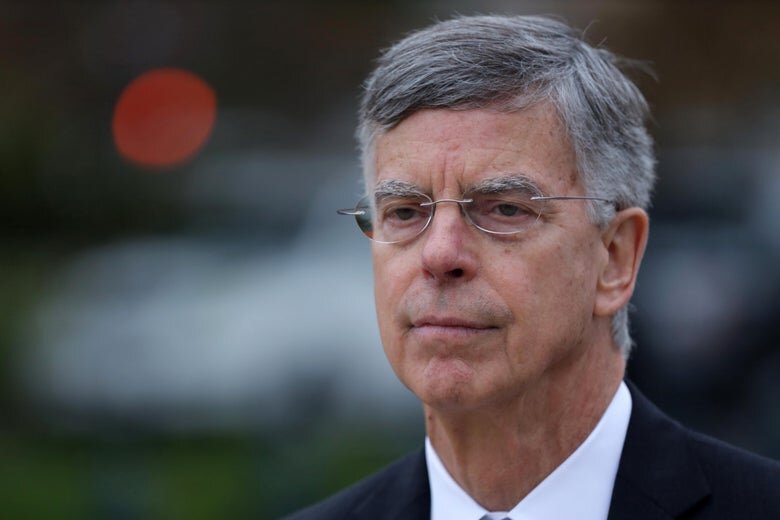
Bill Taylor: 'There appeared to be two channels of US policymaking, one regular and one highly irregular', Trump Impeachment Proceedings Opening Statement - 2019

November 14, 2019

22 October 2019, Washington DC, USA

William Taylor testimony by Stefan Becket on Scribd

Source: https://www.cbsnews.com/news/bill-taylor-t...

Enjoyed this speech? Speakola is a labour of love and I’d be very grateful if you would share, tweet or like it. Thank you.

Facebook Twitter Facebook
In 2010s MORE 4 Tags BILL TAYLOR, AMBASSADOR TO UKRAINE, DIPLOMATIC, TESTIMONY, IMPEACHMENT, RUSSIA, UKRAINE, TRANSCRIPT
Comment

Jesse Jackson: 'You got a chance, and you got a choice', David and Goliath campaign announcement speech - 1984

November 12, 2019

16 January 1984, Tendley Baptist Church, Philadelphia, Pennsylvania, USA

There are eight Democrats running for the nomination this time around: You got a chance, and you got a choice.

You want somebody who marched for you to get the right to vote, you got a choice. Want somebody who challenged corporate America to hire and give you contracts, you got a choice. It's choice time! [Loud applause.]

All this talk about qualifications..."What do blacks know about foreign policy?" It's an insult. I was three years old, I came into my consciousness, my Daddy was coming home from the war. Foreign policy. If he was so dumb, how did he get over there and get back? If he didn't know foreign policy, why did they give him a gun? And when they gave it to him he knew which way to shoot. [Cheers and laughter.]

We know foreign policy. When you buy Honda and Toyota, that's foreign policy. Russian Vodka, that's foreign policy. Panasonic and Sony, that's foreign policy. Mercedes Benz, that's foreign policy, and a matter of fact, we came here on a foreign policy!

Yeah! [extended applause and cheers]

I know ya'll are in a hurry, I'm going to leave you now. [crowd shouts, "No!"] It's time for a new course, a new coalition, a new leadership.

Red, yellow, black and white, we are all precious in God's sight!

Somebody got to rise above race, rise above sex, a new leadership, a choice, a chance. Don't cry about what you don't have, use what you got. Reagan won the last time not by genius. Reagan won when we were asleep. He won by the margin of despair. He won by the margin, the fracture of our coalition, he won by the margin of racial division, he won by default.

I close with another story of a little shepherd boy named David. Everybody in town was scared of Goliath.

Philadelphia, your time has come. Don't stop at the Mayor's office, go on higher.

Because you must never forget that about the time we began to take over the cities, Nixon shifted the power to the suburbs. Now Reagan has shifted it to the states. So you have mayors who have more and more responsibility and less and less power. We got more and more votes and fewer and fewer services. We can not stop. We got to rise on higher.

Little David, little David, little David. Took off his unnecessary garments, Little David. Didn't want to get weighted down with a lot of foolishness, little David Too. k what God gave him, a sling shot and a God biscuit, a rock.

Our problem today is that David-- [Jackson's interrupts himself]-- What we need, we need to organize Pennsylvania and win because we are going to stop the rocks that's been lying around and pick them up.

In 1980, Reagan won Massachusetts by 2,500 votes! There were over a hundred thousand students unregistered, over 50,000 blacks, over 50,000 Hispanics. He won by 2,500. Ted Kennedy's state. Rocks just laying around.

He won Illinois by 300,000 votes--800,000 unregistered blacks, 500,000 Hispanics, rocks just laying around! He won. In 1980 three million high school students unregistered to vote. Now they've registered to draft. Rocks still laying around! [Crowd cheers.]

[There were] 11-million college students who could have chosen jobs over jails, peace over war, that didn't vote. Now they're crying. Rocks just laying around! [More cheers.]

Reagan won eight southern states by 182,000 votes when there were three million unregistered blacks in those same eight states. Rocks just laying around! [More cheers.]

He won New York by 165,000 votes. 600,000 students unregistered, 900,000 blacks, 600,000 Hispanics. Rocks just laying around! [Cheers]

In 1980, Reagan won Pennsylvania by 300,000 votes, 400,000 students unregistered. More than 600,000 blacks unregistered! Reagan won Pennsylvania by the margin of despair, by margin of the fracture of our coalition. [Members of the crowd shout "Yeah!"]

[Jackson concludes, shouting over thunderous applause and cheers] Philadelphia, your time has come! Pick up your sling shot, pick up your rock, declare our time has come, a new day has begun! Red, yellow, black and white, we are all precious in God's sight! Our time has come!

Source: http://www.4president.org/speeches/1984/je...

Enjoyed this speech? Speakola is a labour of love and I’d be very grateful if you would share, tweet or like it. Thank you.

Facebook Twitter Facebook
In 1980-99 B Tags JESSE JACKSON, CAMPAIGN ANNOUNCEMENT, PRESIDENTIA RACE, CAMPAIGN, DAVID AND GOLIATH, TRANSCRIPT, TENDLEY CHURCH
Comment

Joseph Goebbels: 'Nation, Rise up and let the storm break loose!!' Total War Speech - 1943

November 12, 2019

18 February 1943, Berlin, Germany

Only three weeks ago I stood in this place to read the Führer’s proclamation on the 10th anniversary of the seizure of power, and to speak to you and to the German people. The crisis we now face on the Eastern Front was at its height. In the midst of the hard misfortunes the nation faced in the battle on the Volga, we gathered together in a mass meeting on the 30th of January to display our unity, our unanimity and our strong will to overcome the difficulties we faced in the fourth year of the war.

It was a moving experience for me, and probably also for all of you, to be bound by radio with the last heroic fighters in Stalingrad during our powerful meeting here in the Sport Palace. They radioed to us that they had heard the Führer’s proclamation, and perhaps for the last time in their lives joined us in raising their hands to sing the national anthems. What an example German soldiers have set in this great age! And what an obligation it puts on us all, particularly the entire German homeland! Stalingrad was and is fate’s great alarm call to the German nation! A nation that has the strength to survive and overcome such a disaster, even to draw from it additional strength, is unbeatable. In my speech to you and the German people, I shall remember the heroes of Stalingrad, who put me and all of us under a deep obligation.

I do not know how many millions of people are listening to me over the radio tonight, at home and at the front. I want to speak to all of you from the depths of my heart to the depths of yours. I believe that the entire German people has a passionate interest in what I have to say tonight. I will therefore speak with holy seriousness and openness, as the hour demands. The German people, raised, educated and disciplined by National Socialism, can bear the whole truth. It knows the gravity of the situation, and its leadership can therefore demand the necessary hard measures, yes even the hardest measures. We Germans are armed against weakness and uncertainty. The blows and misfortunes of the war only give us additional strength, firm resolve, and a spiritual and fighting will to overcome all difficulties and obstacles with revolutionary élan.

Now is not the time to ask how it all happened. That can wait until later, when the German people and the whole world will learn the full truth about the misfortune of the past weeks, and its deep and fateful significance. The heroic sacrifices of heroism of our soldiers in Stalingrad has had vast historical significance for the whole Eastern Front. It was not in vain. The future will make clear why.

When I jump over the past to look ahead, I do it intentionally. The time is short! There is no time for fruitless debates. We must act, immediately, thoroughly, and decisively, as has always been the National Socialist way.

The movement has from its beginning acted in that way to master the many crises it faced and overcame. The National Socialist state also acted decisively when faced by a threat. We are not like the ostrich that sticks its head in the sand so as not to see danger. We are brave enough to look danger in the face, to coolly and ruthlessly take its measure, then act decisively with our heads held high. Both as a movement and as a nation, we have always been at our best when we needed fanatic, determined wills to overcome and eliminate danger, or a strength of character sufficient to overcome every obstacle, or bitter determination to reach our goal, or an iron heart capable of withstanding every internal and external battle. So it will be today. My task is to give you an unvarnished picture of the situation, and to draw the hard conclusions that will guide the actions of the German government, but also of the German people.

We face a serious military challenge in the East. The crisis is at the moment a broad one, similar but not identical in many ways to that of the previous winter. Later we will discuss the causes. Now, we must accept things as they are and discover and apply the ways and means to turn things again in our favor. There is no point in disputing the seriousness of the situation. I do not want to give you a false impression of the situation that could lead to false conclusions, perhaps giving the German people a false sense of security that is altogether inappropriate in the present situation.

The storm raging against our venerable continent from the steppes this winter overshadows all previous human and historical experience. The German army and its allies are the only possible defense. In his proclamation on 30 January, the Führer asked in a grave and compelling way what would have become of Germany and Europe if, on 30 January 1933, a bourgeois or democratic government had taken power instead of the National Socialists! What dangers would have followed, faster than we could then have suspected, and what powers of defense would we have had to meet them? Ten years of National Socialism have been enough to make plain to the German people the seriousness of the danger posed by Bolshevism from the East. Now one can understand why we spoke so often of the fight against Bolshevism at our Nuremberg party rallies. We raised our voices in warning to our German people and the world, hoping to awaken Western humanity from the paralysis of will and spirit into which it had fallen. We tried to open their eyes to the horrible danger from Eastern Bolshevism, which had subjected a nation of nearly 200 million people to the terror of the Jews and was preparing an aggressive war against Europe.

When the Führer ordered the army to attack the East on 22 June 1941, we all knew that this would be the decisive battle of this great struggle. We knew the dangers and difficulties. But we also knew that dangers and difficulties always grow over time, they never diminish. It was two minutes before midnight. Waiting any longer could easily have led to the destruction of the Reich and a total Bolshevization of the European continent.

It is understandable that, as a result of broad concealment and misleading actions by the Bolshevist government, we did not properly evaluate the Soviet Union’s war potential. Only now do we see its true scale. That is why the battle our soldiers face in the East exceeds in its hardness, dangers and difficulties all human imagining. It demands our full national strength. This is a threat to the Reich and to the European continent that casts all previous dangers into the shadows. If we fail, we will have failed our historic mission. Everything we have built and done in the past pales in the face of this gigantic task that the German army directly and the German people less directly face.

I speak first to the world, and proclaim three theses regarding our fight against the Bolshevist danger in the East.

This first thesis: Were the German army not in a position to break the danger from the East, the Reich would fall to Bolshevism, and all Europe shortly afterwards.

Second: The German army, the German people and their allies alone have the strength to save Europe from this threat.

Third: Danger faces us. We must act quickly and decisively, or it will be too late.

I turn to the first thesis. Bolshevism has always proclaimed its goal openly: to bring revolution not only to Europe, but to the entire world, and plunge it into Bolshevist chaos. This goal has been evident from the beginning of the Bolshevist Soviet Union, and has been the ideological and practical goal of the Kremlin’s policies. Clearly, the nearer Stalin and the other Soviet leaders believe they are to realizing their world-destroying objectives, the more they attempt to hide and conceal them. We cannot be fooled. We are not like those timid souls who wait like the hypnotized rabbit until the serpent devours them. We prefer to recognize the danger in good time and take effective action. We see through not only the ideology of Bolshevism, but also its practice, for we had great success with that in our domestic struggles. The Kremlin cannot deceive us. We had fourteen years of our struggle for power, and ten years thereafter, to unmask its intentions and its infamous deceptions.

The goal of Bolshevism is Jewish world revolution. They want to bring chaos to the Reich and Europe, using the resulting hopelessness and desperation to establish their international, Bolshevist-concealed capitalist tyranny.

I do not need to say what that would mean for the German people. A Bolshevization of the Reich would mean the liquidation of our entire intelligentsia and leadership, and the descent of our workers into Bolshevist-Jewish slavery. In Moscow, they find workers for forced labor battalions in the Siberian tundra, as the Führer said in his proclamation on 30 January. The revolt of the steppes is readying itself at the front, and the storm from the East that breaks against our lines daily in increasing strength is nothing other than a repetition of the historical devastation that has so often in the past endangered our part of the world.

That is a direct threat to the existence of every European power. No one should believe that Bolshevism would stop at the borders of the Reich, were it to be victorious. The goal of its aggressive policies and wars is the Bolshevization of every land and people in the world. In the face of such undeniable intentions, we are not impressed by paper declarations from the Kremlin or guarantees from London or Washington. We know that we are dealing in the East with an infernal political devilishness that does not recognize the norms governing relations between people and nations. When for example the English Lord Beaverbrook says that Europe must be given over to the Soviets or when the leading American Jewish journalist Brown cynically adds that a Bolshevization of Europe might solve all of the continent’s problems, we know what they have in mind. The European powers are facing the most critical question. The West is in danger. It makes no difference whether or not their governments and intellectuals realize it or not.

The German people, in any event, is unwilling to bow to this danger. Behind the oncoming Soviet divisions we see the Jewish liquidation commandos, and behind them terror, the specter of mass starvation and complete anarchy. International Jewry is the devilish ferment of decomposition that finds cynical satisfaction in plunging the world into the deepest chaos and destroying ancient cultures that it played no role in building.

We also know our historic responsibility. Two thousand years of Western civilization are in danger. One cannot overestimate the danger. It is indicative that when one names it as it is, International Jewry throughout the world protests loudly. Things have gone so far in Europe that one cannot call a danger a danger when it is caused by the Jews.

That does not stop us from drawing the necessary conclusions. That is what we did in our earlier domestic battles. The democratic Jewry of the “Berliner Tageblatt” and the “Vossischen Zeitung” served communist Jewry by minimizing and downplaying a growing danger, and by lulling our threatened people to sleep and reducing their ability to resist. We could see, if the danger were not overcome, the specter of hunger, misery, and forced labor by millions of Germans. We could see our venerable part of the world collapse, and bury in its ruins the ancient inheritance of the West. That is the danger we face today.

My second thesis: Only the German Reich and its allies are in the position to resist this danger. The European nations, including England, believe that they are strong enough to resist effectively the Bolshevization of Europe, should it come to that. This belief is childish and not even worth refuting. If the strongest military force in the world is not able to break the threat of Bolshevism, who else could do it? (The crowd in the Sportpalast shouts “No one!”). The neutral European nations have neither the potential nor the military means nor the spiritual strength to provide even the least resistance to Bolshevism. Bolshevism’s robotic divisions would roll over them within a few days. In the capitals of the mid-sized and smaller European states, they console themselves with the idea that one must be spiritually armed against Bolshevism (laughter). That reminds us of the statements by bourgeois parties in 1932, who thought they could fight and win the battle against communism with spiritual weapons. That was too stupid even then to be worth refuting. Eastern Bolshevism is not only a doctrine of terrorism, it is also the practice of terrorism. It strives for its goals with an infernal thoroughness, using every resource at its disposal, regardless of the welfare, prosperity or peace of the peoples it ruthlessly oppresses. What would England and America do if, in the worst case, Europe fell into Bolshevism’s arms? Will London perhaps persuade Bolshevism to stop at the English Channel? I have already said that Bolshevism has its foreign legions in the form of communist parties in every democratic nation. None of these states can think it is immune to domestic Bolshevism. In a recent by-election for the House of Commons, the independent, that is communist, candidate got 10,741 of the 22,371 votes cast. This was in a district that had formerly been a conservative stronghold. Within a short time, 10,000 voters, nearly half, had been lost to the communists.

That is proof that the Bolshevist danger exists in England too, and that it will not go away simply because it is ignored. We place no faith in any territorial promises that the Soviet Union may make. Bolshevism set ideological as well as military boundaries, which poses a danger to every nation. The world no longer has the choice between falling back into its old fragmentation or accepting a new order for Europe under Axis leadership. The only choice now is between living under Axis protection or in a Bolshevist Europe.

I am firmly convinced that the lamenting lords and archbishops in London have not the slightest intention of resisting the Bolshevist danger that would result were the Soviet army to enter Europe. Jewry has so deeply infected the Anglo-Saxon states both spiritually and politically that they are no longer have the ability to see the danger. It conceals itself as Bolshevism in the Soviet Union, and plutocratic-capitalism in the Anglo-Saxon states. The Jewish race is an expert at mimicry. They put their host peoples to sleep, paralyzing their defensive abilities. (Shouts from the crowd: “We have experienced it!”). Our insight into the matter led us to the early realization that cooperation between international plutocracy and international Bolshevism was not a contradiction, but rather a sign of deep commonalities. The hand of the pseudo-civilized Jewry of Western Europe shakes the hand of the Jewry of the Eastern ghettos over Germany. Europe is in deadly danger.

I do not flatter myself into believing that my remarks will influence public opinion in the neutral, much less the enemy, states. That is also not my goal or intention. I know that, given our problems on the Eastern Front, the English press tomorrow will furiously attack me with the accusation that I have made the first peace feelers (loud laughter). That is certainly not so. No one in Germany thinks any longer of a cowardly compromise. The entire people thinks only of a hard war. As a spokesman for the leading nation of the continent, however, I claim the right to call a danger a danger if it threatens not threatens not only our own land, but our entire continent. We National Socialists have the duty to sound the alarm against International Jewry’s attempt to plunge the European continent into chaos, and to warn that Jewry has in Bolshevism a terroristic military power whose danger cannot be overestimated.

My third thesis is that the danger is immediate. The paralysis of the Western European democracies before their deadliest threat is frightening. International Jewry is doing all it can to encourage such paralysis. During our struggle for power in Germany, Jewish newspapers tried to conceal the danger, until National Socialism awakened the people. It is just the same today in other nations. Jewry once again reveals itself as the incarnation of evil, as the plastic demon of decay and the bearer of an international culture-destroying chaos.

This explains, by the way, our consistent Jewish policies. We see Jewry as a direct threat to every nation. We do not care what other peoples do about the danger. What we do to defend ourselves is our own business, however, and we will not tolerate objections from others. Jewry is a contagious infection. Enemy nations may raise hypocritical protests against our measures against Jewry and cry crocodile tears, but that will not stop us from doing that which is necessary. Germany, in any event, has no intention of bowing before this threat, but rather intends to take the most radical measures, if necessary, in good time (After this sentence, the chants of the audience prevent the minister from going on for several minutes).

The military challenges of the Reich in the East are at the center of everything. The war of mechanized robots against Germany and Europe has reached its high point. In resisting the grave and direct threat with its weapons, the German people and its Axis allies are fulfilling in the truest sense of the word a European mission. Our courageous and just battle against this world-wide plague will not be hindered by the worldwide outcry of International Jewry. It can and must end only with victory (Here there are loud shouts: “German men, to arms! German women, to work!”).

The tragic battle of Stalingrad is a symbol of heroic, manly resistance to the revolt of the steppes. It has not only a military, but also an intellectual and spiritual significance for the German people. Here for the first time our eyes have been opened to the true nature of the war. We want no more false hopes and illusions. We want bravely to look the facts in the face, however hard and dreadful they may be. The history of our party and our state has proven that a danger recognized is a danger defeated. Our coming hard battles in the East will be under the sign of this heroic resistance. It will require previously undreamed of efforts by our soldiers and our weapons. A merciless war is raging in the East. The Führer was right when he said that in the end there will not be winners and losers, but the living and the dead.

The German nation knows that. Its healthy instincts have led it through the daily confusion of intellectual and spiritual difficulties. We know today that the Blitzkrieg in Poland and the campaign in the West have only limited significance to the battle in the East. The German nation is fighting for everything it has. We know that the German people are defending their holiest possessions: their families, women and children, the beautiful and untouched countryside, their cities and villages, their two thousand year old culture, everything indeed that makes life worth living.

Bolshevism of course has not the slightest appreciation for our nation’s treasures, and would take no heed of them whatsoever if it came to that. It did not do so even for its own people. The Soviet Union over the last 25 years built up Bolshevism’s military potential to an unimaginable degree, and one we falsely evaluated. Terrorist Jewry had 200 million people to serve it in Russia. It cynically used its methods on to create out of the stolid toughness of the Russian people a grave danger for the civilized nations of Europe. A whole nation in the East was driven to battle. Men, women, and even children are employed not only in armaments factories, but in the war itself. 200 million live under the terror of the GPU, partially captives of a devilish viewpoint, partially of absolute stupidity. The masses of tanks we have faced on the Eastern Front are the result of 25 years of social misfortune and misery of the Bolshevist people. We have to respond with similar measures if we do not want to give up the game as lost.

My firm conviction is that we cannot overcome the Bolshevist danger unless we use equivalent, though not identical, methods. The German people face the gravest demand of the war, namely of finding the determination to use all our resources to protect everything we have and everything we will need in the future.

Total war is the demand of the hour. We must put an end to the bourgeois attitude that we have also seen in this war: Wash my back, but don’t get me wet! (Every sentence is met with growing applause and agreement.) The danger facing us is enormous. The efforts we take to meet it must be just as enormous. The time has come to remove the kid gloves and use our fists. (A cry of elemental agreement rises. Chants from the galleries and seats testify to the full approval of the crowd.) We can no longer make only partial and careless use of the war potential at home and in the significant parts of Europe that we control. We must use our full resources, as quickly and thoroughly as it is organizationally and practically possible. Unnecessary concern is wholly out of place. The future of Europe hangs on our success in the East. We are ready to defend it. The German people are shedding their most valuable national blood in this battle. The rest of Europe should at least work to support us. There are many serious voices in Europe that have already realized this. Others still resist. That cannot influence us. If danger faced them alone, we could view their reluctance as literary nonsense of no significance. But the danger faces us all, and we must all do our share. Those who today do not understand that will thank us tomorrow on bended knees that we courageously and firmly took on the task.

It bothers us not in the least that our enemies abroad claim that our total war measures resemble those of Bolshevism. They claim hypocritically that that means there is no need to fight Bolshevism. The question here is not one of method, but of the goal, namely eliminating the danger. (Applause for several minutes) The question is not whether the methods are good or bad, but whether they are successful. The National Socialist government is ready to use every means. We do not care if anyone objects. We are not willing to weaken Germany’s war potential by measures that maintain a high, almost peace-time standard of living for a certain class, thereby endangering our war effort. We are voluntarily giving up a significant part of our living standard to increase our war effort as quickly and completely as possible. This is not an end in itself, but rather a means to an end. Our social standard of living will be even higher after the war. We do not need to imitate Bolshevist methods, because we have better people and leaders, which gives us a great advantage. But things have shown that we must do much more than we have done so far to turn the war in the East decisively in our favor.

As countless letters from the homeland and the front have shown, by the way, the entire German people agrees. Everyone knows that if we lose, all will be destroyed. The people and leadership are determined to take the most radical measures. The broad working masses of our people are not unhappy because the government is too ruthless. If anything, they are unhappy because it is too considerate. Ask anyone in Germany, and he will say: The most radical is just radical enough, and the most total is just total enough to gain victory.

The total war effort has become a matter of the entire German people. No one has any excuse for ignoring its demands. A storm of applause greeted my call on 30 January for total war. I can therefore assure you that the leadership’s measures are in full agreement with the desires of the German people at home and at the front. The people are willing to bear any burden, even the heaviest, to make any sacrifice, if it leads to the great goal of victory. (Lively applause)

This naturally assumes that the burdens are shared equally. (Loud approval) We cannot tolerate a situation in which most people carry the burden of the war, while a small, passive portion attempts to escape its burdens and responsibilities. The measures we have taken, and the ones we will yet take, will be characterized by the spirit of National Socialist justice. We pay no heed to class or standing. Rich and poor, high and low must share the burdens equally. Everyone must do his duty in this grave hour, whether by choice or otherwise. We know this has the full support of the people. We would rather do too much rather than too little to achieve victory. No war in history has ever been lost because of too many soldiers or weapons. Many, however, have been lost because the opposite was true.

It is time to get the slackers moving. (Stormy agreement) They must be shaken out of their comfortable ease. We cannot wait until they come to their senses. That might be too late. The alarm must sound throughout the nation. Millions of hands must get to work throughout the country. The measures we have taken, and the ones we will now take, and which I shall discuss later in this speech, are critical for our whole public and private life. The individual may have to make great sacrifices, but they are tiny when compared to the sacrifices he would have to make if his refusal brought down on us the greatest national disaster. It is better to operate at the right time than to wait until the disease has taken root. One may not complain to the doctor or sue him for bodily injury. He cuts not to kill, but to save the patient’s life.

Again let me say that the heavier the sacrifices the German people must make, the more urgent it is that they be fairly shared. The people want it that way. No one resists even the heaviest burdens of war. But it angers people when a few always try to escape the burdens. The National Socialist government has both the moral and political duty to oppose such attempts, if necessary with draconian penalties. (Agreement) Leniency here would be completely out of place, leading in time to a confusion in the people’s emotions and attitudes that would be a grave danger to our public morale.

We are therefore compelled to adopt a series of measures that are not essential for the war effort in themselves, but seem necessary to maintain moral at home and at the front. The optics of the war, that is, how things outwardly appear, is of decisive importance in this fourth year of war. In view of the superhuman sacrifices that the front makes each day, it has a basic right to expect that no one at home claims the right to ignore the war and its demands. And not only the front demands this, but the overwhelming part of the homeland. The industrious have a right to expect that if they work ten or twelve or fourteen hours a day, a lazy person does not stand next to them who thinks them foolish. The homeland must stay pure and intact in its entirety. Nothing may disturb the picture.

There are therefore a series of measures that take account of the war’s optics. We have ordered, for example, the closing of bars and night clubs. I cannot imagine that people who are doing their duty for the war effort still have the energy to stay out late into the night in such places. I can only conclude that they are not taking their responsibilities seriously. We have closed these establishments because they began to offend us, and because they disturb the image of the war. We have nothing against amusements as such. After the war we will happily go by the rule “Live and let live.” But during a war, the slogan must be “Fight and let fight!”

We have also closed luxury restaurants that demand far more resources than is reasonable. It may be that an occasional person thinks that, even during war, his stomach is the most important thing. We cannot pay him any heed. At the front everyone from the simple soldier to the general field marshal eats from the field kitchen. I do not believe that it is asking too much to insist that we in the homeland pay heed to at least the basic laws of community thinking. We can become gourmets once again when the war is over. Right now, we have more important things to do than worry about our stomachs.

Countless luxury stores have also been closed. They often offended the buying public. There was generally nothing to buy, unless perhaps one paid here and there with butter or eggs instead of money. What good do shops do that no longer have anything to sell, but only use electricity, heating, and human labor that is lacking everywhere else, particularly in the armaments industry.

It is no excuse to say that keeping some of these shops open gives a lovely impression to foreigners. Foreigners will be impressed only by a German victory! (Stormy applause). Everyone will want to be our friend if we win the war. But if we lose, we will be able to count our friends on the fingers of one hand. We have put an end to such illusions. We want to put these people standing in empty shops to useful work in the war economy. This process is already in motion, and will be completed by 15 March. It is of course a major transformation in our entire economic life. We are following a plan. We do not want to accuse anyone unjustly or open them to complaints and accusations from every side. We are only doing what is necessary. But we are doing it quickly and thoroughly.

We would rather wear worn clothing for a few years than have our people wear rags for a few centuries. What good are fashion salons today? They only use light, heat and workers. They will reappear when the war is over. What good are beauty shops that encourage a cult of beauty and take enormous time and energy? In peace they are wonderful, but a waste of time during war. Our women and girls will be able to greet our victorious returning soldiers without their peacetime finery. (Applause)

Government offices will work faster and less bureaucratically. It does not leave a good impression when the office closes on the dot after eight hours. The people are not there for the offices, the offices are there for the people. One has to work until the work is done. That is a requirement of the war. If the Führer can do that, so can his paid employees. If there is not enough work to fill the extended hours, 10 or 20 or 30 percent of the workers can be transferred to war production and replace other men for service at the front. That applies to all offices in the homeland. That by itself may make the work in some offices go more quickly and easily. We must learn from the war to operate quickly, not only thoroughly. The soldier at the front does not have weeks to think things over, to pass his thoughts up the line or let them sit in dusty files. He must act immediately or lose his life. In the homeland we do not lose our lives if we work slowly, but we do endanger the life of our people.

Everyone must learn to pay heed to war morale, and pay attention to the just demands of working and fighting people. We are not spoilsports, but neither will we tolerate those who hinder our efforts.

It is, for example, intolerable that certain men and women stay for weeks in spas and trade rumors, taking places away from soldiers on leave or from workers who are entitled to a vacation after a year of hard work. That is intolerable, and we have put an end to it. The war is not a time for amusement. Until it is over, we take our deepest satisfaction in work and battle. Those who do not understand that by themselves must be taught to understand it, and forced if need be. The harshest measures may be needed.

It does not look good, for example, when we devote enormous propaganda to the theme: “Wheels must roll for victory!,” with the result that people avoid unnecessary travel only to see unemployed pleasure-seekers find more room for themselves in the trains. The railroad serves to transport war goods and travelers on war business. Only those who need a rest from hard work deserve a vacation. The Führer has not had a day of vacation since the war began. Since the first man of the country takes his duty so seriously and responsibly, it must be expected that every citizen will follow his example.

On the other hand, the government is doing all it can to give working people the relaxation they need in these trying times. Theaters, movie houses, and music halls remain in full operation. The radio is working to expand and improve its programming. We have no intention of inflicting a gray winter mood on our people. That which serves the people and keeps up its fighting and working strength is good and essential to the war effort. We want to eliminate the opposite. To balance the measures I have already discussed, I have therefore ordered that cultural and spiritual establishments that serve the people not be decreased, but increased. As long as they aid rather than harm the war effort, they must be supported by the government. That applies to sports as well. Sports are not only for particular circles today, but a matter for the entire people. Military exemptions for athletes are out of place. The purpose of sports is to steel the body, certainly with the goal of using it appropriately in time of the people’s greatest need.

The front shares our desires. The entire German people agrees passionately. It is no longer willing to put up with efforts that only waste time and resources. It will not put up with complicated questionnaires on every possible issue. It does not want to worry about a thousand minor matters that may have been important in peace, but are entirely unimportant during war. It also does not need to be constantly reminded of its duty by references to the great sacrifices of our soldiers at Stalingrad. It knows what it has to do. It wants everyone, high and low, rich and poor, to share a spartan life style. The Führer gives us all an example, one that must be followed by everyone. He knows only work and care. We do not want to leave it all to him, but rather we want to take that part of it from him which we are able to bear.

The present day has a remarkable resemblance for every genuine National Socialist to the period of struggle. We have always acted in the same way. We were with the people through thick and thin, and that is why the people followed us. We have always carried our burdens together with the people, and therefore they did not seem heavy to us, but rather light. The people want to be led. Never in history has the people failed a brave and determined leadership a critical hour.

Let me say a few words in this regard about practical measures in our total war effort that we have already taken.

The problem is freeing soldiers for the front, and freeing workers for the armaments industry. These are the primary goals, even at the cost of our standard of social life. This does not mean a permanent decline in our standard of living. It is only a means to reaching an end, that of total war.

As part of this campaign, hundreds of thousands of military exemptions have been canceled. These exemptions were given because we did not have enough skilled labor to fill the positions that would have been left open by revoking them. The reason for our current measures is to mobilize the necessary workers. That is why we have appealed to men not working in the war economy, and to women who were not working at all. They will not and cannot ignore our call. The duty for women to work is broad. That does not however mean that only those included in the law have to work. Anyone is welcome. The more who join the war effort, the more soldiers we can free for the front.

Our enemies maintain that German women are not able to replace men in the war economy. That may be true for certain fields of heavy labor. But I am convinced that the German woman is determined to fill the spot left by the man leaving for the front, and to do so as soon as possible. We do not need to point out Bolshevism’s example. For years, millions of the best German women have been working successfully in war production, and they wait impatiently to be joined and assisted by others. All those who join in the work are only giving the proper thanks to those at the front. Hundreds of thousands have already joined, and hundreds of thousands more will join. We hope soon to free up armies of workers who will in turn free up armies of fighting front soldiers.

I would think little of German women if I believed that they do not want to listen to my appeal. They will not seek to follow the letter of the law, or to slip through its loopholes. They few who may try will not succeed. We will not accept a doctor’s excuse. Nor will we accept the alibi that one must help one’s husband or relative or good friend as a way of avoiding work. We will respond appropriately. The few who may attempt it will only lose the respect of those around them. The people will despise them. No one expects a woman lacking the requisite physical strength to go to work in a tank factory. There are however numerous jobs in war production that do not demand great physical strength, and which a woman can do even if she comes from the better circles. No one is too good to work, and we all have the choice to give up what we have, or to lose everything.

It is also time to ask women with household help if they really need it. One can take care of the house and children oneself, freeing the servant for other tasks, or leave the house and children in care of the servant or the NSV [the party welfare organization], and go to work oneself. Life may not be as pleasant as it is during peace. But we are not at peace, we are at war. We can be comfortable after we have won the war. Now we must sacrifice our comforts to gain victory.

Soldiers’ wives surely understand this. They know it is their duty to their husbands to support them by doing work that is important to the war effort. That is true above all in agriculture. The wives of farmers must set a good example. Both men and women must be sure that no one does less during war than they did in peace; more work must instead be done in every area.

One may not, by the way, make the mistake of leaving everything to the government. The government can only set the broad guidelines. To give life to those guidelines is the job of working people, under the inspiring leadership of the party. Fast action is essential.

One must go beyond the legal requirements. “Volunteer!” is the slogan. As Gauleiter of Berlin, I appeal here above all to my fellow Berliners. They have given enough good examples of noble behavior and bravery during the war such that they will not fail here. Their practical behavior and good cheer even during war have earned them a good name throughout the world. This good name must be maintained and strengthened! If I appeal to my fellow Berliners to do some important work quickly, thoroughly, and without complaint, I know they will all obey. We do not want to complain about the difficulties of the day or grump to one another. Rather we want to behave not only like Berliners, but like Germans, by getting to work, acting, seizing the initiative and doing something, not leaving it to someone else.

What German woman would want to ignore my appeal on behalf of those fighting at the front? Who would want to put personal comfort above national duty? Who in view of the serious threat we face would want to consider his private needs instead of the requirements of the war?

I reject with contempt the enemy’s claim that we are imitating Bolshevism. We do not want to imitate Bolshevism, we want to defeat it, with whatever means are necessary. The German woman will best understand what I mean, for she has long known that the war our men are fighting today above all is a war to protect her children. Her holiest possession is guarded by our people’s most valuable blood. The German woman must spontaneously proclaim her solidarity with her fighting men. She had better join the ranks of millions of workers in the homeland’s army, and do it tomorrow rather than the day after tomorrow. A river of readiness must flow through the German people. I expect that countless women and above all men who are not doing essential war work will report to the authorities. He who gives quickly gives twice as much.

Our general economy is consolidating. That particularly affects the insurance and banking systems, the tax system, newspapers and magazines that are not essential for the war effort, and nonessential party and government activities, and also requires a further simplification of our life style.

I know that many of our people are making great sacrifices. I understand their sacrifices, and the government is trying to keep them to the necessary minimum. But some must remain, and must be borne. When the war is over, we will build up that which we now are eliminating, more generously and more beautifully, and the state will lend its hand.

I energetically reject the charge that our measures will eliminate the middle class or result in a monopoly economy. The middle class will regain its economic and social position after the war. The current measures are necessary for the war effort. They aim not at a structural transformation of the economy, but merely at winning the war as quickly as possible.

I do not dispute the fact that these measures will cause worry in the coming weeks. They will give us breathing room. We are laying the groundwork for the coming summer, without paying heed to the threats and boasting of the enemy. I am happy to reveal this plan for victory (Stormy applause) to the German people. They not only accept these measures, they have demanded them, demanded them more strongly than ever before during the war. The people want action! It is time for it! We must use our time to prepare for coming surprises.

I turn now to the entire German people, and particularly to the party, as the leader of the totalization of our domestic war effort. This is not the first major task you have faced. You will bring the usual revolutionary élan to bear on it. You will deal with the laziness and indolence that may occasionally show up. The government has issued general regulations, and will issue further ones in coming weeks. The minor issues not dealt with in these regulations must be taken care of by the people, under the party’s leadership. One moral law stands above everything for each of us: to do nothing that harms the war effort, and to do everything that brings victory nearer.

In past years, we have often recalled the example of Frederick the Great in newspapers and on the radio. We did not have the right to do so. For a while during the Third Silesian War, Frederick II had five million Prussians, according to Schlieffen, standing against 90 million enemies. In the second of seven hellish years he suffered a defeat that shook Prussia’s foundations. He never had enough soldiers and weapons to fight without risking everything. His strategy was always one of improvisation. But his principle was to attack the enemy whenever it was possible. He suffered defeats, but that was not decisive. What was decisive is that the Great King remained unbroken, that he was unshaken by the changing fortunes of war, that his strong heart overcame every danger. At the end of seven years of war, he was 51 years old, he had no teeth, he suffered from gout, and was tortured by a thousand pains, but he stood above the devastated battlefield as the victor. How does our situation compare with his?! Let us show the same will and decisiveness as he, and when the time comes do as he did, remaining unshakable through all the twists of fate, and like him win the battle even under the most unfavorable circumstances. Let us never doubt our great cause.

I am firmly convinced that the German people have been deeply moved by the blow of fate at Stalingrad. It has looked into the face of hard and pitiless war. It knows now the awful truth, and is resolved to follow the Führer through thick and thin. (The crowd rises and like the roaring ocean chants: Führer command, we follow! Heil our Führer!” The minister is unable to continue for several minutes.)

The English and American press in recent days has been writing at length about the attitude of the German people during this crisis. The English seem to think that they know the German people much better than we do, its own leadership. They give hypocritical advice on what we should do and not do. They believe that the German people today is the same as the German people of November 1918 that fell victim to their persuasive wiles. I do not need to disprove their assertions. That will come from the fighting and working German people.

To make the truth plain, however, my German comrades, I want to ask you a series of questions. I want you to answer them to the best of your knowledge, according to your conscience. When my audience cheered on 30 January, the English press reported the next day that it was all a propaganda show that did not represent the true opinion of the German people. (Spontaneous shouts of Pfui!” “Lies!” “Let them come here! They will learn differently!”) I have invited to today’s meeting a cross-section of the German people in the best sense of the word. (The minister’s words were accompanied by stormy applause that increased in intensity as he came to the representatives of the army present at the meeting.) In front of me are rows of wounded German soldiers from the Eastern Front, missing legs and arms, with wounded bodies, those who have lost their sight, those who have come with nurses, men in the blush of youth who stand with crutches. Among them are 50 who bear the Knight’s Cross with Oak Leaves, shining examples of our fighting front. Behind them are armaments workers from Berlin tank factories. Behind them are party officials, soldiers from the fighting army, doctors, scientists, artists, engineers and architects, teachers, officials and employees from offices, proud representatives of every area of our intellectual life that even in the midst of war produce miracles of human genius. Throughout the Sportpalast I see thousands of German women. The youth is here, as are the aged. No class, no occupation, no age remained uninvited. I can rightly say that before me is gathered a representative sample of the German population, both from the homeland and the front. Is that true? Yes or no? (The Sportpalast experiences something seen only rarely even in this old fighting locale of National Socialism. The masses spring to their feet. A hurricane of thousands of voices shouts yes. The participants experience a spontaneous popular referendum and expression of will.) You, my hearers, at this moment represent the whole nation. I wish to ask you ten questions that you will answer for the German people throughout the world, but especially for our enemies, who are listening to us on the radio. (Only with difficulty can the minister be heard. The crowd is at the peak of excitement. The individual questions are razor sharp. Each individual feels as if he is being spoken to personally. With full participation and enthusiasm, the crowd answers each question. The Sportpalast rings with a single shout of agreement.)

The English maintain that the German people has lost faith in victory.

I ask you: Do you believe with the Führer and us in the final total victory of the German people?

I ask you: Are you resolved to follow the Führer through thick and thin to victory, and are you willing to accept the heaviest personal burdens?

Second, The English say that the German people are tired of fighting.

I ask you: Are you ready to follow the Führer as the phalanx of the homeland, standing behind the fighting army and to wage war with wild determination through all the turns of fate until victory is ours?

Third: The English maintain that the German people have no desire any longer to accept the government’s growing demands for war work.

I ask you: Are you and the German people willing to work, if the Führer orders, 10, 12 and if necessary 14 hours a day and to give everything for victory?

Fourth: The English maintain that the German people is resisting the government’s total war measures. It does not want total war, but capitulation! (Shouts: Never! Never! Never!)

I ask you: Do you want total war? If necessary, do you want a war more total and radical than anything that we can even imagine today?

Fifth: The English maintain that the German people have lost faith in the Führer.

I ask you: Is your confidence in the Führer greater, more faithful and more unshakable than ever before? Are you absolutely and completely ready to follow him wherever he goes and do all that is necessary to bring the war to a victorious end? (The crowd rises as one man. It displays unprecedented enthusiasm. Thousands of voices join in shouting: “Führer command, we follow!” A wave of shouts of Heil flows through the hall. As if by command, the flags and standards are raised as the highest expression of the sacred moment in which the crowd honors the Führer.)

Sixth, I ask you: Are you ready from now on to give your full strength to provide the Eastern Front with the men and munitions it needs to give Bolshevism the death blow?

Seventh, I ask you: Do you take a holy oath to the front that the homeland stands firm behind them, and that you will give them everything they need to win the victory?

Eighth, I ask you: Do you, especially you women, want the government to do all it can to encourage German women to put their full strength at work to support the war effort, and to release men for the front whenever possible, thereby helping the men at the front?

Ninth, I ask you: Do you approve, if necessary, the most radical measures against a small group of shirkers and black marketers who pretend there is peace in the middle of war and use the need of the nation for their own selfish purposes? Do you agree that those who harm the war effort should lose their heads?

Tenth and lastly, I ask you: Do you agree that above all in war, according to the National Socialist Party platform, the same rights and duties should apply to all, that the homeland should bear the heavy burdens of the war together, and that the burdens should be shared equally between high and low and rich and poor?

I have asked; you have given me your answers. You are part of the people, and your answers are those of the German people. You have told our enemies what they needed to hear so that they will have no illusions or false ideas.

Now, just as in the first hours of our rule and through the ten years that followed, we are bound firmly in brotherhood with the German people. The most powerful ally on earth, the people itself, stands behind us and is determined to follow the Führer, come what may. They will accept the heaviest burdens to gain victory. What power on earth can hinder us from reaching our goal. Now we must and will succeed! I stand before you not only as the spokesman of the government, but as the spokesman of the people. My old party friends are here around me, clothed with the high offices of the people and the government. Party comrade Speer sits next to me. The Führer has given him the great task of mobilizing the German armaments industry and supplying the front with all the weapons it needs. Party comrade Dr. Ley sits next to me. The Führer has charged him with the leadership of the German work force, with schooling and training them in untiring work for the war effort. We feel deeply indebted to our party comrade Sauckel, who has been charged by the Führer to bring hundreds of thousands of workers to the Reich to support our national economy, something the enemy cannot do. All the leaders of the party, the army, and government join with us as well.

We are all children of our people, forged together by this most critical hour of our national history. We promise you, we promise the front, we promise the Führer, that we will mold together the homeland into a force on which the Führer and his fighting soldiers can rely on absolutely and blindly. We pledge to do all in our life and work that is necessary for victory. We will fill our hearts with the political passion, with the ever-burning fire that blazed during the great struggles of the party and the state. Never during this war will we fall prey to the false and hypocritical objectivism that has brought the German nation so much misfortune over its history.

When the war began, we turned our eyes to the nation alone. That which serves its struggle for life is good and must be encouraged. What harms its struggle for life is bad and must be eliminated and cut out. With burning hearts and cool heads we will overcome the major problems of this phase of the war. We are on the way to final victory. That victory rests on our faith in the Führer.

This evening I once again remind the whole nation of its duty. The Führer expects us to do that which will throw all we have done in the past into the shadows. We do not want to fail him. As we are proud of him, he should be proud of us.

The great crises and upsets of national life show who the true men and women are. We have no right any longer to speak of the weaker sex, for both sexes are displaying the same determination and spiritual strength. The nation is ready for anything. The Führer has commanded, and we will follow him. In this hour of national reflection and contemplation, we believe firmly and unshakably in victory. We see it before us, we need only reach for it. We must resolve to subordinate everything to it. That is the duty of the hour. Let the slogan be:

Now, people rise up and let the storm break loose!

(The minister’s final words were lost in unending stormy applause)

Source: https://research.calvin.edu/german-propaga...

Enjoyed this speech? Speakola is a labour of love and I’d be very grateful if you would share, tweet or like it. Thank you.

Facebook Twitter Facebook
In 1940-59 C Tags JOSEPH GOEBBELS, PROPAGANDA, TOTAL WAR, UP WAR EFFORT, TRANSCRIPT, WW2, GERMANY, MILITARISATION, MILITARY ECONOMY, HMEINDUSTRS, HOLOCAUST
Comment

Lyndon B. Johnson: 'The destroyers and supporting aircraft acted at once on the orders I gave after the initial act of aggression', Report on Tonkin Gulf Incident - 1964

November 12, 2019

4 August 1964, Washington DC, USA

My fellow Americans: - As President and Commander in Chief, it is my duty to the American people to report that renewed hostile actions against United States ships on the high seas in the Gulf of Tonkin have today required me to order the military forces of the United States to take action in reply.

The initial attack on the destroyer Maddox, on August 2, was repeated today by a number of hostile vessels attacking two U.S. destroyers with torpedoes. The destroyers and supporting aircraft acted at once on the orders I gave after the initial act of aggression. We believe at least two of the attacking boats were sunk. There were no U.S. losses.

The performance of commanders and crews in this engagement is in the highest tradition of the United States Navy. But repeated acts of violence against the Armed Forces of the United States must be met not only with alert defense, but with positive reply. That reply is being given as I speak to you tonight. Air action is now in execution against gunboats and certain supporting facilities in North Viet-Nam which have been used in these hostile operations.

In the larger sense this new act of aggression, aimed directly at our own forces, again brings home to all of us in the United States the importance of the struggle for peace and security in southeast Asia. Aggression by terror against the peaceful villagers of South Viet-Nam has now been joined by open aggression on the high seas against the United States of America.

The determination of all Americans to carry out our full commitment to the people and to the government of South Viet-Nam will be redoubled by this outrage. Yet our response, for the present, will be limited and fitting. We Americans know, although others appear to forget, the risks of spreading conflict. We still seek no wider war.

I have instructed the Secretary of State to make this position totally clear to friends and to adversaries and, indeed, to all. I have instructed Ambassador Stevenson to raise this matter immediately and urgently before the Security Council of the United Nations. Finally, I have today met with the leaders of both parties in the Congress of the United States and I have informed them that I shall immediately request the Congress to pass a resolution making it clear that our Government is united in its determination to take all necessary measures in support of freedom and in defense of peace in southeast Asia.

I have been given encouraging assurance by these leaders of both parties that such a resolution will be promptly introduced, freely and expeditiously debated, and passed with overwhelming support. And just a few minutes ago I was able to reach Senator Goldwater and I am glad to say that he has expressed his support of the statement that I am making to you tonight.

It is a solemn responsibility to have to order even limited military action by forces whose overall strength is as vast and as awesome as those of the United States of America, but it is my considered conviction, shared throughout your Government, that firmness in the right is indispensable today for peace; that firmness will always be measured. Its mission is peace.

Source: https://usa.usembassy.de/etexts/speeches/r...

Enjoyed this speech? Speakola is a labour of love and I’d be very grateful if you would share, tweet or like it. Thank you.

Facebook Twitter Facebook
In 1960-79 C Tags LYNDON B JOHNSON, TONKIN GULF, VIETNAM WAR, TRANSCRIPT, ADDRESS TO NATION, TELEVISED ADDRESS
Comment

Harry S Truman: 'Only yesterday, we laid to rest the mortal remains of our beloved President', First Speech to Congress - 1945

November 12, 2019
Truman's First Speech to Congress - Death of FDR

16 April 1945, Washington DC, USA

Mr. Speaker, Mr. President, Members of the Congress:
It is with a heavy heart that I stand before you, my friends and colleagues, in the Congress of the United States.
Only yesterday, we laid to rest the mortal remains of our beloved President, Franklin Delano Roosevelt. At a time like this, words are inadequate. The most eloquent tribute would be a reverent silence.
Yet, in this decisive hour, when world events are moving so rapidly, our silence might be misunderstood and might give comfort to our enemies.
In His infinite wisdom, Almighty God has seen fit to take from us a great man who loved, and was beloved by, all humanity.
No man could possibly fill the tremendous void left by the passing of that noble soul. No words can ease the aching hearts of untold millions of every race, creed and color. The world knows it has lost a heroic champion of justice and freedom.
Tragic fate has thrust upon us grave responsibilities. We must carry on. Our departed leader never looked backward. He looked forward and moved forward. That is what he would want us to do. That is what America will do.
So much blood has already been shed for the ideals which we cherish, and for which Franklin Delano Roosevelt lived and died, that we dare not permit even a momentary pause in the hard fight for victory.
Today, the entire world is looking to America for enlightened leadership to peace and progress. Such a leadership requires vision, courage and tolerance. It can be provided only by a united nation deeply devoted to the highest ideals.
With great humility I call upon all Americans to help me keep our nation united in defense of those ideals which have been so eloquently proclaimed by Franklin Roosevelt.
I want in turn to assure my fellow Americans and all of those who love peace and liberty throughout the world that I will support and defend those ideals with all my strength and all my heart. That is my duty and I shall not shirk it.
So that there can be no possible misunderstanding, both Germany and Japan can be certain, beyond any shadow of a doubt, that America will continue the fight for freedom until no vestige of resistance remains!
We are deeply conscious of the fact that much hard fighting is still ahead of us.
Having to pay such a heavy price to make complete victory certain, America will never become a party to any plan for partial victory!
To settle for merely another temporary respite would surely jeopardize the future security of all the world.
Our demand has been, and it remains—Unconditional Surrender!
We will not traffic with the breakers of the peace on the terms of the peace.
The responsibility for making of the peace--and it is a very grave responsibility—must rest with the defenders of the peace. We are not unconscious of the dictates of humanity. We do not wish to see unnecessary or unjustified suffering. But the laws of God and of man have been violated and the guilty must not go unpunished. Nothing shall shake our determination to punish the war criminals even though we must pursue them to the ends of the earth.
Lasting peace can never be secured if we permit our dangerous opponents to plot future wars with impunity at any mountain retreat—however distant.
In this shrinking world, it is futile to seek safety behind geographical barriers. Real security will be found only in law and in justice.
Here in America, we have labored long and hard to achieve a social order worthy of our great heritage. In our time, tremendous progress has been made toward a really democratic way of life. Let me assure the forward-looking people of America that there will be no relaxation in our efforts to improve the lot of the common people.
In the difficult days ahead, unquestionably we shall face problems of staggering proportions. However, with the faith of our fathers in our hearts, we do not fear the future.
On the battlefields, we have frequently faced overwhelming odds—and won! At home, Americans will not be less resolute!
We shall never cease our struggle to preserve and maintain our American way of life.
At this moment, America, along with her brave Allies, is paying again a heavy price for the defense of our freedom. With characteristic energy, we are assisting in the liberation of entire nations. Gradually, the shackles of slavery are being broken by the forces of freedom.
All of us are praying for a speedy victory. Every day peace is delayed costs a terrible toll.
The armies of liberation today are bringing to an end Hitler's ghastly threat to dominate the world. Tokyo rocks under the weight of our bombs.
The grand strategy of the United Nations' war has been determined—due in no small measure to the vision of our departed Commander in Chief. We are now carrying out our part of that strategy under the able direction of Admiral Leahy, General Marshall, Admiral King, General Arnold, General Eisenhower, Admiral Nimitz and General MacArthur.
I want the entire world to know that this direction must and will remain—unchanged and unhampered!
Our debt to the heroic men and valiant women in the service of our country can never be repaid. They have earned our undying gratitude. America will never forget their sacrifices. Because of these sacrifices, the dawn of justice and freedom throughout the world slowly casts its gleam across the horizon.
Our forefathers came to our rugged shores in search of religious tolerance, political freedom and economic opportunity. For those fundamental rights, they risked their lives. We well know today that such rights can be preserved only by constant vigilance, the eternal price of liberty!
Within an hour after I took the oath of office, I announced that the San Francisco Conference would proceed. We will face the problems of peace with the same courage that we have faced and mastered the problems of war.
In the memory of those who have made the supreme sacrifice—in the memory of our fallen President—we shall not fail!
It is not enough to yearn for peace. We must work, and if necessary, fight for it. The task of creating a sound international organization is complicated and difficult. Yet, without such organization, the rights of man on earth cannot be protected. Machinery for the just settlement of international differences must be found. Without such machinery, the entire world will have to remain an armed camp. The world will be doomed to deadly conflict, devoid of hope for real peace.
Fortunately, people have retained hope for a durable peace. Thoughtful people have always had faith that ultimately justice must triumph. Past experience surely indicates that, without justice, an enduring peace becomes impossible.
In bitter despair, some people have come to believe that wars are inevitable. With tragic fatalism, they insist that wars have always been, of necessity, and of necessity wars always will be. To such defeatism, men and women of good will must not and can not yield. The outlook for humanity is not so hopeless.
During the dark hours of this horrible war, entire nations were kept going by something intangible—hope! When warned that abject submission offered the only salvation against overwhelming power, hope showed the way to victory.
Hope has become the secret weapon of the forces of liberation!
Aggressors could not dominate the human mind. As long as hope remains, the spirit of man will never be crushed.
But hope alone was not and is not sufficient to avert war. We must not only have hope but we must have faith enough to work with other peace-loving nations to maintain the peace. Hope was not enough to beat back the aggressors as long as the peace-loving nations were unwilling to come to each other's defense. The aggressors were beaten back only when the peace-loving nations united to defend themselves.
If wars in the future are to be prevented the nations must be united in their determination to keep the peace under law.
Nothing is more essential to the future peace of the world than continued cooperation of the nations which had to muster the force necessary to defeat the conspiracy of the Axis powers to dominate the world.
While these great states have a special responsibility to enforce the peace, their responsibility is based upon the obligations resting upon all states, large and small, not to use force in international relations except in the defense of law. The responsibility of the great states is to serve and not to dominate the world.
To build a foundation of enduring peace we must not only work in harmony with our friends abroad, but we must have the united support of our own people.
Even the most experienced pilot cannot bring a ship safely into harbor, unless he has the full cooperation of the crew. For the benefit of all, every individual must do his duty.
I appeal to every American, regardless of party, race, creed, or color, to support our efforts to build a strong and lasting United Nations Organization.
You, the Members of the Congress, surely know how I feel. Only with your help can I hope to complete one of the greatest tasks ever assigned to a public servant. With Divine guidance, and your help, we will find the new passage to a far better world, a kindly and friendly world, with just and lasting peace.
With confidence, I am depending upon all of you.
To destroy greedy tyrants with dreams of world domination, we cannot continue in successive generations to sacrifice our finest youth.
In the name of human decency and civilization, a more rational method of deciding national differences must and will be found!
America must assist suffering humanity back along the path of peaceful progress. This will require time and tolerance. We shall need also an abiding faith in the people, the kind of faith and courage which Franklin Delano Roosevelt always had!
Today, America has become one of the most powerful forces for good on earth. We must keep it so. We have achieved a world leadership which does not depend solely upon our military and naval might.
We have learned to fight with other nations in common defense of our freedom. We must now learn to live with other nations for our mutual good. We must learn to trade more with other nations so that there may be for our mutual advantage—increased production, increased employment and better standards of living throughout the world.
May we Americans all live up to our glorious heritage.
In that way, America may well lead the world to peace and prosperity.
At this moment, I have in my heart a prayer. As I have assumed my heavy duties, I humbly pray Almighty God, in the words of King Solomon:
"Give therefore thy servant an understanding heart to judge thy people, that I may discern between good and bad; for who is able to judge this thy so great a people?"
I ask only to be a good and faithful servant of my Lord and my people.

Source: https://millercenter.org/the-presidency/pr...

Enjoyed this speech? Speakola is a labour of love and I’d be very grateful if you would share, tweet or like it. Thank you.

Facebook Twitter Facebook
In 1940-59 C Tags HARRY S TRUMAN, DEATH OF FDR, FRANKLIN DELANO ROOSEVELT, ROOSEVELT, TRANSCRIPT, EULOGY, ADDRESS TO CONGRESS
Comment

Lyndon B. Johnson: 'We have suffered a loss that cannot be weighed', First speech as President - 1963

November 12, 2019

22 November 1963, USA

This is a sad time for all people.
We have suffered a loss that cannot be weighed.
For me it is a deep personal tragedy.
I know that the world shares the sorrow that Mrs Kennedy and her family bear
I will do my best. That is all I can do.
I ask for your help, and God’s.

Enjoyed this speech? Speakola is a labour of love and I’d be very grateful if you would share, tweet or like it. Thank you.

Facebook Twitter Facebook
In 1960-79 C Tags lbj, LYNDON B JOHNSON, LBJ, TRANSCRIPT, JOHN F KENNEDY, ASSASSINATION, REACTION, VICE PRESIDENT, PRESIDENT
Comment

Bill Clinton: 'Barack Obama is the man for this job', Democratic National Convention - 2008

November 12, 2019

27 August 2008, Denver Colorado, USA

Thank you. Ladies and gentlemen, I am honored to be here tonight.

(APPLAUSE)

Sit down.

(APPLAUSE)

Thank you. Thank you very much.

(APPLAUSE)

Thank you. Thank you. Thank you.

(APPLAUSE)

I am honored to be here tonight. Please, stop.

AUDIENCE: Bill! Bill! Bill!

CLINTON: Please stop. Sit down. Sit down. Thank you.

AUDIENCE: Bill! Bill! Bill!
Continue reading the main story

CLINTON: Please sit. Please sit.

You know, I -- I love this, and I thank you, but we have important work to do tonight. I am here first to support Barack Obama.

(APPLAUSE)

And, second -- and, second, I'm here to warm up the crowd for Joe Biden...

(APPLAUSE)

... though, as you will soon see, he doesn't need any help from me.

(LAUGHTER)

I love Joe Biden, and America will, too.

What a year we Democrats have had. The primary began with an all-star line up. And it came down to two remarkable Americans locked in a hard-fought contest right to the very end. That campaign generated so much heat, it increased global warming.

(LAUGHTER)

Now, in the end, my candidate didn't win. But I'm really proud of the campaign she ran.

(APPLAUSE)

I am proud that she never quit on the people she stood up for, on the changes she pushed for, on the future she wanted for all our children. And I'm grateful for the chance Chelsea and I had to go all over America to tell people about the person we know and love.

Now, I am not so grateful for the chance to speak in the wake of Hillary's magnificent speech last night.

(LAUGHTER)

But I'll do the best I can.

(APPLAUSE)

Last night, Hillary told us in no uncertain terms that she is going to do everything she can to elect Barack Obama.

(APPLAUSE)

That makes two of us.

(APPLAUSE)

Actually, that makes 18 million of us...

(APPLAUSE)

... because, like Hillary, I want all of you who supported her to vote for Barack Obama in November.

(APPLAUSE)

And here's why. And I have the privilege of speaking here, thanks to you, from a perspective that no other American Democrat, except President Carter, can offer.

Our -- our nation is in trouble on two fronts. The American dream is under siege at home, and America's leadership in the world has been weakened. Middle-class and low-income Americans are hurting, with incomes declining, job losses, poverty, and inequality rising, mortgage foreclosures and credit card debt increasing, health care coverage disappearing, and a very big spike in the cost of food, utilities, and gasoline.

And our position in the world has been weakened by too much unilateralism and too little cooperation...

(APPLAUSE)

... by a perilous dependence on imported oil, by a refusal to lead on global warming, by a growing indebtedness and a dependence on foreign lenders, by a severely burdened military, by a backsliding on global nonproliferation and arms control agreements, and by a failure to consistently use the power of diplomacy, from the Middle East to Africa to Latin America to Central and Eastern Europe.

(APPLAUSE)

Clearly, the job of the next president is to rebuild the American dream and to restore American leadership in the world.

(APPLAUSE)

And here's what I have to say about that. Everything I learned in my eight years as president, and in the work I have done since in America and across the globe, has convinced me that Barack Obama is the man for this job.

(APPLAUSE)

Now, he has a remarkable ability to inspire people, to raise our hopes and rally us to high purpose. He has the intelligence and curiosity every successful president needs. His policies on the economy, on taxes, on health care, on energy are far superior to the Republican alternatives.

(APPLAUSE)

He has shown -- he has shown a clear grasp of foreign policy and national security challenges and a firm commitment to rebuild our badly strained military.

His family heritage and his life experiences have given him a unique capacity to lead our increasingly diverse nation in an ever more interdependent world.

(APPLAUSE)

The long, hard primary tested and strengthened him. And in his first presidential decision, the selection of a running mate, he hit it out of the park.

(APPLAUSE)

With Joe Biden's experience and wisdom, supporting Barack Obama's proven understanding, instincts, and insight, America will have the national security leadership we need.

And so, my fellow Democrats, I say to you: Barack Obama is ready to lead America and to restore American leadership in the world.

(APPLAUSE)

Barack Obama is ready to honor the oath, to preserve, protect and defend the Constitution of the United States.

(APPLAUSE)

Barack Obama is ready to be president of the United States.

(APPLAUSE) As president, he will work for an America with more partners and fewer adversaries. He will rebuild our frayed alliances and revitalize the international institutions which helped to share the cost of the world's problems and to leverage the power of our influence.

He will put us back in the forefront of the world's fight against global warming and the fight to reduce nuclear, chemical and biological weapons.

(APPLAUSE)

He will continue and enhance our nation's commendable global leadership in an area in which I am deeply involved: the fight against AIDS, tuberculosis, and malaria, including -- including -- and this is very important -- a renewal of the battle against HIV and AIDS here at home.

(APPLAUSE)

A President Obama will choose diplomacy first and military force as a last resort.

(APPLAUSE)
Newsletter Sign Up
Continue reading the main story
Morning Briefing

Get what you need to know to start your day in the United States, Canada and the Americas, delivered to your inbox.
You agree to receive occasional updates and special offers for The New York Times's products and services.

See Sample Privacy Policy Opt out or contact us anytime

But, in a world troubled by terror, by trafficking in weapons, drugs and people, by human rights abuses of the most awful kind, by other threats to our security, our interests, and our values, when he cannot convert adversaries into partners, he will stand up to them.

(APPLAUSE)

Barack Obama also will not allow the world's problems to obscure its opportunities.

CLINTON: Everywhere, in rich and poor countries alike, hard- working people need good jobs, secure, affordable health care, food and energy, quality education for their children and economically beneficial ways to fight global warming.

These challenges cry out for American ideas and American innovation. When Barack Obama unleashes them, America will save lives, win new allies, open new markets, and create wonderful new jobs for our own people.

(APPLAUSE)

Most important of all, Barack Obama knows that America cannot be strong abroad unless we are first strong at home.

(APPLAUSE)

People the world over have always been more impressed by the power of our example than by the example of our power.

(APPLAUSE)

Look...

(APPLAUSE)

Look at the example the Republicans have set.

(AUDIENCE BOOS)

In this decade, American workers have consistently given us rising productivity. That means, year after year, they work harder and produce more.

Now, what did they get in return? Declining wages, less than one-fourth as many new jobs as in the previous eight years, smaller health care and pension benefits, rising poverty, and the biggest increase in income inequality since the 1920s.

(AUDIENCE BOOS)

American families by the millions are struggling with soaring health care costs and declining coverage.

I will never forget the parents of children with autism and other serious conditions who told me on the campaign trail that they couldn't afford health care and couldn't qualify their children for Medicaid unless they quit work and starved or got a divorce.

Are these the family values the Republicans are so proud of?

What about the military families pushed to the breaking point by multiple, multiple deployments? What about the assault on science and the defense of torture? What about the war on unions and the unlimited favors for the well-connected?

(AUDIENCE BOOS)

And what about Katrina and cronyism?

(AUDIENCE BOOS)

My fellow Democrats, America can do better than that.

(APPLAUSE)

And Barack Obama will do better than that.

(APPLAUSE)

Wait a minute. But first...

AUDIENCE: Yes, we can! Yes, we can! Yes, we can! Yes, we can! Yes, we can! Yes, we can! Yes, we can! Yes, we can! Yes, we can!

CLINTON: Yes, he can, but, first, we have to elect him.

(APPLAUSE)

The choice is clear. The Republicans in a few days will nominate a good man who has served our country heroically and who suffered terribly in a Vietnamese prison camp. He loves his country every bit as much as we do. As a senator, he has shown his independence of right-wing orthodoxy on some very important issues.

But on the two great questions of this election -- how to rebuild the American dream and how to restore America's leadership in the world -- he still embraces the extreme philosophy that has defined his party for more than 25 years.

(APPLAUSE)

And it is, to be fair to all the Americans who aren't as hard- core Democrats as we, it's a philosophy the American people never actually had a chance to see in action fully until 2001, when the Republicans finally gained control of both the White House and the Congress.

Then we saw what would happen to America if the policies they had talked about for decades actually were implemented. And look what happened.

They took us from record surpluses to an exploding debt; from over 22 million new jobs to just 5 million; from increasing working families' incomes to nearly $7,500 a year to a decline of more than $2,000 a year; from almost 8 million Americans lifted out of poverty to more than 5.5 million driven into poverty; and millions more losing their health insurance.

Now, in spite of all this evidence, their candidate is actually promising more of the same.

(AUDIENCE BOOS)

Think about it: more tax cuts for the wealthiest Americans that will swell the deficit, increase inequality, and weaken the economy; more Band-Aids for health care that will enrich insurance companies, impoverish families, and increase the number of uninsured; more going it alone in the world, instead of building the shared responsibilities and shared opportunities necessary to advance our security and restore our influence.

They actually want us to reward them for the last eight years by giving them four more.

AUDIENCE: No!

CLINTON: Now, let's send them a message that will echo from the Rockies all across America, a simple message: Thanks, but no thanks.

In this case...

(APPLAUSE)

In this case, the third time is not the charm.

(APPLAUSE)

My fellow Democrats, 16 years ago, you gave me the profound honor to lead our party to victory and to lead our nation to a new era of peace and broadly shared prosperity.

Together, we prevailed in a hard campaign in which Republicans said I was too young and too inexperienced to be commander-in-chief.

(APPLAUSE)

Sound familiar?

AUDIENCE: Yes!

CLINTON: It didn't work in 1992, because we were on the right side of history. And it will not work in 2008, because Barack Obama is on the right side of history.

(APPLAUSE)

Now, Senator Obama's life is a 21st-century incarnation of the old-fashioned American dream. His achievements are proof of our continuing progress toward the more perfect union of our founders' dreams. The values of freedom and equal opportunity, which have given him his historic chance, will drive him as president to give all Americans -- regardless of race, religion, gender, sexual orientation, or disability -- their chance to build a decent life and to show our humanity, as well as our strengths, to the world.

We see that humanity, that strength, and our nation's future in Barack and Michelle Obama and their beautiful children.

We see them reinforced by the partnership with Joe Biden, his fabulous wife, Jill, a wonderful teacher, and their family.

Barack Obama will lead us away from the division and fear of the last eight years back to unity and hope.

So if, like me, you believe America must always be a place called Hope, then join Hillary and Chelsea and me in making Barack Obama the next president of the United States.

Thank you, and God bless you. Thank you

Source: https://www.nytimes.com/2008/08/27/us/poli...

Enjoyed this speech? Speakola is a labour of love and I’d be very grateful if you would share, tweet or like it. Thank you.

Facebook Twitter Facebook
In 2000s MORE Tags BILL CLINTON, 2008 ELECTION, BARACK OBAMA
Comment

Margaret Thatcher: 'Each country has to contribute, and those countries who are industrialised must contribute more to help those who are not', UN Speech on Environment and Cliamte Change - 1989

November 11, 2019

8 November 1989 , United Nations, New York City, USA


Mr President, it gives me great pleasure to return to the Podium of this assembly. When I last spoke here four years ago, on the 40th anniversary of the United Nations, the message that I and others like me gave was one of encouragement to the organisation to play the great role allotted to it.

Of all the challenges faced by the world community in those four years, one has grown clearer than any other in both urgency and importance—I refer to the threat to our global environment. I shall take the opportunity of addressing the general assembly to speak on that subject alone.
INTRODUCTION

During his historic voyage through the south seas on the Beagle, Charles Darwin landed one November morning in 1835 on the shore of Western Tahiti.

After breakfast he climbed a nearby hill to find advantage point to survey the surrounding Pacific. The sight seemed to him like “a framed engraving” , with blue sky, blue lagoon, and white breakers crashing against the encircling Coral Reef.

As he looked out from that hillside, he began to form his theory of the evolution of coral; 154 years after Darwin 's visit to Tahiti we have added little to what he discovered then.

What if Charles Darwin had been able, not just to climb a foothill, but to soar through the heavens in one of the orbiting space shuttles?

What would he have learned as he surveyed our planet from that altitude? From a moon's eye view of that strange and beautiful anomaly in our solar system that is the earth?

Of course, we have learned much detail about our environment as we have looked back at it from space, but nothing has made a more profound impact on us than these two facts.

First, as the British scientist Fred Hoyle wrote long before space travel was a reality, he said “once a photograph of the earth, taken from the outside is available … a new idea as powerful as any other in history will be let loose” .

That powerful idea is the recognition of our shared inheritance on this planet. We know more clearly than ever [end p1] before that we carry common burdens, face common problems, and must respond with common action.

And second, as we travel through space, as we pass one dead planet after another, we look back on our earth, a speck of life in an infinite void. It is life itself, incomparably precious, that distinguishes us from the other planets.

It is life itself—human life, the innumerable species of our planet—that we wantonly destroy. It is life itself that we must battle to preserve.

For over forty years, that has been the main task of this United Nations.

To bring peace where there was war.

Comfort where there was misery.

Life where there was death.

The struggle has not always been successful. There have been years of failure.

But recent events have brought the promise of a new dawn, of new hope. Relations between the Western nations and the Soviet Union and her allies, long frozen in suspicion and hostility, have begun to thaw.

In Europe, this year, freedom has been on the march.

In Southern Africa—Namibia and Angola—the United Nations has succeeded in holding out better prospects for an end to war and for the beginning of prosperity.

And in South East Asia, too, we can dare to hope for the restoration of peace after decades of fighting.

While the conventional, political dangers—the threat of global annihilation, the fact of regional war—appear to be receding, we have all recently become aware of another insidious danger.

It is as menacing in its way as those more accustomed perils with which international diplomacy has concerned itself for centuries.

It is the prospect of irretrievable damage to the atmosphere, to the oceans, to earth itself.

Of course major changes in the earth's climate and the [end p2] environment have taken place in earlier centuries when the world's population was a fraction of its present size.

The causes are to be found in nature itself—changes in the earth's orbit: changes in the amount of radiation given off by the sun: the consequential effects on the plankton in the ocean: and in volcanic processes.

All these we can observe and some we may be able to predict. But we do not have the power to prevent or control them.

What we are now doing to the world, by degrading the land surfaces, by polluting the waters and by adding greenhouse gases to the air at an unprecedented rate—all this is new in the experience of the earth. It is mankind and his activities which are changing the environment of our planet in damaging and dangerous ways.

We can find examples in the past. Indeed we may well conclude that it was the silting up of the River Euphrates which drove man out of the Garden of Eden.

We also have the example of the tragedy of Easter Island, where people arrived by boat to find a primeval forest. In time the population increased to over 9,000 souls and the demand placed upon the environment resulted in its eventual destruction as people cut down the trees. This in turn led to warfare over the scarce remaining resources and the population crashed to a few hundred people without even enough wood to make boats to escape.

The difference now is in the scale of the damage we are doing.
VAST INCREASE IN CARBON DIOXIDE

We are seeing a vast increase in the amount of carbon dioxide reaching the atmosphere. The annual increase is three billion tonnes: and half the carbon emitted since the Industrial Revolution still remains in the atmosphere.

At the same time as this is happening, we are seeing the destruction on a vast scale of tropical forests which are uniquely able to remove carbon dioxide from the air.

Every year an area of forest equal to the whole surface of the United Kingdom is destroyed. At present rates of clearance we shall, by the year 2000, have removed 65 per cent of forests in the humid tropical zones. [end p3]

The consequences of this become clearer when one remembers that tropical forests fix more than ten times as much carbon as do forests in the temperate zones.

We now know, too, that great damage is being done to the Ozone Layer by the production of halons and chlorofluorocarbons. But at least we have recognised that reducing and eventually stopping the emission of CFCs is one positive thing we can do about the menacing accumulation of greenhouse gases.

It is of course true that none of us would be here but for the greenhouse effect. It gives us the moist atmosphere which sustains life on earth. We need the greenhouse effect—but only in the right proportions.

More than anything, our environment is threatened by the sheer numbers of people and the plants and animals which go with them. When I was born the world's population was some 2 billion people. My Michael Thatchergrandson will grow up in a world of more than 6 billion people.

Put in its bluntest form: the main threat to our environment is more and more people, and their activities: • The land they cultivate ever more intensively; • The forests they cut down and burn; • The mountain sides they lay bare; • The fossil fuels they burn; • The rivers and the seas they pollute.

The result is that change in future is likely to be more fundamental and more widespread than anything we have known hitherto. Change to the sea around us, change to the atmosphere above, leading in turn to change in the world's climate, which could alter the way we live in the most fundamental way of all.

That prospect is a new factor in human affairs. It is comparable in its implications to the discovery of how to split the atom. Indeed, its results could be even more far-reaching.
THE LATEST SCIENTIFIC EVIDENCE

We are constantly learning more about these changes affecting our environment, and scientists from the Polar Institute in Cambridge and The British Antarctic Survey have been at the leading edge of research in both the Arctic and the Antarctic, warning us of the greater dangers that lie ahead. [end p4]

Let me quote from a letter I received only two weeks ago, from a British scientist on board a ship in the Antarctic Ocean: he wrote, “In the Polar Regions today, we are seeing what may be early signs of man-induced climatic change. Data coming in from Halley Bay and from instruments aboard the ship on which I am sailing show that we are entering a Spring Ozone depletion which is as deep as, if not deeper, than the depletion in the worst year to date. It completely reverses the recovery observed in 1988. The lowest recording aboard this ship is only 150 Dobson units for Ozone total content during September, compared with 300 for the same season in a normal year.” That of course is a very severe depletion.

He also reports on a significant thinning of the sea ice, and he writes that, in the Antarctic, “Our data confirm that the first-year ice, which forms the bulk of sea ice cover, is remarkably thin and so is probably unable to sustain significant atmospheric warming without melting. Sea ice, separates the ocean from the atmosphere over an area of more than 30 million square kilometres. It reflects most of the solar radiation falling on it, helping to cool the earth's surface. If this area were reduced, the warming of earth would be accelerated due to the extra absorption of radiation by the ocean.”

“The lesson of these Polar processes,” he goes on, “is that an environmental or climatic change produced by man may take on a self-sustaining or ‘runaway’ quality … and may be irreversible.” That is from the scientists who are doing work on the ship that is presently considering these matters.

These are sobering indications of what may happen and they led my correspondent to put forward the interesting idea of a World Polar Watch, amongst other initiatives, which will observe the world's climate system and allow us to understand how it works.

We also have new scientific evidence from an entirely different area, the Tropical Forests. Through their capacity to evaporate vast volumes of water vapour, and of gases and particles which assist the formation of clouds, the forests serve to keep their regions cool and moist by weaving a sunshade of white reflecting clouds and by bringing the rain that sustains them.

A recent study by our British Meteorological Office on the Amazon rainforest shows that large-scale deforestation may reduce rainfall and thus affect the climate directly. Past experience shows us that without trees there is no rain, and without rain there are no trees. [end p5]
THE SCOPE FOR INTERNATIONAL ACTION

Mr President, the evidence is there. The damage is being done. What do we, the International Community, do about it?

In some areas, the action required is primarily for individual nations or groups of nations to take.

I am thinking for example of action to deal with pollution of rivers—and many of us now see the fish back in rivers from which they had disappeared.

I am thinking of action to improve agricultural methods—good husbandry which ploughs back nourishment into the soil rather than the cut-and-burn which has damaged and degraded so much land in some parts of the world.

And I am thinking of the use of nuclear power which—despite the attitude of so-called greens—is the most environmentally safe form of energy.

But the problem of global climate change is one that affects us all and action will only be effective if it is taken at the international level.

It is no good squabbling over who is responsible or who should pay. Whole areas of our planet could be subject to drought and starvation if the pattern of rains and monsoons were to change as a result of the destruction of forests and the accumulation of greenhouse gases.

We have to look forward not backward and we shall only succeed in dealing with the problems through a vast international, co-operative effort.

Before we act, we need the best possible scientific assessment: otherwise we risk making matters worse. We must use science to cast a light ahead, so that we can move step by step in the right direction.

The United Kingdom has agreed to take on the task of co-ordinating such an assessment within the Inter-governmental Panel on Climate Change, an assessment which will be available to everyone by the time of the Second World Climate Conference next year.

But that will take us only so far. The report will not be able to tell us where the hurricanes will be striking; who will be flooded; or how often and how severe the droughts will be. Yet we will need to know these things if we are to adapt to future climate change, and that [end p6] means we must expand our capacity to model and predict climate change. We can test our skills and methods by seeing whether they would have successfully predicted past climate change for which historical records exist.

Britain has some of the leading experts in this field and I am pleased to be able to tell you that the United Kingdom will be establishing a new centre for the prediction of climate change, which will lead the effort to improve our prophetic capacity.

It will also provide the advanced computing facilities that scientists need. And it will be open to experts from all over the world, especially from the developing countries, who can come to the United Kingdom and contribute to this vital work.

But as well as the science, we need to get the economics right. That means first we must have continued economic growth in order to generate the wealth required to pay for the protection of the environment. But it must be growth which does not plunder the planet today and leave our children to deal with the consequences tomorrow.

And second, we must resist the simplistic tendency to blame modern multinational industry for the damage which is being done to the environment. Far from being the villains, it is on them that we rely to do the research and find the solutions.

It is industry which will develop safe alternative chemicals for refrigerators and air-conditioning. It is industry which will devise bio-degradable plastics. It is industry which will find the means to treat pollutants and make nuclear waste safe—and many companies as you know already have massive research programmes.

The multinationals have to take the long view. There will be no profit or satisfaction for anyone if pollution continues to destroy our planet.

As people's consciousness of environmental needs rises, they are turning increasingly to ozone-friendly and other environmentally safe products. The market itself acts as a corrective the new products sell and those which caused environmental damage are disappearing from the shelves.

And by making these new products widely available, industry will make it possible for developing countries to [end p7] avoid many of the mistakes which we older industrialised countries have made.

We should always remember that free markets are a means to an end. They would defeat their object if by their output they did more damage to the quality of life through pollution than the well-being they achieve by the production of goods and services.

On the basis then of sound science and sound economics, we need to build a strong framework for international action.

It is not new institutions that we need. Rather we need to strengthen and improve those which already exist: in particular the World Meteorological Organisation and the United Nations Environment Programme.

The United Kingdom has recently more than doubled its contribution to UNEP and we urge others, who have not done so and who can afford it, to do the same.

And the central organs of the United Nations, like this General Assembly, must also be seized of a problem which reaches into virtually all aspects of their work and will do so still more in the future.
CONVENTION ON GLOBAL CLIMATE

The most pressing task which faces us at the international level is to negotiate a framework convention on climate change—a sort of good conduct guide for all nations.

Fortunately we have a model in the action already taken to protect the ozone layer. The Vienna Convention in 1985 and the Montreal Protocol in 1987 established landmarks in international law. They aim to prevent rather than just cure a global environmental problem.

I believe we should aim to have a convention on global climate change ready by the time the World Conference on Environment and Development meets in 1992. That will be among the most important conferences the United Nations has ever held. I hope that we shall all accept a responsibility to meet this timetable.

The 1992 Conference is indeed already being discussed among many countries in many places. And I draw particular attention to the very valuable discussion which members of the Commonwealth had under the Mahathir bin MohamadPrime Minister of Malaysia's chairmanship at our recent Commonwealth Heads of Government Meeting in Kuala Lumpur. [end p8]

But a framework is not enough. It will need to be filled out with specific undertakings, or protocols in diplomatic language, on the different aspects of climate change.

These protocols must be binding and there must be effective regimes to supervise and monitor their application. Otherwise those nations which accept and abide by environmental agreements, thus adding to their industrial costs, will lose out competitively to those who do not.

The negotiation of some of these protocols will undoubtedly be difficult. And no issue will be more contentious than the need to control emissions of carbon dioxide, the major contributor—apart from water vapour—to the greenhouse effect.

We can't just do nothing. But the measures we take must be based on sound scientific analysis of the effect of the different gases and the ways in which these can be reduced. In the past there has been a tendency to solve one problem at the expense of making others worse.

The United Kingdom therefore proposes that we prolong the role of the Inter-governmental Panel on Climate Change after it submits its report next year, so that it can provide an authoritative scientific base for the negotiation of this and other protocols.

We can then agree to targets to reduce the greenhouse gases, and how much individual countries should contribute to their achievement. We think it important that this should be done in a way which enables all our economies to continue to grow and develop.

The challenge for our negotiators on matters like this is as great as for any disarmament treaty. The Inter-governmental Panel's work must remain on target, and we must not allow ourselves to be diverted into fruitless and divisive argument. Time is too short for that.

Before leaving the area where international action is needed, I would make a plea for a further global convention, one to conserve the infinite variety of species—of plant and animal life—which inhabit our planet.

The tropical forests contain a half of the species in the world, so their disappearance is doubly damaging, and it is astonishing but true that our civilisation, whose imagination has reached the boundaries of the universe, does not know, to within a factor of ten, how many species the earth [end p9] supports.

What we do know is that we are losing them at a reckless rate—between three and fifty each day on some estimates—species which could perhaps be helping us to advance the frontiers of medical science. We should act together to conserve this precious heritage.
BRITAIN'S CONTRIBUTION

Every nation will need to make its contribution to the world effort, so I want to tell you how Britain intends to contribute, either by improving our own national performance in protecting the environment, or through the help that we give to others, and I shall tell you under four headings.

First, we shall be introducing over the coming months a comprehensive system of pollution control to deal with all kinds of industrial pollution whether to air, water or land.

We are encouraging British industry to develop new technologies to clean up the environment and minimise the amount of waste it produces—and we aim to recycle 50 per cent of our household waste by the end of the century.

Secondly, we will be drawing up over the coming year our own environmental agenda for the decade ahead. That will cover energy, transport, agriculture, industry—everything which affects the environment.

With regard to energy, we already have a £2 billion programme of improvements to reduce acid rain emissions from our power stations. We shall be looking more closely at the role of non-fossil fuel sources, including nuclear, in generating energy. And our latest legislation requires companies which supply electricity positively to promote energy efficiency.

On transport, we shall look for ways to strengthen controls over vehicle emissions and to develop the lean-burn engine, which offers a far better long-term solution than the three-way catalyst, in terms of carbon dioxide and the greenhouse effect.

We have already reduced the tax on lead-free petrol to encourage its use. That is an example of using market-based incentives to promote good environmental practice and we shall see whether there are other areas where this same principle can be applied.

With regard to agriculture, we recognise that farmers not [end p10] only produce food—which they do with great efficiency—they need to conserve the beauty of the priceless heritage of our countryside. So we are therefore encouraging them to reduce the intensity of their methods and to conserve wild-life habitats.

We are planting new woods and forests—indeed there has been a 50 per cent increase in tree planting in Britain in the last ten years.

We also aim to reduce chemical inputs to the soil and we are bringing forward measures to deal with the complex problem of nitrates in water. All that is part of our own ten-year programme coming up to the end of the century.

Third, we are increasing our investment in research into global environmental problems. I have already mentioned the climate change centre that we are establishing.

In addition we are supporting our own scientists', and in particular the British Antarctic Survey's crucial contribution to the World Ocean Circulation Experiment, as well as the voyages of our aptly-named research ship, the ‘Charles Darwin’.

We have also provided more money for the Climate and Environment Satellite Monitoring Programmes of the European Space Agency.

Fourth, we help poorer countries to cope with their environmental problems through our Aid Programme.

We shall give special help to manage and preserve the tropical forests. We are already assisting in twenty countries and have recently signed agreements with India and Brazil.

And as a new pledge, I can announce today that we aim to commit a further £100 million bilaterally to tropical forestry activities over the next three years, mostly within the framework of the Tropical Forestry Action Plan. That is what we are doing in Britain under those four headings. All of those things.
CONCLUSION

Mr President, the environmental challenge which confronts the whole world demands an equivalent response from the whole world. Every country will be affected and no one can opt out. [end p11]

We should work through this great organisation and its agencies to secure world-wide agreements on ways to cope with the effects of climate change, the thinning of the Ozone Layer, and the loss of precious species.

We need a realistic programme of action and an equally realistic timetable.

Each country has to contribute, and those countries who are industrialised must contribute more to help those who are not.

The work ahead will be long and exacting. We should embark on it hopeful of success, not fearful of failure.

I began with Charles Darwin and his work on the theory of evolution and the origin of species. Darwin 's voyages were among the high-points of scientific discovery. They were undertaken at a time when men and women felt growing confidence that we could not only understand the natural world but we could master it, too.

Today, we have learned rather more humility and respect for the balance of nature. But another of the beliefs of Darwin 's era should help to see us through—the belief in reason and the scientific method.

Reason is humanity's special gift. It allows us to understand the structure of the nucleus. It enables us to explore the heavens. It helps us to conquer disease. Now we must use our reason to find a way in which we can live with nature, and not dominate nature.

At the end of a book which has helped many young people to shape their own sense of stewardship for our planet, its American author quotes one of our greatest English poems, Milton 's “Paradise Lost” .

When Adam in that poem asks about the movements of the heavens, Raphael the Archangel refuses to answer. “Let it speak” , he says,

”The Maker's high magnificence, who built
So spacious, and his line stretcht out so far,
That Man may know he dwells not in his own; An edifice too large for him to fill,
Lodg'd in a small partition, and the rest
Ordain'd for uses to his Lord best known.”

We need our reason to teach us today that we are not, that [end p12] we must not try to be, the lords of all we survey.

We are not the lords, we are the Lord's creatures, the trustees of this planet, charged today with preserving life itself—preserving life with all its mystery and all its wonder.

May we all be equal to that task.

Thank you Mr President.

Source: https://www.margaretthatcher.org/document/...

Enjoyed this speech? Speakola is a labour of love and I’d be very grateful if you would share, tweet or like it. Thank you.

Facebook Twitter Facebook
In 1980-99 B Tags MARGARET THATCHER, CLIMATE CHANGE, ENVIRONMENT, TRANSCRIPT, GREENHOUSE GASES, UNITED NATIONS
Comment

Lester Pearson: 'It was death on duty', Death of President Kennedy - 1963

October 22, 2019

22 November 1963, Ottawa, Canada

The world can ill afford his loss. That loss through assassination is one of the great tragedies of history. But for us, now, it is something more. It is a great heart-breaking personal tragedy. And there are millions of people tonight who throughout the world will feel that they have lost a friend. President Kennedy was young. He was a man of courage in war and in peace. He devoted himself to public service. He worked unselfishly for the public good as he saw it. He has paid for his public service with his life. For the president it was death on duty. When a free man falls courageously in action, all freedom grieves, but courage is made easier for others...

Source: https://www.youtube.com/watch?v=SeUKJJGoPF...

Enjoyed this speech? Speakola is a labour of love and I’d be very grateful if you would share, tweet or like it. Thank you.

Facebook Twitter Facebook
In 1960-79 C Tags LESTER PEARSON, PRIME MINISTER, LIBERAL PARTY, TRANSCRIPT, DEATH ON DUTY, JFK, ASSASSINATION, JOHN F KENNEDY, KENNEDY ASSASSINATION
Comment

Sardar Vallabhbhai Patel: 'You have called a simple farmer to the highest office' Presidential Address to Indian National Congress - 1931

October 16, 2019

Indian National Congress, Karachi, India

You have called a simple farmer to the highest office, to which any Indian can aspire. I am conscious that your choice of me as first servant is not so much for what little I might have done, but it is the recognition of the amazing sacrifice made by Gujarat for the honour. But in truth every Province did its utmost during the year of the greatest national awakening that we have known in modern times.

NON-VIOLENCE- NO IDLE DREAM

world that mass non-violence is no longer the idle dream of a visionary or a mere human longing, It is a solid fact capable of infinite possibilities for humanity, which is groaning for want of faith, beneath the weight of violence of which it has almost made a fetish. The greatest proof that our movement was 7 non-violent lies in the fact that the peasants falsified the fears of our worst skeptics. They were described as very difficult to organise' for non-violent action and it is they who stood the test with a bravery and an endurance that was beyond all expectation. Women and children too contributed their great share in the fight. They responded to the call by instinct and played a part which we are too near the even adequately to measure. Looked at in the light of non-violence our struggle is a world struggle and it is a matter of great satisfaction that the nations of the earth, especially the United States of America, have heartened us by their sympathy.

The recent settlement however renders it unnecessary to dwell at greater length upon this heroic period in the national life. Your Working Committee has entered into the Settlement in anticipation of your approval. You are now invited formally to endorse it. The Committee having accepted it as your accredited representatives, it is not, I take it, open to you to repudiate it; but it is open to you to pass a vote of no-confidence in the present executive and appoint better agents. But whilst it is but meet that I should draw your attention to the constitutional position, I have no doubt what so ever that you will endorse the settlement which I hold to be perfectly honourable for both the parties. Had we not accepted the settlement we should have put ourselves in the wrong and thereby undone the effect of the sufferings of the past year. Indeed we had always claimed, as Satyagrahis must claim, to be ready and eager for peace. When therefore, the way seemed to be open for peace, we took it. In view of the clear demand on the part of the British Indian Delegation at the Round Table Conference for full responsibility, and in view of the British parties having accepted the position and in view of the appeal made to the Congress by the Premier, the Viceroy and many of our distinguished countrymen, the Working Committee thought that if an honourable truce could be arranged and if it was open to the Congress to press without any reservation for what is considered to be the best for the country, the Congress should, if invited, take part in the Conference and attempt to reach an agreed solution of the constitutional issue. If we failed in the attempt and there was no way open but that of suffering, then it was a privilege of which no power on earth could deprive us.

Under the constitution clause of the settlement it is open to us to press for Purna Swaraj, to ask for complete control over our defence forces, foreign affairs, finance, fiscal policy and the like. There would be safe-guards or reservations, or as the late Pandit Motilalji called them, adjustments, conceived in our own interest. When power passes from one to the other by agreement there are always safeguards in the interest of the party in need of reparation or help: The continued exploitation of India for close on two centuries renders it necessary for us to seek assistance in several respects from external sources. Thus we would need military skill and there is no reason why we may not receive English assistance in this direction. I have taken only one telling illustration out of others that may be suggested.

The defence safeguard may therefore be the retention of British Officers, or, as some would say, even privates, but we could never let our defence be controlled by the British. We must have full power to make mistakes. We may gratefully receive British advice, never dictation.

BRITISH ARMY OF OCCUPATION

The fact is that the British army in India is an army of occupation. Defence is a misnomer. Frankly, the army is for defending British interests and British men and women against any internal uprising. I cannot recall a single instance in which the Indian army was required for the protection of India to fight a foreign power. True, there have been expeditions on the Frontier, wars with Afghanistan; British historians have taught us that they were wars more of agression rather than of defence. We must not. Therefore be frightened by the bogey of foreign designs upon India. In my opinion if we need an army, we certainly do not need the octopus we are daily bleeding to support. If the Congress has its way, the army will suffer immediate reduction to its reasonable proportion.

PURNA SWARAJ-OUR GOAL

Again we have been taught to think that our civil administration will be inefficient and corrupt if we give up the able assistance of highly paid British civilians. The administrative powers that the Congress has exhibited during recent years and the fact of its having on an ever- increasing scale drawn to its assistance some of the best young men and women either without pay or on a mere pittance should sufficiently dispose of the fear of corruption or inefficiency. It would be too great a strain upon our poor purse to have to pay, by way of insurance against corruption, a premium out of all proportion to the. highest possible estimate of corruption that may ever take place. It will therefore be necessary if India is to come to her own, to demand a heavy reduction in the Civil Service expenditure and thus a consequent reduction in the emoluments of the Civil Service.

We have claimed that many of the charges laid upon India are wholly unjust. We have never suggested repudiation of a single obligation, but we have asked and must continue to ask for an impartial investigation into the debits against us wherever we cannot agree.

There is no receding from the Lahore resolution of complete Independence. This independence does not mean, was not intended to mean, a churlish refusal to associate with British or any other power. Independence therefore does not exclude the possibility of equal partnership for mutual benefit and dissolvable at the will of either party. If India is to reach her independence through consultation and agreement, it is reasonable to suppose that there is a strong body of opinion in the country to the effect that before partnership could possibly be conceived there must be a period of complete dissociation. I do not belong to that school. It is, as I think, a sign of weakness and of disbelief in human nature.

FEDRATION OF INDIA

Federation is a fascinating idea. But it introduces new- embarrassments. Princes will not listen to severence? Is it severence of British connection. But if they will come in the true spirit it will be a great gain. Their association must not be to impede the progress of democracy. I hope therefore that they will not take up an
uncompromising attitude that may be wholly inconsistent with the spirit of freedom. I wish they would, without any pressure, give us an earnest of their desire to march abreast of the time-spirit. Surely the fundamental rights of their subjects should be guaranteed as of the rest of the inhabitants of India. All the inhabitants of Federated India should enjoy some common elementary rights. And if there are rights, there must be a common court to give relief from any encroachment upon them. Nor can it be too much to expect that the subjects of the states should be to an extent directly represented on the federal legislature.

COMMUNAL UNITY ESSENTIAL

But before all else comes the question of Hindu Muslim or rather communal unity. The position of the Congress was defined at Lahore. Let me recite the resolution here:

In view of the lapse of the Nehru Report it. is unnecessary to declare the policy of the Congress regarding communal questions, the Congress believing that in an independent India, communal questions can only be solved on strictly national lines. But as the Sikhs, in particular and Muslims and other minorities in general had expressed dissatisfaction over the solution of the communal question proposed in the Nehru Report, the Congress assures the Sikhs, Muslims and other minorities that no solution thereof in any future constitution, can be acceptable to the Congress that does not give full satisfaction to the parties concerned.

Therefore, the Congress can be no party to any constitution which does not contain a solution of the Communal question that is not designed to satisfy the respective parties. As a Hindu, I adopt my predecessor’s formula and present the minorities, with a Swadeshi fountain-pen and paper and let them write out their demands. And, I should endorse them. I know, that it is the quickest method. But it requires courage on the part of the Hindus. What we want is a heart unity not parched-up paper-unity that will break under the slightest strain. That unity can only come when the majority takes courage in both the hands and is prepared to change places with the minority. This would be the highest wisdom. Whether the unity is reached that or any other, it is becoming plainer day after day that it is useless to attend any conference, unless that unity is achieved. The Conference, ran give us an agreement between the British and us, it. can perhaps help us to come nearer to the Princes; but it ran never enable, us to achieve unity. That must be hammered into shape by ourselves. The Congress must leave no stone unturned to realise this much-desired end.

CALL TO PEOPLE

It must be clear to all of us that the Congress can be useful for attaining Pura Swaraj only to the extent that it has gained power. The past twelve months have undoubtedly given it a power which he who runs may see. But it is not enough and can be easily frittered away by hasty action, or by pride. He is a spendthrift who lives on his capital. We must therefore add to our power. One way to do so is on our part to fulfill to the letter the conditions of the settlement. The other is to consolidate our gains. I therefore propose to devote a few lines to this part of our activity.

We have made much headway in the matter of the boycott of foreign cloth. It is a right as well as a duty. Without it, the impoverished millions of India must continue to starve. For if cheap foreign cloth continues to be dumped down in the villages of India, the Charka cannot flourish. Foreign cloth must therefore be banished from the land. It is therefore want of easy employment in their own villages that leads to starvation. Incessant propaganda is necessary to rid the country of chronic unemployment, which has become second nature with our peasantry. The best propaganda is to do sacrificial spinning ourselves and wear khaddar (Khadi). The All-India Spinners' Association has done much valuable work. But it is for the Congress to create this spinning and the khaddar atmosphere. This to my mind is the best and the most effective propaganda of Boycott.

It has been suggested that the argument against foreign cloth applies to indigenous mill cloth. But our mills do not produce all the cloth we need. For years to come they may continue to supply the balance that may be required over and above hand-spun cloth. But even our mills may prove a hindrance, if they compete with khaddar or resort to questionable devices to push their wares. Fortunately many mills are patriotically working in co-operation with the Congress and are beginning to appreciate the virtue of khaddar in the interest of the toiling millions. But I can certainly say that if our mills unpatriotically hurt khaddar instead of complimenting it, they must face an opposition somewhat similar to that against foreign cloth.

The foreign cloth merchants will do well to bear the Congress attitude in mind in this regard. Foreign cloth boycott is apermanent thing, not conceived as a political but as an economic and social measure of permanent value for the welfare of the masses. These merchants, will do well to give up their foreign cloth trade. Everything possible is being done to help them but some very big sacrifice on their part is essential.

English, Japanese and other foreign merchants will, I hope, not misunderstand the Congress attitude. If they will help India, they will deny themselves the India trade in foreign cloth. They have other markets and other enterprises.

CALL TO PEOPLE

It must be clear to all of us that the Congress can be useful for attaining Pura Swaraj only to the extent that it has gained power. The past twelve months have undoubtedly given it a power which he who runs may see. But it is not enough and can be easily frittered away by hasty action, or by pride. He is a spendthrift who lives on his capital. We must therefore add to our power. One way to do so is on our part to fulfill to the letter the conditions of the settlement. The other is to consolidate our gains. I therefore propose to devote a few lines to this part of our activity.

We have made much headway in the matter of the boycott of foreign cloth. It is a right as well as a duty. Without it, the impoverished millions of India must continue to starve. For if cheap foreign cloth continues to be dumped down in the villages of India, the Charka cannot flourish. Foreign cloth must therefore be banished from the land. It is therefore want of easy employment in their own villages that leads to starvation. Incessant propaganda is necessary to rid the country of chronic unemployment, which has become second nature with our peasantry. The best propaganda is to do sacrificial spinning ourselves and wear khaddar (Khadi). The All-India Spinners' Association has done much valuable work. But it is for the Congress to create this spinning and the khaddar atmosphere. This to my mind is the best and the most effective propaganda of Boycott.

It has been suggested that the argument against foreign cloth applies to indigenous mill cloth. But our mills do not produce all the cloth we need. For years to come they may continue to supply the balance that may be required over and above hand-spun cloth. But even our mills may prove a hindrance, if they compete with khaddar or resort to questionable devices to push their wares. Fortunately many mills are patriotically working in co-operation with the Congress and are beginning to appreciate the virtue of khaddar in the interest of the toiling millions. But I can certainly say that if our mills unpatriotically hurt khaddar instead of complimenting it, they must face an opposition somewhat similar to that against foreign cloth.

The foreign cloth merchants will do well to bear the Congress attitude in mind in this regard. Foreign cloth boycott is apermanent thing, not conceived as a political but as an economic and social measure of permanent value for the welfare of the masses. These merchants, will do well to give up their foreign cloth trade. Everything possible is being done to help them but some very big sacrifice on their part is essential.

English, Japanese and other foreign merchants will, I hope, not misunderstand the Congress attitude. If they will help India, they will deny themselves the India trade in foreign cloth. They have other markets and other enterprises.

PICKETING NOT COERCION

This brings me to picketing. This has not been and cannot be given up. I give below the relevant clause of the Settlement.

Picketing shall be unaggressive, and it shall not involve coercion, intimidation, restraint, hostile demonstration, obstruction to the public, or any offence under the ordinary law, and if and when any of these methods is employed in any place, the practice of picketing in that place will be suspended.

Picketing is a common law of right. Its function is gentle persuasion, never coercion or violent restraint on liberty. I use the adjective ‘violent’ advisedly. The restraining force of public opinion there always, will be. It is healthy, elevating, and conducive to the growth of liberty as distinguished from license. Non-violent picketing is designed to create public opinion, an atmosphere which should become irresistible.

This can best be carried on by women. I hope therefore that they will continue the marvelous work begun by them and earn the eternal gratitude of the nation and, what is more, the blessings of the starving millions.

ENCOURAGE SWADESHI

The idea of boycott of British goods is almost as old as the Congress. We know that after the advent of Gandhiji on the political platform, boycott of British goods was replaced by that of foreign—not only British—cloth. He interpreted it in terms of economic and social uplift, whereas the boycott of the British goods as such is a 'political and punitive measure. We must withdraw the political weapon. We cannot be sitting at the friendly conference table and outside making designs to hurt British interests. Whilst therefore we must for the time being.‘withdraw British goods’ boycott, we must intensify Swadeshi, which is the birthright of every nation. Whatever we produce in our country We must encourage to the exclusion of foreign whether British or other. This is the condition of national growth. Thus we must encourage and carry on banking, shipping and the like. We may not belittle or neglect them on the ground of their inferiority or dearness. Only by wide use and helpful criticism may we make them cheaper and better. Equality of treatment in the case of hopless unequals ought to mean raising the less favoured upto the level of the most favoured. Thus equality of treatment for suppressed classes on the part of the so-called superior classes means raising the former to the latter's level; the latter sacrificing their substance and stooping to conquer. In relation to the British we have hitherto occupied a position in some respects lower even than the suppressed classes.

Protection of Indian industries and enterprise to the exclusion of British or foreign, is a condition of our national existence even under a state of partnership. Protection within even the British Commonwealth’ is no newfangled notion. It is in vogue in the Dominions to the extent necessary for their growth.

Just as boycott of foreign cloth is an economic necessity for the sake of the starving millions, boycott of intoxicating drink and drugs is a necessity for the moral welfare of the nation. The idea of total prohibition was born before its political effect was thought of. The Congress conceived it as a measure of self purification. Even if the Government ear-marked the revenue from this traffic for purely prohibition purposes, our picketing of these shops would continue, no doubt subject to the same severe restrictions as in the case of foreign cloth. We cannot rest still, so long as there is a yard of foreign cloth entering the country or a single liquor shop corrupting our misguided countrymen.

The salt raids must stop. Defiance of salt laws for the sake of disobedience must stop.' But the poor, living in the neighbourhood of salt areas, are free to make and sell salt within that neighbourhood. The Salt Tax is not gone, it is true. In view of the likelihood of the Congress participating in the Conference, we may not press for the immediate repeal of the tax which is bound to come very soon. But the poorest on whose behalf the campaign was undertaken are now virtually free from the tax. I hope that no traders will seek to take an undue advantage of the relaxation.

CONSTRUCTIVE WORK

The foregoing perhaps shows you how uninterested I am in many things that interest the intelligentsia. I am not interested in loaves and fishes, or legislative honours. The peasantry does not understand these, they are little affected by them. I believe that Gandhiji's eleven points mean the substance of Swaraj. That which does not satisfy them is no Swaraj. (Whilst I would respect the rights of landlords, Rajas, Maharajas and others to the extent that they do not hurt the sweating millions, my interest lies in helping the downtrodden to rise from their state and be on a level with the tallest in the land). Thank God, the •gospel of Truth and Non-Violence has given these an inkling of their dignity and the power they possess. Much still remains to be done. But let us make up our minds that we exist for them, not they for us. Let us shed our petty rivalries and jealousies, religious feuds and let everyone realise that the Congress represents and exists for the toiling millions and it will become an irresistible power working not for greed or power but for the sake of common humanity.

There is one part of the constructive programme which I have not dealt with already; that is the all important work of removing untouchability. The recent heroic struggle on the part of the nation would have been more glorious if Hindus had purged Hinduism of this evil. But heroism or glory apart, no Swaraj would be worth having without this supreme act of self-purification, and even if Swaraj is won whilst this stain continues to blacken Hinduism, it would be as insecure as a Swaraj without a complete boycott of foreign cloth.

In conclusion, I may not forget our brethren overseas. Their lot in South Africa, in East Africa and in the other parts of the world is still hanging in the balance. Deenabandhu Andrews is happily in South Africa helping our countrymen. Pandit Hirdaya Nath Kunzru has specialised in the Indian question in East Africa. The only consolation the Congress can give is to assure them of its sympathy. They know that their lot must automatically improve to the extent that we approach our goal. In your name I would appeal to the Governments concerned to treat with consideration the members of a nation which is bound at a very early date to enter upon her heritage and which means ill to no nation on earth. We ask them to extend to our nationals the same treatment they would have us, when we are free, to extend to theirs. This is surely not asking too much.

I invite you to conduct your proceedings, over which you have asked me to preside, in a manner befitting the grave occasion at which we have met. Differences of opinion are bound to exist; but I trust that everyone here will co-operate to make our deliberations dignified and conducive to the attainment of our goal.

Source: https://www.inc.in/en/media/speech/preside...

Enjoyed this speech? Speakola is a labour of love and I’d be very grateful if you would share, tweet or like it. Thank you.

Facebook Twitter Facebook
In 1920-39 MORE Tags SARDAR VALLABHBHAI PATEL, SARDAR PATEL, PRESIDENTIAL ADDRESS, INDIAN NATIONAL CONGRESS, KARACHI 1931, TRANSCRIPT, NON VIOLENCE, MAHATMA GANDHI, INDIA
Comment

Sardar Vallabhbhai Patel: 'it is not freedom of the kind that we wanted', Build a Strong India - 1949

October 15, 2019

12 February 1949, Island Grounds, Madras (Chennai), India

You want me to talk to you in English. I shall obey your command; but take it from me that it will not be long before you yourselves will have to speak in our national language. If you do not do that, you will drag the country backward. We have to exert our maximum effort to go forward. Unless you do that, I am afraid, you will suffer.

After a prolonged struggle the country has secured freedom, but it is not freedom of the kind that we wanted. It is not freedom of the kind that the deliverer of the country expected, and to our shame we have to confess that by our folly we have lost him. Now after his going we must do penance and try our best to deserve the freedom that he obtained for us.

Free India is only a child of a year and a half. It has yet to learn to walk; it has to grow, to be strong, and its future depends upon how we build today. Therefore, we have to nurse it carefully; we have to feed, clothe and strengthen it properly. It is our great good fortune that we have here a rare opportunity to build our own country in our own fashion. History will record what we are doing today.

The first requisite for building a strong, free India is unity and peace. If there is no unity in the country, it is bound to go down. Therefore, we must first of all adjust our differences and behave in such a manner that there is complete harmony and peace in the country. You cannot expect the Government continuously to maintain peace by force. It would be an evil day when in this country the Government has to use repressive measures permanently. Today we are passing through a period of crisis and our young men have, in their impatience, not realised that the freedom which has been obtained with great difficulty is likely to be lost or likely to give no benefit, no advantage, if we do not appreciate that our present duty is to unite and consolidate our freedom.

We lost our leader because we forgot the very first lesson. If we do not realise even after his going that in unity lies our strength, then greater misfortune will befall us.

For unity, we must forget differences of caste and creed and remember that we are all Indians, and all equal. There can be no distinction between man and man in a free country. All must have equal opportunities, equal rights and equal responsibilities. This is difficult for achievement in practice, but we must continuously strive towards that end.

There is one other thing that we have to do to maintain peace and order in this country. For a few years at least, till we are able to stand on our own legs, we must forget that we can every now and then threaten the Government. We cannot function if the Government is to be challenged day after day by groups of people who want to have their own way. What they want may be, according to their own honest thinking, very good; but Gandhiji has put before us the ideal of obtaining what we want by peaceful methods and through truth and non-violence. If people begin to threaten and challenge Government’s authority and try to overthrow it to gain their objectives by force, the latter would not be able to do anything constructive. Forces are existing in this country which would create chaos and disorder, which would weaken the country instead of strengthening it.

We in the Government have been dealing with the R.S.S. movement. They want that Hindu Rajya or Hindu culture should be imposed by force. No Government can tolerate this. There are almost as many Muslims in this country as in the part that has been partitioned away. We are not going to drive them away. It would be an evil day if we started that game, in spite of partition and whatever happens. We must understand that they are going to stay here and it is our obligation and our responsibility to make them feel that this is their country. It is, of course, their responsibility, on the other hand, to discharge their duties as citizens of this country.

We must all understand that partition is behind us. It has to come to stay. I honestly believe that it is good for both the new nations to be rid of a perpetual source of trouble and quarrels. In two hundred years of slavery, the administration created a situation in which we began to drift away from each other. It is good that we have agreed to partition in spite of all its evils; I have never repented my agreeing to partition. From the experience of one year of joint administration when we have not agreed to partition, I know we would have erred grievously and repented if we had not agreed. It would have resulted in a partition not into two countries but into several bits. Therefore, whatever some people may say, I am convinced and I remain convinced that our having agreed to partition has been for the good of the country.

Source: https://penguin.co.in/thepenguindigest/sel...

Enjoyed this speech? Speakola is a labour of love and I’d be very grateful if you would share, tweet or like it. Thank you.

Facebook Twitter Facebook
In 1940-59 B Tags SARDAR PATEL, BUILD A STRONG INDIA, FREEDOM, INDEPENDENCE, INDIA, IRON MAN OF INDIA, VALLABHBHAI PATEL, TRANSCRIPT
Comment
Gopal Krishna Gokhale.jpg

Gopal Krishna Gokhale: 'I am giving up all this to embark on the stormy and uncertain sea of public life', Farewell speech, Fergusson College - 1902

October 15, 2019

19 September 1902, Fergusson College, Pune, India

Years ago I remember to have read the story of a man, who lived by the side of the sea, who had a nice cottage and fields that yielded him their abundance, and who was surrounded by a loving family. The world thought that he was very happy. But to him the sea had a strange fascination. When it lay gently, heaving like an infant asleep, it appealed to him; when it raged like an angry and roaring lion, it still appealed to him; till at last he could withstand the fatal fascination no longer. And so having disposed of everything and put his all into a boat, he launched it on the bosom of the sea. Twice was he was beaten back by the waves- a warning he would not heed. He made a third attempt when the pitiless sea overwhelmed him. To a certain extent this seems to me to be my position today. Here I am with a settled position in this College, and having for my colleagues, men with whom it is a pleasure and a privilege to work, and whose generosity in overlooking my many faults and magnifying any little services I may have rendered, has often touched me deeply. And yet, I am giving up all this to embark on the stormy and uncertain sea of public life. But I hear within me a voice which urges me to take this course, and I can only ask you to believe me when I say that it is purely from a sense of duty to the best interests of our country, that I am seeking this position of greater freedom, but not necessarily of less responsibility. Public life in this country has few rewards and many trials and discouragements...

Gokhale farewell Fergusson.jpg
Source: http://gokhale100.blogspot.com/2015/03/pos...

Enjoyed this speech? Speakola is a labour of love and I’d be very grateful if you would share, tweet or like it. Thank you.

Facebook Twitter Facebook
In 1900-19 Tags GOPAL KRISHNA GOKHALE, TRANSCRIPT, FAREWELL TO FERGUSSON COLLEGE, PUNE, ACADEMIC, PUBLIC LIFE, INDIAN POLITICS, MENTOR TO GANDHI
1 Comment

Atal Bihari Vajpayee: 'American people have shown that democracy and individual liberty provide the conditions in which knowledge progresses', Joint Meeting of US Congress - 2000

October 15, 2019

14 September 2000, Washington DC, USA


It is with a deep sense of honour that I speak to you today. I would like to thank you, Mr Speaker, and the members of the Congress for giving me this opportunity.

In November 1999 a remarkable event took place in the House of Representatives. By a vote of 396 to 4, the House adopted a resolution congratulating India and my government on the successful elections completed in October 1999. This display of broad-based bipartisan support for strengthening relations with India is heartening.

It is a source of encouragement to both President Clinton and to me, as we work together to infuse a new quality in our ties. I thank you for the near-unique approach that you have adopted towards my country.

Those of you who saw the warm response to President Clinton's speech to our Parliament in March this year will recognise that similar cross-party support exists in India as well for deeper engagement with the USA.

I am also deeply touched by the resolution adopted in the House two days ago welcoming my visit and the prospect of closer Indo-US understanding.

Mr Speaker,

American people have shown that democracy and individual liberty provide the conditions in which knowledge progresses, science discovers, innovation occurs, enterprise thrives and, ultimately, people advance.

To more than a million and half from my country, America is now home. In turn, their industry, enterprise and skills are contributing to the advancement of American society.

I see in the outstanding success of the Indian community in America, a metaphor of the vast potential that exists in Indo-US relations, and what we can achieve together.

Just as American experience has been a lesson in what people can achieve in a democratic framework, India has been the laboratory of a democratic process rising to meet the strongest challenges that can be flung at it.

In the half century of our independent existence, we have woven an exquisite tapestry. Out of diversity we have brought unity. The several languages of India speak with one voice under the roof of our Parliament.

In your remarkable experiment as a nation state, you have proven the same truth. Out of the huddled masses that you welcomed to your shores you have created a great nation.

For me the most gratifying of the many achievements of Indian democracy has been the change it has brought to the lives of the weak and the vulnerable.

To give just one figure, in recent years it has enabled more than a million women in small towns and distant villages to enter local elected councils and to decide on issues that touch upon their lives.

Two years ago, while much of Asia was convulsed by economic crisis, India held its course.

In the last ten years, we have grown at 6.5 per cent per year: that puts India among the ten fastest growing economies of the world.

Economic activity gets more and more diversified by the year: President Clinton and many among the friends gathered here have had occasion to glimpse our advances in information technology.

We are determined to sustain the momentum of our economy: our aim is to double our per capita income in ten years -- and that means we must grow at 9 per cent a year.

To achieve this order of growth we have ushered in comprehensive reforms. We are committed to releasing the creative genius of our people, the entrepreneurial skills of the men and women of the country, of its scientists and craftsmen. At the same time, we in India, remain committed to the primacy of the State in fulfilling its social obligations to the deprived, the weak and the poor.

Important sectors of the country's infrastructure -- power, insurance, banking, telecom -- are being opened to private initiative, domestic and foreign.

Trade barriers are being lowered.

Mr Speaker, ladies and gentlemen,

There are forces outside our country that believe that they can use terror to unravel the territorial integrity of India. They wish to show that a multi-religious society cannot exit.

They pursue a task in which they are doomed to fail.

No country has faced as ferocious an attack of terrorist violence as India has over the past two decades: 21,000 were killed by foreign sponsored terrorists in Punjab alone, 16,000 have been killed in Jammu and Kashmir.

As many of you here in the Congress have in recent hearings recognised a stark fact: no region is a greater source of terrorism than our neighbourhood.

Indeed, in our neighbourhood -- in this, the 21st century -- religious war has not just been fashioned into, it has been proclaimed to be, an instrument of State policy.

Distance offers no insulation. It should not cause complacence.

You know, and I know: such evil cannot succeed.

But even in foiling it could inflict untold suffering.

That is why the United States and India have begun to deepen their cooperation for combating terrorism. We must redouble these efforts.

Mr Speaker, ladies and gentlemen,

There was a time when we were on the other side of each other's globes. Today, on the digital map, India and the United States are neighbours and partners.

India and the United States have taken the lead in shaping the information age. Over the last decade, this new technology has sustained American prosperity in a way that has challenged conventional wisdom on economic growth.

We are two nations blessed with extraordinary resources and talent. Measured in terms of the industries of tomorrow, we are together defining the partnerships of the future.

But our two countries have the potential to do more to shape the character of the global economy in this century.

We should turn the example of our own cooperation into a partnership that uses the possibilities of the new technologies for defining new ways of fighting poverty, illiteracy, hunger, disease and pollution.

Mr Speaker, ladies and gentlemen,

We believe that India and America can -- and should -- march hand in hand towards a world in which economic conditions improve for all.

A situation that provides comfortable living standards to one-third of the world's population, but condemns the remaining two-thirds to poverty and want, is unsustainable.

The foremost responsibility that the 21st century has cast on all of us is to change this unacceptable legacy of the past.

It should be our common endeavour to overcome this legacy. I, therefore, propose a comprehensive global dialogue on development.

We would be happy to offer New Delhi as the venue for this dialogue.

In this Congress, you have often expressed concern about the future contours of Asia. Will it be an Asia that will be at peace with itself? Or will it be a continent, where countries seek to redraw boundaries and settle claims -- historical of imaginary -- through force?

We seek an Asia where power does not threaten stability and security. We do not want the domination of some to crowd out the space for others. We must create an Asia where cooperative rather than aggressive assertion of national self-interests defines behaviour among nations.

If we want an Asia fashioned on such ideals -- a democratic, prosperous, tolerant, pluralistic, stable Asia -- if we want an Asia where our vital interests are secure, then it is necessary for us to re-examine old assumptions.

It is imperative for India and the United States to work together more closely in pursuit of those goals. In the years ahead, a strong, democratic and economically prosperous India, standing at the crossroads of all the major cultural and economic zones of Asia, will be an indispensable factor of stability in the region.

Our cooperation for peace and stability requires us to also define the principles of our own engagement. We must be prepared to accommodate our respective concerns.

We must have the mutual confidence to acknowledge our respective roles and complementary responsibilities in areas of vital importance to each of us.

Security issues have cost a shadow on our relationship. I believe this is unnecessary. We have much in common and no clash of interests.

We both share a commitment to ultimately eliminating nuclear weapons. We have both declared voluntary moratoriums on testing.

India understands your concerns. We do not wish to unravel your non-proliferation efforts. We wish you to understand our security concerns.

We are at a historic moment in our ties. As we embark on our common endeavour to build a new relationship, we must give practical shape to our shared belief that democracies can be friends, partners and allies.

In recent years, through all the good and difficult times, we have spoken to each other more often than we have even done in the past. I thank President Clinton for this leadership and vision in steering this dialogue. I sincerely thank members of this Congress for supporting and encouraging this process.

As we talk with candor, we open the doors to new possibilities and new areas of cooperation -- in advancing democracy, in combating terrorism, in energy and environment, science and technology and in international peacekeeping. And, we are discovering that our shared values and common interests are leading us to seek a natural partnership of shared endeavours.

India and the United States have taken a decisive step away from the past. The dawn of the new century has marked a new beginning in our relations.

Let us work to fulfill the promise and the hope of today.

Let us remove the shadow of hesitation that lies between us and our joint vision.

Let us use the strength of all that we have in common to build together a future that we wish for ourselves and for the world that we live in.

Thank you.

Source: https://www.rediff.com/news/2000/sep/14pm....

Enjoyed this speech? Speakola is a labour of love and I’d be very grateful if you would share, tweet or like it. Thank you.

Facebook Twitter Facebook
In 2000s MORE Tags ATAL BIHARI VAJPAYEE, PRIME MINISTER, INDIA, US VISIT, VAJPAYEE VISIT, TRANSCRIPT
Comment

Zulfiqar Ali Bhutto: 'I am not a rat. I have never ratted in my life?' resignation from United Nations Security Council - 1971

October 15, 2019

15 December 1971, United Nations, New York

We have met here today at a grave moment in the history of my country and I would request the Council kindly to bear with me and to hear the truth, the bitter truth. I know the United Nations; I know the Security Council I have attended their sessions before. The time has come when, as far as Pakistan is concerned, we shall have to speak the truth whether members of the Council like it or not. We were hoping that the Security Council, mindful of its responsibilities for the maintenance of world peace and justice, would act according to principles and bring an end to a naked, brutal aggression against my people. I came here for this reason. I was needed by the people of Pakistan, and when I was leaving Pakistan I. was in two minds whether: to go to the Security Council to represent the cause of my country, to represent the cause of a people that had been subjected to aggression, or to remain with my people, by their side, while they were being subjected to attack and violence. However, I felt that it was imperative for me to come here and seek justice from the Security Council. But I must say, whether the members like it or not, that the Security Council has denied my country that justice. From the moment I arrived we have been subjected to dilatory tactics.

It will be recalled that when the Indian Foreign Minister spoke and I spoke after him, I said that filibustering was taking place. That was my immediate observation. The Security Council, I am afraid, has excelled; in the art of filibustering, not only on substance but also on procedural matters. With some cynicism, I watched yesterday a full hour of the Security Council's time wasted on whether the members of the Council would be ready to meet at 9.30 a.m. or that bed and breakfast required that they should meet at 11 a.m.

The representative of Somalia referred to the population of East Pakistan as 56 million, but later on he corrected himself to say that the population of Bengal—of Muslim Bengal—was 76 million. If he had waited for a few more days he need not have corrected himself because millions are dying, and it would have come to 56 million if the Council had kept on filibustering and discussing whether it should meet today or tomorrow or the day after tomorrow—whether the lines of communication between New York and Moscow and Peking and other capitals would permit the members to obtain new instructions. Thus, we could have gone on and on. That is why I requested you, Mr. President, to convene a meeting of the Security Council immediately and I am thankful to you for having convened this meeting, because precious time is being lost. My countrymen, my people, are dying. So I think I can facilitate your efforts if I speak now. Perhaps this will be my last speech in the Security Council. So please bear with me because -I have some home truths to tell the Security Council. The world must know. My people must know. I have not come here to accept abject surrender. If the Security Council wants me to be a party to the legalisation of abject surrender, then I say that under no circumstances shall it be so. Yesterday my eleven year old son telephoned me from Karachi and said "Do not come back with a document of surrender. We do not want to see you back in Pakistan if you do that." I will not take back a document of surrender from the Security Council. I will not be a party to the legalisation of aggression.

The Security Council has failed miserably, shamefully. "The Charter of the United Nations," "the San Francisco Conference," "international peace and justice"—these are the words we heard in our youth, and we were inspired by the concept of the United Nations maintaining international peace and justice and security. President Woodrow Wilson said that he fought the First World War to end wars for all time. The League of Nations came into being, and then the United Nations after it. What has the United Nations done? I know of the farce and the fraud of the United Nations. They come here and say, "Excellence, Excellence, comment allez-vous?" and all that. "A very good speech—you have spoken very well, tres bien." We have heard all these things. The United Nations resembles those fashion houses which hide ugly realities by draping ungainly figures in alluring apparel. The concealment of realities is common to both but the ugly realities cannot remain hidden. You do not need a Secretary-General. You need a chief executioner.

Let us face the stark truth. I have got no stakes left for the moment. That is why I am speaking the truth from my heart. For four days we have been deliberating here. For four days the Security Council has procrastinated. Why? Because the object was for Dacca to fall. That was the object. It was quite clear to me from the beginning. All right, so what if Dacca falls? Cities and countries have fallen before. They have come under foreign occupation. China was under foreign occupation for years. Other countries have been under foreign occupation. France was under foreign occupation. Western Europe was under foreign occupation. So what if Dacca falls? So what if the whole of East Pakistan falls? So what if the whole of West Pakistan falls? So what if our state is obliterated? We will build a new Pakistan. We will build a better Pakistan. We will build a greater Pakistan.

The Security Council has acted short-sightedly by acquiescing in these dilatory tactics. You have reached a point when we shall say, "Do what you like." If this point had not been reached we could have made a commit ment. We could have said, "All right, we are prepared to do some things." Now why should we? You want us to be silenced by guns. Why should we say that we shall agree to anything? Now you decide what you like. Your decision will not be binding on us. You can decide what you like. If you had left us a margin of hope, we might have been a party to some settlement.

But the Indians are so short-sighted. Mr. President, you referred to the "distinguished" Foreign Minister of India. What may I ask is so "distinguished" about a policy of aggression he is trying to justify. How is he distinguished when his hands are full of blood, when his heart is full of venom? But you know they do not have vision.

The partition of India in 1947 took place because they did. not have vision. Now also they are lacking in vision. They talk about their ancient civilisation and the mystique of India and all that. But they do not have vision at all. If I had been in his place, I would have acted differently. I extended a hand of friendship to him the other day. He should have seen what I meant. I am not talking as a puppet. I am talking as the authentic leader of the people of West Pakistan who elected me at the polls in a more impressive victory than the victory that Mujibur Rahman received in East Pakistan, and he should have taken cognizance of that. But he did not take cognizance of it. We could have opened a new page, a new chapter in our relations.

As I said, if the French and the Germans can come to terms, why cannot India and Pakistan come to terms? If the Turks and the Greeks can still talk sensibly as civilised people over Cyprus, why cannot India and Pakistan do likewise? If the Soviet Union and the United States can open a new page in their history, if China and the United States can open a new page in their history, why can we not usher a new era in. our relations? We could have done so. But as it was said about the 1967 Arab-Israel war, the military victory of Israel made it more difficult for Israel and the Arabs to reach a settlement. If you want to subjugate Pakistan militarily, you will find it more difficult to bring peace. I say that the choice for us is either to accept living in the-same subcontinent and co-operating for peace and progress, or to be implacable enemies of each other forever.

The Permanent Representative of the Soviet Union does not like my reference to the Roman Empire. I do not know what objection he has to it, unless he sees some similarity between his empire and the Roman Empire. I do not really see why he had any objection to that. But I shall again refer to the Roman Empire, and I hope that the Permanent Representative of the Soviet Union will have no objection to it because we want to have good relations with the Soviet Union and we want to open a new chapter with the Soviet Union because we are neighbours. I go back to the Roman Empire and I say what Cato said to the Romans, "Carthage must be destroyed." If India thinks that it is going to subjugate Pakistan, Eastern Pakistan as well as Western Pakistan—because we are one people, we are one state— then we shall say, "Carthage must be destroyed." We shall tell our children and they will tell their children that Carthage must be destroyed.

So please, Mr. President and members of the Security Council, realise the implications. The Pakistani nation is a brave nation. One of the greatest British generals said that the best infantry fighters in the world are the Pakistanis. We will fight. We will fight for a thousand years, if it comes to that. So do not go by momentary military victories. Stalingrad was over whelmed. Leningrad was besieged for a thousand days. People who want to be free and who want to maintain their personality will fight and will continue to fight for principles.

We were told about the realities; to accept the realities. What are the realities? Realities keep changing, the Permanent Representative of the Soviet Union knows that once the reality was that the Nazis were out side the gates of Moscow, but you fought valiantly, bravely, and the world saluted the Soviet Union for having resisted the realities that were sought to be imposed on it. The reality was that China was under the occupation of Japan, that Manchuria was taken—half of China. That was the reality. Since the Opium War, China has seen reality. The reality for France was that it was under occupation. But there were great men like President de Gaulle who left France and fought from across the seas. Ethiopia was under Fascist domination. But the Ethiopians fought. The Emperor of Ethiopia left his country and sought asylum in Britain. Ethiopia is free today. The realities that matter are those which are not temporary phenomena which are rooted in historic principles. The principle is that Pakistan is an independent, sovereign state which came into being because of the volition of its people. That is the basic reality which has existed for 24 years. Pakistan would not have faced dismemberment like this if it had not been attacked by another country. This is not an internal movement. We have been subjected to attack by a militarily powerful neighbour. Who says that the new reality arose out of free will? Had there been the exercise of free will, India would not have attacked Pakistan. If India talks about the will of the people of East Pakistan and claims that it had to attack Pakistan in order to impose the will of the people of East Pakistan, then what has it done about Kashmir? East Pakistan is an integral part of Pakistan. Kashmir is a disputed territory. Why does India then not permit it to exercise its will?

But yesterday I saw how the Security Council was pandering to India. Even the great powers are pandering to India, saying to us, "Do not misunderstand," "Would you please let us know" and "Would you please answer the following questions; I am not insisting on those questions, but if you do not mind." India is intoxicated today with its military successes.

I told the Indian Permanent Representative in 1967 that we wanted good relations between the two countries—but based on principles, based on justice, based on equity, not based on exploitation and domination, because such relations cannot be lasting. What we want is a lasting, a permanent solution. I do not say this just today; I said that in 1967 to their Permanent Representative who was then the High Commissioner of India to Pakistan. I said that to the Foreign Minister of India when we were negotiating on Kashmir, "Let us settle this problem on the basis of equity and justice, so that we can live as good neighbours." And I add today: we can still live as good neighbours, as friends. Do not wipe out that possibility by military conquest and military power.

This has been the worst form of aggression, of naked aggression. Even Poland was not invaded by Germany in this fashion. Even in that case there were some pretences, some excuses that were made. Here the excuse was, "We have refugees, so we must invade another country." We said, "We are prepared to take those refugees back." If we had said, "We arc not prepared to take them back," then you could have said, "Well, you will be sunk." India's population rises by 13 million a year. The number of refugees was alleged to be 9 million, 10 million. According to our estimate they were 5 million. But that is not important; figures are not important. The point is that we were prepared to take them back. If India's population can grow by 13 million a year, then with all the aid and assistance that India was getting for the refugees, it could have held on for a short period till Pakistan had a civilian government to negotiate the return of the refugees. I told the United States Ambassador in Pakistan that once a civilian govern ment came into power in Pakistan, was prepared to go to the refugee camps myself to talk to them. But India pre-empted it all because the refugee problem was used as a pretext to dismember my country. The regfuee problem was used as a pretext, an ugly, crude pretext, a shameful pretext to invade my country, to invade East Pakistan.

The great powers will forgive me. I have addressed them in this moment of anguish, and they should understand. The great powers or the super powers—the super-duper-powers, the razzling-dazzling powers—the super powers have imposed their super will for the moment. But I am thankful to the people and the Government of the United States among the super powers, for the position it has taken. The people of the United States, to some extent have been misled by massive Indian propaganda. Because we had no paraphernalia of popular administration and government in Pakistan, there was a political vacuum. The Indians took advantage of that political vacuum and they spread out fast to project their point of view. As a result, American public opinion and public opinion in Great Britain and France and other countries was influenced. Unfortunately, nothing was said of the massacres that took place between 1 March and 25 March. No doubt there were mistakes on our side. I said yesterday that mistakes were made, and the Permanent Representative of the Soviet Union said that I had admitted mistakes. Well, that is not a sign of weakness, is it? Do we not all make mistakes? Are India and the Soviet Union the only two countries that have never made mistakes? I have made mistakes personally. But mistakes do not mean that my country must be destroyed, that my country must be dismembered. That is not the consequence of mistakes of government. Which government does not make mistakes? But if some government has made a mistake, does it-follow that the country itself must be dismembered, obliterated? Is that going to be the conclusion of the Security Council if it legalises Indian aggression on the soil of Pakistan?

So you will see now: this is not the end of the road, this is the beginning of the road; this is not the end of the chapter, a new chapter has begun a new page has been written in international relations. This is gunboat diplomacy in its worst form. In a sense, it makes the Hitlerite aggression pale into insignificance because Hitlerite aggression was not accepted by the world. If the world is going to endorse this aggression, it will mean a new and most unfortunate chapter in international relations. A new chapter may have begun in India and Pakistan, but please do not start a new dreadful chapter in international relations. For us, it is a hand-to-hand, day-to-day, minute-to-minute fight. But do not do that to the rest of the world. Please do not permit this kind of naked, shameful barbaric aggression to hold sway. In the old days great warriors swept over the world—Changiz Khan, Subutai Khan, Alexander, Caesar, coming down to the great Napoleon. But this is worse, this is much worse than all that was done by the great conquerors of the world in the past. If the United Nations becomes a party to this kind of conquest, it will be much worse than all that has been done in the past. You will be turning the medium-sized and the small countries into the harlots of the world. You cannot do that. It is against civilised concepts: it is against all the rules of civilisation and of international morality and justice.

The United States Government was criticised for supporting the position of Pakistan. What crime has the United States Government committed? It has taken a position identical to that of the whole world on the India-Pakistan conflict. That position was supported by 105 countries—it was 104 officially, but it was really 105 because one representative did not press the right button. That was the voice of the world. It was an international referendum. You talk about the election of 1970. Well, I am proud of the election of 1970 because my party emerged as the strongest party in West Pakistan. But here was an international poll and India flouted it. With such an attitude towards international opinion, how can India pretend to be sensitive to a national election in another country? The same India that refuses to hold a referendum in Kashmir?

The Permanent Representative of the Soviet Union talked about realities. Mr. Permanent Representative of the Soviet Union look at this reality. I know that you are the representative of a great country. You behave like one. The way you throw out your chest, the way you thump the table. you do not talk like Comrade Malik; you talk like Czar Malik. I see you are smiling. Well, I am not because my heart is bleeding. We want to be friends, but this is not the way to be friends when my country is decimated, sought to be destroyed, wiped out.

Why should China and the United States be criticised when the whole world is for Pakistan? You know that we have won a great political victory. We might have suffered a military defeat, but a political victory is more important than a military defeat because political victory is permanent while military defeat is temporary. The United States Government has acted according to its great traditions by supporting Pakistan, and I. will go to the people of the United States before I return home and tell them the truth. The United States has stood by the traditions of Jefferson, Madison. Hamilton, right down to Roosevelt and Wilson by supporting Pakistan as an independent state, its national integrity and its national unity. What wrong and crime has the United States committed? Why is the Indian delegation so annoyed with the United States? The Indian delegation is annoyed with U.S.—can you imagine that? If it had not been for the massive food assistance that the United States gave to India, India would have had starvation; its millions would have died. What hope will India give to the people of East Pakistan? What picture of hope is it going to give when its own people in Western Bengal sleep in the streets, where there is terrible poverty, where there is terrible injustice and exploitation, when the parliamentary rule in West Bengal has been superseded by presidential rule? Is India going to do better for East Pakistan, for Muslim Bengal, than it has done for West Bengal? Thousands of West Bengali people sleep in the streets of Calcutta. The people of West Bengal are the poorest. India goes hat in hand to the United States for six million tons of food. If they are going to impose presidential-rule in West Bengal, in their Bengal, how can they do any better in our Bengal? They will not. And time will show that they will not.

So the United States has taken a correct and moral position. Thomas Jefferson once said, "I have sworn eternal hostility against any form of tyranny practised over the mind of man". This is a vast form of tyranny practised over the mind of man and over the body of man. So the United States has adhered to its tradition. And if some misguided Senators were here, some young, misguided Senators who have been overtaken by Indian propaganda—and if the Permanent Representative of the United States were not from Texas—I would have told those young Senators that I was setting up the headquarters for a republic of Texas and making the former President-of the United States, Lyndon Johnson, the chief of that republic, in order to spread the cult of Bangladesh everywhere. Why can Texas not be free? Let there be a republic of Texas. We did not buy Bengal as Alaska was bought by the United States. We did not pay money to get our territory. We did not pay dollars to acquire territory. The people of the United States should appreciate the position taken by their Government.

Muslim Bengal was a part of Pakistan of its free will, not through money. We did not buy it as Alaska was purchased. Why do the people of the United States not see that? And we are beholden and thankful to the great People's Republic of China. We shall always remain thankful for the position it has taken. It has taken a position based on principles of justice. And I thank the Third World for having supported a just cause, a right cause.

And now in the Security Council we have been frustrated by a veto. Let us build a monument to the veto, a big monument to the veto. Let us build a monument to the impotence and incapacity of the Security Council and the General Assembly. As you sow, so shall you reap. Remember that Biblical saying. Today, it is Pakistan. We are your guinea pigs today. But there will be other guinea pigs and you will see what happens. You will see how the chain of events unfolds itself. You want us to lick the dust. We are not going to lick the dust.

Britain and France have abstained from voting in order to play a role. I said the other day, with all due respect to those two great powers, that they have really exhausted their position in trying to play a role because now the only role they can play is to accept a shameless fait accompli. Britain and France abstained, and that abstention has cost us dearly. Gallic logic and Anglo-Saxon experience, whatever it is, have cost us dearly. If Britain and France had put their powerful weight behind the international community rather than sitting on the fence, the issue might have been different. There is no such animal as a neutral animal. You take positions. In that respect we admire the Soviet Union; it took a position, a wrong position, but it took a position. You have to take a position on these matters. You have to be either on the side of justice or on the side of injustice; you are either on the side of justice or on the side of injustice; you have to be either on the side of the aggressor or of the victim. There is no third road. It is a black and white situation in these matters; there is no grey involved. You are either for right or you are for wrong; you are either for justice or for injustice; you are either for aggression or for the victim. If the United Kingdom and France had earlier put their full weight behind the verdict of the inter national community, I think that we would not have reached this position. But Great Britain and France want to come back into the subcontinent as Clive and Dupleix, in a different role, the role of peacemakers. They want a foot here and they want a foot there. I know that British interests in East Pakistan required this kind of opportunistic role because in East Pakistan they have their tea estates. They want the jute of East Pakistan. So that is why they sat on the fence. And I am sorry at France's position because with France we had developed very good relations, extremely good relations. But they took this position. And now, today, neither Britain nor France can play a role because their resolution has been overtaken by events. There is a lot of goodwill for France in Pakistan, and they will not get the same goodwill in East Pakistan because in East Pakistan already the clock is now moving in another direction. Everyday that the Indian Army of occupation stays there, it will be a grim reminder for Muslim Bengal that they are under Hindu occupation, and you will see the result of it. You will see how it will turn out. Let them stay—why not? Let them stay. Let them swagger around. If they want to take East Pakistan, let them stay as an army of occupation. They are an army of occupation; how can they be called liberators? They will stay, and they will see how the clock is going to move in a different direction.

Finally, I am not a rat. I have never ratted in my life. I have faced assassination attempts, I have faced imprisonments. I have always confronted crises. Today I am not ratting, but I am leaving your Security Council. I find it disgraceful to my person and to my country to remain here a moment longer than is necessary. I am not boycotting. Impose, Impose any decision, have a treaty worse than the Treaty of Versailles, legalise aggression, legalise occupation, legalise everything that has been illegal upto 15 December 1971. I will not be a party to it. We will fight; we will go back and fight. My country beckons me. Why should I waste my time here in the Security Council? I will not be a party to the ignominious surrender of a part of my country. You can take your Security Council. Here you are. (Ripping papers) I am going.

Source: https://en.wikisource.org/wiki/Zulfiqar_Al...

Enjoyed this speech? Speakola is a labour of love and I’d be very grateful if you would share, tweet or like it. Thank you.

Facebook Twitter Facebook
Tags SHAHEED ZULFIQAR ALI BHUTTO, INDO PAKISTAN WAR
1 Comment

Lal Bahadur Shastri: End of Second Indo-Pakistan War - 1965

October 15, 2019

22 September 1965, Delhi, India

Transcript to follow. If you have a translated transcript (or one in Hindi), please post to us at submissions@speakola.com

Some excerpts:

The emphasis on religion as a basis of defining majorities and minorities in a secular state is quite misplaced and contradiction in terms. You all understand, I am sure, that religion does not aim at dividing. On the other hand, all true religions have a basic unity. …

In this vast country of ours, people profess different religions, speak different languages, dress differently and observe different customs; but we are one nation; the history of our struggle for independence and our faith in our future development are our common bonds….

…

Source: https://www.youtube.com/watch?v=ojvT1bDdHl...

Enjoyed this speech? Speakola is a labour of love and I’d be very grateful if you would share, tweet or like it. Thank you.

Facebook Twitter Facebook
In 1960-79 B Tags BAL BAHADUR SHASTRI, END OF INDO-PAKISTAN WAR, VICTORY SPEECH, ADDRESS TO NATION, INDIA, PAKISTAN
Comment
Hendrik Verwoerd.jpg

Hendrik Verwoerd: 'They will become the conquerors of White South Africa', Senate Speech promoting apartheid - 1959

October 15, 2019

20 May 1959, Cape Town, South Africa

… Furthermore, I want to argue as follows. If that will be the result, if through the capabilities of the Bantu it happens that here in South Africa there will be a White state, a big and strong White nation, along with various Bantu national units and areas (or states, if you like) how is that different from what we have in Europe? Are there not in other parts of the world such as Europe, South America and Asia, various nations and states next to each other within the same continent or part of a continent? What would have happened to France, to Germany and to Britain if they had lost all their borders and their populations had become intermingled?

And if those nations do not desire anything like that, and if it is not necessary there, and if it cannot happen there, why is it so terrible if in South Africa there are also various nations and territories and even neighbouring states? Do we find that the all-white nations and states in Europe try to or succeed in becoming one unit without borders? Have those nations become intermingled or has a multi-racial state been established in Europe? Or did we see throughout the centuries, even after the one state conquered the other, e.g. when Charlemagne established his empire, that the various nations again split up and re-established their national borders? Therefore, just as in other parts of the world, we must be able to accept that in Africa there can be various states on one continent or part of it.

These states can nevertheless have a bond, the bond of common interest. Such a bond has even become the modern ideal in Europe, viz. in the economic sphere where they are trying to form a common European market. It is the ideal to retain political independence with economic interdependence. That is the spirit which prevails in other parts of the world where states with various borders, large ones and small ones, occur, but suddenly now something like that is inconceivable in South Africa, and dangerous. Now I ask further: If there cannot be such a division, if the possibility of having separate territories as an eventual settlement of political aims is not possible – how long that development will take, I do not know – what is the other way out? The United Party [opposition] has said over and over: Nothing else is possible but a common South Africa, a multi-racial country, although numerically the Bantu will outnumber the Whites three or four times. I repeat, with candour and in the best interests of the White people of South Africa, that I choose an assured White state in South Africa, whatever happens to the other areas, rather than to have my people absorbed in one integrated state in which the Bantu must eventually dominate. One Bantustan for the whole of South Africa is the inevitable consequence of the policy of the United Party.

Therefore to talk about partition and sub-division as being a distasteful pattern is utterly nonsensical, because in terms of both policies there will be Black areas, and in terms of the policy of apartheid the White man will at least control his own area, whatever the difficulties might be and however hard it might be. He at least has the opportunity to save himself, which under a multi-racially controlled state he will not have.

The next argument I want to deal with is the allegation made by the Leader of the Opposition that our course of action shows a lack of confidence in the ability of the White man to retain his leadership. I will have more to say about leadership at a later stage, but at the moment I want merely to say this in regard to that argument, that leadership in a democracy is not retained by men of pious words. It depends on numbers, as anybody who has made a study of the history of any nation knows. In the final result it is force of numbers which predominates – high or low, poor or rich, Black or White – and therefore it is necessary to apply all our energies and to make sacrifices and to work hard to ensure that there will be a White part of South Africa (even though we must accept the presence of the Coloureds) where the Bantu population will not predominate in that community as part of that community.

The next argument of the Hon. the Leader of the Opposition was particularly surprising to me. He said that as recently as the First World War the races in South Africa were still separated, and then the policy of Botha, Smuts and Hertzog, who believed in separate governmental areas, was possible. His further argument was that since the First World War the Bantu workers streamed into the industrialised areas of South Africa, which now makes it impossible to have separate governmental areas. The migration of Bantu from other parts of Africa to South Africa, is also concerned here. Therefore the inflow of the Bantu into the industrial areas in the White parts of South Africa, and also the inflow of Bantu from other parts of Africa, make the ideal which was possible in the past, the ideal of separate government, impossible.

Does the Hon. the Leader of the Opposition realise what he is really saying? He says he admits that before the First World War there was a definite White governmental area here, and therefore Botha, Smuts and Hertzog were justified in saying that we had our own area, and that the Bantu were separate, but that that became impossible as the result of the inflow of Bantu workers from our Native reserves, from the rural areas and from other parts of Africa. My reply to that is that he then accepts a bloodless conquest of the White area by the Bantu, whom the White man wanted to accept only as workers and not as people who would become partners and later the conquerors of this country. If there is any nation in the world which is prepared to allow itself to be robbed of its country by those to whom it only did good and whom it provided with work, then I say that we on this side are not prepared to be “hands-uppers” together with the United Party and to surrender and hand over our country as the result of a bloodless conquest.

I want to compare the position with what would happen in Britain if Britain were to allow Jamaicans to enter the country to seek work to such an extent that in the end they would be in the majority (if immigration on such a scale were possible in such a small country). Would the British just quietly say: We will not stop the inflow, and as soon as they number 70,000,000 or 80,000,000 and we are only 59,000,000 (or whatever the figure may be), then they are in the majority, and because everybody should have equal rights therefore England in future will belong to them! That is ridiculous, but it is in line with what now has to happen in South Africa according to the argument of the United Party.

The in-flowing Black workers have increased in number to such an extent that a multi-racial Government must follow and in that way they will become the conquerors of White South Africa, just as the Jamaicans would be in England if they were permitted to do the same thing that the Leader of the Opposition says took place here since the First World War. That is the most peculiar argument I have ever heard as a plea for the granting of political rights to the Bantu, as is the statement that we should not protect ourselves and should not keep the government of the country in our own hands. In the time of Botha, Smuts and Hertzog it was correct, but not in our time, it seems, because we have been conquered already by the large number of immigrants.

The next argument was that we are changing the map of South Africa; we are forming a horseshoe of the Prime Minister’s Black states. Has the Leader of the Opposition ever considered that neither I nor this party but history, and partly the history of the time when the White man was still landing in Africa, placed the Bantu in the areas where they still are? They inherited it, as we inherited our area. This horseshoe was not created by us or by any organisation we established or by any Act we passed. The Bantu themselves settled there, where the White people found them and where they still are. Is the Leader of the Opposition going to deprive them of that horseshoe? If not, why does he attack us?

He does not want to unify the whole of South Africa, as I said a moment ago. He wants the Bantu to retain their horseshoe. In fact, the heart-lands (in situation, not in numbers) of that horseshoe are Basutoland, Bechuanaland and Swaziland. Just look at the map; those are the heart-lands of that horseshoe, apart from the Transkei and Zulu-land. He therefore also knows that Britain has been in control of that horseshoe from 1910 until now. Did he therefore intend to say that Britain wants to bind South Africa in a vice of Black states in the form of that horseshoe? No, only now, when the National Party is considering safeguarding South Africa by recognising Bantu self-government in those areas, suddenly this is a dangerous horseshoe. It was not us who put the Bantu there. He was there. The United Party wants him to remain there. Nor can we disregard the fact that he is there.

Therefore to say that we are changing the map of South Africa is absolute nonsense. But let me ask this further question: Should one throw up the sponge when one finds oneself in difficulties? If it is true that there is a horseshoe of Black states, due partly to the actions of Britain, must we say then that consequently we must simply allow the rest of South Africa to become mixed and in the final result to become dominated by the Bantu? I look upon this horseshoe argument as one fit for a debating society but not for a serious discussion on the destiny of a nation.

In spite of that, Hon. members on the other side enlarged on it. The Hon. the Leader of the Opposition even came along with the argument about the dangers which would develop on our border under such a future arrangement; inter alia, that it would become a springboard for foreign ideologies, that Communists would be able to take over the areas and that the Bantu states would be able to enter into their own treaties. He also asked which navy, which air force, might perhaps dominate those states? He says that in this way our coastal area is handed over to foreign powers!

These are alarmists stories he is spreading in advance of a far-distant future, when there will be the fullest development. He does not use those stories for the transition period. He is afraid of what will happen if Bantu states come into being one day. Let us assume that it is possible that some of the dangers which the Hon. Leader of the Opposition mentioned may arise. Let me then point out to hon. members opposite that they must be logical.

While I accept for the sake of argument that that may be so, it must be noted in the first place that the same Leader of the Opposition who accused us about these “dangerous” states, later in the debate accused me of wanting to create such weak little states! I believe he even spoke about the immorality of this. On the one hand he talks about the tremendous danger and, on the other, of the creation of weak little states, which would be an injustice.

Let us examine the position if we accept for argument’s sake that they may become dangerous independent states. I contend, of course, and it is my belief, that there are no grounds for the fear and anxiety of the Leader of the Opposition. My belief is that the development of South Africa on the basis of this Bill will create so much friendship, so much gratitude, so many mutual interests in the process of the propulsive development that there will be no danger of hostile Bantu states, but that there will arise what I called a commonwealth, founded on common interests, and linked together by common interests in this southern part of Africa. In other words, I believe that these dangers of foreign ideologies, of foreign navies, and so on, will not materialise.

If the Hon. Leader of the Opposition wants to frighten people, however – fear which I believe will be proved to be unfounded – then my reply to this type of reasoning is that in the long run I would prefer to have a smaller White state in South Africa which will control its own army, its own navy, its own police, its own defence force, and which will stand as a bulwark for White civilisation in the world and which, in the event of an emergency and a clash with ideologies in neighbouring states, will also have the support of the outside world to enable it to maintain itself (in other words, rather a White nation which can fight for its survival), than a bigger state which has already been surrendered to Bantu domination.

I propose now to sketch the consequences, in terms of this same type of reasoning, of the United Party’s policy. What would be the (remember this) eventual position – because after all the Hon. the Leader of the Opposition argues in terms of the situation which will eventually arise when our policy is carried out – what would be the eventual situation in the event of his policy being carried out? Then you would have a multi-racial community and a multi-racial state with ever-expanding control by, and a joint say on the part of, continually developing Natives in one joint country, with the Natives outnumbering the Whites four to one.

(Do not let us take the other groups into account.) What would that involve? A South African army and a South African police force under black generals; an air force under a Black air-marshal; a government with Black Cabinet Ministers; a Parliament with Black Members of Parliament; administrators and mayors, all Black! Now I ask the Hon. Leader of the Opposition: With such an end in view, what hope would there be for the White man? Not only would he not have his own army, his own defence force and his own diplomatic channels to protect himself against foreign ideologies, if there is an emergency, but he would already be under the domination and under the superior power of the army, navy, air force, police service, government – nation-wide – of the Black man. Is that the eventual picture which the leader of the Opposition wants South Africa to choose?

If the Leader of the Opposition wants to come along with alarmist stories about imaginary eventual consequences of our policy than I can do the same about his! Hon. members over there laugh. But if they were not prepared to ridicule their own Leader when he put forward this sort of proposition, why is it so ridiculous when one outlines to them the consequences of the other alternative, the road to Bantu domination?

Their laughter is born out of despair; it is an admission of the weakness and senselessness of this type of argument. In any event this type of speculation gets us nowhere. What we are trying to achieve under our apartheid policy is a South Africa which endeavours to build up reasonable opportunities for the Bantu in such a way and of such a nature that we can secure their permanent friendship and co-operation without giving them domination over the whole of our own area in addition to their own.

And if in the coming years all the wisdom of statesmen is harnessed to allow development to take place in this way, and if the Opposition and its Press and the liberals who oppose this peaceful neighbourly development would stop their venomous attacks, then there would and must be great hope for South Africa. Then friendship with other racial areas and also other colour groups here would grow. But only then, never otherwise.

Source: http://hendrikverwoerd.blogspot.com/2010/1...

Enjoyed this speech? Speakola is a labour of love and I’d be very grateful if you would share, tweet or like it. Thank you.

Facebook Twitter Facebook
In 1940-59 B Tags HENDRIK VERWOERD, PRIME MINISTER, SOUTH AFRICA, NATIONALIST PARTY, APARTHEID, TRANSCRIPT, BROADCAST, SENATE, AFRIKANER, BANTU, SEGREGATION, JIM CROW
Comment
← Newer Posts Older Posts →

See my film!

Limited Australian Season

March 2025

Details and ticket bookings at

angeandtheboss.com

Support Speakola

Hi speech lovers,
With costs of hosting website and podcast, this labour of love has become a difficult financial proposition in recent times. If you can afford a donation, it will help Speakola survive and prosper.

Best wishes,
Tony Wilson.

Become a Patron!

Learn more about supporting Speakola.

Featured political

Featured
Jon Stewart: "They responded in five seconds", 9-11 first responders, Address to Congress - 2019
Read more →
Jacinda Ardern: 'They were New Zealanders. They are us', Address to Parliament following Christchurch massacre - 2019
Read more →
Dolores Ibárruri: "¡No Pasarán!, They shall not pass!', Defense of 2nd Spanish Republic - 1936
Read more →
Jimmy Reid: 'A rat race is for rats. We're not rats', Rectorial address, Glasgow University - 1972
Read more →

Featured eulogies

Featured
For Geoffrey Tozer: 'I have to say we all let him down', by Paul Keating - 2009
Read more →
for James Baldwin: 'Jimmy. You crowned us', by Toni Morrison - 1988
Read more →
for Michael Gordon: '13 days ago my Dad’s big, beautiful, generous heart suddenly stopped beating', by Scott and Sarah Gordon - 2018
Read more →

Featured commencement

Featured
Tara Westover: 'Your avatar isn't real, it isn't terribly far from a lie', The Un-Instagrammable Self, Northeastern University - 2019
Read more →
Tim Minchin: 'Being an artist requires massive reserves of self-belief', WAAPA - 2019
Read more →
Atul Gawande: 'Curiosity and What Equality Really Means', UCLA Medical School - 2018
Read more →
Abby Wambach: 'We are the wolves', Barnard College - 2018
Read more →
Eric Idle: 'America is 300 million people all walking in the same direction, singing 'I Did It My Way'', Whitman College - 2013
Read more →
Shirley Chisholm: ;America has gone to sleep', Greenfield High School - 1983
Read more →

Featured sport

Featured
Joe Marler: 'Get back on the horse', Harlequins v Bath pre game interview - 2019
Read more →
Ray Lewis : 'The greatest pain of my life is the reason I'm standing here today', 52 Cards -
Read more →
Mel Jones: 'If she was Bradman on the field, she was definitely Keith Miller off the field', Betty Wilson's induction into Australian Cricket Hall of Fame - 2017
Read more →
Jeff Thomson: 'It’s all those people that help you as kids', Hall of Fame - 2016
Read more →

Fresh Tweets


Featured weddings

Featured
Dan Angelucci: 'The Best (Best Man) Speech of all time', for Don and Katherine - 2019
Read more →
Hallerman Sisters: 'Oh sister now we have to let you gooooo!' for Caitlin & Johnny - 2015
Read more →
Korey Soderman (via Kyle): 'All our lives I have used my voice to help Korey express his thoughts, so today, like always, I will be my brother’s voice' for Kyle and Jess - 2014
Read more →

Featured Arts

Featured
Bruce Springsteen: 'They're keepers of some of the most beautiful sonic architecture in rock and roll', Induction U2 into Rock Hall of Fame - 2005
Read more →
Olivia Colman: 'Done that bit. I think I have done that bit', BAFTA acceptance, Leading Actress - 2019
Read more →
Axel Scheffler: 'The book wasn't called 'No Room on the Broom!', Illustrator of the Year, British Book Awards - 2018
Read more →
Tina Fey: 'Only in comedy is an obedient white girl from the suburbs a diversity candidate', Kennedy Center Mark Twain Award -  2010
Tina Fey: 'Only in comedy is an obedient white girl from the suburbs a diversity candidate', Kennedy Center Mark Twain Award - 2010
Read more →

Featured Debates

Featured
Sacha Baron Cohen: 'Just think what Goebbels might have done with Facebook', Anti Defamation League Leadership Award - 2019
Read more →
Greta Thunberg: 'How dare you', UN Climate Action Summit - 2019
Read more →
Charlie Munger: 'The Psychology of Human Misjudgment', Harvard University - 1995
Read more →
Lawrence O'Donnell: 'The original sin of this country is that we invaders shot and murdered our way across the land killing every Native American that we could', The Last Word, 'Dakota' - 2016
Read more →