• Genre
  • About
  • Submissions
  • Donate
  • Search
Menu

Speakola

All Speeches Great and Small
  • Genre
  • About
  • Submissions
  • Donate
  • Search
Share a political speech
mARY ANN SHADD CARY.png

Mary Ann Shadd Cary: 'Break every yoke and let the oppressed go free', antil slavery sermon - 1858

February 16, 2018

6 April 1858, Chatham, Canada

Cary was born into an affluent free black family in Wilmington, Delaware. Nonetheless after the passage of the Fugitive Slave Act in 1850, Shadd joined thousands of other African Americans in emigrating to Canada. She was a vocal abolitionist. 

1st business of life, to love the Lord our God with heart and soul, and our neighbor as our self.—

We must then manifest love to God by obedience to his will—we must be cheerful workers in his cause at all times—on the Sabbath and other days[.]‌ The more readiness we evince the more we manifest our love, and as our field is directly among those of his creatures made in his own image in acting as themself who is no respecter of persons we must have failed in our duty until we become decided to waive all prejudices of Education[,] birth nation or training and make the test of our obedience God’s Equal command to love the neighbor as ourselves.—

These two great commandments, and upon which rest all the Law and the prophets, cannot be narrowed down to suit us but we must go up and conform to them. They proscribe neither nation nor sex—our neighbor may be either the oriental heathen the degraded European or the [en]slaved colored American. Neither must we prefer sex[,]‌ the slave mother as well as the slave-father. The oppress[ed], or nominally free woman of every nation or clime in whose soul is as evident by the image of God as in her more fortunate co[n]temporary of the male sex has a claim upon us by virtue of that irrevocable command equally as urgent. We cannot successfully evade duty because the suffering fellow woman be is only a woman! She too is a neighbor. The good samaritan of this generation must not take for their exemplars the priest and the Levite when a fellow wom[an] is among thieves—neither will they find their excuse in the custom as barbarous and anti-christian [sic] as any promulgated by pious Brahmin that they may be only females. The spirit of true philanthropy knows no sex. The true christian [sic] will not seek to exhume from the grave of the past its half developed customs and insist upon them as a substitute for the plain teachings of Jesus Christ, and the evident deductions of a more enlightened humanity.

There is too a fitness of time for any work for the benefit of God’s human creatures. We are told to keep Holy the Sabbath day. In what manner? Not by following simply the injunctions of those who bind heavy burdens, to say nothing about the same but as a man is better than a sheep but combining with God, worship the most active vigilance for the resur[r]‌ector from degradation[,] violence[,] and sin his creatures. In these cases particularly was the Sabbath made for man and woman if you please as there may be those who will not accept the term man in a generic sense. Christ has told us as it is lawful to lift a sheep out of the ditch on the Sabbath day, if a man is much better than a sheep.

Those with whom I am identified, namely the colored people of this country—and the women of the land are in the pit[,]‌ figuratively[,] are cast out. These were God[’]s requirements during the Prophecy of Isaiah and they are in full force today. God is the same yesterday[,] today[,] and forever. And upon this nation and to this people they come with all their significance[.] Within your grasp are three or four millions in chains in your southern territory and among and around about you are half a million allied to them by blood and to you by blood as were the Hebrew servants who realize the intensity of your hatred and oppression. You are the government[.] What it does to you enslaves the poor whites[,] [t]he free colored people[,] [t]he example of slave holders to accep[t] all.

What we aim to do is to put away this evil from among you and thereby pay a debt you now owe to humanity and to God[,]‌ and so turn from their chan[n]el the bitter waters of a moral servitude that is about overwhelming yourselves.

I speak plainly because of a common origin and because were it not for the monster slavery we would have a common destiny here—in the land of our birth. And because the policy of the American government so singularly set aside al[l]‌ows to all free speech and free thought: As the law of God must be to us the higher law in spite of powers[,] principalities[,] selfish priests[,] or selfish people to whom the minister it is important that we assert boldly that no where does God look upon this the chief of crimes with the least degree of allowance nor are we justified in asserting that he will tolerate those who in any wise support or sustain it.

Slavery[,]‌ American slavery[,] will not bear moral tests. It [exists] by striking down all the moral safeguards to society—[but] it is not then a moral institution. You are called upon as a man to deny and disobey the most noble impulses of manhood to aid a brother in distress—to refuse to strike from the limbs of those not bound for any crime the fetters by which his escape is obstructed. The milk of human kindness must be transformed into the bitter waters of hatred—you must return to his master he that hath escaped, no matter how every principle of manly independence revolts at the same. This feeling extends to every one allied by blood to the slave. And while we have in the North those who stand as guards to the institution the[y] must also volunteer as shippers away of the nominally free. You must drive from this home by a h[e]artless ostracism to the heathen shores when they fasted, bowed themselves, and spread sack cloth and ashes under them. Made long prayers &c[.] that they might be seen of men, but Isaiah told them God would not accept them. They must repent of their sins—put away iniquity from among them and then should their lights shine forth.

But we are or may be told that slavery is only an evil[,]‌ not a sin, and that too by those who say it was allowed among the Jews and therefore ought to be endured. Isaiah sets that matter to rest[.] [H]e shows that it is a sin handling it less delicately than many prophets in this generation. These are the sins that we are to spare[,] not the sin of enslaving men—of keeping back the hire of the laborer. You are to loose the bands of wickedness, to undo the heavy burdens[,] to break every yoke and to let the oppressed go free. To deal out bread to the hungry and to bring the poor [ . . . ] speaking. Their cry has long been ascending to the Lord who then will assume the responsibility of prescribing times and seasons and for the pleading of their cause—[and of] righteous causes—and who shall overrule the voice of woman? Emphatically the greatest sufferer from chattel slavery or political proscription on this God’s footstool? Say we have Christ’s example who heal[e]d the sexes indiscriminately thereby implying an equal inheritance—who rebuffed the worldling Martha and approved innovator Mary. The Him who respecteth not persons but who imposes Christian duties alike upon all sexes, and who in his wise providence metes out his retribution alike upon all.

So friends we suffer the oppressors of the age to lead us astray; instead of going to the source of truth for guidance we let the adversary guide us as to what is our duty and God[’]s word. The Jews thought to[o]‌ that they were doing [H]is requirements when they did only that which was but a small sacrifice.

Source: http://www.blackpast.org/1858-mary-ann-sha...

Enjoyed this speech? Speakola is a labour of love and I’d be very grateful if you would share, tweet or like it. Thank you.

Facebook Twitter Facebook
In Pre 1900 Tags MARY ANN SHADD CARY, ABOLITIONIST, CHURCH, SERMON, EXILE, CANADA, TRANSCRIPT, SLAVERY, CIVIL WAR
Comment

John Howard: 'But we will decide who comes to this country and the circumstances in which they come', Election campaign launch - 2001

February 16, 2018

28 October 2001, Sydney, Australia

The embedded video is set to start at the speech's most famous line

Peter Costello, Chris McDiven, my parliamentary colleagues and my fellow Australians.

This campaign, more than any other that I have been involved in, is very much about the future of the Australia we know and the Australia we love so much. The one single, irrefutable question that must be asked and answered by the Australian people on the 10th of November is who is better able to lead Australia over the next three years into difficult, challenging but times and circumstances which ought not to be daunting.

And in making that judgement they must do three things; they must examine what we have done and not done over the last five and a half years and they should examine what the Labor Party has done and not done over the last five and a half years. They must also ask themselves who is better able to lead this country in the dangerously different strategic and economic circumstances in which the country now finds itself. And finally they must make a judgement about the plans and the hopes and the aspirations that we have and our opponents have for the future of Australia.

I will turn in a moment to some of the things that will influence the judgement about us over the last five and a half years. But first I want to talk a little about the many plans we have about the future of this country. And I intend to announce in the course of that presentation a number of new initiatives which deal with essential areas of Australian life.

We all know that Australia is the best country in the world in which to live. Our aim over the next three years is to make it an even better country in which to live. We know that in the process of doing that we will face some unexpected difficulties, that’s the challenge. But the good news is that because of the great work that we have done over the last five and a half years this country is better placed than most to deal with a stagnating world economy. This nation is stronger and better prepared to withstand the impact of that.

And over the last year we have announced plans that will come into effect over the next three years that will add immeasurably to the strength and the resilience of Australian society and the Australian economy.

In the important area of defence alone, our defence white paper has made the greatest ever additional provision for the future defence needs of Australia of any government in more than a quarter of a century. Over the next ten years we will invest an additional $32 billion in the defence of Australia.

And how proud I am to say to you that when we came into government in March of 1996 and we found not withstanding what Mr Beazley had told us during the election campaign that our budget was $10.5 billion in deficit, that we’d accumulated as a nation $96 billion of federal government debt, the one restriction I put on Peter Costello and John Fahey in getting the budget in shape was you will not cut any money out of defence. And not only didn’t we cut any money out of defence we in fact increased defence expenditure, and just as well because in that five and a half year period we’ve had the demands of East Timor, of Bougainville, and now the commitment to the war against terrorism which is as much our war and our fight and our struggle as it is for the people of the United States.

We’ve heard a great deal from the Labor Party about science and innovation or ‘noodle nation’ or ‘knowledge nation’, whatever description you choose, they’ve talked about it, we have done something about it. Over the next few years our $3 billion science and innovation plan unveiled at the beginning of this year, which is the greatest ever single provision for science, technology and innovation made by any Australian Government.

It’s going to double research grants, it’s going to add thousands of more places to Australian universities, it’s going to endow centres of excellence, it is going to, through the Federation Fellowships, it is going to bring back and retain the brightest and the best of our scientific minds and it’s going to continue to allow this nation to do something it has always done and that is to punch above its weight in the area of science and research. And the good news is that that plan is up and running, it is being implemented and over the next three years the full measure of the value of that policy launched at the beginning of this year will become apparent to the Australian people.

In the area of welfare reform, over the next term we’ll invest $1.7 billion to reform Australia’s welfare system. Isn’t it interesting when we ran for office in 1996 we were accused by the Labor Party of wanting to destroy the social security safety net. We were accused by the Labor Party of wanting to weaken the financial position of the poor in our community.

The reality is that after five years of Coalition Government the safety net for social security is stronger and better than ever. The gap between the rich and the poor has not, contrary to their mantra and their rhetoric, widened and particularly as a result of the reforms under tax reform, low income families’ financial position is now vastly better and strengthened compared to what it was when we came to office in March of 1996. So it will be the Coalition under Amanda Vanstone’s leadership and assisted by Tony Abbott that will blaze the trail of welfare reform over the next three years, of reducing welfare dependency, of giving people an incentive to be in work and not be in welfare. Of reconnecting mature age workers with the work force.

In other words giving to Australia a modern, progressive social welfare system, the goal of which is to involve people in the community rather than to leave them wasting on welfare dependency.

Then there is the area of primary, secondary and tertiary education. An area talked about so much by our opponents over the last few years. An area whose standards have been derided quite wrongly by the Australian Labor Party because the reality is that according to international measures, apart from pre-school, which is the exclusive responsibility of states, the standards in primary and secondary and tertiary institutions in Australia are above the industrial world average.

In our roles in education we have continued to argue for improved standards and benchmarks and measurements. Better education is not only more dollars, it’s better standards, better philosophies of education, better teaching and better attitudes to the orthodox rigours of learning. The great attack of the Labor Party of course has been that we have impoverished and weakened the government schools of this country to the benefit of the so called wealthy independent schools.

Well let me say as a very proud product of a government high school in Sydney, that this Government has been a faithful and generous supporter of the government education sector in this country. Let me remind you that since 1996, the amount of federal money going to government schools in Australia has risen by 43% while the enrolments in government schools around Australia over that same period have risen by only 1.3%.

Now they are hardly the figures of a government or a response of a government that is intent on doing damage to the great public education system of this country. The truth is 69% of all Australian children go to government schools and those schools receive 78% of total government funding. Once again, hardly the proportions of a government that has some kind of philosophical commitment against government schools.

The truth as distinct from the Labor fiction is that we believe in excellence in both government schools and independent schools. The truth is that we genuinely believe in the absolute freedom of parental choice when it comes to the education of children. We believe that it is the right of every parent to decide the education for their children and we believe that governments should support and facilitate, not frustrate and deny the exercise of that freedom of choice.

Let me sound a warning to the parents of children at all independent schools: Labor’s hit list of independent schools is merely the thin end of the wedge. There will be one group this campaign, there’ll be another group in the future if Labor is elected because their union masters, the education union’s ultimate goal is to remove all government assistance to all independent schools.

Meanwhile, as well as having given record funding increases to government schools, we’ve also been very successful in lifting standards and I want to thank and congratulate David Kemp for the wonderful job that he’s done in lifting standards of literacy and numeracy within Australian schools. In 1995, 27% of children could not properly read, now that figure has fallen to 13%. That’s the kind of eduction policy Australian parents really want. That solid practical achievement that’s not rhetorical abuse based on the politics of envy.

In the area of health I’ve long held the view that despite its undoubted weaknesses and despite the need constantly to add to and improve Australia’s health system, it is better than any I have seen or read of anywhere else in the world. And over the time that we have been in government we have done two things, we have revived from its death throes private health insurance.

Private health insurance was allowed to bleed to death under Labor because they didn’t believe in it. And never let it be forgotten that when, after the 1998 election and we put up the bill for the 30 per cent tax rebate, the Labor Party voted against it. They voted against it and it was only passed through the Senate with the support of Brian Harradine. They may now say they are in favour of it but once again don’t listen to what they say, remember what they did.

What we have done with that rebate is to lift to 45 per cent the number of Australians in private health insurance, and that has taken the load off public hospitals, as well as enabling many people to assume responsibility for the health care of themselves and their own families. We’ve massively increased the money going to the states under the health care agreements. In the current five-year period the money going to the states is 28 per cent higher after inflation, that’s 28 per cent higher in real terms than what it was in the last year of the Keating health care agreements.

That is hardly the policy or the approach of a government that is trying to starve the public hospitals of Australia of their necessary resources. In recent years we’ve added a special $500 million country health programme that’s going to bring more doctors to rural areas. Proudly we have doubled the amount of money going to health and medical research, we’ve doubled that as a result of the recommendations of the Wills Report. And can I applaud the work of Michael Wooldridge in the preventative health area.

If you want a real outcome in health, if you want something that really matters for the future listen to this. Our childhood immunisations rates in 1996 were 53 per cent, that was a disgraceful third world standard. As a result of Michael’s policies that figure is now more than 95 per cent. And in this campaign we’ve announced a $306 million programme for outer-metropolitan doctors, for more after hours clinics, for new funds for the fight against cancer and arthritis and for palliative care. And later in the campaign I’ll be announcing some policies of benefit to carers within the Australian community.

I don’t think, ladies and gentlemen, Australia has had a better Minister for the Environment then Senator Robert Hill. He’s negotiated a great position for Australia at two very difficult international conferences. He’s presided over the introduction of the Natural Heritage Trust. And there’s going to be a five year extension of that trust which will run through our next term and hopefully the term afterwards. And that’s been the largest and the most successful environmental restoration in Australia’s history.

There are 400,000 volunteers involved in it and on top of that for the first time because of federal leadership we have an agreement between the states and the Commonwealth to do something about the problem of water quality and salinity. I mean it is a disgraceful thought that if we don’t do something about this the drinking water for the people of Adelaide in 20 years time will be unfit for consumption in three out of five days of the week.

Australians want a global agreement on greenhouse gas emissions. But we’re not going to ratify the Kyoto Agreement until the full cost to Australia of that ratification is known. Unlike Mr Beazley we’re not going to sign away Australia’s freedom of action until we know the full cost to Australian industry and Australian jobs of that particular action. Everyone in this area who thinks about it knows that the only way you can have an effective international arrangement on greenhouse gas emissions is to include the United States of America and also the developing countries.

So ladies and gentlemen they are some of the many policies for the future which have been announced by the Government during the last 12 months. But I now want to turn to a number of areas which are also very important to Australia’s future and particularly important to Australia’s families in different aspects of their lives.

Strong, stable, united, loving families is still the most prized asset that this nation has. Without them we have no real soul, without them we have no real hope as a community for the future. And every arm of government policy should be directed towards assisting and strengthening Australian families.

That is why low interest rates are so important. Just remember a few years ago when you were paying 17 or 18 per cent, if you were lucky to get a loan, in order to buy a home. And in that one area alone the average homebuyer is paying $350 a month less as a result of the policies of this government and as a result of the fall in interest rates.

Our health policies are of great benefit to families, and of course families receive very major benefits as a result of taxation reform. And it’s clearly demonstrated in recent independent research the great bulk of those additional benefits went to low and middle income families, they didn’t go to the big end of town, they didn’t go to the well-off, they went to the great family mainstream of the Australian community who were genuinely in need of that assistance.

So assistance for families has always been a hallmark of this government and it’s been amongst our highest priorities since our election. We gave $2 billion to the family tax initiative in 1997, and quite apart from the tax cuts another $2 billion of family benefits in last year’s new tax system. And today I’m committing a future Coalition Government to further improvements in the tax system so far as it relates to families.

I have outlined during the year some of the government’s priorities in a broad sense for its third term. One of these is the ongoing challenge of the balance in our lives between work and family. I guess of all the many discussions around the community and neighbourhood barbeques, that particular balancing act for so many families with young children probably comes up more frequently then any.

One of the things therefore that we have thought of in formulating our policies is precisely that. And we know that one of the hardest times for families comes on the birth of their first child, when typically the family, a couple, loses one of its two incomes for a period of time during which the mother or father gives up or reduces paid employment to care for the child. This means for example that a mother who might have been earning $30,000 when her first baby was born and then leaves the workforce for the first four years of the child’s life would pay over $5,000 in tax while someone receiving the same $30,000 earned evenly over the same five year period would pay no tax at all.

This issue of fluctuating incomes has been dealt with in the taxation system in our provisions to allow farmers and artists for example to average their income to smooth out these peaks of taxation liability. The Coalition therefore believes that it is fair to have similar provisions to cover fluctuations that occur on the start of a family when the first child is born and in addition of course assistance with family formation is very much in Australia’s long-term interests.

Therefore if elected the Coalition will introduce the First Child Tax Refund. This proposal will repay to parents who act as a prime carer after the birth of the first of their babies, born after the first of July 2001, the tax they paid on their personal exertion income in the year or the year prior to the birth of the child.

It will be repaid in full over five years if the parent stays out of the paid workforce, or in part if they return to work at a reduced income. This means that the refund is available for the first child born to a couple after the first of July 2001, whether or not they have other children. The tax refund will be paid after the end of each year as part of the parents’ assessment. It will be capped at $2,500 a year, if the baby is born during the year of assessment the benefit will be paid pro-rata based on the baby’s date of birth, but the benefit is payable for the full five year period.

The Coalition is aware that some families do not have the challenge of losing a substantial part of their income when perhaps the mother or father was not in paid work prior to the birth. But they still face increased expenditure on the birth of their first child. We will therefore under this plan guarantee a minimum payment of $500 for each full year for a parent who earns less than $25,000 in the relevant assessment year. The proposal will benefit about 240,000 families in the first year and as payments continue for five years after the baby is born the families covered by this proposal will peak at about 905,000 at the end of the five year period.

The Coalition also wishes to use the First Child Tax Refund to promote a wider spread of national savings and we will be releasing further proposals in our savings policy later in the campaign. Can I say ladies and gentlemen that when we looked at our position and our capacity in relation to taxation it was very clear that with the prospective budget position across the board income tax reductions would not have been plausible over the next few years.

We have therefore decided to target that income tax relief at the very point in the experience of a couple’s lifecycle, that is the birth of the first child when the maximum economic pressure is being experienced, and I believe that this measure, quite new, quite different, quite innovative, this measure will go a long way towards providing significant financial relief for young couples in middle Australia wanting to start having a family. Thank you.

Can I now turn to an issue that is important to all of us and it has been something that has always helped to define what kind of society we are and that is the care of the elderly within our community. Once again, it’s something we have heard a lot about from the Labor Party over the last few years. But as I think I will demonstrate in a few moments the package that I am announcing in this election campaign goes a lot further than anything that has been proposed by the Australian Labor Party.

And let us first of all remind ourselves that when we came to office Labor had run down aged care homes by cutting capital funding by seventy-five per cent in the last four years to only $10 million a year. The Coalition in the time it’s been in government has increased spending in the sector by 68% and our other reforms are working. Building and care standards have improved and a capital stream of some $8.5 billion has been generated over the ten years to 2008.

In this campaign we are announcing a $416 million package of additional funding to provide more places, more capital funds and better care. As announced by the Deputy Prime Minister last week, the Coalition will provide $100 million over four years in additional capital funding for aged care homes in rural, remote and urban fringe areas of Australia. In addition, the Coalition will provide $200 million over four years to assist providers to meet the nursing and other staff costs of our higher standards.

We will also hold a review of the price and costing arrangements underpinning residential care substance. Under the Coalition’s policies, the total number of available aged care places will grow from about 168,000 today to almost 200,000 by June 2006. That’s an increase of 30,000. 21,000 of them are residential places and 9,000 are the very popular and sought after community care packages.

And on that score can I remind you that when we came to office there were only 4,000 community care packages. They are the packages where the services are taken in the home so that the elderly person can stay in his or her home environment much longer. And we have dramatically increased that so that under our policies you will have a total of about 34,000

In contrast to this, in contrast to this the Labor Party offers capital loans. They say they are not grants. Lower support for operating costs than our $200 million commitment and in reality a phantom 12,000 additional beds because there has been no provision made in their costings for ongoing funding.

In addition, recognising the critical need to attract more nurses into this sector and into other sectors, the Coalition will provide $28 million over four years to encourage more people to enter or re-enter aged care nursing, especially in rural and regional areas. This initiative will offer 250 scholarships worth up to $10,000 a year for students undertaking appropriate courses at rural and regional university campuses.

Our new accreditation standards require continuous improvement in care standards and the Coalition will provide $20 million over four years to fund the training of up to 10,000 care staff in small aged care homes to help them meet these standards.

Ladies and gentlemen, that $416 million package by its size, its scope and its emphasis on the areas of real need in the aged care sector goes infinitely further than has the Labor Party in dealing with the challenges of this most important part of our social welfare responsibility.

One of the many things that I have been very proud to have been associated with as Prime Minister and in which I have taken a relentless personal interest is the ongoing campaign against the scourge of drugs within the Australian community.

Our Tough on Drugs programme which has already led to the Commonwealth Government committing a record $516 million is the largest single initiative ever undertaken in this country to fight the drug programme. It fights it on three fronts. On education and law enforcement and rehabilitation. And there is solid evidence despite the negative doomsayers who want to run up the white flag and throw up in surrender and give up the fight. Over 5,800 kilograms of illicit drugs with a street value of over $2 billion has been seized.

There has been a dramatic and pleasing reduction in the number of deaths from heroin overdoses and can I take the opportunity of thanking both Amanda Vanstone and Chris Ellison, my two parliamentary colleagues and also let me thank the magnificent men and women of the Australian Federal Police, the Australian Customs Service and the State police services for the work, the dangerous work but the crucial work that they have been doing on our behalf in this very important area.

Under Tough on Drugs we have already allocated $98 million over four years to the Australian Federal Police and $70 million for the Customs Service, $60 million to 133 community based treatment programmes to rural and regional Australia, $27 million under the National School Drug Education strategy and $110 million to provide, with the states a national system of diverting drug users into compulsory expert assessment and onto education and treatment as an alternative to being caught up in the criminal justice system.

Today I am announcing a $109 million package to expand the Tough on Drugs strategy further with particular emphasis on more funds for community treatment and prevention. We will invest a further $60 million over four years in the non- government organisations treatment grants programme. In allocating funds from this new commitment we will continue to take advice from Major Watters of the Salvation Army and the Australian National Council on Drugs.

We will provide another $14 million to the community partnerships and in an important new initiative we will also spend $28 million over four years to develop and introduce retractable needle and syringe technology into Australia. Evidence suggests that this will reduce the risk of needlestick injuries that can transmit blood borne viruses. Australian industry will also benefit from the research and development that this initiative will generate and I daresay many parents of young children whose great fear when their children are out playing in the park or on the beach are needles, will welcome this initiative very warmly.

We will also provide another $4.7 million to expand the National Heroin Signature programme to track the origins of cocaine and amphetamines. And we will provide an additional million dollars to the Croc Festivals which do such wonderful work in building self-esteem, confidence and shared enterprise and those festivals of course support indigenous communities.

And finally, unlike the Labor Party we will oppose and give no aid and comfort of any kind to either heroin trials or heroin injecting rooms.

I think it is fair to say ladies and gentlemen, that despite the efforts of so many thousands of men and women in the police services of the Australian states, law and order, the increasing vulnerability that people feel in relation to possible personal injury or theft of property and the sense that Australia is not quite as safe as it was to live in a generation ago, although it is still infinitely better and safer than any other country in the world, I think that is a prevalent view within the Australian community.

The simple answer for a federal government of course is to say, well that’s just a matter for the states. And can I acknowledge that the constitution does give the power of day to day policing to the states. Commonwealth law enforcement and security activities are really at a national and international level. But it’s got to be borne in mind that international crime and terrorist groups have no regard to state or national borders, yet their activities now and can in the future affect all Australians and our law enforcement agencies must be able to act quickly and powerfully when responding to organised crime and terrorism.

Under the Coalition the Australian Federal Police has had its role massively enhanced, it’s been given for the first time in its history the resources to do the job of a true national police force. And later in the campaign we’ll be announcing further measures to significantly strengthen the capacity of the Australian Federal Police.

But can I say whilst acknowledging the cooperation that does exist between federal and state agencies, I believe that the current environment calls for far greater coordination and a much clearer definition of the role of the Commonwealth in the area of day to day law enforcement. And also I am not satisfied as prime minister that our cooperative arrangements and institutions work as effectively for the national interests as they might.

Therefore if I am re-elected I intend to call a special summit of state and territory leaders to develop a new national framework to focus on international crime and terrorism, the reformation or replacement if necessary of the National Crime Authority, and also importantly a reference of constitutional power to the Commonwealth over these areas of law enforcement. Some further details of that initiative will be released during the campaign.

So ladies and gentlemen they are some of the new plans we have for Australia’s future. They build on the other things that were announced over the past 12 months that will take effect over the next few years. But I now want to bring my remarks very much to the context of this election campaign. I said in Perth during the week that this campaign and all the individual things that are being said in it, are being fought against the background of two overriding issues.

They are the issue of national security and the issue of economic management. We are as you all know in a new and dangerous part of the world’s history. The tragic events of the 11th of September have changed our lives, they have caused us to take pause and think about the values we hold in common with the American people and free people around the world. That was an attack on Australia as much as it was an attack on the United States. It not only claimed the lives of Australians but it assaulted the very values that we hold dear and that we take for granted.

So therefore a military response and wise diplomacy and a steady hand on the helm are needed to guide Australia through those very difficult circumstances. National security is therefore about a proper response to terrorism. It’s also about having a far sighted, strong, well thought out defence policy. It is also about having an uncompromising view about the fundamental right of this country to protect its borders. It’s about this nation saying to the world we are a generous open hearted people taking more refugees on a per capita basis than any nation except Canada, we have a proud record of welcoming people from 140 different nations.

But we will decide who comes to this country and the circumstances in which they come. And can I say on this point what a fantastic job Philip Ruddock has done for Australia.

What a contrast with the Labor Party. The morning, well the day I made the announcement that we had to board the motor vessel Tampa I was told by the Leader of the Opposition that the last thing I wanted or Australia needed was a negative carping opposition. But in four and a half hours he was accusing me of engaging in wedge politics and fanning Hansonism.

He voted against the Border Protection Bill, he ultimately voted for it although it covered a wider area and while the debate was going on in the Senate many of his colleagues were darkly muttering if we win the election we’ll change it. We have had a single irrevocable view on this, and that is that we will defend our borders and we’ll decide who comes to this country. But we’ll do that within the framework of the decency for which Australians have always been renowned.

I want to place on record my gratitude as I did when I spoke to some of them in Western Australia earlier this week, my gratitude to the men and women of the Royal Australian Navy who have not only been protecting our borders but saving lives in the process of doing it. Now that’s the face of Australia to the world. We will be compassionate, we will save lives, we will care for people but we will decide and nobody else who comes to this country.

And then there is the issue of economic management. You can promise, you can express a hope, you can speculate, you can plan, you can do anything you like in any area be it health, education, roads, anything you like, but unless you have a strong growing economy you do not have the capacity to deliver.

The foundation of the delivery of all of our aspirations in these important social welfare and human services area is a strong and growing economy. If you don’t start with that you can’t even get to the top of the hill in restoring and adding to human dignity. Unless you have as your launching pad a strong growing economy you can never realise these wonderful dreams.

In that area I can look back over five and a half years and say what a difference the Coalition has made during that five and a half year period. And particularly what a difference it’s made having Peter Costello as Treasurer of Australia. It’s not an easy job, I know, I once had it. But it’s such a responsible job and I can’t think of anybody in the time that I’ve been in public life who’s done it better than Peter has done and I congratulate him for it very warmly.

But Peter and John Fahey, whose role as Finance Minister I warmly acknowledge as well, can I say both of you, working with your colleagues, have delivered to this country a level and a breadth of economic strength that give me hope in these challenging times ahead. Just think where we would now be if we had not repaid $58 billion of the $96 billion of government debt that we inherited. Think where we might be now if we were still struggling with 17% interest rates, if we were still struggling with 8%, or 9% or 10% unemployment, think where we would now be if we had not reformed Australia’s taxation system.

And when you think of that think of the way the Labor Party behaved towards our efforts to reform the Australian economy. I have never forgotten that when I was in Opposition, I never forget that - no intention of going back to it either! But the Labor Party put up some good ideas and they did occasionally in relation to economic change. We supported it. We supported foreign banks being let into Australia; we supported tariff reform; we supported, after Beazley said he wasn’t going to do it and then decided he wanted to do it, sounds like something else, the privatisation of the Commonwealth Bank.

In other words we behaved in a consistent fashion. By contrast at every turn the Labor Party not only refused to accept responsibility for the damage it had done but it endeavoured to frustrate and to stop our economic reform. And they not only left us with a $96 billion government debt, they tried to stop us paying it back. Now that is a double political and economic crime.

But I’ll always be proud of the fact that this Government had the courage to tackle the two great areas of reform that were needed when we came into government. This country needed workplace relations reform.

And can I say to you my friends that if we were to lose this election I’d grieve over a lot of things but the one thing I would grieve over most would be what would happen to the industrial relations reform because as surely as night will follow day if Labor wins federally you will have coast to coast Labor government, there will be an enormous return of union domination of the political affairs of Australia.

All of our workplace relations reforms will go by the board; the secondary boycott protections will be ripped out of the Trade Practices Act; no ticket no start on building sites will come all around Australia and not just in Western Australia; Australian workplace agreements will be abolished; union bosses will be allowed to barge into small businesses whether or not they’re welcome or any of the members of the workforce belong to them. In other words ladies and gentlemen, the workplace relations reforms of the last five and a half years that have delivered such massive gains in productivity such that I can say as a Liberal Prime Minister of Australia in the last five and a half years real incomes for Australian workers have risen by 9%, yet in the 13 years of Labor they rose by only 2.3%.

We had the guts to do that and may I record my great admiration to Peter Reith for the immense courage that he displayed in April and May of 1998 in that historic fight to reform the Australian waterfront. They said it could not be done but it was. So ladies and gentlemen they said that couldn’t be done. The crane rates were then 16.9, the container rates 16.9 an hour.

They are now a fantastically competitive 27. And that is something that for a generation we were told by the business community of Australia that sooner or later would need to be confronted.

Taxation reform of course has been more in people’s minds in recent years. It was difficult but it was necessary. I went to the Australian people in 1998, I stood on this equivalent platform in Parramatta in 1998, and I asked to be judged according to whether or not the Australian people wanted taxation reform.

They voted in favour of it. I’m not saying that everybody loves it, not to say that now, but deep down people knew that this was necessary. And deep down I believe out there all around our country people are saying well we may not have liked it but we did need to have it and thank goodness Howard and Costello had the courage to do it.

Because it has made a difference. We’ve had a fantastic exporting year and that’s because those exports are cheaper. We’ve looked after low income families. We’ve looked after people on fixed incomes. We’ve protected the position of the pensioners. The CPI affect has come and gone exactly as we predicted. There were some difficulties for small business in relation to transition. I acknowledge that and I thank the small business community of Australia for its patience and understanding in getting used to the new system.

But I would say to them that whatever concerns you may have had about implementation of the new taxation system just remember those up to 20% interest rates when Mr Keating and Mr Hawke were Prime Minister. Just remember the union thuggery that abounded in many of your businesses. Remember the efforts that we have made to reform the unfair dismissal laws and just imagine how those changes will be rolled back if Labor wins. And just remember that the company tax rate under tax reform has fallen from 36 cents in the dollar to 30 cents in the dollar and the capital gains tax has been halved for individuals.

So ladies and gentlemen, we do have a justifiably proud record in the area of economic management. There can be no doubt that going back to Labor at this crucial period of time in Australia’s economic history will put at risk so much of what we have achieved over the past few years. They were bad economic managers. They now claim to be born again believers in budget surpluses.

Once again I ask you to remember what they did and don’t listen to what they say. They left us with an horrendous debt legacy, they drove interest rates to unconscionable heights, they were insensitive to the plight of the average worker through levels of unemployment. By contrast we’ve reduced interest rates, despite their obstruction we’ve paid back debt, we’ve generated 830,000 more jobs, we have a wonderful story to tell, and that is the foundation of the strength of the Australian economy in the years ahead.

My friends, the last five and a half years has been an occasion of immense privilege and immense opportunity for me and for the members of my team. And it has been and it always will be a team. It’s a group of men and women beholden to no one interest group in Australia.

I remember when I stood in the then Wentworth Hotel in March of 1996 on the evening that we won the election and I pledged to give my all to work for the people of Australia and I promised then that I would govern for everyone.

I said then that it was a proud boast of the leader of the Liberal Party that he was not owned by any section of the Australian community and that remains the case now. We are believers in profitable businesses but we are not owned by business. We are believers that the great mainstream of the Australian community holds within its hands the capacity to achieve even greater results in the years ahead.

I started by saying that this was the best country in the world in which to live and I’ve outlined some of the plans we have to make it even a better place in which to live.

Although I’ve been in politics now for a number of years I have never felt a greater sense of dedication, enthusiasm and energetic commitment to the task that lies ahead. We do face unusual difficulties at the present time. They will test me if I am re-elected, they will test my colleagues, they will test the Australian people.

But I am comforted by two great things. I’m comforted by the fact that we have achieved an internal economic and social strength that enables us to face the future with conviction and strength. But I’m also comforted by something even more powerful than that and that is the spirit of the Australian people.

The thing that drives me most in public life is the spirit of the Australian people. Their great capacity to reach out to each other and work together when there is a common challenge, their essential decency and their openness, their willingness to have a go, their willingness to look after those in the community who are genuinely in need of help but equally to require of everyone that they do their bit for the common good. And I have an unshakeable belief that we will see our way through as a nation these current great difficulties. We’ll see it through because of our spirit.

I want to be part of that seeing through. I want to lead this country in these very difficult and dangerous times because I believe my instincts, my energy, my experience, my successes to date, and my sheer commitment to the land I love best equip me for that job.

Source: https://electionspeeches.moadoph.gov.au/sp...

Enjoyed this speech? Speakola is a labour of love and I’d be very grateful if you would share, tweet or like it. Thank you.

Facebook Twitter Facebook
In 2000s MORE Tags JOHN HOWARD, PRIME MINISTER, 2001 ELECTION, LIBERAL PARTY, TRANSCRIPT, WE WILL DECIDE, IMMIGRATION, TAMPA CRISS, SEPTEMBER 11
Comment

Goerge W Bush: 'The Columbia is lost. There are no survivors', Remarks following loss of Space Shuttle Columbia - 2003

February 9, 2018

1 February 2003, The White House, Washington DC, USA

My fellow Americans, this day has brought terrible news and great sadness to our country. At 9:00 a.m. this morning, Mission Control in Houston lost contact with our Space Shuttle Columbia. A short time later, debris was seen falling from the skies above Texas. The Columbia is lost; there are no survivors.

On board was a crew of seven: Colonel Rick Husband; Lt. Colonel Michael Anderson; Commander Laurel Clark; Captain David Brown; Commander William McCool; Dr. Kalpana Chawla; and Ilan Ramon, a Colonel in the Israeli Air Force. These men and women assumed great risk in the service to all humanity.

In an age when space flight has come to seem almost routine, it is easy to overlook the dangers of travel by rocket, and the difficulties of navigating the fierce outer atmosphere of the Earth. These astronauts knew the dangers, and they faced them willingly, knowing they had a high and noble purpose in life. Because of their courage and daring and idealism, we will miss them all the more.

All Americans today are thinking, as well, of the families of these men and women who have been given this sudden shock and grief. You're not alone. Our entire nation grieves with you. And those you loved will always have the respect and gratitude of this country.

The cause in which they died will continue. Mankind is led into the darkness beyond our world by the inspiration of discovery and the longing to understand. Our journey into space will go on.

In the skies today we saw destruction and tragedy. Yet farther than we can see there is comfort and hope. In the words of the prophet Isaiah, "Lift your eyes and look to the heavens. Who created all these? He who brings out the starry hosts one by one and calls them each by name. Because of His great power and mighty strength, not one of them is missing."

The same Creator who names the stars also knows the names of the seven souls we mourn today. The crew of the shuttle Columbia did not return safely to Earth; yet we can pray that all are safely home.

May God bless the grieving families, and may God continue to bless America.

Source: https://history.nasa.gov/columbia/Troxell/...

Enjoyed this speech? Speakola is a labour of love and I’d be very grateful if you would share, tweet or like it. Thank you.

Facebook Twitter Facebook
In 2000s MORE Tags GEORGE W BUSH, PRESIDENT, NASA, ASTRONAUTS, COLUMBIA DIASASTER, SPACE SHUTTLE, TRANSCRIPT, REMARKS
Comment

Lyndon Johnson: 'Let us close the springs of racial poison', Remarks on Signing Civil Rights Act - 1964

February 9, 2018

2 July 1964, Washington DC, USA

My fellow Americans:

I am about to sign into law the Civil Rights Act of 1964. I want to take this occasion to talk to you about what that law means to every American.

One hundred and eighty-eight years ago this week a small band of valiant men began a long struggle for freedom. They pledged their lives, their fortunes, and their sacred honor not only to found a nation, but to forge an ideal of freedom—not only for political independence, but for personal liberty—not only to eliminate foreign rule, but to establish the rule of justice in the affairs of men.

That struggle was a turning point in our history. Today in far corners of distant continents, the ideals of those American patriots still shape the struggles of men who hunger for freedom.
This is a proud triumph. Yet those who founded our country knew that freedom would be secure only if each generation fought to renew and enlarge its meaning. From the minutemen at Concord to the soldiers in Viet-Nam, each generation has been equal to that trust.

Americans of every race and color have died in battle to protect our freedom. Americans of every race and color have worked to build a nation of widening opportunities. Now our generation of Americans has been called on to continue the unending search for justice within our own borders.

We believe that all men are created equal. Yet many are denied equal treatment.

We believe that all men have certain unalienable rights. Yet many Americans do not enjoy those rights.

We believe that all men are entitled to the blessings of liberty. Yet millions are being deprived of those blessings—not because of their own failures, but because of the color of their skin.
The reasons are deeply imbedded in history and tradition and the nature of man. We can understand—without rancor or hatred—how this all happened.

But it cannot continue. Our Constitution, the foundation of our Republic, forbids it. The principles of our freedom forbid it. Morality forbids it. And the law I will sign tonight forbids it.
That law is the product of months of the most careful debate and discussion. It was proposed more than one year ago by our late and beloved President John F. Kennedy. It received the bipartisan support of more than two-thirds of the Members of both the House and the Senate.

An overwhelming majority of Republicans as well as Democrats voted for it.

It has received the thoughtful support of tens of thousands of civic and religious leaders in all parts of this Nation. And it is supported by the great majority of the American people.

The purpose of the law is simple.

It does not restrict the freedom of any American, so long as he respects the rights of others.

It does not give special treatment to any citizen.

It does say the only limit to a man's hope for happiness, and for the future of his children, shall be his own ability.

It does say that there are those who are equal before God shall now also be equal in the polling booths, in the classrooms, in the factories, and in hotels, restaurants, movie theaters, and other places that provide service to the public.

I am taking steps to implement the law under my constitutional obligation to "take care that the laws are faithfully executed."

First, I will send to the Senate my nomination of LeRoy Collins to be Director of the Community Relations Service. Governor Collins will bring the experience of a long career of distinguished public service to the task of helping communities solve problems of human relations through reason and commonsense.

Second, I shall appoint an advisory committee of distinguished Americans to assist Governor Collins in his assignment.

Third, I am sending Congress a request for supplemental appropriations to pay for necessary costs of implementing the law, and asking for immediate action.

Fourth, already today in a meeting of my Cabinet this afternoon I directed the agencies of this Government to fully discharge the new responsibilities imposed upon them by the law and to do it without delay, and to keep me personally informed of their progress.

Fifth, I am asking appropriate officials to meet with representative groups to promote greater understanding of the law and to achieve a spirit of compliance.

We must not approach the observance and enforcement of this law in a vengeful spirit. Its purpose is not to punish. Its purpose is not to divide, but to end divisions—divisions which have all lasted too long. Its purpose is national, not regional.

Its purpose is to promote a more abiding commitment to freedom, a more constant pursuit of justice, and a deeper respect for human dignity.

We will achieve these goals because most Americans are law-abiding citizens who want to do what is right.

This is why the Civil Rights Act relies first on voluntary compliance, then on the efforts of local communities and States to secure the rights of citizens. It provides for the national authority to step in only when others cannot or will not do the job.

This Civil Rights Act is a challenge to all of us to go to work in our communities and our States, in our homes and in our hearts, to eliminate the last vestiges of injustice in our beloved country.

So tonight I urge every public official, every religious leader, every business and professional man, every workingman, every housewife—I urge every American—to join in this effort to bring justice and hope to all our people—and to bring peace to our land.

My fellow citizens, we have come now to a time of testing. We must not fail.

Let us close the springs of racial poison. Let us pray for wise and understanding hearts. Let us lay aside irrelevant differences and make our Nation whole. Let us hasten that day when our unmeasured strength and our unbounded spirit will be free to do the great works ordained for this Nation by the just and wise God who is the Father of us all.

Thank you and good night.

Source: https://millercenter.org/the-presidency/pr...

Enjoyed this speech? Speakola is a labour of love and I’d be very grateful if you would share, tweet or like it. Thank you.

Facebook Twitter Facebook
In 1960-79 B Tags LYNDON B JOHNSON, CIVIL RIGHTS, CIVIL RIGHTS ACT 1964, SIGNING REMARKS, TRANSCRIPT, PRESIDENT
Comment

Leon Trotsky: 'I stake my life!', NY Hippodrome Meeting, American Committee for the Defense of Leon Trotsky - 1937

February 8, 2018

9 February 1937, Delivered to NY Hippodrome from Mexico

6000 People gathered in New York Hippodrome to hear Trotsky defend himself against the accusation's in Stalin's Moscow Trials, where he was defendant in absentia. Trotsky was assassinated in Mexico in August 1940.

Dear Listeners, Comrades and Friends:

My first word is one of apology for my impossible English. My second word is one of thanks to the Committee which has made it possible for me to address your meeting. The theme of my address is the Moscow trial. I do not intend for an instant to overstep the limits of this theme, which even in itself is much too vast. I will appeal not to the passions, not to your nerves, but to reason. I do not doubt that reason will be found on the side of truth.

The Zinoviev-Kamenev trial has provoked in public opinion terror, agitation, indignation, distrust, or at least, perplexity. The trial of Piatakov-Radek has once more enhanced these sentiments. Such is the incontestable fact. A doubt of justice signifies, in this case, a suspicion of frame-up. Can one find a more humiliating suspicion against a government which appears under the banner of socialism? Where do the interests of the soviet government itself lie? In dispelling these suspicions. What is the duty of the true friends of the Soviet Union? To say firmly to the soviet government: it is necessary at all costs to dispel the distrust of the Western world for soviet justice.

To answer to this demand: “We have our justice the rest does not concern us much,” is to occupy oneself, not with the socialist enlightment of the masses, but with the policies of inflated prestige, in the style of Hitler or Mussolini.

Even the “Friends of the USSR,” who are convinced in their own hearts of the justice of the Moscow trials (and how many are there? What a pity that one cannot take a census of consciences!), even these unshakable friends of the bureaucracy are in duty-bound to demand with us the creation of an authorised commission of inquiry. The Moscow authorities must present to such a commission all the necessary testimonies. There can evidently be no lack of them since it was on the basis of those given that 49 persons were shot in the “Kirov” trials, without counting the 150 who were shot without trial.

Let us recall that by way of guarantees for the justice of the Moscow verdicts before world public opinion two lawyers present themselves: Pritt from London and Rosenmark from Paris, not to mention the American journalist Duranty. But who gives guarantee for these guarantees? The two lawyers, Pritt and Rosenmark, acknowledge gratefully that the soviet government placed at their disposal all the necessary explanations. Let us add that the “King’s Counsellor” Pritt was invited to Moscow at a fortunate time, since the date of the trial was carefully concealed from the entire world until the last moment. The soviet government did not thus count on humiliating the dignity of its justice by having recourse behind the scenes to the assistance of foreign lawyers and journalists. But when the Socialist and Trade Union Internationals demanded the opportunity to send their lawyers to Moscow, they were treated – no more and no less – as defenders of assassins and of the Gestapo! You know of course, that I am not a partisan of the Second International or of the Trade Union International. But is it not clear that their moral authority is incomparably above the authority of lawyers with supple spines? Have we not the right to say: the Moscow government forgets its “prestige” before authorities and experts, whose approbation is assured to them in advance; it is cheerfully willing to make the "King’s Counsel” Pritt a counsellor of the GPU. But, on the other hand, it has up to now brutally rejected every examination which would carry with it guarantees of objectivity and impartiality. Such is the incontestable and deadly fact! Perhaps, however, this conclusion is inaccurate? There is nothing easier than to refute it: let the Moscow government present to an international commission of inquiry serious, precise and concrete explanations regarding all the obscure spots of the Kirov trials. And apart from these obscure spots there is – alas! – nothing. That is precisely why Moscow resorts to all kinds of measures to force me, the principal accused, to keep my silence. Under Moscow’s terrible economic pressure the Norwegian government placed me under lock-and-key. What good fortune that the magnanimous hospitality of Mexico permitted me and my wife to meet the new trial, not under imprisonment, but in freedom! But all the wheels to force me once more into silence have again been set into motion. Why does Moscow so fear the voice of a single man? Only because I know the truth, the whole truth. Only because I have nothing to hide. Only because I am ready to appear before a public and impartial commission of inquiry with documents facts and testimonies in my hands, and to disclose the truth to the very end. I declare: if this commission decides that I am guilty in the slightest degree of the crimes which Stalin imputes to me, I pledge in advance to place myself voluntarily in the hands of the executioners of the GPU. That, I hope, is clear. Have you all heard? I make this declaration before the entire world. I ask the press to publish my words in the farthest corners of our planet. But if the commission establishes – do you hear me? that the Moscow trials are a conscious and premeditated frame-up, constructed with the bones and nerves of human beings, I will not ask my accusers to place themselves voluntarily before a firing-squad. No, eternal disgrace in the memory of human generations will be sufficient for them. Do the accusers of the Kremlin hear me? I throw my defiance in their faces. And I await their reply!

***

Through this declaration I reply in passing to the frequent objections of superficial sceptics: “Why must we believe Trotsky and not Stalin?” It is absurd to busy one’s self with psychological divinations. It is not a question of personal confidence. It is a question of verification! I propose a verification! I demand the verification!

Listeners and friends! Today you expect from me neither a refutation of the “proofs,” which do not exist in this affair, nor a detailed analysis of the “confessions,” those unnatural, artificial, inhuman monologues which carry in themselves their own refutation. I would need more time than the prosecutor for a concrete analysis of the trials, because it is more difficult to disentangle than to entangle. This work I will accomplish in the press and before the future commission. My task today is to unmask the fundamental, original viciousness of the Moscow trials, to show the motive forces of the frame-up, its true political aims, the psychology of its participants and of its victims.

The trial of Zinoviev-Kamenev was concentrated upon “terrorism.” The trial of Piatakov-Radek placed in the centre of the stage, no longer terror, but the alliance of the Trotskyists with Germany and Japan for the preparation of war, the dismemberment of the USSR, the sabotage of industry and the extermination of workers. How to explain this crying discrepancy? For, after the execution of the 16 we were told that the depositions of Zinoviev, Kamenev and the others were voluntary, sincere, and corresponded to the facts. Moreover, Zinoviev and Kamenev demanded the death penalty for themselves! Why then did they not say a word about the most important thing: the alliance of the Trotskyists with Germany and Japan and the plot to dismember the USSR? Could they have forgotten such “details” of the plot? Could they themselves, the leaders of the so-called centre, not have known what was known by the accused in the last trial, people of a secondary category? The enigma is easily explained: the new amalgam was constructed after the execution of the 16 during the course of the last five months, as an answer to unfavourable echoes in the world press.

The most feeble part of the trial of the 16 is the accusation against old Bolsheviks of an alliance with the secret police of Hitler, the Gestapo. Neither Zinoviev, nor Kamenev, nor Smirnov, nor in general any one of the accused with political names, confessed to this liaison; they stopped short before this extreme self-abasement! It follows that I, through obscure, unknown intermediaries, such as Olberg, Berman, Fritz David and others, had entered into an alliance with the Gestapo for such grand purposes as the obtaining of a Honduran passport for Olberg. The whole thing was too foolish. No one wanted to believe it. The whole trial was discredited. It was necessary to correct the gross error of the stage-managers at all costs. It was necessary to fill up the hole. Yagoda was replaced by Yezhov. A new trial was placed on the order of the day. Stalin decided to answer his critics in this way: “You don’t believe that Trotsky is capable of entering into an alliance with the Gestapo for the sake of an Olberg and a passport from Honduras. Very well, I will show you that the purpose of his alliance with Hitler was to provoke war and partition out the world." However, for this second, more grandiose production, Stalin lacked the principal actors: he had shot them. In the principal roles of the principal presentation he could place only secondary actors! It is not superfluous to note that Stalin attached much value to Piatakov and Radek as collaborators. But he had no other people with well-known names, who, if only because of their distant pasts, could pass as “Trotskyists.” That is why fate descended sternly upon Radek and Piatakov. The version about my meetings with the rotten trash of the Gestapo through unknown occasional intermediaries was dropped. The matter was suddenly raised to the heights of the world stage! It was no longer a question of a Honduran passport, but of the parcelling out of the USSR and even the defeat of the United States of America. With the aid of a gigantic elevator the plot ascends during a period of five months from the dirty police dregs to the heights on which are decided the destinies of nations. Zinoviev, Kamenev, Smirnov, Mrachkovsky, went to their graves without knowing of these grandiose schemes, alliances, and perspectives. Such is the fundamental falsehood of the last amalgam!

In order to hide, even if only slightly, the glaring contradiction between the two trials, Piatakov and Radek testified, under the dictation of the GPU, that they had formed a “parallel” centre in view of Trotsky’s lack of confidence in Zinoviev and Kamenev. It is difficult to imagine a mere stupid and deceitful explanation! I really did not have confidence in Zinoviev and Kamenev after their capitulation, and I have had no connection with them since 1927. But I had still less confidence in Radek and Piatakov! Already in 1929 Radek delivered into the hands of the GPU the oppositionist Blumkin, who was shot silently and without trial. Here is what I wrote then in the Bulletin of the Russian Opposition which appears abroad: “After having lost the last remnants of moral equilibrium, Radek does not stop at any abasement.” It is outrageous to be forced to quote such harsh statements about the unfortunate victims of Stalin. But it would be criminal to hide the truth out of sentimental considerations ...

Radek and Piatakov themselves regarded Zinoviev and Kamenev as their superiors, and in this self-appreciation they were not mistaken. But more than that. At the time of the trial of the 16, the prosecutor named Smirnov as the “leader of the Trotskyists in the USSR.” The accused Mrachkovsky, as a proof of his closeness to me, declared that I was accessible only through his intermediation, and the prosecutor in his turn emphasised this fact. How then was it possible that not only Zinoviev and Kamenev, but Smirnov, the “leader of the Trotskyists in the USSR,” and Mrachkovsky as well, knew nothing of the plans about which I had instructed Radek, openly branded by me as a traitor? Such is the primary falsehood of the last trial. It appears by itself in broad daylight. We know its source. We see the strings off-stage. We see the brutal hand which pulls them.

Radek and Piatakov confessed to frightful crimes. But their crimes, from the point of view of the accused and not of the accusers, do not make sense. With the aid of terror, sabotage and alliance with the imperialists, they would have liked to re-establish capitalism in the Soviet Union. Why? Throughout their entire lives they struggled against capitalism. Perhaps they were guided by personal motives: the lust for power? the thirst for gain? Under any other regime Piatakov and Radek could not hope to occupy higher positions than those which they occupied before their arrest. Perhaps they were so stupidly sacrificing themselves out of friendship for me? An absurd hypothesis! By their actions, speeches, and articles during the last eight years, Radek and Piatakov demonstrated that they were my bitter enemies.

Terror? But is it possible that the oppositionists, after all the revolutionary experience in Russia, could not have foreseen that this would only serve as a pretext for the extermination of the best fighters? No, they knew that, they foresaw it, they stated it hundreds of times. No, terror was not necessary for us. On the other hand it was absolutely necessary for the ruling clique. On the 4th of March 1929, eight years ago, I wrote: “Only one thing is left for Stalin: to attempt to draw a line of blood between the official party and the opposition. He absolutely must connect the opposition with attempts at assassination, the preparation of armed insurrection, etc.” Remember: Bonapartism has never existed in history without police fabrications of plots!

The Opposition would have to be composed of cretins to think that an alliance with Hitler or the Mikado, both of whom are doomed to defeat in the next war, that such an absurd, inconceivable, senseless alliance could yield to revolutionary Marxists anything but disgrace and ruin. On the other hand, such an alliance – of the Trotskyists with Hitler – was most necessary for Stalin. Voltaire says: “If God did not exist, it would be necessary to invent him.” The GPU says: “If the alliance does not exist, it is necessary to fabricate it.”

At the heart of the Moscow trials is an absurdity. According to the official version, the Trotskyists had been organising the most monstrous plot since 1931. However, all of them, as if by command, spoke and wrote in one way but acted in another. In spite of the hundreds of persons implicated in the plot, over a period of five years, not a trace of it was revealed: no splits, no denunciations, and no confiscated letters, until the hour of the general confessions arrived! Then a new miracle came to pass. People who had organised assassinations, prepared war, divided the Soviet Union, these hardened criminals suddenly confessed in August, 1936, not under the pressure of proofs – no, because there were no proofs – but for certain mysterious reasons, which hypocritical psychologists declare are peculiar attributes of the “Russian soul.” Just think: yesterday they carried out railroad wrecking and poisoning of workers – by unseen order of Trotsky. Today they are Trotsky’s accusers and heap upon him their pseudo-crimes. Yesterday they dreamed only of killing Stalin. Today they all sing hymns of praise to him. What is it: a mad-house? No, the Messieurs Duranty tell us, it is not a mad-house, but the, “Russian soul.” You lie gentlemen, about the Russian soul. You lie about the human soul in general.

The miracle consists not only in the simultaneity and the universality of the confessions. The miracle, above all, is that, according to the general confessions, the conspirators did something which was fatal precisely to their own political interests, but extremely useful to the leading clique. Once more the conspirators before the tribunal said just what the most servile agents of Stalin would have said. Normal people, following the dictates of their own will, would never have been able to conduct themselves as Zinoviev, Kamenev, Radek, Piatakov and the others did. Devotion to their ideas, political dignity, and the simple instinct of self-preservation would force them to struggle for themselves, for their personalities, for their interests, for their lives. The only reasonable and fitting question is this: Who led these people into a state in which all Human reflexes are destroyed, and how did he do it? There is a very simple principle in jurisprudence, which holds the key to many secrets: is fecit cui prodest; he who benefits by it is the guilty one. The entire conduct of the accused has been dictated from beginning to end, not by their own ideas and interests, but by the interests of the ruling clique. And the pseudo-plot, and the confessions, the theatrical judgment and the entirely real executions, all were arranged by one and the same hand. Whose? Cui prodest? Who benefits? The hand of Stalin! The rest is deceit, falsehood, and idle babbling about the “Russian soul"! In the trials there did not figure fighters, nor conspirators, but puppets in the hands of the GPU. They played assigned roles. The aim of the disgraceful performance: to eliminate the whole opposition, to poison the very source of critical thought, definitely to entrench the totalitarian regime of Stalin.

We repeat: The accusation is a premeditated frame-up. This frame-up must inevitably appear in each of the defendants’ confessions, if they are examined alongside the facts. The prosecutor Vyshinsky knows this very well. That is why he did not address a single concrete question to the accused, which would have embarrassed them considerably. The names, documents, dates, places, means of transportation, circumstances of the meetings – around these decisive facts Vyshinsky has placed a cloak of shame, or to be more exact, a shameless cloak. Vyshinsky dealt with the accused, not in the language of the jurist, but in the conventional language of the past-master of frame-up, in the jargon of the thief. The insinuating character of Vyshinsky’s questions – along with the complete absence of material proofs – this represents the second crushing evidence against Stalin.

But I do not intend to limit myself to these negative proofs. Oh, no! Vyshinsky has not demonstrated and cannot demonstrate that the subjective confessions were genuine, that is to say, in harmony with the objective facts. I undertake a much more difficult task: to demonstrate that each one of the confessions is false, that is, contradicts reality. Of what do my proofs consist? I will give you a couple of examples. I should need at least an hour to lay before you the two principal episodes: the pseudo-trip of the accused Holtzman to see me in Copenhagen, to receive terrorist instructions, and the pseudo-voyage of the accused Piatakov to see me in Oslo, to get instructions about the dismemberment of the Soviet Union. I have at my disposal a complete arsenal of proofs that Holtzman did not come to see me in Copenhagen, and that Piatakov did not come to see me in Oslo. Now I mention only the simplest proofs, all that the limitations of time permit.

Unlike the other defendants, Holtzman indicated the date: November 23–25, 1932 (the secret is simple: through the newspapers it was known when I arrived in Copenhagen), and the following concrete details: Holtzman came to visit me through my son, Leon Sedov, whom he, Holtzman, had met in the Hotel Bristol. Concerning the Hotel Bristol, Holtzman had a previous agreement with Sedov in Berlin. When he came to Copenhagen, Holtzman actually met Sedov in the lobby of this hotel. From there they both came to see me. At the time of Holtzman’s rendezvous with me, Sedov, according to Holtzman’s words, frequently walked in and out of the room. What vivid details! We sigh in relief: at last we have, not just confused confessions, but also something which looks like a fact. The sad part of it, however, dear listeners, is that my son was not in Copenhagen, neither in November 1932 nor at any other time in his life. I beg you to keep this well in mind! In November 1932, my son was in Berlin, that is, in Germany and not in Denmark, and made vain efforts to leave in order to meet me and his mother in Copenhagen: don’t forget that the Weimar democracy was already gasping out its last breath, and the Berlin police were becoming stricter and stricter. All the circumstances of my son’s procedure regarding his departure are established by precise evidence. Our daily telephonic communications with my son from Copenhagen to Berlin can be established by the telephone office in Copenhagen. Dozens of witnesses, who at that time surrounded my wife and myself in Copenhagen, knew that we awaited our son impatiently, but in vain. At the same time, all of my son’s friends in Berlin know that he attempted in vain to obtain a visa. Thanks precisely to these incessant efforts and obstacles, the fact that the meeting never materialised remains in the memories of dozens of people. They all live abroad and have already given their written depositions. Does that suffice? I should hope so! Pritt and Rosenmark, perhaps, say “No”? Because they are indulgent only with the GPU! Good: I will meet them half way. I have still more immediate, still more direct, and still more indisputable proofs. Actually, our meeting with our son took place after we left Denmark, in France, en route to Turkey. That meeting was made possible only thanks to the personal intervention of the French Premier, at that time, M. Herriot. In the French Ministry of Foreign Affairs my wife’s telegram to Herriot, dated the first of December, has been preserved, as well as Herriot’s telegraphic instruction to the French consulate in Berlin, on December 3rd, to give my son a visa immediately. For a time I feared that the agents of the GPU in Paris would seize those documents. Fortunately they have not succeeded. The two telegrams were luckily found some weeks ago in the Ministry of Foreign Affairs. Do you understand me clearly? I now have copies of both telegrams at hand. I do not cite their texts, numbers and dates in order not to lose any time: I will give them to the press tomorrow.

The telegrams (originals in French) read as follows:

Copenhagen - PK120 38W I 23 50 - Northern

Mr. E. Herriot, President of the Council, Paris.

Crossing France and desiring to meet my son Leon Sedov studying Berlin I wish your kind intervention that he be permitted to meet me while in transit best wishes

Nathalie Sedov Trotsky

MINISTRY OF FOREIGN AFFAIRS

Paris, December 3rd, 1932

To the French Consul, Berlin:

Mme. Trotsky who is returning home from Denmark would be glad if she could meet her son, Leon Sedov, at present studying in Berlin, while passing through French territory.

I thus authorize you to vise the passport of Mr. Sedov for a five day stay in France with the further assurance that he be allowed to return to Germany at the expiration of this sojourn.

Diplomatic Service

On my son’s passport there is a visa granted by the French Consulate on December 3rd. On the morning of the fourth my son left Berlin. On his passport there are seals received at the frontier on the same day. The passport has been preserved in its entirety. Citizens of New York, do you hear my voice from Mexico City? I want you to hear every one of my words, despite my frightful English! Our meeting with our son took place in Paris, in the Gare du Nord, in a second-class train, which took us from Dunkerque, in the presence of dozens of friends who accompanied us and received us. I hope that is enough! Neither the GPU nor Pritt can ignore it. They are gripped in an iron vice. Holtzman could not see my son in Copenhagen because my son was in Berlin. My son could not have gone in and out during the course of the meeting. Who then will believe the fact of the meeting itself? Who will place any credence in the whole confession of Holtzman?

But that isn’t all. According to Holtzman’s words, his meeting with my son took place, as you have already heard, in the hall of the Hotel Bristol. Magnificent ... But it so happens that the Hotel Bristol in Copenhagen was razed to its very foundations in 1917! In 1932 this hotel existed only as a fond memory. The hotel was rebuilt only in 1936, precisely during the days when Holtzman was making his unfortunate declarations. The obliging Pritt presents us with the hypothesis of a probable “slip of the pen”: the Russian stenographer, you see, must have heard the word Bristol incorrectly, and moreover, none of the reporting journalists and editors corrected the error: Good! But how about my son? Also a stenographer’s slip of the pen? There Pritt, following Vyshinsky, maintains an eloquent silence. In reality the GPU, through its agents in Berlin, knew of my son’s efforts and assumed that he met me in Copenhagen. There is the source of the “slip of the pen”! Holtzman apparently knew the Hotel Bristol through memories of his emigration long ago, and that is why he named it. From that flows the second “slip of the pen”! Two slips combine to make a catastrophe: of Holtzman’s confessions there remains only a cloud of coal-dust, as of the Hotel Bristol at the moment of its destruction. And meanwhile – don’t forget this! – this is the most important confession in the trial of the sixteen: of all the old revolutionaries, only Holtzman had met me and received terrorist instructions!

Let us pass to the second episode. Piatakov came to see me by airplane from Berlin to Oslo in the middle of December 1935. Of the thirteen precise questions which I addressed to the Moscow tribunal while Piatakov was yet alive, not a single one was answered. Each one of these questions destroys Piatakov’s mythical voyage. Meanwhile my Norwegian host, Konrad Knudsen, a parliamentary deputy, and my former secretary, Erwin Wolff, have already stated in the press that I had no Russian visitor in December 1935, and that I made no journeys without them. Don’t these depositions satisfy you? Here is another one: the authorities of the Oslo aerodrome have officially established, on the basis of their records, that during the course of December 1935, not a single foreign airplane landed at their airport! Perhaps a slip of the pen has also crept into the records of the aerodrome? Master Pritt, enough of your slips of the pen, kindly invent something more intelligent! But your imagination will avail you nothing here: I have at my disposal dozens of direct and indirect testimonies which expose the depositions of the unfortunate Piatakov, who was forced by the GPU to fly to see me in an imaginary airplane, just as the Holy Inquisition forced witches to go to their rendezvous with the devil on a broomstick. The technique has changed, but the essence is the same.

In the Hippodrome there are undoubtedly competent jurists. I beg them to direct their attention to the fact that neither Holtzman nor Piatakov gave the slightest indication of my address, that is to say, of the time and the meeting place. Neither one nor the other told of the precise passport or the precise name under which he travelled abroad. The prosecutor did not even question them about their passports. The reason is clear: their names would not be found in the lists of travellers abroad. Piatakov could not have avoided sleeping over in Norway, because the December days are very short. However, he did not name any hotel. The prosecutor did not even question him about the hotel. Why? Because the ghost of the Hotel Bristol hovers over Vyshinsky’s head! The prosecutor is not a prosecutor, but Piatakov’s inquisitor and inspirer, just as Piatakov is only the unfortunate victim of the GPU.

I could now present an enormous amount of testimony and documents which would demolish at their very foundations the confessions of a whole series of defendants: Smirnov, Mrachkovsky, Dreitzer, Radek, Vladimir Romm, Olberg, in short, of all those who tried in the slightest degree to give facts, circumstances of time and place. Such a job, however, can be done successfully only before a Commission of Inquiry, with the participation of jurists having the necessary time for detailed examination of documents and for hearing the depositions of witnesses.

But already what has been said by me permits, I hope, a forecast of the future development of the investigation. On the one hand, an accusation which is fantastic to its very core: the entire old generation of Bolsheviks is accused of an abominable treason, devoid of sense or purpose. To establish this accusation the prosecutor does not have at his command any material proofs, in spite of the thousands and thousands of arrests and searchings. The complete absence of evidence is the most terrible evidence against Stalin! The executions are based exclusively on forced confessions. And when facts are mentioned in these confessions, they crumble to dust at the first contact with critical examination.

The GPU is not only guilty of frame-up. It is guilty of concocting a rotten, gross, foolish frame-up. Impunity is depraving. The absence of control paralyzes criticism. The falsifiers carry out their work no matter how. They rely on the sum-total effect of confessions and ... executions. If one carefully compares the fantastic nature of the accusation in its entirety with the manifest falsehood of the factual depositions, what is left of all these monotonous confessions? The suffocating odour of the inquisitorial tribunal, and nothing more!

***

But there is another kind of evidence which seems to me no less important. In the year of my deportation and the eight years of my emigration I wrote to close and distant friends about 2,000 letters dedicated to the most vital questions on current politics. The letters received by me and the copies of my replies exist. Thanks to their continuity, these letters reveal, above all, the profound contradictions, anachronisms and direct absurdities of the accusation, not only in so far as myself and my son are concerned, but also as regards the other accused. However, the importance of these letters extends beyond that fact. All of my theoretical and political activity during these years is reflected without a gap in these letters. The letters supplement my books and articles. The examination of my correspondence, it seems to me, is of decisive importance for the characterisation of the political and moral personality – not only of myself, but also of my correspondents. Vyshinsky has not been able to present a single letter to the tribunal. I will present to the commission or to a tribunal thousands of letters, addressed, moreover, to the people who are closest to me and from whom I had nothing to hide, particularly to my son, Leon. This correspondence alone by its internal force of conviction nips the Stalinist amalgam in the bud. The prosecutor with his subterfuges and his insults and the accused with their confessional monologues are left suspended in thin air. Such is the significance of my correspondence. Such is the content of my archives. I do not ask anybody’s confidence. I make an appeal to reason, to logic, to criticism. I present facts and documents. I demand a verification!

***

Among you, dear listeners, there must be not a few people who freely say: “The confessions of the accused are false, that is clear; but how was Stalin able to obtain such confessions; therein lies the secret!” In reality the secret is not so profound. The inquisition, with a much more simple technique, extorted all sorts of confessions from its victims. That is why the democratic penal law renounced the methods of the Middle Ages, because they led not to the establishment of the truth, but to a simple confirmation of the accusations dictated by the inquiring judge. The GPU trials have a thoroughly inquisitorial character: that is the simple secret of the confessions!

The whole political atmosphere of the Soviet Union is impregnated with the spirit of the Inquisition. Have you read Andre Gide’s little book, Return from the USSR? Gide is a friend of the Soviet Union, but not a lackey of the bureaucracy. Moreover, this artist has eyes. A little episode in Gide’s book is of incalculable aid in understanding the Moscow trials. At the end of his trip Gide wished to send a telegram to Stalin, but not having received the inquisitorial education, he referred to Stalin with the simple democratic word “you.” They refused to accept the telegram! The representatives of authority explained to Gide: “When writing to Stalin one must say, ‘leader of the workers’ or ‘chieftain of the people,’ not the simple democratic word ‘you’.” Gide tried to argue: “Isn’t Stalin above such flattery?” It was no use. They still refused to accept his telegram without the Byzantine flattery. At the very end Gide declared: “I submit in this wearisome battle, but disclaim all responsibility.” Thus a universally recognised writer and honoured guest was worn out in a few minutes and forced to sign, not the telegram which he himself wanted to send, but that which was dictated to him by petty inquisitors. Let him who has a particle of imagination picture to himself, not a well-known traveller, but an unfortunate Soviet citizen, an oppositionist, isolated and persecuted, a pariah, who is constrained to write, not telegrams of salutation to Stalin, but dozens and scores of confessions of his crimes. Perhaps in this world there are many heroes who are capable of bearing all kinds of tortures, physical or moral, which are inflicted on themselves, their wives, their children. I do not know ... My personal observations inform me that the capacities of the human nervous system are limited. Through the GPU Stalin can trap his victim in an abyss of black despair, humiliation, infamy, in such a manner that he takes upon himself the most monstrous crimes, with the prospect of imminent death or a feeble ray of hope for the future as the sole outcome. If, indeed, he does not contemplate suicide, which Tomsky preferred! Joffe earlier found the same way out, as well as two members of my military secretariat, Glazman and Boutov, Zinoviev’s secretary, Began, my daughter Zinnia, and many dozens of others. Suicide or moral prostration: there is no other choice! But do not forget that in the prisons of the GPU even suicide is often an inaccessible luxury!

The Moscow trials do not dishonour the revolution, because they are the progeny of reaction. The Moscow trials do not dishonour the old generation of Bolsheviks; they only demonstrate that even Bolsheviks are made of flesh and blood, and that they do not resist endlessly when over their heads swings the pendulum of death. The Moscow trials dishonour the political regime which has conceived them: the regime of Bonapartism, without honour and without conscience! All of the executed died with curses on their lips for this regime.

Let him who wishes weep bitter tears because history moves ahead so perplexingly: two steps forward, one step back. But tears are of no avail. It is necessary according to Spinoza’s advice, not to laugh, not to weep, but to understand!

Who are the principal defendants? Old Bolsheviks, builders of the party, of the Soviet state, of the Red Army, of the Communist International. Who is the accuser against them? Vyshinsky, bourgeois lawyer, who called himself a Menshevik after the October revolution and joined the Bolsheviks after their definite victory. Who wrote the disgusting libels about the accused in Pravda? ... Zaslaysky, former pillar of a banking journal, whom Lenin treated in his articles only as a “rascal.” The former editor of Pravda, Bukharin, is arrested. The pillar of Pravda is now Koltzov, bourgeois feuilletonist, who remained throughout the civil war in the camp of the Whites. Sokolnikov, a participant in the October revolution and the civil war, is condemned as a traitor. Rakovsky awaits accusation. Sokolnikov and Rakovsky were ambassadors to London. Their place is now occupied by Maisky, Right Menshevik, who during the civil war was a minister of the White government in Kolchak’s territory. Troyanovsky, Soviet ambassador to Washington, treats the Trotskyists as counter-revolutionaries. He himself, during the first years of the October Revolution, was a member of the Central Committee of the Mensheviks and joined the Bolsheviks only after they began to distribute attractive posts. Before becoming ambassador, Sokolnikov was People’s Commissar of Finance. Who occupies that post today? Grinko, who in common with the White Guards struggled in the Committee of Welfare during 1917-18 against the Soviets. One of the best Soviet diplomatists was Joffe, first Ambassador to Germany, who was forced to suicide by the persecutions. Who replaced him in Berlin? First the repentant oppositionist Krestinski, then Khinchuk, former Menshevik, a participant in the counter-revolutionary Committee of Welfare, and finally Suritz, who also went through 1917 on the other side of the barricades. I could prolong this list indefinitely.

These sweeping alterations in personnel, especially striking in the provinces, have profound social causes. What are they? It is time, my listeners, it is high time, to recognise, finally, that a new aristocracy has been formed in the Soviet Union. The October Revolution proceeded under the banner of equality. The bureaucracy is the embodiment of monstrous inequality. The Revolution destroyed the nobility. The bureaucracy creates a new gentry. The Revolution destroyed titles and decorations. The new aristocracy produces marshals and generals. The new aristocracy absorbs an enormous part of the national income. Its position before the people is deceitful and false. Its leaders are forced to hide the reality, to deceive the masses, to cloak themselves, calling black white. The whole policy of the new aristocracy is a frame-up. The new constitution is nothing but a frame-up.

Fear of criticism is fear of the masses. The bureaucracy is afraid of the people. The lava of the revolution is not yet cold. The bureaucracy cannot crush the discontented and the critics by bloody repressions only because they demand a cutting down of privileges. That is why the false accusations against the opposition are not occasional acts but a system, which flows from the present situation of the ruling caste.

Let us recall how the Thermidoreans of the French Revolution acted toward the Jacobins. The historian Aulard writes: “The enemies did not satisfy themselves with the assassination of Robespierre and his friends; they calumniated them, representing them in the eyes of France as royalists, as people who had sold out to foreign countries.” Stalin has invented nothing. He has simply replaced royalists with Fascists.

When the Stalinists call us “traitors,” there is in that accusation not only hatred but also a certain sort of sincerity. They think that we betray the interests of the holy caste of generals and marshals, the only ones, capable of “constructing socialism,” but who, in fact, compromise the very idea of socialism. For our part, we consider the Stalinists as traitors to the interests of the Soviet masses and of the world proletariat. It is absurd to explain such a furious struggle by personal motives. It is a question not only of different programmes but also of different social interests, which clash in an increasingly hostile fashion.

***

“And what is, your diagnosis?” – you will ask me – “What is your prognosis?” I said before: My speech is devoted only to the Moscow trials. The social diagnosis and prognosis form the content of my new book: The Revolution Betrayed: What Is the USSR and Where Is It Going? But in two words I will tell you what I think.

The fundamental acquisitions of the October Revolution, the new forms of property which permit the development of the productive forces, are not yet destroyed, but they have already come into irreconcilable conflict with the political despotism. Socialism is impossible without the independent activity of the masses and the flourishing of the human personality. Stalinism tramples on both. An open revolutionary conflict between the people and the new despotism is inevitable. Stalin’s regime is doomed. Will the capitalist counter-revolution or workers’ democracy replace it? History has not yet decided this question. The decision depends also upon the activity of the world proletariat.

If we admit for a moment that Fascism will triumph in Spain, and thereby also in France, the soviet country, surrounded by a Fascist ring, would be doomed to further degeneration, which must extend from the political superstructure to the economic foundations. In other words, the débacle of the European proletariat would probably signify the crushing of the Soviet Union.

If on the contrary the toiling masses of Spain overcome Fascism, if the working class of France definitely chooses the path of its liberation, then the oppressed masses of the Soviet Union will straighten their backbones and raise their heads! Then will the last hour of Stalin’s despotism strike. But the triumph of Soviet democracy will not occur by itself. It depends also upon you. The masses need your help. The first aid is to tell them the truth.

The question is: to aid the demoralised bureaucracy against the people, or the progressive forces of the people against the bureaucracy. The Moscow trials are a signal. Woe to them who do not heed! The Reichstag trial surely had a great importance. But it concerned only vile Fascism, that embodiment of all the vices of darkness and barbarism. The Moscow trials are perpetrated under the banner of socialism. We will not concede this banner to the masters of falsehood! If our generation happens to be too weak to establish socialism over the earth, we will hand the spotless banner down to our children. The struggle which is in the offing transcends by far the importance of individuals, factions, and parties. It is the struggle for the future of all mankind. It will be severe. It will be lengthy. Whoever seeks physical comfort and spiritual calm, let him step aside. In time of reaction it is more convenient to lean on the bureaucracy than on the truth. But all those for whom the word socialism is not a hollow sound but the content of their moral life – forward! Neither threats, nor persecutions, nor violations can stop us! Be it even over our bleaching bones, the truth will triumph! We will blaze the trail for it. It will conquer! Under all the severe blows of fate, I shall be happy, as in the best days of my youth! Because, my friends, the highest human happiness is not the exploitation of the present but the preparation of the future.

Source: https://www.marxists.org/archive/trotsky/1...

Enjoyed this speech? Speakola is a labour of love and I’d be very grateful if you would share, tweet or like it. Thank you.

Facebook Twitter Facebook
In 1920-39 Tags LEON TROTSKY, I STAKE MY LIFE, JOSEPH STALIN, STALINISM, COMMUNISM, RUSSIAN REVOLUTION, PURGE, EXILE, TRANSCRIPT
Comment

Stanley Baldwin: 'The House must remember - that His Majesty is not a boy', response to abdication - 1936

February 8, 2018

10 December 1936, House of Commons, United Kingdom

The Kings abdication was read first

I beg to move, That His Majesty's most Gracious Message be now considered. No more grave message has ever been received by Parliament and no more difficult, I may almost say repugnant, task has ever been imposed upon a Prime Minister. I would ask the House, which I know will not be without sympathy for me in my position to-day, to remember that in this last week I have had but little time in which to compose a speech for delivery to-day, so I must tell what I have to tell truthfully, sincerely and plainly, with no attempt to dress up or to adorn. I shall have little or nothing to say in the way of comment or criticism, or of praise or of blame. I think my best course to-day, and the one that the House would desire, is to tell them, so far as I can, what has passed between His Majesty and myself and what led up to the present situation.

I should like to say at the start that His Majesty as Prince of Wales has honoured me for many years with a friendship which I value, and I know that he would agree with me in saying to you that it was not only a friendship, but, between man and man, a friendship of affection. I would like to tell the House that when we said "Good-bye" on Tuesday night at Fort Belvedere we both knew and felt and said to each other that that friendship, so far from being impaired by the discussions of this last week, bound us more closely together than ever and would last for life.

Now, Sir, the House will want to know how it was that I had my first interview with His Majesty. I may say that His Majesty has been most generous in allowing me to tell the House the pertinent parts of the discussions which took place between us. As the House is aware, I had been ordered in August and September a complete rest which, owing to the kindness of my staff and the consideration of all my colleagues, I was able to enjoy to the full, and when October came, although I had been ordered to take a rest in that month, I felt that I could not in fairness to my work take a further holiday, and I came, as it were, on halftime before the middle of October, and, for the first time since the beginning of August, was in a position to look into things.

There were two things that disquieted me at that moment. There was coming to my office a vast volume of correspondence, mainly at that time from British subjects and American citizens of British origin in the United States of America, from some of the Dominions and from this country, all expressing perturbation and uneasiness at what was then appearing in the American Press. I was aware also that there was in the near future a divorce case coming on, as a result of which, I realised that possibly a difficult situation might arise later, and I felt that it was essential that someone should see His Majesty and warn him of the difficult situation that might arise later if occasion was given for a continuation of this kind of gossip and of criticism, and the danger that might come if that gossip and that criticism spread from the other side of the Atlantic to this country. I felt that in the circumstances there was only one man who could speak to him and talk the matter over with him, and that man was the Prime Minister. I felt doubly bound to do it by my duty, as I conceived it, to the country and my duty to him not only as a counsellor, but as a friend. I consulted, I am ashamed to say—and they have forgiven me—none of my colleagues.

I happened to be staying in the neighbourhood of Fort Belvedere about the middle of October, and I ascertained that His Majesty was leaving his house on Sunday, 18th October, to entertain a small shooting party at Sandringham, and that he was leaving on the Sunday afternoon. I telephoned from my friend's house on the Sunday morning and found that he had left earlier than was expected. In those circumstances, I communicated with him through his Secretary and stated that I desired to see him—this is the first and only occasion on which I was the one who asked for an interview—that I desired to see him, that the matter was urgent. I told him what it was. I expressed my willingness to come to Sandringham on Tuesday, the 20th, but I said that I thought it wiser, if His Majesty thought fit, to see me at Fort Belvedere, for I was anxious that no one at that time should know of my visit, and that at any rate our first talk should be in complete privacy. The reply came from His Majesty that he would motor back on the Monday, 19th October, to Fort Belvedere, and he would see me on the Tuesday morning. And on the Tuesday morning I saw him.

Sir, I may say, before I proceed to the details of the conversation, that an adviser to the Crown can be of no possible service to his master unless he tells him at all times the truth as he sees it, whether that truth be welcome or not. And let me say here, as I may say several times before I finish, that during those talks, when I look back, there is nothing I have not told His Majesty of which I felt he ought to be aware—nothing. His Majesty's attitude all through has been—let me put it in this way: Never has he shown any sign of offence, of being hurt at anything I have said to him. The whole of our discussions have been carried out, as I have said, with an increase, if possible, of that mutual respect and regard in which we stood. I told His Majesty that I had two great anxieties—one the effect of a continuance of the kind of criticism that at that time was proceeding in the American Press, the effect it would have in the Dominions and particularly in Canada, where it was widespread, the effect it, would have in this country.

That was the first anxiety. And then I reminded him of what I had often told him and his brothers in years past. The British Monarchy is a unique institution. The Crown in this country through the centuries has been deprived of many of its prerogatives, but to-day, while that is true, it stands for far more than it ever has done in its history. The importance of its integrity is, beyond all question, far greater than it has ever been, being as it is not only the last link of Empire that is left, but the guarantee in this country so long as it exists in that integrity, against many evils that have affected and afflicted other countries. There is no man in this country, to whatever party he may belong, who would not subscribe to that. But while this feeling largely depends on the respect that has grown up in the last three generations for the Monarchy, it might not take so long, in face of the kind of criticisms to which it was being exposed, to lose that power far more rapidly than it was built up, and once lost I doubt if anything could restore it.

That was the basis of my talk on that aspect, and I expressed my anxiety and desire, that such criticism should not have cause to go on. I said that in my view no popularity in the long run would weigh against the effect of such criticism. I told His Majesty that I for one had looked forward to his reign being a, great reign in a new age—he has so many of the qualities necessary—and that I hoped we should be able to see our hopes realised. I told him I had come—naturally, I was his Prime Minister—but I wanted to talk it over with him as a friend to see if I could help him in this matter. Perhaps I am saying what I should not say here; I have not asked him whether I might say this, but I will say it because I do not think he would mind, and I think it illustrates the basis on which our talks proceeded. He said to me, not once, but many times during those many, many hours we have had together and especially towards the end, "You and I must settle this matter together; I will not have anyone interfering." I then pointed out the danger of the divorce proceedings, that if a verdict was given in that case that left the matter in suspense for some time, that period of suspense might be dangerous, because then everyone would be talking, and when once the Press began, as it must begin some time in this country, a most difficult situation would arise for me, for him, and there might well be a danger which both he and I had seen all through this—I shall come to that later—and it was one of the reasons why he wanted to take this action quickly—that is, that there might be sides taken and factions grow up in this country in a matter where no faction ought ever to exist.

It was on that aspect of the question that we talked for an hour, and I went away glad that the ice had been broken, because I knew that it had to be broken. For some little time we had no further meetings. I begged His Majesty to consider all that I had said. I said that I pressed him for no kind of answer, but would he consider everything I had said? The next time I saw him was on Monday, 16th November. That was at Bucking-barn Palace. By that date the decree nisi had been pronounced in the divorce case. His Majesty had sent for me on that occasion. I had meant to see him later in the week, but he had sent for me first. I felt it my duty to begin the conversation, and I spoke to him for a quarter of an hour or 20 minutes on the question of marriage.

Again, we must remember that the Cabinet had not been in this at all—I had reported to about four of my senior colleagues the conversation at Fort Belvedere. I saw the King on Monday, 16th November, and I began by giving him my view of a possible marriage. I told him that I did not think that a particular marriage was one that would receive the approbation of the country. That marriage would have involved the lady becoming Queen. I did tell His Majesty once that I might be a remnant of the old Victorians, but that my worst enemy would not say of me that I did not know what the reaction of the English people 2181 would be to any particular course of action, and I told him that so far as they went I was certain that that would be impracticable. I cannot go further into the details, but that was the substance. I pointed out to him that the position of the King's wife was different from the position of the wife of any other citizen in the country; it was part of the price which the King has to pay. His wife becomes Queen the Queen becomes the Queen of the country; and, therefore, in the choice of a Queen the voice of the people must be heard. It is the truth expressed in those lines that may come to your minds: His will is not his own; For he himself is subject to his birth, He may not, as unvalued persons do, Carve for himself; for on his choice depends The safety and the health of the whole State. Then His Majesty said to me—I have his permission to state this—that he wanted to tell me something that he had long wanted to tell me. He said, "I am going to marry Mrs. Simpson, and I am prepared to go. I said, "Sir, that is most grievous news and it is impossible for me to make any comment on it to-day." He told the Queen that night; he told the Duke of York and the Duke of Gloucester the next day, and the Duke of Kent, who was out of London, either on the Wednesday or the Thursday; and for the rest of the week, so far as I know, he was considering that point.

He sent for me again on Wednesday, 25th November. In the meantime a, suggestion had been made to me that a possible compromise might be arranged to avoid those two possibilities that had been seen, first in the distance and then approaching nearer and nearer. The compromise was that the King should marry, that Parliament should pass an Act enabling the lady to be the King's wife without the position of Queen; and when I saw His Majesty on 25th November he asked me whether that proposition had been put to me, and I said yes. He asked me what I thought of it. I told him that I had not considered it. I said, "I can give you no considered opinion." If he asked me my first reaction informally, my first reaction was that Parliament would never pass such a Bill. But I said that if he desired it I would examine it formally. He said he did so desire. Then I said, "It will mean my putting that formally before the whole Cabinet and communicating with the Prime Ministers of all the Dominions, and was that his wish?" He told me that it was. I said that I would do it.

On 2nd December the King asked me to go and see him. Again I had intended asking for an audience later that week, because such inquiries as I thought proper to make I had not completed. The inquiries had gone far enough to show that neither in the Dominions nor here would there be any prospect of such legislation being accepted. His Majesty asked me if I could answer his question. I gave him the reply that I was afraid it was impracticable for those reasons. I do want the House to realise this: His Majesty said he was not surprised at that answer. He took my answer with no question and he never recurred to it again. I want the House to realise—because if you can put yourself in His Majesty's place and you know what His Majesty's feelings are, and you know how glad you would have been had this been possible—that he behaved there as a great gentleman; he said no more about it. The matter was closed. I never heard another word about it from him. That decision was, of course, a formal decision, and that was the only formal decision of any kind taken by the Cabinet until I come to the history of yesterday. When we had finished that conversation, I pointed out that the possible alternatives had been narrowed, and that it really had brought him into the position that he would be placed in a grievous situation between two conflicting loyalties in his own heart—either complete abandonment of the project on which his heart was set, and remaining as King, or doing as he intimated to me that he was prepared to do, in the talk which I have reported, going, and later on contracting that marriage, if it were possible. During the last days, from that day until now, that has been the struggle in which His Majesty has been engaged. We had many talks, and always on the various aspects of this limited problem. The House must remember—it is difficult to realise—that His Majesty is not a boy, although he looks so young. We have all thought of him as our Prince, but he is a mature man, with wide and great experience of life and the world, and he always had before him three, nay, four, things, which in these conversations at all hours, he repeated again and again—That if he went he would go with dignity. He would not allow a situation to arise in which he could not do that. He wanted to go with as little disturbance of his Ministers and his people as possible. He wished to go in circumstances that would make the succession of his brother as little difficult for his brother as possible; and I may say that any idea to him of what might be called a King's party, was abhorrent. He stayed down at Fort Belvedere because he said that he was not coming to London while these things were in dispute, because of the cheering crowds. I honour and respect him for the way in which he behaved at that time.

I have something here which, I think, will touch the House. It is a pencilled note, sent to me by His Majesty this morning, and I have his authority for reading it. It is just scribbled in pencil: Duke of York. He and the King have always been on the best of terms as brothers, and the King is confident that the Duke deserves and will receive the support of the whole Empire. I would say a word or two on the King's position. The King cannot speak for himself. The King has told us that he cannot carry, and does not see his way to carry, these almost intolerable burdens of Kingship without a woman at his side, and we know that. This crisis, if I may use the word, has arisen now rather than later from that very frankness of His Majesty's character which is one of his many attractions. It would have been perfectly possible for His Majesty not to have told me of this at the date when he did, and not to have told me for some months to come. But he realised the damage that might be done in the interval by gossip, rumours and talk, and he made that declaration to me when he did, on purpose to avoid what he felt might be dangerous, not only here but throughout the Empire, to the moral force of the Crown which we are all determined to sustain.

He told me his intentions, and he has never wavered from them. I want the House to understand that. He felt it his duty to take into his anxious consideration all the representations that his advisers might give him and not until he had fully considered them did he make public his decision. There has been no kind of conflict in this matter. My efforts during these last days have been directed, as have the efforts of those most closely round him, in trying to help him to make the choice which he has not made; and we have failed. The King has made his decision to take this moment to send this Gracious Message because of his confident hope that by that he will preserve the unity of this country and of the whole Empire, and avoid those factious differences which might so easily have arisen.

It is impossible, unfortunately, to avoid talking to some extent to-day about one's-self. These last days have been days of great strain, but it was a great comfort to me, and I hope it will be to the House, when I was assured before I left him on Tuesday night, by that intimate circle that was with him at the Fort that evening, that I had left nothing undone that I could have done to move him from the decision at which he had arrived, and which he has communicated to us. While there is not a soul among us who will not regret this from the bottom of his heart, there is not a soul here to-day that wants to judge. We are not judges. He has announced his decision. He has told us what he wants us to do, and I think we must close our ranks, and do it.

At a later stage this evening I shall ask leave to bring in the necessary Bill so that it may be read the First time, printed, and made available to Members. It will be available in the Vote Office as soon as the House has ordered the Bill to be printed. The House will meet tomorrow at the usual time, 11 o'clock, when we shall take the Second Reading and the remaining stages of the Bill. It is very important that it should be passed into law to-morrow, and I shall put on the Order Paper to-morrow a Motion to take Private Members' time and to suspend the Four o'Clock Rule.

I have only two other things to say. The House will forgive me for saying now something which I should have said a. few minutes ago. I have told them of the circumstances under which I am speaking, and they have been very generous and sympathetic. Yesterday morning when the Cabinet received the King's final and definite answer officially they passed a Minute, and in accordance with it I sent a message to His Majesty, which he has been good enough to permit me to read to the House, with his reply.

"Mr. Baldwin, with his humble duty to the King. This morning Mr. Baldwin reported to the Cabinet his interview with Your Majesty yesterday and informed his colleagues that Your Majesty then communicated to him informally Your firm and definite intention to renounce the Throne. The Cabinet received this statement of Your Majesty's intention with profound regret, and wished Mr. Baldwin to convey to Your Majesty immediately the unanimous feeling of Your Majesty's servants. Ministers are reluctant to believe that your Majesty's resolve is irrevocable, and still venture to hope that before Your Majesty pronounces any formal decision Your Majesty may be pleased to reconsider an intention which must so deeply distress and so vitally affect all your Majesty's subjects. Mr. Baldwin is at once communicating with the Dominion Prime Ministers for the purpose of letting them know that Your Majesty has now made to him the informal intimation of Your Majesty's intention. His Majesty's reply was received last night. The King has received the Prime Minister's letter of the 9th December, 1936, informing him of the views of the Cabinet. His Majesty has given the matter his further consideration, but regrets that he is unable to alter his decision. My last words on that subject are that I am convinced that where I have failed no one could have succeeded. His mind was made up, and those who know His Majesty best will know what that means.

This House to-day is a theatre which is being watched by the whole world. Let us conduct ourselves with that dignity which His Majesty is showing in this hour of his trial. Whatever our regret at the contents of the Message, let us fulfil his wish, do what he asks, and do it with speed. Let no word be spoken to-day that the utterer of That word may regret in days to come, let no word be spoken that causes pain to anti soul, and let us not forget to-day the revered and beloved figure of Queen Mary, what all this time has meant to her, and think of her, when we have to speak, if speak we must, during this Debate. We have, after all, as welcome the guardians of democracy in this little island to see that we do our work to maintain the integrity of that democracy and of the monarchy, which, as I said at the beginning of my speech is now the sole link of our whole Empire and the guardian of our freedom. Let us look forward and remember our country and the trust reposed by our country in this, the House of Commons, and let us rally behind the new King—[HON. MEMBERS: "Hear, hear"]—stand behind him, and help him; and let us hope that, whatever the country may have suffered by what we are passing through, it may soon be repaired and that we may take what steps we can in trying to make this country a better country for all the people in it.

Source: http://hansard.millbanksystems.com/commons...

Enjoyed this speech? Speakola is a labour of love and I’d be very grateful if you would share, tweet or like it. Thank you.

Facebook Twitter Facebook
In 1920-39 MORE Tags STANDLEY BALDWIN, KING EDWARD VIII, ABDICATION, PRIME MINISTER, PARLIAMENT
Comment

Winston Churchill: 'The locust years', on UK appeasement and inaction - 1936

February 8, 2018

12 November 1936, House of Commons, London, United Kingdom

I have, with some friends, put an Amendment on the Paper. It is the same as the Amendment which I submitted two years ago, and I have put it in exactly the same terms because I thought it would be a good thing to remind the House of what has happened in these two years. Our Amendment in November 1934 was the culmination of a long series of efforts by private Members and by the Conservative party in the country to warn His Majesty's Government of the dangers to Europe and to this country which were coming upon us through the vast process of German rearmament then already in full swing. The speech which I made on that occasion was much censured as being alarmist by leading Conservative newspapers, and I remember that Mr Lloyd George congratulated the Prime Minister, who was then Lord President, on having so satisfactorily demolished my extravagant fears.

What would have been said, I wonder, if I could two years ago have forecast to the House the actual course of events? Suppose we had then been told that Germany would spend for two years £800,000,000 a year upon warlike preparations; that her industries would be organised for war, as the industries of no country have ever been; that by breaking all Treaty engagements she would create a gigantic air force and an army based on universal compulsory service, which by the present time, in 1936, amounts to upwards of thirty-nine divisions of highly equipped troops, including mechanised divisions of almost unmeasured strength and that behind all this there lay millions of armed and trained men, for whom the formations and equipment are rapidly being prepared to form another eighty divisions in addition to those already perfected. Suppose we had then known that by now two years of compulsory military service would be the rule, with a preliminary year of training in labour camps; that the Rhineland would be occupied by powerful forces and fortified with great skill, and that Germany would be building with our approval, signified by treaty, a large submarine fleet.

Suppose we had also been able to foresee the degeneration of the foreign situation, our quarrel with Italy, the Italo-German association, the Belgian declaration about neutrality - which, if the worst interpretation of it proves to be true, so greatly affects the security of this country - and the disarray of the smaller Powers of Central Europe. Suppose all that had been forecast - why, no one would have believed in the truth of such a nightmare tale. Yet just two years have gone by and we see it all in broad daylight. Where shall we be this time two years? I hesitate now to predict.

Let me say, however, that I will not accept the mood of panic or of despair. There is another side - a side which deserves our study, and can be studied without derogating in any way from the urgency which ought to animate our military preparations. The British Navy is, and will continue to be, incomparably the strongest in Europe. The French Army will certainly be, for a good many months to come, at least equal in numbers and superior in maturity to the German Army. The British and French Air Forces together are a very different proposition from either of those forces considered separately. While no one can prophesy, it seems to me that the Western democracies, provided they are knit closely together, would be tolerably safe for a considerable number of months ahead. No one can say to a month or two, or even a quarter or two, how long this period of comparative equipoise will last. But it seems certain that during the year 1937 the German Army will become more numerous than the French Army, and very much more efficient than it is now. It seems certain that the German Air Force will continue to improve upon the long lead which it already has over us, particularly in respect of long-distance bombing machines. The year 1937 will certainly be marked by a great increase in the adverse factors which only intense efforts on our part can, to effective extent, countervail.

The efforts at rearmament which France and Britain are making will not by themselves be sufficient. It will be necessary for the We~tern democracies, even at some extension of their risks, to gather round them all the elements of collective security or of combined defensive strength against aggression - if you prefer, as I do myself, to call it so - which can be assembled on the basis of the Covenant of the League of Nations. Thus I hope we may succeed in again achieving a position of superior force, and then will be the time, not to repeat the folly which we committed when we were all-powerful and supreme, but to invite Germany to make common cause with us in assuaging the griefs of Europe and opening a new door to peace and disarmament.

I now turn more directly to the issues of this Debate. Let us examine our own position. No one can refuse his sympathy to the Minister for the Co-ordination of Defence. From time to time my right hon. Friend lets fall phrases or facts which show that he realises, more than anyone else on that bench it seems to me, the danger in which we stand. One such phrase came from his lips the other night. He spoke of "the years that the locust hath eaten". Let us see which are these "years that the locust hath eaten" even if we do not pry too closely in search of the locusts who have eaten these precious years. For this purpose we must look into the past. From the year 1932, certainly from the beginning of 1933, when Herr Hitler came into power, it was general public knowledge in this country that serious rearmament had begun in Germany. There was a change in the situation. Three years ago, at the Conservative Conference at Birmingham, that vigorous and faithful servant of this country, Lord Lloyd, moved the following resolution:

That this Conference desires to record its grave anxiety in regard to the inadequacy of the provisions made for Imperial Defence.

That was three years ago, and I see, from The Times report of that occasion, that l said:

"During the last four or five years the world had grown gravely darker..... We have steadily disarmed, partly with a sincere desire to give a lead to other countries, and partly through the severe financial pressure of the time. But a change must now be made. We must not continue longer on a course in which we alone are growing weaker while every other nation is growing stronger"

The resolution was passed unanimously, with only a rider informing the Chancellor of the Exchequer that all necessary burdens of taxation would be cheerfully borne. There were no locusts there, at any rate.

I am very glad to see the Prime Minister [Mr Baldwin] restored to his vigour, and to learn that he has been recuperated by his rest and also, as we hear, rejuvenated. It has been my fortune to have ups and downs in my political relations with him, the downs on the whole predominating perhaps, but at any rate we have always preserved agreeable personal relations, which, so far as I am concerned, are greatly valued. I am sure he would not wish in his conduct of public affairs that there should be any shrinking from putting the real issues of criticism which arise, and would certainly proceed in that sense. My right hon. Friend has had all the power for a good many years, and therefore there rests upon him inevitably the main responsibility for everything that has been done, or not done, and also the responsibility for what is to be done or not done now. So far as the air is concerned, this responsibility was assumed by him in a very direct personal manner even before he became Prime Minister. I must recall the words which he used in the Debate on 8 March 1934, nearly three years ago. In answer to an appeal which I made to him, both publicly and privately, he said:

Any Government of this country - a National Government more than any, and this Government - will see to it that in air strength and air power this country shall no longer be in a position inferior to any country within striking distance of our shores.

Well, Sir, I accepted that solemn promise, but some of my friends, like Sir Edward Grigg and Captain Guest, wanted what the Minister for the Co-ordination of Defence, in another state of being, would have called 'further and better particulars', and they raised a debate after dinner, when the Prime Minister, then Lord President, came down to the House and really showed less than his usual urbanity in chiding those Members for even venturing to doubt the intention of the Government to make good in every respect the pledge which he had so solemnly given in the afternoon. I do not think that responsibility was ever more directly assumed in a more personal manner. The Prime Minister was not successful in discharging that task, and he admitted with manly candour a year later that he had been led into error upon the important question of the relative strength of the British and German air power.

No doubt as a whole His Majesty's Government were very slow in accepting the unwelcome fact of German rearmament. They still clung to the policy of one-sided disarmament. It was one of those experiments, we are told, which had to be, to use a vulgarism, 'tried out', just as the experiments of non-military sanctions against Italy had to be tried out. Both experiments have now been tried out, and Ministers are accustomed to plume themselves upon the very clear results of those experiments. They are held to prove conclusively that the policies subjected to the experiments were all wrong, utterly foolish, and should never be used again, and the very same men who were foremost in urging those experiments are now foremost in proclaiming and denouncing the fallacies upon which they were based. They have bought their knowledge, they have bought it dear, they have bought it at our expense, but at any rate let us be duly thankful that they now at last possess it.

In July 1935, before the General Election, there was a very strong movement in this House in favour of the appointment of a Minister to concert the action of the three fighting Services. Moreover, at that time the Departments of State were all engaged in drawing up the large schemes of rearmament in all branches which have been laid before us in the White Paper and upon which we are now engaged. One would have thought that that was the time when this new Minister or Co-ordinator was most necessary. He was not, however, in fact appointed until nearly nine months later, in March 1936. No explanation has yet been given to us why these nine months were wasted before the taking of what is now an admittedly necessary measure. The Prime Minister dilated the other night, no doubt very properly, the great advantages which had flowed from the appointment of the Minister for the Co-ordination of Defence. Every argument used to show how useful has been the work which he has done accuses the failure to appoint him nine months earlier, when inestimable benefits would have accrued to us by the saving of this long period.

When at last, in March, after all the delays, the Prime Minister eventually made the appointment, the arrangement of duties was so ill-conceived that no man could possibly discharge them with efficiency or even make a speech about them without embarrassment. I have repeatedly pointed out the obvious mistake in organisation of jumbling together - and practically everyone in the House is agreed upon this - the functions of defence with those of a Minister of Supply. The proper organisation, let me repeat, is four Departments - the Navy, the Army, the Air and the Ministry of Supply, with the Minister for the co-ordination of Defence over the four, exercising a general supervision, concerting their actions, and assigning the high priorities of manufacture in relation to some comprehensive strategic conception. The House is familiar with the many requests and arguments which have been made to the Government to create a Ministry of Supply. These arguments have received powerful reinforcement from another angle in the report the Royal Commission on Arms Manufacture. The first work of this new Parliament, and the first work of the Minister for the Co-ordination of Defence if he had known as much about the subject when he was appointed as he does now, would have been to set up a Ministry of Supply which should, step by step, have taken over the whole business of the design and manufacture of all the supplies needed by the Air Force and the Army, and everything needed for the Navy, except warships, heavy ordnance, torpedoes and one or two ancillaries. All the best of the industries of Britain should have been surveyed from a general integral standpoint, and all existing resources utilised so far as was necessary to execute the programme.

The Minister for the Co-ordination of Defence has argued as usual against a Ministry of Supply. The arguments which he used were weighty, and even ponderous - it would disturb and delay existing programmes; it would do more harm than good; it would upset the life and industry of the country; it would destroy the export trade and demoralise finance at the moment when it was most needed; it would turn this country into one vast munitions camp. Certainly these are massive arguments, if they are true. One would have thought that they would carry conviction to any man who accepted them. But then my right hon. Friend went on somewhat surprisingly to say, 'The decision is not final'. It would be reviewed again in a few weeks. What will you know in a few weeks about this matter that you do not know now, that you ought not to have known a year ago, and have not been told any time in the last six months? What is going to happen in the next few weeks which will invalidate all these magnificent arguments by which you have been overwhelmed, and suddenly make it worth your while to paralyse the export trade, to destroy the finances, and to turn the country into a great munitions camp?

The First Lord of the Admiralty in his speech the other night went even farther. He said, 'We are always reviewing the position. Everything, he assured us is entirely fluid. I am sure that that is true. Anyone can see what the position is. The Government simply cannot make up their minds, or they cannot get the Prime Minister to make up his mind. So they go on in strange paradox, decided only to be undecided, resolved to be irresolute, adamant for drift, solid for fluidity, all-powerful to be impotent. So we go on preparing more months and years - precious, perhaps vital to the greatness of Britain - for the locusts to eat. They will say to me, 'A Minister of Supply is not necessary, for all is going well.' I deny it. 'The position is satisfactory.' It is not true. 'All is proceeding according to plan.' We know what that means.

Let me come to the Territorial Army. In March of this year I stigmatised a sentence in the War Office Memorandum about the Territorial Army, in which it was said the equipment of the Territorials could not be undertaken until that of the Regular Army had been completed. What has been done about all that?

It is certain the evils are not yet removed. I agree wholeheartedly with all that was said by Lord Winterton the other day about the Army and the Territorial Force. When I think how these young men who join the Territorials come forward, almost alone in the population, and take on a liability to serve anywhere in any part of the world, not even with a guarantee to serve in their own units; come forward in spite of every conceivable deterrent; come forward - 140,000 of them, although they are still not up to strength - and then find that the Government does not take their effort seriously enough even to equip and arm them properly, I marvel at their patriotism. It is a marvel; it is also a glory, but a glory we have no right to profit by unless we can secure proper and efficient equipment for them.

A friend of mine the other day saw a number of persons engaged in peculiar evolutions, genuflections and gestures in the neighbourhood of London. His curiosity was excited. He wondered whether it was some novel form of gymnastics, or a new religion - there are new religions which are very popular in some countries nowadays - or whether they were a party of lunatics out for an airing. On approaching closer he learned that they were a Searchlight Company of London Territorials who were doing their exercises as well as they could without having the searchlights. Yet we are told there is no need for a Ministry of Supply.

In the manoeuvres of the Regular Army many of the most important new weapons have to be represented by flags and discs. When we remember how small our land forces are altogether only a few hundred thousand men - it seems incredible that the very flexible industry of Britain, if properly handled, could not supply them with their modest requirements. In Italy, whose industry is so much smaller, whose wealth and credit are a small fraction of this country's, a Dictator is able to boast that he has bayonets and equipment for 8,000,000 men. Halve the figure, if you like, and the moral remains equally cogent. The Army lacks almost every weapon which is required for the latest form of modern war. Where are the anti-tank guns, where are the short-distance wireless sets, where the field anti-aircraft guns against low-flying armoured aeroplanes? We want to know how it is that this country, with its enormous motoring and motor-bicycling public, is not able to have strong mechanised divisions, both Regular and Territorial. Surely, when so much of the interest and the taste of our youth is moving in those mechanical channels, and when the horse is receding with the days of chivalry into the past, it ought to be possible to create an army of the size we want fully up to strength and mechanised to the highest degree.

Look at the Tank Corps. The tank was a British invention. This idea, which has revolutionised the conditions of modern war, was a British idea forced on the War Office by outsiders. Let me say they would have just as hard work today to force a new idea on it. I speak from what I know. During the War we had almost a monopoly, let alone the leadership, in tank warfare, and for several years afterwards we held the foremost place. To England all eyes were turned. All that has gone now. Nothing has been done in 'the years that the locust hath eaten' to equip the Tank Corps with new machines. The medium tank which they possess, which in its day was the best in the world, is now looking obsolete. Not only in numbers for there we have never tried to compete with other countries - but in quality these British weapons are now surpassed by those of Germany, Russia, Italy and the United States. All the shell plants and gun plants in the Army, apart from the very small peace-time services, are in an elementary stage. A very long period must intervene before any effectual flow of munitions can be expected, even for the small forces of which we dispose. Still we are told there is no necessity for a Ministry of Supply, no emergency which should induce us to impinge on the normal course of trade. If we go on like this, and I do not see what power can prevent us from going on like this, some day there may be a terrible reckoning, and those who take the responsibility so entirely upon themselves are either of a hardy disposition or they are incapable of foreseeing the possibilities which may arise.

Now I come to the greatest matter of all, the air. We received on Tuesday night, from the First Lord of the Admiralty, the assurance that there is no foundation whatever for the statement that we are 'vastly behind hand' with our Air Force programme. It is clear from his words that we are behind hand. The only question is, what meaning does the First Lord attach to the word 'vastly'? He also used the expression, about the progress of air expansion, that it was 'not unsatisfactory'. One does not know what his standard is. His standards change from time to time. In that speech of the 11th of September about the League of Nations there was one standard, and in the Hoare-Laval Pact there was clearly another.

In August last some of us went in a deputation to the Prime Minister in order to express the anxieties which we felt about national defence, and to make a number of statements which we preferred not to be forced to make in public. I personally made a statement on the state of the Air Force to the preparation of which I had devoted several weeks and which, I am sorry to say took an hour to read. My right hon. Friend the Prime Minister listened with his customary exemplary patience. I think I told him beforehand that he is a good listener, and perhaps he will retort that he learned to be when I was his colleague. At any rate, he listened with patience, and that is always something. During the three months that have passed since then I have checked those facts again in the light of current events and later acknowledge, and were it not that foreign ears listen to all that is said here, or if we were in secret Session, I would repeat my statement here. And even if only one half were true I am sure the House would consider that a very grave state of emergency existed, and also, I regret to say, a state of things from which a certain suspicion of mismanagement cannot be excluded. I am not going into any of those details. I make it a rule, as far as I possibly can, to say nothing in this House upon matters which am not sure are already known to the General Staffs of foreign countries; but there is one statement of very great importance which the Minister for the Co-ordination of Defence made in his speech on Tuesday. He said:

"The process of building up squadrons and forming new training units and skeleton squadrons is familiar to everybody connected with the Air Force. The number of squadrons in present circumstances at home today is eighty, and that figure includes sixteen auxiliary squadrons, but excludes the Fleet Air Arm, and, of course, does not include the squadrons abroad".

From that figure, and the reservations by which it was prefaced, it is possible for the House, and also for foreign countries, to deduce pretty accurately the progress of our Air Force expansion. I feel, therefore, at liberty to comment on it.

Parliament was promised a total of seventy one new squadrons, making a total of 124 squadrons in the home defence force, by 31 March 1937. This was thought to be the minimum compatible with our safety. At the end of the last financial year our strength was fifty three squadrons, including auxiliary squadrons. Therefore, in the thirty two weeks which have passed since the financial year began we have added twenty eight squadrons - that is to say, less than one new squadron each week. In order to make the progress which Parliament was promised, in order to maintain the programme which was put forward as the minimum, we shall have to add forty three squadrons in the remaining twenty weeks, or over two squadrons a week. The rate at which new squadrons will have to be formed from now till the end of March will have to be nearly three times as fast as hitherto. I do not propose to analyse the composition of the eighty squadrons we now have, but the Minister, in his speech, used a suggestive expression, 'skeleton squadrons' applying at least to a portion of them but even if every one of the eighty squadrons had an average strength of twelve aeroplanes, each fitted with war equipment, and the reserves upon which my right hon. Friend dwelt, we should only have a total of 960 first-line home-defence aircraft.

What is the comparable German strength? I am not going to give an estimate and say that the Germans have not got more than a certain number, but I will take it upon myself to say that they most certainly at this moment have not got less than a certain number. Most certainly they have not got less than 1,500 first-line aeroplanes, comprised in not less than 130 or 140 squadrons, including auxiliary squadrons. It must also be remembered that Germany has not got in its squadrons any machine the design and construction of which is more than three years old. It must also be remembered that Germany has specialised in long-distance bombing aeroplanes and that her preponderance in that respect is far greater than any of these figures would suggest.

We were promised most solemnly by the Government that air parity with Germany would be maintained by the home defence forces. At the present time, putting everything at the very best, we are, upon the figures given by the Minister for the Co-ordination of Defence, only about two-thirds as strong as the German Air Force, assuming that I am not very much under stating their present strength. How then does the First Lord of the Admiralty [Sir Samuel Hoare] think it right to say:

On the whole, our forecast of the strength of other Air Forces proves to be accurate; on the other hand, our own estimates have also proved to be accurate. I am authorised to say that the position is satisfactory'. I simply cannot understand it. Perhaps the Prime Minister will explain the position. I should like to remind the House that I have made no revelation affecting this country and that I have introduced no new fact in our air defence which does not arise from the figures given by the Minister and from the official estimates that have been published.

What ought we to do? I know of only one way in which this matter can be carried further. The House ought to demand a Parliamentary inquiry. It ought to appoint six, seven or eight independent Members, responsible, experienced, discreet Members, who have some acquaintance with these matters and are representative of all parties, to interview Ministers and to find out what are, in fact, the answers to a series of questions; then to make a brief report to the House, whether of reassurance or of suggestion for remedying the shortcomings. That, I think, is what any Parliament worthy of the name would do in these circumstances. Parliaments of the past days in which the greatness of our country was abuilding would never have hesitated. They would have felt they could not discharge their duty to their constituents if they did not satisfy themselves that the safety of the country was being effectively maintained.

The French Parliament, through its committees, has a very wide, deep knowledge of the state of national defence, and I am not aware that their secrets leak out in any exceptional way. There is no reason why our secrets should leak out in any exceptional way. It is because so many members of the French Parliament are associated in one way or another with the progress of the national defence that the French Government were induced to supply, six years ago, upward of £60,000,000 sterling to construct the Maginot Line of fortifications, when our Government was assuring them that wars were over and that France must not lag behind Britain in her disarmament. Even now I hope that Members of the House of Commons will rise above considerations of party discipline, and will insist upon knowing where we stand in a matter which affects our liberties and our lives. I should have thought that the Government, and above all the Prime Minister, whose load is so heavy, would have welcomed such a suggestion.

Owing to past neglect, in the face of the plainest warnings, we have now entered upon a period of danger greater than has befallen Britain since the U-boat campaign was crushed; perhaps, indeed, it is a more grievous period than that, because at that time at least we were possessed of the means of securing ourselves and of defeating that campaign. Now we have no such assurance. The era of procrastination, of half-measures, of soothing and baffling expedients, of delays, is coming to its close. In its place we are entering a period of consequences. We have entered a period in which for more than a year, or a year and a half, the considerable preparations which are now on foot in Britain will not, as the Minister clearly showed, yield results which can be effective in actual fighting strength; while during this very period Germany may well reach the culminating point of her gigantic military preparations, and be forced by financial and economic stringency to contemplate a sharp decline, or perhaps some other exit from her difficulties. It is this lamentable conjunction of events which seems to present the danger of Europe in its most disquieting form. We cannot avoid this period; we are in it now. Surely, if we can abridge it by even a few months, if we can shorten this period when the German Army will begin to be so much larger than the French Army, and before the British Air Force has come to play its complementary part, we may be the architects who build the peace of the world on sure foundations.

Two things, I confess, have staggered me, after a long Parliamentary experience, in these Debates. The first has been the dangers that have so swiftly come upon us in a few years, and have been transforming our position and the whole outlook of the world. Secondly, I have been staggered by the failure of the House of Commons to react effectively against those dangers. That, I am bound to say, I never expected. I never would have believed that we should have been allowed to go on getting into this plight, month by month and year by year, and that even the Government's own confessions of error would have produced no concentration of Parliamentary opinion and force capable of lifting our efforts to the level of emergency. I say that unless the House resolves to find out the truth for itself it will have committed an act of abdication of duty without parallel in its long history.

Source: http://www.churchill-society-london.org.uk...

Enjoyed this speech? Speakola is a labour of love and I’d be very grateful if you would share, tweet or like it. Thank you.

Facebook Twitter Facebook
In 1920-39 MORE Tags WINSTON CHURCHILL, GERMANY, THE LOCUST YEARS, MILITARISATION, APPEASEMENT, UNITED KINGDOM, HITLER
Comment

Franklin Roosevelt: 'Tonight I call the roll', Madison Square Garden campaign speech - 1936

February 2, 2018

31 October 1936, Madison Square Garden, New York City, New York, USA

Senator Wagner, Governor Lehman, ladies and gentlemen:

On the eve of a national election, it is well for us to stop for a moment and analyze calmly and without prejudice the effect on our Nation of a victory by either of the major political parties.

The problem of the electorate is far deeper, far more vital than the continuance in the Presidency of any individual. For the greater issue goes beyond units of humanity—it goes to humanity itself.

In 1932 the issue was the restoration of American democracy; and the American people were in a mood to win. They did win. In 1936 the issue is the preservation of their victory. Again they are in a mood to win. Again they will win.

More than four years ago in accepting the Democratic nomination in Chicago, I said: "Give me your help not to win votes alone, but to win in this crusade to restore America to its own people."

The banners of that crusade still fly in the van of a Nation that is on the march.

It is needless to repeat the details of the program which this Administration has been hammering out on the anvils of experience. No amount of misrepresentation or statistical contortion can conceal or blur or smear that record. Neither the attacks of unscrupulous enemies nor the exaggerations of over-zealous friends will serve to mislead the American people.

What was our hope in 1932? Above all other things the American people wanted peace. They wanted peace of mind instead of gnawing fear.

First, they sought escape from the personal terror which had stalked them for three years. They wanted the peace that comes from security in their homes: safety for their savings, permanence in their jobs, a fair profit from their enterprise.

Next, they wanted peace in the community, the peace that springs from the ability to meet the needs of community life: schools, playgrounds, parks, sanitation, highways—those things which are expected of solvent local government. They sought escape from disintegration and bankruptcy in local and state affairs.

They also sought peace within the Nation: protection of their currency, fairer wages, the ending of long hours of toil, the abolition of child labor, the elimination of wild-cat speculation, the safety of their children from kidnappers.

And, finally, they sought peace with other Nations—peace in a world of unrest. The Nation knows that I hate war, and I know that the Nation hates war.

I submit to you a record of peace; and on that record a well-founded expectation for future peace—peace for the individual, peace for the community, peace for the Nation, and peace with the world.

Tonight I call the roll—the roll of honor of those who stood with us in 1932 and still stand with us today.

Written on it are the names of millions who never had a chance—men at starvation wages, women in sweatshops, children at looms.

Written on it are the names of those who despaired, young men and young women for whom opportunity had become a will-o'-the-wisp.

Written on it are the names of farmers whose acres yielded only bitterness, business men whose books were portents of disaster, home owners who were faced with eviction, frugal citizens whose savings were insecure.

Written there in large letters are the names of countless other Americans of all parties and all faiths, Americans who had eyes to see and hearts to understand, whose consciences were burdened because too many of their fellows were burdened, who looked on these things four years ago and said, "This can be changed. We will change it."

We still lead that army in 1936. They stood with us then because in 1932 they believed. They stand with us today because in 1936 they know. And with them stand millions of new recruits who have come to know.

Their hopes have become our record.

We have not come this far without a struggle and I assure you we cannot go further without a struggle.

For twelve years this Nation was afflicted with hear-nothing, see-nothing, do-nothing Government. The Nation looked to Government but the Government looked away. Nine mocking years with the golden calf and three long years of the scourge! Nine crazy years at the ticker and three long years in the breadlines! Nine mad years of mirage and three long years of despair! Powerful influences strive today to restore that kind of government with its doctrine that that Government is best which is most indifferent.

For nearly four years you have had an Administration which instead of twirling its thumbs has rolled up its sleeves. We will keep our sleeves rolled up.

We had to struggle with the old enemies of peace—business and financial monopoly, speculation, reckless banking, class antagonism, sectionalism, war profiteering.

They had begun to consider the Government of the United States as a mere appendage to their own affairs. We know now that Government by organized money is just as dangerous as Government by organized mob.

Never before in all our history have these forces been so united against one candidate as they stand today. They are unanimous in their hate for me—and I welcome their hatred.

I should like to have it said of my first Administration that in it the forces of selfishness and of lust for power met their match. I should like to have it said of my second Administration that in it these forces met their master.

The American people know from a four-year record that today there is only one entrance to the White House—by the front door. Since March 4, 1933, there has been only one pass-key to the White House. I have carried that key in my pocket. It is there tonight. So long as I am President, it will remain in my pocket.

Those who used to have pass-keys are not happy. Some of them are desperate. Only desperate men with their backs to the wall would descend so far below the level of decent citizenship as to foster the current pay-envelope campaign against America's working people. Only reckless men, heedless of consequences, would risk the disruption of the hope for a new peace between worker and employer by returning to the tactics of the labor spy.

Here is an amazing paradox! The very employers and politicians and publishers who talk most loudly of class antagonism and the destruction of the American system now undermine that system by this attempt to coerce the votes of the wage earners of this country. It is the 1936 version of the old threat to close down the factory or the office if a particular candidate does not win. It is an old strategy of tyrants to delude their victims into fighting their battles for them.

Every message in a pay envelope, even if it is the truth, is a command to vote according to the will of the employer. But this propaganda is worse—it is deceit.

They tell the worker his wage will be reduced by a contribution to some vague form of old-age insurance. They carefully conceal from him the fact that for every dollar of premium he pays for that insurance, the employer pays another dollar. That omission is deceit.

They carefully conceal from him the fact that under the federal law, he receives another insurance policy to help him if he loses his job, and that the premium of that policy is paid 100 percent by the employer and not one cent by the worker. They do not tell him that the insurance policy that is bought for him is far more favorable to him than any policy that any private insurance company could afford to issue. That omission is deceit.

They imply to him that he pays all the cost of both forms of insurance. They carefully conceal from him the fact that for every dollar put up by him his employer puts up three dollars three for one. And that omission is deceit.

But they are guilty of more than deceit. When they imply that the reserves thus created against both these policies will be stolen by some future Congress, diverted to some wholly foreign purpose, they attack the integrity and honor of American Government itself. Those who suggest that, are already aliens to the spirit of American democracy. Let them emigrate and try their lot under some foreign flag in which they have more confidence.

The fraudulent nature of this attempt is well shown by the record of votes on the passage of the Social Security Act. In addition to an overwhelming majority of Democrats in both Houses, seventy-seven Republican Representatives voted for it and only eighteen against it and fifteen Republican Senators voted for it and only five against it. Where does this last-minute drive of the Republican leadership leave these Republican Representatives and Senators who helped enact this law?

I am sure the vast majority of law-abiding businessmen who are not parties to this propaganda fully appreciate the extent of the threat to honest business contained in this coercion.

I have expressed indignation at this form of campaigning and' I am confident that the overwhelming majority of employers, workers and the general public share that indignation and will show it at the polls on Tuesday next.

Aside from this phase of it, I prefer to remember this campaign not as bitter but only as hard-fought. There should be no bitterness or hate where the sole thought is the welfare of the United States of America. No man can occupy the office of President without realizing that he is President of all the people.

It is because I have sought to think in terms of the whole Nation that I am confident that today, just as four years ago, the people want more than promises.

Our vision for the future contains more than promises.

This is our answer to those who, silent about their own plans, ask us to state our objectives.

Of course we will continue to seek to improve working conditions for the workers of America—to reduce hours over-long, to increase wages that spell starvation, to end the labor of children, to wipe out sweatshops. Of course we will continue every effort to end monopoly in business, to support collective bargaining, to stop unfair competition, to abolish dishonorable trade practices. For all these we have only just begun to fight.

Of course we will continue to work for cheaper electricity in the homes and on the farms of America, for better and cheaper transportation, for low interest rates, for sounder home financing, for better banking, for the regulation of security issues, for reciprocal trade among nations, for the wiping out of slums. For all these we have only just begun to fight.

Of course we will continue our efforts in behalf of the farmers of America. With their continued cooperation we will do all in our power to end the piling up of huge surpluses which spelled ruinous prices for their crops. We will persist in successful action for better land use, for reforestation, for the conservation of water all the way from its source to the sea, for drought and flood control, for better marketing facilities for farm commodities, for a definite reduction of farm tenancy, for encouragement of farmer cooperatives, for crop insurance and a stable food supply. For all these we have only just begun to fight.

Of course we will provide useful work for the needy unemployed; we prefer useful work to the pauperism of a dole.

Here and now I want to make myself clear about those who disparage their fellow citizens on the relief rolls. They say that those on relief are not merely jobless—that they are worthless. Their solution for the relief problem is to end relief—to purge the rolls by starvation. To use the language of the stock broker, our needy unemployed would be cared for when, as, and if some fairy godmother should happen on the scene.

You and I will continue to refuse to accept that estimate of our unemployed fellow Americans. Your Government is still on the same side of the street with the Good Samaritan and not with those who pass by on the other side.

Again—what of our objectives?

Of course we will continue our efforts for young men and women so that they may obtain an education and an opportunity to put it to use. Of course we will continue our help for the crippled, for the blind, for the mothers, our insurance for the unemployed, our security for the aged. Of course we will continue to protect the consumer against unnecessary price spreads, against the costs that are added by monopoly and speculation. We will continue our successful efforts to increase his purchasing power and to keep it constant.

For these things, too, and for a multitude of others like them, we have only just begun to fight.

All this—all these objectives—spell peace at home. All our actions, all our ideals, spell also peace with other nations.

Today there is war and rumor of war. We want none of it. But while we guard our shores against threats of war, we will continue to remove the causes of unrest and antagonism at home which might make our people easier victims to those for whom foreign war is profitable. You know well that those who stand to profit by war are not on our side in this campaign.

"Peace on earth, good will toward men"—democracy must cling to that message. For it is my deep conviction that democracy cannot live without that true religion which gives a nation a sense of justice and of moral purpose. Above our political forums, above our market places stand the altars of our faith-altars on which burn the fires of devotion that maintain all that is best in us and all that is best in our Nation.

We have need of that devotion today. It is that which makes it possible for government to persuade those who are mentally prepared to fight each other to go on instead, to work for and to sacrifice for each other. That is why we need to say with the Prophet: "What doth the Lord require of thee—but to do justly, to love mercy and to walk humbly with thy God." That is why the recovery we seek, the recovery we are winning, is more than economic. In it are included justice and love and humility, not for ourselves as individuals alone, but for our Nation.
That is the road to peace.

Source: http://www.presidency.ucsb.edu/ws/?pid=152...

Enjoyed this speech? Speakola is a labour of love and I’d be very grateful if you would share, tweet or like it. Thank you.

Facebook Twitter Facebook
In 1920-39 MORE Tags FRANKLIN ROOSEVELT, FDR, MADISON SQUARE GARDEN, CAMPAIGN SPEECH, TRANSCRIPT, 1936 ELECTION, DEMOCRATIC PARTY
Comment
Mosley fascists 1935.jpg

Oswald Mosley: 'The soul of Empire is alive, and England again dares to be great', Blackshirts meeting, Albert Hall - 1935

February 2, 2018

24 March 1935, Albert Hall, London, UK

We count it a privilege to live in an age when England demands that great things shall be done, a privilege to be of this generation which learns to say, 'What can we give?', rather than, 'What can we take?' For thus our generation learns there are greater things than slothful ease, greater things than safety, and more terrible things than death.

This shall be the epic generation which scales again the the heights of time and history to see once more the immortal lights -- the lights of sacrifice and high endeavour summoning through ordeal the soul of humanity to the sublime and the eternal. The alternatives of our age are heroism or oblivion. There are no lesser paths in the history of great nations. Can we, therefore, doubt which path to choose?

Let us tonight at this great meeting  give the answer. Hold high the head of England; lift strong the voice of Empire. Let us to Europe and to the world proclaim that the heart of this great people is undaunted and invincible. This flag still challenges the winds of destiny. This flame still burns. This glory shall not die. The soul of Empire is alive, and England again dares to be great.


Enjoyed this speech? Speakola is a labour of love and I’d be very grateful if you would share, tweet or like it. Thank you.

Facebook Twitter Facebook
In 1920-39 MORE Tags OSWALD MOSLEY, FASCIST, BLACKSHIRTS, GREAT BRITAIN, SOUL OF EMPIRE, TRANSCRIPT, HITLER, HITLERITE
Comment

Benito Mussolini: 'Italy! italy! Entirely and universally, fascist!, radio broadcast following invasion of Ethiopia - 1935

February 2, 2018

2 October 1935, Rome, Italy

Blackshirts of revolution, men and women of all Italy, Italians all over theworld, beyond the mountains, beyond the seas, listen. A solemn hour isabout to strike in the history of the country. Twenty million Italians are at this moment gathered in the squares of all Italy. It is the greatest demonstrationthat human history records. Twenty million, one heart alone, one will alone,one decision.

This manifestation signifies that the tie between Italy and fascism isperfect, absolute, unalterable. Only brains softened by puerile illusions, by sheer ignorance, can think differently, because they do not know what exactly is the Fascist Italy of 1935.

For many months the wheel of destiny and of the impulse of our calm determination moves toward the goal. In these last hours the rhythm has increased and nothing can stop it now.

It is not only an army marching towards its goal, but it is forty-four million Italians marching in unity behind this army. Because the blackest of injustices is being attempted against them, that of taking from them their place in the sun. When in 1915 Italy threw in her fate with that of the Allies, how many cries of admiration, how many promises were heard? But after the common victory, which cost Italy six hundred thousand dead, four hundred thousand lost, one million wounded, when peace was being discussed around the table only the crumbs of a rich colonial booty were left for us to pick up.

For thirteen years we have been patient while the circle tightened around us at the hands of those who wish to suffocate us.

We have been patient with Ethiopia for forty years. It is enough now.

The League of Nations, instead of recognizing the rights of Italy, dares talk of sanctions, but until there is proof of the contrary, I refuse to believe that the authentic people of France will join in supporting sanctions against Italy. Six hundred thousand dead whose devotion was so heroic that the enemy commander justly admired them—those fallen would now turn in their graves.

And until there is proof to the contrary, I refuse to believe that the authentic people of Britain will want to spill blood and send Europe into a catastrophe for the sake of a barbarian country, unworthy of ranking among civilized nations. Nevertheless, we cannot afford to overlook the possible developments of tomorrow.

To economic sanctions, we shall answer with our discipline, our spirit of sacrifice, our obedience. To military sanctions, we shall answer with military measures. To acts of war, we shall answer with acts of war.

A people worthy of their past and their name cannot and never will take a different stand. Let me repeat, in the most categorical manner, that the sacred pledge which I make at this moment, before all the Italians gathered together today, is that I shall do everything in my power to prevent a colonial conflict from taking on the aspect and weight of a European war.

This conflict may be attractive to certain minds which hope to avenge their disintegrated temples through this new catastrophe. Never, as at this historical hour, have the people of Italy revealed such force of character, and it is against this people to which mankind owes its greatest conquest, this people of heroes, of poets and saints, of navigators, of colonizers, that the world dares threaten sanctions.

Italy! Italy! entirely and universally Fascist! The Italy of the blackshirt fascist revolution, rise to your feet; let the cry of your determination rise to the skies and reach our soldiers in East Africa. Let it be a comfort to those who are about to fight. Let it be an encouragement to our friends and a warning to our enemies. It is the cry of Italy which goes beyond the mountains and the seas out into the great world. It is the cry of justice and of victory.


Source: http://mrcatelli.weebly.com/uploads/5/6/5/...

Enjoyed this speech? Speakola is a labour of love and I’d be very grateful if you would share, tweet or like it. Thank you.

Facebook Twitter Facebook
In 1920-39 Tags BENITO MUSSOLINI, FACISM, FASCIST, FASCISM, ETHIPOIA, SANCTIONS, LEAGUE OF NATIONS, RADIO BROADCAST, ITALIAN, TRANSCRIPT, TRANSLATED
Comment

Adolf Hitler: 'We have a number of nations which have created for themselves an outlook on life based upon their inborn superior value',Dusseldorf Industry Club - 1932

February 2, 2018

27January 1932, Dusseldorf, Germany

If today the National Socialist Movement is regarded in many circles in Germany as being opposed to the business world, I believe the reason for this lies in the fact that we formerly adopted a position in respect to the events which determined the development of today’s situation differing from that of the other organizations which play a significant role in public life. Today our views still differ in many points from those of our opponents.

It is our conviction that the misery is due not only and not primarily to general world events, for this would more or less exclude, from the very onset, the possibility that an individual people might better its situation. Were it true that the German misery is necessarily due solely to a so-called world crisis-a world crisis on the course of which we as Volk naturally can exercise no influence or only an insignificant amount of influence-then Germany’s future could only be described as hopeless. How should a state of affairs change for which no one bears the blame? In my opinion, the view that the world crisis alone is to blame leads, in the long run, to a dangerous pessimism. It is only natural that the more the factors gaiving rise to a certain state of affairs are removed from an individual’s sphere of influence, the more that individual will despair of ever being able to change this state of affairs. The gradual result will perforce be a certain lethargy, an indifference, and ultimately, perhaps despair.

For I believe it is of primary importance to break with the view that our fate is determined by the world. It is not true that the final cause of our misery lies in a world crisis, in a world catastrophe; what is true is that we have slipped into a general crisis because certain mistakes were made here from the very beginning. I cannot say: “The general view is that the Peace Treaty of Versailles is the cause of our misfortune.” What is the Peace Treaty of Versailles other than the work of man? It is not something which has been burdened or imposed upon us by Providence. It is the work of man for which, quite naturally, once again men will have to be held responsible, with their merits and with their faults. If this were not so, how would man ever be able to do away with this work at all? It is my opinion that there is nothing which has been caused by the will of man which cannot in turn be changed by another man’s will.

Both the Peace Treaty of Versailles as well as all of the consequences of this Treaty are the result of a policy which was perhaps regarded as being correct, at least in the enemy nations, some fifteen, fourteen or thirteen years ago; seen from our vantage point, it can only be seen as fatal, even though it was still supported by millions of Germans a mere ten years or less ago and only today stands revealed in its utter impossibility. Hence, I must conclude that there is some implicit blame for these events in Germany as well if I want to believe at all that the German Volk can still exercise some influence toward changing these conditions.

It is, in my opinion, also false to claim that today’s life in Germany is determined solely by considerations of foreign policy; that the primacy of foreign policy today controls the whole of our domestic life. It is naturally possible for a people to reach a point where factors of foreign policy exclusively influence and determine its domestic life. But let no one say that this circumstance is either natural or was intended from the onset. Rather, the important thing is for a people to lay the necessary groundwork to alter this state of affairs.

If anyone tells me that foreign politics are the foremost determining factor in the life of a people, then I must first ask: What do you mean by “politics”? There are a number of definitions: Frederick the Great said: “Politics is the art of serving one’s State with every means.” Bismarck stated: “Politics is the art of the possible”-based upon the concept that everything within the realm of possibility should be done to serve the State and, in the subsequent transition to the concept of nationalities, the nation. Yet another considers that this service to the people can be effected by peaceful as well as military means, for Clausewitz said: “War is the continuation of politics, albeit with different means.” Conversely, Clemenceau believed that peace today is nothing other than the continuation of the battle and the pursuit of the battle aim, although, once again, with different means. In short: politics is and can be nothing other than the realization of the vital interests of a people and the practical waging of its life-battle with all means available. Thus it is quite clear that this life-battle has its initial starting point in the people itself, and that at the same time the people is the object, the value in and of itself, which is to be preserved. All of the functions of this body politic should ultimately fulfill only one purpose: securing the preservation of this body in the future. Therefore I can neither say that foreign policy is of primary significance, nor that economic policy has priority. Naturally a people will require an economy in order to live. But this economy is also only one of the functions the body politic requires for its existence. Primarily, however, the most essential thing is the starting point itself, namely the people in and of itself.

One should not say that foreign politics are of prime importance in determining the path of a people; rather, one must say that, first of all, it is the people, with its own intrinsic value, with its organization and training in this value, which marks out its own path within the world around it. I should not say that foreign policy is capable of changing the value of the people to any significant extent; rather, I must say: each people must wage the battle to safeguard its own interests and can only wage a battle which corresponds to its innermost nature, its value, its capabilities, the quality of its organization, etc. Naturally, foreign policies will in turn exercise their retrospective influence. We ourselves have experienced it: what a difference there is in the reactions of the individual peoples to foreign policies! The reaction is determined by the inner state of mind, by the inner value, by the inner disposition, by the capabilities of each individual people. Thus I can ascertain that, even if the basic value of a nation is constant, shifts in the inner organization of the life of this nation can suffice to give rise to a change in its attitude to the external world.

Therefore it would be wrong to claim that foreign policy shapes a people; rather, the peoples control their relations to the rest of the world respective to the forces inherent in them and respective to their education in the utilization of these forces. We can be quite certain that, had a different Germany stood in the place of today’s Germany, the attitude to the rest of the world would also have been appreciably different. However, presumably the influences of the rest of the world would also have manifested themselves in other ways. Denial of this would mean that Germany’s destiny could no longer be changed, no matter which regime is governing in Germany. The roots underlying such a belief and the explanation for it are obvious: assertions that the destiny of a people is determined solely by foreign countries have always been the excuses of bad governments. Weak and bad governments throughout the ages have made use of this argument in order to excuse their own failures or those of their predecessors; the failures of their entire tradition-bound, predetermined course; and in order to claim from the very beginning: no one else in my position could have done otherwise. For what could anyone do with his people against conditions which are firmly established and rooted in the rest of the world, with a people which is then naturally regarded as a fixed value as well?

My view in this respect is another: I believe that three factors essentially influence the political life of a people.

First of all, the inner value of a people, which is passed down from one generation to the next as inheritance and genotype-a value which only suffers any change when the carrier of this inheritance, the people itself, changes in terms of its genetic composition. It is a certain fact that individual character traits, individual virtues and individual vices always recur in peoples as long as their inner nature, their genetic composition, does not undergo any essential change. I can see the virtues and vices of our German Volk in the Roman authors just as clearly as I perceive them today. This inner value, which determines the life of the people, can be destroyed by nothing save a genetic change in its very substance. An illogical organization of life or an unreasonable education may interfere with this value temporarily. But in this case, merely its outward effects are obstructed, while the basic value in and of itself continues to exist as it has before. This is the great source of all hope for the recovery of a people. Here lies the justification for believing that a people which, in the course of thousands of years, has exhibited countless examples of the highest inner value cannot suddenly have lost this inborn, genetically transmitted value from one day to the next; rather, that this people will one day again bring this value into play. Were this not the case, the belief of millions of people in a better future-the mystic hope for a new Germany-would be incomprehensible. It would be incomprehensible how this German Volk, depleted from eighteen to thirteen and a half million people at the end of the Thirty Years’ War, could regain the hope of rising again by means of industriousness and efficiency, how hundreds of thousands and finally millions belonging to this utterly crushed Volk could once again be seized by the yearning for a new form of government. It would be inconceivable, were there not a certain unconscious conviction in all of these individuals, that a value was present in and of itself which manifested itself time and time again throughout the millenniums, perhaps repressed and hindered in its effectiveness at times by bad leadership, bad education, bad organization within the State-but which in the end always struggled its way through-presenting to the world over and over again the wonderful spectacle of our Volk rising anew.

I said that this value can be corrupted. In particular, however, there are still two other inwardly related phenomena which we can observe again and again in periods of national decline.

One of these is the substitution, in democracy, of a levelling, numerical concept for the value of the individual. The other is the negation of the value of the people, the denial that there is diversity in the natural abilities, achievements, etc. of the individual peoples. In fact, each of these two phenomena is mutually dependent upon the other or at least exerts an influence on the other’s development. Internationalism and democracy are inseparable concepts. It is only logical that democracy, which negates the special value of the individual within the people and puts in its place a general value, a numerical value, must proceed in this same way in respect to the life of the peoples, and there it degenerates to internationalism. It is maintained, in a general sense, that peoples have no innate values; rather, at most, there may be manifestations of temporary differences as a result of education; but there is no essential difference in value between Negroes, Arians, Mongolians, and Redskins. This view, which constitutes the basis of our entire international body of thought today, is so far-reaching in its consequences that ultimately a Negro will be able to preside at the sessions of the League of Nations; it leads perforce in turn to the further consequence that, within a single people, in the same way, any differences between the value of individual members of this people will be particularly disputed. In this way, of course, any existing special ability, any existing basic value of a people can, for all practical purposes, be made ineffective. For, with this view, the greatness of a people is not the sum of all its achievements, but rather ultimately a sum of its outstanding achievements. Let no one say that the image which is conveyed as the first impression of the culture of mankind is the impression of its overall achievement. This entire structure of culture, down to its foundations and in each of its building blocks, is nothing other than the result of creative talent, the achievement of intelligence, and the industriousness of individuals. The greatest results are the great crowning achievement of individual geniuses endowed by God; the average results are the achievement of men of average ability; and the total result is undoubtedly a product of the application of human working power towards the exploitation of the creations of geniuses and talented men. But this naturally means that, when the capable minds of a nation-who are always in the minority-are given a value equal with all the others, this must result in subjugating the genius to the majority, in subjecting the ability and the value of the individual to the majority, a process which is mistakenly called the rule of the people. This is not the rule of the people, but in fact the rule of stupidity, of mediocrity, of half-measures, of cowardice, of weakness, and of inadequacy. The rule of the people is rather when a people allows itself to be governed and led in all areas of life by its most capable individuals who are born for the task, than to allow all areas of life to be administered by a majority which, by its very nature, is alien to these areas.


In this way, however, democracy will, in practice, result in cancelling out the real values of a people. This is one of the reasons why peoples with a great past slowly forfeit their former status from the very point onwards when they submit to unlimited democratic rule by the masses; for the existing and potentially outstanding achievements of the individual in all areas of life are then practically ruled ineffective, thanks to being subjected to rape by numbers. But this means that such a people will gradually lose not only its cultural and not only its economical significance, but also its significance as a whole. In a relatively short time, it will no longer represent to the rest of the world the value it once did. And this will necessarily be accompanied by a shift in its ability to safeguard its interests in respect to the rest of the world. It is not inconsequential whether a people embarks on a period such as, for instance, 1807 to 1813 under the leadership of the most capable individuals who are granted extraordinary authority, or whether, in a similar period, such as 1918 to 1921, it marches under the leadership of parliamentary mass madness. In the one case, one observes that the inner rebuilding of the life of the nation has led to the highest achievements which, though certainly founded in the value of the people, are only then capable of being manifested; while in the other case even the value which already exists no longer manifests itself. Yes, things can proceed to the point when an unquestionably industrious people, in whose lifetime apparently very few changes have taken place-particularly in respect to the efforts of individu- als-loses so much in terms of its overall achievement that this achievement is no longer of any significance to the rest of the world.


But there is yet another factor involved: namely, the view that, having already denied the value of the individual and the particular value of a people, life on this planet must not necessarily be maintained through conflict-an opinion which, perhaps, might be of no import had it only become implanted in individual minds, but which has appalling consequences because it is slowly poisoning an entire people. It is not as though these types of general changes in the Weltanschauung are confined to the surface or involve purely intellectual processes. No, in the long run they affect the very roots, influencing all of the expressions of a people’s life.


I may cite an example: you, Gentlemen, are of the opinion that the construction of the German economy must be based upon the concept of private property. Then again, you can only maintain the idea of private property if it appears to be somehow founded in logic. This concept must draw its ethical justification from the insight that it is a necessity dictated by nature. It cannot, for instance, be motivated solely by the claim: “It has been this way until now, and therefore it must continue this way.” For-in periods of great upheavals in the State, of movements of peoples, and of transitions in thought-institutions, systems, etc. cannot only remain unaffected because they have existed previously in the same form. It is characteristic of all truly great revolutionary epochs in the history of mankind that they pass over, with unparalleled ease, forms which have become sacred only with time or which only apparently become sacred with time. Thus it is necessary to justify these types of traditional forms which are to be preserved in such a manner that they can be regarded as absolutely necessary, and as logical and right. In that case, I must say one thing: private property is only morally and ethically justifiable if I assume that men’s achievements are different. Only then can I say that, because men’s achievements are different, the results of those achievements are also different. But if the results of men’s achievements are different, then it is expedient to leave the administration of these achievements to men to an appropriate degree. It would be illogical to assign the administration of the fruits of an achievement connected to one individual to the next best, less capable individual or the whole, for these latter individuals have already proven, by the simple fact that they themselves have not performed the achievement, that they cannot be capable of administering the resulting product. Therefore one must admit that, from an economic point of view, men are not equally valuable, not equally significant in every area from the onset. Having admitted this, it would be madness to claim that, while there are doubtless differences in value in the economic sector, there are none in the political sector! It is nonsense to base economic life on the concept of achievement, of personal value and thus practically on the authority of the individual, while denying this authority of the individual in the political sphere and substituting in its place the law of the greater number-democracy. This will inevitably slowly cause a gulf between the economic view and the political view which one will attempt to bridge by assimilating the former to the latter-an attempt which has indeed been made, for this gulf has not remained pure, empty theory. The concept of the equality of values has meanwhile been raised to a system not only in the political but also in the economic sector. And not only as an abstract theory: no, this economic system thrives in gigantic organizations-yes, today it has already seized the huge territory of an entire State.


I am, however, incapable of regarding two basic ideas as being the possible foundation for the life of a people for any length of time. If it is correct to assume that human achievements are different, then it must also be correct that the value of man in respect to the creation of certain achievements is different. But then it is absurd to attempt to apply this only in respect to a certain sphere, in the sphere of economy and its leadership, but not in the sphere of leadership in the life-struggle as a whole, namely in the sphere of politics. Rather it is only logical that, if I acknowledge the unequivocal recognition of particular achievements in the sphere of economy as the prerequisite for any higher culture, then politically I must similarly grant priority to the particular achievement and thus to the authority of the individual. If, on the other hand, it is asserted-by none other than the economic sphere-that no particular abilities are required in the political sector, but that absolute uniformity reigns here in respect to achievement, then one day this same theory will be transferred from politics to the economy. Political democracy, however, is analogous to Communism in the economic sector. Today we find ourselves in an age in which these two basic principles are in conflict with each other on every border and have already penetrated the economy.


One example: the practical activity of life is rooted in the significance of the individual. This is gradually becoming threatened by the rule of numbers in the economic sector. There is, however, one organization in the State-the Army- which cannot be democratized in any way whatsoever without surrendering its very essence. One proof that a Weltanschauung is weak is when it is inapplicable to all areas of life as a whole. In other words: the Army can only exist if the absolutely anti-democratic principle of unconditional authority from above and absolute responsibility from below are maintained, while in contrast, democracy means, for all practical purposes, complete dependency from above and authority from below. However, the result is that in a State in which the whole of political life-beginning with the community and ending with the Reichstag- is built upon the concept of democracy, the Army must gradually become an alien body, and an alien body which is bound to be perceived as an alien body, To democracy, it is an alien idea, an alien Weltanschauung which inspires this body. An internal struggle between the advocates of democracy and the advocates of authority is the inevitable consequence, a struggle we are now experiencing in Germany.


One cannot expect that this struggle will suddenly come to a standstill. No, the opposite is the case: this struggle will continue until the nation ultimately becomes immersed in either internationalism or democracy and thus falls prey to a complete dissolution; or else creates a new and logical form for its inner life. It follows that education in pacifism must of necessity affect even the most insignificant of individual lives. The concept of pacifism is logical if I proceed on the basis of a general equality between peoples and human beings. For what other sense could there be in struggling? The concept of pacifism, translated into practical reality and in all sectors, must slowly lead to the destruction of the drive for competition, of the ambition to bring forth particular achievements of all types. I cannot say: in politics we will become pacifists, will rid ourselves of the notion that it is necessary to protect life by means of conflict-but in economics we wish to remain keen competitors. If I eliminate the idea of struggle as such, it is of no significance that it still exists in isolated areas. In the end, political decisions will determine individual achievements. You can build up the best economy for fifty years on the basis of the principle of authority, on the basis of the principle of achievement; you can construct factories for fifty years; you can amass wealth for fifty years-and in three years of inadequate political decisions you can destroy all the results of these fifty years. (Chorus of assent). This is only natural, because political decisions spring from a different root than constructive economic decisions.


In summary, I see two principles starkly opposed: the principle of democracy which, wherever its practical results are evident, is the principle of destruction. And the principle of the authority of the individual, which I would like to call the principle of achievement, because everything which mankind has achieved until now and all human cultures are only conceivable given the rule of this principle.


The value of a people in and of itself, the type of inner organization through which this value is to be made effective, and the type of education are the starting points for the political action of a people and thus the foundations for the results of this action.


Do not go so far as to believe that a people which has deprived itself of its values to the extent the German Volk has would have fared better in former centuries, whether there was a world crisis or not. When a people chooses the path which we have chosen-practically for the past thirty or thirty-five years, but officially for the past thirteen-then it can end nowhere else but where Germany is today. The fact that evidence of the crisis has spread throughout almost the entire world is understandable when one considers that the development of the world has today progressed to an extent, and mutual relations have been reinforced in a manner, which seemed scarcely possible fifty, eighty or one hundred years ago. But it would nevertheless be wrong to believe that this process is only conceivable now, in the year 1932. No, the history of the world has witnessed similar things more than once before. Whenever particular relations between peoples have led to situations being created accordingly, the disease of these peoples has necessarily spread and influenced the overall situation.

It is, of course, easy to say: we prefer to wait until the general situation has changed. That is impossible. The situation which you see before you today is surely not the consequence of some revelation of God’s will, but the result of human weaknesses, human errors, human fallacies. It is only natural that, first of all, these causes must be transformed and thus mankind committed to an internal transformation, before one can count on a change in the situation.

This follows from a single look at the situation of the world today: we have a number of nations which have created for themselves an outlook on life based upon their inborn superior value, which bears no relation to the Lebensraum they inhabit in densely populated areas. We have the so-called white race, which has, in the course of some thousand years since the collapse of ancient civilization, established for itself a privileged position in the world. But I am incapable of comprehending the economically privileged supremacy (Herrenstellung) of the white race over the rest of the world if I do not view it in the closest of connections to a political concept of supremacy which has been peculiar to the white race as a natural phenomenon for many centuries and which it has upheld as such to the outer world. You can choose any single area, take for example India: England did not acquire India in a lawful and legitimate manner, but rather without regard to the natives’ wishes, views, or declarations of rights; and she maintained this rule, if necessary, with the most brutal ruthlessness. Just as Cortés or Pizarro demanded for themselves Central America and the northern states of South America not on the basis of any legal claim, but from the absolute, inborn feeling of superiority (Herrengefühl) of the white race. The settlement of the North American continent was similarly a consequence not of any higher claim in a democratic or international sense, but rather of a consciousness of what is right which had its sole roots in the conviction of the superiority and thus the right of the white race. If I imagine things without this frame of mind which, in the course of the last three or four centuries of the white race, has conquered the world, then the fate of this race would in fact be no other than that, for instance, of the Chinese: an immensely congested mass of people in an extraordinarily restricted territory- overpopulation with all its inevitable consequences. If Fate allowed the white race to take a different path, it was because this white race was of the conviction that it had a right to organize the rest of the world. Regardless of what external disguise this right assumed in a given case-in reality, it was the exercise of an extraordinarily brutal right to dominate (Herrenrecht). From this political view there evolved the basis for the economic takeover of the rest of the world.

A famous Englishman once wrote that the characteristic feature of English policy was this miraculous marriage of economic acquisitions with political consolidation of power, and conversely the political expansion of power with immediate economic appropriation: an interaction which becomes inconceivable the moment one of the two factors is lacking. I know, however, that the view is held that one can also conquer the world economically. But this is one of the greatest and most terrible fallacies there are. Let the English confine their struggle for India to economic means; let England relinquish in full the attitude with which it once acquired India, an attitude which helped to preserve India for England throughout the many rebellions and the long and bloody battles in the middle of the last century-and you will see what happens: the English factories will not hold India, they will come to a standstill because the spirit of old England, the spirit which once laid the necessary groundwork for these factories, has been lost!

Today we are confronted with a world situation which is only comprehensible to the white race if one recognizes as indispensable the marriage between the concept of domination in political will and the concept of domination (Herrensinn) in economic activity, a miraculous consensus which left its mark on the whole of the past century and in the consequences of which the white peoples have, in part, undergone a remarkable development: instead of expanding in a territorial sense, instead of exporting human beings, they have exported goods, have built up a worldwide economic system which manifests itself most characteristically in the fact that-given that there are different standards of living on this earth-Europe, and most recently, America as well, have gigantic central world factories in Europe, and the rest of the world has huge markets and sources of raw materials.

The white race, however, is capable of maintaining its position, practically speaking, only as long as discrepancies between the standards of living throughout the world remain. If today you were to give our so-called export markets the same standard of living we have, you would witness that the privileged position of the white race, which is manifested not only in the political power of the nation, but also in the economic situation of the individual, can no longer be maintained.

The various nations have now-in accordance with their innate natural abilities-safeguarded this privileged position in various ways, perhaps England most ingeniously, for she has consistently tapped new markets and immediately anchored them in a political sense, so that it is quite conceivable that Great Britain-assuming its mental outlook remains unchanged-might develop an economic life more or less independent of the rest of the world. Other peoples have not attained this goal because they have exhausted their mental powers in internal weltanschaulich-formerly religious-battles. During the great period when the world was partitioned they were developing their capacities internally, and later they attempted to participate in this world economy; but they have never created their own markets and gained complete control of these markets.

When Germany, for example, began to establish colonies, the inner conception, this entirely cool, sober, English concept of colonization, had already been replaced in part by more or less romantic ideas: the transmission of German culture to the world, the spread of German civilization-things which the English viewed as far-removed during the colonial period. Thus our practical results failed to meet our expectations, aside from the fact that the objects of our endeavors were, in part, no longer capable of fulfilling our lofty and romantic hopes, particularly since the white race has slowly increased to such numerical proportions that the preservation of these gigantic population figures appears guaranteed only if the economic world market potential is secured. Thus, in reality, one part of the world is absolutely dependent upon maintaining a situation which we Germans as democrats and members of the international League of Nations have long since rejected in an intellectual sense. The result is obvious: competition forced the European peoples to an ever-increasing improvement in production, and the increasing improvement in production led to a steady economizing in the labor force. As long as the tapping of new international markets kept pace, the men who had been dispensed with in agriculture and later in the trades could be transferred to the new lines of production without further ado, so that we now perceive the characteristic features of the last century in that primarily men were being eliminated in agriculture and entering the trades; later, in the trades themselves, more and more people fell victim to rationalization in the methods of production and then, in turn, found new opportunities to earn a livelihood in an expansion of the branches of production. But this process was conceivable only as long as there was a constant increase in available sales potential, a potential which had to be as large as the increase in production.

The situation in the world today can be summed up as follows: Germany, England, France, and also-for non-imperative reasons-the American Union and a whole series of smaller States are industrial nations dependent upon the export business. After the end of the War, all of these peoples were confronted with a world market practically empty of commodities. Then the industrial and manufacturing methods, having become particularly ingenious during the War in a scientific and theoretical sense, pounced on this great void and began to restructure the factories, invest their capital and, as the inevitable consequence of the invested capital, to increase production to the utmost. This process was able to work for two, three, four, five years. It could have continued to function if new markets had been created which corresponded to the rapid increase and improvement in production and its methods-a matter of primary importance, for the rationalization of the economy leads, from the beginning of the rationalization of basic economy, to a reduction in the human work force, a reduction which is only useful if the workers who have been dispensed with can easily be transferred in turn to other branches of industry. But we see that since the World War there has been no substantial increase in the number of markets; quite the opposite, they have shrunken in number because the number of exporting nations has slowly been increasing; for a host of former sales markets have themselves become industrialized. We see, however, a new major exporter-the American Union, which today has perhaps not manifested itself all-powerfully in all sectors, but certainly in individual areas-can count on advantages in production which we in Europe do not and cannot possibly possess.

The last and most serious phenomenon we observe is the fact that, parallel to the gradual growth of confusion in white European thinking, a Weltanschauung has seized hold of a part of Europe and a large part of Asia which threatens to actually tear this continent out of the framework of international economic relations-a phenomenon which German statesmen even today pass over with an astonishing lack of regard. For instance when I hear a speech which stresses: “It is necessary that the German Volk stand together!”, then I am forced to ask: does one really believe that this standing together today is nothing but a question of good political will? Do they fail to see that a gulf has already grown in our midst, a gulf which is not the mere figment of some people’s imaginations, but rather whose spiritual exponent today forms the basis for one of the largest world powers? That Bolshevism is not only a mob ranting about in a few streets in Germany, but a world view which is on the point of subjecting to its rule the entire continent of Asia and which today, in the form of a State, stretches almost from our eastern border to Vladivostok?

Here the matter is presented as though these were only the purely intellectual problems of isolated visionaries or ill-disposed individuals. No, a Weltanschauung has conquered a State and, starting from there, will slowly shatter the whole world and bring about its collapse. Bolshevism will, if its advance is not halted, expose the world to a transformation as complete as the one Christianity once effected. In 300 years people will no longer say: this is a new idea in production. In 300 years people might already know that it is almost a new religion, though based upon other principles! In 300 years, if this movement continues to develop, people will see in Lenin not only a revolutionary of the year 1917, but the founder of a new world doctrine, worshipped perhaps like Buddha. It is not true that this gigantic phenomenon could simply, let us say, be thought away in today’s world. It is reality, and must of necessity destroy and overthrow one of the basic requirements for our continued existence as the white race. We observe the stages of this process: first of all, a decline in the level of culture and, with it, of receptivity; a decline in the level of humanity as a whole and thus the breaking off of all relations to other nations; then the construction of an independent system of production with the aid of the crutches of capitalist economy. As the final stage, an independent system of production to the complete exclusion of the other countries, which, as a matter of course, will one day be faced along their borders with the most serious economic competitor.

I know very well that gentlemen in the Reich Ministry of Defense and gentlemen in German industry will counter: we do not believe that the Soviets will ever be able to build up an industry genuinely capable of competition. Gentlemen, they would never be able to build it solely from Russian, from Bolshevist natural resources. But this industry will be built from the resources of the white peoples themselves. It is absurd to say: it is not possible to build an industry in Russia using the forces of other peoples-it was once possible to equip an industry in Bohemia with the help of Germans. And one more thing: the Russia of old was already in possession of a certain amount of industry.

If people go on to argue that the methods of production will never by any means be able to keep pace with us, then do not forget that the standard of living will more than compensate for any advantages we have due to our methods of production.

We shall, in any event, witness the following development: Bolshevism will-if today’s way of thinking in Europe and America remains as it is-slowly spread throughout Asia. Whether it takes thirty or fifty years is of no consequence at all, considering it is a question of Weltanschauungen. Christianity did not begin to assert itself throughout the whole of southern Europe until 300 years after Christ, and 700 years later it had taken hold of northern Europe as well. Weltanschauungen of this fundamental nature can manifest their unrestricted capacity for conquest even five hundred years later if they are not broken in the beginning by the natural instinct of self-preservation of other peoples. But even if this process continues for only thirty, forty or fifty years and our frame of mind remains unchanged, then, Gentlemen, one will not be able to say: what does that have to do with our economy?!

Gentlemen, the development is obvious. The crisis is very serious. It forces us to economize in every sector. The most natural reduction is always made in human labor. The industries will of necessity rationalize more and more; that means increasing their productivity and reducing the numbers of their work forces. But when these people can no longer be given places in newly tapped professional fields, in newly tapped industries, this means that, in time, three people’s accounts must be opened: the first is agriculture. Once people were economized from this basic account for the second account. This second account was the trades, and later industrial production. Now, in turn, one is eliminating men from this second account and pushing them into the third account: unemployment. In doing so, one is putting on a disgraceful show of glossing over reality. It can be best put by saying that those without a means of existence are simply regarded as “non-existent,” and thus superfluous. The characteristic feature of our European nations is that gradually a certain percentage of the population is proven superfluous in terms of statistics. Now, it is quite clear that the requisite maintenance of this third account is a burden thrust upon the other two. This increases the tax pressure, which in turn requires a further rationalization of the methods of production, further economization, a further increase in the third account.

In addition, there is the battle for world markets being waged today by all European nations with the consequence that this battle naturally affects prices, which again leads to a new wave of economizing. The final result, which can hardly be foreseen today will, in any case, be decisive for the future or the downfall of the white race and, above all, of the peoples who are greatly hampered in establishing inner economic autarky due to their territorial limitations. The further consequence will be that, for instance, England will reorganize her domestic market and erect customs barriers for its protection, high ones today and even higher ones tomorrow, and all other peoples who are in any way capable of doing so will take the same steps.

In this sense, all those who claim that Germany’s hopeless position is particularly indicative of our distress today are right. At the same time, however, they are wrong in seeking the distress only in external causes, for this position is of course not only the result of external developments, but of our inner, I would almost say, aberration, our inner disintegration, our inner decay.

Let no one say that we National Socialists do not understand the necessity of dealing with momentary damage. But one thing is certain: every type of distress has some root or another. Thus it does not suffice-regardless, Gentlemen, of what emergency decrees the Government issues today-when I doctor around on the periphery of this distress and attempt from time to time to cut away the cancerous tumor; rather, I must penetrate to the agent, the origins. In this connection it is of relatively little significance whether this generative cause is discovered or eliminated today or tomorrow; the essential thing is that, without its elimination, no cure is possible. It is wrong to reject a program covering twenty or thirty years today on the grounds that we cannot wait that long-a tuberculosis patient does not care if the treatment his physician has recommended to cure his illness lasts three or more years. The essential thing is that no purely external remedy, even if it is quickly applied and momentarily alleviates his pain, is capable of eliminating the disease as such. We can observe this in an absolutely classical form in the consequences of our emergency decrees. Again and again the-admittedly honest-attempt is made to somehow improve and combat an impossible situation. You see that every attempt, in its final consequence, leads exactly to the opposite: to an increase in the very phenomena one is trying to eliminate. In this connection I am willing to leave out what is, in my opinion, the greatest problem at this moment, a problem which I would like to describe not only as a purely economic one, but also a völkisch problem in the truest sense of the word: that of unemployment.

What one sees are only six or seven million people who are not engaged in the process of production; and one regrets, from a purely economic standpoint, the loss in production which this causes.

But, Gentlemen, one fails to see the mental, moral, and spiritual effects of this fact. Do they really believe that such a percentage of the national work force can lie idle for even ten, twenty, or thirty years without this idleness exercising any mental effect, without it leading inevitably to a spiritual change? And do they believe that this will have no significance for the future?

Gentlemen, we know from our own experience that Germany lost the War due to a mental aberration whose consequences are today evident practically everywhere. Do you believe that, once seven or eight million people are barred from taking part in the national process of production for ten or twenty years, these masses can perceive of Bolshevism as anything but the logical weltanschaulich complement to their actual, practical economic situation? Do you really think that one can choose to disregard the purely mental side of this catastrophe without it one day becoming reality, an evil curse following the evil deed?

If the German distress could be alleviated by means of emergency decrees, then all of the major legislators in the past centuries would have been bunglers; for they attempted, under similar circumstances, to regenerate the body politic in order that, with the aid of this newly created source of strength, they might implement new and healing resolutions. What the current German Government wants is of no significance at all, just as it is of no significance what the German economy wants or desires. The important thing is to realize that we are presently once more in a situation which has already previously arisen in the world a number of times: a number of times in the past, the volume of certain types of production grew to exceed the parameters of demand. Today we are experiencing the same thing to the greatest possible degree: if all automobile factories existing in the world now were employed one hundred percent and working one hundred percent, then one could replace the entire stock of motor vehicles within four and a half or five years. If all locomotive factories were employed one hundred percent, one could easily renew all of the locomotive parts in the world within eight years. If all of the rail factories and rolling mills of the world were employed one hundred percent, one could, perhaps in ten or fifteen years, lay the entire network of tracks in the world today once more. This applies to almost all industries. One has achieved such an increase in productive capacity that the present market potential no longer bears any relation to capacity. But when Bolshevism as an ideology tears the continent of Asia out of the human economic community, the prerequisites for the employment of these gigantically developed industries will no longer exist to nearly the same extent. Then we will find ourselves industrially in approximately the same stage in which the world has found itself several times before in other areas. It has happened several times before, for instance, that the tonnage of sea-going vessels was much larger than the amount of goods requiring carriage. Several times before certain economic groups have thus been subjected to severe crises. When you read history and study the ways which have been chosen to rectify this situation, then you will in short always find one thing: the amount of goods was not adjusted to fit the tonnage, the tonnage was adjusted to fit the amount of goods-in fact not by voluntary economic resolutions on the parts of the shipowners, but rather by decisions of power politics. When a politician or an economist objects and says to me: that may have once been the case between Rome and Carthage, or between England and Holland or between England and France, but today it is business that decides; all I can answer is: that is not the spirit which once opened up the world to the white race, which also opened to us Germans the way into world economy. It was not the German economy which conquered the world, followed by the evolution of Germany’s power; but in our case, too, it was the power-state which created the basic conditions for ensuing prosperity in the economy. In my view, it is putting the cart before the horse to believe today that Germany’s position of power can be recovered using business methods alone instead of realizing that a position of power constitutes the prerequisite for an improvement in the economic situation as well. That does not mean that the attempt should not be made today or tomorrow to combat the disease which has seized our economy, notwithstanding the fact that it is not possible to hit the focus of the disease with the first blow. But it does mean that each such external solution ignores the root of the problem, the fact that there is only one basic solution.

It rests upon the realization that the collapse of an economy always has as its forerunner the collapse of the State and not vice versa; that a prosperous economy cannot subsist if it is not backed by the protection of a prosperous, powerful State; that there would have been no Carthaginian economy without a Carthaginian fleet and no Carthaginian trade without the Carthaginian army; and that, in our modern age-when things get rough and the interests of peoples clash-it is natural that an economy cannot exist unless the all-powerful, determined political will of the nation is standing behind it.

Here I would like to enter a protest against those who simply dismiss these facts by claiming: the Peace Treaty of Versailles is, “in what is almost the general opinion,” the cause of our misfortune. No, this is certainly not “almost the general opinion,” but solely the opinion of those who share the blame for its having been concluded. (Applause)

The Peace Treaty of Versailles is itself nothing but the logical consequence of our slowly increasing inner, mental confusion and aberration. We happen to find ourselves in an age in which the world is approaching extraordinarily difficult mental conflicts which will thoroughly shake it up. I cannot avoid these conflicts by simply shrugging my shoulders in regret and-without clearly realizing their causes-saying: “What we need is unity!” These conflicts are not phenomena born merely of the ill will of a few individuals; rather, they are phenomena ultimately having their deepest roots in the facts of race.

If Bolshevism is spreading in Russia today, then ultimately this Bolshevism is just as logical for Russia as Czarism was before it. It is a brutal regime ruling over a people which, were it not led by a brutal government, could in no way be maintained as a State. But if this world outlook should spread to us as well, we must not forget that our Volk, too, is composed racially of the most diverse elements, that we thus of necessity must perceive in the slogan “Proletarians of all countries, unite!” much more than a mere political battle cry. In reality, it is the expression of the will of men who, in their natures, indeed do possess a certain kinship with respective peoples of a low level of culture. Our Volk and our State were also once built up only through the exercise of the absolute Herrenrecht and Herrensinn accruing to the so-called Nordic people, the Arian race elements which we still possess in our Volk today. Therefore whether or not we can find our way back to new political strength is only a question of regenerating the German body politic in accordance with the laws of an iron logic.

The claim that inner weltanschaulich unity is of no significance can only be made by a man who is a specialist in one area or another and therefore no longer has an eye for the real living forces which shape the nation-a statesman who never gets out of his office and busies himself in his bureaucratic ivory tower, in thousands of hours of negotiations and meetings, with the latest effects of the crisis, without discovering the major causes and with them the major decisions required for their removal. It is quite clear that, by issuing a decree, I can easily take a position today on any of the various aspects of public life. But take a look at what effect this position can have on the practical side of life! There is no organization existing in the world today which does not have as its foundation a certain unanimity of purpose. One cannot conceive of an organization which does not view certain basic questions which arise repeatedly as requiring an absolutely unanimous recognition, affirmation or solution. This applies even to the smallest organization there is-the family. No matter how competent a man or a woman may be, if certain, necessary, basic questions are not affirmed equally by both in their common union, then their competence will not be able to prevent their union from becoming a source of perpetual strife and their external life from ultimately failing due to this inner discord. Man can only fully develop the force of his activities in one direction, and the main question for the people as a whole is the direction in which this force is to be guided. Should it direct itself outwards, or should it turn inwards? It must turn inward at that point when the attitude toward a certain problem is not completely unanimous; otherwise the individual will already have become the enemy of his neighbor, who effectively constitutes his environment. It is not a matter of indifference whether or not an association has and recognizes a set of basic principles. No, the decisive factor in judging any human organization is the strength of the inner relation, a strength which is based upon the recognition of certain guiding general principles.

In the life of peoples, external strength is determined by the strength of the internal organization, but the strength of the internal organization in turn depends upon the stability of common views on certain basic matters. What good is it if a government issues a decree to save the economy when that nation, as a living thing, itself has two completely different attitudes towards the economy? One part says: “The prerequisite of the economy is private property,” while the other claims: “Private property is theft.” Fifty percent believe in one principle, fifty percent in the other. You may object by saying that these views are pure theory-no, this theory is of necessity the basis for practice. Was this view mere theory when, in November 1918, the Revolution broke out as a consequence and shattered Germany? Was that a completely insignificant theory which, above all, was of no interest to the economy? No, Gentlemen! I believe that such views must, if they are not clarified, inevitably tear apart the body politic, for they are not simply confined to theory. The Government talks about the “vaterländisch way of thinking,” but what does “vaterländsch way of thinking” mean? Ask the German nation! One part supports it, while the other declares: “Vaterland is an inane bourgeois tradition and nothing more.” The Government says: “The State must be saved.” The State? Fifty percent regard the State as a necessity, but the sole desire of the other fifty percent is to crush the State. They are conscious of their role as a vanguard not only of an alien national attitude and an alien national concept, but also of an alien national will. I cannot say that this is only based on theory. It is not mere theory when fifty percent of a people at the most are willing to fight, if necessary, for the symbolic colors, while fifty percent have hoisted a different flag representing a State which is not their own but lies outside the borders of their own State.

“The Government will seek to improve the morals of the German Volk.” Which morals, Gentlemen? Even morals must have some basis. What appears to you to be moral appears immoral to others, and what seems immoral to you is for others a new morality. The State says, for instance: “Thieves must be punished.” But countless members of the nation counter: “One must punish the owners, for ownership itself comprises theft.” The thief is glorified more than anything else. One half of the nation says: “Traitors must be punished,” but the other half holds: “Treason is a duty.” One half says: “The nation must be defended with courage,” and the other half regards courage as idiotic. One half says: “The basis of our morality is religious life,” and the other half sneers: “The concept of a God does not exist in reality. Religions are merely the opium of the people.”

Do not ever think that once a people has been seized by these conflicts of Weltanschauung one can simply circumvent them by means of emergency decrees, that one can delude oneself into believing that there is no need to take a stand on them because they involve things which concern neither the economy, nor administrative life, nor cultural life! Gentlemen, these conflicts affect the power and the strength of the nation as a whole! How can a people actually constitute a factor of any significance abroad when, in the final analysis, fifty percent are Bolshevist-oriented and fifty percent nationalistic or anti- Bolshevist-oriented? It is conceivable that Germany can be turned into a Bolshevist State-it will be a catastrophe-but it is conceivable. It is also conceivable that Germany can be turned into a national State. But it is inconceivable that a strong and healthy Germany can be created if fifty percent of its members are Bolshevist-oriented and fifty percent are nationalist-oriented! We cannot get around solving this problem!

If today’s Government declares: “But we are industrious, we are working, this last emergency decree cost us so and so many hundreds of hours of sessions” (amusement), then I do not doubt what they say. That does not, however, mean that the nation will become even the slightest bit stronger or more stable; the process of inner decay will continue unceasingly on its inevitable course. But the consequence to which this path will finally lead is something you then again can see only if you take a very large mental leap: once, as the first prerequisite for the organization of our Volk on a large scale, Germany had a weltanschaulich foundation in our religion, Christianity. When this weltanschaulich foundation was shaken, we see how the strength of the nation turned away from external things and toward the internal conflicts, for the nature of man forces him, as a matter of inner necessity, to seek a new common foundation at that point at which the common weltanschaulich foundation is lost or attacked. These are then the great ages of civil wars, religious wars, etc.- conflicts and confusions in which either a new weltanschaulich platform can be found and thereupon a nation erected anew, a nation which can turn its strength outwards, or in which a people becomes split and falls into ruin. In Germany, this process ran its course in an absolutely classical form. The religious conflicts meant a withdrawal of the entire German strength inwards, an internal absorbing and exhausting of strength and thus automatically a gradual increase in an attitude of no-longer-reacting to major world events in foreign countries, while these meet with a completely passive people, because at the same time this people has inner tensions which urgently require a solution.

It is incorrect to say: world politics and the world situation alone determined Germany’s fate in the sixteenth century. No, our internal situation at that time played a helping role in shaping the image of the world which later caused us so much suffering: the partitioning of the world without Germany.

In a second, really magnificant example from history, this process is repeated: in order to replace the lacking religious unity-for both religions are finally frozen fast, neither is now capable of overcoming the other-a new platform is found: the new concept of the State, first of legitimist character and later slowly passing to an age of the national principle and colored by it. It is on this new platform that Germany once more unites; and, piece by piece, with this unification process, a Reich which had fallen into decline as a result of the old confusions automatically and once more lastingly increases its strength in the external world. This increase in strength led to those days in August 1914 which we had the proud good fortune of experiencing firsthand. A nation which apparently had no internal differences and thus was able to channel its entire strength outwards! And in scarcely four and a half years, we see the process reverting. The inner differences become visible, they slowly begin to grow, and gradually the external strength is crippled. The inner conflict once more takes on urgency; in the end comes the collapse of November 1918. In reality, this means nothing other than that the German nation was once more investing its entire strength in inner conflicts-externally, it was relapsing into complete lethargy and powerlessness.


But it would be quite mistaken to believe that this process was confined only to those days in November 1918. The weltanschaulich disintegration set in at the very time when Bismarck was powerfully uniting Germany. Citizens and proletarians began to take the place of men from Prussia, Bavaria, Württemberg, Saxony, Baden, etc. In place of a many-facetted disintegration, which is overcome politically, the classes begin to split, leading ultimately to the same result. For the remarkable feature of the former disintegration of the State was that Bavarians would, under certain circumstances, tend to cooperate more readily with non-Germans than with Prussians. That means that relations with the outside were regarded as more feasible than relations with one’s own German Volksgenossen. Exactly the same result is coming about now by means of the class division. Once again a mass of millions has ceremoniously declared that it is more willing to take up relations to men and organizations who think similarly and have a similar outlook but are members of a foreign people, than to enter into relations with men of its own Volk who are of the same blood but think differently. This is the only explanation for the fact that today you can see the red flag with the sickle and hammer-the flag of an alien sovereign power- waving over Germany; the fact that there are millions of people to whom one cannot say: “You, too, are Germans-you, too, must defend Germany!” If these men were willing to do this as in 1914, they would be compelled to renounce their Weltanschauung; for it is thoroughly absurd to believe that Marxism would have been converted to the national cause in 1914. No! The German worker, with an intuitive realization, turned away from Marxism in 1914 and, contrary to his leaders, found his way to the nation. (Lively applause) Marxism itself, as concept and idea, knows no German nation, knows no national State, but knows only the Internationale!


I can thus state one fact today: no matter what the legislature does- particularly by means of decrees and most of all by means of emergency decrees- if Germany is unable to master this inner division of outlook and Weltanschauung, then no amount of legislative measures will be able to prevent the ruin of the German nation.  Indeed, do not believe, Gentlemen, that in ages in which peoples have fallen into ruin as demonstrated by history, the governments were not governing! At the same time Rome was slowly disintegrating, the governments were certainly active. Yes, I would almost like to say that the rapidity with which a legislative machine functions seems to me to be almost proof of the disintegration of a Volkskörper (body politic). One merely attempts to veil the existing inner division and the degree of disintegration from the outside world by means of the legislative rotary machine. Today the situation is no different. And do not believe that any government would ever have admitted that its work was not conducive toward saving the nation. Fach of them naturally protested against the view that its activities were not absolutely necessary; each was convinced that no one else could have done it better than itself. You will never, in the history of the world, find a general who, no matter how high the number of battles on his debit account, was not convinced that no one could have done better than he.  But the essential fact will always remain that, in the end, it is not immaterial in the least whether the Herzog von Braunschweig or Gneisenau is commanding the army; whether a system confines its attempts to save the nation to emergency decrees or whether a new mental outlook inspires a Volk inwardly and leads it back to life, back to being a vital, living factor, and away from being the dead object of legislative machinery. It is not immaterial whether, in the future, you simply attempt to bring the most obvious manifestations of the crisis under control in Germany by means of a legislation more or less trimmed with a border of constitutionality, or whether you lead the nation itself back to internal strength.

And when this system objects and says to me that there is no time left for that now-it is true, meine Herren, that far too much time has been wasted on unproductive work, far too much time has already been lost. One could have initiated the regeneration process in 1919, and in the past eleven years Germany would have undergone a different external development. For it was only possible to impose the Peace Treaty upon us in the form chosen because at the time it was being drawn up, Germany had totally ceased being a factor of any weight whatsoever. And the results of this Peace Treaty took on those forms we know and have experienced only because, in all these years, no Germany with any kind of definite and perceptible will of its own existed. Thus we are not the victims of the treaties, but rather the treaties are the consequences of our own mistakes; and I must, if I wish to improve the situation at all, first change the value of the nation again. Above all, I must recognize one thing: it is not the primacy of foreign politics which can determine our actions at home, but rather the character of our actions at home that determines the character of our successes in foreign policy, yes, and even our very objectives.

I may cite two examples of this from history: firstly, Bismarck’s idea of a conflict between Prussia and the House of Habsburg, the construction of a new Empire by ousting Austria, an idea which never would have become reality had not-before the attempt was made to put it into action-the instrument been created with which the political objectives could have practically been turned into reality. It was not the political situation which forced Prussia to decide to reorganize its Army; rather, the reorganization of the Prussian Army which Bismarck far-sightedly carried through against the resistance of parliamentary madness first made the political situation possible which came to an end in Königgrätz and established in Versailles the Empire which, because it gradually came to be founded on other principles, was later once more destroyed and partitioned in the very same chamber at Versailles.

And vice versa: if today a German government attempts, along the lines of Bismarck’s ideas, to take the path of that age and, perhaps as forerunner of a German policy of unification, attempts to establish a new Zollverein, a customs union, then formulating this aim is not the important thing, but rather the important thing is what preparations one undertakes in order to make the implementation of this aim possible. I cannot formulate an aim which, supported by the press campaign of one’s own papers, is understood throughout the world to be a political aim of utmost importance unless I secure for myself the political means which are absolutely essential for the implementation of this type of plan.

And the political means-today I can no longer view them as limited-can lie only in the reorganization of an army. Ultimately, it is completely irrelevant whether Germany has an army 100 000 or 200 000 or 300 000 strong; the main thing is whether Germany has eight million reservists whom it can transfer to the army without heading toward the same weltanschaulich catastrophe as that of 1918.

The essential thing is the formation of a political will of the entire nation; this is the starting point for political action. If this formation of will is guaranteed in the sense of a willingness to commit oneself to some national objective or other, then a government that is supported by this formation of will can also choose those paths which one day may lead to success. However, if this formation of will does not take place, every power in the world will test the chances of such an undertaking on the strength of the means at its disposal to back it. And one will surely be aware of the fact that a government which rouses itself to exhibit such a great national show externally but is, internally, dependent upon the shifting forces of Marxist-Democratic-Centrist party views, will never be capable of really fighting to carry through this plan to the very last. Let no one say: this is simply a case in which all are standing together as one man. This standing together of all as one man can only then be attained when all share one single opinion. The phrase “March divided, fight united” exists only in terms of the army because in an army with a single supreme command, the order to march divided is followed in exactly the same way as the order to fight united, because both stem from one and the same root of command. But I cannot simply allow armies to run around side by side as complete strangers and then expect, upon some signal which a high-and-mighty government deigns to give them, that they will suddenly harmonize wonderfully and initiate a joint maneuver.

That is impossible! And it is simply impossible for the further reason that, ultimately, the catastrophe lies not so much in the existence of different points of view, but rather foremost in the fact of the State’s licensing these differences.

If today they wish to hurl the worst accusation at me as a National Socialist, then they say: “You want to bring about a decision in Germany by violence, and we must oppose that. You want to one day destroy your political opponents in Germany! We, on the other hand, stand for the precepts of the Constitution and must thus guarantee all parties their right to exist.” To that I have only one reply: translated into reality, this means: “You have a company. You must lead this company against the enemy. Within the company there is complete liberty to form a coalition.”  Fifty percent of the company have formed a coalition based upon love and defense of the Vaterland, the other fifty percent based upon a pacifist Weltanschauung: they reject war as a matter of principle, demand the inviolability of freedom of conscience, declare it to be the highest and only virtue we have today.  But if it does come to a fight, they want to stand together.   But should one man-insisting on freedom of conscience-desert to the enemy, then the absurd situation would arise where you would have to place him under arrest and punish him as a deserter, while completely forgetting that you actually have no right to punish him. A State which allows the view to circulate-with license from the State-that treason to the Vaterland is a duty; which tolerates that large organizations calmly state: it will be our task to put a simple stop to any military action in the event of war-what right does that State have to punish a traitor to the Vaterland? Of course it is only incidental that such a State itself carries the madness of this view ad absurdum, for the man who would otherwise have been branded a criminal now will become a martyr for one half of the nation. Why? Because this same State, which, on the one hand, declares the theory of treason to one’s country an ethical and moral theory and protects it, has the audacity, on the other, to imprison a person who attempts to transpose this view from the sphere of theory into practice.

Gentlemen! All this is impossible, completely impossible, if one at all believes that a people, in order to survive, must direct its strength outwards. But take a look at the situation today: seven or eight million employed in agriculture; seven or eight million employed in industry; six or seven million unemployed! Consider that, in all human probability, nothing at all will change in this respect, and you will be forced to admit that Germany as a whole cannot survive in the long run-unless, that is, we find our way back to a truly extraordinary, newly-shaped political strength working from within but having the capacity of making us effective once more vis-á-vis the outside world.

For it does not matter at all which of the problems of our völkisch life we wish to attempt to solve: if we wish to maintain our export trade, then here as well the political will of the nation as a whole will one day have to take a serious stand to prevent us from being thrust aside by the interests of other peoples. If we wish to build up a new domestic market or if we wish to solve the problem of our Lebensraum: whatever the case, we will always need the collective political strength of the nation. Yes, even if we want to be valued merely as allies- beforehand we must make Germany a political power factor. But that will never be achieved by bringing a proposal before the Reichstag that negotiations be initiated for procuring a few heavy batteries, eight or ten tanks, twelve aircraft, or, as far as I’m concerned, even a few squadrons-that is entirely irrelevant! Throughout the history of peoples, technical weapons have undergone continual changes. But what had to remain unchanging was the formation of will. It is the constant factor and the prerequisite for everything else. Should it fail, no number of weapons can help. On the contrary: if you were to summon the German Volk to a levée en masse and place weapons at its disposal for this purpose-tomorrow the result would be civil war, not a fight against the external world. Practical foreign politics can no longer be implemented with today’s body politic. Or do you believe that Bismarck would have been able to fulfill his historic mission with today’s Germany, that the German Empire would have emerged from this state of mind?

In stating this, I am still a long way from confronting today’s system with the claim that one should, for instance, remain silent and inactive in the face of individual incidents; rather, my claim is that an ultimate solution is only possible when the internal disintegration in terms of classes is overcome once more in the future. When I say this, I am not being a pure theoretician. When I returned to the homeland in 1918, 1 was faced with a situation which I, just as all the others, could have accepted as a given fact. It is my firm conviction that a large part of the German nation was of the unequivocal opinion in those November and December days of 1918, and even in 1919, that were Germany to continue on its path in terms of domestic policy, it would be heading rapidly towards its downfall in terms of foreign policy. In other words, the same opinion I held. There was only one difference. At that time I said to myself: it is not enough to merely recognize that we are ruined; rather, it is also necessary to comprehend why! And even that is not enough; rather, it is necessary to declare war on this destructive development and to create the instrument necessary to do so. (Bravo!)

One thing was clear to me: the world of the parties up to that time had shattered Germany, and Germany was broken by this. It is absurd to believe that the factors whose existence is inseparably bound up in history with Germany’s disintegration can now suddenly be factors in its recovery. Each organization becomes not only the personification of a certain spirit; in the end, it even symbolizes a certain tradition. If then, for example, associations or parties have almost made it a tradition of retreating in the face of Marxism for sixty years, I do not believe that, after the most horrible defeat, they will suddenly break with a tradition which has become second nature to them and transform their retreat into an attack; what I do believe is that the retreat will continue. Yes, one day these associations will go the way of all organizations which suffer repeated defeats: they will enter pacts with the opponent and attempt to attain by peaceful methods what could not be won by fighting.

Granted, given a cool and considered view, I did have to say to myself in 1918: certainly it is a terribly difficult course to present myself to the nation and form a new organization for myself. Actually, it would naturally be much easier to enter one of the existing formations and attempt to overcome the inner gulf dividing the nation from there. But is this at all possible in the existing organizations? Does not each organization ultimately have in it the spirit and the people who find satisfaction in its program and its struggle? If an organization has, in the course of sixty years, continually retreated before Marxism and finally one day simply capitulated like a coward, is it not then necessarily filled with a spirit and with people who neither understand nor are prepared to take the other path? Is it not so that the opposite is true, that in such an age of confusion the future will simply consist of once again sieving through the body politic which has fallen into disorder; that a new political leadership will crystallize from within the Volk which knows how to take the mass of the nation in its fist and thereby avoids the mistakes which led to downfall in the past? Of course I had to say to myself that the struggle would be a terrible one! For I was not so fortunate as to possess a prominent name; instead, I was nothing but a German soldier, nameless, with a very small zinc number on my breast. But I came to one realization: if, beginning with the smallest cell, a new body politic did not form in the nation which could overcome the existing “ferments of decomposition,” then the nation as a whole would never itself be able to experience an uprising. We have practically already experienced it once. It took more than 150 years until Prussia, the germ cell of a new Empire, arose out of the old disintegrated Empire to fulfill its historic mission. And believe me: the question of the inner regeneration of a Volk is no different in the least. Each idea must recruit its own people. Each idea must step out before the nation, must win over the fighters it needs from its midst and must tread alone the difficult path with all its necessary consequences, in order to one day achieve the strength to change the course of destiny.

Developments have proven that this reasoning was right in the end. For even if there are many in Germany today who believe that we National Socialists are incapable of constructive work-they are deceiving themselves! If we did not exist, Germany today would no longer have a bourgeoisie. The question, “Bolshevism or no Bolshevism” would long have been decided! Take the weight of our gigantic organization-this greatest organization by far in the new Germany-off the scales of national events and you will see that, without us, Bolshevism would already tip the scales now-a fact best evidenced by the attitude which Bolshevism has toward us. It is a great honor to me when Herr Trotsky calls upon German Communism today to cooperate with the Social Democratics at any price because National Socialism is to be regarded as the only real danger to Bolshevism. And it is an even greater honor for me because in twelve years, starting with nothing at all and in opposition to the overall public opinion at the time, in opposition to the press, in opposition to capital, in opposition to the economy, in opposition to the administration, in opposition to the State: in short, in opposition to everything, we built up our Movement, a Movement which can no longer be eliminated today, which exists, on which one must have an opinion whether one wants to or not. (Cheers of approval) And I believe that this opinion actually must be quite clear to anyone who still believes in a German future. You see before you an organization which does not only preach the theory of the realizations I characterized as being essential at the beginning of my speech, but which puts them into practice; an organization filled with the utmost national sentiment, based on the idea of the absolute authority of leadership in every field, on all levels-the only party which has, in itself, totally overcome not only the international idea but the democratic idea as well; which, through its organization, acknowledges only responsibility, command and obedience and which thus for the first time integrates into the political life of Germany a phenomenon of millions united in upholding the principle of achievement. An organization which fills its followers with an unrestrained aggressive spirit (Kampfsinn); for the first time, an organization which, when a political opponent declares: “We take your behavior to be a provocation,” is not satisfied to suddenly withdraw, but brutally enforces its own will and hurls back at him: “We are fighting today! We will fight tomorrow! And if you regard our meeting today as a provocation, then we’ll hold another one next week-and will continue until you have learned that it is not a provocation when the German Germany professes its will! And if you say, “You may not go out on the streets”-we will go out on the streets in spite of it! And if you say, “Then we will beat you”-no matter how many sacrifices you force us to make, this young Germany will always march again, it will one day completely win back the German streets, the German individual. And when people reproach us for our intolerance, we are proud of it-yes, we have even made the inexorable decision to exterminate Marxism in Germany down to its very last root. We made this decision not because we are pugnacious-I, for one, could imagine a life made up of nicer things than being chased through Germany, being persecuted by countless decrees, standing constantly with one foot in prison, and having no right I can call my own in the State. I could imagine a better fate than that of fighting a battle which, at least in the beginning, was regarded by everyone as a mad chimera. And lastly, I believe that I also have the capability of taking on some sort of post in the Social Democratic Party, and one thing is certain: had I placed my capabilities at its service, today I would presumably even be fit to govern. But for me it was a greater decision to choose a path along which nothing guided me but my own faith and an indestructible confidence in the natural powers of our Volk-which are certainly still present-and its significance, which will one day of necessity once more manifest itself, given the right leadership.

Now a twelve-year struggle lies behind us. We did not wage this battle in purely theoretical terms or put it into practice only in our own party; rather, we are also willing to wage it on a large scale at any time. If I reflect back to the time when I founded this association together with six other unknown men, when I spoke before 11, 20, 30, or 50 people, when, in the space of one year, I had won 64 people over to the Movement, when our small circle expanded steadily-then I must confess that that which has come about today, when a stream of millions of German Volksgenossen flows into our Movement, represents something unique, standing alone in German history. For seventy years the bourgeois parties have had time to work. Where is the organization which could compare itself to ours? Where is the organization which could point out, as ours can, that if necessary, it can bring 400 000 men out on the streets, men who carry within them a sense of blind obedience, who follow every order-as long as it is not against the law? Where is the organization which has achieved in seventy years what we have achieved in barely twelve-with means which were so improvised that one would almost have to be ashamed to confess to the opponents how pitiful the birth and growth of this great Movement once was.

Today we are at the turning-point in German destiny. If the present development continues, Germany will one day of necessity result in Bolshevist chaos; however, if this development is brought to an end, our Volk must be sent to a school of iron discipline and gradually cured from the preconceptions of both camps. A hard lesson, but one which we cannot avoid!

If one believes that the concepts of “bourgeois” and “proletarian” can be conserved, then one is either conserving German impotence and thus our downfall, or one is ushering in the victory of Bolshevism. If one is not willing to abandon these concepts, then it is my conviction that a recovery of the German nation is no longer possible. The chalk line which the Weltanschauungen have drawn for peoples throughout the history of the world has more than once been the death line. Either the attempt to reshape a body politic hard as iron from this conglomerate of parties, associations, organizations, world outlooks, arrogance of rank, and class madness is successful, or else Germany will perish once and for all for lack of this inner consolidation. Even if another twenty emergency decrees were sent to hail down on our Volk, they would be unable to alter the main course leading to our ruin! If one day the way which leads upwards is to be found again, then first of all the German Volk must be bent back into shape. That is a process no one can escape! It does no good to say: “The proletarians are the only ones to blame for that!” No, believe me, our entire German Volk, every single class, has more than its share of the blame for our collapse; some because they willed it and intentionally tried to bring it about; the others because they looked on and were too weak to prevent it! In history, failure weighs just as heavily as the intention or the deed itself. Today no one can escape the obligation to bring about the regeneration of the German Volkskörper by means of his own personal contribution and integration.

When I speak to you today, then it is not with the aim of moving you to cast your ballots or inducing you to do this or that for the party on my account. No, I am presenting an outlook to you here, and I am convinced that the victory of this outlook constitutes the only possible starting point for a German recovery; at the same time it is also the very last asset which the German Volk possesses. I have heard it often said by our opponents: “You, too, will be unable to master today’s crisis.” Assuming, Gentlemen, that that were the case. Then what would that mean? It would mean that we were approaching an appalling age and would have nothing with which to counter it but a purely materialistic attitude on all sides. The crisis, however, would be experienced a thousand times more strongly as a purely materialistic matter, without some ideal having been restored to the Volk.

People so often say to me: “You are only the drummer of national Germany!” And what if I were only the drummer?! Today it would be a greater statesmanlike deed to drum a new faith into this German Volk than to slowly squander away the one they have now. (Cheers of approval) You take a fortress and subject it to the harshest of privations: as long as its garrison can envision salvation, believes in it, hopes for it-it can bear reduced rations. Completely remove from the hearts of these people their last faith in the possibility of salvation, in a better future, and you will witness how these people suddenly come to view reduced rations as the most important thing in their lives. The more they are made conscious of the fact that they are mere objects of trade, mere prisoners of world politics, the more they will turn exclusively to material interests, like any prisoner. Conversely, the more you lead a people back to the sphere of ideal faith, the more it will come to regard material distress as a less exclusively determinant factor. The most tremendous proof of this has been our own German Volk. Surely we never want to forget that it waged religious wars for 150 years with an enormous sense of devotion, that hundreds of thousands of people once left their own plot of land and all their worldly goods for the sake of an ideal and a conviction! We never want to forget that for 150 years there arose not a single ounce of material interest! And then you will comprehend how tremendous the power of an idea, of an ideal, can be! And only in this light can one understand that today hundreds of thousands of young people in our Movement are willing to risk their lives to combat the opponent. I know very well, Gentlemen, that when National Socialists march through the streets, and the evening is suddenly pierced by commotion and racket, then citizens draw open their curtains, look out and say: “My night’s rest has been disturbed again and I can’t sleep. Why do the Nazis always have to agitate and run around at night?” Gentlemen, if everyone would think that way, then one would have one’s peace at night, but citizens would no longer be able to go out on the streets today. If everyone would think that way, if these young people had no ideal to motivate them and propel them forwards, then of course they would gladly manage without these nocturnal battles. But let us not forget that it is a sacrifice when today many hundreds of thousands of SA and SS men of the National Socialist Movement climb onto trucks every day, protect meetings, put on marches, sacrifice night after night and return only at daybreak-and then either back to the workshop and factory or out to collect their pittance as unemployed; when they buy their uniforms, their shirts, their badges, and even pay their own transportation from what little they have-believe me, that is already a sign of the power of an ideal, a great ideal! And if today the entire German nation had the same faith in its calling which these hundreds of thousands have, if the entire nation possessed this idealism-Germany would stand differently in the eyes of the world today! For our situation in the world results, in its devastating effects for us, only from the fact that we ourselves underrate German strength. Only when we have revised this disastrous assessment can Germany make use of the political possibilities of once more-if we look far into the future-placing German life on a natural and sound foundation: either new Lebensraum and the expansion of a large domestic market or the protection of German economy against the outside by deploying accumulated German strength. The labor resources of our Volk, the capabilities are there, no one can deny our industriousness. But first the political foundations must be laid anew: without them, industriousness, capability, diligence, and thrift would ultimately be of no avail. For an oppressed nation is not capable of allocating the profits accruing from its thrift to its own welfare; rather, it is forced to sacrifice them on the altar of blackmail and tribute.

Thus, in contrast to our official Government, I regard the vehicle for German recovery not as being the primacy of German foreign policy, but rather as being the primacy of the restoration of a healthy, national and powerful German body politic. It was in order to accomplish this task that I founded the National Socialist Movement thirteen years ago and have led it for the past twelve years; and I hope that it will also accomplish this task in days to come, that it will leave behind it the best reward for its struggle: a German body politic completely regenerated from within, intolerant against anyone who sins against the nation and its interests, intolerant against anyone who will not acknowledge its vital interests or opposes them, intolerant and relentless against anyone who endeavors to destroy and subvert this Volkskörper-and otherwise open to friendship and peace with anyone who wants friendship and peace! (Long applause)

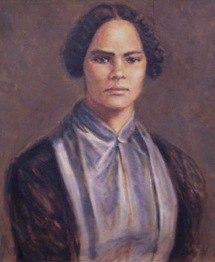
Source: http://www.hitler.org/speeches/01-27-32.ht...

Enjoyed this speech? Speakola is a labour of love and I’d be very grateful if you would share, tweet or like it. Thank you.

Facebook Twitter Facebook
In 1920-39 MORE Tags ADOLF HITLER, INDUSTRY CLUB, DUSSELDORF, NAZI PARTY, WEIMAR, GERMANY, TRANSCRIPT
Comment

Ramsay MacDonald: 'We are not on trial', Labour Party Conference - 1930

February 2, 2018

7 October 1930, Llandudno, United Kingdom

It is not the Labour Government that is on trial; it is Capitalism that is being tried. We told you in those days that the time would come when finance would be more powerful than industry. That day has come.... We told you in those days that the time would come when the man who went into the workshop and into the factory, and his employer as well, would no longer be in the simple relationship of maser and man, but that the master would become impersonal, and that powers that have nothing to do with industry would control industry—the powers of gambling with credit. That day has come....

So, my friends, we are not on trial; it is the system under which we live. It has broken down, not only in this little island, it has broken down in Europe, in Asia, in America; it has broken down everywhere, as it was bound to break down. And the cure, the new path, the new idea is organization—organization which will protect life, not property; organization which may protect property, but protect property in proper relation to life; organization which will see to it that when science discovers and inventors invent, the class that will be crushed down by reason of knowledge shall not be the working class, but the loafing class. This is the policy that we are going to pursue slowly, steadily, persistently, with knowledge and with our minds working upon a plan.

Source: http://library07.com/world-history-modern-...

Enjoyed this speech? Speakola is a labour of love and I’d be very grateful if you would share, tweet or like it. Thank you.

Facebook Twitter Facebook
In 1920-39 Tags RAMSAY MACDONALD, WE ARE NOT ON TRIAL, UNITED KINGDOM, LABOUR PARTY, LABOUR PARTY CONFERENCE, THE GREAT DEPRESSION, TRANSCRIPT
Comment

Oswald Mosley: 'The nation has to be mobilised', Movietone speech on unemployment - 1930

February 2, 2018

1930, London, United Kingdom

This is a MovieTone interview with then Labour MP Sir Oswald Mosley about unemployment. He would later lead the Fascist Party.

It is the one problem that really matters today.

We live in a period in which politicians are not very popular. And believe me, you have my sympathy. Politicians are regarded as people who have learned to talk but not to act.

And you demand action, and rightly demand it, in dealing with unemployment.

We live in a period, when Britain can only survive by vigour and by action.

We have resources, of intellect, of energy, of craftsmanship, of skill, second to none in the world.

But those resources must be mobilised, for a great effort, of a united nation.

To do that, government and statesman, must take their courage in their hands.

Source: https://www.youtube.com/watch?v=0rfXD4gESO...

Enjoyed this speech? Speakola is a labour of love and I’d be very grateful if you would share, tweet or like it. Thank you.

Facebook Twitter Facebook
In 1920-39 Tags OSWALD MOSLEY, FASCISM, LABOUR PARTY, UNEMPLOYMENT, MOVIETONE, TRANSCRIPT
Comment

Herbert Hoover: 'A choice between rugged individualism and socialism', Campaign speech - 1928

February 2, 2018

22 October 1928, New York City, New York, USA

I intend... to discuss some of those more fundamental principles upon which I believe the government of the United States should be conducted....

During one hundred and fifty years we have builded up a form of self government and a social system which is peculiarly our own. It differs essentially from all others in the world. It is the American system.... It is founded upon the conception that only through ordered liberty, freedom and equal opportunity to the individual will his initiative and enterprise spur on the march of progress. And in our insistence upon equality of opportunity has our system advanced beyond all the world.

During [World War I] we necessarily turned to the government to solve every difficult economic problem. The government having absorbed every energy of our people for war, there was no other solution. For the preservation of the state the Federal Government became a centralized despotism which undertook unprecedented responsibilities, assumed autocratic powers, and took over the business of citizens. To a large degree, we regimented our whole people temporally into a socialistic state. However justified in war time, if continued in peace-time it would destroy not only our American system but with it our progress and freedom as well.

When the war closed, the most vital of issues both in our own country and around the world was whether government should continue their wartime ownership and operation of many [instruments] of production and distribution. We were challenged with a... choice between the American system of rugged individualism and a European philosophy of diametrically opposed doctrines ­ doctrines of paternalism and state socialism. The acceptance of these ideas would have meant the destruction of self-government through centralization... [and] the undermining of the individual initiative and enterprise through which our people have grown to unparalleled greatness.

The Republican Party [in the years after the war] resolutely turned its face away from these ideas and war practices.... When the Republican Party came into full power it went at once resolutely back to our fundamental conception of the state and the rights and responsibility of the individual. Thereby it restored confidence and hope in the American people, it freed and stimulated enterprise, it restored the government to a position as an umpire instead of a player in the economic game. For these reasons the American people have gone forward in progress....

There is [in this election]... submitted to the American people a question of fundamental principle. That is: shall we depart from the principles of our American political and economic system, upon which we have advanced beyond all the rest of the world....

I would like to state to you the effect that... [an interference] of government in business would have upon our system of self-government and our economic system. That effect would reach to the daily life of every man and woman. It would impair the very basis of liberty and freedom....

Let us first see the effect on self-government. When the Federal Government undertakes to go into commercial business it must at once set up the organization and administration of that business, and it immediately finds itself in a labyrinth.... Commercial business requires a concentration of responsibility. Our government to succeed in business would need to become in effect a despotism. There at once begins the destruction of self-government....

It is a false liberalism that interprets itself into the government operation of commercial business. Every step of bureaucratizing of the business of our country poisons the very roots of liberalism ­ that is political equality, free speech, free assembly, free press and equality of opportunity. It is not the road to more liberty, but to less liberty. Liberalism should not be striving to spread bureaucracy but striving to set bounds to it....

Liberalism is a force truly of the spirit, a force proceeding from the deep realization that economic freedom cannot be sacrificed if political freedom is to be preserved. [An expansion of the governmentís role in the business world] would cramp and cripple the mental and spiritual energies of our people. It would extinguish equality and opportunity. It would dry up the spirit of liberty and progress... For a hundred and fifty years liberalism has found its true spirit in the American system, not in the European systems.

I do not wish to be misunderstood.... I am defining general policy.... I have already stated that where the government is engaged in public works for purposes of flood control, of navigation, of irrigation, of scientific research or national defense... it will at times necessarily produce power or commodities as a by-product.

Nor do I wish to be misinterpreted as believing that the United States is a free-for-all and devil-take-the-hindmost. The very essence of equality of opportunity and of American individualism is that there shall be no domination by any group or [monopoly] in this republic.... It is no system of laissez faire....

I have witnessed not only at home but abroad the many failures of government in business. I have seen its tyrannies, its injustices, its destructions of self-government, its undermining of the very instincts which carry our people forward to progress. I have witnessed the lack of advance, the lowered standards of living, the depressed spirits of people working under such a system....

And what has been the result of the American system? Our country has become the land of opportunity to those born without inheritance, not merely because of the wealth of its resources and industry but because of this freedom of initiative and enterprise. Russia has natural resources equal to ours.... But she has not had the blessings of one hundred and fifty years of our form of government and our social system.

By adherence to the principles of decentralized self-government, ordered liberty, equal opportunity, and freedom to the individual, our American experiment in human welfare has yielded a degree of well-being unparalleled in the world. It has come nearer to the abolition of poverty, to the abolition of fear of want, than humanity has ever reached before. Progress of the past seven years is proof of it....

The greatness of America has grown out of a political and social system and a method of [a lack of governmental] control of economic forces distinctly its own ­ our American system ­ which has carried this great experiment in human welfare farther than ever before in history.... And I again repeat that the departure from our American system... will jeopardize the very liberty and freedom of our people, and will destroy equality of opportunity not only to ourselves, but to our children.

Source: http://www.digitalhistory.uh.edu/disp_text...

Enjoyed this speech? Speakola is a labour of love and I’d be very grateful if you would share, tweet or like it. Thank you.

Facebook Twitter Facebook
In 1920-39 Tags HERBERT HOOVER, RUGGED INDIVIDUALISM, REPUBLICAN, ANTI SOCIALISM, ALFRED E SMITH, TRANSCRIPT, PRESIDENT, 1928 ELECTION
Comment
baldwin portrait.jpg

Stanley Baldwin: 'To me, England is the country, and the country is England', toast to Royal Society of St George -1924

February 1, 2018

6 May 1924, Royal Society of St George, London, UK

Though I do not think that the life of a busy man there could be placed into his hands a more difficult toast than this, yet the first thought that comes into my mind as a public man is a feeling of satisfaction and profound thankfulness that I may use the word ‘England’ without some fellow at the back of the room shouting out ‘Britain’. I have often thought how many of the most beautiful passages in the English language would be ruined by that substitution which is so popular to-day. I read in your Dinner-book, ‘When God wants a hard thing done, He tells it’, not to His not to his Britons, but to His Englishman;. And in the same way, to come to a very modern piece of poetry, how different it would be with the altered ending, ‘For in spite of all his temptations to belong to other nations, he remains a Briton.’ We have to-night to celebrate our country and our Patron Saint. It always seems to me no mere chance that besides being the Patron Saint of England, St George was the Patron Saint of those gallant sailors around the shores of the Adriatic, and that in his honour there exists one of the shores of the most beautiful chapels in Venice to-day. The Patron Saint for men of the English stock; and I think to-night amongst ourselves we might for a minute or two look at those characteristics, contradictory often, peculiar as we believe, in the great stock of which we are all members

The Englishman is all right as long as he is content to be what God made him, an Englishman, but gets into trouble when he tries to be something else. There are chroniclers, or were chronicles, who said it was the aping of the French manners by our English ancestors that made us the prey William the Norman, and led to our defeat at Hastings. Let that be a warning to us not to ape any foreign country. Let us be content to trust and be ourselves.

Now, I always think that one of the most curious contradictions about the English stock is this: that while the criticism that is often made of us is not without an element of truth, and that is that as a nation we are less open to the intellectual sense than the Latin races, yet though that may be a fact, there is no nation on earth that has had the same knack of producing geniuses, and in a nation which many people might think restrained, unable to express itself, in this same nation you have a literature second to none that has ever existed in the world, and certainly in poetry supreme.

Then, for a more personal characteristic, we grumble, and we have always grumbled, but we never worry. Now, there is a very great truth in that, because there are foreign nations who worry but do not grumble. Grumbling is more superficial, leaves less of a mark on the character, and just as the English schoolboy, for his eternal salvation, is impervious to the receipt of learning, and by that means preserves his metal faculties into middle age and old age than he otherwise would (and I may add that I attribute the possession of such facilities as I have to that fact that I did not overstrain them in youth), just as the Englishman has a mental reserve owing to that gift given to him at his birth by St. George, so, by the absence of worry he keeps his nervous system sound and sane, with the result that in times of emergency the nervous system stands when the nervous system of other peoples breaks.

The Englishman is made for a time of crisis, and for a time of emergency. He is serene in difficulties, but may seem to be indifferent when times are easy. He may not look ahead, he may not heed warnings, he may not prepare, but when he once starts he is persistent to the death, and he is ruthless in action. It is these gifts that have made the Englishman what he is, and that have enabled the Englishman to make England and Empire what it is.

It is in staying power that he is supreme, and fortunately, being, as I said, to some extent impervious to intellectual impressions as a nation, he is usually impervious to criticism – a most useful thing for an English statesman sometimes. This may be the reason why English statesmen sometimes last longer than those who are not English. I admit that in past generations we carried that virtue to an excess, and by a rebound the sins of the fathers are being visited on the children. For instance, there was a time when this particular epithet was more in vogue in political society, and the Englishman invariably spoke of the ‘damned’ foreigner. Those days are gone, but the legacy has come to us in this, that by the swing of the pendulum we have in this country what does not exist in any other, a certain section of our people who regard every country as being in the right except their own. It largely arises, I think, among a certain section of the population who hold beliefs which they cannot persuade their fellow-countrymen to adopt.

There is yet one other point. I think the English people are at heart and in practice the kindest people in the world. With some faults on which I have touched, there is in England a profound sympathy for the under-dog. There is a brotherly and a neighbourly feeling which we see to a remarkable extent through all classes. There is a way of facing misfortunes with a cheerful face. It was shown to a marvellous degree in the war, and in spite of all he said in criticism of his own people, Ruskin said one thing of immoral truth. He said: “The English laugh is the purest and truest in the metal that can be minted. And indeed only Heaven can know what the country owes to it.” There is a profound truth in that. As long as a people can laugh, they are preserved from the grosser vices of life, political and moral. And as long as they can laugh, they can face all the ills that fortune may bring upon them.

Then, in no nation more than the English is there a diversified individuality. We are a people of individuals, and a people of character. You may take the writings of one of the most English of writers, Charles Dickens, and you will find that practically all his characters are English. They are all different, and each of us that has gone through this world with his eyes open and his heart open, has met every one of Dickens' characters in some position or another in life. Let us see to it that we never allow our individuality as Englishmen to be steam-rollered. The preservation of the individuality of the Englishman is essential to the preservation of the type of the race, and if our differences are smoothed out and we lose that great gift, we shall lose at the same time our power. Uniformity of type is a bad thing. I regret very much myself the uniformity of speech. Time was, two centuries ago, when you could have told by his speech from what part of England every member of Parliament came. He spoke the speech of his fathers, and I regret that the dialects have gone, and I regret that by a process which for a want of a better name we have agreed among ourselves to call education, we are drifting away from the language of the people and losing some of the best English words and phrases which have lasted in the country through centuries, to make us all talk one uniform and inexpressive language. Now, I have very little more that I want to say to you to-night, but on an occasion like this I suppose there is no one who does not ask himself in his heart and is a little shy of expressing it, what is it that England stands for to him, and to her. And there comes into my mind a wonder as to what England may stand for in the minds of generations to come if our country goes on during the next generation as she has done in the last two, in seeing her fields converted into towns. To me, England is the country, and the country is England. And when I ask myself what I mean by England, when I think of England when I am abroad, England comes to me through my various senses – through the ear, through the eye, and through certain imperishable scents. I will tell you what they are, and there may be those among you who feel as I do.

The sounds of England, the tinkle of hammer on anvil in the country smithy, the corncrake on a dewey morning, the sound of the scythe against the whetstone, and the sight of a plough team coming over the brow of a hill, the sight that has been in England since England was a land, and may be seen in England long after the Empire has perished and every works in England has ceased to function, for centuries the one eternal sight of England. The wild anenomies in the woods of April, the last load at night of hay being drawn down a lane as the twilight comes on, when you can scarcely distinguish the figures on the horses as they take it home to the farm, and above all, most subtle, most penetrating and most moving, the smell of wood smoke coming in an autumn evening, or the smell of the scutch fires: that wood smoke that our ancestors, tens of thousands of years ago, must have caught on the air when they were still nomads, and when they were still roaming the forests and the plains of the continent of Europe. These things strike down into the very depths of our nature, and touch chords that go back to the beginning of time and the human race, but they are chords that with every year of our life sound a deeper note in our innermost being. These are things that make England, and I grieve for it that they are not the childish inheritance of the majority of people to-day in our country. They ought to be the inheritance of every child born into this country, but nothing can be more touching than to see how the working man and woman after generations in the towns will have their tiny bit of garden if they can, will go to gardens if they can, to look at something they they have never seen as children, but which their ancestors knew and loved. The love of these things is innate and inherent in our people. It makes for that love of home, one of the strongest features of our race, and it that that makes our race seek its home in the Dominions over seas, where they have room to see things like this that they can no more see at home. It is that power of making homes, almost peculiar to our people, and it is one of the sources of their greatness. They go overseas, and they take with them what they learned at home: love of justice, love of truth, and the broad humanity that are so characteristic of English people. It may well be that these traits on which we pride ourselves, which we hope to show and try to show in our lives, may survive – survive among our people so long as they are a people – and I hope and believe this, that just as to-day more than fifteen centuries since the last of those great Roman legionaries left England, we still speak of the Roman character, so perhaps in the ten thousandth century, long after the Empires of this world as we know them have fallen and others have risen and fallen again, the men who are then on this earth may yet speak of those characteristics which we prize as the characteristics of the English, and that long after, maybe, the name of the country has passed away, wherever mean are honourable and upright and perservering, lovers of home, of their bretheren, of justice and of humanity, the men in the world of that day may say, ‘We still have among us the gifts of that great English race.’

Source: https://whatenglandmeanstome.co.uk/stanley...

Enjoyed this speech? Speakola is a labour of love and I’d be very grateful if you would share, tweet or like it. Thank you.

Facebook Twitter Facebook
Comment

Mahatma Gandhi: "Non violence is the first article of my faith", Statement in The Great Trial - 1922

February 1, 2018

23 March 1922, Ahmadabad, India

The trial is famous for many reasons, including the British judge rising to greet the accused.

I plead guilty to all the charges. I observe that the King’s name has been omitted from the charge, and it has been properly omitted.”]

Court : Mr. Gandhi, do you wish to make any statement on the question of sentence?

Gandhiji : I would like to make a statement.
Court : Could you give me in writing to put it on record?

Gandhiji : I shall give it as soon as I finish it.

[Gandhiji then made the following oral statement followed by a written statement that he read.]

Before I read this statement I would like to state that I entirely endorse the learned Advocate-General’s remarks in connection with my humble self. I think that he has made, because it is very true and I have no desire whatsoever to conceal from this court the fact that to preach disaffection towards the existing system of Government has become almost a passion with me, and the Advocate-General is entirely in the right when he says that my preaching of disaffection did not commence with my connection with Young India but that it commenced much earlier, and in the statement that I am about to read, it will be my painful duty to admit before this court that it commenced much earlier than the period stated by the Advocate-General. It is a painful duty with me but I have to discharge that duty knowing the responsibility that rests upon my shoulders, and I wish to endorse all the blame that the learned Advocate-General has thrown on my shoulders in connection with the Bombay occurrences, Madras occurrences and the Chauri Chuara occurrences. Thinking over these things deeply and sleeping over them night after night, it is impossible for me to dissociate myself from the diabolical crimes of Chauri Chaura or the mad outrages of Bombay. He is quite right when he says, that as a man of responsibility, a man having received a fair share of education, having had a fair share of experience of this world, I should have known the consequences of every one of my acts. I know them. I knew that I was playing with fire. I ran the risk and if I was set free I would still do the same. I have felt it this morning that I would have failed in my duty, if I did not say what I said here just now.
I wanted to avoid violence. Non-violence is the first article of my faith. It is also the last article of my creed. But I had to make my choice. I had either to submit to a system which I considered had done an irreparable harm to my country, or incur the risk of the mad fury of my people bursting forth when they understood the truth from my lips. I know that my people have sometimes gone mad. I am deeply sorry for it and I am, therefore, here to submit not to a light penalty but to the highest penalty. I do not ask for mercy. I do not plead any extenating act. I am here, therefore, to invite and cheerfully submit to the highest penalty that can be inflicted upon me for what in law is a deliberate crime, and what appears to me to be the highest duty of a citizen. The only course open to you, the Judge, is, as I am going to say in my statement, either to resign your post, or inflict on me the severest penalty if you believe that the system and law you are assisting to administer are good for the people. I do not except that kind of conversion. But by the time I have finished with my statement you will have a glimpse of what is raging within my breast to run this maddest risk which a sane man can run.

[He then read out the written statement : ] I owe it perhaps to the Indian public and to the public in England, to placate which this prosecution is mainly taken up, that I should explain why from a staunch loyalist and co-operator, I have become an uncompromising disaffectionist and non-co-operator. To the court too I should say why I plead guilty to the charge of promoting disaffection towards the Government established by law in India.

My public life began in 1893 in South Africa in troubled weather. My first contact with British authority in that country was not of a happy character. I discovered that as a man and an Indian, I had no rights. More correctly I discovered that I had no rights as a man because I was an Indian.

But I was not baffled. I thought that this treatment of Indians was an excrescence upon a system that was intrinsically and mainly good. I gave the Government my voluntary and hearty co-operation, criticizing it freely where I felt it was faulty but never wishing its destruction.

Consequently when the existence of the Empire was threatened in 1899 by the Boer challenge, I offered my services to it, raised a volunteer ambulance corps and served at several actions that took place for the relief of Ladysmith. Similarly in 1906, at the time of the Zulu ‘revolt’, I raised a stretcher bearer party and served till the end of the ‘rebellion’. On both the occasions I received medals and was even mentioned in dispatches. For my work in South Africa I was given by Lord Hardinge a Kaisar-i-Hind gold medal. When the war broke out in 1914 between England and Germany, I raised a volunteer ambulance cars in London, consisting of the then resident Indians in London, chiefly students. Its work was acknowledge by the authorities to be valuable. Lastly, in India when a special appeal was made at the war Conference in Delhi in 1918 by Lord Chelmsford for recruits, I struggled at the cost of my health to raise a corps in Kheda, and the response was being made when the hostilities ceased and orders were received that no more recruits were wanted. In all these efforts at service, I was actuated by the belief that it was possible by such services to gain a status of full equality in the Empire for my countrymen.

The first shock came in the shape of the Rowlatt Act-a law designed to rob the people of all real freedom. I felt called upon to lead an intensive agitation against it. Then followed the Punjab horrors beginning with the massacre at Jallianwala Bagh and culminating in crawling orders, public flogging and other indescribable humiliations. I discovered too that the plighted word of the Prime Minister to the Mussalmans of India regarding the integrity of Turkey and the holy places of Islam was not likely to be fulfilled. But in spite of the forebodings and the grave warnings of friends, at the Amritsar Congress in 1919, I fought for co-operation and working of the Montagu-Chemlmsford reforms, hoping that the Prime Minister would redeem his promise to the Indian Mussalmans, that the Punjab wound would be healed, and that the reforms, inadequate and unsatisfactory though they were, marked a new era of hope in the life of India.
But all that hope was shattered. The Khilafat promise was not to be redeemed. The Punjab crime was whitewashed and most culprits went not only unpunished but remained in service, and some continued to draw pensions from the Indian revenue and in some cases were even rewarded. I saw too that not only did the reforms not mark a change of heart, but they were only a method of further raining India of her wealth and of prolonging her servitude.

I came reluctantly to the conclusion that the British connection had made India more helpless than she ever was before, politically and economically. A disarmed India has no power of resistance against any aggressor if she wanted to engage, in an armed conflict with him. So much is this the case that some of our best men consider that India must take generations, before she can achieve Dominion Status. She has become so poor that she has little power of resisting famines. Before the British advent India spun and wove in her millions of cottages, just the supplement she needed for adding to her meagre agricultural resources. This cottage industry, so vital for India’s existence, has been ruined by incredibly heartless and inhuman processes as described by English witness.

Little do town dwellers how the semi-starved masses of India are slowly sinking to lifelessness. Little do they know that their miserable comfort represents the brokerage they get for their work they do for the foreign exploiter, that the profits and the brokerage are sucked from the masses. Little do realize that the Government established by law in British India is carried on for this exploitation of the masses. No sophistry, no jugglery in figures, can explain away the evidence that the skeletons in many villages present to the naked eye. I have no doubt whatsoever that both England and the town dweller of India will have to answer, if there is a God above, for this crime against humanity, which is perhaps unequalled in history. The law itself in this country has been used to serve the foreign exploiter. My unbiased examination of the Punjab Marital Law cases has led me to believe that at least ninety-five per cent of convictions were wholly bad. My experience of political cases in India leads me to the conclusion, in nine out of every ten, the condemned men were totally innocent. Their crime consisted in the love of their country. In ninety-nine cases out of hundred, justice has been denied to Indians as against Europeans in the courts of India. This is not an exaggerated picture. It is the experience of almost every Indian who has had anything to do with such cases. In my opinion, the administration of the law is thus prostituted, consciously or unconsciously, for the benefit of the exploiter.

The greater misfortune is that the Englishmen and their Indian associates in the administration of the country do not know that they are engaged in the crime I have attempted to describe. I am satisfied that many Englishmen and Indian officials honestly systems devised in the world, and that India is making steady, though, slow progress. They do not know, a subtle but effective system of terrorism and an organized display of force on the one hand, and the deprivation of all powers of retaliation or self-defense on the other, as emasculated the people and induced in them the habit of simulation. This awful habit has added to the ignorance and the self-deception of the administrators. Section 124 A, under which I am happily charged, is perhaps the prince among the political sections of the Indian Penal Code designed to suppress the liberty of the citizen. Affection cannot be manufactured or regulated by law. If one has no affection for a person or system, one should be free to give the fullest expression to his disaffection, so long as he does not contemplate, promote, or incite to violence. But the section under which mere promotion of disaffection is a crime. I have studied some of the cases tried under it; I know that some of the most loved of India’s patriots have been convicted under it. I consider it a privilege, therefore, to be charged under that section. I have endeavored to give in their briefest outline the reasons for my disaffection. I have no personal ill-will against any single administrator, much less can I have any disaffection towards the King’s person. But I hold it to be a virtue to be disaffected towards a Government which in its totality has done more harm to India than any previous system. India is less manly under the British rule than she ever was before. Holding such a belief, I consider it to be a sin to have affection for the system. And it has been a precious privilege for me to be able to write what I have in the various articles tendered in evidence against me.

In fact, I believe that I have rendered a service to India and England by showing in non-co-operation the way out of the unnatural state in which both are living. In my opinion, non-co-operation with evil is as much a duty as is co-operation with good. But in the past, non-co-operation has been deliberately expressed in violence to the evil-doer. I am endeavoring to show to my countrymen that violent non-co-operation only multiples evil, and that as evil can only be sustained by violence, withdrawal of support of evil requires complete abstention from violence. Non-violence implies voluntary submission to the penalty for non-co-operation with evil. I am here, therefore, to invite and submit cheerfully to the highest penalty that can be inflicted upon me for what in law is deliberate crime, and what appears to me to be the highest duty of a citizen. The only course open to you, the Judge and the assessors, is either to resign your posts and thus dissociate yourselves from evil, if you feel that the law you are called upon to administer is an evil, and that in reality I am innocent, or to inflict on me the severest penalty, if you believe that the system and the law you are assisting to administer are good for the people of this country, and that my activity is, therefore, injurious to the common weal.


Source: http://www.mkgandhi.org/speeches/gto1922.h...

Enjoyed this speech? Speakola is a labour of love and I’d be very grateful if you would share, tweet or like it. Thank you.

Facebook Twitter Facebook
In 1920-39 Tags MAHATMA GANDHI, GANDHI, NON VIOLENCE, THE GREAT TRIAL, TRANSCRIPT, COURTROOM, JUDGE, INDIA, HOME RULE, INDEPENDENCE
Comment

King George V: 'The eyes of the whole Empire are on Ireland today', Opening of Northern Ireland parliament - 1921

February 1, 2018

22 June 1921, Belfast, Northern Ireland

Members of the Senate and of the House of Commons, For all who love Ireland, as I do with all my heart, this is a profoundly moving occasion in Irish history. My memories of the Irish people date back to the time when I spent many happy days in Ireland as a midshipman. My affection for the Irish people has been deepened by the successive visits since that time, and I have watched with constant sympathy the course of their affairs.

I could not have allowed myself to give Ireland by deputy alone My earnest prayers and good wishes in the new era which opens with this ceremony, and I have therefore come in person, as the head of the Empire, to inaugurate this parliament on Irish soil. I inaugurate it with deep felt hope and I feel assured that you will do your utmost to make it an instrument of happiness and good government for all parts of the community which you represent.

This is a great and critical occasion in the history of the Six Counties – but not for the Six Counties alone, for everything which interests them touches Ireland, and everything which touches Ireland finds an echo in the remotest parts of the Empire. Few things are more earnestly desired throughout the English speaking world than a satisfactory solution of the age long Irish problems, which for generations embarrassed our forefathers, as they now weigh heavily upon us…

I am confident that the important matters entrusted to the control and guidance of the Northern Parliament will be managed with wisdom and with moderation, with fairness and due regard to every faith and interest, and with no abatement of that patriotic devotion to the Empire which you proved so gallantly in the Great War… My hope is broader still. The eyes of the whole Empire are on Ireland today, that Empire in which so many nations and races have come together in spite of ancient feuds, and in which new nations have come to birth within the lifetime of the youngest in this Hall.

I am emboldened by that thought to look beyond the sorrow and the anxiety which have clouded of late My vision of Irish affairs. I speak from a full heart when… I appeal to all Irishmen to pause, to stretch out the hand of forbearance and conciliation, to forgive and to forget, and to join in making for the land which they love a new era of peace, contentment, and goodwill… For this the parliament of the United Kingdom has in the fullest measure provided the powers; for this the parliament of Ulster is pointing the way. The future lies in the hands of My Irish people themselves.

May this historic gathering be the prelude of a day in which the Irish people, North and South, under one parliament or two, as those parliaments may themselves decide, shall work together in common love for Ireland upon the sure foundations of mutual justice and respect.

Source: http://alphahistory.com/northernireland/ge...

Enjoyed this speech? Speakola is a labour of love and I’d be very grateful if you would share, tweet or like it. Thank you.

Facebook Twitter Facebook
In 1920-39 Tags GEORGE V, KING, TRANSCRIPT, NORTHERN IRELAND, HOME RULE, UNITED KINGDOM
Comment

Henry Cabot Lodge: 'American I was born', Opposing League of Nations - 1919

February 1, 2018

12 August 1919, Washington DC, USA

Mr. President:

The independence of the United States is not only more precious to ourselves but to the world than any single possession. Look at the United States today. We have made mistakes in the past. We have had shortcomings. We shall make mistakes in the futureand fall short of our own best hopes. But none the less is there any country today on the face of the earth which can compare with this in ordered liberty, in peace, and in the largest freedom?

I feel that I can say this without being accused of undue boastfulness, for it is the simple fact, and in making this treaty and taking on these obligations all that we do is in a spirit of unselfishness and in a desire for the good of mankind. But it is well to remember that we are dealing with nations every oneof which has a direct individual interest to serve, and there is grave danger in an unshared idealism.

Contrast the United States with any country on the face of the earth today and ask yourself whether the situation of the United States is not the best to be found. I will go as far as anyone in world service, but the first step to world service is the maintenance of the United States.

I have always loved one flag and I cannot share that devotion [with] a mongrel banner created for a League.

You may call me selfish if you will, conservative or reactionary, or use any other harsh adjective you see fit to apply, but an American I was born, an American I have remained all my life. I can never be anything else but an American, and I must think of the United States first, and when I think of the United States first in an arrangement like this I am thinking of what is best for the world, for if the United States fails, the best hopes of mankind fail with it.

I have never had but one allegiance ‐I cannot divide it now. I have loved but one flag and I cannot share that devotion and give affection to the mongrel banner invented for a league. Internationalism, illustrated by the Bolshevik and by the men to whom all countries are alike provided they can make money out of them, is to me repulsive.

National I must remain, and in that way I like all other Americans can render the amplest service to the world. The United States is the world's best hope, but if you fetter her in the interests and quarrels of other nations, if you tangle her in the intrigues of Europe, you will destroy her power for good and endanger her very existence. Leave her to march freely through the centuries to come as in the years that have gone.

Strong, generous, and confident, she has nobly served mankind. Beware how you trifle with your marvellous inheritance, this great land of ordered liberty, for if we stumble and fall freedom and civilization everywhere will go down in ruin.

We are told that we shall 'break the heart of the world 'if we do not take this league just as it stands. I fear that the hearts of the vast majority of mankind would beat on strongly and steadily and without any quickening if the league were to perish altogether. If it should be effectively and beneficently changed the people who would lie awake in sorrow for a single night could be easily gathered in one not very large room but those who would draw a long breath of relief would reach to millions.

We hear much of visions and I trust we shall continue to have visions and dream dreams of a fairer future for the race. But visions are one thing and visionaries are another, and the mechanical appliances of the rhetorician designed to give a picture of a present which does not exist and of a future which no man can predict are as unreal and short‐lived as the steam or canvas clouds, the angels suspended on wires and the artificial lights of the stage.

They pass with the moment of effect and are shabby and tawdry in the daylight. Let us at least be real. Washington's entire honesty of mind and his fearless look into the face of all facts are qualities which can never go out of fashion and which we should all do well to imitate.

Ideals have been thrust upon us as an argument for the league until the healthy mind which rejects cant revolts from them. Are ideals confined to this deformed experiment upon a noble purpose, tainted, as it is, with bargains and tied to a peace treaty which might have been disposed of long ago to the great benefit of the world if it had not been compelled to carry this rider on its back? 'Post equitem sedet atra cura,' Horace tells us, but no blacker care ever sat behind any rider than we shall find in this covenant of doubtful and disputed interpretation as it now perches upon the treaty of peace.

No doubt many excellent and patriotic people see a coming fulfilment of noble ideals in the words 'league for peace.' We all respect and share these aspirations and desires, but some of us see no hope, but rather defeat, for them in this murky covenant. For we, too, have our ideals, even if we differ from those who have tried to establish a monopoly of idealism.

Our first ideal is our country, and we see her in the future, as in the past, giving service to all her people and to the world. Our ideal of the future is that she should continue to render that service of her own free will. She has great problems of her own to solve, very grim and perilous problems, and a right solution, if we can attain to it, would largely benefit mankind.

We would have our country strong to resist a peril from the West, as she has flung back the German menace from the East. We would not have our politics distracted and embittered by the dissensions of other lands. We would not have our country's vigour exhausted or her moral force abated, by everlasting meddling and muddling in every quarrel, great and small, which afflicts the world.

Our ideal is to make her ever stronger and better and finer, because in that way alone, as we believe, can she be of the greatest service to the world's peace and to the welfare of mankind

Source: https://ay12-14.moodle.wisc.edu/prod/plugi...

Enjoyed this speech? Speakola is a labour of love and I’d be very grateful if you would share, tweet or like it. Thank you.

Facebook Twitter Facebook
In 1900-19 Tags HENRY CABOT LODGE, ISOLATIONISM, WW1, TREATY OF VERSAILLES, WOODROW WILSON, TRANSCRIPT
Comment

Eugene Debs: 'The world of capitalism is collapsing; the world of Socialism is rising', Canton Ohio speech, 1915

February 1, 2018

16 June 1918, Canton, Ohio, USA

To speak for labor; to plead the cause of the men and women and children who toil to serve the working class, has always been to me a high privilege; (applause) a duty of love.

I have just returned from a visit over yonder (pointing to the workhouse) (laughter) where three of our most loyal comrades (applause) are paying the penalty for their devotion to the cause of the working class. (Applause.) They have come to realize, as many of us have, that it is extremely dangerous to exercise the constitutional right of free speech in a country fighting to make democracy safe in the world. (Applause.)

I realize that, in speaking to you this afternoon, that there are certain limitations placed upon the right of free speech. I must be exceedingly careful, prudent, as to what I say, and even more careful and more prudent as to how I say it. (Laughter.) I may not be able to say all I think; (laughter and applause) but I am not going to say anything that I do not think. (Applause.) But, I would rather a thousand times be a free soul in jail than to be a sycophant and coward on the streets. (Applause and Shouts.) They may put those boys in jail--and some of the rest of us in jail--but they cannot put the Socialist movement in jail. (Applause and Shouts.) . . .

There is but one thing that you have to be concerned about, and that is that you keep four-square with the principles of the international Socialist movement. (Applause.) It is only when you begin to compromise that trouble begins. (Applause.) So far as I am concerned, it does not matter what others may say, or think, or do, as long as I am sure that I am right with myself and the cause. (Applause.) There are so many who seek refuge in the popular side of a great question. On account of that, I hope, as a Socialist, I have long since learned how to stand alone. (Applause.)

Why should a Socialist be discouraged on the eve of the greatest triumph in all history of the Socialist movement? (Applause.) It is true that these are anxious trying days for us all--testing days for the women and men who are upholding the banner of the of the working class in the struggle of the working class of all the world against the exploiters of the world; (applause) a time in which the weak and cowardly will falter and fail and desert. They lack the fiber to endure the revolutionary test; they fall away; they disappear as if they had never been. On the other hand, they who are animated with the unconquerable spirit of the Social revolution, they who have the moral courage to stand erect and assert their convictions; stand by them; fight for them; go to jail or to hell for them; if need be--(applause and shouts) they are writing their names, in this crucial hour--they are writing their names in fadeless letters in the history of mankind. (Applause.) . . .

Are we opposed to Prussian militarism? (Laughter.) (Shouts from the crowd of "Yes." "Yes.") Why, we have been fighting it since the day the Socialist movement was born; (applause) and we are going to continue to fight it, day and night, until it is wiped from the face of the earth. (thunderous applause and cheers.) Between us there is no truce--no compromise. . . .

Socialism is a growing idea, an expanding philosophy. It is spreading over the face of the earth. It is as useless to resist it as it would be to try to arrest the sunrise on the morrow. It is coming, coming, coming, all along the line. . . . Here, in this assemblage (applause) I hear our heart beat responsive to the Bolsheviki of Russia. (Deafening and prolonged applause.) Yes, those heroic men and women, those unconquerable comrades, who have, by their sacrifice, added luster to the international movement. Those Russian comrades, who have made greater sacrifices, who have suffered more, who have shed more heroic blood than any like men or number of men and women anywhere else on earth, they have laid the foundation of the first real Democracy that ever drew--(great applause) the first real Democracy that ever drew the breath of life on God's footstool. (Applause.) And the very first act of that immortal revolution was to proclaim a state of peace with all the world, coupled with an appeal, no to the kings, not to the emperors, not to the rulers, not to the diplomats, but an appeal to the people of all nations. (Applause.) There is the very birth of Democracy, the quintessence of freedom. They made their appeal to the people of all nations, the Allies as well as the Central powers, to send representatives to a conference to lay down terms of peace that should be Democratic and lasting. Here was a fine--here was a fine opportunity to strike a blow to make democracy safe in the world. (Applause.) Was there any response to that noble appeal? And here let me say that that appeal will be written in letters of gold in the history of the world. (Applause.) Was there any response to that appeal? (From the crowd "No.") Not the slightest. . . .

Wars have been waged for conquest, for plunder. In the middle ages the feudal lords, who inhabited the castles whose towers may still be seen along the Rhine--whenever one of those feudal lords wished to enrich himself, then he made war on another. Why? They wanted to enlarge their domains. They wanted to increase their power, their wealth, and so they declared war upon each other. But they did not go to war any more than the Wall Street junkers go to war. (Applause.) The feudal lords, the barons, the economic predecessors of the modern capitalist, they declared all the wars. Who fought their battles? Their miserable serfs. And the serfs had been taught to believe that when their masters declared and waged war upon one another, it was their patriotic duty to fall upon one another, and to cut one another's throats, to murder one another for the profit and the glory of the plutocrats, the barons, the lords who held them in contempt. And that is war in a nutshell. The master class has always declared the war; the subject class has always fought the battles; the master class has had all to gain and nothing to lose, and the subject class has had nothing to gain and all to lose--including their lives. (Applause.) They have always taught you that it is your patriotic duty to go to war and to have yourselves slaughtered at a command. But in all of the history of the world you, the people, never had a voice in declaring war. You have never yet had. And here let me state a fact--and it cannot be repeated too often: the working class who fight the battles, the working class who make the sacrifices, the working class who shed the blood, the working class who furnish the corpses, the working class have never yet had a voice in declaring war. The working class have never yet had a voice in making peace. It is the ruling class that does both. They declare war; they make peace.

"Yours not to ask the question why; Yours but to do and die."

That is their motto, and we object on the part of the awakened workers.

If war is right, let it be declared by the people--you, who have your lives to lose; you certainly ought to have the right to declare war, if you consider war a necessary. (Applause.) . . .

If the war was over tomorrow, all of the prison doors would open. They just want to silence this voice during the war. The cases will be appealed, and they will remain pending in court many a month, perhaps years. What a compliment it is to the Socialist movement for telling the truth. The truth will make the people free. (Applause.) And the truth must not be permitted to reach the people. The truth has always been dangerous to the rule of the rogue, the exploiter, the robber. So the truth must be suppressed. That is why they are trying to drive out the Socialist movement; and every time they make the attempt, they add ten thousand voices proclaiming that Socialism has come to stay. (Applause.). . .

What you need is to organize, not along curved lines, but along revolutionary industrial lines. (Applause.) You will never vote in the Socialist republic. You are needed to organize it; and you have got to organize it in the industries--unite in the industries. the industrial union is the forerunner of industrial Democracy. In the shop is where the industrial Democracy has its beginning. Organize according to the industries, and minimize all the Gompers. Get together. United, very often your power becomes invincible. Organize to get up to your fullest capacity. Organize. Act together. And when you organize industrially, you will soon learn that you can manage industry as well as operate industry. You can soon find that you don't need the idle for your masters. They are simply parasites. They don't give you work. You give them jobs taking what you produce and that is all. Their function is to take what you produce. You can dispose of them. You don't need then to depend upon for your jobs. You ought to own your own tools; you ought to control your own jobs; you ought to be industrial free men instead of industrial slaves. Organize industrially. Make the organization complete. Then unite in the Socialist party. . . . Then, when we vote together and act together on the industrial pledge, we will develop the supreme power of the one class that can bring permanent peace to the world. We will have the courage. Industry will be organized. We will conquer the public power. We will transfer the title deeds of the railroads, the telegraph lines, the mills, the great industries--we will transfer them to the people; we will take possession in the name of the people. We will have industrial political Democracy. We will be the first free nation, whose government belongs to the people. Oh, this change will be universal; it will be permanent; it looks towards the light; it paves the way to emancipation. . . .

Yes, we are going to sweep into power in this nation and in every other nation on earth. We are going to destroy the capitalist institutions; we are going to recreate them as legally free institutions. Before you very eyes the world is being destroyed. The world of capitalism is collapsing; the world of Socialism is rising.

It is your duty to help build. We need builders of industry. Builders are necessary. We Socialists are the builders of the world that is to be. We are all agreed to do our part. We are inviting--aye, challenging you this afternoon, in the name of your own manhood, to join us. Help do your part. In due course of time the hour will strike, and this great cause--the greatest in history--will proclaim the emancipation of the working class and the brotherhood of all mankind. (Thunderous and prolonged applause.)

Source: http://college.cengage.com/history/ayers_p...

Enjoyed this speech? Speakola is a labour of love and I’d be very grateful if you would share, tweet or like it. Thank you.

Facebook Twitter Facebook
In 1900-19 Tags EUGENE V DEBS, SOCIALISM, CANTON OHIO SPEECH, SEDITION, TRANSCRIPT, SOCIALIST PARTY
Comment
Roger Casement.jpg

Roger Casement: 'In Ireland alone, in this twenthieth century, is loyalty held to be a crime',Speech from the dock - 1916

February 1, 2018

29 June 1916, London, Great Britain

Sir Roger Casement was a British soldier and consul, who was knighted before he took up the Irish nationalist cause in 1911. He was executed post Easter Uprising in 1916. This is his speech from the dock.

My Lord Chief Justice, as I wish my words to reach a much wider audience than I see before me here, I intend to read all that I propose to say. What I shall read now is something I wrote more than twenty days ago. I may say, my lord, at once, that I protest against the jurisdiction of this court in my case on this charge, and the argument, that I am now going to read, is addressed not to this court, but to my own countrymen.

There is an objection, possibly not good in law, but surely good on moral grounds, against the application to me here of this old English statute, 565 years old, that seeks to deprive an Irishman today of life and honour, not for "adhering to the King's enemies", but for adhering to his own people.

When this statute was passed, in 1351, what was the state of men's minds on the question of a far higher allegiance -- that of a man to God and His kingdom? The law of that day did not permit a man to forsake his Church, or deny his God, save with his life. The "heretic", then, had the same doom as the "traitor".

Today a man may forswear God and His heavenly kingdom, without fear or penalty -- all earlier statutes having gone the way of Nero's edicts against the Christians, but that constitutional phantom "the King" can still dig up from the dungeons and torture-chambers of the Dark Ages a law that takes a man's life and limb for an exercise of conscience.

If true religion rests on love, it is equally true that loyalty rests on love. The law that I am charged under has no parentage in love, and claims the allegiance of today on the ignorance and blindness of the past.

I am being tried, in truth, not by my peers of the live present, but by the fears of the dead past; not by the civilization of the twentieth century, but by the brutality of the fourteenth; not even by a statute framed in the language of the land that tries me, but emitted in the language of an enemy land -- so antiquated is the law that must be sought today to slay an Irishman, whose offence is that he puts Ireland first.

Loyalty is a sentiment, not a law. It rests on love, not on restraint. The government of Ireland by England rests on restraint, and not on law; and since it demands no love, it can evoke no loyalty...

Judicial assassination today is reserved only for one race of the King's subjects -- for Irishmen, for those who cannot forget their allegiance to the realm of Ireland. The Kings of England, as such, had no rights in Ireland up to the time of Henry VIII, save such as rested on compact and mutual obligation entered into between them and certain princes, chiefs, and lords of Ireland. This form of legal right, such as it was, gave no King of England lawful power to impeach an Irishman for high treason under this statute of King Edward III of England until an Irish Act, known as Poyning's Law, the tenth of Henry VII, was passed in 1494 at Drogheda, by the Parliament of the Pale in Ireland, and enacted as law in that part of Ireland. But, if by Poyning's Law an Irishman of the Pale could be indicted for high treason under this Act, he could be indicted in only one way, and before one tribunal -- by the laws of the Realm of Ireland and in Ireland. The very law of Poyning, which, I believe, applies this statute of Edward III to Ireland, enacts also for the Irishman's defence "all these laws by which England claims her liberty".

And what is the fundamental charter of an Englishman's Liberty? That he shall be tried by his peers. With all respect, I assert this court is to me, an Irishman, charged with this offence, a foreign court -- this jury is for me, an Irishman, not a jury of my peers to try me on this vital issue, for it is patent to every man of conscience that I have a right, an indefeasible right, if tried at all, under this statute of high treason, to be tried in Ireland, before an Irish court and by an Irish jury. This court, this jury, the public opinion of this country, England, cannot but be prejudiced in varying degrees against me, most of all in time of war. I did not land in England. I landed in Ireland. It was to Ireland I came; to Ireland I wanted to come; and the last place I desired to land was in England.

But for the Attorney-General of England there is only "England"; there is no Ireland; there is only the law of England, no right of Ireland; the liberty of Ireland and of an Irishman is to be judged by the power of England. Yet for me, the Irish outlaw, there is a land of Ireland, a right of Ireland, and a charter for all Irishmen to appeal to, in the last resort, a charter, that even the very statutes of England itself cannot deprive us of -- nay more, a charter that Englishmen themselves assert as the fundamental bond of law that connects the two kingdoms. This charge of high treason involves a moral responsibility, as the very terms of the indictment against myself recite, inasmuch as I committed the acts I am charged with to the "evil example of others in like case". What was the evil example I set to others in the like case, and who were these others? The "evil example" charged is that I asserted the right of my own country and the "others" I appealed to, to aid my endeavour, were my own countrymen. The example was given, not to Englishmen, but to Irishmen, and the "like case" can never arise in England, but only in Ireland. To Englishmen I set no evil example, for I made no appeal to them. I asked no Englishman to help me. I asked Irishmen to fight for their rights. The "evil example" was only to other Irishmen, who might come after me, and in "like case" seek to do as I did. How, then, since neither my example, nor my appeal was addressed to Englishmen, can I be rightfully tried by them?

If I did wrong in making that appeal to Irishmen to join with me in an effort to fight for Ireland, it is by Irishmen, and by them alone, I can be rightfully judged. From this court and its jurisdiction I appeal to those I am alleged to have wronged, and to those I am alleged to have injured by my "evil example" and claim that they alone are competent to decide my guilt or innocence. If they find me guilty, the statute may affix the penalty, but the statute does not override or annul my right to seek judgment at their hands.

This is so fundamental a right, so natural a right, so obvious a right, that it is clear that the Crown were aware of it when they brought me by force and by stealth from Ireland to this country. It was not I who landed in England, but the Crown who dragged me here, away from my own country to which I had returned with a price upon my head, away from my own countrymen whose loyalty is not in doubt, and safe from the judgment of my peers whose judgment I do not shrink from. I admit no other judgment but theirs. I accept no verdict save at their hands.

I assert from this dock that I am being tried here, not because it is just, but because it is unjust. Place me before a jury of my own countrymen, be it Protestant or Catholic, Unionist or Nationalist, Sinn Féineach or Orangemen, and I shall accept the verdict, and bow to the statute and all its penalties. But I shall accept no meaner finding against me, than that of those, whose loyalty I have endangered by my example, and to whom alone I made appeal. If they adjudge me guilty, then guilty I am. It is not I who am afraid of their verdict -- it is the Crown. If this is not so, why fear the test? I fear it not. I demand it as my right.

This is the condemnation of English rule, of English-made law, of English government in Ireland, that it dare not rest on the will of the Irish people, but exists in defiance of their will: that it is a rule, derived not from right, but from conquest.

Conquest, my Lord, gives no title; and, if it exists over the body, it fails over the mind. It can exert no empire over men's reason and judgment and affections; and it is from this law of conquest without title to the reason, judgment, and affection of my own countrymen that I appeal.

I can answer for my own acts and speeches. While one English party was responsible for preaching a doctrine of hatred, designed to bring about civil war in Ireland, the other, and that the party in power, took no active steps to restrain a propaganda that found its advocates in the Army, Navy, and Privy Council -- in the House of Parliament, and in the State Church -- a propaganda the methods of whose expression were so grossly illegal and utterly unconstitutional that even the Lord Chancellor of England could find only words and no repressive action to apply to them. Since lawlessness sat in high places in England, and laughed at the law as at the custodians of the law, what wonder was it that Irishmen should refuse to accept the verbal protestations of an English Lord Chancellor as a sufficient safeguard for their lives and liberties? I know not how all my colleagues on the Volunteer Committee in Dublin reviewed the growing menace, but those with whom I was in closest cooperation redoubled, in face of these threats from without, our efforts to unite all Irishmen from within. Our appeals were made to Protestant and Unionist as much almost as to Catholic and Nationalist Irishmen.

We hoped that, by the exhibition of affection and goodwill on our part toward our political opponents in Ireland, we should yet succeed in winning them from the side of an English party whose sole interest in our country lay in its oppression in the past, and in the present in its degradation to the mean and narrow needs of their political animosities. It is true that they based their actions, so they averred, on "ears for the empire", and on a very diffuse loyalty that took in all the peoples of the empire, save only the Irish. That blessed word empire that bears so paradoxical resemblance to charity! For if charity begins at home, empire begins in other men's homes, and both may cover a multitude of sins. I, for one, was determined that Ireland was much more to me than empire, and, if charity begins at home, so must loyalty. Since arms were so necessary to make our organization a reality, and to give to the minds of Irishmen, menaced with the most outrageous threats, a sense of security, it was our bounden duty to get arms before all else. I decided, with this end in view, to go to America, with surely a better right to appeal to Irishmen there for help in an hour of great national trial, than those envoys of empire could assert for their weekend descents on Ireland, or their appeals to Germany.

If, as the right honourable gentleman, the present Attorney-General, asserted in a speech at Manchester, Nationalists would neither fight for Home Rule nor pay for it, it was our duty to show him that we knew how to do both. Within a few weeks of my arrival in the United States, the fund that had been opened to secure arms for the Volunteers of Ireland amounted to many thousands of pounds. In every case the money subscribed, whether it came from the purse of the wealthy man, or from the still readier pocket of the poor man, was Irish gold.

We have been told, we have been asked to hope, that after this war Ireland will get Home Rule, as a reward for the lifeblood shed in a cause which, whomever else its success may benefit, can surely not benefit Ireland. And what will Home Rule be in return for what its vague promise has taken, and still hopes to take away from Ireland? It is not necessary to climb the painful stairs of Irish history -- that treadmill of a nation, whose labours are as vain for her own uplifting as the convict's exertions are for his redemption, to review the long list of British promises made only to be broken -- of Irish hopes, raised only to be dashed to the ground. Home Rule, when it comes, if come it does, will find an Ireland drained of all that is vital to its very existence unless it be that unquenchable hope we build on the graves of the dead. We are told that if Irishmen go by the thousand to die, not for Ireland, but for Flanders, for Belgium, for a patch of sand in the deserts of Mesopotamia, or a rocky trench on the heights of Gallipoli, they are winning self-government for Ireland. But if they dare to lay down their lives on their native soil, if they dare to dream even that freedom can be won only at home by men resolved to fight for it there, then they are traitors to their country, and their dream and their deaths are phases of a dishonourable phantasy.

But history is not so recorded in other lands. In Ireland alone, in this twentieth century, is loyalty held to be a crime. If loyalty be something less than love and more than law, then we have had enough of such loyalty for Ireland and Irishmen. If we are to be indicted as criminals, to be shot as murderers, to be imprisoned as convicts, because our offence is that we love Ireland more than we value our lives, then I do not know what virtue resides in any offer of self-government held out to brave men on such terms. Self-government is our right, a thing born in us at birth, a thing no more to be doled out to us, or withheld from us, by another people than the right to life itself -- than the right to feel the sun, or smell the flowers, or to love our kind. It is only from the convict these things are withheld, for crime committed and proven and Ireland, that has wronged no man, has injured no land, that has sought no dominion over others -- Ireland is being treated today among the nations of the world as if she were a convicted criminal. If it be treason to fight against such an unnatural fate as this, then I am proud to be a rebel, and shall cling to my "rebellion" with the last drop of my blood. If there be no right of rebellion against the state of things that no savage tribe would endure without resistance, then I am sure that it is better for men to fight and die without right than to live in such a state of right as this. Where all your rights have become only an accumulated wrong, where men must beg with bated breath for leave to subsist in their own land, to think their own thoughts, to sing their own songs, to gather the fruits of their own labours, and, even while they beg, to see things inexorably withdrawn from them -- then, surely, it is a braver, a saner and truer thing to be a rebel, in act and in deed, against such circumstances as these, than to tamely accept it, as the natural lot of men.

Source: https://www.newstatesman.com/2010/03/irela...

Enjoyed this speech? Speakola is a labour of love and I’d be very grateful if you would share, tweet or like it. Thank you.

Facebook Twitter Facebook
In 1900-19 Tags ROGER CASEMENT, IRELAND, HOME RULE, SPEECH FROM THE DOCK, EXECUTION, EASTER UPRISING
Comment
← Newer Posts Older Posts →

See my film!

Limited Australian Season

March 2025

Details and ticket bookings at

angeandtheboss.com

Support Speakola

Hi speech lovers,
With costs of hosting website and podcast, this labour of love has become a difficult financial proposition in recent times. If you can afford a donation, it will help Speakola survive and prosper.

Best wishes,
Tony Wilson.

Become a Patron!

Learn more about supporting Speakola.

Featured political

Featured
Jon Stewart: "They responded in five seconds", 9-11 first responders, Address to Congress - 2019
Jacinda Ardern: 'They were New Zealanders. They are us', Address to Parliament following Christchurch massacre - 2019
Dolores Ibárruri: "¡No Pasarán!, They shall not pass!', Defense of 2nd Spanish Republic - 1936
Jimmy Reid: 'A rat race is for rats. We're not rats', Rectorial address, Glasgow University - 1972

Featured eulogies

Featured
For Geoffrey Tozer: 'I have to say we all let him down', by Paul Keating - 2009
for James Baldwin: 'Jimmy. You crowned us', by Toni Morrison - 1988
for Michael Gordon: '13 days ago my Dad’s big, beautiful, generous heart suddenly stopped beating', by Scott and Sarah Gordon - 2018

Featured commencement

Featured
Tara Westover: 'Your avatar isn't real, it isn't terribly far from a lie', The Un-Instagrammable Self, Northeastern University - 2019
Tim Minchin: 'Being an artist requires massive reserves of self-belief', WAAPA - 2019
Atul Gawande: 'Curiosity and What Equality Really Means', UCLA Medical School - 2018
Abby Wambach: 'We are the wolves', Barnard College - 2018
Eric Idle: 'America is 300 million people all walking in the same direction, singing 'I Did It My Way'', Whitman College - 2013
Shirley Chisholm: ;America has gone to sleep', Greenfield High School - 1983

Featured sport

Featured
Joe Marler: 'Get back on the horse', Harlequins v Bath pre game interview - 2019
Ray Lewis : 'The greatest pain of my life is the reason I'm standing here today', 52 Cards -
Mel Jones: 'If she was Bradman on the field, she was definitely Keith Miller off the field', Betty Wilson's induction into Australian Cricket Hall of Fame - 2017
Jeff Thomson: 'It’s all those people that help you as kids', Hall of Fame - 2016

Fresh Tweets


Featured weddings

Featured
Dan Angelucci: 'The Best (Best Man) Speech of all time', for Don and Katherine - 2019
Hallerman Sisters: 'Oh sister now we have to let you gooooo!' for Caitlin & Johnny - 2015
Korey Soderman (via Kyle): 'All our lives I have used my voice to help Korey express his thoughts, so today, like always, I will be my brother’s voice' for Kyle and Jess - 2014

Featured Arts

Featured
Bruce Springsteen: 'They're keepers of some of the most beautiful sonic architecture in rock and roll', Induction U2 into Rock Hall of Fame - 2005
Olivia Colman: 'Done that bit. I think I have done that bit', BAFTA acceptance, Leading Actress - 2019
Axel Scheffler: 'The book wasn't called 'No Room on the Broom!', Illustrator of the Year, British Book Awards - 2018
Tina Fey: 'Only in comedy is an obedient white girl from the suburbs a diversity candidate', Kennedy Center Mark Twain Award -  2010
Tina Fey: 'Only in comedy is an obedient white girl from the suburbs a diversity candidate', Kennedy Center Mark Twain Award - 2010

Featured Debates

Featured
Sacha Baron Cohen: 'Just think what Goebbels might have done with Facebook', Anti Defamation League Leadership Award - 2019
Greta Thunberg: 'How dare you', UN Climate Action Summit - 2019
Charlie Munger: 'The Psychology of Human Misjudgment', Harvard University - 1995
Lawrence O'Donnell: 'The original sin of this country is that we invaders shot and murdered our way across the land killing every Native American that we could', The Last Word, 'Dakota' - 2016