• Genre
  • About
  • Submissions
  • Donate
  • Search
Menu

Speakola

All Speeches Great and Small
  • Genre
  • About
  • Submissions
  • Donate
  • Search
Share a political speech

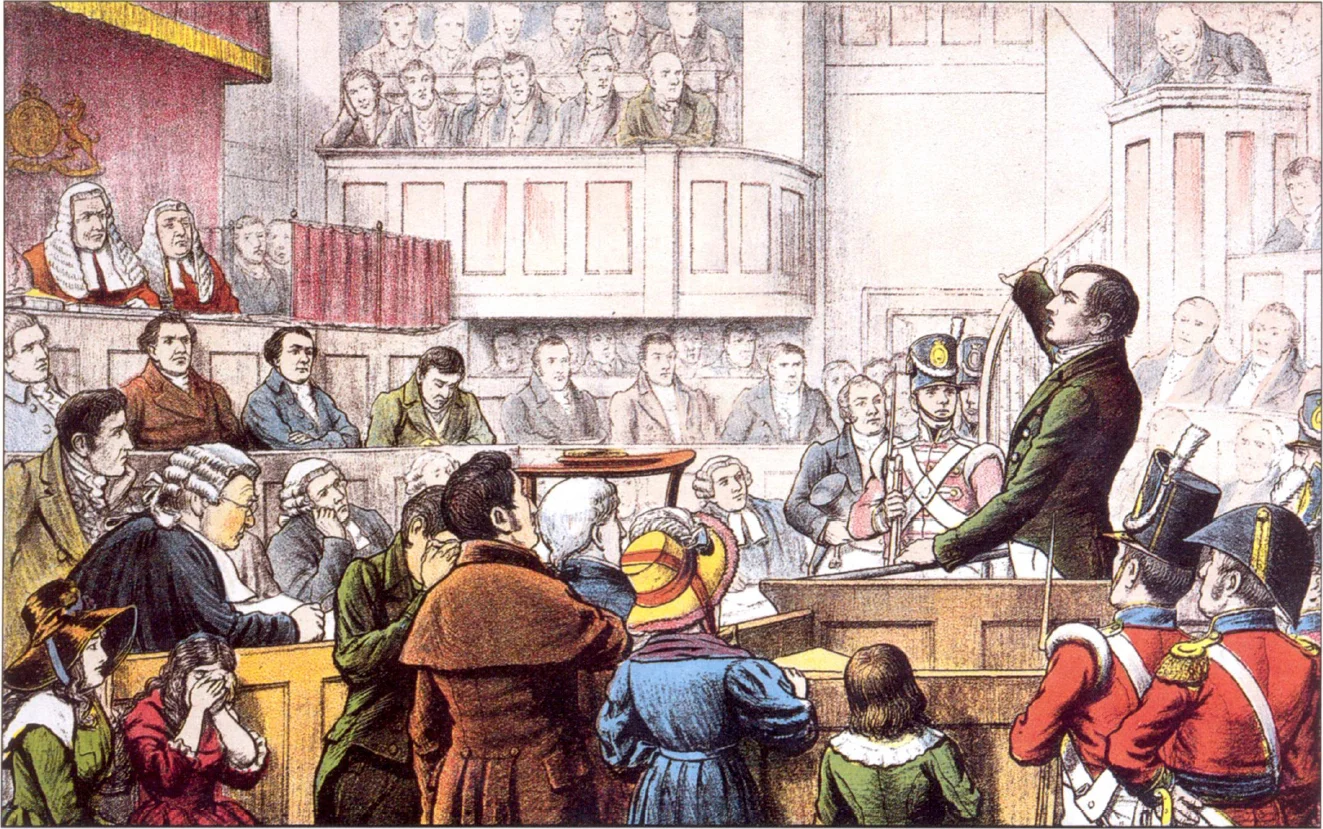
Otto Wels: 'You cannot take our honour', speech against Hitler's Enabling Act - 1933

September 11, 2015

Above video doesn’t have English subtitles. This one, backed by Mozart, which I can’t embed, does. It’s amazing.


23 March, 1933, Kroll Opera House, Berlin, Germany

With the communists excluded, Social Democrats leader Otto Wels was the only person to speak out against Hitler's Enabling Act when it was debated at the makeshift Reichstag at Kroll Opera House on 23 March 1933. The Act legally enabled Hitler's dictatorship, by allowing the Nazis to bypass parliament for a period of four years (eventually extended of course!). Wels went into exile in June 1933, and died in France in 1939. A brave man.

Translation: Thomas Dunlap

Ladies and gentlemen! We Social Democrats agree with the foreign policy demand raised by the Reich Chancellor of equal treatment for Germany, [and do so] all the more emphatically since we have always fundamentally championed it. In this context, I may be permitted the personal remark that I was the first German who stood up to the untruth of Germany’s guilt for the outbreak of the world war before an international forum, at the Bern Conference on February 3, 1919. Never was a principle of our party able to or did in fact prevent us from representing the just demands of the German nation to the other peoples of the world. The day before yesterday, as well, the Reich Chancellor made a statement in Potsdam to which we subscribe. It says: “From the lunacy of the theory of eternal winners and losers came the madness of reparations and, in their wake, the catastrophe of the world economy.” This statement is true for foreign politics; it is no less true for domestic politics. Here, too, the theory of eternal winners and losers is, as the Reich Chancellor says, lunacy. But the words of the Reich Chancellor remind us of others that were spoken in the National Assembly on July 23, 1919. At that time it was said: “We are defenseless; defenseless but not without honor. To be sure, the enemies are after our honor, there is no doubt. However, that this attempt at defamation will one day redound back upon the instigators, that it is not our honor that is being destroyed by this global catastrophe, that is our belief to the last breath.” (Interjection from the National Socialists: Who said that?)

This appears in a declaration that a social democratic-led government issued at the time in the name of the German people before the whole world, four hours before the truce expired, in order to prevent the enemies from marching further. – That declaration is a valuable supplement to the statement by the Reich Chancellor. A dictated peace is followed by few blessings, least of all at home. A real national community cannot be based on it. Its first prerequisite is equal law. The government may protect itself against raw excesses of polemics; it may rigorously prevent incitements to acts of violence and acts of violence in and of themselves. This may happen, if it is done toward all sides evenly and impartially, and if one foregoes treating defeated opponents as though they were proscribed. Freedom and life can be taken from us, but not our honor. After the persecutions that the Social Democratic Party has suffered recently, no one will reasonably demand or expect that it vote for the Enabling Act proposed here. The elections of March 5 have given the governing parties the majority and thus the possibility of governing in strict adherence to the words and meaning of the constitution. Where such a possibility exists, there is also an obligation to take it. Criticism is salutary and necessary. Never before, since there has been a German Reichstag, has the control of public affairs by the elected representatives of the people been eliminated to such an extent as is happening now, and is supposed to happen even more through the new Enabling Act. Such omnipotence of the government must have all the more serious repercussions inasmuch as the press, too, lacks any freedom of expression. Ladies and gentlemen! The situation that prevails in Germany today is often described in glaring colors. But as always in such cases, there is no lack of exaggeration. As far as my party is concerned, I declare here: we have neither asked for intervention in Paris, nor moved millions to Prague, nor spread exaggerated news abroad. It would be easier to stand up to such exaggerations if the kind of reporting that separates truth from falsehood were possible at home. It would be even better if we could attest in good conscience that full protection in justice has been restored for all. That, gentlemen, is up to you. The gentlemen of the National Socialist party call the movement they have unleashed a national revolution, not a National Socialist one. So far, the relationship of their revolution to socialism has been limited to the attempt to destroy the social democratic movement, which for more than two generations has been the bearer of socialist ideas and will remain so. If the gentlemen of the National Socialist Party wanted to perform socialist acts, they would not need an Enabling Law. They would be assured of an overwhelming majority in this house. Every motion submitted by them in the interest of workers, farmers, white-collar employees, civil servants, or the middle class could expect to be approved, if not unanimously, then certainly with an enormous majority.

And yet, they first want to eliminate the Reichstag in order to continue their revolution. But the destruction of that which exists does not make a revolution. The people are expecting positive accomplishments. They are waiting for effective measures against the terrible economic misery that exists not only in Germany but in the whole world. We Social Democrats bore the responsibility in the most difficult of times and for that we had stones cast at us. Our accomplishments for the reconstruction of the state and the economy, for the liberation of occupied territories, will stand the test of history. We have established equal justice for all and a social labor law. We have helped to create a Germany in which the path to leadership of the state is open not only to princes and barons, but also to men from the working class. You cannot back away from that without relinquishing your own leader. The attempt to turn back the wheel of history will be futile. We Social Democrats know that one cannot undo the facts of power politics with mere legal protests. We see the power-political fact of your present rule. But the people’s sense of justice is also a political power, and we shall not cease to appeal to this sense of justice. The Weimar Constitution is not a socialist constitution. But we stand by the principles enshrined in, the principles of a state based on the rule of law, of equal rights, of social justice. In this historic hour, we German Social Democrats solemnly pledge ourselves to the principles of humanity and justice, of freedom and socialism. No Enabling Act gives you the power to destroy ideas that are eternal and indestructible. After all, you yourselves have professed your adherence to Socialism. The Socialist Law has not destroyed social democracy. German social democracy will draw new strength also from the latest persecutions. We greet the persecuted and the oppressed. We greet our friends in the Reich. Your steadfastness and loyalty deserve admiration. The courage of your convictions and your unbroken optimism guarantee a brighter future.

Source of original German text: Otto Wels’s Speech against the Passage of the Enabling Act (March 23, 1933), in Paul Meier-Benneckenstein, ed., Dokumente der deutschen Politik, Volume 1: Die Nationalsozialistische Revolution 1933, edited by Axel Friedrichs. Berlin, 1935, pp. 36-38.

Source: https://www.youtube.com/watch?v=SimPsL7LYH...

Enjoyed this speech? Speakola is a labour of love and I’d be very grateful if you would share, tweet or like it. Thank you.

Facebook Twitter Facebook
In 1920-39 Tags OTTO WELS, ADOLF HITLER, GERMANY, WEIMAR, ENABLING ACT, WW2, TRANSCRIPT, TRANSLATED
1 Comment

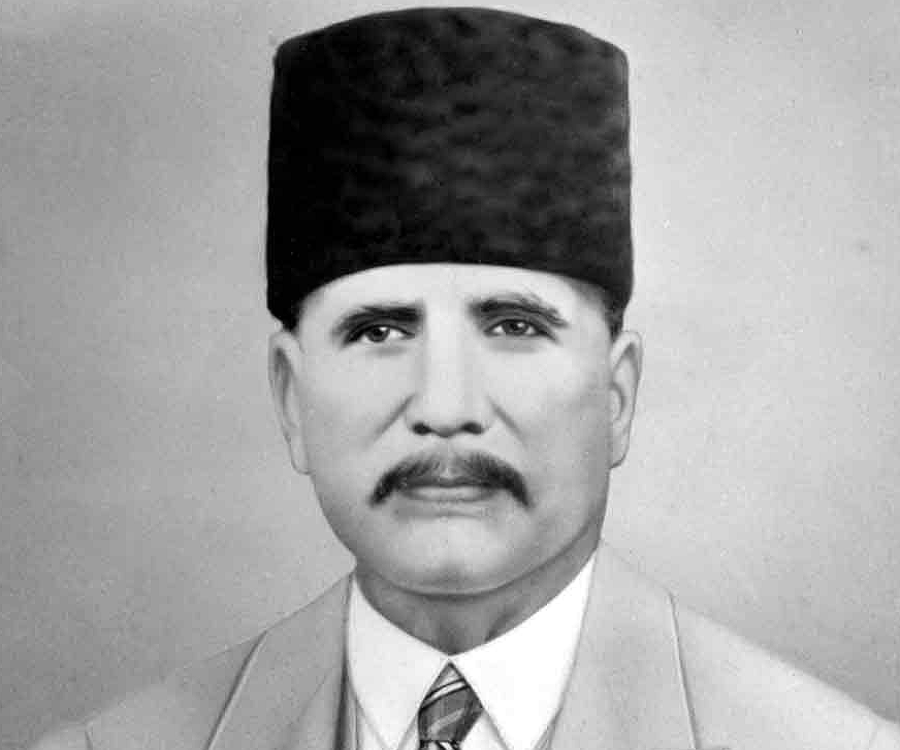
Muhammad Iqbal: 'Muslim India within India', Allalahad Address - 1930

September 11, 2015

29 December 1930, 25th Session of the All-India Muslim League, Allahabad, India

Gentlemen, I am deeply grateful to you for the honour you have conferred upon me in inviting me to preside over the deliberations of the All-India Muslim League at one of the most critical moments in the history of Muslim political thought and activity in India. I have no doubt that in this great assembly there are men whose political experience is far more extensive than mine, and for whose knowledge of affairs I have the highest respect. It will, therefore, be presumptuous on my part to claim to guide an assembly of such men in the political decisions which they are called upon to make today. I lead no party; I follow no leader. I have given the best part of my life to a careful study of Islam, its law and polity, its culture, its history and its literature. This constant contact with the spirit of Islam, as it unfolds itself in time, has, I think, given me a kind of insight into its significance as a world fact. It is in the light of this insight, whatever its value, that, while assuming that the Muslims of India are determined to remain true to the spirit of Islam, I propose not to guide you in your decisions, but to attempt the humbler task of bringing clearly to your consciousness the main principle which, in my opinion, should determine the general character of these decisions.

Islam and Nationalism

It cannot be denied that Islam, regarded as an ethical ideal plus a certain kind of polity – by which expression I mean a social structure regulated by a legal system and animated by a specific ethical ideal – has been the chief formative factor in the life-history of the Muslims of India. It has furnished those basic emotions and loyalties which gradually unify scattered individuals and groups, and finally transform them into a well-defined people, possessing a moral consciousness of their own. Indeed it is not an exaggeration to say that India is perhaps the only country in the world where Islam, as a people-building force, has worked at its best. In India, as elsewhere, the structure of Islam as a society is almost entirely due to the working of Islam as a culture inspired by a specific ethical ideal. What I mean to say is that Muslim society, with its remarkable homogeneity and inner unity, has grown to be what it is, under the pressure of the laws and institutions associated with the culture of Islam.

The ideas set free by European political thinking, however, are now rapidly changing the outlook of the present generation of Muslims both in India and outside India. Our younger men, inspired by these ideas, are anxious to see them as living forces in their own countries, without any critical appreciation of the facts which have determined their evolution in Europe. In Europe Christianity was understood to be a purely monastic order which gradually developed into a vast church organisation. The protest of Luther was directed against this church organisation, not against any system of polity of a secular nature, for the obvious reason that there was no such polity associated with Christianity. And Luther was perfectly justified in rising in revolt against this organisation; though, I think, he did not realise that in the peculiar conditions which obtained in Europe, his revolt would eventually mean the complete displacement of [the] universal ethics of Jesus by the growth of a plurality of national and hence narrower systems of ethics.

Thus the upshot of the intellectual movement initiated by such men as Rousseau and Luther was the break-up of the one into [the] mutually ill-adjusted many, the transformation of a human into a national outlook, requiring a more realistic foundation, such as the notion of country, and finding expression through varying systems of polity evolved on national lines, i.e. on lines which recognise territory as the only principle of political solidarity. If you begin with the conception of religion as complete other-worldliness, then what has happened to Christianity in Europe is perfectly natural. The universal ethics of Jesus is displaced by national systems of ethics and polity. The conclusion to which Europe is consequently driven is that religion is a private affair of the individual and has nothing to do with what is called man's temporal life.

Islam does not bifurcate the unity of man into an irreconcilable duality of spirit and matter. In Islam God and the universe, spirit and matter, Church and State, are organic to each other. Man is not the citizen of a profane world to be renounced in the interest of a world of spirit situated elsewhere. To Islam, matter is spirit realising itself in space and time. Europe uncritically accepted the duality of spirit and matter, probably from Manichaean thought. Her best thinkers are realising this initial mistake today, but her statesmen are indirectly forcing the world to accept it as an unquestionable dogma. It is, then, this mistaken separation of spiritual and temporal which has largely influenced European religious and political thought and has resulted practically in the total exclusion of Christianity from the life of European States. The result is a set of mutually ill-adjusted States dominated by interests not human but national. And these mutually ill-adjusted States, after trampling over the moral and religious convictions of Christianity, are today feeling the need of a federated Europe, i.e. the need of a unity which the Christian church organisation originally gave them, but which, instead of reconstructing it in the light of Christ's vision of human brotherhood, they considered fit to destroy under the inspiration of Luther.

A Luther in the world of Islam, however, is an impossible phenomenon; for here there is no church organisation similar to that of Christianity in the Middle Ages, inviting a destroyer. In the world of Islam we have a universal polity whose fundamentals are believed to have been revealed but whose structure, owing to our legists' [=legal theorists'] want of contact with the modern world, today stands in need of renewed power by fresh adjustments. I do not know what will be the final fate of the national idea in the world of Islam. Whether Islam will assimilate and transform it, as it has before assimilated and transformed many ideas expressive of a different spirit, or allow a radical transformation of its own structure by the force of this idea, is hard to predict. Professor Wensinck of Leiden (Holland) wrote to me the other day: "It seems to me that Islam is entering upon a crisis through which Christianity has been passing for more than a century. The great difficulty is how to save the foundations of religion when many antiquated notions have to be given up. It seems to me scarcely possible to state what the outcome will be for Christianity, still less what it will be for Islam." At the present moment the national idea is racialising the outlook of Muslims, and thus materially counteracting the humanizing work of Islam. And the growth of racial consciousness may mean the growth of standards different [from] and even opposed to the standards of Islam.

I hope you will pardon me for this apparently academic discussion. To address this session of the All-India Muslim League you have selected a man who is [=has] not despaired of Islam as a living force for freeing the outlook of man from its geographical limitations, who believes that religion is a power of the utmost importance in the life of individuals as well as States, and finally who believes that Islam is itself Destiny and will not suffer a destiny. Such a man cannot but look at matters from his own point of view. Do not think that the problem I am indicating is a purely theoretical one. It is a very living and practical problem calculated to affect the very fabric of Islam as a system of life and conduct. On a proper solution of it alone depends your future as a distinct cultural unit in India. Never in our history has Islam had to stand a greater trial than the one which confronts it today. It is open to a people to modify, reinterpret or reject the foundational principles of their social structure; but it is absolutely necessary for them to see clearly what they are doing before they undertake to try a fresh experiment. Nor should the way in which I am approaching this important problem lead anybody to think that I intend to quarrel with those who happen to think differently. You are a Muslim assembly and, I suppose, anxious to remain true to the spirit and ideals of Islam. My sole desire, therefore, is to tell you frankly what I honestly believe to be the truth about the present situation. In this way alone it is possible for me to illuminate, according to my light, the avenues of your political action.

The Unity of an Indian Nation

What, then, is the problem and its implications? Is religion a private affair? Would you like to see Islam as a moral and political ideal, meeting the same fate in the world of Islam as Christianity has already met in Europe? Is it possible to retain Islam as an ethical ideal and to reject it as a polity, in favor of national polities in which [the] religious attitude is not permitted to play any part? This question becomes of special importance in India, where the Muslims happen to be a minority. The proposition that religion is a private individual experience is not surprising on the lips of a European. In Europe the conception of Christianity as a monastic order, renouncing the world of matter and fixing its gaze entirely on the world of spirit, led, by a logical process of thought, to the view embodied in this proposition. The nature of the Prophet's religious experience, as disclosed in the Quran, however, is wholly different. It is not mere experience in the sense of a purely biological event, happening inside the experient and necessitating no reactions on its social environment. It is individual experience creative of a social order. Its immediate outcome is the fundamentals of a polity with implicit legal concepts whose civic significance cannot be belittled merely because their origin is revelational.

The religious ideal of Islam, therefore, is organically related to the social order which it has created. The rejection of the one will eventually involve the rejection of the other. Therefore the construction of a polity on national lines, if it means a displacement of the Islamic principle of solidarity, is simply unthinkable to a Muslim. This is a matter which at the present moment directly concerns the Muslims of India. "Man," says Renan, "is enslaved neither by his race, nor by his religion, nor by the course of rivers, nor by the direction of mountain ranges. A great aggregation of men, sane of mind and warm of heart, creates a moral consciousness which is called a nation." Such a formation is quite possible, though it involves the long and arduous process of practically remaking men and furnishing them with a fresh emotional equipment. It might have been a fact in India if the teaching of Kabir and the Divine Faith of Akbar had seized the imagination of the masses of this country. Experience, however, shows that the various caste units and religious units in India have shown no inclination to sink their respective individualities in a larger whole. Each group is intensely jealous of its collective existence. The formation of the kind of moral consciousness which constitutes the essence of a nation in Renan’s sense demands a price which the peoples of India are not prepared to pay.

The unity of an Indian nation, therefore, must be sought not in the negation, but in the mutual harmony and cooperation, of the many. True statesmanship cannot ignore facts, however unpleasant they may be. The only practical course is not to assume the existence of a state of things which does not exist, but to recognise facts as they are, and to exploit them to our greatest advantage. And it is on the discovery of Indian unity in this direction that the fate of India as well as of Asia really depends. India is Asia in miniature. Part of her people have cultural affinities with nations of the east, and part with nations in the middle and west of Asia. If an effective principle of cooperation is discovered in India, it will bring peace and mutual goodwill to this ancient land which has suffered so long, more because of her situation in historic space than because of any inherent incapacity of her people. And it will at the same time solve the entire political problem of Asia.

It is, however, painful to observe that our attempts to discover such a principle of internal harmony have so far failed. Why have they failed? Perhaps we suspect each other’s intentions and inwardly aim at dominating each other. Perhaps, in the higher interests of mutual cooperation, we cannot afford to part with the monopolies which circumstances have placed in our hands, and [thus we] conceal our egoism under the cloak of nationalism, outwardly simulating a large-hearted patriotism, but inwardly as narrow-minded as a caste or tribe. Perhaps we are unwilling to recognise that each group has a right to free development according to its own cultural traditions. But whatever may be the causes of our failure, I still feel hopeful. Events seem to be tending in the direction of some sort of internal harmony. And as far as I have been able to read the Muslim mind, I have no hesitation in declaring that if the principle that the Indian Muslim is entitled to full and free development on the lines of his own culture and tradition in his own Indian home-lands is recognized as the basis of a permanent communal settlement, he will be ready to stake his all for the freedom of India.

The principle that each group is entitled to its free development on its own lines is not inspired by any feeling of narrow communalism. There are communalisms and communalisms. A community which is inspired by feelings of ill-will towards other communities is low and ignoble. I entertain the highest respect for the customs, laws, religious and social institutions of other communities. Nay, it is my duty, according to the teaching of the Quran, even to defend their places of worship, if need be. Yet I love the communal group which is the source of my life and behaviour; and which has formed me what I am by giving me its religion, its literature, its thought, its culture, and thereby recreating its whole past as a living operative factor, in my present consciousness. Even the authors of the Nehru Report recognise the value of this higher aspect of communalism. While discussing the separation of Sind they say, "To say from the larger viewpoint of nationalism that no communal provinces should be created, is, in a way, equivalent to saying from the still wider international viewpoint that there should be no separate nations. Both these statements have a measure of truth in them. But the staunchest internationalist recognises that without the fullest national autonomy it is extraordinarily difficult to create the international State. So also without the fullest cultural autonomy – and communalism in its better aspect is culture – it will be difficult to create a harmonious nation."

Muslim India Within India

Communalism in its higher aspect, then, is indispensable to the formation of a harmonious whole in a country like India. The units of Indian society are not territorial as in European countries. India is a continent of human groups belonging to different races, speaking different languages, and professing different religions. Their behaviour is not at all determined by a common race-consciousness. Even the Hindus do not form a homogeneous group. The principle of European democracy cannot be applied to India without recognising the fact of communal groups. The Muslim demand for the creation of a Muslim India within India is, therefore, perfectly justified. The resolution of the All-Parties Muslim Conference at Delhi is, to my mind, wholly inspired by this noble ideal of a harmonious whole which, instead of stifling the respective individualities of its component wholes, affords them chances of fully working out the possibilities that may be latent in them. And I have no doubt that this House will emphatically endorse the Muslim demands embodied in this resolution.

Personally, I would go farther than the demands embodied in it. I would like to see the Punjab, North-West Frontier Province, Sind and Baluchistan amalgamated into a single State. Self-government within the British Empire, or without the British Empire, the formation of a consolidated North-West Indian Muslim State appears to me to be the final destiny of the Muslims, at least of North-West India. The proposal was put forward before the Nehru Committee. They rejected it on the ground that, if carried into effect, it would give a very unwieldy State. This is true in so far as the area is concerned; in point of population, the State contemplated by the proposal would be much less than some of the present Indian provinces. The exclusion of Ambala Division, and perhaps of some districts where non-Muslims predominate, will make it less extensive and more Muslim in population – so that the exclusion suggested will enable this consolidated State to give a more effective protection to non-Muslim minorities within its area. The idea need not alarm the Hindus or the British. India is the greatest Muslim country in the world. The life of Islam as a cultural force in the country very largely depends on its centralisation in a specified territory. This centralisation of the most living portion of the Muslims of India, whose military and police service has, notwithstanding unfair treatment from the British, made the British rule possible in this country, will eventually solve the problem of India as well as of Asia. It will intensify their sense of responsibility and deepen their patriotic feeling.

Thus, possessing full opportunity of development within the body politic of India, the North-West Indian Muslims will prove the best defenders of India against a foreign invasion, be that invasion one of ideas or of bayonets. The Punjab with 56 percent Muslim population supplies 54 percent of the total combatant troops in the Indian Army, and if the 19,000 Gurkhas recruited from the independent State of Nepal are excluded, the Punjab contingent amounts to 62 percent of the whole Indian Army. This percentage does not take into account nearly 6,000 combatants supplied to the Indian Army by the North-West Frontier Province and Baluchistan. From this you can easily calculate the possibilities of North-West Indian Muslims in regard to the defence of India against foreign aggression. The Right Hon'ble Mr. Srinivasa Sastri thinks that the Muslim demand for the creation of autonomous Muslim states along the north-west border is actuated by a desire "to acquire means of exerting pressure in emergencies on the Government of India." I may frankly tell him that the Muslim demand is not actuated by the kind of motive he imputes to us; it is actuated by a genuine desire for free development which is practically impossible under the type of unitary government contemplated by the nationalist Hindu politicians with a view to secure permanent communal dominance in the whole of India.

Nor should the Hindus fear that the creation of autonomous Muslim states will mean the introduction of a kind of religious rule in such states. I have already indicated to you the meaning of the word religion, as applied to Islam. The truth is that Islam is not a Church. It is a State conceived as a contractual organism long before Rousseau ever thought of such a thing, and animated by an ethical ideal which regards man not as an earth-rooted creature, defined by this or that portion of the earth, but as a spiritual being understood in terms of a social mechanism, and possessing rights and duties as a living factor in that mechanism. The character of a Muslim State can be judged from what the Times of India pointed out some time ago in a leader [=front-page article] on the Indian Banking Inquiry Committee. "In ancient India," the paper points out, "the State framed laws regulating the rates of interest; but in Muslim times, although Islam clearly forbids the realisation of interest on money loaned, Indian Muslim States imposed no restrictions on such rates." I therefore demand the formation of a consolidated Muslim State in the best interests of India and Islam. For India, it means security and peace resulting from an internal balance of power; for Islam, an opportunity to rid itself of the stamp that Arabian Imperialism was forced to give it, to mobilise its law, its education, its culture, and to bring them into closer contact with its own original spirit and with the spirit of modern times.

Federal States

Thus it is clear that in view of India's infinite variety in climates, races, languages, creeds and social systems, the creation of autonomous States, based on the unity of language, race, history, religion and identity of economic interests, is the only possible way to secure a stable constitutional structure in India. The conception of federation underlying the Simon Report necessitates the abolition of the Central Legislative Assembly as a popular assembly, and makes it an assembly of the representatives of federal States. It further demands a redistribution of territory on the lines which I have indicated. And the Report does recommend both. I give my wholehearted support to this view of the matter, and venture to suggest that the redistribution recommended in the Simon Report must fulfill two conditions. It must precede the introduction of the new constitution, and must be so devised as to finally solve the communal problem. Proper redistribution will make the question of joint and separate electorates automatically disappear from the constitutional controversy of India. It is the present structure of the provinces that is largely responsible for this controversy.

[The Hindu thinks that separate electorates are contrary to the spirit of true nationalism, because he understands the word nation to mean a kind of universal amalgamation in which no communal entity ought to retain its private individuality. Such a state of things, however, does not exist. Nor is it desirable that it should exist. India is a land of racial and religious variety. Add to this the general economic inferiority of the Muslims, their enormous debt, especially in the Punjab, and their insufficient majorities in some of the provinces as at present constituted, and you will begin to see clearly the meaning of our anxiety to retain separate electorates. In such a country and in such circumstances territorial electorates cannot secure adequate representation of all interests, and must inevitably lead to the creation of an oligarchy. The Muslims of India can have no objection to purely territorial electorates if provinces are demarcated so as to secure comparatively homogeneous communities possessing linguistic, racial, cultural and religious unity.

Federation As Understood in the Simon Report

But in so far as the question of the powers of the Central Federal State is concerned, there is a subtle difference of motive in the constitutions proposed by the pundits of India and the pundits of England. The pundits of India do not disturb the Central authority as it stands at present. All that they desire is that this authority should become fully responsible to the Central Legislature which they maintain intact and where their majority will become further reinforced on the nominated element ceasing to exist. The pundits of England, on the other hand, realising that democracy in the Centre tends to work contrary to their interests and is likely to absorb the whole power now in their hands, in case a further advance is made towards responsible government, have shifted the experience of democracy from the Centre to the provinces. No doubt, they introduce the principle of Federation and appear to have made a beginning by making certain proposals; yet their evaluation of this principle is determined by considerations wholly different to those which determine its value in the eyes of Muslim India. The Muslims demand federation because it is pre-eminently a solution of India’s most difficult problem, i.e. the communal problem. The Royal Commissioners' view of federation, though sound in principle, does not seem to aim at responsible government for federal States. Indeed it does not go beyond providing means of escape from the situation which the introduction of democracy in India has created for the British, and wholly disregards the communal problem by leaving it where it was.

Thus it is clear that, in so far as real federation is concerned, the Simon Report virtually negatives the principle of federation in its true significance. The Nehru Report, realising [a] Hindu majority in the Central Assembly, reaches a unitary form of government because such an institution secures Hindu dominance throughout India; the Simon Report retains the present British dominance behind the thin veneer of an unreal federation, partly because the British are naturally unwilling to part with the power they have so long wielded and partly because it is possible for them, in the absence of an inter-communal understanding in India, to make out a plausible case for the retention of that power in their own hands. To my mind a unitary form of government is simply unthinkable in a self-governing India. What is called "residuary powers" must be left entirely to self-governing States, the Central Federal State exercising only those powers which are expressly vested in it by the free consent of federal States. I would never advise the Muslims of India to agree to a system, whether of British or of Indian origin, which virtually negatives the principle of true federation, or fails to recognise them as a distinct political entity.

Federal Scheme As Discussed in the Round Table Conference

The necessity for a structural change in the Central Government was seen probably long before the British discovered the most effective means for introducing this change. That is why at rather a late stage it was announced that the participation of the Indian Princes in the Round Table Conference was essential. It was a kind of surprise to the people of India, particularly the minorities, to see the Indian Princes dramatically expressing their willingness at the Round Table Conference to join an all-India federation and, as a result of their declaration, Hindu delegates – uncompromising advocates of a unitary form of government – quietly agreeing to the evolution of a federal scheme. Even Mr. Sastri who only a few days before had severely criticised Sir John Simon for recommending a federal scheme for India, suddenly became a convert and admitted his conversion in the plenary session of the Conference – thus offering the Prime Minister of England an occasion for one of his wittiest observations in his concluding speech. All this has a meaning both for the British who have sought the participation of the Indian Princes, and for the Hindus who have unhesitatingly accepted the evolution of an all-India federation. The truth is that the participation of the Indian Princes, among whom only a few are Muslims, in a federation scheme serves a double purpose. On the one hand, it serves as an all-important factor in maintaining the British power in India practically as it is; on the other hand, it gives [an] overwhelming majority to the Hindus in an All-India Federal Assembly.

It appears to me that the Hindu-Muslim differences regarding the ultimate form of the Central Government are being cleverly exploited by British politicians through the agency of the Princes who see in the scheme prospects of better security for their despotic rule. If the Muslims silently agree to any such scheme, it will simply hasten their end as a political entity in India. The policy of the Indian federation thus created, will be practically controlled by [the] Hindu Princes forming the largest group in the Central Federal Assembly. They will always lend their support to the Crown in matters of Imperial concern; and in so far as internal administration of the country is concerned, they will help in maintaining and strengthening the supremacy of the Hindus. In other words, the scheme appears to be aiming at a kind of understanding between Hindu India and British Imperialism – you perpetuate me in India, and I in return give you a Hindu oligarchy to keep all other Indian communities in perpetual subjection. If, therefore, the British Indian provinces are not transformed into really autonomous States, the Princes' participation in a scheme of Indian federation will be interpreted only as a dexterous move on the part of British politicians to satisfy, without parting with any real power, all parties concerned – Muslims with the word federation; Hindus with a majority in the Centre; the British Imperialists – with the substance of real power.

The number of Hindu States in India is far greater than Muslim States; and it remains to be seen how the Muslim demand for 33 percent [of the] seats in the Central Federal Assembly is to be met within a House or Houses constituted of representatives taken from British India as well as Indian States. I hope the Muslim delegates are fully aware of the implications of the federal scheme as discussed in the Round Table Conference. The question of Muslim representation in the proposed all-India federation has not yet been discussed. "The interim report," says Reuters' summary, "contemplates two chambers in the Federal Legislature, each containing representatives both of British India and States, the proportion of which will be a matter of subsequent consideration under the heads which have not yet been referred to the Sub-Committee." In my opinion the question of proportion is of the utmost importance and ought to have been considered simultaneously with the main question of the structure of the Assembly.

The best course, I think, would have been to start with a British Indian Federation only. A federal scheme born of an unholy union between democracy and despotism cannot but keep British India in the same vicious circle of a unitary Central Government. Such a unitary form may be of the greatest advantage to the British, to the majority community in British India, and to the Indian Princes; it can be of no advantage to the Muslims, unless they get majority rights in five out of eleven Indian provinces with full residuary powers, and one-third share of seats in the total House of the Federal Assembly. In so far as the attainment of sovereign powers by the British Indian provinces is concerned, the position of His Highness the Ruler of Bhopal, Sir Akbar Hydari, and Mr. Jinnah is unassailable. In view, however, of the participation of the Princes in the Indian Federation, we must now see our demand for representation in the British Indian Assembly in a new light. The questions is not one of [the] Muslim share in a British Indian Assembly, but one which relates to representation of British Indian Muslims in an All-India Federal Assembly. Our demand for 33 per cent must now be taken as a demand for the same proportion in the All-India Federal Assembly, exclusive of the share allotted to the Muslim states entering the Federation.

The Problem of Defence

The other difficult problem which confronts the successful working of a federal system in India is the problem of India's defence. In their discussion of this problem the Royal Commissioners have marshalled all the deficiencies of India in order to make out a case for Imperial administration of the Army. "India and Britain," say the Commissioners, "are so related that India's defence cannot, now or in any future which is within sight, be regarded as a matter of purely Indian concern. The control and direction of such an army must rest in the hands of agents of Imperial Government." Now, does it [not] necessarily follow from this that further progress towards the realisation of responsible government in British India is barred until the work of defence can be adequately discharged without the help of British officers and British troops? As things are, there is a block on the line of constitutional advance. All hopes of evolution in the Central Government towards the ultimate goal prescribed in the declaration of 20th August 1917, are in danger of being indefinitely frustrated, if the attitude illustrated by the Nehru Report is maintained, that any future change involves the putting of the administration of the army under the authority of an elected Indian Legislature. Further to fortify their argument they emphasize the fact of competing religions and rival races of widely different capacity, and try to make the problem look insoluble by remarking that "the obvious fact that India is not, in the ordinary and natural sense, a single nation is nowhere made more plain than in considering the difference between the martial races of India and the rest." These features of the question have been emphasised in order to demonstrate that the British are not only keeping India secure from foreign menace but are also the "neutral guardians" of internal security.

However, in federated India, as I understand federation, the problem will have only one aspect, i.e. external defence. Apart from provincial armies necessary for maintaining internal peace, the Indian Federal Congress can maintain, on the north-west frontier, a strong Indian Frontier Army, composed of units recruited from all provinces and officered by efficient and experienced military men taken from all communities. I know that India is not in possession of efficient military officers, and this fact is exploited by the Royal Commissioners in the interest of an argument for Imperial administration. On this point I cannot but quote another passage from the Report which, to my mind, furnishes the best argument against the position taken up by the Commissioners. "At the present moment," says the Report, "no Indian holding the King's Commission is of higher army rank than a captain. There are, we believe, 39 captains of whom 25 are in ordinary regimental employ. Some of them are of an age which would prevent their attaining much higher rank, even if they passed the necessary examination before retirement. Most of these have not been through Sandhurst, but got their Commissions during the Great War." Now, however genuine may be the desire, and however earnest the endeavour to work for this transformation, overriding conditions have been so forcibly expressed by the Skeen Committee (whose members, apart from the Chairman and the Army Secretary, were Indian gentlemen) in these words: Progress...must be contingent upon success being secured at each stage and upon military efficiency being maintained, though it must in any case render such development measured and slow. A higher command cannot be evolved at short notice out of existing cadres of Indian officers, all of junior rank and limited experience. Not until the slender trickle of suitable Indian recruits for the officer class – and we earnestly desire an increase in their numbers – flows in much greater volume, not until sufficient Indians have attained the experience and training requisite to provide all the officers for, at any rate, some Indian regiments, not until such units have stood the only test which can possibly determine their efficiency, and not until Indian officers have qualified by a successful army career for the high command, will it be possible to develop the policy of Indianisation to a point which will bring a completely Indianised army within sight. Even then years must elapse before the process could be completed."

Now I venture to ask: who is responsible for the present state of things? Is it due to some inherent incapacity of our martial races, or to the slowness of the process of military training? The military capacity of our martial races is undeniable. The process of military training may be slow as compared to other processes of human training. I am no military expert to judge this matter. But as a layman I feel that the argument, as stated, assumes the process to be practically endless. This means perpetual bondage for India, and makes it all the more necessary that the Frontier Army, as suggested by the Nehru Report, be entrusted to the charge of a committee of defence, the personnel of which may be settled by mutual understanding.

Again, it is significant that the Simon Report has given extraordinary importance to the question of India's land frontier, but has made only passing references to its naval position. India has doubtless had to face invasions from her land frontier; but it is obvious that her present masters took possession of her on account of her defenceless sea coast. A self-governing and free India will, in these days, have to take greater care of her sea coast than [of her] land frontiers.

I have no doubt that if a Federal Government is established, Muslim federal States will willingly agree, for purposes of India's defence, to the creation of neutral Indian military and naval forces. Such a neutral military force for the defence of India was a reality in the days of Mughal rule. Indeed in the time of Akbar the Indian frontier was, on the whole, defended by armies officered by Hindu generals. I am perfectly sure that the scheme for a neutral Indian army, based on a federated India, will intensify Muslim patriotic feeling, and finally set at rest the suspicion, if any, of Indian Muslims joining Muslims from beyond the frontier in the event of an invasion.

The Alternative

I have thus tried briefly to indicate the way in which the Muslims of India ought, in my opinion, to look at the two most important constitutional problems of India. A redistribution of British India, calculated to secure a permanent solution of the communal problem, is the main demand of the Muslims of India. If, however, the Muslim demand of a territorial solution of the communal problem is ignored, then I support, as emphatically as possible, the Muslim demands repeatedly urged by the All-India Muslim League and the All-India Muslim Conference. The Muslims of India cannot agree to any constitutional changes which affect their majority rights, to be secured by separate electorates in the Punjab and Bengal, or [which] fail to guarantee them 33 percent representation in any Central Legislature. There were two pitfalls into which Muslim political leaders fell. The first was the repudiated Lucknow Pact, which originated in a false view of Indian nationalism and deprived the Muslims of India of chances of acquiring any political power in India. The second is the narrow-visioned sacrifice of Islamic solidarity, in the interests of what may be called Punjab ruralism, resulting in a proposal which virtually reduces the Punjab Muslims to a position of minority. It is the duty of the League to condemn both the Pact and the proposal.

The Simon Report does great injustice to the Muslims in not recommending a statutory majority for the Punjab and Bengal. It would make the Muslims either stick to the Lucknow Pact or agree to a scheme of joint electorates. The despatch of the Government of India on the Simon Report admits that since the publication of that document the Muslim community has not expressed its willingness to accept any of the alternatives proposed by the Report. The despatch recognises that it may be a legitimate grievance to deprive the Muslims in the Punjab and Bengal of representation in the councils in proportion to their population merely because of weightage allowed to Muslim minorities elsewhere. But the despatch of the Government of India fails to correct the injustice of the Simon Report. In so far as the Punjab is concerned – and this is the most crucial point – it endorses the so-called "carefully balanced scheme" worked out by the official members of the Punjab Government which gives the Punjab Muslims a majority of two over Hindus and Sikhs combined, and a proportion of 49 percent of the House as a whole. It is obvious that the Punjab Muslims cannot be satisfied with less than a clear majority in the total House. However, Lord Irwin and his Government do recognise that the justification for communal electorates for majority communities would not cease unless and until by the extension of franchise their voting strength more correctly reflects their population; and further unless a two-thirds majority of the Muslim members in a provincial Council unanimously agree to surrender the right of separate representation. I cannot, however, understand why the Government of India, having recognised the legitimacy of the Muslim grievances, have not had the courage to recommend a statutory majority for the Muslims in the Punjab and Bengal.

Nor can the Muslims of India agree to any such changes which fail to create at least Sind as a separate province and treat the North-West Frontier Province as a province of inferior political status. I see no reason why Sind should not be united with Baluchistan and turned into a separate province. It has nothing in common with Bombay Presidency. In point of life and civilization the Royal Commissioners find it more akin to Mesopotamia and Arabia than India. The Muslim geographer Mas'udi noticed this kinship long ago when he said: "Sind is a country nearer to the dominions of Islam." The first Omayyad ruler is reported to have said of Egypt: "Egypt has her back towards Africa and face towards Arabia." With necessary alterations the same remark describes the exact situation of Sind. She has her back towards India and face towards Central Asia. Considering further the nature of her agricultural problems which can invoke no sympathy from the Bombay Government, and her infinite commercial possibilities, dependent on the inevitable growth of Karachi into a second metropolis of India, it is unwise to keep her attached to a Presidency which, though friendly today, is likely to become a rival at no distant period. Financial difficulties, we are told, stand in the way of separation. I do not know of any definite authoritative pronouncement on the matter. But assuming there are any such difficulties, I see no reason why the Government of India should not give temporary financial help to a promising province in her struggle for independent progress.

As to the North-West Frontier Province, it is painful to note that the Royal Commissioners have practically denied that the people of this province have any right to reform. They fall far short of the Bray Committee, and the Council recommended by them is merely a screen to hide the autocracy of the Chief Commissioner. The inherent right of the Afghan to light a cigarette is curtailed merely because he happens to be living in a powder house. The Royal Commissioners' epigrammatic argument is pleasant enough, but far from convincing. Political reform is light, not fire; and to light every human being is entitled, whether he happens to live in a powder house or a coal mine. Brave, shrewd, and determined to suffer for his legitimate aspirations, the Afghan is sure to resent any attempt to deprive him of opportunities of full self-development. To keep such a people contented is in the best interest of both England and India. What has recently happened in that unfortunate province is the result of a step-motherly treatment shown to the people since the introduction of the principle of self-government in the rest of India. I only hope that British statesmanship will not obscure its view of the situation by hoodwinking itself into the belief that the present unrest in the province is due to any extraneous causes.

The recommendation for the introduction of a measure of reform in the North-West Frontier Province made in the Government of India's despatch is also unsatisfactory. No doubt, the despatch goes farther than the Simon Report in recommending a sort of representative Council and a semi-representative cabinet, but it fails to treat this important Muslim province on [an] equal footing with other Indian provinces. Indeed the Afghan is, by instinct, more fitted for democratic institutions than any other people in India.

The Round Table Conference

I think I am now called upon to make a few observations on the Round Table Conference. Personally I do not feel optimistic as to the results of this Conference. It was hoped that away from the actual scene of communal strife and in a changed atmosphere, better counsels would prevail and a genuine settlement of the differences between the two major communities of India would bring India's freedom within sight. Actual events, however, tell a different tale. Indeed, the discussion of the communal question in London has demonstrated more clearly than ever the essential disparity between the two great cultural units of India. Yet the Prime Minister of England apparently refuses to see that the problem of India is international and not national. He is reported to have said that "his government would find it difficult to submit to Parliament proposals for the maintenance of separate electorates, since joint electorates were much more in accordance with British democratic sentiments." Obviously he does not see that the model of British democracy cannot be of any use in a land of many nations; and that a system of separate electorates is only a poor substitute for a territorial solution of the problem. Nor is the Minorities Sub-Committee likely to reach a satisfactory settlement. The whole question will have to go before the British Parliament; and we can only hope that the keen-sighted representatives of [the] British nation, unlike most of our Indian politicians, will be able to pierce through the surface of things and see clearly the true fundamentals of peace and security in a country like India. To base a constitution on the concept of a homogeneous India, or to apply to India principles dictated by British democratic sentiments, is unwittingly to prepare her for a civil war. As far as I can see, there will be no peace in the country until the various peoples that constitute India are given opportunities of free self-development on modern lines without abruptly breaking with their past.

I am glad to be able to say that our Muslim delegates fully realise the importance of a proper solution of what I call [the] Indian international problem. They are perfectly justified in pressing for a solution of the communal question before the question of responsibility in the Central Government is finally settled. No Muslim politician should be sensitive to the taunt embodied in that propaganda word– communalism – expressly devised to exploit what the Prime Minister calls British democratic sentiments, and to mislead England into assuming a state of things which does not really exist in India. Great interests are at stake. We are 70 millions, and far more homogeneous than any other people in India. Indeed the Muslims of India are the only Indian people who can fitly be described as a nation in the modern sense of the word. The Hindus, though ahead of us in almost all respects, have not yet been able to achieve the kind of homogeneity which is necessary for a nation, and which Islam has given you as a free gift. No doubt they are anxious to become a nation, but the process of becoming a nation is kind of travail, and in the case of Hindu India involves a complete overhauling of her social structure.

Nor should the Muslim leaders and politicians allow themselves to be carried away by the subtle but fallacious argument that Turkey and Persia and other Muslim countries are progressing on national, i.e. territorial, lines. The Muslims of India are differently situated. The countries of Islam outside India are practically wholly Muslim in population. The minorities there belong, in the language of the Quran, to the 'people of the Book'. There are no social barriers between Muslims and the 'people of the Book'. A Jew or a Christian or a Zoroastrian does not pollute the food of a Muslim by touching it, and the law of Islam allows intermarriage with the 'people of the Book'. Indeed the first practical step that Islam took towards the realisation of a final combination of humanity was to call upon peoples possessing practically the same ethical ideal to come forward and combind. The Quran declares: "O people of the Book! Come, let us join together on the 'word' (Unity of God), that is common to us all." The wars of Islam and Christianity, and later, European aggression in its various forms, could not allow the infinite meaning of this verse to work itself out in the world of Islam. Today it is being gradually realised in the countries of Islam in the shape of what is called Muslim Nationalism.

It is hardly necessary for me to add that the sole test of the success of our delegates is the extent to which they are able to get the non-Muslim delegates of the Conference to agree to our demands as embodied in the Delhi Resolution. If these demands are not agreed to, then a question of a very great and far-reaching importance will arise for the community. Then will arrive the moment for independent and concerted political action by the Muslims of India. If you are at all serious about your ideals and aspirations, you must be ready for such an action. Our leading men have done a good deal of political thinking, and their thought has certainly made us, more or less, sensitive to the forces which are now shaping the destinies of peoples in India and outside India. But, I ask, has this thinking prepared us for the kind of action demanded by the situation which may arise in the near future?

Let me tell you frankly that, at the present moment, the Muslims of India are suffering from two evils. The first is the want of personalities. Sir Malcolm Hailey and Lord Irwin were perfectly correct in their diagnosis when they told the Aligarh University that the community had failed to produce leaders. By leaders I mean men who, by Divine gift or experience, possess a keen perception of the spirit and destiny of Islam, along with an equally keen perception of the trend of modern history. Such men are really the driving forces of a people, but they are God’s gift and cannot be made to order.

The second evil from which the Muslims of India are suffering is that the community is fast losing what is called the herd instinct. This [loss] makes it possible for individuals and groups to start independent careers without contributing to the general thought and activity of the community. We are doing today in the domain of politics what we have been doing for centuries in the domain of religion. But sectional bickerings in religion do not do much harm to our solidarity. They at least indicate an interest in what makes the sole principle of our structure as a people. Moreover, the principle is so broadly conceived that it is almost impossible for a group to become rebellious to the extent of wholly detaching itself from the general body of Islam. But diversity in political action, at a moment when concerted action is needed in the best interests of the very life of our people, may prove fatal.

How shall we, then, remedy these two evils? The remedy of the first evil is not in our hands. As to the second evil, I think it is possible to discover a remedy. I have got definite views on the subject; but I think it is proper to postpone their expression till the apprehended situation actually arises. In case it does arise, leading Muslims of all shades of opinion will have to meet together, not to pass resolutions, but finally to determine the Muslim attitude and to show the path to tangible achievement. In this address I mention this alternative only because I wish that you may keep it in mind and give some serious thought to it in the meantime.

The Conclusion

[[10a]] Gentlemen, I have finished. In conclusion I cannot but impress upon you that the present crisis in the history of India demands complete organisation and unity of will and purpose in the Muslim community, both in your own interest as a community, and in the interest of India as a whole. The political bondage of India has been and is a source of infinite misery to the whole of Asia. It has suppressed the spirit of the East and wholly deprived her of that joy of self-expression which once made her the creator of a great and glorious culture. We have a duty towards India where we are destined to live and die. We have a duty towards Asia, especially Muslim Asia. And since 70 millions of Muslims in a single country constitute a far more valuable asset to Islam than all the countries of Muslim Asia put together, we must look at the Indian problem not only from the Muslim point of view, but also from the standpoint of the Indian Muslim as such. Our duty towards Asia and India cannot be loyally performed without an organised will fixed on a definite purpose. In your own interest, as a political entity among other political entities of India, such an equipment is an absolute necessity.

Our disorganised condition has already confused political issues vital to the life of the community. I am not hopeless of an intercommunal understanding, but I cannot conceal from you the feeling that in the near future our community may be called upon to adopt an independent line of action to cope with the present crisis. And an independent line of political action, in such a crisis, is possible only to a determined people, possessing a will focalised by a single purpose. Is it possible for you to achieve the organic wholeness of a unified will? Yes, it is. Rise above sectional interests and private ambitions, and learn to determine the value of your individual and collective action, however directed on material ends, in the light of the ideal which you are supposed to represent. Pass from matter to spirit. Matter is diversity; spirit is light, life and unity.

One lesson I have learnt from the history of Muslims. At critical moments in their history it is Islam that has saved Muslims and not vice versa. If today you focus your vision on Islam and seek inspiration from the ever-vitalising idea embodied in it, you will be only reassembling your scattered forces, regaining your lost integrity, and thereby saving yourself from total destruction. One of the profoundest verses in the Holy Quran teaches us that the birth and rebirth of the whole of humanity is like the birth and rebirth of a single individual. Why cannot you who, as a people, can well claim to be the first practical exponents of this superb conception of humanity, live and move and have your being as a single individual? I do not wish to mystify anybody when I say that things in India are not what they appear to be. The meaning of this, however, will dawn upon you only when you have achieved a real collective ego to look at them. In the words of the Quran, "Hold fast to yourself; no one who erreth can hurt you, provided you are well guided"

Source: http://www.columbia.edu/itc/mealac/pritche...

Enjoyed this speech? Speakola is a labour of love and I’d be very grateful if you would share, tweet or like it. Thank you.

Facebook Twitter Facebook
In 1920-39 Tags INDIA, PAKISTAN, MUSLIM INDIA, IQBAL, TRANSCRIPT
Comment

Pádraic Pearse: 'Ireland unfree shall never be at peace', O’Donovan Rossa’s funeral - 1915

September 11, 2015

1 August 1915, Glasnevin Cemetery, Dublin, Ireland

It has seemed right, before we turn away from this place in which we have laid the mortal remains of O'Donovan Rossa, that one amongst us should, in the name of all, speak the praise of that valiant man, and endeavour to formulate the thought and the hope that are in us as we stand around his grave. And if there is anything that makes it fitting that I rather than some other. I, rather than one of the grey-haired men who were young with him, and shared in his labour and in his suffering, should speak here, it is, perhaps, that I may be taken as speaking on behalf of a new generation that has been re-baptised in the Fenian faith, and that has accepted the responsibility of carrying out the Fenian programme. I propose to you, then, that here by the grave of this unrepentant Fenian, we renew our baptismal vows; that here by the grave of this unconquered and unconquerable man, we ask of God, each one for himself, such unshakeable purpose, such high and gallant courage, such unbreakable strength of soul as belonged to O'Donovan Rossa.

"Deliberately here we avow ourselves, as he avowed himself in the dock, Irishmen of one allegiance only. We, of the Irish Volunteers, and you others who are associated with us in to-day's task and duty, are bound together, and must stand together henceforth in brotherly union for the achievement of the freedom of Ireland. And we know only one definition of freedom: It is Tone's definition; it is Mitchel's definition; it is Rossa's definition. Let no one blaspheme the cause that the dead generations of Ireland served by giving it any other name and definition than their name and definition.

We stand at Rossa's grave, not in sadness, but rather in exaltation of spirit that it has been given us to come thus into so close a communion with that brave and splendid Gael. Splendid and holy causes are served by men who are themselves splendid and holy. O'Donovan Rossa was splendid in the proud manhood of him--splendid in the heroic grace of him, splendid in the Gaelic strength and clarity and truth of him. And all that splendour, and pride, and strength was compatible with a humility and a simplicity of devotion to Ireland, to all that was olden and beautiful and Gaelic in Ireland; the holiness and simplicity of patriotism of a Michael O'Clery or of an Eoghan O'Growney. The clear true eyes of this man almost alone in his day visioned Ireland as we to-day would surely have her--not free merely but Gaelic as well; not Gaelic merely, but free as well.

In a closer spiritual communion with him now than ever before, or perhaps ever again, in spiritual communion with those of his day living and dead, who suffered with him in English prisons, in communion of spirit too with our own dear comrades who suffer in English prisons to-day, and speaking on their behalf as well as our own, we pledge to Ireland our love, and we pledge to English rule in Ireland our hate. This is a place of peace, sacred to the dead, where men should speak with all charity and with all restraint; but I hold it a Christian thing, as O'Donovan Rossa held it, to hate evil, to hate untruth, to hate oppression, and hating them, to strive to overthrow them. Our foes are strong, and wise, and wary; but strong and wise and wary as they are, they cannot undo the miracles of God, Who ripens in the hearts of young men the seeds sown by the young men of a former generation. And the seeds sown by the young men of '65 and '67 are coming to their miraculous ripening to-day. Rulers and Defenders of Realms had need to be wary it they would guard against such processes. Life springs from death, and from the graves of patriot men and women spring live nations. The defenders of this realm have worked well in secret and in the open. They think that they have pacified Ireland. They think that they have purchased half of us, and intimidated the other half. They think that they have foreseen everything. They think that they have provided against everything; but the fools, the fools, the fools! they have left us our Fenian dead, and while Ireland holds these graves, Ireland unfree shall never be at peace.

Enjoyed this speech? Speakola is a labour of love and I’d be very grateful if you would share, tweet or like it. Thank you.

Facebook Twitter Facebook
In 1900-19 Tags PATRICK PEARSE, EASTER RISING, O'DONOVAN ROSSA, REPUBLICANISM, IRELAND, HOME RULE
Comment

Mark Twain: 'I should like to see the time come when women shall help to make the laws', Votes for Women - 1901

September 11, 2015

20 January, 1901, Hebrew Technical School for Girls, Temple Emmanuel, New York City, USA

It is a small help that I can afford, but it is just such help that one can give as coming from the heart through the mouth. The report of Mr. Meyer was admirable, and I was as interested in it as you have been. Why, I'm twice as old as he, and I've had so much experience that I would say to him, when he makes his appeal for help: "Don't make it for to-day or to-morrow, but collect the money on the spot."

We are all creatures of sudden impulse. We must be worked up by steam, as it were. Get them to write their wills now, or it may be too late by-and-by. Fifteen or twenty years ago I had an experience I shall never forget. I got into a church which was crowded by a sweltering and panting multitude. The city missionary of our town—Hartford—made a telling appeal for help. He told of personal experiences among the poor in cellars and top lofts requiring instances of devotion and help. The poor are always good to the poor. When a person with his millions gives a hundred thousand dollars it makes a great noise in the world, but he does not miss it; it's the widow's mite that makes no noise but does the best work.

I remember on that occasion in the Hartford church the collection was being taken up. The appeal had so stirred me that I could hardly wait for the hat or plate to come my way. I had four hundred dollars in my pocket, and I was anxious to drop it in the plate and wanted to borrow more. But the plate was so long in coming my way that the fever-heat of beneficence was going down lower and lower—going down at the rate of a hundred dollars a minute. The plate was passed too late. When it finally came to me, my enthusiasm had gone down so much that I kept my four hundred dollars—and stole a dime from the plate. So, you see, time sometimes leads to crime.

Oh, many a time have I thought of that and regretted it, and I adjure you all to give while the fever is on you.

Referring to woman's sphere in life, I'll say that woman is always right. For twenty-five years I've been a woman's rights man. I have always believed, long before my mother died, that, with her gray hairs and admirable intellect, perhaps she knew as much as I did. Perhaps she knew as much about voting as I.

I should like to see the time come when women shall help to make the laws. I should like to see that whip-lash, the ballot, in the hands of women. As for this city's government, I don't want to say much, except that it is a shame—a shame; but if I should live twenty-five years longer—and there is no reason why I shouldn't—I think I'll see women handle the ballot. If women had the ballot to-day, the state of things in this town would not exist.

If all the women in this town had a vote to-day they would elect a mayor at the next election, and they would rise in their might and change the awful state of things now existing here.


Source: http://www.gutenberg.org/files/3188/3188-h...

Enjoyed this speech? Speakola is a labour of love and I’d be very grateful if you would share, tweet or like it. Thank you.

Facebook Twitter Facebook
In 1900-19 Tags MARK TWAIN, VOTES FOR WOMEN, WOMEN'S RIGHTS, TRANSCRIPT
Comment

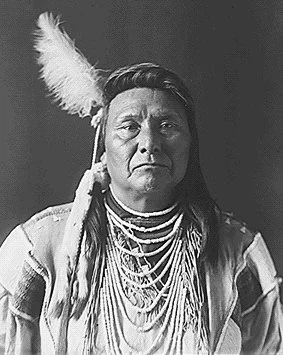
Nez Perce Chief Joseph: 'I will fight no more forever', Surrender speech - 1877

September 11, 2015

5 October, 1877, Bear Paw Mountains, Montana, USA

Tell General Howard I know his heart. What he told me before, I have it in my heart. I am tired of fighting. Our Chiefs are killed; Looking Glass is dead, Ta Hool Hool Shute is dead. The old men are all dead. It is the young men who say yes or no. He who led on the young men is dead. It is cold, and we have no blankets; the little children are freezing to death. My people, some of them, have run away to the hills, and have no blankets, no food. No one knows where they are - perhaps freezing to death. I want to have time to look for my children, and see how many of them I can find. Maybe I shall find them among the dead. Hear me, my Chiefs! I am tired; my heart is sick and sad. From where the sun now stands I will fight no more forever.

Source: http://www.historyplace.com/speeches/josep...

Enjoyed this speech? Speakola is a labour of love and I’d be very grateful if you would share, tweet or like it. Thank you.

Facebook Twitter Facebook
In Pre 1900 Tags CHIEF JOSEPH, NEZ PERCE, NATIVE AMERICAN, SURRENDER, I WILL FIGHT NO MORE FOREVER, TRANSCRIPT
Comment

Otto von Bismarck: 'We are perhaps too educated to put up with a constitution', Blood and Iron speech - 1862

September 11, 2015

30 September, 1862, Landtag (legislature), Prussia

He would like to go into the budget for 1862, though without making a prejudicial statement. An abuse of constitutional rights could be undertaken by any side; this would then lead to a reaction from the other side.

The Crown for example could dissolve parliament twelve times in a row, that would certainly be permitted according to the letter of the constitution, but it would be an abuse.

It could just as easily reject cuts in the budget, immoderately. It would be hard to tell where to draw the line there. Would it be at 6 million? At 16? Or at 60?

There are members of the National Association [Nationalverein] of this association that has achieved a reputation owing to the justness of its demands, highly esteemed members who have stated that all standing armies are superfluous. Well, what if a public assembly had this view! Would not a government have to reject this?

There was talk about the sobriety of the Prussian people. Yes, the great independence of the individual makes it difficult in Prussia to govern with the constitution or to consolidate the constitution.

In France things are different, there this individual independence is lacking. A constitutional crisis would not be disgraceful, but honorable instead.

Furthermore, we are perhaps too well-educated to support a constitution. We are too critical. The ability to assess government measures and records of the public assembly is too common. In the country there are a lot of catiline [conspiratorial] characters who have a great interest in upheavals. This may sound paradoxical, but everything proves how hard constitutional life is in Prussia.

Furthermore, one is too sensitive about the government's mistakes, as if it were enough to say this and that cabinet minister made mistakes, as if one wasn't adversely affected oneself. Public opinion changes, the press is not the same as public opinion. One knows how the press is written.

Members of parliament have a higher duty, to lead opinion, to stand above it. We are too hot-blooded. We have a preference for putting on armor that is too big for our small body. And now we're actually supposed to utilize it.

Germany is not looking to Prussia's liberalism, but to its power. Bavaria, Württemberg, Baden may indulge liberalism, and yet no one will assign them Prussia's role.

Prussia has to coalesce and concentrate its power for the opportune moment, which has already been missed several times. Prussia's borders according to the Vienna Treaties of 1814-15 are not favorable for a healthy, vital state.

It is not by speeches and majority resolutions that the great questions of the time are decided – that was the big mistake of 1848 and 1849 – but by iron and blood.

Last year's appropriation has been carried out, for whatever reasons, it is a matter of indifference, he [Bismarck himself] is sincerely seeking the path of agreement whether he finds it does not depend on him alone.

It would have been better if one had not made a fait accompli on the part of the Chamber of Deputies. If no budget comes about, then there is a tabula rasa. The constitution offers no way out, for then it is one interpretation against another interpretation. Summum ius, summa iniuria [Cicero: The highest law can be the greatest injustice]; the letter killeth.

He is pleased that the speaker's remark about the possibility of another resolution of the House on account of a possible bill allows for the prospect of agreement. He, too, is looking for this bridge. When it might be found is uncertain.

Bringing about a budget this year is hardly possible given the time. We are in exceptional circumstances. The principle of promptly presenting the budget is also recognized by the government, but it is said that this was already promised and not kept. And now it's "You can certainly trust us as honest people."

He does not agree with the interpellation that it is unconstitutional to make expenditures whose authorization had been refused. For every interpretation, it is necessary to agree on the three factors.

In German

Er wolle gern auf den Etat für 1862 eingehen, ohne jedoch eine präjudizierliche Erklärung abzugeben. Ein Mißbrauch von Verfassungsrechten könne von allen Seiten getrieben werden.
Das führe dann zur Gegenwirkung von der anderen Seite. Die Krone z. B. könne zwölfmal hintereinander auflösen, das sei gewiß nach dem Buchstaben der Verfassung erlaubt, würde aber doch Mißbrauch sein.
Ebenso könne sie Streichungen des Budgets zurückweisen, ohne Maß; da sei die Grenze schwer zu ziehen; sei sie schon bei 6 Millionen? bei 16? oder bei 60?
Es gebe Mitglieder des Nationalvereins, eines wegen der Gerechtigkeit seiner Forderungen zu Ansehen gelangten Vereins – hochachtbare Mitglieder, die alle stehenden Heere für überflüssig erklärten. Ja, wenn nun eine Volksvertretung diese Ansicht hätte! Müsse nicht eine Regierung das zurückweisen?
Von der "Nüchternheit" des preußischen Volkes sei die Rede gewesen. Ja, die große Selbständigkeit des einzelnen mache es schwierig in Preußen, mit der Verfassung zu regieren (oder die Verfassung zu konsolidieren?).
In Frankreich sei das anders, da fehle diese individuelle Selbständigkeit. Eine Verfassungskrisis sei keine Schande, sondern eine Ehre.
Wir sind ferner vielleicht zu "gebildet" um eine Verfassung zu tragen; wir sind zu kritisch; die Befähigung, Regierungsmaßregeln, Akte der Volksvertretung zu beurteilen, ist zu allgemein; im Lande gibt es eine Menge katilinarischer Existenzen, die ein großes Interesse an Umwälzungen haben. Das mag paradox klingen, beweist aber doch alles, wie schwer in Preußen verfassungsmäßiges Leben ist.
Man ist ferner zu empfindlich gegen Fehler der Regierung; als wenn es genug wäre, zu sagen, der und der Minister hat Fehler gemacht, als wenn man nicht selbst mitlitte? – Die öffentliche Meinung wechsle, die Presse sei nicht die öffentliche Meinung; man wisse, wie die Presse entstände.
Die Abgeordneten hätten die höhere Aufgabe, die Stimmung zu leiten, über ihr zu stehen. Wir haben zu heißes Blut, wir haben die Vorliebe, eine zu große Rüstung für unsern schmalen Leib zu tragen; nur sollen wir sie auch utilisieren.
Nicht auf Preußens Liberalismus sieht Deutschland, sondern auf seine Macht; Bayern, Württemberg, Baden mögen dem Liberalismus indulgieren, darum wird ihnen doch keiner Preußens Rolle anweisen.
Preußen muß seine Kraft zusammenfassen und zusammenhalten auf den günstigen Augenblick, der schon einige Male verpaßt ist; Preußens Grenzen nach den Wiener Verträgen sind zu einem gesunden Staatsleben nicht günstig; nicht durch Reden und Majoritätsbeschlüsse werden die großen Fragen der Zeit entschieden – das ist der große Fehler von 1848 und 1849 gewesen – sondern durch Eisen und Blut.
Die vorjährige Bewilligung sei erfolgt; aus welchen Gründen, sei gleichgültig; er suche aufrichtig den Weg der Verständigung: ob er ihn finde, hänge nicht allein von ihm ab.
Man hätte lieber kein fait accompli machen sollen seitens des Abgeordnetenhauses. Wenn kein Budget zustande komme, dann sei tabula rasa; die Verfassung biete keinen Ausweg, denn da stehe Interpretation gegen Interpretation; summum ius, summa iniuria; der Buchstabe tötet.
Er freue sich, daß die Außerung des Referenten, wegen Möglichkeit eines anderen Beschlusses des Hauses infolge einer etwaigen Gesetzesvorlage, die Aussicht auf Verständigung lasse; er suche diese Brücke auch; wann sie gefunden werde, stehe dahin.
Das Zustandekommen eines Budgets in diesem Jahre sei der Zeit nach kaum möglich; wir seien ja in exzeptionellen Zuständen; das Prinzip der schleunigen Vorlegung des Budgets sei ja auch von der Regierung anerkannt; aber man sage, das sei schon oft versprochen und nicht gehalten; nun "Sie können doch uns als ehrlichen Leuten trauen."
Die Interpellation, es sei verfassungswidrig, verweigerte Ausgaben zu machen, teile er nicht; zu jeder Interpretation sei Übereinstimmung der drei Faktoren nötig.

Source: http://www.famous-speeches-and-speech-topi...

Enjoyed this speech? Speakola is a labour of love and I’d be very grateful if you would share, tweet or like it. Thank you.

Facebook Twitter Facebook
In Pre 1900 2 Tags OTTO VON BISMARCK, GERMANY, WAR, PRUSSIA, FRANCO-PRUSSIAN WAR, TRANSCRIPT
Comment

Abraham Lincoln: 'I believe this government cannot endure, permanently half slave and half free' A House Divided speech - 1858

September 11, 2015

16 June, 1858, State House, Springfield, Illinois

Mr. President and Gentlemen of the Convention.

If we could first know where we are, and whither we are tending, we could then better judge what to do, and how to do it.

We are now far into the fifth year, since a policy was initiated, with the avowed object, and confident promise, of putting an end to slavery agitation.

Under the operation of that policy, that agitation has not only, not ceased, but has constantly augmented.

In my opinion, it will not cease, until a crisis shall have been reached, and passed.

"A house divided against itself cannot stand."

I believe this government cannot endure, permanently half slave and half free.

I do not expect the Union to be dissolved -- I do not expect the house to fall -- but I do expect it will cease to be divided.

It will become all one thing or all the other.

Either the opponents of slavery, will arrest the further spread of it, and place it where the public mind shall rest in the belief that it is in the course of ultimate extinction; or its advocates will push it forward, till it shall become alike lawful in all the States, old as well as new -- North as well as South.

Have we no tendency to the latter condition?

Let any one who doubts, carefully contemplate that now almost complete legal combination -- piece of machinery so to speak -- compounded of the Nebraska doctrine, and the Dred Scott decision. Let him consider not only what work the machinery is adapted to do, and how well adapted; but also, let him study the history of its construction, and trace, if he can, or rather fail, if he can, to trace the evidence of design and concert of action, among its chief architects, from the beginning.

But, so far, Congress only, had acted; and an indorsement by the people, real or apparent, was indispensable, to save the point already gained, and give chance for more.

The new year of 1854 found slavery excluded from more than half the States by State Constitutions, and from most of the national territory by congressional prohibition.

Four days later, commenced the struggle, which ended in repealing that congressional prohibition.

This opened all the national territory to slavery, and was the first point gained.

This necessity had not been overlooked; but had been provided for, as well as might be, in the notable argument of "squatter sovereignty," otherwise called "sacred right of self government," which latter phrase, though expressive of the only rightful basis of any government, was so perverted in this attempted use of it as to amount to just this: That if any one man, choose to enslave another, no third man shall be allowed to object.

That argument was incorporated into the Nebraska bill itself, in the language which follows: "It being the true intent and meaning of this act not to legislate slavery into any Territory or state, not to exclude it therefrom; but to leave the people thereof perfectly free to form and regulate their domestic institutions in their own way, subject only to the Constitution of the United States."

Then opened the roar of loose declamation in favor of "Squatter Sovereignty," and "Sacred right of self-government."

"But," said opposition members, "let us be more specific -- let us amend the bill so as to expressly declare that the people of the territory may exclude slavery." "Not we," said the friends of the measure; and down they voted the amendment.

While the Nebraska Bill was passing through congress, a law case involving the question of a negroe's freedom, by reason of his owner having voluntarily taken him first into a free state and then a territory covered by the congressional prohibition, and held him as a slave, for a long time in each, was passing through the U.S. Circuit Court for the District of Missouri; and both Nebraska bill and law suit were brought to a decision in the same month of May, 1854. The negroe's name was "Dred Scott," which name now designates the decision finally made in the case.

Before the then next Presidential election, the law case came to, and was argued in, the Supreme Court of the United States; but the decision of it was deferred until after the election. Still, before the election, Senator Trumbull, on the floor of the Senate, requests the leading advocate of the Nebraska bill to state his opinion whether the people of a territory can constitutionally exclude slavery from their limits; and the latter answers: "That is a question for the Supreme Court."

The election came. Mr. Buchanan was elected, and the indorsement, such as it was, secured. That was the second point gained. The indorsement, however, fell short of a clear popular majority by nearly four hundred thousand votes, and so, perhaps, was not overwhelmingly reliable and satisfactory.

The outgoing President, in his last annual message, as impressively as possible, echoed back upon the people the weight and authority of the indorsement.

The Supreme Court met again; did not announce their decision, but ordered a re-argument.

The Presidential inauguration came, and still no decision of the court; but the incoming President, in his inaugural address, fervently exhorted the people to abide by the forthcoming decision, whatever might be.

Then, in a few days, came the decision.

The reputed author of the Nebraska Bill finds an early occasion to make a speech at this capital indorsing the Dred Scott Decision, and vehemently denouncing all opposition to it.

The new President, too, seizes the early occasion of the Silliman letter to indorse and strongly construe that decision, and to express his astonishment that any different view had ever been entertained.

At length a squabble springs up between the President and the author of the Nebraska Bill, on the mere question of fact, whether the Lecompton constitution was or was not, in any just sense, made by the people of Kansas; and in that squabble the latter declares that all he wants is a fair vote for the people, and that he cares not whether slavery be voted down or voted up. I do not understand his declaration that he cares not whether slavery be voted down or voted up, to be intended by him other than as an apt definition of the policy he would impress upon the public mind -- the principle for which he declares he has suffered much, and is ready to suffer to the end.

And well may he cling to that principle. If he has any parental feeling, well may he cling to it. That principle, is the only shred left of his original Nebraska doctrine. Under the Dred Scott decision, "squatter sovereignty" squatted out of existence, tumbled down like temporary scaffolding -- like the mould at the foundry served through one blast and fell back into loose sand -- helped to carry an election, and then was kicked to the winds. His late joint struggle with the Republicans, against the Lecompton Constitution, involves nothing of the original Nebraska doctrine. That struggle was made on a point, the right of a people to make their own constitution, upon which he and the Republicans have never differed.

The several points of the Dred Scott decision, in connection with Senator Douglas' "care-not" policy, constitute the piece of machinery, in its present state of advancement. This was the third point gained.The working points of that machinery are:

First, that no negro slave, imported as such from Africa, and no descendant of such slave can ever be a citizen of any State, in the sense of that term as used in the Constitution of the United States.

This point is made in order to deprive the negro, in every possible event, of the benefit of this provision of the United States Constitution, which declares that--

"The citizens of each State shall be entitled to all privileges and immunities of citizens in the several States."

Secondly, that "subject to the Constitution of the United States," neither Congress nor a Territorial Legislature can exclude slavery from any United States Territory.

This point is made in order that individual men may fill up the territories with slaves, without danger of losing them as property, and thus to enhance the chances of permanency to the institution through all the future.

Thirdly, that whether the holding a negro in actual slavery in a free State, makes him free, as against the holder, the United States courts will not decide, but will leave to be decided by the courts of any slave State the negro may be forced into by the master.

This point is made, not to be pressed immediately; but, if acquiesced in for a while, and apparently indorsed by the people at an election, then to sustain the logical conclusion that what Dred Scott's master might lawfully do with Dred Scott, in the free State of Illinois, every other master may lawfully do with any other one, or one thousand slaves, in Illinois, or in any other free State.

Auxiliary to all this, and working hand in hand with it, the Nebraska doctrine, or what is left of it, is to educate and mould public opinion, at least Northern public opinion, to not care whether slavery is voted down or voted up.

This shows exactly where we now are; and partially, also, whither we are tending.

It will throw additional light on the latter, to go back, and run the mind over the string of historical facts already stated. Several things will now appear less dark and mysterious than they did when they were transpiring. The people were to be left "perfectly free" "subject only to the Constitution." What the Constitution had to do with it, outsiders could not then see. Plainly enough now, it was an exactly fitted niche, for the Dred Scott decision to afterward come in, and declare the perfect freedom of the people, to be just no freedom at all.

Why was the amendment, expressly declaring the right of the people to exclude slavery, voted down? Plainly enough now, the adoption of it would have spoiled the niche for the Dred Scott decision.

Why was the court decision held up? Why even a Senator's individual opinion withheld, till after the presidential election? Plainly enough now, the speaking out then would have damaged the "perfectly free" argument upon which the election was to be carried.

Why the outgoing President's felicitation on the indorsement? Why the delay of a reargument? Why the incoming President's advance exhortation in favor of the decision?

These things look like the cautious patting and petting of a spirited horse, preparatory to mounting him, when it is dreaded that he may give the rider a fall.

And why the hasty after indorsements of the decision by the President and others?

We can not absolutely know that all these exact adaptations are the result of preconcert. But when we see a lot of framed timbers, different portions of which we know have been gotten out at different times and places and by different workmen -- Stephen, Franklin, Roger, and James, for instance -- and when we see these timbers joined together, and see they exactly make the frame of a house or a mill, all the tenons and mortices exactly fitting, and all the lengths and proportions of the different pieces exactly adapted to their respective places, and not a piece too many or too few -- not omitting even scaffolding -- or, if a single piece be lacking, we can see the place in the frame exactly fitted and prepared to yet bring such piece in -- in such a case, we find it impossible not to believe that Stephen and Franklin and Roger and James all understood one another from the beginning, and all worked upon a common plan or draft drawn up before the first lick was struck.

It should not be overlooked that, by the Nebraska Bill, the people of a State, as well as Territory, were to be left "perfectly free" "subject only to the Constitution."

Why mention a State? They were legislating for territories, and not for or about States. Certainly the people of a State are and ought to be subject to the Constitution of the United States; but why is mention of this lugged into this merely territorial law? Why are the people of a territory and the people of a state therein lumped together, and their relation to the Constitution therein treated as being precisely the same?

While the opinion of the Court, by Chief Justice Taney, in the Dred Scott case, and the separate opinions of all the concurring Judges, expressly declare that the Constitution of the United States neither permits Congress nor a Territorial legislature to exclude slavery from any United States territory, they all omit to declare whether or not the same Constitution permits a state, or the people of a State, to exclude it.

Possibly, this is a mere omission; but who can be quite sure, if McLean or Curtis had sought to get into the opinion a declaration of unlimited power in the people of a state to exclude slavery from their limits, just as Chase and Macy sought to get such declaration, in behalf of the people of a territory, into the Nebraska bill -- I ask, who can be quite sure that it would not have been voted down, in the one case, as it had been in the other.

The nearest approach to the point of declaring the power of a State over slavery, is made by Judge Nelson. He approaches it more than once, using the precise idea, and almost the language too, of the Nebraska act. On one occasion his exact language is, "except in cases where the power is restrained by the Constitution of the United States, the law of the State is supreme over the subject of slavery within its jurisdiction."

In what cases the power of the states is so restrained by the U.S. Constitution, is left an open question, precisely as the same question, as to the restraint on the power of the territories was left open in the Nebraska act. Put that and that together, and we have another nice little niche, which we may, ere long, see filled with another Supreme Court decision, declaring that the Constitution of the United States does not permit a state to exclude slavery from its limits.

And this may especially be expected if the doctrine of "care not whether slavery be voted down or voted up, shall gain upon the public mind sufficiently to give promise that such a decision an be maintained when made.

Such a decision is all that slavery now lacks of being alike lawful in all the States.

Welcome, or unwelcome, such decision is probably coming, and will soon be upon us, unless the power of the present political dynasty shall be met and overthrown.

We shall lie down pleasantly dreaming that the people of Missouri are on the verge of making their State free; and we shall awake to the reality, instead, that the Supreme Court has made Illinois a slave State.

To meet and overthrow the power of that dynasty, is the work now before all those who would prevent that consummation.

This is what we have to do.

But how can we best do it?

There are those who denounce us openly to their own friends, and yet whisper us softly, that Senator Douglas is the aptest instrument there is, with which to effect that object. They wish us to infer all, from the facts, that he now has a little quarrel with the present head of the dynasty; and that he has regularly voted with us, on a single point, upon which, he and we, have never differed.

They remind us that he is a great man, and that the largest of us are very small ones. Let this be granted. But "a living dog is better than a dead lion." Judge Douglas, if not a dead lion for this work, is at least a caged and toothless one. How can he oppose the advances of slavery? He don't care anything about it. His avowed mission is impressing the "public heart" to care nothing about it.

A leading Douglas Democratic newspaper thinks Douglas' superior talent will be needed to resist the revival of the African slave trade.

Does Douglas believe an effort to revive that trade is approaching? He has not said so. Does he really think so? But if it is, how can he resist it? For years he has labored to prove it a sacred right of white men to take negro slaves into the new territories. Can he possibly show that it is less a sacred right to buy them where they can be bought cheapest? And, unquestionably they can be bought cheaper in Africa than in Virginia.

He has done all in his power to reduce the whole question of slavery to one of a mere right of property; and as such, how can he oppose the foreign slave trade -- how can he refuse that trade in that "property" shall be "perfectly free" -- unless he does it as a protection to the home production? And as the home producers will probably not ask the protection, he will be wholly without a ground of opposition.

Senator Douglas holds, we know, that a man may rightfully be wiser to-day than he was yesterday -- that he may rightfully change when he finds himself wrong.

But can we, for that reason, run ahead, and infer that he will make any particular change, of which he, himself, has given no intimation? Can we safely base our action upon any such vague inference?

Now, as ever, I wish not to misrepresent Judge Douglas' position, question his motives, or do ought that can be personally offensive to him.

Whenever, if ever, he and we can come together on principle so that our great cause may have assistance from his great ability, I hope to have interposed no adventitious obstacle.

But clearly, he is not now with us -- he does not pretend to be -- he does not promise to ever be.

Our cause, then, must be intrusted to, and conducted by its own undoubted friends -- those whose hands are free, whose hearts are in the work -- who do care for the result.

Two years ago the Republicans of the nation mustered over thirteen hundred thousand strong.

We did this under the single impulse of resistance to a common danger, with every external circumstance against us.

Of strange, discordant, and even, hostile elements, we gathered from the four winds, and formed and fought the battle through, under the constant hot fire of a disciplined, proud, and pampered enemy.

Did we brave all then to falter now? -- now -- when that same enemy is wavering, dissevered and belligerent?

The result is not doubtful. We shall not fail -- if we stand firm, we shall not fail.

Wise councils may accelerate or mistakes delay it, but, sooner or later the victory is sure to come.

Source: http://www.abrahamlincolnonline.org/lincol...

Enjoyed this speech? Speakola is a labour of love and I’d be very grateful if you would share, tweet or like it. Thank you.

Facebook Twitter Facebook
In Pre 1900 Tags A HOUSE DIVIDED, ABRAHAM LINCOLN, FULL TEXT, REENACTMENT, CIVIL WAR, PRESIDENTS, USA, TRANSCRIPT
Comment

Sojourner Truth: 'I have borne thirteen children, and seen most all sold off to slavery', Aint I A Woman speech - 1851

September 11, 2015

1851, Women's Convention, Akron, Ohio

Well, children, where there is so much racket there must be something out of kilter. I think that 'twixt the negroes of the South and the women at the North, all talking about rights, the white men will be in a fix pretty soon. But what's all this here talking about?

That man over there says that women need to be helped into carriages, and lifted over ditches, and to have the best place everywhere. Nobody ever helps me into carriages, or over mud-puddles, or gives me any best place! And ain't I a woman? Look at me! Look at my arm! I have ploughed and planted, and gathered into barns, and no man could head me! And ain't I a woman? I could work as much and eat as much as a man - when I could get it - and bear the lash as well! And ain't I a woman? I have borne thirteen children, and seen most all sold off to slavery, and when I cried out with my mother's grief, none but Jesus heard me! And ain't I a woman?

Then they talk about this thing in the head; what's this they call it? [someone whispers, "intellect"] That's it, honey. What's that got to do with women's rights or negroes' rights? If my cup won't hold but a pint, and yours holds a quart, wouldn't you be mean not to let me have my little half measure full?

Then that little man in black there, he says women can't have as much rights as men, 'cause Christ wasn't a woman! Where did your Christ come from? Where did your Christ come from? From God and a woman! Man had nothing to do with Him.

If the first woman God ever made was strong enough to turn the world upside down all alone, these women together ought to be able to turn it back , and get it right side up again! And now they is asking to do it, the men better let them.

Obliged to you for hearing me, and now old Sojourner ain't got nothing more to say.

Source: http://legacy.fordham.edu/halsall/mod/sojt...

Enjoyed this speech? Speakola is a labour of love and I’d be very grateful if you would share, tweet or like it. Thank you.

Facebook Twitter Facebook
In Pre 1900 Tags SOJOURNER TRUTH, AINT I A WOMAN, WOMEN'S RIGHTS, ABOLITIONIST, SLAVERY, TRANSCRIPT
Comment

William Wilberforce: 'A trade founded in iniquity, and carried on as this was, must be abolished', Abolition of Slave Trade - 1789

September 11, 2015

12 May, 1789, House of Commons, Westminster, England

When I consider the magnitude of the subject which I am to bring before the House—a subject, in which the interests, not of this country, nor of Europe alone, but of the whole world, and of posterity, are involved: and when I think, at the same time, on the weakness of the advocate who has undertaken this great cause—when these reflections press upon my mind, it is impossible for me not to feel both terrified and concerned at my own inadequacy to such a task. But when I reflect, however, on the encouragement which I have had, through the whole course of a long and laborious examination of this question, and how much candour I have experienced, and how conviction has increased within my own mind, in proportion as I have advanced in my labours;—when I reflect, especially, that however averse any gentleman may now be, yet we shall all be of one opinion in the end;—when I turn myself to these thoughts, I take courage—I determine to forget all my other fears, and I march forward with a firmer step in the full assurance that my cause will bear me out, and that I shall be able to justify upon the clearest principles, every resolution in my hand, the avowed end of which is, the total abolition of the slave trade. I wish exceedingly, in the outset, to guard both myself and the House from entering into the subject with any sort of passion. It is not their passions I shall appeal to—I ask only for their cool and impartial reason; and I wish not to take them by surprise, but to deliberate, point by point, upon every part of this question. I mean not to accuse any one, but to take the shame upon myself, in common, indeed, with the whole parliament of Great Britain, for having suffered this horrid trade to be carried on under their authority. We are all guilty—we ought all to plead guilty, and not to exculpate ourselves by throwing the blame on others; and I therefore deprecate every kind of reflection against the various descriptions of

people who are more immediately involved in this wretched business.

Having now disposed of the first part of this subject, I must speak of the transit of the slaves in the West Indies. This I confess, in my own opinion, is the most wretched part of the whole subject. So much misery condensed in so little room, is more than the human imagination had ever before conceived. I will not accuse the Liverpool merchants: I will allow them, nay, I will believe them to be men of humanity; and I will therefore believe, if it were not for the enormous magnitude and extent of the evil which distracts their attention from individual cases, and makes them think generally, and therefore less feelingly on the subject, they would never have persisted in the trade. I verily believe therefore, if the wretchedness of any one of the many hundred Negroes stowed in each ship could be brought before their view, and remain within the sight of the African Merchant, that there is no one among them whose heart would bear it. Let any one imagine to himself 6 or 700 of these wretches chained two and two, surrounded with every object that is nauseous and disgusting, diseased, and struggling under every kind of wretchedness! How can we bear to think of such a scene as this? One would think it had been determined to heap upon them all the varieties of bodily pain, for the purpose of blunting the feelings of the mind; and yet, in this very point (to show the power of human prejudice) the situation of the slaves has been described by Mr. Norris, one of the Liverpool delegates, in a manner which, I am sure will convince the House how interest can draw a film across the eyes, so thick, that total blindness could do no more; and how it is our duty therefore to trust not to the reasonings of interested men, or to their way of colouring a transaction. “Their apartments,” says Mr. Norris, “are fitted up as much for their advantage as circumstances will admit. The right ancle of one, indeed is connected with the left ancle of another by a small iron fetter, and if they are turbulent, by another on their wrists. They have several meals a day; some of their own country provisions, with the best sauces of African cookery; and by way of variety, another meal of pulse, &c. according to European taste. After breakfast they have water to wash themselves, while their apartments are perfumed with frankincense and lime-juice. Before dinner, they are amused after the manner of their country. The song and dance are promoted,” and, as if the whole was really a scene of pleasure and dissipation it is added, that games of chance are furnished. “The men play and sing, while the women and girls make fanciful ornaments with beads, which they are plentifully supplied with.” Such is the sort of strain in which the Liverpool delegates, and particularly Mr. Norris, gave evidence before the privy council. What will the House think when, by the concurring testimony of other witnesses, the true history is laid open. The slaves who are sometimes described as rejoicing at their captivity, are so wrung with misery at leaving their country, that it is the constant practice to set sail at night, lest they should be sensible of their departure. The pulse which Mr. Norris talks of are horse beans; and the scantiness, both of water and provision, was suggested by the very legislature of Jamaica in the report of their committee, to be a subject that called for the interference of parliament. Mr. Norris talks of frankincense and lime juice; when surgeons tell you the slaves are stowed so close, that there is not room to tread among them: and when you have it in evidence from sir George Yonge, that even in a ship which wanted 200 of her complement, the stench was intolerable. The song and the dance, says Mr. Norris, are promoted. It had been more fair, perhaps, if he had explained that word promoted. The truth is, that for the sake of exercise, these miserable wretches, loaded with chains, oppressed with disease and wretchedness, are forced to dance by the terror of the lash, and sometimes by the actual use of it. “I,” says one of the other evidences, “was employed to dance the men, while another person danced the women.” Such, then is the meaning of the word promoted; and it may be observed too, with respect to food, that an instrument is sometimes carried out, in order to force them to eat which is the same sort of proof how much they enjoy themselves in that instance also. As to their singing, what shall we say when we are told that their songs are songs of lamentation upon their departure which, while they sing, are always in tears, insomuch that one captain (more humane as I should conceive him, therefore, than the rest) threatened one of the women with a flogging, because the mournfulness of her song was too painful for his feelings. In order, however, not to trust too much to any sort of description, I will call the attention of the House to one species of evidence which is absolutely infallible. Death, at least, is a sure ground of evidence, and the proportion of deaths will not only confirm, but if possible will even aggravate our suspicion of their misery in the transit. It will be found, upon an average of all the ships of which evidence has been given at the privy council, that exclusive of those who perish before they sail, not less than 12½ per cent. perish in the passage. Besides these, the Jamaica report tells you, that not less than 4½ per cent. die on shore before the day of sale, which is only a week or two from the time of landing. One third more die in the seasoning, and this in a country exactly like their own, where they are healthy and happy as some of the evidences would pretend. The diseases, however, which they contract on shipboard, the astringent washes which are to hide their wounds, and the mischievous tricks used to make them up for sale, are, as the Jamaica report says, (a most precious and valuable report, which I shall often have to advert to) one principle cause of this mortality. Upon the whole, however, here is a mortality of about 50 per cent. and this among negroes who are not bought unless (as the phrase is with cattle) they are sound in wind and limb. How then can the House refuse its belief to the multiplied testimonies before the privy council, of the savage treatment of the negroes in the middle passage? Nay, indeed, what need is there of any evidence? The number of deaths speaks for itself, and makes all such enquiry superfluous. As soon as ever I had arrived thus far in my investigation of the slave trade, I confess to you sir, so enormous so dreadful, so irremediable did its wickedness appear that my own mind was completely made up for the abolition. A trade founded in iniquity, and carried on as this was, must be abolished, let the policy be what it might,—let the consequences be what they would, I from this time determined that I would never rest till I had effected its abolition.


Source: http://www.brycchancarey.com/abolition/wil...

Enjoyed this speech? Speakola is a labour of love and I’d be very grateful if you would share, tweet or like it. Thank you.

Facebook Twitter Facebook
In Pre 1900 Tags WILLIAM WILBERFORCE, ABOLITIONIST, HOUSE OF COMMONS, WESTMINSTER, 18th CENTURY, SLAVERY, TRANSCRIPT
Comment

Woodrow Wilson: 'Unless justice be done to others it will not be done to us', 14 points speech - 1918

September 10, 2015

8 January, 1918, Congress, Washington DC, USA

It will be our wish and purpose that the processes of peace, when they are begun, shall be absolutely open and that they shall involve and permit henceforth no secret understandings of any kind. The day of conquest and aggrandizement is gone by; so is also the day of secret covenants entered into in the interest of particular governments and likely at some unlooked-for moment to upset the peace of the world. It is this happy fact, now clear to the view of every public man whose thoughts do not still linger in an age that is dead and gone, which makes it possible for every nation whose purposes are consistent with justice and the peace of the world to avow nor or at any other time the objects it has in view.

We entered this war because violations of right had occurred which touched us to the quick and made the life of our own people impossible unless they were corrected and the world secure once for all against their recurrence. What we demand in this war, therefore, is nothing peculiar to ourselves. It is that the world be made fit and safe to live in; and particularly that it be made safe for every peace-loving nation which, like our own, wishes to live its own life, determine its own institutions, be assured of justice and fair dealing by the other peoples of the world as against force and selfish aggression. All the peoples of the world are in effect partners in this interest, and for our own part we see very clearly that unless justice be done to others it will not be done to us. The programme of the world's peace, therefore, is our programme; and that programme, the only possible programme, as we see it, is this:

I. Open covenants of peace, openly arrived at, after which there shall be no private international understandings of any kind but diplomacy shall proceed always frankly and in the public view.

II. Absolute freedom of navigation upon the seas, outside territorial waters, alike in peace and in war, except as the seas may be closed in whole or in part by international action for the enforcement of international covenants.

III. The removal, so far as possible, of all economic barriers and the establishment of an equality of trade conditions among all the nations consenting to the peace and associating themselves for its maintenance.

IV. Adequate guarantees given and taken that national armaments will be reduced to the lowest point consistent with domestic safety.

V. A free, open-minded, and absolutely impartial adjustment of all colonial claims, based upon a strict observance of the principle that in determining all such questions of sovereignty the interests of the populations concerned must have equal weight with the equitable claims of the government whose title is to be determined.

VI. The evacuation of all Russian territory and such a settlement of all questions affecting Russia as will secure the best and freest cooperation of the other nations of the world in obtaining for her an unhampered and unembarrassed opportunity for the independent determination of her own political development and national policy and assure her of a sincere welcome into the society of free nations under institutions of her own choosing; and, more than a welcome, assistance also of every kind that she may need and may herself desire. The treatment accorded Russia by her sister nations in the months to come will be the acid test of their good will, of their comprehension of her needs as distinguished from their own interests, and of their intelligent and unselfish sympathy.

VII. Belgium, the whole world will agree, must be evacuated and restored, without any attempt to limit the sovereignty which she enjoys in common with all other free nations. No other single act will serve as this will serve to restore confidence among the nations in the laws which they have themselves set and determined for the government of their relations with one another. Without this healing act the whole structure and validity of international law is forever impaired.

VIII. All French territory should be freed and the invaded portions restored, and the wrong done to France by Prussia in 1871 in the matter of Alsace-Lorraine, which has unsettled the peace of the world for nearly fifty years, should be righted, in order that peace may once more be made secure in the interest of all.

IX. A readjustment of the frontiers of Italy should be effected along clearly recognizable lines of nationality.

X. The peoples of Austria-Hungary, whose place among the nations we wish to see safeguarded and assured, should be accorded the freest opportunity to autonomous development.

XI. Rumania, Serbia, and Montenegro should be evacuated; occupied territories restored; Serbia accorded free and secure access to the sea; and the relations of the several Balkan states to one another determined by friendly counsel along historically established lines of allegiance and nationality; and international guarantees of the political and economic independence and territorial integrity of the several Balkan states should be entered into.

XII. The turkish portion of the present Ottoman Empire should be assured a secure sovereignty, but the other nationalities which are now under Turkish rule should be assured an undoubted security of life and an absolutely unmolested opportunity of autonomous development, and the Dardanelles should be permanently opened as a free passage to the ships and commerce of all nations under international guarantees.

XIII. An independent Polish state should be erected which should include the territories inhabited by indisputably Polish populations, which should be assured a free and secure access to the sea, and whose political and economic independence and territorial integrity should be guaranteed by international covenant.

XIV. A general association of nations must be formed under specific covenants for the purpose of affording mutual guarantees of political independence and territorial integrity to great and small states alike.

In regard to these essential rectifications of wrong and assertions of right we feel ourselves to be intimate partners of all the governments and peoples associated together against the Imperialists. We cannot be separated in interest or divided in purpose. We stand together until the end.

For such arrangements and covenants we are willing to fight and to continue to fight until they are achieved; but only because we wish the right to prevail and desire a just and stable peace such as can be secured only by removing the chief provocations to war, which this programme does remove. We have no jealousy of German greatness, and there is nothing in this programme that impairs it. We grudge her no achievement or distinction of learning or of pacific enterprise such as have made her record very bright and very enviable. We do not wish to injure her or to block in any way her legitimate influence or power. We do not wish to fight her either with arms or with hostile arrangements of trade if she is willing to associate herself with us and the other peace- loving nations of the world in covenants of justice and law and fair dealing. We wish her only to accept a place of equality among the peoples of the world, -- the new world in which we now live, -- instead of a place of mastery.

Source: http://www.ourdocuments.gov/doc.php?doc=62...

Enjoyed this speech? Speakola is a labour of love and I’d be very grateful if you would share, tweet or like it. Thank you.

Facebook Twitter Facebook
In 1900-19 Tags 14 POINTS, VERSAILLES, WW1, PEACE, WOODROW WILSON, TRANSCRIPT, AUDIO, USA, PRESIDENTS, CONGRESS
Comment

Susan B Anthony: 'Are women persons?', Women's Right to Vote - 1873

September 10, 2015

1872-73, stump speech, Monroe County, New York, USA

Anthony was fined $100 for casting an illegal vote in the 1872 Presidential election

Friends and fellow citizens: I stand before you tonight under indictment for the alleged crime of having voted at the last presidential election, without having a lawful right to vote. It shall be my work this evening to prove to you that in thus voting, I not only committed no crime, but, instead, simply exercised my citizen's rights, guaranteed to me and all United States citizens by the National Constitution, beyond the power of any state to deny.

The preamble of the Federal Constitution says:

"We, the people of the United States, in order to form a more perfect union, establish justice, insure domestic tranquillity, provide for the common defense, promote the general welfare, and secure the blessings of liberty to ourselves and our posterity, do ordain and establish this Constitution for the United States of America."

It was we, the people; not we, the white male citizens; nor yet we, the male citizens; but we, the whole people, who formed the Union. And we formed it, not to give the blessings of liberty, but to secure them; not to the half of ourselves and the half of our posterity, but to the whole people - women as well as men. And it is a downright mockery to talk to women of their enjoyment of the blessings of liberty while they are denied the use of the only means of securing them provided by this democratic-republican government - the ballot.

For any state to make sex a qualification that must ever result in the disfranchisement of one entire half of the people, is to pass a bill of attainder, or, an ex post facto law, and is therefore a violation of the supreme law of the land. By it the blessings of liberty are forever withheld from women and their female posterity.

To them this government has no just powers derived from the consent of the governed. To them this government is not a democracy. It is not a republic. It is an odious aristocracy; a hateful oligarchy of sex; the most hateful aristocracy ever established on the face of the globe; an oligarchy of wealth, where the rich govern the poor. An oligarchy of learning, where the educated govern the ignorant, or even an oligarchy of race, where the Saxon rules the African, might be endured; but this oligarchy of sex, which makes father, brothers, husband, sons, the oligarchs over the mother and sisters, the wife and daughters, of every household - which ordains all men sovereigns, all women subjects, carries dissension, discord, and rebellion into every home of the nation.

Webster, Worcester, and Bouvier all define a citizen to be a person in the United States, entitled to vote and hold office.

The only question left to be settled now is: Are women persons? And I hardly believe any of our opponents will have the hardihood to say they are not. Being persons, then, women are citizens; and no state has a right to make any law, or to enforce any old law, that shall abridge their privileges or immunities. Hence, every discrimination against women in the constitutions and laws of the several states is today null and void, precisely as is every one against Negroes.

Anthony died in 1906, fighting to the end. Women's right to vote. was ratified by the 19th Amendment in August of 1920.


Source: http://www.historyplace.com/speeches/antho...

Enjoyed this speech? Speakola is a labour of love and I’d be very grateful if you would share, tweet or like it. Thank you.

Facebook Twitter Facebook
In Pre 1900 Tags SUFFRAGETTE, RIGHT TO VOTE, GENDER EQUALITY, SUSAN B ANTHONY, WOMEN, WOMEN'S RIGHTS, TRANSCRIPT
Comment

George Washington: 'the preservation of the sacred fire of liberty' - First inaugural speech - 1789

September 10, 2015

30 April,  1789, Federal Hall, New York City, NY,  USA

Among the vicissitudes incident to life no event could have filled me with greater anxieties than that of which the notification was transmitted by your order, and received on the 14th day of the present month. On the one hand, I was summoned by my Country, whose voice I can never hear but with veneration and love, from a retreat which I had chosen with the fondest predilection, and, in my flattering hopes, with an immutable decision, as the asylum of my declining years--a retreat which was rendered every day more necessary as well as more dear to me by the addition of habit to inclination, and of frequent interruptions in my health to the gradual waste committed on it by time. On the other hand, the magnitude and difficulty of the trust to which the voice of my country called me, being sufficient to awaken in the wisest and most experienced of her citizens a distrustful scrutiny into his qualifications, could not but overwhelm with despondence one who (inheriting inferior endowments from nature and unpracticed in the duties of civil administration) ought to be peculiarly conscious of his own deficiencies. In this conflict of emotions all I dare aver is that it has been my faithful study to collect my duty from a just appreciation of every circumstance by which it might be affected. All I dare hope is that if, in executing this task, I have been too much swayed by a grateful remembrance of former instances, or by an affectionate sensibility to this transcendent proof of the confidence of my fellow-citizens, and have thence too little consulted my incapacity as well as disinclination for the weighty and untried cares before me, my error will be palliated by the motives which mislead me, and its consequences be judged by my country with some share of the partiality in which they originated.

Such being the impressions under which I have, in obedience to the public summons, repaired to the present station, it would be peculiarly improper to omit in this first official act my fervent supplications to that Almighty Being who rules over the universe, who presides in the councils of nations, and whose providential aids can supply every human defect, that His benediction may consecrate to the liberties and happiness of the people of the United States a Government instituted by themselves for these essential purposes, and may enable every instrument employed in its administration to execute with success the functions allotted to his charge. In tendering this homage to the Great Author of every public and private good, I assure myself that it expresses your sentiments not less than my own, nor those of my fellow- citizens at large less than either. No people can be bound to acknowledge and adore the Invisible Hand which conducts the affairs of men more than those of the United States. Every step by which they have advanced to the character of an independent nation seems to have been distinguished by some token of providential agency; and in the important revolution just accomplished in the system of their united government the tranquil deliberations and voluntary consent of so many distinct communities from which the event has resulted can not be compared with the means by which most governments have been established without some return of pious gratitude, along with an humble anticipation of the future blessings which the past seem to presage. These reflections, arising out of the present crisis, have forced themselves too strongly on my mind to be suppressed. You will join with me, I trust, in thinking that there are none under the influence of which the proceedings of a new and free government can more auspiciously commence.

By the article establishing the executive department it is made the duty of the President "to recommend to your consideration such measures as he shall judge necessary and expedient." The circumstances under which I now meet you will acquit me from entering into that subject further than to refer to the great constitutional charter under which you are assembled, and which, in defining your powers, designates the objects to which your attention is to be given. It will be more consistent with those circumstances, and far more congenial with the feelings which actuate me, to substitute, in place of a recommendation of particular measures, the tribute that is due to the talents, the rectitude, and the patriotism which adorn the characters selected to devise and adopt them. In these honorable qualifications I behold the surest pledges that as on one side no local prejudices or attachments, no separate views nor party animosities, will misdirect the comprehensive and equal eye which ought to watch over this great assemblage of communities and interests, so, on another, that the foundation of our national policy will be laid in the pure and immutable principles of private morality, and the preeminence of free government be exemplified by all the attributes which can win the affections of its citizens and command the respect of the world. I dwell on this prospect with every satisfaction which an ardent love for my country can inspire, since there is no truth more thoroughly established than that there exists in the economy and course of nature an indissoluble union between virtue and happiness; between duty and advantage; between the genuine maxims of an honest and magnanimous policy and the solid rewards of public prosperity and felicity; since we ought to be no less persuaded that the propitious smiles of Heaven can never be expected on a nation that disregards the eternal rules of order and right which Heaven itself has ordained; and since the preservation of the sacred fire of liberty and the destiny of the republican model of government are justly considered, perhaps, as deeply, as finally, staked on the experiment entrusted to the hands of the American people.

Besides the ordinary objects submitted to your care, it will remain with your judgment to decide how far an exercise of the occasional power delegated by the fifth article of the Constitution is rendered expedient at the present juncture by the nature of objections which have been urged against the system, or by the degree of inquietude which has given birth to them. Instead of undertaking particular recommendations on this subject, in which I could be guided by no lights derived from official opportunities, I shall again give way to my entire confidence in your discernment and pursuit of the public good; for I assure myself that whilst you carefully avoid every alteration which might endanger the benefits of an united and effective government, or which ought to await the future lessons of experience, a reverence for the characteristic rights of freemen and a regard for the public harmony will sufficiently influence your deliberations on the question how far the former can be impregnably fortified or the latter be safely and advantageously promoted.

To the foregoing observations I have one to add, which will be most properly addressed to the House of Representatives. It concerns myself, and will therefore be as brief as possible. When I was first honored with a call into the service of my country, then on the eve of an arduous struggle for its liberties, the light in which I contemplated my duty required that I should renounce every pecuniary compensation. From this resolution I have in no instance departed; and being still under the impressions which produced it, I must decline as inapplicable to myself any share in the personal emoluments which may be indispensably included in a permanent provision for the executive department, and must accordingly pray that the pecuniary estimates for the station in which I am placed may during my continuance in it be limited to such actual expenditures as the public good may be thought to require.

Having thus imparted to you my sentiments as they have been awakened by the occasion which brings us together, I shall take my present leave; but not without resorting once more to the benign Parent of the Human Race in humble supplication that, since He has been pleased to favor the American people with opportunities for deliberating in perfect tranquillity, and dispositions for deciding with unparalleled unanimity on a form of government for the security of their union and the advancement of their happiness, so His divine blessing may be equally conspicuous in the enlarged views, the temperate consultations, and the wise measures on which the success of this Government must depend.

Source: http://www.ourdocuments.gov/doc.php?flash=...

Enjoyed this speech? Speakola is a labour of love and I’d be very grateful if you would share, tweet or like it. Thank you.

Facebook Twitter Facebook
In Pre 1900 Tags GEORGE WASHINGTON, PRESIDENTS, INAUGURATION, FIRST CONGRESS, FOUNDING FATHERS, TRANSCRIPT
Comment

William Jennings Bryan: 'You shall not crucify mankind upon a cross of gold' - DNC 1896

September 10, 2015

9 July, 1896, Democratic Party National Convention, Chicago, IL, USA

I would be presumptuous, indeed, to present myself against the distinguished gentlemen to whom you have listened if this were but a measuring of ability; but this is not a contest among persons. The humblest citizen in all the land when clad in the armor of a righteous cause is stronger than all the whole hosts of error that they can bring. I come to speak to you in defense of a cause as holy as the cause of liberty—the cause of humanity. When this debate is concluded, a motion will be made to lay upon the table the resolution offered in commendation of the administration and also the resolution in condemnation of the administration. I shall object to bringing this question down to a level of persons. The individual is but an atom; he is born, he acts, he dies; but principles are eternal; and this has been a contest of principle.

Never before in the history of this country has there been witnessed such a contest as that through which we have passed. Never before in the history of American politics has a great issue been fought out as this issue has been by the voters themselves.

On the 4th of March, 1895, a few Democrats, most of them members of Congress, issued an address to the Democrats of the nation asserting that the money question was the paramount issue of the hour; asserting also the right of a majority of the Democratic Party to control the position of the party on this paramount issue; concluding with the request that all believers in free coinage of silver in the Democratic Party should organize and take charge of and control the policy of the Democratic Party. Three months later, at Memphis, an organization was perfected, and the silver Democrats went forth openly and boldly and courageously proclaiming their belief and declaring that if successful they would crystallize in a platform the declaration which they had made; and then began the conflict with a zeal approaching the zeal which inspired the crusaders who followed Peter the Hermit. Our silver Democrats went forth from victory unto victory, until they are assembled now, not to discuss, not to debate, but to enter up the judgment rendered by the plain people of this country.

But in this contest, brother has been arrayed against brother, and father against son. The warmest ties of love and acquaintance and association have been disregarded. Old leaders have been cast aside when they refused to give expression to the sentiments of those whom they would lead, and new leaders have sprung up to give direction to this cause of freedom. Thus has the contest been waged, and we have assembled here under as binding and solemn instructions as were ever fastened upon the representatives of a people.

We do not come as individuals. Why, as individuals we might have been glad to compliment the gentleman from New York [Senator Hill], but we knew that the people for whom we speak would never be willing to put him in a position where he could thwart the will of the Democratic Party. I say it was not a question of persons; it was a question of principle; and it is not with gladness, my friends, that we find ourselves brought into conflict with those who are now arrayed on the other side. The gentleman who just preceded me [Governor Russell] spoke of the old state of Massachusetts. Let me assure him that not one person in all this convention entertains the least hostility to the people of the state of Massachusetts.

But we stand here representing people who are the equals before the law of the largest cities in the state of Massachusetts. When you come before us and tell us that we shall disturb your business interests, we reply that you have disturbed our business interests by your action. We say to you that you have made too limited in its application the definition of a businessman. The man who is employed for wages is as much a businessman as his employer. The attorney in a country town is as much a businessman as the corporation counsel in a great metropolis. The merchant at the crossroads store is as much a businessman as the merchant of New York. The farmer who goes forth in the morning and toils all day, begins in the spring and toils all summer, and by the application of brain and muscle to the natural resources of this country creates wealth, is as much a businessman as the man who goes upon the Board of Trade and bets upon the price of grain. The miners who go 1,000 feet into the earth or climb 2,000 feet upon the cliffs and bring forth from their hiding places the precious metals to be poured in the channels of trade are as much businessmen as the few financial magnates who in a backroom corner the money of the world.

We come to speak for this broader class of businessmen. Ah. my friends, we say not one word against those who live upon the Atlantic Coast; but those hardy pioneers who braved all the dangers of the wilderness, who have made the desert to blossom as the rose—those pioneers away out there, rearing their children near to nature’s heart, where they can mingle their voices with the voices of the birds—out there where they have erected schoolhouses for the education of their children and churches where they praise their Creator, and the cemeteries where sleep the ashes of their dead—are as deserving of the consideration of this party as any people in this country.

It is for these that we speak. We do not come as aggressors. Our war is not a war of conquest. We are fighting in the defense of our homes, our families, and posterity. We have petitioned, and our petitions have been scorned. We have entreated, and our entreaties have been disregarded. We have begged, and they have mocked when our calamity came.

We beg no longer; we entreat no more; we petition no more. We defy them!

The gentleman from Wisconsin has said he fears a Robespierre. My friend, in this land of the free you need fear no tyrant who will spring up from among the people. What we need is an Andrew Jackson to stand as Jackson stood, against the encroachments of aggregated wealth.

They tell us that this platform was made to catch votes. We reply to them that changing conditions make new issues; that the principles upon which rest Democracy are as everlasting as the hills; but that they must be applied to new conditions as they arise. Conditions have arisen and we are attempting to meet those conditions. They tell us that the income tax ought not to be brought in here; that is not a new idea. They criticize us for our criticism of the Supreme Court of the United States. My friends, we have made no criticism. We have simply called attention to what you know. If you want criticisms, read the dissenting opinions of the Court. That will give you criticisms.

They say we passed an unconstitutional law. I deny it. The income tax was not unconstitutional when it was passed. It was not unconstitutional when it went before the Supreme Court for the first time. It did not become unconstitutional until one judge changed his mind; and we cannot be expected to know when a judge will change his mind.

The income tax is a just law. It simply intends to put the burdens of government justly upon the backs of the people. I am in favor of an income tax. When I find a man who is not willing to pay his share of the burden of the government which protects him, I find a man who is unworthy to enjoy the blessings of a government like ours.

He says that we are opposing the national bank currency. It is true. If you will read what Thomas Benton said, you will find that he said that in searching history he could find but one parallel to Andrew Jackson. That was Cicero, who destroyed the conspiracies of Cataline and saved Rome. He did for Rome what Jackson did when he destroyed the bank conspiracy and saved America.

We say in our platform that we believe that the right to coin money and issue money is a function of government. We believe it. We believe it is a part of sovereignty and can no more with safety be delegated to private individuals than can the power to make penal statutes or levy laws for taxation.

Mr. Jefferson, who was once regarded as good Democratic authority, seems to have a different opinion from the gentleman who has addressed us on the part of the minority. Those who are opposed to this proposition tell us that the issue of paper money is a function of the bank and that the government ought to go out of the banking business. I stand with Jefferson rather than with them, and tell them, as he did, that the issue of money is a function of the government and that the banks should go out of the governing business.

They complain about the plank which declares against the life tenure in office. They have tried to strain it to mean that which it does not mean. What we oppose in that plank is the life tenure that is being built up in Washington which establishes an office-holding class and excludes from participation in the benefits the humbler members of our society. . . .

Let me call attention to two or three great things. The gentleman from New York says that he will propose an amendment providing that this change in our law shall not affect contracts which, according to the present laws, are made payable in gold. But if he means to say that we cannot change our monetary system without protecting those who have loaned money before the change was made, I want to ask him where, in law or in morals, he can find authority for not protecting the debtors when the act of 1873 was passed when he now insists that we must protect the creditor. He says he also wants to amend this platform so as to provide that if we fail to maintain the parity within a year that we will then suspend the coinage of silver. We reply that when we advocate a thing which we believe will be successful we are not compelled to raise a doubt as to our own sincerity by trying to show what we will do if we are wrong.

I ask him, if he will apply his logic to us, why he does not apply it to himself. He says that he wants this country to try to secure an international agreement. Why doesn’t he tell us what he is going to do if they fail to secure an international agreement. There is more reason for him to do that than for us to expect to fail to maintain the parity. They have tried for thirty years—thirty years—to secure an international agreement, and those are waiting for it most patiently who don’t want it at all.

Now, my friends, let me come to the great paramount issue. If they ask us here why it is we say more on the money question than we say upon the tariff question, I reply that if protection has slain its thousands the gold standard has slain its tens of thousands. If they ask us why we did not embody all these things in our platform which we believe, we reply to them that when we have restored the money of the Constitution, all other necessary reforms will be possible, and that until that is done there is no reform that can be accomplished.

Why is it that within three months such a change has come over the sentiments of the country? Three months ago, when it was confidently asserted that those who believed in the gold standard would frame our platforms and nominate our candidates, even the advocates of the gold standard did not think that we could elect a President; but they had good reasons for the suspicion, because there is scarcely a state here today asking for the gold standard that is not within the absolute control of the Republican Party.

But note the change. Mr. McKinley was nominated at St. Louis upon a platform that declared for the maintenance of the gold standard until it should be changed into bimetallism by an international agreement. Mr. McKinley was the most popular man among the Republicans ; and everybody three months ago in the Republican Party prophesied his election. How is it today? Why, that man who used to boast that he looked like Napoleon, that man shudders today when he thinks that he was nominated on the anniversary of the Battle of Waterloo. Not only that, but as he listens he can hear with ever increasing distinctness the sound of the waves as they beat upon the lonely shores of St. Helena.

Why this change? Ah, my friends. is not the change evident to anyone who will look at the matter? It is because no private character, however pure, no personal popularity, however great, can protect from the avenging wrath of an indignant people the man who will either declare that he is in favor of fastening the gold standard upon this people, or who is willing to surrender the right of self-government and place legislative control in the hands of foreign potentates and powers. . . .

We go forth confident that we shall win. Why? Because upon the paramount issue in this campaign there is not a spot of ground upon which the enemy will dare to challenge battle. Why, if they tell us that the gold standard is a good thing, we point to their platform and tell them that their platform pledges the party to get rid of a gold standard and substitute bimetallism. If the gold standard is a good thing, why try to get rid of it? If the gold standard, and I might call your attention to the fact that some of the very people who are in this convention today and who tell you that we ought to declare in favor of international bimetallism and thereby declare that the gold standard is wrong and that the principles of bimetallism are better—these very people four months ago were open and avowed advocates of the gold standard and telling us that we could not legislate two metals together even with all the world.

I want to suggest this truth, that if the gold standard is a good thing we ought to declare in favor of its retention and not in favor of abandoning it; and if the gold standard is a bad thing, why should we wait until some other nations are willing to help us to let it go?

Here is the line of battle. We care not upon which issue they force the fight. We are prepared to meet them on either issue or on both. If they tell us that the gold standard is the standard of civilization, we reply to them that this, the most enlightened of all nations of the earth, has never declared for a gold standard, and both the parties this year are declaring against it. If the gold standard is the standard of civilization, why, my friends, should we not have it? So if they come to meet us on that, we can present the history of our nation. More than that, we can tell them this, that they will search the pages of history in vain to find a single instance in which the common people of any land ever declared themselves in favor of a gold standard. They can find where the holders of fixed investments have.

Mr. Carlisle said in 1878 that this was a struggle between the idle holders of idle capital and the struggling masses who produce the wealth and pay the taxes of the country; and my friends, it is simply a question that we shall decide upon which side shall the Democratic Party fight. Upon the side of the idle holders of idle capital, or upon the side of the struggling masses? That is the question that the party must answer first; and then it must be answered by each individual hereafter. The sympathies of the Democratic Party, as described by the platform, are on the side of the struggling masses, who have ever been the foundation of the Democratic Party.

There are two ideas of government. There are those who believe that if you just legislate to make the well-to-do prosperous, that their prosperity will leak through on those below. The Democratic idea has been that if you legislate to make the masses prosperous their prosperity will find its way up and through every class that rests upon it.

You come to us and tell us that the great cities are in favor of the gold standard. I tell you that the great cities rest upon these broad and fertile prairies. Burn down your cities and leave our farms, and your cities will spring up again as if by magic. But destroy our farms and the grass will grow in the streets of every city in the country.

My friends, we shall declare that this nation is able to legislate for its own people on every question without waiting for the aid or consent of any other nation on earth, and upon that issue we expect to carry every single state in the Union.

I shall not slander the fair state of Massachusetts nor the state of New York by saying that when citizens are confronted with the proposition, “Is this nation able to attend to its own business?”—I will not slander either one by saying that the people of those states will declare our helpless impotency as a nation to attend to our own business. It is the issue of 1776 over again. Our ancestors, when but 3 million, had the courage to declare their political independence of every other nation upon earth. Shall we, their descendants, when we have grown to 70 million, declare that we are less independent than our forefathers? No, my friends, it will never be the judgment of this people. Therefore, we care not upon what lines the battle is fought. If they say bimetallism is good but we cannot have it till some nation helps us, we reply that, instead of having a gold standard because England has, we shall restore bimetallism, and then let England have bimetallism because the United States have.

If they dare to come out in the open field and defend the gold standard as a good thing, we shall fight them to the uttermost, having behind us the producing masses of the nation and the world. Having behind us the commercial interests and the laboring interests and all the toiling masses, we shall answer their demands for a gold standard by saying to them, you shall not press down upon the brow of labor this crown of thorns. You shall not crucify mankind upon a cross of gold.

Source: http://historymatters.gmu.edu/d/5354/

Enjoyed this speech? Speakola is a labour of love and I’d be very grateful if you would share, tweet or like it. Thank you.

Facebook Twitter Facebook
In Pre 1900 Tags DNC, DEMOCRATIC PARTY, WILLIAM JENNINGS BRYAN, CROSS OF GOLD, TRANSCRIPT, REENACTMENT
2 Comments

Actor Danny Glover reads abolitionist Frederick Douglass's "Fourth of July Speech, 1852" on October 5, 2005 in Los Angeles, California. Part of a reading from Voices of a People's History of the United States (Howard Zinn and Anthony Arnove.)

Frederick Douglass: 'What, to the American slave, is your Fourth of July?', 'The Hypocrisy of American Slavery' - 1852

September 10, 2015

4 July, 1852, Rochester, New York, USA

Fellow citizens, pardon me, and allow me to ask, why am I called upon to speak here today? What have I or those I represent to do with your national independence? Are the great principles of political freedom and of natural justice, embodied in that Declaration of Independence, extended to us? And am I, therefore, called upon to bring our humble offering to the national altar, and to confess the benefits, and express devout gratitude for the blessings resulting from your independence to us?

Would to God, both for your sakes and ours, that an affirmative answer could be truthfully returned to these questions. Then would my task be light, and my burden easy and delightful. For who is there so cold that a nation's sympathy could not warm him? Who so obdurate and dead to the claims of gratitude, that would not thankfully acknowledge such priceless benefits? Who so stolid and selfish that would not give his voice to swell the hallelujahs of a nation's jubilee, when the chains of servitude had been torn from his limbs? I am not that man. In a case like that, the dumb might eloquently speak, and the "lame man leap as an hart."

But such is not the state of the case. I say it with a sad sense of disparity between us. I am not included within the pale of this glorious anniversary! Your high independence only reveals the immeasurable distance between us. The blessings in which you this day rejoice are not enjoyed in common. The rich inheritance of justice, liberty, prosperity, and independence bequeathed by your fathers is shared by you, not by me. The sunlight that brought life and healing to you has brought stripes and death to me. This Fourth of July is yours, not mine. You may rejoice, I must mourn. To drag a man in fetters into the grand illuminated temple of liberty, and call upon him to join you in joyous anthems, were inhuman mockery and sacrilegious irony. Do you mean, citizens, to mock me, by asking me to speak today? If so, there is a parallel to your conduct. And let me warn you, that it is dangerous to copy the example of a nation (Babylon) whose crimes, towering up to heaven, were thrown down by the breath of the Almighty, burying that nation in irrecoverable ruin.

Fellow citizens, above your national, tumultuous joy, I hear the mournful wail of millions, whose chains, heavy and grievous yesterday, are today rendered more intolerable by the jubilant shouts that reach them. If I do forget, if I do not remember those bleeding children of sorrow this day, "may my right hand forget her cunning, and may my tongue cleave to the roof of my mouth!"

To forget them, to pass lightly over their wrongs and to chime in with the popular theme would be treason most scandalous and shocking, and would make me a reproach before God and the world.

My subject, then, fellow citizens, is "American Slavery." I shall see this day and its popular characteristics from the slave's point of view. Standing here, identified with the American bondman, making his wrongs mine, I do not hesitate to declare, with all my soul, that the character and conduct of this nation never looked blacker to me than on this Fourth of July.

Whether we turn to the declarations of the past, or to the professions of the present, the conduct of the nation seems equally hideous and revolting. America is false to the past, false to the present, and solemnly binds herself to be false to the future. Standing with God and the crushed and bleeding slave on this occasion, I will, in the name of humanity, which is outraged, in the name of liberty, which is fettered, in the name of the Constitution and the Bible, which are disregarded and trampled upon, dare to call in question and to denounce, with all the emphasis I can command, everything that serves to perpetuate slavery -- the great sin and shame of America! "I will not equivocate - I will not excuse." I will use the severest language I can command, and yet not one word shall escape me that any man, whose judgment is not blinded by prejudice, or who is not at heart a slave-holder, shall not confess to be right and just.

But I fancy I hear some of my audience say it is just in this circumstance that you and your brother Abolitionists fail to make a favorable impression on the public mind. Would you argue more and denounce less, would you persuade more and rebuke less, your cause would be much more likely to succeed. But, I submit, where all is plain there is nothing to be argued. What point in the anti-slavery creed would you have me argue? On what branch of the subject do the people of this country need light? Must I undertake to prove that the slave is a man? That point is conceded already. Nobody doubts it. The slave-holders themselves acknowledge it in the enactment of laws for their government. They acknowledge it when they punish disobedience on the part of the slave. There are seventy-two crimes in the State of Virginia, which, if committed by a black man (no matter how ignorant he be), subject him to the punishment of death; while only two of these same crimes will subject a white man to like punishment.

What is this but the acknowledgment that the slave is a moral, intellectual, and responsible being? The manhood of the slave is conceded. It is admitted in the fact that Southern statute books are covered with enactments, forbidding, under severe fines and penalties, the teaching of the slave to read and write. When you can point to any such laws in reference to the beasts of the field, then I may consent to argue the manhood of the slave. When the dogs in your streets, when the fowls of the air, when the cattle on your hills, when the fish of the sea, and the reptiles that crawl, shall be unable to distinguish the slave from a brute, then I will argue with you that the slave is a man!

For the present it is enough to affirm the equal manhood of the Negro race. Is it not astonishing that, while we are plowing, planting, and reaping, using all kinds of mechanical tools, erecting houses, constructing bridges, building ships, working in metals of brass, iron, copper, silver, and gold; that while we are reading, writing, and ciphering, acting as clerks, merchants, and secretaries, having among us lawyers, doctors, ministers, poets, authors, editors, orators, and teachers; that we are engaged in all the enterprises common to other men -- digging gold in California, capturing the whale in the Pacific, feeding sheep and cattle on the hillside, living, moving, acting, thinking, planning, living in families as husbands, wives, and children, and above all, confessing and worshipping the Christian God, and looking hopefully for life and immortality beyond the grave -- we are called upon to prove that we are men?

Would you have me argue that man is entitled to liberty? That he is the rightful owner of his own body? You have already declared it. Must I argue the wrongfulness of slavery? Is that a question for republicans? Is it to be settled by the rules of logic and argumentation, as a matter beset with great difficulty, involving a doubtful application of the principle of justice, hard to understand? How should I look today in the presence of Americans, dividing and subdividing a discourse, to show that men have a natural right to freedom, speaking of it relatively and positively, negatively and affirmatively? To do so would be to make myself ridiculous, and to offer an insult to your understanding. There is not a man beneath the canopy of heaven who does not know that slavery is wrong for him.

What! Am I to argue that it is wrong to make men brutes, to rob them of their liberty, to work them without wages, to keep them ignorant of their relations to their fellow men, to beat them with sticks, to flay their flesh with the lash, to load their limbs with irons, to hunt them with dogs, to sell them at auction, to sunder their families, to knock out their teeth, to burn their flesh, to starve them into obedience and submission to their masters? Must I argue that a system thus marked with blood and stained with pollution is wrong? No - I will not. I have better employment for my time and strength than such arguments would imply.

What, then, remains to be argued? Is it that slavery is not divine; that God did not establish it; that our doctors of divinity are mistaken? There is blasphemy in the thought. That which is inhuman cannot be divine. Who can reason on such a proposition? They that can, may - I cannot. The time for such argument is past.

At a time like this, scorching irony, not convincing argument, is needed. Oh! had I the ability, and could I reach the nation's ear, I would today pour out a fiery stream of biting ridicule, blasting reproach, withering sarcasm, and stern rebuke. For it is not light that is needed, but fire; it is not the gentle shower, but thunder. We need the storm, the whirlwind, and the earthquake. The feeling of the nation must be quickened; the conscience of the nation must be roused; the propriety of the nation must be startled; the hypocrisy of the nation must be exposed; and its crimes against God and man must be denounced.

What to the American slave is your Fourth of July? I answer, a day that reveals to him more than all other days of the year, the gross injustice and cruelty to which he is the constant victim. To him your celebration is a sham; your boasted liberty an unholy license; your national greatness, swelling vanity; your sounds of rejoicing are empty and heartless; your shouts of liberty and equality, hollow mock; your prayers and hymns, your sermons and thanksgivings, with all your religious parade and solemnity, are to him mere bombast, fraud, deception, impiety, and hypocrisy - a thin veil to cover up crimes which would disgrace a nation of savages. There is not a nation of the earth guilty of practices more shocking and bloody than are the people of these United States at this very hour.

Go search where you will, roam through all the monarchies and despotisms of the Old World, travel through South America, search out every abuse and when you have found the last, lay your facts by the side of the everyday practices of this nation, and you will say with me that, for revolting barbarity and shameless hypocrisy, America reigns without a rival.

Source: http://www.nolo.com/legal-encyclopedia/con...

Enjoyed this speech? Speakola is a labour of love and I’d be very grateful if you would share, tweet or like it. Thank you.

Facebook Twitter Facebook
In Pre 1900 Tags FREDERICK DOUGLASS, SLAVERY, ABOLITIONIST, INDEPENDENCE DAY, USA, CIVIL WAR, TRANSCRIPT
1 Comment

Patrick Henry: 'Give me liberty or give me death' - 1775

September 10, 2015

March, 1775, Second Virginia Convention, St john's Church, Richmond, Virginia

No man thinks more highly than I do of the patriotism, as well as abilities, of the very worthy gentlemen who have just addressed the House. But different men often see the same subject in different lights; and, therefore, I hope it will not be thought disrespectful to those gentlemen if, entertaining as I do, opinions of a character very opposite to theirs, I shall speak forth my sentiments freely, and without reserve. This is no time for ceremony. The question before the House is one of awful moment to this country. For my own part, I consider it as nothing less than a question of freedom or slavery; and in proportion to the magnitude of the subject ought to be the freedom of the debate. It is only in this way that we can hope to arrive at truth, and fulfil the great responsibility which we hold to God and our country. Should I keep back my opinions at such a time, through fear of giving offence, I should consider myself as guilty of treason towards my country, and of an act of disloyalty toward the majesty of heaven, which I revere above all earthly kings.

Mr. President, it is natural to man to indulge in the illusions of hope. We are apt to shut our eyes against a painful truth, and listen to the song of that siren till she transforms us into beasts. Is this the part of wise men, engaged in a great and arduous struggle for liberty? Are we disposed to be of the number of those who, having eyes, see not, and, having ears, hear not, the things which so nearly concern their temporal salvation? For my part, whatever anguish of spirit it may cost, I am willing to know the whole truth; to know the worst, and to provide for it.

I have but one lamp by which my feet are guided; and that is the lamp of experience. I know of no way of judging of the future but by the past. And judging by the past, I wish to know what there has been in the conduct of the British ministry for the last ten years, to justify those hopes with which gentlemen have been pleased to solace themselves, and the House? Is it that insidious smile with which our petition has been lately received? Trust it not, sir; it will prove a snare to your feet. Suffer not yourselves to be betrayed with a kiss. Ask yourselves how this gracious reception of our petition comports with these war-like preparations which cover our waters and darken our land. Are fleets and armies necessary to a work of love and reconciliation? Have we shown ourselves so unwilling to be reconciled, that force must be called in to win back our love? Let us not deceive ourselves, sir. These are the implements of war and subjugation; the last arguments to which kings resort. I ask, gentlemen, sir, what means this martial array, if its purpose be not to force us to submission? Can gentlemen assign any other possible motive for it? Has Great Britain any enemy, in this quarter of the world, to call for all this accumulation of navies and armies? No, sir, she has none. They are meant for us; they can be meant for no other. They are sent over to bind and rivet upon us those chains which the British ministry have been so long forging. And what have we to oppose to them? Shall we try argument? Sir, we have been trying that for the last ten years. Have we anything new to offer upon the subject? Nothing. We have held the subject up in every light of which it is capable; but it has been all in vain. Shall we resort to entreaty and humble supplication? What terms shall we find which have not been already exhausted? Let us not, I beseech you, sir, deceive ourselves. Sir, we have done everything that could be done, to avert the storm which is now coming on. We have petitioned; we have remonstrated; we have supplicated; we have prostrated ourselves before the throne, and have implored its interposition to arrest the tyrannical hands of the ministry and Parliament. Our petitions have been slighted; our remonstrances have produced additional violence and insult; our supplications have been disregarded; and we have been spurned, with contempt, from the foot of the throne. In vain, after these things, may we indulge the fond hope of peace and reconciliation. There is no longer any room for hope. If we wish to be free² if we mean to preserve inviolate those inestimable privileges for which we have been so long contending²if we mean not basely to abandon the noble struggle in which we have been so long engaged, and which we have pledged ourselves never to abandon until the glorious object of our contest shall be obtained, we must fight! I repeat it, sir, we must fight! An appeal to arms and to the God of Hosts is all that is left us!

They tell us, sir, that we are weak; unable to cope with so formidable an adversary. But when shall we be stronger? Will it be the next week, or the next year? Will it be when we are totally disarmed, and when a British guard shall be stationed in every house? Shall we gather strength by irresolution and inaction? Shall we acquire the means of effectual resistance, by lying supinely on our backs, and hugging the delusive phantom of hope, until our enemies shall have bound us hand and foot? Sir, we are not weak if we make a proper use of those means which the God of nature hath placed in our power. Three millions of people, armed in the holy cause of liberty, and in such a country as that which we possess, are invincible by any force which our enemy can send against us. Besides, sir, we shall not fight our battles alone. There is a just God who presides over the destinies of nations; and who will raise up friends to fight our battles for us. The battle, sir, is not to the strong alone; it is to the vigilant, the active, the brave. Besides, sir, we have no election. If we were base enough to desire it, it is now too late to retire from the contest. There is no retreat but in submission and slavery! Our chains are forged! Their clanking may be heard on the plains of Boston! The war is inevitable²and let it come! I repeat it, sir, let it come.

It is in vain, sir, to extenuate the matter. Gentlemen may cry, Peace, Peace²but there is no peace. The war is actually begun! The next gale that sweeps from the north will bring to our ears the clash of resounding arms! Our brethren are already in the field! Why stand we here idle? What is it that gentlemen wish? What would they have? Is life so dear, or peace so sweet, as to be purchased at the price of chains and slavery? Forbid it, Almighty God! I know not what course others may take; but as for me, give me liberty or give me death!

Source: http://www.history.org/almanack/life/polit...

Enjoyed this speech? Speakola is a labour of love and I’d be very grateful if you would share, tweet or like it. Thank you.

Facebook Twitter Facebook
In Pre 1900 Tags AMERICAN REVOLUTION, WAR OF INDEPENDENCE, PATRICK HENRY, VIRIGINA CONVENTION, DRAMATISATION, USA, WAR
Comment

Franklin Roosevelt: 'This war is a new kind of war', Washington's Birthday Speech, 1942

September 8, 2015

23 February 1942, Washington DC, USA

Broadcast live to the nation on 210 anniversary of George Washington's birth.

My fellow Americans

Washington's Birthday is a most appropriate occasion for us to talk with each other about things as they are today and things as we know they shall be in the future. For eight years, General Washington and his Continental Army were faced continually with formidable odds and recurring defeats. Supplies and equipment were lacking. In a sense, every winter was a Valley Forge. Throughout the thirteen states there existed fifth columnists -- and selfish men, jealous men, fearful men, who proclaimed that Washington's cause was hopeless, and that he should ask for a negotiated peace.

Washington's conduct in those hard times has provided the model for all Americans ever since -- a model of moral stamina. He held to his course, as it had been charted in the Declaration of Independence. He and the brave men who served with him knew that no man's life or fortune was secure without freedom and free institutions.

The present great struggle has taught us increasingly that freedom of person and security of property anywhere in the world depend upon the security of the rights and obligations of liberty and justice everywhere in the world.

This war is a new kind of war. It is different from all other wars of the past, not only in its methods and weapons but also in its geography. It is warfare in terms of every continent, every island, every sea, every air-lane in the world.

That is the reason why I have asked you to take out and spread before you (the) a map of the whole earth, and to follow with me in the references which I shall make to the world-encircling battle lines of this war. Many questions will, I fear, remain unanswered tonight, but I know you will realize that I cannot cover everything in any one short report to the people. The broad oceans which have been heralded in the past as our protection from attack have become endless battlefields on which we are constantly being challenged by our enemies.

We must all understand and face the hard fact that our job now is to fight at distances which extend all the way around the globe.

We fight at these vast distances because that is where our enemies are. Until our flow of supplies gives us clear superiority we must keep on striking our enemies wherever and whenever we can meet them, even if, for a while, we have to yield ground. Actually, though, we are taking a heavy toll of the enemy every day that goes by.

We must fight at these vast distances to protect our supply lines and our lines of communication with our allies -- protect these lines from the enemies who are bending every ounce of their strength, striving against time, to cut them. The object of the Nazis and the Japanese is to of course separate the United States, Britain, China and Russia, and to isolate them one from another, so that each will be surrounded and cut off from sources of supplies and reinforcements. It is the old familiar Axis policy of "divide and conquer."

There are those who still think, however, in terms of the days of sailing-ships. They advise us to pull our warships and our planes and our merchant ships into our own home waters and concentrate solely on last ditch defense. But let me illustrate what would happen if we followed such foolish advice.

Look at your map. Look at the vast area of China, with its millions of fighting men. Look at the vast area of Russia, with its powerful armies and proven military might. Look at the (British Isles) Islands of Britain, Australia, New Zealand, the Dutch Indies, India, the Near East and the Continent of Africa, with their (re) sources of raw materials -- their resources of raw materials, and of peoples determined to resist Axis domination. Look too at North America, Central America and South America. It is obvious what would happen if all of these great reservoirs of power were cut off from each other either by enemy action or by self-imposed isolation:

(1.) First, in such a case, we could no longer send aid of any kind to China -- to the brave people who, for nearly five years, have withstood Japanese assault, destroyed hundreds of thousands of Japanese soldiers and vast quantities of Japanese war munitions. It is essential that we help China in her magnificent defense and in her inevitable counteroffensive -for that is one important element in the ultimate defeat of Japan.

(2.) Secondly, if we lost communication with the southwest Pacific, all of that area, including Australia and New Zealand and the Dutch Indies, would fall under Japanese domination. Japan in such a case could (then) release great numbers of ships and men to launch attacks on a large scale against the coasts of the Western Hemisphere -- South America and Central America, and North America -- including Alaska. At the same time, she could immediately extend her conquests (to) in the other direction toward India, (and) through the Indian Ocean, to Africa, (and) to the Near East and try to join forces with Germany and Italy.

(3.) Third, if we were to stop sending munitions to the British and the Russians in the Mediterranean area, (and) in the Persian Gulf and the Red Sea, (areas) we would be helping the Nazis to overrun Turkey, and Syria, and Iraq, and Persia -- that is now called Iran -- Egypt and the Suez Canal, the whole coast of North Africa itself and with that inevitably the whole coast of West Africa -- putting Germany within easy striking distance of South America -- fifteen hundred miles away.

(4.) Fourth, if by such a fatuous policy, we ceased to protect the North Atlantic supply line to Britain and to Russia, we would help to cripple the splendid counter-offensive by Russia against the Nazis, and we would help to deprive Britain of essential food supplies and munitions.

Those Americans who believed that we could live under the illusion of isolationism wanted the American eagle to imitate the tactics of the ostrich. Now, many of those same people, afraid that we may be sticking our necks out, want our national bird to be turned into a turtle. But we prefer to retain the eagle as it is -- flying high and striking hard.

I know (that) I speak for the mass of the American people when I say that we reject the turtle policy and will continue increasingly the policy of carrying the war to the enemy in distant lands and distant waters -- as far away as possible from our own home grounds.

There are four main lines of communication now being travelled by our ships: the North Atlantic, the South Atlantic, the Indian Ocean and the South Pacific. These routes are not one-way streets, for the ships (which) that carry our troops and munitions out-bound bring back essential raw materials which we require for our own use.

The maintenance of these vital lines is a very tough job. It is a job which requires tremendous daring, tremendous resourcefulness, and, above all, tremendous production of planes and tanks and guns and also of the ships to carry them. And I speak again for the American people when I say that we can and will do that job.

The defense of the world-wide lines of communication demands -- compel relatively safe use by us of the sea and of the air along the various routes; and this, in turn, depends upon control by the United Nations of (the) many strategic bases along those routes.

Control of the air involves the simultaneous use of two types of planes -- first, the long-range heavy bomber; and, second, the light bombers, the dive bombers, the torpedo planes, (and) the short-range pursuit planes, all of which are essential to (the) cooperate with and protect(ion) (of) the bases and (of) the bombers themselves.

Heavy bombers can fly under their own power from here to the southwest Pacific, either way, but the smaller planes cannot. Therefore, these lighter planes have to be packed in crates and sent on board cargo ships. Look at your map again; and you will see that the route is long -- and at many places perilous -- either across the South Atlantic all the way (a)round South Africa and the Cape of Good Hope, or from California to the East Indies direct. A vessel can make a round trip by either route in about four months, or only three round trips in a whole year.

In spite of the length, (and) in spite of the difficulties of this transportation, I can tell you that in two and a half months we already have a large number of bombers and pursuit planes, manned by American pilots and crews, which are now in daily contact with the enemy in the Southwest Pacific. And thousands of American troops are today in that area engaged in operations not only in the air but on the ground as well.

In this battle area, Japan has had an obvious initial advantage. For she could fly even her short-range planes to the points of attack by using many stepping stones open to -- her bases in a multitude of Pacific islands and also bases on the China coast, Indo-China coast, and in Thailand and Malaya (coasts). Japanese troop transports could go south from Japan and from China through the narrow China Sea, which can be protected by Japanese planes throughout its whole length.

I ask you to look at your maps again, particularly at that portion of the Pacific Ocean lying west of Hawaii. Before this war even started, the Philippine Islands were already surrounded on three sides by Japanese power. On the west, the China side, the Japanese were in possession of the coast of China and the coast of Indo-China which had been yielded to them by the Vichy French. On the North are the islands of Japan themselves, reaching down almost to northern Luzon. On the east, are the Mandated Islands -- which Japan had occupied exclusively, and had fortified in absolute violation of her written word.

The islands that lie between Hawaii and the Philippines -- these islands, hundreds of them, appear only as small dots on most maps, but do not appear at all. But they cover a large strategic area. Guam lies in the middle of them -- a lone outpost which we have never fortified.

Under the Washington Treaty of 1921 we had solemnly agreed not to add to the fortification of the Philippines (Islands). We had no safe naval bases there, so we could not use the islands for extensive naval operations.

Immediately after this war started, the Japanese forces moved down on either side of the Philippines to numerous points south of them -- thereby completely encircling the (Islands) Philippines from north, and south, and east and west.

It is that complete encirclement, with control of the air by Japanese land-based aircraft, which has prevented us from sending substantial reinforcements of men and material to the gallant defenders of the Philippines. For forty years it has always been our strategy -- a strategy born of necessity -- that in the event of a full-scale attack on the Islands by Japan, we should fight a delaying action, attempting to retire slowly into Bataan Peninsula and Corregidor.

We knew that the war as a whole would have to be fought and won by a process of attrition against Japan itself. We knew all along that, with our greater resources, we could ultimately out-build Japan and ultimately overwhelm her on sea, and on land and in the air. We knew that, to obtain our objective, many varieties of operations would be necessary in areas other than the Philippines.

Now nothing that has occurred in the past two months has caused us to revise this basic strategy of necessity -- except that the defense put up by General MacArthur has magnificently exceeded the previous estimates of endurance, and he and his men are gaining eternal glory therefore.

MacArthur's army of Filipinos and Americans, and the forces of the United Nations in China, in Burma and the Netherlands East Indies, are all together fulfilling the same essential task. They are making Japan pay an increasingly terrible price for her ambitious attempts to seize control of the whole (Atlantic) Asiatic world. Every Japanese transport sunk off Java is one less transport that they can use to carry reinforcements to their army opposing General MacArthur in Luzon.

It has been said that Japanese gains in the Philippines were made possible only by the success of their surprise attack on Pearl Harbor. I tell you that this is not so.

Even if the attack had not been made your map will show that it would have been a hopeless operation for us to send the Fleet to the Philippines through thousands of miles of ocean, while all those island bases were under the sole control of the Japanese.

The consequences of the attack on Pearl Harbor -- serious as they were -- have been wildly exaggerated in other ways. And these exaggerations come originally from Axis propagandists; but they have been repeated, I regret to say, by Americans in and out of public life.

You and I have the utmost contempt for Americans who, since Pearl Harbor, have whispered or announced "off the record" that there was no longer any Pacific Fleet -- that the Fleet was all sunk or destroyed on December 7th -- that more than (1,000) a thousand of our planes were destroyed on the ground. They have suggested slyly that the Government has withheld the truth about casualties -- that eleven or twelve thousand men were killed at Pearl Harbor instead of the figures as officially announced. They have even served the enemy propagandists by spreading the incredible story that ship-loads of bodies of our honored American dead were about to arrive in New York harbor to be put into a common grave.

Almost every Axis broadcast -- Berlin, Rome, Tokyo -- directly quotes Americans who, by speech or in the press, make damnable misstatements such as these.

The American people realize that in many cases details of military operations cannot be disclosed until we are absolutely certain that the announcement will not give to the enemy military information which he does not already possess.

Your Government has unmistakable confidence in your ability to hear the worst, without flinching or losing heart. You must, in turn, have complete confidence that your Government is keeping nothing from you except information that will help the enemy in his attempt to destroy us. In a democracy there is always a solemn pact of truth between government and the people, but there must also always be a full use of discretion, and that word "discretion" applies to the critics of government as well.

This is war. The American people want to know, and will be told, the general trend of how the war is going. But they do not wish to help the enemy any more than our fighting forces do, and they will pay little attention to the rumor-mongers and the poison peddlers in our midst.

To pass from the realm of rumor and poison to the field of facts: the number of our officers and men killed in the attack on Pearl Harbor on December seventh was 2,340, and the number wounded was 940. Of all of the combatant ships based on Pearl Harbor -- battleships, heavy cruisers, light cruisers, aircraft carriers, destroyers and submarines -- only three (were) are permanently put out of commission.

Very many of the ships of the Pacific Fleet were not even in Pearl Harbor. Some of those that were there were hit very slightly, and others that were damaged have either rejoined the Fleet by now or are still undergoing repairs. And when those repairs are completed, the ships will be more efficient fighting machines than they were before.

The report that we lost more than a thousand (air)planes at Pearl Harbor is as baseless as the other weird rumors. The Japanese do not know just how many planes they destroyed that day, and I am not going to tell them. But I can say that to date -- and including Pearl Harbor -- we have destroyed considerably more Japanese planes than they have destroyed of ours.

We have most certainly suffered losses -- from Hitler's U-Boats in the Atlantic as well as from the Japanese in the Pacific -- and we shall suffer more of them before the turn of the tide. But, speaking for the United States of America, let me say once and for all to the people of the world: We Americans have been compelled to yield ground, but we will regain it. We and the other United Nations are committed to the destruction of the militarism of Japan and Germany. We are daily increasing our strength. Soon, we and not our enemies, will have the offensive; we, not they, will win the final battles; and we, not they, will make the final peace.

Conquered nations in Europe know what the yoke of the Nazis is like. And the people of Korea and of Manchuria know in their flesh the harsh despotism of Japan. All of the people of Asia know that if there is to be an honorable and decent future for any of them or any of (for) us, that future depends on victory by the United Nations over the forces of Axis enslavement.

If a just and durable peace is to be attained, or even if all of us are merely to save our own skins, there is one thought for us here at home to keep uppermost -- the fulfillment of our special task of production --uninterrupted production. I stress that word "uninterrupted."

Germany, Italy and Japan are very close to their maximum output of planes, guns, tanks and ships. The United Nations are not -- especially the United States of America.

Our first job then is to build up production -- uninterrupted production -- so that the United Nations can maintain control of the seas and attain control of the air -- not merely a slight superiority, but an overwhelming superiority.

On January 6th of this year, I set certain definite goals of production for airplanes, tanks, guns and ships. The Axis propagandists called them fantastic. Tonight, nearly two months later, and after a careful survey of progress by Donald Nelson and others charged with responsibility for our production, I can tell you that those goals will be attained.

In every part of the country, experts in production and the men and women at work in the plants are giving loyal service. With few exceptions, labor, capital and farming realize that this is no time either to make undue profits or to gain special advantages, one over the other.

We are calling for new plants and additions -- additions to old plants. (and) We are calling for plant conversion to war needs. We are seeking more men and more women to run them. We are working longer hours. We are coming to realize that one extra plane or extra tank or extra gun or extra ship completed tomorrow may, in a few months, turn the tide on some distant battlefield; it may make the difference between life and death for some of our own fighting men. We know now that if we lose this war it will be generations or even centuries before our conception of democracy can live again. And we can lose this war only if use slow up our effort or if we waste our ammunition sniping at each other.

Here are three high purposes for every American:

We shall not stop work for a single day. If any dispute arises we shall keep on working while the dispute is solved by mediation, or conciliation or arbitration -- until the war is won.

We shall not demand special gains or special privileges or special advantages for any one group or occupation.

We shall give up conveniences and modify the routine of our lives if our country asks us to do so. We will do it cheerfully, remembering that the common enemy seeks to destroy every home and every freedom in every part of our land.

This generation of Americans has come to realize, with a present and personal realization, that there is something larger and more important than the life of any individual or of any individual group -- something for which a man will sacrifice, and gladly sacrifice, not only his pleasures, not only his goods, not only his associations with those he loves, but his life itself. In time of crisis when the future is in the balance, we come to understand, with full recognition and devotion, what this nation is and what we owe to it.

The Axis propagandists have tried in various evil ways to destroy our determination and our morale. Failing in that, they are now trying to destroy our confidence in our own allies. They say that the British are finished -- that the Russians and the Chinese are about to quit. Patriotic and sensible Americans will reject these absurdities. And instead of listening to any of this crude propaganda, they will recall some of the things that Nazis and Japanese have said and are still saying about us. Ever since this nation became the arsenal of democracy -- ever since enactment of Lend-Lease -- there has been one persistent theme through all Axis propaganda.

This theme has been that Americans are admittedly rich, (and) that Americans have considerable industrial power -- but that Americans are soft and decadent, that they cannot and will not unite and work and fight.

From Berlin, Rome and Tokyo we have been described as a nation of weaklings -- "playboys" -- who would hire British soldiers, or Russian soldiers, or Chinese soldiers to do our fighting for us.

Let them repeat that now!

Let them tell that to General MacArthur and his men.

Let them tell that to the sailors who today are hitting hard in the far waters of the Pacific.

Let them tell that to the boys in the Flying Fortresses.

Let them tell that to the Marines!

The United Nations constitute an association of independent peoples of equal dignity and equal importance. The United Nations are dedicated to a common cause. We share equally and with equal zeal the anguish and the awful sacrifices of war. In the partnership of our common enterprise, we must share in a unified plan in which all of us must play our several parts, each of us being equally indispensable and dependent one on the other.

We have unified command and cooperation and comradeship.

We Americans will contribute unified production and unified acceptance of sacrifice and of effort. That means a national unity that can know no limitations of race or creed or selfish politics. The American people expect that much from themselves. And the American people will find ways and means of expressing their determination to their enemies, including the Japanese Admiral who has said that he will dictate the terms of peace here in the White Mouse.

We of the United Nations are agreed on certain broad principles in the kind of peace we seek. The Atlantic Charter applies not only to the parts of the world that border the Atlantic but to the whole world; disarmament of aggressors, self-determination of nations and peoples, and the four freedoms -- freedom of speech, freedom of religion, freedom from want, and freedom from fear.

The British and the Russian people have known the full fury of Nazi onslaught. There have been times when the fate of London and Moscow was in serious doubt. But there was never the slightest question that either the British or the Russians would yield. And today all the United Nations salute the superb Russian Army as it celebrates the twenty-fourth anniversary of its first assembly.

Though their homeland was overrun, the Dutch people are still fighting stubbornly and powerfully overseas.

The great Chinese people have suffered grievous losses; Chungking has been almost wiped out of existence -- yet it remains the capital of an unbeatable China.

That is the conquering spirit which prevails throughout the United Nations in this war.

The task that we Americans now face will test us to the uttermost. Never before have we been called upon for such a prodigious effort. Never before have we had so little time in which to do so much.

"These are the times that try men's souls."

Tom Paine wrote those words on a drumhead, by the light of a campfire. That was when Washington's little army of ragged, rugged men was retreating across New Jersey, having tasted (nothing) naught but defeat.

And General Washington ordered that these great words written by Tom Paine be read to the men of every regiment in the Continental Army, and this was the assurance given to the first American armed forces:

"The summer soldier and the sunshine patriot will, in this crisis, shrink from the service of their country; but he that stands it now, deserves the love and thanks of man and woman. Tyranny, like hell, is not easily conquered, yet we have this consolation with us, that the harder the sacrifice, the more glorious the triumph."

So spoke Americans in the year 1776.

So speak Americans today!

Source: http://benturner.com/theirs/roosevelt.php

Enjoyed this speech? Speakola is a labour of love and I’d be very grateful if you would share, tweet or like it. Thank you.

Facebook Twitter Facebook
In 1940-59 Tags FDR, FRANKLIN ROOSEVELT, WASHINGTON BIRTHDAY, RADIO BROADCAST, WW2, WAR OF INDEPENDENCE, TRANSCRIPT, FULL TEXT
Comment

Simon Crean: 'I believe that you've already made the commitment to war' - 2003

September 3, 2015

5 February 2003, Parliament House, Canberra, Australia

The statement by the prime minister is his argument for war, not a plan for peace.

It only took the prime minister until only the second page of his statement to conclude that the only possible outcome is war.

There are several things on which we agree.

Our total support for the brave men women of the Australian Defence Forces and their families.

Non proliferation is a critical security issue.

Saddam Hussein must disarm.

The issue of Iraq cannot be seen in isolation from the broader security issues that confront the Middle East, particularly the need for peace in Israel and Palestine.

The Authority of the UN must be upheld.

But this statement is a justification for war, not a plan to secure the peace, and it is on this point that the prime minister and I fundamentally disagree.

And this explains the prime minister's actions to date.

Two weeks ago, prime minister, you committed Australia's young men and women to a war not yet declared, knowing all along that you couldn't pull them out.

You committed them without the mandate of the Australian people, the Australian parliament or the United Nations.

You committed them solely on the say so of George W Bush.

You committed them to a command structure you can't withdraw from if George Bush decides to go it alone and pursue a military solution regardless of the UN.

You have done all of this but you haven't told the Australian people.

You haven't had the courage or conviction to tell them what you have done.

Here we are finally with the chance to debate the troop commitment in parliament, and you still haven't told them.

You go to media conferences and tell them you want peace but you have committed the troops to war.

Not with any UN mandate but through a US request.

And now you are going to the US.

The pity is, prime minister, that you won't be here to answer questions in this parliament.

My question for you - and the question the Australian people want answered is this: when you go to Washington will you tell George Bush that no Australian troops will be involved in the war in Iraq without a UN mandate?

You must insist in your discussions with George Bush that no troops should be sent to war without a UN mandate.

I will keep asking my question because it's the question the Australian people want answered.

It's your obligation as the prime minister to do the right thing by the troops you've committed to war.

You say that the US alliance requires you to respond to all requests from the US.

It does not.

The very first clause of the ANZUS treaty makes it clear that all alliance decisions must be in conformity with the United Nations.

This clause commits all presidents and prime ministers, but you haven't fulfilled it.

This alliance has stood the test of time and it should be honoured fully.

There is no graver decision that a prime minister can take than sending men and women to a war.

And there is no greater breach of trust than committing them to war without telling them the full extent of your commitment.

You have breached the trust that exists between a nation and its leader.

You claim that you have committed our troops to bring the maximum pressure to bear on Iraq to dispose of its weapons of mass destruction.

You claim that if there is no UN mandate for military action, you can bring the troops back, even if the US decides to go it alone.

You've said that you would withdraw Australian forces if there was a possibility that nuclear weapons could be used.

But where's the guarantee? How do you propose to achieve this? What assurances have you personally sought from the Bush administration?

You had the chance today, perhaps your last chance, to tell the Australian people the truth.

But you chose not to.

I believe - and the Australian people believe - that you've already made the commitment to war.

You have no credibility with the Australian people on this issue.

Members of your own party know it. Members of your backbench know it.

We believe that Australian troops should not have been sent in advance of a UN mandate.

We believe the weapons inspectors are still doing their job and should be given the chance to finish it.

We believe in the authority of the United Nations Security Council to deal with issue of disarming Iraq.

And we have repeated this since April last year.

You haven't consulted the Australian people.

You haven't consulted your party.

But you have consulted President Bush.

You said you were sending these troops because it was in the national interest.

I want to know, prime minister, which nation?

Let's not understate the size of the con that's being played on the Australian people.

We are sending more than 2,000 troops.

For a nation with a military the size of ours it's an awesome commitment.

It's twice what we committed to Afghanistan.

And three times what we committed to the Gulf in 1991.

This is the largest single commitment of combat troops since Vietnam.

Such a decision should only be established once a just cause has been established.

That has not yet happened.

No link has yet been made between Iraq and al-Qaeda, although we are waiting for Secretary of State Colin Powell's report to the Security Council later this week.

The weapons inspectors have not been given the chance to complete their job.

It has not been authorised by the United Nations.

You said yesterday that you are going to Washington to inform George Bush of the views of the Australian people.

Well let me tell you what those views are.

The Australian people don't want peace at any cost, but they don't your war at any price.

The majority want to see Iraq disarmed, but they want it done under the mandate of the United Nations and with the authority of international law.

That's the position that Labor has been consistently arguing since last April.

You're not going to the US to tell President Bush what the views of the Australian people are. You're going to get your riding instructions. Everybody knows it.

Let's look at the government's flip-flopping on war on Iraq.

Last year, when Labor released its detailed policy statement on Iraq, the foreign minister and the treasurer said we were "appeasers" and we were "talking like Saddam Hussein" because we wanted the issue to go back to the UN Security Council.

The prime minister spent half the year constantly saying that if he received a request from the US to participate in a war against Iraq, he would consider it.

No mention was ever made of the United Nations.

No attempt was made to convince the Americans to take the issue back to the Security Council.

But in September when George Bush decided to address the General Assembly the prime minister changed his tune.

Suddenly the prime minister was saying the UN should be the vehicle to disarm Iraq - six months after Labor first articulated that exact position.

Even then, the prime minister refused to be honest with the Australian people because he continued to say that he had not yet made a commitment to war because it was hypothetical.

But behind the scenes he was actively planning to deploy Australian troops.

The government's rhetoric has now finally come around to what Labor has been saying since April. But not it's real intentions.

The people know that you don't mean what you say.

They can sense it in the mealy mouthed way you claim that our military commitment is really a peace mission.

They can sense it in the way you avoid answering the question: if the UN doesn't back the war, will you bring the troops home?

You are treating the Australian people like mugs. And they don't like it.

The prime minister is playing on the fear of Australians - the fear of the threat of terrorism.

By threatening war alongside George Bush he isn't addressing the fear, he's adding to it. He is heightening the risk.

He is increasing our vulnerability.

He is adding to the instability in our region - an area his intelligence shows us is increasingly vulnerable to that threat.

This premature action taken by Australia comes at the expense of our more immediate and critical concerns about terrorism in the region.

Only three weeks ago the Singaporean government released a paper showing the extent of terrorist networks across the region - they are much greater than previously thought.

But we hear nothing from this government about dealing with these more immediate threats.

Our strongest defence against regional terrorism has always been the joint commitment we hold with countries in the region to pursuing common goals and cooperative outcomes.

The best way to combat terrorism is to work closely with the police and security agencies of neighbouring countries. But the prime minister hasn't done that.

The prime minister should do more than offer his thanks to President Megawati, he should discussing with her how to strengthen the fight against terrorism in our region.

Several months ago I called for a regional summit of leaders to tackle terrorism. I urge the prime minister to convene such a summit.

But the prime minister undermines this with his talk of pre-emptive strikes and his support for action outside the authority of the UN.

The path to security is not unlilateralism but multilateralism.

It's a complex issue that no one country can solve alone.

The issue of Iraq, perhaps unlike any issue of recent times, defines the differences between the two major political parties in this country.

This difference comes from a fundamental divergence of principle.

Labor has always supported the role of the United Nations and the rule of international law.

We helped create the UN out of the rubble of the Second World War. That attempt to settle international disputes through peaceful means was the great tribute our nation paid to the men and women who died in World War Two.

It's one of the proudest pieces of our history that a Labor foreign minister, Dr Evatt, was the founding president of the General Assembly.

But while we always support the role of the UN, the Liberals always support their "great and powerful friends".

The parallels between Howard and Menzies are there to see: cow-towing to London and Washington, the constant sojourns at the Savoy, the nod and wink in support of military action - even if it doesn't have legitimacy.

That is the Liberal's political tradition.

The Liberal Party has never had the courage to state an independent foreign policy that is in Australia's interests.

It's only ever asked: what's in the interests of the US?

Labor supports the US alliance, but we want a mature one, not a toadying one.

The US alliance has endured for over 50 years.

It has always had bipartisan support.

But it does not mean that we have to agree with every policy position of every US administration.

We have had our differences in the past but the alliance will endure, because Australians and Americans believe in the same things - democracy, freedom and respect for the rule of law.

Why is the UN so important?

If the US flaunts the decisions of the UN, it sends a signal to other nations not to be bound by its decisions.

It is in the interests of nations the size of Australia for the rule of international law to be strong.

A strong UN can ensure that nations disarm and can stop the spread of weapons of mass destruction to our region.

The prime minister says that his main reason for deploying Australian troops to Iraq was to stop the proliferation of nuclear, chemical and biological weapons.

But what has his government done in seven years to strengthen UN arms control?

Nothing.

He has remained silent on the Canberra Commission Report.

The Canberra Commission said it clearly - "The possession of nuclear weapons by any state is a constant stimulus to other states to acquire them".

Where is John Howard's brave new initiative to push forward on nuclear arms control?

Labor has called for the Canberra Commission to be re-convened, with a new mandate to decide what steps are needed to prevent the further proliferation of nuclear, chemical and biological weapons and ballistic missiles.

The prime minister has been unable to convince the US government to ratify the Comprehensive Nuclear Test Ban Treaty - which Foreign Minister Downer has called "a major milestone" and said "will bring the nuclear arms race to a definite end".

The prime minister said nothing when last year the US government walked away from negotiations towards a verification protocol to the Biological Weapons Convention which would have provided transparency and confidence that all countries were working towards eliminating these terrible weapons.

The prime minister says he's been told that nothing in US preparations for war with Iraq include the possible use of nuclear weapons.

But the White House spokesman admitted that 'all options were on the table'.

And the Bush administration has made it clear that it reserves the right to respond with overwhelming force - including through the use of nuclear weapons.

The prime minister has made a great mistake in committing our troops ahead of the UN.

Labor does not support that decision.

We do not support the deployment of Australian troops in advance of any UN authority.

I took my case directly to the troops themselves on the HMAS Kanimbla.

I had a difficult decision to make about what to say to them. But I knew what the right thing was to do.

I was truthful with them in a way the prime minister was not.

I believe that political leaders should always tell the truth. This is especially so when committing troops to war.

The prime minister failed that test.

He treated the Australian people like mugs and he continues to do so.

And what of our security now?

The prime minister has taken his eye off the ball in the fight against terrorism in our region.

He has failed to adequately prepare our defences against terrorism and neglected regional security measures. He is instead sending our forces overseas.

He has divided our people, alienated our friends, sent our best anti-terrorism troops ten thousand miles away.

He expects those of us left behind to defend ourselves with a fridge magnet.

The prime minister must stop treating the Australian people like mugs.

Only Labor governments have been prepared to tell our allies no when it's been in our national interests.

Source: http://www.smh.com.au/articles/2003/02/04/...

Enjoyed this speech? Speakola is a labour of love and I’d be very grateful if you would share, tweet or like it. Thank you.

Facebook Twitter Facebook
In 2000s Tags IRAQ WAR, AUSTRALIA, MILITARY, OPPOSITION LEADER, LABOR, ALP, AUSTRALIAN POLITICS, TRANSCRIPT
1 Comment

Robert Emmet: 'Let no man write my epitaph', From the dock - 1803

August 28, 2015

19 September, 1803, Dublin, Ireland

Robert Emmet was an Irish nationalist and Republican, orator and rebel leader. He led an abortive rebellion against British rule in 1803.

My Lords:

What have I to say why sentence of death should not be pronounced on me according to law?  I have nothing to say that can alter your predetermination, nor that it will become me to say with any view to the mitigation of that sentence which you are here to pronounce, and I must abide by.  But I have that to say which interests me more than life, and which you have labored (as was necessarily your office in the present circumstances of this oppressed country) to destroy.  I have much to say why my reputation should be rescued from the load of false accusation and calumny which has been heaped upon it.  I do not imagine that, seated where you are, your minds can be so free from impurity as to receive the least impression from what I am going to utter--I have no hopes that I can anchor my character in the breast of a court constituted and trammeled as this is--I only wish, and it is the utmost I expect, that your lordships may suffer it to float down your memories untainted by the foul breath of prejudice, until it finds some more hospitable harbor to shelter it from the storm by which it is at present buffeted.

Was I only to suffer death after being adjudged guilty by your tribunal, I should bow in silence and meet the fate that awaits me without a murmur; but the sentence of law which delivers my body to the executioner will, through the ministry of that law, labor in its own vindication to consign my character to obloquy--for there must be guilt somewhere: whether in the sentence of the court in the catastrophe, posterity must determine. A man in my situation, my lords, has not only to encounter the difficulties of fortune. and the force of power over minds which it has corrupted or subjugated. but the difficulties of established prejudice: the man dies, but his memory lives. That mine may not perish, that it may live in the respect of my countrymen, I seize upon this opportunity to vindicate myself from some of the charges alleged against me. When my spirit shall be wafted to a more friendly port; when my shade shall have joined the bands of those martyred heroes who have shed their blood on the scaffold and in the field, in defense of their country and of virtue. this is my hope: I wish that my memory and name may animate those who survive me, while I look down with complacency on the destruction of that perfidious government which upholds its domination by blasphemy of the Most High-which displays its power over man as over the beasts of the forest-which sets man upon his brother, and lifts his hand in the name of God against the throat of his fellow who believes or doubts a little more or a little less than the government standard--a government which is steeled to barbarity by the cries of the orphans and the tears of the widows which it has made.

[Interruption by the court.]

I appeal to the immaculate God--I swear by the throne of heaven, before which I must shortly appear--by the blood of the murdered patriots who have gone before me that my conduct has been through all this peril and all my purposes governed only by the convictions which I have uttered, and by no other view than that of their cure, and the emancipation of my country from the superinhuman oppression under which she has so long and too patiently travailed; and that I confidently and assuredly hope that, wild and chimerical as it may appear, there is still union and strength in Ireland to accomplish this noble enterprise. of this I speak with the confidence of intimate knowledge, and with the consolation that appertains to that confidence. Think not, my lords, I say this for the petty gratification of giving you a transitory uneasiness; a man who never yet raised his voice to assert a lie will not hazard his character with posterity by asserting a falsehood on a subject so important to his country, and on an occasion like this. Yes. my lords. a man who does not wish to have his epitaph written until his country is liberated will not leave a weapon in the power of envy, nor a pretense to impeach the probity which he means to preserve even in the grave to which tyranny consigns him.

[Interruption by the court.]

Again I say, that what I have spoken was not intended for your lordship, whose situation I commiserate rather than envy-my expressions were for my countrymen; if there is a true Irishman present. let my last words cheer him in the hour of his affliction.

[Interruption by the court.]

I have always understood it to be the duty of a judge. when a prisoner has been convicted, to pronounce the sentence of the law; I have also understood that judges sometimes think it their duty to hear with patience and to speak with humanity. to exhort the victim of the laws. and to offer with tender benignity his opinions of the motives by which he was actuated in the crime, of which he had been adjudged guilty: that a judge has thought it his duty so to have done. I have no doubt--but where is the boasted freedom of your institutions. where is the vaunted impartiality, clemency. and mildness of your courts of justice, if an unfortunate prisoner, whom your policy, and not pure justice. is about to deliver into the hands of the executioner. is not suffered to explain his motives sincerely and truly. and to vindicate the principles by which he was actuated?

My lords, it may be a part of the system of angry justice, to bow a man's mind by humiliation to the purposed ignominy of the scaffold; but worse to me than the purposed shame, or the scaffold's terrors, would be the shame of such unfounded imputations as have been laid against me in this court: you, my lord [Lord Norbury], are a judge. I am the supposed culprit; I am a man, you are a man also; by a revolution of power, we might change places, though we never could change characters; if I stand at the bar of this court and dare not vindicate my character, what a farce is your justice? If I stand at this bar and dare not vindicate my character. flow dare you calumniate it? Does the sentence of death which your unhallowed policy inflicts on my body also condemn my tongue to silence and my reputation to reproach? Your executioner may abridge the period of my existence. but while I exist I shall not forbear to vindicate my character and motives from your aspersions: and as a man to whom fame is dearer than life, I will make the last use of that life in doing justice to that reputation which is to live after me, and which is the only legacy I can leave to those I honor and love, and for whom I am proud to perish. As men, my lord, we must appear at the great day at one common tribunal. and it will then remain for the searcher of all hearts to show a collective universe who was engaged in the most virtuous actions. or actuated by the purest motives-my country's oppressors or--

[Interruption by the court.]

My lord, will a dying man be denied the legal privilege of exculpating himself, in the eyes of the community, of an undeserved reproach thrown upon him during his trial, by charging him with ambition and attempting to cast away, for a paltry consideration. the liberties of his country? Why did your lordship insult me? or rather why insult justice. in demanding of me why sentence of death should not be pronounced? I know, my lord, that form prescribes that you should ask the question; the form also presumes a right of answering. This no doubt may be dispensed with--and so might the whole ceremony of trial, since sentence was already pronounced at the castle, before your jury was impaneled; your lordships are but the priests of the oracle, and I submit; but I insist on the whole of the forms.

I am charged with being an emissary of France An emissary of France? And for what end? It is alleged that I wished to sell the independence of my country? And for what end? Was this the object of my ambition? And is this the mode by which a tribunal of justice reconciles contradictions? No, I am no emissary; and my ambition was to hold a place among the deliverers of my country--not in power, nor in profit, but in the glory of the achievement!...

Connection with Prance was indeed intended, but only as far as mutual interest would sanction or require. Were they to assume any authority inconsistent with the purest independence. it would be the signal for their destruction: we sought aid, and we sought it, as we had assurances we should obtain it--as auxiliaries in war and allies in peace...

I wished to procure for my country the guarantee which Washington procured for America. To procure an aid, which, by its example, would be as important as its valor, disciplined. gallant, pregnant with science and experience; which would perceive the good and polish the rough points of our character. They would come to us as strangers and leave us as friends, after sharing in our perils and elevating our destiny. These were my objects--not to receive new taskmasters hilt to expel old tyrants: these were my views. and these only became Irishmen. It was for these ends I sought aid from France; because France, even as an enemy. could not he more implacable than the enemy already in the bosom of my country.

[Interruption by the court.]

I have been charged with that importance in the efforts to emancipate my country. as to be considered the keystone of the combination of Irishmen; or, as Your Lordship expressed it, "the life and blood of conspiracy." You do me honor overmuch. You have given to the subaltern all the credit of a superior. There are men engaged in this conspiracy, who are not only superior to me but even to your own conceptions of yourself, my lord; men, before the splendor of whose genius and virtues, I should bow with respectful deference, and who would think themselves dishonored to be called your friend--who would not disgrace themselves by shaking your bloodstained hand--

[Interruption by the court]

What, my lord, shall you tell me, on the passage to that scaffold. Which that tyranny. of which you are only the intermediary executioner. Has erected for my murder. that I am accountable for all the blood that has and will be shed in this struggle of the oppressed against the oppressor?--shall you tell me this--and must I be so very a slave as not to repel it?

I do not fear to approach the omnipotent Judge, to answer for the conduct of my whole life; and am I to be appalled and falsified by a mere remnant of mortality here? By you. too. who, if it were possible to collect all the innocent blood that you have shed in your unhallowed ministry, in one great reservoir. Your Lordship might swim in it.

[Interruption by the court.]

Let no man dare, when I am dead. to charge me with dishonor; let no man attaint my memory by believing that I could have engaged in any cause but that of my country's liberty and independence, or that I could have become the pliant minion of power in the oppression or the miseries of my countrymen. The proclamation of the provisional government speaks for our views; no inference can he tortured from it to countenance barbarity or debasement at home, or subjection. humiliation. or treachery from abroad; I would not have submitted to a foreign oppressor for the same reason that I would resist the foreign and domestic oppressor: in the dignity of freedom I would have fought upon the threshold of my country, and its enemy should enter only by passing over my lifeless corpse. Am I, who lived but for my country, and who have subjected myself to the dangers of the jealous and watchful oppressor, and the bondage of the grave, only to give my countrymen their rights, and my country her independence, and am I to be loaded with calumny and not suffered to resent or repel it--no, God forbid!

If the spirits of the illustrious dead participate in the concerns and cares of those who are dear to them in this transitory life--oh, ever dear and venerated shade of my departed father. look down with scrutiny upon the conduct of your suffering son; and see if I have even for a moment deviated from those principles of morality and patriotism which it was your care to instill into my youthful mind, and for which I am now to offer up my life!

My lords, you are impatient for the sacrifice-the blood which you seek is not congealed by the artificial terrors which surround your victim; it circulates warmly and unruffled, through the channels which God created for noble purposes. but which you are bent to destroy. for purposes so grievous. that they cry to heaven. Be yet patient! I have but a few words more to say. I am going to my cold and silent grave: my lamp of life is nearly e4inguished: my race is run: the grave opens to receive me, and I sink into its bosom! I have but one request to ask at my departure from this world--it is the charity of its silence! Let no man write my epitaph: for as no man who knows my motives dare now vindicate them. let not prejudice or ignorance asperse them. Let them and me repose in obscurity and peace, and my tomb remain uninscribed, until other times, and other men, can do justice to my character; when my country takes her place among the nations of the earth, then, and not till then, let my epitaph be written. I have done.

Enjoyed this speech? Speakola is a labour of love and I’d be very grateful if you would share, tweet or like it. Thank you.

Facebook Twitter Facebook
In Pre 1900 2 Tags ROBERT EMMET, TREASON, COUTROOM, REPUBLICANISM, IRELAND, BRITISH RULE, INDEPENDENCE, TRANSCRIPT
Comment

Senator Scott Ludlum: 'Prime Minister. See you out west' - 2014

August 20, 2015

3 March 2014, Senate chamber, Canberra, Australia

Tonight I rise to invite Prime Minister Tony Abbott to visit the beautiful state of Western Australia. I do this in good faith, because we are only a matter of weeks away from a historic by-election that will not just determine the final makeup of this chamber after July but also will decide much more of consequence to the people of Western Australia, whether they are thinking of voting for the Greens or not. Prime Minister, you are welcome out west, but this is a respectful invitation to think carefully about what baggage you pack when you make your next flying campaign stopover. When you arrive at Perth airport, you will alight on the traditional country of the Whadjuk Nyoongar people, who have sung this country for more than 40,000 years. This is 200 times the age of the city that now stands on the banks of the Derbal Yerigan, the Swan River. Understand that you are now closer to Denpasar than to Western Sydney, in a state where an entire generation has been priced out of affordable housing. Recognise that you are standing in a place where the drought never ended, where climate change from land clearing and fossil fuel combustion is a lived reality that is already costing jobs, property and lives. Mr Prime Minister, at your next press conference we invite you to leave your excruciatingly boring three-word slogans at home. If your image of Western Australia is of some caricatured redneck backwater that is enjoying the murderous horror unfolding on Manus Island, you are reading us wrong. Every time you refer to us as the 'mining state' as though the western third of our ancient continent is just Gina Rinehart's inheritance to be chopped, benched and blasted, you are reading us wrong. Western Australians are a generous and welcoming lot, but if you arrive and start talking proudly about your attempts to bankrupt the renewable energy sector, cripple the independence of the ABC and privatise SBS, if you show up waving your homophobia in people's faces and start boasting about your ever-more insidious attacks on the trade union movement and all working people, you can expect a very different kind of welcome. People are under enough pressure as it is without three years of this government going out of its way to make it worse. It looks awkward when you take policy advice on penalty rates and the minimum wage from mining billionaires and media oligarchs on the other side of the world-awkward, and kind of revolting. It is good to remember that these things are temporary. For anyone listening in from outside this almost empty Senate chamber, the truth is that Prime Minister Tony Abbott and this benighted attempt at a government are a temporary phenomenon. They will pass, and we need to keep our eyes on the bigger picture. Just as the reign of the dinosaurs was cut short to their great surprise, it may be that the Abbott government will appear as nothing more than a thin, greasy layer in the core sample of future political scientists drilling back into the early years of the 21st century. The year 2014 marks 30 years since the election of the first representative of what was to become the Greens-my dear friend and mentor Senator Jo Vallentine. She came into this place as a lone Western Australian representative speaking out against the nuclear weapons that formed the foundations of the geopolitical suicide pact we dimly remember as the Cold War. Since the first day of Senator Vallentine's first term, the Greens have been articulating a vision of Australia as it could be-an economy running on infinite flows of renewable energy; a society that never forgets it lives on country occupied by the planet's oldest continuing civilisation; and a country that values education, innovation and equality. These values are still at the heart of our work; nowhere stronger than on the Walkatjurra Walkabout, which will set off again later this month to challenge the poisonous imposition of the state's first uranium mine on the shoreline of Lake Way. As the damage done by the nuclear industry is global, so is our resistance. Mr Abbott, your thoughtless cancellation of half a billion dollars of Commonwealth funding for the Perth light rail project has been noted. Your blank cheque for Colin Barnett's bloody and unnecessary shark cull has been noted. Your attacks on Medicare, on schools funding, on tertiary education-noted. The fact that your only proposal for environmental reforms thus far is to leave Minister Greg Hunt playing solitaire for the next three years while you outsource his responsibilities to the same Premier who presides over the shark cull has been noted too. You may not believe this, Prime Minister, but your advocacy on behalf of foreign biotechnology corporations and Hollywood's copyright-industrial complex to chain Australia to the Trans-Pacific Partnership has been noted. People have been keeping a record of every time you have been given the opportunity to choose between predator capitalism and the public interest, and it is bitterly obvious whose side you are on. So to be very blunt, the reason that I extend this invitation to you, Mr Prime Minister, to spend as much time as you can spare in Western Australia is that every time you open your mouth the Green vote goes up. You and your financial backers in the gas fracking and uranium industries have inspired hundreds of people to spend their precious time doorknocking thousands of homes for the Greens in the last few weeks. Your decision to back Monsanto's shareholders instead of Western Australian farmers has inspired people across the length and breadth of this country to make thousands of calls and donate to our campaign. As for the premeditated destruction of the NBN and Attorney-General George Brandis's degrading capitulation to the surveillance state when confronted with the unlawful actions of the US NSA-even the internet is turning green, 'for the win'. Geeks and coders, network engineers and gamers would never have voted Green in a million years without the blundering and technically illiterate assistance of your leadership team. For this I can only thank you. And, perhaps most profoundly, your determined campaign to provoke fear in our community-fear of innocent families fleeing war and violence in our region-in the hope that it would bring out the worst in Australians is instead bringing out the best in us. Prime Minister, you are welcome to take your heartless racist exploitation of people's fears and ram it as far from Western Australia as your taxpayer funded travel entitlements can take you. What is at stake here, in the most immediate sense, is whether or not Prime Minister Tony Abbott has total control of this parliament in coming years. But I have come to realise that it is about much more than that. We want our country back. Through chance, misadventure, and, somewhere, a couple of boxes of misplaced ballot papers, we have been given the opportunity to take back just one seat on 5 April, and a whole lot more in 2016. Game on, Prime Minister. See you out west.

Enjoyed this speech? Speakola is a labour of love and I’d be very grateful if you would share, tweet or like it. Thank you.

Facebook Twitter Facebook
In 2010s MORE 4 Tags AUSTRALIA, GREENS, SENATE, BY-ELECTION, WESTERN AUSTRALIA, TRANSCRIPT
Comment

Colonel Tim Collins: 'We go to liberate, not to conquer', Eve of Battle - 2003

August 19, 2015

19 March 2003, Iraq

This is the eve-of-battle speech made by Colonel Tim Collins to the 1st Battalion of the Royal Irish Regiment in Iraq in 2003.

We go to liberate, not to conquer.

We will not fly our flags in their country. We are entering Iraq to free a people and the only flag which will be flown in that ancient land is their own.

Show respect for them.

There are some who are alive at this moment who will not be alive shortly.

Those who do not wish to go on that journey, we will not send.

As for the others, I expect you to rock their world.

Wipe them out if that is what they choose.

But if you are ferocious in battle remember to be magnanimous in victory.

Iraq is steeped in history.

It is the site of the Garden of Eden, of the Great Flood and the birthplace of Abraham.

Tread lightly there.

You will see things that no man could pay to see

- and you will have to go a long way to find a more decent, generous and upright people than the Iraqis.

You will be embarrassed by their hospitality even though they have nothing.

Don't treat them as refugees for they are in their own country.

Their children will be poor, in years to come they will know that the light of liberation in their lives was brought by you.

If there are casualties of war then remember that when they woke up and got dressed in the morning they did not plan to die this day.

Allow them dignity in death.

Bury them properly and mark their graves.

It is my foremost intention to bring every single one of you out alive.

But there may be people among us who will not see the end of this campaign.

We will put them in their sleeping bags and send them back.

There will be no time for sorrow.

The enemy should be in no doubt that we are his nemesis and that we are bringing about his rightful destruction.

There are many regional commanders who have stains on their souls and they are stoking the fires of hell for Saddam.

He and his forces will be destroyed by this coalition for what they have done.

As they die they will know their deeds have brought them to this place. Show them no pity.

It is a big step to take another human life.

It is not to be done lightly.

I know of men who have taken life needlessly in other conflicts.

I can assure you they live with the mark of Cain upon them.

If someone surrenders to you then remember they have that right in international law and ensure that one day they go home to their family.

The ones who wish to fight, well, we aim to please.

If you harm the regiment or its history by over-enthusiasm in killing or in cowardice, know it is your family who will suffer.

You will be shunned unless your conduct is of the highest - for your deeds will follow you down through history.

We will bring shame on neither our uniform or our nation.

It is not a question of if, it's a question of when.

We know he has already devolved the decision to lower commanders, and that means he has already taken the decision himself.

If we survive the first strike we will survive the attack.

As for ourselves, let's bring everyone home and leave Iraq a better place for us having been there.

Our business now is North.

Source: http://www.telegraph.co.uk/comment/3562917...

Enjoyed this speech? Speakola is a labour of love and I’d be very grateful if you would share, tweet or like it. Thank you.

Facebook Twitter Facebook
In 2000s Tags WAR, WAR ON TERROR, IRAQ WAR, MILITARY, IRELAND, TRANSCRIPT
2 Comments
← Newer Posts Older Posts →

See my film!

Limited Australian Season

March 2025

Details and ticket bookings at

angeandtheboss.com

Support Speakola

Hi speech lovers,
With costs of hosting website and podcast, this labour of love has become a difficult financial proposition in recent times. If you can afford a donation, it will help Speakola survive and prosper.

Best wishes,
Tony Wilson.

Become a Patron!

Learn more about supporting Speakola.

Featured political

Featured
Jon Stewart: "They responded in five seconds", 9-11 first responders, Address to Congress - 2019
Read more →
Jacinda Ardern: 'They were New Zealanders. They are us', Address to Parliament following Christchurch massacre - 2019
Read more →
Dolores Ibárruri: "¡No Pasarán!, They shall not pass!', Defense of 2nd Spanish Republic - 1936
Read more →
Jimmy Reid: 'A rat race is for rats. We're not rats', Rectorial address, Glasgow University - 1972
Read more →

Featured eulogies

Featured
For Geoffrey Tozer: 'I have to say we all let him down', by Paul Keating - 2009
Read more →
for James Baldwin: 'Jimmy. You crowned us', by Toni Morrison - 1988
Read more →
for Michael Gordon: '13 days ago my Dad’s big, beautiful, generous heart suddenly stopped beating', by Scott and Sarah Gordon - 2018
Read more →

Featured commencement

Featured
Tara Westover: 'Your avatar isn't real, it isn't terribly far from a lie', The Un-Instagrammable Self, Northeastern University - 2019
Read more →
Tim Minchin: 'Being an artist requires massive reserves of self-belief', WAAPA - 2019
Read more →
Atul Gawande: 'Curiosity and What Equality Really Means', UCLA Medical School - 2018
Read more →
Abby Wambach: 'We are the wolves', Barnard College - 2018
Read more →
Eric Idle: 'America is 300 million people all walking in the same direction, singing 'I Did It My Way'', Whitman College - 2013
Read more →
Shirley Chisholm: ;America has gone to sleep', Greenfield High School - 1983
Read more →

Featured sport

Featured
Joe Marler: 'Get back on the horse', Harlequins v Bath pre game interview - 2019
Read more →
Ray Lewis : 'The greatest pain of my life is the reason I'm standing here today', 52 Cards -
Read more →
Mel Jones: 'If she was Bradman on the field, she was definitely Keith Miller off the field', Betty Wilson's induction into Australian Cricket Hall of Fame - 2017
Read more →
Jeff Thomson: 'It’s all those people that help you as kids', Hall of Fame - 2016
Read more →

Fresh Tweets


Featured weddings

Featured
Dan Angelucci: 'The Best (Best Man) Speech of all time', for Don and Katherine - 2019
Read more →
Hallerman Sisters: 'Oh sister now we have to let you gooooo!' for Caitlin & Johnny - 2015
Read more →
Korey Soderman (via Kyle): 'All our lives I have used my voice to help Korey express his thoughts, so today, like always, I will be my brother’s voice' for Kyle and Jess - 2014
Read more →

Featured Arts

Featured
Bruce Springsteen: 'They're keepers of some of the most beautiful sonic architecture in rock and roll', Induction U2 into Rock Hall of Fame - 2005
Read more →
Olivia Colman: 'Done that bit. I think I have done that bit', BAFTA acceptance, Leading Actress - 2019
Read more →
Axel Scheffler: 'The book wasn't called 'No Room on the Broom!', Illustrator of the Year, British Book Awards - 2018
Read more →
Tina Fey: 'Only in comedy is an obedient white girl from the suburbs a diversity candidate', Kennedy Center Mark Twain Award -  2010
Tina Fey: 'Only in comedy is an obedient white girl from the suburbs a diversity candidate', Kennedy Center Mark Twain Award - 2010
Read more →

Featured Debates

Featured
Sacha Baron Cohen: 'Just think what Goebbels might have done with Facebook', Anti Defamation League Leadership Award - 2019
Read more →
Greta Thunberg: 'How dare you', UN Climate Action Summit - 2019
Read more →
Charlie Munger: 'The Psychology of Human Misjudgment', Harvard University - 1995
Read more →
Lawrence O'Donnell: 'The original sin of this country is that we invaders shot and murdered our way across the land killing every Native American that we could', The Last Word, 'Dakota' - 2016
Read more →