• Genre
  • About
  • Submissions
  • Donate
  • Search
Menu

Speakola

All Speeches Great and Small
  • Genre
  • About
  • Submissions
  • Donate
  • Search
Share a political speech

Herbert Hoover: 'A choice between rugged individualism and socialism', Campaign speech - 1928

February 2, 2018

22 October 1928, New York City, New York, USA

I intend... to discuss some of those more fundamental principles upon which I believe the government of the United States should be conducted....

During one hundred and fifty years we have builded up a form of self government and a social system which is peculiarly our own. It differs essentially from all others in the world. It is the American system.... It is founded upon the conception that only through ordered liberty, freedom and equal opportunity to the individual will his initiative and enterprise spur on the march of progress. And in our insistence upon equality of opportunity has our system advanced beyond all the world.

During [World War I] we necessarily turned to the government to solve every difficult economic problem. The government having absorbed every energy of our people for war, there was no other solution. For the preservation of the state the Federal Government became a centralized despotism which undertook unprecedented responsibilities, assumed autocratic powers, and took over the business of citizens. To a large degree, we regimented our whole people temporally into a socialistic state. However justified in war time, if continued in peace-time it would destroy not only our American system but with it our progress and freedom as well.

When the war closed, the most vital of issues both in our own country and around the world was whether government should continue their wartime ownership and operation of many [instruments] of production and distribution. We were challenged with a... choice between the American system of rugged individualism and a European philosophy of diametrically opposed doctrines ­ doctrines of paternalism and state socialism. The acceptance of these ideas would have meant the destruction of self-government through centralization... [and] the undermining of the individual initiative and enterprise through which our people have grown to unparalleled greatness.

The Republican Party [in the years after the war] resolutely turned its face away from these ideas and war practices.... When the Republican Party came into full power it went at once resolutely back to our fundamental conception of the state and the rights and responsibility of the individual. Thereby it restored confidence and hope in the American people, it freed and stimulated enterprise, it restored the government to a position as an umpire instead of a player in the economic game. For these reasons the American people have gone forward in progress....

There is [in this election]... submitted to the American people a question of fundamental principle. That is: shall we depart from the principles of our American political and economic system, upon which we have advanced beyond all the rest of the world....

I would like to state to you the effect that... [an interference] of government in business would have upon our system of self-government and our economic system. That effect would reach to the daily life of every man and woman. It would impair the very basis of liberty and freedom....

Let us first see the effect on self-government. When the Federal Government undertakes to go into commercial business it must at once set up the organization and administration of that business, and it immediately finds itself in a labyrinth.... Commercial business requires a concentration of responsibility. Our government to succeed in business would need to become in effect a despotism. There at once begins the destruction of self-government....

It is a false liberalism that interprets itself into the government operation of commercial business. Every step of bureaucratizing of the business of our country poisons the very roots of liberalism ­ that is political equality, free speech, free assembly, free press and equality of opportunity. It is not the road to more liberty, but to less liberty. Liberalism should not be striving to spread bureaucracy but striving to set bounds to it....

Liberalism is a force truly of the spirit, a force proceeding from the deep realization that economic freedom cannot be sacrificed if political freedom is to be preserved. [An expansion of the governmentís role in the business world] would cramp and cripple the mental and spiritual energies of our people. It would extinguish equality and opportunity. It would dry up the spirit of liberty and progress... For a hundred and fifty years liberalism has found its true spirit in the American system, not in the European systems.

I do not wish to be misunderstood.... I am defining general policy.... I have already stated that where the government is engaged in public works for purposes of flood control, of navigation, of irrigation, of scientific research or national defense... it will at times necessarily produce power or commodities as a by-product.

Nor do I wish to be misinterpreted as believing that the United States is a free-for-all and devil-take-the-hindmost. The very essence of equality of opportunity and of American individualism is that there shall be no domination by any group or [monopoly] in this republic.... It is no system of laissez faire....

I have witnessed not only at home but abroad the many failures of government in business. I have seen its tyrannies, its injustices, its destructions of self-government, its undermining of the very instincts which carry our people forward to progress. I have witnessed the lack of advance, the lowered standards of living, the depressed spirits of people working under such a system....

And what has been the result of the American system? Our country has become the land of opportunity to those born without inheritance, not merely because of the wealth of its resources and industry but because of this freedom of initiative and enterprise. Russia has natural resources equal to ours.... But she has not had the blessings of one hundred and fifty years of our form of government and our social system.

By adherence to the principles of decentralized self-government, ordered liberty, equal opportunity, and freedom to the individual, our American experiment in human welfare has yielded a degree of well-being unparalleled in the world. It has come nearer to the abolition of poverty, to the abolition of fear of want, than humanity has ever reached before. Progress of the past seven years is proof of it....

The greatness of America has grown out of a political and social system and a method of [a lack of governmental] control of economic forces distinctly its own ­ our American system ­ which has carried this great experiment in human welfare farther than ever before in history.... And I again repeat that the departure from our American system... will jeopardize the very liberty and freedom of our people, and will destroy equality of opportunity not only to ourselves, but to our children.

Source: http://www.digitalhistory.uh.edu/disp_text...

Enjoyed this speech? Speakola is a labour of love and I’d be very grateful if you would share, tweet or like it. Thank you.

Facebook Twitter Facebook
In 1920-39 Tags HERBERT HOOVER, RUGGED INDIVIDUALISM, REPUBLICAN, ANTI SOCIALISM, ALFRED E SMITH, TRANSCRIPT, PRESIDENT, 1928 ELECTION
Comment
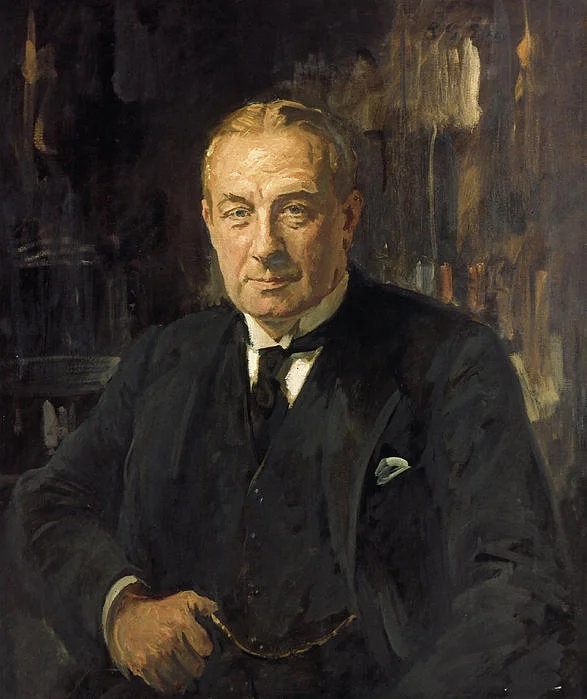
baldwin portrait.jpg

Stanley Baldwin: 'To me, England is the country, and the country is England', toast to Royal Society of St George -1924

February 1, 2018

6 May 1924, Royal Society of St George, London, UK

Though I do not think that the life of a busy man there could be placed into his hands a more difficult toast than this, yet the first thought that comes into my mind as a public man is a feeling of satisfaction and profound thankfulness that I may use the word ‘England’ without some fellow at the back of the room shouting out ‘Britain’. I have often thought how many of the most beautiful passages in the English language would be ruined by that substitution which is so popular to-day. I read in your Dinner-book, ‘When God wants a hard thing done, He tells it’, not to His not to his Britons, but to His Englishman;. And in the same way, to come to a very modern piece of poetry, how different it would be with the altered ending, ‘For in spite of all his temptations to belong to other nations, he remains a Briton.’ We have to-night to celebrate our country and our Patron Saint. It always seems to me no mere chance that besides being the Patron Saint of England, St George was the Patron Saint of those gallant sailors around the shores of the Adriatic, and that in his honour there exists one of the shores of the most beautiful chapels in Venice to-day. The Patron Saint for men of the English stock; and I think to-night amongst ourselves we might for a minute or two look at those characteristics, contradictory often, peculiar as we believe, in the great stock of which we are all members

The Englishman is all right as long as he is content to be what God made him, an Englishman, but gets into trouble when he tries to be something else. There are chroniclers, or were chronicles, who said it was the aping of the French manners by our English ancestors that made us the prey William the Norman, and led to our defeat at Hastings. Let that be a warning to us not to ape any foreign country. Let us be content to trust and be ourselves.

Now, I always think that one of the most curious contradictions about the English stock is this: that while the criticism that is often made of us is not without an element of truth, and that is that as a nation we are less open to the intellectual sense than the Latin races, yet though that may be a fact, there is no nation on earth that has had the same knack of producing geniuses, and in a nation which many people might think restrained, unable to express itself, in this same nation you have a literature second to none that has ever existed in the world, and certainly in poetry supreme.

Then, for a more personal characteristic, we grumble, and we have always grumbled, but we never worry. Now, there is a very great truth in that, because there are foreign nations who worry but do not grumble. Grumbling is more superficial, leaves less of a mark on the character, and just as the English schoolboy, for his eternal salvation, is impervious to the receipt of learning, and by that means preserves his metal faculties into middle age and old age than he otherwise would (and I may add that I attribute the possession of such facilities as I have to that fact that I did not overstrain them in youth), just as the Englishman has a mental reserve owing to that gift given to him at his birth by St. George, so, by the absence of worry he keeps his nervous system sound and sane, with the result that in times of emergency the nervous system stands when the nervous system of other peoples breaks.

The Englishman is made for a time of crisis, and for a time of emergency. He is serene in difficulties, but may seem to be indifferent when times are easy. He may not look ahead, he may not heed warnings, he may not prepare, but when he once starts he is persistent to the death, and he is ruthless in action. It is these gifts that have made the Englishman what he is, and that have enabled the Englishman to make England and Empire what it is.

It is in staying power that he is supreme, and fortunately, being, as I said, to some extent impervious to intellectual impressions as a nation, he is usually impervious to criticism – a most useful thing for an English statesman sometimes. This may be the reason why English statesmen sometimes last longer than those who are not English. I admit that in past generations we carried that virtue to an excess, and by a rebound the sins of the fathers are being visited on the children. For instance, there was a time when this particular epithet was more in vogue in political society, and the Englishman invariably spoke of the ‘damned’ foreigner. Those days are gone, but the legacy has come to us in this, that by the swing of the pendulum we have in this country what does not exist in any other, a certain section of our people who regard every country as being in the right except their own. It largely arises, I think, among a certain section of the population who hold beliefs which they cannot persuade their fellow-countrymen to adopt.

There is yet one other point. I think the English people are at heart and in practice the kindest people in the world. With some faults on which I have touched, there is in England a profound sympathy for the under-dog. There is a brotherly and a neighbourly feeling which we see to a remarkable extent through all classes. There is a way of facing misfortunes with a cheerful face. It was shown to a marvellous degree in the war, and in spite of all he said in criticism of his own people, Ruskin said one thing of immoral truth. He said: “The English laugh is the purest and truest in the metal that can be minted. And indeed only Heaven can know what the country owes to it.” There is a profound truth in that. As long as a people can laugh, they are preserved from the grosser vices of life, political and moral. And as long as they can laugh, they can face all the ills that fortune may bring upon them.

Then, in no nation more than the English is there a diversified individuality. We are a people of individuals, and a people of character. You may take the writings of one of the most English of writers, Charles Dickens, and you will find that practically all his characters are English. They are all different, and each of us that has gone through this world with his eyes open and his heart open, has met every one of Dickens' characters in some position or another in life. Let us see to it that we never allow our individuality as Englishmen to be steam-rollered. The preservation of the individuality of the Englishman is essential to the preservation of the type of the race, and if our differences are smoothed out and we lose that great gift, we shall lose at the same time our power. Uniformity of type is a bad thing. I regret very much myself the uniformity of speech. Time was, two centuries ago, when you could have told by his speech from what part of England every member of Parliament came. He spoke the speech of his fathers, and I regret that the dialects have gone, and I regret that by a process which for a want of a better name we have agreed among ourselves to call education, we are drifting away from the language of the people and losing some of the best English words and phrases which have lasted in the country through centuries, to make us all talk one uniform and inexpressive language. Now, I have very little more that I want to say to you to-night, but on an occasion like this I suppose there is no one who does not ask himself in his heart and is a little shy of expressing it, what is it that England stands for to him, and to her. And there comes into my mind a wonder as to what England may stand for in the minds of generations to come if our country goes on during the next generation as she has done in the last two, in seeing her fields converted into towns. To me, England is the country, and the country is England. And when I ask myself what I mean by England, when I think of England when I am abroad, England comes to me through my various senses – through the ear, through the eye, and through certain imperishable scents. I will tell you what they are, and there may be those among you who feel as I do.

The sounds of England, the tinkle of hammer on anvil in the country smithy, the corncrake on a dewey morning, the sound of the scythe against the whetstone, and the sight of a plough team coming over the brow of a hill, the sight that has been in England since England was a land, and may be seen in England long after the Empire has perished and every works in England has ceased to function, for centuries the one eternal sight of England. The wild anenomies in the woods of April, the last load at night of hay being drawn down a lane as the twilight comes on, when you can scarcely distinguish the figures on the horses as they take it home to the farm, and above all, most subtle, most penetrating and most moving, the smell of wood smoke coming in an autumn evening, or the smell of the scutch fires: that wood smoke that our ancestors, tens of thousands of years ago, must have caught on the air when they were still nomads, and when they were still roaming the forests and the plains of the continent of Europe. These things strike down into the very depths of our nature, and touch chords that go back to the beginning of time and the human race, but they are chords that with every year of our life sound a deeper note in our innermost being. These are things that make England, and I grieve for it that they are not the childish inheritance of the majority of people to-day in our country. They ought to be the inheritance of every child born into this country, but nothing can be more touching than to see how the working man and woman after generations in the towns will have their tiny bit of garden if they can, will go to gardens if they can, to look at something they they have never seen as children, but which their ancestors knew and loved. The love of these things is innate and inherent in our people. It makes for that love of home, one of the strongest features of our race, and it that that makes our race seek its home in the Dominions over seas, where they have room to see things like this that they can no more see at home. It is that power of making homes, almost peculiar to our people, and it is one of the sources of their greatness. They go overseas, and they take with them what they learned at home: love of justice, love of truth, and the broad humanity that are so characteristic of English people. It may well be that these traits on which we pride ourselves, which we hope to show and try to show in our lives, may survive – survive among our people so long as they are a people – and I hope and believe this, that just as to-day more than fifteen centuries since the last of those great Roman legionaries left England, we still speak of the Roman character, so perhaps in the ten thousandth century, long after the Empires of this world as we know them have fallen and others have risen and fallen again, the men who are then on this earth may yet speak of those characteristics which we prize as the characteristics of the English, and that long after, maybe, the name of the country has passed away, wherever mean are honourable and upright and perservering, lovers of home, of their bretheren, of justice and of humanity, the men in the world of that day may say, ‘We still have among us the gifts of that great English race.’

Source: https://whatenglandmeanstome.co.uk/stanley...

Enjoyed this speech? Speakola is a labour of love and I’d be very grateful if you would share, tweet or like it. Thank you.

Facebook Twitter Facebook
Comment

Mahatma Gandhi: "Non violence is the first article of my faith", Statement in The Great Trial - 1922

February 1, 2018

23 March 1922, Ahmadabad, India

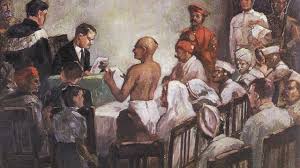
The trial is famous for many reasons, including the British judge rising to greet the accused.

I plead guilty to all the charges. I observe that the King’s name has been omitted from the charge, and it has been properly omitted.”]

Court : Mr. Gandhi, do you wish to make any statement on the question of sentence?

Gandhiji : I would like to make a statement.
Court : Could you give me in writing to put it on record?

Gandhiji : I shall give it as soon as I finish it.

[Gandhiji then made the following oral statement followed by a written statement that he read.]

Before I read this statement I would like to state that I entirely endorse the learned Advocate-General’s remarks in connection with my humble self. I think that he has made, because it is very true and I have no desire whatsoever to conceal from this court the fact that to preach disaffection towards the existing system of Government has become almost a passion with me, and the Advocate-General is entirely in the right when he says that my preaching of disaffection did not commence with my connection with Young India but that it commenced much earlier, and in the statement that I am about to read, it will be my painful duty to admit before this court that it commenced much earlier than the period stated by the Advocate-General. It is a painful duty with me but I have to discharge that duty knowing the responsibility that rests upon my shoulders, and I wish to endorse all the blame that the learned Advocate-General has thrown on my shoulders in connection with the Bombay occurrences, Madras occurrences and the Chauri Chuara occurrences. Thinking over these things deeply and sleeping over them night after night, it is impossible for me to dissociate myself from the diabolical crimes of Chauri Chaura or the mad outrages of Bombay. He is quite right when he says, that as a man of responsibility, a man having received a fair share of education, having had a fair share of experience of this world, I should have known the consequences of every one of my acts. I know them. I knew that I was playing with fire. I ran the risk and if I was set free I would still do the same. I have felt it this morning that I would have failed in my duty, if I did not say what I said here just now.
I wanted to avoid violence. Non-violence is the first article of my faith. It is also the last article of my creed. But I had to make my choice. I had either to submit to a system which I considered had done an irreparable harm to my country, or incur the risk of the mad fury of my people bursting forth when they understood the truth from my lips. I know that my people have sometimes gone mad. I am deeply sorry for it and I am, therefore, here to submit not to a light penalty but to the highest penalty. I do not ask for mercy. I do not plead any extenating act. I am here, therefore, to invite and cheerfully submit to the highest penalty that can be inflicted upon me for what in law is a deliberate crime, and what appears to me to be the highest duty of a citizen. The only course open to you, the Judge, is, as I am going to say in my statement, either to resign your post, or inflict on me the severest penalty if you believe that the system and law you are assisting to administer are good for the people. I do not except that kind of conversion. But by the time I have finished with my statement you will have a glimpse of what is raging within my breast to run this maddest risk which a sane man can run.

[He then read out the written statement : ] I owe it perhaps to the Indian public and to the public in England, to placate which this prosecution is mainly taken up, that I should explain why from a staunch loyalist and co-operator, I have become an uncompromising disaffectionist and non-co-operator. To the court too I should say why I plead guilty to the charge of promoting disaffection towards the Government established by law in India.

My public life began in 1893 in South Africa in troubled weather. My first contact with British authority in that country was not of a happy character. I discovered that as a man and an Indian, I had no rights. More correctly I discovered that I had no rights as a man because I was an Indian.

But I was not baffled. I thought that this treatment of Indians was an excrescence upon a system that was intrinsically and mainly good. I gave the Government my voluntary and hearty co-operation, criticizing it freely where I felt it was faulty but never wishing its destruction.

Consequently when the existence of the Empire was threatened in 1899 by the Boer challenge, I offered my services to it, raised a volunteer ambulance corps and served at several actions that took place for the relief of Ladysmith. Similarly in 1906, at the time of the Zulu ‘revolt’, I raised a stretcher bearer party and served till the end of the ‘rebellion’. On both the occasions I received medals and was even mentioned in dispatches. For my work in South Africa I was given by Lord Hardinge a Kaisar-i-Hind gold medal. When the war broke out in 1914 between England and Germany, I raised a volunteer ambulance cars in London, consisting of the then resident Indians in London, chiefly students. Its work was acknowledge by the authorities to be valuable. Lastly, in India when a special appeal was made at the war Conference in Delhi in 1918 by Lord Chelmsford for recruits, I struggled at the cost of my health to raise a corps in Kheda, and the response was being made when the hostilities ceased and orders were received that no more recruits were wanted. In all these efforts at service, I was actuated by the belief that it was possible by such services to gain a status of full equality in the Empire for my countrymen.

The first shock came in the shape of the Rowlatt Act-a law designed to rob the people of all real freedom. I felt called upon to lead an intensive agitation against it. Then followed the Punjab horrors beginning with the massacre at Jallianwala Bagh and culminating in crawling orders, public flogging and other indescribable humiliations. I discovered too that the plighted word of the Prime Minister to the Mussalmans of India regarding the integrity of Turkey and the holy places of Islam was not likely to be fulfilled. But in spite of the forebodings and the grave warnings of friends, at the Amritsar Congress in 1919, I fought for co-operation and working of the Montagu-Chemlmsford reforms, hoping that the Prime Minister would redeem his promise to the Indian Mussalmans, that the Punjab wound would be healed, and that the reforms, inadequate and unsatisfactory though they were, marked a new era of hope in the life of India.
But all that hope was shattered. The Khilafat promise was not to be redeemed. The Punjab crime was whitewashed and most culprits went not only unpunished but remained in service, and some continued to draw pensions from the Indian revenue and in some cases were even rewarded. I saw too that not only did the reforms not mark a change of heart, but they were only a method of further raining India of her wealth and of prolonging her servitude.

I came reluctantly to the conclusion that the British connection had made India more helpless than she ever was before, politically and economically. A disarmed India has no power of resistance against any aggressor if she wanted to engage, in an armed conflict with him. So much is this the case that some of our best men consider that India must take generations, before she can achieve Dominion Status. She has become so poor that she has little power of resisting famines. Before the British advent India spun and wove in her millions of cottages, just the supplement she needed for adding to her meagre agricultural resources. This cottage industry, so vital for India’s existence, has been ruined by incredibly heartless and inhuman processes as described by English witness.

Little do town dwellers how the semi-starved masses of India are slowly sinking to lifelessness. Little do they know that their miserable comfort represents the brokerage they get for their work they do for the foreign exploiter, that the profits and the brokerage are sucked from the masses. Little do realize that the Government established by law in British India is carried on for this exploitation of the masses. No sophistry, no jugglery in figures, can explain away the evidence that the skeletons in many villages present to the naked eye. I have no doubt whatsoever that both England and the town dweller of India will have to answer, if there is a God above, for this crime against humanity, which is perhaps unequalled in history. The law itself in this country has been used to serve the foreign exploiter. My unbiased examination of the Punjab Marital Law cases has led me to believe that at least ninety-five per cent of convictions were wholly bad. My experience of political cases in India leads me to the conclusion, in nine out of every ten, the condemned men were totally innocent. Their crime consisted in the love of their country. In ninety-nine cases out of hundred, justice has been denied to Indians as against Europeans in the courts of India. This is not an exaggerated picture. It is the experience of almost every Indian who has had anything to do with such cases. In my opinion, the administration of the law is thus prostituted, consciously or unconsciously, for the benefit of the exploiter.

The greater misfortune is that the Englishmen and their Indian associates in the administration of the country do not know that they are engaged in the crime I have attempted to describe. I am satisfied that many Englishmen and Indian officials honestly systems devised in the world, and that India is making steady, though, slow progress. They do not know, a subtle but effective system of terrorism and an organized display of force on the one hand, and the deprivation of all powers of retaliation or self-defense on the other, as emasculated the people and induced in them the habit of simulation. This awful habit has added to the ignorance and the self-deception of the administrators. Section 124 A, under which I am happily charged, is perhaps the prince among the political sections of the Indian Penal Code designed to suppress the liberty of the citizen. Affection cannot be manufactured or regulated by law. If one has no affection for a person or system, one should be free to give the fullest expression to his disaffection, so long as he does not contemplate, promote, or incite to violence. But the section under which mere promotion of disaffection is a crime. I have studied some of the cases tried under it; I know that some of the most loved of India’s patriots have been convicted under it. I consider it a privilege, therefore, to be charged under that section. I have endeavored to give in their briefest outline the reasons for my disaffection. I have no personal ill-will against any single administrator, much less can I have any disaffection towards the King’s person. But I hold it to be a virtue to be disaffected towards a Government which in its totality has done more harm to India than any previous system. India is less manly under the British rule than she ever was before. Holding such a belief, I consider it to be a sin to have affection for the system. And it has been a precious privilege for me to be able to write what I have in the various articles tendered in evidence against me.

In fact, I believe that I have rendered a service to India and England by showing in non-co-operation the way out of the unnatural state in which both are living. In my opinion, non-co-operation with evil is as much a duty as is co-operation with good. But in the past, non-co-operation has been deliberately expressed in violence to the evil-doer. I am endeavoring to show to my countrymen that violent non-co-operation only multiples evil, and that as evil can only be sustained by violence, withdrawal of support of evil requires complete abstention from violence. Non-violence implies voluntary submission to the penalty for non-co-operation with evil. I am here, therefore, to invite and submit cheerfully to the highest penalty that can be inflicted upon me for what in law is deliberate crime, and what appears to me to be the highest duty of a citizen. The only course open to you, the Judge and the assessors, is either to resign your posts and thus dissociate yourselves from evil, if you feel that the law you are called upon to administer is an evil, and that in reality I am innocent, or to inflict on me the severest penalty, if you believe that the system and the law you are assisting to administer are good for the people of this country, and that my activity is, therefore, injurious to the common weal.


Source: http://www.mkgandhi.org/speeches/gto1922.h...

Enjoyed this speech? Speakola is a labour of love and I’d be very grateful if you would share, tweet or like it. Thank you.

Facebook Twitter Facebook
In 1920-39 Tags MAHATMA GANDHI, GANDHI, NON VIOLENCE, THE GREAT TRIAL, TRANSCRIPT, COURTROOM, JUDGE, INDIA, HOME RULE, INDEPENDENCE
Comment

King George V: 'The eyes of the whole Empire are on Ireland today', Opening of Northern Ireland parliament - 1921

February 1, 2018

22 June 1921, Belfast, Northern Ireland

Members of the Senate and of the House of Commons, For all who love Ireland, as I do with all my heart, this is a profoundly moving occasion in Irish history. My memories of the Irish people date back to the time when I spent many happy days in Ireland as a midshipman. My affection for the Irish people has been deepened by the successive visits since that time, and I have watched with constant sympathy the course of their affairs.

I could not have allowed myself to give Ireland by deputy alone My earnest prayers and good wishes in the new era which opens with this ceremony, and I have therefore come in person, as the head of the Empire, to inaugurate this parliament on Irish soil. I inaugurate it with deep felt hope and I feel assured that you will do your utmost to make it an instrument of happiness and good government for all parts of the community which you represent.

This is a great and critical occasion in the history of the Six Counties – but not for the Six Counties alone, for everything which interests them touches Ireland, and everything which touches Ireland finds an echo in the remotest parts of the Empire. Few things are more earnestly desired throughout the English speaking world than a satisfactory solution of the age long Irish problems, which for generations embarrassed our forefathers, as they now weigh heavily upon us…

I am confident that the important matters entrusted to the control and guidance of the Northern Parliament will be managed with wisdom and with moderation, with fairness and due regard to every faith and interest, and with no abatement of that patriotic devotion to the Empire which you proved so gallantly in the Great War… My hope is broader still. The eyes of the whole Empire are on Ireland today, that Empire in which so many nations and races have come together in spite of ancient feuds, and in which new nations have come to birth within the lifetime of the youngest in this Hall.

I am emboldened by that thought to look beyond the sorrow and the anxiety which have clouded of late My vision of Irish affairs. I speak from a full heart when… I appeal to all Irishmen to pause, to stretch out the hand of forbearance and conciliation, to forgive and to forget, and to join in making for the land which they love a new era of peace, contentment, and goodwill… For this the parliament of the United Kingdom has in the fullest measure provided the powers; for this the parliament of Ulster is pointing the way. The future lies in the hands of My Irish people themselves.

May this historic gathering be the prelude of a day in which the Irish people, North and South, under one parliament or two, as those parliaments may themselves decide, shall work together in common love for Ireland upon the sure foundations of mutual justice and respect.

Source: http://alphahistory.com/northernireland/ge...

Enjoyed this speech? Speakola is a labour of love and I’d be very grateful if you would share, tweet or like it. Thank you.

Facebook Twitter Facebook
In 1920-39 Tags GEORGE V, KING, TRANSCRIPT, NORTHERN IRELAND, HOME RULE, UNITED KINGDOM
Comment

Henry Cabot Lodge: 'American I was born', Opposing League of Nations - 1919

February 1, 2018

12 August 1919, Washington DC, USA

Mr. President:

The independence of the United States is not only more precious to ourselves but to the world than any single possession. Look at the United States today. We have made mistakes in the past. We have had shortcomings. We shall make mistakes in the futureand fall short of our own best hopes. But none the less is there any country today on the face of the earth which can compare with this in ordered liberty, in peace, and in the largest freedom?

I feel that I can say this without being accused of undue boastfulness, for it is the simple fact, and in making this treaty and taking on these obligations all that we do is in a spirit of unselfishness and in a desire for the good of mankind. But it is well to remember that we are dealing with nations every oneof which has a direct individual interest to serve, and there is grave danger in an unshared idealism.

Contrast the United States with any country on the face of the earth today and ask yourself whether the situation of the United States is not the best to be found. I will go as far as anyone in world service, but the first step to world service is the maintenance of the United States.

I have always loved one flag and I cannot share that devotion [with] a mongrel banner created for a League.

You may call me selfish if you will, conservative or reactionary, or use any other harsh adjective you see fit to apply, but an American I was born, an American I have remained all my life. I can never be anything else but an American, and I must think of the United States first, and when I think of the United States first in an arrangement like this I am thinking of what is best for the world, for if the United States fails, the best hopes of mankind fail with it.

I have never had but one allegiance ‐I cannot divide it now. I have loved but one flag and I cannot share that devotion and give affection to the mongrel banner invented for a league. Internationalism, illustrated by the Bolshevik and by the men to whom all countries are alike provided they can make money out of them, is to me repulsive.

National I must remain, and in that way I like all other Americans can render the amplest service to the world. The United States is the world's best hope, but if you fetter her in the interests and quarrels of other nations, if you tangle her in the intrigues of Europe, you will destroy her power for good and endanger her very existence. Leave her to march freely through the centuries to come as in the years that have gone.

Strong, generous, and confident, she has nobly served mankind. Beware how you trifle with your marvellous inheritance, this great land of ordered liberty, for if we stumble and fall freedom and civilization everywhere will go down in ruin.

We are told that we shall 'break the heart of the world 'if we do not take this league just as it stands. I fear that the hearts of the vast majority of mankind would beat on strongly and steadily and without any quickening if the league were to perish altogether. If it should be effectively and beneficently changed the people who would lie awake in sorrow for a single night could be easily gathered in one not very large room but those who would draw a long breath of relief would reach to millions.

We hear much of visions and I trust we shall continue to have visions and dream dreams of a fairer future for the race. But visions are one thing and visionaries are another, and the mechanical appliances of the rhetorician designed to give a picture of a present which does not exist and of a future which no man can predict are as unreal and short‐lived as the steam or canvas clouds, the angels suspended on wires and the artificial lights of the stage.

They pass with the moment of effect and are shabby and tawdry in the daylight. Let us at least be real. Washington's entire honesty of mind and his fearless look into the face of all facts are qualities which can never go out of fashion and which we should all do well to imitate.

Ideals have been thrust upon us as an argument for the league until the healthy mind which rejects cant revolts from them. Are ideals confined to this deformed experiment upon a noble purpose, tainted, as it is, with bargains and tied to a peace treaty which might have been disposed of long ago to the great benefit of the world if it had not been compelled to carry this rider on its back? 'Post equitem sedet atra cura,' Horace tells us, but no blacker care ever sat behind any rider than we shall find in this covenant of doubtful and disputed interpretation as it now perches upon the treaty of peace.

No doubt many excellent and patriotic people see a coming fulfilment of noble ideals in the words 'league for peace.' We all respect and share these aspirations and desires, but some of us see no hope, but rather defeat, for them in this murky covenant. For we, too, have our ideals, even if we differ from those who have tried to establish a monopoly of idealism.

Our first ideal is our country, and we see her in the future, as in the past, giving service to all her people and to the world. Our ideal of the future is that she should continue to render that service of her own free will. She has great problems of her own to solve, very grim and perilous problems, and a right solution, if we can attain to it, would largely benefit mankind.

We would have our country strong to resist a peril from the West, as she has flung back the German menace from the East. We would not have our politics distracted and embittered by the dissensions of other lands. We would not have our country's vigour exhausted or her moral force abated, by everlasting meddling and muddling in every quarrel, great and small, which afflicts the world.

Our ideal is to make her ever stronger and better and finer, because in that way alone, as we believe, can she be of the greatest service to the world's peace and to the welfare of mankind

Source: https://ay12-14.moodle.wisc.edu/prod/plugi...

Enjoyed this speech? Speakola is a labour of love and I’d be very grateful if you would share, tweet or like it. Thank you.

Facebook Twitter Facebook
In 1900-19 Tags HENRY CABOT LODGE, ISOLATIONISM, WW1, TREATY OF VERSAILLES, WOODROW WILSON, TRANSCRIPT
Comment

Eugene Debs: 'The world of capitalism is collapsing; the world of Socialism is rising', Canton Ohio speech, 1915

February 1, 2018

16 June 1918, Canton, Ohio, USA

To speak for labor; to plead the cause of the men and women and children who toil to serve the working class, has always been to me a high privilege; (applause) a duty of love.

I have just returned from a visit over yonder (pointing to the workhouse) (laughter) where three of our most loyal comrades (applause) are paying the penalty for their devotion to the cause of the working class. (Applause.) They have come to realize, as many of us have, that it is extremely dangerous to exercise the constitutional right of free speech in a country fighting to make democracy safe in the world. (Applause.)

I realize that, in speaking to you this afternoon, that there are certain limitations placed upon the right of free speech. I must be exceedingly careful, prudent, as to what I say, and even more careful and more prudent as to how I say it. (Laughter.) I may not be able to say all I think; (laughter and applause) but I am not going to say anything that I do not think. (Applause.) But, I would rather a thousand times be a free soul in jail than to be a sycophant and coward on the streets. (Applause and Shouts.) They may put those boys in jail--and some of the rest of us in jail--but they cannot put the Socialist movement in jail. (Applause and Shouts.) . . .

There is but one thing that you have to be concerned about, and that is that you keep four-square with the principles of the international Socialist movement. (Applause.) It is only when you begin to compromise that trouble begins. (Applause.) So far as I am concerned, it does not matter what others may say, or think, or do, as long as I am sure that I am right with myself and the cause. (Applause.) There are so many who seek refuge in the popular side of a great question. On account of that, I hope, as a Socialist, I have long since learned how to stand alone. (Applause.)

Why should a Socialist be discouraged on the eve of the greatest triumph in all history of the Socialist movement? (Applause.) It is true that these are anxious trying days for us all--testing days for the women and men who are upholding the banner of the of the working class in the struggle of the working class of all the world against the exploiters of the world; (applause) a time in which the weak and cowardly will falter and fail and desert. They lack the fiber to endure the revolutionary test; they fall away; they disappear as if they had never been. On the other hand, they who are animated with the unconquerable spirit of the Social revolution, they who have the moral courage to stand erect and assert their convictions; stand by them; fight for them; go to jail or to hell for them; if need be--(applause and shouts) they are writing their names, in this crucial hour--they are writing their names in fadeless letters in the history of mankind. (Applause.) . . .

Are we opposed to Prussian militarism? (Laughter.) (Shouts from the crowd of "Yes." "Yes.") Why, we have been fighting it since the day the Socialist movement was born; (applause) and we are going to continue to fight it, day and night, until it is wiped from the face of the earth. (thunderous applause and cheers.) Between us there is no truce--no compromise. . . .

Socialism is a growing idea, an expanding philosophy. It is spreading over the face of the earth. It is as useless to resist it as it would be to try to arrest the sunrise on the morrow. It is coming, coming, coming, all along the line. . . . Here, in this assemblage (applause) I hear our heart beat responsive to the Bolsheviki of Russia. (Deafening and prolonged applause.) Yes, those heroic men and women, those unconquerable comrades, who have, by their sacrifice, added luster to the international movement. Those Russian comrades, who have made greater sacrifices, who have suffered more, who have shed more heroic blood than any like men or number of men and women anywhere else on earth, they have laid the foundation of the first real Democracy that ever drew--(great applause) the first real Democracy that ever drew the breath of life on God's footstool. (Applause.) And the very first act of that immortal revolution was to proclaim a state of peace with all the world, coupled with an appeal, no to the kings, not to the emperors, not to the rulers, not to the diplomats, but an appeal to the people of all nations. (Applause.) There is the very birth of Democracy, the quintessence of freedom. They made their appeal to the people of all nations, the Allies as well as the Central powers, to send representatives to a conference to lay down terms of peace that should be Democratic and lasting. Here was a fine--here was a fine opportunity to strike a blow to make democracy safe in the world. (Applause.) Was there any response to that noble appeal? And here let me say that that appeal will be written in letters of gold in the history of the world. (Applause.) Was there any response to that appeal? (From the crowd "No.") Not the slightest. . . .

Wars have been waged for conquest, for plunder. In the middle ages the feudal lords, who inhabited the castles whose towers may still be seen along the Rhine--whenever one of those feudal lords wished to enrich himself, then he made war on another. Why? They wanted to enlarge their domains. They wanted to increase their power, their wealth, and so they declared war upon each other. But they did not go to war any more than the Wall Street junkers go to war. (Applause.) The feudal lords, the barons, the economic predecessors of the modern capitalist, they declared all the wars. Who fought their battles? Their miserable serfs. And the serfs had been taught to believe that when their masters declared and waged war upon one another, it was their patriotic duty to fall upon one another, and to cut one another's throats, to murder one another for the profit and the glory of the plutocrats, the barons, the lords who held them in contempt. And that is war in a nutshell. The master class has always declared the war; the subject class has always fought the battles; the master class has had all to gain and nothing to lose, and the subject class has had nothing to gain and all to lose--including their lives. (Applause.) They have always taught you that it is your patriotic duty to go to war and to have yourselves slaughtered at a command. But in all of the history of the world you, the people, never had a voice in declaring war. You have never yet had. And here let me state a fact--and it cannot be repeated too often: the working class who fight the battles, the working class who make the sacrifices, the working class who shed the blood, the working class who furnish the corpses, the working class have never yet had a voice in declaring war. The working class have never yet had a voice in making peace. It is the ruling class that does both. They declare war; they make peace.

"Yours not to ask the question why; Yours but to do and die."

That is their motto, and we object on the part of the awakened workers.

If war is right, let it be declared by the people--you, who have your lives to lose; you certainly ought to have the right to declare war, if you consider war a necessary. (Applause.) . . .

If the war was over tomorrow, all of the prison doors would open. They just want to silence this voice during the war. The cases will be appealed, and they will remain pending in court many a month, perhaps years. What a compliment it is to the Socialist movement for telling the truth. The truth will make the people free. (Applause.) And the truth must not be permitted to reach the people. The truth has always been dangerous to the rule of the rogue, the exploiter, the robber. So the truth must be suppressed. That is why they are trying to drive out the Socialist movement; and every time they make the attempt, they add ten thousand voices proclaiming that Socialism has come to stay. (Applause.). . .

What you need is to organize, not along curved lines, but along revolutionary industrial lines. (Applause.) You will never vote in the Socialist republic. You are needed to organize it; and you have got to organize it in the industries--unite in the industries. the industrial union is the forerunner of industrial Democracy. In the shop is where the industrial Democracy has its beginning. Organize according to the industries, and minimize all the Gompers. Get together. United, very often your power becomes invincible. Organize to get up to your fullest capacity. Organize. Act together. And when you organize industrially, you will soon learn that you can manage industry as well as operate industry. You can soon find that you don't need the idle for your masters. They are simply parasites. They don't give you work. You give them jobs taking what you produce and that is all. Their function is to take what you produce. You can dispose of them. You don't need then to depend upon for your jobs. You ought to own your own tools; you ought to control your own jobs; you ought to be industrial free men instead of industrial slaves. Organize industrially. Make the organization complete. Then unite in the Socialist party. . . . Then, when we vote together and act together on the industrial pledge, we will develop the supreme power of the one class that can bring permanent peace to the world. We will have the courage. Industry will be organized. We will conquer the public power. We will transfer the title deeds of the railroads, the telegraph lines, the mills, the great industries--we will transfer them to the people; we will take possession in the name of the people. We will have industrial political Democracy. We will be the first free nation, whose government belongs to the people. Oh, this change will be universal; it will be permanent; it looks towards the light; it paves the way to emancipation. . . .

Yes, we are going to sweep into power in this nation and in every other nation on earth. We are going to destroy the capitalist institutions; we are going to recreate them as legally free institutions. Before you very eyes the world is being destroyed. The world of capitalism is collapsing; the world of Socialism is rising.

It is your duty to help build. We need builders of industry. Builders are necessary. We Socialists are the builders of the world that is to be. We are all agreed to do our part. We are inviting--aye, challenging you this afternoon, in the name of your own manhood, to join us. Help do your part. In due course of time the hour will strike, and this great cause--the greatest in history--will proclaim the emancipation of the working class and the brotherhood of all mankind. (Thunderous and prolonged applause.)

Source: http://college.cengage.com/history/ayers_p...

Enjoyed this speech? Speakola is a labour of love and I’d be very grateful if you would share, tweet or like it. Thank you.

Facebook Twitter Facebook
In 1900-19 Tags EUGENE V DEBS, SOCIALISM, CANTON OHIO SPEECH, SEDITION, TRANSCRIPT, SOCIALIST PARTY
Comment
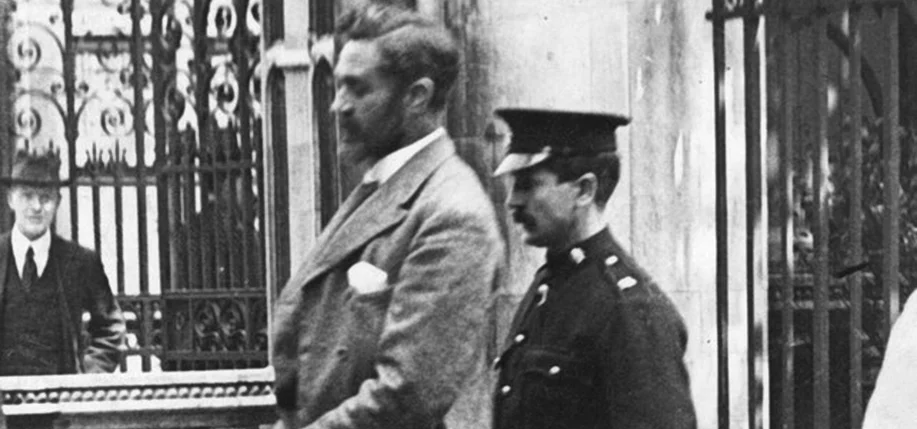
Roger Casement.jpg

Roger Casement: 'In Ireland alone, in this twenthieth century, is loyalty held to be a crime',Speech from the dock - 1916

February 1, 2018

29 June 1916, London, Great Britain

Sir Roger Casement was a British soldier and consul, who was knighted before he took up the Irish nationalist cause in 1911. He was executed post Easter Uprising in 1916. This is his speech from the dock.

My Lord Chief Justice, as I wish my words to reach a much wider audience than I see before me here, I intend to read all that I propose to say. What I shall read now is something I wrote more than twenty days ago. I may say, my lord, at once, that I protest against the jurisdiction of this court in my case on this charge, and the argument, that I am now going to read, is addressed not to this court, but to my own countrymen.

There is an objection, possibly not good in law, but surely good on moral grounds, against the application to me here of this old English statute, 565 years old, that seeks to deprive an Irishman today of life and honour, not for "adhering to the King's enemies", but for adhering to his own people.

When this statute was passed, in 1351, what was the state of men's minds on the question of a far higher allegiance -- that of a man to God and His kingdom? The law of that day did not permit a man to forsake his Church, or deny his God, save with his life. The "heretic", then, had the same doom as the "traitor".

Today a man may forswear God and His heavenly kingdom, without fear or penalty -- all earlier statutes having gone the way of Nero's edicts against the Christians, but that constitutional phantom "the King" can still dig up from the dungeons and torture-chambers of the Dark Ages a law that takes a man's life and limb for an exercise of conscience.

If true religion rests on love, it is equally true that loyalty rests on love. The law that I am charged under has no parentage in love, and claims the allegiance of today on the ignorance and blindness of the past.

I am being tried, in truth, not by my peers of the live present, but by the fears of the dead past; not by the civilization of the twentieth century, but by the brutality of the fourteenth; not even by a statute framed in the language of the land that tries me, but emitted in the language of an enemy land -- so antiquated is the law that must be sought today to slay an Irishman, whose offence is that he puts Ireland first.

Loyalty is a sentiment, not a law. It rests on love, not on restraint. The government of Ireland by England rests on restraint, and not on law; and since it demands no love, it can evoke no loyalty...

Judicial assassination today is reserved only for one race of the King's subjects -- for Irishmen, for those who cannot forget their allegiance to the realm of Ireland. The Kings of England, as such, had no rights in Ireland up to the time of Henry VIII, save such as rested on compact and mutual obligation entered into between them and certain princes, chiefs, and lords of Ireland. This form of legal right, such as it was, gave no King of England lawful power to impeach an Irishman for high treason under this statute of King Edward III of England until an Irish Act, known as Poyning's Law, the tenth of Henry VII, was passed in 1494 at Drogheda, by the Parliament of the Pale in Ireland, and enacted as law in that part of Ireland. But, if by Poyning's Law an Irishman of the Pale could be indicted for high treason under this Act, he could be indicted in only one way, and before one tribunal -- by the laws of the Realm of Ireland and in Ireland. The very law of Poyning, which, I believe, applies this statute of Edward III to Ireland, enacts also for the Irishman's defence "all these laws by which England claims her liberty".

And what is the fundamental charter of an Englishman's Liberty? That he shall be tried by his peers. With all respect, I assert this court is to me, an Irishman, charged with this offence, a foreign court -- this jury is for me, an Irishman, not a jury of my peers to try me on this vital issue, for it is patent to every man of conscience that I have a right, an indefeasible right, if tried at all, under this statute of high treason, to be tried in Ireland, before an Irish court and by an Irish jury. This court, this jury, the public opinion of this country, England, cannot but be prejudiced in varying degrees against me, most of all in time of war. I did not land in England. I landed in Ireland. It was to Ireland I came; to Ireland I wanted to come; and the last place I desired to land was in England.

But for the Attorney-General of England there is only "England"; there is no Ireland; there is only the law of England, no right of Ireland; the liberty of Ireland and of an Irishman is to be judged by the power of England. Yet for me, the Irish outlaw, there is a land of Ireland, a right of Ireland, and a charter for all Irishmen to appeal to, in the last resort, a charter, that even the very statutes of England itself cannot deprive us of -- nay more, a charter that Englishmen themselves assert as the fundamental bond of law that connects the two kingdoms. This charge of high treason involves a moral responsibility, as the very terms of the indictment against myself recite, inasmuch as I committed the acts I am charged with to the "evil example of others in like case". What was the evil example I set to others in the like case, and who were these others? The "evil example" charged is that I asserted the right of my own country and the "others" I appealed to, to aid my endeavour, were my own countrymen. The example was given, not to Englishmen, but to Irishmen, and the "like case" can never arise in England, but only in Ireland. To Englishmen I set no evil example, for I made no appeal to them. I asked no Englishman to help me. I asked Irishmen to fight for their rights. The "evil example" was only to other Irishmen, who might come after me, and in "like case" seek to do as I did. How, then, since neither my example, nor my appeal was addressed to Englishmen, can I be rightfully tried by them?

If I did wrong in making that appeal to Irishmen to join with me in an effort to fight for Ireland, it is by Irishmen, and by them alone, I can be rightfully judged. From this court and its jurisdiction I appeal to those I am alleged to have wronged, and to those I am alleged to have injured by my "evil example" and claim that they alone are competent to decide my guilt or innocence. If they find me guilty, the statute may affix the penalty, but the statute does not override or annul my right to seek judgment at their hands.

This is so fundamental a right, so natural a right, so obvious a right, that it is clear that the Crown were aware of it when they brought me by force and by stealth from Ireland to this country. It was not I who landed in England, but the Crown who dragged me here, away from my own country to which I had returned with a price upon my head, away from my own countrymen whose loyalty is not in doubt, and safe from the judgment of my peers whose judgment I do not shrink from. I admit no other judgment but theirs. I accept no verdict save at their hands.

I assert from this dock that I am being tried here, not because it is just, but because it is unjust. Place me before a jury of my own countrymen, be it Protestant or Catholic, Unionist or Nationalist, Sinn Féineach or Orangemen, and I shall accept the verdict, and bow to the statute and all its penalties. But I shall accept no meaner finding against me, than that of those, whose loyalty I have endangered by my example, and to whom alone I made appeal. If they adjudge me guilty, then guilty I am. It is not I who am afraid of their verdict -- it is the Crown. If this is not so, why fear the test? I fear it not. I demand it as my right.

This is the condemnation of English rule, of English-made law, of English government in Ireland, that it dare not rest on the will of the Irish people, but exists in defiance of their will: that it is a rule, derived not from right, but from conquest.

Conquest, my Lord, gives no title; and, if it exists over the body, it fails over the mind. It can exert no empire over men's reason and judgment and affections; and it is from this law of conquest without title to the reason, judgment, and affection of my own countrymen that I appeal.

I can answer for my own acts and speeches. While one English party was responsible for preaching a doctrine of hatred, designed to bring about civil war in Ireland, the other, and that the party in power, took no active steps to restrain a propaganda that found its advocates in the Army, Navy, and Privy Council -- in the House of Parliament, and in the State Church -- a propaganda the methods of whose expression were so grossly illegal and utterly unconstitutional that even the Lord Chancellor of England could find only words and no repressive action to apply to them. Since lawlessness sat in high places in England, and laughed at the law as at the custodians of the law, what wonder was it that Irishmen should refuse to accept the verbal protestations of an English Lord Chancellor as a sufficient safeguard for their lives and liberties? I know not how all my colleagues on the Volunteer Committee in Dublin reviewed the growing menace, but those with whom I was in closest cooperation redoubled, in face of these threats from without, our efforts to unite all Irishmen from within. Our appeals were made to Protestant and Unionist as much almost as to Catholic and Nationalist Irishmen.

We hoped that, by the exhibition of affection and goodwill on our part toward our political opponents in Ireland, we should yet succeed in winning them from the side of an English party whose sole interest in our country lay in its oppression in the past, and in the present in its degradation to the mean and narrow needs of their political animosities. It is true that they based their actions, so they averred, on "ears for the empire", and on a very diffuse loyalty that took in all the peoples of the empire, save only the Irish. That blessed word empire that bears so paradoxical resemblance to charity! For if charity begins at home, empire begins in other men's homes, and both may cover a multitude of sins. I, for one, was determined that Ireland was much more to me than empire, and, if charity begins at home, so must loyalty. Since arms were so necessary to make our organization a reality, and to give to the minds of Irishmen, menaced with the most outrageous threats, a sense of security, it was our bounden duty to get arms before all else. I decided, with this end in view, to go to America, with surely a better right to appeal to Irishmen there for help in an hour of great national trial, than those envoys of empire could assert for their weekend descents on Ireland, or their appeals to Germany.

If, as the right honourable gentleman, the present Attorney-General, asserted in a speech at Manchester, Nationalists would neither fight for Home Rule nor pay for it, it was our duty to show him that we knew how to do both. Within a few weeks of my arrival in the United States, the fund that had been opened to secure arms for the Volunteers of Ireland amounted to many thousands of pounds. In every case the money subscribed, whether it came from the purse of the wealthy man, or from the still readier pocket of the poor man, was Irish gold.

We have been told, we have been asked to hope, that after this war Ireland will get Home Rule, as a reward for the lifeblood shed in a cause which, whomever else its success may benefit, can surely not benefit Ireland. And what will Home Rule be in return for what its vague promise has taken, and still hopes to take away from Ireland? It is not necessary to climb the painful stairs of Irish history -- that treadmill of a nation, whose labours are as vain for her own uplifting as the convict's exertions are for his redemption, to review the long list of British promises made only to be broken -- of Irish hopes, raised only to be dashed to the ground. Home Rule, when it comes, if come it does, will find an Ireland drained of all that is vital to its very existence unless it be that unquenchable hope we build on the graves of the dead. We are told that if Irishmen go by the thousand to die, not for Ireland, but for Flanders, for Belgium, for a patch of sand in the deserts of Mesopotamia, or a rocky trench on the heights of Gallipoli, they are winning self-government for Ireland. But if they dare to lay down their lives on their native soil, if they dare to dream even that freedom can be won only at home by men resolved to fight for it there, then they are traitors to their country, and their dream and their deaths are phases of a dishonourable phantasy.

But history is not so recorded in other lands. In Ireland alone, in this twentieth century, is loyalty held to be a crime. If loyalty be something less than love and more than law, then we have had enough of such loyalty for Ireland and Irishmen. If we are to be indicted as criminals, to be shot as murderers, to be imprisoned as convicts, because our offence is that we love Ireland more than we value our lives, then I do not know what virtue resides in any offer of self-government held out to brave men on such terms. Self-government is our right, a thing born in us at birth, a thing no more to be doled out to us, or withheld from us, by another people than the right to life itself -- than the right to feel the sun, or smell the flowers, or to love our kind. It is only from the convict these things are withheld, for crime committed and proven and Ireland, that has wronged no man, has injured no land, that has sought no dominion over others -- Ireland is being treated today among the nations of the world as if she were a convicted criminal. If it be treason to fight against such an unnatural fate as this, then I am proud to be a rebel, and shall cling to my "rebellion" with the last drop of my blood. If there be no right of rebellion against the state of things that no savage tribe would endure without resistance, then I am sure that it is better for men to fight and die without right than to live in such a state of right as this. Where all your rights have become only an accumulated wrong, where men must beg with bated breath for leave to subsist in their own land, to think their own thoughts, to sing their own songs, to gather the fruits of their own labours, and, even while they beg, to see things inexorably withdrawn from them -- then, surely, it is a braver, a saner and truer thing to be a rebel, in act and in deed, against such circumstances as these, than to tamely accept it, as the natural lot of men.

Source: https://www.newstatesman.com/2010/03/irela...

Enjoyed this speech? Speakola is a labour of love and I’d be very grateful if you would share, tweet or like it. Thank you.

Facebook Twitter Facebook
In 1900-19 Tags ROGER CASEMENT, IRELAND, HOME RULE, SPEECH FROM THE DOCK, EXECUTION, EASTER UPRISING
Comment
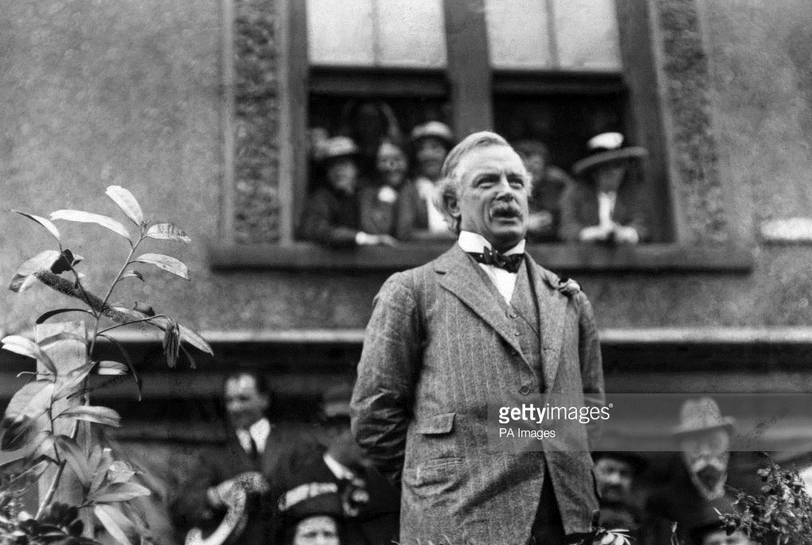
Lloyd George wales.png

David Lloyd George: 'This is the story of two little nations', Great Pinnacle of Sacrifice - 1914

February 1, 2018

21 September 1914, Queens Hall, London, United Kingdom

This is the story of two little nations. The world owes much to the little nations

The greatest art in the world was the work of little nations; the most enduring literature of the world came from little nations; the greatest literature of England came when she was a nation of the size of Belgium fighting a great Empire. The heroic deeds that thrill humanity through generations were the deeds of little nations fighting for their freedom. Yes and the salvation of mankind came through a little nation. 

God has chosen little nations as the vessels by which He carriesHis choicest wines to the lips of humanity, to rejoice their hearts, to exalt their vision, to stimulate and strengthen their faith; and if we had stood by when two little nations were being crushed and broken by the brutal hands of barbarism, our shame would have rung down the everlasting ages.

But Germany insists that this is an attack by a lower civilization upon a higher one. As a matter of fact, the attack was begun by the civilization which calls itself the higher one. I am no apologist for Russia; she has perpetrated deeds of which I have no doubt her best sons are ashamed. What Empire has not? But Germany is the last Empire to point the finger of reproach at Russia. 

Russia has made sacrifices for freedom—great sacrifices. 

Do you remember the cry of Bulgaria when she was torn by the most insensate tyranny that Europe has ever seen? Who listened to that cry? The only answer of the “higher civilization” was that the liberty of the Bulgarian peasants was not worth the life of a single Pomeranian’soldiers. But the “rude barbarians” of the North sent their sons by the thousand to die for Bulgarian freedom. What about England? Go to Greece, the Netherlands, Italy, Germany, and France—in all those lands I could point out places where the sons of Britain have died for the freedom of those people. France has made sacrifices for the freedom of other lands than her own. Can you name a single country in the world for the freedom of which modern Prussia has ever sacrificed a single life? 

By the test of our faith the highest standard of civilization is the readiness to sacrifice for others. 

 Have you read the Kaiser’s speeches? They are full of the glitter and bluster of German militarism—“mailed fist” and “shining armor”. Poor old mailed fist! Its knuckles are getting a little bruised. Poor shining armor! The shine is being knocked out of it. There is the same swagger and boastfulness runing through the whole of the speeches. The extract which was given in the British weekly this week is a very remarkable product as an illustration of the spirit we have to fight. It is the Kaiser’s speech to his soldiers on the way to the front: 

Remember that the German people are the chosen of God. On me, the German Emperor, the Spirit of God has descended. I am His sword, His weapon and His Vicegerent. Woe to the disobedient, and death to cowards and unbelievers. 

Lunacy is always distressing, but sometimes it is dangerous; and when you get it manifested in the head of the State, and it has become the policy of a great Empire, it is about time that it should be ruthlessly put away. 

I do not believe he meant all these speeches; it is simply the martial straddle he had acquired. But there were men around him who meant every word of them. This was their religion. Treaties? They tangle the feet of Germany in her advance. Cut them with the sword! Little nations? They hinder the advance of Germany heel. The Russia Slav? He challenges the supremacy of Germany in Europe. 

Hurl your legions at him and massacre him! Britain? She is a constant menace to the predominance of Germany in the world. 

Wrest the trident out of her hand. 

Christianity? Sickly sentimentalism about sacrifice for others! Poor pap for German digestion! 

We will have a new diet. We will force it upon the world. It will be made in Germany—the diet of blood and iron. What remains? Treaties have gone. The honor of nations has gone. Libery has gone. What is left? Germany. Germany is left!“

Deutschland über Alles!”

That is what we are fighting —that claim to predominance of a material, hard civilization which, if it once rulers and sways the word, liberty goes, democracy vanishes. And unless Britain and her sons come to the rescue it will be a dark day for humanity. 

Have you followed the Prussian Junker ’and his doings? We are not fighting the German people are under the heel of this military caste, and it will be a day of rejoicing for the German peasant, artisan and trader when the military caste is broken. You know its pretensions. 

They give themselves the air of demigods. They walk the pavements and civilians and their wives are swept into the gutter; they have no right to stand in the way of a great Prussia soldier. Men, women, nations—they all have to go. He thinks all he has to say is, “We are in a hurry.”

 That is the answer he gave to Belgium -“Rapidity of action is Germany’s greatest asset,” which means, “I am in a hurry; clear out of my way”

 You know the type of motorist, the terror of the roads, with a sixty-horse-power car, who thinks the roads are made for him, and knock down anybody who impedes the actin of his car by a single mile an hour. The Prussian Junker is the road-hog of Europe. Small nationalities in his way are hurled to the roadside, bleeding and broken. Women and children are crushed under the wheels of his cruel car, and Britain is ordered out of his road. All I can say is this: if the old Britain spirit is alive in British hearts, that bully will be torn from his seat. Were he to win, it, would be the greatest catastrophe that has befallen democracy since the day of the Holy Alliance and its ascendancy. 

 They think we cannot beat them. It will not be easy. It will be a long job; it will be a terrible war; but in the end we shall march through terror to triumph. 

We shall need all our qualities—every quality that Britain and its people possess—prudence in counsel, daring in action, tenacity in purpose, courage in defeat, moderation in victory; in all things faith.   

It has pleased them to believe and to preach the belief that we are a decadent and degenerate people. They proclaim to the world through their professors that we are a nonheroic nation skulking behind our mahogany counters, whilst we egg on more gallant races to their destruction. This is a description given of us in Germany- “a timorous, craven nation, trusting to its Fleet”

 I think they are beginning to find their mistake out already - and there are half a million young men of Britain who have already registered a vow to their King that they will cross the seas and hurl that insult to Britain courage against its perpetrators on the battlefields of France and Germany. We want half a million more; and we shall get them. 

I envy you young people your opportunity. They have put up the age limit for the Army, but I am sorry to say I have marched a good many years even beyond that. It is a great opportunity, and opportunity that only comes once in many centuries to the children of men. 

For most generations sacrifice comes in drab and weariness of spirit. It comes to you today, and it comes today to us all, in the form of the glow and trill of a great movement for liberty, that impels millions throughout Europe to the same noble end. 

It is a great war for the emancipation of Europe from the thralldom of a military caste which has thrown its shadows upon two generations of men, and is now plunging the world into a welter of bloodshed and  death. 

Some have already given their lives. 

There are some who have given more than their own lives; they have their courage, and may God be their comfort and their strength. 

But their reward is at hand; those who have fallen have died consecrated deaths. 

They have taken their part in the making of a new Europe—a new world. I can see signs of its coming in the glare of the battle-field. 

The people will gain more by this struggle in all lands than they comprehend at the present moment. It is true they will be free of the greatest menace to their freedom. That is not all. There is something infinitely greater and more enduring which is emerging and more exalted than the old. I see among all classes, high and low, shedding them of selfishness, a new recognition that the honor of the country does not depend merely on the maintenance of its glory in the stricken field, but also in protecting its homes from distress. It is bringing a new outlook for all classes. The great flood of luxury and sloth which had submerged the land is receding, and a New Britain is appearing. 

We can see for the first time the fundamental things that matter in life and that have been obscured from our vision by the tropical growth of prosperity. 

May I tell you in a simple parable what I think this war is doing for us? I know a valley in North Wales, between the mountains and the sea. It is a beautiful valley, sung, comfortable, and sheltered by the mountains from all the bitter blasts. 

But it is very enervating, and I remember how the boys were in the habit of mountains in the distance, and to be stimulated and freshened by the breezes which came from the hilltops, and by the great spectacle of their grandeur. We have been living in the sheltered valley for generations. We have been too comfortable and too indulgent—many, perhaps, too selfish—and the tern hand of fate has scourged us to an elevation where we can see the great everlasting thngs that matter for a nation the great peaks we had forgotten, of Honor, Duty, Patriotism, and, clad in glittering white, the great pinnacle of Sacrifice pointing like arugged finger as to Heaven. 

We shall descend into the valleys again; but as long as the men and women of this generation last, they will carry in their hearts the image of those great mountain peaks whose foundations are not shaken, though Europe rock and sway in the convulsions of a great war. 

Source: https://wenku.baidu.com/view/21673020af45b...

Enjoyed this speech? Speakola is a labour of love and I’d be very grateful if you would share, tweet or like it. Thank you.

Facebook Twitter Facebook
In 1900-19 Tags DAVID LLOYD GEORGE, GREAT PINNACLE OF SACRIFICE, QUEENS HALL, WW1, WORLD WAR 1, TRANSCRIPT, BRITAIN, EUROPE, GERMANY, KAISER
Comment
This photo is from a sufragettes rally in 1913, not speech below.

This photo is from a sufragettes rally in 1913, not speech below.

Keir Hardie: 'The Sunshine of Socialism", 21st Annioversary of formation of Independent Labour Party - 1914

February 1, 2018

11 April 1914, Bradford, England

I shall not weary you by repeating the tale of how public opinion has changed during those twenty-one years. But, as an example, I may recall the fact that in those days, and for many years thereafter, it was tenaciously upheld by the public authorities, here and elsewhere, that it was an offence against laws of nature and ruinous to the State for public authorities to provide food for starving children, or independent aid for the aged poor. Even safety regulations in mines and factories were taboo. They interfered with the ‘freedom of the individual’. As for such proposals as an eight-hour day, a minimum wage, the right to work, and municipal houses, any serious mention of such classed a man as a fool.

These cruel, heartless dogmas, backed up by quotations from Jeremy Bentham, Malthus, and Herbert Spencer, and by a bogus interpretation of Darwin’s theory of evolution, were accepted as part of the unalterable laws of nature, sacred and inviolable, and were maintained by statesmen, town councillors, ministers of the Gospel, and, strangest of all, by the bulk of Trade Union leaders. That was the political, social and religious element in which our Party saw the light. There was much bitter fighting in those days. Even municipal contests evoked the wildest passions.And if today there is a kindlier social atmosphere it is mainly because of twenty-one years’ work of the ILP.

Scientists are constantly revealing the hidden powers of nature. By the aid of the X-rays we can now see through rocks and stones; the discovery of radium has revealed a great force which is already healing disease and will one day drive machinery; Marconi, with his wireless system of telegraphy and now of telephony, enables us to speak and send messages for thousands of miles through space.

Another discoverer, through means of the same invisible medium, can blow up ships, arsenals, and forts at a distance of eight miles.

But though these powers and forces are only now being revealed, they have existed since before the foundation of the world. The scientists, by sympathetic study and laborious toil, have brought them within our ken. And so, in like manner, our Socialist propaganda is revealing hidden and hitherto undreamed of powers and forces in human nature.

Think of the thousands of men and women who, during the past twenty-one years, have toiled unceasingly for the good of the race. The results are already being seen on every hand, alike in legislation and administration. And who shall estimate or put a limit to the forces and powers which yet lie concealed in human nature?

Frozen and hemmed in by a cold, callous greed, the warming influence of Socialism is beginning to liberate them. We see it in the growing altruism of Trade Unionism. We see it, perhaps, most of all in the awakening of women. Who that has ever known woman as mother or wife has not felt the dormant powers which, under the emotions of life, or at the stern call of duty are even now momentarily revealed? And who is there who can even dimly forecast the powers that lie latent in the patient drudging woman, which a freer life would bring forth? Woman, even more than the working class, is the great unknown quantity of the race.

Already we see how their emergence into politics is affecting the prospects of men. Their agitation has produced a state of affairs in which even Radicals are afraid to give more votes to men, since they cannot do so without also enfranchising women. Henceforward we must march forward as comrades in the great struggle for human freedom.

The Independent Labour Party has pioneered progress in this country, is breaking down sex barriers and class barriers, is giving a lead to the great women’s movement as well as to the great working-class movement. We are here beginning the twenty-second year of our existence. The past twenty-one years have been years of continuous progress, but we are only at the beginning. The emancipation of the worker has still to be achieved and just as the ILP in the past has given a good, straight lead, so shall the ILP in the future, through good report and through ill, pursue the even tenor of its way, until the sunshine of Socialism and human freedom break forth upon our land.

Source: https://labourlist.org/2014/04/keir-hardie...

Enjoyed this speech? Speakola is a labour of love and I’d be very grateful if you would share, tweet or like it. Thank you.

Facebook Twitter Facebook
In 1900-19 Tags KEIR HARDIE, SOCIALISM, WW1, SUNSHINE OF SOCIALISM, LABOUR PARTY, INDEPENDENT LABOUR PARTY, TRANSCRIPT, ANNIVERSARY
Comment

Keir Hardie: 'Socialism proposes to dethrone the brute god Mammon", House of Commons speech - 1901

February 1, 2018

1901, House of Commons, London, England

Keir Hardie became the first leader of the British Labour Party

I make no apology for bringing the question of Socialism before the House of Commons. It has long commanded the attention of the best minds in the country. It is a growing force in the thought of the world, and whether men agree or disagree with it, they have to reckon with it, and may as well begin by understanding it.

I begin by pointing out that the growth of our national wealth, instead of bringing comfort to the masses of the people, is imposing additional burdens on them. We are told on highest authority that some 300 years ago to total wealth of the English nation was 100 millions sterling. At the beginning of the last century it had increased to 2,000 millions, and this year it is estimated to be 13,000 millions. While our population during the last century increased three and a half times, the wealth of the community increased over six times. But one factor in our national life remained with us all through the century, and is still with us, and that is that at the bottom of the social scale there is a mass of poverty and misery equal in magnitude to that which obtained one hundred years ago. I submit that the true test of progress is not the accumulation of wealth in the hands of the few, but the elevation of the people as a whole. I admit frankly that considerable improvement was made in the condition of the working people during the last century. At the beginning of the 19th century the nation industrially was sick almost unto death. It was at that time passing from the old system of handy craft - under which every man was his own employer and his own capitalist, and traded directly with his customer - to the factory system which the introduction of machinery brought into existence. During these 100 years the wealth of the nation accumulated and the condition of the working classes as compared with the early years of the century improved, but I respectfully submit to the House that there was more happiness, more comfort and more independence before machinery began to accumulate wealth.

The high standard of comfort and reached by the labouring classes at the end of the last century has not brought them that happiness which pertained in England three hundred years ago, when there was no machinery, no large capitalists, no private property in land, as we know it today, and when every person had the right to use the land for the purpose of producing food for himself and his family. I said that improvement was made during the last century, but I would qualify that statement in this respect - that practically the whole of that improvement was made during the first 75 years. During the last quarter of the century the condition of the working classes has been practically stationary. There have been slight increases of wages here and reductions of hours there, but the landlord with his increased rent has more than absorbed any advantage that may have been gained.

We are rapidly approaching the point when the nation will be called upon to decide between an uncontrolled monopoly conducted for the benefit and in the interests of its principal shareholders, and a monopoly owned, controlled and manipulated by the state in the interests of the nation as a whole. I do not require to go far afield for arguments to support that part of my statement concerning the danger which the application of wealth in a few hands is bringing upon us. This House and the British nation know to their cost the danger which comes from allowing men to grow rich and permitting them to use their wealth to corrupt the press, to silence the pulpit, to degrade our national life, and to bring reproach and shame upon a great people, in order that a few unscrupulous scoundrels might be able to add to their ill-gotten gains. The war in South Africa is a millionaires' war. The troubles in China are due to the desire of the capitalists to exploit the people of that country, as they would fain exploit the people of South Africa. Much of the jealousy and bad blood existing between this country and France is traceable to the fact that we went to war in Egypt to suppress a popular uprising, seeking freedom for the people, in order that the interests of our bond-holders might be secured. Socialism, by placing the land and the instruments of production in the hands of the community, eliminates only the idle, useless class at both ends of the scale. Half a million of the people of this country benefit by the present system; the remaining millions of toilers and business men do not. The pursuit of wealth corrupts the manhood of men. We are called upon at the beginning of the 20th century to decide the question propounded in the Sermon on the Mount, as to whether we will worship God or Mammon. The present day is a Mammon worshipping age. Socialism proposes to dethrone the brute god Mammon and to lift humanity into its place. I beg to submit, in this very imperfect fashion, the resolution on the paper, merely promising that the last has not been heard the Socialist movement either in the country or on the floor of this House, but that, just as sure as radicalism democratised the system of government politically in the last century, so will socialism democratise the country industrially during this century upon which we just entered.

Source: http://www.archive.8m.net/hardie.htm

Enjoyed this speech? Speakola is a labour of love and I’d be very grateful if you would share, tweet or like it. Thank you.

Facebook Twitter Facebook
In 1900-19 Tags KEIR HARDIE, SOCIALISM, INCOME INEQUALITY, EQUALITY, POVERTY, TRANSCRIPT, HOUSE OF COMMONS
Comment
pankhurst 2.jpg

Emmeline Pankhurst: 'This last fight for human freedom', Canada speech - 1912

February 1, 2018

14 January 1912, Canada

Women never took a single step forward without being pushed back first of all by their opponents. 

We did not mind being laughed at as long as by laughter we could get our way  to the vote.

 But the laughter was also turned against the statesman who refused to answer us. The statesman is a sort of serious individual not to be mocked or jeered at, but it was somewhat undignified for the first  minister of the crown to make his way out by the rear  entrance with a horse cloth over his head or to pass by an underground passage to the post office and then be shot down the parcel tube. 

People began to take us seriously then. A leading paper, when Mr. Asquith went to Birmingham, sent a wire to its local correspondent. 

“Never mind the prime minister. What are the suffragettes doing?”

Our next move was the canvass, and with a distinct woman's platform we took the field. 

We said, “Vote against the government till it gives women the vote.”

 Candidates then began to complain that we took their audiences from them, but our reply was that the country was free, and if they wished to have a bigger house they should give better speeches. 

 Particularly in the working class districts we gained ground and we found that we went into the social problems that were within the province of women we found the support of men who were not skilled in party lore, but had human hearts. 

We then became a real power in the election and government candidates where we worked against them were often defeated

There has been a great deal of talk lately of new legislation for those who are about to enter into marriage. Woman should have a say as one of the contracting parties. There are the questions of divorce and of the training of children. Who knows better of these matters than do women? There are also the trades and professions which are at the present time open to women. It is only right that we should have some say in the legislation concerning us. We have heard much of the English divorce law. It is a disgrace to any civilized country. 

The only redeeming feature of the matter is that the bulk of men are better than the law allows.But there is the minority, and the law should be severe for them. They are as bad as the law allows them to be. If woman only had weight in politics this would be rectified soon. 

She will serve to call more attention to such questions of national welfare. If we are to have any divorce law at all, and that is a muchdebated question, it should be a law that is equal both for man and woman. Unless women get the vote we have no guarantee that it will be so. 

There is again the legal status of married persons. 

Nature has given the child twoparents, the law gives but one, and it is the father when the child id born in wedlock, but if the child is born out of wedlock, it is the mother. Men have made these laws, but what we want is to have Nature’s law as man’s law

…

 If we look around in the world, where do we see women happy, well treated and satisfied unless where the world has been made what women wish it to be? Men are responsible if they allow the present condition of things to continue. Women have the power to work out their own salvation. But as it’s, if a woman is ruined, if a child id injured, man is responsible for it all. It is a responsibility I would not care to have, and, as things are, I would not be a man for the entire world. If women fail as men have failed, then they will bear the burden with them. But since men cannot protect and shield us, let us share the duty with them, let us use our power so that woman may be a participant, not to tyrannize over man but to taketo share in the responsibilities of ruling, without which there is no real representative government. 

What we really are interested in this fight is the uplifting of the sex and better conditions of humanity than men can secure. In the legal home there is but the man. What we want is the combined intelligence of man and woman working for the salvation of the children of the race. This will make for the world a better time than ever before in its history. 

It will raise mankind to heights of which now it has little conception. We must only make this last fight for human freedom that as the class distinction disappeared so that sex distinction may pass, and then you will get better things than men can by themselves secure. 


Source: https://wenku.baidu.com/view/d65b8185b9d52...

Enjoyed this speech? Speakola is a labour of love and I’d be very grateful if you would share, tweet or like it. Thank you.

Facebook Twitter Facebook
Tags EMMELINE PANKHURST
Comment

Theodopre Roosevelt: 'The new nationalism', Osawatomie speech - 1910

February 1, 2018

August 1910, Osawatomie, Kansas, USA

We come here today to commemorate one of the epoch-making events of the long struggle for the rights of man--the long struggle for the uplift of humanity. Our country--this great Republic-means nothing unless it means the triumph of a real democracy, the triumph of popular government, and, in the long run, of an economic system under which each man shall be guaranteed the opportunity to show the best that there is in him. That is why the history of America is now the central feature of the history of the world; for the world has set its face hopefully toward our democracy; and, O my fellow citizens, each one of you carries on your shoulders not only the burden of doing well for the sake of your country, but the burden of doing well and of seeing that this nation does well for the sake of mankind.

There have been two great crises in our country’s history: first, when it was formed, and then, again, when it was perpetuated; and, in the second of these great crises--in the time of stress and strain which culminated in the Civil War, on the outcome of which depended the justification of what had been done earlier, you men of the Grand Army, you men who fought through the Civil War, not only did you justify your generation, but you justified the wisdom of Washington and Washington’s colleagues. If this Republic had been founded by them only to be split asunder into fragments when the strain came, then the judgment of the world would have been that Washington’s work was not worth doing. It was you who crowned Washington’s work, as you carried to achievement the high purpose of Abraham Lincoln.

Now, with this second period of our history the name of John Brown will forever be associated; and Kansas was the theatre upon which the first act of the second of our great national life dramas was played. It was the result of the struggle in Kansas which determined that our country should be in deed as well as in name devoted to both union and freedom; that the great experiment of democratic government on a national scale should succeed and not fail. In name we had the Declaration of Independence in 1776; but we gave the lie by our acts to the words of the Declaration of Independence until 1865; and words count for nothing except in so far as they represent acts. This is true everywhere; but, O my friends, it should be truest of all in political life. A broken promise is bad enough in private life. It is worse in the field of politics. No man is worth his salt in public life who makes on the stump a pledge which he does not keep after election; and, if he makes such a pledge and does not keep it, hunt him out of public life. I care for the great deeds of the past chiefly as spurs to drive us onward in the present. I speak of the men of the past partly that they may be honored by our praise of them, but more that they may serve as examples for the future.

It was a heroic struggle; and, as is inevitable with all such struggles, it had also a dark and terrible side. Very much was done of good, and much also of evil; and, as was inevitable in such a period of revolution, often the same man did both good and evil. For our great good fortune as a nation, we, the people of the United States as a whole, can now afford to forget the evil, or, at least, to remember it without bitterness, and to fix our eyes with pride only on the good that was accomplished. Even in ordinary times there are very few of us who do not see the problems of life as through a glass, darkly; and when the glass is clouded by the murk of furious popular passion, the vision of the best and the bravest is dimmed. Looking back, we are all of us now able to do justice to the valor and the disinterestedness and the love of the right, as to each it was given to see the right, shown both by the men of the North and the men of the South in that contest which was finally decided by the attitude of the West. We can admire the heroic valor, the sincerity, the self-devotion shown alike by the men who wore the blue and the men who wore the gray; and our sadness that such men should have to fight one another is tempered by the glad knowledge that ever hereafter their descendants shall be fighting side by side, struggling in peace as well as in war for the uplift of their common country, all alike resolute to raise to the highest pitch of honor and usefulness the nation to which they all belong. As for the veterans of the Grand Army of the Republic, they deserve honor and recognition such as is paid to no other citizens of the Republic; for to them the republic owes it all; for to them it owes its very existence. It is because of what you and your comrades did in the dark years that we of to-day walk, each of us, head erect, and proud that we belong, not to one of a dozen little squabbling contemptible commonwealths, but to the mightiest nation upon which the sun shines.

I do not speak of this struggle of the past merely from the historic standpoint. Our interest is primarily in the application to-day of the lessons taught by the contest a half a century ago. It is of little use for us to pay lip-loyalty to the mighty men of the past unless we sincerely endeavor to apply to the problems of the present precisely the qualities which in other crises enabled the men of that day to meet those crises. It is half melancholy and half amusing to see the way in which well-meaning people gather to do honor to the men who, in company with John Brown, and under the lead of Abraham Lincoln, faced and solved the great problems of the nineteenth century, while, at the same time, these same good people nervously shrink from, or frantically denounce, those who are trying to meet the problems of the twentieth century in the spirit which was accountable for the successful solution of the problems of Lincoln’s time.

Of that generation of men to whom we owe so much, the man to whom we owe most is, of course, Lincoln. Part of our debt to him is because he forecast our present struggle and saw the way out. He said:

"I hold that while man exists it is his duty to improve not only his own condition, but to assist in ameliorating mankind."

And again:

"Labor is prior to, and independent of, capital. Capital is only the fruit of labor, and could never have existed if labor had not first existed. Labor is the superior of capital, and deserves much the higher consideration."

If that remark was original with me, I should be even more strongly denounced as a Communist agitator than I shall be anyhow. It is Lincoln’s. I am only quoting it; and that is one side; that is the side the capitalist should hear. Now, let the working man hear his side.

"Capital has its rights, which are as worthy of protection as any other rights. . . . Nor should this lead to a war upon the owners of property. Property is the fruit of labor; . . . property is desirable; is a positive good in the world."

And then comes a thoroughly Lincoln-like sentence:

"Let not him who is houseless pull down the house of another, but let him work diligently and build one for himself, thus by example assuring that his own shall be safe from violence when built."

It seems to me that, in these words, Lincoln took substantially the attitude that we ought to take; he showed the proper sense of proportion in his relative estimates of capital and labor, of human rights and property rights. Above all, in this speech, as in many others, he taught a lesson in wise kindliness and charity; an indispensable lesson to us of today. But this wise kindliness and charity never weakened his arm or numbed his heart. We cannot afford weakly to blind ourselves to the actual conflict which faces us today. The issue is joined, and we must fight or fail.

In every wise struggle for human betterment one of the main objects, and often the only object, has been to achieve in large measure equality of opportunity. In the struggle for this great end, nations rise from barbarism to civilization, and through it people press forward from one stage of enlightenment to the next. One of the chief factors in progress is the destruction of special privilege. The essence of any struggle for healthy liberty has always been, and must always be, to take from some one man or class of men the right to enjoy power, or wealth, or position, or immunity, which has not been earned by service to his or their fellows. That is what you fought for in the Civil War, and that is what we strive for now.

At many stages in the advance of humanity, this conflict between the men who possess more than they have earned and the men who have earned more than they possess is the central condition of progress. In our day it appears as the struggle of freemen to gain and hold the right of self-government as against the special interests, who twist the methods of free government into machinery for defeating the popular will. At every stage, and under all circumstances, the essence of the struggle is to equalize opportunity, destroy privilege, and give to the life and citizenship of every individual the highest possible value both to himself and to the commonwealth. That is nothing new. All I ask in civil life is what you fought for in the Civil War. I ask that civil life be carried on according to the spirit in which the army was carried on. You never get perfect justice, but the effort in handling the army was to bring to the front the men who could do the job. Nobody grudged promotion to Grant, or Sherman, or Thomas, or Sheridan, because they earned it. The only complaint was when a man got promotion which he did not earn.

Practical equality of opportunity for all citizens, when we achieve it, will have two great results. First, every man will have a fair chance to make of himself all that in him lies; to reach the highest point to which his capacities, unassisted by special privilege of his own and unhampered by the special privilege of others, can carry him, and to get for himself and his family substantially what he has earned. Second, equality of opportunity means that the commonwealth will get from every citizen the highest service of which he is capable. No man who carries the burden of the special privileges of another can give to the commonwealth that service to which it is fairly entitled.

I stand for the square deal. But when I say that I am for the square deal, I mean not merely that I stand for fair play under the present rules of the game, but that I stand for having those rules changed so as to work for a more substantial equality of opportunity and of reward for equally good service. One word of warning, which, I think, is hardly necessary in Kansas. When I say I want a square deal for the poor man, I do not mean that I want a square deal for the man who remains poor because he has not got the energy to work for himself. If a man who has had a chance will not make good, then he has got to quit. And you men of the Grand Army, you want justice for the brave man who fought, and punishment for the coward who shirked his work. Is that not so?

Now, this means that our government, National and State, must be freed from the sinister influence or control of special interests. Exactly as the special interests of cotton and slavery threatened our political integrity before the Civil War, so now the great special business interests too often control and corrupt the men and methods of government for their own profit. We must drive the special interests out of politics. That is one of our tasks to-day. Every special interest is entitled to justice--full, fair, and complete--and, now, mind you, if there were any attempt by mob-violence to plunder and work harm to the special interest, whatever it may be, that I most dislike, and the wealthy man, whomsoever he may be, for whom I have the greatest contempt, I would fight for him, and you would if you were worth your salt. He should have justice. For every special interest is entitled to justice, but not one is entitled to a vote in Congress, to a voice on the bench, or to representation in any public office. The Constitution guarantees protection to property, and we must make that promise good. But it does not give the right of suffrage to any corporation.

The true friend of property, the true conservative, is he who insists that property shall be the servant and not the master of the commonwealth; who insists that the creature of man’s making shall be the servant and not the master of the man who made it. The citizens of the United States must effectively control the mighty commercial forces which they have called into being.

There can be no effective control of corporations while their political activity remains. To put an end to it will be neither a short nor an easy task, but it can be done.

We must have complete and effective publicity of corporate affairs, so that the people may know beyond peradventure whether the corporations obey the law and whether their management entitles them to the confidence of the public. It is necessary that laws should be passed to prohibit the use of corporate funds directly or indirectly for political purposes; it is still more necessary that such laws should be thoroughly enforced. Corporate expenditures for political purposes, and especially such expenditures by public-service corporations, have supplied one of the principal sources of corruption in our political affairs.

It has become entirely clear that we must have government supervision of the capitalization, not only of public-service corporations, including, particularly, railways, but of all corporations doing an interstate business. I do not wish to see the nation forced into the ownership of the railways if it can possibly be avoided, and the only alternative is thoroughgoing and effective legislation, which shall be based on a full knowledge of all the facts, including a physical valuation of property. This physical valuation is not needed, or, at least, is very rarely needed, for fixing rates; but it is needed as the basis of honest capitalization.

We have come to recognize that franchises should never be granted except for a limited time, and never without proper provision for compensation to the public. It is my personal belief that the same kind and degree of control and supervision which should be exercised over public-service corporations should be extended also to combinations which control necessaries of life, such as meat, oil, or coal, or which deal in them on an important scale. I have no doubt that the ordinary man who has control of them is much like ourselves. I have no doubt he would like to do well, but I want to have enough supervision to help him realize that desire to do well.

I believe that the officers, and, especially, the directors, of corporations should be held personally responsible when any corporation breaks the law.

Combinations in industry are the result of an imperative economic law which cannot be repealed by political legislation. The effort at prohibiting all combination has substantially failed. The way out lies, not in attempting to prevent such combinations, but in completely controlling them in the interest of the public welfare. For that purpose the Federal Bureau of Corporations is an agency of first importance. Its powers, and, therefore, its efficiency, as well as that of the Interstate Commerce Commission, should be largely increased. We have a right to expect from the Bureau of Corporations and from the Interstate Commerce Commission a very high grade of public service. We should be as sure of the proper conduct of the interstate railways and the proper management of interstate business as we are now sure of the conduct and management of the national banks, and we should have as effective supervision in one case as in the other. The Hepburn Act, and the amendment to the act in the shape in which it finally passed Congress at the last session, represent a long step in advance, and we must go yet further.

There is a wide-spread belief among our people that, under the methods of making tariffs which have hitherto obtained, the special interests are too influential. Probably this is true of both the big special interests and the little special interests. These methods have put a premium on selfishness, and, naturally, the selfish big interests have gotten more than their smaller, though equally selfish, brothers. The duty of Congress is to provide a method by which the interest of the whole people shall be all that receives consideration. To this end there must be an expert tariff commission, wholly removed from the possibility of political pressure or of improper business influence. Such a commission can find the real difference between cost of production, which is mainly the difference of labor cost here and abroad. As fast as its recommendations are made, I believe in revising one schedule at a time. A general revision of the tariff almost inevitably leads to logrolling and the subordination of the general public interest to local and special interests.

The absence of effective State, and, especially, national, restraint upon unfair money-getting has tended to create a small class of enormously wealthy and economically powerful men, whose chief object is to hold and increase their power. The prime need to is to change the conditions which enable these men to accumulate power which it is not for the general welfare that they should hold or exercise. We grudge no man a fortune which represents his own power and sagacity, when exercised with entire regard to the welfare of his fellows. Again, comrades over there, take the lesson from your own experience. Not only did you not grudge, but you gloried in the promotion of the great generals who gained their promotion by leading their army to victory. So it is with us. We grudge no man a fortune in civil life if it is honorably obtained and well used. It is not even enough that it should have been gained without doing damage to the community. We should permit it to be gained only so long as the gaining represents benefit to the community. This, I know, implies a policy of a far more active governmental interference with social and economic conditions in this country than we have yet had, but I think we have got to face the fact that such an increase in governmental control is now necessary.

No man should receive a dollar unless that dollar has been fairly earned. Every dollar received should represent a dollar’s worth of service rendered-not gambling in stocks, but service rendered. The really big fortune, the swollen fortune, by the mere fact of its size, acquires qualities which differentiate it in kind as well as in degree from what is possessed by men of relatively small means. Therefore, I believe in a graduated income tax on big fortunes, and in another tax which is far more easily collected and far more effective-a graduated inheritance tax on big fortunes, properly safeguarded against evasion, and increasing rapidly in amount with the size of the estate.

The people of the United States suffer from periodical financial panics to a degree substantially unknown to the other nations, which approach us in financial strength. There is no reason why we should suffer what they escape. It is of profound importance that our financial system should be promptly investigated, and so thoroughly and effectively revised as to make it certain that hereafter our currency will no longer fail at critical times to meet our needs.

It is hardly necessary to me to repeat that I believe in an efficient army and a navy large enough to secure for us abroad that respect which is the surest guaranty of peace. A word of special warning to my fellow citizens who are as progressive as I hope I am. I want them to keep up their interest in our international affairs; and I want them also continually to remember Uncle Sam’s interests abroad. Justice and fair dealings among nations rest upon principles identical with those which control justice and fair dealing among the individuals of which nations are composed, with the vital exception that each nation must do its own part in international police work. If you get into trouble here, you can call for the police; but if Uncle Sam gets into trouble, he has got to be his own policeman, and I want to see him strong enough to encourage the peaceful aspirations of other people’s in connection with us. I believe in national friendships and heartiest good-will to all nations; but national friendships, like those between men, must be founded on respect as well as on liking, on forbearance as well as upon trust. I should be heartily ashamed of any American who did not try to make the American government act as justly toward the other nations in international relations as he himself would act toward any individual in private relations. I should be heartily ashamed to see us wrong a weaker power, and I should hang my head forever if we tamely suffered wrong from a stronger power.

Of conservation I shall speak more at length elsewhere. Conservation means development as much as it does protection. I recognize the right and duty of this generation to develop and use the natural resources of our land; but I do not recognize the right to waste them, or to rob, by wasteful use, the generations that come after us. I ask nothing of the nation except that it so behave as each farmer here behaves with reference to his own children. That farmer is a poor creature who skins the land and leaves it worthless to his children. The farmer is a good farmer who, having enabled the land to support himself and to provide for the education of his children, leaves it to them a little better than he found it himself. I believe the same thing of a nation.

Moreover, I believe that the natural resources must be used for the benefit of all our people, and not monopolized for the benefit of the few, and here again is another case in which I am accused of taking a revolutionary attitude. People forget now that one hundred years ago there were public men of good character who advocated the nation selling its public lands in great quantities, so that the nation could get the most money out of it, and giving it to the men who could cultivate it for their own uses. We took the proper democratic ground that the land should be granted in small sections to the men who were actually to till it and live on it. Now, with the water-power, with the forests, with the mines, we are brought face to face with the fact that there are many people who will go with us in conserving the resources only if they are to be allowed to exploit them for their benefit. That is one of the fundamental reasons why the special interests should be driven out of politics. Of all the questions which can come before this nation, short of the actual preservation of its existence in a great war, there is none which compares in importance with the great central task of leaving this land even a better land for our descendants than it is for us, and training them into a better race to inhabit the land and pass it on. Conservation is a great moral issue, for it involves the patriotic duty of insuring the safety and continuance of the nation. Let me add that the health and vitality of our people are at least as well worth conserving as their forests, waters, lands, and minerals, and in this great work the national government must bear a most important part.

I have spoken elsewhere also of the great task which lies before the farmers of the country to get for themselves and their wives and children not only the benefits of better farming, but also those of better business methods and better conditions of life on the farm. The burden of this great task will fall, as it should, mainly upon the great organizations of the farmers themselves. I am glad it will, for I believe they are all well able to handle it. In particular, there are strong reasons why the Departments of Agriculture of the various states, the United States Department of Agriculture, and the agricultural colleges and experiment stations should extend their work to cover all phases of farm life, instead of limiting themselves, as they have far too often limited themselves in the past, solely to the question of the production of crops. And now a special word to the farmer. I want to see him make the farm as fine a farm as it can be made; and let him remember to see that the improvement goes on indoors as well as out; let him remember that the farmer’s wife should have her share of thought and attention just as much as the farmer himself.

Nothing is more true than that excess of every kind is followed by reaction; a fact which should be pondered by reformer and reactionary alike. We are face to face with new conceptions of the relations of property to human welfare, chiefly because certain advocates of the rights of property as against the rights of men have been pushing their claims too far. The man who wrongly holds that every human right is secondary to his profit must now give way to the advocate of human welfare, who rightly maintains that every man holds his property subject to the general right of the community to regulate its use to whatever degree the public welfare may require it.

But I think we may go still further. The right to regulate the use of wealth in the public interest is universally admitted. Let us admit also the right to regulate the terms and conditions of labor, which is the chief element of wealth, directly in the interest of the common good. The fundamental thing to do for every man is to give him a chance to reach a place in which he will make the greatest possible contribution to the public welfare. Understand what I say there. Give him a chance, not push him up if he will not be pushed. Help any man who stumbles; if he lies down, it is a poor job to try to carry him; but if he is a worthy man, try your best to see that he gets a chance to show the worth that is in him. No man can be a good citizen unless he has a wage more than sufficient to cover the bare cost of living, and hours of labor short enough so after his day’s work is done he will have time and energy to bear his share in the management of the community, to help in carrying the general load. We keep countless men from being good citizens by the conditions of life by which we surround them. We need comprehensive workman’s compensation acts, both State and national laws to regulate child labor and work for women, and, especially, we need in our common schools not merely education in book-learning, but also practical training for daily life and work. We need to enforce better sanitary conditions for our workers and to extend the use of safety appliances for workers in industry and commerce, both within and between the States. Also, friends, in the interest of the working man himself, we need to set our faces like flint against mob-violence just as against corporate greed; against violence and injustice and lawlessness by wage-workers just as much as against lawless cunning and greed and selfish arrogance of employers. If I could ask but one thing of my fellow countrymen, my request would be that, whenever they go in for reform, they remember the two sides, and that they always exact justice from one side as much as from the other. I have small use for the public servant who can always see and denounce the corruption of the capitalist, but who cannot persuade himself, especially before election, to say a word about lawless mob-violence. And I have equally small use for the man, be he a judge on the bench or editor of a great paper, or wealthy and influential private citizen, who can see clearly enough and denounce the lawlessness of mob-violence, but whose eyes are closed so that he is blind when the question is one of corruption of business on a gigantic scale. Also, remember what I said about excess in reformer and reactionary alike. If the reactionary man, who thinks of nothing but the rights of property, could have his way, he would bring about a revolution; and one of my chief fears in connection with progress comes because I do not want to see our people, for lack of proper leadership, compelled to follow men whose intentions are excellent, but whose eyes are a little too wild to make it really safe to trust them. Here in Kansas there is one paper which habitually denounces me as the tool of Wall Street, and at the same time frantically repudiates the statement that I am a Socialist on the ground that that is an unwarranted slander of the Socialists.

National efficiency has many factors. It is a necessary result of the principle of conservation widely applied. In the end, it will determine our failure or success as a nation. National efficiency has to do, not only with natural resources and with men, but it is equally concerned with institutions. The State must be made efficient for the work which concerns only the people of the State; and the nation for that which concerns all the people. There must remain no neutral ground to serve as a refuge for lawbreakers, and especially for lawbreakers of great wealth, who can hire the vulpine legal cunning which will teach them how to avoid both jurisdictions. It is a misfortune when the national legislature fails to do its duty in providing a national remedy, so that the only national activity is the purely negative activity of the judiciary in forbidding the State to exercise power in the premises.

I do not ask for the over centralization; but I do ask that we work in a spirit of broad and far-reaching nationalism where we work for what concerns our people as a whole. We are all Americans. Our common interests are as broad as the continent. I speak to you here in Kansas exactly as I would speak in New York or Georgia, for the most vital problems are those which affect us all alike. The National Government belongs to the whole American people, and where the whole American people are interested, that interest can be guarded effectively only by the National Government. The betterment which we seek must be accomplished, I believe, mainly through the National Government.

The American people are right in demanding that New Nationalism, without which we cannot hope to deal with new problems. The New Nationalism puts the national need before sectional or personal advantage. It is impatient of the utter confusion that results from local legislatures attempting to treat national issues as local issues. It is still more impatient of the impotence which springs from over division of governmental powers, the impotence which makes it possible for local selfishness or for legal cunning, hired by wealthy special interests, to bring national activities to a deadlock. This New Nationalism regards the executive power as the steward of the public welfare. It demands of the judiciary that it shall be interested primarily in human welfare rather than in property, just as it demands that the representative body shall represent all the people rather than any one class or section of the people.

I believe in shaping the ends of government to protect property as well as human welfare. Normally, and in the long run, the ends are the same; but whenever the alternative must be faced, I am for men and not for property, as you were in the Civil War. I am far from underestimating the importance of dividends; but I rank dividends below human character. Again, I do not have any sympathy with the reformer who says he does not care for dividends. Of course, economic welfare is necessary, for a man must pull his own weight and be able to support his family. I know well that the reformers must not bring upon the people economic ruin, or the reforms themselves will go down in the ruin. But we must be ready to face temporary disaster, whether or not brought on by those who will war against us to the knife. Those who oppose reform will do well to remember that ruin in its worst form is inevitable if our national life brings us nothing better than swollen fortunes for the few and the triumph in both politics and business of a sordid and selfish materialism.

If our political institutions were perfect, they would absolutely prevent the political domination of money in any part of our affairs. We need to make our political representatives more quickly and sensitively responsive to the people whose servants they are. More direct action by the people in their own affairs under proper safeguards is vitally necessary. The direct primary is a step in this direction, if it is associated with a corrupt-services act effective to prevent the advantage of the man willing recklessly and unscrupulously to spend money over his more honest competitor. It is particularly important that all moneys received or expended for campaign purposes should be publicly accounted for, not only after election, but before election as well. Political action must be made simpler, easier, and freer from confusion for every citizen. I believe that the prompt removal of unfaithful or incompetent public servants should be made easy and sure in whatever way experience shall show to be most expedient in any given class of cases.

One of the fundamental necessities in a representative government such as ours is to make certain that the men to whom the people delegate their power shall serve the people by whom they are elected, and not the special interests. I believe that every national officer, elected or appointed, should be forbidden to perform any service or receive any compensation, directly or indirectly, from interstate corporations; and a similar provision could not fail to be useful within the States.

The object of government is the welfare of the people. The material progress and prosperity of a nation are desirable chiefly so long as they lead to the moral and material welfare of all good citizens. Just in proportion as the average man and woman are honest, capable of sound judgment and high ideals, active in public affairs,-but, first of all, sound in their home, and the father and mother of healthy children whom they bring up well,-just so far, and no farther, we may count our civilization a success. We must have-I believe we have already-a genuine and permanent moral awakening, without which no wisdom of legislation or administration really means anything; and, on the other hand, we must try to secure the social and economic legislation without which any improvement due to purely moral agitation is necessarily evanescent. Let me again illustrate by a reference to the Grand Army. You could not have won simply as a disorderly and disorganized mob. You needed generals; you needed careful administration of the most advanced type; and a good commissary-the cracker line. You well remember that success was necessary in many different lines in order to bring about general success. You had to have the administration at Washington good, just as you had to have the administration in the field; and you had to have the work of the generals good. You could not have triumphed without the administration and leadership; but it would all have been worthless if the average soldier had not had the right stuff in him. He had to have the right stuff in him, or you could not get it out of him. In the last analysis, therefore, vitally necessary though it was to have the right kind of organization and the right kind of generalship, it was even more vitally necessary that the average soldier should have the fighting edge, the right character. So it is in our civil life. No matter how honest and decent we are in our private lives, if we do not have the right kind of law and the right kind of administration of the law, we cannot go forward as a nation. That is imperative; but it must be an addition to, and not a substitute for, the qualities that make us good citizens. In the last analysis, the most important elements in any man’s career must be the sum of those qualities which, in the aggregate, we speak of as character. If he has not got it, then no law that the wit of man can devise, no administration of the law by the boldest and strongest executive, will avail to help him. We must have the right kind of character-character that makes a man, first of all, a good man in the home, a good father, and a good husband-that makes a man a good neighbor. You must have that, and, then, in addition, you must have the kind of law and the kind of administration of the law which will give to those qualities in the private citizen the best possible chance for development. The prime problem of our nation is to get the right type of good citizenship, and, to get it, we must have progress, and our public men must be genuinely progressive.

Source: https://obamawhitehouse.archives.gov/blog/...

Enjoyed this speech? Speakola is a labour of love and I’d be very grateful if you would share, tweet or like it. Thank you.

Facebook Twitter Facebook
In 1900-19 Tags THEODORE ROOSEVELT, THE NEW NATIONALISM, OSAWATOMIE SPEECH, CIVIL WAR, GOVERNMENT POWER, TRANSCRIPT
Comment

David Lloyd George: 'Why should I put burdens on the people?', Limehouse speech - 1909

February 1, 2018

31 July 1909, London, England

A few months ago a meeting was held not far from this hall in the heart of the City of London, demanding that the Government should launch into enormous expenditure on the Navy. That meeting ended up with a resolution promising that those who passed the resolution would give financial support to the Government in their undertaking. There have been two or three meetings held in the City of London since, attended by the same class of people but not ending up with a resolution promising to pay. On the contrary, we are spending the money, but they wont pay. What has happened since to alter their tone? Simply that we have sent in the bill. We started our four Dreadnoughts. They cost eight millions of money. We promised them four more. They cost another eight millions.

Somebody has got to pay; and then these gentlemen say: Perfectly true; somebody has got to pay but we would rather that somebody were somebody else. We started building; we wanted money to pay for the building; so we sent the hat round. We sent it round amongst the workmen and winders of Derbyshire and Yorkshire, the weavers of High Peak and the Scotsmen of Dumfries who, like all their countrymen, know the value of money. They all dropped in their coppers. We went round Belgravia; and there has been such a howl ever since that it has completely deafened us.

Taxes that will bring forth fruit

But they say 'It is not so much the Dreadnoughts we object to; it is Pensions'. If they objected to Pensions, why did they promise them? They won elections on the strength of their promises. It is true they never carried them out. Deception is always a pretty contemptible vice, but to deceive the poor is the meanest of all. But they say, 'When we promised Pensions, we meant Pensions at the expense of people for whom they were provided. We simply meant to bring in a Bill to compel workmen to contribute to their own Pensions'. If that is what they meant why did they not say so? The Budget, as your Chairman has already so well reminded you, is introduced not merely for the purpose of raising barren taxes, but taxes that are fertile, taxes that will bring forth fruit - the security of the country, which is paramount in the minds of all. The provision for the aged and deserving poor - it was time it was done. It is rather a shame for a rich country like ours - probably the richest in the world, if not the richest the world has ever seen, that it should allow those who have toiled all their days to end in penury and possibly starvation. It is rather hard that an old workman should have to find his way to the gates of the tomb, bleeding and footsore, through the brambles and thorns of poverty. We cut a new path for him, an easier one, a pleasanter one, through fields of waving corn. We are raising money to pay for the new road, aye, and to widen it, so that 200,000 paupers shall be able to join in the march. There are so many in the country blessed by Providence with great wealth, and if there are amongst them men who grudge out of their riches a fair contribution towards the less fortunate of their fellow-countrymen they are very shabby rich men. We propose to do more by means of the Budget. We are raising money to provide against the evils and the sufferings that follow from unemployment. We are raising money for the purpose of assisting our great friendly societies to provide for the sick and the widows and orphans. We are providing money to enable us to develop the resources of our own land. I do not believe any fair-minded man would challenge the justice and the fairness of the objects which we have in view in raising this money.

But there are some of them who say, 'The taxes themselves are unjust, unfair, unequal, oppressive notably so the land taxes'. They are engaged, not merely in the House of Commons, but outside the House of Commons, in assailing these taxes with a concentrated and sustained ferocity which will not allow even a comma to escape with its life. Now, are these taxes really so wicked? Let us examine them; because it is perfectly clear that the one part of the Budget that attracts all the hostility and animosity is that part which deals with the taxation of land. Well, now let us examine it. I do not want you to consider merely abstract principles. I want to invite your attention to a number of concrete cases; fair samples to show you how in these concrete illustrations our Budget proposals work. Now let us take them. Let us take first of all the tax on undeveloped land and on increment.

The fraud of the few and the folly of the many

Not far from here, not so many years ago, between the Lea and the Thames you had hundreds of acres of land which was not very useful even for agricultural purposes. In the main it was a sodden marsh. The commerce and the trade of London increased under Free Trade, the tonnage of your shipping went up by hundreds of thousands of tons and by millions; labour was attracted from all parts of the country to cope with all this trade and business which was done here. What happened? There was no housing accommodation. This Port of London became overcrowded, and the population overflowed. That was the opportunity of the owners of the marsh. All that land became valuable building land, and land which used to be rented at £2 or £3 an acre has been selling within the last few years at £2,000 an acre, £3,000 an acre, £6,000 an acre, £8,000 an acre. Who created that increment? Who made that golden swamp? Was it the landlord? Was it his energy? Was it his brains - a very bad look out for the place if it were - his forethought? It was purely the combined efforts of all the people engaged in the trade and commerce of the Port of London - trader, merchant, shipowner, dock labourer, workman, everybody except the landlord. Now, you follow that transaction. Land worth £2 or £3 an acre running up to thousands.

During the time it was ripening the landlord was paying his rates and taxes, not on £2 or £3 an acre. It was agricultural land, and because it was agricultural land a munificent Tory Government voted a sum of two millions to pay half the rates of those poor distressed landlords, and you and I had to pay taxes in order to enable those landlords to pay half their rates on agricultural land, while it was going up every year by hundreds of pounds through your efforts and the efforts of your neighbours. Well, now, that is coming to an end. On the walls of Mr Balfour's meeting last Friday were the words: 'We protect against fraud and folly. So do I. These things I am gong to tell you of have only been possible up to the present through the fraud of the few and the folly of the many'.

We mean to value all the land in the kingdom

Now, what is going to happen in the future? In future those landlords will have to contribute to the taxation of the country on the basis of the real value - only one halfpenny in the pound! Only a halfpenny! And that is what all the howling is about. But there is another little tax called the increment tax. For the future what will happen? We mean to value all the land in the kingdom. And here you can draw no distinction between agricultural land and other land, for the simple reason that East and West Ham was agricultural land a few years ago! And if land goes up in the future by hundreds and thousands an acre through the efforts of the community, the community will get 20 per cent. of that increment. Ah! What a misfortune it is that there was not a Chancellor of the Exchequer who did this thirty years ago. Only thirty years ago, and we should now be enjoying an abundant revenue from this source.

Now I have given you West Ham. Let me give you a few more cases. Take cases like Golders Green and other cases of similar kind where the value of land has gone up in the course, perhaps, of a couple of years through a new tramway or a new railway being opened. Golders Green is a case in point. A few years ago there was a plot of land there which was sold at £160. Last year I went and opened a Tube railway there.

What was the result? This year that very piece of land has been sold for £2,100 - £160 before the railway was opened - before I was there - £2,100 now. I am entitled to 20 per cent. Now there are many cases where landlords take advantage of the exigencies of commerce and of industry - take advantage of the needs of municipalities and even of national needs and of the monopoly which they have got in land in a particular neighbourhood in order to demand extortionate prices. Take the very well known case of the Duke of Northumberland when a County Council wanted to buy a small plot of land as a site for a school to train the children, who in due course would become the men labouring on his property. The rent was quite an insignificant thing.

His contribution to the rates - I forget - I think it was on the basis of 30s. an acre. What did he demand for it for a school? £900 an acre. All we say is this - Mr Buxton and I say - if it is worth £900, let him pay taxes on £900.

There are several of these cases that I want to give to you. Take the town of Bootle, a town created very much in the same way as these towns in the East of London - purely by the commerce of Liverpool. In 1879, the rates of Bootle were £9,000 a year - the ground rents were £10,000 - so that the landlord was receiving more from the industry of the community than all the rates derived by the municipality for the benefit of the town.

In 1898 the rates had gone up to £94,000 a year - for improving the place, constructing roads, laying out parks and extending lighting and opening up the place. But the ground landlord was receiving in ground rents £100,000. It is time that he should pay for this value. A case was given me from Richmond which is very interesting. The Town Council of Richmond recently built some workmen's cottages under a housing scheme. The land appeared on the rate-book as of the value of £4, and being agricultural the landlord paid only half the rates, and you and I paid the rest for him. It is situated on the extreme edge of the borough, therefore not very accessible, and the Town Council naturally thought they would get it cheap. But they did not know their landlord. They had to pay £2,000 an acre for it. The result is that instead of having a good housing scheme with plenty of gardens and open space, plenty of breathing space, plenty of room for the workmen at the end of their days, forty cottages had to be crowded on two acres. Now if the land had been valued at its true value, the landlord would have been at any rate contributing his fair share of the public revenue, and it is just conceivable that he might have been driven to sell at a more reasonable price.

I do not want to weary you with these cases. But I could give you many. I am a member of a Welsh County Council, and landlords even in Wales are not more reasonable. The police committee the other day wanted a site for a police station. Well, you might have imagined that if a landlord sold land cheaply for anything it would have been for a police station. The housing of the working classes that is a different matter. But a police station means security for property.

Not at all. The total population of Carnarvonshire is not as much - I am not sure it is as great - as the population of Limehouse alone. It is a scattered area; no great crowded populations there. And yet they demanded for a piece of land which was contributing 2s. a year to the rates, £2,500 an acre! All we say is, If their land is as valuable as all that, let it have the same value in the assessment book as it seems to possess in the auction-room. There are no end of these cases.

There was case from Greenock the other day. The Admiralty wanted a torpedo range. Here was an opportunity for patriotism! These are the men who want an efficient Navy to protect our shores, and the Admiralty state that one element in efficiency is straight shooting, and say: We want a range for practice for torpedoes on the coast of Scotland. There was a piece of land there. It was rated at something like £11 10s. a year. They went to the landlord - they had to pay for it - well now, just you guess, whilst I am finding it out. It had a rating value of £11 2s., and it was sold to the nation for £27,225. And these are the gentlemen who accuse us of robbery and spoliation! Now all we say is this: In future you must pay one halfpenny in the pound on the real value of your land.

In addition to that, if the value goes up - not owing to your efforts - if you spend money on improving it we will give you credit for it - but if it goes up owing to the industry and the energy of the people living in that locality, one-fifth of that increment shall in future be taken as a toll by the State. They say: Why should you tax this increment on landlords and not on other classes of the community? They say: You are taxing the landlord because the value of his property is going up through the growth of population, through the increased prosperity for the community. Does not the value of a doctor's business go up in the same way?

The landlord is a gentleman who does not earn his wealth

Ah, fancy their comparing themselves for a moment! What is the landlord's increment? Who is the landlord? The landlord is a gentleman - I have not a word to say about him in his personal capacity - the landlord is a gentleman who does not earn his wealth. He does not even take the trouble to receive his wealth. He has a host of agents and clerks to receive it for him. He does not even take the trouble to spend his wealth. He has a host of people around him to do the actual spending for him. He never sees it until he comes to enjoy it. His sole function, his chief pride, is stately consumption of wealth produced by others. What about the doctor's income? How does the doctor earn his income? The doctor is a man who visits our homes when they are darkened with the shadow of death: who, by his skill, his trained courage, his genius, wrings hope out of the grip of despair, wins life out of the fangs of the Great Destroyer. All blessings upon him and his divine art of healing that mends bruised bodies and anxious hearts. To compare the reward which he gets for that labour with the wealth which pours into the pockets of the landlord purely owing to the possession of his monopoly is a piece - if they will forgive me for saying so - of insolence which no intelligent man would tolerate. Now that is the halfpenny tax on unearned increment.

This system is not business, it is blackmail

Now I come to the reversion tax. What is the reversion tax? You have got a system in the country which is not tolerated in any other country of the world, except, I believe, Turkey; the system whereby landlords take advantage of the fact that they have got complete control over the land to let it for a term of years, spend money upon it in building, in developing it. You improve the building, and year by year the value passes into the pockets of the landlord, and at the end of sixty, seventy, eighty or ninety years the whole of it passes away to the pockets of a man who never spent a penny upon it. In Scotland they have a system of nine hundred and ninety-nine years lease. The Scotsmen have a very shrewd idea that at the end of nine hundred and ninety-nine years there will probably be a better land system in existence, and they are prepared to take their chance of the millennium coming round by that time. But in this country we have sixty years leases. I know districts - quarry districts in Wales where a little bit of barren rock where you could not feed a goat, where the landlord could not get a shilling an acre for agricultural rent, is let to quarrymen for the purpose of building houses, where 30s or £2 a house is charged for ground rent. The quarryman builds his house. He goes to a building society to borrow money. He pays out of his hard-earned weekly wage contributions to the building society for ten, twenty or thirty years. By the time he becomes an old man he has cleared off the mortgage, and more than half the value of the house has passed into the pockets of the landlord.

You have got cases in London here. There is the famous Gorringe case. In that case advantage was taken of the fact that a man has built up a great business, and they say: Here you are, you have built up a great business, you cannot take it away; you cannot move to other premises because your trade and goodwill are here; your lease is coming to an end, and we decline to renew it except on the most oppressive terms.

The Gorringe case is a very famous case. It was the case of the Duke of Westminster. Oh, these dukes, how they harass us! Mr Gorringe had got a lease of the premises at a few hundred pounds a year ground rent. He built up a great business there. He was a very able business man, and when the end of the lease came he went to the Duke of Westminster, and he said: Will you renew my lease? I want to carry on my business here. He said: Oh yes, I will; but I will do it on condition than the few hundreds a year you pay for ground rent shall in the future be £4,000 a year. In addition to that he had to pay a fine - a fine, mind you! - of £50,000, and he had to build up huge premises at enormous expense according to plans submitted to the Duke of Westminster. All I can say to this - if it is confiscation and robbery for us to say to that duke, being in need of money for public purposes, we will take 10 per cent. of all you have got, for that purpose, what would you call his taking nine-tenths from Mr Gorringe?

These are the cases we have got to deal with. Look at all this leasehold system. This system - it is the system I am attacking, not individuals - is not business, it is blackmail. I have no doubt some of you have taken the trouble to peruse some of these leases, and they are really worth reading, and I will guarantee that if you circulate copies of some of these building and mining leases at Tariff Reform meetings, and if you can get workmen at those meetings and the business men to read them, they will come away sadder but much wiser men. What are they? Ground rent is a part of it - fines, fees; you are to make no alteration without somebody's consent. Who is that somebody? It is the agent of the landlord. A fee to him. You must submit the plans to the landlords architect and get his consent. There is a fee to him. There is a fee to the surveyor; and then, of course, you cannot keep the lawyer out - he always comes in. And a fee to him. Well, that is the system, and the landlords come to us in the House of Commons and they say: If you go on taxing reversions we will grant no more leases? Is not that horrible? No more leases! No more kindly landlords with all their retinue of good fairies - agents, surveyors, lawyers - ready always to receive ground rents, fees, premiums, fines, reversions - no more, never again! They will not do it. We cannot persuade them. They wont have it. The landlord has threatened us that if we proceed with the Budget he will take his sack clean away from the hopper, and the grain which we are all grinding our best to fill his sack will go into our own. Oh, I cannot believe it.

There is a limit even to the wrath of outraged landlords. We must really appease them; we must offer up some sacrifice to them. Suppose we offer the House of Lords to them? Well, you seem rather to agree with that. I will make the suggestion to them.

I say their day of reckoning is at hand

Now, unless I am wearying you, I have just one other land tax, and that is a tax on royalties. The landlords are receiving eight millions a year by way of royalties.

What for? They never deposited the coal there. It was not they who planted these great granite rocks in Wales, who laid the foundations of the mountains.

Was it the landlord? And yet he, by some divine right, demands as his toll - for merely the right for men to risk their lives in hewing these rocks - eight millions a year. Take any coalfield. I went down to a coalfield the other day, and they pointed out to me many collieries there. They said: 'You see that colliery there. The first man who went there spent a quarter of a million in sinking shafts, in driving mains and levels. He never got coal, and he lost his quarter of a million. The second man who came spent 100,000 - and he failed. The third man came along, and he got the coal'. What was the landlord doing in the meantime. The first man failed; but the landlord got his royalty, the landlord got his dead-rent - and a very good name for it. The second man failed, but the landlord got his royalty.

These capitalists put their money in, and I said: 'When the cash failed what did the landlord put in?' He simply put in the bailiffs. The capitalist risks, at any rate, the whole of his money; the engineer puts his brains in; the miner risks his life.

I was telling you I went down a coalmine the other day. We sank into a pit half a mile deep. We then walked underneath the mountain, and we did about three-quarters of a mile with rock and shale above us. The earth seemed to be straining - around us and above us - to crush us in.

You could see the pit-props bent and twisted and sundered until you saw their fibres split in resisting the pressure. Sometimes they give way, and then there is mutilation and death. Often a spark ignites, the whole pit is deluged in fire, and the breath of life is scorched out of hundreds of breasts by the consuming flame. In the very next colliery to the one I descended just a few years ago three hundred people lost their lives in that way. And yet when the Prime Minister and I knock at the door of these great landlords, and say to them: 'Here, you know these poor fellows who have been digging up royalties at the risk of their lives, some of them are old, they have survived the perils of their trade, they are broken, they can earn no more. Wont you give them something towards keeping them out of the workhouse?' they scowl at us, and we say: 'Only a hapenny, just a copper'. They say: 'You thieves!' and they turn their dogs on to us, and you can hear their bark every morning. If this is an indication of the view taken by these great landlords of their responsibility to the people who at the risk of life create their wealth, then I say their day of reckoning is at hand.

The other day at the great Tory meeting held at the Cannon Street Hotel they had blazoned on the walls, 'We protest against the Budget in the name of democracy, liberty and justice'. Where does the democracy come in in this landed system? Where is the liberty in our leasehold system? Where is the seat of justice in all these transactions?

The ownership of land is not merely an enjoyment, it is a stewardship

I claim that the tax we impose on land is fair, is just and is moderate. They go on threatening that if we proceed, they will cut down their benefactions and discharge labour. What kind of labour? What is the labour they are going to choose for dismissal? Are they going to threaten to devastate rural England by feeding and dressing themselves? Are they going to reduce their gamekeepers? Ah, that would be sad! The agricultural labourer and the farmer might then have some part of the game which they fatten with their labour. But what would happen to you in the season? No week-end shooting with the Duke of Norfolk or anyone.

But that is not the kind of labour they are going to cut down. They are going to cut down productive labour - their builders and their gardeners - and they are going to ruin their property so that it shall not be taxed.

All I can say is this - the ownership of land is not merely an enjoyment, it is a stewardship. It has been reckoned as such in the past; and if they cease to discharge their functions, the security and defence of the country, looking after the broken in their villages and in their neighbourhoods then these functions which are part of the traditional duties attached to the ownership of land, and which have given to it its title - if they cease to discharge those functions, the time will come to reconsider the conditions under which the land is held in this country.

No country, however rich, can permanently afford to have quartered upon its revenue a class which declines to do the duty which it was called upon to perform since the beginning. And, therefore, it is one of the prime duties of statesmanship to investigate those conditions. But I do not believe it. They have threatened and menaced like that before. They have seen it is not to their interest to carry out these futile menaces. They are not protesting against paying their fair share of taxation of the land, and they are doing so by saying: 'You are burdening industry; you are putting burdens upon the people which they cannot bear'. Ah! They are not thinking of themselves. Noble souls! It is not the great dukes they are feeling for, it is the market gardener, it is the builder; and it was, until recently, the smallholder. In every debate in the House of Commons they said: 'We are not worrying for ourselves. We can afford it without broad acres; but just think of the little man who has only got a few acres'. And we were so very impressed with this tearful appeal that at last we said: We will leave him out. And I almost expected to see Mr Pretyman jump over the table when I said it, fall on my neck and embrace me. Instead of that he stiffened up, his face wreathed with anger, and he said: 'The Budget is more unjust than ever'.

We are placing burdens on the broadest shoulders. Why should I put burdens on the people? I am one of the children of the people. I was brought up amongst them. I know their trials; and God forbid that I should add one grain of trouble to the anxieties which they bear with such patience and fortitude. When the Prime Minister did me the honour of inviting me to take charge of the National Exchequer at a time of great difficulty, I made up my mind, in framing the Budget which was in front of me, that at any rate no cupboard should be barer, no lot would be harder. By that test I challenge them to judge the Budget.

Source: http://www.beersandpolitics.com/discursos/...

Enjoyed this speech? Speakola is a labour of love and I’d be very grateful if you would share, tweet or like it. Thank you.

Facebook Twitter Facebook
In 1900-19 Tags DAVID LLOYD GEORGE, THE PEOPLE'S BUDGET, LIBERAL, PRIME MINISTER, ENGLAND, TRANSCRIPT
Comment

Bob Dole: 'Tonight, this hall belongs to the party of Lincoln', RNC acceptance of nomination - 1996

January 31, 2018

15 August 1995, San Diego, California, USA

Here is the most quoted paragraph from the speech:

If there is anyone who has mistakenly attached themselves to our party in the belief that we are not open to every race and religion, then let me recommend to you. Tonight, this hall belongs to the party of Lincoln. And the exits, which are clearly marked, are for you to walk out of as I stand this ground without compromise.

Here is the full speech:


hank you. And he appreciated it very much.

Ladies and gentlemen, delegates to the convention, and fellow citizens, I cannot say it more clearly than in plain speaking. I accept your nomination to lead our party once again to the presidency of the United States.

(APPLAUSE)

CROWD: Go, Bob, Go! Go, Bob, Go! Go, Bob, Go! Go, Bob, Go!

Thank you. I will.

And I am profoundly moved by your confidence and trust, and I look forward to leading America into the next century. But this moment...

(APPLAUSE)

But this is not my moment, it is yours. It is yours, Elizabeth. It is yours, Robin. It is yours, Jack and Joanne Kemp.

And do not think I have forgotten whose moment this is above all. It is for the people of America that I stand here tonight, and by their generous leave. And as my voice echoes across darkness and desert, as it is heard over car radios on coastal roads, and as it travels above farmland and suburb, deep into the heart of cities that, from space, look tonight like strings of sparkling diamonds, I can tell you that I know whose moment this is: It is yours. It is yours entirely.

(APPLAUSE)

And who am I that stands before you tonight?

I was born in Russell, Kansas,...

(APPLAUSE)

... a small town in the middle of the prairie surrounded by wheat and oil wells. As my neighbors and friends from Russell, who tonight sit in front of this hall, know well, Russell, though not the West, looks out upon the West.

And like most small towns on the plains, it is a place where no one grows up without an intimate knowledge of distance.

And the first thing you learn on the prairie is the relative size of a man compared to the lay of the land. And under the immense sky where I was born and raised, a man is very small, and if he thinks otherwise, he is wrong.

I come from good people, very good people, and I'm proud of it. My father's name was Doran and my mother's name was Bina. I loved them and there's no moment when my memory of them and my love for them does not overshadow anything I do -- even this, even here -- and there is no heighth to which I have risen that is high enough to allow me to allow me to forget them -- to allow me to forget where I came from, and where I stand and how I stand -- with my feet on the ground, just a man at the mercy of God.

(APPLAUSE)

And this perspective has been strengthened and solidified by a certain wisdom that I owe not to any achievement of my own, but to the gracious compensations of age.

Now I know that in some quarters I may not -- may be expected to run from this, the truth of this, but I was born in 1923, and facts are better than dreams and good presidents and good candidates don't run from the truth.

I do not need...

(APPLAUSE)

I do not need the presidency to make or refresh my soul. That false hope I will gladly leave to others. For greatness lies not in what office you hold, but on how honest you are in how you face adversity and in your willingness to stand fast in hard places.

(APPLAUSE)

Age has its advantages.

Let me be the bridge to an America than only the unknowing call myth. Let me be the bridge to a time of tranquility, faith and confidence in action.

And to those who say it was never so, that America's not been better, I say you're wrong. And I know because I was there. And I have seen it. And I remember.

(APPLAUSE)

And our nation, though wounded and scathed, has outlasted revolutions, civil war, world war, racial oppression and economic catastrophe. We have fought and prevailed on almost every continent. And in almost every sea.

We have even lost. But we have lasted, and we have always come through.

And what enabled us to accomplish this has little to do with the values of the present. After decades of assault upon what made America great, upon supposedly obsolete values, what have we reaped? What have we created? What do we have?

What we have in the opinions of millions of Americans is crime and drugs, illegitimacy, abortion, the abdication of duty, and the abandonment of children.

And after the virtual devastation of the American family, the rock upon which this country was founded, we are told that it takes a village, that is collective, and thus the state, to raise a child.

CROWD: No.

The state is now more involved than it ever has been in the raising of children. And children are now more neglected, more abused and more mistreated than they have been in our time.

This is not a coincidence. This is not a coincidence. And with all due respect, I am here to tell you it does not take a village to raise a child. It takes a family to raise a child.

(APPLAUSE)

CROWD: Dole-Kemp! Dole-Kemp! Dole-Kemp!

If I could by magic...

CROWD: Go, Bob, Go! Go, Bob, Go! Go, Bob, Go! Go, Bob, Go!

If I could by magic restore to every child who lacks a father or a mother that father or that mother, I would.

And though I cannot, I would never turn my back on them. And I shall as president vote measures that keep families whole.

And I'm here to tell you that permissive and destructive behavior must be opposed.

(APPLAUSE)

That honor and liberty must be restored and that individual accountability must replace collective excuse.

(APPLAUSE)

And I'm here to say...

(APPLAUSE)

I am here to say to America, do not abandon the great traditions that stretch to the dawn of our history. Do not topple the pillars of those beliefs -- God, family, honor, duty, country -- that have brought us through time, and time, and time, and time again.

(APPLAUSE)

CROWD: U.S.A.! U.S.A.! U.S.A.! U.S.A.!

And to those who believe that I am too combative, I say if I am combative, it is for love of country.

(APPLAUSE)

It is to uphold a standard that I was I was born and bread to defend. And to those who believe that I live and breathe compromise, I say that in politics honorable compromise is no sin. It is what protects us from absolutism and intolerance.

(APPLAUSE)

But one must never compromise in regard to God and family and honor and duty and country. And I'm here to set a marker, that all may know that it is possible to rise in politics, with these things firmly in mind, not compromised and never abandoned, never abandoned.

(APPLAUSE)

For the old values endure and though they may sleep and though they may falter, they endure. I know this is true. And to anyone who believes that restraint honor and trust in the people cannot be returned to government, I say follow me, follow me.

(APPLAUSE)

Only right conduct, only right conduct distinguishes a great nation from one that cannot rise above itself. It has never been otherwise.

Right conduct every day, at every level, in all facets of life. The decision of a child not to use drugs; of a student not to cheat; of a young woman or a young man to serve when called; of a screenwriter to refuse to add to mountains of trash; of a businessman not to bribe; of a politician to cast a vote or take action that will put his office or his chances of victory at risk, but which is right.

And why have so many of us -- and I do not exclude myself, for I am not the model of perfection -- why have so many of us been failing these tests for so long? The answer is not a mystery. It is to the contrary quite simple and can be given quite simply.

It is because for too long we have had a leadership that has been unwilling to risk the truth, to speak without calculation, to sacrifice itself.

An administration, in its very existence, communicates this day by day until it flows down like rain and the rain becomes a river and the river becomes a flood.

(APPLAUSE)

Which is more important, wealth or honor?

AUDIENCE: Honor.

It is not as was said by the victors four years ago, the economy stupid. It's a kind of nation we are. It's whether we still possess the wit and determination to deal with many questions including economic questions, but certainly not limited to them. All things do not flow from wealth or poverty. I know this firsthand and so do you.

All things flow from doing what is right.

(APPLAUSE)

The cry of this nation lies not in its material wealth but in courage, and sacrifice and honor. We tend to forget when leaders forget. And we tend to remember it when they remember it.

The high office of the presidency requires not a continuous four year campaign for re-election, but rather broad oversight and attention to three essential areas: the material, the moral and the nation's survival in that ascending order of importance.

And in the last presidential election...

(APPLAUSE)

In the last presidential election, you the people were gravely insulted. You were told that the material was not only the most important of these three, but in fact, really the only one that mattered.

I don't hold to that for a moment. No one can deny the importance of material well-being. And in this regard, it is time to recognize we have surrendered too much of our economic liberty. I do not appreciate the value of economic liberty nearly as much for what it has done in keeping us fed, as to what it's done in keeping us free.

(APPLAUSE)

The freedom of the marketplace is not merely the best guarantor of our prosperity. It is the chief guarantor of our rights, and a government that seizes control of the economy for the good of the people ends up seizing control of the people for the good of the economy.

(APPLAUSE)

And our opponents portray the right to enjoy the fruits of one's own time and labor as a kind selfishness against which they must fight for the good of the nation. But they are deeply mistaken, for when they gather to themselves the authority to take the earnings and direct the activities of the people, they are fighting not for our sake but for the power to tell us what to do.

And you now work from the first of January to May just to pay your taxes so that the party of government can satisfy its priorities with the sweat of your brow because they think that what you would do with your own money would be morally and practically less admirable than what they would do with it.

And that simply has got to stop. It's got to stop in America.

(APPLAUSE)

It is demeaning...

(APPLAUSE)

It is demeaning to the nation that within the Clinton administration, a core of the elite who never grew up, never did anything real, never sacrificed, never suffered and never learned, should have the power to fund with your earnings their dubious and self-serving schemes.

(APPLAUSE)

Somewhere, a grandmother couldn't afford to call her granddaughter, or a child went without a book, or a family couldn't afford that first home because there was just not enough money to make the call, or to buy the book, or to pay the mortgage. Or, for that matter, to do many other things that one has the right and often the obligation to do.

Why? Because some genius in the Clinton administration took the money to fund yet another theory, yet another program and yet another bureaucracy. Are they taking care of you...

CROWD: No.

... or are they taking care of themselves?

CROWD: Yes.

I have asked myself that question. And I say, let the people be free. Free to keep...

(APPLAUSE)

Let the people be free to keep as much of what they earn as the government can strain with all its might not to take, not the other way around.

(APPLAUSE)

I trust the American people to work in the best interest of the people. And I believe that every family, wage earner and small business in America can do better -- if only we have the right policies in Washington, D.C.

And make no mistake about it, my economic program is the right policy for America and for the future, and for the next century.

(APPLAUSE)

Here's what it will mean to you. Here's what it will mean to you. It means you will have a president who will urge Congress to pass and send to the states for ratification a balanced budget amendment to the Constitution.

(APPLAUSE)

It means you will have a president and a Congress who have the will to balance the budget by the year 2002.

(APPLAUSE)

It means you will have a president who will reduce taxes 15 percent across-the-board for every taxpayer in America.

(APPLAUSE)

And it will include a $500 per child tax credit for lower and middle income families in America.

Taxes for a family of four making $35,000 a year would be reduced by more than half -- 56 percent to be exact. And that's a big, big reduction.

(APPLAUSE)

It means you will have a president who will help small businesses, the businesses that create most new jobs, by reducing the capital gains tax rate by 50 percent. Cut it in half.

(APPLAUSE)

It means you will have a president who will end the IRS as we know it.

(APPLAUSE)

It means you will have a president who will expand individual retirement accounts, repeal President Clinton's Social Security tax increase, provide estate tax relief, reduce government regulations, reform our civil justice system, provide educational opportunity scholarships and a host of other proposals that will create more opportunity for all Americans and all across America.

(APPLAUSE)

And I will not stop there. Working with Jack Kemp and a Republican Congress I will not be satisfied until we have reformed our entire tax code and made it fairer and flatter and simpler for the American people.

(APPLAUSE)

The principle involved here is time-honored and true, and that is, it's your money.

(APPLAUSE)

You shouldn't have to apologize for wanting to keep what you earn.

(APPLAUSE)

To the contrary, the government should apologize for taking too much of it.

(APPLAUSE)

The Clinton administration -- the Clinton administration just doesn't get it. And that's why they have got to go.

(APPLAUSE)

CROWD: Go Bob Dole! Go Bob Dole! Go Bob Dole!

Thank you.

The president -- the president's content with the way things are. I am not. We must commit ourselves to a far more ambitious path that puts growth, expanding opportunities, rising incomes and soaring prosperity at the heart of national policy.

(APPLAUSE)

We must also commit ourselves to a trade policy that does not suppress pay and threaten American jobs. And by any measure, the trade policies of the Clinton administration has been a disaster. Trade deficits are skyrocketing and middle income families are paying the price.

(APPLAUSE)

My administration will fully enforce our trade laws and not let our national sovereignty be infringed by the World Trade Organization...

(APPLAUSE)

...or any other international body.

Jack Kemp and I will restore the promise of America and get the economy moving again, and we'll do so without leaving anybody behind.

(APPLAUSE)

And I have learned in my own life, from my own experience that not every man, woman or child can make it on their own. And that in time of need, the bridge between failure and success can be the government itself. And given all that I have experienced, I shall always remember those in need. That is why I helped to save Social Security in 1983 and that is why I will be, I will be the president who preserves and strengthens and protects Medicare for America's senior citizens.

(APPLAUSE)

For I will never forget the man who rode on a train from Kansas to Michigan to see his son who was thought to be dying in an Army hospital.

When he arrived, his feet were swollen and he could hardly walk because he had to make the trip from Kansas to Michigan standing up most of the way. Who was that man? He was my father. My father was poor and I love my father. Do you imagine for one minute that as I sign the bills that will set the economy free, I will not be faithful to Americans in need? You can be certain that I will.

For to do otherwise would be to betray those whom I love and honor most. And I will betray nothing.

(APPLAUSE)

CROWD: Go Bob Go! Go Bob Go! Go Bob Go! Go Bob Go!

Let me speak about immigration. Yes. Let me speak about immigration. The right and obligation of a sovereign nation to control its borders is beyond debate. We should not have here a single illegal immigrant.

(APPLAUSE)

But the question of immigration is broader than that, and let me specific. A family from Mexico arrives this morning legally has as much right to the American Dream as the direct descents of the Founding Fathers.

(APPLAUSE)

The Republican Party is broad and inclusive. It represents -- The Republican Party is broad and inclusive. It represents many streams of opinion and many points of view.

But if there's anyone who has mistakenly attached themselves to our party in the belief that we are not open to citizens of every race and religion, then let me remind you, tonight this hall belongs to the Party of Lincoln. And the exits which are clearly marked are for you to walk out of as I stand this ground without compromise.

(APPLAUSE)

And though, I can only look up -- and though I can look up, and at a very steep angle, to Washington and Lincoln, let me remind you of their concern for the sometimes delicate unity of the people.

The notion that we are and should be one people rather than "peoples" of the United States seems so self-evident and obvious that it's hard for me to imagine that I must defend it. When I was growing up in Russell, Kansas, it was clear to me that my pride and my home were in America, not in any faction, and not in any division.

In this I was heeding, even as I do unto this day, Washington's eloquent rejection of factionalism. I was honoring, even as I do unto this day, Lincoln's word, his life and his sacrifice. The principle of unity has been with us in all our successes.

The 10th Mountain Division, in which I served in Italy, and the Black troops of the 92nd Division who fought nearby were the proof for me once again of the truth I'm here trying to convey.

The war was fought just a generation after America's greatest and most intense period of immigration. And yet when the blood of the sons of immigrants and the grandsons of slaves fell on foreign fields, it was American blood. In it you could not read the ethnic particulars of the soldier who died next to you. He was an American.

(APPLAUSE)

And when I think how we learned this lesson I wonder how we could have unlearned it. Is the principle of unity, so hard-fought and at the cost of so many lives, having been contested again and again in our history, and at such a terrible price, to be casually abandoned to the urge to divide?

The answer is no.

Must we give in to the senseless drive to break apart that which is beautiful and whole and good?

CROWD: No.

And so tonight I call on every American to rise above all that may divide us, and to defend the unity of the nation for the honor of generations past, and the sake of those to come.

(APPLAUSE)

The Constitution of the United States mandates equal protection under the law. This is not code language for racism. It is plain speaking against it.

And the guiding light in my administration will be that in this country, we have no rank order by birth, no claim to favoritism by race, no expectation of judgment other than it be even-handed. And we cannot guarantee the outcome, but we shall guarantee the opportunity in America.

(APPLAUSE)

I will speak plainly -- I will speak plainly on another subject of importance. We're not educating all of our children. Too many are being forced to absorb the fads of the moment.

Not for the nothing are we the biggest education spenders and among the lowest education achievers among the leading industrial nations.

The teachers unions nominated Bill Clinton in 1992. They're funding his re-election now. And they, his most reliable supporters, know he will maintain the status quo.

CROWD: Boo!

And I say this -- I say this not to the teachers, but to their unions.

(APPLAUSE)

I say this, if education were a war, you would be losing it. If it were a business, you would be driving it into bankruptcy. If it were a patient, it would be dying.

And to the teachers union, I say, when I am president, I will disregard your political power for the sake of the parents, the children, the schools and the nation.

(APPLAUSE)

(APPLAUSE)

I plan to enrich your vocabulary with those words you fear -- school choice and competition and opportunity scholarships.

(APPLAUSE)

All this for low and middle income families so that you will join the rest of us in accountability, while others compete with you for the commendable privilege of giving our children a real education.

(APPLAUSE)

There is no reason why those who live on any street in America should not have the same right as the person who lives at 1600 Pennsylvania Avenue -- the right to send your child to the school of your choice.

(APPLAUSE)

And if we want to reduce crime -- if we want to reduce crime and drug use and teen pregnancies, let's start by giving all our children a first-class education.

(APPLAUSE)

And I also want these children to inherit a country that is far safer than it is at present. I seek for our children and grandchildren a world more open and with more opportunity than ever before.

But in wanting these young Americans to be able to make the best of this, I want first and foremost for them to be safe. I want to remove the shadow that darkens opportunities for every man, woman and child in America.

(APPLAUSE)

We are a nation paralyzed by crime. And it's time to end that in America.

(APPLAUSE)

And to do so...

(APPLAUSE)

... to do so, I mean to attack the root cause of crime -- criminals, criminals, violent criminals.

(APPLAUSE)

And as our many and voracious criminals go to bed tonight, at say, 6:00 in the morning, they had better pray that I lose this election...

(APPLAUSE)

... because if I win, the lives of violent criminals are going to be hell.

(APPLAUSE)

CROWD: Go, Bob, Go! Go, Bob, Go! Go, Bob, Go! Go, Bob, Go!

During the Reagan administration -- during the Reagan administration we abolished parole at the federal level. In the Dole administration we will work with the nation's governors to abolish parole for violent criminals all across America.

(APPLAUSE)

And with my national instant check initiative, we will keep all guns out of the hands of criminals.

(APPLAUSE)

And I have been asked if I have a litmus tests for judges. I do.

(LAUGHTER)

My litmus test for judges is that they be intolerant of outrage; that their passion is not to amend, but to interpret the Constitution...

(APPLAUSE)

... that they are restrained in regard to those who live within the law, and strict with those who break it.

(APPLAUSE)

And for those who say that I should not make President Clinton's liberal judicial appointments an issue in this campaign, I have a simple response. I have heard your argument.

The motion is denied.

(APPLAUSE)

I save my respect for the Constitution, not for those who would ignore it, violate it or replace it with conceptions of their own fancy.

My administration will zealously protect civil and constitutional rights while never forgetting that our primary duty is protecting law abiding citizens, everybody in this hall.

(APPLAUSE)

I have no intention of ignoring violent -- I said violent criminals, understanding them or buying them off. A nation that cannot defend itself from outrage does not deserve to survive. And a president who cannot lead itself against those who prey upon it does not deserve to be president of the United States of America.

(APPLAUSE)

I am prepared to risk more political capital in defense of domestic tranquility than any president you have ever known.

The time for such risk is long overdue.

And in defending our nation from external threats, the requirements of survival cannot merely be finessed. There is no room for margin of error. On this subject perhaps more than any other, a president must level with the people and be prepared to take political risks. And I would rather do what is called for in this regard and be unappreciated, than fail to do so and win universal acclaim.

(APPLAUSE)

And it must be said because of misguided priorities there have been massive cuts in funding for our national security. I believe President Clinton has failed to adequately provide for our defense. And for whatever reason the neglect, it is irresponsible.

(APPLAUSE)

I ask that you consider these crystal-clear differences. He believes that it is acceptable to ask our military forces to more with less. I do not.

He defends giving a green light to a terrorist state, Iran, to expand its influence in Europe. And he relies on the United Nations to punish Libyan terrorists who murdered American citizens. I will not.

(APPLAUSE)

He believes that defending our people and our territory from missile attack is unnecessary. I do not.

(APPLAUSE)

And on my first day in office, I will put America on a course that will end our vulnerability to missile attack and rebuild our armed forces.

(APPLAUSE)

It is a course President Clinton has refused to take. And on my first day in office, I will put terrorists on notice. If you harm one American, you harm all Americans.

(APPLAUSE)

And America will pursue you to the ends of the earth.

(APPLAUSE)

In short, don't mess with us if you're not prepared to suffer the consequences.

(APPLAUSE)

CROWD: U.S.A.! U.S.A.! U.S.A.! U.S.A.!

Thank you. And furthermore, the lesson has always been clear, if we are prepared to defend, if we are prepared to fight many wars and greater wars than any wars that come, we will have to fight fewer wars and lesser wars and perhaps no wars at all.

(APPLAUSE)

It has always been so and will ever be so. And I'm not the first to say that the long gray line has never failed us, and it never has.

For those who might be sharply taken aback and thinking of Vietnam, think again. For in Vietnam the long gray line did not fail us, we failed it in Vietnam.

(APPLAUSE)

The American soldier -- the American soldier was not made for the casual and arrogant treatment that he suffered there, where he was committed without clear purpose or resolve, bound by rules that prevented victory, and kept waiting in the valley of the shadow of death for 10 years while the nation invaded the undebatable question of his honor.

No, the American soldier was not to be thrown into battle without a clear purpose or resolve, not made to be abandoned in the field of battle, not made to give his life for indifference or lack of respect. And I will never commit the American soldier to an ordeal without the prospect of victory.

(APPLAUSE)

And when I am president, and when I am president every man, and every women in our armed forces will now the president is commander- in-chief, not Boutros Boutros-Ghali or any other UN secretary general.

(APPLAUSE)

CROWD: U.S.A.! U.S.A.! U.S.A.! U.S.A.!

(APPLAUSE)

This I owe not only to the living, but to the dead, to every patriot, to every patriot grave, to the ghosts of Valley Forge, of Flanders Field, of Bataan, the Chosin Reservoir, Khe Sanh, and the Gulf.

This I owe to the men who died on the streets of Mogadishu not three year ago, to the shadows on the bluffs of Normandy, to the foot soldiers who never came home, to the airmen who fell to earth, and the sailors who rest perpetually at sea.

This is not an issue of politics, but far graver than that. Like the bond of trust between parent and child, it is the lifeblood of the nation. It commands not only sacrifice but a grace in leadership embodying both caution and daring at the same time. And this we owe not only to ourselves. Our Allies demand consistency and resolve, which they deserve from us as we deserve it from them. But even if they falter, we cannot, for history has made us the leader, and we are obliged by history to keep the highest standard possibly (sic).

(APPLAUSE)

And in this regard may I remind you of the nation's debt to Presidents Nixon, Ford, Reagan and Bush. President Nixon engaged China and the Soviet Union with diplomatic genius. President Ford, who gave me my start in 1976, stood fast in a time of great difficulty, and with the greatest of dignity.

Were it not for President Reagan, the Soviet Union would still be standing today.

(APPLAUSE)

He brought the Cold War to an end, not, as some demanded, through compromise and surrender -- but by winning it. That's how he brought the Cold War to an end.

(APPLAUSE)

And President Bush, with a mastery that words fail to convey, guided the Gulf War coalition and its military forces to victory.

A war that might have lasted years and taken the lives of tens of thousands of Americans passed so swiftly and passed so smoothly that history has yet to catch its breath and give him the credit he is due.

(APPLAUSE)

History is like that.

(APPLAUSE)

History is like that. Whenever we forget its singular presence, it gives us a lesson in grace and awe.

And when I look back on my life, I see less and less of myself and more and more a history of this civilization that we have made that is called America.

And I am content and always will be content to see my own story subsumed in great events, the greatest of which is the simple onward procession of the American people. What a high privilege it is to be at the center in these times -- and this I owe to you, the American people.

I owe everything to you. And to make things right, and to close the circle, I will return to you as much as I possibly can. It is incumbent upon me to do so. It is my duty and my deepest desire. And so tonight...

(APPLAUSE)

And so tonight, I respectfully -- I respectfully ask for your blessing and your support.

(APPLAUSE)

The election will not be decided -- the election will not be decided by the polls or by the opinion-makers or by the pundits.

It will be decided by you. It will be decided by you.

(APPLAUSE)

And I ask for your vote so that I may bring you an administration that is able, honest, and trusts in you.

For the fundamental issue is not of policy, but of trust -- not merely whether the people trust the president, but whether the president and his party trust the people, trust in their goodness and their genius for recovery.

That's what the election is all about.

(APPLAUSE)

For the government cannot direct the people, the people must direct the government.

(APPLAUSE)

This is not the outlook of my opponent -- and he is my opponent, not my enemy.

And though he has tried of late to be a good Republican..

(LAUGHTER)

... and I expect him here tonight...

(LAUGHTER)

... there are certain distinctions that even he cannot blur. There are distinctions between the two great parties that will be debated and must be debated in the next 82 days.

He and his party brought us the biggest tax increase in the history of America. And we are the party of lower taxes -- we are the party of lower taxes and greater opportunity.

(APPLAUSE)

We are the party whose resolve did not flag as the Cold War dragged on. We did not tremble before a Soviet giant that was just about to fall, and we did not have to be begged to take up arms against Saddam Hussein.

We are not the party, as drug use has soared and doubled among the young, hears no evil, sees no evil, and just cannot say, "Just say no."

We are the party that trusts in the people. I trust in the people. That is the heart of all I have tried to say tonight.

My friends, a presidential campaign is more than a contest of candidates, more than a clash of opposing philosophies.

It is a mirror held up to America. It is a measurement of who we are, where we come from, and where we are going. For as much inspiration as we may draw from a glorious past, we recognize American preeminently as a country of tomorrow. For we were placed here for a purpose, by a higher power. There's no doubt about it.

(APPLAUSE)

Every soldier in uniform, every school child who recites the Pledge of Allegiance, every citizen who places her hand on her heart when the flag goes by, recognizes and responds to our American destiny.

Optimism is in our blood. I know this as few others can. There once was a time when I doubted the future. But I have learned as many of you have learned that obstacles can be overcome.

And I have unlimited confidence in the wisdom of our people and the future of our country.

Tonight, I stand before you tested by adversity, made sensitive by hardship, a fighter by principle, and the most optimistic man in America.

(APPLAUSE)

My life is proof that America is a land without limits. And with my feet on the ground and my heart filled with hope, I put my faith in you and in the God who loves us all. For I am convinced that America's best days are yet to come.

May God bless you. And may God bless America. Thank you very much.

Source: http://edition.cnn.com/ALLPOLITICS/1996/co...

Enjoyed this speech? Speakola is a labour of love and I’d be very grateful if you would share, tweet or like it. Thank you.

Facebook Twitter Facebook
In 1980-99 B Tags BOB DOLE, 1996 CONVENTION, TRANSCRIPT, GOP, RACISM, ABRAHAM LINCOLN, BILL CLINTON, COMPASSIONATE CONSERVATISM
Comment

Dolores Ibárruri: "¡No Pasarán!, They shall not pass!', Defense of 2nd Spanish Republic - 1936

January 31, 2018

19 July 1936, Government Ministry Building, Madrid, Spain

Workers! Farmers! Anti-fascists! Spanish Patriots! Confronted with the fascist military uprising, all must rise to their feet, to defend the Republic, to defend the people's freedoms as well as their achievements towards democracy! Through the statements by the government and the Popular Front (parties), the people understand the graveness of the moment. In Morroco, as well as in the Canary Islands, the workers are battling, united with the forces still loyal to the Republic, against the uprising militants and fascists. Under the battlecry 'Fascism shall not pass; the hangmen of October shall not pass!' workers and farmers from all Spanish provinces are joining in the struggle against the enemies of the Republic that have arisen in arms. Communists, Socialists, Anarchists, and Republican Democrats, soldiers and (other) forces remaining loyal to the Republic combined have inflicted the first defeats upon the fascist foe, who drag through the mud the very same honourable military tradition that they have boasted to possess so many times. The whole country cringes in indignation at these heartless barbarians that would hurl our democratic Spain back down into an abyss of terror and death. However, THEY SHALL NOT PASS! For all of Spain presents itself for battle. In Madrid, the people are out in the streets in support of the Government and encouraging its decision and fighting spirit so that it shall reach its conclusion in the smashing of the militant and fascist insurrection.

Young men, prepare for combat! Women, heroic women of the people! Recall the heroism of the women of Asturias of 1934 and struggle alongside the men in order to defend the lives and freedom of your sons, overshadowed by the fascist menace! Soldiers, sons of the nation! Stay true to the Republican State and fight side by side with the workers, with the forces of the Popular Front, with your parents, your siblings and comrades! Fight for the Spain of February the 16th, fight for the Republic and help them to victory! Workers of all stripes! The government supplies us with arms that we may save Spain and its people from the horror and shame that a victory for the bloody hangmen of October would mean. Let no one hesitate! All stand ready for action. All workers, all antifascists must now look upon each other as brothers in arms. Peoples of Catalonia, Basque Country, and Galicia! All Spaniards! Defend our democratic Republic and consolidate the victory achieved by our people on the 16th of February.

The Communist Party calls you to arms. We especially call upon you, workers, farmers, intellectuals to assume your positions in the fight to finally smash the enemies of the Republic and of the popular liberties. Long live the Popular Front! Long live the union of all anti-fascists! Long live the Republic of the people! The Fascists shall not pass! THEY SHALL NOT PASS!


Translated from the original Spanish

¡Obreros! ¡Campesinos! ¡Antifascistas! ¡Españoles patriotas!... Frente a la sublevación militar fascista ¡todos en pie, a defender la República, a defender las libertades populares y las conquistas democráticas del pueblo!...

A través de las notas del gobierno y del Frente Popular, el pueblo conoce la gravedad del momento actual. En Marruecos y en Canarias luchan los trabajadores, unidos a las fuerzas leales a la República, contra los militares y fascistas sublevados.

Al grito de ¡el fascismo no pasará, no pasarán los verdugos de octubre!... los obreros y campesinos de distintas provincias de España se incorporan a la lucha contra los enemigos de la República alzados en armas. Los comunistas, los socialistas y anarquistas, los republicanos demócratas, los soldados y las fuerzas fieles a la República han infligido las primeras derrotas a los facciosos, que arrastran por el fango de la traición el honor militar de que tantas veces han alardeado.

Todo el país vibra de indignación ante esos desalmados que quieren hundir la España democrática y popular en un infierno de terror y de muerte.

Pero ¡NO PASARÁN!

España entera se dispone al combate. En Madrid el pueblo está en la calle, apoyando al gobierno y estimulándole con su decisión y espíritu de lucha para que llegue hasta el fin en el aplastamiento de los militares y fascistas sublevados.

¡Jóvenes, preparaos para la pelea!

¡Mujeres, heroicas mujeres del pueblo! ¡Acordaos del heroísmo de las mujeres asturianas en 1934; luchad también vosotras al lado de los hombres para defender la vida y la libertad de vuestros hijos, que el fascismo amenaza!

¡Soldados, hijos del pueblo! ¡Manteneos fieles al gobierno de la República, luchad al lado de los trabajadores, al lado de las fuerzas del Frente Popular, junto a vuestros padres, vuestros hermanos y compañeros! ¡Luchad por la España del 16 de febrero, luchad por la República, ayudadlos a triunfar!

¡Trabajadores de todas las tendencias! El gobierno pone en nuestras manos las armas para que salvemos a España y al pueblo del horror y de la vergüenza que significaría el triunfo de los sangrientos verdugos de octubre.

¡Que nadie vacile! Todos dispuestos para la acción. Cada obrero, cada antifascista debe considerarse un soldado en armas.

¡Pueblos de Cataluña, Vasconia y Galicia! ¡Españoles todos! A defender la República democrática, a consolidar la victoria lograda por el pueblo el 16 de febrero.

El Partido Comunista os llama a la lucha. Os llama especialmente a vosotros, obreros, campesinos, intelectuales, a ocupar un puesto en el combate para aplastar definitivamente a los enemigos de la República y de las libertades populares. ¡Viva el Frente Popular! ¡Viva la unión de todos los antifascistas! ¡Viva la República del pueblo! ¡Los fascistas no pasarán! ¡No pasarán!

Source: http://eloquentwoman.blogspot.com.au/2018/...

Enjoyed this speech? Speakola is a labour of love and I’d be very grateful if you would share, tweet or like it. Thank you.

Facebook Twitter Facebook
In 1920-39 Tags NO PASARAN, DOLORES IBARRURI, SPAIN, SPANISH CIVIL WAR, FRANCO, SECOND REPUBLIC, ANTI FASCISM, TRANSCRIPT, ENGLISH TRANSLATION, SPANISH, THEY SHALL NOT PASS
1 Comment

Paul Keating: 'We don't. We see them as equal', talkback on John Laws program, post Mabo decision - 1993

January 31, 2018

17 June 1993, 2UE studios, Sydney, Australia

PM (at 13.45) : Well can I just say, the thing to look forward to is a country which is in its soul at peace with itself. That is not prospering in including the dispossession of another people and that is the point of the High Court decision, that is the point of the reference I just read about the dispossession injustice. I mean, we are a unique country now, this is a multicultural country it has changed enormously since the war. It has tremendous opportunities, it is an island continent, we are the only nation in the world that has a continent to itself, we don't share a border with anybody, we are located in the fastest growing part of the world. We have the natural protection of the sea. There are great opportunities here. But to go forward together as a people means we have to go forward together on terms on which we all agree. And to have the original inhabitants not agreeing, saying that they were dispossessed and largely disadvantaged means we will never do that completely. Now that is why the Mabo decision is an opportunity. It is an opportunity to deal very late in the piece, but better late than never, with the injustice of Aboriginal dispossession. And that is what it is about. But it doesn't threaten, see the point about it is that it doesn't threaten anyone else's property in these areas of Australia we are talking about, but what it does, it brings up on a basis of equality the opportunity of the original inhabitants to have a piece of the country themselves.


(at 10.53) Caller: “My question to the prime minister – I would like to actually ask him quite a few questions on Mabo, but just a very broad question, Mr Keating, why does your government see the Aboriginal people as a much more equal people than the average white Australian?”

Keating: “We don’t. We see them as equal.”

Caller: “Well you might say that, but all the indications are that you don’t.”

Keating: “But I think it was implied in your question that you don’t. You think that non-Aboriginal Australians – there ought to be discrimination in their favour against blacks.”

Caller: “Not whatsoever. I don’t see that at all. But myself and every person I talk to, I am not racist, every person I talk to.”

Keating: “That’s what they all say, don’t they? They put these questions, they always say, ‘I am not racist but, you know, I don’t believe that Aboriginal Australians ought to have a basis in equality with non-Aboriginal Australians’. Well of course that is part of the problem.”

Caller: “Aren’t they more equal than us at the moment with the preferences they get?”

Keating: “It is not for me to be giving you a history lesson, they were largely dispossessed of the land they held.”

Caller: “I think there is a question over that. I think a lot of people would tell you that. You are telling us one thing and expecting us to believe it.”

Keating: “Well, if you are sitting on the title of any block of land in New South Wales you can bet an Aboriginal person at some stage was dispossessed of it.”

Caller: “You know that for sure, do you?”

Keating: “Well of course we know it for sure.”

Caller: “Yeah. Well, going on to your last caller there, I think he had some pertinent things to say that you couldn’t answer either.”

Keating: “Yeah I know but you hold his view, don’t you?”

Caller: “Of course I do.”

Keating: “That’s part of the problem.”

John Laws: “Let’s clarify the view. What is the view?”

Caller: “My question in general, I mean is with regard just to the whole Aboriginal question, is why does the average white Australian feel that he is prejudiced against? Why? Because of the things your government does.”

Keating: “Like what?”

Caller: “The preferential treatment.”

Keating: “Are you challenging the high court decision? Are you saying that the high court has got this all wrong?”

Caller: “No, I am not saying that at all. I wouldn’t know who was on the high court.”

Keating: “Well why don’t you sign off, if you don’t know anything about it and you’re not interested, goodbye. You can’t challenge these things and then say I don’t know about them.”

John Laws: “Well, he’s gone. But you see sadly what you are hearing there is in some ways very typical of the feeling that exists and it may be a very unhealthy feeling but it exists there. What do you do to placate those people who feel that strongly, and they do feel, I talk to them every day, they do feel that they are being disadvantaged by what is being given to the Aboriginal people.”

Keating: “Well, what is being given to the Aboriginal people is at this stage limited land. Let’s say, before the Mabo judgment, limited land opportunities and some income support and social justice in education and in health, so there are commonwealth programs for health and social justice to deal with such things as diseases which particularly afflicted Aboriginal people, like glaucoma of the eyes, and infant mortality and all these other problems they had; we have tried to direct funding to deal with those problems, to extend educational opportunities to Aboriginal people.”

Source: https://www.theguardian.com/australia-news...

Enjoyed this speech? Speakola is a labour of love and I’d be very grateful if you would share, tweet or like it. Thank you.

Facebook Twitter Facebook
In 1980-99 B Tags PAUL KEATING, MABO, ABORIGINAL RIGHTS, TERRA NULLIUS, JOHN LAWS, TRANSCRIPT, TALKBACK, RADIO
Comment

David Cicilline: 'How the Grinch stole middle class tax cuts', Congress floor speech - 2017

January 31, 2018

19 December 2017, Congress, Washington DC, USA

With a little help from Dr. Seuss, I’d like to share the story of How the Grinch Stole Middle Class Tax Cuts.

Every middle class family wanted tax cuts a lot,
But the Grinch, who lived in a big white house, did not!
The Grinch hated middle class tax cuts.   He wanted the whole tax code uneven.
Now please don’t ask why.  No one quite knows the reason.

It could be his head was screwed on a bit wrong.
It could be his ties were two inches too long.
But I think that the most likely reason of all,
Was his heart (or his hands) were two sizes too small.

Whatever the reason, his heart or his ties,
He stood on Christmas Eve, planning workers’ demise.
Staring out from his office with a sour, Grinchy frown,
At the workers’ warm lighted windows below in their town.

"Tomorrow is Christmas! It's practically here!"
He said from his office with a terrible sneer.
“Why, for 71 years I’ve put up with it now!”
"I MUST stop these middle class tax cuts! But HOW?"

Then he got an idea! An awful idea!
The Grinch got a terrible, awful idea.
"I know just what to do!" The Grinch thought with a pause.
"With this coat and this hat, I look like Santa Claus!"

Then he loaded some empty bags on his plane,
And he took off to cause some mean grinchy pain.
While working families dreamed of sweet tax cuts without care,
The Grinch came to the first little house on the square.

"This is stop number one," the old Grinch Claus hissed,
And he climbed to the roof, empty bags in his fist.
Then he slid down the chimney, Santa suit all in place,
And he stuck his head out of the small fireplace.

Where the tax deductions all hung in a row.
"These deductions," he grinned, "are the first things to go!"
Personal Exemptions!  Home Equity Interest! State and Local Taxes Too!
“I’ll take almost every deduction away from you!”

Then he slunk to the tax brackets—the corporate tax cuts were HUGE!
Why, that Grinch even took the Arctic Wildlife Refuge…
"And NOW!" grinned the Grinch, with his sacks in a net.
“I’ll stack the deficit with one trillion in debt!”

Then he heard a small sound, a child’s soft cry,
"Why are you taking our deductions, Grinch? WHY?"
But, you know, that old Grinch was so smart and so slick,
That he thought up a fib, and he thought it up quick!

"Why, my sweet little tot," the Grinch said on the fly,
“I’m here because corporate taxes are far too high”
“So I’m taking most of your deductions away,”
“To help corporations…and you get to pay!”

“See my dear child, there’s no reason to frown,”
“We’ll make them more wealthy, but it will all trickle down.”
His fib fooled the child. Then he patted her head,
And he got her a tax postcard and sent her to bed.

The Grinch took one last look at her sad little pup,
And he went to the chimney and shoved the deficit up!
Health care for 13 million was the last thing he took,
Then he slithered away without another look.
In their homes he left nothing but debt and despair

While giving handouts to corporations, the Grinch didn’t care
And the one deduction that he extolled,
Was even too small for a single household.
He rode with his load of deductions for dumping!

"Pooh Pooh to the middle class" he said gleefully jumping.
"They're just waking up! I know just what they'll do!"
"Their mouths will hang open a minute or two,
And they’ll all cry “‘Boo Hoo!’”

"That's a noise," grinned the Grinch, "That I simply MUST hear!"
So he paused. And the Grinch put his hand to his ear.
And he did hear a sound rising over the snow.
It started in low. Then it started to grow.

He stared down aghast! The Grinch popped his eyes!
Then he shook! What he saw was a shocking surprise!
Every American, the tall and the small,
Loudly demanding tax cuts for all.

We want our deductions and A Better Deal,
Not tax cuts for corporations while you cut Meals on Wheels.
And the Grinch, with his small hands ice-cold in the snow,
Stood puzzling and puzzling: "How could it be so?"

Am I a fool? Are my policies all wrong?
Without those deductions, can the nation be strong?
And he puzzled three hours, till his puzzler was sore.
Then the Grinch thought of something he’d not tweeted before!

“Maybe tax cuts should help more than just corporations,”
“Maybe this Christmas I can help the whole nation!”
“America’s middle class is what made it thrive,
“They need these deductions if they’re to survive!”

We all know how the real story ends,
The Grinch finds his heart and he makes amends.
Now we know this tax bill won’t end with such glee,
Because the President and corporate lobbyists control the GOP.

This Christmas, families will get just coal in their stocking,
Thanks to President Trump, the final result will be shocking.

Source: https://cicilline.house.gov/press-release/...

Enjoyed this speech? Speakola is a labour of love and I’d be very grateful if you would share, tweet or like it. Thank you.

Facebook Twitter Facebook
In 2010s MORE 2 Tags DAVID CICILLINE, TAX CUTS, THE GRINCH, PARODY, CHRISTMAS, TRUMP, PRESIDENT TRUMP, GOP, DEDUCTIONS, POEM, SPOOF, TRANSCRIPT
Comment

Henry A. Wallace: 'The century on which we are entering can be and must be the century of the common man', Free World Association address- 1942

January 31, 2018

8 May 1942, Commodore Hotel, New York City, USA

Madam Chairman, and you who have spoken so eloquently tonight, and you who represent 33 different nations on this particular occasion; and I wish especially to recognize those who are representing the 14 nations from Latin America:

I want to say to all -- all who in a formal or an informal way represent most if not all of the free people -- free peoples of the world who are met here tonight, that we are meeting in the interests of the millions of all the nations who have freedom in their souls. To my mind, this meeting has just one purpose: to let those millions in the other countries know that here in the United States are 130 million men, women, and children who are in this war to the finish. Our American people are utterly resolved to go on until they can strike the relentless blows that will assure a complete victory, and with it a new day for the lovers of freedom everywhere on this earth.

This is a fight between a slave world and a free world. Just as in the United States in 1862, we could not remain "half slave" and "half free,"1 so in 1942 the world must make its decision for a complete victory, one way or the other.

As we begin the final stages of this fight to the death between the free world and the slave world, it is worthwhile to refresh our minds about the march of freedom for the common man. The idea of freedom -- the freedom that we in the United States know and love so well -- is derived from the Bible, with its extraordinary emphasis on the dignity of the individual. Democracy is the only true political expression of Christianity.

The prophets of the Old Testament were the first to preach social justice. But that which was sensed by the prophets many centuries before Christ was not given complete and powerful political expression until our nation, here in the United States, was formed as a Federal Union a century and a half ago. Even then, the march of the common people had just begun. Most of them did not yet know how to read and write. There were no public schools. Men and women can not be really free until they have plenty to eat, and time and ability to read and think and talk things over. Down the years, the people of the United States have moved steadily forward in the practice of democracy. Through universal education, they can now read and write and form opinions of their own. They have learned, and are still learning, the art of production -- how to make a living. They have learned, and are still learning, the art of self-government.

If we were to measure freedom by standards of nutrition, education, and self-government, we might rank the United States and certain nations of Western Europe very high. But this would not be fair to other nations where education has become widespread only in the last 20 years. In many nations, a generation ago, 9 out of 10 of the people could not read or write. Russia, for example, was changed from an illiterate to a literate nation within one generation and, in the process, Russia's appreciation of freedom was tremendously increased. In China, the growth in education in reading -- and the ability of the people to read and write during the past 30 years has been matched by an increased interest in real liberty.

Everywhere, reading and writing are accompanied by industrial progress, and industrial progress, sooner or later, inevitably brings a strong labor -- labor movement. From a long-time and fundamental point of view, there are no backward peoples which are lacking in mechanical sense. Russians, Chinese, and the Indians both of India and the Americas, all learn to read and write and operate machines just as well as your children or my children. Everywhere the common people are on the march. By the millions they are learning to read and write, learning to think together, learning to use tools. They're learning to think and work together in labor movements, some of which may be extreme or a little impractical at first, but which eventually will settle down to serve effectively the interests of the common man.

When the freedom-loving people march; when the farmers have an opportunity to buy land at reasonable prices and sell the produce of their land through their own organizations; when workers have the opportunity to form unions and bargain through them collectively; and when the children of all the people have an opportunity to attend schools which teach them that truth of the real world -- when these opportunities are open to everyone, then the world moves straight ahead.

But in countries where the ability to read and write has been recently acquired -- mind you, 62% of the world today do not yet know how to read and write. But in those countries where the ability has been recently acquired or where the people have had no long experience in governing themselves on the basis of their own thinking, it is easy for demagogues to arise and prostitute the mind of the common man to their own base ends. Such a demagogue may get financial help from some person of wealth who is unaware of what the end result will be. With this backing, the demagogue may dominate the minds of the people, and, from whatever degree of freedom they have, lead them back into a most degraded slavery. Herr Thyssen, the wealthy German steel man, little realized what he was doing when he gave Hitler enough money to enable him to play on the minds of the German people.

The demagogue is the curse of the modern world, and of all the demagogues, the worst are those financed by well-meaning wealthy men who sincerely believe that their wealth is likely to be safer if they can hire men with political "it" to change the -- the sign posts and lure the people back into slavery. Unfortunately for the wealthy men who finance movements of this sort, as well as for the people themselves, the successful demagogue is a powerful genie who, when once let out of his bottle, refuses to obey anyone's command. As long as his spell holds, he defies God Himself, and Satan is turned loose on the world.

Through the -- Through the leaders of the Nazi revolution, Satan is now trying to lead the common man of the whole world back into slavery and darkness. For the stark truth is that the violence preached by the Nazis is the devil's own religion of darkness. So also is the doctrine that one race or one class is by heredity superior and that all other races or classes are supposed to be slaves. The belief in one Satan-inspired Fuhrer, with his Quislings, his Lavals, his Mussolinis -- his "gauleiters" in every nation in the world -- is the last and ultimate darkness. Is there any hell hotter than that of being a Quisling, unless it is that of being a Laval or a Mussolini?

In a twisted sense, there is something almost great in the figure of the Supreme Devil operating through a human form, in a Hitler who has the daring to spit straight into the eye of God and man. But the Nazi system has a heroic position for only one leader. By definition only one person is allowed to retain full sovereignty over his own soul. All the rest are stooges. They are stooges who have been mentally and politically degraded, and who feel that they can get square with the world only by mentally and politically degrading other people. These stooges are really psychopathic cases. Satan has turned loose upon us the insane.

The search of the freedom -- The march of freedom of the past 150 years has been a long-drawn-out people's revolution. In this Great Revolution of the people, there were the American Revolution of 1775, the French Revolution of 1792, the Latin-American revolutions of the Bolivarian era, the German Revolution of 1848, and the Russian Revolution of 191[7]. Each spoke for the common man in terms of blood on the battlefield. Some went to excess. But the significant thing is that the people groped their way to the light. More of them learned to think and work together.

The people's revolution aims at peace and not at violence, but if the rights of the common man are attacked, it unleashes the ferocity of the she-bear who has lost a cub. When the Nazi psychologists tell their master Hitler that we in the United States may be able to produce hundreds of thousands of planes, but that we have no will to fight, they are only fooling themselves and him. The truth is that when the rights of the American people are transgressed, as these rights have been transgressed, the American people will fight with a relentless fury which will drive the ancient Teutonic gods back cowering into their caves. The Götterdämmerung has come for Odin and his crew.2

The people are on the march toward an even fuller freedom than the most fortunate peoples of the world have hitherto enjoyed. No Nazi counter-revolution will stop it. The common man will smoke the Hitler stooges out into the open in the United States, in Latin America, in India. He will -- He will destroy their influence. No Lavals, no Mussolinis will be tolerated in a Free World.

The people, in their millennial and revolutionary march toward manifesting here on earth the dignity that is in every human soul, hold as their credo the Four Freedoms enunciated by President Roosevelt in his message to Congress on January 6th, 1941. These four freedoms are the very core of the revolution for which the United Nations have taken their stand. We who live in the United States may think there is nothing very revolutionary about freedom of religion, freedom of expression, and freedom from fear -- freedom from the secret police. But when we begin to think about the significance of freedom from want for the average man, then we know that the revolution of the past 150 years has not been completed, either here in the United States or any place else in the world. We know that this revolution can not stop until freedom from want has actually been attained.

And now, as we move forward toward realizing the Four Freedoms of this people's revolution, I would like to speak about four duties.

It is my belief that every freedom, every right, every privilege has its price, its corresponding duty without which it can not be enjoyed. The four duties of the people's revolution, as I see them, as of this day, are these:

1. The duty to produce to the limit.

2. The duty to transport as rapidly as possible to the line of battle.

3. The duty to fight with all that is in us.

And,

4. The duty to build a peace -- just, charitable, and enduring.

The fourth duty is that which inspires the other three.

We failed in our job after World War Number One. We did not know how to -- how to go about it, to build an enduring world-wide peace. We did not have the nerve to follow through and prevent Germany from rearming. We did not -- We did not insist that she "learn war no more." We did not build a peace treaty on the fundamental doctrine of the people's revolution. We did not strive whole-heartedly to create a world where there could be freedom from want for all the peoples. But by our very errors we learned much, and after this war we shall be in position to utilize our knowledge in building a world which is economically, politically, and, I hope, spiritually sound.

Modern science, which is a by-product and essential part of the people's revolution, has made it technologically possible to see that all the people of the world get enough to eat. Half in fun, half seriously, I said the other day to Madame Litvinov: "The object of this war is to make it sure that everyone can have a quart of milk to drink every day." And she said: "Yes, even half a pint." The peace must mean a better standard of living for the common man, not merely in the United States and England, but also in India, Russia, China, and Latin America -- not merely in the United Nations, but also in Germany, Italy, and Japan.

Some have spoken of the "American Century." I say that the century on which we are entering -- the century which will come into being after this war -- can be and must be the century of the common man.

Perhaps it will be America's opportunity to -- to support the Freedom[s] and Duties by which the common man must live. Everywhere, the common man must learn to build his own industries with his own hands in practical fashion. Everywhere, the common man must learn to increase his productivity so that he and his children can eventually pay to the world community all that they have received. No nation will have the God-given right to exploit other nations. Older nations will have the privilege to help younger nations get started on the path to industrialization, but there must be neither military nor economic imperialism.

The methods of the 19th century will not work in the people's century, which is now about to begin. India, China, and Latin America have a tremendous stake in the people's century. As their masses learn to read and write, and as they become productive mechanics, their standard of living will double and treble. Modern science, when devoted whole-heartedly to the general welfare, has in it potentialities of which we do not yet dream.

And modern science must be released from German slavery. International cartels that serve American greed and German will to power must go. Cartels in the peace to come must be subjected to international control for the common man, as well as being under adequate control by the respective home governments. In this way, we can prevent the Germans from again building a war machine while we sleep. With international monopoly pools under control, it will be possible for inventions to serve all the people instead of only the few.

Yes, and when the time of peace comes, the citizen will again have a duty; the consumer will have a duty -- the supreme duty of sacrificing the lesser interest for the greater interest of the general welfare. Those who write the peace must think of the whole world. There can be no privileged peoples. We ourselves in the United States are no more a master race than the Nazis. And we can not perpetuate economic warfare without planting the seeds of military warfare. We must use our power at the peace table to build an economic peace that is charitable and enduring.

If we really believe that we are fighting for a people's peace, all the rest becomes easy. Production? Yes. It will be easy to get production without either strikes or sabotage, production with the whole-hearted cooperation between willing arms and keen brains; enthusiasm, zip, energy geared to the tempo of keeping everlastingly at it day after day. Hitler knows as well as those of us who sit in on the War Production Board meetings that we here in the United States are winning the battle of production. He knows that both labor and business in the United States are doing a most remarkable job and that his only hope is to crash through to a complete victory some time during the next six months.

Then there is the task of transportation to the line of battle by truck, and railroad car, and ship. We shall joyously deny ourselves so that our transportation system is improved by at least 30 percent. And there will have to be some denying, and you're going to hear plenty about it.

I need say little about the duty to fight. Some people declare, and Hitler believes, that the American people have grown soft in the last generation. Hitler agents continually preach in South America that we are cowards, unable to use, like the "brave" German soldiers, the weapons of modern war. It is true that American youth hates war with a holy hatred. But because of that fact and because Hitler and the German people stand as the very symbol of war, we shall fight with a tireless enthusiasm until war, and the possibility of war, have been removed from this planet. We shall cleanse the plague spot of Europe, which is Hitler's Germany, not the real Germany, and with it the hellhole of Asia, which is Japan.

The American people have always had guts and always will have. You know the story of Bomber Pilot Dixon, and Radioman Gene Aldrich, and Ordnanceman Tony Pastula -- the story which Americans will be telling their children for generations to come as an illustration man's ability to master any fate. These men lived for 34 days on the open sea in a rubber life raft, 8 feet by 4 feet, with no food but that which they took from the sea and the air with one pocket knife and a pistol. And yet they lived it through and came at last to the beach of an island they did not know. In spite of their suffering, they stood like men, with no weapon left to protect themselves, no shoes on their feet or clothes on their backs, and walked in military file because, they said, "If there were Japs, we didn't want to be crawling."

The American fighting men, and all the fighting men of the United Nations, will need to summon all their courage during the next few months. I am convinced that the summer and fall of 1942 will be a time of supreme crisis for all of us. Hitler, like the prize fighter who realizes that he is on the verge of being knocked out, is gathering all his remaining forces for one last, desperate blow. There is abject fear in the heart of the madman and a growing discontent among his people as he prepares for his last all-out offensive.

We may be sure that Hitler and Japan will cooperate to do the unexpected -- perhaps an attack by Japan against Alaska and our northwest coast at the time when German transport planes will be shuttled across from Dakar to furnish leadership and stiffening to a German uprising in Latin America. In any event, the psychological and sabotage offensive in the United States and Latin America will be timed to coincide with, or anticipate by a few weeks, the height of the military offensive.

We must be especially prepared to stifle the fifth columnists in the United States who will try to sabotage not merely our war material plants but, even more important -- infinitely more important -- our minds. We must be prepared for the worst kind of fifth-column work in Latin America, much of it operating through the agency of governments with which the United States at present is at peace. When I say this, I recognize that the peoples -- the peoples both of Latin America and of the nations supporting the agencies through which the fifth columnists work, are overwhelmingly on the side of the democracies. We must expect the offensive against us on the military, propaganda and sabotage fronts, both in the United States and Latin America, to reach its apex some time during the next few months. The convulsive efforts of the dying madman will be so great that some of us may be deceived into thinking that the situation is bad at the very time when it is really getting better.

But in the case of most of us, the events of the next few months, disturbing though they may be, will only increase our will to bring about complete victory in this war of liberation. Prepared in spirit, we cannot be surprised. Psychological terrorism will fall flat. As we nerve ourselves for the supreme effort in this hemisphere we must not forget the sublime heroism of the oppressed in Europe and Asia, whether it be in the mountains of Yugoslavia, the factories of Czechoslovakia and France, the farms of Poland, Denmark, Holland, and Belgium, among the seamen of Norway, or in the occupied areas of China and the Dutch East Indies. Everywhere the soul of man is letting the tyrant know that slavery of the body does not end resistance.

There can be no half measures. North, South, East, West, and Middle West -- the will of the American people is for complete victory.

No compromise with Satan is possible. We shall not rest until the victims under the Nazi and Japanese yoke are freed. We shall fight for a complete peace as well as a complete victory.

The people's revolution is on the march, and the devil and all his angels can not prevail against it. They can not prevail, for on the side of the people is the Lord.

He giveth power to the faint; [and] to them that have no might He increaseth strength....they that wait upon the Lord...shall mount up with wings as eagles; they shall run, and not be weary; [and] they shall walk, and not be faint.

Strong in the strength of the Lord, we who fight in the people's cause will never stop until that cause is won.

Source: http://www.americanrhetoric.com/speeches/h...

Enjoyed this speech? Speakola is a labour of love and I’d be very grateful if you would share, tweet or like it. Thank you.

Facebook Twitter Facebook
In 1940-59 B Tags HENRY WALLACE, HENRY A. WALLACE, VICE PRESIDENT, CENTURY OF THE COMMON MAN, WW2, HITLER, TRANSCRIPT
Comment

Halsey: 'Be a voice for all those who have prisoner tongues', A Story Like Mine, Women's March 2018

January 26, 2018

22 January 2018, New York City, USA

This speech/poem contains graphic descriptions of rape /sexual assault.

I was in DC last year, and I came back to do a speech this time, but I don’t really know how to do a speech unless it rhymes – so I’m gonna do a little poem for you guys.

It's 2009 and I'm 14 and I'm crying

Not really sure where I am but I'm holding the hand of my best friend Sam

In the waiting room of a Planned Parenthood

The air is sterile and clean, and the walls are that not gray, but green

And the lights are so bright they could burn a hole through the seam of my jeans

My phone is buzzing in the pocket

My mom is asking me if I remembered my keys 'cause she's closing the door and she needs to lock it

But I can't tell my mom where I've gone

I can't tell anyone at all

You see, my best friend Sam was raped by a man that we knew 'cause he worked in the after-school program

And he held her down with her textbook beside her

And he covered her mouth and he came inside her

So now I'm with Sam, at the place with a plan, waiting for the results of a medical exam

And she's praying she doesn't need an abortion, she couldn't afford it

And her parents would, like, totally kill her

It's 2002 and my family just moved and the only people I know are my mom's friends, too, and her son

He's got a case of Matchbox cars and he says that he'll teach me to play the guitar if I just keep quiet

And the stairwell beside apartment 1245 will haunt me in my sleep for as long as I am alive

And I'm too young to know why it aches in my thighs, but I must lie, I must lie

It's 2012 and I'm dating a guy and I sleep in his bed and I just learned how to drive

And he's older than me and he drinks whiskey neat and he's paying for everything

This adult thing is not cheap

We've been fighting a lot, almost 10 times a week

And he wants to have sex, and I just want to sleep

He says I can't say no to him

This much I owe to him

He buys my dinner, so I have to blow him

He's taken to forcing me down on my knees

And I'm confused 'cause he's hurting me while he says please

And he's only a man, and these things he just needs

He's my boyfriend, so why am I filled with unease?

It's 2017 and I live like a queen

And I've followed damn near every one of my dreams

I'm invincible and I'm so f***ing naive

I believe I'm protected 'cause I live on a screen

Nobody would dare act that way around me

I've earned my protection, eternally clean

Until a man that I trust gets his hands in my pants

But I don't want none of that, I just wanted to dance

And I wake up the next morning like I'm in a trance and there's blood

Is that my blood?

Hold on a minute

You see I've worked every day since I was 18

I've toured everywhere from Japan to Mar-a-Lago

I even went on stage that night in Chicago when I was having a miscarriage

I mean, I pied the piper, I put on a diaper

And sang out my spleen to a room full of teens

What do you mean this happened to me?

You can't put your hands on me

You don't know what my body has been through

I'm supposed to be safe now

I earned it

It's 2018 and I've realized nobody is safe long as she is alive

And every friend that I know has a story like mine

And the world tells me we should take it as a compliment

But then heroes like Ashley and Simone and Gabby, McKayla and Gaga, Rosario, Aly

Remind me this is the beginning, it is not the finale

And that's why we're here

And that's why we rally

It's Olympians and a medical resident and not one f***ing word from the man who is President

It's about closed doors and secrets and legs and stilettos from the Hollywood hills to the projects in ghettos

When babies are ripped from the arms of teen mothers and child brides cry globally under the covers

Who don't have a voice on the magazine covers

They tell us take cover

But we are not free until all of us are free

So love your neighbor, please treat her kindly

Ask her story and then shut up and listen

Black, Asian, poor, wealthy, trans, cis, Muslim, Christian

Listen, listen and then yell at the top of your lungs

Be a voice for all those who have prisoner tongues

For the people who had to grow up way too young

There is work to be done

There are songs to be sung

Lord knows there's a war to be won

Source: http://www.nme.com/blogs/nme-blogs/halseys...

Enjoyed this speech? Speakola is a labour of love and I’d be very grateful if you would share, tweet or like it. Thank you.

Facebook Twitter Facebook
In 2010s Tags HALSEY, TRANSCRIPT, WOMEN'S MARCH, TEXT, POEM, RAPE, SEXUAL ASSAULT, FEMINISM, MEETOO
Comment

Jeff Flake: 'Our own president uses words infamously spoken by Josef Stalin to describe his enemies', Senate speech on Trump, media and truth - 2018

January 18, 2018

17 January 2018, Senate, Washington DC, USA

Mr. President, near the beginning of the document that made us free, our Declaration of Independence, Thomas Jefferson wrote: “We hold these truths to be self-evident....” So, from our very beginnings, our freedom has been predicated on truth. The founders were visionary in this regard, understanding well that good faith and shared facts between the governed and the government would be the very basis of this ongoing idea of America.

As the distinguished former member of this body, Daniel Patrick Moynihan of New York, famously said: “Everyone is entitled to his own opinion, but not to his own facts.” During the past year, I am alarmed to say that Senator Moynihan’s proposition has likely been tested more severely than at any time in our history.

It is for that reason that I rise today, to talk about the truth, and its relationship to democracy. For without truth, and a principled fidelity to truth and to shared facts, Mr. President, our democracy will not last.

2017 was a year which saw the truth — objective, empirical, evidence-based truth — more battered and abused than any other in the history of our country, at the hands of the most powerful figure in our government. It was a year which saw the White House enshrine “alternative facts” into the American lexicon, as justification for what used to be known simply as good old-fashioned falsehoods. It was the year in which an unrelenting daily assault on the constitutionally-protected free press was launched by that same White House, an assault that is as unprecedented as it is unwarranted. “The enemy of the people,” was what the president of the United States called the free press in 2017.

Mr. President, it is a testament to the condition of our democracy that our own president uses words infamously spoken by Josef Stalin to describe his enemies. It bears noting that so fraught with malice was the phrase “enemy of the people,” that even Nikita Khrushchev forbade its use, telling the Soviet Communist Party that the phrase had been introduced by Stalin for the purpose of “annihilating such individuals” who disagreed with the supreme leader.

This alone should be a source of great shame for us in this body, especially for those of us in the president’s party. For they are shameful, repulsive statements. And, of course, the president has it precisely backward – despotism is the enemy of the people. The free press is the despot’s enemy, which makes the free press the guardian of democracy. When a figure in power reflexively calls any press that doesn’t suit him “fake news,” it is that person who should be the figure of suspicion, not the press.

I dare say that anyone who has the privilege and awesome responsibility to serve in this chamber knows that these reflexive slurs of “fake news” are dubious, at best. Those of us who travel overseas, especially to war zones and other troubled areas around the globe, encounter members of U.S. based media who risk their lives, and sometimes lose their lives, reporting on the truth. To dismiss their work as fake news is an affront to their commitment and their sacrifice.

According to the International Federation of Journalists, 80 journalists were killed in 2017, and a new report from the Committee to Protect Journalists documents that the number of journalists imprisoned around the world has reached 262, which is a new record. This total includes 21 reporters who are being held on “false news” charges.

Mr. President, so powerful is the presidency that the damage done by the sustained attack on the truth will not be confined to the president’s time in office. Here in America, we do not pay obeisance to the powerful – in fact, we question the powerful most ardently – to do so is our birthright and a requirement of our citizenship -- and so, we know well that no matter how powerful, no president will ever have dominion over objective reality.

No politician will ever get to tell us what the truth is and is not. And anyone who presumes to try to attack or manipulate the truth to his own purposes should be made to realize the mistake and be held to account. That is our job here. And that is just as Madison, Hamilton, and Jay would have it.
Of course, a major difference between politicians and the free press is that the press usually corrects itself when it gets something wrong. Politicians don’t.

No longer can we compound attacks on truth with our silent acquiescence. No longer can we turn a blind eye or a deaf ear to these assaults on our institutions. And Mr. President, an American president who cannot take criticism – who must constantly deflect and distort and distract – who must find someone else to blame -- is charting a very dangerous path. And a Congress that fails to act as a check on the president adds to the danger.

Now, we are told via Twitter that today the president intends to announce his choice for the “most corrupt and dishonest” media awards. It beggars belief that an American president would engage in such a spectacle. But here we are.

And so, 2018 must be the year in which the truth takes a stand against power that would weaken it. In this effort, the choice is quite simple. And in this effort, the truth needs as many allies as possible. Together, my colleagues, we are powerful. Together, we have it within us to turn back these attacks, right these wrongs, repair this damage, restore reverence for our institutions, and prevent further moral vandalism.

Together, united in the purpose to do our jobs under the Constitution, without regard to party or party loyalty, let us resolve to be allies of the truth -- and not partners in its destruction.

It is not my purpose here to inventory all of the official untruths of the past year. But a brief survey is in order. Some untruths are trivial – such as the bizarre contention regarding the crowd size at last year’s inaugural.

But many untruths are not at all trivial – such as the seminal untruth of the president’s political career - the oft-repeated conspiracy about the birthplace of President Obama. Also not trivial are the equally pernicious fantasies about rigged elections and massive voter fraud, which are as destructive as they are inaccurate – to the effort to undermine confidence in the federal courts, federal law enforcement, the intelligence community and the free press, to perhaps the most vexing untruth of all – the supposed “hoax” at the heart of special counsel Robert Mueller’s Russia investigation.

To be very clear, to call the Russia matter a “hoax” – as the president has many times – is a falsehood. We know that the attacks orchestrated by the Russian government during the election were real and constitute a grave threat to both American sovereignty and to our national security. It is in the interest of every American to get to the bottom of this matter, wherever the investigation leads.

Ignoring or denying the truth about hostile Russian intentions toward the United States leaves us vulnerable to further attacks. We are told by our intelligence agencies that those attacks are ongoing, yet it has recently been reported that there has not been a single cabinet-level meeting regarding Russian interference and how to defend America against these attacks. Not one. What might seem like a casual and routine untruth – so casual and routine that it has by now become the white noise of Washington - is in fact a serious lapse in the defense of our country.

Mr. President, let us be clear. The impulses underlying the dissemination of such untruths are not benign. They have the effect of eroding trust in our vital institutions and conditioning the public to no longer trust them. The destructive effect of this kind of behavior on our democracy cannot be overstated.

Mr. President, every word that a president utters projects American values around the world. The values of free expression and a reverence for the free press have been our global hallmark, for it is our ability to freely air the truth that keeps our government honest and keeps a people free. Between the mighty and the modest, truth is the great leveler. And so, respect for freedom of the press has always been one of our most important exports.

But a recent report published in our free press should raise an alarm. Reading from the story:
“In February…Syrian President Bashar Assad brushed off an Amnesty International report that some 13,000 people had been killed at one of his military prisons by saying, “You can forge anything these days, we are living in a fake news era.”

In the Philippines, President Rodrigo Duterte has complained of being “demonized” by “fake news.” Last month, the report continues, with our President, quote “laughing by his side” Duterte called reporters “spies.”

In July, Venezuelan President Nicolas Maduro complained to the Russian propaganda outlet, that the world media had “spread lots of false versions, lots of lies” about his country, adding, “This is what we call 'fake news' today, isn't it?”
There are more:

“A state official in Myanmar recently said, “There is no such thing as Rohingya. It is fake news,” referring to the persecuted ethnic group.

Leaders in Singapore, a country known for restricting free speech, have promised “fake news” legislation in the new year.”

And on and on. This feedback loop is disgraceful, Mr. President. Not only has the past year seen an American president borrow despotic language to refer to the free press, but it seems he has in turn inspired dictators and authoritarians with his own language. This is reprehensible.

We are not in a “fake news” era, as Bashar Assad says. We are, rather, in an era in which the authoritarian impulse is reasserting itself, to challenge free people and free societies, everywhere.

In our own country, from the trivial to the truly dangerous, it is the range and regularity of the untruths we see that should be cause for profound alarm, and spur to action. Add to that the by-now predictable habit of calling true things false, and false things true, and we have a recipe for disaster. As George Orwell warned, “The further a society drifts from the truth, the more it will hate those who speak it.”

Any of us who have spent time in public life have endured news coverage we felt was jaded or unfair. But in our positions, to employ even idle threats to use laws or regulations to stifle criticism is corrosive to our democratic institutions. Simply put: it is the press’s obligation to uncover the truth about power. It is the people’s right to criticize their government. And it is our job to take it.

What is the goal of laying siege to the truth? President John F. Kennedy, in a stirring speech on the 20th anniversary of the Voice of America, was eloquent in answer to that question:
“We are not afraid to entrust the American people with unpleasant facts, foreign ideas, alien philosophies, and competitive values. For a nation that is afraid to let its people judge the truth and falsehood in an open market is a nation that is afraid of its people.”

Mr. President, the question of why the truth is now under such assault may well be for historians to determine. But for those who cherish American constitutional democracy, what matters is the effect on America and her people and her standing in an increasingly unstable world -- made all the more unstable by these very fabrications. What matters is the daily disassembling of our democratic institutions.

We are a mature democracy – it is well past time that we stop excusing or ignoring – or worse, endorsing -- these attacks on the truth. For if we compromise the truth for the sake of our politics, we are lost.

I sincerely thank my colleagues for their indulgence today. I will close by borrowing the words of an early adherent to my faith that I find has special resonance at this moment. His name was John Jacques, and as a young missionary in England he contemplated the question: "What is truth?" His search was expressed in poetry and ultimately in a hymn that I grew up with, titled “Oh Say, What is Truth.” It ends as follows:

“Then say, what is truth? 'Tis the last and the first,
For the limits of time it steps o'er.
Tho the heavens depart and the earth's fountains burst.
Truth, the sum of existence, will weather the worst,
Eternal… unchanged… evermore.”

Thank you, Mr. President. I yield the floor.

Source: https://www.washingtonpost.com/news/the-fi...

Enjoyed this speech? Speakola is a labour of love and I’d be very grateful if you would share, tweet or like it. Thank you.

Facebook Twitter Facebook
In 2010s Tags JEFF FLAKE, TRANSCRIPT, FAKE NEWS, TRUTH, PRESIDENT TRUMP, TRUMP, STALIN, STALINISM, RUSSIA
Comment
← Newer Posts Older Posts →

See my film!

Limited Australian Season

March 2025

Details and ticket bookings at

angeandtheboss.com

Support Speakola

Hi speech lovers,
With costs of hosting website and podcast, this labour of love has become a difficult financial proposition in recent times. If you can afford a donation, it will help Speakola survive and prosper.

Best wishes,
Tony Wilson.

Become a Patron!

Learn more about supporting Speakola.

Featured political

Featured
Jon Stewart: "They responded in five seconds", 9-11 first responders, Address to Congress - 2019
Read more →
Jacinda Ardern: 'They were New Zealanders. They are us', Address to Parliament following Christchurch massacre - 2019
Read more →
Dolores Ibárruri: "¡No Pasarán!, They shall not pass!', Defense of 2nd Spanish Republic - 1936
Read more →
Jimmy Reid: 'A rat race is for rats. We're not rats', Rectorial address, Glasgow University - 1972
Read more →

Featured eulogies

Featured
For Geoffrey Tozer: 'I have to say we all let him down', by Paul Keating - 2009
Read more →
for James Baldwin: 'Jimmy. You crowned us', by Toni Morrison - 1988
Read more →
for Michael Gordon: '13 days ago my Dad’s big, beautiful, generous heart suddenly stopped beating', by Scott and Sarah Gordon - 2018
Read more →

Featured commencement

Featured
Tara Westover: 'Your avatar isn't real, it isn't terribly far from a lie', The Un-Instagrammable Self, Northeastern University - 2019
Read more →
Tim Minchin: 'Being an artist requires massive reserves of self-belief', WAAPA - 2019
Read more →
Atul Gawande: 'Curiosity and What Equality Really Means', UCLA Medical School - 2018
Read more →
Abby Wambach: 'We are the wolves', Barnard College - 2018
Read more →
Eric Idle: 'America is 300 million people all walking in the same direction, singing 'I Did It My Way'', Whitman College - 2013
Read more →
Shirley Chisholm: ;America has gone to sleep', Greenfield High School - 1983
Read more →

Featured sport

Featured
Joe Marler: 'Get back on the horse', Harlequins v Bath pre game interview - 2019
Read more →
Ray Lewis : 'The greatest pain of my life is the reason I'm standing here today', 52 Cards -
Read more →
Mel Jones: 'If she was Bradman on the field, she was definitely Keith Miller off the field', Betty Wilson's induction into Australian Cricket Hall of Fame - 2017
Read more →
Jeff Thomson: 'It’s all those people that help you as kids', Hall of Fame - 2016
Read more →

Fresh Tweets


Featured weddings

Featured
Dan Angelucci: 'The Best (Best Man) Speech of all time', for Don and Katherine - 2019
Read more →
Hallerman Sisters: 'Oh sister now we have to let you gooooo!' for Caitlin & Johnny - 2015
Read more →
Korey Soderman (via Kyle): 'All our lives I have used my voice to help Korey express his thoughts, so today, like always, I will be my brother’s voice' for Kyle and Jess - 2014
Read more →

Featured Arts

Featured
Bruce Springsteen: 'They're keepers of some of the most beautiful sonic architecture in rock and roll', Induction U2 into Rock Hall of Fame - 2005
Read more →
Olivia Colman: 'Done that bit. I think I have done that bit', BAFTA acceptance, Leading Actress - 2019
Read more →
Axel Scheffler: 'The book wasn't called 'No Room on the Broom!', Illustrator of the Year, British Book Awards - 2018
Read more →
Tina Fey: 'Only in comedy is an obedient white girl from the suburbs a diversity candidate', Kennedy Center Mark Twain Award -  2010
Tina Fey: 'Only in comedy is an obedient white girl from the suburbs a diversity candidate', Kennedy Center Mark Twain Award - 2010
Read more →

Featured Debates

Featured
Sacha Baron Cohen: 'Just think what Goebbels might have done with Facebook', Anti Defamation League Leadership Award - 2019
Read more →
Greta Thunberg: 'How dare you', UN Climate Action Summit - 2019
Read more →
Charlie Munger: 'The Psychology of Human Misjudgment', Harvard University - 1995
Read more →
Lawrence O'Donnell: 'The original sin of this country is that we invaders shot and murdered our way across the land killing every Native American that we could', The Last Word, 'Dakota' - 2016
Read more →