• Genre
  • About
  • Submissions
  • Donate
  • Search
Menu

Speakola

All Speeches Great and Small
  • Genre
  • About
  • Submissions
  • Donate
  • Search
Share a political speech

Pauline Hanson: 'If politicians continue to promote separatism in Australia, they should not continue to hold their seats in this parliament', maiden speech - 1996

May 7, 2016

10 September 1996, House of Representatives, Canberra, Australia

Ms HANSON (Oxley) (5.15 p.m.)–Mr Acting Speaker, in making my first speech in this place, I congratulate you on your election and wish to say how proud I am to be here as the Independent member for Oxley. I come here not as a polished politician but as a woman who has had her fair share of life’s knocks.

My view on issues is based on commonsense, and my experience as a mother of four children, as a sole parent, and as a businesswoman running a fish and chip shop. I won the seat of Oxley largely on an issue that has resulted in me being called a racist. That issue related to my comment that Aboriginals received more benefits than non-Aboriginals.

We now have a situation where a type of reverse racism is applied to mainstream Australians by those who promote political correctness and those who control the various taxpayer funded ‘industries’ that flourish in our society servicing Aboriginals, multiculturalists and a host of other minority groups. In response to my call for equality for all Australians, the most noisy criticism came from the fat cats, bureaucrats and the do-gooders. They screamed the loudest because they stand to lose the most–their power, money and position, all funded by ordinary Australian taxpayers.

Present governments are encouraging separatism in Australia by providing opportunities, land, moneys and facilities available only to Aboriginals. Along with millions of Australians, I am fed up to the back teeth with the inequalities that are being promoted by the government and paid for by the taxpayer under the assumption that Aboriginals are the most disadvantaged people in Australia. I do not believe that the colour of one’s skin determines whether you are disadvantaged. As Paul Hasluck said in parliament in October 1955 when he was Minister for Territories:

The distinction I make is this. A social problem is one that concerns the way in which people live together in one society. A racial problem is a problem which confronts two different races who live in two separate societies, even if those societies are side by side. We do not want a society in Australia in which one group enjoy one set of privileges and another group enjoy another set of privileges.

Hasluck’s vision was of a single society in which racial emphases were rejected and social issues addressed. I totally agree with him, and so would the majority of Australians.

But, remember, when he gave his speech he was talking about the privileges that white Australians were seen to be enjoying over Aboriginals. Today, 41 years later, I talk about the exact opposite–the privileges Aboriginals enjoy over other Australians. I have done research on benefits available only to Aboriginals and challenge anyone to tell me how Aboriginals are disadvantaged when they can obtain three and five per cent housing loans denied to non-Aboriginals.

This nation is being divided into black and white, and the present system encourages this. I am fed up with being told, ‘This is our land.’ Well, where the hell do I go? I was born here, and so were my parents and children. I will work beside anyone and they will be my equal but I draw the line when told I must pay and continue paying for something that happened over 200 years ago. Like most Australians, I worked for my land; no-one gave it to me.

Apart from the $40 million spent so far since Mabo on native title claims, the government has made available $1 billion for Aboriginals and Torres Strait Islanders as compensation for land they cannot claim under native title. Bear in mind that the $40 million spent so far in native title has gone into the pockets of grateful lawyers and consultants. Not one native title has been granted as I speak.

The majority of Aboriginals do not want handouts because they realise that welfare is killing them. This quote says it all: ‘If you give a man a fish you feed him for a day. If you teach him how to fish you feed him for a lifetime.’

Those who feed off the Aboriginal industry do not want to see things changed. Look at the Council for Aboriginal Reconciliation. Members receive $290 a day sitting allowance and $320 a day travelling allowance, and most of these people also hold other very well paid positions. No wonder they did not want to resign recently!

Reconciliation is everyone recognising and treating each other as equals, and everyone must be responsible for their own actions. This is why I am calling for ATSIC to be abolished. It is a failed, hypocritical and discriminatory organisation that has failed dismally the people it was meant to serve. It will take more than Senator Herron’s surgical skills to correct the terminal mess it is in. Anyone with a criminal record can, and does, hold a position with ATSIC. I cannot hold my position as a politician if I have a criminal record–once again, two sets of rules.

If politicians continue to promote separatism in Australia, they should not continue to hold their seats in this parliament. They are not truly representing all Australians, and I call on the people to throw them out. To survive in peace and harmony, united and strong, we must have one people, one nation, one flag.

The greatest cause of family breakdown is unemployment. This country of ours has the richest mineral deposits in the world and vast rich lands for agriculture and is surrounded by oceans that provide a wealth of seafood, yet we are $190 billion in debt with an interest bill that is strangling us.

Youth unemployment between the ages of 15 to 24 runs at 25 per cent and is even higher in my electorate of Oxley. Statistics, by cooking the books, say that Australia’s unemployment is at 8.6 per cent, or just under one million people. If we disregard that one hour’s work a week classifies a person as employed, then the figure is really between 1.5 million and 1.9 million unemployed. This is a crisis that recent governments have ignored because of a lack of will. We are regarded as a Third World country with First World living conditions. We have one of the highest interest rates in the world, and we owe more money per capita than any other country. All we need is a nail hole in the bottom of the boat and we’re sunk.

In real dollar terms, our standard of living has dropped over the past 10 years. In the 1960s, our wages increase ran at three per cent and unemployment at two per cent. Today, not only is there no wage increase, we have gone backwards and unemployment is officially 8.6 per cent. The real figure must be close to 12 to 13 per cent.

I wish to comment briefly on some social and legal problems encountered by many of my constituents–problems not restricted to just my electorate of Oxley. I refer to the social and family upheaval created by the Family Law Act and the ramifications of that act embodied in the child support scheme. The Family Law Act, which was the child of the disgraceful Senator Lionel Murphy, should be repealed. It has brought death, misery and heartache to countless thousands of Australians. Children are treated like pawns in some crazy game of chess.

The child support scheme has become unworkable, very unfair and one sided. Custodial parents can often profit handsomely at the expense of a parent paying child support, and in many cases the non-custodial parent simply gives up employment to escape the, in many cases, heavy and punitive financial demands. Governments must give to all those who have hit life’s hurdles the chance to rebuild and have a future.

We have lost all our big Australian industries and icons, including Qantas when it sold 25 per cent of its shares and a controlling interest to British Airways. Now this government want to sell Telstra, a company that made a $1.2 billion profit last year and will make a $2 billion profit this year. But, first, they want to sack 54,000 employees to show better profits and share prices. Anyone with business sense knows that you do not sell off your assets especially when they are making money. I may be only ‘a fish and chip shop lady’, but some of these economists need to get their heads out of the textbooks and get a job in the real world. I would not even let one of them handle my grocery shopping.

Immigration and multiculturalism are issues that this government is trying to address, but for far too long ordinary Australians have been kept out of any debate by the major parties. I and most Australians want our immigration policy radically reviewed and that of multiculturalism abolished. I believe we are in danger of being swamped by Asians. Between 1984 and 1995, 40 per cent of all migrants coming into this country were of Asian origin. They have their own culture and religion, form ghettos and do not assimilate. Of course, I will be called racist but, if I can invite whom I want into my home, then I should have the right to have a say in who comes into my country. A truly multicultural country can never be strong or united. The world is full of failed and tragic examples, ranging from Ireland to Bosnia to Africa and, closer to home, Papua New Guinea. America and Great Britain are currently paying the price.

Arthur Calwell was a great Australian and Labor leader, and it is a pity that there are not men of his stature sitting on the opposition benches today. Arthur Calwell said:

Japan, India, Burma, Ceylon and every new African nation are fiercely anti-white and anti one another. Do we want or need any of these people here? I am one red-blooded Australian who says no and who speaks for 90% of Australians.

I have no hesitation in echoing the words of Arthur Calwell.

There is light at the end of the tunnel and there are solutions. If this government wants to be fair dinkum, then it must stop kowtowing to financial markets, international organisations, world bankers, investment companies and big business people. The Howard government must become visionary and be prepared to act, even at the risk of making mistakes.

In this financial year we will be spending at least $1.5 billion on foreign aid and we cannot be sure that this money will be properly spent, as corruption and mismanagement in many of the recipient countries are legend. Australia must review its membership and funding of the UN, as it is a little like ATSIC on a grander scale, with huge tax-free American dollar salaries, duty-free luxury cars and diplomatic status.

The World Health Organisation has a lot of its medical experts sitting in Geneva while hospitals in Africa have no drugs and desperate patients are forced to seek medication on the black market. I am going to find out how many treaties we have signed with the UN, have them exposed and then call for their repudiation. The government should cease all foreign aid immediately and apply the savings to generate employment here at home.

Abolishing the policy of multiculturalism will save billions of dollars and allow those from ethnic backgrounds to join mainstream Australia, paving the way to a strong, united country. Immigration must be halted in the short term so that our dole queues are not added to by, in many cases, unskilled migrants not fluent in the English language. This would be one positive step to rescue many young and older Australians from a predicament which has become a national disgrace and crisis. I must stress at this stage that I do not consider those people from ethnic backgrounds currently living in Australia anything but first-class citizens, provided of course that they give this country their full, undivided loyalty.

The government must be imaginative enough to become involved, in the short term at least, in job creating projects that will help establish the foundation for a resurgence of national development and enterprise. Such schemes would be the building of the Alice Springs to Darwin railway line, new roads and ports, water conservation, reafforestation and other sensible and practical environmental projects.

Therefore I call for the introduction of national service for a period of 12 months, compulsory for males and females upon finishing year 12 or reaching 18 years of age. This could be a civil service with a touch of military training, because I do not feel we can go on living in a dream world forever and a day believing that war will never touch our lives again.

The government must do all it can to help reduce interest rates for business. How can we compete with Japan, Germany and Singapore, which enjoy rates of two per cent, 5.5 per cent and 3.5 per cent respectively? Reduced tariffs on foreign goods that compete with local products seem only to cost Australians their jobs. We must look after our own before lining the pockets of overseas countries and investors at the expense of our living standards and future.

Time is running out. We may have only 10 to 15 years left to turn things around. Because of our resources and our position in the world, we will not have a say because neighbouring countries such as Japan, with 125 million people; China, with 1.2 billion people; India, with 846 million people; Indonesia, with 178 million people; and Malaysia, with 20 million people are well aware of our resources and potential. Wake up, Australia, before it is too late. Australians need and want leaders who can inspire and give hope in difficult times. Now is the time for the Howard government to accept the challenge.

Everything I have said is relevant to my electorate of Oxley, which is typical of mainstream Australia. I do have concerns for my country and I am going to do my best to speak my mind and stand up for what I believe in. As an Independent I am confident that I can look after the needs of the people of Oxley and I will always be guided by their advice. It is refreshing to be able to express my views without having to toe a party line. It has got me into trouble on the odd occasion, but I am not going to stop saying what I think. I consider myself just an ordinary Australian who wants to keep this great country strong and independent, and my greatest desire is to see all Australians treat each other as equals as we travel together towards the new century.

I will fight hard to keep my seat in this place, but that will depend on the people who sent me here. Mr Acting Speaker, I thank you for your attention and trust that you will not think me presumptuous if I dedicate this speech to the people of Oxley and those Australians who have supported me. I salute them all.

Source: http://australianpolitics.com/1996/09/10/p...

Enjoyed this speech? Speakola is a labour of love and I’d be very grateful if you would share, tweet or like it. Thank you.

Facebook Twitter Facebook
In 1980-99 B Tags PAULINE HANSON, MAIDEN SPEECH, AUSTRALIA, TRANSCRIPT, OXLEY, HOUSE OF REPRESENTATIVES, ONE NATION
Comment

Kaiser Wilhelm II: 'Just as a thousand years ago the Huns under their King Attila made a name for themselves', 'Hunnerede', speech to troops departing to Boxer Rebellion - 1900

April 13, 2016

The official version released by palace did not have specific reference to Atila and the Huns.

27 July 1900, Bremerhaven, Germany


Great overseas tasks have fallen to the new German Empire, tasks far greater than many of my countrymen expected. The German Empire has, by its very character, the obligation to assist its citizens if they are being set upon in foreign lands. The tasks that the old Roman Empire of the German nation was unable to accomplish, the new German Empire is in a position to fulfill. The means that make this possible is our army.


It has been built up during thirty years of faithful, peaceful labor, following the principles of my blessed grandfather. You, too, have received your training in accordance with these principles, and by putting them to the test before the enemy, you should see whether they have proved their worth in you. Your comrades in the navy have already passed this test; they have shown that the principles of your training are sound, and I am also proud of the praise that your comrades have earned over there from foreign leaders. It is up to you to emulate them.

A great task awaits you: you are to revenge the grievous injustice that has been done. The Chinese have overturned the law of nations; they have mocked the sacredness of the envoy, the duties of hospitality in a way unheard of in world history. It is all the more outrageous that this crime has been committed by a nation that takes pride in its ancient culture. Show the old Prussian virtue. Present yourselves as Christians in the cheerful endurance of suffering. May honor and glory follow your banners and arms. Give the whole world an example of manliness and discipline.

You know full well that you are to fight against a cunning, brave, well-armed, and cruel enemy. When you encounter him, know this: no quarter will be given. Prisoners will not be taken. Exercise your arms such that for a thousand years no Chinese will dare to look cross-eyed at a German. Maintain discipline. May God’s blessing be with you, the prayers of an entire nation and my good wishes go with you, each and every one. Open the way to civilization once and for all! Now you may depart! Farewell, comrades!”

The unofficial but correct version of the crucial passage reads as follows:

“Should you encounter the enemy, he will be defeated! No quarter will be given! Prisoners will not be taken! Whoever falls into your hands is forfeited. Just as a thousand years ago the Huns under their King Attila made a name for themselves, one that even today makes them seem mighty in history and legend, may the name German be affirmed by you in such a way in China that no Chinese will ever again dare to look cross-eyed at a German.”


Source: http://germanhistorydocs.ghi-dc.org/sub_do...

Enjoyed this speech? Speakola is a labour of love and I’d be very grateful if you would share, tweet or like it. Thank you.

Facebook Twitter Facebook
In 1900-19 Tags KAISER WILHELM II, BOXER REBELLION, GERMANY, GERMAN, HUN SPEECH, CHINA, CHINESE, MILITARISM, TRANSCRIPT, TRANSLATED, HUNNEREDE
Comment

Stanley Baldwin: 'The bomber will always get through', thoughts on new warfare - 1932

April 13, 2016

10 November 1932, House of Commons, London, United Kingdom

I find myself at the close of a most interesting debate which has been well worth while -- I myself should not have regretted a second day -- in which there have been a number of most interesting contributions, in profound agreement with one of two of the opening observations of Mr. Lansbury. Disarmament, in my view, will not stop war; it is a matter of the will to peace.

It is often said that two natural instincts make for the preservation of the race -- reproduction of the species and the preservation of the species by fighting for safety. The right hon. gentleman is perfectly right. That fighting instinct, although he did not say it, is the oldest instinct we have in our nature; and that is what we are up against. I agree with him that the highest duty of statesmanship is to work to remove the causes of war. That is the difficult and the constant duty of statesmen, and that is where true statesmanship is shown.

But what you can do by disarmament, and what we all hope to do, is to make war more difficult. It is to make it more difficult to start; it is to make it pay less to continue; and to that I think we ought to direct our minds.

I have studied these matters myself for many years. My duty has made me Chairman for five years of the Committee of Imperial Defence. I have sat continuously for 10 years on that Committee, except during the period when the present Opposition were in power, and there is no subject that interests me more deeply nor which is more fraught with the ultimate well or ill being of the human race.

What the world suffers from is a sense of fear, a want of confidence; and it is a fear held instinctively and without knowledge very often. But my own view -- and I have slowly and deliberately come to this conclusion -- is that there is no one thing that is more responsible for that fear -- and I am speaking of what Mr. Attlee called the common people, of whom I am the chief -- than the fear of the air.

Up to the time of the last War civilians were exempt from the worst perils of war. They suffered sometimes from hunger, sometimes from the loss of sons and relatives serving in the Army. But now, in addition to this, they suffered from the constant fear not only of being killed themselves, but, what is perhaps worse for a man, of seeing his wife and children killed from the air. These feelings exist among the ordinary people throughout the whole of the civilized world, but I doubt if many of those who have that fear realize one or two things with reference to the cause of that fear.

That is the appalling speed which the air has brought into modern warfare; the speed of the attack. The speed of the attack, compared with the attack of an army, is as the speed of a motor-car to that of a four-in-hand. In the next war you will find that any town within reach of an aerodrome can be bombed within the first five minutes of war to an extent inconceivable in the last War, and the question is, Whose moral will be shattered quickest by that preliminary bombing?

I think it is well also for the man in the street to realize that there is no power on earth that can protect him from being bombed, whatever people may tell him. The bomber will always get through, and it is very easy to understand that if you realize the area of space. Take any large town you like on this island or on the Continent within reach of an aerodrome. For the defence of that town and its suburbs you have to split up the air into sectors for defence. Calculate that the bombing aeroplanes will be at least 20,000ft. high in the air, and perhaps higher, and it is a matter of mathematical calculation that you will have sectors of from 10 to hundreds of cubic miles.

Imagine 100 cubic miles covered with cloud and fog, and you can calculate how many aeroplanes you would have to throw into that to have much chance of catching odd aeroplanes as they fly through it. It cannot be done, and there is no expert in Europe who will say that it can. The only defence is in offence, which means that you have got to kill more women and children more quickly than the enemy if you want to save yourselves. I mention that so that people may realize what is waiting for them when the next war comes.

The knowledge of this is probably more widespread on the Continent than in these islands. I am told that in many parts of the Continent open preparations are being made to educate the population how best to seek protection. They are being told by lectures; they have considered, I understand. the evacuation of whole populated areas which may find themselves in the zone of fire; and I think I remember to have seen in some of our English illustrated papers pictures of various experiments in protection that are being made on the Continent. There was the Geneva Gas Protocol, signed by 28 countries in June, 1925, and yet I find that in these experiments on the Continent people are being taught the necessary precautions to take against the use of gas dropped from the air.

I will not pretend that we are not taking our precautions in this country. We have done it. We have made our investigations much more quietly, and hitherto without any publicity, but considering the years that are required to make preparations any Government of this country in the present circumstances of the world would have been guilty of criminal negligence had they neglected to make their preparations. The same is true of other nations. What more potent cause of fear can there be than this kind of thing that is going on on the Continent? And fear is a very dangerous thing. It is quite true that it may act as a deterrent in people's minds against war, but it is much more likely to make them want to increase armaments to protect them against the terrors that they know may be launched against them.

We have to remember that aerial warfare is still in its infancy, and its potentialities are incalculable and inconceivable. How have the nations tried to deal with this terror of the air? I confess that the more I have studied this question the more depressed I have been at the perfectly futile attempts that have been made to deal with this problem. The amount of time that has been wasted at Geneva in discussing questions such as the reduction of the size of aeroplanes, the prohibition of bombardment of the civil population, the prohibition of bombing, has really reduced me to despair. What would be the only object of reducing the size of aeroplanes? So long as we are working at this form of warfare every scientific man in the country will immediately turn to making a high-explosive bomb about the size of a walnut and as powerful as a bomb of big dimensions, and our last fate may be just as bad as the first.

The prohibition of the bombardment of the civil population, the next thing talking about, is impracticable so long as any bombing exists at all. In the last War there were areas where munitions were made. They now play a part in war that they never played in previous wars, and it is essential to an enemy to knock these out, and so long as they can be knocked out by bombing and no other way you will never in the practice of war stop that form of bombing.

The prohibition of bombing aeroplanes or of bombing leads you to two very obvious considerations when you have examined the question. The first difficulty about that is this -- will any form of prohibition, whether by convention, treaty, agreement, or anything you like not to bomb be effective in war? Quite frankly, I doubt it and, in doubting it, I make no reflection on the good faith of either ourselves or any other country. If a man has a potential weapon and has his back to the wall and is going to be killed, he will use that weapon whatever it is and whatever undertaking he has given about it, The experience has shown us that the stern test of war will break down all conventions.

I will remind the House of the instance which I gave a few weeks ago of the preparations that are being made in the case of bombing with gas, a material forbidden by the Geneva Protocol of 1925. To go a little more closely home, let me remind the House of the Declaration of London, which was in existence in 1914, and which was whittled away bit by bit until the last fragment dropped into the sea in the early spring of 1916.

Sir Austen Chamberlain (Foreign Secretary in Baldwin's second government) here interjected to say that 'It was never ratified.'

No, but we regarded it as binding. Let me also remind the House what I reminded them of before -- of two things in the last War. We all remember the cry that was raised when gas was first used, and it was not long before we used it. We remember also the cry that was raised when civilian towns were first bombed. It was not long before we replied, and quite naturally. No one regretted seeing it done more than I did. It was an extraordinary instance of the psychological change that comes over all of us in times of war. So I rule out any prospect of relief from these horrors by any agreement of what I may call local restraint of that kind.

As far as the air is concerned there is, as has been most truly said, no way of complete disarmament except the abolition of flying. We have never known mankind to go back on a new invention. It might be a good thing for this world, as I heard some of the most distinguished men in the air service say, if men had never learned to fly. There is no more important question before every man, woman, and child in Europe than what we are going to do with this power now that we have got it. I make no excuse for bringing before the House to-night this subject, to ventilate it in this first assembly of the world, in the hope that what is said here may be read in other countries and may be considered and pondered, because on the solution of this question not only hangs our civilization, but before that terrible day comes, there hangs a lesser question but a difficult one, and that is the possible rearmament of Germany with an air force.

There have been some paragraphs in the Press which looked as though they were half inspired, by which I mean they look as though somebody had been talking about something he had no right to, to someone who did not quite comprehend it. There have been paragraphs on this subject in which the suggestion was put forward for the abolition of the air forces of the world and the international control of civil aviation. Let me put that in a slightly different way. I am firmly convinced, and have been for some time, that if it is possible the air forces of the world ought to be abolished, but if they are you have got civil aviation, and in civil aviation you have your potential bombers. It is all very well using the phrase "international control," but nobody knows quite what it means, and the subject has never been investigated. That is my answer to Captain Guest.

In my view, it is necessary for the nations of the world concerned to devote the whole of their mind to this question of civil aviation, to see if it is possible so to control civil aviation that such disarmament would be feasible. I say the nations concerned, because this is a subject on which no nation that has no air force or no air sense has any qualification to express a view; and I think that such an investigation should only be made by the nations which have air forces and who possess an air sense.

Undoubtedly, although she has not an air force, Germany should be a participant in any such discussion which might take place. Such an investigation under the most favourable circumstances would be bound to last a long time, for there is no more difficult or more intricate subject, even assuming that all the participants were desirous of coming to a conclusion. So in the meantime there will arise the question of disarmament only, and on that I would only say a word. Captain Guest raised a point there and pointed out quite truly that this country had never even carried out the programme of the Bonar Law Government in 1922-23 as the minimum for the safety of this country. He expressed a fear -- a very natural and proper fear -- lest we, with a comparatively small air force among the large air forces of the world, should disarm from that point, and the vast difference between our strength and that of some other countries would remain relatively as great as it was to-day. That kind of disarmament does not recommend itself to the Government. I assure my right hon. friend that the point which he raised has been very present to our minds, and, in my view, the position is amply safeguarded. I would make only one or two other observations; my desire having been to direct the minds of people to this subject. It has never really been much discussed or thought out, and yet to my mind it is far the most important of all the questions of disarmament, for all disarmament hangs on the air, and as long as the air exists you cannot get rid of that fear of which I spoke and which I believe to be the parent of many troubles.

One cannot help reflecting that during the tens or hundreds of millions of years in which the human race has been on this earth, it is only within our generation that we have secured the mastery of the air, and, I do not know how the youth of the world may feel, but it is no cheerful thought to the older men that having got that mastery of the air we are going to defile the earth from the air as we have defiled the soil for nearly all the years that mankind has been on it.

This is a question for young men far more than it is for us. They are the men who fly in the air, and future generations will fly in the air more and more. Few of my colleagues around me here will see another great war. I do not think that we have seen the last great war, but I do not think that there will be one just yet. At any rate, if it does come we shall be too old to be of use to anyone. But what about the younger men, they who will have to fight out this bloody issue of warfare; it is really for them to decide. They are the majority on the earth. It touches them more closely. The instrument is in their hands.

There are some instruments so terrible that mankind has resolved not to use them. I happen to know myself of at least three inventions deliberately proposed for use in the last War and which were never used. Potent to a degree and, indeed, I wondered at the conscience of the world. If the conscience of the young men will ever come to feel that in regard to this one instrument the thing will be done. But if they do not feel like that ... As I say, the future is in their hands, but when the next war comes and European civilization is wiped out, as it will be and by no force more than by that force, then do not let them lay the blame on the old men, but let them remember that they principally and they alone are responsible for the terrors that have fallen on the earth.

Source: http://airminded.org/2007/11/10/the-bomber...

Enjoyed this speech? Speakola is a labour of love and I’d be very grateful if you would share, tweet or like it. Thank you.

Facebook Twitter Facebook
In 1920-39 Tags STANDLEY BALDWIN, THE BOMBER WILL ALWAYS GET THROGUH, PRIME MINISTERS, WARFARE, WW1, WW2, BOMBING, MODERN WARFARE, TRANSCRIPT
Comment

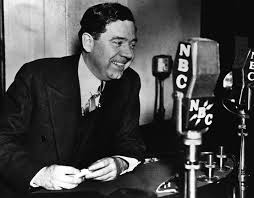
Huey Long: 'What's Morgan and Baruch and Rockefeller and Mellon going to do with all that grub?', Share Our Wealth rally - 1934

April 13, 2016

11 December 1934, Washington DC, USA

Huey Long started the Share Our Wealth movement. He was an FDR suppoerter who became disillusioned with the New Deal, and wanted to tax the super-rich, introduce death duties, and increase property taxes on the super-rich. Share Our Wealth rallies were attended around the nation. Long was assassinated in 1935.

According to the tables which we have assembled, it is our estimate, that four percent of the American people own 85 percent of the wealth of America.

And that over 70% of the people of America don’t own enough to pay the debts that they owe.

How many men ever went to a barbecue and would let one man take off the table what's intended for 9/10th of the people to eat? The only way to be able to feed the balance of the people is to make that man come back and bring back some of that grub that he ain't got no business with!

Now we got a barbecue. We have been praying to the Almighty to send us to a feast. We have knelt on our knees morning and nighttime. The Lord has answered the prayer.  He has called the barbecue. "Come to my feast," He said to 125 million American people. But Morgan and Rockefeller and Mellon and Baruch have walked up and took 85 percent of the victuals off the table!

Now, how are you going to feed the balance of the people? What's Morgan and Baruch and Rockefeller and Mellon going to do with all that grub? They can't eat it, they can't wear the clothes, they can't live in the houses.

Giv'em a yacht!  Giv'em a Palace! Send 'em to Reno and give them a new wife when they want it, if that's what they want. But when they've got everything on God's loving earth that they can eat and they can wear and they can live in, and all that their children can live in and wear and eat, and all of their children's children can use, then we've got to call Mr Morgan and Mr Mellon an Mr Rockefeller back and say, come back here, put that stuff back on this table here that you took away from here that you don't need. Leave something else for the American people to consume. And that's the program.

Source: http://xroads.virginia.edu/~ma01/Kidd/thes...

Enjoyed this speech? Speakola is a labour of love and I’d be very grateful if you would share, tweet or like it. Thank you.

Facebook Twitter Facebook
In 1920-39 Tags HUEY LONG, SHARE OUR WEALTH, SHARE THE WEALTH, TRANSCRIPT, US SENATE, SENATOR
Comment

Huey Long: 'We do not propose a division of wealth, but we propose to limit poverty'. Every Man a King - 1934

April 13, 2016

23 February 1934, radio address to nation, USA

At the time of the speech Long was a US Senator. He started the 'Share Our Wealth' movement. He was assassinated in 1935, while planning to run for President in 1936.

Is that a right of life, when the young children of this country are being reared into a sphere which is more owned by 12 men that is by 120 million people?

Ladies and gentlemen, I have only 30 minutes in which to speak to you this evening, and I, therefore, will not be able to discuss in detail so much as I can write when I have all of the time and space that is allowed me for the subjects, but I will undertake to sketch them very briefly without manuscript or preparation, so that you can understand them so well as I can tell them to you tonight.

I contend, my friends, that we have no difficult problem to solve in America, and that is the view of nearly everyone with whom I have discussed the matter here in Washington and elsewhere throughout the United States -- that we have no very difficult problem to solve.

It is not the difficulty of the problem which we have; it is the fact that the rich people of this country -- and by rich people I mean the super-rich -- will not allow us to solve the problems, or rather the one little problem that is afflicting this country, because in order to cure all of our woes it is necessary to scale down the big fortunes, that we may scatter the wealth to be shared by all of the people.

We have a marvelous love for this Government of ours; in fact, it is almost a religion, and it is well that it should be, because we have a splendid form of government and we have a splendid set of laws. We have everything here that we need, except that we have neglected the fundamentals upon which the American Government was principally predicated.

How may of you remember the first thing that the Declaration of Independence said? It said, "We hold these truths to be self-evident, that there are certain inalienable rights of the people, and among them are life, liberty, and the pursuit of happiness"; and it said, further, "We hold the view that all men are created equal."

Now, what did they mean by that? Did they mean, my friends, to say that all me were created equal and that that meant that any one man was born to inherit $10,000,000,000 and that another child was to be born to inherit nothing?

Did that mean, my friends, that someone would come into this world without having had an opportunity, of course, to have hit one lick of work, should be born with more than it and all of its children and children's children could ever dispose of, but that another one would have to be born into a life of starvation?

That was not the meaning of the Declaration of Independence when it said that all men are created equal of "That we hold that all men are created equal."

Now was it the meaning of the Declaration of Independence when it said that they held that there were certain rights that were inalienable -- the right of life, liberty, and the pursuit of happiness. Is that right of life, my friends, when the young children of this country are being reared into a sphere which is more owned by 12 men than it is by 120,000,000 people?

Is that, my friends, giving them a fair shake of the dice or anything like the inalienable right of life, liberty, and the pursuit of happiness, or anything resembling the fact that all people are created equal; when we have today in America thousands and hundreds of thousands and millions of children on the verge of starvation in a land that is overflowing with too much to eat and too much to wear? I do not think you will contend that, and I do not think for a moment that they will contend it.

Now let us see if we cannot return this Government to the Declaration of Independence and see if we are going to do anything regarding it. Why should we hesitate or why should we quibble or why should we quarrel with one another to find out what the difficulty is, when we know what the Lord told us what the difficulty is, and Moses wrote it out so a blind man could see it, then Jesus told us all about it, and it was later written in the Book of James, where everyone could read it?

I refer to the Scriptures, now, my friends, and give you what it says not for the purpose of convincing you of the wisdom of myself, not for the purpose ladies and gentlemen, of convincing you of the fact that I am quoting the Scripture means that I am to be more believed than someone else; but I quote you the Scripture, rather refer you to the Scripture, because whatever you see there you may rely upon will never be disproved so long as you or your children or anyone may live; and you may further depend upon the fact that not one historical fact that the Bible has ever contained has ever yet been disproved by any scientific discovery or by reason of anything that has been disclosed to man through his own individual mind or through the wisdom of the Lord which the Lord has allowed him to have.

But the Scripture says, ladies and gentlemen, that no country can survive, or for a country to survive it is necessary that we keep the wealth scattered among the people, that nothing should be held permanently by any one person, and that 50 years seems to be the year of jubilee in which all property would be scattered about and returned to the sources from which it originally came, and every seventh year debt should be remitted.

Those two things the Almighty said to be necessary -- I should say He knew to be necessary, or else He would not have so prescribed that the property would be kept among the general run of the people and that everyone would continue to share in it; so that no one man would get half of it and hand it down to a son, who takes half of what was left, and that son hand it down to another one, who would take half of what was left, until, like a snowball going downhill, all of the snow was off of the ground except what the snowball had.

I believe that was the judgment and the view and the law of the Lord, that we would have to distribute wealth every so often, in order that there could not be people starving to death in a land of plenty, as there is in America today. We have in American today more wealth, more goods, more food, more clothing, more houses than we have ever had. We have everything in abundance here. We have the farm problem, my friends, because we have too much cotton, because we have too much wheat, and have too much corn, and too much potatoes.

We have a home-loan problem because we have too many houses, and yet nobody can buy them and live in them.

We have trouble, my friends, in the country, because we have too much money owing, the greatest indebtedness that has ever been given to civilization, where it has been shown that we are incapable of distributing to the actual things that are here, because the people have not money enough to supply themselves with them, and because the greed of a few men is such that they think it is necessary that they own everything, and their pleasure consists in the starvation of the masses, and in their possessing things they cannot use, and their children cannot use, but who bask in the splendor of sunlight and wealth, casting darkness and despair and impressing it on everyone else.

"So, therefore," said the Lord, in effect, "if you see these things that now have occurred and exist in this and other countries, there must be a constant scattering of wealth in any country if this country is to survive."

"Then," said the Lord, in effect, "every seventh year there shall be a remission of debts; there will be no debts after 7 years." That was the law.

Now, let us take America today. We have in American today, ladies and gentlemen, $272,000,000,000 of debt. Two hundred and seventy-two thousand millions of dollars of debts are owed by the various people of this country today. Why, my friends, that cannot be paid. It is not possible for that kind of debt to be paid.

The entire currency of the United States is only $6,000,000,000. That is all of the money that we have got in America today. All the actual money you have got in all of your banks, all that you have got in the Government Treasury, is $6,000,000,000; and if you took all that money and paid it out today you would still owe $266,000,000,000; and if you took all that money and paid again you would still owe $260,000,000,000; and if you took it, my friends, 20 times and paid it you would still owe $150,000,000,000.

You would have to have 45 times the entire money supply of the United States today to pay the debts of the people of America, and then they would just have to start out from scratch, without a dime to go on with.

So, my friends, it is impossible to pay all of these debts, and you might as well find out that it cannot be done. The United States Supreme Court has definitely found out that it could not be done, because, in a Minnesota case, it held that when a State has postponed the evil day of collecting a debt it was a valid and constitutional exercise of legislative power.

Now, ladies and gentlemen, if I may proceed to give you some other words that I think you can understand -- I am not going to belabor you by quoting tonight -- I am going to tell you what the wise men of all ages and all times, down even to the present day, have all said: That you must keep the wealth of the country scattered, and you must limit the amount that any one man can own. You cannot let any man own $300,000,000,000 or $400,000,000,000. If you do, one man can own all of the wealth that they United States has in it.

Now, my friends, if you were off on an island where there were 100 lunches, you could not let one man eat up the hundred lunches, or take the hundred lunches and not let anybody else eat any of them. If you did, there would not be anything else for the balance of the people to consume.

So, we have in America today, my friends, a condition by which about 10 men dominate the means of activity in at least 85 percent of the activities that you own. They either own directly everything or they have got some kind of mortgage on it, with a very small percentage to be excepted. They own the banks, they own the steel mills, they own the railroads, they own the bonds, they own the mortgages, they own the stores, and they have chained the country from one end to the other, until there is not any kind of business that a small, independent man could go into today and make a living, and there is not any kind of business that an independent man can go into and make any money to buy an automobile with; and they have finally and gradually and steadily eliminated everybody from the fields in which there is a living to be made, and still they have got little enough sense to think they ought to be able to get more business out of it anyway.

If you reduce a man to the point where he is starving to death and bleeding and dying, how do you expect that man to get hold of any money to spend with you? It is not possible. Then, ladies and gentlemen, how do you expect people to live, when the wherewith cannot be had by the people?

In the beginning I quoted from the Scriptures. I hope you will understand that I am not quoting Scripture to convince you of my goodness personally, because that is a thing between me and my Maker, that is something as to how I stand with my Maker and as to how you stand with your Maker. That is not concerned with this issue, except and unless there are those of you who would be so good as to pray for the souls of some of us. But the Lord gave his law, and in the Book of James they said so, that the rich should weep and howl for the miseries that had come upon them; and, therefore, it was written that when the rich hold goods they could not use and could not consume, you will inflict punishment on them, and nothing but days of woe ahead of them.

Then we have heard of the great Greek philosopher, Socrates, and the greater Greek philosopher, Plato, and we have read the dialog between Plato and Socrates, in which one said that great riches brought on great poverty, and would be destructive of a country. Read what they said. Read what Plato said; that you must not let any one man be too poor, and you must not let any one man be too rich; that the same mill that grinds out the extra rich is the mill that will grind out the extra poor, because, in order that the extra rich can become so affluent, they must necessarily take more of what ordinarily would belong to the average man.

It is a very simple process of mathematics that you do not have to study, and that no one is going to discuss with you.

So that was the view of Socrates and Plato. That was the view of the English statesmen. That was the view of American statesmen. That was the view of American statesmen like Daniel Webster, Thomas Jefferson, Abraham Lincoln, William Jennings Bryan, and Theodore Roosevelt, and even as late as Herbert Hoover and Franklin D. Roosevelt.

Both of these men, Mr. Hoover and Mr. Roosevelt, came out and said there had to be a decentralization of wealth, but neither one of them did anything about it. But, nevertheless, they recognized the principle. The fact that neither one of them ever did anything about it is their own problem that I am not undertaking to criticize; but had Mr. Hoover carried out what he says ought to be done, he would be retiring from the President's office, very probably, 3 years from now, instead of 1 year ago; and had Mr. Roosevelt proceeded along the lines that he stated were necessary for the decentralization of wealth, he would have gone, my friends, a long way already, and within a few months he would have probably reached a solution of all of the problems that afflict this country.

But I wish to warn you now that nothing that has been done up to this date has taken one dime away from these big-fortune holders; they own just as much as they did, and probably a little bit more; they hold just as many of the debts of the common people as they ever held, and probably a little bit more; and unless we, my friends, are going to give the people of this country a fair shake of the dice, by which they will all get something out of the funds of this land, there is not a chance on the topside of this God's eternal earth by which we can rescue this country and rescue the people of this country.

It is necessary to save the Government of the country, but is much more necessary to save the people of America. We love this country. We love this Government. It is a religion, I say. It is a kind of religion people have read of when women, in the name of religion, would take their infant babes and throw them into the burning flame, where they would be instantly devoured by the all-consuming fire, in days gone by; and there probably are some people of the world even today, who, in the name of religion, throw their tear-dimmed eyes into the sad faces of their fathers and mothers, who cannot given them food and clothing they both needed, and which is necessary to sustain them, and that goes on day after day, and night after night, when day gets into darkness and blackness, knowing those children would arise in the morning without being fed, and probably to bed at night without being fed.

Yet in the name of our Government, and all alone, those people undertake and strive as hard as they can to keep a good government alive, and how long they can stand that no one knows. If I were in their place tonight, the place where millions are, I hope that I would have what I might say -- I cannot give you the word to express the kind of fortitude they have; that is the word -- I hope that I might have the fortitude to praise and honor my Government that had allowed me here in this land, where there is too much to eat and too much to wear, to starve in order that a handful of men can have so much more than they can ever eat or they can ever wear.

Now, we have organized a society, and we call it "Share Our Wealth Society," a society with the motto "every man a king."

Every man a king, so there would be no such thing as a man or woman who did not have the necessities of life, who would not be dependent upon the whims and caprices and ipsi dixit of the financial martyrs for a living. What do we propose by this society? We propose to limit the wealth of big men in the country. There is an average of $15,000 in wealth to every family in America. That is right here today.

We do not propose to divide it up equally. We do not propose a division of wealth, but we propose to limit poverty that we will allow to be inflicted upon any man's family. We will not say we are going to try to guarantee any equality, or $15,000 to families. No; but we do say that one third of the average is low enough for any one family to hold, that there should be a guaranty of a family wealth of around $5,000; enough for a home, and automobile, a radio, and the ordinary conveniences, and the opportunity to educate their children; a fair share of the income of this land thereafter to that family so there will be no such thing as merely the select to have those things, and so there will be no such thing as a family living in poverty and distress.

We have to limit fortunes. Our present plan is that we will allow no one man to own more than $50,000,000. We think that with that limit we will be able to carry out the balance of the program. It may be necessary that we limit it to less than $50,000,000. It may be necessary, in working out of the plans, that no man's fortune would be more than $10,000,000 or $15,000,000. But be that as it may, it will still be more than any one man, or any one man and his children and their children, will be able to spend in their lifetimes; and it is not necessary or reasonable to have wealth piled up beyond that point where we cannot prevent poverty among the masses.

Another thing we propose is old-age pension of $30 a month for everyone that is 60 years old. Now, we do not give this pension to a man making $1,000 a year, and we do not give it to him if he has $10,000 in property, but outside of that we do.

We will limit hours of work. There is not any necessity of having over-production. I think all you have got to do, ladies and gentlemen, is just limit the hours of work to such an extent as people will work only so long as is necessary to produce enough for all of the people to have what they need. Why, ladies and gentleman, let us say that all of these labor-saving devices reduce hours down to where you do not have to work but 4 hours a day; that is enough for these people, and then praise be the name of the Lord, if it gets that good. Let it be good and not a curse, and then we will have 5 hours a day and 5 days a week, or even less that that, and we might give a man a whole month off during a year, or give him 2 months; and we might do what other countries have seen fit to do, and what I did in Louisiana, by having schools by which adults could go back and learn the things that have been discovered since they went to school.

We will not have any trouble taking care of the agricultural situation. All you have to do is balance your production with your consumption. You simply have to abandon a particular crop that you have too much of, and all you have to do is store the surplus for the next year, and the Government will take it over. When you have good crops in the area in which the crops that have been planted are sufficient for another year, put in your public works in the particular year when you do not need to raise any more, and by that means you get everybody employed. When the Government has enough of any particular crop to take care of all of the people, that will be all that is necessary; and in order to do all of this, our taxation is going to be to take the billion-dollar fortunes and strip them down to frying size, not to exceed $50,000,000, and it is necessary to come to $10,000,000, we will come to $10,000,000. We have worked the proposition out to guarantee a limit upon property (and no man will own less than one third the average), and guarantee a reduction of fortunes and a reduction of hours to spread wealth throughout this country. We would care for the old people above 60 and take them away from this thriving industry and given them a chance to enjoy the necessities and live in ease, and thereby lift from the market the labor which would probably create a surplus of commodities.

Those are the things we propose to do. "Every man a king." Every man to eat when there is something to eat; all to wear something when there is something to wear. That makes us all sovereign.

You cannot solve these things through these various and sundry alphabetical codes. You can have the N.R.A. and P.W.A. and C.W.A. and the U.U.G. and G.I.N. and any other kind of "dad-gummed" lettered code. You can wait until doomsday and see 25 more alphabets, but that is not going to solve this proposition. Why hide? Why quibble? You know what the trouble is. The man that says he does not know what the trouble is just hiding his face to keep from seeing the sunlight.

God told you what the trouble was. The philosophers told you what the trouble was; and when you have a country where one man owns more than 100,000 people, or a million people, and when you have a country where there are four men, as in America, that have got more control over things than all the 120,000,000 people together, you know what the trouble is.

We had these great incomes in this country; but the farmer, who plowed from sunup to sundown, who labored here from sunup to sundown for 6 days a week, wound up at the end of the with practically nothing.

And we ought to take care of the veterans of the wars in this program. That is a small matter. Suppose it does cost a billion dollars a year -- that means that the money will be scattered throughout this country. We ought to pay them a bonus. We can do it. We ought to take care of every single one of the sick and disabled veterans. I do not care whether a man got sick on the battlefield or did not; every man that wore the uniform of this country is entitled to be taken care of, and there is money enough to do it; and we need to spread the wealth of the country, which you did not do in what you call the N.R.A.

If the N.R.A. has done any good, I can put it all in my eye without having it hurt. All I can see that N.R.A. has done is to put the little man out of business -- the little merchant in his store, the little Dago that is running a fruit stand, or the Greek shoe-shining stand, who has to take hold of a code of 275 pages and study with a spirit level and compass and looking-glass; he has to hire a Philadelphia lawyer to tell him what is in the code; and by the time he learns what the code is, he is in jail or out of business; and they have got a chain code system that has already put him out of business. The N.R.A. is not worth anything, and I said so when they put it through.

Now, my friends, we have got to hit the root with the axe. Centralized power in the hands of a few, with centralized credit in the hands of a few, is the trouble.

Get together in your community tonight or tomorrow and organize one of our Share Our Wealth societies. If you do not understand it, write me and let me send you the platform; let me give you the proof of it.

This is Huey P. Long talking, United States Senator, Washington, D.C. Write me and let me send you the data on this proposition. Enroll with us. Let us make known to the people what we are going to do. I will send you a button, if I have got enough of them left. We have got a little button that some of our friends designed, with our message around the rim of the button, and in the center "Every man a king." Many thousands of them are meeting through the United States, and every day we are getting hundreds and hundreds of letters. Share Our Wealth societies are now being organized, and people have it within their power to relieve themselves from this terrible situation.

Look at what the Mayo brothers announced this week, these greatest scientists of all the world today, who are entitled to have more money than all the Morgans and the Rockefellers, or anyone else, and yet the Mayos turn back their big fortunes to be used for treating the sick, and said they did not want to lay up fortunes in this earth, but wanted to turn them back where they would do some good; but the other big capitalists are not willing to do that, are not willing to do what these men, 10 times more worthy, have already done, and it is going to take a law to require them to do it.

Organize your Share Our Wealth Society and get your people to meet with you, and make known your wishes to your Senators and Representatives in Congress.

Now, my friends, I am going to stop. I thank you for this opportunity to talk to you. I am having to talk under the auspices and by the grace and permission of the National Broadcasting System tonight, and they are letting me talk free. If I had the money, and I wish I had the money, I would like to talk to you more often on this line, but I have not got it, and I cannot expect these people to give it to me free except on some rare instance. But, my friends, I hope to have the opportunity to talk with you, and I am writing to you, and I hope that you will get up and help in the work, because the resolution and bills are before Congress, and we hope to have your help in getting together and organizing your Share Our Wealth society.

Now, that I have but a minute left, I want to say that I suppose my family is listening in on the radio in New Orleans, and I will say to my wife and three children that I am entirely well and hope to be home before many more days, and I hope they have listened to my speech tonight, and I wish them and all their neighbors and friends everything good that may be had.

I thank you, my friends, for your kind attention, and I hope you will enroll with us, take care of your own work in the work of this Government, and share or help in our Share Our Wealth society.

I thank you.

Source: http://www.americanrhetoric.com/speeches/h...

Enjoyed this speech? Speakola is a labour of love and I’d be very grateful if you would share, tweet or like it. Thank you.

Facebook Twitter Facebook
In 1920-39 Tags HUEY LONG, EVERY MAN A KING, LOUISIANA, NEW DEAL, SHARE OUR WEALTH, FDR, SENATE, SENATOR, TRANSCRIPT
Comment

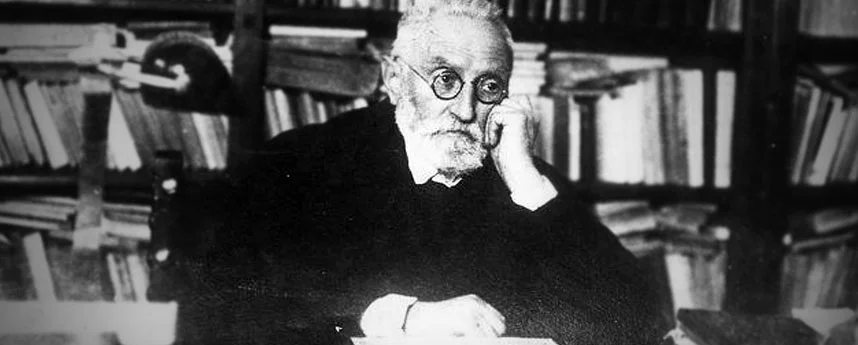
Miguel de Unamuno: 'You will win, because you possess more than enough brute force, but you will not convince', Unamuno's Last Lecture - 1936

April 13, 2016

12 Ocrtober 1936, Salamanca Unversity, Spain

Miguel de Unamuno y Jugo is one of Spain's most eminent novelists, poets and playwrights. He was rector of Salamanca University, and a professor in Greek. On the day of this speech, General Franco's chief advisor, General Millán Astray, a military hero with an eye patch and a missing arm, spoke from the audience's midst, shouting the paradoxical phrase, 'Viva la Muerte!”  — Long Live Death! This was Unamuno's response.


All of you are hanging on my words. You all know me and are aware that I am unable to remain silent. I have not learned to do so in seventy-three years of my life. And now. I do not wish to learn it any more. At times, to be silent is to lie. For silence can be interpreted as acquiescence. I could not survive a divorce between my conscience and my word, always well-mated partners.

I will be brief. Truth is most true when naked, free of embellishments and verbiage. Let us waive the personal affront implied in the sudden outburst of vituperation against the Basques and Catalans in general by Professor Maldonado. I was myself, of course, born in Bilbao in the midst of the bombardments of the Second Carlist War. Later, I wedded myself to this city of Salamanca, which I love deeply, yet never forgetting my native town. The Bishop [here Unamuno indicated the quivering prelate sitting next to him], whether he likes it or not, is a Catalan from Barcelona.

I want, however, to comment on the speech — to give it that name — of General Millán Astray who is here among us.

[the general was sitting on the stage and had given a pro fascist speech moments before].

Just now, I heard a necrophilic and senseless cry, ‘Long live Death!’ To me it sounds the equivalent of ‘MUERA LA VIDA!’ — ‘To Death with Life!’ And I, who have spent my life shaping paradoxes that have aroused the uncomprehending anger of others, I must tell you, as an expert authority, that this outlandish paradox is repellent to me.  Since it was proclaimed in homage to the last speaker, I can only explain it to myself by supposing that it was addressed to him, though in an excessively strange and tortuous form, as a testimonial to his being himself a symbol of death.

And now, another matter. General Millán Astray is a cripple. Let it be said without any slighting undertone. He is a war invalid. So was Cervantes. But extremes do not make the rule: they escape it. Unfortunately, there are all too many cripples in Spain now. And soon, there will be even more of them if God does not come to our aid. It pains me to think that General Millán Astray should dictate the pattern of mass psychology.

That would be appalling. A cripple who lacks the spiritual greatness of Cervantes — a man, not a superman, virile and complete, in spite of his mutilations — a cripple, I said, who lacks that loftiness of mind, is wont to seek ominous relief in causing mutilation around him.

General Millán Astray is not one of the select minds, even though he is unpopular, or rather, for that very reason. Because he is unpopular, General Millán Astray would like to create Spain anew — a negative creation — in his own image and likeness. And for that reason he wishes to see Spain crippled, as he unwittingly made clear.

At this General Millán Astray was unable to restrain himself any longer. ‘Death to intellectuals! Down with intelligence!’ ‘¡Mueran los intelectuales!’ [‘¡Abajo la inteligencia!’] he shouted. ‘Long live death!’ [‘¡Viva la Muerte!’]

This is the temple of intellect. And I am its high priest. It is you who are profaning its sacred precincts.

I have always, whatever the proverb may say, been a prophet in my own land. You will win, but you will not convince. You will win, because you possess more than enough brute force, but you will not convince, because to convince means to persuade. And in order to persuade you would need what you lack — reason and right in the struggle. I consider it futile to exhort you to think of Spain. I have finished.

Orders were initially made to kill the rector for making the speech, but this was commuted to house arrest when the regime decided the execution would create an international incident, and injure its nascent “National Movement of Salvation”. Unamuno died under house arrest on the last day of 1936, two months after the speech. 

Source: http://www.christiebooks.com/ChristieBooks...

Enjoyed this speech? Speakola is a labour of love and I’d be very grateful if you would share, tweet or like it. Thank you.

Facebook Twitter Facebook
In 1920-39 Tags UNAMUNO, PROFESSOR, SPAIN, GENERAL FRANCO
4 Comments

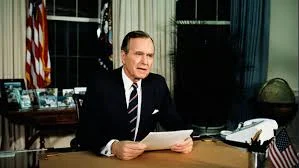
George H.W. Bush: 'Appeasement does not work', Response to Iraq's invasion of Kuwait - 1990

April 13, 2016

8 August 1990, Oval Office, Washington DC, USA

In the life of a nation, we're called upon to define who we are and what we believe. Sometimes these choices are not easy. But today as President, I ask for your support in a decision I've made to stand up for what's right and condemn what's wrong, all in the cause of peace.

At my direction, elements of the 82d Airborne Division as well as key units of the United States Air Force are arriving today to take up defensive positions in Saudi Arabia. I took this action to assist the Saudi Arabian Government in the defense of its homeland. No one commits America's Armed Forces to a dangerous mission lightly, but after perhaps unparalleled international consultation and exhausting every alternative, it became necessary to take this action. Let me tell you why.

Less than a week ago, in the early morning hours of August 2d, Iraqi Armed Forces, without provocation or warning, invaded a peaceful Kuwait. Facing negligible resistance from its much smaller neighbor, Iraq's tanks stormed in blitzkrieg fashion through Kuwait in a few short hours. With more than 100,000 troops, along with tanks, artillery, and surface-to-surface missiles, Iraq now occupies Kuwait. This aggression came just hours after Saddam Hussein specifically assured numerous countries in the area that there would be no invasion. There is no justification whatsoever for this outrageous and brutal act of aggression.

A puppet regime imposed from the outside is unacceptable. The acquisition of territory by force is unacceptable. No one, friend or foe, should doubt our desire for peace; and no one should underestimate our determination to confront aggression.

Four simple principles guide our policy. First, we seek the immediate, unconditional, and complete withdrawal of all Iraqi forces from Kuwait. Second, Kuwait's legitimate government must be restored to replace the puppet regime. And third, my administration, as has been the case with every President from President Roosevelt to President Reagan, is committed to the security and stability of the Persian Gulf. And fourth, I am determined to protect the lives of American citizens abroad.

Immediately after the Iraqi invasion, I ordered an embargo of all trade with Iraq and, together with many other nations, announced sanctions that both freeze all Iraqi assets in this country and protected Kuwait's assets. The stakes are high. Iraq is already a rich and powerful country that possesses the world's second largest reserves of oil and over a million men under arms. It's the fourth largest military in the world. Our country now imports nearly half the oil it consumes and could face a major threat to its economic independence. Much of the world is even more dependent upon imported oil and is even more vulnerable to Iraqi threats.

We succeeded in the struggle for freedom in Europe because we and our allies remain stalwart. Keeping the peace in the Middle East will require no less. We're beginning a new era. This new era can be full of promise, an age of freedom, a time of peace for all peoples. But if history teaches us anything, it is that we must resist aggression or it will destroy our freedoms. Appeasement does not work. As was the case in the 1930's, we see in Saddam Hussein an aggressive dictator threatening his neighbors. Only 14 days ago, Saddam Hussein promised his friends he would not invade Kuwait. And 4 days ago, he promised the world he would withdraw. And twice we have seen what his promises mean: His promises mean nothing.

In the last few days, I've spoken with political leaders from the Middle East, Europe, Asia, and the Americas; and I've met with Prime Minister Thatcher, Prime Minister Mulroney, and NATO Secretary General Woerner. And all agree that Iraq cannot be allowed to benefit from its invasion of Kuwait.

We agree that this is not an American problem or a European problem or a Middle East problem: It is the world's problem. And that's why, soon after the Iraqi invasion, the United Nations Security Council, without dissent, condemned Iraq, calling for the immediate and unconditional withdrawal of its troops from Kuwait. The Arab world, through both the Arab League and the Gulf Cooperation Council, courageously announced its opposition to Iraqi aggression. Japan, the United Kingdom, and France, and other governments around the world have imposed severe sanctions. The Soviet Union and China ended all arms sales to Iraq.

And this past Monday, the United Nations Security Council approved for the first time in 23 years mandatory sanctions under chapter VII of the United Nations Charter. These sanctions, now enshrined in international law, have the potential to deny Iraq the fruits of aggression while sharply limiting its ability to either import or export anything of value, especially oil.

I pledge here today that the United States will do its part to see that these sanctions are effective and to induce Iraq to withdraw without delay from Kuwait.

But we must recognize that Iraq may not stop using force to advance its ambitions. Iraq has massed an enormous war machine on the Saudi border capable of initiating hostilities with little or no additional preparation. Given the Iraqi government's history of aggression against its own citizens as well as its neighbors, to assume Iraq will not attack again would be unwise and unrealistic.

And therefore, after consulting with King Fahd, I sent Secretary of Defense Dick Cheney to discuss cooperative measures we could take. Following those meetings, the Saudi Government requested our help, and I responded to that request by ordering U.S. air and ground forces to deploy to the Kingdom of Saudi Arabia.

Let me be clear: The sovereign independence of Saudi Arabia is of vital interest to the United States. This decision, which I shared with the congressional leadership, grows out of the longstanding friendship and security relationship between the United States and Saudi Arabia. U.S. forces will work together with those of Saudi Arabia and other nations to preserve the integrity of Saudi Arabia and to deter further Iraqi aggression. Through their presence, as well as through training and exercises, these multinational forces will enhance the overall capability of Saudi Armed Forces to defend the Kingdom.

I want to be clear about what we are doing and why. America does not seek conflict, nor do we seek to chart the destiny of other nations. But America will stand by her friends. The mission of our troops is wholly defensive. Hopefully, they will not be needed long. They will not initiate hostilities, but they will defend themselves, the Kingdom of Saudi Arabia, and other friends in the Persian Gulf.

We are working around the clock to deter Iraqi aggression and to enforce U.N. sanctions. I'm continuing my conversations with world leaders. Secretary of Defense Cheney has just returned from valuable consultations with President Mubarak of Egypt and King Hassan of Morocco. Secretary of State Baker has consulted with his counterparts in many nations, including the Soviet Union, and today he heads for Europe to consult with President Ozal of Turkey, a staunch friend of the United States. And he'll then consult with the NATO Foreign Ministers.

I will ask oil-producing nations to do what they can to increase production in order to minimize any impact that oil flow reductions will have on the world economy. And I will explore whether we and our allies should draw down our strategic petroleum reserves. Conservation measures can also help; Americans everywhere must do their part. And one more thing: I'm asking the oil companies to do their fair share. They should show restraint and not abuse today's uncertainties to raise prices.

Standing up for our principles will not come easy. It may take time and possibly cost a great deal. But we are asking no more of anyone than of the brave young men and women of our Armed Forces and their families. And I ask that in the churches around the country prayers be said for those who are committed to protect and defend America's interests.

Standing up for our principle is an American tradition. As it has so many times before, it may take time and tremendous effort, but most of all, it will take unity of purpose. As I've witnessed throughout my life in both war and peace, America has never wavered when her purpose is driven by principle. And in this August day, at home and abroad, I know she will do no less.

Thank you, and God bless the United States of America.

Source: http://www.cfr.org/iraq/president-george-h...

Enjoyed this speech? Speakola is a labour of love and I’d be very grateful if you would share, tweet or like it. Thank you.

Facebook Twitter Facebook
In 1980-99 B Tags GEORGE H.W. BUSH, PRESIDENTS, IRAQ WAR, KUWAIT, GULF WAR
Comment

John F Kennedy: 'The very word "secrecy" is repugnant in a free and open society', Secret Societies Speech - 1961

April 5, 2016

27 April 1961, Waldorf Astoria, New York City, USA

Mr. Chairman, ladies and gentlemen:

I appreciate very much your generous invitation to be here tonight.

You bear heavy responsibilities these days and an article I read some time ago reminded me of how particularly heavily the burdens of present day events bear upon your profession.

You may remember that in 1851 the New York Herald Tribune under the sponsorship and publishing of Horace Greeley, employed as its London correspondent an obscure journalist by the name of Karl Marx.

We are told that foreign correspondent Marx, stone broke, and with a family ill and undernourished, constantly appealed to Greeley and managing editor Charles Dana for an increase in his munificent salary of $5 per installment, a salary which he and Engels ungratefully labeled as the "lousiest petty bourgeois cheating."

But when all his financial appeals were refused, Marx looked around for other means of livelihood and fame, eventually terminating his relationship with the Tribune and devoting his talents full time to the cause that would bequeath the world the seeds of Leninism, Stalinism, revolution and the cold war.

If only this capitalistic New York newspaper had treated him more kindly; if only Marx had remained a foreign correspondent, history might have been different. And I hope all publishers will bear this lesson in mind the next time they receive a poverty-stricken appeal for a small increase in the expense account from an obscure newspaper man.

     I have selected as the title of my remarks tonight "The President and the Press." Some may suggest that this would be more naturally worded "The President Versus the Press." But those are not my sentiments tonight.

It is true, however, that when a well-known diplomat from another country demanded recently that our State Department repudiate certain newspaper attacks on his colleague it was unnecessary for us to reply that this Administration was not responsible for the press, for the press had already made it clear that it was not responsible for this Administration.

Nevertheless, my purpose here tonight is not to deliver the usual assault on the so-called one party press. On the contrary, in recent months I have rarely heard any complaints about political bias in the press except from a few Republicans. Nor is it my purpose tonight to discuss or defend the televising of Presidential press conferences. I think it is highly beneficial to have some 20,000,000 Americans regularly sit in on these conferences to observe, if I may say so, the incisive, the intelligent and the courteous qualities displayed by your Washington correspondents.

Nor, finally, are these remarks intended to examine the proper degree of privacy which the press should allow to any President and his family.

If in the last few months your White House reporters and photographers have been attending church services with regularity, that has surely done them no harm.

On the other hand, I realize that your staff and wire service photographers may be complaining that they do not enjoy the same green privileges at the local golf courses that they once did.

It is true that my predecessor did not object as I do to pictures of one's golfing skill in action. But neither on the other hand did he ever bean a Secret Service man.

My topic tonight is a more sober one of concern to publishers as well as editors.

I want to talk about our common responsibilities in the face of a common danger. The events of recent weeks may have helped to illuminate that challenge for some; but the dimensions of its threat have loomed large on the horizon for many years. Whatever our hopes may be for the future--for reducing this threat or living with it--there is no escaping either the gravity or the totality of its challenge to our survival and to our security--a challenge that confronts us in unaccustomed ways in every sphere of human activity.

This deadly challenge imposes upon our society two requirements of direct concern both to the press and to the President--two requirements that may seem almost contradictory in tone, but which must be reconciled and fulfilled if we are to meet this national peril. I refer, first, to the need for a far greater public information; and, second, to the need for far greater official secrecy.

I

The very word "secrecy" is repugnant in a free and open society; and we are as a people inherently and historically opposed to secret societies, to secret oaths and to secret proceedings. We decided long ago that the dangers of excessive and unwarranted concealment of pertinent facts far outweighed the dangers which are cited to justify it. Even today, there is little value in opposing the threat of a closed society by imitating its arbitrary restrictions. Even today, there is little value in insuring the survival of our nation if our traditions do not survive with it. And there is very grave danger that an announced need for increased security will be seized upon by those anxious to expand its meaning to the very limits of official censorship and concealment. That I do not intend to permit to the extent that it is in my control. And no official of my Administration, whether his rank is high or low, civilian or military, should interpret my words here tonight as an excuse to censor the news, to stifle dissent, to cover up our mistakes or to withhold from the press and the public the facts they deserve to know.

But I do ask every publisher, every editor, and every newsman in the nation to reexamine his own standards, and to recognize the nature of our country's peril. In time of war, the government and the press have customarily joined in an effort based largely on self-discipline, to prevent unauthorized disclosures to the enemy. In time of "clear and present danger," the courts have held that even the privileged rights of the First Amendment must yield to the public's need for national security.

Today no war has been declared--and however fierce the struggle may be, it may never be declared in the traditional fashion. Our way of life is under attack. Those who make themselves our enemy are advancing around the globe. The survival of our friends is in danger. And yet no war has been declared, no borders have been crossed by marching troops, no missiles have been fired.

If the press is awaiting a declaration of war before it imposes the self-discipline of combat conditions, then I can only say that no war ever posed a greater threat to our security. If you are awaiting a finding of "clear and present danger," then I can only say that the danger has never been more clear and its presence has never been more imminent.

It requires a change in outlook, a change in tactics, a change in missions--by the government, by the people, by every businessman or labor leader, and by every newspaper. For we are opposed around the world by a monolithic and ruthless conspiracy that relies primarily on covert means for expanding its sphere of influence--on infiltration instead of invasion, on subversion instead of elections, on intimidation instead of free choice, on guerrillas by night instead of armies by day. It is a system which has conscripted vast human and material resources into the building of a tightly knit, highly efficient machine that combines military, diplomatic, intelligence, economic, scientific and political operations.

Its preparations are concealed, not published. Its mistakes are buried, not headlined. Its dissenters are silenced, not praised. No expenditure is questioned, no rumor is printed, no secret is revealed. It conducts the Cold War, in short, with a war-time discipline no democracy would ever hope or wish to match.

Nevertheless, every democracy recognizes the necessary restraints of national security--and the question remains whether those restraints need to be more strictly observed if we are to oppose this kind of attack as well as outright invasion.

For the facts of the matter are that this nation's foes have openly boasted of acquiring through our newspapers information they would otherwise hire agents to acquire through theft, bribery or espionage; that details of this nation's covert preparations to counter the enemy's covert operations have been available to every newspaper reader, friend and foe alike; that the size, the strength, the location and the nature of our forces and weapons, and our plans and strategy for their use, have all been pinpointed in the press and other news media to a degree sufficient to satisfy any foreign power; and that, in at least in one case, the publication of details concerning a secret mechanism whereby satellites were followed required its alteration at the expense of considerable time and money.

The newspapers which printed these stories were loyal, patriotic, responsible and well-meaning. Had we been engaged in open warfare, they undoubtedly would not have published such items. But in the absence of open warfare, they recognized only the tests of journalism and not the tests of national security. And my question tonight is whether additional tests should not now be adopted.

The question is for you alone to answer. No public official should answer it for you. No governmental plan should impose its restraints against your will. But I would be failing in my duty to the nation, in considering all of the responsibilities that we now bear and all of the means at hand to meet those responsibilities, if I did not commend this problem to your attention, and urge its thoughtful consideration.

On many earlier occasions, I have said--and your newspapers have constantly said--that these are times that appeal to every citizen's sense of sacrifice and self-discipline. They call out to every citizen to weigh his rights and comforts against his obligations to the common good. I cannot now believe that those citizens who serve in the newspaper business consider themselves exempt from that appeal.

I have no intention of establishing a new Office of War Information to govern the flow of news. I am not suggesting any new forms of censorship or any new types of security classifications. I have no easy answer to the dilemma that I have posed, and would not seek to impose it if I had one. But I am asking the members of the newspaper profession and the industry in this country to reexamine their own responsibilities, to consider the degree and the nature of the present danger, and to heed the duty of self-restraint which that danger imposes upon us all.

Every newspaper now asks itself, with respect to every story: "Is it news?" All I suggest is that you add the question: "Is it in the interest of the national security?" And I hope that every group in America--unions and businessmen and public officials at every level-- will ask the same question of their endeavors, and subject their actions to the same exacting tests.

And should the press of America consider and recommend the voluntary assumption of specific new steps or machinery, I can assure you that we will cooperate whole-heartedly with those recommendations.

Perhaps there will be no recommendations. Perhaps there is no answer to the dilemma faced by a free and open society in a cold and secret war. In times of peace, any discussion of this subject, and any action that results, are both painful and without precedent. But this is a time of peace and peril which knows no precedent in history.

II

It is the unprecedented nature of this challenge that also gives rise to your second obligation--an obligation which I share. And that is our obligation to inform and alert the American people--to make certain that they possess all the facts that they need, and understand them as well--the perils, the prospects, the purposes of our program and the choices that we face.

No President should fear public scrutiny of his program. For from that scrutiny comes understanding; and from that understanding comes support or opposition. And both are necessary. I am not asking your newspapers to support the Administration, but I am asking your help in the tremendous task of informing and alerting the American people. For I have complete confidence in the response and dedication of our citizens whenever they are fully informed.

I not only could not stifle controversy among your readers--I welcome it. This Administration intends to be candid about its errors; for as a wise man once said: "An error does not become a mistake until you refuse to correct it." We intend to accept full responsibility for our errors; and we expect you to point them out when we miss them.

Without debate, without criticism, no Administration and no country can succeed--and no republic can survive. That is why the Athenian lawmaker Solon decreed it a crime for any citizen to shrink from controversy. And that is why our press was protected by the First Amendment-- the only business in America specifically protected by the Constitution- -not primarily to amuse and entertain, not to emphasize the trivial and the sentimental, not to simply "give the public what it wants"--but to inform, to arouse, to reflect, to state our dangers and our opportunities, to indicate our crises and our choices, to lead, mold, educate and sometimes even anger public opinion.

This means greater coverage and analysis of international news--for it is no longer far away and foreign but close at hand and local. It means greater attention to improved understanding of the news as well as improved transmission. And it means, finally, that government at all levels, must meet its obligation to provide you with the fullest possible information outside the narrowest limits of national security--and we intend to do it.

III

It was early in the Seventeenth Century that Francis Bacon remarked on three recent inventions already transforming the world: the compass, gunpowder and the printing press. Now the links between the nations first forged by the compass have made us all citizens of the world, the hopes and threats of one becoming the hopes and threats of us all. In that one world's efforts to live together, the evolution of gunpowder to its ultimate limit has warned mankind of the terrible consequences of failure.

And so it is to the printing press--to the recorder of man's deeds, the keeper of his conscience, the courier of his news--that we look for strength and assistance, confident that with your help man will be what he was born to be: free and independent.

Source: http://www.jfklibrary.org/Research/Researc...

Enjoyed this speech? Speakola is a labour of love and I’d be very grateful if you would share, tweet or like it. Thank you.

Facebook Twitter Facebook
In 1960-79 C Tags JFK, JOHN F KENNEDY, PRESIDENTS, COLD WAR, SECRECY, FREEDOM
Comment

Robert Byrd: 'I weep for my country', Speech against Iraq invasion - 2003

April 4, 2016

19 March 2003, US Senate, Washington DC, USA

I believe in this beautiful country. I have studied its roots and gloried in the wisdom of its magnificent Constitution. I have marveled at the wisdom of its founders and framers. Generation after generation of Americans has understood the lofty ideals that underlie our great Republic. I have been inspired by the story of their sacrifice and their strength.

But, today I weep for my country. I have watched the events of recent months with a heavy, heavy heart. No more is the image of America one of strong, yet benevolent peacekeeper. The image of America has changed. Around the globe, our friends mistrust us, our word is disputed, our intentions are questioned.

Instead of reasoning with those with whom we disagree, we demand obedience or threaten recrimination. Instead of isolating Saddam Hussein, we seem to have isolated ourselves. We proclaim a new doctrine of preemption which is understood by few and feared by many. We say that the United States has the right to turn its firepower on any corner of the globe which might be suspect in the war on terrorism. We assert that right without the sanction of any international body. As a result, the world has become a much more dangerous place.

We flaunt our superpower status with arrogance. We treat U.N. Security Council members like ingrates who offend our princely dignity by lifting their heads from the carpet. Valuable alliances are split. After war has ended, the United States will have to rebuild much more than the country of Iraq. We will have to rebuild America’s image around the globe.

The case this Administration tries to make to justify its fixation with war is tainted by charges of falsified documents and circumstantial evidence. We cannot convince the world of the necessity of this war for one simple reason. This is a war of choice.

There is no credible information to connect Saddam Hussein to 9/11. The twin towers fell because a world-wide terrorist group, al-Qaida, with cells in over 60 nations, struck at our wealth and our influence by turning our own planes into missiles, one of which would likely have slammed into the dome of this beautiful Capitol except for the brave sacrifice of the passengers on board.

The brutality seen on September 11th and in other terrorist attacks we have witnessed around the globe are the violent and desperate efforts by extremists to stop the daily encroachment of western values upon their cultures. That is what we fight. It is a force not confined to borders. It is a shadowy entity with many faces, many names, and many addresses.

But, this Administration has directed all of the anger, fear, and grief which emerged from the ashes of the twin towers and the twisted metal of the Pentagon towards a tangible villain, one we can see and hate and attack. And villain he is. But, he is the wrong villain. And this is the wrong war. If we attack Saddam Hussein, we will probably drive him from power. But, the zeal of our friends to assist our global war on terrorism may have already taken flight.

The general unease surrounding this war is not just due to “orange alert.” There is a pervasive sense of rush and risk and too many questions unanswered. How long will we be in Iraq? What will be the cost? What is the ultimate mission? How great is the danger at home? A pall has fallen over the Senate Chamber. We avoid our solemn duty to debate the one topic on the minds of all Americans, even while scores of thousands of our sons and daughters faithfully do their duty in Iraq.

What is happening to this country? When did we become a nation which ignores and berates our friends? When did we decide to risk undermining international order by adopting a radical and doctrinaire approach to using our awesome military might? How can we abandon diplomatic efforts when the turmoil in the world cries out for diplomacy?

Why can this President not seem to see that America’s true power lies not in its will to intimidate, but in its ability to inspire?

War appears inevitable. But, I continue to hope that the cloud will lift. Perhaps Saddam will yet turn tail and run. Perhaps reason will somehow still prevail. I along with millions of Americans will pray for the safety of our troops, for the innocent civilians in Iraq, and for the security of our homeland. May God continue to bless the United States of America in the troubled days ahead, and may we somehow recapture the vision which for the present eludes us.

Source: http://www.salon.com/2008/03/19/byrd/

Enjoyed this speech? Speakola is a labour of love and I’d be very grateful if you would share, tweet or like it. Thank you.

Facebook Twitter Facebook
In 2000s Tags ROBERT BYRD, SENATOR, US SENATE, IRAQ WAR, INVASION
Comment

Mario Cuomo: 'Mr. President you ought to know that this nation is more a "Tale of Two Cities" than it is just a "Shining City on a Hill', DNC keynote - 1984

April 4, 2016

16 July 1984, San Francisco, California

Thank you very much.

On behalf of the great Empire State and the whole family of New York, let me thank you for the great privilege of being able to address this convention. Please allow me to skip the stories and the poetry and the temptation to deal in nice but vague rhetoric. Let me instead use this valuable opportunity to deal immediately with the questions that should determine this election and that we all know are vital to the American people.

Ten days ago, President Reagan admitted that although some people in this country seemed to be doing well nowadays, others were unhappy, even worried, about themselves, their families, and their futures. The President said that he didn't understand that fear. He said, "Why, this country is a shining city on a hill." And the President is right. In many ways we are a shining city on a hill.

But the hard truth is that not everyone is sharing in this city's splendor and glory. A shining city is perhaps all the President sees from the portico of the White House and the veranda of his ranch, where everyone seems to be doing well. But there's another city; there's another part to the shining the city; the part where some people can't pay their mortgages, and most young people can't afford one; where students can't afford the education they need, and middle-class parents watch the dreams they hold for their children evaporate.

In this part of the city there are more poor than ever, more families in trouble, more and more people who need help but can't find it. Even worse: There are elderly people who tremble in the basements of the houses there. And there are people who sleep in the city streets, in the gutter, where the glitter doesn't show. There are ghettos where thousands of young people, without a job or an education, give their lives away to drug dealers every day. There is despair, Mr. President, in the faces that you don't see, in the places that you don't visit in your shining city.

In fact, Mr. President, this is a nation -- Mr. President you ought to know that this nation is more a "Tale of Two Cities" than it is just a "Shining City on a Hill."

Maybe, maybe, Mr. President, if you visited some more places; maybe if you went to Appalachia where some people still live in sheds; maybe if you went to Lackawanna where thousands of unemployed steel workers wonder why we subsidized foreign steel. Maybe -- Maybe, Mr. President, if you stopped in at a shelter in Chicago and spoke to the homeless there; maybe, Mr. President, if you asked a woman who had been denied the help she needed to feed her children because you said you needed the money for a tax break for a millionaire or for a missile we couldn't afford to use.

Maybe -- Maybe, Mr. President. But I'm afraid not. Because the truth is, ladies and gentlemen, that this is how we were warned it would be. President Reagan told us from the very beginning that he believed in a kind of social Darwinism. Survival of the fittest. "Government can't do everything," we were told, so it should settle for taking care of the strong and hope that economic ambition and charity will do the rest. Make the rich richer, and what falls from the table will be enough for the middle class and those who are trying desperately to work their way into the middle class.

You know, the Republicans called it "trickle-down" when Hoover tried it. Now they call it "supply side." But it's the same shining city for those relative few who are lucky enough to live in its good neighborhoods. But for the people who are excluded, for the people who are locked out, all they can do is stare from a distance at that city's glimmering towers.

It's an old story. It's as old as our history. The difference between Democrats and Republicans has always been measured in courage and confidence. The Republicans -- The Republicans believe that the wagon train will not make it to the frontier unless some of the old, some of the young, some of the weak are left behind by the side of the trail. "The strong" -- "The strong," they tell us, "will inherit the land."

We Democrats believe in something else. We democrats believe that we can make it all the way with the whole family intact, and we have more than once. Ever since Franklin Roosevelt lifted himself from his wheelchair to lift this nation from its knees -- wagon train after wagon train -- to new frontiers of education, housing, peace; the whole family aboard, constantly reaching out to extend and enlarge that family; lifting them up into the wagon on the way; blacks and Hispanics, and people of every ethnic group, and native Americans -- all those struggling to build their families and claim some small share of America. For nearly 50 years we carried them all to new levels of comfort, and security, and dignity, even affluence. And remember this, some of us in this room today are here only because this nation had that kind of confidence. And it would be wrong to forget that.

So, here we are at this convention to remind ourselves where we come from and to claim the future for ourselves and for our children. Today our great Democratic Party, which has saved this nation from depression, from fascism, from racism, from corruption, is called upon to do it again -- this time to save the nation from confusion and division, from the threat of eventual fiscal disaster, and most of all from the fear of a nuclear holocaust.

That's not going to be easy. Mo Udall is exactly right -- it won't be easy. And in order to succeed, we must answer our opponent's polished and appealing rhetoric with a more telling reasonableness and rationality.

We must win this case on the merits. We must get the American public to look past the glitter, beyond the showmanship to the reality, the hard substance of things. And we'll do it not so much with speeches that sound good as with speeches that are good and sound; not so much with speeches that will bring people to their feet as with speeches that will bring people to their senses. We must make -- We must make the American people hear our "Tale of Two Cities." We must convince them that we don't have to settle for two cities, that we can have one city, indivisible, shining for all of its people.

Now, we will have no chance to do that if what comes out of this convention is a babel of arguing voices. If that's what's heard throughout the campaign, dissident sounds from all sides, we will have no chance to tell our message. To succeed we will have to surrender some small parts of our individual interests, to build a platform that we can all stand on, at once, and comfortably -- proudly singing out. We need -- We need a platform we can all agree to so that we can sing out the truth for the nation to hear, in chorus, its logic so clear and commanding that no slick Madison Avenue commercial, no amount of geniality, no martial music will be able to muffle the sound of the truth.

And we Democrats must unite. We Democrats must unite so that the entire nation can unite, because surely the Republicans won't bring this country together. Their policies divide the nation into the lucky and the left-out, into the royalty and the rabble. The Republicans are willing to treat that division as victory. They would cut this nation in half, into those temporarily better off and those worse off than before, and they would call that division recovery.

Now, we should not -- we should not be embarrassed or dismayed or chagrined if the process of unifying is difficult, even wrenching at times. Remember that, unlike any other Party, we embrace men and women of every color, every creed, every orientation, every economic class. In our family are gathered everyone from the abject poor of Essex County in New York, to the enlightened affluent of the gold coasts at both ends of the nation. And in between is the heart of our constituency -- the middle class, the people not rich enough to be worry-free, but not poor enough to be on welfare; the middle class -- those people who work for a living because they have to, not because some psychiatrist told them it was a convenient way to fill the interval between birth and eternity. White collar and blue collar. Young professionals. Men and women in small business desperate for the capital and contracts that they need to prove their worth.

We speak for the minorities who have not yet entered the mainstream. We speak for ethnics who want to add their culture to the magnificent mosaic that is America. We speak -- We speak for women who are indignant that this nation refuses to etch into its governmental commandments the simple rule "thou shalt not sin against equality," a rule so simple --

I was going to say, and I perhaps dare not but I will. It's a commandment so simple it can be spelled in three letters: E.R.A.

We speak -- We speak for young people demanding an education and a future. We speak for senior citizens. We speak for senior citizens who are terrorized by the idea that their only security, their Social Security, is being threatened. We speak for millions of reasoning people fighting to preserve our environment from greed and from stupidity. And we speak for reasonable people who are fighting to preserve our very existence from a macho intransigence that refuses to make intelligent attempts to discuss the possibility of nuclear holocaust with our enemy. They refuse. They refuse, because they believe we can pile missiles so high that they will pierce the clouds and the sight of them will frighten our enemies into submission.

Now we're proud of this diversity as Democrats. We're grateful for it. We don't have to manufacture it the way the Republicans will next month in Dallas, by propping up mannequin delegates on the convention floor. But we, while we're proud of this diversity, we pay a price for it. The different people that we represent have different points of view. And sometimes they compete and even debate, and even argue. That's what our primaries were all about. But now the primaries are over and it is time, when we pick our candidates and our platform here, to lock arms and move into this campaign together.

If you need any more inspiration to put some small part of your own difference aside to create this consensus, then all you need to do is to reflect on what the Republican policy of divide and cajole has done to this land since 1980. Now the President has asked the American people to judge him on whether or not he's fulfilled the promises he made four years ago. I believe, as Democrats, we ought to accept that challenge. And just for a moment let us consider what he has said and what he's done.

Inflation -- Inflation is down since 1980, but not because of the supply-side miracle promised to us by the President. Inflation was reduced the old-fashioned way: with a recession, the worst since 1932. Now how did we -- We could have brought inflation down that way. How did he do it? 55,000 bankruptcies; two years of massive unemployment; 200,000 farmers and ranchers forced off the land; more homeless -- more homeless than at any time since the Great Depression in 1932; more hungry, in this world of enormous affluence, the United States of America, more hungry; more poor, most of them women. And -- And he paid one other thing, a nearly 200 billion dollar deficit threatening our future.

Now, we must make the American people understand this deficit because they don't. The President's deficit is a direct and dramatic repudiation of his promise in 1980 to balance the budget by 1983. How large is it? The deficit is the largest in the history of the universe. It -- President Carter's last budget had a deficit less than one-third of this deficit. It is a deficit that, according to the President's own fiscal adviser, may grow to as much 300 billion dollars a year for "as far as the eye can see." And, ladies and gentlemen, it is a debt so large -- that is almost one-half of the money we collect from the personal income tax each year goes just to pay the interest. It is a mortgage on our children's future that can be paid only in pain and that could bring this nation to its knees.

Now don't take my word for it -- I'm a Democrat. Ask the Republican investment bankers on Wall Street what they think the chances of this recovery being permanent are. You see, if they're not too embarrassed to tell you the truth, they'll say that they're appalled and frightened by the President's deficit. Ask them what they think of our economy, now that it's been driven by the distorted value of the dollar back to its colonial condition. Now we're exporting agricultural products and importing manufactured ones. Ask those Republican investment bankers what they expect the rate of interest to be a year from now. And ask them -- if they dare tell you the truth -- you'll learn from them, what they predict for the inflation rate a year from now, because of the deficit.

Now, how important is this question of the deficit. Think about it practically: What chance would the Republican candidate have had in 1980 if he had told the American people that he intended to pay for his so-called economic recovery with bankruptcies, unemployment, more homeless, more hungry, and the largest government debt known to humankind? If he had told the voters in 1980 that truth, would American voters have signed the loan certificate for him on Election Day? Of course not! That was an election won under false pretenses. It was won with smoke and mirrors and illusions. And that's the kind of recovery we have now as well.

But what about foreign policy? They said that they would make us and the whole world safer. They say they have. By creating the largest defense budget in history, one that even they now admit is excessive -- by escalating to a frenzy the nuclear arms race; by incendiary rhetoric; by refusing to discuss peace with our enemies; by the loss of 279 young Americans in Lebanon in pursuit of a plan and a policy that no one can find or describe.

We give money to Latin American governments that murder nuns, and then we lie about it. We have been less than zealous in support of our only real friend -- it seems to me, in the Middle East -- the one democracy there, our flesh and blood ally, the state of Israel. Our -- Our policy -- Our foreign policy drifts with no real direction, other than an hysterical commitment to an arms race that leads nowhere -- if we're lucky. And if we're not, it could lead us into bankruptcy or war.

Of course we must have a strong defense! Of course Democrats are for a strong defense. Of course Democrats believe that there are times that we must stand and fight. And we have. Thousands of us have paid for freedom with our lives. But always -- when this country has been at its best -- our purposes were clear. Now they're not. Now our allies are as confused as our enemies. Now we have no real commitment to our friends or to our ideals -- not to human rights, not to the refuseniks, not to Sakharov, not to Bishop Tutu and the others struggling for freedom in South Africa.

We -- We have in the last few years spent more than we can afford. We have pounded our chests and made bold speeches. But we lost 279 young Americans in Lebanon and we live behind sand bags in Washington. How can anyone say that we are safer, stronger, or better?

That -- That is the Republican record. That its disastrous quality is not more fully understood by the American people I can only attribute to the President's amiability and the failure by some to separate the salesman from the product.

And, now -- now -- now it's up to us. Now it's up to you and to me to make the case to America. And to remind Americans that if they are not happy with all that the President has done so far, they should consider how much worse it will be if he is left to his radical proclivities for another four years unrestrained. Unrestrained.

Now, if -- if July -- if July brings back Ann Gorsuch Burford -- what can we expect of December? Where would -- Where would another four years take us? Where would four years more take us? How much larger will the deficit be? How much deeper the cuts in programs for the struggling middle class and the poor to limit that deficit? How high will the interest rates be? How much more acid rain killing our forests and fouling our lakes?

And, ladies and gentlemen, please think of this -- the nation must think of this: What kind of Supreme Court will we have?

Please. [beckons audience to settle down]

We -- We must ask ourselves what kind of court and country will be fashioned by the man who believes in having government mandate people's religion and morality; the man who believes that trees pollute the environment; the man that believes that -- that the laws against discrimination against people go too far; a man who threatens Social Security and Medicaid and help for the disabled. How high will we pile the missiles? How much deeper will the gulf be between us and our enemies? And, ladies and gentlemen, will four years more make meaner the spirit of the American people? This election will measure the record of the past four years. But more than that, it will answer the question of what kind of people we want to be.

We Democrats still have a dream. We still believe in this nation's future. And this is our answer to the question. This is our credo:

We believe in only the government we need, but we insist on all the government we need.

We believe in a government that is characterized by fairness and reasonableness, a reasonableness that goes beyond labels, that doesn't distort or promise to do things that we know we can't do.

We believe in a government strong enough to use words like "love" and "compassion" and smart enough to convert our noblest aspirations into practical realities.

We believe in encouraging the talented, but we believe that while survival of the fittest may be a good working description of the process of evolution, a government of humans should elevate itself to a higher order.

We -- Our -- Our government -- Our government should be able to rise to the level where it can fill the gaps that are left by chance or by a wisdom we don't fully understand. We would rather have laws written by the patron of this great city, the man called the "world's most sincere Democrat," St. Francis of Assisi, than laws written by Darwin.

We believe -- We believe as Democrats, that a society as blessed as ours, the most affluent democracy in the world's history, one that can spend trillions on instruments of destruction, ought to be able to help the middle class in its struggle, ought to be able to find work for all who can do it, room at the table, shelter for the homeless, care for the elderly and infirm, and hope for the destitute. And we proclaim as loudly as we can the utter insanity of nuclear proliferation and the need for a nuclear freeze, if only to affirm the simple truth that peace is better than war because life is better than death.

We believe in firm -- We believe in firm but fair law and order.

We believe proudly in the union movement.

We believe in a -- We believe -- We believe in privacy for people, openness by government.

We believe in civil rights, and we believe in human rights.

We believe in a single -- We believe in a single fundamental idea that describes better than most textbooks and any speech that I could write what a proper government should be: the idea of family, mutuality, the sharing of benefits and burdens for the good of all, feeling one another's pain, sharing one another's blessings -- reasonably, honestly, fairly, without respect to race, or sex, or geography, or political affiliation.

We believe we must be the family of America, recognizing that at the heart of the matter we are bound one to another, that the problems of a retired school teacher in Duluth are our problems; that the future of the child -- that the future of the child in Buffalo is our future; that the struggle of a disabled man in Boston to survive and live decently is our struggle; that the hunger of a woman in Little Rock is our hunger; that the failure anywhere to provide what reasonably we might, to avoid pain, is our failure.

Now for 50 years -- for 50 years we Democrats created a better future for our children, using traditional Democratic principles as a fixed beacon, giving us direction and purpose, but constantly innovating, adapting to new realities: Roosevelt's alphabet programs; Truman's NATO and the GI Bill of Rights; Kennedy's intelligent tax incentives and the Alliance for Progress; Johnson's civil rights; Carter's human rights and the nearly miraculous Camp David Peace Accord.

Democrats did it -- Democrats did it and Democrats can do it again. We can build a future that deals with our deficit. Remember this, that 50 years of progress under our principles never cost us what the last four years of stagnation have. And we can deal with the deficit intelligently, by shared sacrifice, with all parts of the nation's family contributing, building partnerships with the private sector, providing a sound defense without depriving ourselves of what we need to feed our children and care for our people. We can have a future that provides for all the young of the present, by marrying common sense and compassion.

We know we can, because we did it for nearly 50 years before 1980. And we can do it again, if we do not forget -- if we do not forget that this entire nation has profited by these progressive principles; that they helped lift up generations to the middle class and higher; that they gave us a chance to work, to go to college, to raise a family, to own a house, to be secure in our old age and, before that, to reach heights that our own parents would not have dared dream of.

That struggle to live with dignity is the real story of the shining city. And it's a story, ladies and gentlemen, that I didn't read in a book, or learn in a classroom. I saw it and lived it, like many of you. I watched a small man with thick calluses on both his hands work 15 and 16 hours a day. I saw him once literally bleed from the bottoms of his feet, a man who came here uneducated, alone, unable to speak the language, who taught me all I needed to know about faith and hard work by the simple eloquence of his example. I learned about our kind of democracy from my father. And I learned about our obligation to each other from him and from my mother. They asked only for a chance to work and to make the world better for their children, and they -- they asked to be protected in those moments when they would not be able to protect themselves. This nation and this nation's government did that for them.

And that they were able to build a family and live in dignity and see one of their children go from behind their little grocery store in South Jamaica on the other side of the tracks where he was born, to occupy the highest seat, in the greatest State, in the greatest nation, in the only world we would know, is an ineffably beautiful tribute to the democratic process.

And -- And ladies and gentlemen, on January 20, 1985, it will happen again -- only on a much, much grander scale. We will have a new President of the United States, a Democrat born not to the blood of kings but to the blood of pioneers and immigrants. And we will have America's first woman Vice President, the child of immigrants, and she -- she -- she will open with one magnificent stroke, a whole new frontier for the United States.

Now, it will happen. It will happen if we make it happen; if you and I make it happen. And I ask you now, ladies and gentlemen, brothers and sisters, for the good of all of us, for the love of this great nation, for the family of America, for the love of God: Please, make this nation remember how futures are built.

Thank you and God bless you.


Source: http://www.americanrhetoric.com/speeches/m...

Enjoyed this speech? Speakola is a labour of love and I’d be very grateful if you would share, tweet or like it. Thank you.

Facebook Twitter Facebook
In 1980-99 Tags MARIO CUOMO, DNC, 1984, PRESIDENTS, SUPPLY SIDE ECONOMICS, SHINING CITY, TRANSCRIPT
Comment

Theodore Roosevelt: 'It is not the critic who counts', Citizenship in a Republic speech - 1910

April 4, 2016

23 April 1910, Sorbonne, France

Because the speech is long, we'll lift one of the most quoted paragraphs in history to the top:

It is not the critic who counts; not the man who points out how the strong man stumbles, or where the doer of deeds could have done them better. The credit belongs to the man who is actually in the arena, whose face is marred by dust and sweat and blood; who strives valiantly; who errs, who comes short again and again, because there is no effort without error and shortcoming; but who does actually strive to do the deeds; who knows great enthusiasms, the great devotions; who spends himself in a worthy cause; who at the best knows in the end the triumph of high achievement, and who at the worst, if he fails, at least fails while daring greatly, so that his place shall never be with those cold and timid souls who neither know victory nor defeat.

Now the speech in full

Strange and impressive associations rise in the mind of a man from the New World who speaks before this august body in this ancient institution of learning. Before his eyes pass the shadows of mighty kings and war-like nobles, of great masters of law and theology; through the shining dust of the dead centuries he sees crowded figures that tell of the power and learning and splendor of times gone by; and he sees also the innumerable host of humble students to whom clerkship meant emancipation, to whom it was well-nigh the only outlet from the dark thralldom of the Middle Ages.              

This was the most famous university of medieval Europe at a time when no one dreamed that there was a New World to discover. Its services to the cause of human knowledge already stretched far back into the remote past a time when my forefathers, three centuries ago, were among the sparse bands of traders, ploughmen, wood-choppers, and fisher folk who, in hard struggle with the iron unfriendliness of the Indian-haunted land, were laying the foundations of what has now become the giant republic of the West. To conquer a continent, to tame the shaggy roughness of wild nature, means grim warfare; and the generations engaged in it cannot keep, still less add to, the stores of garnered wisdom which where once theirs, and which are still in the hands of their brethren who dwell in the old land. To conquer the wilderness means to wrest victory from the same hostile forces with which mankind struggled on the immemorial infancy of our race. The primeval conditions must be met by the primeval qualities which are incompatible with the retention of much that has been painfully acquired by humanity as through the ages it has striven upward toward civilization. In conditions so primitive there can be but a primitive culture. At first only the rudest school can be established, for no others would meet the needs of the hard-driven, sinewy folk who thrust forward the frontier in the teeth of savage men and savage nature; and many years elapse before any of these schools can develop into seats of higher learning and broader culture.               

The pioneer days pass; the stump-dotted clearings expand into vast stretches of fertile farm land; the stockade clusters of log cabins change into towns; the hunters of game, the fellers of trees, the rude frontier traders and tillers of the soil, the men who wander all their lives long through the wilderness as the heralds and harbingers of an oncoming civilization, themselves vanish before the civilization for which they have prepared the way. The children of their successors and supplanters, and then their children and their children and children’s children, change and develop with extraordinary rapidity. The conditions accentuate vices and virtues, energy and ruthlessness, all the good qualities and all the defects of an intense individualism, self-reliant, self-centered, far more conscious of its rights than of its duties, and blind to its own shortcomings. To the hard materialism of the frontier days succeeds the hard materialism of an industrialism even more intense and absorbing than that of the older nations; although these themselves have likewise already entered on the age of a complex and predominantly industrial civilization.              

As the country grows, its people, who have won success in so many lines, turn back to try to recover the possessions of the mind and the spirit, which perforce their fathers threw aside in order better to wage the first rough battles for the continent their children inherit. The leaders of thought and of action grope their way forward to a new life, realizing, sometimes dimly, sometimes clear-sightedly, that the life of material gain, whether for a nation or an individual, is of value only as a foundation, only as there is added to it the uplift that comes from devotion to loftier ideals. The new life thus sought can in part be developed afresh from what is roundabout in the New World; but it can be developed in full only be freely drawing upon the treasure-houses of the Old World, upon the treasures stored in the ancient adobes of wisdom and learning, such as this is where I speak to-day. It is a mistake for any nation to merely copy another; but it is even a greater mistake, it is a proof of weakness in any nation, not to be anxious to learn from one another and willing and able to adapt that learning to the new national conditions and make it fruitful and productive therein. It is for us of the New World to sit at the feet of Gamaliel of the Old; then, if we have the right stuff in us, we can show that Paul in his turn can become a teacher as well as a scholar.

Today I shall speak to you on the subject of individual citizenship, the one subject of vital importance to you, my hearers, and to me and my countrymen, because you and we a great citizens of great democratic republics. A democratic republic such as ours—an effort to realize its full sense government by, of, and for the people—represents the most gigantic of all possible social experiments, the one fraught with great responsibilities alike for good and evil. The success of republics like yours and like ours means the glory, and our failure of despair, of mankind; and for you and for us the question of the quality of the individual citizen is supreme. Under other forms of government, under the rule of one man or very few men, the quality of the leaders is all-important. If, under such governments, the quality of the rulers is high enough, then the nations for generations lead a brilliant career, and add substantially to the sum of world achievement, no matter how low the quality of average citizen; because the average citizen is an almost negligible quantity in working out the final results of that type of national greatness. But with you and us the case is different. With you here, and with us in my own home, in the long run, success or failure will be conditioned upon the way in which the average man, the average women, does his or her duty, first in the ordinary, every-day affairs of life, and next in those great occasional cries which call for heroic virtues. The average citizen must be a good citizen if our republics are to succeed. The stream will not permanently rise higher than the main source; and the main source of national power and national greatness is found in the average citizenship of the nation. Therefore it behooves us to do our best to see that the standard of the average citizen is kept high; and the average cannot be kept high unless the standard of the leaders is very much higher.

It is well if a large proportion of the leaders in any republic, in any democracy, are, as a matter of course, drawn from the classes represented in this audience to-day; but only provided that those classes possess the gifts of sympathy with plain people and of devotion to great ideals. You and those like you have received special advantages; you have all of you had the opportunity for mental training; many of you have had leisure; most of you have had a chance for enjoyment of life far greater than comes to the majority of your fellows. To you and your kind much has been given, and from you much should be expected. Yet there are certain failings against which it is especially incumbent that both men of trained and cultivated intellect, and men of inherited wealth and position should especially guard themselves, because to these failings they are especially liable; and if yielded to, their-your- chances of useful service are at an end. Let the man of learning, the man of lettered leisure, beware of that queer and cheap temptation to pose to himself and to others as a cynic, as the man who has outgrown emotions and beliefs, the man to whom good and evil are as one. The poorest way to face life is to face it with a sneer. There are many men who feel a kind of twisted pride in cynicism; there are many who confine themselves to criticism of the way others do what they themselves dare not even attempt. There is no more unhealthy being, no man less worthy of respect, than he who either really holds, or feigns to hold, an attitude of sneering disbelief toward all that is great and lofty, whether in achievement or in that noble effort which, even if it fails, comes to second achievement. A cynical habit of thought and speech, a readiness to criticize work which the critic himself never tries to perform, an intellectual aloofness which will not accept contact with life’s realities—all these are marks, not as the possessor would fain to think, of superiority but of weakness. They mark the men unfit to bear their part painfully in the stern strife of living, who seek, in the affection of contempt for the achievement of others, to hide from others and from themselves in their own weakness. The role is easy: there is none easier, save only the role of the man who sneers alike at both criticism and performance.

It is not the critic who counts; not the man who points out how the strong man stumbles or where the doer of deeds could have done them better. The credit belongs to the man who is actually in the arena, whose face is marred by dust and sweat and blood; who strives valiantly; who errs, who comes short again and again, because there is no effort without error and shortcoming; but who does actually strive to do the deeds; who knows great enthusiasms, the great devotions; who spends himself in a worthy cause; who at the best knows in the end the triumph of high achievement, and who at the worst, if he fails, at least fails while daring greatly, so that his place shall never be with those cold and timid souls who neither know victory nor defeat. Shame on the man of cultivated taste who permits refinement to develop into fastidiousness that unfits him for doing the rough work of a workaday world. Among the free peoples who govern themselves there is but a small field of usefulness open for the men of cloistered life who shrink from contact with their fellows. Still less room is there for those who deride the slight of what is done by those who actually bear the brunt of the day; nor yet for others who always profess that they would like to take action, if only the conditions of life were not exactly what they actually are. The man who does nothing cuts the same sordid figure in the pages of history, whether he be a cynic, or fop, or voluptuary. There is little use for the being whose tepid soul knows nothing of great and generous emotion, of the high pride, the stern belief, the lofty enthusiasm, of the men who quell the storm and ride the thunder. Well for these men if they succeed; well also, though not so well, if they fail, given only that they have nobly ventured, and have put forth all their heath and strength. It is war-worn Hotspur, spent with hard fighting, he of the many errors and valiant end, over whose memory we love to linger, not over the memory of the young lord who “but for the vile guns would have been a valiant soldier.”

France has taught many lessons to other nations: surely one of the most important lessons is the lesson her whole history teaches, and that a high artistic and literary development is compatible with notable leadership in arms and statecraft. The brilliant gallantry of the French soldier has for many centuries been proverbial; and during these same centuries at every court in Europe the “freemasons of fashion” have treated the French tongue as their common speech; while every artist and man of letters, and every man of science able to appreciate that marvelous instrument of precision, French prose, had turned toward France for aid and inspiration. How long the leadership in arms and letters has lasted is curiously illustrated by the fact that the earliest masterpiece in a modern tongue is the splendid French epic which tells of Roland’s doom and the vengeance of Charlemagne when the lords of the Frankish hosts where stricken at Roncesvalles. Let those who have, keep, let those who have not, strive to attain, a high standard of cultivation and scholarship. Yet let us remember that these stand second to certain other things. There is need of a sound body, and even more of a sound mind. But above mind and above body stands character—the sum of those qualities which we mean when we speak of a man’s force and courage, of his good faith and sense of honor. I believe in exercise for the body, always provided that we keep in mind that physical development is a means and not an end. I believe, of course, in giving to all the people a good education. But the education must contain much besides book-learning in order to be really good. We must ever remember that no keenness and subtleness of intellect, no polish, no cleverness, in any way make up for the lack of the great solid qualities. Self restraint, self mastery, common sense, the power of accepting individual responsibility and yet of acting in conjunction with others, courage and resolution—these are the qualities which mark a masterful people. Without them no people can control itself, or save itself from being controlled from the outside. I speak to brilliant assemblage; I speak in a great university which represents the flower of the highest intellectual development; I pay all homage to intellect and to elaborate and specialized training of the intellect; and yet I know I shall have the assent of all of you present when I add that more important still are the commonplace, every-day qualities and virtues.               

Such ordinary, every-day qualities include the will and the power to work, to fight at need, and to have plenty of healthy children. The need that the average man shall work is so obvious as hardly to warrant insistence. There are a few people in every country so born that they can lead lives of leisure. These fill a useful function if they make it evident that leisure does not mean idleness; for some of the most valuable work needed by civilization is essentially non-remunerative in its character, and of course the people who do this work should in large part be drawn from those to whom remuneration is an object of indifference. But the average man must earn his own livelihood. He should be trained to do so, and should be trained to feel that he occupies a contemptible position if he does not do so; that he is not an object of envy if he is idle, at whoever end of the social scale he stands, but an object of contempt an object of derision. In the next place, the good man should be both a strong and a brave man; that is, he should be able to fight, he should be able to serve his country as a soldier, if the need arises. There are well-meaning philosophers who declaim against the unrighteousness of war. They are right only if they lay all their emphasis upon the unrighteousness. War is a dreadful thing, and unjust war is a crime against humanity. But it is such a crime because it is unjust, not because it is a war. The choice must ever be in favor of righteousness, and this is whether the alternative be peace or whether the alternative be war. The question must not be merely, is there to be peace or war? The question must be, is it right to prevail? Are the great laws or righteousness once more to be fulfilled? And the answer from a strong and virile person must be “Yes,” whatever the cost. Every honorable effort should always be made to avoid war, just as every honorable effort should always be made the individual in private life to keep out of a brawl, to keep out of trouble; but no self-respecting individual, no self-respecting nation, can or ought to submit to wrong.

Finally, even more important than ability to work, even more important than ability to fight at need, is it to remember that chief of blessings for any nations is that it shall leave its seed to inherit the land. It was the crown of blessings in Biblical times and it is the crown of blessings now. The greatest of all curses is in the curse of sterility, and the severest of all condemnations should be that visited upon willful sterility. The first essential in any civilization is that the man and woman shall be father and mother of healthy children, so that the race shall increase and not decrease. If that is not so, if through no fault of the society there is failure to increase, it is a great misfortune. If the failure is due to the deliberate and willful fault, then it is not merely a misfortune, it is one of those crimes of ease and self-indulges, of shrinking for pain and effort and risk, which in the long run Nature punishes more heavily than any other. If we of the great republics, if we, the free people who claim to have emancipated ourselves from the thralldom of wrong and error, bring down on our heads the curse that comes upon the willfully barren, then it will be an idle waste of breath to prattle of our achievements, to boast of all that we have done. No refinement of life, no delicacy of taste, no material progress, no sordid heaping up riches, no sensuous development of art and literature, can in any way compensate for the loss of the great fundamental virtues; and of these great fundamental virtues the greatest is the race’s power to perpetuate the race. Character must show itself in the man’s performance both of the duty he owes himself and of the duty he owes the state. The man’s foremost duty is owed to himself and his family; and he can do this duty only by earning money, by providing what is essential to material well-being; it is only after this has been done that he can hope to build a higher superstructure on the solid material foundation; it is only after this has been done that he can help in his movements for the general well-being. He must pull his own weight first, and only after this can his surplus strength be of use to the general public. It is not good to excite that bitter laughter which expresses contempt; and contempt is what we feel for the being whose enthusiasm to benefit mankind is such that he is a burden to those nearest him; who wishes to do great things for humanity in the abstract, but who cannot keep his wife in comfort or educate his children.

Nevertheless, while laying all stress on this point, while not merely acknowledging but insisting upon the fact that there must be a basis of material well-being for the individual as for the nation, let us with equal emphasis insist that this material well-being represents nothing but the foundation, and the foundation, though indispensable, is worthless unless upon it is raised the superstructure of a higher life. That is why I decline to recognize the mere multimillionaire, the man of mere wealth, as an asset of value to any country; and especially as not an asset to my own country. If he has earned or uses his wealth in a way that makes him a real benefit, of real use—and such is often the case—why, then he does become an asset of real worth. But it is the way in which it has been earned or used, and not the mere fact of wealth, that entitles him to the credit. There is need in business, as in most other forms of human activity, of the great guiding intelligences. Their places cannot be supplied by any number of lesser intelligences. It is a good thing that they should have ample recognition, ample reward. But we must not transfer our admiration to the reward instead of the deed rewarded; and if what should be the reward exists without the service having been rendered, then admiration will only come from those who are men of soul. The truth is that, after a certain measure of tangible material success or ward has been achieve, the question of increasing it becomes of constantly less importance compared to the other things that can be done in life. It is a bad thing for a nation to raise and to admire a false standard of success; and there can be no falser standard than that set by the deification of material well-being in and for itself. But the man, having far surpassed the limits of providing for the wants; both of the body and mind, of himself and of those depending upon him, then piles up a great fortune, for the acquisition of retention of which he returns no corresponding benefit to the nation as a whole, should himself be made to feel that, so far from being desirable, he is an unworthy, citizen of the community: that is to be neither admired nor envied; that his right-thinking fellow countrymen put him low in the scale of citizenship, and leave him to be consoled by the admiration of those whose level of purpose is even lower than his own.

My position as regards the moneyed interests can be put in a few words. In every civilized society property rights must be carefully safeguarded; ordinarily, and in the great majority of cases, human rights and property rights are fundamentally and in the long run identical; but when it clearly appears that there is a real conflict between them, human rights must have the upper hand, for property belongs to man and not man to property. In fact, it is essential to good citizenship clearly to understand that there are certain qualities which we in a democracy are prone to admire in and of themselves, which ought by rights to be judged admirable or the reverse solely from the standpoint of the use made of them. Foremost among these I should include two very distinct gifts—the gift of money-making and the gift of oratory. Money-making, the money touch I have spoken of above. It is a quality which in a moderate degree is essential. It may be useful when developed to a very great degree, but only if accompanied and controlled by other qualities; and without such control the possessor tends to develop into one of the least attractive types produced by a modern industrial democracy. So it is with the orator. It is highly desirable that a leader of opinion in democracy should be able to state his views clearly and convincingly. But all that the oratory can do of value to the community is enable the man thus to explain himself; if it enables the orator to put false values on things, it merely makes him power for mischief. Some excellent public servants have not that gift at all, and must merely rely on their deeds to speak for them; and unless oratory does represent genuine conviction based on good common sense and able to be translated into efficient performance, then the better the oratory the greater the damage to the public it deceives. Indeed, it is a sign of marked political weakness in any commonwealth if the people tend to be carried away by mere oratory, if they tend to value words in and for themselves, as divorced from the deeds for which they are supposed to stand. The phrase-maker, the phrase-monger, the ready talker, however great his power, whose speech does not make for courage, sobriety, and right understanding, is simply a noxious element in the body politic, and it speaks ill for the public if he has influence over them. To admire the gift of oratory without regard to the moral quality behind the gift is to wrong to the republic.

Of course all that I say of the orator applies with even greater force to the orator’s latter day and more influential brother, the journalist. The power of the journalist is great, but he is entitled neither to respect nor admiration because of that power unless it is used aright. He can do, and often does, great good. He can do, and he often does, infinite mischief. All journalists, all writers, for the very reason that they appreciate the vast possibilities of their profession, should bear testimony against those who deeply discredit it. Offenses against taste and morals, which are bad enough in a private citizen, are infinitely worse if made into instruments for debauching the community through a newspaper. Mendacity, slander, sensationalism, inanity, vapid triviality, all are potent factors for the debauchery of the public mind and conscience. The excuse advanced for vicious writing that the public demands it and that demand must be supplied, can no more be admitted than if it were advanced by purveyors of food who sell poisonous adulterations. In short, the good citizen in a republic must realize that they ought to possess two sets of qualities, and that neither avails without the other. He must have those qualities which make for efficiency; and that he also must have those qualities which direct the efficiency into channels for the public good. He is useless if he is inefficient. There is nothing to be done with that type of citizen of whom all that can be said is that he is harmless. Virtue which is dependent upon a sluggish circulation is not impressive. There is little place in active life for the timid good man. The man who is saved by weakness from robust wickedness is likewise rendered immune from robuster virtues. The good citizen in a republic must first of all be able to hold his own. He is no good citizen unless he has the ability which will make him work hard and which at need will make him fight hard. The good citizen is not a good citizen unless he is an efficient citizen.

But if a man’s efficiency is not guided and regulated by a moral sense, then the more efficient he is the worse he is, the more dangerous to the body politic. Courage, intellect, all the masterful qualities, serve but to make a man more evil if they are merely used for that man’s own advancement, with brutal indifference to the rights of others. It speaks ill for the community if the community worships those qualities and treats their possessors as heroes regardless of whether the qualities are used rightly or wrongly. It makes no difference as to the precise way in which this sinister efficiency is shown. It makes no difference whether such a man’s force and ability betray themselves in a career of money-maker or politician, soldier or orator, journalist or popular leader. If the man works for evil, then the more successful he is the more they should be despised and condemned by all upright and far-seeing men. To judge a man merely by success is an abhorrent wrong; and if the people at large habitually so judge men, if they grow to condone wickedness because the wicked man triumphs, they show their inability to understand that in the last analysis free institutions rest upon the character of citizenship, and that by such admiration of evil they prove themselves unfit for liberty. The homely virtues of the household, the ordinary workaday virtues which make the woman a good housewife and housemother, which make the man a hard worker, a good husband and father, a good soldier at need, stand at the bottom of character. But of course many other must be added thereto if a state is to be not only free but great. Good citizenship is not good citizenship if only exhibited in the home. There remains the duties of the individual in relate to the State, and these duties are none too easy under the conditions which exist where the effort is made to carry on the free government in a complex industrial civilization. Perhaps the most important thing the ordinary citizen, and, above all, the leader of ordinary citizens, has to remember in political life is that he must not be a sheer doctrinaire. The closer philosopher, the refined and cultured individual who from his library tells how men ought to be governed under ideal conditions, is of no use in actual governmental work; and the one-sided fanatic, and still more the mob-leader, and the insincere man who to achieve power promises what by no possibility can be performed, are not merely useless but noxious.

The citizen must have high ideals, and yet he must be able to achieve them in practical fashion. No permanent good comes from aspirations so lofty that they have grown fantastic and have become impossible and indeed undesirable to realize. The impractical visionary is far less often the guide and precursor than he is the embittered foe of the real reformer, of the man who, with stumblings and shortcomings, yet does in some shape, in practical fashion, given effect to the hopes and desires of those who strive for better things. Woe to the empty phrase-maker, to the empty idealist, who, instead of making ready the ground for the man of action, turns against him when he appears and hampers him when he does work! Moreover, the preacher of ideals must remember how sorry and contemptible is the figure which he will cut, how great the damage he will do, if he does not himself, in his own life, strive measurably to realize the ideals that he preaches for others. Let him remember also that the worth of the ideal must be largely determined by the success with which it can in practice be realized. We should abhor the so-called “practical” men whose practicality assumes the shape of that peculiar baseness which finds its expression in disbelief in morality and decency, in disregard of high standards of living and conduct. Such a creature is the worst enemy of the body of politic. But only less desirable as a citizen is his nominal opponent and real ally, the man of fantastic vision who makes the impossible better forever the enemy of the possible good.

We can just as little afford to follow the doctrinaires of an extreme individualism as the doctrinaires of an extreme socialism. Individual initiative, so far from being discouraged, should be stimulated; and yet we should remember that, as society develops and grows more complex, we continually find that things which once it was desirable to leave to individual initiative can, under changed conditions, be performed with better results by common effort. It is quite impossible, and equally undesirable, to draw in theory a hard-and-fast line which shall always divide the two sets of cases. Thus everyone who is not cursed with the pride of the closet philosopher will see, if he will only take the trouble to think about of our closet phenomena. For instance, when people lived on isolated farms or in little hamlets, each house can be left to attend to its own drainage and water-supply; but the mere multiplication of families in a given area produces new problems which, because they differ in size, are found to differ not only in degree, but in kind from the old; and the questions of drainage and water-supply have to be considered from the common standpoint. It is not a matter for abstract dogmatizing to decide when this point is reached; it is a matter to be tested by practical experiment. Much of the discussion about socialism and individualism is entirely pointless, because of the failure to agree on terminology. It is not good to be a slave of names. I am a strong individualist by personal habit, inheritance, and conviction; but it is a mere matter of common sense to recognize that the State, the community, the citizens acting together, can do a number of things better than if they were left to individual action. The individualism which finds its expression in the abuse of physical force is checked very early in the growth of civilization, and we of to-day should in our turn strive to shackle or destroy that individualism which triumphs by greed and cunning, which exploits the weak by craft instead of ruling them by brutality. We ought to go with any man in the effort to bring about justice and the equality of opportunity, to turn the tool-user more and more into the tool-owner, to shift burdens so that they can be more equitably borne. The deadening effect on any race of the adoption of a logical and extreme socialistic system could not be overstated; it would spell sheer destruction; it would produce grosser wrong and outrage, fouler immortality, than any existing system. But this does not mean that we not with great advantage adopt certain of the principles professed by some given set of men who happen to call themselves Socialists; to be afraid to do so would be to make a mark of weakness on our part.

But we should not take part in acting a lie any more than in telling a lie. We should not say that men are equal when they are not equal, nor proceed upon the assumption that there is an equality where it does not exist; but we should strive to bring about a measurable equality, at least to the extent of preventing the inequality which is due to force or fraud. Abraham Lincoln, a man of the plain people, blood of their blood, and bone of their bone, who all his life toiled and wrought and suffered for them, at the end died for them, who always strove to represent them, who would never tell an untruth to or for them, spoke of the doctrine of equality with his usual mixture of idealism and sound common sense. He said (I omit what was merely local significance):

“I think the authors of the Declaration of Independence intended to include all men, but they did not mean to declare all men equal in all respects. They did not mean to say all men were equal in color, size, intellect, moral development or social capacity. They defined with tolerable distinctness in what they did consider all men created equal-equal in certain inalienable rights, among which are life, liberty and pursuit of happiness. This they said, and this they meant. They did not mean to assert the obvious untruth that all were actually enjoying that equality, or yet that they were about to confer it immediately upon them. They meant to set up a standard maxim for free society which should be familiar to all—constantly looked to, constantly labored for, and, even though never perfectly attained, constantly approximated, and thereby constantly spreading and deepening its influence, and augmenting the happiness and value of life to all people, everywhere.”

We are bound in honor to refuse to listen to those men who would make us desist from the effort to do away with the inequality which means injustice; the inequality of right, opportunity, of privilege. We are bound in honor to strive to bring even nearer the day when, as far is humanly possible, we shall be able to realize the ideal that each man shall have an equal opportunity to show the stuff that is in him by the way in which he renders service. There should, so far as possible, be equal of opportunity to render service; but just so long as there inequality of service there should and must be inequality of reward. We may be sorry for the general, the painter, the artists, the worker in any profession or of any kind, whose misfortune rather than whose fault is that he does his work ill. But the reward must go to the man who does his work well; for any other course is to create a new kind of privilege, the privilege of folly and weakness; and special privilege is injustice, whatever form it takes.

To say that the thriftless, the lazy, the vicious, the incapable, ought to have reward given to those who are far-sighted, capable, and upright, is to say what is not true and cannot be true. Let us try to level up, but let us beware of the evil of leveling down. If a man stumbles, it is a good thing to help him to his feet. Every one of us needs a helping hand now and then. But if a man lies down, it is a waste of time to try and carry him; and it is a very bad thing for every one if we make mane feel that the same reward will come to those who shirk their work and those who do it. Let us, then, take into account the actual facts of life and not be misled into following any proposal for achieving the millennium, for recreating the golden age, until we have subjected it to hardheaded examination. On the other hand, it is foolish to reject a proposal merely because it is advanced by visionaries. If a given scheme is proposed, look at it on its merits, and, in considering it, disregard formulas. It does not matter in the least who proses it, or why. It seems good, try it. If it proves good, accept it; otherwise reject it. There are plenty of good men calling themselves Socialists with whom, up to a certain point, it is quite possible to work. If the next step is one which both we and they wish to take, why of course take it, without any regard to the fact that our views as to the tenth step may differ. But, on the other hand, keep clearly in mind that, though it has been worthwhile to take one step, this does not in the least mean that it may not be highly disadvantageous to take the next. It is just as foolish to refuse all progress because people demanding it desire at some points to go to absurd extremes, as it would be to go to these absurd extremes simply because some of the measure advocated by the extremists were wise. 

The good citizen will demand liberty for himself, and as a matter of pride he will see to it that others receive liberty which he thus claims as his own. Probably the best test of true love of liberty in any country is the way in which minorities are treated in that country. Not only should there be complete liberty in matters of religion and opinion, but complete liberty for each man to lead his life as he desires, provided only that in so he does not wrong his neighbor. Persecution is bad because it is persecution, and without reference to which side happens at the most to be the persecuted and which the persecuted. Class hatred is bad in just the same way, and without regard to the individual who, at a given time, substitutes loyalty to a class for loyalty to a nation, of substitutes hatred of men because they happen to come in a certain social category, for judgment awarded them according to their conduct. Remember always that the same measure of condemnation should be extended to the arrogance which would look down upon or crush any man because he is poor and to envy and hatred which would destroy a man because he is wealthier. The overbearing brutality of the man of wealthier or power, and the envious and hateful malice directed against the wealth or power, are really at root merely different manifestations of the same quality, merely two sides of the same shield. The man who, if born to wealth and power, exploits and ruins his less fortunate brethren is at heart the same as the greedy and violent demagogue who excites those who have not property to plunder those who have. The gravest wrong upon his country is inflicted by that man, whatever his station, who seeks to make his countrymen divide primarily in the line that separated class from class, occupation from occupation, men of more wealth from men of less wealth, instead of remembering that the only safe standard is that which judges each man on his worth as a man, whether he be rich or whether he be poor, without regard to his profession or to his station in life. Such is the only true democratic test, the only test that can with propriety be applied in a republic. There have been many republics in the past, both in what we call antiquity and in what we call the Middle Ages. They fell, and the prime factor in their fall was the fact that the parties tended to divide along the wealth from poverty. It made no difference which side was successful; it made no difference whether the republic fell under the rule of and oligarchy or the rule of a mob. In either case, when once loyalty to a class had been substituted for loyalty to the republic, the end of the republic was at hand. There is no greater need to-day than the need to keep ever in mind the fact that the cleavage between right and wrong, between good citizenship and bad citizenship, runs at right angles to, and not parallel with, the lines of cleavage between class and class, between occupation and occupation. Ruin looks us in the face if we judge a man by his position instead of judging him by his conduct in that position.

In a republic, to be successful we must learn to combine intensity of conviction with a broad tolerance of difference of conviction. Wide differences of opinion in matters of religious, political, and social belief must exist if conscience and intellect alike are not to be stunted, if there is to be room for healthy growth. Bitter internecine hatreds, based on such differences, are signs, not of earnestness of belief, but of that fanaticism which, whether religious or antireligious, democratic or antidemocratic, it itself but a manifestation of the gloomy bigotry which has been the chief factor in the downfall of so many, many nations.

Of one man in especial, beyond any one else, the citizens of a republic should beware, and that is of the man who appeals to them to support him on the ground that he is hostile to other citizens of the republic, that he will secure for those who elect him, in one shape or another, profit at the expense of other citizens of the republic. It makes no difference whether he appeals to class hatred or class interest, to religious or antireligious prejudice. The man who makes such an appeal should always be presumed to make it for the sake of furthering his own interest. The very last thing an intelligent and self-respecting member of a democratic community should do is to reward any public man because that public man says that he will get the private citizen something to which this private citizen is not entitled, or will gratify some emotion or animosity which this private citizen ought not to possess. Let me illustrate this by one anecdote from my own experience. A number of years ago I was engaged in cattle-ranching on the great plains of the western United States. There were no fences. The cattle wandered free, the ownership of each one was determined by the brand; the calves were branded with the brand of the cows they followed. If on a round-up an animal was passed by, the following year it would appear as an unbranded yearling, and was then called a maverick. By the custom of the country these mavericks were branded with the brand of the man on whose range they were found. One day I was riding the range with a newly hired cowboy, and we came upon a maverick. We roped and threw it; then we built a fire, took out a cinch-ring, heated it in the fire; and then the cowboy started to put on the brand. I said to him, “It’s so-and-so’s brand,” naming the man on whose range we happened to be. He answered: “That’s all right, boss; I know my business.” In another moment I said to him: “Hold on, you are putting on my brand!” To which he answered: “That’s all right; I always put on the boss’s brand.” I answered: “Oh, very well. Now you go straight back to the ranch and get whatever is owing to you; I don’t need you any longer.” He jumped up and said: “Why, what’s the matter? I was putting on your brand.” And I answered: “Yes, my friend, and if you will steal for me then you will steal from me.”

Now, the same principle which applies in private life applies also in public life. If a public man tried to get your vote by saying that he will do something wrong in your interest, you can be absolutely certain that if ever it becomes worth his while he will do something wrong against your interest. So much for the citizenship to the individual in his relations to his family, to his neighbor, to the State. There remains duties of citizenship with the Sates, the aggregation of all the individuals, owes in connection with other States, with other nations. Let me say at once that I am no advocate for a foolish cosmopolitanism. I believe that a man must be a good patriot before he can be, and as the only possible way of being, a good citizen of the world. Experience teaches us that the average man who protests that his international feeling swamps his national feeling, that he does not care for his country because he cares so much for mankind, in actual practice proves himself the foe of mankind; that the man who says that he does not care to be a citizen of any one country, because he is the citizen of the world he happens at the moment to be in. In the dim future all moral needs and moral standards may change; but at present, if a man can view his own country and all other countries from the same level with tepid indifference, it is wise to distrust him, just as it is wise to distrust the man who can take the same dispassionate view of his wife and mother. However broad and deep a man’s sympathies, however intense his activities, he need have no fear that they will be cramped by love of his native land.

Now, this does not mean in the least that a man should not wish to do good outside of his native land. On the contrary, just as I think that the man who loves his family is more apt to be a good neighbor than the man who does not, so I think that the most useful member of the family of nations is normally a strongly patriotic nation. So far from patriotism being inconsistent with a proper regard for the rights of other nations, I hold that the true patriot, who is as jealous of national honor as a gentleman of his own honor, will be careful to see that the nations neither inflect nor suffer wrong, just as a gentleman scorns equally to wrong others or to suffer others to wrong him. I do not for one moment admit that a man should act deceitfully as a public servant in his dealing with other nations, any more than he should act deceitfully in his dealings as a private citizen with other private citizens. I do not for one moment admit that a nation should treat other nations in a different spirit from that in which an honorable man would treat other men.

In practically applying this principle to the two sets of cases there is, of course, a great practical difference to be taken into account. We speak of international law; but international law is something wholly different from private or municipal law, and the capital difference is that there is a sanction for the one and no sanction for the other; that there is an outside force which compels individuals to obey the one, while there is no such outside force to compel obedience as regards to the other. International law will, I believe, as the generations pass, grow stronger and stronger until in some way or other there develops the power to make it respected. But as yet it only in the first formative period. As yet, as a rule, each nation is of necessity to judge for itself in matters of vital importance between it and its neighbors, and actions must be of necessity, where this is the case, be different from what they are where, as among private citizens, there is an outside force whose action is all-powerful and must be invoked in any crisis of importance. It is the duty of wise statesman, gifted with the power of looking ahead, to try to encourage and build up every movement which will substitute or tend to substitute some other agency for force in the settlement of international disputes. It is the duty of every honest statesman to try to guide the nation so that it shall not wrong any other nation. But as yet the great civilized peoples, if they are to be true to themselves and to the cause of humanity and civilization, must keep in mind that in the last resort they must possess both the will and the power to resent wrong-doings from others. The men who sanely believe in a lofty morality preach righteousness; but do not preach weakness, whether among private citizens or among nations. We believe that our ideals should be so high, but not so high as to make it impossible measurably to realize them. We sincerely and earnestly believe in peace; but if peace and justice conflict, we scorn the man who would not stand for justice though the whole world came in arms against him.

And now, my hosts, a word in parting. You and I belong to the only two republics among the great powers of the world. The ancient friendship between France and the United States has been, on the whole, a sincere and disinterested friendship. A calamity to you would be a sorrow to us. But it would be more than that. In the seething turmoil of the history of humanity certain nations stand out as possessing a peculiar power or charm, some special gift of beauty or wisdom or strength, which puts them among the immortals, which makes them rank forever with the leaders of mankind. France is one of these nations. For her to sink would be a loss to all the world. There are certain lessons of brilliance and of generous gallantry that she can teach better than any of her sister nations. When the French peasantry sang of Malbrook, it was to tell how the soul of this warrior-foe took flight upward through the laurels he had won. Nearly seven centuries ago, Froisart, writing of the time of dire disaster, said that the realm of France was never so stricken that there were not left men who would valiantly fight for it. You have had a great past. I believe you will have a great future. Long may you carry yourselves proudly as citizens of a nation which bears a leading part in the teaching and uplifting of mankind.


Full version of the speech delivered in a way that in no way does it justice!

Source: http://www.theodorerooseveltcenter.org/Lea...

Enjoyed this speech? Speakola is a labour of love and I’d be very grateful if you would share, tweet or like it. Thank you.

Facebook Twitter Facebook
In 1900-19 Tags THEODORE ROOSEVELT, THE MAN IN THE ARENA, CITIZENSHIP IN A REPUBLIC, CRITICS, PRESIDENTS, TRANSCRIPT, SORBONNE, FRANCE, USA
Comment

Margaret Chase Smith: 'It is with these thoughts that I have drafted what I call a "Declaration of Conscience", speech against McCarthyism - 1950

March 28, 2016

1 June 1950, US Senate, Washington DC, USA

Mr. President:

I would like to speak briefly and simply about a serious national condition. It is a national feeling of fear and frustration that could result in national suicide and the end of everything that we Americans hold dear. It is a condition that comes from the lack of effective leadership in either the Legislative Branch or the Executive Branch of our Government.

That leadership is so lacking that serious and responsible proposals are being made that national advisory commissions be appointed to provide such critically needed leadership.

I speak as briefly as possible because too much harm has already been done with irresponsible words of bitterness and selfish political opportunism. I speak as briefly as possible because the issue is too great to be obscured by eloquence. I speak simply and briefly in the hope that my words will be taken to heart.

I speak as a Republican. I speak as a woman. I speak as a United States Senator. I speak as an American.

The United States Senate has long enjoyed worldwide respect as the greatest deliberative body in the world. But recently that deliberative character has too often been debased to the level of a forum of hate and character assassination sheltered by the shield of congressional immunity.

It is ironical that we Senators can in debate in the Senate directly or indirectly, by any form of words, impute to any American who is not a Senator any conduct or motive unworthy or unbecoming an American -- and without that non-Senator American having any legal redress against us -- yet if we say the same thing in the Senate about our colleagues we can be stopped on the grounds of being out of order.

It is strange that we can verbally attack anyone else without restraint and with full protection and yet we hold ourselves above the same type of criticism here on the Senate Floor. Surely the United States Senate is big enough to take self-criticism and self-appraisal. Surely we should be able to take the same kind of character attacks that we "dish out" to outsiders.

I think that it is high time for the United States Senate and its members to do some soul-searching -- for us to weigh our consciences -- on the manner in which we are performing our duty to the people of America -- on the manner in which we are using or abusing our individual powers and privileges.

I think that it is high time that we remembered that we have sworn to uphold and defend the Constitution. I think that it is high time that we remembered that the Constitution, as amended, speaks not only of the freedom of speech but also of trial by jury instead of trial by accusation.

Whether it be a criminal prosecution in court or a character prosecution in the Senate, there is little practical distinction when the life of a person has been ruined.

Those of us who shout the loudest about Americanism in making character assassinations are all too frequently those who, by our own words and acts, ignore some of the basic principles of Americanism:

The right to criticize;
The right to hold unpopular beliefs;
The right to protest;
The right of independent thought.

The exercise of these rights should not cost one single American citizen his reputation or his right to a livelihood nor should he be in danger of losing his reputation or livelihood merely because he happens to know someone who holds unpopular beliefs. Who of us doesn’t? Otherwise none of us could call our souls our own. Otherwise thought control would have set in.

The American people are sick and tired of being afraid to speak their minds lest they be politically smeared as "Communists" or "Fascists" by their opponents. Freedom of speech is not what it used to be in America. It has been so abused by some that it is not exercised by others.

The American people are sick and tired of seeing innocent people smeared and guilty people whitewashed. But there have been enough proved cases, such as the Amerasia case, the Hiss case, the Coplon case, the Gold case, to cause the nationwide distrust and strong suspicion that there may be something to the unproved, sensational accusations.

As a Republican, I say to my colleagues on this side of the aisle that the Republican Party faces a challenge today that is not unlike the challenge that it faced back in Lincoln’s day. The Republican Party so successfully met that challenge that it emerged from the Civil War as the champion of a united nation -- in addition to being a Party that unrelentingly fought loose spending and loose programs.

Today our country is being psychologically divided by the confusion and the suspicions that are bred in the United States Senate to spread like cancerous tentacles of "know nothing, suspect everything" attitudes. Today we have a Democratic Administration that has developed a mania for loose spending and loose programs. History is repeating itself -- and the Republican Party again has the opportunity to emerge as the champion of unity and prudence.

The record of the present Democratic Administration has provided us with sufficient campaign issues without the necessity of resorting to political smears. America is rapidly losing its position as leader of the world simply because the Democratic Administration has pitifully failed to provide effective leadership.

The Democratic Administration has completely confused the American people by its daily contradictory grave warnings and optimistic assurances -- that show the people that our Democratic Administration has no idea of where it is going.

The Democratic Administration has greatly lost the confidence of the American people by its complacency to the threat of communism here at home and the leak of vital secrets to Russia though key officials of the Democratic Administration. There are enough proved cases to make this point without diluting our criticism with unproved charges.

Surely these are sufficient reasons to make it clear to the American people that it is time for a change and that a Republican victory is necessary to the security of this country. Surely it is clear that this nation will continue to suffer as long as it is governed by the present ineffective Democratic Administration.

Yet to displace it with a Republican regime embracing a philosophy that lacks political integrity or intellectual honesty would prove equally disastrous to this nation. The nation sorely needs a Republican victory. But I don’t want to see the Republican Party ride to political victory on the Four Horsemen of Calumny -- Fear, Ignorance, Bigotry, and Smear.

I doubt if the Republican Party could -- simply because I don’t believe the American people will uphold any political party that puts political exploitation above national interest. Surely we Republicans aren’t that desperate for victory.

I don’t want to see the Republican Party win that way. While it might be a fleeting victory for the Republican Party, it would be a more lasting defeat for the American people. Surely it would ultimately be suicide for the Republican Party and the two-party system that has protected our American liberties from the dictatorship of a one party system.

As members of the Minority Party, we do not have the primary authority to formulate the policy of our Government. But we do have the responsibility of rendering constructive criticism, of clarifying issues, of allaying fears by acting as responsible citizens.

As a woman, I wonder how the mothers, wives, sisters, and daughters feel about the way in which members of their families have been politically mangled in the Senate debate -- and I use the word "debate" advisedly.

As a United States Senator, I am not proud of the way in which the Senate has been made a publicity platform for irresponsible sensationalism. I am not proud of the reckless abandon in which unproved charges have been hurled from this side of the aisle. I am not proud of the obviously staged, undignified countercharges that have been attempted in retaliation from the other side of the aisle.

I don’t like the way the Senate has been made a rendezvous for vilification, for selfish political gain at the sacrifice of individual reputations and national unity. I am not proud of the way we smear outsiders from the Floor of the Senate and hide behind the cloak of congressional immunity and still place ourselves beyond criticism on the Floor of the Senate.

As an American, I am shocked at the way Republicans and Democrats alike are playing directly into the Communist design of "confuse, divide, and conquer." As an American, I don’t want a Democratic Administration “whitewash” or "cover-up" any more than I want a Republican smear or witch hunt.

As an American, I condemn a Republican "Fascist" just as much I condemn a Democratic "Communist." I condemn a Democrat "Fascist" just as much as I condemn a Republican "Communist." They are equally dangerous to you and me and to our country. As an American, I want to see our nation recapture the strength and unity it once had when we fought the enemy instead of ourselves.

It is with these thoughts that I have drafted what I call a "Declaration of Conscience." I am gratified that Senator Tobey, Senator Aiken, Senator Morse, Senator Ives, Senator Thye, and Senator Hendrickson have concurred in that declaration and have authorized me to announce their concurrence.

Source: http://www.iagreetosee.com/portfolio/marga...

Enjoyed this speech? Speakola is a labour of love and I’d be very grateful if you would share, tweet or like it. Thank you.

Facebook Twitter Facebook
In 1940-59 C Tags MARGARET CHASE SMITH, SENATE, MCCARTHYISM, JOSEPH MCCARTHY, COMMUNISM, ANTI COMMUNISM, UNAMERICAN ACTIVITES, FREEDOM
Comment

Margaret Thatcher: Britain Awake "Iron Lady" - 1976

March 27, 2016

19 January 1976, Kensisngton Town Hall, London, UK

The first duty of any Government is to safeguard its people against external aggression. To guarantee the survival of our way of life.

The question we must now ask ourselves is whether the present Government is fulfilling that duty. It is dismantling our defences at a moment when the strategic threat to Britain and her allies from an expansionist power is graver than at any moment since the end of the last war.

Military men are always warning us that the strategic balance is tilting against NATO and the west.

But the Socialists never listen. Beginning of section checked against BBC Radio News Report 2200 19 January 1976

They don't seem to realise that the submarines and missiles that the Russians are building could be destined to be used against us.

Perhaps some people in the Labour Party think we are on the same side as the Russians!

But just let's look at what the Russians are doing.

She's ruled by a dictatorship of patient, far-sighted determined men who are rapidly making their country the foremost naval and military power in the world. End of section checked against BBC Radio News Report 2200 19 January 1976.

They are not doing this solely for the sake of self-defence.

A huge, largely land-locked country like Russia does not need to build the most powerful navy in the world just to guard its own frontiers.

No. The Russians are bent on world dominance, and they are rapidly acquiring the means to become the most powerful imperial nation the world has seen.

The men in the Soviet politburo don't have to worry about the ebb and flow of public opinion. They put guns before butter, while we put just about everything before guns.

They know that they are a super power in only one sense—the military sense.

They are a failure in human and economic terms.

But let us make no mistake. The Russians calculate that their military strength will more than make up for their economic and social weakness. They are determined to use it in order to get what they want from us.

Last year on the eve of the Helsinki Conference, I warned that the Soviet Union is spending 20 per cent more each year than the United States on military research and development. 25 per cent more on weapons and equipment. 60 per cent more on strategic nuclear forces.

In the past ten years Russia has spent 50 per cent more than the United States on naval shipbuilding.

Some military experts believe that Russia has already achieved strategic superiority over America.

But it is the balance of conventional forces which poses the most immediate dangers for NATO.

I am going to visit our troops in Germany on Thursday. I am going at a moment when the Warsaw Pact forces—that is, the forces of Russia and her allies—in Central Europe outnumber NATOs by 150,000 men nearly 10,000 tanks and 2,600 aircraft. We cannot afford to let that gap get bigger.

Still more serious gaps have opened up elsewhere—especially in the troubled area of Southern Europe and the Mediterranean.

The rise of Russia as a world-wide naval power, threatens our oil rigs and our traditional life-lines, the sea routes.

Over the past ten years, the Russians have quadrupled their force of nuclear submarines. They are now building one nuclear submarine a month.

They are searching for new naval base facilities all over the world, while we are giving up our few remaining bases.

They have moved into the Indian Ocean. They pose a rising threat to our northern waters and, farther east to Japan's vital sea routes.

The Soviet navy is not designed for self-defence. We do not have to imagine an all-out nuclear war or even a conventional war in order to see how it could be used for political purposes.

I would be the first to welcome any evidence that the Russians are ready to enter into a genuine detente. But I am afraid that the evidence points the other way.

I warned before Helsinki of the dangers of falling for an illusory detente. Some people were sceptical at the time, but we now see that my warning was fully justified.

Has detente induced the Russians to cut back on their defence programme?

Has it dissuaded them from brazen intervention in Angola?

Has it led to any improvement in the conditions of Soviet citizens, or the subject populations of Eastern Europe?

We know the answers.

At Helsinki we endorsed the status quo in Eastern Europe. In return we had hoped for the freer movement of people and ideas across the Iron Curtain. So far we have got nothing of substance.

We are devoted, as we always have been, to the maintenance of peace.

We will welcome any initiative from the Soviet Union that would contribute to that goal.

But we must also heed the warnings of those, like Alexander Solzhenitsyn , who remind us that we have been fighting a kind of ‘Third World War’ over the entire period since 1945—and that we have been steadily losing ground.

As we look back over the battles of the past year, over the list of countries that have been lost to freedom or are imperilled by Soviet expansion can we deny that Solzhenitsyn is right?

We have seen Vietnam and all of Indochina swallowed up by Communist aggression. We have seen the Communists make an open grab for power in Portugal, our oldest ally—a sign that many of the battles in the Third World War are being fought inside Western countries.

And now the Soviet Union and its satellites are pouring money, arms and front-line troops into Angola in the hope of dragging it into the Communist bloc.

We must remember that there are no Queensbury rules in the contest that is now going on. And the Russians are playing to win.

They have one great advantage over us—the battles are being fought on our territory, not theirs.

Within a week of the Helsinki conference, Mr Zarodov , a leading Soviet ideologue, was writing in Pravda about the need for the Communist Parties of Western Europe to forget about tactical compromises with Social Democrats, and take the offensive in order to bring about proletarian revolution.

Later Mr Brezhnev made a statement in which he gave this article his personal endorsement.

If this is the line that the Soviet leadership adopts at its Party Congress next month, then we must heed their warning. It undoubtedly applies to us too.

We in Britain cannot opt out of the world.

If we cannot understand why the Russians are rapidly becoming the greatest naval and military power the world has ever seen if we cannot draw the lesson of what they tried to do in Portugal and are now trying to do in Angola then we are destined—in their words—to end up on ‘the scrap heap of history’.

We look to our alliance with American and NATO as the main guarantee of our own security and, in the world beyond Europe, the United States is still the prime champion of freedom.

But we are all aware of how the bitter experience of Vietnam has changed the public mood in America. We are also aware of the circumstances that inhibit action by an American president in an election year.

So it is more vital then ever that each and every one of us within NATO should contribute his proper share to the defence of freedom.

Britain, with her world-wide experience of diplomacy and defence, has a special role to play. We in the Conservative Party are determined that Britain should fulfil that role. Beginning of section checked against BBC Radio News Report 0700 20 January 1976

We're not harking back to some nostalgic illusion about Britain's role in the past.

We're saying—Britain has a part to play now, a part to play for the future.

The advance of Communist power threatens our whole way of life. That advance is not irreversible, providing that we take the necessary measures now. But the longer that we go on running down our means of survival, the harder it will be to catch up.

In other words: the longer Labour remains in Government, the more vulnerable this country will be. (Applause.) End of section checked against BBC Radio News Report 0700 20 January 1976

What has this Government been doing with our defences?

Under the last defence review, the Government said it would cut defence spending by £4,700 million over the next nine years.

Then they said they would cut a further £110 million.

It now seems that we will see further cuts.

If there are further cuts, perhaps the [ Roy Mason ] Defence Secretary should change his title, for the sake of accuracy, to the Secretary for Insecurity.

On defence, we are now spending less per head of the population than any of our major allies. Britain spends only £90 per head on defence. West Germany spends £130, France spends £115. The United States spends £215. Even neutral Sweden spends £60 more per head than we do.

Of course, we are poorer than most of our NATO allies. This is part of the disastrous economic legacy of Socialism.

But let us be clear about one thing.

This is not a moment when anyone with the interests of this country at heart should be talking about cutting our defences.

It is a time when we urgently need to strengthen our defences.

Of course this places a burden on us. But it is one that we must be willing to bear if we want our freedom to survive.

Throughout our history, we have carried the torch for freedom. Now, as I travel the world, I find people asking again and again, "What has happened to Britain?" They want to know why we are hiding our heads in the sand, why with all our experience, we are not giving a lead.[fo 16]

Many people may not be aware, even now, of the full extent of the threat.

We expect our Governments to take a more far-sighted view.

To give them their due, the Government spelled out the extent of the peril in their Defence White Paper last year, But, having done so, they drew the absurd conclusion that our defence efforts should be reduced.

The Socialists, in fact, seem to regard defence as almost infinitely cuttable. They are much more cautious when it comes to cutting other types of public expenditure.

They seem to think that we can afford to go deeper into debt so that the Government can prop up a loss-making company. And waste our money on the profligate extension of nationalisation and measures such as the Community Land Act.

Apparently, we can even afford to lend money to the Russians, at a lower rate of interest that we have to pay on our own borrowings.

But we cannot afford, in Labour's view, to maintain our defences at the necessary level—not even at a time when on top of our NATO commitments, we are fighting a major internal war against terrorism in Northern Ireland, and need more troops in order to win it.

There are crises farther from home that could affect us deeply. Angola is the most immediate.

In Angola, the Soviet-backed guerrilla movement, the MPLA, is making rapid headway in its current offensive, despite the fact that it controls only a third of the population, and is supported by even less.

The MPLA is gaining ground because the Soviet Union and its satellites are pouring money, guns and front-line troops into the battle.

Six thousand Cuban regular soldiers are still there.

But it is obvious that an acceptable solution for Angola is only possible if all outside powers withdraw their military support.

You might well ask: why on earth should we think twice about what is happening in a far-away place like Angola?

There are four important reasons.

The first is that Angola occupies a vital strategic position. If the pro-Soviet faction wins, one of the immediate consequences will almost certainly be the setting up of Soviet air and naval bases on the South Atlantic.

The second reason is that the presence of Communist forces in this area will make it much more difficult to settle the Rhodesian problem and achieve an understanding between South Africa and black Africa.

The third reason is even more far-reaching.

If the Russians have their way in Angola, they may well conclude that they can repeat the performance elsewhere. Similarly, uncommitted nations would be left to conclude that NATO is a spent force and that their best policy is to pursue an accommodation with Russia.

Fourthly, what the Russians are doing in Angola is against detente.

They seem to believe that their intervention is consistent with detente.

Indeed, Izvestiya recently argued that Soviet support for the Communist MPLA is "an investment in detente"—which gives us a good idea of what they really mean by the word.

We should make it plain to the Russians that we do not believe that what they are doing in Angola is consistent with detente.

It is usually said that NATO policy ends in North Africa at the Tropic of Cancer. But the situation in Angola brings home the fact that NATOs supplylines need to be protected much further south.

In the Conservative Party we believe that our foreign policy should continue to be based on a close understanding with our traditional ally, America.

This is part of our Anglo-Saxon tradition as well as part of our NATO commitment, and it adds to our contribution to the European Community.

Our Anglo-Saxon heritage embraces the countries of the Old Commonwealth that have too often been neglected by politicians in this country, but are always close to the hearts of British people.

We believe that we should build on our traditional bonds with Australia, New Zealand and Canada, as well as on our new ties with Europe.

I am delighted to see that the Australians and the New Zealanders have concluded—as I believe that most people in this country are coming to conclude—that Socialism has failed.

In their two electoral avalanches at the end of last year, they brought back Governments committed to freedom of choice, governments that will roll back the frontiers of state intervention in the economy and will restore incentives for people to work and save.

Our congratulations go to Mr Fraser and Mr Muldoon .

I know that our countries will be able to learn from each other.

What has happened in Australasia is part of a wider reawakening to the need to provide a more positive defence of the values and traditions on which Western civilisation, and prosperity, are based.

We stand with that select body of nations that believe in democracy and social and economic freedom.

Part of Britain's world role should be to provide, through its spokesmen, a reasoned and vigorous defence of the Western concept of rights and liberties: The kind that America's Ambassador to the UN, Mr Moynihan , has recently provided in his powerfully argued speeches.

But our role reaches beyond this. We have abundant experience and expertise in this country in the art of diplomacy in its broadest sense.

It should be used, within Europe, in the efforts to achieve effective foreign policy initiatives.

Within the EEC, the interests of individual nations are not identical and our separate identities must be seen as a strength rather than a weakness.

Any steps towards closer European union must be carefully considered.

We are committed to direct elections within the Community, but the timing needs to be carefully calculated.

But new problems are looming up.

Among them is the possibility that the Communists will come to power through a coalition in Italy. This is a good reason why we should aim for closer links between those political groups in the European Parliament that reject Socialism.

We have a difficult year ahead in 1976.

I hope it will not result in a further decline of Western power and influence of the kind that we saw in 1975.

It is clear that internal violence—and above all political terrorism—will continue to pose a major challenge to all Western societies, and that it may be exploited as an instrument by the Communists.

We should seek close co-ordination between the police and security services of the Community, and of Nato, in the battle against terrorism.

The way that our own police have coped with recent terrorist incidents provides a splendid model for other forces.

The message of the Conservative Party is that Britain has an important role to play on the world stage. It is based on the remarkable qualities of the British people. Labour has neglected that role. MT apparently omitted the following passage in delivery. She noted, "If short of time go to top of page 32 (We are often told)." Pages 29–31 of the text are clipped together.

Our capacity to play a constructive role in world affairs is of course related to our economic and military strength.

Socialism has weakened us on both counts. This puts at risk not just our chance to play a useful role in the councils of the world, but the Survival of our way of life.

Caught up in the problems and hardships that Socialism has brought to Britain, we are sometimes in danger of failing to see the vast transformations taking place in the world that dwarf our own problems, great though they are.

But we have to wake up to those developments, and find the political will to respond to them.

Soviet military power will not disappear just because we refuse to look at it.

And we must assume that it is there to be used—as threat or as force—unless we maintain the necessary deterrents.

We are under no illusions about the limits of British influence. End of passage probably omitted in delivery.

We are often told how this country that once ruled a quarter of the world is today just a group of offshore islands.

Well, we in the Conservative Party believe that Britain is still great.

The decline of our relative power in the world was partly inevitable—with the rise of the super powers with their vast reserves of manpower and resources.

But it was partly avoidable too—the result of our economic decline accelerated by Socialism.

We must reverse that decline when we are returned to Government.

In the meantime, the Conservative Party has the vital task of shaking the British public out of a long sleep.

Sedatives have been prescribed by people, in and out of Government, telling us that there is no external threat to Britain, that all is sweetness and light in Moscow, and that a squadron of fighter planes or a company of marine commandos is less important than some new subsidy.

The Conservative Party must now sound the warning.

There are moments in our history when we have to make a fundamental choice.

This is one such moment—a moment when our choice will determine the life or death of our kind of society,—and the future of our children.

Let's ensure that our children will have cause to rejoice that we did not forsake their freedom.

The "Iron Lady" tag was first used by the Soviet Army newspaper Red Star on 24 January, in response to above speech. The Thatcher counter response is below.

Source: http://www.margaretthatcher.org/document/1...

Enjoyed this speech? Speakola is a labour of love and I’d be very grateful if you would share, tweet or like it. Thank you.

Facebook Twitter Facebook
In 1960-79 Tags MARGARET THATCHER, IRON LADY, COLD WAR, SOVIET UNION, DEFENCE, MILITARY
Comment

Ann Richards: 'Ginger Rogers did everything that Fred Astaire did. She just did it backwards and in high heels.' Democratic National Convention keynote - 1988

March 26, 2016

18 July 1988, Atlanta, Georgia, USA

Thank you. Thank you very much. Good evening, ladies and gentlemen. Buenas noches, mis amigos! I am delighted to be here with you this evening, because after listening to George Bush all these years, I figured you needed to know what a real Texas accent sounds like. Twelve years ago Barbara Jordan, another Texas woman, Barbara made the keynote address to this convention, and two women in 160 years is about par for the course.

But, if you give us a chance, we can perform. After all, Ginger Rogers did everything that Fred Astaire did. She just did it backwards and in high heels.

I want to announce to this nation that in a little more than 100 days, the Reagan-Meese-Deaver-Nofziger-Poindexter-North-Weinberger-Watt-Gorsuch-Lavell-Stockman-Haig-Bork-Noriega-George Bush will be over.

You know, tonight I feel a little like I did when I played basketball in the eighth grade. I thought I looked real cute in my uniform, and then I heard a boy yell from the bleachers, ''Make that basket, bird legs.''

And my greatest fear is that same guy is somewhere out there in the audience tonight, and he's going to cut me down to size. Real People With Real Problems

Because where I grew up there wasn't much tolerance for self-importance - people who put on airs. I was born during the Depression in a little comunity just outside Waco, and I grew up listening to Franklin Roosevelt on the radio.

Well, it was back then that I came to understand the small truths and the hardships that bind neighbors together. Those were real people with real problems. And they had real dreams about getting out of the Depression.

I can remember summer nights when we'd put down what we called a Baptist pallet, and we listened to the grown-ups talk. I can still hear the sound of the dominoes clicking on the marble slab my daddy had found for a tabletop.

I can still hear the laughter of the men telling jokes you weren't supposed to hear, talking about how big that old buck deer was, - laughing about mama putting Clorox in the well when a frog fell in.

They talked about war and Washington and what this country needed - they talked straight talk, and it came from people who were living their lives as best they could. And that's what we're gonna do tonight -we're going to tell how the cow ate the cabbage. A Letter From a Young Mother

I got a letter last week from a young mother in Lorena, Tex., and I want to read part of it to you.

She writes, ''Our worries go from payday to payday, just like millions of others, and we have two fairly decent incomes. But I worry how I'm going to pay the rising car insurance and food.

''I pray my kids don't have a growth spurt from August to December so I don't have to buy new jeans. We buy clothes at the budget stores and we have them fray, stretch in the first wash.

''We ponder and try to figure out how we're going to pay for college, and braces and tennis shoes. We don't take vacations and we don't go out to eat.

''Please don't think me ungrateful; we have jobs and a nice place to live, and we're healthy.

''We're the people you see every day in the grocery stores. We obey the laws, we pay our taxes, we fly our flags on holidays.

''And we plod along, trying to make it better for ourselves and our children and our parents. We aren't vocal anymore. I think maybe we're too tired.

''I believe that people like us are forgotten in America.''

Well, of course you believe you're forgotten, because you have been.

This Republican Administration treats us as if we were pieces of a puzzle that can't fit together. They've tried to put us into compartments and separate us from each other. Their political theory is ''divide and conquer.''

They've suggested time and time again that what is of interest to one group of Americans is not of interest to anyone else. We've been isolated, we've lumped into that sad phraseology called ''special interests.''

They've told farmers that they were selfish, that they would drive up food prices if they asked the Government to intervene on behalf of the family farm, and we watched farms go on the auction block while we bought food from foreign countries. Well, that's wrong. Families Are Falling Apart

They told working mothers it's all their fault that families are falling apart because they had to go to work to keep their kids in jeans, tennis shoes and college. And they're wrong.

They told American labor they were trying to ruin free enterprise by asking for 60 days' notice of plant closings, and that's wrong.

And they told the auto indusry, and the steel indusry, and the timber industry, and the oil industry, companies being threatened by foreign products flooding this country, that you're protectionist if you think the Government should enforce our trade laws. And that is wrong.

When they belittle us for demanding clean air and clean water, for trying to save the oceans and the ozone layer, that's wrong.

No wonder we feel isolated, and confused. We want answers, and their answer is that something is wrong with you.

Well, nothing's wrong with you - nothing wrong with you that you can't fix in November. One Group Against the Other

We've been told - we've been told that the interests of the South and Southwest are not the same interests as the North and the Northeast. They pit one group against the other. They've divided this country. And in our isolation we think government isn't going to help us, and we're alone in our feelings - we feel forgotten.

Well the fact is, we're not an isolated piece of their puzzle. We are one nation, we are the United States of America!

Now we Democrats believe that America is still the country of fair play, that we can come out of a small town or a poor neighborhood and have the same chance as anyone else, and it doesn't matter whether we are black or Hispanic, or disabled or women.

We believe that America is a country where small-business owners must succeed because they are the bedrock, backbone, of our economy.

We believe that our kids deserve good day care and public schools. We believe our kids deserve public schools where students can learn and teachers can teach.

And we want to believe that our parents will have a good retirement - and that we will too.

We Democrats believe that Social Security is a pact that cannot be broken. We want to believe that we can live out our lives without the terrible fear that an illness is going to bankrupt us and our children.

We Democrats believe that America can overcome any problem, including the dreaded disease called AIDS. We believe that America is still a country where there is more to life than just a constant struggle for money. And we believe that America must have leaders who show us that our struggles amount to something and contribute to something larger, leaders who want us to be all that we can be. In Praise of Jesse Jackson

We want leaders like Jesse Jackson.

Jesse Jackson is a leader and a teacher who can open our hearts and open our minds and stir our very souls. He's taught us that we are as good as our capacity for caring - caring about the drug problem, caring about crime, caring about education and caring about each other.

Now, in contrast, the greatest nation of the free world has had a leader for eight straight years that has pretended that he cannot hear our questions over the noise of the helicopter.

We know he doesn't want to answer. But we have a lot of questions. And when we get our questions asked, or there is a leak, or an investigation, the only answer we get is, ''I don't know,'' or ''I forgot.''

But you wouldn't accept that answer from your children. I wouldn't. Don't tell me ''you don't know'' or ''you forgot.'' Like Columbus Discovering America

We're not going to have the America that we want until we elect leaders who are going to tell the truth - not most days, but every day. Leaders who don't forget what they don't want to remember.

And for eight straight years George Bush hasn't displayed the slightest interest in anything we care about. And now that he's after a job that he can't get appointed to, he's like Columbus discovering America - he's found child care, he's found education.

Poor George, he can't help it - he was born with a silver foot in his mouth.

Well, no wonder - no wonder we can't figure it out - because the leadership of this nation is telling us one thing on TV and doing something entirely different.

They tell us - they tell us that they're fighting a war against terrorists. And then we find out that the White House is selling arms to the Ayatollah.

They tell us that they're fighting a war on drugs, and then people come on TV and testify that the C.I.A. and the D.E.A. and the F.B.I. knew they were flying drugs into America all along. And they're negotiating with a dictator who is shoveling cocaine into this country like crazy. I guess that's their Central American strategy. Two Paychecks to Make Ends Meet

Now they tell us that employment rates are great and that they're for equal opportunity, but we know it takes two paychecks to make ends meet today, when it used to take one, and the opportunity they're so proud of is low-wage, dead-end jobs.

And there is no major city in America where you cannot see homeless men sitting in parking lots holding signs that say, ''I will work for food.''

Now my friends, we really are at a crucial point in American history. Under this Administration we have devoted our resources into making this country a military colossus, but we've let our economic lines of defense fall into disrepair.

The debt of this nation is greater than it has ever been in our history. We fought a world war on less debt that the Republicans have built up in the last eight years. It's kind of like that brother-in-law who drives a flashy new car but he's always borrowing money from you to make the payments.

But let's take what they are proudest of, that is their stand on defense. We Democrats are committed to a strong America. And, quite frankly, when our leaders say to us we need a new weapon system, our inclination is to say, ''Well, they must be right.'' That Old Dog Won't Hunt

But when we pay billions for planes that won't fly, billions for tanks that won't fire and billions for systems that won't work, that old dog won't hunt.

And you don't have to be from Waco to know that when the Pentagon makes crooks rich and doesn't make America strong, that it's a bum deal.

Now I'm going to tell you - I'm really glad that our young people missed the Depression and missed the great big war. But I do regret that they missed the leaders that I knew, leaders who told us when things were tough and that we'd have to sacrifice, and that these difficulties might last awhile.

They didn't tell us things were hard for us because we were different, or isolated, or special interests. They brought us together and they gave us a sense of national purpose.

They gave us Social Security and they told us they were setting up a system where we could pay our own money in and when the time came for our retirement, we could take the money out.

People in rural areas were told that we deserved to have electric lights, and they were going to harness the energy that was necessary to give us electricity so that my grandmama didn't have to carry that coal oil lamp around.

And they told us that they were going to guarantee that when we put our money in the bank that the money was going to be there and it was going to be insured, they did not lie to us.

And I think that one of the saving graces of Democrats is that we are candid. We are straight talk. We tell people what we think.

And that tradition and those values live today in Michael Dukakis from Massachusetts.

Michael Dukakis knows that this country is on the edge of a great new era, that we're not afraid of change, that we're for thoughtful, truthful, strong leadership. Behind his calm there's an impatience, to unify this country and to get on with the future. Dukakis's 'Instincts' Are Lauded

His instincts are deeply American, they're tough and they're generous, and personally I have to tell you that I have never met a man who had a more remarkable sense of what is really important in life.

And then there's my friend and my teacher for many years, Senator Lloyd Bentsen. And I couldn't be prouder, both as a Texan and as a Democrat, because Lloyd Bentsen understands America - from the barrios to the boardroom. He knows how to bring us together, by regions, by economics, and by example. And he's already beaten George Bush once.

So when it comes right down to it, this election is a contest between those who are satisfied with what they have and those who know we can do better. That's what this election is really all about.

It's about the American dream - those who want to keep it for the few, and those who know it must be nurtured and passed along.

I'm a grandmother now. And I have one nearly perfect granddaughter named Lily. And when I hold that grandbaby, I feel the continuity of life that unites us, that binds generation to generation, that ties us with each other.

And sometimes I spread that Baptist pallet out on the floor and Lily and I roll a ball back and forth. And I think of all the families like mine, and like the one in Lorena, Tex., like the ones that nurture children all across America. Families and Nation the Same

And as I look at Lily, I know that it is within families that we learn both the need to respect individual human dignity and to work together for our common good. Within our families, within our nation, it is the same.

And as I sit there, I wonder if she'll every grasp the changes I've seen in my life - if she'll ever believe that there was a time when blacks could not drink from public water fountains, when Hispanic children were punished for speaking Spanish in the public schools and women couldn't vote.

I think of all the political fights I've fought and all the compromises I've had to accept as part payment. And I think of all the small victories that have added up to national triumphs. And all the things that never would have happened and all the people who would have been left behind if we had not reasoned and fought and won those battles together.

And I will tell Lily that those triumphs were Democratic Party triumphs.

I want so much to tell Lily how far we've come, you and I. And as the ball rolls back and forth, I want to tell her how very lucky she is. That, for all of our differences, we are still the greatest nation on this good earth.

And our strength lies in the men and women who go to work every day, who struggle to balance their family and their jobs, and who should never, ever be forgotten.

I just hope that, like her grandparents and her great-grandparents before, Lily goes on to raise her kids with the promise that echoes in homes all across America: that we can do better.

And that's what this election is all about. Thank you very much.

Source: http://www.nytimes.com/1988/07/19/us/trans...

Enjoyed this speech? Speakola is a labour of love and I’d be very grateful if you would share, tweet or like it. Thank you.

Facebook Twitter Facebook
In 1980-99 Tags ANN RICHARDS, GOVERNOR, ELECTIONS, DNC, DEMOCRATIC NATIONAL CONVENTION, DEMOCRATIC PARTY
Comment

Eamon de Valera: Response to Churchill's criticism about neutrality - 1945

March 26, 2016

16 May 1945, broadcast, Ireland

Three days earlier, in his Victory in Europe speech, Winston Churchill had been critical of de Valera and Irish neutrality in WW2.

I have here before me the pencilled notes from which I broadcast to you on 3 September 1939. I had so many other things to do on that day that I could not find time to piece them together into a connected statement. From these notes I see that I said that noting the march of events your Government had decided its policy the previous spring, and had announced its decision to the world.

The aim of our policy, I said, would to keep our people out of the war. I reminded you of what I had said in the Dail that in our circumstances, with our history and our experience after the last war and with a part of our country still unjustly severed from us; no other policy was possible.

Certain newspapers have been very persistent in looking for my answer to Mr. Churchill's recent broadcast . I know the kind of answer I am expected to make. I know the answer that first springs to the lips of every man of Irish blood who heard or read that speech, no matter in what circumstances or in what part of the world he found himself.

I know the reply I would have given a quarter of a century ago. But I have deliberately decided that that is not the reply I shall make tonight. I shall strive not to be guilty of adding any fuel to the flames of hatred and passion which, if continued to be fed, promise to burn up whatever is left by the war of decent human feeling in Europe.

Allowances can be made for Mr. Churchill's statement, however unworthy, in the first flush of his victory. No such excuse could be found for me in this quieter atmosphere. There are, however some things which it is my duty to say, some things which it is essential to say. I shall try to say them as dispassionately as I can.

Mr. Churchill makes it clear that, in certain circumstances, he would have violated our neutrality and that he would justify his action by Britain's necessity. It seems strange to me that Mr. Churchill does not see that this, if accepted, would mean Britain's necessity would become a moral code and that when this necessity became sufficiently great, other people's rights were not to count.

It is quite true that other great Powers believe in this same code-in their own regard-and have behaved in accordance with it. That is precisely why we have the disastrous succession of wars-World War No. 1 and World War No. 2-and shall it be World War No. 3?

Surely Mr. Churchill must see that if his contention be admitted in our regard, a like justification can be framed for similar acts of aggression elsewhere and no small nation adjoining a great Power could ever hope to be permitted to go it own way in peace.

It is indeed fortunate that Britain's necessity did not reach the point when Mr. Churchill would have acted. All credit to him that he successfully resisted the temptation which, I have not doubt, may times assailed him in his difficulties and to which I freely admit many leaders might have easily succumbed. It is indeed; hard for the strong to be just to the weak, but acting justly always has its rewards.

By resisting his temptation in this instance, Mr. Churchill, instead of adding another horrid chapter to the already bloodstained record of the relations between England and this country, has advanced the cause of international morality an important step-one of the most important, indeed, that can be taken on the road to the establishment of any sure basis for peace.

As far as the peoples of these two islands are concerned, it may, perhaps, mark a fresh beginning towards the realisation of that mutual comprehension to which Mr. Churchill has referred for which, I hope, he will not merely pray but work also, as did his predecessor who will yet, I believe, find the honoured place in British history which is due to him, as certainly he will find it in any fair record of the relations between Britain and ourselves.

That Mr. Churchill should be irritated when our neutrality stood in the way of what he thought he vitally needed, I understand, but that he or any thinking person in Britain or elsewhere should fail to see the reason for our neutrality, I find it hard to conceive.

I would like to put a hypothetical question-it is a question I have put to many Englishmen since the last war. Suppose Germany had won the war, had invaded and occupied England, and that after a long lapse of time and many bitter struggles, she was finally brought to acquiesce in admitting England's right to freedom, and let England go, but not the whole of England, all but, let us say, the six southern counties.

These six southern counties, those, let us suppose, commanding the entrance to the narrow seas, Germany had singled out and insisted on holding herself with a view to weakening England as a whole, and maintaining the securing of her own communications through the Straits of Dover.

Let us suppose further, that after all this had happened, Germany was engaged in a great war in which she could show that she was on the side of freedom of a number of small nations, would Mr. Churchill as an Englishman who believed that his own nation had as good a right to freedom as any other, not freedom for a part merely, but freedom for the whole--would he, whilst Germany still maintained the partition of his country and occupied six counties of it, would he lead this partitioned England to join with Germany in a crusade? I do not think Mr. Churchill would.

Would he think the people of partitioned England an object of shame if they stood neutral in such circumstances? I do not think Mr. Churchill would.

Mr. Churchill is proud of Britain's stand alone, after France had fallen and before America entered the War.

Could he not find in his heart the generosity to acknowledge that there is a small nation that stood alone not for one year or two, but for several hundred years against aggression; that endured spoliations, famines, massacres in endless succession; that was clubbed many times into insensibility, but that each time on returning consciousness took up the fight anew; a small nation that could never be got to accept defeat and has never surrendered her soul?

Mr. Churchill is justly proud of his nation's perseverance against heavy odds. But we in this island are still prouder of our people's perseverance for freedom through all the centuries. We, of our time, have played our part in the perseverance, and we have pledged our selves to the dead generations who have preserved intact for us this glorious heritage, that we, too, will strive to be faithful to the end, and pass on this tradition unblemished.

Many a time in the past there appeared little hope except that hope to which Mr. Churchill referred, that by standing fast a time would come when, to quote his own words: "…the tyrant would make some ghastly mistake which would alter the whole balance of the struggle."

I sincerely trust, however, that it is not thus our ultimate unity and freedom will be achieved, though as a younger man I confess I prayed even for that, and indeed at times saw not other.

In latter years, I have had a vision of a nobler and better ending, better for both our people and for the future of mankind. For that I have now been long working. I regret that it is not to this nobler purpose that Mr. Churchill is lending his hand rather than, by the abuse of a people who have done him no wrong, trying to find in a crisis like the present excuse for continuing the injustice of the mutilation of our country.

I sincerely hope that Mr. Churchill has not deliberately chosen the latter course but, if he has, however regretfully we may say it, we can only say, be it so.

Meanwhile, even as a partitioned small nation, we shall go on and strive to play our part in the world continuing unswervingly to work for the cause of true freedom and for peace and understanding between all nations."

Source: http://www.thephora.net/forum/showthread.p...

Enjoyed this speech? Speakola is a labour of love and I’d be very grateful if you would share, tweet or like it. Thank you.

Facebook Twitter Facebook
In 1940-59 Tags EAMON DE VALERA, IRELAND, WW2, NEUTRALITY, THE TROUBLES
Comment

Pádraic Pearse: 'We declare the right of the people of Ireland to the ownership of Ireland', Proclamation of an Irish Republic - 1916

March 26, 2016

23 March 1916, outside General Post Office, Dublin, Ireland

THE PROVISIONAL GOVERNMENT
OF THE
IRISH REPUBLIC
TO THE PEOPLE OF IRELAND

IRISHMEN AND IRISHWOMEN: In the name of God and of the dead generations from which she receives her old tradition of nationhood, Ireland, through us, summons her children to her flag and strikes for her freedom.

Having organised and trained her manhood through her secret revolutionary organisation, the Irish Republican Brotherhood, and through her open military organisations, the Irish Volunteers and the Irish Citizen Army, having patiently perfected her discipline, having resolutely waited for the right moment to reveal itself, she now seizes that moment, and supported by her exiled children in America and by gallant allies in Europe, but relying in the first on her own strength, she strikes in full confidence of victory.

We declare the right of the people of Ireland to the ownership of Ireland and to the unfettered control of Irish destinies, to be sovereign and indefeasible. The long usurpation of that right by a foreign people and government has not extinguished the right, nor can it ever be extinguished except by the destruction of the Irish people.

In every generation the Irish people have asserted their right to national freedom and sovereignty; six times during the past three hundred years they have asserted it in arms. Standing on that fundamental right and again asserting it in arms in the face of the world, we hereby proclaim the Irish Republic as a Sovereign Independent State, and we pledge our lives and the lives of our comrades in arms to the cause of its freedom, of its welfare, and of its exaltation among the nations.

The Irish Republic is entitled to, and hereby claims, the allegiance of every Irishman and Irishwoman. The Republic guarantees religious and civil liberty, equal rights and equal opportunities to all its citizens, and declares its resolve to pursue the happiness and prosperity of the whole nation and of all its parts, cherishing all of the children of the nation equally, and oblivious of the differences carefully fostered by an alien Government, which have divided a minority from the majority in the past.

Until our arms have brought the opportune moment for the establishment of a permanent National Government, representative of the whole people of Ireland and elected by the suffrages of all her men and women, the Provisional Government, hereby constituted, will administer the civil and military affairs of the Republic in trust for the people.

We place the cause of the Irish Republic under the protection of the Most High God, Whose blessing we invoke upon our arms, and we pray that no one who serves that cause will dishonour it by cowardice, inhumanity, or rapine. In this supreme hour the Irish nation must, by its valour and discipline, and by the readiness of its children to sacrifice themselves for the common good, prove itself worthy of the august destiny to which it is called. 

Signed on behalf of the Provisional Government:

THOMAS J. CLARKE
SEAN Mac DIARMADA   THOMAS MacDONAGH
P. H. PEARSE   EAMONN CEANNT
JAMES CONNOLLY   JOSEPH PLUNKETT

Source: http://goireland.about.com/od/theeasterris...

Enjoyed this speech? Speakola is a labour of love and I’d be very grateful if you would share, tweet or like it. Thank you.

Facebook Twitter Facebook
In 1900-19 Tags PATRICK PEARSE, EASTER UPRISING, PROCLAMATION OF IRISH REPUBLIC, MARTYR
Comment

Winston Chruchill: 'From Stettin in the Baltic to Trieste in the Adriatic, an iron curtain has descended across the Continent' Sinews of Peace speech - 1946

March 17, 2016

5 March 1946,. Westminster College, Fulton, Missouri, USA

I am glad to come to Westminster College this afternoon, and am complimented that you should give me a degree. The name "Westminster" is somehow familiar to me.

I seem to have heard of it before. Indeed, it was at Westminster that I received a very large part of my education in politics, dialectic, rhetoric, and one or two other things. In fact we have both been educated at the same, or similar, or, at any rate, kindred establishments.

It is also an honour, perhaps almost unique, for a private visitor to be introduced to an academic audience by the President of the United States. Amid his heavy burdens, duties, and responsibilities-unsought but not recoiled from-the President has travelled a thousand miles to dignify and magnify our meeting here to-day and to give me an opportunity of addressing this kindred nation, as well as my own countrymen across the ocean, and perhaps some other countries too. The President has told you that it is his wish, as I am sure it is yours, that I should have full liberty to give my true and faithful counsel in these anxious and baffling times. I shall certainly avail myself of this freedom, and feel the more right to do so because any private ambitions I may have cherished in my younger days have been satisfied beyond my wildest dreams. Let me, however, make it clear that I have no official mission or status of any kind, and that I speak only for myself. There is nothing here but what you see.

I can therefore allow my mind, with the experience of a lifetime, to play over the problems which beset us on the morrow of our absolute victory in arms, and to try to make sure with what strength I have that what has been gained with so much sacrifice and suffering shall be preserved for the future glory and safety of mankind.

The United States stands at this time at the pinnacle of world power. It is a solemn moment for the American Democracy. For with primacy in power is also joined an awe inspiring accountability to the future. If you look around you, you must feel not only the sense of duty done but also you must feel anxiety lest you fall below the level of achievement. Opportunity is here now, clear and shining for both our countries. To reject it or ignore it or fritter it away will bring upon us all the long reproaches of the after-time. It is necessary that constancy of mind, persistency of purpose, and the grand simplicity of decision shall guide and rule the conduct of the English-speaking peoples in peace as they did in war. We must, and I believe we shall, prove ourselves equal to this severe requirement.

When American military men approach some serious situation they are wont to write at the head of their directive the words "over-all strategic concept." There is wisdom in this, as it leads to clarity of thought. What then is the over-all strategic concept which we should inscribe today? It is nothing less than the safety and welfare, the freedom and progress, of all the homes and families of all the men and women in all the lands. And here I speak particularly of the myriad cottage or apartment homes where the wage-earner strives amid the accidents and difficulties of life to guard his wife and children from privation and bring the family up in the fear of the Lord, or upon ethical conceptions which often play their potent part.

To give security to these countless homes, they must be shielded from the two giant marauders, war and tyranny. We all know the frightful disturbances in which the ordinary family is plunged when the curse of war swoops down upon the bread-winner and those for whom he works and contrives. The awful ruin of Europe, with all its vanished glories, and of large parts of Asia glares us in the eyes. When the designs of wicked men or the aggressive urge of mighty States dissolve over large areas the frame of civilised society, humble folk are confronted with difficulties with which they cannot cope. For them all is distorted, all is broken, even ground to pulp.

When I stand here this quiet afternoon I shudder to visualise what is actually happening to millions now and what is going to happen in this period when famine stalks the earth. None can compute what has been called "the unestimated sum of human pain." Our supreme task and duty is to guard the homes of the common people from the horrors and miseries of another war. We are all agreed on that.

Our American military colleagues, after having proclaimed their "over-all strategic concept" and computed available resources, always proceed to the next step-namely, the method. Here again there is widespread agreement. A world organisation has already been erected for the prime purpose of preventing war, UNO, the successor of the League of Nations, with the decisive addition of the United States and all that that means, is already at work. We must make sure that its work is fruitful, that it is a reality and not a sham, that it is a force for action, and not merely a frothing of words, that it is a true temple of peace in which the shields of many nations can some day be hung up, and not merely a cockpit in a Tower of Babel. Before we cast away the solid assurances of national armaments for self-preservation we must be certain that our temple is built, not upon shifting sands or quagmires, but upon the rock. Anyone can see with his eyes open that our path will be difficult and also long, but if we persevere together as we did in the two world wars-though not, alas, in the interval between them-I cannot doubt that we shall achieve our common purpose in the end.

I have, however, a definite and practical proposal to make for action. Courts and magistrates may be set up but they cannot function without sheriffs and constables. The United Nations Organisation must immediately begin to be equipped with an international armed force. In such a matter we can only go step by step, but we must begin now. I propose that each of the Powers and States should be invited to delegate a certain number of air squadrons to the service of the world organisation. These squadrons would be trained and prepared in their own countries, but would move around in rotation from one country to another. They would wear the uniform of their own countries but with different badges. They would not be required to act against their own nation, but in other respects they would be directed by the world organisation. This might be started on a modest scale and would grow as confidence grew. I wished to see this done after the First World War, and I devoutly trust it may be done forthwith.

It would nevertheless be wrong and imprudent to entrust the secret knowledge or experience of the atomic bomb, which the United States, Great Britain, and Canada now share, to the world organisation, while it is still in its infancy. It would be criminal madness to cast it adrift in this still agitated and un-united world. No one in any country has slept less well in their beds because this knowledge and the method and the raw materials to apply it, are at present largely retained in American hands. I do not believe we should all have slept so soundly had the positions been reversed and if some Communist or neo-Fascist State monopolised for the time being these dread agencies. The fear of them alone might easily have been used to enforce totalitarian systems upon the free democratic world, with consequences appalling to human imagination. God has willed that this shall not be and we have at least a breathing space to set our house in order before this peril has to be encountered: and even then, if no effort is spared, we should still possess So formidable a superiority as to impose effective deterrents upon its employment, or threat of employment, by others. Ultimately, when the essential brotherhood of man is truly embodied and expressed in a world organisation with all the necessary practical safeguards to make it effective, these powers would naturally be confided to that world organisation.

Now I come to the second danger of these two marauders which threatens the cottage, the home, and the ordinary people-namely, tyranny. We cannot be blind to the fact that the liberties enjoyed by individual citizens throughout the British Empire are not valid in a considerable number of countries, some of which are very powerful. In these States control is enforced upon the common people by various kinds of all-embracing police governments. The power of the State is exercised without restraint, either by dictators or by compact oligarchies operating through a privileged party and a political police. It is not our duty at this time when difficulties are so numerous to interfere forcibly in the internal affairs of countries which we have not conquered in war. But we must never cease to proclaim in fearless tones the great principles of freedom and the rights of man which are the joint inheritance of the English-speaking world and which through Magna Carta, the Bill of Rights, the Habeas Corpus, trial by jury, and the English common law find their most famous expression in the American Declaration of Independence.

All this means that the people of any country have the right, and should have the power by constitutional action, by free unfettered elections, with secret ballot, to choose or change the character or form of government under which they dwell; that freedom of speech and thought should reign; that courts of justice, independent of the executive, unbiased by any party, should administer laws which have received the broad assent of large majorities or are consecrated by time and custom. Here are the title deeds of freedom which should lie in every cottage home. Here is the message of the British and American peoples to mankind. Let us preach what we practise - let us practise what we preach.

I have now stated the two great dangers which menace the homes of the people: War and Tyranny. I have not yet spoken of poverty and privation which are in many cases the prevailing anxiety. But if the dangers of war and tyranny are removed, there is no doubt that science and co-operation can bring in the next few years to the world, certainly in the next few decades newly taught in the sharpening school of war, an expansion of material well-being beyond anything that has yet occurred in human experience. Now, at this sad and breathless moment, we are plunged in the hunger and distress which are the aftermath of our stupendous struggle; but this will pass and may pass quickly, and there is no reason except human folly or sub-human crime which should deny to all the nations the inauguration and enjoyment of an age of plenty. I have often used words which I learned fifty years ago from a great Irish-American orator, a friend of mine, Mr. Bourke Cockran. "There is enough for all. The earth is a generous mother; she will provide in plentiful abundance food for all her children if they will but cultivate her soil in justice and in peace." So far I feel that we are in full agreement.

Now, while still pursuing the method of realising our overall strategic concept, I come to the crux of what I have travelled here to Say. Neither the sure prevention of war, nor the continuous rise of world organisation will be gained without what I have called the fraternal association of the English-speaking peoples. This means a special relationship between the British Commonwealth and Empire and the United States. This is no time for generalities, and I will venture to be precise. Fraternal association requires not only the growing friendship and mutual understanding between our two vast but kindred Systems of society, but the continuance of the intimate relationship between our military advisers, leading to common study of potential dangers, the similarity of weapons and manuals of instructions, and to the interchange of officers and cadets at technical colleges. It should carry with it the continuance of the present facilities for mutual security by the joint use of all Naval and Air Force bases in the possession of either country all over the world. This would perhaps double the mobility of the American Navy and Air Force. It would greatly expand that of the British Empire Forces and it might well lead, if and as the world calms down, to important financial savings. Already we use together a large number of islands; more may well be entrusted to our joint care in the near future.

The United States has already a Permanent Defence Agreement with the Do-minion of Canada, which is so devotedly attached to the British Commonwealth and Empire. This Agreement is more effective than many of those which have often been made under formal alliances. This principle should be extended to all British Commonwealths with full reciprocity. Thus, whatever happens, and thus only, shall we be secure ourselves and able to work together for the high and simple causes that are dear to us and bode no ill to any. Eventually there may come-I feel eventually there will come-the principle of common citizenship, but that we may be content to leave to destiny, whose outstretched arm many of us can already clearly see.

There is however an important question we must ask ourselves. Would a special relationship between the United States and the British Commonwealth be inconsistent with our over-riding loyalties to the World Organisation? I reply that, on the contrary, it is probably the only means by which that organisation will achieve its full stature and strength. There are already the special United States relations with Canada which I have just mentioned, and there are the special relations between the United States and the South American Republics. We British have our twenty years Treaty of Collaboration and Mutual Assistance with Soviet Russia. I agree with Mr. Bevin, the Foreign Secretary of Great Britain, that it might well be a fifty years Treaty so far as we are concerned. We aim at nothing but mutual assistance and collaboration. The British have an alliance with Portugal unbroken since 1384, and which produced fruitful results at critical moments in the late war. None of these clash with the general interest of a world agreement, or a world organisation; on the contrary they help it. "In my father's house are many mansions." Special associations between members of the United Nations which have no aggressive point against any other country, which harbour no design incompatible with the Charter of the United Nations, far from being harmful, are beneficial and, as I believe, indispensable.

I spoke earlier of the Temple of Peace. Workmen from all countries must build that temple. If two of the workmen know each other particularly well and are old friends, if their families are inter-mingled, and if they have "faith in each other's purpose, hope in each other's future and charity towards each other's shortcomings"-to quote some good words I read here the other day-why cannot they work together at the common task as friends and partners? Why cannot they share their tools and thus increase each other's working powers? Indeed they must do so or else the temple may not be built, or, being built, it may collapse, and we shall all be proved again unteachable and have to go and try to learn again for a third time in a school of war, incomparably more rigorous than that from which we have just been released. The dark ages may return, the Stone Age may return on the gleaming wings of science, and what might now shower immeasurable material blessings upon mankind, may even bring about its total destruction. Beware, I say; time may be short. Do not let us take the course of allowing events to drift along until it is too late. If there is to be a fraternal association of the kind I have described, with all the extra strength and security which both our countries can derive from it, let us make sure that that great fact is known to the world, and that it plays its part in steadying and stabilising the foundations of peace. There is the path of wisdom. Prevention is better than cure.

A shadow has fallen upon the scenes so lately lighted by the Allied victory. Nobody knows what Soviet Russia and its Communist international organisation intends to do in the immediate future, or what are the limits, if any, to their expansive and proselytising tendencies. I have a strong admiration and regard for the valiant Russian people and for my wartime comrade, Marshal Stalin. There is deep sympathy and goodwill in Britain-and I doubt not here also-towards the peoples of all the Russias and a resolve to persevere through many differences and rebuffs in establishing lasting friendships. We understand the Russian need to be secure on her western frontiers by the removal of all possibility of German aggression. We welcome Russia to her rightful place among the leading nations of the world. We welcome her flag upon the seas. Above all, we welcome constant, frequent and growing contacts between the Russian people and our own people on both sides of the Atlantic. It is my duty however, for I am sure you would wish me to state the facts as I see them to you, to place before you certain facts about the present position in Europe.

From Stettin in the Baltic to Trieste in the Adriatic, an iron curtain has descended across the Continent. Behind that line lie all the capitals of the ancient states of Central and Eastern Europe. Warsaw, Berlin, Prague, Vienna, Budapest, Belgrade, Bucharest and Sofia, all these famous cities and the populations around them lie in what I must call the Soviet sphere, and all are subject in one form or another, not only to Soviet influence but to a very high and, in many cases, increasing measure of control from Moscow. Athens alone-Greece with its immortal glories-is free to decide its future at an election under British, American and French observation. The Russian-dominated Polish Government has been encouraged to make enormous and wrongful inroads upon Germany, and mass expulsions of millions of Germans on a scale grievous and undreamed-of are now taking place. The Communist parties, which were very small in all these Eastern States of Europe, have been raised to pre-eminence and power far beyond their numbers and are seeking everywhere to obtain totalitarian control. Police governments are prevailing in nearly every case, and so far, except in Czechoslovakia, there is no true democracy.

Turkey and Persia are both profoundly alarmed and disturbed at the claims which are being made upon them and at the pressure being exerted by the Moscow Government. An attempt is being made by the Russians in Berlin to build up a quasi-Communist party in their zone of Occupied Germany by showing special favours to groups of left-wing German leaders. At the end of the fighting last June, the American and British Armies withdrew westwards, in accordance with an earlier agreement, to a depth at some points of 150 miles upon a front of nearly four hundred miles, in order to allow our Russian allies to occupy this vast expanse of territory which the Western Democracies had conquered.

If now the Soviet Government tries, by separate action, to build up a pro-Communist Germany in their areas, this will cause new serious difficulties in the British and American zones, and will give the defeated Germans the power of putting themselves up to auction between the Soviets and the Western Democracies. Whatever conclusions may be drawn from these facts-and facts they are-this is certainly not the Liberated Europe we fought to build up. Nor is it one which contains the essentials of permanent peace.

The safety of the world requires a new unity in Europe, from which no nation should be permanently outcast. It is from the quarrels of the strong parent races in Europe that the world wars we have witnessed, or which occurred in former times, have sprung. Twice in our own lifetime we have seen the United States, against their wishes and their traditions, against arguments, the force of which it is impossible not to comprehend, drawn by irresistible forces, into these wars in time to secure the victory of the good cause, but only after frightful slaughter and devastation had occurred. Twice the United States has had to send several millions of its young men across the Atlantic to find the war; but now war can find any nation, wherever it may dwell between dusk and dawn. Surely we should work with conscious purpose for a grand pacification of Europe, within the structure of the United Nations and in accordance with its Charter. That I feel is an open cause of policy of very great importance.

In front of the iron curtain which lies across Europe are other causes for anxiety. In Italy the Communist Party is seriously hampered by having to Support the Communist-trained Marshal Tito's claims to former Italian territory at the head of the Adriatic. Nevertheless the future of Italy hangs in the balance. Again one cannot imagine a regenerated Europe without a strong France. All my public life I have worked for a Strong France and I never lost faith in her destiny, even in the darkest hours. I will not lose faith now. However, in a great number of countries, far from the Russian frontiers and throughout the world, Communist fifth columns are established and work in complete unity and absolute obedience to the directions they receive from the Communist centre. Except in the British Commonwealth and in the United States where Communism is in its infancy, the Communist parties or fifth columns constitute a growing challenge and peril to Christian civilisation. These are sombre facts for anyone to have to recite on the morrow of a victory gained by so much splendid comradeship in arms and in the cause of freedom and democracy; but we should be most unwise not to face them squarely while time remains.

The outlook is also anxious in the Far East and especially in Manchuria. The Agreement which was made at Yalta, to which I was a party, was extremely favourable to Soviet Russia, but it was made at a time when no one could say that the German war might not extend all through the summer and autumn of 1945 and when the Japanese war was expected to last for a further 18 months from the end of the German war. In this country you are all so well-informed about the Far East, and such devoted friends of China, that I do not need to expatiate on the situation there.

I have felt bound to portray the shadow which, alike in the west and in the east, falls upon the world. I was a high minister at the time of the Versailles Treaty and a close friend of Mr. Lloyd-George, who was the head of the British delegation at Versailles. I did not myself agree with many things that were done, but I have a very Strong impression in my mind of that situation, and I find it painful to contrast it with that which prevails now. In those days there were high hopes and unbounded confidence that the wars were over, and that the League of Nations would become all-powerful. I do not see or feel that same confidence or even the same hopes in the haggard world at the present time.

On the other hand I repulse the idea that a new war is inevitable; still more that it is imminent. It is because I am sure that our fortunes are still in our own hands and that we hold the power to save the future, that I feel the duty to speak out now that I have the occasion and the opportunity to do so. I do not believe that Soviet Russia desires war. What they desire is the fruits of war and the indefinite expansion of their power and doctrines. But what we have to consider here to-day while time remains, is the permanent prevention of war and the establishment of conditions of freedom and democracy as rapidly as possible in all countries. Our difficulties and dangers will not be removed by closing our eyes to them. They will not be removed by mere waiting to see what happens; nor will they be removed by a policy of appeasement. What is needed is a settlement, and the longer this is delayed, the more difficult it will be and the greater our dangers will become.

From what I have seen of our Russian friends and Allies during the war, I am convinced that there is nothing they admire so much as strength, and there is nothing for which they have less respect than for weakness, especially military weakness. For that reason the old doctrine of a balance of power is unsound. We cannot afford, if we can help it, to work on narrow margins, offering temptations to a trial of strength. If the Western Democracies stand together in strict adherence to the principles of the United Nations Charter, their influence for furthering those principles will be immense and no one is likely to molest them. If however they become divided or falter in their duty and if these all-important years are allowed to slip away then indeed catastrophe may overwhelm us all.


Last time I saw it all coming and cried aloud to my own fellow-countrymen and to the world, but no one paid any attention. Up till the year 1933 or even 1935, Germany might have been saved from the awful fate which has overtaken her and we might all have been spared the miseries Hitler let loose upon mankind. There never was a war in all history easier to prevent by timely action than the one which has just desolated such great areas of the globe. It could have been prevented in my belief without the firing of a single shot, and Germany might be powerful, prosperous and honoured to-day; but no one would listen and one by one we were all sucked into the awful whirlpool. We surely must not let that happen again. This can only be achieved by reaching now, in 1946, a good understanding on all points with Russia under the general authority of the United Nations Organisation and by the maintenance of that good understanding through many peaceful years, by the world instrument, supported by the whole strength of the English-speaking world and all its connections. There is the solution which I respectfully offer to you in this Address to which I have given the title "The Sinews of Peace."

Let no man underrate the abiding power of the British Empire and Commonwealth. Because you see the 46 millions in our island harassed about their food supply, of which they only grow one half, even in war-time, or because we have difficulty in restarting our industries and export trade after six years of passionate war effort, do not suppose that we shall not come through these dark years of privation as we have come through the glorious years of agony, or that half a century from now, you will not see 70 or 80 millions of Britons spread about the world and united in defence of our traditions, our way of life, and of the world causes which you and we espouse. If the population of the English-speaking Commonwealths be added to that of the United States with all that such co-operation implies in the air, on the sea, all over the globe and in science and in industry, and in moral force, there will be no quivering, precarious balance of power to offer its temptation to ambition or adventure. On the contrary, there will be an overwhelming assurance of security. If we adhere faithfully to the Charter of the United Nations and walk forward in sedate and sober strength seeking no one's land or treasure, seeking to lay no arbitrary control upon the thoughts of men; if all British moral and material forces and convictions are joined with your own in fraternal association, the high-roads of the future will be clear, not only for us but for all, not only for our time, but for a century to come.

Source: http://www.winstonchurchill.org/resources/...

Enjoyed this speech? Speakola is a labour of love and I’d be very grateful if you would share, tweet or like it. Thank you.

Facebook Twitter Facebook
In 1940-59 Tags WINSTON CHURCHILL, SINEWS OF PEACE, WESTMINSTER COLLEGE, WW2, POST WAR, COLD WAR, TRANSCRIPT, PRIME MINISTERS
1 Comment

Harry S Truman: 'Those countries which now oppose us will abandon their delusions', Four points Inauguration Speech - 1949

March 17, 2016

20 January 1949, Washington DC, USA

Mr. Vice President, Mr. Chief Justice, fellow citizens: I accept with humility the honor which the American people have conferred upon me. I accept it with a resolve to do all that I can for the welfare of this Nation and for the peace of the world.

The American people stand firm in the faith which has inspired this Nation from the beginning. We believe that all men have a right to equal justice under law and equal opportunity to share in the common good. We believe that all men have the right to freedom of thought and expression. We believe that all men are created equal because they are created in the image of God. From this faith we will not be moved.

The American people desire and are determined to work for a world in which all nations and all peoples are free to govern themselves as they see fit, and to achieve a decent and satisfying life. Above all else, our people desire, and are determined to work for peace on earth, a just and lasting peace, based on genuine agreement freely arrived at by equals.

In the pursuit of these aims, the United States and other like-minded nations find themselves directly opposed by a regime with contrary aims and a totally different concept of life. That regime adheres to a false philosophy which purports to offer freedom, security, and greater opportunity to mankind. Misled by that philosophy, many peoples have sacrificed their liberties only to learn to their sorrow that deceit and mockery, poverty and tyranny, are their reward. That false philosophy is communism.

Communism subjects the individual to arrest without lawful cause, punishment without trial, and forced labor as the chattel of the state. It decrees what information he shall receive, what art he shall produce, what leaders he shall follow, and what thoughts he shall think.

Democracy is based on the conviction that man has the moral and intellectual capacity, as well as the inalienable right, to govern himself with reason and justice.

Democracy maintains that government is established for the benefit of the individual, and is charged with the responsibility of protecting the rights of the individual and his freedom in the exercise of those abilities of his.

These differences between communism and democracy do not concern the United States alone. People everywhere are coming to realize that what is involved is material well-being, human dignity, and the right to believe in and worship God.

Since the end of hostilities, the United States has invested its substance and its energy in a great constructive effort to restore peace, stability, and freedom to the world.

We have sought no territory. We have imposed our will on none. We have asked for no privileges that we would not extend to others.

We have made every effort to secure agreement on effective international control of our most powerful weapon, and we have worked steadily for the limitation and control of all armaments.

We are moving on with other nations to build an even stronger structure of international order and justice. We shall have as our partner’s countries which no longer solely concerned with the problem of national survival, are now working to improve the standards of living of all their people. We are ready to undertake new projects to strengthen a free world.

In the coming years, our program for peace and freedom will emphasize four major courses of action.

First, we will continue to give unfaltering support to the United Nations and related agencies, and we will continue to search for ways to strengthen their authority and increase their effectiveness.

Second, we will continue our programs for world economic recovery. This means, first of all, that we must keep our full weight behind the European recovery program.

Third, we will strengthen freedom-loving nations against the dangers of aggression.

Fourth, we must embark on a bold new program for making the benefits of our scientific advances and industrial progress available for the improvement and growth of underdeveloped areas.

I believe that we should make available to peace-loving peoples the benefits of our store of technical knowledge in order to help them realize their aspirations for a better life.

Our aim should be to help the free peoples of the world, through their own efforts, to produce more food, more clothing, more materials for housing, and more mechanical power to lighten their burdens.

Democracy alone can supply the vitalizing force to stir the peoples of the world into triumphant action, not only against their human oppressors, but also against their ancient enemies: hunger, misery, and despair.

In due time, as our stability becomes manifest, as more and more nations come to know the benefits of democracy and to participate in growing abundance, I believe that those countries which now oppose us will abandon their delusions and join with the free nations of the world in a just settlement of international differences.

We will advance toward a world where man's freedom is secure. To that end we will devote our strength, our resources, and our firmness of resolve. With God's help, the future of mankind will be assured in a world of justice, harmony, and peace.

Source: https://www.wyzant.com/resources/lessons/h...

Enjoyed this speech? Speakola is a labour of love and I’d be very grateful if you would share, tweet or like it. Thank you.

Facebook Twitter Facebook
In 1940-59 C Tags HARRY S TRUMAN, FOUR POINTS, INAUGURATION, POST WAR, WW2, COLD WAR, TRANSCRIPT
Comment

Dwight Eisenhower: 'It is humanity hanging from a cross of iron'', American Society of Newspaper Editors - 1953

March 17, 2016

16 April 1953, Statler Hotel, Washington DC, USA

Delivered a month after Joseph Stalin's death, as an encouragement for a change in Soviet policy under new leadership.

In this spring of 1953 the free world weighs one question above all others: the chance for a just peace for all peoples.

To weigh this chance is to summon instantly to mind another recent moment of great decision. It came with that yet more hopeful spring of 1945, bright with the promise of victory and of freedom. The hope of all just men in that moment too was a just and lasting peace.

The 8 years that have passed have seen that hope waver, grow dim, and almost die. And the shadow of fear again has darkly lengthened across the world.

Today the hope of free men remains stubborn and brave, but it is sternly disciplined by experience. It shuns not only all crude counsel of despair but also the self-deceit of easy illusion. It weighs the chance for peace with sure, clear knowledge of what happened to the vain hope of 1945.

In that spring of victory the soldiers of the Western Allies met the soldiers of Russia in the center of Europe. They were triumphant comrades in arms. Their peoples shared the joyous prospect of building, in honor of their dead, the only fitting monument-an age of just peace. All these war-weary peoples shared too this concrete, decent purpose: to guard vigilantly against the domination ever again of any part of the world by a single, unbridled aggressive power.

This common purpose lasted an instant and perished. The nations of the world divided to follow two distinct roads.

The United States and our valued friends, the other free nations, chose one road.

The leaders of the Soviet Union chose another.

The way chosen by the United States was plainly marked by a few clear precepts, which govern its conduct in world affairs.

First: No people on earth can be held, as a people, to be enemy, for all humanity shares the common hunger for peace and fellowship and justice.

Second: No nation's security and well-being can be lastingly achieved in isolation but only ineffective cooperation with fellow-nations.

Third: Any nation's right to form of government and an economic system of its own choosing isinalienable.

Fourth: Any nation's attempt to dictate to other nations their form of government is indefensible.

And fifth: A nation's hope of lasting peace cannot be firmly based upon any race in armaments but rather upon just relations and honest understanding with all other nations.

In the light of these principles the citizens of the United States defined the way they proposed to follow, through the aftermath of war, toward true peace.

This way was faithful to the spirit that inspired the United Nations: to prohibit strife, to relieve tensions, to banish fears. This way was to control and to reduce armaments. This way was to allow all nations to devote their energies and resources to the great and good tasks of healing the war's wounds, of clothing and feeding and housing the needy, of perfecting a just political life, of enjoying the fruits of their own free toil.

The Soviet government held a vastly different vision of the future.

In the world of its design, security was to be found, not in mutual trust and mutual aid but in force: huge armies, subversion, rule of neighbor nations. The goal was power superiority at all costs. Security was to be sought by denying it to all others.

The result has been tragic for the world and, for the Soviet Union, it has also been ironic.

The amassing of the Soviet power alerted free nations to a new danger of aggression. It compelled them in self-defense to spend unprecedented money and energy for armaments. It forced them to develop weapons of war now capable of inflicting instant and terrible punishment upon any aggressor.

It instilled in the free nations-and let none doubt this-the unshakable conviction that, as long as there persists a threat to freedom, they must, at any cost, remain armed, strong, and ready for the risk of war.

It inspired them-and let none doubt this-to attain a unity of purpose and will beyond the power of propaganda or pressure to break, now or ever.

There remained, however, one thing essentially unchanged and unaffected by Soviet conduct: the readiness of the free nations to welcome sincerely any genuine evidence of peaceful purpose enabling all peoples again to resume their common quest of just peace.

The free nations, most solemnly and repeatedly, have assured the Soviet Union that their firm association has never had any aggressive purpose whatsoever. Soviet leaders, however, have seemed to persuade themselves, or tried to persuade their people, otherwise.

And so it has come to pass that the Soviet Union itself has shared and suffered the very fears it has fostered in the rest of the world.

This has been the way of life forged by 8 years of fear and force.

What can the world, or any nation in it, hope for if no turning is found on this dread road?

The worst to be feared and the best to be expected can be simply stated.

The worst is atomic war.

The best would be this: a life of perpetual fear and tension; a burden of arms draining the wealthand the labor of all peoples; a wasting of strength that defies the American system or the Soviet system or any system to achieve true abundance and happiness for the peoples of this earth.

Every gun that is made, every warship launched, every rocket fired signifies, in the final sense, a theft from those who hunger and are not fed, those who are cold and are not clothed.

This world in arms in not spending money alone.

It is spending the sweat of its laborers, the genius of its scientists, the hopes of its children.

The cost of one modern heavy bomber is this: a modern brick school in more than 30 cities.

It is two electric power plants, each serving a town of 60,000 population. 

It is two fine, fully equipped hospitals.

It is some 50 miles of concrete highway.

We pay for a single fighter with a half million bushels of wheat.

We pay for a single destroyer with new homes that could have housed more than 8,000 people.

This, I repeat, is the best way of life to be found on the road the world has been taking.

This is not a way of life at all, in any true sense. Under the cloud of threatening war, it is humanity hanging from a cross of iron.

These plain and cruel truths define the peril and point the hope that come with this spring of 1953.

This is one of those times in the affairs of nations when the gravest choices must be made, if there is to be a turning toward a just and lasting peace.

It is a moment that calls upon the governments of the world to speak their intentions with simplicity and with honest.

It calls upon them to answer the questions that stirs the hearts of all sane men: is there no other way the world may live?

The world knows that an era ended with the death of Joseph Stalin. The extraordinary 30-year span of his rule saw the Soviet Empire expand to reach from the Baltic Sea to the Sea of Japan, finally to dominate 800 million souls.

The Soviet system shaped by Stalin and his predecessors was born of one World War. It survived the stubborn and often amazing courage of second World War. It has lived to threaten a third.

Now, a new leadership has assumed power in the Soviet Union. It links to the past, however strong, cannot bind it completely. Its future is, in great part, its own to make.

This new leadership confronts a free world aroused, as rarely in its history, by the will to stay free.

This free world knows, out of bitter wisdom of experience, that vigilance and sacrifice are the price of liberty. 

It knows that the defense of Western Europe imperatively demands the unity of purpose and action made possible by the North Atlantic Treaty Organization, embracing a European Defense Community. 

It knows that Western Germany deserves to be a free and equal partner in this community and that this, for Germany, is the only safe way to full, final unity. 

It knows that aggression in Korea and in southeast Asia are threats to the whole free community to be met by united action. 

This is the kind of free world which the new Soviet leadership confront. It is a world that demands and expects the fullest respect of its rights and interests. It is a world that will always accord the same respect to all others. 

So the new Soviet leadership now has a precious opportunity to awaken, with the rest of the world, to the point of peril reached and to help turn the tide of history. 

Will it do this? 

We do not yet know. Recent statements and gestures of Soviet leaders give some evidence that they may recognize this critical moment. 

We welcome every honest act of peace. 

We care nothing for mere rhetoric. 

We are only for sincerity of peaceful purpose attested by deeds. The opportunities for such deeds are many. The performance of a great number of them waits upon no complex protocol but upon the simple will to do them. Even a few such clear and specific acts, such as the Soviet Union's signature upon the Austrian treaty or its release of thousands of prisoners still held from World War II, would be impressive signs of sincere intent. They would carry a power of persuasion not to be matched by any amount of oratory. 

This we do know: a world that begins to witness the rebirth of trust among nations can find its way to a peace that is neither partial nor punitive. 

With all who will work in good faith toward such a peace, we are ready, with renewed resolve, to strive to redeem the near-lost hopes of our day. 

The first great step along this way must be the conclusion of an honorable armistice in Korea. 

This means the immediate cessation of hostilities and the prompt initiation of political discussions leading to the holding of free elections in a united Korea. 

It should mean, no less importantly, an end to the direct and indirect attacks upon the security of Indochina and Malaya. For any armistice in Korea that merely released aggressive armies to attack elsewhere would be fraud.

We seek, throughout Asia as throughout the world, a peace that is true and total.

Out of this can grow a still wider task-the achieving of just political settlements for the otherserious and specific issues between the free world and the Soviet Union.

None of these issues, great or small, is insoluble-given only the will to respect the rights of all nations.

Again we say: the United States is ready to assume its just part.

We have already done all within our power to speed conclusion of the treaty with Austria, which will free that country from economic exploitation and from occupation by foreign troops.

We are ready not only to press forward with the present plans for closer unity of the nations of Western Europe by also, upon that foundation, to strive to foster a broader European community, conducive to the free movement of persons, of trade, and of ideas.

This community would include a free and united Germany, with a government based upon free and secret elections.

This free community and the full independence of the East European nations could mean the end of present unnatural division of Europe.

As progress in all these areas strengthens world trust, we could proceed concurrently with the next great work-the reduction of the burden of armaments now weighing upon the world. To this end we would welcome and enter into the most solemn agreements. These could properly include:

The limitation, by absolute numbers or by an agreed international ratio, of the sizes of the military and security forces of all nations. 
A commitment by all nations to set an agreed limit upon that proportion of total production of certain strategic materials to be devoted to military purposes. 
International control of atomic energy to promote its use for peaceful purposes only and to insure the prohibition of atomic weapons. 
A limitation or prohibition of other categories of weapons of great destructiveness. 
The enforcement of all these agreed limitations and prohibitions by adequate safe-guards, including a practical system of inspection under the United Nations. 
The details of such disarmament programs are manifestly critical and complex. Neither the United States nor any other nation can properly claim to possess a perfect, immutable formula. But the formula matters less than the faith-the good faith without which no formula can work justly and effectively.

The fruit of success in all these tasks would present the world with the greatest task, and the greatest opportunity, of all. It is this: the dedication of the energies, the resources, and the imaginations of all peaceful nations to a new kind of war. This would be a declared total war, not upon any human enemy but upon the brute forces of poverty and need.

The peace we seek, founded upon decent trust and cooperative effort among nations, can be fortified, not by weapons of war but by wheat and by cotton, by milk and by wool, by meat and by timber and by rice. These are words that translate into every language on earth. These are needs that challenge this world in arms.

This idea of a just and peaceful world is not new or strange to us. It inspired the people of the United States to initiate the European Recovery Program in 1947. That program was prepared to treat, with like and equal concern, the needs of Eastern and Western Europe.

We are prepared to reaffirm, with the most concrete evidence, our readiness to help build a world in which all peoples can be productive and prosperous.

This Government is ready to ask its people to join with all nations in devoting a substantial percentage of the savings achieved by disarmament to a fund for world aid and reconstruction. The purposes of this great work would be to help other peoples to develop the underdeveloped areas of the world, to stimulate profitability and fair world trade, to assist all peoples to know the blessings of productive freedom.

The monuments to this new kind of war would be these: roads and schools, hospitals and homes, food and health.

We are ready, in short, to dedicate our strength to serving the needs, rather than the fears, of the world.

We are ready, by these and all such actions, to make of the United Nations an institution that can effectively guard the peace and security of all peoples.

I know of nothing I can add to make plainer the sincere purpose of the United States.

I know of no course, other than that marked by these and similar actions, that can be called the highway of peace.

I know of only one question upon which progress waits. It is this:

What is the Soviet Union ready to do?

Whatever the answer be, let it be plainly spoken.

Again we say: the hunger for peace is too great, the hour in history too late, for any government to mock men's hopes with mere words and promises and gestures.

The test of truth is simple. There can be no persuasion but by deeds.

Is the new leadership of Soviet Union prepared to use its decisive influence in the Communist world, including control of the flow of arms, to bring not merely an expedient truce in Korea but genuine peace in Asia?

Is it prepared to allow other nations, including those of Eastern Europe, the free choice of their own forms of government?

Is it prepared to act in concert with others upon serious disarmament proposals to be made firmly effective by stringent U.N. control and inspection?

If not, where then is the concrete evidence of the Soviet Union's concern for peace?

The test is clear.

There is, before all peoples, a precious chance to turn the black tide of events. If we failed to strive to seize this chance, the judgment of future ages would be harsh and just.

If we strive but fail and the world remains armed against itself, it at least need be divided no longer in its clear knowledge of who has condemned humankind to this fate.

The purpose of the United States, in stating these proposals, is simple and clear.

These proposals spring, without ulterior purpose or political passion, from our calm conviction that the hunger for peace is in the hearts of all peoples--those of Russia and of China no less than of our own country.

They conform to our firm faith that God created men to enjoy, not destroy, the fruits of the earth and of their own toil.

They aspire to this: the lifting, from the backs and from the hearts of men, of their burden of arms and of fears, so that they may find before them a golden age of freedom and of peace.

Source: http://www.informationclearinghouse.info/a...

Enjoyed this speech? Speakola is a labour of love and I’d be very grateful if you would share, tweet or like it. Thank you.

Facebook Twitter Facebook
In 1940-59 Tags DWIGHT EISENHOWER, PRESIDENTS, PEACE, STALINISM, COLD WAR, DEATH OF STALIN, CHANCE FOR PEACE, IRON CROSS SPEECH
1 Comment

Dwight Eisenhower: 'Atoms for Peace', address to United Nations - 1953

March 17, 2016

8 December 1953, General Assembly United Nations, New York, USA

Madam President and Members of the General Assembly,

When Secretary General Hammarskjold's invitation to address the General Assembly reached me in Bermuda, I was just beginning a series of conferences with the prime Ministers and Foreign Ministers of the United Kingdom and France. Our subject was some of the problems that beset our world. During the remainder of the Bermuda Conference, I had constantly in mind that ahead of me lay a great honour. That honour is mine today as I stand here, privileged to address the General Assembly of the United Nations.

At the same time that I appreciate the distinction of addressing you, I have a sense of exhilaration as I look upon this Assembly. Never before in history has so much hope for so many people been gathered together in a single organization. Your deliberations and decisions during these sombre years have already realized part of those hopes.

But the great tests and the great accomplishments still lie ahead. And in the confident expectation of those accomplishments, I would use the office which, for the time being, I hold, to assure you that the Government of the United States will remain steadfast in its support of this body. This we shall do in the conviction that you will provide a great share of the wisdom, of the courage and of the faith which can bring to this world lasting peace for all nations, and happiness and well-being for all men.

Clearly, it would not be fitting for me to take this occasion to present to you a unilateral American report on Bermuda. Nevertheless, I assure you that in our deliberations on that lovely island we sought to invoke those same great concepts of universal peace and human dignity which are so clearly etched in your Charter. Neither would it be a measure of this great opportunity to recite, however hopefully, pious platitudes. I therefore decided that this occasion warranted my saying to you some of the things that have been on the minds and hearts of my legislative and executive associates, and on mine, for a great many months: thoughts I had originally planned to say primarily to the American people.

I know that the American people share my deep belief that if a danger exists in the world, it is a danger shared by all; and equally, that if hope exists in the mind of one nation, that hope should be shared by all. Finally, if there is to be advanced any proposal designed to ease even by the smallest measure the tensions of today's world, what more appropriate audience could there be than the members of the General Assembly of the United Nations.

I feel impelled to speak today in a language that in a sense is new, one which I, who have spent so much of my life in the military profession, would have preferred never to use. That new language is the language of atomic warfare.

The atomic age has moved forward at such a pace that every citizen of the world should have some comprehension, at least in comparative terms, of the extent of this development, of the utmost significance to every one of us.Clearly, if the peoples of the world are to conduct an intelligent search for peace, they must be armed with the significant facts of today's existence.

My recital of atomic danger and power is necessarily stated in United States terms, for these are the only incontrovertible facts that I know, I need hardly point out to this Assembly, however, that this subject is global, not merely national in character.

On 16 July 1945, the United States set off the world's biggest atomic explosion. Since that date in 1945, the United States of America has conducted forty-two test explosions. Atomic bombs are more than twenty-five times as powerful as the weapons with which the atomic age dawned, while hydrogen weapons are in the ranges of millions of tons of TNT equivalent.

Today, the United States stockpile of atomic weapons, which, of course,increases daily, exceeds by many times the total equivalent of the total of all bombs and all shells that came from every plane and every gun in every theatre of war in all the years of the Second World War. A single air group whether afloat or land based, can now deliver to any reachable target a destructive cargo exceeding in power all the bombs that fell on Britain in all the Second World War.

In size and variety, the development of atomic weapons has been no less remarkable. The development has been such that atomic weapons have virtually achieved conventional status within our armed services. In the United States,the Army, the Navy, the Air Force and the Marine Corps are all capable of putting this weapon to military use.

But the dread secret and the fearful engines of atomic might are not ours alone.

In the first place, the secret is possessed by our friends and allies, the United Kingdom and Canada, whose scientific genius made a tremendous contribution to our original discoveries and the designs of atomic bombs.

The secret is also known by the Soviet Union. The Soviet Union has informed us that, over recent years, it has devoted extensive resources to atomic weapons. During this period the Soviet Union has exploded a series of atomic devices, including at least one involving thermo-nuclear reactions.

If at one time the United States possessed what might have been called a monopoly of atomic power, that monopoly ceased to exist several years ago.Therefore, although our earlier start has permitted us to accumulate what is today a great quantitative advantage, the atomic realities of today comprehend two facts of even greater significance. First, the knowledge now possessed by several nations will eventually be shared by others, possibly all others.

Second, even a vast superiority in numbers of weapons, and a consequent capability of devastating retaliation, is no preventive, of itself, against the fearful material damage and toll of human lives that would be inflicted by surprise aggression.

The free world, at least dimly aware of these facts, has naturally embarked on a large programme of warning and defence systems. That programme will be accelerated and extended. But let no one think that the expenditure of vast sums for weapons and systems of defence can guarantee absolute safety for the cities and citizens of any nation. The awful arithmetic of the atomic bomb doesn't permit of any such easy solution. Even against the most powerful defence,an aggressor in possession of the effective minimum number of atomic bombs fora surprise attack could probably place a sufficient number of his bombs on the chosen targets to cause hideous damage.

Should such an atomic attack be launched against the United States, our reactions would be swift and resolute. But for me to say that the defence capabilities of the United States are such that they could inflict terrible losses upon an aggressor, for me to say that the retaliation capabilities of the United States are so great that such an aggressor's land would be laid waste, all this, while fact, is not the true expression of the purpose and the hopes of the United States.

To pause there would be to confirm the hopeless finality of a belief that two atomic colossi are doomed malevolently to eye each other indefinitely across a trembling world. To stop there would be to accept helplessly the probability of civilization destroyed, the annihilation of the irreplaceable heritage of mankind handed down to us from generation to generation, and the condemnation of mankind to begin all over again the age-old struggle upward from savagery towards decency, and right, and justice. Surely no sane member of the human race could discover victory in such desolation. Could anyone wish his name to be coupled by history with such human degradation and destruction?Occasional pages of history do record the faces of the "great destroyers", but the whole book of history reveals mankind's never-ending quest for peace and mankind's God-given capacity to build.

It is with the book of history, and not with isolated pages, that the United States will ever wish to be identified. My country wants to be constructive,not destructive. It wants agreements, not wars, among nations. It wants itself to live in freedom and in the confidence that the peoples of every other nation enjoy equally the right of choosing their own way of life.

So my country's purpose is to help us to move out of the dark chamber of horrors into the light, to find a way by which the minds of men, the hopes of men, the souls of men everywhere, can move forward towards peace and happiness and well-being.

In this quest, I know that we must not lack patience. I know that in a world divided, such as ours today, salvation cannot be attained by one dramatic act.I know that many steps will have to be taken over many months before the world can look at itself one day and truly realize that a new climate of mutually peaceful confidence is abroad in the world. But I know, above all else, that we must start to take these steps - now.

The United States and its allies, the United Kingdom and France, have over the past months tried to take some of these steps. Let no one say that we shun the conference table. On the record has long stood the request of the United States, the United Kingdom and France to negotiate with the Soviet Union the problems of a divided Germany. On that record has long stood the request of the same three nations to negotiate an Austrian peace treaty. On the same record still stands the request of the United Nations to negotiate the problems of Korea.

Most recently we have received from the Soviet Union what is in effect an expression of willingness to hold a four-Power meeting. Along with our allies,the United Kingdom and France, we were pleased to see that this note did not contain the unacceptable pre-conditions previously put forward. As you already know from our joint Bermuda communique, the United States, the United Kingdom and France have agreed promptly to meet with the Soviet Union.

The Government of the United States approaches this conference with hopeful sincerity. We will bend every effort of our minds to the single purpose of emerging from that conference with tangible results towards peace, the only true way of lessening international tension.

We never have, and never will, propose or suggest that the Soviet Union surrender what rightly belongs to it. We will never say that the peoples of the USSR are an enemy with whom we have no desire ever to deal or mingle in friendly and fruitful relationship.

On the contrary, we hope that this coming conference may initiate a relationship with the Soviet Union which will eventually bring about a freer mingling of the peoples of the East and of the West - the one sure, human way of developing the understanding required for confident and peaceful relations.

Instead of the discontent which is now settling upon Eastern Germany,occupied Austria and the countries of Eastern Europe, we seek a harmonious family of free European nations, with none a threat to the other, and least of all a threat to the peoples of the USSR. Beyond the turmoil and strife and misery of Asis, we seek peaceful opportunity for these peoples to develop their natural resources and to elevate their lot.

These are not idle words or shallow visions. Behind them lies a story of nations lately come to independence, not as a result of war, but through free grant or peaceful negotiation. There is a record already written of assistance gladly given by nations of the West to needy peoples and to those suffering the temporary effects of famine, drought and natural disaster. These are deeds of peace. They speak more loudly than promises or protestations of peaceful intent.

But I do not wish to rest either upon the reiteration of past proposals or the restatement of past deeds. The gravity of the time is such that every new avenue of peace, no matter how dimly discernible, should be explored.

There is at least one new avenue of peace which has not been well explored -an avenue now laid out by the General Assembly of the United Nations.

In its resolution of 28 November 1953 (resolution 715 (VIII)) this General Assembly suggested: "that the Disarmament Commission study the desirability of establishing a sub-committee consisting of representatives of the Powers principally involved, which should seek in private an acceptable solution and report...on such a solution to the General Assembly and to the Security Council not later than 1 September 1954.

The United States, heeding the suggestion of the General Assembly of the United Nations, is instantly prepared to meet privately with such other countries as may be "principally involved", to seek "an acceptable solution" to the atomic armaments race which overshadows not only the peace, but the very life, of the world.

We shall carry into these private or diplomatic talks a new conception. The United States would seek more than the mere reduction or elimination of atomic materials for military purposes. It is not enough to take this weapon out of the hands of the soldiers. It must be put into the hands of those who will know how to strip its military casing and adapt it to the arts of peace.

The United States knows that if the fearful trend of atomic military build-up can be reversed, this greatest of destructive forces can be developed into a great boon, for the benefit of all mankind. The United States knows that peaceful power from atomic energy is no dream of the future. The capability,already proved, is here today. Who can doubt that, if the entire body of the world's scientists and engineers had adequate amounts of fissionable material with which to test and develop their ideas, this capability would rapidly be transformed into universal, efficient and economic usage?

To hasten the day when fear of the atom will begin to disappear from the minds the people and the governments of the East and West, there are certain steps that can be taken now.

I therefore make the following proposal.

The governments principally involved, to the extent permitted by elementary prudence, should begin now and continue to make joint contributions from their stockpiles of normal uranium and fissionable materials to an international atomic energy agency. We would expect that such an agency would be set up under the aegis of the United Nations. The ratios of contributions, the procedures and other details would properly be within the scope of the "private conversations" I referred to earlier.

The United States is prepared to undertake these explorations in good faith.Any partner of the United States acting in the same good faith will find the United States a not unreasonable or ungenerous associate.

Undoubtedly, initial and early contributions to this plan would be small in quantity. However, the proposal has the great virtue that it can be undertaken without the irritations and mutual suspicions incident to any attempt to set up a completely acceptable system of world-wide inspection and control.

The atomic energy agency could be made responsible for the impounding,storage and protection of the contributed fissionable and other materials. The ingenuity of our scientists will provide special safe conditions under which such a bank of fissionable material can be made essentially immune to surprise seizure.

The more important responsibility of this atomic energy agency would be to devise methods whereby this fissionable material would be allocated to serve the peaceful pursuits of mankind. Experts would be mobilized to apply atomic energy to the needs of agriculture, medicine and other peaceful activities. A special purpose would be to provide abundant electrical energy in the power-starved areas of the world.

Thus the contributing Powers would be dedicating some of their strength to serve the needs rather than the fears of mankind.

The United States would be more than willing - it would be proud to take up with others "principally involved" the development of plans whereby such peaceful use of atomic energy would be expedited.

Of those "principally involved" the Soviet Union must, of course, be one.

I would be prepared to submit to the Congress of the United States, and with every expectation of approval, any such plan that would, first, encourage world-wide investigation into the most effective peacetime uses of fissionable material, and with the certainty that the investigators had all the material needed for the conducting of all experiments that were appropriate; second,begin to diminish the potential destructive power of the world's atomic stockpiles; third, allow all peoples of all nations to see that, in this enlightened age, the great Powers of the earth, both of the East and of the West, are interested in human aspirations first rather than in building up the armaments of war; fourth, open up a new channel for peaceful discussion and initiative at least a new approach to the many difficult problems that must be solved in both private and public conversations if the world is to shake off the inertia imposed by fear and is to make positive progress towards peace.

Against the dark background of the atomic bomb, the United States does not wish merely to present strength, but also the desire and the hope for peace.The coming months will be fraught with fateful decisions. In this Assembly, in the capitals and military headquarters of the world, in the hearts of men everywhere, be they governed or governors, may they be the decisions which will lead this world out of fear and into peace.

To the making of these fateful decisions, the United States pledges before you, and therefore before the world, its determination to help solve the fearful atomic dilemma - to devote its entire heart and mind to finding the way by which the miraculous inventiveness of man shall not be dedicated to his death, but consecrated to his life.

I again thank representatives for the great honour they have done me in inviting me to appear before them and in listening to me so graciously.


Source: https://www.iaea.org/about/history/atoms-f...

Enjoyed this speech? Speakola is a labour of love and I’d be very grateful if you would share, tweet or like it. Thank you.

Facebook Twitter Facebook
In 1940-59 Tags IAEA, ATOMIC BOMB, COLD WAR, GENERAL ASSEMBLY, ATOMS FOR PEACE, TRANSCRIPT, GENERALS, PRESIDENTS, UNITED NATIONS
Comment
← Newer Posts Older Posts →

See my film!

Limited Australian Season

March 2025

Details and ticket bookings at

angeandtheboss.com

Support Speakola

Hi speech lovers,
With costs of hosting website and podcast, this labour of love has become a difficult financial proposition in recent times. If you can afford a donation, it will help Speakola survive and prosper.

Best wishes,
Tony Wilson.

Become a Patron!

Learn more about supporting Speakola.

Featured political

Featured
Jon Stewart: "They responded in five seconds", 9-11 first responders, Address to Congress - 2019
Read more →
Jacinda Ardern: 'They were New Zealanders. They are us', Address to Parliament following Christchurch massacre - 2019
Read more →
Dolores Ibárruri: "¡No Pasarán!, They shall not pass!', Defense of 2nd Spanish Republic - 1936
Read more →
Jimmy Reid: 'A rat race is for rats. We're not rats', Rectorial address, Glasgow University - 1972
Read more →

Featured eulogies

Featured
For Geoffrey Tozer: 'I have to say we all let him down', by Paul Keating - 2009
Read more →
for James Baldwin: 'Jimmy. You crowned us', by Toni Morrison - 1988
Read more →
for Michael Gordon: '13 days ago my Dad’s big, beautiful, generous heart suddenly stopped beating', by Scott and Sarah Gordon - 2018
Read more →

Featured commencement

Featured
Tara Westover: 'Your avatar isn't real, it isn't terribly far from a lie', The Un-Instagrammable Self, Northeastern University - 2019
Read more →
Tim Minchin: 'Being an artist requires massive reserves of self-belief', WAAPA - 2019
Read more →
Atul Gawande: 'Curiosity and What Equality Really Means', UCLA Medical School - 2018
Read more →
Abby Wambach: 'We are the wolves', Barnard College - 2018
Read more →
Eric Idle: 'America is 300 million people all walking in the same direction, singing 'I Did It My Way'', Whitman College - 2013
Read more →
Shirley Chisholm: ;America has gone to sleep', Greenfield High School - 1983
Read more →

Featured sport

Featured
Joe Marler: 'Get back on the horse', Harlequins v Bath pre game interview - 2019
Read more →
Ray Lewis : 'The greatest pain of my life is the reason I'm standing here today', 52 Cards -
Read more →
Mel Jones: 'If she was Bradman on the field, she was definitely Keith Miller off the field', Betty Wilson's induction into Australian Cricket Hall of Fame - 2017
Read more →
Jeff Thomson: 'It’s all those people that help you as kids', Hall of Fame - 2016
Read more →

Fresh Tweets


Featured weddings

Featured
Dan Angelucci: 'The Best (Best Man) Speech of all time', for Don and Katherine - 2019
Read more →
Hallerman Sisters: 'Oh sister now we have to let you gooooo!' for Caitlin & Johnny - 2015
Read more →
Korey Soderman (via Kyle): 'All our lives I have used my voice to help Korey express his thoughts, so today, like always, I will be my brother’s voice' for Kyle and Jess - 2014
Read more →

Featured Arts

Featured
Bruce Springsteen: 'They're keepers of some of the most beautiful sonic architecture in rock and roll', Induction U2 into Rock Hall of Fame - 2005
Read more →
Olivia Colman: 'Done that bit. I think I have done that bit', BAFTA acceptance, Leading Actress - 2019
Read more →
Axel Scheffler: 'The book wasn't called 'No Room on the Broom!', Illustrator of the Year, British Book Awards - 2018
Read more →
Tina Fey: 'Only in comedy is an obedient white girl from the suburbs a diversity candidate', Kennedy Center Mark Twain Award -  2010
Tina Fey: 'Only in comedy is an obedient white girl from the suburbs a diversity candidate', Kennedy Center Mark Twain Award - 2010
Read more →

Featured Debates

Featured
Sacha Baron Cohen: 'Just think what Goebbels might have done with Facebook', Anti Defamation League Leadership Award - 2019
Read more →
Greta Thunberg: 'How dare you', UN Climate Action Summit - 2019
Read more →
Charlie Munger: 'The Psychology of Human Misjudgment', Harvard University - 1995
Read more →
Lawrence O'Donnell: 'The original sin of this country is that we invaders shot and murdered our way across the land killing every Native American that we could', The Last Word, 'Dakota' - 2016
Read more →